LEAP Center Midwestern Tour (Day 5): Madison, WI; Dubuque, IA; Des Moines, IA

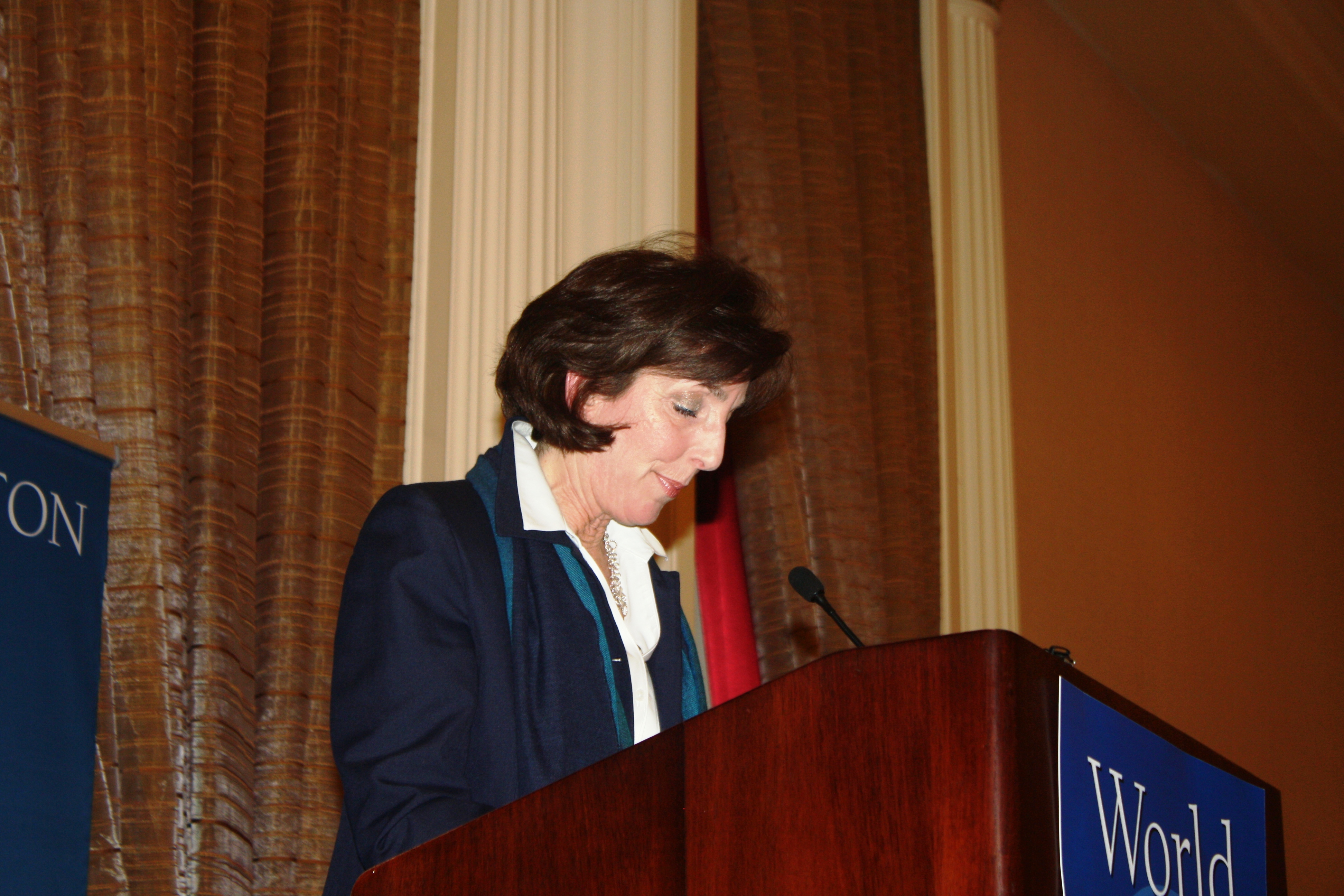
Today was the second day of the 2014 Film & History Conference. As yesterday, the featured panels were many, and the titles all appeared to be interesting topics. What appealed to me the most was a panel titled “Jimmy Stewart for president and Ronald Reagan for best friend: Star Image and Political Campaigning,” by Amit Patel. Amit began his presentation by introducing Ronald Reagan’s initial career as a B movie star. In fact, he starred in low-budget films such as Love is on the Air and Santa Fe Trail. In 1942, the film Kings Row finally gave him some recognition as a movie “star.” Interestingly, Reagan was initially a Democrat, but later switched to the Republican party. In 1976, he embarked in a campaign for the Republican presidential nomination against incumbent Gerald Ford. Amit focused on Ronald Reagan’s use of Jimmy Stewart in his campaign. In fact, Stewart strongly supported Reagan, and even participated in a political ad were he stated that Ronald Reagan was his friend, therefore, the American public should vote for him. Reagan lost the nomination, but campaigned again in 1980, and became president. I thought it was an interesting panel because a candidate’s image is probably the most important thing during a campaign, and if the candidate was a known public figure beforehand then that plays in his favor. In addition, the use of famous actors or public figures to support a political candidate is common nowadays, and it is interesting that it was used in Reagan’s campaign, too.
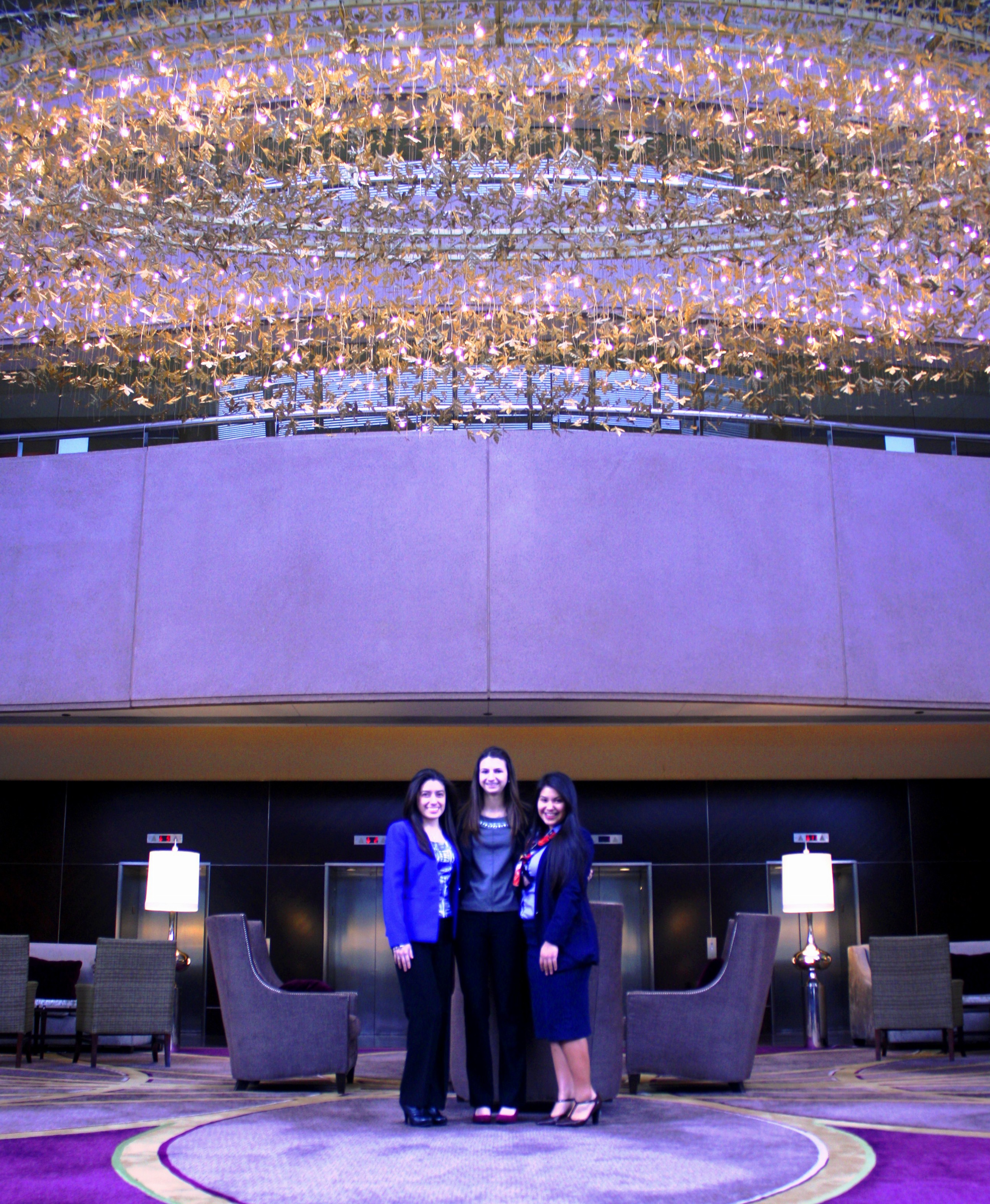
Conference_Girls_Rollyson

After attending the Film & History Conference, in the morning, we headed to the Wisconsin State Capitol, in Madison.

Wisconsin Capitol Building
            Wisconsin Capitol Building

A tour guide showed us the most important features of the Capitol, and shared the details of its construction. What interested me most was that Madison had previously had other two state capitols, but they both burned down. The second time around, the Capitol had recently discontinued its fire insurance, so the state did not have enough money to rebuild it. Ingeniously, the state had the idea to tax railroads that were passing through Wisconsin at the time, and with that revenue, they rebuilt the Capitol between 1906 and 1917. The architecture of the capitol is mesmerizing, featuring marble from many different countries, such as Greece, Italy, France, and Germany, as well as some beautiful mosaics.

Wisconsin Capitol Building, Interior
Wisconsin Capitol, Interior

Perhaps most interesting, the capitol staff apparently have a very liberal speech code in the building.  Numerous exhibits were posted around the capitol rotunda protesting the performance of Governor Scott Walker, and one impressively vocal protester’s shouts could be heard throughout the building.

After the tour, we decided to go to the observation deck at the top of the building, and experienced true cold for the first time on our trip.

Ariel_Constance_Wind

The winds were so strong that it was hard even to close the door behind us. Nonetheless, it was worth it because the view was beautiful.

Wisconsin_Capitol_View

Leaving the Capitol, we took a stroll in the brisk Wisconsin air to find ourselves some nourishing lunch. We finally settled on Marigold’s, a local deli, where we reveled in the many options available. Among the delights we delved into were lavender white mocha and grilled ham and cheese with a hint of strawberry jelly. Packed with locals, Marigold’s was definitely a winner.
Out into the invigorating weather we went again to make our way to another of Frank Lloyd Wright’s masterpieces, the Monona Terrace. Opened in 1997, the Terrace was built posthumously and served as the cause of much strife and contention during his career. Using Wright’s design of the exterior, Wisconsin contractor J. J. Findorff and Son Inc. carried out the great architect’s dream, while his previous apprentice, Anthony Puttnam, designed the interior.

Once inside Madison’s event center, we explored the gift shop full of Wright memorabilia before embarking on a tour with guide, John.

Frank Lloyd Wright Bust
                Frank Lloyd Wright Bust

Pointing out certain Wrightian things, such as the dome on the west side of the building and the arches in the grand ballroom, John proved to be a formidable docent as he never ran out of interesting facts and stories to regale. Braving the gusty winds, we had the chance to view Lake Monona, which Monona Terrace balances precariously over, thanks to the intricacies of Wright’s design.

Monona_Terrace_Girls

Awed by the view and many selfies taken, we headed inside to embrace the warmth it offered and finish our tour.

Capitol_Building_Girls

Seeing it was getting late, we rushed back to the car in order to make it to a few last minute shops, original to Madison. Among those, we re-caffeinated and browsed a wonderful cheese boutique, Fomagination. Overwhelmed by the many options and tastes, we took in Wisconsin’s finest and tried to contain our enthusiasm at all that was available. It was incredibly exciting to see so many things unavailable in the great state of Texas. We loaded up on cheeses and cheese accessories before tumbling back into the car to begin the final leg of our trip.

We admired the beautiful fall landscape of Wisconsin; the rolling hills and deep yellows, greens, and reds created the perfect ambiance for our drive to Dubuque, Iowa. There, we enjoyed the Fenelon Place Elevator, or Dubuque Incline, claimed to be the shortest and steepest railroad in the world.

Incline_Dubuque

Gripping the seats…

Incline_Constance…up we went on the side of the hill to eventually reach one of the most inspiring views of the trip so far.  Known as “the magic hour” in film circles, we caught the sun setting on the horizon, creating beautiful red and orange tones in the sky and on the trees off in the distance.

Dubuque_Panorama_Girls_2

Proud to say we had viewed three states at once (Iowa, Illinois, and Wisconsin) from the top of the incline, we got back in the cable car built in 1882 to return to our vehicle and carry on to the next leg of the journey.

After a short drive, we arrived at our final destinations: The John and Mary Pappajohn Sculpture Park and the Des Moines capitol building. The 4.4-acre sculpture garden is unique and home to 28 sculptures from 22 different artists. Various paved paths provided a route for us to take through the garden, however, curiosity and the lure of new art, propelled us forward.

Man of Letters, Jaume Plensa

Many of the sculptures were created by artists that were foreign to us, however, one sculpture in particular provided us with the comfort of familiarity: Painted Steel by Mark Di Suvero. Di Suvero also has an art piece called “Proverb” in Dallas, Texas, which we were able to relate to. “Painted Steel” was made out of steel and painted in the same red that “Proverb” is painted. Both statues have similar characteristics, but varying dimensions and structure.

Another interesting sculpture that we saw was, “Back of Snowman (Black)” and “Back of Snowman (White).” These sculptures were created by artist Gary Hume and were located side-by-side in the middle of the park and held a spectacular gleam given off from the surrounding lights. Each of the statues consisted of two round pieces of bronze covered in enamel, one in white enamel and one in black. These statues were especially appealing because each round piece of bronze was perfectly symmetrical and smooth, giving the piece a unique trait of looking seamlessly perfect.

The last sculpture that really caught our eye and our interest was “The Thinker on a Rocky” created by Barry Flanagan. This piece was a large rabbit sitting upon a boulder in the same pose as Rodin’s “The Thinker.” The piece was clearly a satire on Rodin’s famous statue, which only added to its appeal!

While the statue garden was a fantastic experience, we had to continue our night and head to the Des Moines capitol building. The Renaissance style capitol, designed by John Cochrane and Fred Piquenard, was absolutely stunning! The capitol building featured a 23 carat gold dome in the middle of the building and was accompanied by two smaller domes on either side of the building. The capitol took expansive resources and large amounts of time to build and open to the public. The building took fifteen years and a staggering amount of $2,873,294.59 to complete. On June 29,1886, the capitol was ready to be open for use!

Iowa Capitol
Iowa Capitol

Both the capitol and the sculpture garden trips were the perfect ending to day five of the trip!

LEAP Center’s Midwestern Tour (Day Three): Chicago and All That Jazz

Millennium Park
Millennium Park

We fueled up on a hearty breakfast before making our way down into the Windy City for day three of our whirlwind trip. We got an honest look at the Chicago way of driving – which seemed to be like a life-or-death situation. Between the locals’ blaring horns and ignoring driving lanes, we were pleasantly surprised to make it to a parking garage in one place.

Our first big goal for the day was to check out Millennium Park. Like its name hints, Millennium Park was planned and subsequently built to celebrate the beginning of a new millennium. Ironically enough, it was not completed until four years later, in 2004. Sitting atop a parking garage and commuter rail station, this park also is considered to be the world’s largest rooftop garden.

Although the biggest attraction at Millennium is the Jay Pritzker Pavilion, home to many performing arts events, we hurriedly passed it in pursuit of the notorious, locally-nicknamed Chicago “Bean.”

The Bean at Millennium Park

The three-story sculpture is aptly named Cloud Gate and was designed by Anish Kapoor. Interestingly, it was also incomplete when Millennium Park was unveiled and subsequently was kept covered until it was finished in 2006. The “Bean” provided multiple picture-taking opportunities in its reflective, steel, seamless shape. We happily indulged our “selfie” guilty pleasure, much to Professor Yawn’s chagrin.

Bean_SelfiesHeading out of Millennium Park in search of our next stop, we came upon Crown Fountain. Confused by the faces on these fifty-foot tall towers, we did not know what to make of such public art. Upon further research, we found that fountains located in the subject’s mouths spray water on unsuspecting passersby, May through October. Although contentions were raised originally over the height of the art pieces completed by Jaume Plensa, they have been accepted by the city and display almost 1,000 Chicagoan’s faces every year.

We left the fun and information Millennium Park for our next destination: a Chicago Architecture Foundation Boat Tour. The weather proved to be a barrier, it was a brisk 47 degrees and windy on the top of the boat. However, the tour guide made the cold bearable with her vast knowledge of Chicago architecture.

We started the tour by viewing different types of buildings in various architectural styles. We saw several different styles of architecture such as Neoclassic, Modern and Post-modern.

Post-Modernism in Chicago

However, we found one of the most interesting to be the Beaux-Arts style. Prominent from 1880-1920, and considered neoclassical architecture, the Beaux-Arts style has several prominent characteristics that set it apart from other architectural styles such as flat roofs, rusticated and raised first floors, arched windows and doors, and a magnitude of themed sculptures, artwork and murals.

Beaux_Arts_ChicagoThe tour really allowed us to learn about different styles of architecture by seeing the buildings firsthand while listening to the stories behind the buildings and their architects. We traveled to a point from which we could see almost the entire skyline of Chicago. The view was unlike anything we had ever seen! Looking at the skyline really made us realize just how large Chicago is and how much work went into designing the buildings that make Chicago the great city it is.

Chicago_SkylineWe next headed to the Art Institute of Chicago. To remain on topic with Chicago’s architecture we learned about on the boat tour, the first exhibition we visited at the Institute was on Architecture and Design. There were numerous architectural fragments belonging to several famous architects, such as Frank Lloyd Wright and Adler & Sullivan. One favorite piece, hanging from the ceiling, was Frank Lloyd Wright’s Triptych Window, a window panel composed of clear and colored glass, featuring a number of vertical and horizontal lines interspersed with circles and half circles, resembling balloons, and even an American flag shape.

Triptych_WindowThe Impressionism Collection was a hit as well. Impressionism is a style that captures scenes from everyday life, especially outdoors, just like a picture would do. Caillebotte’s “Paris Street; Rainy Day,” was enough of a favorite to inspire one of us to purchase a miniature.

Paris_Street_Rainy_Day_Gustave_CaillebotteThe oil painting is fairly large and features a typical rainy day in 19th century Paris, with a number of individuals walking the streets of Paris holding umbrellas. The focal point is a couple in the foreground, holding arms and sharing one umbrella. It depicted a scene relatable to today.

Another favorite was Georgia O’Keefe’s “Cow’s Skull with Calico Roses,” in the American Collection.

Georgia O'Keefe
Georgia O’Keefe

The painting features a cow’s skull on a white background with two Calico roses, one on the upper right side of the skull and the other directly under the chin. The story behind the painting captured our attention. As the narration indicated, O’Keefe drew inspiration from carcasses of animals that had suffered through a drought in the 1930s Southwest. She was fascinated by them, and said, “To me they are as beautiful as anything I know… The bones seem to cut sharply to the center of something that is keenly alive on the desert even tho’ it is vast and empty and untouchable.”

Just before closing, we admired the Modern Art Collection, featuring works of Picasso, Dali, and Matisse. A favorite was Picasso’s “The Old Guitarist,” from his Blue Period of the early 20th century. The painting is mostly blue in color, except for the brown guitar, but it is also blue in the sense that it reflects sadness and misery, although we managed a smile for the painting.

Picasso
Picasso

One additional highlight should be included.  While we were touring the galleries, we came upon a woman with an easel.  Turns out, she is a student at the Art Institute, and her assignment was to copy a painting of her choice.  The assignment’s purpose is to help the student to better learn the style of painting.  In this case, the student was learning a traditional style, and she was kind enough to go over with us how she was completing her painting.  Her mini-lesson just added to the educational experience!

Art_Institute_Chicago_Girl_Painting

Our experience at the Art Institute was unforgettable. The pieces of art we admired were true masterpieces, and the stories behind them were very interesting.

Chicago_Girls_Walking

LEAP Center Midwestern Tour: Day One

Little Rock, Arkansas and More

Our week-long trip began with a flurry of motion. Loading up in Huntsville, we embarked on the winding nineteen-hour drive towards Madison, Wisconsin. From discussing the attractive qualities of smart phones to what attracts Sam Houston students to the activities Huntsville offers, we covered many topics along the way.

Stopping briefly in Jefferson, Texas to refuel, we took in the extravagant wood churches and red brick roads the small town boasts. Awed by wraparound porches and Victorian-style homes, we toured the town by car quickly enough to stay on track with our journey without missing much, and soon we were at the Arkansas border.

Constance, Silvia, Ariel, and Arkansas

We also took the first of what would eventually be some 200,000 selfies.

Selfie Sisters
Selfie Sisters

We continued the drive through Texarkana and then on to Hope, Arkansas where we visited the childhood home of former President Bill Clinton.

Clinton_Home_Girls_2

Leaving all Hope behind, we meandered through Arkadelphia and Benton and on to Little Rock, Arkansas, where we stopped for dinner and some more sightseeing.

Priorities on food first, we strolled into Sonny Williams’ Steak Room, our bellies grumbling. We began our feast with a sausage and cheese platter that was mind-blowing – or so our starving stomachs thought. Trying three types of sausage (venison, pheasant, and rabbit), we were wowed by Chef Clay Sipes’ culinary skill and finesse. The beef tips and shrimp, coupled with not-so-ordinary garlic mashed potatoes and green beans, certainly hit the spot. Of all the food, the lamb chops with goat cheese may have been the best.

Lamb Chops at Sonny Williams

After indulging in dessert, we regrettably took leave of the memorable restaurant to explore all that we could in Little Rock.

Possibly, the best part of the entire day was the opportunity to allow our inner child to emerge while we explored the Riverwalk, played on different playgrounds, and walked through the sculpture garden. The brightly-lit bridges gave off a beautiful glow as we walked through the amphitheater and into the playground.

Junction Bridge
Junction Bridge

The pathways were landscaped and lined with trees and flowers. We guided ourselves through the History Pavilion and found a very welcome surprise on the other side: Peabody Park playground. With rope ladders, slides, and caves…

Silvia Chiapponi
Silvia Chiapponi

…it was, by far, one of the most interesting and fun parks we had ever been to.

Constance Gabel
Constance Gabel

While Peabody Park was fun, we didn’t stop our adventure there! On the path to the music park we came across the sculpture garden. The landscaping in the garden was beautiful, however, the real stars were the sculptures, lining the park and serving as centerpieces along the path. The sculptures ranged from women dancing to brilliantly-sculpted origami statues. As we walked through the garden to the music park, the sculptures became smaller and sparser until we reached our destination.

The music park was equally amazing. There were several large musical instruments – oversized bongos and xylophones – placed around the park that weren’t just art pieces – they could be played. We took turns creating various sounds, some beautiful, some not necessarily so.

Little Rock is famous for its Six Bridges over the Arkansas River that connect Little Rock to North Little Rock. After our playground and sculpture garden experience, we had the opportunity to visit two of the four pedestrian bridges on the Little Rock side.

First, we headed to the Junction Bridge, located in front of the River Market. At night, there’s a beautiful view over the Arkansas River, with the colorful bridge lights reflecting on the water.

Junction Bridge
Junction Bridge

Then, we headed to the William J. Clinton Presidential Library. Unfortunately, it was closed; nonetheless, we were able to admire its modern bridge-like structure. In fact, the Presidential Library was designed to look like a bridge to complement the Six Bridges, and to serve as a “bridge to the future.” In front of the Library is the Rock Island Bridge, also known as the Clinton Presidential Bridge.

Little Rock at Night

Because we visited Little Rock on a breezy October night, our experience was peaceful and undisturbed, with no crowds. We encountered a few visitors along the way, some interesting characters, and some beautiful sights.

The Old Statehouse
The Old Statehouse

Our short stay in Little Rock was interesting and unique, and reflected the spirit of the LEAP Center.  And with that hopeful spirit, we headed on to Missouri deep into the night, awaiting the adventures of the next day in St. Louis.

Missouri_Sign