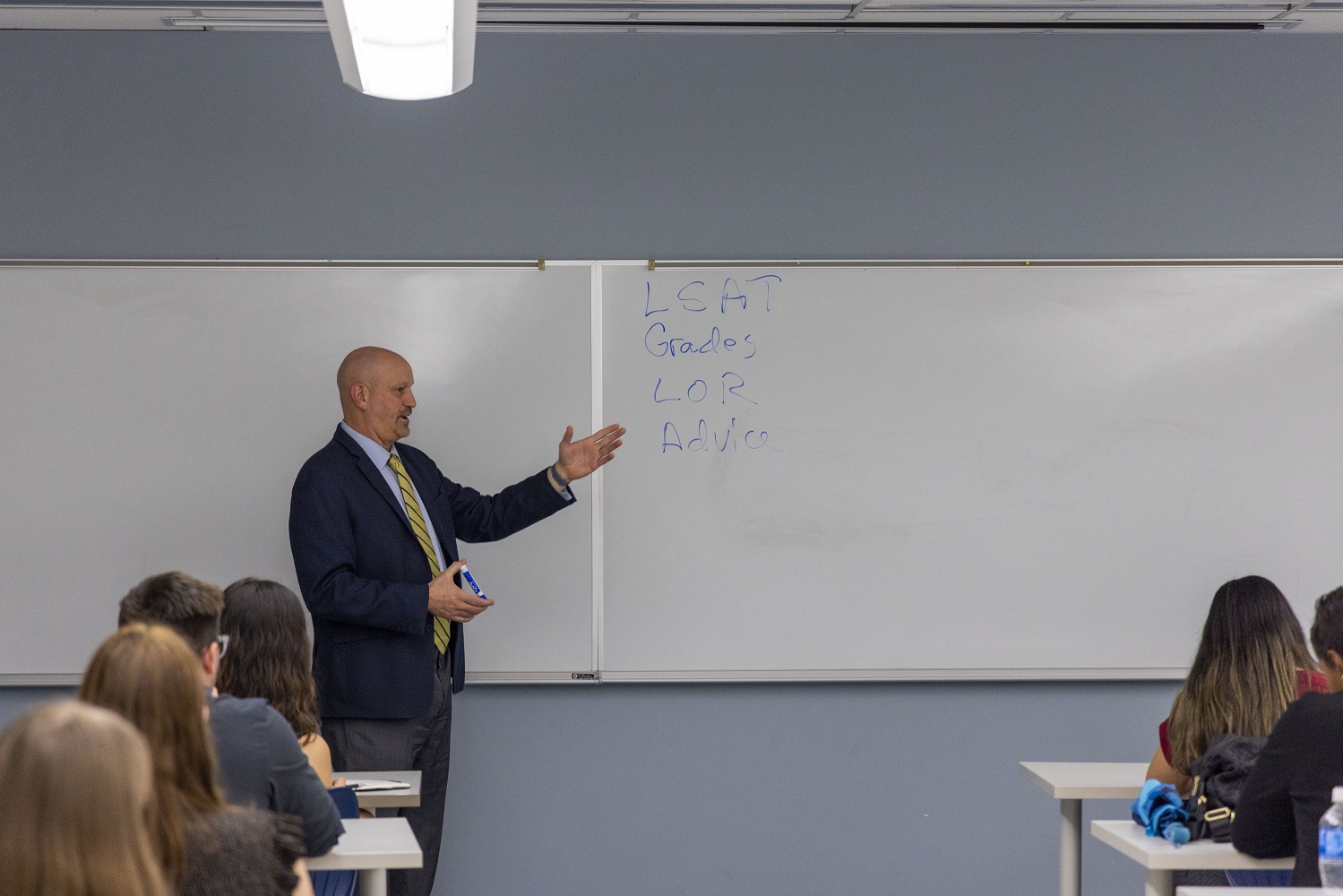
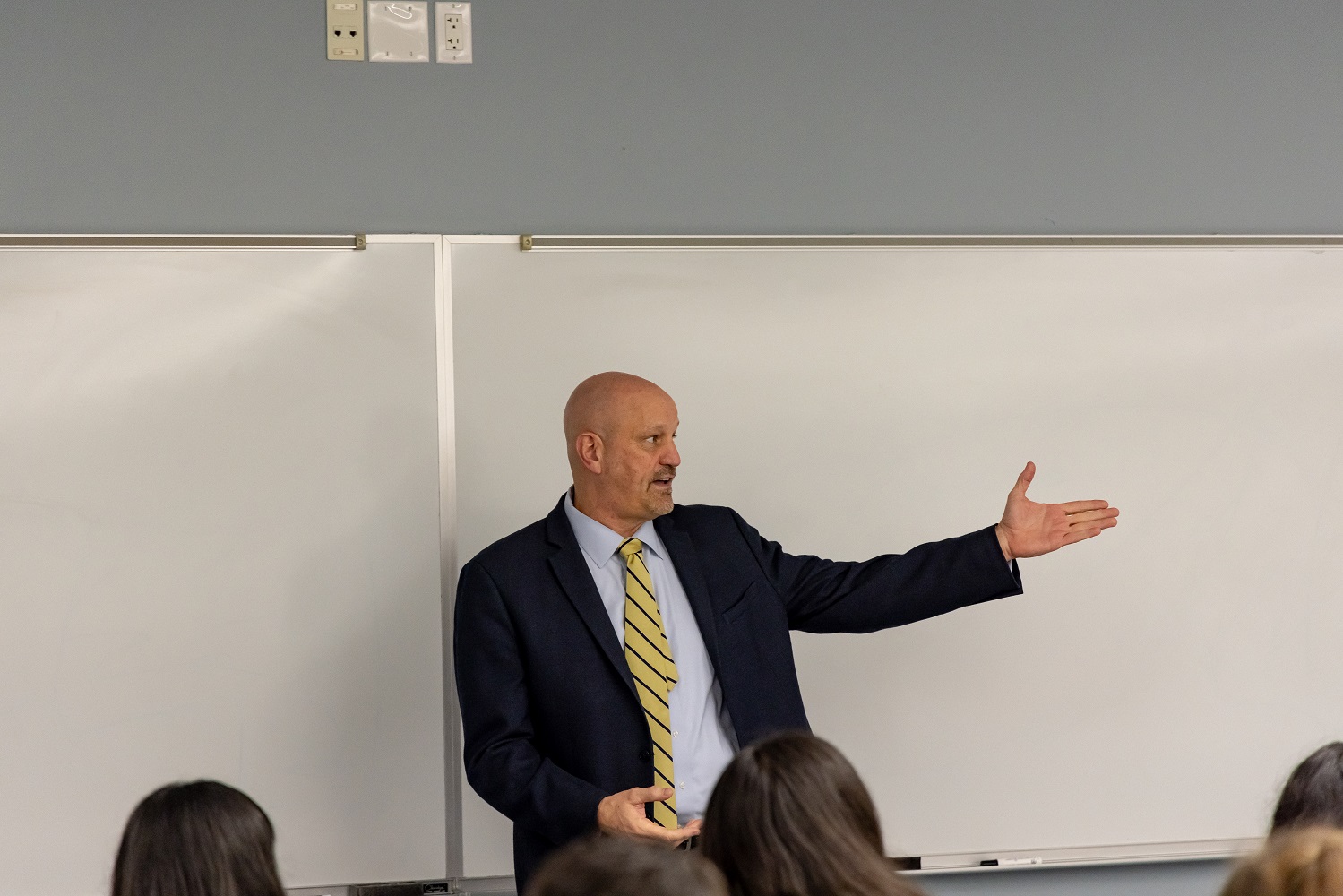
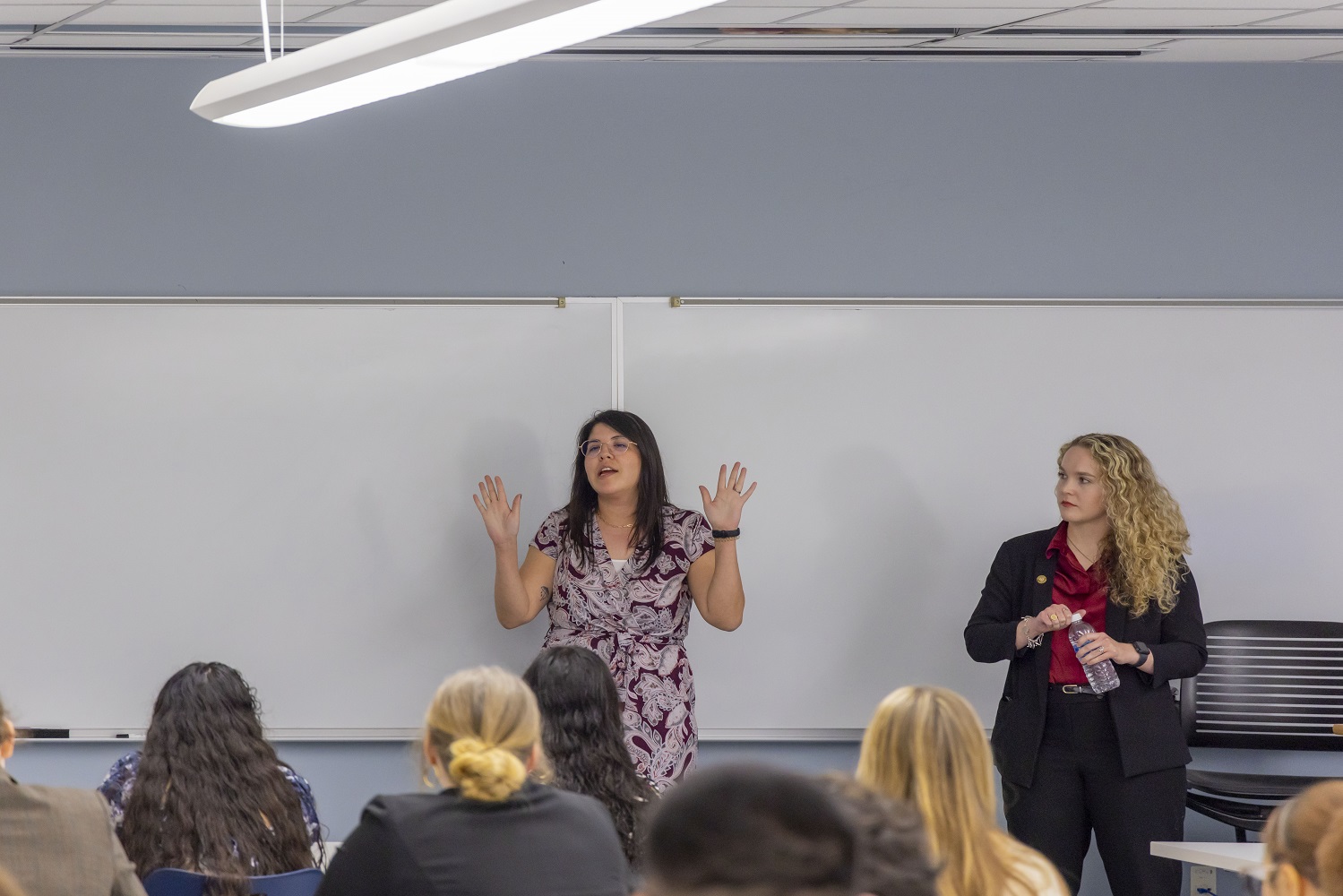
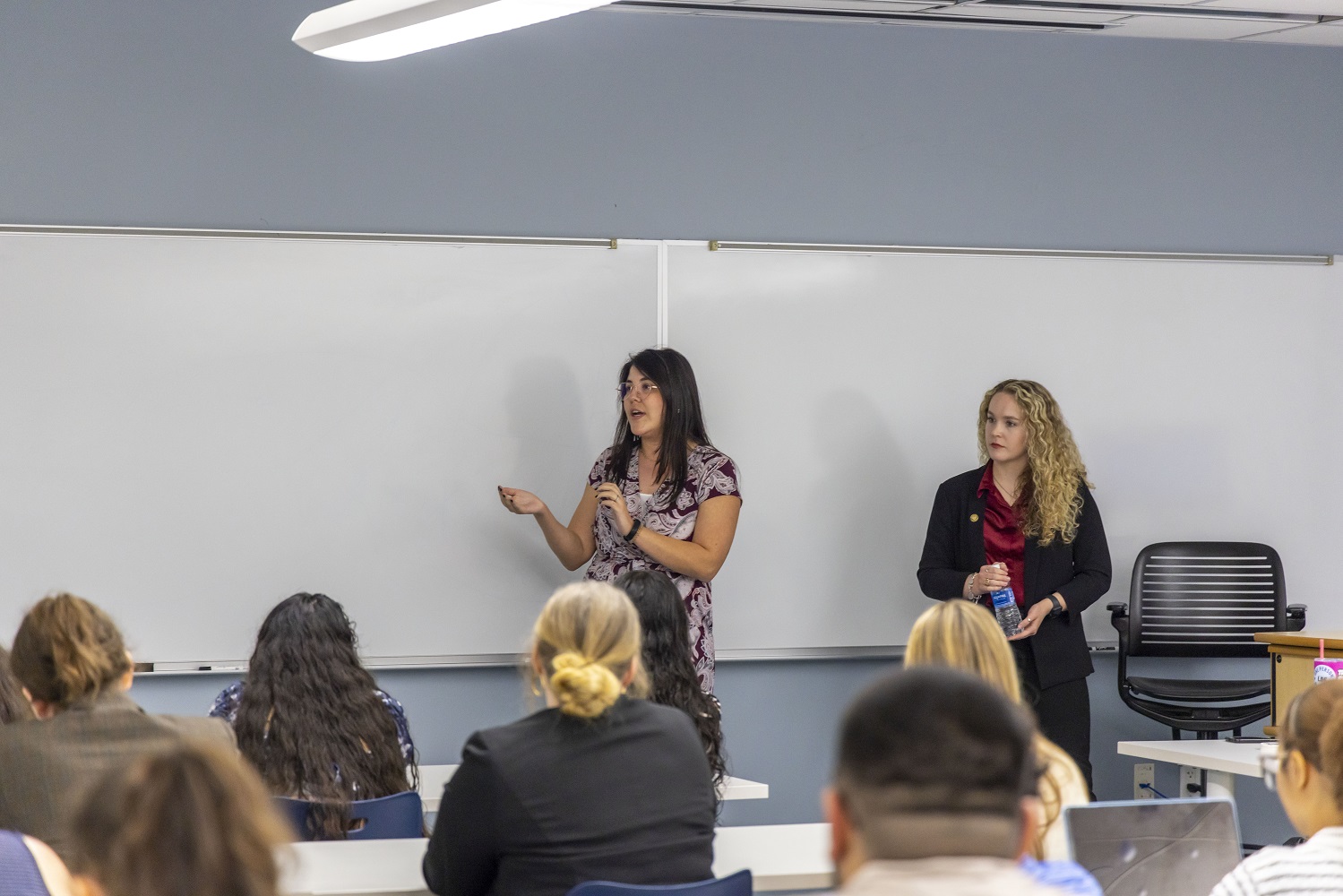
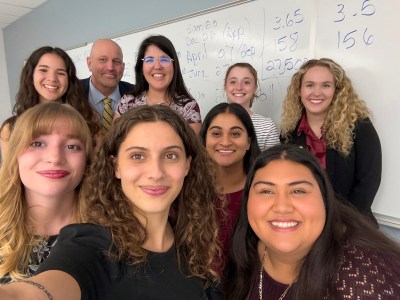
Mike Yawn teaches at Sam Houston State University. In the past few years, he has taught courses on Politics & Film, Public Policy, the Presidency, Media & Politics, Congress, Statistics, Research & Writing, Field Research, and Public Opinion.
He has published academic papers in the Journal of Politics, Political Behavior, Social Security Quarterly, Film & History, American Politics Review, and contributed a chapter to the textbook Politics and Film.
He also contributes columns, news analysis, and news stories to newspapers such as the Houston Chronicle, San Antonio Express News, Seattle Post-Intelligencer, Stamford Advocate, Greenwich Time, Huron Daily Tribune, Laredo Morning Times, Beaumont Enterprise, Connecticut Post, and Midland Reporter Telegram.
Yawn is also active in his local community, serving on the board of directors of the local YMCA and Friends of the Wynne. Previously, he served on the Huntsville's Promise and Stan Musial World Series Boards of Directors.
In 2007-2008, Yawn was one of eight scholars across the nation named as a Carnegie Civic Engagement Scholar by the Carnegie Foundation.
This past weekend, the Boys and Girls Club of Walker County hosted their second Oktoberfest Bingo and we, of course, could not miss such an exciting opportunity to let out our competitive spirits and to help sponsor such a good cause.
Proceeds–which totaled approximately $113,000–were raised to support the operations of the Boys and Girls Club, which promotes the intellectual, emotional, and physical growth of young people in our community.
For us, this was not only a great opportunity to support the community in a small way, but also to see our friend and Boys and Girls Club CEO, Michelle Spencer.
With this in mind, we sponsored our own table and invited our friends Jacob Wessels, Caitlin Nortonen, and Maggie Betancourt along.
We couldn’t afford a sponsorship as generous as The Cafe Texan, Bill and Diane Green, First National Bank, Community Service Credit Union, North Houston Cancer Clinics, North Lakes Pain Consultants, The Huntsville Item, Wiesner Huntsville, or Wischnewsky Dodge (see the full list of generous sponsors here), but our sponsorship came with raffle tickets, and we put our tickets in pots of most interest to us, including: $25 gift card to Barnes and Nobles (where Olivia dropped all her tickets), a $20 gift card to Louise and Oletta’s (one of our favorite local restaurants), Double Dave’s gift card, and a scavenger hunt.
As the crowd settled, and the emcee, Brad Sherman, expertly guided us along, we took our seats for the highlight of the night: bingo! With a card in one hand and a marker in the other, we were ready to test our luck.
Sadly after a few of the rounds, we realized how much luck we lacked. Hope was decreasing rapidly at our table when Chrissy jumped up and yelled “Bingo!” She won a party package to Tom Foolery’s for axe throwing and a buffet!
At first, the emcee thought there was a mistake on the card. Not knowing Chrissy, he couldn’t have known that you don’t argue with her over details, and in the end, her bingo card was validated.
What we know is that Chrissy is an axe-throwing veteran.
In her generous way, she invited the table to an evening of axe-throwing at Tom Foolery’s, and shortly thereafter, in an amazing coincidence, Trey Wharton stopped by to offer everyone health and life insurance…
In between the bingo rounds, the raffle winners were announced. We all got our tickets out and held them as if they held the fortune to all our hardships. Luck seemed at our table’s vicinity as Saara’s ticket won a car detailing…
…and Caitlin won a Let’s Roam scavenger hunt date night.
The live auction also took place in between the games. Having never seen an auction before, I found it quite impressive to see how fast the auctioneer spoke.
Further, a silent auction was taking place.
A few of the prizes included a Sam Houston swag basket, a Michael Kors purse, a yoga set bundle, and a jewelry set that Professor Yawn and Stephanie ended up winning!
As the rounds progressed, so did our pile of losing cards which truly terminated any hope we had left–but not our fun!
With the night coming to an end, Michelle Spencer and the Boys and Girls Club Board of Directors appreciated everyone’s attendance to the event by acknowledging that more than $100,000 had been raised!
We might not have won the prizes we wanted, nonetheless, we left the venue with huge smiles on our faces knowing that we helped raise money for a significant organization in our community.
The LEAP Ambassadors kicked off the Conflict Resolution Month with an exciting virtual session hosted by Student Legal and Mediation Services- and what other way to enjoy an exciting session than with pizza?! The event was led by none other than Dr. Gene Roberts, Associate Dean and Director of Student Legal Mediation Services…
Dean Roberts set the stage with a warm welcome to all attendees, introducing Kiser and giving a shoutout to the Pre-Law Society students in attendance. Kiser wasted no time diving into the core of his expertise, offering valuable advice to pre-law students who are eager to begin their legal journeys.
Kiser’s discussion centered on his book Professional Judgment for Lawyers, in which Dean Roberts jokingly remarked could easily be titled Professional Judgment for Everyone… perhaps a title Kiser will use for the second addition of his book! The book offers insights into how our personal judgment shapes not only the legal field by society as a whole. Kiser walked us through the essential elements of decision-making in law, critiqued past and current law school structures, and shed light on how lawyers can use their experiences in the legal field to better serve their clients.
When asked what inspired his transition from being a partner at a big law firm to becoming a researcher and author, Kiser cited the influence of modern management theories from Peter Drucker and Mihaly Csikszentmihalyi’s flow theory. These concepts motivated his passion for exploring how lawyers and successful law firms make decisions.
One of the most interesting parts of Kiser’s discussion was his research on decision-making within the legal field. He emphasized the importance of professional judgment and highlighted how mediation training can significantly boost the success of a lawyer. According to Kiser, mediation fosters higher social awareness and sharper decision-making skills- both of which are qualities that make a strong attorney.
As the session wrapped up, the LEAP Ambassadors had a chance to ask Kiser a few final questions, and we all left with a deeper understanding of the critical role judgment plays within the legal field. A huge thank you to Gene Roberts for making this inspiring session possible and accessible to the pre-law students and to Randall Kiser for sharing his wisdom and advice with us!
This past weekend, the LEAP Ambassadors, along with friends and alumni, took our regular trip to Houston for an afternoon filled with laughter, great food, and a little culture. Our destination: The Alley Theatre to see the farcical comedy Noises Off. These Houston outings have become something of a tradition for us—a chance to bond over good food and great theatre, and this time was no exception.
Before heading to the show, we made our first stop at POST Houston, a spot we frequent for its array of restaurants that cater to every craving. From sushi to burgers and international cuisine, POST has something for everyone. After fueling up, it was time for our traditional rooftop photo with the Houston skyline in the background—a moment we capture every time we’re in the area. The LEAP Ambassadors, a few friends, and alumni joined in for the photo op, including Michelle Lyons and her daughter Katherine Burnett, SHSU alum and former SHAIP intern Ashlyn Rodriguez with her husband, as well as Jacob Wessels and Yajaira Gutierrez. With full stomachs and a great group, we were ready for the play!
For those unfamiliar, Noises Off is a comedy about…well, comedy. It’s a play within a play, following a chaotic theatre troupe as they stumble (quite literally) through a performance. Having some theatre background myself, I was eager to see how close this farce would be to the real backstage antics I’ve experienced. Spoiler alert: it was spot on—and absolutely hilarious.
The play is structured in three acts, each highlighting a different stage of a theatre production.
The first act is the troupe’s final rehearsal before opening night, where the director desperately tries to smooth out the rough edges—particularly the constant confusion over a plate of sardines, which becomes a running joke. The second act gives us a behind-the-scenes look, with the audience seeing the backstage chaos unfold as the actors’ personal issues boil over. Doors are slamming, props are misplaced, and love triangles are revealed. And then, in the final act, we witness the disastrous final performance, where everything that could go wrong does. The actors are left to improvise their way through the script, which by now is nothing more than a series of disconnected lines and missed cues.
It was a joy to see our group laughing together, especially as some of us were familiar with the antics that come with putting on a play. Stephanie, in particular, has long been a fan of Noises Off, and by the end of the show, Yajaira had declared it her new favorite too. It’s no wonder—between the witty dialogue and physical comedy, the play is a masterclass in farce.
As we walked out of the theatre, we couldn’t help but keep laughing about the final performance scene—the sardines, the dropped lines, and the general mayhem. It was a perfect ending to a perfect afternoon. In fact, I think the sardines became their own character in the play! It was a delightful reminder that sometimes, when everything goes wrong, it makes for the best kind of theatre…and memories.
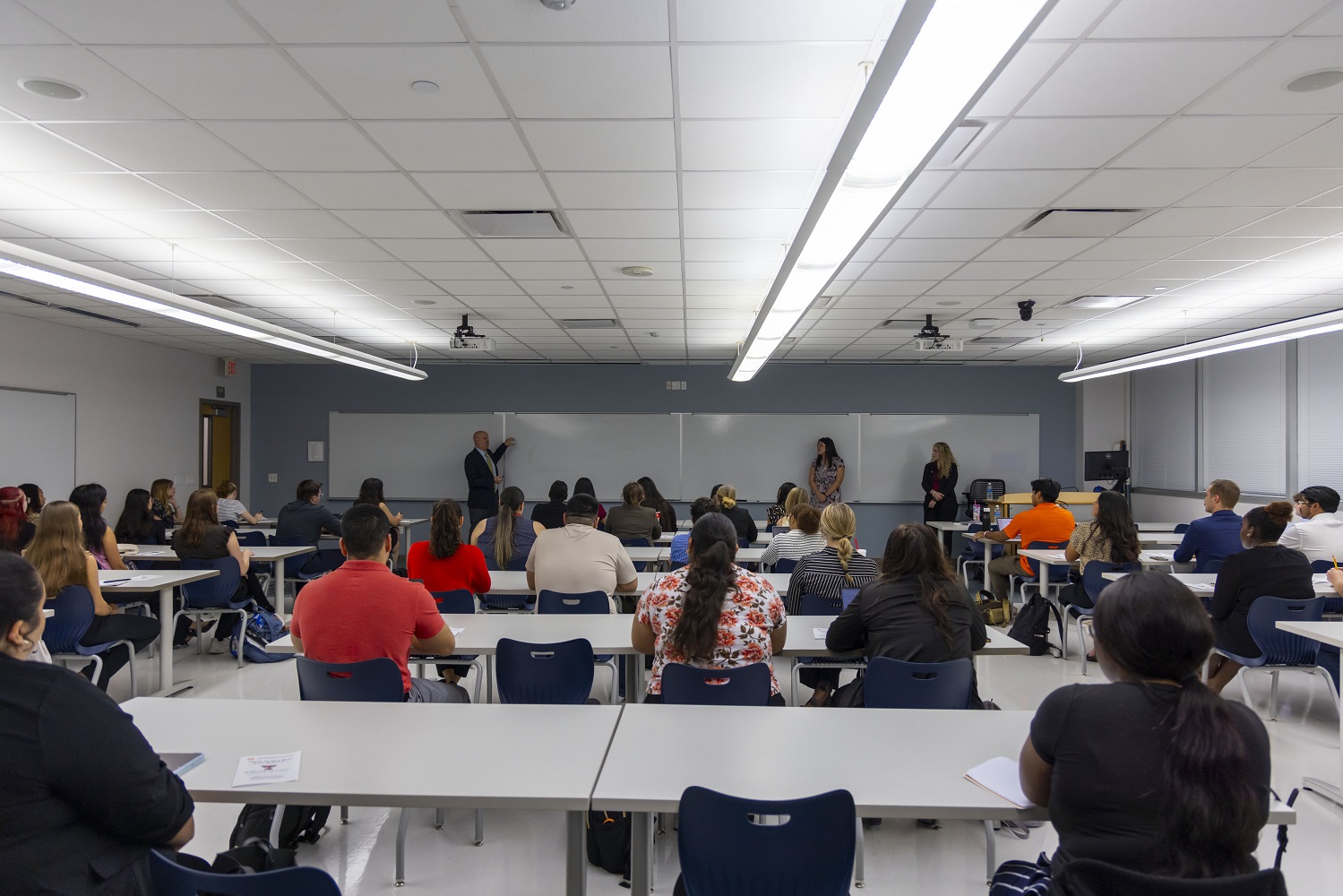
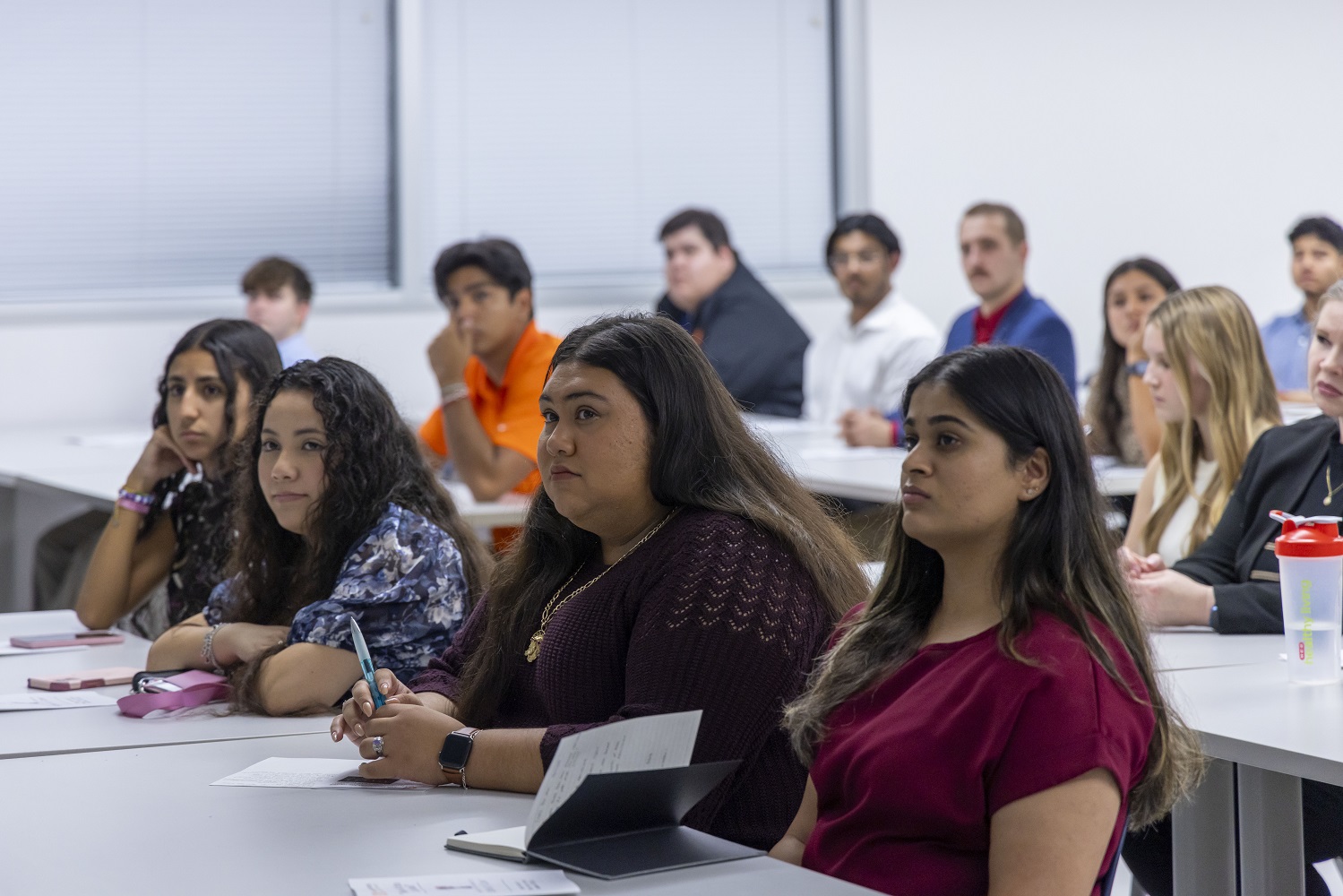
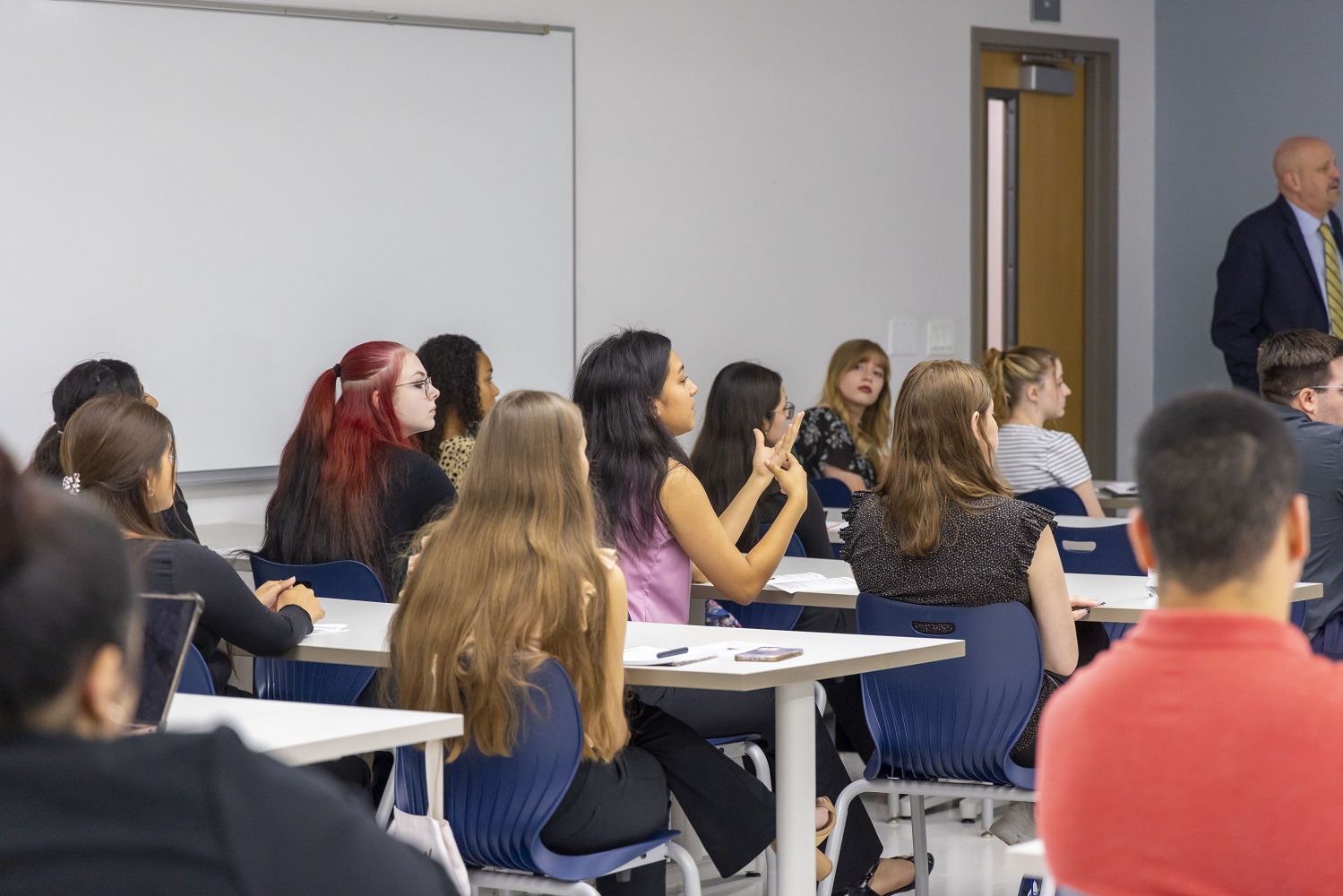
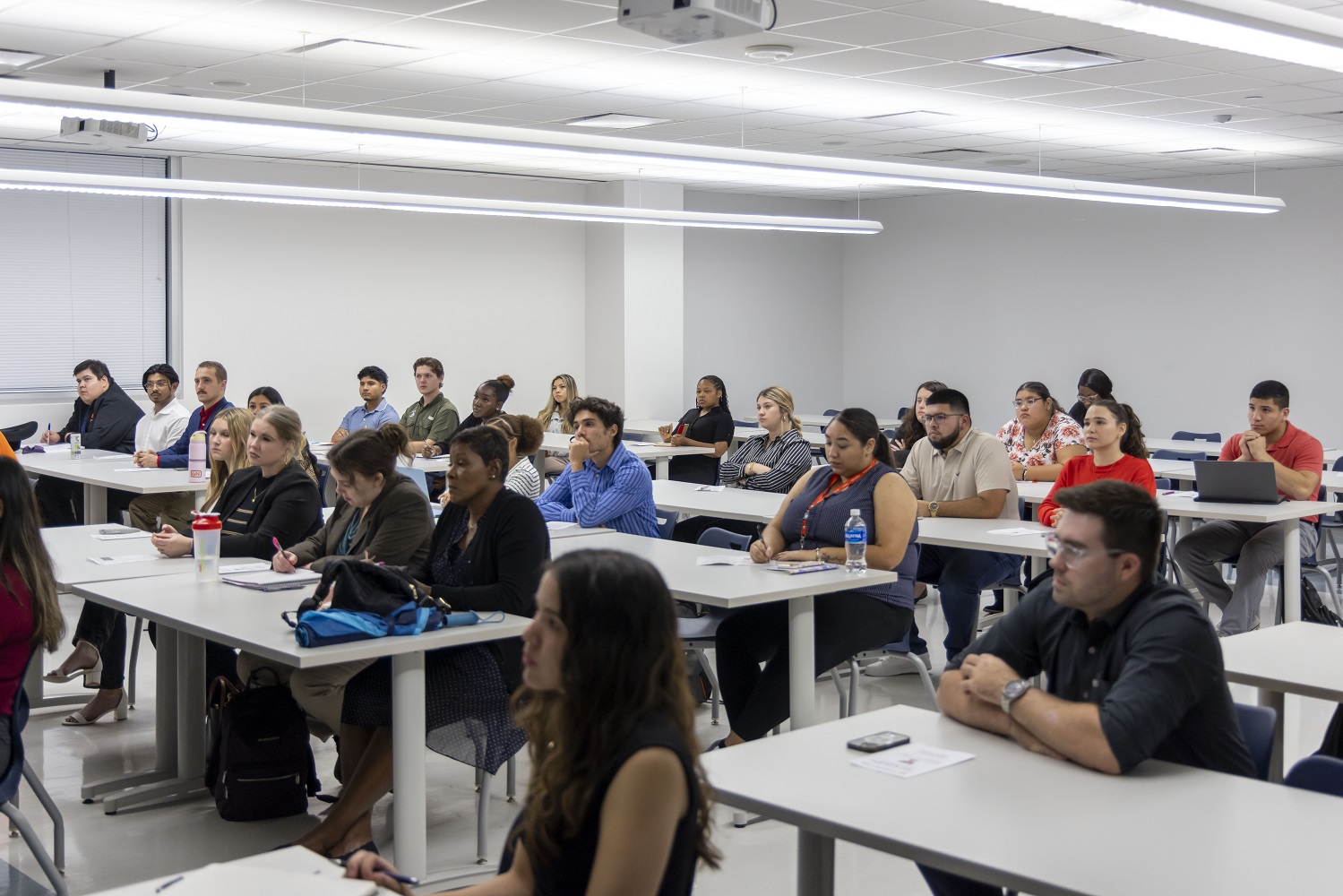
On Tuesday, September 24, Texas Ranger Maurice Cook visited students at Sam Houston State University to offer a special presentation about the 1974 Huntsville Prison Siege and different aspects of his career—which involves service in Vietnam, being a police officer, working as a State Trooper, going to law school and passing the bar (at the age of 60), teaching at a community college, and, for the past four years, holding the office of Sheriff (Bastrop County).
But it was his time as a Ranger that occupied most of our time with him, particularly his experience in the 1974 Huntsville Prison Siege, which at that time, was the longest prison siege in history.
He began by noting that he had only been a Ranger for less than a year…
…and he got the call to come to the Huntsville Unit, with his bulletproof vest.
He offered vivid and sometimes humorous descriptions of a Carrasco associate, a trustee inmate, who was able to work with Carrasco’s wife to smuggle in guns and ammunition—in peach cans!
Ranger Cook also did a good job of describing the Carrasco “fortress,” which was the prison library, fortified with tables, books, and other impediments—while also “imprisoning” eleven hostages.
While law-enforcement had the building surrounded, there was only way in and one way out, so it would have been very difficult to mount a full-frontal offensive.
They did set up dynamite on the rear wall, and planned to use it if Carrasco began torturing or killing hostages.
Carrasco was concerned about this, and he would assign his compadres to crawl in the rafters and look through the vents—but in doing so, the lookouts would scare away pigeons, who roosted on the building’s eaves. This allowed law-enforcement to know a little about what was happening inside the “fortress.”
Carrasco also insisted on using his (Hispanic) lawyer as a mediator, because he did not trust the non-Hispanic law-enforcement officials. While law-enforcement officials did negotiate, they did so strategically, not providing anything that could be too damaging.
They did provide helmets, but they had weakened the metal in the temple area so that bullets could pass through the steel; and they provided a getaway car, but they messed with the gas gauge such that it appeared full, while being nearly empty. One of the more interesting show-and-tell items was a book that stopped a bullet during the siege, which Ranger Cook had on hand.
Ranger Cook also noted, during the Q&A period, that the siege brought about changes in law enforcement procedures, particularly with securing the crime scene. The lack of protocol led to extensive court battles. The siege also led to a dedicated SWAT team, in place for future encounters of this type.
Toward the end of the discussion, he shared valuable insights about life and success, highlighting my favorite quote: “Shoot for as high as you can.,” and he ended the event with a book-signing.
We would like to extend a special thank you to Ranger Maurice Cook and Marcus Cook for taking the time to meet and enlighten us about the 1974 Huntsville Prison Siege, as well as sharing a bit of history about Ranger Cook’s life and law enforcement career!
For the final stop of our Arkansas trip, we headed north to Hot Springs! We took in the stunning views from the Hot Springs Mountain Tower, enjoyed a quick tour, and refreshed our knowledge of the city’s rich history.
One of the city’s most notable landmarks is the Arlington Hotel, which has burned down twice and hosted historical figures like Babe Ruth, Al Capone, and President Ronald Reagan. The city is also home to historic bathhouses, as well as a variety of restaurants and shops.
I was especially intrigued by the artifacts on display at the Mountain Tower, particularly an old Arlington Hotel menu from the early 1900s, where a sirloin steak cost an eye-popping five dollars! But the views of the town and the Ozarks that were most inspiring.
Though we reached the top of the tower in under a minute via elevator, Professor Yawn challenged us to put our “hiking” skills to the test by walking down the 216-foot tower. To my surprise, I was the first to make it down the long flight of stairs—a satisfying redemption after my setback at Pinnacle Mountain!
FordyceBathhouse
by Olivia Discon
After we conquered the Hot Springs Mountain Tower, Saara and I headed to the Fordyce Bathhouse Visitor Center and Museum, a time capsule to an age when people believed these hot springs could cure just about anything.
Built in 1915, the Fordyce Bathhouse was once the go-to spot for people looking to treat illnesses like arthritis, skin conditions, and as you could imagine, chronic stress. We talked about how long some of these people would stay—weeks, sometimes even months—soaking in the mineral waters, hoping for a miracle cure.
The Fordyce is part of Bathhouse Row–several historic bathhouses that line Hot Springs’ main street–but it was the first to close. Just two decades after the development of penicillin, bath houses were seen as obsolete, and in 1962, the Fordyce closed. Since that time, the National Park Service has taken great steps in renovating the houses and re-opening them to the public as museums.
As we walked through the museum, we got a sense of just how elevated of an experience this must have been. With stained glass ceilings and marble accents throughout, it was clear that the treatment prescribed grandeur and luxury.
After our tour, Saara and I explored some of the rooms, and we found the gym to be the most interesting.
It was filled with old equipment and gymnastic apparatus, There was no shortage of details in what a long term stay would require.
While these baths might not have been miracle cures, they certainly forced relaxation and offered an escape from everyday life!
What I found especially interesting was that the entire area, including Bathhouse Row, is now maintained by the National Park Service and, indeed, much of the downtown area falls into the Park System. Indeed, some of our most memorable scenes were in the downtown area.
We only had a day in Hot Springs and we didn’t actually soak in any springs, but we greatly enjoyed our time, and left with a sense of rejuvenation.
One of the pleasant things about Little Rock, AR is the mix of major museums and attractions and smaller, more intimate points of interest. Thus, after spending a few days attending a major book festival, visiting the Little Rock Central High Civil Rights Museum, and the Clinton Presidential Library, the LEAP Ambassadors prepared for a short respite at Old Mill Park in North Little Rock, AR.
The site is perhaps most famous as the last surviving set of Gone With the Wind (where it appears for approximately two seconds at the beginning of the film), but it is now a destination for any individuals or groups who want a beautiful place for photos.
The park has several bridges…
…several water features…
…an intriguing stone structure…
…and, of course, a mill, which is also a water feature.
For us, it was a pleasant way to spend an early evening, relaxing and enjoying the beauty of the Natural State.
After two learning-laden days in Little Rock, we turned our attention primarily to the Book Festival and the authors on hand to present. One of the joys of Little Rock is that the downtown area is more akin to a small town than a larger, capital city, and we were able to walk to the book festival with no trouble–while still enjoying coffee stops, capitol views, and public art…
A Discussion on Authenticity and itsCostwith Garrard Conley
by Olivia Discon
While others in LEAP attended more learned sessions, I attended a book talk with Garrard Conley for my first session at the Six Bridges Book Festival, where he discussed his new book, All the World Aside. He described the novel as a character study set in 18th-century Puritan New England, covering modern conversations about love, faith, and identity within the strict religious society of the time.
Conley emphasized how the characters’ internal struggles resonate within the modern context, despite the historical backdrop.
During the session, Conley read a passage about the protagonist’s mother struggling with depression, and it was reminiscent of Flannery O’Connor’s The River. During the Q&A, I asked if O’Connor had been an influence in his work, and to my surprise, he lit up with excitement.
He made mention that he had taken classes covering her short stories in college and was greatly inspired by her ability to navigate the complexities of a changing society within the scope of region, time, and politics. I was glad I asked, and it was nice to see that he appreciated the connection.
To make this experience even more special, after the session, when I went to buy a copy of the book, a generous Arkansan offered to purchase it for me. It was an unexpected but incredibly kind gesture that tied into the theme of Arkansan Traveler with which we have become well acquainted.
A Deep Dive into Cultures, Immigrants, andNatives
by Saara Maknojia
The Covid-19 pandemic had a significant impact on the nation’s economy, leading to a decline in business profits. This period was particularly difficult for immigrants working in the meatpacking industry, who were exploited and forced to work under inhumane conditions. Executives from companies like Tyson told workers that if they didn’t continue supplying food, the entire nation would starve.
In my first session at the Six Bridges Book Festival, I learned from Alice Driver (and Boyce Upholt–see below), author of Life and Death of The American Worker: The Immigrants Taking on America’s Largest Meatpacking Company, who shared her investigative research into the experiences of immigrant workers at Tyson Foods. Her work sheds light on the exploitation that takes place within multi-billion-dollar companies.
According to Driver, undocumented immigrants were threatened by Tyson executives during the pandemic—told that if they didn’t comply with the company’s demands, they would be arrested and jailed. This exploitation of vulnerable individuals has been ongoing for years and continues to shape their experiences today.
At the end of the session, I asked Driver about the techniques she used to comfort the immigrants and help them share their stories. I also inquired about how these perspectives might affect the immigrant community facing similar challenges in other workplaces.
She explained that she needed to offer comfort because these workers were alone and misinformed. As for the broader impact, she noted that immigration is still seen as a turbulent issue in the U.S., even though the country depends heavily on immigrant labor. Sadly, these workers often don’t receive the credit they deserve.
This session deeply inspired me, as it demonstrated how one person can truly impact a community. Alice Driver played a crucial role in reassuring these immigrants of their rights and protecting them from the company’s threats.
As an immigrant myself, the stories of others are always something that I find myself relating to some extent. The courage shown by these workers, who risked their lives and faced potential legal battles to share their experiences, serves as a powerful reminder of the human cost behind corporate profit. Their bravery emphasizes the critical need to hold corporations accountable for prioritizing profit over people. It also reminds us of the strength and resilience of immigrant communities, who deserve recognition not only for their contributions to the economy but for their invaluable role in shaping the moral compass of our society.
Sharing the stage with Ms. Driver was Boyce Upholt, author of numerous books, including his latest, “The Great River: The Making and Unmaking of the Mississippi.” Upholt was the perfect author to share the stage with Driver, inasmuch as he is well-read and, although he is primarily a “nature” writer, this has obvious connections to food writing. In fact, he won the James Beard Foundation Award for his work on herbicides in, “A Killing Season.”
Upholt’s erudition also came to light when discussing Ms. Driver’s book: Upholt was able to quote passages from Upton Sinclair’s “The Jungle” as it pertained to Driver’s “The Life and Death of the American Worker.”
But his most interesting discussions came when discussing the “Great River,” the Mississippi, and the impact it has had on food, culture, racial conflict, and the environment. A central theme in Upholt’s book is the Western concept that man can, at least to an extent, control nature. This has, according to Upholt, worked to some degree: the Mississippi floods less often now, thanks to an extensive levee system devised in the last two centuries. But, when it does flood, it floods more catastrophically, killing hundreds and causing billions of dollars in damages.
According to Upholt, this should lead to a realization that man will not, in the long run, be able to control nature. Indeed, as the weather becomes more volatile in the coming years, our ability to influence the forces of nature may prove humbling, costly, and deadly.
Cultivating Our Knowledge: A Gardening Workshop with Lana Williams
by Olivia Discon
We couldn’t contain our excitement that the Six Bridges Book Festival had a gardening workshop! Having recently published her book, The Container Garden Recipe Book, Lana Williams gave us the lowdown on a new method of gardening. Using a diversified array of plants within a repurposed pot has become a minimalist, economical, and eye-catching fad that requires lots of forethought to execute.
As Lana went into depth on different tactics, she assembled two container gardens with beautiful foliage while answering questions throughout the presentation.
Saara, who takes pride in her personal garden was immediately inspired to take the lessons learned from the workshop back home, such as avoiding “root rot”, types of soil to utilize, and frequency of maintaining the plants depending on climate. This session ended with a particularly optimistic note, being that “there is no such thing as having a black thumb.” While some might describe my efforts to maintain plants as borderline herbicidal (editor: She’s a herbicidal maniac), it was quite interesting to experience a tutorial from a professional.
Eli Cranor and Gabino Iglesias
One of the highlights of the day was the join session of Eli Cranor and Gabino Iglesias, moderated by Jonathan Portis–Editor of Arkansas Gazette, author of “The Comeback Kid,” and brother of Charles Portis (author of True Grit).
Portis, although undoubtedly knowledgeable, fumbled a bit as moderator, tripping on his introduction, appearing to stammer a bit, and letting the conversation wander.
When left to their own devices, however, Cranor and Iglesias were excellent, offering humorous anecdotes, relating interesting stories, and providing real insight into their writing practices. Iglesias, for example, has to write his novels in between various other obligations, including a hefty travel schedule and writing articles for the New York Times.
Cranor, too, had to do much of his writing at 5:00am, before his daughter awoke and in his lunch period or free period while teaching high school.
This was less of a problem for Iglesias when he was eleven, and he wrote his first short story. He had time and imagination, and he wrote a story for class about a monster that lived in a basement of his hometown, and when the monster got too big for the basement, he went on a murderous rampage around town. Iglesias, ever a stickler for accuracy, used real names of the murder victims, which one imagines, he delighted in killing off. Understandably, this caught the attention of the teachers (it was not noted whether a teacher was among the victims), who called his parents. His father stood beside him, asking only one question: “Was it well written?”
Cranor also had the experience of writing about a small town in Arkansas, while living in a small town in Arkansas. Portis suggested that there might be some push-back from residents who didn’t care for how their town–or the townspeople–were portrayed. Cranor, however, indicated that he has not run into a lot of problems with that, although he did note that his column in the Arkansas Democrat-Gazette does, occasionally, rankle people, and he hears about it.
Iglesias also hears from critics, and when the author thinks the critics are unfair, he simply puts them in his next book–often as the villains. It’s unclear what the long-term effects of this strategy will be, but Iglesias seems to enjoy his ability to highlight the often unsolicited and often irrational responses to fiction and art from the public.
If nothing else, we are learning that irrespective of genre, fiction, or non-fiction, it’s maybe not a great idea to argue with people who buy ink by the barrel.
Wrapping Up
The real takeaway, however, is the importance of taking opportunities to learn. In our case, it paid off beautifully, with lessons on gardening, nature, pandemics, workers, crime fiction, journalism, the writing process, and more generally, the importance of travel, which as Mark Twain noted, “is fatal to prejudices.”
On our second day in Little Rock, AR, we hoped to continue the momentum set on our busy first day. With this in mind, we set out to tackle a new restaurant or two, the Clinton Presidential Library, the Arkansas Museum of Fine Arts, and to kick off the Six Bridges Book Festival. We did all we set out today–and more!
ClintonPresidentialLibraryandMuseum
by Olivia Discon
Continuing our exploration into history, politics, and culture, we had the opportunity to visit the Clinton Presidential Library and Museum. Before stepping inside, we took a moment to explore the grounds, which are beautifully landscaped and situated along the Arkansas River. The glass-and-steel building, designed to resemble a “bridge to the future,” offers a modern backdrop that complements the historical significance of the museum.
The visit kicked off with a short film detailing Bill Clinton’s early life and career. The film highlighted Clinton’s journey from a small-town boy in Hope, Arkansas, to his time at Georgetown, and later his entry into politics. One of the most compelling parts was hearing about how he navigated the turbulent waters of the 1992 election, ultimately becoming the 42nd president of the United States. After the film, we ventured into the heart of the museum: the comprehensive overview of Clinton’s two terms in office. Each section of the exhibit is organized by year, giving us a look at the major events that defined his presidency.
From intense policy battles to personal moments, it was a well-rounded portrait of his time in office.
One feature I enjoyed was the binders of Clinton’s daily schedules for every single day—ranging from meetings with world leaders to a quick jog!
Among the many highlights was learning about President Clinton’s key reforms. His policies on healthcare, particularly insurance and medical leave, were revolutionary for their time, affecting millions of Americans. We also spent time on his efforts to address the federal budget deficit, an emphasis throughout his presidency that has shaped many political conversations since. It’s easy to focus on President Clinton’s charm and charisma, but this visit reminded us of his policy legacy as well.
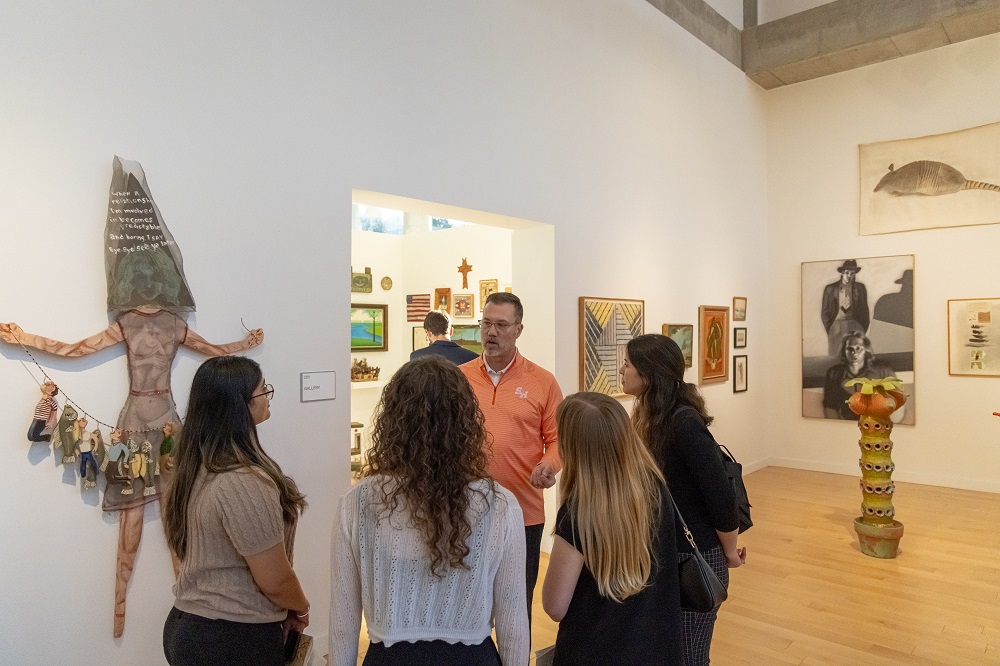
Oh, and it’s hard not to mention his other legacy—though the museum delicately handled his impeachment proceedings.
A special moment for us was the section on the Little Rock Nine.
The connection to our visit the previous day was clear, tying civil rights struggles from the 1950s to the ongoing political landscape Clinton navigated during his presidency. It felt like a seamless link between the past and present struggles for equality and justice.
We also thoroughly enjoyed the art on display. There was a small Frank Lloyd Wright statue of a house that had been gifted to Hillary Clinton, a beautiful example of his architectural style in miniature form.
We also saw a stunning Dale Chihuly glass sculpture…
The Oval Office replica was another highlight, showcasing Clinton’s presidential style.
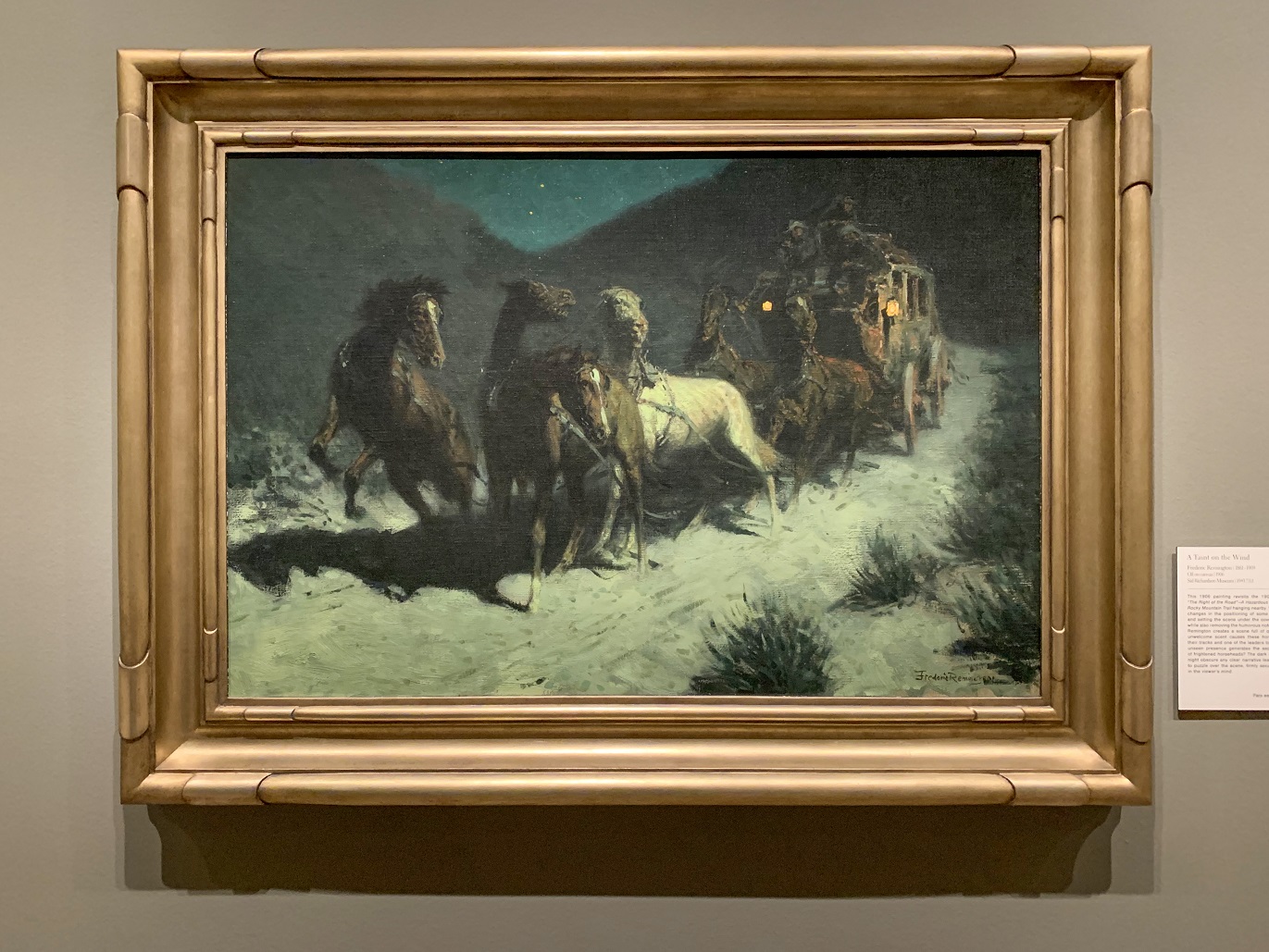
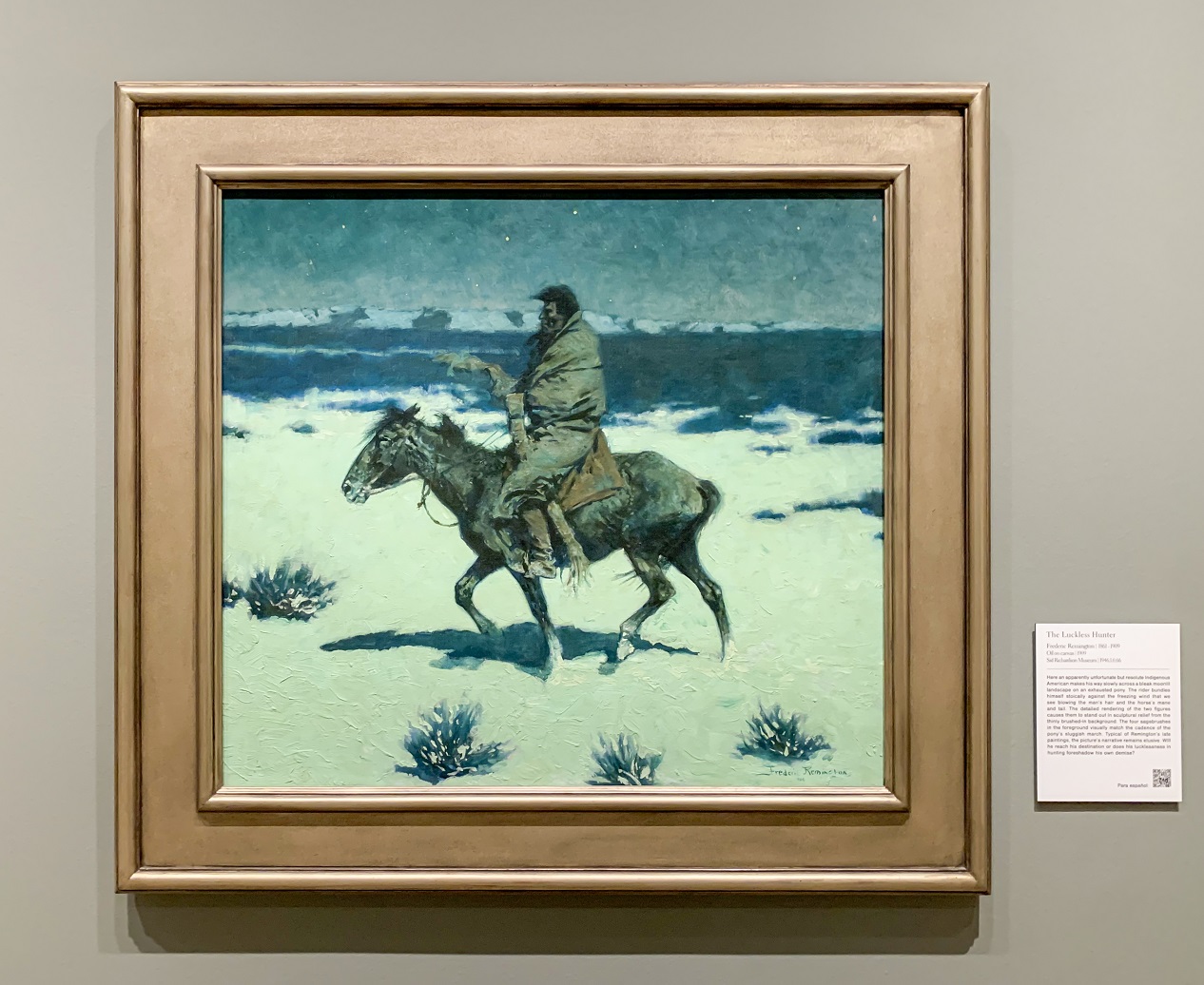
We saw sculptures by Remington and Rodin and a painting by Childe Hassam.
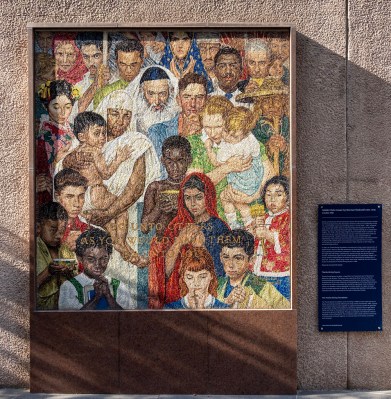
An unexpected surprise was a Norman Rockwell painting that we didn’t immediately recognize.
All in all, our visit to the Clinton Library was both educational and enjoyable. It gave us a new perspective on President Clinton’s legacy on American history.
ATripto theArkansasMuseumof Fine Arts
Saara Maknojia
Walking through a stunning collection of artworks at the Arkansas Museum of Fine Arts (AMFA) was the perfect way to spend our afternoon.
Olivia and I were particularly excited to see the new Art Nouveau exhibit, so we headed straight for it upon arrival.
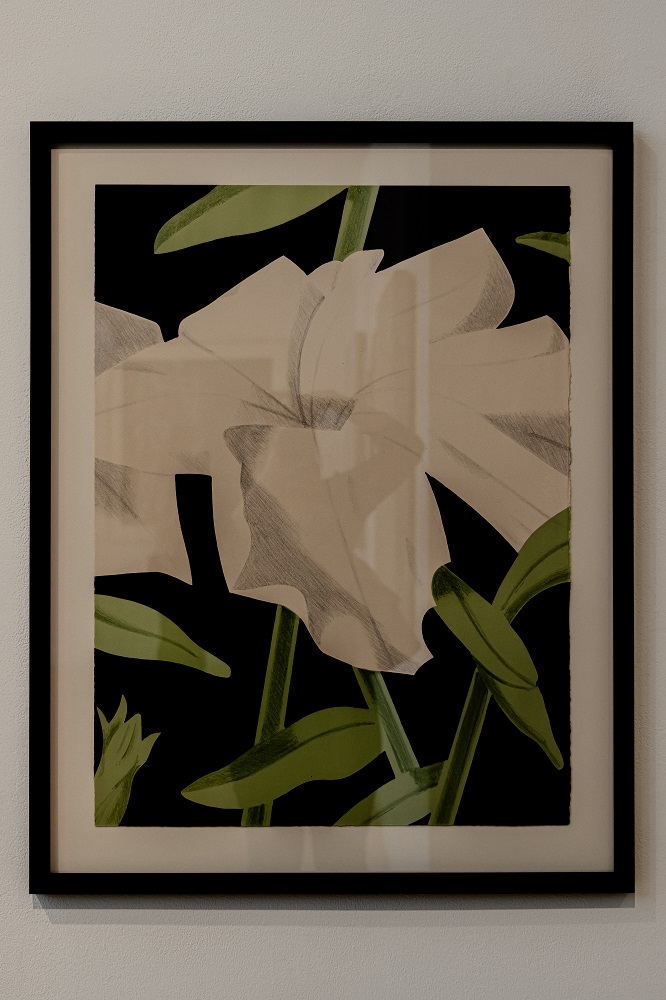
We were greeted with a beautifully curated selection of vases, jewelry, woodwork, and glass sculptures from the 19th century. What stood out to me the most was the Tiffany & Co. collection, renowned for its exquisite craftsmanship and iconic designs. The intricate detail and elegance of the pieces left a lasting impression.
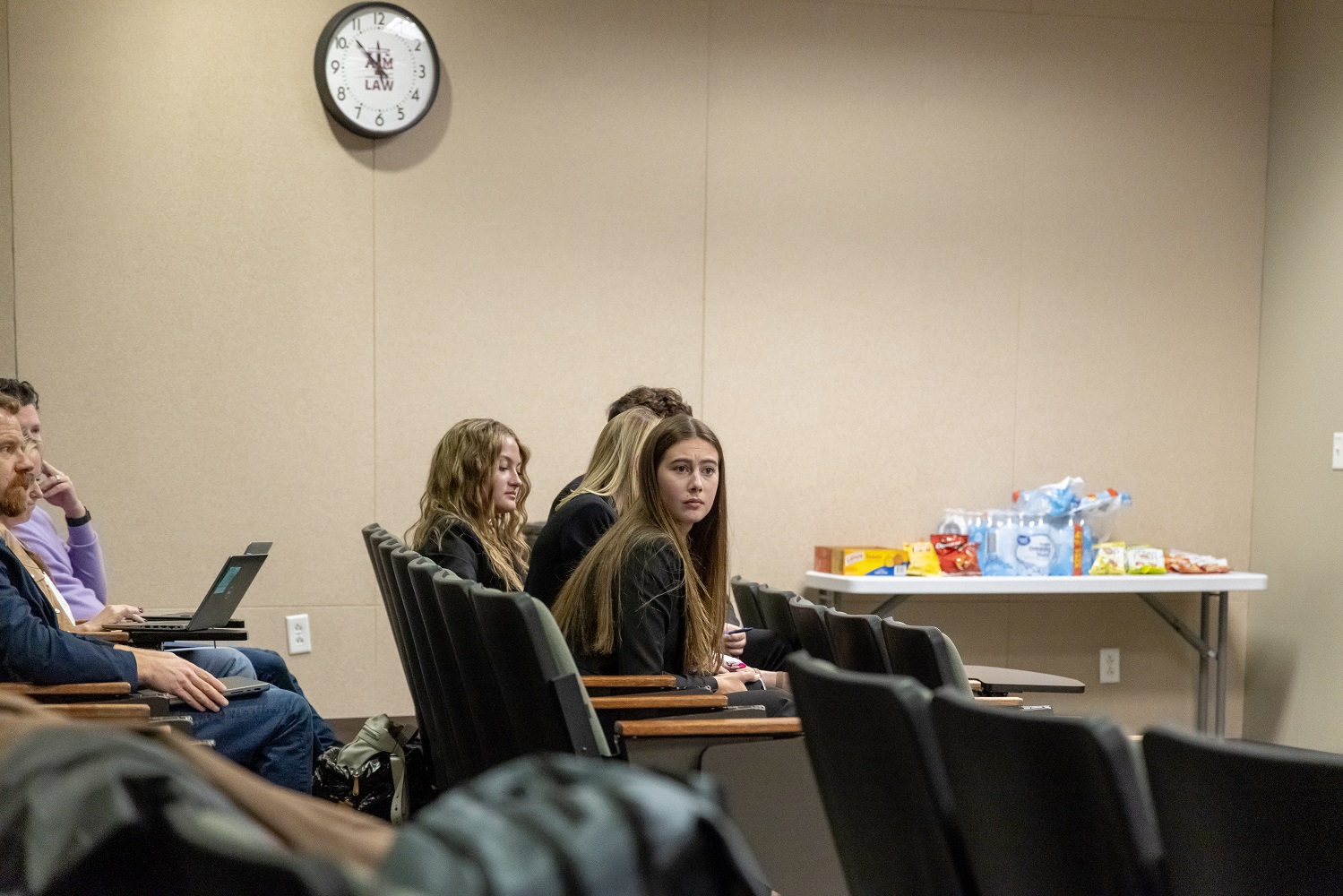
Since this was our first time at an art museum together, we took the opportunity to share our thoughts on various artworks. As we walked through the galleries, passing by pieces from prominent artists like Gustav Klimt, Pablo Picasso, Claude Monet, and Diego Rivera, we discussed our interpretations of what each artist intended to convey, and we watched others contemplating similar questions.
It was stimulating to exchange perspectives and delve into the emotions and possible stories behind these pieces.
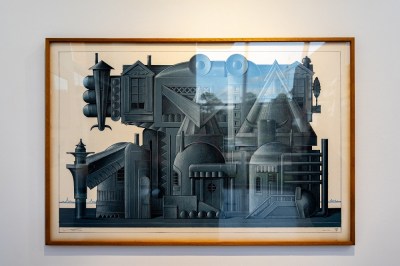
One painting that captivated us both was Homage to Alberti by Terrance Corbin. We found ourselves returning to it multiple times. The artwork’s focus on landscape, combined with its use of geometric shapes and lines to create illusions of depth, was intriguing. Although abstract landscapes aren’t typically my preferred style, this particular piece drew me in with its complexity and the many ways it could be interpreted, making it one of my favorites from the museum.
Olivia, on the other hand, was fascinated by Pierre-Auguste Renoir’s Three Partridges, an impressionist work that spoke to her appreciation for soft brushwork and natural themes in art.
We ended our visit on an unexpected yet delightful note. David Warren, the Chair of the museum’s art school, graciously gave us a spontaneous tour of the art studio and pottery workshop. His warm hospitality reminded us of the spirit of the Arkansas Traveler—welcoming, generous, and always eager to share his knowledge and passion for art.
It was a fitting end to a day spent appreciating the beauty and culture on display at the Arkansas Museum of Fine Arts, and we left feeling both inspired and grateful for the experience.
Bound to Books: The Six Bridges Book Festival Kickoff
Owing to some difficulty with our schedule and the timing of the Texas Book Festival, we looked to Little Rock and the Six Bridges Book Festival–and we are glad we did! The Six Bridges Book Festival takes place over a longer period than the Texas Book Festival, and it is smaller. This, as we found out tonight, allowed for a more intimate and personal experience.
The Festival’s kickoff offered some finger foods and snacks; a photo booth, which was much fun; authors on hand, mixing with the crowds; karaoke; and, of course, books for sale.
We began by scouting the facility, the “Ron Robinson Theatre,” part of the Central Arkansas Library System (and the organizer of the festival). The two-story venue was attractive, with a particularly appealing theatre, which was hosting the karaoke. A talented set of spectators took turns at the microphone, and we enjoyed a few songs, before moving on to the next activity.
The next activity included the photo booth, which allowed us to continue the theme of money, one established during our tour of the Arkansas Treasury. Saara grabbed some Benjamins, a money bag, but drew the line at wearing a dollar-sign fishing hat.
We enjoyed the book selection, and we purchased a few before the authors’ supplies were fully depleted. We also played “spot-the-artist,” and we are pretty sure that we “saw” far more authors than were actually there.
But the event whetted our appetite for the next day’s sessions, when we would see Eli Cranor (“You Don’t Know Tough”), Boyce Upholt (“The Great River”), Garrard Conley (“Boy Erased”), Samuel Freedman (“Into the Bright Sunshine: Young Hubert Humphrey and the Fight for Civil Rights”), Randall Woods (“John Quincy Adams: A Man for the Whole People”), John Vercher (“Devil is Fine”), Brian Fairbanks (Willie, Waylon, and the Boys”), and Lana Williams, the latter of whom is a gardener and owner of Tender Gardener.
Wrapping Up
With small pangs of hunger reminding us to eat a full meal, we decided to visit Sterling Market. The restaurant might have been a Lana Wiliams fan, inasmuch as they emphasized ingredients from local farmers. The food was wonderful, and we can publicly vouch for the ricotta dip, the bearnaise sauce, the smoked chicken sandwich, and the mushrooms and dumplings.
It was another nice ending to our ongoing Arkansas adventure, meeting friendly locals, Arkansas authors, and experimenting with some wonderful Arkansas food!