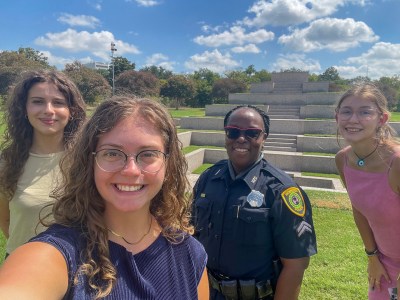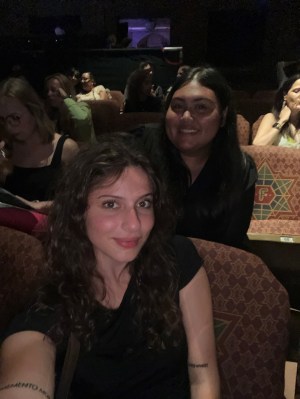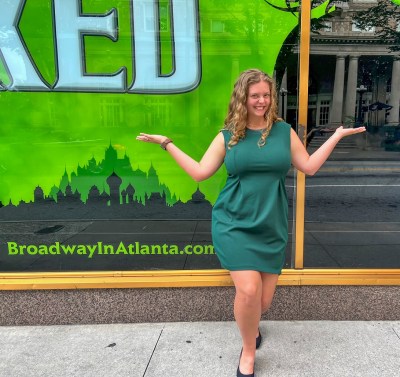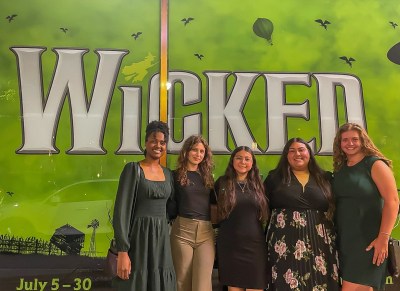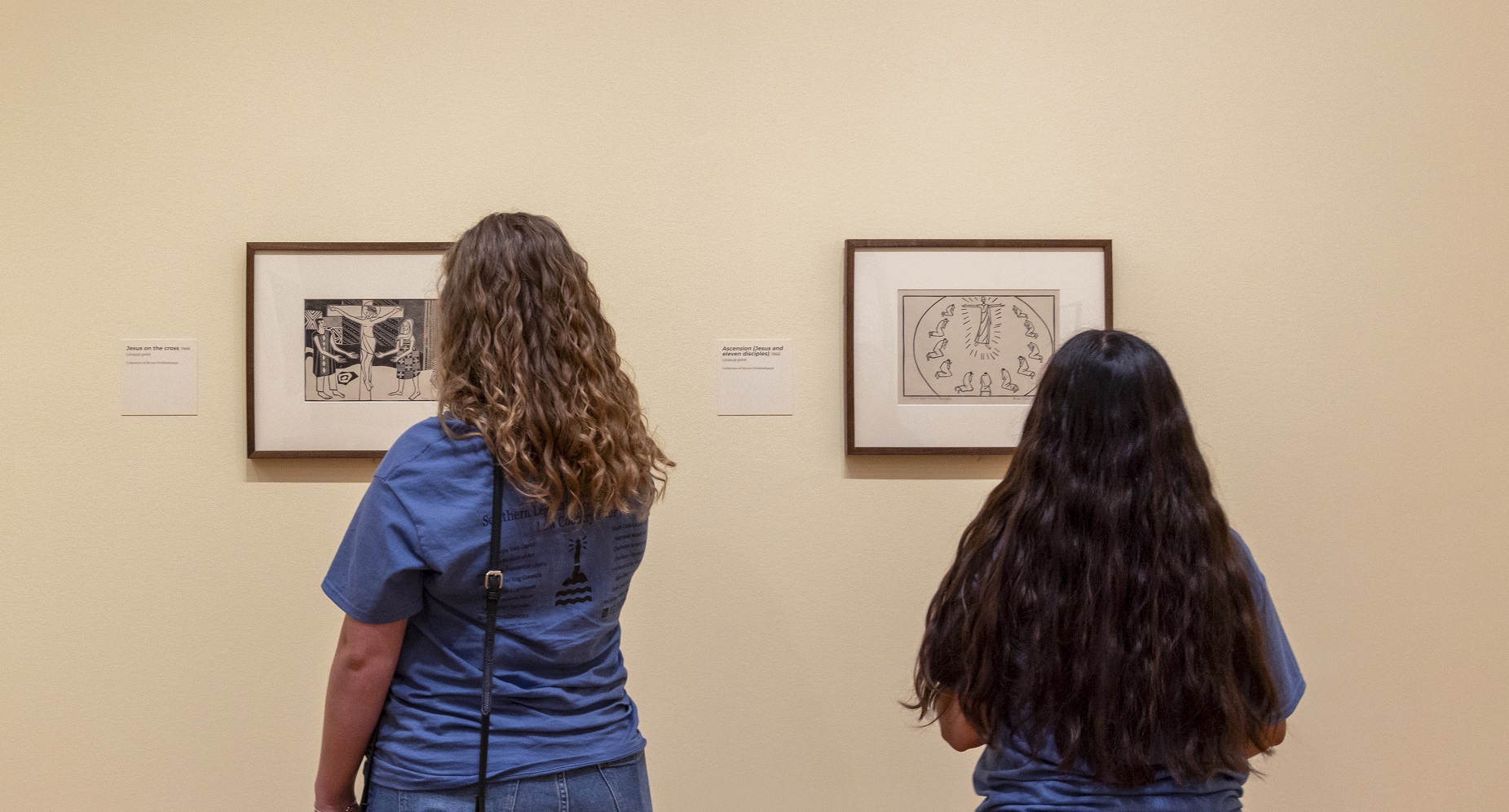
Visiting State Capitols is a bit of a LEAP tradition, combining politics, architecture, history, and–often–art into a single structure! So Jessica Cuevas, Olivia Discon, Morgan Robertson, Michelle Cardenas, and I decided to delve deeper into Georgia’s past by adding our second state capitol building on this trip to our docket. Our journey, led by Morgan, took us through significant historical events, remarkable personalities, and captivating architecture.
One of the striking statues that greeted us during our visit was that of Ellis Gibbs Arnall, a visionary and influential figure in Georgia’s political landscape. His journey began in 1932 when he was elected as a House Member, and he subsequently held roles as Speaker of the House and Attorney General before being elected Governor. Arnall’s time in office was marked by progressive policies and far-reaching reforms. He was instrumental in improving the prison system, abolishing poll taxes, and establishing an employment merit system.
Ellis Arnal on the Capitol grounds
As we wandered through the Capitol, we were captivated by the statue of Juliette Gordon Low, the founder of the Girl Scouts . Juliette’s dream was to empower young girls and women through education, community service, and outdoor activities. Some may say LEAP resembles similar desires out of our organization, but we unfortunately do not have any cookies.
Juliette Gordon Low
As we explored the corridors adorned with portraits of influential figures, we were fortunate to come across a portrait of former President Jimmy Carter, who also served as Governor of Georgia. It was a flattering portrait.
This encounter held special significance, as we had visited the Jimmy Carter Presidential Library and Museum only a week prior. Born in Plains, Georgia, President Carter’s legacy as a champion of human rights, diplomacy, and humanitarian efforts has earned him immense respect both nationally and internationally. Seeing his portrait in the Capitol added a personal touch to our journey, connecting us to the larger tapestry of Georgia’s history and its global impact.
Our visit to the Georgia State Capitol Building was a journey through time, unraveling the historical significance and architectural splendor of this beautiful structure.
From the design , every aspect of the Capitol bore witness to Georgia’s vibrant past. The educational experience will stay with us, as we thoroughly enjoyed the opportunity to learn more about the state’s remarkable heritage and the individuals who have shaped it.
After our arrival in the delightful City of Atlanta, we decided to explore a piece of their (quasi) natural scenery. The Atlanta Botanical Garden is one of the most famous botanical gardens, featuring many prestigious pieces of art, diverse greenery, fountains and grand sculptures.
As soon as we entered the Visitors Center, we were met with a spectacular Dale Chihuly piece called the ‘Nepenthes Chandelier’. This piece was inspired by the Nepenthes Pitcher plants, one of the many plants featured in the garden.
Already a tourist attraction, the Gardens have recently become even more popular with the addition of Thomas Dambo’s “Save the Humans” collection. The collection includes six different trolls, each with their own written fairytale and style.
The enormous trolls are composed of wood and have their own personal accessories such as rocks, bird houses, and my favorite, a car! Each LEAP Ambassador chose their favorite one and made sure to take a picture in front of it! My personal favorite was Rosa Sunfinger, a troll with its own tiny garden grown out of a car! The true meaning behind this piece is to showcase how plants can beautify, transform and bring back to life our everyday items.
The beautiful sights did not stop there, as we made our way through the garden…
… we were met with the Earth Goddess.
This particular piece is about 20 feet tall, and contains thousands of plants that decorate the embodiment of the goddess.
The sculpture is eye-catching, it just draws you in with its vibrant colors and different plant species. The sculpture is paired with a fountain that flows in front and through the hands of the earth goddess, making for a tranquil and serene landscape.
As we made our way to the Levy Parterre section of the garden, we saw many man-made rivers and cascades. The cascades added a relaxing and gentle sound alongside the chirping of birds and frogs. The real show stoppers were the multiple Dale Chihuly pieces we saw on our way to Levy Parterre.
There was a tall yellow piece named the “Radiant Yellow Tower” that stood at about 30 feet tall.
The gleaming tower stood over a calm pool and cast an amazing reflection that showcased its vibrant color. The other Dale Chihuly piece we saw was “The Parterre Fountain Installation” and it was colored with a gorgeous blue tint, and its shape mimicked the flow of the fountain’s water.
The Botanical Garden was definitely a hidden gem in the City of Atlanta.
Despite the city’s reputation, the 30 acres of outdoor garden proved to be a must see location. We used this opportunity to learn more about the different aspects of nature and how beautiful it can be. With this, we ended the night in awe of all the stunning sights the garden had to offer.
More than 450 people turned out to advocate for CASA–a worthy organization that advocates on behalf of children in Walker, San Jacinto, and Trinity counties. Once a year, they bring supporters together for their annual “Christmas in July” fundraiser, and this year the result was a sell-out.
The evening began at 5pm, with an hour of mingling, “shopping,” dining, and other festivities. It gave us a chance to catch up with each other and our table mates.
Our tables consisted of: Ken and Nicole Holland, Michelle Spencer and Jessica Twardesky, Judge David Moorman and Christie Moorman, Mac and Leanne Woodward, Mike Yawn and Stephanie Fors, Victoria McClendon-Leggett, Roxana Woychesin, and various LEAP Ambassadors.
In addition, we had a chance to run into community friends. One of the nice aspects of volunteering for different organizations, for example, is that we get to see people we volunteer with elsewhere! We had the opportunity to chat with Dottie, a committed member of the Lion’s Club, who joins us at 6 am to put out flags on major holidays.
We also ran into Nancy Ormsby, who was volunteering, which is no surprise. She and her sister, Lois Stehlik, volunteer everywhere–they are great community assets.
At 6pm, the Bingo commenced. Rob Hipp was on hand to emcee;
CASA board members and advocates volunteered;
…team members from SHSU football served as auction spotters;
…SHSU Volleyball members helped put up tables and chairs at the end; and LEAP Ambassadors were on hand, not only as paying guests, but also to assist with the auction and take photographs.
There were 15 games of Bingo in all, with variations on the game in full force.
Hipp did a good job of moving things along, and about halfway through, we took a “game-break” for a live auction (thank you Kevin McMillian!) of children’s paintings.
Some sold for more than a thousand dollars!
Additional funds were raised through “adoptions,” a silent auction, and a call for donations. Last year, the event raised more than $100,000, a testament to the generosity of the community and to the staff at CASA.
In addition to the funds raised for a good cause, there was a whole lot of fun going on. There were, of course, 15 bingo winners, and there were winners for “Best Dressed,” “Best Christmas-Spirit Costumes,” and “most generous table.”
The winners were typically thrilled, and they were gracious, although the “bingo-offs,” which occur when two or more individuals “bingo” on the same call, could get heated…
But, of course, everyone ended up friends.
People returned to the many stations to meander to, seeing what could be bid on, tables of friendly people to converse with, and a photogenic selfie station.
This led to much fun, as did winning. One of our table members, Michelle Spencer, Director of the Boys and Girls Club of Walker County, won the blackout contest!
As noted, with 15 games of Bingo, there were many winners, and that doesn’t include those who won the raffles, the drawings, or the silent and live auctions. Of course, the biggest winners are those who most need some wins in their lives: the children whose families are caught up in court actions. The funds raised from this event go to support those children, ensuring they have outcomes that provide them with the best chances in life.
And, in a larger sense, everyone who attended the event was a winner in that they were all contributing to a cause that helps our community become stronger–and that’s a big win!
The South Carolina legislature sure knows how to wrap up a successful conference. On the final day of the SLC, the Council of State Governments–South and the Palmetto State’s Legislature put on a wonderful “State Dinner”–a first for most of the LEAP Ambassadors in attendance.
It was a night of class, elegance, and most importantly, celebration. We gathered at The Gaillard Center, which is home to a beautiful ballroom and a tremendous theater. In our minds, we pretended the theatre was named for our Vice-Provost, Dr. Anne Gaillard, making us feel more at home.
Entering in style, we made our way through the crowds to be seated for dinner.
The dinner began with an opening speech from Senator Thomas Alexander, President of the South Carolina Senate. He thanked everyone in attendance, welcomed us to the beautiful venue, and discussed the plans for the evening, which included an invocation by Senator Jackson and the presentation of colors by the South Carolina Highway Patrol.
One of the louder traditions of the event is the annual Flag Parade, which involves recognition of each state in the southern delegation (15 states), a fun fact or two about each state, and members of that state’s delegation walking (or parading) around the dinner event, often to cheers.
In Texas’s case, there were also some boos, initiated by some unruly Oklahomans (I know, that’s redundant).
The states were introduced in order of their entrance to the Union, which put Oklahoma last. In fact, Oklahoma isn’t really a southern state, but the Midwestern Legislative Council didn’t want them, and the Southern delegation, being hospitable, begrudgingly accepted them as long as they promised to pay their dues on time.
About the time we received our dinner–a wonderful mix of steak, hashed potatoes, broccolini, and a crab salad–we were also introduced to “Kingdom Come,” an A Capella musical group who performed a delightful and interesting mix of music: “Seven Bridges Road,” “The Longest Time,” “Danny Boy,” “Down to the River to Pray,” and “Grand Old Flag.”
We also had a chance to converse with those at our tables, which incoluded lobbyists, lawyers, and elected officials. Since we all wish to do some combination of politics and law, this was fortuitous seating.
The SLC also uses this occasion to award those who have excelled in some way, and it was inspiring to see who was awarded during the 77th conference gathering.
Our dinner came to an end after the last award was presented, but the entertainment was just getting started.
The last surprise prepared for the evening was a concert performed by the band NEEDTOBREATHE. The band opened their performance with the song “The Outsiders,” a country rock tune that got everyone on their feet.
The band performed some of their most famous hits, including one of my personal favorites, “West Texas Wind.”
To bring the evening full circle, they performed their last two songs A Capella, which added a very personal touch to the evening.
The state dinner was a beautiful way to spend our last night in the City of Charleston, an unforgettable city full of southern hospitality, great food, and entertainment.
After dancing and singing our hearts out, we successfully completed the 77th Southern Legislative Conference!
Savannah, the oldest city in the State of Georgia, is a lively town with a vast and rich history. For our second day in the Deep South, we endeavored to learn more of Savannah’s history, and maybe experience some of it, too!
So, with an assist from Old Town Trolley Tours, we set out to learn more. And did we! For example, did you know that Savannah is where Eli Whitney developed the cotton gin? Or that the second deadliest battle of the Revolutionary War (The Siege of Savannah) occurred here? Or that Savannah was America’s first “planned city”? James Oglethorpe laid out the city in a grid system with 24 original squares but only 22 are still in existence today! There is a statute of Oglethorpe in Chippewa Square that is facing the south towards Florida – his Spanish enemies.
All the statues we saw were facing in the direction of their enemies since one should never give their back to them.
Our first stop was the First African Baptist Church, which is the oldest Black congregation in North America.
The church played an integral role in American history by serving as a part of the Underground Railroad, hiding those who were escaping enslavement. It was also the place where Dr. Martin Luther King Jr. preached his first sermon.
Savannah has been featured in several popular films and in literature. Forrest Gump, Something to Talk About, Midnight in the Garden of Good and Evil, and Lady & the Tramp are just a few of the films set in (or filmed in–or both!) Savannah. We were able to drive past and explore the famous locations where some scenes from the blockbuster films were shot, including Chippewa Square, often referred to as Forrest Gump Square since that’s where the scene of Forrest sitting on a bench waiting for the bus was filmed.
The Cathedral of St. John the Baptist was another highlight of our tour. Savannah once had four prohibitions: slavery, liquor, lawyers, and Catholics. The cathedral’s congregation was reorganized and established in 1796, becoming the first Catholic church in Savannah, consisting primarily of Haitian immigrants.
Although the original structure burned in 1898, the current building beautifully replaces the original while reflecting the long-standing Haitian and French influences on the region.
The trolley was an excellent way to get a glimpse into the beautiful city of Savannah! Exploring cities with a vibrant culture allows us to broaden our sense of the world through a comparison to our individual communities and experiences.
Goose Feathers Café
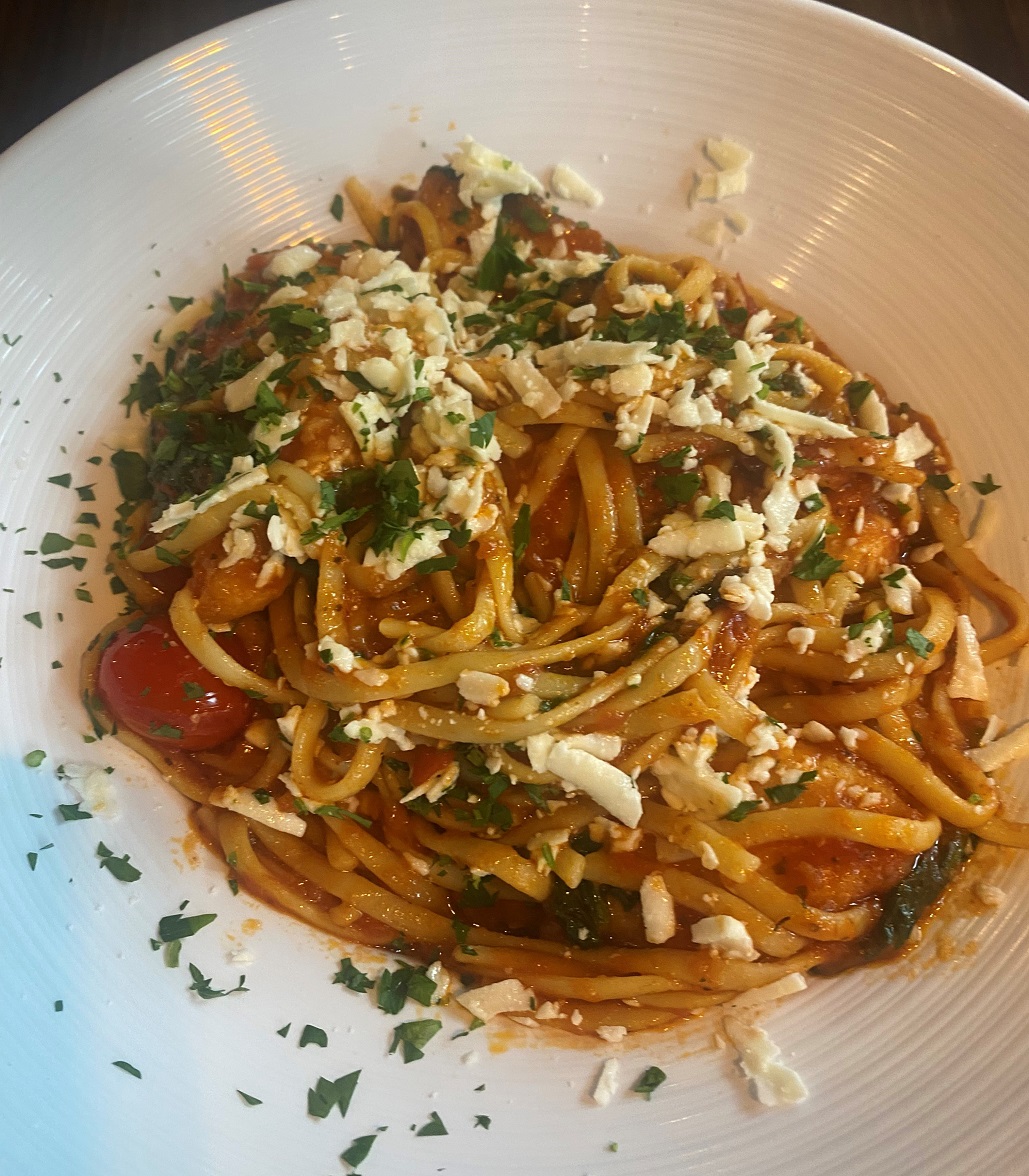
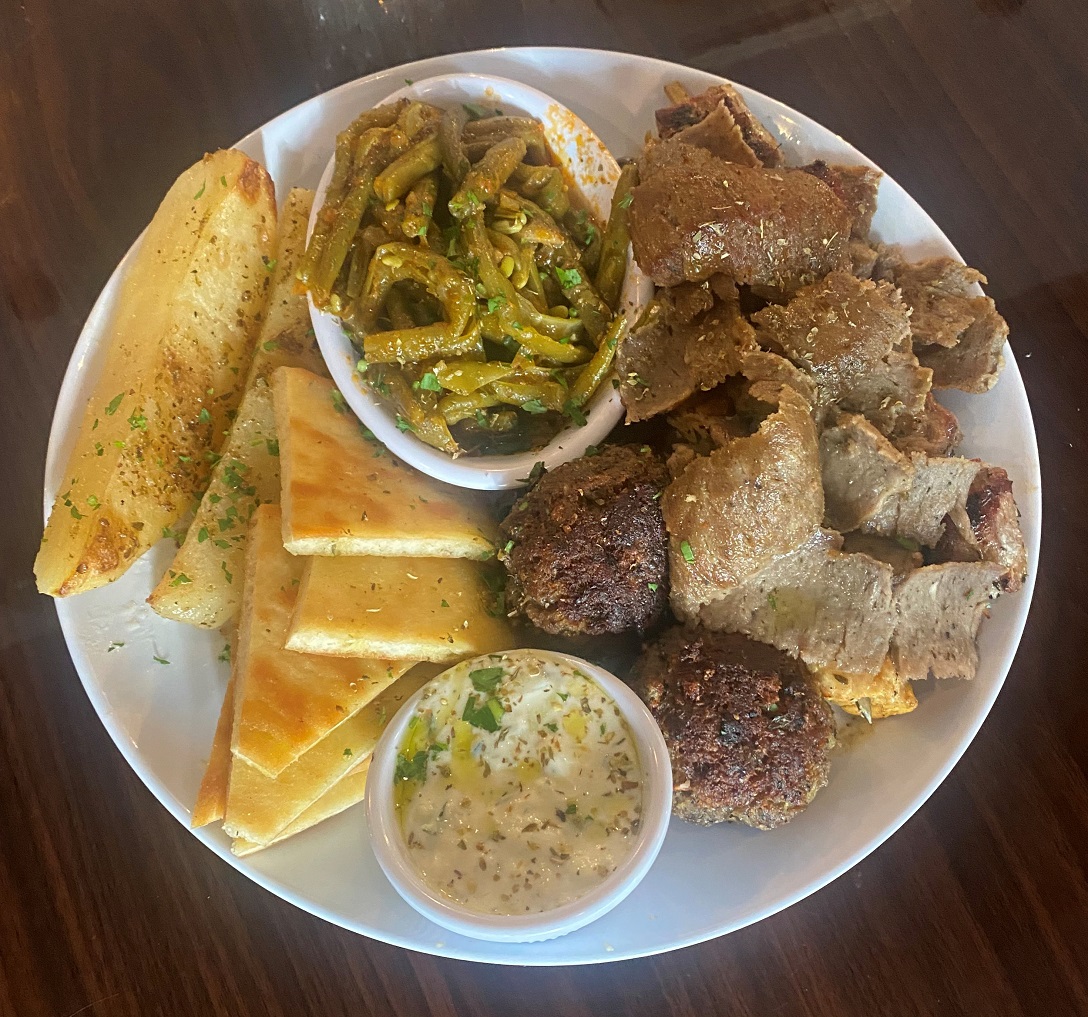
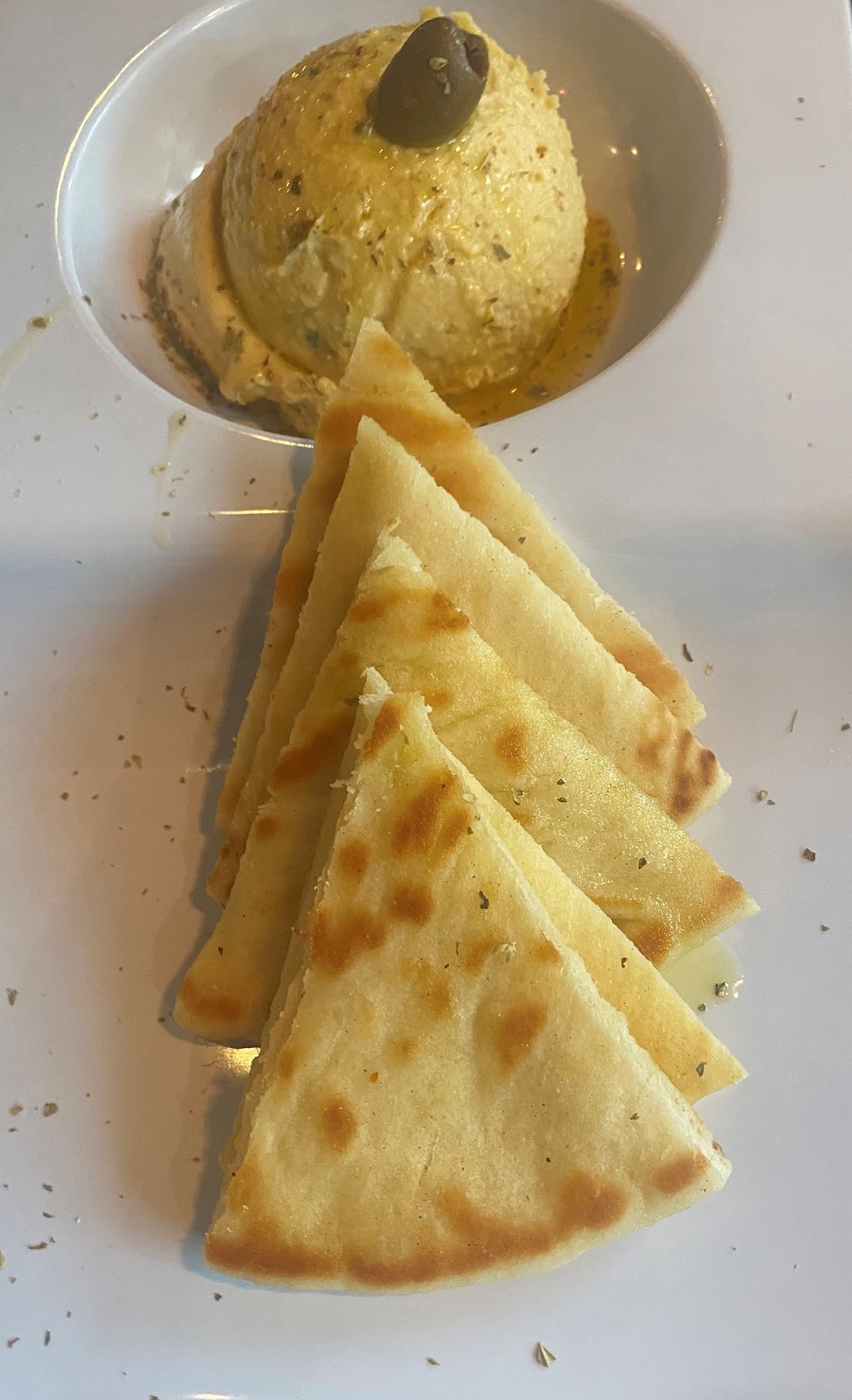
After a long morning of exploring, we decided to hop off the trolley at the City Market stop to head over to Goose Feathers Cafe. Greeted by the staff’s warm hospitality, we browsed menu options before ordering. Many of their menu items were named after historical streets and city celebrities of Savannah. Therefore, our entrees included the Oglethorpe sandwich, the Barnard Street Club (both the regular and gluten-free options), and the Greek salad.
The food was both delicious and flavorful, showcasing the delicious flavor combinations of the Deep South.
Mercer House
After our great lunch from Goose Feathers Café, we felt refreshed and energized, ready to continue sightseeing!
LEAP trips differ from most other educational field trips. While no class credit is earned for the trip, homework and preparations are expected. We might, for example, research a town, watch a documentary, or read a book. For this trip, we did all three!
Collectively, our favorite read for the trip was John Berendt’s Midnight in the Garden of Good and Evil. This book details Savannah in the 1980s through the eyes of an outsider (Berendt) who describes the murder trial of Jim Williams. To us today, Williams is something of a celebrity and savior of Savannahian architecture and culture.
To Savannahians in the 1980s, Williams was the proprietor of countless homes and host of infamous Christmas parties. To everyone, he is the subject of arguably the largest controversy in the Low Country.
The Mercer-Williams House faces Monterrey Square in the historic downtown of Savannah and was originally built for the great-grandparents of Johnny Mercer (General Hugh Mercer is Johnny’s famous great-grandparent) in 1860. Williams purchased the home in 1969, and it was almost in complete disrepair. Like the art and antique dealer that he was, Williams completely revamped the house down to hand-mixed, original paint colors, and hand-painted granite designs on the baseboards.
From a young age and under the guidance of his carpenter father, Williams renovated or restored different items. He used the basement of the Mercer-Williams as his workshop to repair the antiques, which he would later sell in the main house. Williams had a unique love for portraits, which was clearly displayed as we ventured around the house. Notable portraitists included Gilbert Stuart, Thomas Hudson, and John James Audubon. My favorite of the Williams collection was the 20 Audubon prints in one of the parlors.
The most impactful portion of the house was the study where Williams shot and killed his employee/lover Danny Hansford. Berendt describes in detail the events that did (or did not, depending on your belief in Williams’ innocence) take place in that room. The room felt heavier as we all knew we were in the room where Hansford threatened Williams with a German Luger, misfired, and seconds later fell to the ground with three new wounds.
Over the course of eight years and four trials, Williams was found not guilty by the Georgia Supreme Court, only to die a few months later at the age of 59, just a few feet from where he killed Danny Hansford.
Our experience in the Mercer Home was further enriched by having read Midnight in the Garden of Good and Evil. With that background knowledge, we were able to associate the beautifully decorated interior with the events that occurred within the walls of the house.
Our tour guide, Max, gave a great overview of the history of the House and its few occupants. Some of the Williams family still take residence in the upper levels of the House, so sadly photography was not allowed. However, we did not let this distract us from our tour, as we visualized the scenes in the book in the rooms before us–and took advantage of much outdoor photography!
Leopold’s Ice Cream
We couldn’t leave Savannah without trying Leopold’s Ice Cream. After almost a full day of walking the historic squares of Savannah, we were due for a cold yet sweet Savannah tradition.
Leopold’s is known for their rich homemade ice cream dating all the way back to 1919. They pride themselves in having the “Best ice cream in Georgia.”
Due to Leopold’s reputation and the ice cream shop’s popularity, we were met with a long line and waiting time. To maximize this time we thought about the flavors we would order, perspired, and waited some more.
After a long debate and thought, I opted for the Butter Pecan and one of Professor Yawn’s favorites, the Peanut Butter Chippy. Olivia decided on the coffee chocolate chip; Ingrid, the vanilla. Jessica had a scoop of Rum Bisque and a scoop of Chocolate Chewies and Cream. Morgan took a different route and opted for a combination of lemon custard and coffee chocolate chip, a weird combination if you ask me. Nonetheless, we were all very pleased with our selections, and a majority of us would agree that this is the best ice cream in Georgia!
Jekyll Island
Jekyll Island is one of the “Golden Isles” of Georgia, and it is one of the most popular. Interestingly, it is owned by the State of Georgia, and it is governed by its own board of directors, which limit its development. That’s a happy reality for us, because we were visiting to explore some of its more natural elements.
And while we may have been there to see the island’s natural elements, but this did not stop us from driving through the “historic district,” where wealthy individuals such as Frank Henry Goodyear (Goodyear Tires) and William Rockefeller had houses. They were beautiful, and more closely resembled mansions than cottages.
Our main destination, however, was “Driftwood Beach,” which features hundreds of dead trees, victims of beach erosion. At low tide, these trees lie in impossibly intriguing angles across the beach, perfect for climbing, posing, or nature photography. We attempted all three.
Not all of the Ambassadors, we learned, are equally adept at climbing.
Or taking photos.
But, generally, we persevered, got a few notable photographs, and we experienced the beauty of a natural setting in the Georgia Low Country.
With that accomplishment, we traversed the Sidney Lanier Bridge (whose poetry we read prior to traveling, and whose home we stopped by yesterday), and returned to Savannah.
There are many “must-sees” in Chicago, and while I was there for three weeks, most of my time was devoted to taking classes at the Chicago-Kent College of Law, so I had to pursue my many must-sees judiciously and leave a few out. But I can say with certainty that if the Art Institute of Chicago isn’t on your must-see list, it should be.
It is a majestic building, a beautiful classic building. And while I was amazed by the intricate exterior architectural elements, I was completely blown away by the artwork on the interior.
I have heard of people spending hours in an art museum, but I never thought I would spend five hours in an art museum. But I did. There was a lot to see, and I still didn’t see at all.
With all of that art, it is difficult to highlight only a few. But Edward Hopper’s Nighthawks is one of those.
Hopper has always been difficult for me to identify, but I certainly recognized this painting, with its emphasis on loneliness and isolation in the middle of a presumably large city.
And if you haven’t seen Nighthawks, you have likely seen images or replications of Georges Suerat’s Sunday on La Grande Jatte. In fact, in my old apartment, I had a jocular version of this painting featuring characters from The Office. The real painting is much better, if perhaps less humorous.
In one of the featured exhibits, Van Gogh and the Avant-Garde: The Modern Landscape, they featured the studies of Sunday on La Grande Jatte, amongst other impressionist works. This is where I was lucky to see the different versions of the sketches and the number of changes they underwent for the final version. Although Seurat’s style departs somewhat from impressionism, I did particularly like this painting after I saw how it all came together.
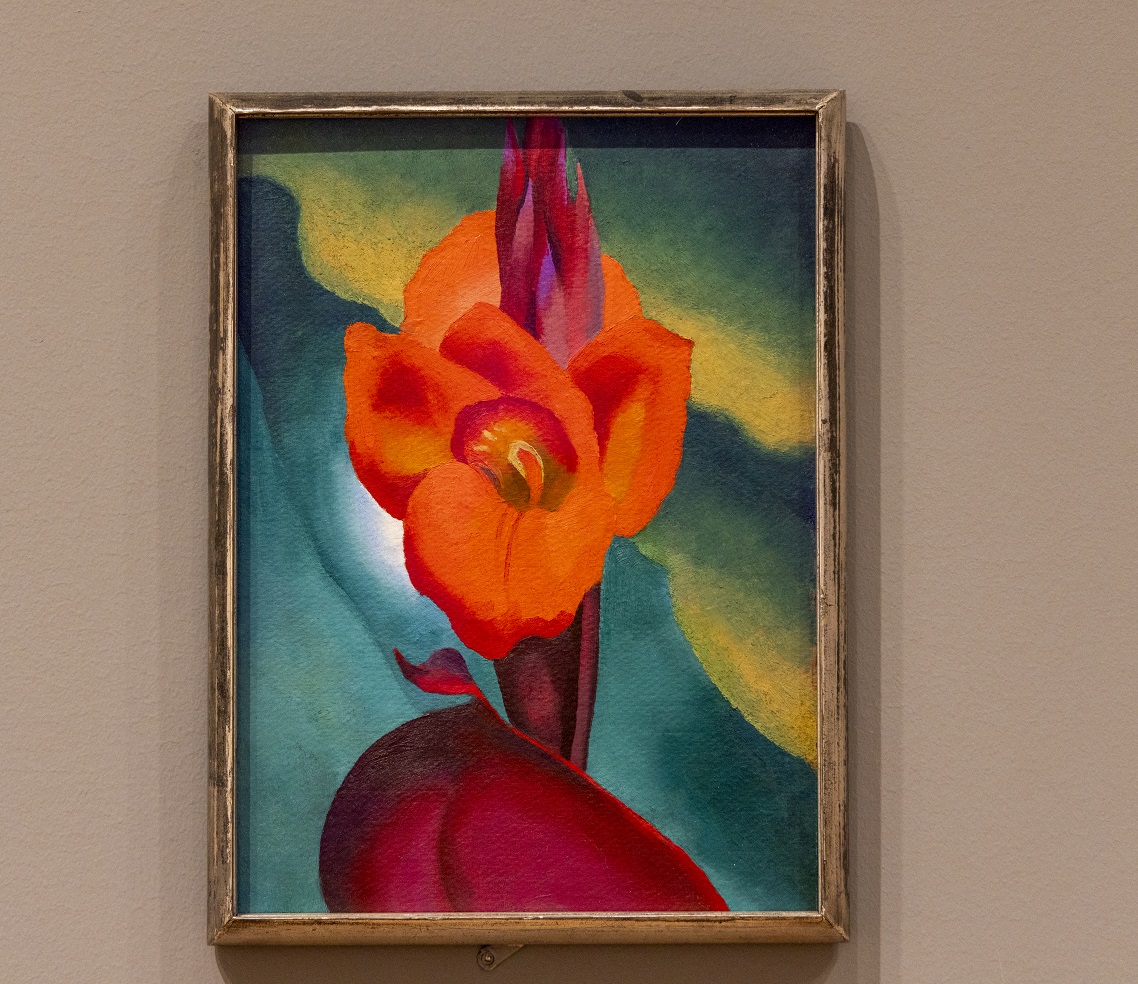
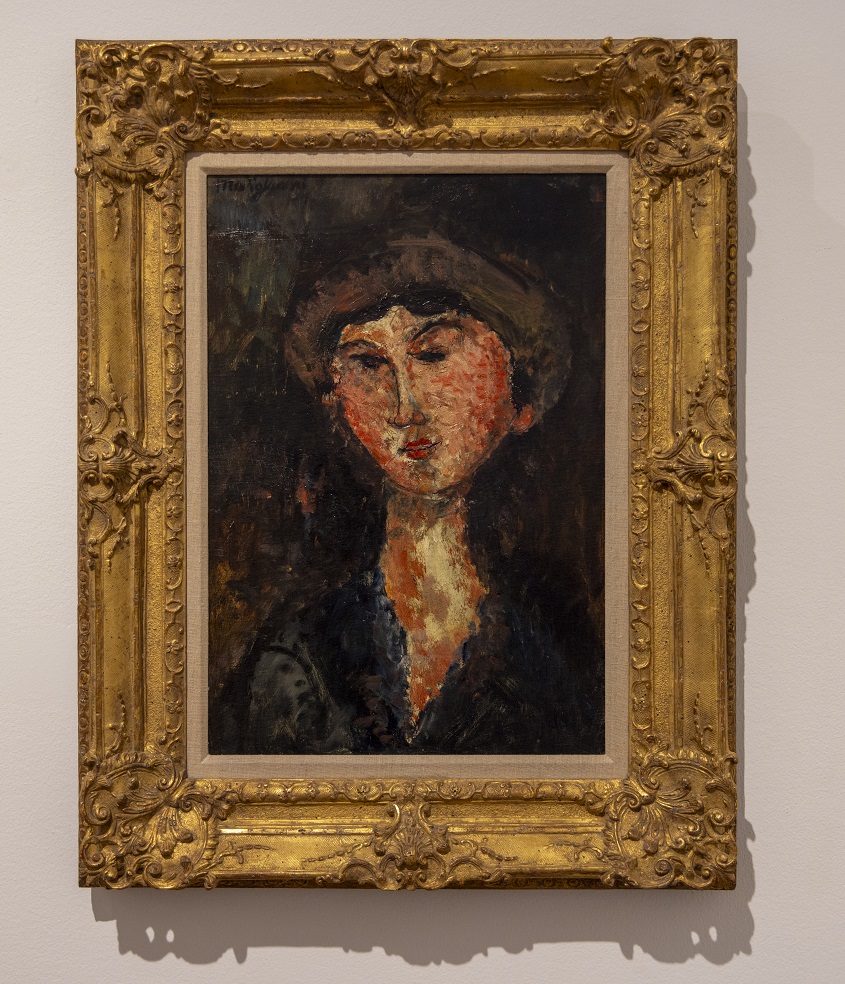
Other favorites of mine included the Chagall windows, a work by the ever-present Henry Moore, a Calder sculpture, a study of a work by Calatrava, and a piece by the wonderful Georgia Okeeffe.
Interestingly, I saw the larger versions of Calder’s and Calatrava’s works in Chicago… The Calder sculpture is 53-feet high!
BUT . . .however long I spent in the Museum, I had to make time for at least one sculpture outside the Museum: the Bean. Formally called “Cloud Gate,” this iconic sculpture by Anish Kapoor is one of Chicago’s key tourist attractions, and I confess I spent much time exploring its smooth, reflective surface, with selfie camera in hand!
The Wynne Home has been very active this month, hosting many wonderful artists and speakers from the community to raise cultural awareness and highlight some of the wonderful talent we have in town. And this week, the Wynne Home featured Grady Hillman and his 1984 award-winning film “Lions, Parakeets, and Other Prisoners,” depicting the complexities of incarceration through poetry.
Many of our city’s key figures were in attendance; Sarah Faulkner, the Cultural Services Director for the City of Huntsville; Tammy Gann, the Economic Director, City Manager Aron Kulhavy, Dr. Ralph and Mrs. Linda Pease; Dr. Carolina Crimm; Kristie Stevens, a writer for the Huntsville Item; and Cheryl Spencer and Dr. Joe Kirkland.
Professor Mike Yawn started off the night with an astounding anecdote, recounting one of his only memories as a sixth-grader, a bomb threat at his school. The students were moved to a safe location, where a poet was brought in to entertain the 1,600 restless, rowdy, and unruly children during the delay. That poet, hired at the time by Linda Pease, was in fact Grady Hillman! Funnily enough, Hillman could not only recall that day, but he wrote a poem about the entire endeavor– and he happened to have that poem with him! He asked Yawn to recite this poem, and the two of them relived that day more than 40 years ago, adding in commentary as appropriate. As an audience member, I felt very lucky to have witnessed such a moment.
Hillman introduced the critically-acclaimed docu-drama’s background, of course, highlighting the city of Huntsville. The film depicts the Walls, Wynne, and Eastham Units, centered around a poetry class Hillman lead in our local prisons.
Consisting pieces of poetry written and reenacted by Hillman’s students, the film captured the emotions of an incarcerated person’s experience, transcending the class meetings altogether. The title of the film is even a reference to two of poems read during the film in which two animals, lions and parakeets, are assigned to their respective cages. I must admit, my favorite detail within the film was its rhythm, which made both the dialogue and the poetry all the more profound. One of the most special parts of the night was when the credits started rolling, with the audience members seeing the names of longtime friends in the community.
Hillman concluded the night with an informational on his newest book, “Arts in Corrections: Thirty Years of Annotated Publications,” an annotation on the arts and education programs in the prison system, which is on sale at the Wynne Home.
Interestingly, in 2012, Hillman suffered a stroke that left him unable to write, read, and speak. After doing intensive therapies to regain those abilities, he has, he noted, become an editor of his own work. Going over his life’s activities and curating them, and the presentation of “Lions, Parakeets, and Other Prisoners” is part of that process. We were fortunate to be a part of it.
After the event, Hillman was generous enough to sign books. When I went to get my book signed, we had the opportunity to speak about the culture of each individual prison. Having visited 16 prisons from 1981-1984 alone, Hillman noted that his experiences were each unique to the prison. He did note, since he began the writing courses in Huntsville, that within the first year working there he knew most of the problems within the prison, the second year he knew how to solve the problems, and within the third year the problems changed, and he couldn’t even recall the initial problems.
It was truly a pleasure to get a glimpse into the immense experience and talent of Grady Hillman. We were further reminded of just how rich and deep the culture of Huntsville possesses, appreciating just how special of a time we all shared reflecting on it.
After a long night of planning and work, the LEAP Ambassadors began their second day of the retreat. Our plan was to go to the Stark House in Orange, but an event they were hosting precluded tours, so audibled and went to….
Tyrrell Park
By Ingrid Cuero
Starting off our second day strong, we headed to Tyrrell Park in Beaumont, Texas to reinforce our technical skills in outdoor photography. After familiarizing ourselves with a few of the photography basics, such as the exposure triangle, we had the ability to focus on the subjects of our photos as opposed to how to capture them.
Delving deeper into our understanding of photography, we realized the importance of patience when working with wildlife and its unpredictable nature. Although the park featured a large marsh, it turned into a beautiful scene of illuminated waters with alligators, interesting landscapes, and stationary, singing red-winged black birds.
With the adjusting of our camera settings, we were able to capture some beautiful pictures of Purple Gallinules, Egrets, Ibises and Swallows.
I was able to get a great shot of a Great Blue Skimmer, its translucent wings appearing ever-so-slightly against the lily pads.
Many, if not all LEAP Ambassadors walked away with pictures they were proud of, becoming acclimated to the qualities of a good photo. We thoroughly enjoyed the chance to work at different points of the day with various creatures to truly improve our skills.
The Stark Museum
By Olivia Discon
After a trip to Tyrrell Park, where we took photographs of a new frontier (for us, that is), we traveled to the Stark Museum to gain deeper knowledge of early Western art. Upon arriving in Orange, Texas, we spotted, by chance, a James Surls piece on Lamar-Orange’s campus! We took advantage of this unique opportunity and snapped a couple selfies and photographs in front of the piece.
It didn’t take long to realize the prominence of the Stark name in this town, as we passed by the Lutcher (Stark) Theater and the massive, historically preserved Victorian family home. The Stark Home gave the group a sense of great anticipation for the museum!
We were able to see the lavish, custom Ford Model-Ts that William Henry Stark drove almost immediately after entering; giving us the impression that this museum would have an extensive and captivating collection. However, we hadn’t anticipated how true that was!
To our surprise, some of the first works we looked at in the Western Art gallery were of the same birds we took pictures of at Tyrrell Park, all done by John James Audubon!
Some key figures of the Western art movement are Frederic Remington, Albert Bierstadt, and Thomas Moran, all of which were featured in the American Western gallery.
We were able to experience some introductory Bierstadt pieces yesterday at the MFAH, but the opportunity to immerse ourselves in a specific niche of art history was incredible. Morgan especially enjoyed “White Mountains, Mount Adams”…
…a study of mountains done with oil paint on cardboard, as well as John James Audubon’s personal copy of “The Birds of America” prints.
A work that resonated with Ingrid was “Indian Women Playing Ball on the Prairie” by Seth Eastman, providing an undertone of unfounded commentary for the time period. The painting depicts a swap of gender norms, depicting the women playing lacrosse, and the men idly chatting and spectating the game. The gallery had several amazing pieces that highlighted the allure of the unknown, further romanticizing the idea of westward expansion.
An artist we enjoyed thoroughly without encountering his work before was William Herbert Dunton; a Western artist with several black and white paintings on display. Yvette preferred “The Landing of the American Troops Near Guanica”, and I enjoyed “My Son–My Only Son–is a Coward”. Both pieces had incredible depth and shadowing, which enhanced the emotional and imaginative value of the paintings within the gray-scale.
The Indian American exhibit was another favorite of the LEAP Ambassadors, which was of great interest to Western artists in their own exhibition. However, the innate diversity of Native American art was mesmerizing in its own right. The oil paintings, textiles, and sculptures had an enthralling vibrancy about them, which provided a great contrast to the black and white gallery wall of the Western Art exhibition.
While we weren’t able to take a picture of the painting, we were able to see a Georgia O’Keeffe “Gerald’s Tree”! Consisting of a dying cedar tree on a Western landscape in New Mexico, the highly notable appearance pleasantly surprised us.
What stood out to me the most was a traveling exhibition on display: “Hunting Pictures from the Collection of the Sarah Campbell Blaffer Foundation”. Game hunting was considered a sport of nobility for upper class citizens to indulge in during the 1700’s, as prohibition laws surrounding hunting were relenting over time. This is reflected in the portraiture of the elites of society, as several paintings included hunting dogs and hunted game alongside the subject.
This museum, as Professor Yawn noted during the visit, has an impressive collection relative to the size of the town. The subject matter allowed us to gain insight into the historical perspective of some early explorers and indigenous people who essentially founded one of America’s first art movements, leaving us with a newfound appreciation for the era and its artists.
Anahuac National Wildlife Refuge
By Yvette Mendoza
Continuing our adventure through the coastal wetlands of East Texas, we embarked on our next voyage to Anahuac National Wildlife Refuge. It was a treat to observe how our knowledge of the animals expanded, connecting the ones we saw in Tyrrell Park with those that soar high above the marsh and lurk in the swamps of Anahuac, Texas.
While swatting away insects that seemed particularly drawn to the LEAP group, we took care not to disturb the stunning butterflies we came across. We also encountered numerous Blue Skimmer Dragonflies and Green Dragonflies, which gracefully posed for our photographs, showcasing their vibrant colors and crystal-clear wings.
Apart from these airborne creatures, we also marveled at the birds. The sheer number of Snowy Egrets flying overhead, searching for food and shelter in the coastal region of Texas, left us mesmerized. Similar to the egrets, we had the opportunity to capture the beauty of the Great Blue Heron.
This Heron stood out from the rest, as it confidently stood up at the post, and was ready for its close-up and unafraid of our cameras. We were fortunate to observe the Red-Winged Black Bird frequently, with its vibrant red dots on each wing, as well as the Common Gallinule. We even witnessed a mother Gallinule walking alongside her young in the swamp.
After encountering many of the local birds and some of their key characteristics such as beak type and coloring, we began to build our repertoire of identifiable birds.
We quickly learned to distinguish the White Ibis from other soaring birds due to their curved beaks and bright red faces. For instance, their beak shape is specialized for catching fish or breaking nuts.
Transitioning from birdwatching, we took a drive around the park, marveling at the reflection of cattails in the swampy green water. Our eyes were keen not only on the flying animals, but also on the most fearsome residents of the water – the famous alligators. Witnessing over 15 alligators at Anahuac Wildlife Refuge was truly astonishing. Additionally, we spotted turtles and ducks leisurely living their lives in the water, unaware that they could become the alligators’ next meal.
To conclude our nature walk, we strolled along a boardwalk that rose above what used to be a marsh filled with water. Now, it lay as an enormous dried-out muddy pool beneath us. Though unexpected, the view was undeniably stunning and too captivating to miss to finish off our adventure with the perfect sunset selfie of the LEAP Ambassadors!