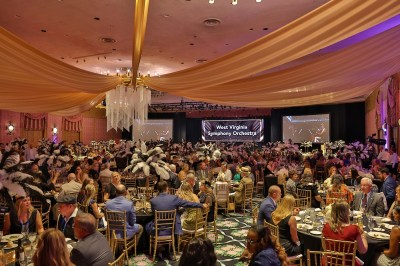
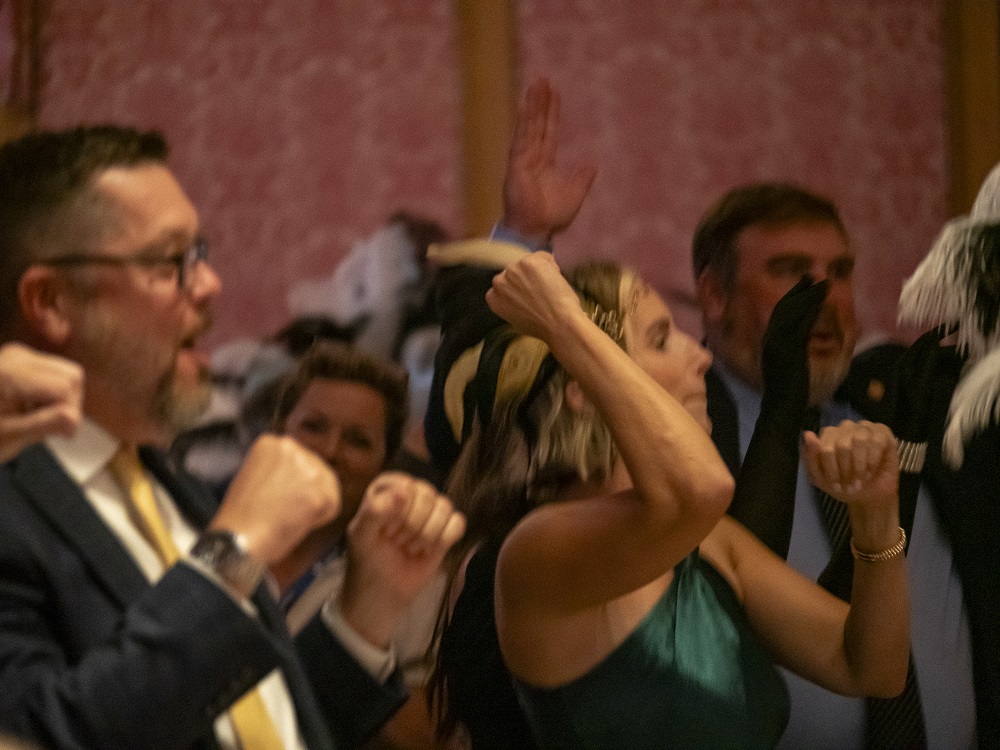
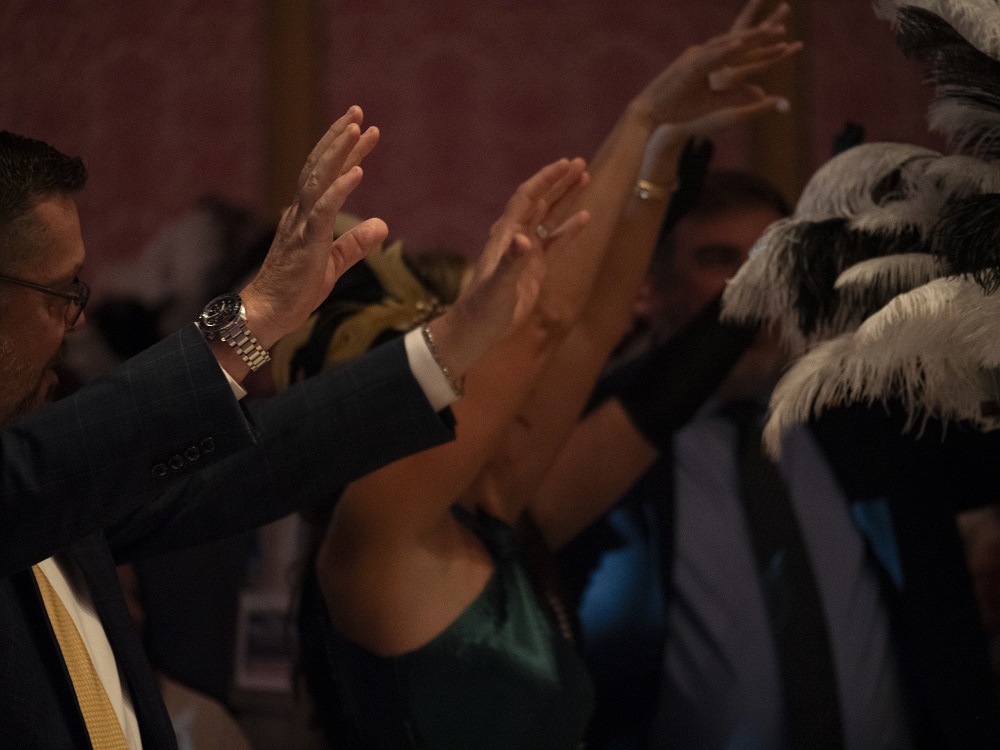
For our last night at the Greenbrier, we stepped back in time to the roaring 1920s for an unforgettable State Dinner. From the moment we walked in, the atmosphere transported us straight into the vibrant spirit of the Jazz Age. Most guests embraced the theme wholeheartedly, arriving in flapper dresses, tailored suits, and dapper accessories. We, of course, could not let this opportunity pass and decided to go all out.
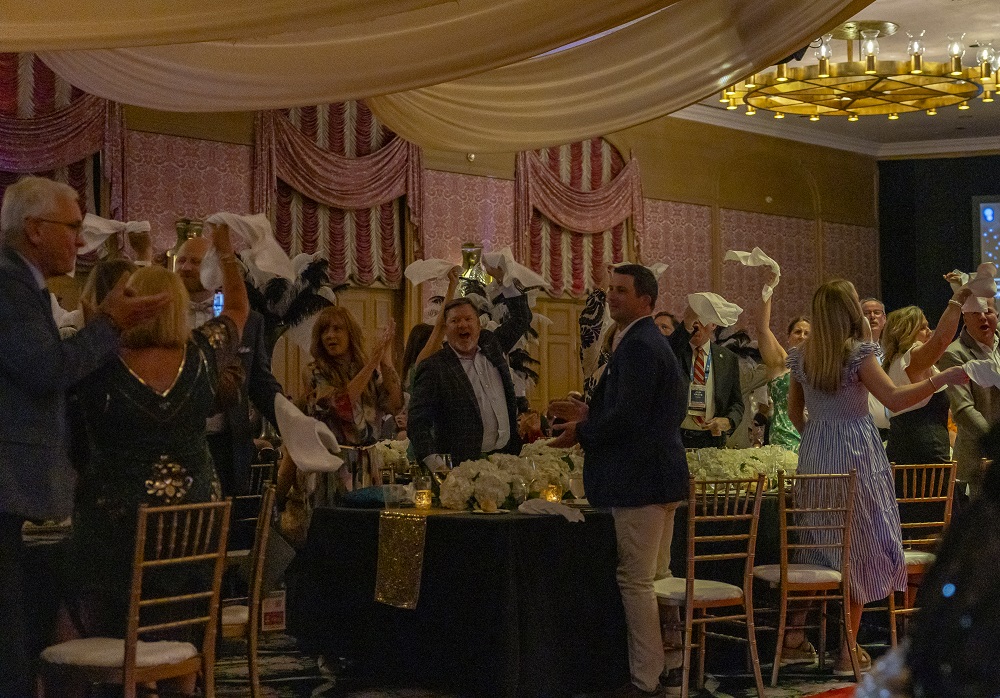
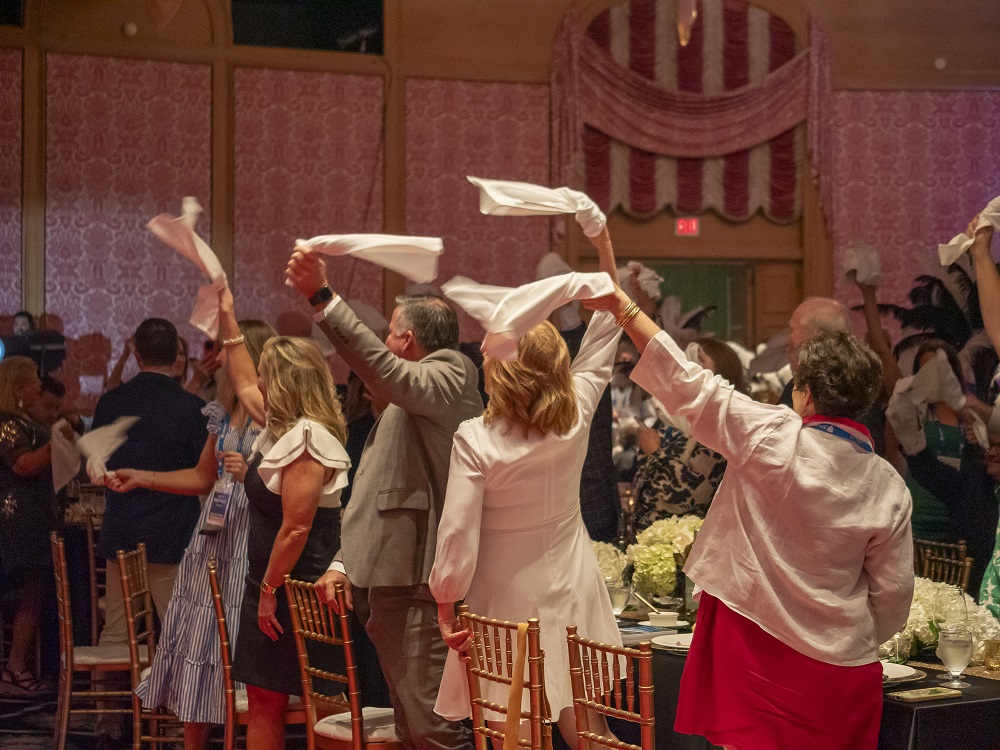
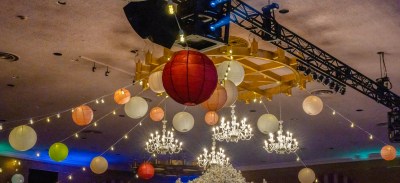
The venue itself was transformed into a scene straight out of a classic 1920s party. At the heart of the room hung a dazzling disco ball that casted playful reflections across the venue. The tables were adorned with centerpieces featuring cascading feathers, capturing the essence of the era. We were all highly impressed of the attention to detail in the decorations as it was nothing short of spectacular.
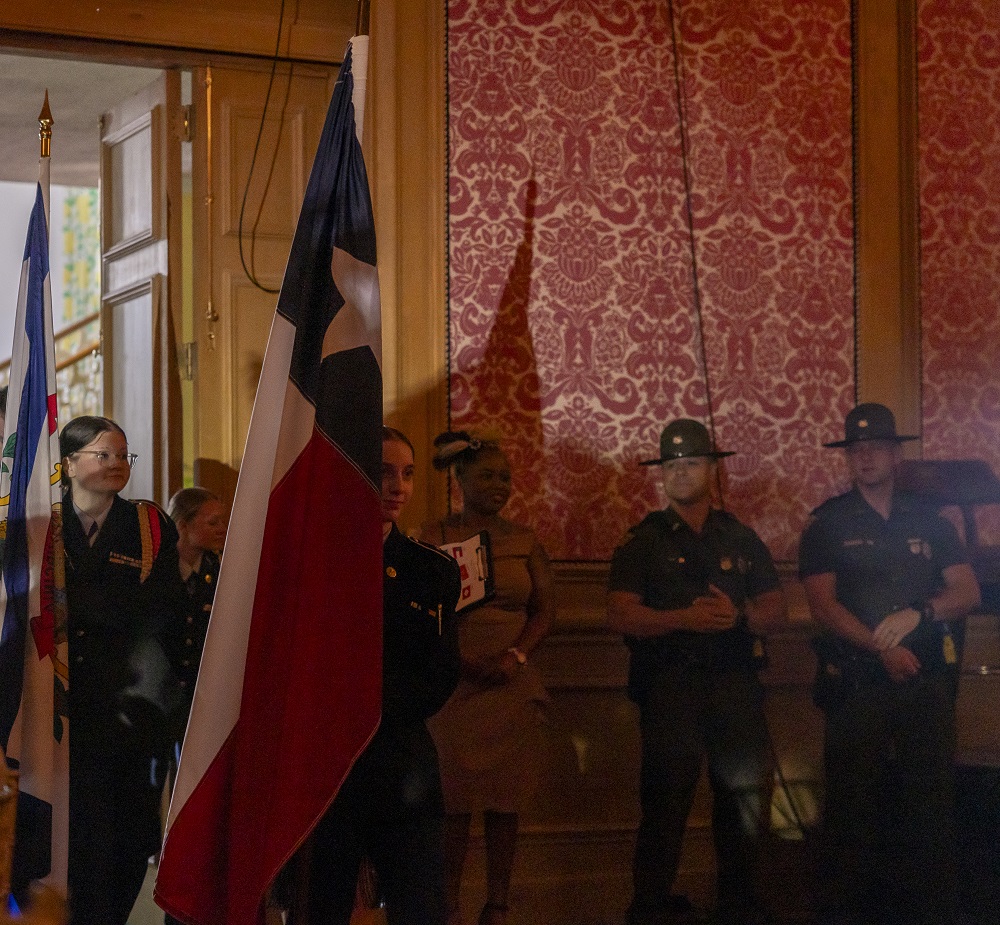
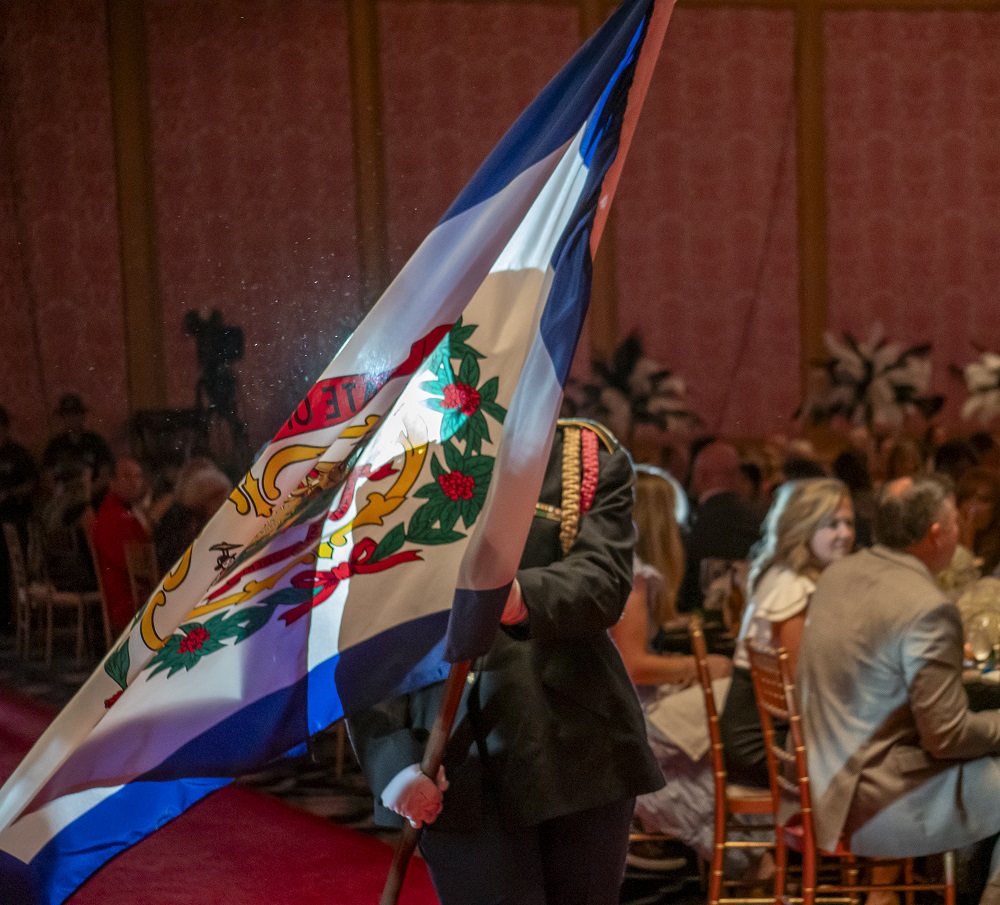
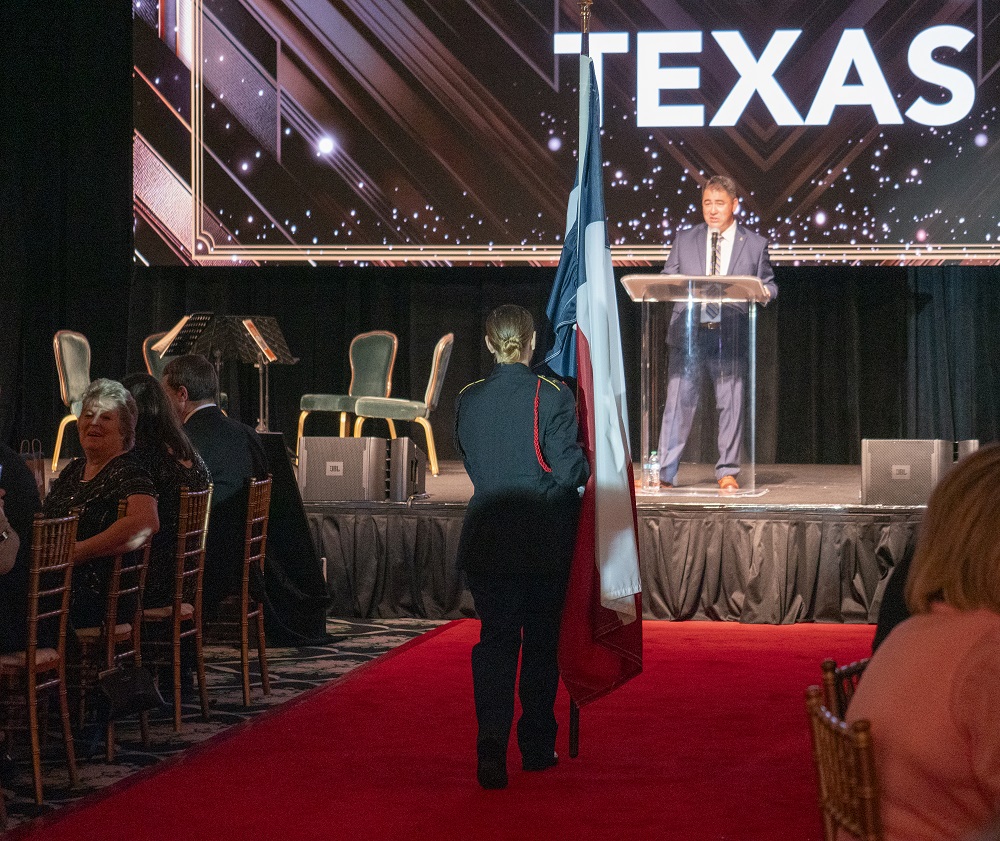
One of the evening’s standout moments was the grand presentation of the state flags, representing each southern state. The Greenbrier High School ROTC marched each of the 15 flags to the stage, accompanied by their respective songs.
The crowd’s enthusiasm was palpable, with cheers and applause resonating throughout the room as each flag made its way across the room.
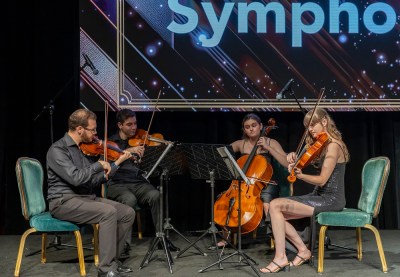
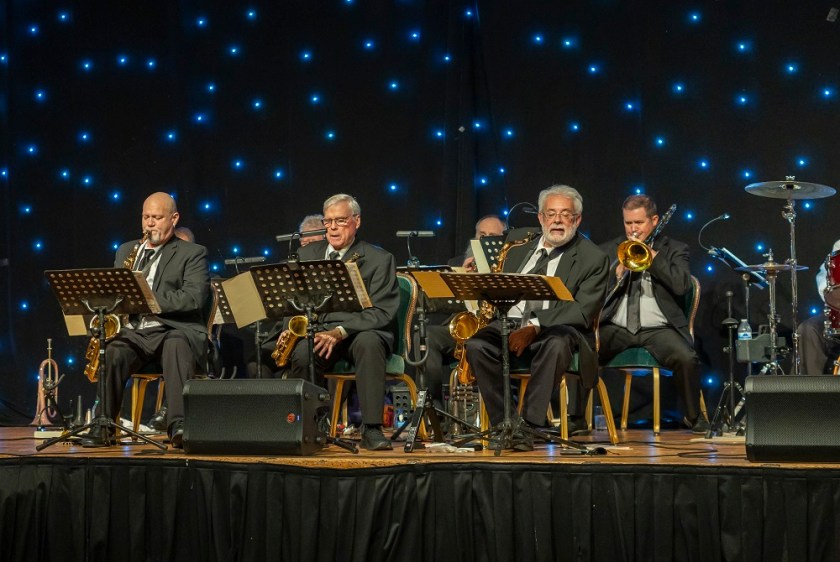
As dinner was served, we were presented with a mix of greens with feta cheese and a slice of pear. As for our entrees, meticulously place mashed potatoes adorned the plate next to a sirloin cooked to perfection on top of a handful of asparagus. While we ate, the West Virginia Symphony serenaded the guests with the sounds of beautiful music…
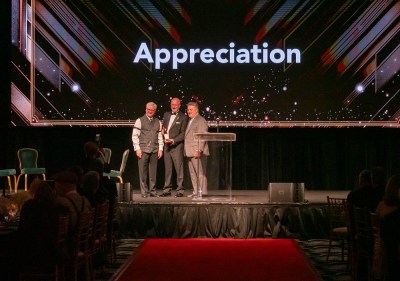
…before giving way to an awards ceremony emceed by West Virginia’s very own Senate President, Craig Blair.
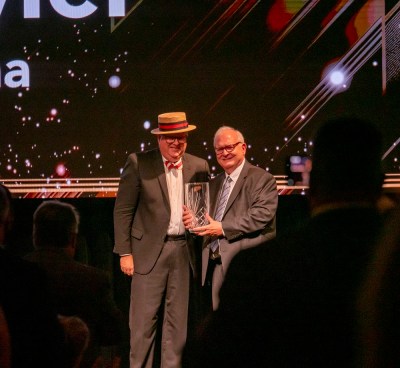
The Carter Hellard Award, which recognizes dedicated staff members across the southern states, was awarded to Thomas L. Tyler, Sr, who has devoted decades of his life to serve the Louisiana Senate.
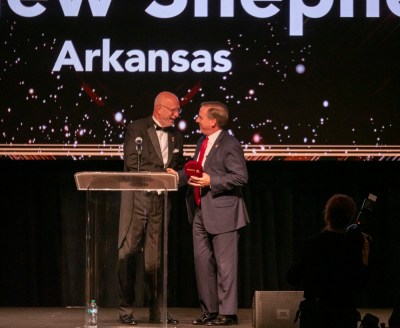
Arkansas’s Speaker of the House, Matthew J. Shepherd was also recognized as he received the Thomas B. Murphy Legacy Award, which is presented to a Southern state legislator who has dutifully served their people throughout the year.
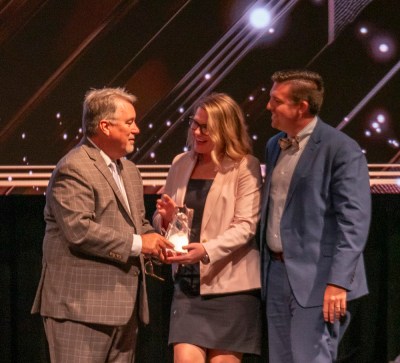
The State Transformation in Action Recognition (STAR) celebrates innovation and creativity by recognizing programs that offer transferable solutions to state governments. The North Carolina Department of Public Instruction won the award by presenting its Elementary and Secondary Schools Emergency Relief (ESSER) Funding Cliff Toolkit.
President Blair ended the night by thanking the Council of State Governments Southern team, specifically Director Lindsey Gray. He acknowledged their exceptional dedication and tireless efforts throughout the conference and noted how their commitment played a crucial role in the conference’s success. And, of course, Senator Blair was given an award for his leadership over the past year.
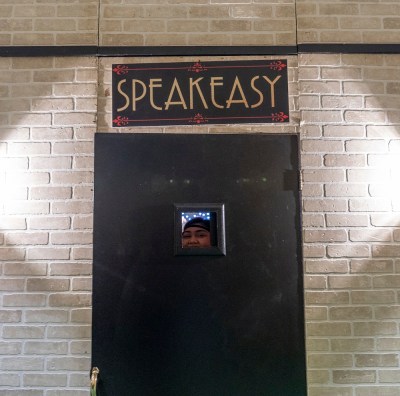
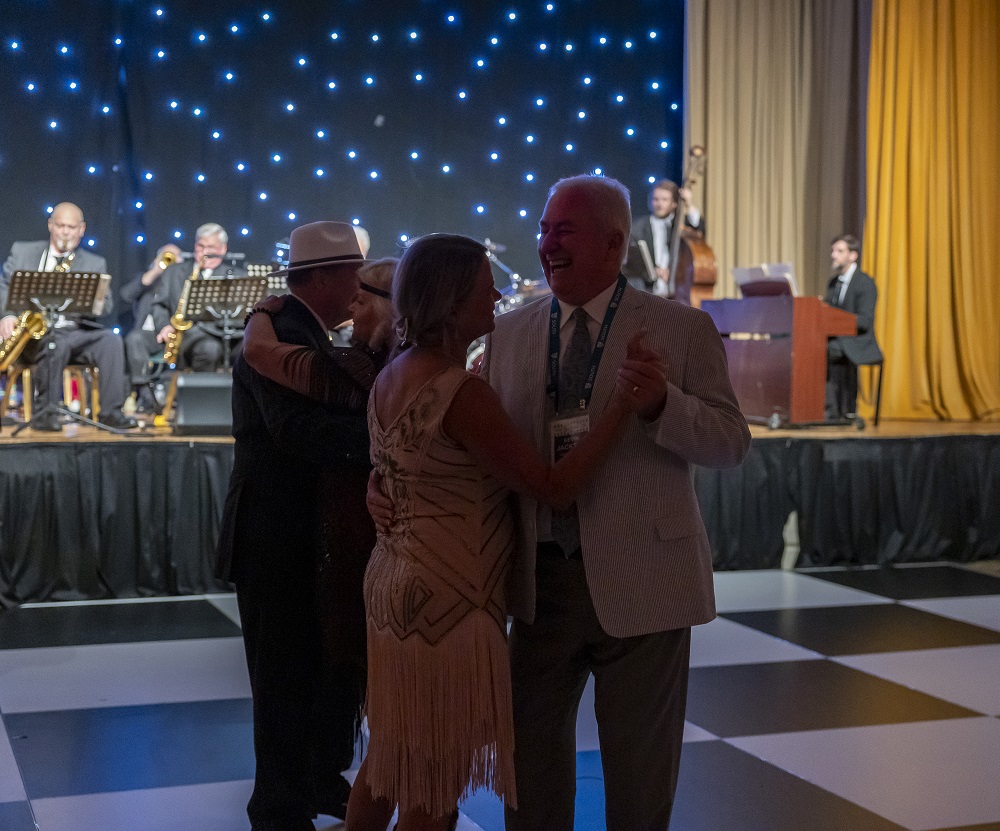
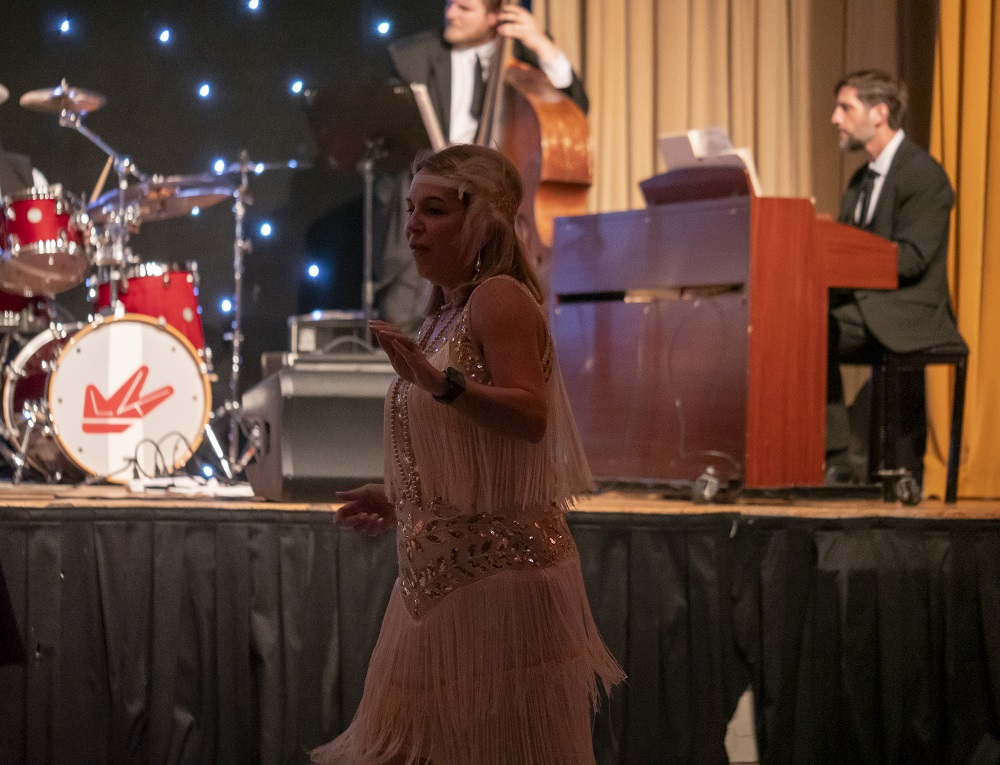
After the awards, the evening continued at the “speakeasy,” where the atmosphere shifted to an intimate jazz lounge.
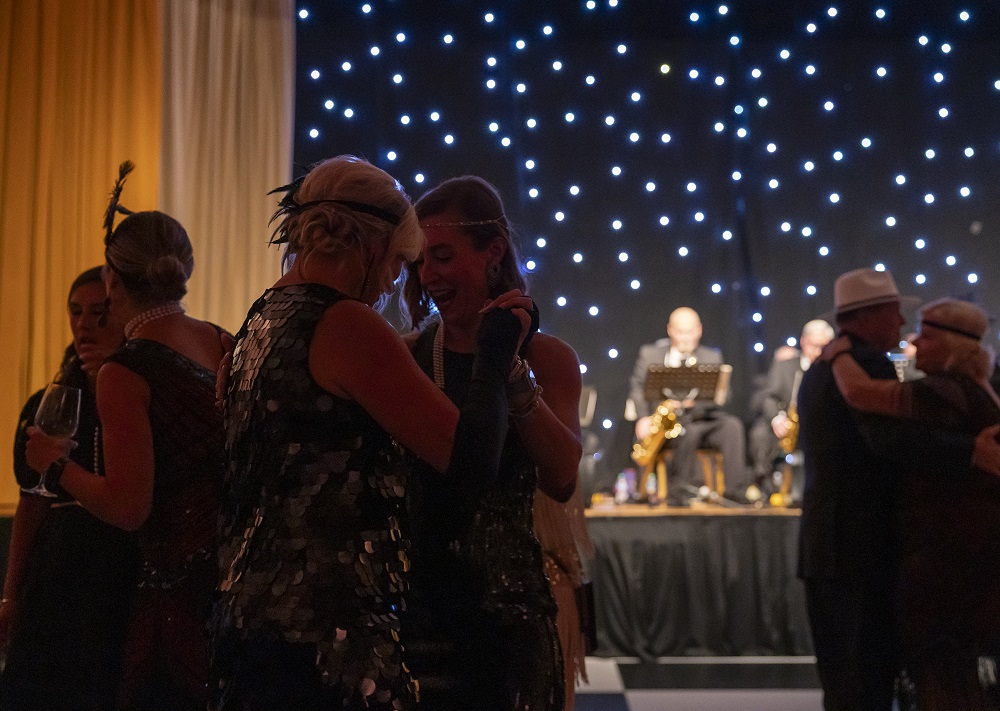
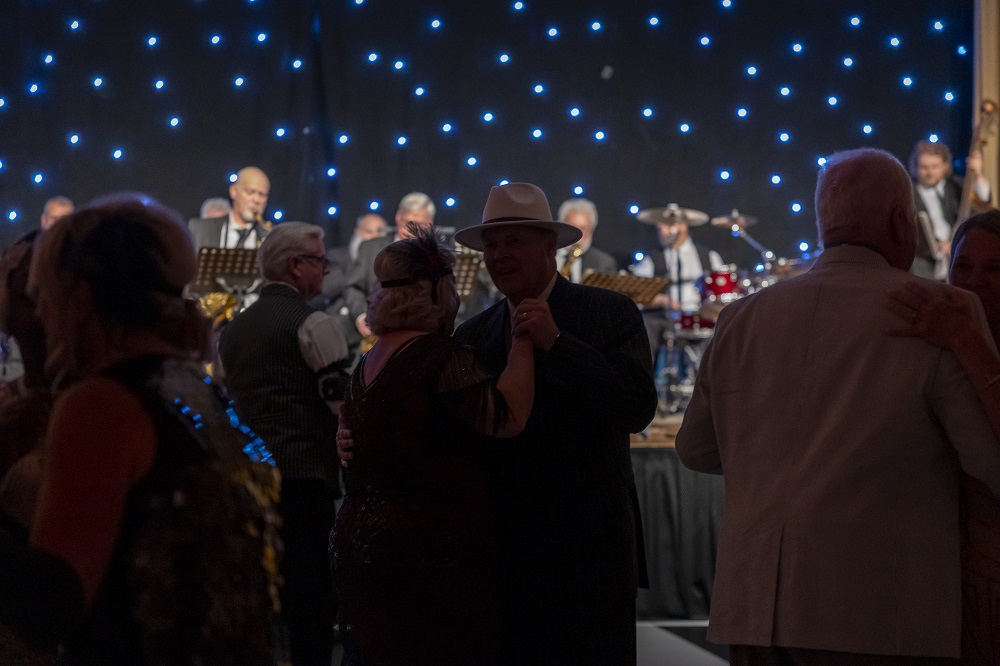
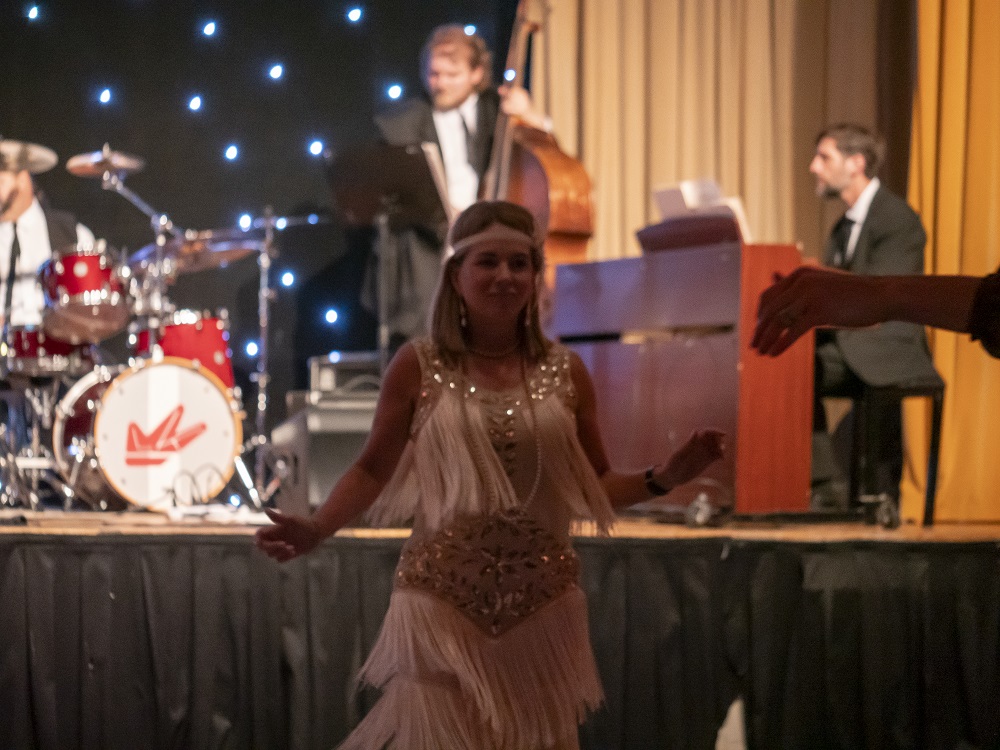
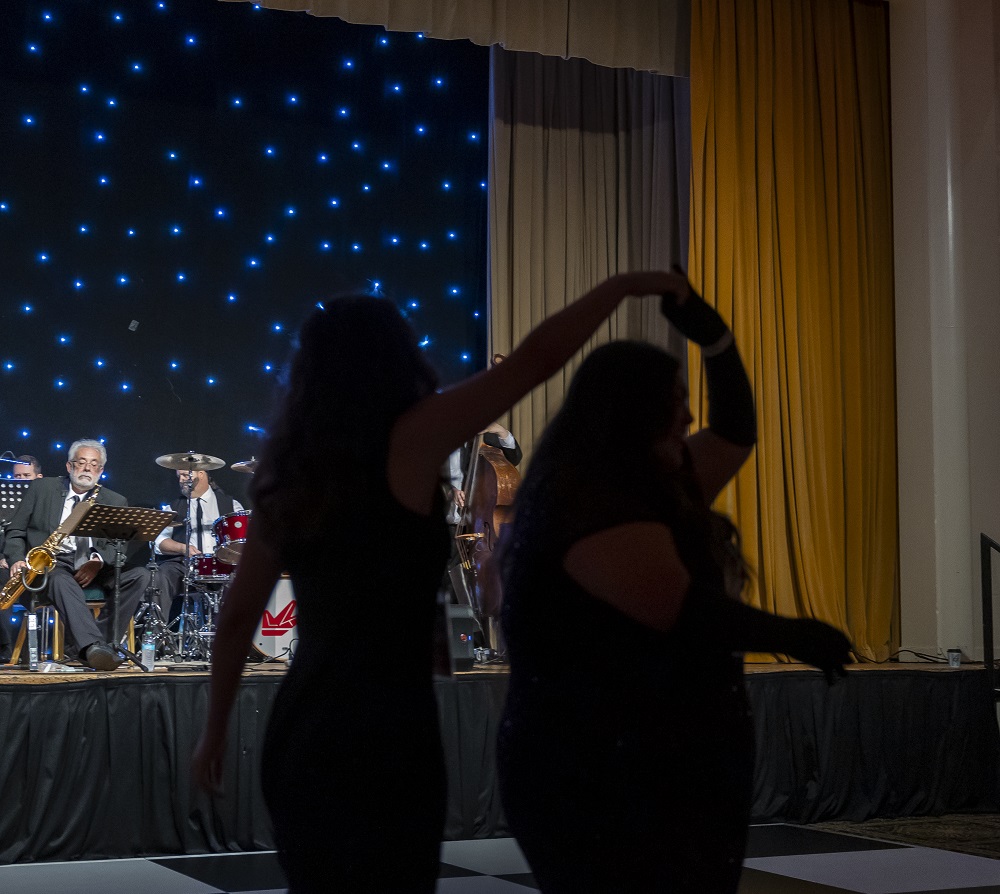
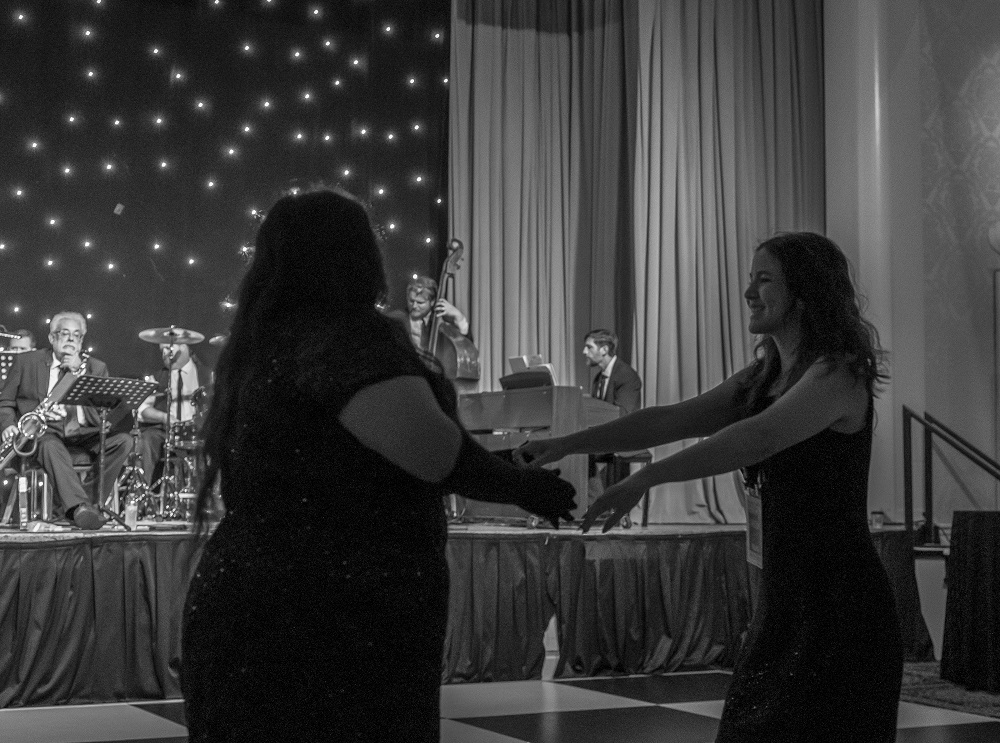
A live jazz band performed, their smooth melodies filling the room with the soulful sounds of the 1920s.
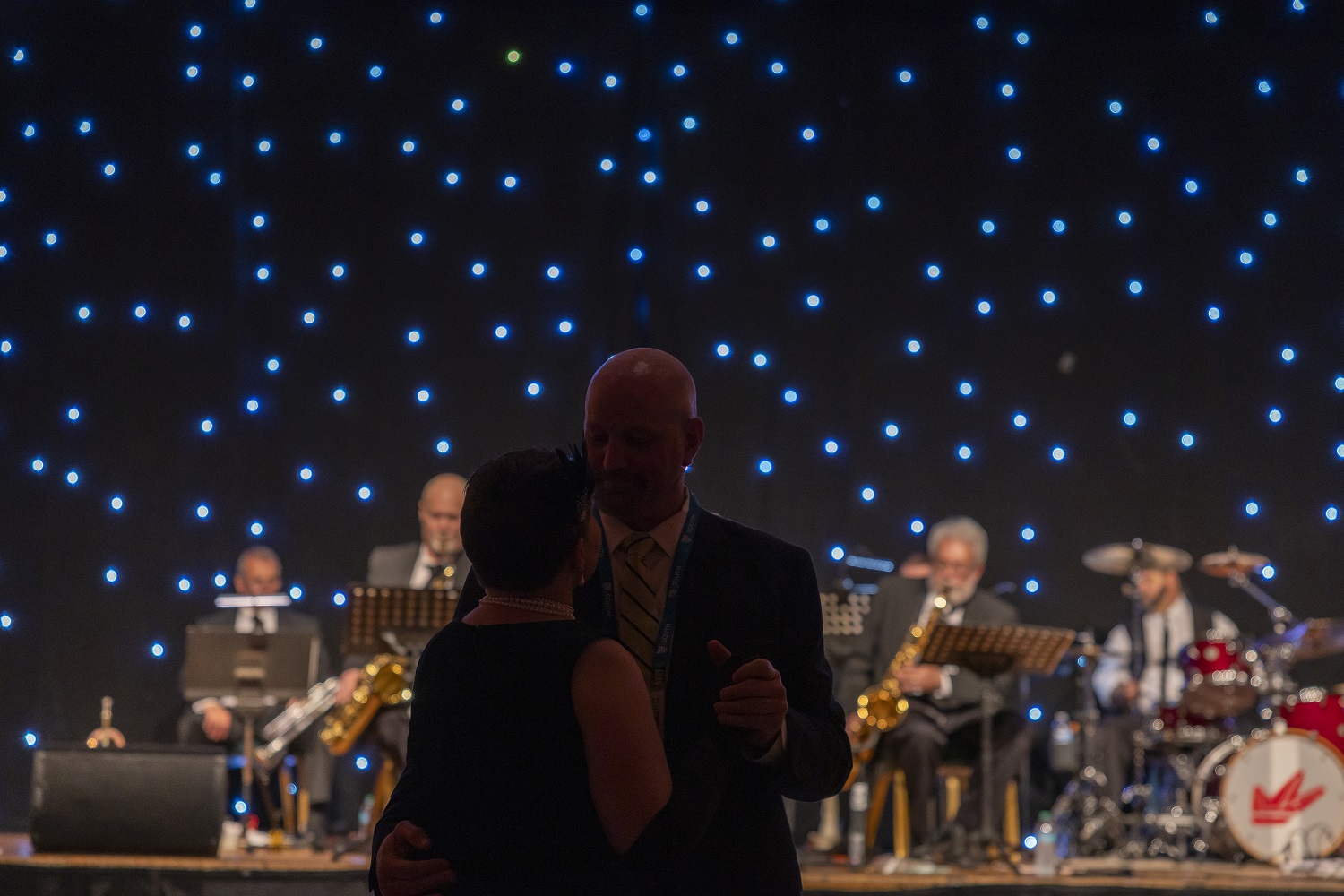
Couples took to the dance floor, gracefully moving to the rhythms of the era, creating an enchanting and entertaining atmosphere.
Michelle and I joined in, stepping onto the captivating jazz tunes. It was a delightful way to end the night and our visit to the Greenbrier.
The fantastic blend of retro charm and joyous celebration gave an experience that made us feel like we were truly living in the Roaring Twenties.
After a morning devoted to taking our LSAT Prep Course, we headed out to Charleston, the capital of West Virginia. This was a chance to build on some of the relationships we had built at the Southern Legislative Conference, and also to learn about the workings of other state capitals–the latter being of particular interest to those of us interested in the Austin Internship Program.
West Virginia State Capitol Building
by Michelle Cardenas
The West Virginia State Capitol Building, designed by the renowned architect Cass Gilbert, is a testament to the state’s resilience and rich heritage. Gilbert, who also designed the nation’s Capitol in Washington, D.C., which we visited during our spring break, was commissioned to construct the West Virginia Capitol in 1921. His style is unique, and you can see the similarities with many of his works.
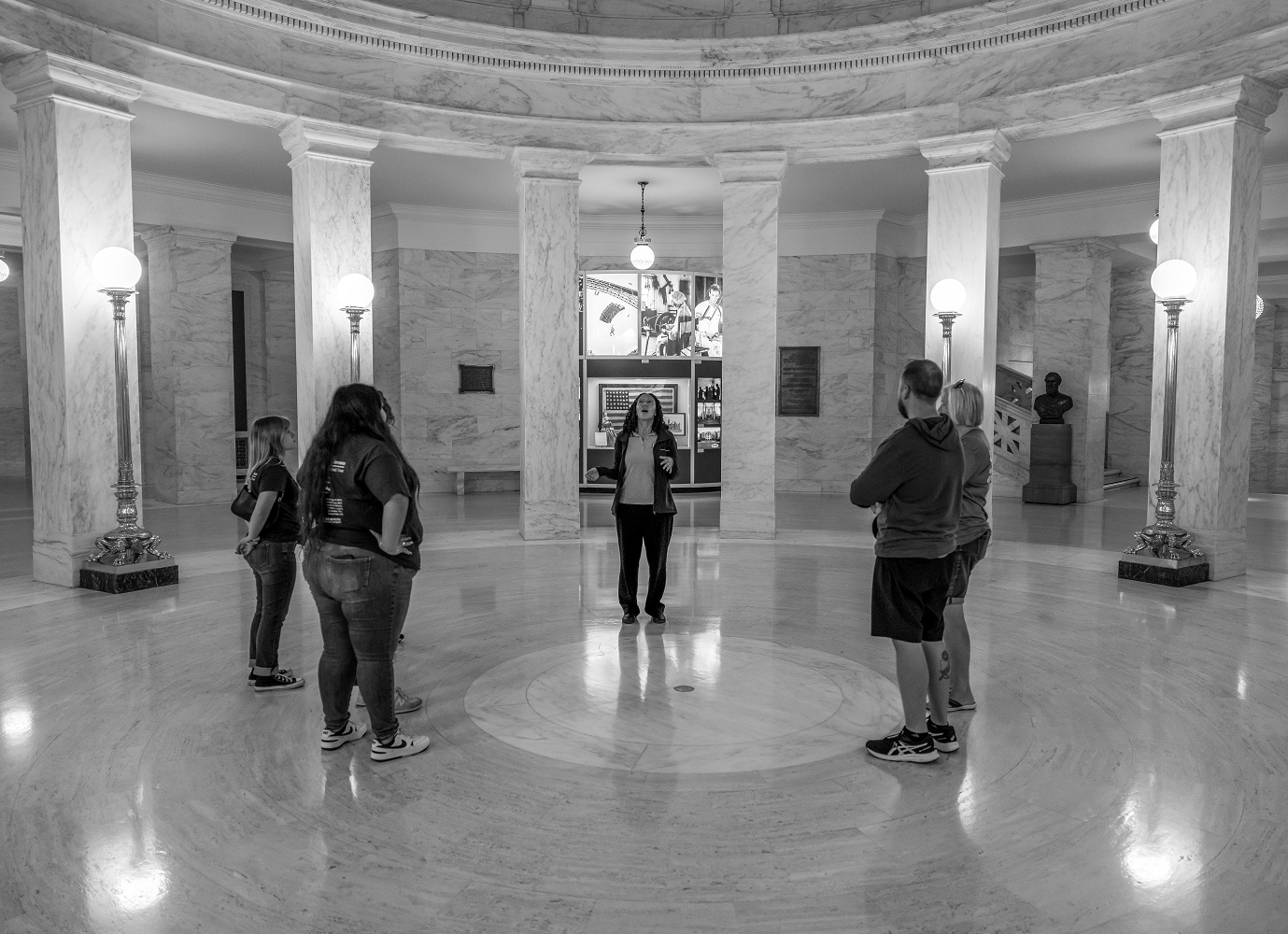
Upon entering the Capitol, we were immediately struck by the grandeur of the dome. The murals here vividly depict various significant stages in West Virginia’s timeline, including the Civil War…
…the scenic beauty of Seneca Rocks, the historical significance of Harpers Ferry, and even the contemporary state of West Virginia.
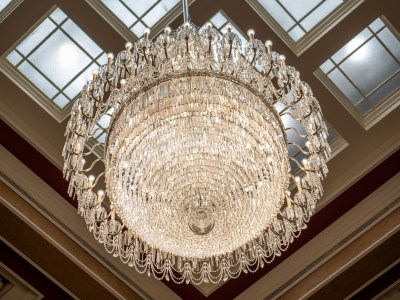
The intricate design elements throughout the Capitol reflect West Virginia’s unique character. Gold leaf is a recurring theme in the chandelier and lamps inside, mirroring the golden dome on the exterior.
Some of the ceilings are adorned with floral motifs resembling the magnolia, oak, and sugar maple trees, symbolizing the state’s natural beauty.
Our visit even included a House of Representatives and Senate tour. In the House, the room is divided by party lines and organized by committee memberships, leadership, and seniority.
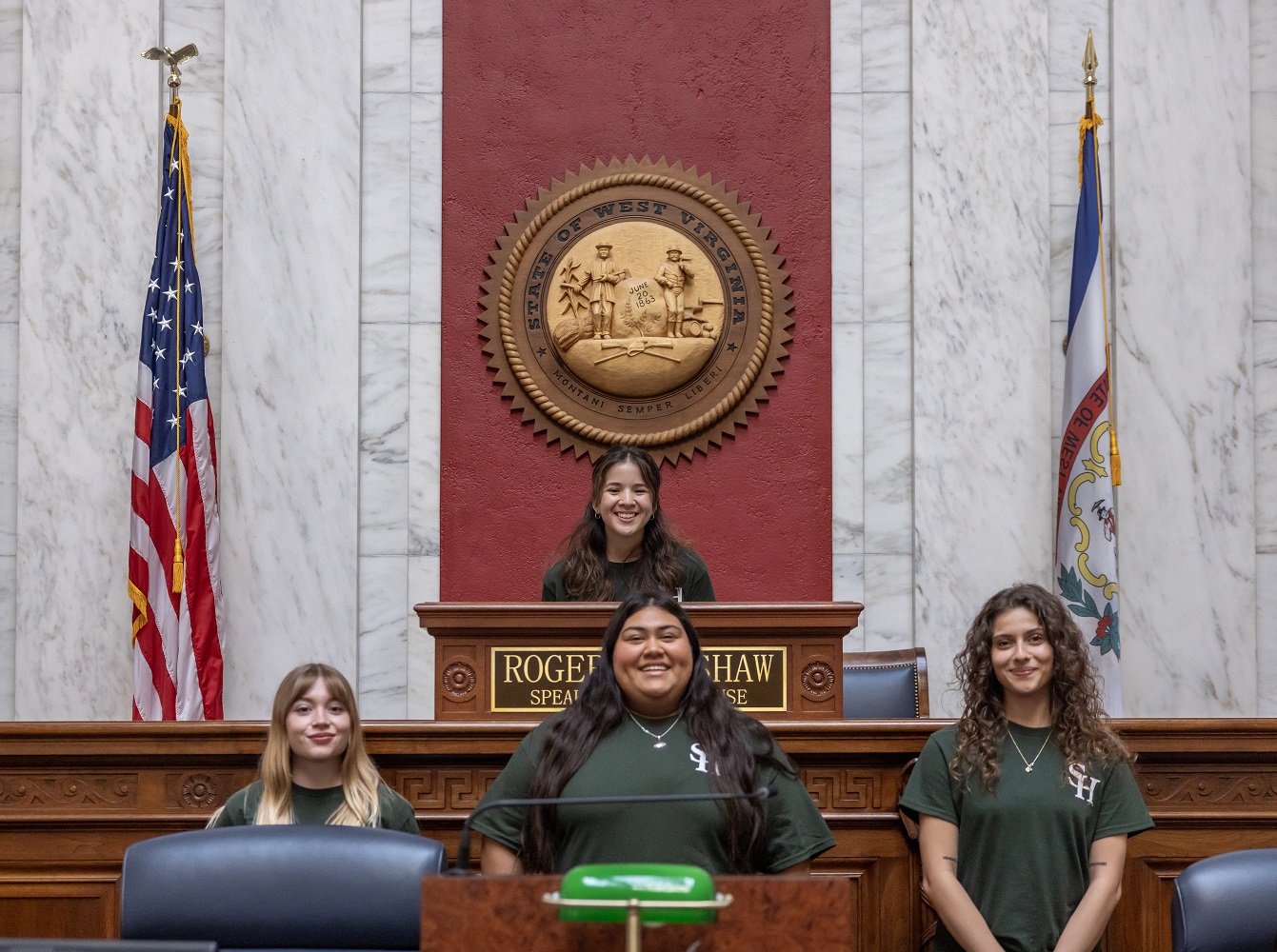
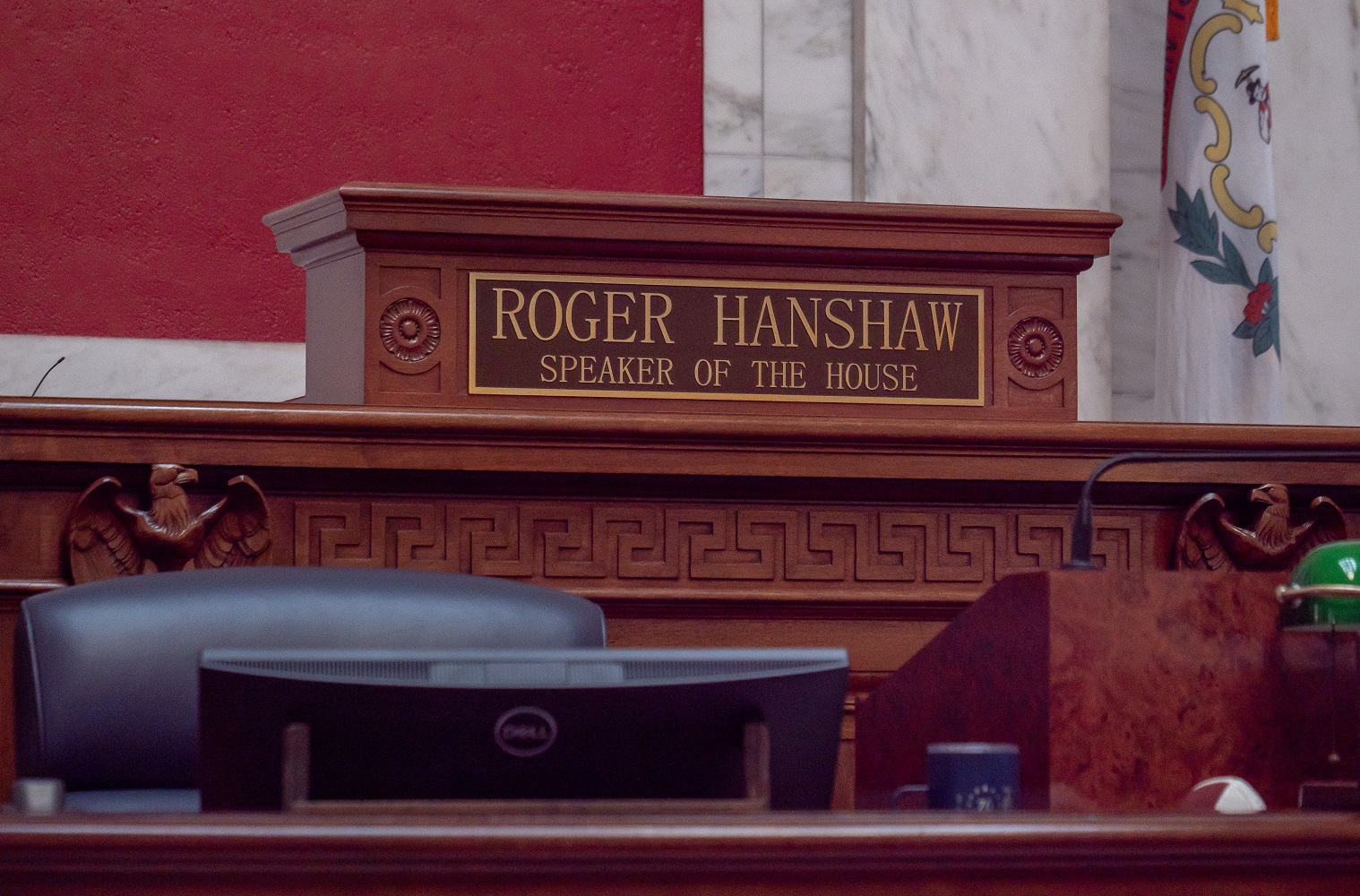
The layout and décor, including more gold leaf accents, highlight the importance and formality of the legislative process. We also had a chance to stand where Speaker Hanshaw presides over the House Chamber, a point that had special meaning since we have met Speaker Hanshaw.
The Senate chamber was equally impressive, seating a total of 34 senators.
We observed intricate decorations outside the chamber with a border on the ceiling representing various disciplines central to West Virginia’s identity: the bull symbolizes agriculture, the eagle with books represents education and art, the shield stands for coal and mining, and the scales of justice denote the legal system. We also admired their state seal, which has two figures representing agriculture and industry; the date that West Virginia was admitted to the Union; and their motto, “Mountaineers are always free.”
Adding to our understanding of West Virginia’s history, we learned that it became the 35th state due to its decision to remain loyal to the Union during the Civil War, primarily influenced by President Lincoln. Due to Lincoln’s role in the formation of the state, there is a large monument depicting the former president in front of the Capitol.
The West Virginia State Capitol has a fascinating yet tumultuous history; six buildings have served as the state’s government seat over time, and these buildings have experienced various expansions, relocations, and even two tragic fires. Each element of the Capitol, from its design to its décor, tells a part of West Virginia’s story, seamlessly connecting its storied past with its vibrant present. This rich history adds to the significance of our visit, making our exploration of the current Capitol a deeply enriching experience.
West Virginia State Museum
by Cinthia Villarreal
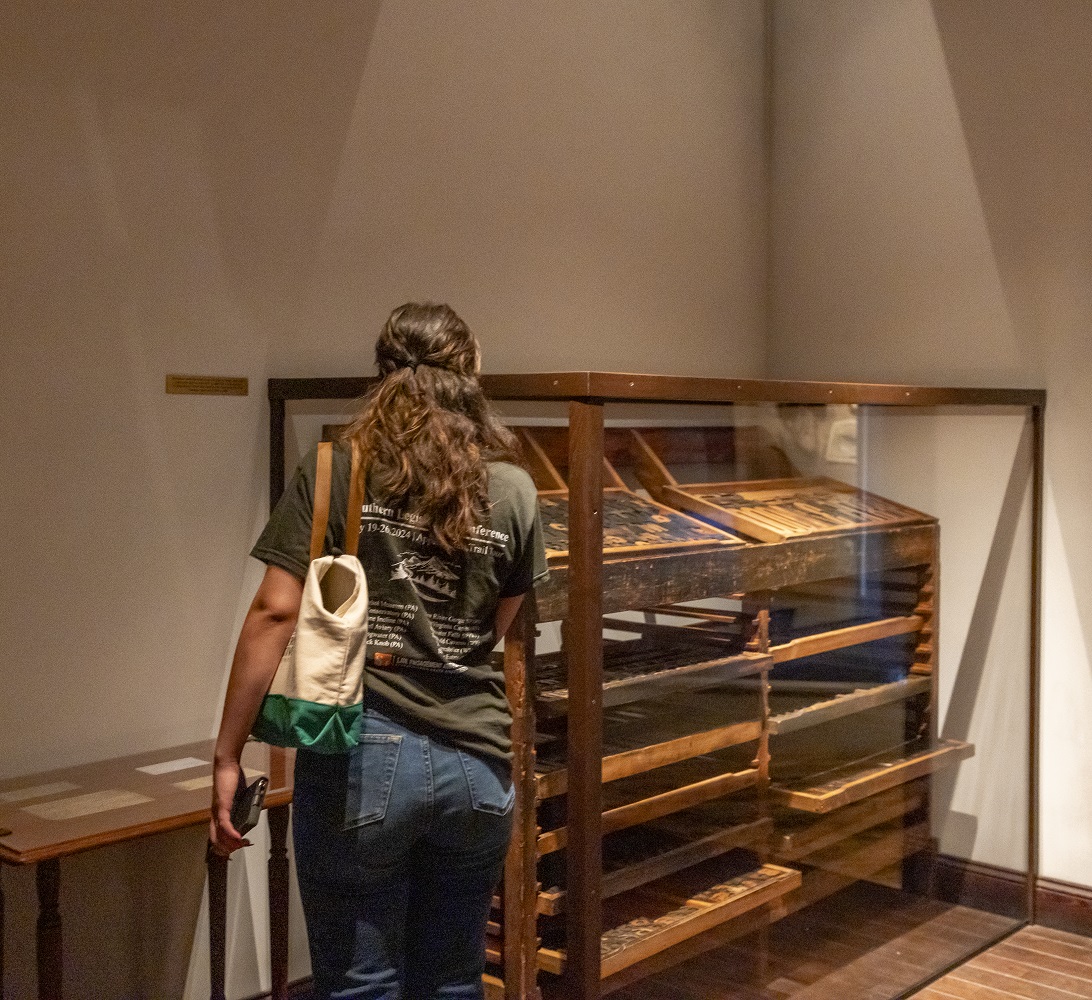
After visiting the beautiful West Virginia State Capitol Building, we stopped by the West Virginia State Museum. After driving through the state for the past few days, we looked forward to learning more about West Virginia’s rich and varied history.
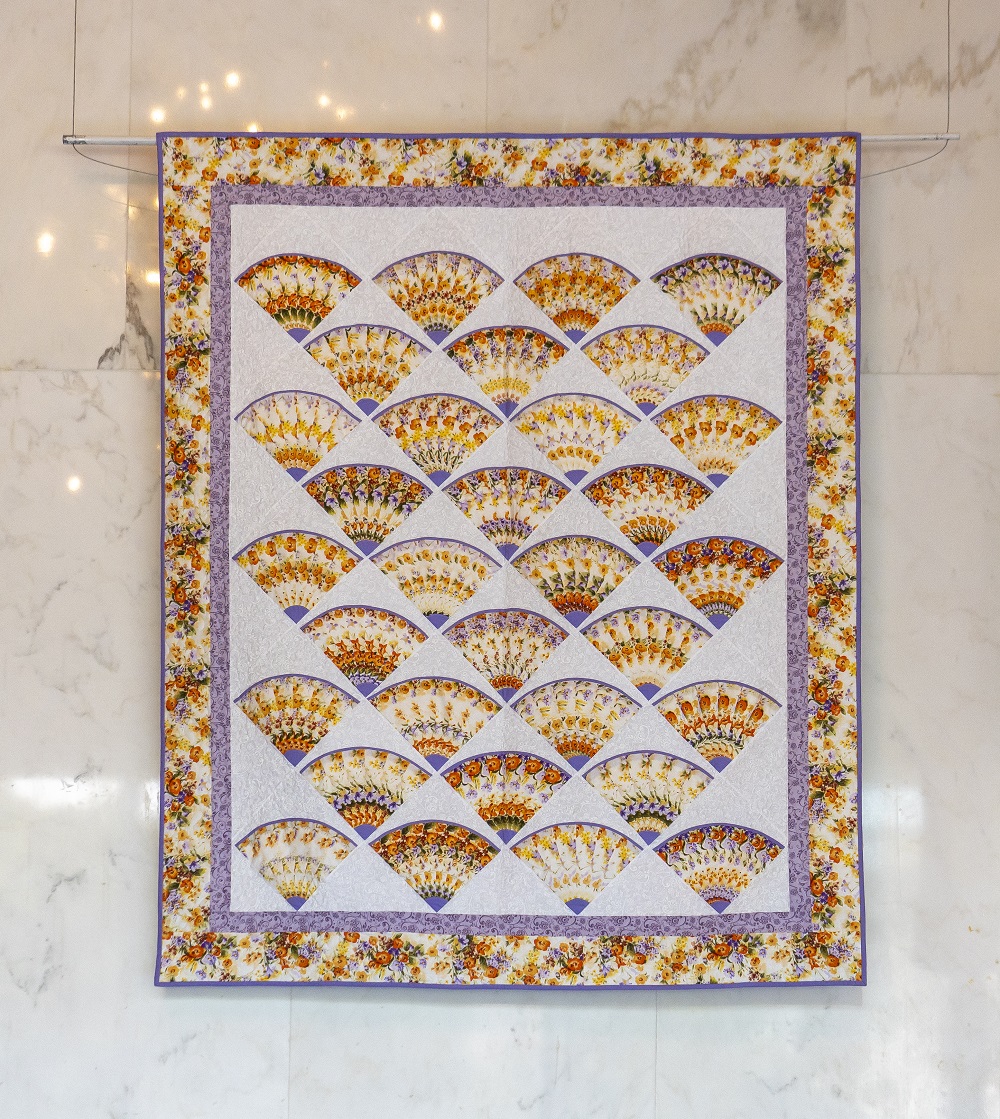
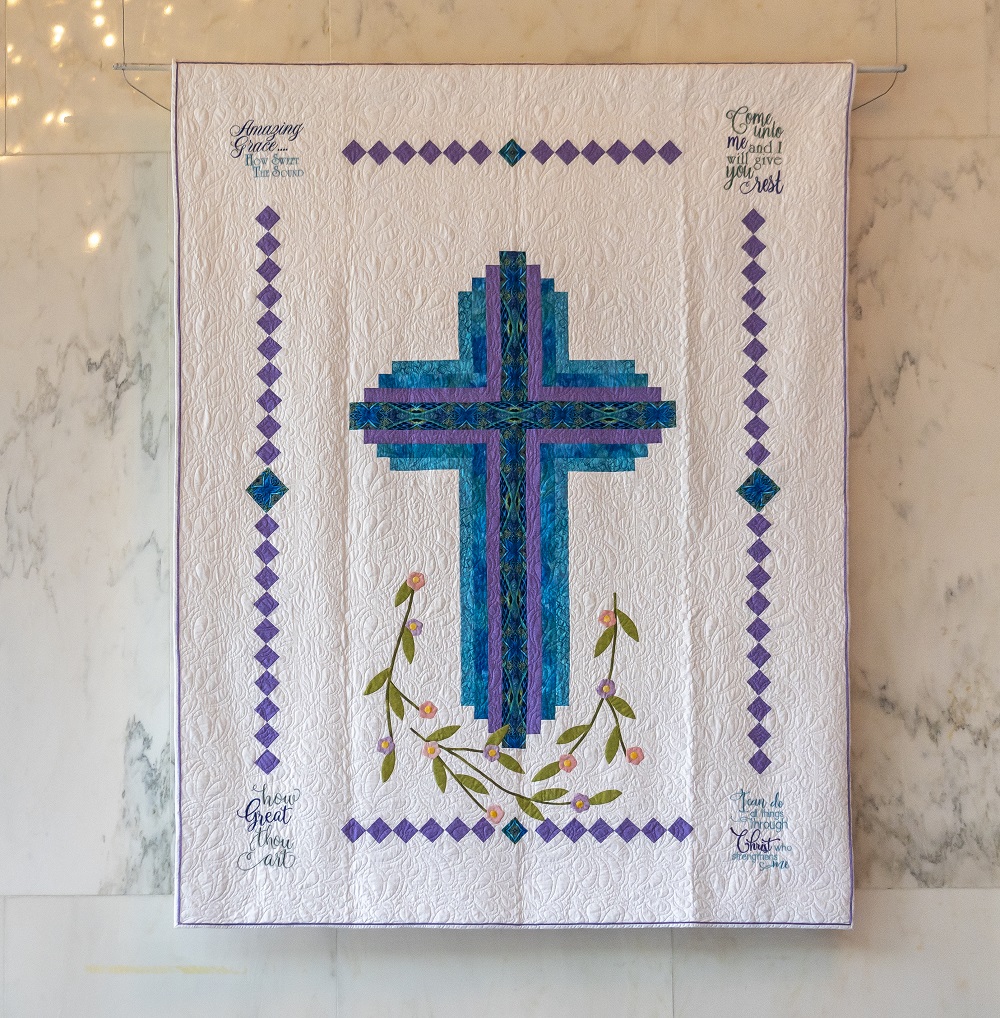
As we entered the front doors, the museum greeted us with a magnificent exhibit of colorful quilts.
Founded in 1892, West Virginia has a storied past that reflects its resilience and unique cultural heritage.
The museum meticulously chronicles this narrative, from the Native American tribes who first inhabited the land to European settlers’ arrival and the state’s eventual formation during the Civil War.
One of the museum’s exhibits pays homage to John Brown, a pivotal figure in American history and a passionate abolitionist whose raid on Harpers Ferry in 1859 marked a significant turning point in the fight against slavery. Brown’s legacy is intricately woven into West Virginia’s history, showcasing his commitment to justice and equality.
No aspect of West Virginia’s identity resonates more deeply than its connection to coal mining. From the early 19th century to today, coal has been vital to the state’s economy, fueling industrial growth and shaping communities.
The museum’s section on coal mining explores the industry’s evolution, labor struggles, technological advancements, and environmental impact, providing a nuanced perspective on its complex legacy.
A highlight is the 4,000-pound piece of coal, once enclosed in glass and used as a reception desk.
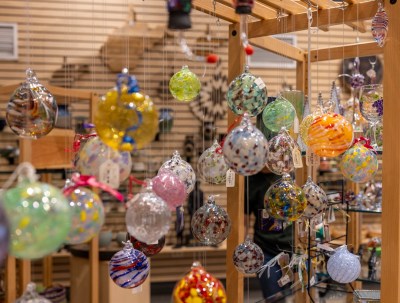
West Virginia’s blown glass industry is cherished in its cultural tapestry. The museum celebrates this tradition with a dedicated exhibit showcasing beautiful glassworks crafted by skilled artisans.
Whether you’re a history enthusiast, a nature lover, or simply curious about West Virginia’s rich past, the West Virginia State Museum highlights pivotal moments and key figures that shaped the state’s identity.
Cathedral Falls
On our return to Lewisburg, WV, we stopped at Cathedral Falls. Despite literally being a road-side stop about a mile from Gauley Bridge, it offered a great view.
The falls are approximately 60 feet, and they descend from a concave area in bluffs–likely the reason for the name “Cathedral.” We stopped for about 20 minutes, savoring the beautiful site that capped an activity-filled day.
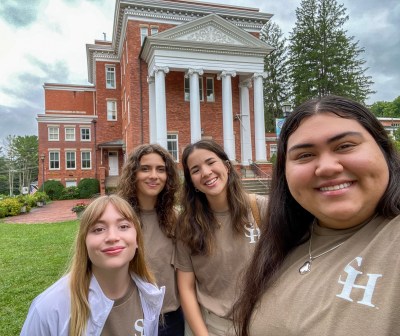
Not everyone can say they made it to Carnegie Hall–but, following a recent trip to the Southern Legislative Conference, the LEAP Ambassadors can! While in the charming historic town of Lewisburg, West Virginia, Ambassadors toured the downtown and its curtilage, coming across Lewisburg’s own Carnegie Hall, one of four continuously used Carnegie performance halls in the world.
While the Hall was actually closed, the organization’s Box Office Manager, Sheila Hutchinson, cheerfully offered us a tour, allowing us to see the building and learn about its operation. The Hall was originally constructed in 1902, with almost $27,000 coming from Andrew Carnegie, and another $10,000 coming from the local community.
For the past 35 years, the Carnegie Hall Inc, a non-profit organization, has operated the building.
The repurposed building now serves as a performance venue, gallery space, and arts education programming open to the community–and passersby, including ourselves!
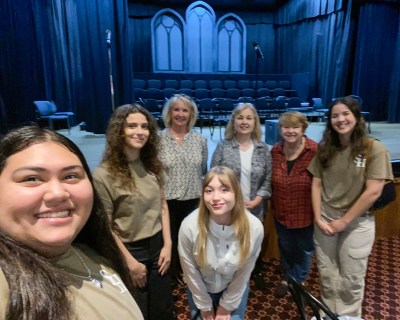
As we entered the 400-seat auditorium, we were had the pleasure of meeting Cathy Rennard, the president of the non-profit; and Mary Leb Foster, the Performance Director. They were extremely kind to share their experiences from working at Carnegie Hall, including their preparation for their upcoming musical, The Hunchback of Notre Dame.
Their work involves not only the things you typically think about when running a theatre (sets, sales, casting), but also community building, something close to our heart. The staff work hard to earn community buy-in, to collaborate with community stakeholders, and to offer a point of pride for West Virginia.
Thank you for the tour and your commitment to the Lewisburg community!
During our recent trip for the Southern Legislative Conference, the LEAP Ambassadors had the privilege of dining at 1010 Bridge, a Charleston gem that has recently captured national attention. Chef Paul Smith, the creative force behind this establishment, made history by winning the prestigious James Beard Award for Best Chef: Southeast.
Chef Paul Smith and Carrie Smith at James Beard Ceremonies (Taken from 1010 Bridge Website)
This recognition puts West Virginia on the map, showcasing Charleston’s growing reputation as a hub for culinary and economic innovation.
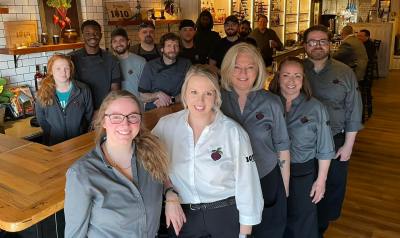
1010 Bridge Staff (Taken from 1010 Bridge Website)
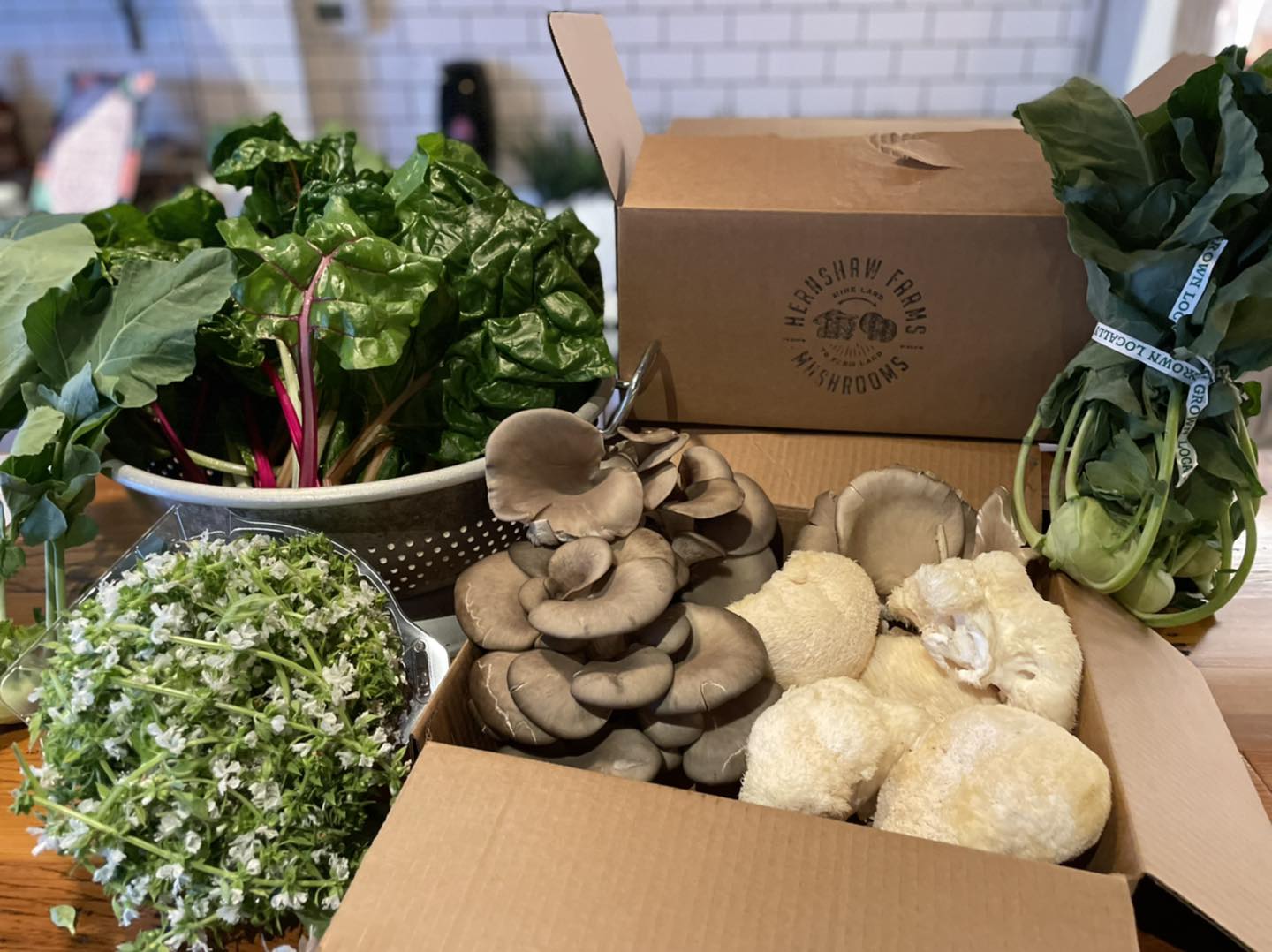
Chef Smith’s achievement is not just a personal triumph but a testament to his dedication to elevating the local food community. As the Culinary Ambassador for Capitol Market, he partners with local farmers and producers, using quality, locally grown ingredients to build his menu.
His efforts extend beyond his own restaurants as he actively participates in community cooking classes and serves on various boards, enriching the Charleston community in numerous ways.
Thanks to some facilitation by West Virginia Senator Eric Nelson, we were fortunate to spend two enlightening hours with Chef Smith, where he shared his philosophy on what being a public servant means in the kitchen.
His approach is inspired by the belief that success is not about competition but collaboration, echoing JFK’s idea that “a rising tide lifts all boats.” Chef Smith sees his peers not as competitors but as partners in the mission to promote West Virginia’s culinary arts.
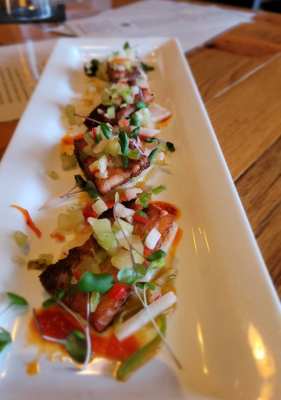
We started with an array of appetizers: White Cheddar Pimento Cheese, Bacon Wrapped Dates, House Cured Pork Belly, Fried ‘Nashville Hot’ Oysters, and Whipped Feta.
(Taken from 1010 Bridge Website)
Each dish showcased Chef Smith’s creativity and commitment to local flavors. He noted that he wants his dishes to be an elevated, but encouraging dining experience. By using ingredients and elements of well-known dishes, his menu can be an approachable experience to fine dining. Feeling particularly moved by Chef Smith’s words, I decided to try oysters for the first time! As someone who usually has an aversion to seafood, having the ability to enjoy a dish I would normally avoid was a pleasant surprise.
This surprise was also shared by Cinthia, who tried bacon-wrapped dates–and loved them! This was a surprise because (1) she doesn’t like dates, and (2) she doesn’t like bleu cheese, with which the dates were stuffed. She was very surprised to learn that ingredients she didn’t like resulted in a dish she did like.
Cinthia learning that a dish she loved contained Bleu Cheese
Our dining experience was unforgettable. Melissa, our server, was fantastic and clearly knowledgeable about the cooking process, local ingredients and restaurants, and the history of the restaurant, adding a further elevated aspect to our meal. Chrissy and I enjoyed a pasta Bolognese, Cinthia savored a risotto, and Michelle tried the salmon with pea and mint agnolotti. Everything was nothing short of exceptional!
Of course, we couldn’t leave without sampling some of the desserts on the menu. We tried the peach bread pudding, lemon gelato, and crème brûlée, each offering a delightful end to our meal.
Thank you very much, Chef Smith, for your time and perspective.
We congratulate you on the well-deserved award and look forward to the opportunity to return someday.
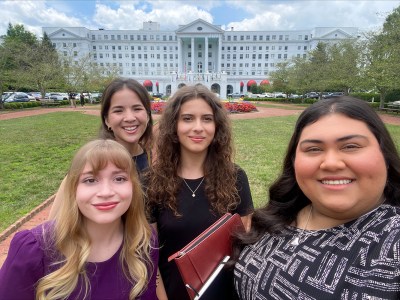
After two days of learning on the road, we had another full day planned. Following our regular Sunday LSAT Prep Course class, we were returning to a more formal educational setting for our learning–and what a setting! Much of our activity today took place at The Greenbrier Resort, a home-away-from-home for celebrities, presidents, legislators, and….us!
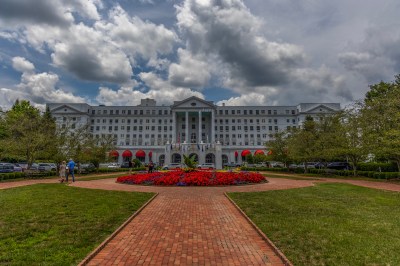
The GreenbrierResort
by Christina Biello
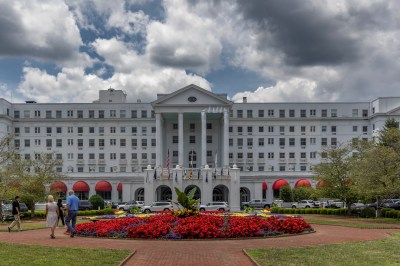
As with all our adventures, I did a little pre-experiential preparation, learning about the hotel’s rich history. The Greenbrier, which opened in 1778, served as a hospital for 24,000 soldiers needing surgery and rehabilitation during the Second World War. After the war, it underwent extensive renovations, resulting in the look it has today, one that has attracted the wealthy and powerful.
As we strolled along the pathways, the beauty of the property was evident in the flowers and greenery. Upon turning the corner, the sight of the expansive and luxurious resort took our breath away. While I had seen numerous photos beforehand and was tremendously excited, nothing could have prepared me for it in person.
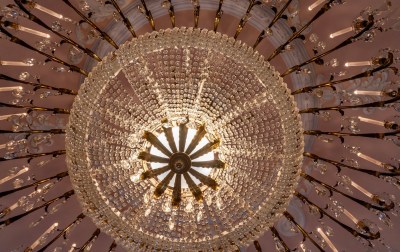
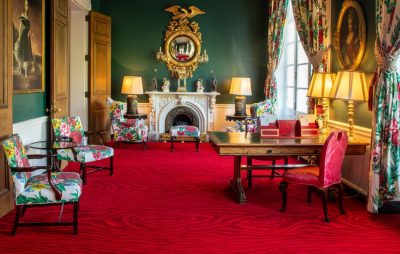
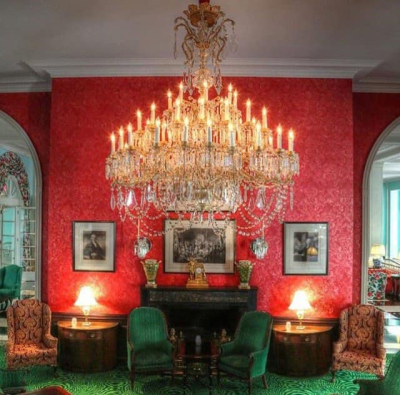
Upon entering the building, the first thing that caught my eye was the abundant and colorful (some might say “busy”) designs. From grand drapes to elaborate wallpaper and opulent chandeliers…
…the Greenbrier showcased meticulous attention to detail in its design.
Walking through the many rooms, we encountered works by artists such as Thomas Sully, Gilbert Stuart, and James Stuart. Cinthia and Olivia delighted in recognizing these artists whose works they admired.
We also stumbled upon a chandelier that was featured in Gone with the Wind. As a movie enthusiast, it was a thrill to see it up close and imagine stepping into Ashley Wilkes’ home.
Photo from The Greenbrier
Next, we proceeded to Drapers Restaurant for lunch, named after Dorothy Draper, whose distinctive decor transformed the Greenbrier in 1948 after the resort reopened. This style, which one website referred to as “anti-minimalist,” is known as “Hollywood Regency.”
Photo from The Greenbrier
Personally, I admire her style and could envision drawing inspiration from it for my own home one day.
The restaurant exuded her signature taste, with glamorous touches of pink that prompted us to point out various details to each other. A portrait of Ms. Draper was even on one of the walls.
Photo from The Greenbrier
During lunch, Olivia and I tried grits for the first time, and everyone savored the cherry vanilla milkshake. When my meal arrived, I was momentarily taken aback by its generous portion size and the elaborate dinnerware.
We did our best to finish our meals, but we were also cognizant of not overdoing it, not wanting to be in a food coma when our afternoon conference sessions took place.
Conference Session: Adapt and Survive: Artificial Intelligence in the Classroom
by Olivia Discon
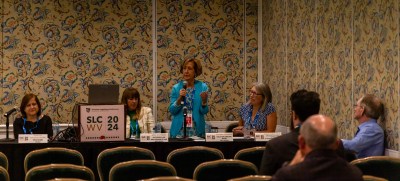
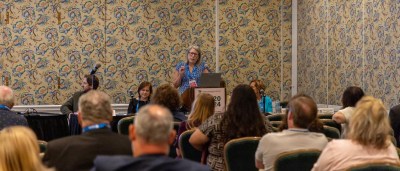
Our first session of the conference offered a compelling exploration of how ArtificialIntelligence (AI) and educational technology are shaping modern learning environments. As students directly impacted by the ever-changing world of AI, we were very intrigued to hear from those addressing these issues head-on.
The discussion highlighted a significant finding: studies show people are more likely to believe misinformation generated by AI compared to that created by humans. This requires ethical and responsible use of AI tools in education. The panelists emphasized that while AI can be a powerful educational resource, it should be utilized as a tool and not as a replacement for traditional teaching methods.
A key focus of the session was the promotion of critical thinking in the classroom. The panelists stressed the importance of using AI as a “thought partner” to enhance students’ cognitive skills rather than to replace critical thinking. They advocated for fostering an environment where students are encouraged to question and analyze information, ensuring that technology serves as an aid rather than a crutch (this was a focus of a book recently recommended to me, Academically Adrift).
Equitable access to AI tools was another major point of discussion. The panelists noted that for many students, particularly in rural or economically disadvantaged areas, schools may be the primary source of access to advanced technology. Ensuring that all students have the opportunity to benefit from these tools is essential for creating a level playing field in education.
The session also included a visual comparison of generative AI outputs from 2022 and 2023, highlighting the rapid advancements and potential of these technologies. The panelists pointed out that while these changes may seem dramatic, they are part of a continuous evolution in technology. Just as we adapted to the advent of the internet, we need to find ways to integrate AI responsibly into education.
Overall, the session emphasized that while the landscape of technology in the classroom is rapidly changing, it is crucial to balance innovation with critical thought and ethical considerations.
Welcome Night
The Southern Legislative Conference began with an outstanding welcome evening that truly set the tone for the event. Held in the stunning Colonial Room, we marveled at its elegance and opulent pink design.
The buffet-style dinner was a mix of local ingredients and favorites, all with a healthy helping of sides.
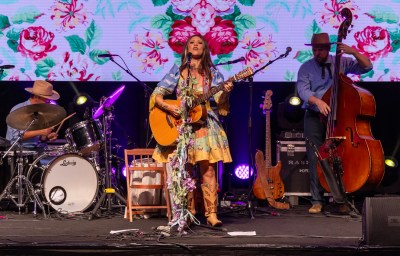
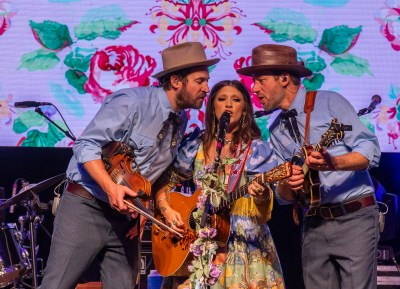
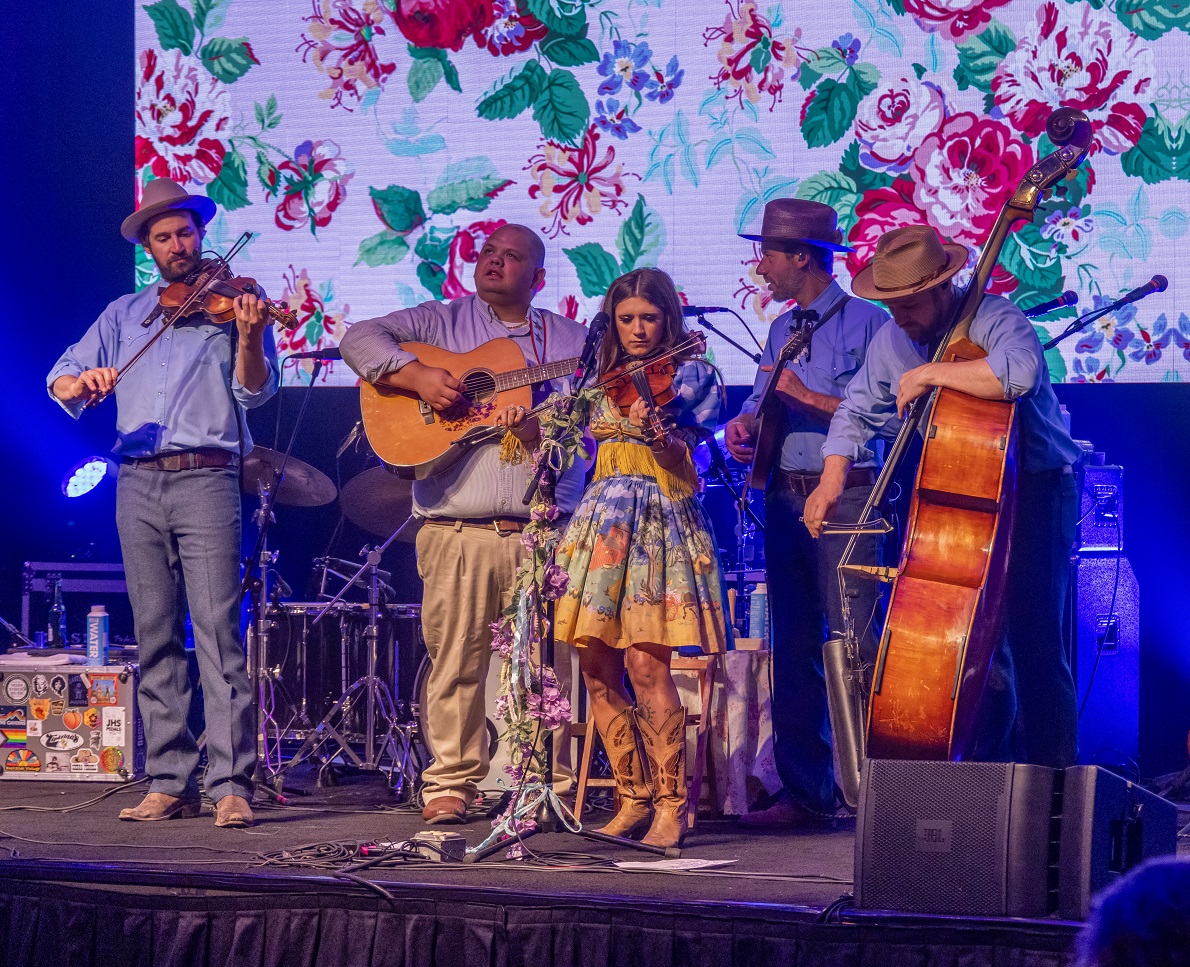
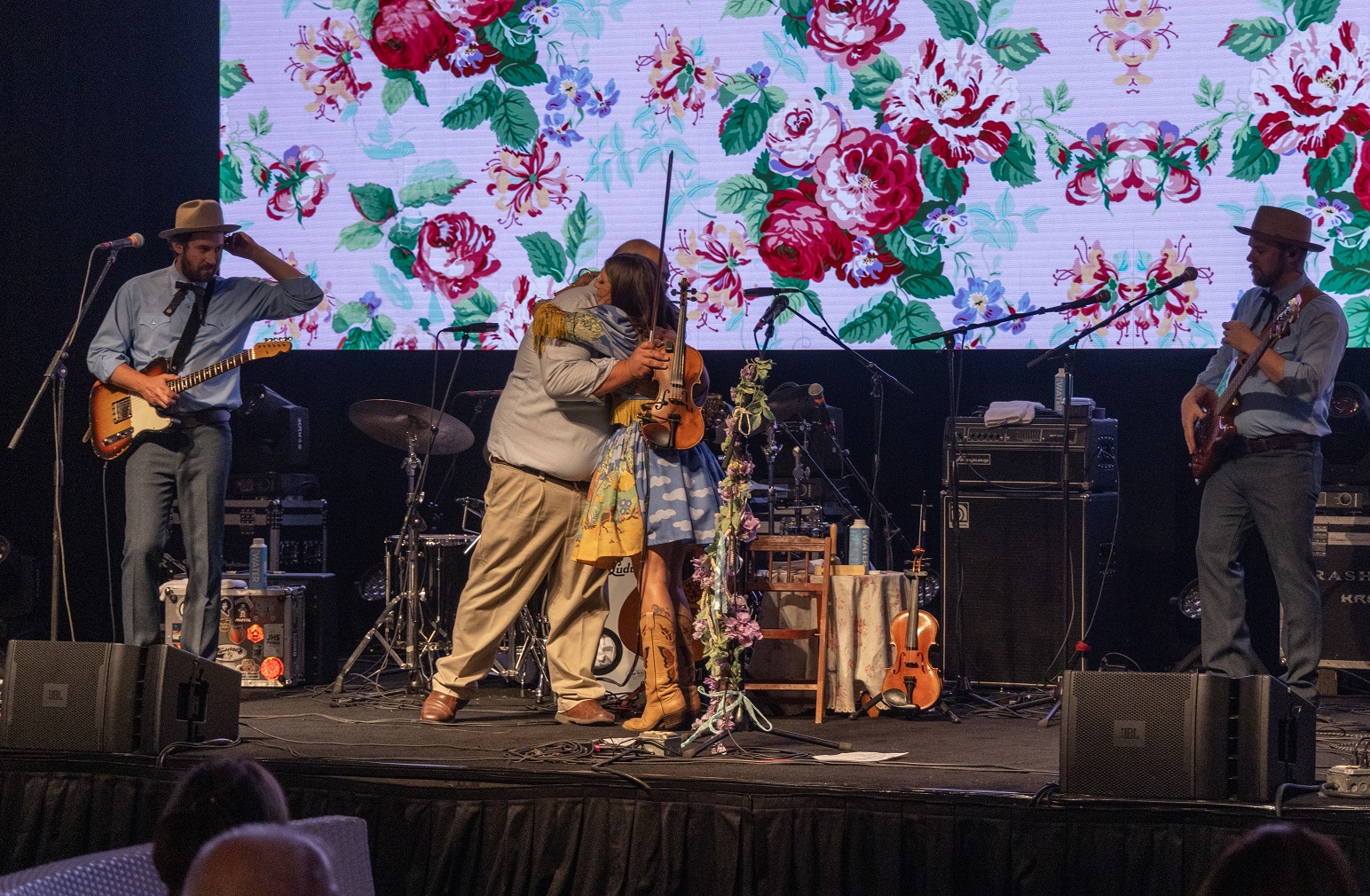
Sierra Ferrell, a West Virginia native, took the stage for the evening, delivering an impressive, two-hour performance.
Her folk and country music, tinged with jazz, pop, and even calypso influences, captivated everyone.
In between songs, she offered opinions on everything from the water supply to elite control of the country to love, hate, and authenticity.
Working on little sleep, and following an eighteen-hour first day, LEAP Ambassadors arose at 6am to explore architecture in and around Pittsburgh, with a stop at PPG Place, a mural by Richard Haas, and two major works by Frank Lloyd Wright.
PPG Place
Our first stop was PPG place, a six-building, “glass gothic” design by Philip Johnson.
As part of our LEAP travels, we had seen Johnson buildings in Houston, and we had watched a documentary on him in preparation for this trip, but PPG place was a place like no other.
Completed in 1984, its towering glass spires and sleek facades embody Johnson’s signature postmodern style, blending classical elements with contemporary materials. Its gothic detailing pay homage to Pittsburgh’s industrial heritage, its all-glass encasing embraces the future with innovative design, and its central plaza allows for a nice place to gather, which we did!
Richard Haas Mural As a teenager, Haas spent a summer apprenticing for Frank Lloyd Wright, so it is no surprise that his murals take on an architectural quality. Indeed, Haas’s website describes him as an “architectural muralist,” an apt sobriquet.
We know Haas primarily through his 15 works in Huntsville, but we’ve also seen his work in Fort Worth, which is a masterpiece. So it was with excitement that we tracked down his Pittsburgh mural, which is near the corner of Sixth and Fort Duquesne Boulevard.
As you might expect, it features an industrial scene, an homage to Pittsburgh steel-making history, with nods to its central location at the juncture of multiple rivers.
It’s always a pleasure to see Haas’s work, but this was especially true today, when we would also have a chance to see the work of his former boss, Frank Lloyd Wright.
Kentuck Knob
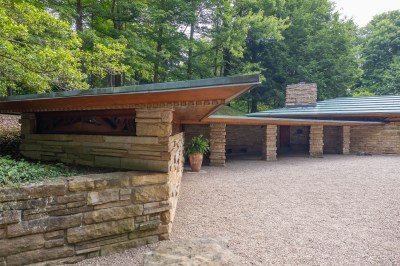
The first of our Frank Lloyd Wright site visits was to Kentuck Knob, which is nestled in the mountains of southwestern Pennsylvania. Designed in 1953, Kentuck Knob embodies Wright’s principles of organic architecture, seamlessly blending with its natural surroundings–and, in this case, adorned with a healthy helping of artwork, by artists such as Anthony Caro, Scott Burton, and George Rickey. We learned much of this thanks to our wonderful tour guide, Jan.
Among Wright aficionados, Kentuck Knob is known as a “Grand USoNian.” Wright’s USoNian homes were designed for middle-class residents. They were, relatively speaking, affordable, while still serving as an interesting, sculptural domicile.
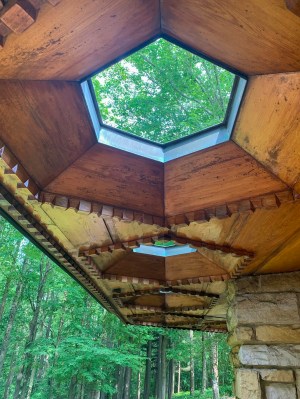
Kentuck Knob had Wright’s characteristic overhanging eaves…
…adorned with clerestory windows;
…a double carport (he hated garages, which he regarded as receptacles for junk); and a “compression and release” entrance to the house.
The home follows is structured as a series of parallelograms, giving the home an interesting look and an aesthetic cohesiveness.
We were particularly struck by the beautiful living room with floor-to-ceiling windows (which could also serve as doors to the patio), beautiful Wright-designed furniture, and the unique touches for which Wright was famous.
But it was the way the home interacted with the environment that we most enjoyed. The home is about five miles from Fallingwater, and the owners wanted their own “water element,” so they added a small rockfall and pool on the patio. The home is also perched on the brow of the hill, not atop the hill. Wright did this to ensure that the home merged with the environment (rather than overtaking the environment), and with a short walk along the property, we were able to see the beautiful art-adorned grounds and a view that even real-estate agents could not exaggerate.
Fallingwater
After visiting Kentuck Knob, another of Frank Lloyd Wright’s masterpieces, we headed to Fallingwater. Seeing Kentuck Knob had piqued my interest, and I was even more excited to explore another of Wright’s creations.
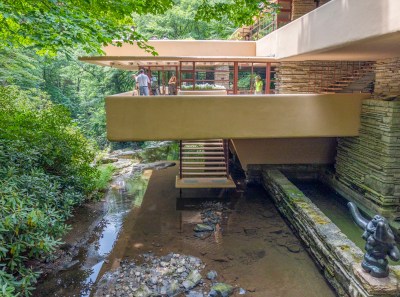
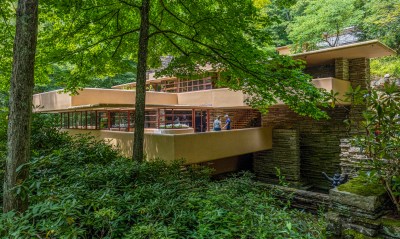
Frank Lloyd Wright was a fascinating and complex architect, known for his innovative USoNian homes—affordable, stylish, and functional houses for middle-class Americans. He also pioneered organic architecture, harmonizing structures with their natural surroundings, which Fallingwater epitomizes. Designed in 1935 and built directly over a waterfall in 1938 for the Edgar J. Kaufmann family, this house, which blends stone, concrete, steel, glass, and wood, celebrates what Wright termed “organic architecture.”
With the help of our tour guide, Millie from West Virginia, we approached the house. At first sight, Fallingwater was magnificent. Wright’s design philosophy was evident in the “hidden” doorway, a narrow entrance that transitioned into open spaces meant to connect inhabitants with nature. The structure is supported by concrete beams that project out over the waterfall, creating an impression of weightlessness.
The entrance repeated Wright’s “compression and release” philosophy, and he continued the cantilever motif, making much of the furniture and design elements an echo of the home’s overall design. The living room’s open design encouraged social interaction while the more intimate upstairs rooms offered privacy. The master bedroom, with its large balcony over the waterfall, provided a serene and breathtaking view.
We noticed Wright’s attention to detail, such as the seamless glass-to-glass windows, which eliminated barriers between the indoors and the natural world, as well as the art work in the home–much of which also repeated the cantilever design.
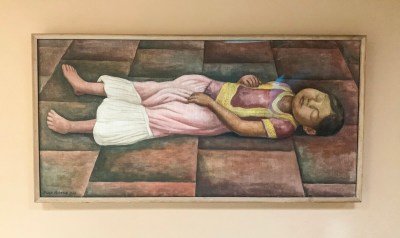
Indeed, art was a theme throughout the house, with a Picasso, several Audubon works, and a Diego Rivera (Frida Kahlo was a guest at the house!).
Our tour concluded with a view of the waterfall from across the home, capturing the full splendor of Wright’s integration of architecture and nature.
We all sat momentarily, taking in the beauty and snapping photos, cherishing the experience.
Our group’s arrival in Pittsburgh for the Southern Legislative Conference marked the beginning of an enriching journey through art, culture, and history. Eager to delve into the city’s offerings, we kicked off our exploration at the renowned Carnegie Museum of Art.
Our visit to the Carnegie Museum of Art was a journey through time and artistic expression, a tapestry woven with modern marvels and timeless classics. As we entered the galleries, we were greeted by a vibrant array of contemporary artworks that challenged our perceptions and sparked our imaginations.
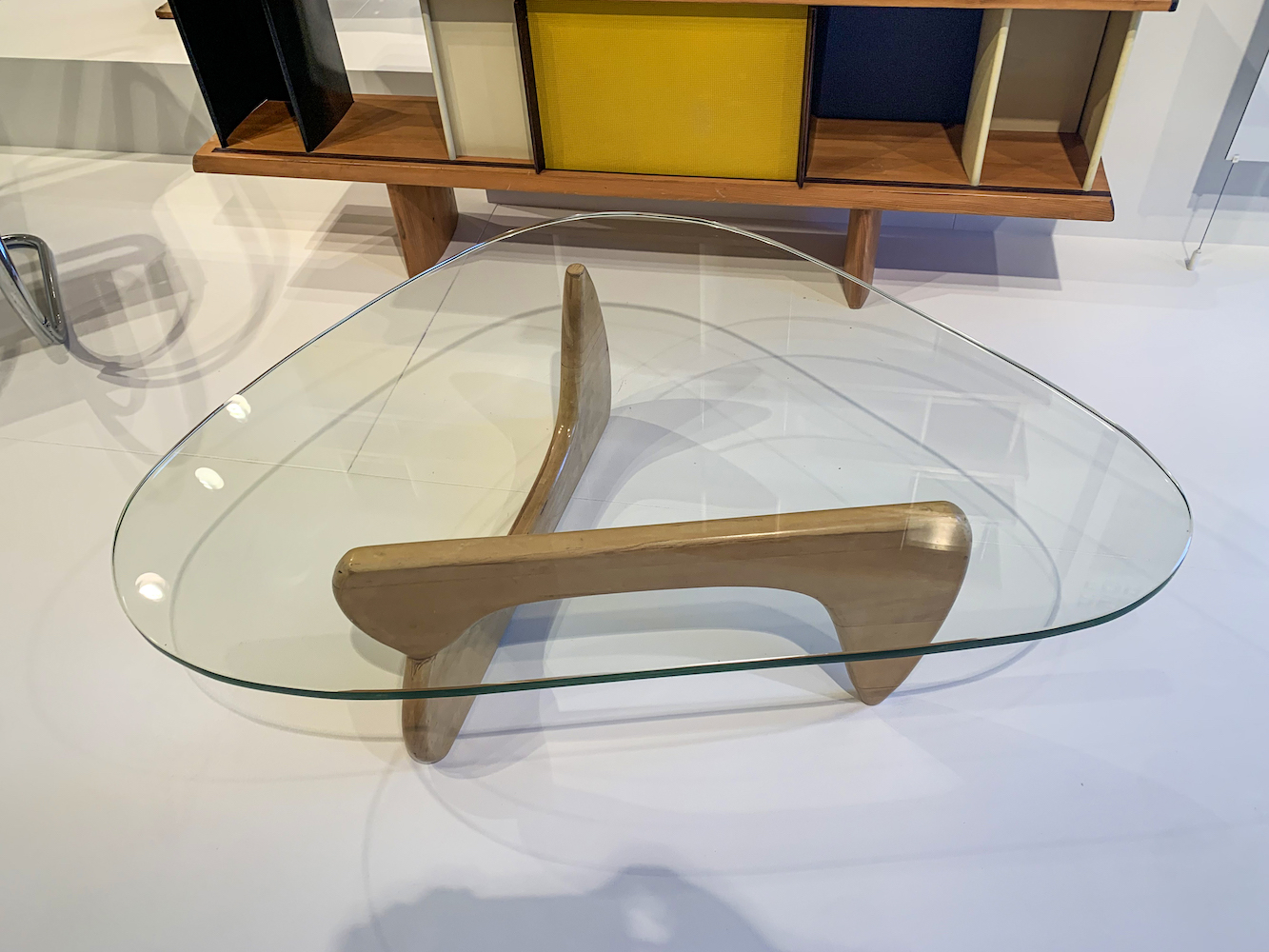
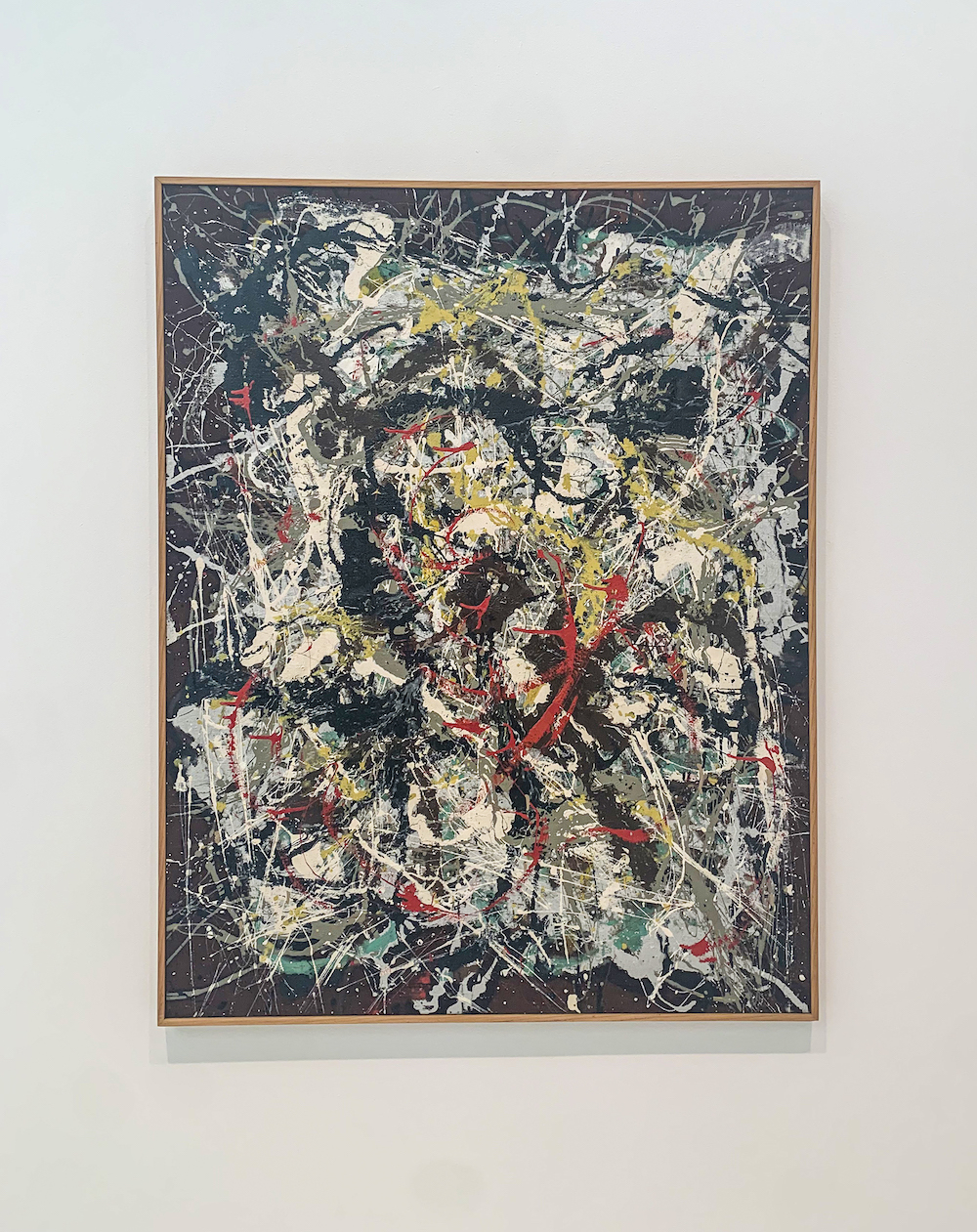
With familiar artists such as Mark Rothko, Jackson Pollock, Vincent Van Gogh, and Isamu Noguchi, our group was fully immersed in the Museum’s collection.
Cinthia and I found a familiar touchstone in Georgia O’Keeffe’s painting of an adobe church. Having recently visited New Mexico, where these structures dot the landscape, we were transported back to the sun-drenched vistas and rugged beauty of the Southwest. O’Keeffe’s ability to capture the essence of these structures resonated deeply with us, bridging our past experiences with the present moment.
In contrast to the contemporary pieces, the hall of Greek sculptures offered a glimpse into ancient mythology and classical beauty. Among the serene depictions of gods and goddesses, one sculpture stood out—a modern twist on antiquity. An oversized figure sat casually, engrossed in a smartphone, a stark commentary on contemporary culture.
The contrast between the timeless marble and the modern device held a mirror to our society’s evolving relationship with technology.
As we explored further, we encountered the dynamic works of Stanton MacDonald-Wright, whose vibrant compositions danced with color and rhythm. His mastery of synchromism, a style he co-founded, brought a sense of harmony and movement to the canvas, captivating us with its energy and vitality.
However, it was in the surreal and unexpected that we found our deepest connections. René Magritte’s “The Spirit of Family” challenged us to confront the discomfort of recognizing the familiar in the unfamiliar, echoing themes of surrealism that provoke and intrigue. For me, surrealism isn’t just about aesthetics—it’s about delving into the subconscious, where dreams and reality merge in unexpected ways.
Not far behind, Michelle, with her unwavering love for Impressionism, led us straight to the Monet Lilies, where she stood in awe of their ethereal beauty. Her eyes gleamed with admiration as she traced the delicate brushstrokes that brought Monet’s gardens to life.
Cinthia, on the other hand, found herself captivated by Renoir’s “The Garden in the Rue Cortot, Montmartre.” The painting’s vibrant hues and tranquil atmosphere transported us to a serene Parisian afternoon, where we could almost feel the warmth of the sun and smell the fragrant flowers.
Our journey took an unexpected turn when I almost missed Francis Bacon’s haunting painting. Titled simply but evocatively, Bacon’s work captured the raw intensity of human emotion in a way that both unsettled and captivated us. It was a poignant reminder of the power art holds to provoke and stir our innermost thoughts.
As we wandered through the museum’s corridors, each artwork seemed to tell a story, inviting us to unravel its mysteries and absorb its messages. From Degas’ delicate sculptures to the bold strokes of Francis Bacon, every piece sparked conversations that ranged from artistic techniques to philosophical musings on life and existence.
Our visit wasn’t just about admiring famous names on canvas—it was a journey of discovery, where we uncovered new passions and deepened our appreciation for the artists who shaped the course of art history. The Carnegie Museum of Art became more than a collection of paintings; it became a sanctuary of inspiration and contemplation.
As we bid farewell to the museum, our hearts and minds brimmed with newfound insights and shared experiences. The day had been a celebration of friendship, curiosity, and the enduring power of art to provoke thought and stir emotions. It was a reminder that amidst our hectic lives, moments of cultural exploration with friends are not just enriching but essential for nurturing our souls.
The Carnegie Museum of Art had not only expanded our artistic horizons but had also reinforced the bonds of friendship that drew us together. It had ignited a passion for creativity and a hunger for knowledge, leaving us eagerly anticipating our next adventure in the world of art and culture.
Ambassadors enjoy a Warhol Self-Portrait at Carnegie, in anticipation of the Warhol Museum
Next, we ventured to the Cathedral of Learning, an architectural marvel at the University of Pittsburgh.
Its Gothic spires soared above us as we explored the intricately designed commons area.
It was a beautiful building, one that reminded us that the architecture can play a large role in education and receptivity to learning.
Exploring Art and Nature at the Phipps Conservatory and Botanical Garden
Our recent visit to the Phipps Conservatory and Botanical Garden was a delightful blend of art, nature, and learning.
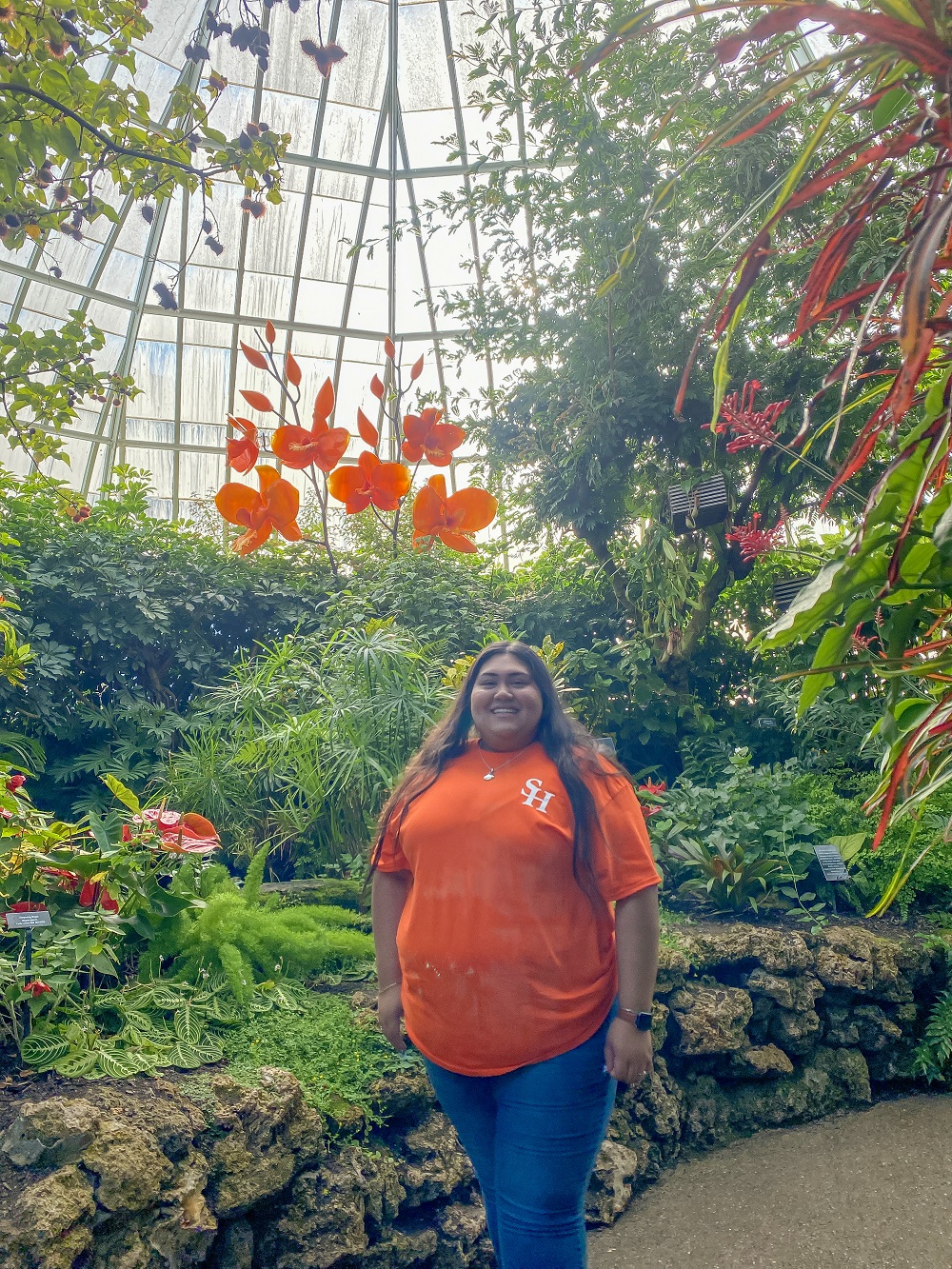
As we stepped into the conservatory, we were immediately greeted by the mesmerizing Goldenrod, Teal, and Citron Chandelier, which hung magnificently from the dome of the welcome center. This stunning piece by Dale Chihuly set the tone for the rest of our visit, showcasing his extraordinary talent in manipulating glass into captivating forms and colors.
Wandering through the various rooms and pathways, we encountered several other Chihuly installations that added vibrant and artistic touches to the already beautiful garden setting. The delicate Cattails and the bold, colorful Paint Brushes were among the many pieces that stood out, each one enhancing the lush greenery and floral displays around them. Chihuly’s art, with its intricate designs and brilliant hues, created a magical atmosphere that enriched our visit.
Beyond the captivating glasswork, the conservatory was a botanical wonderland teeming with life. We found ourselves surrounded by hundreds of different plants and flowers, each adding to the garden’s rich tapestry of colors and scents.
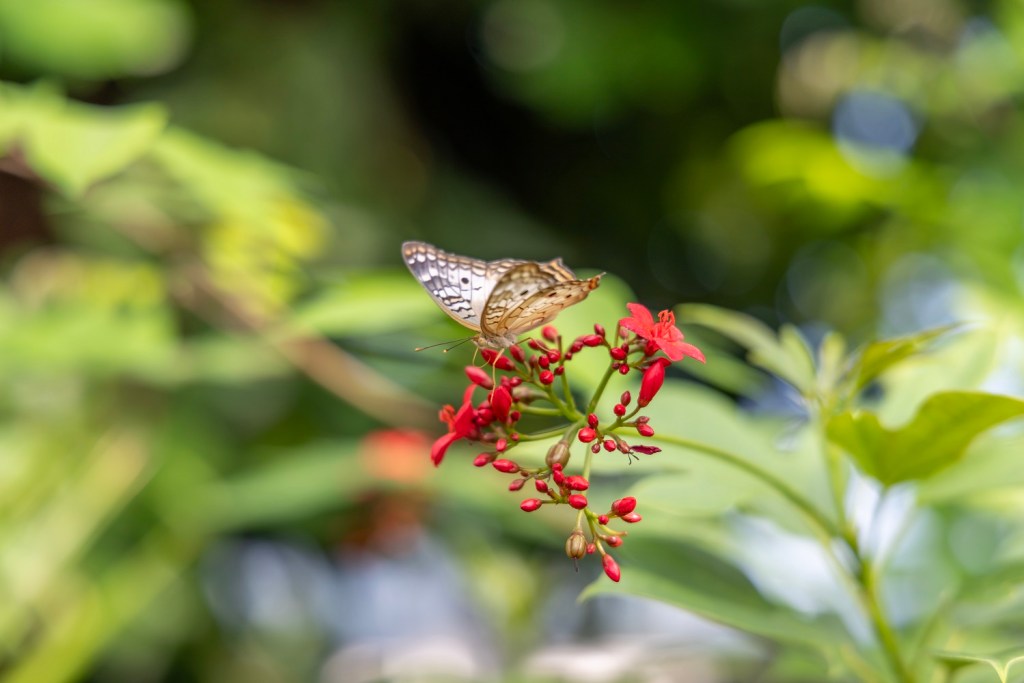
One of the most thrilling parts of our visit was exploring the Butterfly Forest. This enchanting area allowed us to witness a variety of butterfly species fluttering around, creating a truly magical ambiance. The Monarch and Zebra Longwing butterflies were particularly memorable, their vibrant colors and delicate wings adding a sense of whimsy and wonder to the experience.
Adding to the enchantment, we encountered many beautiful flowing fountains, fish, and other creatures crafted entirely out of flowers and plants.
As we continued our journey, we discovered the Orchid Room, a space dedicated to the stunning diversity of orchid species. This room was a feast for the senses, with an array of beautiful orchids in every imaginable color and shape adorning the space. Some of our favorite species were the Vanda Orchid and the Lady Slipper Orchids.
Overall, our visit to the Phipps Conservatory and Botanical Garden was both fun and educational.
We thoroughly enjoyed exploring the beautiful gardens, marveling at Chihuly’s art, and learning more about the diverse plant species.
Max’s Allegheny Tavern
Energized by our cultural immersion, we savored traditional German-inspired cuisine at Max’s Allegheny Tavern. The quaint charm of the restaurant was evident from the moment we walked in, with its cozy ambiance accentuated by adorable lamp shades casting a warm glow.
As a newbie to German food, Michelle and Cinthia were eager to try some of the region’s specialties. The potato pancakes were a revelation, crispy on the outside and fluffy inside, served with applesauce for a perfect blend of flavors. The bratwurst was hearty and satisfying, accompanied by tangy sauerkraut that complemented its savory goodness. And who could forget the schnitzel? Tender and perfectly breaded, it melted in my mouth with every bite.
Overall, Max’s Allegheny Tavern surpassed my expectations, not just with its delicious dishes but also with its inviting atmosphere. It’s definitely a place we hope to return to for more culinary adventures
Duquesne Incline
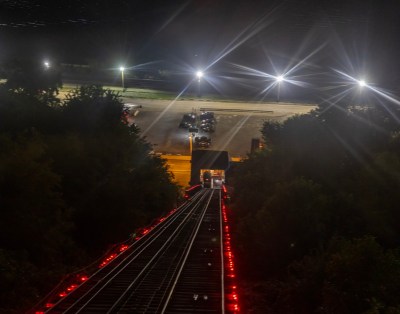
Visiting Pittsburgh for the first time was an unforgettable experience, made even more magical by a ride on the Duquesne Incline. As the sun set, we boarded the historic cable car that ascended Mount Washington. The city’s skyline, illuminated against the darkening sky, unfolded before me in a breathtaking display of lights and architecture. It was a view that truly encapsulated Pittsburgh’s charm and beauty.
The incline itself, with its rich history dating back to the late 19th century, added a sense of nostalgia to the journey. Originally built to transport workers up and down the steep hillside, today it serves as both a historic landmark and a beloved tourist attraction.
The weather that evening was perfect—a cool breeze complemented by a clear sky—making the experience even more enjoyable. Arriving at the summit, I found myself surrounded by panoramic views of Pittsburgh’s twinkling lights and shimmering rivers. It was the perfect end to a day filled with exploration and discovery in a city that had already captured my heart.
The Duquesne Incline not only provided a literal and metaphorical high point of my Pittsburgh visit but also set the stage for a day filled with new experiences and cherished memories.
Andy Warhol Museum
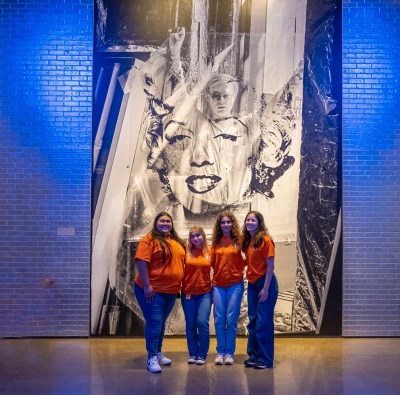
Being in Pittsburgh for the first time has been a fantastic experience; from the weather to the beautiful architecture, it has all been breathtaking. The variety of new foods from Max’s Tavern was an adventure, preparing us for the sensory feast at the museum. Our latest adventure took us to the Andy Warhol Museum, blending art, history, and personal discovery. Having recently watched a documentary on Warhol, I was particularly excited to see his artistic evolution across the museum’s seven floors.
The Andy Warhol Museum takes visitors on a chronological journey through Warhol’s life and work, from his early years on the top floor to the final years of his prolific career on the ground floor. This layout allowed us to see the progression of his style and the expansion of his artistic repertoire in a way that felt like stepping through a living biography.
On the top floor, we were introduced to Warhol’s early life, trying to identify him in old-school photos. This personal touch made the experience more intimate. Warhol’s early commercial art, including his advertisements and product illustrations, hinted at his future as a leading figure in pop art.
Descending the floors, we encountered various works, from his famous Campbell’s Soup Cans to his iconic Brillo Boxes.
We marveled at his silkscreen technique, which he used to create the vibrant Marilyn Monroe series and the striking Elvis Presley prints. Seeing these pieces up close highlighted the bold colors and repetitive patterns that defined his style.
One of the most playful parts was the Silver Clouds room, filled with giant, reflective silver balloons. We could not resist gently pushing them around, feeling the air lift them up.
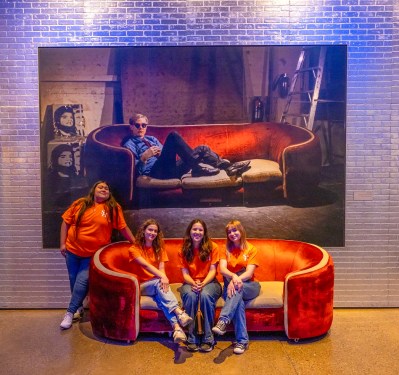
Before leaving, Cinthia, Olivia, and I took pictures on the museum’s famous red couch, a nod to Warhol’s studio. Connecting the documentary insights with the exhibits added depth to our visit, making it a memorable chapter in our Pittsburgh adventure.
Reflecting on our enriching day, Pittsburgh emerged not only as a city of steel and industry but also as a vibrant cultural hub. Each visit—from the Carnegie Museum’s artistic splendors to the Cathedral of Learning’s educational marvels, Max’s Allegheny Tavern’s culinary delights, the Duquesne Incline’s panoramic views, and the Andy Warhol Museum’s artistic legacy—contributed to a deeper appreciation of Pittsburgh’s diverse and dynamic character. As our journey with the Southern Legislative Conference continues, Pittsburgh remains an inspiring destination where art, culture, and history converge to create lasting memories for all who visit.
As we prepare for the next leg of our Southern Legislative Conference trip, Pittsburgh a highlight of our trip—a city where art, history, and culture converge to create an unforgettable experience for all who visit.
Yes, Tropical Storm Albert is encroaching on the Gulf of Mexico, but duty beckons. The LEAP Ambassadors are representing SHSU and the City of Huntsville in the TCMA‘s annual “Intercollegiate Bowl (ICB),” in which University programs compete for the title of the “Best Public Administration Program in Texas.”
But to participate, we first had to get there, and this involved loading up a 12-passenger van, and driving the eight hours to South Padre. Eight hours is a long time, but it’s especially a long time when it involves navigating a tropical storm.
University of St. Thomas
In our typical LEAP fashion, however, we made the most of our travels by learning as much as possible. Thus, we did a bit of homework on modern architecture and, specifically, Philip Johnson, whose buildings dotted our travels.
Our first stop was the University of St. Thomas, where we saw Johnson’s beautiful “St. Basil Chapel.” This post-modern design features a sphere (the dome), a cube (the chapel proper), and a plane, the latter of which cuts through the structure.
The front, made of concrete, is marked by a conspicuous cleft on the right side.
This is the entrance, designed to resemble a tent’s entrance, and it serves as a transitional space, ushering visitors in from the outdoors, but not quite indoors.
From this de-facto foyer, doors then lead into the interior, which is as beautiful as the exterior.
The Ceiling of the St. Basil Chapel (Olivia Discon)
Along the wall was an etching of the stations of the cross…
Victoria Medrano following the Stations of the Cross (Olivia Discon)
… a beautiful sculpture served functionally as the alter; and a pipe organ loomed large on the front-right wall.
The interior was illuminated through three openings, providing a diffuse and ethereal lighting of the chapel.
The chapel is the culmination of an “academic village,” which Johnson modeled after Thomas Jefferson’s design of the University of Virginia (which we visited in March!). In Johnson’s case, the chapel is at the north end of the campus, with the library on the south end, and academic buildings on the east and west sides.
And, interestingly, in one of those buildings, we saw the artwork of an old friend, David Adickes!
Smither Park
Although it rained for about 90 percent of the day, the precipitation courteously stopped or slowed at key points along our journey, including a stop at Houston’s Smither Park.
Designed by Huntsville’s own Dan Phillips, the park is a marvel of fun.
Recycled mundanities are placed in ways that create patterns which, in turn, can create beauty.
Thus discarded tiles turn into a river; old SHSU pins turn into a bright sun;
and broken glass, old signs, and other odds and ends turn into a “Fish Amphitheater.”
And have you ever seen a gecko playing the piano?
Corpus Christi
A few hours later, we rolled into Corpus Christi, where we resumed both our Philip Johnson tutorial and our refresher in Huntsville natives central to the Texas art world. Although the Art Museum of South Texas, showing much less resilience than SHSU students, closed for the day owing to the storm, we stopped by to see Johnson’s design.
The building, which has been expanded by Ricardo Legorreta, is stark white, with clean lines. It is perched on the seawall, and from the interior, at times provides a bunker like view into the harbor, where the USS Lexington serves as a historic artifact and museum.
Although we could not enter the building, we did peek through the windows, seeing a Dale Chihuly, Jesus Moroles, and Charles Pebworth. The real treat, however, was on the Museum’s lawn, where a large James Surls welcomes visitors.
The highlight for this group, however, was the Selena Memorial, which is on Corpus Christi’s Shoreline Drive. The site features a statue of Selena looking to the sea…
… a white flower facing west, and a cupola atop the memorial–which is titled “Mirador de la Flor,” or “Overlook of the Flower.”
Despite the rain, there were half a dozen people paying respects and taking selfies at the Memorial, us among them.
It was an interesting experience, interacting at a space designed to memorialize Selena’s tragically early death, while also capturing some of the hope and beauty reflected by Selena’s music.
And it was somewhat appropriate for the occasion, as our bi-cultural group returned to the car, slogged through torrential rains to South Padre, with hopes of a sunnier tomorrow and a bright future ahead.
























































 Center for Law, Engagement, and Politics