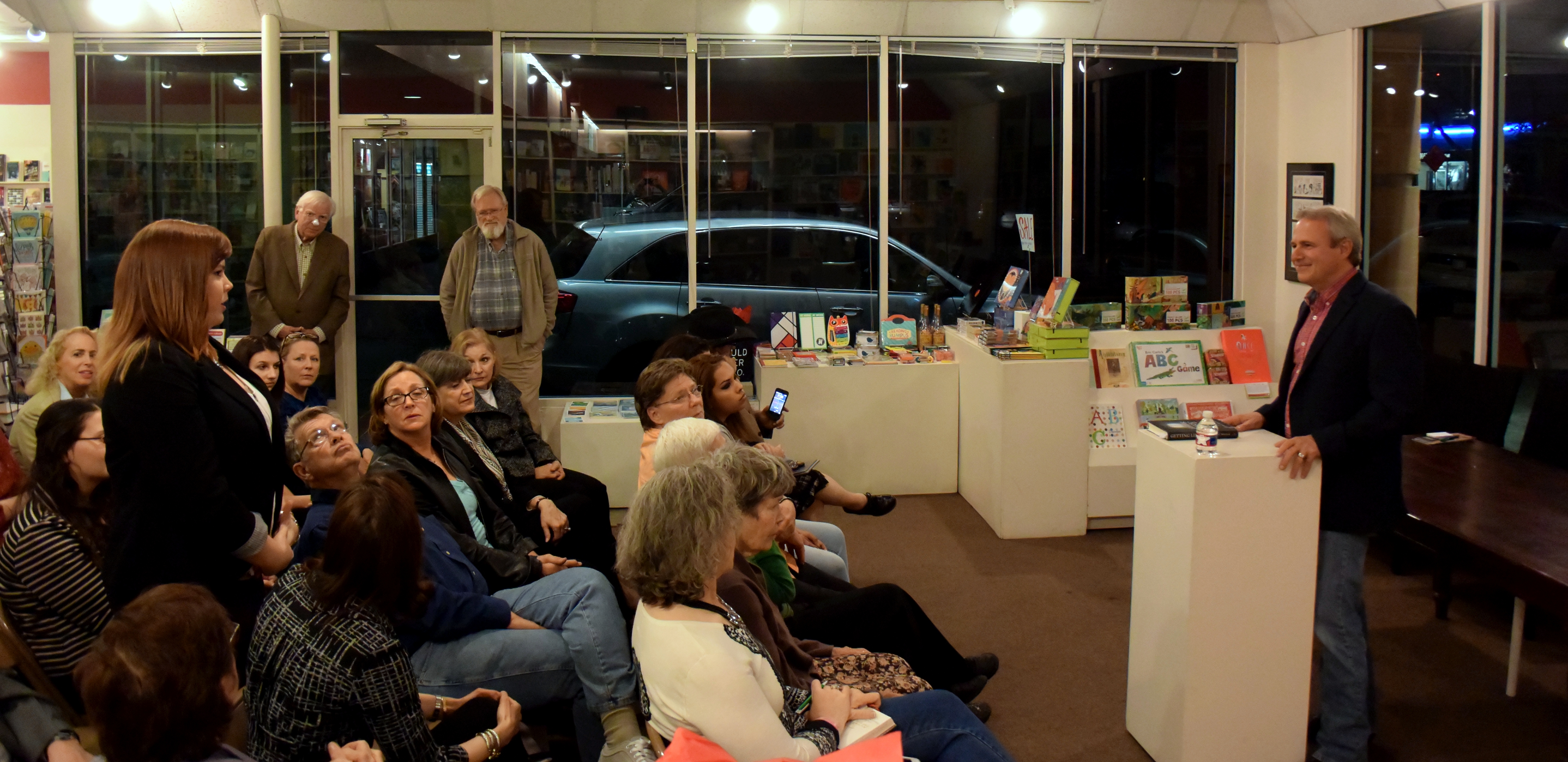
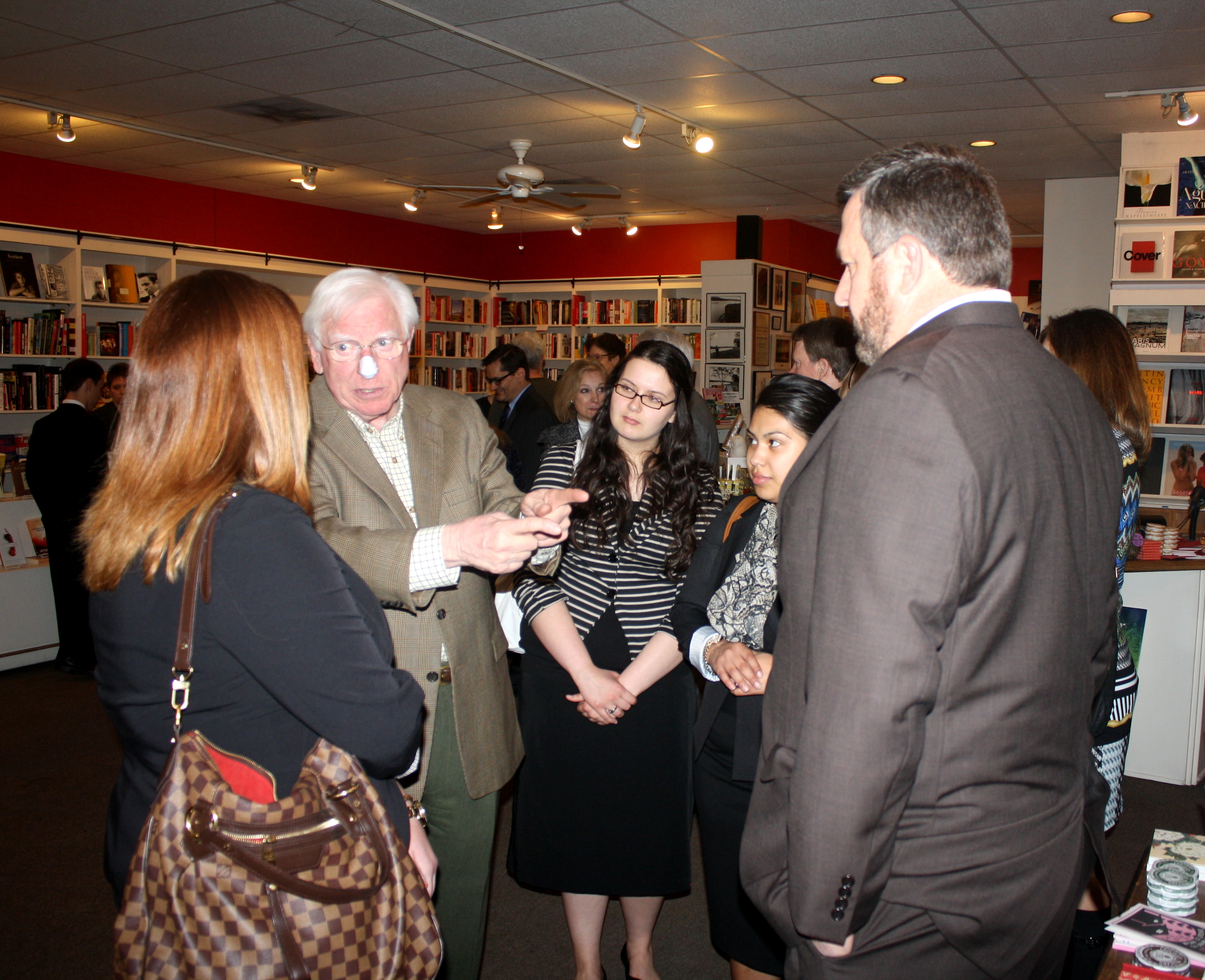
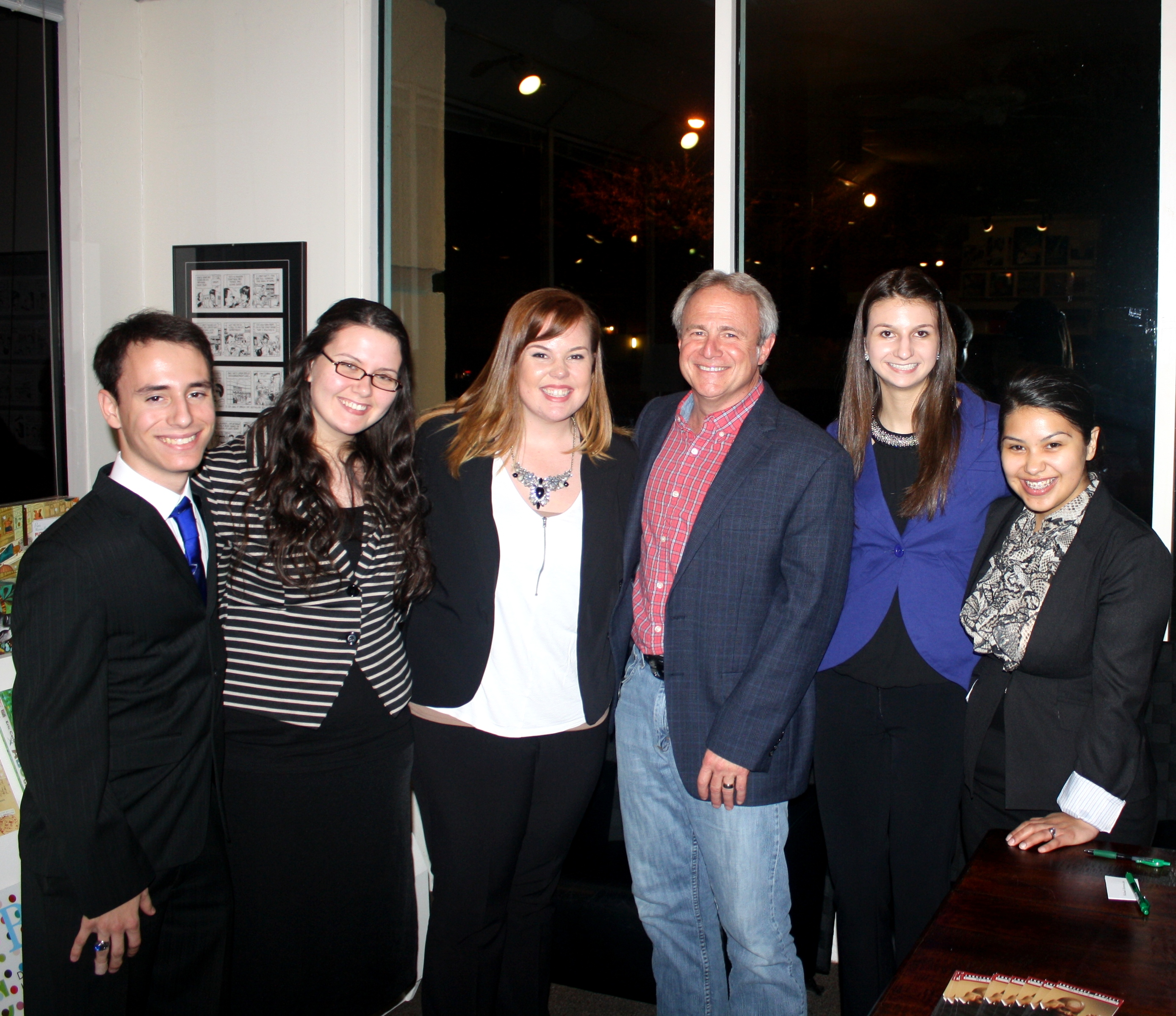
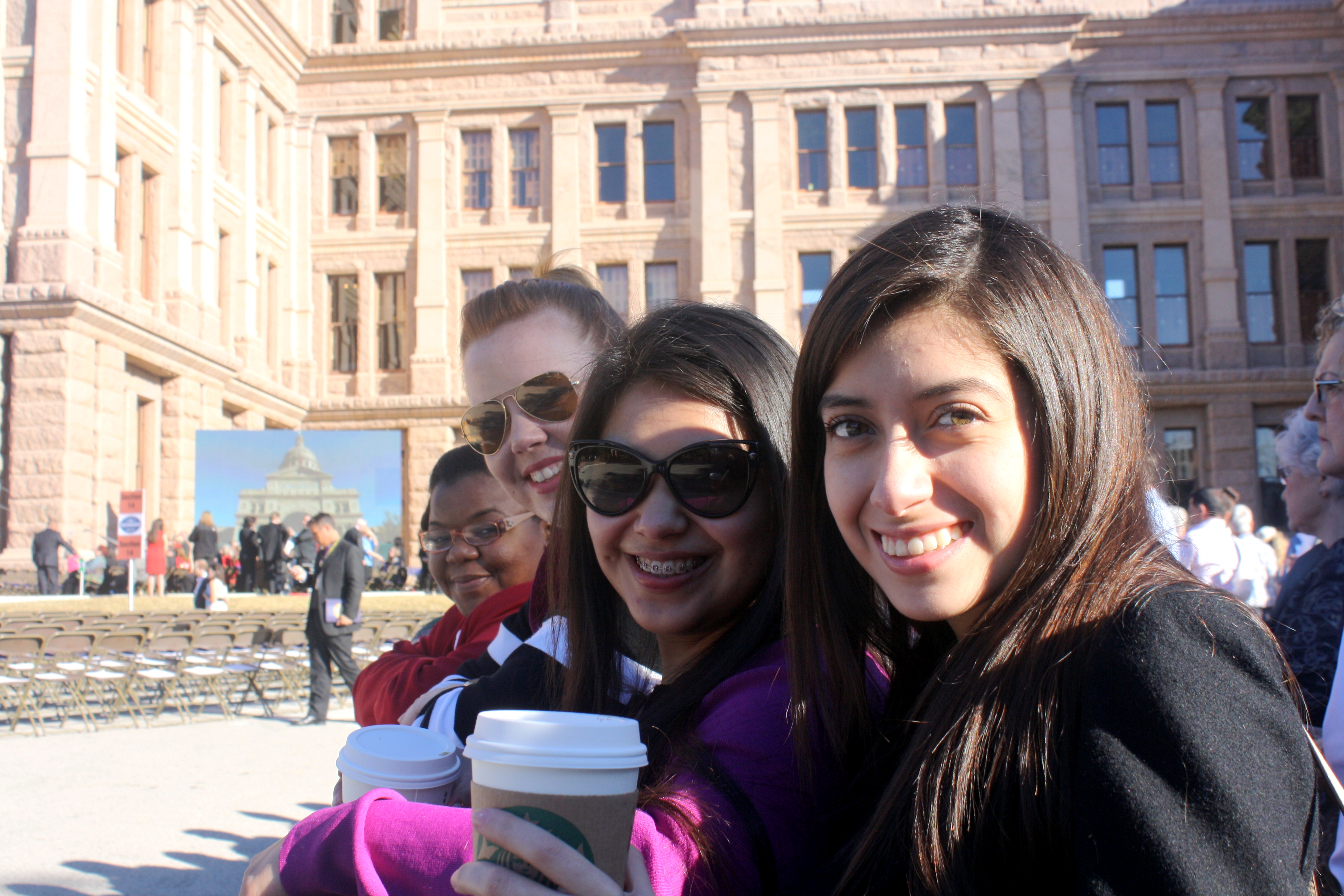
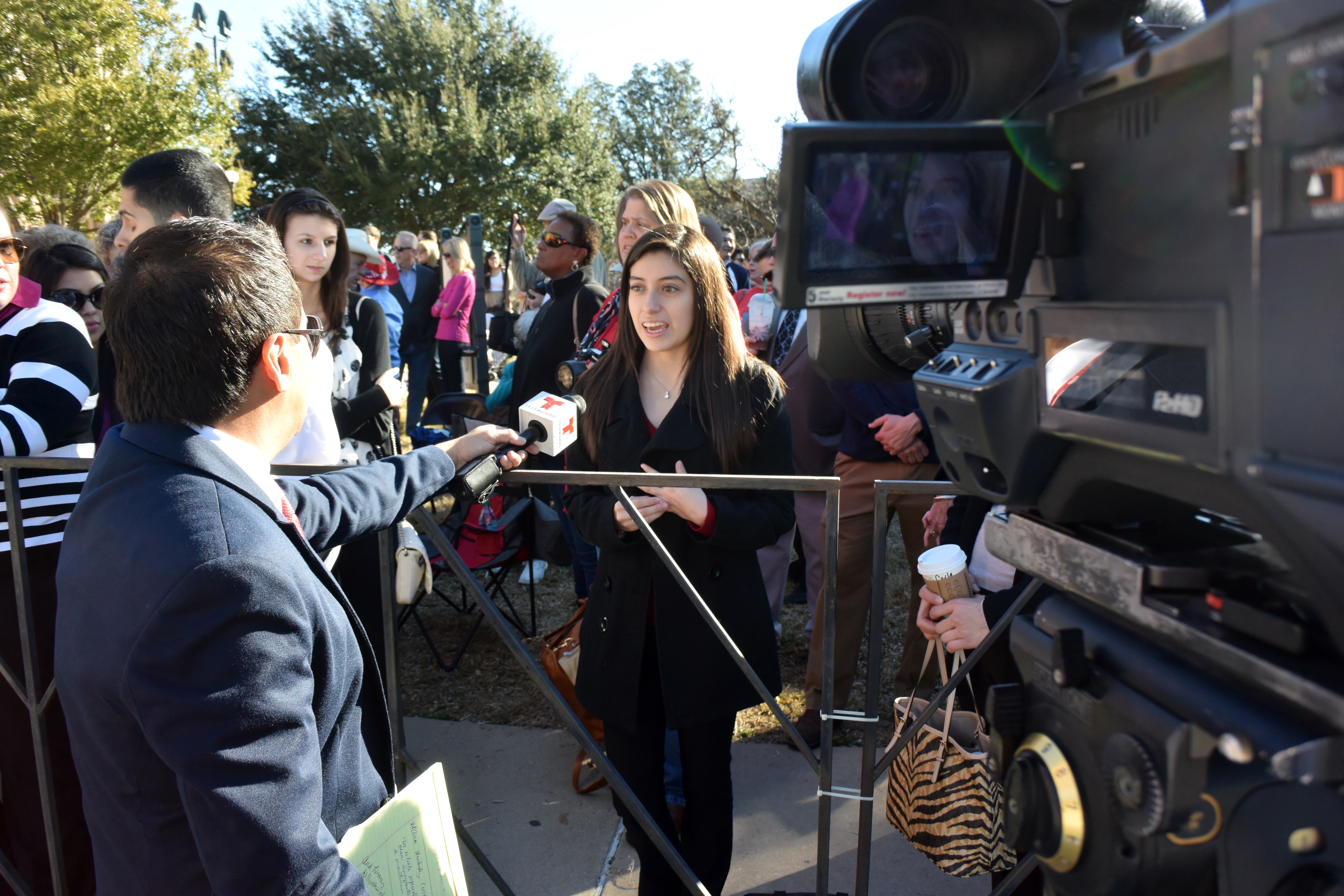
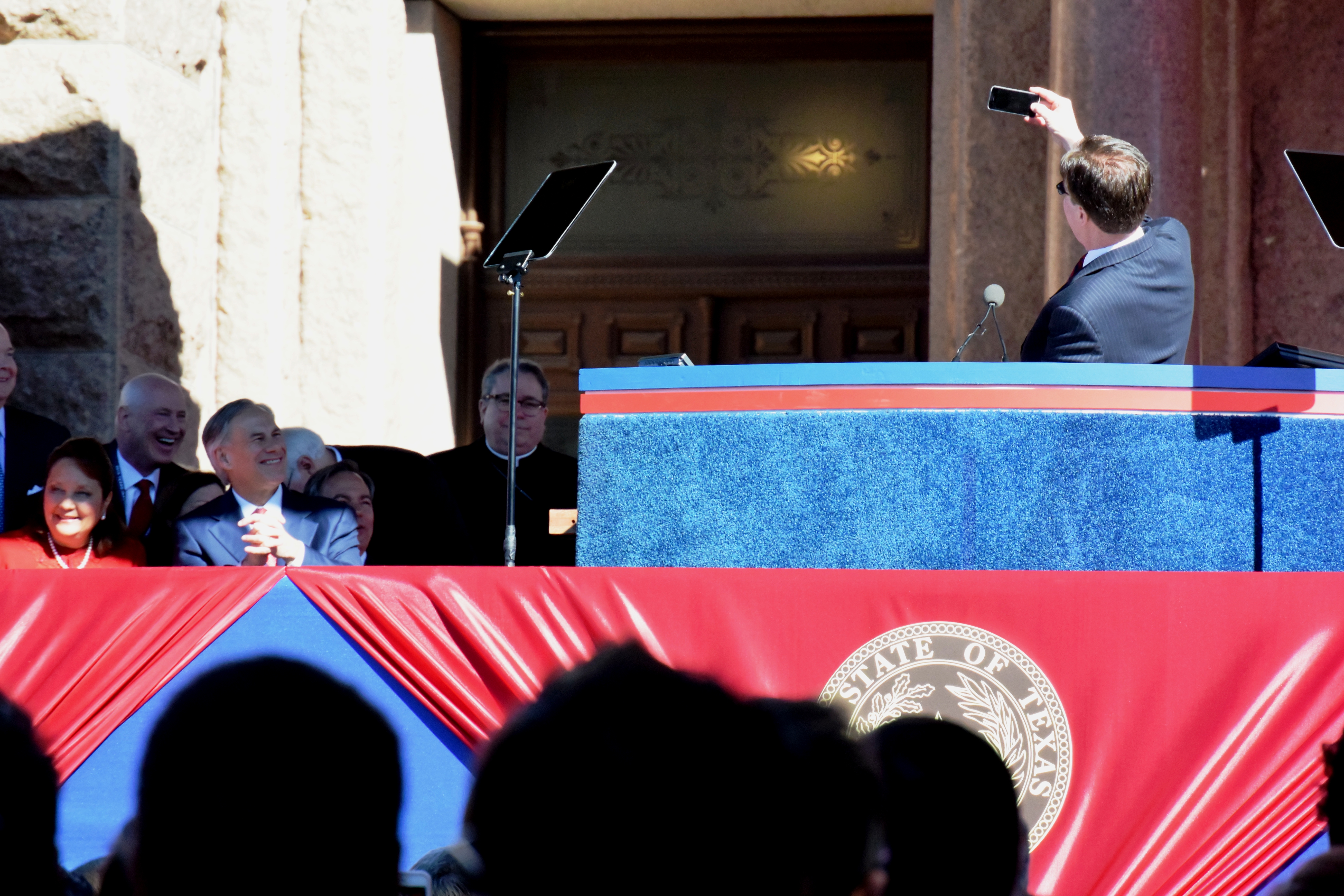
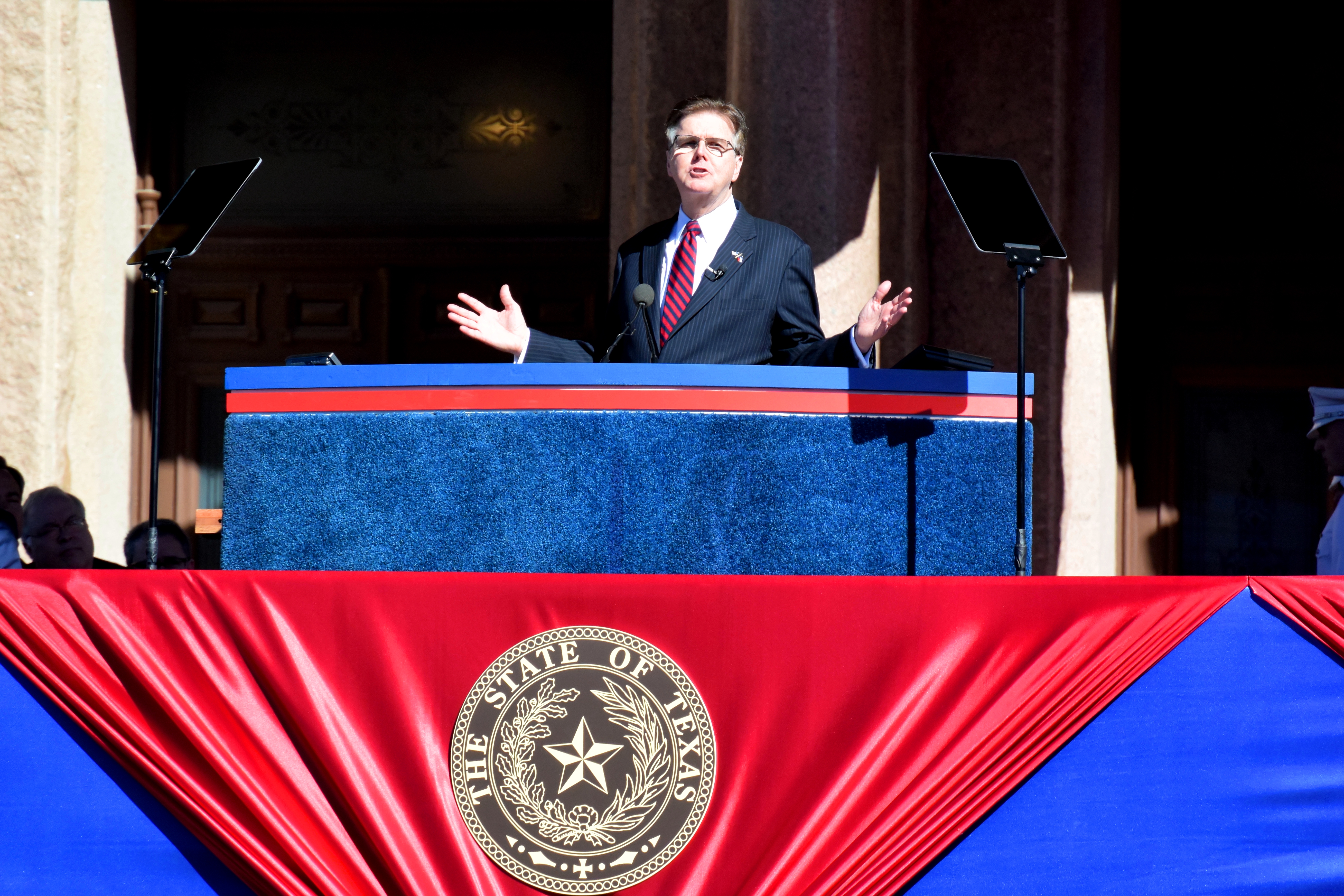
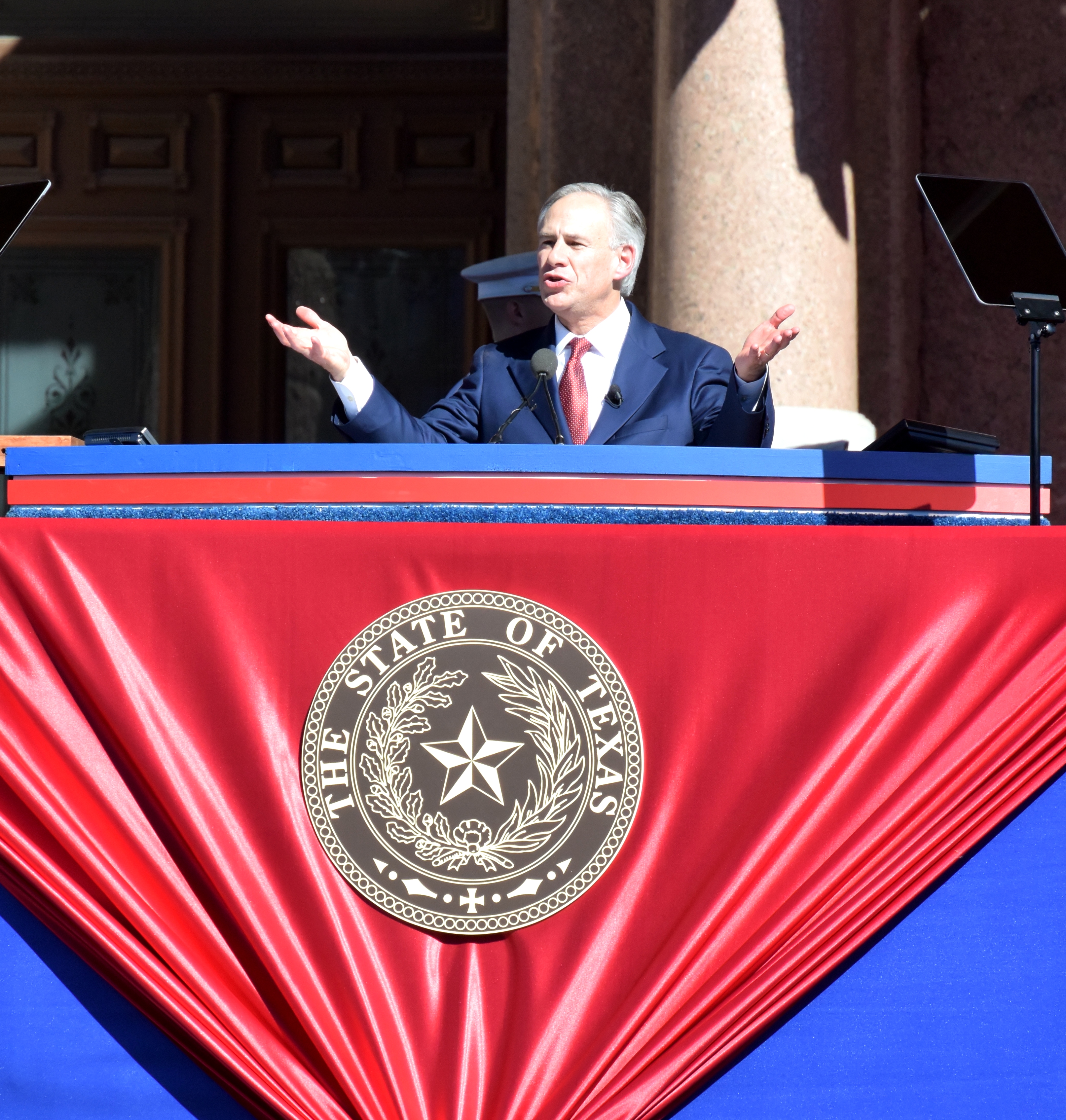
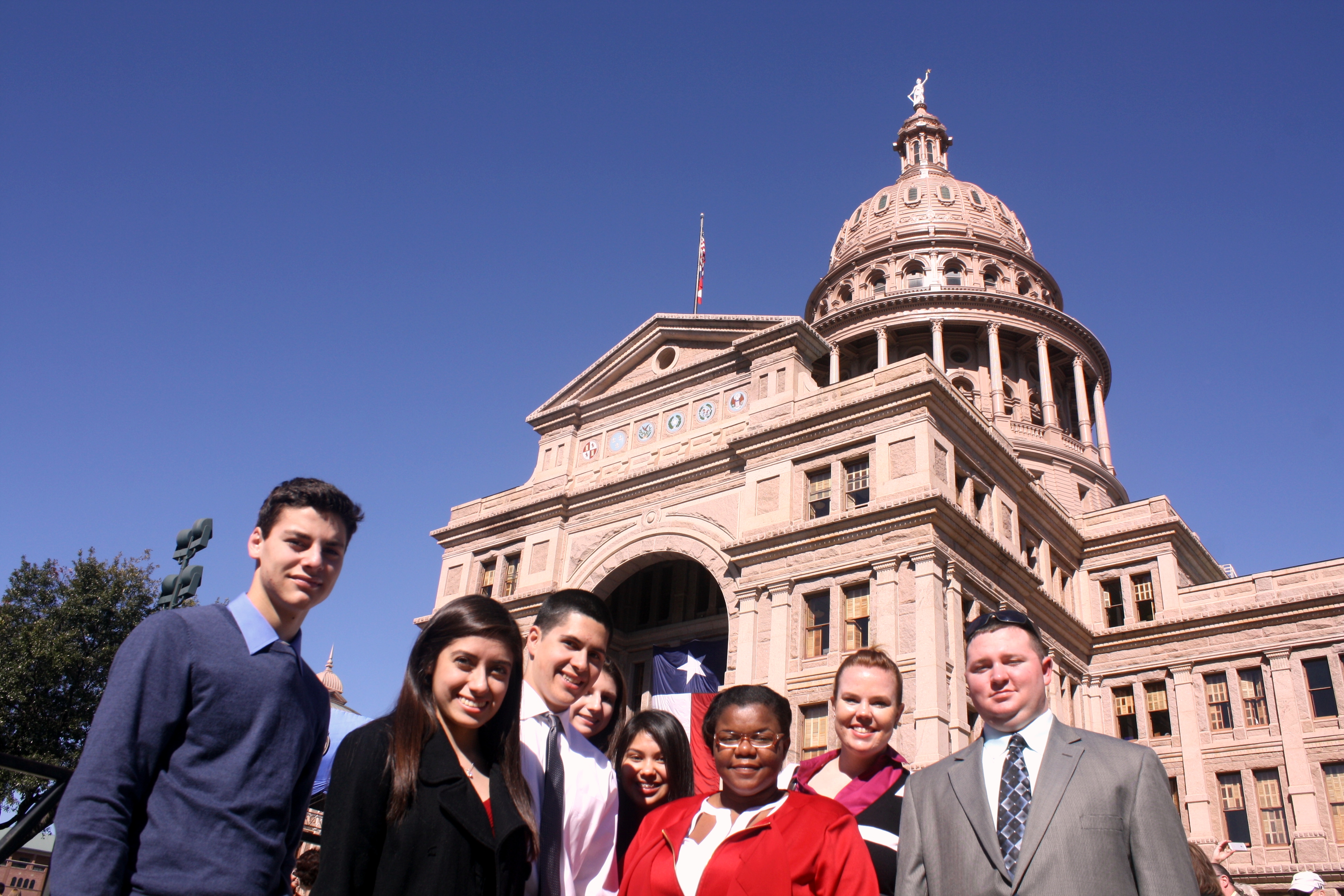
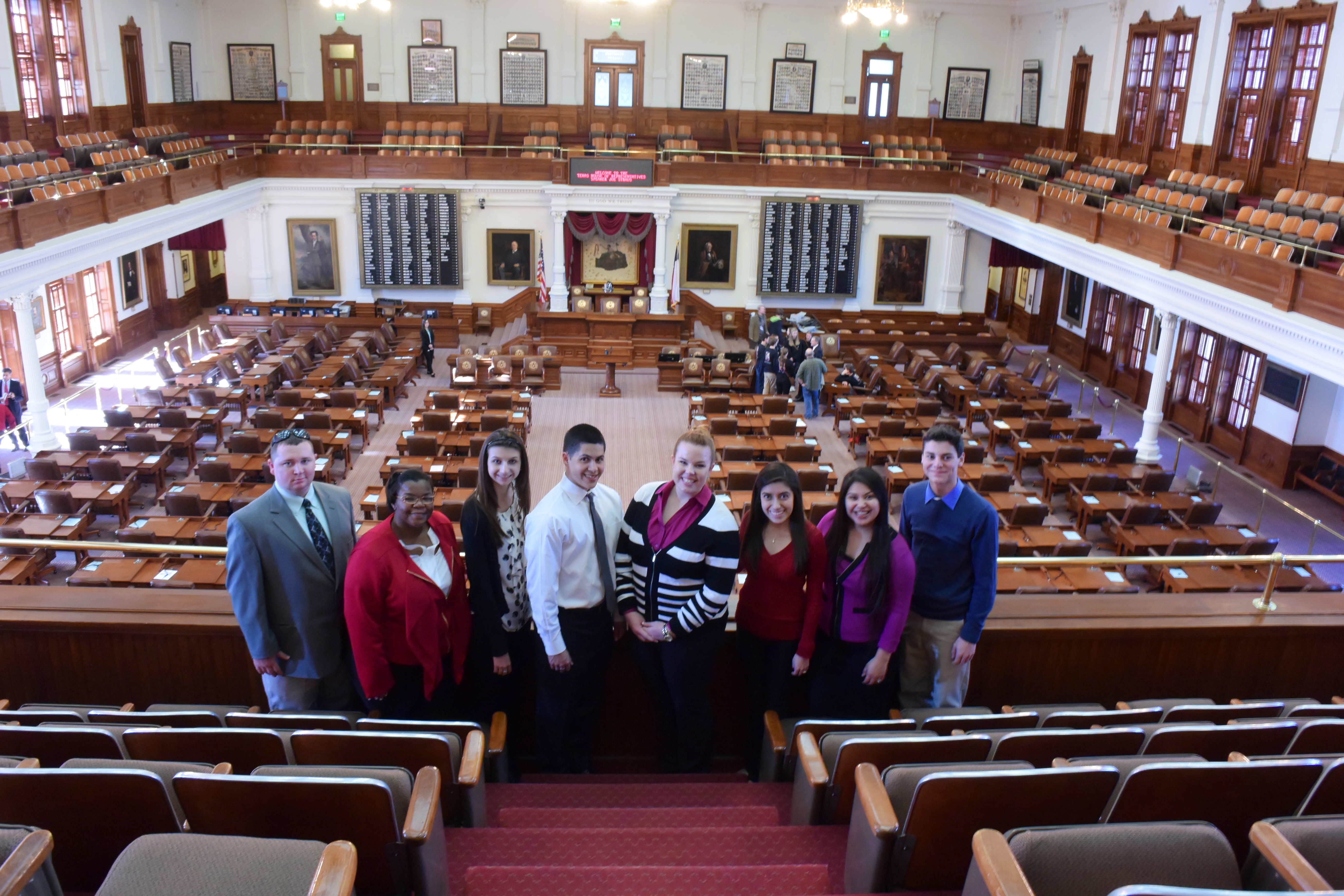
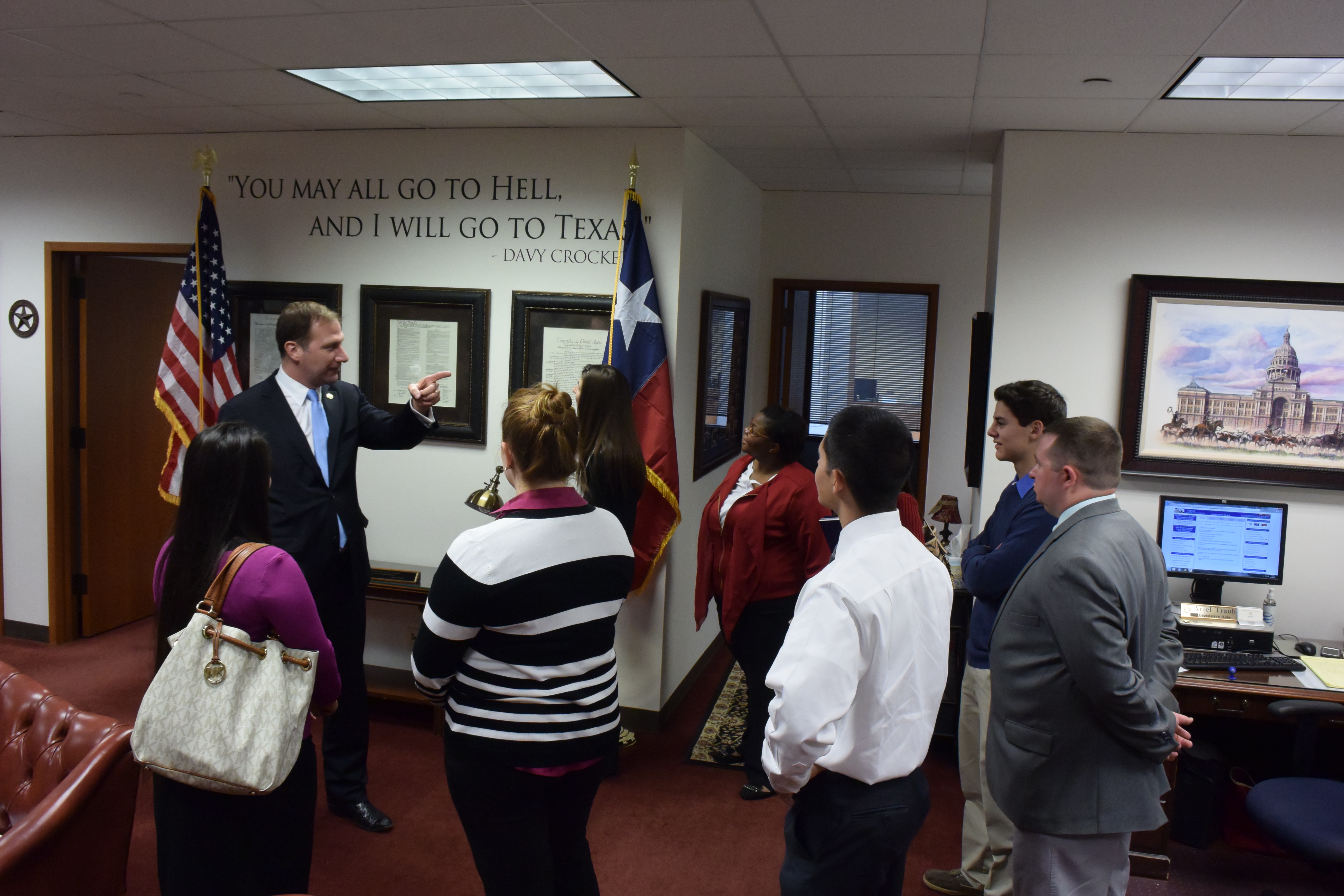
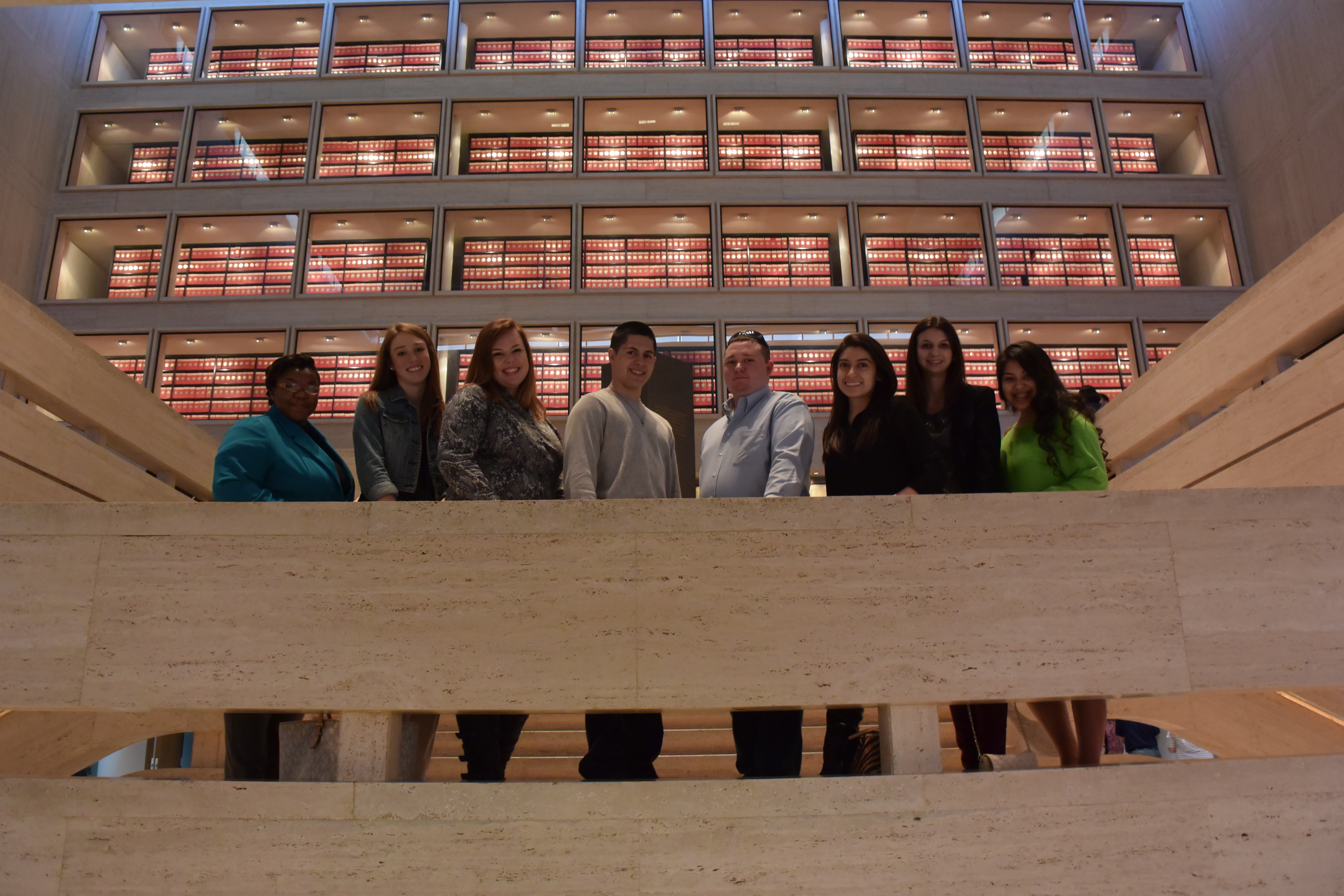
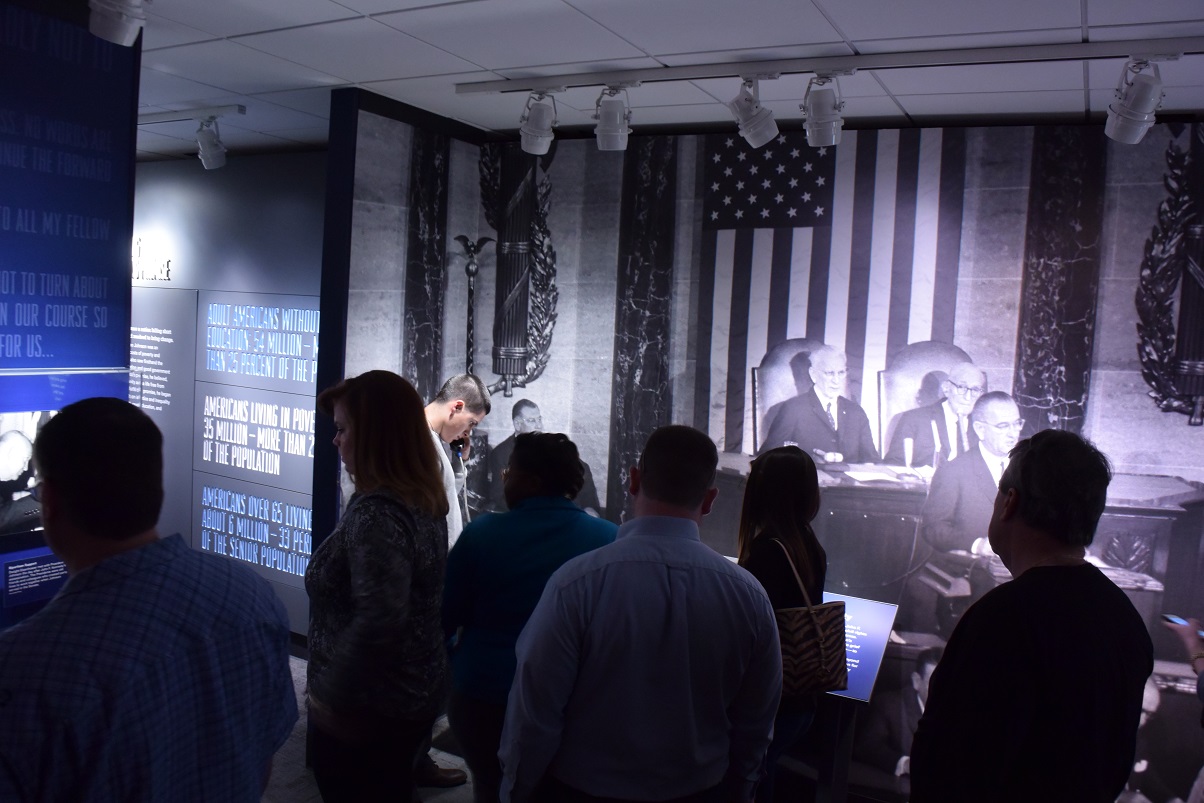
It was a nice day at the Capitol building. LEAP Center students visited the Texas Legislature to learn more about the operation of the Texas Legislature. With the help of Scott Jenkines, Representative Armando “Mando” Martinez’s Chief of Staff, they learned quite a lot.
Most House offices, according to Jenkines, have a Chief of Staff positions, a District Director/Administrator, a Policy Director, and a Staff Associate, although these positions may be fully filled only during the session. There are also committee staff positions available. Senators, with five times the number of constituents as House members, have additional staff. Both the House and the Senate offices offer internships, and an SHSU student, Bianca Kyle, worked for Jenkines during the last session (Spring 2013).
Jenkines spent considerable time discussing expectations of interns and their duties. He praised Kyle, whom he indicated was more of a “Staff Associate than an intern,” noting that she was “a natural” with constituents. Jenkines, who has worked with more than sixty interns in the legislature, expects interns to be on time, to be professionally dressed, and to maintain a good attitude with both staff and the public.
As Chief of Staff, Jenkines allows interns to represent the office at various functions and even attend committee meetings on behalf of the office (Rule: “If you go, you have to stay the entire time”.) For more technical skills, he trains the student and, in fact, typically offers them the chance to initiate research in a policy area.
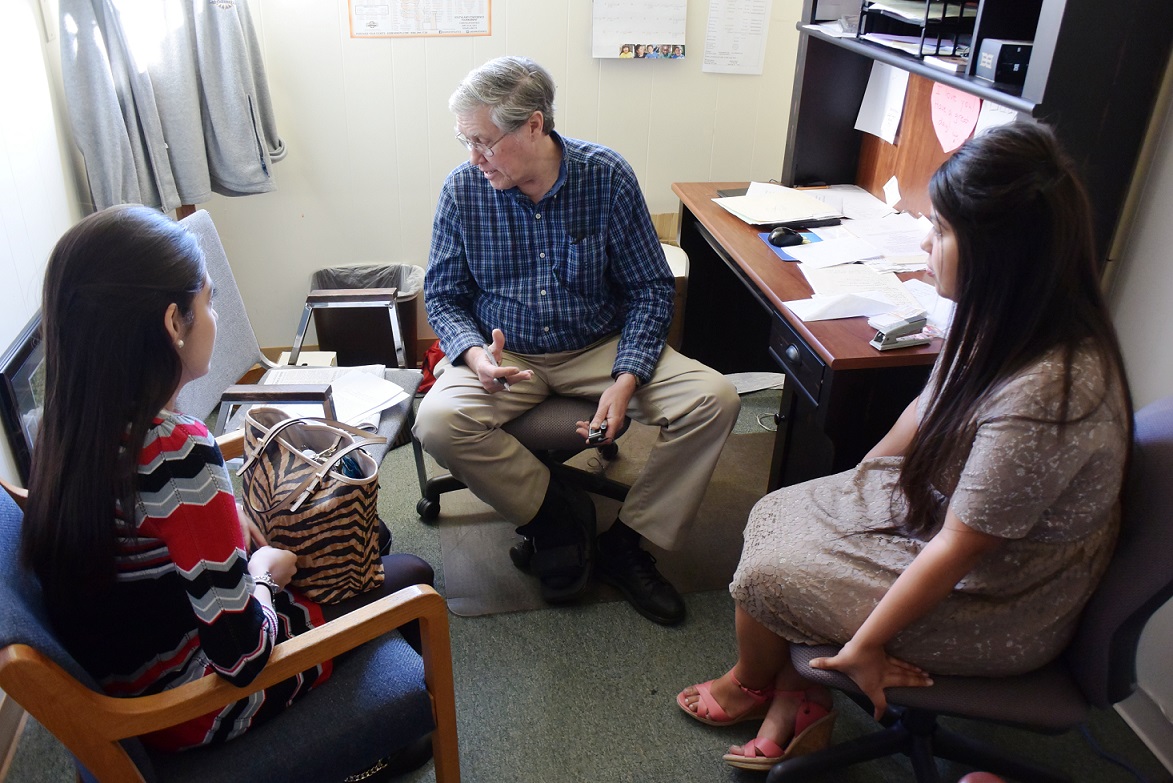
SHSU Business Major Jessica Rodriguez, who is interested in becoming an Austin Intern, asked Jenkines what kind of policy work a student might be engaged in. Jenkines allows interns to attend Committee hearings, but he does have a rule: “If you go, you have to stay the whole time.” Moreover, Jenkines typically allows students to initiate research in a policy area.
“We’ve had great support from the offices in which we’ve placed interns,” noted Mike Yawn, Director of the Austin Internship Program. “Students have had the chance to work on policy, plan events, and see the process up close. We’re very grateful for the offices that have helped us place the SHSU interns.”
Note: Sam Houston’s Austin Internship Program, which began in the 2013 session, has placed students in the following offices:
Over a two-day period, students with the Center for Law, Engagement, And Politics (LEAP) heard from some of the brightest minds around. Mayors Annise Parker (Houston) and Harry LaRosiliere (Plano) talked local government with Councilmembers Bill Spelman (Austin) and Jungus Jordan (Fort Worth); Representative Larry Gonzalez talked the state legislature with Senator John Whitmire; and a host of policy experts explored corrections, privacy, human resources, public administration, and health care. The conference was presented by Governing Magazine, and the discussions served to trumpet many of the “best practices” used by government leaders across the country. Below, the students who attended discuss the panel each found most interesting.
Jake Rivera: “Deploying Data & Performance Metrics to Achieve Results”
This panel featured Brian Anderson (Information Security Officer at Texas A&M-San Antonio), Bill Bott (Consulting Partner, Change & Innovation Agency), and Jerry Madden, for the Representative in the Texas Legislature; and the moderator, Dustin Haisler (Governing Magazine). These men discussed the difficulties that public officials have of evaluating their own programs, a fact compounded by concerns about privacy and even foreign espionage. They also discussed some interesting new technologies (e.g., an app that points drivers to empty parking spots) that could make governance more efficient and customer oriented.
Jessica Rodriguez: “The Local Perspective”
How do you spark connections between elected officials and their constituents? You couldn’t do better than to ask Harry LaRosiliere (Mayor of Plano), Annise Parker (Mayor of Houston), Bill Spelman (City Council, Austin), and Jungus Jordan (City Council, Fort Worth). Although unrehearsed, they each emphasized infrastructure—from basics such as the roads to cutting-edge innovations designed to bring citizens closer to each other and to those that represent them. Perhaps the most intriguing example of these types of connections is the “Food 4 Kids” program in Plano, Texas, in which the City partners with the North Texas Food Bank and local businesses to provide lunches on the weekends for children. The panelists also seemed to be in agreement that local government, while not the most glamorous of the elected positions in the country, was the closest to the people: “If you want to be a [local] official,” noted Mayor Parker, “you have to care about the potholes in the streets, whose trash didn’t get picked up, and toilets being able to flush properly.”
Local Government Leaders
All: “The Legislative Perspective:Empowering Reform in Service Delivery.”
In this panel, Senator John Whitmire and Representative Larry Gonzales had a free-wheeling and far-ranging discussion of issues facing Texas: crime, transportation, mental health, and education.
Senator Whitmire
This was probably the most invigorating of the discussions, with the experts on the stage being given time to explore fully various alternatives. Nothing was off the table. How about an income tax? How about legalizing marijuana? The panel didn’t necessarily try to answer some of those questions, but they raised a number of intriguing possibilities, offering discussions that lingered with us beyond the conference.
Representative Gonzales
Ariel Traub: “Workforce and Management Strategies:”
Featuring star panelists Joyce Wilson (CEO of Workforce Solutions, Upper Rio Grande Valley; former City Manager of El Paso), Bob Lavigna (Vice-Chancellor of the University of Wisconsin), and John Keel (Texas State Auditor), this session brought to light numerous intriguing ideas for attracting, training, and retaining professional employees in government. Citing the difficulties government has competing with private businesses on salary, the panelists suggested combining the following strategies to sweeten the deal for potential and current employees:
Offering school loan forgiveness
Providing tuition flex time or work-at-home days
Ensuring fair evaluation methods
Promoting workforce morale through reward and recognition programs
Working with working mothers and fathers to provide flexible leave programs for workers with children
Although many of these programs have been published elsewhere, the panelists offered interesting twists. Joyce Wilson, for example, noted that it was difficult for many employees to pay for tuition up front and wait to be reimbursed. She suggested that companies bear the up-front costs rather than reimbursing employees. Moreover, all of the panelists noted that, in addition to offering specific benefits to individuals, the proposals also had community-wide salutary effects. Flex-time and work-at-home opportunities, for example, not only provide flexibility to employees, but these policies also cut down on traffic and pollution. Leave programs for mothers and fathers promote strong and stable families. Tuition programs promote greater productivity and employee self-actualization. And so on.
Although the panel was specific to HR strategies, it offered an example of strong approaches to build a stronger organization across all departments.
Tara Cobler: “Investing in Talent: Developing the Workforce to Sustain and Grow Texas’s Economy.”
This panel took a more macro look at the workforce, discussing the outlook on Texas employment. The panelists were well qualified, featuring Betty Harvey (Manager, Texas Workforce Development, Fort Worth Chamber), Alan Miller (Executive Director, Workforce Solutions Capital Area Workforce Board), Bill Purcell (former Mayor of Nashville and lawyer at Jones, Hawkins, and Farmer), and Dr. Mark Funkhouser moderating (Publisher of Governing Magazine and former Mayor of Kansas City).
Any discussion of future employment opportunities has to involve in training and education, and these panelists covered these topics thoroughly. One interesting problem that was broached by an audience member was the issue of Texas’s large prison population. Texas prisons hold more than 150,000 people, the largest prison population in the United States. Accordingly, there is also a large population of ex-inmates, and even more relevant, many people convicted of lesser crimes who were not actually sent to prison. These previous convictions are huge impediments to gaining employment. Some former offenders go through extensive training programs (many of them state funded), only to find that they cannot be licensed in their field with a conviction. The result is a triple loss: (1) the prospective employee remains unemployed, (2) taxpayers have spent thousands of dollars on training to no avail, and (3) the prospective employee is often left dependent on other forms of public assistance.
The panel suggested that criminal histories should be contextualized more fully, giving more ex-offenders the opportunity to gain employment, when appropriate. The program was not only enlightening, but it was also important because it illuminates how public officials can gain knowledge and sympathy to the plights encountered by those who are most affected by public policy.
Alan Garcia: “Closing Remarks: Adrian Garcia”
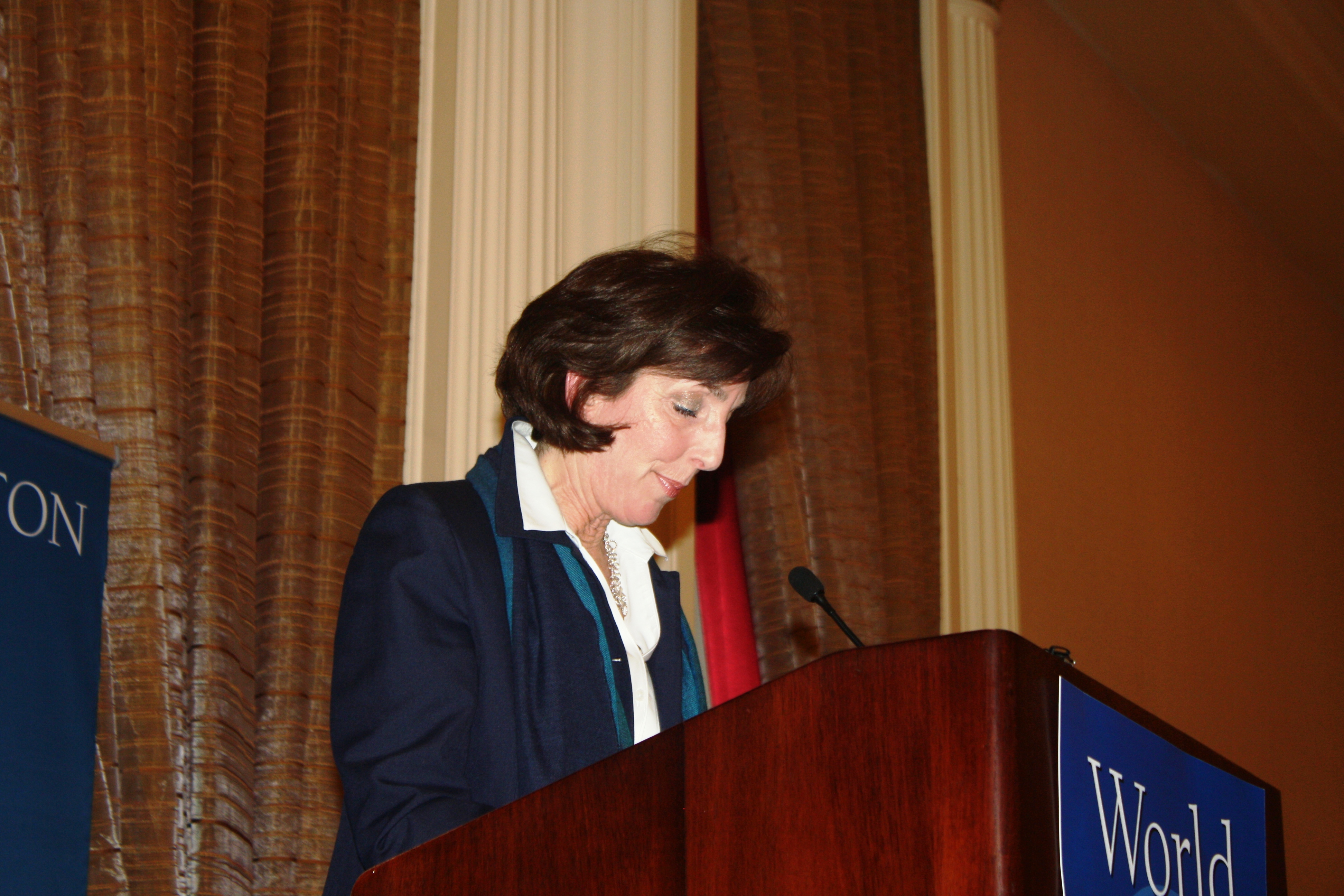
As a citizen who grew up in Harris County, I expected a great speech from Sheriff Adrian Garcia–and he delivered. He did an excellent job with his closing remarks, tying together the themes of previous speakers and providing an inspirational coda to the day’s panels.
Sheriff Adrian Garcia
Echoing the sentiments of previous speakers, Sheriff Garcia noted the importance of electing officials who truly care about citizens. Slick candidates may be able to appeal more effectively to voters, but the day-to-day governing activities require dedicated and devoted public servants. Similarly, Garcia reiterated the importance of community institutions such as family, non-profits, and public-private partnerships (“P3s”). Garcia drew on his personal experiences and background to illuminate the different factors that led to his success, and it provided a microcosm for community success. Like Sheriff Garcia, I am a first-generation American, the youngest child in my family, and–like Sheriff Garcia–I hope to be a successful public figure in the United States while also honoring my Mexican-American heritage.
The conference was a wonderful learning opportunities for us, and we are grateful to Governing Magazine for this opportunity. In addition to hearing from the panelists, we had numerous opportunities to speak with professionals from across the state. This is a wonderful program for current professionals and a great opportunity for aspiring professionals, and we are grateful to both Governing and SHSU for providing this opportunity for us.
Our final day involved presentations by national figures from the campaign world as well as our own presentations of our hypothetical campaigns. Compared to previous years, Sunday’s day was longer, giving us more time to work on our campaigns and to present them to our panel of judges. To cap the weekend off, we were treated to a mini-job fair, with representatives from ten or so state campaigns on hand to accept applications.
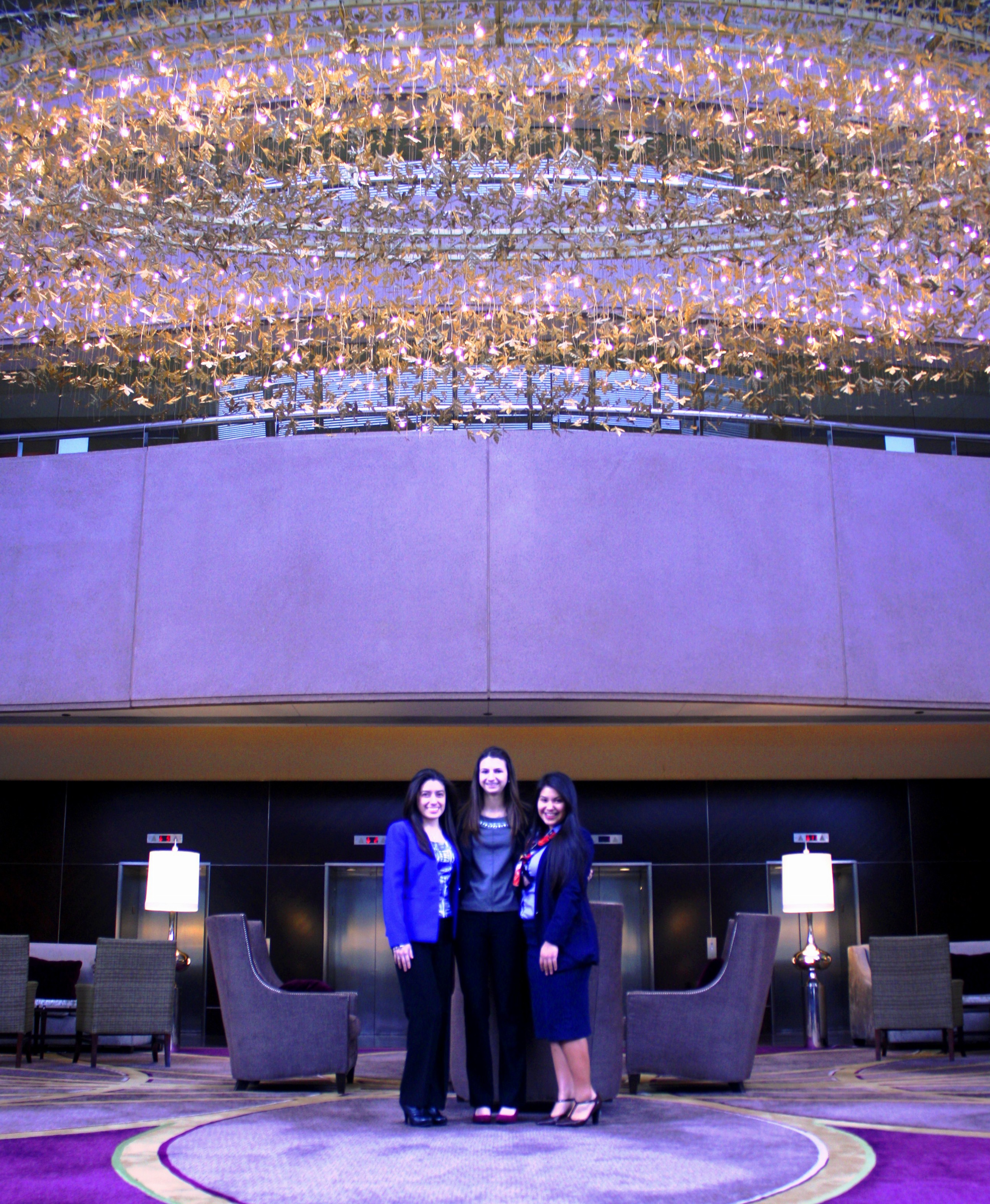
Joycelyn—Our fourth day in Austin was filled with a mixture of emotions. Some of us were anxious about presenting our mock campaigns, a fact exacerbated by the fact that we had still work to do. We did, however, get up early, grabbed our most professional suits, and headed to the Belo Center for New Media.
The teams presented their proposed campaigns in different manners. My group went first, followed by Makeebba’s. My focus was on the finance and fundraising section of the campaign, while Makeebba discussed the dynamics of campaign messaging. (Jake and Lupe’s groups presented at a separate session, so I was not able to see them present.)
Following our presentations, we retired to a “reflection room,” where we shared experiences, goals, and tribulations, while also discussing people who had influenced us in the field of civic engagement.
At the end of the Campaign Bootcamp, awards were handed out to outstanding groups. Makeeba’s group won first place in overall presentation. Although I was not part of her groups, I was very glad she and her group were recognized. After all, I knew she had worked very hard. Lastly, we also had the opportunity to exchange business cards with campaign recruiters.
The Campaign Bootcamp was a wonderful opportunity to have hands-on experience in many aspects of the political campaign process. Over my four years at SHSU (I graduated in May) I learned an immense amount of information in class, but I’ve also learned extensively by practicing what has been taught to us.
Makeebba—Today’s session was pretty intense. Our first session over research, which was pretty interesting, but a difficult one for us given that we were focused on our presentations. Following lunch, we had additional time to prepare for our presentations.
We only had six members on our team (compared to other teams, which had eight), so we had a bit of double duty. But things came together about thirty minutes before “game time,” and things worked! Our team won! I was very pleased, and I learned a whole lot about not only campaigning, but also about life. I can apply these skills that I’ve learned to almost any job or to life situations.
Lupe—The last day of campaign bootcamp consisted of one last workshop over research, along with group presentations, followed by tips on job opportunities. At crunch time, we were given the scoop on how to find last-minute facts, data, and other information on the opponent.
We used a vast array of public sources to find information that could be useful to our candidate, and we spent about an hour to get with our group and put the final touches on our campaign.
Feeling confident about my team and our hard work we waited for our time to shine. Unfortunately we ran out of time during our presentation! Our team had an amazing introduction and opening segments, but they ran a bit long. Still, we received honorable mention for our field plan, and I was very proud of that.
Following presentations, our mentors gave us on tips on how to be involved and potential careers in campaigning. We also had a mini-job fair, with many campaign representatives present and advertising opportunities that were available.
I gained a wonderful experience of working in a team with strangers, putting aside our different views, and working together as a team.
All—It was a wonderful four-day program. It’s hard to believe that we began it on Thursday night by watching “The Foreigner,” and following it the next day with a tour of the Bob Bullock Museum. The three-days of presentations, hands-on learning, and exposure to students from across the state was a formative experience. It encouraged professional growth, broadened horizons, and provided a lot of fun!
Our third day in Austin was the busiest. We began the day at 8:30am and got back to the hotel a little before 11:00pm, spending the whole day in “Campaign Bootcamp.” Fortunately, the day flew by, filled with learning, hands-on activities, and group interaction—much like people involved in real campaigns. With so much to learn over such a long day, we each had our own favorites and lessons we took away.
Jake Rivera: One of the great things about the NPF Bootcamp is that all the speakers have specialties which they share with students over the course of the weekend, providing students with a comprehensive look at campaign work. Today was our busiest day, with about 11 hours of presentations followed by three hours of teamwork. Our primary mentor, Parag Mehta, taught us the importance of taking care of campaign volunteers.
On the other end of warm and fuzzy, Michael Beach taught us the importance of enhancing communications technology. Beach’s style, which is reserved, may be a little less captivating to some of the students, but the substance of what he said was enormously important and, to me, very interesting.
In reflecting on his concepts, it’s easy to see why his consulting firm is successful. Rounding out the day were seminars on fundraising, earned and paid media, social media, voter contact, and political pitches.
One of the things that dawns on you as you move through a program like this is that, in addition to learning the content of the seminars, you are also acquiring skills, especially in the hands-on section. Fundraising is about communication skills and persuasion; working with volunteers is about organization and management; polling is about research and statistics; and cutting across all of these topics is the skill of teamwork.
Of course, we had some of these skills and, in fact, the four of us—me, Joycelyn, Makeebba, and Lupe—came here as a team. Ironically, by working with other teams in Austin, we’ll return to SHSU as an even more effective team.
Lupe Cuellar: There were so many fascinating topics and captivating presenters today that deciding on a favorite could be difficult. For me, however, Ms. Liz Chadderdon stood out as a favorite. Her topic was “messaging” and her style was energetic, engaging, and heavy on opinions. She was passionate about her topic, and it came through as she detailed specific strategies for communicating directly to voters (go for mail!).
My team, which consists of one high school and several college students, has diverse political beliefs. We’ve turned this diversity into a strength, however, incorporating multiple ideas and strategies into a cohesive strategy. I’m hoping it will carry us to victory on mock-election day, tomorrow.
Makeebba Deterville: We had seven speakers today over about eleven hours. It made for a long day, but it also made for a wonderful learning opportunity. Whether it was Parag Mehta discussing campaign volunteers…
…or Michael Beach discussing communications, we got inside the machinery of a successful campaign. The most interesting to me, however, was Liz Chadderdon, who spoke about crafting a campaign message that motivated sufficient voters to win a campaign. She has a unique style, sometimes cursing, occasionally screaming, and always passionate.
At the end of the evening, we broke into our groups and worked on our own campaigns. Although we spent three hours working in a group, it’s not enough time to put together a winning campaign, so I’ll need to turn from the blog and focus on the final touches of our campaign.
Joycelyn Ovalle: The New Politics Forum campaign bootcamp is all about learning—from the importance of volunteers, to crafting a message, to targeting voters, to polling…
…and there is no doubt that by the end of the day our brains were full of significant strategies and knowledge. But the Bootcamp is designed to go beyond filling your head with knowledge; the NPF staff also asks us to put those ideas into action, to apply our knowledge. Accordingly, we followed our many seminars with a three-hour session of teamwork, assisted by our mentors: Luke Marchant, Parag Mehta, and Pasha Moore.
They helped us crunch numbers, finesse strategies, craft messages, target specific demographics, and improve our campaign skills.
The venue for this event was the Belo Center for New Media on the University of Texas’s campus. It’s a large venue, giving campaign groups to move around and settle in different areas. But many of the groups interacted or were sufficiently close such that the conversations trespassed group boundaries. This allowed me to observe how the groups worked together, how they listed to one another and strategized. The teamwork was impressive. If congress could work like that, we would all be very fortunate!
Overall, the day was intense and rewarding, allowing us to learn, apply, observe, and reflect—education at its finest!
May 31–Our Austin agenda is packed, and Friday morning was no different. We visited the Bob Bullock State History Museum, which covers hundreds of years of Texas history—from Spanish explorers to Apollo 13 landing on the moon and reporting back to Houston. With so many interesting facts about the state, it was impossible to learn about all the exhibits and artifacts. But we each had our favorite, lingering over important documents, old fashion tools, jewelry, many weapons, and large-scale displays.
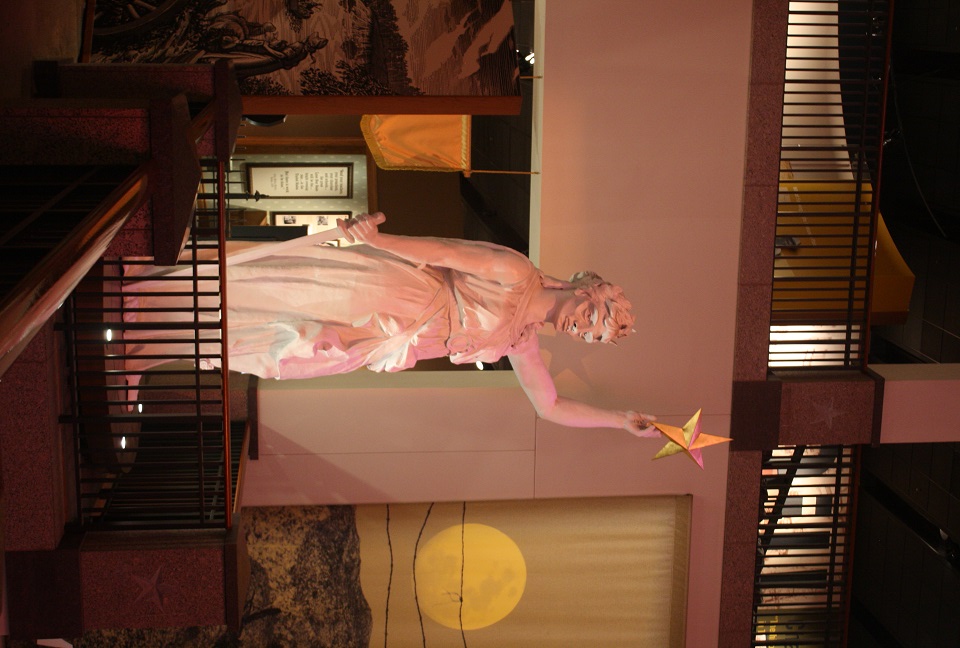
Perhaps the most intriguing of the exhibits to our group was the “Goddess of Liberty.” The exhibit allows you to get close to a full-sized replica of her, and her features were over-large and unflattering.
The reason, according to the Museum, was so that the facial features would be noticeable from 310 feet away, which is the height of the Capitol Building. Rumor has it that she was placed atop the capitol building to make it just a bit taller than the US Capitol. My favorite exhibit, however, was Lone Star flag, which included a quote from Sam Houston, who noted that the flag is a “symbol of heritage that marks who we are as a people, who the land has made us, and who we will become…” It was a fitting quote for our group from SHSU, the University which marks us as a group and will influence who we will become.
After feeding our brain with knowledge of Texas history, we were also introduced to new spices, flavors, and foods. For lunch, we tried the Noble Sandwich, where a long line for the food attested to the popularity of the restaurant. The line also gave us the opportunity to discuss the menu options, which culminated with Jake deciding on the Noble Pig Sandwich (pulled pork, bacon, spiced ham, and provolone) and the ladies sticking together and ordering the delicious Turkey Chop (red onion, cucumber, fresh herbs, and lemon coriander vinaigrette. Professor Yawn opted for the Smoked Duck Pastrami, which consisted of duck, sauerkraut, and Russian dressing.
We also expanded our palates by trying a double fudge cookie, a coconut cookie, a maple and pecan cookie, and an exotic chocolate bacon tart!
We ended the night with a visit to Quack’s 43rd Street Bakery. We greatly enjoyed a lively conversation, as well as desserts, coffee, and tea. Lupe and Jake finished off a piece of Peanut Butter Fudge cake and a double chocolate brownie, while Joyce and Makeebba shard a Vegan Lemon Blueberry cupcake, and we all enjoyed ginger cookies, a specialty of the bakery.
In between lunch and our late night snack, we spent a full day at the New Politics Forum’s “Campaign Bootcamp.” We met students from all over Texas, students from the University of Texas, Texas State, Texas A&M, Rice, and University of Houston. We weren’t sure what to expect, but we were eager to learn from veteran campaign staff, who serve as presenters and mentors on topics such as fundraising, campaign management, volunteer recruitment, message shaping, crisis control, getting out the vote, and social media. Emily Einsohn, the Coordinator of the New Politics Forum, offered introductions, and she helped establish a welcoming environment, allowing us to focus on the substantive topics.
Our first presenter, Parag Mehta, was the Outreach Coordinator for the Barack Obama Presidential Transition Team, and he led off with a poem for an introduction. It was a nice icebreaker.
Dr. Regina Lawrence, the Director of the Annette Strauss Institute began with a discussion of statistics, helping us know how to target vote totals.
We also heard from Luke Marchant, the Republican mentor, and Parag Mehta, the Democratic mentor—both have worked for high-level elected officials.
At least one of us found the campaign management seminar, led by Rob Johnson and Ed Espinoza, to be the most informative. It was a great overview of the process, and appropriate for our first day.
We also broke into our groups and were given a hint of our hypothetical scenarios, in which we work to ensure victory for our hypothetical candidate. One of the nice—and fun—aspects of the campaign is that the scenarios bring together Democrats, Republicans and Independents together to work on the same team. We’ll see how that goes!
Lupe Cuellar and Joycelyn Ovalle–Our destination was Austin, a trip made to engage in a “campaign bootcamp,” but we headed out a day early to enjoy the many attractions in Austin, Texas. Actually, we enjoyed the trip before we even arrived in Austin, particularly our dinner in Elgin, Texas, where we enjoyed some delicious barbecue. Elgin is a small town just outside of Austin that is known for its savory sausage. Meyer’s restaurant provided a range of barbecue favorites such as smoked beef brisket, barbecue chicken, barbecue smoked turkey breast and pork garlic sausage. With so many mouthwatering choices, making a decision on one thing was not easy. However, I could not pass up trying the smoked pork ribs. My entry consisted of four flavorful smoked pork ribs that were dipped in rich original barbecue sauce. It also included two sides, which consisted of creamy cheesy macaroni and fresh coleslaw. I could have not asked for a more delightful meal. The rest of the group came up with a sampling of other food options: brisket, turkey, pulled pork, and sausage.
And while their choices may have differed, the group’s conclusion was the same: the food was delicious!
After enjoying some delicious barbecue, we headed to the Austin Playhouse Theater to watch the play–“The Foreigner” by Larry Shue. After all, laughter is the best calorie burner! It was interesting to learn that the cast was not only composed of professional actors and actresses, but also members of the Austin Community. People volunteer their time and skills to provide live entertainment for people of all ages.
The key character in the play was “Charlie,” the titular “Foreigner,” and he was the group’s favorite. But we also enjoyed Cyndi Williams’ performance as Betty Meeks, the operator of a fishing lodge and resort. If her Georgian accent and “old South” expressions didn’t provide sufficient humor, her interactions with the “foreigner” made for plenty of laughs.
At the end of the day we realized that our first day in Austin was a success. Barbecue, Site seeing and Comedy are great partners!
Makeebba Deterville and Jake Rivera–Today is the first day of SHSU classes, but we embarked on a different education in Austin, Texas—a bit of site-seeing on top of a three-day campaign bootcamp hosted by the Annette Strauss Institute.
Our journey began with a visit to the unique Meyer’s Barbeque, in Elgin, Texas. I ordered the BBQ brisket with a side of potato salad and macaroni and cheese, while the other students opted for turkey, ribs, pulled pork, and sausage. One of the fun things about the restaurant is sampling their two types of BBQ sauce—the “original” and the “honey mesquite.”
The restaurant was recently covered in the Dallas Morning News, which addressed the ongoing debate over whether Meyer’s Barbeque is better than its main in-town rival: Southside. Having never visited Southside, we cannot decide the matter, but this gives us something to explore on the way back to Huntsville…
But we are getting ahead of ourselves. We landed in the great city of Austin, Texas with a welcoming view of the city’s skyline—including, of course, the beautiful Texas capitol building.
Of course, we followed that up by seeing the less-than-beautiful Highland mall, which is where the Austin Playhouse (a new venue is in the works).
None of us knew what to expect from Larry Shue’s “The Foreigner,” which was our night’s entertainment. We were, by far, the youngest people in the place, which was too bad, because the play served as wonderful entertainment for people of all ages. There were some very funny lines, but much of the humor was conveyed non-verbally as well. One scene, reminiscent of the Marx Brothers mirror scene in Duck Soup, which involved the characters Charlie (the “Foreigner”) and Ellard (a half-wit) at breakfast, and was particularly memorable.
Also attending the play with us was Blake Roach, an SHSU alumnus, who is now working for Attorney General Greg Abbott. It was great to meet SHSU alums, sharing laughter, and kicking off what we will hope to be a great weekend!
May 15, 2014–LEAP Center students had a rare opportunity to hear directly from Croatian President Ivo Josipovic. The Croatian head of state was in Houston to discuss business relations, global diplomacy, and relations with Russia. The theme of the speech, however, was oil and energy, a nod to the 5,000 odd energy firms in the Houston area.
Josipovic spent little time talking about himself, which was unfortunate. He is an attorney, composer, and a music professor professor–in addition to being president.
The event was also an engaging cultural opportunity for us. Traditional Croatian dancers were on hand to demonstrate folk dance, and a very fine singer performed a couple of Croatian songs, including the country’s national anthem.
Following the event, we visited Cafe Pita, a Bosnian/Croatian restaurant on Westheimer. We explored various intriguing offerings–including fried anchovies.
It was a great evening with a great group–one that included some special guests: Leanne Woodward (whose grandfather immigrated to the US from Croatia) and Megan O’Flaherty, former President of the Junior Fellows.
This was the eighth head of state that LEAP Center students have seen in person. The others include: US Presidents Bill Clinton, George W. Bush, George H. W. Bush, Barack Obama; former Presidents of Mexico Vicente Fox and Felipe Calderon; and the President of Guana, John Mahama.
To round out the weekend of legislators and legacies, we started at the LBJ Presidential Library & Museum. The Library is located on the grounds of the University of Texas at Austin, a scant distance from the Texas capitol, an appropriate sort of geographical as well as biographical tribute to a Texas politician and 36th President of the United States, Lyndon Baines Johnson.
Lyndon Baines Johnson Library & Museum
The Library “reopened” in late December 2012 following a yearlong renovation effort, and that effort paid off in terms of developing a contemporary look and feel for a large slice of Texas and US history.
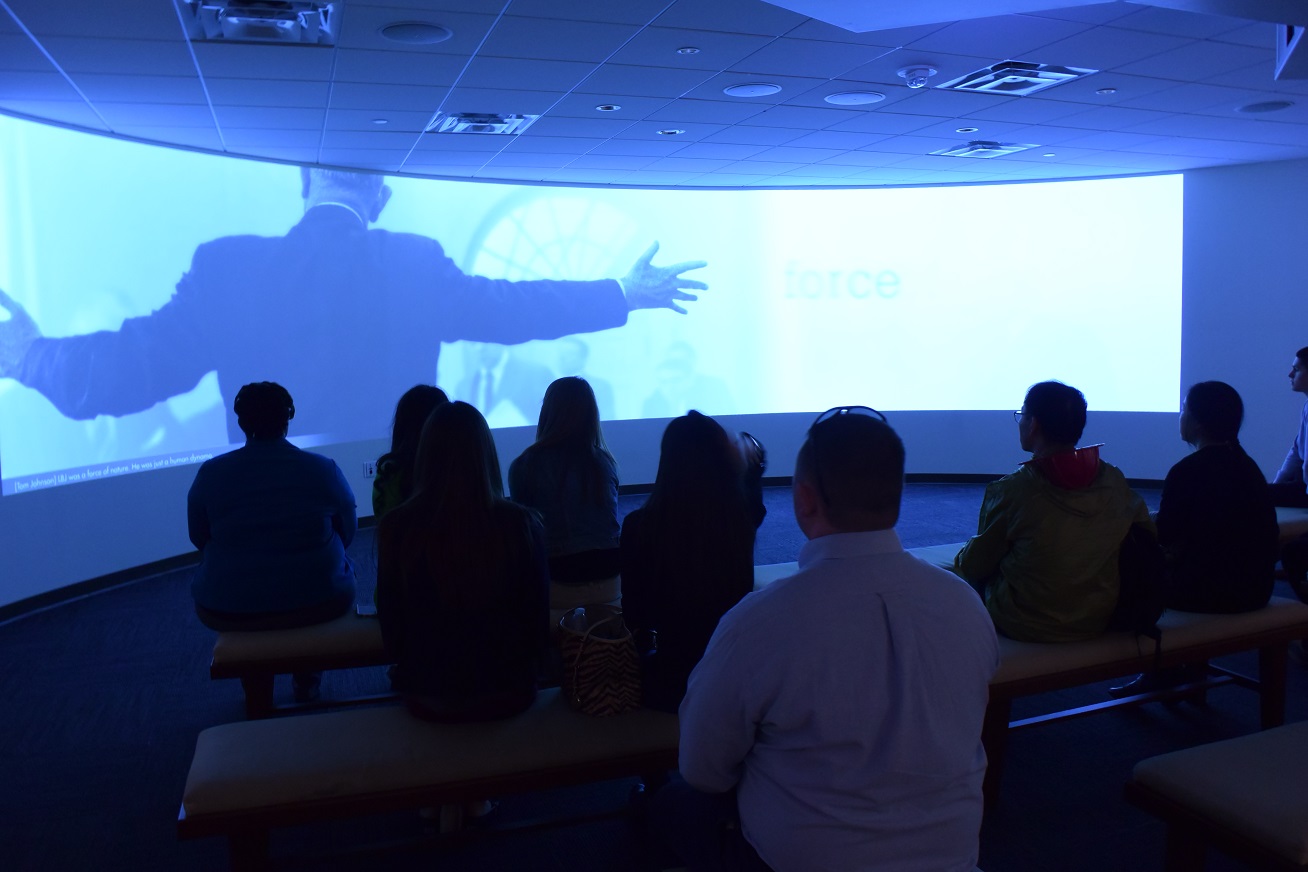
The exhibits have been updated, modernized, and expanded to highlight more of LBJ’s presidency, particularizing on timely issues. One favorite new item was the “display” of several of LBJ’s private phone conversations the President – phones were interspersed through multiple exhibits, inviting visitors to “please hold for the President,” to listen in on conversations with anyone from other legislators to the press, pertinent to the exhibits. There were several theaters for short films…
dozens of pens used by LBJ to sign bills into law;
LEAP Center Students & LBJ’s Pens
a talking LBJ mannequin;
Jessica Rodriguez and Lyndon Johnson
the Oval Office…
and a favorite for poses: a cardboard LBJ giving the “Johnson Treatment.”
Ryan Brim & Lyndon Johnson
One small difference, discovered at the front door, is that the LBJ is no longer a free museum. However, the low cost of admission was well worth the updated exhibits. Even if you’ve been before, is definitely worth a return trip.
After several hours wandering the Library, we headed back to Huntsville, via the northern route, in order to stop for a late lunch at Meyer’s Texas BBQ in Elgin, Texas. Despite being a large group, there wasn’t a lot of talking until we had all wrapped up our lunches, which everyone agreed was well worth the wait.
It was a long weekend of touring the capitol, meeting with and getting an in-depth glimpse of a legislative office’s inner workings, touring LBJ’s multiple shrines, and experiencing Austin in a whole new way. But for the students, who range from graduating this May to just starting this year, it was an experience they agreed they won’t forget. During the return trip, we usually recap the excursion’s events and discuss lessons learned and favorite stops and sights, and this trip was no exception. For our regular readers, though, we thought that with eight students, compiling one list seemed an efficient way to present favorites:
Frank & Angie’s: “We’re not vegetarians, but we really loved the vegetarian pizza. Definitely worth a trip back someday.”
Meyers BBQ (Elgin): The BBQ, especially the pulled pork, was a hit, but the banana pudding “took the cake.”
Favorite Sculptures:
There were many options from which to choose, but the figures made from aluminum were a big hit. The fact that Benini made them using his tractor probably added to the mystique and attractiveness.
Heartcatcher (Aluminum)
Favorite Destinations:
Capitol Hill Workshops: “It was really eye-opening – the work that goes into running a legislature. And we appreciate the Hill staffers who took so much time to really explain things to us.”
House Parliamentarian, Chris Griesel
Benini Sculpture Ranch: “Spending time with the artist was amazing. He shared so much with us.”
The Johnson Treatment Audio Tapes: The photo backdrop in the LBJ Library gift shop was almost as big a hit as the audio tapes found throughout the museum.
Dulce &The Johnson Treatment
The pens LBJ used to sign bills into law: The Great Society to be furthered by the next generation…
LEAP Center Students & LBJ’s Pens
The Johnsons’ bedrooms: The Johnsons’ clothes of the day and closet space in the Texas White House was the point of much speculation.
It was a great trip. We had the chance to meet legislative staff and expand our networks; meet a very interesting artist; sample some good food; do a Segway Tour of Austin; and meet with SHSU alumni. We can’t wait for the next trip.