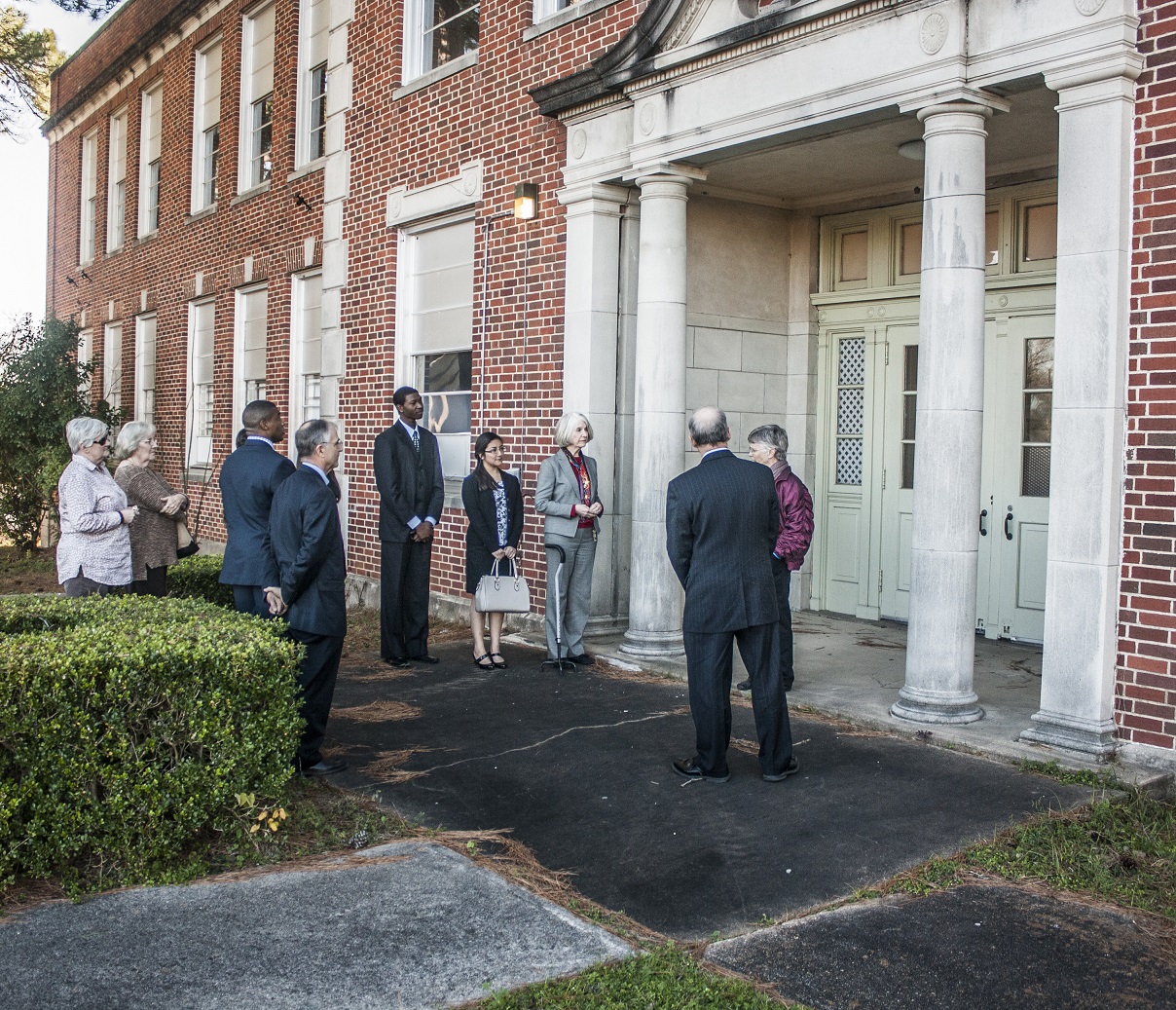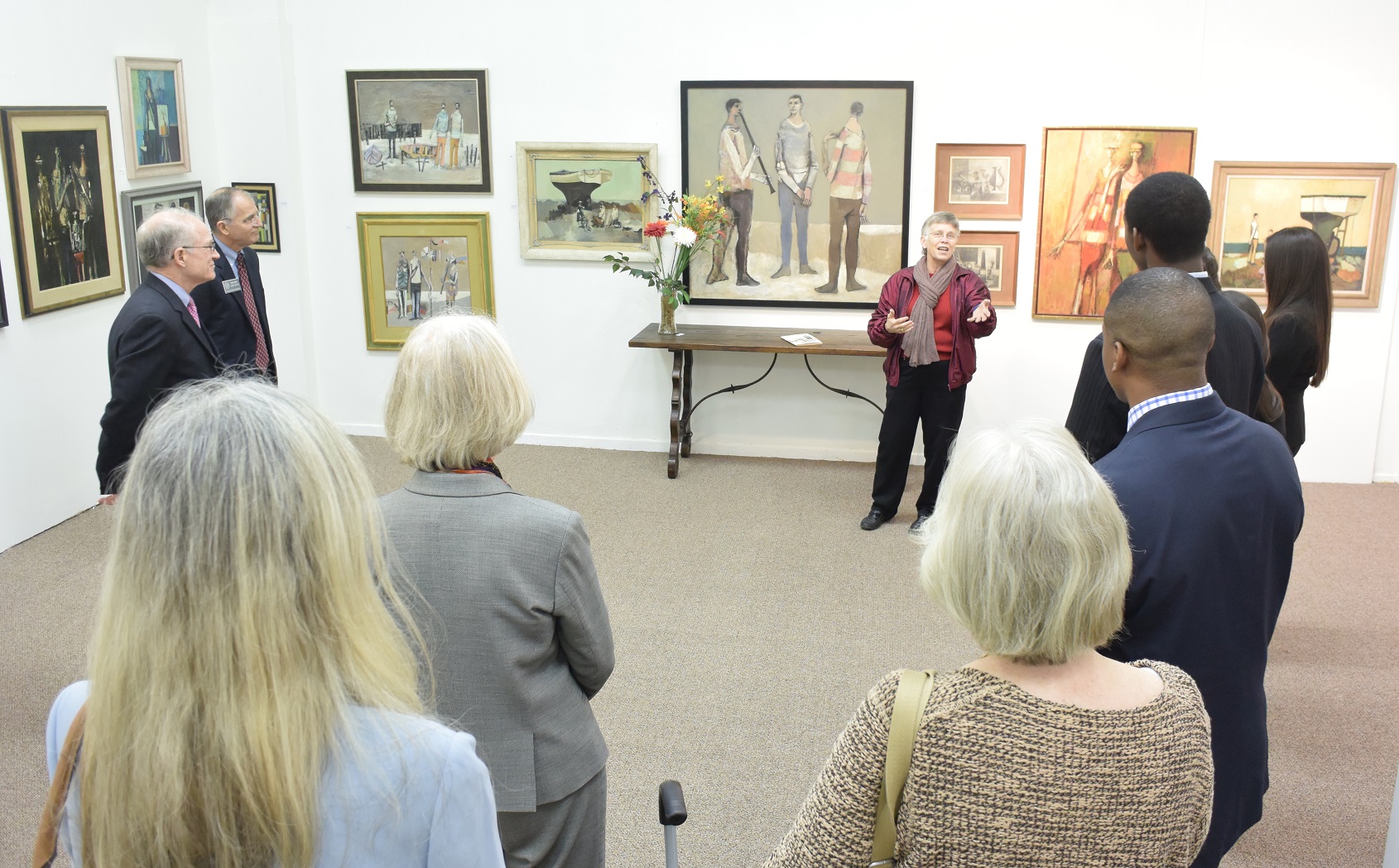
Day of the Dead or Dia de los Muertos is a Mexican tradition that celebrates lost loved ones in a an intimate way, and it is celebrated at the Wynne Home Arts Center annually. For each individual lost loved one, family and friends build an altar that reflects the life they lived. The altar is composed of favorite foods, flowers, candles, and objects that they cherished. Those who celebrate this holiday believe that during the night the deceased will come and enjoy what they have left for them.
Similarly, the Wynne Home built two altars for the lost loved ones that made a great impact in Huntsville, Texas: Jesus Moroles and Barbara Tyson. The two artists have both done work for the Wynne Home as well as in the community. With both of the artists passing this year, the Wynne Home wanted to honor and commemorate their lives by building them altars. The altars will be on exhibit until November 12, 2015.
The Wynne Home provided tamales, traditional rice, and charro beans—foods that are popular for this holiday. There was also face-painting…
…coloring and art activities…
…and a showing of “The Book of Life” for children.
LEAP is very proud to volunteer at They Wynne Home—a place that advocates cultural diversity and art. It was a joy to see so many locals take part in this tradition that is cherished by many!
If you signed up for an event called the Great Muddy Escape, why would you care if it rained?! You wouldn’t! The mud and rain are part of the fun, and fun it was at the 5th annual “Great Muddy Escape.”
The Great Muddy Escape is a partnership between the YMCA and the Huntsville Memorial Hospital, with a threefold mission: (1) to increase awareness of fitness and health, (2) to offer a fun, healthy family activity, and (3) to raise funds for two organizations that promote healthy communities–the YMCA and the Huntsville Memorial Hospital Auxiliary.
The LEAP Center has been peripherally involved in this fundraiser since its inception, offering volunteers and participants. So, while some of the LEAP Ambassadors competed at the Moot Court competition in Lubbock this weekend, a few members and friends endured the rain and mud at the fifth annual Great Muddy Escape 5K in Huntsville on Saturday morning. Arriving before sunrise and smiling…
…LEAP Center students checked in volunteers, set up tables and snacks, and made sure packets were ready for when runners arrived. Amidst volunteers from different student organizations and community groups–all led by the indomitable Margaret Gulledge– LEAP students worked hard to make sure everything was perfect before all 250 competitors arrived and began to tackle the course’s dozen obstacles.
Once snacks and packets were prepared, volunteers headed down to the starting point to see runners stretching…
…eager to begin the race. Twelve obstacles awaited them, including walls, slides, and huge mud pits, and from the looks on their faces, it appeared that LEAP Center student Bella Abril was much more excited about this than this than POLS major Paul Oliver…
After a few minutes of anticipation and a pep talk by Mayor Mac Woodward…
…runners began with the sound of the blow horn.
As the runners sprinted past the starting line…
…all one could see were the teams…
…in a blur of tutus, tennis shoes, and tight pants on athletes enthusiastically running towards what could end up being their demise.
Paul Oliver (Orange Shirt) Dashes Onward
Would they escape? One could only hope to see an equal number participants cross the finish line after withstanding all that the obstacle course had to throw at them.
LEAP students Megan Chapa and Brian Aldaco had the opportunity to photograph runners as they climbed walls…
…trucked through the mire, and swung across perilous pits of doom, or simply mugged for the camera.
Meanwhile, Constance Gabel and Karla Rosales checked runners in as they crossed the finish line, covered in mud, making sure to count the amount of wristbands they acquired at each accomplished obstacle. Little did we know, runners took their effort very seriously and much competition made our jobs difficult to say the least. Students Bella Abril and Paul Oliver ran the race with fierceness and completed with all wristbands intact. In fact, Bella even videoed herself with a gopro camera!
Meanwhile LEAP President Megan Chapa trudged with her boyfriend, Taylor Martin…
…through the mud…
…where even superheroes fear to go…
Even more fun was the waterslide, where some tried to traverse by running…
…some by sit-sliding…
…some by diving head-first…
…actually, a lot of people diving head first!
This slideshow requires JavaScript.
Some by being pushed…
…but mostly by falling!
But always smiling while doing so…
The smiles reflect the event’s mission, to “test your resilience, strength, stamina, quick decision making skills, and ability to laugh in the face of adversity.”
The smiles did, in fact, reflect the immense fun of the event, but perhaps no photo captures the fun better than Bella’s gopro video.
Despite holding a gopro camera for the duration of the event, Bella managed to finish the 3.2 mile event, through mud, rain and obstacles, in about an hour. Paul Oliver finished 7th in the men’s category, completing the course in under 40 minutes. Megan Chapa and Taylor Martin opted for the untimed event.
Overall, the male winners in the 5K were Will Butler (27:26), Ty Stubblefield (28:20), and Bryan Cruz (29:50). The female winners in the 5K were Angelina Santos (33:16), Stephanie Brock (33:24), and Angie Pecina (33:29).
Win or lose, though, it was a great day for both the participants…
…the super participants…
…and the volunteers…
…and for the Huntsville Memorial Hospital Auxiliary and the YMCA, the recipients of the money raised. Over the past five years, more than $40,000 has been raised for these worthy causes, and the LEAP Center has been proud to be a part of the program over this span.
About Huntsville Family YMCA
The Huntsville Family YMCA strives to provide families a safe outlet for their children with special needs where they can experience the joy and benefits of participating in sports and physical activities. Programs are available for youth ages 4 and up in baseball, volleyball, basketball, flag football and soccer.
About Huntsville Memorial Hospital
Huntsville Memorial Hospital is a 123-bed, private, non-profit community hospital, providing health care services for the residents of Walker County and the surrounding area since 1927. We are devoted to the health and well-being of our regional communities by providing exceptional care to every patient every day with a spirit of warmth, compassion and personal pride.
The LEAP Center opened up the doors to all interested SHSU students in September, inviting them to come in, learn more about LEAP Activities, meet faculty, or to attend upcoming events.
Megan Chapa, Kaitlyn Tyra, and Constance Gabel–LEAP Ambassador Officers–did a great job setting up the Holcombe Room, with decorations
…giveaways…
…and ice-cream sundaes…
It didn’t take long for SHSU’s students to dig in.
One of the nicer aspects of the events was the presence of faculty members and staff., including Dr. Ashley Ross, Kristin Trojacek, and Kelly Brown…
…and Dr. John Domino with students Connor Manning and Austin Taylor.
Of course, the event was mostly for the students, and about 100 or so showed up.
Another nice aspect of the event was the presence of all the LEAP Ambassadors at the same time and same place. With only six Ambassadors, we have to split up to have as much coverage in the community as possible, so it was nice to see Karla…
…and Alex and Austin…
…assist Megan, Kaitlyn, and Constance. Interestingly, Constance’s family came up (it was family weekend), and a family pic ensued on the balcony of the Holcombe Room.
Thanks to all the students who came by–especially the freshmen, who are getting an early start on success! And make sure you enjoy our upcoming events:
For those sufficiently skillful and fortunate to be chosen for Saturday’s matches, it was a big day. The top sixteen teams squared off at 9:00am, followed by matches at 10:15am, 11:30am, and 1:00pm–with the last being the final.
The morning began much like a typical class day, with students pointedly not listening to Professor Yawn.
Brian Aldaco, however, maintained an interested audience.
All were interested in the early rounds and the ability to watch some of the teams that the SHSU students had competed against yesterday. In the “sweet sixteen” round, the variance in speaker ability was still somewhat high. All the competitors were average or better, but there were teams in which one of the two teammates was clearly superior. By the “final four,” all the speakers were considerably above average.
During a lull between contests, all but one of the students took a quick tour of UNT Law. After a somewhat formal beginning…
…much fun ensued…
The students spent a considerable amount of time in the library, with some genuine interest in the type of reading law students do, such as here…
…and here…
…and here…
…while some of the fun and interest was a bit staged…
…the giveaway being the idea of two guys spending this much time reading.
The girls, meanwhile, didn’t even pretend to read.
Constance spent most of her time posing, such as here…
…and here…
Nor did the folderol stop when adults came back around. Kimi King, pre-law advisor from UNT (and a Ph.D. and JD and the prime mover of the tournament) joined in the fun, albeit a bit distractedly….
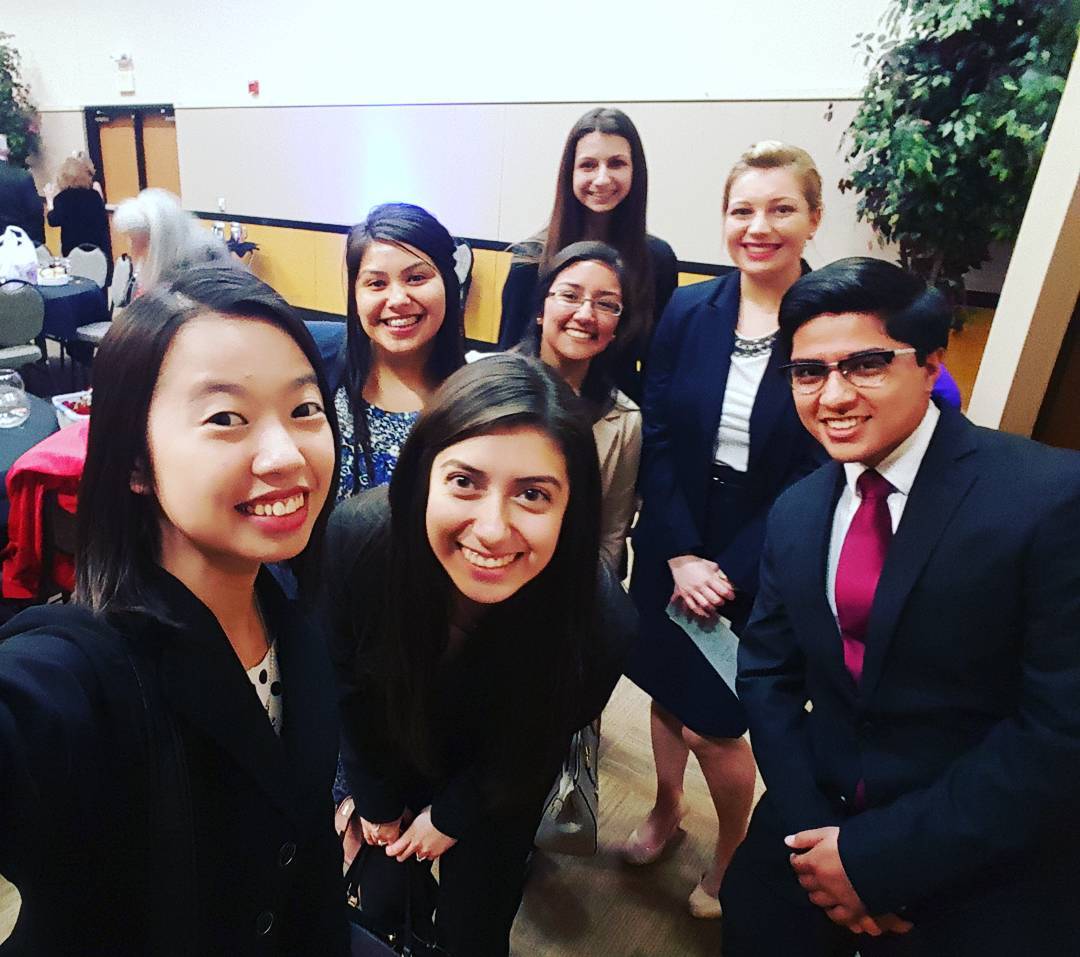
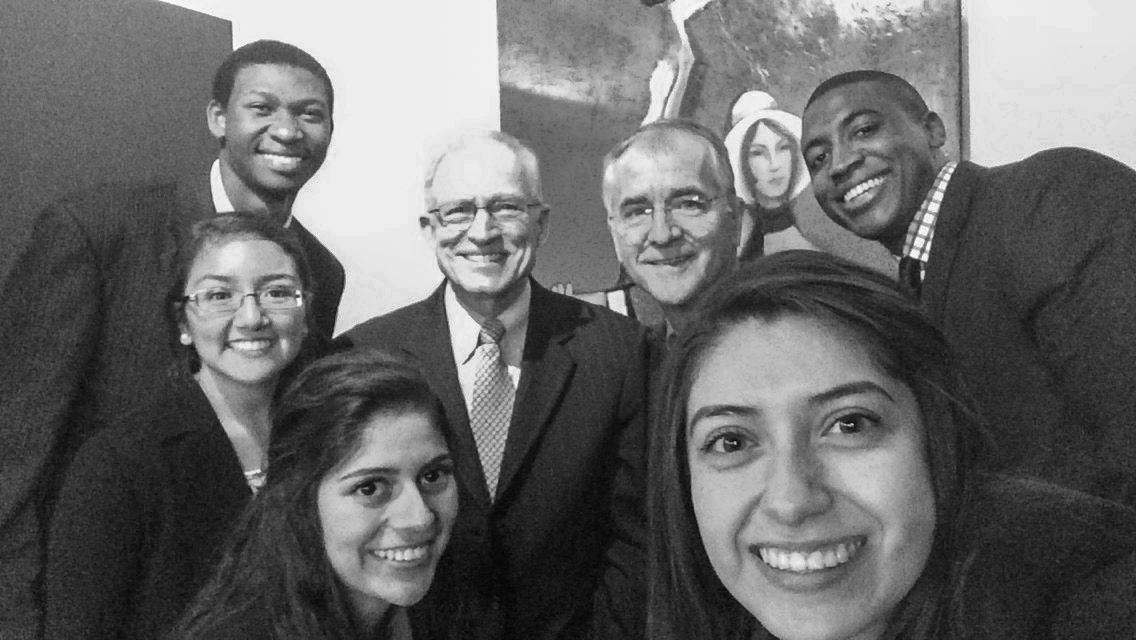
With time for just one more selfie…
…the students hurried off to lunch, so that they could get back in time to see the finals.
The finals consisted of a team from Howard Payne University (HPU, Team 20) against a team from UNT (team 40). The competitors (Alexis Rickmer and Kristen DeWilde from UNT; Isaac Sommers and Rebeca Puente from HPU) were excellent, with Sommers and Rickmer turning in particularly impressive final performances.
This slideshow requires JavaScript.
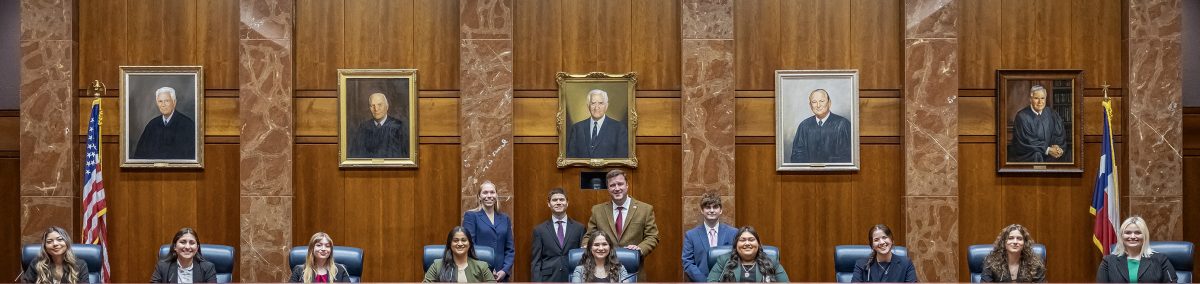
Some 65 people watched the final round, a group that included interested observers, friends, former competitors (such as SHSU’s teams), and family. Even more impressive was the team of Judges, with former District Judge Royal Ferguson (currently Dean of UNT Law) as the Chief Justice. The final was held in the UNT Courtroom, a nice touch that added verisimilitude.
Alas, the finals were extraordinarily even, with our group leaning toward the UNT team as the winners. The judges thought otherwise, albeit by only a three-point margin! With that, HPU won the scrimmage championship.
Aftermath
Following the tournament, Dr. Kimi King gave the Tournament Director, Andrew Sommerman, an award in recognition of his efforts on behalf of TUMCA. Indeed, he is the founder of the American Undergraduate Moot Court Association.
The winners, too, were given awards for their excellent performances.
As were the runner ups.
And all the individual winners…
This slideshow requires JavaScript.
And even the SHSU students, both the moot court competitors…
…and the LEAP Ambassadors and prospective competitors….
It was a long morning and afternoon, but immensely educational. With the real tournament in two weeks, at Texas Tech, it was especially good to get feedback from judges and compare yourself to the competition. The competition was impressive, but we’ve made much progress, have laid a foundation for future tournaments, and we still have hope for our upcoming tournament in Lubbock!
Postscript:Top Twenty Performers
Conor McElroy 379.56 (out of 400 possible points)
Eryn Mascai 374.54
Matt Sayre 374.33
Isaac Sommers 373.7
Kristina Smith 373.33
Taylor Ledford 371.27
Alexis Rickmers 371.1
Rachel Reon 370.3
Reagan Williams 370.2
Myles Chaney 369.9
Mindy Vo 369.2
Kirsten Koschnick 369
Kris Harrison 368.9
Ian Klein 368.78
Justin Adofina 368.41
Rebekah Mercer 368.2
Karina Laigo 366.44
Emily Stewart 366.3
Bimbola Omsile 365.56
Julieta Hernandez 364.67
It’s been an educational weekend for SHSU’s first-ever Moot Court team. Following a pleasant evening at the Art Department’s Gala (where the students spent some enjoyable time with Dan Phillips)…
…the Moot Court Team embarked on a late-night trip to Dallas, where the UNT Law School’s Moot Court scrimmage was scheduled. More than fifty teams competed, making this the largest scrimmage in the Texas Undergraduate Moot Court Association’s history.
The set-up for such a scrimmage is as follows:
Day One: There are three rounds of tournaments, which serve as qualifying rounds. Each team is scored in points, with the points determining which team wins and which team loses. The won-loss record then determines whether the teams compete on Saturday (teams need to win two of their three rounds, with a tie-breaker based on a complex system of schedule strength and points). The points are further used to determine individual awards.
Points: Speakers are scored on four dimensions, each constituting up to 100 points. An award-winning speaker will likely accumulate 360 or more points (90+ average) over the four dimensions: knowledge, response, forensics, and demeanor
Day Two: Day two then follows in a playoff-style system, with winning teams proceeding to the next round. There are four such “playoff” rounds, moving from the “Sweet Sixteen” to the finals.
The logistics alone are a daunting enterprise. Registration, for example, ended at 11:30am on Friday, and only then could tournament directors begin the pairings and room scheduling processes. Between 11:30 and 2:00pm, a series of orientations (e.g., bailiffs, coaches, competitors) took place, while other tournament officials tried to finalize the schedule. It was an impressive display of organization!
We were a bit anxious, but we tried to enjoy ourselves….
…pairing off into teams during orientation…
…
Between orientations and a quick lunch, we grabbed what study time we could come by…
This slideshow requires JavaScript.
…with help from our coach.
…but, ultimately, game-time arrived, and we began the tournament.
The Tournament
A typical contest includes an 18 minute argument from the petitioner (split between the two team members), followed by a 20 minutes argument from the respondent (again, split between the two-team members), followed by a two-minute rebuttal from the petitioner (the time for rebuttal can be modified up front, but two minutes is a typical time).
The tournament is run by a tournament director. This tournament’s director was Andrew Sommerman, who is the founder of the American Undergraduate Moot Court Association and a local Dallas attorney. Also helping run the show was Dr. Kimi King, who works tirelessly to help her students and to help keep the tournament moving on schedule.
Three judges oversee the competition, interjecting as they see fit. A “hot” panel interjects often; a cold panel interjects rarely. Some contestants enjoy the give and take; others do not. A good judge will pose questions designed to assess the competitors’ knowledge, strength of arguments, and ability to think on their feet. Some judges are better than others at directing such questions.
Following the contest, the competitors (and audience) leave the room, giving the judges time to complete their ballots and prepare remarks. Once the ballots have been completed, the judges ask the competitors to return and go over the strengths and weaknesses of the competitors. Good judges mix specific and general advice and do so constructively. Less helpful judges speak in vague generalities or offer idiosyncratic advice based on their personal/ideological reactions. Fortunately, few judges fell in the latter category, and even they can be helpful, because such judges exist on the bench in real life.
For our team, the rounds were immensely helpful. While they didn’t turn out well in terms of wins and losses, they did turn out very well in terms of gaining information and experience. For Kaitlyn Tyra, she said it was a good opportunity to “gain a realistic view of the competition in the state.” This, she continued, was particularly helpful for a first-year team such as SHSU, which hasn’t seen the competition before. For Austin Campbell, the trip was helpful because it helped build “synergy among most of the team’s members.” For Kristyn Couvillion, it allowed “observation of the state’s best speakers, and the skills they have, as well as the benefits of receiving specific feedback from judges.”
Photos are not encouraged in the tournaments (especially for those in smaller rooms, where they can be distracting), but we have a couple of action photos. One is of Kristyn…
…and one is of James Perry…
By the end of the evening, teams waited patiently to see which ones would make the cut, and perform on Saturday.
Sadly, this did not include SHSU teams. It was, however, a good end to the day, and the students were satisfied with their work.
For the winning teams, the day would start early the next day, with coin tosses at 8am. Most of the losing teams went home. SHSU’s moot court team, however, didn’t want to pass up the opportunity to see the winning teams in action another day, hear more of the questions that judges ask, and to learn more about the process. In that spirit, we went back to the hotel, to prepare for another day of Moot Court.
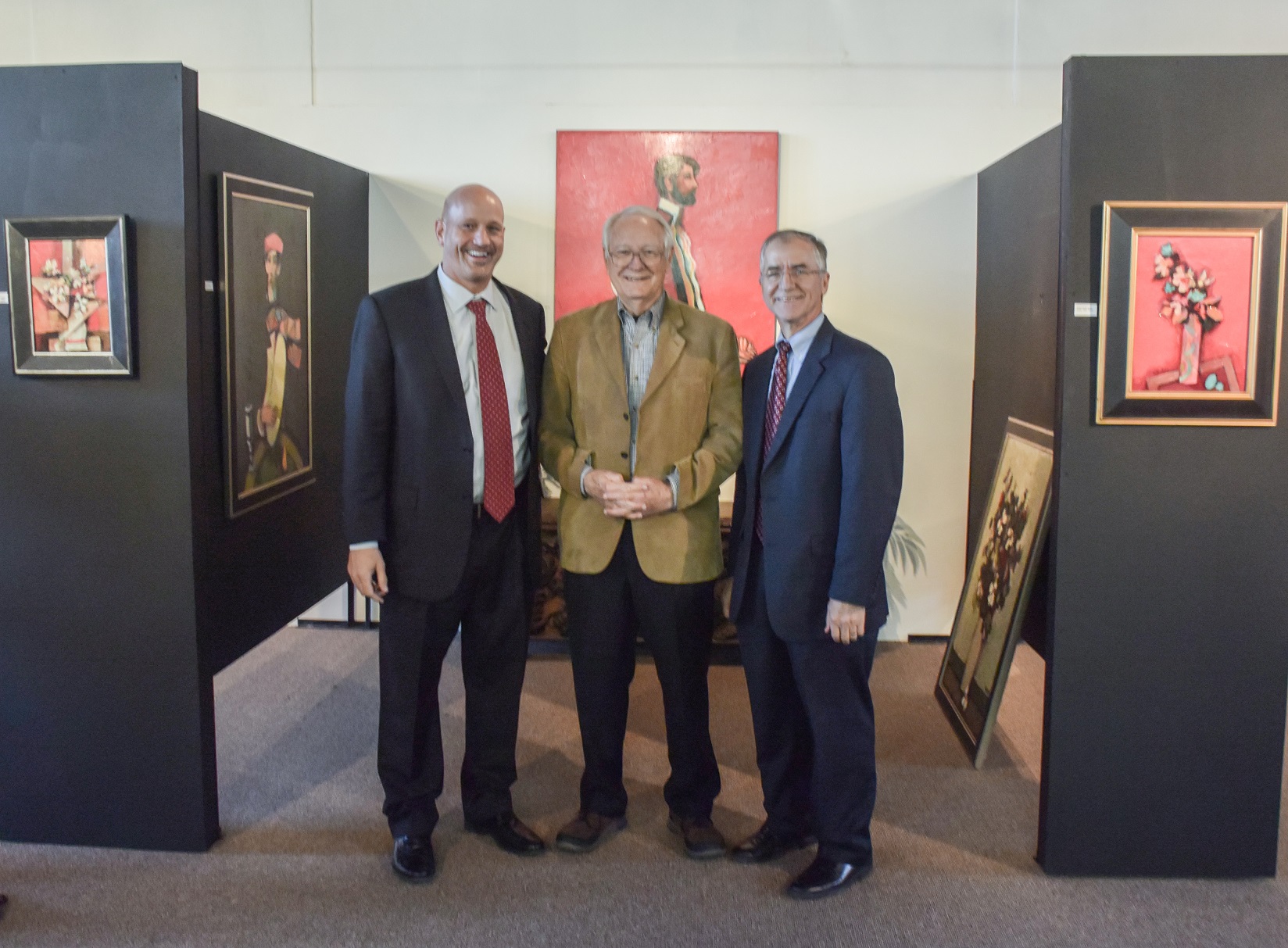
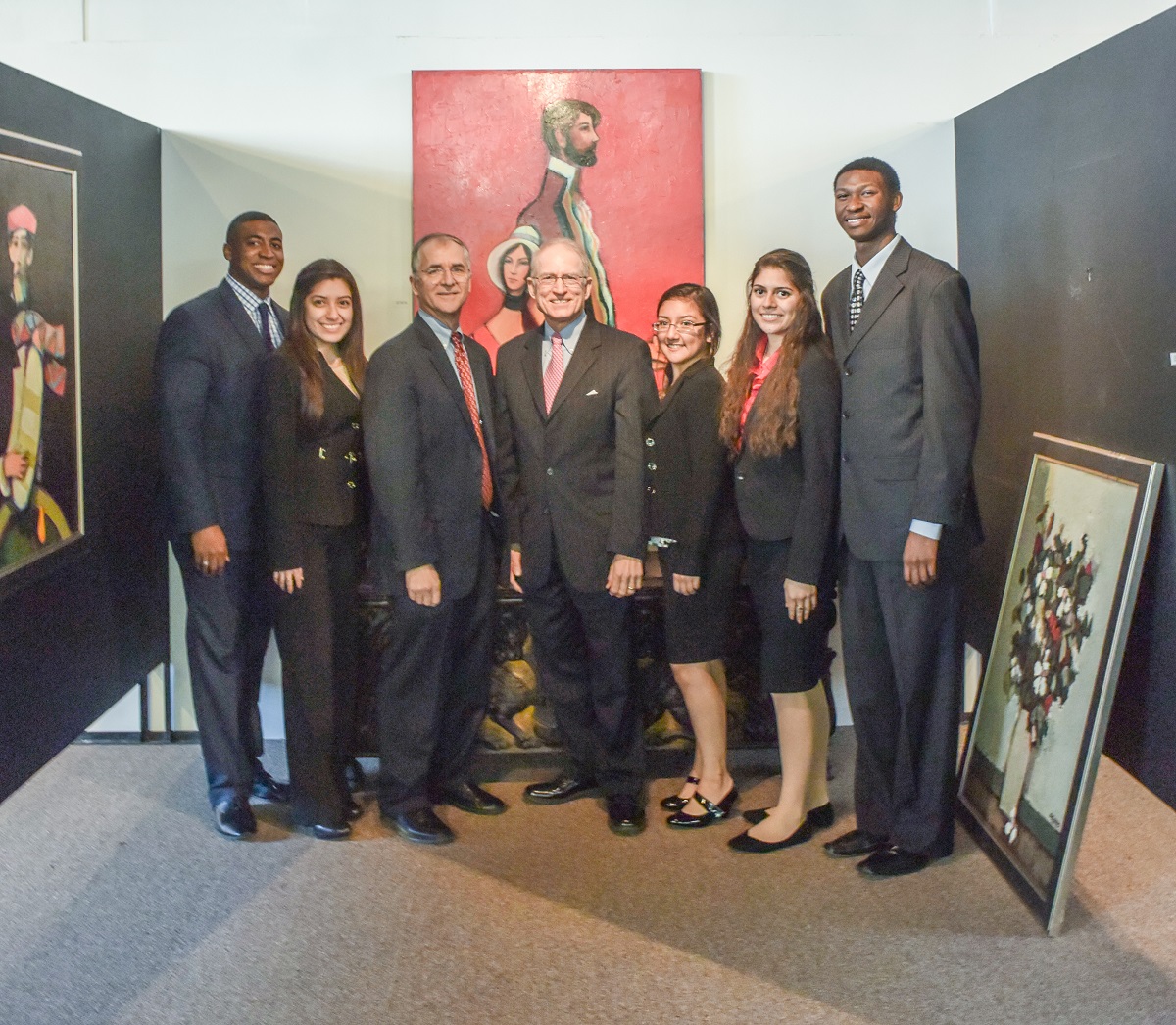
The Art Department sponsored a nice evening for friends and supporters of the arts, honoring alumni, former faculty, and local artist/builder Dan Phillips. With all the LEAP Center Ambassadors on hand, plus some of the “friends of the LEAP Center,” it was a great way to kick off the end of the week.
This was the Art Department’s second such gala and, again, chair Michael Henderson emceed the proceedings. He was gracious and thankful, and repeatedly thanked the sponsors and the many people who support the arts in the community.
Community, in fact, was the explicit theme of the evening. We were happy to note that of the 29 registrants for heART of Huntsville, 19 were attendees at the Gala!
The stars of the evening, however, were those being honored. Henderson invited Linda Pease to memorialize local artists who passed away in the last year…
…and the Department honored alums Kim Cook and Dan Pratt; Art Department Scholarship winners; local art supporter and POLS faculty Jim Carter, who passed away in 2013; and former faculty Emmette Jackson, Charles Pebworth, Gene Eastman, Jimmy Barker, and Stanley Lea. While the former faculty were not able to attend, Lea’s wife, Ruth, did attend.
Mayor Mac Woodward introduced the the major award of the evening…
…which went to Dan Phillips for his support of the arts in the local community. Phillips, of course, is a local builder, whose previous careers include work in Military Intelligence, the Dance Faculty at SHSU, and newspaper writer.
Phillips said very nice things about his wife, Marsha, who is a partner in the Phoenix Commotion enterprise and works as a part-time mentor at SHSU after a long career teaching at HISD. Fifteen years ago, the two embarked on a new career building homes “made from unwanted materials for low-income people.” They’ve now completed 24 projects, and their structures dot and enrich the community, adding character to a small, historic town, work that earned Phillips this well-deserved honor from the SHSU Art Department.
Postscript: Following the gala, seven of the LEAP attendees headed to Dallas for their first-ever Moot Court scrimmage, which will be described in future posts!
With the fourth week of heART of Huntsville came a focus on architecture with, of course, a healthy dose of art. After weeks focusing on campus art, outdoor sculptures, David Adickes, performing arts, and Richard Haas, the final week of the program focused on three homes in the Huntsville Cultural District: The “Bone Home,” the Kellogg-Pritchett House, and the Wynne Home.
Part of what made the final week special was that Anina Moore, the Director of Communications for the Texas Commission on the Arts, traveled to Huntsville to observe the program. This was her first real visit to Huntsville, and we hope she enjoyed it!
Her visit, and our final week, kicked off with a tour of Dan Phillips’ Bone Home. For many of the Ambassadors, it was our second visit to the home, but for Ambassador Kaitlyn Tyra, it was a first-time visit. Phillips began with an overview of his philosophy, his company (Phoenix Commotion), and his work.
His talk is always engaging, mixing construction realities, with political preferences (e.g., recycling, sustainability), and philosophy (aesthetics).
From there, the tour began. The students posed with Phillips in the kitchen…
…where observers can note the intriguing floor patterns, and the bone-top counters. They also got a good look at the bone-bedecked stairway…
…and the bottle-cap bedroom floors.
The back-door patio, which connects the home to the studio, is also worth noting. The wall is adorned with decorative bones…
…and guests can rest in the bone chairs and bone table-top…
This slideshow requires JavaScript.
…and enter the studio through a door equipped with bone handles.
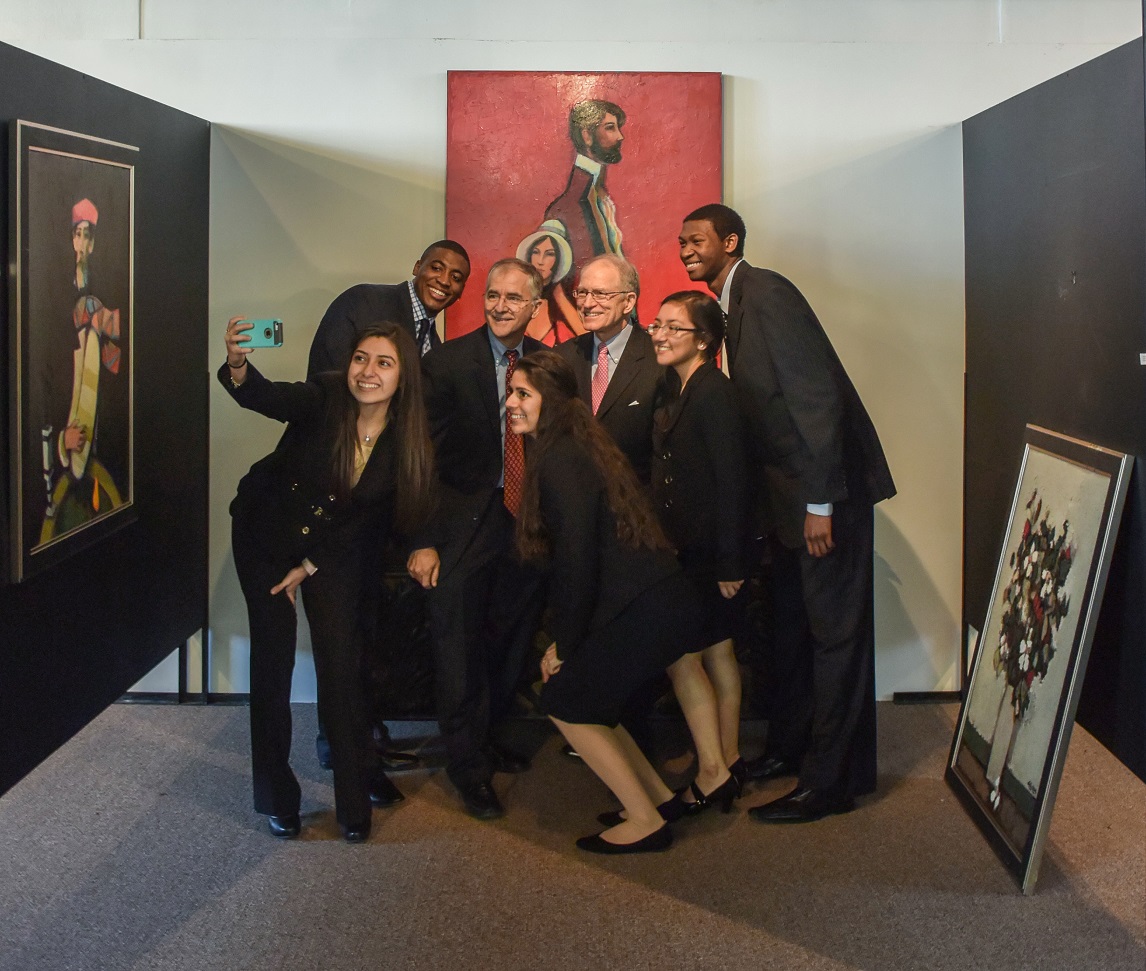
The studio was determined by Constance to be the perfect place for a selfie or a groupie:
…and she may have gotten every person in the photo! Mr. Phillips is in the front center, alongside Huntsville artist Lee Jamison, the owner of the Bone Home, George Boone, and the aforementioned Anina Moore.
Following the Bone Home tour, we made our way to the Kellogg-Pritchett House, where Mary Laura Gibbs offered a wonderful tour.
The foyer, Victorian parlor, and Gazebo room were the highlights, although the top-secret attic is always a treat. Adding to the pleasantness and education of the evening was the presence of Lee Jamison, who did much of the artwork in the “KP” house. In particular, he did Gazebo room, which is painted in mural fashion as though it were an actual gazebo, replete with sky-views, vine-covered lattice, and the obligatory animals (e.g., hummingbird) attracted to foliage. The artwork also gave participants a chance to search for these animals, including the Texas-themed butterfly, seven-legged spider (said, Lee Jamison: “I’m an artist not a mathematician!”), and red, white, and blue snake.
And Constance enjoyed the photographic possibilities of the parlor.
As SHSU students, it was also helpful to learn about “Professor Joe Pritchett,” who owned the home, and who was the Dean of Students for more than three decades. Interestingly, he rode his horse to school until the 1930s.
With a fond farewell, to the KP house and its four porches…
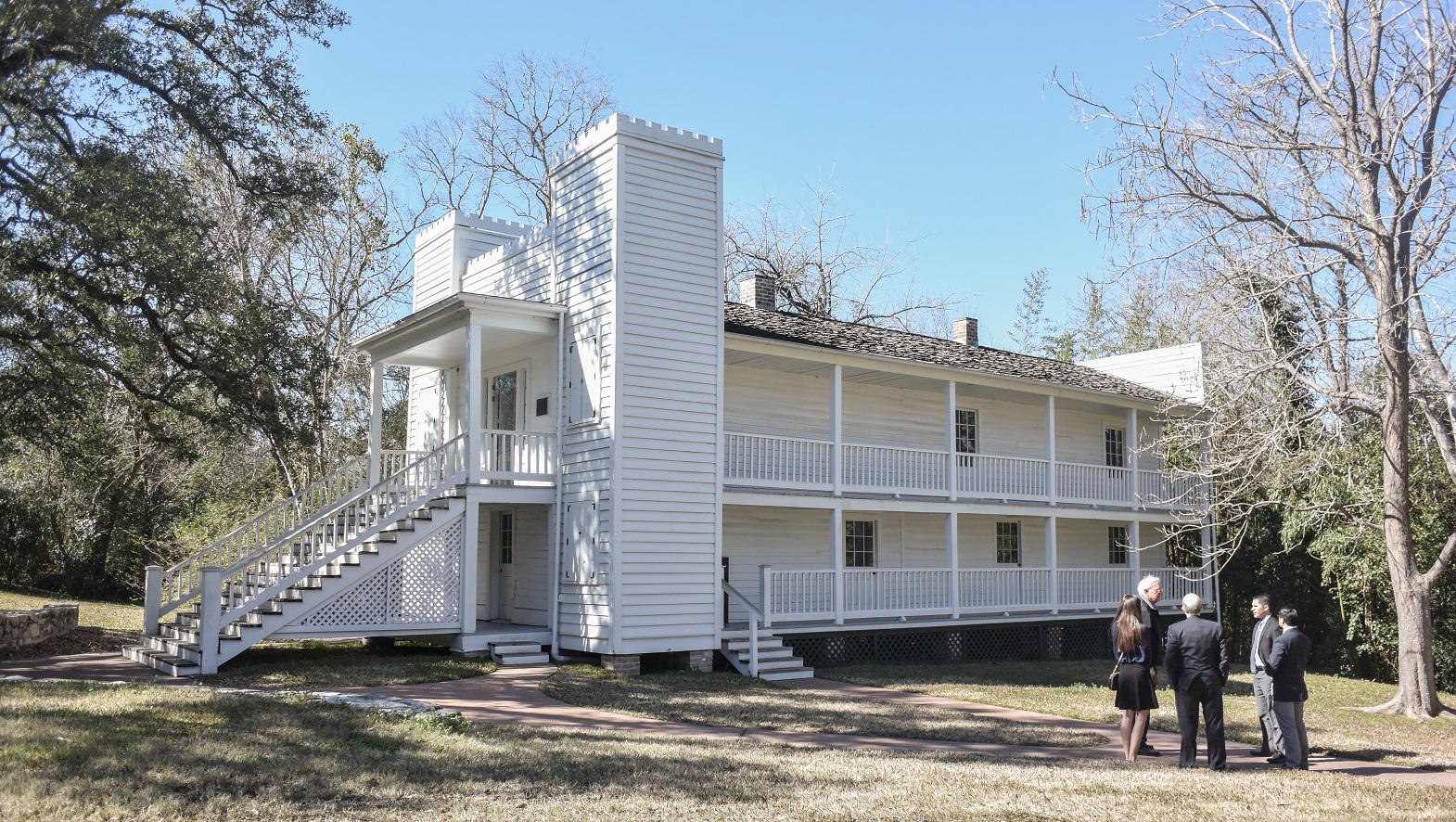
…we headed to the Wynne Home, where we enjoyed their community art exhibit and heard from Ms. Moore about the work of the Texas Commission on the Arts.
The food, prepared by Sharon Rose, and sponsored by the Friends of the Wynne, was wonderful! It contributed greatly to everyone’s cheerful time:
The heART of Huntsville program brought many wonderful people together, and it was an amazing opportunity to learn more about art, artistic venues, local artists, and the community in general.
The heART of Huntsville will be offered again next year in September and October.
For the third week of heART of Huntsville, participants were taken to Huntsville’s historic downtown to see parks, art, and fine arts at multiple locations, followed by a fine dinner at Carboneras.
Leading this tour was Linda Pease, the city’s long-standing public art authority. Pease isn’t an artist, but she has been behind much of the beautification of the community for the past forty years or so, and she offered an oral history of Huntsville’s art scene.
The tour began at Founders Park, on the southeast corner of 10th and University. This small park was created in the late 1980s at the springs that served as a meeting place between Huntsville’s founding father, Pleasant Gray, and the Bedias Indians. From the spring sprung Huntsville, as more settlers settled, business thrived, and civilization eventually flowered. The site recreates the springs with a small, shallow pond, and artists Monica Taylor and Larry Zink created statues of Indians at the site.
Taylor and Zink also contributed to the downtown area by assisting Richard Haas with his revitalization of the downtown square. Haas, an artist, informal architect, and unofficial “urban planner,” created 14 art works in the downtown area in the 1990s.
Perhaps the finest of these artworks is the three-part mural of Sam Houston on the east side of the Smither Building on University Avenue and 11th Street. This mural depicts Sam Houston in battle, with the Indians, and as gentleman of Huntsville, Texas.
Other key works include the faux Roman ruins, the mural of Leadbelly on Sam Houston Avenue, and the movie posters on the front of the Old Town Theater.
Speaking of which, the group also got a tour of this theater during a rehearsal of King Lear. Participants were able to explore the theater’s balcony…
…watch portions of the play…
…and meet many of the cast and crew…
…and truly see “behind the scenes”…
Bruce Chabot, a professor at SHSU’s English Department, is the director of the play, and the production crew graciously provided some comped tickets to members of the first-ever heART of Huntsville cohort.
Another downtown treat is the Art Department’s “Satellite Gallery” at 1204 University Avenue. Here, art students and art alumni display their work for the public. Following a quick tour of this gallery, the group headed to the historic Cafe Texan, where Linda Pease shared more information about Richard Haas….
…pointing out the work he did on the Leadbelly Mural…
…and discussing many of the other Haas detailing around the square.
Interestingly, Haas has produced more than 60 exterior murals in his career, and more than twenty of them have been destroyed by the elements or, more often, by construction projects. But his work still exists around the world, in Fort Worth…
…in New York…
…St. Louis…
…and many other cities.
Interestingly, however, the largest concentration of his works is in Huntsville, Texas.
With help from the LEAP Center, Art Department, and the Huntsville Public Library, Richard Haas will be in town November 19th, 2015. He’ll deliver remarks on campus and at the Huntsville Public Library, where he has donated the studies for his Huntsville murals.