A New Legislative Session: A New Day for SHSU Students

A group of a dozen SHSU interns spent the day in Austin in preparation for their internships.  The students, 10 of whom will be stationed in Austin and two of whom will be in DC, posed for professional photos, explored international food, and enjoyed the rush of simulated skydiving.


Photography

The morning temperatures hovered in the mid-20s for much of the photo-shoot.  Although this didn’t stop the photo-shoot, it did lead to much self-pity.

ai_kim_meg_jaz_cold_web

Nonetheless, much progress was made, with Paul Olle in charge of photographs (His photographs, which are much better than those here, will be posted later).

ai_rotunda_group_olle_web

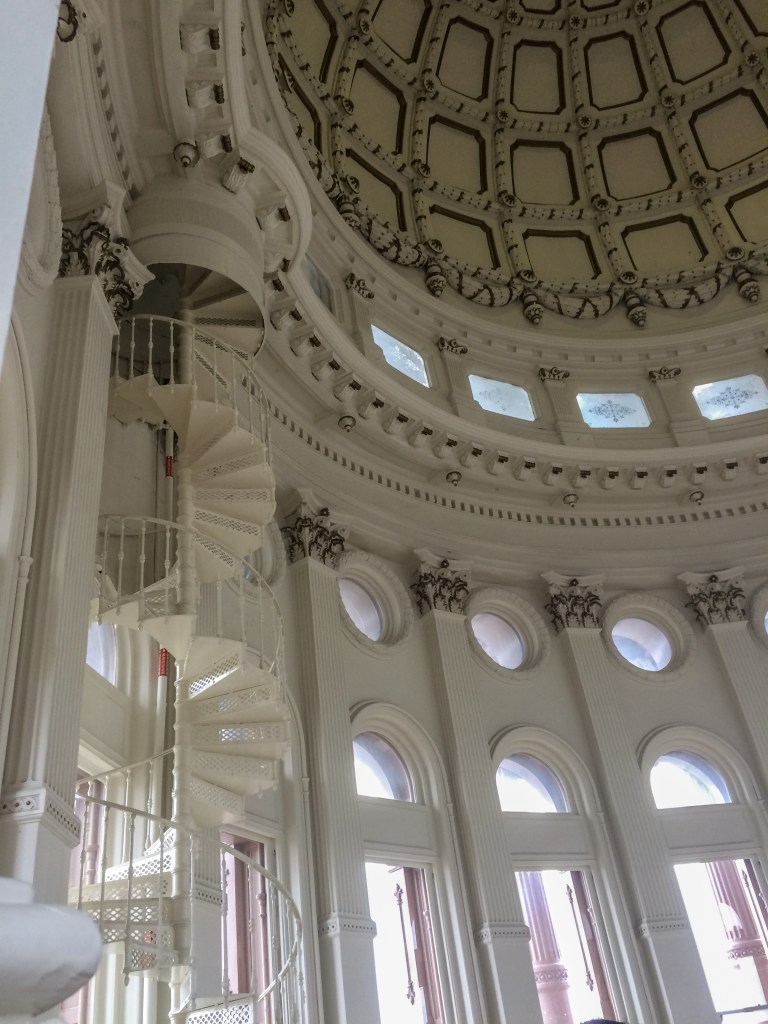
The students were in the pleasant situation of knowing their way around the capitol, and all areas were explored and photographed, from the Rotunda (above), to the outdoor rotunda…

ai_texas_rotunda_group_4_web

…the statue of Sam Houston at the south entrance…

ai_sh_statue_group_3_web

…to the Senate floor…

ai_senate_group_olle_web

…to the capitol steps…

ai_capitol_steps_group_3_web


Food

For lunch, the students opted for Serbian fare offered at the wonderful Balkans Cafe and Grill.  The staff at the restaurant are professional, and the food is great.

More important, lunch was a chance for former Austin interns to join the current Austin interns for lunch and networking.  Of the eight SHSU students who interned at the Capittol building last session, five have been hired full-time for this session, and many of them joined this year’s group.  It was also a great and rare opportunity for Professor Yawn to enjoy the company of multiple cohorts of students simultaneously.


iFLY

Of course, the most fun activity of the day was at iFLY, where students had the chance to “skydive” without any real chance of dying.  Some took to it quicker than others (Spencer Copeland was an expert), but all did well.

Karla Rosales Enjoying iFLY

All of the students ended up signing on for the “High  Fly,” which is when the instructor flies with the student flyer 20-30 feet into the tunnel.  It is the most exciting part of the flight and also, interestingly, the easiest.  The instructor does all the work!

ifly_karla_high_web


Concluding Thoughts

Of course, the real exhilaration will be the students’ experiences in Austin and Washington, DC this semester.  Full of long days, interesting sites, and, we hope, bright futures.

ai_capitol_front_2_cropped_web

Food on Ice in OKC

Our second day in OKC was a busy one, but that didn’t prevent us from enjoying some food and fun in this Southern/Midwestern city.  In fact, we had a chance to explore Bricktown, Guatemalan food, and even ice skate!


Café Kacao (Ashley Allen)

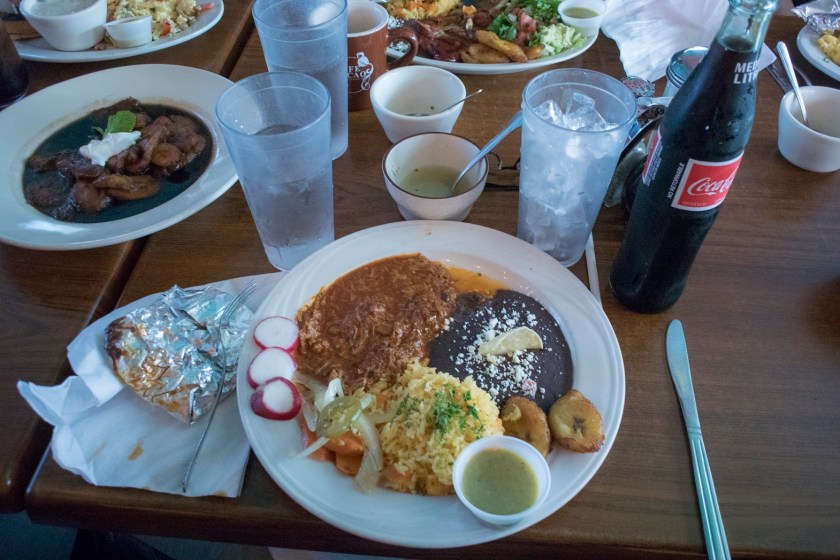
For lunch we decided to try out some authentic Guatemalan food at Café Kacao. Before being seated, however, we waited outside the restaurant chatting, a result of the eatery’s popularity. This wait, a bit lengthy, was worth it. The music was upbeat and the interior was very colorful.

Looking at the menu, we were mystified by the many options we had before us. Drinks alone were provided by lot of different choices, from juices, to Mexican sodas, and specialty drinks like the Horchata latte ( a sweet mixture of rice milk, vanilla, cinnamon and coffee). In the end, we ordered Migallas, cochinito pibil, adobada, and even crab pupusas.

Cafe Kacao, OK City, LEAP Center, SHSU

Ashely’s favorite dish, the Migallas, was a breakfast dish composed of scrambled eggs, various vegetables, Pico Del Gallo and crushed tortilla chips mixed together, accompanied by a small fruit cup and black beans. The plate was so delicious that she practically wiped it clean, a feat that has eluded many of us during this feast-filled-trip.

Bricktown Brewery  (Ashley)

For dinner, we ventured into the city’s river walk. Following the foot steps of the Sooners, or at least the direction of Paul Moor’s sculptures, we began our trek to the Land Run Monument. With friendly chatter and a shining skyline, we followed the soft, rippling river, and before we knew it, we had reached the city’s Bricktown District.

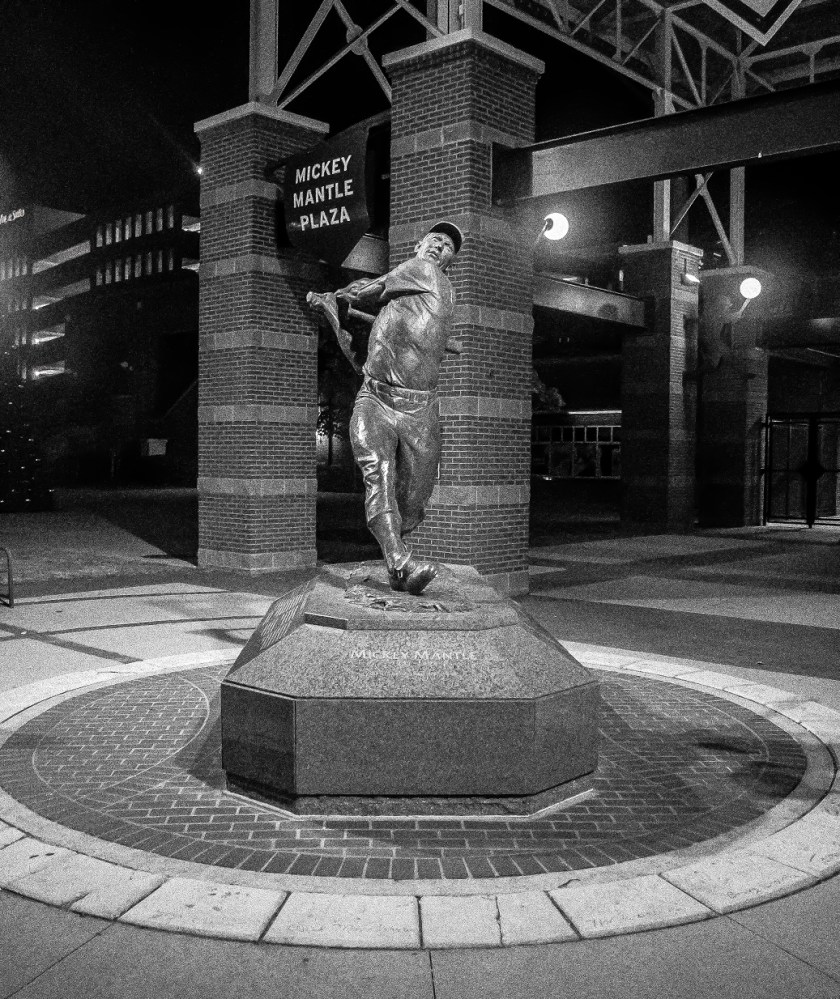
The historically industrial district turned social district, with it’s bright lights, quirky sights, and lively music, was eye candy so as to make us hungry. After walking a lap around the square, where we saw a Mickey Mantle statue…

Mickey Mantle, Bricktown, OK City, SHSU, LEAP Center

…and even a statue of Sisyphus…

Sisyphus, OK City, SHSU, LEAP Center

…we stopped by a restaurant called the Bricktown Brewery. It was  different from the other places that we had eaten during the trip, strictly because it wasn’t an authentic, ethnic-based restaurant. The majority of the group ordered different pizza pies to share amongst ourselves. Ryan’s favorite was the combination pizza which had morning sausage, pepperoni, and ham, topped with additional mushrooms, onions, and bell peppers. The experience here was excellent and if ever in Bricktown again we would definitely go straight to this great establishment. As Ashley commented “every place we’ve eaten in Oklahoma has been such a great experience, and I really appreciate the exposure to the different cultures and the food that goes with them!”


Slipping Through the Ice Rink (Ryan)

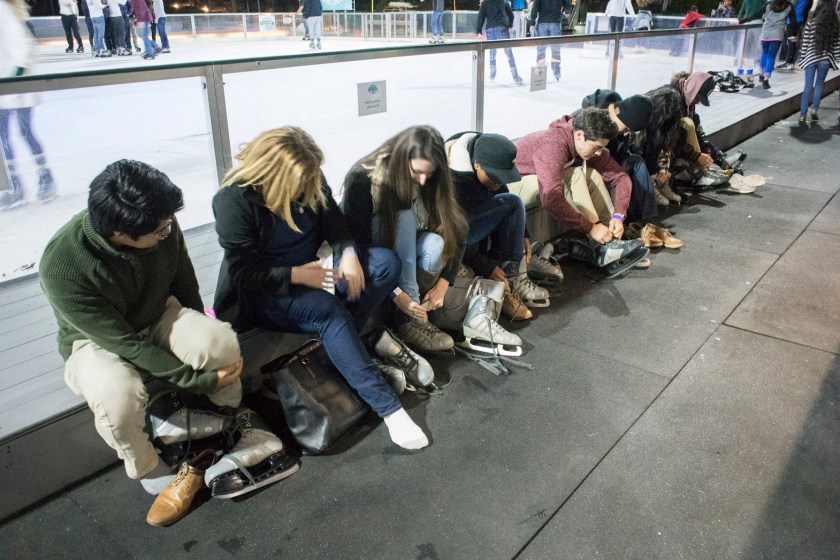
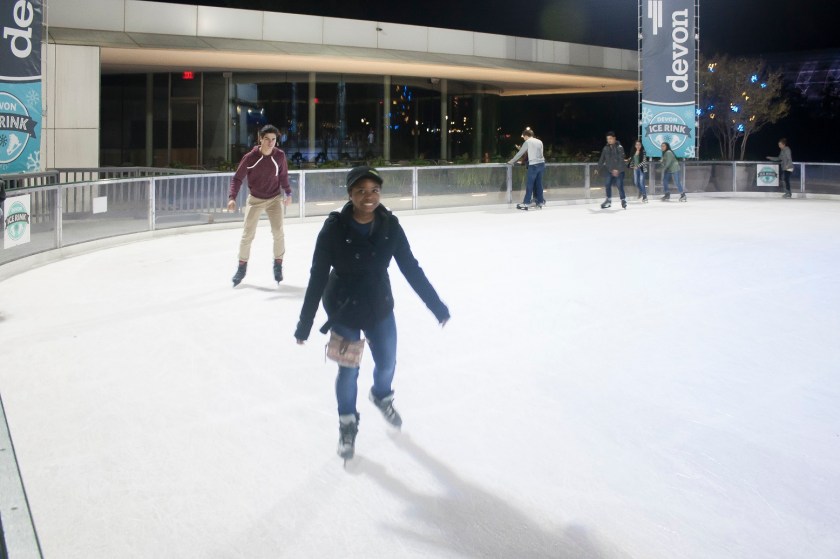
After our meal, we walked the few blocks to the Myriad Botanical Gardens, where we took advantage of their skating rink. With Professor Yawn’s instructions all of the LEAPsters and Ryan laced up and took to the ice.

Devon Ice Rink, OK City, SHSU, LEAP Center

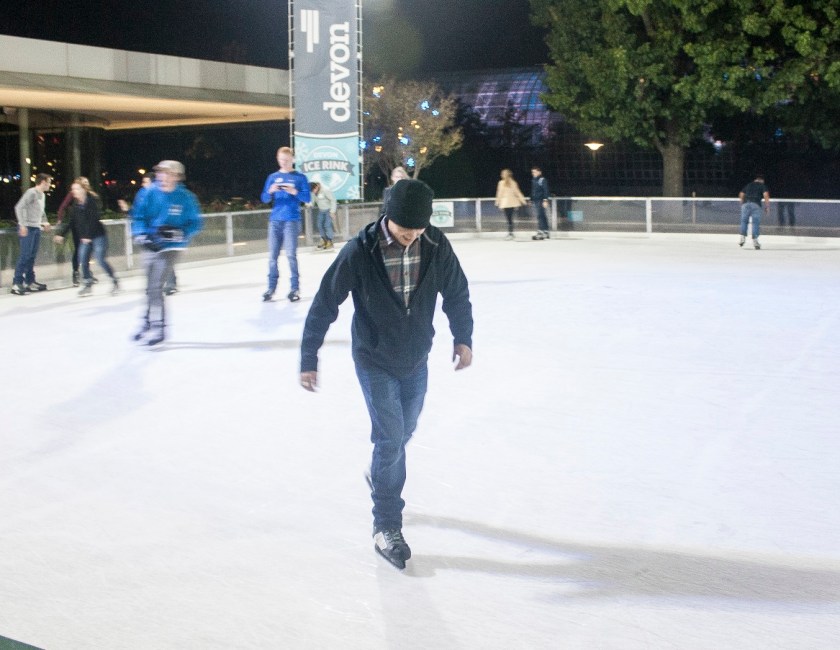
Although it was a small rink, it seemed to take some of us forever to make a full lap, whether it be because we were holding onto the rails or we couldn’t seem to get any momentum.

Devon Ice Rink, OK City, SHSU, LEAP Center

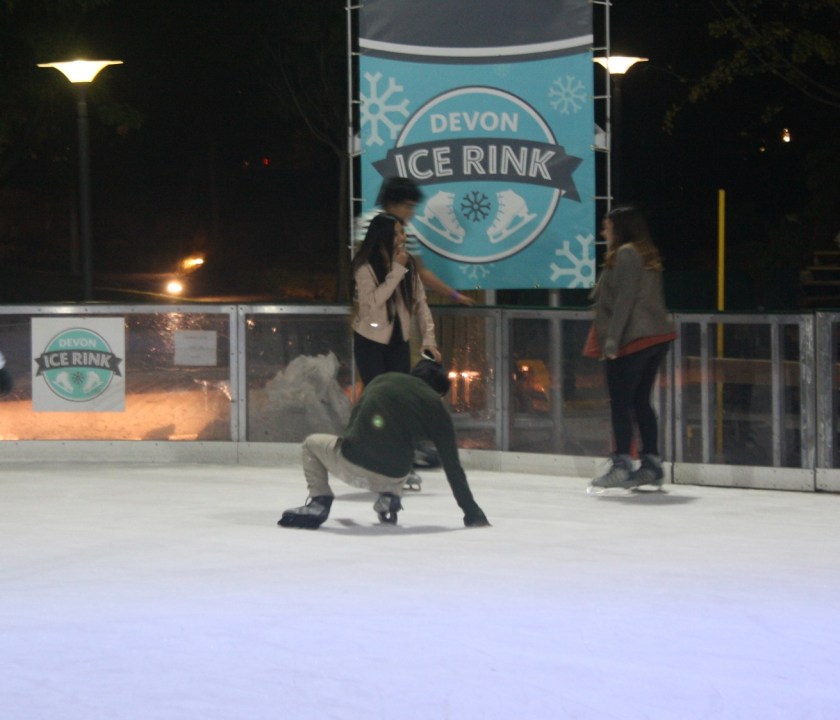
Some us, however, performed our very best skating abilities. For example, Brian accidentally did his best impression of Charlie Chaplin while sliding and slipping through the ice.

Devon Ice Rink, OK City, SHSU, LEAP Center

He would seem to fall for about ten seconds and then catch himself on the railing in a cool and relaxed position as if nothing had happened. We only stayed for a little while, as the air grew colder and our feet began to ache. It was unclear as to the professor’s motivation to bring us to the rink, whether it was to expose us to a sport we seldom have a chance to practice or for his own amusement to look at us fall and tumble.

Perhaps his absence at the rink was indication to the latter hypothesis.

Devon Ice Rink, OK City, SHSU, LEAP Center

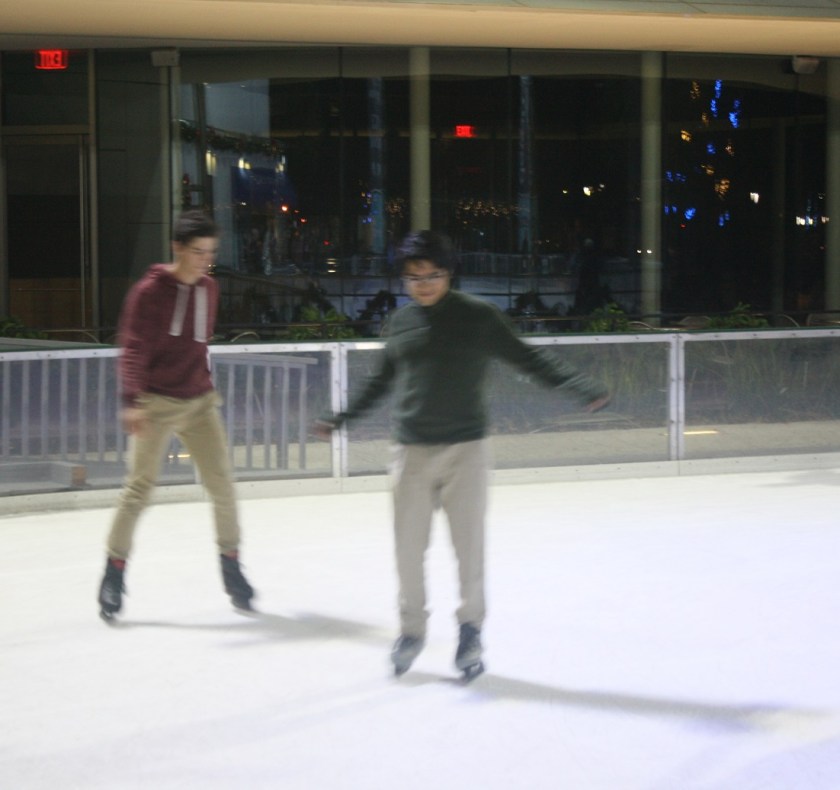
Ashley, Ryan, and Kaitlyn proved the best skaters…

Devon Ice Rink, OK City, SHSU, LEAP Center

…and Ashley and Ryan even raced, with Ryan’s longer legs providing the edge.

Devon Ice Rink, OK City, SHSU, LEAP Center

No matter the falls on the ice, we all had ice-loads of fun. With iced backs (from those that had fallen on the ring), we walked back to the car and headed back to the hotel. As a day well spent in learning, exploration, and vigorous sport, we welcomed our bed with a tired, melancholy sigh, for tomorrow would be our last day of our Texoma Adventure.


Double, Double, LEAP & Trouble: Scare on the Square

By Christina Perez

Ring after ring flew from their hands, aimed at the point of a witch’s hat. Three at the floor, one hitting the mark, and one hitting a human hotdog. But alas, at least one hat had been hooped around by the ring and was merit for a prize of chalk or bubbles. Why so much scary, carnival fun at the square? Why, it was the annual Huntsville Scare on the Square.

Scare on the Square, LEAP Ambassadors, SHSU, Huntsville Main Street

Last Saturday the LEAP Center hosted a booth at Scare on the Square. Scare on the Square is an annual Halloween event sponsored by The Huntsville Main Street Program. About 40 different businesses, schools, and local organizations host games and activities for community children. Scare on the Square is sponsored by local businesses and it is a safe atmosphere for families to enjoy themselves.

Scare on the Square, LEAP Ambassadors, SHSU, Huntsville Main Street

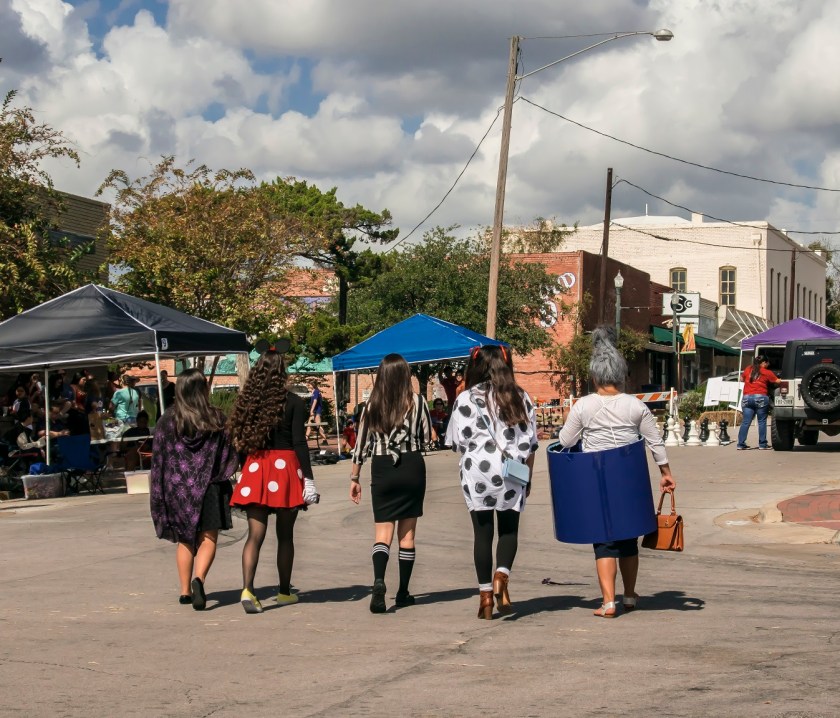
If you are creative and wear a costume it will spare you from having to pay the entrance fee of one dollar. Embracing this costume-wearing practice, the LEAP students arrived in a variety of costumes themselves from Minnie Mouse to Charlie Chaplin.

Scare on the Square, LEAP Ambassadors, SHSU, Huntsville Main Street

With weeks of anticipation prior to Scare on the Square, the LEAP center engineering team (aka a few of the LEAPsters) designed a game built to increase levels of happiness to the maximum. In the end, we created the “Witch’s Hat Ring Toss.” Similar to a bean bag toss, it required the competitor to loop hat dressed cones with a pool ring. Let’s just say that hand-eye coordination was important in order to successfully master this enchanted game.

This slideshow requires JavaScript.

With smiling faces, all the children (and even some LEAPsters) patiently waited in line to play, ready to ring one or two witch hats.

Scare on the Square, LEAP Ambassadors, SHSU, Huntsville Main Street

We had a few future athletes who knew at exactly what angle to throw the rings. Yet even more children measured wind speed, warmed up their best throwing arm, made their marks, and walked right up to the cones to place the ring into the hat.

Scare on the Square, LEAP Ambassadors, SHSU, Huntsville Main Street

In between handing out rings and giving out candy, we amused ourselves by noticing the creative Spidermen, Pikachus, Elsas, Super Girls (we even had our own superwoman!), as well as some actually frightening costumes.

Scare on the Square, LEAP Ambassadors, SHSU, Huntsville Main Street

But even more rewarding was the look on their faces when they looped a hat (without cheating).

With the LEAP center’s 1800 pieces of candy gone, we packed our tent and witchy game satisfied with the 400 plus jolly children that had visited us. We are grateful for the sponsors and coordinators of these events that allow us to interact with the community!

Scare on the Square, LEAP Ambassadors, SHSU, Huntsville Main Street

Tailgating with CHSS for Homecoming

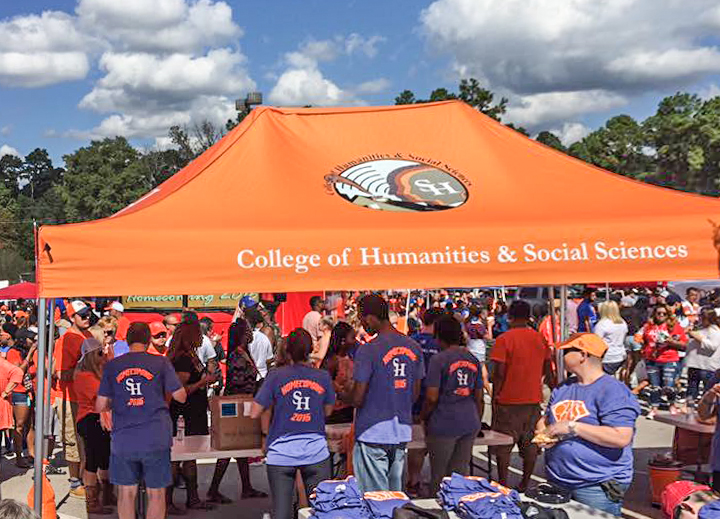
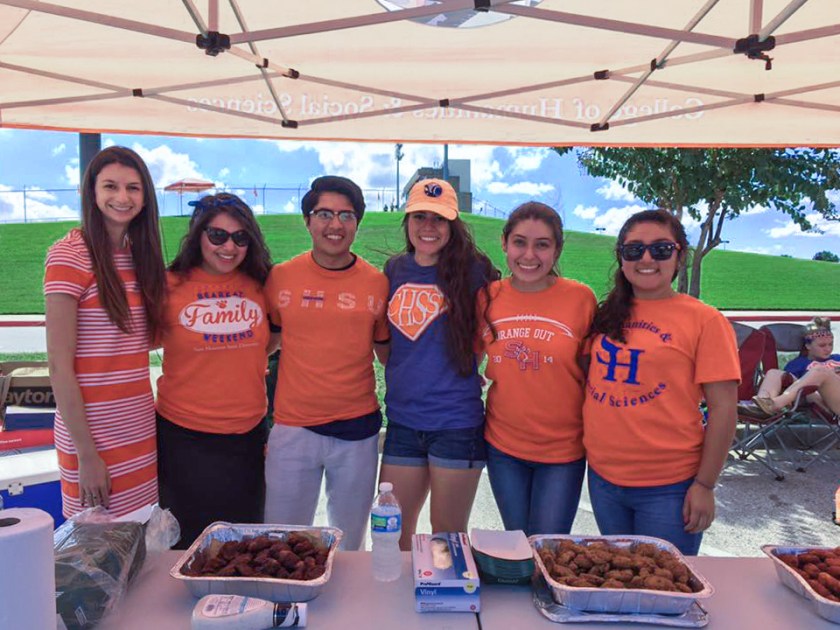
Nonstop chanting filled the backstreets of SHSU as the community gathered for the 2016 Homecoming tailgate. As the first college tailgating experience for most of the LEAP students, we took on the crowds of students, parents, fans, pets, and Huntsville community members. The College of Humanities and Social Sciences (also known on campus as CHSS) kindly allowed the LEAP Ambassadors to join their tailgate celebration.

tailgating_4

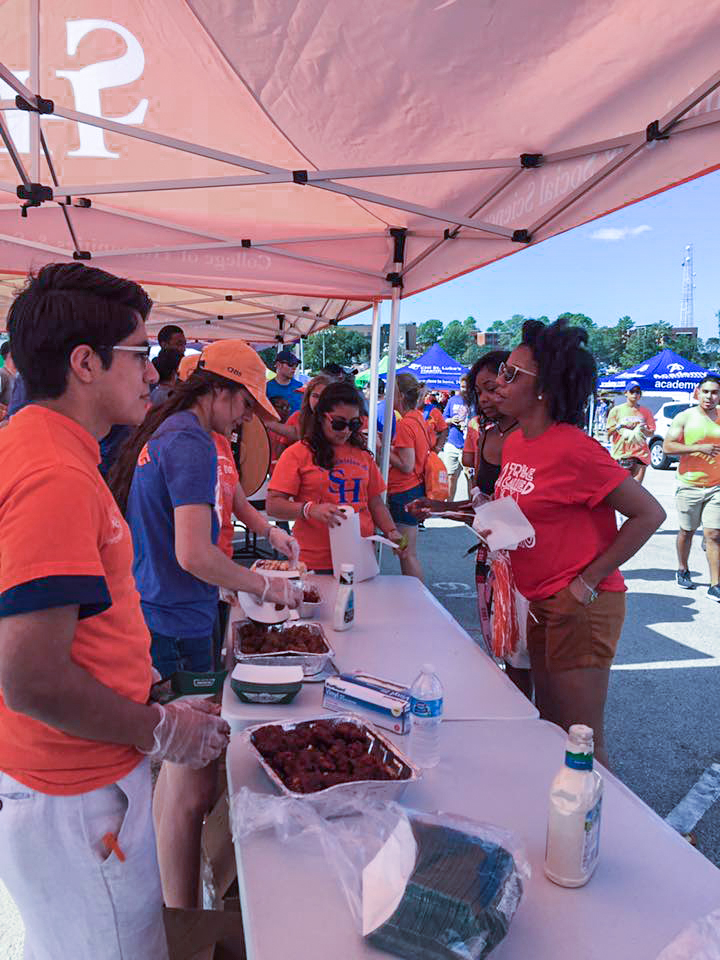
As volunteers, our duties were simple; set up and help pass out food.

tailgating_1

We passed out over 1,200 chicken wings and they went fast! Many lined up to win a prize from the CHSS booth and get a sample of the savory wings. Although hot and crowded, the tailgate was a fun experience. Dean Abbey Zink and Associate Deans Rhonda Callaway along with Jerry Bruce also joined our pre-game celebration. It was great to see the community and faculty come together for our homecoming game against Abilene Christian University.

tailgating_3

After our shift with CHSS ended, many of the LEAP students explored the other booths to scout out their prizes and food. We ate pizza, turkey legs, sausage wraps, popcorn, and topped it off with some sweet tea. Various booths blared music and gave free SHSU merchandise. These school spirited trinkets and momentos where used to represent our school at the game which had begun right after the festivities. The chants continued all the way to victory against ACU (48-21). The LEAP Ambassadors are always happy to try new things, especially when it involves delicious food, fun football, and volunteerism!

chss_tailgating_karla_alex

Truman’s Terrain and the Land of Lincoln

Although our trip’s primary purpose is to assist Mr. Jeff Guinn with his research, our path to and from Detroit consists of various related (and otherwise educational) stops.  Today, the stops included the World War I Museum in Kansas City, the Capitol of Missouri in Jefferson City, and some historical sites in Springfield, IL.


World War I Museum

With a towering concrete edifice, the World War I Monument was recognized as the national commemorative memorial of the war’s destructive toll.

Liberty Tower, World War I Monument, World War I Museum, Kansas City
Liberty Tower, World War I Monument

Standing at the foot of the tower, we looked up to a blinding peak, which seemed to scratch the sun. With such an admiring sight, we found the elevator to climb the approximately ten-story structure. As we stepped onto the balcony of the memorial our sights were lost among the mesmerizing vista of Kansas City.

Kansas City, Skyline, Union Station, World War I Museum
Kansas City Skyline

Perched on our elevated vantage point, we spotted various spouting fountains riddled amidst the city, appropriately nicknamed the City of Fountains.

After descending the 90-year old elevator–a very cozy metal enclosure hanging over rickety wires-we returned to the ground. We then rendezvoused outside the memorial and returned inside the museum, ready to view the exhibits of diverse aspects of the Great War.

With a brief overview of the complexity of the war’s inception, composed of treaties and alliances among the European nations, we began the tour with relics of the nations’ emperors and rulers.

World War I Museum, Timeline, Kansas City
Paul Examines the World War I Timeline

Such antiquities included marksmanship trophies, luxurious smoking pipes and flasks, and  other royal artifacts. As we followed the museum’s exhibits we also viewed the different models of the combatant’s firearms with pistols and rifles from each of the European countries. This exhibit provided a sense of the period’s need for manufacturing, where each nation used its resources and laborers to mass produce their own firearms. Among the exhibits were showcased other aspects of the war which had not been experienced prior to the Great War, such as chemical warfare. With masks worn by these trench soldiers, grenades which contaminated the air with hazardous gas, and the spray of mustard gas which would burn the flesh of patriotic fighters, the atrocities witnessed in this war were unlike any other. Furthermore, the dugouts in which the military denizens took, what could loosely be termed, refuge, imposed a very deplorable, unsanitary, demoralizing lifestyle for the fighters of World War I. To further exhibit the effects of industrialization on war, there were also maquettes and life-size models of the war’s u-boats, primitive military air-crafts (some made out of cloth and wood!). and missiles.

WWI_Museum_Ryan_Paul_Missile_Web

Most notably, in the American campaign section of the museum, we found two modified Ford Model T’s which would have been used during the war.

Model T, Henry Ford, World War I, WWI Museum, Kansas City
Paul and Ryan Examine the War-Purposed Model T

Even though the war acted as a catalyst for the modern industrial culture and economy, it also began a new age of catastrophic war. No other showcased artifact was able to capture this horror than Wilfred Owen’s “Dulce Et Decorum Est,” which we listened to inside one of the museum’s powerful exhibits. It was this poem that spoke the truth of the war’s atrocious effects on the lives of those who died and survived World War I. After this reflective visit to the museum, we went back to our traveling mini-van and got back on the road in order to reach Jefferson City on time for our tour of Missouri’s Capital Building.


Jefferson City, Missouri’s Capital

After the two hour drive into Jefferson City, we hopped on an already-started capitol tour. Our tour began on the second floor, where there are sixteen murals done in a style called three point perspective, where, at different angles, objects in the painting seem to be altered. For example, in one mural depicting a civil war battle, Union forces look to be attacking, while Confederate forces are retreating, but, at another angle, the roles of the opposing sides seem to switch.

On this same level are the House and Senate chambers. On the house side, there is the House Lounge room, where Thomas Hart Benton, a native Missourian, painted a mural covering all of the walls.

Thomas Hart Benton, Missouri Capitol, House Lounge
Thomas Hart Benton’s Murals in the House Lounge

The murals depict the history of Missouri, both good and bad, from French traders and farmers trading with the natives, to the time of Tom Pendergast, also known as “Boss Tom” (seen in the mural above on the bottom right).

When Boss Tom was arrested on tax fraud and sent to prison, one senator snuck in at night and carved Pendergast’s prison number on the back of his suit. Other congressmen would put out their cigars and cigarettes on his face, and Mr. Benton had to come back years later to repair the mural.

All the faces in the murals are native Missourians, except for one: an Osage Native American who was living on a reserve in Kansas, since natives were removed from their lands in Missouri.

Interestingly and sadly, when Mormons settled in Missouri, they were hated by many, and the governor passed an executive order in 1838 to allow anyone to drive them off of their land by any means necessary, whether that be tar and feathering, burning their house, or murder.

Missouri_Capitol_Mural_Inset_Mormon_Web
Benton Depicts the Treatment of Mormons in Missouri’s Early History

On the third floor is a hall of famous Missourians, where busts of well-known natives of the state are featured. Two in particular—Emmet Kelley, a famous clown, and Stan Musial, a famous baseball player—are special in that, if you take a picture of them with the flash on, you see features not visible to the naked eye.  With Kelley, for example, you can see his clown makeup when photographed with a flash.

When Stan Musial is photographed with flash, the red “SL” on his cap is visible; without the flash, or by the naked eye, the SL is visible, but not in Cardinal red.

Also on this floor is the grand staircase, a huge staircase which leads from the grounds outside to the third floor, the largest bronze doors cast since the Roman Empire, and a 9,000 pound bronze chandelier suspended from the ceiling of the dome. Having finished the tour of one of the “most interactive capital buildings” (according to Brian Aldaco), our hunger was calling our attention.

Missouri's Capitol Dome
Missouri’s Capitol Rotunda

For lunch we went to a place called Arris, right next to the beautiful Missouri Capitol. Arris is a Greek pizzeria. Every pizza that they serve is named after a different figure from Greek mythology or history, including Achilles, Athena, Atlas, Poseidon, and Plato. Curiously, it seems that the philosopher has determined that eating animals is unjust, as the Plato was a vegetarian pizza.  We went for a meat option.

Arris_Pizza_Web

Between the LEAPsters we split the Aiyaiys pizza, made up of cheese, mushroom, green peppers, and sausage. Professor Yawn got a gyro sandwich of Illiadic proportions in lieu of pizza. We also discovered that Greek pizza bears more resemblance to Italian pizza than American pizza. “Like the Italian pizza, this one had less tomato sauce, and a thinner crust,” commented Paul Oliver. Having tasted among the finest in Greek pie we drove towards Springfield, Illinois in hopes that we would make there on time before the closing of Lincoln’s burial grounds.


Lincoln’s Tomb

After another long car ride we arrived at Lincoln’s Tomb. It is an impressive edifice, boasting a central obelisk that rises to a point high above the rest of the mausoleum.

Lincoln's Tomb, Springfield, IL

A statue of Lincoln adorns the front, his hand outstretched before him. Beneath him various statues of heroes stand. At the base of the tomb is a heavy, metal door that allows entrance into his sepulcher.

The rest of the necropolis was quite beautiful as well. The landscape of lush, green grass and tall trees provided a verdant resting place for the dead. Most curiously, adjacent to Lincoln’s tomb was the old home for the tomb’s caretaker. Due to an edict issued by the governor at the time of the crypt’s construction, all government buildings had to be made in a gothic style. The caretaker’s home is therefore made of stone bricks, and has a presumably faux-watchtower built into its side, as well as battlements upon the roof.

As the tower’s bell knoll marked the time for the cemetery to close, we rode to take a peak of Illinois’ Capital Building. On its grounds stood a statue of Abraham Lincoln…

Abraham Lincoln, Illinois Capitol Building
The LEAP Guys with Abraham Lincoln and the Illinois Capitol

….and Stephen Douglas which we were fond of (he appeared to be strutting). After admiring the very dramatic architecture…

Illinois_Capitol_2_Web

…we rode a few blocks in search of Frank Lloyd Wright’s Dana-Thomas home.

Unlike the Usonian homes we had visited in our previous trip, the Dana-Thomas home was designed in a more oriental-inspired design but it still stood as a home far ahead of its time. Even though it was built a hundred years ago, due to its very modern appearance, it could have very well been built yesterday.

To continue on our search for interesting homes, we also went in search for Lincoln’s Springfield home. Situated along South 8th St. and East Jackson St., the homes that surround the former Illinois senator’s residence are preserved as they were in the 19th century. With the street left unpaved, walking towards Lincoln’s home was an enjoyable stroll down a period of American history that is left frozen in time in those few blocks near The Great Emancipator’s home. As we caught the last glimpses of the residence, with the sun already beneath the horizon and fireflies glittering along the dirt road, we hoped onto our minivan ready to make our three-hour ride to Chicago. With a very satisfying day of historical learning coupled with an estimated total travel time of eleven hours we deemed it appropriate to pat ourselves on the back for having enjoyably finished the second day of our trip.