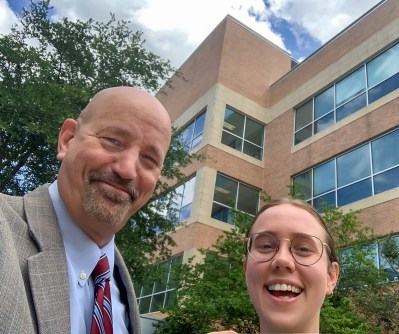
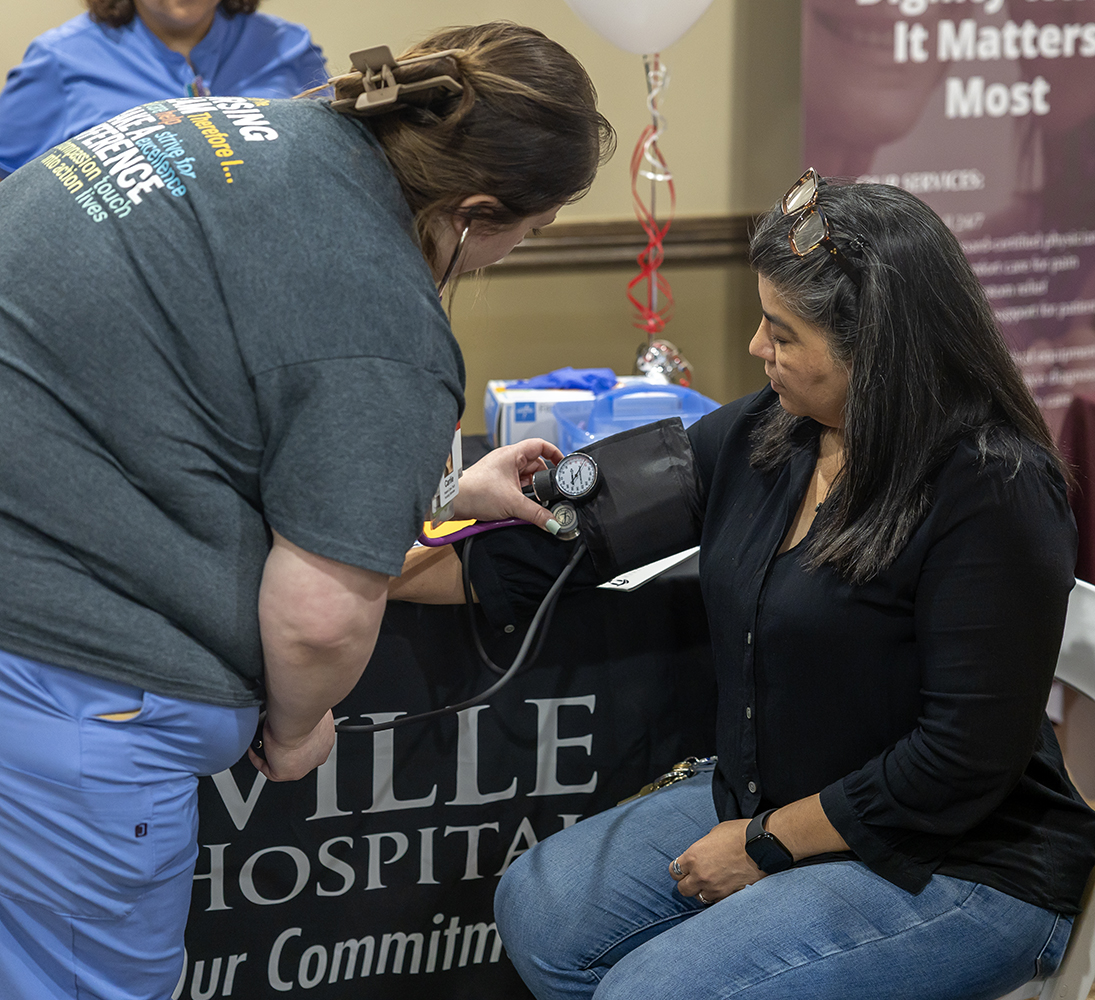
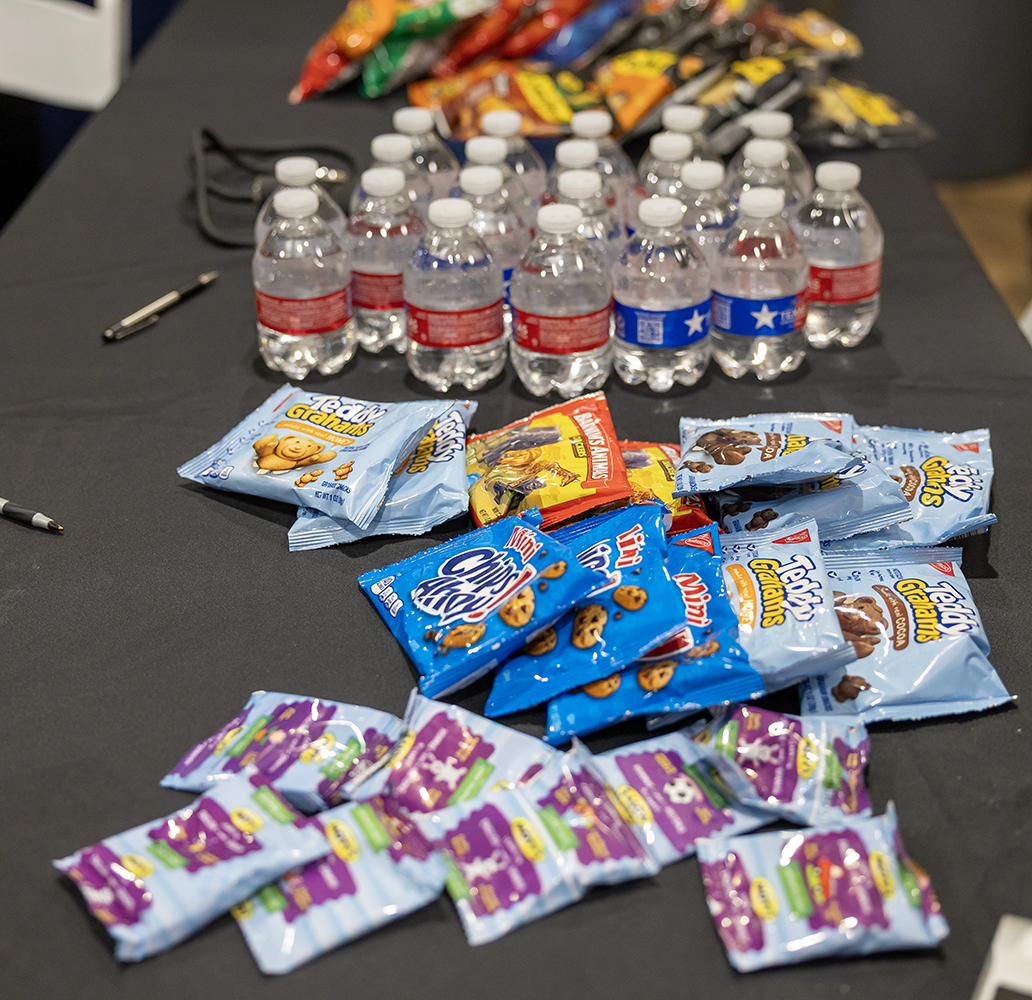
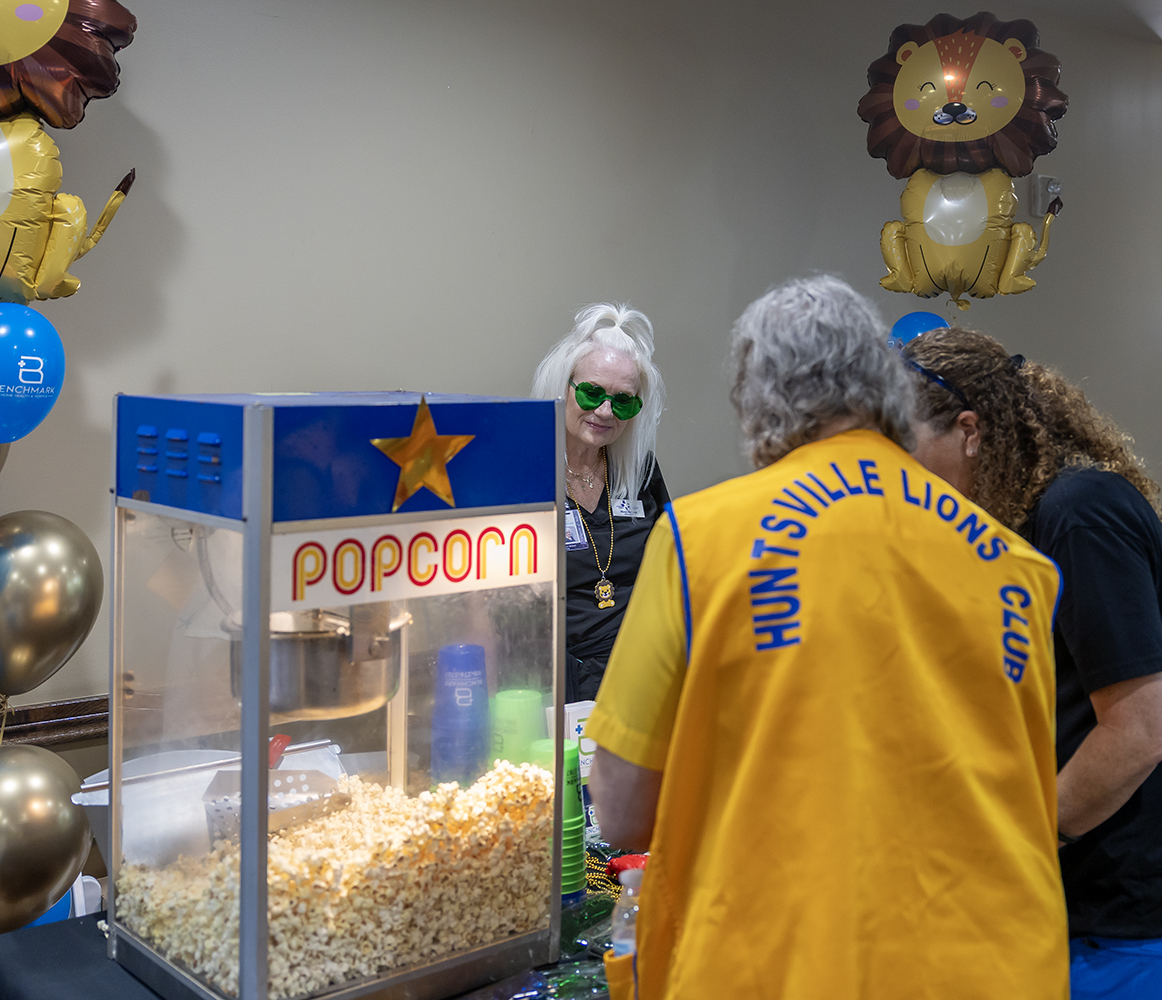
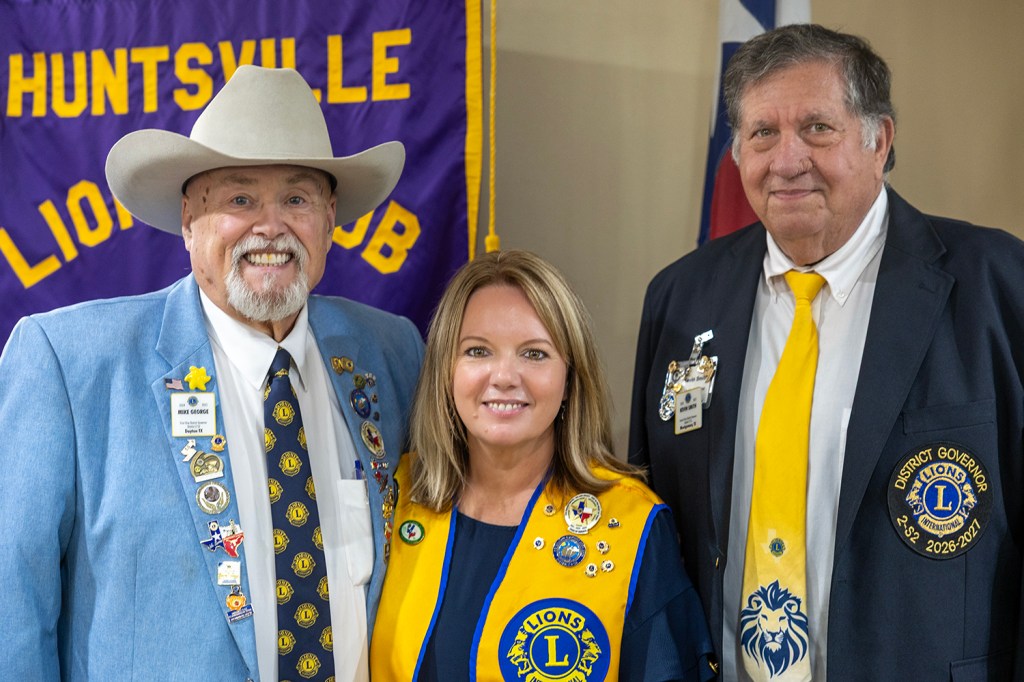
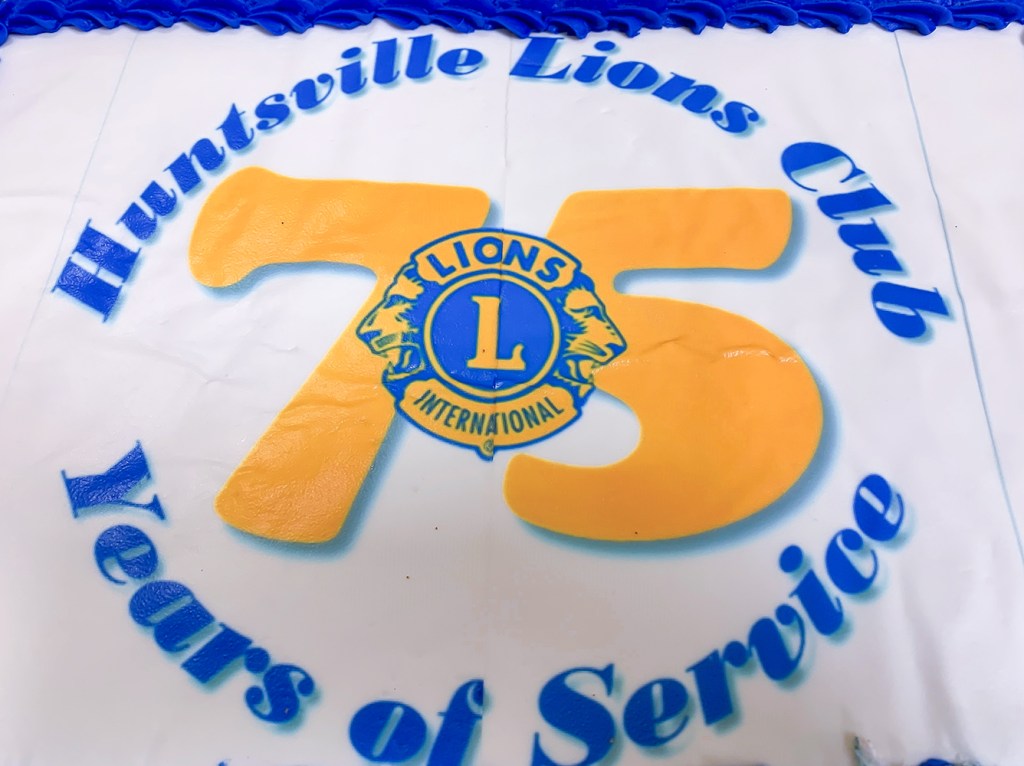
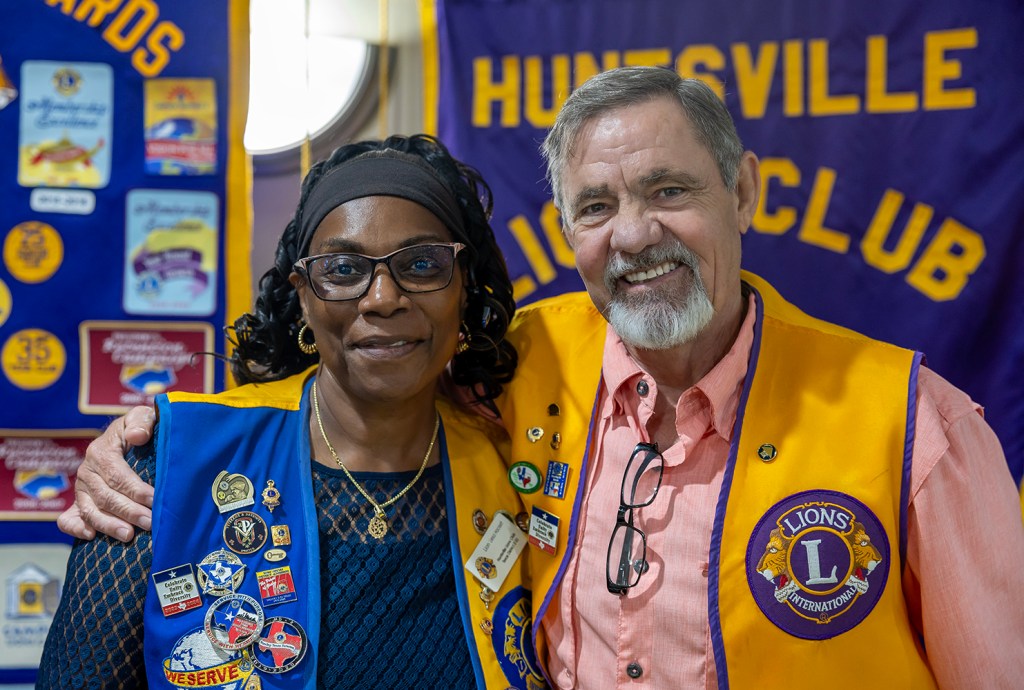
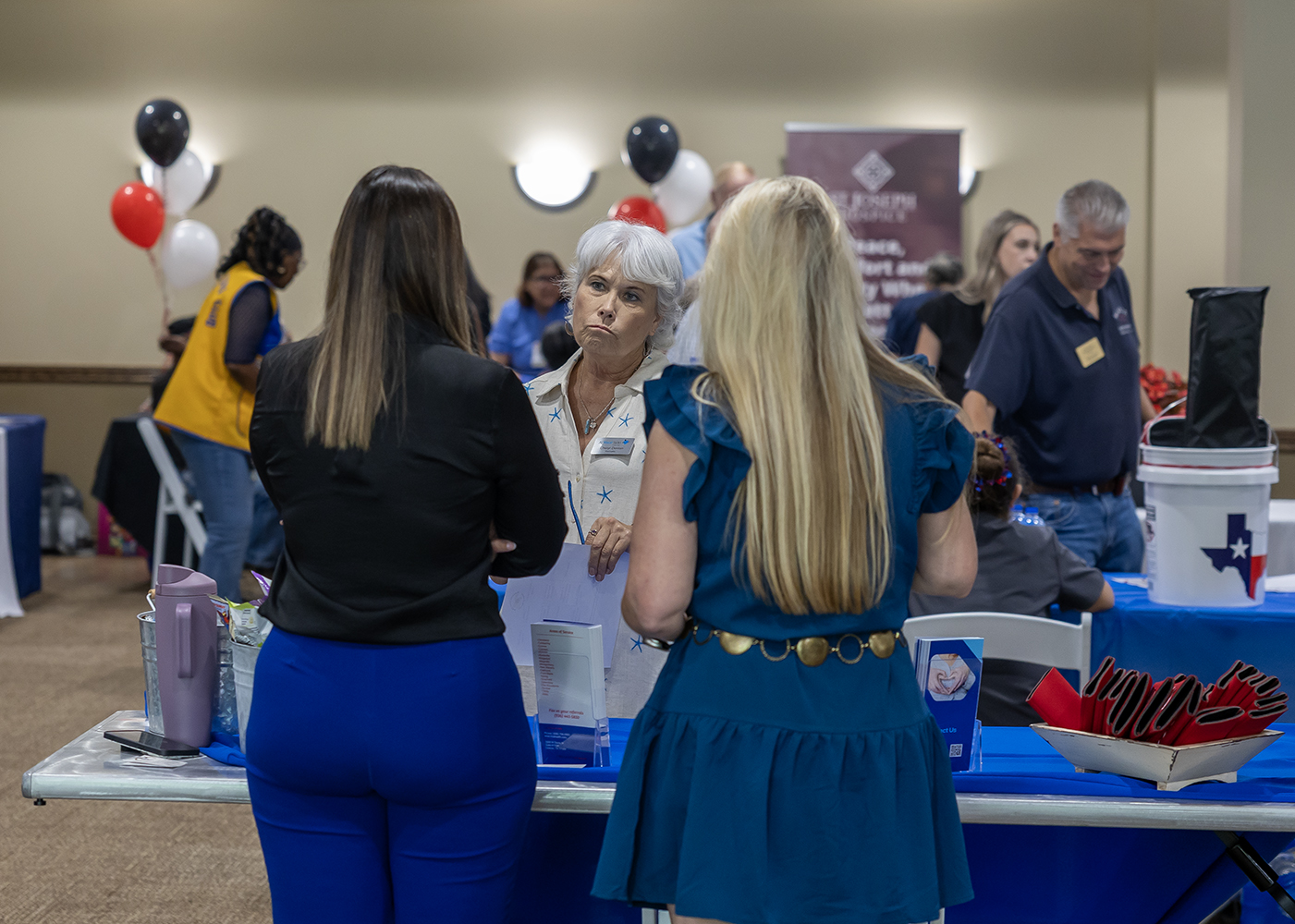
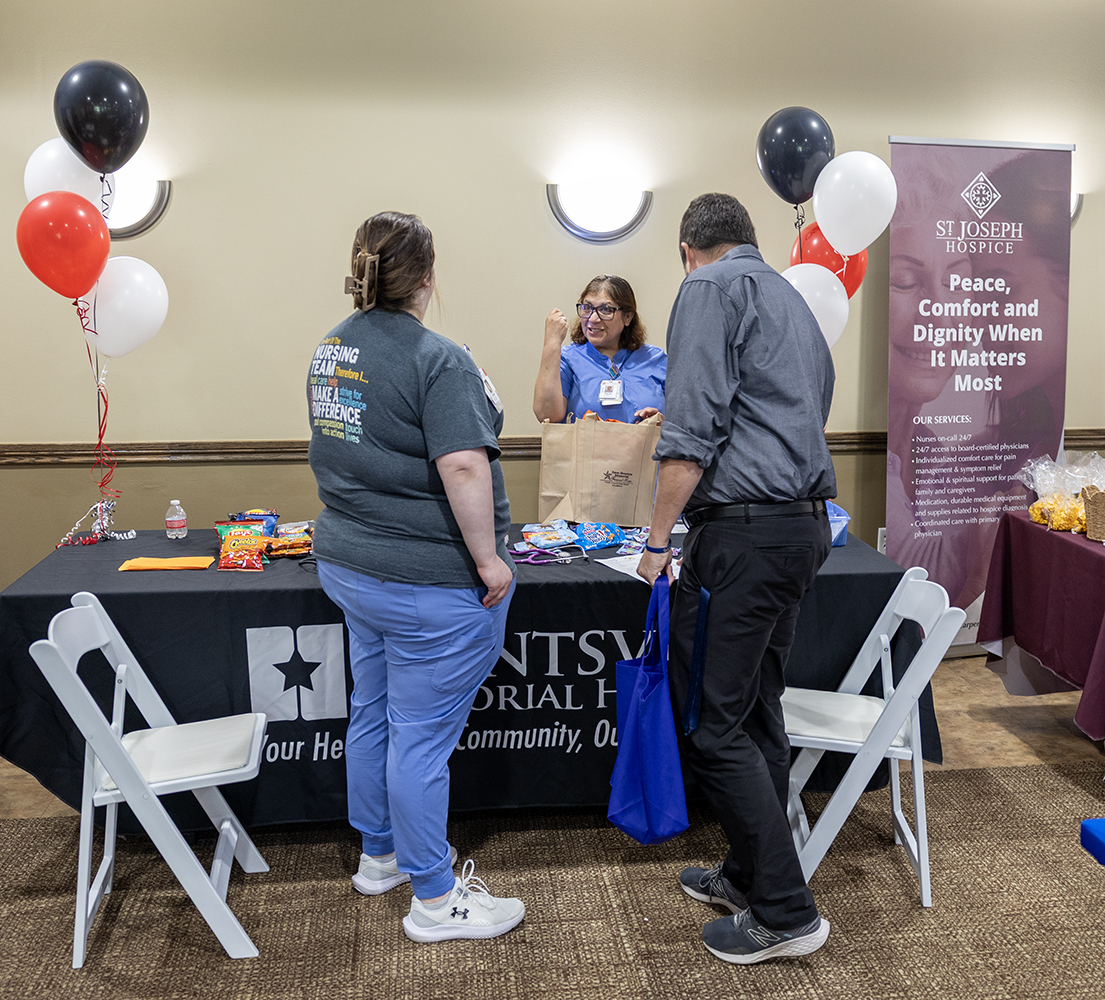
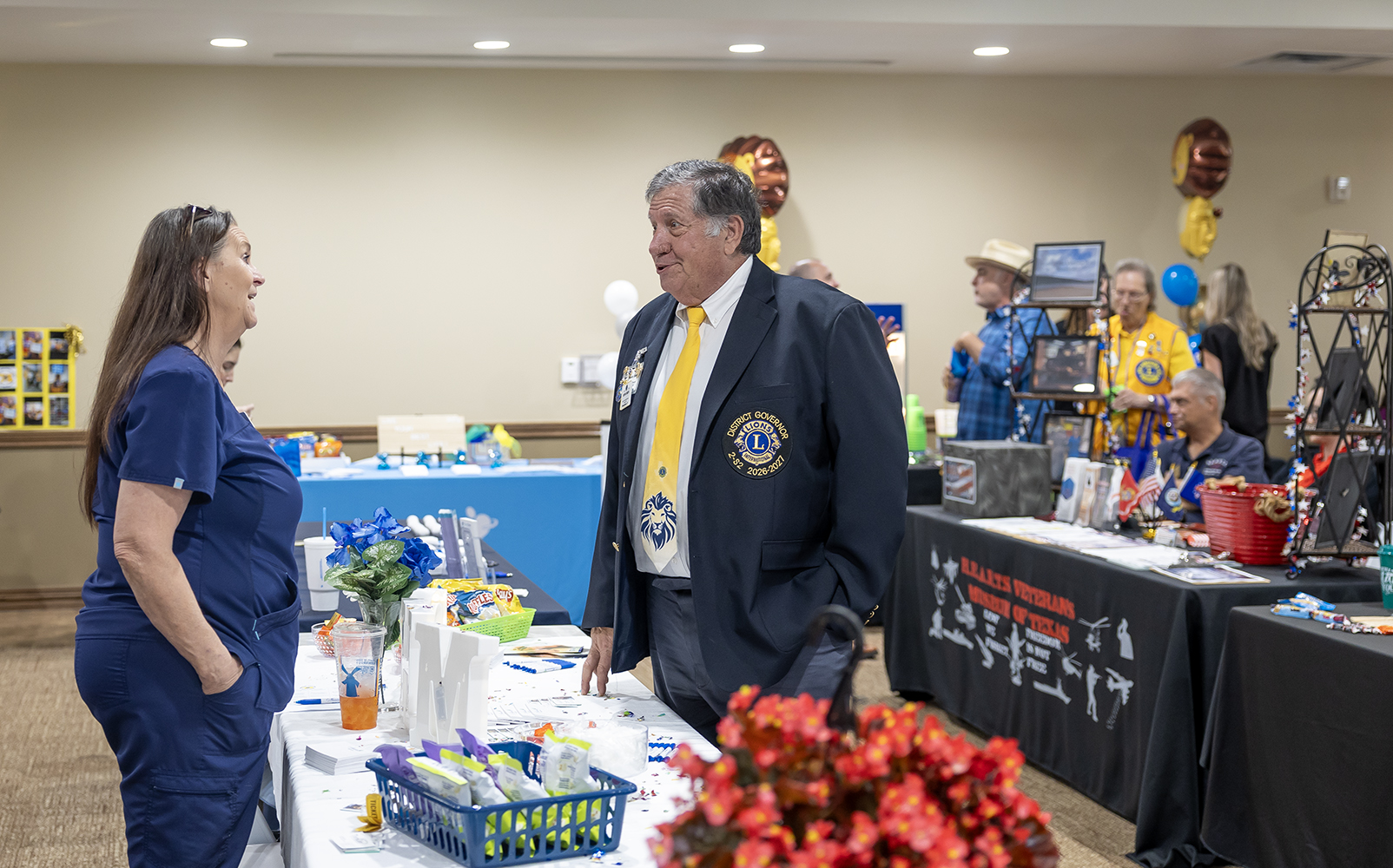
Yesterday marked the Lions Club second annual Health, Education, and Volunteer Fair, while also doubling as a celebration of the organization’s 75th Anniversary! Approximately 20 vendors were on hand to strengthen the community by promoting health, increasing awareness of educational options, and facilitating volunteerism in the community. LEAP, with alumna Victoria McClendon-Leggett–now with Student Legal and Mediation Services–were on hand to learn and engage.
With this many resources in one place, it was inevitable that we would run into friends such as Gregoria McGuire, Derrick Birdsall, Rob Hipp, and Stacy Loll. The Lions Club, festive in their celebration of their 75th Anniversary, had cake on hand, as well as a photo backdrop, with Lions Representatives from across the state on hand.
It was also a chance to re-connect with old friends. During our rovings, Huntsville Memorial Hospital employee Paula Morales came up to Professor Yawn, asking, “Are you Mr. Yawn?” When she received an affirmative reply, she noted that she was part of the “very first Citizenship Course” and that she had earned her citizenship in 2009. It was a pleasant and touching reunion and, in a sense, a microcosm of what promoting a stronger community is all about.
It may have been the Lions Club birthday/anniversary, but it was a really a gift to the community, one that was much appreciated by LEAP.
For the final stop of our Arkansas trip, we headed north to Hot Springs! We took in the stunning views from the Hot Springs Mountain Tower, enjoyed a quick tour, and refreshed our knowledge of the city’s rich history.
One of the city’s most notable landmarks is the Arlington Hotel, which has burned down twice and hosted historical figures like Babe Ruth, Al Capone, and President Ronald Reagan. The city is also home to historic bathhouses, as well as a variety of restaurants and shops.
I was especially intrigued by the artifacts on display at the Mountain Tower, particularly an old Arlington Hotel menu from the early 1900s, where a sirloin steak cost an eye-popping five dollars! But the views of the town and the Ozarks that were most inspiring.
Though we reached the top of the tower in under a minute via elevator, Professor Yawn challenged us to put our “hiking” skills to the test by walking down the 216-foot tower. To my surprise, I was the first to make it down the long flight of stairs—a satisfying redemption after my setback at Pinnacle Mountain!
FordyceBathhouse
by Olivia Discon
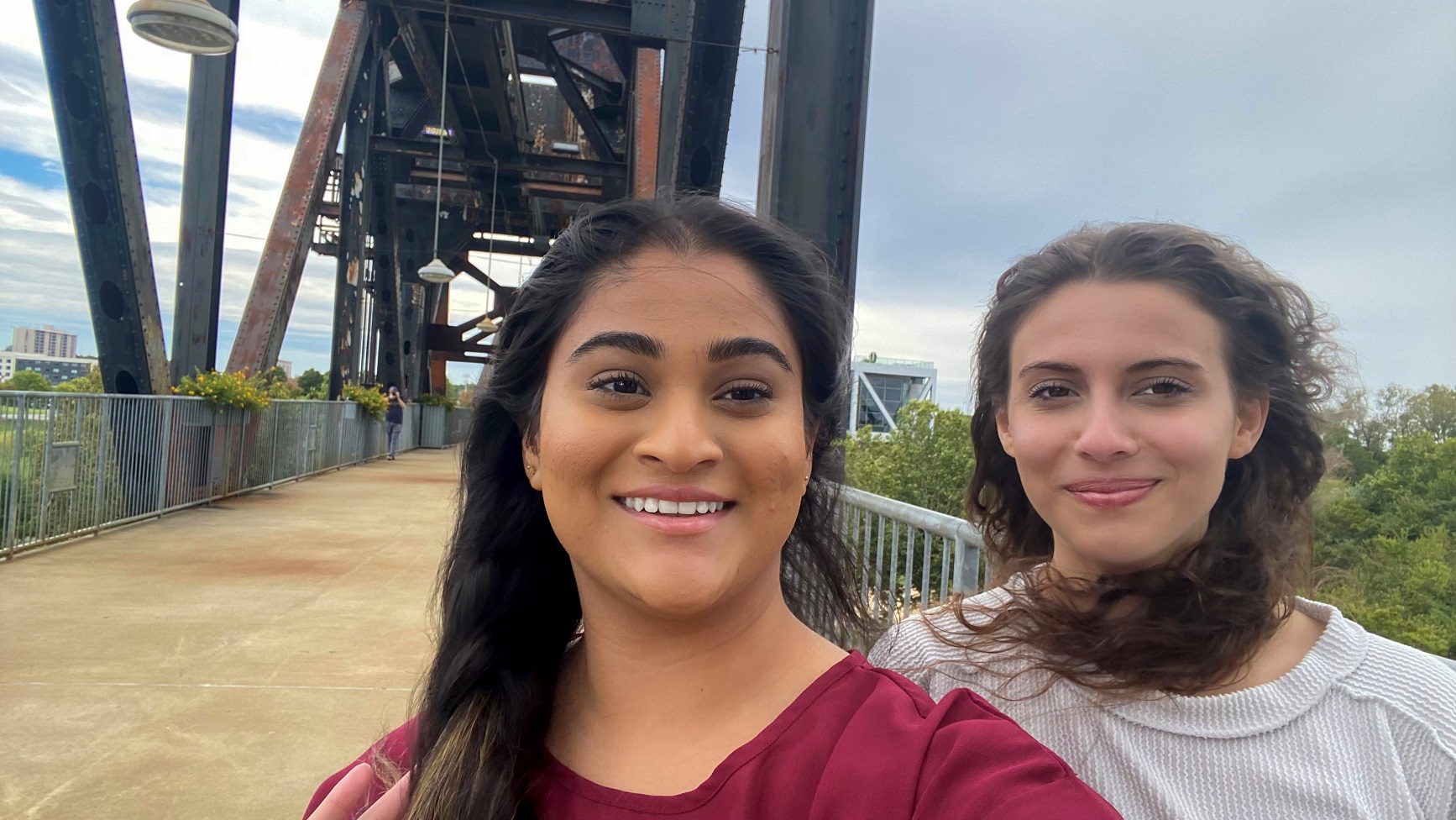
After we conquered the Hot Springs Mountain Tower, Saara and I headed to the Fordyce Bathhouse Visitor Center and Museum, a time capsule to an age when people believed these hot springs could cure just about anything.
Built in 1915, the Fordyce Bathhouse was once the go-to spot for people looking to treat illnesses like arthritis, skin conditions, and as you could imagine, chronic stress. We talked about how long some of these people would stay—weeks, sometimes even months—soaking in the mineral waters, hoping for a miracle cure.
The Fordyce is part of Bathhouse Row–several historic bathhouses that line Hot Springs’ main street–but it was the first to close. Just two decades after the development of penicillin, bath houses were seen as obsolete, and in 1962, the Fordyce closed. Since that time, the National Park Service has taken great steps in renovating the houses and re-opening them to the public as museums.
As we walked through the museum, we got a sense of just how elevated of an experience this must have been. With stained glass ceilings and marble accents throughout, it was clear that the treatment prescribed grandeur and luxury.
After our tour, Saara and I explored some of the rooms, and we found the gym to be the most interesting.
It was filled with old equipment and gymnastic apparatus, There was no shortage of details in what a long term stay would require.
While these baths might not have been miracle cures, they certainly forced relaxation and offered an escape from everyday life!
What I found especially interesting was that the entire area, including Bathhouse Row, is now maintained by the National Park Service and, indeed, much of the downtown area falls into the Park System. Indeed, some of our most memorable scenes were in the downtown area.
We only had a day in Hot Springs and we didn’t actually soak in any springs, but we greatly enjoyed our time, and left with a sense of rejuvenation.
After two learning-laden days in Little Rock, we turned our attention primarily to the Book Festival and the authors on hand to present. One of the joys of Little Rock is that the downtown area is more akin to a small town than a larger, capital city, and we were able to walk to the book festival with no trouble–while still enjoying coffee stops, capitol views, and public art…
A Discussion on Authenticity and itsCostwith Garrard Conley
by Olivia Discon
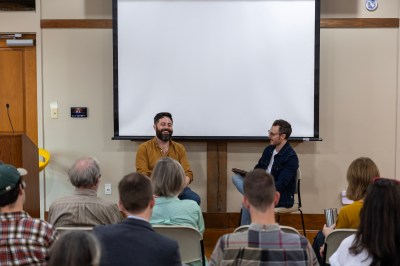
While others in LEAP attended more learned sessions, I attended a book talk with Garrard Conley for my first session at the Six Bridges Book Festival, where he discussed his new book, All the World Aside. He described the novel as a character study set in 18th-century Puritan New England, covering modern conversations about love, faith, and identity within the strict religious society of the time.
Conley emphasized how the characters’ internal struggles resonate within the modern context, despite the historical backdrop.
During the session, Conley read a passage about the protagonist’s mother struggling with depression, and it was reminiscent of Flannery O’Connor’s The River. During the Q&A, I asked if O’Connor had been an influence in his work, and to my surprise, he lit up with excitement.
He made mention that he had taken classes covering her short stories in college and was greatly inspired by her ability to navigate the complexities of a changing society within the scope of region, time, and politics. I was glad I asked, and it was nice to see that he appreciated the connection.
To make this experience even more special, after the session, when I went to buy a copy of the book, a generous Arkansan offered to purchase it for me. It was an unexpected but incredibly kind gesture that tied into the theme of Arkansan Traveler with which we have become well acquainted.
A Deep Dive into Cultures, Immigrants, andNatives
by Saara Maknojia
The Covid-19 pandemic had a significant impact on the nation’s economy, leading to a decline in business profits. This period was particularly difficult for immigrants working in the meatpacking industry, who were exploited and forced to work under inhumane conditions. Executives from companies like Tyson told workers that if they didn’t continue supplying food, the entire nation would starve.
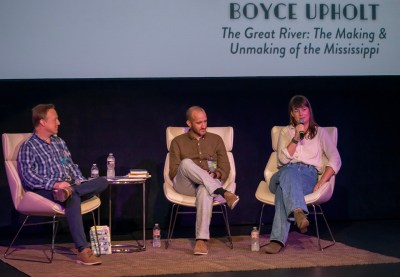
In my first session at the Six Bridges Book Festival, I learned from Alice Driver (and Boyce Upholt–see below), author of Life and Death of The American Worker: The Immigrants Taking on America’s Largest Meatpacking Company, who shared her investigative research into the experiences of immigrant workers at Tyson Foods. Her work sheds light on the exploitation that takes place within multi-billion-dollar companies.
According to Driver, undocumented immigrants were threatened by Tyson executives during the pandemic—told that if they didn’t comply with the company’s demands, they would be arrested and jailed. This exploitation of vulnerable individuals has been ongoing for years and continues to shape their experiences today.
At the end of the session, I asked Driver about the techniques she used to comfort the immigrants and help them share their stories. I also inquired about how these perspectives might affect the immigrant community facing similar challenges in other workplaces.
She explained that she needed to offer comfort because these workers were alone and misinformed. As for the broader impact, she noted that immigration is still seen as a turbulent issue in the U.S., even though the country depends heavily on immigrant labor. Sadly, these workers often don’t receive the credit they deserve.
This session deeply inspired me, as it demonstrated how one person can truly impact a community. Alice Driver played a crucial role in reassuring these immigrants of their rights and protecting them from the company’s threats.
As an immigrant myself, the stories of others are always something that I find myself relating to some extent. The courage shown by these workers, who risked their lives and faced potential legal battles to share their experiences, serves as a powerful reminder of the human cost behind corporate profit. Their bravery emphasizes the critical need to hold corporations accountable for prioritizing profit over people. It also reminds us of the strength and resilience of immigrant communities, who deserve recognition not only for their contributions to the economy but for their invaluable role in shaping the moral compass of our society.
Sharing the stage with Ms. Driver was Boyce Upholt, author of numerous books, including his latest, “The Great River: The Making and Unmaking of the Mississippi.” Upholt was the perfect author to share the stage with Driver, inasmuch as he is well-read and, although he is primarily a “nature” writer, this has obvious connections to food writing. In fact, he won the James Beard Foundation Award for his work on herbicides in, “A Killing Season.”
Upholt’s erudition also came to light when discussing Ms. Driver’s book: Upholt was able to quote passages from Upton Sinclair’s “The Jungle” as it pertained to Driver’s “The Life and Death of the American Worker.”
But his most interesting discussions came when discussing the “Great River,” the Mississippi, and the impact it has had on food, culture, racial conflict, and the environment. A central theme in Upholt’s book is the Western concept that man can, at least to an extent, control nature. This has, according to Upholt, worked to some degree: the Mississippi floods less often now, thanks to an extensive levee system devised in the last two centuries. But, when it does flood, it floods more catastrophically, killing hundreds and causing billions of dollars in damages.
According to Upholt, this should lead to a realization that man will not, in the long run, be able to control nature. Indeed, as the weather becomes more volatile in the coming years, our ability to influence the forces of nature may prove humbling, costly, and deadly.
Cultivating Our Knowledge: A Gardening Workshop with Lana Williams
by Olivia Discon
We couldn’t contain our excitement that the Six Bridges Book Festival had a gardening workshop! Having recently published her book, The Container Garden Recipe Book, Lana Williams gave us the lowdown on a new method of gardening. Using a diversified array of plants within a repurposed pot has become a minimalist, economical, and eye-catching fad that requires lots of forethought to execute.
As Lana went into depth on different tactics, she assembled two container gardens with beautiful foliage while answering questions throughout the presentation.
Saara, who takes pride in her personal garden was immediately inspired to take the lessons learned from the workshop back home, such as avoiding “root rot”, types of soil to utilize, and frequency of maintaining the plants depending on climate. This session ended with a particularly optimistic note, being that “there is no such thing as having a black thumb.” While some might describe my efforts to maintain plants as borderline herbicidal (editor: She’s a herbicidal maniac), it was quite interesting to experience a tutorial from a professional.
Eli Cranor and Gabino Iglesias
One of the highlights of the day was the join session of Eli Cranor and Gabino Iglesias, moderated by Jonathan Portis–Editor of Arkansas Gazette, author of “The Comeback Kid,” and brother of Charles Portis (author of True Grit).
Portis, although undoubtedly knowledgeable, fumbled a bit as moderator, tripping on his introduction, appearing to stammer a bit, and letting the conversation wander.
When left to their own devices, however, Cranor and Iglesias were excellent, offering humorous anecdotes, relating interesting stories, and providing real insight into their writing practices. Iglesias, for example, has to write his novels in between various other obligations, including a hefty travel schedule and writing articles for the New York Times.
Cranor, too, had to do much of his writing at 5:00am, before his daughter awoke and in his lunch period or free period while teaching high school.
This was less of a problem for Iglesias when he was eleven, and he wrote his first short story. He had time and imagination, and he wrote a story for class about a monster that lived in a basement of his hometown, and when the monster got too big for the basement, he went on a murderous rampage around town. Iglesias, ever a stickler for accuracy, used real names of the murder victims, which one imagines, he delighted in killing off. Understandably, this caught the attention of the teachers (it was not noted whether a teacher was among the victims), who called his parents. His father stood beside him, asking only one question: “Was it well written?”
Cranor also had the experience of writing about a small town in Arkansas, while living in a small town in Arkansas. Portis suggested that there might be some push-back from residents who didn’t care for how their town–or the townspeople–were portrayed. Cranor, however, indicated that he has not run into a lot of problems with that, although he did note that his column in the Arkansas Democrat-Gazette does, occasionally, rankle people, and he hears about it.
Iglesias also hears from critics, and when the author thinks the critics are unfair, he simply puts them in his next book–often as the villains. It’s unclear what the long-term effects of this strategy will be, but Iglesias seems to enjoy his ability to highlight the often unsolicited and often irrational responses to fiction and art from the public.
If nothing else, we are learning that irrespective of genre, fiction, or non-fiction, it’s maybe not a great idea to argue with people who buy ink by the barrel.
Wrapping Up
The real takeaway, however, is the importance of taking opportunities to learn. In our case, it paid off beautifully, with lessons on gardening, nature, pandemics, workers, crime fiction, journalism, the writing process, and more generally, the importance of travel, which as Mark Twain noted, “is fatal to prejudices.”
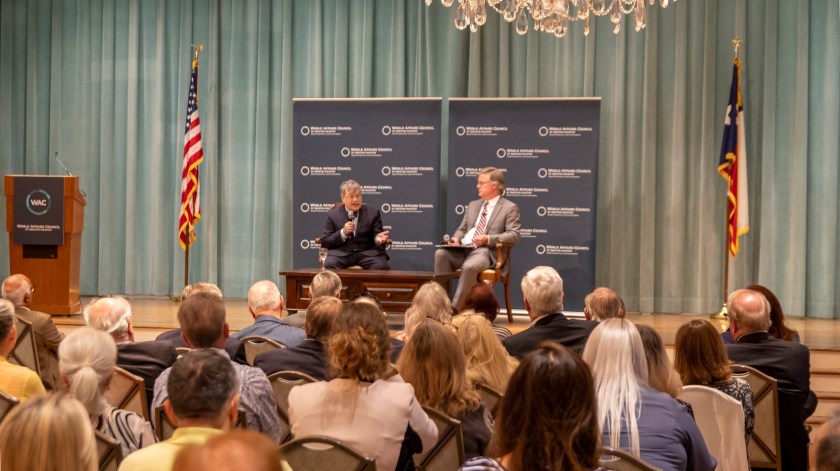
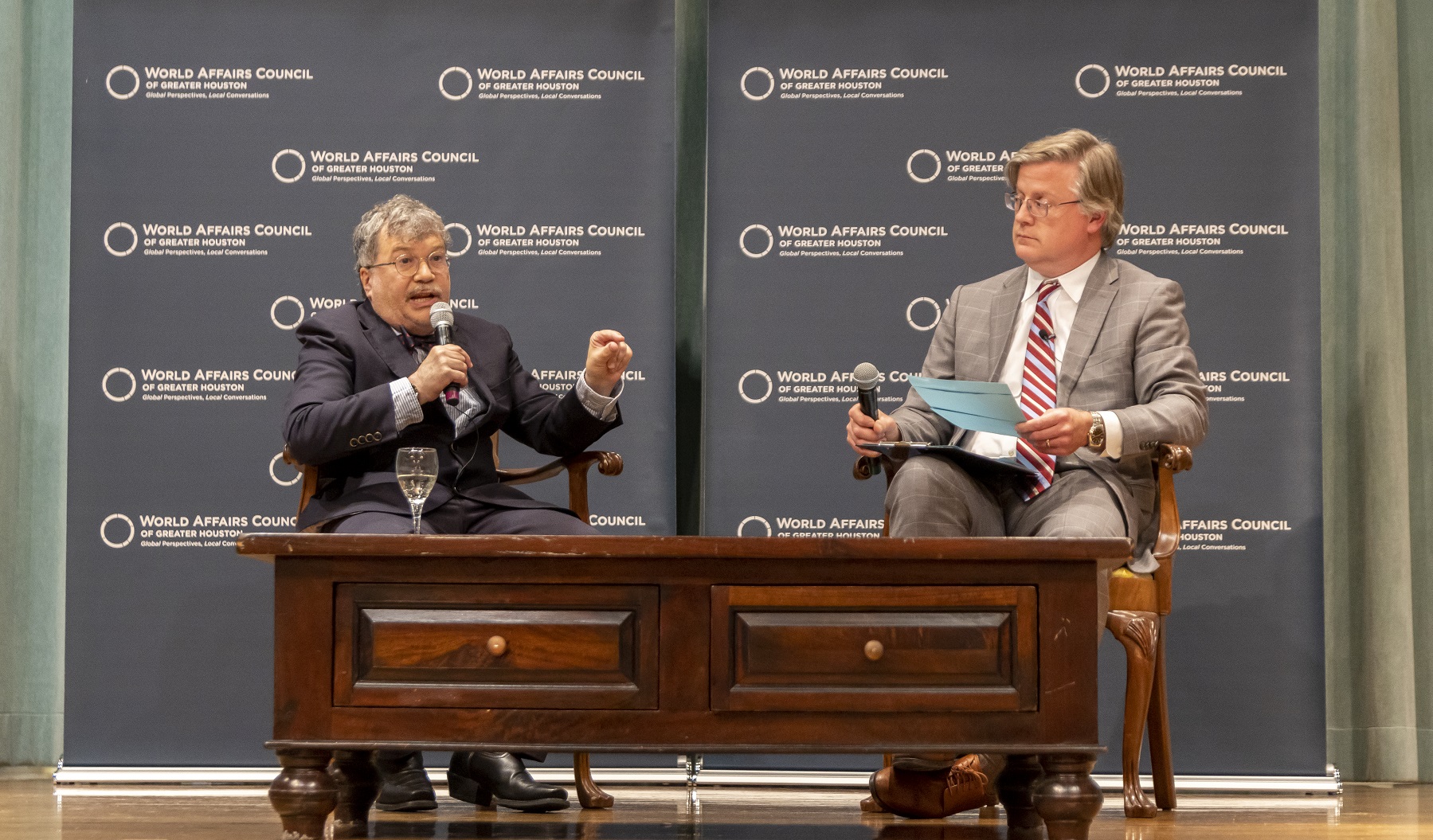
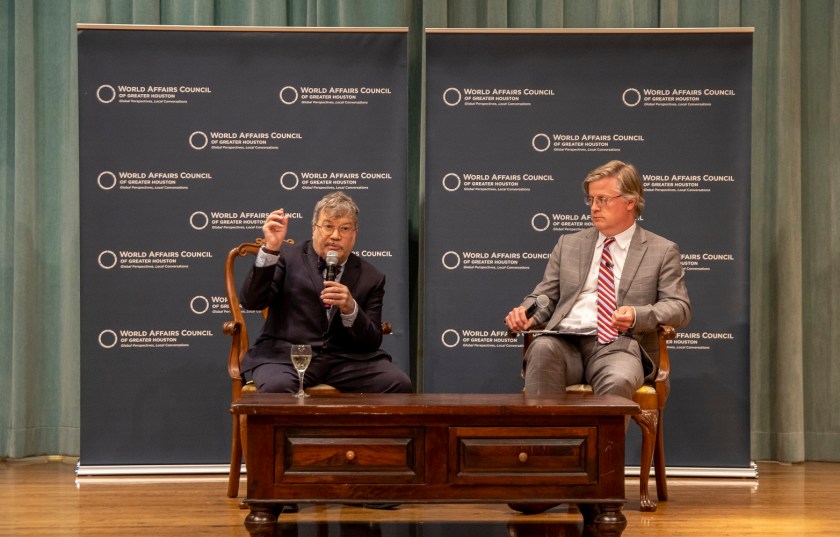
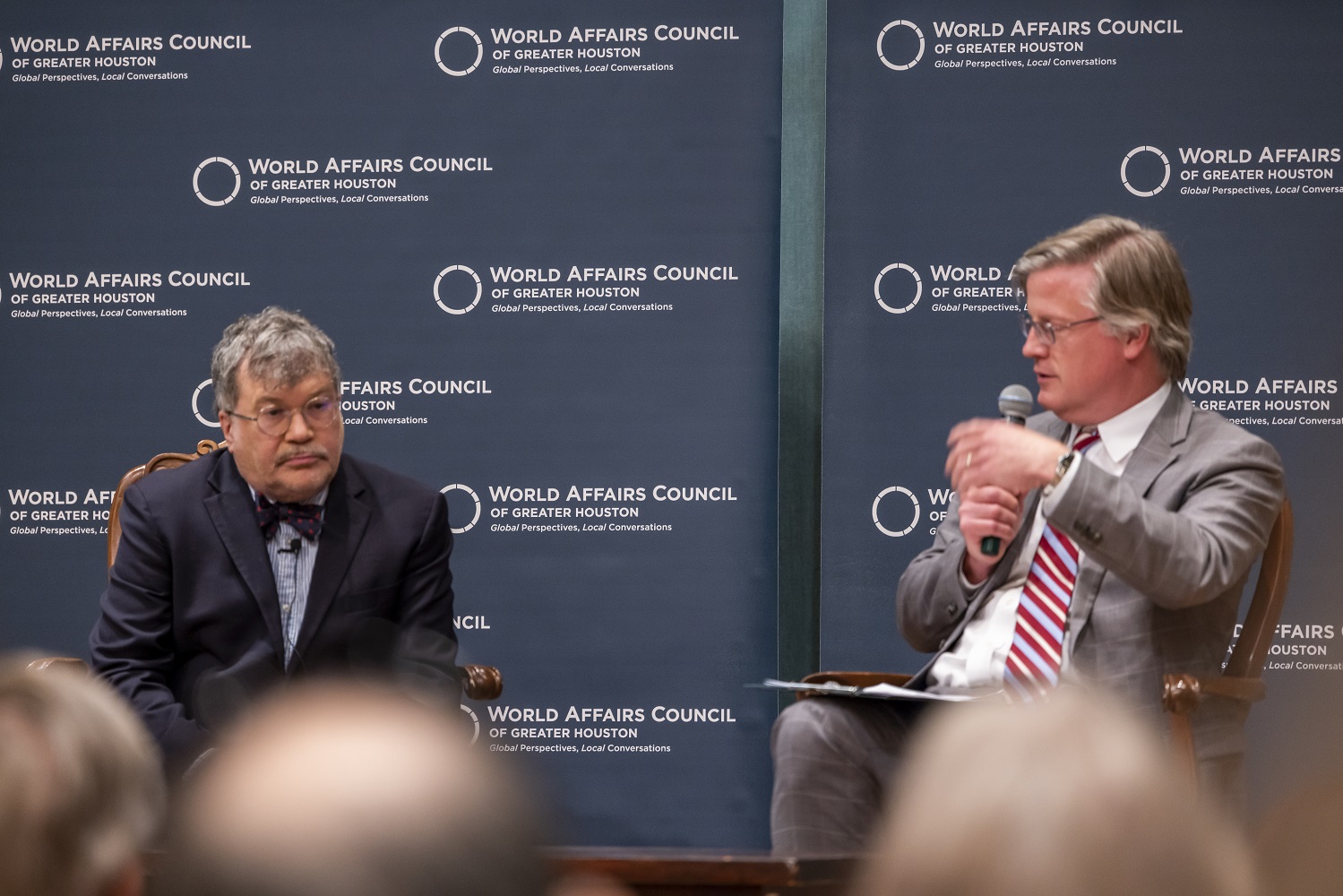
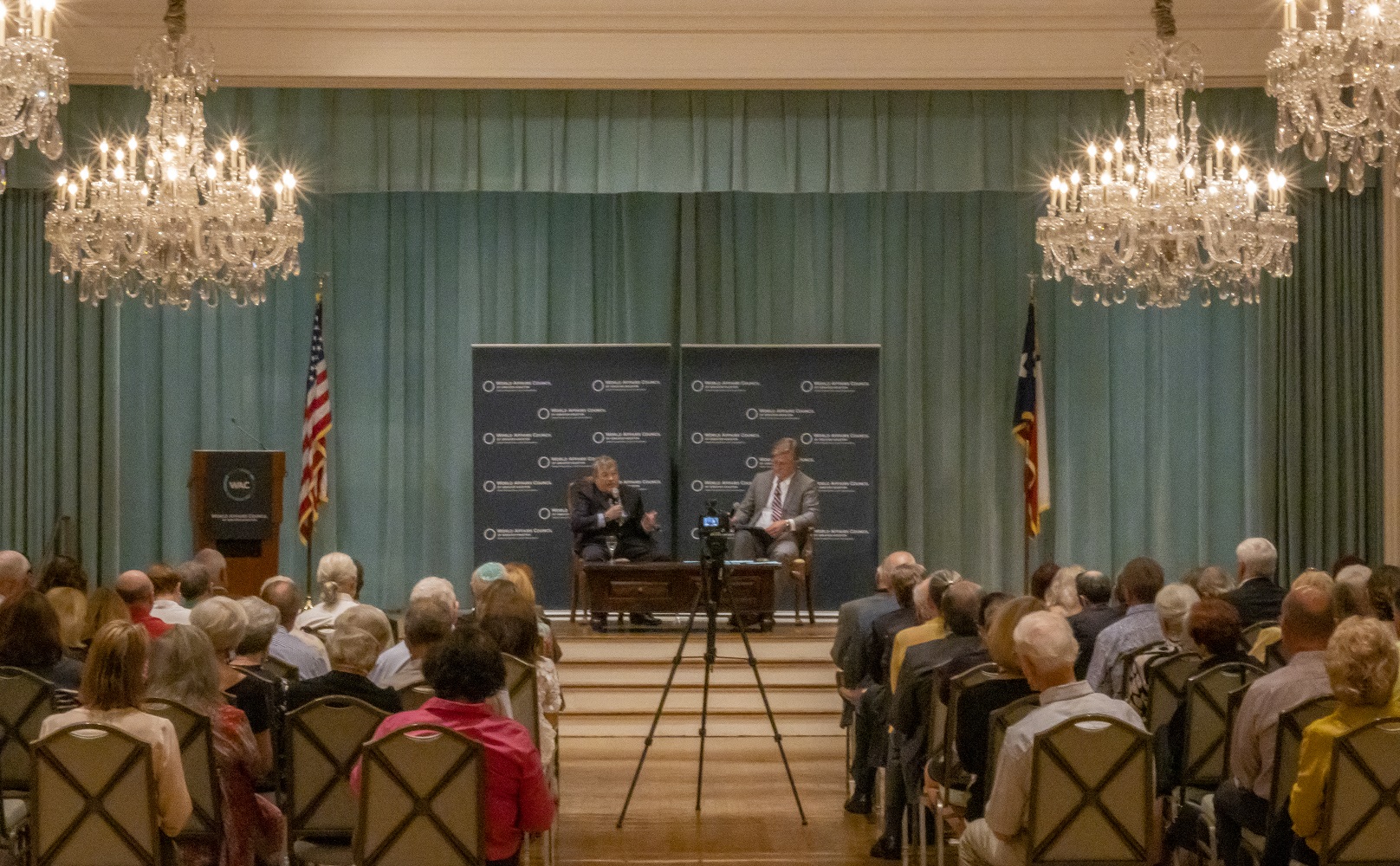
It’s not every day you get to hear from a Nobel Peace Prize nominee, but LEAP students had just that chance yesterday. Dr. Peter Hotez, Professor of Pediatrics and Founding Dean of the National School of Tropical Medicine at Baylor College of Medicine—and, most recently, developer of a vaccine against COVID—discussed the role of expertise and politics in addressing global pandemics in another interesting event hosted by the World Affairs Council.
Hotez has been in the trenches fighting the COVID-19 pandemic, while also conducting perhaps 1,000 television, radio, and podcast interviews since the spread of COVID. Remarkably, he’s also had time to work with his co-researcher, Dr. Maria Elena Bottazzi, Associate Dean of the National School of Tropical Medicine, in developing CORBEVEAX, a low-cost vaccine that protects against COVID. Notably, Hotez and Bottazzi did not patent the vaccine—foregoing millions in income to assure lower pricing for the medicine.
Hotez’s discussion was wide-ranging, but he stressed three major points: the origin of COVID, the politicization of medicine, and the future of pandemics.
Hotez believes it’s important to uncover the origins of COVID, but he finds conspiracy theories to be misguided. While it is possible, he notes, that COVID escaped from a lab in China, there’s no evidence for that theory, and pursuing it with much vigor is likely to distract researchers from the most likely answer, which is that COVID either developed from—or was spread through—a wet market in China.
What most clearly distresses Hotez, however, is the politicization of COVID…
…a thread skillfully navigated by the World Affairs Council moderator, Ronan O’Malley.
While prior to the COVID-19 pandemic, anti-vaxxers could be found on the left and right, more or less equally, the right-wing of the Republican Party seemed to embrace conspiracy theories not only about the origin of COVID, but also about almost any US government efforts to combat COVID.
Some believed that COVID itself was a hoax wrought by the US government, while others accepted the threat of COVID, but believed that any medicine promoted by the government was part of a deep state/big pharma conspiracy for profits, leading to the misguided use of Ivermectin and other nostrums. Hotez noted that such beliefs led to more than a quarter of a million deaths of people who could have been vaccinated, but weren’t.
Hotez called this movement an aggressive, anti-science faction, and he considers this dangerous, not only as it relates to COVID, but also how it relates to the next pandemic. “Nature”, Hotez noted, “is not coy.
It’s sending us a clear message.” That message, it seems, is humans need to get it together, which involves not only identifying the origins and spreads of viruses such as COVID-19, but also winning an informational war about science itself. Fighting pandemics is difficult, but it’s infinitely more difficult when a significant portion of the population refuses to adopt common-sense approaches to fighting the pandemic.
Following the event, Dr. Hotez briefly met with us, asked us about our majors (History, Biology, and Political Science), and he suggested that it was about time he get to Sam Houston State University to speak, a point on which all of us agreed.
Meru’s Grill
Following the event, with much on our mind, we went to Meru’s Grill nearby, and we discussed much of what we learned. None of us had been to Meru’s, but it was a great find: the staff were friendly and knowledgeable, the ambience was inviting, and the food was amazing. The appetizers, which included the “Avocado Bomb” and the “Smoked Salmon,” were refreshing and innovative.
The avocado bomb, for example, had raw Hawaiian Tuna, avocado (of course), a dressing, and possibly pineapple, a combination we weren’t expecting, but couldn’t get enough of. Our appetizers included two shrimp dishes, a Thai salad, and a burger, all of which were truly excellent in both taste and presentation.
Perhaps our favorite part of the meal, however, was the carrot cake dessert, recommended to us by our excellent server, and a truly delicious delicacy in the form of a square “slice” of cake, with icing unsurpassed in texture, flavor, and volume.
Meru’s Grill isn’t part of the medical field, but it definitely eased our worries and improved our spirits, topping off a wonderful night of education, good company, and great food.
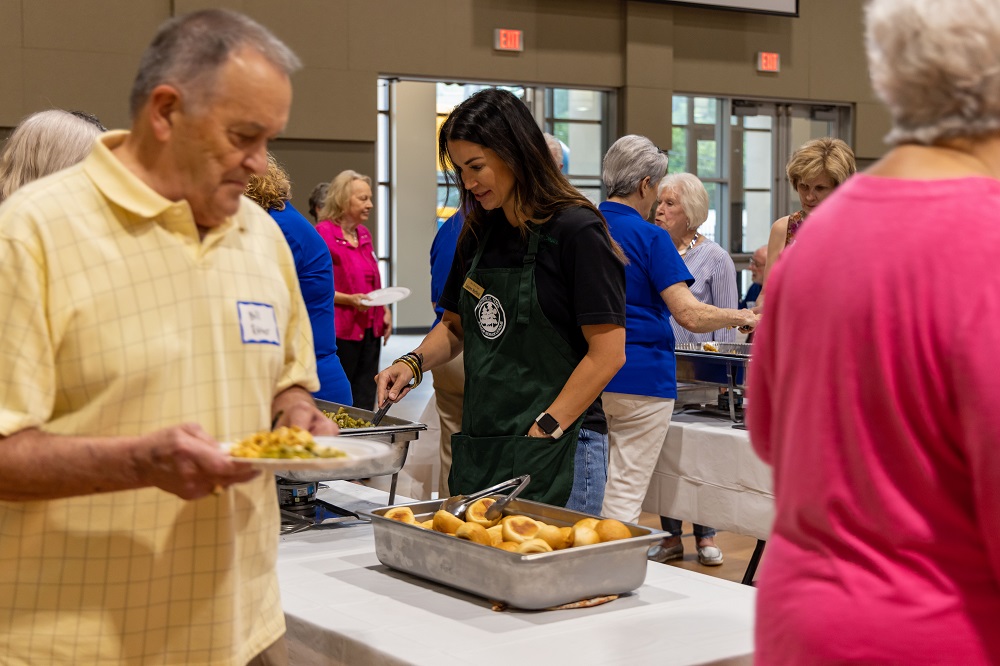
We’ve previously volunteered for the Senior Center, but only indirectly. For the past two years, we’ve assisted with “Empty Bowls,” hosted by the Wynne Home, and the proceeds from that fundraiser go to the Senior Center. But we’ve never helped directly with the good people there, and so helping the staff and board members thank the Center’s regular volunteers at their “Volunteer Appreciation Dinner” was a nice opportunity.
And while this may have been our first time to directly help the organization, the Senior Center has been helping others for the past 45 years! Help, indeed: in 2021, the organization provided more than 52,000 meals to those who are food insecure in Walker County!
Director Stacy Loll led the proceedings, we and the Junior Service League of Huntsville, and Board members Linda McKenzie, City Councilmember Jon Strong, Alice Ellisor, Robert Patteson, Ellen Willett, Karen Hewitt, Mary Douglas, Brad Davis, Bart Davis, Susan Retzlaff, Rosie Knight, and Dick Morton all assisted.
Their goal was to thank the many regular volunteers who assist the Senior Center, especially those that volunteer for the “Meals on Wheels” program.
For our part, we worked at greeting, drinks, and to a lesser extent, desserts. Our tasks were straightforward and pleasant; working with good people for a good cause is almost always pleasant!
Ms. Loll recognized various volunteers…
…and we also heard testimony to the hard work of JD Davis, who served as Board Chairman until his passing last year. His family was on hand, and the Board did a good job of honoring his service to the Senior Center, including providing a plaque to the family.
Linda McKenzie and Alice Ellisor also bought two tickets to the Isaacs, who are appearing at the Old Town Theatre. A lucky volunteer came away with a fun night of entertainment!
One unexpected delight was that we were also offered the opportunity to eat. Humphreys did a fine job with the catering, and the food, some gift bags…
…and the genuine appreciation of the Board, reflected the deep gratitude we all feel for the regular volunteers who help make the community a stronger–and better–place.
Although summer is often a time for students taking time off, Izabella (Bella) Urbani, Isabel Behm, former LEAP Ambassador Quinn Kobrin, and the LEAP Ambassadors braved the Houston summer traffic to attend The World Affairs Council Event “Combating Venezuela’s Refugee Crisis.”
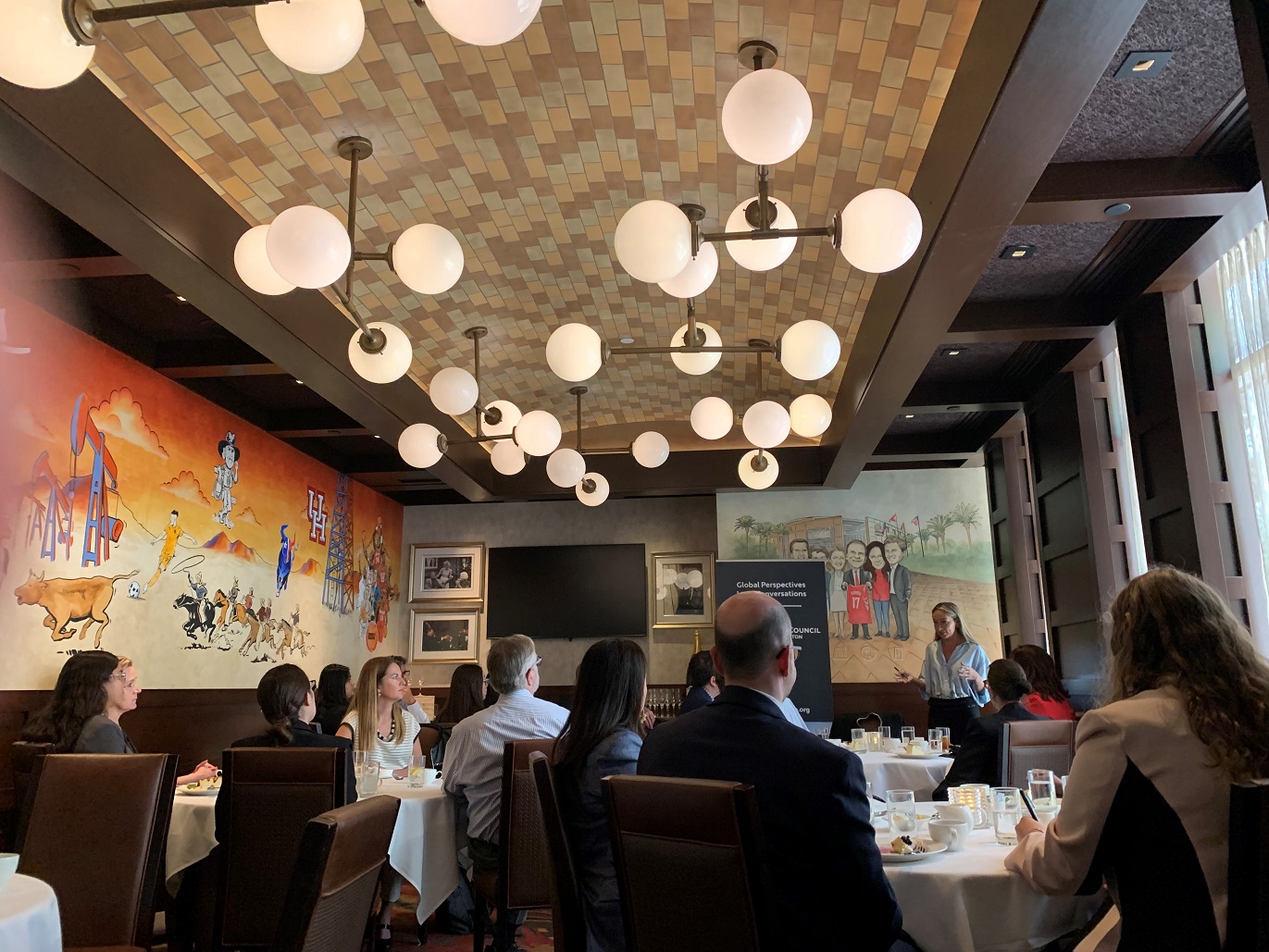
We were excited to be invited to the Palm Restaurant, a nice steakhouse in downtown Houston. We ventured through the dining room and into a private room that was decorated with murals featuring scenes of Houston.
The room was full of doctors and medical professionals from Baylor College of Medicine Children’s Foundation, Chevron employees, and interested citizens of Houston. Jessica, Saara, and I introduced Bella and Isabel to Sandija Bayot, the Chief Development Officer for WAC, and someone we can always count on for a warm greeting.
Maryanne Maldonado, the Executive Director of the World Affairs Council…
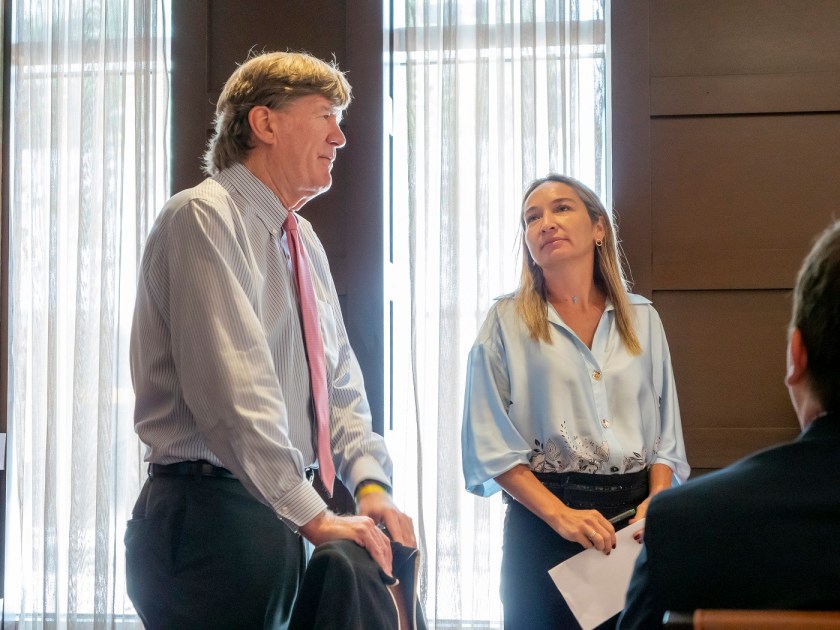
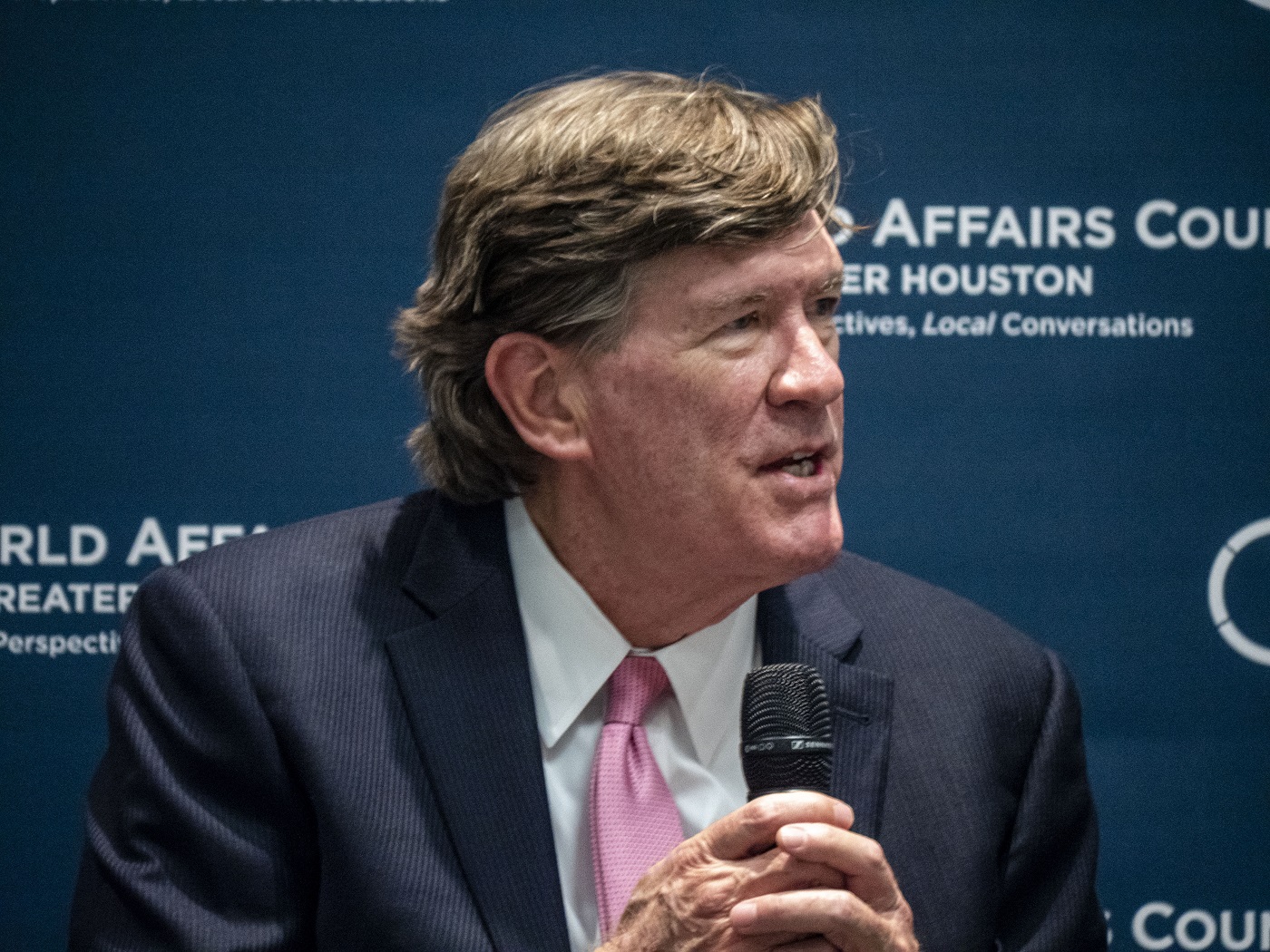
Before actually speaking on the topic, Dr. Mizwa, offered us a friendly greeting of “Go Bearkats,” and then moved to an introduction of our featured speaker: Ana Maria Galvis, the Executive Director of Baylor College of Medicine Children’s Foundation, Colombia.
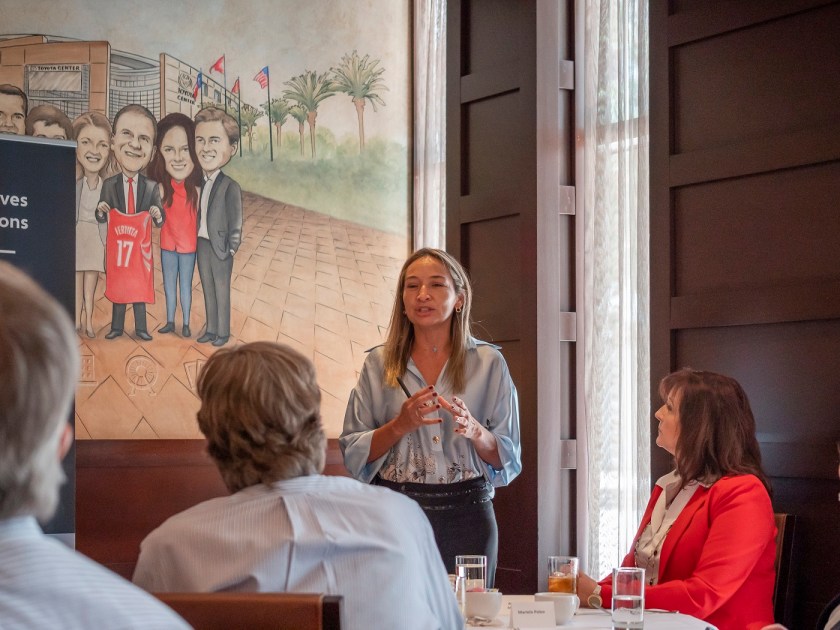
Galvis began by explaining some of the issues that Non-Government Organizations (NGOs) face. However, Baylor College of Medicine Children’s Foundation Colombia operates somewhat differently than traditional NGOs. The program is run and operated by Colombians and, although the overall program objective is to promote health, they can’t do that without addressing related issues. Thus, they focus on four major issues: health, food, education, and nutrition.
Recently, there has been an influx of Venezuelans migrating to Columbia; many of whom require immediate or long-term medical care. The employment rate in La Guajira (a Department of Colombia0 is 26.1 % and only one-third have visas. To provide aid to the incoming Venezuelans, the current President of Colombia has offered 10-year permits. Galvis said this has helped to reduce the number of undocumented migrants, but there is still work to be done to track their medical needs.
Since the program is an NGO, it is held to a different standard than the privately funded healthcare centers. Baylor College of Medicine Children’s Foundation Colombia offers 25 health certified services, and they have a dedication to “not just treating the illness, [but] treating the human being.”
Since 2014 the program has provided treated 12,400 patients, administered 7,000 vaccinations, and is the only NGO in Colombia authorized to provide the Covid-19 vaccination. The program has done amazing work to provide aid for the current crisis, and their approach is what we, as social science majors, also aim for: the help communities, not just individuals.
The event was enormously educational, and it also moved us out of our comfort zones, prompting us to converse with professionals over lunch, discussing topics with which we aren’t overly familiar.
It is a recipe for growth, and one we enjoyed very much.
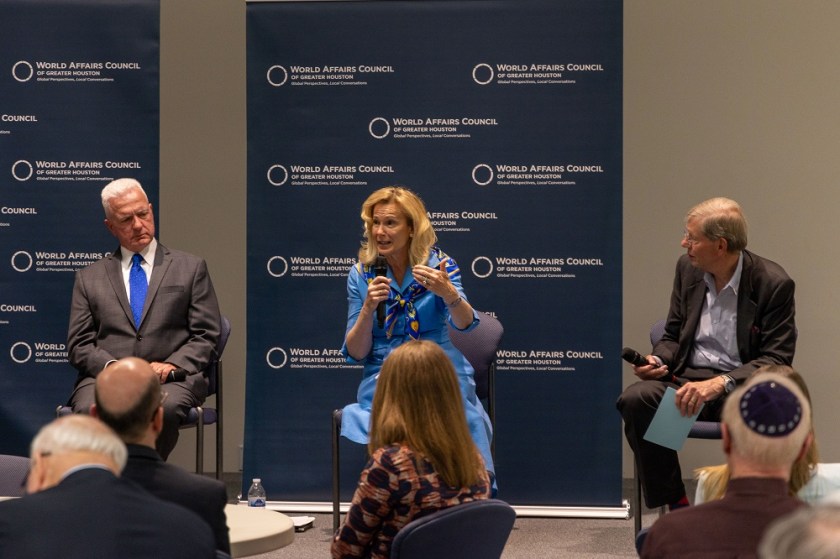
Good things happen when people work together. With that spirit in mind, the LEAP Center partnered with the Department of Population Health to attend the World Affairs Council’s panel on health, fittingly, on World Health Day, April 7, 2022, in Houston, Texas. The panel, featuring heavy health hitters such as Dr. Deborah Birx (Former White House Coronavirus Response Coordinator); Dr. Brett Giroir (16th US Assistant Secretary of Health), Michael Mizwa (CEO Baylor College of Medicine International Pediatrics AIDS Initiative), and Dr. Patricia Brock (Founder, Medical Bridges).
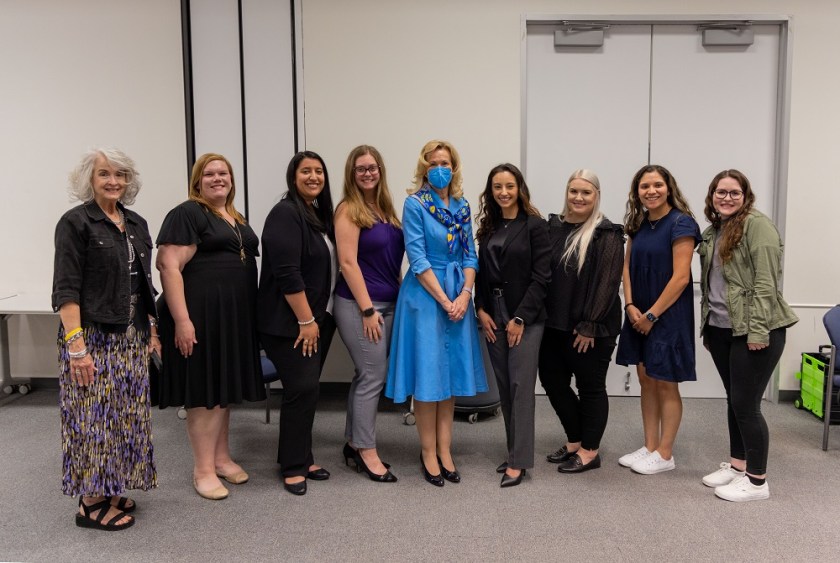
With majors from population health, political science, criminal justice, and history, the students were able to learn not only from the panelists, but also from each other.
According to Yvette Mendoza, a LEAP Ambassador and a veteran of many World Affairs Council panels, “getting other students’ perspectives, especially from those students who study health, allows us to see larger parts of the puzzle. It was interesting to see how all of our majors, in their own way, share the goal of making their communities healthier and stronger.”
Such service has long been a part of SHSU, central to the institution’s mission and its motto. Events like these, observes Mike Yawn, Director of the Center for Law, Engagement, And Politics , “are integral to providing students professional contacts, role models, and education outside the classroom.” For their part, the students seemed to agree: “It was incredible,” noted Mendoza, “to see so many highly-educated public officials collaborating to make the world better.”
According to the panelists, much of the progress that has occurred in medicine in the past four decades has been the result of research, development, and collaboration. Their stories—combining outreach and innovation—were alternately touching, inspirational, and sobering. Dr. Brock spoke glowingly of American medicine, but also described going to far-flung areas of the world to train in hospitals so short of resources they were forced to reuse gloves and sutures.
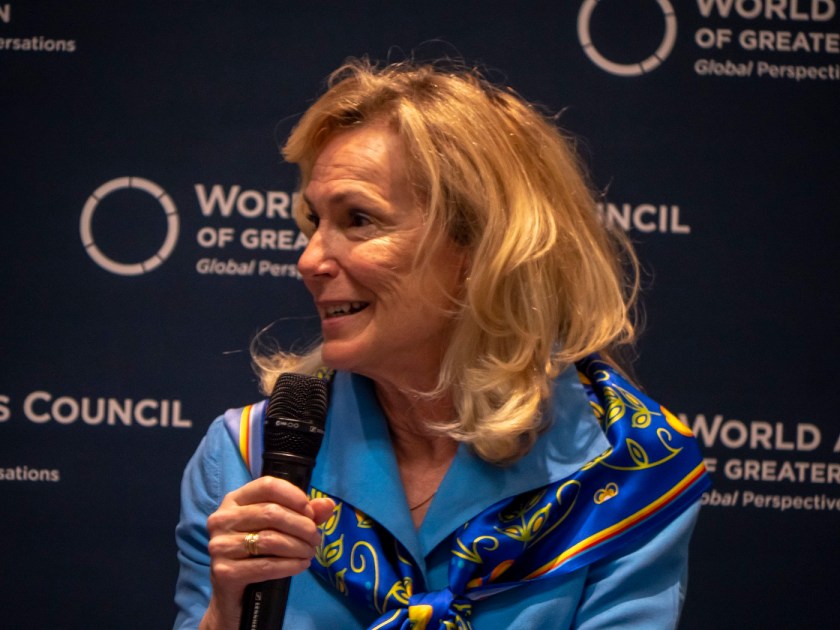
Dr. Birx—who, in addition to her work on COVID-19, also served as the White House’s global AIDS coordinator for both Presidents Obama and Trump—emphasized the importance of data-driven decision making. Such analysis, she argued, should allow agencies to work together rather than devolving into political squabbles. And by “talking with one another” and working together, “we can save lives and make the world healthier.”
“It was an enlightening panel.” noted Yawn. “The panelists’ message of collaborative service translates very well to education, and I think it resonated deeply with our multi-disciplinary group.”
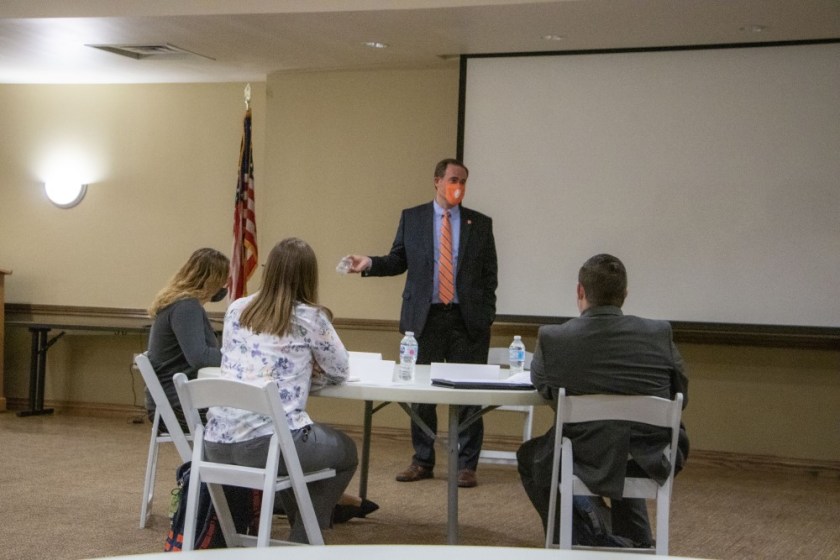
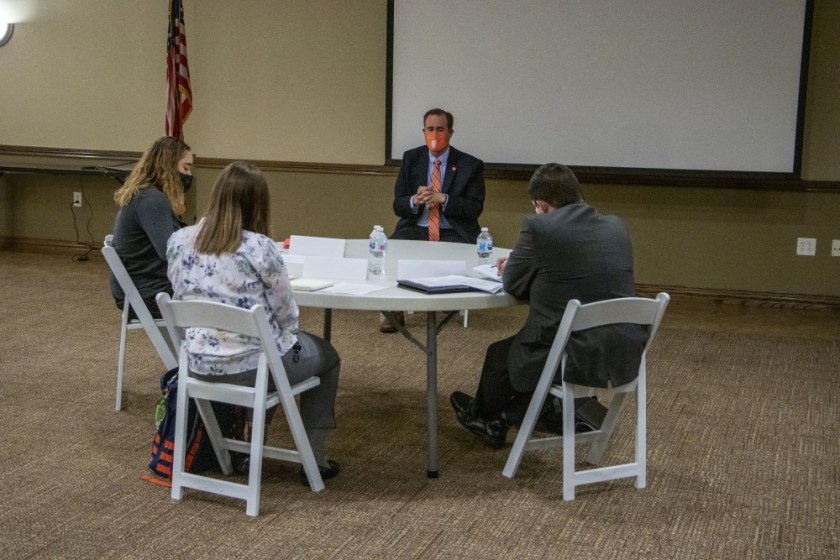
In our sixth and final meeting in September for LEAP LEADs, we had the privilege of learning from SHSU Vice-Provost Chris Maynard and legendary Washington Post reporter (and author) Bob Woodward. The night was as entertaining as it was educational.
Dr. Chris Maynard serves as Vice Provost, a position that is a mystery to most students. He attended our LEAP LEADs meeting to help de-mystify that position and to provide larger lessons about the University structure.
Dr. Maynard drew on a wealth of experience: he has been a Dean, Chair, (University of North Alabama) and a Professor (University of North Alabama and Dakota State University). The conversation with Dr. Maynard was as broad as his education and experience.
He provided advice to students considering law or graduate school (“Have a game plan–make sure you pursuing goals and that those degrees fit in with those goals”) and on being successful in our chosen fields (“find successful people in our area, and learn as much as possible from them”–good advice for people doing just that in LEAP LEADs!).
He also discussed the disruption caused by COVID, from everything to changing the way we market and offer classes, to dealing with media concerns, to providing students the “University” experience. He was adamant that, despite the vexations caused by COVID, the University degree and experience is valuable and worthwhile–something with which we all agree.
We also had a chance to ask Dr. Maynard about his area of expertise: political history. And while he did discuss history (see below), he also discussed the future and the challenge we face in cybersecurity. During the Cold War, there were two super powers and their allies coalesced against each other, but there was a type of stability. Now, “a person with the right skill set and a laptop can hack into a government’s system and wreak havoc.”
Of course, we also asked many questions about the end of the Cold War and the careers of Ronald Reagan, George H. W. Bush, and James Baker. He described the different styles of Reagan and Bush, while also discussing the unique talents of James Baker, about whom we also had the pleasure of watching a Texas Tribune Festival presentation (featuring Mark Updegrove, Susan Glasser, and Peter Baker).
The discussion of these men and their accomplishments set the stage, bathed in high-contrast light, for our final event of the evening: hearing Bob Woodward discuss his new book, “Rage,” on the Trump Administration.
We enjoyed our dinner from Carbonero as we watched Woodward discuss the Trump Administration and the conclusions he drew from 17 separate interviews with President Trump–both before and after the COVID-19 outbreak.
Woodward’s report, which sometimes contained various expletives (all while quoting Trump administration officials), portrayed Trump as a contradictory figure. At times the President acknowledged the danger posed by COVID; other times, he seemed indifferent or dismissive of the threats it presented. And even as these important discussions were taking place, Trump, according to Woodward, would be fixated on things like photos he took with world leaders. It was an unsettling discussion, one made more unsettling by the news that broke shortly thereafter about the President contracting COVID.
We’ve learned quite a lot this fall, but one thing has been made most clear: all these discussions–whether on local government, University administration, national politics, or COVID–are all related.































 Center for Law, Engagement, and Politics