For our last Pre-Law Society meeting, all the members engaged in a cross and direct examination exercise! Following our previous meeting with an attorney, Mr. Chris Thompson, who spoke on tips and tricks to successfully cross-examine a witness in the courtroom, we dove into an immersive experience to apply what we learned from him.
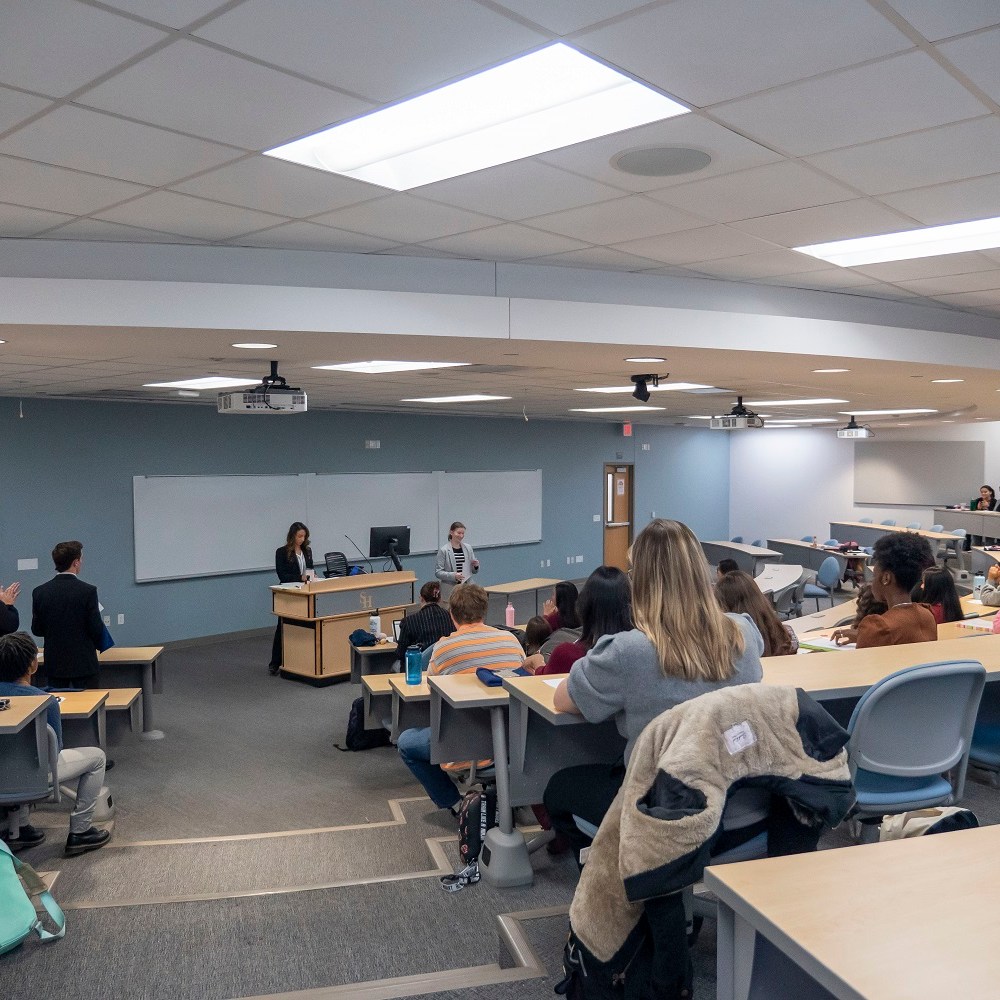
As an interactive exercise, all members were given roles and could ask unique questions to either reinforce the case’s witness or discredit them. To start us off a model group came up to present how the exercise should be done with the roles being played by Yvette Mendoza (police officer), Ashley Kinyon (prosecutor’s witness), Anthony Roughton (prosecutor), and Jocelyn Vazquez (defense attorney).
They each presented a crime scene from the famous movie Taxi Driver. In this case, a man is being convicted of second-degree murder but was pleading for self-defense. This was presented in great detail through excellent opening statements that Jocelyn and Anthony gave. The cross and direct examination the model group gave was a great way to see how to either discredit the witness or make your witness look good!
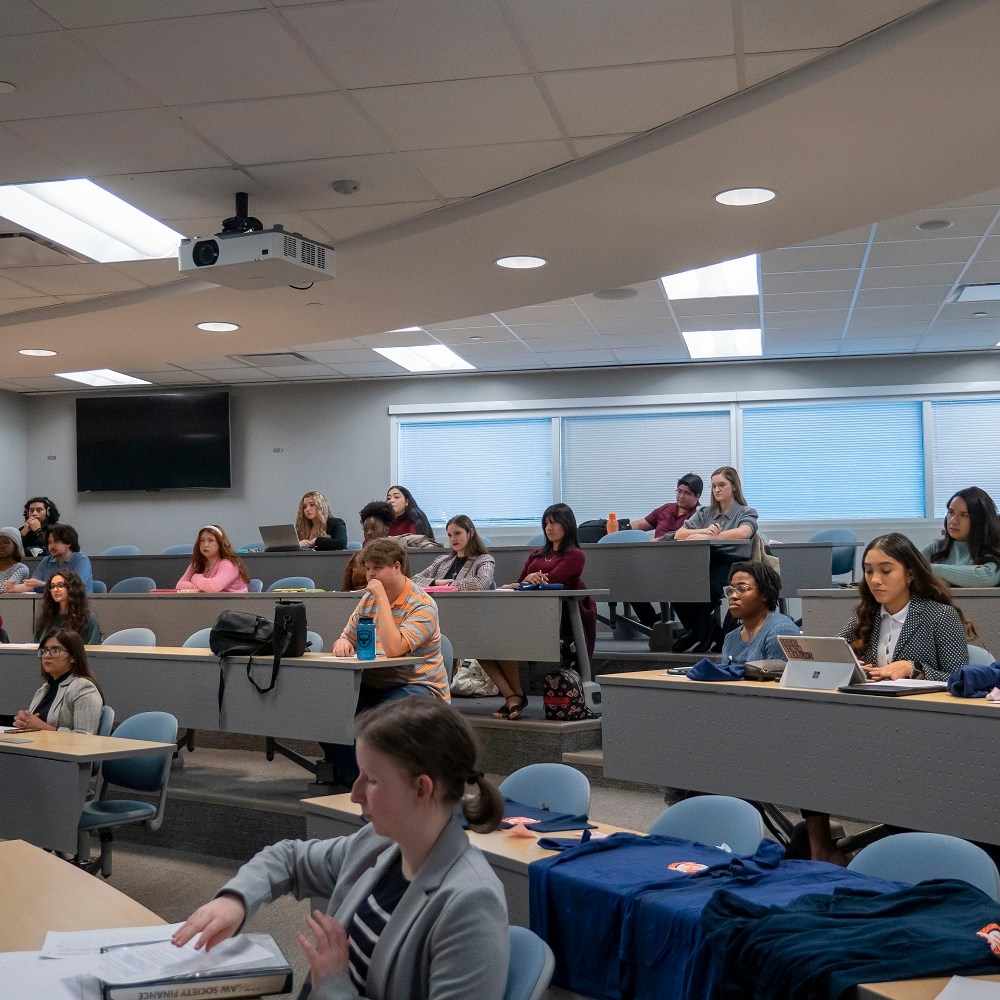
Turning it over to the members, they each got into their groups with the crime scene they had to examine from the movie Dirty Harry. The members were heavily dedicated to their roles! The officers gathered the witness statement from the witnesses, and the attorneys went to watch the crime scene, which was considered “camera footage,” and used the witness statements to articulate their direct and cross-examination questions.
This experience allowed us, as future attorneys, a piece of the pie of what life could be like as an attorney. There was so much excitement and curiosity about this exercise. It was a great way to learn how a trial may work when the attorneys need to examine the witnesses, and we all hope to do it again soon, possibly in a mock trial!
As we close the fall 2022 semester, we would like to congratulate any seniors graduating this semester and wish them a safe journey. We will see the rest of you next semester, and happy holidays!
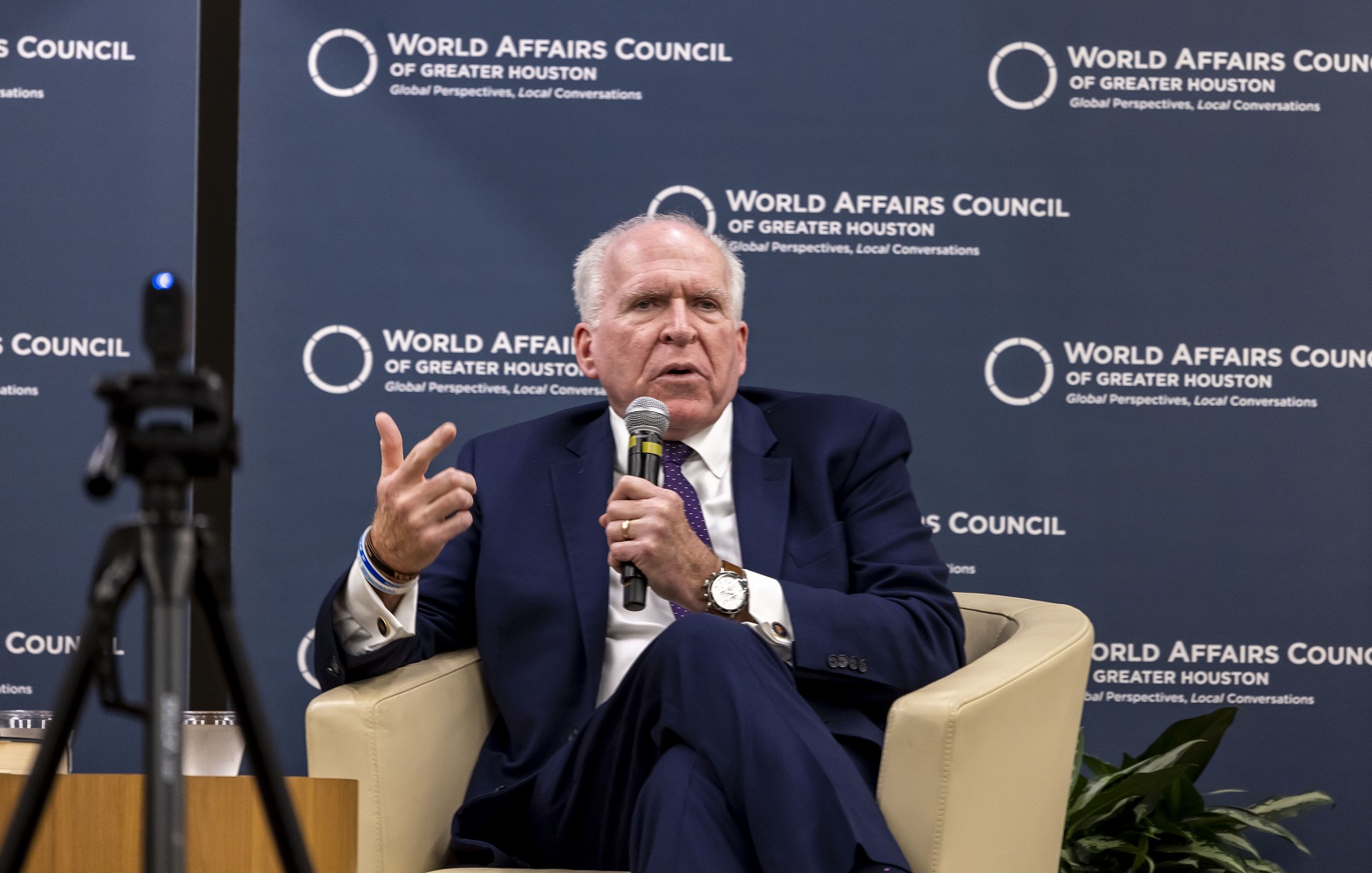
Approximately once a month, LEAP takes a group of students to Houston to attend a World Affairs Council event. For the month of November, this event happened to be a discussion about U.S. Intelligence and National Security with the Fifth Central Intelligence Agency (CIA) Director John Brennan, and Stephen B. Slick, the Director of the Intelligence Studies Project at UT Austin and former CIA Agent. Introducing them was Ambassador David Satterfield, making the group on hand about as knowledgeable on foreign policy as any three people could be.
This combination proved to be as interesting as it sounds, and made even a bit more interesting with the inclusion of several freshmen LEAP participants, including Adisen Massie, Michelle Cardenas, and Andrew Jeon!
Former CIA Director John Brennan with Andrew Jeon, Jessica Cuevas, Adisen Massie, and Michelle Cardenas
Many children grow up wanting to be a federal agent of some sort, and the CIA certainly has an allure. This was the case for former Director Brennan, who applied to the CIA, and when told he would be given an interview, immediately told all of his family about the exciting turn of events! Of course, you can’t be a clandestine agent if everyone knows you are interviewing for the CIA, so he had to turn around and tell everyone that the interview hadn’t worked out. As it turned out, however, the interview went well, and Brennan embarked on an illustrious career.
Serving from 1980-2005, Brennan specialized in Middle Eastern Affairs and counterterrorism and would eventually create a National Counterterrorism Center. Due to his specialization, he had the unique opportunity to serve as an intelligence briefer to Presidents Clinton and Bush (43).
While moderator Steven Slick advertised Brennan’s book, Undaunted: My Fight Against America’s Enemies, at Home and Abroad, he also noted that a title such as “Reform” would have been apt. Not only did Brennan reform the agency, but he helped establish our nation’s policy and response to terrorism, disasters, and cyberattacks.
Brennan was a fitting director for the agency, believing that they should primarily focus on intelligence and not lethal action. He also occasionally angered members of Congress, because he did not seek their recommendations for the types of reforms needed. If he had, he said, he would still be waiting on decisions and consensus.
At almost every opportunity, Brennan spoke of what he and other agents and government figures did as “public service.” And he encouraged the young people in the audience–mostly us–to see public service as valuable and obligatory.
As we’ve come to expect, it was another top-notch speaker and experience put on by the World Affairs Council. Many thanks for the wonderful service provided by WAC.
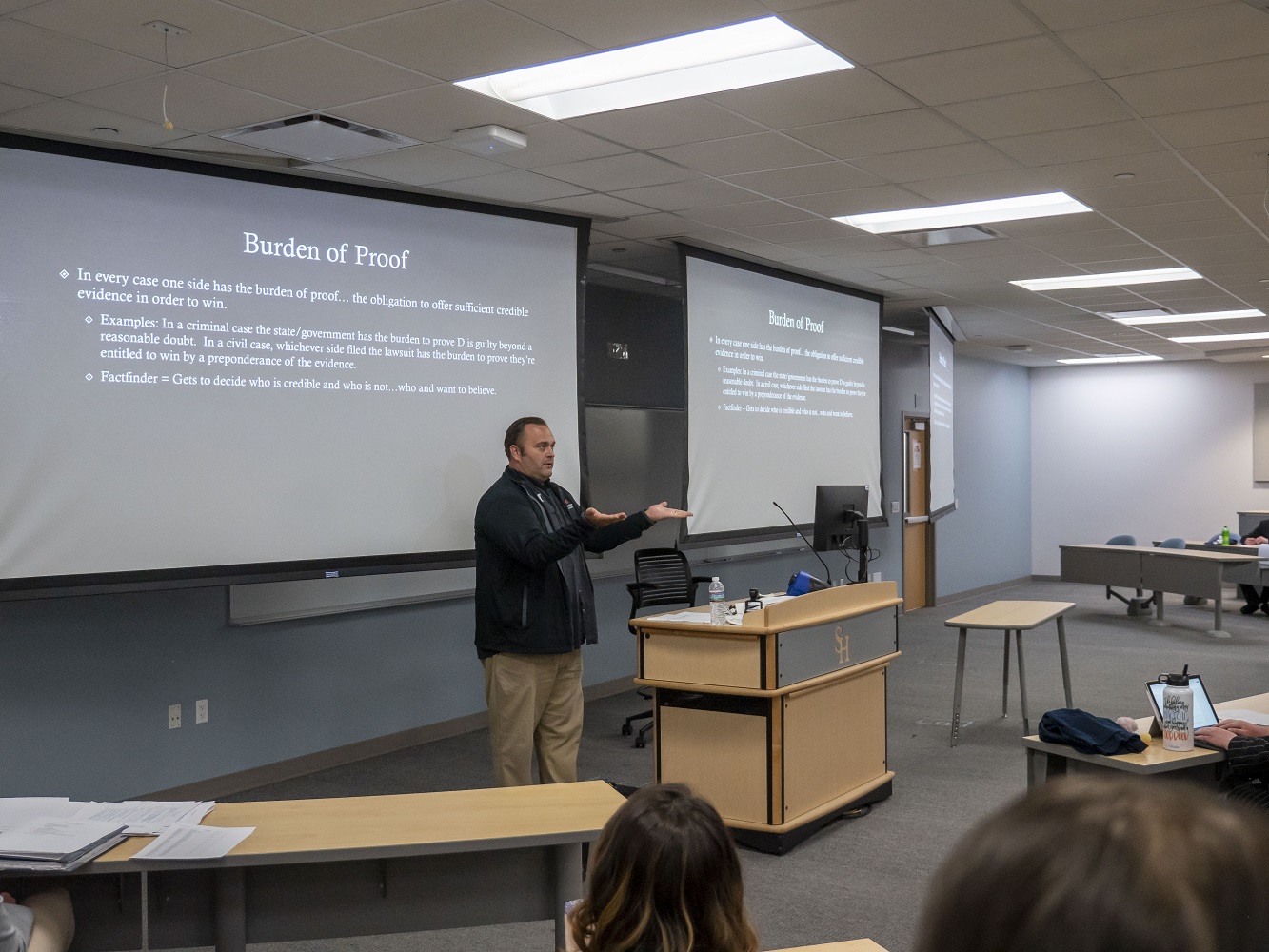
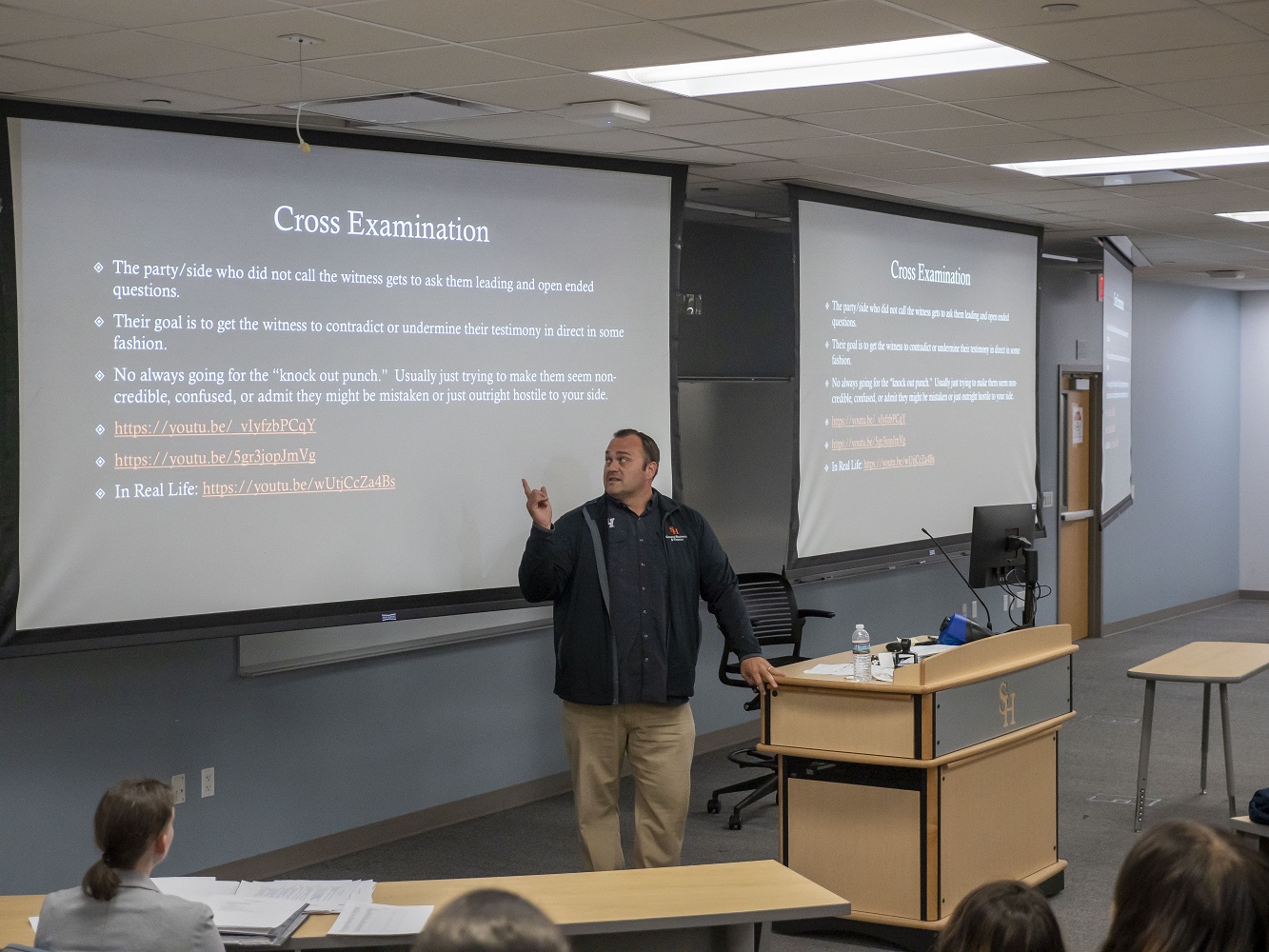
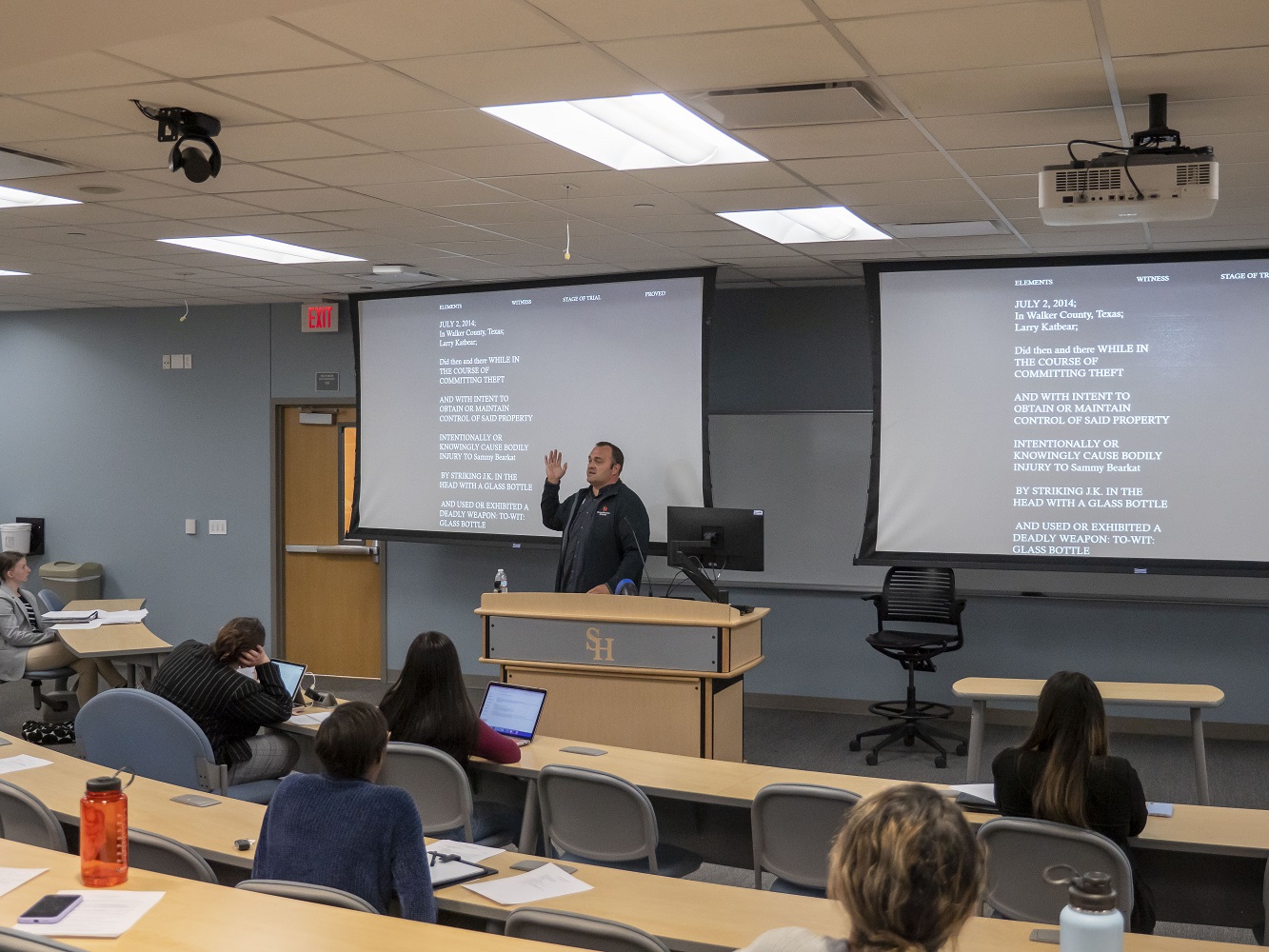
Continuing our journey of understanding the legal system, specifically the courts, the SHSU Pre-Law Society had the opportunity to hear from a former civil trial prosecutor, Mr. Chris Thompson! He received his law degree from St. Mary’s School of Law and has worked in the legal field in Walker County for 16 years. He is a practicing attorney who works on real estate issues, appeals, and personal injury. Mr. Thompson is also a professor at Sam Houston State University, where he teaches business law. With all the knowledge and background Mr. Thompson has, we were excited to hear his advice and tips on cross and direct-examination skills!
Direct and cross examinations are essential parts of our adversarial trial system, and Professor did a great job highlighting the two approaches.
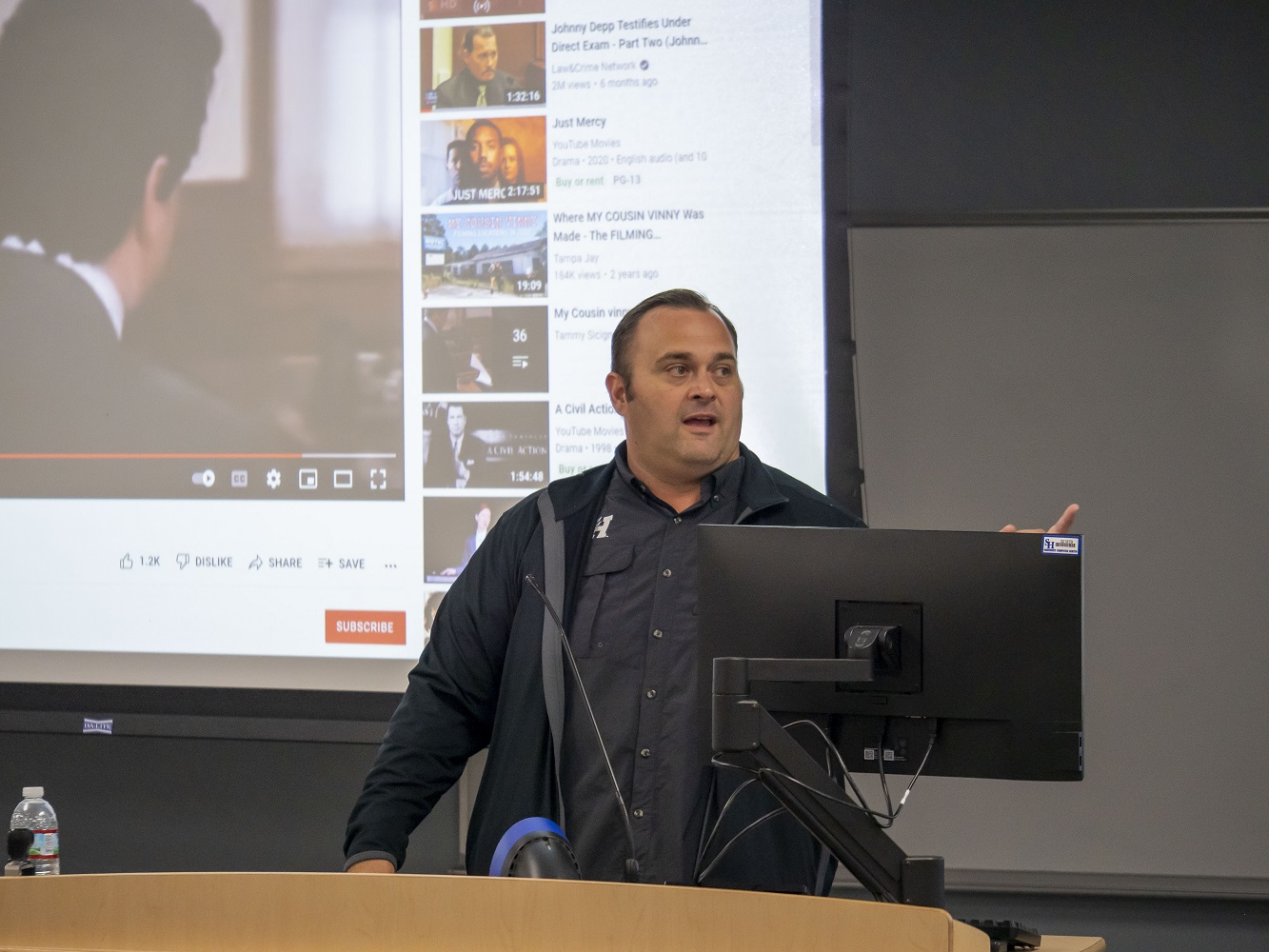
Mr. Thompson provided various examples of actual trials, such as the recent case of Johnny Depp v. Amber Heard. He highlighted the practice, noting that when doing cross, you force the witness into providing short responses, answering the specific question. Heard, for example, often wanted to provide context or additional information, which the Depp team successfully curtailed. It’s not that Heard can’t provide that information, but it’s her attorney’s job to re-direct and get that information in, if it, in fact, helps Heard’s side.
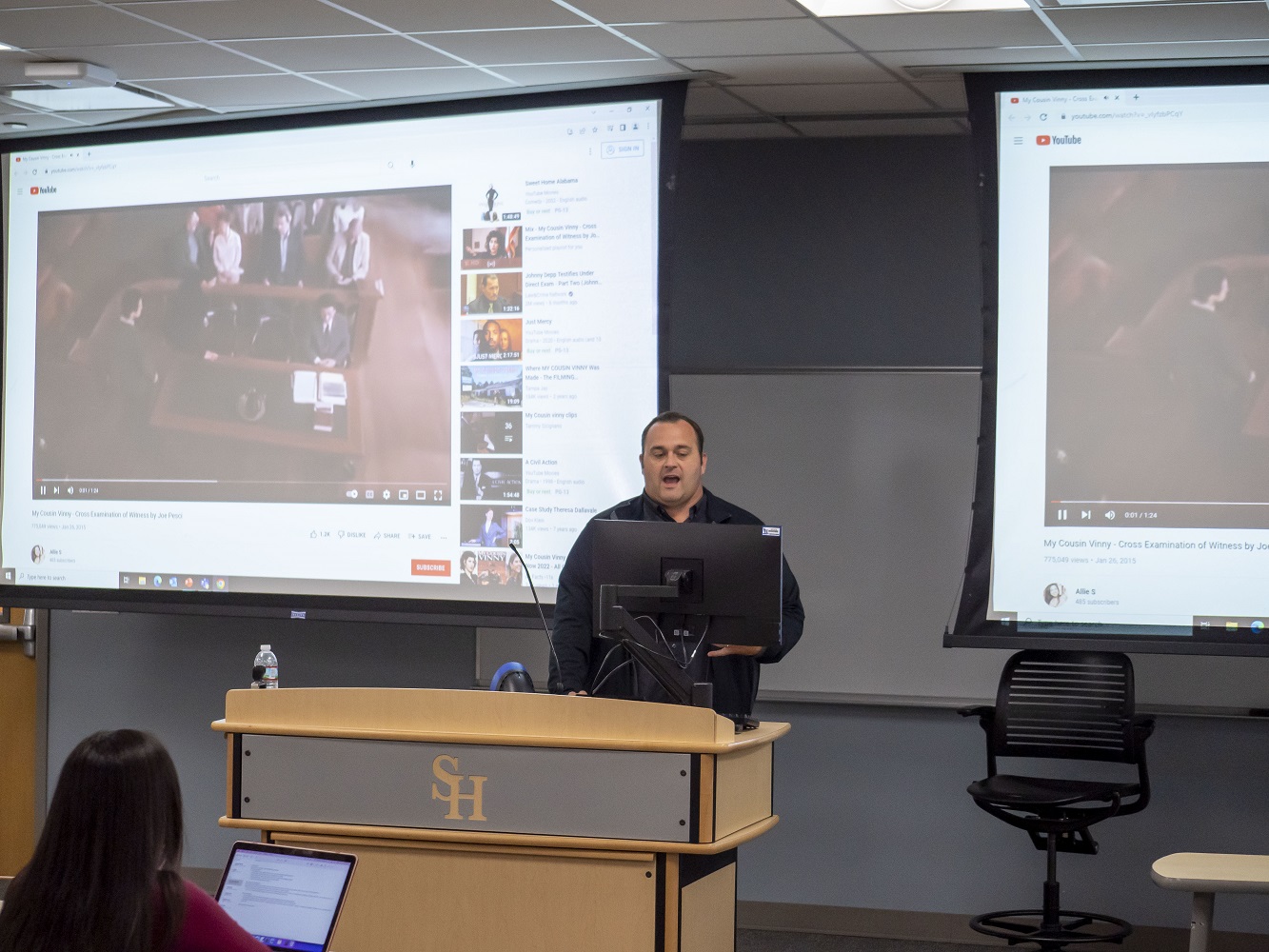
The other example was from a famous movie that most say has the best cross-examination scene, “My Cousin Vinny.” Mr. Thompson emphasized that the film perfectly expressed the importance of looking at the small details of the big picture. Every detail is essential to a case. When making a case, we need to build up the suspense, just like in a thriller movie or the “ah ha” moment.
Finally, Mr. Thompson pointed out the complexities of examining a witness. For example, when asking questions, you must know when the right moment is to stop asking further questions. This is key to leaving the jury to sway more to your side. All of these tips gave us a better understanding of what cross-examination is and how it can better prepare us for our cross-examination exercise for our next pre-law society meeting.
We want to thank Mr. Chris Thompson for taking the time out of his evening to speak with us and share his journey to becoming a lawyer and tips for cross/direct examination. His advice will help us with future endeavors and cases we may have as attorneys ourselves. Also, we would like to thank the people who attended this past meeting. See you at our next meeting on November 16th!
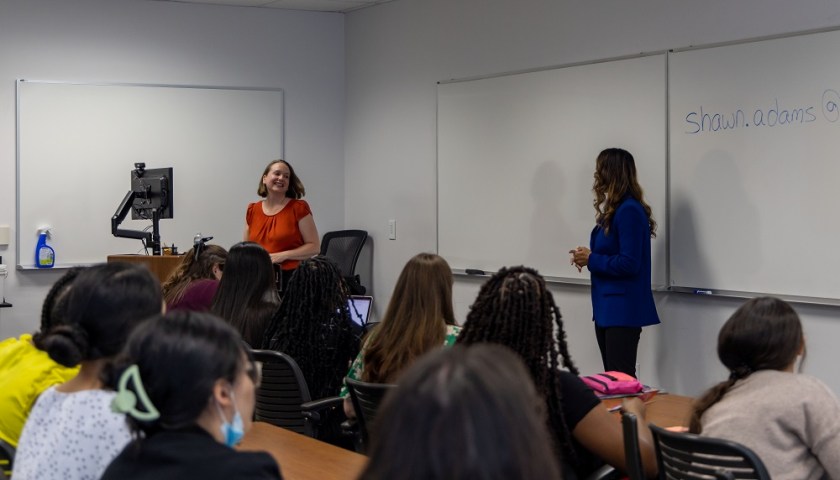
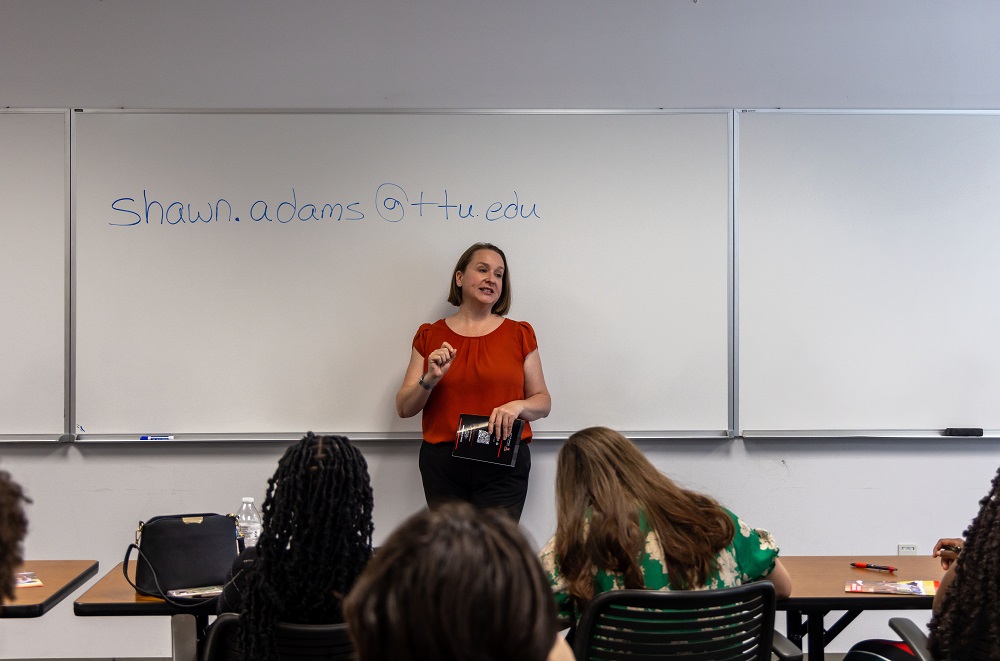
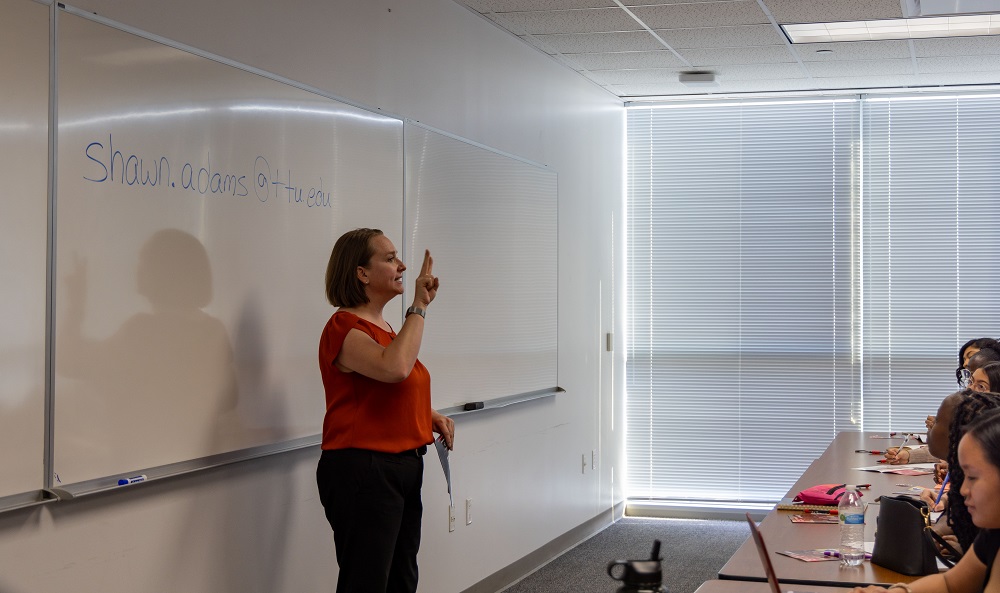
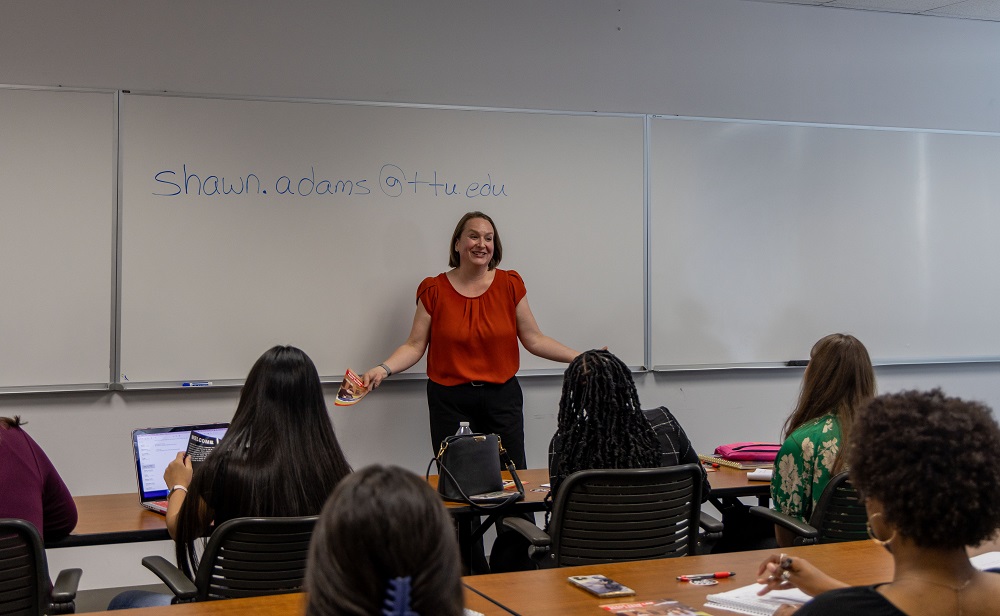
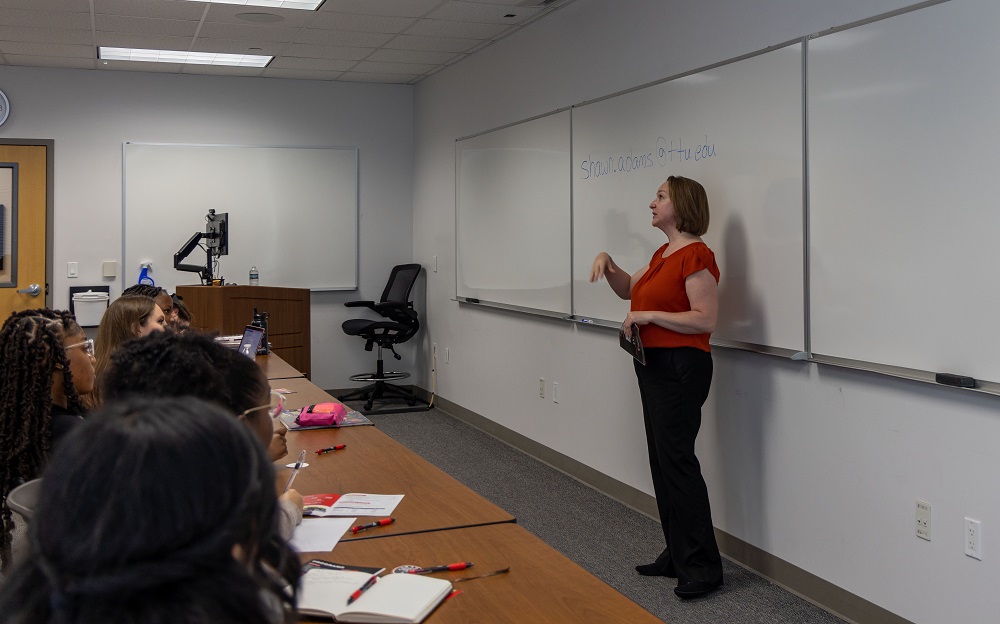
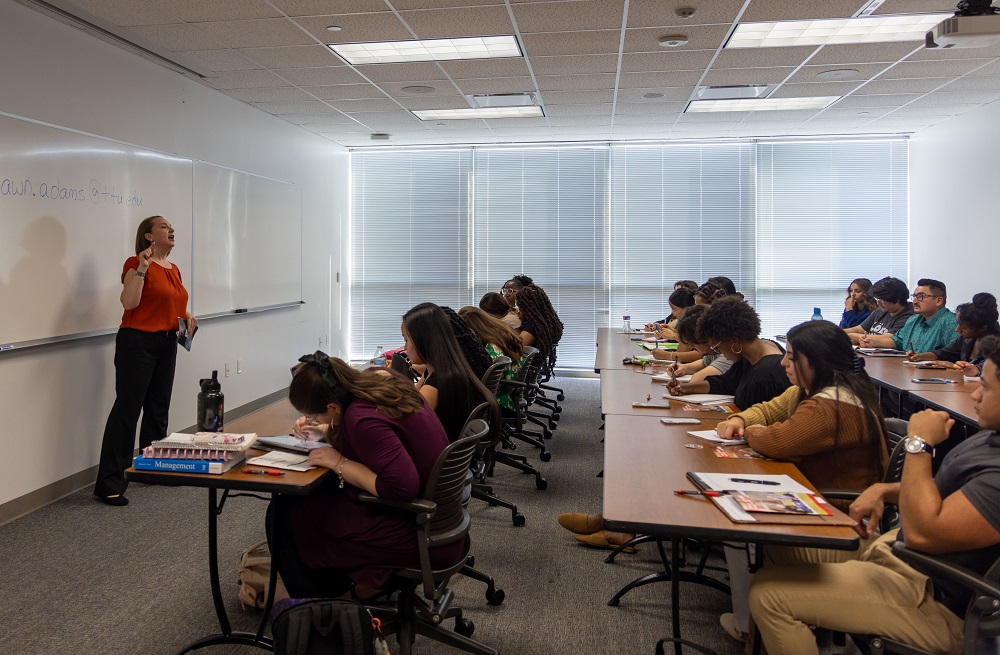
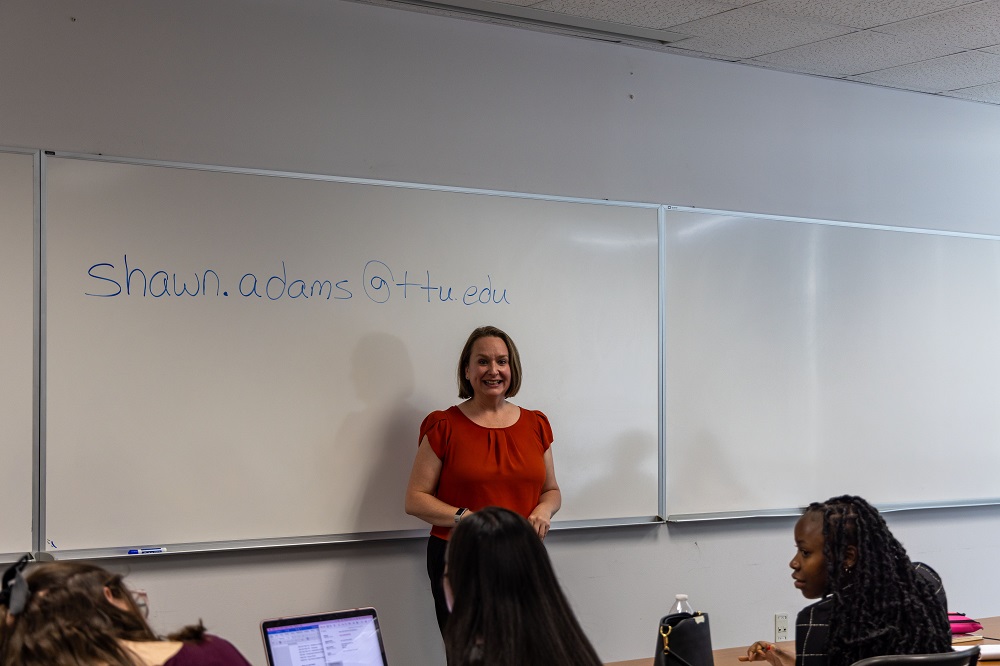
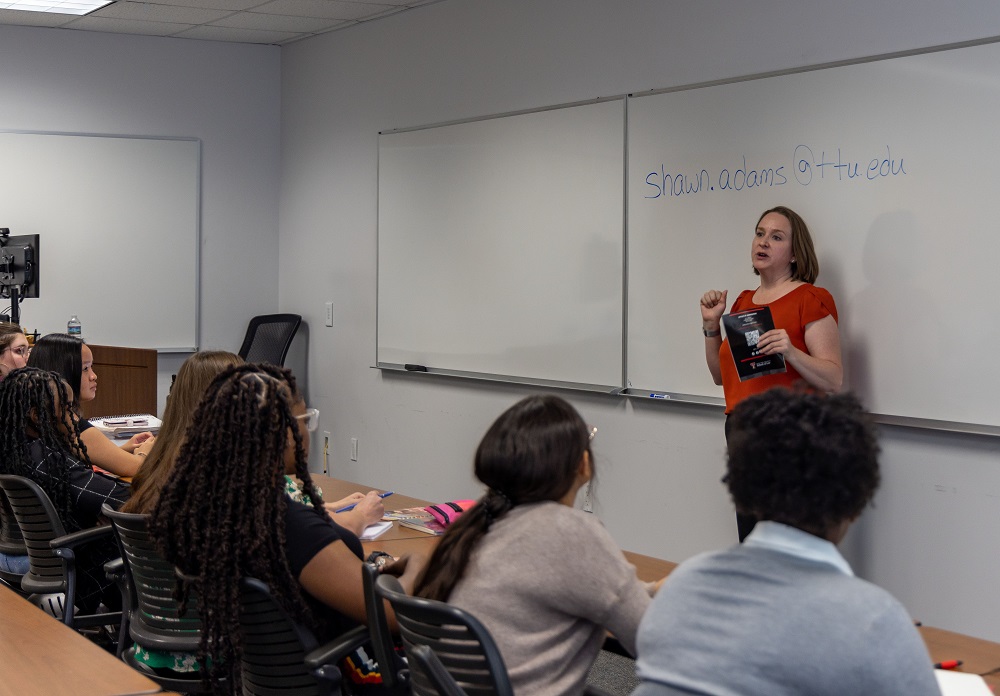
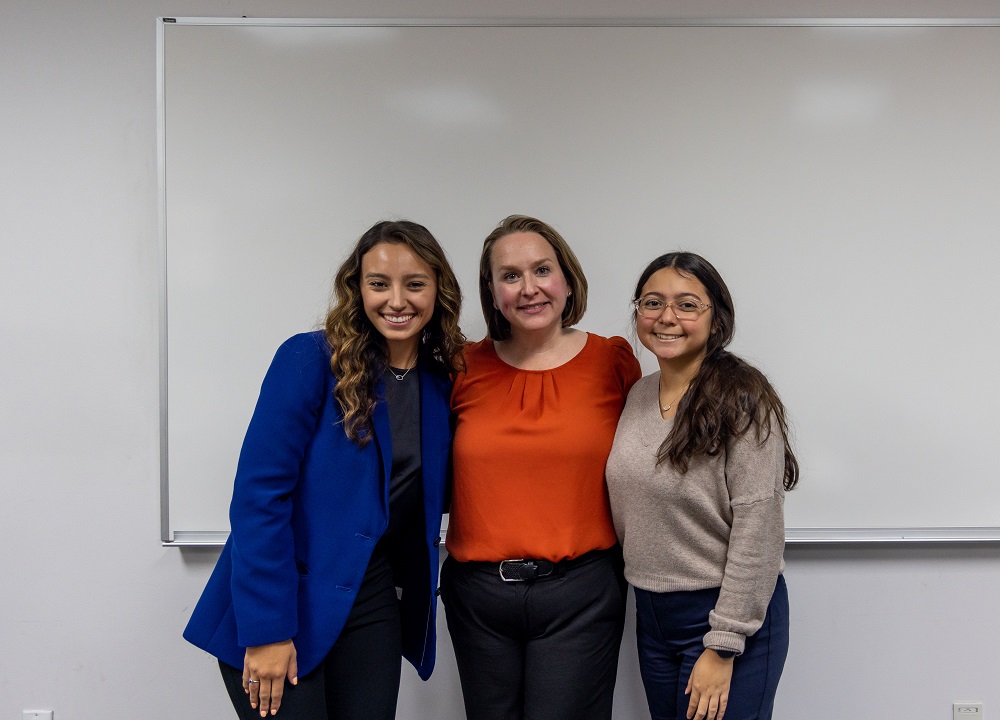
This past week at the Pre-Law Society meeting, we welcomed Ms. Shawn Adams, the director for recruitment at Texas Tech School of Law.
Ms. Adams graduated from Texas Tech with a Master’s in Business Administration and a JD! We learned a lot from her educational background and experience as a practicing attorney.
On this evening, her goal was not only to recruit students to Texas Tech School of Law, but also to give us loads of advice regarding the law school application process and what to look for in law schools. She started by looking for three main things when choosing a law school.
Looking at what the cost of living will be at the school apart from tuition
Bar passage rate
Post-graduate employment rate
All three items can be located on the law school’s 509 reports!
Ms. Adams covered what is needed in a law school application: transcript, letter of recommendation, personal statement, LSAT score, and resume–and how those are weighted at Texas Tech.
We also learned more about what Texas Tech school of law offers and how beautiful and engaging their campus life is! In addition, they offer many great resources for students interested in criminal defense and even have a dual degree program.
As the meeting ended, Ms. Adams stressed that it is essential to go at our own pace, and it is okay if we do not make straight A’s in law school because of how rigorous it is. And she encouraged us, noting that if we continue to work hard and have our hearts in the studying, we can go far.
Many thanks to Ms. Shawn Adams for her continual support of the LEAP Center and Pre-Law Society at Sam Houston State University.
The LEAP Center typically invites Professor Val Ricks from the South Texas College of Law–Houston to campus in the spring, but we made it a fall event this year. And so it was that, last week, Professor Ricks spoke to 35 SHSU pre-law students who signed up for an educational event–without extra credit, a class assignment, or give-away prizes.
They came because they wanted to learn, and they were willing to do some dense reading beforehand. The reading involved a contract, and this was no accident. Professor Ricks is one of the leading experts in the country on contract law; in fact, some of our alumni who have gone on to law school have informed us that they were assigned his book in their classes!
Professor Ricks began the course by informing us of his goals for this and any class that he teaches: (1) Get the words of the law – law is words, (2) Set the words out in a workable way, (3) Practice applying them, and (4) Consider what is “right” – the law is a moral exercise.
He went about this through the Socratic method since everyone loves being called on and questioned until they cannot answer. At least, we will have to if we plan on practicing the law, especially, in the courtroom. Through his random number generator, he called on those people to answer his questions regarding the G.D. Holdings, INC v H.D.H. Land & Timber, L.P., 407 S.W.3d 856, 2013, after delivering the facts and procedures of this case.
Many of us believed we were prepared but we did not know what to expect, so were we really prepared for Professor Ricks to hit us with questions like, What is the legal issue being addressed? How did you draw this conclusion? What is the ruling of the Court? A few of us addressed this question with the trial court’s ruling which led Professor Ricks to ask us, Where did you read that? Why do you think that is the final ruling? In these instances he let us help each other out when the person he called on was stuck, which we later learned that in an actual law class he would have picked that individual’s brain until they provided the answer he was looking for.
We continued this process as we provided evidence that we thought best fit or would prove the three different clauses of Promissory Estoppel- the legal issue of the case – (a) a promise, (b)foreseeability of reliance by the promissor, and (c) substantial reliance by the promisee to his detriment. It was at this moment, that we felt the high pressure that lawyers feel in a courtroom the most. With us acting as lawyers and Professor Ricks as a judge, who questioned us to help fill in the gaps in the story and understand what we were thinking. This proved to be a lot harder than we thought since proving that a promise, the first part of Promissory Estoppel, had been made was difficult and some of us soon learned that in this context a promise was defined as a commitment.
Following the class, most of us were more certain than ever that we wanted to attend law school. This was a sentiment Professor Ricks encouraged, as we learned when he stayed after to encourage us, answer questions, and take photos.
Two years ago, the National Center for State Courts (NCSC) made a decision that they needed approach to diversifying courts across the country. They created a new position–Director of Racial Equity, Fairness, and Inclusion–and they hired Bell to “address racial equality in the justice system.” And, today, owing to a partnership between CRIJ’s Diversity, Equity, and Inclusion Office and the Correctional Management Institute of Texas (CMIT), Bell spoke to faculty, staff and students at SHSU.
Introduced by Nu Epps, CJ’s Director of Diversity, Equity, and Inclusion…
…Bell got to the point quickly, discussing a “Blueprint” for a new justice system. This change begins with awareness, requires institutional (and institutionalized) change, is expanded by new processes, and is nourished by recruiting justice-system actors from a cross-section of the United States.
These changes can range from being aware of our biases, includes modifications of how we treat people in the justice system, and extends to the manner in which we target opportunities. One of these opportunities, which will be unveiled fully within the year, is C.O.R.A, which involves targeting minority-serving institutions for internships, clerkships, and positions within the criminal justice system.
Bell is well positioned to assess many of these changes. With a Bachelors Degree in Criminal Justice, a Master’s in Business Administration, a Certificate in Judicial Administration from Michigan State University, and a graduate of the NCSC Court Management Fellows program. He has also worked in the court system for more than a decade, serving as judicial administrator, clerk, and as a planner for the Criminal Justice Coordinating Council of Georgia.
Bell’s experience, wisdom, and inspirational message influenced at least one student in the audience. Kiara Williams, a senior Criminal Justice major at SHSU, noted that it was “an uplifting talk, and it opened me up to some opportunities I had not considered.”
Following the event, Bell spent time speaking with audience members, encouraging students (including Williams), and discussing potential future partnerships–before being whisked away to his next opportunity to spread a message of fairness and awareness.
After a long drive Wednesday evening to Louisiana, we were up and early to attend our first Academic Conference – The Popular Culture Association in the South! The three presenters for the Film and Noir session were Professor Yawn, Matthew Wysocki of Flagler College, and Lauren Mitchell of Vanderbilt.
Professor Yawn presented over “A Simple Plan,” directed by Sam Raini, (most famously known for the Evil Dead movies).
He argued that the film is best understood by looking at it from a tragic framework, with questions of free will and fate, the allure of the American dream at its center, and the tension between brothers.
The motif of “brotherhood” is seen again in “Only God forgives,” which Matthew Wysocki addressed in his presentation. More elaborately, though, it addresses the role of mother. Crystal, an untraditional mother if ever there was one, uses manipulation and raw power to gain even more power, abandoning all of what would normally be regarded as traditional maternal behavior.
Lauren Mitchell presented her paper over the movie “Hereditary. ” This film continues the theme of motherhood, highlighting the difficult time we have of seeing mothers as real people, who sometimes becomes mothers despite not wanting children, who sacrifice goals and hopes and dreams for others.
We successfully survived, and even enjoyed our first academic conference, and embarked on our way to our next stop!
Brunch at Elizabeth’s
Ashley Kinyon
This afternoon, we drove down to Elizabeth’s Restaurant right next to the Mississippi River. We started with an assortment of appetizers; boudin balls, fried green tomatoes, (some with seafood!), and possibly the strangest of the bunch, praline bacon. While we waited for the starters, we learned that many foods that we love in the US originated in New Orleans, either by invention or through trade. This includes pralines, which originated in France, but which was improved on in New Orleans, and then spread mostly through the South.
My favorite of the selection was the boudin balls, Morgan favored the fried green tomatoes, and for Yvette it was the praline bacon.
To maximize on adventure and try new (to us) flavors, we ordered four main dishes. For our main course, Morgan and Victoria ordered the shrimp and grits; the ratio of shrimp and grits was perfect.
Jessica played it safe with the avocado toast, with a poached egg. Although to her credit, the toast did have some NOLA spice to it, and she paired it with a side of grits.
Yvette chose the duck waffles, which she enjoyed but deemed too spicy, a recurring motif throughout the trip (and from what I gathered, throughout her life).
I picked the sweet meal out of the bunch and had banana foster French toast, which was delicious!
For dessert, we had bread pudding and pecan pie. The bread pudding was average, not the table’s favorite, but the pecan pie was amazing, better than any I’ve had in Texas.
Thoroughly stuffed and with high expectations for our next NOLA meal, we embarked on our adventure!
Homer Plessy
With a bit of downtime, we hustled over to a City Park, one highlighting civil rights. It was the site of Homer Plessy’s train ride, where he spurred a test case on Jim Crow laws.
Unfortunately, Plessy lost in 1896, and the doctrine of “Separate but Equal” became shameful precedent in the US, not replaced until 1954’s Brown v. Board of Education.
While at the Plessy site, we also looked over the rest of the park, taking in some of NOLA’s civil rights heroes.
Zooming through NOLA
Yvette Mendoza
We have concluded over three separate LEAP trips that there is no better way to learn more about a new city than by Segway, and we did just that in NOLA! Our excellent tour guide, John, with Nation Tours did a great job explaining the richness of history, architecture, and culture in New Orleans. So as the LEAP Ambassadors took their Segways through the French Quarter to the Mississippi River, we all gained a deeper understanding of NOLA.
John frequently time-traveled and described what the city was like in days past. Some of the tour was a refresher on previous history lessons, while other parts were new information. We learned that NOLA went through 4 major governing shifts. The city was initially founded by the French, taken over by the Spanish, fell again under French rule, and then finally doubled the size of the U.S. in 1803 with the Louisiana Purchase.
Next, we headed to Jackson Square. This central location is deemed such because of the “Hero of New Orleans,” Andrew Jackson, and his unexpected victory as General at the Battle of New Orleans in early 1815. This was a major win for the United States because it spared the US the prospect of the British having control over the mouth of the Mississippi.
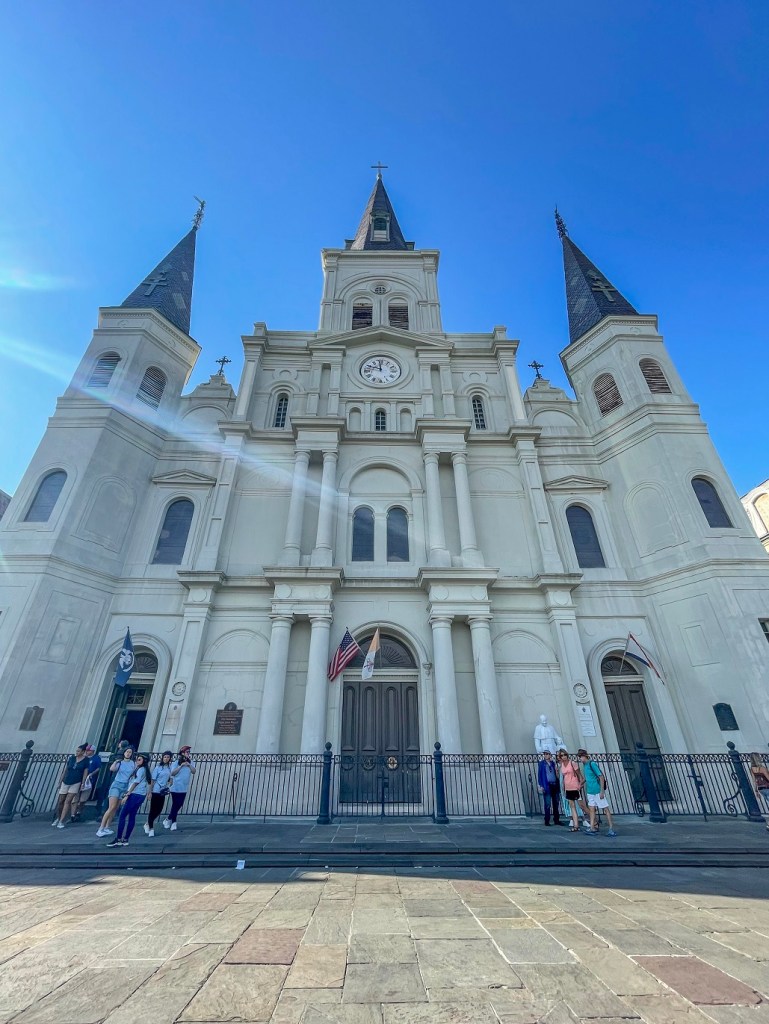
Perhaps the prime feature of Jackson Square must be the stunning, almost 300-year-old, St. Louis Cathedral. This Cathedral is one of the oldest in the country and was founded during Spanish occupation!
Our jaws dropped when we discovered we were stepping in front of the oldest Cathedral. We could not miss a photo opportunity!
Up next, Bourbon Street! Here we learned more about the Spanish stock architecture and the fantastic bars that perform the best jazz in New Orleans. this blend of modern-day culture, with historic surroundings is the city’s largest source of revenue Pre-covid, NOLA saw millions of tourists each year, and now those numbers are significantly lower. In fact, without tourists, there is genuinely no thriving NOLA since no revenue is being made.
No matter your age, interests, taste, there is something to be found by everyone in NOLA!
New Orleans felt like its own country. The way the people, location, and everything else are something we are not used to. We are so grateful we were able to learn so much on the Segway Tour guided by John; thank you so much!
Dinner at Oceana
Morgan Robertson
To conclude our evening, we stopped at the corner of Conti and Bourbon for yet another taste of NOLA. Oceana is popular for having a wide variety of NOLA standards, such as oysters, po’boys, and étouffée to name just a few.
To start, we stuck with our trend of an assortment of appetizers including, gator tail bites, boudin balls, fresh, Rockefeller oysters, and chargrilled oysters. For Ashley and me, this was our first time to try oysters and we had slightly different reactions. Ashley tried the Rockefeller oysters and determined they were not her favorite. I tried all three and enjoyed the Rockefeller the most! Everyone enjoyed the boudin balls, and we all agreed that alligator tastes a lot like chicken.
For our main meals, we once again mimicked family style, and tried many new flavors. Victoria and I split a blackened redfish, with a side of greens, Yvette and Jessica ventured out with the taste of New Orleans (creole jambalaya, crawfish étouffée, red beans and rice with smoked sausage), Ashley had the fried shrimp platter, and Professor Yawn and Stephanie split the Bayou Duck.
Verdicts were split on what the best entrée was, but at least three out of seven favored the blackened redfish. The flavors were once again unique but fantastic, a trip to NOLA could be made simply for the food.
Despite having little room for dessert (except for Stephanie because she effectively planned) we selected three options carrot cake, la boehme crème brule, and of course, bread pudding. The bread pudding was easily the favorite, but everyone enjoyed the sweet treats to end our wonderful meal!
Bourbon Street
We might have seen Bourbon St. during the day, but it was almost a completely new place after dark. Our steps fell in time to the bass of the music around us, and it almost felt like a runway with the flashing lights. If it is true that anyone can find something on Bourbon St, it’s even more true at night. Being only a Thursday night, however, we might gone at a slightly better time as it was not insanely busy.
Not wanting to linger on Bourbon Street and needing some sleep, we headed back to our hotels, to get rest for another day of learning and fun tomorrow.
Although this was our last day, it was also one we were most anticipating, full of big hitters and topics of particular interest to us.
The Supremes, by Jessica Cuevas
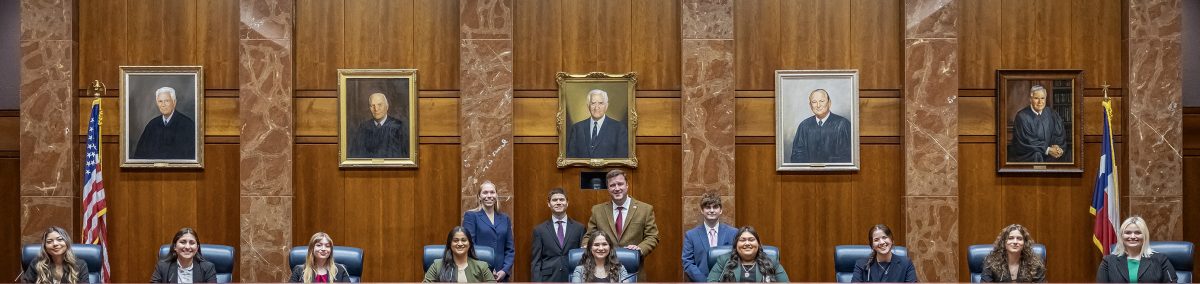
It is not every day that the opportunity to see one-third of the Texas Supreme Court , including the Chief Justice, presents itself. The LEAP Ambassadors were ecstatic to see and hear from the longest serving member of this court, who has been elected seven times, the 27th Chief Justice: Chief Justice Nathan Hecht. We also had a chance to see Justice Brett Busby, who was appointed in February of 2019, and Justice Rebeca Huddle who was appointed in October of 2020.
I had previously taken Dr. John Domino’s online Judicial Systems course, and hearing the Justices speak of their process for choosing a case and who gets to determine who writes the opinion, was an in-person version of his class! Out of all the hundreds of cases that get appealed and that they receive, they only listen and select about 10% of the cases for the docket.
These are usually cases the Justices believe to be important in determining the legal development in Texas. This process can be extensive since each justice reviews the cases on their own and only reconvenes to discuss which cases they would like to cover.
Typically when this occurs, they are unanimous in agreeing on which cases they would like to listen to and which ones they would rather not. For a case to not be heard or selected, two-thirds of the court need to agree that there is no important legal question being asked. If one of the justices disagrees with this decision and would like to advocate for this case, they can explain why it is important at their next meeting. If the case gets four votes then it is granted, hence “the rule of four.” For the most part, this court prides itself on its collegiality since they tend to be in consensus on many of the cases.
I learned that it is not unusual for a dissenting opinion to become the majority opinion after hearing different sides of the issues and finessing the legal ruling, which is an interesting process. Unlike the Supreme Court of the United States (SCOTUS), where the Chief Justice gets to choose someone from the majority opinion to write it, the Texas Supreme Court has the justices draw blue index cards that determine the cases they will write. They do this to prevent one justice from being extremely knowledgeable in one area of the law, and so that everyone has a basic understanding of every area.
Yvette even got the chance to ask the Justices what a typical day for them looks like.
Of course, the justices responded by saying that there is no “typical day,” but there are days that they dedicate specifically to just reading, writing, or having hearings. During hearings, the justices like to ask questions to the lawyers so that they can elaborate on the areas where they see gaps to better understand the case they are trying to make and know what direction they are focused on and why. They want to be persuaded. A member of the audience asked the justices for their thoughts on term limits, to which Chief Hecht responded with how he thought there should not be any for members of the judicial branch since it takes time to develop the experience to become a judge and a good one at that. Funny enough Justice Busby remarked that of course, Chief Justice Hecht would not want term limits, since he is the longest serving member of the court.
One-on-one with Ted Cruz
Morgan Robertson
Staying with TTF’s emphasis on fluidity across the political spectrum, our second session of the day was a one-on-one session with U.S. Senator Ted Cruz, moderated by Senior correspondent at the Washington Examiner, David Drucker.
We noticed that major speakers were typically hosted at the Paramount Theatre. I particularly enjoyed the wonderful venue and the art deco design, perhaps because I work for the Old Town Theatre in Huntsville.
Senator Cruz shared with the audience some of his family history, and more specifically, his father’s process through immigration, which he then compared to today’s immigration process. Senator Cruz gave a vivid description of what the border and the Rio Grande look like today.
Drucker then prompted the topic of his presidential run. Senator Cruz said he looks back on his campaign fondly and enjoyed running for President. Although in 2016 he was not the main target of political attention, Senator Cruz was engaged and deliberate with his campaign.
His comments, and at times his mere presence, seemed to irritate the crowd, many of whom came to simply heckle him. To his credit, Senator Cruz said a few times that he will be more than happy to sit-down and have a conversation with everyone. However, he indicated he would not engage in yelling back and forth across the auditorium is not a conversation. Senator Cruz said in an ideal world, both parties could sit at a table together and strive to find a solution.
When it was time for questions from the audience, the first one was about gun control, and this set the tone for the remainder of the program. The audience strongly disagreed with Cruz, and they let their feelings be known.
Beto is Back
Yvette Mendoza
Beto is a favorite of the Texas Tribune, and we have seen him present at more than one, and each time he is a featured speaker and a crowd favorite. This time was no different, although the office for which he is running is different. Having run for the TX Senate, then for President, he is now running for Governor against Abbott. Beto went into great detail on his history, past experiences running for various elected positions, and what changes he would make if he became the next Governor of Texas.
Beto had an exciting track to becoming a politician from El Paso, Texas; as a dream to become a part of a band, he decided to attend Columbia University in New York. He soon realizes the hectic New York lifestyle was not for him and headed back to El Paso as a businessman. He became more interested in local politics, serving as a council member and being mayor pro tempore. He also was a US House member for six years, before embarking on his failed bids for Senator and President, respectively.
He believes in stricter gun laws, specifically moving the age from 18 to 21 to own an AR-15. Regarding our border crisis, Beto advocates that we need immigrants to work for us, which would ultimately benefit our economy in his eyes. Lastly, he touched on universal health care by opting in on Obamacare’s Medicare program.
We will (likely) know the outcome of Beto’s latest bid by the end of the night on November 8!
Public Health Sessions
Ashlyn Parker
I got to venture on my own a bit on this last day of the festival and go to some sessions that specifically piqued my interest. The most impactful event I went to was named “Reality Bites,” which featured a panel that discussed trust in science. The panel consisted of Andrew Dessler, Jehmu Greene, Jennifer Mercieca, and Allison Stewart and was narrated by John Schwartz.
Jennifer Mercieca spoke compellingly about how she and her dad would watch television news together when she was young. Today, however, with programming and advertising often working off algorithms, she and her dad watch very few of the same programs. The news today pushes for reactions, often by appealing to those who already agree with them.
The panel collectively agreed that Republican propaganda has been increasing for years, and its effects are now quite obvious. By 2020, when the pandemic hit, the George Floyd riots were pervasive, and the outcome of the 2020 election tilted Democratic, Republicans were left trusting few media figures and even fewer federal government officials–with the exception, of course, of President Trump.
Allison Stewart, a public health information analyst, discussed how the COVID-19 pandemic unfolded differently than previous health scares. In the past, the facts have largely spoken for themselves, and those facts would prompt people to get vaccinated or take precautions, but that didn’t happen in 2020–in fact, resistance to this has morphed into a full-blown anti-science agenda.
_____________________________________________
I missed the first LEAP event with Dr. Peter Hotez, Dean of the National School of Tropical Medicine at Baylor College of Medicine, but thankfully I was able to hear him speak on COVID-19 with Dr. Celine Gounder, who served on the Biden-Harris COVID-19 Advisory Board. The session was narrated by the CEO of the Texas Tribune, Evan Smith.
Peter Hotez, being an expert in vaccines, spoke highly of vaccine efforts, but he does not fully agree with mandatory vaccines. Dr. Grounder was also somewhat critical of the CDC for not communicating the airborne nature of the disease. She believed think the mask mandates helped save lives.
Overall, I had a chance to hear from inspiring figures in public health and communications, which appeals to me greatly as a Public Health major. Both of the sessions focused on miscommunication and disinformation in the media, and they both emphasized that the media–and their algorithms–are as much to blame as the people who refuse to see facts.
Liz Cheney
Morgan Robertson
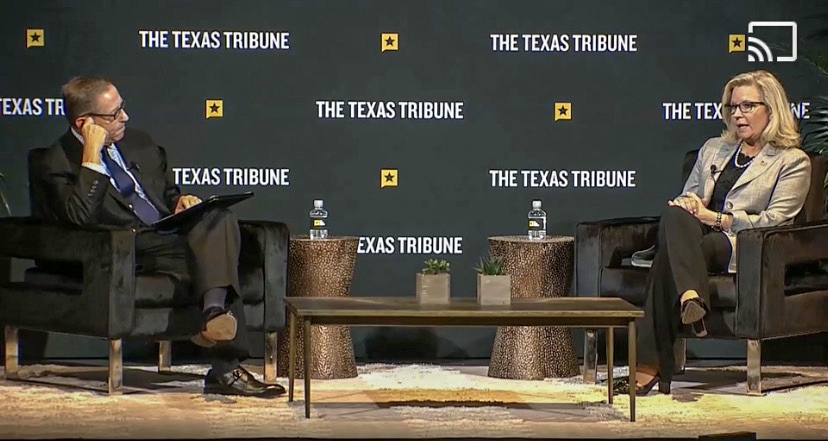
As a fantastic conclusion to the night, we once again took our seats in Paramount Theatre to hear from the closing speaker. Wyoming Representative, Liz Cheney, took the stage to a standing ovation.
Congresswoman Cheney has had an extensive career as an attorney and as an employee of the State Department. She has served as Wyoming’s lone congressperson since her win in 2019 and will remain in congress until January.
Although she is a Republican, she does not shy away from speaking out against certain members of the party, especially Former President Donald Trump. Congresswoman Cheney credits this as the reason for her loss during the Republican primaries.
Congresswoman Cheney is Vice Chair on the House Select Committee to investigate the Attack on the Capitol on Jan. 6. Most of the conversation centered around Evan Smith asking questions relating to the attack, and Congresswoman Cheney disclosing little. She did describe that the members on the committee decided to operate slightly differently than typical committee hearings. Instead of giving each member 5 minutes during a hearing, the committee has split the hearings up so that two or three members are given the time needed to examine evidence.
Smith then asked the Congresswoman a very straightforward question, that I’m sure many in the audience wanted to ask as well: “Will you run for President?” She avoided giving an answer, which in turn led to another question. Smith phrased the question in such a way that hinted to her recent loss of her seat, and how will she keep fighting. Congresswoman Cheney assured the crowd that even though she is no longer going to be a congresswoman, she is certainly not going anywhere and will continue to put her country first.
Indian Cuisine
Yvette Mendoza
To finish off a great day of new experiences, we were able to add to the list an Indian restaurant called Asiana Indian Cuisine.
With the entrees, our waiter highly recommended ‘the bullet,’ which was nan bread with jalapenos that may have been a little too spicy for us but still very tasty. Our favorite had to have been chicken 65, cubes marinated in spices. Having the assorted platter of samosa, spring rolls, reshmo kabobs, and keema samosa it was delicious.
Next up were entrees from the vegetable saag paneer, having a blend of cottage cheese and spinach, chicken tikka masala with a creamy tomato butter sauce, and the butter chicken!
Professor Yawn returned to an authentic traditional dish by getting the curry chicken.
Lastly, for dessert, we had carrot halwa, which was not a favorite, but we did enjoy the Zauq-E-Shah. This was a great way to top off our day!


















 Center for Law, Engagement, and Politics