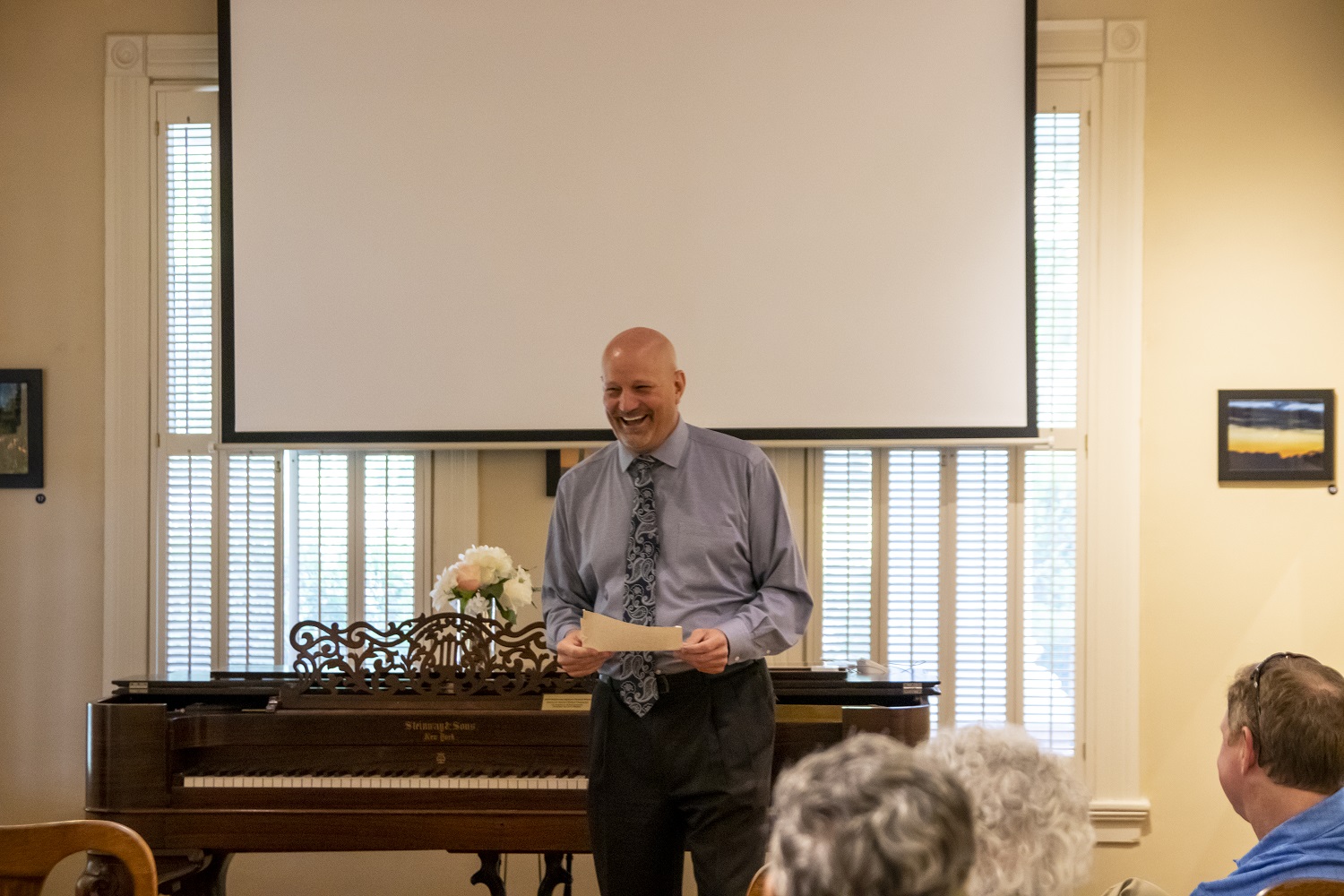
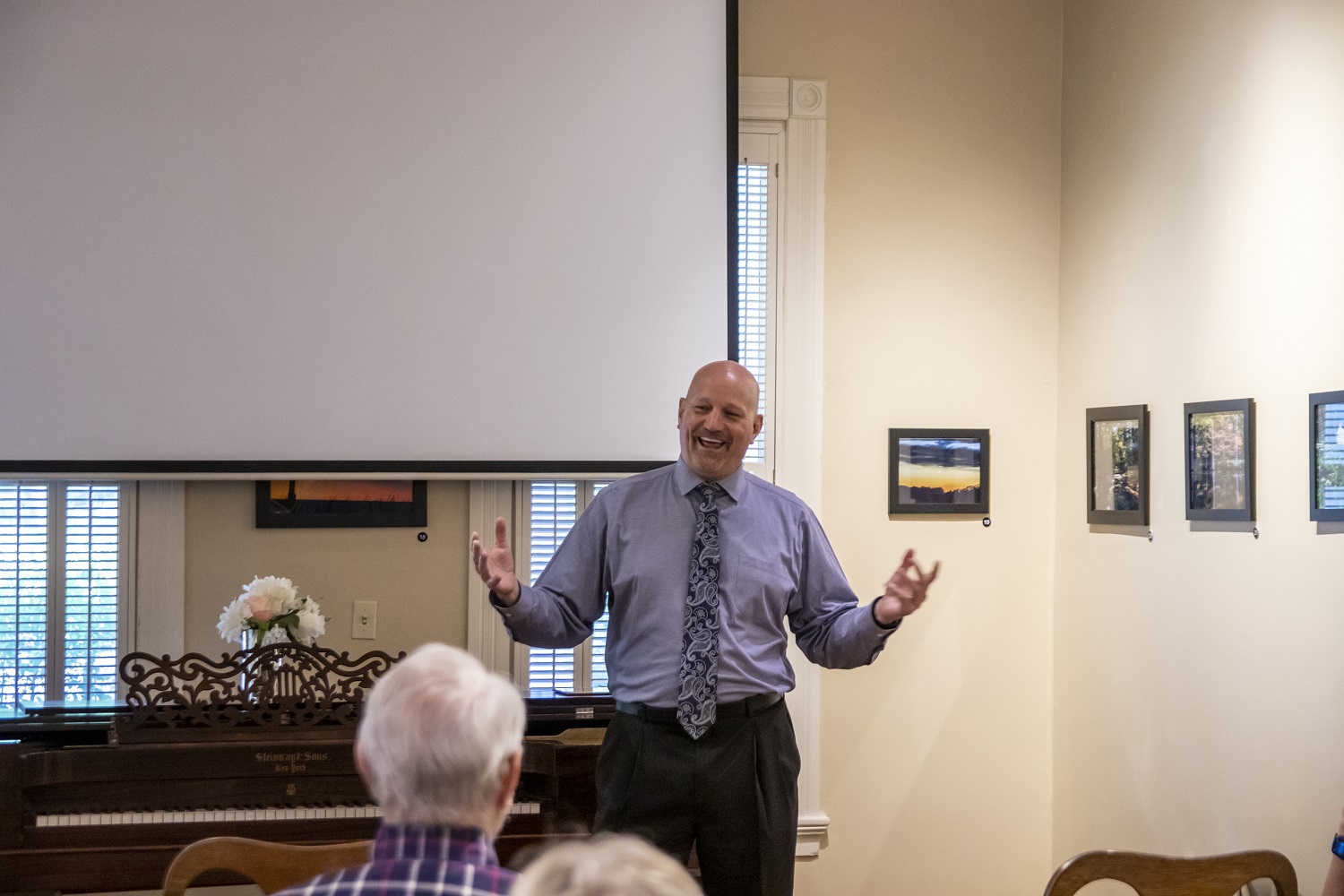
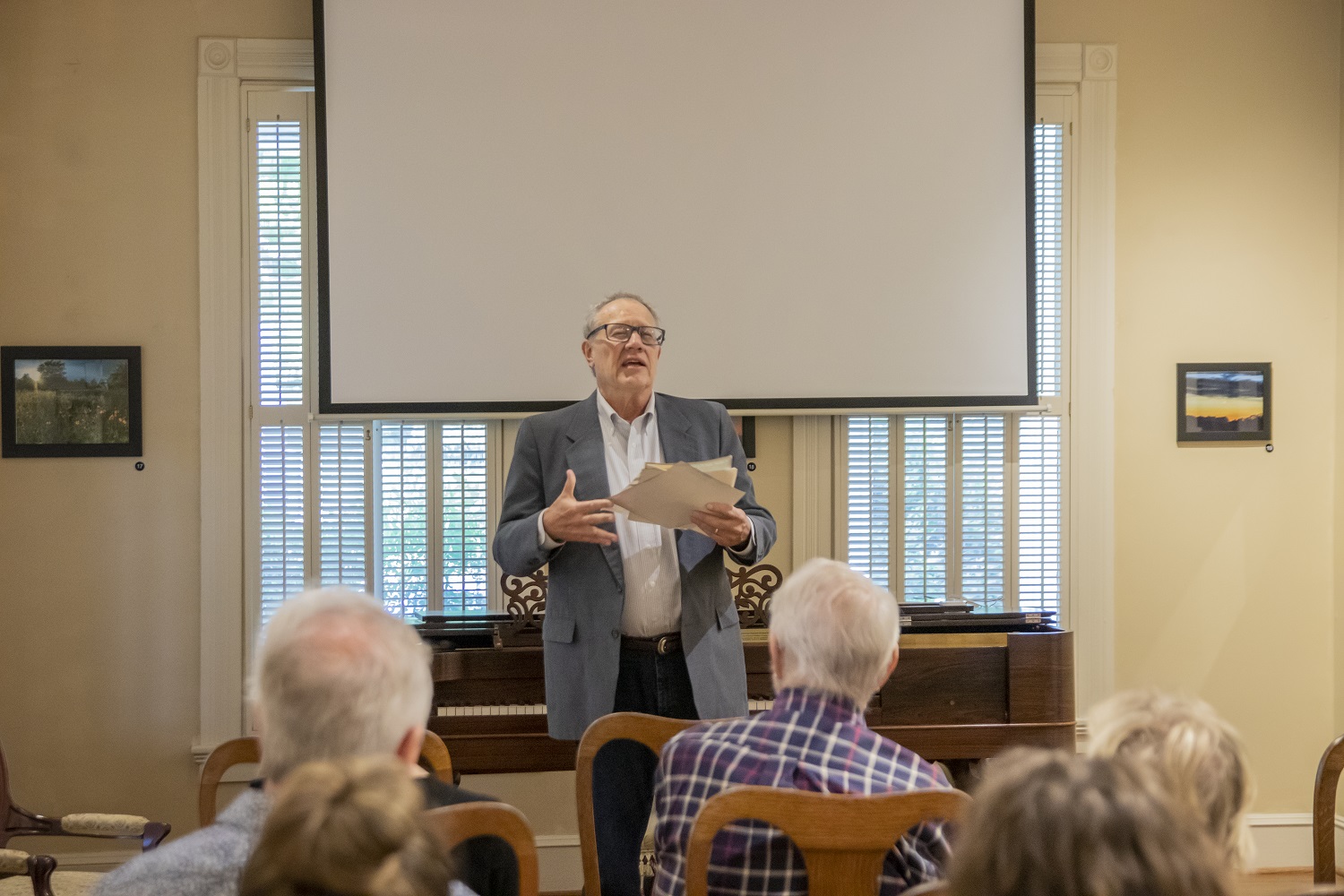
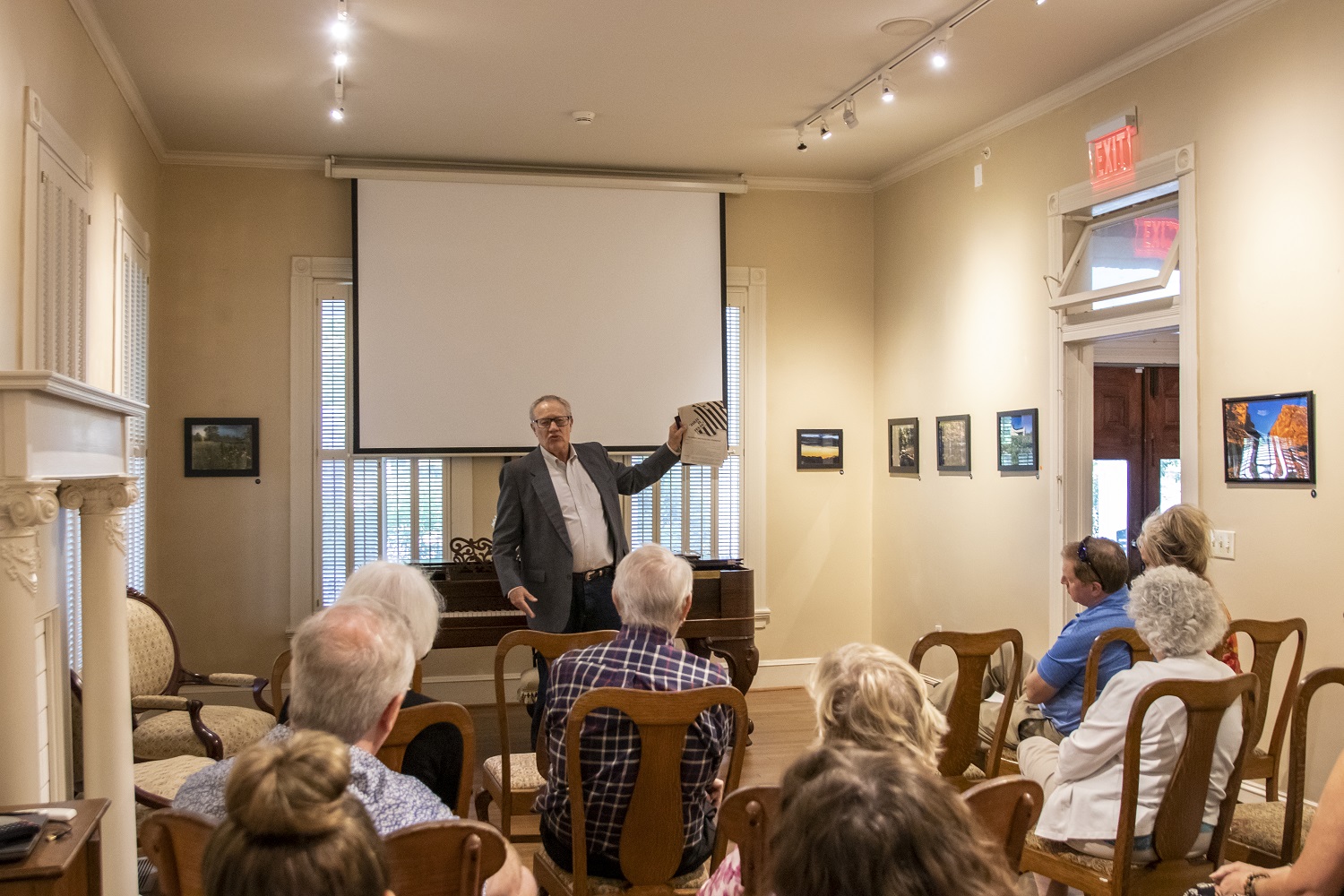
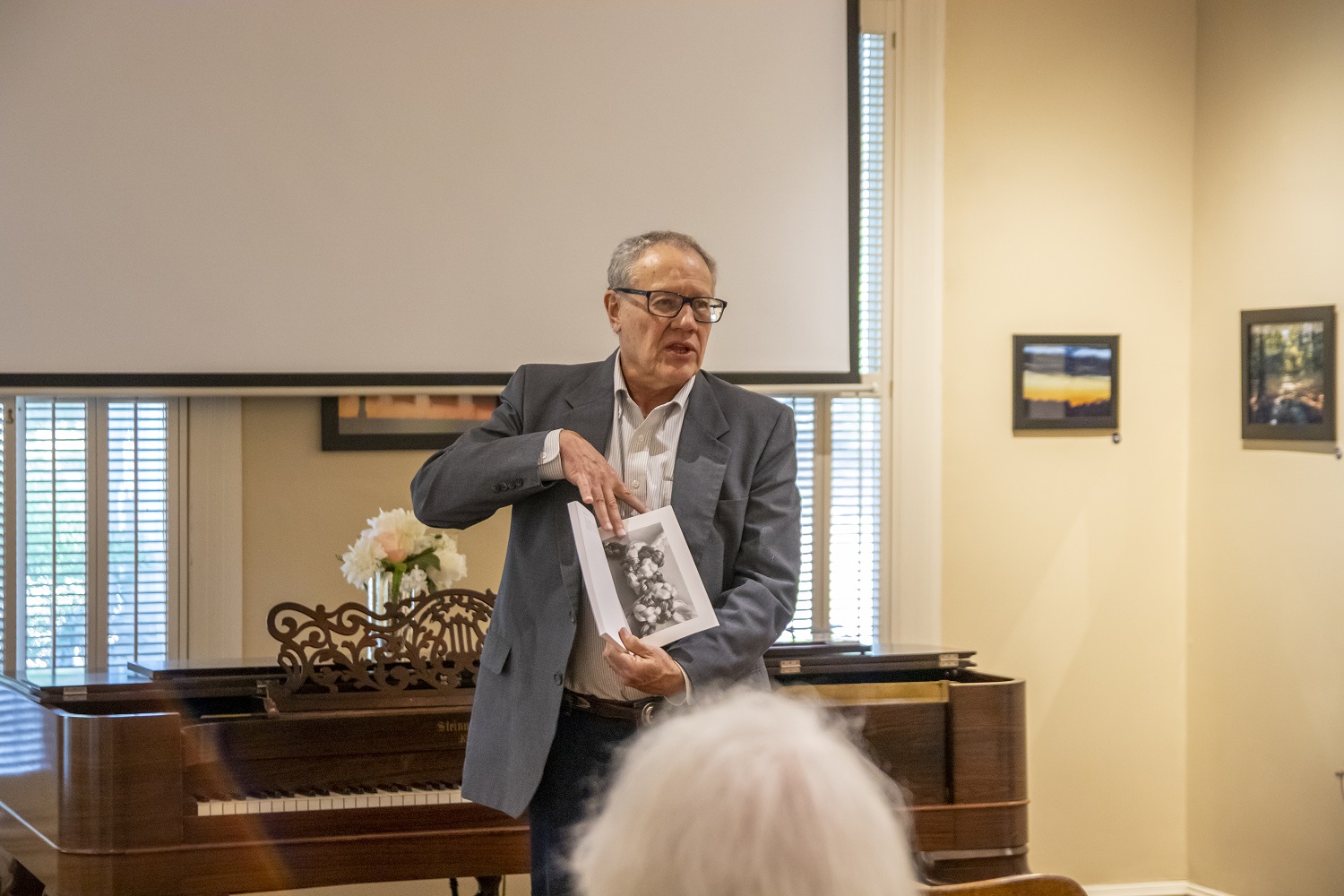
Unlike a typical Tuesday afternoon, the LEAP Ambassadors had the opportunity to attend a virtual event hosted by Sam Houston’s Student Legal Mediation Service (SLMS) Director, Dr. Gene Roberts, featuring Bradley (Brad) Ertl who would be discussing a recent multi-billion dollar ‘revenge porn’ case in Harris County. Brad Ertl is a Sam Houston Alum who, during his tenure at SHSU, received the student Sammy Award. He received his JD from South Texas College of Law and is currently an attorney at Gilde Law Firm, PLLC.
Ertl and his firm took the case of Mark West Jamall Jackson v Jane Doe not for the money but to send a message to the world that the sharing of invasive visual recordings or ‘revenge porn,’ as we colloquially know it as, is not okay. This is what they intended to do from the start, and they were successful in it despite the defendant never appearing in court or having had responded to being served.
In 2012, Mark West Jamall Jackson and Jane Doe met at the wedding of their best friends: he was his best friend’s best man and Jane was her best friend’s maid of honor. They became good friends and kept in contact after the wedding, but it was not until Jane’s father became terminally ill that she began to confide more in Mark and grew closer to him. This led to the start of their relationship in 2016. Soon after Mark was offered a job in Chicago and he asked Jane if she would move with him, which she happily agreed to since their relationship was going well.
The first couple of years were great until Mark lost his job in 2019 and became verbally abusive towards Jane who was currently excelling in her career as an educator. There was testimony to prove that he was a womanizer and could not have any woman be smarter or better than him. Even when things got pretty bad between the two, Jane went to see her mom and believed that she and Mark were going through a rough patch, just like everyone else in their life, she believed this was a ‘forever relationship.’ However, things only went downhill from here when Mark began to share and threaten Jane with nonconsensual sharing of a nonconsensual recording of intimate behavior between the two through all social media, internet websites, emails to her co-workers, etc. Ultimately, after telling their story the jury delivered their verdict within 30 minutes of delivering and favored Jane Doe by $1.2 billion. Although it may seem like a lot, this case was not about the money and no amount of money will ever repair the hardships and emotional toll that she had to endure during the past years.
After providing us with a couple of details of the case but was careful not to share too much, as this case is ongoing and the final judgment is still pending, Ertl broke down the case and explained the legal aspects of the case for the pre-law students: how to choose a jury, how to prepare for a case or determine causes of action, how to continue a case when the defendant evades being served, what the expectations were as he and his colleagues eagerly waited for the final judgment to be delivered by the judge, and how to deal with a case that is emotionally heavy.
To end the evening, Ertl was asked to give pre-law students some advice and he highlighted three things: (1) be present, (2) have and maintain good grades, and (3) go with your gut and tell your story. The latter of which really stood out to me because it was different from what we normally hear but it was a great piece of advice, nonetheless. Intuition is crucial in the legal field as you want to trust gut feelings when having to decide who you want to represent and the best way to defend them to create your reputation. However, at Gilde Law Firm, PLLC. they do focus groups to help guide them in what evidence present to a jury and how to present it as they prepare for a trial.
Thank you, Dr. Gene Roberts…
…for hosting Brad Ertl, and thank you Mr. Ertl for taking the time to discuss this case with Sam Houston State University students and faculty! If you are interested in reading more about the case search Ertl’s name and news articles will come up about this multi-billion-dollar case.
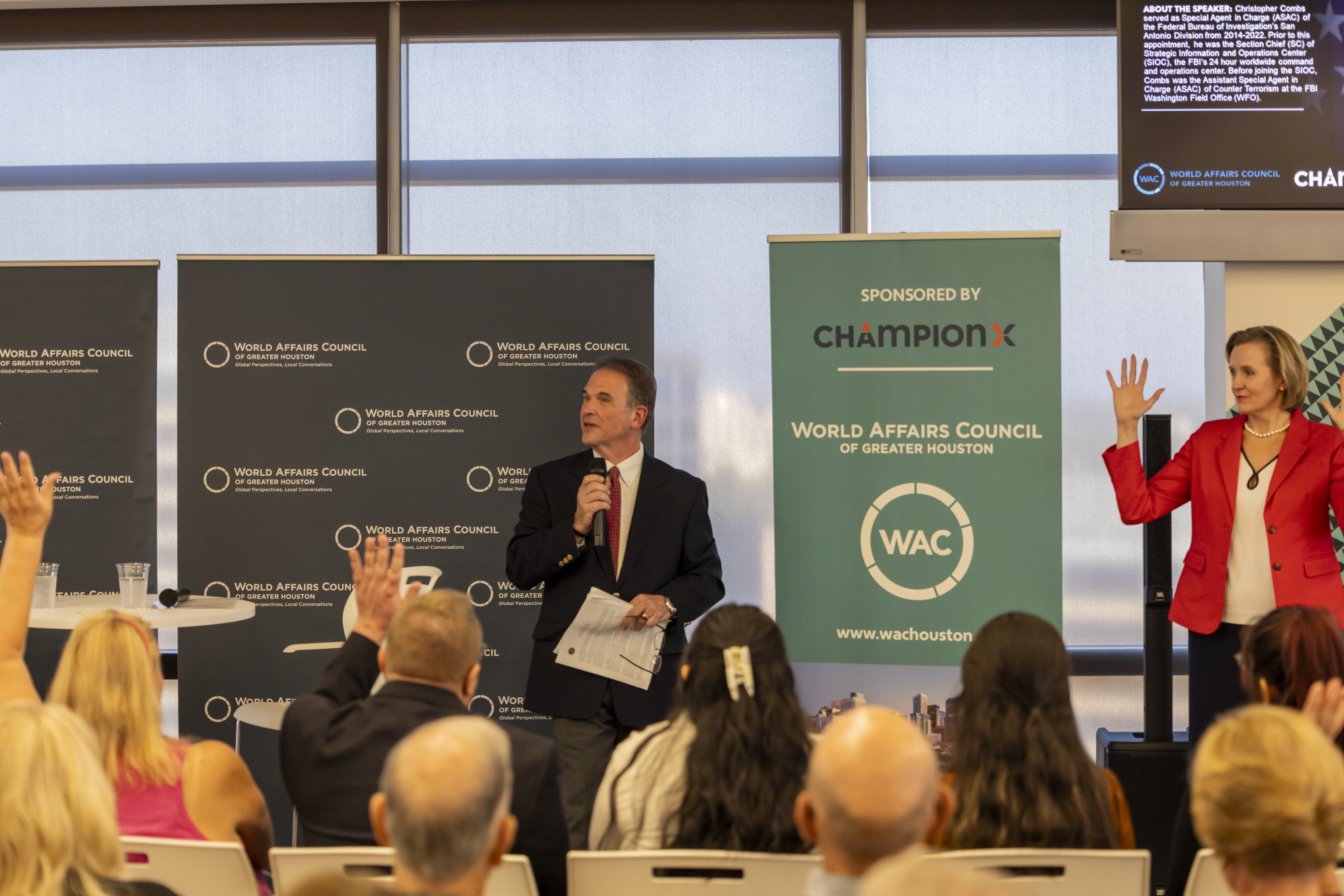
After a successful first week of classes, LEAP students headed to The Woodlands for their first World Affairs Council (WAC) meeting of the fall semester. Dr. Gene Roberts, Associate Dean and the Director of Student Legal & Mediation Services at SHSU, graciously joined our coalition of students in this endeavor. The featured guest speaker of the evening, FBI Special Agent Christopher Combs, possesses great insight into the last 20 years of United States affairs. Having served as a Special Agent In Charge of the San Antonio Division, Combs has a particular knowledge of matters concerning border control and domestic terrorism.
The event was hosted by one of WAC’s partners, ChampionX; a chemistry program and drilling technology company. The sunset-casted lakeside view from the building set an elevated tone for the evening.
Before the event began, Chief Development Officer of the World Affairs Council Sandija Bayot graciously introduced us to Special Agent Combs. He went on to share the very qualities that make a prospective FBI applicant stand out, placing a particular emphasis on a strong work ethic and unique experiences they have prior to their application. For example, Combs himself served as a volunteer firefighter for 8 years! The opportunity to speak candidly with a distinguished member of the FBI was incredible, especially for the many Criminal Justice majors in the group.
Shortly thereafter, Ronan O’Malley took the stage and introduced the event moderator, Sandija Bayot and the Director of External Affairs for Champion X, John Breed.
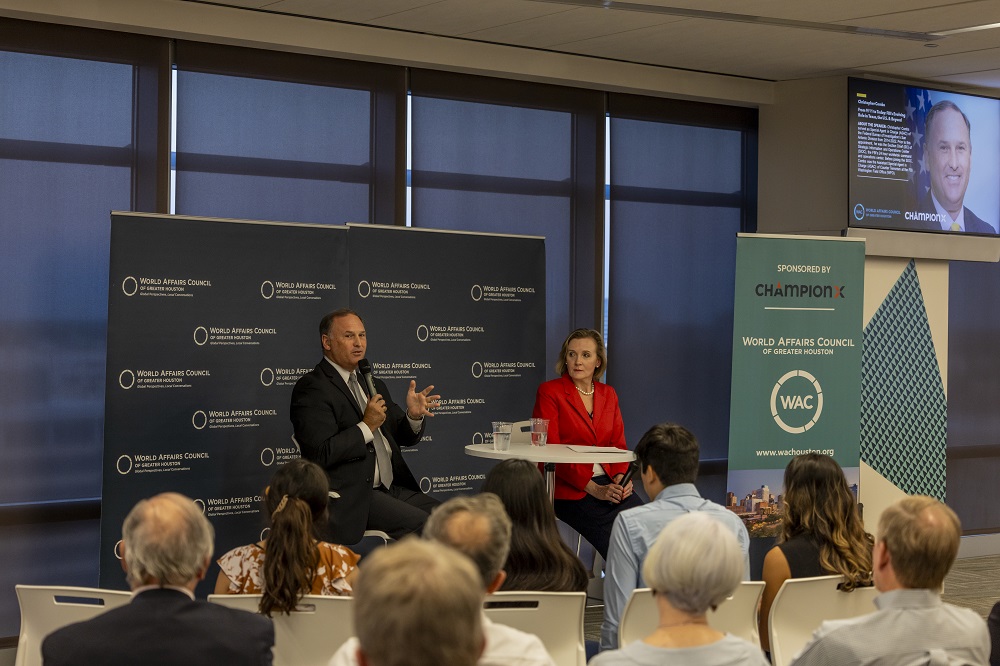
Christopher Combs took the stage with moderator Sandija Bayot and quickly jumped into the conversation. The focal point of Agent Combs’ conversation was to explain the FBI’s role in multiple historically disastrous events. He touched on how extensive FBI investigations are and how much hard work, planning and action takes place on the inside.
After being a part of the FBI for 26 years, Agent Combs has gathered quite a collection of stories; one of them being his experience during the 9/11 terrorist attacks. Indeed, he served as the initial FBI On-Scene Commander at the Pentagon on 9/11. He explained how the Bureau received intel about foreign attacks and expected to be attacked in late September. However, the FBI expected an attack overseas, not here in the United States.
Agent Combs expressed great concern for America as technology continues to advance and the threats of competing superpowers and their tactics. The conversation shifted into an audience Q&A, and many topics such as border control, domestic terrorism, and drones ensued. He made a couple remarks on how the battle against terrorism, whether it be domestic or not, is never ending.
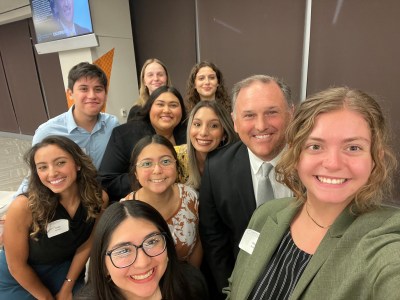
Though the conversation was heavy in nature, it ended on a positive note-thanks to Professor Yawn! Professor Yawn asked Agent Combs to speak to the young people in the audience about careers in the FBI. Agent Combs stated he believes in setting oneself apart from the crowd and truly devoting oneself to the greater good. Special Agent Combs closed with a remark that left the crowd at ease and patriotism: “The FBI is simply an organization made up of good Americans who are trying their best to protect Americans”.
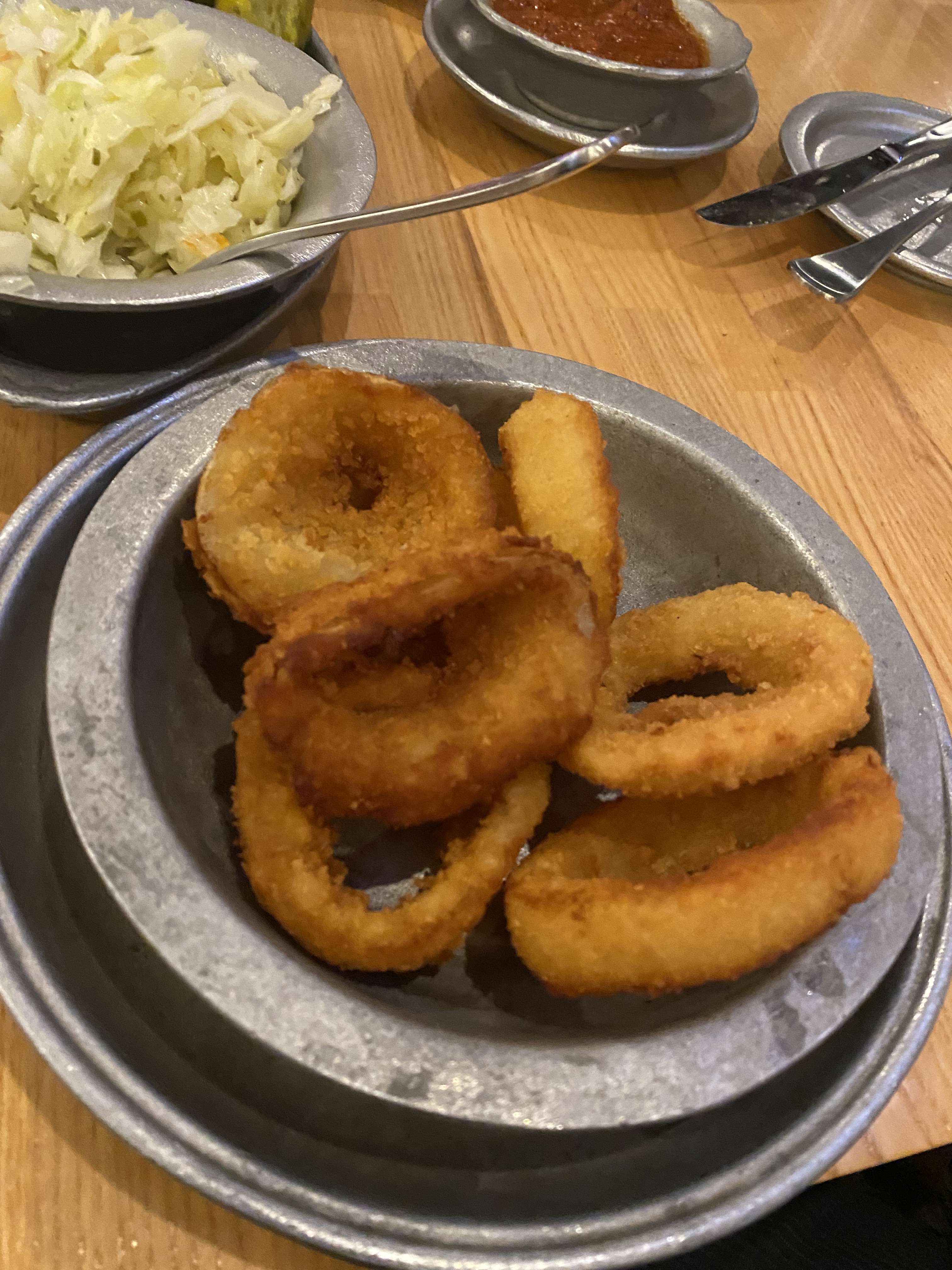
Following our event we ventured to Katz’s, a New York style deli, to highlight the area in which Agent Combs was brought up. We started our evening with multiple appetizers that included the cheese crisps, spicy meatballs and the stuffed cabbage. We all dug into our savory appetizers as we waited for our entrees. There was a large group in attendance so we had quite the line up. Some of our favorite entrees included the Chicago bill, matzo ball soup, The Reuben, and The Monte Cristo. To end our night with a figurative cherry on top, we decided to indulge in some sweet treats. The delicious desserts we had included caramel raisin bread pudding, Oreo milkshakes and cheesecake milkshakes. The night concluded with new connections, great laughs, and an even greater anticipation of what’s to come in the fall.
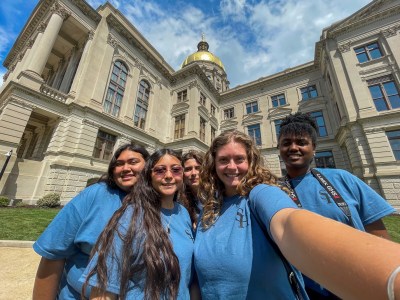
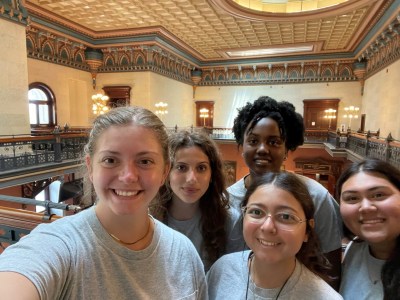
Visiting State Capitols is a bit of a LEAP tradition, combining politics, architecture, history, and–often–art into a single structure! So Jessica Cuevas, Olivia Discon, Morgan Robertson, Michelle Cardenas, and I decided to delve deeper into Georgia’s past by adding our second state capitol building on this trip to our docket. Our journey, led by Morgan, took us through significant historical events, remarkable personalities, and captivating architecture.
One of the striking statues that greeted us during our visit was that of Ellis Gibbs Arnall, a visionary and influential figure in Georgia’s political landscape. His journey began in 1932 when he was elected as a House Member, and he subsequently held roles as Speaker of the House and Attorney General before being elected Governor. Arnall’s time in office was marked by progressive policies and far-reaching reforms. He was instrumental in improving the prison system, abolishing poll taxes, and establishing an employment merit system.
Ellis Arnal on the Capitol grounds
As we wandered through the Capitol, we were captivated by the statue of Juliette Gordon Low, the founder of the Girl Scouts . Juliette’s dream was to empower young girls and women through education, community service, and outdoor activities. Some may say LEAP resembles similar desires out of our organization, but we unfortunately do not have any cookies.
Juliette Gordon Low
As we explored the corridors adorned with portraits of influential figures, we were fortunate to come across a portrait of former President Jimmy Carter, who also served as Governor of Georgia. It was a flattering portrait.
This encounter held special significance, as we had visited the Jimmy Carter Presidential Library and Museum only a week prior. Born in Plains, Georgia, President Carter’s legacy as a champion of human rights, diplomacy, and humanitarian efforts has earned him immense respect both nationally and internationally. Seeing his portrait in the Capitol added a personal touch to our journey, connecting us to the larger tapestry of Georgia’s history and its global impact.
Our visit to the Georgia State Capitol Building was a journey through time, unraveling the historical significance and architectural splendor of this beautiful structure.
From the design , every aspect of the Capitol bore witness to Georgia’s vibrant past. The educational experience will stay with us, as we thoroughly enjoyed the opportunity to learn more about the state’s remarkable heritage and the individuals who have shaped it.
Real-time crime centers are revolutionizing the way police departments address criminal activity in their community. With innovative technologies and procedures, these centers are becoming widespread across the country. One of the first areas in the United States to have adopted a Real-Time Crime Center (RTCC) in their community is Cobb County in Marietta, Georgia. We were very privileged to have Captain Hull organize this tour of their facility and further enlighten the group on the future of policing.
Upon our arrival, we were welcomed by Lieutenant Thorp and Major Bell, who help lead Cobb County’s RTCC in Cobb County’s Police Department. Before entering the room itself, the two took the time to explain to us the importance of centers such as these in regard to protecting their community with speed and efficiency. One way the real-time crime center has revolutionized modern policing, unique to other counties, is through their surveillance technology, which was at work just around the corner.
The dimly-lit crime center was illuminated by 10 screens; displaying a map of the city with pin points of police officer locations, LPRs (License Plate Readers), live video camera footage, and crime alerts. Led by Captain Darin Hull, we viewed a PowerPoint presentation that helped us better understand the functions of their facility. To provide the typical structure of their operations, the presentation provided two examples of their crime center in action, which both lead in the apprehension of the suspects.
The two examples, one involving a home invasion and the other theft, showcased the enhanced police response to crimes, made possible by the RTCC. With live recording and reporting, the police have stronger capabilities to swiftly arrest and convict criminals.
The officers emphasized the various concerns during the early stages of modern policing, including the general public’s fear of privacy invasion. Understanding the citizens’ apprehension, the analysts at the Real Time Crime Center have taken proactive measures to acknowledge the importance of establishing trust within their community; offering informative sessions for those seeking to learn more about the center’s operations and benefits, as well as providing discounts for businesses on purchases of a Fusus Core to integrate their cameras with the RTCC database to provide live transmissions for the officers.
One of the most interesting things about the Real Time Crime Center was their staff. It takes true dedication to use all the technology provided to capture suspects and get them away from the public. Deputy Chief Stuart Vanhoozer mentioned in one of the videos that technology means nothing if the staff does not demonstrate resilience and determination to stop crime. It was pretty evident that the staff there was more than capable, and they demonstrated extreme kindness towards us and welcomed all of our questions with pleasure.
As a Criminal Justice major, it is very important to see another of various career paths one may take in the field. I personally enjoyed experiencing a different aspect of law enforcement outside of the classroom, that itself is emerging in real time.
Thank you again to Captain Darin Hull, Lieutenant David Thorp, Major Stan Bell, and the staff of Cobb County’s Real Time Crime Center for taking the time to educate us on the amazing work your division is doing for modern policing practices.
The Southern Legislative Conference indeed came to an end, but our adventures pressed on! On our way to Atlanta, LEAP Ambassadors took some key stops through South Carolina and Georgia to learn about this region and its historic relevance.
Tour of South Carolina’s Capitol Building
Ingrid Cuero
Before leaving South Carolina altogether, we made sure we stopped in Columbia, the Capital of the state. We approached the capitol grounds to find a full-blown protest occurring–with labor unions objecting the flight of jobs.
This did not stop us from getting some photos of the exterior….
…or from seeing several statues, including Strom Thurmond, who is famously known for conducting the longest filibuster in history: 24 hours and 18 minutes! (He was filibustering to prevent passage of a civil rights bill.)
Passing by South Carolina’s state tree; a lone palmetto on the South end of the structure, we entered the building, which opened to a marvelously decorated interior.
I was immediately taken by the two flags, the U.S. and the South Carolina flag on either side of the entrance.
One of my favorite details of the interior design was the consistent use of the palmetto tree and the state flower, the Yellow Jessamine. It’s all in the details; for example, the lamps and chandeliers emulated the palmetto in their structural composition, and the staircase was engraved with the flower.
John C. Calhoun, another of the State’s notable figures, was commemorated with a statue. Calhoun is the only man to have served as Vice President of the United States for two different presidents. He, like Thurmond, is not much of a figure for modern times, but is a key part of the Palmetto’s State’s history.
We then came across The Battle of Cowpens; one of the first portraits to portray an African American in battle. Painted by William Ranney, the scene depicts a “servant” intervening in battle to save Col. William Washington.
After interning in the Texas Capitol building this past semester, it was very interesting to see the many differences between the TX Capitol and the SC Capitol.
The first, and most obvious difference, is the size. While Texas’ Capitol building is much larger, the interior of South Carolina’s is far more intricate and elegant.
Another key difference is that in South Carolina, both chambers are in session every year, whereas in Texas the legislature convenes every biennium.
Although judges in Texas are elected, in South Carolina judges are selected by the General Assembly.
This was the second state capitol building I had ever been in, so to be able to compare my experiences–especially right after an internship in the TX Capitol–was an insightful opportunity! Meanwhile, we were all able to check off one more capitol out of 50, South Carolina was Michelle’s and Olivia’s favorite Capitol Building of the trip.
On our final day in Charleston, we had a special treat in store: a tour of the Charleston School of Law. One of the advantages of SHSU as a “law-school feeder,” is that we have an active pre-law society, engage in many activities relevant to the law, and we have opportunities to visit and explore law schools.
Charleston School of Law
On this trip, we were set to visit the Charleston School of Law, a visit that included a meeting with the Director of Admissions, visiting with law-school students, and sitting in on a class.
So, while Ingrid and Morgan did various tours of Charles, Olivia, Michelle, and I met with Marisa Banke, who graciously organized our tour, and Michael Banks, Director of Admissions, on the second floor of the building. Mr. Banks covered all bases of our general questions, including an overview of Charleston’s School of Law, its application process, and what they look for in a personal statement and financial aid. We then met with a 2L student and a 3L student, the latter of whom is studying for her Bar exam, to show us around the school.
Although it is quite small, it consists of everything a Law School student might need: a library and plenty of study areas. The tour was unique in that it was Olivia and Michelle’s first law school visit, which allowed them to build a point of reference for potential schools they may be interested in including Charleston School of Law.
The Law School Journey
One important thing to know for pre-law students: most schools follow the same admissions processes. Almost all law schools are going to look at your LSAT score, GPA, personal statements, letters of recommendation, resume, as well as volunteer service and organizations. Of these factors, LSAT and GPA are, by far, the most important.
Different law schools do have somewhat different clinics, programs, or specialties. And law schools have different cultures. A visit allows you to experience those factors that do differ and help to see if you “fit in,” while also experiencing the city in which you might be living.
If you are interested in law school at SHSU, I recommend you meet with either Professor Mike Yawn or Ms. Jean Loveall, enroll in the Pre-Law Society, and take the Mock LSAT as early as possible. Once those things are done, you will have the opportunity to hear more from law school representatives through the Pre-Law Society and, we hope, visit your own preferred law schools!
Savannah, the oldest city in the State of Georgia, is a lively town with a vast and rich history. For our second day in the Deep South, we endeavored to learn more of Savannah’s history, and maybe experience some of it, too!
So, with an assist from Old Town Trolley Tours, we set out to learn more. And did we! For example, did you know that Savannah is where Eli Whitney developed the cotton gin? Or that the second deadliest battle of the Revolutionary War (The Siege of Savannah) occurred here? Or that Savannah was America’s first “planned city”? James Oglethorpe laid out the city in a grid system with 24 original squares but only 22 are still in existence today! There is a statute of Oglethorpe in Chippewa Square that is facing the south towards Florida – his Spanish enemies.
All the statues we saw were facing in the direction of their enemies since one should never give their back to them.
Our first stop was the First African Baptist Church, which is the oldest Black congregation in North America.
The church played an integral role in American history by serving as a part of the Underground Railroad, hiding those who were escaping enslavement. It was also the place where Dr. Martin Luther King Jr. preached his first sermon.
Savannah has been featured in several popular films and in literature. Forrest Gump, Something to Talk About, Midnight in the Garden of Good and Evil, and Lady & the Tramp are just a few of the films set in (or filmed in–or both!) Savannah. We were able to drive past and explore the famous locations where some scenes from the blockbuster films were shot, including Chippewa Square, often referred to as Forrest Gump Square since that’s where the scene of Forrest sitting on a bench waiting for the bus was filmed.
The Cathedral of St. John the Baptist was another highlight of our tour. Savannah once had four prohibitions: slavery, liquor, lawyers, and Catholics. The cathedral’s congregation was reorganized and established in 1796, becoming the first Catholic church in Savannah, consisting primarily of Haitian immigrants.
Although the original structure burned in 1898, the current building beautifully replaces the original while reflecting the long-standing Haitian and French influences on the region.
The trolley was an excellent way to get a glimpse into the beautiful city of Savannah! Exploring cities with a vibrant culture allows us to broaden our sense of the world through a comparison to our individual communities and experiences.
Goose Feathers Café
After a long morning of exploring, we decided to hop off the trolley at the City Market stop to head over to Goose Feathers Cafe. Greeted by the staff’s warm hospitality, we browsed menu options before ordering. Many of their menu items were named after historical streets and city celebrities of Savannah. Therefore, our entrees included the Oglethorpe sandwich, the Barnard Street Club (both the regular and gluten-free options), and the Greek salad.
The food was both delicious and flavorful, showcasing the delicious flavor combinations of the Deep South.
Mercer House
After our great lunch from Goose Feathers Café, we felt refreshed and energized, ready to continue sightseeing!
LEAP trips differ from most other educational field trips. While no class credit is earned for the trip, homework and preparations are expected. We might, for example, research a town, watch a documentary, or read a book. For this trip, we did all three!
Collectively, our favorite read for the trip was John Berendt’s Midnight in the Garden of Good and Evil. This book details Savannah in the 1980s through the eyes of an outsider (Berendt) who describes the murder trial of Jim Williams. To us today, Williams is something of a celebrity and savior of Savannahian architecture and culture.
To Savannahians in the 1980s, Williams was the proprietor of countless homes and host of infamous Christmas parties. To everyone, he is the subject of arguably the largest controversy in the Low Country.
The Mercer-Williams House faces Monterrey Square in the historic downtown of Savannah and was originally built for the great-grandparents of Johnny Mercer (General Hugh Mercer is Johnny’s famous great-grandparent) in 1860. Williams purchased the home in 1969, and it was almost in complete disrepair. Like the art and antique dealer that he was, Williams completely revamped the house down to hand-mixed, original paint colors, and hand-painted granite designs on the baseboards.
From a young age and under the guidance of his carpenter father, Williams renovated or restored different items. He used the basement of the Mercer-Williams as his workshop to repair the antiques, which he would later sell in the main house. Williams had a unique love for portraits, which was clearly displayed as we ventured around the house. Notable portraitists included Gilbert Stuart, Thomas Hudson, and John James Audubon. My favorite of the Williams collection was the 20 Audubon prints in one of the parlors.
The most impactful portion of the house was the study where Williams shot and killed his employee/lover Danny Hansford. Berendt describes in detail the events that did (or did not, depending on your belief in Williams’ innocence) take place in that room. The room felt heavier as we all knew we were in the room where Hansford threatened Williams with a German Luger, misfired, and seconds later fell to the ground with three new wounds.
Over the course of eight years and four trials, Williams was found not guilty by the Georgia Supreme Court, only to die a few months later at the age of 59, just a few feet from where he killed Danny Hansford.
Our experience in the Mercer Home was further enriched by having read Midnight in the Garden of Good and Evil. With that background knowledge, we were able to associate the beautifully decorated interior with the events that occurred within the walls of the house.
Our tour guide, Max, gave a great overview of the history of the House and its few occupants. Some of the Williams family still take residence in the upper levels of the House, so sadly photography was not allowed. However, we did not let this distract us from our tour, as we visualized the scenes in the book in the rooms before us–and took advantage of much outdoor photography!
Leopold’s Ice Cream
We couldn’t leave Savannah without trying Leopold’s Ice Cream. After almost a full day of walking the historic squares of Savannah, we were due for a cold yet sweet Savannah tradition.
Leopold’s is known for their rich homemade ice cream dating all the way back to 1919. They pride themselves in having the “Best ice cream in Georgia.”
Due to Leopold’s reputation and the ice cream shop’s popularity, we were met with a long line and waiting time. To maximize this time we thought about the flavors we would order, perspired, and waited some more.
After a long debate and thought, I opted for the Butter Pecan and one of Professor Yawn’s favorites, the Peanut Butter Chippy. Olivia decided on the coffee chocolate chip; Ingrid, the vanilla. Jessica had a scoop of Rum Bisque and a scoop of Chocolate Chewies and Cream. Morgan took a different route and opted for a combination of lemon custard and coffee chocolate chip, a weird combination if you ask me. Nonetheless, we were all very pleased with our selections, and a majority of us would agree that this is the best ice cream in Georgia!
Jekyll Island
Jekyll Island is one of the “Golden Isles” of Georgia, and it is one of the most popular. Interestingly, it is owned by the State of Georgia, and it is governed by its own board of directors, which limit its development. That’s a happy reality for us, because we were visiting to explore some of its more natural elements.
And while we may have been there to see the island’s natural elements, but this did not stop us from driving through the “historic district,” where wealthy individuals such as Frank Henry Goodyear (Goodyear Tires) and William Rockefeller had houses. They were beautiful, and more closely resembled mansions than cottages.
Our main destination, however, was “Driftwood Beach,” which features hundreds of dead trees, victims of beach erosion. At low tide, these trees lie in impossibly intriguing angles across the beach, perfect for climbing, posing, or nature photography. We attempted all three.
Not all of the Ambassadors, we learned, are equally adept at climbing.
Or taking photos.
But, generally, we persevered, got a few notable photographs, and we experienced the beauty of a natural setting in the Georgia Low Country.
With that accomplishment, we traversed the Sidney Lanier Bridge (whose poetry we read prior to traveling, and whose home we stopped by yesterday), and returned to Savannah.
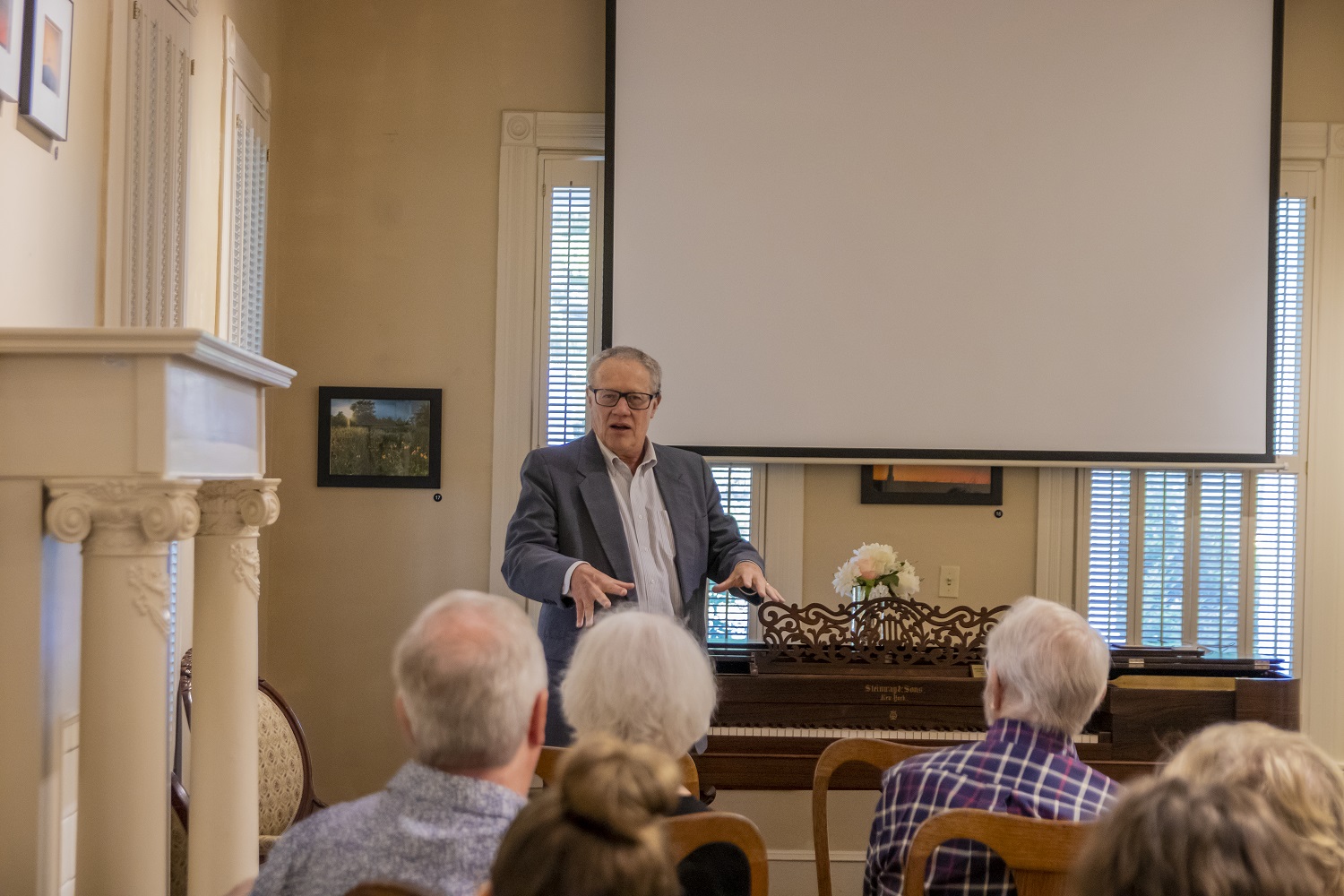
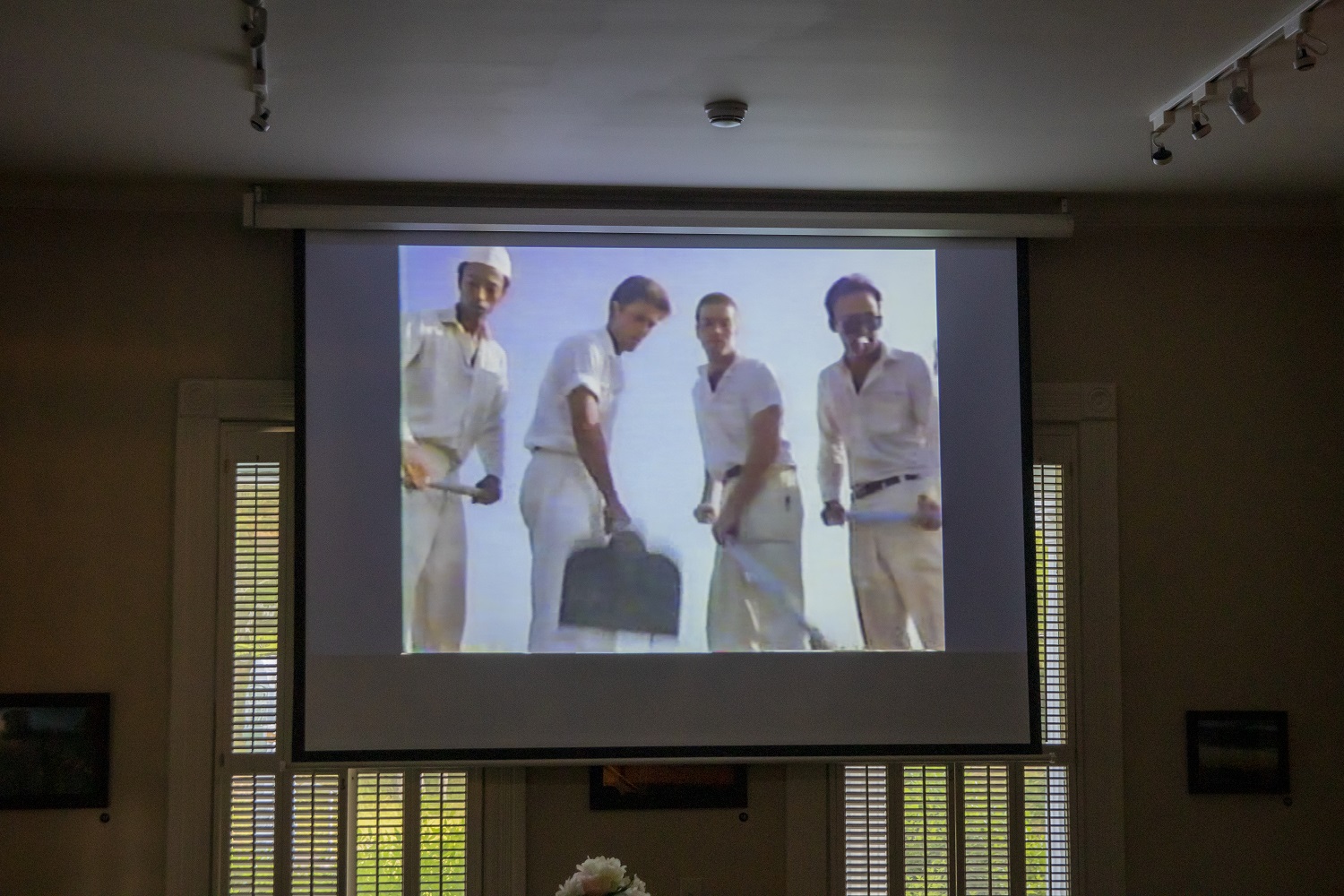
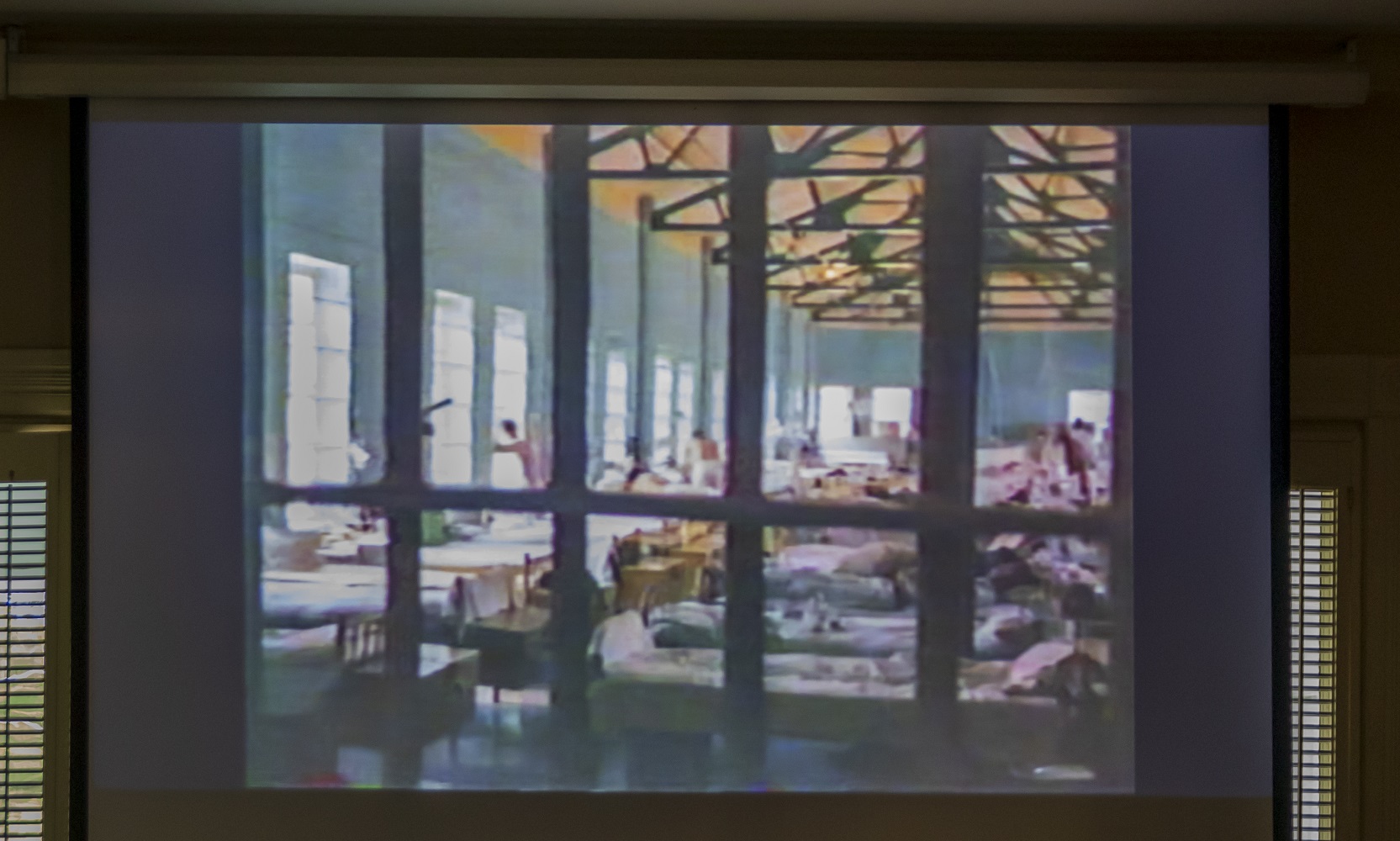
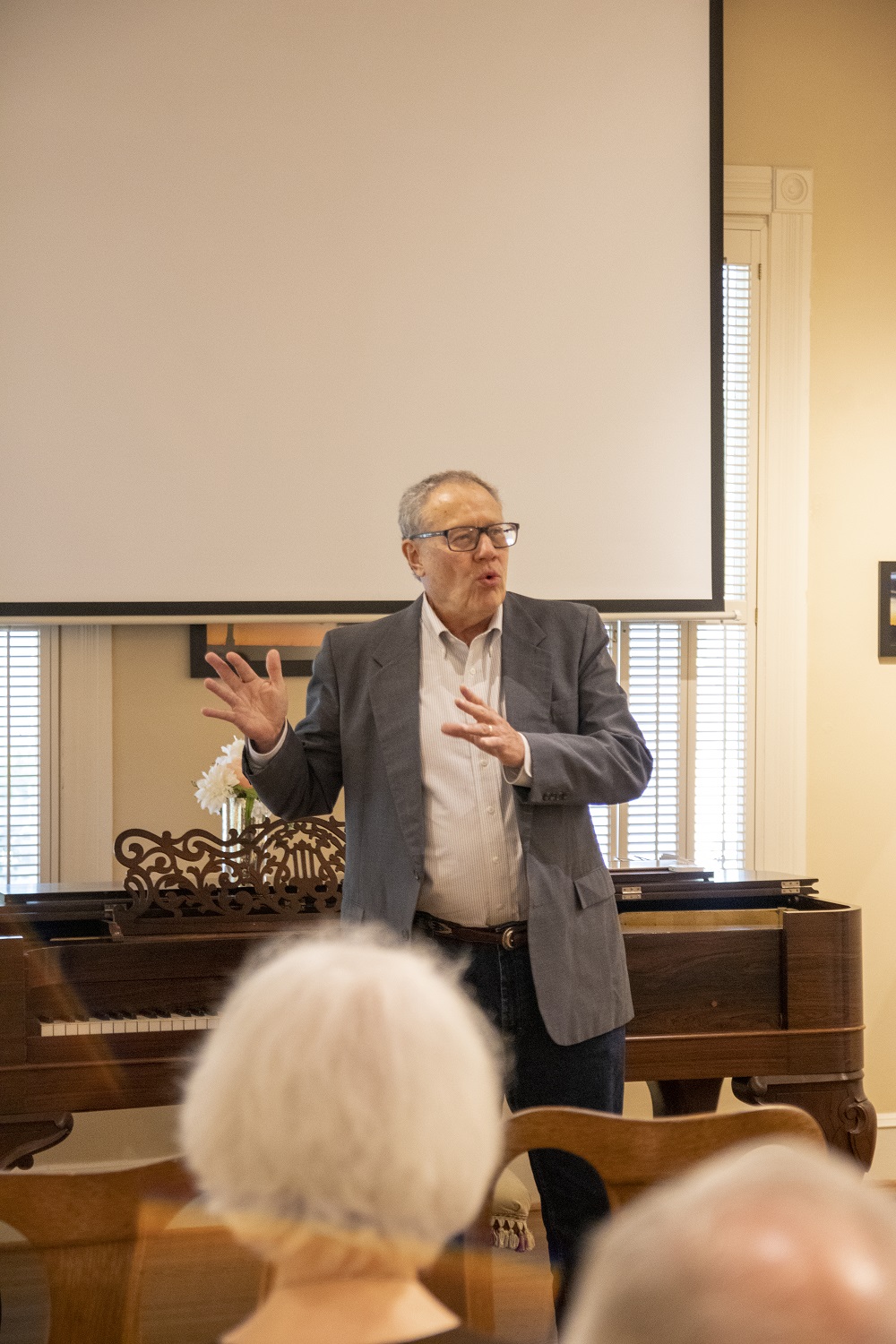
The Wynne Home has been very active this month, hosting many wonderful artists and speakers from the community to raise cultural awareness and highlight some of the wonderful talent we have in town. And this week, the Wynne Home featured Grady Hillman and his 1984 award-winning film “Lions, Parakeets, and Other Prisoners,” depicting the complexities of incarceration through poetry.
Many of our city’s key figures were in attendance; Sarah Faulkner, the Cultural Services Director for the City of Huntsville; Tammy Gann, the Economic Director, City Manager Aron Kulhavy, Dr. Ralph and Mrs. Linda Pease; Dr. Carolina Crimm; Kristie Stevens, a writer for the Huntsville Item; and Cheryl Spencer and Dr. Joe Kirkland.
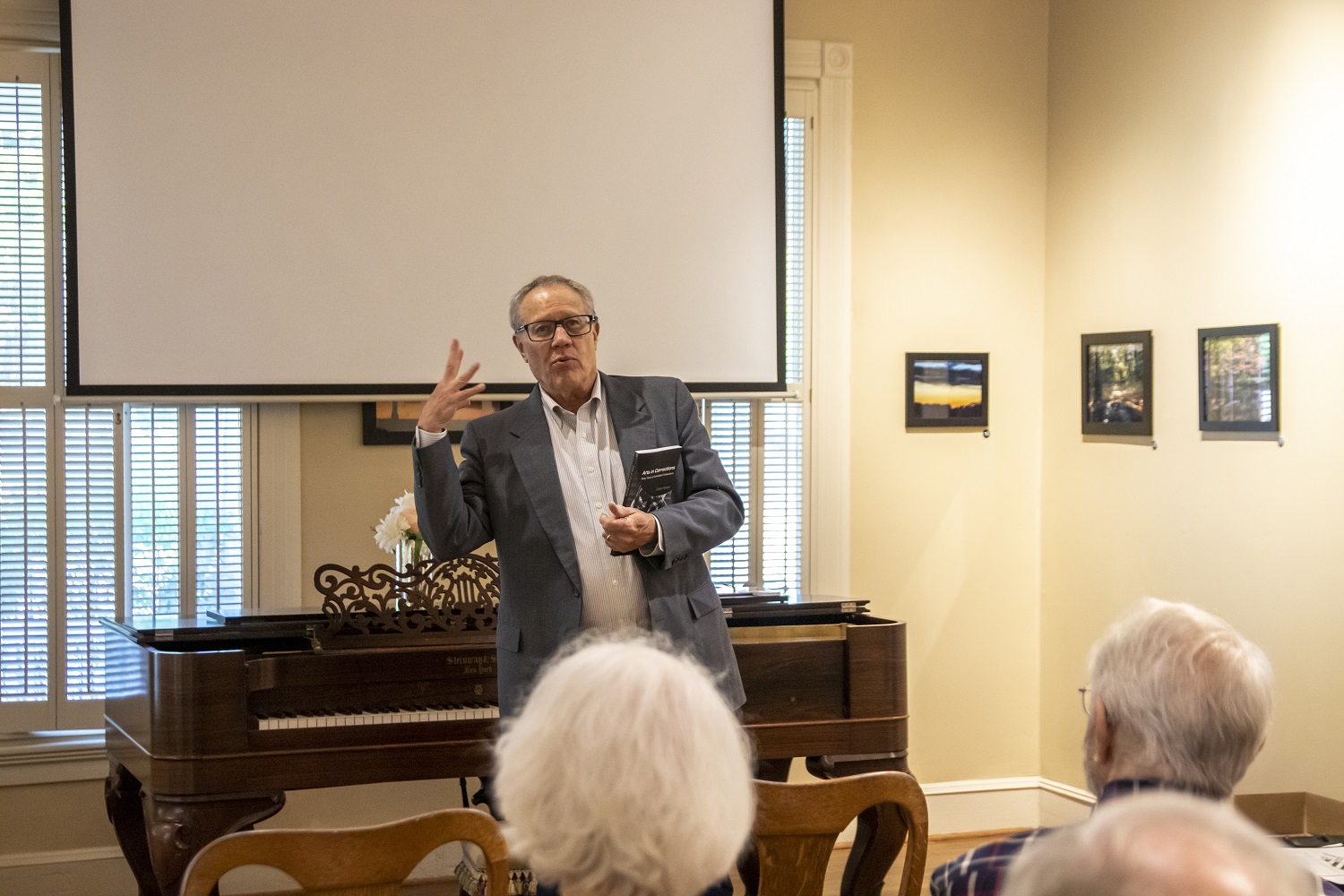
Professor Mike Yawn started off the night with an astounding anecdote, recounting one of his only memories as a sixth-grader, a bomb threat at his school. The students were moved to a safe location, where a poet was brought in to entertain the 1,600 restless, rowdy, and unruly children during the delay. That poet, hired at the time by Linda Pease, was in fact Grady Hillman! Funnily enough, Hillman could not only recall that day, but he wrote a poem about the entire endeavor– and he happened to have that poem with him! He asked Yawn to recite this poem, and the two of them relived that day more than 40 years ago, adding in commentary as appropriate. As an audience member, I felt very lucky to have witnessed such a moment.
Hillman introduced the critically-acclaimed docu-drama’s background, of course, highlighting the city of Huntsville. The film depicts the Walls, Wynne, and Eastham Units, centered around a poetry class Hillman lead in our local prisons.
Consisting pieces of poetry written and reenacted by Hillman’s students, the film captured the emotions of an incarcerated person’s experience, transcending the class meetings altogether. The title of the film is even a reference to two of poems read during the film in which two animals, lions and parakeets, are assigned to their respective cages. I must admit, my favorite detail within the film was its rhythm, which made both the dialogue and the poetry all the more profound. One of the most special parts of the night was when the credits started rolling, with the audience members seeing the names of longtime friends in the community.
Hillman concluded the night with an informational on his newest book, “Arts in Corrections: Thirty Years of Annotated Publications,” an annotation on the arts and education programs in the prison system, which is on sale at the Wynne Home.
Interestingly, in 2012, Hillman suffered a stroke that left him unable to write, read, and speak. After doing intensive therapies to regain those abilities, he has, he noted, become an editor of his own work. Going over his life’s activities and curating them, and the presentation of “Lions, Parakeets, and Other Prisoners” is part of that process. We were fortunate to be a part of it.
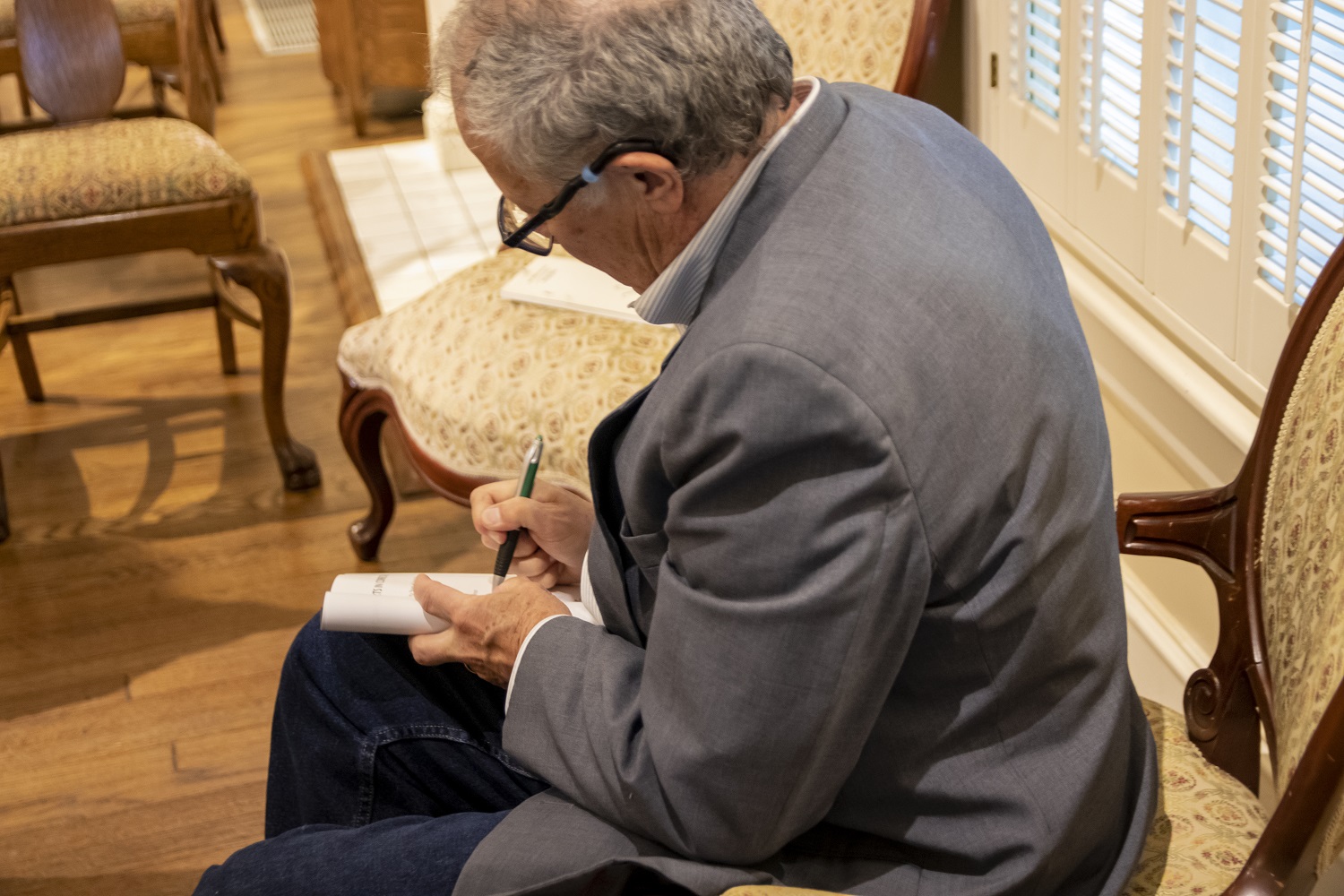
After the event, Hillman was generous enough to sign books. When I went to get my book signed, we had the opportunity to speak about the culture of each individual prison. Having visited 16 prisons from 1981-1984 alone, Hillman noted that his experiences were each unique to the prison. He did note, since he began the writing courses in Huntsville, that within the first year working there he knew most of the problems within the prison, the second year he knew how to solve the problems, and within the third year the problems changed, and he couldn’t even recall the initial problems.
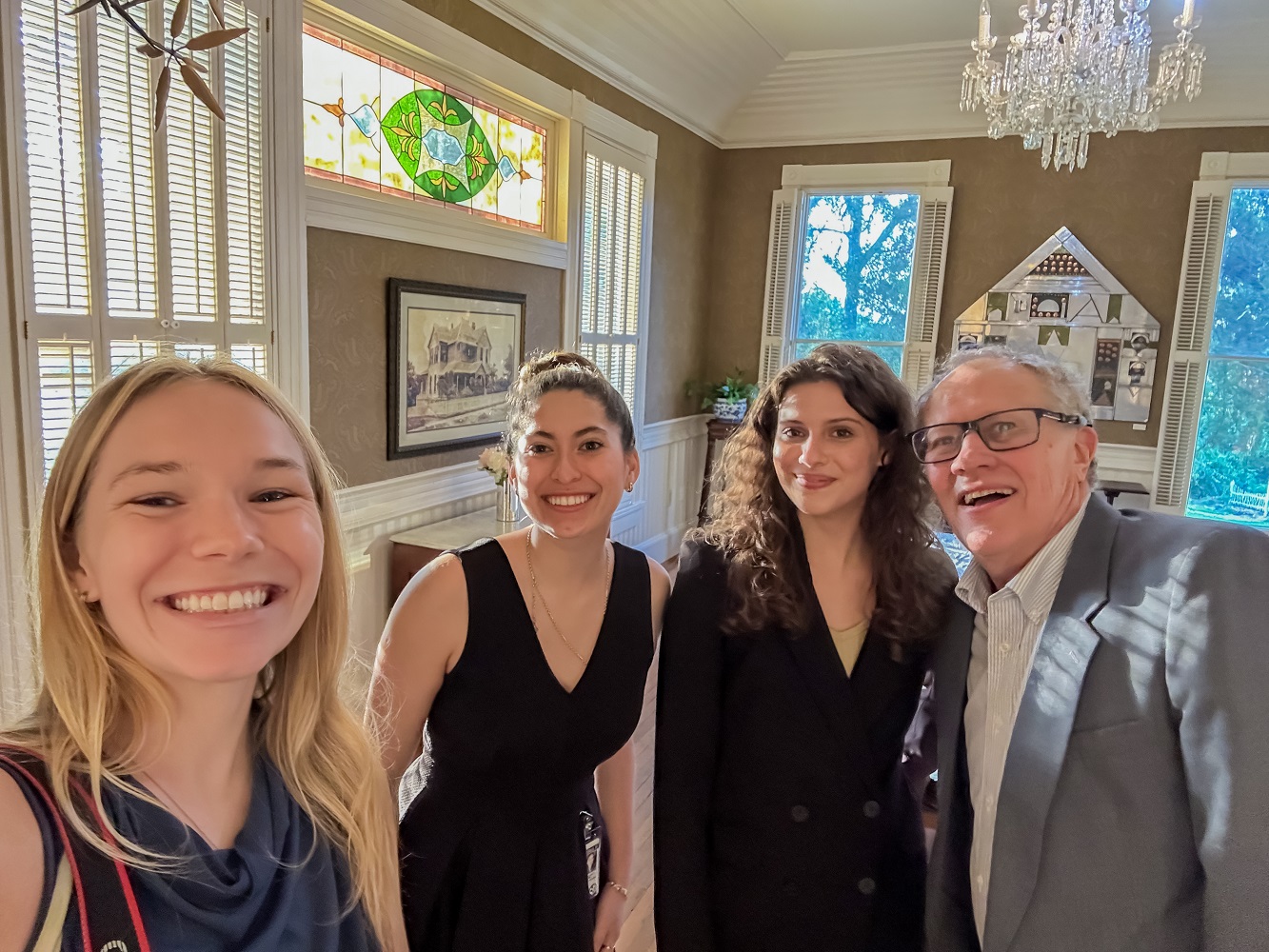
It was truly a pleasure to get a glimpse into the immense experience and talent of Grady Hillman. We were further reminded of just how rich and deep the culture of Huntsville possesses, appreciating just how special of a time we all shared reflecting on it.