
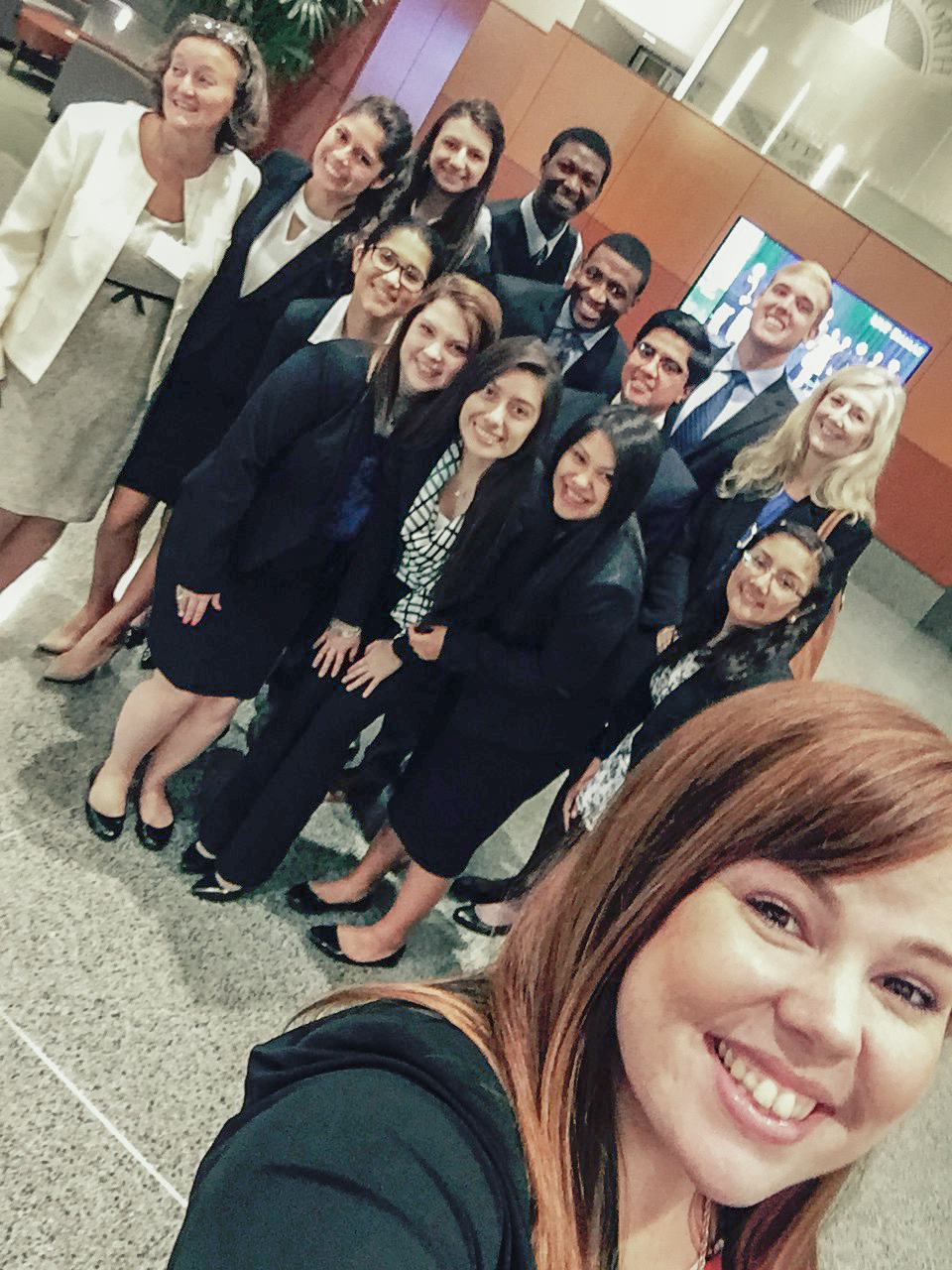
Twenty-five SHSU students just moved closer to enrolling in law school, thanks to an appearance by Ricky Kaplan at the LEAP Center’s first-ever “law-school workshop.” Kaplan, a consultant and instructor for Kaplan Testing, also served as Legislative Counsel for the state of Oregon, Assistant Attorney General for the state of Illinois, and Assistant Attorney General for the state of Texas. He also has a BA from U of Minnesota, a Masters from Northwestern, and a law degree from U of Minnesota. He knows about law.
And he shared it with SHSU students last week, kicking off the workshop with the major factors that law schools look at when deciding whether to admit a student. The factors are:
- LSAT
- GPA
- Personal Statement
- Letters of Recommendation
- Resume
- Background
He purposefully led with LSAT because, whatever its flaws, “it is the only measure the law schools have that is consistent across every student in the US, and it does a pretty good job of predicting first-year law school success.”

The LSAT and GPA guide students in which law schools to apply. If a law school, say Texas Tech, has a mean LSAT of 155 and a mean GPA of 3.4, then a student with a 156 and 3.5 is probably going to get in. A student with a 149 and a 2.9 probably won’t.
While the numbers for schools vary from year to year, the following numbers generally reflect the law-school “means” of Texas law schools:
UT: 165, 3.65
SMU: 161, 3.6
Baylor: 160, 3.5
UH: 159, 3.5
TX Tech: 155, 3.4
TAMU: 154, 3.3
South TX: 150, 3.1
St. Mary’s: 150, 3.0
UNT: 148, 2.9
TSU: 145, 2.9
While these two measures (LSAT and GPA) are the most important factors in getting into law school, the personal statements, letters of recommendation, and the resume can also make a difference in a close case. His advice for the personal statement was to be genuine, to emphasize narratives, and to emphasize the positives about yourself. When stuck with writer’s block, he encourages students to forget they are writing a personal statement and write four-five stories about their life. These often reveal something meaningful about the person and can subsequently form the basis of a compelling personal statement.

For personal statements, go with people who know you and your work. Professors are probably best, but for people out of college for several years, employers can write the letters. Avoid “friends of the family” or folks you think are important but aren’t directly familiar with your critical thinking, writing, and communication.
After arming us with advice, Kaplan took a break and then worked with individual students on their personal statements, answering questions about addenda to the applications, and how best to prepare for the LSAT.
Such advice may not get students into the University of Minnesota or Northwestern, but it will maximize the chances they have of getting into the best law school available to them.














 Center for Law, Engagement, and Politics