If you have 30 promising freshmen together in one place, it’s a good bet that the Freshmen Leadership Program (FLP) is involved. If those freshmen are involved in a civic engagement exercise, the LEAP Center may be part of the proceedings. The collaboration of these two offices, under the stewardship of Lindsay Lauher and Mike Yawn, led to a Mock City Council in Council Chambers on a Wednesday afternoon late in the spring semester.
“We are always looking to push students’ leadership skills,” noted Lauher, “and civic leadership is a key component of our program.”
The Council meeting involved students adopting various roles: angry citizens, media officials, city council, and city staff—all of which involved a deep dive into public policy. In particular, the council members of Mockville, Texas, explored the possibility of “legalizing cannabis” and “implementing an extensive wellness program” for City staff. Both, as one might imagine, were controversial.
In addressing the legalization of cannabis, for example, students had to assess the health ramifications (Public Health Director), the impact such a policy would have on crime (Chief Public Safety Officer), the legality of a city moving against a state law (City Attorney) as well as the political implications (Council members) of the ordinance.
Students initially thought that a wellness program might be less controversial, but questions of privacy slowed down the proceedings. The ordinance involved “free” Fitbits provided to all City of Mockville employees, with the hope that this recourse might offer helpful reminders to stay healthy. But devices such as Fitbits also collect a lot of information about the wearer: exercise habits, sleep habits, location, and, in some cases, both dietary routines and sexual health. Putting that information in the hands of employers met with resistance among the council members.
Apart from the policy issues, however, perhaps what most impressed the students was the difference between their perceptions and the reality of a council-manager form of government. Tristen Anderson, a freshman Criminal Justice major and “Mayor” during the proceedings, was surprised at how little power the mayor had: “On television, you see these super powerful mayors, but that’s just not the case in most cities.” This realization, he noted, “changed my entire perspective on that type of politics, perhaps even to the point of seeking out such an office later in life.”
Jared Scott, a freshman Accounting major, agreed. “I enjoyed the whole experience, and although I am an Accounting major, I hope to run for City Council in whichever city I settle down in.” For one of the sessions, Scott did serve as a “Council member,” while serving as “City Manager” in the other session. Both impressed him, and, in fact, Scott was so struck by the experience, he actually attended the next City of Huntsville Council meeting, just to compare it to his experience. “All in all,” he continued, “I learned a lot from this activity, and I’m glad that both the LEAP Center and FLP are open to students of all majors.”
“It’s a pleasure to work with high-achieving students,” said Yawn, “and I think good things happen when offices on the academic side of things (LEAP) collaborate with offices on the student affairs side of things (FLP). We all have the same broad mission.”
The FLP offers rich learning opportunities to test, refine, and further develop the leadership abilities of first-year students. For information, contact Lindsay Lauher at lindsay@shsu.edu or 294-2347. The Center for Law, Engagement, And Politics offers students unique activities that promote the public good. For information, contact Mike Yawn at mike.yawn@shsu.edu or 294-1456.
Although we had spent a day in the nation’s capital, this was our first day of the conference, and we were a bit unsure of what would follow. But we were greeted by friendly Colonial figures, putting us in a light mood.
NLC Opening General Session
The National League of Cities Conference (NLC) exists to educate and inform the public about the work of cities, but it also serves as an in-house informational resource for the cities across the country. And no gathering is larger than the Congressional City Conference in Washington, DC, where hundreds of local officials gather to learn, educate, and cooperate. A theme of this conference is the Biden Administration’s “American Rescue Plan” (ARP) and how cities can use it to make their localities better.
We were greeted by numerous officials from some of the largest cities in the United States. Mayor Victoria Woodards of Takoma, Washington, as NLC’s first vice president, set the stage by emphasizing the importance of local officials–which, as interns for the City of Huntsville, we were aware of!
The introductory speakers, many from the Executive Branch, described how hard the White House had worked to ensure ARP funds made it to the cities directly. Julia Chavez Rodriguez, for example, went even further, noting that rescue acts under the previous administration didn’t go as far as ARP, but with the distribution of ARP funds, more cities would be benefitting.
Gene Sperling, Senior Advisor to the President, also extolled the virtues of ARP, noting that unemployment had declined to 3.8%, but he took a more assertive tone with some in the media and to states giving tax breaks–“which were only possible because of the funds coming in from ARP”.
The conference did a good job of making one and half-hour time slots go quickly–different panels were moved quickly in and out to provide diversity in topics, intro and outro music greeted each speaker, and the sessions were punchy and direct, sometimes reverting to soundbites.
The caliber of speakers, however, was top notch. One brief panel, for example, included Andy Berke (US Department of Commerce; former Mayor of Chattanooga), Carlton Waterhouse (Deputy Administrator of the EPA), Samantha Silverberg (Deputy of Infrastructure Implementation with the White House), and Victoria Woodards (Mayor of Tacoma, WA and VP of NLC). In fact, we enjoyed being in one of the world’s largest selfies with Mayor Woodards!
Homelessness in Focus: Local Government Roles in Intervention and Prevention
Jessica Cuevas
Some of the ambassadors chose to attend a session led by U.S. Department of Housing and Urban Development Senior Advisor Richard Cho, Case Manager Jeff Olivet, and the National Alliance to End Homelessness CEO Nan Roman. They spoke on homelessness and the roles of local government following the opening session.
Homelessness has always been an issue, but the amount of homeless people has increased greatly following COVID. Cities such as Boston that had little to no homelessness cases are now seeing alarming rates of them and are currently grappling with this issue.
The funding in a city’s budget to address homelessness is limited and some are struggling with providing them the help and resources needed. Many organizations, programs, and funds have been created during the pandemic and this may help. The intention of newly established programs are designed to help fill in the gap of the missing funds, including the Coronavirus Aid, Relief and Economic Security Act (CARES Act).
These resources have allowed the community to work together to provide aid and shelters. Also, many governments enacted temporary moratoria on evictions, and governments may also have alleviated pressure through child tax credits.
All three of these insightful speakers came to agree that the key element in reducing homelessness is housing. And once housing is available, cities, according to the speakers, should focus on providing the newly-housed with the resources they need, such as health care, to aid them in being able to sustain their new home.
This has been implemented in cities of which have been or bought motels and hotels to remove the homeless of the streets. By offering them a safe space, these cities have seen a reduction in the number of homeless. Of course, this costs a lot of money, which goes back to resources…
Closing the Digital Divide
Morgan Robertson
Professor Yawn and I chose to attend Closing the Digital Divide: Leveraging Federal Resources for Broadband, Digital Equity. The topic was heavily based on the importance of providing broadband for the underserved and underdeveloped.
The panel included five experts who are making great strides within this area: Julia Pulidindi, Kirk Burgee, Van Johnson, Christopher Mitchell, and Olivia Wein.
The first to speak was Julia Pulidindi from the National Telecommunications and Information Administration (NTIA). Pulidindi presented an overview of the Infrastructure Act that allowed $65 billion for broadband funding intended to be administered in four different avenues: Bead, Digital Equity, Tribal, and the Middle Mile.
The Chief of Staff for The Federal Communications Commission (FCC), Kirk Burgee, split his speech into two parts: digital mapping and data flow. The update on the progress of broadband and how it has developed was very insightful for my understanding of the topic. The data flow is split into groups, for instance, the FCC receives data from providers, tribal data, and local data which is beneficial because of the specificity involved.
Christopher Mitchell is a Director at the Institute for Local Self-Reliance and much like his company’s name suggests, his primary goal is for everyone to have reliable and affordable internet. Mitchell spoke on the importance of the use of partnerships particularly for small cities.
The last panelist to speak was Olivia Wein, a Staff Attorney with National Consumer Law Center (NCLC).
Wein emphasized on the importance of broadband, why it is a necessity, and went into more detail regarding the Eligibility Criteria for the Affordable Connectivity Program (ACP). There are a few of different benefits that households can receive through ACP, but they are limited to one of each kind. One ACP service, one ACP connected device and one lifeline benefit.
The topic got pretty detailed, but the key message was clear: in a rapidly advancing technological society, the gap between the digital haves and digital have nots grows, and it grows fast. Implementing programs, especially in rural areas for those who don’t have, is key to reducing inequality in the nation.
President Joe Biden
Erin Juarez
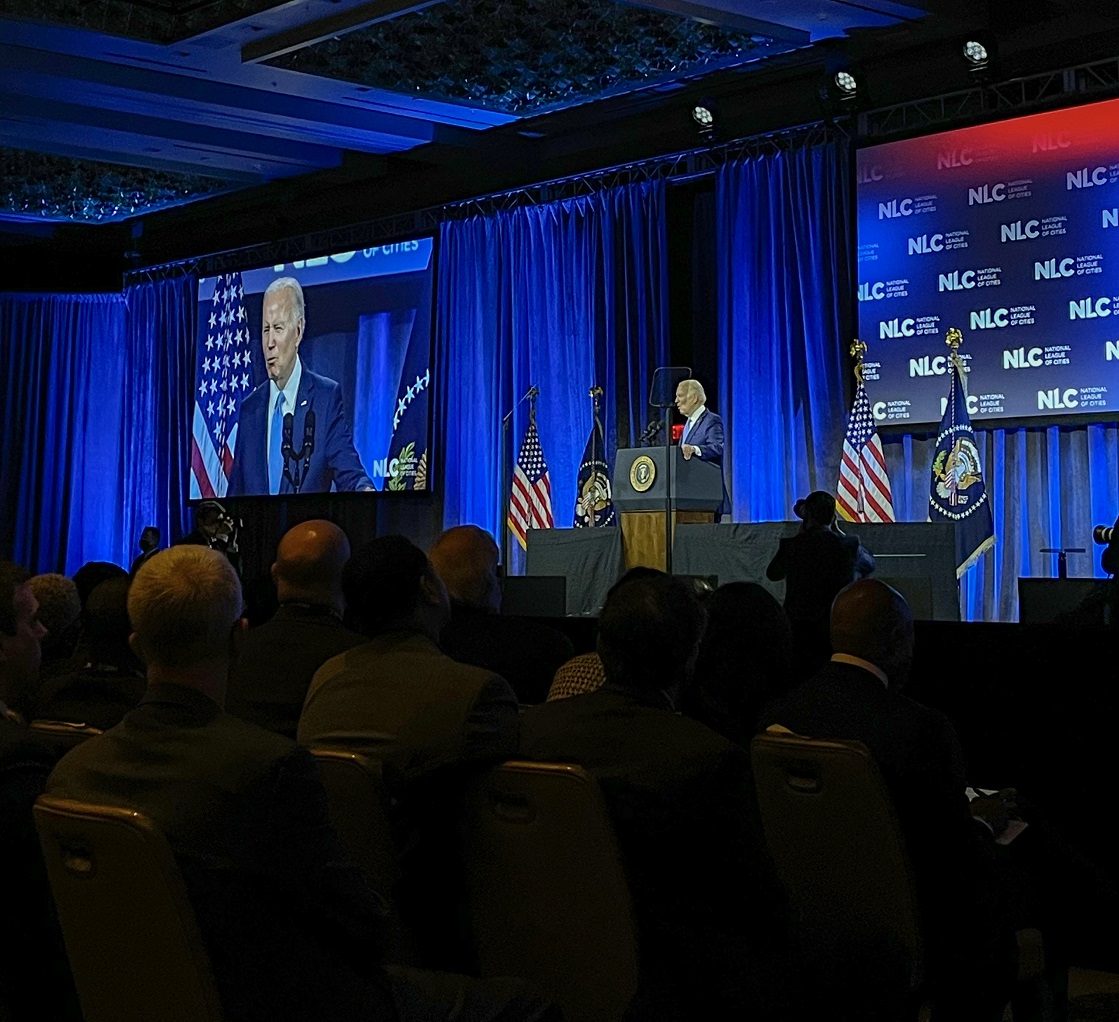
One speaker during the day wasn’t like other speakers. When President Biden was scheduled to speak, things changed considerably. Everyone was ordered out of the Marquis Salon, the room was swept, and then all the attendees lined up to go through security, allowing them to re-enter the room.
The conference hall was electric with excitement as the crowd was anxious to see President Biden. He entered the room to a standing ovation and a loud chorus of cheering as he took the podium to address the audience.
He touched on current ongoing issues, such as the rising cost of gasoline, as well as some of his goals for the United States including a $35-per-month health-care plan for all Americans, and reducing–or even eliminating–taxes for those who make less than $400,000 a year. The President indicated he had reduced the budget by 360 billion, while also overseeing a dramatic reduction in the unemployment rate.
President Biden left on inspirational notes, calling on the city leaders to assist him, and specifically noting that the young are key to his administration’s–and the country’s–success.
It was an absolute honor to have “met” and been within a few feet of President Biden!
Moving Forward with Affordable Housing
Morgan Robertson
Later in the evening, I attended Moving Forward with Affordable Housing: Strategies for Developing and Preservation. The session was led by three panelist who all had slightly different approaches, but all great ideas on ways to combat the issue.
Tony Pickett, the CEO of Grounded Solutions Network, introduced a couple of different ways to help homeowners maintain equity in their property. The first of which was a Community Land Trust. This nonprofit organization is governed by community residents and public representatives to help maintain equity opportunities and community assets. The main idea was centered around offering more mobility opportunities when buying and reselling houses.
Jason Jordan is the Policy & Public Affairs Director for the American Planning Association for Transport, (APA). Jordan presented many different examples on zoning reform that included feedback from the public. With very new statistics from March 2022, Jordan advised to take the newness into account, but also to understand how citizens and the public view zoning reforms.
Amy King is the founder and CEO of Pallet which provides rapid response shelter villages to reduce the number of homeless people on the streets. King’s company acts as a pathway for homeless people to establish a physical address, and after three to six months helps relocate them to permeant housing. This solution has made a major impact along the west coast, but as King stressed, it still has a lot more work to do.
The issue of the lack of affordable housing is not one that has an easy answer. However the work being done by these individuals and their companies and agencies are great strides towards helping resolve this issue.
Pi Pizzeria
Once the last session of the day was finalized, the ambassadors took to the streets of Washington D.C. to a nearby restaurant, Pi Pizzeria. Upon entering we noticed it was a nice, cute little restaurant.
We began with an order of Garlic Knots with marinara sauce as an appetizer and had their delicious Delmar Deep Dish and their thin crust Pi’Napple Pizza, basically Hawaiian with jalapenos.
Today was also their 14th birthday and Pi Day (3.14)!
As we walked back to our hotel, we went through a mini shopping mall area and wandered into Dolcezza Gelato and Coffee for Dessert.
They offered many kinds of Gelato and Sorbet flavors that we had difficulty choosing. After sampling a few flavors, we collectively ordered their Coffee and Cookies, Dark Chocolate, Champagne Mango, Pineapple Honey Lime Sorbet, and Lemon Ricotta Cardamom.
We enjoyed our delightful and flavorful gelato and sorbets that satisfied our sweet tooth as we made our way back to our hotel.
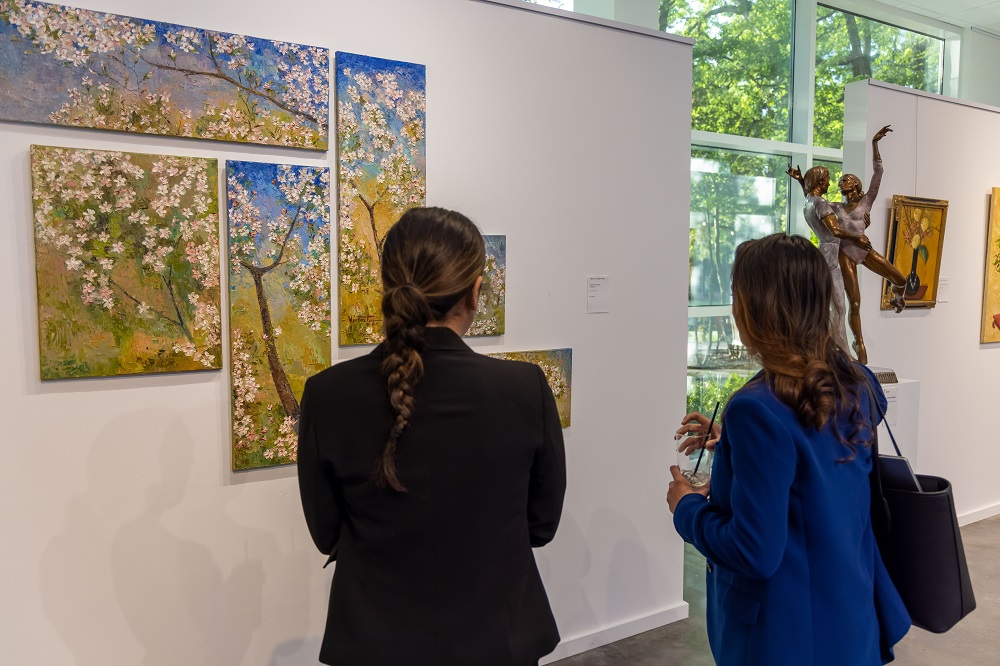
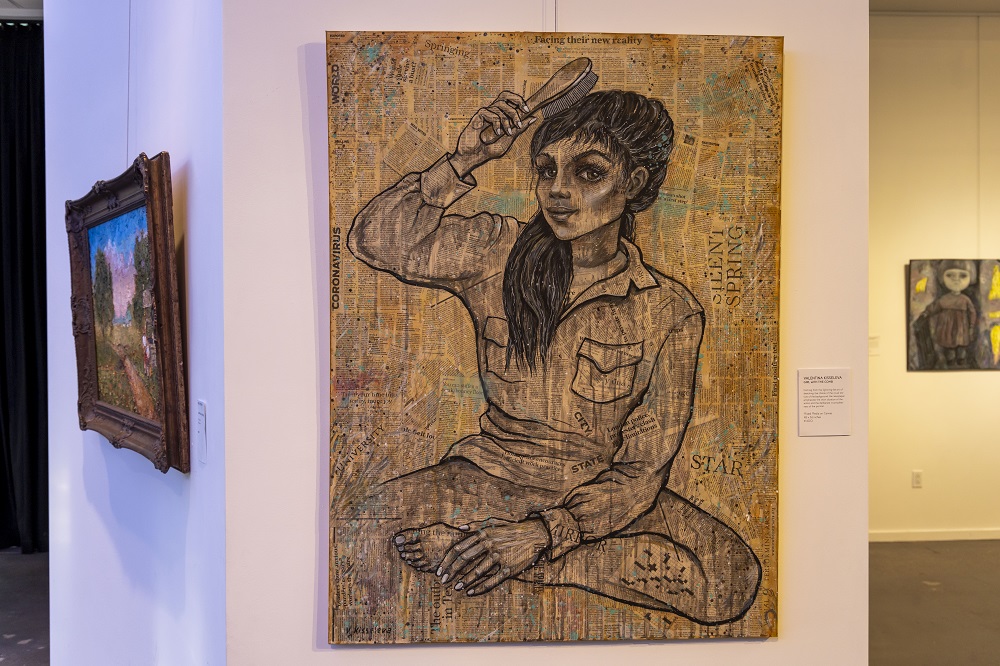
The LEAP Ambassadors took an evening trip to the Woodlands to attend yet another fantastic WAC event on Russia’s invasion of Ukraine at the Glades Art Gallery. Walking in, the gallery was stunning to witness as the WAC staff welcomed us. It was a wonderful combination: looking at paintings from local artists while preparing to become more educated on a global issue was a terrific opportunity.
The art on display ranged from portraits and landscapes to statues. A favorite of ours was the Cherry Blossom tree that spread across six canvases by Victor Tapu. Throughout the exhibit, we connected the artwork in the Glade to similar works by renowned Masters; for example, we compared the miniature statue of a ballerina to Edgar Degas.
Moving from the art to learning about the current crisis in another part of the world, we heard from Richard Fontaine, the CEO of the Center for a New American Security, one of the world’s leading defense and geopolitical think tanks. Mr. Fontaine was also a top foreign policy adviser to Senator John McCain.
Dr. Fontaine discussed the horrific battle in Ukraine and how it could signal the start of a new post-Cold War era. Putin’s motive to overtake Ukraine was to prevent their affiliation with NATO, among many other things. The war has affected numerous countries. Poland, for example, was one Ukraine’s most significant trading partners, a relationship that will much limited until the end of the war and perhaps beyond. The war has also increased inflation in the US, while also affecting the oil supply and even food staples such as corn. China, too, is watching the war closely, seeing how it will shift the balance of power in the world and change their massive trade relationships.
One interesting fact we learned is that Ukraine has shattered the Russian government-built encrypted phone lines, compelling the Russian military to use unencrypted lines of communication. Who knew?
Hearing an update on the Ukraine-Russia war from Dr. Fontaine was eye-opening. Seeing how these impacts bordering countries of Ukraine and our homeland is heartbreaking, but this will bring us together and prepare us for future moves that may involve a more significant threat.
As always, the WAC event was enlightening and enjoyable, and we look forward to our next event!
Lama Mediterranean Restaurant
Heather Barodi
After filling our heads with new knowledge about the war in Ukraine, we stopped at Lama to expand on our understanding from outsides our country’s borders at a Mediterranean restaurant located in the Woodlands!
Our appetizers were classic Mediterranean dishes, homemade falafel, and hummus with warm pita bread. Overall, all the food was terrific, but the hummus appetizer we got was the biggest hit among the ambassadors. The entrees ranged from chicken shawarma and gyro sandwiches with sides of rice and french fries. At the end of the meal, our plates were empty from devouring each of our entrees. We had some hot tea and baklava to end our meal, which was a sweet touch to our full stomachs.
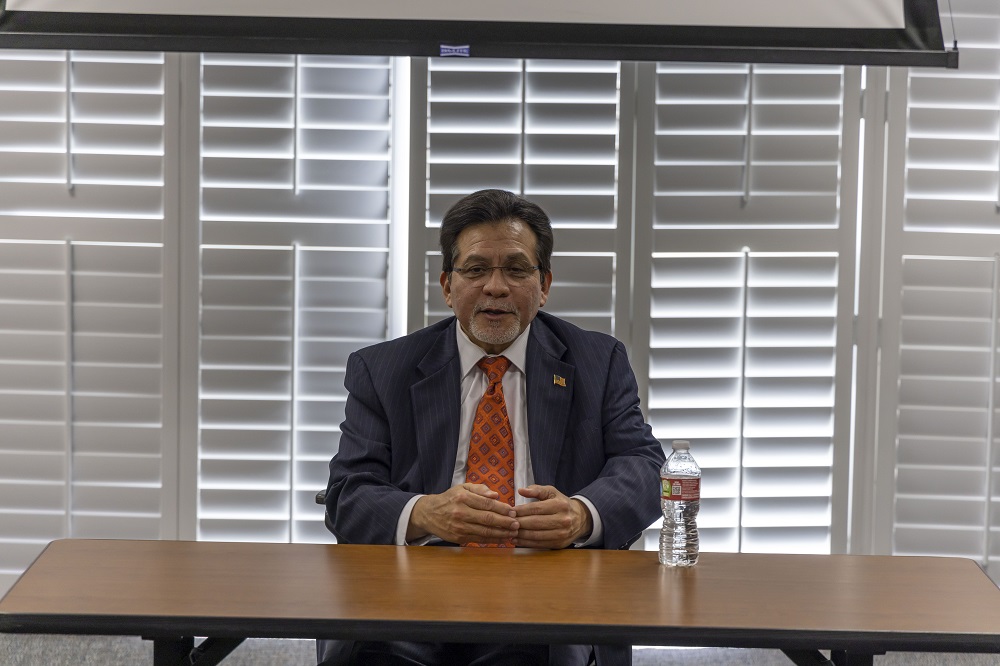
Every spring, the LEAP Center works with Lt. Col. David Yebra to bring in Judge Alberto Gonzales to speak with students, and every year the event is informative, entertaining, and rewarding.
Judge Gonzales obtained his undergraduate from Rice University and his J.D. from Harvard Law. He became the first Hispanic partner at Vinson & Elkins, Texas Secretary of State, TX Supreme Court Justice, White House Counsel, and Attorney General of the United States. He is now Dean of Belmont University’s Law School.
One of the things we learned, which might seem small, is that typically you refer to a person by his highest office. In Gonzales’s case, that would be “General Gonzales,” but since Gonzales was in the military as a Private, and because he doesn’t want anyone confusing him as a military General, he prefers “Judge Gonzales.”
Out of all the advice about life and law school he provided us with, the most impactful one was on how to approach difficult situations or problems. He told us that “if you ever go to someone with a problem, you should always have a solution.” Even if the solution is not the strongest, it is a starting point which can serve as a starting point for improvement. This advice is vastly applicable, whether it is a situation with our families, jobs, or even life changing decisions.
Of course we also enjoyed hearing about his time as White House Counsel, Attorney General, and Dean of Belmont Law. But it was his advice that likely stuck with us the most: “you should be happy when you are pursuing your career and navigating through life because you cannot be as helpful if you are not happy.”
We are very appreciative and fortunate to have been given this opportunity to meet Judge Gonzales and we hope to have him visit Sam Houston State again in the near future!
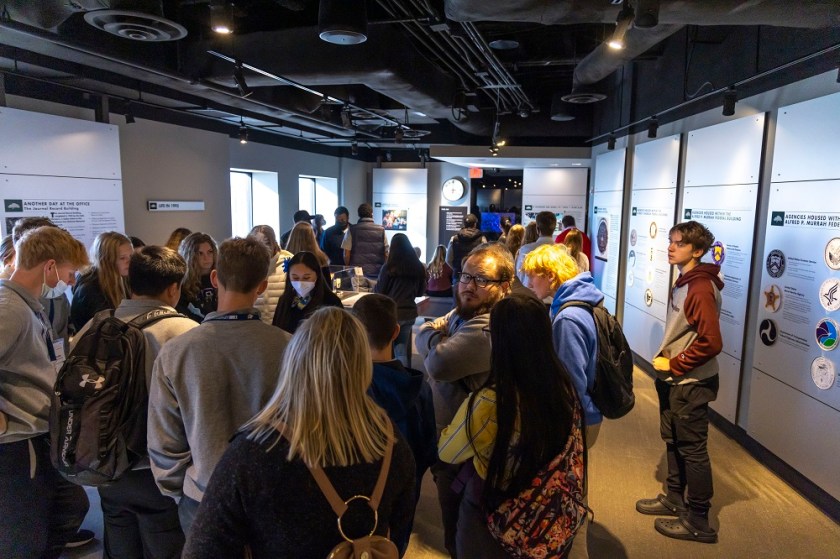
The OKC National Memorial Museum is laid out in such a fashion that reminds visitors of what happened on that day, April 19, 1995, but also stands as a tribute to both those who survived and that were lost.
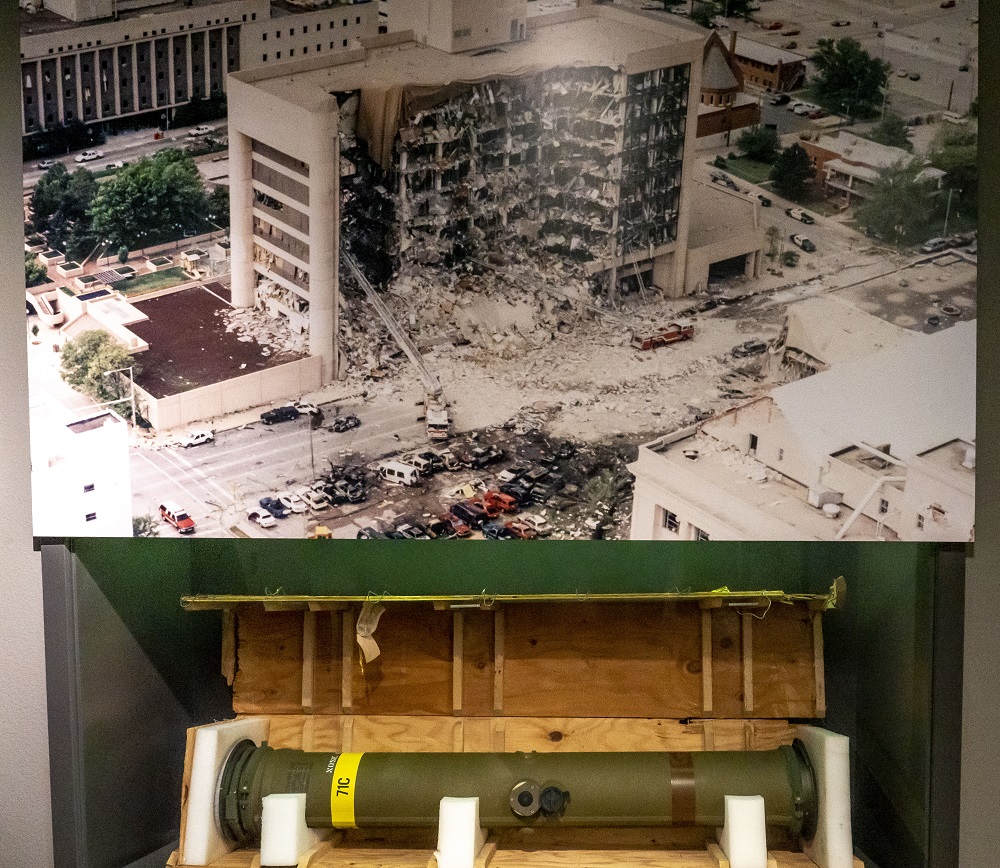
The Museum unfolds in chronological fashion, beginning with the background of the tragedy, and going through almost minute-by-minute on the day of the bombing.
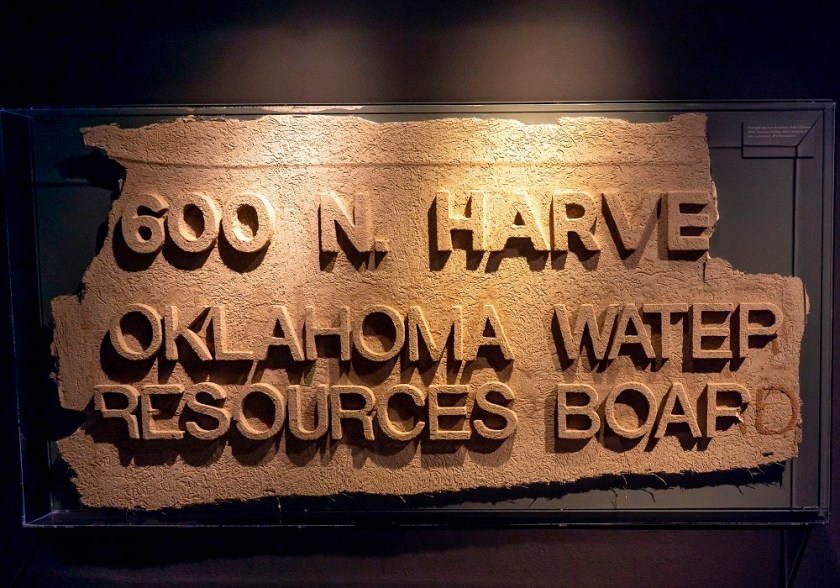
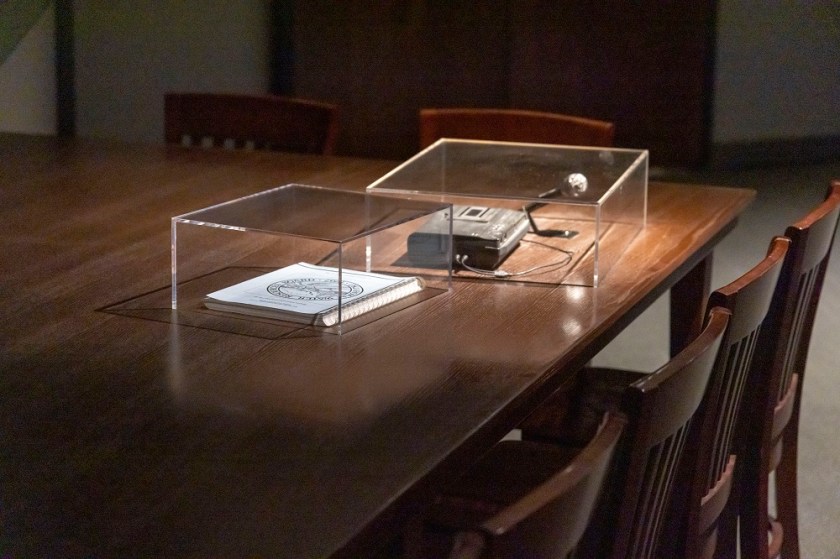
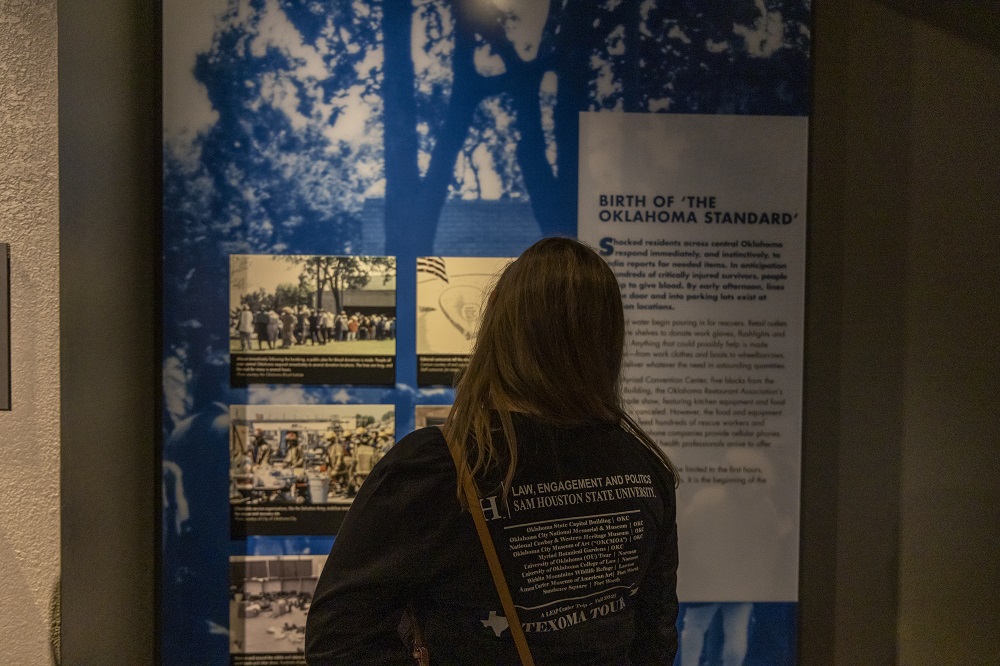
April 19, 1995 was just a nice spring day, a completely normal day in Oklahoma. One of the most difficult experiences on the tour was in the meeting room, where the Water Resource Management Committee began their meeting at 9:00am–a meeting which was recorded.
We listened to that recording, hearing the explosion, and also the screams, fear and confusion among those attending the meeting.
The lights dimmed as the explosions and screamed sounded, and then their was silence, leaving us to ponder the aftermath of that day.
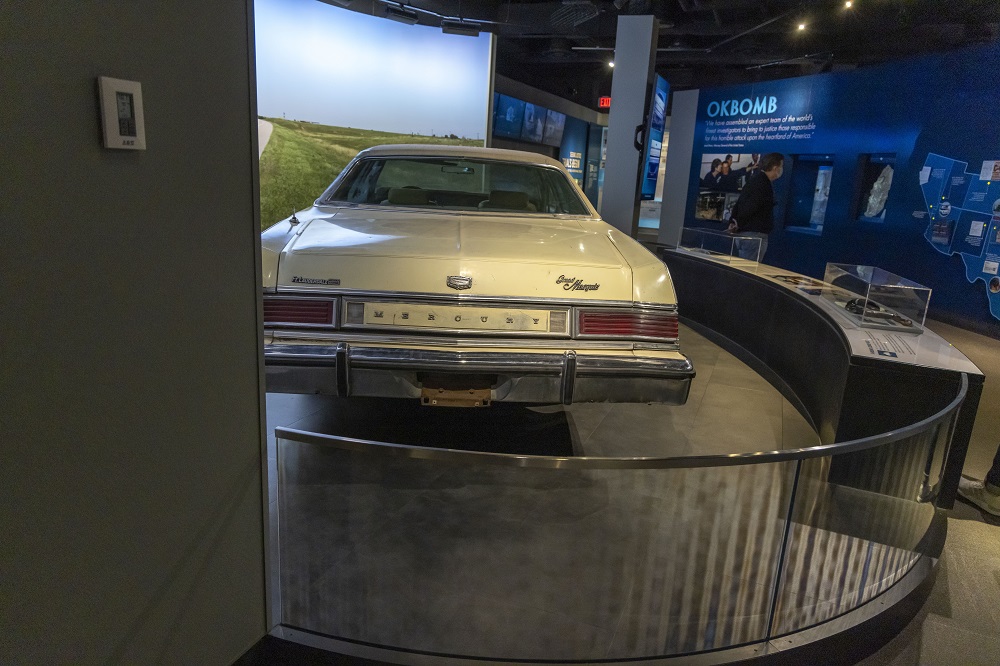
The aftermath was also vividly displayed at the Museum. Artifacts included a pile of keys, glasses, desk items, and shoes: the remains of a tragedy, forever encased in this Museum–preserved, much as people’s memories of the bombing will last forever.
The lives of the innocent are memorialized in so many ways throughout the museum, but the most impactful is the wall of pictures with personal belongings that they were able to identify as belonging to specific individuals.
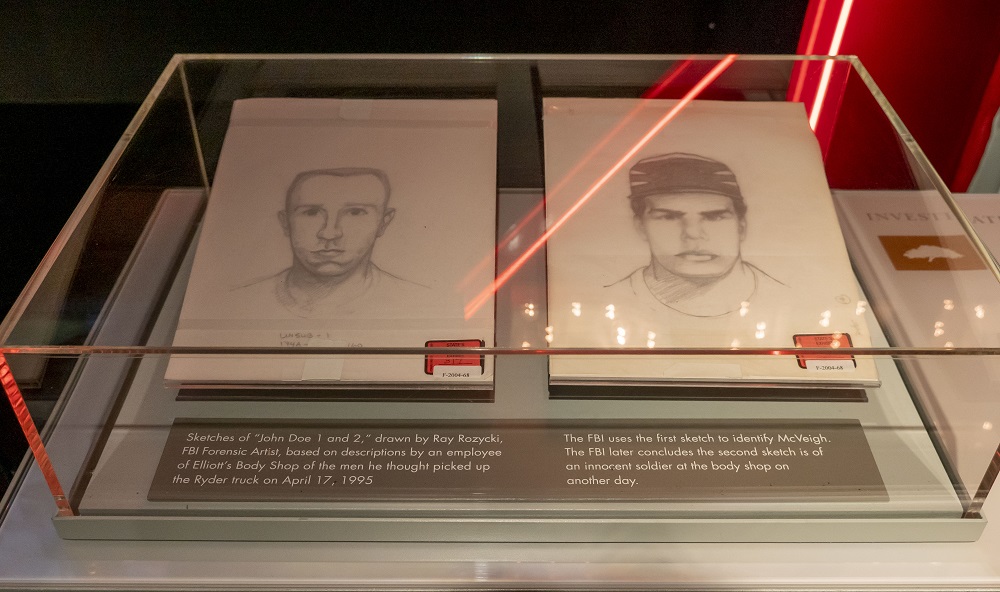
As we moved through the timeline, we were then shown the backstory of Timothy McVeigh and what he was doing leading up to the incident.
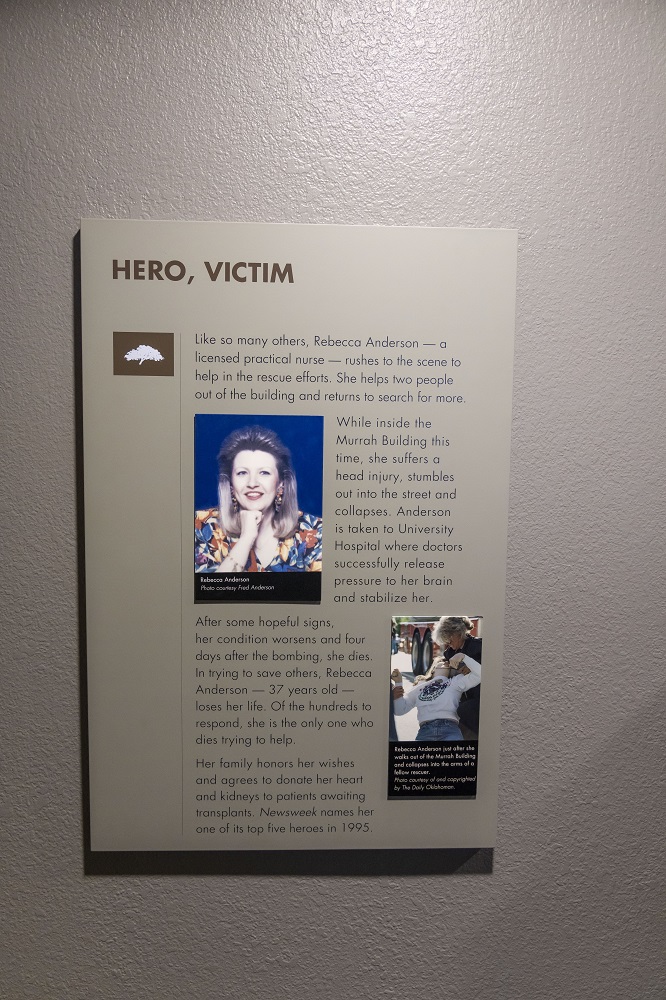
The stories of those who passed, those who died, and the heroism of the rescuers was emotional.
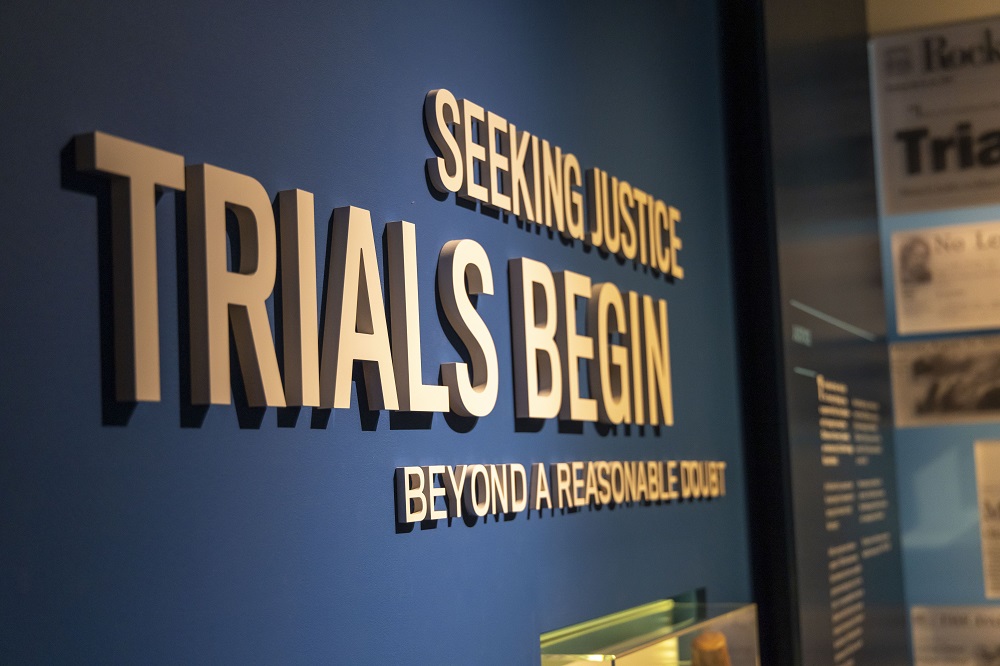
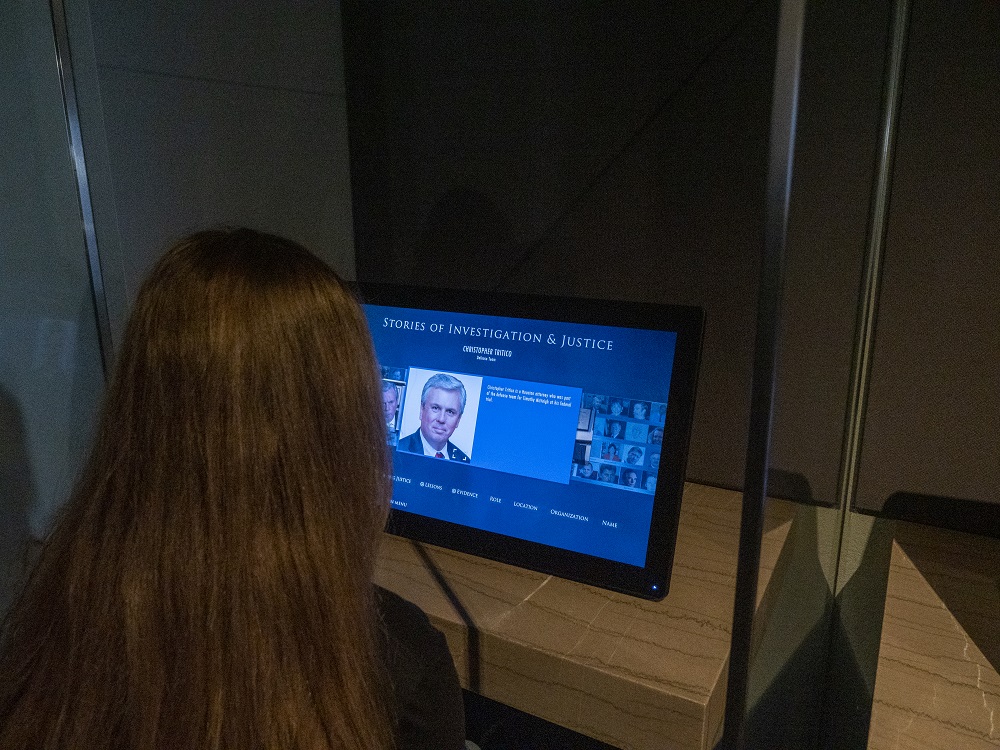
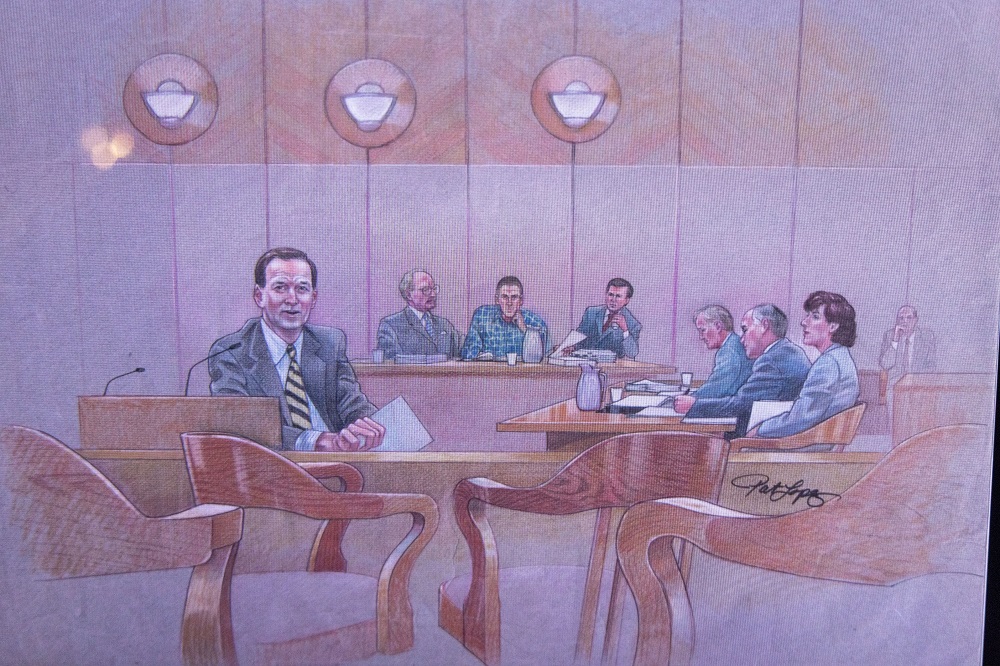
McVeigh was charged with 15 counts of murder, and he was represented by multiple attorneys, including with Chris Tritico, who is an SHSU Alumnus.
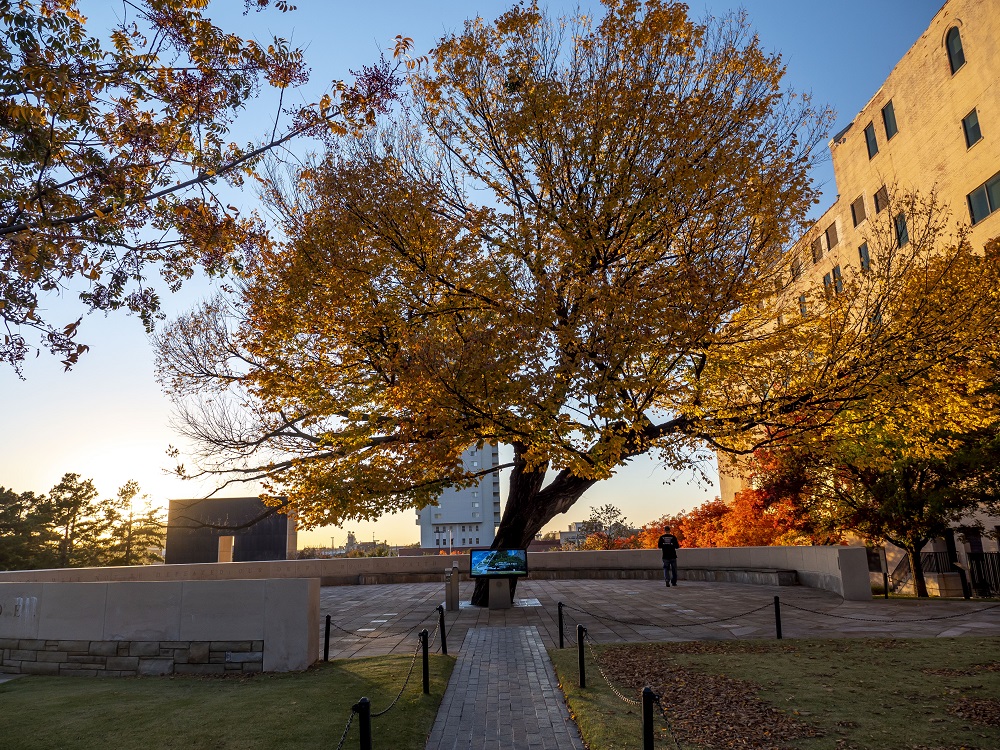
As we made our way to the outside part of the building, we experienced a great contrast to the tragedy we walked through. We breathed a sigh of relief at all the vivid fall colors of the trees and relished in the natural beauty that I believe we all needed.
The path leads up to a single American Elm tree that is known as the Survivor’s Tree. This Elm stood through the bomb and remains strong to this day. Each year the seedlings are harvested from the tree and given in remembrance to the families impacted by this event.
An offspring of this tree was even planted at the White House.
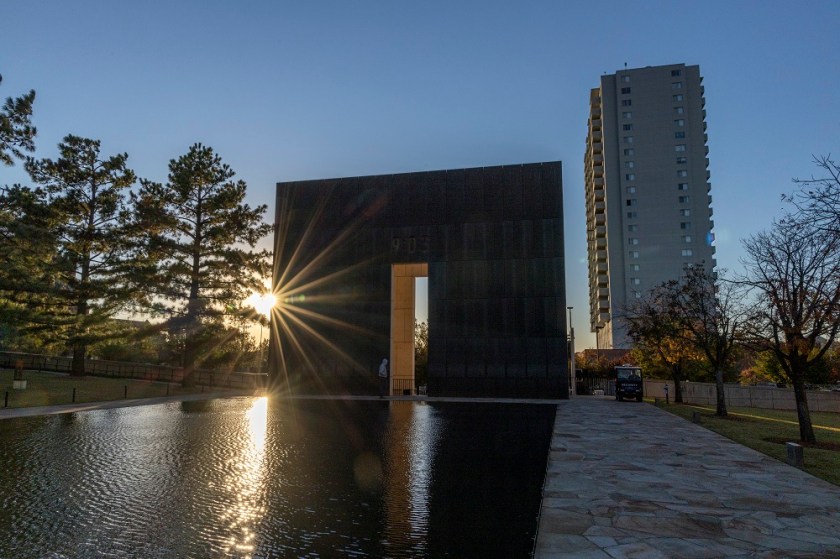
The grounds also are home to other memorial features. There is an East Gate displaying 9:01am, a reflecting pool, and a West Gate, displaying the time 9:03am.
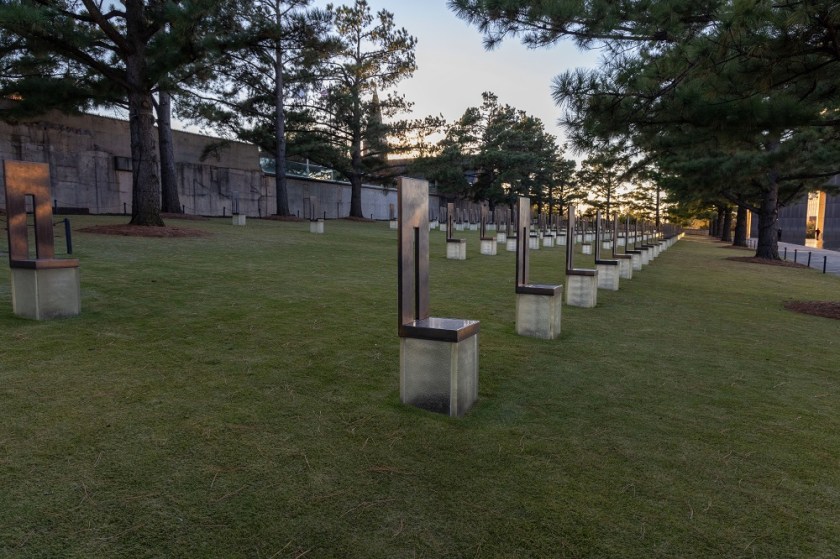
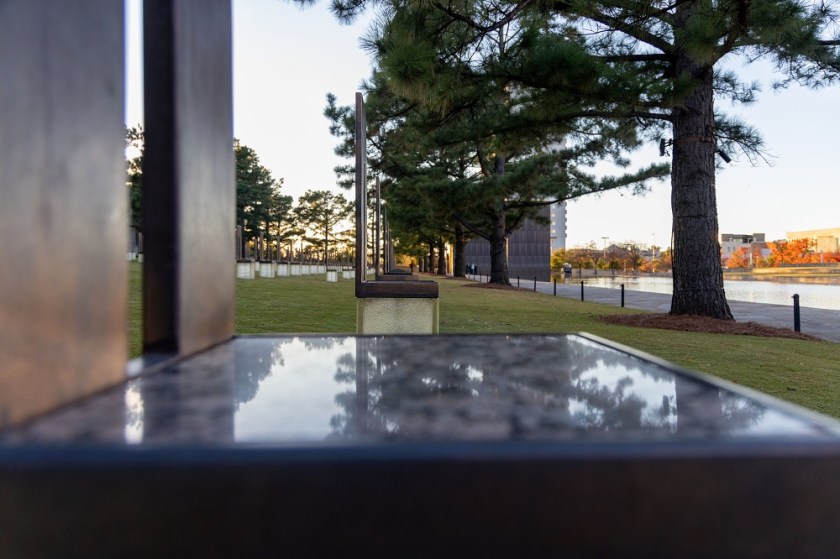
South of the walls, the lawn is lined with 9 rows of chairs representing the nine floors of the Murrah Building.
There are 168 empty chairs, representing the lives lost, including young children (which are represented by smaller chairs).
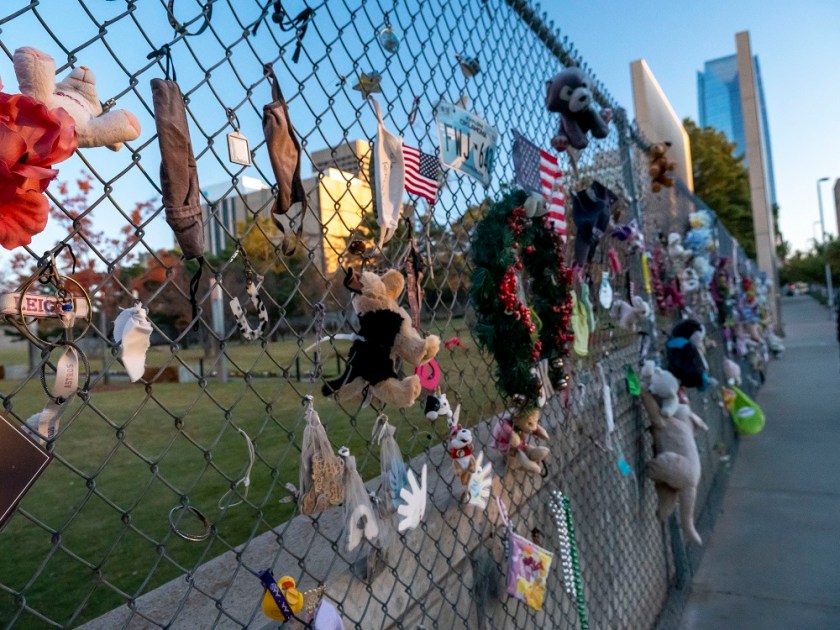
Surrounding the grounds, there was a fence with mementos that people have placed in memory of loved ones: teddy bears, bracelets, photos, and such.
We also went across the street, where a nearby church created a statue of Jesus, with an inscription of the shortest verse of the Bible: “And Jesus wept.”
This was a tour that almost brought me to tears at several places, and our hearts were heavy as we left.
Oklahoma Capitol
Saara Maknojia
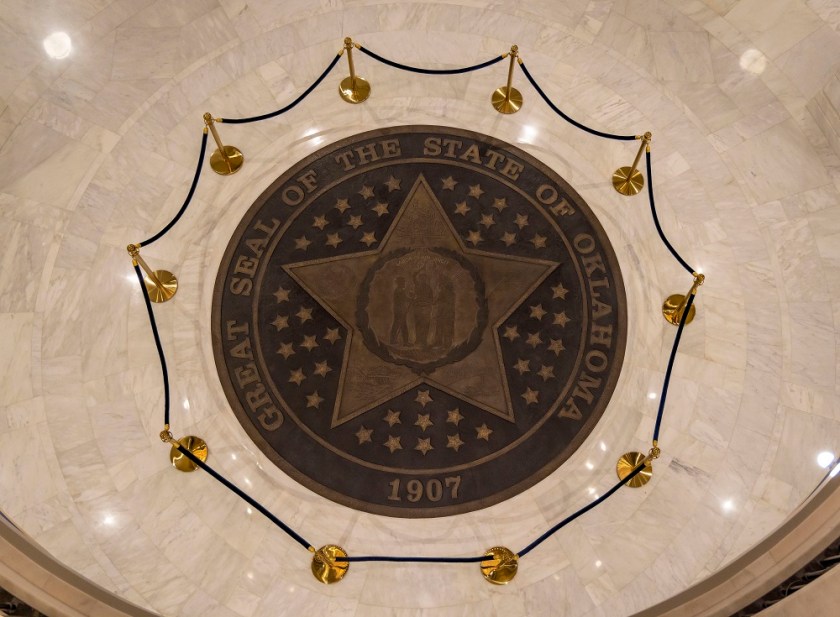
Shortly after our somber but educational tour at the Oklahoma City National Memorial Museum, the LEAP Members coasted off to the Oklahoma State Capitol. The chilly weather and beautiful sunset allowed us to better view the magnificent and historical site.
The intricate architecture of the landmark included Greek Corinthian columns, and Greek Meanders which symbolizes and means movement. The Greco-Roman structure of the state capitol was complemented with the displayed Tribal flags from Native American Peoples who have such a rich history in the 45th state.
The Oklahoma State Capitol is further enhanced with the sculpture of a Native American woman, designed by Allen Houser, which stands in front of the Capitol.
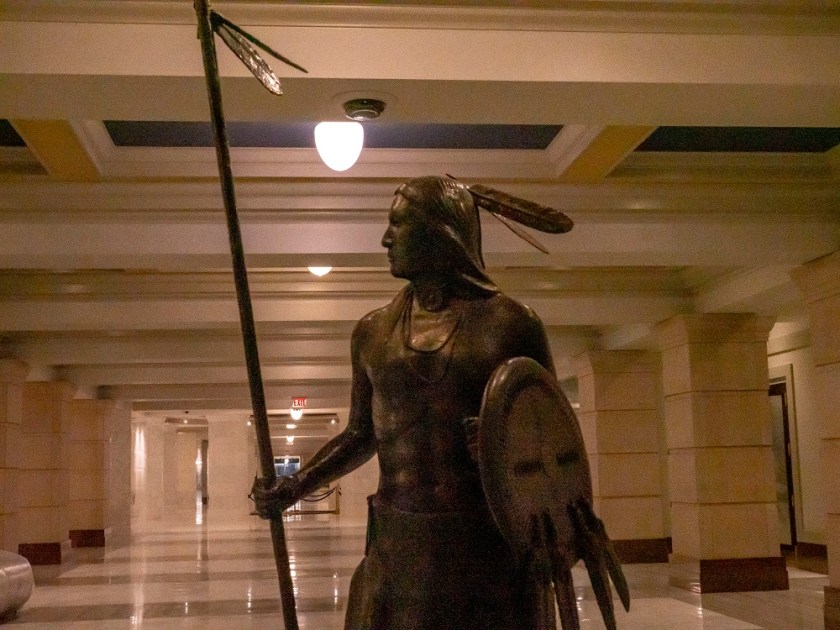
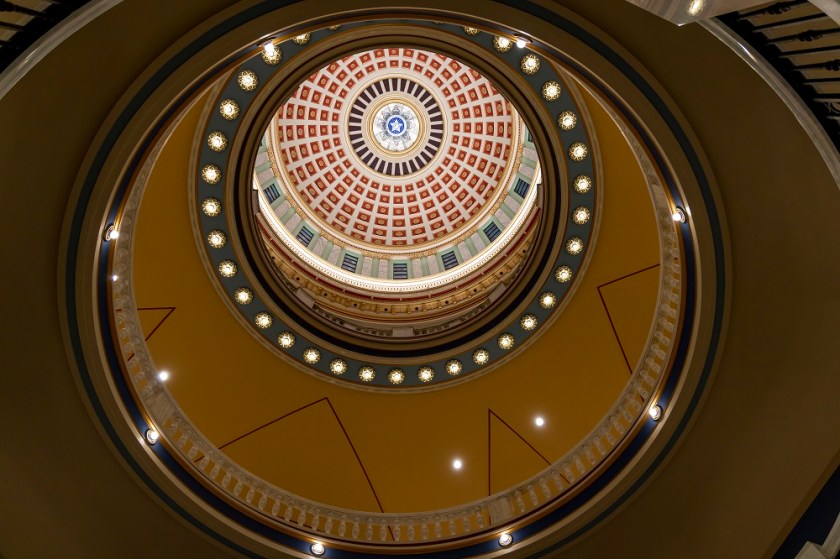
The peak of the capitol’s dome is adorned with a 17.5-foot sculpture of a Native American called “The Guardian,” by Enoch Kelly Haney, and a version of the statue is also located inside the building.
We learned the history behind some of the Oklahoma tribes as we observed the painted murals on the third floor of the capitol.
Oklahoma’s historic significance of the “Sooners” is also integrated into the state building through some of the murals. We all learned about how the name came to be and why it was such a vital point in OK history. Oklahoma State University later adapted “Sooners” as their team mascot to exemplify their patriotism towards the state.
Probably the highlight of the Capitol Building is the interior dome, which is beautiful.
The LEAP Members grasped a better understanding of not only the political aspects of the Oklahoma State Capitol, but also the history and cultural diversity within the building itself and the state of Oklahoma throughout the tour!
Oklahoma City Museum of Art
Erin Juarez
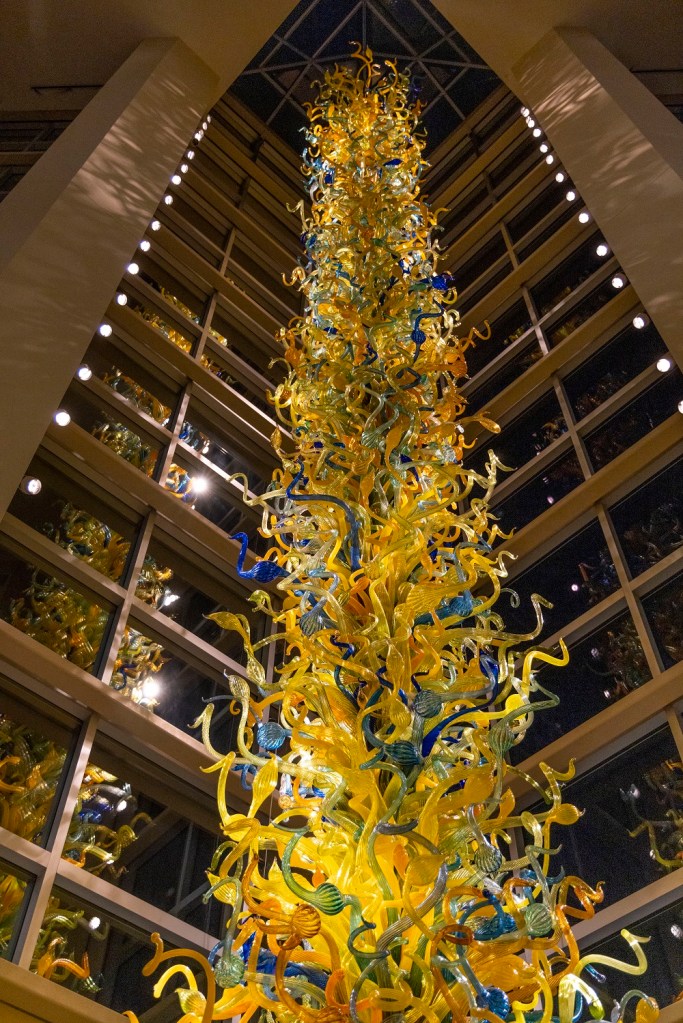
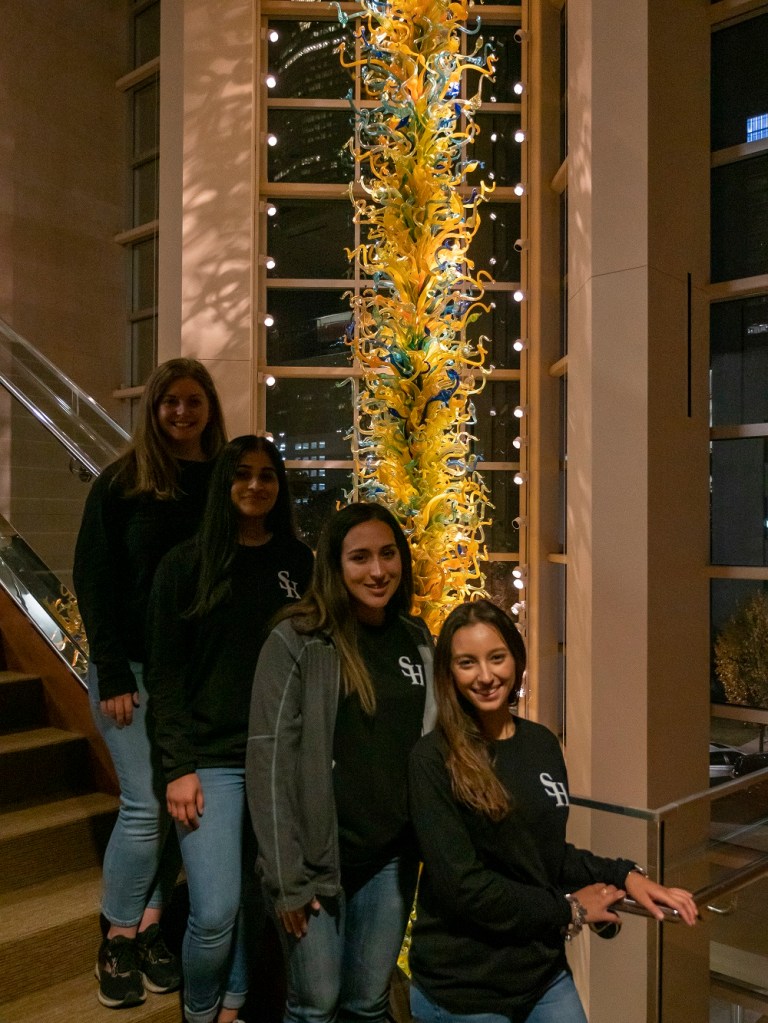
With the night still young-ish, we decided to go to the Oklahoma City Museum of Art. As we walked in, there was a fifty-five feet glass sculpture towering to the right of us, one created by renowned artist Dale Chihuly.
Yvette, a born trouble-maker, immediately got into trouble for standing on a wall so that she could better pose with the sculpture…
This Museum helped expose us to various types of art: impressionism, regionalism, modern, sculptures, and many other styles and artistic media. It helped me learn what type of art I most enjoy. In particular, I liked the sculptures, especially those of Chihuly. Saara also liked Chihuly, but was also drawn to the impressionists.
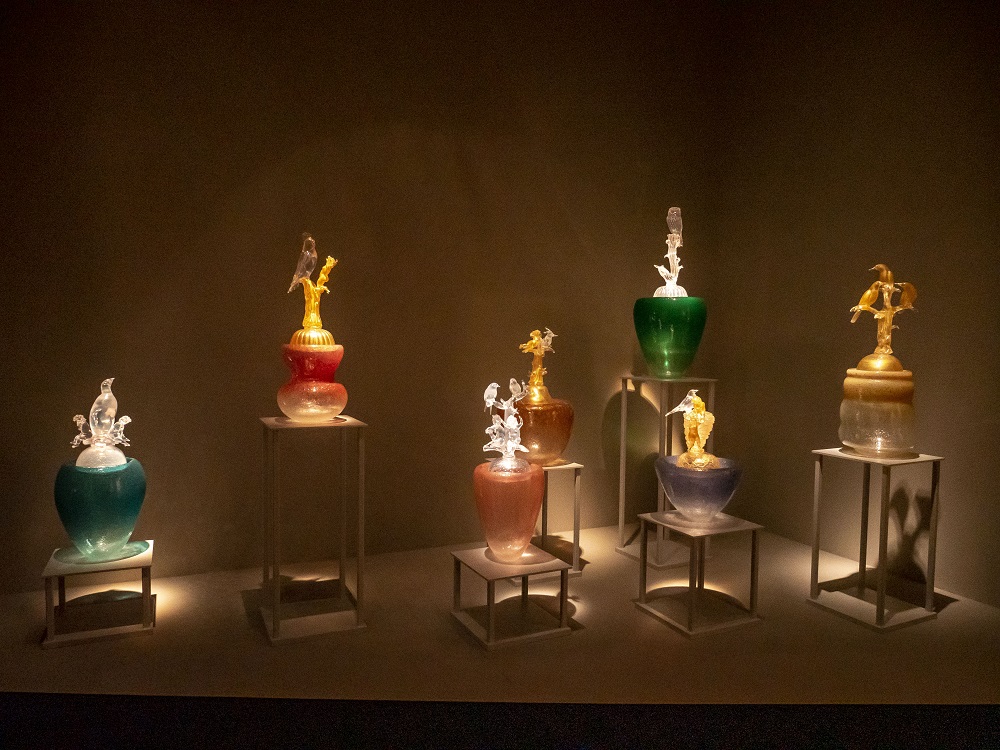
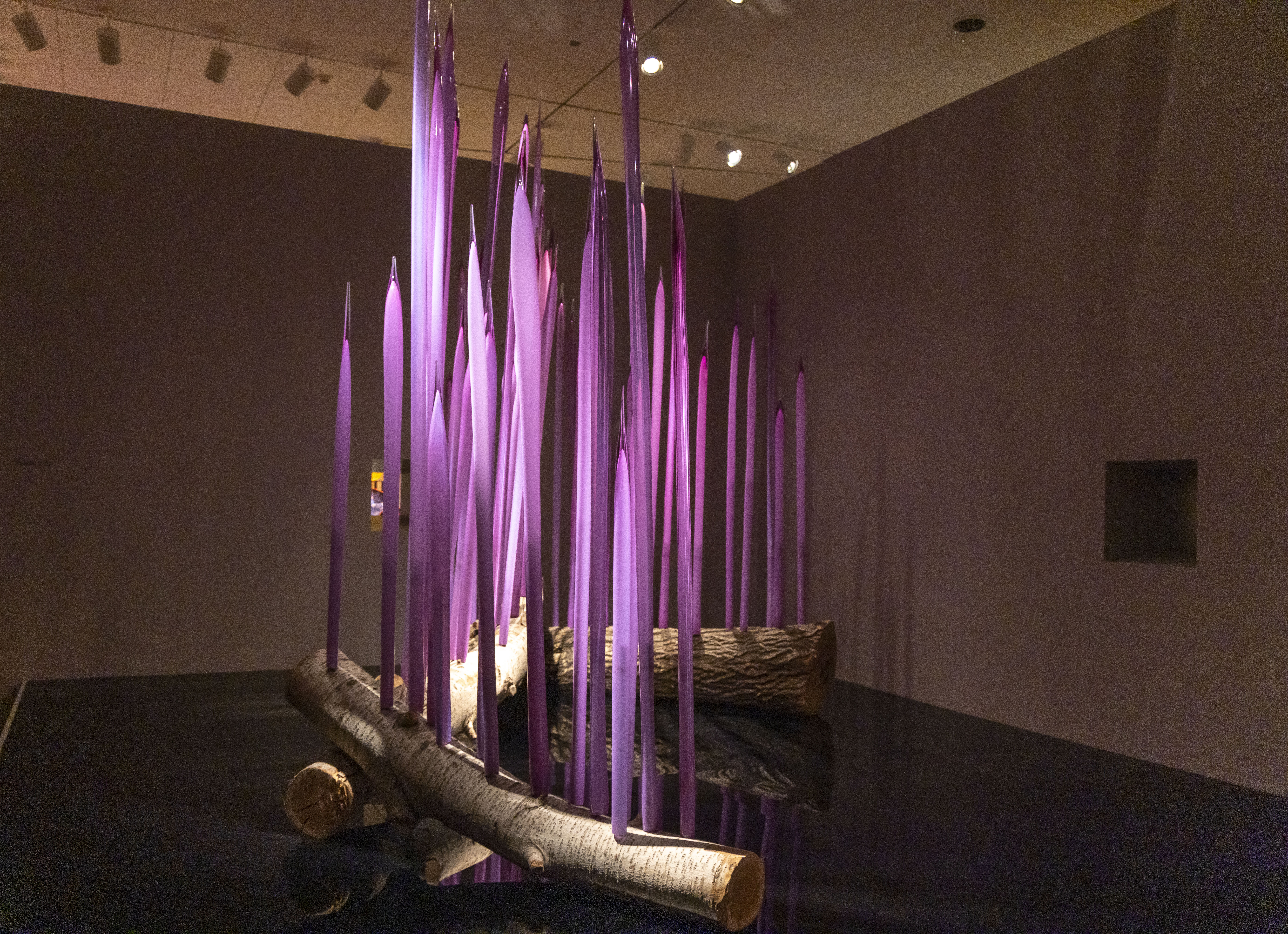
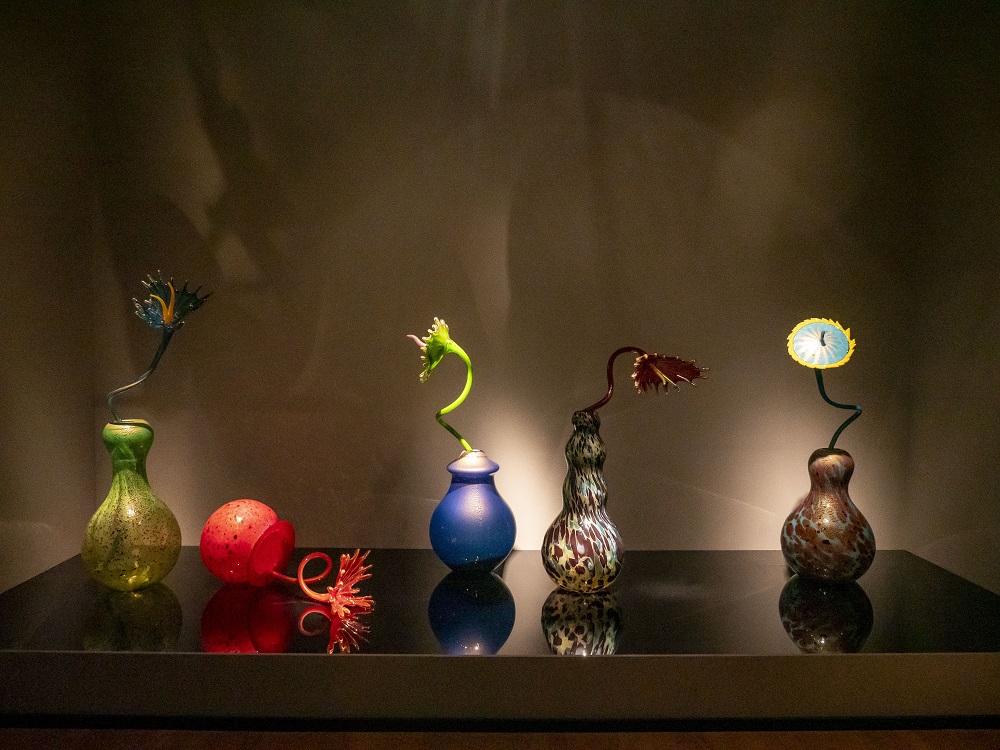
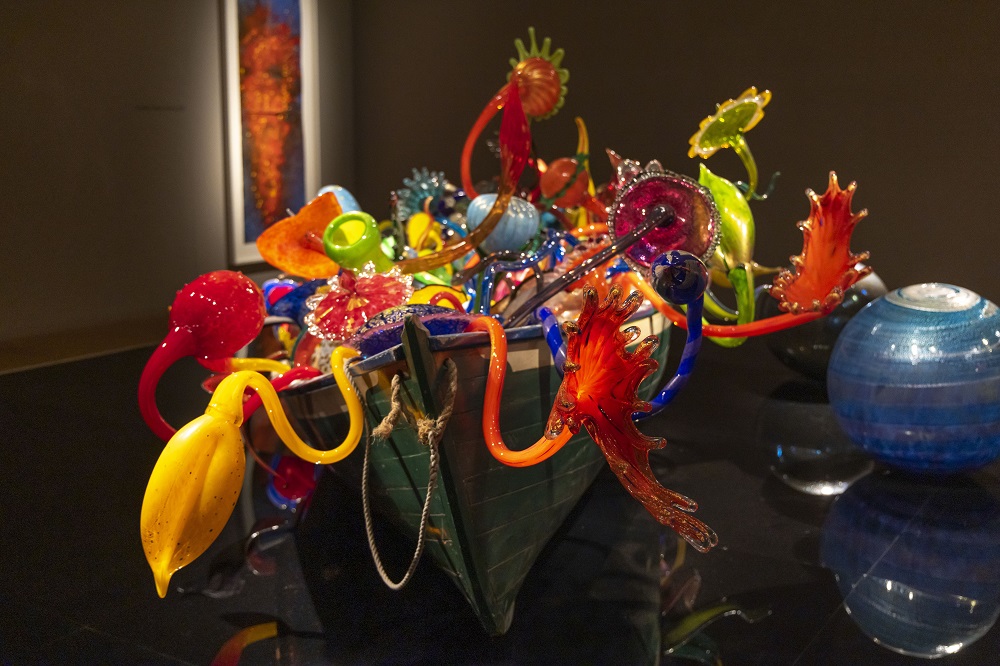
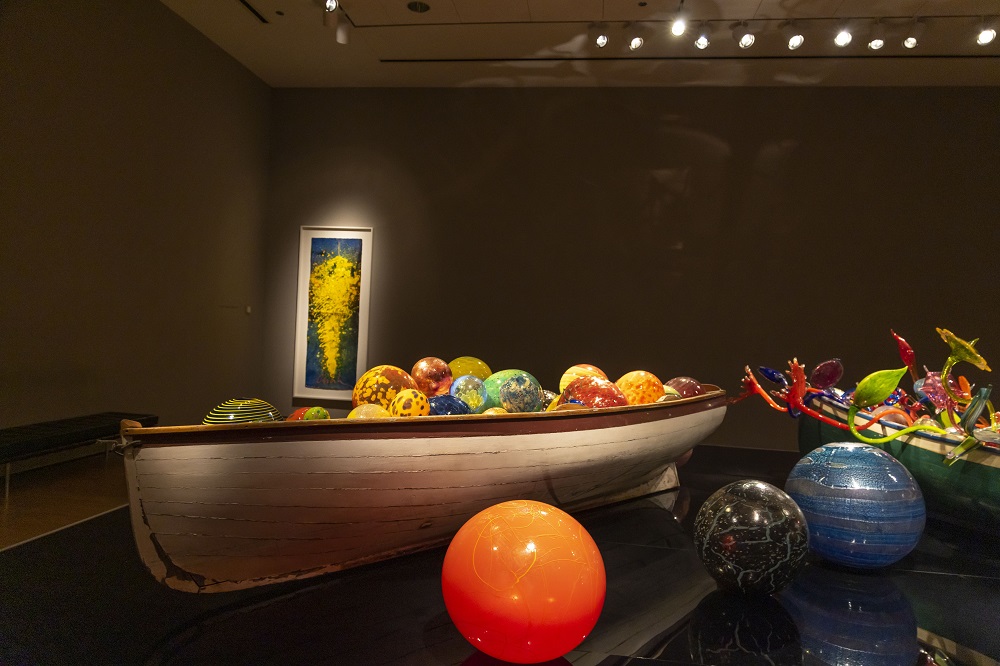
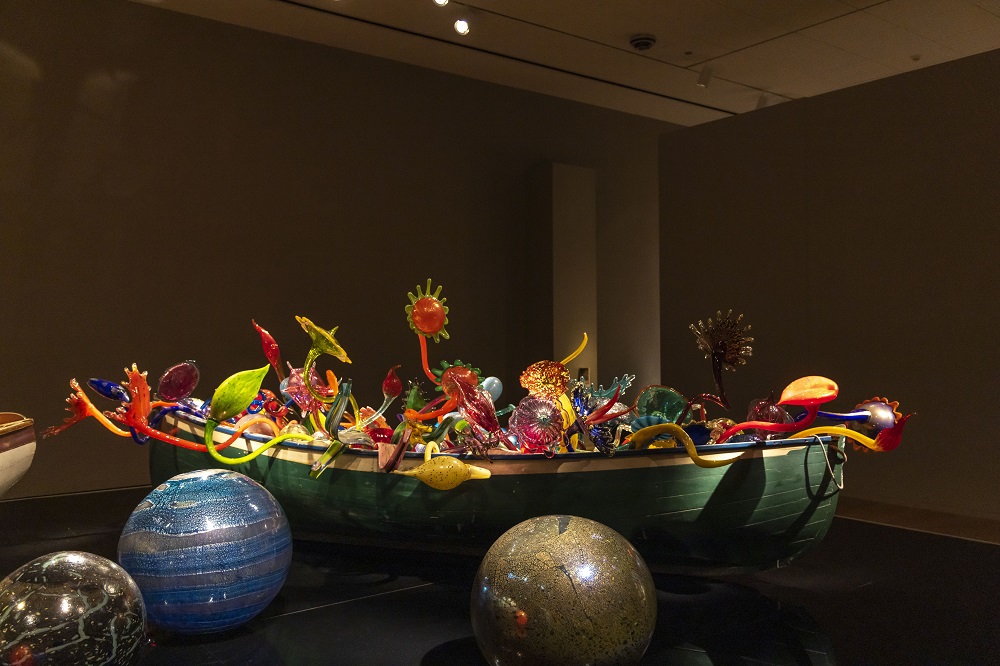
The museum is separated into four floors. On the fourth floor, our favorite artist, Dale Chihuly, work is featured in a way that flows cohesively leaving the viewer to almost forget they are in an art museum. The dark room, allowed for the lights that were strategically placed to catch the art at different angles to illuminate it differently.
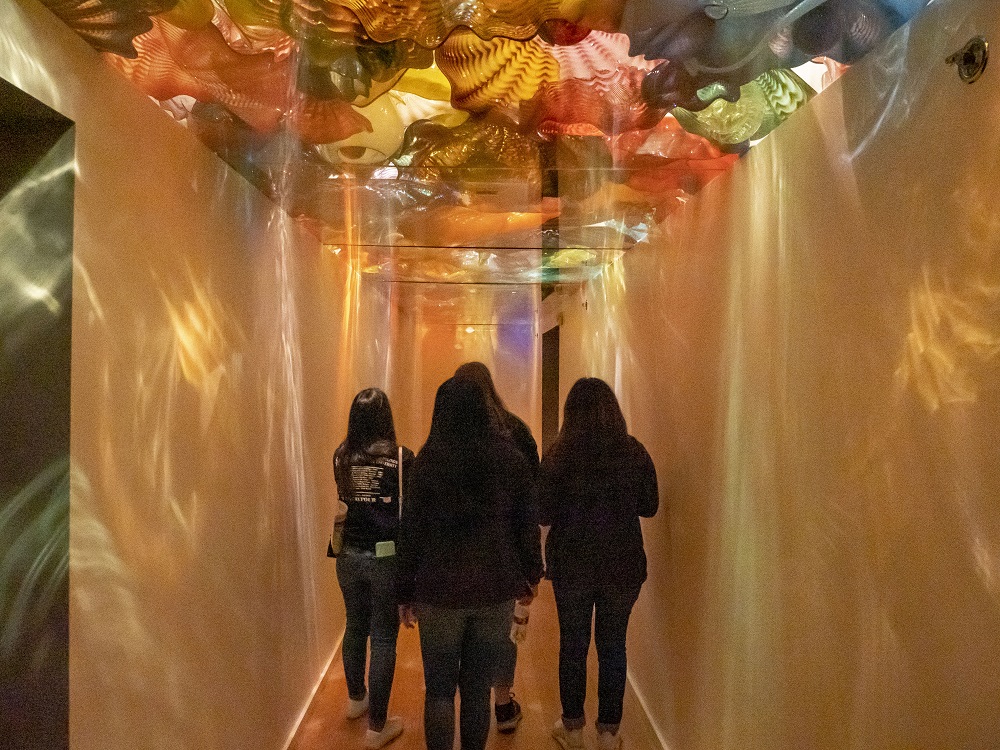
We found this exhibit to be exceptionally fun and dynamic to photograph. As a person new to cameras, it offered the opportunity to experiment with photography. The low light was a challenge, but the subjects were beautiful! We particularly enjoyed walking under Chihuly’s Persian Ceiling, which creates all sorts of interesting shadows and colors.
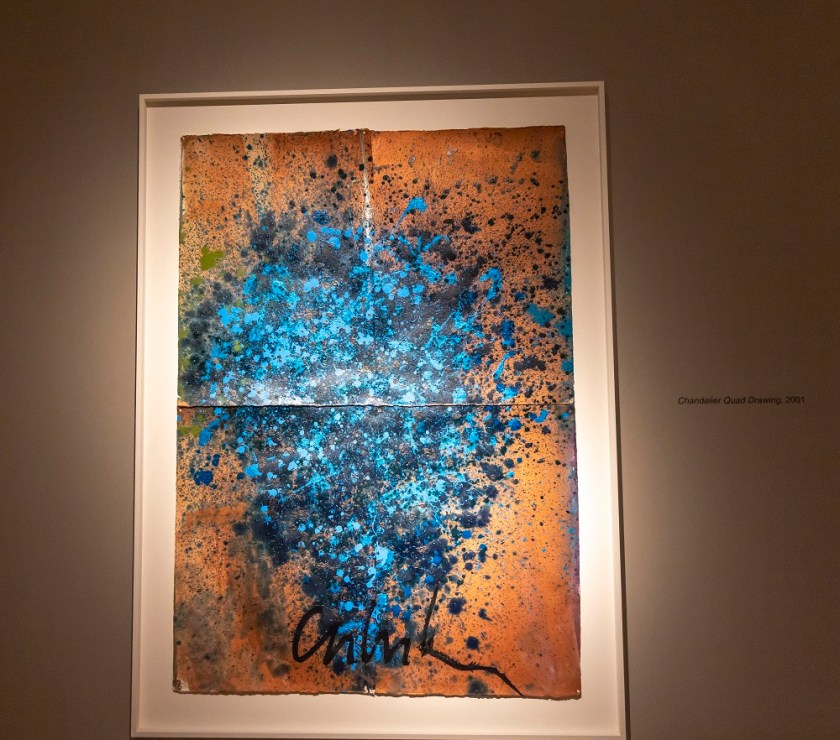
And we also had the opportunity to see some of Chihuly’s paintings–one of which, we learned, Stephanie actually owns!
Outside of the fourth floor, there’s a video of how Chihuly gets his glass done for his art. This was very interesting. We often found ourselves asking in amazement on how he accomplished such great works, so the video was insightful.
We even found another of his chandeliers in another part of the Museum, which was also beautiful.
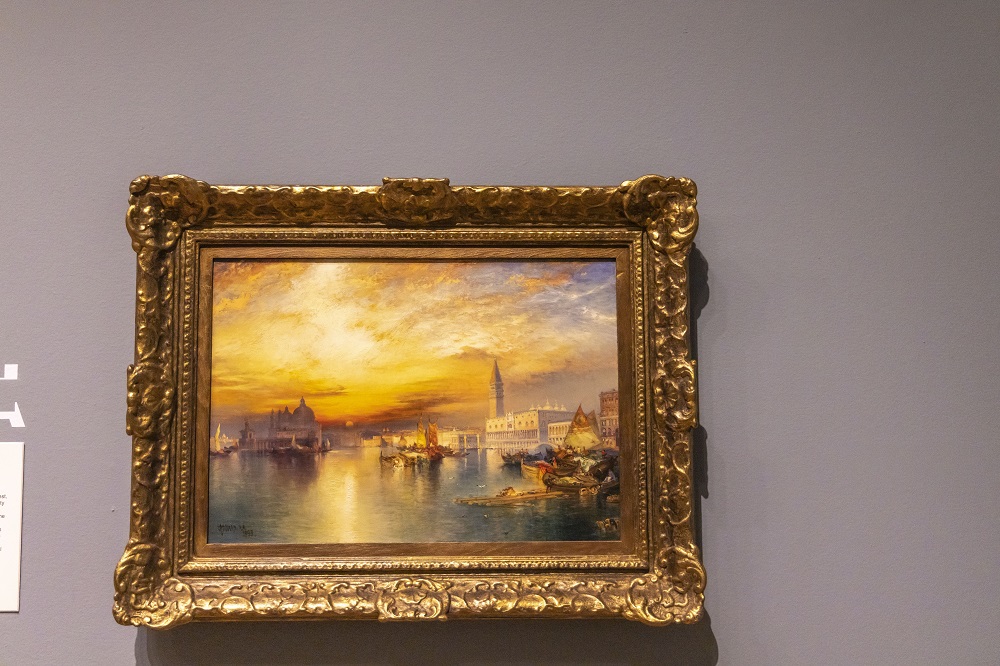
Of course, we didn’t just see Chihuly. For some of us, it was our first time to see a Thomas Moran painting…
…and Alex Katz…
…and although all of us had seen a Georgia Okeeffe…
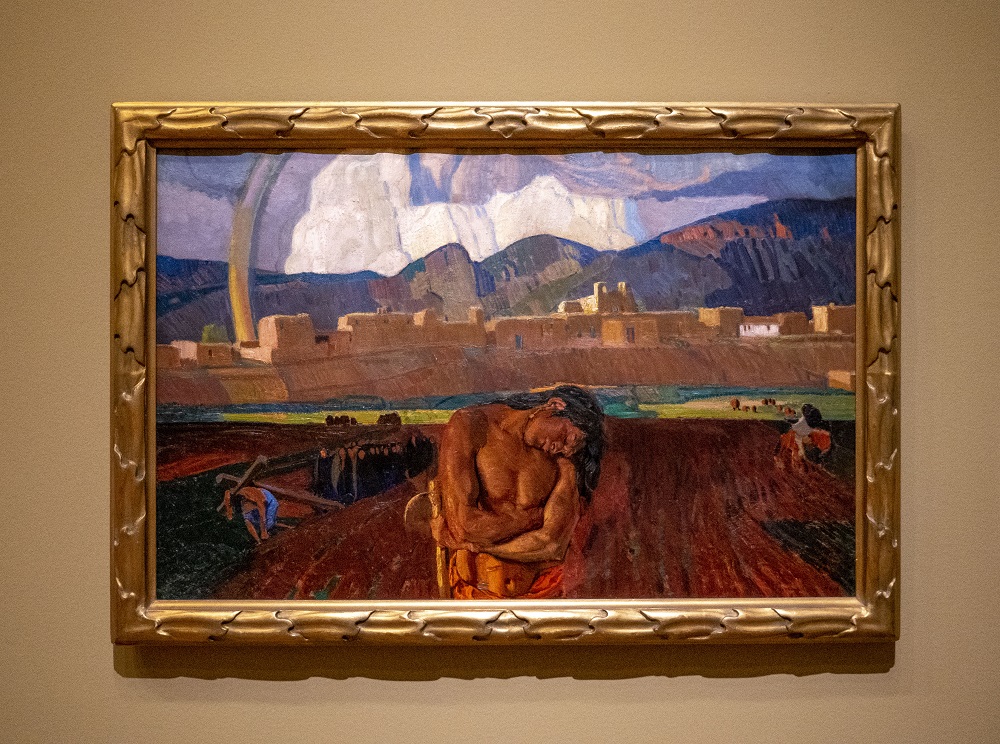
…it was our first time to see some other Southwestern artists, such as Ernest Blumenschein…
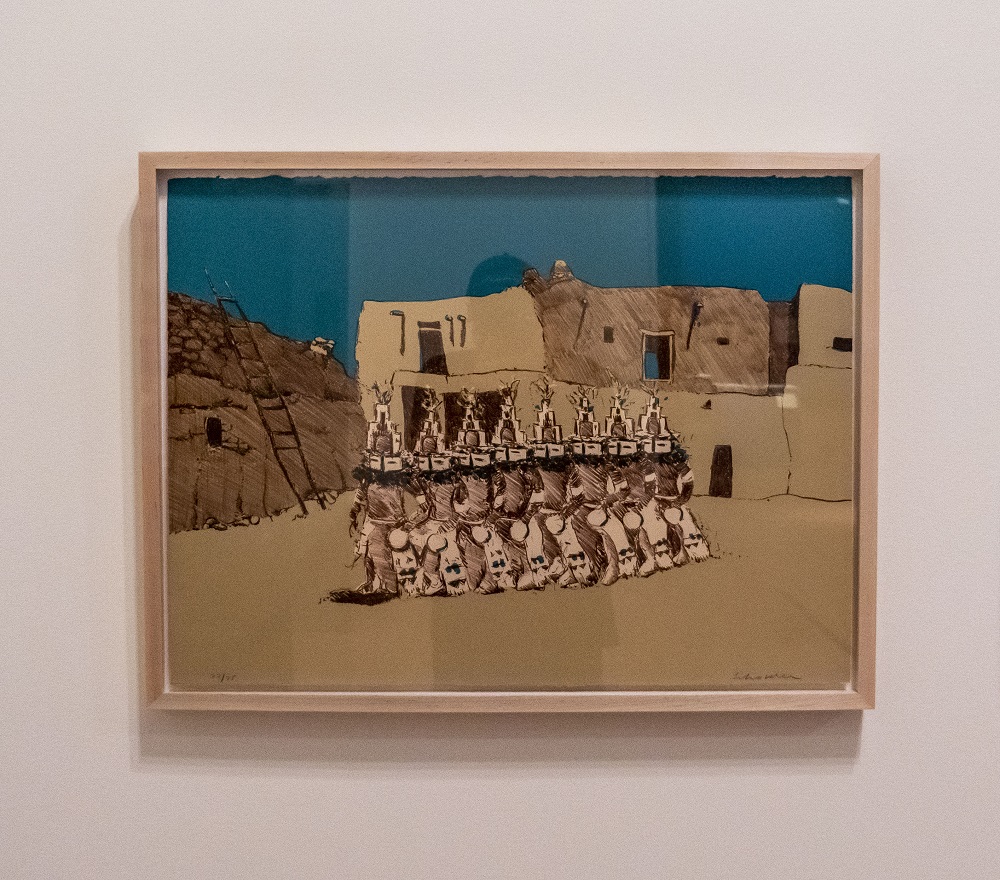
…and Fritz Scholder…
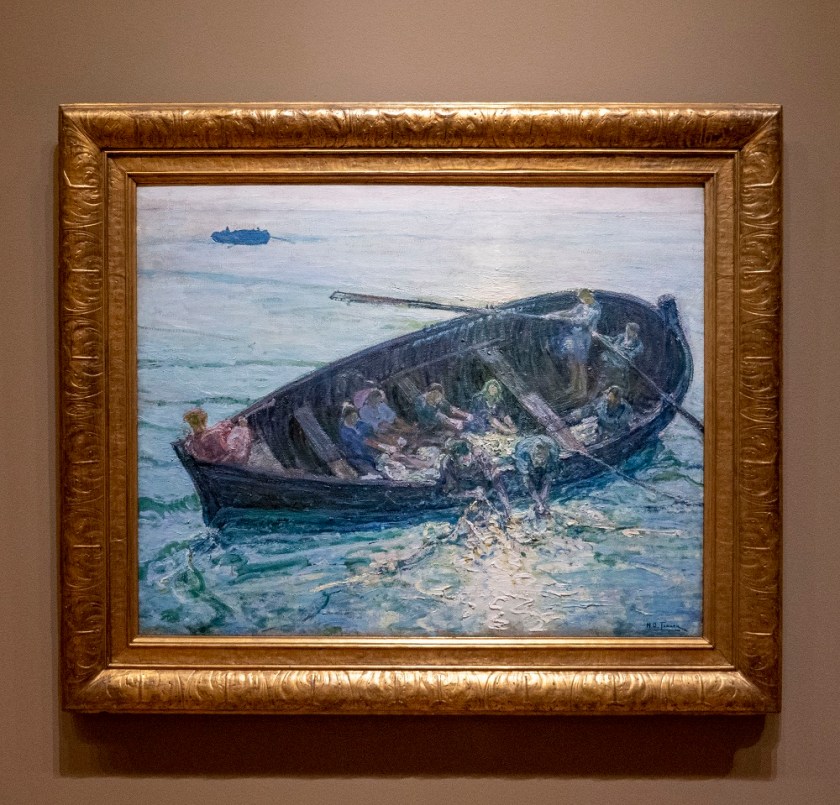
We also saw one of our favorites, which was a piece by the African-American artist Henry Osawa Tanner.
As we took one last gaze upwards at the towering Chihuly we left awed by the amazing art.
But, of course, our favorites were the various Chihuly pieces, including the largest of these, the 55-foot piece at the front of the building. This time, however, we took the photo according to the rules of the Museum, forcing Yvette to comply.
The Wedge Pizzeria
Morgan Robertson
To conclude our first eventful day, we opted for a quiet, carryout dinner. We selected The Wedge Pizzeria, which was Oklahoma City’s first artisanal brick oven pizza. Among the pizzas we selected were: The Perfect Margarita, Brisket, and we built our own Hawaiian Pizza. As we sampled each pizza, we all found we had different favorites, but we liked them all. Saara’s favorite was the brisket pizza; she described it as having the right amount of spice from the Jalapeños, and a great flavor from the brisket.
My favorite, and Erin’s favorite, was the Hawaiian Pizza. Although Hawaiian Pizza might be controversial among the general population, it has a place amongst this group of LEAP Members.
Overall, it was a great dinner and we enjoyed each other’s company as we ate.
Last Wednesday, 13 students had the opportunity to participate in a sit-down session with Nancy Bocskor. She is known nationally and internationally for being a “Democracy Coach” and a servant to the community. In addition, Ms. Bocskor is a board member of an organization known as Running Start, which encourages young women to run for office, aspire to executive positions, or otherwise gain a “seat at the table.”
The 13 of us were thrilled to sit down with Ms. Bocskor and pick her brain on the many things that interest us. Of note, early in her professional career, she worked with Newt Gingrich, who would later become Speaker of the House. By the time she was in her mid-20s, she was his Legislative Director. She stressed the importance of taking risks, something that we, as women, might not have been socialized to do. But sometimes getting out of your comfort zone is the only way to take opportunities, something she did when moving from Ohio to Washington, DC.
Bocskor’s involvement in politics extends to the non-profit world, where she is active on many boards. One of those is Running Start, which provides funding (with the help of Walmart) to young women for interning in Washington, DC. This semester-long program pairs female students with women in Congress (House and Senate), and provides leadership workshops on Fridays. Over the years, SHSU has had three students picked for this program, including two in the same year–the only time in the program’s history that two students have been selected from the same University.
Anne Jamarik and Megan Chapa: Running Start DC Fellows
Ms. Bocskor suggested we apply to the program, as well–something we are looking into, with our newfound tolerance of risk!
One of the biggest takeaways from our meeting with Nancy Bocskor came from Shaylee Ritter’s questions. “How do you make yourself stand out from the rest?” and “how do you make personal connections with someone you barely know?” Bockskor’s response was to be engaged in the conversation, which will allow students to ask interesting questions. The more engaged you are, the deeper you’ll be able to think about the topics. The deeper you are thinking, the more likely you are to ask new questions. These questions will allow you to connect with the professional, while also providing you with interesting information.
Bocskor’s perspective was valuable because there isn’t a faculty member on SHSU’s campus with her background. We were able to get more of a practitioner’s perspective, while also just getting practical life advice. Many thanks to Ms. Bocskor for returning to SHSU to help out young women!
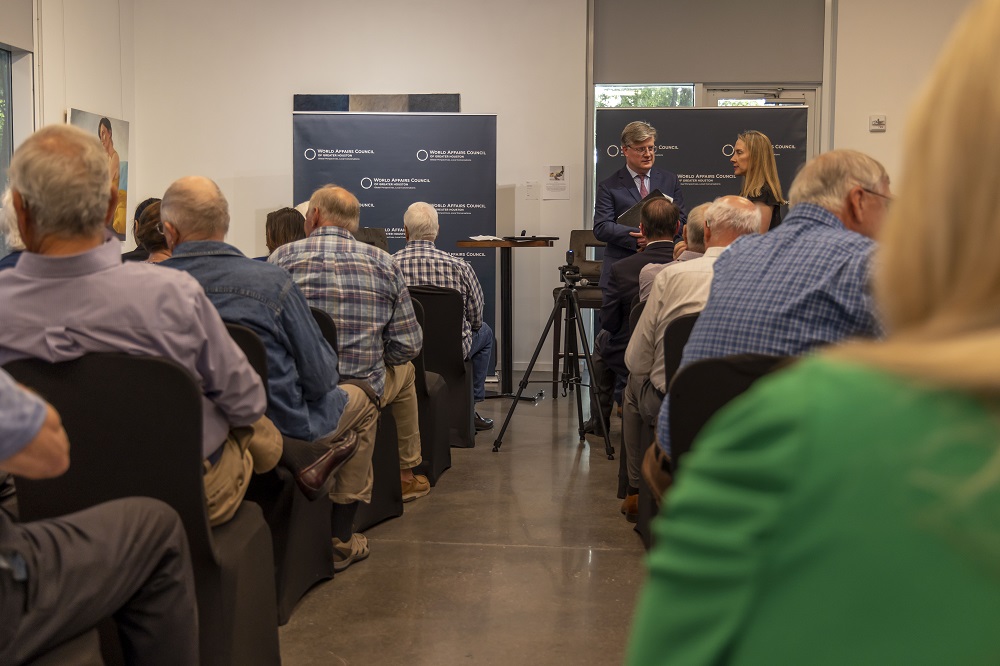
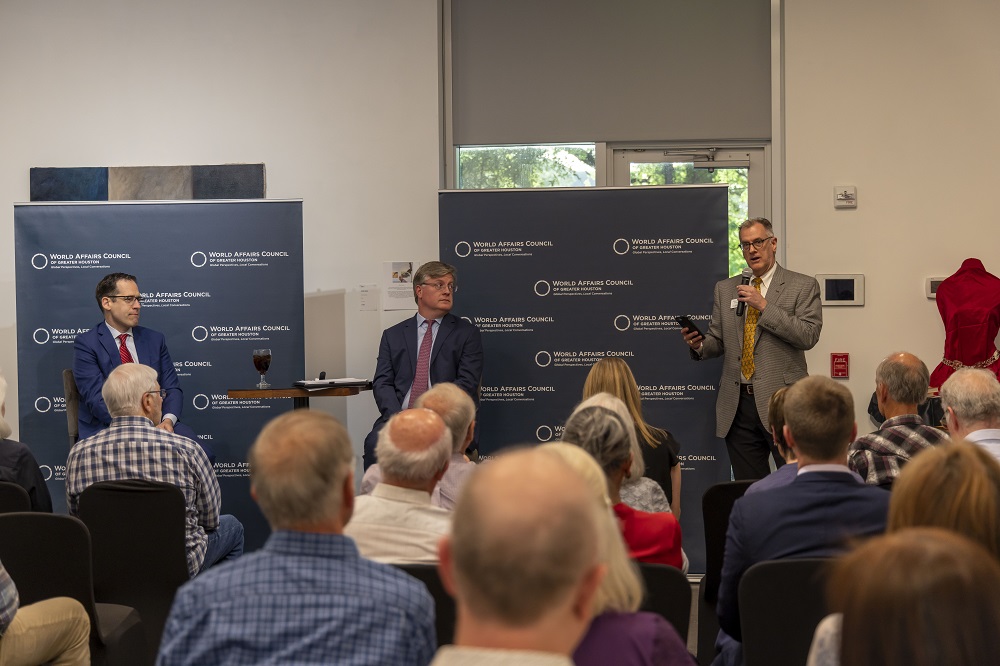
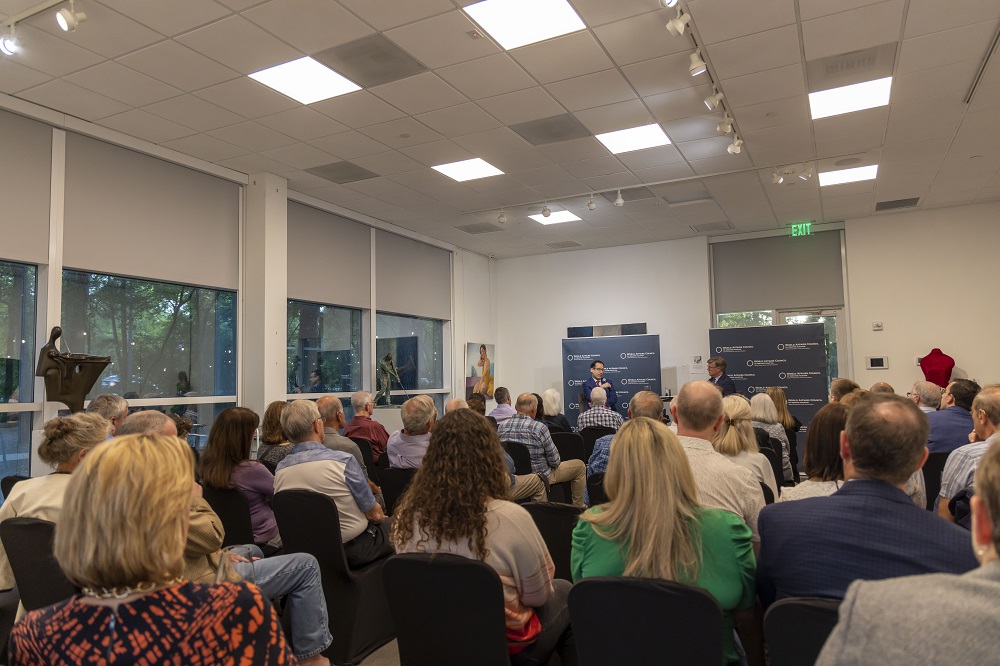
Although the LEAP Ambassadors have attended many events sponsored by the World Affairs Council, this was our first event at the Glade Gallery, an art gallery in The Woodlands.
Gregory Gause, a professor at the Bush School at Texas A&M University, spoke to the attendees about the tragic events of 9/11, the relationships and origins that preceded the attack, and how those relationships have evolved since the attack.
After we reconnected and caught up with the wonderful WAC Staff, we began to make our way around the Glade Gallery. Never missing an opportunity to fine new favorite pieces, we began maneuvering around the gallery taking notice of all the contemporary art.
Sandija Bayot, the WAC’s Chief Development Officer, informed the crowd about several upcoming events and then surprised everyone with a pop quiz!
Sandija then asked five questions about upcoming events and handed out books as prizes to those that got the answers correct. Heather Noman correctly answered the capital of Yemen, and Morgan named the fourth Ambassador joining WAC for a luncheon the next day. Congratulations LEAP Ambassadors!
Ray Cunningham, WAC’s Executive in Residence in The Woodlands…
introduced the guest speaker of the night, Dr. Gregory Gause.
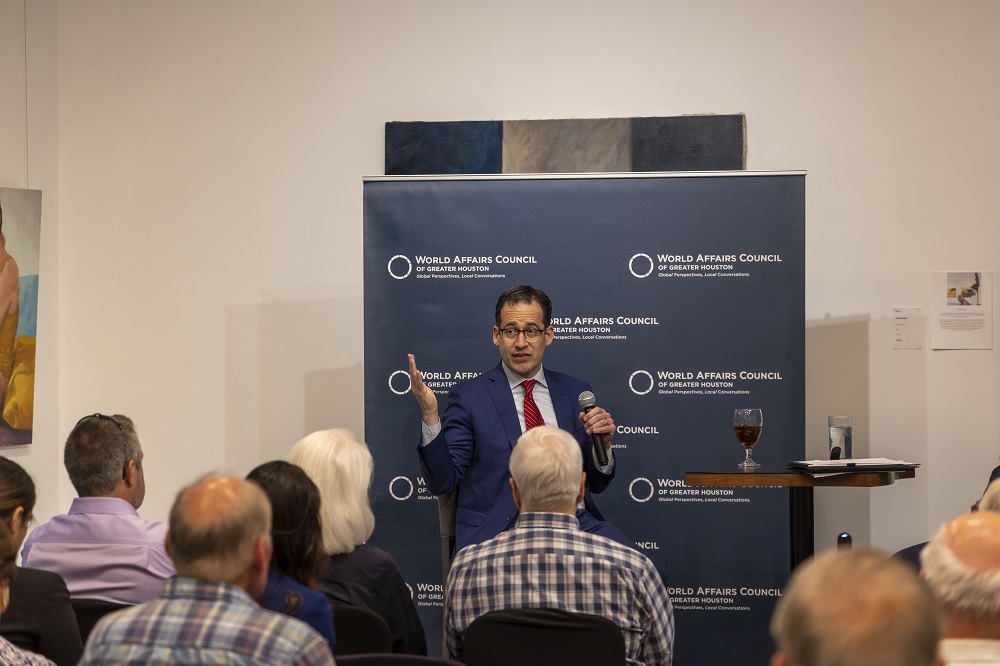
Dr. Gause is the Department Head and Professor of International Affairs at the Bush School in College Station. Professor Gause described some of the threads that converged in 2001 to lead to the 9-11 attacks, including the US supporting the anti-Soviet forces in the Middle East–some of whom evolved in to more overtly terrorist organizations.
Following quick success in retaliating against the 9-11 attacks, groups such as ISIS emerged as more powerful, and Iran has gained visibility and influence in the region. As ISIS gained power and Iran showed little inclination in curbing such power, the early US success in Iraq and Afghanistan eroded, culminating in President Biden’s decision to withdraw last year. Gause notes that there is little to no support to go back in. People’s experiences influence their willingness to support policies, and military action is no exception.
Near the end of the lecture, Dr. Gause answered a couple of questions from the crowd.
The questions were excellent, with several posted by local professors and other knowledgeable attendees. Gause focused on each question….
…and responded at length. Inevitably, questions turned to Russia and Ukraine, a direction that really brought home the relevance of our policies in response to aggression. While there was some agreement that China may be a longer-term threat than Russia, there was also acknowledgement that much suffering was likely to result from this invasion and, anytime you are dealing with a country that has control of nuclear weapons, even larger conflagrations are of great concern.
Following the event, we spent time with staff along with a couple of professors from the Bush School, who proved very interesting.
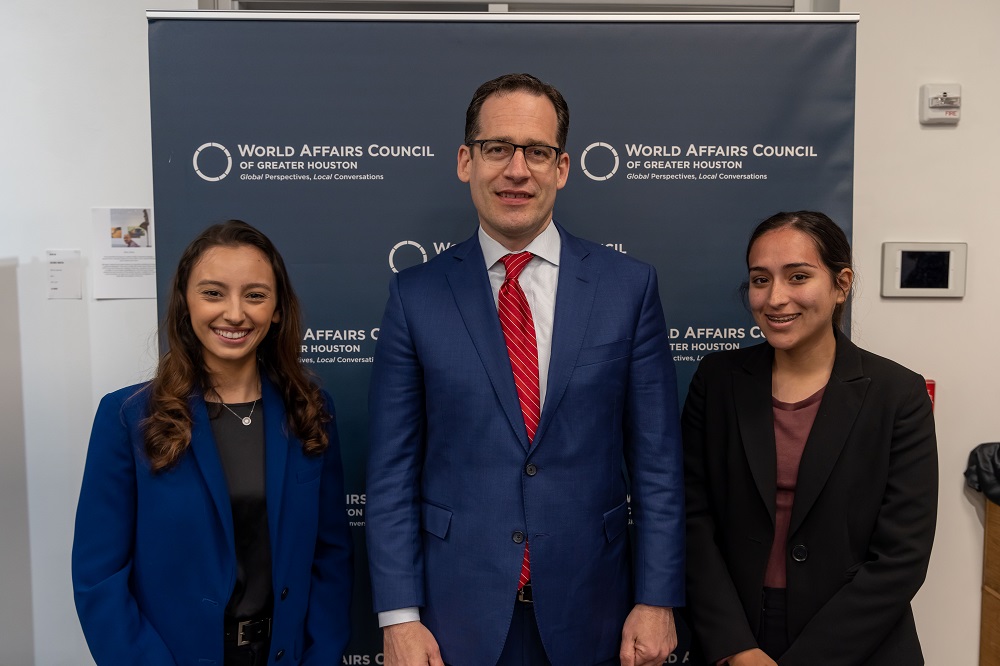
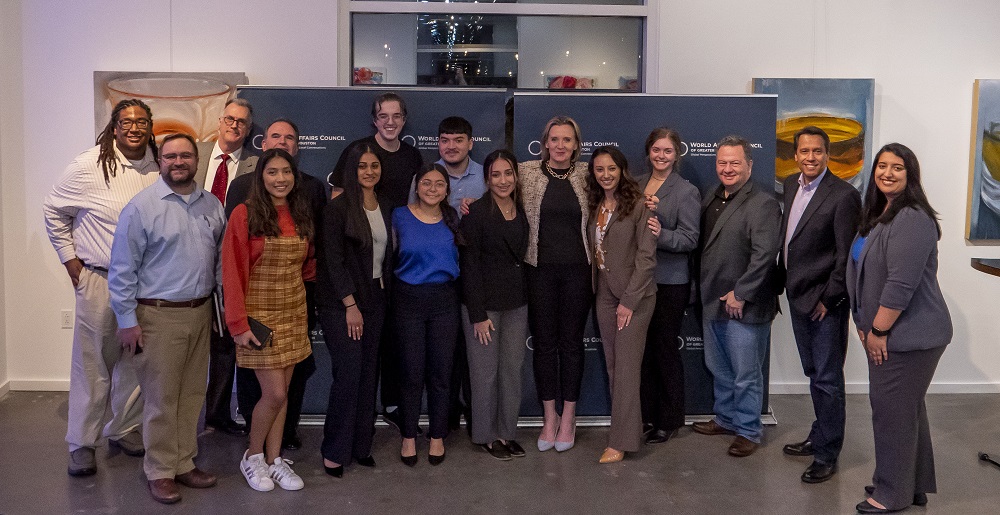
We also posed for a group photo with students from some high schools and the always-friendly, always-professional staff of the WAC.
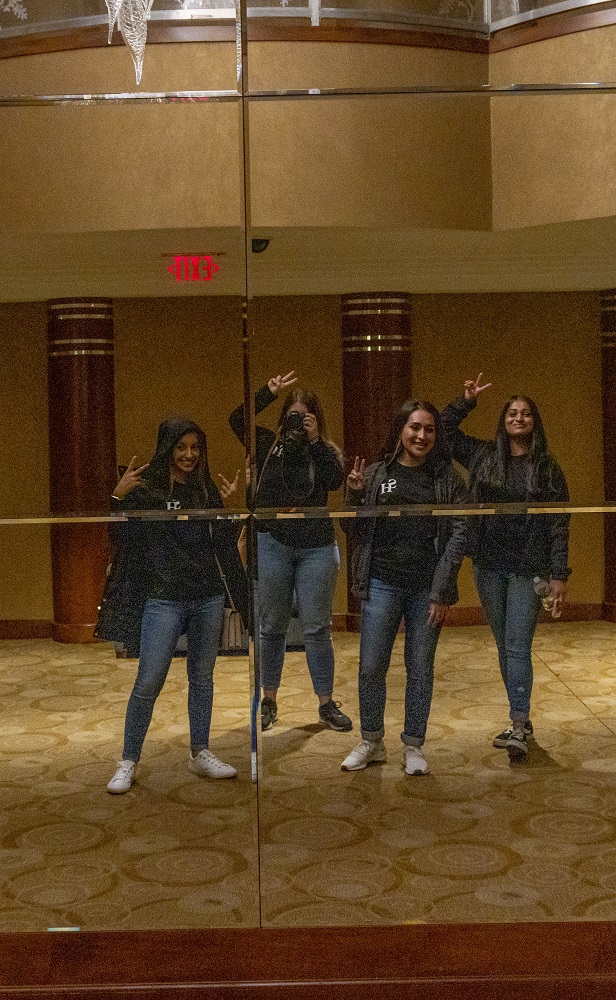
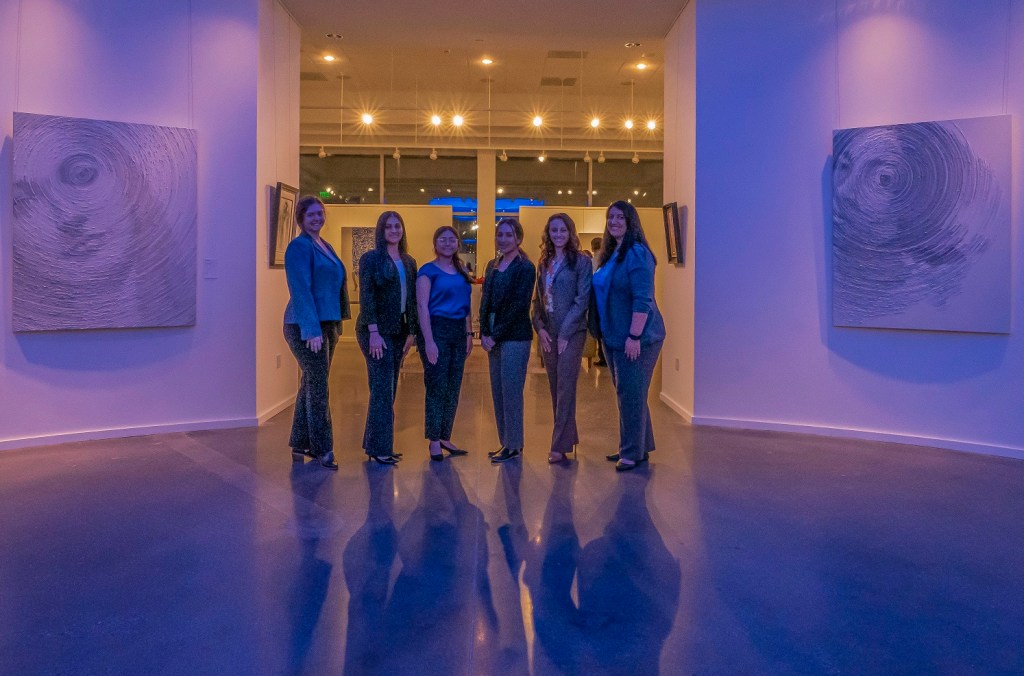
And, of course, we took a minute to pose for a group photo in the midst of the beautiful gallery.
Following the event, we headed to Genghis Grill (the only nonbar, it seems, that stays open past 9pm in The Woodlands) and had an enjoyable dinner, while also reflecting on the discussion, and contemplating the implications of Russia’s invasion of the Ukraine.
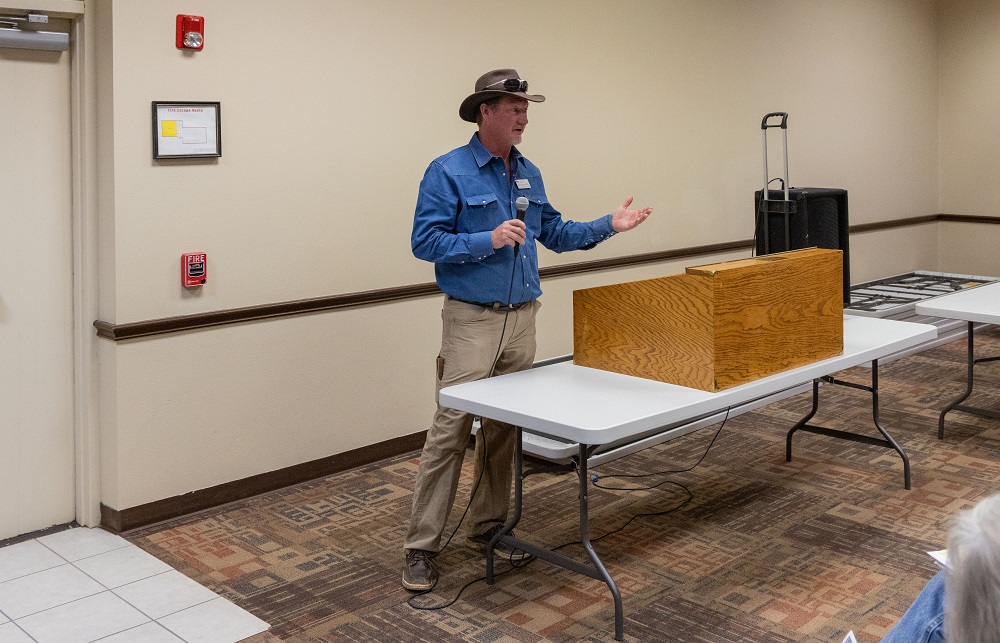
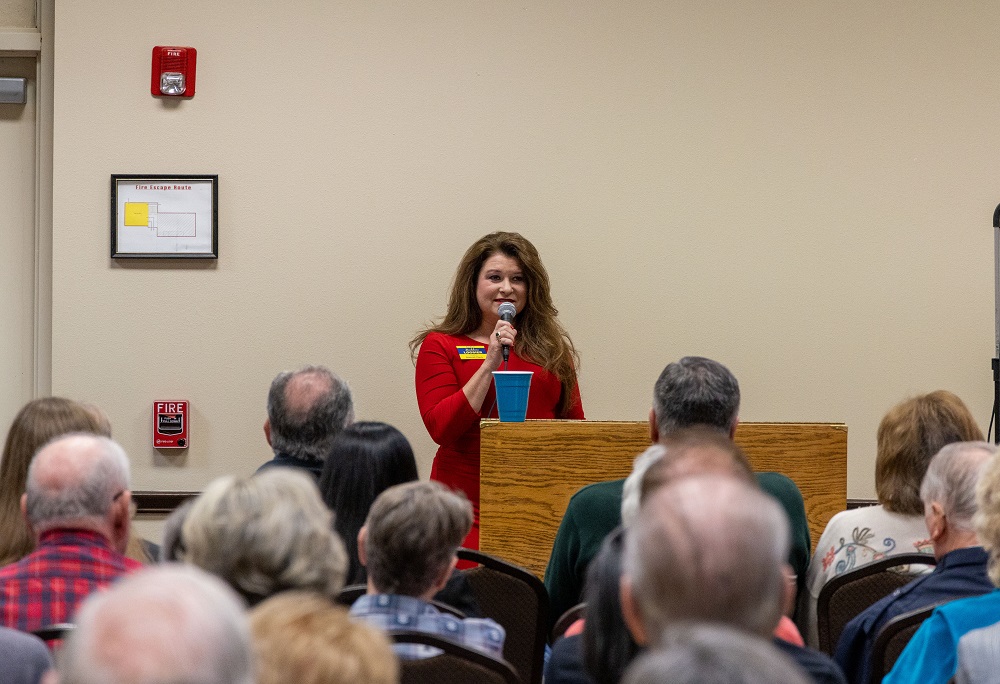
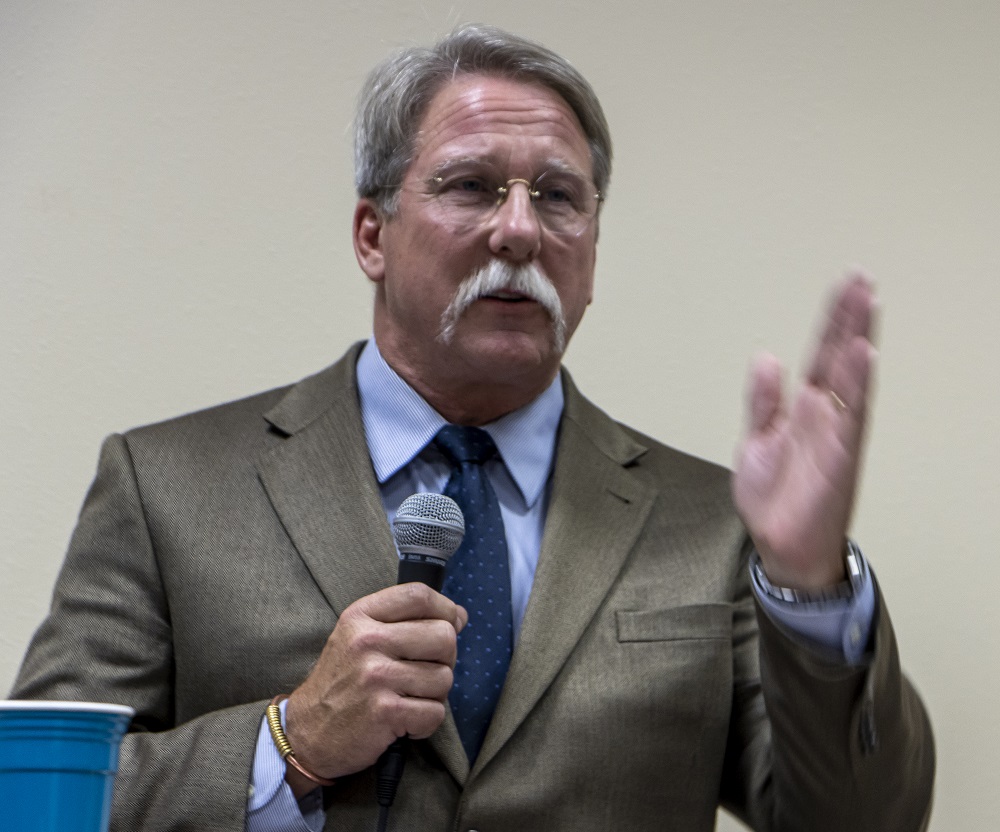
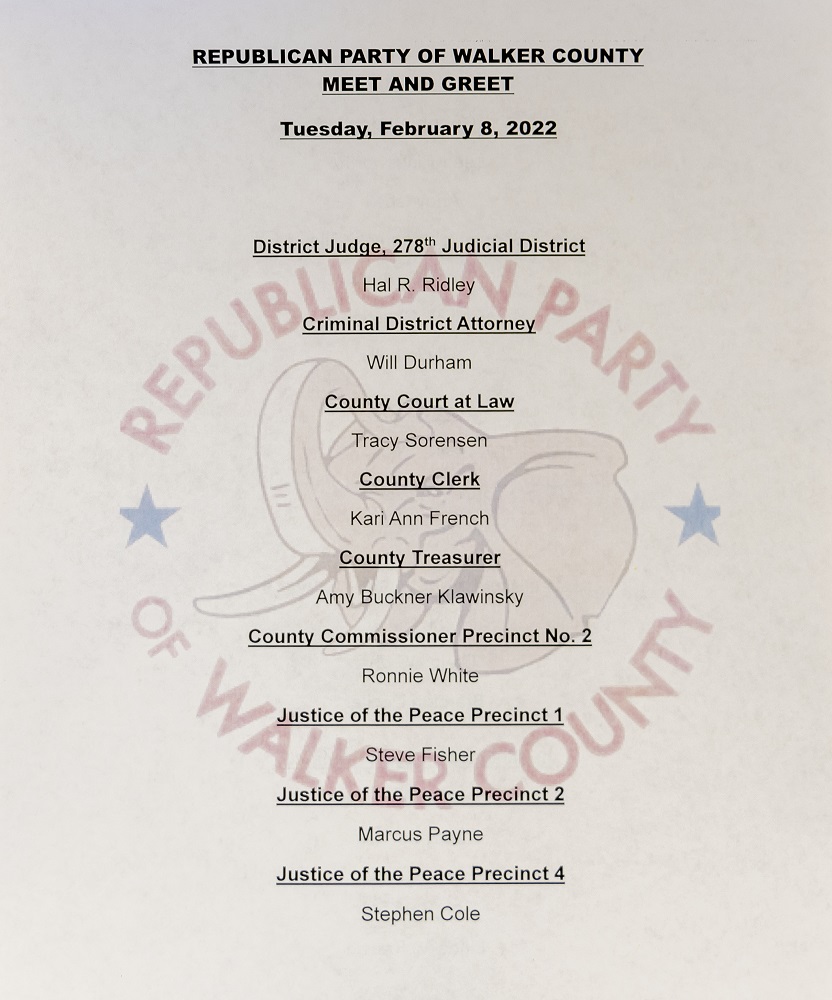
On Tuesday, February 8, 2022, the Walker County Republican Party hosted a Meet and Greet for the upcoming March 1 primary election. Members from the community were able to hear from most of the Candidates who are running.
Along with a few other college students, the LEAP Ambassadors assisted with check in and set up.
And Morgan led with the invocation.
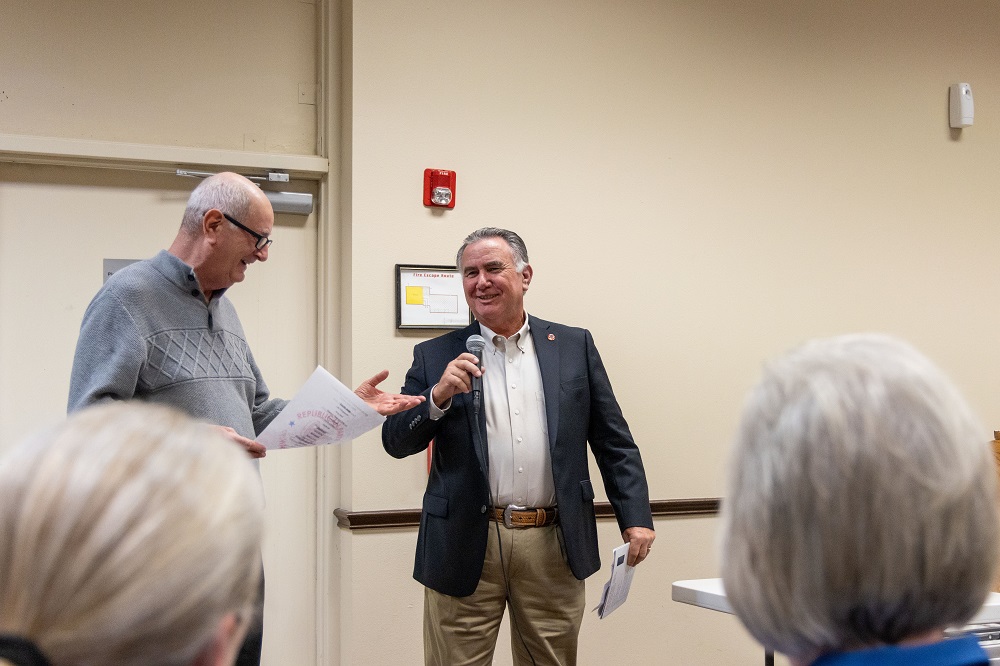
Richard Yawn moderated, and a very large crowd showed up for the event.
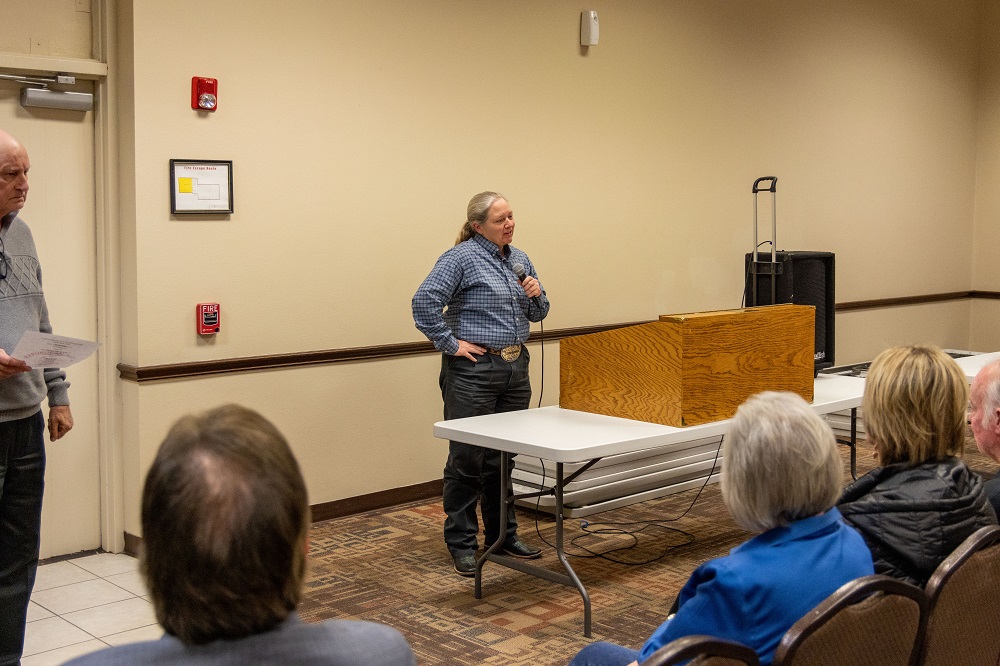
Those who are running unopposed gave 1-minute speeches: Criminal District Attorney, Will Durham, County Court-at-law, Tracey Sorensen, County Clerk, Kari Ann French, County Treasurer Amy Klawinsky, County Commissioner Precinct 3, Steve Fisher, Justice of the Peace Precinct 2, Marcus Payne, and Justice of the Peace Precinct 4, Steven Cole.
Criminal DA, Will Durham observed that his goals for his office are to “Seek truth, Pursue Justice, and always be prepared.”
Kari French, County Clerk explained the importance of maintaining the history of the county, and Steve Fisher, Justice of the Peace Precinct 2 expressed his desire to never slow down and to ensure hears everyone. Each candidate made the best use of their time by outlining their time in their current positions, and why they serve Walker County.
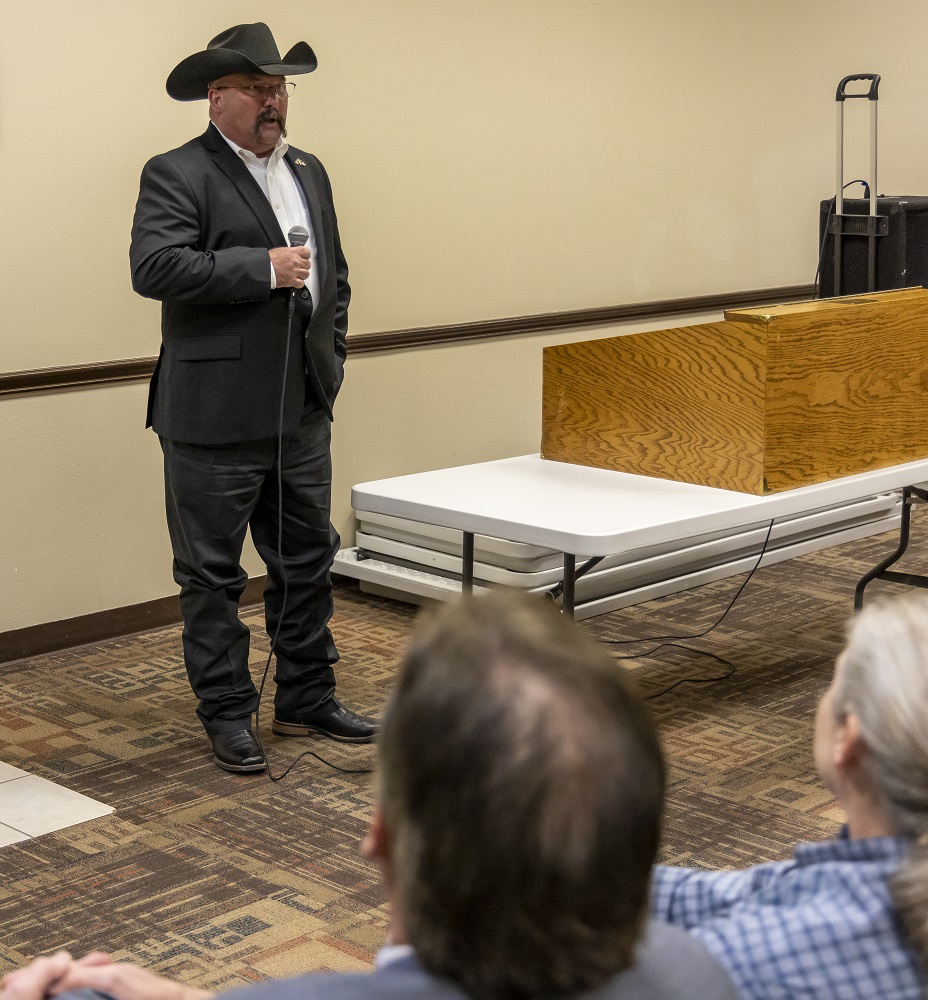
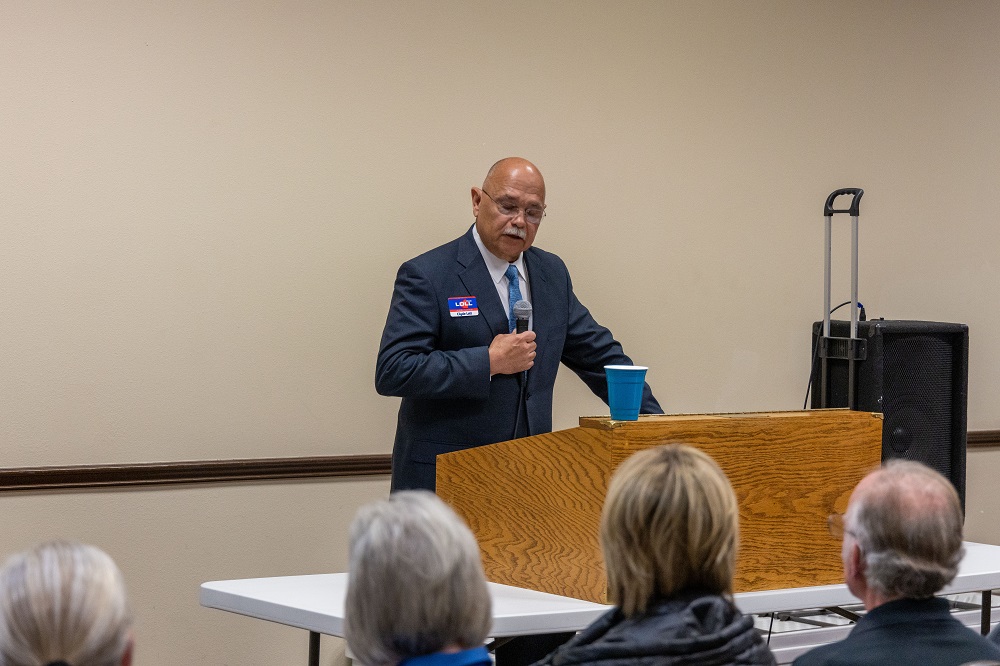
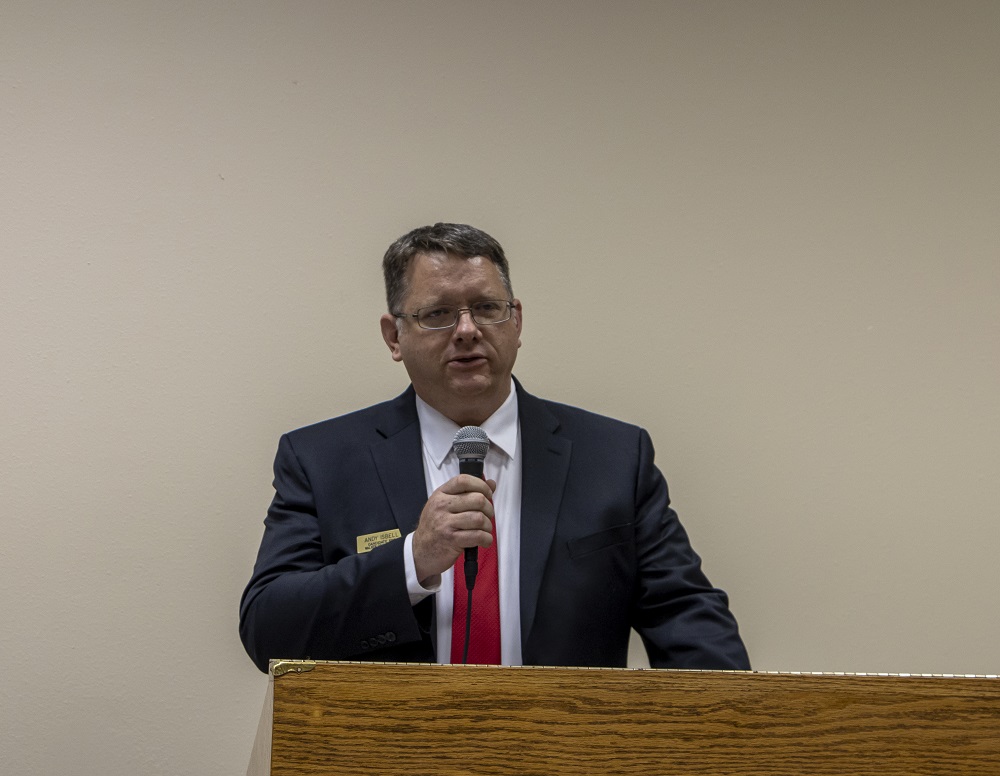
Running for County Judge of Walker county are 6 eligible Candidates. Lee Killingsworth, Andy Isbell, Shannon “Shadrack” Riley, Frank Olivares, Colt M. Christian, and Clyde Loll. Each one spoke for the allotted 5 minutes, and briefly explained who they are and what they plan on doing as County Judge. In one capacity or another all the Candidates pledged to keep and or lower taxes (which members of the crowed definitely appreciated).
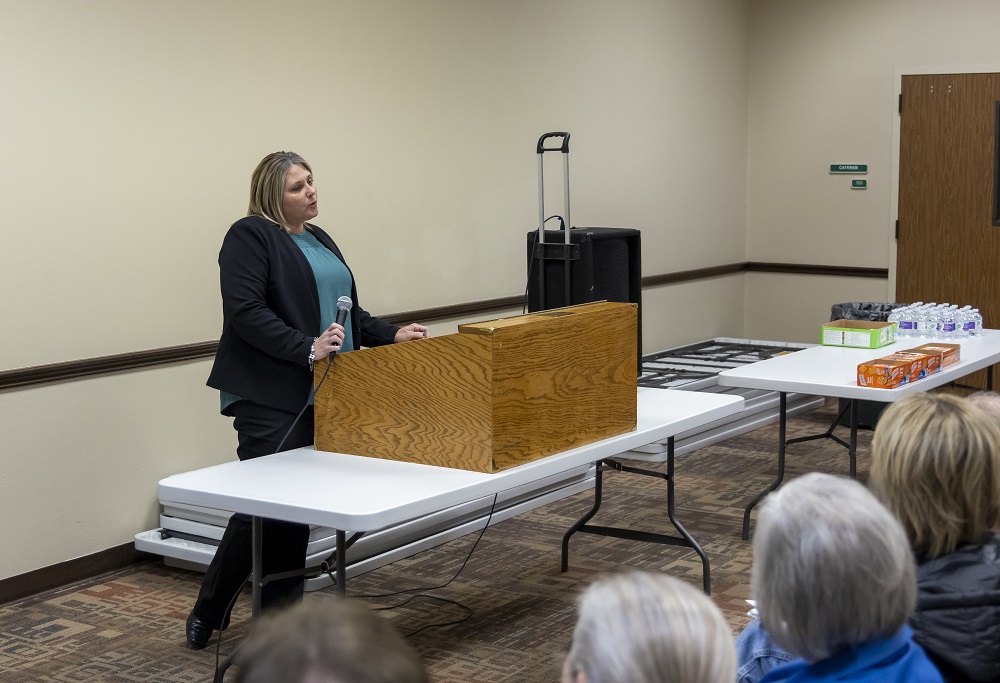
Leslie Woolley, April Farquhar, and Madeline Loosier are running for District Clerk. The candidates talked a bit about their backgrounds and why they are best suited for the job. Leslie shared more about her background in the Criminal Justice system, April explained more about her job and the drug testing process, and Madeline spoke more about her time as a business owner and her personal experiences.
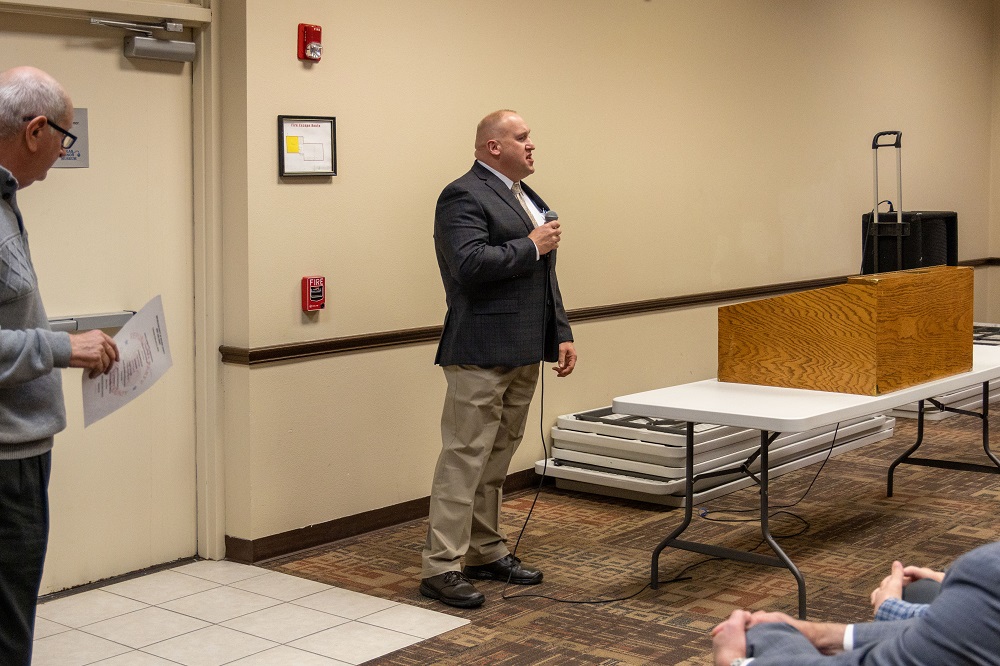
Three people are running for County Commissioner Precinct 4, Frank Novark, Craig Wieghat, and Branden Decker. Unfortunately, Frank Novark was unable to attend due to a accident in which he broke his hand. Wieghat and Decker both spoke on their passion for the position and why they would be best suited to represent their precinct.
Running for Justice of the Peace Precinct 3 are Mark Holt and Randy Jeffcoat. Holt, the current Justice of the Peace, talked discussed his experiences in the position and his vision of the future. Jeffcoat expressed his desire to approach the position with fresh eyes, and indicated he is excited to run.
Running unopposed for her current position is County Chair Linda McKenzie. Mrs. McKenzie expressed her gratitude for Walker county and its citizens for creating a wonderful community and her desire to continue serving that community.
For us as students, the whole experience was a wonderful foray into civic engagement and what it means to run for local office. The evening offered many memorable scenes and moments…
…and we are grateful for the community members who showed up and those who desire to serve their community.


























































 Center for Law, Engagement, and Politics