Skip to content

Center for Law, Engagement, and Politics

Leap At SHSU!

  • About LEAP
  • LEAP Ambassadors
Center for Law, Engagement, and Politics

Category: Politics

Talking COVID with Dr. Blackburn: July 2020

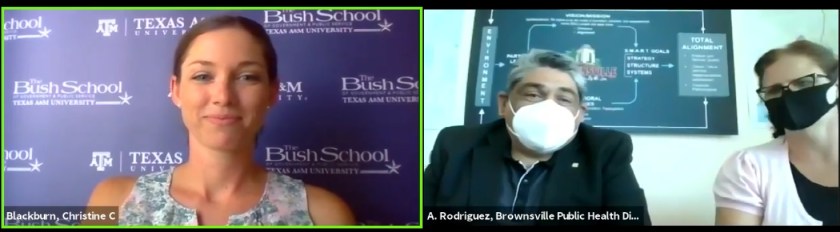
The Scowcroft Institute at Texas A&M has been offering regular COVID updates for viewers, and this month’s update, with Dr. Christine Blackburn, featured medical officials from Brownsville, Texas, where the Coronavirus has been particularly destructive.

 SHSU, LEAP Center, Center for Law Engagement And Politics, Texas A&M Bush School, Scowcroft Institute, Dr. Christine Blackburn, Dr. Art Rodriguez, Michelle Jones, Brownsville TX     

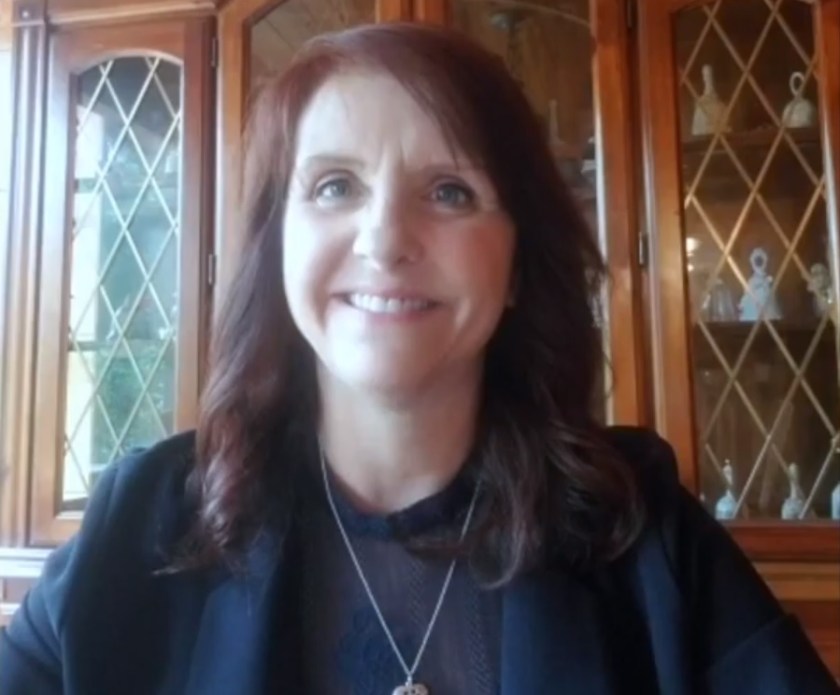
Blackburn’s guests were Michelle Jones, an epidemiologist, and Dr. Art Rodriguez.  Both live and work in the Brownsville area.\

SHSU, LEAP Center, Center for Law Engagement And Politics, Texas A&M Bush School, Scowcroft Institute, Dr. Christine Blackburn, Dr. Art Rodriguez, Michelle Jones, Brownsville TX

Dr. Blackburn, who is the Assistant Director for the Scowcroft Institute’s Pandemic and Biosecurity Policy Program, led off with updates.  In the US, we have approximately 3.3 million cases and 136,000 deaths.  In Texas, we have about 274,000 cases and 3,300 deaths.

Following her updates, Dr. Blackburn turned it over Dr. Rodgriguez and Michelle Jones.  In Brownsville, Dr. Rodriguez noted, the area is showing a surge in case positivity, with 30 percent of the tests coming back positive.  Moreover, the hospital capacity in Brownsville is 400 beds, and right now, the hospitals are at 95 percent, with ICU and ER beds being beyond capacity.

SHSU, LEAP Center, Center for Law Engagement And Politics, Texas A&M Bush School, Scowcroft Institute, Dr. Christine Blackburn, Dr. Art Rodriguez, Michelle Jones, Brownsville TX

Ms. Jones added that, one of the confounding variables in Brownsville is that there is much foot traffic between the City and Mexico, making collaboration with Mexican officials important.

SHSU, LEAP Center, Center for Law Engagement And Politics, Texas A&M Bush School, Scowcroft Institute, Dr. Christine Blackburn, Dr. Art Rodriguez, Michelle Jones, Brownsville TX

Both Rodriguez and Jones highlighted some of the steps Brownsville has taken to combat the issue.  The City of 185,000 people, has unveiled a five-level threat matrix, which offers suggestions at each stage on how to mitigate the threat; they are taking steps to double their daily testing capacity, which should be complete by next week; and they are working with the local college to lead sanitation classes, which will help educate the public on mitigation and containment strategies.

Dr. Blackburn then took questions, some of which were political, a sensitive area, especially if the questions involve your employer.  “How will Texas A&M bring back in-person classes without a spike in cases?”  This is, Dr. Blackburn noted, “a significant challenge,” which will be “very, very, very difficult.”  

And: “Why doesn’t Brazos County Office of Emergency Management report the percent of positive cases in their testing and their contact tracing more quickly?”  This is a “labor intensive process,” and Brazos County Health Department is “doing all they can, and working very hard to respond” to the community’s needs.

These questions were fielded with a smile, perhaps an acknowledgement of the difficulty of answering such questions.

SHSU, LEAP Center, Center for Law Engagement And Politics, Texas A&M Bush School, Scowcroft Institute, Dr. Christine Blackburn, Dr. Art Rodriguez, Michelle Jones, Brownsville TX

One question, which is on many minds, is the question of immunity.  How long will it last?  Dr. Blackburne noted that no one knows that yet.  Preliminary reports indicate that antibodies may not long linger in the body, limiting the amount of immunity they will provide.  But she believes that t-cells might be a fruitful research direction, noting that even if “immunity can last a year, the public could get seasonal vaccines.”

But the discussion was also sobering, with all three panelists seeing this is a long-term issue.  It’s not clear that we will return to normal in the foreseeable future, and the panelists suggested we should prepare for “hills and valleys.”  The key, Dr. Blackburne noted, is coming up with strategies that can effectively mitigate the spread and impact of COVID but “which can also be sustained.”  

Given the level of noncompliance with existing strategies (social distancing, masks), it’s not clear that sustainable and effective strategies exist for our current level of knowledge about the virus.

Many thanks to the Scowcroft Institute, Dr. Blackburn, Dr. Rodriguez, and Ms. Jones for their very informative presentation.  The program can be seen in its entirety here.

SHSU, LEAP Center, Center for Law Engagement And Politics, Texas A&M Bush School, Scowcroft Institute, Dr. Christine Blackburn, Dr. Art Rodriguez, Michelle Jones, Brownsville TX


Unknown's avatarAuthor mikeyawnPosted on July 15, 2020July 15, 2020Format AsideCategories Civic Engagement, Health, PoliticsTags Brownsville TX, Center for Law Engagement And Politics, Dr. Art Rodriguez, Dr. Christine Blackburn, LEAP Center, Michelle Jones, Scowcroft Institute, SHSU, Texas A&M Bush SchoolLeave a comment on Talking COVID with Dr. Blackburn: July 2020

How to Catch a Spy: The Art and Future of Counter Intelligence with James Olson

by Makayla Mason

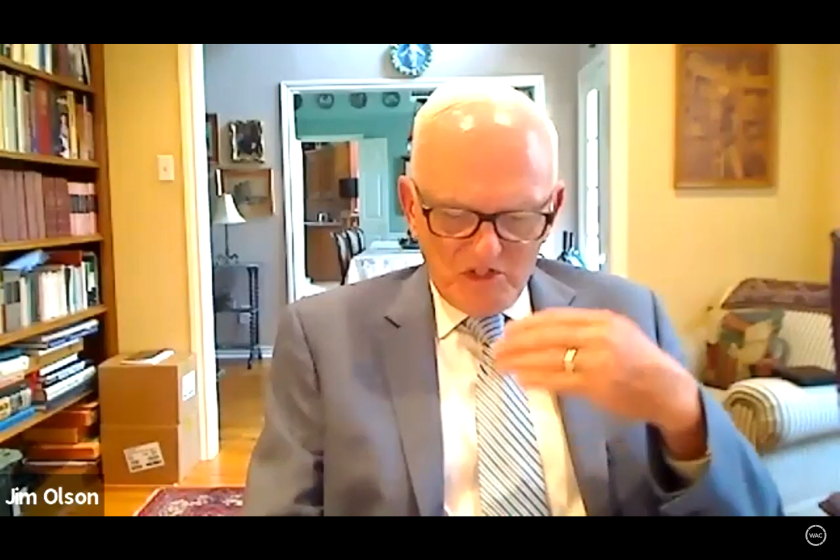
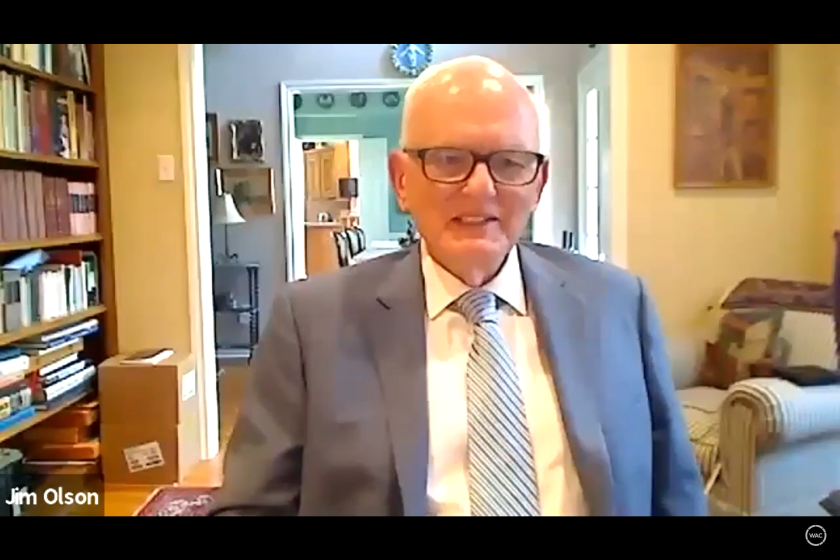
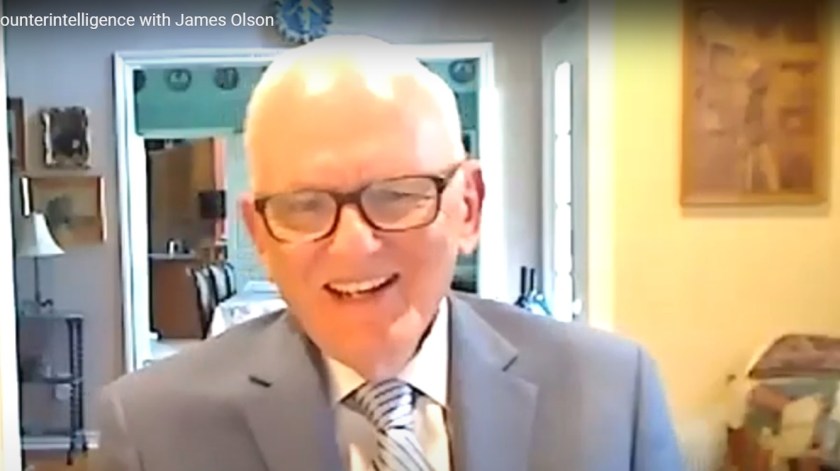
 I always enjoy and look forward to World Affairs Council events, but I was particularly excited about this webinar. I have been reading James Olson’s book Fair Play: The Moral Dilemma of Spying. and he has recently come out with a new book: To Catch a Spy: The Art of Counterintelligence. I have also had the opportunity to see Mr. Olson speak in person multiple occasions at the Texas A&M Bush School; I was even able to speak to him after an event a couple of years ago….

SHSU, LEAP Center, Center for Law Engagement And Politics, TAMU, World Affairs Council Houston, Jim Olson

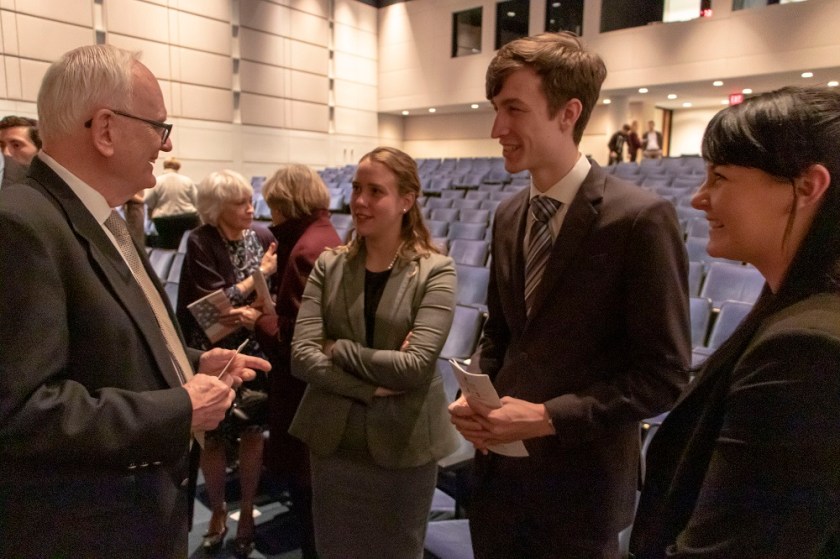
…and Olson was generous enough to come to SHSU and speak at a program hosted by LEAP–which resulted in a packed house.

SHSU, LEAP Center, Center for Law Engagement And Politics, Jim Olson, CIA, Spying

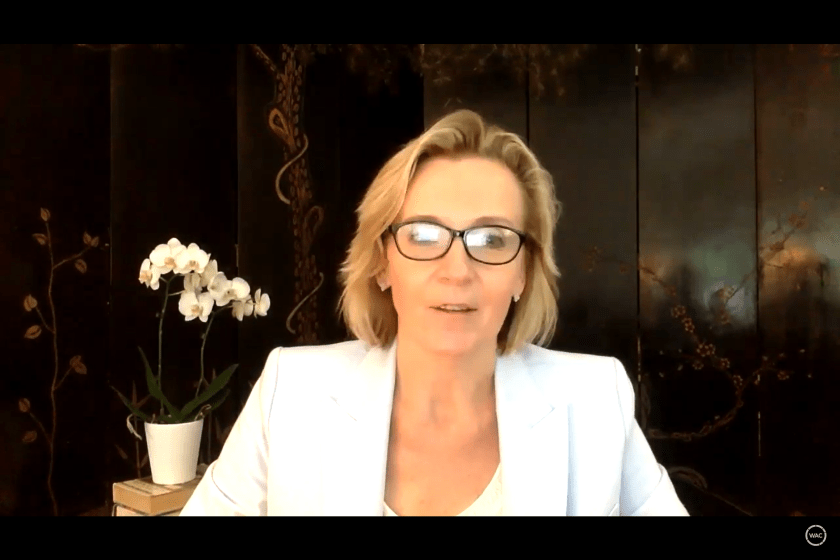
The webinar began with a brief introduction by World Affairs Council’s Sandjia Bayot.

SHSU, LEAP Center, Center for Law Engagement And Politics, TAMU, World Affairs Council Houston, Jim Olson

She informed us that over 700 people were registered for the event! She of course introduced the man of the hour, James Olson.

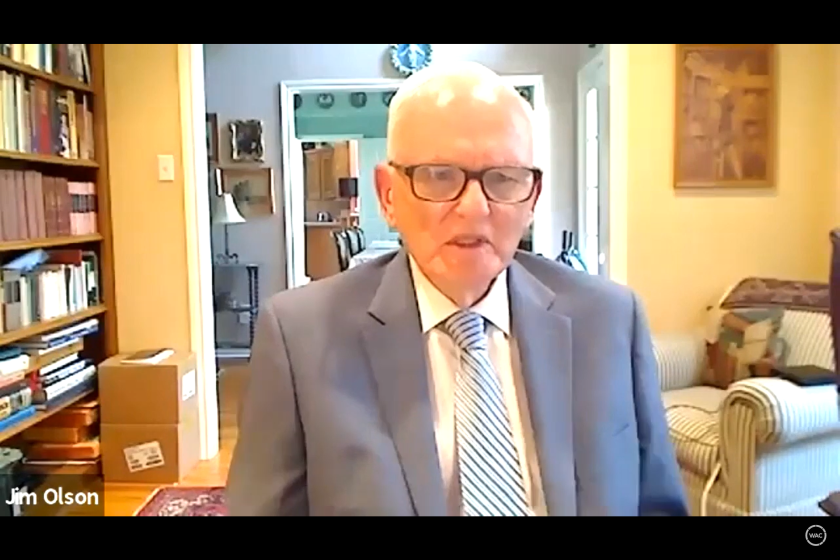
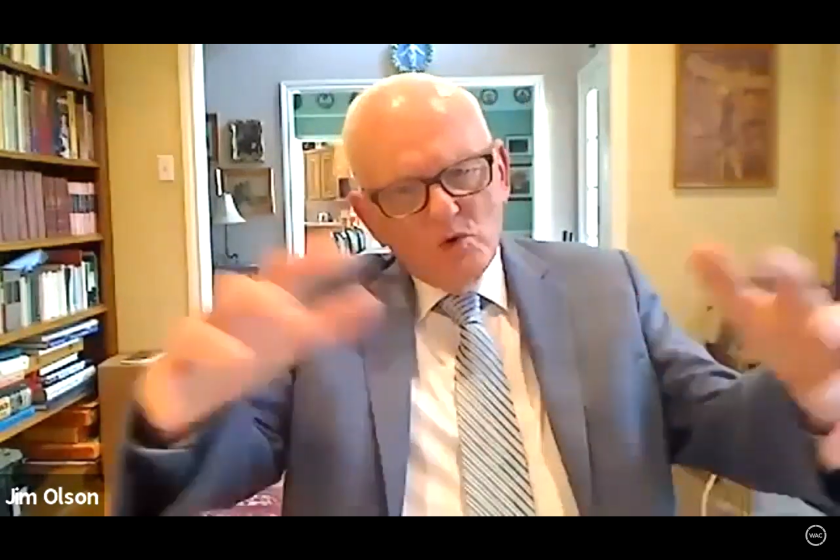
Mr. Olson served for over thirty years as the Directorate of Operations for the Central Intelligence Agency (CIA). He is currently a professor, teaching intelligence and counter intelligence, at the Texas A&M Bush School of Government and Public Service.

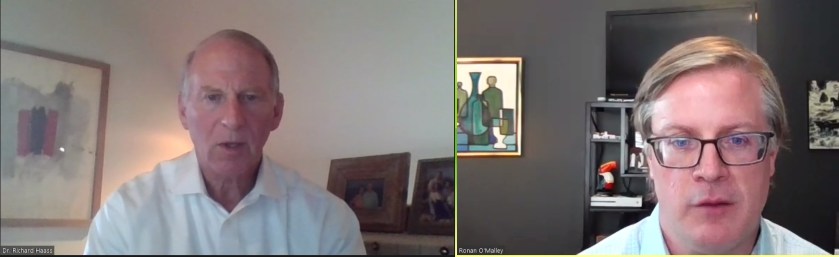
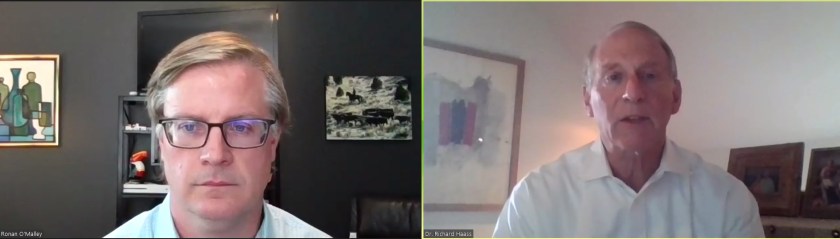
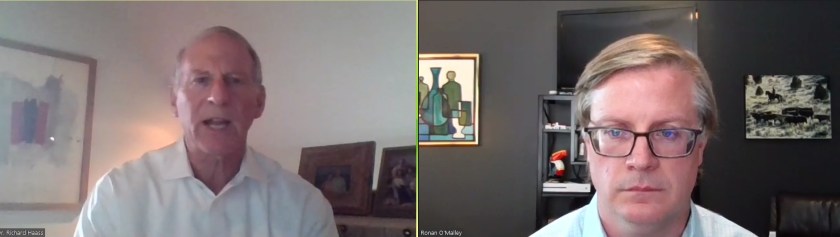
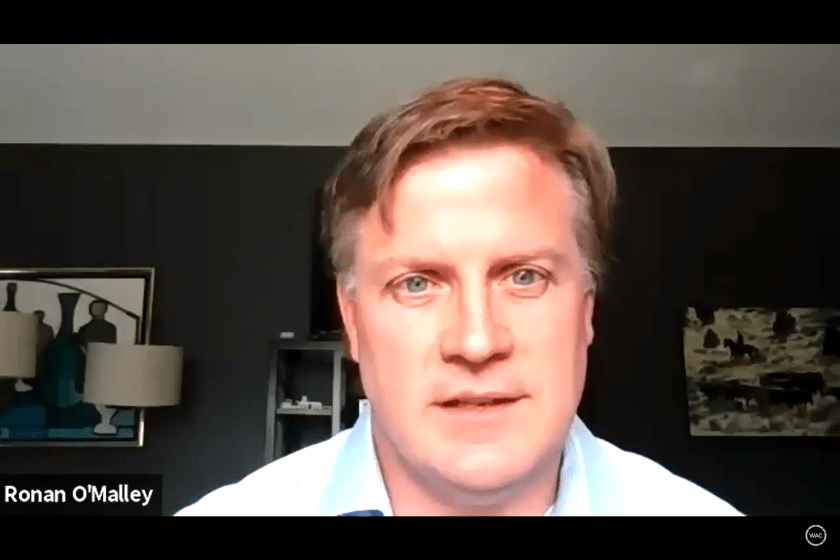
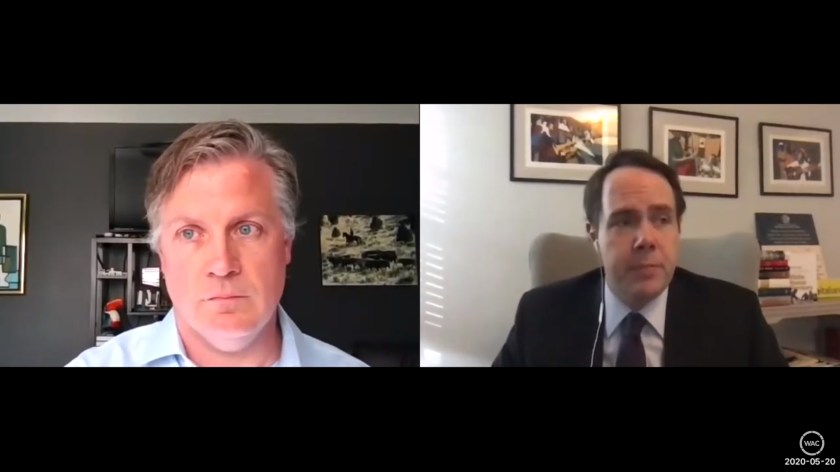
The moderator for the event was World Affairs Council’s Ronan O’Malley.

SHSU, SHSU, LEAP Center, Center for Law Engagement And Politics, TAMU, World Affairs Council Houston, Jim OlsonCenter, Center for Law Engagement And Politics, TAMU, World Affairs Council Houston, Jim Olson

Ronan dove right in, asking about the three most threatening nations to the United States: China, Russia, and Cuba, with a particular emphasis on China.

Professor Olson described China as having a level of threat higher than he has ever seen before. Stating that China is overwhelming our defenses and stealing anything that could benefit them in any way. It is cheaper for them to steal from us than come up with their own ideas. The biggest thing they are wanting to steal from us is our technology. We are currently losing this counter intelligence war.

SHSU, LEAP Center, Center for Law Engagement And Politics, TAMU, World Affairs Council Houston, Jim Olson

Mr. Olson then described how the Chinese use their exchange students aggressively to steal information. These students can get offers from high level jobs, receive green cards, and after 5 years of having a green card, can become citizens.  The Chinese Government then infiltrates these Chinese Americans and appeals to their sense of loyalty to their home country, sometimes leveraging the former students’ families (in China) to add additional pressure.

SHSU, LEAP Center, Center for Law Engagement And Politics, TAMU, World Affairs Council Houston, Jim Olson

When asked what he would recommend to end the counter intelligence war with China, Mr. Olson said the most important thing to do is be offensive. We cannot sit back and try to protect our secrets. We need to have more frequent double agents. He stated that if he was still in-charge, he would flood China with double agents. The best counter intelligence is penetration, and double agents are gold in counter intelligence.

SHSU, LEAP Center, Center for Law Engagement And Politics, TAMU, World Affairs Council Houston, Jim Olson

The second threat is Russia.

Mr. Olson stated that there is more Russian spying now than during the Cold War and that Vladimir Putin is very interested in influencing our politics and our elections. In the 1950s, some Americans still shared Communist “ideals,” perhaps cultivated during the 1930s, during the Great Depression.  By the 1980s, however, agents who spied for Russia were doing so just for money, not for Communist ideals.

When discussing the cultural disadvantages that the US has compared to China and Russia, Mr. Olson stated that we have ethics and a high standard of proof to meet. The US cannot access any kind of employment records, financials, or physically surveillance of individuals until there is probable cause, and he is proud of that.

SHSU, LEAP Center, Center for Law Engagement And Politics, TAMU, World Affairs Council Houston, Jim Olson

The third threat to the US is Cuba, but Mr. Olson said he would rank Cuba as #1 in terms of “obnoxiousness.”

Mr. Olson described Cuba’s intelligence as better than the KGB’s and more disciplined. At the height of Castro’s power, Cuba had 38 Cuban double agents working against the US.

SHSU, LEAP Center, Center for Law Engagement And Politics, TAMU, World Affairs Council Houston, Jim Olson

Ronan then mentioned polygraph tests, which Mr. Olson very much favors. He sees polygraphs as quite useful in finding double agents, as well as for screening new employees. More individuals, he notes, are removed from the hiring process due to the polygraph than the background check. He admits that polygraphs are not perfect, but they are a valuable counter intelligence tool.

SHSU, LEAP Center, Center for Law Engagement And Politics, TAMU, World Affairs Council Houston, Jim Olson

Mr. Olson was asked what are some of the ideal qualities they are looking for in hiring federal agencies. He said the number one quality for federal agents and law enforcement across the board is character. He also finds it ironic that they hire people who are honest, reliable, and have good morals, but then train them to lie, cheat, and steal. We want people who know where the line is, and will do their job for the US, not against the US. If there are warning signs in the hiring process, he sticks with the motto: “When in doubt, keep them out.”

SHSU, LEAP Center, Center for Law Engagement And Politics, TAMU, World Affairs Council Houston, Jim Olson

As the webinar wrapped up, Mr. Olson had a few more things to say about spying: You have few friends in the intelligence world. Everyone spies on everyone. Everyone is in the business of stealing from America. Many countries who we consider allies have been caught spying on us. When you catch an ally spying on you, call them out, give them a slap on the wrist, but do not end the relationship.

Mr. Olson declared that his true love is spy catching, and that if he and his wife (who also worked for the CIA) could start all over again, they would get into the China program and learn Mandarin, because they are currently the #1 threat.

Mr. Olson ended the webinar by stating that the first line of defense is an informed public–which, as a former LEAP Ambassador, I agreed.

SHSU, LEAP Center, Center for Law Engagement And Politics, TAMU, Jim Olson


Unknown's avatarAuthor mikeyawnPosted on June 13, 2020June 13, 2020Format AsideCategories Civic Engagement, Civil Rights, PoliticsTags Center for Law Engagement And Politics, Jim Olson, LEAP Center, SHSU, TAMU, World Affairs Council HoustonLeave a comment on How to Catch a Spy: The Art and Future of Counter Intelligence with James Olson

Kicking off the Summer with Campaign Boot Camp

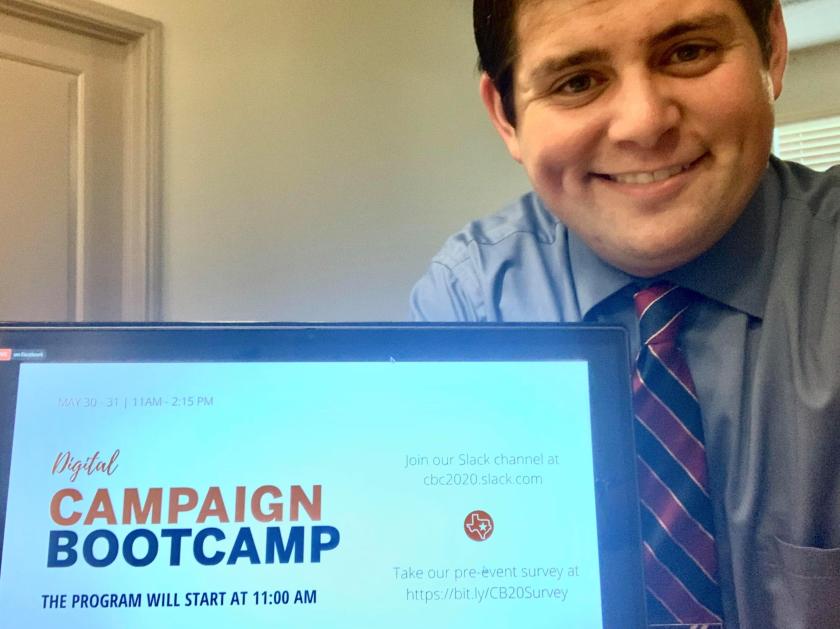
To start off the summer, I was able to represent the LEAP Center at the New Politics Forum’s Campaign Boot Camp, an event hosted by the Annette Straus Institute for Civic Life at the University of Texas. Usually hosted in Austin, this event was entirely virtual as a result of COVID-19.

SHSU, LEAP Center, Campaign Bootcamp, New Politics Forum, Annette Strauss Institute

The purpose of this event is to allow students who are interested in pursuing a career in political campaigns to connect with each other, explore internships and job opportunities, and hear from experts about the best practices of running a campaign.
SHSU, LEAP Center, Campaign Bootcamp, New Politics Forum, Annette Strauss Institute, Quinn Kobrin

Saturday

Kickoff with Cole Wilson and Rep. Talarico

To kick off the weekend, we were greeted by the emcee of the event, Cole Wilson, who gave us an overview of what Campaign Boot Camp was all about. We learned that the objective of the project was to engage young political minds, promote bipartisanship, and create opportunities for professional development. Some of the extra opportunities provided this weekend included a place for us to share our resumes, an online chat with access to communicate with our fellow attendees and our guest speakers, and a weekend-long competitive project to develop our skills and utilize the information we learned throughout the event.

After being welcomed by Cole, we heard from Rep. James Talarico of Texas’ House District 52, who gave us an inspiring call to action and a message of hope. First, he reminded us that “it’s not the size of your ego or the size of your brain that sets you apart from others, it’s the size of your heart.” He used his time to talk to us about compassion and being kind. He then shared with us some advice from the incumbent of his seat and former opponent, Larry Gonzales. Talarico said that, although they were opponents and members of opposing parties, he considers Gonzales a mentor. Upon leaving office, Gonzales reminded him of three things: to always listen, ask questions, and be kind. As we move forward in this time of divisiveness and uncertainty, I feel it is vital to share this message of compassion. Rep. Talarico’s introduction was a great start to the weekend.

Campaign Management with Matt Glazer

Our first lesson of the weekend was campaign management with Matt Glazer. Glazer introduced himself by sharing that, when he was younger, he was trying to decide whether to go into medicine or politics, but upon finding out the sight of blood made him sick, chose to stick with politics.

Glazer then launched into his presentation, the foundation of which involved asking key questions about your campaign. Questions such as “What do you prioritize?” and “How do you define victory?” are essential to leading a successful campaign. By defining your success early on in the campaign, you are setting yourself up for an efficient and well-run campaign. One of the repeated themes of the weekend was that preparation is the key to success on a campaign. Glazer discussed the importance of creating a campaign timeline, complete with a plan to prepare and develop a message and a plan to execute and share your message with voters. When it comes to sharing that message, he reminded us also that although we are seeking the support of the voters, it is not our job to chase them, but to lead them.

SHSU, LEAP Center, Campaign Bootcamp, New Politics Forum, Annette Strauss Institute, Matt Glazer

He then briefly discussed the impact of COVID-19 on the future of campaigning. He said that, although the methods and platforms may change, the tactics will not. We must continue to engage voters, get our message to them, and get them out to vote.

The lesson wrapped up with a few reminders about what working on a campaign truly entails. Glazer shared that, although campaign work is temporary, there will always be another campaign to work on. For a long time, he told us, we’ll have to own that the pay isn’t always great and there usually aren’t benefits, but that should not stop us from always doing good work, and being excited about what we do.

Nancy Bocskor and the Fundamentals of Fundraising

After a brief lunch break, we watched a recording of Nancy Bocskor, a leader in promoting engagement and leadership in public service. Deemed by a newspaper in Germany as a “Democracy Coach,” Bocskor gave us an in-depth look at the world of fundraising.

Essentially, fundraising revolves around being able to sell your candidate or cause to potential donors. To do this, it is key to remember that information is power; the more you know about a donor, the better chance you have to raise money. “Persistence,” she says, “is a necessity, but a sense of humor helps.”

Furthermore, Bocskor discussed the importance of putting together an effective finance team. She explained to us that the best occupation for a finance chair is not always an accountant or a banker, but rather someone in sales. Fundraising, she reminded us, is not solely about saving money or keeping track of it; it is about convincing people that your campaign is worth giving money to.

After this, we discussed strategy for outreach. One of the biggest takeaways from this event was that, as useful of a resource as social media is, it cannot replace the fundamental methods of voter/donor contact and outreach.

SHSU, LEAP Center, Campaign Bootcamp, New Politics Forum, Annette Strauss Institute, Nancy Bocskor

Bocskor told us that we should utilize social media to supplement and follow up on our fundraising efforts, but it should never be our primary tactic to raise money. Digital fundraising, she explained, only accounts for 8% of donations.

Finally, we learned that, as with anything, fundraising is about building and keeping relationships. It is crucial to devote time to maintaining a solid relationship with donors and potential donors because friendship often trumps party or issues. The chances of receiving a donation from someone who knows and trusts you are significantly higher than the odds of receiving a donation from someone who may agree with you but does not know you very well.

The lesson ended with a few more pieces of advice: listen twice as much as you speak, and always say thank you (in written notes, if possible)! If someone who attended this weekend read this blog, they would point out that I left out an integral story told by Ms. Bocskor about the purchase of a rug, and how it shaped her perspective of selling and persuasion.

SHSU, LEAP Center, Campaign Bootcamp, New Politics Forum, Annette Strauss Institute, Nancy Bocskor

I do not believe I can do her story justice here, but if you ever have the chance to hear it from her, by all means, listen!

Sunday

A Message from Jen Sarver

We began the day two with a message from speechwriter, communications expert and former candidate for Congress, Jen Sarver. First of all, I cannot count how many times we, as an audience, were reminded that we were not “normal people,” since we were spending a weekend during a pandemic tuning in to learn about running political campaigns instead of doing literally anything else…but this was one of those times.

Sarver took this opportunity to remind all of the students listening that the way we lead our lives right now is what will eventually lead into our legacy. She reminded us that the small, individual actions we take all help to make a difference. Her main point in saying all of this was that, if we want to make an impact in the world, no matter how we do it, we must remain active and engaged. After this, we proceeded on with our lessons for the day.

Tyler Norris and Voter Contact

Tyler Norris, a well-known name in Texas politics, has worked for a number of candidates and legislators over the years, including coordinating grassroots efforts for Ted Cruz’s 2016 presidential bid. From his years of experience, Norris had much to share about the world of voter contact.

SHSU, LEAP Center, Campaign Bootcamp, New Politics Forum, Annette Strauss Institute, Tyler Norris

First, he defined for us what the objectives of voter contact really are. As he explains it, the hope is to maximize the number of interactions a campaign has with potential voters. Within these interactions, the intention of the campaign is to educate voters about specific issues, demonstrate why a candidate is a strong fit to deal with such issues, and convince them to vote for that candidate, thereby converting them.

After this, we went over who voters are and who actually votes. Although a voter is anyone over the age of eighteen who can and has registered to vote before the registration deadline, only a fraction of these people will actually vote. Through some Q&A, we determined that age plays a significant factor in understanding voting habits. Fewer young people turn out to vote than any other age, and the number of people who do turn out tend to increase as age does. The same goes for education: the higher degree an individual has, the more likely and often they turn out to vote.

Norris then spoke about why voters turn out. Citing President Obama’s administration as an example, he told us that the President had to deal with a majority Republican Congress because so many Republicans came out to vote two years after Obama was elected. One of the universal rules of politics, we learned, is that “moral outrage is the most powerful driving force in politics.” I believe this is an apt statement, considering the state of our nation today, and explains why most people decide to come out and vote, regardless of which party they vote for.

We then reviewed the methods of voter contact, including block walking, phone calls and texting, campaign events, social media, radio and television ads, and direct mail. While each of these has their place in campaigns, and although I will not go in depth on each aspect, I will discuss the critical importance of direct mail shortly. Perhaps the most unanimous, bipartisan takeaway from this weekend was that, whatever else you do, do not waste your money on yard signs! They take up too much of your campaign’s time and budget, and do little but boost your candidate’s ego.

To wrap things up, Norris gave us some advice on voter outreach, including how to “cheat to win.” First, he told us that most of the money spent in a campaign – at least 70% – should be invested into voter contact. Second, he told us that to win, we must make our campaigns as volunteer centric as possible. We need to find people who are committed to growing the campaign, give them a “buy in,” or a job and a title, and get them involved and excited to help move the campaign forward.

Comms 101 with Liz Chadderdon

            Our final event was with the long-awaited Liz Chadderdon. A Texas native who began her political career as a volunteer coordinator for Governor Ann Richards, Chadderdon was spoken of fondly by each of her prior speakers. We were told many times that if there was any lesson we made sure to tune in to, it should be hers. And truthfully, they were right. Throughout the weekend I took about 30 pages of notes, and her lesson accounted for 10 of them.

SHSU, LEAP Center, Campaign Bootcamp, New Politics Forum, Annette Strauss Institute, Liz Chadderddon

That being said, I cannot get into every detail she discussed today, but I will start by saying that my understanding and opinion of direct mail has shifted greatly. Until now, it was always my belief that direct mail was just an added expense to the already expensive campaign trail and would detract from paying for advertisements on social media. I understand now that direct mail is perhaps the most crucial aspect of campaigning. Although ads on the internet may reach a large number of people, they do not result in the same precision and results that physical mail does.

Specifically, while emails may be considered spam, ads can be blocked, you need permission to text, and geo-fencing and IP addresses can be inaccurate, the best way to spend your money to ensure that your message is reaching your voters is to invest in direct mail campaigns. This ensures that your intended audience will see your candidate and their message, have to engage with it – whether by reading it, saving it, or throwing it away – and may not feel overwhelmed by seeing it online all of the time. Chadderdon shared with us the accuracy of various methods of voter communication in descending order, and mail was at the top, with 90-95% accuracy.

She then discussed the need to develop a mail plan early on in the campaign. This is best accomplished by looking at the last Thursday before election day and working backwards to decide which days of the week you will send mail out. Another big takeaway from this weekend was planning. If you plan ahead in your campaign, and take into account the cost of sending direct mail and developing content, as well as the time it will take to shape your message and fundraise, you can have a clear understanding of all the work you need to do in your campaign without struggling to stay on top of things each day.

That being said, Chadderdon explained to us that a good mail plan takes repetition; you should plan on sending mail to voters at least twice a week. This prompted me to ask my first question of the weekend, which was: Is there a concern about oversaturation when sending direct mail? Ms. Chadderdon answered that there is not. “There is no such thing as too much communication,” she said. Going back to the concept of our not being normal, she reminded us that “voters don’t think about politics the same way that we do.” She then stated that we should “annoy everyone until they hate you, but be on the right message.”

The last part of her lesson covered what mail should look like. As I said earlier, planning ahead and investing are crucial aspects of a successful campaign. Direct mail should have good photos, including both posed and candid shots. Candidates should look honest and like themselves, generally in clothing that they are comfortable in. It is also essential to try and shoot to message, or get pictures that correlate with the plan you have established in your outreach calendar.

SHSU, LEAP Center, Campaign Bootcamp, New Politics Forum, Annette Strauss Institute, Liz Chadderdon

Finally, mail must make a connection with the voter in order to work. Campaigns, she explained, are not about the candidate or their ideas; they are about the voters. The message should connect with the person reading it, and the material should be easily understood in about 5 seconds. Most importantly, they should demonstrate that the candidate cares about the issues discussed, and is not simply motivated by political ambition.

Final Thoughts

I cannot fit into this blog just how helpful, intriguing, and eye-opening this event was. In just two days, I learned so much about running a campaign that my prior notion of how to do so has completely changed. As I mentioned earlier, we also got the chance to complete worksheets running a fictional campaign using the information we had learned from our lessons. From this experience, we were able to get a hands-on experience to developing a plan, creating a message, putting together a team, and determine how to reach out to voters. I thoroughly enjoyed this challenge, and – having turned all of the worksheets in – am excited to continue my learning about running successful campaigns at the Texas Tribune Festival this fall.

I appreciate each of our guest speakers for taking the time to speak to us over the weekend, and I want to give special thanks to Cole Wilson, Bianca Solis, and the rest of the Annette Straus Institute for Civic Life for hosting this event and ensuring a seamless, informative and engaging weekend.

Editor’s Note: Quinn Kobrin ended up winning the competition component of the Campaign Bootcamp.  Congratulations, Quinn!

SHSU, LEAP Center, Campaign Bootcamp, New Politics Forum, Annette Strauss Institute, Quinn Kobrin

Unknown's avatarAuthor mikeyawnPosted on June 11, 2020June 11, 2020Format AsideCategories Civic Engagement, PoliticsTags Annette Strauss Institute, Campaign Bootcamp, Jenn Sarver, LEAP Center, Liz Chadderdon, Matt Glazer, Nancy Bocskor, New Politics Forum, Quinn Kobrin, SHSU, Tyler NorrisLeave a comment on Kicking off the Summer with Campaign Boot Camp

Talking Fiction with John Grisham and Michael Connelly

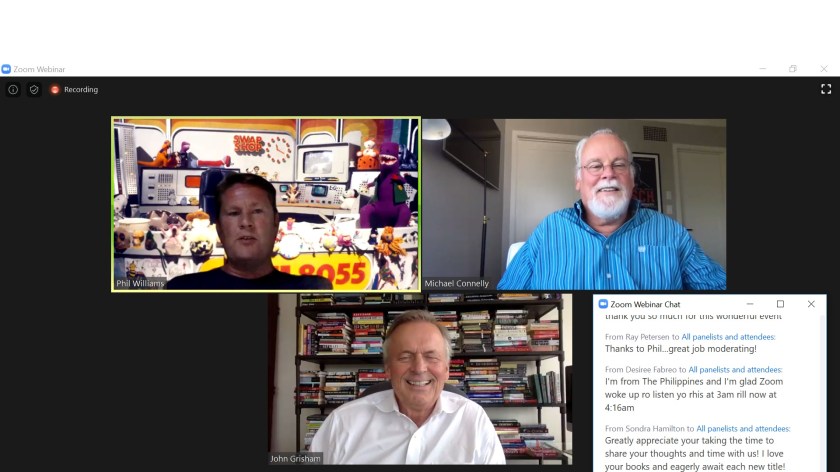
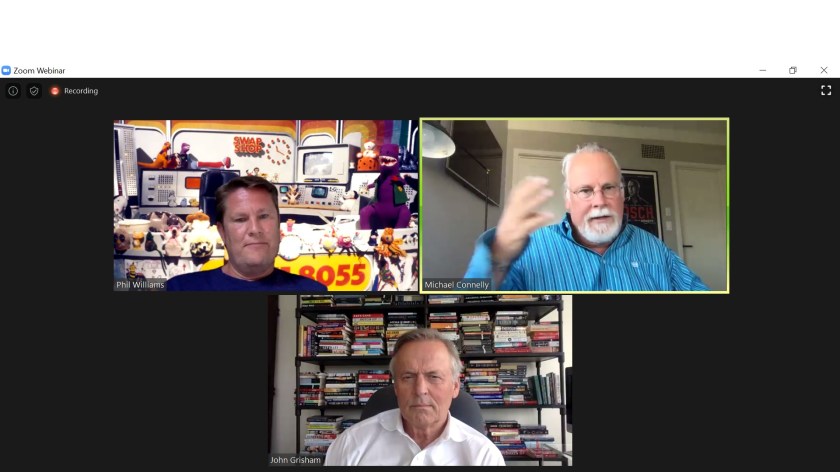
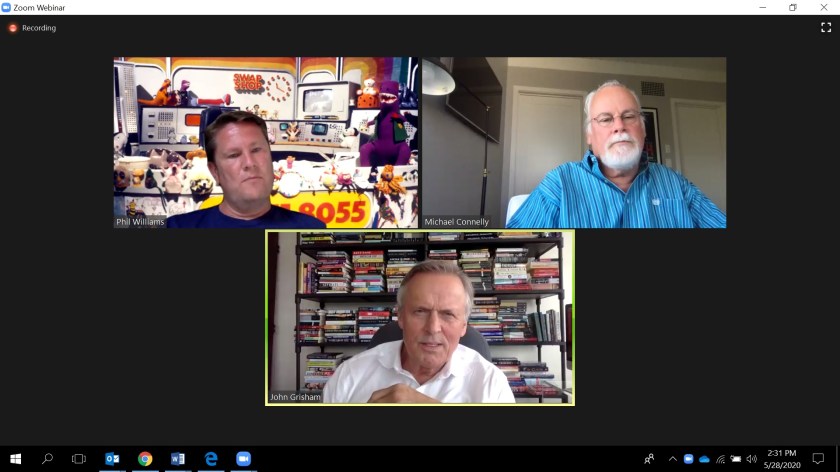
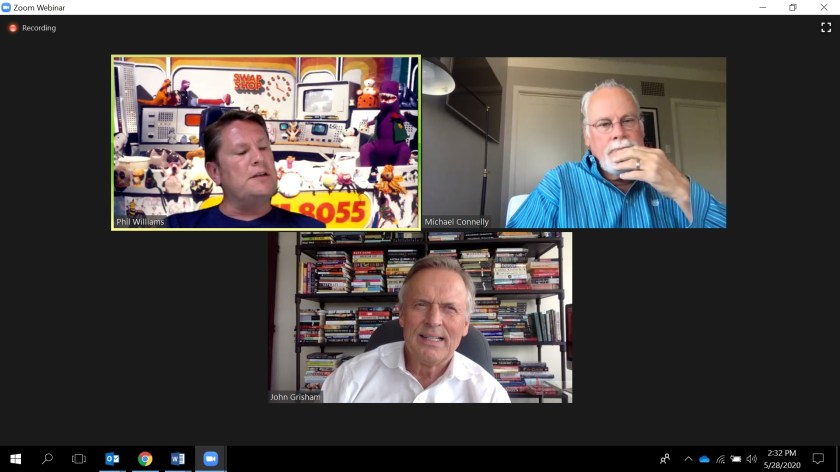
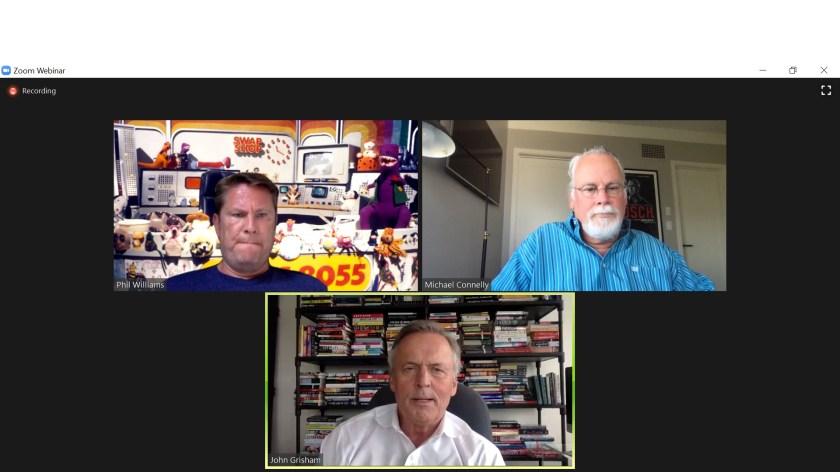
In an unusual treat, ironically made possible by the coronavirus, Waterstones bookstores offered book lovers an opportunity to hear from two of the 21st century’s most successful authors: Michael Connelly and John Grisham.

In a wide-reaching conversation, moderator Phil Williams did a fine job of navigating the authors body of work, current works, hobbies, writing habits, and influences, with a little discussion of movies, too.

SHSU, LEAP Center, Center for Law Engagement And Politics, Michael Connelly, John Grisham, Waterstones, Phil Williams

The occasion was the recent release of Grisham’s Camino Winds, and Connelly’s Fair Warning.

Connolly, who has written more than 30 novels, is most associated with the Harry Bosch novels, which are currently being filmed on Amazon’s “Bosch.”  But he is also well known for his “Lincoln Lawyer” novels, which also spawned a hit film starring Matthew McConaughey.  Williams asked Connelly if, when he was writing his novels, he ever “heard” the voice of Titus Welliver (who plays Bosch in the Amazon series) or McConaughey.  Connelly noted that he had written Bosch for 25 years before the books were filmed, and his pre-existing image of Harry Bosch is “impenetrable.”  But he did not that when writing his Lincoln Lawyer novels (the last of which will come out in November), he does see or hear McConaughey.

SHSU, LEAP Center, Center for Law Engagement And Politics, Michael Connelly, John Grisham, Waterstones, Phil Williams

Interestingly, McConaughey also started in the film version of a Grisham Novel: A Time to Kill.  It is just one of many Grisham novels made into a film, including: The Firm, Runaway Jury, The Pelican Brief, The Chamber, The Gingerbread Man, A Painted House, Christmas with the Kranks, The Rainmaker, and The Client.  Grisham did note that, despite having numerous successful films with the biggest of movie stars, no film has been made from his novels in more than 15 years.

SHSU, LEAP Center, Center for Law Engagement And Politics, Michael Connelly, John Grisham, Waterstones, Phil Williams

Williams asked the authors what they are currently reading.  Connelly begged off a little, noting that he spends most of his time writing, but that he does listen to audio books while exercising.  He listed Thomas Harris’s “Red Dragon” as an influential book that helped prompt him to begin writing.

Grisham was more voluble on the subject, citing Ian Rankin, Harlan Coben, Scott Turow, and Erik Larson.  He also noted that his COVID project was reading all the novels of Walker Percy.  Grisham cited Scott Turow’s “Presumed Innocent” as highly influential and the book that prompted him to get to writing.

Both are book collectors.  When asked to identify their most prized possession, Connelly cited a first edition of a Ross McDonald novel–along with the signed contract for the book.  Grisham cited owning all of F. Scott Fitzgerald’s novel in first edition.

SHSU, LEAP Center, Center for Law Engagement And Politics, Michael Connelly, John Grisham, Waterstones, Phil Williams

In terms of approaches to writing, Connelly doesn’t outline, but he also doesn’t begin writing until he “knows the beginning and end of the novel.”  Grisham does outline–fairly extensively–and writes summaries or key moments in each chapter.

SHSU, LEAP Center, Center for Law Engagement And Politics, Michael Connelly, John Grisham, Waterstones, Phil Williams

For those of you may have never read a Grisham or Connelly, Williams asked each author where they would advise a reader to start.  Connelly suggested 2016’s “The Wrong Side of Goodbye,” which features both Bosch and Mickey Haller (the “Lincoln Lawyer”).  I wasn’t asked, but I would recommend “The Poet,” which involves a serial killer and Edgar Allan Poe.

John Grisham, surprisingly, suggested that readers should begin with “The Innocent Man,” his only non-fiction book.  I would suggest “The Firm.”

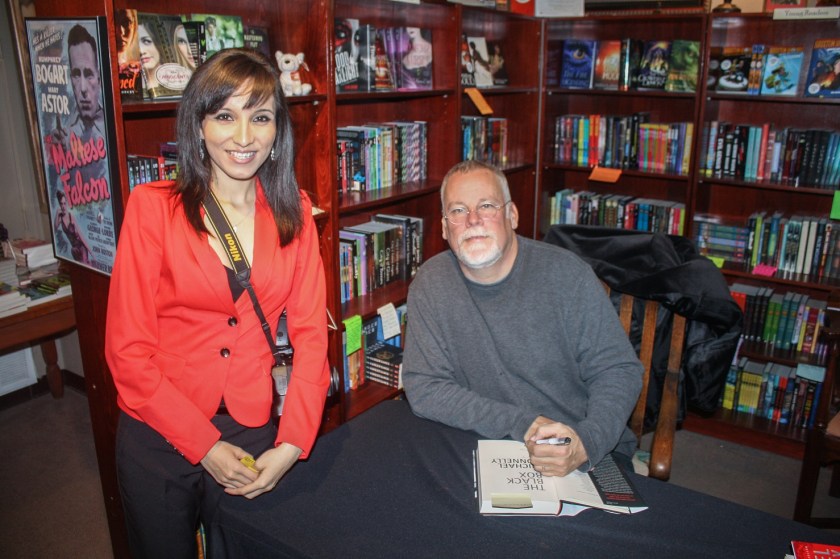
The authors are not only entertaining, but they have a special place for LEAP Ambassadors.  Michael Connelly was a journalist, writing for the LA Times and covering crime.  While not many LEAP Ambassadors go into journalism, many LEAP Ambassadors major in English and Criminal Justice. And the LEAP Ambassadors have actually met Connelly, and our advisor, Mike Yawn, interviewed him for an article.

SHSU, LEAP Center, Center for Law Engagement And Politics, Michael Connelly, Murder by the Book, The Black Box

And John Grisham, of course, is an attorney, and he also served three terms in the Mississippi House of Representatives, mixing law, politics, and civic duty.  In short, these author reflect a lot of the interests pursued by the LEAP Center, and we were grateful to have the opportunity to hear from them.

SHSU, LEAP Center, Center for Law Engagement And Politics, Michael Connelly, John Grisham, Waterstones, Phil Williams

Unknown's avatarAuthor mikeyawnPosted on May 30, 2020Format AsideCategories Civic Engagement, Law, Literature, PoliticsTags Center for Law Engagement And Politics, John Grisham, LEAP Center, Michael Connelly, Phil Williams, SHSU, WaterstonesLeave a comment on Talking Fiction with John Grisham and Michael Connelly

White House Warriors: The World Affairs Council and John Gans

As an unconventional roller coaster of a semester draws to a close, LEAP ambassadors take comfort in the high quality educational and informational opportunities provided by the World Affairs Council (WAC) of Houston.

WAC Executive Director Maryanne Maldonado…

SHSU, LEAP Center, Center for Law Engagement And Politics, John Gans, White House Warriors, World Affairs Council Houston, International Relations, Foreign Policy, Maryanne Maldonado

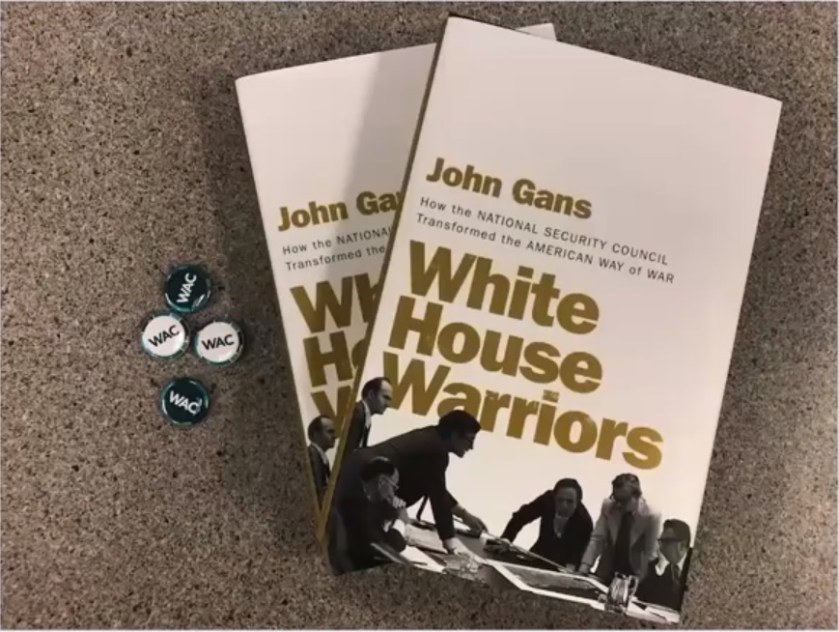
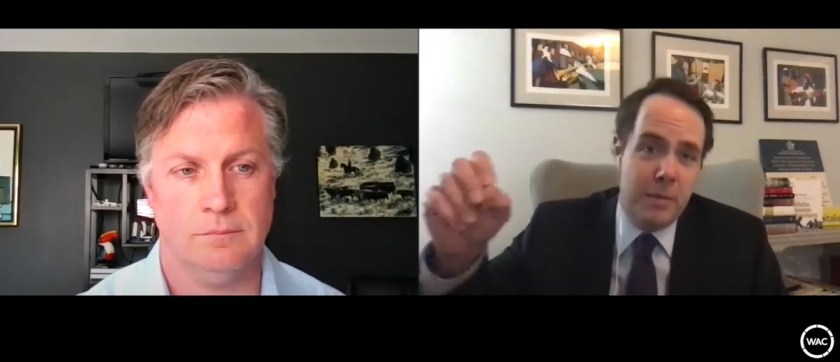
…introduced John Gans, a Washington, D.C. speechwriter who has worked for such entities as the Office of the Speaker of the House and the U.S. Secretary of Defense.  Gans discussed his recent book, White House Warriors: How the National Security Council Transformed the American Way of War, and about the role of the National Security Council in general.

SHSU, LEAP Center, Center for Law Engagement And Politics, John Gans, White House Warriors, World Affairs Council Houston, International Relations, Foreign Policy

As someone interested in policy, history, and communications, I LEAPed at the opportunity to participate in the moderated discussion and write this blog.

In this interview, Dr. Gans – moderated by WAC’s Ronan O’Malley – began by giving an in-depth history regarding the inception and development of the National Security Council (NSC).

SHSU, LEAP Center, Center for Law Engagement And Politics, John Gans, White House Warriors, World Affairs Council Houston, International Relations, Foreign Policy

As he explains it, the NSC was founded by Harry Truman as a result of Franklin D. Roosevelt’s secretive behavior and compartmentalized organization during WWII. FDR, consulting only his closest advisors and Winston Churchill, left the rest of Washington in suspense of decisions made regarding war efforts. (Indeed, he had not even informed VP Harry Truman of the Manhattan Project!)

Believing that no president should have so much freedom and unchecked power during wartime, Truman established the NSC to advise, instruct, and coordinate between the White House and the rest of Washington. Originally an organization of nearly twelve individuals, the National Security Council has grown into one of the most powerful organizations in Washington.

After explaining the origins of the NSC, Gans went on to discuss how the role of the organization has evolved over the decades and become a pivotal part of the development of foreign policy. He claims that, over the years, there would often be certain NSC staffers who would step up and influence the course of policies and wars.

Next, Ronan asked about Henry Kissinger, who, as Gans stated, made the position of National Security Advisor a “household title.” According to Gans, Kissinger assembled one of the “best-credentialed NSC staff in history.” In spite of this, the council often found that they had nothing to do, due to Kissinger’s lack of trust. Famously, he would take the drafts of memos written by members of the NSC, change the conclusions, and present them as his own, generally with an optimistic outlook. His process created tension and distrust among his staff, and eventually led to some of the first wiretaps involved with Watergate. In Kissinger’s time, Gans suggests, if you were considered disloyal, you may be spied on, and if you were considered loyal, you rose in power and rank.

SHSU, LEAP Center, Center for Law Engagement And Politics, John Gans, White House Warriors, World Affairs Council Houston, International Relations, Foreign Policy

As disconcerting as this process was, even more so is the fact that the NSC is not subject to congressional oversight. Although some staffers have testified under oath, they are not required to, which has been a cause of concern for many leaders in Washington. Due to this freedom from oversight, the NSC has grown as an authority in foreign policy. Gans contends that this remains an issue to this day.

Gans also shared a number of anecdotes about the “most egregious” events in NSC history, including that of the only NSC staffer to die in the line of duty (in a car accident) and the story of a staffer who “assumed an army uniform and picked up a rifle” to go on patrol in Afghanistan.  Conversely, he identified the George H. W. Bush National Security Council as “the high point” in organization and decision making since the Council’s inception–a heartening conclusion, given that we will be hearing from Condi Rice in a few days (she was part of that NSC).

Gans argues that, in times, the NSC has “gotten in the way of the chain of command” and have come to run strategy in both war and foreign policy in general. He also stated that government, like business, boils down to trust, which is why many presidents have come to rely on the staff of the NSC as individuals who have their best interests in mind. As a result, a great amount of authority falls under the scope of the NSC.

SHSU, LEAP Center, Center for Law Engagement And Politics, John Gans, White House Warriors, World Affairs Council Houston, International Relations, Foreign Policy

After a few questions from the audience, the conversation ended. Despite being a virtual event, as many things are right now, this has been one of my favorite WAC discussions. In such a short amount of time, I learned a great deal about a very influential part of the United States’ foreign policy. Dr. Gans offered an interesting, engaging, and in-depth perspective into the National Security Council, and I am excited to read his book and learn more about its history and development. LEAP is, as always, appreciative of the World Affairs Council for arranging such a high quality conversation.

Unknown's avatarAuthor mikeyawnPosted on May 29, 2020Format AsideCategories Civic Engagement, Law, PoliticsTags Center for Law Engagement And Politics, Foreign Policy, International Relations, John Gans, LEAP Center, SHSU, White House Warriors, World Affairs Council HoustonLeave a comment on White House Warriors: The World Affairs Council and John Gans

Talking COVID with Dr. Gerald Parker

Dr. Gerald Parker is the Director of the Scowcroft Institute’s “Biosecurity and Pandemic Policy Program,” and he has served as the Deputy Assistant Secretary of Defense for Chemical and Biological Defense and as the Deputy Assistant Secretary for Preparedness and Response at the Department of Health and Human Services.  In short, he is qualified to discuss the Corona Virus, and that’s what he did last, giving LEAP students an opportunity to learn more about the public crisis that is, we hope, a once-in-a-lifetime event.

SHSU, LEAP Center, Center for Law Engagement And Politics, COVID, Coronavirus, TAMU, Bush School of Government and Public Service, Scowcroft Institute, Dr. Gerald Parker

Dr. Parker began by giving an overview of the ever-growing numbers of COVID cases and deaths in the US.  He also pointed out the most common victims of the virus: (1) those over 65 (in Texas, 75 percent of those who die from the virus are 65 or older); (2) those with existing health conditions; (3) those in long-term care facilities (prisons and nursing homes); and (4) those in meat-packing plants.

SHSU, LEAP Center, Center for Law Engagement And Politics, COVID, Coronavirus, TAMU, Bush School of Government and Public Service, Scowcroft Institute, Dr. Gerald Parker

And while the US may have peaked–at least in its first wave–there are numerous possible scenarios for how this may play out.  The big takeaway, is that despite the re-opening, the virus threat has not passed.  Dr. Parker saw three possible future scenarios: (1) a series of peaks and valleys; (2) a second wave in the fall; or (3) a smaller fall peak, with continuing flare ups.  In many respects, the first of these may be the most difficult, at least in terms of planning.  Of course, a second large wave could also make for strains on the health-care system.

SHSU, LEAP Center, Center for Law Engagement And Politics, COVID, Coronavirus, TAMU, Bush School of Government and Public Service, Scowcroft Institute, Dr. Gerald Parker

To make re-opening successful, Dr. Parker advocated for: (1) getting up to speed on (a) contract tracing, (b) testing, and (c) identifying hot spots, so that additional steps can be taken in those areas; (2) continuing to practice social distancing and other common-sense measures; (3) ensuring our hospitals and other institutions are prepared should another major wave occur, which Dr. Parker thinks could be likely.

Dr. Parker’s program was educational, if sobering, and we look forward to future programs from the Bush School.


Unknown's avatarAuthor mikeyawnPosted on May 11, 2020Format AsideCategories Civic Engagement, Health, PoliticsTags Bush School of Government and Public Service, Center for Law Engagement And Politics, Coronavirus, COVID, Dr. Gerald Parker, LEAP Center, Scowcroft Institute, SHSU, TAMULeave a comment on Talking COVID with Dr. Gerald Parker

COVID-19 and the Food Supply Chain

With finals underway, our  numbers dwindle, but some hardy LEAP Ambassadors tuned in to the Bush School‘s/Scowcroft Institute’s weekly COVID-19 update, with this one focusing on the food supply chain.

Dr. Blackburn led off the show…

SHSU, LEAP Center, Center for Law Engagement And Politics, BUSH School of Government and Public Affairs, Scowcroft Institute, TAMU, COVID-19

by introducing Brittany Segundo, a Fellow at the Scowcroft Institute specializing in supply chains (and a Ph.D. student studying engineering).   Segundo discussed meat products, and the spike in coronavirus illnesses among food workers.  This is largely a product of the lack of social distancing in the plants, but it’s also possible that the workers need the N95 Respirator masks instead of just the less stringent masks.

SHSU, LEAP Center, Center for Law Engagement And Politics, BUSH School of Government and Public Affairs, Scowcroft Institute, TAMU

Segundo stressed that there really shouldn’t be a substantive shortage. Rather, we might see a bit of a bump in prices and less variety.  Some stores might put a limit on the number of, say, meat packages a customer can buy, but that’s not because of a shortage.  It’s more to prevent a run on meats, much as there was over purchasing of toilet paper early in the pandemic.

SHSU, LEAP Center, Center for Law Engagement And Politics, BUSH School of Government and Public Affairs, Scowcroft Institute, TAMU, COVID-19

Another factor is that with the government shutdowns, the demand for many agricultural products has dropped, leading to reports of farmers ‘dumping’ some of the produce.  Some have asked, “Why can’t those food items be donated to non-profits and food banks?”  One of the reasons for this is that it costs a lot of money to re-distribute those items to new locations and, often, in new packaging.  Suppliers who are already losing money cannot readily incur additional costs associated with the logistics of donating to new venues.

Dr. Christine Blackburn then stepped in to discuss the effect of COVID-19 on high-value commodities0–fruit and vegetables and other items that are labor intensive to harvest.

SHSU, LEAP Center, Center for Law Engagement And Politics, BUSH School of Government and Public Affairs, Scowcroft Institute, TAMU, COVID-19

One difficulty there is that the labor for these products often comes from international sources.  These workers are often either undocumented or require H2A visas, and, because of COVID-19, fewer of these visas were issued this year.  This has resulted in a reduction of labor.

Additionally, many of these workers live or work in tight spaces, making social distancing difficult.  This results in a higher rate of absenteeism, another factor impeding production and distribution. So, for consumers, we may see higher prices and more limited products, but the real impact will be on farmers and those who work for farmers, whose incomes are being affected.

Blackburn and Segundo then took questions.

SHSU, LEAP Center, Center for Law Engagement And Politics, BUSH School of Government and Public Affairs, Scowcroft Institute, TAMU, COVID-19

One important question involved whether we are any closer to achieving “herd immunity”?  This is a difficult question, and according to Dr. Blackburn, we still don’t know if having the disease produces immunity. If it doesn’t, then we won’t achieve herd immunity.  If it does, the medical community will need to determine how long the immunity lasts.  Additionally, it’s possible that a certain amount of antibodies are needed to achieve immunity, and the tests may not be sufficiently sensitive to determine this.  Finally, there is the issue of false positives.  If the false positive rates are high, then you have people who think they are immune, but aren’t actually immune. That makes them more vulnerable for future infections.

The big question was: is this the right time for the shutdown to end?  Dr. Blackburn struggled with how to answer this, noting that the answer to this depends on factors relating to health, economics, and social aspects of our lives. She also mentioned that she has friends who are out of work, parents struggling with children at home, and she understand the impact of the shutdown.

SHSU, LEAP Center, Center for Law Engagement And Politics, BUSH School of Government and Public Affairs, Scowcroft Institute, TAMU, COVID-19

But looking at it from a health-only perspective–from a “disease-containment standpoint,” as she said it–“now is not the right time” to end the shutdown.  Blackburn noted that Texas has an increase in cases over the past two weeks, and she expects in 3-4 weeks, we’ll see much larger numbers of cases in Texas, and 3-4 weeks after that, we’ll see a larger number of deaths.

She further pointed out that different specialists look at different areas: economists look at the economic impact of a government shutdown and/or disease; health experts look at the health impact.  Elected officials have to weigh those and make good decisions.


Unknown's avatarAuthor mikeyawnPosted on May 6, 2020Format AsideCategories Civic Engagement, Food, PoliticsTags Bush School of Government and Public Affairs, Center for Law Engagement And Politics, COVID-19, LEAP Center, Scowcroft Institute, SHSU, TAMULeave a comment on COVID-19 and the Food Supply Chain

Joshua Landis Speaks about Syria

By Quinn Kobrin,

This week, the LEAP ambassadors got a brief break from COVID-19 discussions to hear Joshua Landis, the head of the Center for Middle Eastern Studies at the University of Oklahoma, speak about Syria and its current struggles in peace in an event hosted by the World Affairs Council of Greater Houston.

After an introduction from WAC Director Maryanne Maldonado…

SHSU, LEAP Center, LEAP Ambassadors, Center for Law Engagement And Politics, World Affairs Council of Greater Houston, Syria, Joshua Landis

…the event began with Basmah Ghauri – the Director of International Programs for the World Affairs Council – moderating.

SHSU, LEAP Center, LEAP Ambassadors, Center for Law Engagement And Politics, World Affairs Council of Greater Houston, Syria, Joshua Landis

The discussion started off with an overview of the Syrian Civil War, and who the key players are in the fight for control.

According to Dr. Landis, a vast majority of people in Syria have been hoping for a change in leadership. The Ba’ath Party has held leadership for decades, and is the political party of the current president, Bashar Hafez al-Assad.

SHSU, LEAP Center, LEAP Ambassadors, Center for Law Engagement And Politics, World Affairs Council of Greater Houston, Syria, Joshua Landis

The Assad family has been ruling as dictators for nearly 40 years, and it has long been the objective of the Syrian population that dictatorships such as this one be brought to an end. One major reason for this has been the class disparity and major income gap. As wealth made its way into Syria, and the upper class began driving fancy cars when most people had no car at all, the class differences became all too clear.

Landis proceeded to point out some of the challenges facing Syria throughout its military, social, and economic struggles. One of these is the international sanctions placed on Syria by the United States. Landis noted that these have been devastating to the Syrian regime and has done more harm to its people than its leaders. These sanctions have also been extended to anyone who does business in or with Syria, and so their amount of trade partners have begun shrinking.

SHSU, LEAP Center, LEAP Ambassadors, Center for Law Engagement And Politics, World Affairs Council of Greater Houston, Syria, Joshua Landis

Another of these challenges is the substantial cost of rebuilding Syria. Landis explained that it would cost nearly $300 billion to restore Syria, however the GDP is currently $9 billion, and the government only has $1 billion set aside for rebuilding.

Dr. Landis then discussed Syria’s rocky relationship with the United States. Ms. Ghauri asked whether there would be any leniency due to COVID-19. Landis said that the European Union has asked as much, but the United States government has said no, which means the aforementioned sanctions will remain in place.

The U.S. also has a strained relationship with the Kurdish population of Syria, which it enlisted to help in the war against ISIS. Apparently, as soon as ISIS was defeated, President Trump withdrew American troops and ended the U.S.’ alliance with the Kurds in order to avoid conflict with Turkey (whose government views the Kurdish population as a violent and radical group). America had no intention of supporting the Kurds long-term. As Landis explained it, “You sometimes have to use deceit to get your way in war.”

In order to come to a peaceful resolution, the United States is requiring regime transitions, United Nations backed elections, and for the Iranian military to vacate Syria to prevent Russia from having a foothold in the Middle East.

SHSU, LEAP Center, LEAP Ambassadors, Center for Law Engagement And Politics, World Affairs Council of Greater Houston, Syria, Joshua Landis

The main takeaway from the conversation was that, while U.S. sanctions and economic deprival may prevent Syria from becoming a threat, it also hurts the people of Syria, those of the lower and middle class, and prevents the nation from being rebuilt and having structure and peace once again.

I appreciate Dr. Landis and Ms. Ghauri taking the time to discuss the situation in Syria. I definitely learned a great deal about a topic I knew very little about, which is something I find myself saying after most WAC events!

Unknown's avatarAuthor mikeyawnPosted on May 5, 2020Format AsideCategories Civic Engagement, Law, PoliticsTags Center for Law Engagement And Politics, Joshua Landis, LEAP Ambassadors, LEAP Center, SHSU, Syria, World Affairs Council of Greater Houston1 Comment on Joshua Landis Speaks about Syria

Posts pagination

Previous page Page 1 … Page 22 Page 23 Page 24 … Page 61 Next page

LEAP Ambassadors Are Involved!

This slideshow requires JavaScript.

Follow Us On Facebook!

Follow Us On Facebook!

Catch Up With Us

  • Pre-Law Society hosts Dr. Rhonda Beassie March 16, 2026
  • Filling Empty Bowls: A Community Tradition March 13, 2026
  • CHSS Wall of Honor ceremony and Speakeasy celebration March 11, 2026
  • Jean Becker and Tom Collamore Discuss Advance Work in ‘Don’t Tell the President’ March 10, 2026
  • Public Service Lessons from George H.W. Bush March 9, 2026

Join The Conversation!
Multi-Platform Media… on Fun and Flavor: Chilly at the…
Highlights from the… on Glazing-A-Trail with Lauren…
The Civic Leadership… on Foundational Activities of the…
The Civic Leadership… on The Philosophical Foundations…
LEAPing Into Action… on The Philosophical Foundations…

Find Previous Posts

We also have Twitter!
My Tweets

LEAPing Into LEARNing

This slideshow requires JavaScript.

  • About LEAP
  • LEAP Ambassadors
Center for Law, Engagement, and Politics Blog at WordPress.com.
  • Subscribe Subscribed
    • Center for Law, Engagement, and Politics
    • Join 490 other subscribers
    • Already have a WordPress.com account? Log in now.
    • Center for Law, Engagement, and Politics
    • Subscribe Subscribed
    • Sign up
    • Log in
    • Report this content
    • View site in Reader
    • Manage subscriptions
    • Collapse this bar
 

Loading Comments...