Skip to content

Center for Law, Engagement, and Politics

Leap At SHSU!

  • About LEAP
  • LEAP Ambassadors
Center for Law, Engagement, and Politics

Category: Politics

Louisiana: Beignet and Done Dat

Although it was our final day in Louisiana…

…we were determined to make it worthwhile, so we hit a couple of must-dos on our way back to Texas, finals, and preparation for next semester.
Café du Monde

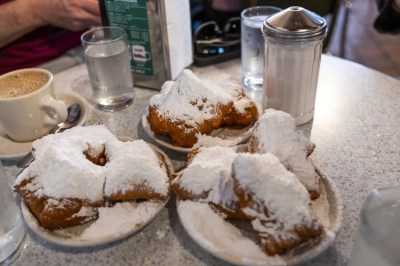
While we had done a good job of sampling New Orlean’s food scene, we had yet to visit the legendary Cafe Du Monde and sample their legendary beignets.
We learned they were messy before we learned they were good, but their quality was, in fact, soon confirmed, bringing smiles to our faces!

Louisiana State Capitol Building

by Chrissy Biello

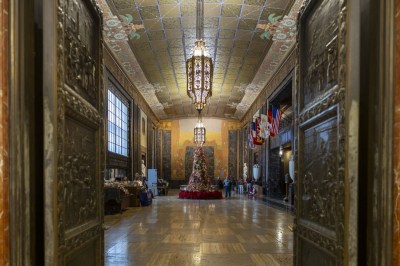
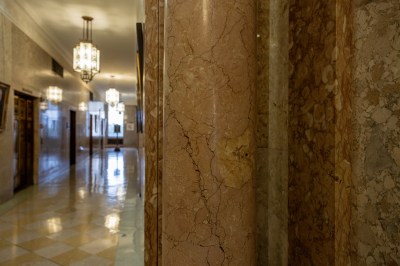
On our way back home to Huntsville, we had the opportunity to stop in Baton Rouge to see the Louisiana State Capitol. As we approached the building, Professor Yawn sparked our curiosity by challenging us to guess its architectural style. I initially thought it looked modern, while Olivia suggested post-modern. Up close, we discovered the building was a stunning example of Art Deco architecture!

The interior immediately welcomed us with a decorated Christmas tree that transformed the governmental space into something unexpectedly warm.

Professor Yawn first took us to the area where Huey Long, the 40th Governor of Louisiana from 1928 to 1932, was assassinated inside the Capitol. The assassin, Dr. Carl Weiss, killed Governor Long after he was trying to get a redistricting bill passed. However, after the bill was passed, Long entered the hallway and was shot by Dr. Weiss. Professor Yawn then pointed out the preserved bullet hole in the wall!

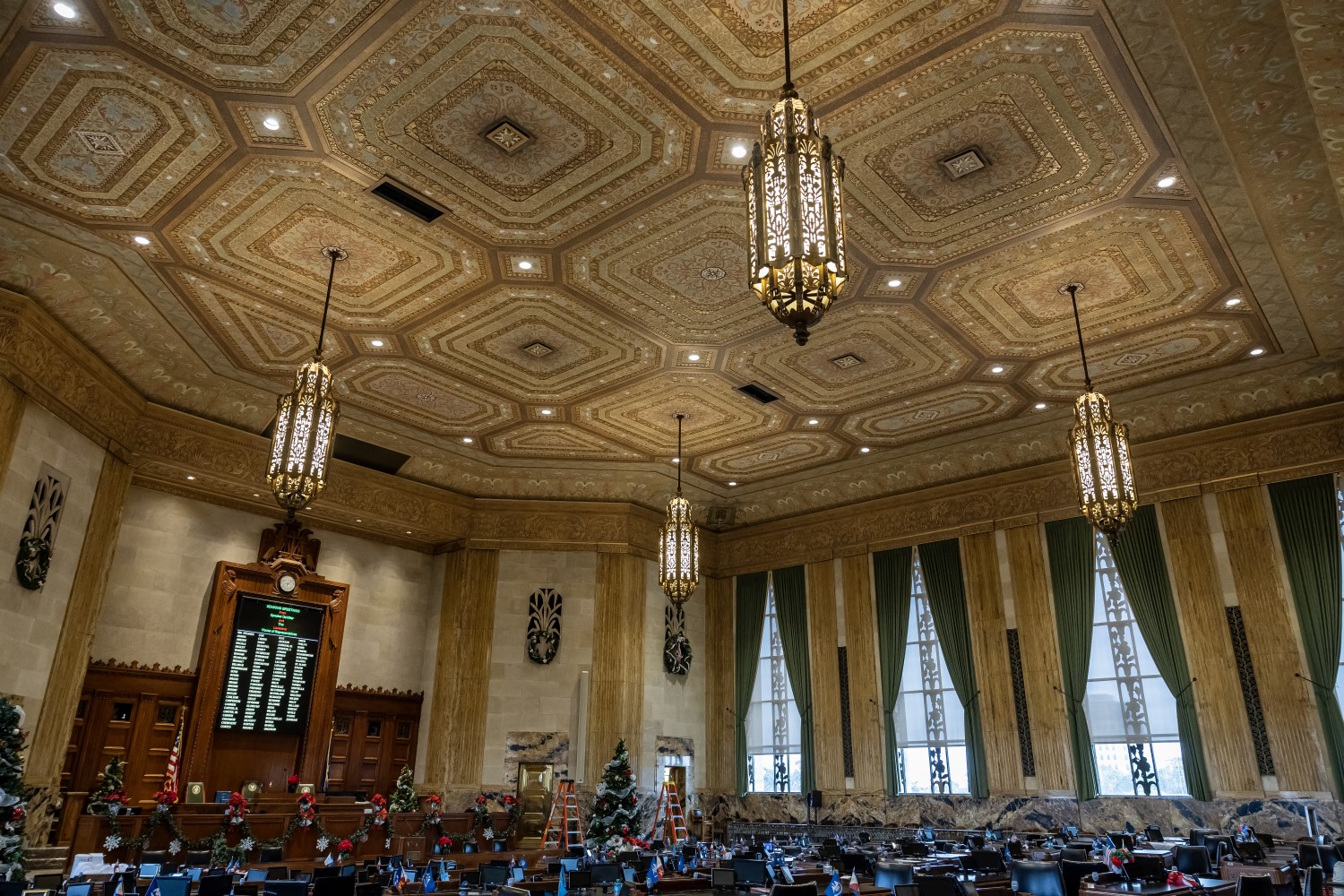
Nevertheless, the House Chambers offered a striking contrast to the earlier sad story. Holiday decorations filled the room, with vibrant poinsettias creating a festive atmosphere.

Yet, the ceiling was what really caught our attention; its intricate design and beautiful gold color added something special to the space.

We moved on to the Senate chambers, getting a view we thought might be similar to where press members usually sit during sessions.

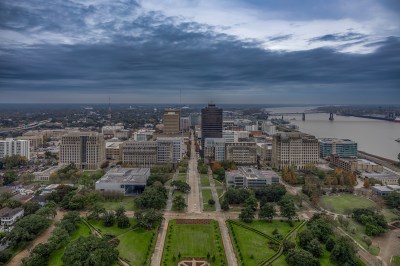
Next, we made our way to the elevators so we could reach the tower. From the tower, we could see the entire landscape in front of the building. I recognized the design as a radial layout.

Moreover, there were interesting Art Deco themes that could be seen from above, such as the geometrically shaped parking lot! 

Before leaving, we walked down to the grounds and noticed something quite funny; the Huey Long statue was holding Mardi Gras beads!

After noticing this humorous detail, we ensured to get a group photo in front of the Capitol building, making us look incredibly small in comparison.

In all, visiting the Louisiana State Capitol was a great way to conclude our Council of State Governments National Conference trip. Michelle, Olivia, and I left with new experiences, whether educational, cultural or simply memorable moments to look back on!

Unknown's avatarAuthor mikeyawnPosted on December 11, 2024Format AsideCategories Civic Engagement, Law, Politics, Public Administration, TravelTags Center for Law Engagement And Politics, Huey Long, Louisiana State Capitol, Sam Houston State UniversityLeave a comment on Louisiana: Beignet and Done Dat

Exploring NOLA: Culinary, Cultural, and Civic Experiences

Creating Common Ground: Civil Discourse Strategies

by Michelle Moya

In the heart of New Orleans, we were looking forward to our second day of the CSG conference with enthusiasm and optimism. We woke ready for another day with an itinerary loaded with much exploration, walking, and cultivating visual art of the “city that never sleeps.” Fueled by coffee from Fourth Wall, we hurried off to our first session of the day! 

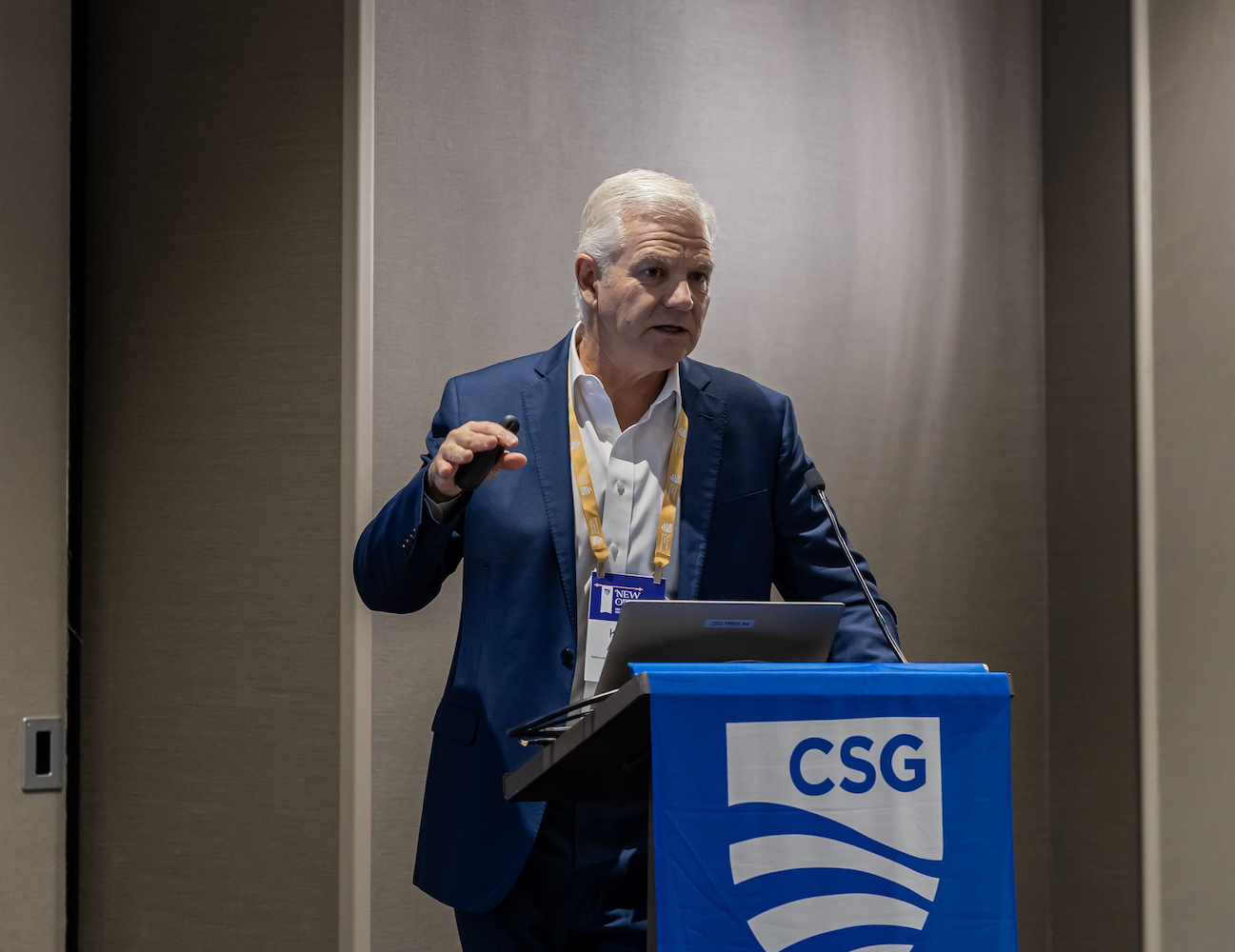
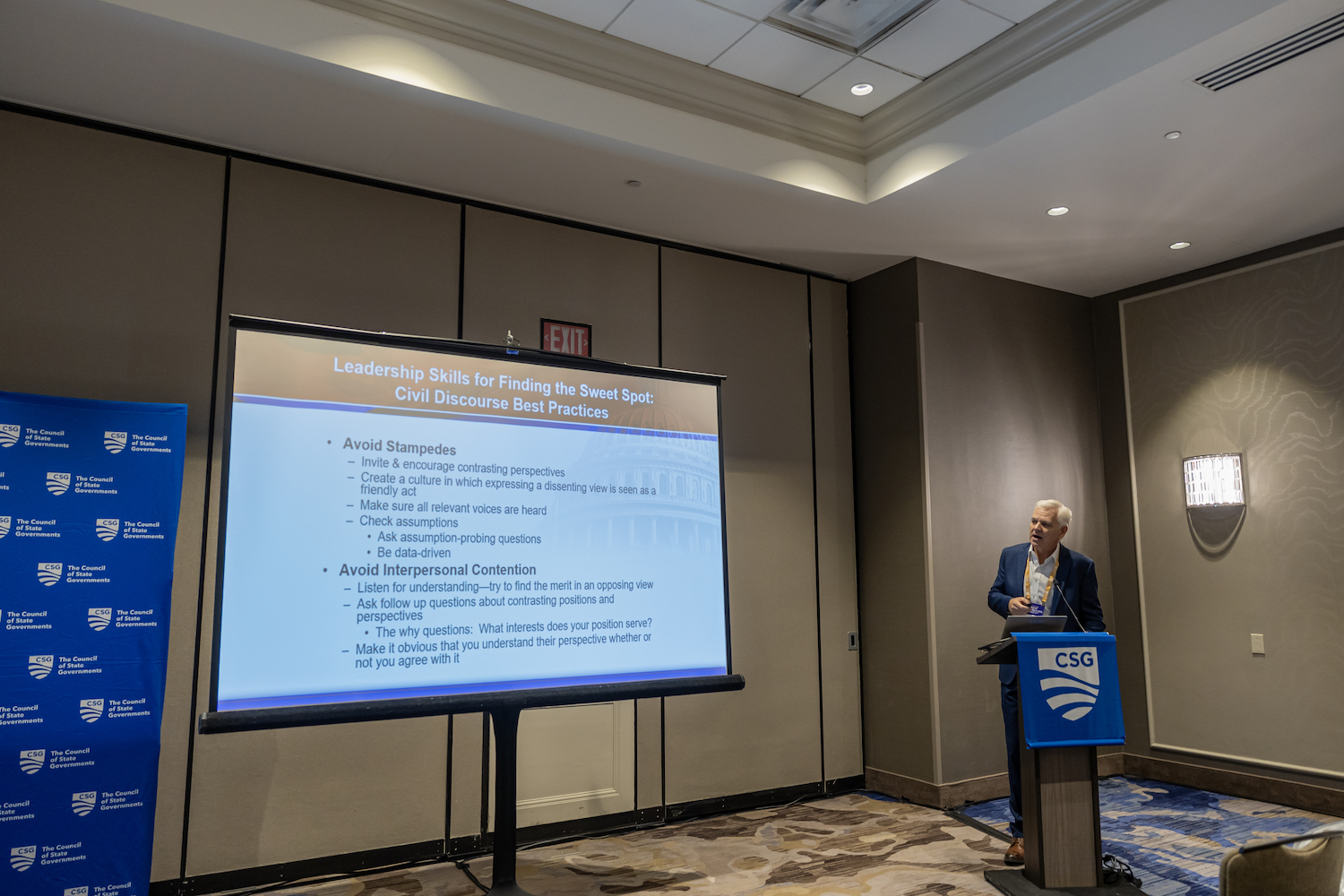
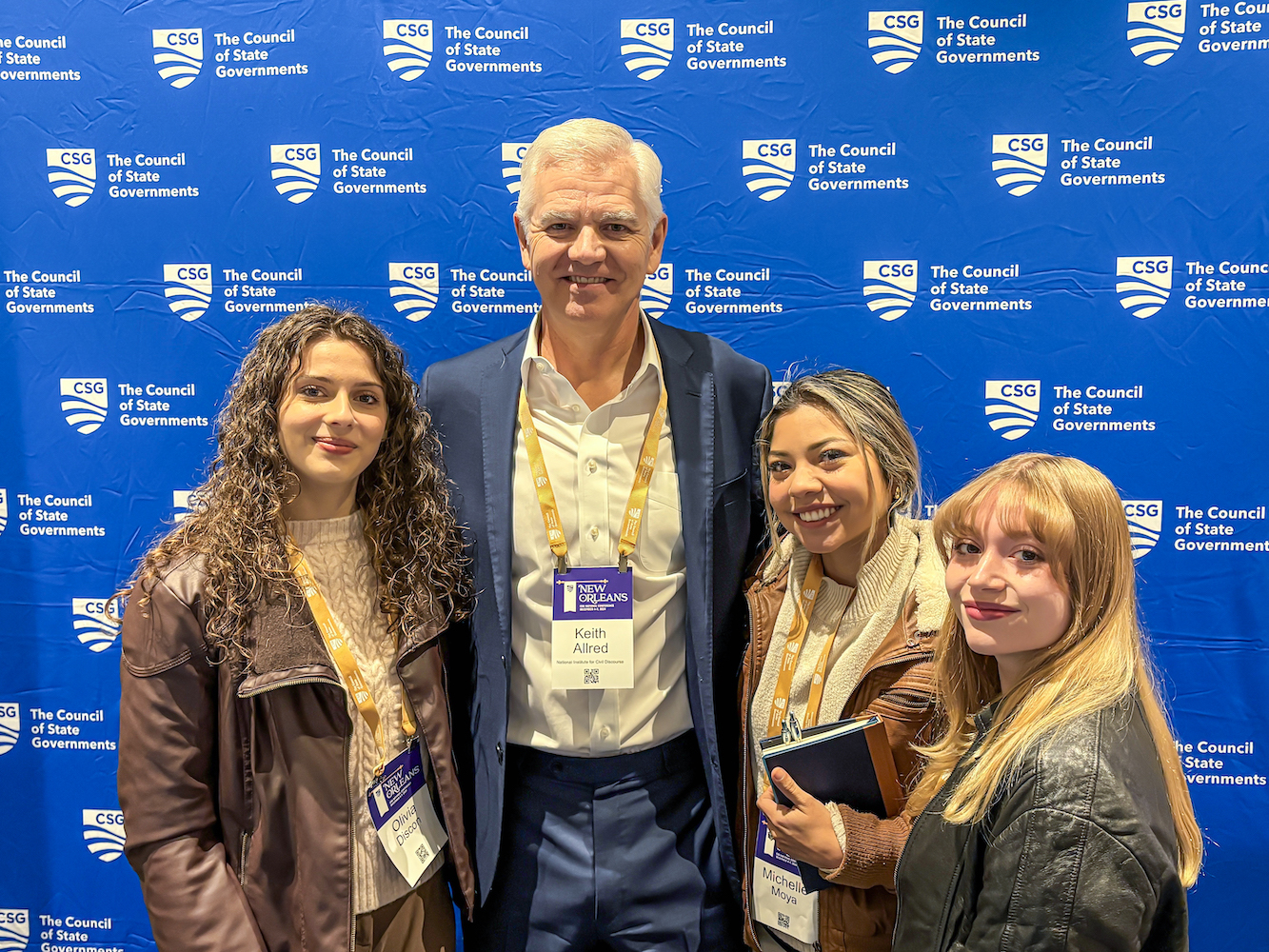
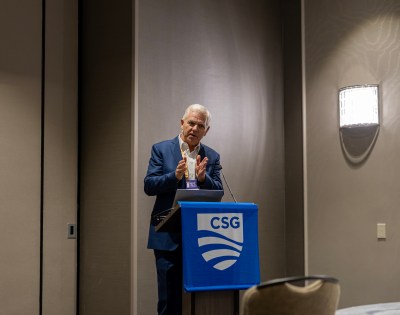
Our second day at the CSG conference was a masterclass on civic debate and leadership. The session, “Creating Common Ground: Civil Discourse Strategies,” led by NICD Executive Director Keith Allred (who, unintentionally, made me wonder if he was related to Colin Allred), transformed what could have been a dry lecture into a riveting analysis of historical decision-making.

With his professor’s precision, he drew a sharp contrast between two watershed periods in Kennedy’s presidency: the Bay of Pigs disaster and the Cuban Missile Crisis to illustrate his points. These weren’t just history teachings; rather, they were contrasting examples of how government officials should approach their decision-making. While this may not sound so interesting on a Friday morning, that session was the greatest one! 

Allred began by describing the split of effective conversation inside contemporary governments, which is mostly due to a significant unbalanced change in political parties. However, his nonpartisan approach is effective in all areas of government and in our daily lives. He briefly outlined the Bay of Pigs disaster, as well as the administrative initiatives and coordination they took to come to it. The result? A catastrophic failure that lasted mere days but left an indelible mark on American history. The culprit was not just poor planning—it was the silence of those who knew better but chose not to speak. While the majority opposed the plan, they failed to share honest views, which was taken as a “green light” for JFK to go with the plan. The lack of communication and interpersonal contentions resided in the decision-making process, which ended in disaster only 3 days after the plan went into effect. 

Allred soon shifted his focus to how they should have handled the situation and why it ultimately became a disaster. He accomplished this using the Cuban Missile Crisis, where a different approach would save America from the brink of nuclear disaster. The “commonsense sweet spot,” as Allred refers to it, is built on three pillars: embracing contrasting perspectives, avoiding the stampede effect, and navigating interpersonal tensions.

Through compelling footage from “13 Days,” we witnessed the transformation from Day 1’s despair to Day 2’s advancement, led by Robert Kennedy’s courage to voice dissent. We were able to understand the audience’s viewpoints and the lessons learned from Allred’s participatory approach, which helped us make wise conclusions. My favorite portion was undoubtedly this, and it has even inspired me to put the film on my “watch next” list! 

The session closed with a powerful message that resonates beyond government powers: “There is something immoral about abandoning your own judgment.” In an era of increasing polarization, these words carry special weight. People elect officials for their judgment, not their ability to follow the crowd. Like great coffee, great decisions are best made when they are bold, well thought out, and discussed with people who aren’t scared to voice their concerns.  

 Washington Watch: What States Can Expect from the Next Congress and Administration

by Chrissy Biello

With a new administration moving into the White House, many are predicting the future of the country. Because of this, the next session, “Washington Watch: What States Can Expect from the Next Congress and Administration,” posed a high amount of interest for us to gain insight from. The speaker, William Crozer, is the Co-Head of BGR’s Bipartisan State and Local Advocacy Practice. Moreover, from 2018-2021, Crozer served as the Special Assistant to the President and Deputy Director of the White House Office of Intergovernmental Affairs (IGA) in the Trump-Pence Administration, highlighting he has a wealth of experience to discuss the upcoming Congress and the new administration.

Crozer began by speaking on his past role in the White House Office of IGA, noting that during the pandemic, he “ran the local Covid calls from the White House,” making it likely that he spoke with individuals in the room. However, they are probably unaware of this since there was not much face-to-face contact. This being the case, he was coined the “emailer in chief,” sending various information to the state, local, and tribal officials. 

Pivoting to the upcoming administration, Crozer spotlighted what he believes to be the “day one priorities” for President-elect Donald Trump. He maintained that it boils down to key issues: trade, taxes, the economy, and immigration. Further, that SNAP Pilot Programs will be a significant focus. 

When the moderator asked about the executive orders Biden passed, Crozer stated that “everything will be on the chopping block; Biden repealed Trump’s executive orders.” He then hypothesized that the most likely roll backs will be those that are high spending, such as the CHIPS Act; thus, President Biden is dispersing as many awards as possible.

Speaking on partisanship, he stated that the “red states are getting redder, and the blue states are getting bluer,” remarking that some state governor’s will attempt to challenge Trump on executive orders. He gave the example of Gavin Newsom, the Governor of California, which many were not surprised to hear. Nonetheless, he emphasized that the legislatures in the room should engage with the Trump Administration, no matter what side of the party line they are on. 

Transitioning to a humorous anecdote from his time in the White House, he described that when sending invitations to municipal mayors to travel to DC, many thought it was a “Russian Hoax.” The room filled with smirks and chuckles; however, Crozer quickly commented how this displays the lack of outreach to state and local officials. To end on a light note, he closed the conversation by asserting that if someone in the room receives something from the White House, it is likely not spam. But, he ensured to clarify that the White House will never ask for a person’s Social Security Number!

Lunch Break at Cafe Reconcile

by Michelle Moya

After two great sessions, we headed to try another great taste! In New Orleans’ Central City neighborhood, we were successfully able to go to Café Reconcile. As requested by Professor Yawn, we did some research into the café and its history. To our surprise, this place was not just serving up amazing food—it was serving up hope and opportunities for young adults in NOLA. 

While the food was absolutely amazing, what actually distinguishes Café Reconcile is that it is a non-profit that uses its program to alter the lives of young people. Upon being seated, we saw that the restaurant featured various frames showcasing these students’ lives, including their personal aspirations and triumphs, which was quite encouraging. When you eat here, you’re supporting a program that helps young adults ages 16-24 kick-start their careers in various industries. We collectively agreed that we need something like this in Huntsville. Imagine having a restaurant that not only serves amazing food but also gives young people in our community real career opportunities and life skills. This little touch of history enhanced the overall experience and made it more delightful! 

Now, moving on to the food, I kept with my borderline seafood fixation and ordered their catfish plate with veggies. To my surprise, the veggies stole the shine on my plate (never thought I’d say that). The catfish was great too! It came with an incredibly colorful side salad that popped with personality thanks to these vibrant radishes that made the whole plate “Instagram-worthy.” 

LEAP Ambassadors Olivia and Chrissy shared this plate of jerk chicken that resembled a Thanksgiving turkey—or as Professor Yawn joked, perfect for “eating for two.” They ordered potato salad and the mac and cheese, which they mentioned, had them fighting over the last bites. Speaking of Professor Yawn, he went classic with red beans and rice, while Stephanie tackled a traditional New Orleans po’boy and this sweet potato crumb that she would not stop raving about and sharing—bless her. 


For the grand dessert? A banana bread pudding that had everyone at the table seemed to enjoy (except me) team no bananas here.

Next time you’re in NOLA, skip the tourist traps and head to Café Reconcile. The food and service was amazing, the portions are generous, and best of all? Your money goes toward helping young people build better futures. This was a great experience and gave me a grasp of the great food New Orleans had to offer! 

Cybersecurity in Focus: Assessing and Mitigating Risks of Cyberattacks Against State Governments and Critical Infrastructure

by Olivia Discon

Our last session for the day, and ultimately, for our time at the conference, was Cybersecurity in Focus: Assessing and Mitigating Risks of Cyberattacks Against State Governments and Critical Infrastructure. 

We were fortunate to hear from three panelists; Brad Manuel, Jing de Jong-Chen, and Dr. Mike Garcia, each providing an individual presentation from their respective backgrounds on prioritizing cyber resiliency. 

Brad Manuel, Region IV’s Cybersecurity State Coordinator for the Cybersecurity & Infrastructure Security Agency (CISA) took the podium first to discuss cyber infrastructure and “Best Practices”. 

Having formerly worked as a Chief Information Officer for a state agency and contributed several statues to state legislatures on cybersecurity, he is a huge proponent of everyone in organizations holding stake in risk management and cyber hygiene practices. 

Jing de Jong-Chen, current Senior Associate at CSIS and former executive at the External and Legal Affairs Division at Microsoft Co., focused on Supply Chain and Policy Alignment. She emphasized the importance of executive orders and strategic partnerships with federal agencies to enhance cybersecurity frameworks. Jing also highlighted the need for investment in IT modernization and fostering a resilient ecosystem through public-private partnerships. Her approach centered on integrating security into every layer of the supply chain, prioritizing cultural awareness, and creating holistic assessments to identify vulnerabilities. She also discussed the critical role of real-time monitoring and compliance attestations in maintaining system integrity.

Dr. Mike Garcia, Senior Elections and Security Person, Center for Internet Security, closed the panel with an in-depth look at the global impact of cybersecurity risks, focusing on international cooperation and domestic investment. He stressed the importance of adapting to rapidly evolving threats by fostering relationships in the field and engaging with vendors to align their goals with long-term resilience strategies. Dr. Garcia also addressed lessons learned from incidents like SolarWinds, emphasizing the value of competition and diversification in creating robust defense mechanisms.

As state governments increasingly rely on digital infrastructure, the discussions reinforced the urgent need to integrate proactive security measures to mitigate cyber security risks. 

The Sydney and Walda Besthoff Sculpture Garden

by Olivia Discon

My favorite aspect of the LEAP experience is the opportunity to improve our cultural literacy. One way this is achieved is through reinforced exposure to key artists in various places across the country. New Orleans’ city-owned park was a perfect iteration of the LEAP experience, as it is home to the Besthoff Sculpture Garden.

There were some heavy hitters immediately upon entry. Roy Lichtenstein was featured at the front of the museum.

In addition to that we saw a Louise Bourgeois’ Spider…

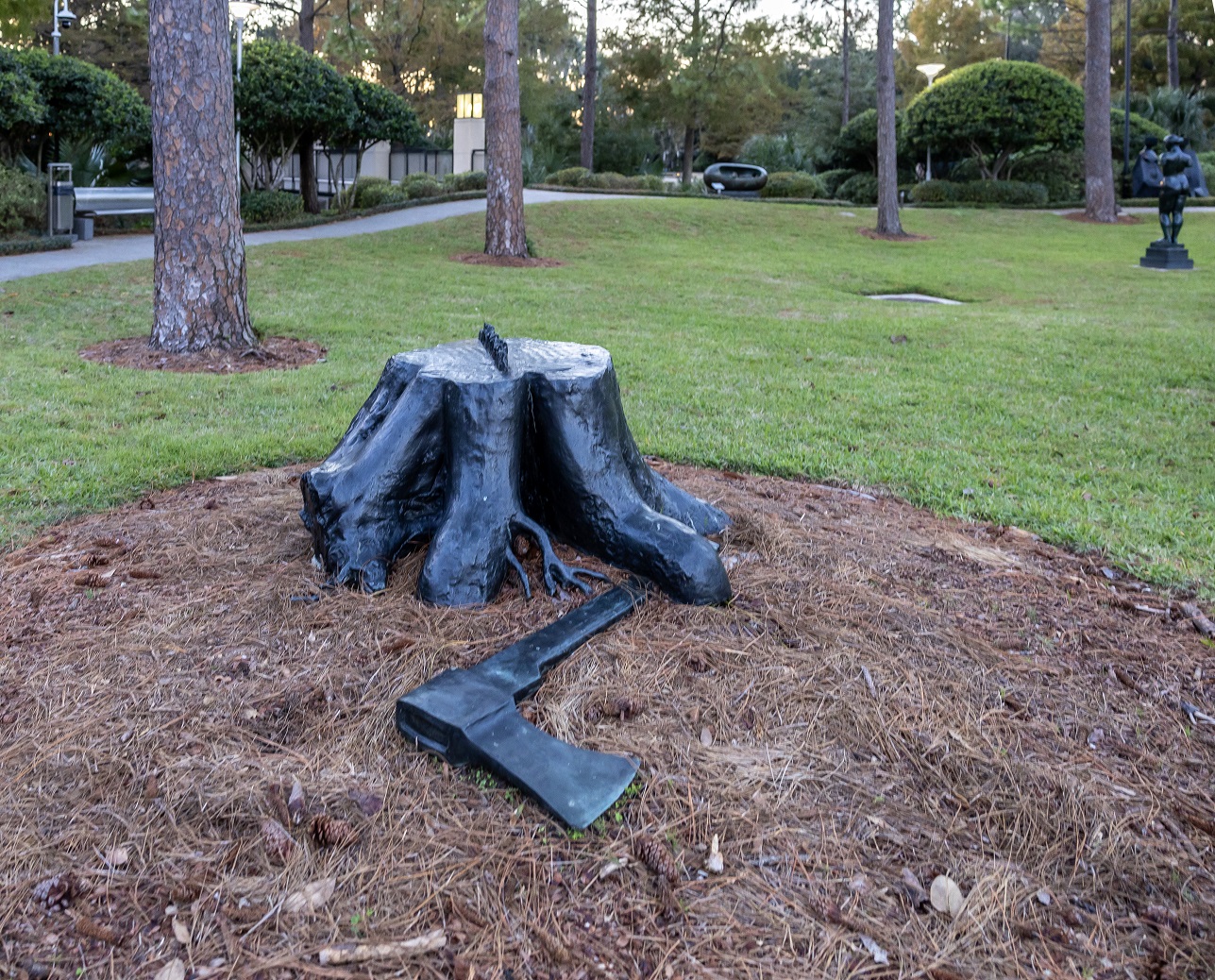
…alongside works by, Robert Indiana, Jaume Plensa, and Claus Oldenburg.


As we continued exploring, we encountered works by Henry Moore and, to our delight, an Isamu Noguchi piece. The collection also included unexpected surprises such as Renoir and Rodin—names often associated with painting or smaller sculptures, but here showcased in a  new context.  Jesus Moroles, SHSU alumni and LEAP favorite artist, is also featured in this collection. 

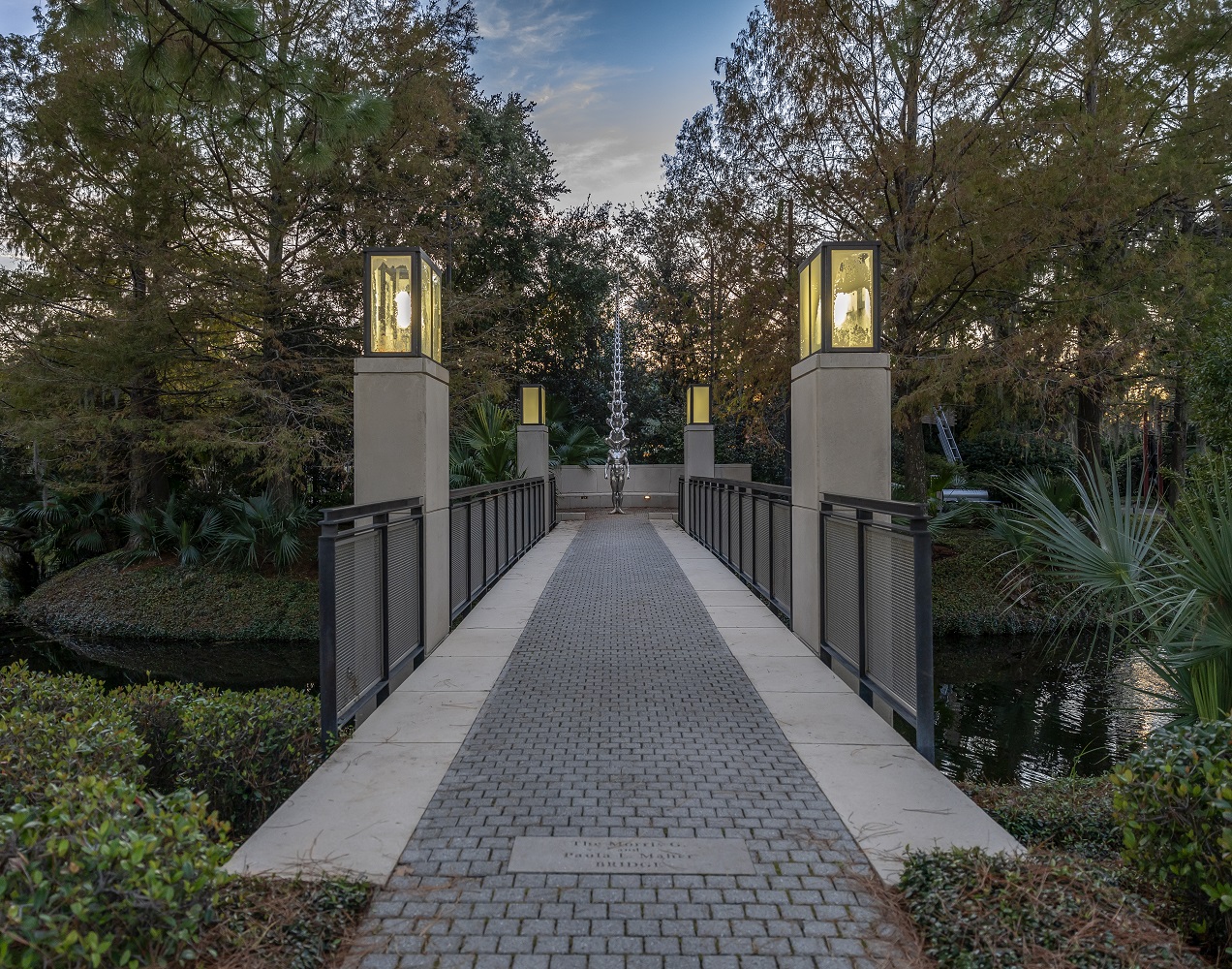
One artist I didn’t recognize but thoroughly enjoyed was Do-Ho Suh. His sculpture, a stack of figures resembling a spinal cord, was visually striking to me. 

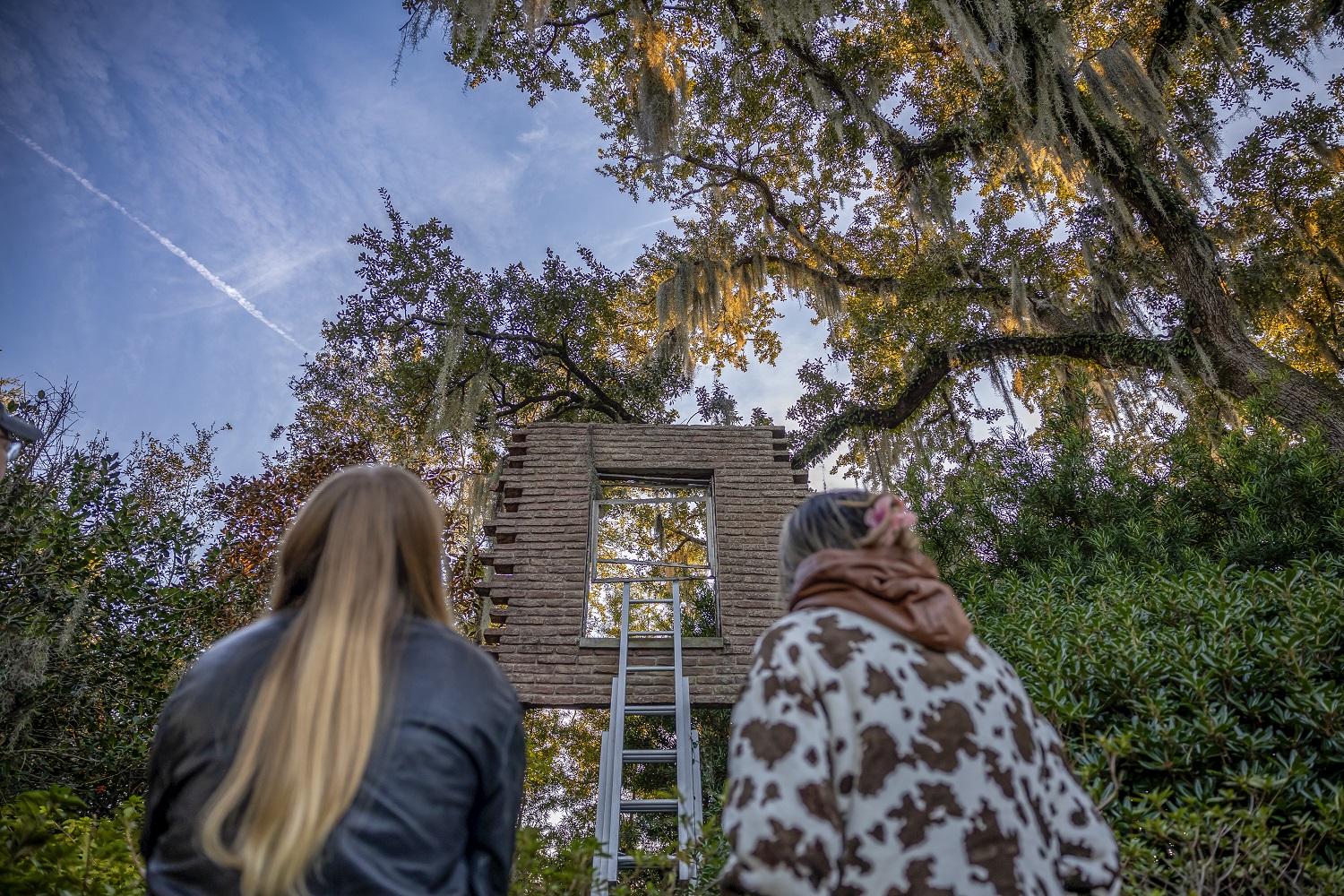
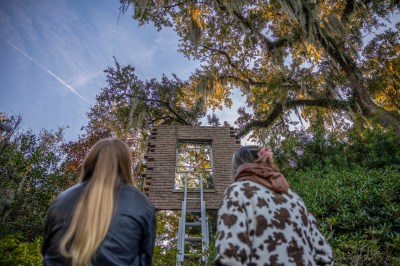
Michelle and Chrissy were drawn to two particular sculptures. One, Leandro Erlich’s Too Late for Help, featured an interesting hidden ladder to a gateway.

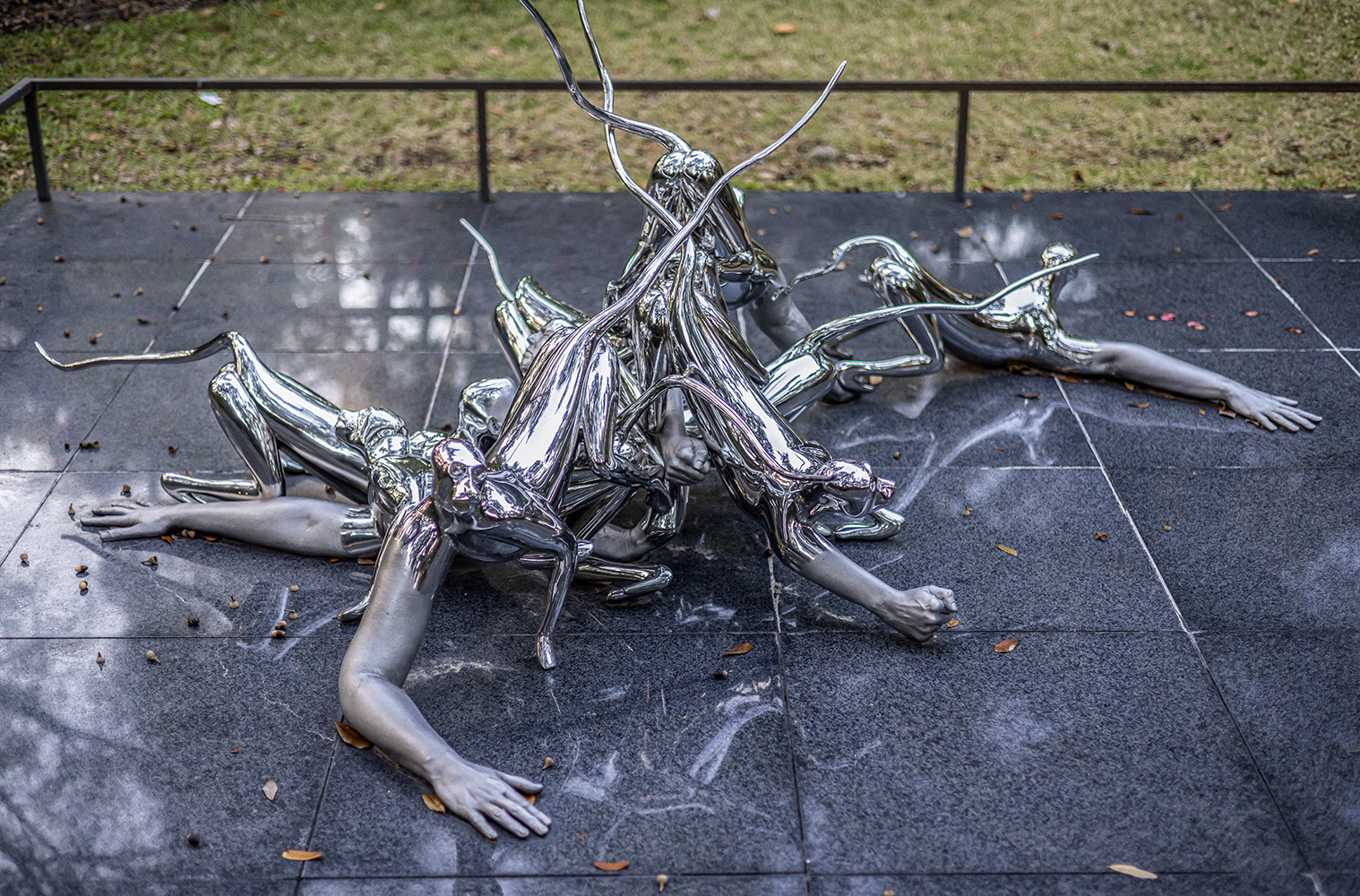
They were especially caught up in the physics of how such a sculpture could exist. The other, Rona Pondick’s Monkeys, had a strange, morphing form that they initially thought depicted humans or dogs—until Stephanie pointed out we were mistaken.

We also saw kinetic sculptures by George Rickey, whose moving parts added a dynamic element to the collection, and a work by Deborah Butterfield…

…and George Segal. Of course, no trip to New Orleans would be complete without encountering a Blue Dog piece by George Rodrigue.

On our way out, there was one final surprise—a sculpture by René Magritte (one of my favorite artists). Although the work differed from his typical surrealist paintings, it was an unexpected and satisfying way to end the visit.

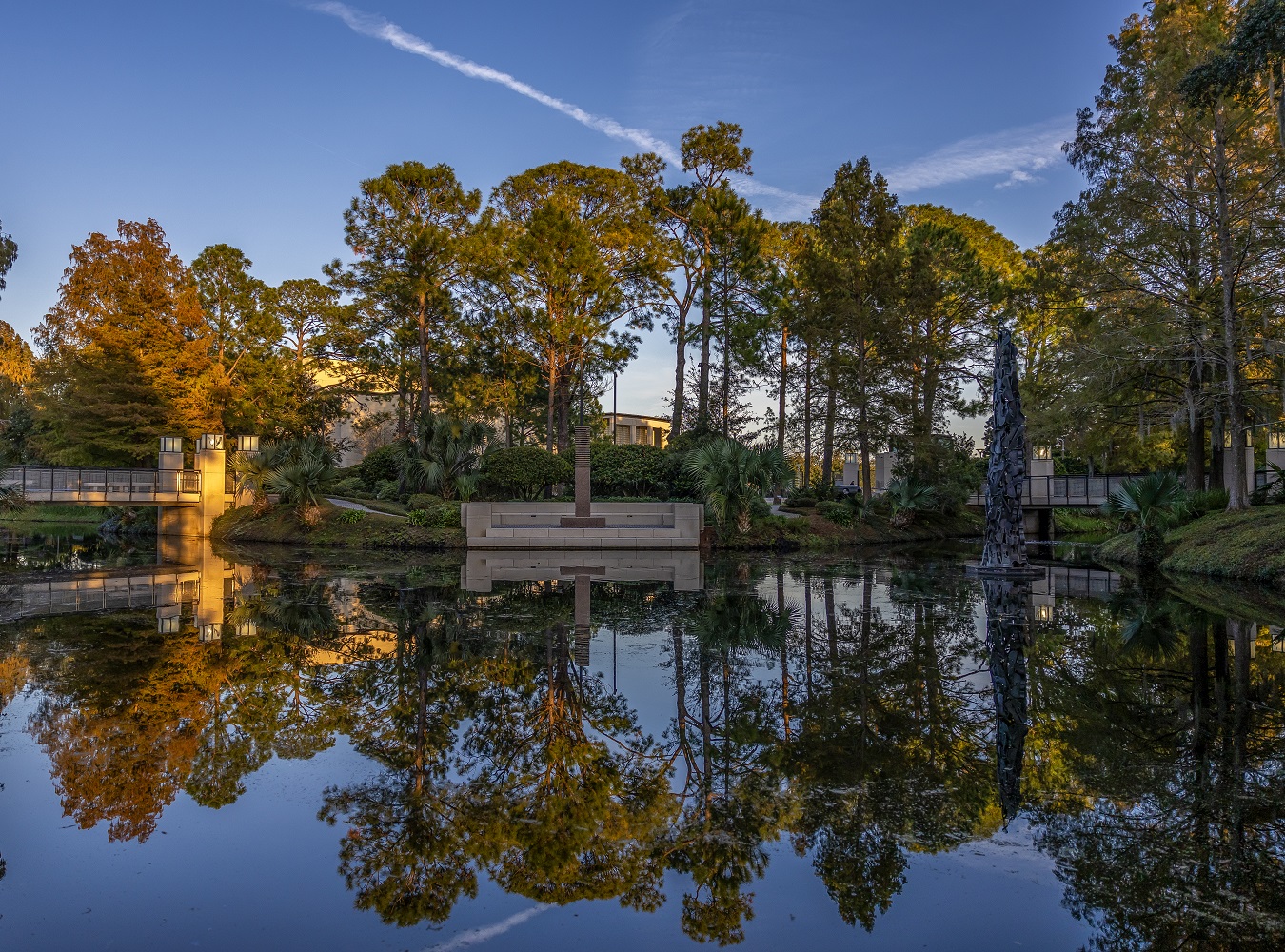
The beautiful Spanish Moss was the excellent backdrop for these amazing works.

Oceana Grill

by Chrissy Biello

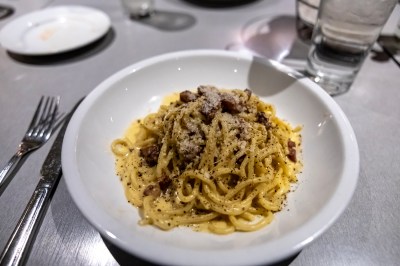
After exploring the French Quarter, we headed to Oceana Grill, a popular restaurant favored by both tourists and locals! Known for its contemporary Louisiana dishes, the restaurant offered a new set of choices to those of us that have not had much experience with New Orleans cuisine. 

Alligator Bites was the relatively new item for the table, a food I had tried before and reassured Olivia tasted much like chicken. To her surprise, she did not hate it; however, I would definitely say she would not order it again if given the opportunity. 

When it came time to order our main courses, Olivia shocked the table by ordering Cajun Jambalaya Pasta, which contains shrimp! For those that do not know Olivia, the pasta part is not unexpected, but the shrimp part is. She noted that the “dish was very flavorful, and it drowned out the shrimp.” Needless to say, she left the restaurant still not a fan of shrimp.

Michelle also dabbled in a little bit of experimentation. Her meal, the Blackened Chicken Platter, was served with Jambalaya, a dish she had never heard of. However, I ended up being the boring one of the group by ordering something I have had several times in the past, Crawfish Etouffee. 

When making our choices for dessert, we were experiencing a shared sweet tooth and decided to order three! The desserts included La Boheme Crème Brûlée, New Orleans Bread Pudding, and the Chocolate Kahlua Mousse. After finishing off all of them, we had a slow but satisfied walk back to our hotel for the night.

Unknown's avatarAuthor mikeyawnPosted on December 8, 2024December 8, 2024Format AsideCategories Art, Civic Engagement, Food, PoliticsTags Besthoff Sculpture Garden, Cafe Reconcile, Center for Law Engagement And Politics, Council of State Governments, NOLA, Sam Houston State UniversityLeave a comment on Exploring NOLA: Culinary, Cultural, and Civic Experiences

Exploring New Orleans with the Council of State Governments

Council of State Governments National Conference- Day One!

by Michelle Moya

After what felt like the longest drive on Wednesday night, we woke bright and early to start an insightful couple of days at the CSG National Conference in New Orleans, Louisiana. For Olivia and me, stepping into this culturally rich state for the first time promised fresh perspectives and a new experience!  

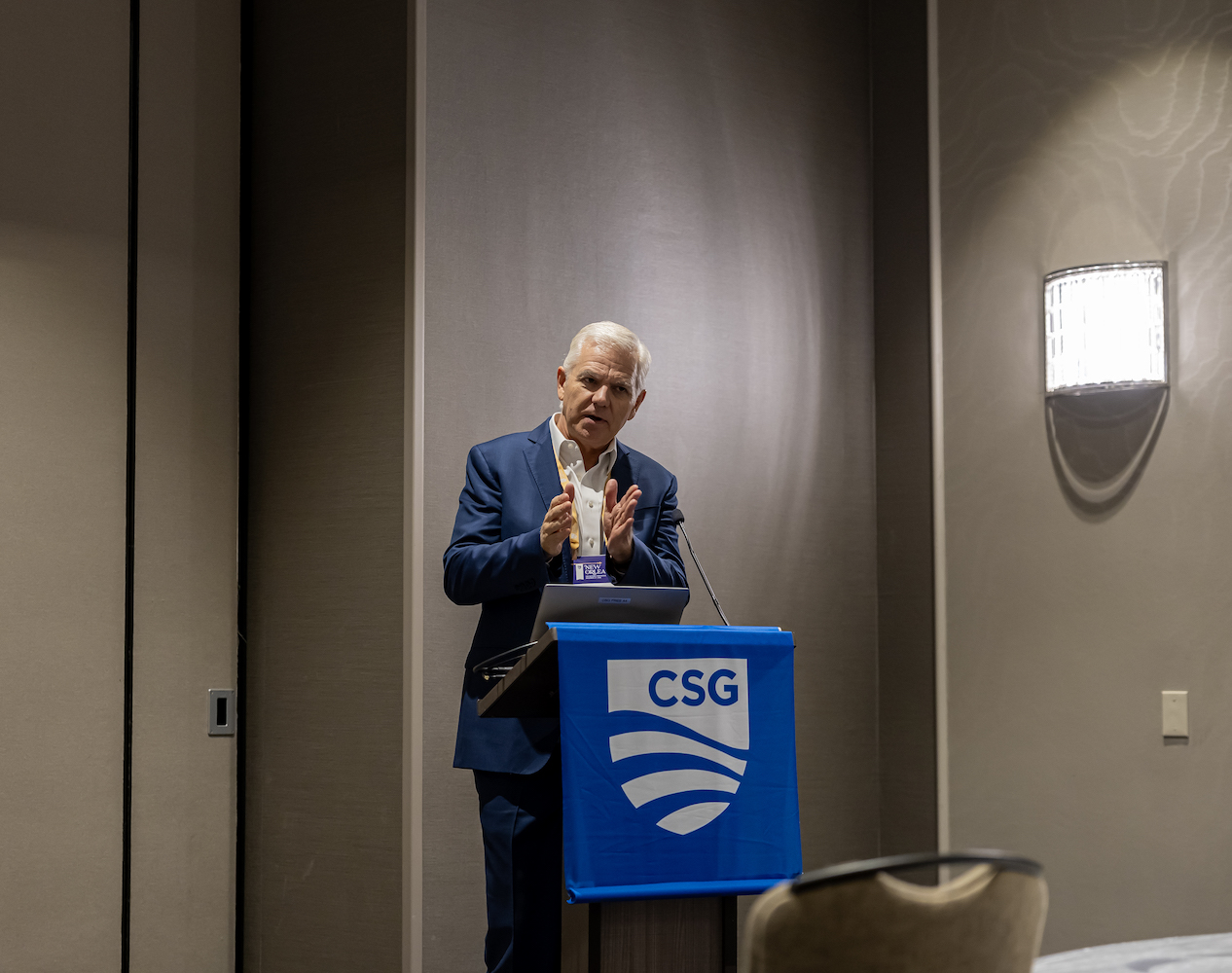
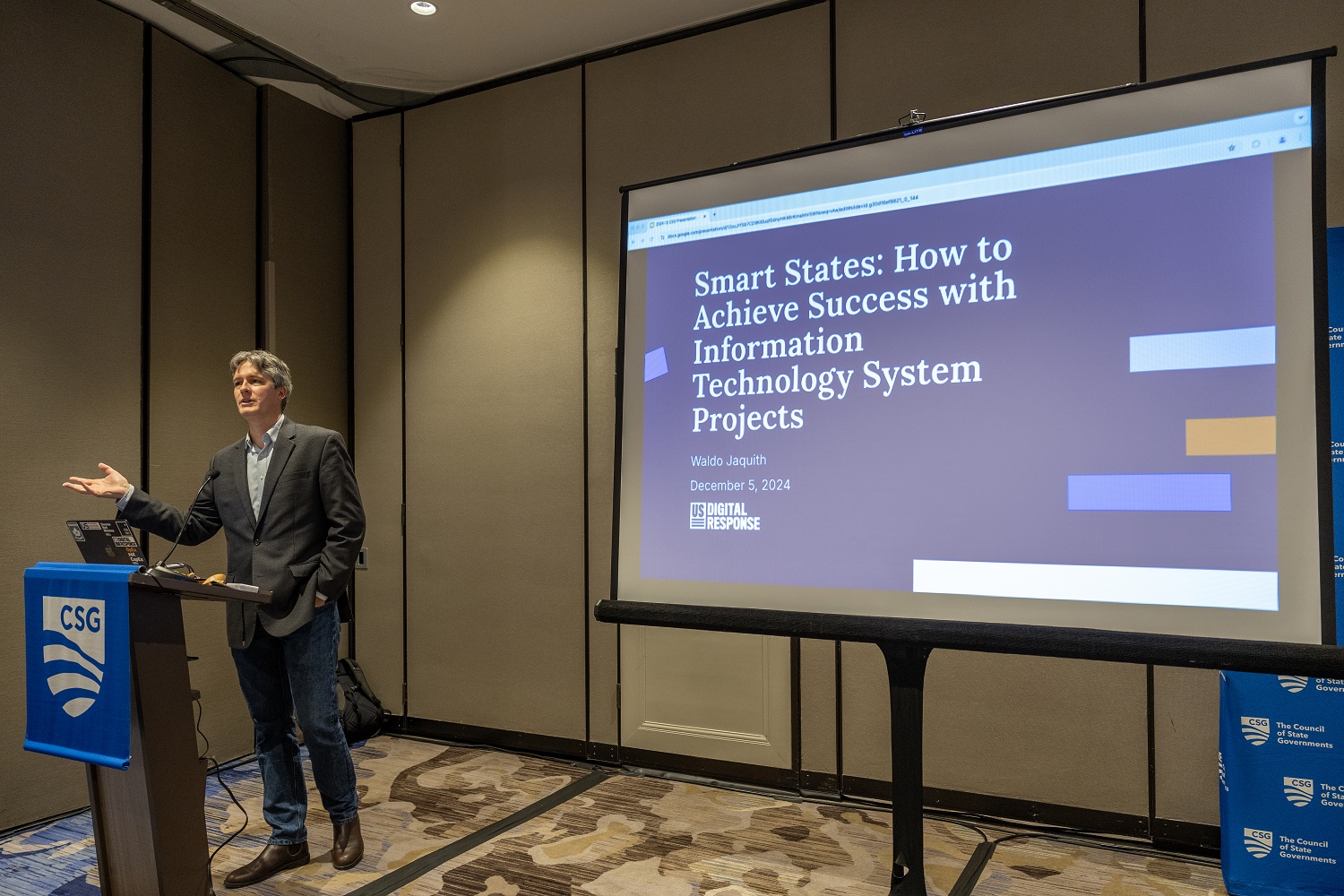
Starting off day one, we began with an engaging session with Waldo Jaquith from U.S. Digital Response, addressing one of state governments’ most pressing challenges: successful software system implementation.

His presentation structure was particularly compelling, starting with a “what not to do” story from Rhode Island (spoiler alert: it didn’t go well), followed by data statistics, and then shifting focus to actionable strategies that government officials could implement in their own jurisdictions to avoid outcomes like these.

The real takeaway? When he broke down why we need to ditch the most used Waterfall method for the Agile software integration method. We were all struck by the wealth of knowledge shared, and it ended up being Chrissy and Olivia’s favorite session of the day!

After a debriefing discussion among us all, we hurried into our next session. Next up was the issue everyone is currently buzzing about—AI in government. We had a diverse panel with three totally different perspectives: a Professor Neil Kleiman (bringing academic wisdom)…

…Michael Mattmiller, an Microsoft US Government Affairs Industry Team Lead…

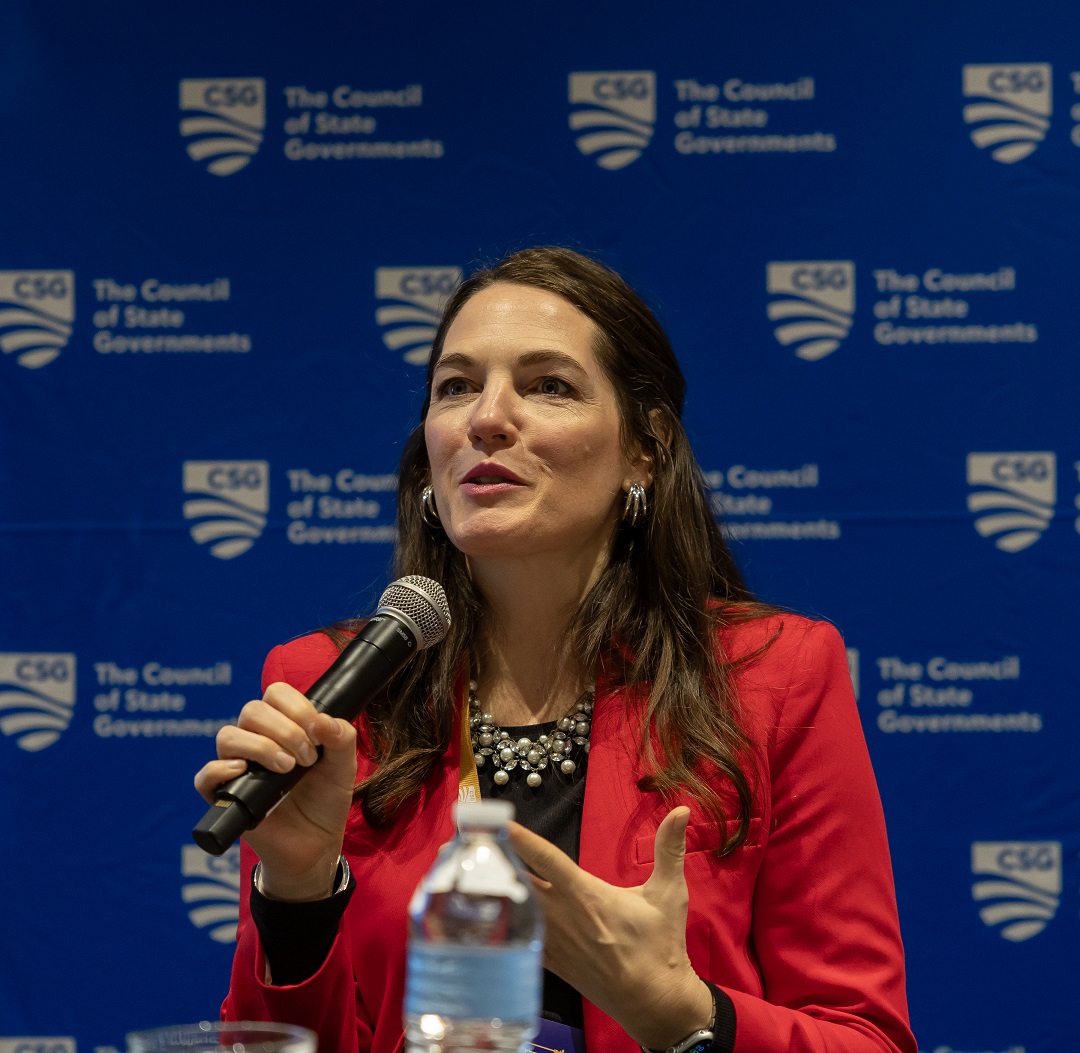
…and Amy Hille Glasscock, with the National Association of State Chief Information Officers!

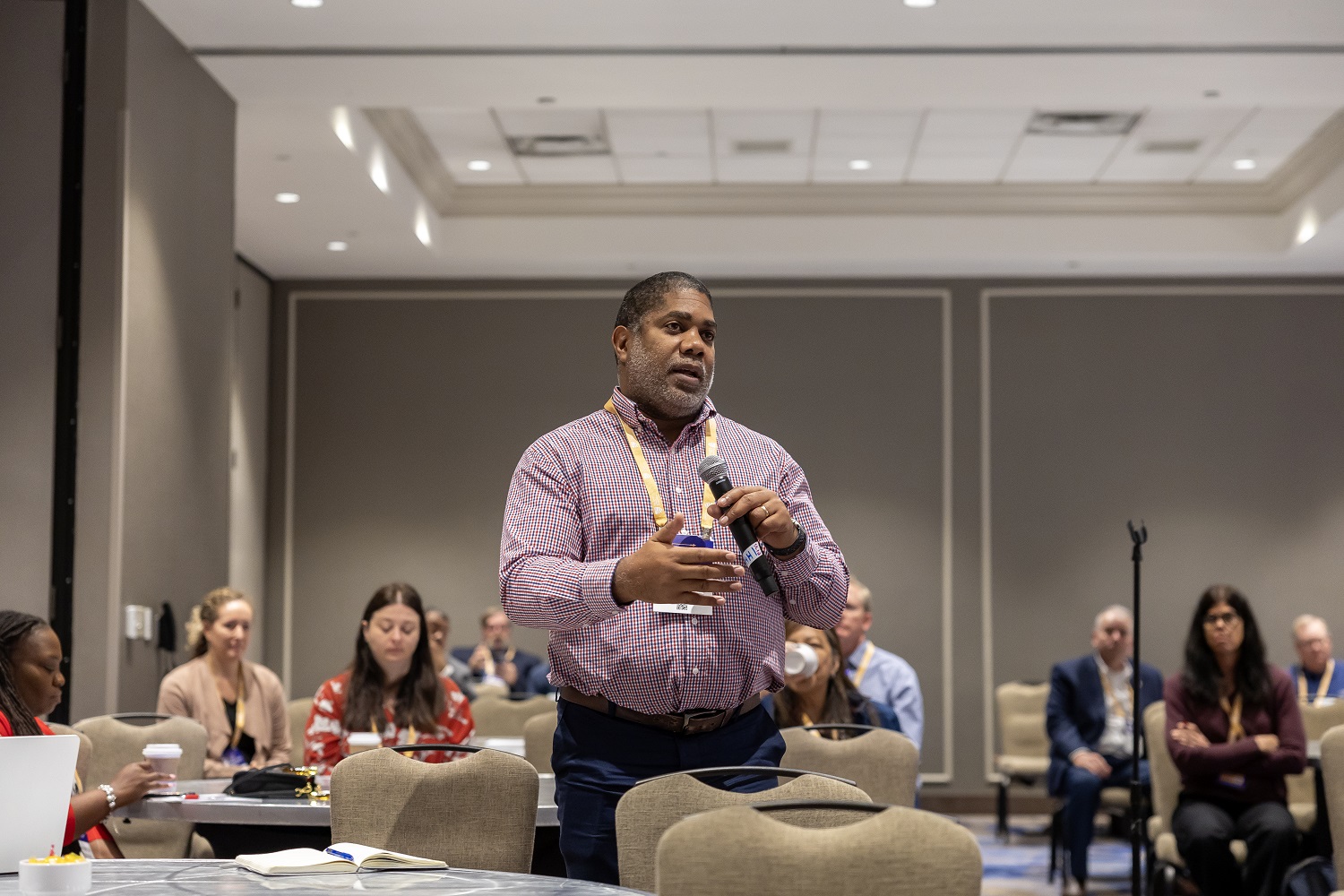
This session was particularly different and interesting because they weren’t feeding us that “AI is taking over” narrative. Instead, it was all about how AI can make government officials better at what they do. Coming to the end of the session, one key takeaway was the emphasis on AI improving people’s efficiency rather than replacing them. Its effectiveness is based on how well its intelligence complements our own. After insightful perspectives from the speakers, we were even able to snag a picture afterwards! 

A Quick Lunch Break at Elizabeth’s

by Chrissy Biello

Following the morning conference sessions, we headed to Elizabeth’s Restaurant, an authentic New Orleans eatery. Upon arriving, Olivia noticed that many colorful signs on the walls displayed the phrase, “Be Nice or Leave!,” a popular adage in New Orleans. Stephanie explained to the group that this saying was created and illustrated by the local artist, Dr. Bob. The vibrancy of the restaurant and the matching neighborhood allowed for us to get a glimpse of New Orleans outside of the French Quarter.

When it came time to order appetizers, we got a great balance of foods that highlighted the diversity of New Orleans flavors. The options included praline bacon, Korean brussel sprouts, and fried boudin balls.

Every one of them was great; however, we all have our favorites. I especially enjoyed the praline bacon…

…and Korean brussels sprouts, as did Olivia!

After filling up on appetizers, we went on to our main courses. Olivia and I shared the chicken and sausage gumbo (which was Olivia’s first).

As Elizabeth’s is famous for their breakfast food, Michelle got the veggie scramble…

…and Professor Yawn and Stephanie had “Crabby Eggs,” including crab cakes, poached eggs, and hollandaise sauce.

For their side, they had the grits, which sparked a conservation about the famous movie, My Cousin Vinny.

And, of course, we ensured to get an order of the beignet biscuits! Served with a side of maple syrup, this dessert was filled with much nostalgia as I had it years prior on a past trip to New Orleans. Leaving Elizabeth’s, we headed back to the conference for another session!

U.S. Supreme Court Update: Implications for State Policymakers

by Michelle Moya

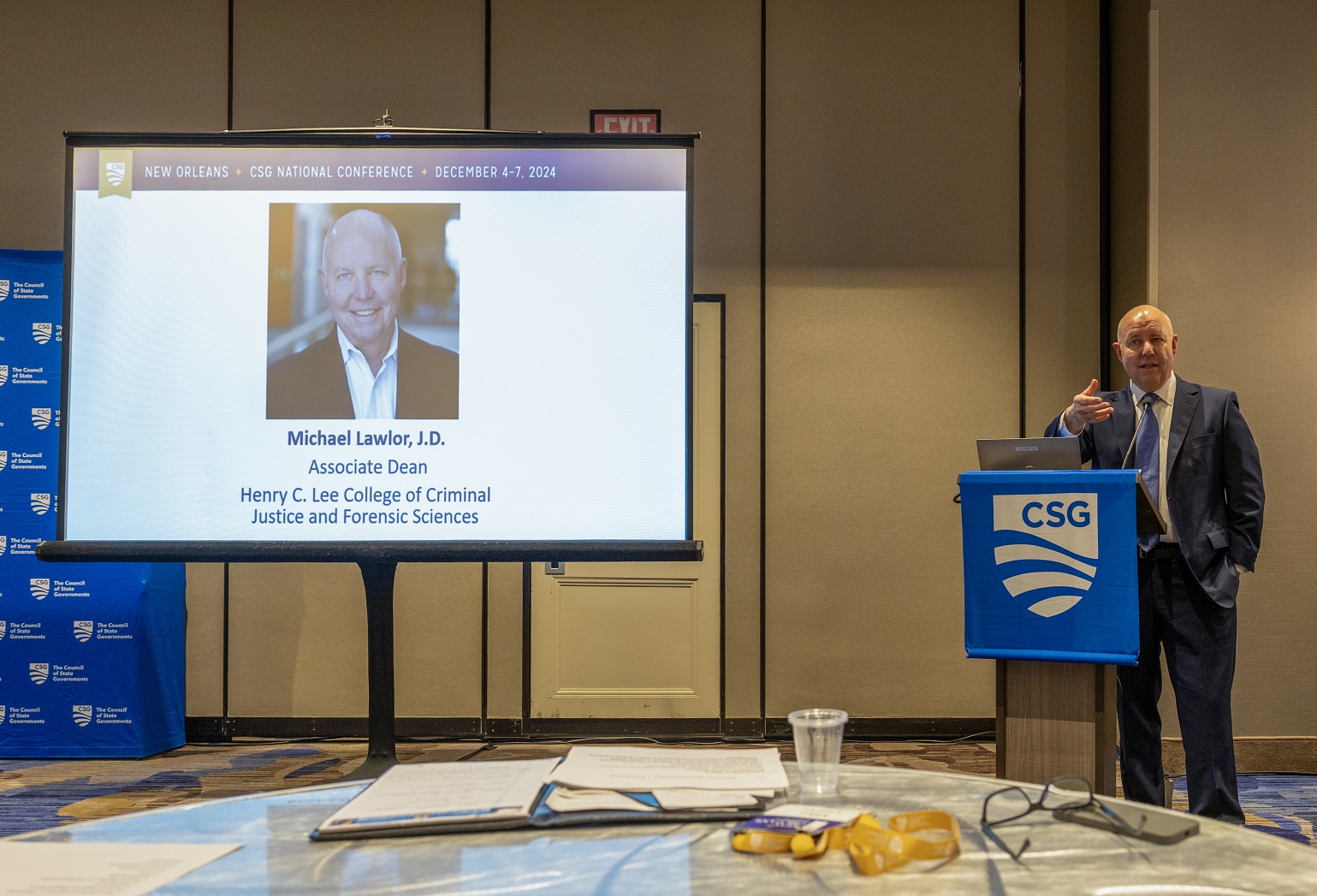
As a finisher, and after a fulfilling meal at Elizabeth’s, we attended our last session. This one being one I was particularly excited for, rightfully so, as it proved to be my personal favorite. Thankfully, we got there early, which allowed us to engage in meaningful dialogue with the speaker, Michael Lawlor, about our personal ambitions and the LEAP program!

Highlighting the session, it spanned various contemporary issues, from gun rights to freedom of speech and social media regulations. He spoke on cases the Supreme Court is currently deciding on and ones from last term.

We were surprised to see that many of the cases going before the Supreme Court pertained to social media practices. This goes to show the impact modern technology has had everywhere, even on government decisions! We all showed major interest in two cases dominantly, Lindke v. Freed from the 2023 term and Smith and Wesson Brands v. Estados Unidos Mexicanos. 

Ogden Museum of Art

by Olivia Discon

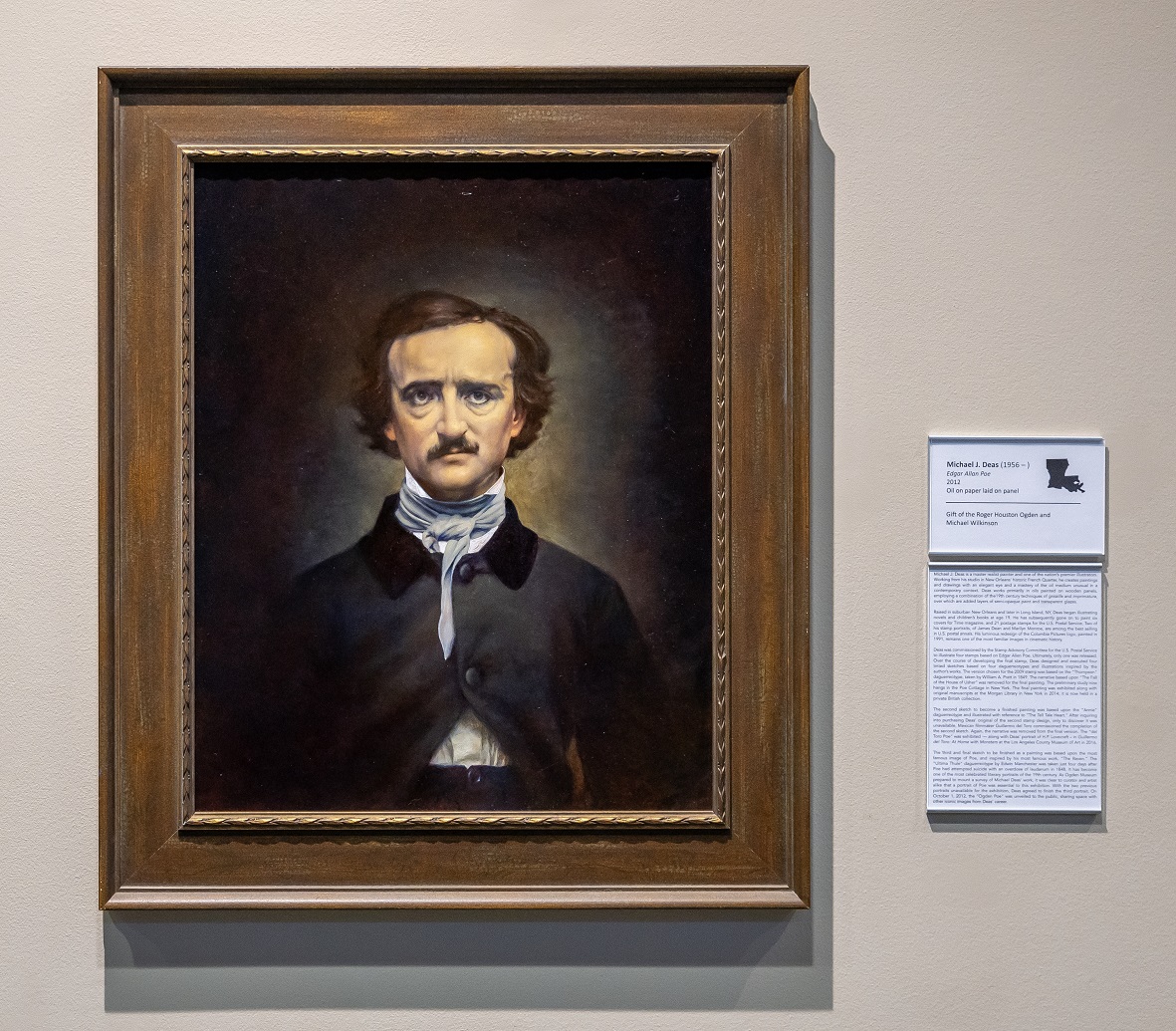
To continue our educational pursuits in New Orleans, we ventured on to Ogden Museum of Southern Art. The museum prides itself on providing a large, comprehensive collection of Southern art, which served as the perfect place for us to learn more about the city’s cultural offerings.

Before entering the museum, we were greeted with a massive James Surls sculpture! The cast bronze and stainless steel sculpture, known as Me, Knife, Diamond and Flower, was an incredible iteration of his distinguishable style.

LEAP Students with a James Surl’s art piece at the Ogden Museum of Southern Art

Having seen his work several times now, I am quite a fan! Surls continues to be a LEAP favorite, as a distinguished Sam Houston State University alumni and excellent Texas artist.

There was a wide variety of contemporary art exhibits. Admittedly, some of them perplexed me. The first gallery we entered featured a multimedia installation called stream or river, flight or pattern by Joan Jonas. With bird-like kites fixed to the ceiling, paintings, and a few films playing consecutively throughout the room, the group was determined to decipher its meaning.

After some perusing and ultimately admitting defeat, we read that the comprehensive work is meant to reflect our interactions with nature.

Naturally, we moved on to the next gallery.

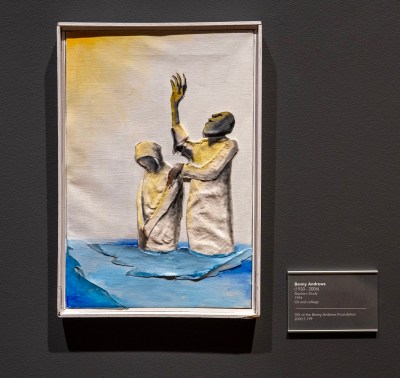
A newfound artist we enjoyed was Benny Andrews, although the pieces we respectively enjoyed differed. Andrews had various styles and mediums in this gallery, which made for an interesting sample of his work. Chrissy liked a piece called Destiny, Destruction, and Despair…

…Professor Yawn enjoyed a 1994 Baptism Study…

…and I personally liked Keep Your Eyes on the Acrobats.

In the meantime, Michelle had made some headway through the galleries, proceeding to find what would become her favorite piece in the museum: Uptown Street by Lulu King Saxon. Michelle, who is relatively new to the art scene, learned that she takes to nature scenes–and large scenes at that!

Chrissy, on the other hand, prefers Impressionist paintings. Her favorite appeared to be Joseph Meeker’s Bayou Plaquemines; a pink-casted sunset falling over a swampy landscape.

My personal favorite, oddly enough, was a George Rodrigue painting that was not a Blue Dog variant. Instead, it was a painting called The Aioli Dinner, known as his “Cajun masterpiece”.

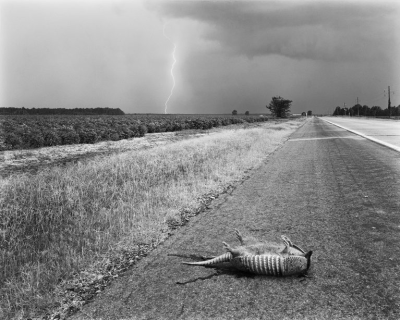
We then went on to Baldwin Lee’s photography exhibit, which was especially enjoyable. Lee, in the 1980’s, set off on an artistic journey to retrace the photos taken by his mentor, Walker Evans, in the 1940’s American South. Placing a focus on Black Americans as his subject matter, the photos and their strategic composition invoke the viewer to contemplate themes of poverty and hardship. We were fascinated by his experience on this expedition and impressed with his results. Many of his subjects, such as Untitled, 1983-1989, were complete strangers he approached along his journey.

Some of our favorites were Mobile, Alabama…

…New Orleans, Louisiana…

…and Waterproof, LA.

“Looking is a two-way street. Not only is the photographer looking, but the potential subject is looking too. What the subject sees carries great weight. For some reason, people would see me positively. I am not sure if it was my race, gender, physicality, dress, demeanor, or anything else. If in a day I asked twenty people permission to make photographs, nineteen would say yes.”

In all, we saw and enjoyed several new artists on this endeavor. The visit to the museum was a pleasant way to indulge in Southern contemporary art…

…and to broaden our cultural literacy.

Saffron

by Chrissy Biello

In true LEAP fashion, we opted for a dinner that would allow us to gain new experiences. Saffron, an Indian restaurant and two-time nominee for the James Beard award, proved to give us that opportunity. The chef, Arvinder Vilkhu, and his wife, Pardeep Vilkhu, opened the restaurant with the purpose of combining their Indian heritage with the New Orleans culture. As we began to peruse the menu, that was extremely evident; options included, Curried Seafood Gumbo and oysters!

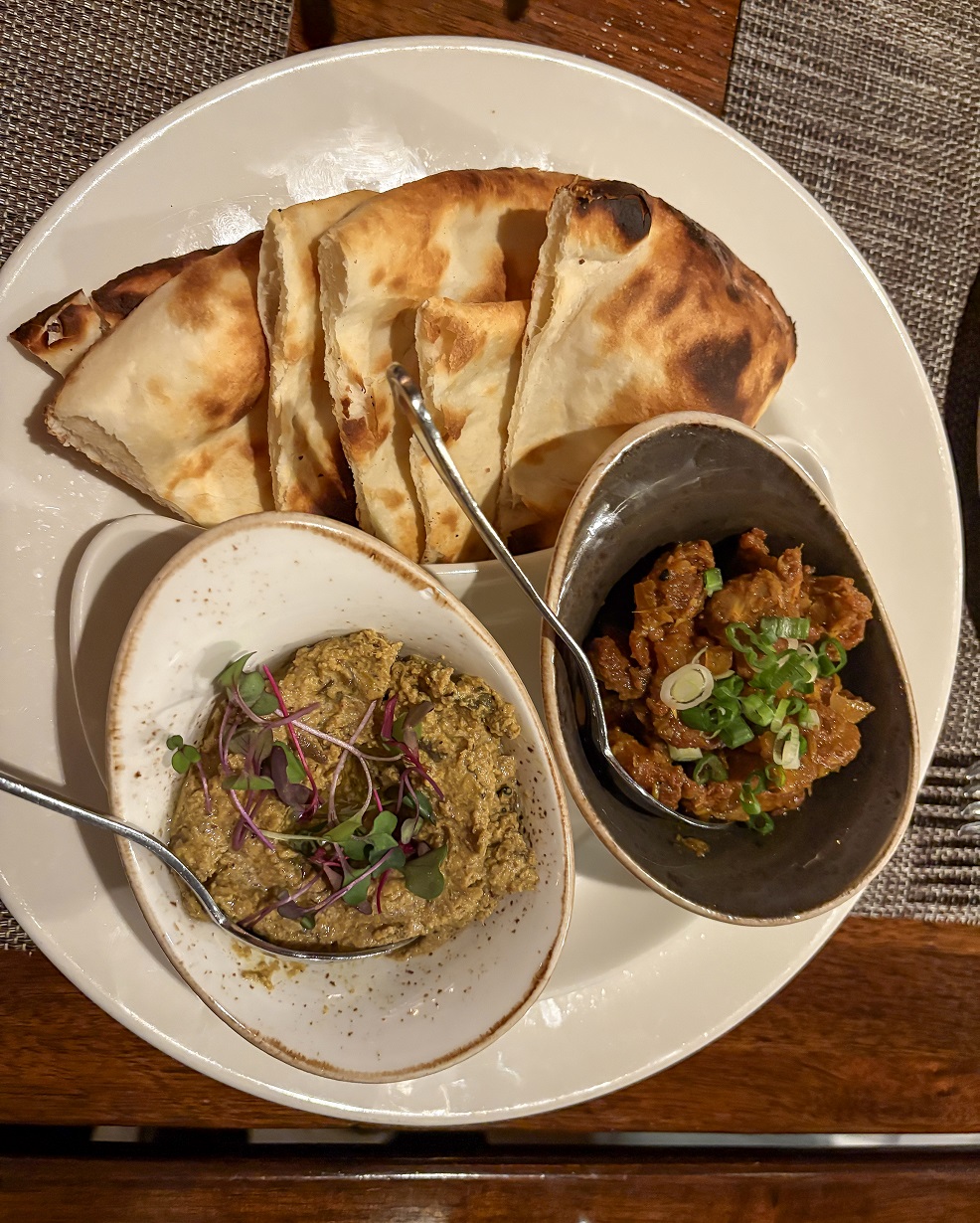
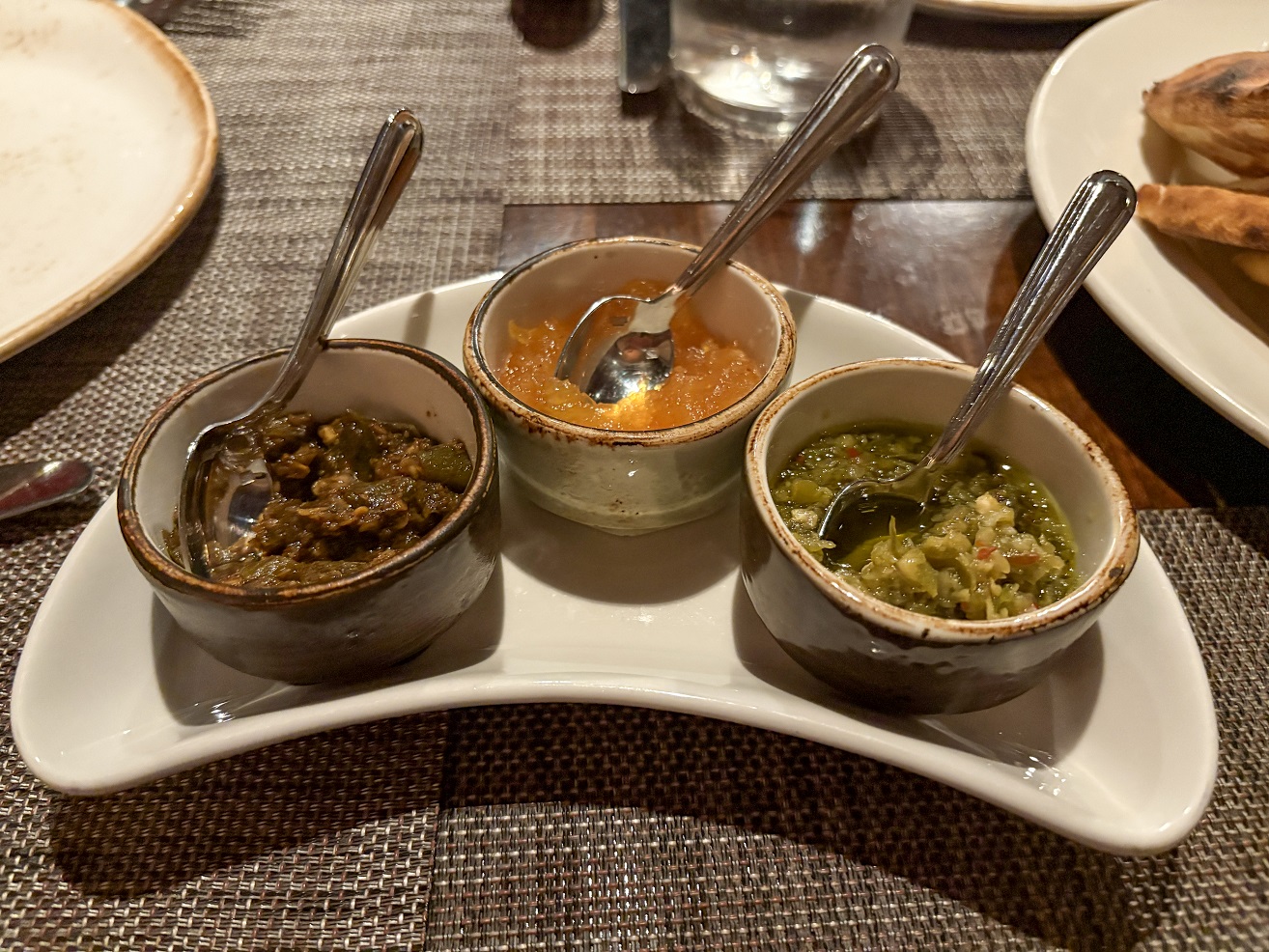
For appetizers, we ordered the pickle sampler…

…Chicken Lasooni, and the garlic and chili-cheese naan.

Olivia favored the naan bread, while the Chicken Lasooni was Michelle’s main pick. As for myself, the pickler sample was my favorite; the dish included an eggplant spread, something I had never tasted before, but will confidently try again.

For our main course, Olivia and I shared the Chicken Biriyani. This dish was incredibly flavorful, containing saffron rice, crispy onions, a soft-boiled egg, and yogurt on the side!

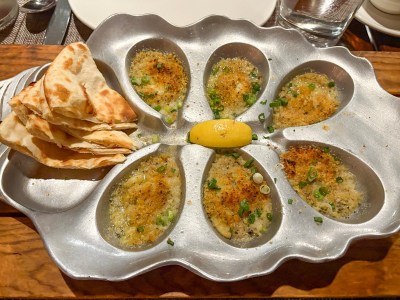
Michelle savored the Curried Seafood Gumbo, and Professor Yawn and Stephanie relished the Oyster Bed Roast!

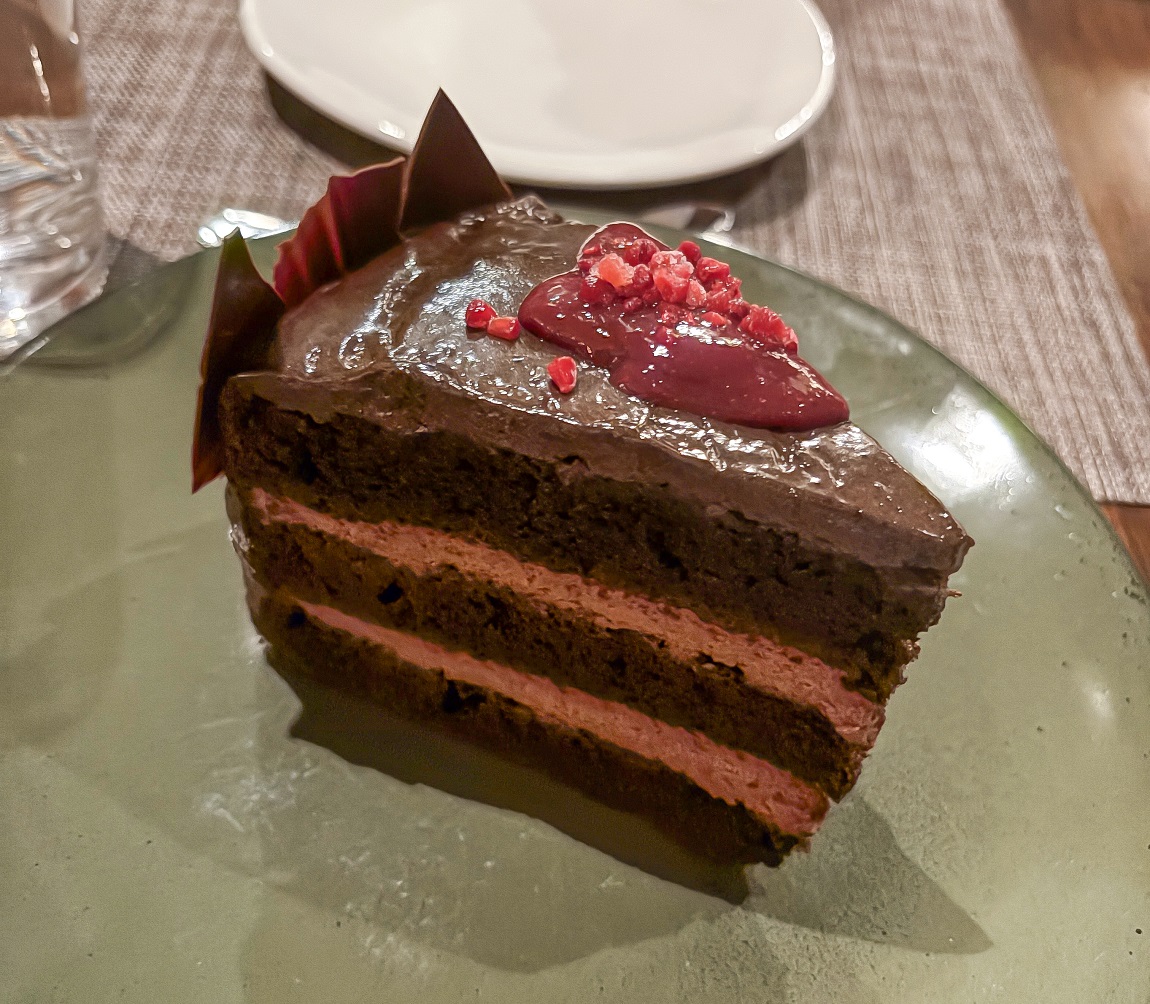
With already full stomachs, it was a surprise that we were tempted by the dessert. To our delight, Chef Vilkhu himself served our table! This included a cake called, “It’s Not Even Your Birthday,” surely named for the multiple layers of chocolate ganache and buttercream that would make anyone believe they were partaking in a treat for a special occasion.

Further, we had the Ginger Crème Brûlée, a definite favorite among the table. 

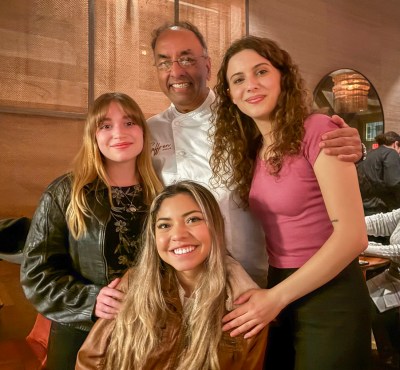
As we had the opportunity to thank Chef Vilkhu for the amazing meal, we were very honored to take a photo with him!

In all, Saffron was a great way to end the first day of our New Orleans trip, allowing us to anticipate the next days of new experiences to come! 

Unknown's avatarAuthor mikeyawnPosted on December 7, 2024December 7, 2024Format AsideCategories Art, Civic Engagement, Criminal Justice, Food, Politics, TravelTags Center for Law Engagement And Politics, Council of State Governments Conference, Elizabeth's, Ogden Museum of Southern Art, Saffron, Sam Houston State UniversityLeave a comment on Exploring New Orleans with the Council of State Governments

A Timely Discussion of “Character Matters” with Jean Becker

Brock Williams-Rodriguez

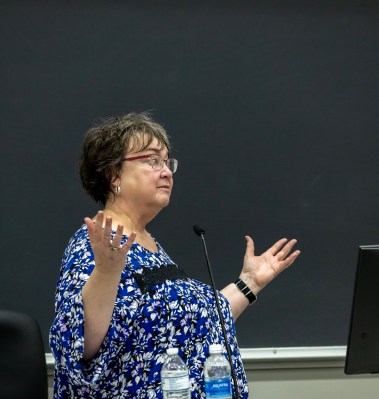
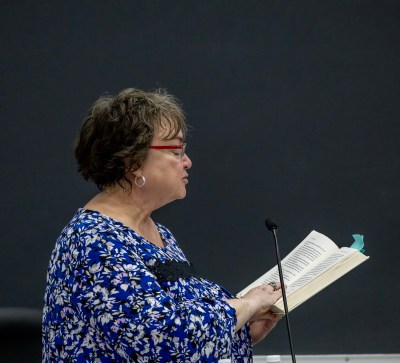
On October 30th, Jean Becker came to Sam Houston State University to give a special presentation about her time as Chief of Staff to President George H.W. Bush, Deputy White House Press Secretary to Mrs. Barbara Bush, and her book Character Matters. Although that was almost a month ago, it seems appropriate to post this now, in the midst of the Thanksgiving holidays, for we are, indeed, grateful for her visit to SHSU.

The discussion began with Professor Yawn introducing Ms. Becker…

…while also noting that she is on the board of the “Points of Light Foundation”–a non-profit that promotes public service.

In fact, it was noted that President Bush’s motto, “any definition of a successful life must involve service to others,” is similar to SHSU’s motto, “a measure of a life is its service.”

This likely resonated with the 100+ students there, including the Freshman Leadership Program, which was on hand specifically to see Ms. Becker. Professor Hester, Ulbig, and Callaway also attended, as did President White!

Ms. Becker transitioned to discuss the early life of President Bush, including his time in World War II and being a Navy Airmen. A story that left me deeply reflective was about President Bush and two fellow soldiers being shot down on September 2, 1944. Only President Bush survived, a loss that he carried with him for the rest of his life. He frequently asked, “Why me? Why was I spared?” This question fueled his lifelong commitment to helping others and making a positive impact on as many lives as possible.

Next, Ms. Becker shared a light hearted story about how she learned to fear four words, at least when brought to her by President Bush: ‘I have an idea.'” She further explained by illustrating that on the 75th birthday of President Bush, he said those four words to her, conveying his interest in parachuting out of an airplane. After President Bush did this, he parachuted out of a plane for his 80th, 85th, and his 90th birthdays!

Ms. Becker shifted to speak on her experiences as the Deputy Press Secretary to Mrs. Barbara Bush. Before she landed this role, she was a reporter for USA Today and was covering the 1988 Presidential Election between President Bush and Michael Dukakis. Mrs. Bush had noticed how good Ms. Becker was at covering the story, especially the weekly election column with Mrs. Bush and Mrs. Dukakis; this is when she was offered the position.

Ms. Becker was delighted to share her stories of working with Mrs. Bush, from traveling to Hawaii (where she had an unfortunate encounter with a biker gang) to Rome, where she met the Pope. She also discussed Mrs. Bush’s ability to communicate, perhaps best illustrated when she was invited to give a speech at Wellesley College, and the students there protested her choice as commencement speaker. Ms. Becker encouraged us to watch the Commencement Speech and note how Mrs. Bush was able to take an antagonistic crowd and win them over, without giving ground.

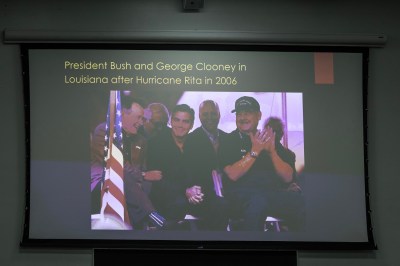
Ms. Becker moved into broad topics: the relationship between Presidents Bush and Clinton, which began as competitors but ended up in a type of father-son relationship, one strengthened as they travelled the world to raise funds for natural disasters. The time she met George Clooney…

…and the importance of character in all that you do.

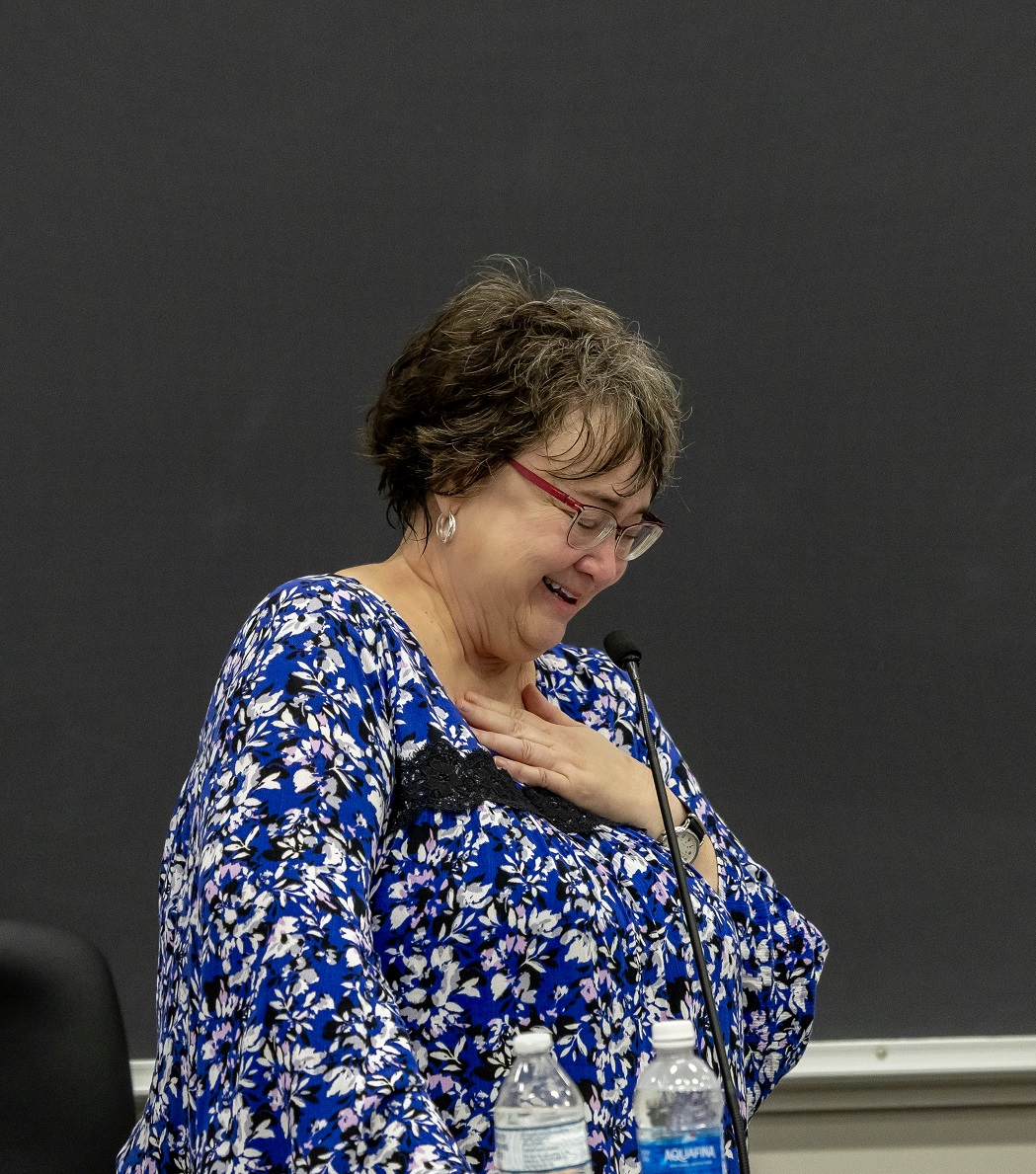
While Ms. Becker might highlight Mrs. Bush’s strong communication skills, we had a chance to see not only Ms. Becker’s skill with speaking, but also her non-verbal communication as well….

…which sometimes was directed at Professor Yawn…

Ms. Becker also engaged in a spirited Q&A session, including a discussion of her 9/11 experiences, when she was stuck in a DC hotel. She attempted to get in contact with President Bush and Mrs. Bush; however, she was told by Secret Service that they were safe but “they were in an undisclosed location” and could not be reached.

A bit worried but assuming “they were safe in an underground concrete bunker somewhere,” she got a call from President Bush. They were fine, he noted, while also offering that they were “staying at a Hampton Inn in Milwaukee, WI.” They had, he continued, walked across the street to an Outback Steakhouse, where the patrons, surprised to see them, broke into a round of applause. “Those people,” he said, “were really nice.” It was, Ms. Becker said, one of the only good stories from a day that involved much tragedy.

Professor Stacy Ulbig, who teaches media and politics…

…also asked an excellent question: “What got you interested in politics and journalism?” Ms. Becker responded, “All the Presidents Men.” This was a fortuitous response, inasmuch as Dr. Ulbig uses the movie and the Watergate Scandal in her class.

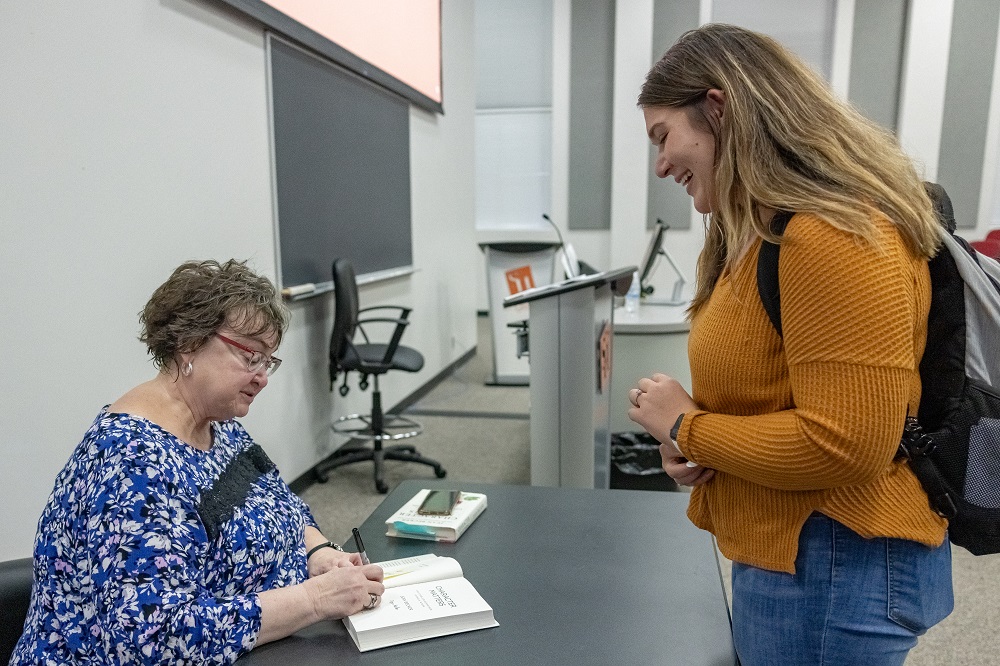
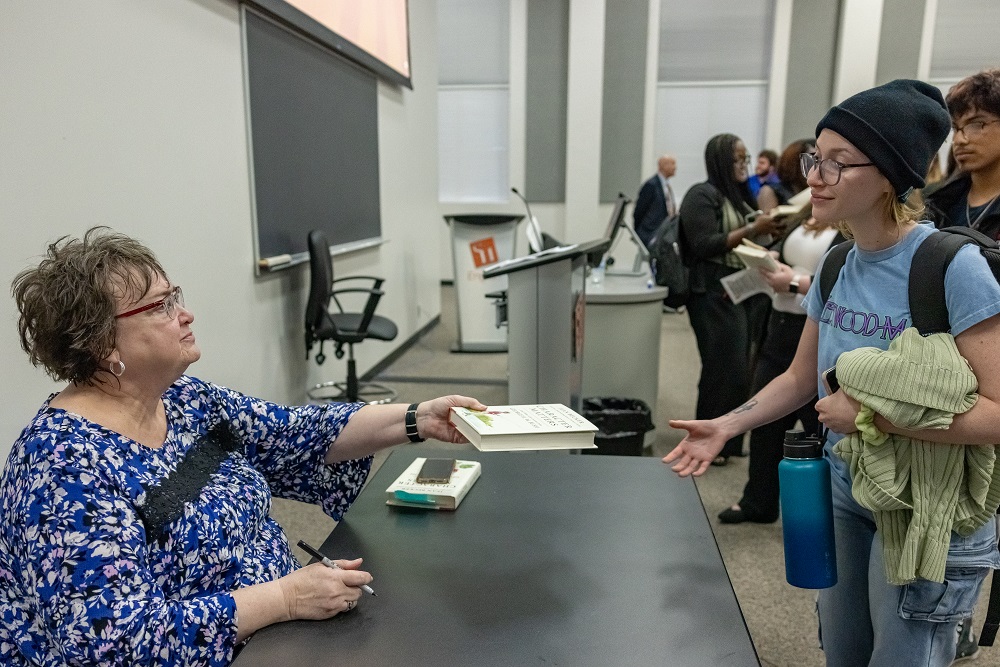
It was a wonderful experience, hearing from someone who has lived many stories and developed the communication skills to tell them well. And it was made even more enjoyable when, following the discussion, Ms. Becker graciously signed books for the students.

We would like to give a special thank you to Ms. Jean Becker for sharing her experiences with Sam Houston State University students. Her stories from her time as Chief of Staff to President George H.W. Bush and Deputy Press Secretary to Mrs. Barbara Bush were both inspiring and enlightening. Her insights left a lasting impact on all who attended.

Unknown's avatarAuthor mikeyawnPosted on November 30, 2024November 28, 2024Format AsideCategories Civic Engagement, PoliticsTags Center for Law Engagement And Politics, Jean Becker, LEAP Center, President George H. W. Bush, Sam Houston State University, SHSU Freshman Leadership ProgramLeave a comment on A Timely Discussion of “Character Matters” with Jean Becker

SHAIPing Up Careers in Austin

The TX Legislature meets every other year for 140 days, packing two years of law-making into a bit more than four months. This is a predicament that calls for help, and offices are quick to reach out to SHSU for possible help.

To that end, eight students set out on a Thursday for Austin, TX, to interview in both Democrat and Republican offices. To mark this moment, the students met under Bruce Munro’s “Confluence,” an art piece that highlights the complementary nature of the Humanities and Social Sciences, a fitting metaphor for a team of Bearkats ready to help each other in their next adventure.

The Sam Houston Austin Internship Program (SHAIP) is the vehicle for this adventure. SHAIP was initiated in 2012 by President Dana Hoyt, who wanted students to have great experiences while also increasing SHSU’s presence in Austin.

And for the past 12 years, SHSU has sent students to Austin, where they have worked in diverse offices, expanded their skill set, and broadened their professional network.

The SHAIP program offers students scholarships to defray living costs; assists with the interview and placement process; and offers trainings and workshops throughout the internship. The goal, as President Hoyt envisioned and President White has extended, is to provide once-in-a-lifetime opportunities to a great group of students, while enabling them to serve the State of Texas.

Unknown's avatarAuthor mikeyawnPosted on October 25, 2024October 25, 2024Format AsideCategories Civic Engagement, Politics, Public AdministrationTags Austin, Center for Law Engagement And Politics, Sam Houston State University, TX CapitolLeave a comment on SHAIPing Up Careers in Austin

On a Roll in Little Rock

On our second day in Little Rock, AR, we hoped to continue the momentum set on our busy first day. With this in mind, we set out to tackle a new restaurant or two, the Clinton Presidential Library, the Arkansas Museum of Fine Arts, and to kick off the Six Bridges Book Festival. We did all we set out today–and more!

Clinton Presidential Library and Museum

by Olivia Discon

Continuing our exploration into history, politics, and culture, we had the opportunity to visit the Clinton Presidential Library and Museum. Before stepping inside, we took a moment to explore the grounds, which are beautifully landscaped and situated along the Arkansas River. The glass-and-steel building, designed to resemble a “bridge to the future,” offers a modern backdrop that complements the historical significance of the museum.

The visit kicked off with a short film detailing Bill Clinton’s early life and career. The film highlighted Clinton’s journey from a small-town boy in Hope, Arkansas, to his time at Georgetown, and later his entry into politics. One of the most compelling parts was hearing about how he navigated the turbulent waters of the 1992 election, ultimately becoming the 42nd president of the United States. After the film, we ventured into the heart of the museum: the comprehensive overview of Clinton’s two terms in office. Each section of the exhibit is organized by year, giving us a look at the major events that defined his presidency.

From intense policy battles to personal moments, it was a well-rounded portrait of his time in office.

One feature I enjoyed was the binders of Clinton’s daily schedules for every single day—ranging from meetings with world leaders to a quick jog! 

Among the many highlights was learning about President Clinton’s key reforms. His policies on healthcare, particularly insurance and medical leave, were revolutionary for their time, affecting millions of Americans. We also spent time on his efforts to address the federal budget deficit, an emphasis throughout his presidency that has shaped many political conversations since. It’s easy to focus on President Clinton’s charm and charisma, but this visit reminded us of his policy legacy as well.

 Oh, and it’s hard not to mention his other legacy—though the museum delicately handled his impeachment proceedings.

A special moment for us was the section on the Little Rock Nine.

The connection to our visit the previous day was clear, tying civil rights struggles from the 1950s to the ongoing political landscape Clinton navigated during his presidency. It felt like a seamless link between the past and present struggles for equality and justice. 

We also thoroughly enjoyed the art on display. There was a small Frank Lloyd Wright statue of a house that had been gifted to Hillary Clinton, a beautiful example of his architectural style in miniature form.

We also saw a stunning Dale Chihuly glass sculpture…

The Oval Office replica was another highlight, showcasing Clinton’s presidential style.

We saw sculptures by Remington and Rodin and a painting by Childe Hassam.

An unexpected surprise was a Norman Rockwell painting that we didn’t immediately recognize.

All in all, our visit to the Clinton Library was both educational and enjoyable. It gave us a new perspective on President Clinton’s legacy on American history.

A Trip to the Arkansas Museum of Fine Arts 

Saara Maknojia 

Walking through a stunning collection of artworks at the Arkansas Museum of Fine Arts (AMFA) was the perfect way to spend our afternoon.

Olivia and I were particularly excited to see the new Art Nouveau exhibit, so we headed straight for it upon arrival.

We were greeted with a beautifully curated selection of vases, jewelry, woodwork, and glass sculptures from the 19th century. What stood out to me the most was the Tiffany & Co. collection, renowned for its exquisite craftsmanship and iconic designs. The intricate detail and elegance of the pieces left a lasting impression. 

Since this was our first time at an art museum together, we took the opportunity to share our thoughts on various artworks. As we walked through the galleries, passing by pieces from prominent artists like Gustav Klimt, Pablo Picasso, Claude Monet, and Diego Rivera, we discussed our interpretations of what each artist intended to convey, and we watched others contemplating similar questions.

It was stimulating to exchange perspectives and delve into the emotions and possible stories behind these pieces. 

One painting that captivated us both was Homage to Alberti by Terrance Corbin. We found ourselves returning to it multiple times. The artwork’s focus on landscape, combined with its use of geometric shapes and lines to create illusions of depth, was intriguing. Although abstract landscapes aren’t typically my preferred style, this particular piece drew me in with its complexity and the many ways it could be interpreted, making it one of my favorites from the museum.

Olivia, on the other hand, was fascinated by Pierre-Auguste Renoir’s Three Partridges, an impressionist work that spoke to her appreciation for soft brushwork and natural themes in art. 

We ended our visit on an unexpected yet delightful note. David Warren, the Chair of the museum’s art school, graciously gave us a spontaneous tour of the art studio and pottery workshop. His warm hospitality reminded us of the spirit of the Arkansas Traveler—welcoming, generous, and always eager to share his knowledge and passion for art.

It was a fitting end to a day spent appreciating the beauty and culture on display at the Arkansas Museum of Fine Arts, and we left feeling both inspired and grateful for the experience. 

Bound to Books: The Six Bridges Book Festival Kickoff

Owing to some difficulty with our schedule and the timing of the Texas Book Festival, we looked to Little Rock and the Six Bridges Book Festival–and we are glad we did! The Six Bridges Book Festival takes place over a longer period than the Texas Book Festival, and it is smaller. This, as we found out tonight, allowed for a more intimate and personal experience.

The Festival’s kickoff offered some finger foods and snacks; a photo booth, which was much fun; authors on hand, mixing with the crowds; karaoke; and, of course, books for sale.

We began by scouting the facility, the “Ron Robinson Theatre,” part of the Central Arkansas Library System (and the organizer of the festival). The two-story venue was attractive, with a particularly appealing theatre, which was hosting the karaoke. A talented set of spectators took turns at the microphone, and we enjoyed a few songs, before moving on to the next activity.

The next activity included the photo booth, which allowed us to continue the theme of money, one established during our tour of the Arkansas Treasury. Saara grabbed some Benjamins, a money bag, but drew the line at wearing a dollar-sign fishing hat.

We enjoyed the book selection, and we purchased a few before the authors’ supplies were fully depleted. We also played “spot-the-artist,” and we are pretty sure that we “saw” far more authors than were actually there.

But the event whetted our appetite for the next day’s sessions, when we would see Eli Cranor (“You Don’t Know Tough”), Boyce Upholt (“The Great River”), Garrard Conley (“Boy Erased”), Samuel Freedman (“Into the Bright Sunshine: Young Hubert Humphrey and the Fight for Civil Rights”), Randall Woods (“John Quincy Adams: A Man for the Whole People”), John Vercher (“Devil is Fine”), Brian Fairbanks (Willie, Waylon, and the Boys”), and Lana Williams, the latter of whom is a gardener and owner of Tender Gardener.

Wrapping Up

With small pangs of hunger reminding us to eat a full meal, we decided to visit Sterling Market. The restaurant might have been a Lana Wiliams fan, inasmuch as they emphasized ingredients from local farmers. The food was wonderful, and we can publicly vouch for the ricotta dip, the bearnaise sauce, the smoked chicken sandwich, and the mushrooms and dumplings.

It was another nice ending to our ongoing Arkansas adventure, meeting friendly locals, Arkansas authors, and experimenting with some wonderful Arkansas food!

Unknown's avatarAuthor mikeyawnPosted on September 30, 2024September 29, 2024Format AsideCategories Art, Civic Engagement, Civil Rights, History, Politics, TravelTags Arkansas Museum of Fine Arts, Center for Law Engagement And Politics, Clinton Presidential Library, LEAP Ambassadors, Sam Houston State University, Six Bridges Book Festival, Sterling MarketLeave a comment on On a Roll in Little Rock

A Big Day in Little Rock: A Capitol Tour, Civil Rights, and Hiking

In LEAP’s ongoing quest for experiential learning, Ambassadors set out for Little Rock, AR, where opportunities for education about Civil Rights, politics, history, cinema, art, and literature abound. And our first day was a big one…

A Visit to the Arkansas State Capitol

by Olivia Discon

Our first stop in Little Rock, Arkansas set the tone for an incredible trip filled with history, learning, and a deeper appreciation for the Natural State.

Naturally, we couldn’t visit without stopping at the Arkansas State Capitol…

…where Cheryl Augustine, who had guided LEAP students three years ago, once again took time out of her day to give us a tour that was both engaging and one to remember.

We began in the Governor’s Reception room, where we learned about the history of Arkansas, institutional traditions, and the current Governor (Sarah Huckabee-Sanders) and soaked in the beautiful room.

This was followed by one of the highlights of the tour, the Treasury Room, a space rich in history and, quite literally, in cash. With the help of Cheryl and Terry Steed…

…we had the chance to walk past the 12-ton vault door and even hold $600,000 in cold, hard cash.

While it was exciting to hold such a large sum, we learned the more practical side: the state loses $38,000 annually by displaying the cash instead of investing it. But this tradition connects Arkansans to their government in a tangible way.

The Treasury Room itself is stunning. Its ornate ceiling, restored with 17 different shades of green, is as much a part of the Capitol’s history as the vault itself. Adding to the room’s charm, they displayed calculator machines from over 100 years ago…

…and everything down to the floors has been carefully preserved since its inception…

…with numerous artifacts on hand for viewing pleasure.

While in the vault, we also had the chance to meet Stephen Bright, Chief of Staff to State Treasurer Mark Lowery.

He shared insights into the Arkansas legislature and gifted us two challenge coins, one from Treasurer Lowery and another in memory of the late Larry Walther. These coins, rooted in military tradition, are exchanged as symbols of respect and accomplishment, which we were very grateful to receive.

The Arkansas State Capitol is an impressive building, with its original design by George R. Mann and later finished with the help of Cass Gilbert, the same architect behind the U.S. Supreme Court.

It took from 1899 to 1915 to complete, and you can really see the effort that went into every detail. The exterior is made from Limestone (from Batesville, AR), the floors and walls are made from Vermont marble, the grand staircases are Alabama marble, and the columns are from Colorado marble, all of which were beautiful!

We explored both the House and Senate chambers, each equally impressive. Arkansas has 100 representatives…

…and 35 senators, with legislative sessions lasting 60 days. The grandeur of the Capitol is undeniable, but it’s the details—the stained glass ceilings, the drapery, and even the pigskin door—that really make the building stand out.

Our tour, which lasted an impressive 2.5 hours, flew by thanks to Cheryl’s knowledge and enthusiasm.

We ended our tour with a story that was reminiscent of our experiences on this trip: the tale of the Arkansas Traveler. As Cheryl recounted, the story follows a lost traveler in search of directions, who, after a brief misunderstanding, receives not only help but also hospitality from a local man.

Much like the traveler, we arrived at the Capitol curious and eager to learn…

…and we left having found guidance, warmth, and generosity from everyone we met–and we, in turn, have become ambassadors for the state!

A Reflection on the Past: Little Rock Central High

by Saara Maknojia

The students at Little Rock Central High School were dismissed from class at 4:00 p.m., giving Olivia and me a few moments to reflect on the diversity of the present-day student body. Standing outside the iconic school, we couldn’t help but consider how far the nation has come since its rocky process of desegregation.

Just moments earlier, we toured the Little Rock Central High School National Historic Site, where we were both struck by the profound realization that the opening words of our Constitution, “We the people,” were not necessarily intended to include everyone.

The exhibit exposed us to deeply reflect on how for a long period of our nation’s history, the phrase excluded diverse groups of the population, including African Americans, who were denied the same rights and freedoms as Whites.

The historical significance of Brown v. Board of Education and the grit of the Little Rock Nine are beyond question. Their resilience in the face of extreme adversity not only provided momentum leading to the desegregation of schools but also reshaped the course of American civil rights. The historic site offered a powerful overview of this pivotal moment in U.S. history, immersing us in the experience of those nine brave students who, despite intense opposition, stood firm in their pursuit of equality.

As we walked through the exhibits, photographs capturing the tense moments, media coverage showing the nation’s divided response, and phone recordings of the threats and insults said at the students, we were reminded that the struggle for civil rights was definitive.

It was lived and deeply felt by those who dared to stand against injustice. The visit provided us with a deeper understanding of the personal sacrifices made, and the bravery required, to break down societal barriers. This experience left a lasting impression on us, particularly as we observed the diverse faces of today’s student body, a living testament to the progress that has come into existence from the courage of those who came before.

Little Rock Central High School, once the center of racial strife, now serves as a symbol of the journey taken by the Little Rock Nine toward inclusivity and equality for the progression for the United States.

Pinnacle State Park

One moment you are in the state capital, enjoying nice restaurants, relishing a visit to the state capitol building, and touring museums; and then about 20 minutes later, you are at Pinnacle Mountain State Park, climbing a mile-long incline to get a view of the beautiful Arkansas country-side.

It takes a bit of planning. There is much to do in the Park—it sports an Arboretum, Ranger-led activities, and two rivers. But the attraction to us were the hiking trails, specifically east and west summit hikes. Our plan, in theory, was simple.  Olivia and Saara would ascend the East Summit Trail, a demanding hike that requires rock scrambling, a 1.5 total distance and, most important, an ascent of 1,000 feet.

Mike and Stephanie would ascend from the West side, which involves a similar distance and ascent, but less rock scrambling.

For Mike and Stephanie, things worked as planned, and although their advanced age prompted several breathers along the way…

…they enjoyed unparalleled views of the valley…

…distant hills…

…and the Big and Little Maumelle Rivers. 

Things also worked as planned for Saara and Olivia, for about the first 1/20 of a mile…

…when they accidentally followed the base trail rather than the East Summit trail.  This is a great way to see the perimeter of the mountain, without ever actually ascending, and with literally no chance of reaching the summit of the mountain. After an hour or so of this, a passerby noticed the dazed and bewildered look on the girls’ faces, and he kindly directed them to go up the mountain if they wanted to get to the top.

Other than this hiccup, though, things did go generally as planned.  We hoped to see some wildlife, and we did, albeit in the form of a tarantula. 

When urged to take a closer look, Olivia responded directly, “Oh, hell no.”  True to her word, she refused to proceed on the trail—possibly even reversing—until the tarantula hustled off the trail.  We planned to get a good workout, and we did.  The East Summit trail is especially challenging, with several areas most often referred to as “boulder fields.”  Indeed, “Alltrails.com” admonishes hikers to “proceed cautiously,” noting it is a “highly challenging route” to be tackled by only “experienced adventurers.” 

And the payoff is worth the climb, with some beautiful views from almost any angle.

It was a wonderful time..

And it was a fitting end to a rewarding first day in Little Rock. We mixed some outdoor fun with a healthy mix of history, civil rights, politics, architecture, finance, and friendship, all within twenty minutes or so from one another. It is a mix we hope to repeat tomorrow, striving to reach another pinnacle in our educational adventure.

Note: We would like to say “thank you” again for all the great people we met today. Cheryl Augustine was a wonderful tour guide and person; Terry Steed is, as Cheryl notes, “a treasure to the Capitol,” and a very nice person; and Stephen Bright, who generously spent time with us and gave us some terrific advice.

Unknown's avatarAuthor mikeyawnPosted on September 28, 2024September 30, 2024Format AsideCategories Architecture, Civic Engagement, Civil Rights, History, Law, Politics, TravelTags Arkansas State Capitol, Center for Law Engagement And Politics, LEAP Ambassadors, Little Rock Central High, Little Rock Nine, Pinnacle Mountain, Sam Houston State UniversityLeave a comment on A Big Day in Little Rock: A Capitol Tour, Civil Rights, and Hiking

Giving, Taking, Taxing, and Law-Making: Day 2 at the TTF

Our second day at the Texas Tribune Festival started early, ambitiously, and promisingly.  But with an itinerary that included sessions on Criminal Justice, the next legislative session, Dan Crenshaw, the world of philanthropic foundations, local government, and a visit to the TX Capitol, the day was also daunting.  But we were beginning with an always popular topic—criminal justice—and that provided just the juice for a good start to a busy day.

CJ and the 89th Legislative Session

by Michelle Moya

Kicking off day two at the Texas Tribune Festival, we started our day at the Criminal Justice and the 89th Legislature panel. The panel featured two prominent Texas State Representatives: Republican Jeff Leach and Democrat Joe Moody. The session started off with a broadcast opening statement from charismatic actor, Glen Powell, explaining the importance of entering the festival with an accepting mind. This opening set the tone for the thought-provoking intersection on criminal justice and its place in the Texas Legislature. 

Rep. Jeff Leach takes a “selfie” with Glen Powell

In a time of huge political division, Leach and Moody are proving that bipartisan cooperation is possible and can create a major impact. What makes their partnership so powerful is their commitment to finding common ground, rather than simply occupying entrenched positions. Rep. Leach explained in the discussion that it is not about changing the other’s mind, but finding a way to compromise. 

One pressing issue they touched on was the death penalty in Texas and what it involves in the current system. This topic, I am particularly enthusiastic about learning more about, yet it is considerably more intricate than we realize. As seen by national debates over capital punishment, Leach and Moody are leading attempts to have a significant impact in the state of Texas. Their work, aimed at reforming Texas’ death penalty system, reflects a dedication to upholding justice while also acknowledging the system’s fallibility. This case is depicted within the Melissa Lucio case, in which both representatives have worked tirelessly to try and get her off death row. Leach and Moody are helping to ensure that Texas avoids the irreversible tragedy of a wrongful execution. They stated that their biggest desire was to bring Lucio home for Christmas.  

Ending this educational and insightful session, one realization I had was as Texans, we are fortunate to have these two dedicated public servants working tirelessly on our behalf. Their collaboration serves as a powerful reminder that, despite our differences, we share a common commitment to justice, fairness, and the well-being of our state. 


The Future of Local Control

Most people don’t think about their local government until they need it.  Citizens will vote in presidential elections, and maybe for US Congress, but if elections exclusively involve local officials—mayors, county commissioners, and district attorneys—less than a fifth of eligible voters will turn out.  It is precisely these officials, however, that control many essential functions: water, emergency services, roads, sewage, and trash, and recently, these officials have been asked to do more with less.

Some of these officials were on hand today to discuss “The Future of Local Control.”  Travis County Commissioner Ann Howard; Harris County Attorney Christian Menefee; and Mackenzie Kelly, the only conservative on Austin’s City Council discussed challenges facing local government.  Increasingly, these challenges have involved the loss of discretion.  The State of Texas has passed a series of laws restricting how cities can set their own policies in areas such as taxes, pandemic response, homelessness, and employment law.

Generally speaking and understandably, local officials don’t look at such restrictions favorably.  Indeed, Commissioner Howard and County Attorney Menefee argued that the State of Texas was actually targeting specific local governments—notably Travis and Harris Counties. In the past, cities had almost complete control over their tax rates; today, following the passage of state laws, cities must lower their tax rates if citizens’ property values increase beyond a certain percentage.  Homelessness, too, is no longer in the exclusive purview of the cities. After Governor Abbott signed a law banning homeless encampments, however, that is no longer the case.  In short, cities must find new and innovative ways to solve problems.

The panelists did not devote their time to such solutions.  Harris County Attorney Menefee highlighted many of what he saw as misguided regulations aimed at Harris County and “silly” characterizations of his policy positions.  Commissioner Howard delved into some of the structural problems faced by fast-growing regions, shining light on the rural-urban divide, particularly when it comes to issues such as infrastructure, traffic, and development.  Councilmember Kelly offered an interesting view of the councilmember’s role, describing her process of learning from her constituents, educating her constituents, and working with residents, businesses, and other governmental entities to ensure the right information is being considered and that saving taxpayers’ money remains a goal.

As if to punctuate the different challenges facing local governments, the questions from the audience covered various topics. One question involved affordable housing; another related question involved the paperwork and seemingly needless bureaucracy of filing for homelessness benefits; still another asked about what cities can do about relieving loneliness in communities.

The particular questions often related to a specific city’s problems, or even a specific resident’s problems.  Looked at broadly, however, the questions all related to the essential role of cities in modern life, and whether state governments or the federal government should encroach on local governments’ discretion in solving its own problems.  These issues, we found out throughout the day, would be raised repeatedly in different contexts.

Giving Their All

by Caitlin Nortonen

After enjoying the morning session, Saara, Cinthia, Katherine, Maggie, and I decided to spend our afternoon gaining more knowledge on the impacts of philanthropy in the state of Texas.  

The panelists included: Allan Golston, U.S. Program President of the Gates Foundation; Peter Miller, CEO and President of the Meadows Foundation; and Maribel Perez Wadsworth, President and CEO of John S. and James C. Knight Foundation. It was evident that their main goal is investing into communities and addressing some of Texas’s most pressing problems.  

Mr. Miller’s main focus within the Meadows Foundation is funding grants for those in need pertaining to the environment, education, mental health, and the issues revolving around homelessness in Texas. He shared with us that his foundation alone has practically eliminated homelessness among veterans.  

After Mr. Golston educated us on the funding for schools that don’t have significant resources, he stressed to us that our leaders need to give Texas schools more attention. Something quite interesting and saddening was that many educators leave their position after only two years even though they have invested so much money into their teaching careers.

This session was very interesting, and made us all have a better understanding and further respect for our educators!

Higher Aspirations

by Olivia Discon

Higher education is a field of multitudes. A quality education doesn’t just rely on professors and classrooms-it’s shaped by the politics of healthcare, workforce development, the economy, and the state of Texas.

Who better to hear about the current state of Texas higher education than from the experts themselves?

We had the opportunity to hear from the Chancellor of the Texas Tech University System, Tedd Mitchell;

…President of The University of North Texas and former Commissioner to the Texas Higher Education Coordinating Board, Dr. Harrison Keller;

…and President of Northwest Vista College, Amy Bosley.

Each brought their respective experience and insight into what makes a good education and what it takes to build a “Talent-Strong” Texas. 

A major point of discussion in the political sphere, and on this panel, is workforce development. A thriving community requires a strong quality of life, which depends on good-paying jobs—and these jobs demand high-quality education. As you could imagine, this can become quite the headache. Fortunately, Texas universities, alongside the state legislature, are working to meet these challenges in real-time. Chancellor Mitchell emphasized the need to pivot our education system to align with industry needs, and all panelists agreed that adopting an “outcomes-based” approach is essential to putting students, and Texas’s future, first.

I found it incredibly interesting to gain a higher-level perspective on the issues Texas universities face while appreciating the resilience and investment that have led to their many successes. The discussion inspired me, as a student, to think about how I can contribute to the growth and service of our great state.

The Senate Next Time 

by Katherine Burnett 

A Democrat and Republican in the same room, who would’ve thought! Well, for the Texas Senate, this is a common situation. Texas Senators, Carol Alvardo, Nathan Johnson, Kevin Sparks, and Phil King sat down together at the Texas Tribune Festival. Despite party differences, they talked about issues that both Democrats and Republicans can equally agree need to be handled.  

The representatives agreed on various topics, such as the misconception that Lieutenant Governor Dan Patrick is “running the building.” Further, the current electricity concern and the need for future alternatives.

It was a unanimous consensus between the representatives that despite arguments over beliefs and personal feelings, both sides need each other, and everything is put aside when it comes to the well-being of the State of Texas. After a discussion about the importance of working together, Nathan Johnson and Phil King filled the room with tension over talk on the school choice bill; though, the kerfuffle did not get far. Nevertheless, it did not stop little slights from being thrown for the remainder of the discussion. 

The senators ended on a note of high hopes for the future of housing, electricity, rehabilitation, and various other problems that were brought to their attention during the closing remarks of the session. 

One on One with Dan Crenshaw   

 by Maggie Betancourt 

With feelings of anticipation and obscurity filling the theatre as Congressman Dan Crenshaw took the stage, we knew we were in for a contentious discussion. Known for his profound achievements as a former Navy Seal and his work to combat the Mexican drug cartels, Congressman Crenshaw stressed the importance of upholding the values and traditions on which our country was founded. The first question of “who is Dan?” set the tone for the conversation as Congressman Crenshaw defined himself as a “classic Reagan Conservative.” How does that differ from a regular conservative? Well, in the words of Congressman Crenshaw, a classic Reagan conservative believes in trying to conserve the nation’s founding and less on “making people happy.” He emphasized that instead, there is need for “protecting the laws that give people the ability to be happy.”

The crowd began to express strong emotions as Congressman Crenshaw articulated his opinion on how conservatives are viewed in the media. As he explained that people tend to let personal distaste for political figures cloud their judgment over policies, the crowd began to “boo.” The tension subsided as Congressman Crenshaw began to speak about his accomplishments with the FIZA Act, which allows wiretapping to detain the cartel members integral to the organization. He also discussed his works with the “Youth Summit,” which is a non-partisan program that prides itself on educating high school students on how government works along with how to make it a career.   

 Although Congressman Crenshaw’s  beliefs were deemed as controversial, his patriotism and love for the American people and the nation shined brighter. The conversation ended with questions from the audience with one asking what he would be doing for a career if not a politician. Wrapping back around to his introduction, Congressman Crenshaw answered by saying he would have never left the military, as being a Navy Seal was all he dreamed of as a child.  

Texas State Representative Salman Bhojani 
by Saara Maknojia 

The 88th legislative session marked a historic moment when two Muslim Texas State Representatives were sworn into office. To have a deeper understanding of this moment, we headed to the Capitol to meet with Jordan Villarreal, the District Director for Representative Salman Bhojani. 

Mr. Villarreal began with giving us a brief overview of Representative Bhojani’s office and explained the role of a District Director, who can be referred to as a “hawk,” as his daily duties comprise of keeping a close eye on all the counties that fall under District 92. While engaging in the conversation with Mr. Villarreal, we learned that Representative Bhojani stresses the importance of allowing local governments to have the freedom with their policies. Mr. Villarreal expressed how Representative Bhojani will continue to fight against the recent controversial topic over the legislation concerning school vouchers. Additionally, that he would continue representing students of different religions by endorsing bills that allow public holidays for respective religions or cultural festivals, without being penalized.

To our surprise, Representative Bhojani just so happened to be in his office before session! We had an incredible opportunity, before the hustle and bustle of the 89th session, to learn a bit more about him as a person. Since I have personally followed his campaign closely throughout the past legislative session, I had the chance of showing my appreciation for all that Representative Bhojani has accomplished. As the first Muslim State Representative of Texas, along with Representative Lalani, Representative Bhojani has diversified our state legislation. For the first time in history, we witnessed two Muslim representatives being sworn into office with a Quran!

Representative Bhojani then showed us the Quran which he had been sworn into office with. We were shocked to hear the 200-year-old Quran was read by John Adams and the other Founding Fathers so that they could better understand the religious texts; this provided an outline for Sharia Law when drafting the United States Constitution.  

Our unexpected, yet wonderful meeting with Representative Bhojani was definitely a learning experience, as we embraced the historical impact of his term in office! 

Unknown's avatarAuthor mikeyawnPosted on September 7, 2024September 7, 2024Format AsideCategories Civic Engagement, Criminal Justice, Law, PoliticsTags Center for Law Engagement And Politics, Dan Crenshaw, Jeff Leach, Joe Moody, LEAP Ambassadors, Sam Houston State University, Texas Tribune FestivalLeave a comment on Giving, Taking, Taxing, and Law-Making: Day 2 at the TTF

Posts pagination

Previous page Page 1 … Page 3 Page 4 Page 5 … Page 61 Next page

LEAP Ambassadors Are Involved!

This slideshow requires JavaScript.

Follow Us On Facebook!

Follow Us On Facebook!

Catch Up With Us

  • LEAP Alumni Panel: Life, Skills, and Careers February 19, 2026
  • Internship Informational: City Fellows, Sam Houston Austin Internship Program, and Washington, DC February 17, 2026
  • Contracts, Promissory Estoppel, & Chess: Simulated Law Class with Professor Val Ricks February 10, 2026
  • Fun, Games, and Education: Volunteering at the Senior Center February 9, 2026
  • Multi-Platform Media Exposure with LEAP February 8, 2026

Join The Conversation!

Multi-Platform Media… on Fun and Flavor: Chilly at the…
Highlights from the… on Glazing-A-Trail with Lauren…
The Civic Leadership… on Foundational Activities of the…
The Civic Leadership… on The Philosophical Foundations…
LEAPing Into Action… on The Philosophical Foundations…

Find Previous Posts

We also have Twitter!

My Tweets

LEAPing Into LEARNing

This slideshow requires JavaScript.

  • About LEAP
  • LEAP Ambassadors
Center for Law, Engagement, and Politics Blog at WordPress.com.
  • Subscribe Subscribed
    • Center for Law, Engagement, and Politics
    • Join 491 other subscribers
    • Already have a WordPress.com account? Log in now.
    • Center for Law, Engagement, and Politics
    • Subscribe Subscribed
    • Sign up
    • Log in
    • Report this content
    • View site in Reader
    • Manage subscriptions
    • Collapse this bar
 

Loading Comments...