The story of the Princess in DC comes to a close, but not before embarking on new learning adventures.
Beginning with a tour of the Coastal Guard’s Headquarters, courtesy of Ademide, where she briefly discussed the history of the buildings and introduced me to several of her co-workers. Later that afternoon, I toured the Capitol, it was a privilege to see the Senate Gallery along with the old Supreme Court Chamber and the exhibition hall.
That evening, Ademide and I enjoyed delightful cupcakes from Georgetown Cupcakes and ended the day with a visit to the Marine Corps War Memorial.
Throughout the week, I attended a press club panel at the National Press Building hosted by the Rabaa Story Foundation in commemoration of the second anniversary of the Rabaa Massacre. There I had the opportunity to hear stories from a couple witnesses of the Massacre and learn about the conditions in Egypt since the tragic occurrence.
In the week, I had the privilege to assist Nancy with a speech for a UN official to be delivered to the President of Nigeria.
I also visited The Library of Congress where among other galleries…
I had the opportunity to see Thomas Jefferson’s collection of books and admire the breathtaking architecture of this building.
Afterwards I headed to the Supreme Court, where I was greeted by a statue of John Marshall as I walked in!
I had the opportunity to actually see the court! It was so exciting to be in this building.
Continuing the last two weeks of my stay in DC, I visited the National Archives.
This was an extraordinary experience where I was able to see The Constitution, The Bill of Rights, and the Declaration of Independence along with other very interesting documents that have created history!
After visiting the National Archives, I continued towards the Smithsonian Castle, but stopped at the National Sculpture Garden and the Butterfly Habitat Garden on the way.
The Smithsonian Castle is a marvelous structure which contains much of the history behind the Smithsonian Museums. After learning about the Smithsonian Museums, I visited the Hirshhorn Museum and came across some interesting pieces.
Following the Hirshorn Museum, I met Ademide for dinner at Ted’s Bulletin.
We enjoyed breakfast for dinner at this lovely family restaurant, and had homemade pop-tarts for dessert. We said our goodbyes as she dropped me off at the Washington Monument where the adventure continued.
At the Washington Monument, I met with one of Ademide’s friends Ifa, who I had never met, and then I had two tickets to give away to go to the top of the Washington Monument. After asking a handful of people, I finally gave them away one of which decided to join us. So Ifa, Kevin, and I, three complete strangers at the time, ventured to the top of the Washington Monument together. Getting to know each other along the way and enjoying the stunning sight from the top as well as learning about the history of the building. But the adventure of the newly founded friends didn’t end there, we ended the night with some exploring of the city led by the two natives.
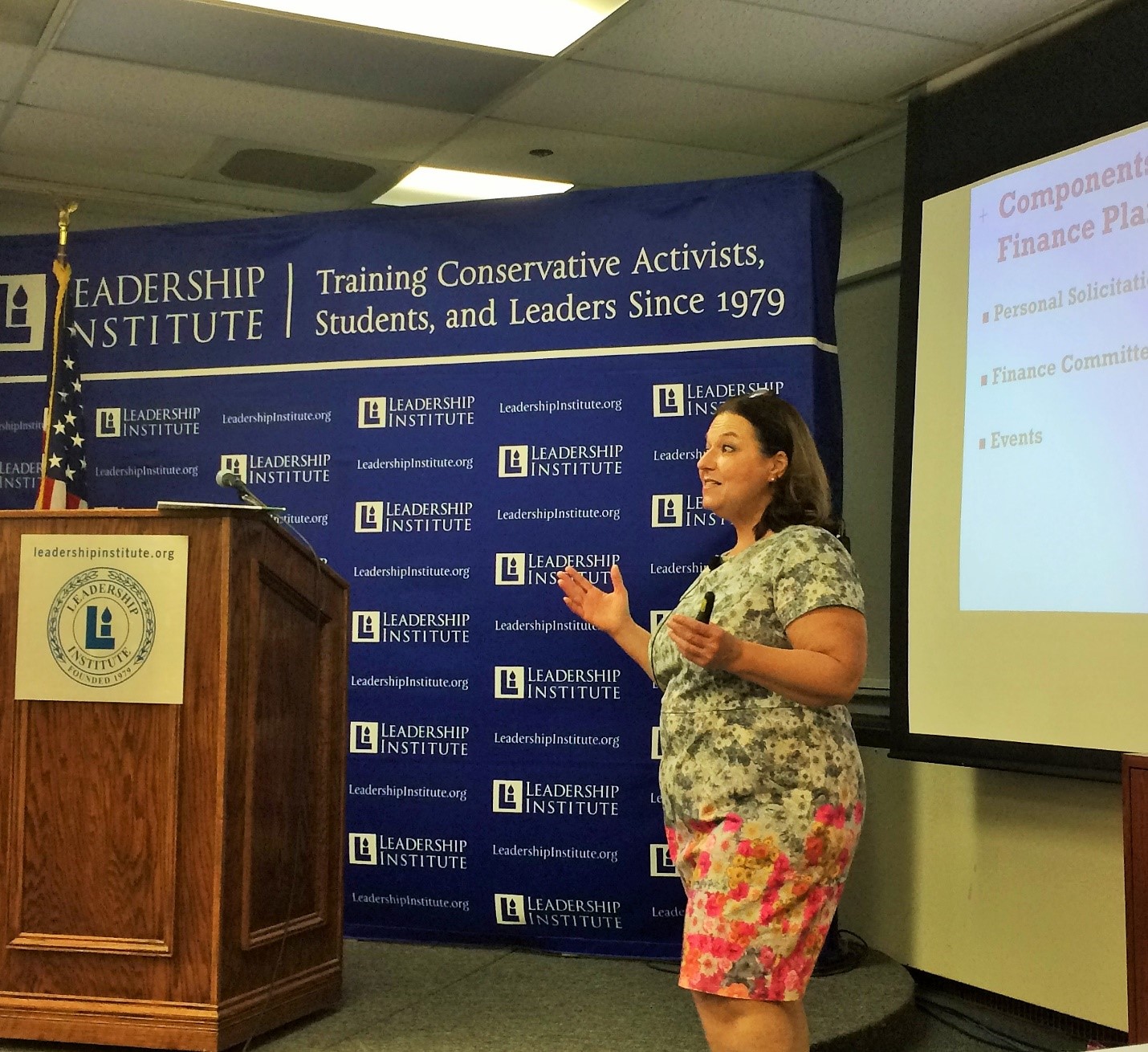
I also accompanied Nancy to give a presentation at the Leadership Institute regarding Fundraising and an all-day Fundraising Bootcamp which was a great learning experience for me. After a long day of fundraising, I had a delightful farewell dinner with Nancy at Bobby Van’s Steakhouse, and enjoyed a delicious dessert.
Continuing the week, I had the opportunity to reunite with camp friends that were in town for a couple of days and had dinner with them at Mehak an Indian restaurant in Chinatown which I loved, and will definitely be having again!
I also had the opportunity to visit the National Cathedral, which took 83 years to build! It was an impressive building.
Followed by a walk along the Chesapeake and Ohio Canal National Historical Park in Georgetown.
The adventure ended with a late night stroll through the National Mall reminiscing on the adventures of the last several weeks, and sitting in front of the reflecting pool facing the Washington Monument admiring it for quite some time. On this peaceful summer night, I felt incredibly grateful to be in this beautiful city.
Thank you Professor Yawn, Nancy Bocskor, Chuck Jones and Ademide for making this possible.
The LEAP Center Ambassadors finished their summer they way we began it: by making learning fun. In May we headed to Austin for a fun-packed week learning about campaigning. Today, we went on a Phoenix Commotion Tour, seeing about 15 great homes built by Dan Phillips.
Dan Phillips runs Phoenix Commotion, a building company that emphasizes sustainability, recycling, and thinking differently. The result is approximately 20 homes in the Huntsville area that have the Dan Phillips’ look: small in size, unusual building materials, and character.
Taking a step further, the result is also, at least in some areas, transformative.
But that’s only part of the treat. Phillips is also fun to listen to.
He is a former Dance professor, a designer, and a builder. He brings a different eye to the world of home-construction, and his different outlook is apparent from his building philosophy. How many builders do you know, for example, who quote Plato? According to Phillips, you transform things by using the “space between your ears.”
Phillips doesn’t necessarily begin with a grand and detailed design in mind. He begins with a general concept, and then sees where materials and tinkering take him. He uses about 80% recycled materials for his homes, and he finds objects that can be employed to form organic patterns of the most interesting sort. Want an interesting ceiling? Use photo frames back-to-back-to-back to cover the ceiling.
Photo from NY Times
Want interesting siding? Use corks. Want interesting windows? Use relish plates of various colors.
Unlike “starchitects” who come up with a grand design and minute detail ahead of time, Phillips prefers to let the process guide him somewhat. This process also contradicts, as previously mentioned, the ideas of Plato, who argued that reality suffers next to the abstract. Only in the abstract, argued Plato, can perfection be achieved. Once an idea is executed, imperfections occur. For Plato, art was even worse being two degrees removed from the abstract. Not so for Phillips, who allows patterns and experience help guide ideas, achieving a reality that might not have been thought of out of thin air.
Our tour of Phillips’ homes brought some of those concepts to life. We began at the “Bone Home,” so named for the many bones that constitute the home. If there’s a handle, it’s probably a bone. There’s also the bone furniture , which probably won’t be found in the Sears Home section.
The Bone Home demonstrates Phillips’ talent for making everyday objects into a pattern that is pleasing to the eye and, as Phillips notes, “the human spirit.” He can use corks, bottle caps, glass, stone shards, or just about anything to create an interesting look.
We also visited the art studio, which contained a bone chandelier…
…and learned about the animating spirit of Phillips’ work.
From there, we visited the tree house. This 320 square foot home, built 35 feet above Town Creek, was probably the consensus favorite. This property actually consists of the tree house, a studio, and a “cottage.” Compared to the cottage (280 square feet), the tree house looks giant.
The whole complex has the look of a compound, and the front of the area and the trees surrounding the property pretty well obscure the tree house, the most photogenic of the buildings. But once you enter the gate to the property, you are led on a walkway that takes you to the tree-house which, despite its small size, is actually a two-story structure.
In the middle of the bottom floor, you’ll find a window that will purportedly hold 350 pounds, a claim no one was eager to test.
Phillips explained more of his philosophy from the tree-house’s art studio, which is about 1,000 square feet.
Following the tree house, we did a driving tour of Phillips’ homes in Huntsville: the beer can house, the storybook house, the courtyard house, and others, before touring one more home interior. Although this home has no catchy name as far as we know, it had a really cool door so, clever group that we are, will call it the “cool-door home.” The door is actually made from printing equipment that Phillips obtained from SHSU.
Cool Door of the “Cool-Door Home”
The tour was a great way to learn more about the community, and meet community leaders. In addition to us students, Dr. Keri Rogers and her husband, Chuck Mize; Dr. Bill Hyman and Carol Hyman; Brenda McNeely, Toni Abshire, Jean Loveall, Stephanie Fors were all on hand.
It was a great way to close out the summer and transition to the fall, gearing us up for using that “space between our ears.”
Once upon a time there was this young lady, a princess actually, she ventured through the streets of D.C. amazed by all the sites. This princess, Jazmin, lived with Ademide Adedokun, an insightful and generous young lady whom Jazmin became rather fond of. The Princess also interned for wonder woman…but really! Wonder woman did it all! This meant that Princess Jazmin had the opportunity to learn it all. How exciting! She was eager to learn! The first week of adventures flew by so quickly, but the story of the Princess in D.C. continues…
This weeks’ adventure begins at Thomas Jefferson’s Memorial which was breathtaking! The structure is massive and oversees the Tidal Basin.
Jefferson Memorial
After gazing at the Jefferson Memorial, I continued along the Tidal Basin towards the Roosevelt Memorial. This is the most unusual of the memorials I have seen thus far. The Franklin Delano Roosevelt Memorial offers a historical pathway of FDR’s presidency, allowing us to seemingly walk through his presidency.
Then continued to the Martin Luther King Jr. Memorial, an impressive structure emerging from the mountains.
Afterwards I headed back towards the Lincoln Memorial, to see some of the memorials I had missed in my excitement, the first time around. Now, I saw the DC War Memorial, the Korean War Memorial, and ending with the 56 Signers of the Declaration of Independence Memorial.
Throughout the week, I had the pleasure of observing Nancy (Wonder Woman) speak to a group of accomplished Japanese women on the subject of Women in Politics. This group of women were eager to learn from her. They seemed truly grateful to be there and even sent us off with several Japanese tokens! Having the opportunity to meet with these women and see Nancy in action was a pleasure! A bonus was then taking a tour of beautiful churches.
During this week, I also had the opportunity to visit two of The Smithsonian Museums, American History and Natural History. The collections in both of these museums are astonishing.
In the American History Museum, among my favorite collections is the 30×42 inch original Star-Spangled Banner, the American flag, from 1813 that inspired Francis Key to compose the Nation Anthem. Another of my favorites is The First Lady Collection, exhibiting beautiful gowns worn by the First Ladies.
The National Museum of Natural History also contained spectacular collections. Here, I was able to explore and venture into each of the numerous galleries. Some of my favorites were The Last American Dinosaur…
the Mummies…
and the Hope Diamond.
To end this eventful and exciting second week of adventures, Ademide Adedokun along with a group of her friends and I enjoyed a beautiful Sunday at a winery in Clifton, Virginia. This was my first time in a winery! During our visit, we were able to engage in a wine tasting and learn about the various wines we were tasting. It was a great experience.
But, the story of the Princess in D.C. is to be continued…
After getting settled into the DC area, I finally got some sleep! The excitement of traveling across the country, then actually being here made for some restless nights. Luckily, I woke up feeling fully rested after about the third day.
I’ve been making boxes and other helpful tasks for Nancy, along with assistance from Katarina, Lily, and Charlie (three of Nancy’s cats).
I’ve also had a chance to explore. I stopped in to Alexandria, where I saw the Christ Church, which George Washington attended. It was stunning, not only because of its beauty, but also the history associated with it! I sat in the same pew that George Washington and many other presidents sat! It was incredible.
I also had a chance to walk along King street, which has some amazing shops. It also provides a different perspective on space. In Texas, there is a lot of space, parking space, space between buildings, road space. Here it seemed that every inch of spaced was in use and every building is built up several stories.
I also had a chance to go with Nancy to visit the Potomac River, the City Hall of Alexandria, the Ramsay House (the oldest house in Alexandria)…
…and then to the Topedo Factory Art Center. There, I wandered into several studios and gazed at many beautiful art pieces, and I also learned about the building, which used to be a torpedo factory!
Walking out of the building, I encountered a violinist, drummer, saxophonist…
and a stunning of view of the Potomac River.
That evening I met up with Ademide and some of her friends at the Marine Barracks Parade.
Attending this event at the home of the Marines was a honor. This is not an event that I would have normally attended. In fact I may have never known that this event was happening if it weren’t for Ademide, but it was a great event and I am grateful she invited me. I was fascinated with the synchronization of the Marines. After the event, we walked around the barracks to see the home of the Commandants, and walk around the neighborhood. It was the perfect ending to another wonderful day of adventures.
Outside of Arlington, I had a chance to see some of the cottages that were built from kits purchased from the Sears catalog, as well as several mansions in Arlington.
And more to the flavor of DC, I have had a chance to explore the capital! The sun was bright and the walk was dreadful, but I was excited. My first stop, the Lincoln Memorial, was massive and magnificent.
However, I was surprised by the infinite number of people that gathered on the steps to have their picture taken. After admiring the memorial, I turned my attention to the Reflecting Pool…
…and the Washington Monument.
It was breath-taking! I had to make it to the other side and see the monument up close. As I began to walk towards it, I stopped at the Vietnam Veterans Memorial taking a look at the wall of names, the Three Servicemen Statue and the Vietnam Women’s Memorial.
Followed by another beautiful memorial, the World War II Memorial.
Then I stumble onto, John Paul Jones Memorial…and caught a glimpse of the Jefferson Memorial.
Finally, I made it to the Washington Monument!
I sat in the grass admiring the structure for some time, then visualized The White House…I had to get closer. So I continued my adventure, looking for the easiest path around the Ellipse and to The White House.
On my way there, I came across the William Sherman Memorial and the Treasury Department. Then there it was…The White House! I was standing in front of The White House. How cool is that?! Now I had to go around it and see the other side, but before I did I saw the Eisonhower Executive Office Building. Then I was able to get a closer look of The White House. My adventure ended with the Jack Sot Memorial in the Lafayette Square directly behind The White House. There is so much here!
It’s been an incredible first week in Washington, DC!
Jazmin Perez is a senior at SHSU majoring in Criminal Justice and minoring in Political Science. Earlier this year, she attended a LEAP Center event featuring political consultant Nancy Bocskor, who has worked for more than 100 congressional candidates and members, raising more than sixty million dollars. She also teaches at George Washington University and does various workshops and training for groups across the country. More recently, Bocsckor has done consulting for the State Department, traveling to more than 20 developing countries to help women become more engaged with the political system.
Wisely, Perez reached out to Bocskor following their meeting and asked to be a part of Bocskor’s life for part of this summer. Such a step was not a natural one for Perez. She had never flown before, never been to DC, and was new to the world of political consultants. As Bocskor’s “right-hand woman” that is changing…
Wednesday, July 29th
By Jazmin Perez
My adventure began here. Flight 6262 to Washington, D.C. was scheduled to depart at 2:50 pm. On this day, I woke up early to prepare for the trip. In several hours I would be flying to Washington, D.C. for a month long internship with Nancy Bocskor. Although, this was my first time on a plane, I was not nervous. Upon entering the airport I checked in my luggage and proceeded to wait calmly with my family until it was closer to boarding time. As boarding time approached, I said my goodbyes and headed toward the TSA lines, then to gate twenty –two. Much to my surprise, I was still very calm. A short amount of time elapsed before we were able to board. When we did I choose a window seat. I was still very calm. Strange really. After everyone was seated and the safety procedures were addressed, we were finally ready for take-off. Flight 6262 began to head for the runway. I was not nervous. Then very suddenly, when the engine began roaring and flight 6262 actually took off, that was when I began to smile, a smile that very quickly became a giggle and then emerged to uncontrollable but, luckily, no snorting (editor: a minor miracle).
I was now incredibly nervous and afraid I would not be able to make it through the three-hour flight ahead of me. Once the plane stopped roaring and we were actually flying, my nerves settled and I introduced myself to the man sitting beside me. We conversed for a bit mostly about the fact I was a first time flier which put me at ease. I was even brave enough to open up the window cover. The view was extraordinary, and the view and my building excitement carried me all the way to the nation’s capital!
It was here that I met Ademide Adedokun, an SHSU Alumni and former President of the Junior Fellows (forerunner to LEAP), who has generously opened her home to me. After settling into her apartment we headed to a nearby diner for dinner, and ended the day with a quick tour of the city. I was able to get a glimpse of the Jefferson Memorial, the Air Force Memorial and the Washington Monument.
It was a great ending to an eventful day.
Thursday, July 30th
My first day started bright and early as I prepared to head to George Washington University via public transportation. I walked to the bus stop where I would get on a bus heading for Pentagon City.Getting on the bus was an adventure all on its own as to be expected of this girl. Unfortunately, I failed to have my SmartTrip card out to scan as I hopped on the bus, so I searched frantically for it in my wallet but not without other cards flying out onto the floor of the bus. (My SmartTrip card now lives in an easier to access pocket of my purse preventing a similar situation from occurring. Lesson learned.) I managed to pick it all up, scan my card, and take a seat. Anxiously awaiting my stop, I asked a sweet woman sitting beside me where I would get off to go to the Pentagon City metro, and proceeded to do so after she informed me. The Pentagon City Metro was a new challenge to overcome.
Luckily the people that I encountered throughout my first day in DC on public transportation were all very helpful, and the reason I made it to George Washington University, a beautiful campus, without getting lost. This is a different world than the compact and easily traversed campus of SHSU.
There, I had the pleasure of attending an event hosted by the Global Gender Program with the unwieldy title of “Empowering Women through Political Participation and Empowering Politics through Women’s Participation.”
Barbara Miller, one of the directors of the Global Gender Program, welcomed the audience and presented the keynote speaker, Homa Hoodfar, a professor of Anthropology at Concordia University in Canada. Dr. Hoodfar proceeded to open the floor and lay the foundation of topics on which the panelists would later expand. In her presentation, she mentioned that it would take 500 years to reach gender parity in America if we continued at this rate.
Following her presentation, there were three panels of presenters from several different countries including Ireland, Pakistan, England and the U.S. Each briefly discussed their research on women in politics around the world.
Among my favorite presenters of the day were Rosalyn Cooperman, Theresa Reidy, Mona Tajali, and Susan Markham.
Rosalyn Cooperman, a professor at the University of Mary Washington, centered her presentation on women in politics in America and mentioned that, “The problem is not a supply of women, but a demand.” Theresa Reidy spoke of political parties acting as gate keepers, and emphasized that the problem is structural. Dr. Reidy is a professor at University College Cork in Ireland. Mona Tajali, a professor at Oxford University, spoke about the recent general elections held in Turkey, feminist political ideology, and parity at all levels.
Susan Markham, the senior gender advisor of the United States Agency for International Development, closed the event by stating that often times we forget to look at the whole picture. She also described running for office as a third shift for a woman with a family and a career.
After the event, we were invited to mingle and enjoy an array of subs, pasta, and drinks.
Finally it was time to head out, but not before getting stuck in the rain with no umbrella and having to walk several blocks to hop on the metro towards Nancy’s house. When I finally arrived and met her, we discussed the conference and she took me on a quick tour of her neighborhood.
Later that evening we met Nancy’s summer interns for a farewell dinner at Thai Noy. Thai food was another new experience for me, so I ordered one of the first items on the menu, Pad Thai with shrimp, an interesting dining experience capped off by interesting conversations and wonderful people. For dessert we shared sticky rice with mango and homemade coconut ice cream, both of which were rather enjoyable.
It was a day filled with new experiences! Despite being directionally challenge, I managed to not get lost taking public transportation, and I was welcomed to a new world! Thank you Professor Yawn, Nancy Bocskor, Ademide Adedokun, and Chuck Jones for making this possible!
It was the final day of our trip, and we wanted it to count as much as the previous days.
We began with a quick walk around the French Quarter, checking out the shops, restaurants, art galleries, all the things you don’t see in our home towns. We then went to the New Orleans City Park, which houses the New Orleans Museum of Art and the Besthoff Sculpture Garden. It’s a wonderful city park, with jogging trails, playing fields, large oak trees, botanical gardens, a kids’ section, a mini-railway, a lake, and waterways.
We explored the whole park briefly, then tackled the sculpture garden, which was beautiful and wonderfully interactive.
Interestingly, we saw art works by artists we had seen on other parts of our trip and on other trips. One of the first sculptures we saw, for example, was a totem by Jesus Moroles…
This slideshow requires JavaScript.
…we had seen his work in Birmingham, at UT when we traveled there in June, and of course at our own University, SHSU. But we don’t know a lot about art, so it’s an interesting find when we come across art we do know.
We also saw the “Blue Dog” by George Rodrigue, whose gallery we had seen the night before in New Orleans.
And we saw Robert Indiana’s famous “LOVE” sculpture, which inspired The Beatles to write, “All you need is love.”
…similar to one we had also seen at the University of Texas. Interestingly, when we drove around the Garden District, we saw one in someone’s front lawn! One of these pieces costs about $219,000, or about the cost of a nice home in Huntsville, Texas.
We also saw a piece by famous Spanish artist Jaume Plensa. This one was called “Overflow”….
…but it is very similar to the set of sculptures he has around Buffalo Bayou in Houston, called “Tolerance.” Plemsa also did the “Crown Fountain” at Millennium Park.
Finally, we saw work by Louise Bourgeois, who is famous for her large spiders.
In passing, we saw works by Henry Moore, Rodin, George Segal, Anish Kapoor (who did “Cloud Gate” in Millennium Park) and Paul Manship. It was a fun and educational morning, and much more fun than a typical sculpture garden!
Following the art garden, we booked it back to the French Quarter and visited the market. We mostly went our own ways, shopping and having lunch.
None of the food we tried really stood out, but it was functional and allowed us to maximize our time looking at shops and such, along with a final picture of Jackson Square.
With a sad goodbye, we turned our back on New Orleans…
…and headed back to Huntsville–via Baton Rouge.
In Baton Rouge, we visited our fourth state capitol building of the trip. Amazingly, we (the students) had only visited the Texas capitol, so we each increased our total numbers of capitols visited by a factor of five!
The Louisiana Capitol isn’t the prettiest one in the country, but it is the tallest.
It also is historically interesting. Besides sitting beside the Mississippi…
…it is the location of the Huey Long assassination. There is a small exhibit on the first floor marking the site of the assassination, along with some basic facts. One interesting item is that they aren’t entirely sure that the “assassin” killed Long. The Senator’s bodyguards fired dozens of bullets at the assassin, and it’s at least possible one of them killed the governor. One of the bullet holes is still visible in one of the marble columns.
The capitol building has beautiful chambers for the House and Senate…
This slideshow requires JavaScript.
…and also has an observation deck on the 27th floor…
…which allows for good views of the aforementioned Mississippi, the armory, and the gardens.
This slideshow requires JavaScript.
This 360 degree view…
…was a fitting conclusion to a trip that gave us a similarly panoramic view of the south, its culture, and its politics.
After a great night of rest, we made our way to the impressive Biloxi Visitors Center. At the visitors center we were able to sign up for a tour Biloxi’s Lighthouse. The Biloxi Lighthouse was built in 1848 with a cast iron exterior and brick interior. It is 65 feet tall and has been electrically operated since 1926. An interesting fact about the Biloxi Lighthouse is that it was civilian operated and many of its operators were women, including one stretch of 50+ years where only women operated it. As we walked to the lighthouse we noticed another one of its unique features: it is the only lighthouse between a highway thoroughfares.
To enter the lighthouse we had to make our way up a wobbly, metal stair case until we reached the top. Once we all reached the lantern room, our tour guide gave us a brief overview of the lighthouse’s history. As we stood in at the top of the lighthouse we began to feel the intense heat caused by the cast iron exterior of the lighthouse.
We couldn’t imagine what it was like to be the lighthouse keeper in the southern heat!
When all of us had enough of the heat we began our journey down the stairs. It was way easier to go down than up, but still frightening for some. Once we were back inside the visitors center we were able to learn more about the lighthouse and the challenges they have faced on the coast of MS. For example, the lighthouse has endured many storms, most notably Hurricane Katrina. Hurricane Katrina caused much damage to the lighthouse. It filled the lighthouse with 21.5 feet of water and four hundred thousand dollars in reconstruction costs. The lighthouse was torn and battered by the destructive storm, but it still stood tall and was seen as a symbol of hope and resilience during the disaster, and the light in the lantern room still lights up the waters every night.
Following our exhilarating climb at the Biloxi Lighthouse, we drove along the shore to the George Ohr-O’Keefe Museum of Art. George Ohr is the self-proclaimed “Mad Potter” whose art was relatively unknown until fifty years after his death.
Designed by architect Frank Gehry, the museum building and grounds provide a stunning man-made counterpoint to the beautiful beaches, which are located directly across the highway.
Since it is the tenth anniversary of Hurricane Katrina, much of the current museum exhibits are dedicated to commemorating the hurricane. Biloxi, right on the Mississippi coast, was hit hard when Katrina rolled in. The damage to the lighthouse helps visitors visualize the magnitude of the storm in Biloxi.
In the lobby of the museum, there are many statues constructed out of wood.
Marlin Miller, a popular artist who took the dead and destroyed trees left after Hurricane Katrina and carved them into masterpieces that now decorate the once desolate landscaping of Biloxi. The museum contained a few of his sculptures each representing various emotions surrounding Hurricane Katrina.
The sculptures were beautiful and representative of the way Biloxi rebuilt itself after the storm.
The exhibits reminded visitors of how severe Katrina was and the change that has occurred since then. The Mississippi Power Company and the local news each had exhibits in the museum explaining the aftermath and their job when cleaning up. After the Katrina exhibits, we visited the main exhibit showcasing George Ohr’s pottery. George Ohr was born in 1857 and in 1879 he began his pottery career in New Orleans, LA. Ohr’s philosophy was that no two pieces of pottery should be alike because no two people were alike. To create thousands of pieces and not craft two pieces alike illustrates his creativity and support for individualism. Unfortunately, George Ohr’s pottery studio was burned in a fire in 1894. However, when he opened his new studio, it marked a significant change in his pottery with many brighter and bolder colors than his previous works of art. It was amazing to see the shift in his artwork and the transformation throughout his life.
Although not entirely what we expected, we immensely enjoyed learning about Hurricane Katrina’s impact on Biloxi and about the famous “Mad Potter”. The museum marked our last stop in Biloxi and we departed for New Orleans, the penultimate destination of our Tour of the Deep South.
Upon arriving in New Orleans we stopped for lunch at a New Orleans style restaurant, Elizabeth’s. The restaurant was founded in 1996 and their mission has, since then, been to make everything from scratch to provide a great product with the care and creativity that it deserves. We began with boudin balls and praline bacon as appetizers. Kaitlyn went with the special for the day which was Elizabeth’s original, Joe’s scramble. Alex and Karla went with the hot sausage Po’ Boy which was plenty of food for both of them.
This slideshow requires JavaScript.
It was also something they had never had before. It was a sandwich with a sausage with a soft spice kick to it. The restaurant was also very unique with plenty of colorful art on the walls that is from a local artist named, Dr. Bob. The art featured many NOLA sayings and recycled bottle caps as borders. His shop was located directly down the street from the restaurant.
After days of intense sightseeing and learning, we decided that retail therapy would be a nice way to spend an afternoon in New Orleans. For a few hours we walked the interesting streets of the French Quarter, shopping and absorbing the culture of the great city. There were countless vendors that sold a variety of things. We saw the traditional Mardi Gras beads, souvenirs, and so much art work! I bought a print from a local artist of one the horses that give carriage rides to locals and tourists. All of the artwork was unique. And while the shopping was going great, we were even more amazed by the entertainment that filled the streets. Instruments of all sorts made music that could be heard throughout NOLA. Dancers, magicians, comedians, and many more make a living on the streets of New Orleans keeping folks entertained sun up to sun down.
This was a new experience for all of us – especially Bourbon Street.
Many of us had heard what it would be like, but being there was totally different than any of us expected. It was a diverse place that offers so much to do and see.
For dinner we went to the famous Oceana Grill, we heard great things about this restaurant and couldn’t wait to try the food. We got there and were surprised by a long line of people waiting to be seated outside the door.
After waiting in line, we finally got seated. We began with gator tail bites, Cajun alligator sausage, Oceana’s famous oysters, and gumbo.
For most of us it was our first time trying many of these appetizers. It seemed like a lot for starters, but they were all great and gone in no time. Megan and Alex shared one of New Orleans Favorites, the Taste of New Orleans that came with creole jambalaya, crawfish étouffée, red beans, and rice with smoked sausage. Kaitlyn and Karla shared a crawfish fettuccini pasta with freshly diced green peppers and New Orleans seasonings. We were all so pleased with our food, it was much more than we expected. It added more definition to the culture.
After an appetizing dinner, we walked around the town for a while. The “day crowd” was different from the “night crowd”, but unique all the same.
Dessert was spent at Café Du Monde enjoying some warm and fresh beignets and chatting about the day’s events.
On the walk back to the hotel we enjoyed taking pictures at landmarks and learning a new way of life. We were all very sad that tomorrow would be the last day of our tour, but thankful to have had this amazing opportunity! The South has been great to us.
Sad to leave Savannah, we awoke early this morning before sun rise to begin our travels. Montgomery was our first destination of the day. Before heading into the city, we visited Liger’s Bakery for sweet treats to kick off the day. For a few of us, a doughnut was a perfect way to boost our energy after little sleep.
Once chosen for its central location within the Confederacy and for its easy access to travel routes, Montgomery was the perfect place to build the first Confederate White House during the Civil War. Since then, the building has been moved to its new location on the South side of the Alabama State Capitol. President of the Confederate White House, Jefferson Davis and his family lived in the home from the time it was built in 1835 until the time the Confederate Capitol was moved to Richmond in 1861. The home showcased two bedrooms, the First Parlor, the Second Parlor, the Dining Room, and the President’s Study. The first of the two bedrooms was Jefferson Davis’s bedroom which included artifacts from throughout his life, such as his slippers and Bible.
Another interesting room, the President’s Study contained many pieces of furniture used by Jefferson Davis and was a room where many important decisions were made for the Confederacy. Amidst the current controversy surrounding the Confederate Flag, the Confederate White House in Montgomery seemed unbothered by the dispute and fit in with the surrounding landscape with the capitol.
Against this strong backdrop of confederate history, more modern history also played out in Montgomery–the civil rights movement. Rosa Parks was a thriving civil rights activist along with Martin Luther King Jr. and Reverend E.D. Nixon. She was born and raised in Tuskegee, Alabama. Because her mother was an educator, she was taught to read and write and later attended the city Industrial School for Girls.
We had the opportunity to not only visit the museum dedicated to her and the history she impacted, but also the exact spot Rosa Parks boarded the segregated bus…
…and the bus stop where she was arrested.
The Rosa Parks Library and Museum tour began with background history of Mrs. Rosa Parks and her involvement in the Civil Rights Movement. She was the secretary of the NAACP and worked very closely with Dr. King and Rev. Nixon in the nonviolent protest for equality. Mrs. Parks refused to give up her seat on the bus and was arrested. This was a transition point for the state of Alabama and segregation laws. This also prompted the Bus Boycott that caused the bus companies to lose thousands of dollars. In order to support the boycott African Americans refused to ride the bus, so they walked or carpooled around town. This boycott lasted 13 months until justice was served. Rosa Parks was the perfect example of using educational and spiritual guidance to seek justice. Her and many other Civil Rights leaders have paved the way for many Americans today. Following the tour of the museum, we walked across the street to stand at the spot she was arrested. It was an honor standing in a place where a brave woman had made up her mind to be treated nothing less than equal. With conviction and respect, we stood reflecting upon how different America would be today without Rosa Parks contribution and leadership in the Civil Rights Movement. Time was running short so we made our way to visit the Alabama State Capitol, after briefly checking out some of the beautiful architecture, art, and history in the downtown.
Architecturally, the Alabama State Capitol modestly resembles the United States White House.
Much smaller than the Texas State Capitol, many offices have moved out of the main Capitol building and into various buildings bordering the Capitol building.
Our self-guided tour began in the Governor’s Hall, a common feature of state capitol buildings. Here, we admired the portraits of previous Alabama Governors leading up to the current Governor’s office. Also, on the first floor we were able to see the previous Supreme Courtroom which has now been converted into a World War Memorial. On the second floor, the previous House and Senate Chambers are now open for public viewing.
Stove in AL House of Reps
Reflective of the Antebellum Era, much of the furniture and fixtures were original from when the capitol building was originally built in 1849. Part of the second floor opened up to the rotunda, richly decorated in warm colors with scenes throughout Alabama’s history.
Finally, the third floor consisted of the House and Senate gallery where citizens could come and observe the legislature in session. One of the most interesting locations at the Alabama State Capitol is the location where Jefferson Davis was sworn in as President of the Confederacy. Marked by a bronze star, everyday visitors are able to stand in the same spot Jefferson Davis entered office for the confederacy. The Alabama State Capitol is our third state capitol to visit on our Tour of the Deep South. Not only has it been interesting to learn about their architectural similarities and differences, but also to learn about how the state government works in each state. In order to stay on schedule, we hurried over to the Dexter Avenue King Memorial Baptist Church where Dr. Martin Luther King Jr. preached for six years of his life to read the historical marker and take a quick picture.
Interestingly, the cross-walk in front of the church is marked by painted shoeprints. The shoeprints not only decorate the city scape, but also reflect MLK’s march from Selma to Montgomery, but also the African-American’s bus boycott, which required them to walk rather than take the bus.
For lunch we went to Chris’, home of the world famous hot dogs in Montgomery, Alabama. Chris’ opened in 1917, celebrating their 98th year anniversary May 1st of this year. The restaurant is mostly known for their hot dogs. Their special hot dog comes with 2 dogs, sauerkraut, chili, onions, and mustard. The addition of their famous Chris’ chili gives its world famous recognition. Not only did the restaurant have great lunch food, it also has an interesting history. Hank Williams, a famous country musician often visited Chris’, making it one of the hottest places to hangout in the mid nineteen hundreds.
The restaurant also advertises their support of equality during the Civil Rights Movement where their served African American citizens alongside white citizens. In the end, this was a neat place to have a comfortable lunch in the heart of downtown Montgomery.
After lunch we embarked on our trip to Monroeville, Alabama. Once we arrived in Monroeville we stopped to tour the Old Monroe County Courthouse to learn more about Harper Lee and her friend, Truman Capote.
Harper Lee is the author of “To Kill a Mockingbird” and Truman Capote is the author of “In Cold Blood” and “Breakfast at Tiffany’s”. The Old Monroe County Court House was restored to its 1930’s appearance. The courthouse is also the model for the courtroom in the To Kill A Mockingbird movie.
Many people think that the movie was filmed in the Monroeville courthouse but it was actually recreated onto a Hollywood sound stage by Henry Bumstead. Fans of the novel and movie visit Monroeville because it is Harper Lee’s hometown which she based Maycomb on. The court house became a famous attraction which prompted Monroeville to build a separate court house and turning the Old Court House into a museum. We were able to wander through the museum and read Harper Lee’s words regarding her book being turned into a movie and learn about Truman Capote’s childhood. One of the quotes that I liked best from Harper Lee was “In an abundant society where people have laptops, cell phones, iPods, and minds like empty rooms, I still plod along with books. Instant information is not for me. I prefer to search library stacks because when I work to learn something, I remember it.” Capote also had much to say about Harper Lee and through his words I learned that Harper Lee longed to become a lawyer like her father and almost did before realizing her calling was really writing. My favorite thing in the museum was a piece of “the famous tree” where Dill, Jem and Scout found the pieces of gum, marbles and a watch left by Boo Radley. Once everyone had the opportunity to look around we hoped back in the van, checked out some of the city’s homages to Lee…
…and to Truman Capote’s boyhood home…
As we arrived in Biloxi, we searched to find dinner. In the end, we chose Adventurous Pub and Spirits. A few members of the group shared the seafood platter with a combination of fried shrimp, oysters, catfish, and fries. Biloxi’s location to the Gulf of Mexico, made seafood an easy choice for dinner. Although, it was a much different restaurant than what we expected, the group enjoyed it and headed to check into our hotel to catch up on extra rest. Tomorrow, we have another eventful day of sightseeing and traveling as we head to New Orleans.