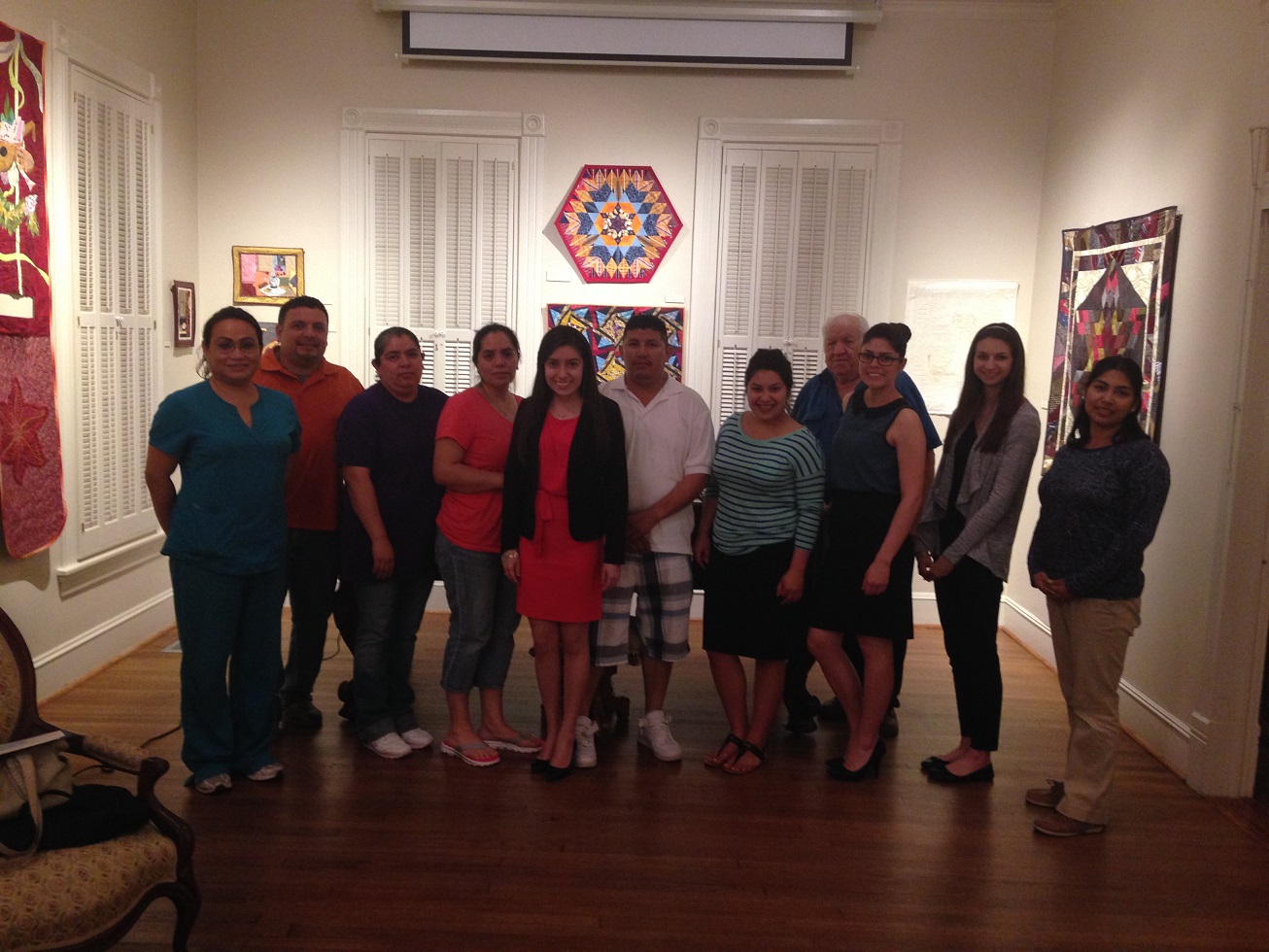
Day of the Dead or Dia de los Muertos is a Mexican tradition that celebrates lost loved ones in a an intimate way, and it is celebrated at the Wynne Home Arts Center annually. For each individual lost loved one, family and friends build an altar that reflects the life they lived. The altar is composed of favorite foods, flowers, candles, and objects that they cherished. Those who celebrate this holiday believe that during the night the deceased will come and enjoy what they have left for them.
Similarly, the Wynne Home built two altars for the lost loved ones that made a great impact in Huntsville, Texas: Jesus Moroles and Barbara Tyson. The two artists have both done work for the Wynne Home as well as in the community. With both of the artists passing this year, the Wynne Home wanted to honor and commemorate their lives by building them altars. The altars will be on exhibit until November 12, 2015.
The Wynne Home provided tamales, traditional rice, and charro beans—foods that are popular for this holiday. There was also face-painting…
…coloring and art activities…
…and a showing of “The Book of Life” for children.
LEAP is very proud to volunteer at They Wynne Home—a place that advocates cultural diversity and art. It was a joy to see so many locals take part in this tradition that is cherished by many!
If you signed up for an event called the Great Muddy Escape, why would you care if it rained?! You wouldn’t! The mud and rain are part of the fun, and fun it was at the 5th annual “Great Muddy Escape.”
The Great Muddy Escape is a partnership between the YMCA and the Huntsville Memorial Hospital, with a threefold mission: (1) to increase awareness of fitness and health, (2) to offer a fun, healthy family activity, and (3) to raise funds for two organizations that promote healthy communities–the YMCA and the Huntsville Memorial Hospital Auxiliary.
The LEAP Center has been peripherally involved in this fundraiser since its inception, offering volunteers and participants. So, while some of the LEAP Ambassadors competed at the Moot Court competition in Lubbock this weekend, a few members and friends endured the rain and mud at the fifth annual Great Muddy Escape 5K in Huntsville on Saturday morning. Arriving before sunrise and smiling…
…LEAP Center students checked in volunteers, set up tables and snacks, and made sure packets were ready for when runners arrived. Amidst volunteers from different student organizations and community groups–all led by the indomitable Margaret Gulledge– LEAP students worked hard to make sure everything was perfect before all 250 competitors arrived and began to tackle the course’s dozen obstacles.
Once snacks and packets were prepared, volunteers headed down to the starting point to see runners stretching…
…eager to begin the race. Twelve obstacles awaited them, including walls, slides, and huge mud pits, and from the looks on their faces, it appeared that LEAP Center student Bella Abril was much more excited about this than this than POLS major Paul Oliver…
After a few minutes of anticipation and a pep talk by Mayor Mac Woodward…
…runners began with the sound of the blow horn.
As the runners sprinted past the starting line…
…all one could see were the teams…
…in a blur of tutus, tennis shoes, and tight pants on athletes enthusiastically running towards what could end up being their demise.
Paul Oliver (Orange Shirt) Dashes Onward
Would they escape? One could only hope to see an equal number participants cross the finish line after withstanding all that the obstacle course had to throw at them.
LEAP students Megan Chapa and Brian Aldaco had the opportunity to photograph runners as they climbed walls…
…trucked through the mire, and swung across perilous pits of doom, or simply mugged for the camera.
Meanwhile, Constance Gabel and Karla Rosales checked runners in as they crossed the finish line, covered in mud, making sure to count the amount of wristbands they acquired at each accomplished obstacle. Little did we know, runners took their effort very seriously and much competition made our jobs difficult to say the least. Students Bella Abril and Paul Oliver ran the race with fierceness and completed with all wristbands intact. In fact, Bella even videoed herself with a gopro camera!
Meanwhile LEAP President Megan Chapa trudged with her boyfriend, Taylor Martin…
…through the mud…
…where even superheroes fear to go…
Even more fun was the waterslide, where some tried to traverse by running…
…some by sit-sliding…
…some by diving head-first…
…actually, a lot of people diving head first!
This slideshow requires JavaScript.
Some by being pushed…
…but mostly by falling!
But always smiling while doing so…
The smiles reflect the event’s mission, to “test your resilience, strength, stamina, quick decision making skills, and ability to laugh in the face of adversity.”
The smiles did, in fact, reflect the immense fun of the event, but perhaps no photo captures the fun better than Bella’s gopro video.
Despite holding a gopro camera for the duration of the event, Bella managed to finish the 3.2 mile event, through mud, rain and obstacles, in about an hour. Paul Oliver finished 7th in the men’s category, completing the course in under 40 minutes. Megan Chapa and Taylor Martin opted for the untimed event.
Overall, the male winners in the 5K were Will Butler (27:26), Ty Stubblefield (28:20), and Bryan Cruz (29:50). The female winners in the 5K were Angelina Santos (33:16), Stephanie Brock (33:24), and Angie Pecina (33:29).
Win or lose, though, it was a great day for both the participants…
…the super participants…
…and the volunteers…
…and for the Huntsville Memorial Hospital Auxiliary and the YMCA, the recipients of the money raised. Over the past five years, more than $40,000 has been raised for these worthy causes, and the LEAP Center has been proud to be a part of the program over this span.
About Huntsville Family YMCA
The Huntsville Family YMCA strives to provide families a safe outlet for their children with special needs where they can experience the joy and benefits of participating in sports and physical activities. Programs are available for youth ages 4 and up in baseball, volleyball, basketball, flag football and soccer.
About Huntsville Memorial Hospital
Huntsville Memorial Hospital is a 123-bed, private, non-profit community hospital, providing health care services for the residents of Walker County and the surrounding area since 1927. We are devoted to the health and well-being of our regional communities by providing exceptional care to every patient every day with a spirit of warmth, compassion and personal pride.
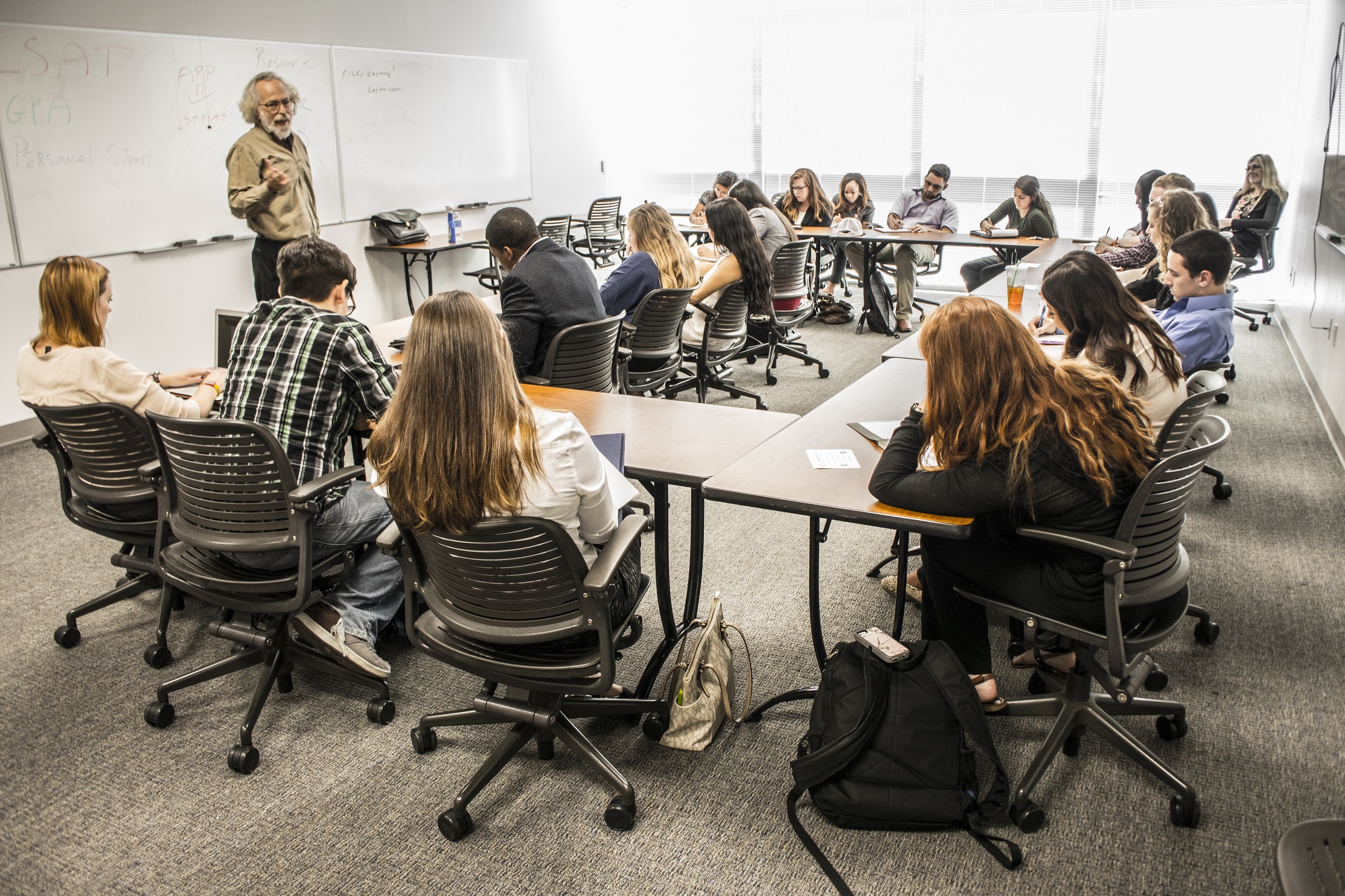
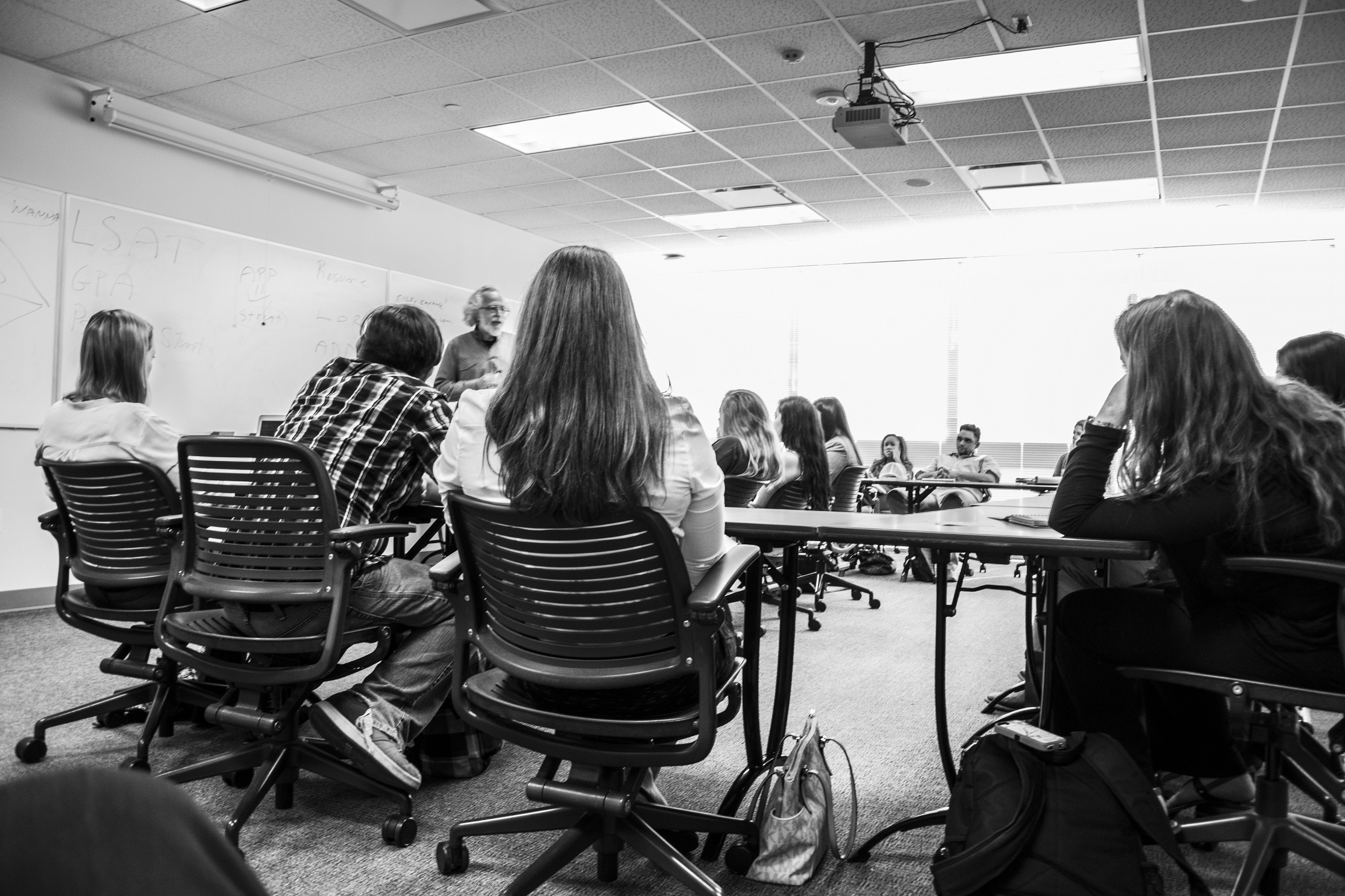
Twenty-five SHSU students just moved closer to enrolling in law school, thanks to an appearance by Ricky Kaplan at the LEAP Center’s first-ever “law-school workshop.” Kaplan, a consultant and instructor for Kaplan Testing, also served as Legislative Counsel for the state of Oregon, Assistant Attorney General for the state of Illinois, and Assistant Attorney General for the state of Texas. He also has a BA from U of Minnesota, a Masters from Northwestern, and a law degree from U of Minnesota. He knows about law.
And he shared it with SHSU students last week, kicking off the workshop with the major factors that law schools look at when deciding whether to admit a student. The factors are:
LSAT
GPA
Personal Statement
Letters of Recommendation
Resume
Background
He purposefully led with LSAT because, whatever its flaws, “it is the only measure the law schools have that is consistent across every student in the US, and it does a pretty good job of predicting first-year law school success.”
The LSAT and GPA guide students in which law schools to apply. If a law school, say Texas Tech, has a mean LSAT of 155 and a mean GPA of 3.4, then a student with a 156 and 3.5 is probably going to get in. A student with a 149 and a 2.9 probably won’t.
While the numbers for schools vary from year to year, the following numbers generally reflect the law-school “means” of Texas law schools:
While these two measures (LSAT and GPA) are the most important factors in getting into law school, the personal statements, letters of recommendation, and the resume can also make a difference in a close case. His advice for the personal statement was to be genuine, to emphasize narratives, and to emphasize the positives about yourself. When stuck with writer’s block, he encourages students to forget they are writing a personal statement and write four-five stories about their life. These often reveal something meaningful about the person and can subsequently form the basis of a compelling personal statement.
For personal statements, go with people who know you and your work. Professors are probably best, but for people out of college for several years, employers can write the letters. Avoid “friends of the family” or folks you think are important but aren’t directly familiar with your critical thinking, writing, and communication.
After arming us with advice, Kaplan took a break and then worked with individual students on their personal statements, answering questions about addenda to the applications, and how best to prepare for the LSAT.
Such advice may not get students into the University of Minnesota or Northwestern, but it will maximize the chances they have of getting into the best law school available to them.
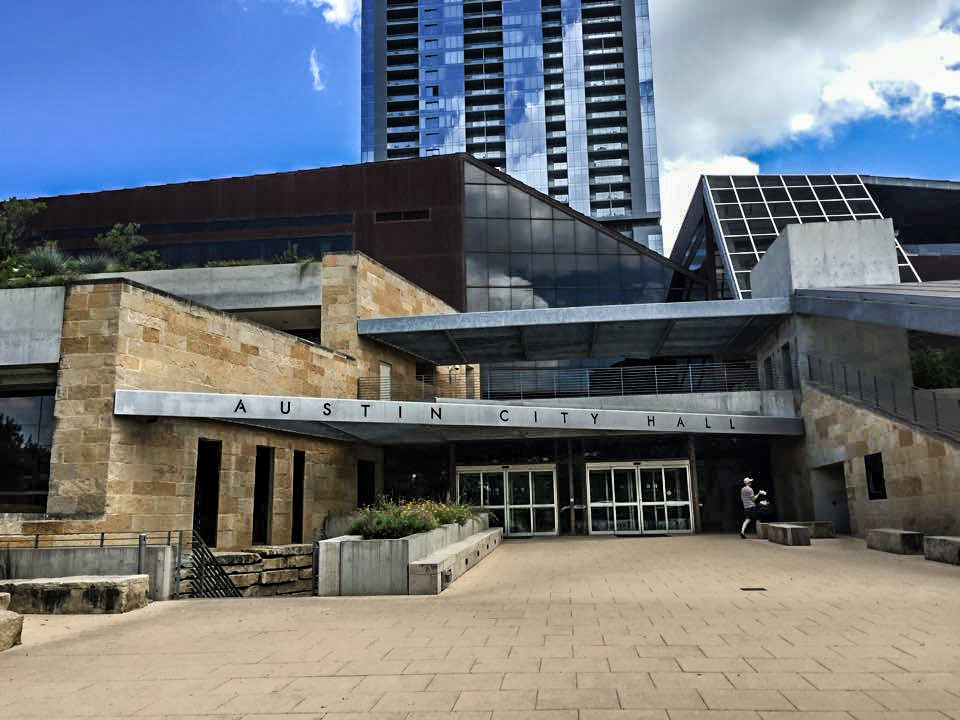
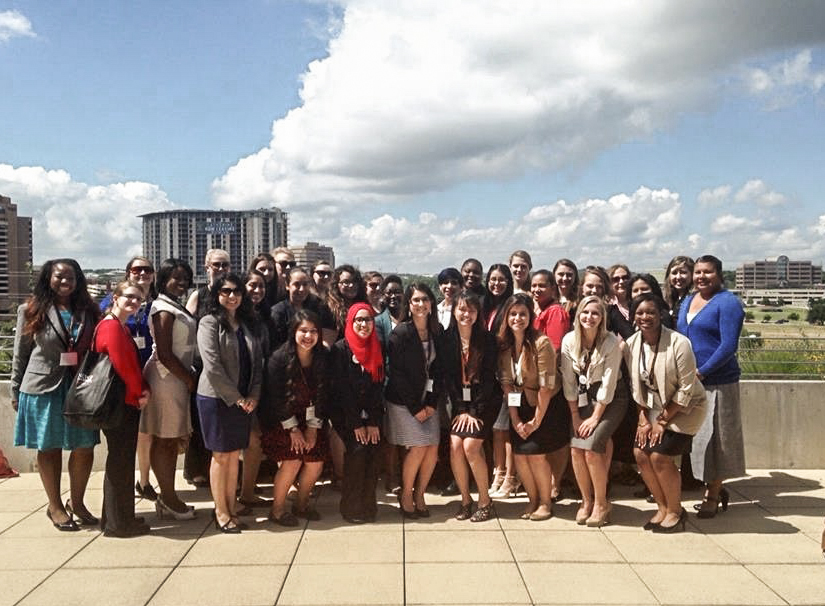
This morning started earlier than usual, but that was just fine because we were headed to Austin City Hall.
The inside of the building was just as beautiful as the outside! The modern architecture combined with the intricate art pieces made City Hall an enjoyable place to spend the day. As we began to shuffle inside the building we were led to a meeting room. Here we were served a light breakfast that consisted of breakfast tacos, fruit, and coffee. We ate quickly because the Women in Leadership panel was only a few minutes from starting. The panel began with the introductions of the panelists. Present was Austin’s Fire Chief, Rhoda Kerr; Law Department Division Chief, Deborah Thomas; Director of Small and Minority Business Resource Department, Veronica Lara; Elena Ball, VP for Power Production at Austin Energy; and lastly SHSU alumni Margo Fraiser, Austin Police Monitor. The panel spoke about dynamics of their careers, experiences that have shaped them, and gender inequalities (the latter dynamic was overly emphasized, we felt).
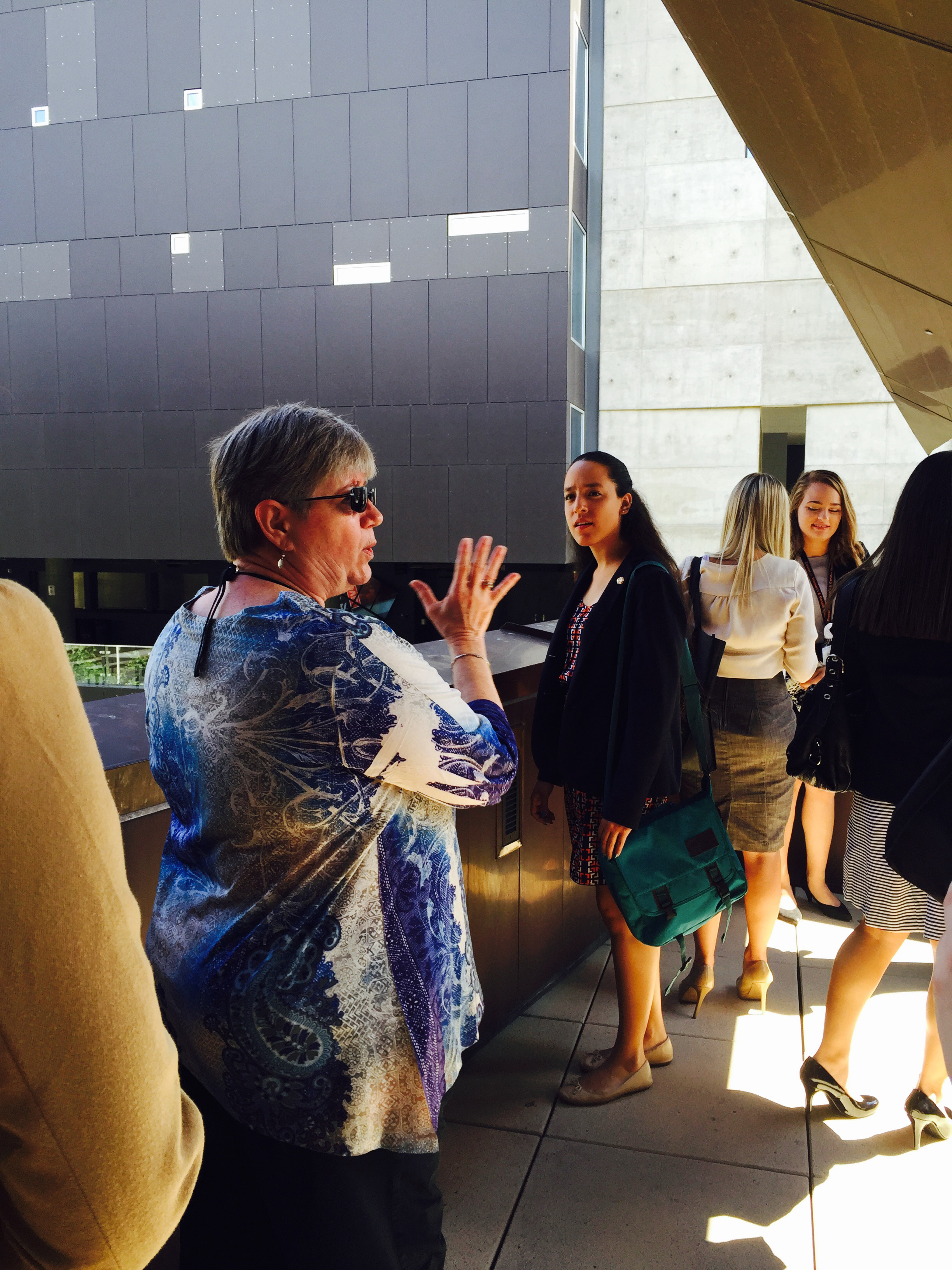
Following the panel was a tour of City Hall by Ms. Melodye Foust.
We learned interesting facts about the infrastructure and history. The building began its planning and renovation is 1999 and was completed in 2004. Austin City Hall is four stories high and was structure to capture nature. Each floor includes double-sided balconies that overlook the city, and on the fourth floor, Lady Bird Lake.
Ms. Foust also informed us about the partnership made with an art gallery that allowed them to house their art work. This makes City Hall not only community center, but a museum.
In conclusion of the tour, we loaded on the bus for lunch at Scholz Garten. Lunch was delicious and meaningful because this is a restaurant where “politicians” frequent!
The most exciting part of the day was the tour of the Capitol. Each time I go to the capitol I learn something new.
My favorite fact during this tour was that funds for the capitol building were raised by selling off 3,000,000 acres of land! After the wonderful tour, we gathered in the House Committee Room and awaited our guest speakers. They were an assortment of representatives, legislative directors, and policy analysts. We also gained insight of the work done at the capitol in and out of session for policy and legislation. Most policy work is done during the session and most constituent work is done immediately following session.
After a long day of learning and exploring we made our way back to our temporary residence. We jumped into comfy clothes and left for dinner. Dinner was quieter than usual because we were all exhausted from the long day of exploration.
To end the night, we made last minute touches to our HB5 presentations that we would deliver first thing the next morning in the mock hearing. I was anxious to hear everyone’s provisions of the bill!
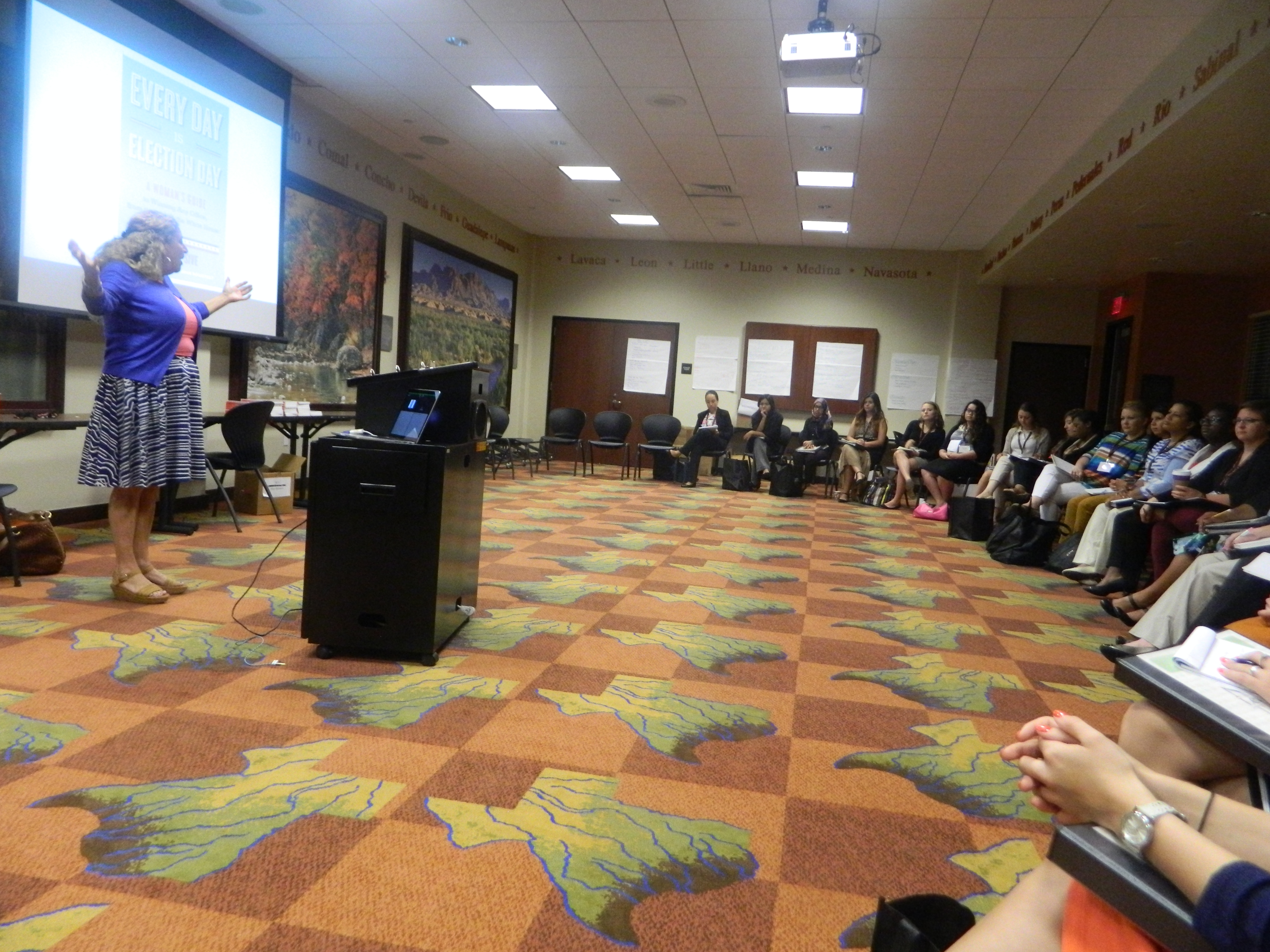
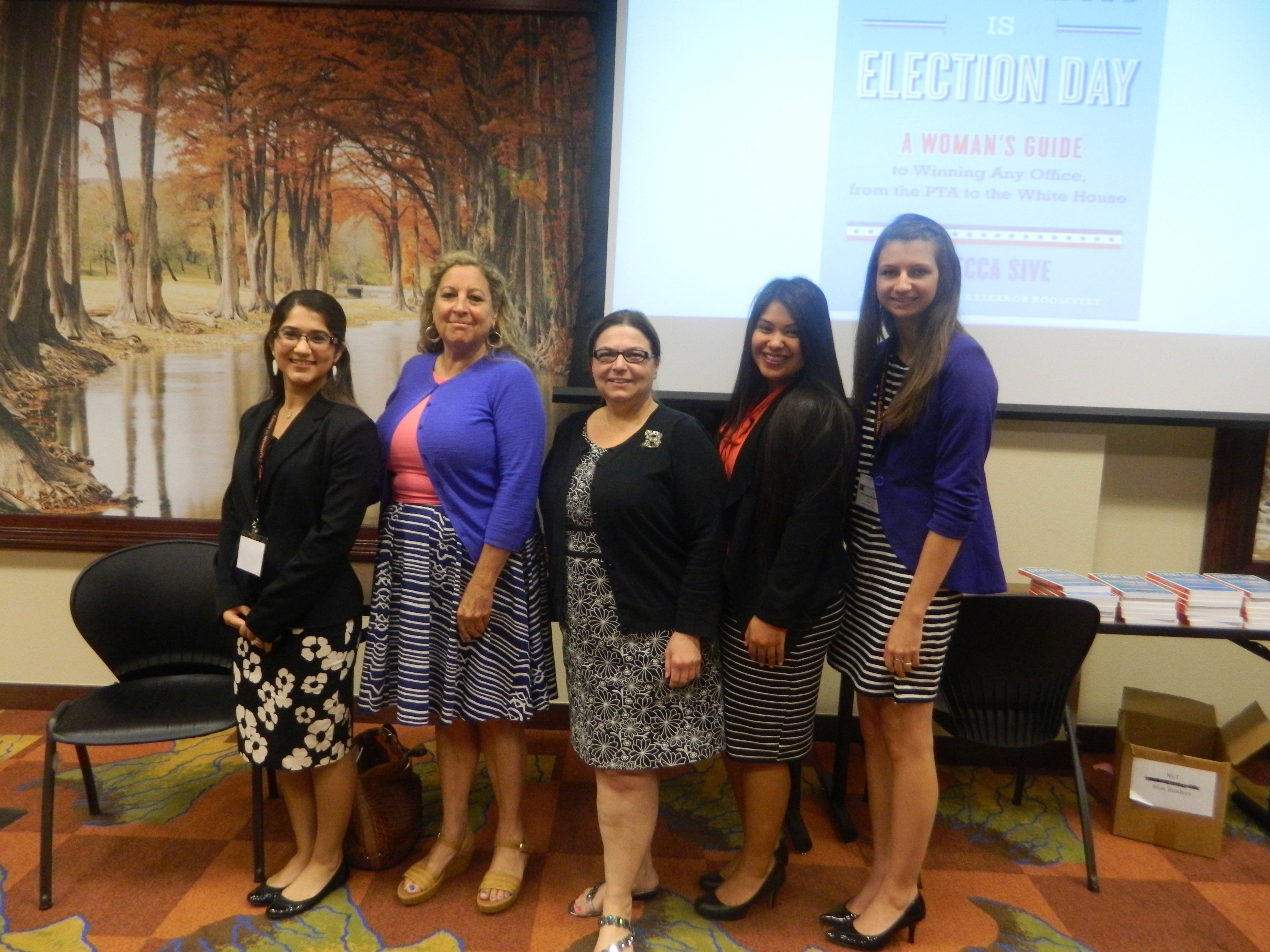
Wednesday began with our normal quick, yet nutritious breakfast before our morning session of classes began. Our first speaker, Rebecca Sive, is a lecturer and academic director at the University of Chicago where she teaches Women in Public Leadership. Ms. Sive is also the author of Every Day is Election Day: A Women’s guide to Winning Any Office, from the PTA to the White House. During Ms. Sive’s lecture, she stressed turning on our own internal GPS and creating our own paths. Essential to her discussion, she reinforced the fact that everyone has their own path in life. For some, that may be to public office, but sometimes it isn’t.
Ms. Sive’s discussed her six “easy” steps to run and win for office which provided helpful guidelines for NLT participants to think about. In addition, Ms. Sive was nice enough to sign copies of her books for everyone. Personally I found the session extremely helpful because it laid out concrete steps to help candidates run for office.
After Ms. Sive’s presentation, we paused for lunch. Unsurprisingly, lunch time is everyone’s favorite time of the day because it gives us the opportunities to continue our discussions about controversial topics, our common experiences as college students, and about our career goals.
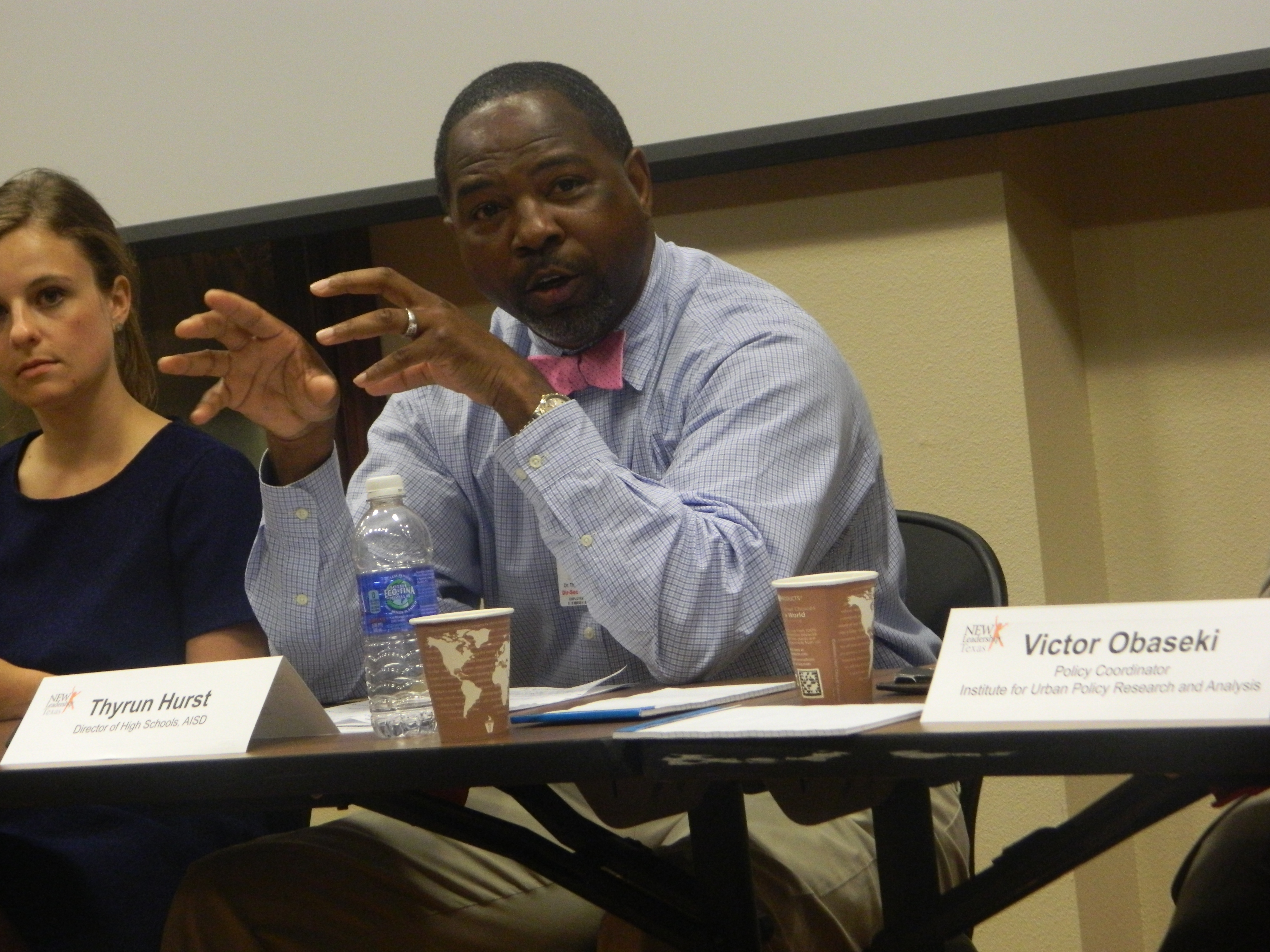
Following lunch, we had the opportunity to work our political action project and prepare for the HB5 panel of experts. The panel consisted of experts from various perspectives concerning HB5. The distinguished panel included the current High School Director from Austin Independent School District…
…an attorney previously in the Texas Legislature who assisted in writing the bill for various House Representatives, a Texas Tribune Education Reporter, and an Educational Administration Professor from UT. Each provided a unique perspective and helped prepare NLT participants for our mock committee hearing on Friday by answering questions and addressing concerns on the specific details of HB5.
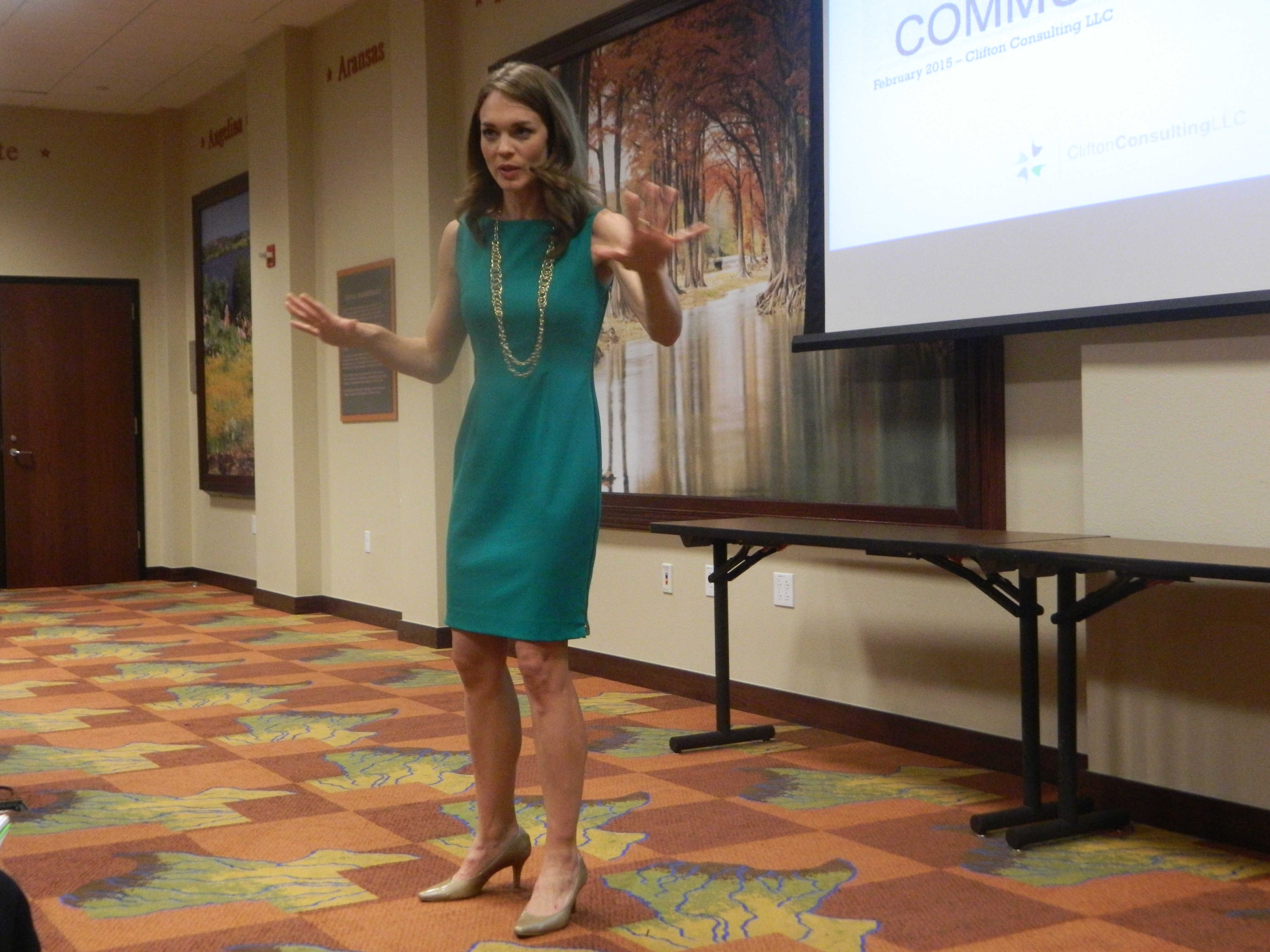
The last presentation of the day focused on managing your message as a candidate. Marjorie Clifton, CEO of Clifton Consulting, provided extremely helpful advice on effective communication and how to achieve it. She provided us with three key components to address while speaking: who is your audience? What is your message? How are you going to deliver it? Ms. Clifton noted that personal experience helps make you more credible and gives the candidate the opportunity to connect with voters. Ms. Clifton’s presentation was engaging and an upbeat way to end our sessions for the day.
The evening was devoted to dinner and finishing up our political action project. Tomorrow is an exciting day because we get to tour the capitol and meet with influential women within the Texas Legislature. In preparation of an eventful day, and mentally drained from learning an extensive amount knowledge in such a short time, we headed up to our rooms to end the evening.
Breakfast started at 8 a.m. and there we chatted about the past day’s events and the one before us. It was interesting to exchange opinions about the presentations and workshops and how we were going to practice them in our communities.
Next, was a fundraising workshop, Go Fish: How to Catch (and keep) Contributors, by Ms. Nancy Bocskor. This was an interesting presentation where we learned many fascinating strategies on how to raise money. This was not only beneficial to those interested in politics, but also those who plan to work with non-profits organizations. We also learned the investor triangle and how to access low, mid, and big dollar donors. Fundraising goes hand-in-hand with relationship building and asking for what you want. Furthermore, without mastering the art of negotiation, it’s not possible to raise funds.
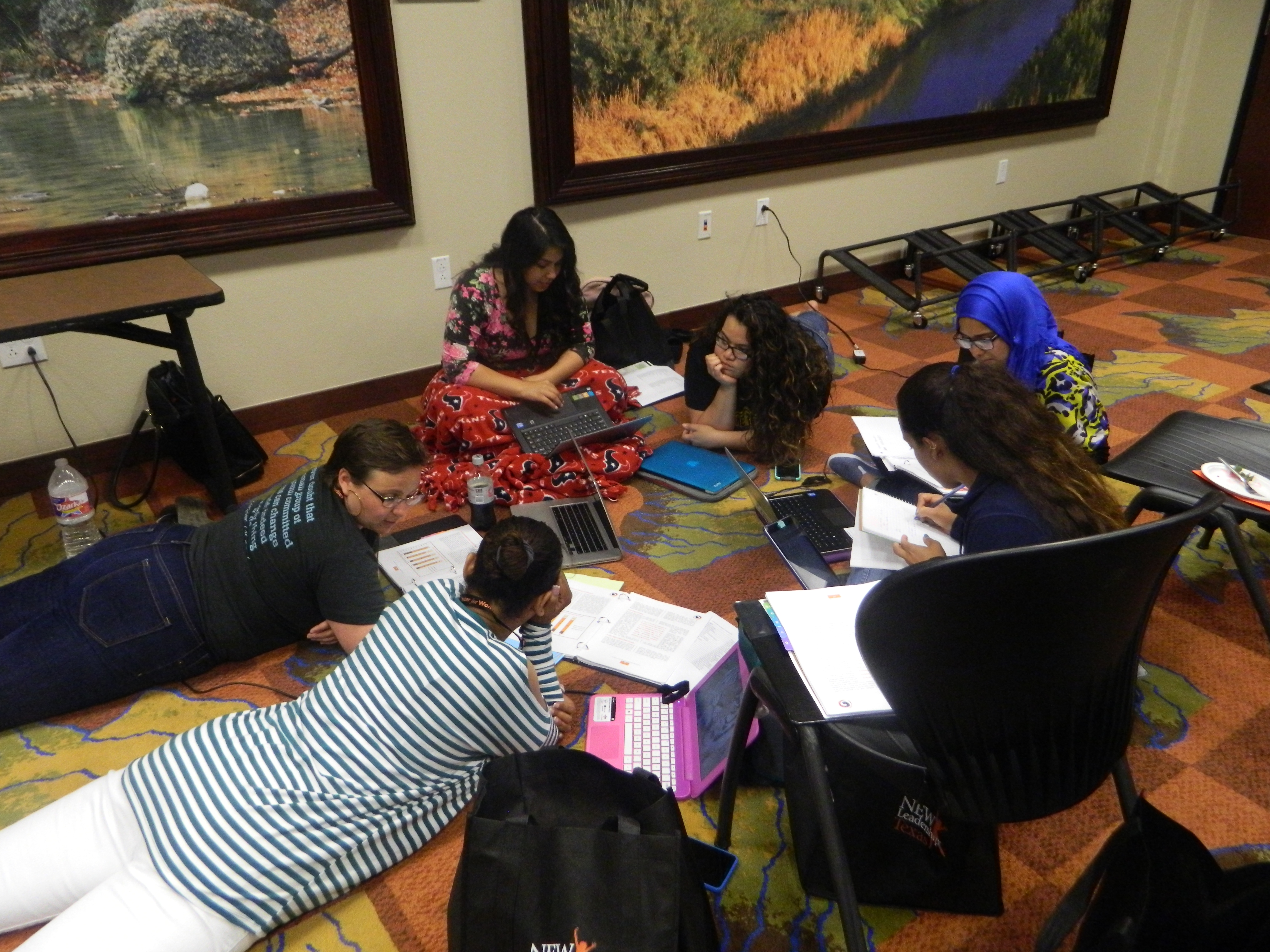
After a short break, Ms. Whitney Harp, introduced the Political Action Project that was assigned to us. For the next few days we will be studying House Bill 5 (HB5) and reenacting the committee hearing. This house bill changes graduation plans and introduces endorsements that will replace some of the previous required courses like algebra II. Everyone was assigned someone who played a significant role in respect to this bill. For example, some were arguing in favor of the bill, others against, and even some neutral. I was assigned Representative Alma Allen of District 131, who was in favor of HB5 with the exception that records be kept on the demographics of graduation plans selected by students. This amendment was added to ensure that HB5 was fair and did not serve as a hindrance or disadvantage for lower socioeconomic students. All were excited to see the future of this project. (editor’s note: the Governor signed this bill the day following this blog.)
Chicken wraps were served for lunch with a side of chips and fruit. We mingled and I conspired with others to help overcome those against HB5. After lunch there was also time reserved to work on our projects. I did some research on Honorable Alma Allen to get a feel of her character and moral integrity, both of which I plan to embody with grace and vigor. She is inspiring who has impacted policy in a positive way.
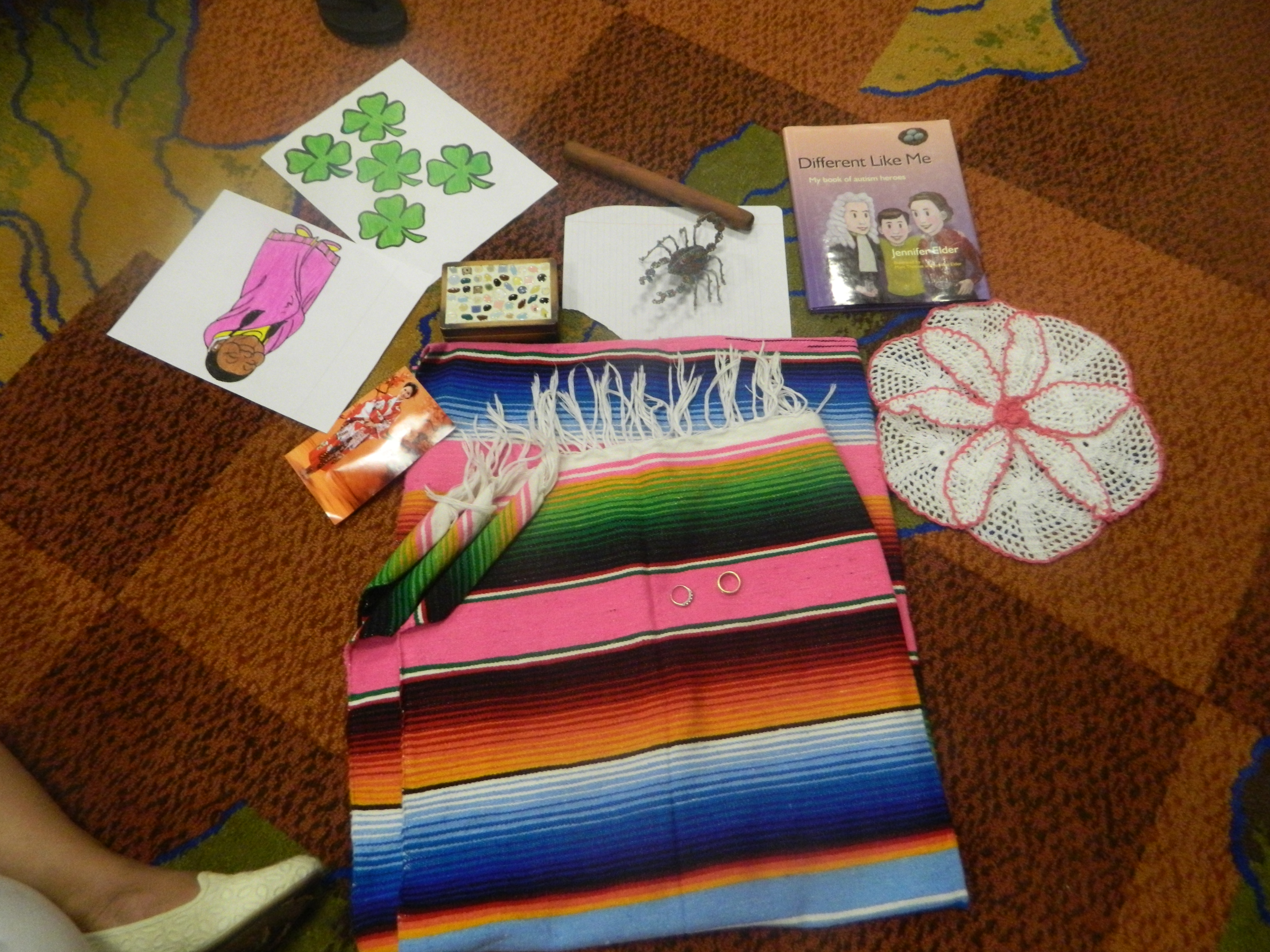
The afternoon was quite interesting and personal. The concept was to understand others and not be consumed by stereotypes. The theme was “The Danger of the Single Story.” We watched videos of women from Nigeria who have overcome the difficulties and are now represented in parliament. Their story was to defeat the stereotypes and overthrow corruption in Nigeria. This also segued into sharing cultural artifacts we were asked to bring.
We broke up into groups of eight and shared a little piece of our culture or background. This time was memorable and moving. I learned about victories, defeats, and most importantly, the growth that was developed through our experiences. I was inspired by Alyssa Davenport-Herbst. Alyssa struggles with a disability that has affected her speech. Despite all, she thrives in her academics and community involvement. She is a brilliant physicist who aspires to write science policy. She brought a book that tells the success story of many innovators and explained how this was where she draws inspiration to make a difference. Cultures are expansive.
We had dinner and after a brief discussion on Political Decision Making with Representative Mary E. Gonzales. She told us her story and the difficult situations that have affected her life. It was great insight on what to expect in and out of the political arena.
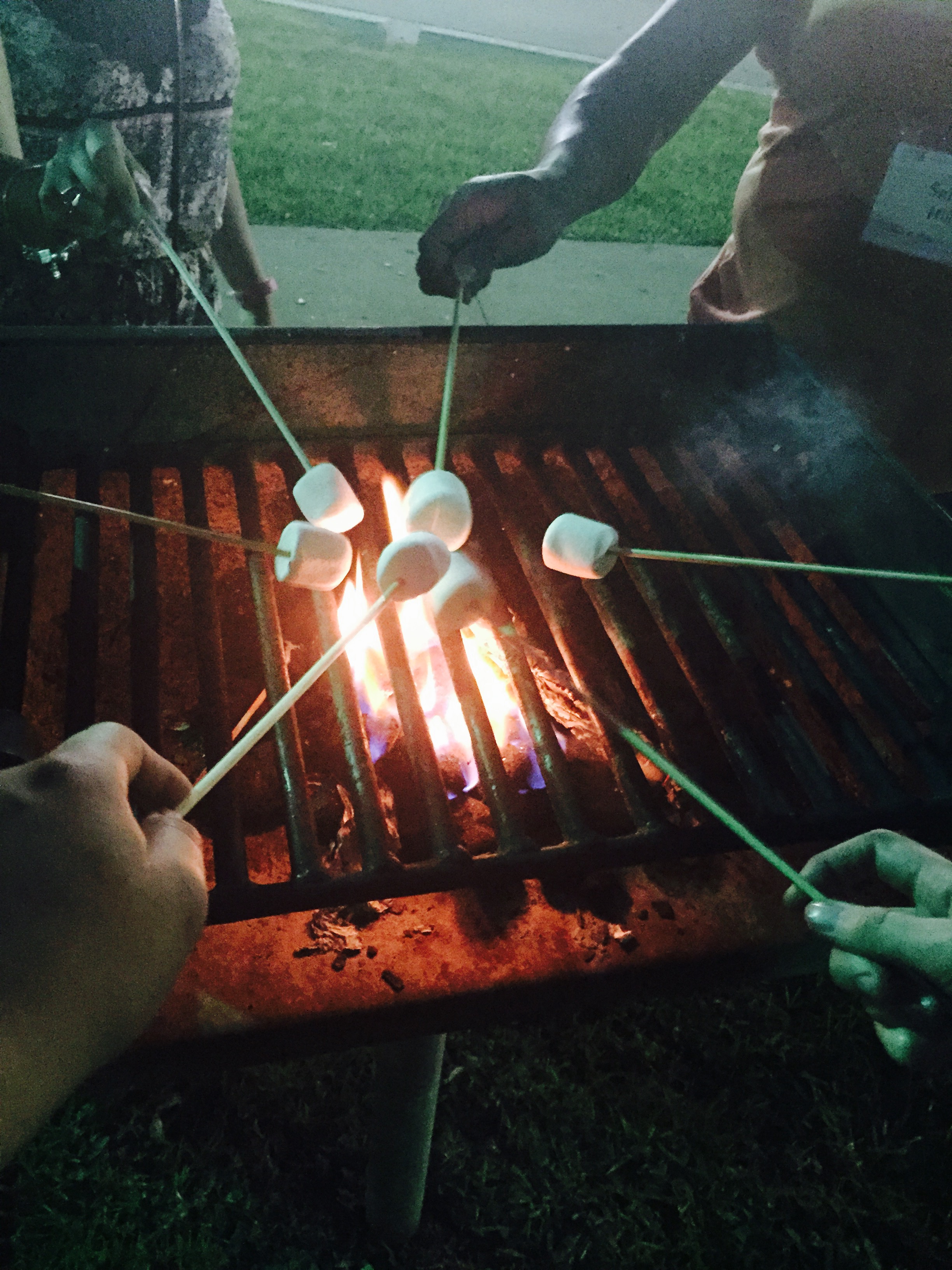
To end the night we gathered around the fire and made s’mores!
I thought it was pretty “sweet” to mingle with my new friends; people who began to unmask and be themselves. I am grateful for their diverse views and their representation across the political spectrum.
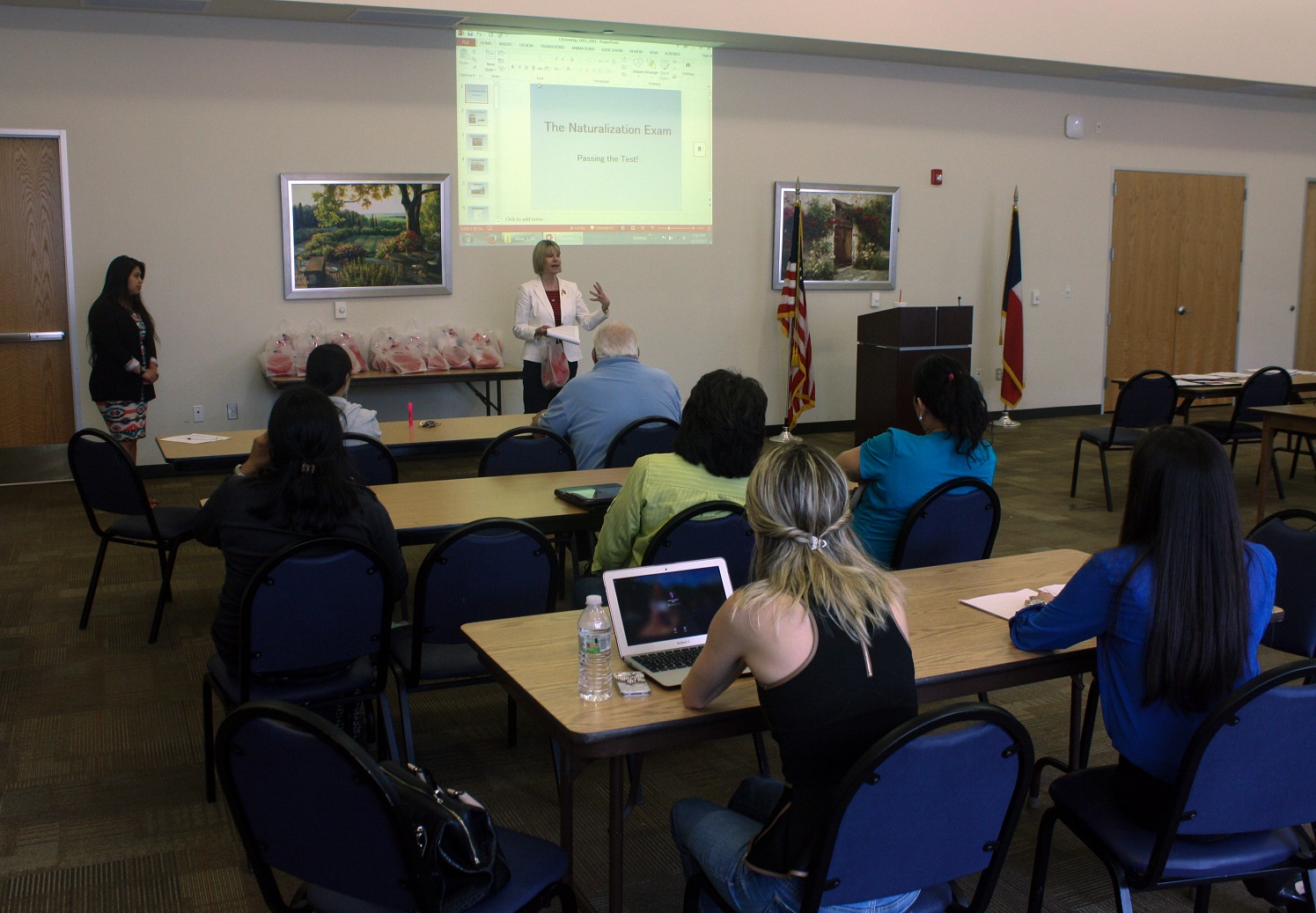
For the eighth consecutive year, the LEAP Center (and its forerunner, the Junior Fellows) partnered with the Huntsville Public Library to lead a spring Citizenship class to immigrants. The class is five weeks long, one night a week, and it covers the major material on the Naturalization Exam.
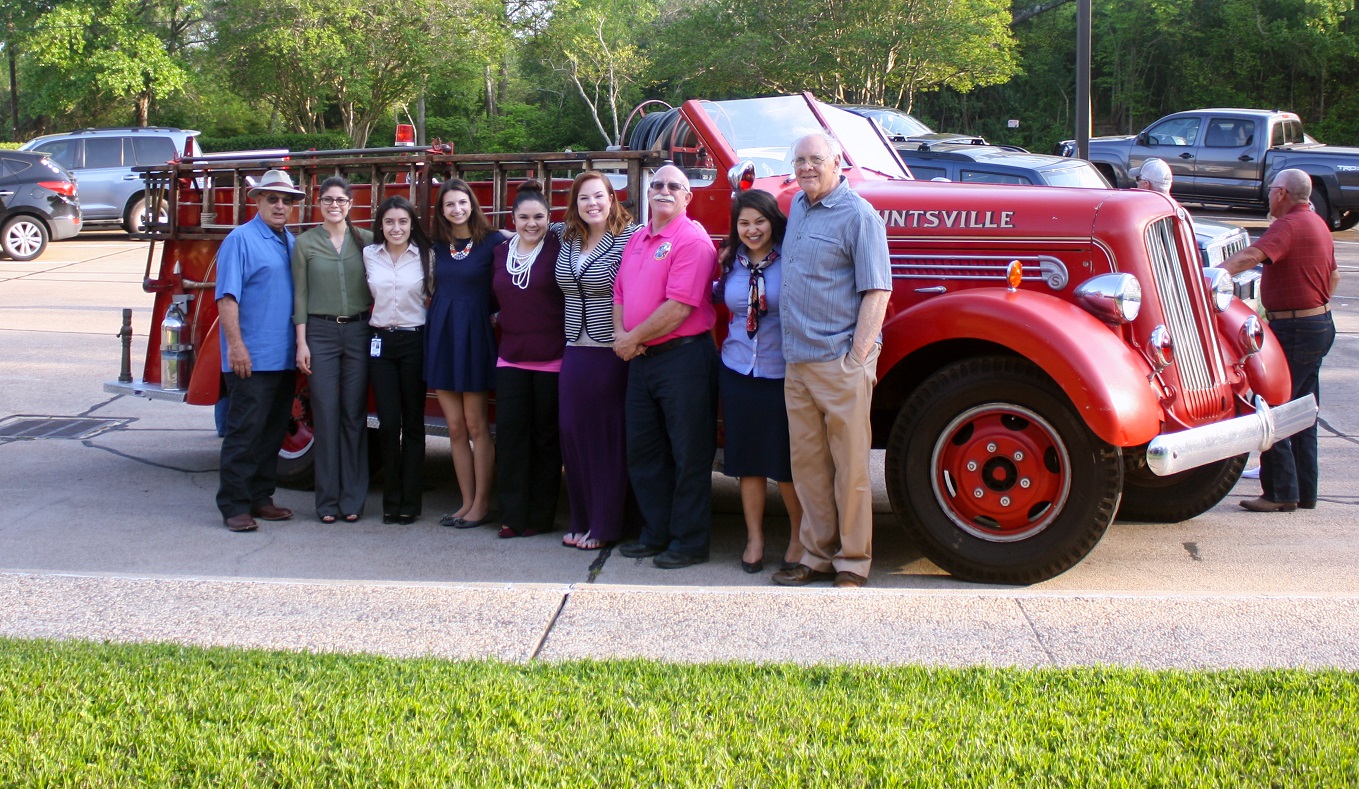
This year, we had more than 30 people sign up, but scheduling difficulties reduced the number of immigrants who actually attended. With a core of about 10-15 immigrants per night, the LEAP Center students and volunteers (thank you Terry Stivers, Roberta Plant, and Carol Hayes) worked with these immigrants to help them learn American history and government. We had a fun kick-off, with the Mayor and council members stopping by on the first night (on their way to the parade):
LEAP Center Students & Councilmembers
To become a citizen, an immigrant must meet certain legal requirements. They have to be in the country for a specific length of time (which varies by whether you are married to a US citizen), have generally followed the law, and not have any egregious moral failings.
The test itself includes an oral section, where immigrants read statements; a written section, where immigrants write down sentences read to them; an oral interview, in which immigrants are asked about their past and behaviors (“are you often drunk?“, “have you ever been a prostitute?”); and they must answer correctly at least six out of ten questions pertaining to American government and history.
These questions range from naming one of the two longest rivers in the US to knowing three cabinet posts to knowing the name of the national anthem.
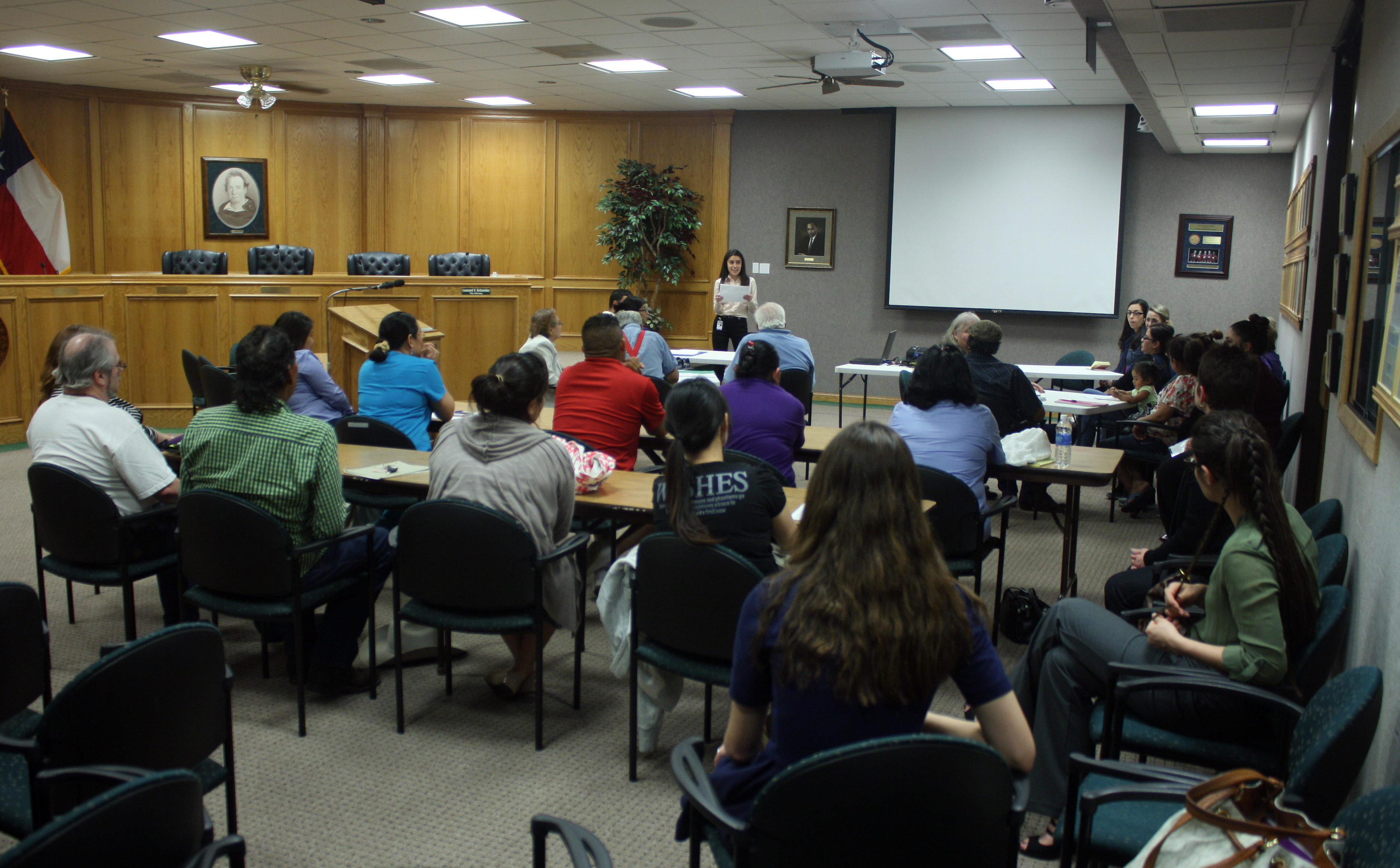
We covered these major topics over the course of the first four weeks. Karla Rosales, who took a leadership role in the program by virtue of her internship with the Huntsville Public Library, led off the proceedings with a bit of instructions…
Karla Rosales Presents to Immigrants
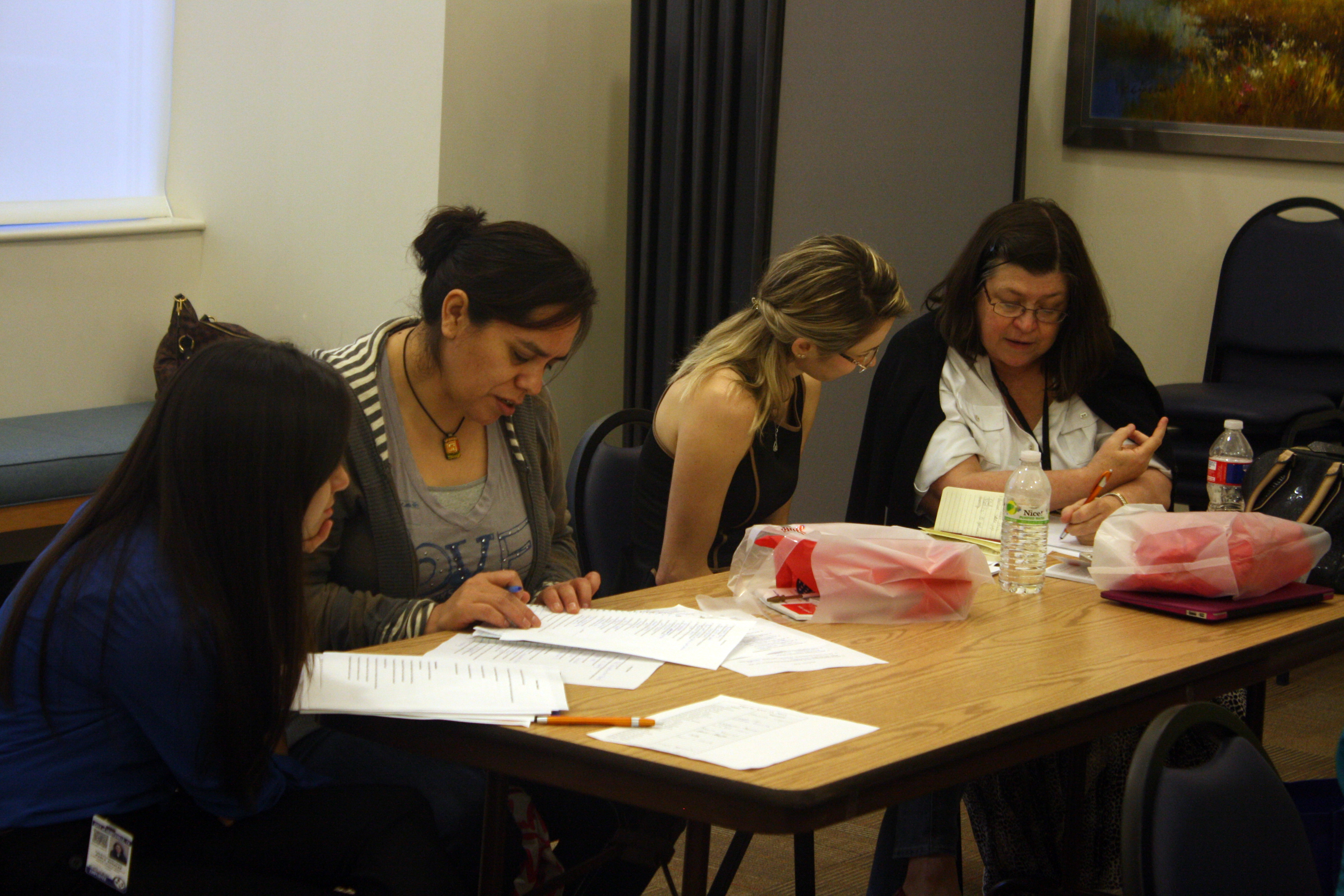
Although most of the presentations were led by Professor Yawn, the students worked with small groups of immigrants throughout the program.
It was also nice to receive community support. On week four, for example, the Daughters of the American Revolution attended and provided American-themed gifts to the immigrants–flags, pocket constitutions, pencils, and other fun things.
Patsyann Reed on Behalf of DAR
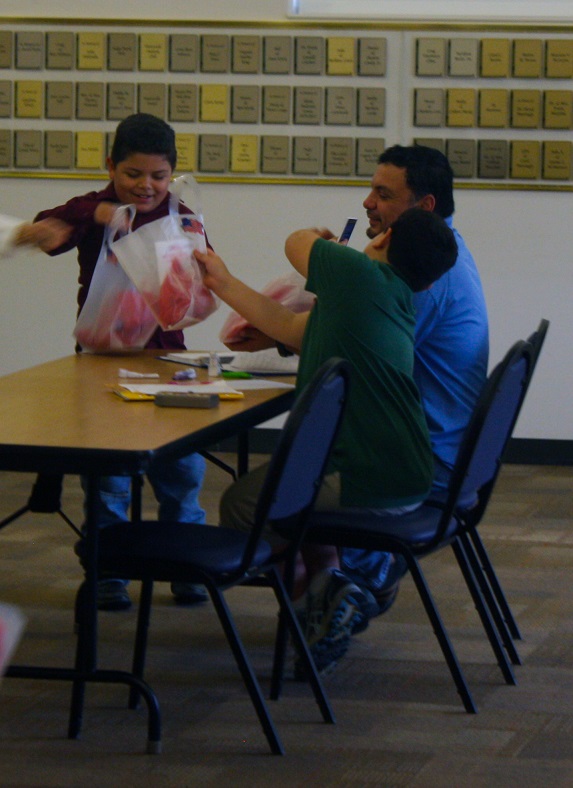
This was a big hit, especially among some of the immigrants’ children:
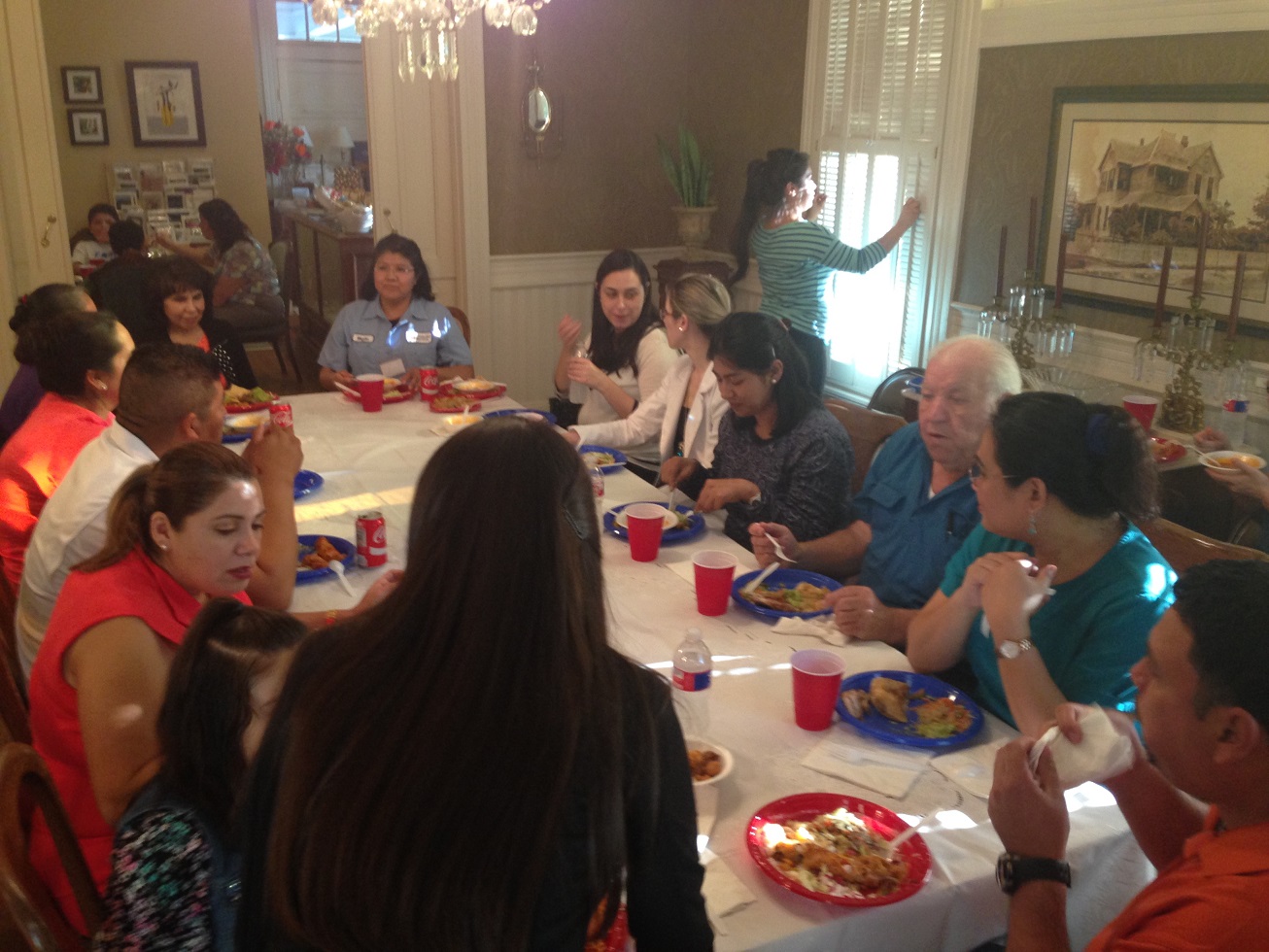
On the final week of the immigration class, the immigrants and volunteers relive the first Thanksgiving, with all participants bringing dishes from their native country and joining in a celebratory feast. The food is great!
Thanksgiving Dinner
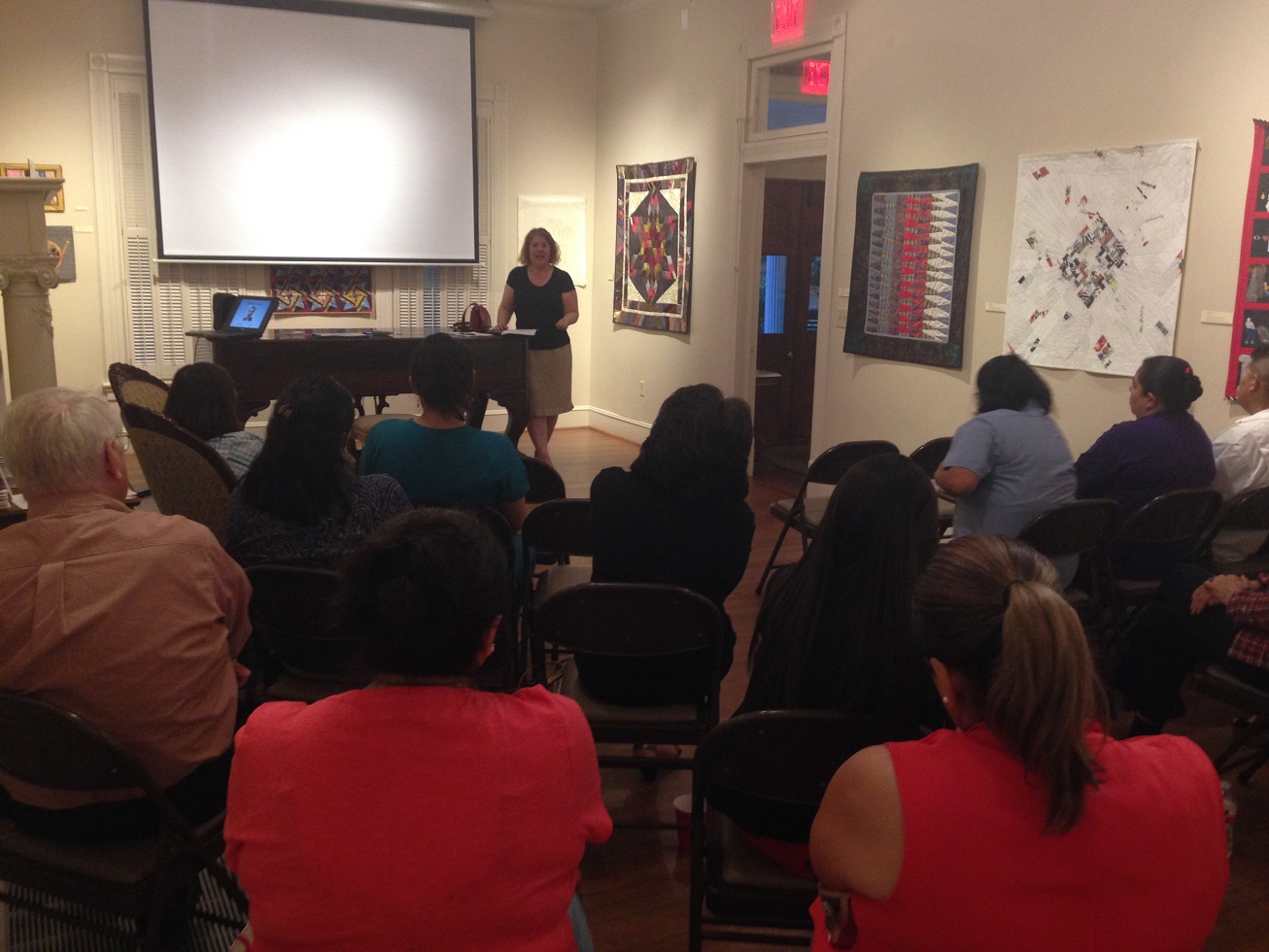
Another special feature of the final week is the presentation made by Audrey Biggar, a local immigration attorney. She graciously agrees to assist the immigrants and provide advice for navigating the process. (She is also President of the Walker County Bar Association, making her one of the more civic-minded of the local bar.) She also brings great Thai food to the dinner!
Audrey Biggar Presents
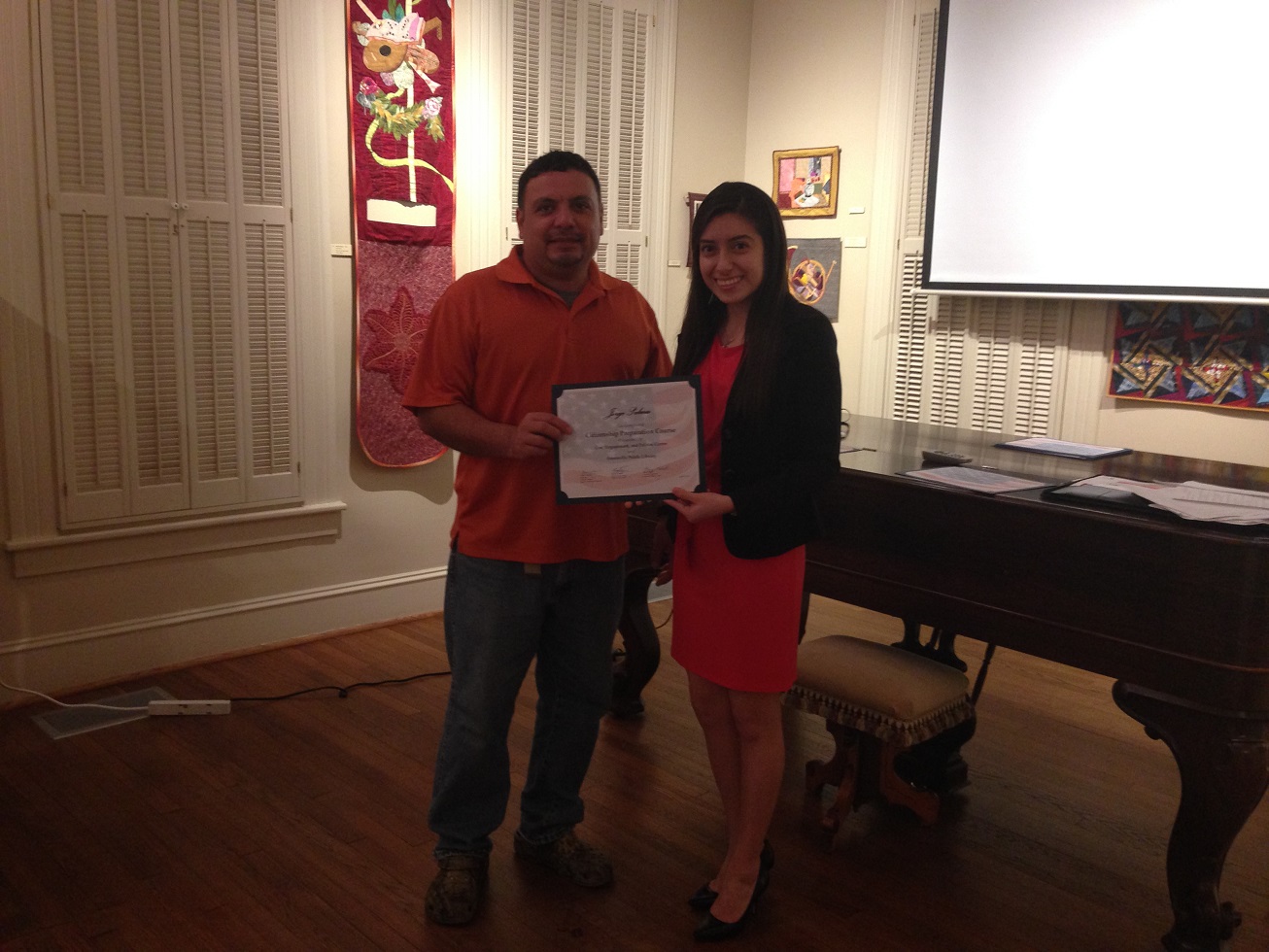
Finally, the immigrants receive a certificate of completion, a prelude, we hope, to citizenship.
Jorge and Karla
And with one final group photo, the class is over.
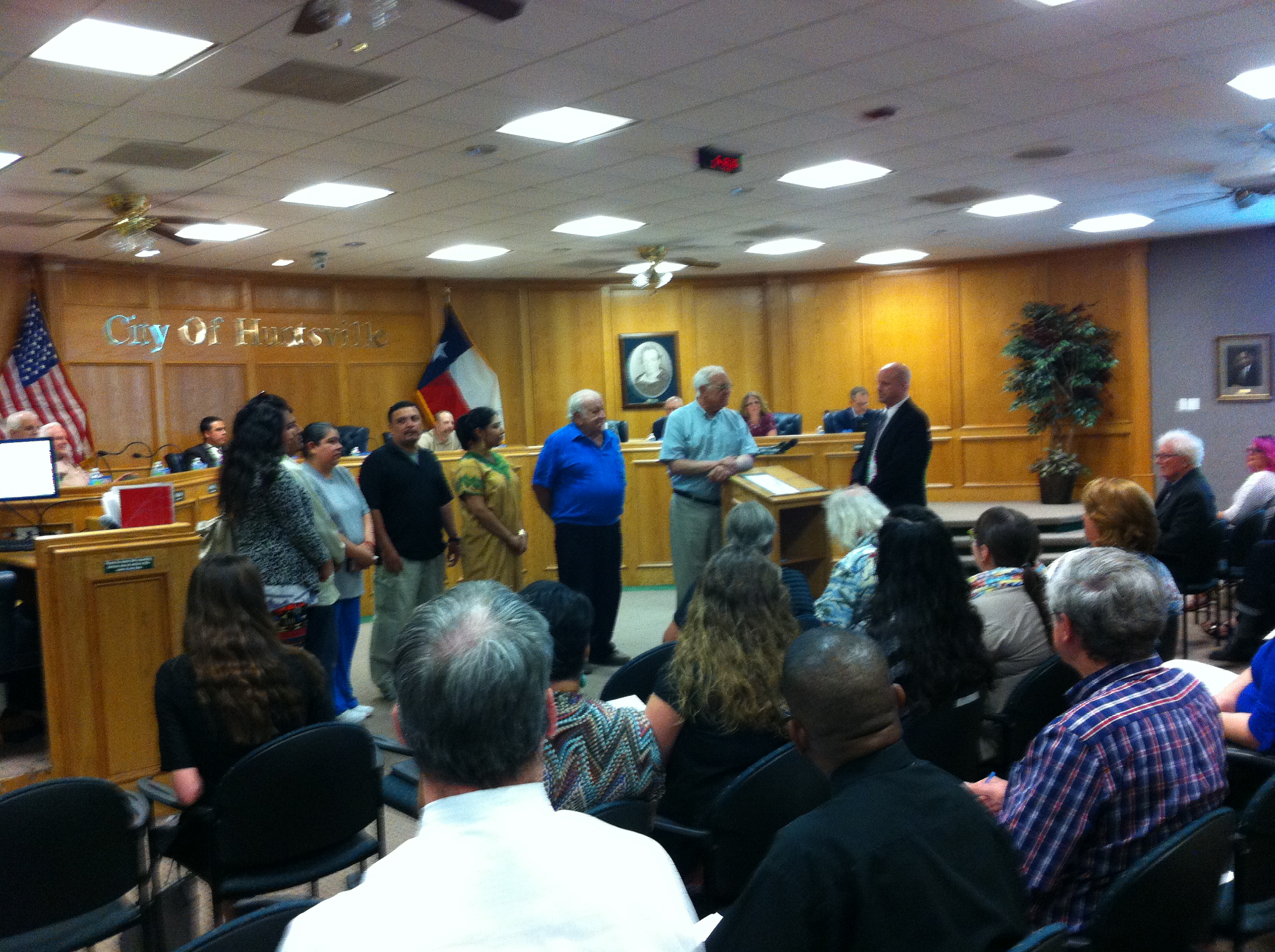
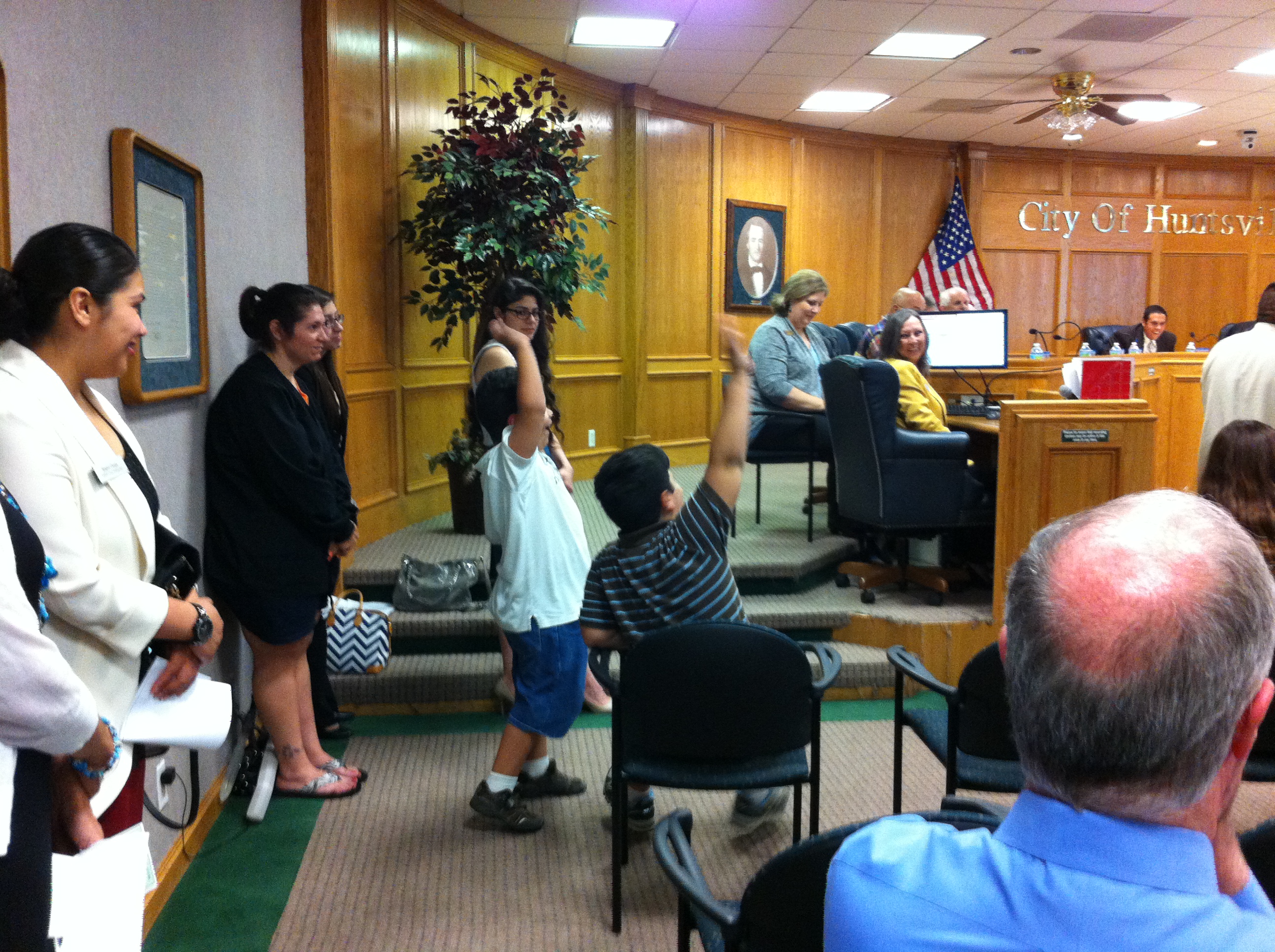
Fortunately, it wasn’t long before the students and immigrants got back together. The Huntsville City Council invited the immigrants to a City Council meeting to be recognized for their efforts.
For the immigrants and the students, it was their first-ever City Council meeting and, again, a big hit among the kids.
Over the past eight years, the LEAP Center has worked with about 150 immigrants from more than 20 countries. Approximately 40 have obtained their citizenship.
During the 82nd Texas legislative session, Senate Bill 1611, also known as the Michael Morton Act, passed with a unanimous vote in both the Texas House and Senate. The SB 1611 requires the state prosecution to offer defense attorneys any evidence that is relevant to their case. In 1987, Michael Morton was wrongly convicted of murdering his wife. It took 25 years, but Morton was exonerated in 2011 after DNA evidence proved his innocence. With the help of the Political Science Department, College of Humanities and Social Sciences, Department and the College of Criminal Justice, and the Student Legal & Mediation Services, The LEAP Center brought Michael Morton to SHSU to talk about his experience of wrongful conviction and his life imprisonment for nearly 25 years.
LEAP Center students were privileged to meet with Morton’s prior to his general speech.
It was a great chance to ask questions and get some insight into his nightmare. In this small group discussion, Morton stressed the importance of his faith and how everyone experiences difficult trials throughout their life. One of Morton’s main points conveyed to students that we are stronger than we think we are and that we will come out of the hard times. Looking back, we will realize we needed trial to shape who we are supposed become.
This slideshow requires JavaScript.
Morton’s humility and gratitude for (almost) everyone who has been a part of his journey is inspiring. Students were thankful for the opportunity to converse with Michael Morton on a variety of topics relevant to both Michael Morton’s experiences and students’ lives. Ending the student small group session, Morton signed copies of his book, Getting Life, for those in attendance.
More than 300 students and community members then attended Morton’s presentation, making this the largest event LEAP has hosted thus far this year.
Especially interesting to Huntsville residents, Morton spent more than 11 years at the Wynne Unit where he received his bachelor’s degree in psychology from Sam Houston. Indeed, Morton was taught by Jerry Bruce, whom he had a chance to visit with prior to his presentation.
This slideshow requires JavaScript.
Morton also got to meet Walter Bennett, Jr., whose father did more than anyone else in the past 35 years to ensure inmates had access to University education. Dr. Bennett also taught Morton in the 1990s.
Later, Morton transferred to the Ramsey Unit in Houston where he earned his master’s degree in English from the University of Houston.
Morton’s story of tragedy is unimaginable and heartbreaking. Morton was imprisoned for nearly 25 years before DNA testing provided by the Innocence Project proved his innocence. One of the most surprising parts of Morton’s story is his forgiveness towards the prosecution who withheld evidence that would have originally proved Morton’s innocence. Overall, Michael Morton’s story is incredible, heart breaking, unimaginable, and inspiring.
This slideshow requires JavaScript.
Following the presentation, Morton signed books. Approximately 65 people bought books, making this the largest book sale Barnes and Noble has had in four years.
This slideshow requires JavaScript.
After the lengthy book signing, the LEAP Center had a reception in the Holcombe Room, where lawyers and LEAP Center Advisory students, and others congregated and snacked…
…and discussed law…
…the world…
and, of course, took more photographs!
This slideshow requires JavaScript.
The LEAP Center is thankful to the College of Criminal Justice, College of Humanities and Social Sciences, the Political Science Department, the Student Legal & Mediation Services, and most importantly Michael Morton for sharing his story with the community. We are saddened that such a tragedy occurred, thankful for the opportunity to learn from Mr. Morton, and hopeful that because of Michael Morton’s hard work and SB 1611 the unthinkable will never happen to another in Texas.
The LEAP Center would also like to thank Paul Olle and Ashley Norwood for the great photographs they took!
To learn more about Michael Morton’s story, “An Unreal Dream: The Michael Morton Story” is available on Netflix and his book Getting Life is available through Barnes and Noble Bookstore.

 …coloring and art activities…
 …and a showing of “The Book of Life” for children.