
By Mayra Sofia Soto
The World Affairs Council and the Baker Institute for Public Policy welcomed William Burns, the 8th Director of the Central Intelligence Agency, who provided an insightful and engaging discussion on the complexities of global affairs, drawing on his experiences in diplomacy, intelligence and leadership during some of the most pivotal moments in recent history.

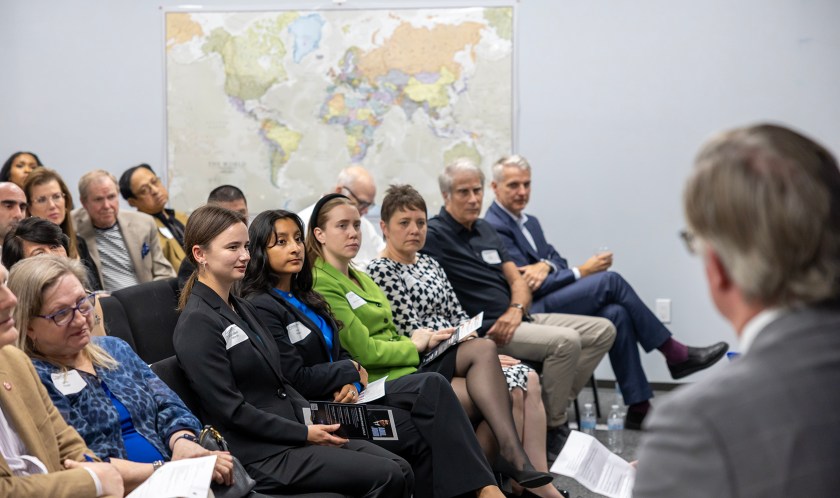
During the networking session, we had the pleasure of reconnecting with Wendall Braniff, whose continued generosity and support at various WAC events have been invaluable. She introduced us to Vitalii Tarasiuk, the Consul General of Ukraine in Houston, who shared about his diplomatic career and offered advice for those pursuing careers in international affairs.


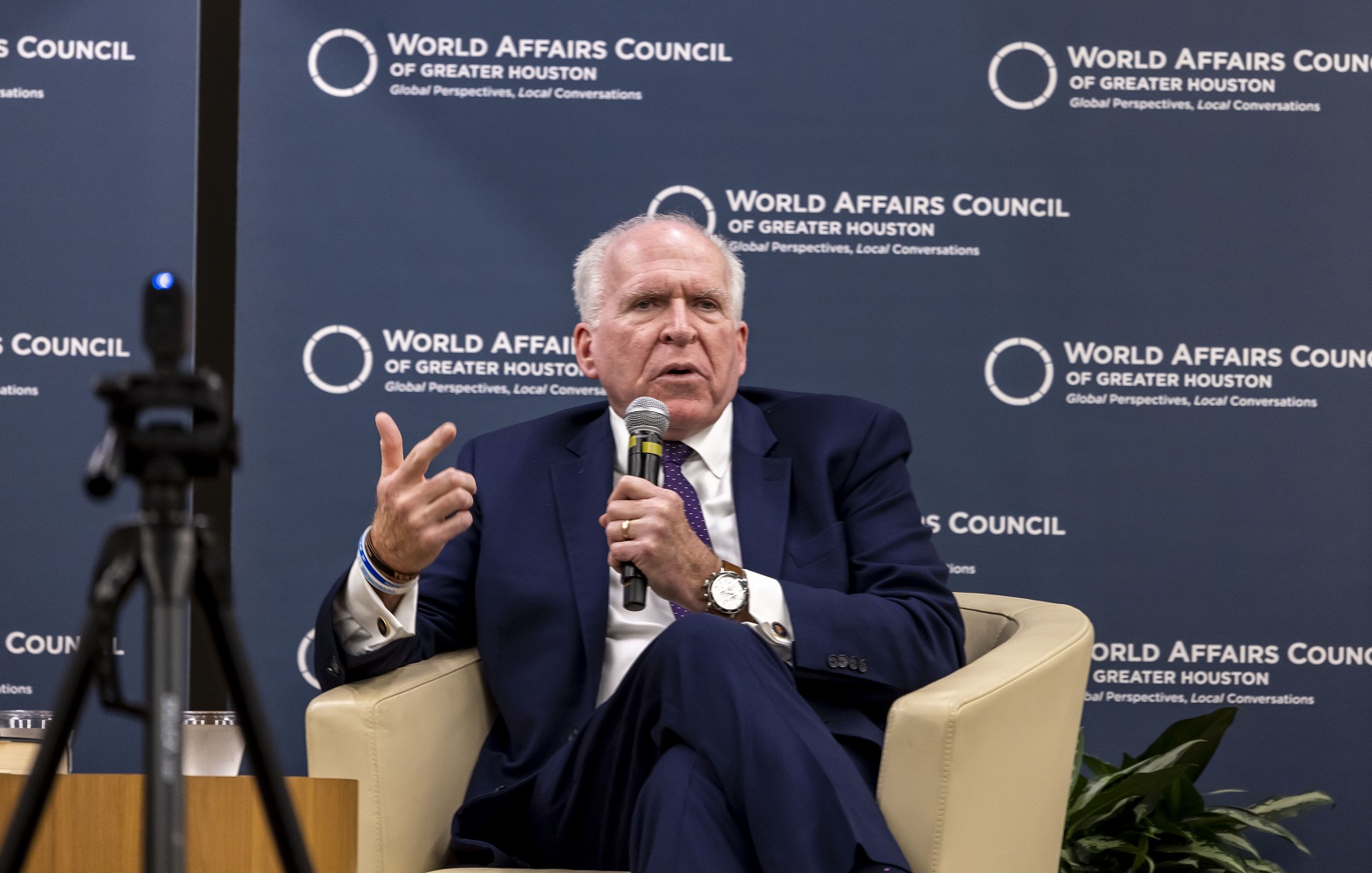
After an introduction by WAC CEO Maryanne Maldonado and WAC Director of Advancement Sandija Bayot, Ambassador David Satterfield took the microphone to moderate the event.
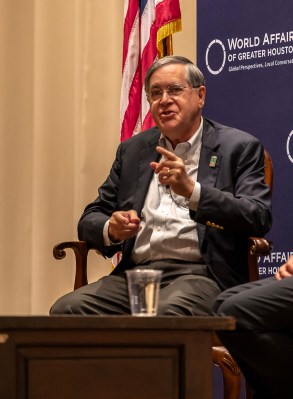
Director William Burns is one of the most distinguished American diplomats of the modern era. Over a career spanning more than three decades, he served under six U.S. presidents from both political parties, earning a reputation for integrity, strategic vision and effectiveness. He was the first career diplomat to lead the CIA as Director and previously served as Deputy Secretary of State, Ambassador to Russia and Jordan and in numerous senior roles at the State Department.

Throughout the discussion, Ambassador Burns reflected on the United States evolving role in a complex global landscape. Burns reflected on the challenge posed by Russia’s aggression and the damage Vladimir Putin has inflicted not only on Ukraine but on Russian society itself. He suggested that while Putin’s regime has entrenched authoritarianism and nationalism, its longevity is uncertain, as corruption, stagnation and battlefield losses erode both public confidence and elite unity. Burns cautioned against assuming rapid change after Putin, predicting a messy transition but holding hope that over time Russia could move beyond autocracy. Lastly, he noted that how the U.S. and its allies sustain support for Ukraine will shape global perception of American leadership for decades to come.


He described China under Xi Jinping as America’s most formidable long-term competitor, emphasizing the need for a disciplined strategy that balances confrontation, cooperation and competition while avoiding complacency in technologies like artificial intelligence and quantum computing. Turning to the Middle East, he recounted his efforts to negotiate ceasefires and hostages releases in Gaza, stressing that sustainable peace requires both humanitarian compassion and political will. Burns also discussed the fragility of global alliances, noting that America’s greatest comparative advantage lies in the trust of its partners, something that must be continually earned through reliability and measured leadership.
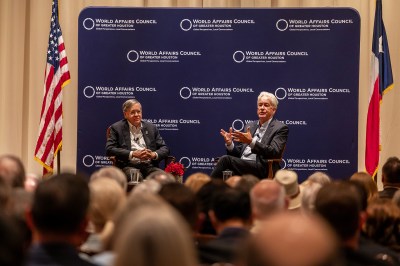
On domestic matters, he voiced concern over efforts to politicize public institutions, warning that retribution disguised as reform undermines the integrity of career civil servants and weakens U.S decision making.

Burns closed with advice for young professionals, encouraging them to pursue public service with integrity and courage. He concluded with a touch of humor and timeless wisdom from former Secretary of State James Baker, under whom he served: Baker’s “7 Ps – Proper Preparation plus Perspiration Prevents Piss Poor Performance” Emphasizing the importance of learning your craft, being prepared, and being ready for when the moment comes.


















 Center for Law, Engagement, and Politics