Skip to content

Center for Law, Engagement, and Politics

Leap At SHSU!

  • About LEAP
  • LEAP Ambassadors
Center for Law, Engagement, and Politics

Tag: Council of State Governments

Rhode Island’s Silver Lady, Independent Man, and Us

Rhode Island is the smallest state in the Union, but that hasn’t stopped us from having a big time. Whether learning about the health care system, apprenticeships, utility provision, or the criminal justice system, we’ve found the conference rewarding. Moreover, we’ve benefitted from some amazing networking opportunities and some off-site excursions–which included parasailing! But our last day of the official conference promised more learning and interest.

A Silver Lining to our Last Session

by Michelle Moya

As our final day in Providence drew to a close, Olivia and I attended a farewell session that offered a refreshing departure from the usual conference format. Instead of policy panels and legislative discussions, we found ourselves in a fireside chat with three-time Olympian Elizabeth Beisel, hosted by Margie O’Brien, with breakfast served alongside inspiration.

The session started off with something special: Beisel passed around her actual Olympic medals—silver from London 2012 and bronze from Beijing 2008—for everyone to see and hold. 

The weight of these medals surprised me, both literally and figuratively, but I snapped a photo holding both… 

Beisel’s story begins in Rhode Island, the “Ocean State.” At just 15, while still a high school sophomore, she made the U.S. Olympic team for Beijing 2008. What makes her journey particularly remarkable is her decision to stay and train in Rhode Island rather than relocating to traditional swimming powerhouses like Florida or California.

This choice to remain rooted in her home state would become a recurring theme throughout her career—the value of staying true to your origins and finding excellence in unexpected places.

Perhaps the most compelling aspect of our conversation centered around Beisel’s 2012 London Olympics silver medal, which she’s transformed from a simple athletic achievement into a life philosophy. Her book, titled “Silver Lining,” explores the emotions of accomplishing something extraordinary that still falls short of your ultimate dream.

After retiring at 24, Beisel embraced opportunities she’d spent years declining during her competitive career. This included an appearance on Survivor, where she lived outdoors for 30 days with no food, shelter, or supplies beyond basic tools and access to water. While the experience tested her in entirely new ways, it proved rewarding in an unexpected manner—she met her future husband on the show.

Her post-competition journey illustrates an important lesson about saying “yes” to new experiences and remaining open to life’s unexpected directions, themes that emerged repeatedly throughout our conference discussions about career transitions and public service.
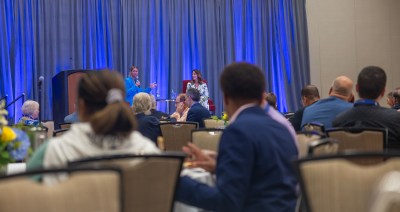
The conversation took a more serious turn as Beisel shared her experience caring for her father during his battle with pancreatic cancer. The diagnostic process stretched nearly a year, and once treatment began, she found herself becoming his advocate within a complex healthcare system—a challenge that has also been a recurring theme of our conference sessions.

The most moving portion of our session focused on Beisel’s 10.5-mile swim from Block Island to mainland Rhode Island, which raised $700,000 for pancreatic cancer research. The swim was canceled three times due to weather conditions before she finally completed it in 5 hours and 18 minutes—tragically, after her father had already passed away.

During the swim, facing cold conditions in just a regular swimsuit (marathon swimming regulations prohibit wetsuits), she found herself struggling with the elements. “Dad, give me the sun,” she whispered to her late father. Within 30 seconds, the sun emerged and remained with her throughout the remainder of the swim.

She also discovered a painted rock at her favorite seawall spot that read “Never give up” right after the third cancellation, when she was considering abandoning the project—a sign she interpreted as encouragement from her father to attempt the swim one final time.

Now working in sports journalism, Beisel covers swimming for various media outlets while preparing for 2028 LA Olympics coverage. Her transition from athlete to journalist demonstrates another form of public service—using expertise and platform to educate and inform others.

As we prepared to leave Providence, Beisel’s message reminded us that excellence takes many forms, that setbacks often lead to unexpected opportunities, and that meaningful service can emerge from personal challenges. Her story provided a fitting conclusion to our conference experience—one that emphasized resilience, adaptability, and hard work. 

Rhode Island Capitol

by Michelle Moya

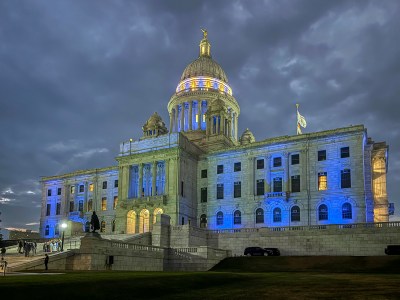
On our last morning in Providence, we knew there was only one fitting way to wrap up our time in the city: a visit to the Rhode Island State House. The structure combines both majesty and beauty.

Our guide, Tony–who proved excellent–began in the rotunda beneath what he called the “inner dome”—the fourth-largest self-supporting marble dome in the world.

Unlike the U.S. Capitol’s iron framework, Rhode Island’s dome is pure Georgian Cherokee marble, standing under its own weight. 

As you look up, Tony explained that what seems like one mural is actually four vignettes depicting the state’s founding story: Roger Williams meeting with Narragansett chiefs Canonicus and Miantonom. Williams, a radical preacher who argued for separation of church and state—an unthinkable idea in 1635 Massachusetts—would go on to define Rhode Island’s independent spirit.

Banished from Massachusetts that same year, Williams trekked south, fell ill, and was nursed back to health by Massasoit before settling at a spring given by the Narragansetts. From there grew Providence. For a century, the “General Assembly” rotated between four towns, and for nearly 200 years the state juggled five separate capitols. 

Finally, in 1890, Rhode Island commissioned McKim, Mead & White—the nation’s leading architectural firm—to design a permanent home. Completed in 1904, it was one of the first capitols to integrate electricity, a fact architect Charles McKim made clear by leaving lightbulbs exposed throughout.

Encircling the dome is a phrase from Tacitus: “Happy are those times when you can think what you want and say what you think.” Four allegorical figures—Justice, Literature, Commerce, and Education—peer down from above, all allegedly modeled after the artist’s wife. 

Crowning the dome, 220 feet overhead, stands the Independent Man. During a recent cleaning the statue nearly toppled, prompting an emergency rescue and full regilding. While it was displayed inside for restoration, many visitors had the chance to take photos with him upon waiting for restoration!  

From there we moved into the House chamber, the building’s largest room. This nearly 50-foot cube houses 75 representatives serving the state’s one million residents. What impressed me most was its accessibility: when not in session, visitors may walk directly onto the chamber floor and speak with legislators, something we can definitely not expect in Texas! 

The Senate chamber, by contrast, felt more formal, framed by Carrara marble columns. Thirteen golden discs circle the room to represent the colonies, with Rhode Island proudly centered as the decisive 13th state to ratify the Constitution. Tony pointed out the chamber’s perfect symmetry, aligned along an axis from the Senate President’s chair through the House Speaker’s podium.

Our next stop was the State Library, with a working archive with 40,000 volumes and another 170,000 in storage. Mahogany walls surround iron staircases cleverly painted to resemble wood, and the ceiling itself mimics the look of book bindings. Renaissance printer logos decorate the cornice. In a bit of rivalry, McKim included Harvard’s insignia, despite Brown University being the nearest. Governor T.F. Green, a Brown alumnus, later had it replaced with William Caxton’s printer’s mark.

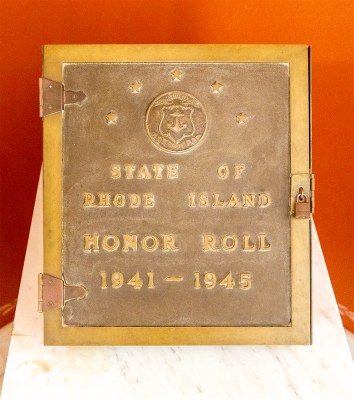
Nearby we also found the Book of Honor, listing 1,700 Rhode Islanders who died in World War II. Locked for preservation, it can be opened for families searching for loved ones’ names.
We finished off in the State Room which holds some of the building’s greatest treasures, including an original 1803 Gilbert Stuart portrait of George Washington as President, with a rainbow of hope in the background.

The room also honors Rhode Island heroes such as Oliver Hazard Perry, John Barry, and Nathanael Greene, the Quaker-turned-general who rose to become Washington’s second-in-command.

Our final stop was the museum, which preserves the state’s most important artifacts. At its center is the 1663 Royal Charter, written on animal hide and displayed in a quarter-million-dollar protective case. Granted by King Charles II, it offered Rhode Island unprecedented autonomy and religious freedom. The museum also displays the Portsmouth and Providence compacts of the 1630s, Native American land deeds signed with bow-and-arrow drawings, and even Roger Williams’ own compass and sundial.

With Rhode Island now marking my fifth capitol and Olivia’s thirteenth, this tour proved the perfect send-off to our time in Providence before hitting the road for our next state!

Concluding Thoughts

It was our last day in Rhode Island, a state we had come to admire for its beauty, history, and hospitality. Although a small state–King Ranch in Texas is larger–there was much for us to see, and we didn’t, of course, see all of it. So, it was with a tinge of sadness that we bought coffee at the charming “Rise ‘N Shine.”

Although we had to say goodbye to Rhode Island, we were heading to other green pastures, and that silver lining brought some smiles, as we thought of our impending travels to “The Constitution State,” Connecticut.

Unknown's avatarAuthor mikeyawnPosted on August 30, 2025August 30, 2025Format AsideCategories Architecture, Civic Engagement, History, Law, Politics, TravelTags Center for Law Engagement And Politics, Council of State Governments, Council of State Governments Conference East, Elizabeth Beisel, Rhode Island State House, Sam Houston State UniversityLeave a comment on Rhode Island’s Silver Lady, Independent Man, and Us

Dispatches from the East Coast

When you wake up in Boston, and you need to be at a conference in Providence, Rhode Island, there is some driving to do. Fortunately, there are some things to see in between the two cities, and LEAP specializes in exploiting targets of opportunity.

To tackle an early morning with history, some human energy is required. This came in the form of a rare stop at a chain: Dunkin’ Donuts. But not just any Dunkin’ Donuts–the first-ever Dunkin’, which was founded in Quincy, MA, in 1950. Originally, it was “Open Kettle,” but the owner, William Rosenberg, noticed that his customers often dunked the donuts (5 cents) in the coffee (10 cents), and a new brand was born. It was this history–the 75th anniversary of which is being celebrated this year–that prompted LEAP to break its no-chain guideline.

Quincy, MA is known as “The Birthplace of Presidents.” Indeed, the town meets the plural requirement because both John Adams and his son, John Quincy Adams, were born there. If you are feeling generous, you could also allow Quincy to claim John Hancock, who is most famous for signing the Declaration of Independence, but who also served as President of the Continental Congress.

But the city’s most defensible claim is being the home of the two Adamses, and their both homes are side-by-side in a residential area. John Adams’ birth home dates from 1735, although some of the lumber used to make the house dates back to the 1670s, apparently recycled from another structure. John Quincy Adams was born next door in a home that dates back to 1717. John Quincy, however, did not arrive there until 1767, when he was born on July 11. The family would live in this house until 1783.

Interestingly, the property consists of 11 structures in all, one of which was built on order from John Quincy Adams’ will, which funded the construction of a stone library. This library, completed in 1870 and made of stone to prevent fire, holds Adams’ 14,000 books (in twelve languages).

Feeling suitably dispirited about our own reading habits, we moseyed south to what Trip Advisor raters ranked as the “most disappointing attraction in the United States”: Plymouth Rock. Trip Advisor clickers aren’t known for their taste, but they have a point. The rock is a small boulder that sits on the shore of Plymouth Bay. It is caged off.
It’s a disappointing rock, but in fairness, it has been treated poorly over the years, and it probably feels a bit vengeful. Across the centuries, it was painted with the numerals “1620”. When that proved unsuitable, someone decided to chip the numerals 1620 into the rock itself. People have stolen fragments from it, reducing it in size. At another point, town leaders decided to move the rock, and in doing so they broke it. Part of it was buried, which is probably the best thing for it in terms of safety. The rock is now approximately a third of the size it was originally, or so it is believed, but who knows?

Learning from Legislators

For our first day at the CSG East Conference, we split up so that we could learn directly on those topics most relevant to us, but also learn from each other in after-the-fact debriefings.

One of the key topics we explored was education, and the importance of early childhood education in children’s later development. Panelists Caroline O’Neal (CEO, Reading Assist), CT Representative Kate Farrar, Quebec Assemblywoman Marie-Belle Gendron, and RI Senator Hanna Gallo shared their experiences fighting for education for all pre-k children.

There was not a lot of ideological diversity on the panel, and as might be expected, there was a lot of agreement. All panelists agreed that the early years, when brain development is occurring most rapidly, are the most important. Living in a healthy, vocabulary-rich environment helps children reach their potential.

What was less clear was how to achieve healthy, vocabulary-rich environments for all children. Some states rely on home visits, where social workers (often health care professionals) visit the homes and provide resources to the parents, if requested. The panel was generally in agreement that Pre-K professionals should be paid the same amount and given the same respect as K-12 teachers, although little evidence was discussed to indicate that this would increase outcomes.

Perhaps most intriguingly, Representative Farrar mentioned the “Sparkler” app which parents can download and learn about developmental milestones from the ages of two months to five years. Not only does the app offer activities that can help families achieve those milestones, it also provides informational resources to parents when a child is underachieving.

Such an app is cheaper than most options, although it like many government programs, works best when families are motivated and educated. While the entire set of programs discussed are expensive, the panelists continued their unanimity in agreeing that the “cost of doing nothing,” which includes greater costs of government services and prisons, is prohibitive. And this made for a nice segue to our next session.

Criminal Justice Challenges for Youth

by Michelle Moya

One of LEAP’s core missions is cultivating well-informed professionals who can advance in their roles while gaining practical knowledge directly applicable to their work. Attending the Council of State Governments Eastern Regional Conference exemplified this mission, providing me with valuable insights that will strengthen my work for State Representative Trey Wharton and knowledge I look forward to bringing back to Texas.

On the first day of the conference, our second session was the roundtable on Emerging Criminal and Youth Justice Challenges in the Eastern Region. The discussion featured legislators from Maine, New Hampshire, Maryland, Delaware, Massachusetts, Vermont, and Rhode Island–including Representative Mary Ann Shallcross Smith, whom we had met in an earlier session…

…as well as policy analysts from New Jersey and Texas and advocates from organizations such as Casey Family Programs.

The roundtable discussion was guided by three central questions. The first asked legislators to share their most pressing challenges. New Hampshire identified the fentanyl epidemic as its greatest concern, fueling homelessness and repeated system involvement without sustainable solutions. Maryland reported rising juvenile crime rates and overcrowded facilities, disproportionately affecting minority communities. Maine emphasized inadequate behavioral health services that leave youth in correctional facilities when what they truly need is treatment. Rhode Island lawmakers described this pattern as the “criminalization door,” where children with mental health needs must go through law enforcement before receiving help, creating trauma and leaving permanent records for youth who need care, not punishment.

The second question focused on effective approaches that have been implemented in their designated states. Maryland automatically assigns public defenders to juveniles upon arrest and has a comprehensive expungement system. Rhode Island cleared more than 40,000 records through automated expungement–both efficiently and under budget. While New Hampshire strengthened constitutional privacy protections by limiting surveillance data retention to 48 hours. Some states have also adopted juvenile hearing boards as diversion alternatives and replaced school resource officers with social workers. A shared belief was shared among many: legislation alone is not enough. Effective advocacy requires direct community engagement through measures like police ride-along and town halls. One interesting example was provided, where three police officers dispatched to address a seven-year-old who hit a teacher, an incident that could be resolved only by calling the child’s grandmother. It underscored how normal childhood behavior is increasingly treated as criminal.

Another significant concern was how media coverage and public perception often overshadow data in shaping policy. Legislators noted that sensational, negative stories drive public opinion, creating fear-based narratives that are difficult to counter, even when crime rates are declining. This makes it challenging to pass reforms supported by evidence but misaligned with public perception.

As someone working for a state legislator, I found the interstate exchange of ideas particularly valuable.

Learning how other states confront shared challenges not only provided insights that could inform Texas policy development but also broadened my perspective on issues in our state. 

Housing Development Through State-Municipal Cooperation

by Olivia Discon

The housing panel at the Eastern Regional Conference brought together leaders in community development from Massachusetts, New Jersey, and Connecticut to talk about how states can work with cities and towns to expand affordable housing. Noah Kazis from the University of Michigan set the stage, and then Chris Kluchman, Colleen Velez, and David Kooris walked through what their states are doing.

In Massachusetts, zoning reform has been a focus since the late 1960s. At that time, only about 7 percent of the housing stock was affordable. Today it is closer to 26 percent, with much of it located in Boston suburbs. One of the biggest tools is Chapter 40B, which allows developers to bypass some local restrictions if they include affordable units. If a town has not met the 10 percent threshold for affordability, the state can override local opposition. While effective, these kinds of requirements can also create problems. Market changes can make projects unaffordable, and strict zoning rules sometimes backfire. At the same time, the state has continued to push forward with new programs. The Healey-Driscoll administration, for example, has committed $20 million to support the creation of 4,000 new units, and more than 140 communities have now adopted multifamily zoning after initially resisting it as an unfunded mandate.

New Jersey has a long legal history in this area, dating back to its 1985 Fair Housing Act. That law created the Council on Affordable Housing, which enforces each municipality’s “fair share” of affordable units based on both local and regional needs.

Municipalities must adopt 10-year fair share plans, and the state also supports nonprofit developers through training modules on zoning, placemaking, and housing models. In addition, the Department of Community Affairs provides pre-development funding to help those organizations get projects off the ground.

Connecticut’s challenge is different. With no county governments, coordination across its 169 municipalities is difficult. The Connecticut Municipal Development Authority was created in 2019 to bridge gaps, especially around funding for housing and infrastructure. It can support a wide range of projects, from wastewater and transportation to downtown redevelopment. David Kooris, who leads the authority, described it as a carrots system, but noted that sometimes the carrot can also be used as a stick (or as he described, a “frozen carrot”). He also pushed back on the common complaint that state action takes away local control, calling it a myth. In his view, stronger partnerships actually expand what local governments are able to accomplish.

Across these states, the theme was clear. Subsidized housing alone will not solve the problem, and there is no single fix. Instead, states are using a portfolio of tools: zoning reforms, infrastructure funding, training, and impact fees to make sure developers help cover the cost of new growth. Rhode Island was noted as a positive example for requiring third-party reviews, which reduces the chance of corruption, but also as a cautionary case since reluctance to expand wastewater infrastructure has slowed housing development.

Energy: Utility Bills and Grid Investment

by Olivia Discon

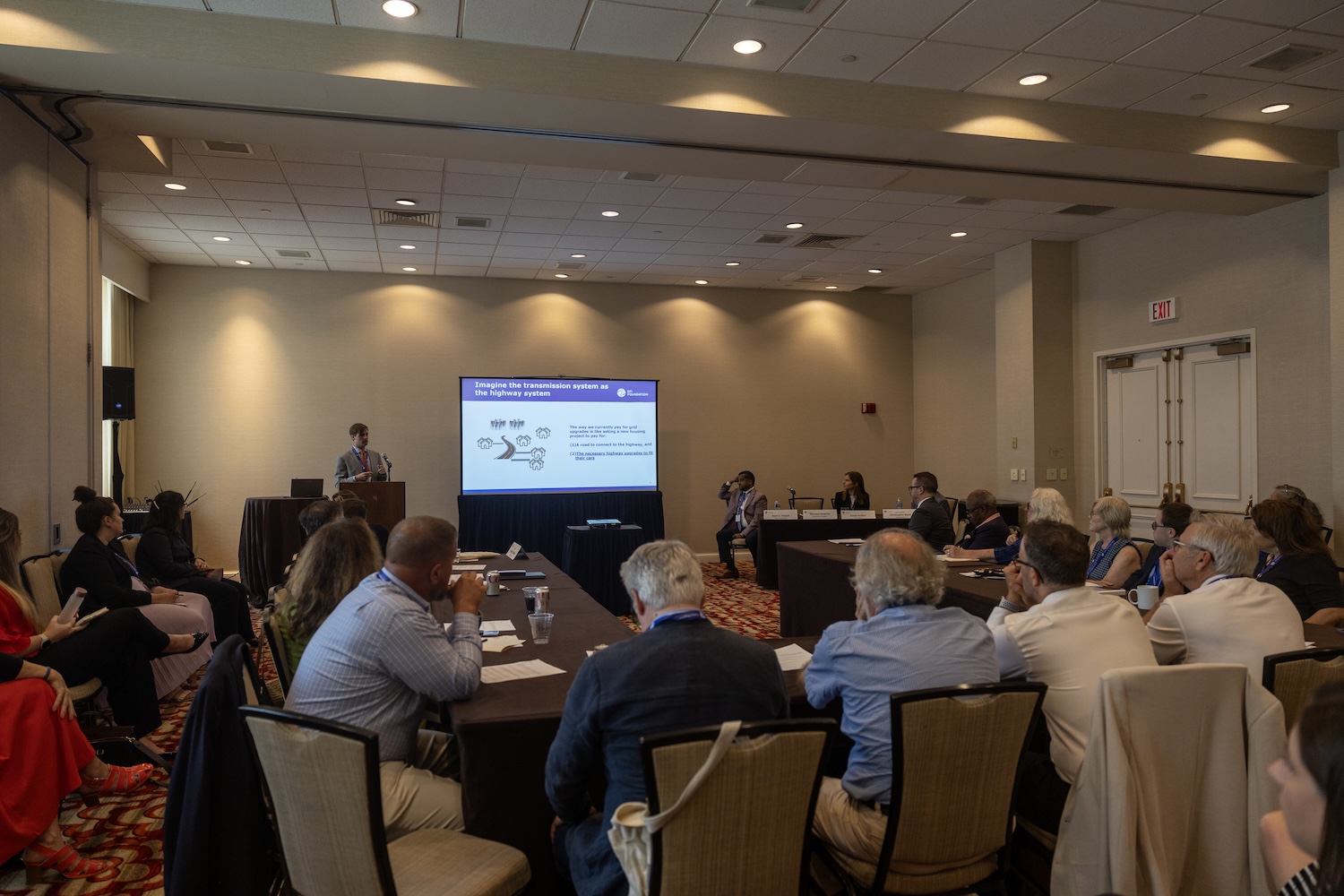
The session on energy tackled another issue with both technical and political challenges: how to keep power reliable and affordable while demand keeps growing. The speakers were Rep. Chris Rabb from Pennsylvania, Asim Haque from PJM Interconnection, and Michael Downey and Sonia Griffen from the Energy Futures Initiative Foundation.

Haque explained how PJM works. It does not own any power plants or transmission lines, but instead manages the flow of electricity across multiple states, coordinating reliability, market operations, and regional planning. Reliability is the constant concern. One reason is the surge in data centers, which consume the equivalent of tens of thousands of homes each. Add to that residential growth, new manufacturing, and federal environmental rules, and the grid faces a supply and demand imbalance. Coal has largely been replaced by natural gas and nuclear, and renewables are growing quickly, but integrating them without disrupting the system is a challenge.

Downey and Griffen argued that the grid will need trillions of dollars in new transmission investment over the coming decades. The federal government cannot cover those costs alone, so policymakers will have to create the right financing structures to attract private capital. They also emphasized that building high-voltage regional transmission lines is far more cost effective than simply adding more low-voltage local lines. Texas was cited as an example of a state that invested heavily in transmission in the early 2000s and is now benefiting from it. Best practices include planning 20 years into the future, updating plans every five years, setting clear cost-allocation rules, and communicating transparently so that the public understands the value of new projects.

Rep. Rabb brought the political dimension into focus. Pennsylvania is one of the nation’s largest energy producers but does not have a strong legislative framework for energy policy. He has called for a standing committee in the House dedicated to energy and has introduced a short, two-page bill that would require utilities to explain how their votes within PJM benefit ratepayers. While simple, the bill has attracted bipartisan interest because it emphasizes accountability and transparency in a system that often feels opaque. Rabb noted that skepticism about utility rates and decision-making is widespread, and greater visibility into those processes could help rebuild trust.

The session made clear that rising demand from data centers and industry is not going away, and that reliability will require proactive investment in transmission. At the same time, policymakers are grappling with how to ensure that utilities and grid operators are accountable to the public.

Capitol Clam-Bake

With a long day of work and learning behind us, we headed to the beautiful Rhode Island State House…

…to enjoy an evening of food, music, and mixing. The staff of the CSG put together a feast for four hundred–with clams, mussels, lobsters…

…bread, cheeses, fruit, and corn.

Oh, and hot dogs for the kiddos.

After some time, we got our plates together…

…we sat back to listen to the music.

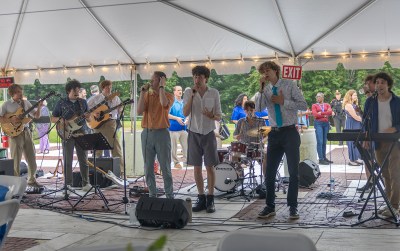
The music was performed by young adults, a group of recent Brown graduates who prefer to sing the music of old adults. Indeed, they were originally a Beach Boys Tribute Band, and they have recently branched out to other 60s-70s groups such as the Mamas and the Papas, the Beatles, The Four Tops, and others.

They were a spirited group and, at their best, had very nice harmonies.

They also had a great attitude, and their enthusiasm spilled into the crowd, who responded well to the music. Judging by crowd reaction, the favorite of the evening was Neil Diamond’s “Sweet Caroline,” which elicited much clapping, singing, and some dancing.

In these partisan times, it was good to see the Democrats and the (few) Republicans come together and bond over music.

Bipartisanship was also the theme of the night from the elected officials, who did a good job of being gracious and brief.

Senator Elgie Sims (Illinois) was particularly gracious in reminding legislators of the importance of civility–particularly in light of the shooting of Representative Melissa Hortman and her husband Mark Hortman and Senator John Hoffman and his wife, Yvette Hoffman.

It was a unifying way to end the remarks, and it is a good lesson for all to remember.

Concluding Thoughts

It’s not often that you can learn lessons in three separate towns in the same day. It’s even less often you can learn from a stop at Dunkin’ Donuts. But LEAP Ambassadors, with their resourcefulness (and love of coffee), found a way to learn in myriad ways, from diverse places, and from the generosity of policy experts who came together to share their knowledge.

Unknown's avatarAuthor mikeyawnPosted on August 20, 2025August 20, 2025Format AsideCategories Civic Engagement, Criminal Justice, EducationTags Center for Law Engagement And Politics, Council of State Governments, CSG East, LEAP Ambassadors, Providence Rhode Island, Sam Houston State UniversityLeave a comment on Dispatches from the East Coast

LEAP Favorites from the Pelican State

After four educationally filled days in New Orleans, it is time to reflect on our favorites adventures in New Orleans.

Saffron was a hit amongst the group, being their highest ranked restaurant!

There was so much food variety that is no clear favorite, but the Chicken Lasooni and the Ginger Creme Brulee from Saffron would be the closest to it.

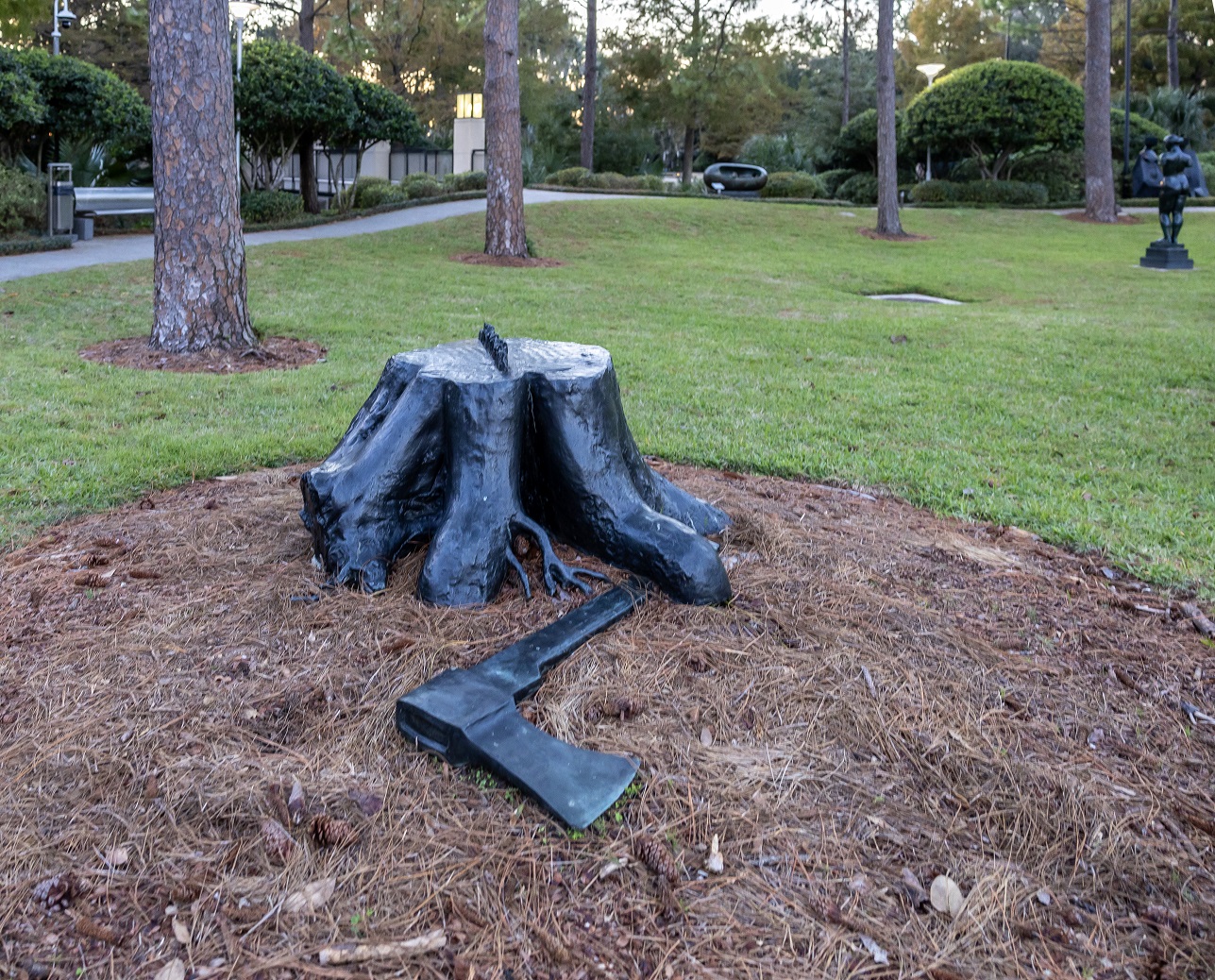
The Besthoff Sculpture Garden was the most talked about attraction in NOLA!

But Chrissy thoroughly enjoyed the World War II Museum, making it her favorite.

Now when it came to the educational sessions held by the Council of State Government Conference everyone was impressed by the Civil Discourse Strategies session.

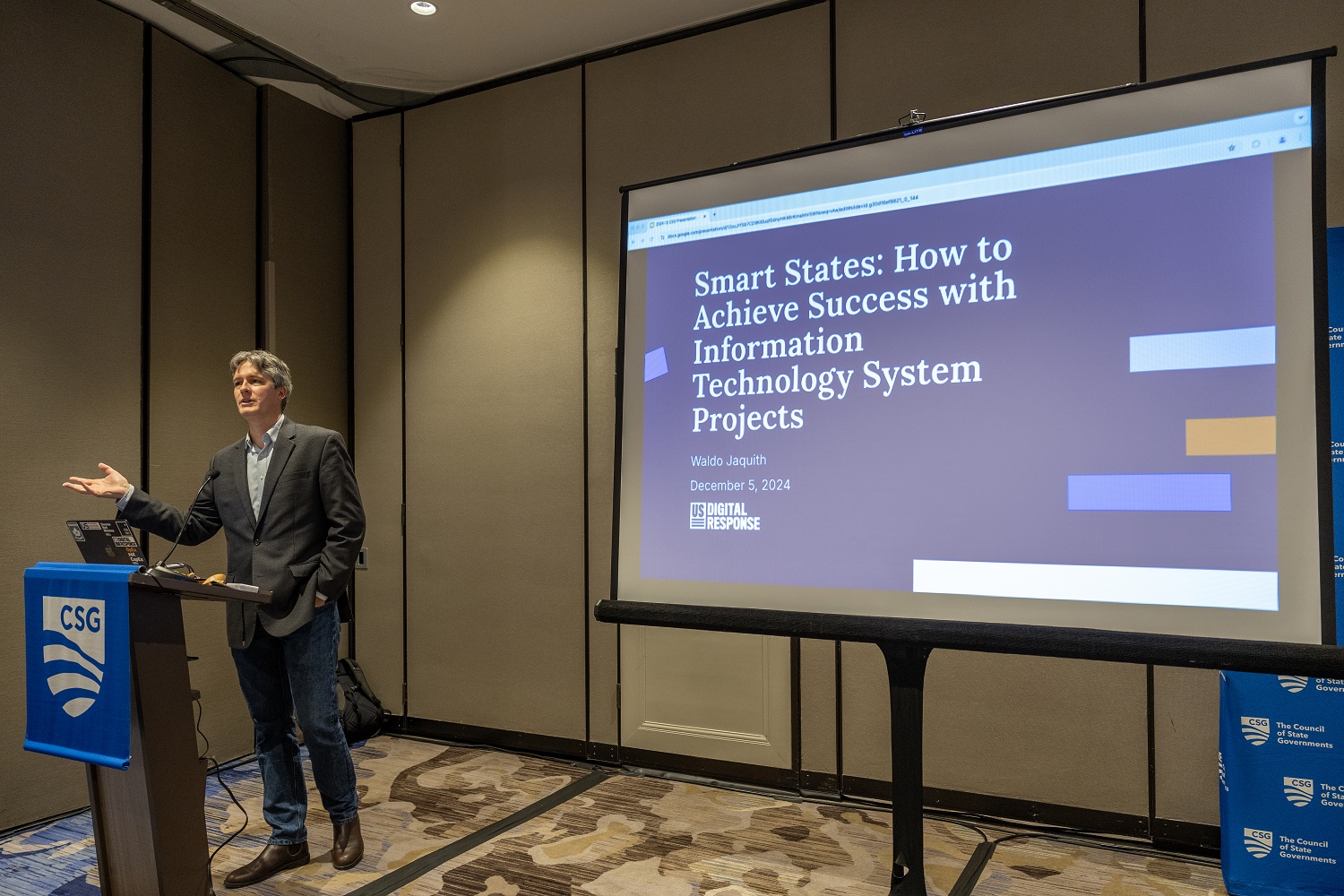
Michelle also learned a whole lot from the session detailing U.S. Supreme Court Updates, while Chrissy and Olivia got lost in the future with the Smart States session.

But we learned from all our adventures, packing in as much as possible in a four-day trip–the LEAP way.

Unknown's avatarAuthor mikeyawnPosted on December 12, 2024December 12, 2024Format AsideCategories Art, Civic Engagement, Civil Rights, Law, PoliticsTags Center for Law Engagement And Politics, Council of State Governments, Louisiana State Capitol, Sam Houston State UniversityLeave a comment on LEAP Favorites from the Pelican State

Exploring NOLA: Culinary, Cultural, and Civic Experiences

Creating Common Ground: Civil Discourse Strategies

by Michelle Moya

In the heart of New Orleans, we were looking forward to our second day of the CSG conference with enthusiasm and optimism. We woke ready for another day with an itinerary loaded with much exploration, walking, and cultivating visual art of the “city that never sleeps.” Fueled by coffee from Fourth Wall, we hurried off to our first session of the day! 

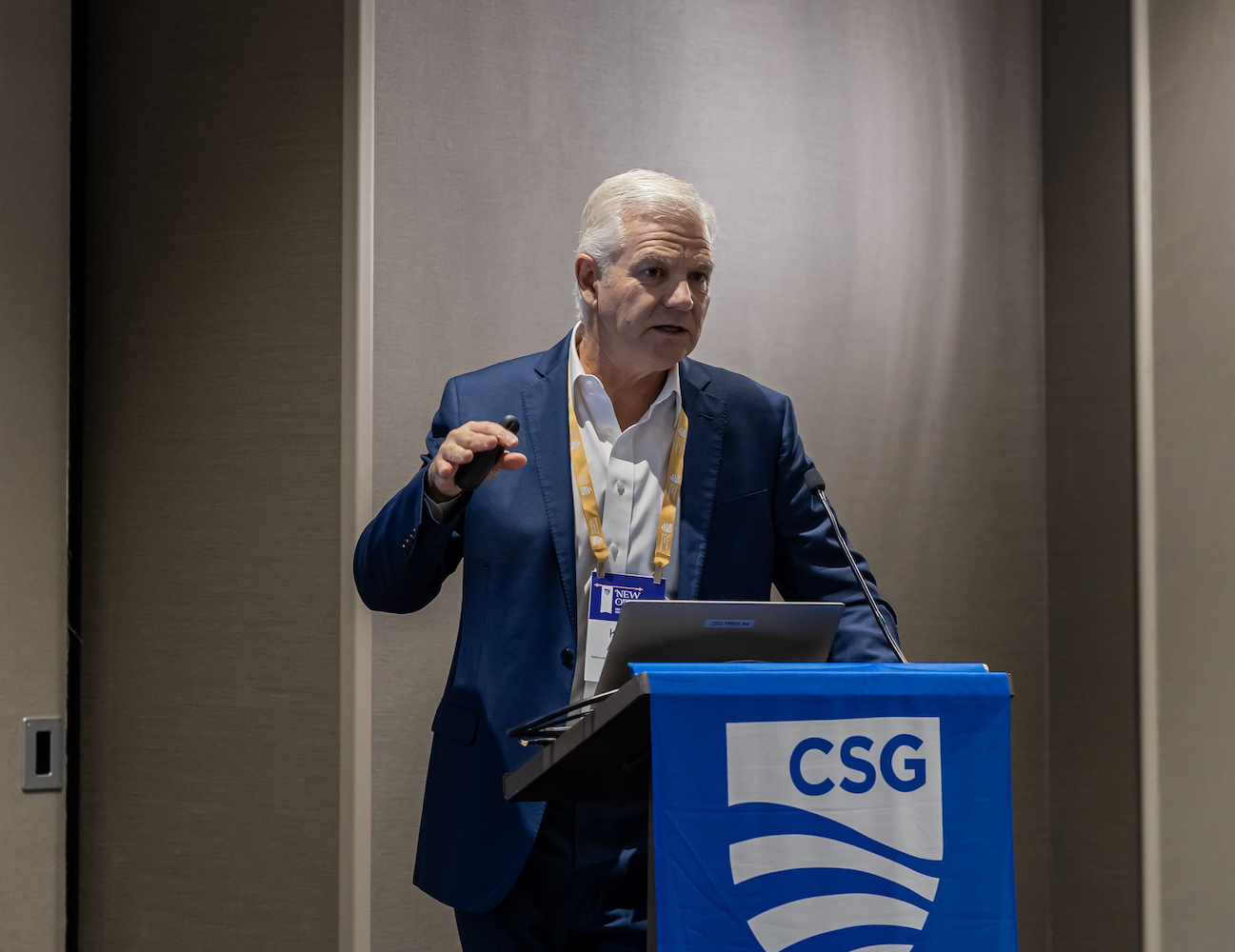
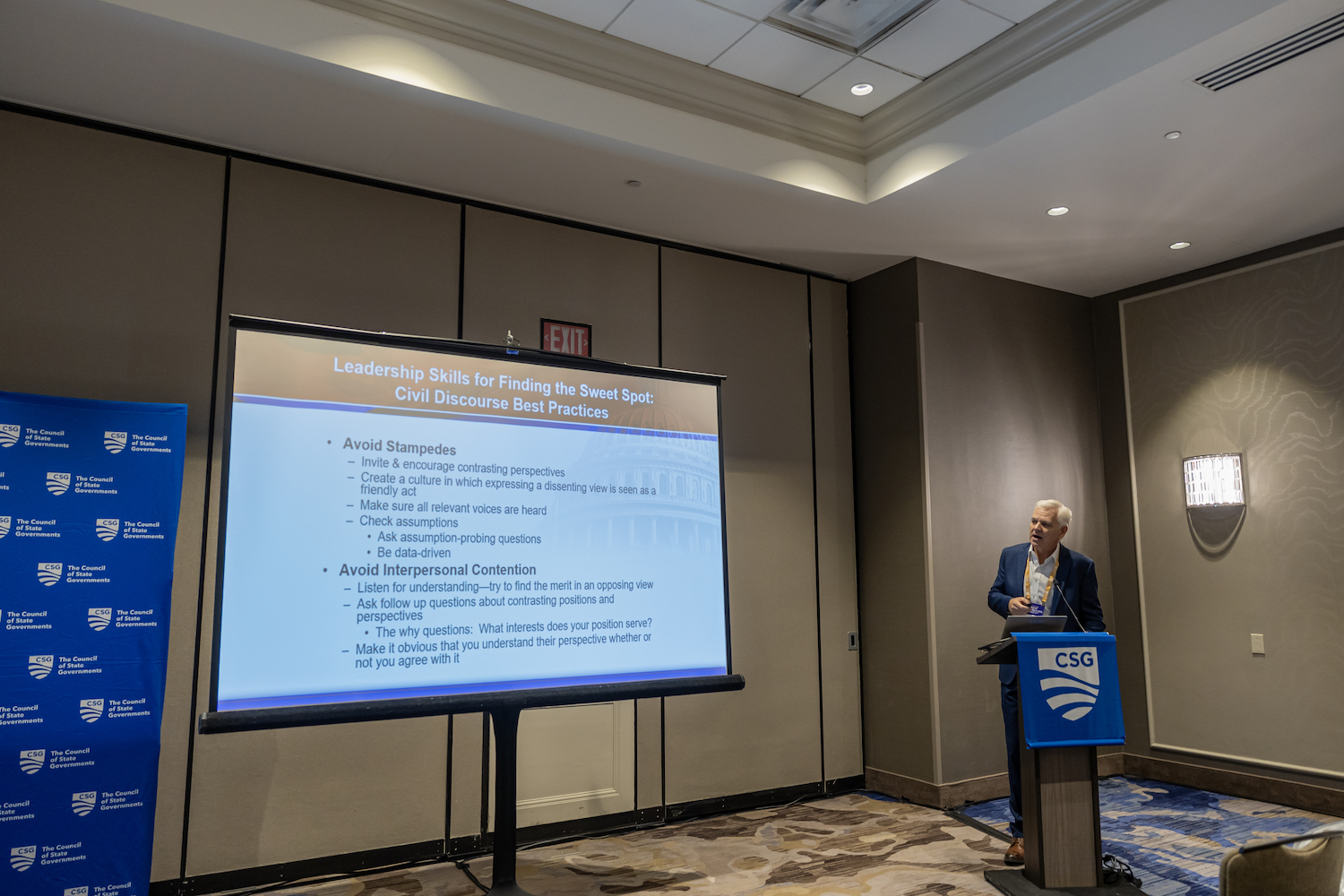
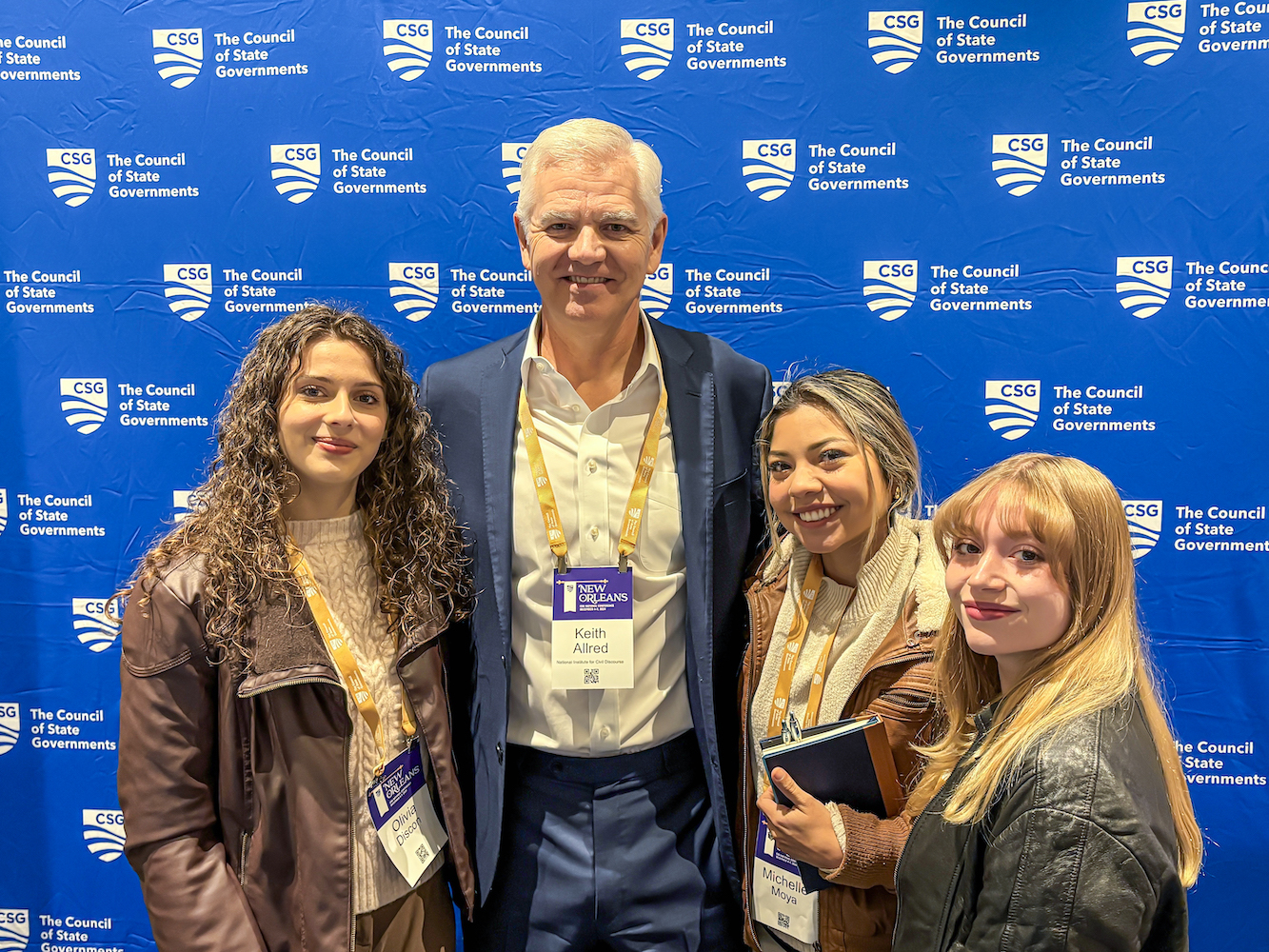
Our second day at the CSG conference was a masterclass on civic debate and leadership. The session, “Creating Common Ground: Civil Discourse Strategies,” led by NICD Executive Director Keith Allred (who, unintentionally, made me wonder if he was related to Colin Allred), transformed what could have been a dry lecture into a riveting analysis of historical decision-making.

With his professor’s precision, he drew a sharp contrast between two watershed periods in Kennedy’s presidency: the Bay of Pigs disaster and the Cuban Missile Crisis to illustrate his points. These weren’t just history teachings; rather, they were contrasting examples of how government officials should approach their decision-making. While this may not sound so interesting on a Friday morning, that session was the greatest one! 

Allred began by describing the split of effective conversation inside contemporary governments, which is mostly due to a significant unbalanced change in political parties. However, his nonpartisan approach is effective in all areas of government and in our daily lives. He briefly outlined the Bay of Pigs disaster, as well as the administrative initiatives and coordination they took to come to it. The result? A catastrophic failure that lasted mere days but left an indelible mark on American history. The culprit was not just poor planning—it was the silence of those who knew better but chose not to speak. While the majority opposed the plan, they failed to share honest views, which was taken as a “green light” for JFK to go with the plan. The lack of communication and interpersonal contentions resided in the decision-making process, which ended in disaster only 3 days after the plan went into effect. 

Allred soon shifted his focus to how they should have handled the situation and why it ultimately became a disaster. He accomplished this using the Cuban Missile Crisis, where a different approach would save America from the brink of nuclear disaster. The “commonsense sweet spot,” as Allred refers to it, is built on three pillars: embracing contrasting perspectives, avoiding the stampede effect, and navigating interpersonal tensions.

Through compelling footage from “13 Days,” we witnessed the transformation from Day 1’s despair to Day 2’s advancement, led by Robert Kennedy’s courage to voice dissent. We were able to understand the audience’s viewpoints and the lessons learned from Allred’s participatory approach, which helped us make wise conclusions. My favorite portion was undoubtedly this, and it has even inspired me to put the film on my “watch next” list! 

The session closed with a powerful message that resonates beyond government powers: “There is something immoral about abandoning your own judgment.” In an era of increasing polarization, these words carry special weight. People elect officials for their judgment, not their ability to follow the crowd. Like great coffee, great decisions are best made when they are bold, well thought out, and discussed with people who aren’t scared to voice their concerns.  

 Washington Watch: What States Can Expect from the Next Congress and Administration

by Chrissy Biello

With a new administration moving into the White House, many are predicting the future of the country. Because of this, the next session, “Washington Watch: What States Can Expect from the Next Congress and Administration,” posed a high amount of interest for us to gain insight from. The speaker, William Crozer, is the Co-Head of BGR’s Bipartisan State and Local Advocacy Practice. Moreover, from 2018-2021, Crozer served as the Special Assistant to the President and Deputy Director of the White House Office of Intergovernmental Affairs (IGA) in the Trump-Pence Administration, highlighting he has a wealth of experience to discuss the upcoming Congress and the new administration.

Crozer began by speaking on his past role in the White House Office of IGA, noting that during the pandemic, he “ran the local Covid calls from the White House,” making it likely that he spoke with individuals in the room. However, they are probably unaware of this since there was not much face-to-face contact. This being the case, he was coined the “emailer in chief,” sending various information to the state, local, and tribal officials. 

Pivoting to the upcoming administration, Crozer spotlighted what he believes to be the “day one priorities” for President-elect Donald Trump. He maintained that it boils down to key issues: trade, taxes, the economy, and immigration. Further, that SNAP Pilot Programs will be a significant focus. 

When the moderator asked about the executive orders Biden passed, Crozer stated that “everything will be on the chopping block; Biden repealed Trump’s executive orders.” He then hypothesized that the most likely roll backs will be those that are high spending, such as the CHIPS Act; thus, President Biden is dispersing as many awards as possible.

Speaking on partisanship, he stated that the “red states are getting redder, and the blue states are getting bluer,” remarking that some state governor’s will attempt to challenge Trump on executive orders. He gave the example of Gavin Newsom, the Governor of California, which many were not surprised to hear. Nonetheless, he emphasized that the legislatures in the room should engage with the Trump Administration, no matter what side of the party line they are on. 

Transitioning to a humorous anecdote from his time in the White House, he described that when sending invitations to municipal mayors to travel to DC, many thought it was a “Russian Hoax.” The room filled with smirks and chuckles; however, Crozer quickly commented how this displays the lack of outreach to state and local officials. To end on a light note, he closed the conversation by asserting that if someone in the room receives something from the White House, it is likely not spam. But, he ensured to clarify that the White House will never ask for a person’s Social Security Number!

Lunch Break at Cafe Reconcile

by Michelle Moya

After two great sessions, we headed to try another great taste! In New Orleans’ Central City neighborhood, we were successfully able to go to Café Reconcile. As requested by Professor Yawn, we did some research into the café and its history. To our surprise, this place was not just serving up amazing food—it was serving up hope and opportunities for young adults in NOLA. 

While the food was absolutely amazing, what actually distinguishes Café Reconcile is that it is a non-profit that uses its program to alter the lives of young people. Upon being seated, we saw that the restaurant featured various frames showcasing these students’ lives, including their personal aspirations and triumphs, which was quite encouraging. When you eat here, you’re supporting a program that helps young adults ages 16-24 kick-start their careers in various industries. We collectively agreed that we need something like this in Huntsville. Imagine having a restaurant that not only serves amazing food but also gives young people in our community real career opportunities and life skills. This little touch of history enhanced the overall experience and made it more delightful! 

Now, moving on to the food, I kept with my borderline seafood fixation and ordered their catfish plate with veggies. To my surprise, the veggies stole the shine on my plate (never thought I’d say that). The catfish was great too! It came with an incredibly colorful side salad that popped with personality thanks to these vibrant radishes that made the whole plate “Instagram-worthy.” 

LEAP Ambassadors Olivia and Chrissy shared this plate of jerk chicken that resembled a Thanksgiving turkey—or as Professor Yawn joked, perfect for “eating for two.” They ordered potato salad and the mac and cheese, which they mentioned, had them fighting over the last bites. Speaking of Professor Yawn, he went classic with red beans and rice, while Stephanie tackled a traditional New Orleans po’boy and this sweet potato crumb that she would not stop raving about and sharing—bless her. 


For the grand dessert? A banana bread pudding that had everyone at the table seemed to enjoy (except me) team no bananas here.

Next time you’re in NOLA, skip the tourist traps and head to Café Reconcile. The food and service was amazing, the portions are generous, and best of all? Your money goes toward helping young people build better futures. This was a great experience and gave me a grasp of the great food New Orleans had to offer! 

Cybersecurity in Focus: Assessing and Mitigating Risks of Cyberattacks Against State Governments and Critical Infrastructure

by Olivia Discon

Our last session for the day, and ultimately, for our time at the conference, was Cybersecurity in Focus: Assessing and Mitigating Risks of Cyberattacks Against State Governments and Critical Infrastructure. 

We were fortunate to hear from three panelists; Brad Manuel, Jing de Jong-Chen, and Dr. Mike Garcia, each providing an individual presentation from their respective backgrounds on prioritizing cyber resiliency. 

Brad Manuel, Region IV’s Cybersecurity State Coordinator for the Cybersecurity & Infrastructure Security Agency (CISA) took the podium first to discuss cyber infrastructure and “Best Practices”. 

Having formerly worked as a Chief Information Officer for a state agency and contributed several statues to state legislatures on cybersecurity, he is a huge proponent of everyone in organizations holding stake in risk management and cyber hygiene practices. 

Jing de Jong-Chen, current Senior Associate at CSIS and former executive at the External and Legal Affairs Division at Microsoft Co., focused on Supply Chain and Policy Alignment. She emphasized the importance of executive orders and strategic partnerships with federal agencies to enhance cybersecurity frameworks. Jing also highlighted the need for investment in IT modernization and fostering a resilient ecosystem through public-private partnerships. Her approach centered on integrating security into every layer of the supply chain, prioritizing cultural awareness, and creating holistic assessments to identify vulnerabilities. She also discussed the critical role of real-time monitoring and compliance attestations in maintaining system integrity.

Dr. Mike Garcia, Senior Elections and Security Person, Center for Internet Security, closed the panel with an in-depth look at the global impact of cybersecurity risks, focusing on international cooperation and domestic investment. He stressed the importance of adapting to rapidly evolving threats by fostering relationships in the field and engaging with vendors to align their goals with long-term resilience strategies. Dr. Garcia also addressed lessons learned from incidents like SolarWinds, emphasizing the value of competition and diversification in creating robust defense mechanisms.

As state governments increasingly rely on digital infrastructure, the discussions reinforced the urgent need to integrate proactive security measures to mitigate cyber security risks. 

The Sydney and Walda Besthoff Sculpture Garden

by Olivia Discon

My favorite aspect of the LEAP experience is the opportunity to improve our cultural literacy. One way this is achieved is through reinforced exposure to key artists in various places across the country. New Orleans’ city-owned park was a perfect iteration of the LEAP experience, as it is home to the Besthoff Sculpture Garden.

There were some heavy hitters immediately upon entry. Roy Lichtenstein was featured at the front of the museum.

In addition to that we saw a Louise Bourgeois’ Spider…

…alongside works by, Robert Indiana, Jaume Plensa, and Claus Oldenburg.


As we continued exploring, we encountered works by Henry Moore and, to our delight, an Isamu Noguchi piece. The collection also included unexpected surprises such as Renoir and Rodin—names often associated with painting or smaller sculptures, but here showcased in a  new context.  Jesus Moroles, SHSU alumni and LEAP favorite artist, is also featured in this collection. 

One artist I didn’t recognize but thoroughly enjoyed was Do-Ho Suh. His sculpture, a stack of figures resembling a spinal cord, was visually striking to me. 

Michelle and Chrissy were drawn to two particular sculptures. One, Leandro Erlich’s Too Late for Help, featured an interesting hidden ladder to a gateway.

They were especially caught up in the physics of how such a sculpture could exist. The other, Rona Pondick’s Monkeys, had a strange, morphing form that they initially thought depicted humans or dogs—until Stephanie pointed out we were mistaken.

We also saw kinetic sculptures by George Rickey, whose moving parts added a dynamic element to the collection, and a work by Deborah Butterfield…

…and George Segal. Of course, no trip to New Orleans would be complete without encountering a Blue Dog piece by George Rodrigue.

On our way out, there was one final surprise—a sculpture by René Magritte (one of my favorite artists). Although the work differed from his typical surrealist paintings, it was an unexpected and satisfying way to end the visit.

The beautiful Spanish Moss was the excellent backdrop for these amazing works.

Oceana Grill

by Chrissy Biello

After exploring the French Quarter, we headed to Oceana Grill, a popular restaurant favored by both tourists and locals! Known for its contemporary Louisiana dishes, the restaurant offered a new set of choices to those of us that have not had much experience with New Orleans cuisine. 

Alligator Bites was the relatively new item for the table, a food I had tried before and reassured Olivia tasted much like chicken. To her surprise, she did not hate it; however, I would definitely say she would not order it again if given the opportunity. 

When it came time to order our main courses, Olivia shocked the table by ordering Cajun Jambalaya Pasta, which contains shrimp! For those that do not know Olivia, the pasta part is not unexpected, but the shrimp part is. She noted that the “dish was very flavorful, and it drowned out the shrimp.” Needless to say, she left the restaurant still not a fan of shrimp.

Michelle also dabbled in a little bit of experimentation. Her meal, the Blackened Chicken Platter, was served with Jambalaya, a dish she had never heard of. However, I ended up being the boring one of the group by ordering something I have had several times in the past, Crawfish Etouffee. 

When making our choices for dessert, we were experiencing a shared sweet tooth and decided to order three! The desserts included La Boheme Crème Brûlée, New Orleans Bread Pudding, and the Chocolate Kahlua Mousse. After finishing off all of them, we had a slow but satisfied walk back to our hotel for the night.

Unknown's avatarAuthor mikeyawnPosted on December 8, 2024December 8, 2024Format AsideCategories Art, Civic Engagement, Food, PoliticsTags Besthoff Sculpture Garden, Cafe Reconcile, Center for Law Engagement And Politics, Council of State Governments, NOLA, Sam Houston State UniversityLeave a comment on Exploring NOLA: Culinary, Cultural, and Civic Experiences

LEAP Ambassadors Are Involved!

This slideshow requires JavaScript.

Follow Us On Facebook!

Follow Us On Facebook!

Catch Up With Us

  • A M*A*S*H* Wrapup December 24, 2025
  • Understanding Globalization: Lessons from a Leading Journalist December 22, 2025
  • Crafting for a Cause December 18, 2025
  • Exploring The Shining: A Kubrickian Journey December 15, 2025
  • Interactive Experiences at Asia Society Texas: A Student’s Perspective December 14, 2025

Join The Conversation!

The Civic Leadership… on Foundational Activities of the…
The Civic Leadership… on The Philosophical Foundations…
LEAPing Into Action… on The Philosophical Foundations…
Jada Cook's avatarJada Cook on SHSU Students LEAP Across Five…
Reflections from the… on Kicking off the Semester Right…

Find Previous Posts

Today is National Law Enforcement Appreciation Day, and the LEAP Center does that year-round, not only by studying law enforcement, but also by meeting with law-enforcement officials and frequent visits to the Jesus Moroles Police Memorial in Houston.

We also have Twitter!

My Tweets

LEAPing Into LEARNing

This slideshow requires JavaScript.

  • About LEAP
  • LEAP Ambassadors
Center for Law, Engagement, and Politics Blog at WordPress.com.
  • Subscribe Subscribed
    • Center for Law, Engagement, and Politics
    • Join 487 other subscribers
    • Already have a WordPress.com account? Log in now.
    • Center for Law, Engagement, and Politics
    • Subscribe Subscribed
    • Sign up
    • Log in
    • Report this content
    • View site in Reader
    • Manage subscriptions
    • Collapse this bar
 

Loading Comments...