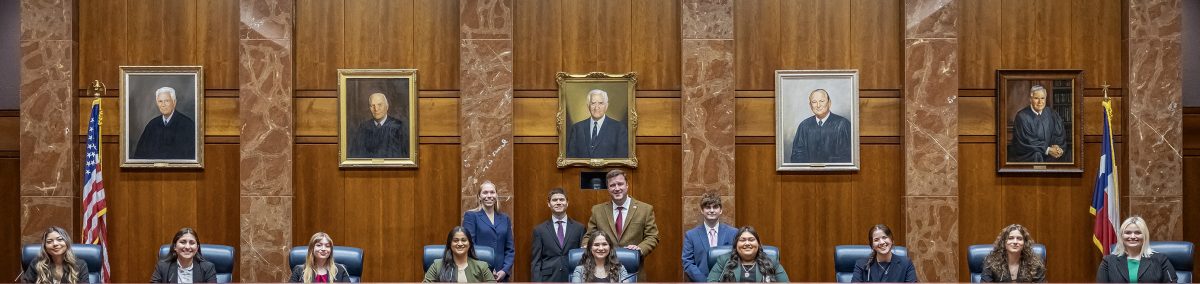
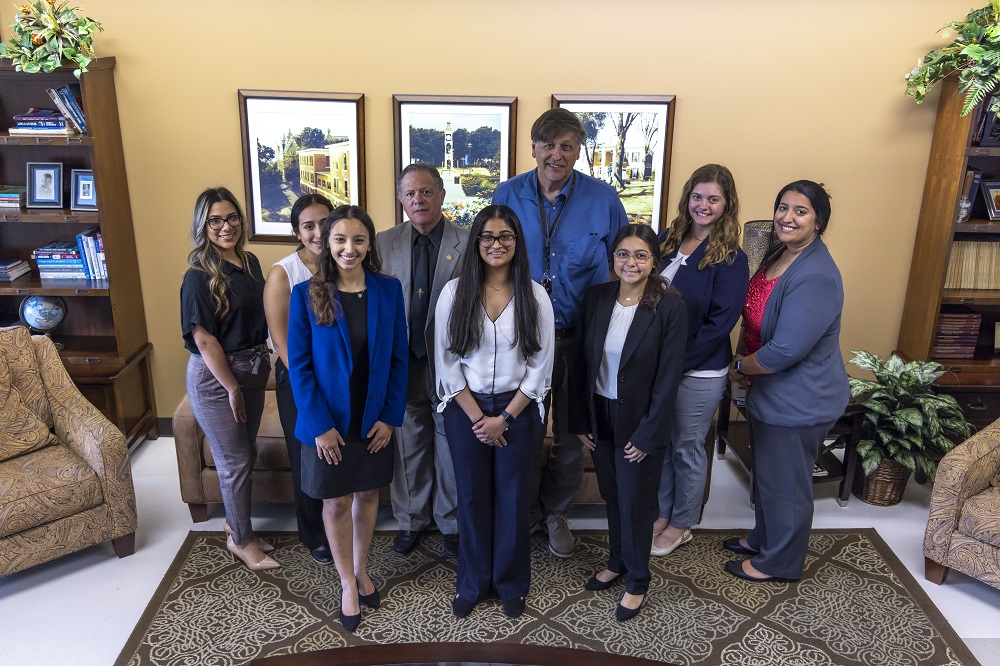
Capitalizing on the hard work of Professor Kurt Smith with the Political Science department, the LEAP Ambassadors and Jocelyn Vazquez recently enjoyed a short but informative lunch with Judge Jamie Rene Roman and Dr. Kurt Smith, learning about law, politics, and life.
Judge Roman served as a Judge in California after being appointed by Governor Arnold Schwarzenegger. He has also worked for the Texas Department of Criminal Justice (TDCJ). Although Judge Roman acquired his J.D. from the University of California, Hastings College of Law, he continued his education after law school at Boston University to obtain his L.L.M, allowing him to specialize in International Banking law!
Upon entering the room, Judge Roman began his greetings and empowered us with his experience as a young attorney working. As we talked about our career goals and what would be next after we graduated from SHSU, Judge Roman, Dr. Kurt Smith and the LEAP members began to unravel the packaged deli sandwiches catered by Aramark for our small group lunch.
Stressing the importance of education and a great work ethic in law school, Judge Roman advised us on what to look out for once we begin our careers and what to expect in law school.
His advice for not only law school, but the LSAT gaged us to have a deeper understanding of the importance of what steps are needed to go to the law schools that we want.
Judge Roman discussed the hardships that he faced in his career as he witnessed the dynamic yet bitter truth about family law and shared with us how busy every day would be with the incoming cases. He shared his insights regarding any questions we had, some of which related to the BAR exam for California and how it compared to the Texas Bar exam.
We also asked Judge Roman questions relating to the difference in court structures in California and in Texas. Judge Roman explained how he got a good grounding in the law by rotating, spending two years as a judge in one type of court, two years in another, and four years in another. This gave him the kind of all-around foundation that we one day hope to achieve.
On behalf of the LEAP Ambassadors , a big thank you to Judge Roman for taking the time to speak with us and and offer advice, and another thank you to Dr. Smith for setting up such a meeting. And Thank you for visiting SHSU!
As I entered the Sam Houston Memorial Museum Walker Education Center, I was greeted by warm and friendly smiles from the staff and both the former director Mac Woodward, his wife Leanne Woodward, and current director Derek Birdsall. This was no ordinary day over at the Walker Education Center, for artist, Lee Jamison, was exhibiting a select paintings in the gallery, reflecting his work on East Texas.
Lee Jamison, of course, was also there greeting and thanking EVERYONE individually for coming. He was featuring paintings from Huntsville, one of Sam Houston’s Woodland Home itself, and others from across the region.
The room was matched the title of the exhibit, as all the paintings expertly captured the essence of East Texas. Jamison even commented how he had brought more paintings than the room could fit!
The three paintings that stood out the most to me were (1) Roots of Texas (2) His first painting (3) Old Main.
The Roots of Texas is a painting of a tree, its roots, and the trench near it. It was significant since it told the story behind how our beautiful state got its name. It originated from the word Tejas which Caddo Indians used to describe friends. I thought it was amazing that he included his very first painting in this exhibit but also that it was placed next to the Roots of Texas one.
I believe it to be because they are both origin stories, one of how Texas got its name and the other of how Jamison’s art career began. There is nothing better to show that than his very first painting, which is different than the rest of his works. It definitely stands out.
This other art piece just takes your breath away and leaves you admiring its beauty. It is a perfectly beautiful painting of Sam Houston State University’s famous Old Main Building. You can really see and adore the architecture and how majestic Old Main was. This was one painting that everyone stopped to look at and engage in conversation with those around them exchanging their stories and memories of this building. Even that of the night that broke everyone’s spirit as they saw this building burst into flames.
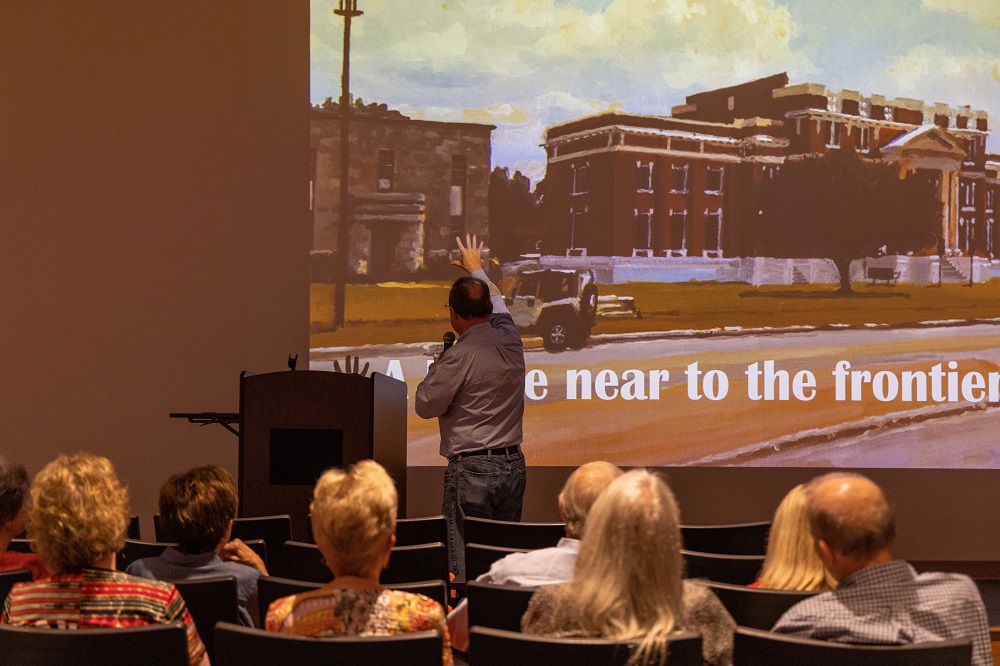
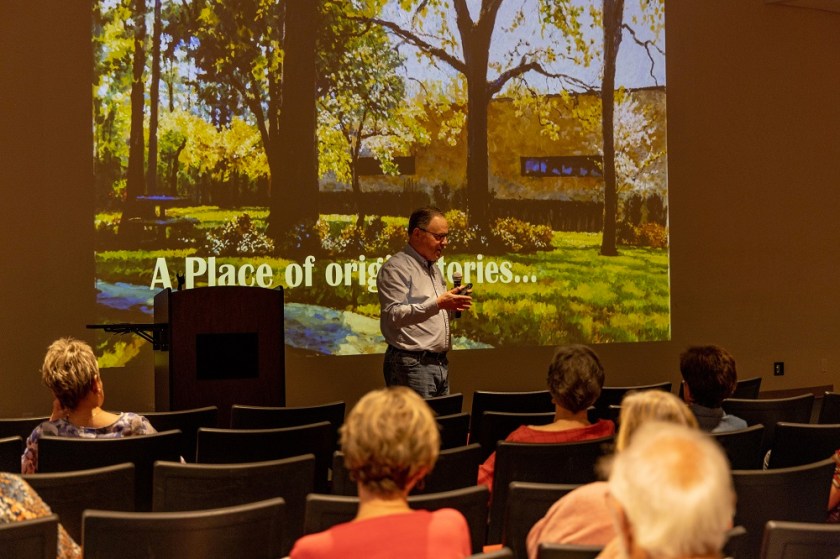
When the clock struck 6:30 p.m., the crowd went over to the next room and took their seats, and waited to hear from Jamison. The opening speech was the quickest history lessons I had ever heard about Mexico and Texas. It was given by none other than Caroline Crimm.
I learned that back then, one of the conditions needed to become a Mexican Citizen was to convert to Catholicism. This was particularly interesting since the LEAP Center is volunteering for a U.S. Citizenship Prep Course.
Crimm’s history lesson led very well into what Jamison would discuss since in her crash course she discussed what happened in East Texas over the course of centuries. Hence, Jamison’s book title and the exhibit’s name Ode to East Texas.
He went in depth about the evolution and stories behind a couple of his paintings, some of which were exhibited, while others were not.
The stories behind each of his paintings really resonated with me since there was a meaningful significance behind all of them, which I found inspiring. When discussing origin stories, for example, he discussed his time at Lon Morris College, where he not only learned to refine his artistic skills, but also met his wife, Melinda!
After his speech, many people re-entered the gallery room to see the exhibit one last time before the museum closed. Jamison even stayed longer to sign copies of his book “Ode to East Texas,” which was on sale at the museum store.
The Jamison exhibit will be displayed at the Walker Education Center until May 28, 2022. Be sure to check it out if you have not already!
For our first full day in D.C., we made sure we bundled up before we braved the chilly weather. After a typical quick breakfast, we laid out a plan of action for the day and set off on foot. Our first location was within a reasonable walking distance inside the National Mall, and we could see our destination from a distance. As we neared, we could see the details of the Smithsonian National Museum of Natural History, which was adorned with Corinthian columns and several reliefs.
We were grateful that there was no great line to enter the museum but we were shocked at the number of people also exploring their way through history. A grand foyer and a posed elephant welcomed us as we entered the building. As a group, we gathered and quickly discussed the best use of our time and the order in which we should meander through the exhibits. We soon were enthralled by specimens, fossils, and skeletons that left no room for downtime. The exhibits were displayed by date, species type, and even dramatic scenes.
Yvette and I split off from the rest of the group and started our journey through time. We were also blown away at the sizes of some of the displays.
A few towered over us…
… while others were the size of a hummingbird’s femur. Yvette and I especially enjoyed the lab on the first floor of the museum which had cameras and screens set up to allow visitors to watch scientists work on the fossils. We were mesmerized by the work the scientists were conducting on the specimens.
Interestingly, we also saw a first edition of John James Audubon’s “Birds in America,” which was beautiful, and bigger than any book we’ve ever seen!
The crown jewel of the museum was, naturally, the Hope Diamond. It was mined in India in the 17th century and changed hands several times over the last few centuries. It was eventually purchased by famed jeweler Harry Winston who donated it in 1958. It is one of the most famous parts of the museum. It gets its blue hue from trace amounts of the element boron in the stone. We learned that a diamond’s size and clarity are good indicators of its worth. The Hope Diamond is a prime example of the size factor, weighing in at 45.52 carats and costing upwards of $350 million. We could have easily spent the entire day inside the Museum of Natural History alone, but we pulled ourselves away from the many fascinating and—in the case of the Hope Diamond, dazzling displays and headed toward the exit.
Smithsonian National Gallery of Art Sculpture Garden
Erin Juarez
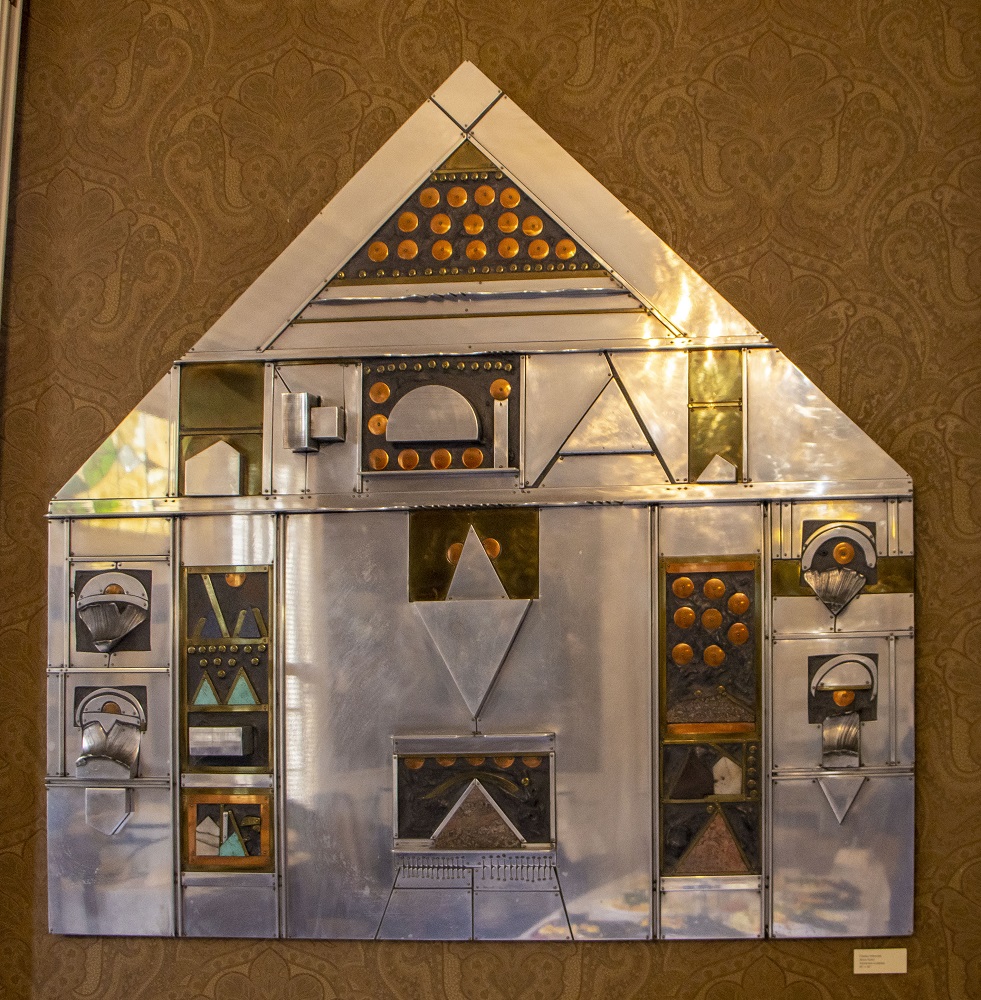
As we left the museum we spied portions of sculptures peeping over the tops of shrubbery across the street and decided to investigate further. Imagine our delight when we realized that they were works by artists we know and love! We had recently seen one of Robert Indiana’s “LOVE” while we were in Oklahoma, and this time we found ourselves looking at his sculpture, “AMOR.” A true pop artist, Indiana uses modern materials such as aluminum and bright, contrasting colors in his works.
As we roamed the rest of this sculpture garden, some among us were introduced to other pop artists like Claes Oldenburg and Roy Lichtenstein…
…for the first time. We paused briefly at a striking work by Roxy Paine, whom Professor Yawn acknowledged as being one of his favorite artists. Paine is recognized for his giant metallic tree installations that combine the natural world and man-made elements.
Personally, Joel Shapiro’s sculpture Untitled, 1989 was my favorite. Shapiro is well-known for his minimalist sculptures consisting of fixed rectangular elements that evoke a sense of movement.
And, of course, we also got to see a couple of Calders…
…with so much to see here, it’s no wonder that we fell in love with D.C. as we rambled across the city.
Smithsonian American Art Museum
Jessica Cuevas
After whetting our artistic appetites in the Sculpture Garden, we next visited The Smithsonian American Art Museum, walking across the mall to get there.
But it was the Smithsonian that we witnessed the largest collection of American Artists, some we had previously seen and others we had not. We were exposed to such varied styles of works from artists that we were familiar with, that we found ourselves eagerly moving from painting to painting in the hopes of seeing something new from artists that we had become used to.
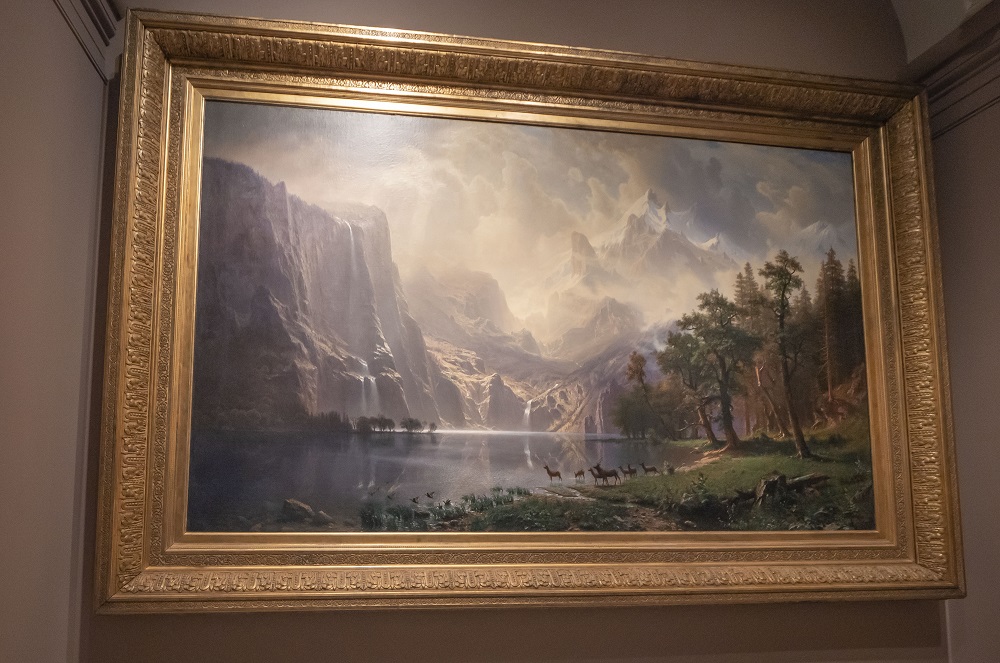
Unlike other museums we had previously been to, we were able to see more of Thomas Moran’s and Albert Bierstadt’s works. Their breathtaking landscapes scenes consist of the country’s natural beauty, with luminosity provided by the artists.
Morgan, who typically prefers a Moran or Bierstadt painting over other artworks, today favored a piece by Sargent; the “Corner of a Church on San Stae.” We all noted that this work was much different than anything we had seen by him up until this point. We had only seen his portraits!
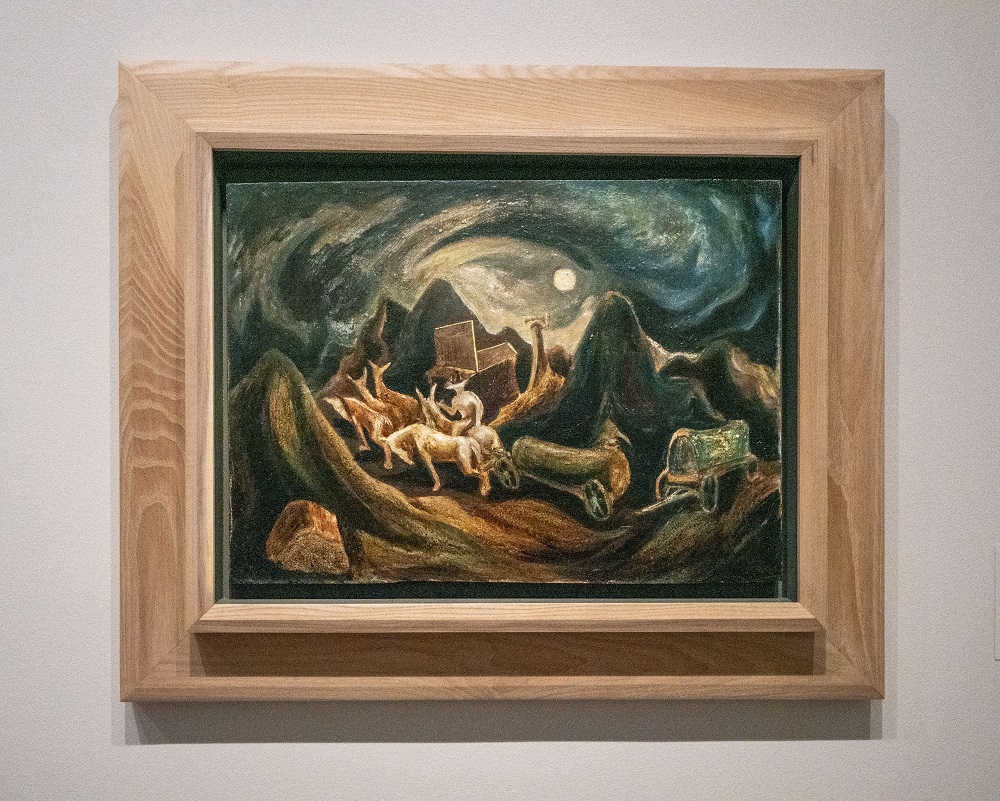
Interestingly, we saw an early Jackson Pollock, and the influence his mentor, Thomas Hart Benton, had on him was obvious.
And this became more clear when we saw an entire wall dedicated to Benton!
Up on the second floor, we were able to see the Presidential Portrait Gallery. In this wing was included at least one portrait of every U.S. president, starting with President Washington, proceeding all the way up to President Trump.
Upon entering we were immediately confronted with the famed George Washington Portrait done by Gilbert Stuart.
This portrait is deeply symbolic. It depicts our first president, but it also includes several other details regarding the birth of our nation. In the background of the painting through a window, there can be seen a rainbow emerging from dark storm clouds, suggesting that America was emerging bright and new from a dark and stormy era. Washington’s right arm gestures toward a quill pen and parchment on his desk while his left arm rests on the hilt of his sword, suggesting that our newly-formed democracy was ready to assume its governance role but that it would still defend itself if the need arose. The law and philosophy books under his desk portray Washington as an enlightened leader in addition to his being a man of action. This is the famous portrait that we see on our dollar bill.
Prior to this museum, we’d stopped briefly at Ford’s Theater, where President Lincoln was assassinated. Seeing his presidential portrait and then a face casting made before and after his death, resonated with us.
Although most presidential paintings were traditional and sort of regal, former President John F. Kennedy apparently asked Elaine de Kooning to do something unique when he commissioned his official portrait. The portrait is semi-abstract with hundreds of strokes of greens and blues coming together to show Kennedy sitting casually on the canvas looking back at the viewer.
As the sun began to set, we rushed in order to see as much of the museum as we could. While most of what we saw were paintings, we did encounter a few sculptures including a James Surls piece!
Such a rich art experience on our first full day in our nation’s capital gave us the opportunity to encounter new artists but also to deepen our knowledge of the artists that we were already familiar with.
In leaving the Museum, we realized we weren’t too far from the White House, which prompted us to make a detour before going to eat.
Dinner at Oyamel
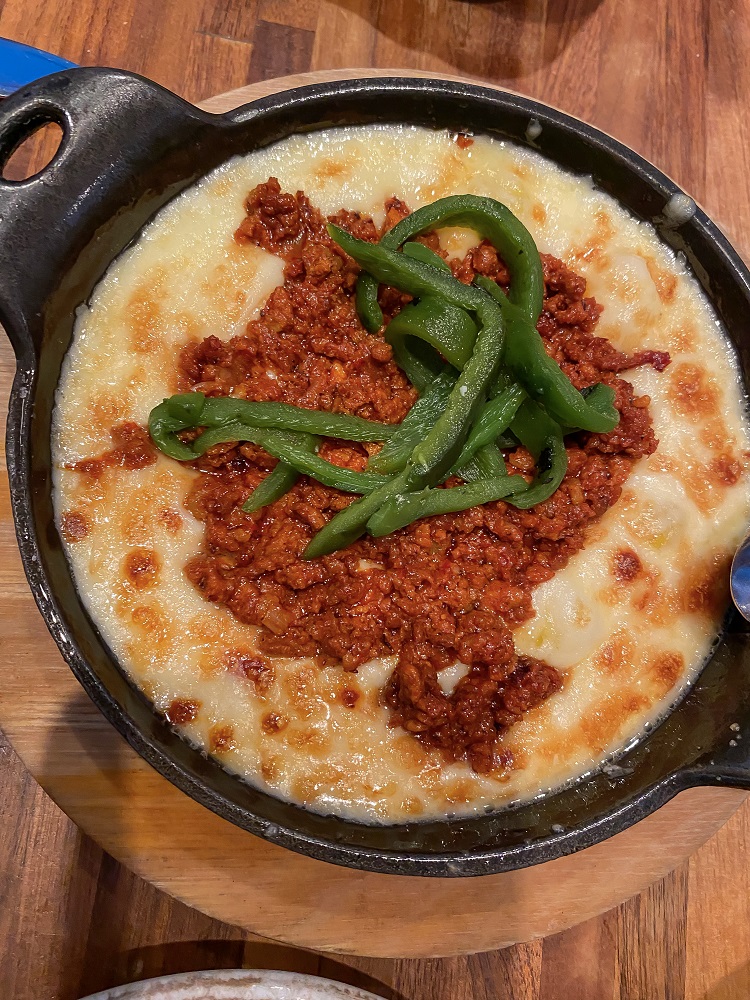
To cap off a long and rewarding day on the National Mall, we stopped in at Oyamel, a wonderful Mexican restaurant not far from our hotel. All the food was good, but we especially like the appetizers, which ranged from Brussel sprouts…
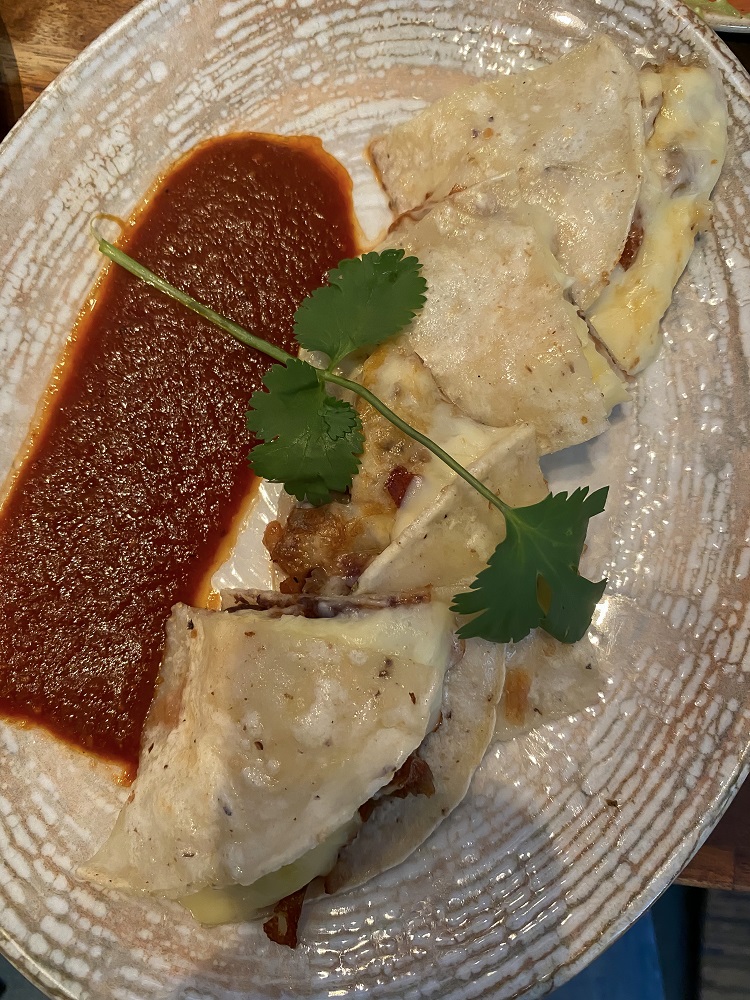
…to queso fundido…
…and more.
The entrees were equally as good. We had a mix of food, with the shrimp and the tacos being the best of what we tried.
We didn’t know it at the time, but this turned out to be the best food we would have on our trip.
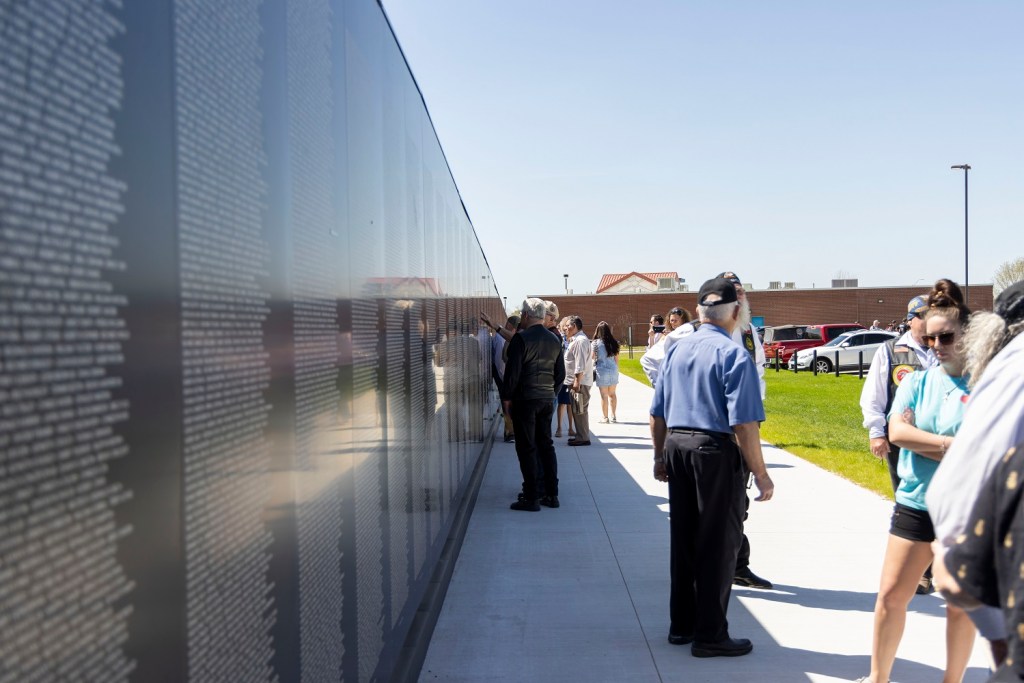
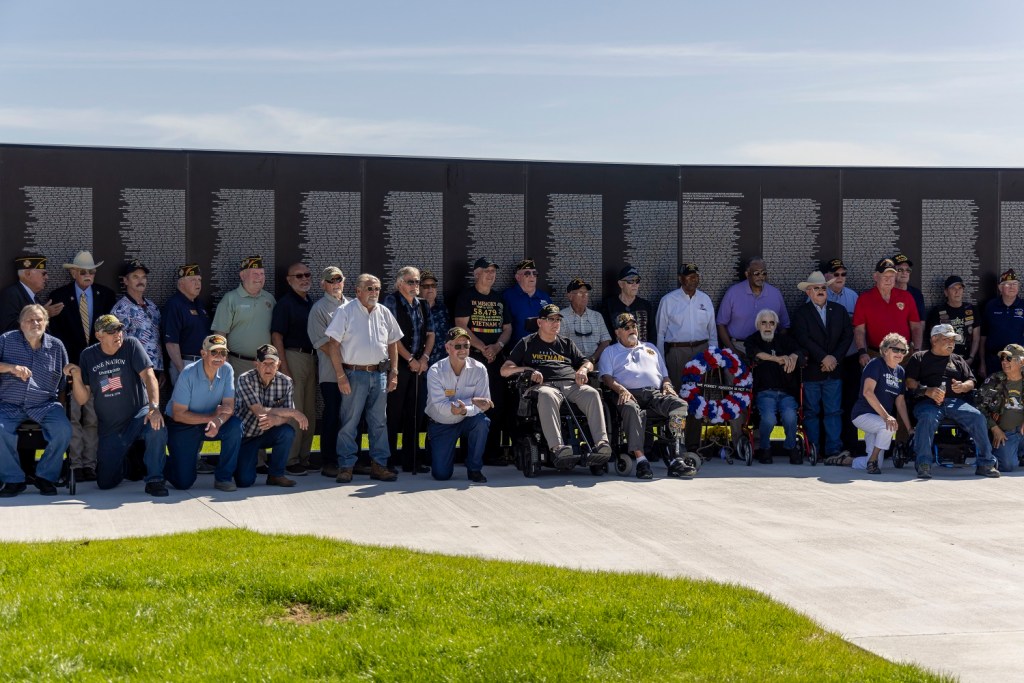
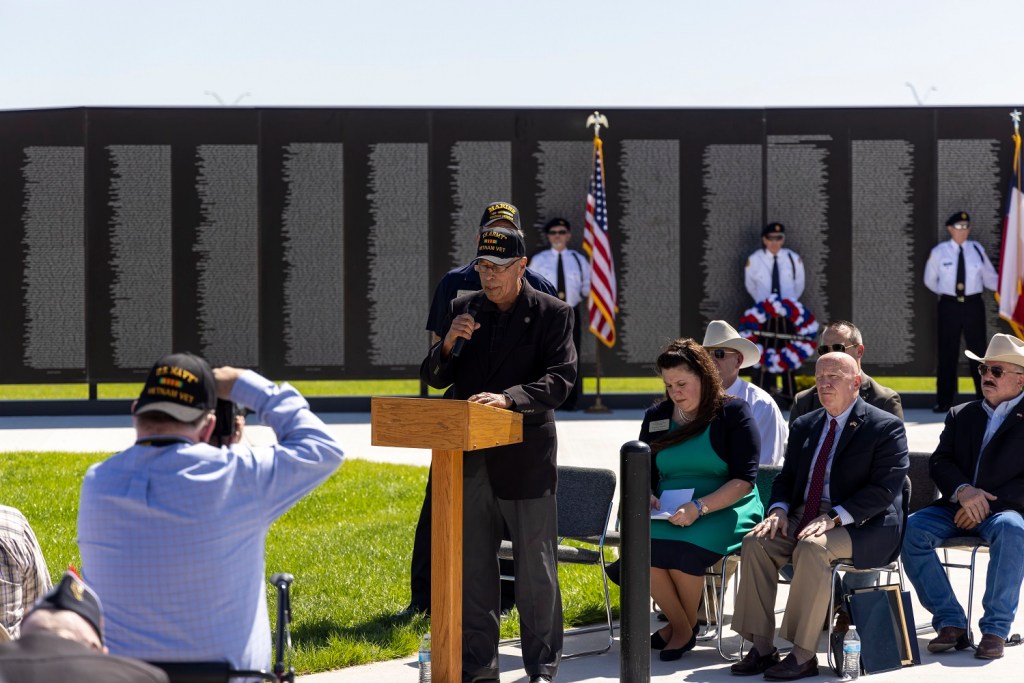
On Sunday, March 27, 2022, countless citizens and veterans from Huntsville, Walker County, and the State came together to honor and dedicate the H.E.A.R.T.S. Veterans Memorial Museum’s Vietnam Wall Memorial.
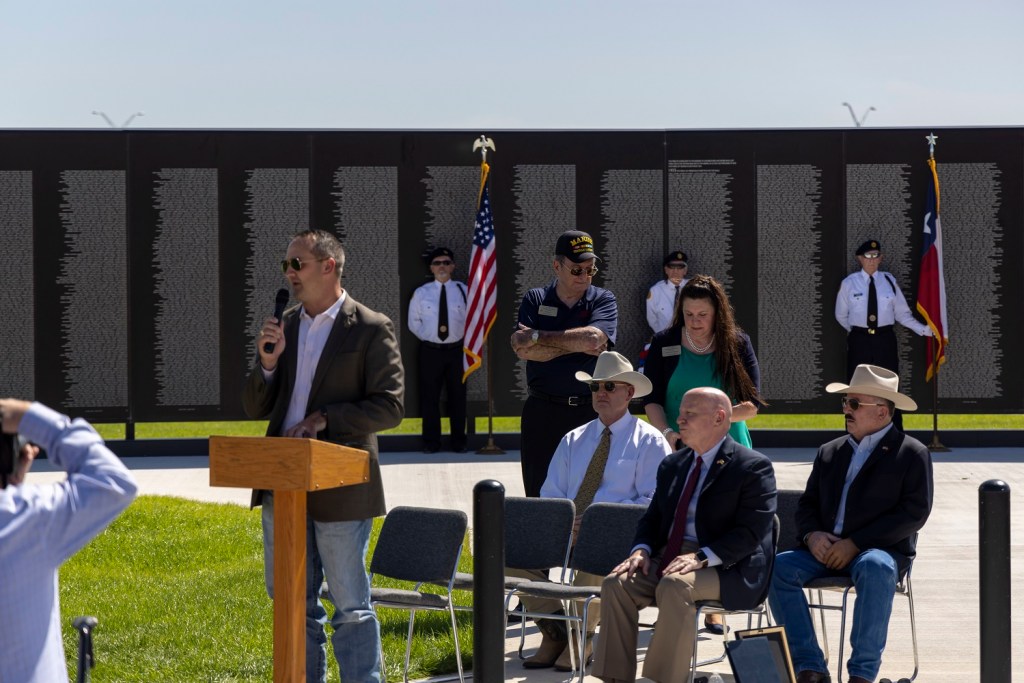
Tara Burnett, Executive Director of the HEARTS Museum, began the ceremony by thanking everyone who played a role in establishing this great asset in our community. With a beautiful and (literally) monumental new background, speakers addressed the crowd. The colors were presented and placed along the wall, and a choir led us in the national anthem.
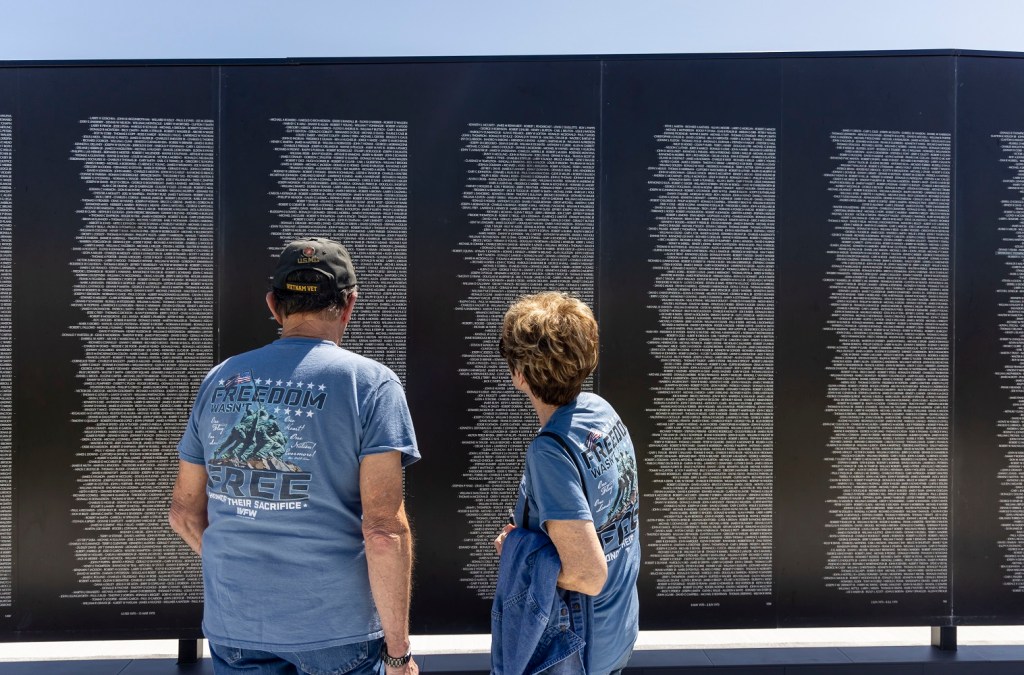
This Memorial, originally designed by Maya Lin for the DC Mall area in the nation’s capital, is an 80 percent scale model of what Americans now simply know as “The Wall.” It contains the names of all 58,000+ Americans who lost their lives while enlisted in the military during the Vietnam War, and it has found a home at the HEARTS Veterans Museum.
Ernest Bailes, our TX House member from district 18, expressed his admiration for Walker County and the Veterans who call it home.
As representatives of the City, Mayor Andy Brauninger and Joe Rodriguez read a proclamation that declared March 27, 2022, as H.E.A.R.T.S. Veterans Museum Vietnam Memorial Day. Mayor Brauninger expressed his gratitude for the H.E.A.R.T.S. Veterans Museum and their work to honor the veterans in the City.
Walker County Judge, Danny Pierce, read a declaration from the Commissioners Court thanking the museum for honoring those that served in the War.
Congressman Kevin Brady first addressed the men and women who served in the Vietnam War by thanking them for their service. He then read a prepared commendation highlighting the importance of the H.E.A.R.T.S. Veterans Museum and the work they’ve done for the community. Perhaps most notably, Congressman Brady stated that in all his time in office he has never met a county or city that honors and loves its Veterans more than Walker County.
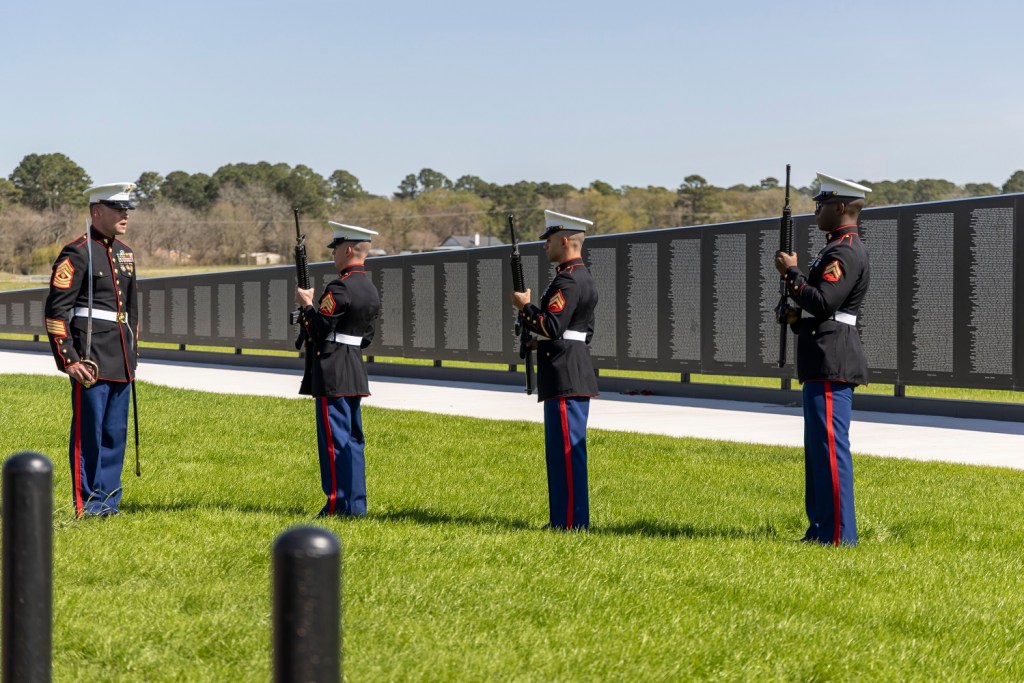
Tara Burnett thanked the donors and partners responsible for the Wall with plaques to show the Museum’s appreciation. To conclude the ceremony, “Taps” was played following a 21-gun salute.
It was a beautiful, memorable, and moving ceremony, and on behalf of the LEAP Center, many thanks to the H.E.A.R.T.S. Veterans Museum for honoring those who preserve our freedoms.
With snow having had fallen the night before, the grounds of the Carnegie Museum of Art were covered in a white blanket. But this did not deter us, as we made our way to the entrance and noticed a few memorable outdoor sculptures, such as George Rickey and Henry Moore.
We were greeted in the gallery by a staircase with a beautiful, grand, and colorful Sol LeWitt art piece along the wall. The highly pigmented colors set the tone for the rest of the museum.
As we made our way through the “Working Thought” exhibit, Millicent, a docent, pointed out a few central art pieces to us. Millicent educated us on how all the art pieces in this exhibit came together by expressing the social inequities of labor and the economy, both past and present, between the museum, Andrew Carnegie, and Pittsburgh.
The first of the four was The Band Played the Night of the Johnstown an intricate art piece carved out of basswood by Aaron Spangler. Following was the Space in Between, made out of decommissioned patrol uniforms that were embroidered to tell the stories of immigrants and labor, by Margarita Cabrera and The Triumph of Labor by Andrea Bowers. The Triumph of Labor was a play on Walter Crane’s art piece since it was made from cardboard boxes and black marker to tie together labor movements and protests.
The next room we were led into, was filled with statement art pieces. Greek gods and goddesses overlooked the main chamber where people could congregate. However, we became quickly distracted by a single statue that did not fit the mold. It was much larger, was a bit blobby without defining features, and had enormous hands, which were holding a cell phone. The contrast between classic and modern was unsettling, and a little too close to the truth.
Morgan discovered a new favorite artist: Gustave Doré, a nineteenth French printmaker and artist…
…while also seeing some of her old favorites, such as Thomas Moran and Albert Bierstadt.
Our favorite section of the gallery would most likely be their regular exhibit with all the artists we are familiar with such as Claude Monet, Pissarro, and more.
On show was a famous waterlily painting by Monet of his flower garden in his home in Giverny. Monet is one of my favorite impressionists and his water lilies are one of his most famous collections even though they were made later in his artistic career.
Professor Yawn commented that this might have been the most expensive exhibit in the gallery, because of all the notable names such as Pissarro, Monet, Van Gogh, and Renoir amongst others. These famous impressionists were revolutionary, since they painted landscapes and people as they saw them. They also changed the way art could be made through different variations of colors and how exposure to light affects them.
Erin had a chance to see her favorite artist, “her girl,” as she calls Georgia Okeeffe.
We got to see a different type of Piet Mondrian painting…
…having previously only been familiar with his geometric paintings.
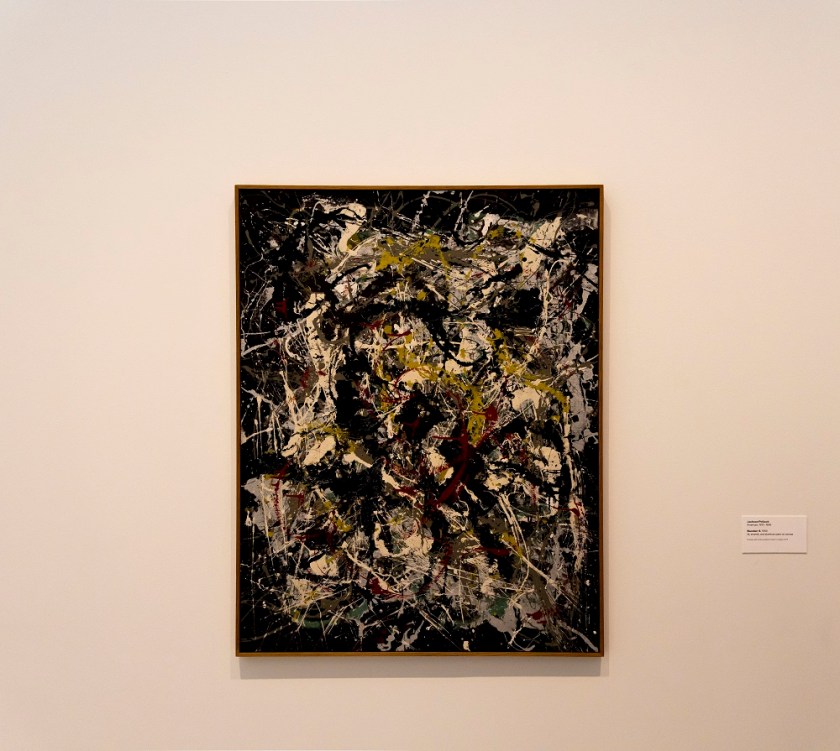
We also saw a Pollock, which Professor Yawn likes, but we haven’t warmed to his work.
And echoing back to the night before, we saw a Warhol…
…and taking us back to Austin, we saw an Ellsworth Kelly.
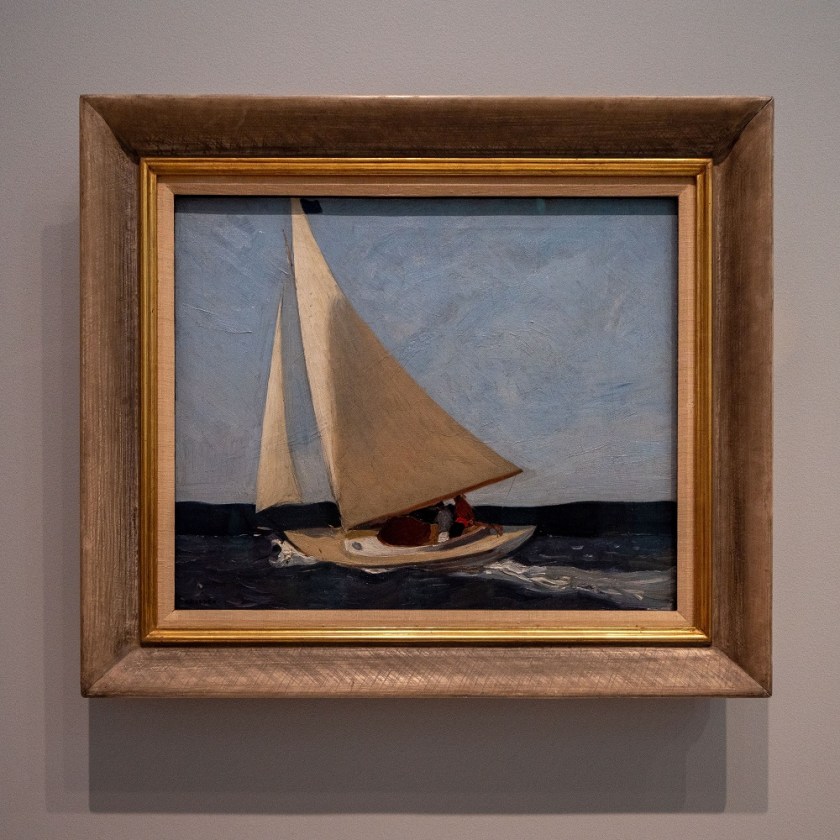
We also had a chance to see an artist we have trouble remembering: Edward Hopper. Professor Yawn tells us he is famous, and he tries to explain some of the distinctive features of his work (green and blue tints; a theme of loneliness), but it has not yet sunk in.
On behalf of the LEAP Ambassadors, we would like to thank Millicent for the “tour.” This was our first time at the Carnegie Museum of Art, and we enjoyed our time visiting.
Cathedral of Learning and Pittsburgh Glass Center
Yvette Mendoza
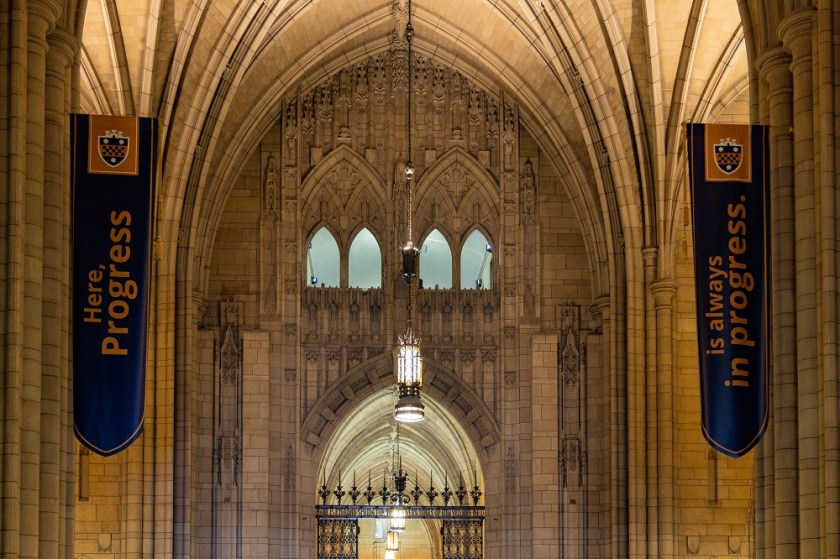
As we drove through the frosty, white-covered Pittsburgh, it was impossible to miss the beautiful Cathedral of Learning. We braved the slight flurries of snow and made our way along the path to the Cathedral entrance, we got an even better view of the intricate details of the skyscraper. The height of the cathedral was amazing!
Not being able to pass the inside entrance was indeed a teaser as we looked inside from the door. To our right in the distance is colorful stain glass. We were fortunate enough to at least catch a glimpse of the enormously high ceilings. Although we got only to see a tiny part of the Cathedral of Learning, we enjoyed seeing the bit we saw.
While we didn’t get to see the Cathedral as fully as we would have liked, we did have another quick stop, but this time at Pittsburgh’s very own blowing glass center.
We encountered a small exhibit through the Pittsburgh Glass Center that incorporated different, fascinating glass-blowing techniques! One has applied a tryptic method, and others used the finest techniques to create thin glass that interconnects.
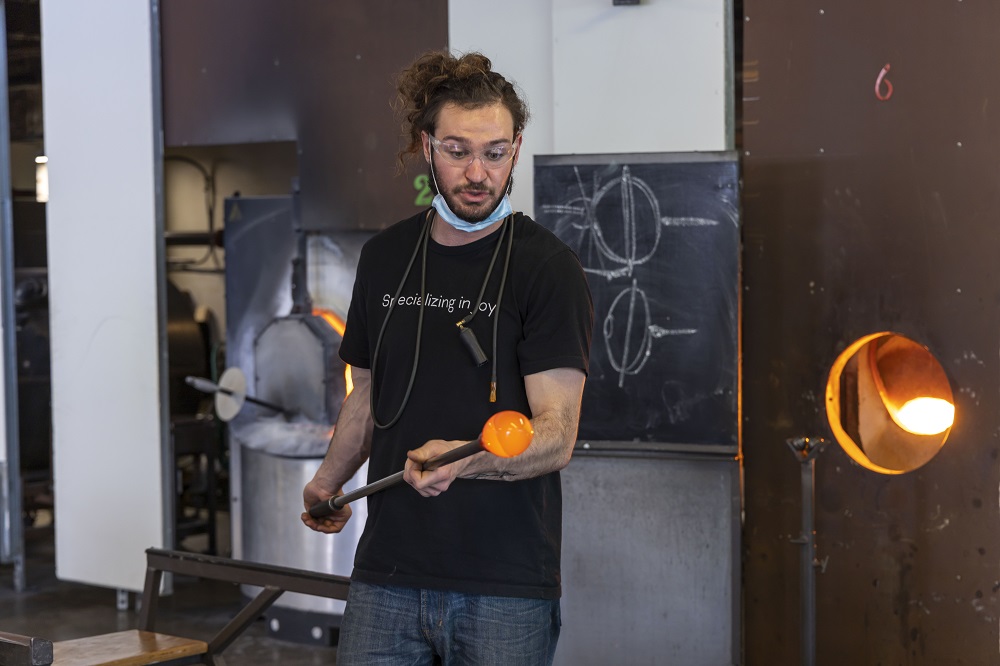
In addition to seeing a small glass gallery, we had the opportunity to attend a glass blowing workshop. Our glasssmith, Sam, left us mind blown at how he managed to go from what looked like a small bowl to a flat glass cheese plate! Each of us grew a great appreciation for glassblowers.
Each detailed step used to create glass artwork is very intricate and later leads to the breathtaking final product.
We were able to finish off our snowy day in Pittsburgh, by driving to a local theatre, which had commission a mural by Richard Haas.
Haas is of particular interest to us because he has done 15 murals in Huntsville. We’ve all seen his Fort Worth piece, but for the Ambassadors, this was the first we’ve seen of his outside of Texas.
Fallingwater
Yvette Mendoza
As the art of Pennsylvania flowed into our hearts, our last stop may be considered the best work of art we saw: Fallingwater, by Frank Lloyd Wright. This piece of architecture is not solely a home but a piece of art within the breathtaking natural surroundings. As we walked through the snow alongside a natural spring water stream, we were eager to see the notable home. As we approached, we heard the rushing water, and the closer we got, the more it was like a gift that couldn’t yet be opened. Then, at last, we were in complete amazement to see the light reflecting off the snow shining on the crystal-clear waterfall that flowed out of the home.
Frank Lloyd Wright was a renowned American architect who created Fallingwater for the Kauffman’s, a wealthy family with the largest department store in Pittsburgh. Edgar Kauffman wanted a home for his family that would act as a a getaway from the hustle and bustle of life. Kauffman selected the family’s favorite picnic spot, and it turned out to be not a bad “summer home.”
Wright achieved not only the vision of Kauffman, but also of what he thought would best reflect the nature. He planned for every rock and tree, how they were placed and how they grew. Through this knowledge and talent, he constructed a home that incorporated every bit of nature, creating an organic composition. Wright used a technique called compression and release, by which the narrow hallways lead to grand, open spaces.
Walking to the hidden entrance, you could see how Wright incorporates cantilevers from the outside into each room. With the primary goal of creating a space of comfort and gathering, he emphasized that the heart of a room is the fireplace. There would be Japanese-style seats around the fire closer to the ground and nature. Wright incorporated other parts of the furniture that were created to open out to have a larger seating space or more oversized buffet table.
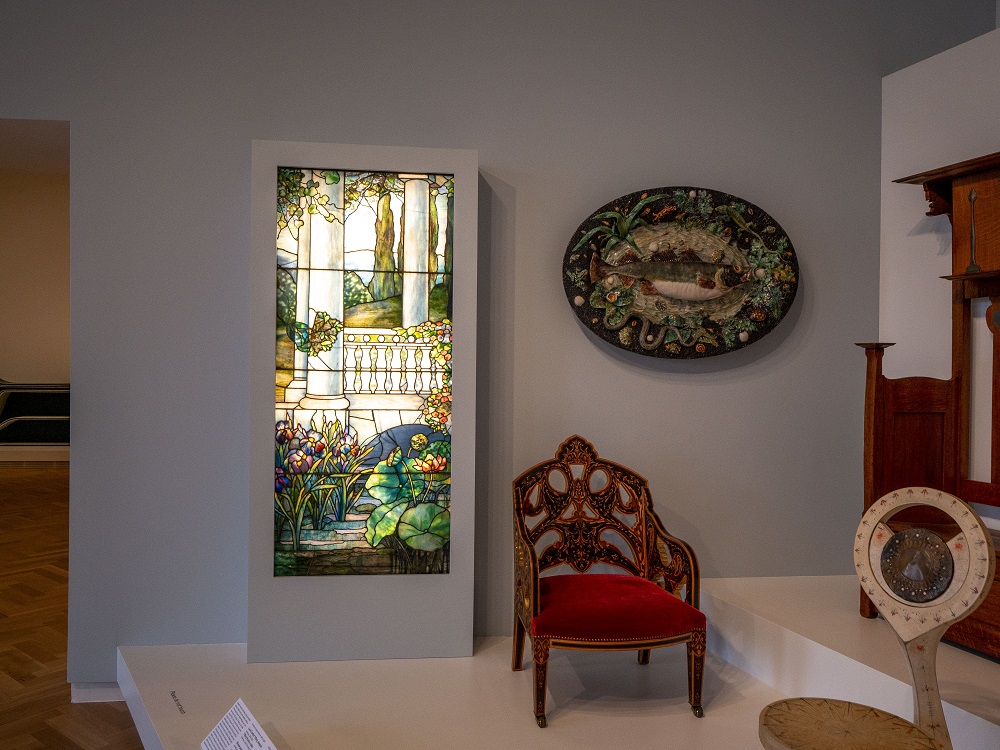
Each room had exciting features, including the outside rocks being exposed inside the house. We were amazed by the interior and exterior design of the house, but we also encountered notable artwork from Picasso, Diego Rivera, and Tiffany glass!
Diego Rivera art work in Falling Water, Frank Lloyd Wright’s art work
Any homeowner might notice the lack of gutters on Falling Water. The circular edges of the roof allow for water to cascade from the roof, through drains in the balcony and into the river below.
The concept of falling water was incorporated within every part of the home. Specifically, the rolling sound of the water can be heard upon entering the family room, at the main house. At the third level, what would have been servant lodging, the water is almost impossible to hear. The staircases leading up to the top of the home replicated the cascading water movement. The design of the water flowing out of the home is seamless and left each one of us in shock of its beauty of connectedness. Wright created a house of unity and tranquility, and with that, the LEAP Ambassadors were beyond grateful to have been in the heart of Falling Water.
Dinner at Tsunami
Erin Juarez
We stopped for dinner at Tsunami, a ramen restaurant, after being on the road for nearly four hours. Nestled in downtown Frederick, MD, Tsunami was next to well-lit buildings with a nice view of their central shopping area.
We went over the menu after being seated by their polite staff to see what piqued our interest. We had shrimp and scallop pot stickers, spring rolls, and spinach and goat cheese dumplings to start.
Which were, of course, delightful. Our supper had everything from miso to chicken ramen, although one outlier order fried chicken–at a Japanese restaurant!
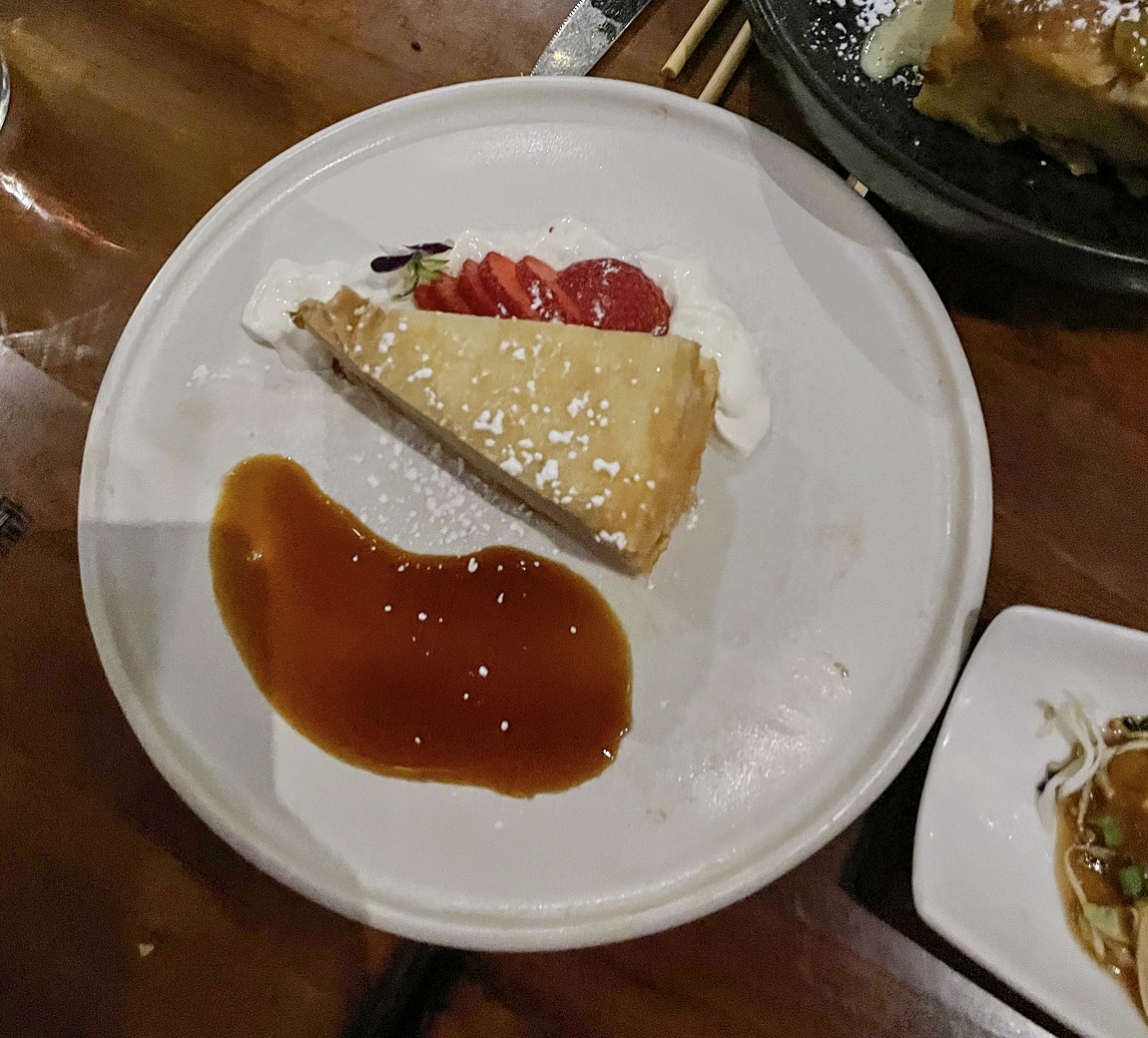
We still had room for dessert after finishing our meal! We had a croissant pudding and a crepe cake for dessert.
Our desserts weren’t our only treats: Victoria shared with us about law school, the LSAT, and just life away from home, a trove of information for us as spiring law-school students. It was a pleasant dinner, and we very much enjoy hearing and taking in advice from someone who has walked in our shoes.
After dinner we headed back to the car. Since the car was parked a few houses down, we were able to walk through part of downtown Frederick by the and admire the structure of the colonial buildings. As the night got colder, and everyone was so eager to get to Washington DC, we once again set our sights towards D.C.!
We learned a useful lesson today: Man Plans, God laughs! Our original plan was to place our lunch order well ahead of time so that our advisor could meet us once we landed in Pittsburgh. In this manner, we could drive directly to Frank Lloyd Wright’s Kentuck Knob, so that we could get in before tours closed.
Our flight, however, was an hour late. So, we had to cancel Kentuck Knob, and go to our backup plan, which had, fortunately, been thought of in advance. The upshot was that we ate in the car. We ordered from the Mayfly Deli and wanted food that would travel well, so all the LEAP Ambassadors ordered chicken salad sandwiches, while our advisor had pepperoni and provolone, and Victoria had a prosciutto sandwich. The food was great! Even though we didn’t have a chance to eat for a couple of hours after, our choices from Mayfly held us over.
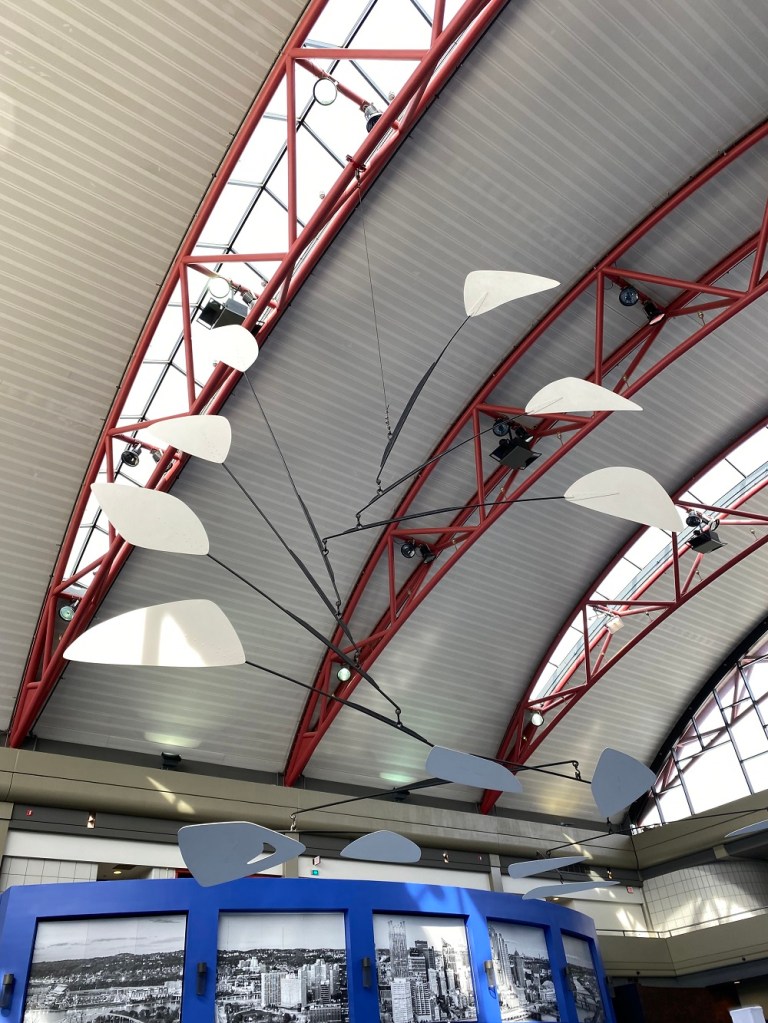
We even passed the first test of the trip: spotting the Giant Alexander Calder in the Pittsburgh Airport!
We were all surprised by the nice weather and did our best to savor the sunshine (as we soon learned it would not remain that way for long).
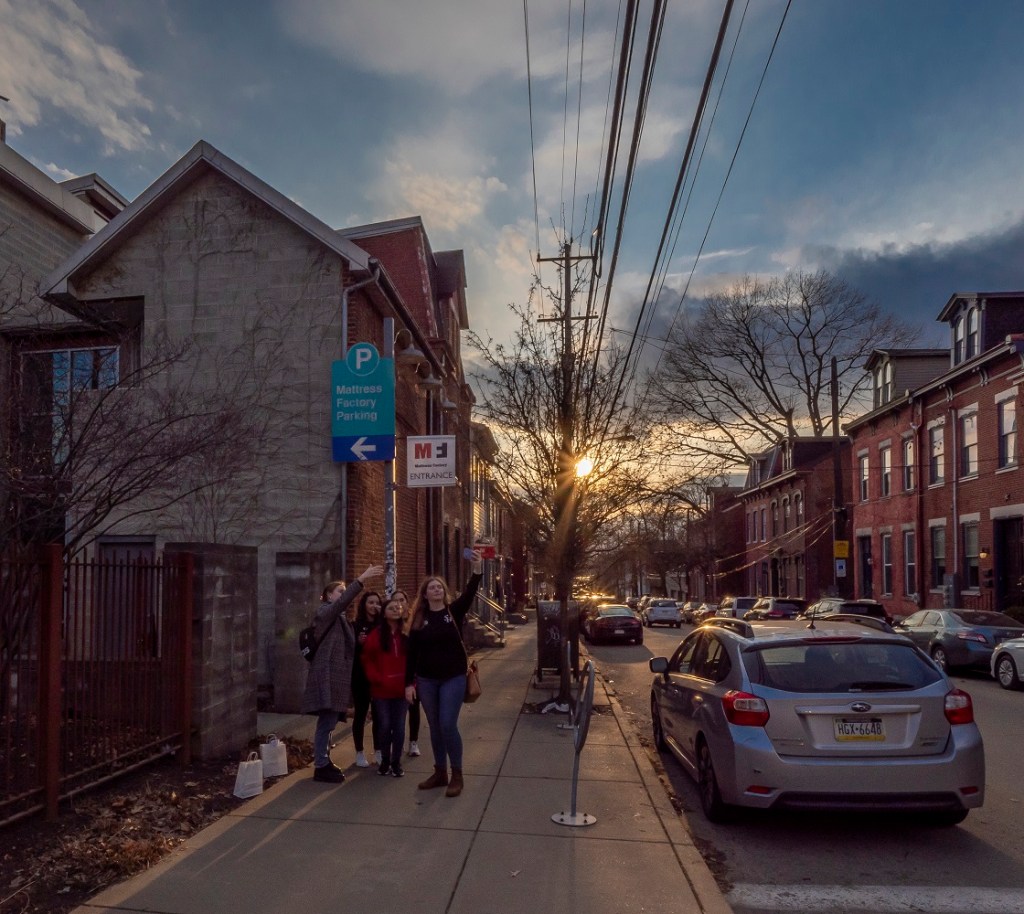
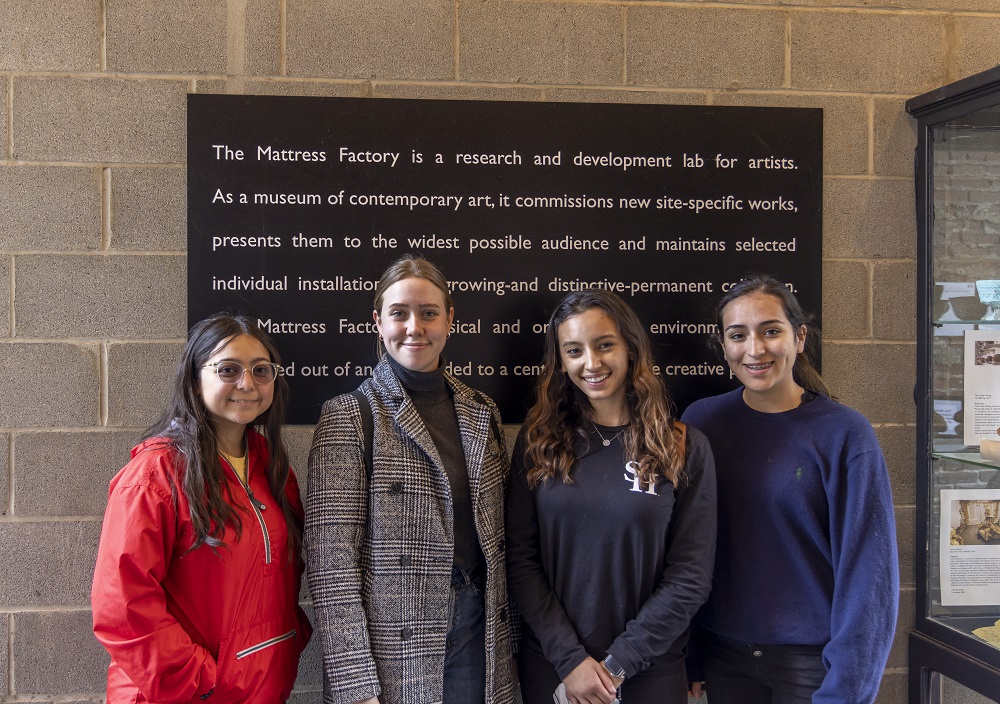
The Mattress Factory was located in a quaint, and seemingly vintage part of Pittsburgh, blended in nicely with the surrounding structures. However, the exterior of the contemporary art museum was where the similarities ended. The museum was divided into three different buildings, each one within walking distance of the next. While we traveled from building to building, the juxtaposition of the modest townhomes and brick roads, to eerie and dramatic pieces, became more pronounced.
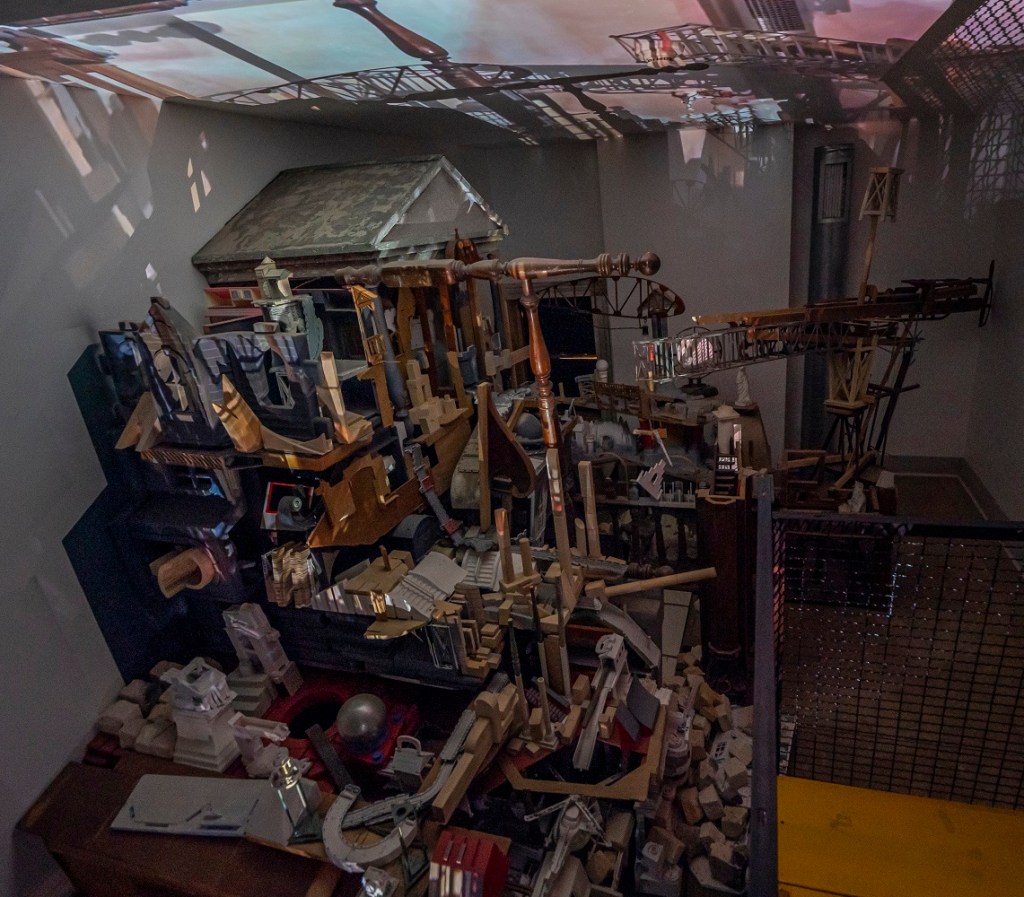
The first building was dedicated entirely and stretched over three floors for one piece entitled A Second Home by Dennis Maher. Made from salvaged architectural items and various trinkets of everyday life, Maher combined each piece in a way that created a dynamic flow of the room. Some aspects of the “Home” were intentionally lit well to showcase its intracity, while others were nearly pitch black and nearly impossible to make out distinctive shapes.
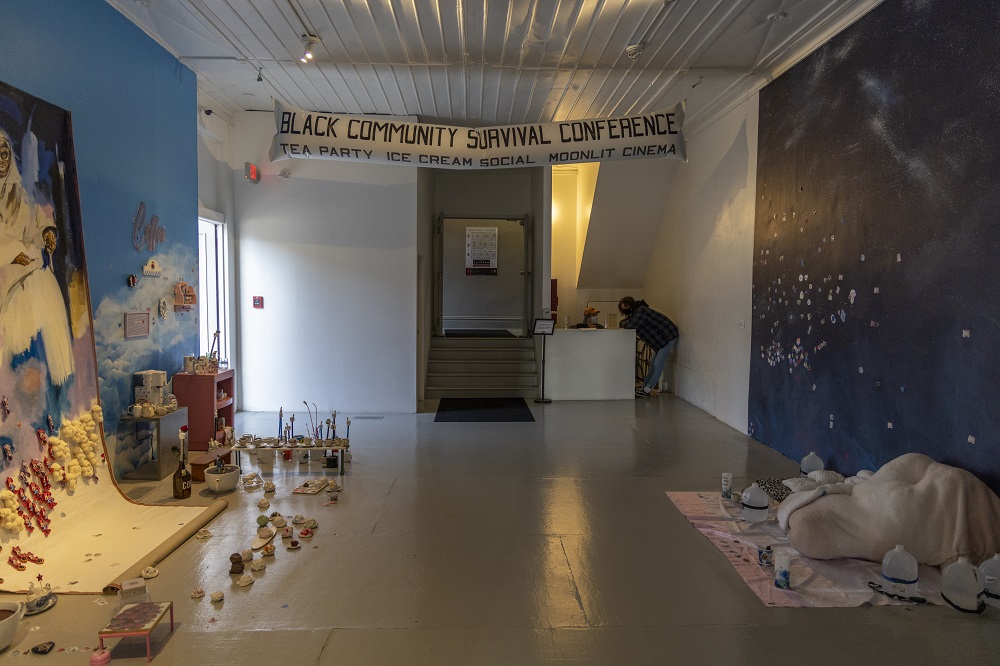
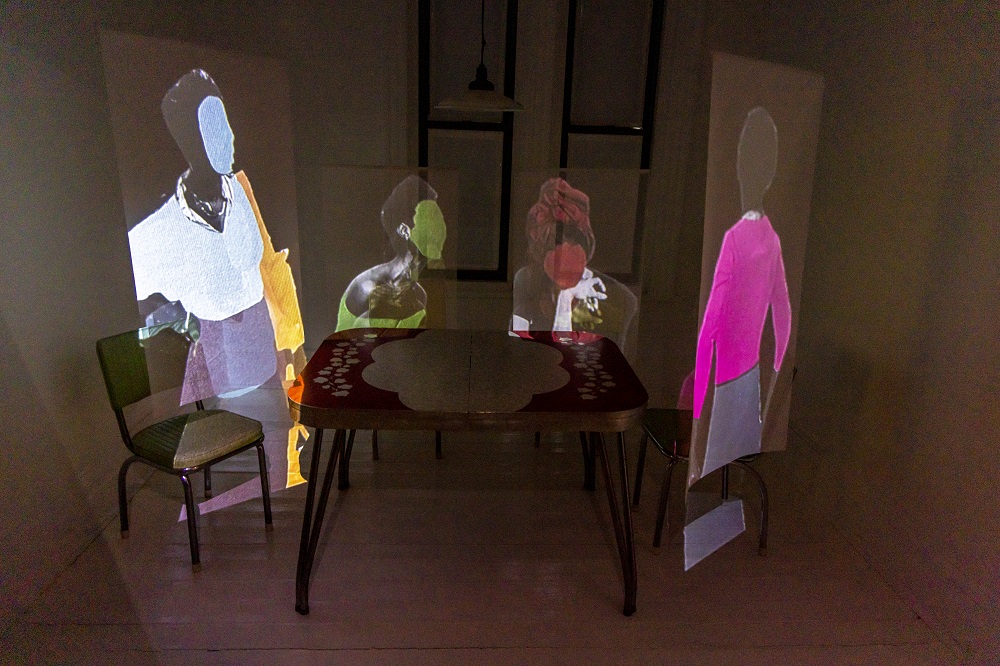
Other exhibits included several representative pieces that took the form of projected images on what appeared to be cheesecloth or 3-D figurines placed in detailed manners around a central focal point.
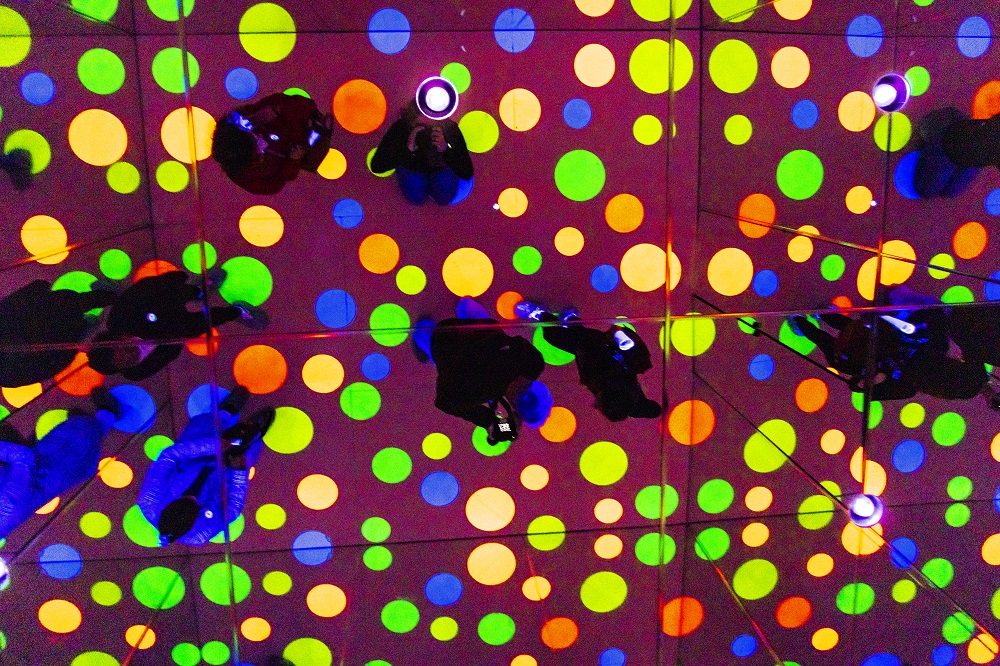
In the form of viewing rooms, Artist Yayoi Kusama placed a focus on lighting and the use of polka-dots! The first room we entered was entirely made of mirrors, and was dark, save for the reflecting dots that appeared to move around the room. The illusion created by the mirrors added space to the room and created a sense that the room was endless.
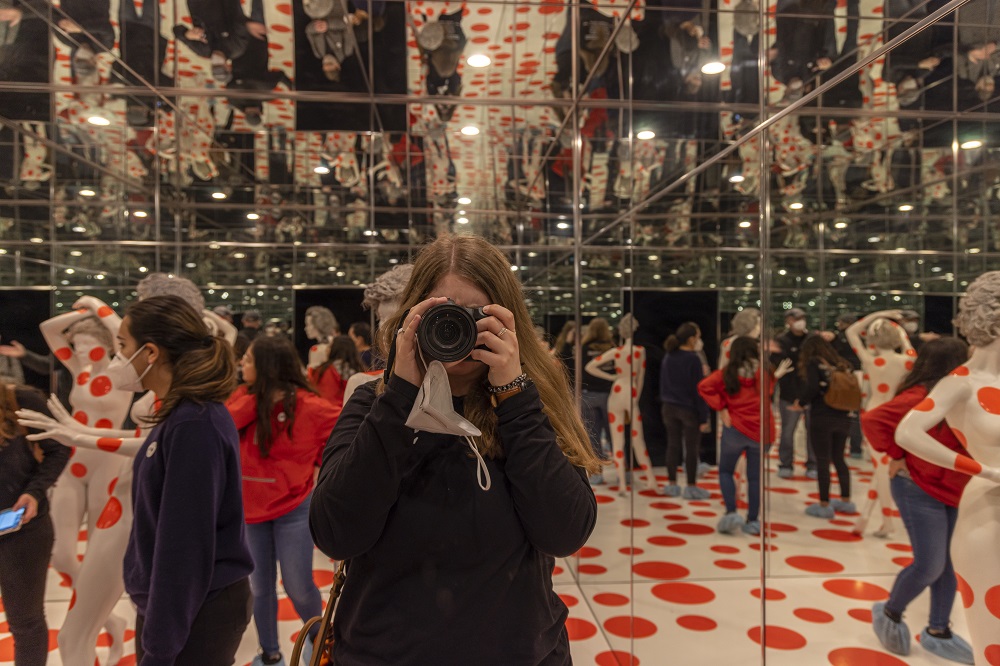
In complete contrast to the darkroom and multi-colored room, we then entered a white room with red polka-dots covering the surfaces. This room contained three posed mannequin-like figures, also decorated in a white and red fashion.
We continued our tour with more viewing rooms involving light, but this time by an artist we all recognized: James Turrell. The largest of the rooms we ventured into was lit by violet/purple lighting. The concaved wall appeared to narrow as it moved backward. The darkest, and probably the most enjoyable of the Turrell light experiences began with a narrow hallway leading to a small viewing room entitled Pleiades. Some of us were able to make out the shape of the light, whereas others were not. We later learned that to properly view the exhibit, the viewer must wait fifteen minutes in front of the piece.
The Mattress Factory offered several new perspectives on contemporary art, and while I might have an answer to every “why” question regarding artistic designs and choices, the style and movement itself became clearer after our visit.
Ambling through the Andy Warhol
Erin Juarez
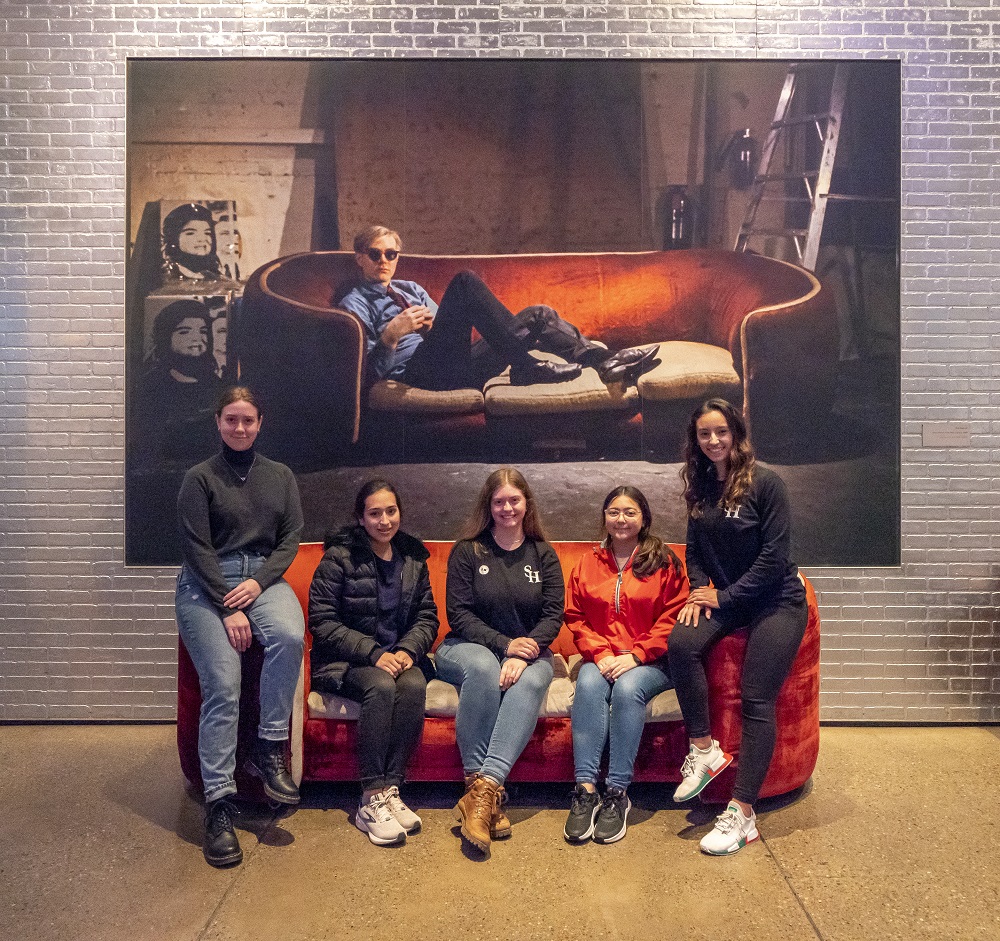
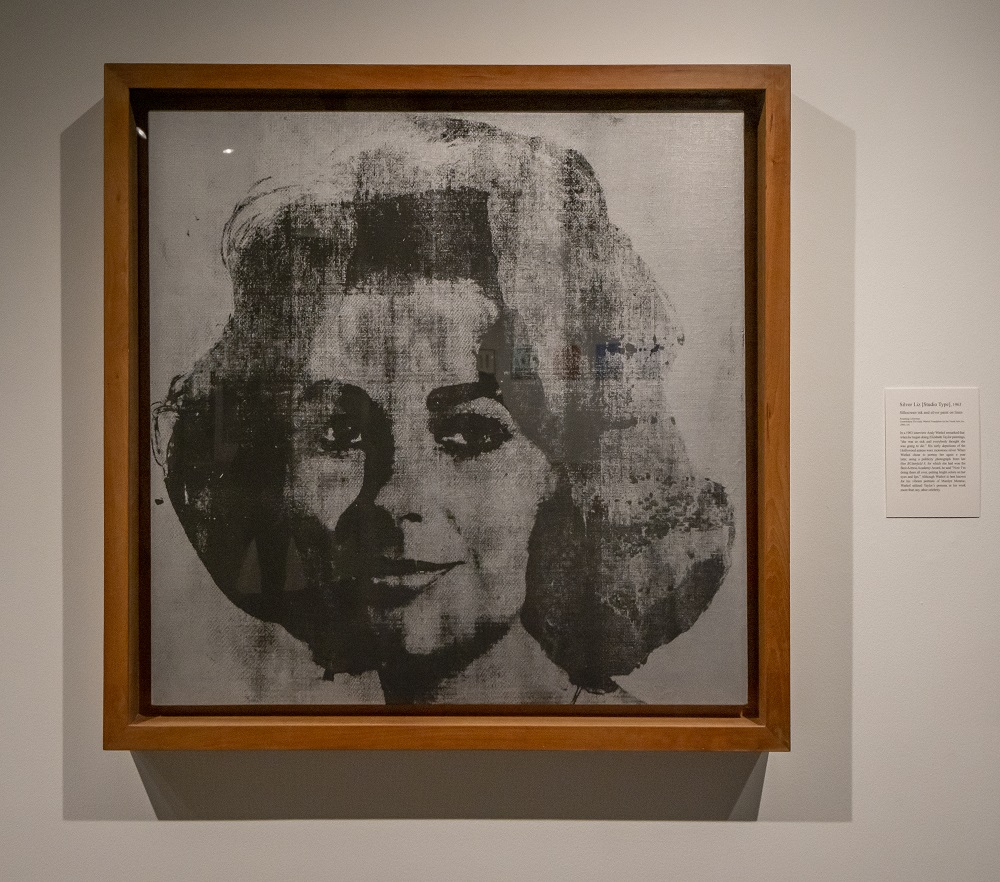
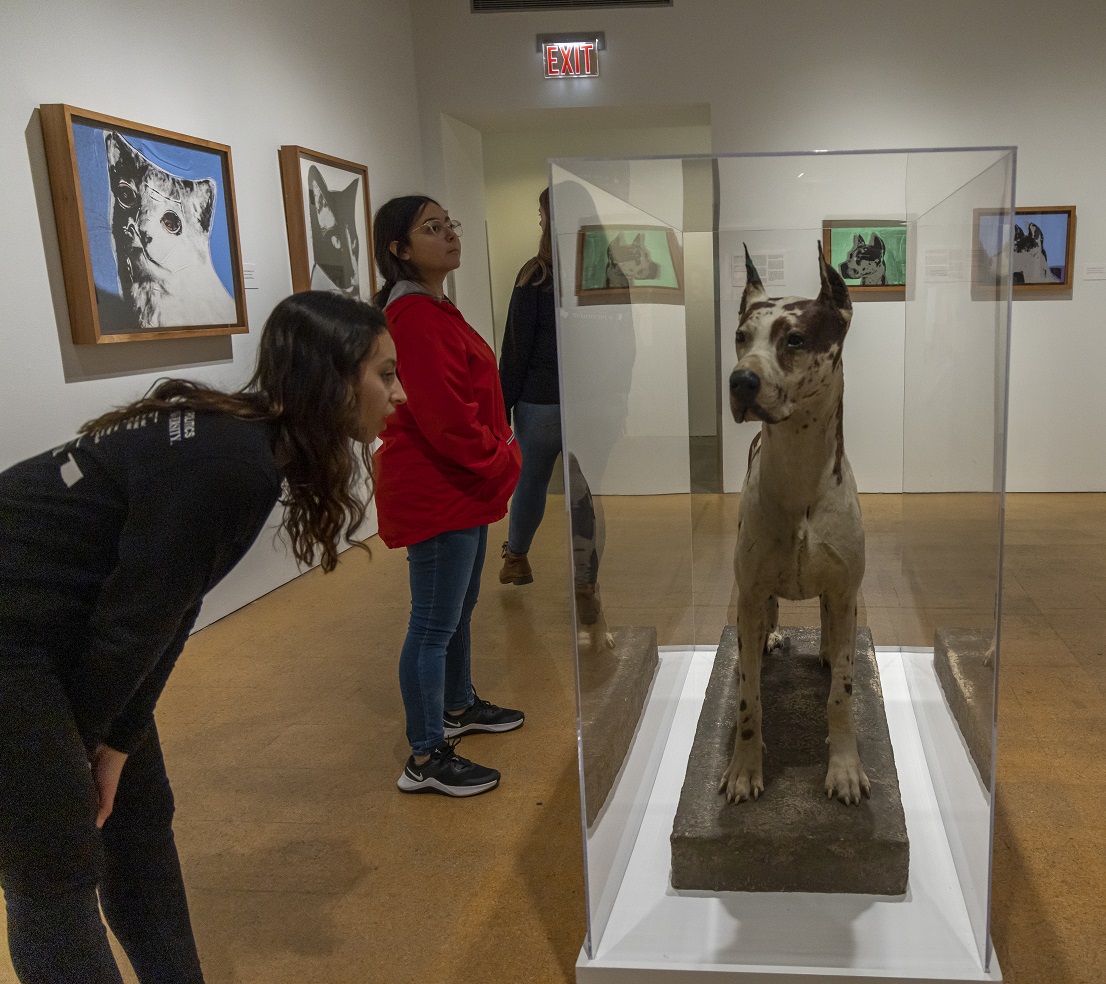
One of Pittsburgh’s famous sons is Andy Warhol. We had the opportunity to visit the Andy Warhol Museum in Pittsburgh, Pennsylvania. The museum holds the largest collection of his artwork and archival materials, ranging from drawings to sculptures and to taxidermized animals! It is also one of the largest museums dedicated to a single artist in North America, and it boasts an extensive permanent collection of art and personal archives from Andy Warhol.
The museum has seven floors. We followed the instructions from the young woman at front desk, took the elevator to the top floor, and began to work our way back down via the stairs. We were able to see Pittsburgh’s influence on the young artist, and how the city looked when Warhol was there. The seventh floor began with some Warhola family history (born Andy Warhola, he later changed his name to Andy Warhol).
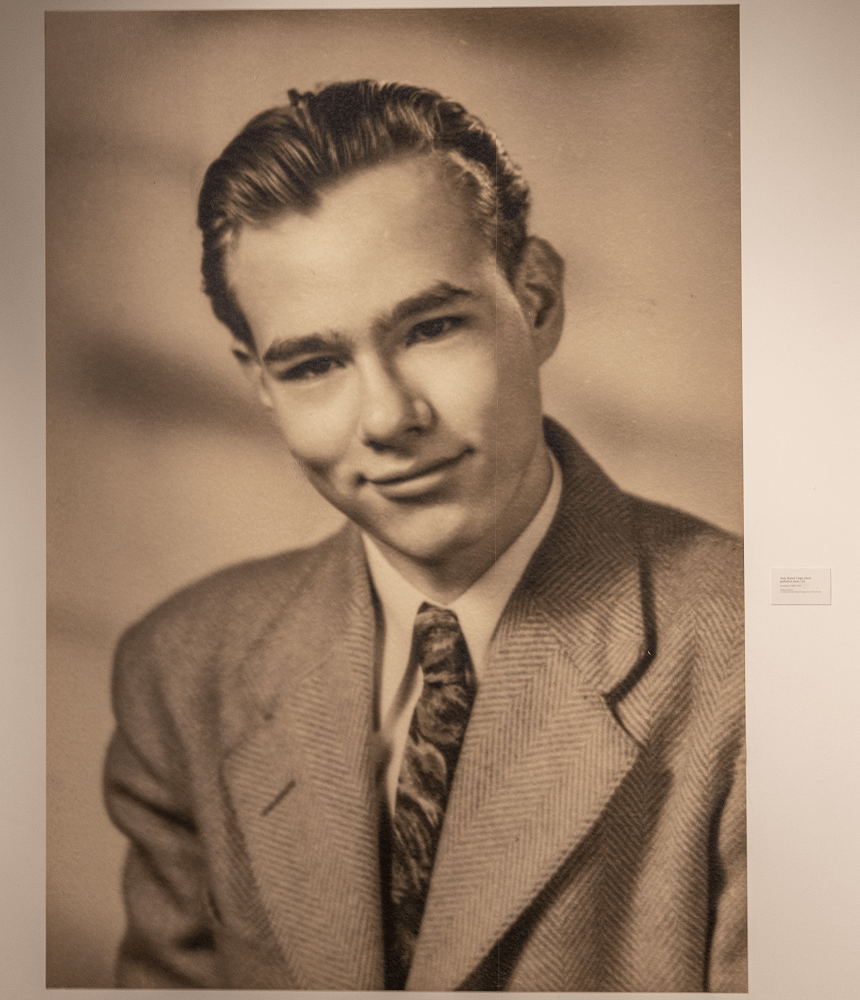
Andy Warhol’s High-School Yearbook Photo
Even at the age of fourteen, the artists distinct voice is visible.
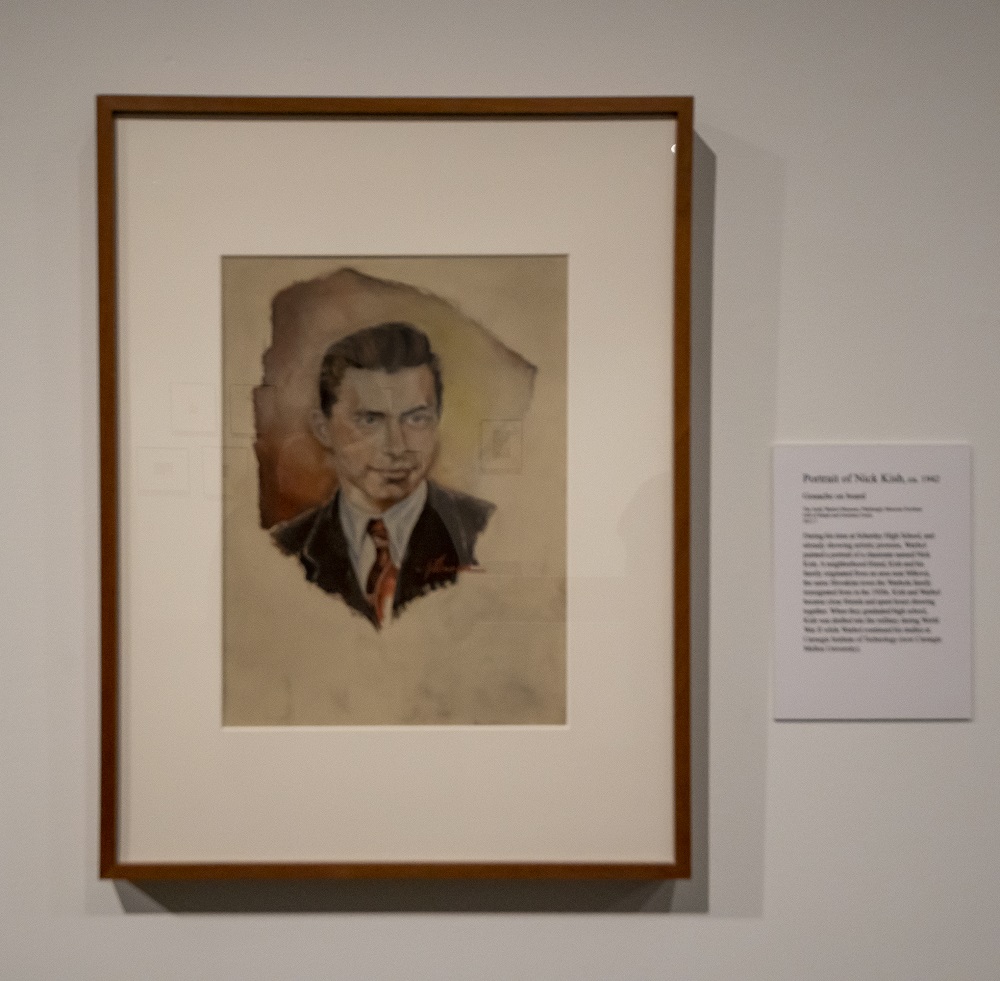
An Early Warhol Work, Completed at the Age of 14
The early art school sketches are shown on the seventh floor, not nearly as colorful as his more recognizable works.
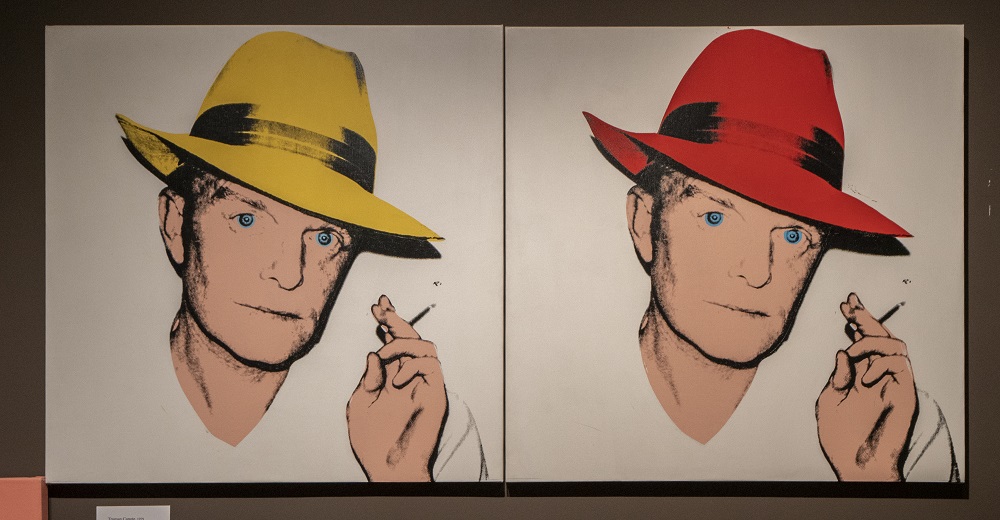
Later in his career, Warhol found his niche. He enjoyed making ordinary objects the focus of his art and making them “pop” with repetition, bright colors, large size, and striking contrasts.
He was also known for his short films which were similar in that they oftentimes portrayed his subjects doing ordinary things on camera repeating on a short loop.
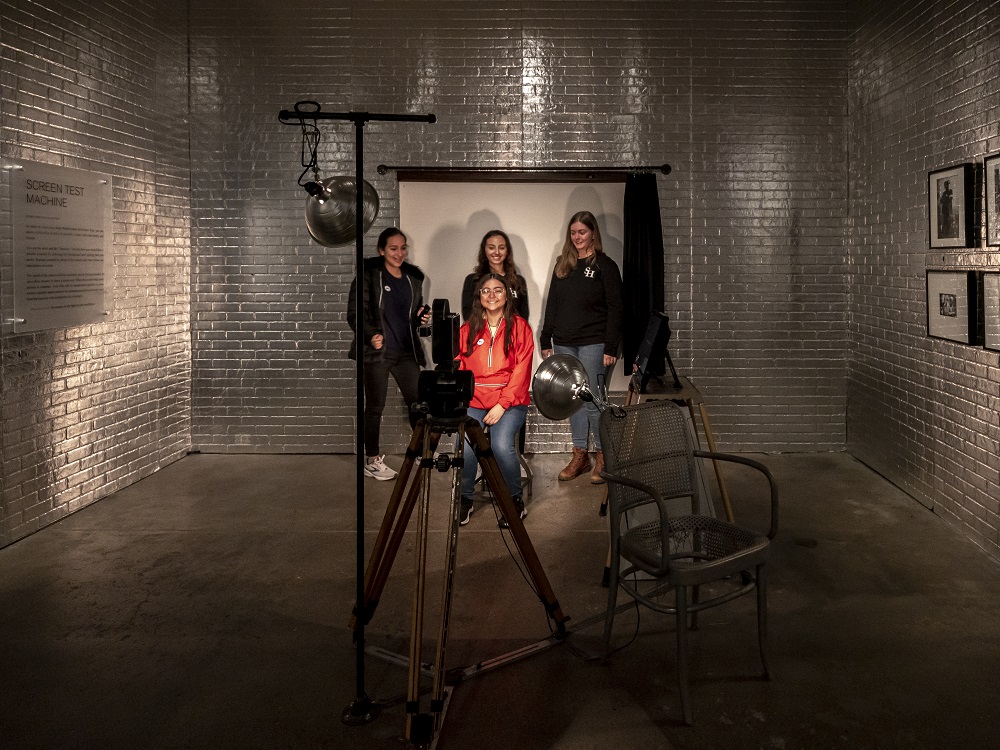
One small interactive part of the Warhol experience was a screen test area that is tucked into a corner of the museum and set up to look like Warhol’s silver film studio—so named because it looked as if the walls were lined entirely with aluminum foil. We hopped in front of the camera to try it out, but it quickly became clear that we lacked the on-screen presence of most of Mr. Warhol’s other subjects.
Another interactive experience that we enjoyed at the Warhol was the Silver Clouds. The piece consists of about a dozen pillow-shaped helium-filled metallic balloons hovering in a large, dark room. The balloons are filled with a proprietary mixture of air and pure helium which ensures that they will not all stick to the ceiling but will instead float around and hypnotize the viewer.
We were able to walk in and playfully bat at them as they floated around our heads. We were mesmerized.
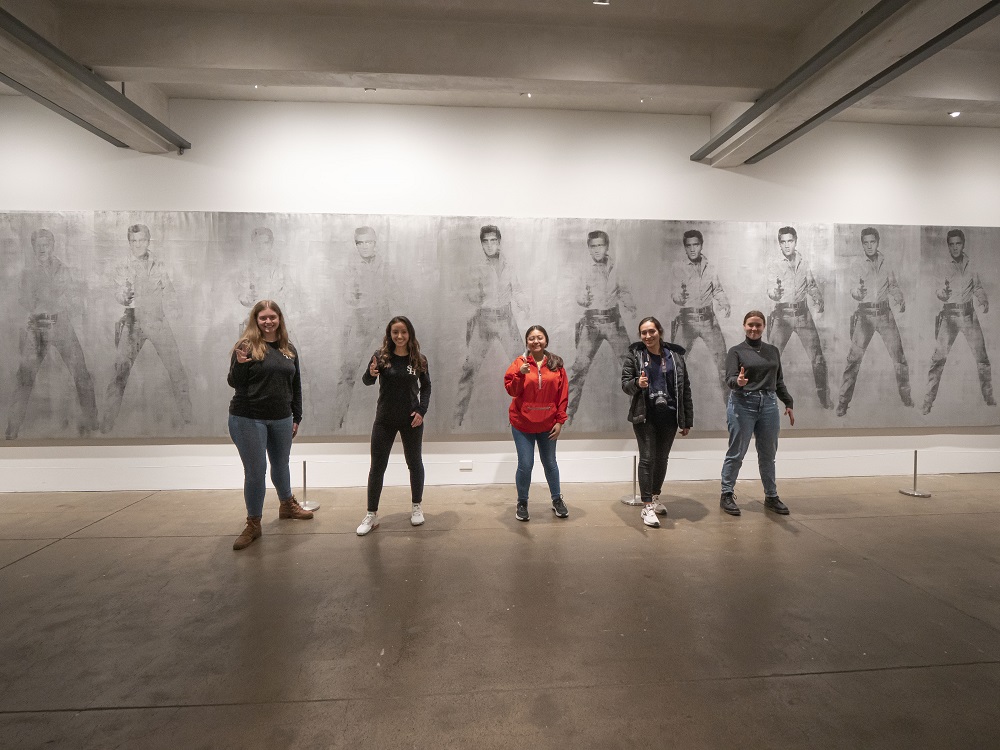
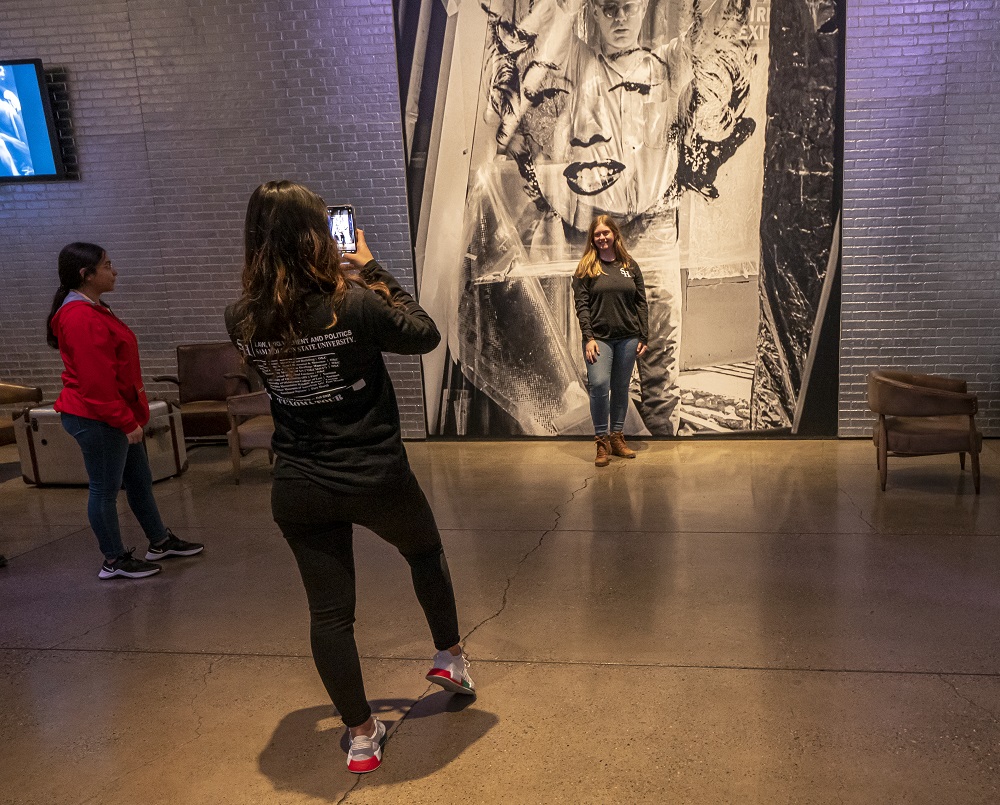
On one floor we came upon a huge painting of Elvis fully decked out in western wear and appearing to be just about to fire the pistol he aimed at the camera. This was Victoria’s favorite piece. She mentioned to us that she’d had a huge crush on Elvis when she was ten years old, and so we all lined up and took a photo imitating his pose.
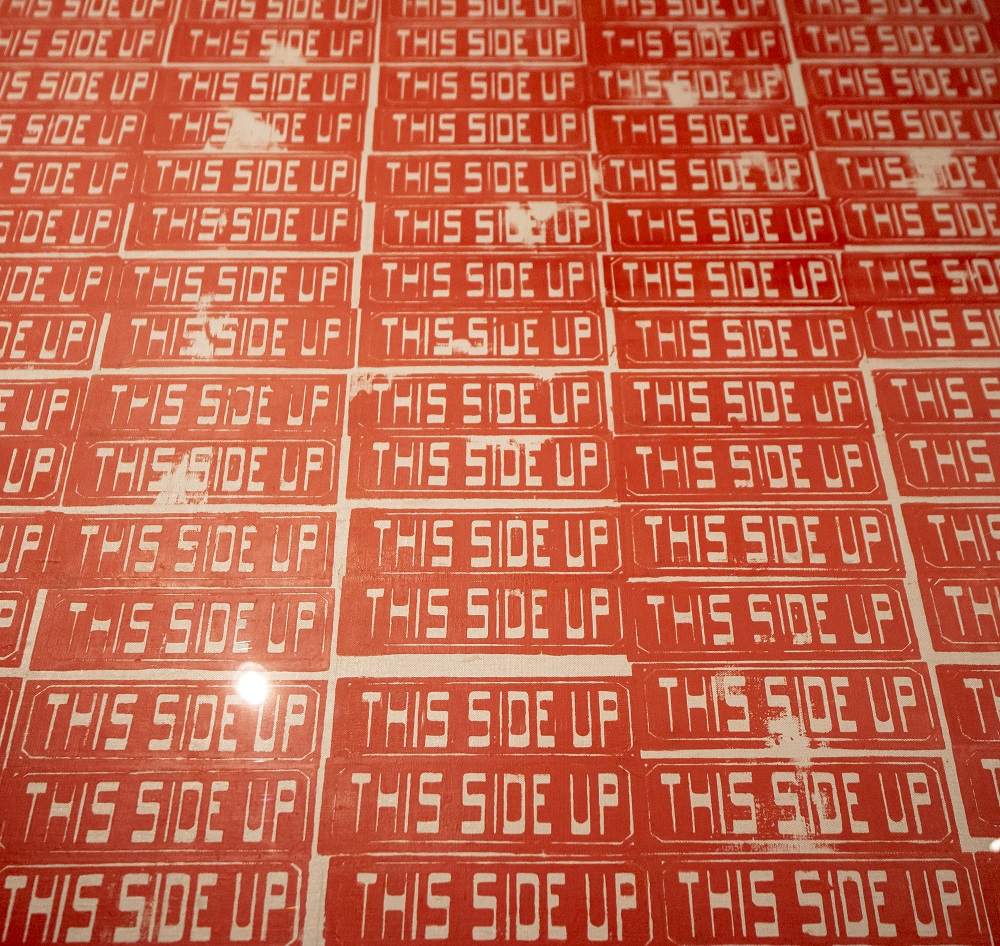
Morgan enjoyed a larger piece that included a composition of packing labels and was able to snap a nice photo of it!
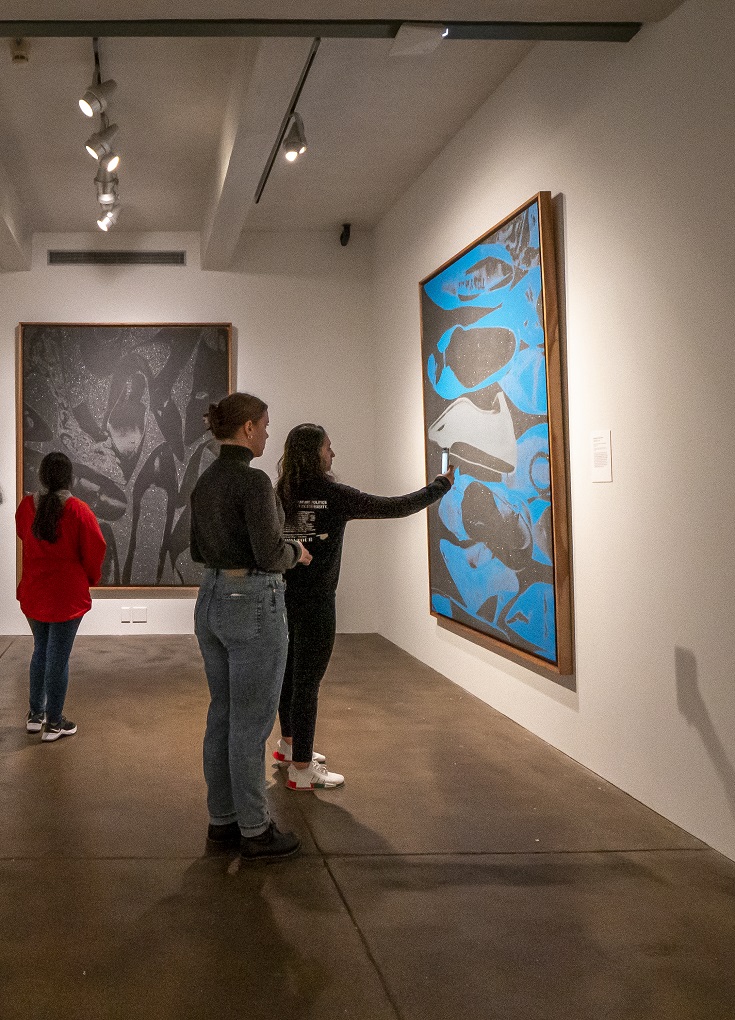
Others enjoyed Warhol’s many works depicting shoes, particularly those that employed “diamond dust” to create a sparkly visual effect.
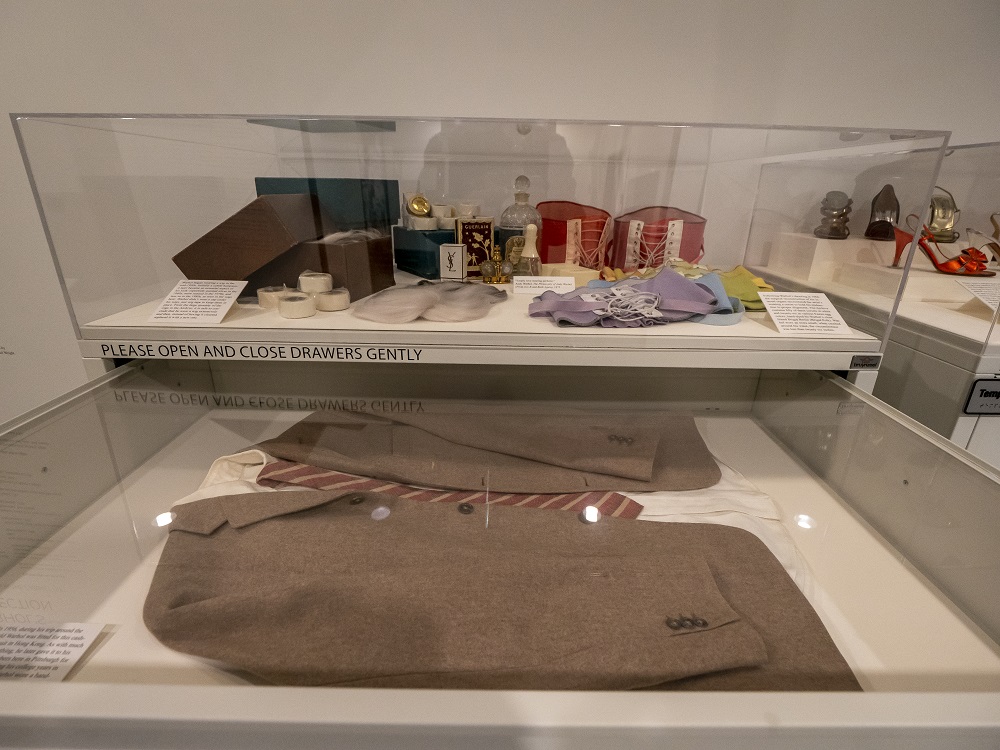
Yvette’s favorite area in the museum was the sixth floor which houses the museum’s archives. It was here that the more minute details of the artist’s life were spelled out to us. We were able to see some of his belongings such as his wigs, shoes, and his corsets.
The museum has several wigs worn by the artist, all in the same style and color. Mr. Warhol liked to wear one wig, and rather than have it cleaned he would simply replace it with another.
Warhol was shot during an attempted murder in 1968 by Valerie Solanas because she believed he was going to steal ideas from a manuscript she had sent him. After the attempt on his life, he had to wear corsets to help keep his internal organs in proper alignment, and these were also on display in the archives.
These accessories showed us some of the smaller, more intimate details of his life and we felt as if we might have known him personally after leaving the archive floor.
We loved The Andy Warhol Museum and enjoyed the vastly different compositions. The museum does a fantastic job showing the stages of his life and how he developed over time as both an artist and a person.
After ending up back on the first floor we spent about ten minutes meandering through the gift shop and then headed on foot to our next destination, dinner.
Dinner at Max’s Allegheny Tavern
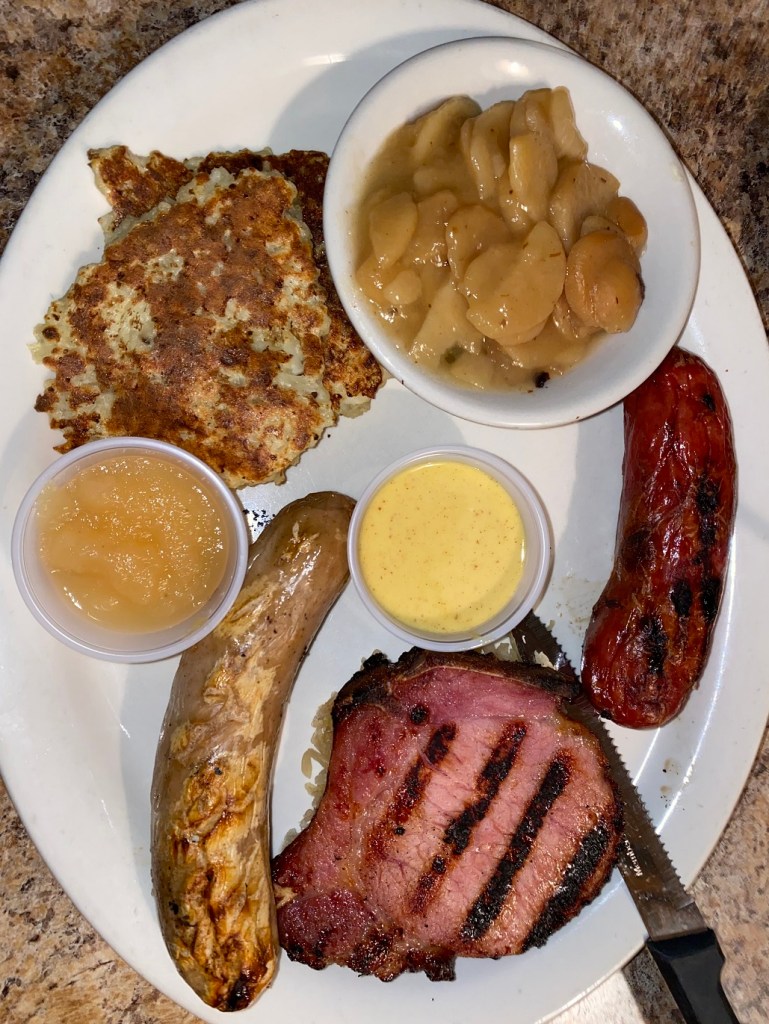
Victoria suggested that we eat at an “old World” restaurant, Max’s Allegheny Tavern, and it was a good suggestion. We began with stuffed pretzels and pierogis, which were excellent.
We also did a good job of trying different entrees. Some were heavy on meat and sausage…
…well, actually, most of the meals were heavy on meat and sausages!
…but, for the most part, the meats were different. No clear consensus was made on which of the sausages was best, but the group generally did not care for liverwurst. When all of these calories were followed by even more calories in the form of dessert, then we welcomed the long walk back to the car–even though it was beginning to snow!
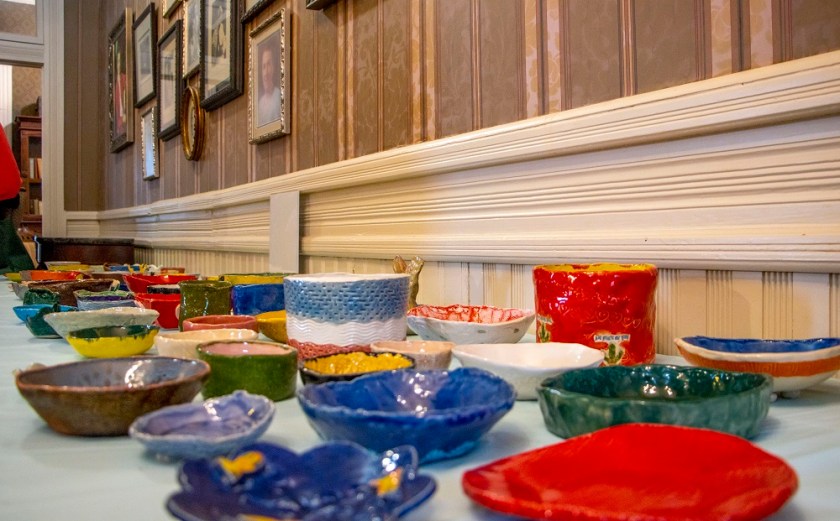
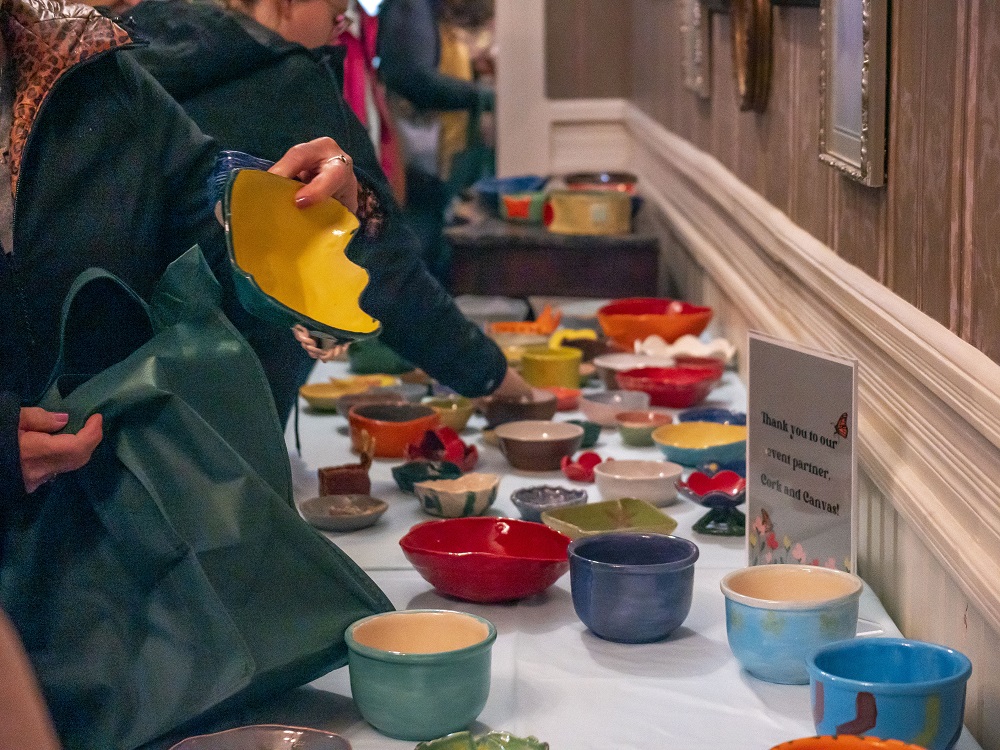
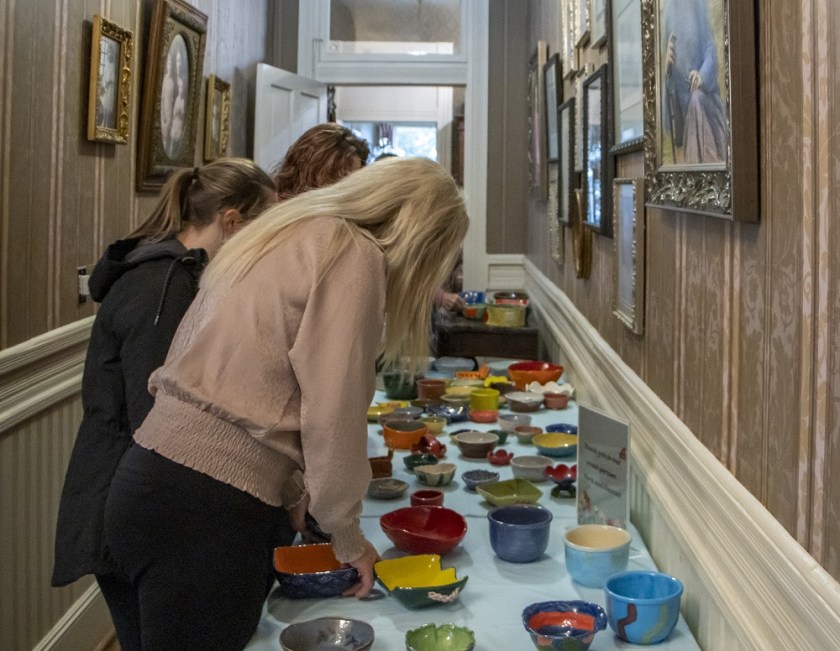
Every year since 2008, the Wynne Home Arts and Visitor Center has hosted “Empty Bowls,” a fundraiser that helps fight hunger in Walker and Madison Counties.
Supervised by Sarah Faulkner, the Cultural Services Manager for the City of Huntsville, the event promoted the arts, brought the community together, and raised more than $3,000 for Meals on Wheels.
And every year since 2008, the LEAP Ambassadors have volunteered for this event–indeed, it was a LEAP intern who was charged with creating the event!
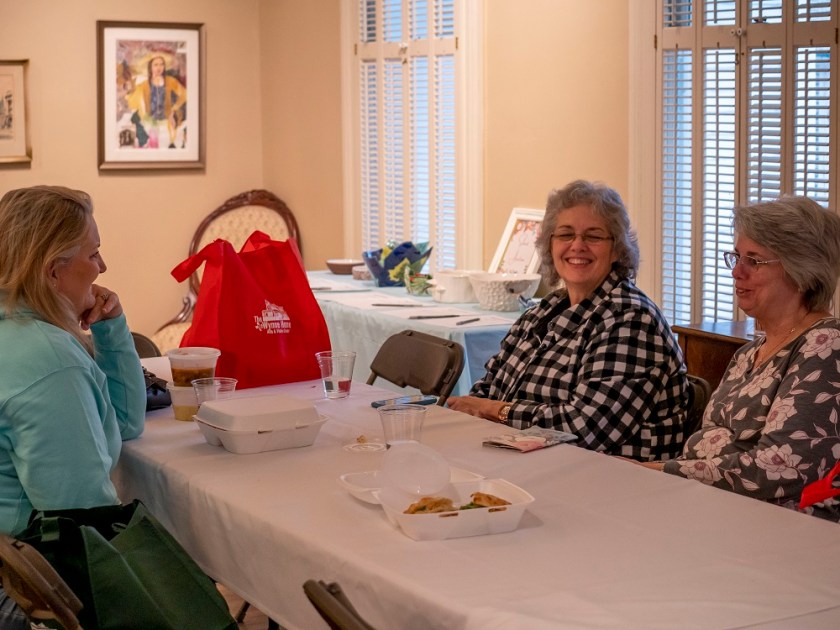
But LEAP Ambassadors were far from the only ones to help: approximately 250 people in the community participated–working as ceramic teachers, volunteering the day of the event, sponsoring the soup, or simply by showing up and purchasing a bowl of soup.
Compared to the ceramicists and soupmakers, our tasks were simple: greet people…
…serve soup…
…help clean, and take photos–all while enjoying the art, the Wynne Home, and the company of the fine people who attended.
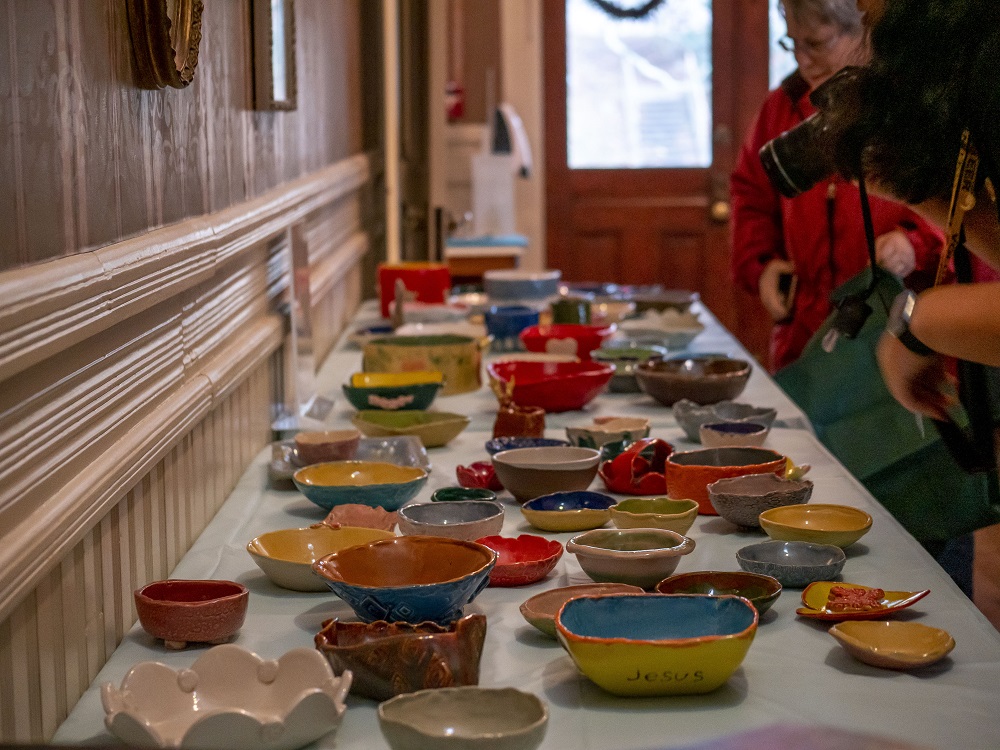
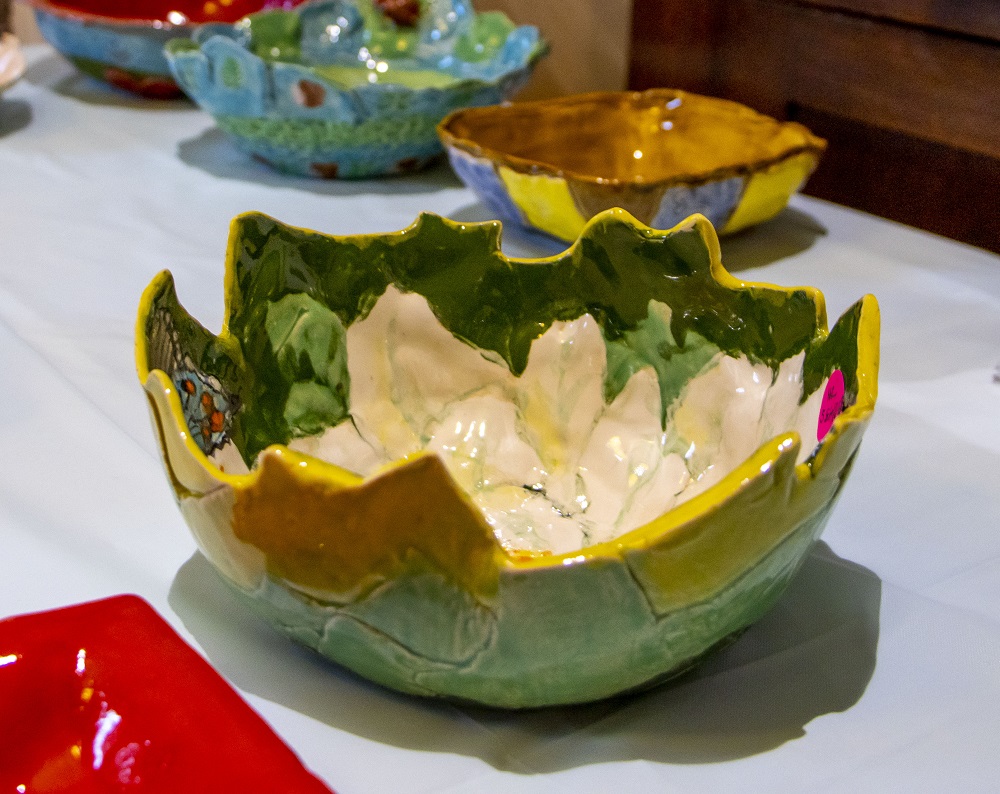
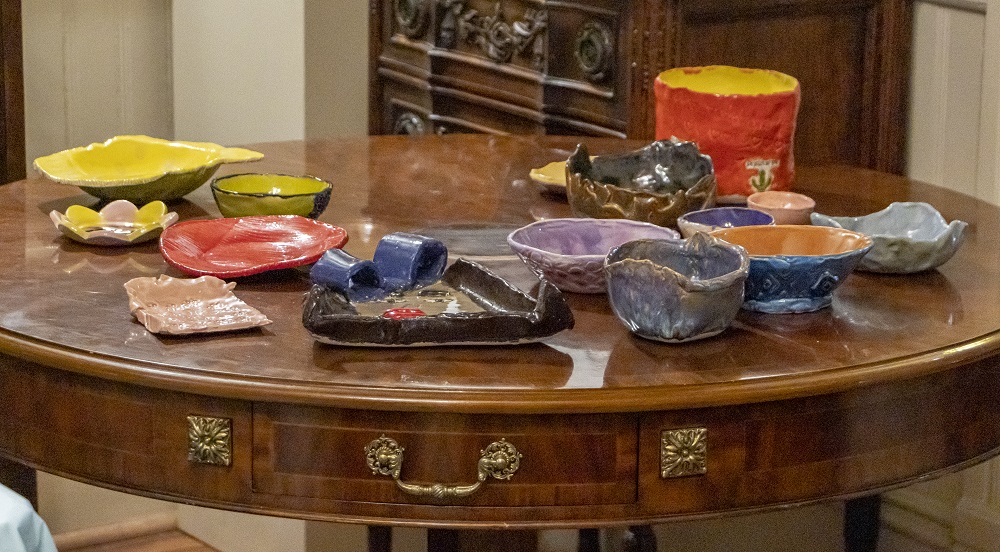
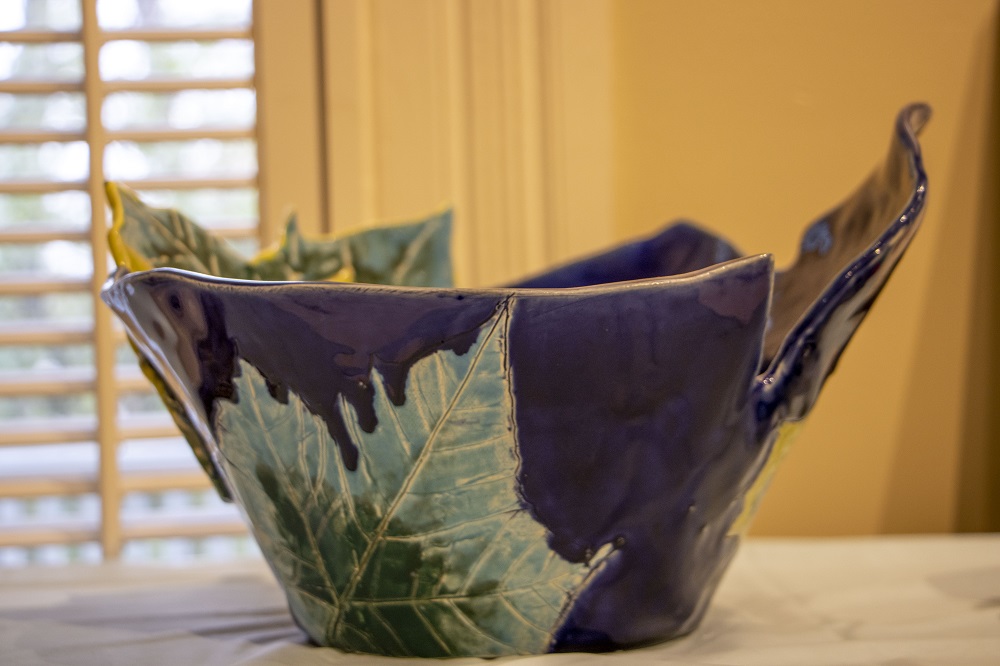
It was a great learning experience, and it was a bonus to see the beautiful bowls created by talented others…
including those created for silent auction (which our professor won!)…
… as well as the current exhibit, which are all pieces from the Wynne Home’s archives–ranging from works by Samuella Wynne to Richard Haas. And, of course, whenever we are there, we take additional looks at the Wynne Home’s permanent collection, such as works by Pebworth and Surls.
Many thanks to the sponsors, the ceramics teachers, and the many people who came out and helped make the event a success.
We were so excited to get there, so the LEAP Members dressed in weather-appropriate- hiking attire and headed out!
When we got to Lawton, Oklahoma, it seemed as though we stepped into a different time. The town of Medicine Park, right outside the Refuge, was founded in 1908 as Oklahoma’s first resort town. Due to the natural abundance of cobblestone, every building proudly displays this local feature in its design. Passing through Medicine Park was a great prelude to our visit to the Refuge as it properly set the tone for the trip.
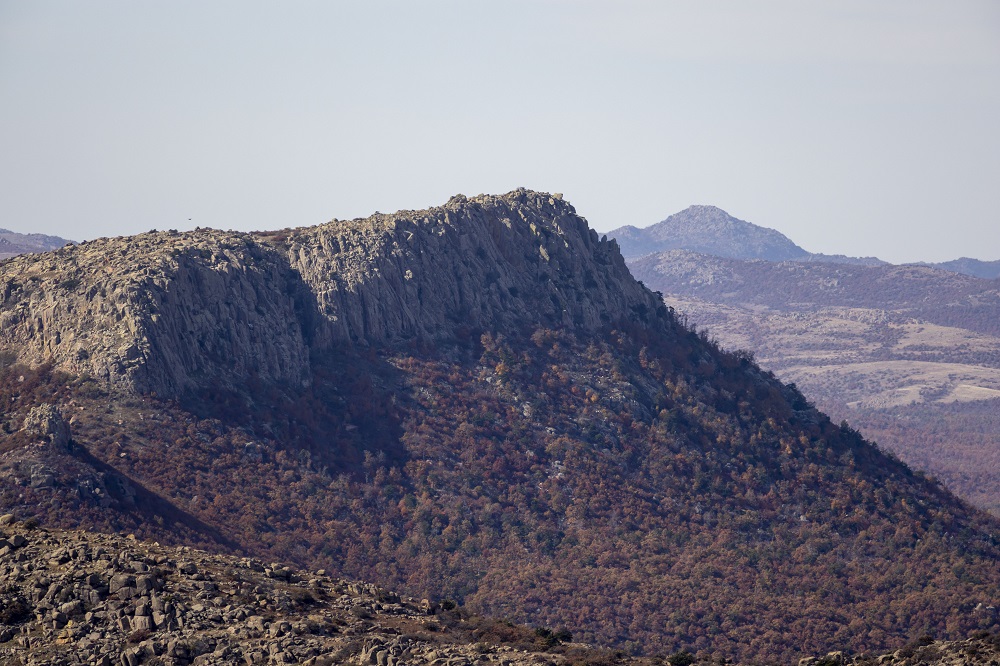
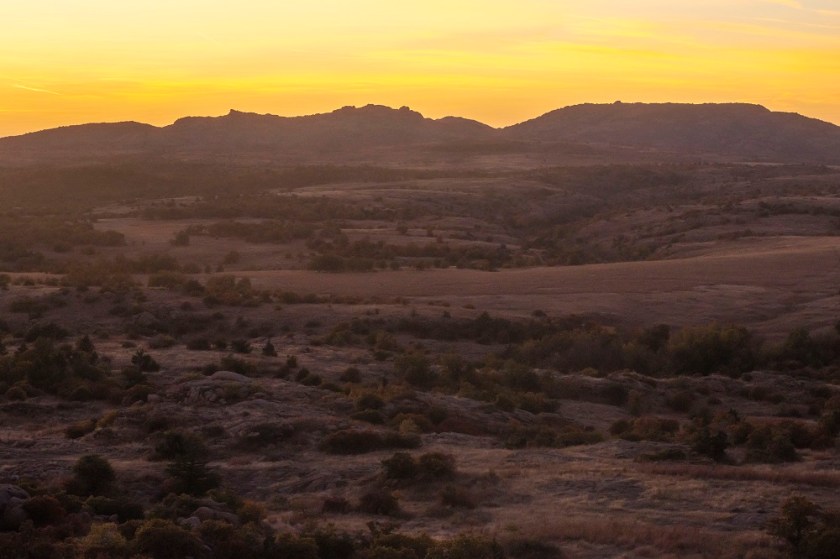
As we begin the windy climb up Mount Scott, our thoughts were of what the view might be like when we reached the top.
We were amazed by what greeted us as we made the final bend onto the top of the mountain.
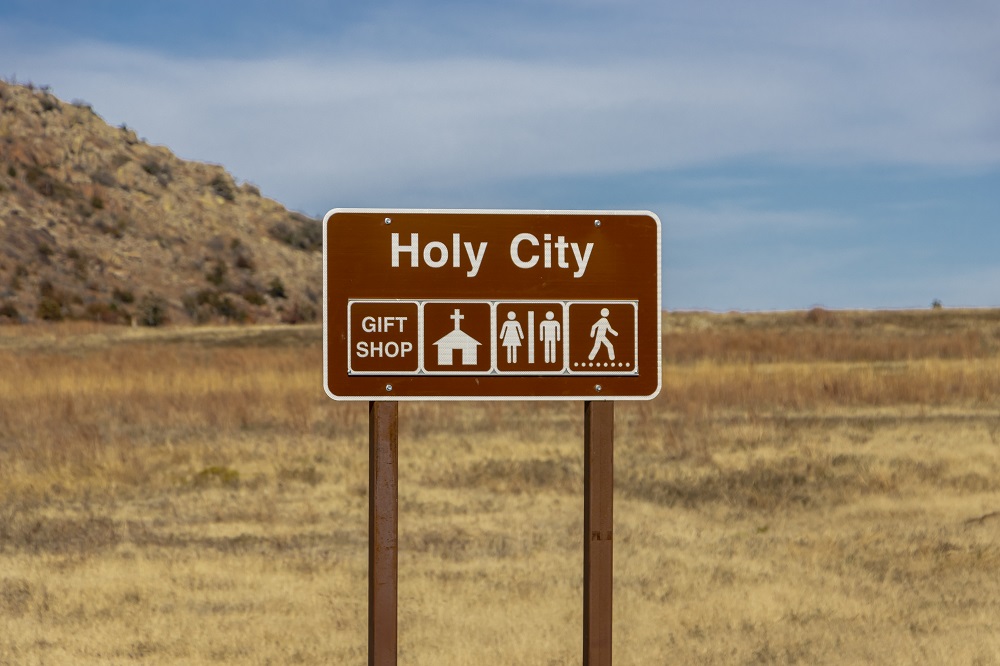
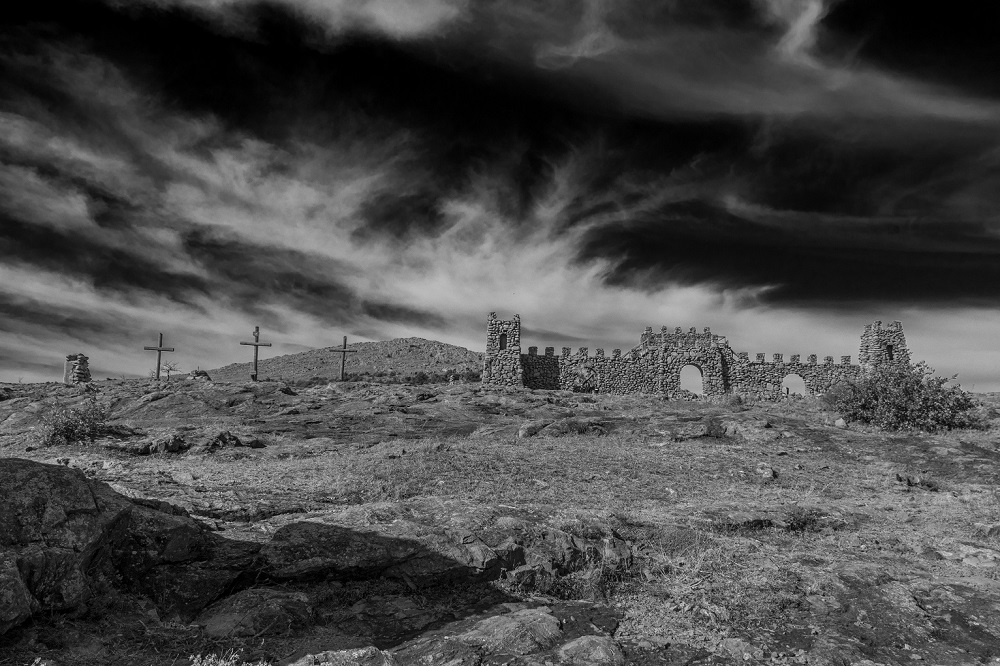
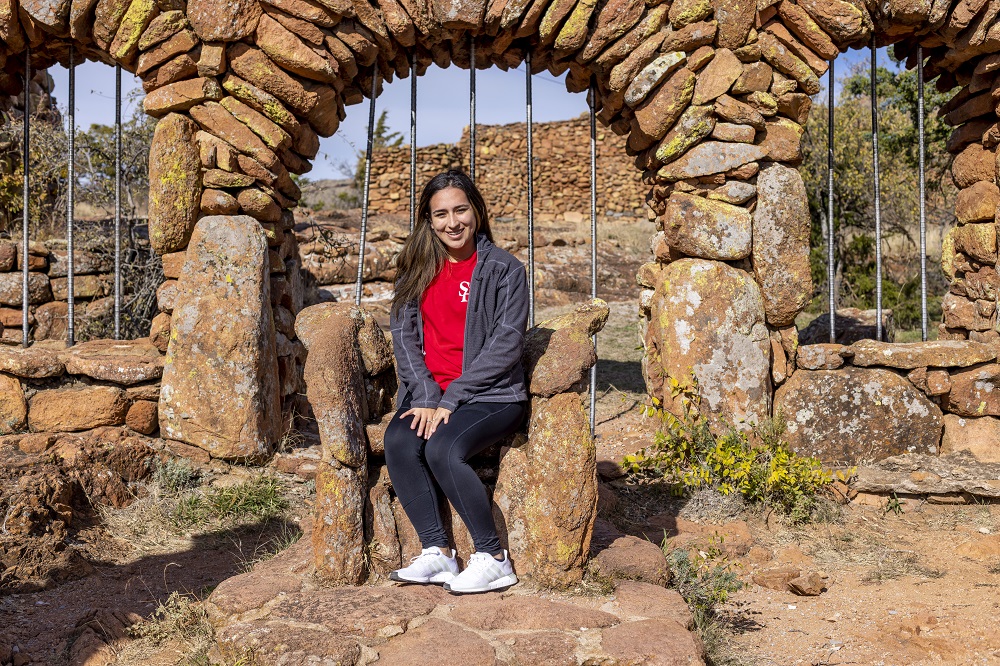
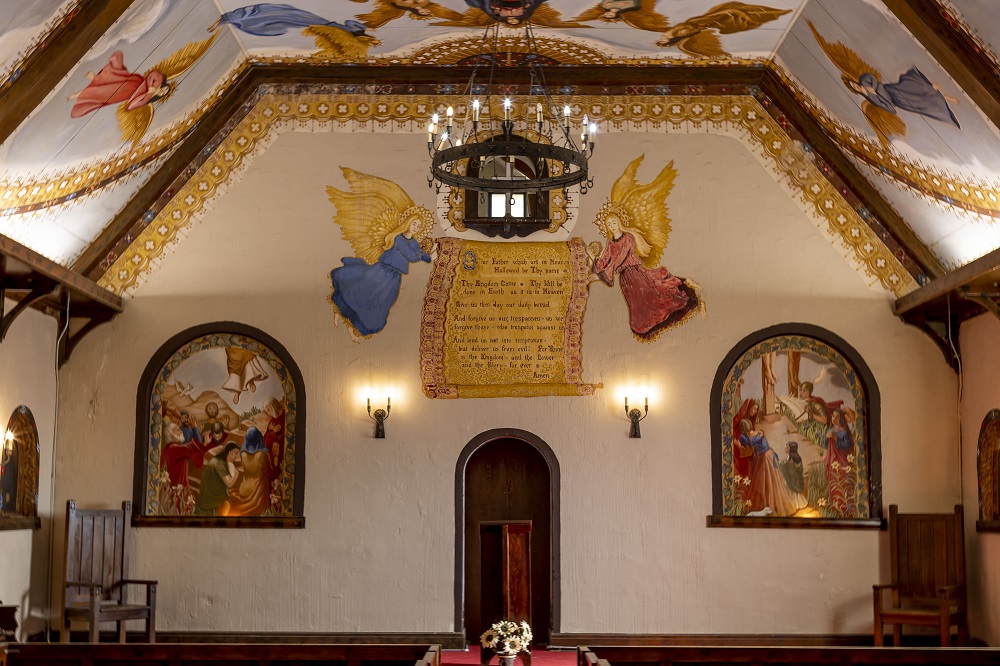
One of the biggest attractions to the refuge is found in the replicas of the Holy City.
The displays of major Biblical scenes once again transported us to a different time.
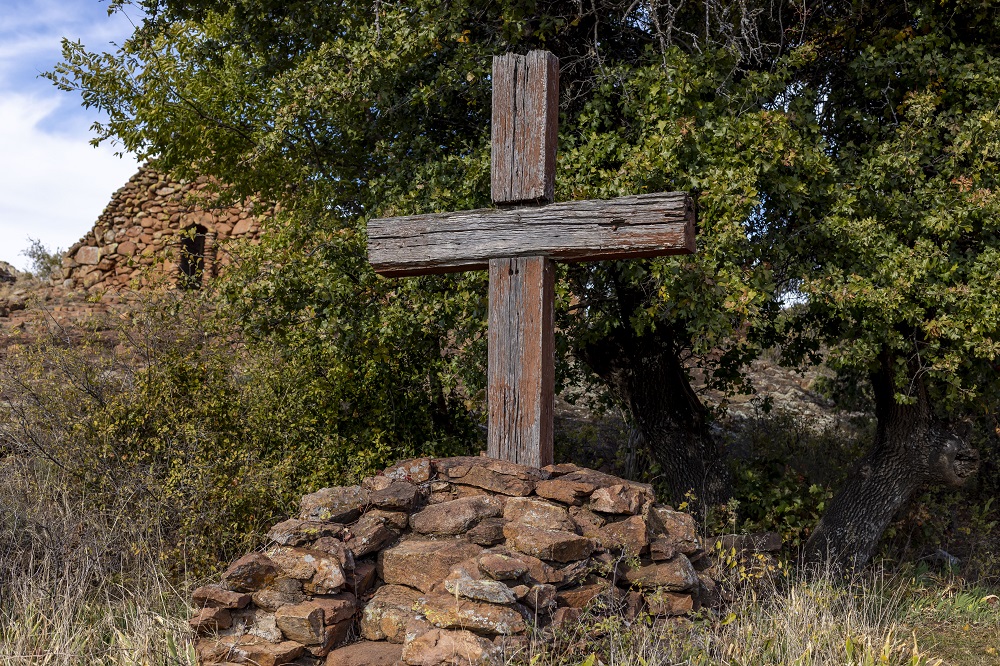
Such scenes on display included the last supper, the Garden of Gethsemane, three crosses, a whipping post, the judgment seat of Pilot, and more. This was one of Saara’s favorite places we visited because it taught her more about the Christian faith and expanded her cultural awareness.
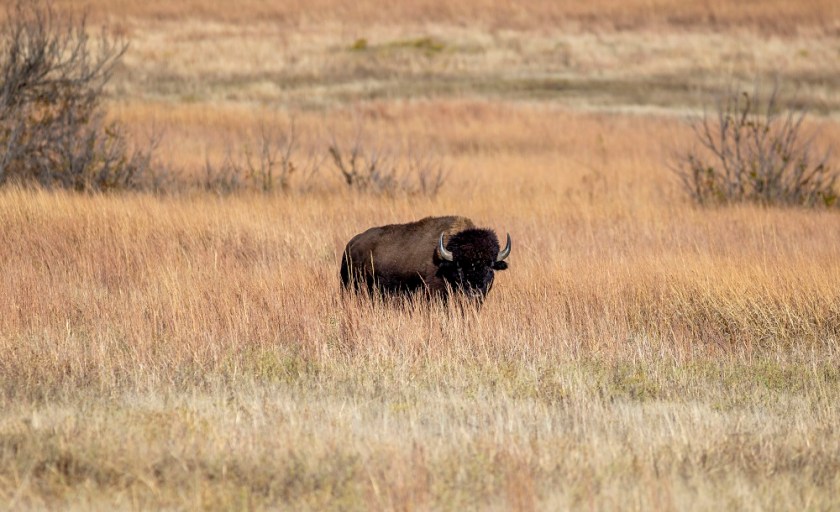
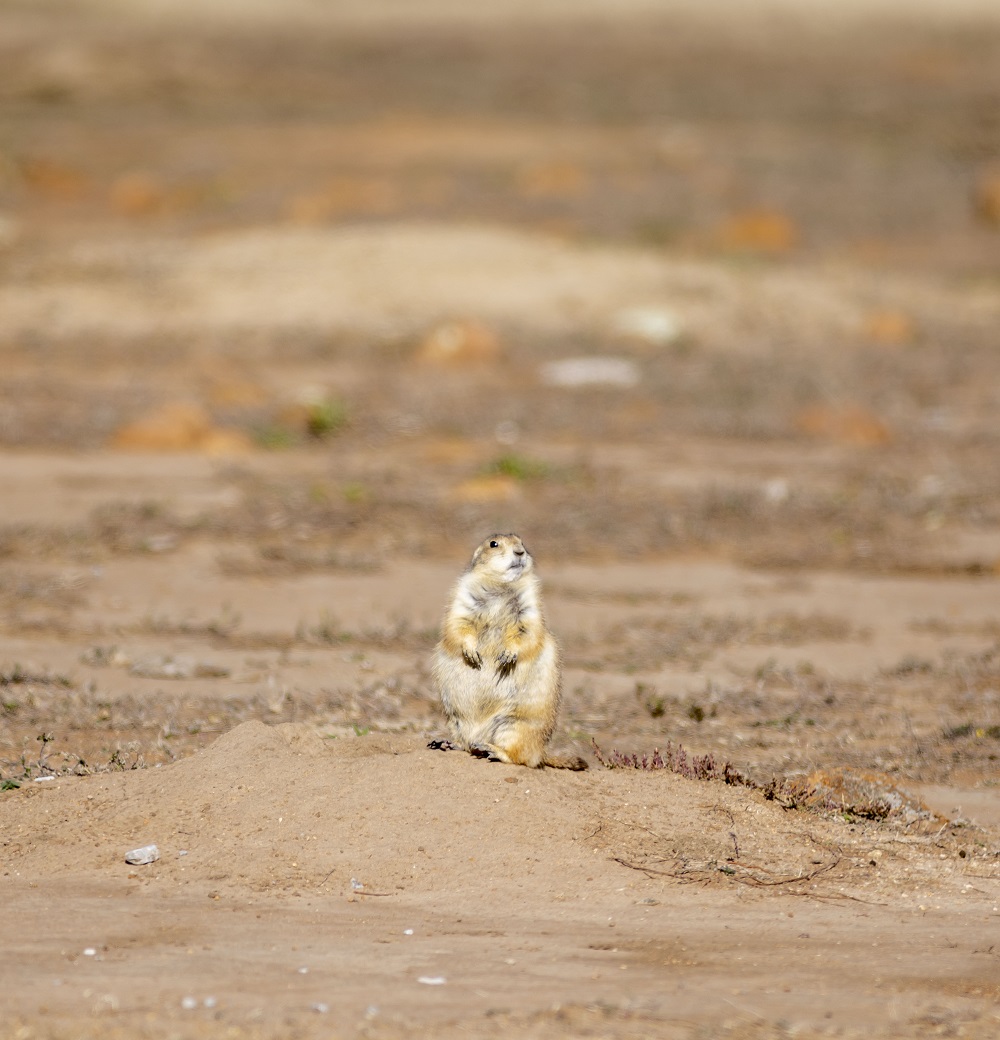
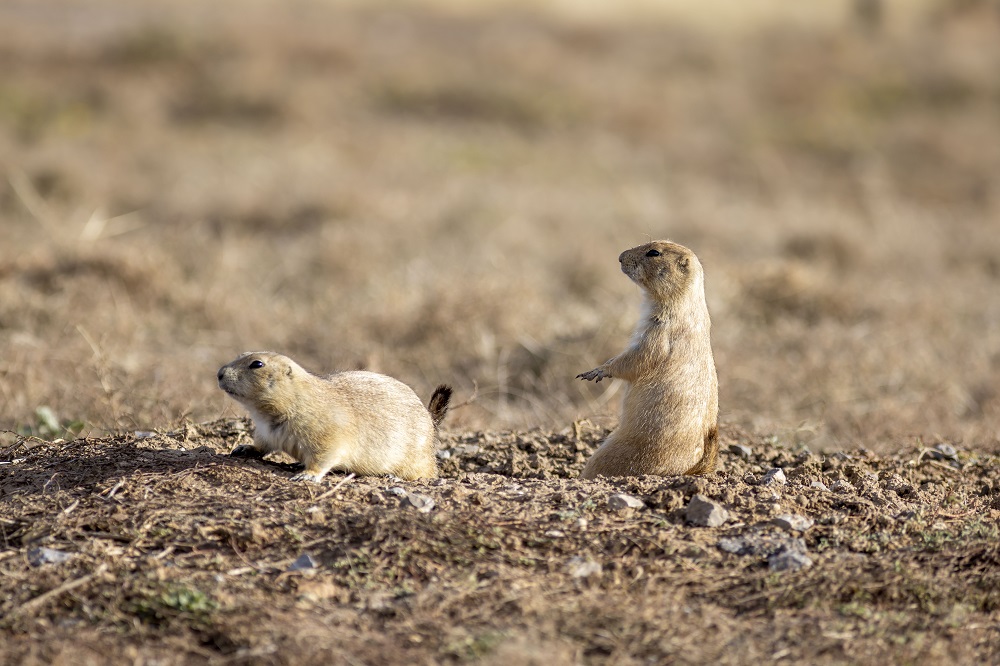
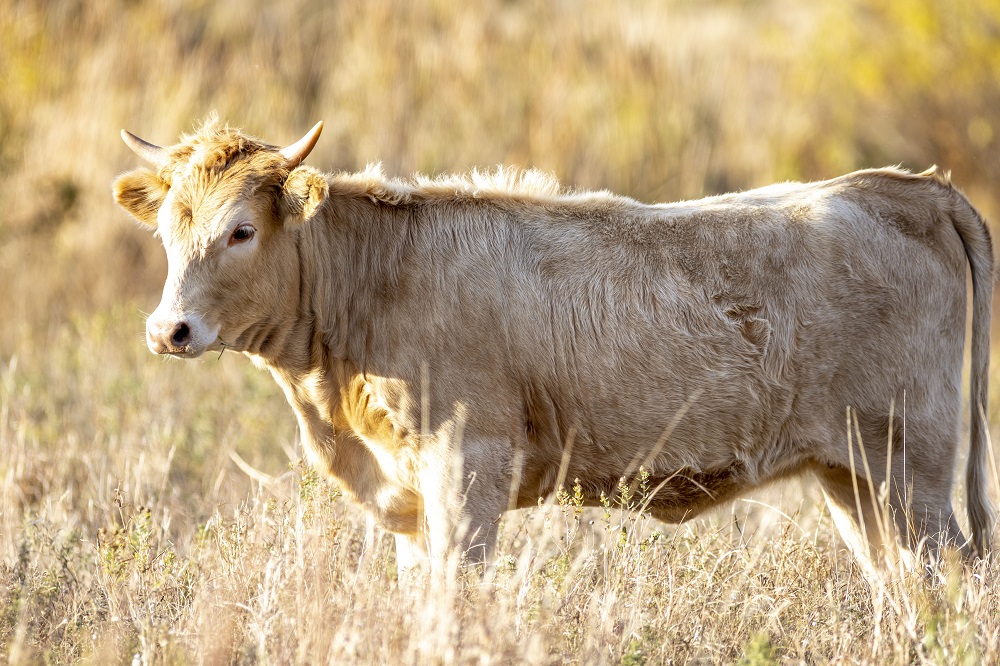
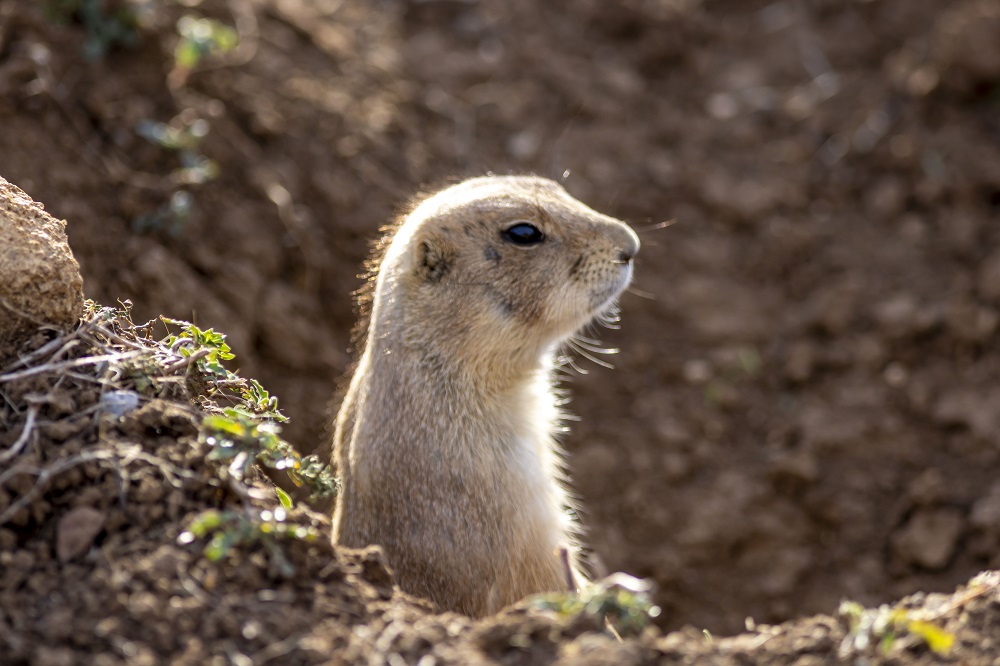
Luckily for us, the day was filled with photogenic wildlife, in all shapes and sizes. We were fortunate to see animals such as buffalo…
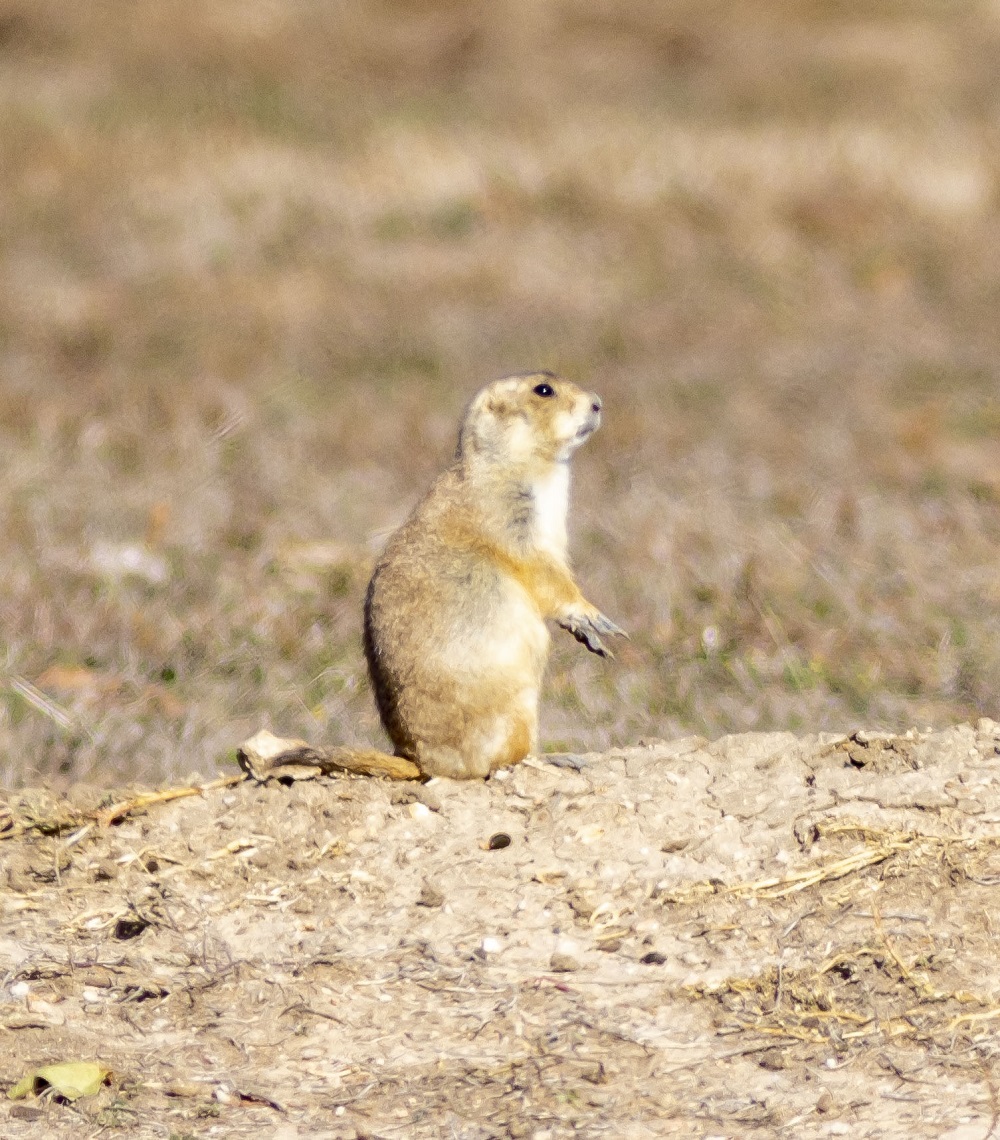
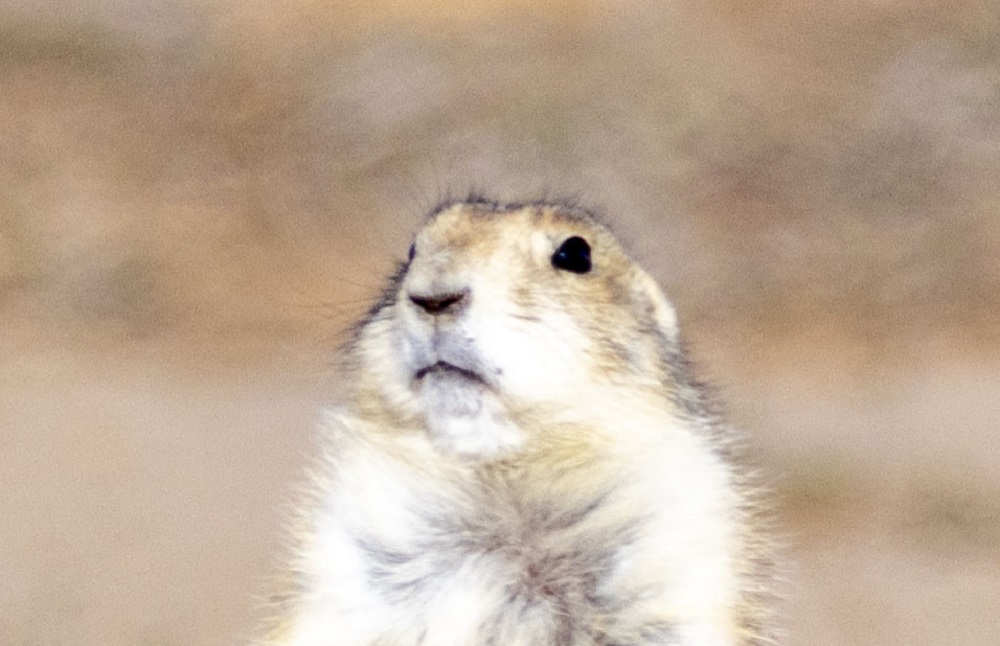
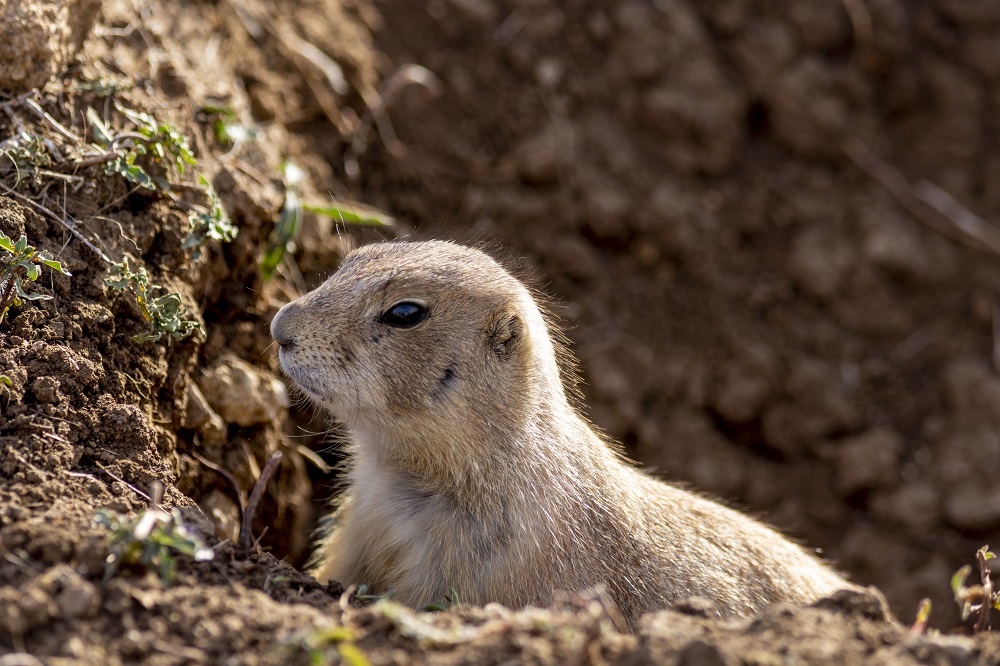
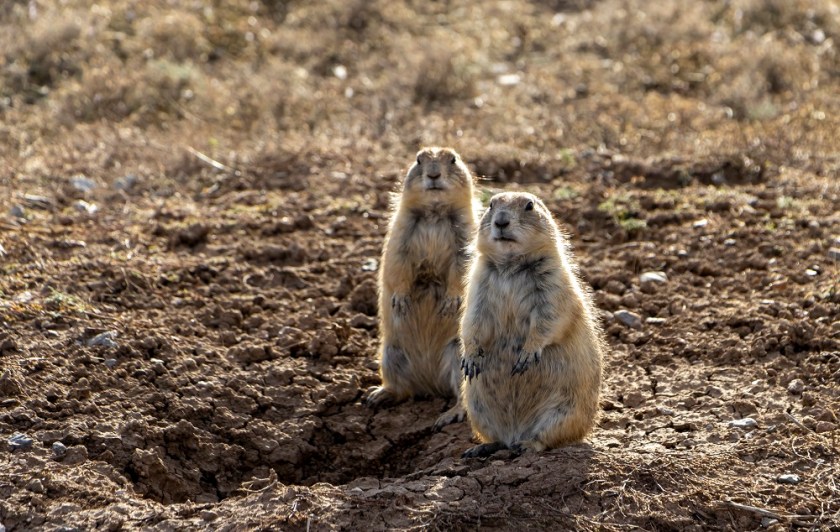
…prairie dogs…
…and longhorns.
The prairie dogs were modeling for us, standing still, and looking right at the camera.
The buffalos were a little further, but we were still able to take pictures of them. For many of us, this was our first time seeing buffalo.
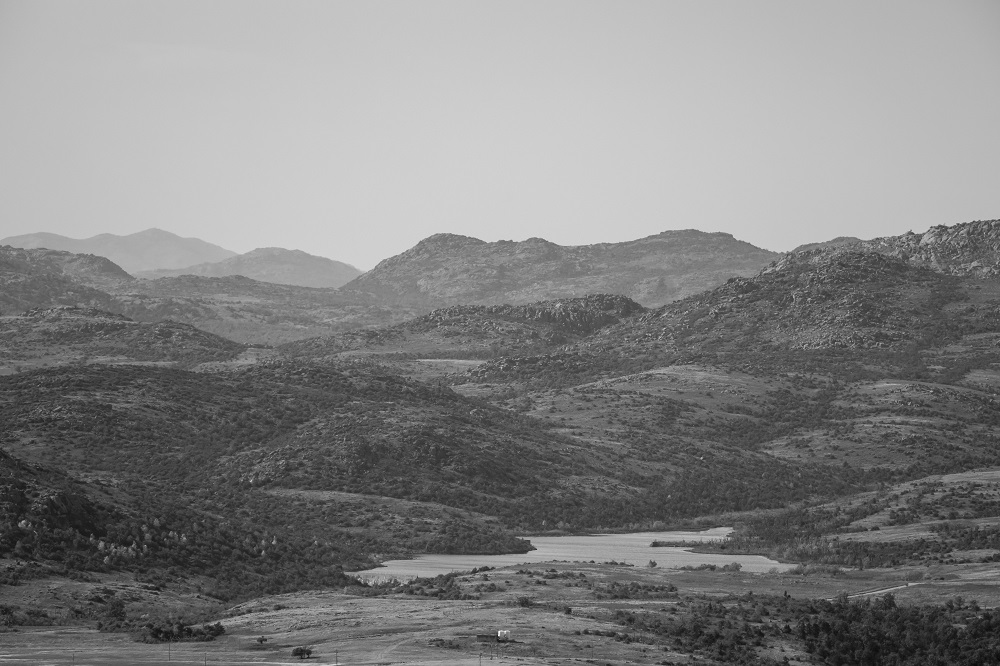
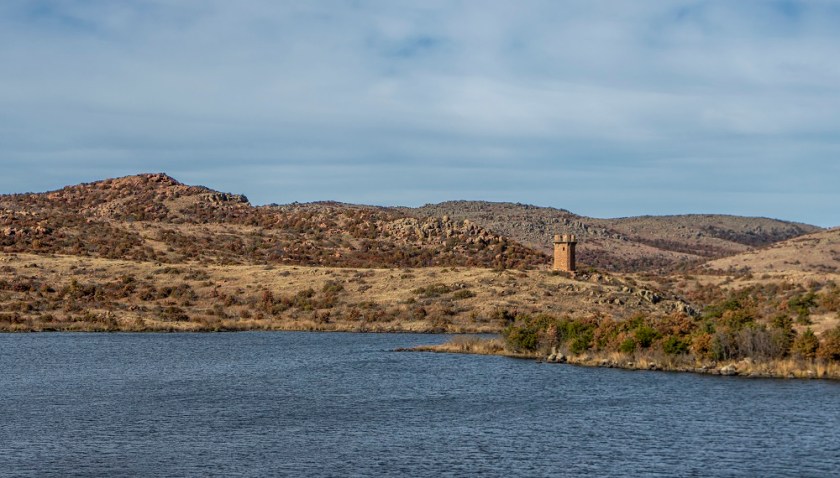
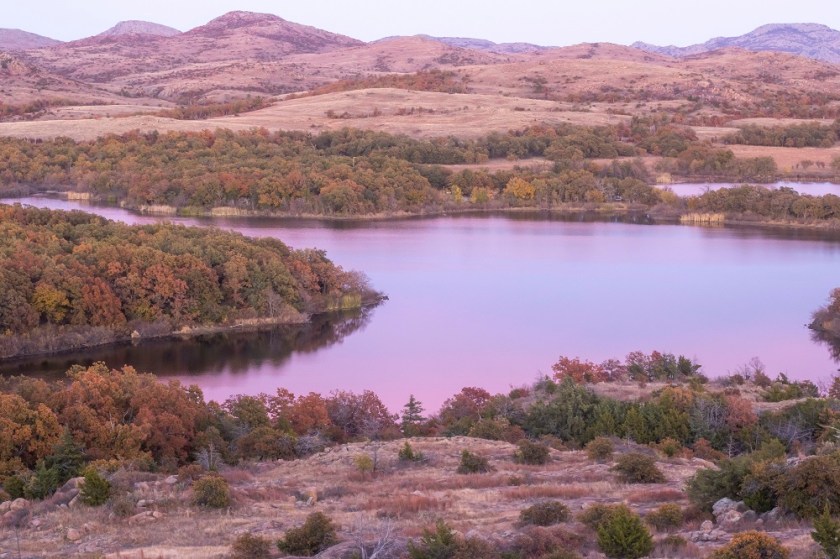
We stopped to see several beautiful lakes and one with a perfect vantage point of the watchtower.
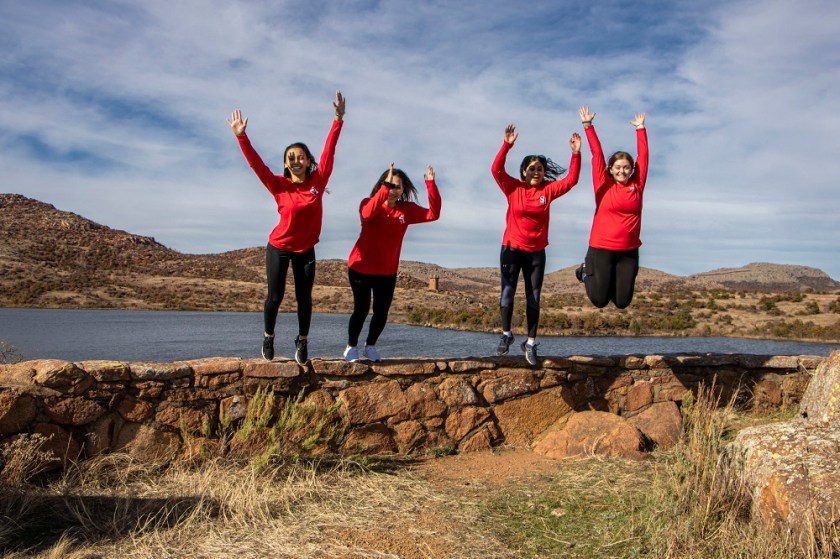
The tower was built by the Civilian Conservation Corps in 1941 and looks to be in great condition. We thought the location would be perfect for our favorite LEAPing photo, but we were ultimately unsuccessful.
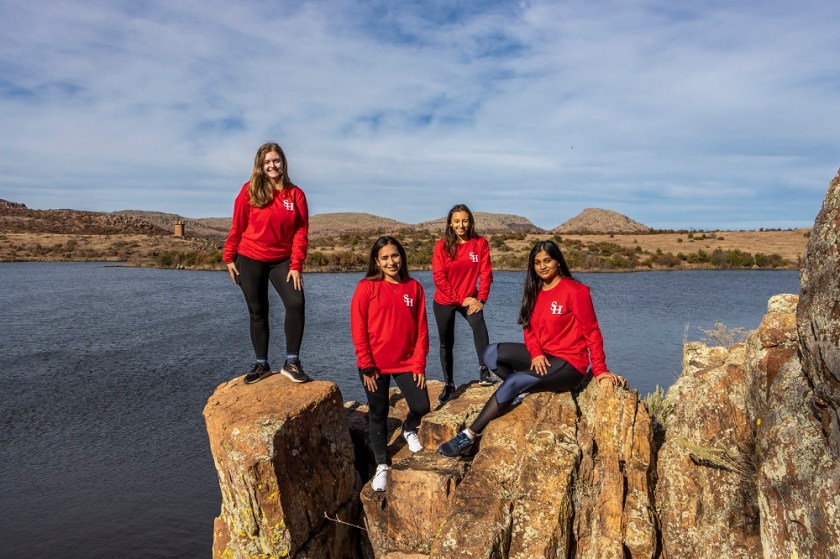
We were more successful at stationary photos.
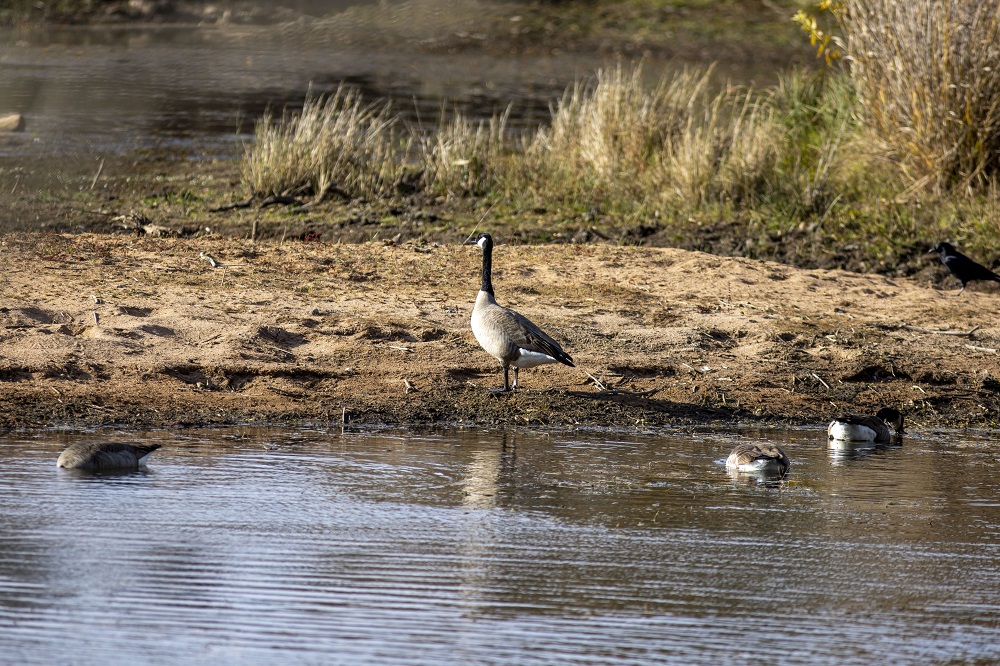
While we might have failed at being photogenic ourselves, the landscape and the picturesque scenes more than made up for it. We also discovered different types of birds including but not limited to geese, loons, and a woodpecker.
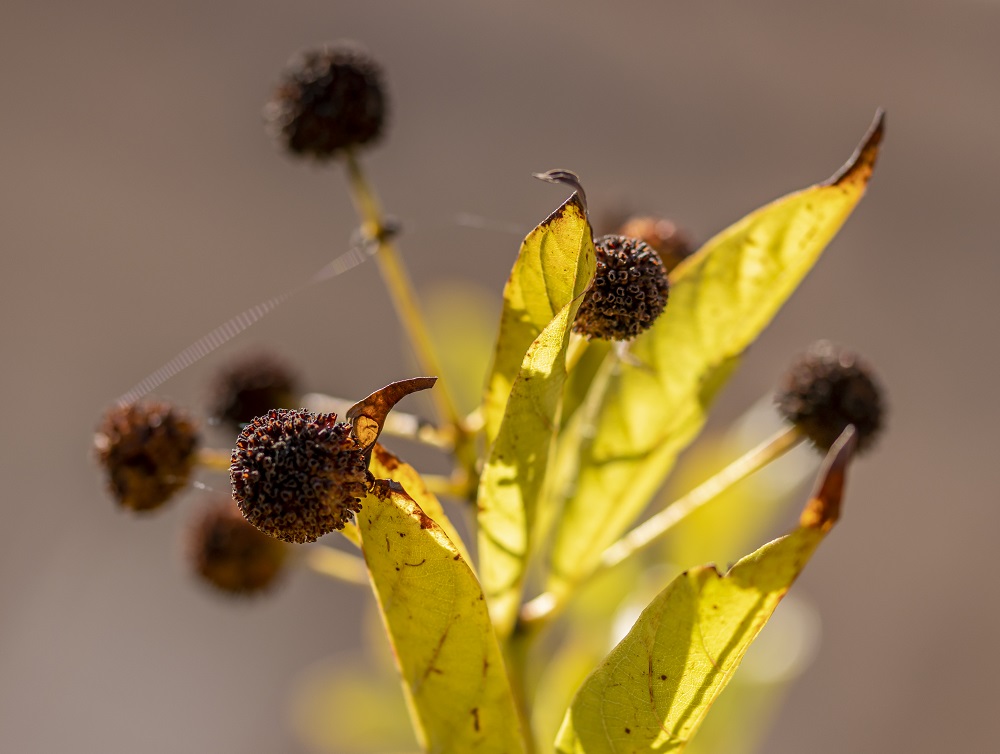
Morgan and Professor Yawn took this opportunity to practice with a new macro lens. They both found it quite difficult to photograph the still plants, but thankfully they yielded some detailed photos.
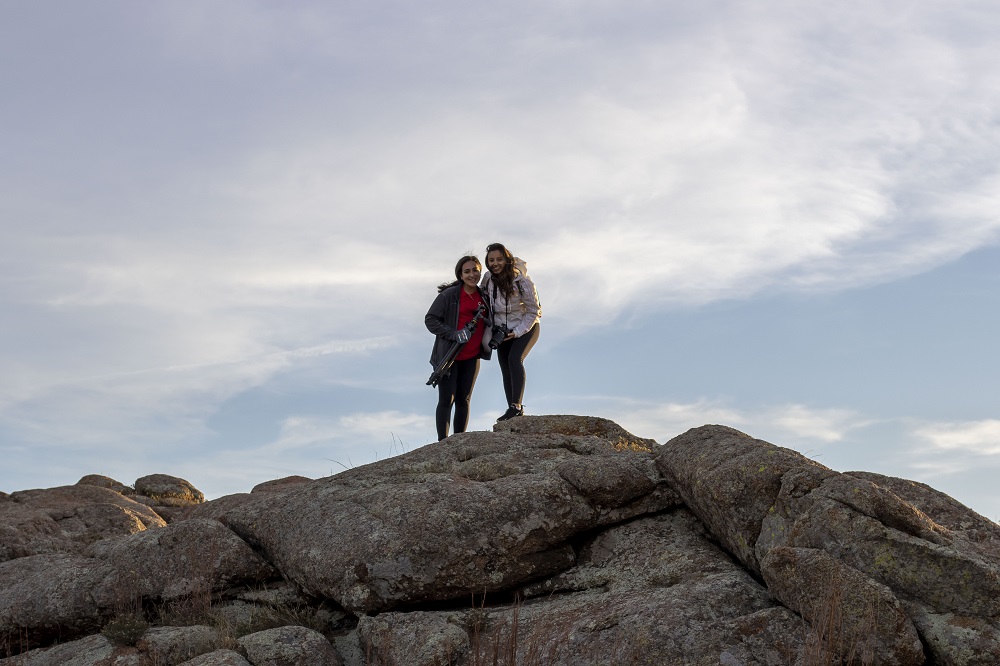
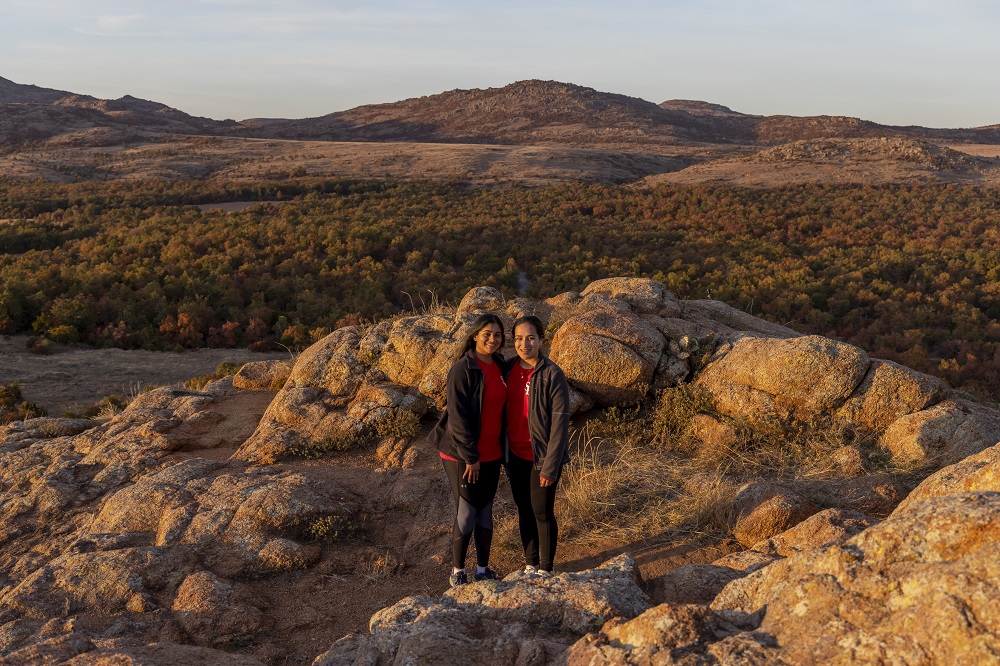
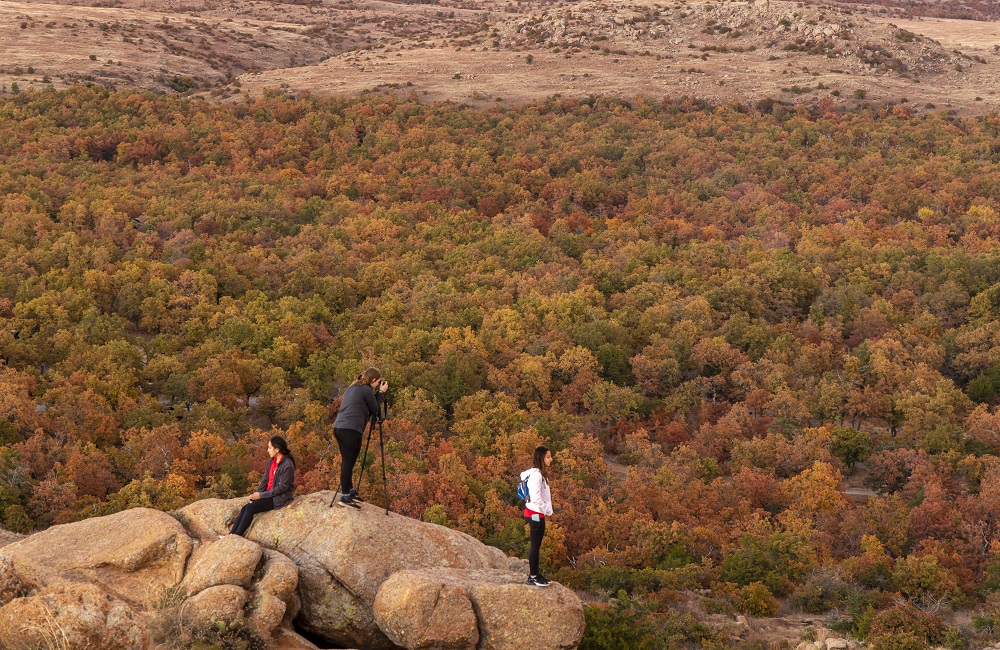
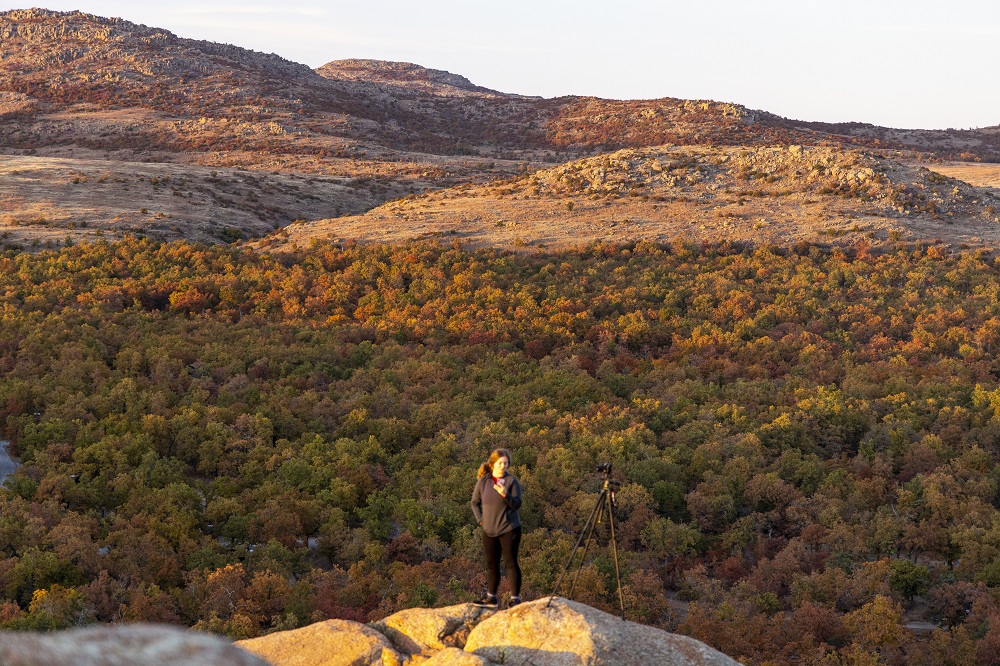
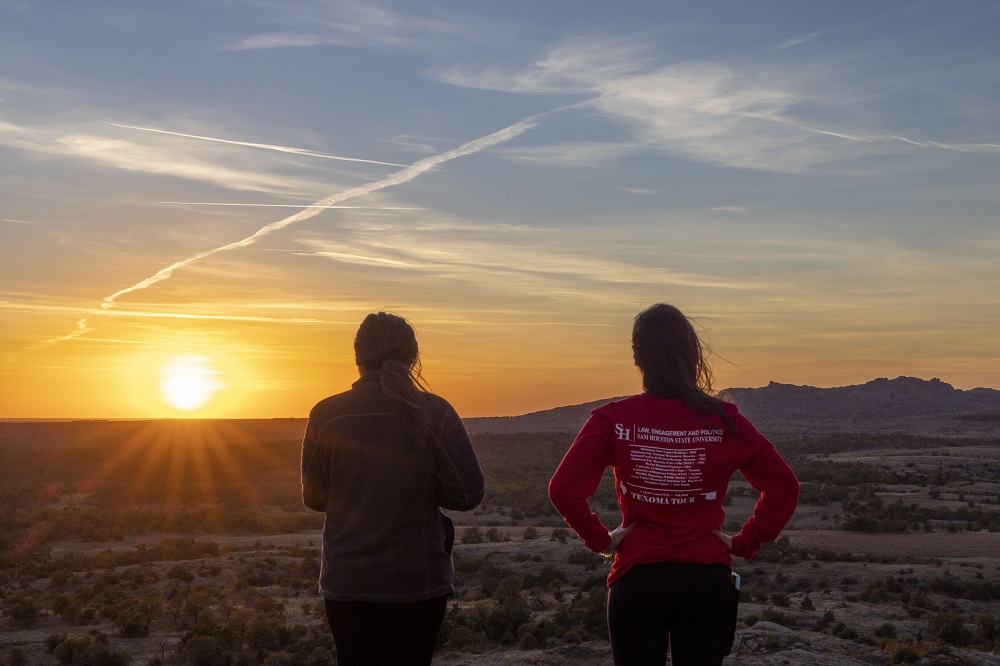
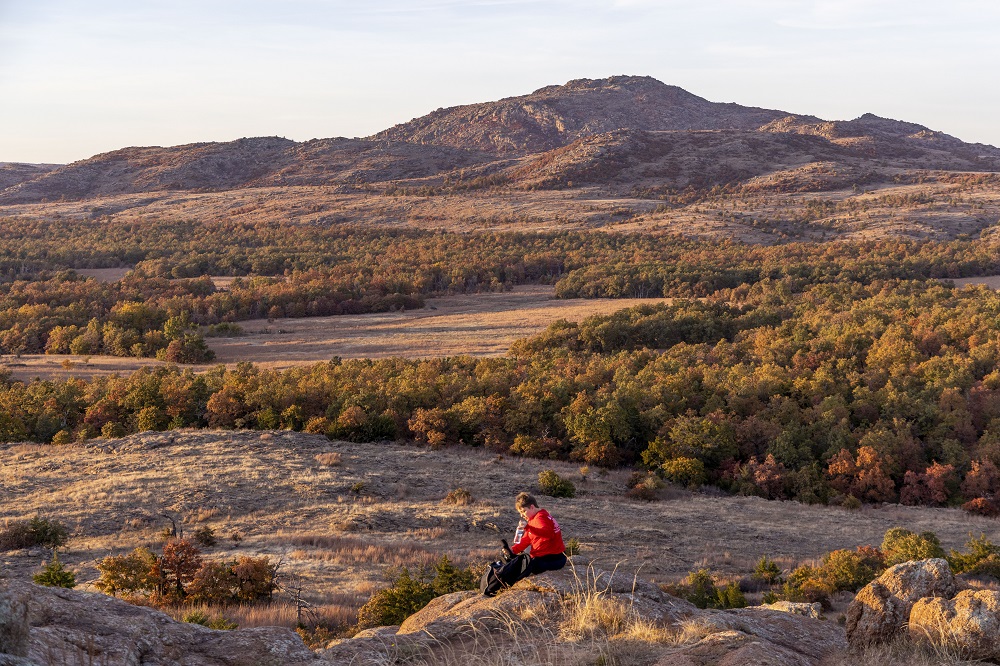
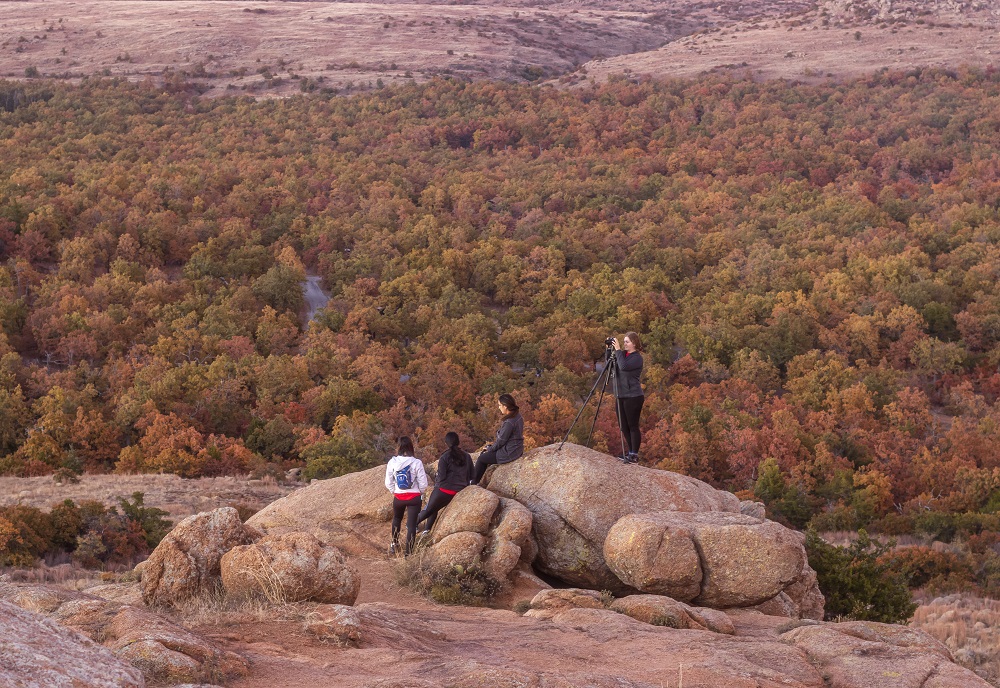
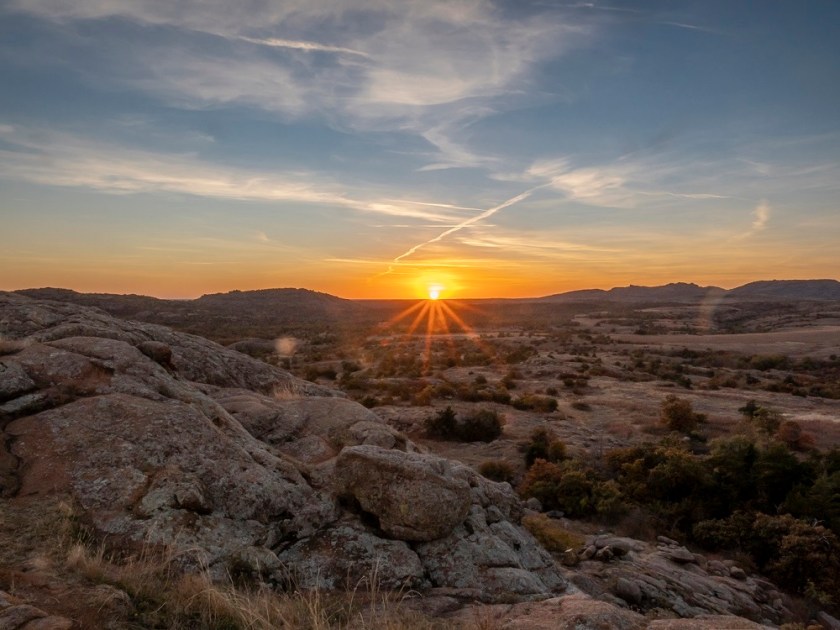
With the sun coming down at 5:20, we knew we had to find the right place to hike to admire the sunset, take pictures, and enjoy each other’s company. Yvette was the one who geared up better than anyone else, bringing her cliff bar along the hike to snack on. When we got to the top of the mountain, we set up the tripods after we caught our breath, of course.
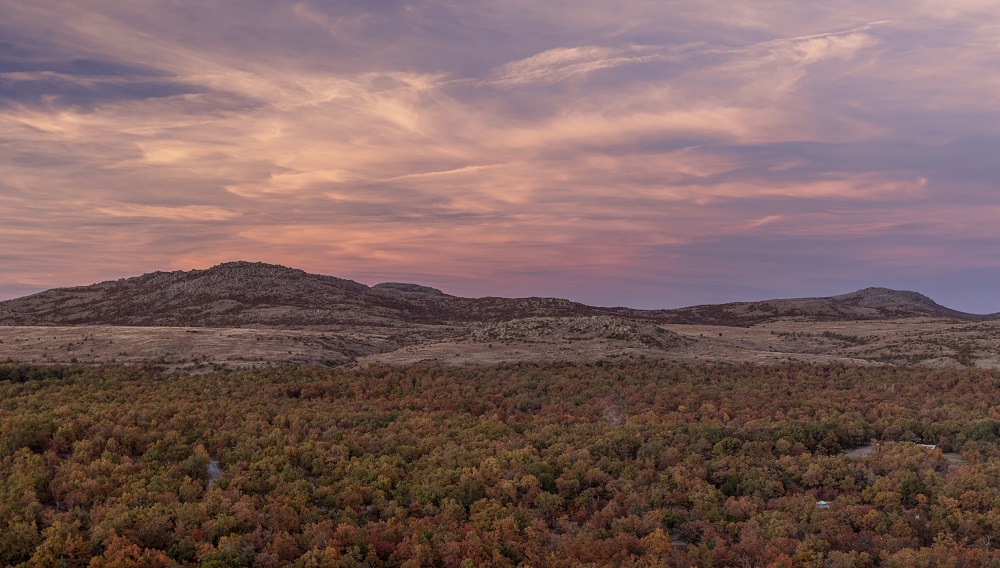
We waited for the sun to go down while enjoying the view….
…and waited for an ideal shot.
We concluded our hike with minimal stumbles and slips and only one major wipeout. (Morgan’s editors note: I successfully scaled the steep rocks with many features not adjacent to walking on a flat surface and made it to the top with no issue. It was the loose gravel, on a flat terrain that did me in on this trip). But it was a nice view and worth it.
The Wildlife reserve greatly displays the beauty found in Oklahoma, from the towering mountains to the seemingly endless plains. We were all grateful to experience this aspect of the state.
Afterward, we had a warm and filling meal at Pho Paradise, and then we ventured off to a local coffee shop called Viridian Coffee Co. The café had amazing salted caramel cookies and energizing coffee. Each bite taken of the gooey, soft, and delicious cookie followed by a sip of my hot latte macchiato, or Erin’s cold hot cholate made a great dessert!
































































 Center for Law, Engagement, and Politics