The LEAP Center’s mission is to offer unique educational opportunities for students. An example of this is the Center’s annual trip to the Southern Legislative Conference, to which the LEAP Ambassadors are invited to attend. While the conference offers the opportunity to learn about policies among 15 southern (and near-southern) states, the travel to and from the conference also presents learning opportunities.
Following the students’ 11-day trip across eight states and more than 20 educational sites, the seven students selected their favorite destinations across categories such as food, historical landmark, museums, and cities. The results are below:
Favorite Cities:
Eureka Springs, AR: This quaint little town proved to be the favorite of the group, with almost every student placing it on their top three.
LEAP Ambassadors in Front of “Flatiron Building” in Eureka Springs, AR
Lexington, KY: The site of our conference also proved popular. With its beautiful horse farms, pretty downtown, and attractive parks, students enjoyed four days in the horse capitol of the country.
The LEAP Ambassadors at Triangle Park, Lexington
Hot Springs, AR: This was a surprise to our professor, but the students enjoyed seeing the springs, the historic architecture, and meeting other SHSU students by happenstance!
LEAP Ambassadors in Front of Ozark Bathhouse, Hot Springs, AR
Little towns ruled the culinary arts on this tour!
Favorite Works of Architecture:
Frank Lloyd Wright House (Bachman-Wilson House) at Crystal Bridges was the favorite, edging out some other top designs. The large living room won the day!
LEAP Ambassadors Outside of Frank Lloyd Wright’s Bachman-Wilson Home
Anthony Chapel at Garvin Gardens, Hot Spring, AR was one of three Fay Jones’ Chapels the student saw, and it proved the favorite. Although larger than the other two (which are in Bella Vista and Eureka Springs), the three designs are very similar.
Garvin Gardens by Fay Jones, Hot Springs, AR
Honorable Mention should go to several structures. The students very much enjoyed the Gateway Arch in St. Louis, the Union Station in St. Louis…
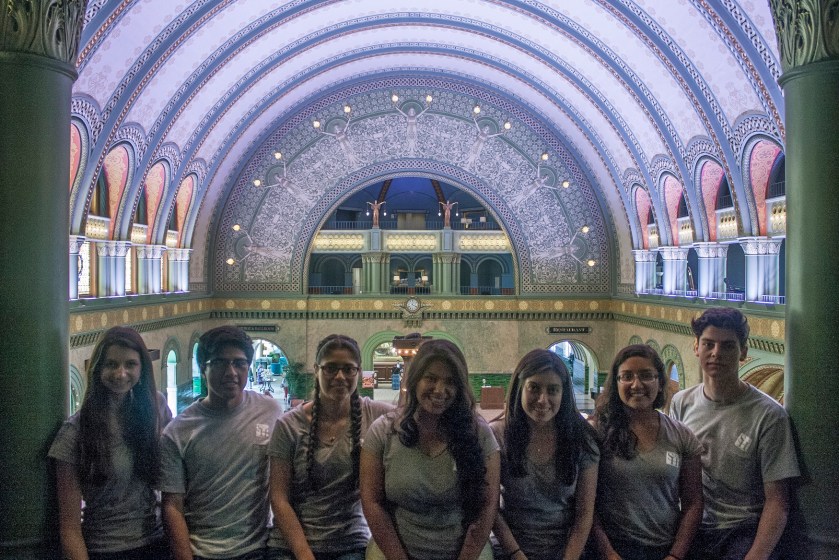
LEAP Ambassadors at Union Station, St. Louis, MO
…the Old Mill is always a favorite stop.
LEAP Ambassadors at Old Mill, Little Rock, AR
…and The Parthenon proved a favorite as well.
The LEAP Ambassadors at the Parthenon, Nashville, Tennessee
Favorite Works of Art
The Turrell Skyscape, “The Way of Color” at Crystal Bridges:
This slideshow requires JavaScript.
Au Cafe, by Stanton MacDonald-Wright was also popular, providing much head-scratching and discussion.
“Au Cafe,” by Stanton MacDonald-Wright
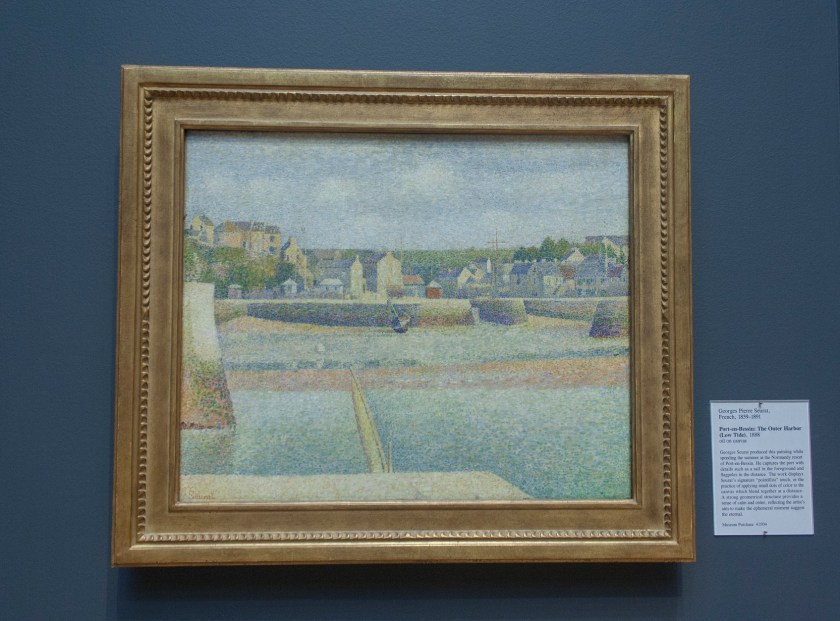
George Seurat’s “Outer Harbor” at the Crystal Bridges Museum
George Seurat’s “Outer Harbor” at the St. Louis Art Museum
Activities
Hiking: The students enjoyed both their hike at Pinnacle Mountain…
LEAP Abassadors at the Peak of Pinnacle Mountain
…and Devil’s Den State Park…
LEAP Ambassadors at Devil’s Den State Park
Ropes Course at Megacavern in Louisville, KY
Karla Rosales and Ryan Brim at the MegaCavern
Tie: Skeet Shooting…
Brian Aldaco Hitting Targets
…and meeting Blair Hess and Cameron Ludwick, authors of “My Old Kentucky Road Trip.”
LEAP Ambassadors with Authors Blair Hess and Cameron Ludwick
It was another enormously rewarding road trip, providing us with the opportunity to learn about history, art, architecture, civil rights, politics, law, and public policy. It was a happy eleven days!
Saturday was our first day to awake in “The Bluegrass State,” and we had a full day ahead of us. As part of the Southern Legislative Conference, which is hosted each year in a different city, and brings together legislative members from all across the south for a week of idea sharing and networking.
Leaving Louisville
Our first objective was to hit a couple of sites in Louisville, and then head to Lexington, the host city for the conference. Although there is much to do in Louisville, we first wanted to see Thomas Edison’s home, where he lived briefly while evolving into the inventor he would later become.
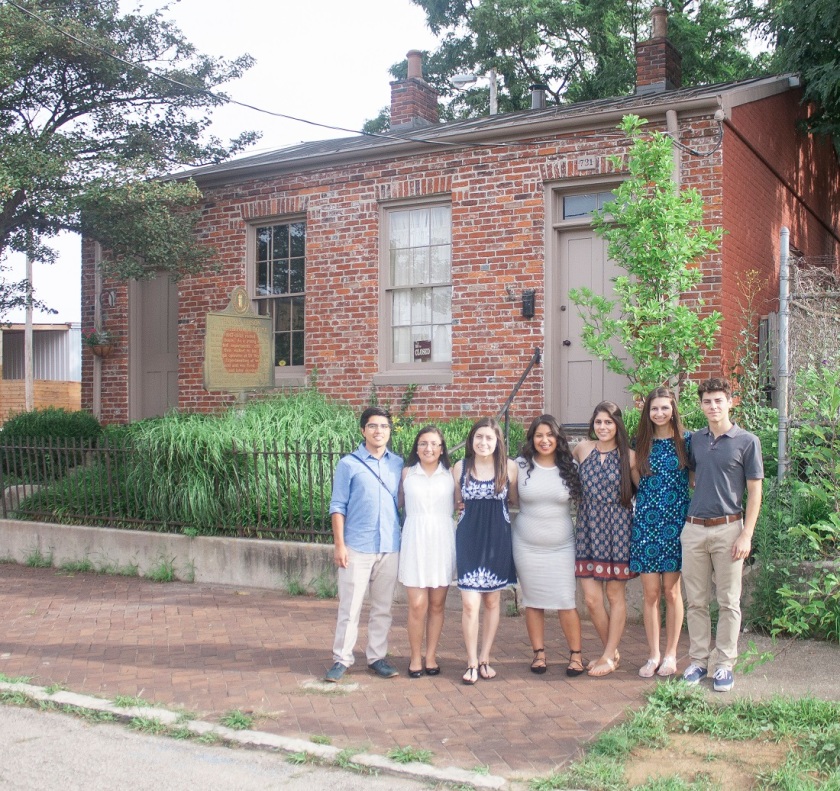
LEAP Ambassadors Outside Edison’s Butchertown Home
Although Edison lived in this home only from 1866-1867, his work there pre-figured his role as an inventor (he was fired for experimenting on the job). Similarly, it prefigures our work in a couple of weeks, when some LEAP Ambassadors will be heading to Detroit to work with Jeff Guinn, who is writing a book on Thomas Edison (and Henry Ford, Harvey Firestone, and others).
A second must-see stop for us was the Zachary Taylor cemetery, one of seven National Cemeteries in Kentucky.
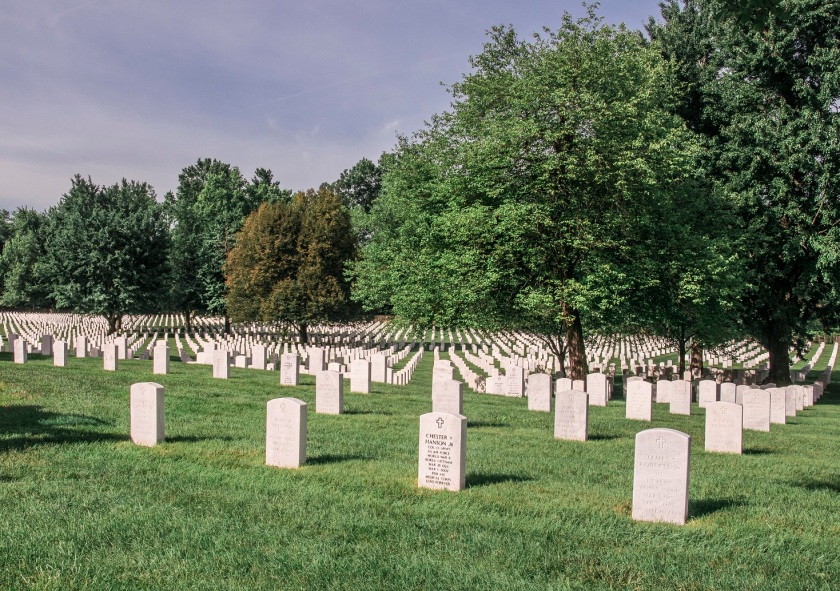
Some of the 14,000 Soldiers Interred at the Zachary Taylor National Cemetery
Although more than 14,000 people–including two medal of honor winners–are interred in this cemetery from six wars, the most notable grave is that of Taylor, who served as the nation’s 12th president.
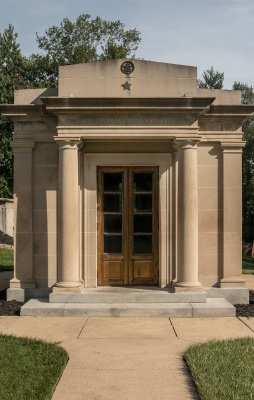
Zachary Taylor’s Grave
..and a monument to his service to the country.
Alex Galvan at Zachary Taylor Monument
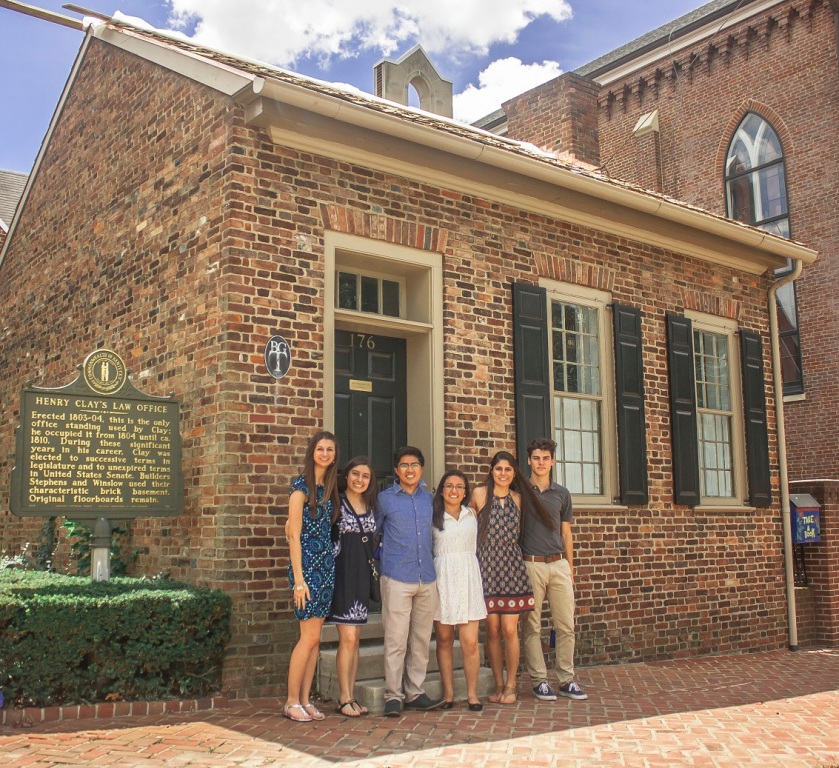
We started out with a walking (“plus”) tour of historic downtown Lexington. A few blocks from our start, we arrived in Gratz Park, one of Lexington’s oldest and most beautiful areas. With the help from our knowledgeable tour guide (who was the Curator of the Henry Clay Home), we passed the city park, a beautiful centerpiece for the neighborhood, and several historic homes, such as: Bodley-Bullock House, which served as both the Union and Confederate Headquarters at times when each side controlled the city; Transylvania University, which was the first university in Kentucky. Also on our walk, we saw the Christ Church Episcopal Cathedral where Henry Clay and his wife attended, and the office where Henry Clay practiced law, which was quite a treat for aspiring lawyers.
LEAP Ambassadors Outside of Henry Clay’s Law Office
The visit was a nice precursors to our impending visit to Ashland, the home of Henry Clay, “The Great Compromiser.”
Ashland: The Henry Clay Estate
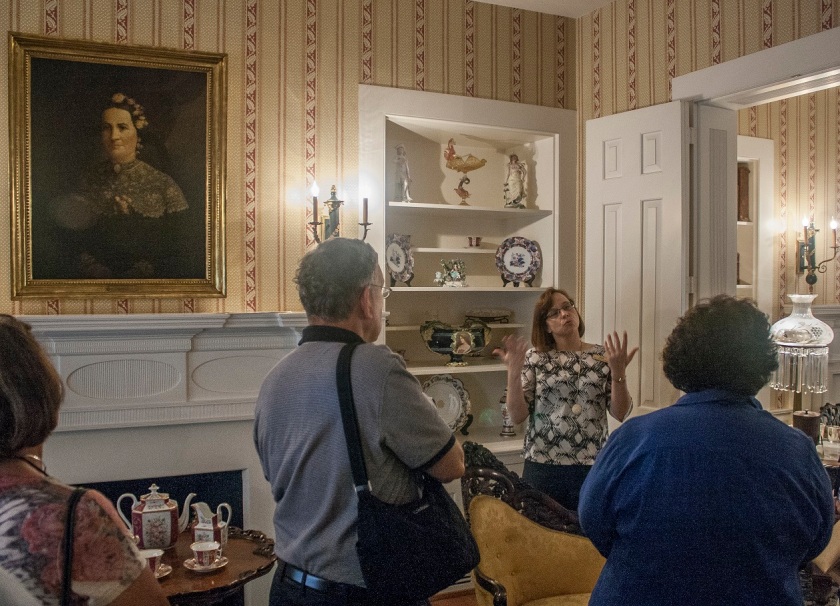
Entering the ash tree-covered estate, from which the home bears its name, we saw a grand portrait of Clay painted by Matthew Jouett when the Senator was 45. Walking through the estate (which does not allow interior photography), it was impressive to learn that the home had stayed in the family from its construction in 1804 until it was sold to the Henry Clay Memorial Foundation in 1959. In fact, family preservation of the home was only interrupted after the Civil War when the house was appropriated by Transylvania University to house its president, from 1865-1882.
One of the parlor rooms, which accommodated the first piano to be brought to Lexington, also held a large portrait of Henry Clay, Jr., and his wife, Lucretia Hart Clay. These paintings were hung in honor of the Clays’ favorite son, who was killed in the battle of Buena Vista in the Mexican-American War, by the woman who is credited with the preservation of the home.
Leaving the front parlors, we turned into the east wing of the home, into one of Clays’ most cherished rooms in the home. Here Clay would have spent most of his time working at his desk, reading his law books, and perhaps preparing his winning defense of Aaron Burr’s trial for treason. The small study now exhibits many of Clay’s personal items, such as a clock from 1832 during his presidential campaign against Andrew Jackson, a bookcase from his law office, a book written by Clay on the subject of agriculture and horse breeding, and some of his correspondence while serving as a senator.
On the subject of horses, he was known as an expert, as he bred his own Thoroughbreds and Standardbreds on the estate. Kentucky, therefore, attributes much of it horse history to the Senator’s fondness for equines. His affection for his livestock was represented in “The Eventful Day of Henry Clay,” a painting by Alvan Fisher depicting Clay and his favorite, prize bull Orizimbo. Legend also has it that in Clay’s study his ghost manifests itself to guests appearing near the mantle.
Even though we did not see his spirit, we did learn much about it. A great orator, Henry Clay was considered a “rock star” of his time. He was depicted thus in a painting in his library, right off his study, in which the vivacious Clay is delivering a speech to an attentive crowd, which includes a very eager Lincoln, cupping his left ear to catch every word of Clay’s speech. Such a sight would be common when Clay delivered a speech – drawing upwards of 100-200 thousand spectators at times.
We learned that not only were his public appearances notable, his deliberations in the Senate were also remarkable. At times, “The Great Compromiser” would stand on the senate floor to for upwards of four hours to deliver his valued opinion on any given piece of legislation. Such may have been true as he developed the Missouri Compromise of 1820, the Tariff Compromise of 1833, and the Great Comprise of 1860. A man of great social networking skills, Clay was also friends with Benjamin Henry Latrobe, the first American architect, who designed the wings of the Ashland estate and is best known for designing the Capitol in Washington, D.C.
As we stepped upstairs, the oak wood staircase (which replaced the previous staircase, making it the “newest” renovation to the home, in 1892) gave way to a landing upon which the John Neagle portrait of Clay is presented. A rendition of his unsuccessful 1844 presidential campaign, Clay stands with disappointed hands pointed towards a fallen American flag over white stone pillars while his gaze is fixed upon a field of grazing bulls. Although depicted as such, even at an advanced age (67) and having suffered a heart attack, many thought this would have been Clay’s last chance to run for the presidency. However, as Clay was a true, relentless Kentuckian, he ran again in 1848, his sixth failed attempt at the presidency.
One of the most notable facts about Clay was his lifelong feud with President Andrew Jackson. After the alleged “corrupt bargain” between John Q. Adams and Henry Clay, which ensured Adams’ victory in the presidency, both Clay and Jackson harbored similar grudges against each other. The hatred was such that Clay once swore that if he ever saw Jackson again, “he would shoot John C. Calhoun,” (Jackson’s Vice President), “and hang Andrew Jackson.”
In the master bedroom a Freemasons’ apron which was laid on Clay’s casket during his funeral was displayed. It was at this point that our guide informed us that on the day of our tour, exactly 164 years previously, Clay’s body had returned to his estate to reach his final resting place.
As we descended the stairs, with the smell of oak and sound of creaking steps, we ended our tour inside the room where Clay’s casket was likely displayed for his funeral. After a quick gift shop stop and photo op…
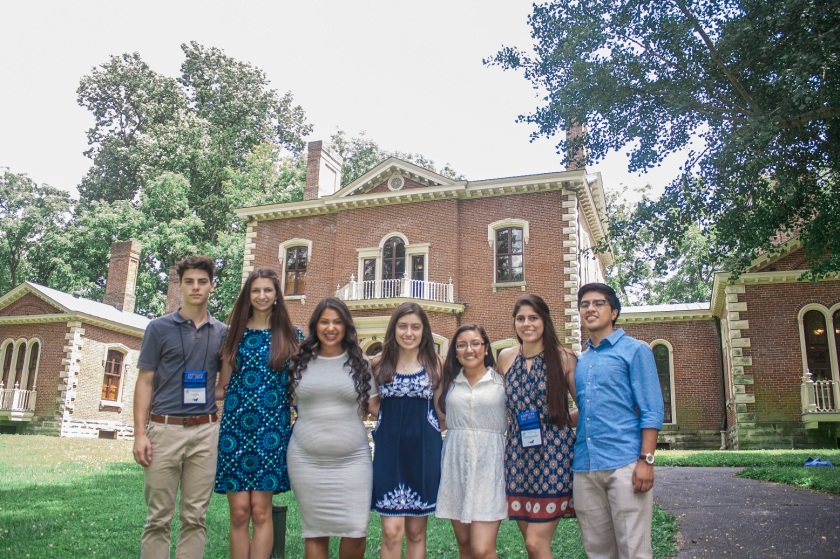
LEAP Ambassadors Outside of Henry Clay Home
we headed back to the conference bus for our next, and last destination on this tour, the Mary Todd Lincoln home.
Todds and Lincolns in Kentucky
Originally built as an inn and not a residence, the Mary Todd Lincoln residence was purchased when Mary was 13. In all, some 16 children would have spent time in the house–Mary and her 15 siblings–not counting cousins and other more distant relatives.
LEAP Ambassadors Tour Mary Todd Lincoln Home
At an early age, Mary began attending a finishing school where she studied literature and became fluent in French. When her father died of cholera, he had no will, so all of the items he owned were liquidated, including their collection of over 350 books. As a result, the museum has very few pieces of furniture original to the house, although they do have pieces that date from that time.
When Mary was about 20, she went to live with her sister, Elizabeth, for an extended period of time. Elizabeth and her husband lived in Springfield, Illinois, which is where Mary met and later married Abraham Lincoln. There was talk about Mary’s visions of becoming a First Lady long before she married Lincoln, and much credit is given to her for his rise up the political ranks.
All was not smooth, though. While in the White House, Mary spent the a large sum of money on redecorating the White House in the first six months of their stay, which led to some talk about how extravagant she was. Some of the President’s opponents tried to use the fact that many of Mary’s brothers and sisters were either fighting for the Confederacy or married to Confederate soldiers against him. In fact, while she was living in her family home, the Todds had anywhere between three and five slaves.
After Lincoln’s death, Mary went into perpetual mourning, and only wore black from then until her own death. She lived in Europe twice with Tad, one of two sons who were still alive at the time, although Tad, too, died young, like both Willy, in 1862, and Eddie, in 1850. In 1875, Mary had a premonition that Robert, her last remaining son was in peril, so she went to him. Given her behavior, he had her declared insane and committed her to a private sanitarium, although she was released after only a few months.
Recently, the Washington Post speculated that her illness might have been caused by a vitamin deficiency, our tour guide explained, although there are many theories as to her mental state, especially after losing two sons and her husband. Altogether, the tour was interesting and informative (and Ryan’s favorite stop on the tour).
Our awesome downtown tour was long (about four hours), so the LEAP Ambassadors had a late lunch at Stella’s Kentucky Deli, a locavore restaurant in downtown Lexington. The options weren’t too exotic, but Brian tried a lamb-burger (“pretty good”) and Kaitlyn loved her fried green tomato BLT. The rest of us were not too impressed with our dishes. As with any new experiences, sometimes it’s a hit and other times it’s a miss. We are always happy to try new things though – that’s part of what keeps our trips interesting!
Keeneland: Betting on Fun!
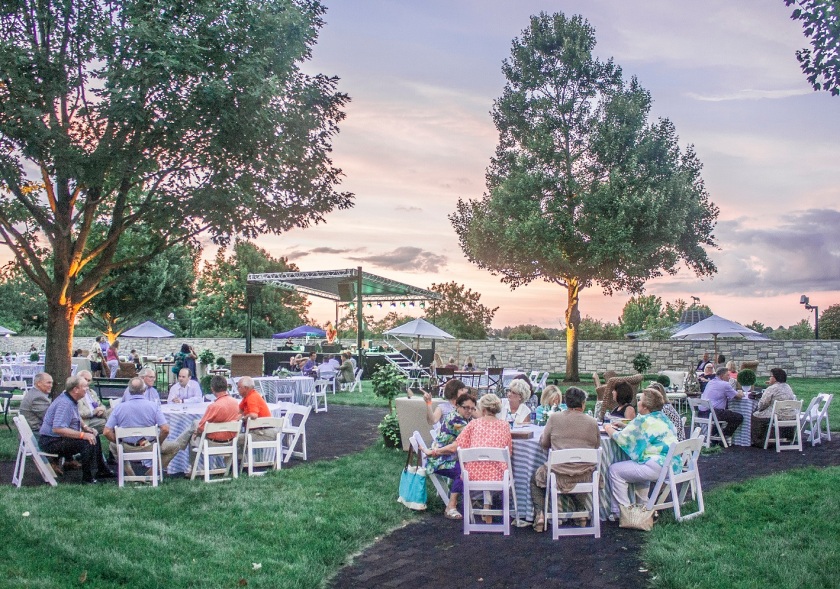
Later in the afternoon, we were all eager for the bus ride to Keeneland, a Thoroughbred racing facility and sales complex for SLC “family night.” We passed through various luscious green pastures, and were greeted with music, and excited to sample varieties of the well-known, authentic Kentucky bourbon and barbecue. Not to be disappointed, we arrived at the main patio area where different tables and serving areas had been set up.
Opening Night of Southern Legislative Conference–Keeneland
We piled our plates high with savory brisket and ribs. Next we hit the barbecue sauce table where sweet tea, pineapple ginger and smoked tomato flavored barbecue sauces were available for sampling as well.
After we finished the delicious offerings, we met retired jockey Jean Cruguet, who kindly gave us his autograph and posed with us for a group shot.
LEAP Ambassadors with Triple Crown Winner Jean Cruguet
Cruguet is a legendary jockey, one who rode Seattle Slew to a triple-crown victory in 1977, the only undefeated horse ever to do so. In the final leg of that crown, Slew was leading by four lengths heading into the stretch, and Cruguet, in an act of bravado, stood on the stirrups, raised his riding whip in the air, and declared victory 20 yards prior to the finish line.
Jean Cruguet on Seattle Slew
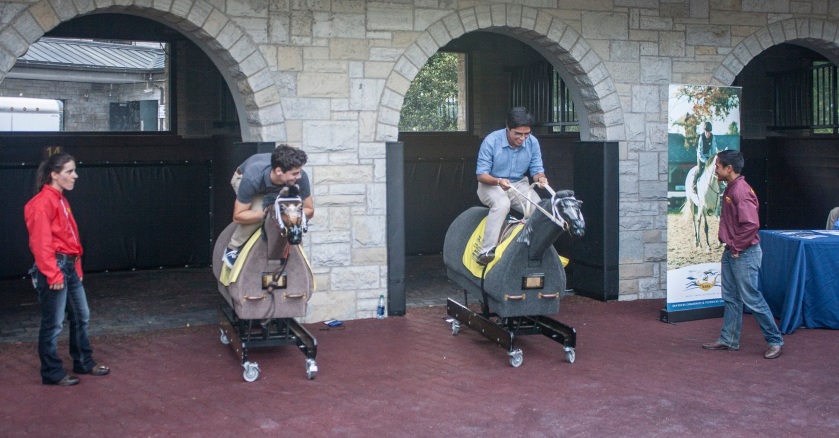
Perhaps inspired by this meeting, both Ryan and Brian (named B-Ryan for the purposes of our trip), got on horse simulators to experience the horse-racing experience.
Ryan Brim and Brian Aldaco on Mechanical Horses
Brian and Ryan experienced what it would have been like to be a professional jockey, giving the practice horse a tryout ride. Both had great “natural talent” and, perhaps a bit presumptuously, felt ready to take on an actual horse race after their practice.
To see some real horses, we headed to the stables. Everyone took turns approaching the majestic horses for some tender, loving pats on the nose.
This slideshow requires JavaScript.
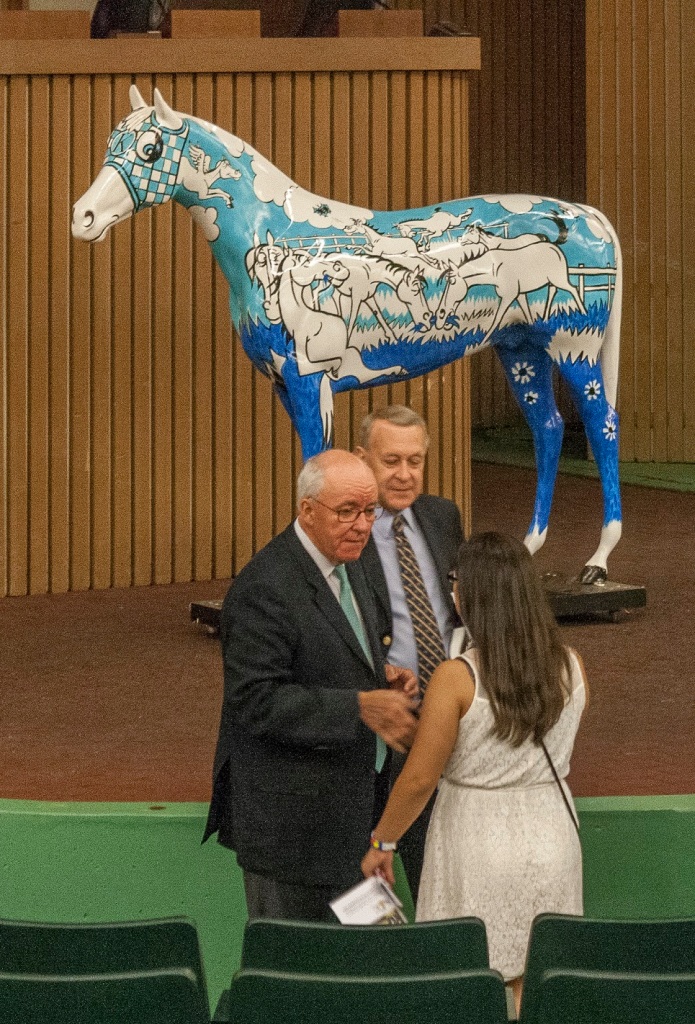
Having checked in with the breadwinners of the stables, we moved on to a more educational event Keeneland sponsored, the mock auction. Unfortunately, we arrived late, only in time for the tail end of a Q&A session with Mr. Cruguet.
Beatriz, though, didn’t let the end of the session slow her down. She met briefly with the auctioneers for her own private Q&A, to find out more about the process of horse auctions, as well as the amount one could spend on a horse: Did you know that the highest bid they have ever had for a horse is 3.6 million dollars? Did you know that Keeneland had 500 million dollars in horse sales last year? I found that pretty impressive.
Beatriz Martinez with Keeneland Auctioneers
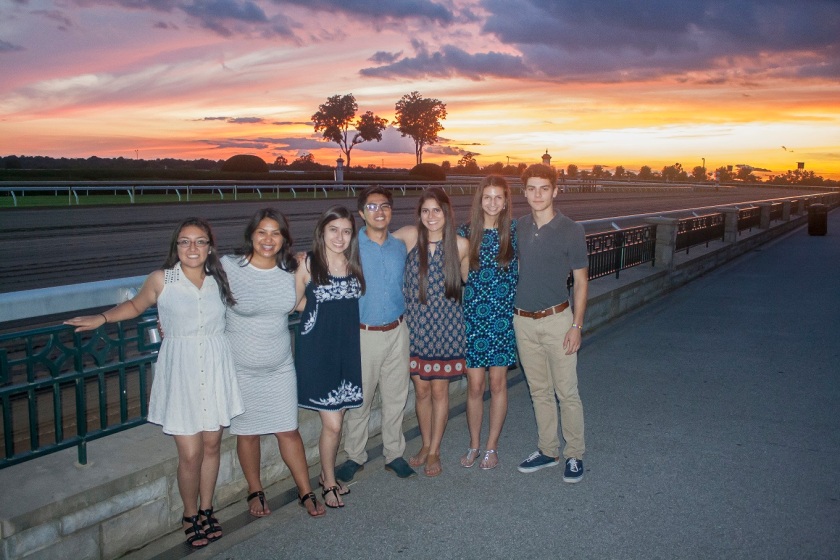
We made some last rounds at Keeneland, enjoying the last round of music by local band Sundy Best, “Home,” as we took pictures in the sunset at the track.
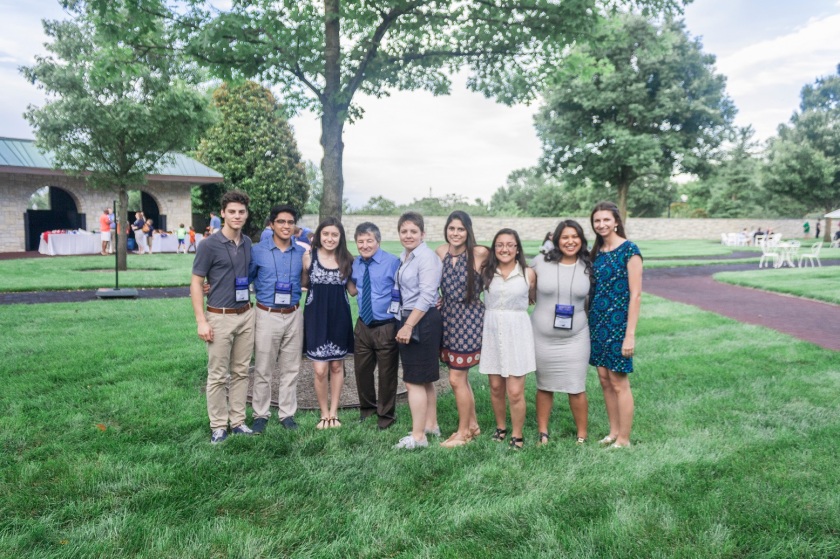
LEAP Ambassadors at Keeneland Race Track
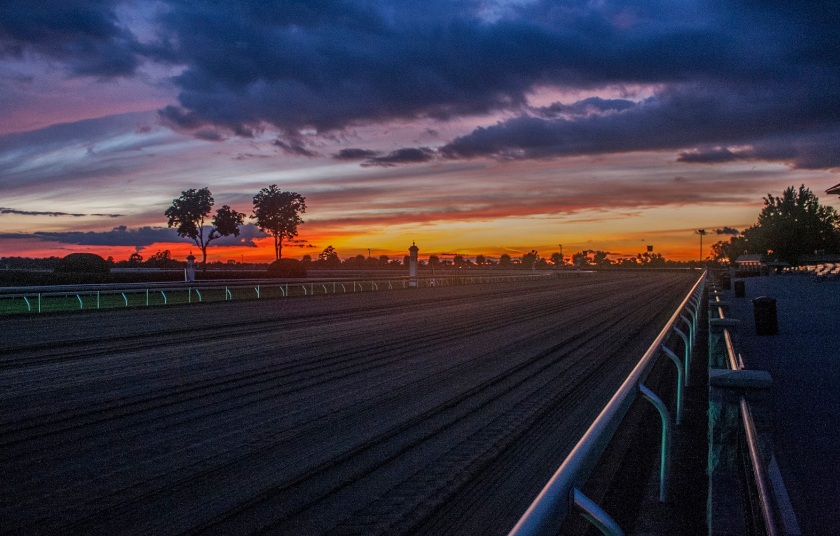
None of us has ever been to a horse race, but being so close to the track does hint at the kind of excitement that might be possible during a two-minute race.
Having a beautiful sunset also helps.
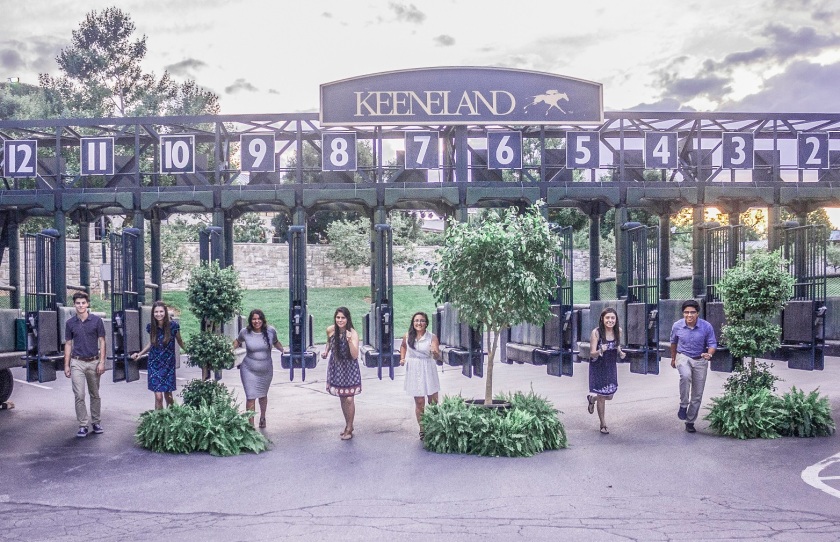
We also posed in Keeneland’s Starting Gates. Incidentally, Brian was stationed in the same gate as American Pharaoh, the last triple crown winner (2015) and, with a victory at the Breeder’s Cup, stands as the only horse to win the “Grand Slam” of horse racing. Fittingly, American Pharaoh was bred in Kentucky.
LEAP Ambassadors in Position at Keeneland
With one last look around Keeneland, we agreed with the band, Sundy Best, that, “Yeah it’s time to go home.” So we headed back to the hotel!
Triangle Park
Before we were fully able to call it a night, we explored the city park by our hotel, Triangle Park. It is a beautiful gathering space, with splash pads, a “democracy wall,” and a beautiful fountain that covers more than an entire city block.
Triangle Park, Lexington, KY
With the calming splash of the water and the peaceful, happy ambiance of the park, and the satisfaction of a full-day of activities, we called it a day.
After a day of getting our feet wet in the Capitol and of renewing acquaintances with LEAP Alumni, we were ready bright and early for Day Two in the Texas Legislature.
Megan Chapa Heads to Work
Like yesterday, it was a day of learning. I am doing my learning, at least for the first half of the week, in Representative John Zerwas’s office.
Zerwas represents District 28–an area with which I am familiar because I was actually raised in the district. A graduate of Baylor College of Medicine, Rep. Zerwas is an Anesthesiologist who has served in the House of Representatives since 2006. He currently serves as the Chair of the Higher Education Committee, and he is a member of the Public Health Committee.
Dr. Zerwas’s chief of staff, Nelda Hunter, welcomed me and quickly assigned my duties. My project was to do research on Texas higher education admission policy and compare it to other states who have similar demographics or size. I had the unique opportunity to attend a briefing hosted by Representative Zerwas’s office. The briefing was a presentation done by a representative from Educate Texas, an advocacy council that specializes in post-secondary education in Texas. Its mission is to offer policy recommendations that improves the overall quality of higher education. This council is made up of education experts.
Less glamorous but as important, I was also able learn how to use the phones and the Correspondence Management System (CMS). Although it was only two and a half days in Representative Zerwas’s office, everything I learned was truly valuable and appreciated.
During my lunch “break,” Alex Galvan and I were able to meet with Erin Daly-Wilson, who works for Speaker Joe Straus. During the meeting she stressed the importance of interning and gave us tips on how to be an effective professional. I learned that the committee appointments are made within the first three weeks of session and the Speaker is elected on the first day of session by the House Members. Speaker Straus was elected in a special election in 2005 and now has three bodies of constituents: his San Antonio District, the House, and the entire state of Texas. The Speaker of the House is the 3rd most important position in the legislature only following the Governor and the Lieutenant Governor. It was great meeting with such an experienced and dedicated individual and we were grateful she carved time out of her busy day for us.
Immediately following our work day we headed to Gourdough‘s, an extreme donut restaraunt, for a sweet meeting with Representative-Elect Ernest Bailes and his future chief of staff, Nick Raymond. Representative-Elect Bailes will be representing Huntsville in the State Legislature, so it was an honor to spend some time with him.
As a student who would like to intern during the Session, I asked Mr. Bailes numerous questions about the qualities he looks for in an intern and took mental note of his wise words.
Every interaction is an interview. Represent yourself well;
Open up and converse. People want to feel welcome when they walk into an office;
Offices look for young people who will be reliable, professional, and skilled.
Tuesday Night Excursion: Mount Bonnell
After a day of (we hope) climbing the ladder of success, we decided to also climb Mount Bonnell.
Climbing is a bit of an overstatement, because Mount Bonnell is more of a stroll, but it does offer very pretty views, to the east and the Austin Skyline…
The Austin Skyline from Mount Bonnell
…and to the West…
The Colorado River at Sunset from Mount Bonnell
The elevation, sunset, and beautiful views prompted some fun photographs…
This slideshow requires JavaScript.
…many of them utilizing all of Bonnell’s 780-foot elevation to prime advantage…
Near the Peak of Mount Bonnell, at Sunset
Mount Bonnell is part of Austin’s impressive park system, one that helps the state’s capitol rank high in the “most fit cities” lists that crop up now and then. But although there are some trails on Mount Bonnell, it’s more of a place to enjoy the sunset…
…or to enjoy a group outing…
LEAP Ambassadors with Professor Yawn on Mount Bonnell
…or simply to contemplate nature and the future…
And after a day of building our skills, learning from others, and pursuing our dreams, we did indeed feel as though we had gotten a glimpse into a bright future.
On June 13, 2016 Alex Galvan, Kaitlyn Tyra, Megan Chapa, Karla Rosales, and I headed into the Capitol for our first day as Austin interns.
SHSU Interns at the Texas Capitol
Unlike the rest of the SHSU students, however, this was my first time in Austin, and I could not help but look in awe at the marvelous building I would be working in for the week. As we got further inside, I stood on top of the terrazzo floor tiles forming the six seals of the six nations that had governed Texas…
and I stood looking up at the dome.
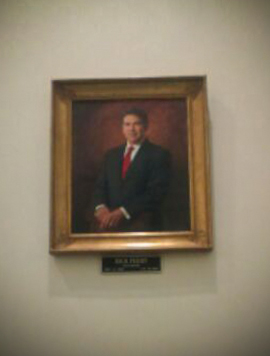
I spun in a circle and all around me I saw portraits of governors.
Looking further up, I noticed that every floor had various portraits all around the rotunda and at the very top was a star painted on the dome. With the sun shining through the windows all around me, I hoped it was a premonition of the day ahead and that the wonder would be only a taste compared to the amazing things I would later discover.
As soon as I entered through the door of Representative Armando “Mando” Martinez’s office, I was cheerfully greeted by his Chief of Staff, Scott Jenkines. Mr. Jenkines made me feel right at home as he explained the expectations and rules of the office. With Mr. Jenkines being from Weslaco, we reminisced about the Rio Grande Valley, and discussed the many issues the people there were facing, as well as different possibilities that Representative Martinez was trying to implement to try and help these issues get fixed.
To start off the day, Mr. Jenkines led me through the maze that was the Capitol and took me to get my photograph taken for my ID. He also offered a quick tour and, again, my head spun round and round, as we took turn after turn, leading me deeper and deeper into the Capitol. I was shown where the Capitol Grille was, the place to go when anyone inside was hungry; we passed by the post office (grabbing the mail in the process); and we saw the different committee offices, especially Transportation and Higher Education, which are two of the committees Representative Martinez is heavily involved in.
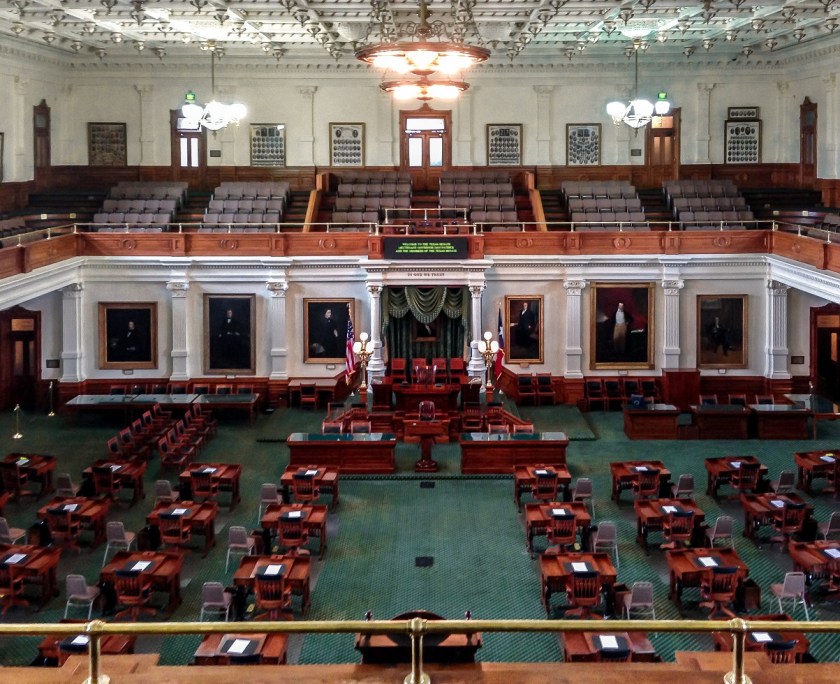
The House of Representatives, where Representative Martinez votes, was closed for renovation, but the Senate Gallery was open and splendid!
One of the most interesting things I learned about the Capitol was the process of hanging the governors’ portraits. Heading back, Mr. Jenkines explained that when a new governor’s portrait was added (only after they leave office), each of the portraits has to be moved exactly one spot backwards, meaning every single portrait has to be removed and rehung.
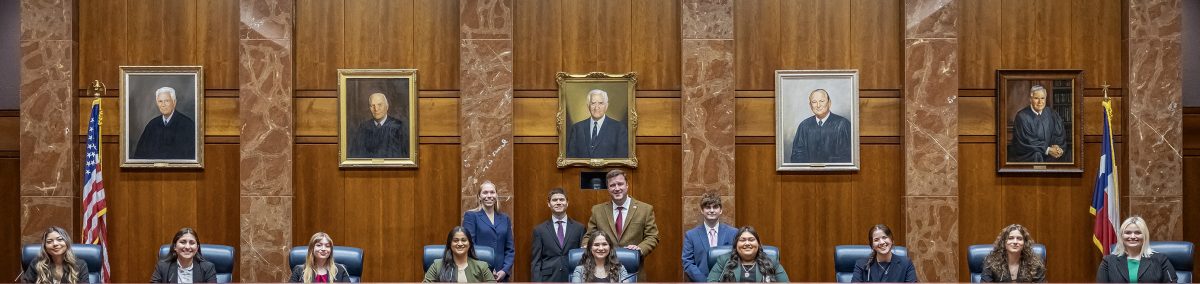
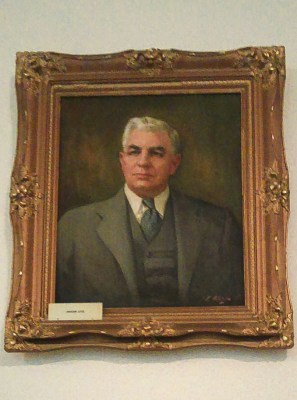
At another stop on the tour, we visited the library, almost directly beneath Representative Martinez’s office. On the library walls are paintings of the judges. One stood out: The Portrait of the Unknown Judge.
It is interesting that an unknown judge could make it on to the wall of the capitol and yet not have anything known about him.
Once I got back to the office, I got to meet Jack Walls, a Baylor intern who is also be interning at Representative Martinez’s office. He showed me the basics of the typical office day for an intern: answering phone calls, navigating the computer system, and communicating with people. Then I was left to my own devices so that I could read and learn more in depth about bills, statutes, and committees.
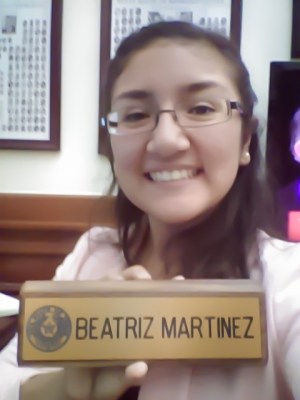
Later in the day, Mr. Jenkines received a call that my ID was ready. As we were heading back up to the office I got to show off my brand new name tag.
Later, still, I would get a nameplate, just like a real employee!
At the office, Mr. Jenkines mentioned a leadership program called “Subiendo”. This program was aimed at high-school students so that they can gain leadership skills during a training in which they can learn about and address different issues going on in the real world today. This event takes place on Wednesday, and I will have the chance to go along as part of the Representative Martinez team.
At the end of the day, Professor Yawn took us to a vegetarian restaurant called Mother’s. We were greeted by Blake Roach, Melva Gomez, and Emily Johnson who were alumni and part of the Junior Fellows when they were at SHSU. Everyone relaxed and spent a pleasant evening in this quaint little restaurant. We were all a bit thrown off by the lack of meat (Vegetarian isn’t big in the Valley), but it was an interesting experience to see the wonderfully creative recipes they had instead. I had the plate called Momma’s Quiche. We left after various elaborated talks of the past memories and the new ones being created.
It was a special day, one made so by my boss, Scott Jenkines; and by Megan Chapa and Alejandra Galvan, who made a trip to the Valley to take me to Austin; and the opportunities that come with being an SHSU student.
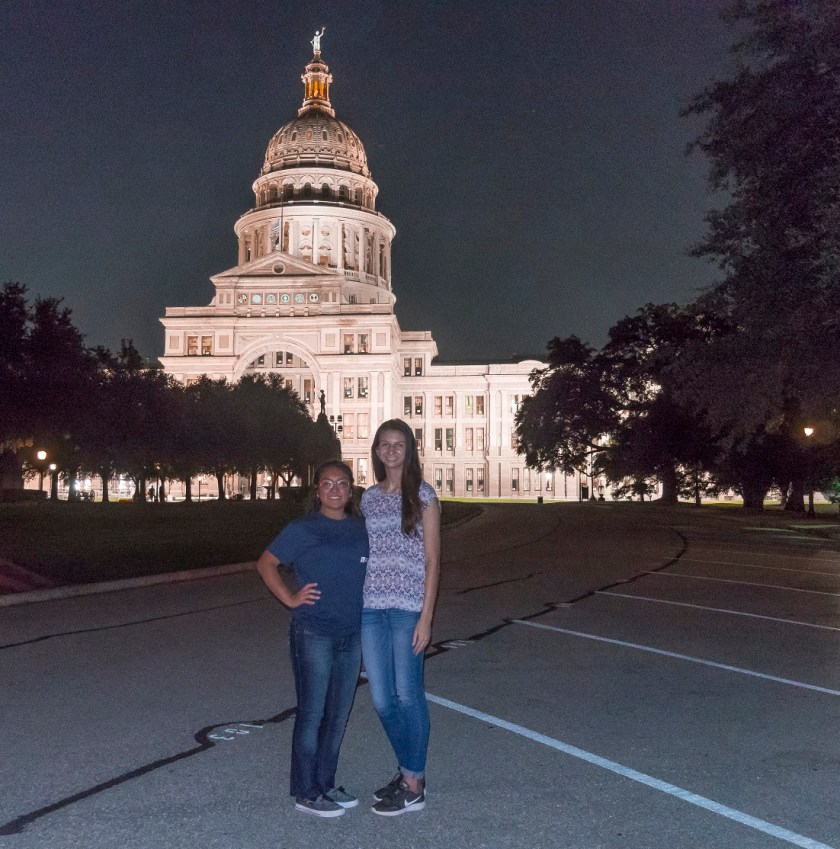
Beatriz Martinez and Kaitlyn Tyra at the Capitol
Beatriz Martinez is finishing her first year at SHSU. She is eighteen-years old but, amazingly, has completed 100 hours, compiling a cumulative GPA of 3.90 (and a 4.0 at SHSU). She is the youngest of the LEAP Ambassadors.
We had a dual-view day ahead of us, when we awoke. Our morning hours would be spent examining the governing side of Texas politics. Our afternoon and evening hours would be devoted to the campaigning side of Texas politics. Both were rewarding, and both informed and enriched our understanding of the other.
We began with a tour of the Texas Capitol. Our tour guide was informative, providing us with a nice overview of the capitol while also highlighting interesting side features.
In the Capitol’s rotunda, for example, visitors can stand in the center, speak, and hear an echo that those around them cannot hear. Or, did you know that the door hinges weight 7.5 pounds? These are just some of the interesting facts that a tour will provide.
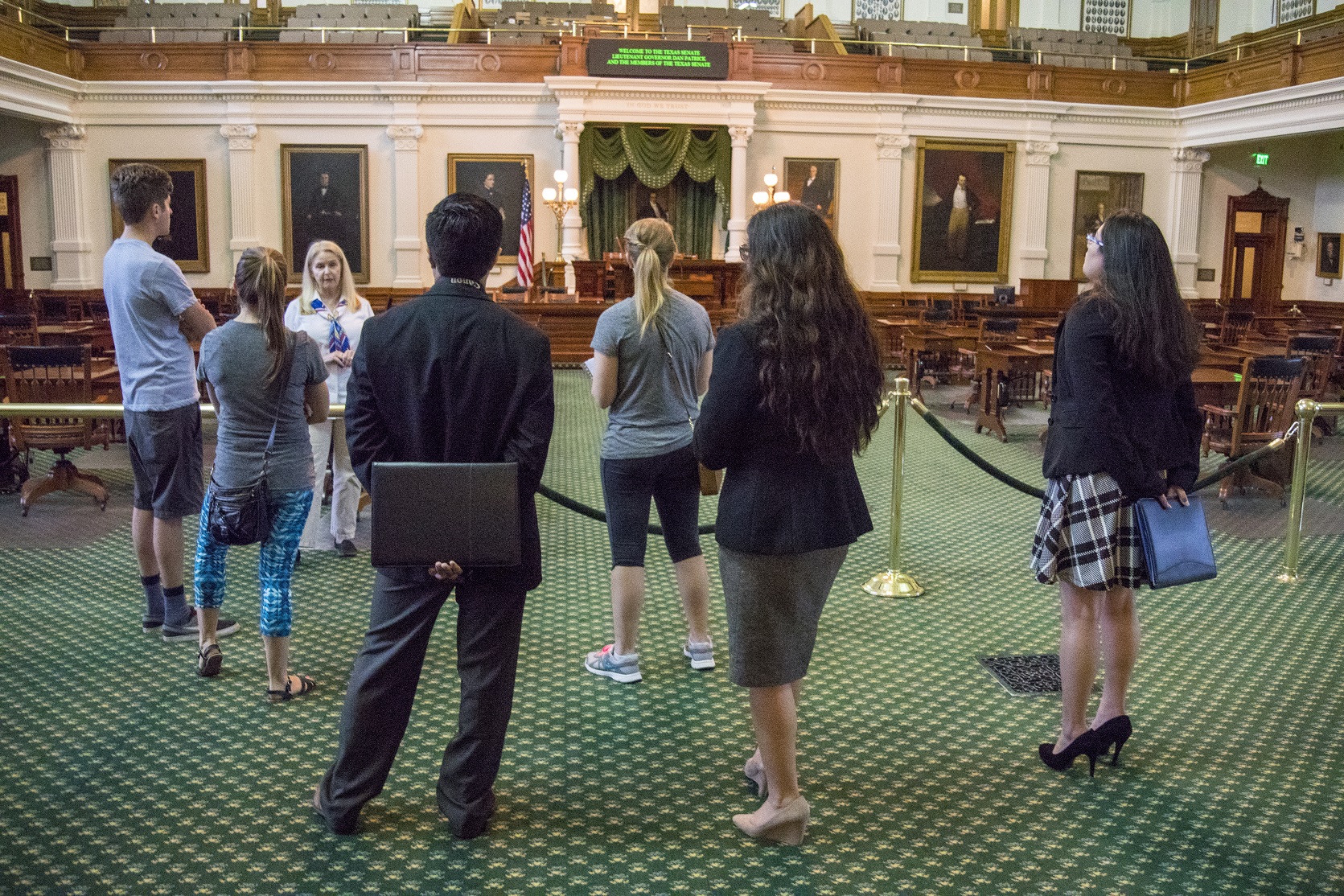
On a more macro-level, we visited the Texas Senate…
…where we saw the vivid paintings “Dawn at the Alamo” and “The Battle of San Jacinto,” both by Henry Arthur McArdle, who offered a heroic interpretation of the quest for Texas independence. Speaking of which, we showed our state pride by taking a photograph with the portrait of Sam Houston, who not only led troops to victory at San Jacinto, but went on to serve Texas as President, Senator, and Governor.
We completed our capitol tour with a visit to the underground annex, where we admired the window view of Goddess of Liberty, which towers atop the capitol dome.
Following a brief visit to the Capitol Grill—we would later be told, “don’t ever eat at the Capitol Grill, not ever—we journeyed the extension to find the office of SHSU Alumnus Representative Will Metcalf. There we met Chief of Staff Zachary Stephenson, who provided us with a rewarding presentation on working in the legislature.
Given the long work days, he said he looks for employees and interns who maintain a positive, professional attitude; avoid excessive participation in Austin’s thriving party scene; can remain productive over the course of the session; and will represent the office well. It was good advice to students who are interested in the possibility of interning during the upcoming session, and we are thankful for his time and wisdom.
…or from learning more than we could have ever known to ask about how legislatures work. Griesel and Sluyter demonstrated their exemplary knowledge of both the history of Parliamentary Procedure and how the legislative process unfolds.
Parliamentarian Chris Griesel Explaining Parliamentary Procedure
For example, did you know, that because the British upper-class spoke in French during the time of the Magna Carta, the concept of an assembly body fell under the French word for speaking, evolving from parley to Parliament. Moreover, rather than address all the representatives from the assembly, the King would designate one person to speak—the speaker—a designation that evolved into the U.S. “Speaker of the House.”
It was interesting speaking to these attorneys, both of whom shared their admirable intellects while discussing drone policy, the legislative process, our careers, and Mae West legislation—a proposed bills designed to get a specific audience to “come up and see me sometime.”
We should also add that Mr. Griesel very generously gave us two copies of Profiles in Courage, John F. Kennedy’s Pulitzer-Prize winning biographies of US Senators. When we got back to the car with gifts and opened the book, we noticed that he had marked the chapter featuring Sam Houston.
Although our morning only covered the governing portion of our dual-view day, our learning went well beyond statesmanship. From the history of the English language to the art of H.A. McArdle to the literary efforts of a former President, we left the Capitol more well-rounded than we entered. With such a productive morning, we could only speculate on what the evening would hold at our first-ever New Politics Forum Campaign Bootcamp.
Robert Loughran left SHSU in 2011, graduating with a degree in Political Science and plans to go into education. But he returned to his Bearkat home this Saturday, bringing 45 middle-schoolers and a few parents, all of whom wanted to learn more about Sam Houston State University. On hand to help were the LEAP Ambassadors, who served as young chaperones, tour guides, and mentors for a six-hour workday on Saturday.
To begin the day LEAP Ambassadors welcomed the AVID Students, who travelled 3 hours to visit Huntsville and Sam Houston State University, at Carbonero‘s for lunch. Carboneros is a local restaurant that serves authentic Salvadoran food. At the restaurant, the students were seated in groups of 7-8 with their classmates and also with one of the six LEAP Ambassadors who were present to mentor them throughout the day. This made lunch interactive and interesting because we all got to learn a little about each other. The students and volunteers got to enjoy a buffet-style lunch which included pupusas, rotisserie chicken, chicken/beef enchiladas, tacos al carbon, their famous chaufa rice, and hamburgers for the not-so-adventurous students. For an hour we ate, talked about what the day had in store, prepared for the next portion of the day and enjoyed the enthusiasm of 45 students who travelled from a Dallas school district—on a Saturday—to get a taste of El Salvadoran food and of college.
Following a full meal, AVID students headed to campus to attend a mock college class taught by Professor Yawn.
The goal of the class was to give the students a realistic idea of what to expect in a real college level course. To that end, the students were given three days to read the Bill of Rights and summaries of four court cases.
It was a lot to chew on for middle schoolers, and the grades reflected that.
But the students perked up for Professor Yawn’s lecture, which ranged from the criminal justice amendments of the US Constitution to the role that technology plays in changing interpretations of “search and seizure.”
The students eagerly asked questions and were willing to participate in Professor Yawn’s role-playing examples—including an arrest and detention which, incidentally, tied in to the days’ later activities.
Many students commented that the class was their favorite part of the day! Even LEAP Ambassadors enjoyed and learned from the lecture.
Alejandra Galvan and Karla Rosales
Breaking into groups, the Ambassadors teamed up to lead students on a tour across campus. Visiting the Newton Gresham Library, the Lowman Student Center, Rec Sports, the Performing Arts Center, and the College of Criminal Justice, we hoped each group got a sampling of what SHSU offers academically and recreationally. The tour time allowed students to ask questions and learn more about the University. Even LEAP Ambassadors brushed up on the University’s history. For example, we learned that SHSU became the first fully air-conditioned campus in the world during SHSU President Harmon L. Lowman’s presidency! Once the tours were finished, we regrouped and AVID students eagerly boarded the bus to visit the Texas Prison Museum.
It is impossible to come to Huntsville without knowing at least three things about the area: (1) it’s the home of Sam Houston, the man; (2) it’s the home of Sam Houston, the University; and (3) Huntsville has prisons. The AVID students got a briefing on the first two during class and the SHSU tour and their final destination allowed them to experience the history of the Texas Prison System at the Texas Prison Museum.
Visitors to the Museum are encouraged to watch a short history of the Texas Prison system when they arrive, and AVID students eagerly sat for the eight-minute program.
They were also treated to a brief overview by Jim Willett, who worked for the prison for 30 years, many of those years as Warden of the Walls Unit. He provided a few interesting details, and then showed the young students a large model of the Unit he once supervised.
The students’ attention was also caught by the masterful pieces of art located throughout the museum. One piece that caught everyone’s attention was a large piece of wood, much like a tree stump, that had animal faces carved into it. It is an impressive piece of art work, and it’s difficult and sad to think about it being created in a prison.
Of course, the most famous piece of wood in the Museum is the prison’s notorious electric chair. Located toward the rear of the Museum, surrounded by the institutional green walls of the prison system and illuminated by a single fluorescent light, Ol’ Sparky sits forlornly. It’s chilling to experience this instrument from a few feet away.
Another popular exhibit was the illegal contraband that has been confiscated from inmates over the years. These items would impress any engineer, architect, or inventor. Pipe shotguns made of lined paper towel rolls, lead and string; a tattoo machines made from a pencil and stored in a sock; hollowed out wood-soled shoes that hid a knife blade, much like a James Bond gadget. Seeing these things close up not only made us all thankful for the glass separating the contraband from us, but also for our freedom.
Of course, no trip to the Texas Prison Museum is complete without a photograph of the visitors in the model jail cell. Students displayed way too much pleasure while posing in the jail cells.
The exhibits of the Texas Prison Museum have valuable lessons to teach both young and old. And these exact lessons are why the LEAP Ambassadors and AVID Students sacrificed a Saturday to educate and empower ourselves with knowledge and service.
It was a long day, but so worth it! It gave AVID students an idea of what to expect in college and what the Huntsville community can offer and it prompted the LEAP Ambassadors to play a mentorship role, which for most, was a new experience. I believe that we all benefited from what LEAP calls AVID Day and we hope that we can do it again in the future.
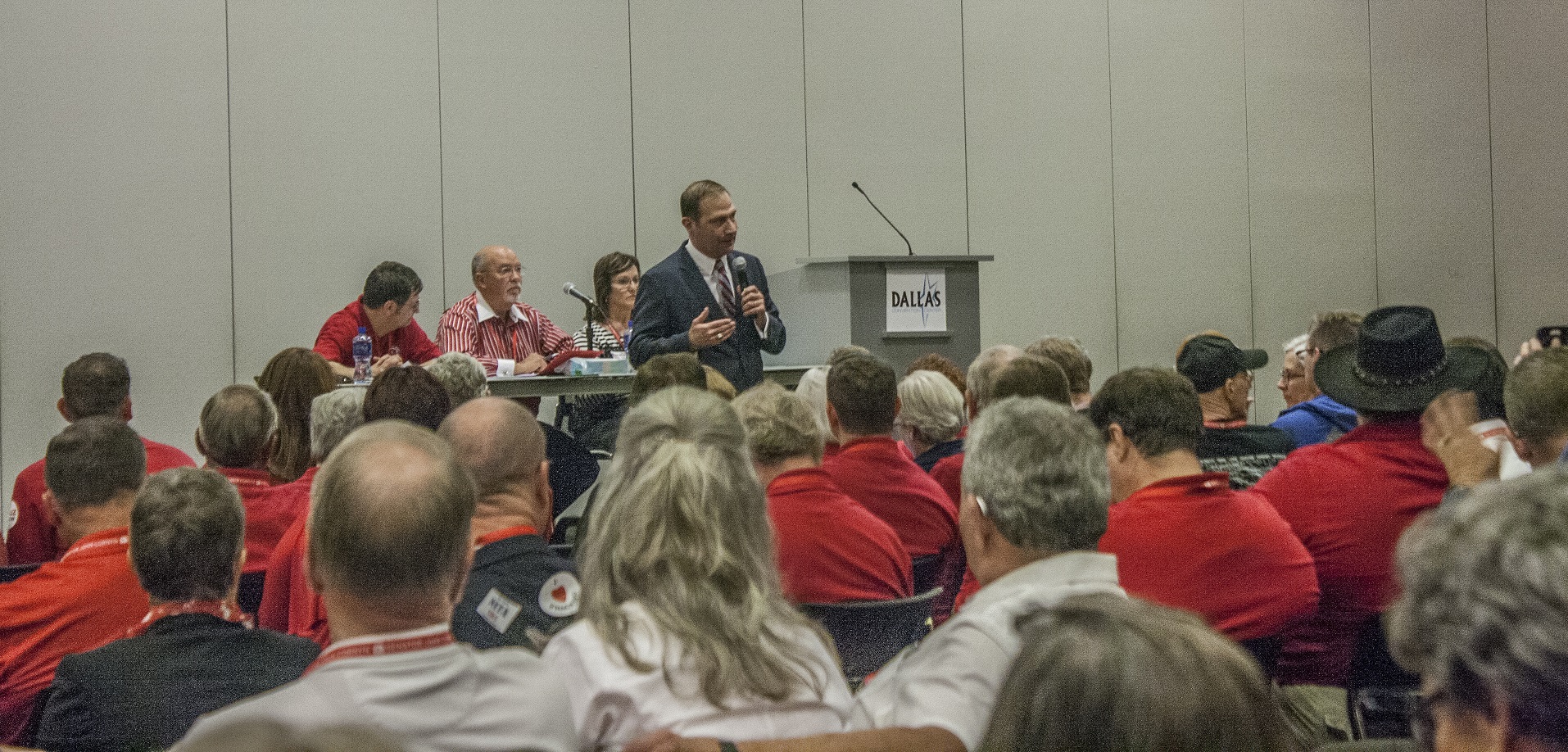
Ever since we attended the Walker County Republican Convention, we had been hearing many anecdotes from previous State delegates about the State Convention, and not all of the stories were good. So we were equal parts excited and anxious to see what the 2016 Republican State Convention would be like in person.
Part I: Parliamentary Training (Brian Aldaco)
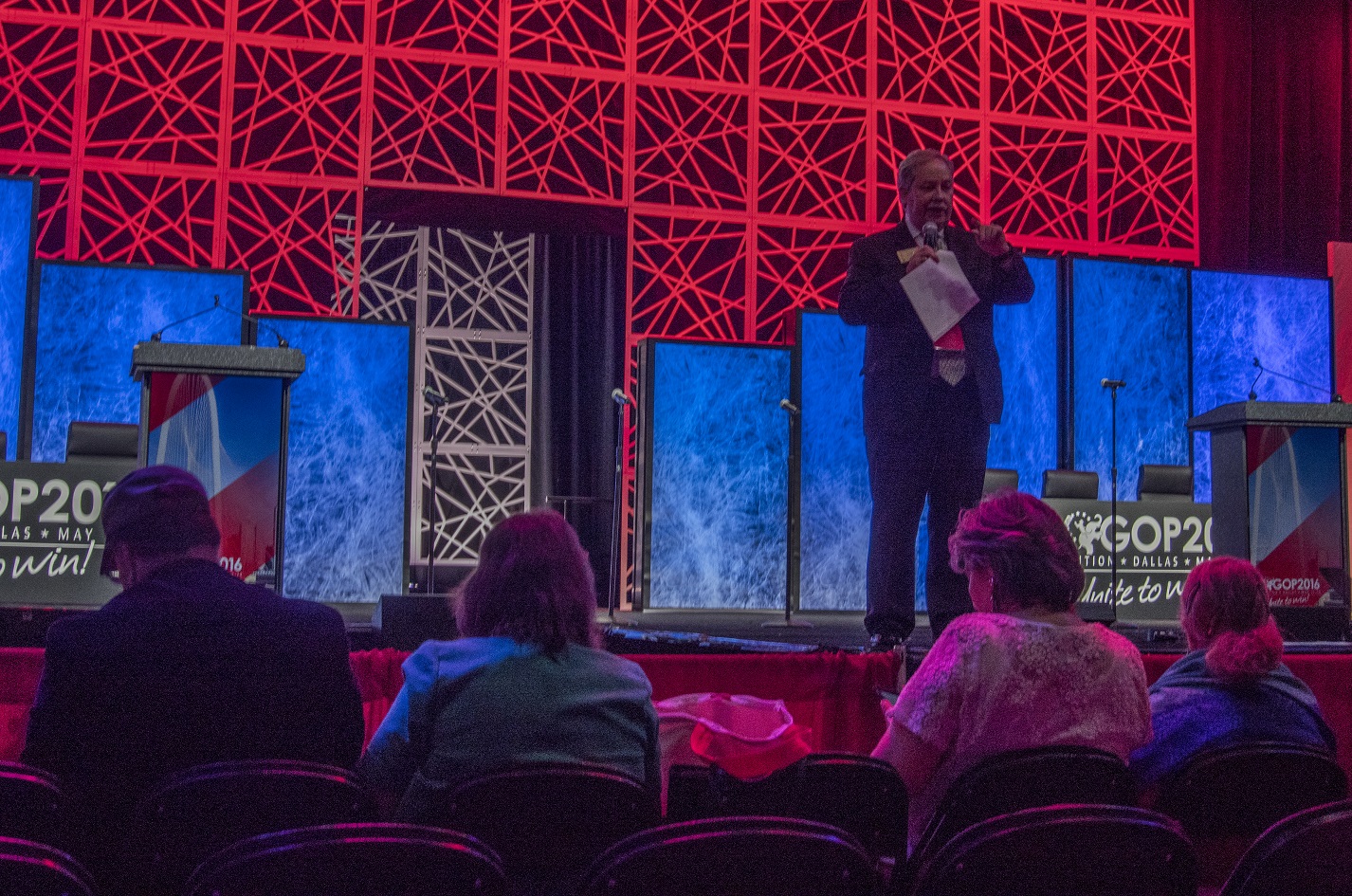
The Convention is able, in theory, to flow smoothly because it is governed by Robert’s Rules of Order, and we began the convention attending the parliamentary procedure training provided by Richard Hayes, the Parliamentarian. The procedure is used often enough that this training would benefit us tremendously in other situations. The Parliamentarian led the training and gave us a sheet to help us follow along. This sheet was extremely helpful, but it was his personality that made the training interesting.
We got helpful tips to make sure the meetings ran efficiently and we learned that the goal is to have an efficient meeting by focusing on the substance instead of parliamentary maneuvers, which often just serve to delay the proceedings. It was fairly obvious that, even before the convention had officially commenced, that Hayes was anticipating dilatory tactics and his anticipatory frustration was manifest in his suggestions. At one point, Professor Yawn leaned over and said, “I’m going to have him explain my syllabus to my classes from now on.”
After learning the basics of how the Convention will work, we had a break to spend wandering through the exhibit hall. There we were able to buy GOP pins and other Republican memorabilia. The exhibit hall was also filled with information booths of different candidates aside from the Presidential race, making for a fun tour, followed by our arrival at the large hall for our first general session.
Part II: The Session (Alex Galvan)
We weren’t sure what to expect of the session, but we were grateful to have many delegates there looking out for us. Thomas Leeper, Stephanie Fors, Mike Yawn, Kara Veinotte, Cynthia Prehoda, Richard Yawn, Dorothy Yawn, Gerald Skidmore, Bobby Gardner, Micah Slaughter, Tore Fossum, Larry Hughes, Leah Boyd, Chad Byrd, Kay Deahl, and Judy Emmett were all on hand to explain things, laugh with us, and sometimes cringe with us. The day held much promise.
We began the session with a prayer, an exuberant national anthem–including the rarely heard 2nd verse–and the pledge of allegiance to the American and Texas flags. After the opening ceremony the session began with a brief overview of convention affairs by the Republican Party of Texas Chairman Tom Mechler. These affairs included various delegate seating issues, which were quickly resolved by the delegate’s votes. Even though I am unable to vote as I am attending as a guest, it was still insightful to look into these procedures. In this case the cooperation in delegate participation and Chairman efficiency proved for a speedy process that allowed for the rest of the session to continue.
Part III: The Speakers (Karla Rosales)
After the Chairman’s proceedings, we all enjoyed a passionate discourse delivered by our state’s Governor Gregg Abbott. In his speech he voiced his opinion on how he believes the nation’s political spirit ought to be shaped, a message received with enthusiasm.
This was most noticeable when Governor Abbot received standing ovations at passionate moments in his speech. Similarly, Lieutenant Governor Dan Patrick, Speaker of the House Joe Straus, Railroad Commissioner Christi Craddick, and Land Commissioner George P. Bush also joined the stage for their remarks.
All of the enthusiasm from the moving speeches made us look forward to discussing our thoughts over our upcoming lunch break.
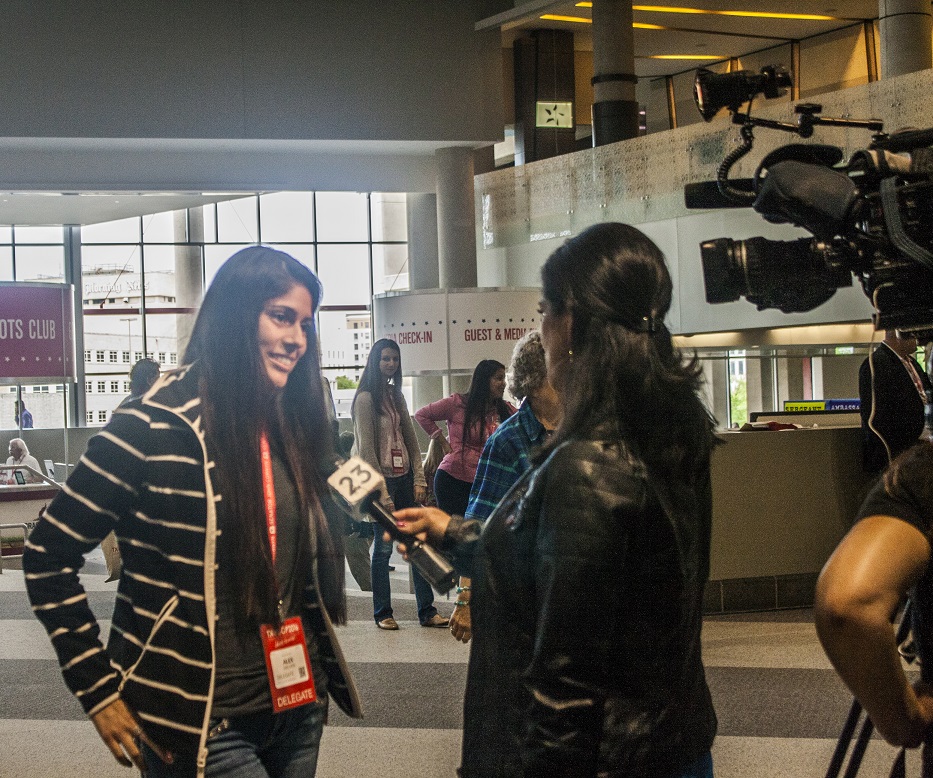
Before we sped off to lunch, Alex was caught by a Univision news crew for a quick interview.
Alex expertly fielded questions on topics ranging from Hispanic support for Donald Trump to the direction of the party, this burgeoning barrister’s fifteen minutes of fame ended, and we all headed to Cindi’s New York Deli for lunch.
Part IV: The Break and Senatorial Caucus (Kaitlyn Tyra)
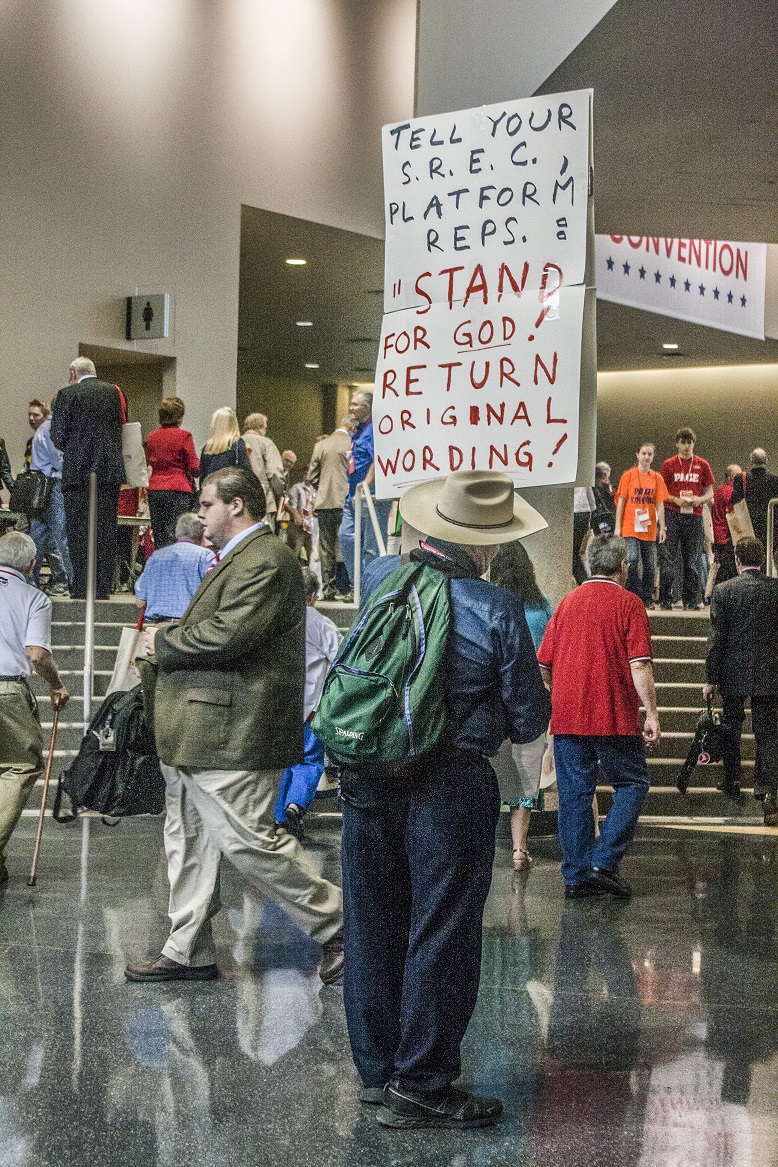
Cindi’s New York Deli that offered classics like reubens, pastramis, and other sandwiches for lunch. We all ordered different meals, some more adventurous than others. Brian ordered a beef tongue sandwich and Karla and Kaitlyn stuck to what they knew and ordered a regular turkey and ham sandwich. During lunch we had a great time discussing and comparing the most outrageous outfits and signs at the convention…
…and our new experiences thus far.
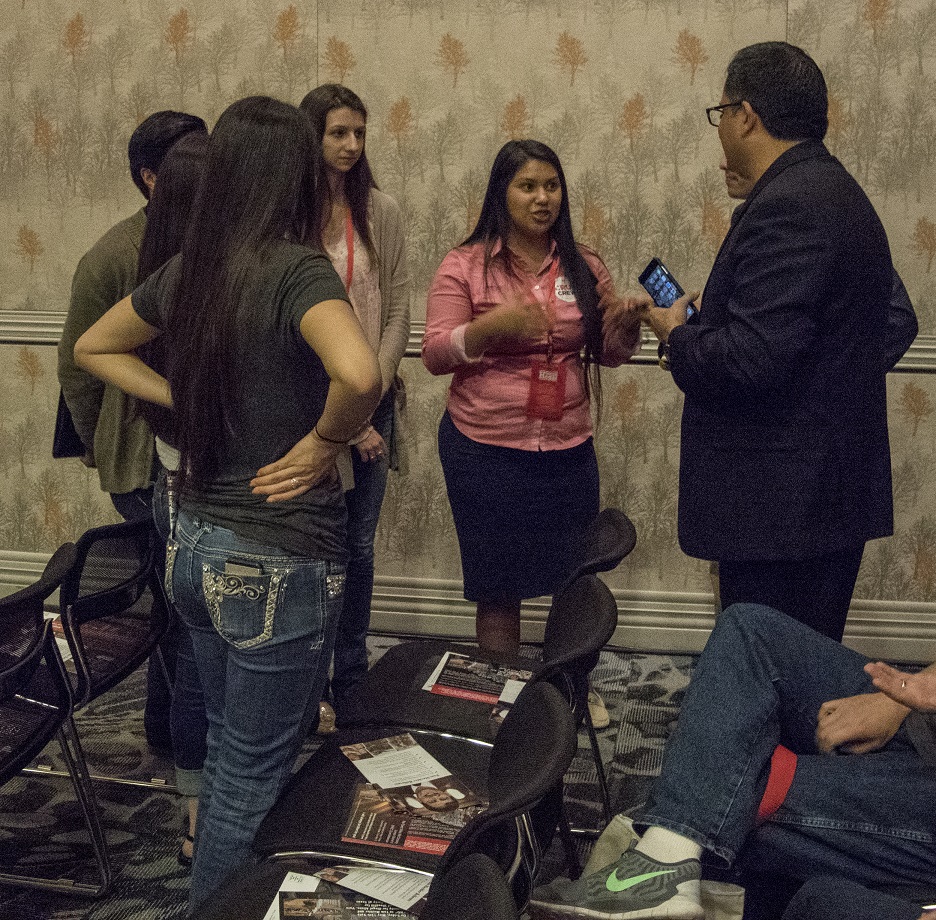
After lunch we were ready for our first Senatorial District Caucus Meeting, where all the delegates from Senatorial District 5 (Senator Charles Schwertner’s District) met to elect representatives to the Permanent State Committees. Not only would we elect representatives, but we also were privileged to meet with members of the Texas Legislature such as Representative Larry Gonzales and his Chief of Staff, Chris Sanchez….
…and Senator Schwertner…
…and his Chief of Staff, Tom Holloway.
Speaking with both Chiefs of Staff offered helpful advice as we prepare to interview for the Austin Internship Program beginning in the next legislative session. During our Senatorial District Caucus Meeting we were assembled by counties and began by electing a Chairman to lead the caucus. Immediately following, we nominated and voted on our appointments for the Rules Committee, Platform Committee, and Credentials Committee. Electing representatives from each senate district in Texas ensures that we have representation in each procedural and policy area–people we trust to represent our views at the state level.
Part V: Random Sightings (Mike Yawn)
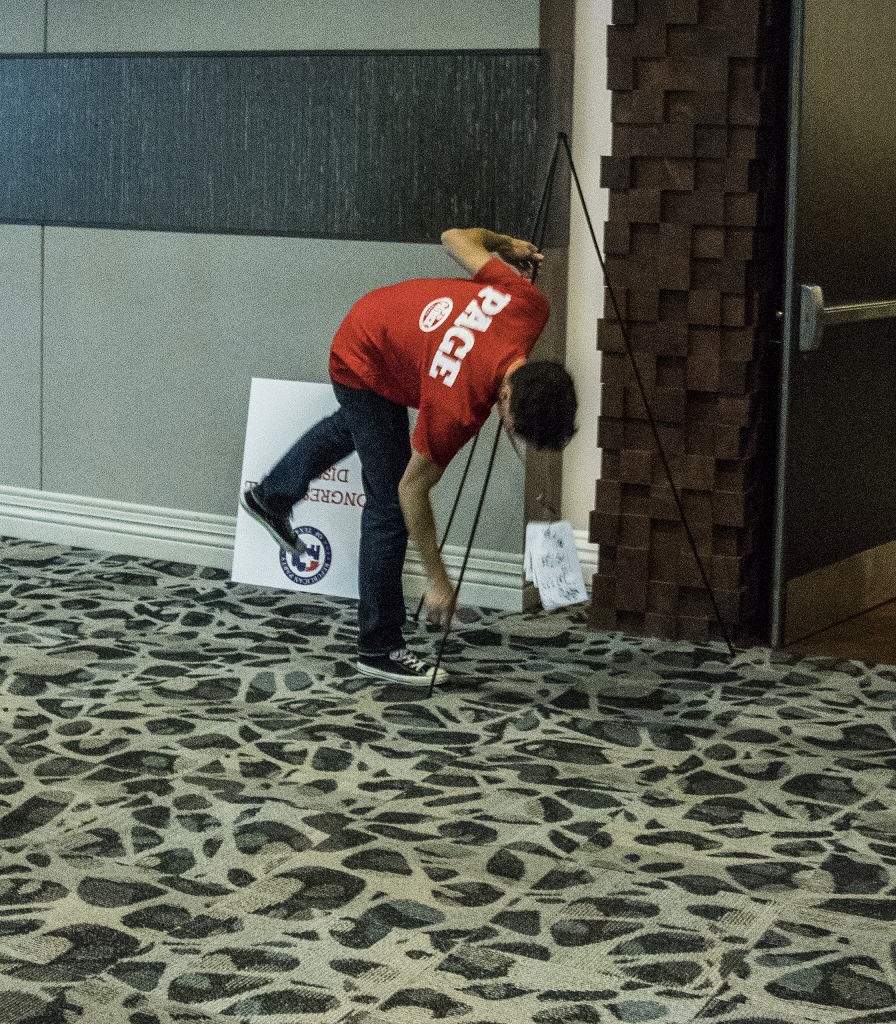
As rare as it is to meet with state-wide elected officials, we saw something even more rare. Yes, we saw Ryan Brim working!
At first, we thought our eyes were deceiving us, and that it might perhaps be an urban legend of some sort, something akin to a sighting of bigfoot…
…but, no, Ryan had obtained a job as Page at the convention (thank you Linda McKenzie!), and he had various tasks such as posting contradictory signs to confuse bewildered delegates.
Part VI: Wrapping Up (Megan Chapa)
After a quick break and stroll to the opposite side of the convention center, we gathered for our first Congressional District Caucus Meeting. The Congressional District Caucus Meeting elects representatives to National Committees. Interestingly enough, in this meeting it took longer for people to find their seats than it actually took to vote! The short meeting was a plus, because after a long day of labor and lawmaking, we were ready for the southern food of Ellen’s.
The newly renovated restaurant was homely and offered a variety of traditional southern plates and breakfast options. The group experimented with salads, breakfast steaks, shrimp and grits, and chicken fried steak. The restaurant had just moved locations and the service was a bit rocky (menus please!), but we all enjoyed the food. We also enjoyed the interesting conversation about the day’s events at the 2016 Republican Convention.
Thomas Leeper, First Assistant City Attorney for Bryan TX, joined us and shared with us some of his favorite legal books, advice on law school, and a few of his law-school and career experiences.
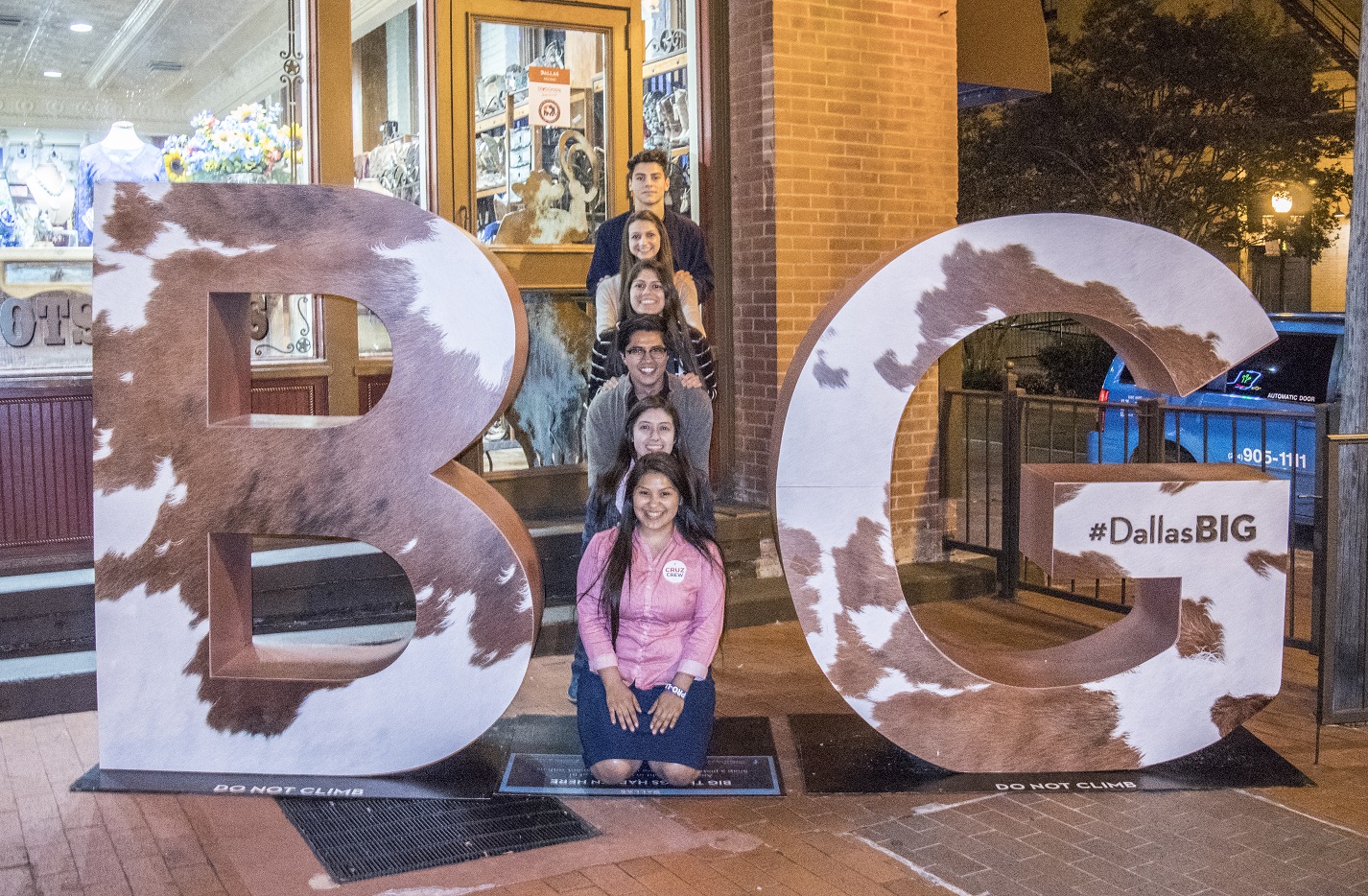
With dinner complete, we headed back to the Omni, hoping to walk off some of the food. On the way, we stopped at one of Dallas’s civic engagement spots: one of the Big D signs posted around town. Promoting the town logo of “The Big D”, the City has put up signs around town with a giant “B” and “G,” with a space in between. This space is designed to be filled by citizens, turning “i” into the City–Big D. And that’s what we did.
But that was our only stop, because our destination included an ice-cream social by Senator Lois Kolkhorst and one of her staff members, Matthew Russell.
It was great talking with a wonderful leader within the party and state. Many of her constituents were present and she made time to talk with all of them. It definitely showed us the importance of being a leader and maintaining strong relationships with constituents.
After a long day, all of us were exhausted but also excited to watch another convention day unfold. We have learned so much and have met and watched many great leaders. We hope to take what we have learned back to our communities!
Alex, Megan, Kaitlyn, Karla, and Brian would like to thank all of the Walker County Republicans who voted them as delegates and who have welcomed them to the Convention. This trip was self-funded and was not subsidized by either SHSU or the LEAP Center.
Viva, Viva, Lost Wages!! Well, maybe those are not the exact words of the famous Elvis song, but as we all can imagine those words fit the exact same meaning of Las Vegas! Once again, the LEAP Ambassadors are back for the annual Casino Night at the HEARTS Veterans Museum. The theme for this year’s casino night was 50’s and 60’s retro, so the LEAP Ambassadors left their suits at home and came in retro costumes of varying authenticity.
Of course, the boys displayed their stylish bowties. It was a particularly poignant event for me. It was my first event as a LEAP Ambassador last year, and it is my last event of this academic year, my last as an SHSU student. THe roulette wheel, as it were, went full circle. So I went all in on the costume.
The H.E.A.R.T.S Veterans Museum of Texas honors veterans both past and present. The museum serves as a place for former, present, and future veterans to all come together to reflect on and share their experiences serving the country. Just as important, the museum allows all people to see the price that our veterans and those serving today have paid for this country. They do this through exhibits and programming, the latter led by the capable Letty Clark and when she asked us to volunteer for this event, we were more than happy to do so.
After a delicious meal, and a concert from Marilyn Monroe herself…
…the gambling began and the crowd rushed to the games! The games included poker, black jack, bingo and many slot machines. All the LEAP Ambassadors were very busy with their tasks.
Alex and Karla sold tickets for the raffle.
Bryan helped develop fabulous pictures to capture everyone’s great memories of the night.
Karla and Beatriz enjoyed their time helping at the Bingo Table.
And the two most outgoing Ambassadors, Megan and yours truly, used our charm to sell poker chips.
Before the night ended, the Ambassadors were lucky enough to be given the opportunity to play some of the casino games. For some, it was their first time playing, but I was there to guide them through the process.
We had some winners and some losers at the tables, but it was all fun!
After the gambling had ceased, the main event had come: the raffle for prizes. Megan was the prize announcer and Alex chose all of the lucky winning tickets. Some of the major prizes included a one-hour massage at The Facemaker, a barbecue grill, a shotgun, and a trip to a resort and casino!
With some time spent with Marilyn Monroe, some time spent with one of our favorite community members Letty Clark, and some time spent together for a good cause, made it a fun, rewarding evening.
Of course, on a sadder note, I’ll be leaving my SHSU family, a prospect that made everyone sad (except, apparently, for Beatriz and Brian) …
But I’ll be back–for next year’s football game and some other random occasions, and LEAP will continue doing its usual combination of volunteerism, programming, pre-lawing, and travel excursions. Until then…
























 Center for Law, Engagement, and Politics