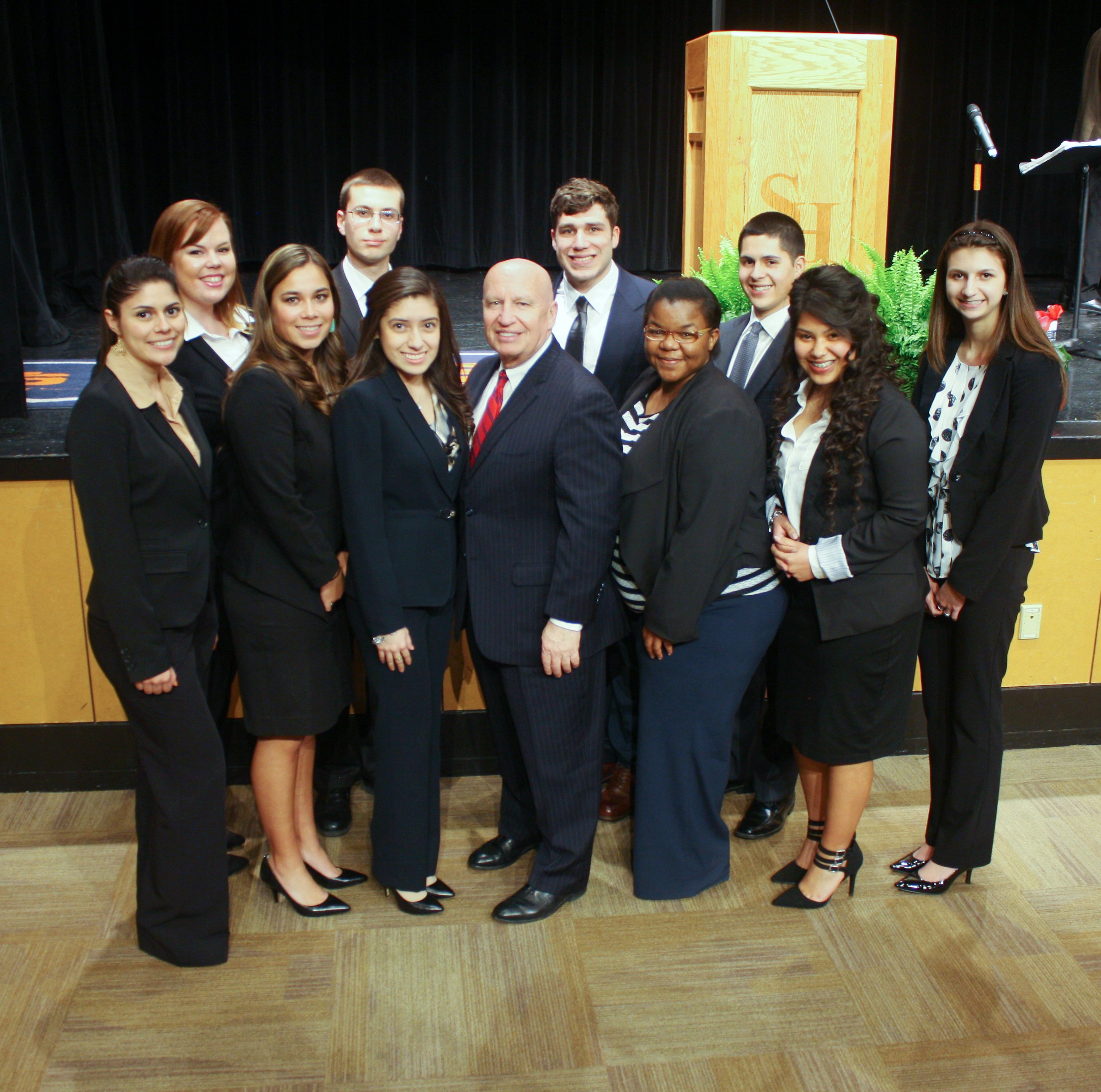
The LEAP center partnered with South Texas College of Law from Houston to offer a Mock Law Class for SHSU students. Prior to the class, students were sent the case reading and expected to be ready to analyze the cases in class just as actual law students at South Texas College of Law (STCL) would do.
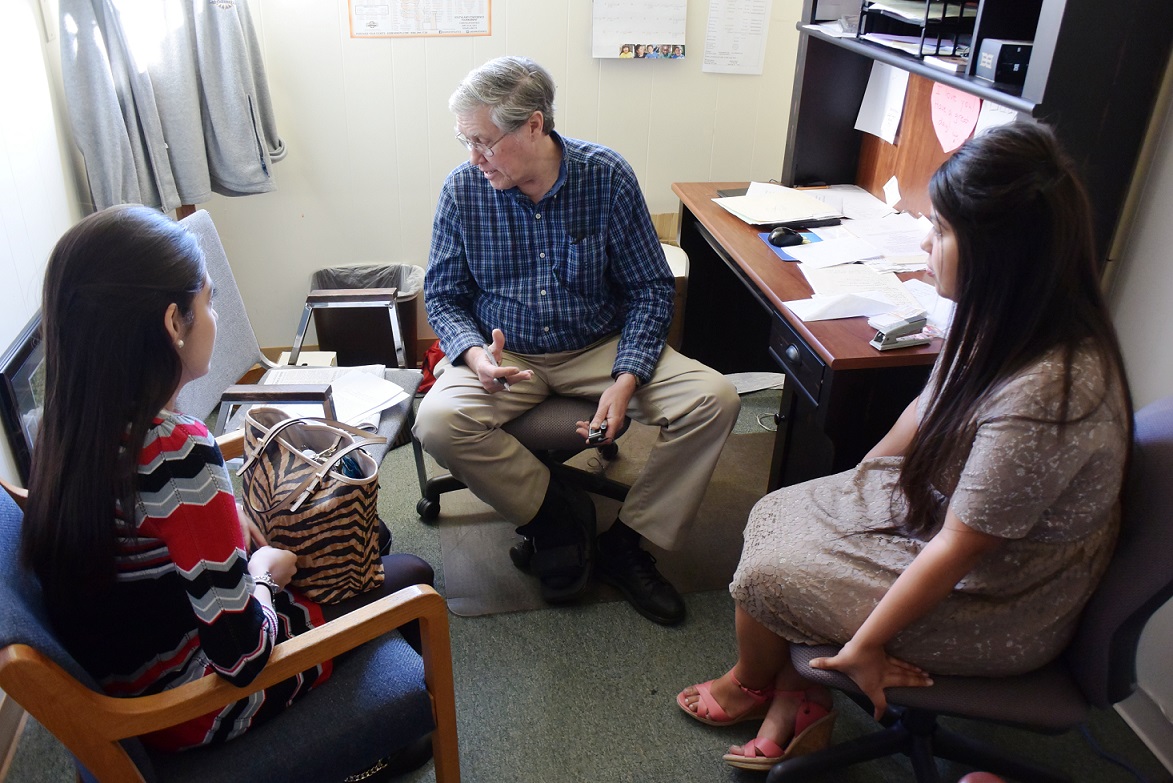
In fact, Professor Val Ricks–who taught the class–teaches at STCL. He began class with open-ended questions to lead the discussion toward the rules of each case. He then let students guide themselves through their answers, although he was quick to question–and correct them–when needed.
Professor Val Ricks
The Mock Law Class gave students a clear idea on the structure and expectations of law school. Additionally, students realized the importance of reading prior to class and being prepared for discussion. Professor Val Ricks and STCL Admissions Coordinator, Ms. Denee Page, were also available to answer student’s questions after the class. Students took advantage of the opportunity to learn more about the law school admissions process and the philosophies of South Texas’s College of Law.
This event helped students gain a greater understanding of the reality and rigor of law school. For many, the Mock Law Class helped give a sense of direction for students on how to begin their law school journey. Many thanks to Professor Val Ricks and Ms. Denee Page for helping SHSU students learn and helping them prepare for their next steps toward a career in law.
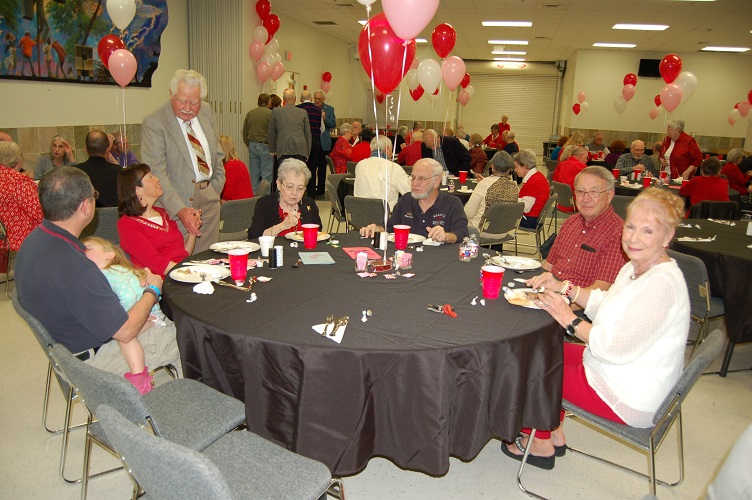
Part of the LEAP Center’s mission is to assist non-profits, government agencies, and other public-minded organizations serve the community. One of the LEAP Center’s regular partners is the HEARTS Museum, which recently hosted a Valentine’s Day “Volunteer Appreciation” dinner. More than 130 people showed up, and it was a perfect event for a Museum named “HEARTS.”
HEARTS Valentines Day, Photo by E. Barron
It was a wonderful event, with most of the Museum’s regular volunteers on hand (many will recognize Tom Oleinik and Citizen of the Year Bette Nelson in the picture above).
The HEARTS Museum preserves artifacts related to those who have served their country in the armed services, and the Museum is host to more than 13,000 visitors each year. In addition, the Museum hosts many community-themed events–including the Valentines Day Appreciation Dinner–educational events, and other service activities.
The LEAP Center is hosting a non-profit roundtable on March 20, with Nancy Bocskor as a featured guest. Ms. Bocskor is an expert in fundraising, and representatives from a dozen or so local non-profits will be on hand to share experiences with the challenges of fundraising in a small community. Among those attending are Letty Clark and Carolyn Wells from the HEARTS Museum.
Although only an emerging Republican myself, I know that when Republicans have a chance to celebrate the legacy of Ronald Reagan, they will gather and celebrate. Not surprisingly, almost 200 students, local Republicans, and elected officials gathered last week for the annual Walker County Republican Party’s “Reagan Dinner,” to celebrate the legacy of the nation’s 40th president.
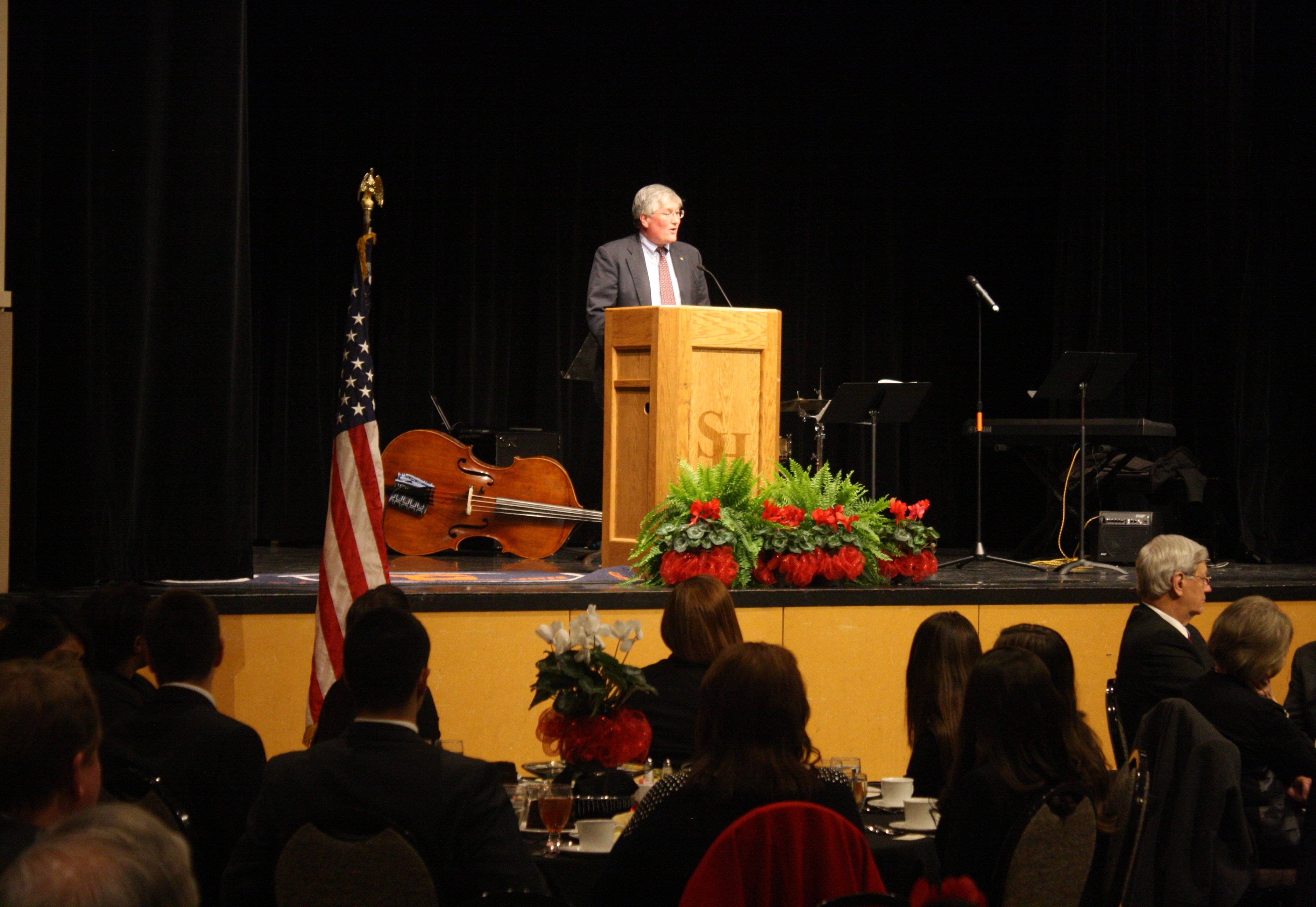
The event, held at the Lowman Student Center Ballroom on SHSU’s campus, featured a three-course meal, posting of the colors by the Cadet Color Guard from the Civil Air Patrol Sam Houston Composite Squadron, fine fellowship, lively entertainment from SHSU’s Jazz Band, and speeches by Congressman Kevin Brady and Dr. Jon Taylor, Chair of the St. Thomas University Political Science Department.
It was perhaps appropriate that Dr. Taylor was the keynote speaker, inasmuch as the event provided a political and community education for the SHSU students on hand, including myself and other members of SHSU’s Center for Law, Engagement, And Politics. With our seats sponsored by Representative John Otto and Senator Charles Schwertner, we were able to converse with and learn from legislative staff.
We also received a crash-course lesson on local community leaders. Republican County Chair Linda McKenzie welcomed us and the many elected officials that were on hand. District Judge Don Kraemer gave the invocation. Justice of the Peace Mark Holt (Pct. 3) led the US and Texas pledges. County Court At Law Judge Tracy Sorensen sat with students, and provided insight on the duties of a newly-elected judge. Other local elected officials on hand included: 10th Court of Appeals Justice Al Scoggins, District Judge Hal Ridley, County Judge Danny Pierce, District Attorney David Weeks, Sheriff Clint McRae, Tax-Assessor Collector Diana McRae, County Clerk Kari French, Justice of the Peace Janie Farris (Pct. 1), Justice of the Peace Mike Countz (Pct. 2), Justice of the Peace Stephen Cole (Pct. 4), and Constable Steve Hill (Pct. 3). For a group of students transplanted to SHSU, it was a welcome introduction to Walker County.
Walker County Elected Officials (Melanie Thibodeaux’s Great Photo!)
Congressman Kevin Brady provided a thorough update on the US Legislature, particularizing on the push to create middle-class jobs in the US and on Congress’s recently-passed legislation to allow for construction of the Keystone XL Pipeline.
Dr. Taylor, while keeping with the national theme, focused on Reagan’s Republican legacy and, especially, “his optimism, his utter faith in this nation and her people, and his belief that our best days…are always ahead of us.”
For students in their late teens and early 20s, it was an appealing message and an appealing evening. It was an evening filled with lessons on President Reagan, the responsibilities of elected officials, and enjoyable conversations.
The LEAP Center at SHSU is a bipartisan organization offering unique learning opportunities related to fine arts, history, civil rights, literature and, in particular, law, engagement, and politics. The students recently attended an event sponsored by the Harris County Democratic Party featuring Sissy Farenthold and former Governor Mark White, and will be touring Little Rock, Arkansas this week, with stops at Little Rock Central High, the Douglas MacArthur Museum of Military History, the Clinton Presidential Library and The Old Mill, the last surviving set of Gone With the Wind.
For the pre-law students at SHSU, there are some tough questions to ask as they prepare for law school. What should I include in the personal statement? Who should I ask for letters of recommendation? What should those letters say? What schools should I apply to, given my GPA and LSAT score? When should I take the LSAT?
Those questions were answered last week at the LEAP Center’s “Law-School Information Session,” featuring a visit by Katherine Sims, of Texas A&M University School of Law. Ms. Sims is the Admissions Coordinator at TAMU Law, and she put her knowledge on full display, to the benefit of the students.
Speaking to 25 motivated students, she went through the process, offering the following advice:
Take the LSAT the year prior to your enrollment in law school. The LSAT is offered in February, June, October, and December. For students interested in going to law school in the Fall of 2016, for example, students should probably shoot for a June, October, or December LSAT. In a pinch, a February LSAT might work, but that’s typically after law schools begin making enrollment decisions.
The best people to ask for a letter are people who know you and your skills, particularly in the areas of writing, critical thinking, and communication. Typically, these are professors, but a letter from an employer or intern supervisor can also work.
For the personal statement, students should try to be themselves while, of course, putting their best foot forward. Ms. Sims resisted describing a “typical successful” essay, because the essays should be appropriate for the individual applicant—and the applicants all have different experiences, strengths, and reasons for wanting to go to law school. Of course, apart from the content of the statement, the applicant’s writing skills are closely scrutinized.
To know which schools to apply to, students should research where their LSAT and GPA fit into the rankings, and then to examine specific aspects of the schools and their cultures to find a good fit. For TAMU, the median LSAT is 154, and the median GPA is 3.21, but Ms. Sims emphasized that all applications were examined, and encouraged all the students to apply (no application fee is charged!)
The LEAP Center Advisory Board students would like to thank Ms. Sims for her information presentation, and the 25 pre-law students who attended to learn more about law school—and their future!
LEAP Center Ambassadors Karla Rosales and Megan Chapa met with KSAM‘s Larry Crippen for an “Around Town” session. This is the seventh time the Junior Fellows/LEAP Center have been featured on Around Town, a six-minute radio program that highlights local happenings on 101.7 and 104.9 FM.
The program, which covers their recent experiences at the Texas Governor’s Inauguration, as well as upcoming events such as the Michael Morton appearance, Nancy Bocskor’s appearance, and the Citizenship Program, aired Saturday (March 14) and Sunday (March 15).
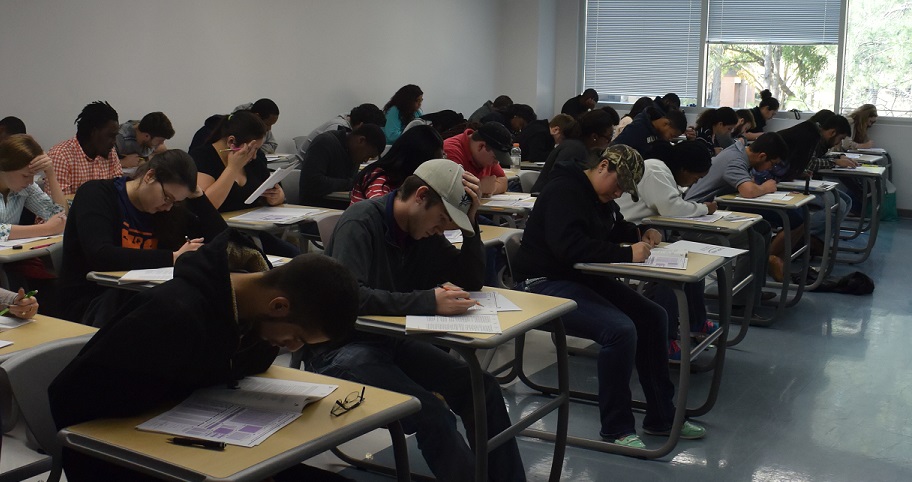
For the past seven years the Junior Fellows/LEAP Center has offered a Mock LSAT each semester to help students prepare for the real deal. The LEAP Center encourages students of all classifications to take the Mock LSAT, which is generously sponsored by Kaplan Testing. For freshmen and sophomores, the Mock LSAT provides an idea of what the test is like. A lot of younger pre-law students, for example, think the test asks about the law. It doesn’t. It asks questions about reading comprehension, logic, and arguments.
For juniors and seniors, it provides an idea of how close they are to being prepared to take official LSAT. This has to be planned out, because the LSAT should be taken the year before the student wishes to enroll in law school.
Forty-seven students showed up for this spring’s Mock LSAT, following a showing of 51 in the fall of 2014. These are the largest class of Mock LSAT takers in SHSU history, a testament to the University’s growing number of pre-law students.
The LEAP Center will follow up this Mock LSAT opportunity with many other law-related activities:
These programs are part of the LEAP Center’s mission of helping students achieve their professional goals. To attend any of the upcoming events, contact Professor Mike Yawn at mike.yawn@shsu.edu.
Sam Houston State University’s Austin Internship Program, run by the LEAP Center, is off to a rollicking start.
After undergoing orientation training from the crack staff in HR and Career Services, the eight Austin Interns–Oscar Aguilar, Jessica Rodriguez, Lexi Gonzales, Sadie McLaughlin, Ariel Traub, Lupe Cuellar, Shelby O’brien, and Sarah Landsman–underwent an orientation in Austin, Texas. The event was to start with a Segway tour of Austin, but with freezing rain in the forecast, we switched quickly to an iFLY tour. It wasn’t a tour so much, but it was a fun way to start the day.
The day began with an orientation on iFLY’s unique flight system, which evoked some anxiety while also bringing smiles.
But it was the flights that brought the big smiles. iFLY doesn’t provide a long time in the air, but it’s a lot of fun. Some of us were better than others, but all had a good time, or at least were glad they tried.
This slideshow requires JavaScript.
The flights also provide that wind-blown look that is so flattering, perfectly complementing the smart flight suits.
Following the adrenaline rush of iFly, we moved to Quack’s Bakery on 43rd for a caffeine rush and some pastries. For those who haven’t tried this mid-town delight, it’s definitely worth it. Try the ginger crinkle cookies or the chocolate ginger; you can’t go wrong.
There was also some good conversation, with equal measure astonishment, disbelief, and delight.
But, mostly, it was about the cupcakes.
Armed with coffee and sugar, we embarked to the 2nd Bar + Kitchen, where we met Blake Roach, Emily Johnson, President Hoyt, and her husband John Hoyt.
It was an enjoyable time for everyone, and we were very impressed and honored that Mr. Hoyt and President Hoyt drove in to spend time with us. It’s a reflection of the support we’ve received since we started this 140 day Austin odyssey.
This slideshow requires JavaScript.
It was a great group outing, which we ended with a great group photo!
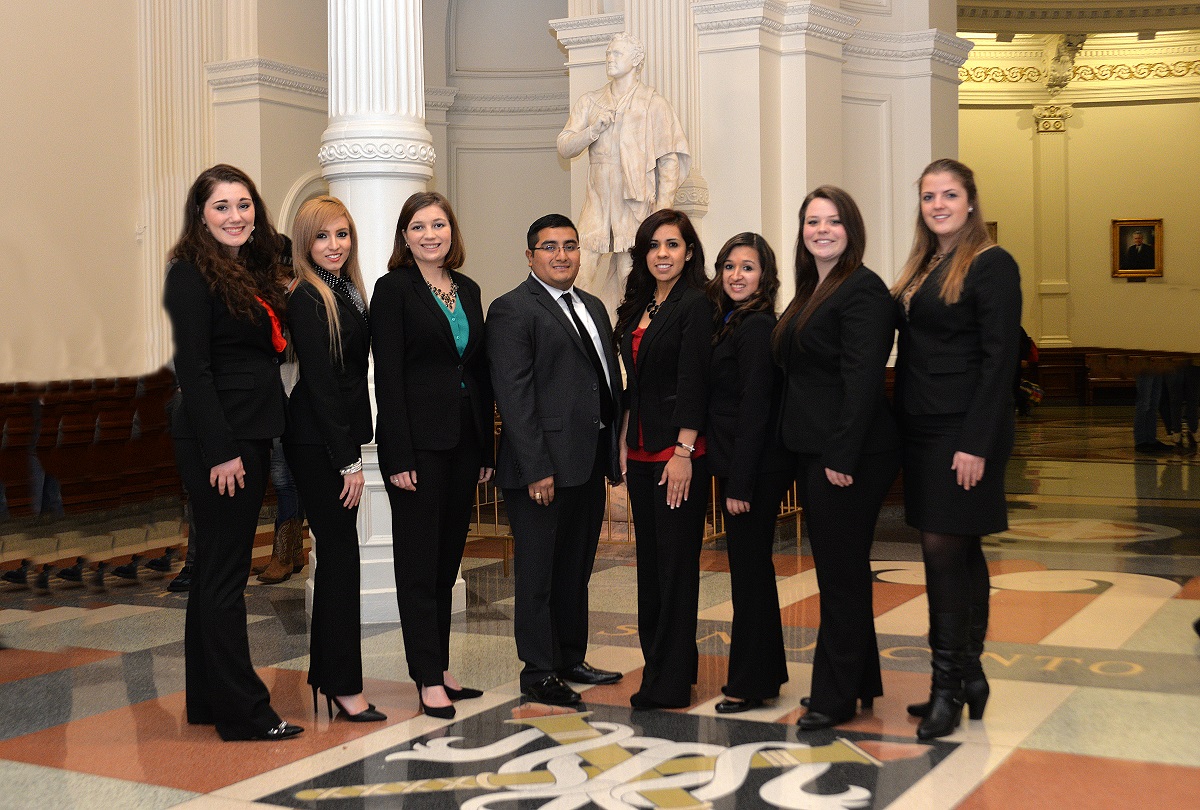
With the fun over, we prepared for our professional photographs in the capitol building. Of course, we couldn’t go to the Capitol without getting a photo alongside Elizabet Ney’s statue of Sam Houston…
But that was just one of many of our stops. We also stopped in the extension, looking up at the Capitol dome…
…outdoors…
…in the House of Representatives’ chamber in front of the podium…
…and individual shots of us, with Sam Houston looking over our shoulder.
This slideshow requires JavaScript.
Indeed, these photographs with Sam Houston’s portrait on the wall serve as a kind of a metaphor for our time thus far. We have lots of family, friends, and University officials looking out for us, and ensuring we have a great time and learn a whole lot–even while dealing with dangerous flying missions and firearms!
On behalf of all the Austin Interns, we’d like to thank Paul Olle for the great photographs, President Hoyt for this wonderful opportunity, SHSU for supporting its students, and the following legislative offices:
Students with the LEAP Center engaged in a global discussion with a well-positioned source early in the spring semester. Roberta Jacobson, the Assistant Secretary of State, tackled topics such as democracy, energy, relations with Cuba, and democratization, giving SHSU students insight into diplomacy at the highest levels.
“It was a great opportunity to meet with one of the President’s key advisers,” noted LEAP Center Vice President Megan Chapa. “And to complement our classroom learning with a practitioner’s view.”
Indeed, Secretary Jacobson recently returned from historic talks in Cuba, becoming the highest-ranking official to visit Cuba in 40 years. Her visit included an exchange with dissidents, a meeting that drew criticism from Cuba’s leaders, but which was part of a larger odyssey to thawing relations with its Communist neighbor.
In her speech, Secretary Jacobson stressed the importance of trying a new approach in Cuba, after more than a half of a century of stagnant relations. Ms. Jacobson also discussed happenings in South America, where she had hopeful things to say about Argentina and Colombia. She tempered these hopeful comments, however, with an overview of the history of Latin America and the difficulties the region has faced with corruption, the drug trade, and achieving basic democratic objectives.
Although the bulk of her speech addressed the Americas, Ms. Jacobson also touched on China. Rather than seeing China’s growth as a threat to US power, she argued that growth would likely open China, and increase its demands for US products, helping both China and the US.
For the students, the discussion was an opportunity to hear from an extremely knowledgeable “guest lecturer,” while also serving as a call to learn more about international relations.