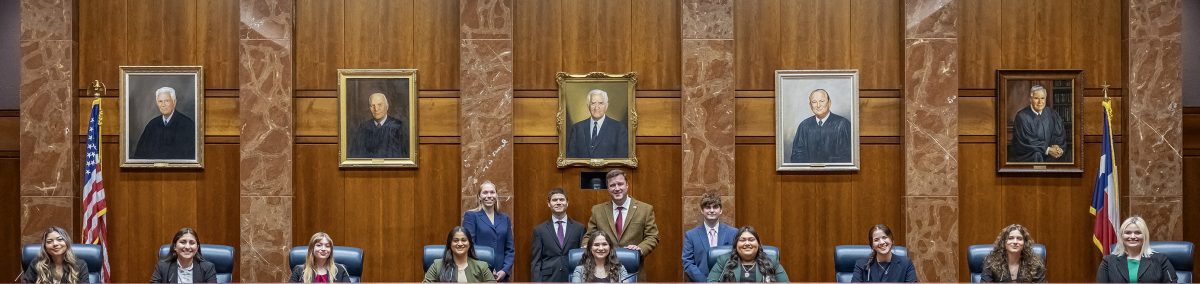
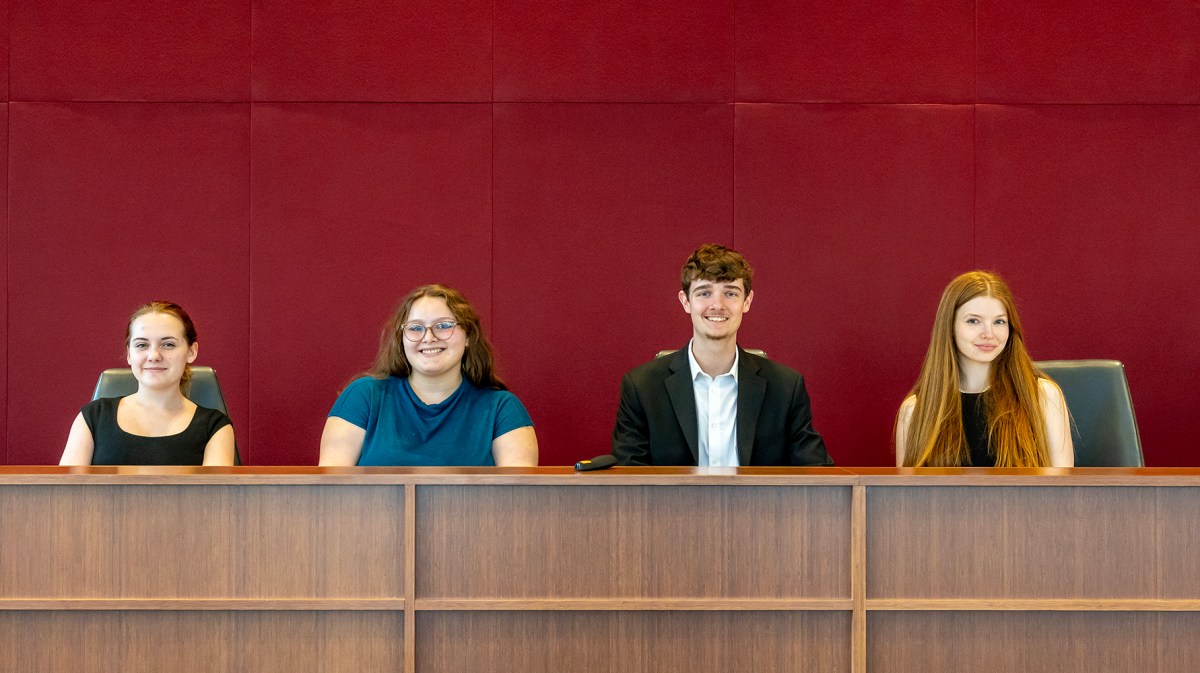
Day Two of the American Moot Court Association’s South Texas Regional Tournament in Fort Worth offered SHSU’s moot court students a valuable opportunity to learn from some of the nation’s top competitors, become more familiar with Texas A&M University’s School of Law, and help out as needed.
Although none of SHSU’s teams remained in the competition, the students stayed for the day to support the tournament. The day featured four rounds: the Sweet Sixteen, quarterfinals, semifinals, and finals.
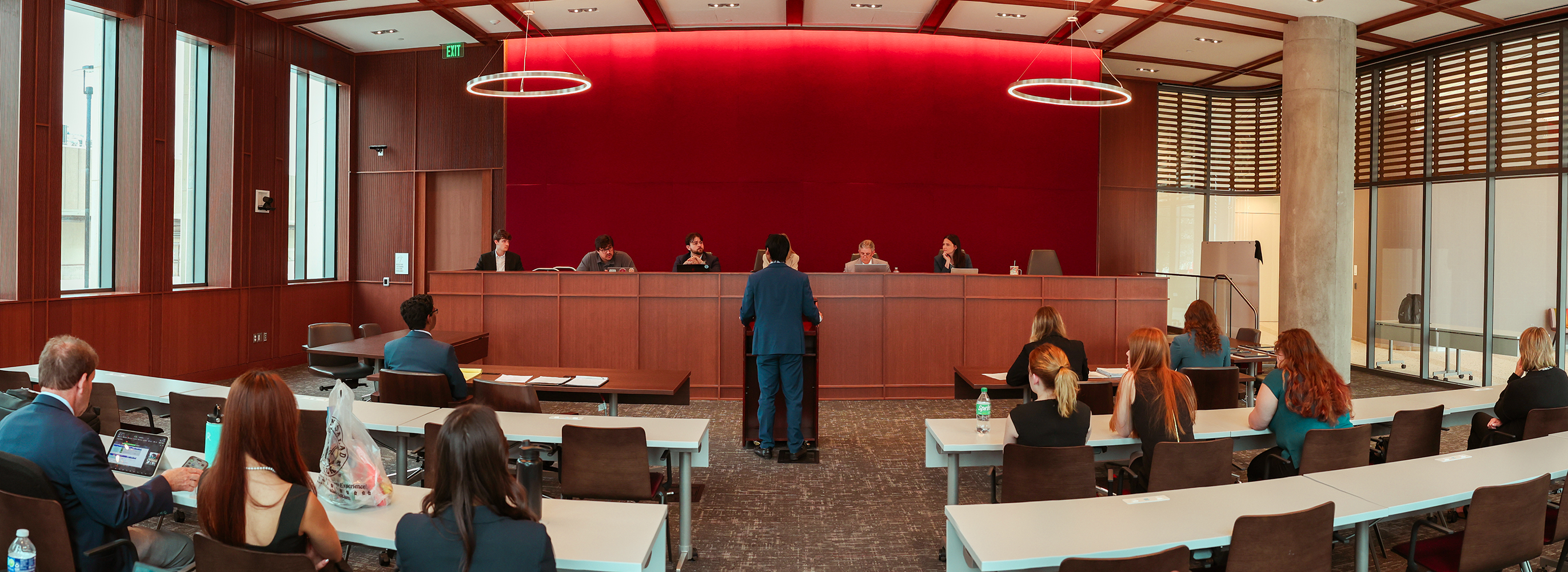
The bracket for the day looked like this:
- 1 / 16: UC Berkely (Tran and Vel) against U of Incarnate Word (Boubel and Shah)
- 2/15: Cal State–Long Beach (Sanzobrin and Khodjakhonova) against UT Arlington (Osei and Masood)
- 3/14: UT Dallas (Das and Tsa) against TCU (Morvant and Addison)
- 4/13: Baylor (Barrow and Alzarez) against UT Dallas (Elsadi and Baldazo)
- 5/12: TCU (Cantrill and Bene) against Howard Payne University (Horton and Herrera)
- 6/11: Baylor (Smith and Molinaro) against Howard Payne University (Sandlin and Mathis)
- 7/10: Baylor (Beck and Homberg) against TCU (Caldwell and Grau)
- 8/9: UNT (Rhoades and Ethridge) against UT Arlington (Nixon v. Thatraju)
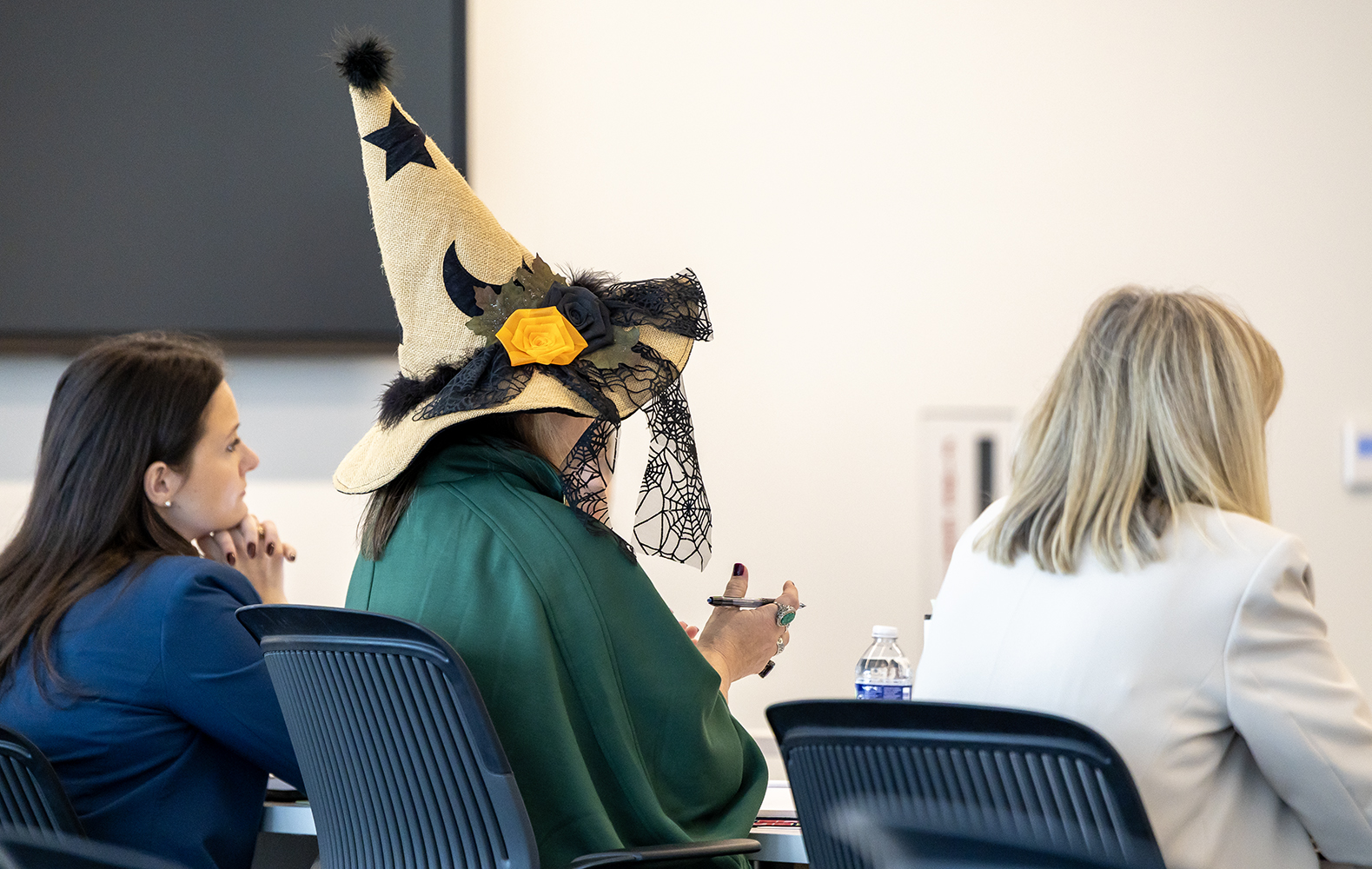
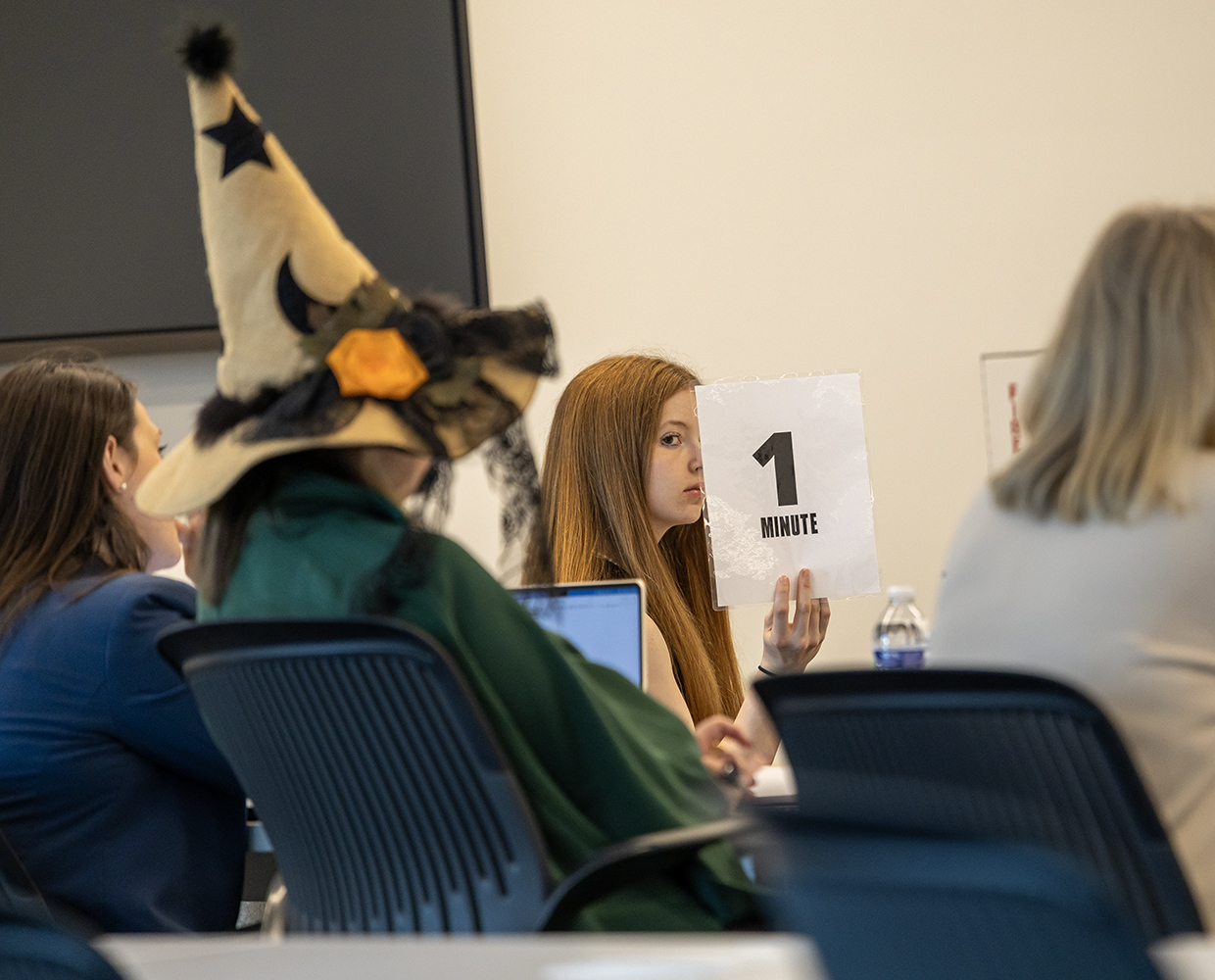
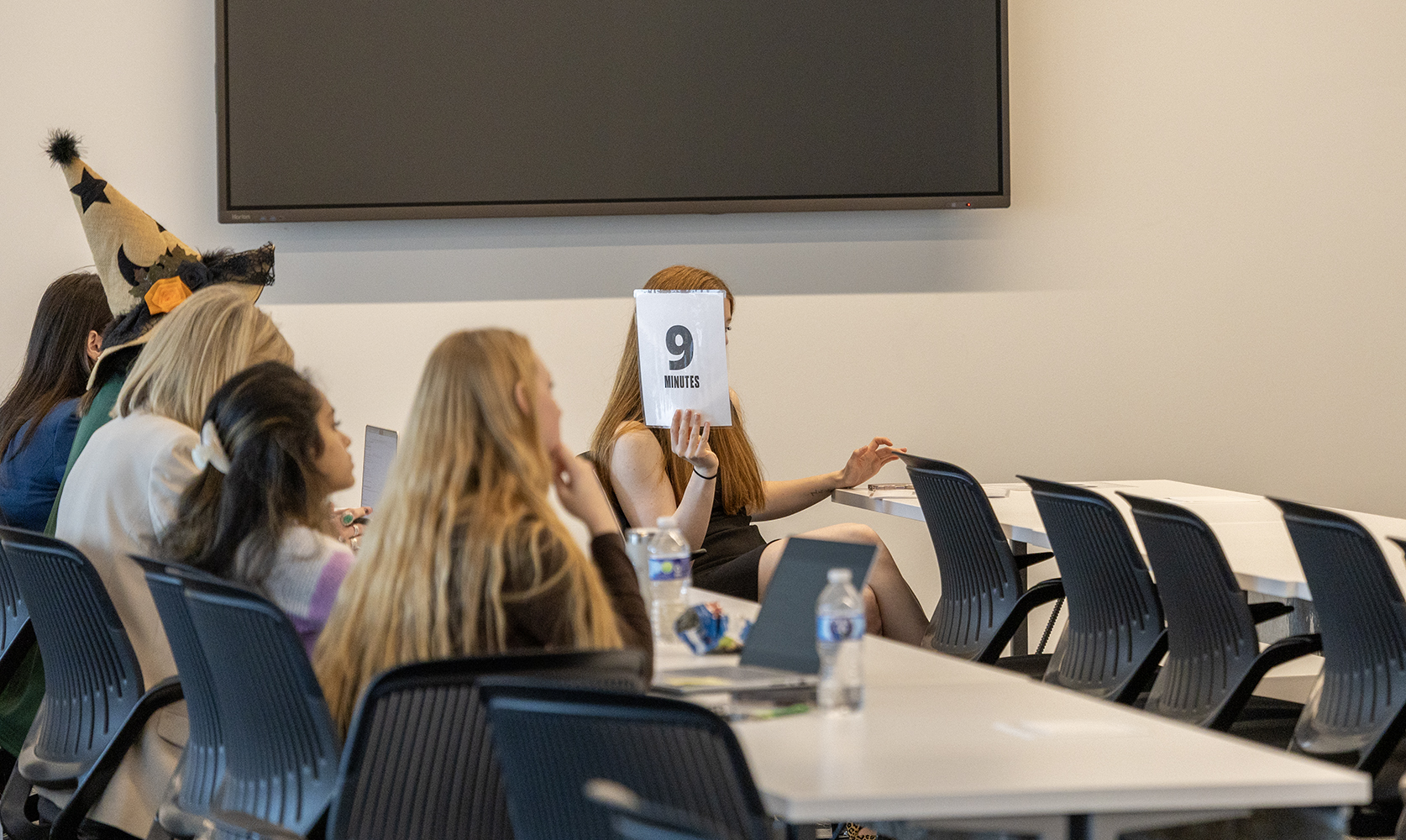
In a couple of the rounds, a person dressed as a witch -this being Halloween- served as a judge.
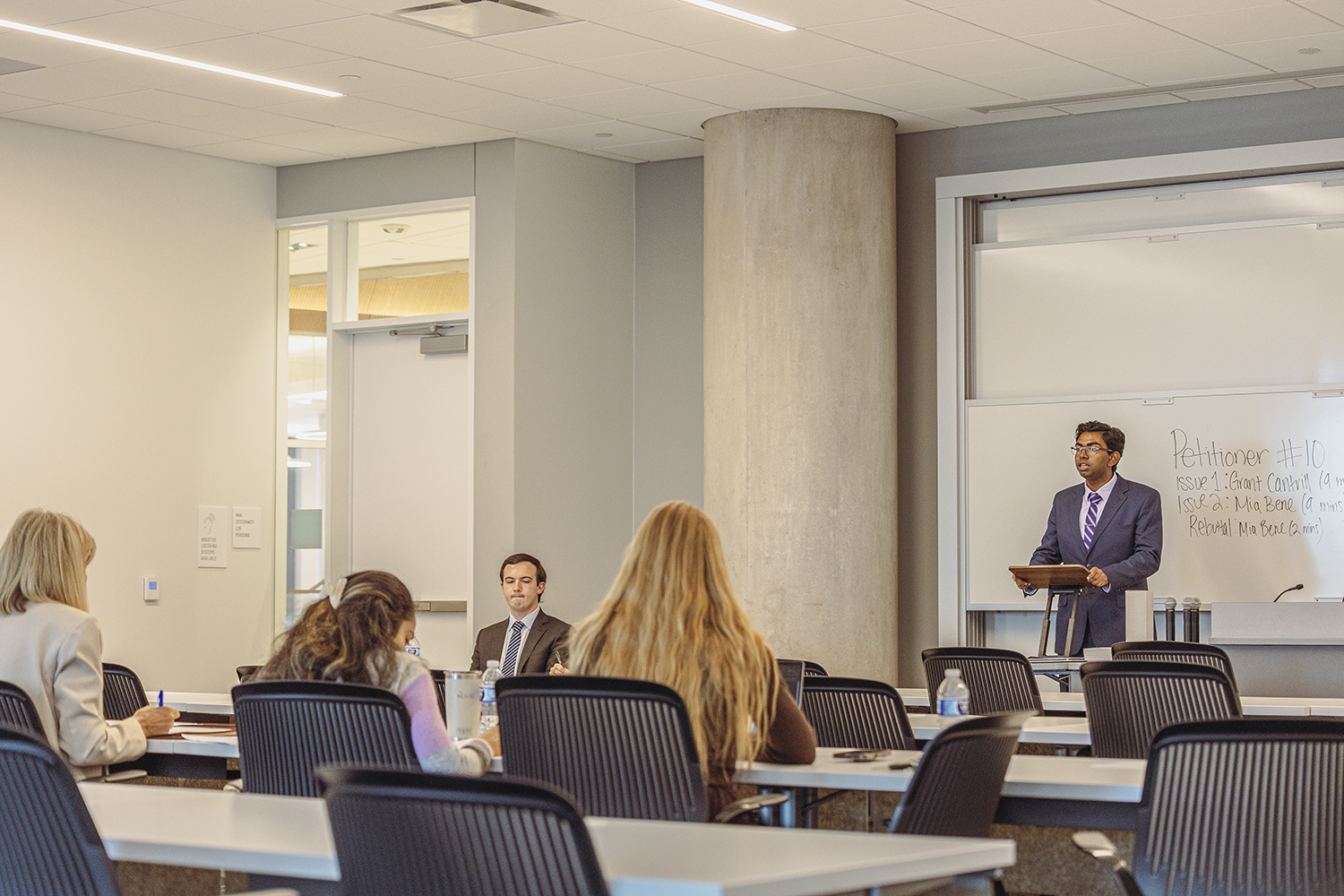
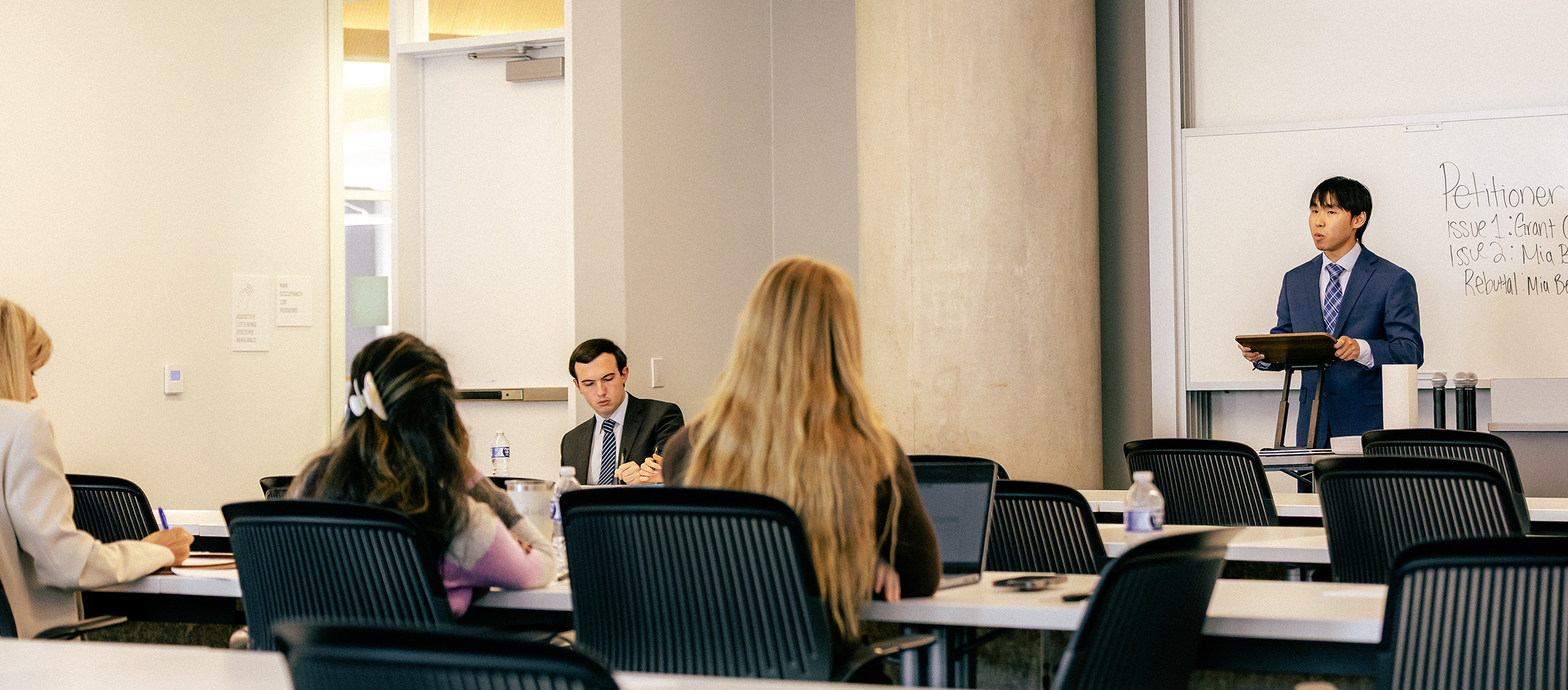
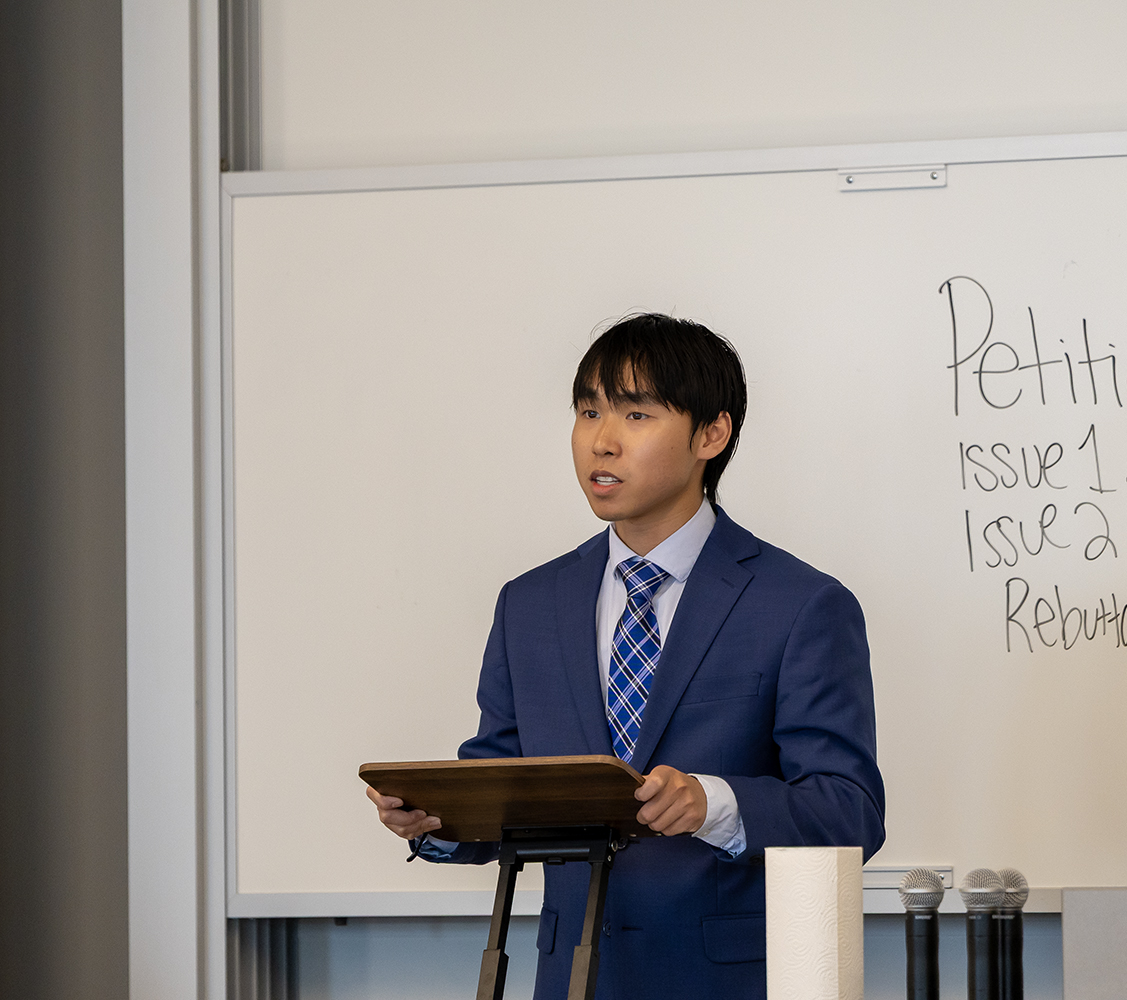
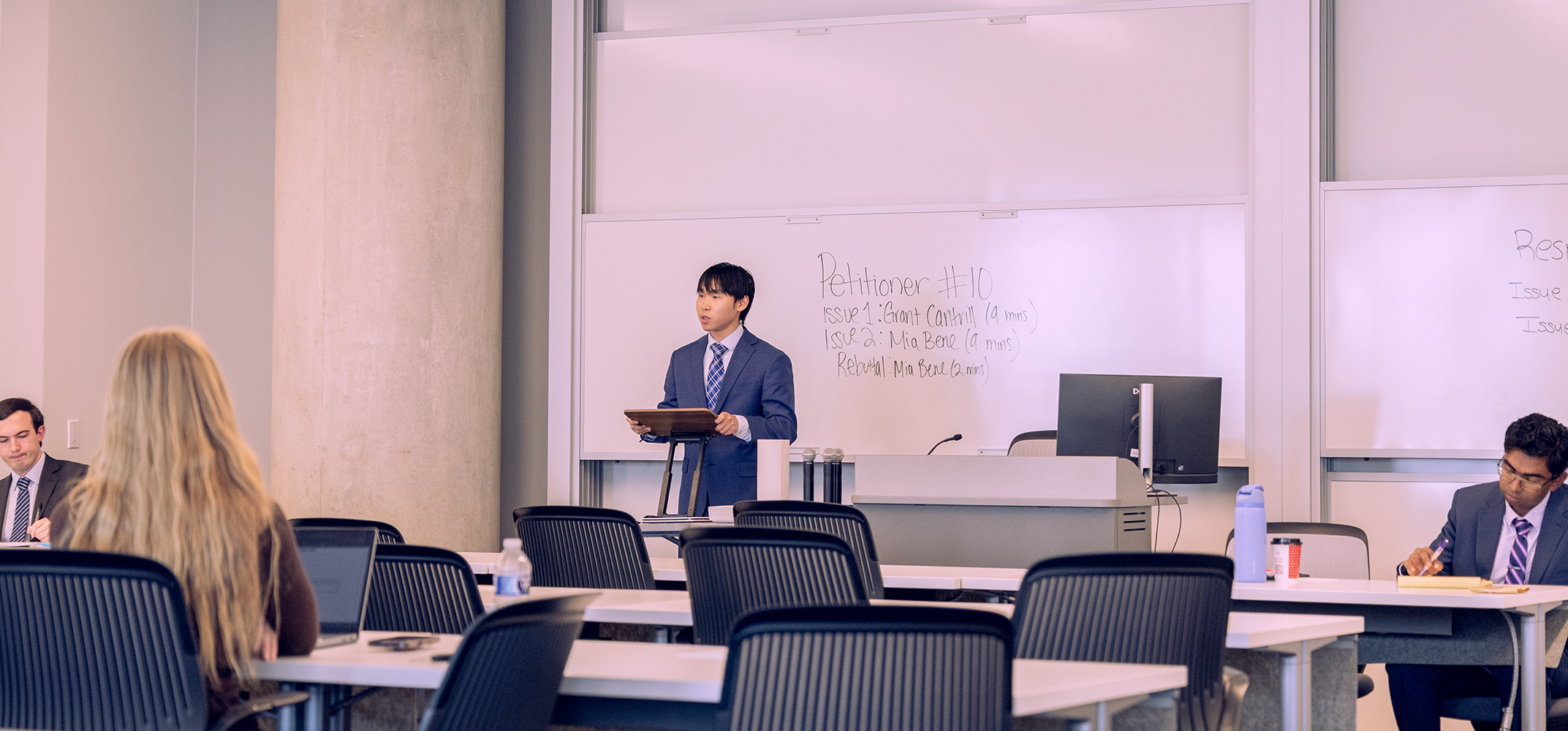
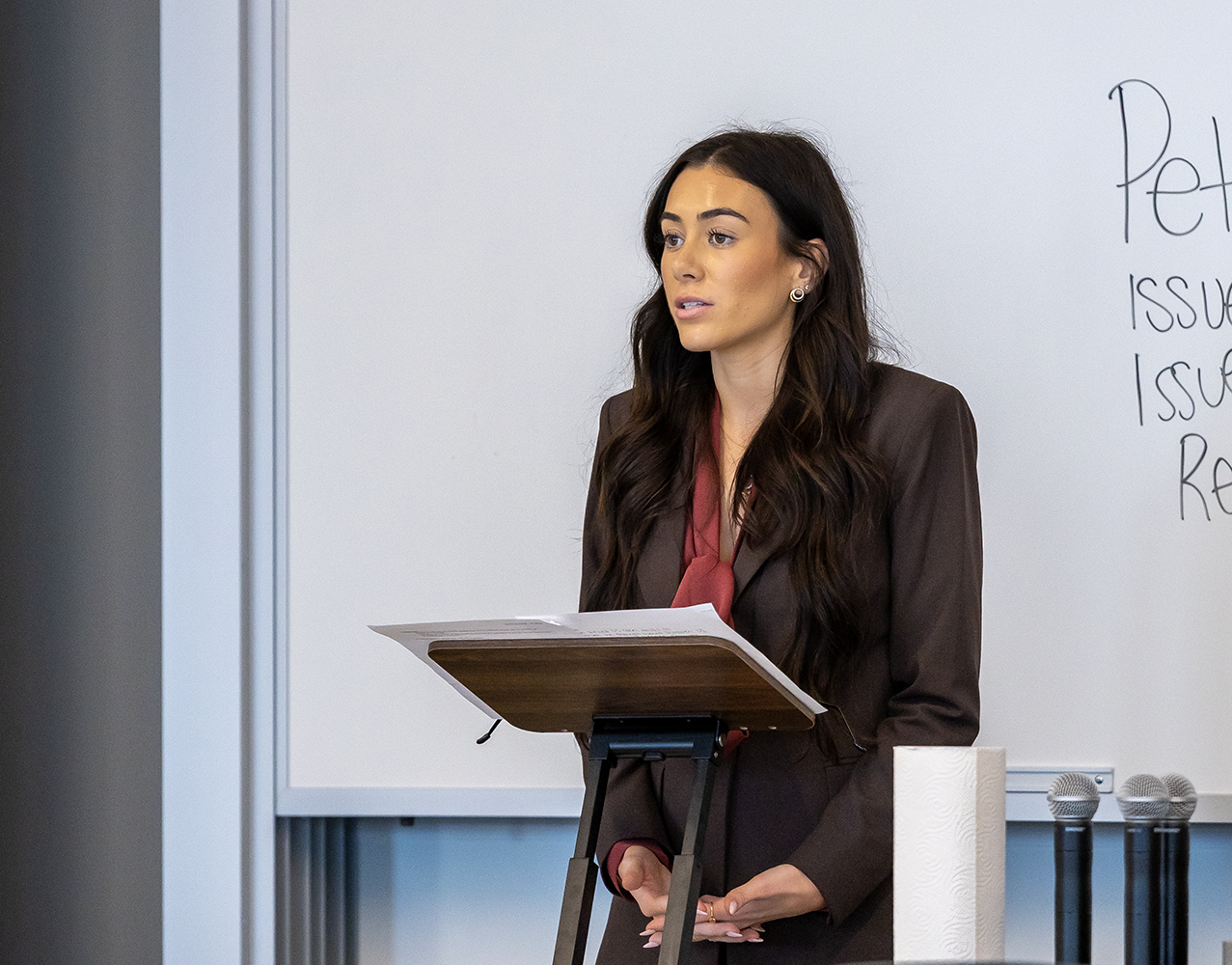
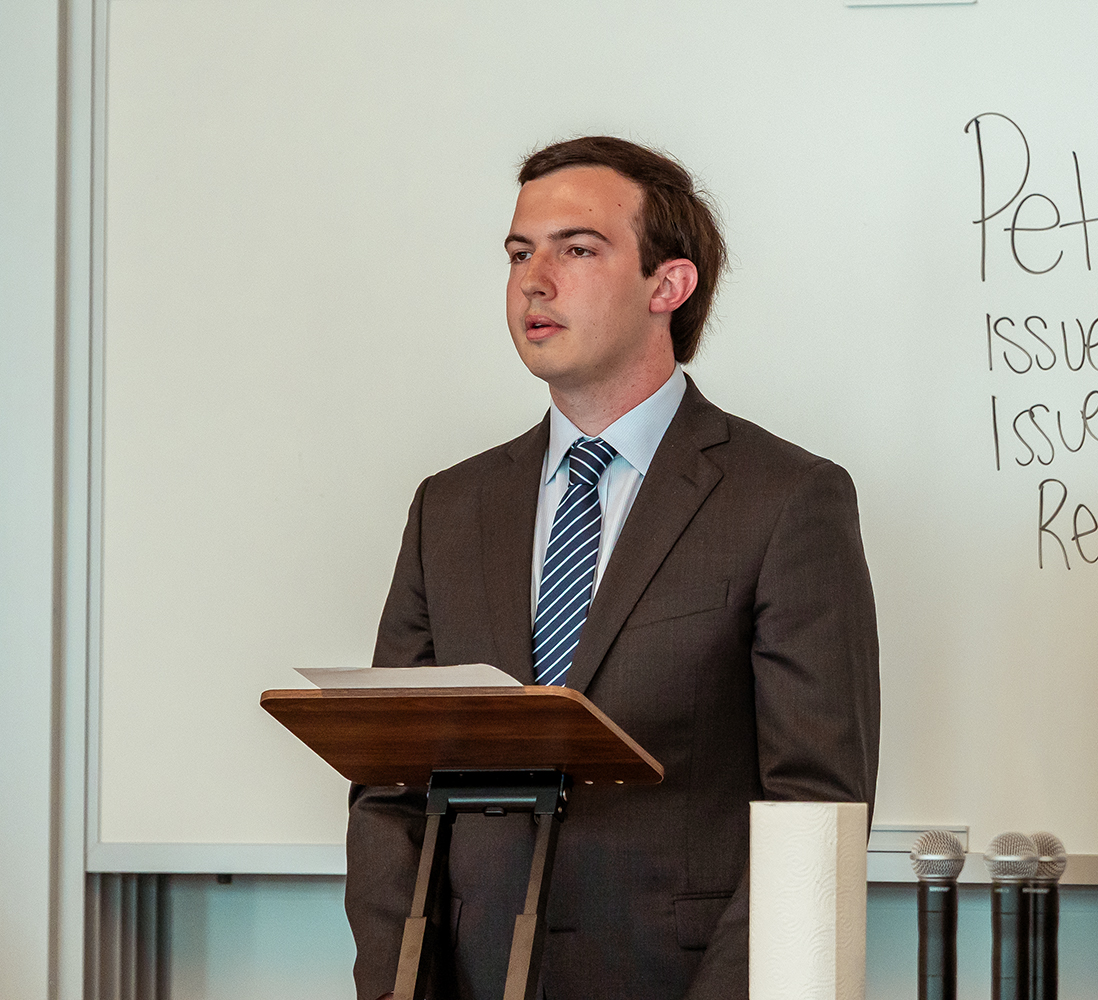
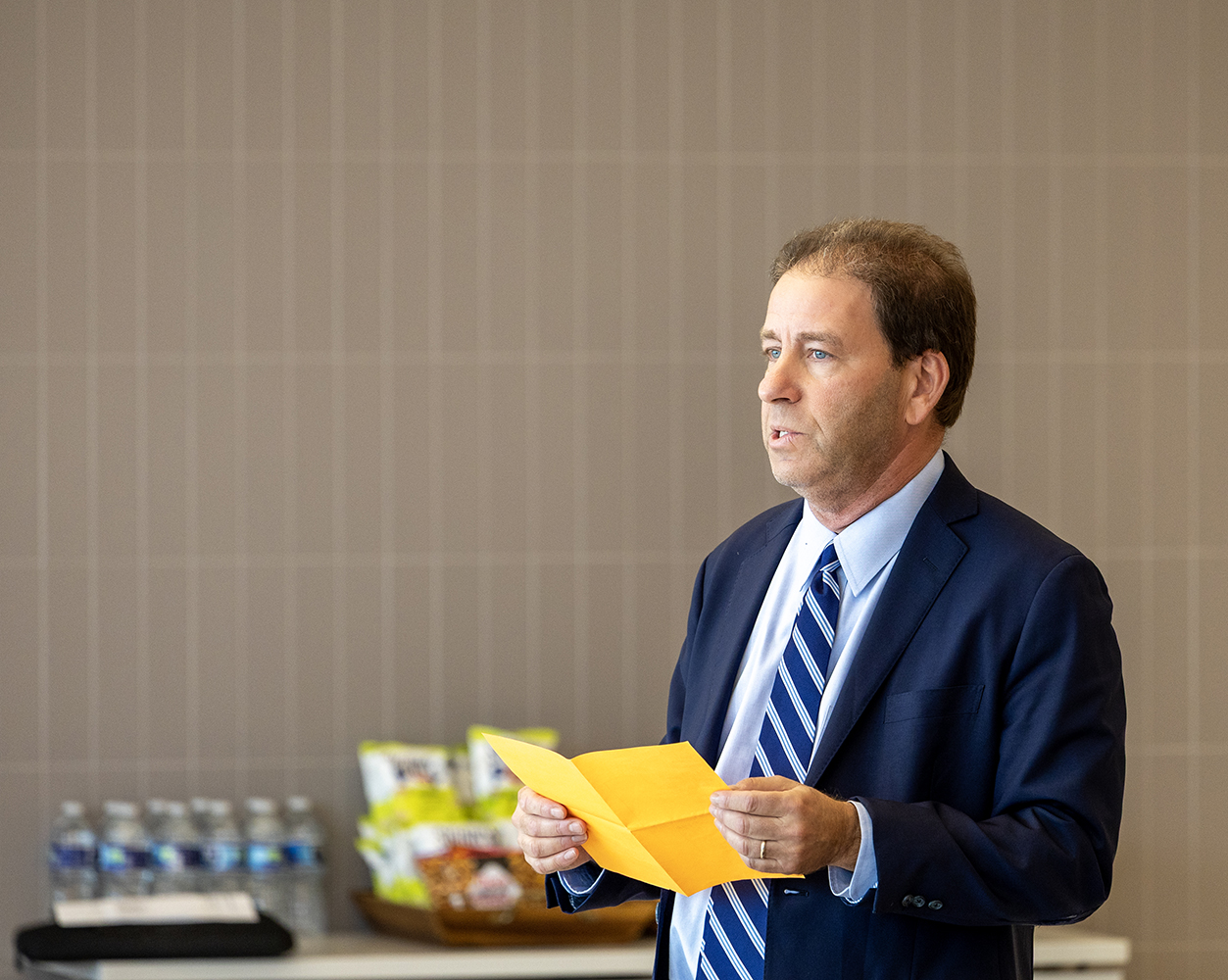
After each round, members of the American Moot Court Association’s Board and staff from Texas A&M School of Law announced the winners and directed teams to their rooms for the next round.
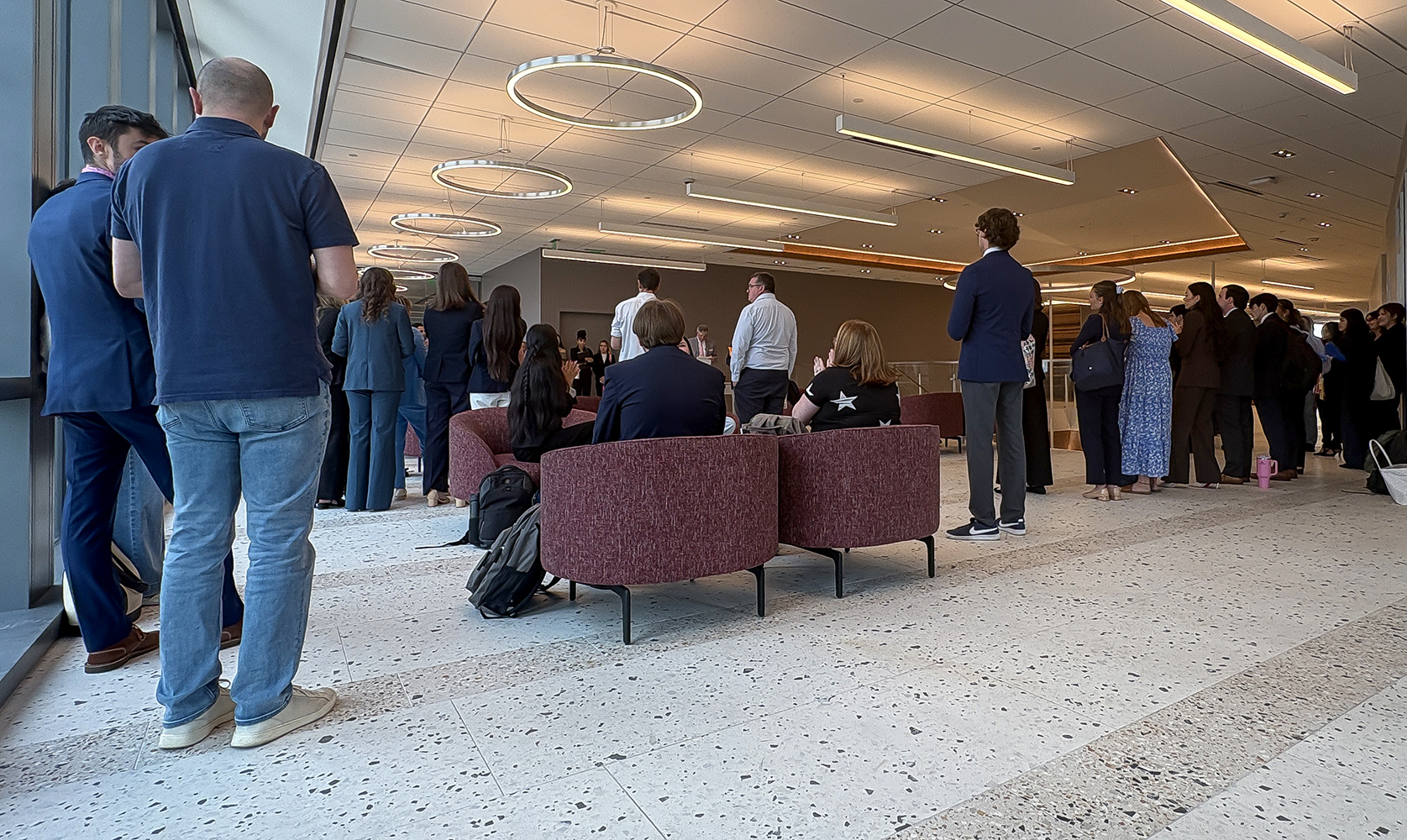
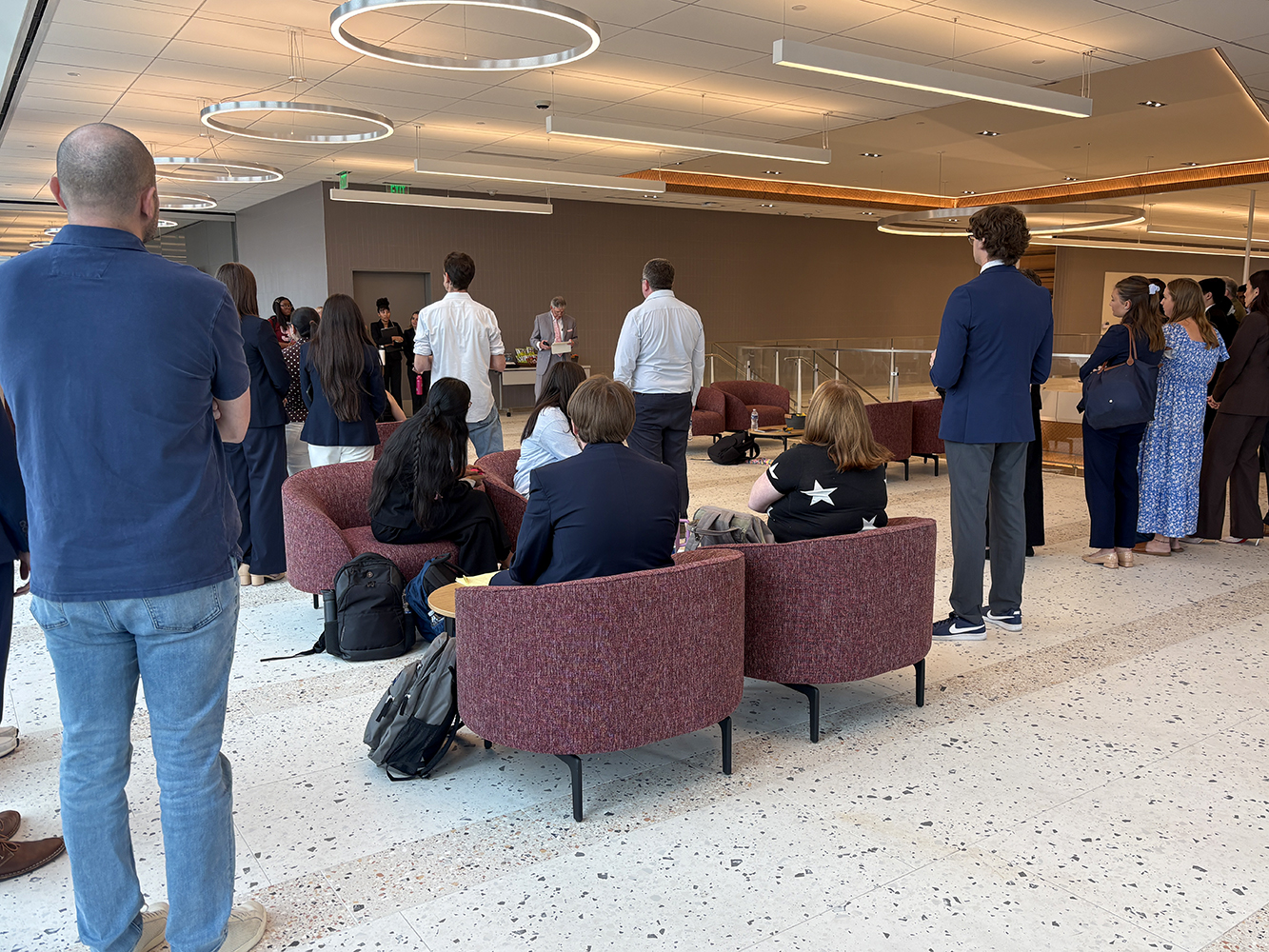
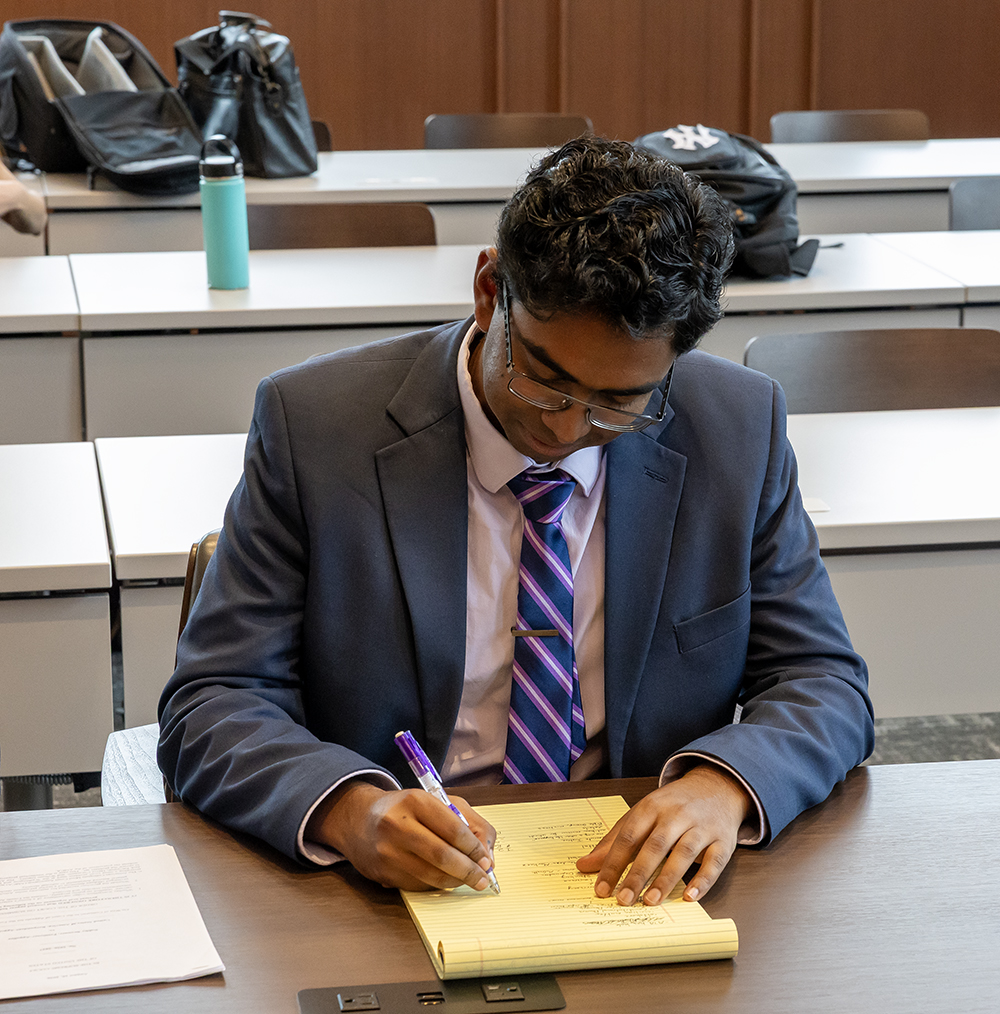
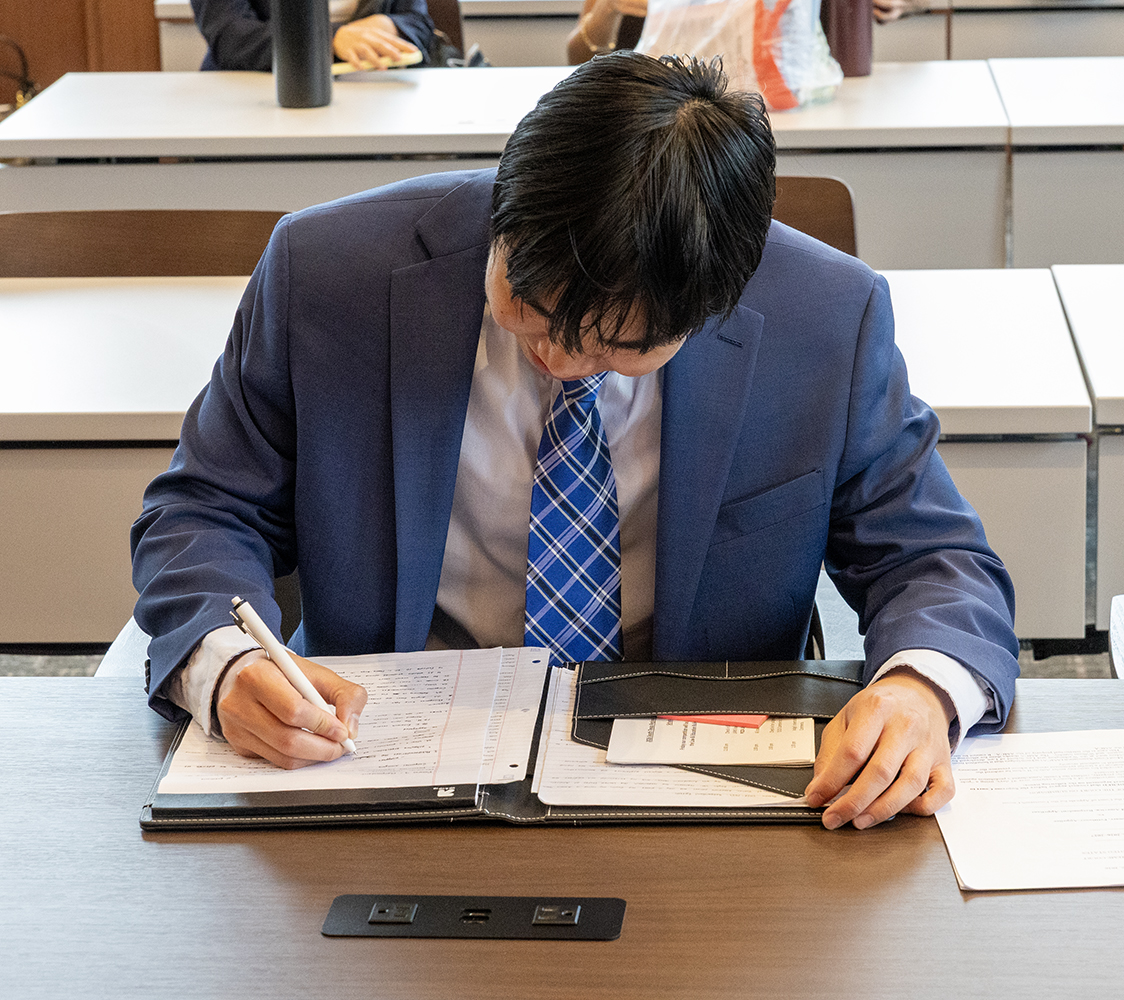
We noticed that when teams lost, they tended to leave. We opted to stay, out of respect for the winners, and to assist as we could. Accordingly, we served as bailiffs throughout the day, helping keep the proceedings running smoothly. Every student served as a bailiff for at least one round, and most served for two. They also remained available to assist as coaches and in other capacities as needed.
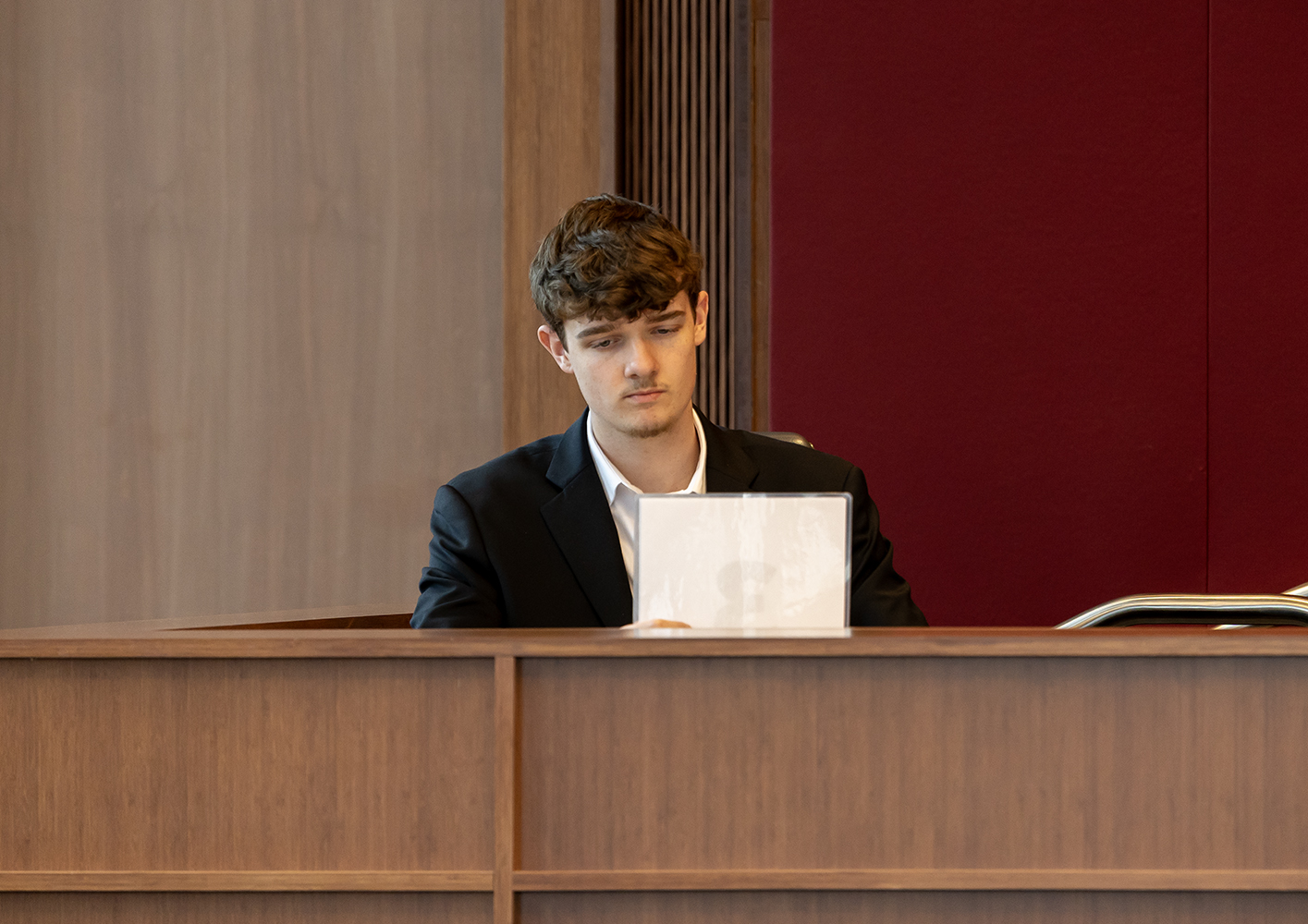
Ryan Snow had the distinction of serving as bailiff for the championship round, held in Texas A&M’s courtroom. The final featured two outstanding teams: Aaron Tran and Nayan Vel of the University of California, Berkeley, and Anna Kate Beck and Maya Homberg of Baylor University.
The championship round featured a panel of five judges, many of whom brought extensive courtroom experience from both sides of the bench. Their collective experience provided a formidable audience for the finalists as they presented their arguments.
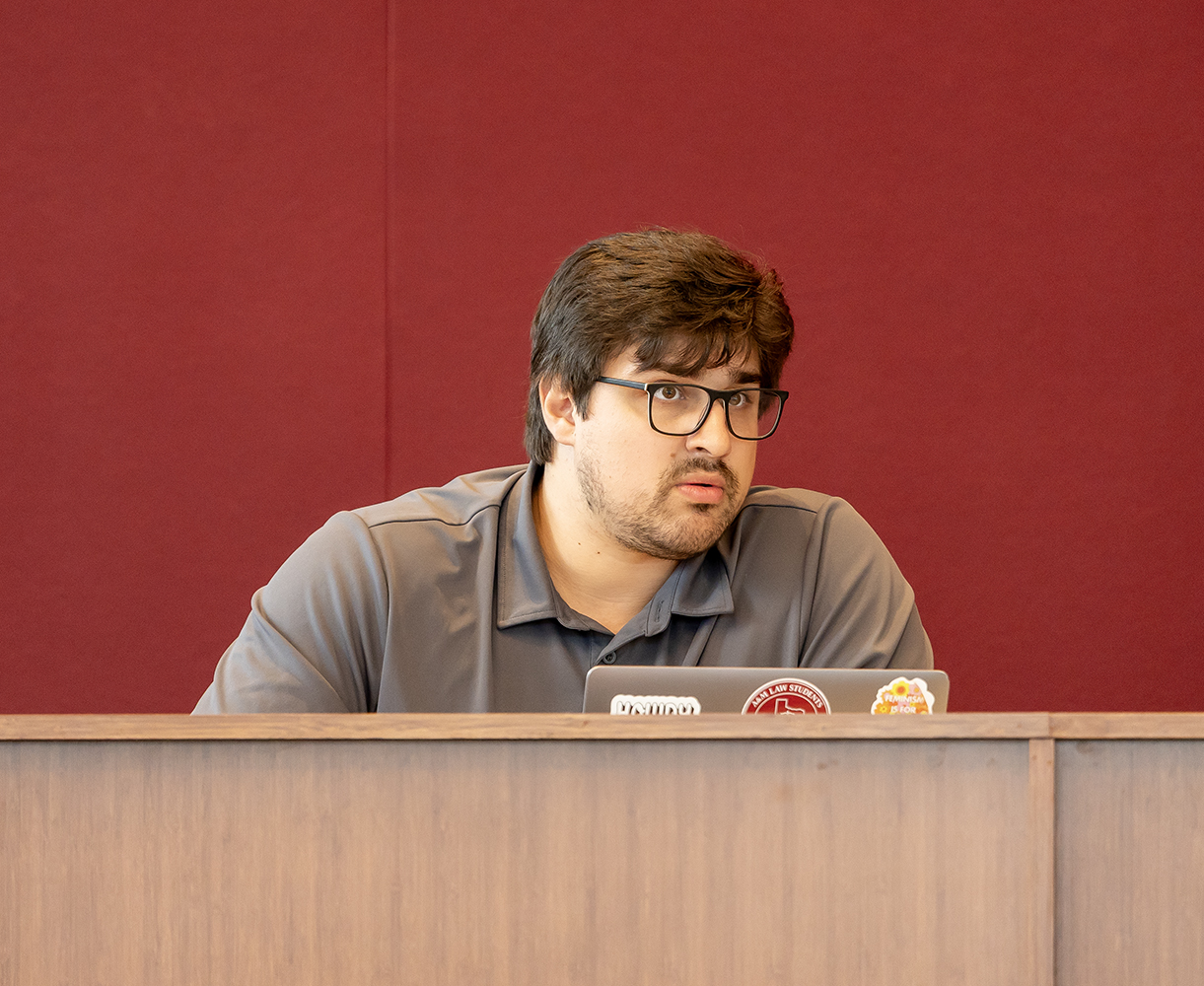
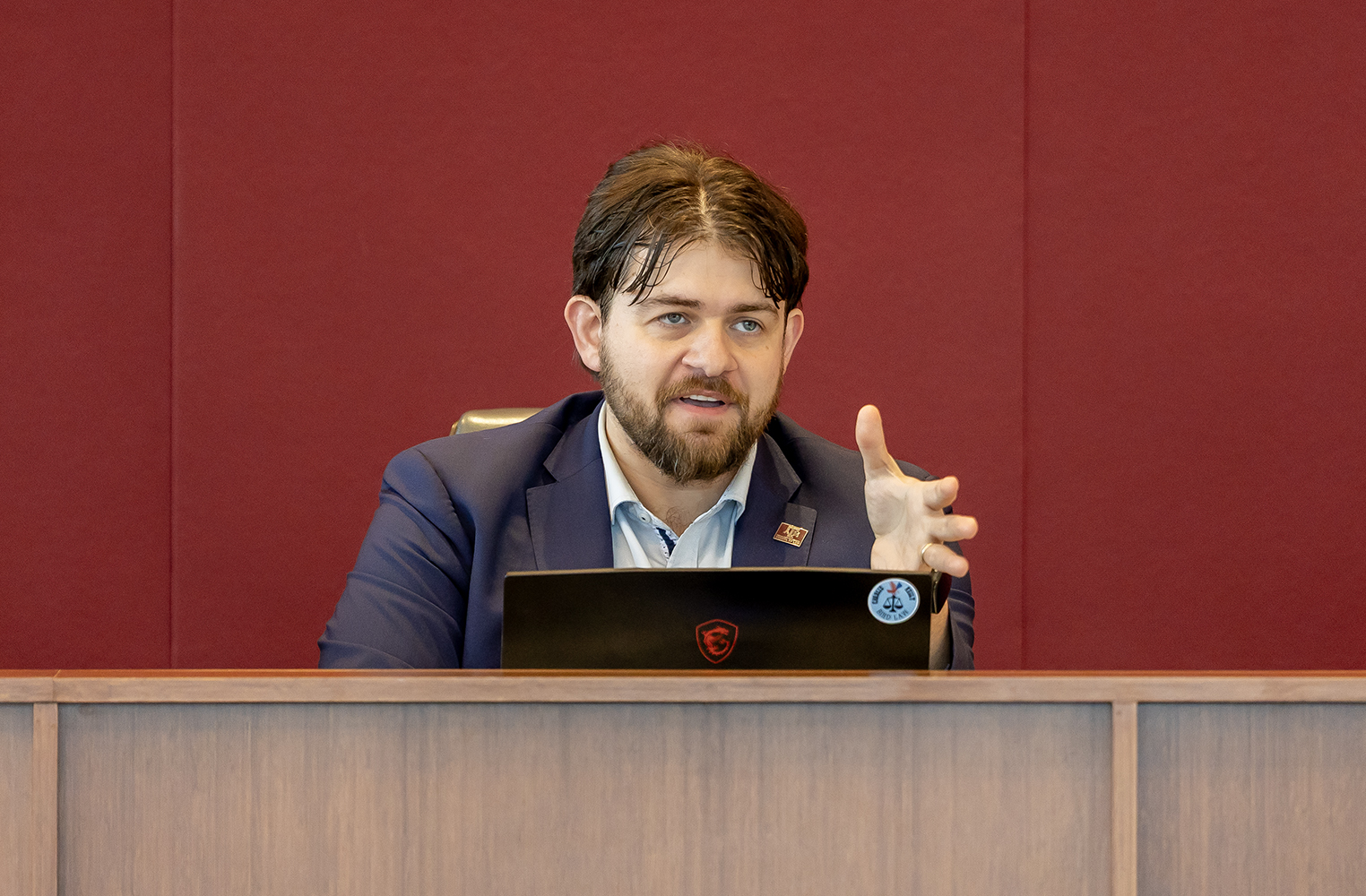
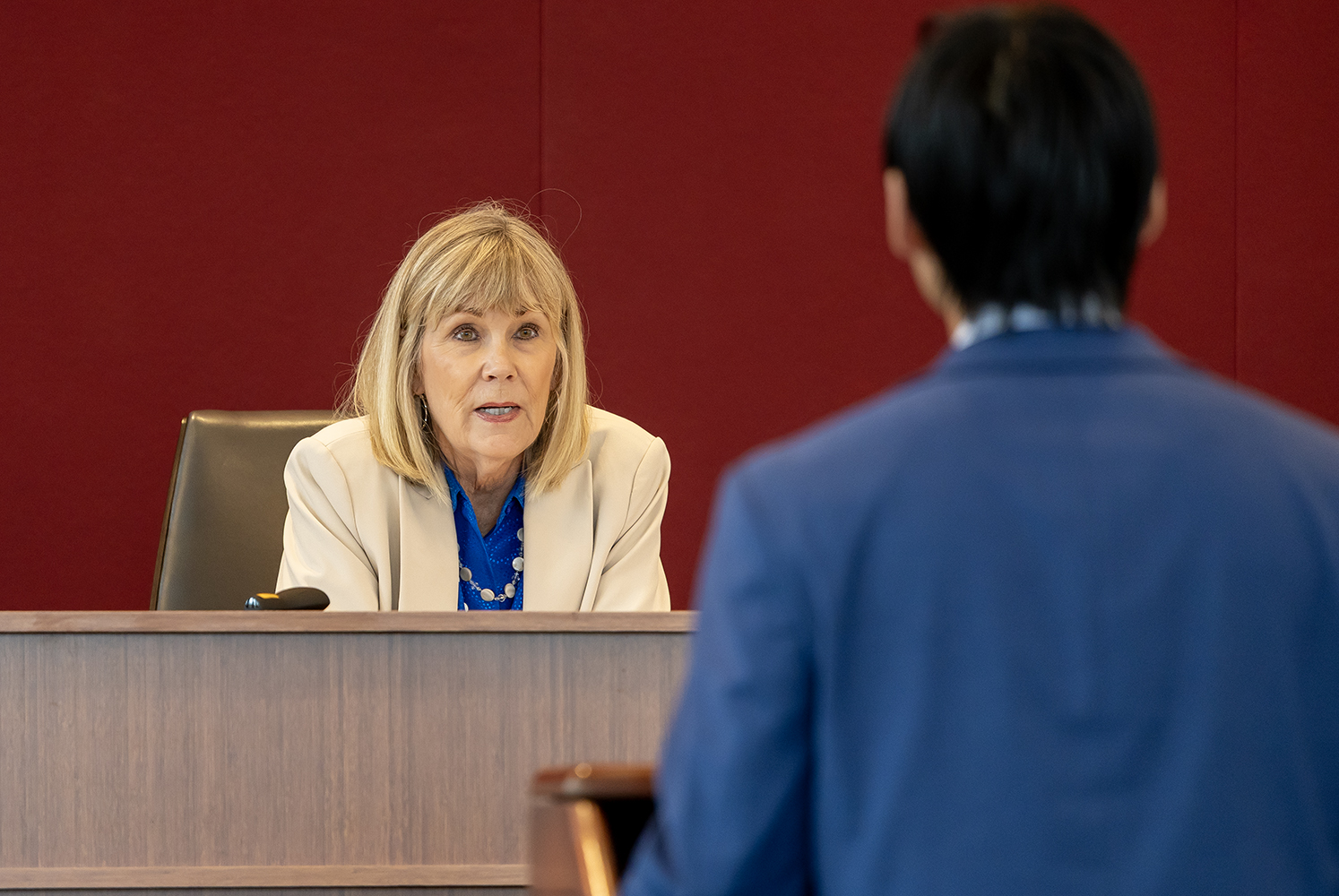
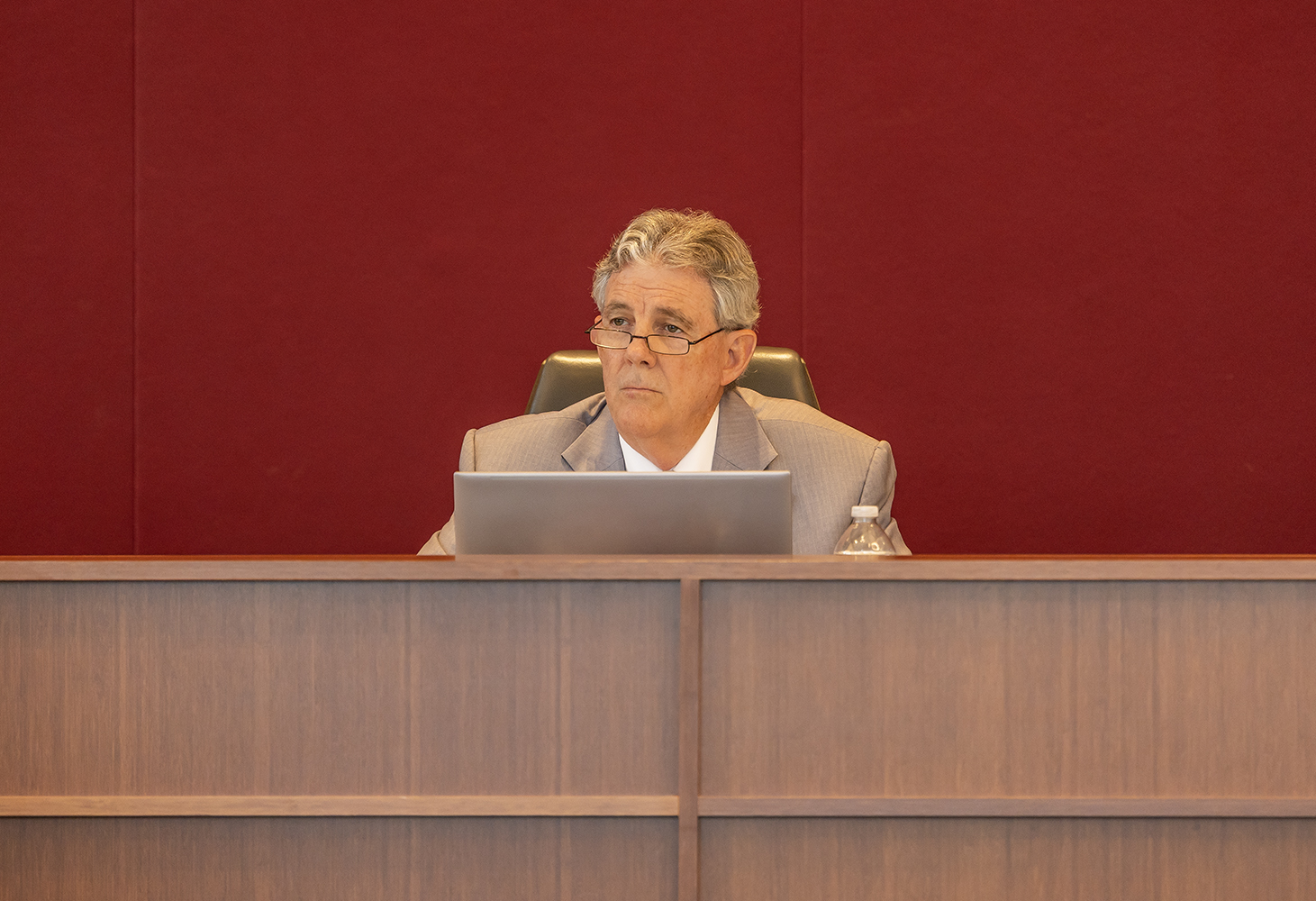
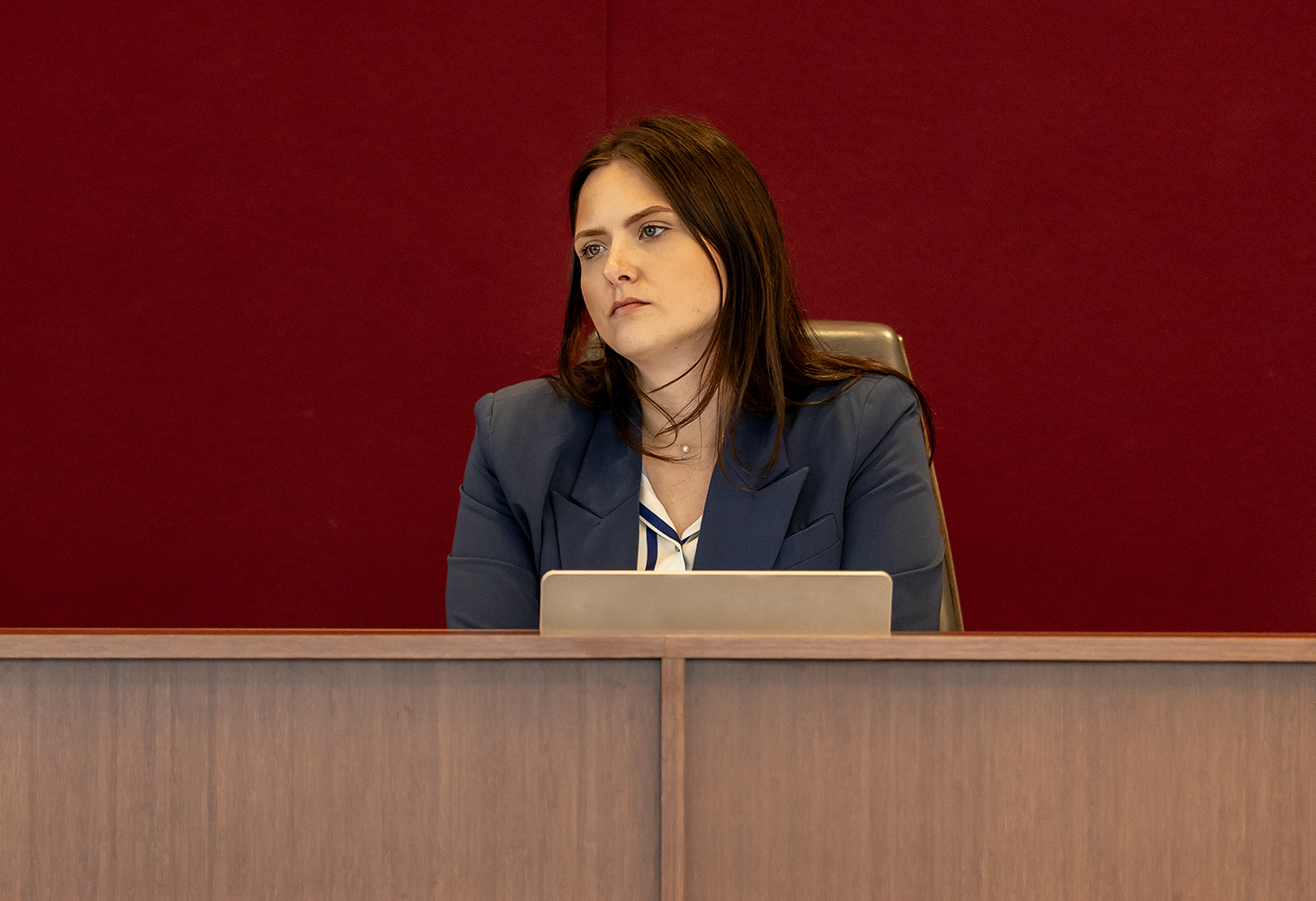
The final proved to be a closely contested affair.
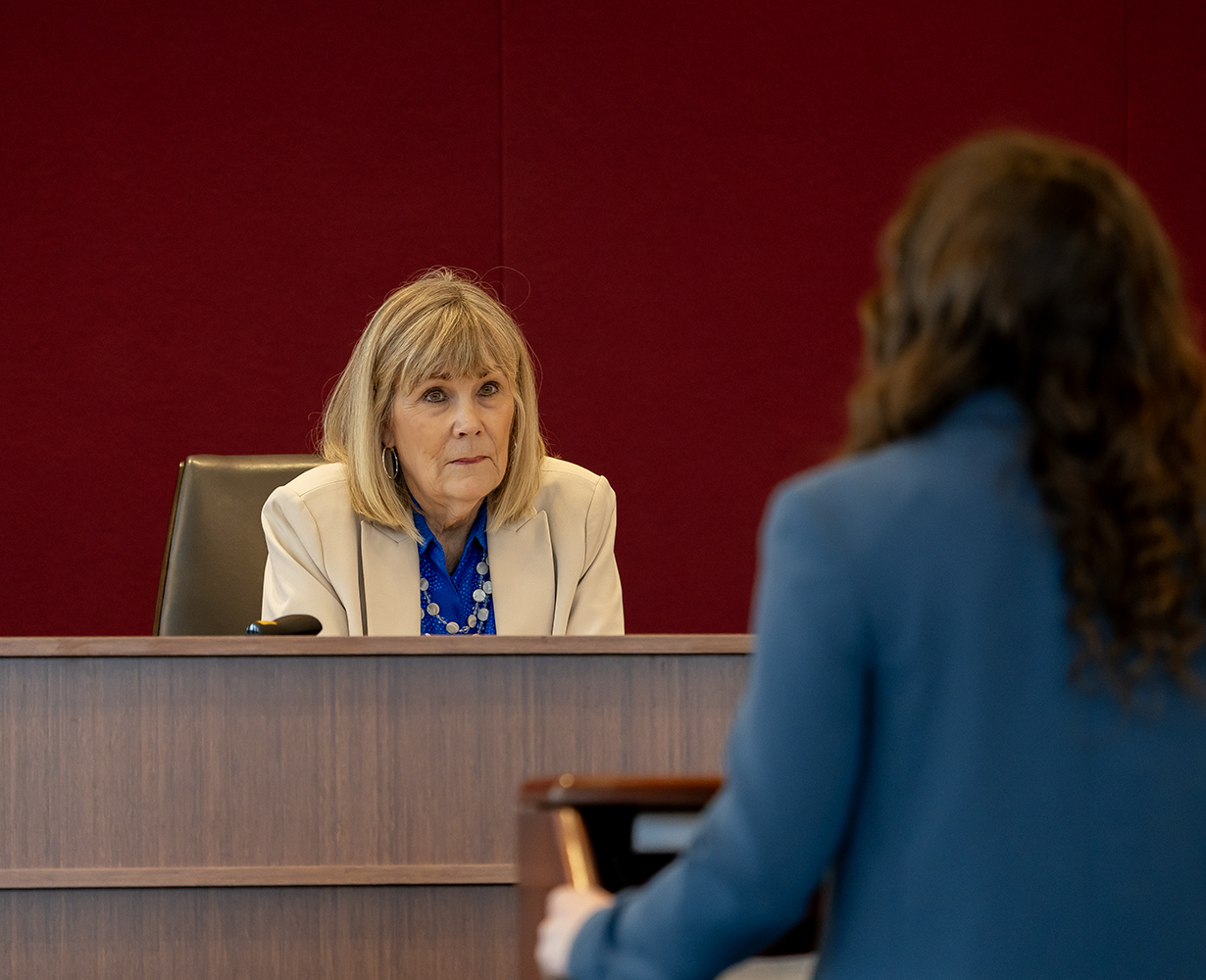
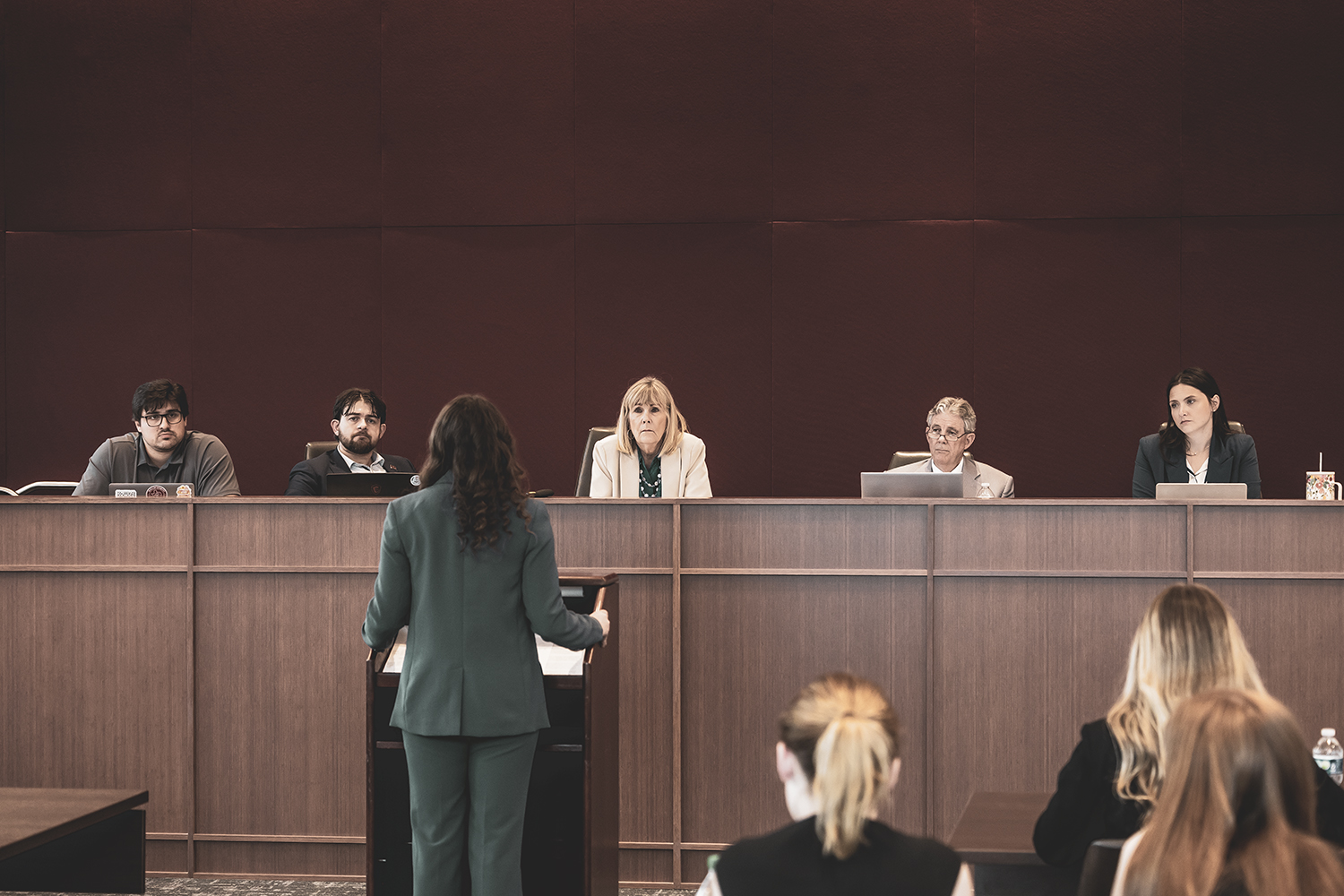
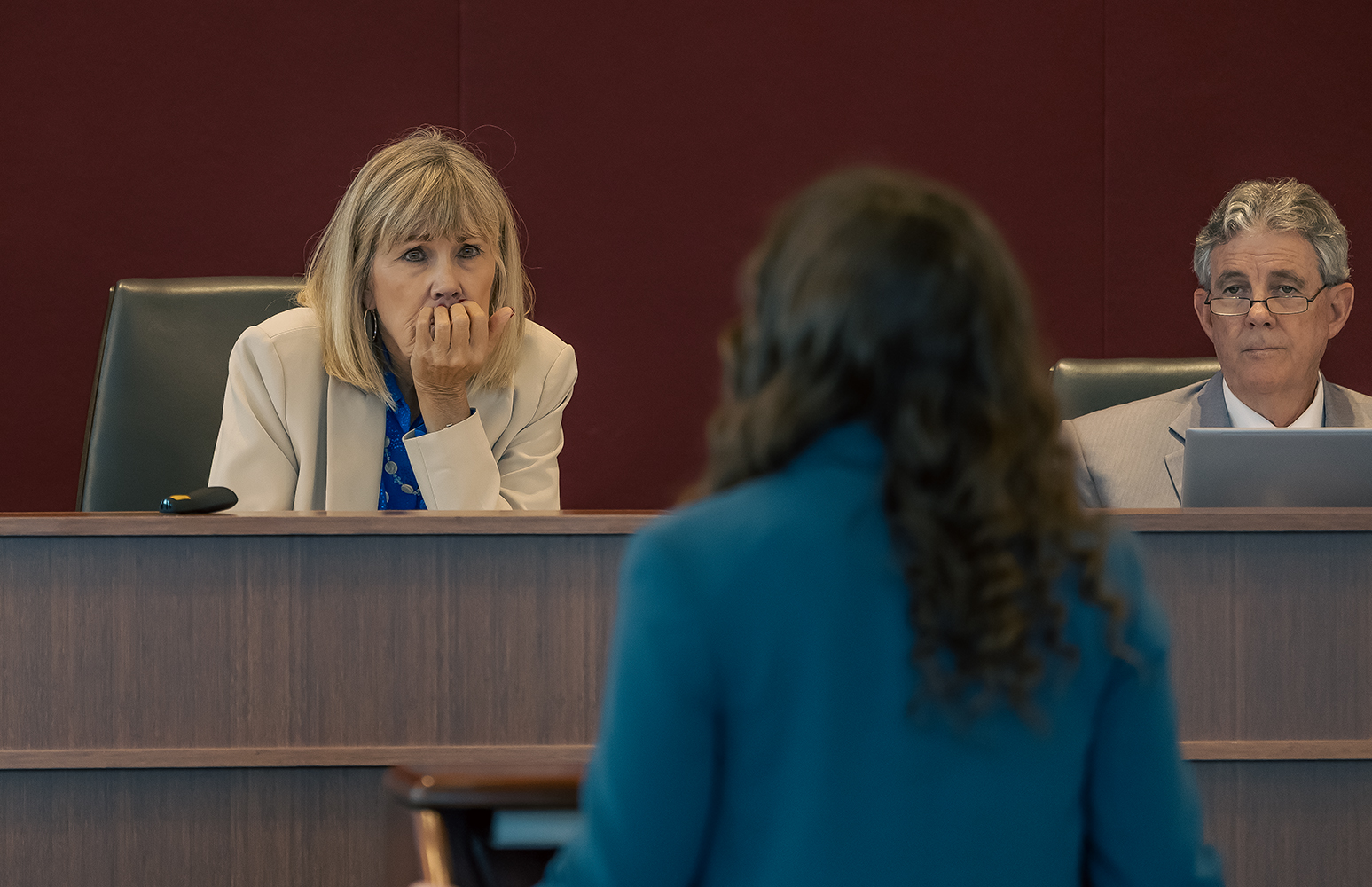
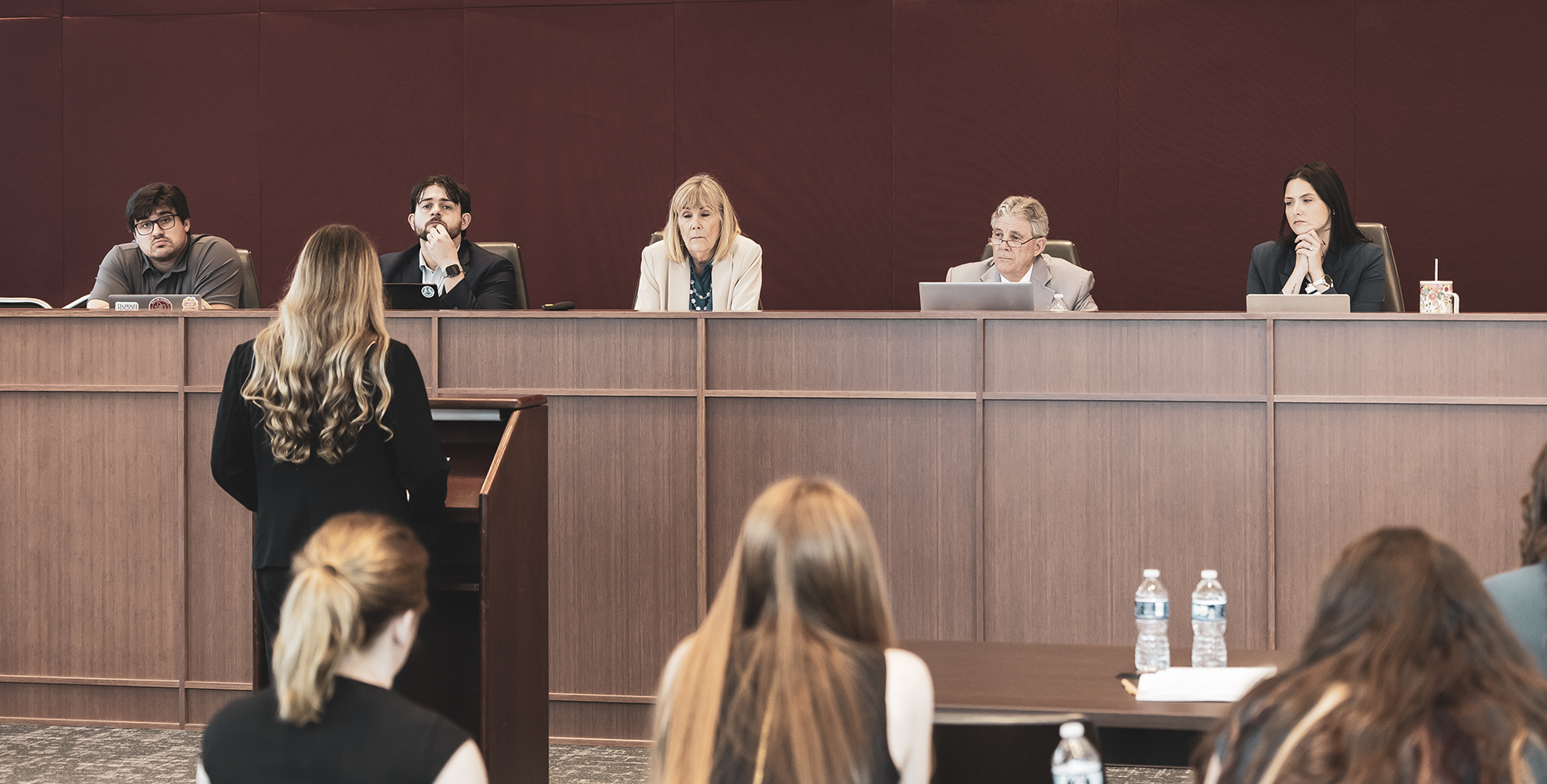
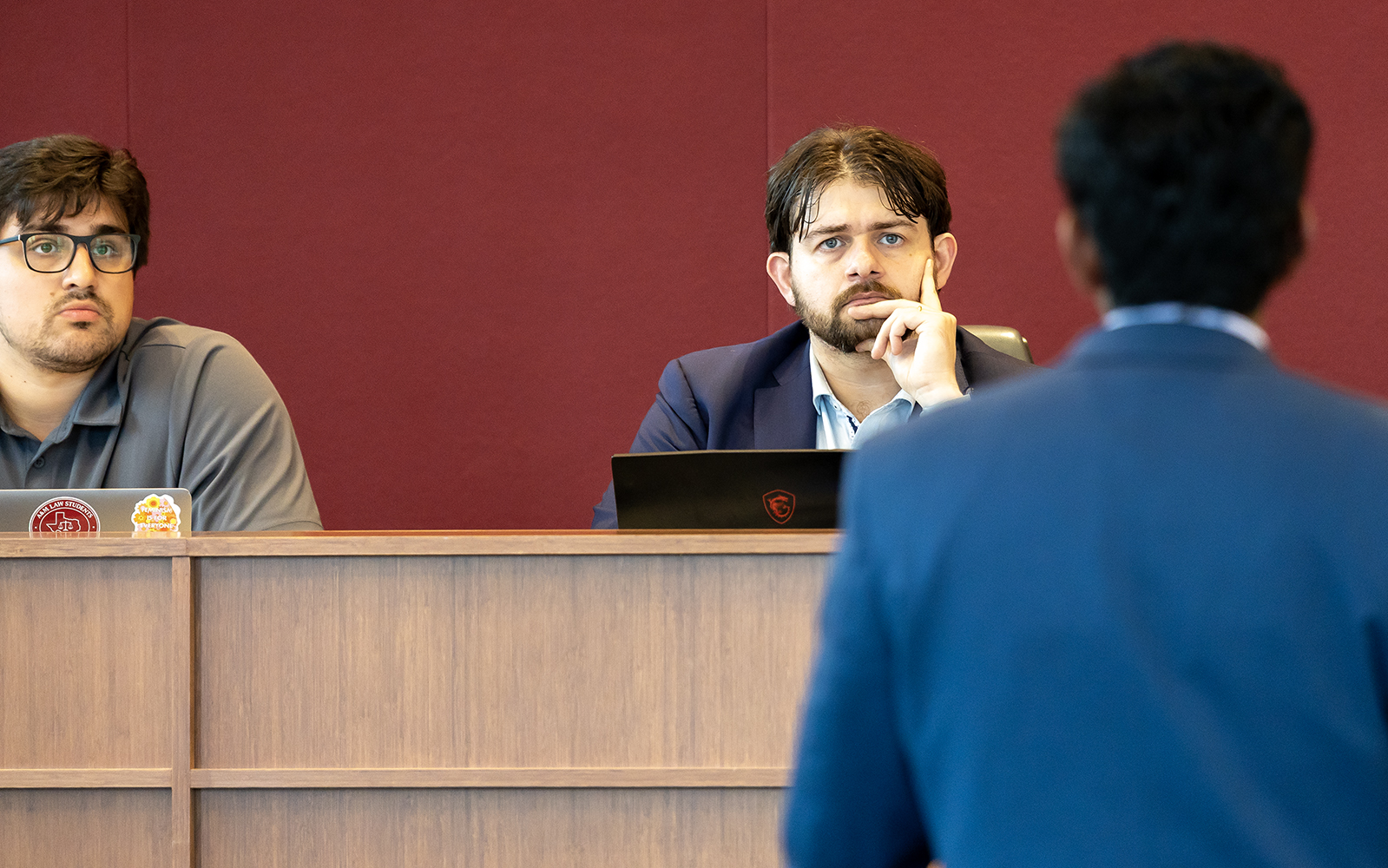
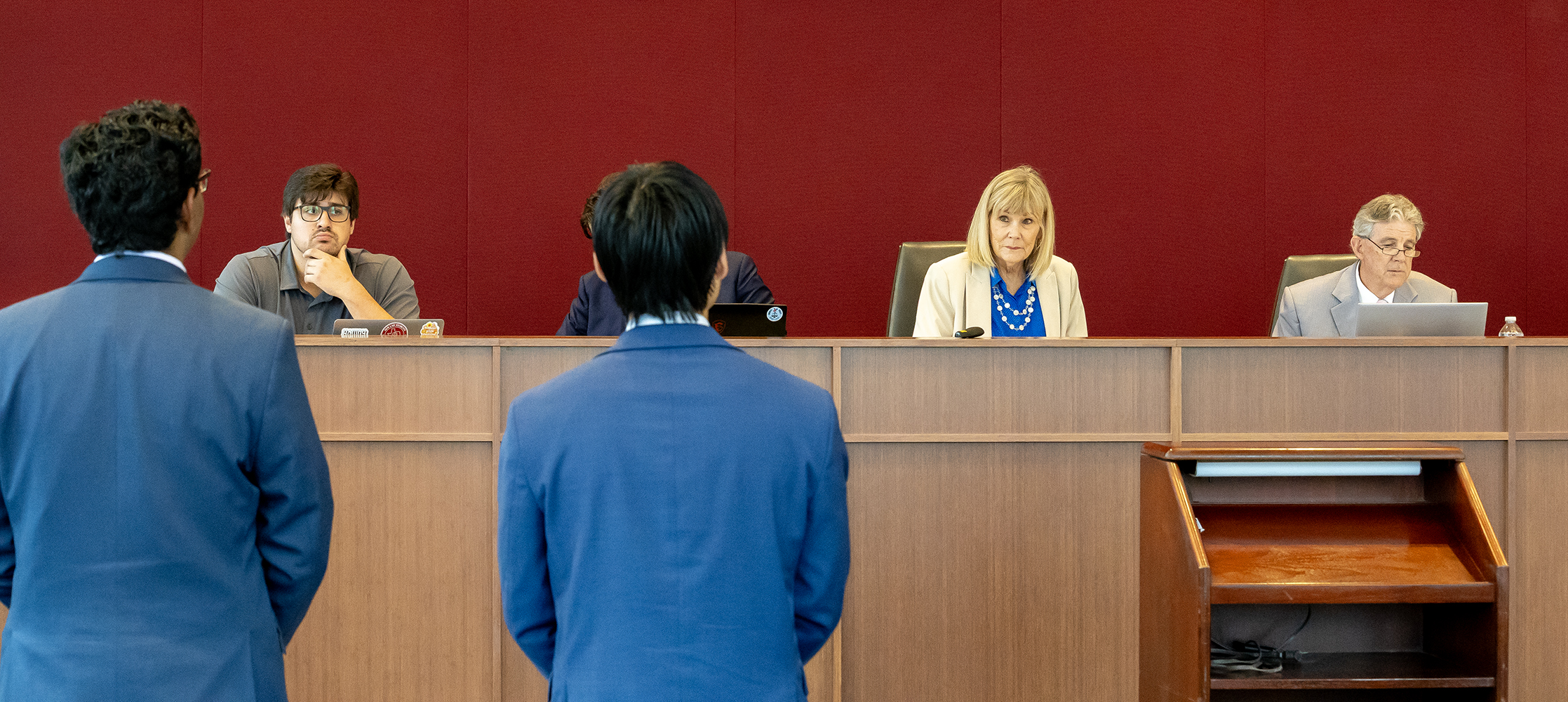
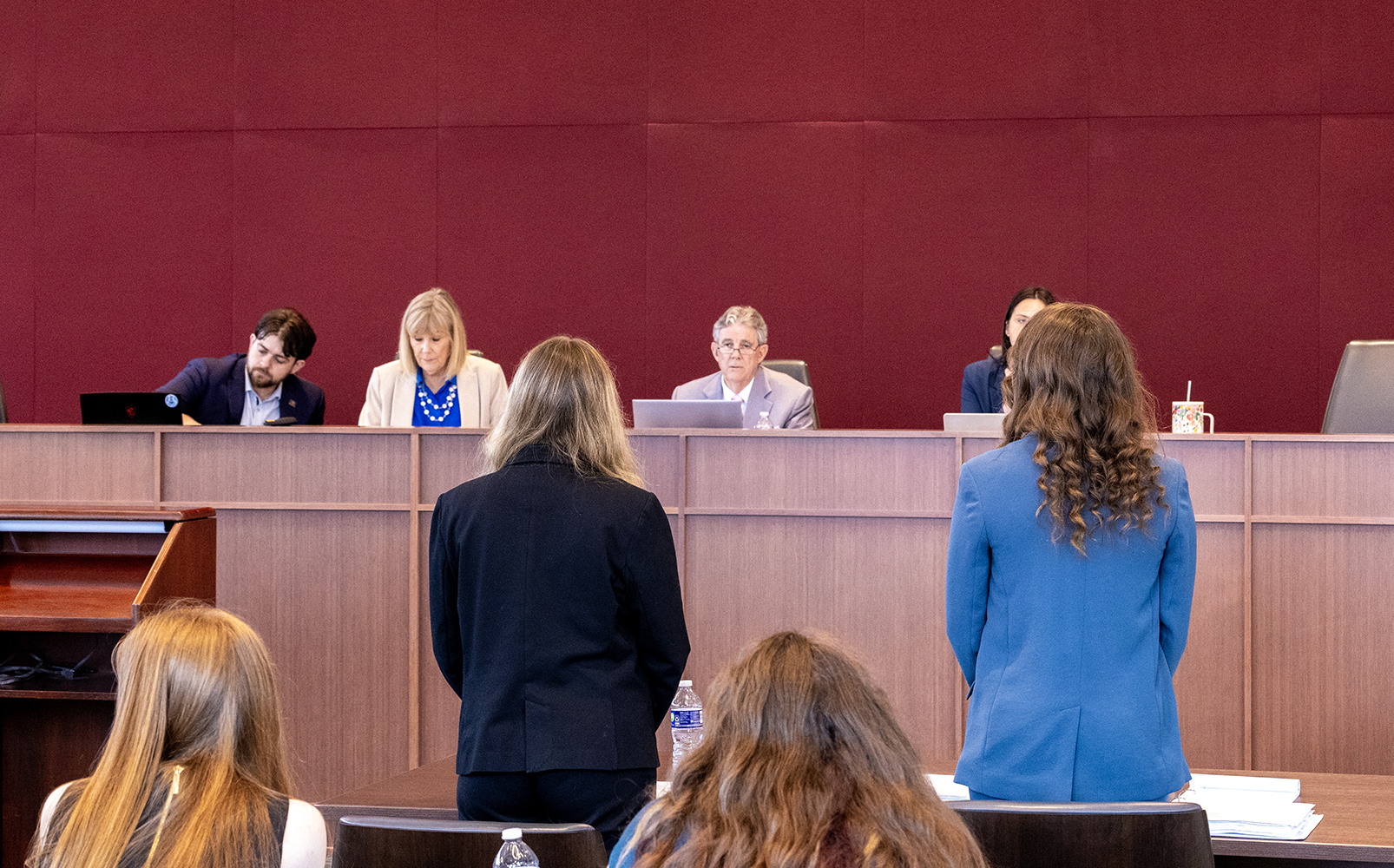
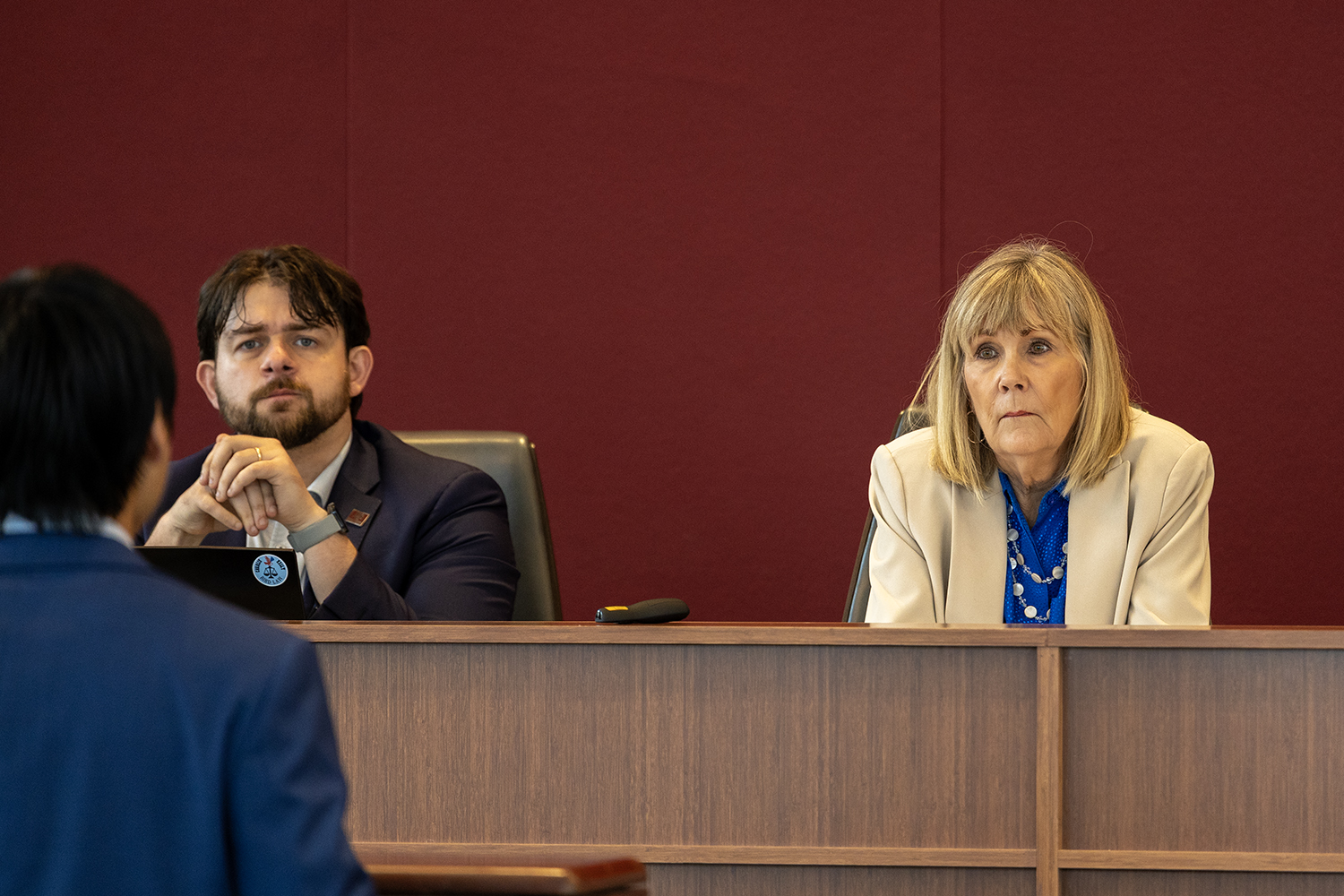
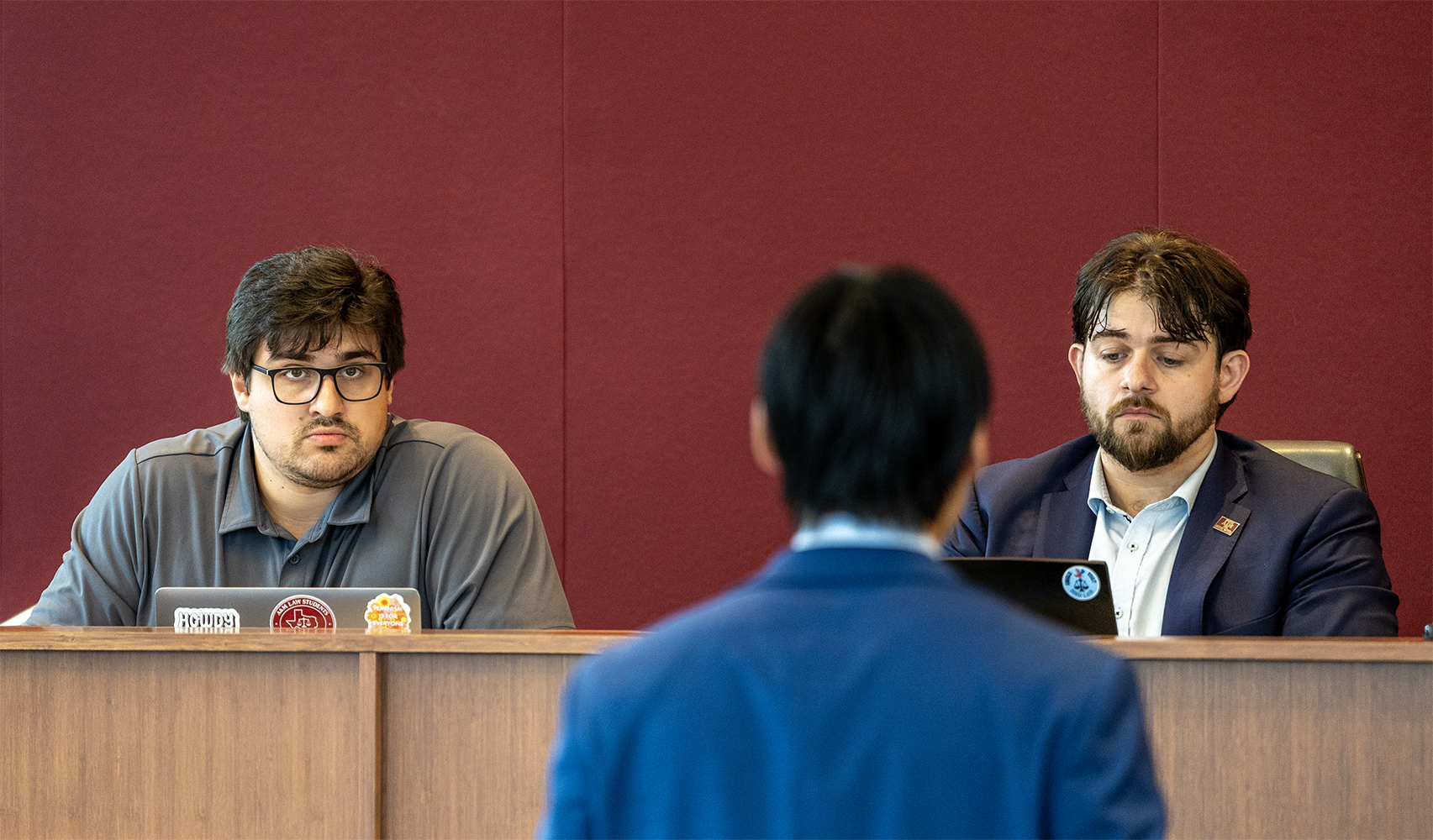
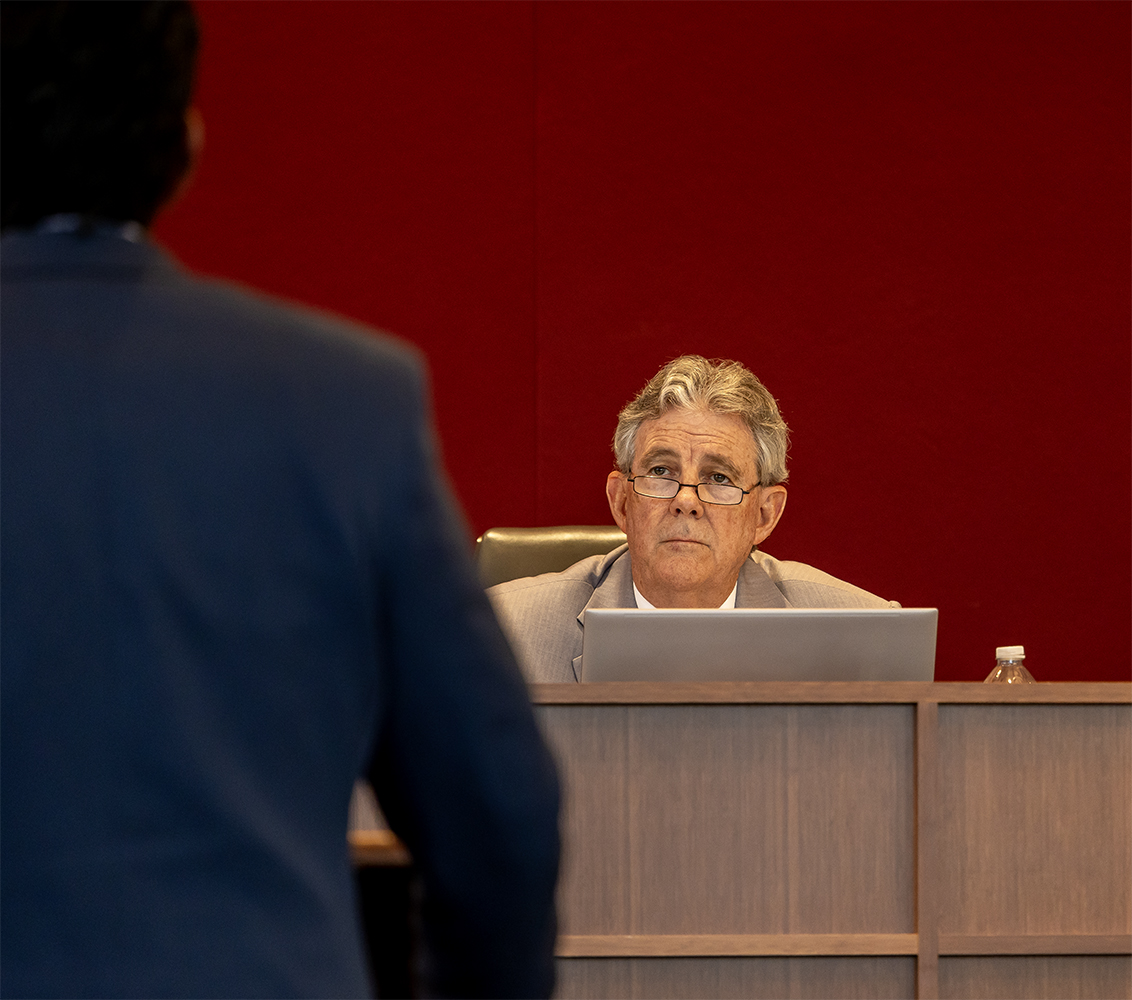
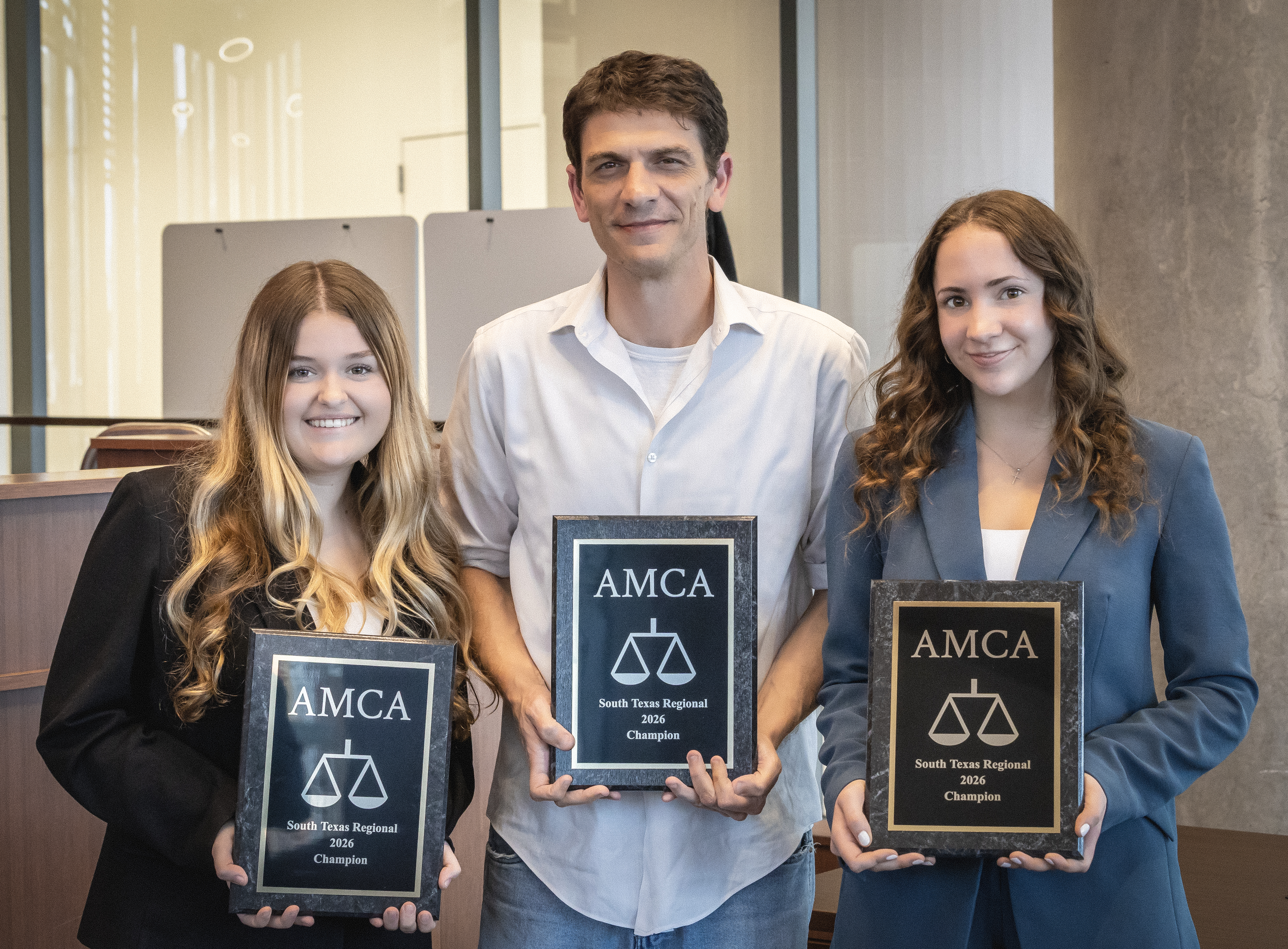
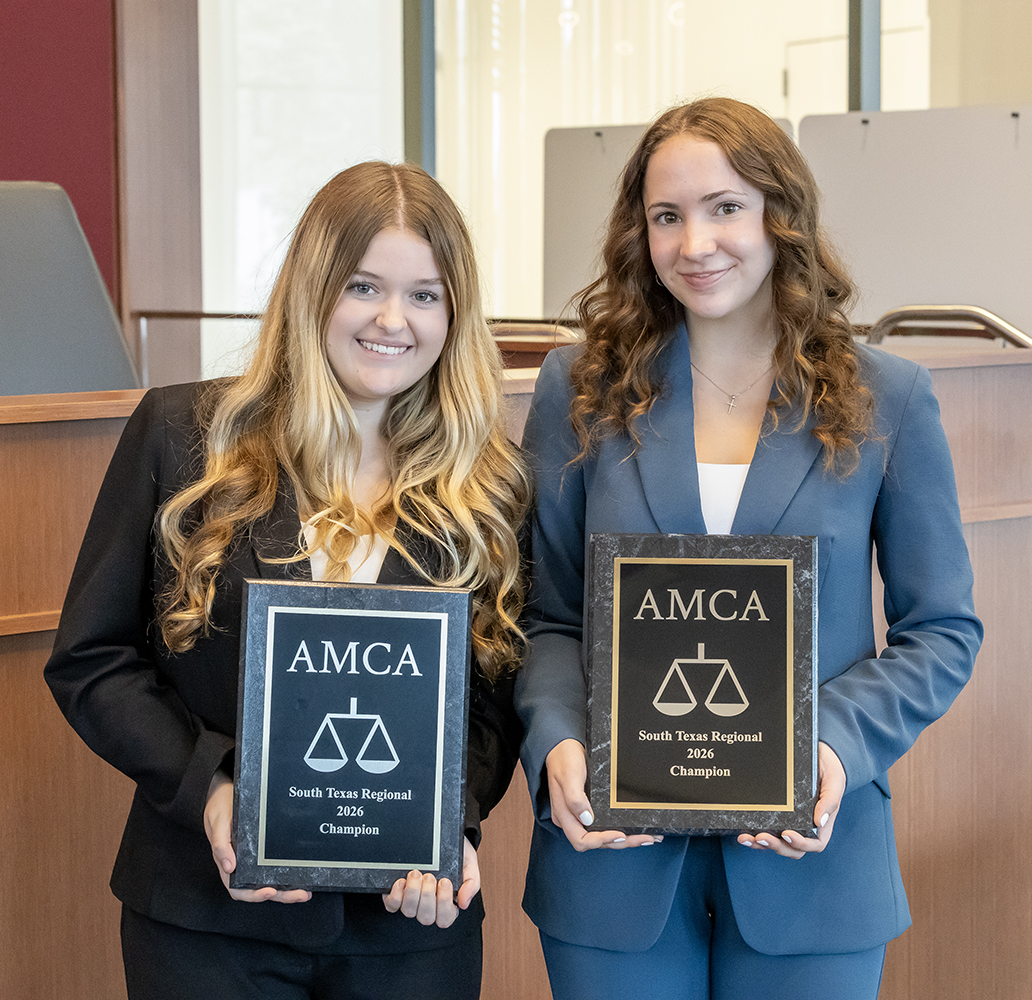
After a hard-fought round, Baylor (Beck and Homberg) emerged victorious by a narrow margin, winning three ballots to two.
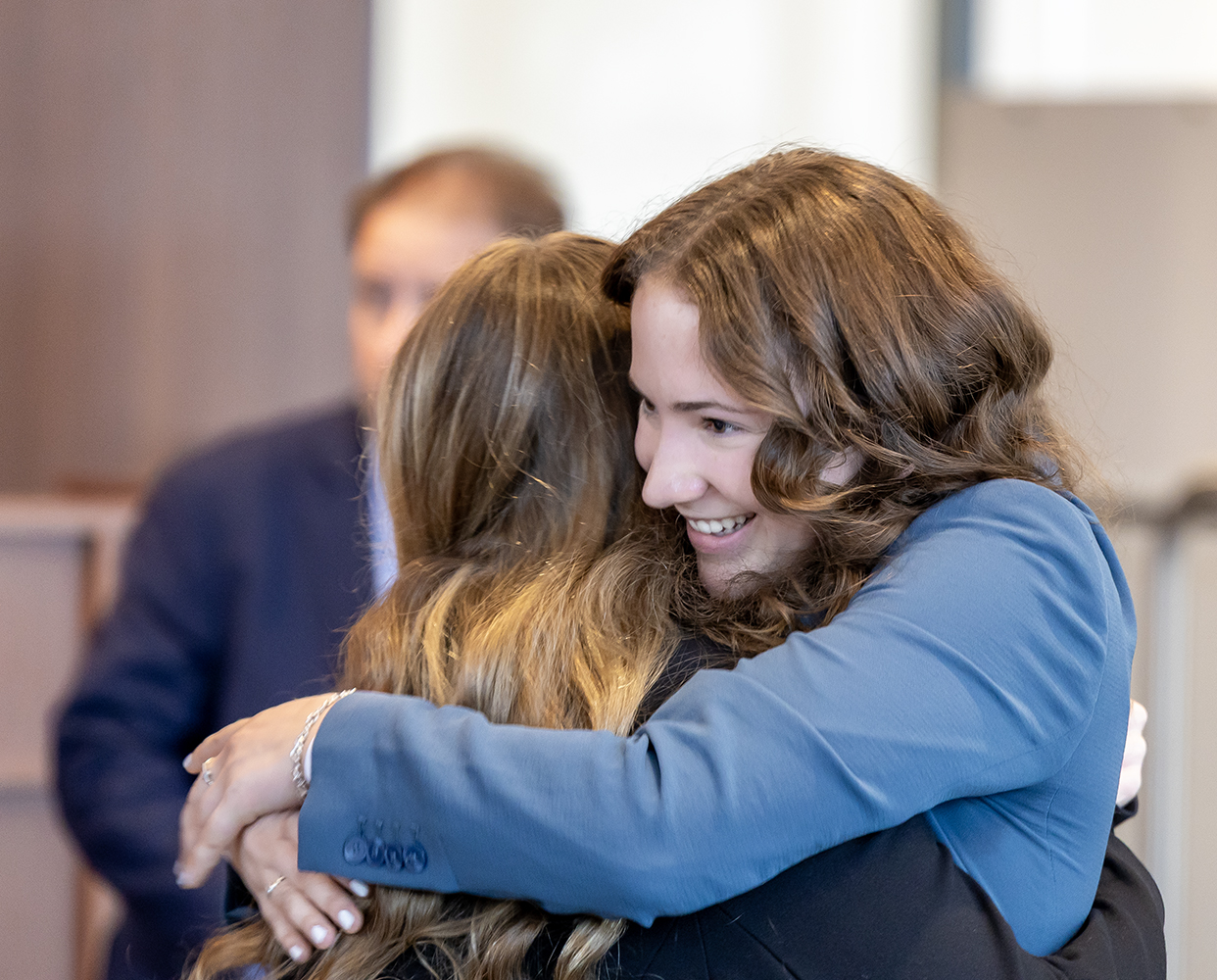
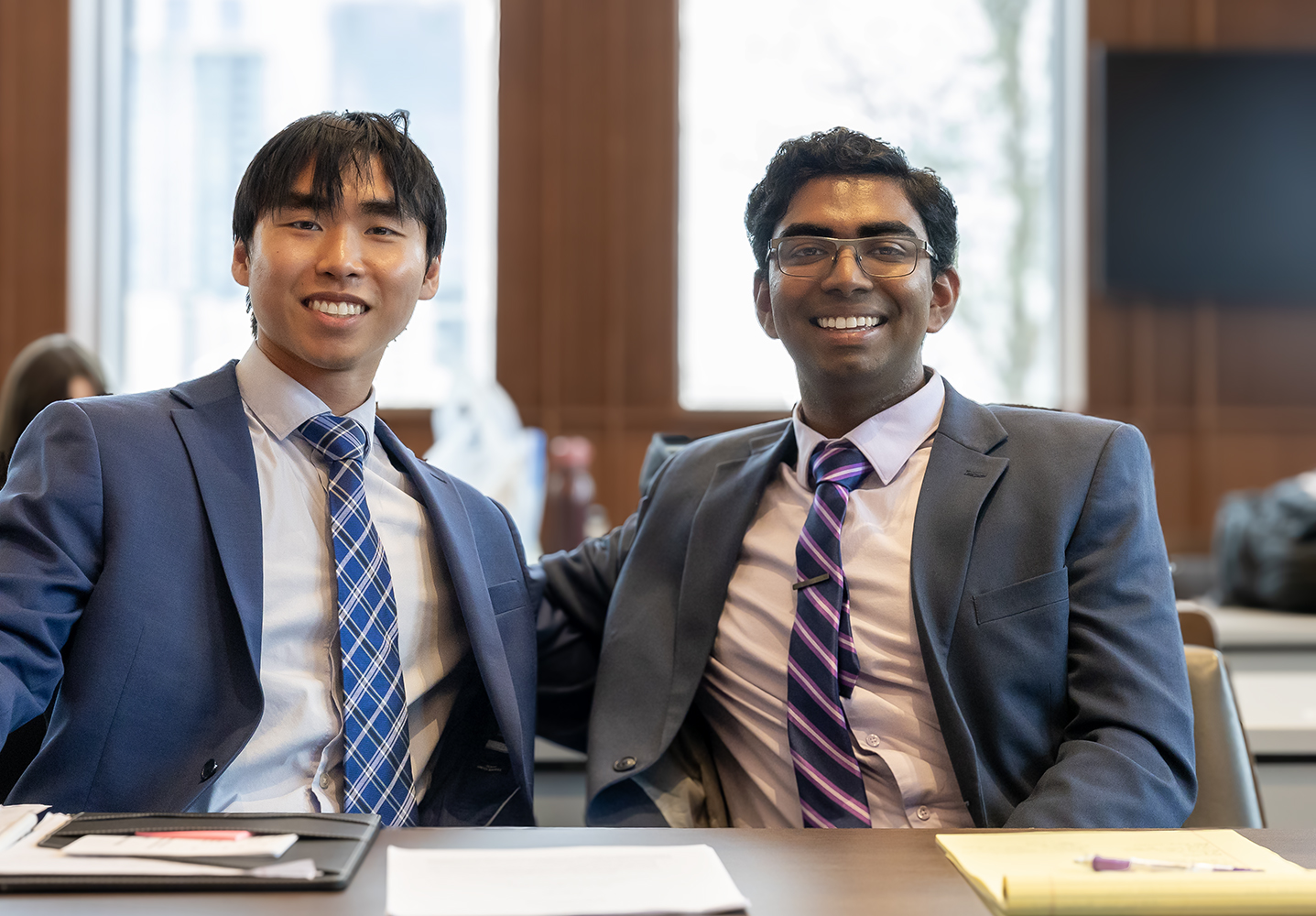
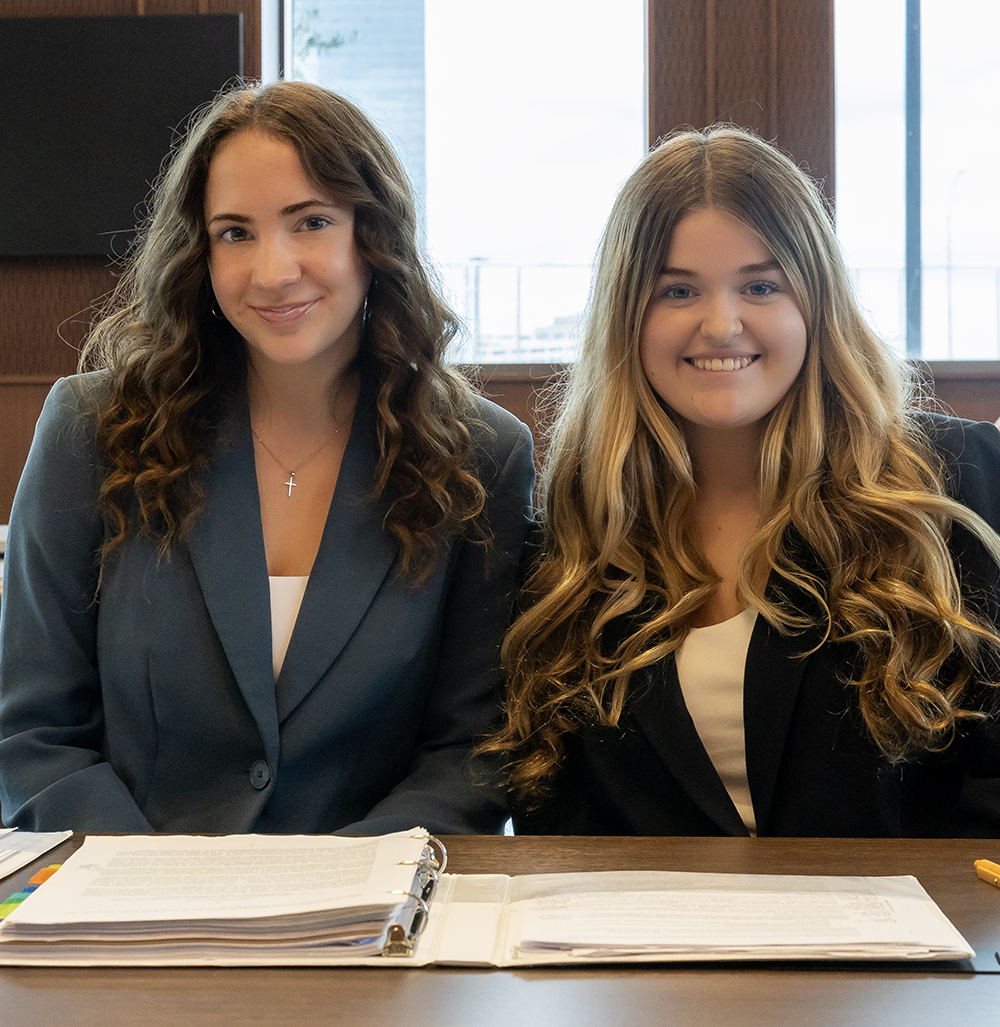
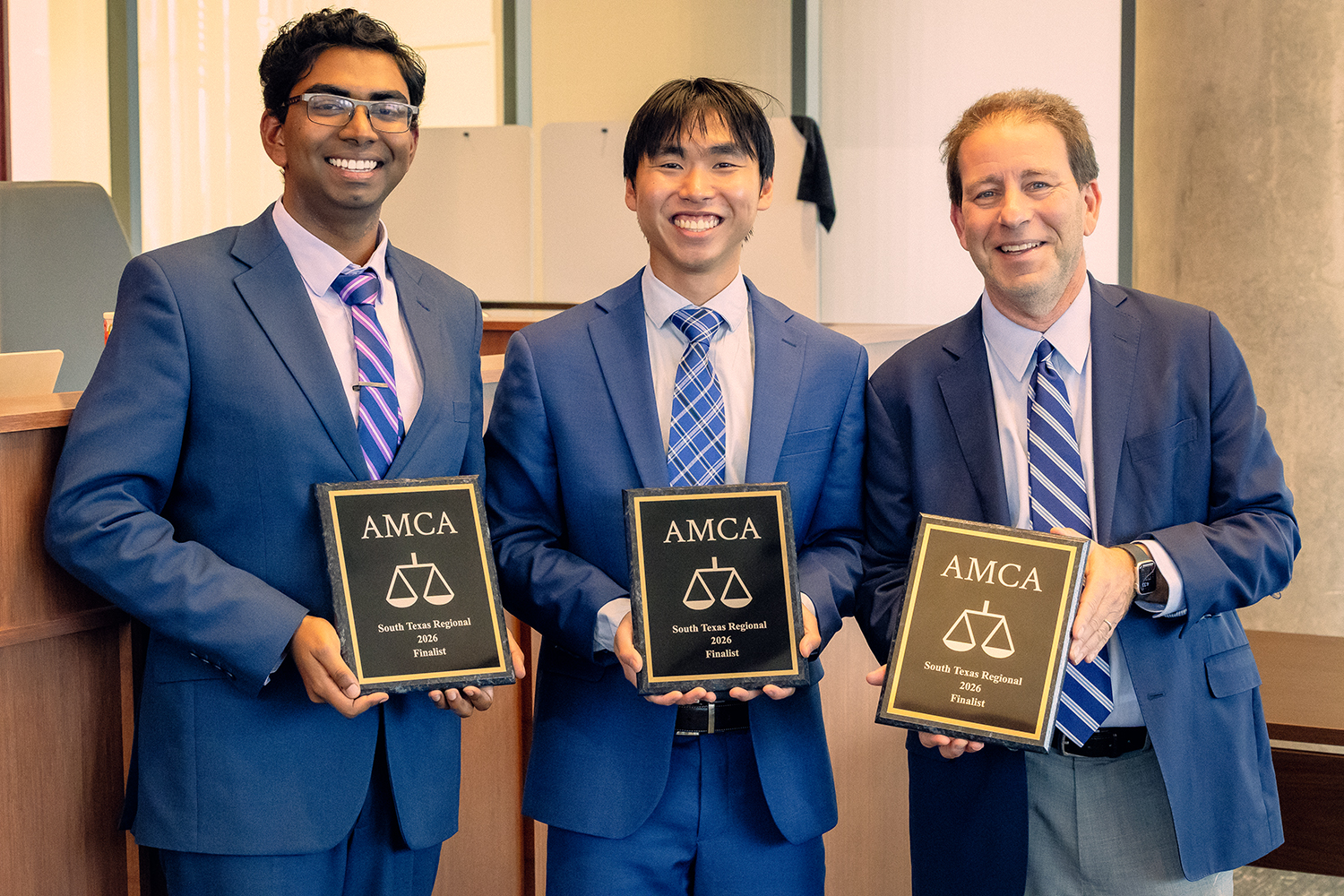
The top four competitors were gracious following the round. They even posed for a selfie together, and they also posed for photographers–which meant us, as the tournament didn’t have a designated photographer.
Despite the fact that all of SHSU’s competitors would have liked to have been competing on Saturday, it was a rewarding day.
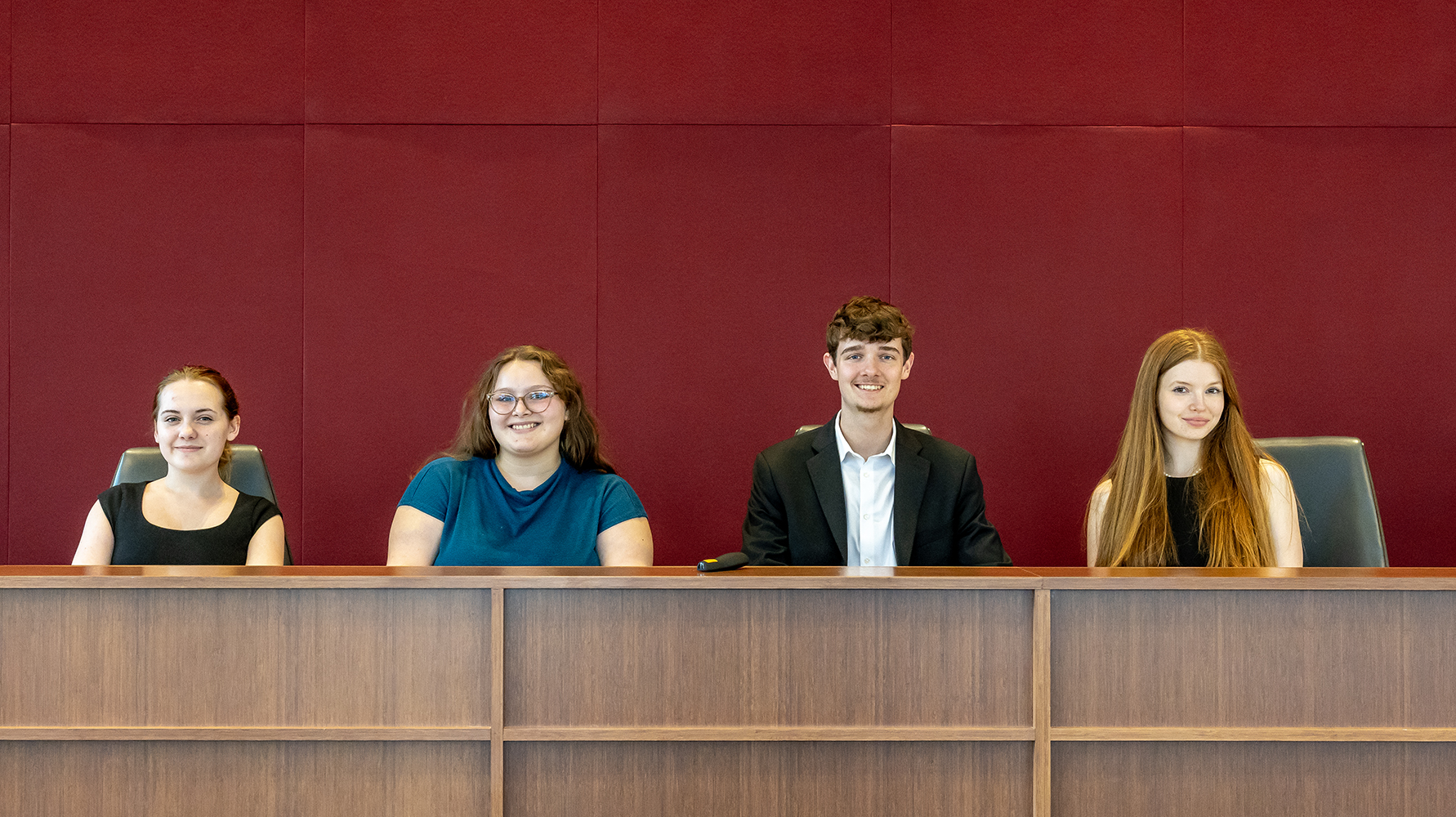
The finalists were excellent, providing lessons for future competitions, and the judges’ questions were, for the most part, insightful and skilled.
Reata
After a full day of moot court, the SHSU group headed to Reata in downtown Fort Worth for dinner, where the restaurant’s distinctive Southwestern cuisine provided a fitting end to the day- and to the Fort Worth “vibe.” The group began with a starter sampler featuring an adventurous assortment of flavors, including polenta, quail, lamb fries, elk sausage, and tortillas.

The variety offered something a little different from the usual dinner fare and gave everyone a chance to sample several specialties.
The entrees were equally varied, ranging from fish and grilled chicken to chicken-fried steak, chile rellenos, Brussels sprouts, and polenta.



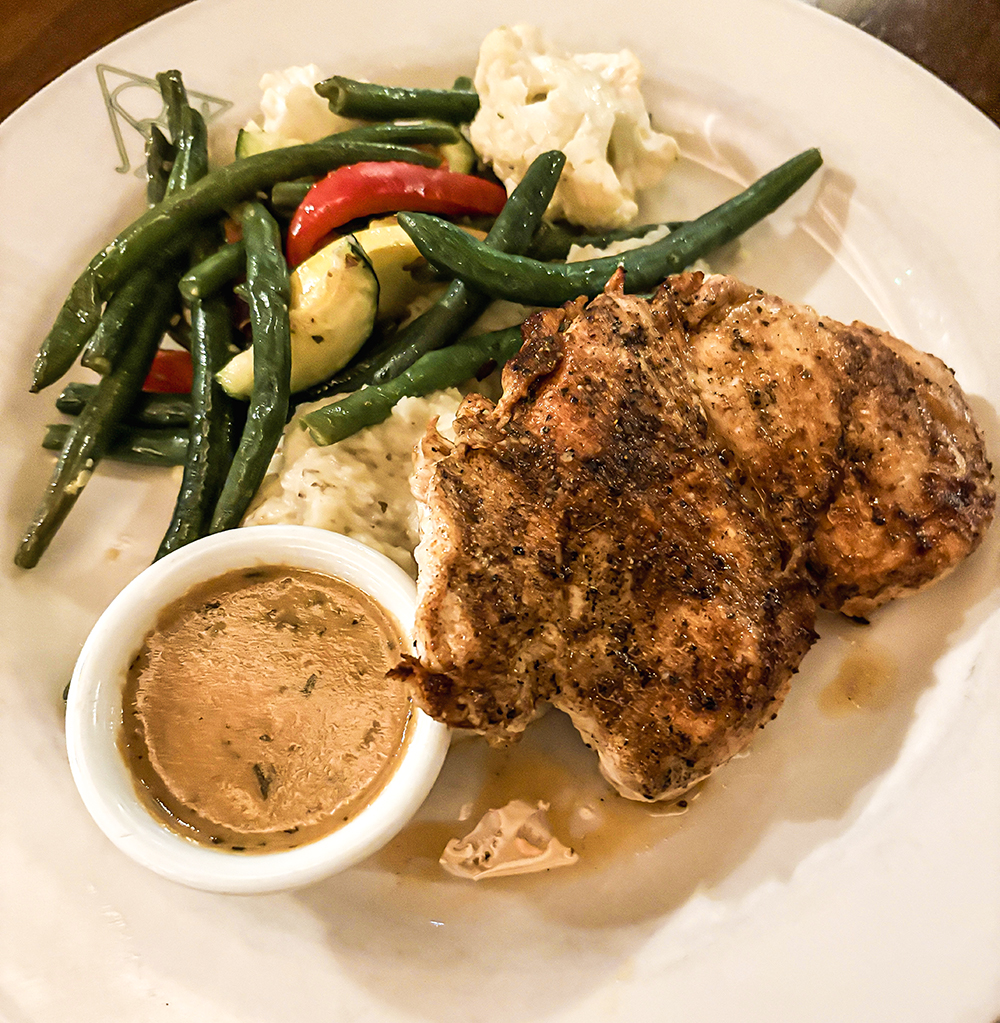


Everything was well received, but the chile rellenos proved to be a particular standout. Of course, no dinner would be complete without dessert, and Reata delivered on that front, too. The bread pudding crème brûlée and baked apple fritter served with ice cream were the evening’s clear favorites.
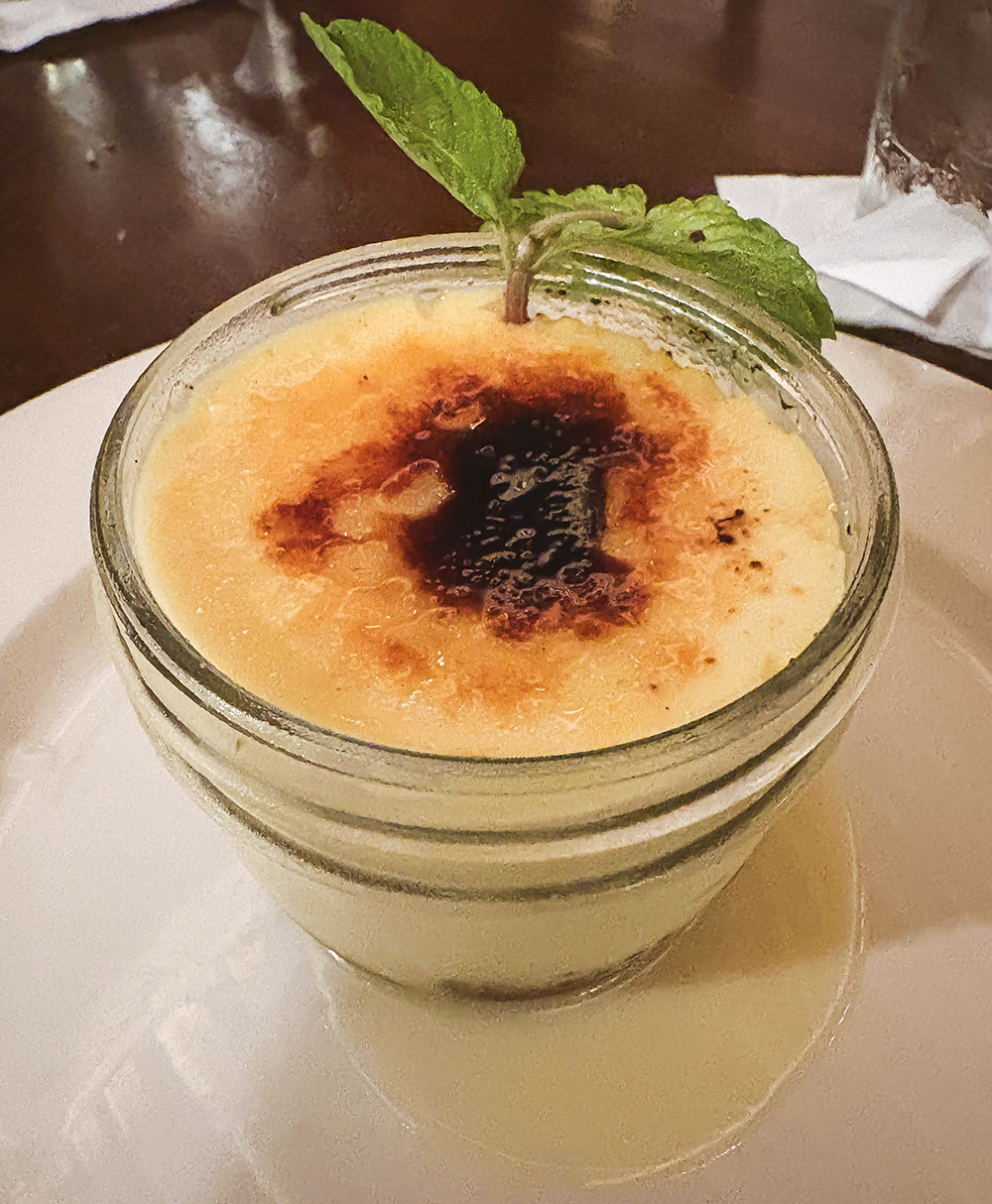
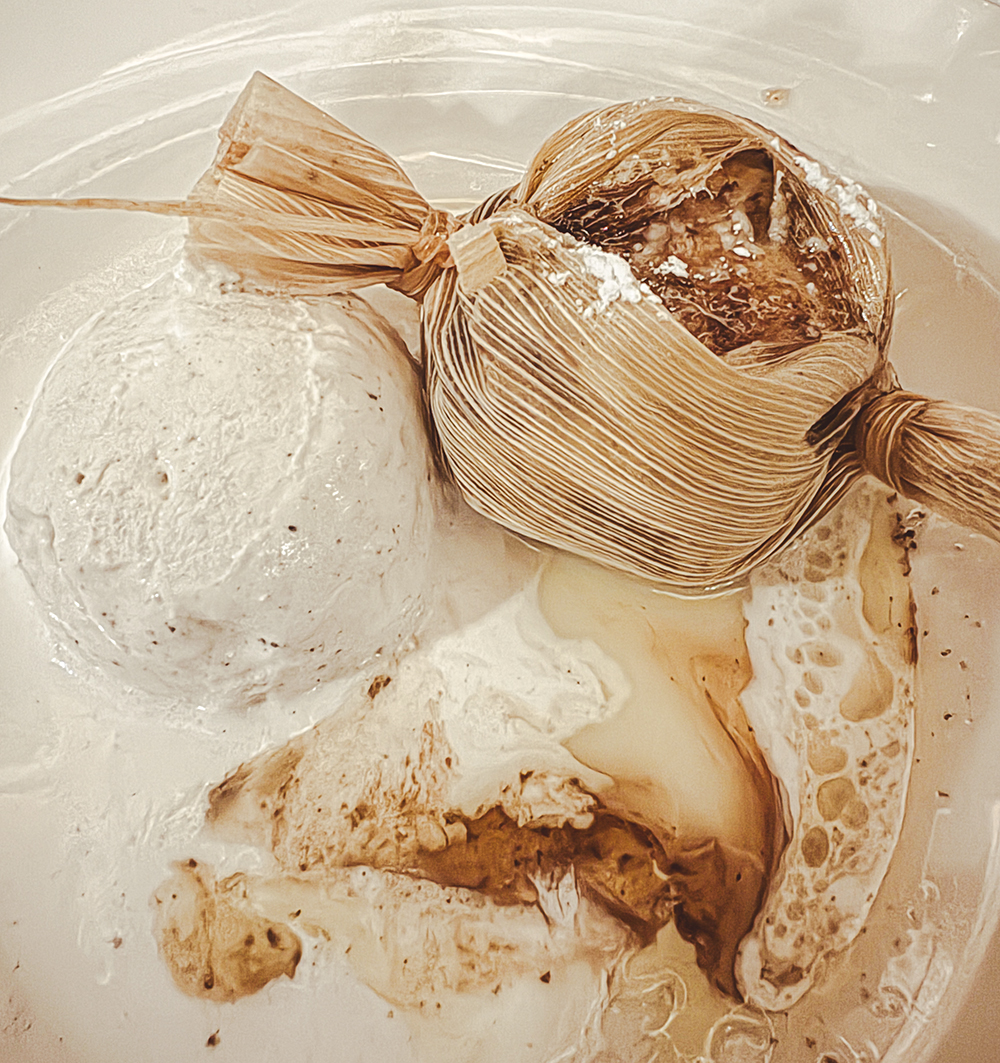
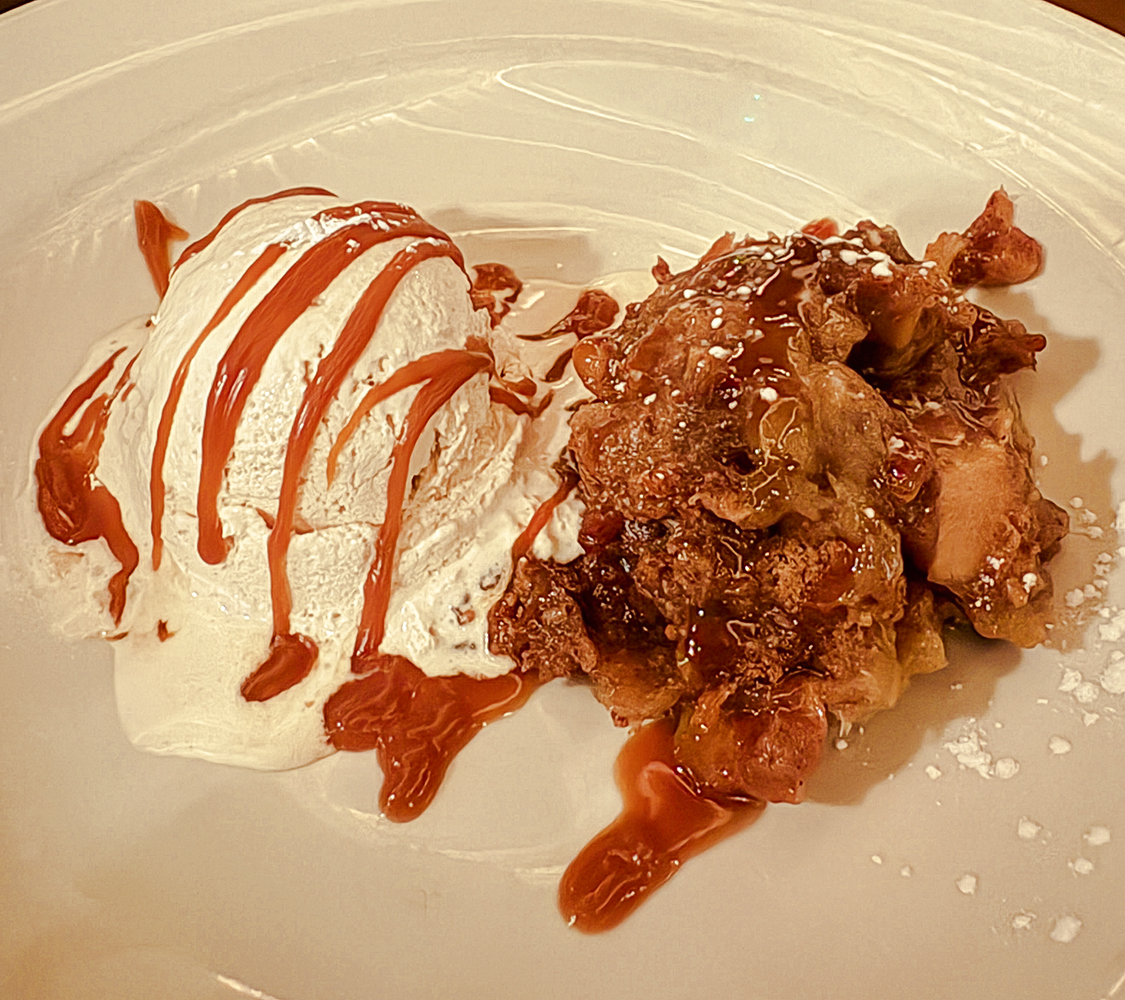
After a day of competition, service, and learning, the excellent meal provided a welcome opportunity for everyone to relax and enjoy one another’s company.


