Midwest Tour, Day 7: Going to Kansas City, Kansas City Here We Come

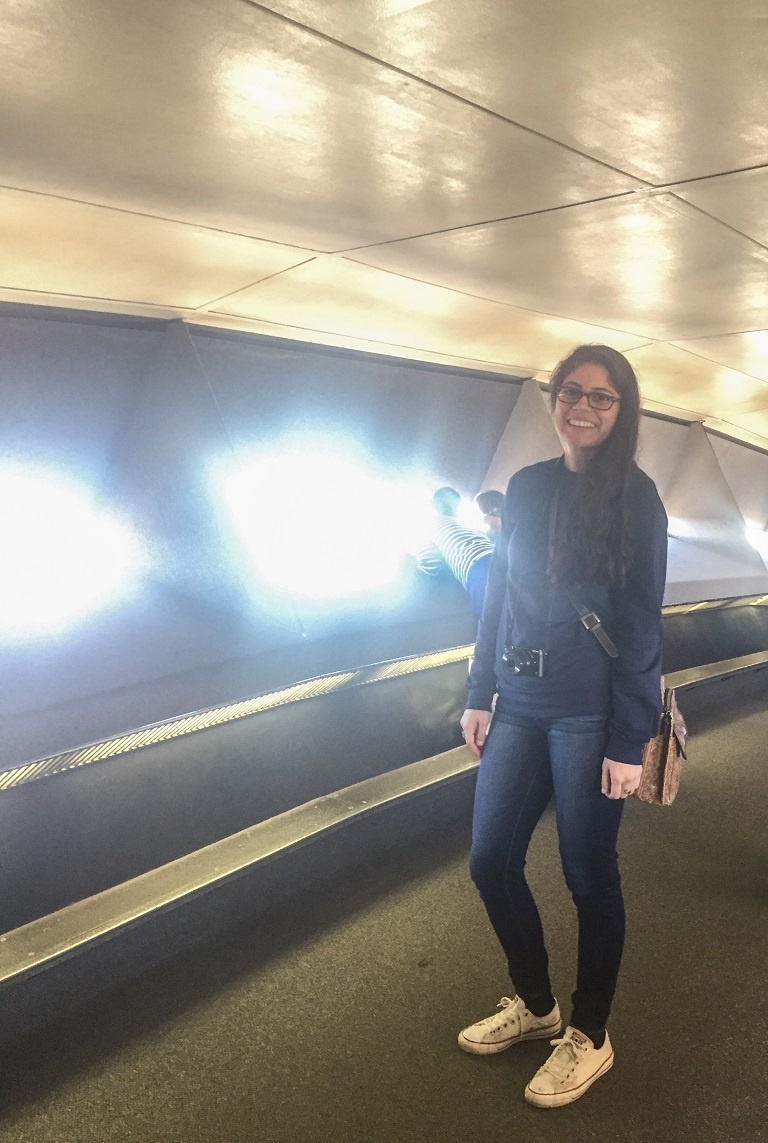
We left Madison bright and early this morning to get a head start on the day’s heavy amount of driving. Before completely departing the capitol, however, we stopped by a “lost” Richard Haas mural.  Haas completed this mural in 1987 and it beautified an already beautiful city for almost a decade.  In the 1990s, however, Madison decided to revive a Frank Lloyd Wright design for the City–Monona Terrace.  In completing the Wright design, the Haas mural was relegated to the side of a tunnel wall.  Not made to be seen in tunnel, and obscured by newly installed load-bearing columns for the overpass, the Haas mural of Wisconsin’s history is all but destroyed.  Still, we discovered vestiges of it.
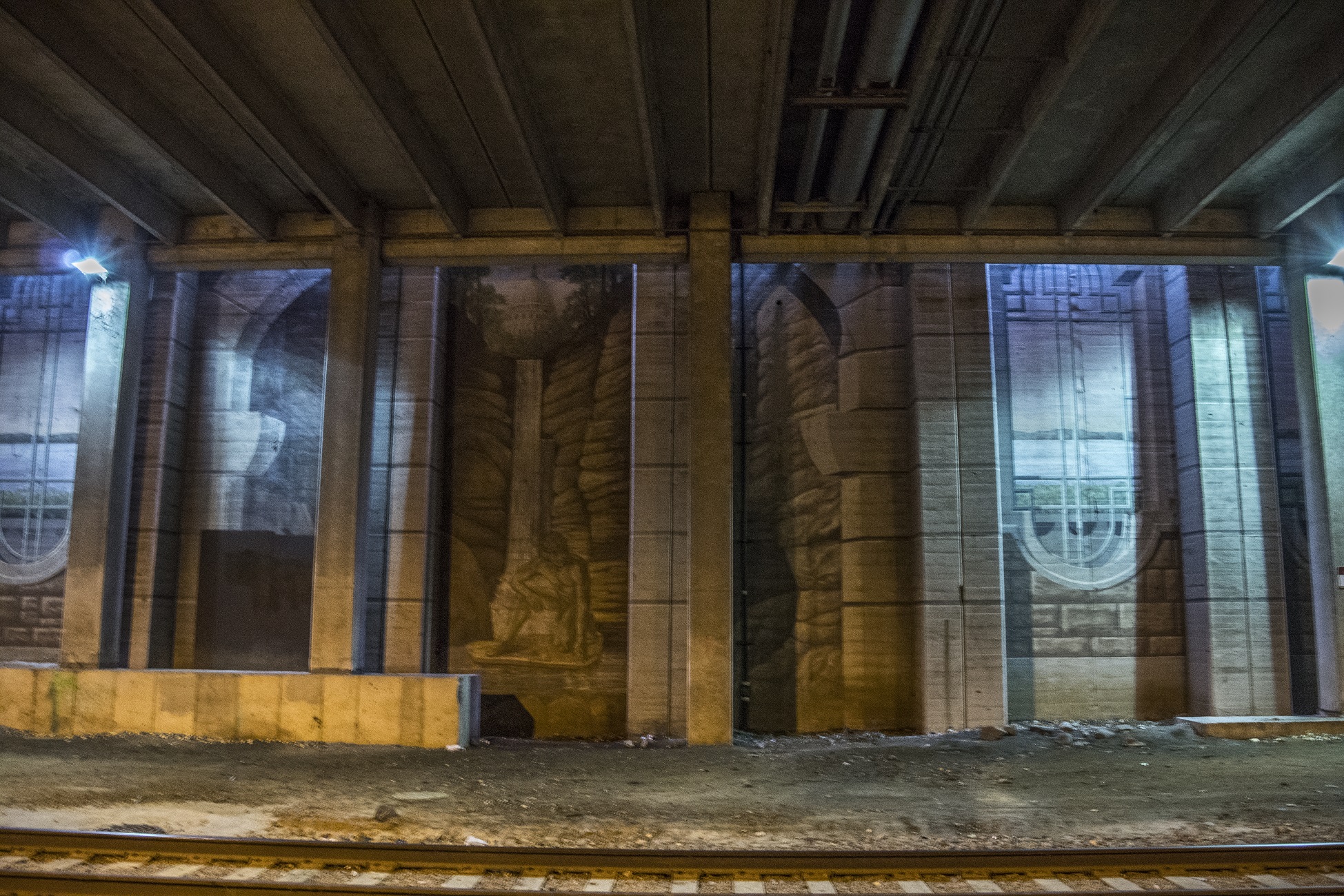
Haas_Mural_Madison_WI_Web

With that sad sight in mind, we began the winding drive to Dubuque, Iowa. Dubuque, a small town along the Mississippi, was founded in 1833 and is home to an incline that gives panoramic views of the surrounding area. We arrived at the bottom of the incline, nervous (editor’s note: mostly Constance was nervous) about the rickety tram that would take us up the steep embankment.

Dubuque_Incline_Constance_Fear_Web

We piled in, however nervous we may have been, and slowly made it up the hill.

Dubuque_Incline_Tracks_Up_Web
The anticipation was worth it in the end, as we were able to look out over the Iowa hillside and appreciate the breathtaking view…

Dubuque_Skyline_Web…and take photos…

…and more photos…

Dubuque_Incline_Constance_Alex_2_Web…and more photos…

Dubuque_Incline_Constance_Alex_3_Web

…and to see how far we had come up the mountain.

Dubuque_Incline_Tracks_WebAfter a couple pictures, we rode down in the tram once more to find solace in the warmth of the minivan.

By the end, we (Constance, especially) were proud of the trip up and back!

Dubuque_Incline_Constance_Bottom_Web

We then drove to the gravesite of Dubuque’s founding father, Julien Dubuque. The grave, memorialized by a turret-like structure, sits on the edge of a mountain along the Mississippi.

Dubuque_Memorial_Web

We braved the semi-cold to appreciate the view of Dubuque and the fall colors of the area. Dubuque, who maintained a healthy relationship with the local Native American tribe, rests near the grave of Chief Peosta’s, leader of the Meskwaki tribe (and Dubuque’s father-in-law).

Dub uque_Peosta_Grave_Web

We snapped a couple pictures of the mighty Mississippi…

Dubuque_Monument_Constance_Alex_Web…with and without us…

Dubuque_Monument_Overlook_Web…and then headed back to the car for our next stop.

Dubuque_Monument_Alex_Constance_Walking_Web

After a few hours, we stopped for lunch at Her Soup Kitchen. A small, local eatery, the restaurant boasts local, fresh ingredients, which we enjoyed immensely. The cold weather made the soup even more delectable, as we warmed up from the inside, out.

Her_Soup_Kitchen_Sandwich_Soup

It was a neat place to eat, and we hope that the place thrives!

With a warm midwestern meal in our stomachs, we headed to not only an icon of the midwest, but an icon of the American scene: The American Gothic house.
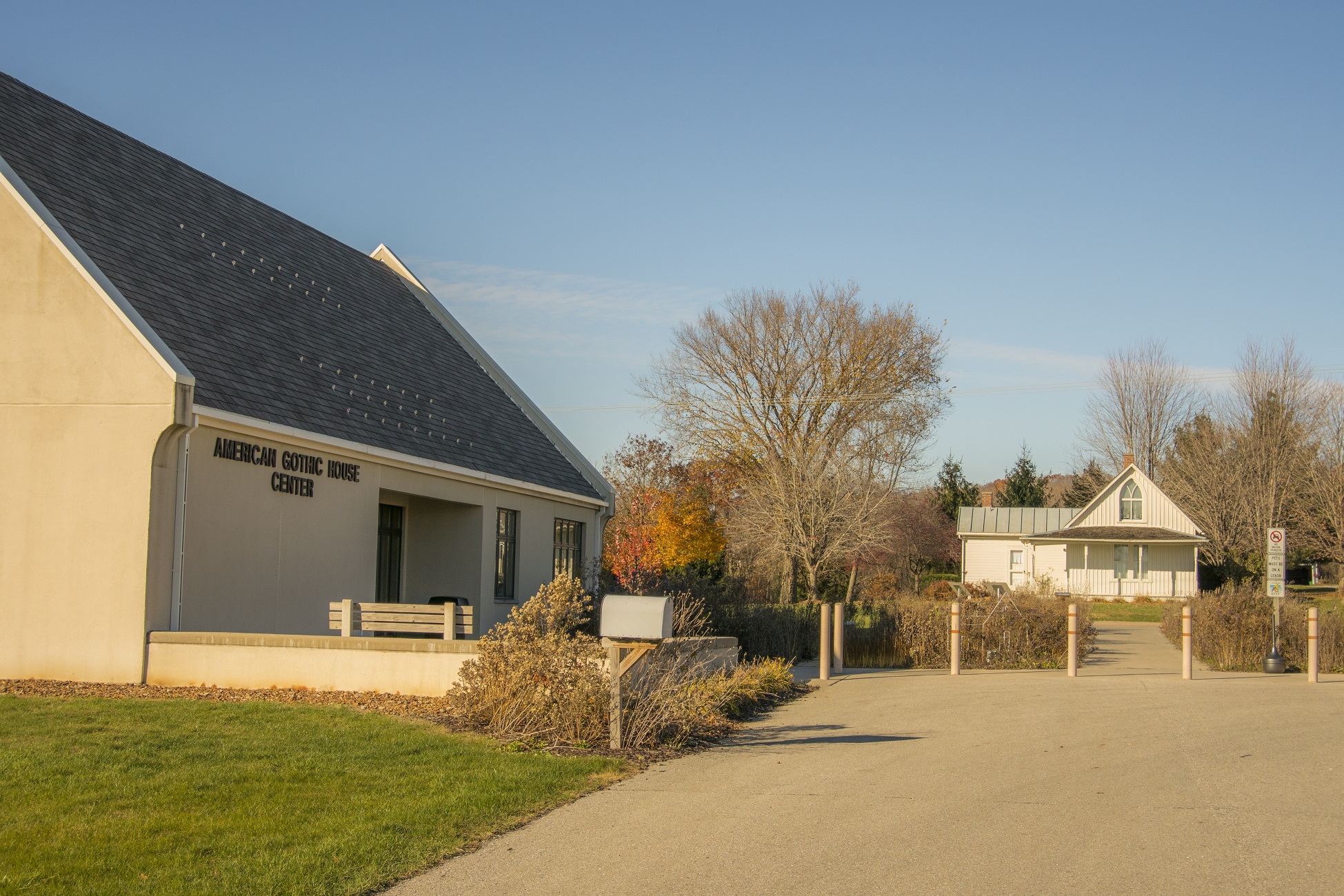
American_Gothic_House_Visitor_Center_Web

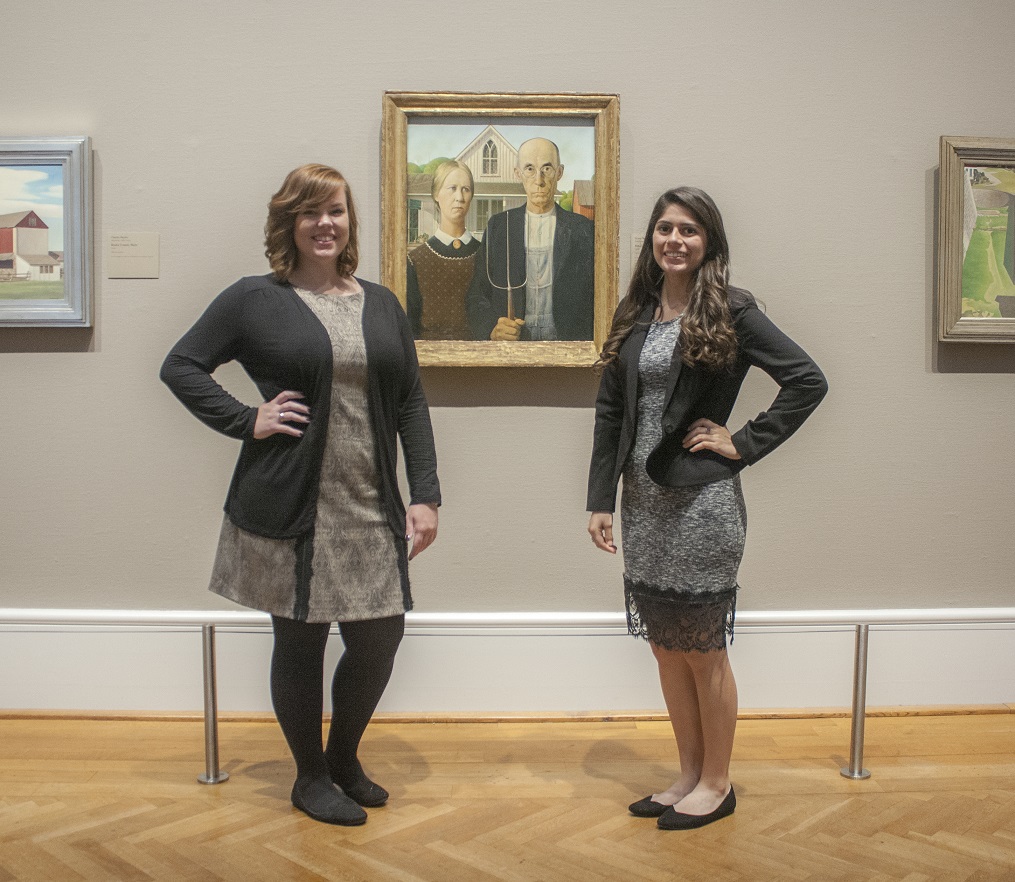
Painted by Grant Wood, “American Gothic” remains a well-known art piece to Americans and foreigners alike. We were lucky enough to catch the piece at the Chicago Art Institute…

CAI_American_Gothic_Constance_Alex_3_Web

…and this made visiting the home all the more rewarding.  Although it rests in a small town, a visitor’s center and Grant Wood museum accompany the site of the home.

American_Gothic_House_Visitor_Center_Web
We walked in and promptly began putting on costumes to impersonate the couple in the photo. Once dressed, we posed in front of the home with the most convincing faces we could muster up which seemed a harder task than once originally expected!
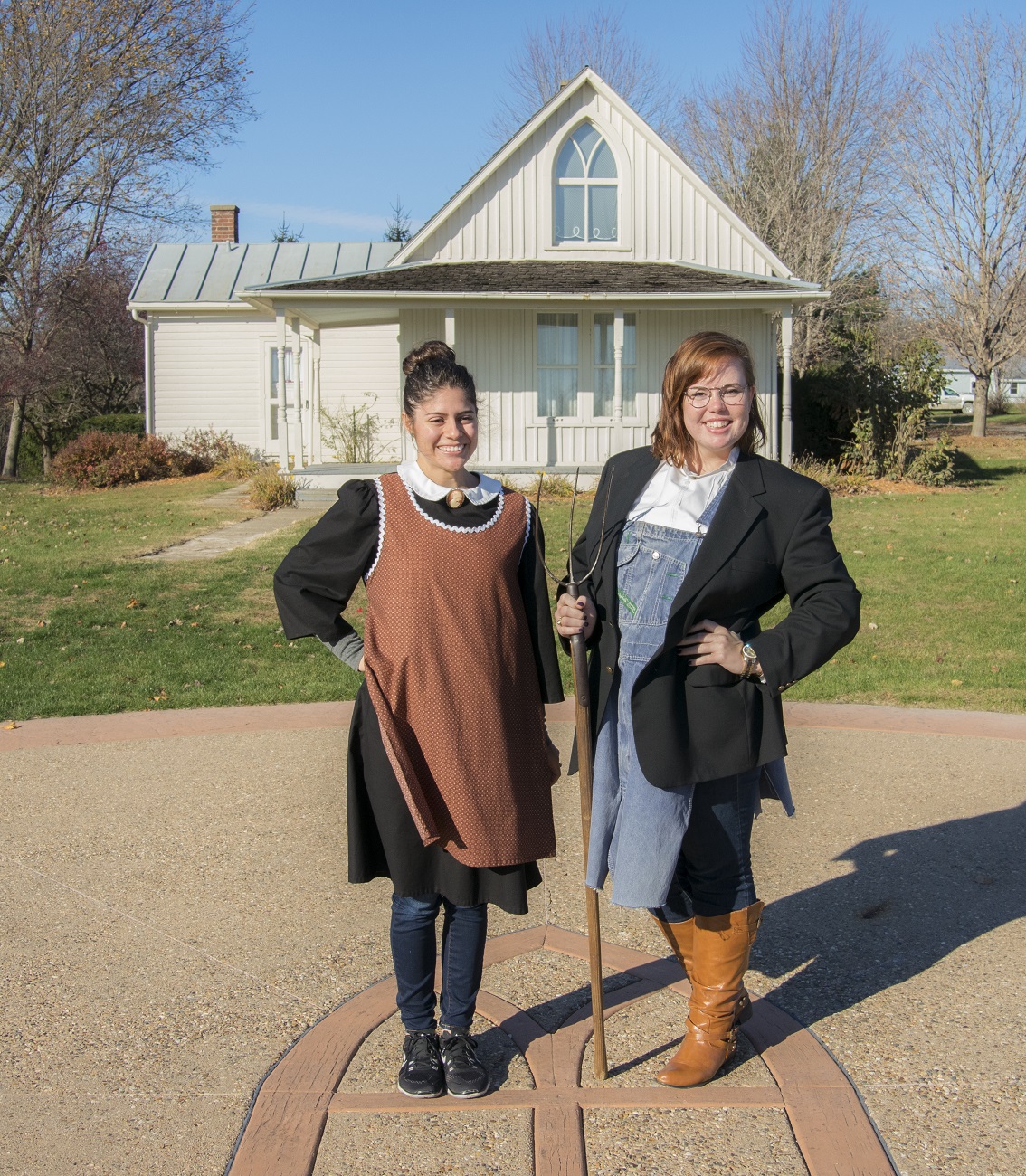
American_Gothic_Alex_Constance_2_WebSwitching costumes, we continued the photo opportunity in opposite outfits but still finding it difficult to portray the seriousness Wood intended. All silliness aside, it was exciting being able to reenact history after seeing the original painting in Chicago.

We headed inside to the museum to learn a bit more about the artist himself. Born in 1891 in Anamosa, Iowa, Mr. Wood lived a very interesting life. A teacher, soldier, and artist at last, Grant Wood studied impressionism and post-impressionism in Europe and became the artist we know today under these occupations. Friend of Thomas Hart Benton and John Steuart Curry, Wood practiced the art of Regionalism with his colleagues, whom we have also had the chance of viewing at other museums this trip. Although posthumously famous, Wood lived a fairly middle-class life and supported his hometown through the Great Depression by opening the Stone City Art Colony. He married, divorced, and died one day away from fifty-one from pancreatic cancer. We left a bit more knowledgeable about the artist and having enjoyed the driving break, got back on the road to finish the drive to Kansas City.

American_Gothic_Museum_1_Web
Once we arrived in Kansas City, we took advantage of the late closing hours of the Kemper Museum of Contemporary Art and The Nelson-Atkins Art Museum. While walking up to the Kemper Museum of Contemporary Art we were greeted by one of Louise Bourgeois famous giant spider sculptures.

Segway_Kemper_Burgeoise_2_WebThe Kemper Museum of Contemporary Art had a “Dark Days, Bright Nights: Contemporary Paintings from Finland” exhibition while we were there that had a dark motif. As we walked through the temporary exhibit we had some group favorites such as “Canary” by Vesa-Pekka Rannikko ,which used ropes to complete its illusion. Another group favorite was “Cottage” by Nanna Susi.

Kemper_Nanna_Susi_Cottage_Web

Constance was pleased to see one of Georgia O’Keefe’s early paintings as well. I think that the highlight of the museum was the two Dale Chihuly pieces that were on displays at the Kemper Museum of contemporary Art.

Kemper_Chihuly_Below_Web

We then walked over to the Nelson-Atkins Art Museum’s south entrance, which featured Rodin’s “Thinker”. With the museum closing soon, we were only able to walk through a part of the massive building. Even though we only had a short amount of time, we did spot some great pieces. We were able to see some more of Georgia O’Keefe’s floral paintings…

Nelson_Atkins_Georgia_Okeefe_Apple_Blossoms_Web

and another titled “Autumn Trees”.  One of Professor Yawn’s favored pieces included “Utah Highlands” painted by Thomas Hart Benton.

Nelson_Atkins_Benton_Utah_Highlands_Web

We also found an interesting transformation piece in the Asian art gallery that showed a mountainside changing seasons. We ended our self-guided tour of the museum in the Contemporary Art gallery where we saw Andy Warhol’s very famous “Campbell’s Soup Can” along with other interesting pieces.

Neslon_Atkins_Warhol_Campbells_Soup_Web

Hungry, we raced down to Grunauer for dinner. We tried three different sausages and some pork belly before our main course.

Grunaeur_AppetizersConstance and I shared the A la Grunauer Schnitzel. The schnitzel was breaded pork stuffed with creamed spinach, and tasted amazing. Our entrees were delicious and we ended our dinner with an apple strudel.

Grunaeur_Strudel

After an amazing and very filling dinner, we walked over to Union Station.

Union_Station_Constance_Alex_Web

We were able to stand on one of the walking bridges just in time for the train to speed right below us. After exploring and taking a few pictures in the beautiful building, we were ready for a good nights rest so that we could start our morning bright and early.
Midwest Tour, Day 4: Our Kind of Town, Chicago

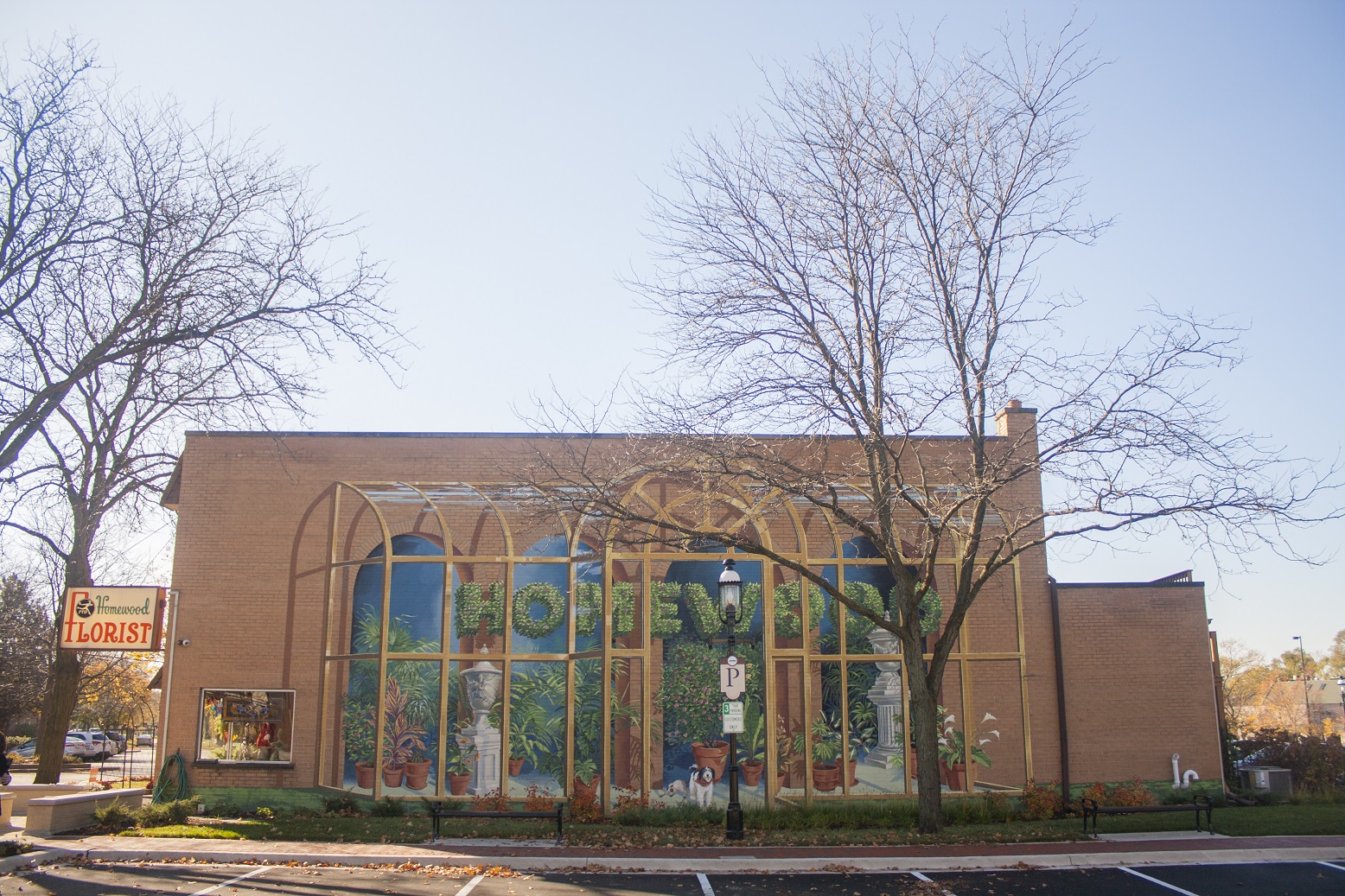
We began our morning with a trip to the village of Homewood, Illinois to check out their Richard Haas murals.  Although Huntsville boasts the largest collection of his murals (14), we were excited to find 13 murals that call Homewood home. Arriving in the quaint village, we parked and excitedly began our scavenger hunt for the elusive, illusive murals.

The first we found clung to the wall of a florist’s shop, a greenhouse to accompany the business’ theme.

Haas_Mural_Homeewood_2_Web

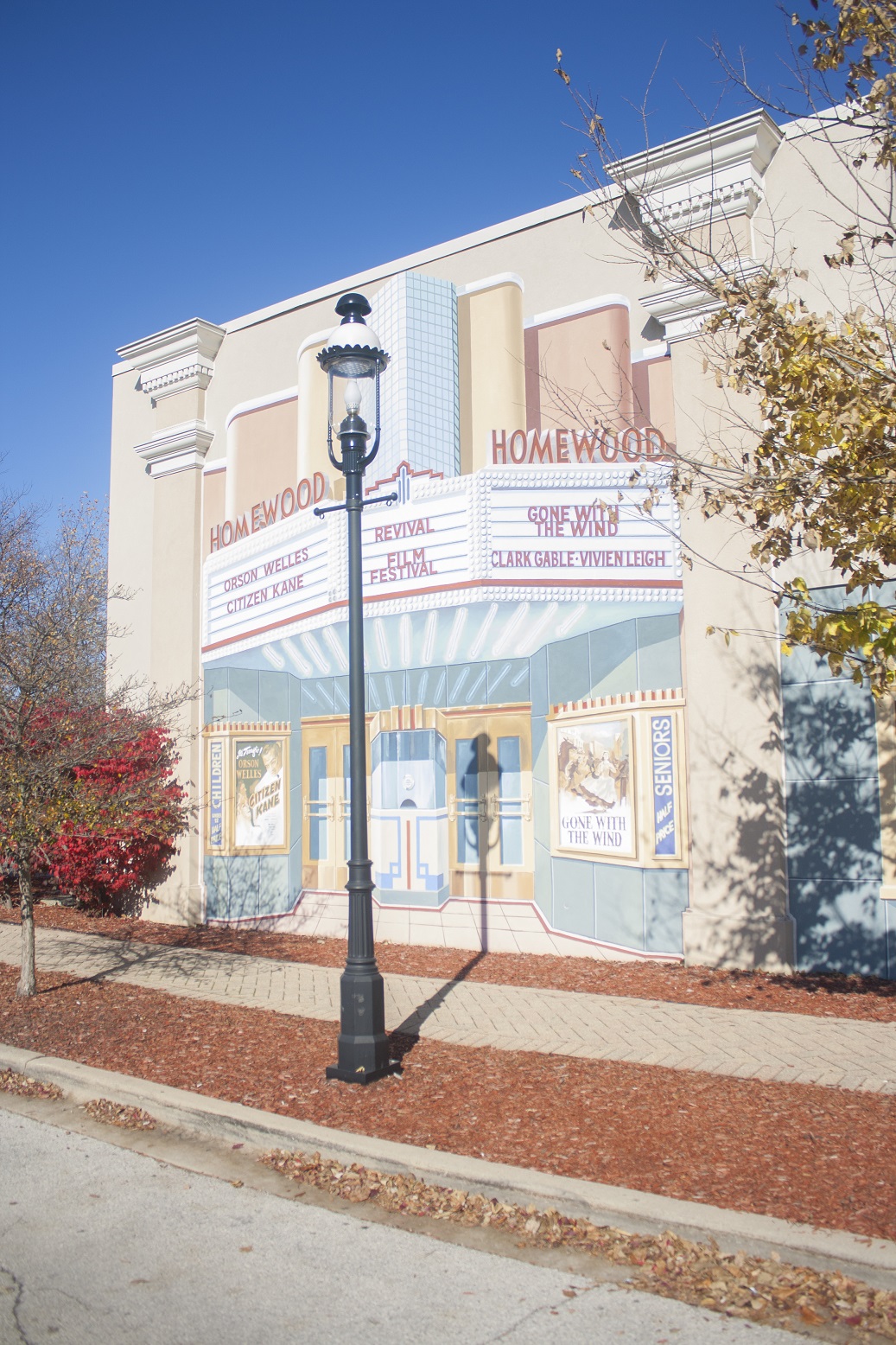
Moving on, we came across a theater, paying homage to the original theater and marquee formerly found in Homewood.

Haas_Mural_Cinema_Web

Interestingly, the theater’s “Coming Attractions” involve at least one film involving Chicago, “Some Like it Hot,” which the LEAP Center used as its centerpiece for our Marilyn Monroe Film Festival.

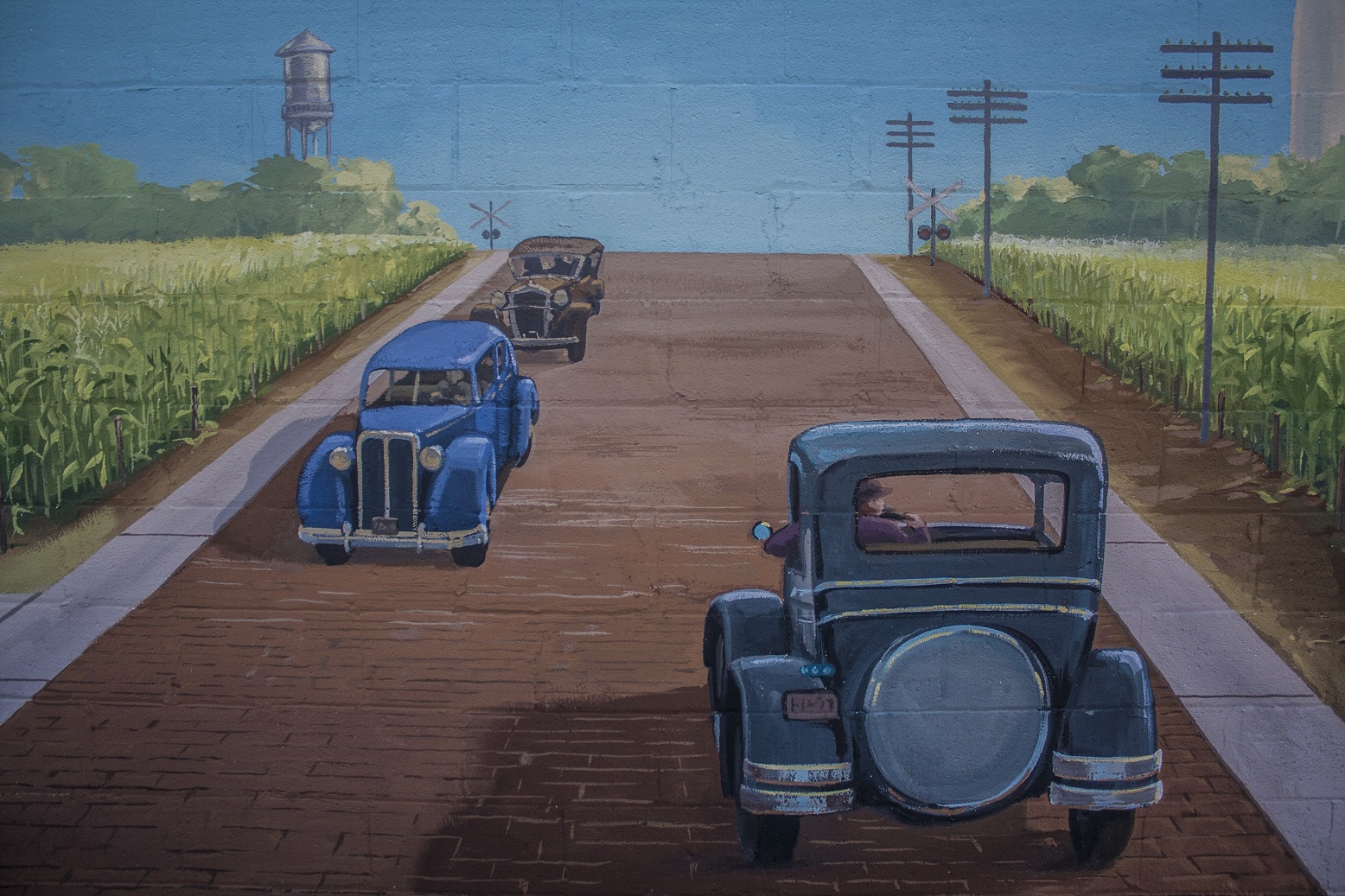
Walking down the historic Dixie Highway, which connected the US Midwest with the South, we came across even more murals–one in recognition of the ever-present Midwestern prairie alongside the Dixie Highway…

Haas_Mural_Dixie_HWY_Detail_Web

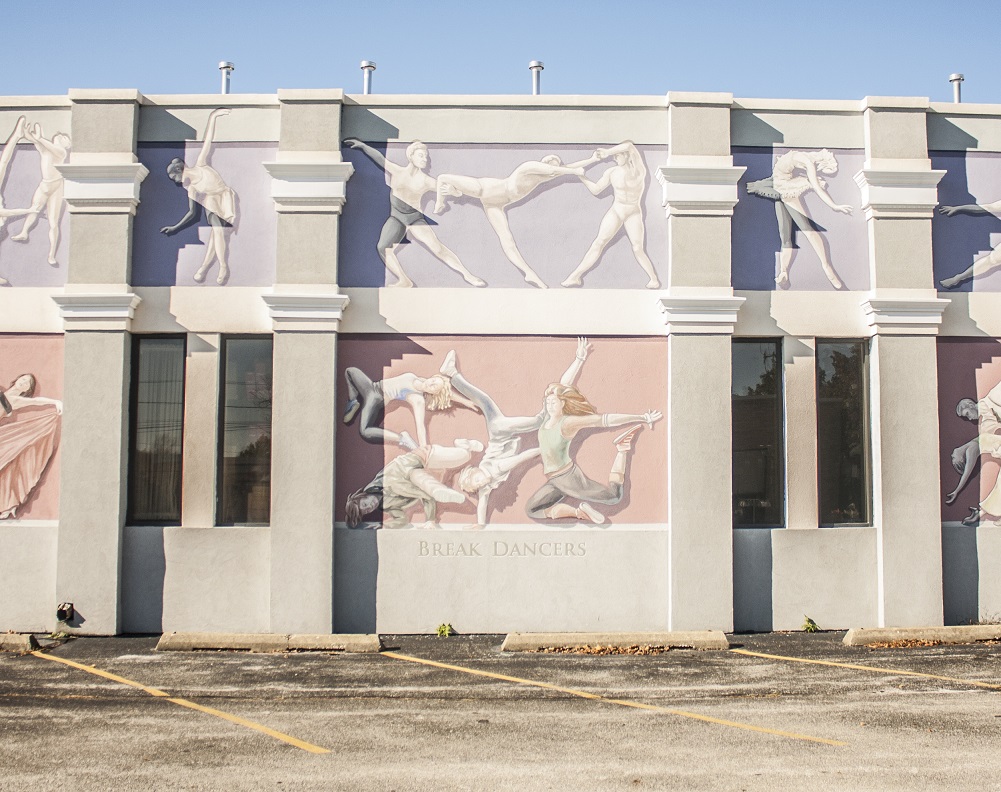
…one depicting dancers (on the side of a dance studio, no less),

Haas_Mural_Break_Dancers_Web

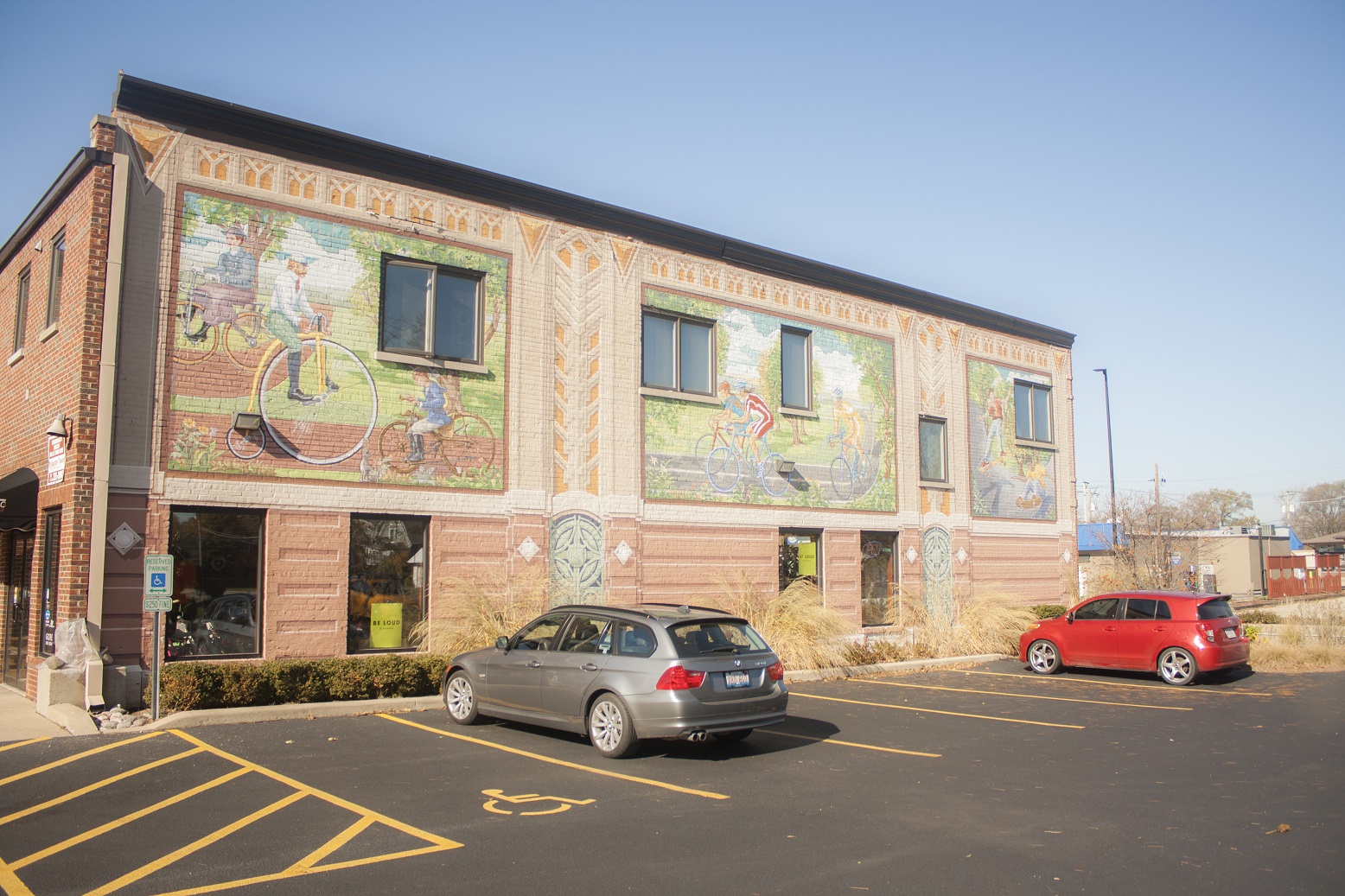
and finally, an extensive mural on the history of the bicycle.

Haas_Mural_Bicycle_Shop_Web

With the hunt for his thirteen murals complete, we hopped in the car to commute to downtown Chicago.

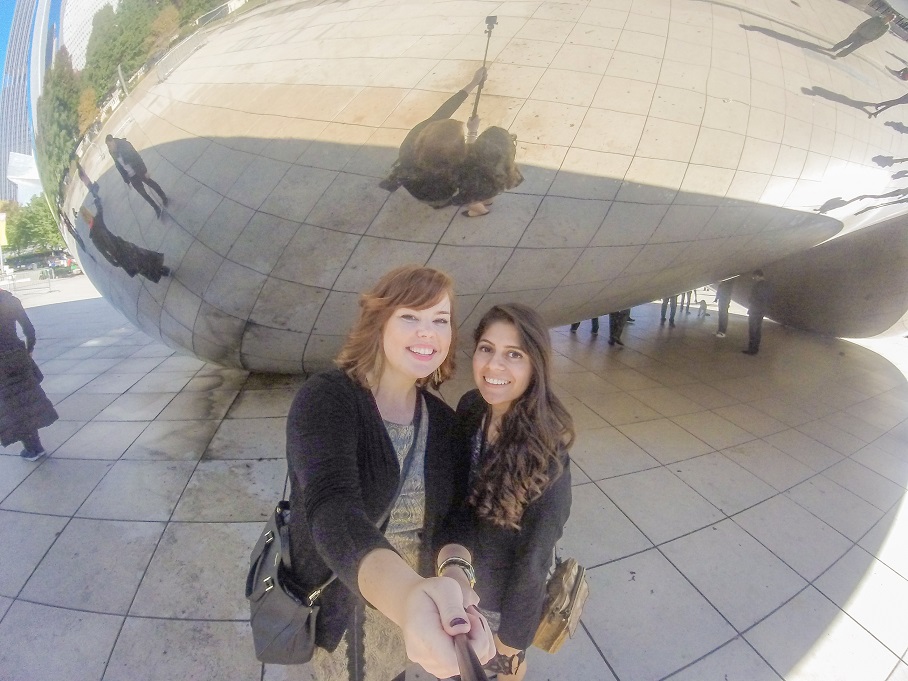
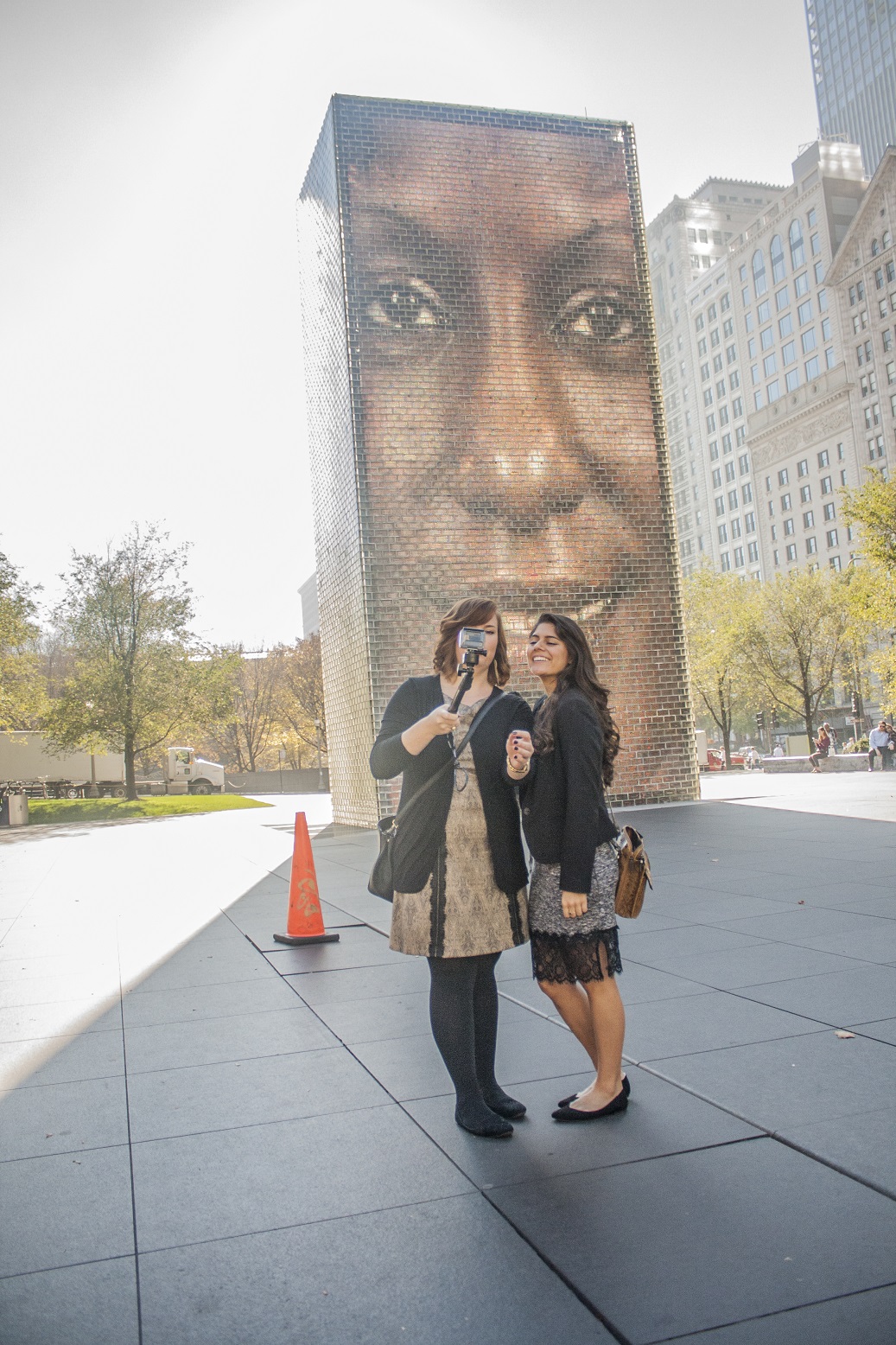
Parking was a challenge, but we found a central location. We ventured into the very busy Chicago streets and made our way to Millennium Park, where the very famous public sculpture “Cloud Gate” (a.k.a., “The Bean”) is located.

Constance had visited Chicago and “The Bean” last year, and she guided us through the crowded crosswalks that astounded Alex, thankful to not be wandering aimlessly alone. The crowd of Chicago pedestrians thinned out around Millennium Park, and we were met by a new crowd of tourists at “Cloud Gate” (Anish Jay Kapoor), where we actually fit right in. We explored the sculpture, and snapped a number of pictures before Professor Yawn and Stephanie met us there. Alex even had the chance to participate in a picture series photographer Susan May Moody is working on titled, “Jumping at The Bean.”

She wasn’t the only one in the series.  Others also jumped for joy.

After taking more pictures than we’ll ever use, including one with sculptures by Jaume Plensa

Video_People_Constance_Alex_Selfie_Web

…we made our way down to the Chicago Architecture Foundation shop. We were welcomed by souvenirs of an architect with whom we are all familiar, Frank Lloyd Wright–as well as an intriguing model of Chicago.
Chicago_Model_Web

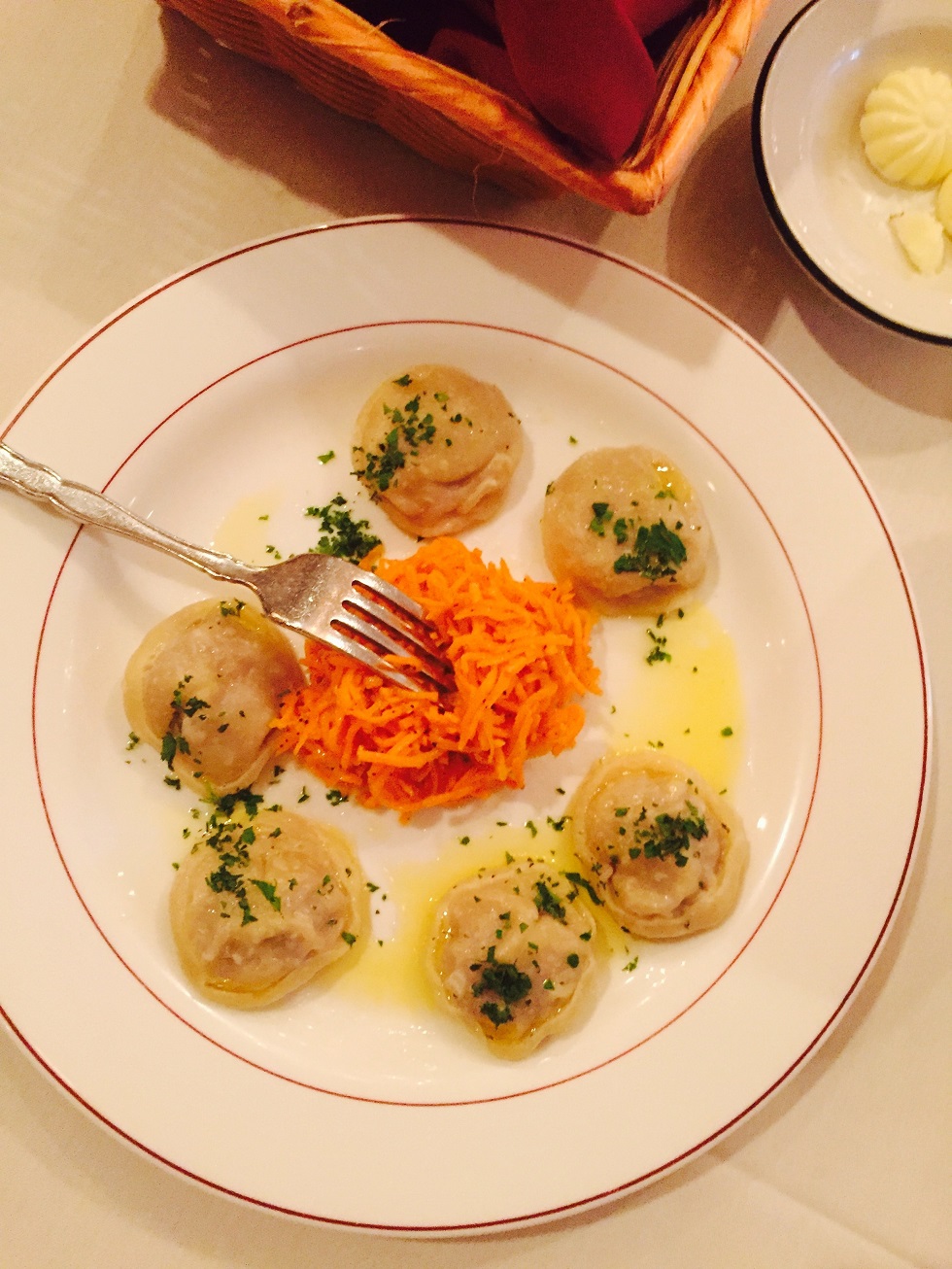
Circumventing busy professionals and tourists alike, we lunched at Russian Tea Time. Our first time trying Russian fare proved to be a bit overwhelming initially, by all the menu items offered, but we were excited to dig in to our appetizers, stuffed mushroom…

Russian_Stuffed_Mushrooms_Web…and Russian Dumplings…

Russian_Dumplings_Web

…and our shared Chicken Duran Schnitzel entrée.

Russian_Schnitzel_Web

The food was wonderful. We look forward to the opportunity of comparing the Russian schnitzel with the Austrian variety we will try at Grunauer’s in Kansas City in a few days.

Stuffed, we walked off a bit of our lunch en route to the Chicago Institute of Art.

CAI_Exterior_2_Web

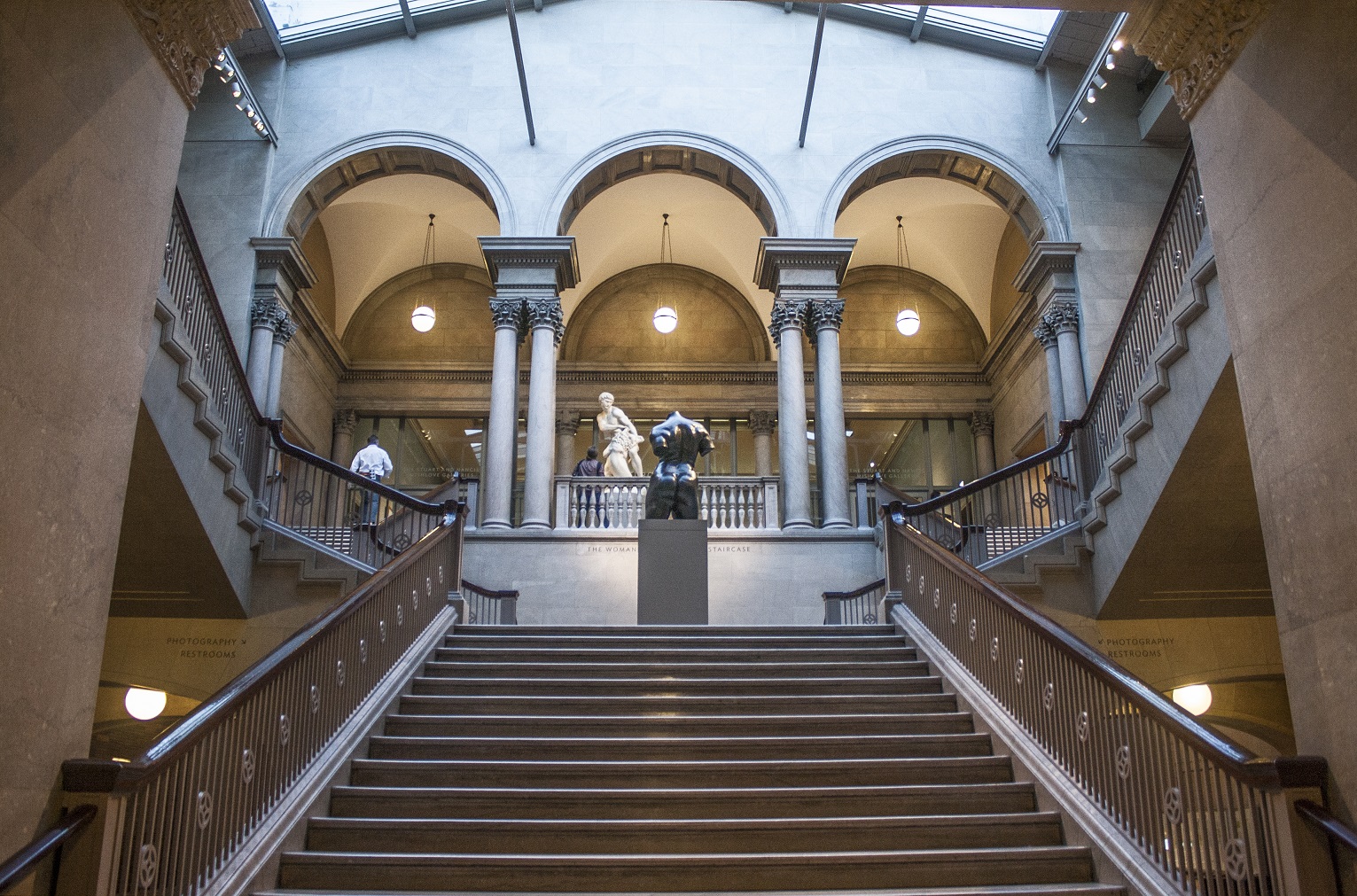
Constance was excited about her return trip through the extensive exhibits, she was most excited to view Grant Wood’s “American Gothic,” which was on loan during the LEAP Center trip to the Film and History Conference last year. Alex, on the other hand, reported being overwhelmed upon entering the vast lobby of the 122-year-old building originally built to house the 1893 World’s Columbian Exposition.

CAI_Staircase_Web

With no time to see all the works, and with exhibits separated by style, we began in pre-1900 American art, perusing Tiffany lamps…

CAI_Tiffany_Web

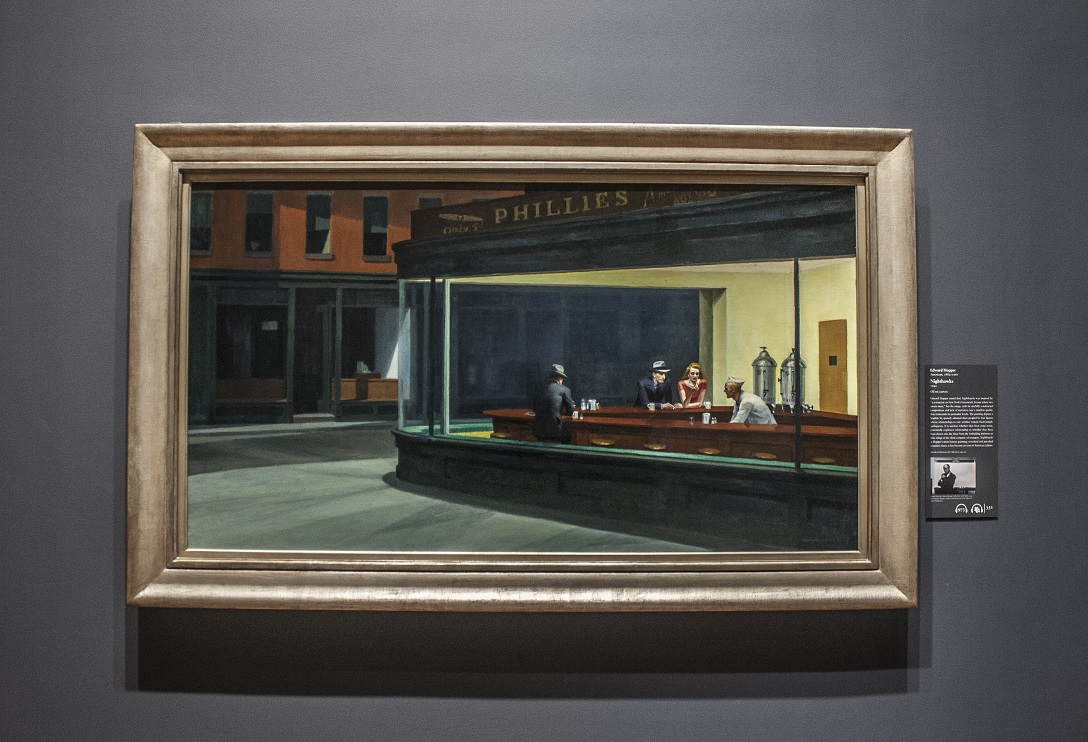
sculptures and paintings alike by Frederick Remington, and quite a few works by John Singer Sargent. We focused next on American art post-1900, where we encountered several works by Georgia O’Keeffe, Edward Hopper’s “Nighthawks,”

CAI_Hopper_Nighthawks_2_Web

Wood’s “American Gothic,”

CAI_American_Gothic_Constance_Alex_Web

and a new favorite artist, James McNeill Whistler, famous for many works, especially “Nocturne: Blue and Gold-Southampton Water,” a beautiful piece in subdued colors and plentiful shadows highlighting a moonlit night. Alex’s favorite was Monet’s “Stacks of Wheat.”

Next, we headed to the much-anticipated Impressionist exhibit to find Renoir, Degas, and Monet.

CAI_Monet_Water_Lilly_Web

We were awed, overwhelmed by the immensity of the exhibit along with the magnificence of its various artists. Just being in the same room as so many notable artist’s works was like a dream. To commemorate we took a few photos with one of the most famous works, Georges Seurat’s “A Sunday Afternoon on the Island of La Grande Jatte.”

CAI_Seurat_Sunday_Constance_Alex_Web

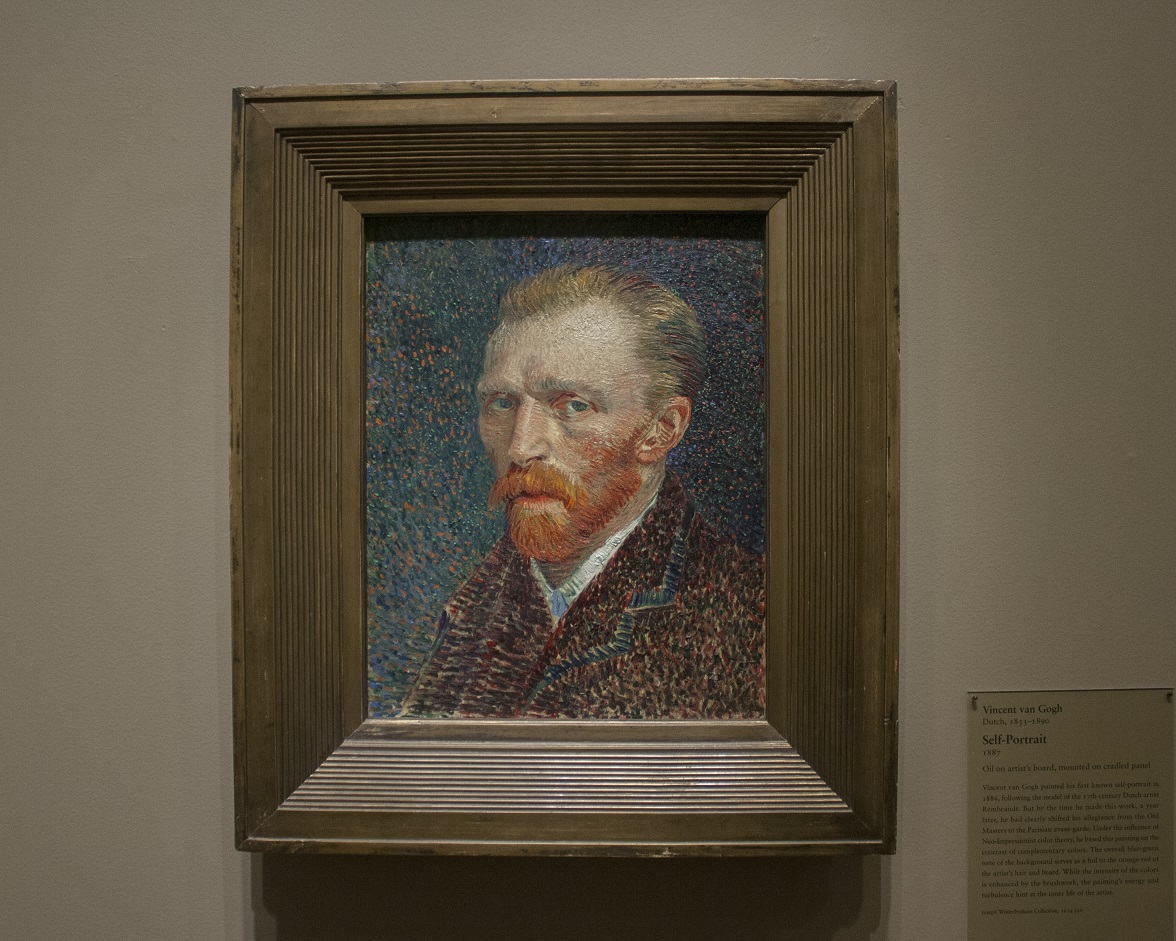
We also saw Vincent Van Gogh’s famous self portrait.

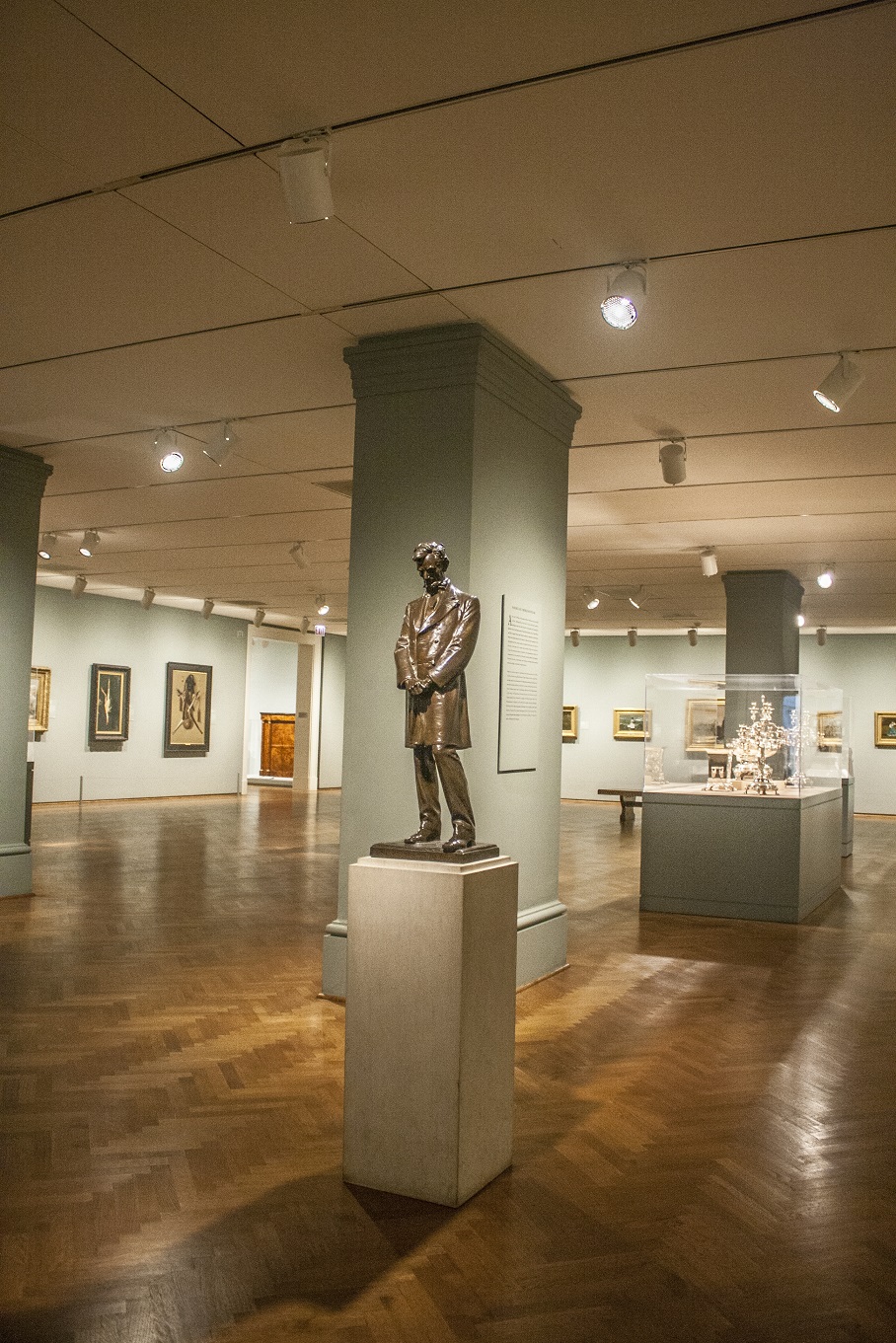
CAI_Van_Gogh_Self_Portrait_WebIt was also a chance to make connections to other things we’ve seen and done.  The Museum, for example, had a statue of Abraham Lincoln by David French, whose also did the statue for the Lincoln Monument, a replica of which also graces Lincoln’s Tomb.

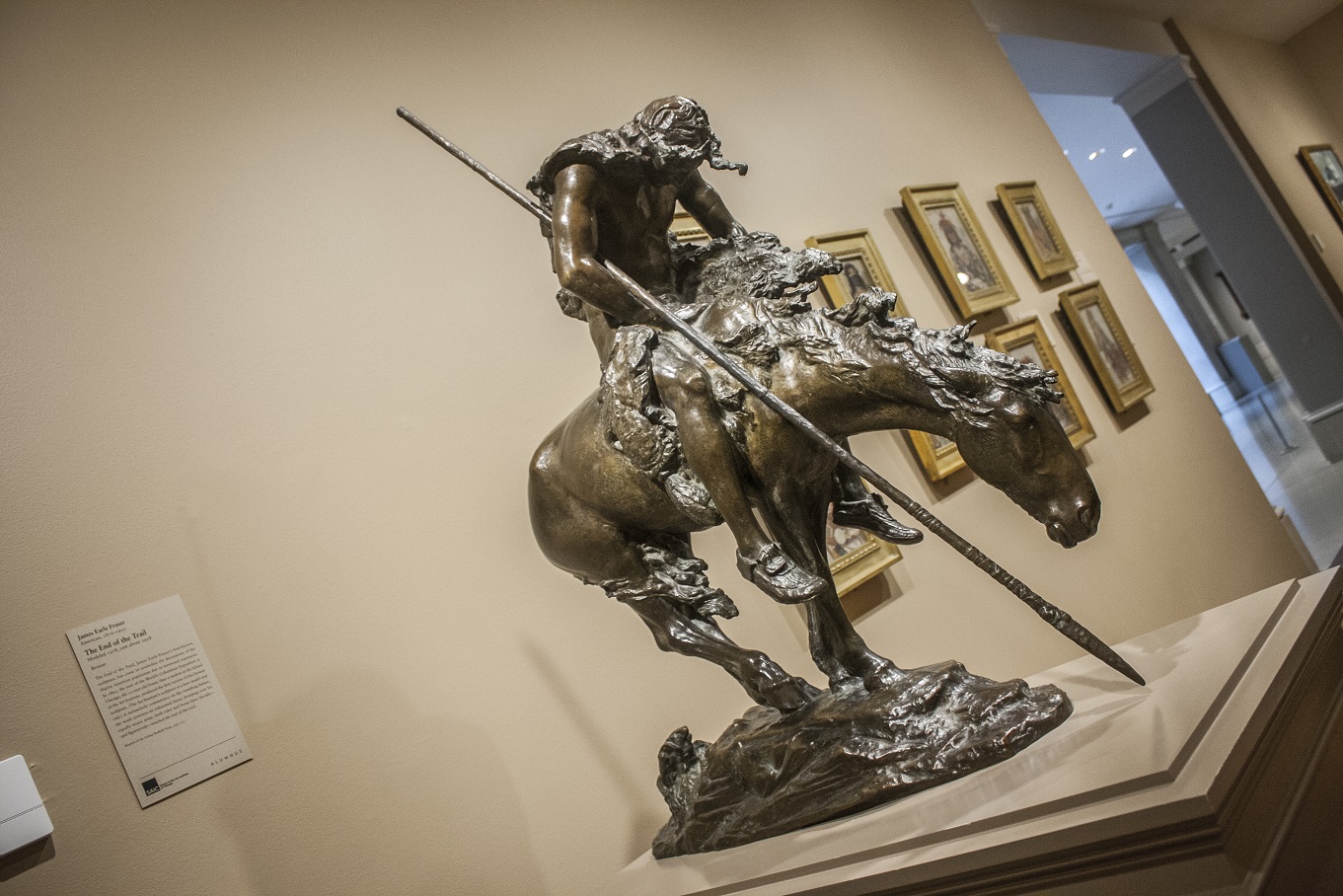
CAI_French_Lincoln_WebThere was also a sculpture of James Fraser’s “End of the Trail,” the larger version of which Constance had seen on her first LEAP Center trip to Oklahoma City.

CAI_End_Of_Trail_Fraser_WebFinally, we also had the chance to view an expansive exhibit of sketches, paintings, and even sculpture by Edgar Degas, famous for his dancers.  Both of us have seen his house in New Orleans, on separate LEAP Trips.

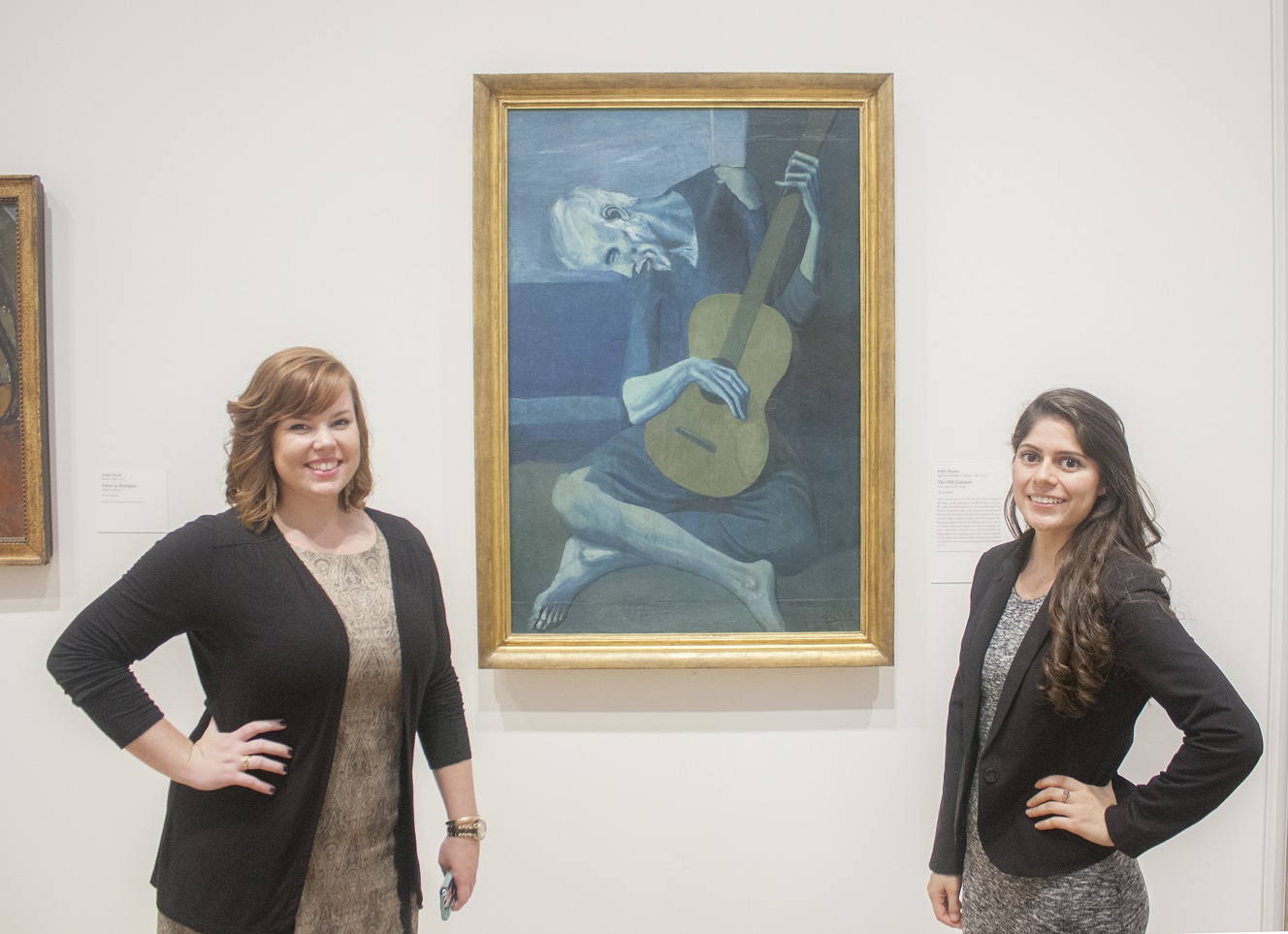
To finish our musings, we scouted the Modern art section, part of which, much to our dismay, was closed for construction. Deterred not, we explored the farthest exhibit from the entrance in search of pieces by Salvador Dali, Henri Matisse, and Pablo Picasso. With little time left for wandering, we took photos with a few renowned art pieces, such as Picasso’s “The Old Guitarist.”

CAI_Picasso_Man_With_Guitar_Blue_Constance_Alex_Web

Alex, new to Dali and Matisse, commented on the distinction their art holds in the easily recognizable themes in their pieces.

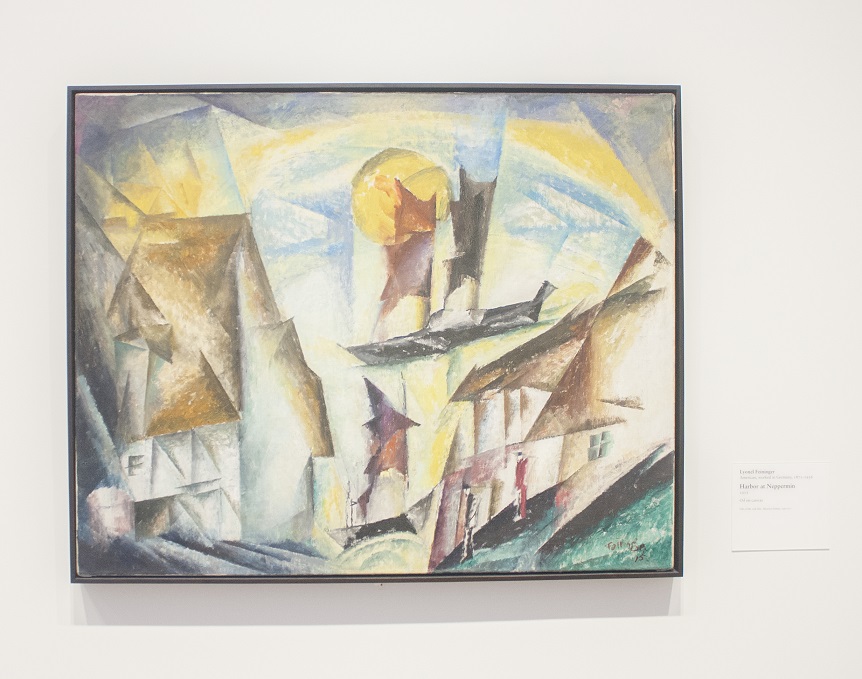
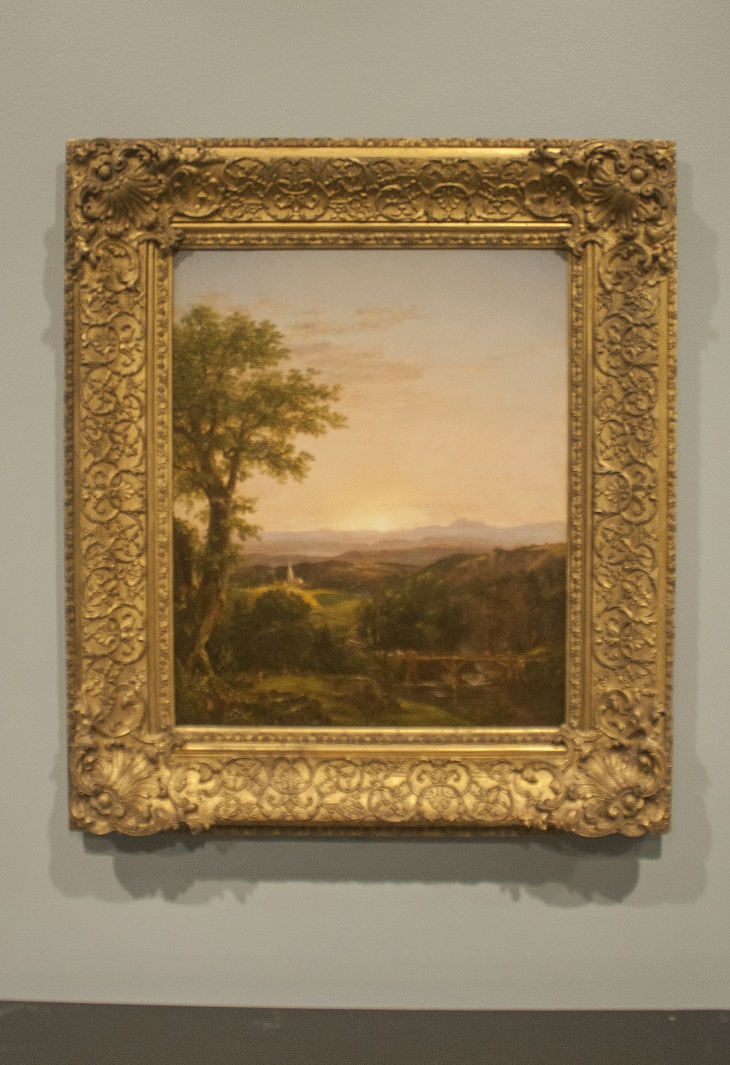
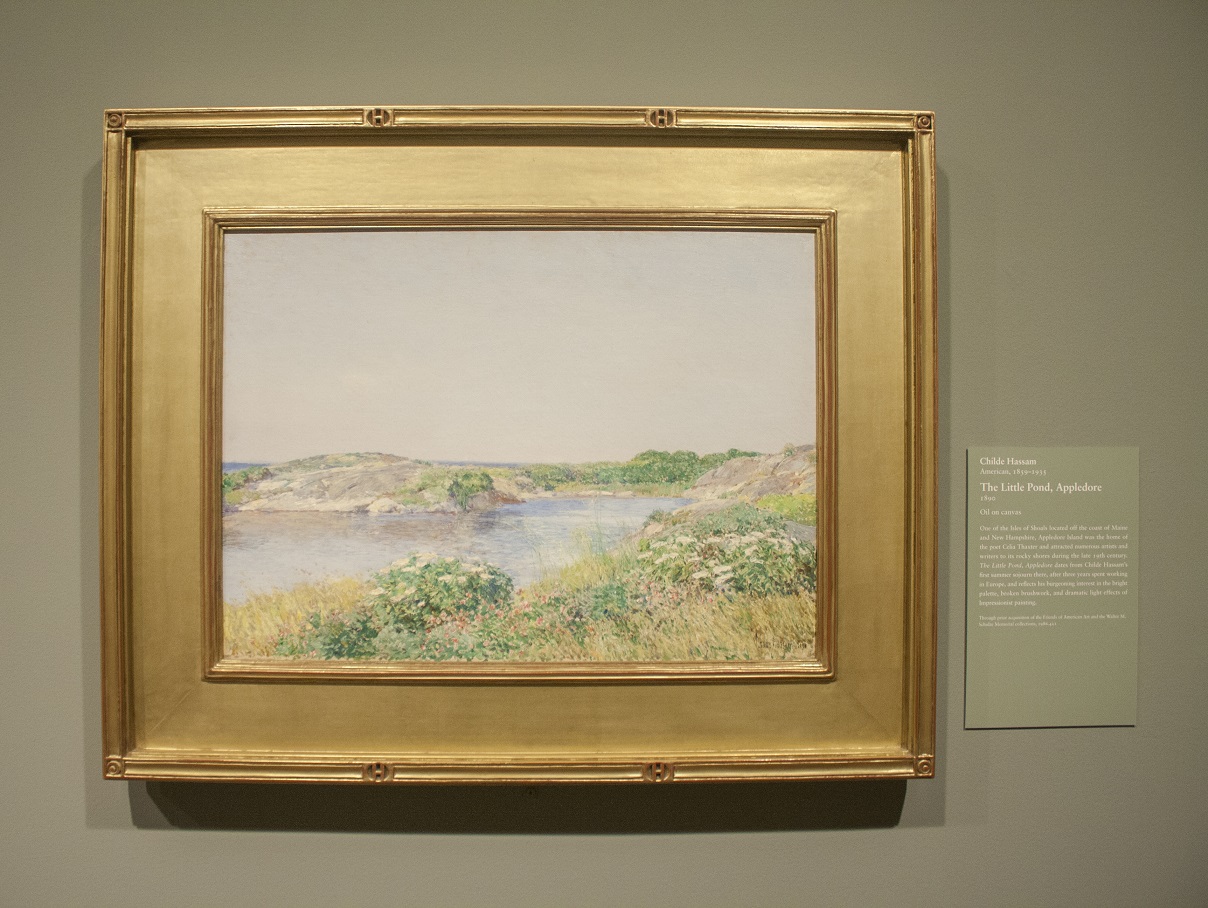
But we also discovered other artists with whom we weren’t familiar (but  researched and found to be quite famous!), such as Lyonel Feininger…

CAI_Fenninger_Harbor_Web…Thomas Cole…

CAI_Thomas_Cole_Web…and Childe Hassam…

CAI_Hassam_The_Little_Pond_Web

We left the museum, awed by the history we had encountered and encouraged by the inferences we can begin to make as our repertoire of art knowledge grows.

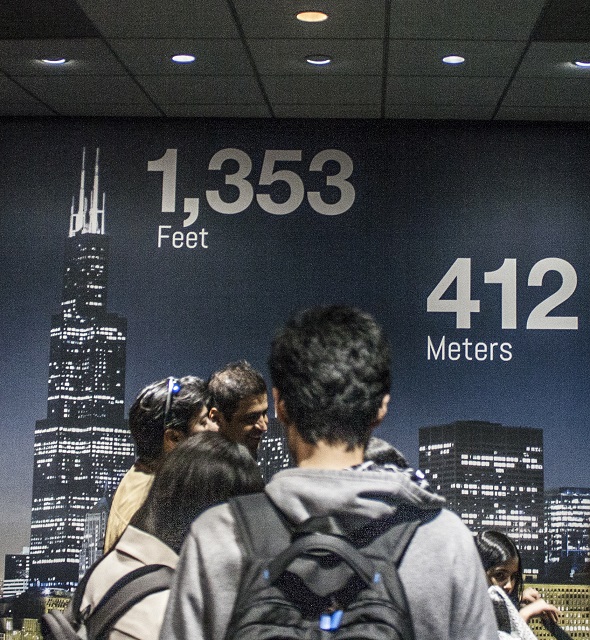
With the sun setting, we began a brisk walk towards our anticipated yet unnerving next destination, Willis Tower. Built in 1973, the 108-story building rose above us, almost as if to gloat in its terrifying height. We bought our tickets, entered the elevator, and began ascending to the Skydeck at a whopping 17 miles per hour (or 24 feet per second), finally reaching the top, 1,353 feet high.

Chicago_Skyline_Graphic_Web

At the top, we encountered 360-degree views of the Chicago skyline at sunset.

Chicago_Skyline_6_Web

It was completely worth the frightening elevator ride. Mustering much more courage, we even had the chance to stand on a clear floor 1300 feet up in the sky, which was beyond our comfort zone.  With that behind us, we had an impulse to leave, but we stayed, continuing to document Chicago’s descent into night.

This slideshow requires JavaScript.

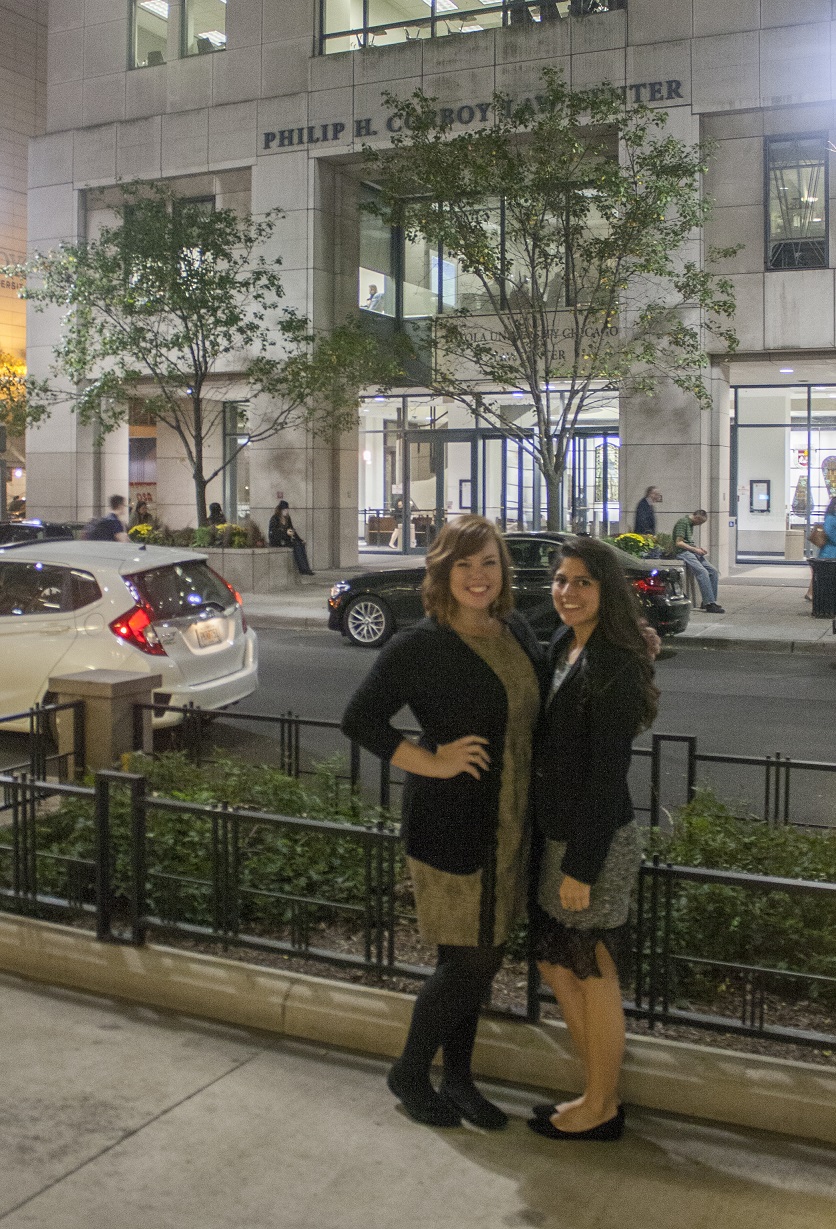
After the adventurous and phobia-induced experience at the Willis Tower, we taxied to Loyola University Chicago School of Law

Constance_Alex_Loyola_Law_School_Webto meet with former Junior Fellows President, Daniel North – a reunion of sorts for Professor Yawn and Stephanie, and an introduction for us. Daniel showed us the equivalent to the LSC Ballroom at SHSU, where we sat while Daniel described his life at law school along with his plans after graduation, answering our questions about law school, and reminiscing about his time at SHSU and as a member of the Junior Fellows.

Daniel_Constance_Alex

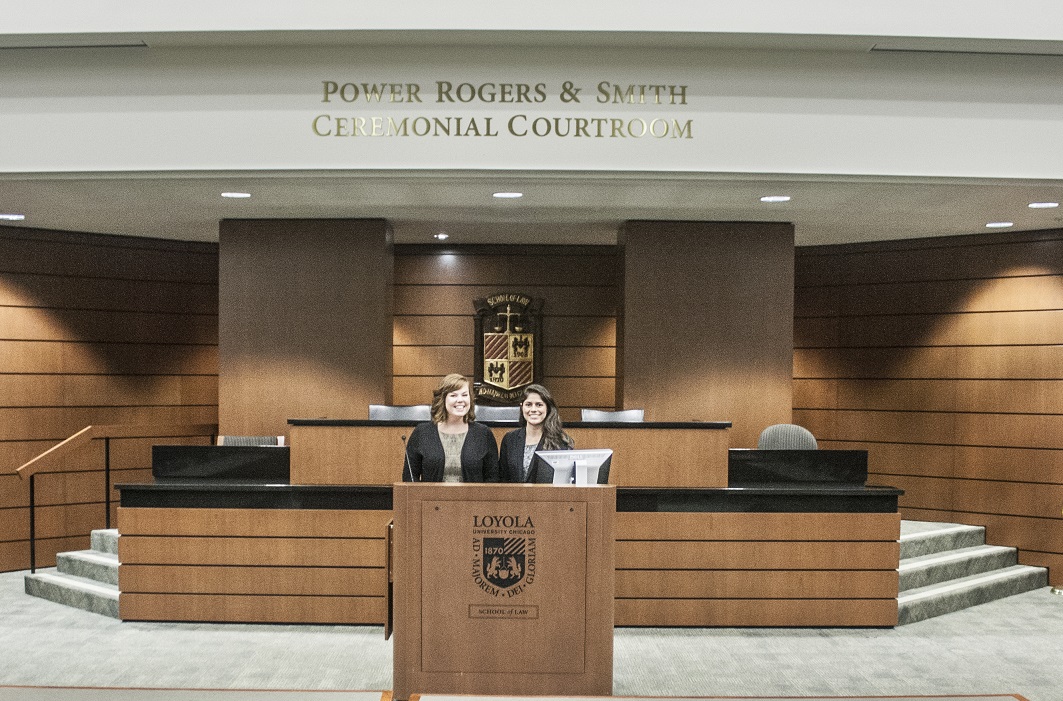
Daniel also showed us the courtroom where the Loyola Moot Court teams argue, and the Loyola law library, where we can expect to spend numerous hours in study. It was another connection for Alex, who recently spent time at UNT and TTU Law School Courtrooms as part of her Moot Court Experience.

Loyola_Courtroom_Constance_Alex_Web

We also attended a Professional Responsibility class session with Daniel and his classmates. We sat in the back row of the class where we could see all the students prepared for class with their laptops, water bottles and books. Professor Grogan was passionate about what he was teaching and incorporated many previous cases which he has encountered (or taken an active role in) to help students understand the material.

Professor Grogan made the class exciting and kept his students engaged by incorporating humor. The main topics of discussion during the class were contingency, ethics, fraud, and a brief note on veterans, which quickly captured Constance’s attention. The hour and forty-five minute class flew by because of the interesting material and discussion.

It was an amazing experience for us, and we were very grateful to Daniel and Loyola Law for giving us this opportunity.

Daniel continued discussing his law school experience while we walked to Lou Malnati’s Pizzeria for dinner. After splitting a couple of small appetizers…

Chicago_Pizzera_Dips

we shared a “classic” Chicago-style deep-dish pizza, filled with cheese and topped with a layer of sausage. Daniel suggested that one slice would be enough, and one slice was definitely enough for most of us!

Chicago_Pizzeria_Slice

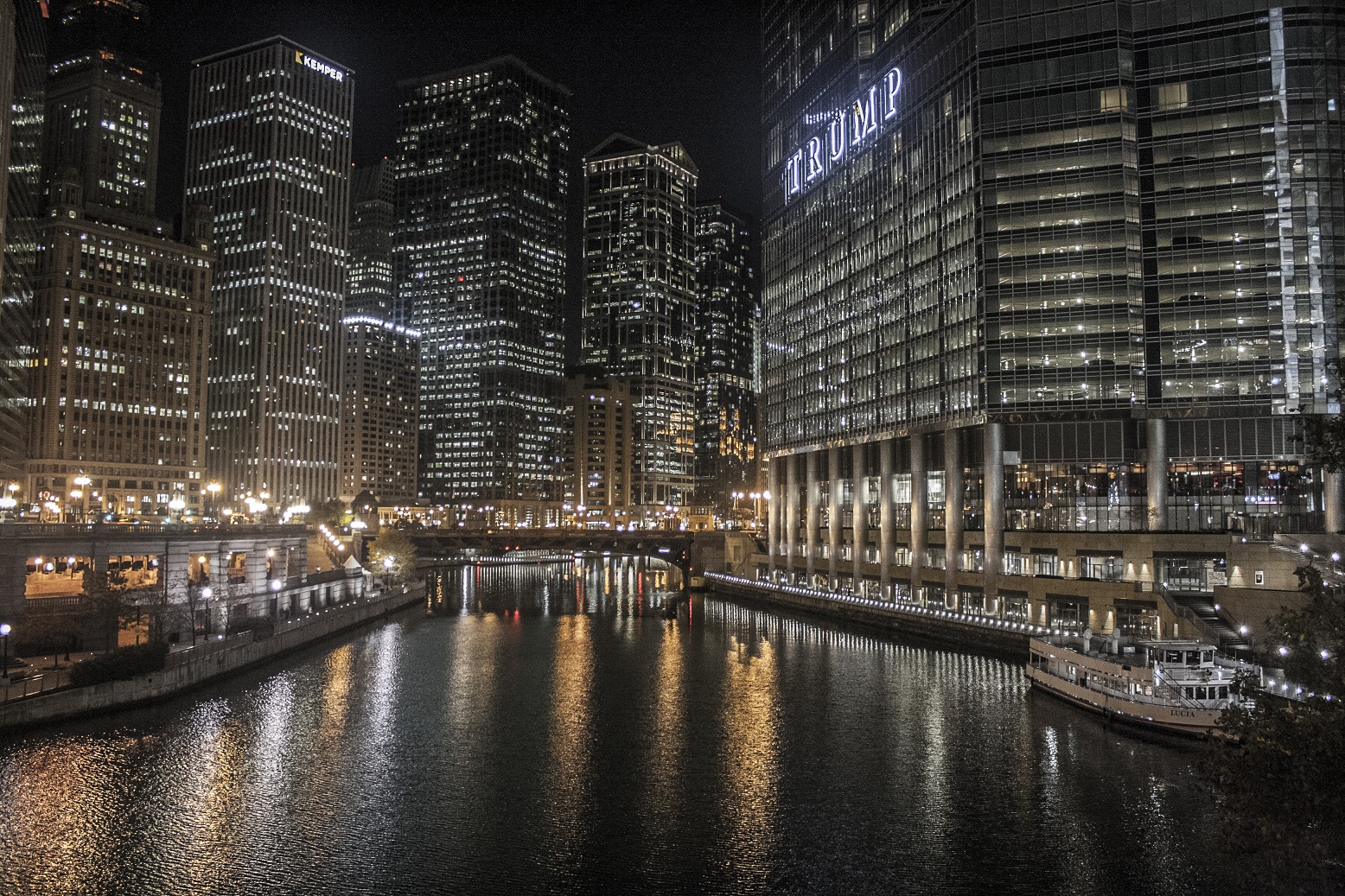
After such a filling dinner, we hoofed it for about a mile and a half across Chicago, checking out the beautiful architecture and river scenes.

Constance_Alex_Chicago_River_Selfie_WebOne such photograph we specifically took for Austin Campbell…

Chicago_River_Trump_Tower_Web…who, for reasons unknown, is obsessed with Donald Trump.

Getting in past midnight, and leaving Chicago at 6am, we returned to our hotel, with a busy and bustling day to reflect on as we descended into sleep.

Midwest, Day 2: Show Us St. Louis, MO!

Not much happens in Little Rock, Arkansas at 5:00 am, LEAP students were thrilled to find out, as we left the City of Bridges early enough to spend the day in St. Louis, Missouri. After passing the six-hour drive sleeping the scenery away, we made it to the “Gateway to the West” around lunchtime, grabbed a quick bite to eat, and headed straight to the landmark for which the city is best known

Signifying expansion into unknown territory, the Gateway Arch stands 630 feet tall in the St. Louis skyline, beckoning travelers to explore what the city has to offer. Designed by Eero Saarinen, completed in 1965, and designated as a historic site in 1987, the Gateway Arch is visited by thousands annually from all over the world. Located between the Mississippi River and the Old Courthouse, the Gateway Arch stands 630 feet high–tall, indeed, especially for two people who do not like heights.

Undaunted, we embraced the moment, commemorating with a photograph.

Arch

We then proceeded to hop into a pod that transferred us from underground into the skies of the city.  I (Constance) don’t care for the pod much.

Pod_Constance_Web

After a five-minute ride, we disembarked, climbed a few stairs, and were confronted with windows to the east overlooking the Mississippi and beyond.

Illinois_From_Arch_Web

On the opposite side, we enjoyed a bird’s eye view of the Old Courthouse, Budweiser Park, the Wainwright Building, and the Edward Jones Dome, home to the St. Louis Rams.

St_Louis_From_Arch_WebThese views come courtesy of small windows in the middle of the arch.

Alex_Arch_Inside_Web

Taking in our fill of the city, we snapped a couple selfies and got back in line to descend to the bottom once again.

We left the Gateway Arch to return to the Old Courthouse, where the Dred Scott trials occurred in 1847 and 1850. Construction began in 1816 but was not completed until 1828 by the firm of Lavielle and Morton. Since the first completion, Henry Singleton added an addition of three wings and a center cupola dome in 1839, which lasted until 1851, when the east wing was replaced.

Known for not only the Dred Scott case, the Old Courthouse was also home to slave auctions until 1861. While inside, we explored the different wings of the courthouse, admired the beautiful staircases…

Alex_Courthouse_Stairs_2_Web

and different structural intricacies, and posed for quite a few pictures as well.

Dred_Scott_Courtroom_Alex_Web

The courthouse differs today from the 1839 version because William Rumbold replaced the cupola with a dome in 1861, modeled after St. Peter’s Basilica in Vatican City.Standing in the center of the main hall looking up, we had the chance to view the dome from the inside-purples, blues, pinks, and greens all around.

Court_Room_Dome_WebAfter spending as much time as we could inside, we headed out to venture back to the car and drove outside of the city to the most anticipated tour of the day, a Frank Lloyd Wright home.


Frank Lloyd Wright Home at Ebsworth Park

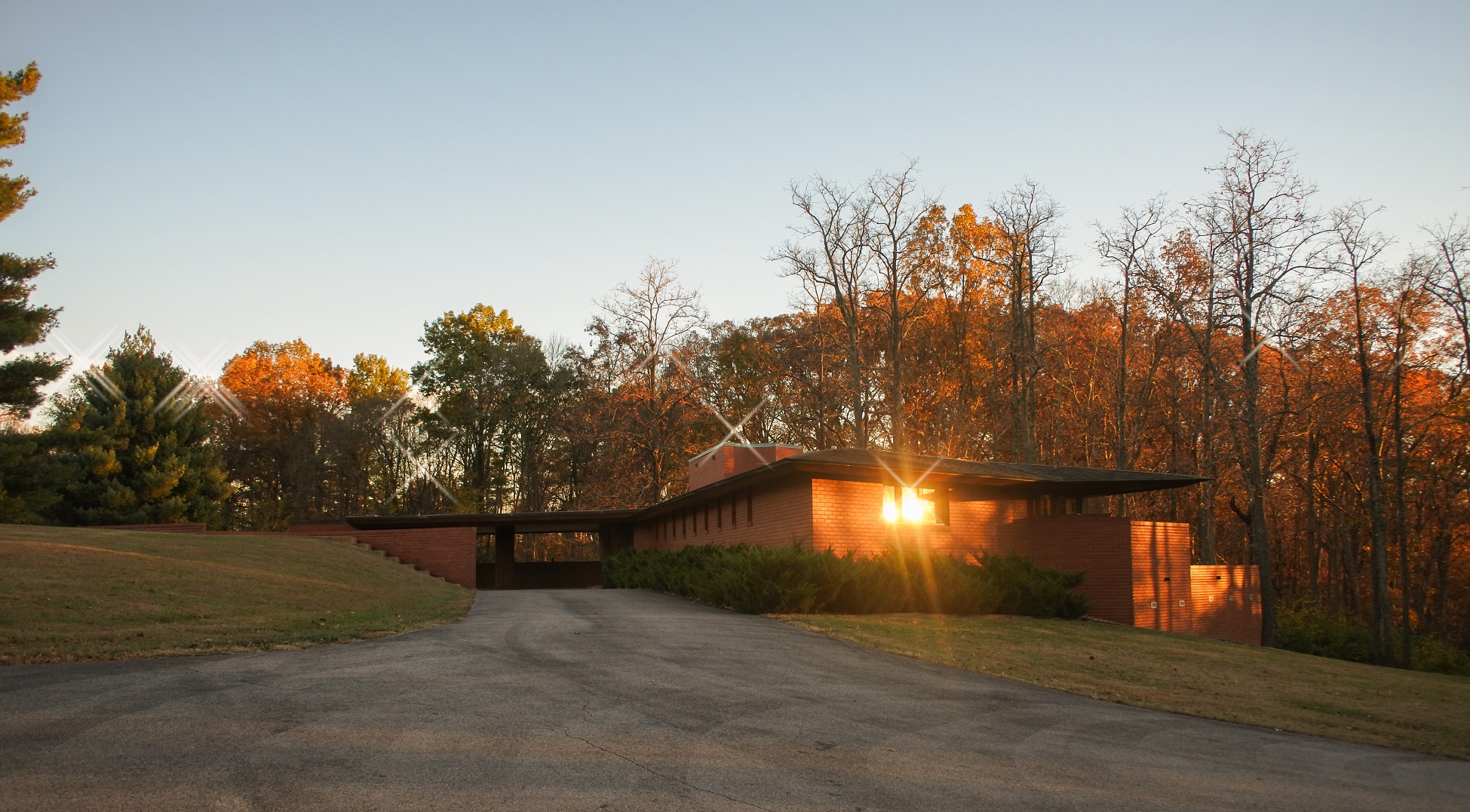
We arrived at Ebsworth Park and drove through a winding driveway to arrive at our destination and learn more about Frank Lloyd Wright. Born in 1867, Frank Lloyd Wright was an internationally known architect in the early to mid 1900s. He built homes and buildings after learning from and working for Louis Sullivan, who is known for his work with skyscrapers and who built the Wainwright Building in downtown St. Louis. Wright built the home in Ebsworth Park for Russell and Ruth Kraus, a modest couple who doubted they had the funds to afford a home from such a well-known figure in architecture. Instead, the architect surprised them with his acquiescence and proceeded to plan them a Usonian home. Known for its affordability and political implications, Wright’s Usonian theme, seen throughout the United States, encompasses smaller homes, with only one story, usually no basements, attics, or garages, and just enough space to be efficient.

The home is laid out in grids, with parallelograms serving as the major building motif.  Within the parallelograms, however, are embedded triangles and hexagons, and these three shapes make up the shapes in the home.  In fact, there is only one ninety-degree angle in the home (the bathroom); the rest of the home’s angles are either 60 degrees or 120 degrees.

FLW_Constance_Alex_WebWe learned of Wright’s use of compression and expansion as we walked through the tight entryway and entered the spacious main hall of the home. Docent Dave Baumgartner, a former architect in St. Louis, made the tour very enjoyable and provided much insight into the particulars of Frank Lloyd Wright’s architectural plans.

FLW_Tour_Guide_WebLow tables and chairs, great windows, and open space pulled our view towards the outside of the home and into the great forest beyond.

In addition to the beauty of the home…

FLW_5_Web…we learned various innovations produced by Frank Lloyd Wright (e.g., larger bathrooms), the creativity he used to fit his homes to his ideas (in this case, he created a parallelogram bed for the Krases), to the meticulousness with which he planned out every detail (the screws in the home lined up with the angles produced by the home’s grid).


Alex_Constance_Selfie_FLW

We were awed by his presence still pervading the space to this day and left with minds blown by the genius that was Frank Lloyd Wright.

FLW_House_4_Web


Richard Haas

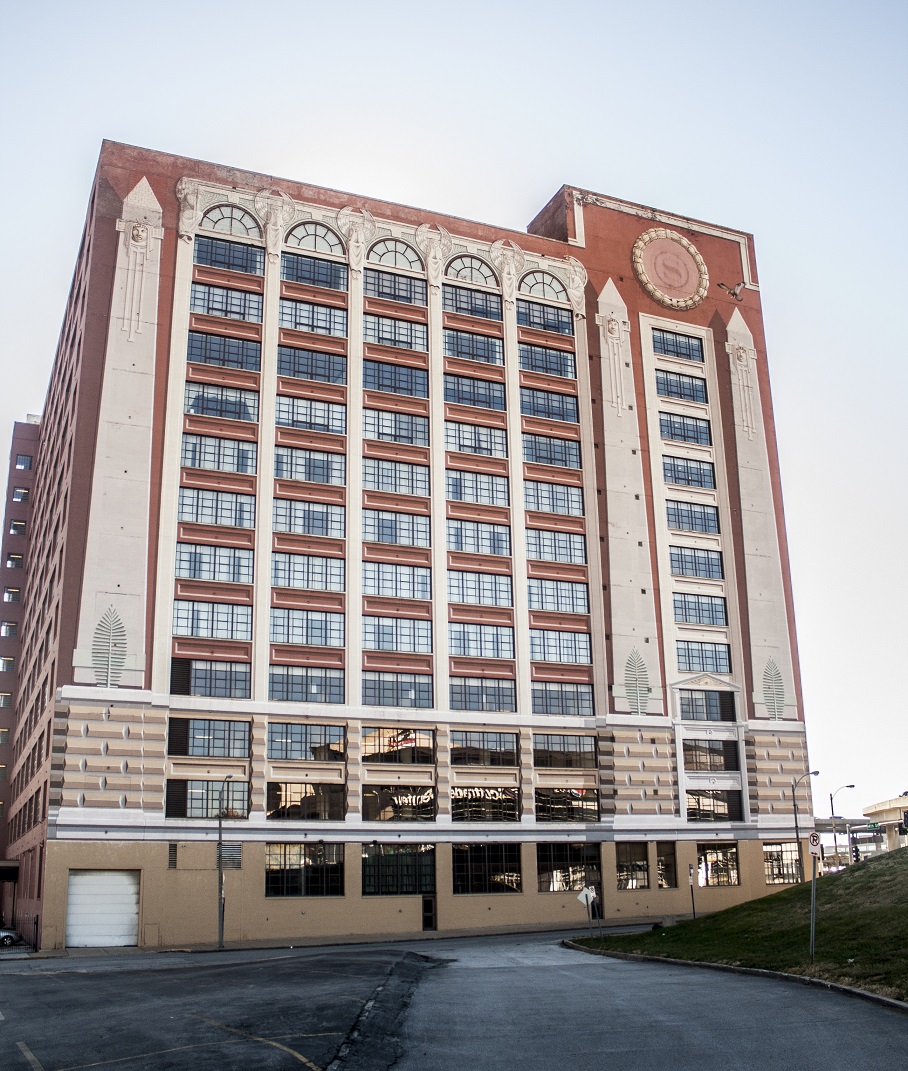
Intriguingly, St. Louis is also home to a building graced with a three-sided Richard Haas mural, fronted by a strange sculpture of a high-stepping jackrabbit (not done by Haas!).

Haas_STL_Jackrabbit_WebHaas’s mural, which depicts a woman as “Peace”…

Haas_Mural_STL_Web…has eight obelisks and  numerous other adornments.

Haas_Mural_STL_3_Web


Citygarden

We were also able to spend time in St. Louis’ beautiful downtown “urban park and sculpture garden,” Citygarden.  Incorporated into the “Gateway Mall” area, the park is bordered by Eighth, Tenth, Market, and Chestnut Streets – just a short walk from many locations within a downtown area that is actively trying to tie together green spaces and government structures, common spaces and the corporate sphere.

Part of our group was fortunate enough to spend some daylight time in the park, with the sun setting alight the fall colors in many of the park’s varieties of trees.  The procession of gingko biloba trees (also known commonly as maidenhair trees) positively glowed along the Market Street promenade, their yellow leaves glinting off the last of the sun’s rays.

City_Garden_Sidewalk_3_Web

The entire group paid a visit just as the sun set early on the first night of Daylight Savings Time for 2015, with the park’s lighting creating interesting shadows on several of the pieces, such as Fernand Leger’s Femmes Au Perrequet…

Leger_STL_web

Mark di Suvero’s Aesop’s Fables.

City_Garden_De_Suvero_2_Web

Constance impersonated (can you impersonate a fictional wooden figure?) Pinochio…

Constance_Pinochio_Web

And Professor Yawn was proud that his pupils, Alex and Constance, finally and truly lived up to their name, serving as pupils in Igor Mitoraj’s Eros Bendato.

Pupils_Constance_Alex_2_WebNot to mention the other fun sculptures…such as Bernar Venet’s “Three Rings”…

Constance_Alex_Citygarden_Web…Ju Ming’s “Tai-Chi Single Whip”…

Tai_Cho_Web…the intriguing Video Screen…

…and the reflecting pond with stepping stones…

City_Garden_Night_Constance_Alex_Web

We even saw a rabbit!

City_Garden_Rabbit_Web

The park is a must-see if in St. Louis.  Even a short stroll through the beautifully landscaped space evokes feelings of tranquility within.  Park maps that provide info on all the art pieces are available; or one can download the app, with even more information on the park’s amenities and scheduled events.

City_Garden_Constance_Alex_2_Web


Wrapping Up

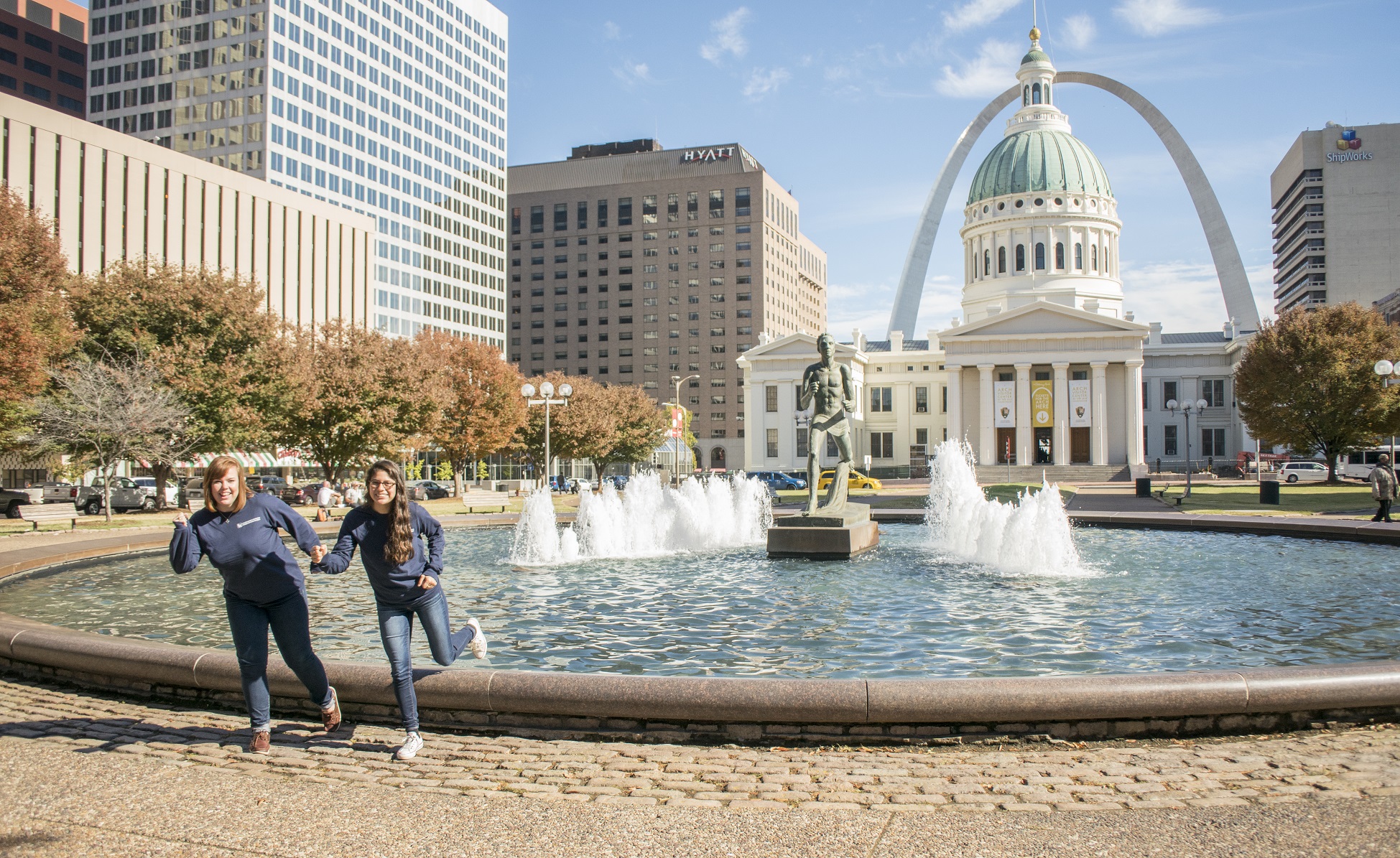
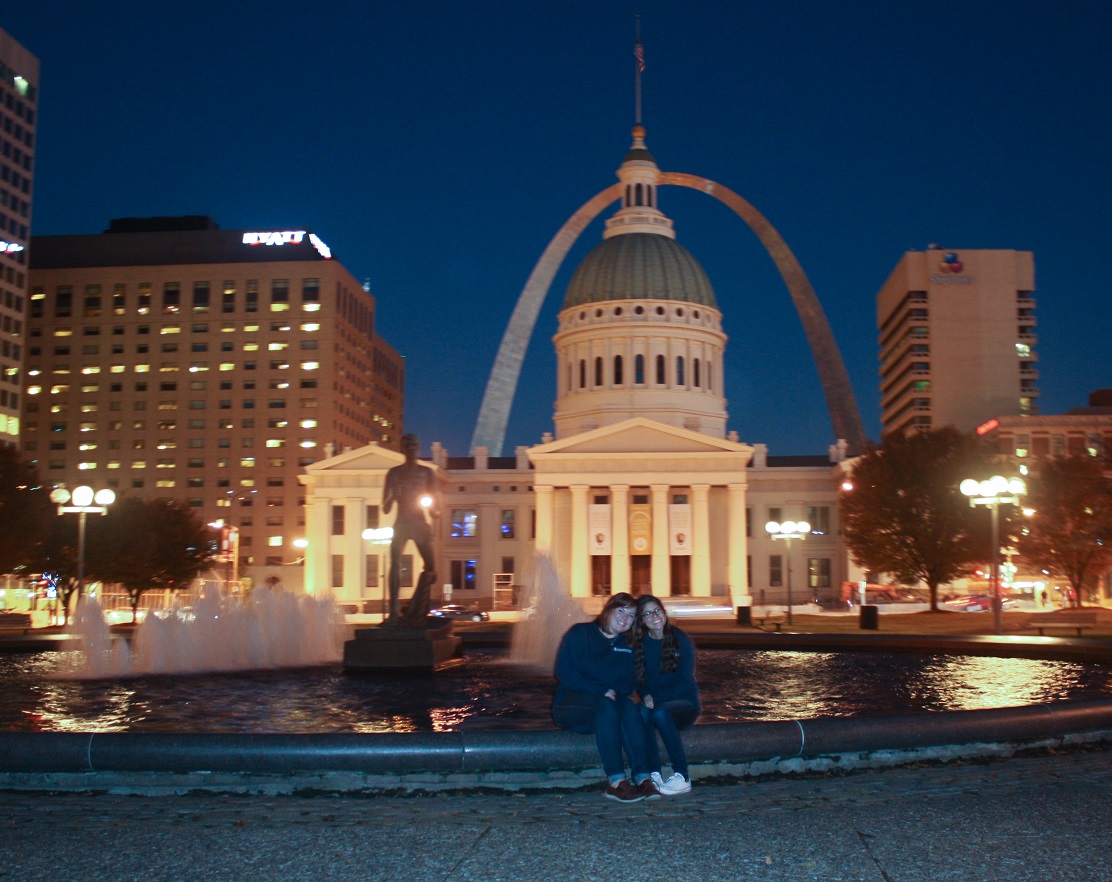
Before leaving, we took another brief stroll to “The Runner,” the statue celebrating the country’s westward expansion.  We had stopped there earlier in the day…

Arch_Alex_Constance_2_Web…and had some with photographs…

Arch_Constance_Alex_Running_Web

Well, we had some fun again, at the end of a long day, but in the midst of a fun trip.

Arch_Constance_Alex_Night_2_Web