WAC Returns: Robert Gates and the World

After more than one year of COVID lockdown, the World Affairs Council of Greater Houston returned with an in-person event, one featuring former Secretary of Defense, former Deputy National Security Advisor, and former CIA Director (not to mention President of Boy Scouts and President of TAMU). Approximately 100 people attended this event, with many more tuning in live.

The Executive Director of WAC, Maryanne Maldonado, welcomed guests; she was followed by Board Chair Mark Anderson

… who introduced Robert Gates, a potentially lengthy process, given Gates’ extensive experience. Indeed, Gates’ almost unparalleled resume in foreign affairs was on full display during the hour-long session. Expertly hosted by WAC’s Ronan O’Malley…

…the discussion highlighted concerns over Iran’s quest for nuclear power while focusing on the activities of Russia and China.

Gates was convinced that, whatever one thinks of the original Obama-era deal with Iran over nuclear weapons, that deal is now obsolete. He encouraged the resumption of talks, but made it clear that events had surpassed what was agreed in to 2015, and a new approach will be called for.

Gates clearly has little regard for Vlad Putin, regarding him as a nationalistic holdover from USSR days. But he is more concerned about China, which he believes has surpassed Russia in both economic and intelligence capacities. Fortunately, China and Russia’s alliance is mostly superficial, primarily based on a desire to the US perform poorly.

Previously, Gates has expressed much warmth toward Joe Biden, albeit balanced by little confidence in the President’s decision-making capacities. He noted that he stood by those judgments, reminding people that Biden was “wrong on nearly every major foreign policy and national security issue over the last four decades.” Biden, Gates noted, thought the fall of the Shah in the late 1970s would lead to improved civil rights records in Iran; he opposed aid to South Vietnam near the end of the Vietnam War; he opposed to most of the weapon systems that brought the US to military dominance; and perhaps most tellingly, he opposed the Persian Gulf War in 1991 and supported Operation Iraqi Freedom in 2003.

Having said that, though, Gates has also indicated that the President is “impossible not to like,” is a man of great integrity, and is reliable. Moreover, he expressed optimism about many of Biden’s early moves and decisions, and he was impressed with Biden’s team of advisors.

Gates was, as usual, sharp and incisivie, but the real treat was getting back to an in-person WAC event. We had a chance to see old friends such as Ronan O’Malley, Jahan Jafarpour, Viridiana Otamendi, Sandija Bayot, and Maryanne Maldonado. In addition, we ran into another old friend: Ambassador Chase Untermeyer. Ambassador Untermeyer previous served as Ambassador to Qater, Texas Legislator, Assistant Secretary of the Navy, and Director of White House Personnel.

Feeling a bit more knowledgeable and worldly following the World Affairs Council event, we ended the evening with Ethiopian Food in a nearby restaurant by the name of Blue Nile. At Blue Nile they had a vast variety of dishes ranging from vegetarian, lamb, beef, and poultry, with the option of making each of them spicier with Ethiopian spices.

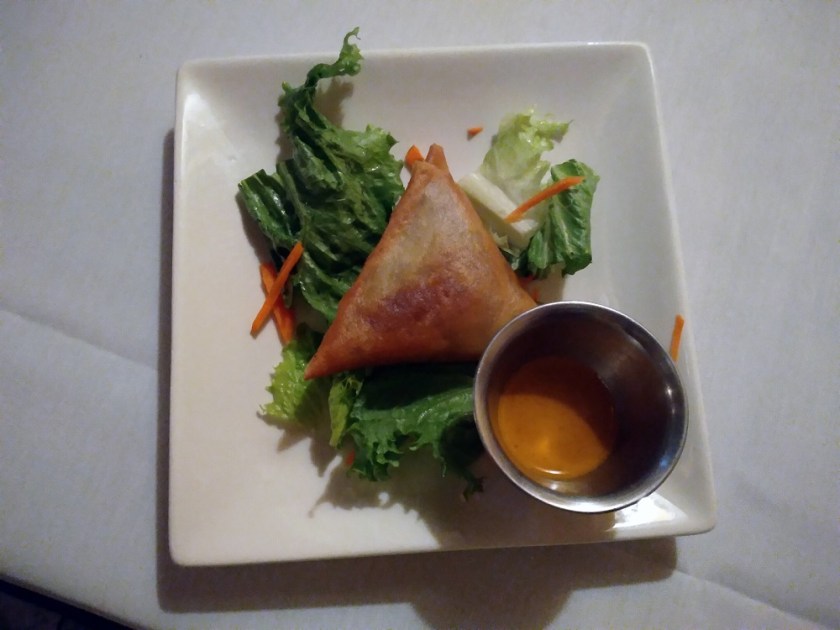
As an appetizer we had a beef and a vegetarian Sambus, it is like an empanada, and to my surprise the vegetarian was my favorite despite never having tried lentils, with which the Sambusas are stuffed.

For dinner Quinn ordered the Yessiga Wot, a beef dish cooked in their Berebere sauce, I had the beef tibs, beef cubes cooked with vegetables and spices, Ms. Stephanie had the chicken tibs, and Professor Yawn had the Spicy Doro Wot, a popular traditional chicken dish.

All the dishes were served with Injera, a spongy bread the size of a flour burrito tortilla that is used as a tortilla to eat the food. 

It is a tradition for LEAP students to try new cuisines that are themed related to the prior event and, as expected, it was my first time eating Ethiopian Food (Quinn’s too). It is always nice to end our day trying something new.

Independence Day in Huntsville, Texas

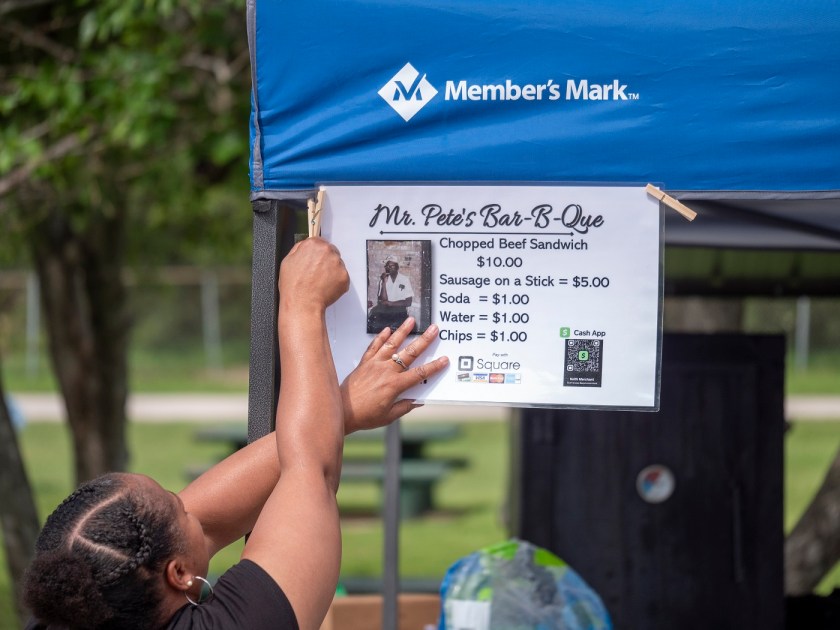
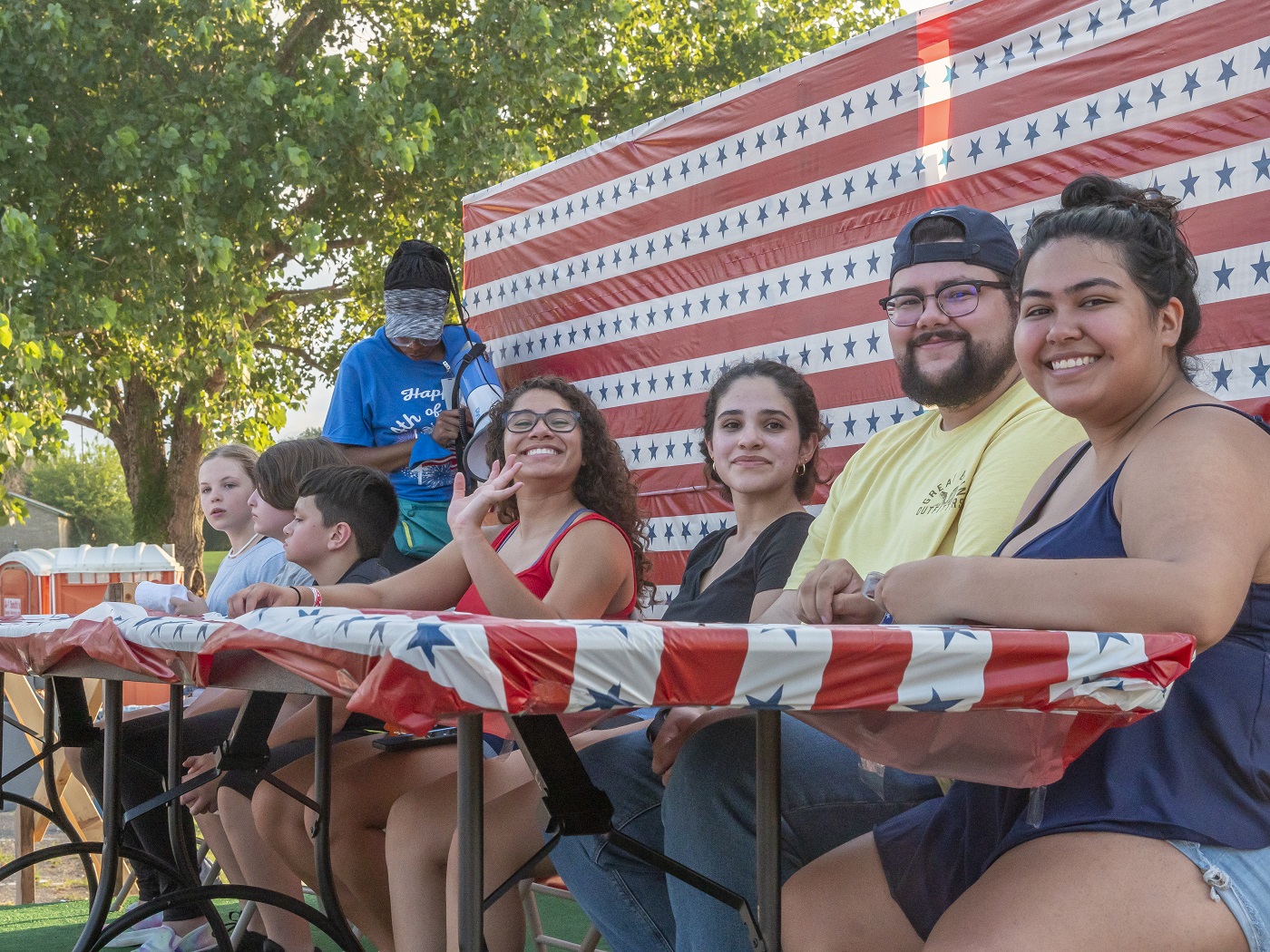
The City of Huntsville knows how to put on a party–especially a birthday party. In this case, it was the nation’s 245th birthday. To celebrate, the City’s Parks and Leisure department offered residents numerous activities, including rock-wall climbing, mechanical bull riding, face-painting, balloon art, dunk-the-local celebrity, watermelon-eating contests, numerous vendors providing food and fourth-of-July fare, and more.

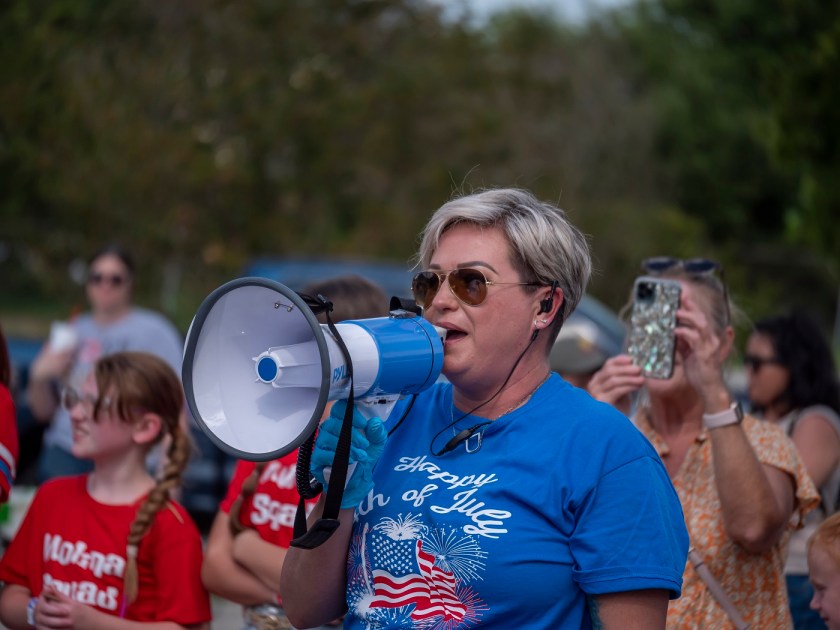
Parks Director Penny Joiner Welcomes Residents to the Independence Day Celebration

Residents had their pick of activities. One of the most popular was the bull-riding, which could be adapted for the participant’s age (and fear). Kids often took a ride on the bull, then headed straight for the line again, to go at it another time. Of course, some adults found the fun irresistible, too.

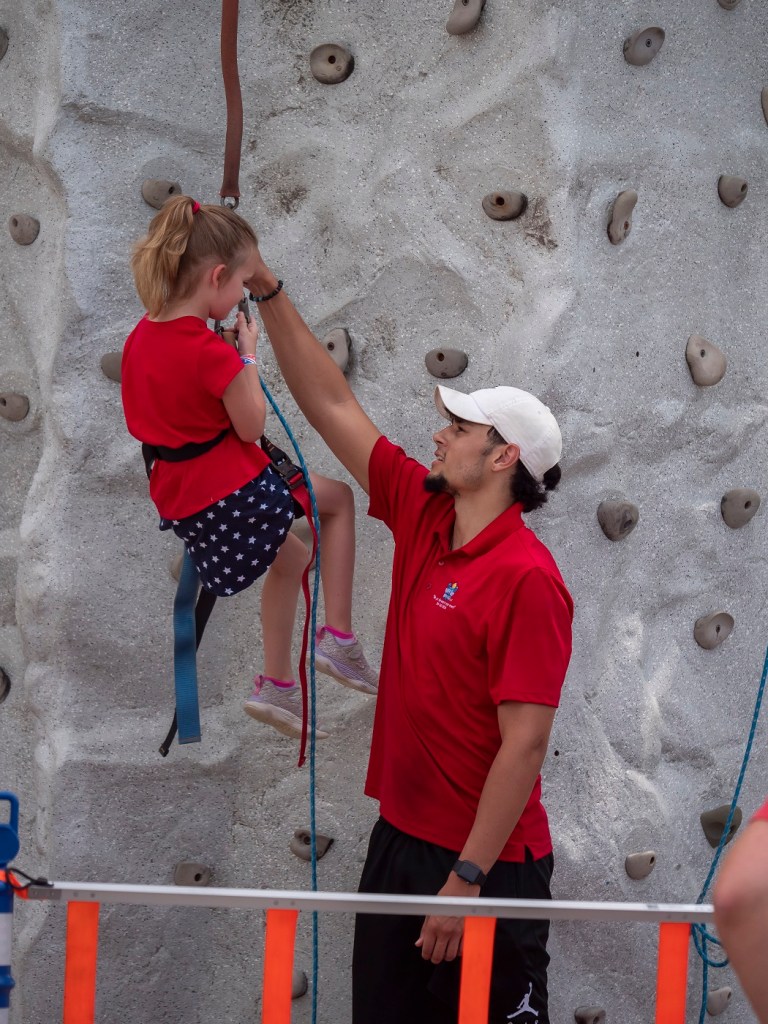
When kids weren’t on the bull, they headed to the rockwall, where the goal was to climb to the top and ring the bell. A few made it!

Not all the kids made it all the way up, but they had fun, with staff lending encouraging words.

The crowd size was steady, peaking around five-thirty, but was never so large as to be overwhelming or intrude on the fun.

If residents got tired or hungry, there were vendors on hand to stem the cravings.

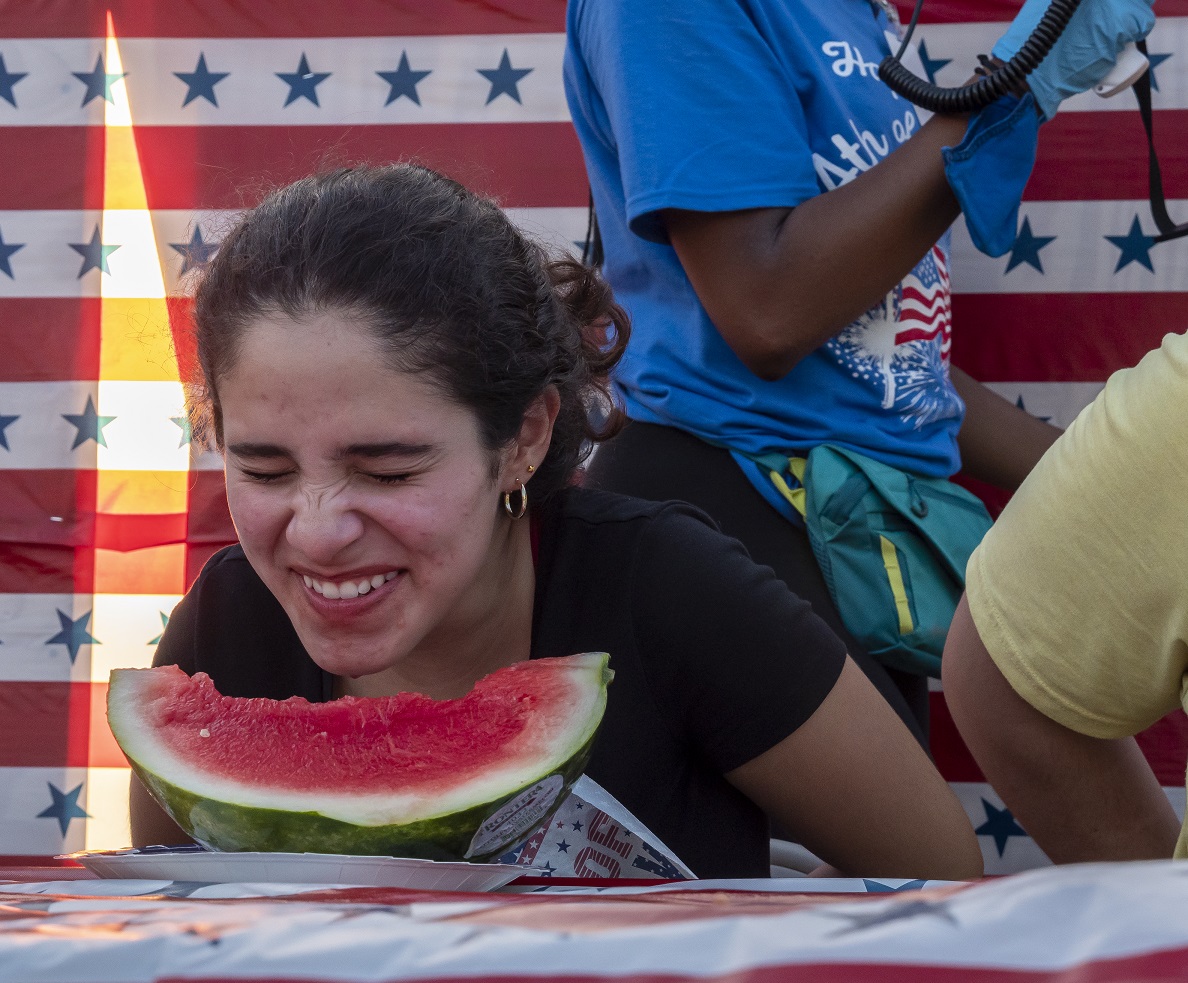
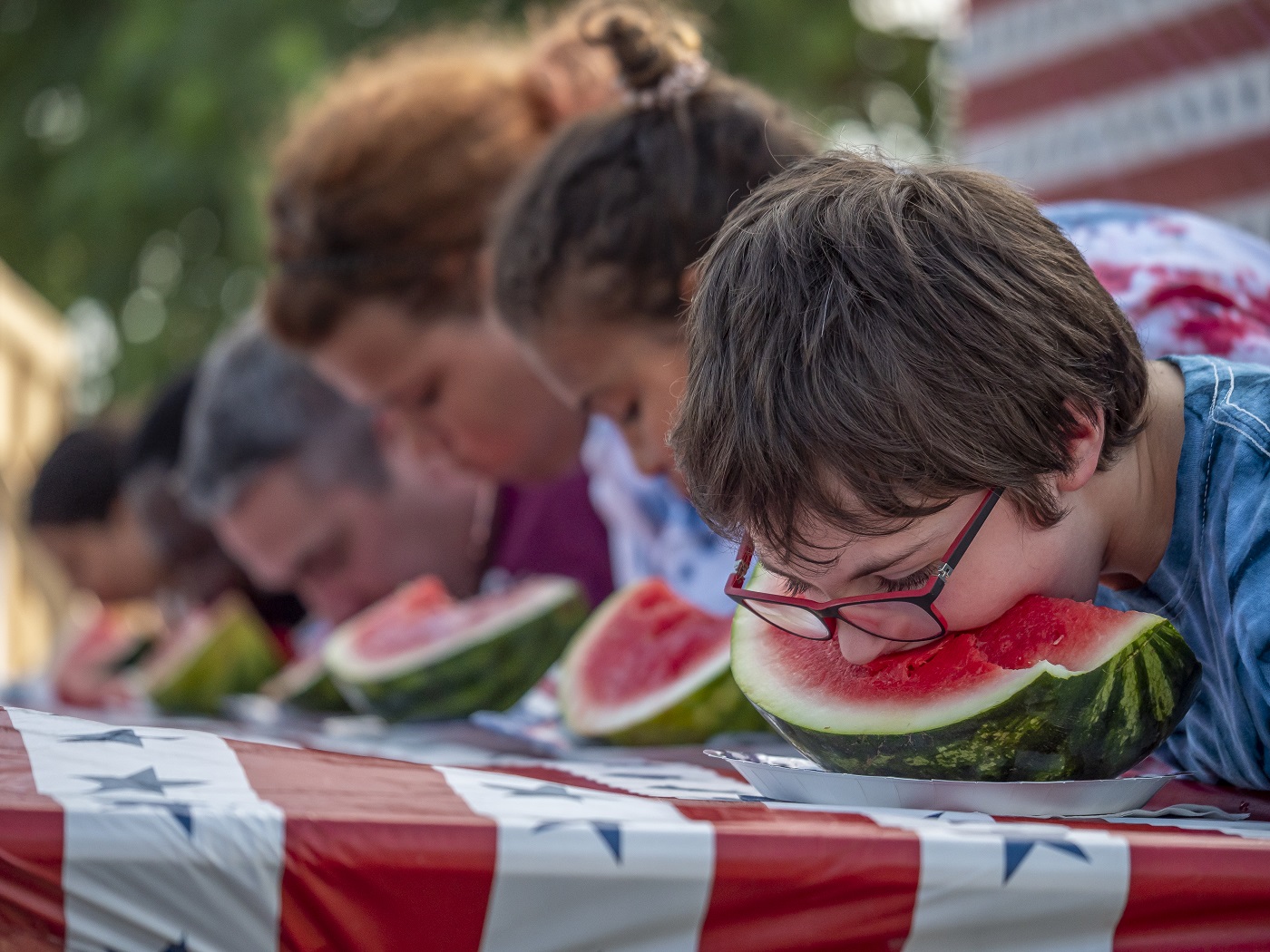
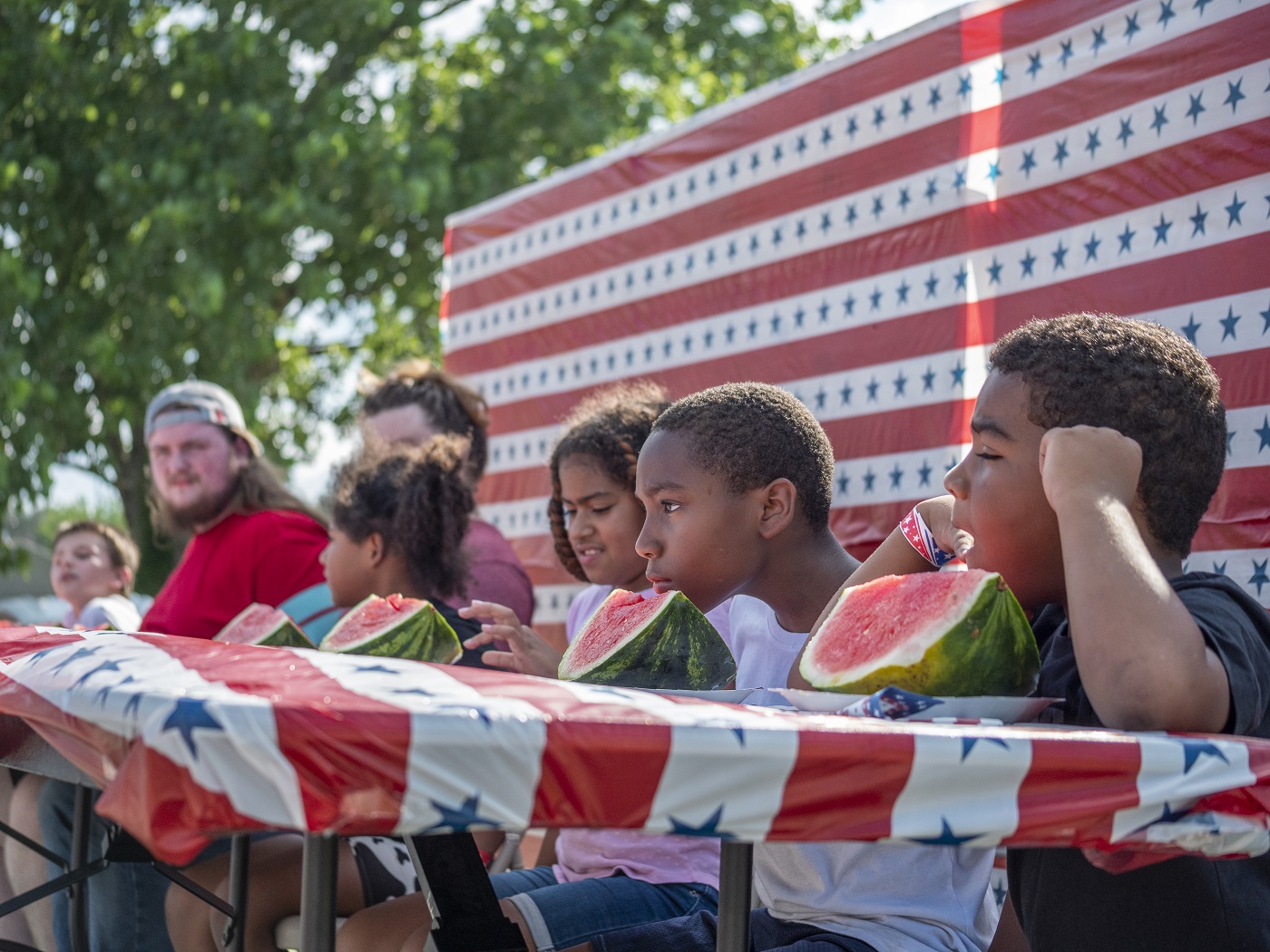
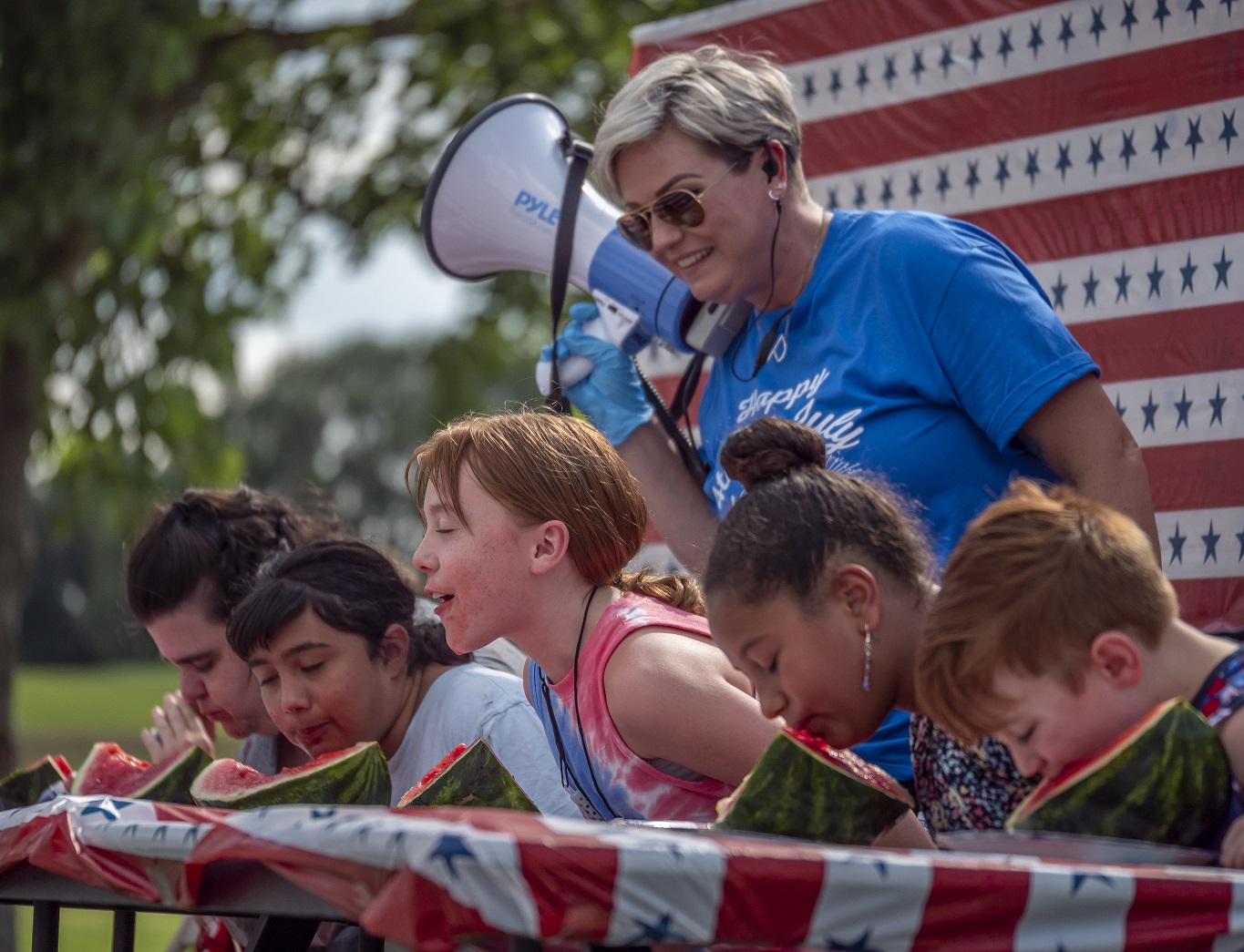
And every forty-five minutes, there was a watermelon-eating contest to occupy the crowd, either by participating or enjoying the show.

The good news is no one got sick! The better news is that everyone had fun.

Of course, even with all the fun, sometimes the agony of defeat was difficult to handle.

Of course, there was always staff on hand watching over things…

…or providing instructions…

But a lot of the fun was just seeing people who were enjoying themselves.

If people needed a break, there was a coloring booth, which occupied many.

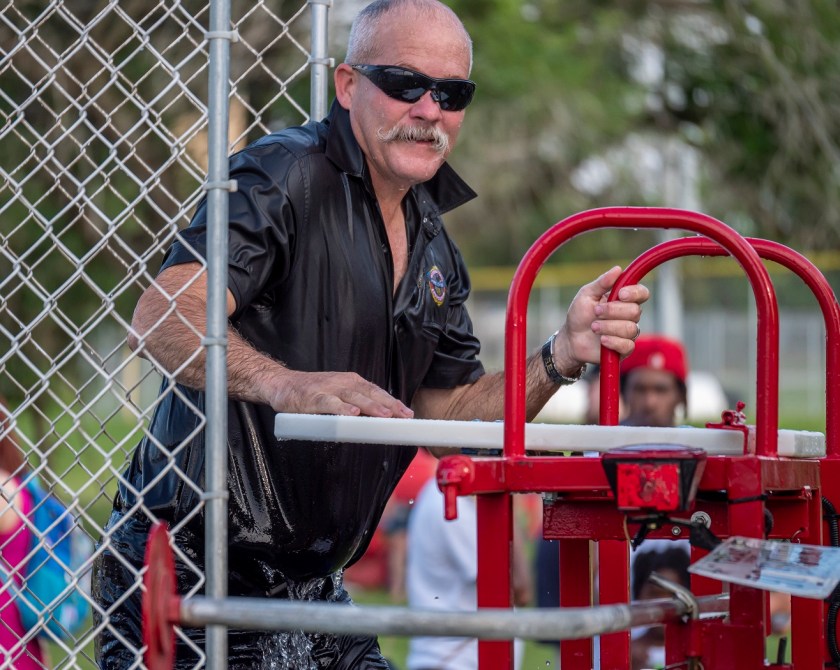
And if people were feeling feisty, they could attempt to “dunk the local celebrity,” which included folks such as KSAM’s Glenn Edwards, the City of Huntsville’s Deputy City Manager Rick Rudometkin, and the City’s Chief of the Fire Department, Greg Mathis. Greg was dunked the most, perhaps because he had the most fun with the participants.

It was a great day, spearheaded by Penny Joiner, Kristy Wheeler, and with help from many other City of Huntsville staff, including intern Jade Jones.

Reflecting on Sacrifice on July 4th: The Houston Holocaust Museum

By Jessica Cuevas

Recently, Quinn and I had the opportunity to go on a private tour of the Houston Holocaust Museum, courtesy of the World Affairs Council. Although the tour was on Juneteenth, we thought a post date of July 4th would be appropriate, as a reminder of the sacrifice and responsibility that comes with being free and aspiring to be a better people and nation–the legacy of both Juneteenth and July 4th.

To begin the event, Quinn (who is half Jewish) and I went to a Jewish Deli, Kenny & Ziggy’s. We stayed pretty basic (I always stay basic in terms of food…), but we enjoyed the restaurant, trying something new, and staying with the theme of the day’s education.

Following our themed lunch, we arrived at the Holocaust Museum, met our fellow young professionals (including old friend Rebeca Becker), the always-friendly World Affairs Council staff, and were greeted by our knowledgeable docent, Rhonda Goldberg. She noted that this Museum opened in 1996, and it is the nation’s fourth largest Holocaust Museum.

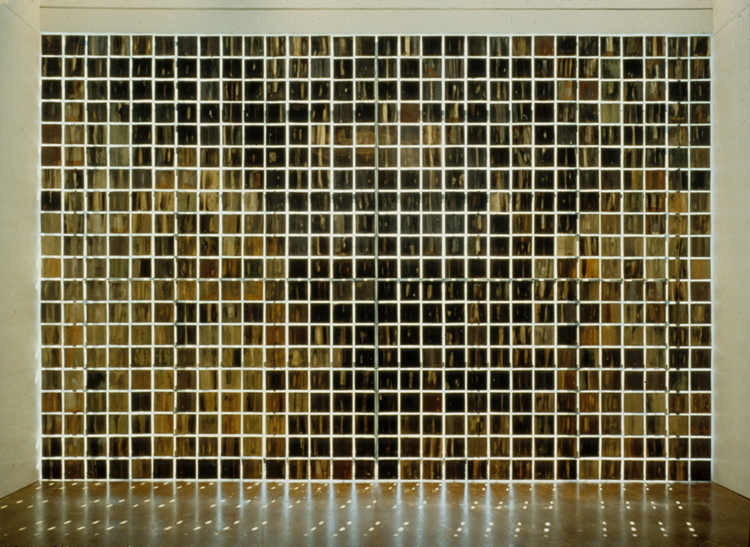
The tour was a little less than two hours and it started promptly at 2:00 PM, with the Memorial Room exhibit. Within this small room there was a whole wall, created by artist Patricia Moss-Vreeland, dedicated to hand-painted and light-reflective tiles featuring tears to represent the 6 million Jews lost because of the Holocaust.

The day of our tour was sunny, and there was much light coming through, but Mrs. Goldberg pointed out that the mood of the art piece changes with the weather. On a dark or rainy day, for example, the public’s perception of the “tears” would be different.

Even more somber was a short, half-moon pedestal that contained six small square sections holding a sample of the soil from the six extermination camps, Auschwitz-Birkenau, Belzec, Chelmno, Majdanek, Sobibor, and Treblinka. This room is for survivors or for those who lost someone dear to them, providing a place for meditation and to remember those who died.

The Morgan Family Welcome Center offers a Welcome Center Video, which provides information on the lives of Jews before World War I and the anti-Semitism they experienced. It was difficult to learn of the hardships they faced, and I actually began to experience a heaviness in my chest–a sense that increased when we moved to the “Bearing Witness Exhibit.”

What followed was a valuable lesson in history, as we learned more of the Jews losing civil rights, having to register with the State as Jews in Germany, and, eventually, being shipped to the camps.

Perhaps the most surreal aspect of the tour was walking into a train car like the ones used in 1942 Germany, and standing there, imagining how hundreds of Jews were packed into such a car, to be shipped to forced labor and, ultimately, death.

The next closest thing to this was a replica of the Danish Rescue Boat, K123, where Jews had been transported out of Denmark to a safe place in Sweden. Although we were not able to board it, the place where the fisherman would hide the Jews was visible and it is just hard to imagine that this happened in such a small space.

Learning of the Germans’ plans for the “final solution” was sobering and depressing, but there were moments of redemptions, too. We learned of children who escaped (two of whom ended up being active members of the Museum), Jews’ lives after the War, and the Nuremberg Trials. As aspiring lawyers, this last aspect added a layer of interest.

The tour ended on a note appropriate for today: the Human Rights Gallery reminds us of our rights, highlights the accomplishments of Civil Rights leaders, and inspires us to stand up for ourselves and others.

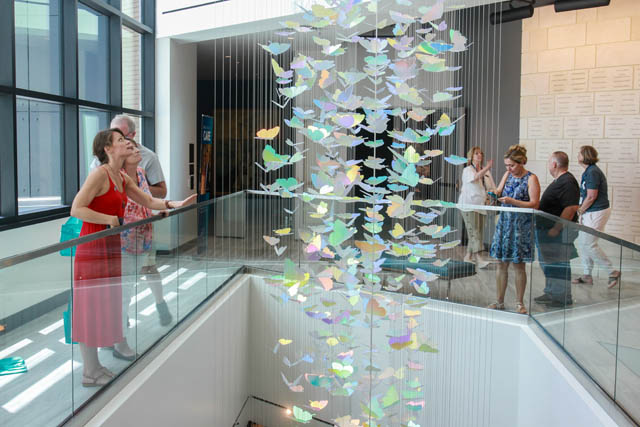
Before leaving we had the opportunity to converse with Mrs. Goldberg, and we asked about the beautiful butterfly display that hangs from the ceiling, down all three of the museum’s floors.

Photo by Pooja Salhotra

There were 1,500 butterflies, representing the 1.5 million children who died during the Holocaust, approximately 25 percent of the total lives lost.

This was a very somber learning experience of the events that happened before, leading up to, and after the Holocaust that provided me with a different insight to this tragedy. It was my first time being to the Holocaust Museum and despite Quinn having had visited it before, he had a different take since there had been changes to the exhibits.

Because the Museum was closed the day we visited, and because we were visiting with a small group, the experience was perhaps more somber and intimate than normal. We also benefited from Ms. Goldberg’s insights and knowledge, including her closeness to many Holocaust survivors, and this added to the poignancy of the experience.

On behalf of Sam Houston State University and the LEAP Center, we thanked the World Affairs Council staff, Ms. Goldberg, and we said goodbye to our new friends.

Old Time Help at the Old Town Theatre

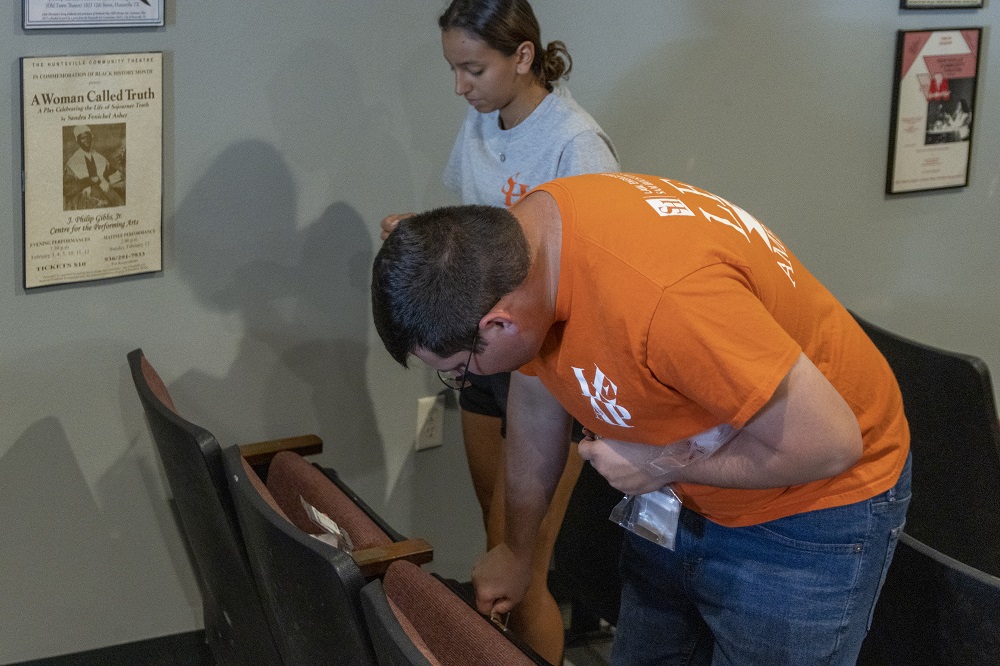
Fresh off volunteering at the Wynne Home Arts and Visitor Center, we also wanted to help out in the downtown area. So, with rivet-gun in hand, we headed to the Old Town Theatre to do some light cleaning and affix numerals to the Theatre’s chairs.

The theatre is the only vintage venue in Huntsville, and it is the community’s finest example of Art Deco architecture–while also featuring the art work of world-renowned muralist Richard Haas.

And while it may be an local architectural treasure and a work of art in itself, it also had a disordered numbering system on the seats, which makes ushering pretty difficult.

So, we set about correcting that. With only one rivet gun, we set up a system of three people helping: one advance man putting in the number plates and rivets, one riveter, and one person taking left-over parts….

Yvette the Riveter

While three were riveting, others were cleaning, and we took turns doing all the tasks, so that we’d all be cross-trained. Stephanie did her best Carol Burnett impression….

…Quinn tried to get a break from Yvette and Morgan, and Morgan even tried her hand at vacuum repair.

About three hours later, we had a mostly-clean theatre, seats with a correct numbering system, and more skilled volunteer force….

…and some ideas for some fall activities–all of this in time for our sold-out Gene Watson show!

Ben Rhodes, President Obama’s Speechwriter, Talks Politics

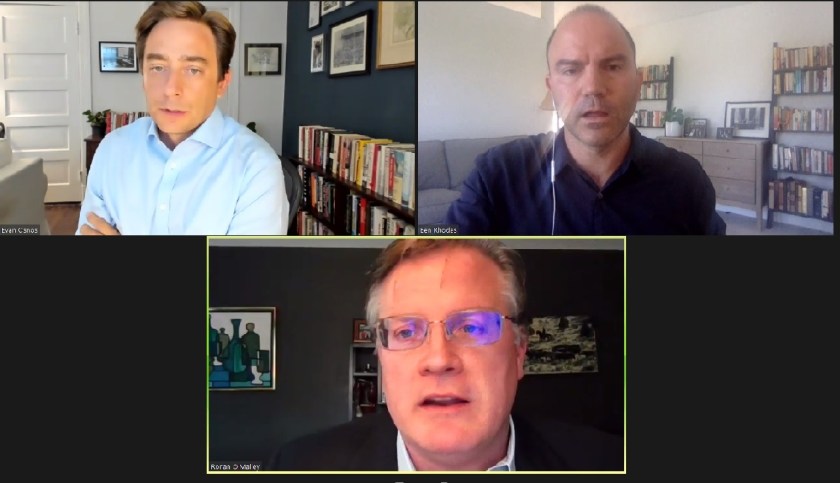
LEAP is always eager to hear from World Affairs Council speakers, and that is especially true when Ben Rhodes presents to the Council. Rhodes, a former speechwriter and advisor to President Obama, discussed his latest book, After the Fall: Being American in the World We’ve Made, with the New Yorker’s Evan Osnos as the moderator.

Following eight years of working long hours for the Obama administration, Rhodes found himself with a lot of time on his hands, a need for decompression, and wrestling with the Presidency of Donald Trump. So, he decided to write a book and, as he says, announce himself as a writer to the world.

What struck Rhodes, as he reflected and traveled and reflected some more, is how parts of the world were “turning to nationalism and authoritarianism,” particularly Hungary, Russia, China, and the United States. Key to this period, according to Rhodes, was the great recession of 2008, which is “when the narrative of liberalism and democracy collapsed.” With this narrative, Osnos readily and frequently agreed.

Rhodes is, at times, a bit morose, identifying this period as “the fall” to which the title alludes. This fall emboldened China and Russia, freeing them to mock capitalism and democracy, and emboldening nationalistic elements in Europe (particularly Hungary). He characterizes presidents from GHW Bush to Obama as “collectively wrong” and “hubristic,” while also criticizing the NBA, the media, and “the entire mass entertainment industry.” (see here for other views he’s expressed about the media).

Rhodes responded best during the Q&A period, during which Ronan O’Malley stepped in.

Rhodes argues that the China-Russia relationship is “shallow,” united by their “interest in the discrediting of democracy.”

When asked about the “personalization” of politics and regimes, Rhodes suggests that the rise of social media contributes to this movement, while also noting that the election of Biden was a countermovement to this trend.

Rhodes struggled to find silver linings. “There is one megatrend in the world,” he lamented, “and it’s not good.” But he argues, not entirely convincingly, that the “mass mobilization” in the world is happening and good; that people “are much more aware” (polls indicate otherwise); and there are civil rights in certain world regions than there were 30 years ago. It’s not a lot to hang on to, but it’s what we can look to, he says, “after the fall.”

Volunteer Service is a Wynne-Win!

On Saturday, June 27, the LEAP Ambassadors drove in from most parts of Texas to help out our adopted community of Huntsville. One of us drove from San Antonio, one drove from Tyler, one drove from Houston. Our destination was the Wynne Home, for an afternoon of painting and cleaning.

To build some energy, we stopped by the friendly and local confines of Mr. Hamburger, where some of had our first taste of this local favorite. We enjoyed the burgers and shakes!

Apart from exploring local culinary options, our mission today was to help out at the Wynne Home. The Wynne Home has a staff of 2.5 employees, and is, therefore, heavily reliant on volunteers. And in this regard, the Wynne Home is a hub of sorts in the community. The Texas Thyme Unit of the Herb Society of America assists the Wynne Home with its Ella Ruth Herb and Children’s Sensory gardens, the Friends of the Wynne support the arts at the Wynne Home (and in the community), and numerous citizens volunteer their time to serve on the Wynne Homes committees. So, it was an honor to help out by doing some touch-up painting in the children’s garden and some basic cleaning.

The Children’s Sensory Garden has a number of plants, and students are invited to touch, smell, taste, and even hear the plants and each of those sensory sections.

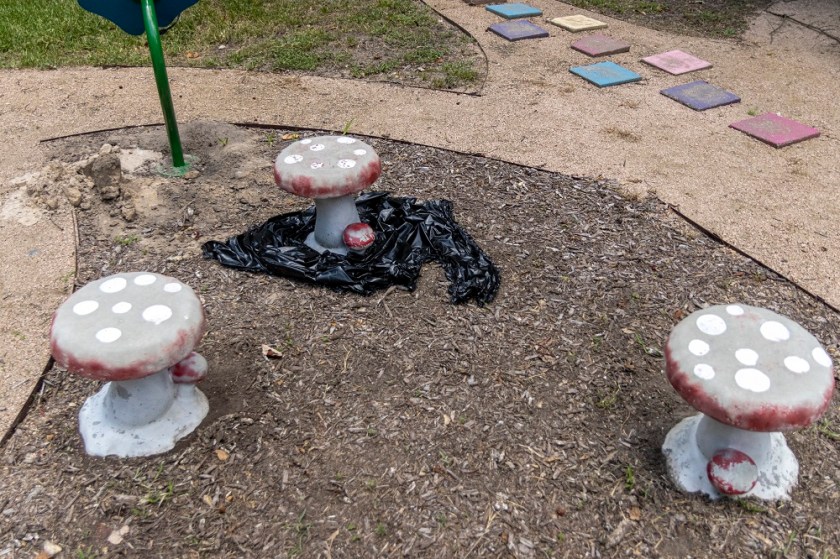
Among those plants are stones for hopscotch, and these were a little worse for the wear.

Hopscotch stones for the Wynne Home's Sensory Children's Garden.

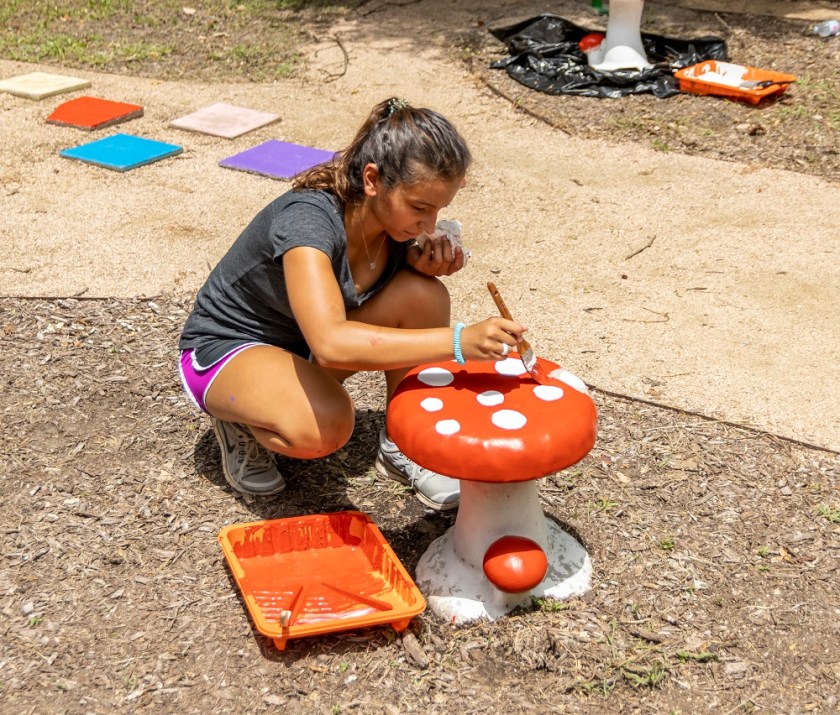
Concrete mushrooms also grow throughout the garden, and these, too, had seen better days.

With improvement in mind, we tackled the easy ones first: the stones.

Intern Sebastian Morales paints at the Wynne Home.

The colors chosen by the Wynne Home staff were vivid, and even with just the first coat of paint, the colors were popping.

Although the temperature was only 93, it seemed much warmer. We estimated the humidity to be approximately 4,000,000, and so an unexpected challenge was having our sweat drip into the paint and dilute the colors. Fortunately, the Ms. Sarah Faulkner kept us hydrated, and we continued to plug away.

We quickly learned who was in the best shape, and to protect reputations, we will not discuss this matter further. Although we would note that we had to help Professor Yawn up the Wynne Home stairs after about an hour…

One of the nice things about painting is that it provide some immediate gratification, as you see the designs take shape and the colors become more vivid.

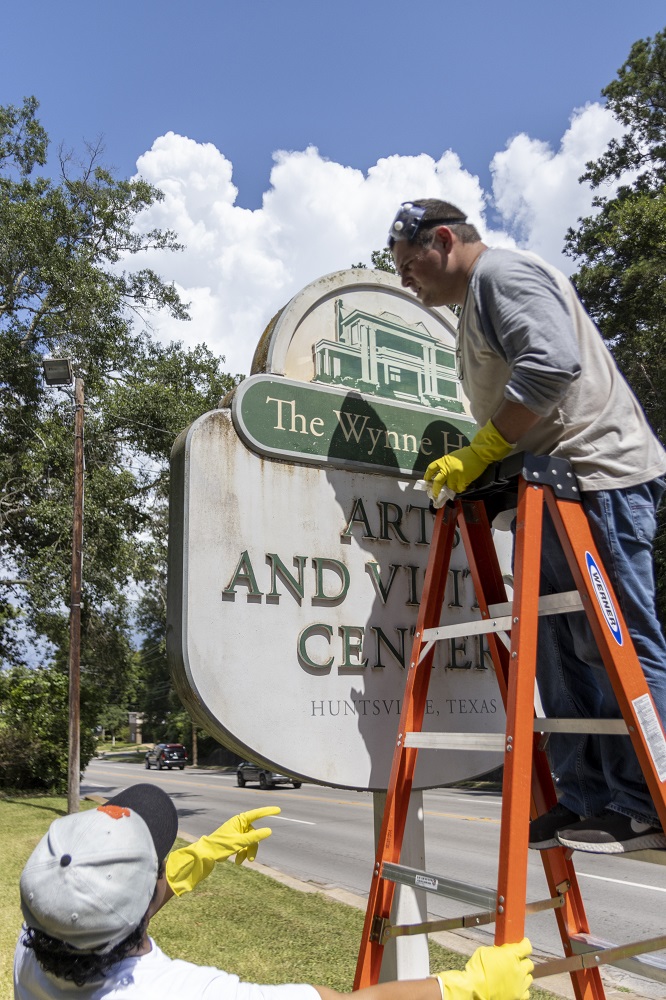
Following the painting, we turned our attention to the Wynne Home sign up front, which had weathered snow, ice, heat, humidity, and high winds, just in the last six months!

After much scrubbing, we were happy with the new-ish look, and we at times felt we were in the clouds!

It was a wonderful day. The Wynne Home was beautiful prior to the touchups, and we felt we had a little role in beautifying it further!

Election Day in Campaign Bootcamp

By: Jessica Cuevas

In wrapping the up the 2021 Annette Strauss Campaign Bootcamp, we had the opportunity to hear from two final speakers—Crystal Perkins, a Democratic finance director, and Dustin Tropp, a Republican recruitment manager—to discuss and advise us on how to build our resumes and land a job in the industry.

To begin, Ms. Perkins spoke to the importance of being involved in the community in any way possible, be it through volunteerism or internships, so long as we are giving back and supporting a cause that we believe in. She suggested doing internships, following local media (newspaper, radio, and social media), and finding a mentor.

Lea

After their presentations, they opened the floor to questions about resumes or campaigns. A fellow participant asked if a resume should be nonpartisan or not. Both responded by saying that when applying for a campaign, they would prefer it list all your experiences while only going into depth about one or two to keep the resume at the preferred length of one page. This, of course, only applies to jobs with partisan employers.

Then came Mr. Tropp, who reiterated the importance of being involved, but also emphasized that we must learn how to advocate for ourselves. He mentioned how fellow Generation Z’ers must learn how to hold a conversation with the more experienced and older colleagues since it is a big deal breaker when trying to become more involved in politics.

At last came the moment we were all awaiting: it was time to film our pitch with our teams. Although we were all vying for first place, the experience gained from this event is a win on its own, as it will be applicable and extremely beneficial in our future academic and career paths.

The Campaign Pitch

With the exception of Quinn Kobrin, all of us found ourselves stretched–in a good way–by the Campaign Bootcamp. As our advisors mentioned, we drank water from a firehose, and on Saturday night and Sunday, we tried to assimilate the information, process it, and re-present it in a way that would work for our candidate.

By “our candidate,” we are referring to a hypothetical candidate assigned to each team by NPF staff. NPF created competing candidates, and it was a matter of chance which team got which candidate. By having both hypothetical candidates running for the same position, at the same time, over the same jurisdiction, the teams had very nearly identical tasks. The difference in outcomes, then, are the result of the team’s creativity, incorporation of knowledge learned at bootcamp, dedication of time and energy, and intelligence.

We began with something close to 45 or so participants, but by Sunday, we suspect there were more like half that, divided among six teams (we’d like to note that all four SHSU students stayed on camera, were present for every presentation, and all made at least one comment or asked a question).

Although we all began on different teams, Quinn and Jessica ended up on one team, and Yvette and Jade ended up on another team. We each, however, had time allocated to working and studying on our own, while also working dually and having breakout sessions with our entire teams.

Our presentations, which were filmed on Zoom, incorporated an overview, our team members, our fundraising strategies, the issues we would emphasize, our branding/marketing, a campaign strategy grid, and the like. Although we had been provided much of this information over the previous twenty-four hours, it was certainly different thinking of these things on our own and applying them to a different scenario!

We learned much, not only about campaigns, but also ourselves. It’s one thing, for example, to hear guidelines and understand them in the abstract; it’s another thing to put those to a test in a (simulated) real-world scenario. We also learned about our strengths and weaknesses with regard to attention spans, engaging and speaking up when in sessions; and working with team members, not all of whom put forth the same amount of effort. This, of course, is true of every enterprise, and this fact makes the experience all the more valuable.

Our goal was to get the presentation together by Saturday night…

… and then do the filming Sunday afternoon.

This worked pretty well, and we were able, in our separate rooms, to do our portion of the filming.

Notes, tissues (for allergies, not tears….), coffee, phones, water, and more coffee were called for and on hand.

In the end, all of us would have liked to have added to or changed aspects of our presentation, but all also felt as though we had done the best we could in the time allotted and with the energy we had.

Campaign Bootcamp – Final Thoughts

By: Jade Jones

And just like that, day three of the 2021 New Politics Forum Campaign Bootcamp is complete. This was my very first event with LEAP, and I am more than ecstatic to say that I had an amazing experience. Every day was filled with a plethora of advice and  information from keynote speakers such as Judge Cyndi Krier and many campaign managerial specialists like Meagan Gardner.

Gardner’s comments of “Run for something one day!” and “Campaigns are really hard but they are fun!” resonated with me throughout the entirety of the bootcamp as I, equipped with newfound campaign management skills, was placed in a position to manage my own campaign through the weekend.

My experience was also shaped by keynote speaker Secretary Julián Castro. He tailored his speech towards the younger demographic of individuals that are coming into politics. He made me feel as though he understood the challenges faced by young, aspiring politicians such as dealing with feelings of uncertainty and doubt.

While my experience was shaped by Secretary Castro, the other ambassadors enjoyed a wide range of our speakers, including fundraising expert, Nancy Bocskor. Bocskor’s presentation about the art and technique of fundraising was consistently engaging and informative, and will be extremely beneficial to us in the future.

One of the most memorable moments was the unexpected twist of Nancy’s battling cats, during which a pair of scissors may or may not have been thrown.

Overall, this weekend was incredibly educational and extremely enjoyable. We would like to extend our sincere thanks to Cole Wilson, Bianca Solis, and the rest of the team at the New Politics Forum, for once again putting on a successful Campaign Bootcamp. We appreciate the effort they put into bringing in the top professional political minds from all over the country, and every year we look forward to learning something new.

Voir Dire with the Walker County DA

This past Wednesday, the LEAP Ambassadors hosted the District Attorney’s office, which sponsored a simulated voir dire, to help students better understand the jury selection process. Speaking to student participants from diverse majors, attorneys Stuart Hughes, Malori Martin, Phil Faselar, Taylor Carter helped the students understand the entire jury selection process. With this demonstration and the attorneys’ recaps, were able to see firsthand how voir dire factors into the trial process.


We acted as a group of potential jurors three separate times, each time learning a different attorney’s approach and method of getting to know a jury. An attorney’s job during this time is to find the type of juror they want to serve during the trial by asking broad questions that are relevant to the case. Members took on different personas and, to the full extent of their abilities, tried to answer questions as 56-year-old school district employees, 28-year-old graduate employees, and 45-year-old gas station cashiers–biographies provided to them by the LEAP Center. Members enjoyed the challenge of thinking on their feet and answering questions in character.

After the final voir dire, PLS members were able to ask questions about law school, learn about the different positions our guests held throughout their careers, and inquire about internships. Overall, it was an eye-opening experience for everyone involved. We saw a more in-depth view of the trial process and were able to offer a practice opportunity for the DA’s office coming out of a post Covid-19 world. Thank you to the Walker County District Attorney Office for coming to Sam Houston State University and teaching us about the voir dire process.