For the first weekend of the summer session the LEAP Ambassadors gathered with alumni and friends to attend another of the Alley Theatre’s wonderful productions, this one “Dial ‘M’ for Murder,” the Hitchcock classic adapted to the stage by Jeffrey Hatcher.
As is our norm, we met friends at the Houston Post Market for dinner. This venue allows everyone to try something new, while also providing for a diversity of taste options.
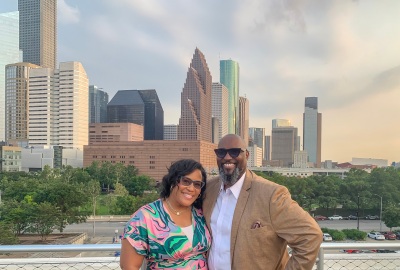
And the Post Market also provides a wonderful view–from the rooftop!
Although a casual dinner, it was celebratory. Not only was it a wonderful way to spend time with friends, but it was also the Spencers’ birthdays! Yes, they share the same birthday of June 1.
Following dinner, we zipped to The Alley Theatre, where we settled in for “Dial M for Murder.”
We were able to see some familiar faces, regulars from the Alley’s professional cast, such as Dylan Godwin (from SHSU) and Todd Waite. But we were also able to see some new (to us) talent, including Teresa Zimmerman, Geena Qintos, and Brandon Hearnsberger.
We loved the play, with some debate about whether this, “The Nerd,” or “Shear Madness” (at the Lincoln Center in DC) was the LEAP Ambassadors favorite among recent productions.
In broad outlines, the play follows the 1954 Hitchcock thriller, but this production added in more humor, particularly in the second half. There were also a few modernizations and an added twist, ensuring that even those familiar with the film classic will find new aspects of the thriller to enjoy.
All agreed that the sets and lighting were one of the chief assets of the production.
There was less consensus on which of the actors was the best, but everyone agreed that watching Todd Waite is a joy.
It was a wonderful way to spend an evening, precisely how we wished to kick off the summer session–with entertainment, education, and friendship.
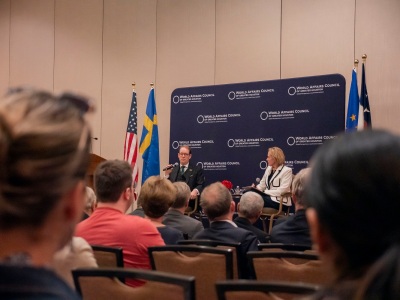
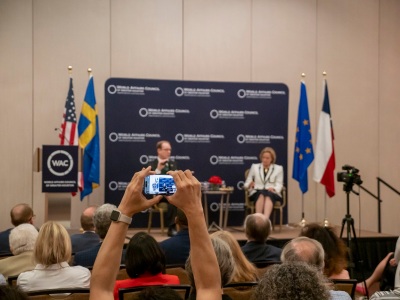
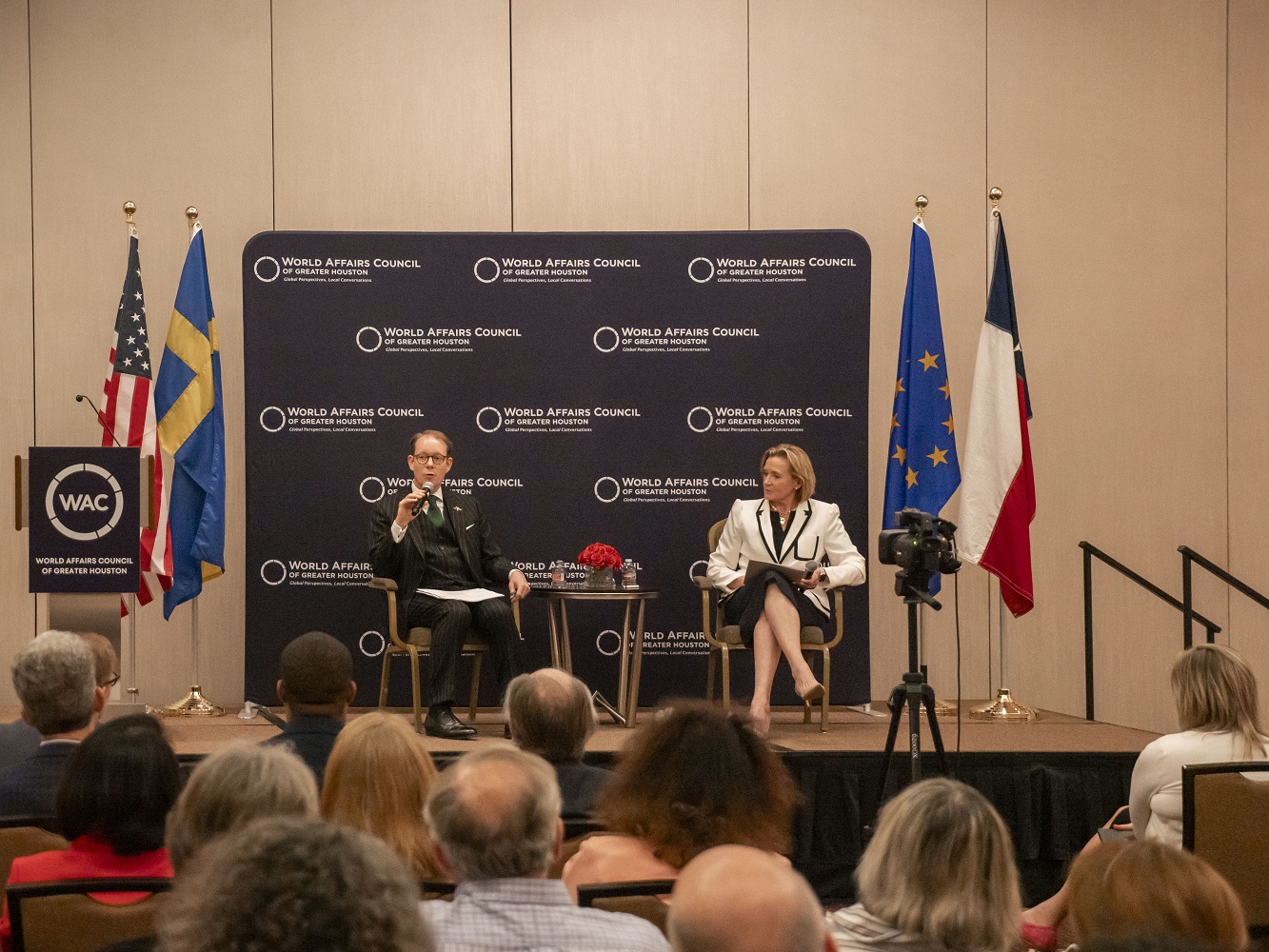
Although the semester has ended, the LEAP Ambassadors continue expanding their horizons, this time at a World Affairs Council event featuring Sweden’s Minister of Foreign Affairs, Tobias Billström. The event promised insightful dialogue and certainly delivered.
Before the moderated interview, Minister Billström took the podium to discuss Sweden’s latest efforts in space exploration.
It was fitting that he was about to present a talk on space in Houston, a city renowned as “Space City.” But Billstrom also highlighted the ways Sweden is leveraging its expertise to push the boundaries of space science and technology.
He spoke passionately about the need for safe and peaceful navigation of space, underscoring the potential for congestion and geopolitical conflicts in space. Sweden’s commitment to avoiding such conflicts is rooted in its Space Diplomacy Agenda, which aims to maximize the benefits of space exploration while fostering international cooperation and security.
Following his address on space, the stage was set for a discussion moderated by the World Affairs Council’s Sandija Bayot.
The conversation swiftly transitioned to Sweden’s strategic shift in defense policy, notably its recent decision to join NATO. Historically neutral, Sweden’s choice to join the alliance marks a significant departure from its non-military stance—a response, as Billström explained, to escalating threats from Russia.
“Sweden has always been a nation committed to peace,” Billström remarked, “but recent actions by Russia have made it clear that we must stand with our allies to ensure stability and security.” He pointed out that over 70% of Sweden’s parliament supported NATO membership, reflecting a strong consensus for collective defense.
Minister Billström also discussed the unique strengths Sweden brings to NATO. With advanced technology in defense and a well-equipped military, Sweden is fit to significantly contribute to the alliance. Billström emphasized the importance of integrating Sweden’s capabilities, particularly in areas like space and artificial intelligence, to enhance NATO’s overall defense strategy.
When asked about some of the challenges of joining NATO the minister acknowledged some of the complexities of aligning national interests within the alliance. “Defending Sweden now means defending our allies,” he noted, pointing out the need for a cohesive approach to security that respects the diverse interests of NATO members.
The discussion also touched upon broader geopolitical threats, including challenges posed by China and Russia. Billström articulated a clear-eyed view of global security, noting that Sweden’s defense strategies encompass a wide range of potential threats, from cyberattacks to strategic territorial ambitions. He emphasized that Sweden is prepared to defend itself and its allies. Addressing the issue of Russian aggression, he remarked, “Russia will always remain resentful unless there is a shift towards a better government,” highlighting the persistent challenge posed by Russia.
Nonetheless, Minister Billström’s sense of optimism, grounded in Sweden’s strategic alliances and technological advancements, left a lasting impression. The evening provided a unique opportunity to gain insight into diverse perspectives and varying national priorities. Hearing about Sweden’s forward-thinking plans was enlightening, sparking new considerations about cybersecurity and space exploration.
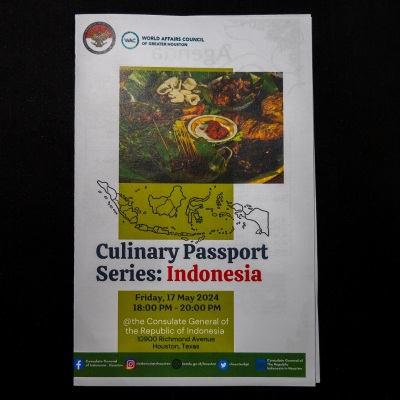
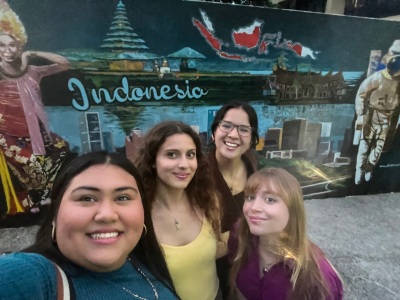
Last week, we had the privilege to attend an event hosted by the World Affairs Council as part of their Culinary Passport Series. This time, our gastronomic adventure took us to the Consulate General of the Republic of Indonesia in Houston.
This event was especially fitting as it coincided with Asian American Pacific Islander (AAPI) Month, a time dedicated to celebrating the rich heritage and contributions of the AAPI community.
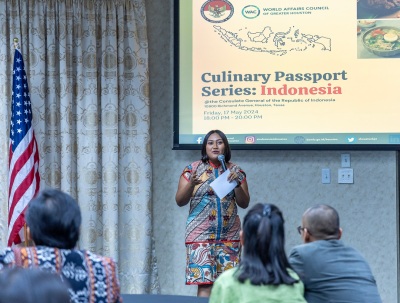
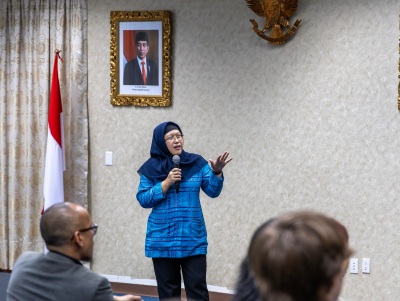
The event began with the Consulate General, Andre Omer Siregar, who graced us with his welcoming remarks, sharing his pride in Indonesia’s rich cultural diversity and dynamic growth. He expressed his excitement to be among a group of people eager to learn more about his home country.
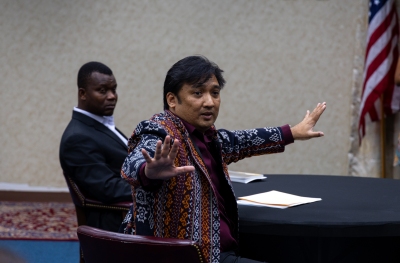
The main presentation offered us an overview of Indonesia and highlighted some of its best qualities. We learned about Indonesia’s current Democratic style of government and how it became home to a vibrant population and a robust economy. The Economic Affairs team, represented by Ita A. Puspitasari and Aswidya Indririsk, highlighted Indonesia’s economic innovations and the growing trade relationship with the United States. Their enthusiasm and pride in their country were evident, and it was inspiring to hear about the strides Indonesia is making on the global stage.
A part of the presentation I found particularly interesting was the mention of Indonesia’s representation in international media, with films such as “Cigarette Girl” on Netflix showcasing Indonesian culture and storytelling. Cultural representation matters, and it is clear that this is a source of immense pride for Indonesians and an exciting development for global audiences.
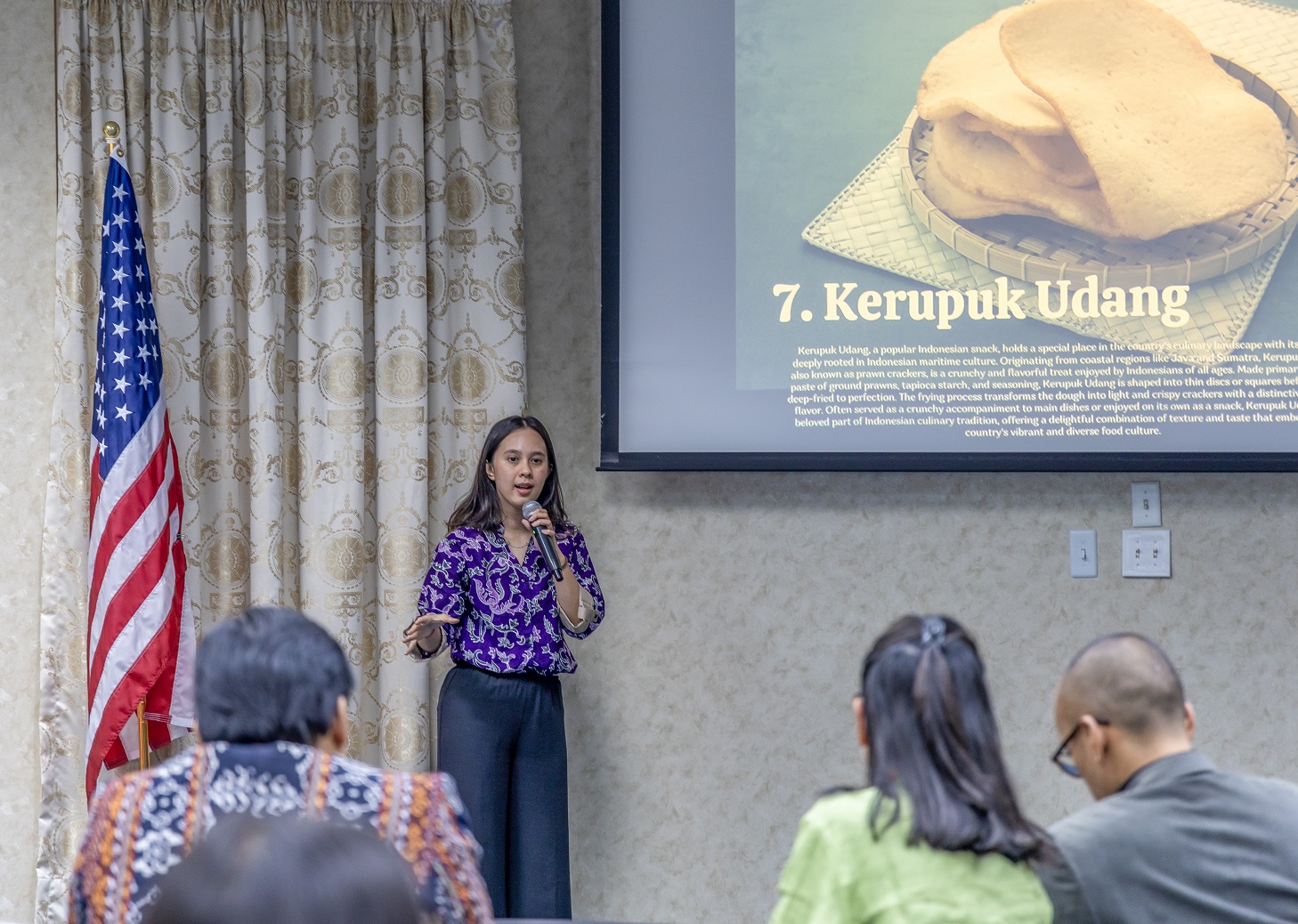
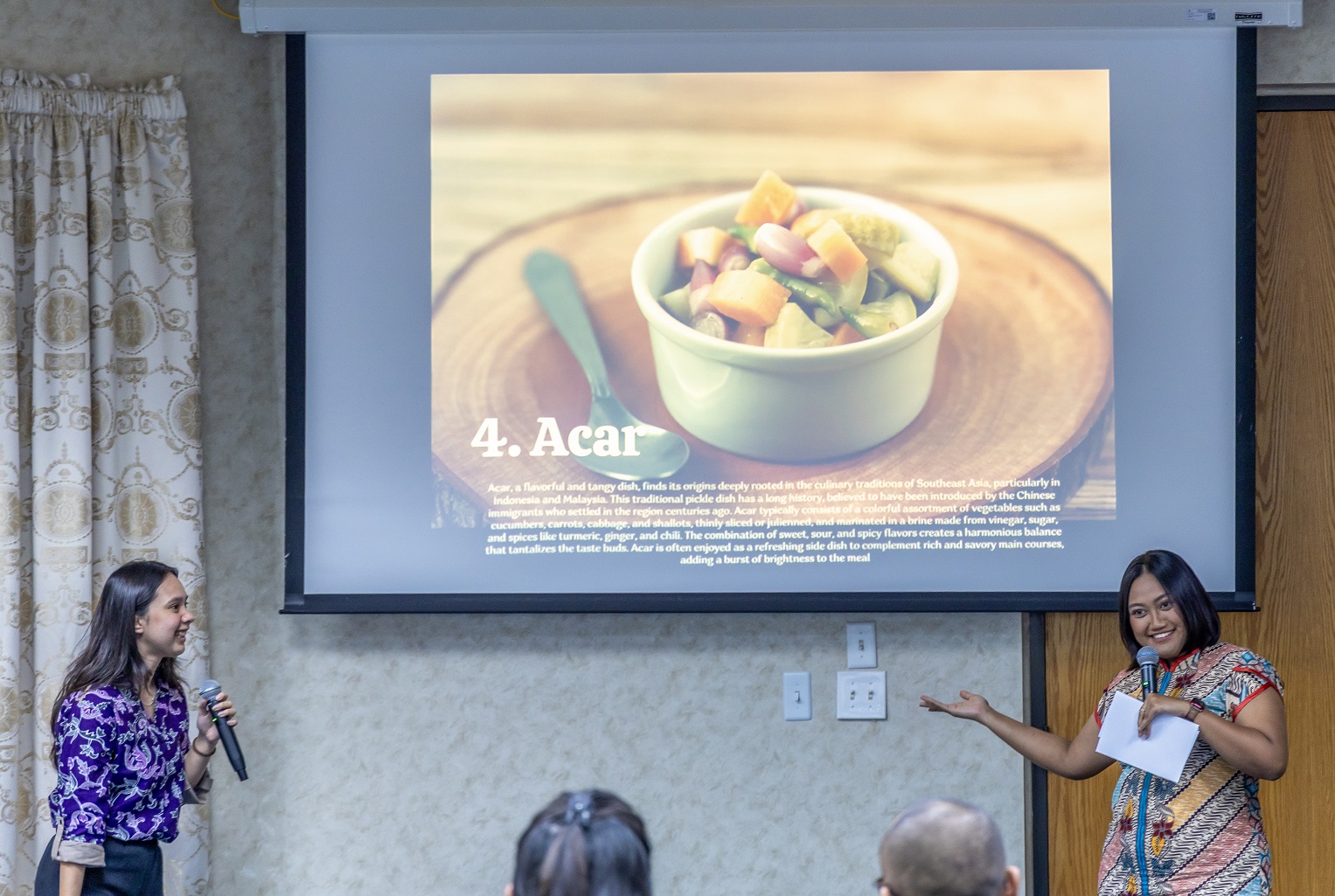
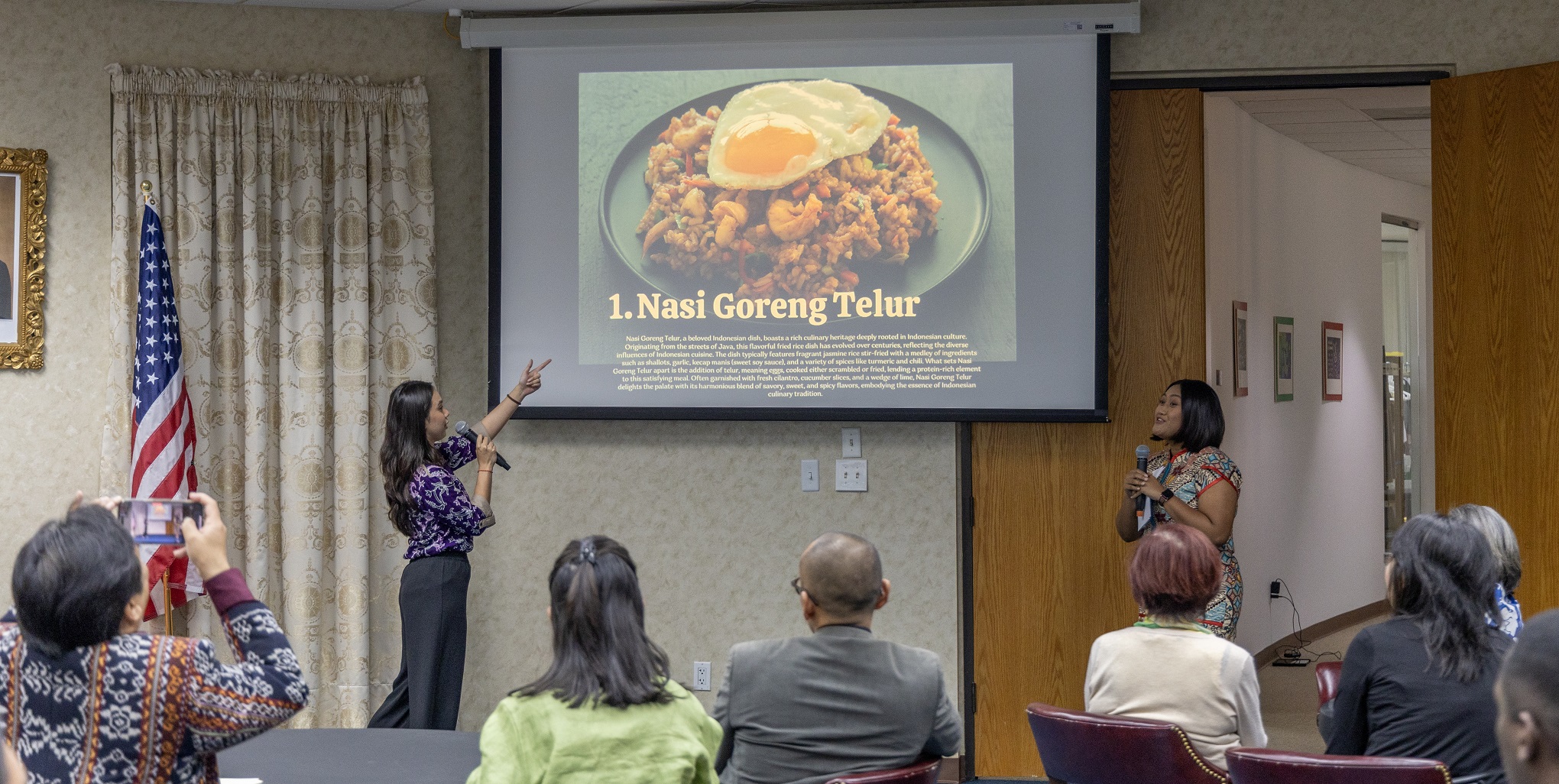
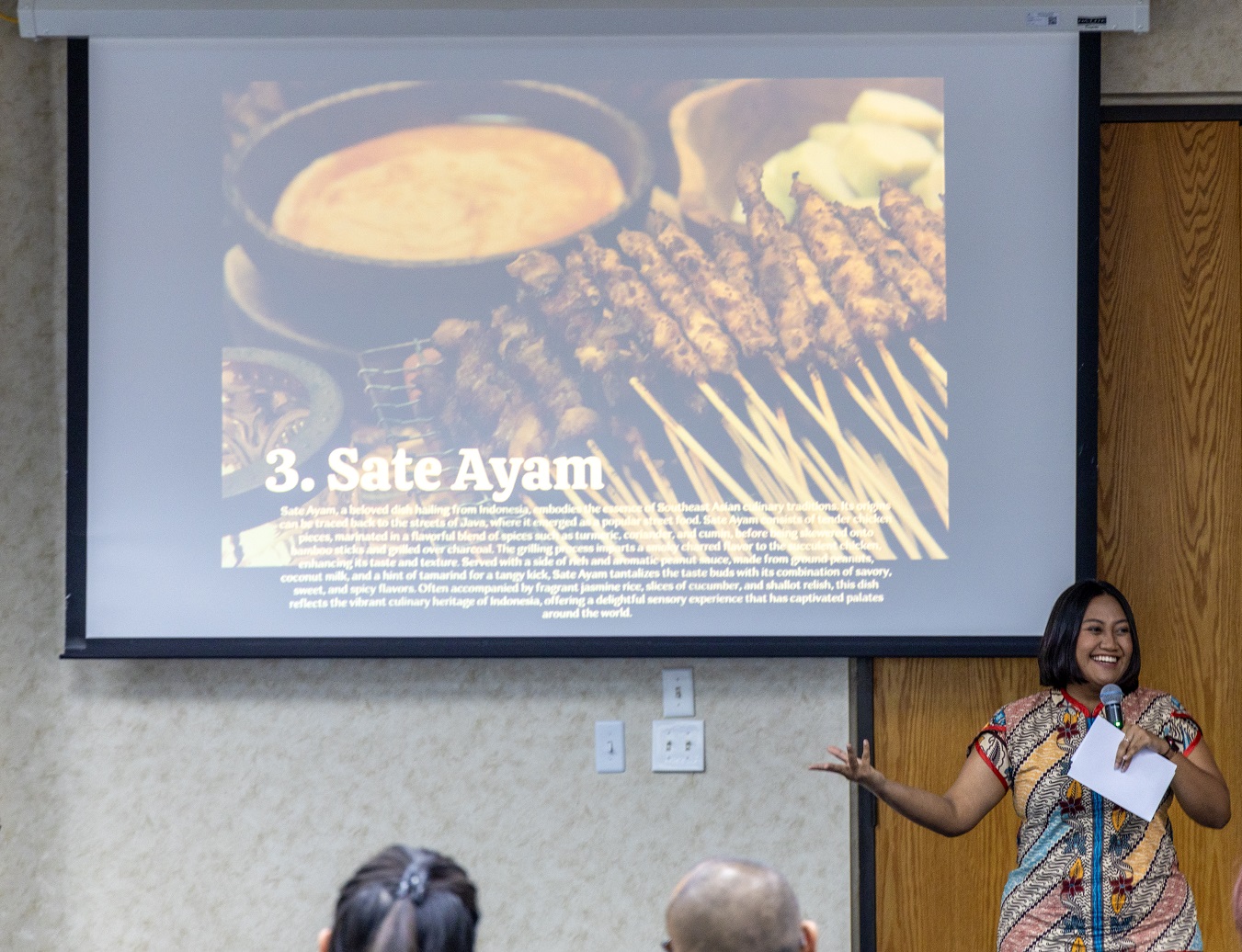
As the program drew to a close, we were introduced to an array of traditional Indonesian dishes.
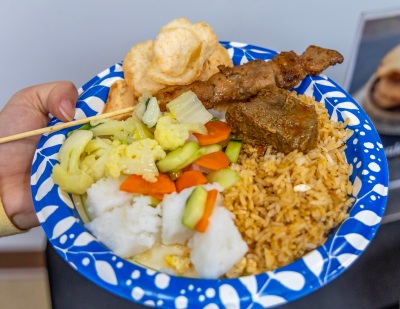
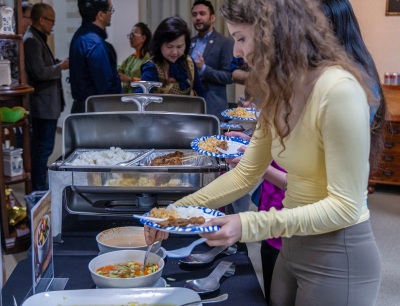
The Consulate staff explained that hosting and preparing lavish banquets is an integral part of Indonesian culture, especially on special occasions. We were presented with a buffet-style dinner laid out for us, featuring a mouthwatering selection of dishes such as Nasi Goreng, Rendang, Sate Ayam, Gado-Gado, and Lontong.
Each dish was a testament to Indonesia’s rich culinary heritage, bursting with savory flavors and spices.
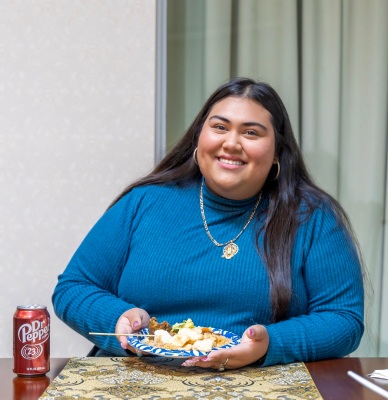
For many of us, this was our first encounter with Indonesian cuisine, and it was an experience we won’t soon forget.
Sampling these dishes was not just about tasting new flavors but also about gaining a deeper appreciation for the culture and traditions of Indonesia. Events like this enrich our understanding of the diverse world we live in and prepare us for future travels and cultural explorations.
We left with full stomachs and a newfound appreciation for the hospitality and warmth that Indonesian culture embodies. It was a perfect celebration of AAPI Month, fostering cultural exchange and culinary delight.
Welcome back to our “Visit Huntsville” blog series, where we uncover the gems that make our city truly special. This month, we’re thrilled to highlight the Sam Houston Memorial Museum and Republic of Texas Presidential Library. This historic site not only celebrates the life and legacy of one of Texas’s most influential figures but also serves as a vibrant cultural hub for our community.
Recently, I had the pleasure of visiting the museum with my dad. My dad is a history enthusiast, and sharing a piece of Huntsville’s rich heritage with him was an experience I’ll treasure.
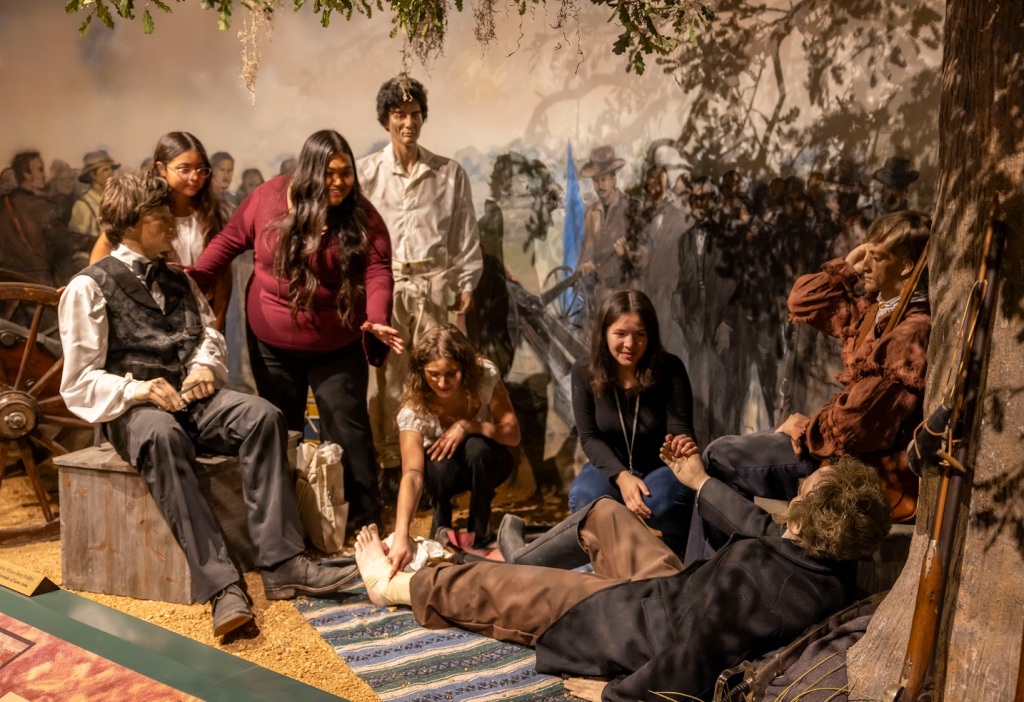
The museum itself houses an impressive collection of artifacts and exhibits that paint a vivid picture of Sam Houston’s life. My dad’s favorite artifact of them all was Sam Houston’s dapper jaguar skin vest!
Sam Houston’s Jaguar (or Ocelet) Vest
Walking through the museum grounds, we couldn’t help but feel the strong sense of history and reverence that permeates the site. One of the most poignant moments of our visit was seeing the Steamboat House, where Sam Houston passed away.
Photographer Mark Burns, Capturing the Steamboat House
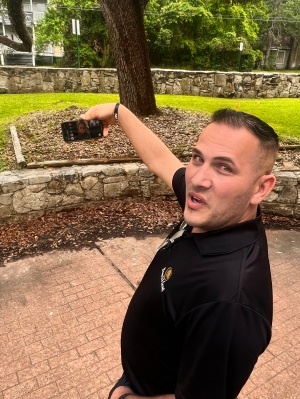
This tangible link to the past brought history to life for both of us. My dad, being the history nerd that he is, was so moved that he even called my mom to show her the Steamboat House over the phone!
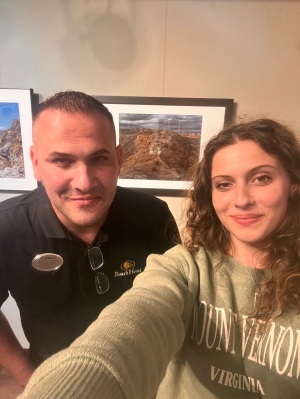
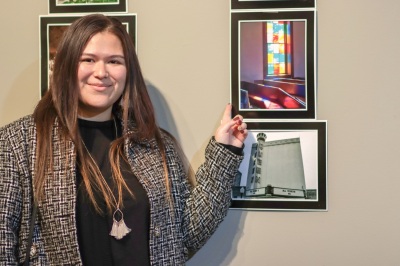
At the time of our visit, LEAP’s photo exhibit, “From the LEAP Lens,” was featured in the gallery of the Walker Education Center. It was a wonderful opportunity to share a photo I took while visiting my first state park, Palo Duro Canyon.
Vinnie and Olivia Discon
I was very proud to have captured a very special moment, and I was even prouder to share the photo with my dad, among the many other fantastic photos in the exhibit!
The Sam Houston Memorial Museum is more than just a museum; it’s a central component of our community. It provides a space for education and connection. The museum regularly hosts events that bring people together and celebrate our Huntsville community.
They have wonderful exhibits regularly, including the work of John Rogers (whose work we also saw at the Smithsonian)…
John Rogers Sculpture
…a community photo contest…
Former LEAP Ambassador Miranda Estrada identifies her favorite photo in the SHMM Community Photo Contest
…an opportunity for fun…
…and, of course, the preservation of key artifacts, the celebration of which often brings in hundreds of people, including VIPs from all over the state.
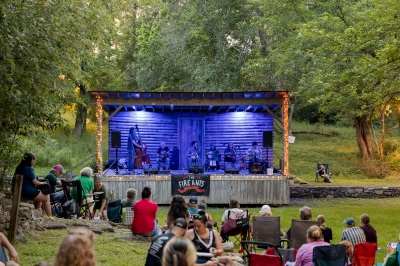
The LEAP Ambassadors had the chance to enjoy the “Sundown at Sam’s” music series, a fantastic way to start the summer, wind down, and enjoy the arts in a new way with our favorite people. It was a beautiful testament to how the arts and history intertwine to better our lives today.
Sundown at Sam
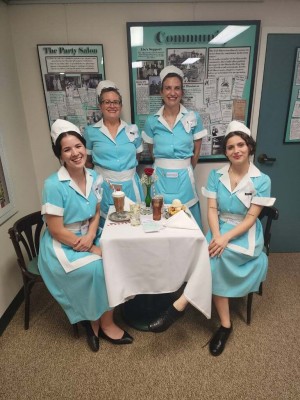
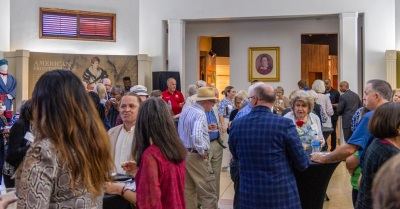
Currently on display is the Cafe Raven exhibit, which Cinthia Villarreal and I recently had the pleasure of attending (and participating in) the opening reception.
Retro “Waitresses” from Cafe Raven
This exhibit shines a light on a historic Huntsville business that holds a special place in the hearts of many residents.
The attention to detail and the stories captured in the exhibit transported us back in time, allowing us to appreciate the rich tapestry of Huntsville’s past.
Bill Dabaghi
In my eyes, the exhibit is a testament to the museum’s dedication to preserving and celebrating our local history.
Abe Dibaghi
If you haven’t yet visited the Sam Houston Memorial Museum and Presidential Library, I highly recommend taking the time to explore this community jewel. Whether you’re a history buff, a music lover, or simply looking for a peaceful place to reflect (with the exception of the occasional rooster), the museum offers something for everyone.
A Butterfly on the Museum Grounds
It’s a cornerstone of our community, a place where the past meets the present, and where we can all find hope for the future.
Stay tuned for next month’s edition of “Visit Huntsville,” where we’ll uncover another local treasure that makes our city unique. Until then, happy exploring!
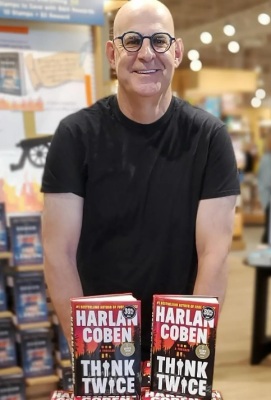
As a student at Sam Houston, I find it almost impossible not to encounter numerous criminal justice majors daily. Many have a passion for mysteries and true crime, and I have always enjoyed them as well. So, on a Saturday evening, Olivia, Cinthia, and I decided to indulge this shared interest by attending an author talk by Harlan Coben, a renowned writer of mystery novels and thrillers, who was on hand at Murder by the Book to discuss his latest book, “Think Twice.”
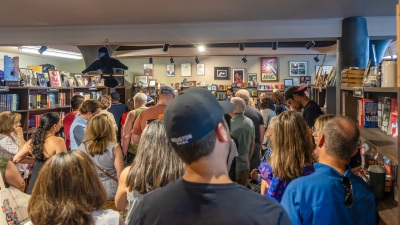
This was my first visit to the bookstore, and it did not disappoint. The atmosphere was lively; the substantial turnout indicated Harlan Coben’s widespread appeal.
His popularity is further shown by the numerous adaptations of his books into television series, such as the acclaimed Netflix show The Stranger, which was released in 2020.
When I began perusing the novels lining the shelves, my gaze fell upon some familiar names. Among them was Jeff Guinn, who recently came to SHSU in September of 2023 to share his knowledge; he spoke on topics such as Waco, Jim Jones, and Bonnie and Clyde. His books, including Manson: The Life and Times of Charles Manson and his latest release from 2023, Waco: David Koresh, the Branch Davidians, and A Legacy of Rage, were prominently displayed.
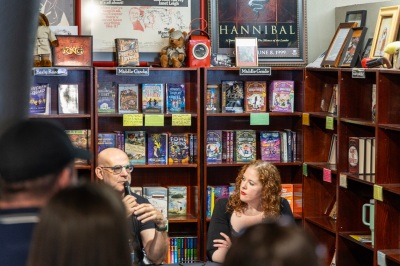
I continued to scan the titles; however, the eruption of laughter from the audience interrupted my thoughts, drawing my attention to Harlan Coben. His quick wit and humorous anecdotes thoroughly entertained the crowd, and I found myself awaiting each twist of phrase and clever remark.
As he addressed the audience, he shared insight into his writing process, emphasizing that he does not approach his novels with the sole intention of creating a successful Netflix Show. “If it’s good, then it’s good, but if not, then it’s fine,” he remarked. This highlighted his dedication to crafting meaningful stories rather than solely aiming for commercial success on streaming platforms.
But that success has clearly helped his sale and crowds. For most of the event we weren’t even able to see Coben!–although we did sneak to a spot that allowed us to get a partially obstructed photograph.
He elaborated on his process further when an audience member inquired whether he begins with the story or the characters. Coben noted that while many writers claim to start with characters to sound more artistic, that is often not the case. He clarified that he typically begins with an idea and then delves into determining who will narrate the story. That is, who the main character will be. He stressed the importance of not separating the character from the plot. Some attendees appeared puzzled by this explanation, a sentiment Coben seemed to discern from their expressions.
To elucidate, he cited the example of Batman’s origin story. He recounted how Bruce Wayne witnessed his parents’ murder, leading to his transformation into an orphan and, eventually, Batman. Coben then posed a question to the audience: “Was this aspect of the story character-driven or plot-driven?” This prompted the realization that it encompassed both character development and plot progression. The clarity provided by this example effectively reinforced Coben’s earlier point about the inseparability of character and plot.
Harlan Coben’s captivating talk not only entertained us but also provided invaluable insights into the art of storytelling. From the comforting ambiance of Murder By The Book to the contagious laughter echoing through the crowd, every moment was a testament to the profound impact of literature in fostering connections. This memorable evening reaffirmed my passion for the enchanting realm of mysteries and true crime. With eager anticipation, I look forward to returning to the bookstore to immerse myself in its treasure trove of stories and experience more fulfilling author talks.
With the semester drawing to a close, the Pre-Law Society hosted its Spring Social, a fun-filled evening with a lot of snacks. What’s better, we held it at the Wynne Home, where we surrounded by its beautiful art!
Although the evening was designed with fun in mind, the activities we all law-themed. Thus, we have a debate tournament based on childhood cartoons such as Scooby-Doo and Sponge-Bob SquarePants, the latter of whom was charged with a DUI in our retelling.
Then the jury groups switched with prosecution and defense for the next case: the murder of Scooby-Doo (spoiler alert: Velma did it with poisoned Scooby-Doo snacks in the kitchen). All groups reviewed their charges….
…and were given a four-minute time frame to explain key points of their positions and a one-minute rebuttal. The jury from both cases decided on the best arguments for both cases choosing the two teams to go head-to-head for the final debate: Texas v. Bradley.
Both teams argued very well, and the jury decided Emily Albright, Lillie Bourgeois, Katherine Burnett, Nicole Erazo, and Natalie Mujica won the debate, with good sportsmanship shown all around.
Next after a long break of Italian soda and snacks…
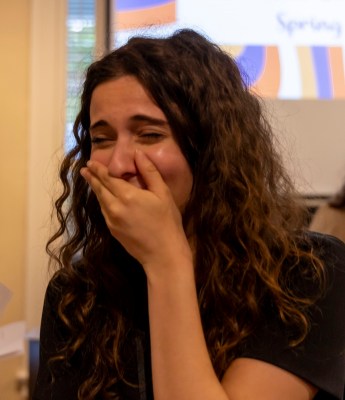
…our members played a game of Jeopardy. If our debate game did not bring out our members’ competitive sides, our game Jeopardy game certainly did! The question consisted of information about past Pre-Law Society Meetings, “Is it legal”, Sam Houston University, The Wynne Home, and Spring. After lots of debating, yelling, and cheering…
…Neehal Ahmed, Chrisi Biello, Olivia Discon, Mark Harkrider, and Isaac Mokrane won by a landslide!
Our members finished out the night with chips, cookies, and Scooby-Doo snacks (not poisoned of course) and shared funny stories from home and or work.
This social brought out the competitive sides of all our members who attended, forged new bonds, and created new friendships. Thank you to the Wynne Home Arts and Visitor Center for providing us with a space to host our social; and thank you to our Spring 2024 Semester Planning Committee for creating these activities and a fun-filled night.
With the end of the semester approaching, we had a busy Pre-Law Society meeting in order. Not only did we have a terrific guest speaker, we also had our semesterly cording-ceremony for our graduating seniors.
So, after a bit of preliminary business…
…we had the honor of having Judge Tracy Sorensen of Walker County Court of Law present. Judge Sorensen is a graduate of Sam Houston State and South Texas College of Law at Houston. Before her time as County Court at Law Judge, Sorensen started her law career as a family court attorney and, later, criminal defense attorney.
She practiced law for almost a decade before assuming office in 2015; she has been reelected twice since then. Sorensen described her somewhat non-traditional path through college and law school, while also describing her career as a practicing attorney and as judge.
It was a great opportunity to hear about two different occupations involving law, both of which are of interest to pre-law students.
With this being the last meeting of the semester, we celebrated our 23 graduating seniors, three of which were Pre-Law Society officers!
At the end of the meeting, we created a small photo booth for seniors to show off their new regalia and take pictures with their pre-law friends. We are truly sad to see them go, but we wish them luck on their future prospects, and in law school!
Thank you to Judge Tracy Sorensen for taking the time to come and speak with us, and thank you to our seniors for their time and dedication to the Pre-Law Society. See you next time at our social on April 24 at the Wynn Home Arts and Visitor Center! please follow our Instagram @prelawsocietyshsu for more information and future events. We wish all students luck on their finals and have a good summer!
As our readers might guess, the LEAP Ambassadors are huge fans of the Huntsville Rotary Club and its members. So when given the chance to attend a Rotary meeting as guests, we always ‘leap’ at the opportunity!
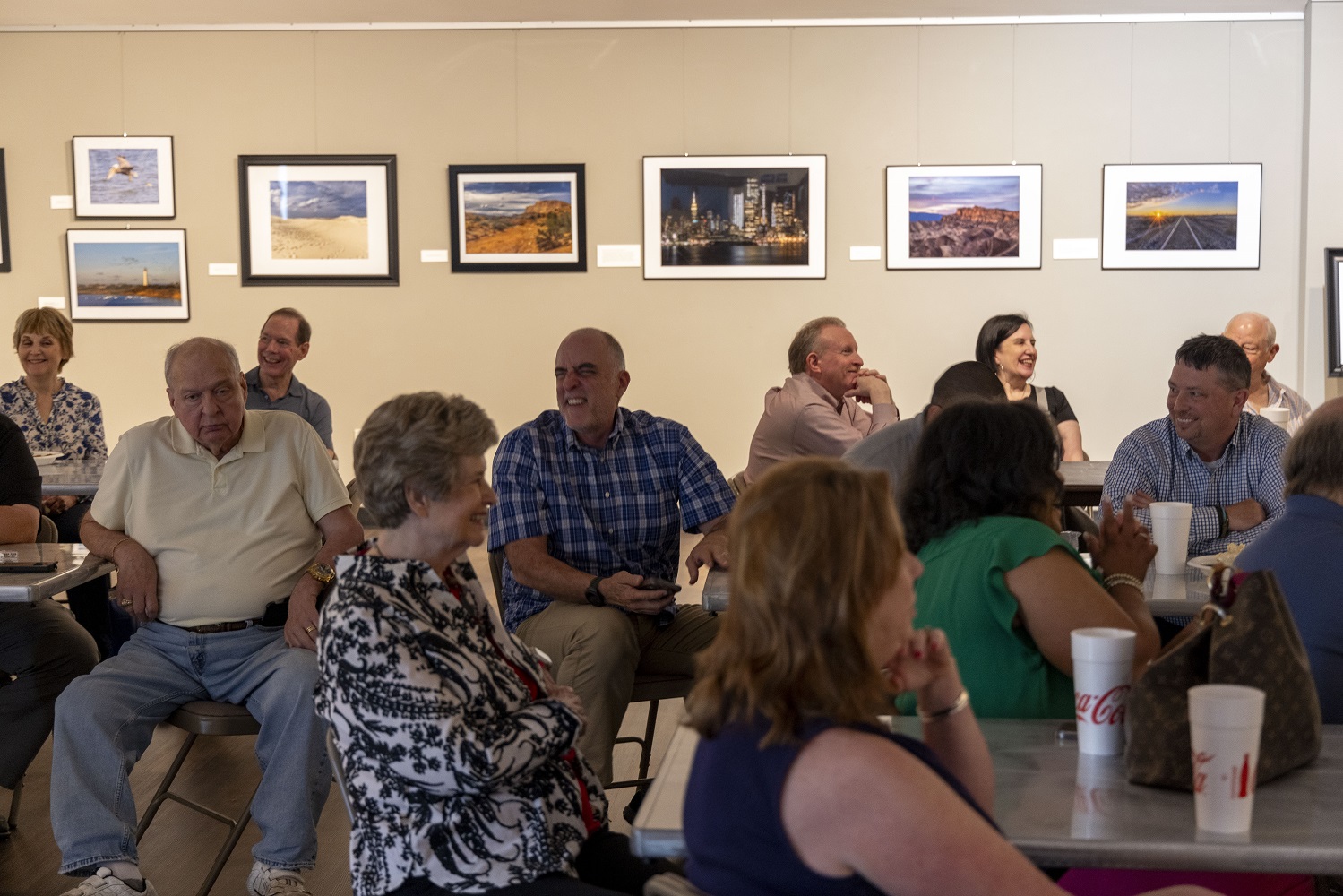
Typically, Huntsville Rotarians meet at the Sam Houston Memorial Museum (SHMM) in the Walker Education Center conference rooms. However, this week the meeting location was moved up one floor to the exhibit gallery, which just so happens to be where our exhibit, Photos from the LEAP Lens, is on view. Rotary President Michelle Lyons reached out, and asked if we would join the meeting and provide more detail about our exhibit.
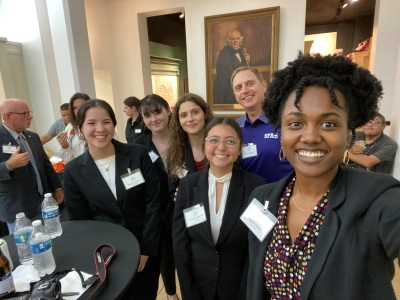
Olivia, Michelle, Jessica, Cinthia and I accompanied Professor Yawn as the guest speakers for the lunch, and we were welcomed, as it typical for the hospitable Rotarians, with open arms and smiling faces.
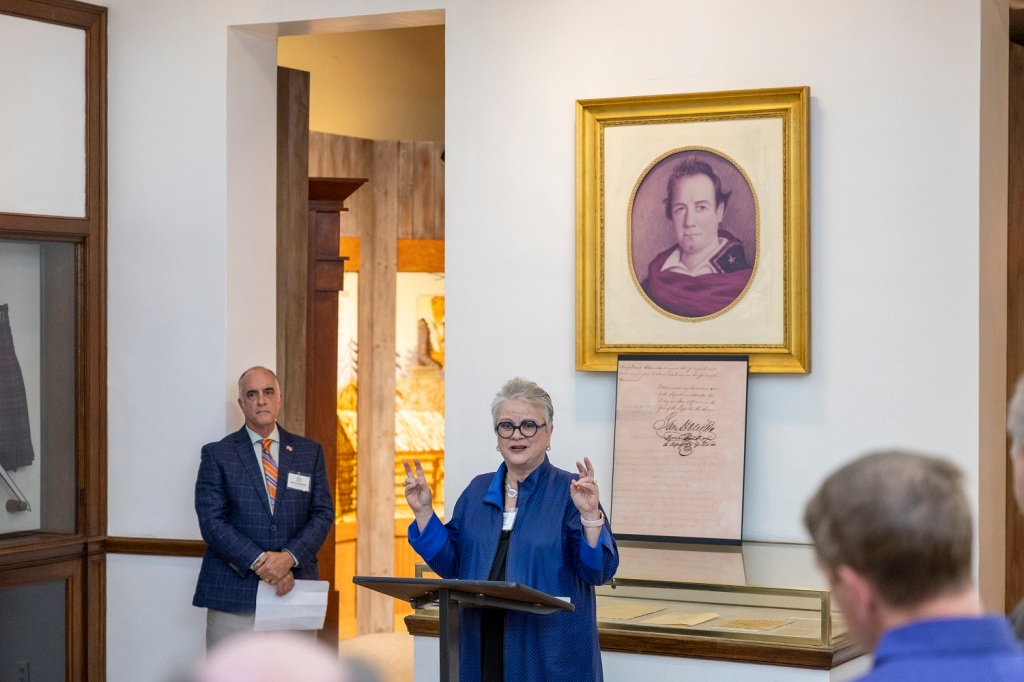
Following the official business of the meeting, Derrick Birdsall, Director of SHMM, gave a wonderful introduction and explained how Photos from the LEAP Lens came into being.
Rather than describe each photo in the exhibit and explain the exact conditions that made such a photo possible, which would undoubtedly bore everyone in the room, photographer or not, Professor Yawn chose a few photos that best incapsulated the LEAP principles and model. Our very own Olivia stepped into be Vanna White for the hour, and did a great job impersonating the TV personality.
From the New Mexico trip, Professor Yawn Cinthia’s version of the famous Rancho De Taos. Not only did the group rise at 4am for the chance to get this shot, but they were also able to draw connections to Ansel Adams and Georgia O’Keeffe who both famously provided their perspectives of Rancho De Taos.
One of the most favored photos from the exhibit was Olivia’s Palo Duro Canyon State Park. Much to the surprise of, well everyone, this photo was taken from Olivia’s first time in a state park! As all LEAP Ambassadors, past and present know, it’s impossible to be in LEAP without experiencing some firsts.
While most of our photos are of the outdoor and nature sort, a few exceptions can be found in the exhibit, one of which is the New York Skyline from a few years back with some LEAP Alum. Interestingly enough, this site was where Alexander Hamilton and Aaron Burr dueled, tying both history and photography for perfect LEAP educational experience. Professor Yawn used this photo to describe some of the mechanics of LEAP trips.
The last two photos were from the recent DC trip, where Olivia, Cinthia and Michelle attended the National League of Cities Conference, and many other wonderful sites. In preparation for the trip, Olivia read a book called “A Rift in the Earth” by James Reston, which goes into the processes and controversies surrounding the erection of the Vietnam Memorial. During this part of their visit to the National Mall they were met with the amazing surprise of actually meeting the artist of the Memorial herself, Maya Lin.
The second was an amazing shot of Monticello, Thomas Jefferson’s home in Virginia. On this trip, the Ambassadors visited their first 3 presidential homes and were able to experience history first hand.
This academic year, we’ve had the privilege to attend Rotary three times in various capacities. Each time we depart Rotary meetings after snapping selfies, or hugging our friends, we are grateful to know that we have become part of such a wonderful community.
“Photos from the LEAP Lens” is on view until May 12, 2024, in the exhibit gallery at Katy & E. Don Walker, Sr. Education Center, located at 1402 19th Street in Huntsville.





















 Center for Law, Engagement, and Politics