Lubbock, Law, and the LSAT

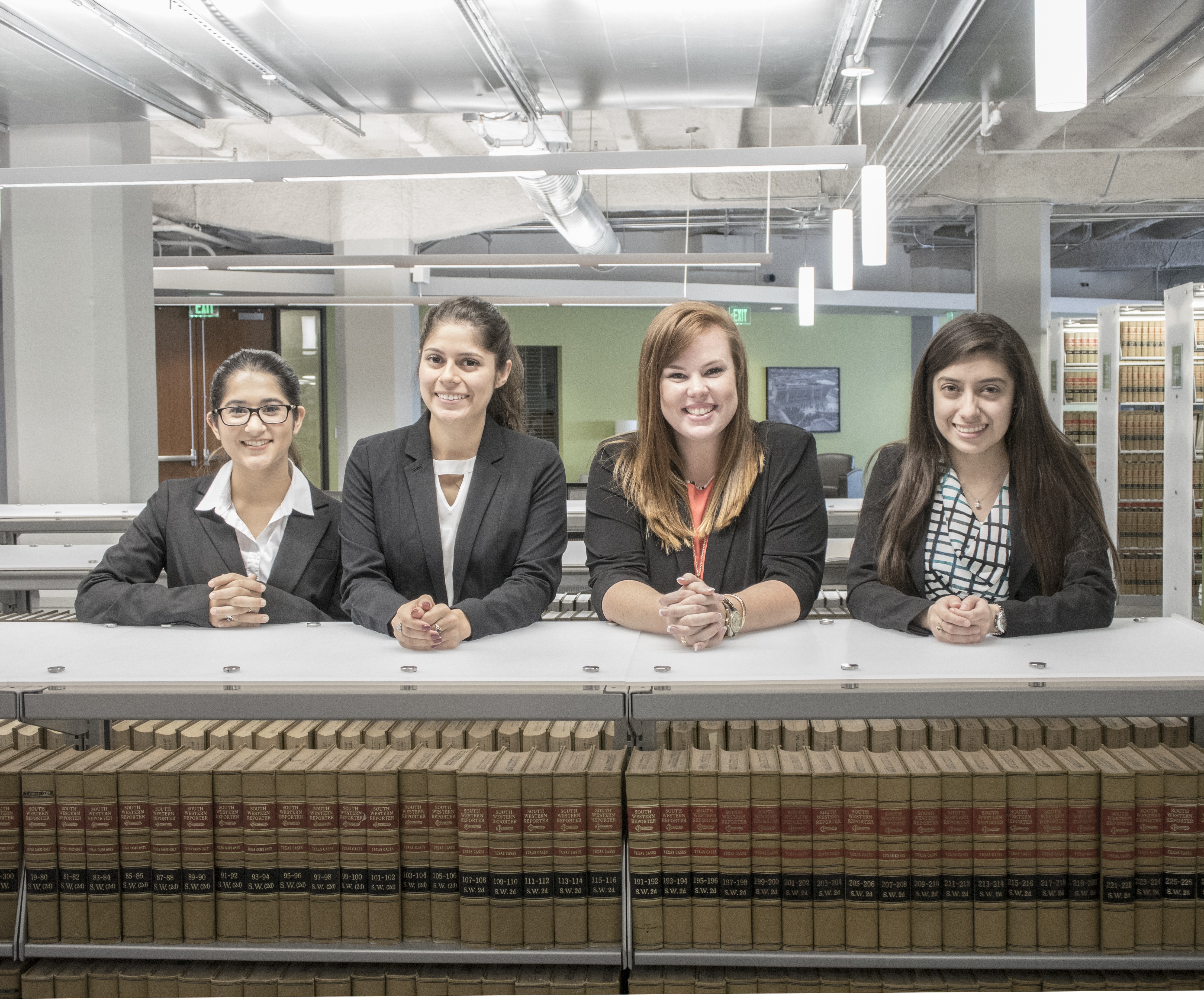
For SHSU’s Moot Court team members, this weekend promised to be a full one.  We headed to Lubbock on Thursday, leaving campus around 1:00pm.  With a tournament on Friday and Saturday, the weekend was sufficiently stressful, but half the team members were also set to get their LSAT scores, adding a bit of stress and spice to a long weekend.

The weekend’s tournament is being held at Texas Tech Law School.  Thirty teams from Texas (plus the powerhouse US Air Force team) will be on hand to compete.  As a sign of the rigor involved, 43 teams originally signed up, but more than a third of these teams dropped out in the week prior to the competition, despite having already paid admission fees.  Preparation for this competition involves reading 19 cases (approximately 20 pages each), and practicing extensively on body language and speech delivery.  We may not win, but all of us are better speakers and more knowledgeable about the law as a result of our work.

With that in mind, we headed west after our Thursday classes. There’s not a lot between Huntsville and Lubbock, Texas, and that made for a long drive, although this did give us some study/prep time, helped on by our coach, Jean Loveall.

Moot_Court_Studying_WebThe drive was made longer by bad weather most of the way.

West_TX_Sky_WebAnd then the drive got more stressful around 6pm, when our three senior members got emails indicating their LSAT scores were available.  Well, this made the drive much more interesting!  After some group discussion, the three seniors decided to postpone opening their emails until they got to the hotel.

Around 8pm, we pulled in to Perini Ranch steakhouse, which is in Buffalo Gap, Texas (about six miles south of Abilene).  The steakhouse’s origins date back to 1973, when Tom Perini began catering for private affairs.  He opened his steakhouse in 1983.  The restaurant did well, but business took off in 1995, when the New York Times recognized his steaks as the “mail-order gift of the year.”  With that recognition, profiles in Texas Highways and Texas Monthly followed, and at the beginning of the G. W. Bush presidency, Perini was asked to serve steaks to members of congress from the White House lawn.  It was a memorable day–not because of the steaks, but because it was scheduled for Tuesday, September 11, 2001.  The “steakout” didn’t happen, at least not on that day, as the history-altering terrorist attacks forced a cancellation.  More happily, Tom and Lisa Perini were invited back to the White House the next year, and the event proved successful.

Thankfully, our dinner lacked international dramatics and, despite the looming LSAT score discovery process, we were able to try some new foods and enjoy the steak.  For appetizers, we all tried “Quail Legs,” which was a new dish for about half of us.  For the entree, we all ordered steaks, which we split.  The steaks have a great flavor, a product of, among other things, a great “streak rub” (which, incidentally, is for sale online and in the restaurant store). For dessert, we had bread pudding (great!), chocolate cake (I didn’t sample, but it got good reviews), and in an experimental flourish, “Jalapeno Cheesecake.” It was very good!

Special mention should be made of the fact that Austin ate three whole jalapenos during dinner. There was no real explanation for this act of self-torture, other than some sort of behavioral distraction from his impending LSAT discovery.  On a related note, Austin also drank six glasses of water at dinner.

After the obligatory pose at the giant armadillo outside of Perini Ranch…

Armadillo_Perini_Ranch_Web

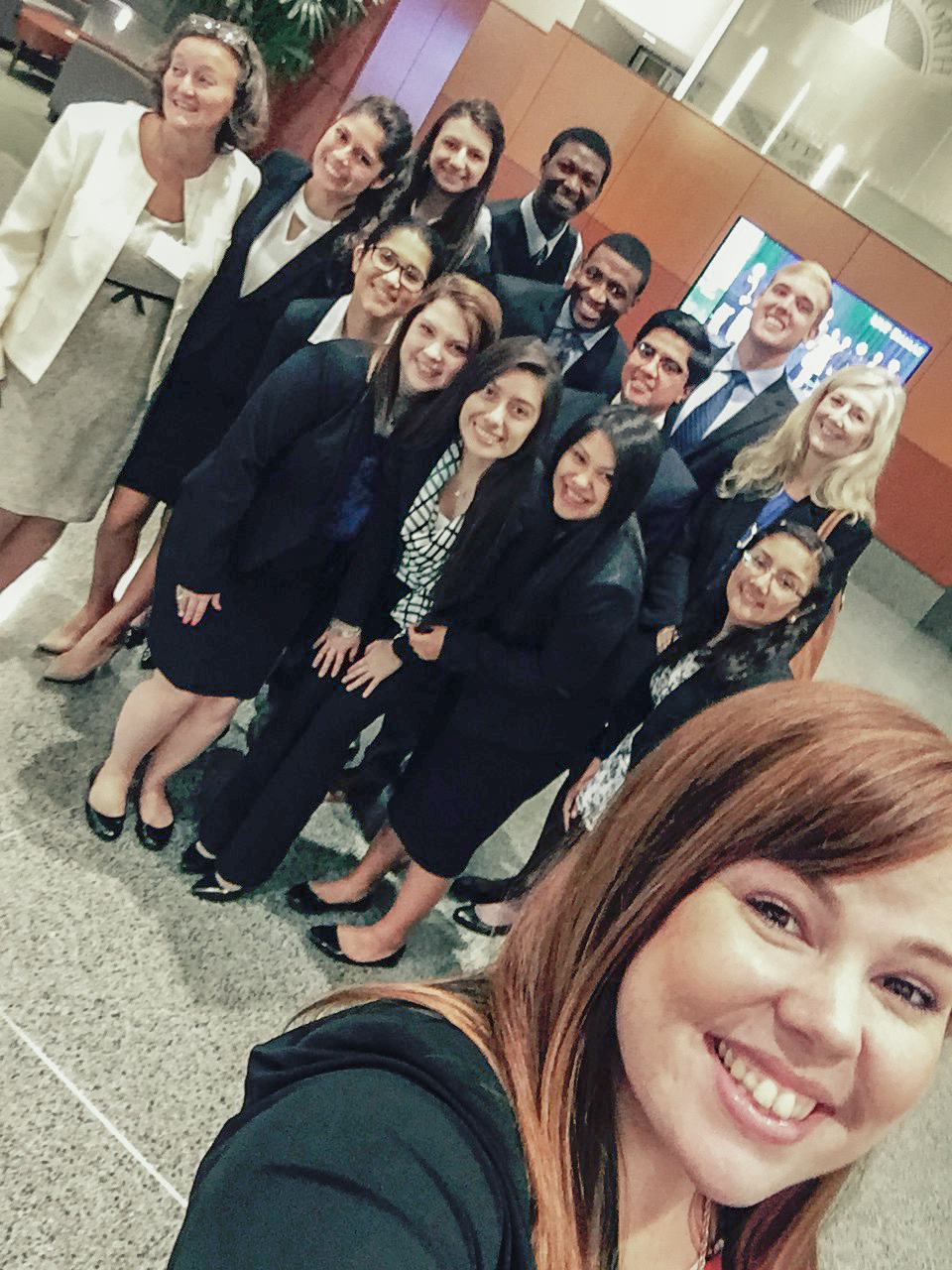
…we settled in for our final stretch.  We got in at midnight, when the students wasted no time accessing their LSAT scores. The students have worked hard to position themselves for law schools, and their work has paid off.  Armed with solid to strong LSAT scores and excellent grades, their work has been a model for the younger members of the team.

And on that happy note, we moved on to our rooms, hoping to get some rest prior to our competition on Friday!
Mock LSAT & Law School Preparation

For the past five years or so, the LEAP Center/Junior Fellows have teamed with Kaplan Testing to offer a Mock LSAT every semester.   It is part of a larger set of offerings–and informational resources–that SHSU provides to help students fulfill their law-school goals.

Taking the Mock LSAT serves at least two functions: (1) It prepares them for a testing environment, making them more comfortable when they take the real thing, and (2) gives them a better idea of where they stand on the test and, therefore, how much more studying they need to do.

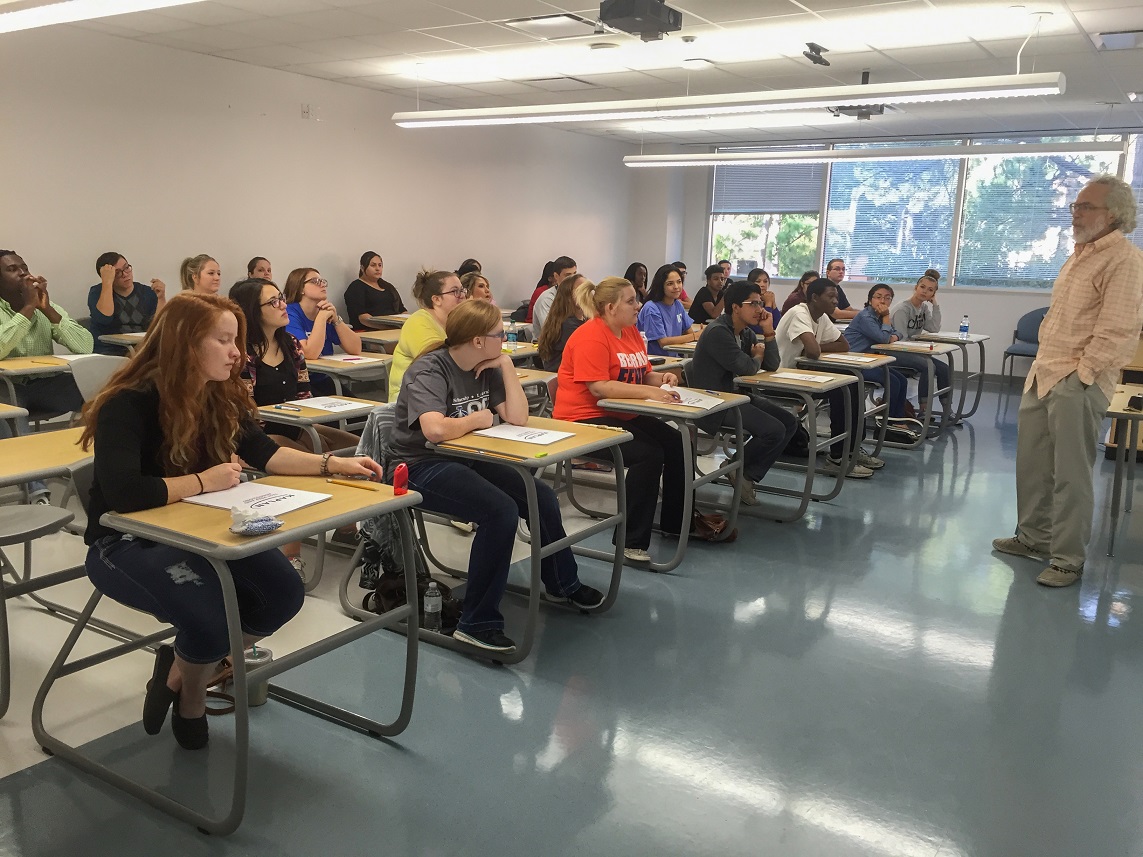
With those objectives in mind, 34 students showed up for the Mock LSAT on Saturday, October 17, 2015.  Ricky Kaplan, an instructor from Kaplan Testing, joined them, providing the test and, afterward, a few pointers.

Mock_LSAT_Web
The actual test is approximately four hours long.  There are five sections of the test, and each is 35 minutes long, with a short break in between.  One of the five section is “experimental,” meaning that only four of the sections count, but the takers do not know which one is real and which is experimental.  At the end, there is a 35 minute writing section.  The writing section doesn’t count toward the LSAT score (120-180 scale), but it is sent to the law schools.

The Mock LSAT doesn’t have the experimental section or the writing section, but it is the closest thing that students are likely to get to the real test.  Often, students take the test at home under less-than-realistic conditions (untimed or generously timed sections, frequent breaks) and then score much lower on the real test.

The LSAT is offered four times a year: in February, in June, in late September (or early October), and in December.  Planning ahead is a key factor for students.  The December test, for example, occurs the Saturday before finals.  The February test occurs after some law schools’ application deadlines.  Planning your college career such that you will be able to prepare for the LSAT, take it during a fortuitous time, and still get all applications in is part of the law-school success story.

Not surprisingly, according to national data, students with better GPAs and LSAT tend to apply earlier in the application process, with lower scorers and lower GPA-students applying well into the spring.  To elaborate, about half of the students apply before January 15 of the year they want to be admitted.  Of the students who apply by January 15, the mean LSAT/GPA is about 157/3.28.  Of those who apply in March/April, the mean LSAT/GPA is less than 150/3.1.  In short, students who have prepared more fully throughout their college careers tend not to procrastinate, have less need to retake the LSAT, and can more easily get letters of recommendation and other materials together.

One other set of facts that might be interesting.  What majors are most likely to get into law school?  The information below provides students’ majors, the percentage of students with that major accepted to law school, and the total number of students with that major accepted to law school.  Political Science again leads the way, with about three times as many POLS students admitted to law school as any other major.

POLS: 81.3%, 11,791
Psychology: 79.05%, 4,133
History: 84.22%, 3,420
English: 80.81%, 3,230
Criminal Justice: 64.07%, 2,473
Economics: 83.07%, 2,518
Philosophy: 85.48%, 2,255
Sociology: 73.02%, 1,624
Communications: 74.84%, 1,541
Business Administration: 67.60%, 1,258
Accounting: 73.26%, 882
Marketing: 73.12%, 703
Management: 62.28%, 317
Classics: 88.42%, 275
Social Work: 58.23%, 145

As expected, the results tend to track with the breakdown of LSAT scores by major.  At the top of the rung, you have majors such as Philosophy (157.4 mean LSAT), English, and POLS.  The bottom four, all coming in below the national average, include Sociology, Communications, Business Administration, and Criminal Justice.

The results aren’t surprising.  Majors with the most reading involved (Philosophy, Classics, History, POLS, English) have acceptance rates above 80%.  Bright, intellectually curious students tend to be attracted to these majors, and the majors tend to encourage (require!) lots of reading and critical thinking.

More hands-on oriented majors such as Criminal Justice and Business tend to perform less well on the LSAT and, by extension, tend not to get into law school at the same rates.  The same is true for the “soft” social sciences, such as Sociology and Social work.

Of course, this doesn’t mean that switching your major will help you get into law school.  The best strategy is to follow the field you love, and you’ll likely study more and make better grades.  But if that field doesn’t require a lot of reading (or a lot of rigorous reading) or much in the way of critical thinking and writing, then you may wish to add an academically rigorous minor and/or to supplement your formal curriculum with much leisure reading and some organizational work that will require genuine critical thinking (e.g., Moot Court).

Over the past ten years, law school applications have generally declined.  The number of applicants ten years ago, for example, was 37% higher than this past year across the nation.  But that has not been true at SHSU.  In fact, law school applications from SHSU have gone in the opposite direction.  In 2005, 67 people applied to law school.  Since then, applications have increased 50%, and the number of SHSU students accepted to law school has tripled.

As a result, no doubt in part because of the Mock LSAT and other preparatory offerings at SHSU, the University is now one of the “Top 240 Feeder Schools” as measured by the law school admissions council.  After moving onto the list in 2009, SHSU now ranks 156 in the country, in the top six percent nationally.


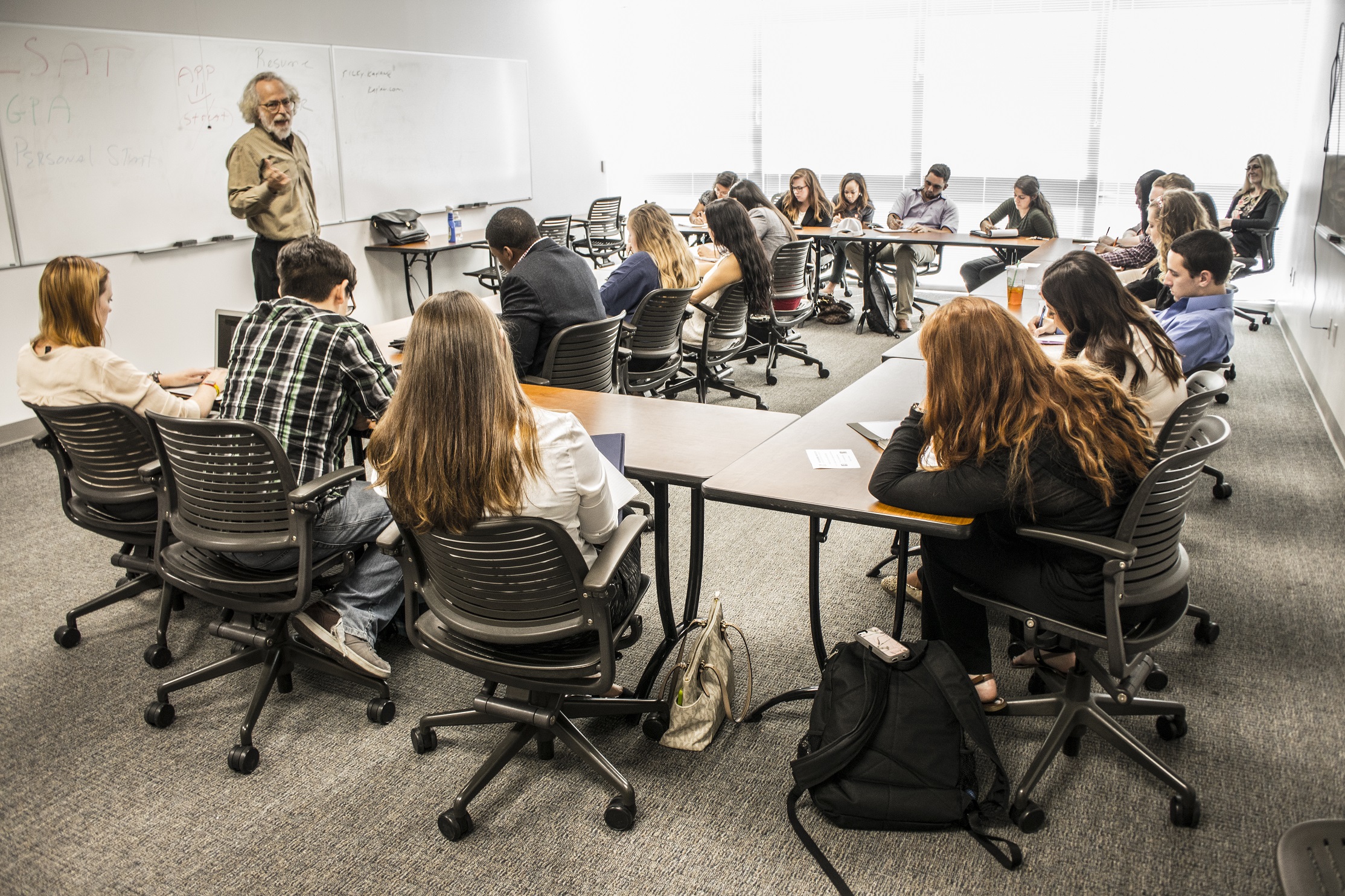
Law-School Admissions Workshop

Twenty-five SHSU students just moved closer to enrolling in law school, thanks to an appearance by Ricky Kaplan at the LEAP Center’s first-ever “law-school workshop.”  Kaplan, a consultant and instructor for Kaplan Testing, also served as Legislative Counsel for the state of Oregon, Assistant Attorney General for the state of Illinois, and Assistant Attorney General for the state of Texas.  He also has a BA from U of Minnesota, a Masters from Northwestern, and a law degree from U of Minnesota.  He knows about law.

And he shared it with SHSU students last week, kicking off the workshop with the major factors that law schools look at when deciding whether to admit a student.  The factors are:

  1. LSAT
  2. GPA
  3. Personal Statement
  4. Letters of Recommendation
  5. Resume
  6. Background

He purposefully led with LSAT because, whatever its flaws, “it is the only measure the law schools have that is consistent across every student in the US, and it does a pretty good job of predicting first-year law school success.”

Law_School_Workshop_Kaplan_Speaking_Web

The LSAT and GPA guide students in which law schools to apply.  If a law school, say Texas Tech, has a mean LSAT of 155 and a mean GPA of 3.4, then a student with a 156 and 3.5 is probably going to get in.  A student with a 149 and a 2.9 probably won’t.

While the numbers for schools vary from year to year, the following numbers generally reflect the law-school “means” of Texas law schools:

UT: 165, 3.65
SMU: 161, 3.6
Baylor: 160, 3.5
UH: 159, 3.5
TX Tech: 155, 3.4
TAMU: 154, 3.3
South TX: 150, 3.1
St. Mary’s: 150, 3.0
UNT: 148, 2.9
TSU: 145, 2.9

While these two measures (LSAT and GPA) are the most important factors in getting into law school, the personal statements, letters of recommendation, and the resume can also make a difference in a close case.  His advice for the personal statement was to be genuine, to emphasize narratives, and to emphasize the positives about yourself.  When stuck with writer’s block, he encourages students to forget they are writing a personal statement and write four-five stories about their life.  These often reveal something meaningful about the person and can subsequently form the basis of a compelling personal statement.

Law_School_Workshop_Kaplan_Speaking_2_Web

For personal statements, go with people who know you and your work.  Professors are probably best, but for people out of college for several years, employers can write the letters.  Avoid “friends of the family” or folks you think are important but aren’t directly familiar with your critical thinking, writing, and communication.

After arming us with advice, Kaplan took a break and then worked with individual students on their personal statements, answering questions about addenda to the applications, and how best to prepare for the LSAT.

Such advice may not get students into the University of Minnesota or Northwestern, but it will maximize the chances they have of getting into the best law school available to them.


A Last Day in Dallas

After a roller-coaster weekend at UNT Law, we had a half of a day left in Dallas before returning to SHSU.  We decided to use it by having a little fun and enjoying good food.

We could have had both in Klyde Warren Park, one of Dallas’s newest success stories.  Known as the “front lawn of the arts district: for its proximity to the arts district, the park provides an interesting 5-acre public space for families to enjoy a morning or afternoon.  It also has a ring of food trucks, offering fare of every kind, making it a great place for a group as diverse as ours to go.  But because we like to explore, we had our fun at Klyde Warren Park, before moving elsewhere for lunch.

There are large green spaces at Klyde Warren, with a .45-mile walking trail around it.  Along the trail or mini-recreation areas: a kids’ park, a board-game station, a reading library station,

Jamaus_Beatriz_Brian_Park_Web
a putting green, a Foosball table, and an amphitheater.  The amphitheater can be used for bands and such at night, but is used for yoga at 10am daily.  The day we were there, almost 100 people were participating in the yoga relaxation/exercise techniques.

But our primary purpose was to throw the frisbee around, and we soon learned who could catch.

Austin_Frisbee_2_WebAustin, for example, can catch.  In the picture above, notice the Jordanesque-shadow. Of course, he played college football until this year, so we expected him to be athletic.

Austin_Frisbee_WebAs it turns out, though, Kaitlyn Tyra can also catch, and she may be a dark-horse for our Spring 2015 Charity Football game.

Professor Yawn is getting up there in age, but we let him play because he grades us.

Yawn_Frisbee_2_Web

We think Megan can catch,  but we aren’t really sure.  She had a strict rule to only move one step in any direction, which earned her the name “One-Step Chapa.”  Here she is impersonating a stork.

Megan_Frisbee_WebBut the day wasn’t particularly intense for any of us.

Park_Frisbee_WebNotice the halo over Professor Yawn’s head.

Following some more fun, we had to call it a day at the park…

Beatriz_Brian_Park_Web

…and return to the hotel.  As we preparing to check out, the hotel went dark.  The electricity went out.  The LEAP Center Ambassadors pride themselves on adaptability, but this was difficult for Constance Gabel, who was stuck in the hotel elevator.  The fire department was called…

Holiday_Inn_Firetruck_Web

…and Constance was extricated from the hotel elevator.

Just in time for us to eat at Twisted Root, a restaurant that specializes in burgers and root beer.  Their burgers are wonderful, and their root beer is interesting.  The flavor of the day was “Irish Creme Root Beer,” which was better than the root beer from the last time we were there: Grape Root Beer.  Of course, that was better than their “Coconut Root Beer.”  Their regular root beer is excellent.  And their burgers are great.

Twisted_Root_Burger_WebOne of the interesting aspects of their restaurant is that, when you order, they provide you with a name from popular culture as your signal that your burger is ready.  In our group, we had Eva Mendes (Kaitlyn), Serena Williams (Beatriz), Apollo Creed (Austin, of course), Matlock (Yawn), Mike Modano (Brian Aldaco), and others.  It was interesting to see who knew which references, a process that led Austin to say, “Son, you need to watch more television” to one of the newer members.

With a general consensus that Twisted Root is a good place to lunch, we allowed Constance one more groupie for the weekend…

Groupie_Twisted_Root…and headed home.

But not for rest and relaxation!  The week ahead involved our weekly meeting (Monday), a law-school application workshop (Wednesday), a Moot Court Practice (Thursday), a volunteer meeting (Thursday), the showing of Nosferatu (Thursday, whew), a Mock LSAT (Saturday), and a volunteer event (Saturday).

More to come!


Moot Court Scrimmage: Aftermath

After an intense 24 hour period competing and observing Moot Court proceedings, the LEAP Ambassadors, Moot Court participants, and members of the pre-law cohort decided to relax a bit, explore the history of Dallas on a Segway, and fill their bellies.

The relaxation involved some downtime at the hotel, followed by an ice-cream treat.
Ice_Cream_Web

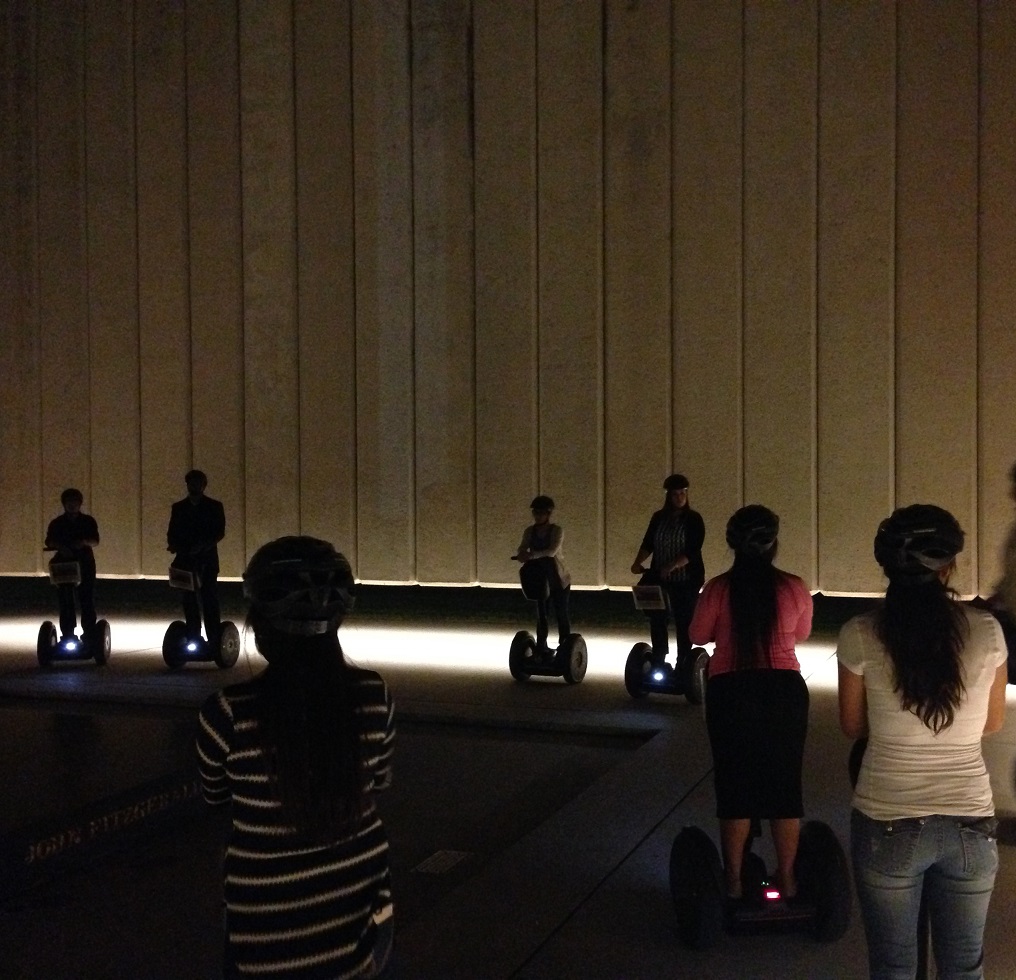
Shortly thereafter, another treat was in order.  We stopped by Segway Nation for a tour of Dallas on a segway.

Segway_All_Web

It was a beautiful time of day, what movie-makers call “magic hour,” and we made the most of it with pictures.

Groupie_Segway_Web

But, of course, with it turning a bit dark, Austin felt he need to serve as a protector of the group, and adopted a secret-service/tough guy look.

Groupie_Segway_2_Web

At first, not everyone felt totally relaxed…

Segway_Alex_Close_Up_Web…but eventually everyone got the hang of it, and we headed off to see Dallas.

The segway tour took us to Pioneer Plaza, a large outdoor sculpture that consists of 49 bronze steers and 3 riders created by sculptor Robert Sommers.  Note that it appears that Alex is saluting when, in fact, that it is a longhorn projecting in front of her face.

Segways_Cattle_Stampede_Web

The tour, led by excellent guides Doug and Jack, also took us by I. M. Pei’s Dallas City Hall, where we were able to turn and see the beautiful Dallas skyline which, according to our guides, is regularly listed as one of the five most beautiful in the US.

Segway_Dallas_Skyline_Web
The tour also took us by the Kennedy assassination site on Elm Street.  The students had a chance to get off the segways and walk to the “X” spots, which mark where the Oswald’s shots hit Kennedy.

JFK_Elm_Students_WebWe also entered the Kennedy Memorial, designed by Philip Johnson, one of the great architects of the 20th Century.

Kennedy_Memorial_Student_WebSpeaking of Johnson, we were also able to go to Thanksgiving Square, a public space he designed in the 1970s as a means of racial and cultural healing.  With a replication of Rockwell’s “Golden Rule” painting…

…and the “Ring of Thanks,” where visitors are encouraged to stand and offer thanks.  From the center of the ring, the sound reverberates, symbolically echoing the many things for which we are thankful.  In our group, thanks went to family, opportunities, school, and even the LEAP Center.

Thanksgiving Square also has a spiral chapel adorned with one of the largest stained glass assemblages in the world.  The glass, designed by Gabriel Loire of France, is designed to become brighter as it ascends and moves to the center.

In the midst of such beauty, it was easy to be thankful.

And with that, we returned to the segway base, where we shed our helmets and headed to Hoffbrau Steaks (thanks for the recommendation, Doug!) and enjoyed a robust end-of-the-day dinner.

Dinner_Hoffbrau_Web

But before heading out we gave a few more thanks: to our LEAP Ambassadors, who came to Dallas to cheer on their Moot Court friends; to the Pre-Law cohort, who came to check out the action and consider joining the team for next year; for Kristyn, who decided to stick with the “team” rather than go home; and to our coach, Jean Loveall, who spent a lot of time teaching us the finer points of law.

Moot Court Scrimmage: Reinforcements Arrive

While SHSU’s Moot Court teams were winding up their day in Dallas, a new crew was setting out from SHSU to observe Saturday’s proceedings.  The new crew consisted of LEAP Ambassadors and potential members of next year’s Moot Court team: Megan Chapa, Constance Gabel, Karla Rosales, Beatriz Martinez, Jamaus Williams, and Brian Aldaco.

Before arriving at the hotel, they stopped at Afrah’s, a Middle Eastern restaurant.  Despite the fact that at least three of the students had never had Middle Eastern food before, they dug in with gusto, trying chicken schwarma, beef kabob, chicken  kabob, lamb kabob, hummus, babaganooj, falafel, and tzatziki sauce.

Group_DinnerAfter a long drive and good food, they settled in with the Moot Court teams, learned about the next day’s proceedings, and rested.