Mike Yawn teaches at Sam Houston State University. In the past few years, he has taught courses on Politics & Film, Public Policy, the Presidency, Media & Politics, Congress, Statistics, Research & Writing, Field Research, and Public Opinion.
He has published academic papers in the Journal of Politics, Political Behavior, Social Security Quarterly, Film & History, American Politics Review, and contributed a chapter to the textbook Politics and Film.
He also contributes columns, news analysis, and news stories to newspapers such as the Houston Chronicle, San Antonio Express News, Seattle Post-Intelligencer, Stamford Advocate, Greenwich Time, Huron Daily Tribune, Laredo Morning Times, Beaumont Enterprise, Connecticut Post, and Midland Reporter Telegram.
Yawn is also active in his local community, serving on the board of directors of the local YMCA and Friends of the Wynne. Previously, he served on the Huntsville's Promise and Stan Musial World Series Boards of Directors.
In 2007-2008, Yawn was one of eight scholars across the nation named as a Carnegie Civic Engagement Scholar by the Carnegie Foundation.
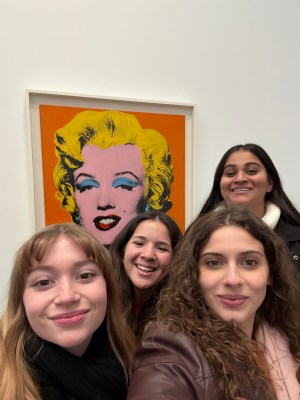
To end another busy day, Chrissy Biello, Michelle Cardenas, Emely Garcia, Michelle Moya, and I ventured to Houston for yet another fabulous event hosted by the World Affairs Council (WAC) of Greater Houston. This event featured the renowned author Malcolm Gladwell, who captivated the audience with a discussion of his new book, Revenge of the Tipping Point.
Seated alongside Ronan O’Malley, Chief Programs Officer for WAC, Gladwell began by revisiting his groundbreaking book The Tipping Point, which delves into the social dynamics that drive large-scale cultural shifts. The sequel, he explained, explores the unintended consequences of these shifts in modern society…
During the discussion, Ronan O’Malley prompted Gladwell to share his views on higher education and its challenges. Gladwell critiqued the admissions systems of prestigious institutions like Harvard University, highlighting the inequities faced by merit-based students compared to legacy applicants. He also touched on the 2019 admissions scandal, where families falsified their children’s applications, often robbing low-income students of their rightful opportunities. Gladwell’s observations shed light on how these systemic issues contribute to larger societal inequalities.
The wide-ranging conversation also emphasized the idea of “tipping points,” moments when seemingly small events trigger substantial societal change. Gladwell noted how media coverage of scandals often accelerates these tipping points, creating ripple effects that transform public awareness and behaviors. His ability to weave research with engaging narratives left the audience with much to reflect on.
Our group especially appreciated Gladwell’s humorous anecdotes and witty remarks, which drew loud laughter and applause from the audience. Events like these are not only educational but also incredibly enjoyable for students like us. The World Affairs Council of Greater Houston consistently provides opportunities to learn from brilliant minds, expand our perspectives, and engage with global issues. We’re already looking forward to the next WAC event!
The moot court competition in Fort Worth was a great experience that challenged our critical thinking skills (or the extent of them, anyways) and gave us a chance to grow as advocates. Fort Worth was the perfect host city, combining a world-class law school with a great cultural scene and history.
For the competition, we stayed at the Hilton in downtown Fort Worth, where President John F. Kennedy spent his final night—which was definitely not a good omen for our performance. The competition itself was held at Texas A&M’s School of Law, which happens to neighbor the Philip Johnson-designed Water Gardens.
As one of LEAP’s favorite architects, Johnson’s work always stands out, and the Water Gardens is an immersive way to experience architecture and ease both law students and moot court competitors’ nerves.
When we had time to explore, we made the most of it. We ensured to make a stop at the Richard Haas mural downtown in Sundance Square.
In the same area, we were lucky enough to stumble across works by James Surls…
…Lichtenstein, and Noguchi—all in one building! Just around the corner, we also found an Alex Katz…
…and Jesus Moroles sculpture.
One of my favorite stops was the Sid Richardson Museum, where we got an extensive look at the works of Frederic Remington and Charles Russell. Both are staples of Western art, but the range of their work was impressive. The museum also gave us a chance to try our hand at some art of our own, offering postcards for visitors to draw and send.
This ties to Remington, who was not well-versed in writing, and would use illustrations to communicate when words fell short. While some of us had more success than others (we’ll leave the details out), it was a fun and creative way to engage with the experience we shared at the museum.
The trip wasn’t just about law and art—we also enjoyed a range of food experiences. While I stayed on the safe side with a soufflé (my first, and it was great!), Maggie stepped up as the group’s culinary adventurer, trying calf fries, escargot, and quail all for the first time. One of the best parts of LEAP trips is the chance to try new things, and this trip was no exception.
After the competition ended, we headed to Dallas. We made a quick stop to see a giant eyeball sculpture…
…which was interesting to say the least, before heading to Thanksgiving Square, another Philip Johnson design.
The Square offers myriad interesting features, including a Norman Rockwell mosaic…
…a “ring of thanks,” which has an echo feature…
…and, of course, Johnson’s beautiful Chapel.
The spiral design, and the beautiful stained glass capture the “infinite upward reach of the human spirit”.
We ended the trip with a visit to Dealey Plaza, the site of JFK’s assassination. Seeing the Grassy Knoll and the surrounding area was a very fitting end to our adventures in DFW.
Overall, this trip showcased what LEAP is all about: taking multidisciplinary experiences—law, art, history, and food—and tying them together in a way that broadens our understanding and appreciation of the world. Fort Worth and Dallas proved to be the perfect destinations for this, with plenty of firsts, surprises, and connections along the way.
Sometimes unusual things happen, and one of those happened last night, when we found out that we had made it to the “Sweet Sixteen.” This is our first time at Moot Court, and we were expecting to observe–not participate in–day 2 of Moot Court.
Thus, it was early this morning that we arose and prepared–as much as one can prepare at the last minute–for another round of Moot Court. Our opponents were from TCU, Reagan Stephens and Dominic Mendlik, and they were highly ranked.
We soon saw why. Mr. Mendlik…
…and Ms. Stephens…
…were very polished, articulate, and they knew the facts of the case.
For our part, we did the best we could, and we probably performed better during this round than we had all tournament. Maggie was more fluent in her delivery…
…and Olivia did well responding to and, at times, deflecting questions.
The judges, too, were excellent. We had three judges, and they all knew the case, brought different perspectives to the case, and they provided good feedback. Their questions were very good, designed to see whether we knew our facts and could think on the spot.
But, with this level of competition, we saw the writing on the wall…
…but, even as we obtained our results, losing in a split decision (2 ballots to 1), we very much believed we ended on a high note.
With another hour or so before we needed to leave, we watched the next round of coin flips…
…and then we split up and volunteered to be bailiffs, providing us with another perspective on the tournament and allowing us to learn from those with more experience, skill, or both.
It was enlightening–and it was also somewhat gratifying to see that Mr. Mendlik and Ms. Stephens won their next round (the Elite Eight), and the next round (the Semi-Finals), and lost in a split decision in the finals. They will be going to the Preliminary Nationals, and that is a well-deserved berth.
Our experience in Moot Court was overwhelmingly positive. Although we and our coach were beginners, we learned a lot, and it’s almost certain to benefit us as undergraduate students, preparing for law school, in law school, and in the “real world.”
We received much help along the way. Godfrey Blacin spent a lot of time organizing a scrimmage, and this was very helpful to us. Tournament Officials and other coaches also went out of their way to welcome, especially Kinzie Craig Hall, Jennifer Ellis, Kimi King, and Anne Dutia. On campus, Dr. Gene Roberts and Dr. Diana Brown proved very helpful on approaching justices and working on our logic; Stephanie Fors provided logistical support and overall advice; Victoria McClendon-Leggett was generous with her time and support; and students such as Saara Maknojia, Michelle Moya, Emely Garcia, and Jacob Wessels showed support along the way. And many thanks to Madison Cawthon for serving as bailiff!
While most students are pleading for extra credit at the end of the semester, LEAP students were pleading their cases, literally, in moot court. Facing off against teams that came from eleven different universities across four states to compete in the South / Texas Regional American Moot Court Association tournament held in Fort Worth, with its rich history and home of Texas A&M University’s Law School. This tournament is one of sixteen regionals across the United States that will help select the top U.S. moot court team.
LEAPsters depart SHSU for their first moot court tournament
This was the first time in seven years that SHSU fielded a team. Olivia Discon and Maggie Betancourt stepped up this fall to engage in weekly meetings, much “homework,” and a lot of learning to serve as Bearkat mooters. They also received help from Dr. Diana Brown (COBA, SHSU), Dr. Gene Roberts (SLMS, SHSU), Victoria McClendon-Leggett, Stephanie Fors, and Maddie Cawthon–the latter serving as bailiff, and a potential mooter in future years.
Day one of the contest was an all-day affair, a Saturday of three rounds. For Olivia and Maggie–team 419–this involved facing off, first, against Kathryn Dearing and Julia Daniel from the University of North Texas, one of the most active universities in the moot court universe over the past two decades, largely a result of the efforts of Dr. Kimi King. This year, King was on hand, along with Dr. Adam Whitten, both of whom served as coaches for their two UNT teams.
The SHSU team was designated as representing the petitioner, in this case a “William DeNolf,” who may, or may not, be responsible for recklessly goading a Ms. Bronner into suicide.
With the fate of DeNolf in their hands, Betancourt and Discon took turns arguing his case to two “Supreme Court Justices” (actually, law-school professors).
Tackling issue one (the 5th Amendment), Betancourt began, using her nine minutes to argue that the State violated DeNolf’s protection against self-incrimination when using biometric access to the contents of his phone.
Olivia Discon, meanwhile, argued the second issue (1st Amendment), making the case that the State violated DeNolf’s freedom of speech by criminalizing the case for suicide.
They were countered by Daniel and Dearing, who ably argued that the State was justified in their steps to access and regulate DeNolf’s speech.
Delving deep into the cases and the record, Daniel and Dearing demonstrated a strong grasp of the material, and they edged out the SHSU team, winning both ballots.
For their second round, the SHSU students faced Ethan Ellis and Amanda Parker-Chavez of Lamar University. With their first round jitters somewhat abated, the LEAP students performed better this time, winning both ballots.
The third round, then, would likely determine whether the LEAP/SHSU team would make it the “Sweet Sixteen,” a prospect that, no doubt, brought back some of those early jitters.
In this round, which featured the most aggressive of the judges and a “hot panel,” Discon and Betancourt split the ballots, finishing 3-3.
The outcome of this contest was, however, withheld until the Day-One reception and awards, hosted by TAMU Law. Following a discussion of the law-school’s many merits…
…the crowd eagerly awaited news on the leading orators and the teams moving on to day two of the competition.
The top orators were chosen first:
Ashlyn Dodson (UNT)
Quinn Kelly (UNT)
Jordan Peterson (Berea College)
Kylie Kinsella (TCU)
Dominic Mendlik (TCU)
Kaitlyn Allen (TCU)
Landon Reffitt (Benedictine)
Jeffrey Schremmer (Benedictine)
Collin England (Benedictine)
Jacob Hahn (Benedictine)
Following these congratulations, Ann Dutia read off the list of teams competing in the “playoffs,” the “Sweet Sixteen.” Reading in “no particular order,” Dutia listed team numbers…443…437…402…and, finally, after seven teams were announced, we heard “419.” The SHSU students made it to the second day of competition.
Maddie, who served as bailiff for the rounds, look bemused…
…Maggie beamed; and Olivia, in her way, looked equal parts ill and gratified.
With the results in hand and an unexpected day of competition ahead of us, we walked back to the hotel. Along the way, we ran into a reminder of Fort Worth’s rich history, statues of Butch Cassidy, the Sundance Kid, and the “Hole in the Wall” gang, a scene that prompted a selfie.
It also prompted a little gratitude. While we were anxious about the showdown looming the next day, at least we wouldn’t face the fate of Butch and Sundance–who were shot to death in Bolivia. It’s a small thing, we know, but it reminded us that Moot Court is a cause Worth taking, on a trip Worth making!
On November 7th, Assistant Dean of Admissions at Texas Tech Law School, Danielle Saavedra…
…and Prosecutor for Orange County District Attorney’s Office and Texas Tech Law School Alum Katey McCall…
…visited students at Sam Houston State University to discuss Texas Tech Law School and how students can prepare to apply to law school.
As the meeting began, Professor Yawn asked what the admissions board looks at when evaluating a students application.
Dean Saavedra stated that they look at a students Cumulative GPA, LSAT score, letters of recommendation, personal statement, and various other factors. She continued by giving advice on recommendation letters, telling us to ensure to ask a trusted professor. Further, that personal statements are very important and to keep them as detailed as possible. All of these elements will set one student a part from another.
Dean Saavedra and Ms. McCall then mentioned how essential it is to get applications submitted as early as possible to have the best chance at getting accepted. This is because, as time passes, schools will start tightening their standards; they want to ensure their ranking will remain high so they are less likely to take a chance on a student below the medians.
Dean Saavedra then transitioned to discussing Texas Tech Law School, noting how it is affordable and there are many unique opportunities to find what you love. This includes clinics, externships, and a mock trial program! Ms. McCall was involved in many, so she was able to give some personal insight.
Ms. McCall said that outside of these programs, there are many student organizations that students at TTU Law can join to connect with classmates. Moreover, that they allow one to grow in both knowledge and skills!
We would like to give a very special thank you to Dean Saavedra and Ms. McCall for sharing valuable information about TTU Law and the process of applying to law school. All who attended are extremely grateful and excited to apply to Texas Tech Law School!
I recently had the privilege of attending the 25th Annual Face-to-Face Scholarship Luncheon at Sam Houston State University. This special event, which allows donors to meet the students whose lives they’re changing, is always a highlight for me.
This year’s theme, “You Are Worth Your Weight in Gold,” emphasized how truly invaluable our donors are to us. Their support goes beyond financial aid—it opens doors and provides encouragement that carries us forward on our academic journeys.
This year, I once again had the honor of being awarded the Martinez Scholarship, generously funded by the Martinez and Scott families. I shared a table with Russell Martinez, along with Wayne and Andrea Scott, longtime supporters of LEAP who’ve become dear friends over the years. It was wonderful to catch up and share what’s been happening in life since we last saw each other.
Also seated with us was Provost Stephenson, who brought valuable insights to our conversation and deepened my appreciation for the supportive community at SHSU.
The luncheon began with an opening speech from Vice President of University Advancement, Matt Bethea…
…who expressed heartfelt thanks to the donors and benefactors present. He then introduced SHSU President White, who spoke powerfully about the impact of scholarships on our campus.
She highlighted SHSU’s dedication to serving first-generation and non-traditional students—students like myself—who often face financial challenges in pursuing higher education. President White’s words were a reminder of just how much these scholarships matter in helping us build our futures.
Throughout the event, I enjoyed connecting with other supporters and university officials who care deeply about our success. Cinthia Villarreal received the “Bertha Kirkley Endowed Scholarship” and sat with Derrick Birdsall, Director of the Sam Houston Memorial Museum and Republic of Texas Presidential Library.
Chrissy Biello received the “Phyllis and Walter Pinegar Best and Brightest Endowed Scholarship” and she had the privilege to connect with Walt Pinegar himself.
There was a genuine sense of gratitude and community as we engaged with the people who make a real difference in our lives.
Reflecting on this event, I feel profoundly grateful—not only for the financial support I receive but for the belief in my potential and the encouragement that helps me push forward.
Professor Pavelock Discusses the Importance of Giving
As a first-generation college student, I know how much of a difference it makes to have even a bit of financial stress relieved, allowing me to focus fully on my education. The Martinez family and all the donors who support students like me are changing lives in ways that go far beyond monetary assistance.
Thank you to everyone who believes in LEAP’s mission and in the dreams of Sam Houston State students. Your support reminds us that we’re not alone in our journeys, and that means more than words can express.
After an afternoon filled with costumes and candy at Huntsville Main Street’s Scare on the Square…
…we decided to take our Halloween festivities to the next level by heading to the Haunted Trails at Kate Barr Ross Park. Put on by the Huntsville Parks and Leisure Department, Haunted Trails is like a haunted house…just with way more trees, a few extra screams, and no escape until you reach the end.
Our very own President of the LEAP Ambassadors, Cinthia Villareal, who’s also an intern with the Parks Department, helped organize this outdoor fright fest, so of course, we had to show up and support her creative take on community engagement (read: gleeful terror).
As a group of brave individuals (and maybe a few reluctant ones), we wandered through eerie scenes, from a haunted psych ward to a creepy scarecrows, with each turn holding horrors in and of themselves.
The group was doing fairly well throughout. Well, that was until the clowns.
Michelle, who had been playing it cool all night, took one look at the clowns and immediately shrieked. To my recollection, she went as far as to say “Anything but clowns!”
Naturally, this drew them right to her, making her and Saara the undisputed scream queens of the evening. It’s safe to say Michelle didn’t enjoy the clown house much.
Chrissy, however, in her classic stoic style, strolled through the whole thing dressed as Dorothy from The Wizard of Oz, barely batting an eye at the frights around her.
Of course, with Chrissy, you can never quite tell what’s happening in her head!
Haunted Trails was a hilariously spooky way to cap off our Halloween celebrations, and we were all proud to support Cinthia in her haunting (and slightly twisted) community efforts. The event was a fun reminder of how Huntsville, with the help of local SHSU volunteers as actors, brings out the Halloween spirit in ways that are frightfully good for everyone involved.
This year, the LEAP Ambassadors had the opportunity to celebrate Día de los Muertos at the Wynne Home Arts Center in Huntsville.
The historic home was adorned with decorations, and tables were filled with traditional treats like sugar skull cookies, pan de muerto, and refreshments.
At the heart of the celebration was an ofrenda honoring Mike Countz, a beloved community leader and Justice of the Peace, whose memory was warmly celebrated.
Dahlia Harrelson opened the event…
…and she soon turned it to Dr. Crimm, a respected historian and community figure, who offered an in-depth look at the origins and meaning of Día de los Muertos.
She explained how the holiday blends pre-Columbian and Catholic traditions, centering on the idea that death is not an end but a connection to our ancestors.
Through ofrendas and symbolic decorations, families invite the spirits of their loved ones back, honoring their lives with personal items, favorite foods, and marigold flowers.
Dr. Crimm’s insights gave us a thoughtful look into the holiday, emphasizing that Día de los Muertos is about celebrating life and keeping memories alive.
Following Dr. Crimm’s presentation, we heard from Patti Countz, widow of Justice Mike Countz, whose ofrenda was displayed prominently.
She shared stories about her husband, painting a picture of his life and the impact he made on the community. Mike Countz was born in Orange, Texas, in 1951, and he moved to Walker County, where he became a star athlete and graduated from Huntsville High School in 1969.
After earning his BBA from Sam Houston State University, he built a distinguished career in criminal justice, starting with the Texas Department of Corrections and eventually becoming the Justice of the Peace for Walker County’s Precinct 2.
Known for his humor, his love for golf and poker, and his unwavering devotion to his family, Mike Countz was the ultimate “girl dad,” who proudly attended every recital, game, and family event.
His legacy extended beyond his public service; he was a beloved member of his church and community, a dedicated Elvis fan, and a friend to many.
His wife’s stories brought the ofrenda to life, filling the room with both laughter and fond memories of a man who gave so much to his family and community.
This event highlighted the Wynne Home’s role as a vital space for cultural education in Huntsville…
…giving students a hands-on connection to a meaningful tradition and an appreciation for the ways we honor those who came before us.