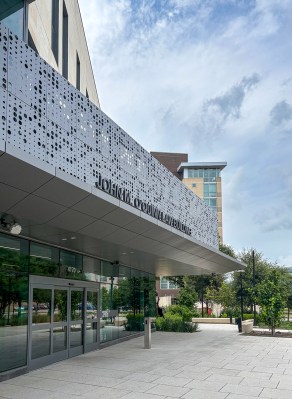
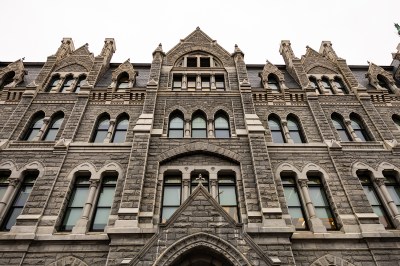
The John M. O’Quinn Law Building–the home of UH Law School–offers a grand yet inviting welcome to the study of law.
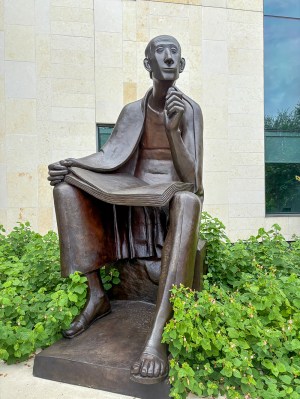
The modernist structure, designed by Shepley Bulfinch, greets visitors with a touch of the classical: Gerhard Marcks’ sculpture “Albertus Magnus,” who was the teacher of St. Thomas Aquinas, one of the greatest thinkers of history.
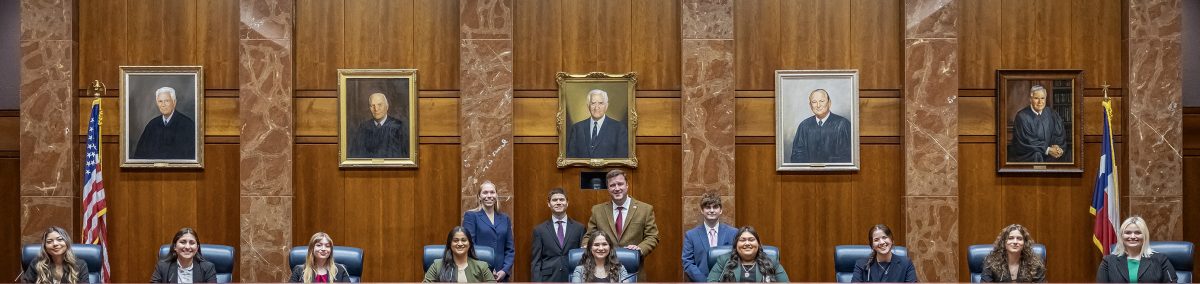
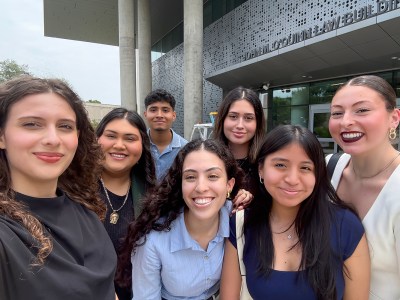
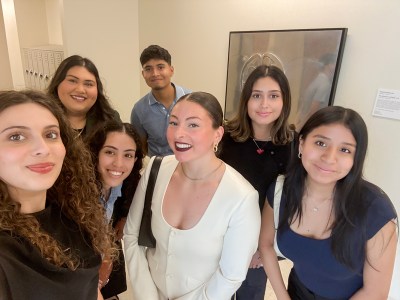
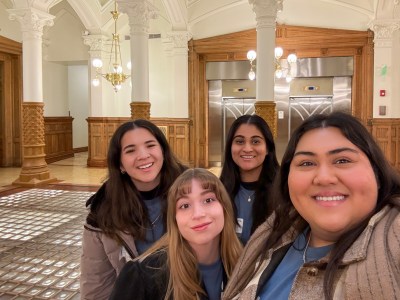
If that’s not enough to inspire the aspiring law student, then UH’s law program will probably do the trick, with specialties that pre-law students dream of pursuing. We, a mix of LEAP Ambassadors, Pre-Law Society members, and students in Professor Yawn’s “How to Win in the Courtroom” class, had the pleasure of witnessing, exploring, and envisioning our future during an amazing tour of the UH Law School.
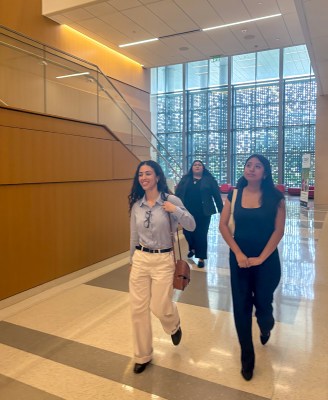
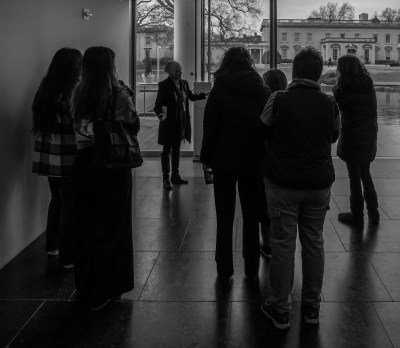
Guided by a friendly and knowledgeable UH Ambassador, Justin Cheap, we experienced the school with a sense of comfort and relatability in a place that can initially seem so far beyond what we imagined.
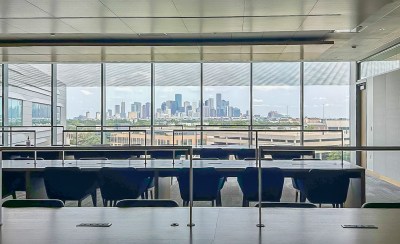
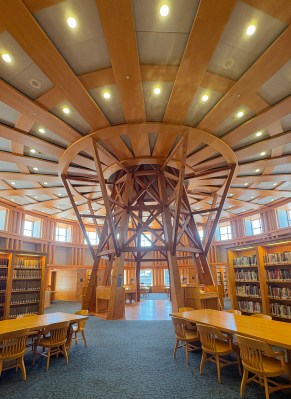
The Law Center spans five floors, each designed with purpose and opportunity in mind. The fifth floor offers a quiet library space where students can focus, recharge, and enjoy breathtaking views of the Houston skyline. It serves as a reminder that achievement is within reach.
The fourth floor brings more energy, fostering collaboration through group study areas, access to professors, advanced coursework, bar exam preparation rooms, and even spaces to relax, nap, or grab a bite.
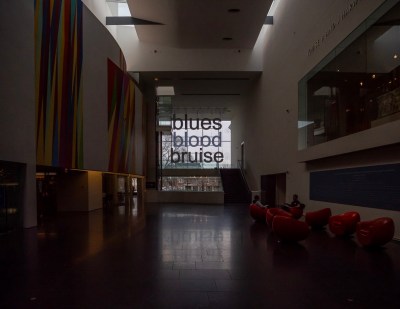
The third floor brought us into what a law school lecture room looks like. This floor has most of the upper level law student classrooms, and had an outdoor sitting area, perfect for fall weather fresh air. Interestingly, this floor also features an art piece by Charles Pebworth, an SHSU art professor who has many pieces at SHSU and the Wynne Home Arts Center.
The second floor houses most of the 1L and some 2L classrooms, along with a beautiful glass-ceiling section that proudly displays awards and accolades from the school’s long history since its founding in 1927. The first floor features the largest lecture hall in the Law Center, which can also be transformed into a fully functional courtroom. Remarkably, the Supreme Court has held sessions here, giving students a rare chance to witness the legal system at its highest level without ever leaving campus.
Of course, we learned more than just about the space; we also learned about the caliber of the school. UH is a top-65 program in the nation, ranking in the top 10 in Health Care law. It has more than a dozen programs and offers several joint degree options (including degrees in medicine and history!). With a tuition of about $37,000 a year, the school attracts an exclusive pool of law students: their entering class has a median GPA of 3.75 and a median LSAT of 161. With this talent, it’s no surprise that the first-time bar-passage rate is 86 percent.
From its modern architecture to its unparalleled opportunities for networking, education, and growth, the University of Houston Law Center proves that it is more than just a school, it is a launchpad for future leaders in the legal field.
Throughout the summer, the Sam Houston Memorial Museum and Republic of Texas Presidential Library offers “Spotlight Saturday” programs (10am-2pm), with each one highlighting different aspects of 19th century life.
This past Saturday, LEAP enjoyed one of our many visits to the Museum to learn about spinning, home-made ice cream as made during Sam Houston’s time, and the art of dueling, an interestingly complex artifact of another time.
The ice-cream, always a significant draw, wasn’t quite ready when we arrived, so we walked the Museum’s grounds (approximately 18 acres), enjoying this rustic retreat nestled in the heart of the community. There were waterfowl…
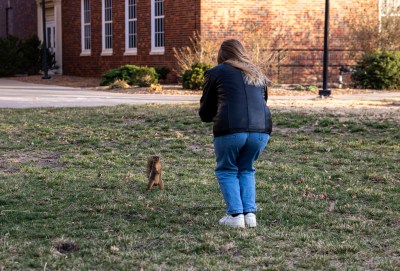
…squirrels, and turtles, including one that had a special need for attention.
When we returned, they were still churning the ice cream.
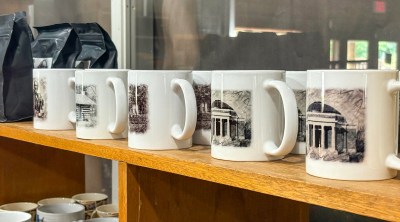
So, we ventured into the gift shop, which, in many ways, is a typical gift shop for a historical site. There are t-shirts, mugs, magnets, and the like.
But a few things distinguish the Wigwam Neosho. They have a nice book collection, including one written by Mac Woodward, one illustrated by Wade Dillon, and one written by an assemblage of students and staff, as well the excellent Houston biography written by James Haley. Moreover, Neosho has soap and pottery made on the Museum grounds, a nice touch.
We purchased one, this one made by Grady Mangum, who worked at SHSU.
Some of the bowls were a good size for ice-cream, but as it turns out, the ice cream wasn’t yet ready.
Accordingly, we checked out the spinning, which drew a full house.
After roaming the historic buildings on site…
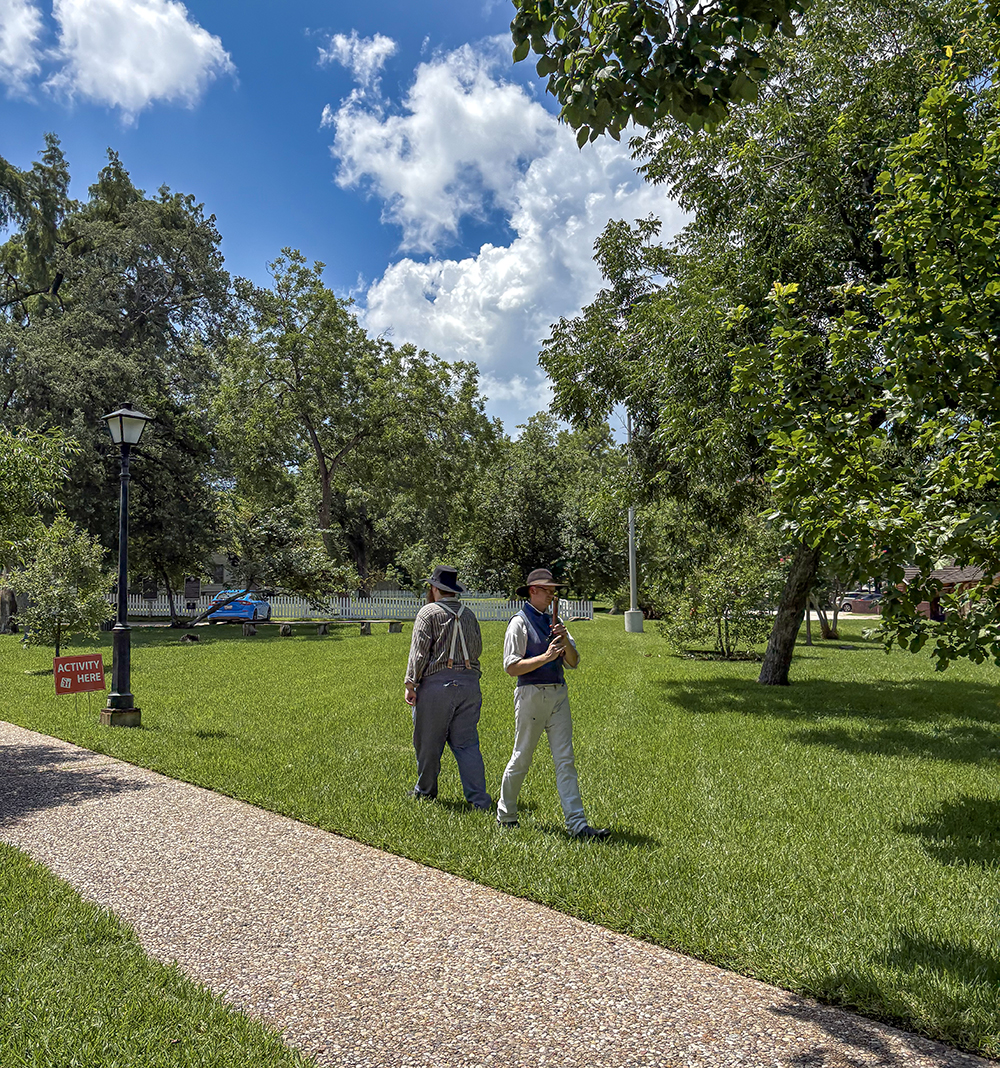
…we managed to catch the leadup to one of the docents’ dueling sessions.
Phillips discussed some of the preparation work…
…including showing off the weapons used (which are also on display in the Museum).
Tim Ross and Matt Phillips discussed the finer points of dueling “etiquette,” which involved the use of seconds/mediaries, how to extricate yourself from an impending duel, and the negotiations over the specifications of the duel (weapon choice, number of paces). Timed for exactly “high noon,” the duel took place in front of us; Ross and Phillips did a realistic enactment of the contest–without, of course, real bullets–taking their paces, aiming, and firing, and without hurting anyone.
With the suspense over and the heat of the day bearing down, we turned back to the porch for ice cream. Unfortunately, it wasn’t ready.
After more than two hours on the grounds and feeling the heat and the pangs of hunger, we prepared to leave, having enjoyed the structures, the nature, and the gift shop, albeit without the ice cream.
Tucked away in Houston’s vibrant Museum District, the Asia Society Texas Center is a cultural gem that embodies the rich diversity of Asia through architecture, exhibits, and innovative and cultural experiences. Designed by renowned Japanese architect Yoshio Taniguchi, the building is LEED certified, making it a visual delight and a wonder to experience.
As you enter the museum, the North Gallery provides a welcoming space with five touch screens arranged in a circle around a central pillar; each screen contains a globe with the Asian countries shaded in different colors.
Once a country is touched, the person “travels” to the country through a screen that shows the nation’s capital as well as the local time and how many miles it is from Houston.
Similarly, the most Instagram-worthy spot in the entire center is a wall covered with Asian culture-inspired neon signs. Ranging from a glowing lucky cat sign, a bowl of pho, and even one displaying Bellaire Boulevard. Each experience implements an interactive way to learn about Asia’s culture.
The “Gathering Table” interactive section highlights different foods of Asia and, most importantly, where you can find that food in Houston.
This area also offers a scent station that adds a sensory dimension to the experience.
The central section of the Asia Society is the two-story Grand Hall, lined with Jura limestone and wall paneling with American cherry wood. Each of these elements is used throughout the interiors for warmth and connection to the local landscape.
Also in the building is the Brown Foundation Performing Arts Theatre, featuring perfect acoustics, created through carefully designed architectural elements. The stage is an Appalachian white oak, with the maximum capacity at 273 steel-gray seats and acoustic cherry wood wall panels that ultimately create a sumptuous atmosphere.
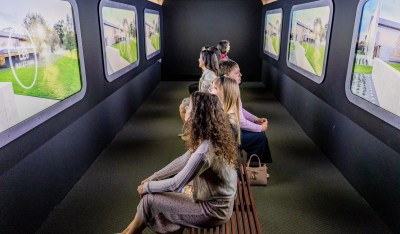
We also explored the “LEO Bullet Train,” which is a digital bullet train ride through Asia.
This rectangular room is filled with screens shaped to look like windows on a bullet train.
As the ride takes place, videos of all the countries scroll past on the screens, displaying a little touch of different cultures.
On the second floor, the mood shifts to serenity with the Water Garden Terrace. The display is filled with 12,000 gallons of constantly recirculating water. Large glass windows also connect the space to its natural surroundings while designed to withstand 110 mph winds, meeting Houston’s stringent glass structural codes.
Situated next to the water garden is the Louisa Stude Sarofim Gallery, which is composed of the minimalist installation by artist Lee Ufan, named Relatum. It consists of a raw stone and steel plate, arranged in a way that emphasizes spatial relationships and the quiet tension between man-made and natural forms (we assume). Relatum doesn’t demand attention; rather, it provokes the viewer to think, so the perception is up to the viewer.
The gallery also displayed intricate Japanese art pieces of cutting and using paper stencils to dye textiles. The art combines contemporary international design with an understated elegance that reflects Asian aesthetic principles.
My personal favorite of all Museum pieces was a miniature version of the building.
The exhibition space features rotating shows of traditional and contemporary Asian art, from holograms and push-button lessons on how to say words like “Houston” and “Texas” in Japanese and many other languages.
The Asia Society Texas Center blends both modern design with traditional Asian style. From the exhibitions to the building itself, it combines contemporary international design with modest beauty and calm one may associate with Asia. It’s a special place in Houston where people can learn about and connect with Asian cultures in a meaningful way!
With our longest driving day of the trip (8.5 hours in the car), we set out to see as much as we could while driving across the “Sunflower State.” While some may think of the Plains as plain, we were determined to see interesting spots, and we did!
The Largest Easel
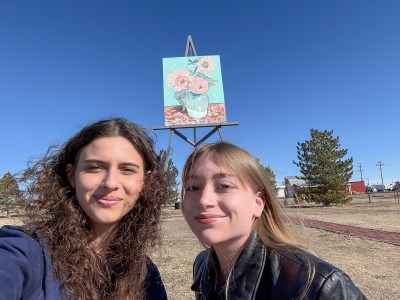
Goodland, KS is the unlikely destination of artist Cameron Cross’s “The Big Easel” installation. The art project includes not only the titular easel, but also a replication of Vincent Van Gogh’s “Three Sunflowers in a Vase.”
Cameron Cross’s Homage to Van Gogh in Goodland, KS
Interestingly, it is one of seven such pieces that Cross has either created or hopes to create, with the other completed projects being in Emerald, Central Queensland; Altona, Manitoba; and Arles, France.
In all, the Goodland structure is eighty-feet tall, and it is a creditable replica of Van Gogh’s masterpiece.
Further, it is located in the midst of a city park, complete with a pagoda, a lending library, and some walking trails. It was a pleasant stop while traversing the western corridor of Kansas.
Lindsborg, KS
Nestled amidst the plains of Kansas is Lindsborg, KS, otherwise known as “Little Sweden USA.” The moniker derives from the fact that city was founded by a hardy group of Swedish immigrants in 1869, led by pastor Olaff Olssen. Even today, thirty percent of the population is of Swedish origin, and it is home to the biennial Svensk Hyllningsfest.
Downtown Lindsborg
It is a lovely town and a delight to explore. The street is lined with “Dala” horses, a representation of Swedish culture and heritage. They are cleverly done, with a “one-Dala” horse being painted green and adorned with features from US Currency; a “Blue-Colla Dala,” recognizing the workhorses in the community; and, probably our favorite, a “Salvador Dala” horse, featuring the Spanish artist’s characteristic surrealist landscape.
Salvador Dala
We also loved City Hall…
City Hall, Lindsborg, KS
…a historic bank building originally built in 1887 (and reminiscent of the Roche Building in Huntsville, TX)…
…the quaint downtown streets, which were wonderfully walkable…
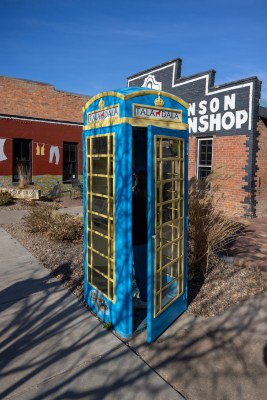
…and Swedish-themed telephone booth, as charmingly anachronistic as the town.
Small World Gallery
by Chrissy Biello
Jim Richardson is a legend in the field of photography, with countless features in National Geographic and a long list of prestigious awards to his name. His work has shaped how people see the world, especially Scotland and Midwestern America. But despite his global recognition, he calls the small town of Lindsborg, Kansas, home, where he owns a Main Street gallery and studio called Small World.
Small World Gallery
I recently had the chance to take Richardson’s The Working iPhone Photography Class over Zoom. The two-session course, each lasting two hours, completely changed the way I look at phone photography. Before, my approach was basically point, click, and hope for the best. But Richardson’s class made me realize just how much potential my iPhone camera had if I actually took the time to use it properly.
Jim Richardson’s “iPhone Photography” Class
During our trip to the Academy of Criminal Justice Sciences Conference, I tried to put some of Richardson’s lessons into practice. I was not sure if I was using his advice correctly, but I made an effort to be more intentional with my photos.
On the day we left Colorado and entered Kansas, we decided to stop in Lindsborg and visit Small World. To our surprise, Richardson was there in person. It also happened to be the first day of a new exhibit featuring some of his latest photographs from Scotland, Kansas, and other areas of interest.
Inside the studio, there was a lot to take in. Along with Richardson’s prints, there were books, drawings from other artists, and handmade jewelry crafted by his wife Kathy and Briana Zimmerling. Every part of the space had something interesting to look at.
Seeing Richardson’s work in person gave me a new appreciation for his photography. His photos capture people in a way that feels natural and genuine. His landscapes and wildlife shots show the same kind of attention to detail and care.
“Wheat Fields,” by Jim Richardson
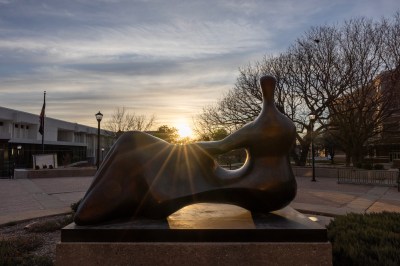
While looking around, we had the chance to talk with Richardson. Since I had taken his class online, I was excited to meet him in person. He was just as engaging and knowledgeable as he had been on Zoom. He even gave Olivia a photography tip, suggesting she use her hand as a shade when harsh light was hitting the frame. She later tried it while photographing a Henry Moore sculpture at Wichita State University, and sure enough, it worked like a charm.
Henry Moore’s “Reclining Figure”
Of course, we could not leave without taking a few prints home. Choosing just one was nearly impossible, but after much debate, we each settled on the piece that spoke to us the most. As a bonus, each print purchase came with a free postcard; Olivia and I chose one that featured the Great Sand Dunes National Park as we had just visited.
Jim Richardson
Before we left, Richardson took the time to personally sign all our purchases, making them even more special. The visit had already been unforgettable, but this was a very thoughtful gesture that meant much to us all.
It is clear that Richardson is not only an exceptional photographer but also a truly kind and genuine person, qualities reflected in both his work and how he connects with others. It was an honor to meet him and have the opportunity to learn from him, even if only for a few hours. I gained valuable insights and look forward to applying them to my future photography.
Birger Sandzen Museum
One of the city’s most famous native sons is Birger Sandzen, a world-renowned artist who also taught art at the local Bethany College. Indeed, Sandzen was part of the Bethany faculty for an astounding fifty-two years.
Sandzen was known for his impressionist paintings, which he created using impasto strokes and vivid, sometimes unnatural colors. The result is a striking, three-dimensional effect, making Sandzen a highly collectable artist. Indeed, his work is in the Denver Art Museum, the Smithsonian American Art Museum, Art Institute of Chicago, the Nelson-Atkins Museum, the Brooklyn Museum of Art, and many others. But it is the Birger Sandzen Museum in Lindsborg, KS, that has the most works on display at any given time.
Birger Sandzen Memorial Art Gallery
The Museum, founded in 1957–three years after Sandzen’s death–now houses an impressive collection of the artist’s body of work, which was voluminous. It is tastefully displayed in two galleries, with three additional galleries devoted to rotating exhibits
Sandzen’s work, which ranges from small, monochrome lithographs to expansive, colorful landscape, is effectively showcased in the gallery.
We enjoyed looking through the rooms, seeing his body of work, distinguishing among his different styles, and picking our favorites.
Chrissy’s favorite featured Rockport Massachusetts, one of several paintings Sandzen did while visiting the Bay State.
Olivia’s favorite featured the Garden of the Gods, a wonderful area in Colorado Springs, CO, where Sandzen taught in 1923 and 1924. The artist painted several such pieces in the area, and his work in Colorado was featured in 2016 at the Colorado Springs Fine Art Center.
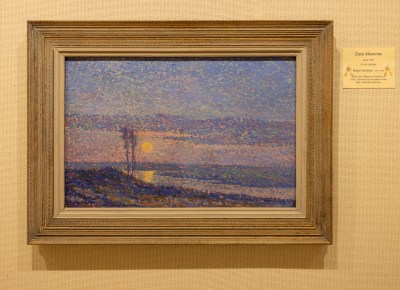
Professor Yawn’s favorite was “Early Moonrise,” where Sandzen ventured into pointillism, producing a work with strong overtones of Paul Signac.
Beyond the main gallery, the Museum also featured an exhibit by Wayne Conyers, who had some clever riffs on other artists and some very nice ceramics.
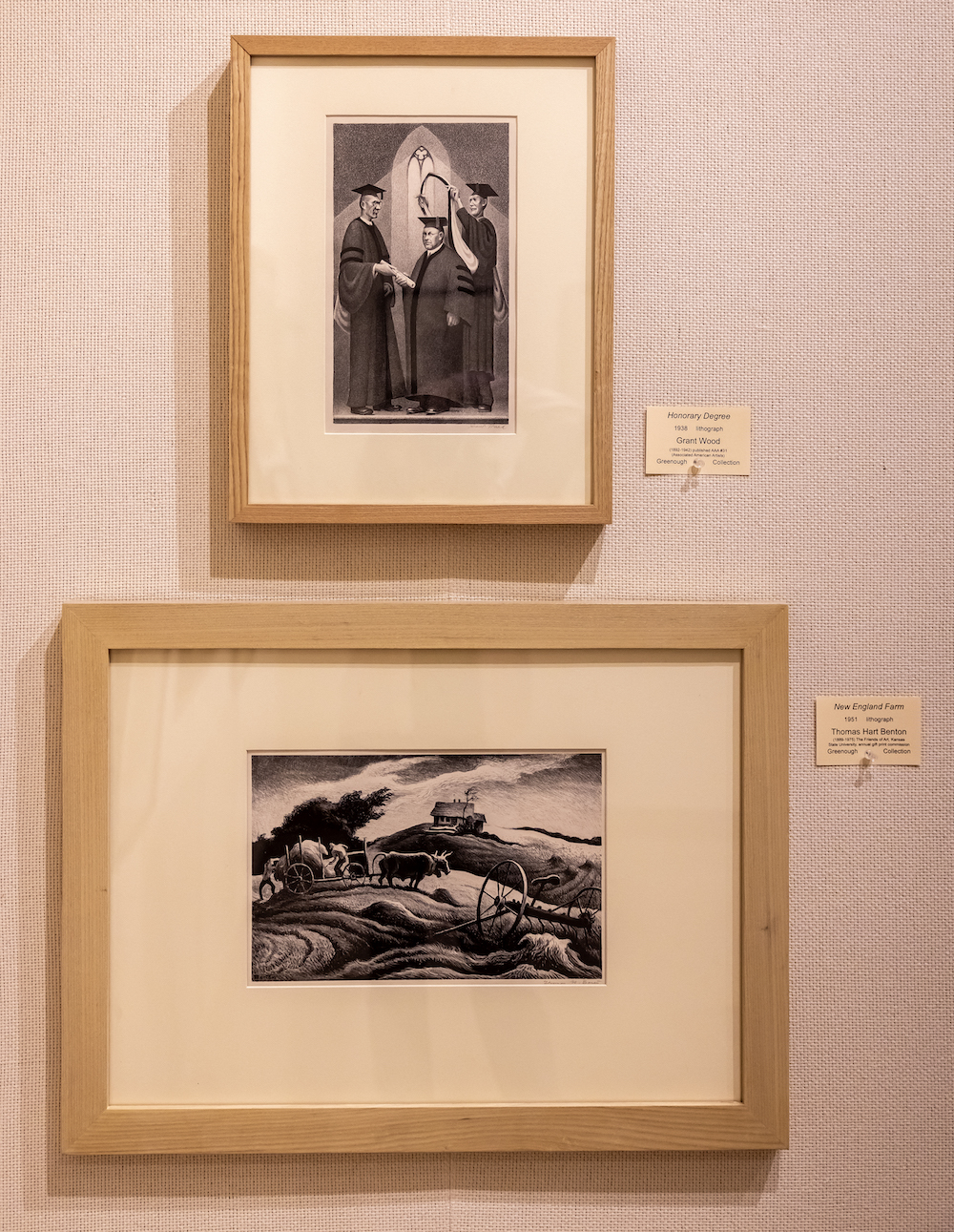
In our group, other pieces from the Museum’s collection stood out prominently. Professor Yawn found Grant Wood and Thomas Hart Benton pieces; Chrissy was surprised to see works by Rembrandt; and Olivia spotted two Albrecht Durer works!
Wichita State University
Following a day of driving and art-themed exploration, we doubled down and did some more! We ventured onto the grounds of Wichita State University…
…which has a public art collection of almost 100 pieces, and we soon learned that many luminaries were among them.
We began with some big-hitters–Jesus Moroles, Joan Miro, and one of Robert Indiana’s “LOVE” sculptures.
LEAP Ambassadors with Robert Indiana’s “LOVE”
We then did a walking tour of the campus, where we met many oddly friendly squirrels, and we saw even more great art. There was Oldenburg’s “Inverted Q”…
Claes Oldenburg’s “Inverted Q”
…one of George Rickey’s kinetic sculptures…
One of George Rickey’s Kinetic Sculptures
…Auguste Rodin’s “The Cathedral”…
Rodin’s “Cathedral”
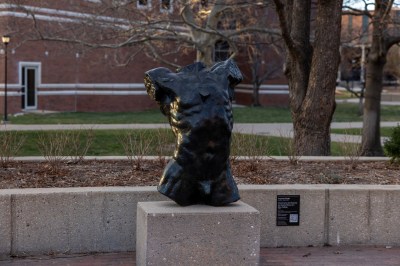
…another Rodin, “Grand Torse de L’homme qui Tombe”…
…a “Reclining Figure” by the incomparable Henry Moore…
…Louise Nevelson’s “Night Tree;” and a large and attention-drawing Luis Jiminez sculpture, “Sodbuster San Isidro.”
Luis Jimenez Sculpture: “Sodbuster San Isidro”
We noticed that many of these pieces had been donated by (1) collectivities of students (such as cohorts or organizations); (2) alumni; or (3) funds from the Student Government Association. As LEAP Ambassadors and students who are passionate about arts, we have been excited about TSUS’s recent emphasis on the arts. We have also offered our own arts programs, and we hope to do so again.
But seeing the investments made by current students and the SGA on WSU’s campus provided examples of how collective action by students and governing organizations could be used to beautify the campus, engage the student body, and raise the profile of the University.
as another day closed on our art tours, and we headed to Oklahoma City–following a brief stop at the Allen House, by Frank Lloyd Wright– en route to a return to SHSU.
When LEAP Ambassadors travel, they aim to make the most of it, unsure of when they might be able to return. Today exemplified that spirit, as we tried interesting food, dropped in to our ACJS Conference site, roamed the Denver Public Library, toured the Clyfford Still Museum, explored the Colorado State Capitol Building, and visited a National Wildlife Refuge.
Denver Public Library
The Denver Public Library is not only the home of thousands of books, ideaLAB Makerspaces, and research materials, but it also owns some impressive art, and that is one of the major reasons we stopped by.
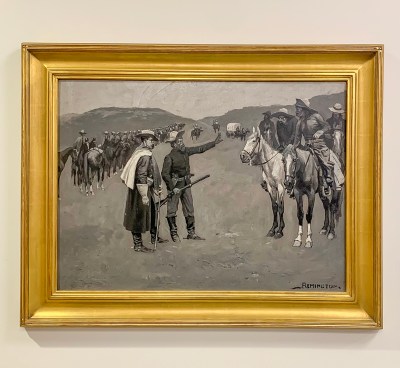
Along the way, we saw some impressive pieces, such as a Frederic Remington…
…but we also had a chance to see the work of artists new to us, such as Marie McFarland, Chase Varney, and, especially, Otto Kuhler.
Perhaps most impressive among the paintings was an Albert Bierstadt!
Although we also just loved some of the spaces, such as one of the reading rooms…
Our experience suggests that a robust library system across a wide variety of services benefits the community greatly. They promote literacy; allow for research in the community, which foster a sense of community identity; if done correctly, they can beautify the community; and, perhaps most important, they bring a community together. And this is what we witnessed in Denver: a friendly staff, a beautiful interior–further beautified by the art; and a diverse group of users, which included us!
Clyfford Still Museum
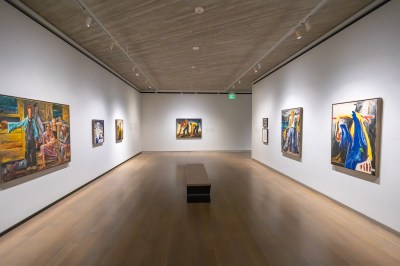
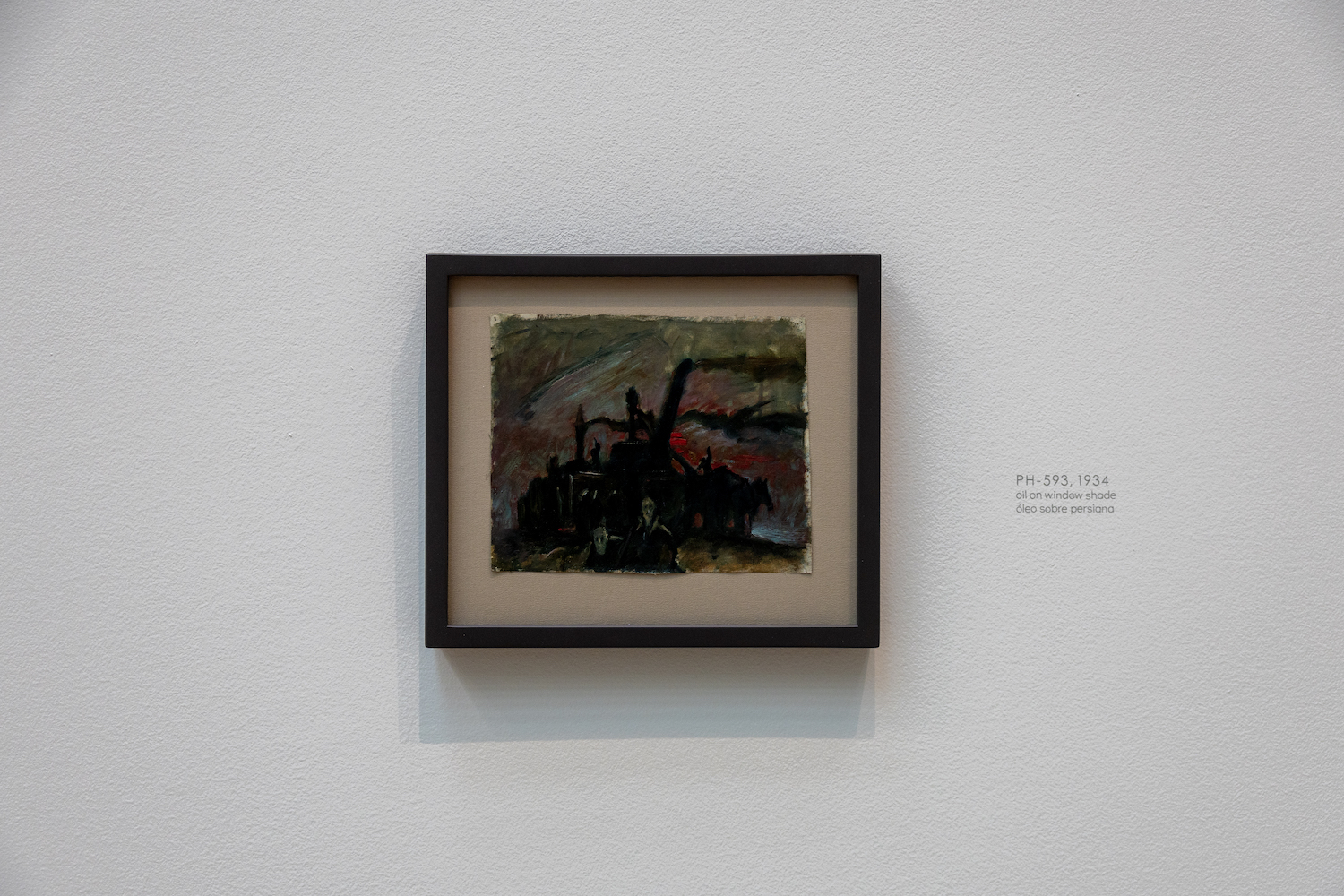
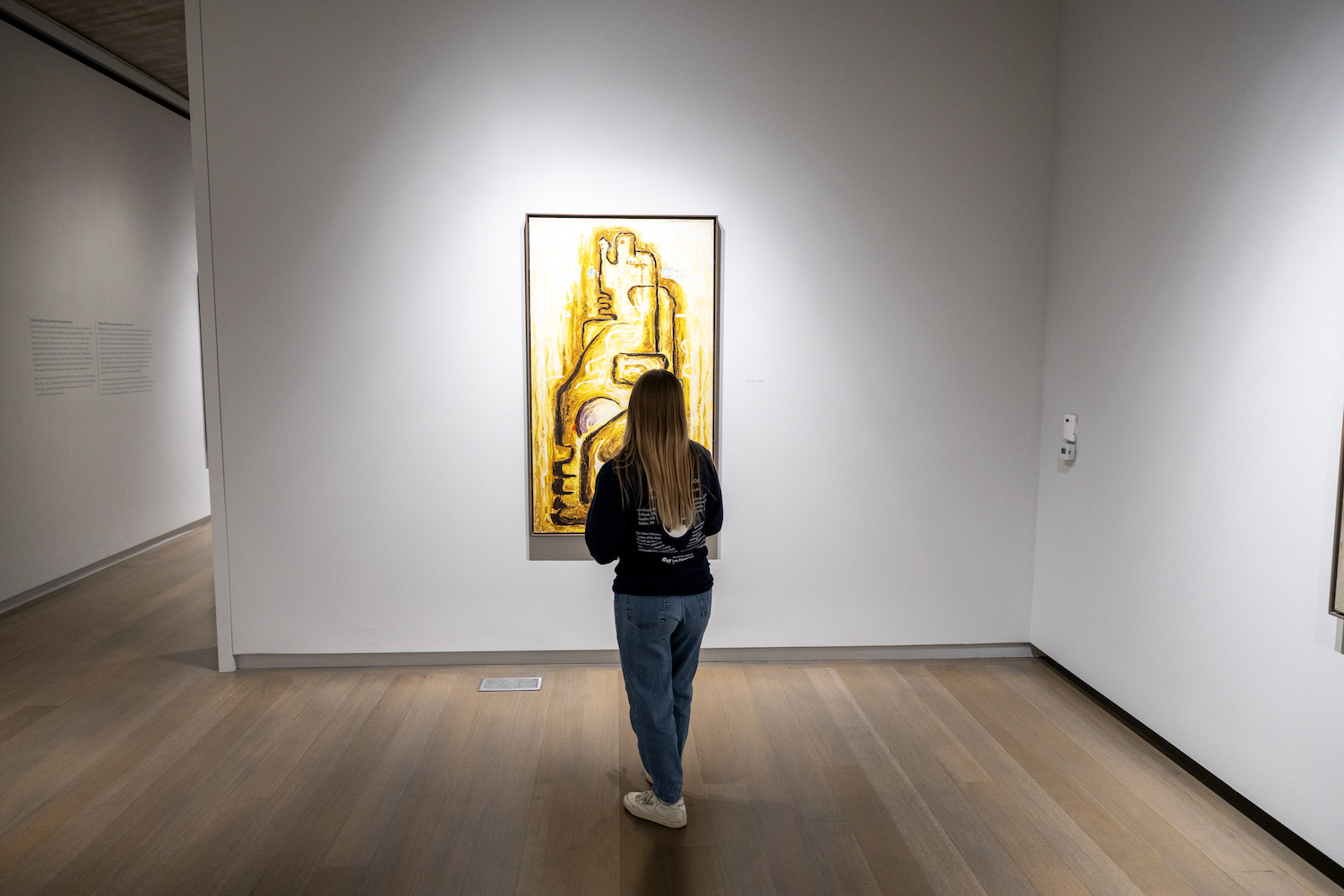
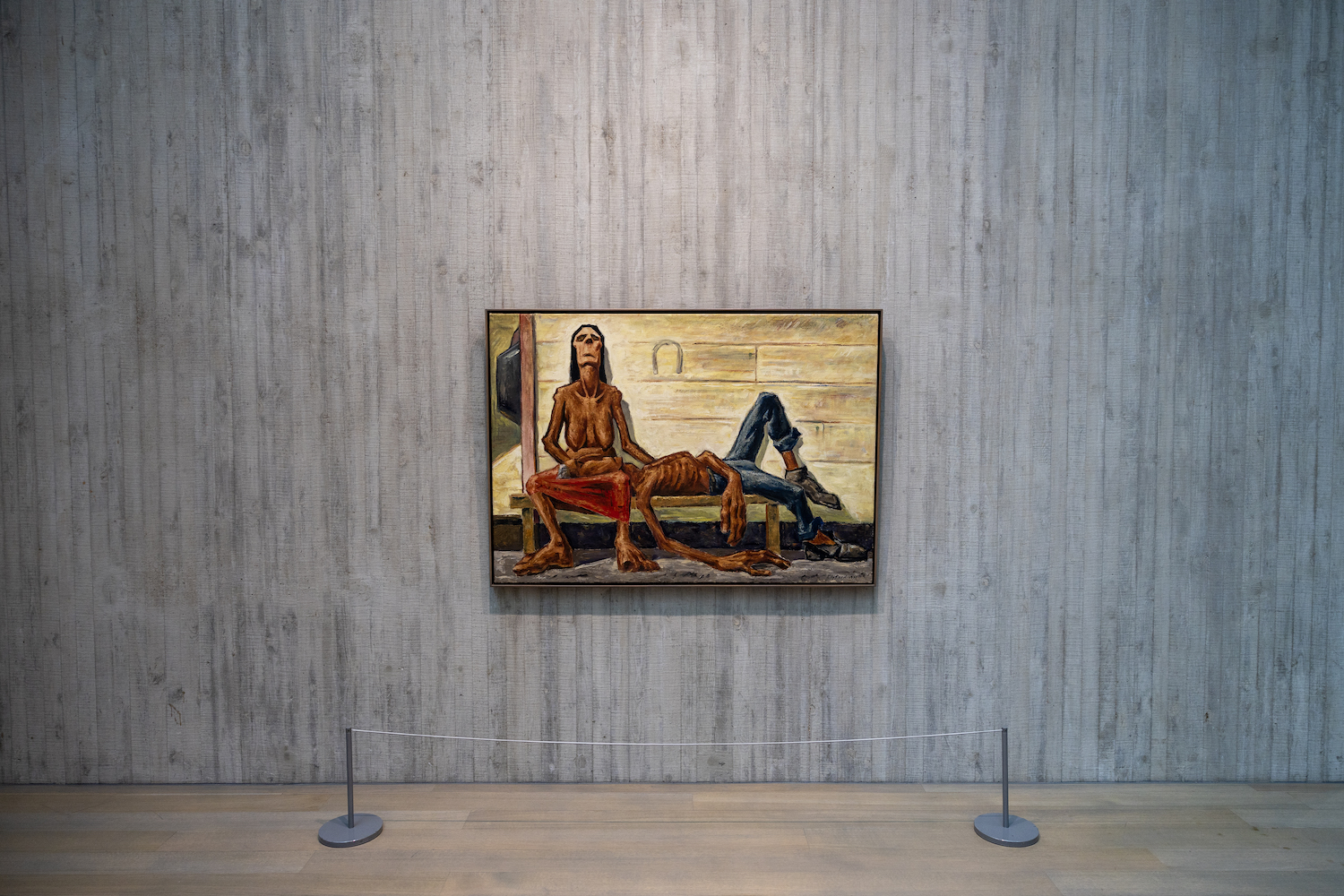
The Clyfford Still Museum gave us a chance to see the evolution of an artist who refused to conform to the art world’s expectations. The galleries were arranged to show the progression of his work, starting with his early pieces, which were more representative and realistic, before gradually shifting toward abstraction.
I found his earlier works particularly interesting, especially the ones featuring figures with large hands and elongated faces.
While I’m still not entirely sure what to make of them, they seem to reflect struggle and resilience, possibly tied to the hardships of the Great Depression.
What stood out to me the most, though, was Still’s complete rejection of the art industry. He despised galleries, museums, and critics, believing they distorted the meaning of art and prioritized profit over artistic integrity. He was known to pull out of exhibitions and refused to title his paintings, even going so far as to remove preexisting titles to prevent outside interpretation.
His frustration was clear in a statement he made in 1971: “I am deeply outraged that my entire life is being interpreted as a long struggle to be recognized by some damn fool art critics or to be sold successfully in the galleries or even to find their way into art museums because I consider these institutions to be corrupt in the purpose and their meaning and their effect on the artist and society.”
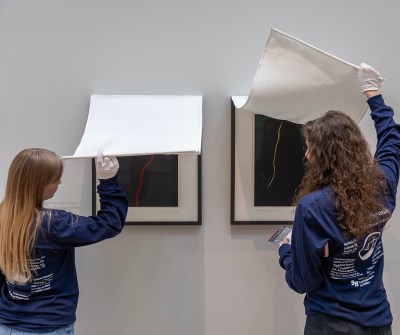
One of the more unexpected features of the museum was the use of canvas screens to partially cover certain pieces, allowing them to be revealed while also being preserved.
As we moved through the galleries, we could see how Still’s work became more abstract and how much control he maintained over his legacy.
Even after his death, his wishes shaped how his art was displayed and handled. Unlike many of his peers, his work wasn’t scattered across various museums or private collections—it was kept together, exactly as he intended. He may have been a particular man, but he was also a particularly fascinating man.
Colorado State Capitol Building
by Chrissy Biello
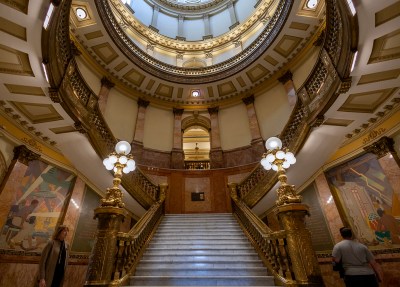
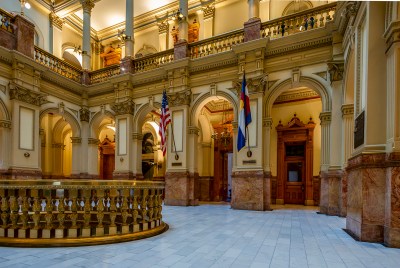
The Colorado State Capitol took fifteen years to complete, finishing in 1901 at a cost of nearly three million dollars. Despite its distance from Texas, the building evokes a sense of recognition among many Texas visitors. This familiarity comes from its design by Elijah E. Myers, the same architect who designed the Texas State Capitol. In fact, Myers’ influence extends beyond these two states, as he also designed the Michigan State Capitol in Lansing.
Walking into the building, visitors can see many features that connect it to significant landmarks across the country.
Moreover, the building showcases rare Colorado Rose Onyx, a pink-hued stone found only in a quarry near Beulah in Pueblo County. Nearly the entire known supply was used in the Capitol’s construction, making it the only building in the world to feature this material.
For sci-fi fans, one particular design in the Rose Onyx resembles the likeness of Princess Leia‘s hair from Star Wars…
And one interesting detail for those interested in city government is that John Hickenlooper, the 42nd Governor of Colorado, was the mayor of Denver from 2003 to 2011. His gubernatorial portrait stands out dramatically among the gallery of solemn official paintings in the West Foyer. Instead of opting for a conventional formal pose, Hickenlooper is captured atop the dome of the Capitol with the Denver City and County Building behind him, dressed casually in a plaid shirt.
When touring the Capitol, one will also notice how some of the building’s design nods to the British Parliamentary system. The Senate chamber is filled with red-colored stencils on the wall, while the House features green.
In the Senate, there are multiple stained glass portraits of some of the state’s most influential figures. Ruth Stockton, the first woman to serve as President pro tem of the Senate, is one that is frequently mentioned. She made history not only by being the first woman in that role but also by serving longer than any other woman in the legislature (24 years).
While the Senate has several stained glass portraits, the House Chamber has just one: a stained glass portrait of Barney L. Ford. Ford was an escaped slave who became a civil rights leader and fought for voting rights for African Americans in Colorado.
The ending highlight of touring the Colorado State Capitol is the opportunity to go up to the dome.
However, you will need to brace yourself for the 99-step climb, which is also pretty steep.
From this elevated vantage point, the panoramic view encompasses significant landmarks throughout the city.
Straight ahead, one can spot the Denver City and County Building featured in John Hickenlooper’s gubernatorial portrait.
To the left, one can see the Colorado Supreme Court building. Most notably, the Rocky Mountains can be seen in the distance, providing a stunning backdrop that highlights Denver’s unique geographical setting.
Rocky Mountain Arsenal National Park
To end the day on an even higher note of adventure, we headed eight miles northwest of Denver, where forty years ago, the United States Army operated a chemical weapons manufacturing plant—scary stuff. After an expensive clean-up process, the site is now the Rocky Mountain Arsenal National Wildlife Refuge, an expanse of land that hosts more then 330 species of animal.
We did not see all of those species, but we saw a sufficient amount to make our afternoon.
We saw rabbits and deer. We have, of course, seen these species previously, but on this day we saw more than 60 deer on the eleven-mile driving tour!
Moreover, we saw some species that, for us, were first-time spottings. A favorite was Prairie Dogs, which we saw scurrying from the sound of our vehicle, barking a warning to their fellow Dogs, or simply going about their business of eating. They were a delight.
We also saw several species of birds, including the ever-present Canadian Geese…
…Robins, Red-Tailed Hawks, Canvasbacks, a Tri-Colored Heron, Northern Shovelers, European Starlings, Red-Winged Blackbirds, and a murder of crows–one of which was carrying a bone.
That may not sound exciting, but we also saw a Bald Eagle (Chrissy’s first), , numerous Magpies (first for both Chrissy and Olivia), and three Wild Turkeys (another first for both Chrissy and Olivia).
Of course, the big find was the herd of Bison. Numbering more than 100, they spent most of their time eating, but they were surrounded by some amazing scenery, as they roamed the prairies with the towering and snow-capped Rocky Mountains in the background.
We even saw part of the herd begin to run, kicking up dust all the way, as they rejoined part of the herd from which they had separated. It was a majestic sight at a majestic site.
As we headed to the close of the wildlife drive, we were able to spot the Denver skyline framed against the beautiful Rocky Mountains.
Tocabe
Our final stop of this long and adventurous involved additional adventure: dinner. Keeping with the LEAP tradition of exploring food consistent with the cultures we are visiting and/or learning about, we decided to eat at Tocabe, which is co-owned by a member of the Osage Nation, and which bills itself as a restaurant offering meals that tell the stories “of our American Indian culture through native-sourced recipes and ingredients.”
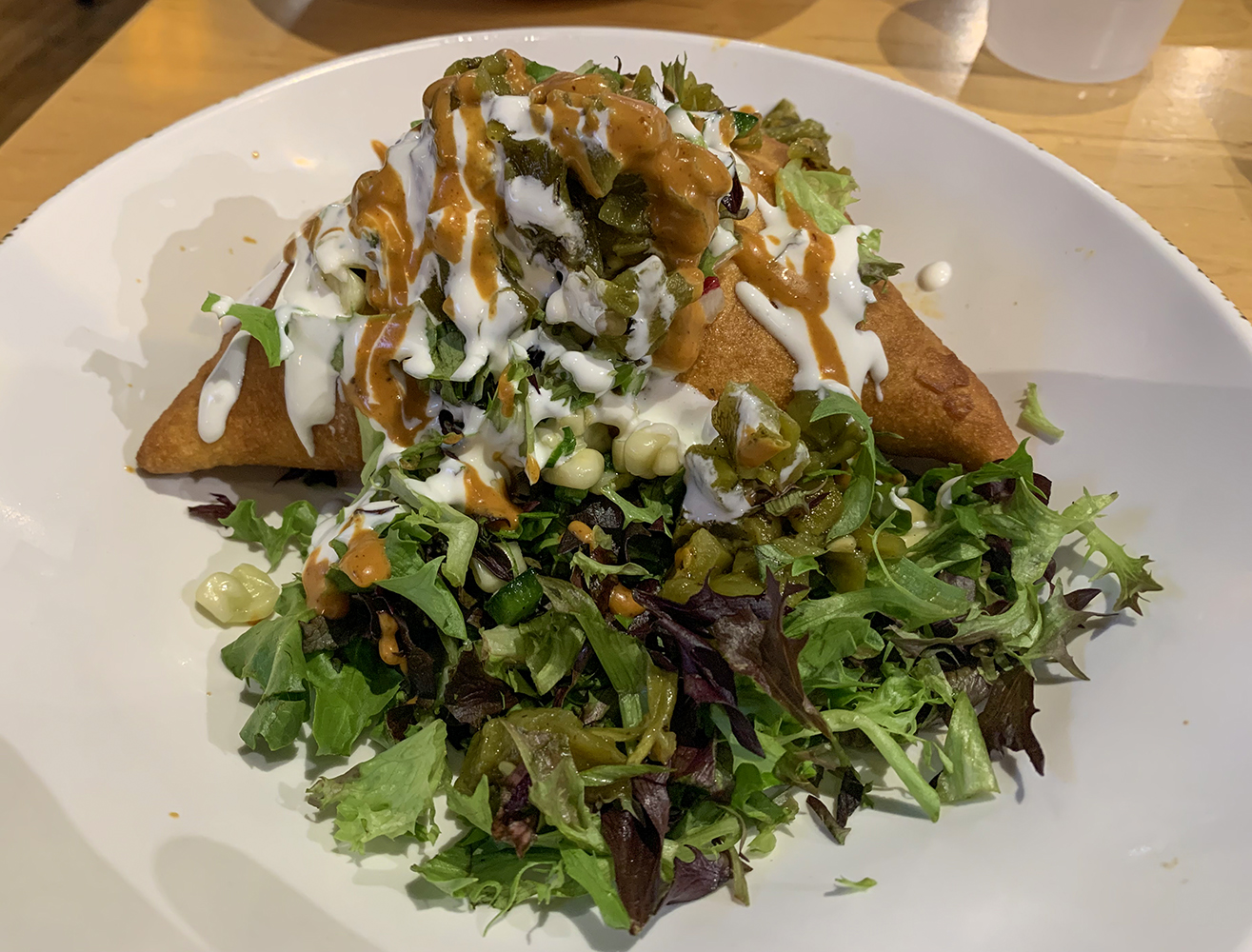
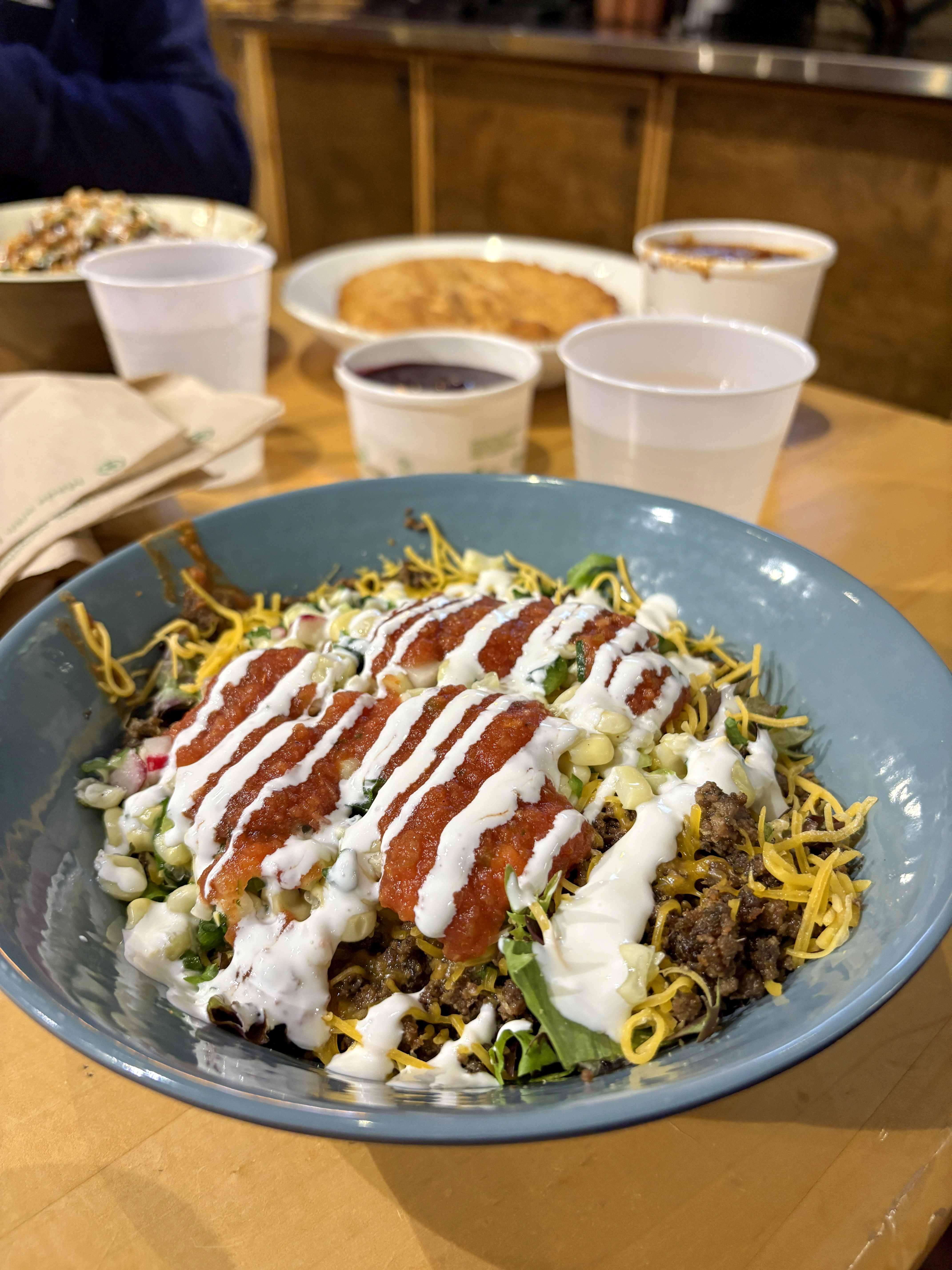
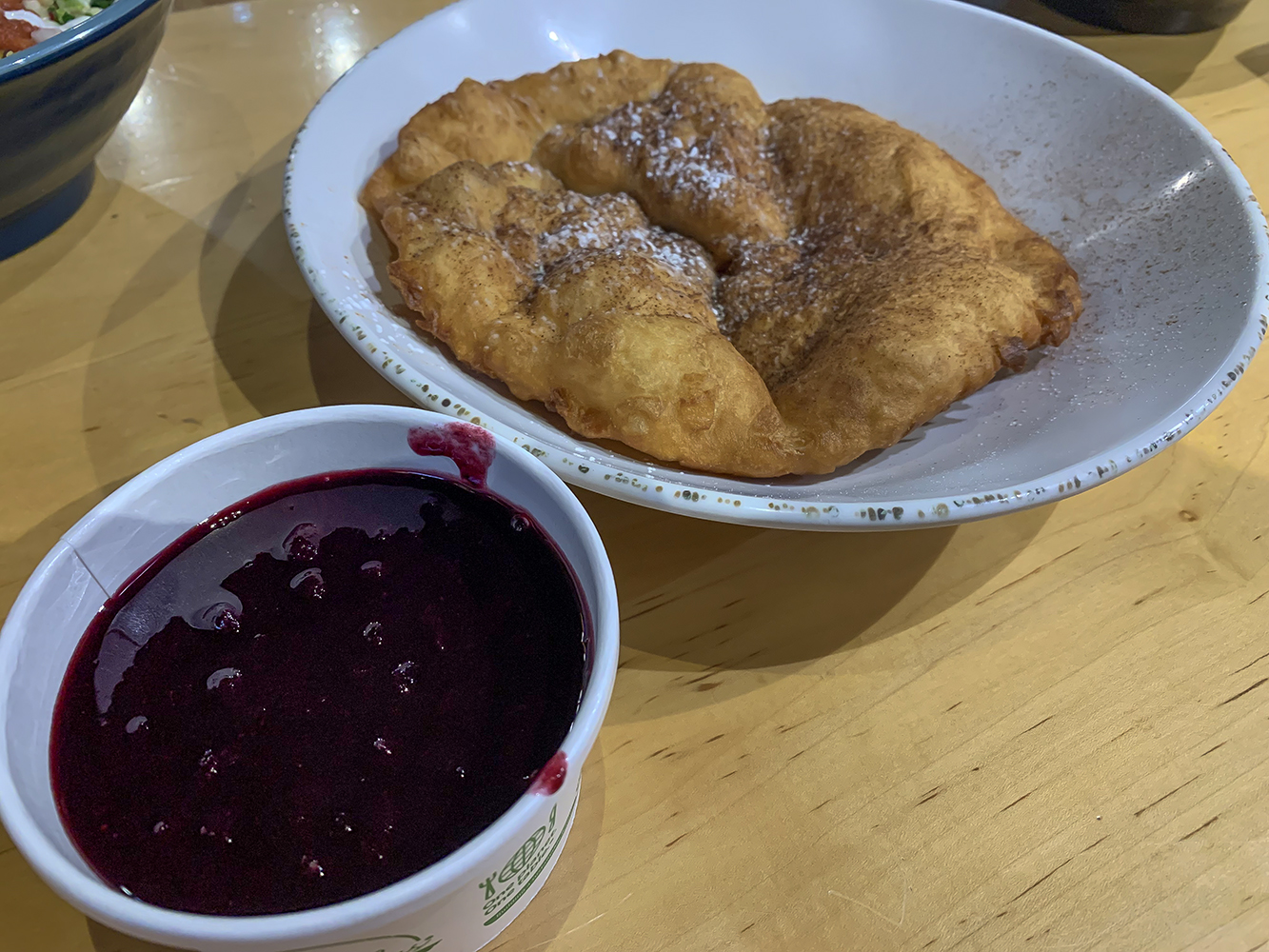
We tried a variety of dishes and did some sharing, hoping to get sampling of their entire menu. Professor Yawn tried the Indian Fry Bread, stuffed with shredded Bison; Olivia opted for the chicken; and Chrissy explored the ground Bison; and we also ordered a bowl of Bison chili and, for desert, we tried Wojapi with Indian Fry Bread (with cinnamon and sugar, of course).
It was a fulfilling way to end the day, providing insight into the culinary traditions of Native Americans, offering a new food experience, and whetting our appetite for more Bison and Wojapi.
En route to Denver, Colorado for a conference presentation, our travels brought us through the vast expanse of west Texas. This path gave us the opportunity to see two charming western towns, Abilene and Lubbock. In Abilene, we hoped to spend some time in their historic downtown district, while Lubbock was on our radar because it is a possible law-school destination for both Olivia Discon and Chrissy Biello. Exploration was in order!
Grace Museum
by Olivia Discon
Abilene, Texas, has a lovely and historic downtown.
Known as the Storybook Capital of Texas, the city is truly proud to bear the title. Around the area, you can find public sculptures…
Olivia Discon and Chrissy Biello with Luis Jimenez’s “Mesteno” in Abilene
…cartoon characters, bookstores, and other fun literary-themed spots. We stopped by the mini sculpture walk in Everman Park, and Chrissy and I had a great time reminiscing about the titles and book characters that marked our childhood and our respective love of reading at an early age.
After that, we went into the historic Grace Museum. The building itself is beautiful, and the current exhibit was really interesting. Within the exhibit, there was a handmade wooden “chapel” displaying about 20 paintings that depicted contemporary or average-looking people in religious scenes, which was thought-provoking and very well done. What stood out to me the most were the gold leaf paintings and the creative ways biblical stories were referenced.
There was a book in the gallery that explained which biblical story matched up with the modern figures in the paintings, which I thought was a nice touch. Yawn and Chrissy were more into the nature scenes, which were different from the religious imagery but still detailed and visually appealing.
One of my favorite parts of the museum, though, was the Youth Art Month gallery. Local students had their work displayed, and it was honestly so fun to see. There was a range of ages (and maybe a range of talent, too), but the community engagement aspect was the best part. I did something similar as a kid, and I still remember the feeling of pride seeing my art displayed, standing next to my parents as they took pictures. But more than that, it’s about showing kids that they belong in these spaces—that they can be part of the art world, even at a young age.
Having the privilege to have gone to several museums with LEAP, I can say that this visit became an unanticipated favorite!
With that pleasant surprise on our minds, we stopped for a quick bite to eat at the highly-rated Jay’s BBQ…
…found the restaurant to live up to its ratings in both hospitality and taste, and we headed to Texas Tech University to visit their law school and get a glimpse, perhaps, of our futures.
Texas Tech Law School and University
by Chrissy Biello
Known for its nationally ranked Advocacy Program and commitment to public service, Texas Tech Law School is filled with immense opportunities that sets their students up for success. Thanks to Dean Saavedra, Assistant Dean of Admissions, and Ms. Moorhead, Director of Admissions, Olivia and I had the chance to tour the law school.
As she took us through the law school, there were many appealing aspects that would draw many students in. One aspect that I found particularly intriguing was the Lanier Auditorium, where the law school hosts many programs for its students. Ms. Moorhead explained they are usually during the lunch hour, allowing students to have the option to attend as there are no classes scheduled during that time.
With multiple clinics, organizations, and externships to choose from, there is something no matter what you are interested in. From this, one is able to go down many different paths to determine what truly aligns with them.
In all, Texas Tech Law School is not only nestled in an area with astounding architecture and art, but it also contains a plethora of ways for students to grow by giving them the resources to do so. Olivia and I would like to thank Ms. Moorhead for giving us a great tour and experience at Texas Tech Law School; it truly gave us a glimpse into the life of a law student at Texas Tech.
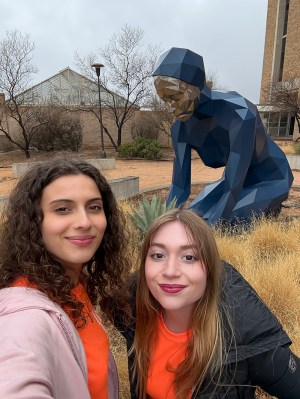
As we were on the Texas Tech campus, we decided to take the chance to walk around and see the art that the students are able to experience everyday. With multiple Moroles sculptures on campus, we LEAPed at the opportunity to go and see them. They were all very striking, and made us feel at home, as Huntsville has many Moroles sculptures as well.
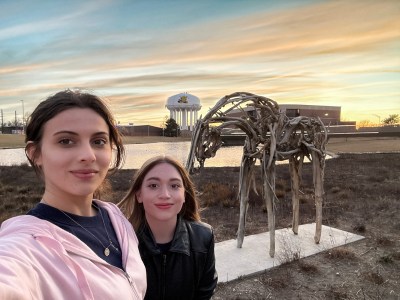
We also enjoyed Deborah Butterfield’s “Wind River” sculpture. Having the previous experience of seeing one of her horse sculptures at the Besthoff Sculpture Garden in New Orleans, I was happy to be making that connection at Texas Tech.
One that is a quite funny play on words is the “Read Reader.” This bronze sculpture is multiple books stacked upon each other, ultimately creating a man reading. Terry Allen, the artist, is actually from Lubbock and is also known for being a great musician!
James Surls, a Sam Houston State University alumni, has a piece in front of the Texas Tech Health Sciences Center. This turquoise sculpture has three different sections and was different than the traditional wooden Surls sculptures I have seen.
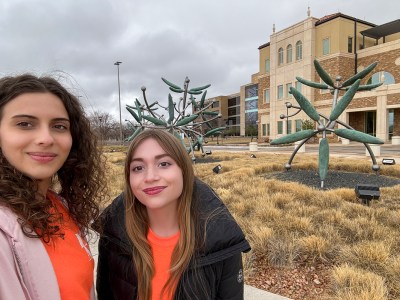
One of the most appealing aspects of Tech’s campus is its beautiful mediterranean architecture, landscaped grounds, and the art that adorns those grounds. One sculpture that combined these latter two components was “Agave Dreams” by Juilan Voss-Andreae.
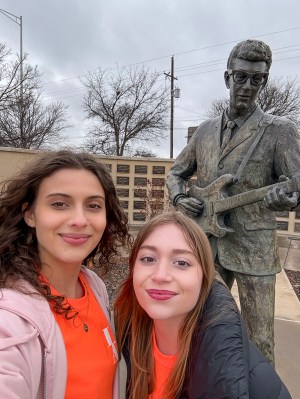
Before leaving Lubbock, we also had to explore the downtown district, as well as the Museum honoring the city’s most famous son: Buddy Holly. We, of course, had to get a photo inside the large glasses that resembled Holly’s.
We then concluded our time by taking a selfie with the Buddy Holly sculpture nearby…
…and looking at some of the names on the Buddy Holly Walk of Fame, spying Texas luminaries such as Roy Orbison, Terry Allen, Mac Davis, Guy Clark, and Bob Wills.
It was a fitting end to a day that is unlikely to “fade away,” with thoughts of our future in law and reflecting on a day with art.
The LEAP Ambassadors enjoyed a six-day tour of the East Coast as part of their “Democracy Tour.” During this tour, the students had a chance to visit more than half a dozen art museums, James Beard award winning restaurants, and many historic sites. What follows is their favorites from their experiences.
Favorite Restaurants:
Lehja’s in Richmond received the most votes, with all of the food receiving high marks from the diners. The James Beard nominations appear justified!
Casa Mexico in Philadelphia was a hit among the students, with the barbacoa being particularly popular. This was an altogether pleasant dining experience in an interesting and busy neighborhood in Philadelphia. Chef Christina Martinez was named “Best Chef” in the mid-Atlantic region in 2022 by the James Beard Foundation.
Metzger’s Bar and Butchery was perhaps the most interesting and innovative of the restaurants we visited. While the pork schnitzel was the favorite entree, the “squash sundae,” was the favorite dessert and the biggest surprise.
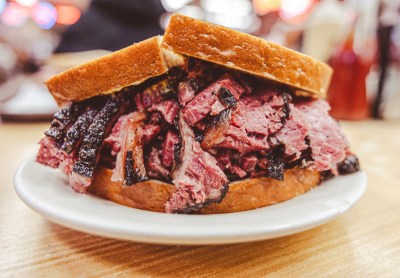
Ambassadors also found favorites in Katz’s Deli in New York, a restaurant world-famous for its pastrami.
And, of course, we also enjoyed Jim’s South St., which specializes in Philly Cheesesteaks.
FavoriteArt Museum: Olivia and Chrissy visited four art museums in New York, and they split on their favorite, with Chrissy favoring The Whitney…
…while Olivia resisted picking a favorite and, instead, picked a top two: The Met and MOMA. She did, however, have a favorite: The Lovers.
Although smaller and less heralded than its New York and Philadelphia counterparts, the Virginia Museum of Fine Arts was one of the clear favorites among the group.
The favorites of the group reflected the diversity of the art in the Museum’s collection.
Of course, the most famous paintings among the NY, Philadelphia, and VA museums were also popular among the Ambassadors.
Finally, the group also greatly enjoyed seeing Philadelphia City Hall, the Liberty Bell, Independence Hall, and the Virginia Capitol Building. For Cinthia, Olivia, and Michelle, it marked the third–the complete collection–of extant Jefferson designs in the world.
While the Ambassadors are always happy to get back to Huntsville and SHSU (or, this semester, Austin and SHSU), they left the east coast with a lot of memories, new-found knowledge, and much nostalgia.
This was–we thought–our last day, and we were determined to enjoy it! In that spirit, we had planned out a day of history and art, with a tour of the Virginia Museum of Fine Arts, the Capitol, the Old City Hall, the Edgar Allan Poe Museum, and some interesting restaurants.
Lehja Indian Restaurant
Saara Maknojia
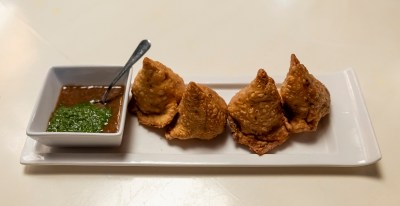
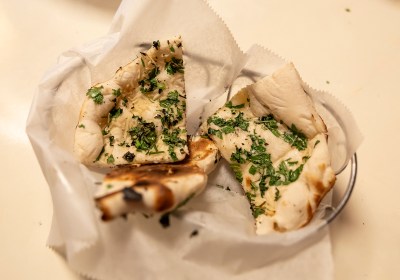
Keeping our streak alive of eating at (affordable) James Beard nominated restaurants, LEAP Ambassadors stopped by Lehja, a contemporary take on Indian food. Indian food is not a foreign concept for the Ambassadors so knowing the classics we ordered a plate of aloo (potato) samosas.
For a change we also experienced a new dish, as our server recommended the Chef’s Daily Selection, Chaat Du Jou. The chaat consisted of flashed fried curry leaves with various species, topped with a tangy tamarind yogurt chutney, paired with refreshing pomegranate seeds. Although both appetizers were tasty, the consensus favored the Chaat Du Jou!
Olivia, being the biryani connoisseur, ordered the classic chicken biryani, which is additionally paired with raita, a spiced yogurt sauce.
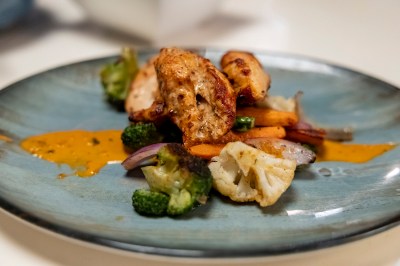
Bringing out the contemporary aspect of Lehja, Cinthia and Michelle ordered a plate of Tandoori Chicken Tikka. Traditionally, chicken thighs are marinated in yogurt with various tandoori spiced to bring out a smoked flavor when grilled. Lehja, however uses chicken breasts and serves with a platter of grilled market vegetables. To my surprise Cinthia, who is not the biggest fan of spicy food enjoyed the chicken tikka without breaking a sweat.
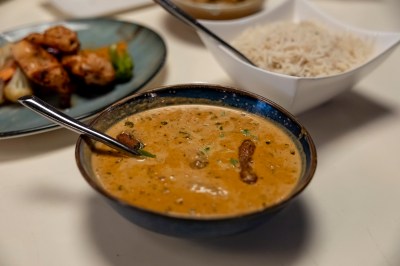
The Regional Classics for Lehja’s include various curry dishes. I found the Kofta Chaman Dilkhush appetizing, mainly because the term “Dilkhush” refers to a happy heart and what better way to leave a restaurant than with a happy heart! The vegetable kofta’s in this dish were perfectly fried with a soft potato filling, complementing the cashew-tomato curry base. Kicking the spice level up a notch, I found spice level three to best for this hearty meal.
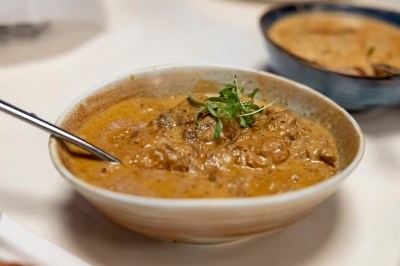
Professor Yawn and Stephanie also tried a Regional Classic dish, the spicy garlic, ginger, and chilly based curry included tender goat meat which fell right off the bone. Eating the meal in a traditional Indian fashion way, we shared our entrees with each other to fully taste the flavor spectrum and enjoy the company of one another.
Eating Indian food always makes me personally happy, but it is always a much better experience when those around you have the willingness to try new foods to enhance their understanding of cultures, apart from theirs. Lehja’s serves its purpose as a contemporary Indian restaurant but also keeps its traditional roots with the hospitality given to us during our visit. We are grateful to have a shared experience at yet another James Beard nominated restaurant.
Virginia State Capitol Building
by Saara Maknojia
Marking off yet another Capitol building, LEAP Ambassadors spent the afternoon touring the Virginia State Capitol. Rich with history, the Virginia Capitol reflects the vision of Thomas Jefferson, who was the primary architect for the structure.
Our tour guide, Mrs. Snellings, took us through the Museum, showcasing the wonderful architecture, functions, and art. In the Rotunda, is a Jean-Antoine Houdon sculpture of George Washington.
This sculpture is considered the best likeness of Washington. Houdon took a plaster cast of the first President’s face and exact measurements of his body–no other statue of Washington reflects this level of detail.
We had a chance to peek into the House Chambers…
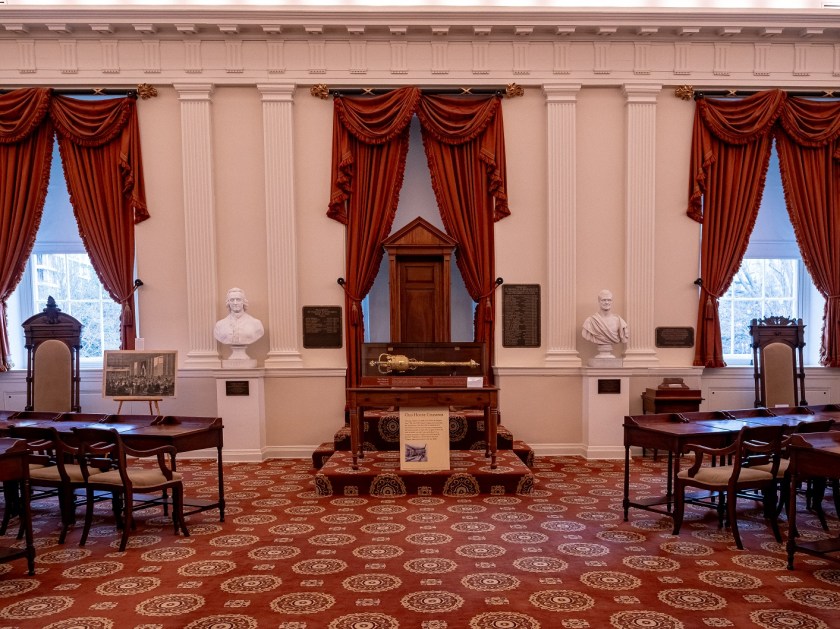
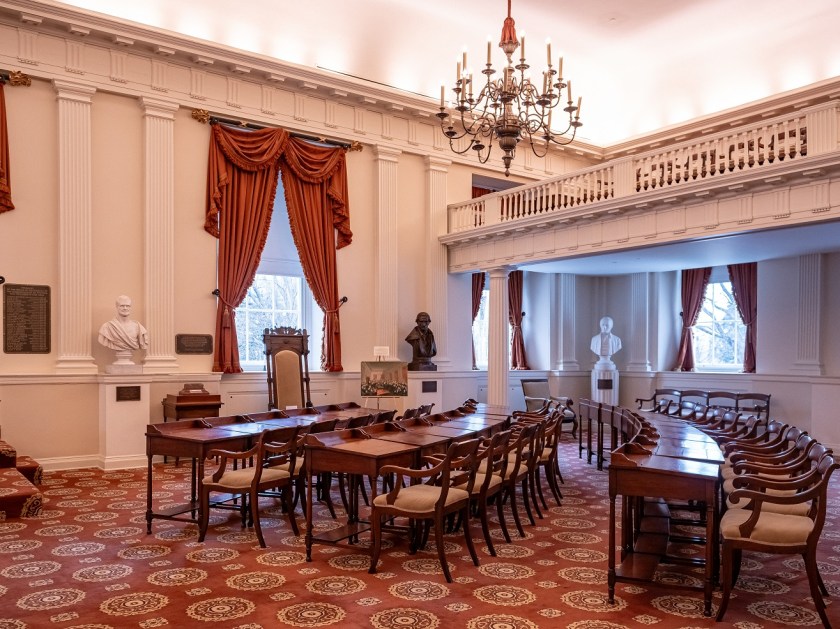
…and we also had a chance to visit, and spend more time in, the Old House Chambers, the largest room in the structure.
The center of the room features a ten-pound mace, made from solid silver with a 24-karat gold finish. Also gracing the room are busts of Chief Justice John Marshall and Patrick Henry, both of whom served in the VA House of Delegates.
On the opposite side of the room out of reach of our cameras, are busts of Sam Houston (who was born in Virginia) and Cyrus Hall McCormick (born in the same county as Sam Houston!).
This room also hosted the 1807 trial of Aron Burr, who was charged with treason. As Chief Justice of the United States Supreme Court, John Marshall returned to the building in which he once served as Representative, and he presided over the trial.
Walking into the Old Senate Chambers, we noticed many artworks on the walls. One piece that Mrs. Snellings highlighted was a painting of Pocahontas.
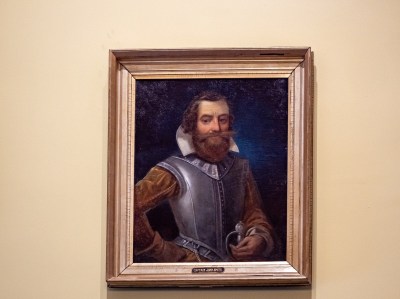
She explained the true history behind her story, correcting the common myth that Pocahontas was married to Captain John Smith (also pictured in the room).
In fact, she was married to John Rolfe, a tobacco planter.
Next, Mrs. Snellings directed our attention to the back of the room, where she pointed at a painting by Griffith Bailey Coale. The painting depicted three ships: the Susan Constant, the Godspeed, and the Discovery. Mrs. Snellings explained that this scene represented the arrival of these ships in 1607, marking the beginning of the first permanent English settlement in America at Jamestown, Virginia. She pointed out the flags atop the ships, noting that they symbolized the United Kingdom.
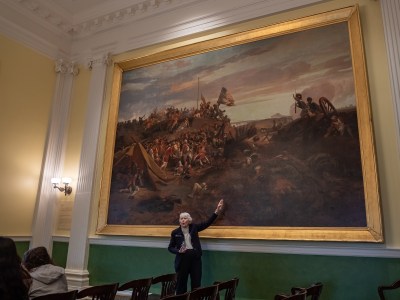
The largest painting in the room, by Eugene Louis Lami titled Storming a Redoubt at Yorktown captures the Battle of Yorktown 1781, as British Troops approach the American forces. Mrs. Snellings pointed to a small figure in the painting and asked if we had any guesses for who it might be. After waiting for a response, she exclaimed with excitement, “It’s General George Washington!”
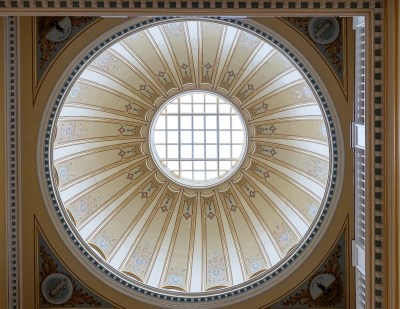
The architectural features of the building were beautiful, from the central rotunda…
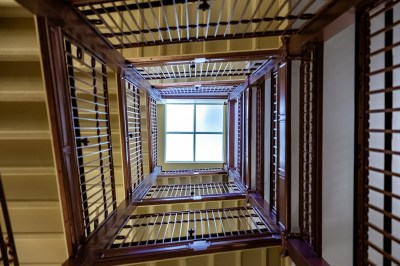
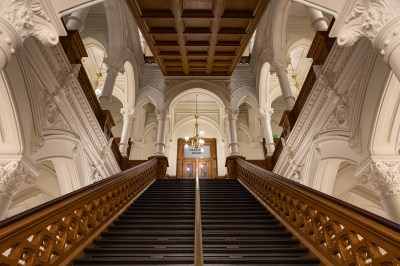
…and the stairwell, which at one time, housed a steam-powered elevator.
Although our time at the Capitol was brief, we left with a valuable history lesson about the foundations of American democracy and the fight for independence! We would like to thank our tour guide, Mrs. Snellings, for providing a fantastic tour and sharing insights that many of us had not known before.
Old City Hall
Also on the Capitol Square–with the Capitol and Executive Mansion–is the old City Hall, a Gothic Revival Structure built in 1894.
For more than seven centuries, it housed city offices and courts, but as early as the 1920s, there were calls to tear down this beautiful structure and replace it with a more modern city hall. These calls were partially heeded in the 1970s, when a new City Hall was built, but, thankfully, the Historic Richmond Foundation led efforts to save it. The structure re-opened in the 1980s and in the 2010s, the building was restored to its original look–a restoration that required approval from the Virginia Department of Historic Resources, Architecture Review Board, and Capitol Square Preservation Council.
At 30,000 square feet, it remains the largest granite building in Richmond, while also being the city’s finest example of Gothic architecture.
It was designed by architect Elijah Myers, who also designed the TX Capitol building (where three of the LEAP Ambassadors currently work) and the Colorado Capitol Building (which two of the Ambassadors will visit in March), as well as the capitol buildings of Utah, Idaho, and Michigan.
Today, the structure is used for state offices, and only the first floor is accessible to visitors.
But even a restricted visit is worth it for the view of the impressive clock tower on the exterior of the building, the four-story atrium…
…detailed faux-graining of the bases of the Corinthian columns…
…and the exquisite detailing of the interior.
Virginia Museum of Fine Arts
by Michelle Cardenas
The Virginia Museum of Fine Arts (VMFA) offered an experience that was both exciting and full of discovery. Originally opened in 1936, the museum has continued to evolve, with a major renovation in 2010 and plans for further expansion to accommodate even more incredible works of art. The museum’s location carries historical significance as well, sitting on what was once a Confederate camp, adding another layer of depth to our visit.
Instead of our usual self-guided exploration, we opted for a highlights tour, which provided an excellent overview of the museum’s diverse collection. Before even stepping inside, we were captivated by the stunning outdoor sculptures by renowned artists such as Dale Chihuly and Henry Moore, which set the tone for what was to come.
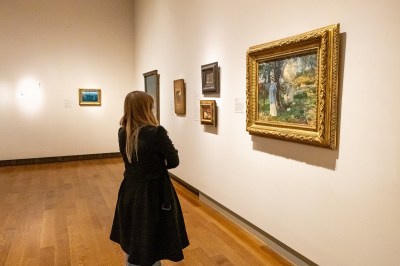
One of the standout sections for me was the American Art collection, where I was particularly drawn to Moonlight in Yosemite by Albert Bierstadt. Seeing one of his pieces with muted colors–almost black and white in places–was unexpected and fascinating, offering a different perspective on his usual style.
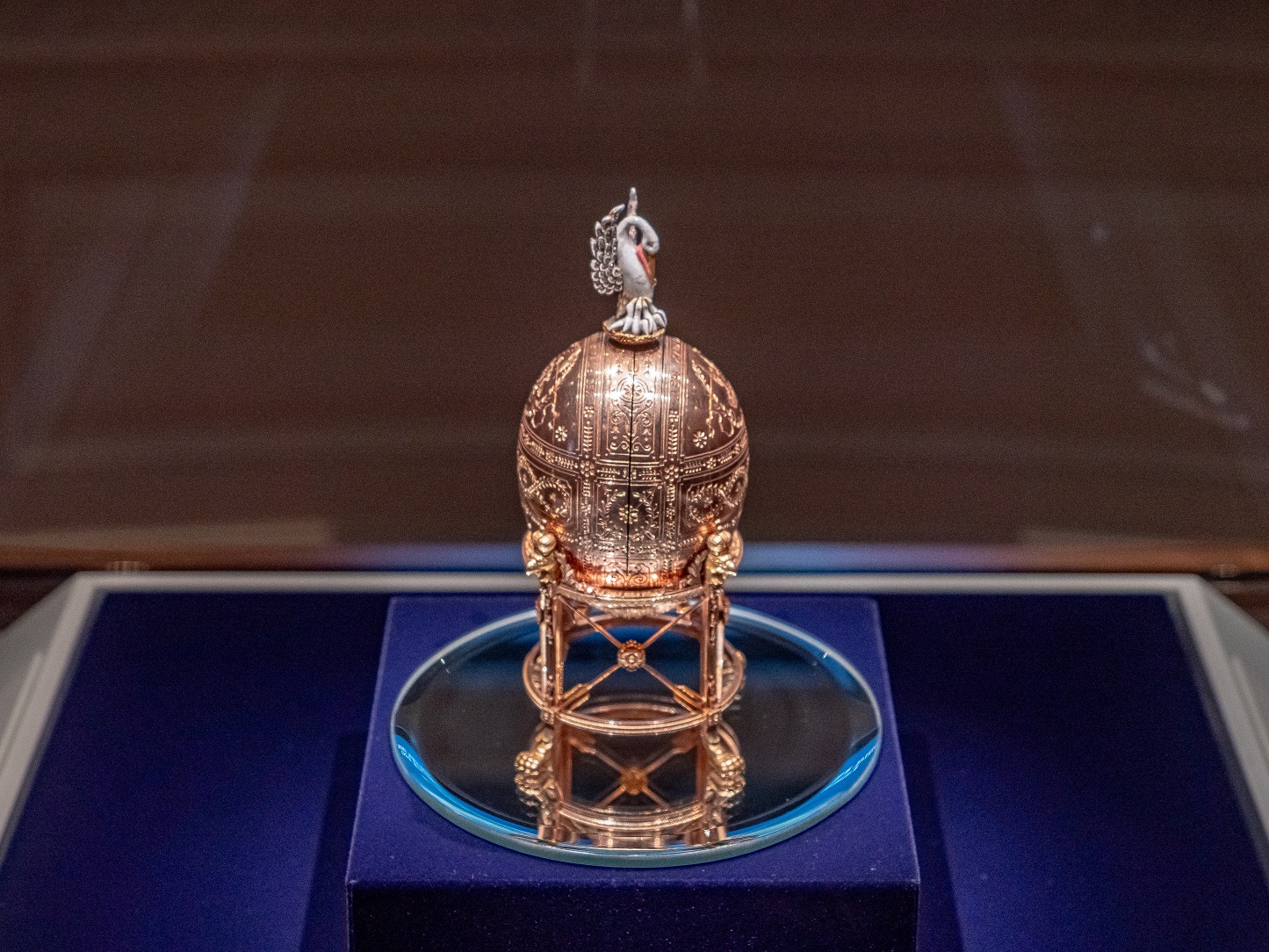
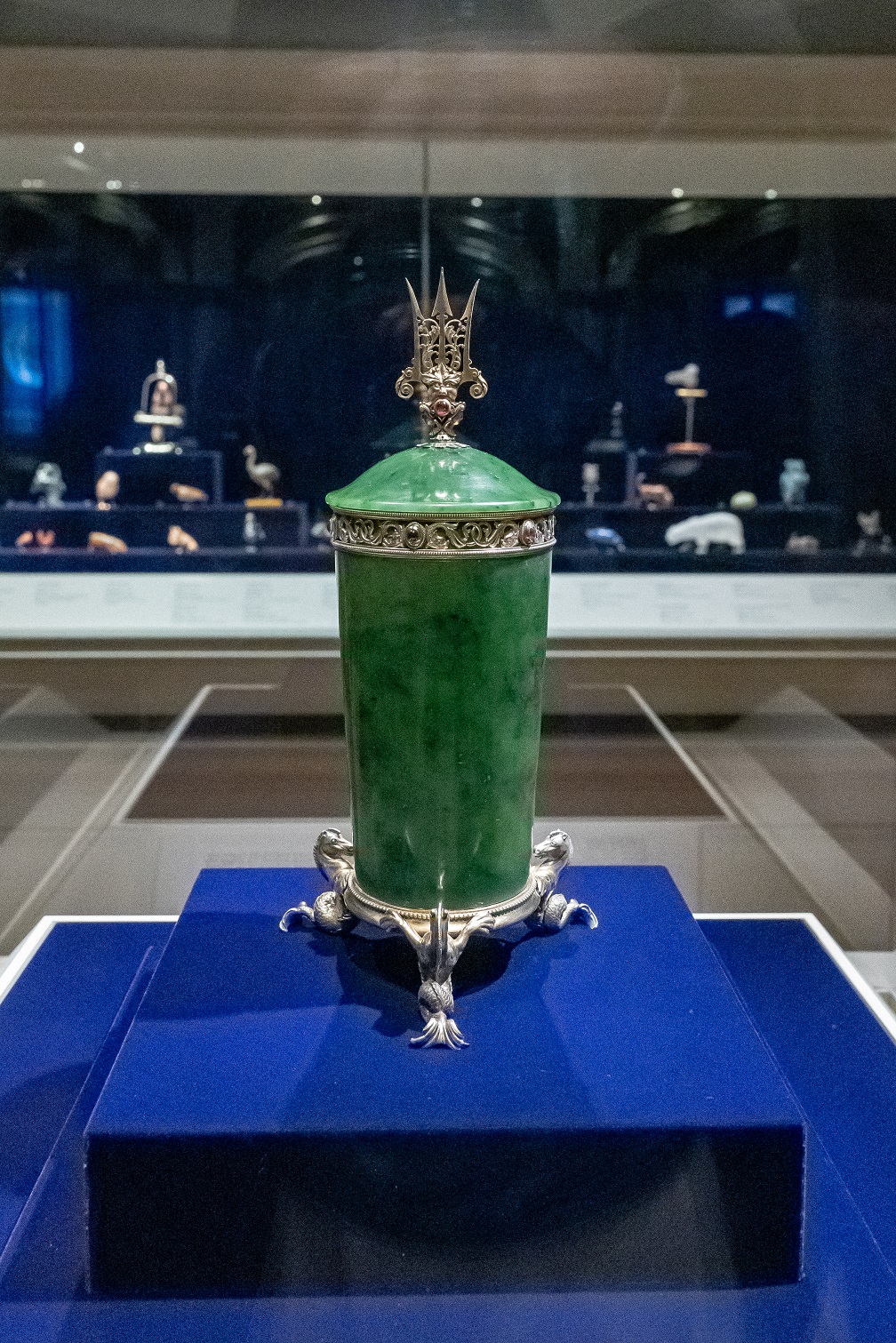
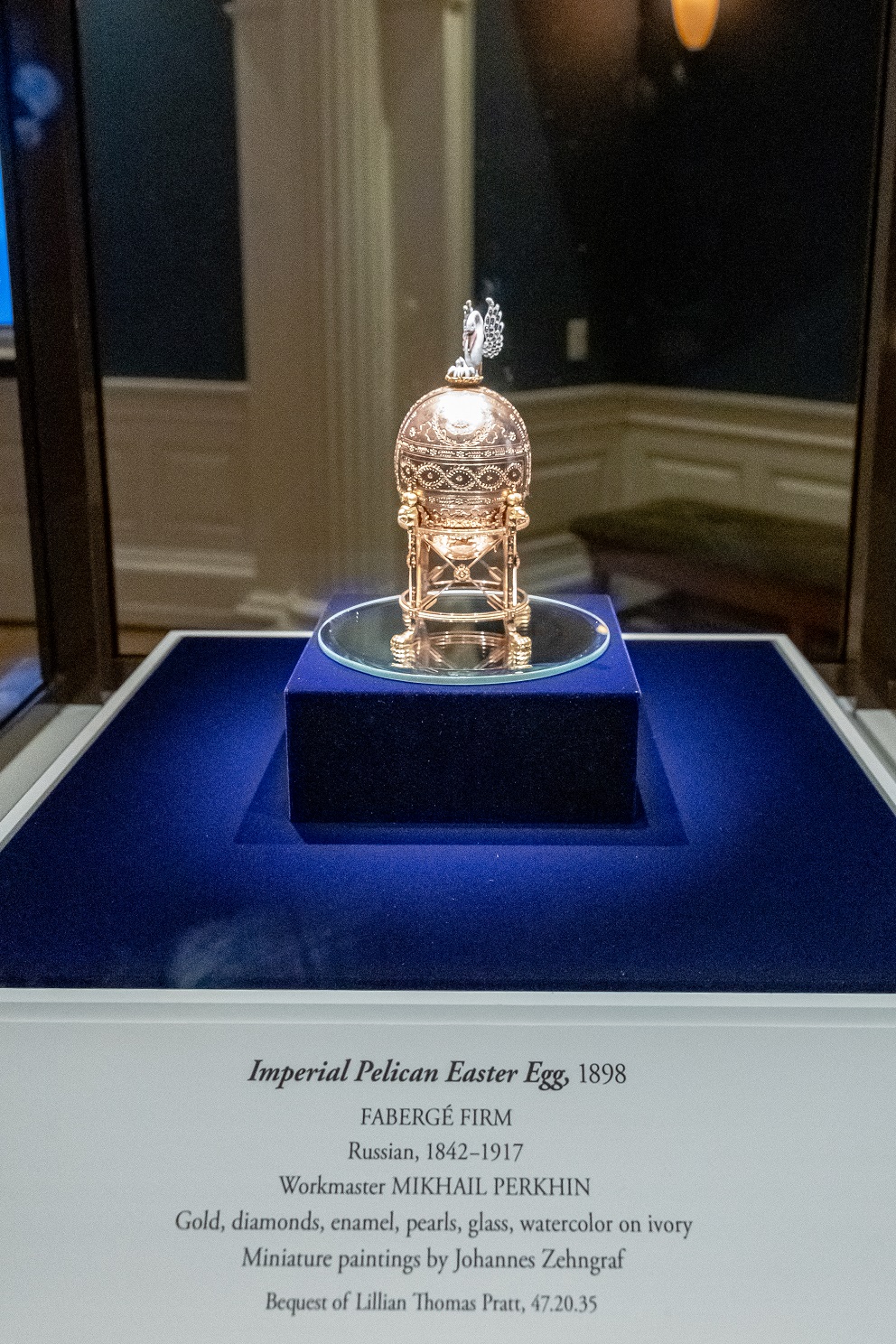
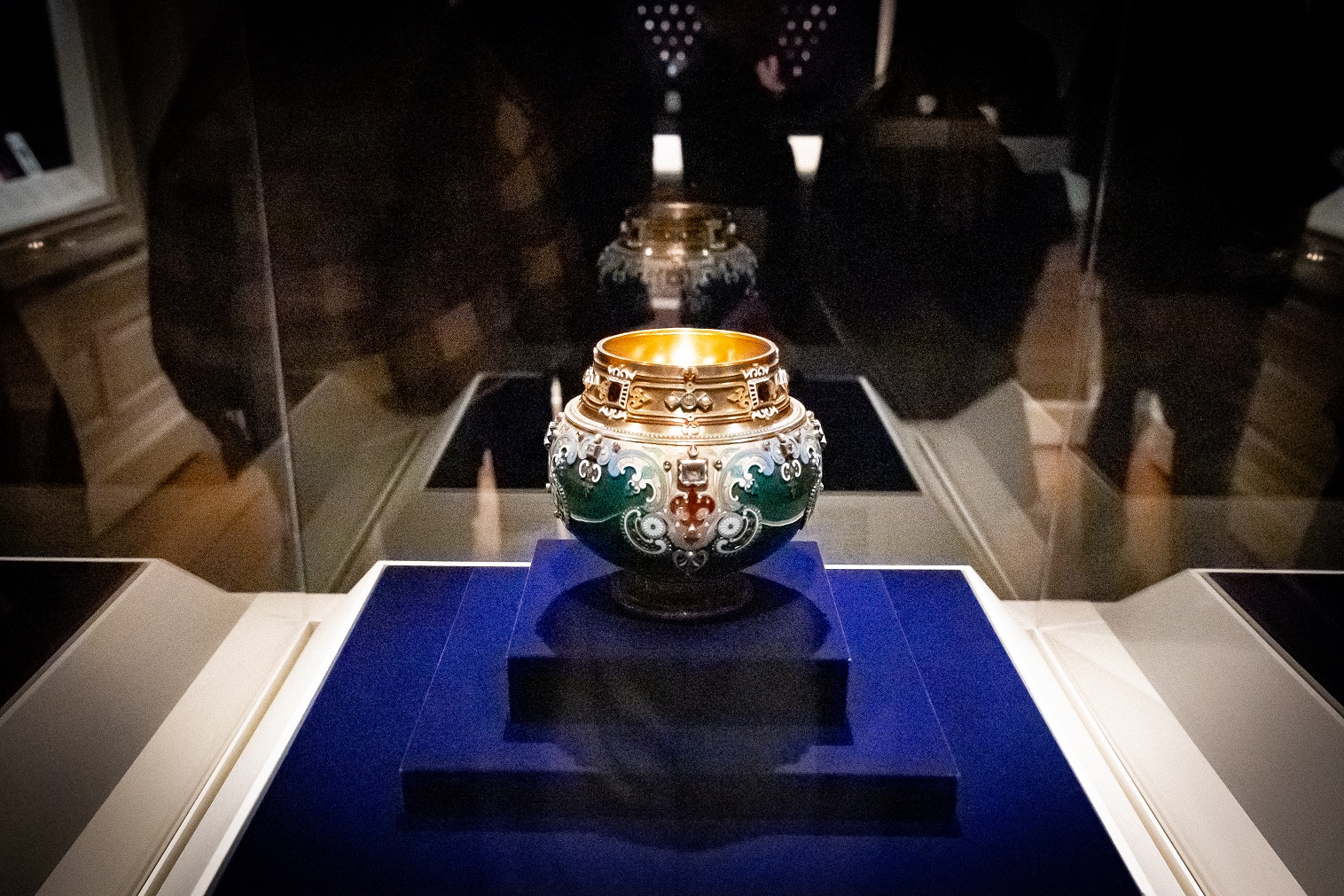
Another highlight was the Fabergé collection, featuring beautifully intricate Easter eggs that showcased incredible craftsmanship and history.
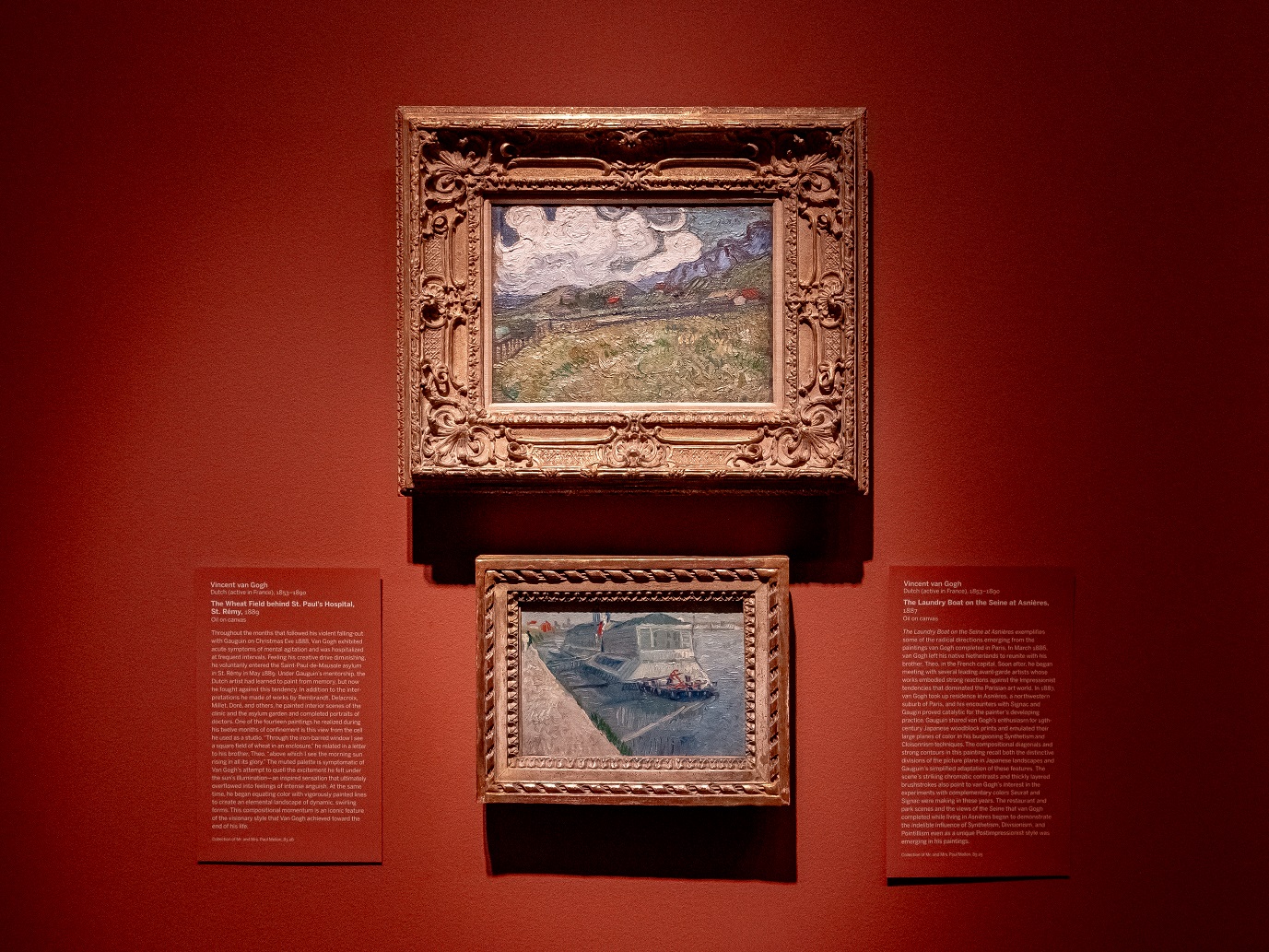
As we continued through the museum, we encountered works by well-known artists such as John Roberts, Kehinde Wiley, Ellsworth Kelly, Andy Warhol, Van Gogh, Degas, and Monet. Recognizing these names and seeing their masterpieces up close is incredibly rewarding—especially when I think back to when I first started and hardly knew any artists at all.
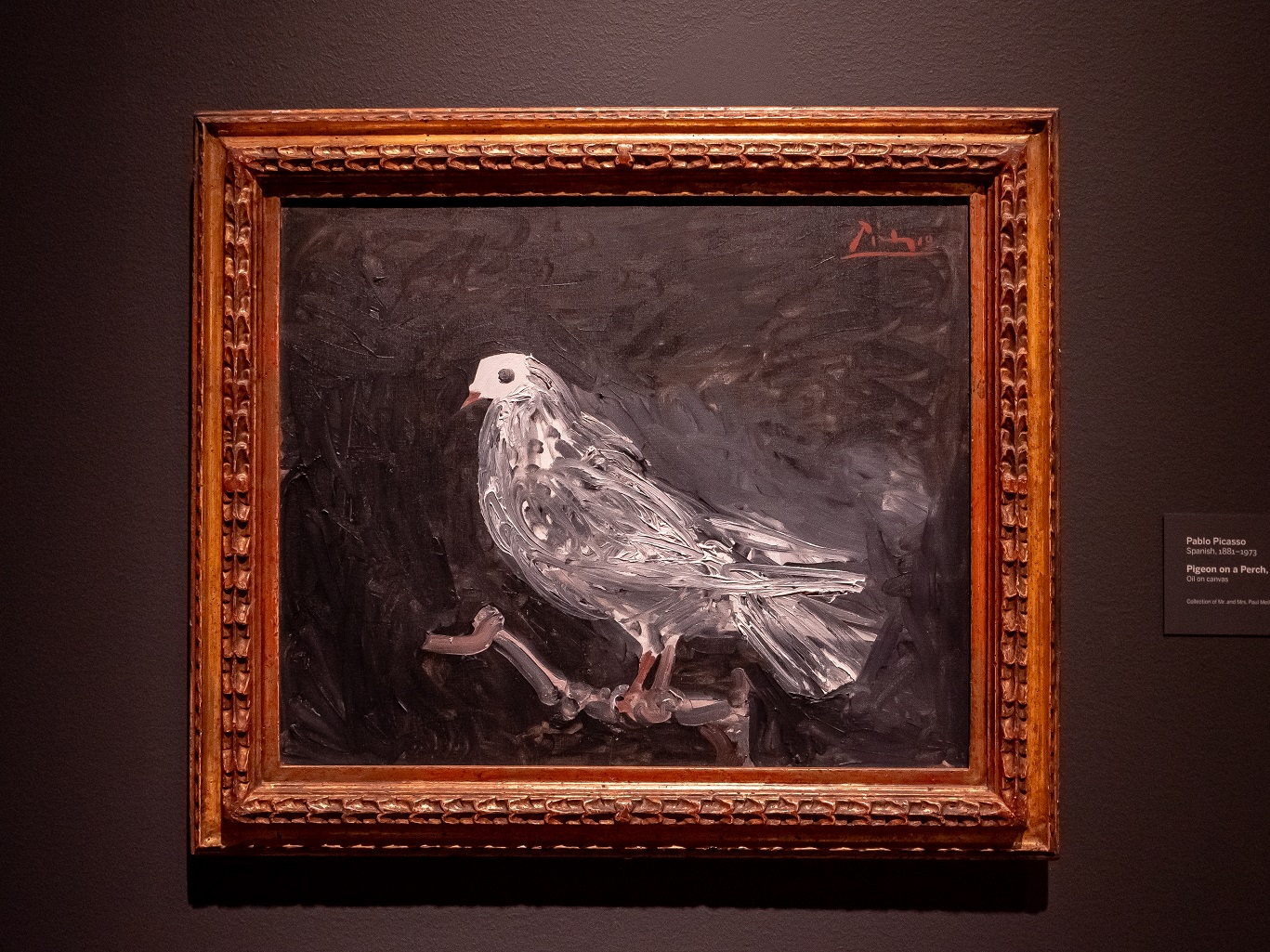
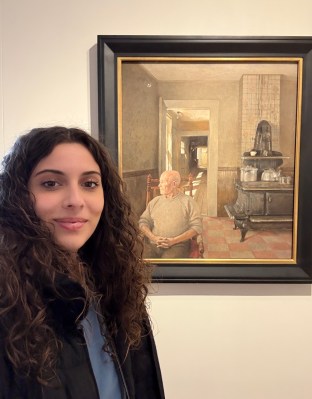
Each of us found pieces that resonated on a personal level. Cinthia was drawn to Edward Hopper’s House at Dusk, appreciating its quiet and reflective atmosphere. Olivia enjoyed the works of Andrew Wyeth, admiring his detailed and emotional portrayals.
Saara was captivated by Edwin Lord Weeks’ The Hour of Prayer at Moti Masjid…
…which stood out due to its rich colors and cultural depth. Chrissy’s favorite was John Singer Sargent’s The Sketchers, which impressed her with its lively and spontaneous feel.
Visiting museums like the VMFA is always a rewarding experience. No matter how many we explore, there’s always something new to learn and appreciate. Each visit offers a chance to see the world through different perspectives, and we’re grateful for the opportunity to continue discovering and growing through art.
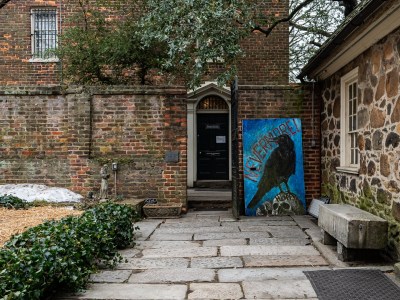
The Poe Museum
by Chrissy Biello
Mystery, Madness, and Mayhem, three words that many would use to describe Edgar Allan Poe. Nevermore, that might not be the full story….
Edgar Allan Poe is known by many as an American short story writer and poet. His themes largely center around darkness, such as death, despair, and fear. He is widely credited with pioneering the modern detective story and significantly contributing to the emerging genre of science fiction.
Today, we had the chance to visit his home in Virginia, where we learned much about him. The museum began on a particularly somber note, discussing how his mother passed away when Poe was only two years old, leaving him orphaned.
Upon seeing a coffin, Olivia could not resist the urge to climb in. Surprisingly, it fit her perfectly, not to mention befitting her increasingly pallid complexion!
To give you some context, this coffin was placed here to symbolize the intense fear people in Poe’s era had of being buried alive. Due to this widespread anxiety, special coffins were designed with a mechanism that allowed the occupant to ring a bell from inside to call for help. However, when Olivia got inside, she chose not to ring the bell…
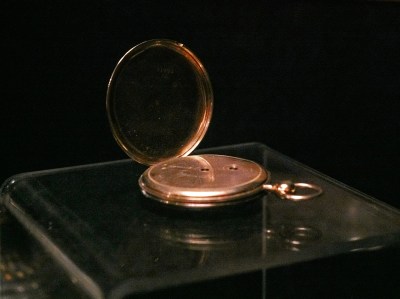
One aspect of the exhibit that I found especially intriguing was the pocket watch that Poe heard while writing “The Tell-Tale Heart.” I have always found this short story engaging and mysterious, as I tend to be drawn to darker subjects.
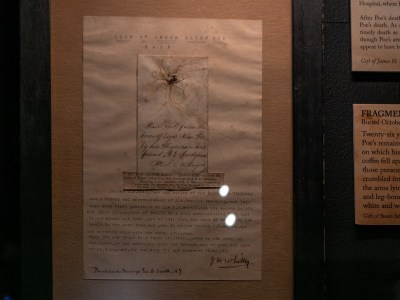
And, there has been considerable debate surrounding whether Poe was the artist of a watercolor painting or simply the gifter. The painting, which depicts a weeping woman, is quite interesting to observe. I appreciated the detailed wrinkles in her dress and the overall droopy appearance of the painting.
Another fascinating mystery in the museum concerns Poe’s hair. After his death, locks of his hair were cut from his head. Although the cause of his death remains a mystery, many have attempted to solve it. In 2002, a sample of his hair was analyzed, revealing the presence of many heavy metals, which were believed to have contributed to his death.
The museum also shed light on Poe’s posthumous reputation, largely shaped by his adversary, Rufus Griswold. Griswold painted Poe as a madman and drunkard in a posthumous biography. Ironically, this portrayal fueled Poe’s fame, but as mentioned earlier, we learned that Poe may not have been as crazy as everyone believed, leaving his legacy steeped in mystery and intrigue.
Before leaving the museum, we visited an upstairs section of the house featuring paintings. One painting, in particular, was quite amusing. It was titled Vincent Van Poe by Chris King and depicted Starry Night in the background, with Poe, a black cat, and a raven in the foreground.
As a fan of Poe, I thoroughly enjoyed the museum, especially since it was Poe’s actual home. It was also delightful to see a black cat, aptly named Edgar, moving around the building, setting the perfect atmosphere for reading and learning about Poe!
Metzger Bar and Butchery
For our last planned dinner of the trip, we opted for Metzger Bar and Butchery, whose chef, Brittany Anderson, is a two-time James Beard semi-finalist.
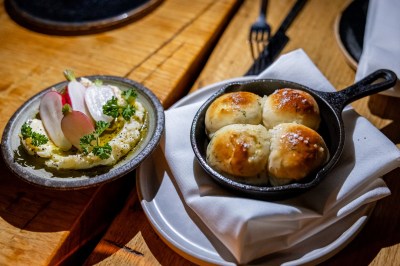
We started the evening with a recommendation of our server, the Charred Cabbage, whose menu description was enigmatic: “Miso Bagna Cauda, Cured Egg, Gremolata, Calabrian Chili.” Whatever it was, it was great! We also had a bread baked in house (“cottage-cheese rolls”), which came with house-made butter adorned with radish slices.
Three of our party went with the Pork Schnitzel, and the general consensus was that this was the best dish available. But we also tried the Chicken and the Steak, and all of it was excellent.
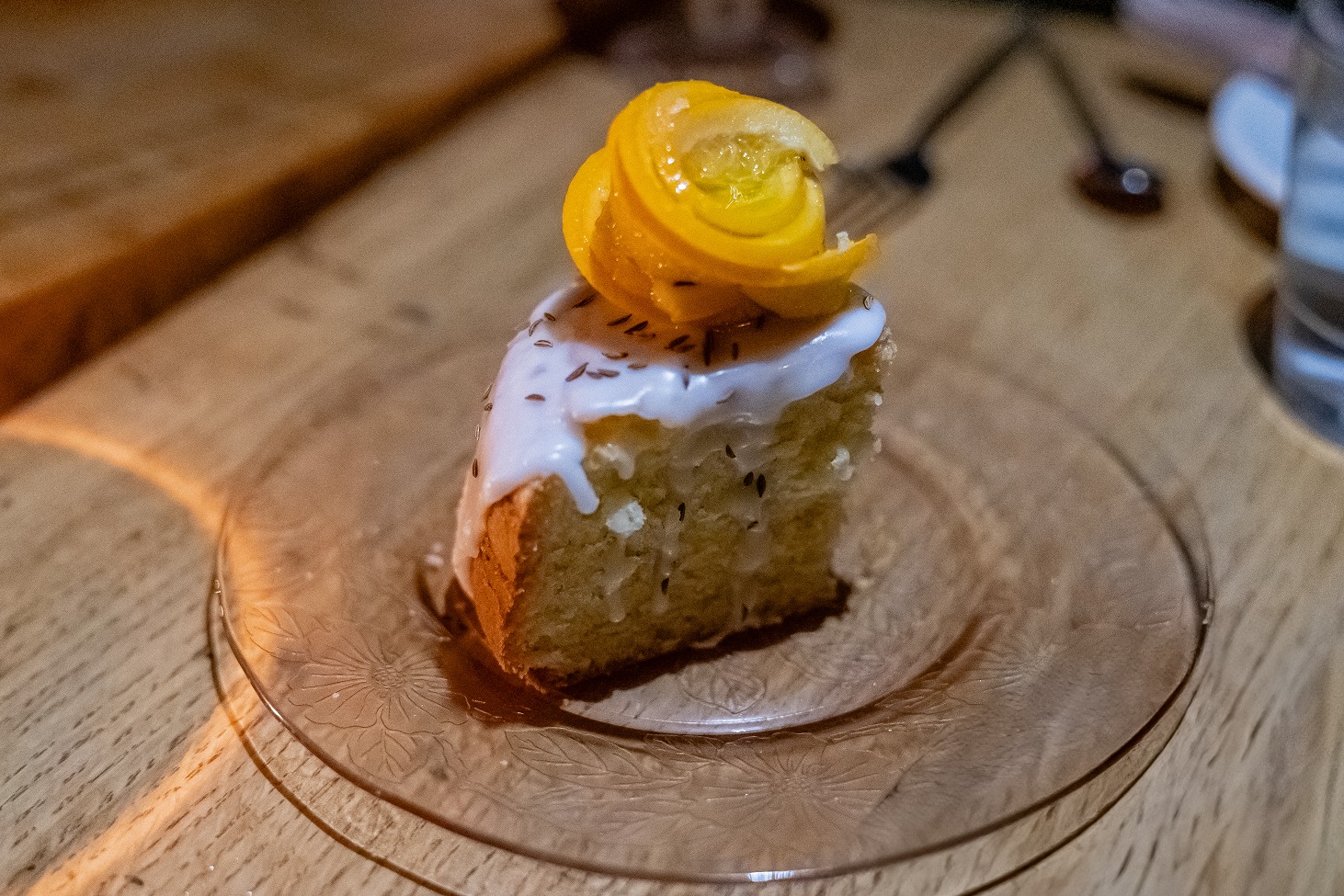
Although we were full, we were willingly talked into dessert, which included an Olive Oil Cake, the Heirloom Corn Funnel Cake, and a Honeynut Squash Sundae. The latter dessert made us pause–a squash sundae? But it was the favorite of the group!
It was a rich and fulfilling end to a busy and rewarding day.











































































 Center for Law, Engagement, and Politics