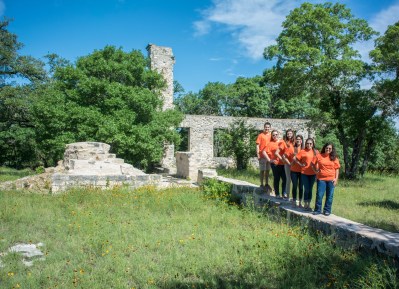
The LEAP Center recently partnered with the Wynne Home Arts Center to host an Easter Egg Hunt for the entire Huntsville Community. More than 150 citizens from the surrounding area came out for an early Easter celebration on Saturday. Families enjoyed an afternoon full of activities and gorgeous weather. The event featured an egg hunt of more than 800 candy-and-prize filled eggs, coloring, face painting, games, and hot dogs grilled by master chef, Professor Mike Yawn himself. Sammy the Bearkat and the Easter Bunny added to the fun and the Easter spirit by entertaining the crowd with a competitive egg toss.
We started the afternoon with crafty activities for the children. Volunteers from the university’s own Art Department came to help with the festivities by heading up the face-painting booth. Children walked away with butterflies, bunny noses, beautiful hearts, and many other fun creations painted on their cheeks.
Seeing the joy radiate from inside the kids amplified the good-looking art on their faces, while some children were not quite as happy to have sticky goo spread on their skin. Beside the face painting booth was a coloring station where children had the option to draw their own springtime masterpiece with crayons and craft paper.
Following the event, we had a huge canvas full of colorful flowers, bright Easter eggs, and even some well-drawn bunny rabbits as proof of the kids’ creativity.
While waiting for the hunt to commence, kids and adults alike watched as Sammy the Bearkat challenged the Easter Bunny to an egg-toss duel.
Armed with her spirit and spring in her step, the Easter Bunny fought with tosses that could have shocked even the best egg tosser in the business but in the end succumbed to Sammy the Bearkat’s finesse and mighty egg-tossing skills. Although not a winner by the sight of the shattered eggshells and runny yoke on the ground, the Easter Bunny played the loser well and shook hands with Sammy for a game well played, and remained in good spirits as children flocked to her.
Finally, after much anticipation, children of different ages lined up with their baskets and at noon, the Easter egg hunt was off!
Racing to find the golden and silver eggs, the children sped around the back lawn in search of the little oval shaped, plastic goodies. Grabbing and going, they searched and searched until finally, even after much preparation on behalf of LEAP and the Wynne Home, all of the eggs were found. The kids who found the special golden or silver eggs also had the ability to take a chance look at the prize table for an extra goodie to go along with the candy and Smoothie King gift card found in the egg, thanks to the generous donation from Ms. Scott at Smoothie King (1328 Sam Houston Ave!).
Following the egg hunt, the kids and their parents got in line to enjoy a much deserved lunch of hot dogs, chips, some Mayflower Easter cookies and even an ice-cold soda to quench their thirst.
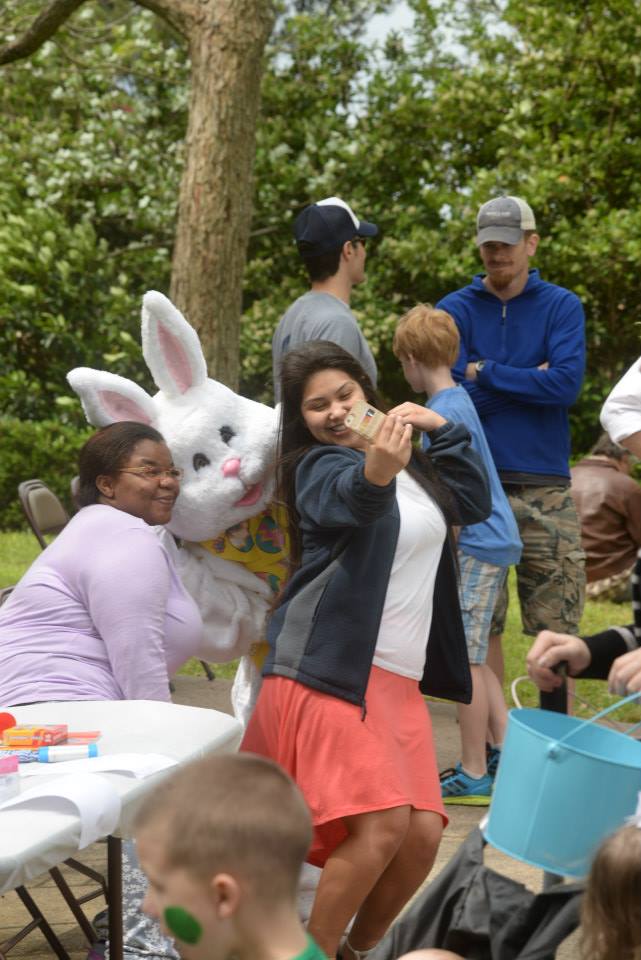
Ending the afternoon right, the willing got to take a picture with the Easter Bunny.
Whether contemplating the perfect pose or continuing with the egg relay games, families stuck around to enjoy the beautiful weather and spring fever floating through the air.
This slideshow requires JavaScript.
Special thanks to the Friends of the Wynne, the Art Department, and Laura Scott from Smoothie King for their generous help–not to mention super volunteers such as Bella Abril, Margaret Gulledge, Michelle Hebert, Terry Stivers and Ryan Brim.
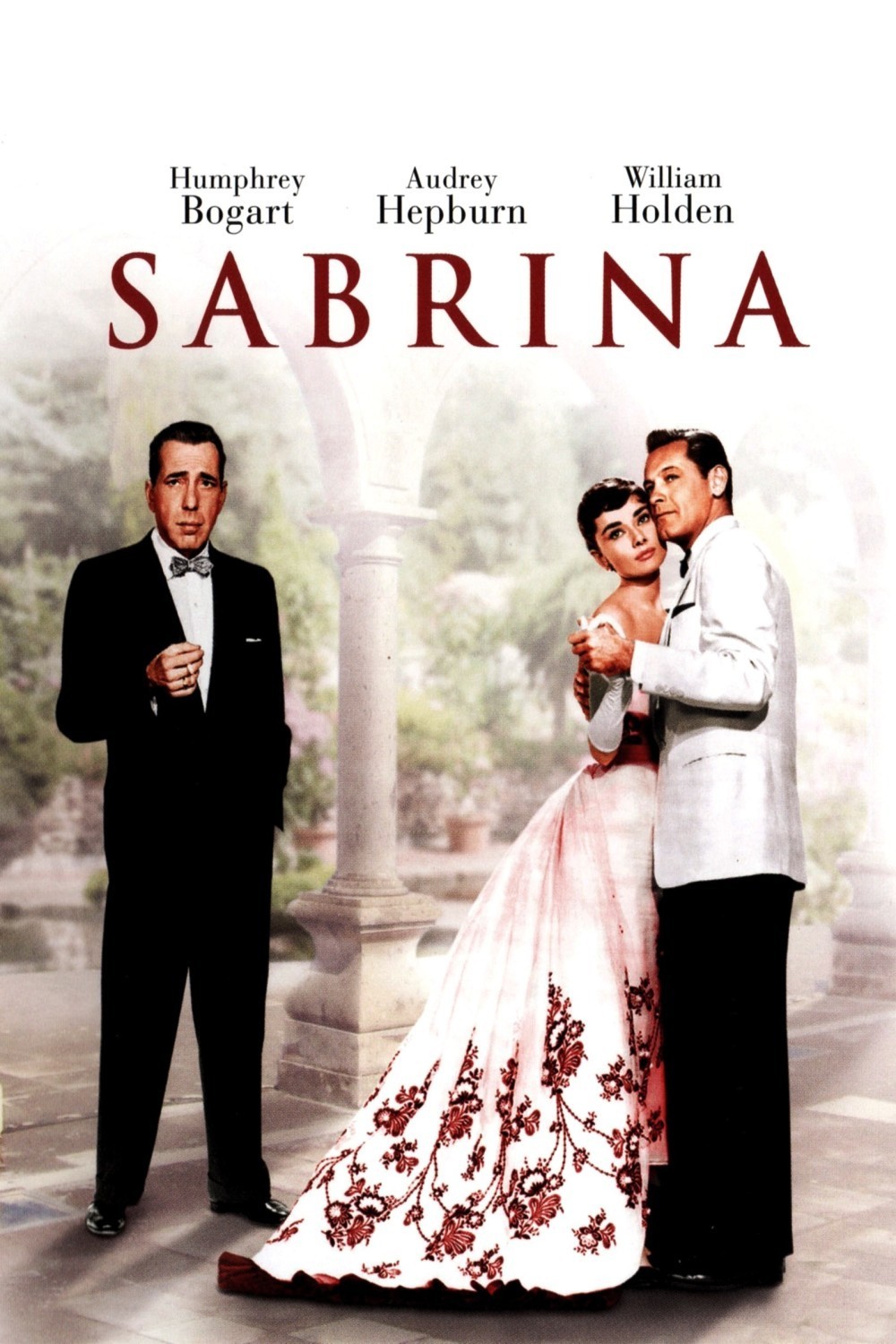
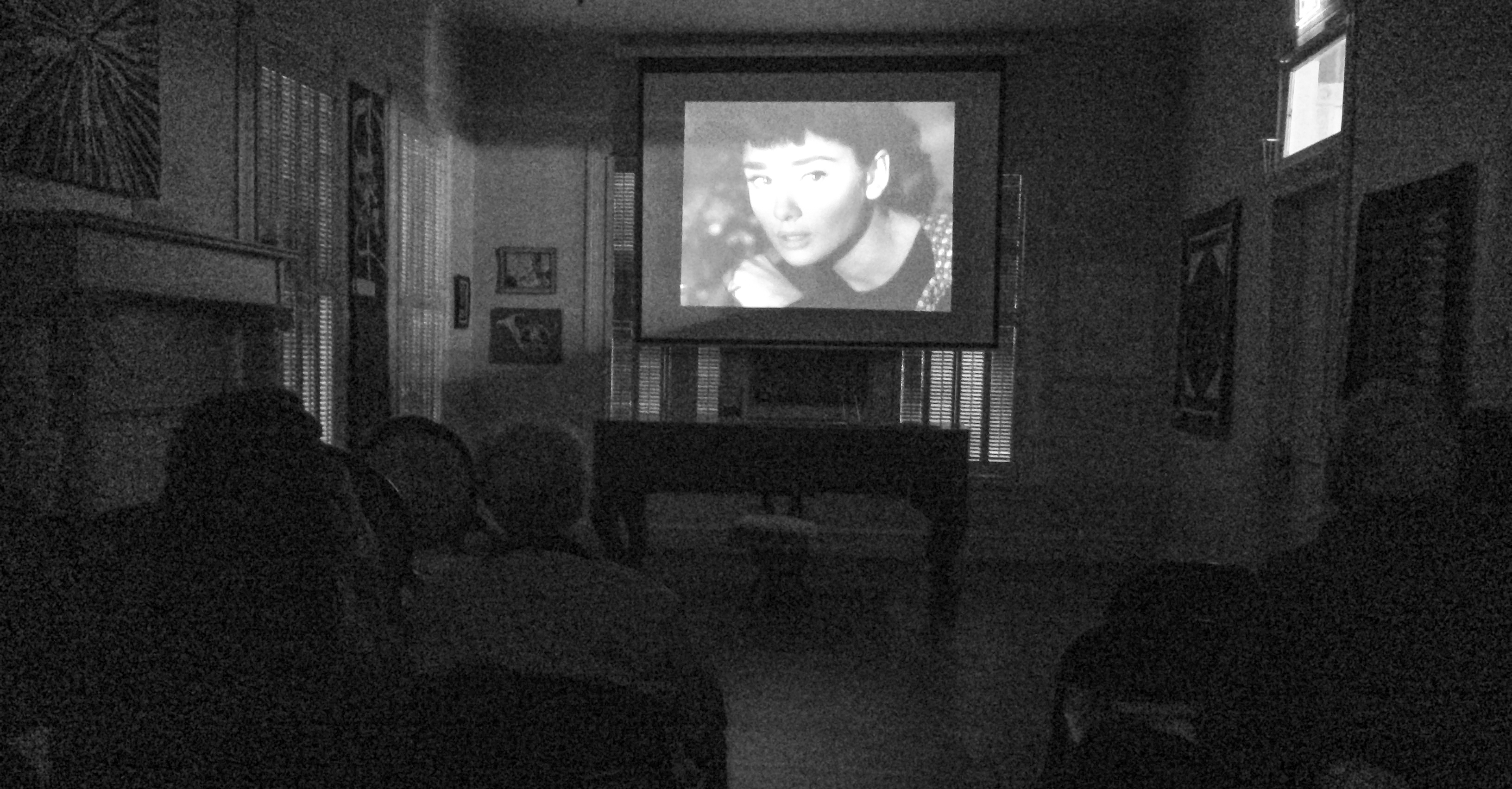
The Junior Fellows and LEAP Center have held a film festival every fall since 2009. This year, we squeezed in an extra film presentation in the spring. In honor of having both Dr. Carl Rollyson and Nancy Bocskor in town, we showed Sabrina, starring Humphrey Bogart, William Holden, and Audrey Hepburn.
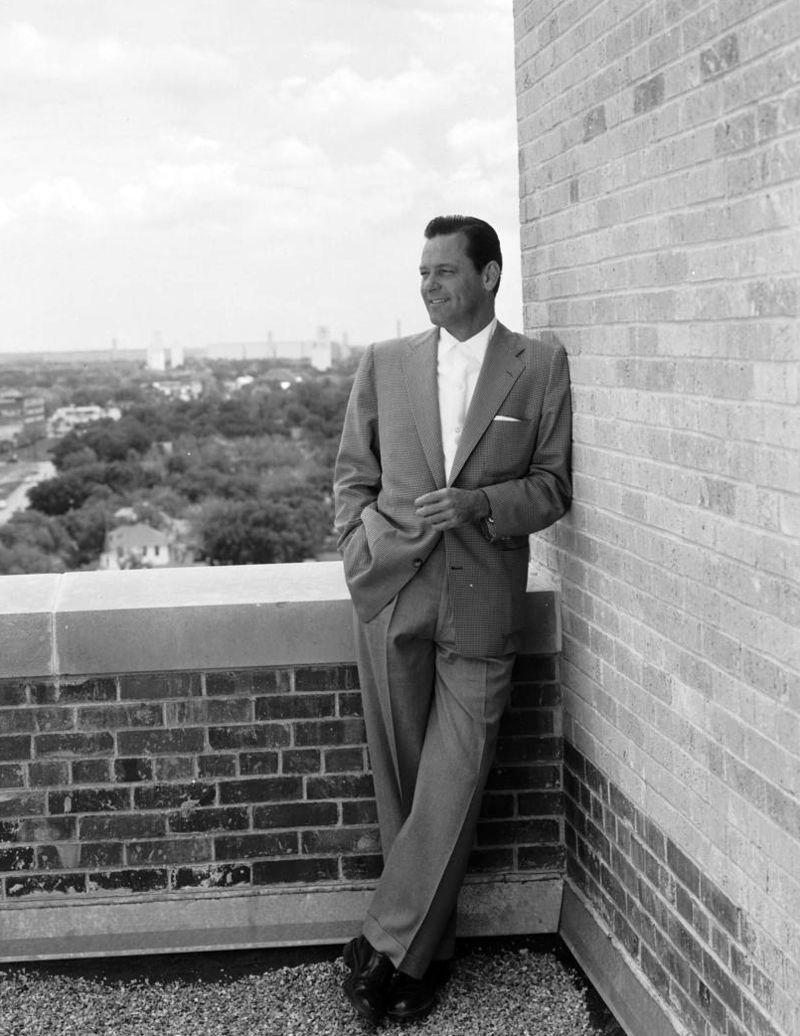
William Holden is Nancy Bocskor’s favorite actor (more on Holden here). In fact, he is her “most handsome and reliable boyfriend, albeit dead.” Other than being dead, he is reliably on TCM every week or so, showing up at 3am in the morning when Bocskor cannot sleep.
Bocskor is an international political consultant and a movie buff, and Sabrina not only stars William Holden, but also has a social class subtext. Dr. Rollyson is an expert on the Golden Age of Hollywood, so Sabrina seemed to be a good match for the two and fun entertainment for all.
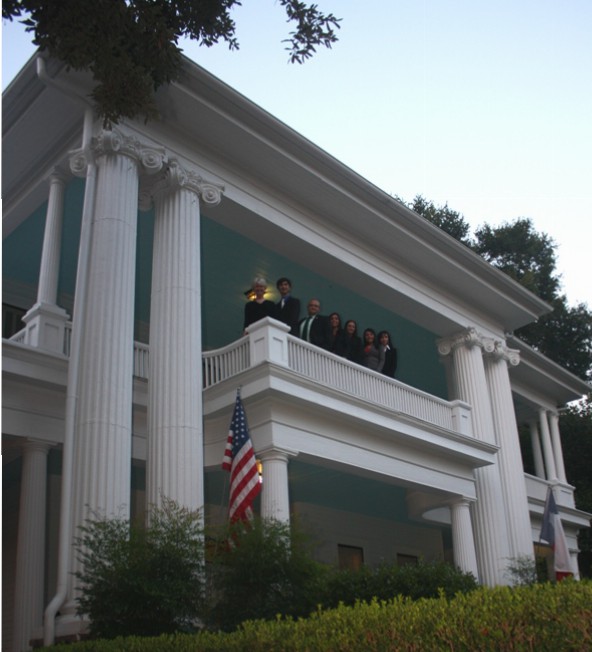
The entertainment took place at the beautiful Wynne Home, where two of the LEAP Center students and many of the Junior Fellows have interned.
Guests included Mayor Mac Woodward and his wonderful wife, Leanne, as well as Ralph and Linda Pease. We were also happy to have Margaret Gulledge, Charles Forbus, and Karl Mahaffey on hand for the viewing.
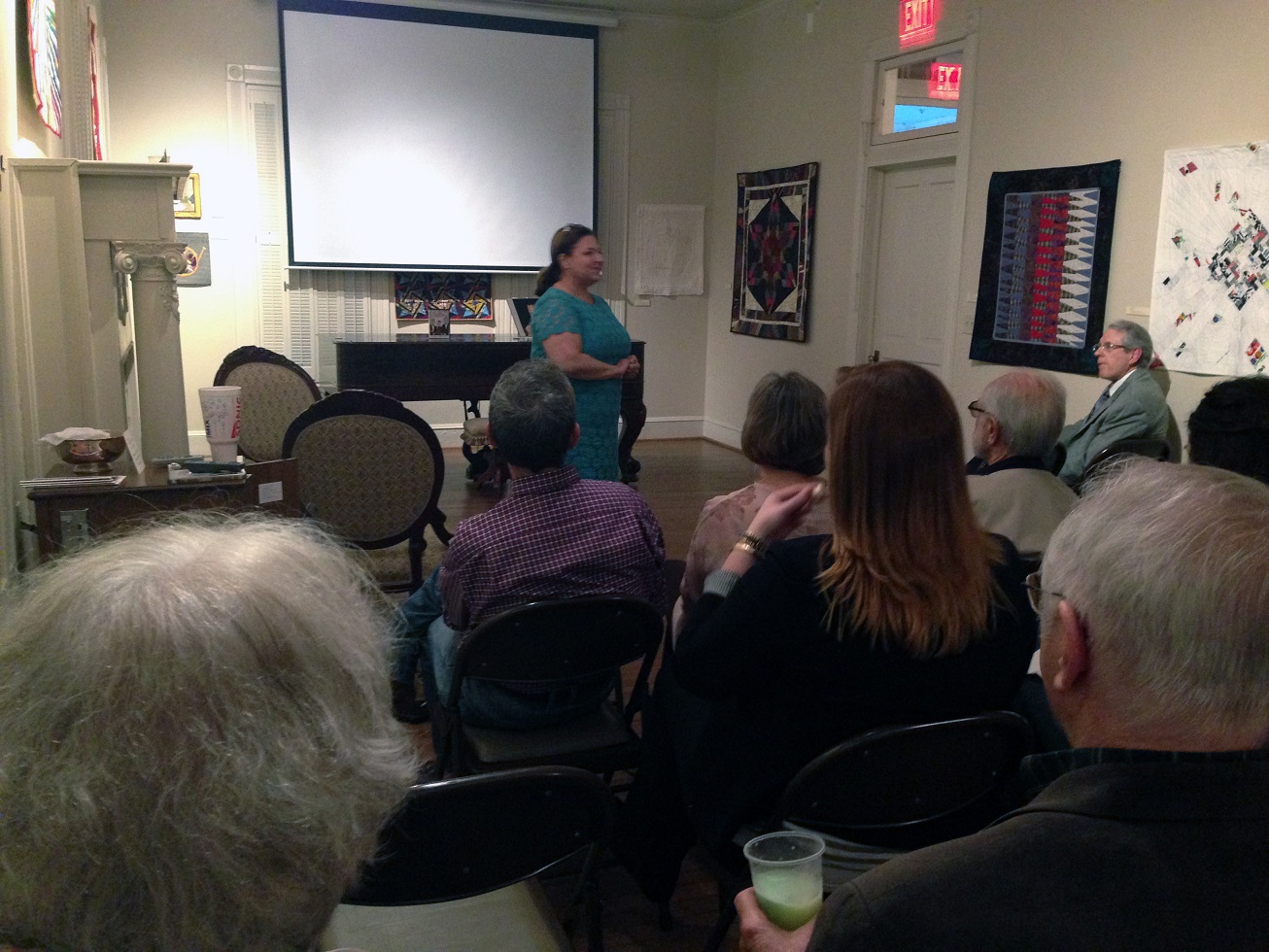
Bocskor and Rollyson introduced the film, offering different takes on the film (Bocskor focused more on Holden…)
The film was wonderful, combining top-notch talent with humor and romance.
The general consensus among us students was that it was better than “Some Like it Hot,” which we screened with Rollyson last year.
The company was also wonderful, with a reception followed by dinner. It was a fun night, capping a wonderful week with Bocskor and Rollyson as guests in Huntsville, TX.
We’ll be doing a Walter Brennan film festival in the fall, in honor of Rollyson’s new biography of the character-actor legend.
Sam Houston State University’s Austin Internship Program, run by the LEAP Center, is off to a rollicking start.
After undergoing orientation training from the crack staff in HR and Career Services, the eight Austin Interns–Oscar Aguilar, Jessica Rodriguez, Lexi Gonzales, Sadie McLaughlin, Ariel Traub, Lupe Cuellar, Shelby O’brien, and Sarah Landsman–underwent an orientation in Austin, Texas. The event was to start with a Segway tour of Austin, but with freezing rain in the forecast, we switched quickly to an iFLY tour. It wasn’t a tour so much, but it was a fun way to start the day.
The day began with an orientation on iFLY’s unique flight system, which evoked some anxiety while also bringing smiles.
But it was the flights that brought the big smiles. iFLY doesn’t provide a long time in the air, but it’s a lot of fun. Some of us were better than others, but all had a good time, or at least were glad they tried.
This slideshow requires JavaScript.
The flights also provide that wind-blown look that is so flattering, perfectly complementing the smart flight suits.
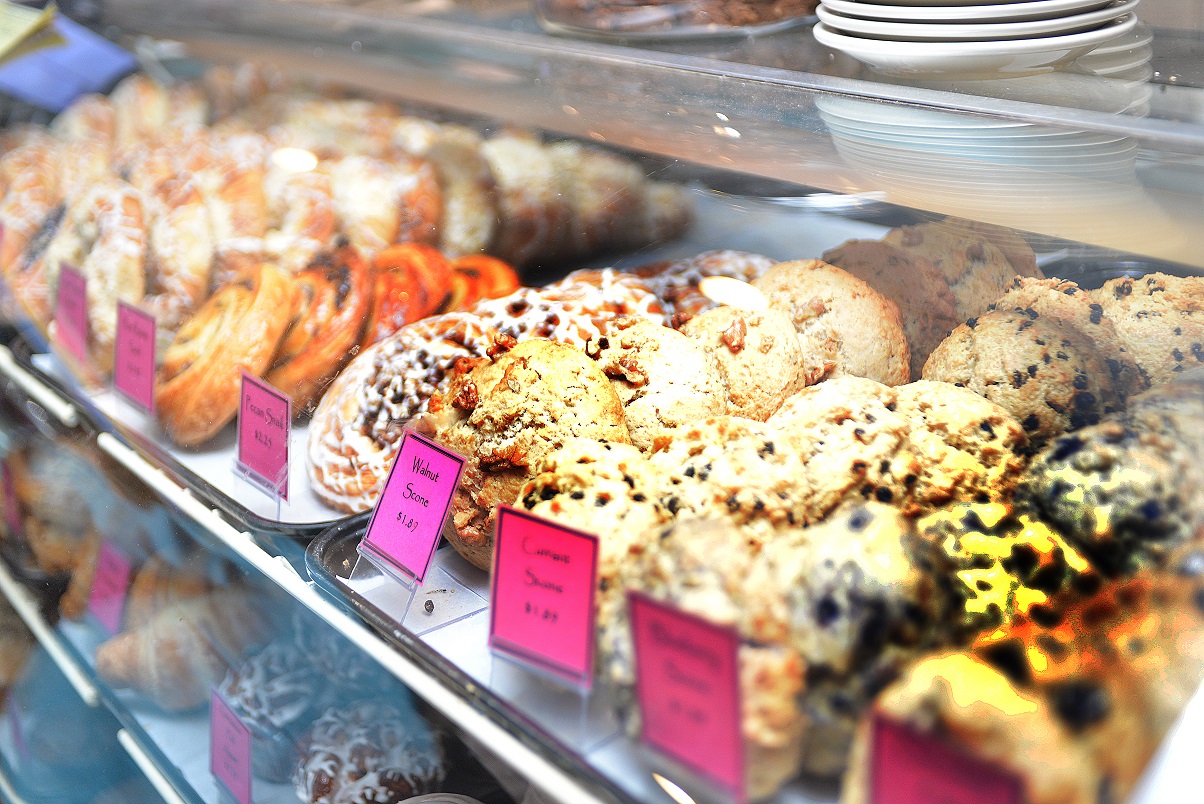
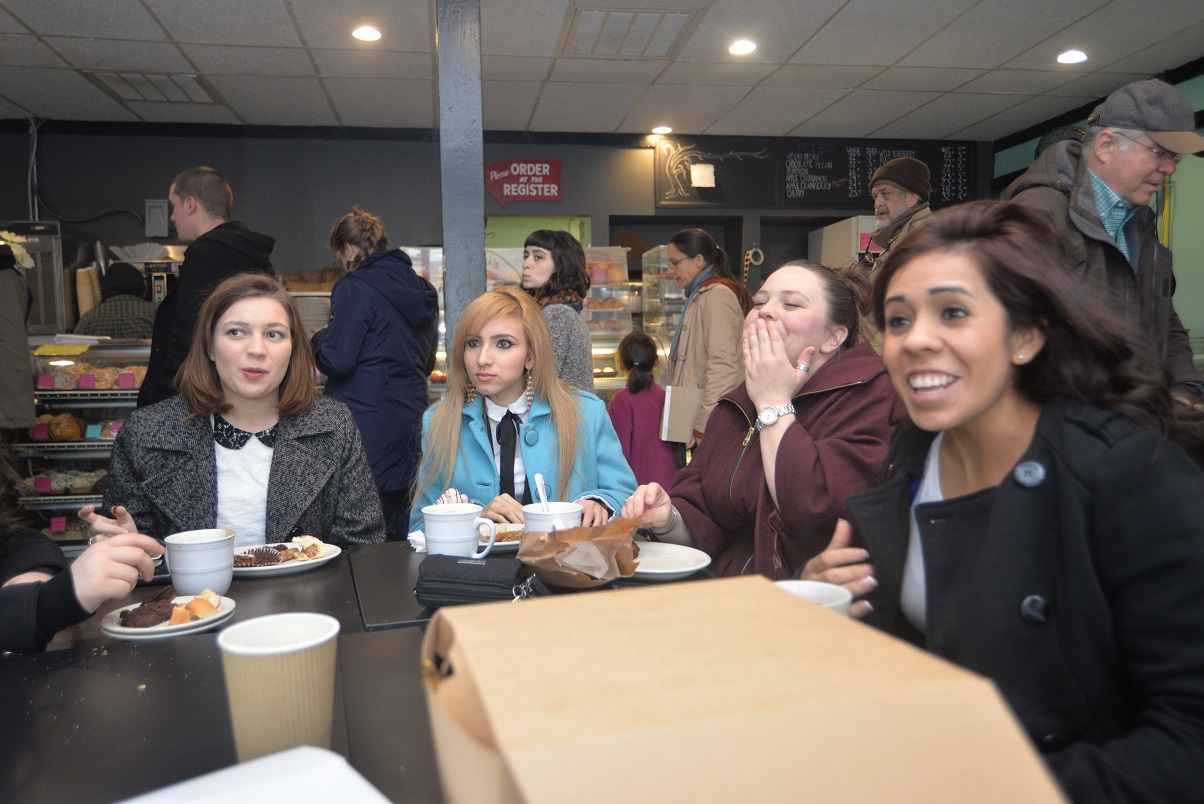
Following the adrenaline rush of iFly, we moved to Quack’s Bakery on 43rd for a caffeine rush and some pastries. For those who haven’t tried this mid-town delight, it’s definitely worth it. Try the ginger crinkle cookies or the chocolate ginger; you can’t go wrong.
There was also some good conversation, with equal measure astonishment, disbelief, and delight.
But, mostly, it was about the cupcakes.
Armed with coffee and sugar, we embarked to the 2nd Bar + Kitchen, where we met Blake Roach, Emily Johnson, President Hoyt, and her husband John Hoyt.
It was an enjoyable time for everyone, and we were very impressed and honored that Mr. Hoyt and President Hoyt drove in to spend time with us. It’s a reflection of the support we’ve received since we started this 140 day Austin odyssey.
This slideshow requires JavaScript.
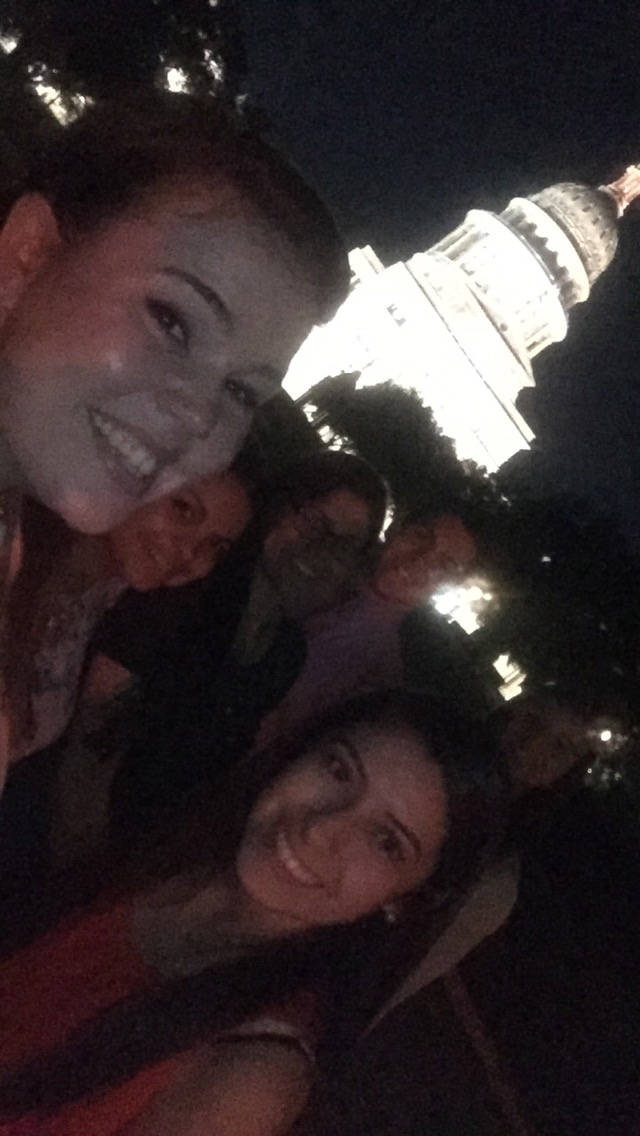
It was a great group outing, which we ended with a great group photo!
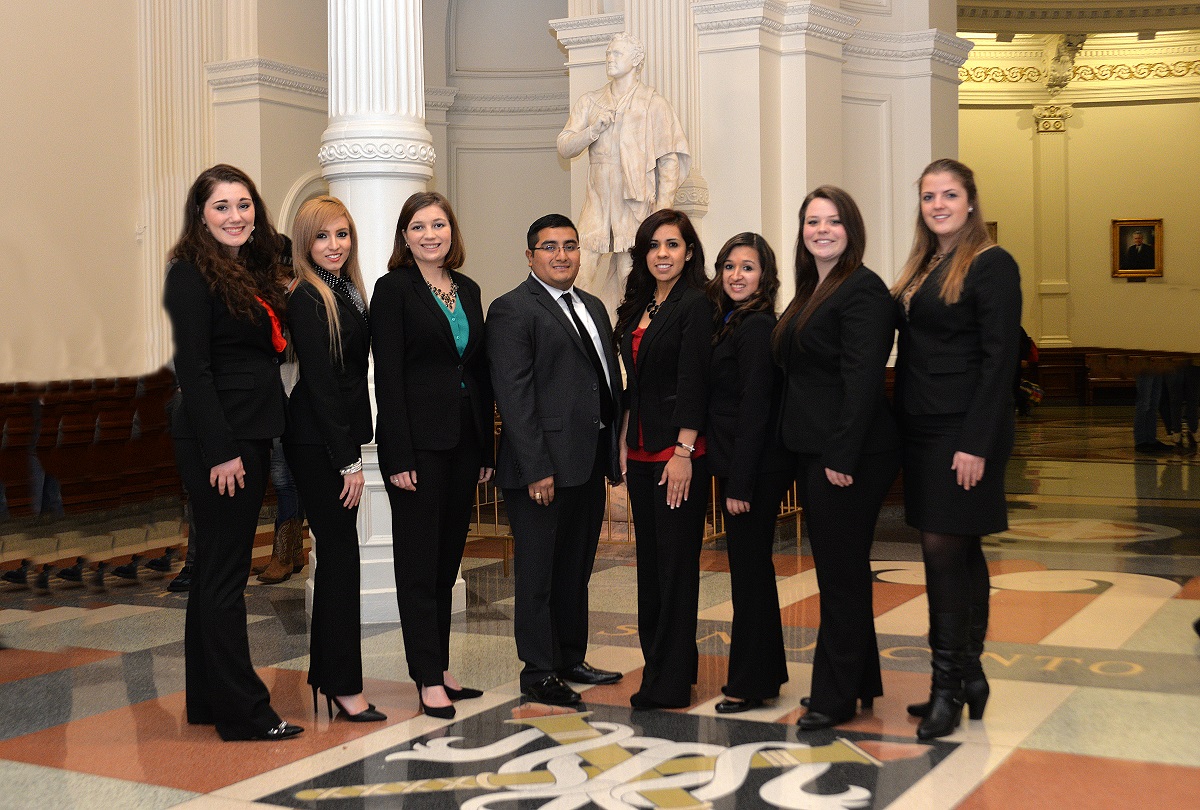
With the fun over, we prepared for our professional photographs in the capitol building. Of course, we couldn’t go to the Capitol without getting a photo alongside Elizabet Ney’s statue of Sam Houston…
But that was just one of many of our stops. We also stopped in the extension, looking up at the Capitol dome…
…outdoors…
…in the House of Representatives’ chamber in front of the podium…
…and individual shots of us, with Sam Houston looking over our shoulder.
This slideshow requires JavaScript.
Indeed, these photographs with Sam Houston’s portrait on the wall serve as a kind of a metaphor for our time thus far. We have lots of family, friends, and University officials looking out for us, and ensuring we have a great time and learn a whole lot–even while dealing with dangerous flying missions and firearms!
On behalf of all the Austin Interns, we’d like to thank Paul Olle for the great photographs, President Hoyt for this wonderful opportunity, SHSU for supporting its students, and the following legislative offices:
Although she died at the age of 36 in 1962, Marilyn Monroe’s appeal has been both timeless and classic. During her lifetime, her life was the subject of six books, mostly brief works, quickly done to capitalize on her popularity. Since her death, however, there have been some 300 books written about her. Two of these were written by Dr. Carl Rollyson, the LEAP Center’s guest speaker during a screening of “Some Like it Hot” at the Walker Education Center.
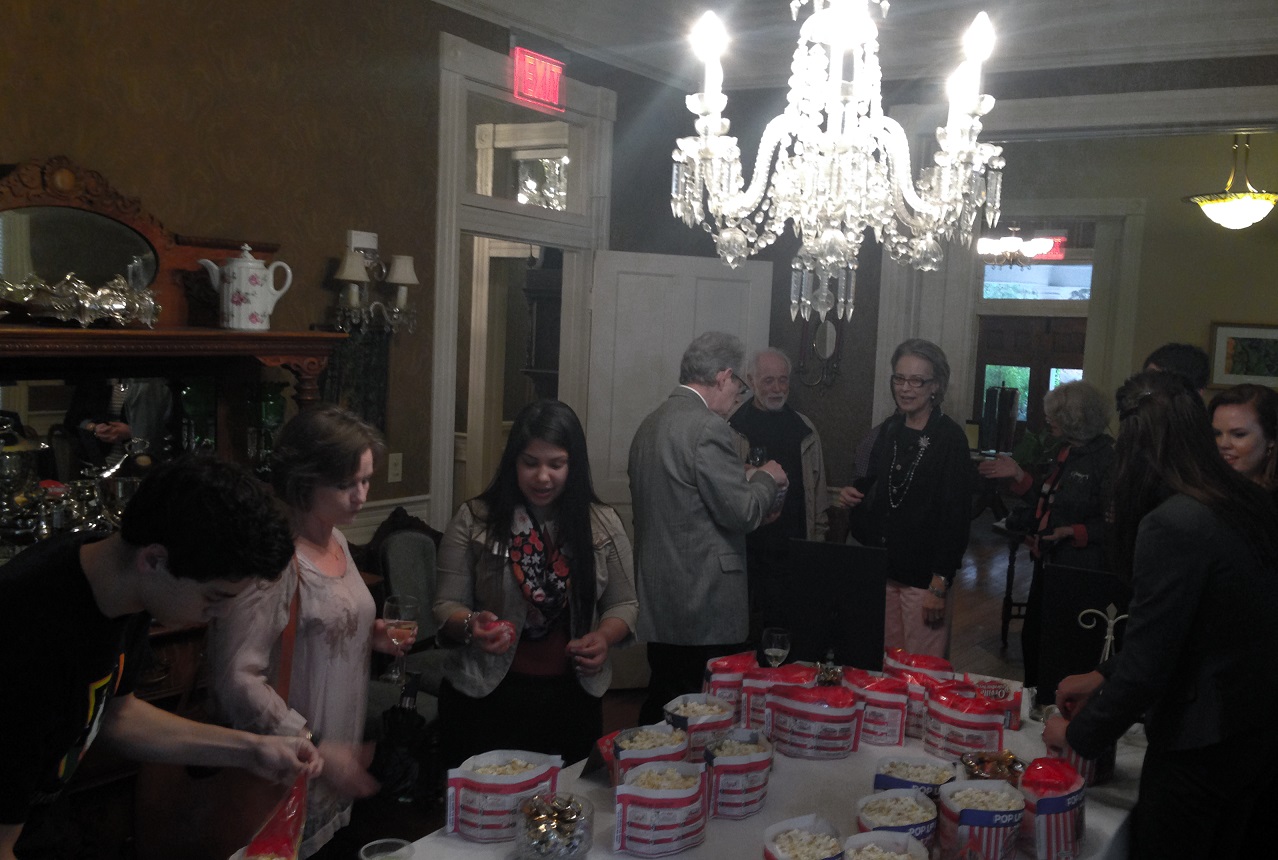
Students and local citizens dropped in for a pre-screening reception, where the guests enjoyed cookies, candy, and punch.
Dr. Rollyson was on hand during the reception to sign books…
which included not only the two Marilyn Monroe books, but also a well-received book on Huntsville native Dana Andrews.
Following an introduction by Dr. Rollyson…
…”Some Like it Hot” proved to be a crowd-pleaser, as it has been for the fifty-five years since its release in 1959. According to the American Film Institute, Some Like it Hot is the greatest film comedy of all time, and with a cast of Monroe, Tony Curtis, Jack Lemmon, George Raft, and Joe E. Brown, some great songs by Monroe, and an enduring appeal, it’s tough to argue with that choice.
The film was directed by Billy Wilder, one of the great Hollywood Directors. In addition to what may be the film industry’s greatest comedy, he also directed what might be the industry’s greatest film noir (Double Indemnity) and one the great romantic comedies (Sabrina) and melodramas (Sunset Boulevard), as well as one of the first films to deal seriously with alcoholism (The Lost Weekend). Some Like it Hot was his second film with Monroe; they previously did The Seven Year Itch; and Wilder knew how to direct Monroe.
Rollyson discussed the reversal motif apparent throughout “Some Like it Hot,” from the gender reversals to the literal reversals that recur throughout the chase scenes.
Most people know that Tony Curtis adopts a Cary Grant persona when wooing Marilyn Monroe, but it may be less known that he also used his Grant impersonation to ask out his most famous Hollywood date: Janet Leigh. According to Leigh in her memoir, Curtis called her up and pretended to be Cary Grant asking for a date. Leigh was speechless, and as she stammered, Curtis revealed the gag. This might be something of a questionable tactic, seemingly setting up the date for a letdown, but it seemed to work for Curtis, who ended up marrying Janet Leigh.
Dr. Rollyson also noted that, while Curtis was doing his Cary Grant impersonation in Some Like it Hot, Jack Lemmon adopted the mannerisms of Joe E. Brown, his co-star (and film love interest!). The introduction added to the enjoyment of an already-enjoyable film.
Following dinner, the group enjoyed dinner and additional conversation at The Homestead. While sampling the Spicy Tomato and Red Pepper Soup and the Fresh Mozzarella and Garlic stuffed Tenderloin Filet, a handshake deal was made to bring Dr. Rollyson back in 2015, when his biography of Walter Brennan will be published. Tune in!
The last day of our Midwestern Tour arrived, and we were able to visit the beautiful Crystal Bridges Museum of American Art in Bentonville, Arkansas. The beautiful museum was designed by Israeli architect Moshe Safdie, and the funds for the museum were provided by Alice Walton, the Walmart heiress. Although open for fewer than ten years, the Museum is one of the most ten visited museum in the United States—despite being location off a major highway, and hours from a major airport.
But it is worth the effort to get there. The Museum grounds are beautiful…
..and the art was amazing.
Among the favorites were political works, such as Charles Wilson Peale’s famous portrait of George Washington…
..and a piece by an artist who is becoming a favorite of ours, Georgia O’Keefe:
Radiator Building, O’Keefe
Not only is there no entrance fee to the Museum, but the Museum offers free audio guides, which highlight hundreds of works of art, providing background and instruction for those of us who are not already art connoisseurs. In the piece above, for example, we were able to see connections in the white crown of the Radiator Building with many of O’Keefe’s work focusing on the southwest, particularly animal skulls, which take on a similar color and shape.
We learned how Benton used similar contour lines depict the sky, human/animal life, and the ground to make a connection between life and its environment, a connection hat would have been particularly salient in the 1930s in the midwest.
The Museum also allowed us the opportunity to engage in some “performance art”…
…and pose next to (and in) Robert Indiana’s famous “LOVE” sculpture.
It was sad as we ended the trip, with a final look at the Museum…
Crystal Bridge Art Museum
The end of the trip, however, also offered a time of reflection on what we learned and experienced. Accordingly, we voted on our favorites, with the following results:
In general, our favorite cities were (1) Madison, WI, (2) Kansas City, and (3) a tie among Chicago, Bentonville, Little Rock, and Spring Green. Madison was the big surprise, impressing us all with its beauty and many shops and amenites.
Identifying our favorite sites was more difficult. The Bean in Chicago’s Millennium Park was a favorite…
…with Talieisin, the World War I Museum, and Union Station receiving votes.
Union Station, KC
The many art museums allowed us to develop an appreciation for art in general and specific artists. Our group favorite was Georgia O’Keefe…
Cow Skull, O’Keefe
But we also enjoyed seeing original art works by Picasso, Van Gogh, Monet, Rockwell, Rembrandt, and Rodin. A favorite of ours was the work of Dale Chihuly, who kept popping up in all sorts of places.
Chihuly Exhibit, Clinton Library
One of our favorite parts of the trip was the food. The one restaurant everyone included on their favorite list was Grunauer, an Austrian restaurant in Kansas City.
So it was with expanded tummies and horizons that we returned to Texas, ready to return to school work and looking forward to the next LEAP Center trip.
We started our day in Independence, Missouri, with hot chocolate, mocha, coffee, and various pastries at Home Sweet Home Bakery in town. The hostess was welcoming, had an interesting haircut, and was very helpful.
Following breakfast, we headed to the Harry S. Truman Presidential Library, starting with a short movie that introduced us to how Truman came to be, from his life in Independence as a young boy up until his career as 33rd President of the United States.
The Library features various exhibits, including parts of his personal diary, and pictures from his presidency.
Harry Truman Library, With Mural by Thomas Hart Benton
One favorite picture of the group was the famous “Dewey Defeats Truman” news headline in which Truman holds the Chicago Daily Tribune with an erroneous headline that indicated Dewey had defeated Truman in the 1948 election. Truman is laughing in the picture, clearly celebrating his victory and ready to begin his second term. The Library also features an original of the newspaper that was published in 1948.
The Library’s largest exhibit is “The Presidential Years,” featuring videos, Truman’s personal diary, newspaper covers, and other artifacts depicting his presidential years. One interesting feature of the Library was the replica of the Oval Office during Truman’s presidency. Also interesting was a documentary on the Cold War, which was very informative.
Another favorite exhibit, also of the newspaper variety, included a display of enlarged newspaper covers, presented in chronological order, and featuring headlines such as “ROOSEVELT IS DEAD: TRUMAN TAKES OATH,” and “FIRST ATOMIC BOMB DROPPED ON JAPAN.” Finally, we took pictures with Truman’s statue…
…and we visited the graves of him and his wife, Bess Wallace.
After visiting the Library, we headed to the Truman Home. Even though the Trumans were not wealthy, the house is far from modest. In fact, the house belonged to Bess’s family, which was wealthy. A wraparound porch surrounds most of the house, and stained glass windows front the house.
The guide led us into the kitchen, which is very modest, with furniture and wallpaper that reflect 1950s style. The chairs, counters, table, and cupboards are all painted apple green, a popular color at the time.
The rest of the house is filled with wooden furniture and golden interiors. The second floor is closed to the public, so we only visited the dining room, Truman’s studio, the two living rooms, and the main hallway. In the larger living room, used for special occasions and guests, is a portrait of Harry, while in the family living room hangs a portrait of Bess. The portrait liked most was in the main hallway, of Margaret Truman, their daughter and only child. At the end of the tour, more pictures in front of the house, and then on to our next destination, Kansas City.
It was lunchtime, and we had to eat Kansas City style barbecue! Our research led us to try Oklahoma Joe’s Kansas City Barbecue, rated the number one place for barbecue in KC. We arrived at a very long line outside the restaurant and decided to utilize our backup plan. We headed to Fiorella’s Jack Shack.
Fiorella’s Jack Shack was voted by The Zagat to be one of the best places to eat in Kansas City; but, we were not impressed. We faced a wait of 30 minutes, at least that was the story according to the waittress. An hour and fifteen minutes later, and after some slight vocalization of our displeasure, we were seated. Overall, the food was average. The sliced pork was above average and the beans were good, but the bulk of the meats were no better than you can find in Huntsville.
We had a negative experience at lunch, but we would not let lunch defeat us! We headed over to the World War I Museum with full stomachs, armed with curiosity. The Museum was beautiful and showcased the Monument in a spectacular way.
The inside of the Museum had a glass floor that led from the main entrance to the museum exhibits, showcasing poppies commemorating those fallen in World War I. Each of the 9,000 poppies in the display represented 1,000 fallen soldiers. Walking across the glass floor and seeing the poppies below really demonstrated the vastness and destruction of World War I.
There were several great exhibits. One of the most interesting and informative was on wartime weapons development. The war started with very basic weapons; however, many developments were made in terms of weaponry and battle strategy. One particularly effective strategy was camouflage. The British would paint their ships in various patterns that they pulled from Cubist paintings to confuse enemies and make it harder to track the ship’s speed and course.
In terms of weaponry, countries were still in the early development stages. The first machine guns were poorly designed and very slow – but the Germans developed the German Maxim machine gun that performed fast, concise and very well. Grenades were also introduced in World War I and made trench warfare brutal. Various gases were used as well, making World War I a chemical war. Other developments such as tanks and submarines changed transportation for troops during the war and helped improve reconnaissance efforts.
We closed down the World War I Museum and continued our exploration of KC starting from the top of the museum, which is the bottom of the 265-foot tall Liberty Memorial. We walked up the stairs to the Liberty Memorial and were astonished at the view: the entire skyline of Kansas City.
After taking several pictures of the skyline (selfies and groupies), we walked the several blocks to Union Station. On our walk, we encountered a large field of grass with an American Flag in the middle: the perfect place for a race. We had tried a race the night before, but because Professor Yawn left Silvia in the dust, he agreed to run backwards against her this time. It was much closer this time, and Silvia edged out Yawn in a photo finish.
The Race!
During the race, though, we stumbled upon a beautiful tree in full fall foliage, displaying red, orange and brown leaves like a proud peacock. The tree served as a perfect backdrop for more pictures of us as a group…
…and individually…
We finished our stroll in the brisk Kansas City air at Union Station, an historic train station. Built in 1914, the train hub is home to Amtrak, museum exhibits like Science City, and theaters. Awed by the extravagant architecture and design of the interior, it was interesting to learn that after being closed in 1985, $20M was spent on restoration of the building to recover it from its solitude and dilapidation. Intriguingly, it’s still an active train station.
Historically, the KC Union Station was the second to be built in the country and followed Second Empire Style and Gothic Revival. After consuming all available space in the 1878 location and eventually flooding, the decision was made to move the station to its current location. Designed by Jarvis Hunt, the great hall with three massive chandeliers and ornate ceiling adornments is what we see today.
We were fortunate enough to be spectators to all the 100th year celebrations the Saturday evening held for Union Station. Drinking our coffee, we watched patron after patron stroll past, determination in their eyes, dressed in authentic 1920’s regalia. Unsure of what was happening, we followed a few to find, to our surprise, swing dance lessons going on. We watched, thankful for such perfect timing for something so entertaining.
With the sun setting…
…we hightailed it out of the enormous train station and headed back to the car in search of the Kemper Museum of Contemporary Art. Sighting a Chihuly, we knew we had arrived at the home to many inspiring pieces of modern art.
We wandered through the museum, admiring exhibits such as Summoning Ghosts: The Art of Hung Liu, full of poignant, politically vocal pieces about communistic China, and Miss Your Mark, which sought to allow artists to make their mark using the manipulation of different materials.
We even explored the museum’s café, full of art by Frederick James Brown, which paid tribute to many artists throughout time. Our artistic appetite not quite satisfied, we left the Kemper and walked to the Donald J. Hall Sculpture Park, to appreciate the pieces by moonlight. Among those seen, our favorites included Shuttlecocks by Claes Oldenburg and Rodin’s Thinker. Although we had filled one appetite, our hunger made an appearance, so we left in search of sustenance.
An all-time favorite of our own Professor Yawn, we walked into Grunauer’s, not knowing what to expect. We quickly learned of the many Austrian delicacies available but had trouble narrowing it down to just a few. We began the meal with an assortment of sampler appetizers, including different kinds of cheeses, bratwursts, meats, and breads. Some of the unusual choices included currywurst, liverwurst, and brie. We downed the wonderful, new foods in preparation for the main course. Among some of the delectable entrees we enjoyed were Hungarian Beef Goulash, Cordon Bleu, Kasespatzle (noodles and cheese), and Fisch im Strudelteig-a fish baked in pastry adorned with spinach and mushrooms.
Stuffed to the gills, we surprisingly found room for apple strudel, chocolate cake, and nutella crepes for dessert, much to our full bellies’ dismay. Such an enjoyable end to an exciting day, we loaded up in the car to make our way to Bentonville, Arkansas for our final day of the Midwestern Tour.
Today was the second day of the 2014 Film & History Conference. As yesterday, the featured panels were many, and the titles all appeared to be interesting topics. What appealed to me the most was a panel titled “Jimmy Stewart for president and Ronald Reagan for best friend: Star Image and Political Campaigning,” by Amit Patel. Amit began his presentation by introducing Ronald Reagan’s initial career as a B movie star. In fact, he starred in low-budget films such as Love is on the Air and Santa Fe Trail. In 1942, the film Kings Row finally gave him some recognition as a movie “star.” Interestingly, Reagan was initially a Democrat, but later switched to the Republican party. In 1976, he embarked in a campaign for the Republican presidential nomination against incumbent Gerald Ford. Amit focused on Ronald Reagan’s use of Jimmy Stewart in his campaign. In fact, Stewart strongly supported Reagan, and even participated in a political ad were he stated that Ronald Reagan was his friend, therefore, the American public should vote for him. Reagan lost the nomination, but campaigned again in 1980, and became president. I thought it was an interesting panel because a candidate’s image is probably the most important thing during a campaign, and if the candidate was a known public figure beforehand then that plays in his favor. In addition, the use of famous actors or public figures to support a political candidate is common nowadays, and it is interesting that it was used in Reagan’s campaign, too.
After attending the Film & History Conference, in the morning, we headed to the Wisconsin State Capitol, in Madison.
Wisconsin Capitol Building
A tour guide showed us the most important features of the Capitol, and shared the details of its construction. What interested me most was that Madison had previously had other two state capitols, but they both burned down. The second time around, the Capitol had recently discontinued its fire insurance, so the state did not have enough money to rebuild it. Ingeniously, the state had the idea to tax railroads that were passing through Wisconsin at the time, and with that revenue, they rebuilt the Capitol between 1906 and 1917. The architecture of the capitol is mesmerizing, featuring marble from many different countries, such as Greece, Italy, France, and Germany, as well as some beautiful mosaics.
Wisconsin Capitol, Interior
Perhaps most interesting, the capitol staff apparently have a very liberal speech code in the building. Numerous exhibits were posted around the capitol rotunda protesting the performance of Governor Scott Walker, and one impressively vocal protester’s shouts could be heard throughout the building.
After the tour, we decided to go to the observation deck at the top of the building, and experienced true cold for the first time on our trip.
The winds were so strong that it was hard even to close the door behind us. Nonetheless, it was worth it because the view was beautiful.
Leaving the Capitol, we took a stroll in the brisk Wisconsin air to find ourselves some nourishing lunch. We finally settled on Marigold’s, a local deli, where we reveled in the many options available. Among the delights we delved into were lavender white mocha and grilled ham and cheese with a hint of strawberry jelly. Packed with locals, Marigold’s was definitely a winner.
Out into the invigorating weather we went again to make our way to another of Frank Lloyd Wright’s masterpieces, the Monona Terrace. Opened in 1997, the Terrace was built posthumously and served as the cause of much strife and contention during his career. Using Wright’s design of the exterior, Wisconsin contractor J. J. Findorff and Son Inc. carried out the great architect’s dream, while his previous apprentice, Anthony Puttnam, designed the interior.
Once inside Madison’s event center, we explored the gift shop full of Wright memorabilia before embarking on a tour with guide, John.
Frank Lloyd Wright Bust
Pointing out certain Wrightian things, such as the dome on the west side of the building and the arches in the grand ballroom, John proved to be a formidable docent as he never ran out of interesting facts and stories to regale. Braving the gusty winds, we had the chance to view Lake Monona, which Monona Terrace balances precariously over, thanks to the intricacies of Wright’s design.
Awed by the view and many selfies taken, we headed inside to embrace the warmth it offered and finish our tour.
Seeing it was getting late, we rushed back to the car in order to make it to a few last minute shops, original to Madison. Among those, we re-caffeinated and browsed a wonderful cheese boutique, Fomagination. Overwhelmed by the many options and tastes, we took in Wisconsin’s finest and tried to contain our enthusiasm at all that was available. It was incredibly exciting to see so many things unavailable in the great state of Texas. We loaded up on cheeses and cheese accessories before tumbling back into the car to begin the final leg of our trip.
We admired the beautiful fall landscape of Wisconsin; the rolling hills and deep yellows, greens, and reds created the perfect ambiance for our drive to Dubuque, Iowa. There, we enjoyed the Fenelon Place Elevator, or Dubuque Incline, claimed to be the shortest and steepest railroad in the world.
Gripping the seats…
…up we went on the side of the hill to eventually reach one of the most inspiring views of the trip so far. Known as “the magic hour” in film circles, we caught the sun setting on the horizon, creating beautiful red and orange tones in the sky and on the trees off in the distance.
Proud to say we had viewed three states at once (Iowa, Illinois, and Wisconsin) from the top of the incline, we got back in the cable car built in 1882 to return to our vehicle and carry on to the next leg of the journey.
After a short drive, we arrived at our final destinations: The John and Mary Pappajohn Sculpture Park and the Des Moines capitol building. The 4.4-acre sculpture garden is unique and home to 28 sculptures from 22 different artists. Various paved paths provided a route for us to take through the garden, however, curiosity and the lure of new art, propelled us forward.
Man of Letters, Jaume Plensa
Many of the sculptures were created by artists that were foreign to us, however, one sculpture in particular provided us with the comfort of familiarity: Painted Steel by Mark Di Suvero. Di Suvero also has an art piece called “Proverb” in Dallas, Texas, which we were able to relate to. “Painted Steel” was made out of steel and painted in the same red that “Proverb” is painted. Both statues have similar characteristics, but varying dimensions and structure.
Another interesting sculpture that we saw was, “Back of Snowman (Black)” and “Back of Snowman (White).” These sculptures were created by artist Gary Hume and were located side-by-side in the middle of the park and held a spectacular gleam given off from the surrounding lights. Each of the statues consisted of two round pieces of bronze covered in enamel, one in white enamel and one in black. These statues were especially appealing because each round piece of bronze was perfectly symmetrical and smooth, giving the piece a unique trait of looking seamlessly perfect.
The last sculpture that really caught our eye and our interest was “The Thinker on a Rocky” created by Barry Flanagan. This piece was a large rabbit sitting upon a boulder in the same pose as Rodin’s “The Thinker.” The piece was clearly a satire on Rodin’s famous statue, which only added to its appeal!
While the statue garden was a fantastic experience, we had to continue our night and head to the Des Moines capitol building. The Renaissance style capitol, designed by John Cochrane and Fred Piquenard, was absolutely stunning! The capitol building featured a 23 carat gold dome in the middle of the building and was accompanied by two smaller domes on either side of the building. The capitol took expansive resources and large amounts of time to build and open to the public. The building took fifteen years and a staggering amount of $2,873,294.59 to complete. On June 29,1886, the capitol was ready to be open for use!
Iowa Capitol
Both the capitol and the sculpture garden trips were the perfect ending to day five of the trip!
We started the day by attending the 2014 Film and History Conference! We attended two panels each lasting an hour and thirty minutes.
The most interesting one that we attended, however, was about classical Hollywood film musicals of the 1930’s and 1940’s. During this panel, two separate professors, Brent Phillips and Gail Sheehan spoke about their research on the topic. Gail Sheehan spoke about voice dubbing in films during the 1930’s as well as gender and race in the American musicals during that time period. Gale focused on two films in particular: “Gold Diggers of 1933” and “Professional Sweetheart.”
Gail Sheehan spoke about voice dubbing in the film, “Gold Diggers of 1933.” In the film, Joan Blondell is the female lead and has several musical numbers throughout the movie. Mrs. Sheehan showed several scenes from the movie in which it appeared that Blondell was singing, however, the voice was actually Etta Moten’s voice. Voice dubbing was a common practice during that time period because it was often difficult to find a woman that fit the necessary physical appearance of character as well as superb singing capabilities to accompany the looks.
Sheehan also spoke about gender roles in the film, “Professional Sweetheart.” The title of the film changed several times throughout the filming process with the final product resulting in a controversial title because the woman goes against convention and the title insinuates prostitution. The video is a satire about radio personalities during the 1930’s. The main character is played by Ginger Rogers and her name is Glory, a radio personality. Her African-American maid, Vera, played by Theresa Harris, is constantly by her side and living in her shadow. However, when Glory decides to quit the radio, Vera gets her chance to shine. In the end, Glory takes her job back and steps on Vera in order to achieve her reinstatement. This film really portrayed how African American women were treated during that time period especially because Theresa Harris was never credited for her role in the film.
The last presentation of the panel was about Charles Walters’s career by Brent Phillips. Charles Walters lived an extraordinary life and was both a movie director and a dance director. Charles Walters did not like to be called a choreographer because he felt that in order to orchestrate a successful number, you had to have the right angles and cater the dance number to the actor/actress’s abilities. He composed several numbers throughout his career with notable actors and actresses of that time such as Grace Kelley, Debbie Reynolds, Lucille Ball and Judy Garland. The first dance number that he created occurred in the movie, “Let’s Face It.” While he loved to create dance numbers for films, he had a burning desire to do more; a desire to direct the films himself.
Charles Walters began directing films in 1947 and was able to insert his own dance numbers into the movies. Charles Walters also directed several films and he had a unique directing style. Walters absolutely could NOT direct from the chair. He would often insert himself in both male and female roles and play each of them the way he had envisioned in his mind. This allowed the actors and actresses a better understand of what he was looking for as a director. His skills behind the camera and on the dance floor really set him apart from other directors in the industry and made him truly memorable.
After the conference, we took a meandering drive through the Wisconsin countryside in pursuit of the home of the famous architect, Frank Lloyd Wright. After a mere forty-five minute drive, we pulled up at the visitor’s center for the home of one of the most influential American architecture prodigies. Surrounded by farmland and the Jones-Wright valley, we took a van up a scenic drive to the home on the side of the hill. We pass a crisp water garden and tumbling waterfall along the way, providing the imagery for Wright’s thoughts that falling water is the music of architecture.
Finally up the steep driveway, we made our way towards what we think is the front door, as Wright is known for hiding the entrances to his homes. Guided by his subtle hints in architecture, we came to the see the rest of the valley on the left and the front of the home on the right. Our sweet tour guide, Kate, did an impeccable job of clearly indicating the signs of Wright’s style as we made our way up the steep stone steps and into the architect’s office. Interestingly enough, this was the home that served as a classroom, as well, to the Fellows Wright brought in to instruct. This was seen through the many places utilized for drawing and creating along the walls and the many windows available to bring in the natural light of the countryside. Wright is known for utilizing every space, but also making it strikingly beautiful or unique in the same right.
We sat with Kate in front of the fireplace, just as Wright did with many of his Fellows, and reflected on the many things that could have happened in this room. From drawing to measuring and building windows, learning under Frank Lloyd Wright would never leave a moment dull.
Awed by his eye for detail and strange geometric shapes, we moved from his office building and back outside to view the garden. The lush green grass and harsh stone rock provided the perfect contrast for the eye to digest, although it was easy to see that the view would be even more picturesque in the spring. We finally were able to enter the home and make our way down a tight passageway, which highlighted Wright’s use of compression. From this tight passageway, we opened the door to enter a large open room (“The Great Room”), exemplifying the expansion technique Wright demonstrated in his other structures.
The Great Room is a large living room, used by Wright for parties and social gatherings. Three walls of the room are glass, allowing for an amazing view of the countryside surrounding the property and of the water gardens below. Almost every furniture piece in the room has more than one use to it. In fact, along the glass wall, are lines of flat couches, divided by wide wooden armrests. The wooden armrests are movable and can be used for various purposes, such as a small table for two people. Next to the fireplace, on the left side of the Great Room, sits a couch that serves also as a bed, and as a desk or table, because its armrest is fairly large and can be used for various purposes.
Wright liked to use Taliesin as an experiment in architecture, and he frequently modified it and added to it. Interestingly, when he was 88 years old, a famous magazine wanted to come and take pictures of the property and, despite his advanced age, Wright designed an entirely new room, with glass on three sides. Because the room is exposed to the harsh winter elements, the preservation staff periodically moves out the valuable pieces of art and furniture of the room and stores it in a safer place until spring. The room is located and designed to not only admire the countryside from it, but also the entire house. In fact, a long hallway that is the entrance to the room, also holds the entrance to the Great Room, and on the sides, entrances to the guest room, and all the other rooms of the house.
It was interesting to visit Taliesin. Kate was an excellent, knowledgeable, and amicable tour guide. Thanks to the tour we gained a better understanding of Wright’s point of view on how to admire and interpret his architecture. He knew very well what he wanted to achieve with his work and how he wanted people to see it and admire it.