Skip to content

Center for Law, Engagement, and Politics

Leap At SHSU!

  • About LEAP
  • LEAP Ambassadors
Center for Law, Engagement, and Politics

Category: Civic Engagement

Twice Around with Robert Olen Butler

On November 11, 2025, LEAP students had the privilege of meeting Robert Olen Butler on his latest book tour. Butler, of course, is widely respected across the literary world and earned the 1993 Pulitzer Prize for Fiction for A Good Scent from a Strange Mountain. His newest novel, Twice Around a Marriage, has taken him to the Texas Book Festival, the Louisiana Book Festival, and Fort Worth—where LEAP’s Professor Yawn and Stephanie Fors met him while seeing the always-generous Jeff Guinn. And when we saw Butler was appearing at Brazos Bookstore, we knew we had to get to Houston.

With the help of Jeff Guinn, however, we were unexpectedly offered something even better: dinner with the author himself. And so it was we found ourselves with Butler over dinner, asking him questions about his broad range of work, with a particular emphasis on Jealous Husband Returns in the Form of a Parrot, Boy Born with Tattoo of Elvis, Tabloid Dreams, and From Where You Dream.

Butler, a professor at Florida State University, is accustomed to interacting with students, but he is also genuinely a great conversationalist. For us, it was a once-in-a-lifetime experience to talk with a distinguished author and learn more about his unique writing process, which he says stems from a “dreamspace.” It is from this space that the senses and a sense of “yearning” leads, he argues, to the most effective writing. With so many majors around the table (Butler himself was a theatre major), everyone walked away with something a little different from the conversation.

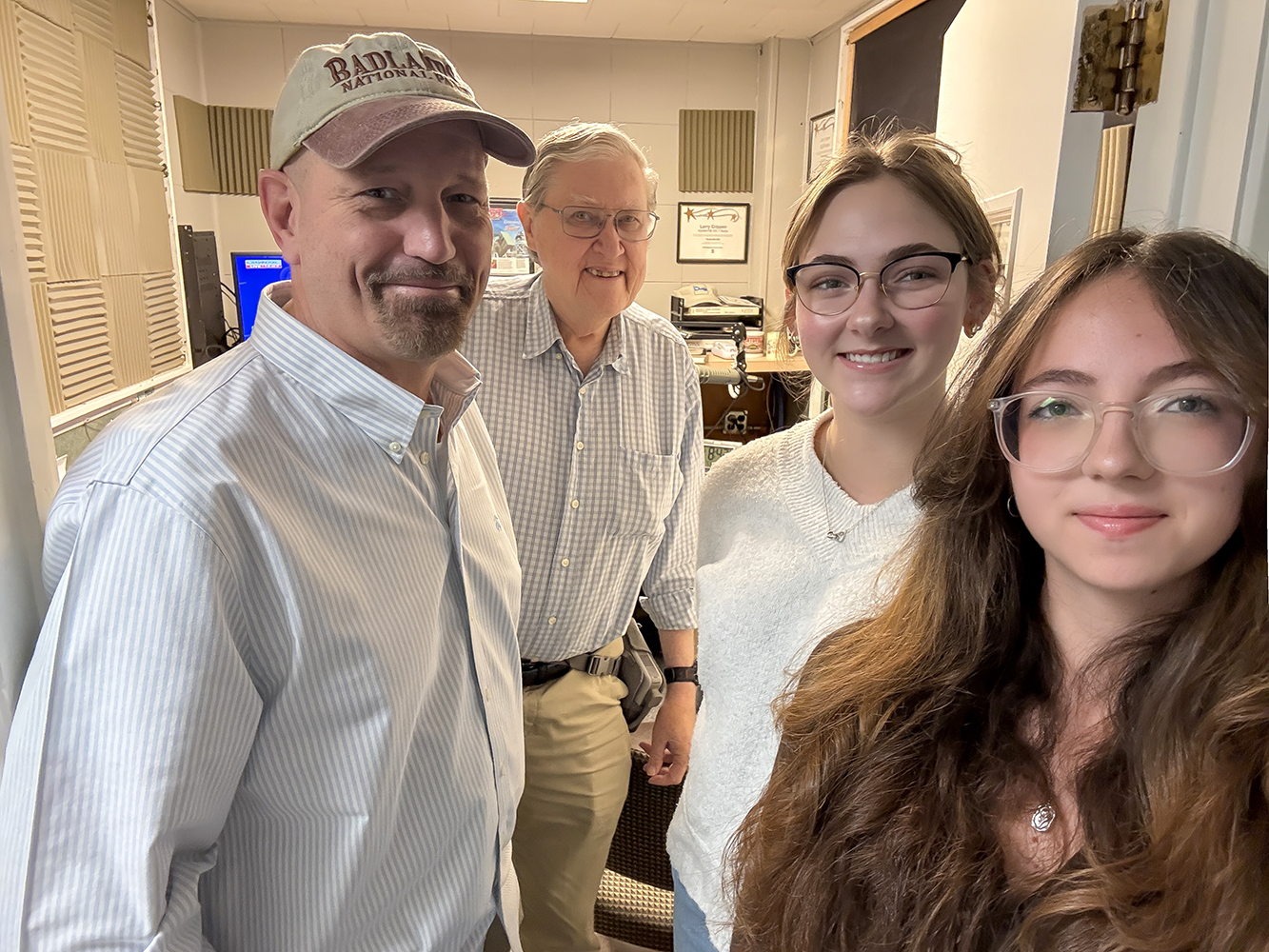
At Brazos Bookstore, LEAP Alumnus and attorney Quinn Kobrin joined us for the booktalk. This provided us with something of a double treat, getting to catch up with Quinn…

…while also hearing Butler do a dramatic performance of two sections in his book.

As noted, Butler studied acting in college, and, indeed, he discusses the writing craft as akin to “method acting.” And this is the approach he takes to his book talks, where he carefully relays each sentence with emotion.

As a quick synopsis: Twice Around a Marriage follows a couple in their seventies who are trying to decide whether their second attempt at marriage is worth holding onto.

A sudden Covid lockdown traps them together in a tiny Paris apartment, forcing them to confront old memories and unresolved questions. They take turns telling stories from their lives to make sense of where they’ve been and where they’re going. While I haven’t read the book yet, Butler’s performance was the perfect precursor to the book!

Following the reading, we lined up to have our copies of Twice Around a Marriage signed.

With books in hand, we wrapped up the evening at Brazos Bookstore and headed back to Huntsville. It was a wonderful experience that we will cherish for a lifetime. 

Unknown's avatarAuthor mikeyawnPosted on November 19, 2025November 18, 2025Format AsideCategories Civic Engagement, LiteratureTags Brazos Bookstore, Center for Law Engagement And Politics, From Where You Dream, Robert Olen Butler, Sam Houston State University, Twice Around A MarriageLeave a comment on Twice Around with Robert Olen Butler

A Day at the FBI Collegiate Academy

By Isaac Mokrane

Even during a government shutdown, the Federal Bureau of Investigation engages in outreach to the broader community. Accordingly, on Wednesday, November 12th, 2025, forty-five students from Sam Houston State University with an interest in federal law enforcement were selected to attend SHSU’s first-ever FBI Collegiate Academy, organized and led by the LEAP Center.

Over a half-day, students heard from a career panel, learned about the role of genealogy and DNA in solving crimes, helped “solve” an art crime, and learned about the Emergency Response Team.

Douglas Williams, the Special Agent in Charge of the Houston Division, welcomed he students to the Field Office before turning it over to a Special Agent who offered insight into a new technique employed by the Bureau to solve crimes and cold cases: genealogy investigation. The session outlined the FBI’s work in evidence examination and presented his work in closing a cold case dating back to 1983: the murder of Susan Eads. Tracing DNA found in a long forgotten, yet perfectly preserved, piece of evidence, investigators were able to retrace the family’s genealogical tree up to a single great-grandparent, and down again. Further testing of recent relatives provided a concrete identification that put the case to rest and brought Eads’ family long needed closure. The work showed the students that the work of the FBI may not be all high-stress and high action, but methodical, research-based, and compassionate for victims who have felt forgotten about.

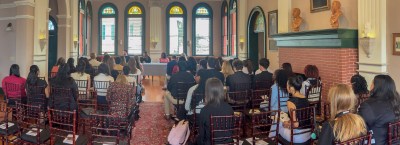
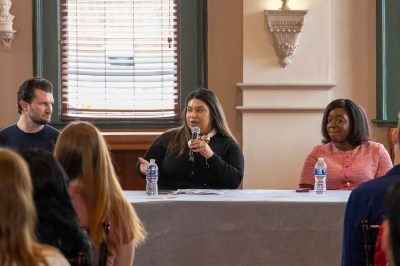
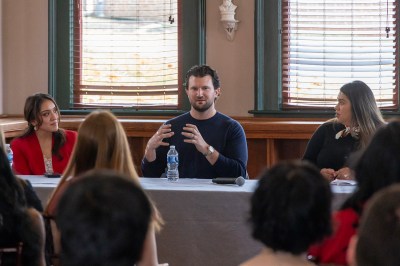
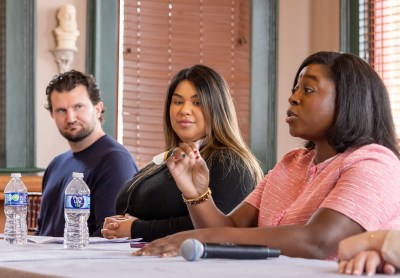
This presentation was followed by a Career Panel, moderated by Public Affairs Officer Connor Hagan. Five panelists (unnamed here for security reasons) each showcased their positions within the FBI: an Intelligence Analyst working cyber, a Tactical Specialist working gangs, a Special Agent, a Digital Forensic Examiner, and a Supervisory Investigative Specialist. Highly interesting was the fact that four of the five panelists were either alumni or received some sort of graduate education from Sam Houston State University–and the fifth took a class at SHSU! The panelists shared their journeys to becoming Bureau employees, whether it was interning while an undergraduate at Sam Houston State or bouncing through the law enforcement field. Emphasis was placed on the fact that anyone from anywhere can work for the FBI – anyone with the right sort of skills can make it. The panelists cleared up some common misconceptions about their jobs showcased in the media and provided examples of cases they worked on.

Recruiting Agent Becky Nguyen then guided students through the process of an FBI investigation, using the example of a high-profile art crime involving a stolen Stradivarius violin. Students participated by answering questions prompted by SA Nguyen, and received insight into how investigations operate, the jurisdictional processes that are involved, and FBI values and practices. This session segued perfectly into a presentation by an Evidence Response Team Special Agent, Mary Beth. The Houston ERT was notably present during the series of mail bombings in both Austin and Beaumont, TX and the Sutherland Springs mass shooting. Nationally, ERT secured major crime scenes such as 9/11’s Ground Zero and the recent New Year’s Eve terror attack in New Orleans. The Bureau’s forensic evidence technology is groundbreaking and expansive, using such methods as robots and drones, and laser environment scanning for crime scene reconstruction. As Public Affairs Officer Hagan added, the training the FBI’s Evidence Response Team undergoes is “the best of the best”.

Following the morning of activities, students thanked the presenters for their support and service, especially during the government shutdown. The students made their way back downstairs, passing a wall memorializing fallen FBI employees in the line of duty. Students left the building with a new sense of fulfillment and understanding of the sacrifice and commitment every FBI employee embodies, which comes from, as noted by SAC Williams, faith in an institution and purpose “that has been here long before us and will be here long after us.”

Unknown's avatarAuthor mikeyawnPosted on November 18, 2025November 18, 2025Format AsideCategories Civic Engagement, Criminal JusticeTags Center for Law Engagement And Politics, FBI, FBI Collegiate Academy, Sam Houston State UniversityLeave a comment on A Day at the FBI Collegiate Academy

Artificial Intelligence: The Future

It’s common for the Texas Tribune Festival to tackle hot topics and few topics are as discussed as artificial intelligence. This year’s festival offered multiple sessions on AI, including panels that addressed the regulations implemented in response to the technology as well as speculation on what the future holds.

The panels included Rep. Giovanni Capriglione; Mayor Pro Temp Vanessa Fuentes; Matte Dunne, Director, Center on Rural Innovation; Betsy Greytok, Associate General Counsel, IBM; Professor Sherri Greenberg, UT Austin; Amanda Crawford, Director, Texas Department of Information Services; Daniel Culbertson, Economist, Indeed; and Elizabeth Rhodes, Director, OpenResearch. In short, a lot of human intelligence to discuss the importance of artificial intelligence.

A key part of the discussion was Capriglione’s HB 149 (TRAIGA), a sprawling bill that prevents companies from manipulating software to encourage self-harm; prohibits government entities from creating “social credit” scores; bans governments from capturing biometric information; forbids individuals from creating sexual deepfakes or simulated child pornography; while also providing for various enforcement mechanisms.

The legislation, Capriglione emphasized, is limited in what it bans, but it is capable of accommodating future directions of AI. Such would allow the legislation to keep up with developments in the field.

One such development on minds is the extent to which AI threatens people’s jobs. Rep. Capriglione addressed this, asking the audience, “How many of you think AI will take your job in the next five years?” When only about six people raised their hands, Rep. Capriglione said something to the effect of (I am paraphrasing): “The rest of you are in denial, I guess?”

Not everyone agreed with this assessment. Culbertson suggested that AI would be a position augmenter rather than a position replacer. Of course, if productivity is augmented, then companies may not need their current work forces–suggesting they could let employees go and retain their current levels of productivity and profits.

A recurring theme is that, in most cases, AI will not replace jobs. But people who can use AI well may replace people who cannot use AI well. This may be bad news for seniors and those who primarily perform menial tasks, people not well-known for keeping up with technological advances. In a major study, Goldman Sachs estimates that “at most” 2.5 percent of the workforce may be replaced by automation owing to AI.

For what it’s worth, Chat GPT seems to agree with the panelists. According to Chat GPT, “You won’t compete against AI — you’ll compete with people who use AI.”

The panel–and Chat GPT–have thus provided some programming suggestions for LEAP Center staff and the LEAP Ambassadors.

Unknown's avatarAuthor mikeyawnPosted on November 17, 2025November 18, 2025Format AsideCategories Civic Engagement, TechnologyTags AI, Artificial Intelligence, Center for Law Engagement And Politics, Sam Houston State University, Texas Tribune Festival, TribfestLeave a comment on Artificial Intelligence: The Future

Checks and Balances at the Texas Tribune Festival

Although our foray into The Texas Tribune Festival brought us to different panels, focusing on different levels of government, and from different branches of government, a common theme pervaded: government works best when it isn’t dominated by one figure or one branch. It’s perhaps no surprise to hear federal judges push back against pressure from the executive branch, but it was more unusual to hear former Texas Speaker of the House Dade Phelan share the same sentiment.

Nonetheless, this is what we heard as we ventured into the Bethel Hall at St. David’s Episcopal Church. Despite the presence of the Texas Tribune Editor-in-Chief Matthew Watkins and Political Reporter Eleanor Kilbanoff, the focus was on former Texas House Speaker Dade Phelan, who recently announced his retirement from the Texas House.

Somewhat unusually, this elicited a comment from President Donald Trump weighed in on Phelan’s impending retirement: “Fortunately for the Great State of Texas, their Former Speaker, who is no longer Speaker, Dade Phelan, is quitting politics…” Trump’s unhappiness with Phelan probably stems from 2023, when the then-Speaker brought impeachment proceedings against Attorney General Ken Paxton, a close Trump ally. President Trump went on to endorse Phelan’s primary opponent in his next election, although Phelan was able to manage a win in a closely-contested runoff.

Ultimately, however, Phelan made a choice not to run for Speaker: “I couldn’t ask the House Republicans to choose between me and President Trump.” Noting that he wasn’t a MAGA Republican, he felt like his confrontations with the President would make things difficult for his constituents (the members of the House of Representatives) if he continued as Speaker.

President Trump also dominated the discussion at “Living Document” panel, in which UT Law Professor Grove moderated a discussion with former Federal District Judges Royal Ferguson, Lee Yeakel, and Vanessa Gilmore.

The words “messy,” “wrong,” and “unprecedented” popped up again and again like literary motifs throughout the hourlong session. A recurring theme was the role of the “Shadow Docket” of the Supreme Court, which are often decided without full oral arguments and in unsigned form. President Trump has filed 20 “emergency applications” in seven months to the shadow docket, and the Court has, at least for now, seemingly expanded Trump’s control over the executive branch.

This has resulted in the overturning of many appellate and district-level decisions, the latter of which was particularly unsettling to the panel. “The District Court level,” noted Judge Ferguson, “is where the facts are settled.” The judge and the jury have the ability to assess the credibility of the witnesses and, at times, the defendant beyond merely reading a transcript. Overturning these cases with such regularity is, according to the panel, disregarding the role of fact assessment in reaching a verdict.

Equally as appalling to the panel have been the “attacks on the judiciary,” a point Judge Gilmore noted repeatedly. Top level executive branch officials have called for impeaching judges (something that has rarely occurred throughout history) or used harsh language to criticize judges for rulings adverse to the administration.

More alarming, however, are the increasing threats against judges. Last year there were more than 500 threats to federal judges, and the threats are becoming increasingly personal. In many cases, pizzas are being delivered to the judges’ homes, ordered by a “Daniel Anderl”–the name of a judge’s son who was murdered at his front door in 2020. Such “pizza doxxings” are a clear message to judges, a reminder of their vulnerability.

It is also a clear and concerning repudiation of the philosophical foundations on which the US Government was built, laid out in the Constitution and in Madison’s Federalist #51, in which he said, “it is evident that each department should have a will of its own; and consequently should be so constituted that the members of each should have as little agency as possible in the appointment of the members of the others…”

On that discordant, we retreated to the Voltron Room at the Capitol Factory, where we listened to the soothing sounds of Texan singer Mollie Danel and contemplated the responsibilities of citizenship.

Unknown's avatarAuthor mikeyawnPosted on November 16, 2025Format AsideCategories Civic Engagement, Civil Rights, Criminal Justice, Politics, TravelTags Center for Law Engagement And Politics, Dade Phelan, Federal Judiciary, Mollie Danel, Sam Houston State University, Texas Tribune FestivalLeave a comment on Checks and Balances at the Texas Tribune Festival

Celebrating Citizenship and Community: A Launch to the Next Chapter at The Woodlands Center

After months of anticipation and careful planning, we opened the doors to our Citizenship Celebration at The Woodlands Center–an evening that marked not just a milestone, but the launch of an exciting new chapter for our existing citizenship program.

The celebration brought together naturalized citizens, aspiring citizens, LEAP friends and alumni, all united by a shared support for those on their journey toward citizenship and the program.

What began in 2008 as a local initiative in Walker County has grown far beyond its original scope. Thanks to National Partnership for New Americans, the program now reaches into Montgomery County, creating new connections and expanding the community in meaningful ways.

One of the many goals for this celebration was to ensure every guest left with a meaningful takeaway. This is always easier when everyone shares a common purpose. For us, this growth brought new connections in the Montgomery area, including volunteers from Caney Creek High School…

…who joined SHSU students to create a welcoming, vibrant atmosphere for the guests as they arrive.

As guests arrived, they settled in with plates of delicious food–empanadas, beef satay, ceviche, and an array of other cultural dishes–setting the stage for an evening of culture and connections. The room itself was beautifully decorated with a patriotic theme symbolizing the civic pride and sense of belonging that come with citizenship.

The ceremony began with Professor Yawn, who welcomed attendees and explained how LEAP’s citizenship program is expanding beyond Walker County.

The audience included familiar faces like Gregoria McGuire and Roxana Woychesin, former course participants, alongside eager newcomers ready to begin their journey.

LEAP alumni–Brian Aldaco, Bianca Saldierna, Ademide Adedokun, and Megan Chapa–also in attendance, perfectly timed to coincide with LEAP’s upcoming 20th anniversary celebration and the launch of new initiatives.

I then had the chance to offer my own words of welcome — thanking everyone for their incredible support and emphasizing that this event was truly a celebration for all: those who had been naturalized, those beginning the journey, and those supporting this civic milestone.
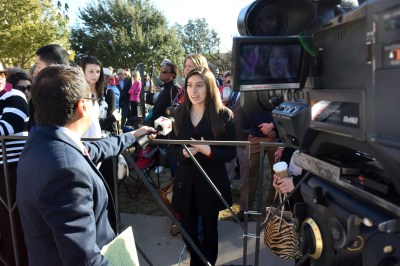
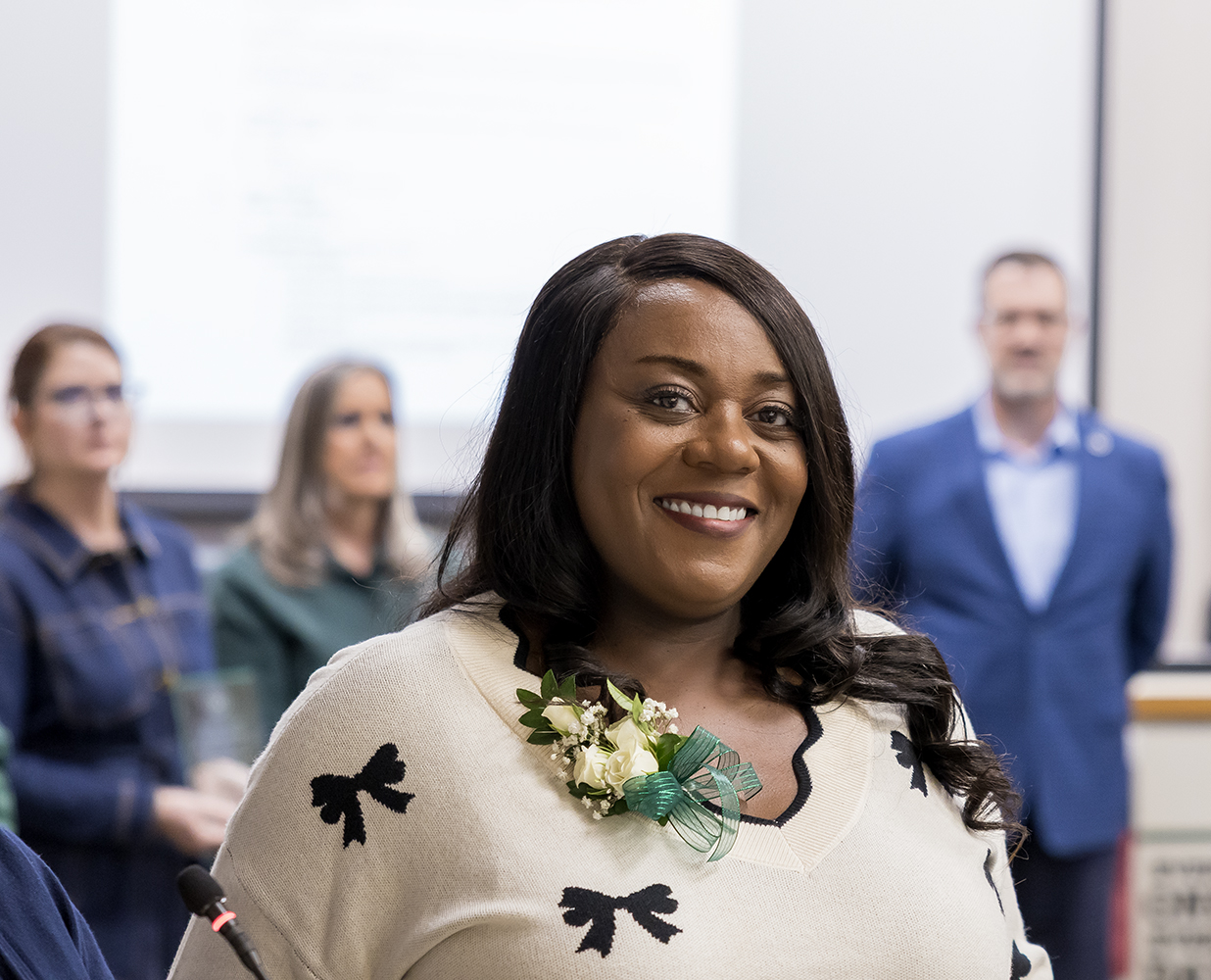
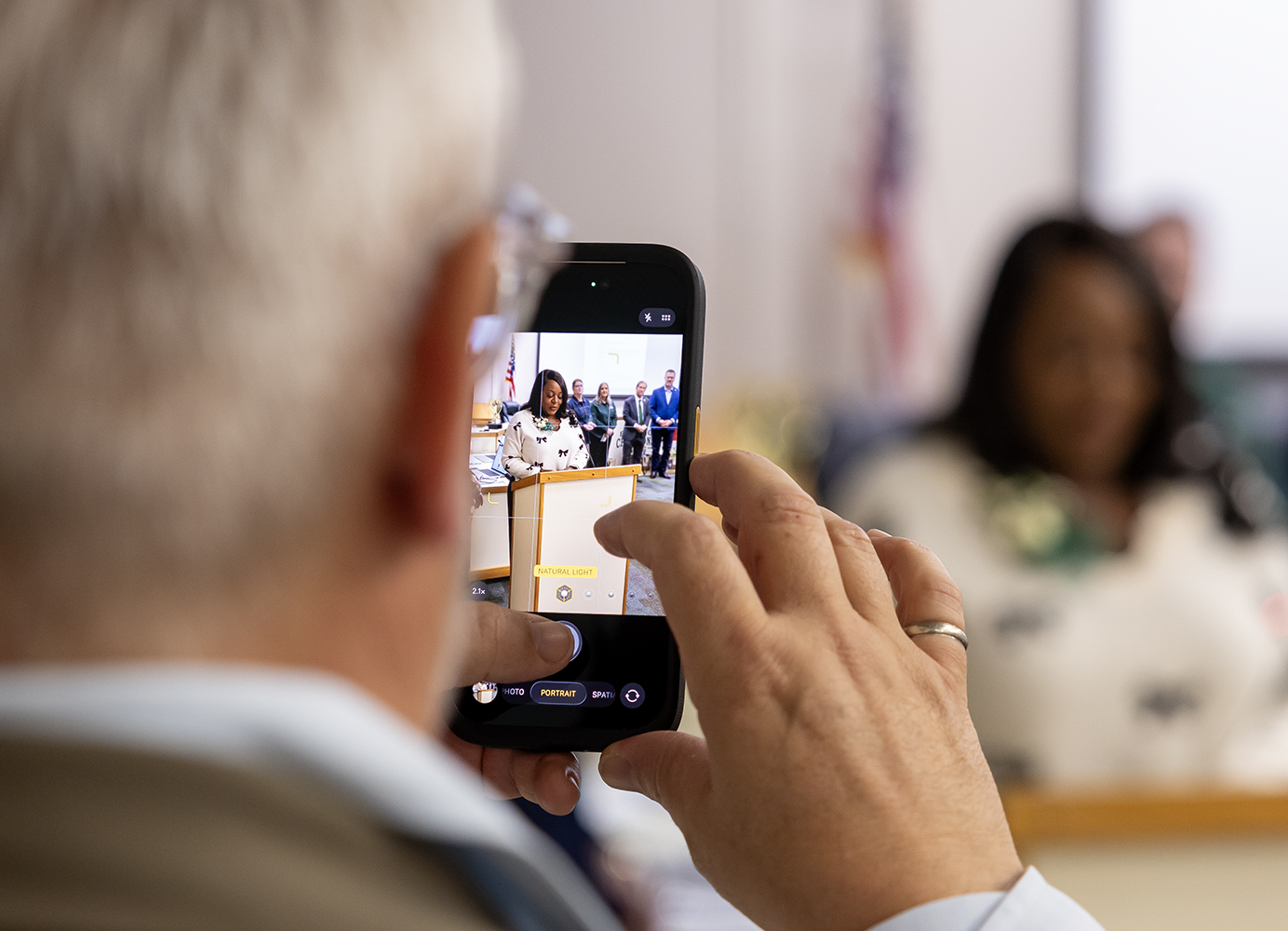
Then came the moment I’d been looking forward to — introducing Christina Sato, who so graciously agreed to share her journey and beautiful words with us. Christina Sato is an accomplished actress, singer, and University of Texas at Austin graduate who interned for former U.S. Senator Kay Bailey Hutchison and has built an impressive career bridging entertainment and public service.
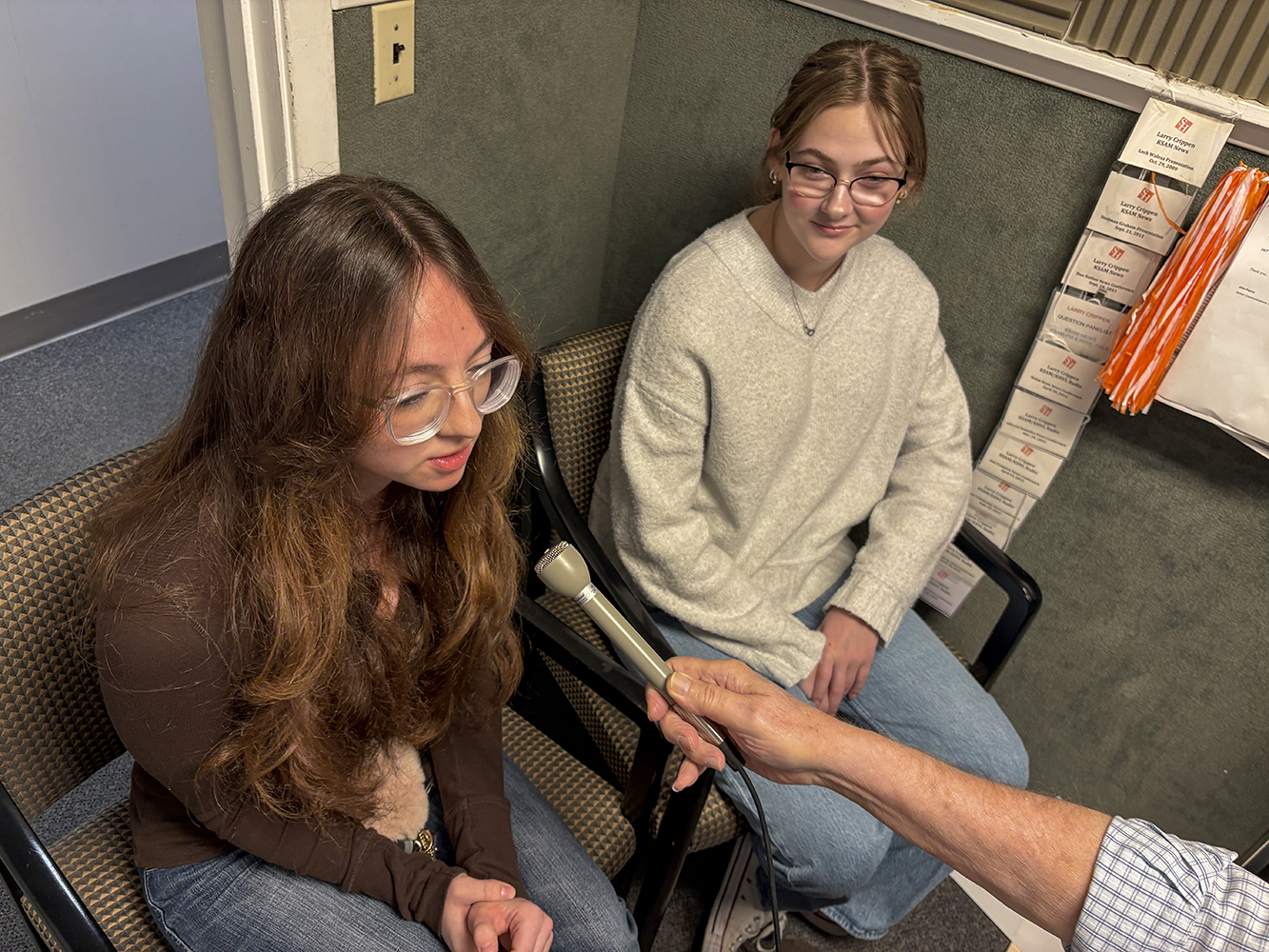
Christina spoke beautifully about three important themes, with one particularly powerful message about the importance of an invitation…

…recalling that she first met Professor Yawn in an elevator, three years ago. That chance meeting, followed by some networking, led to the invitation to speak at this event.
She tied this concept perfectly to the crowd and their purpose, making everyone feel the significance of being present and being welcomed into community.

Her story was one of unexpected turns and beautiful detours. Sato shared how she began her career with aspirations in public service, only to find life taking her down different paths-through entertainment, through various roles and opportunities that she never initially imagined. Rather than viewing these changes as setbacks, she embraced them as part of life’s natural rhythm. Her journey wasn’t linear, and she owned that truth with grace and authenticity.

For the naturalized citizens in the room– many of whom had taken long, winding roads to reach that point–her story struck a personal note. For those still on their journey toward citizenship, her message offered hope, encouragement, and a reminder that every experience brings us closer to where we’re meant to be.

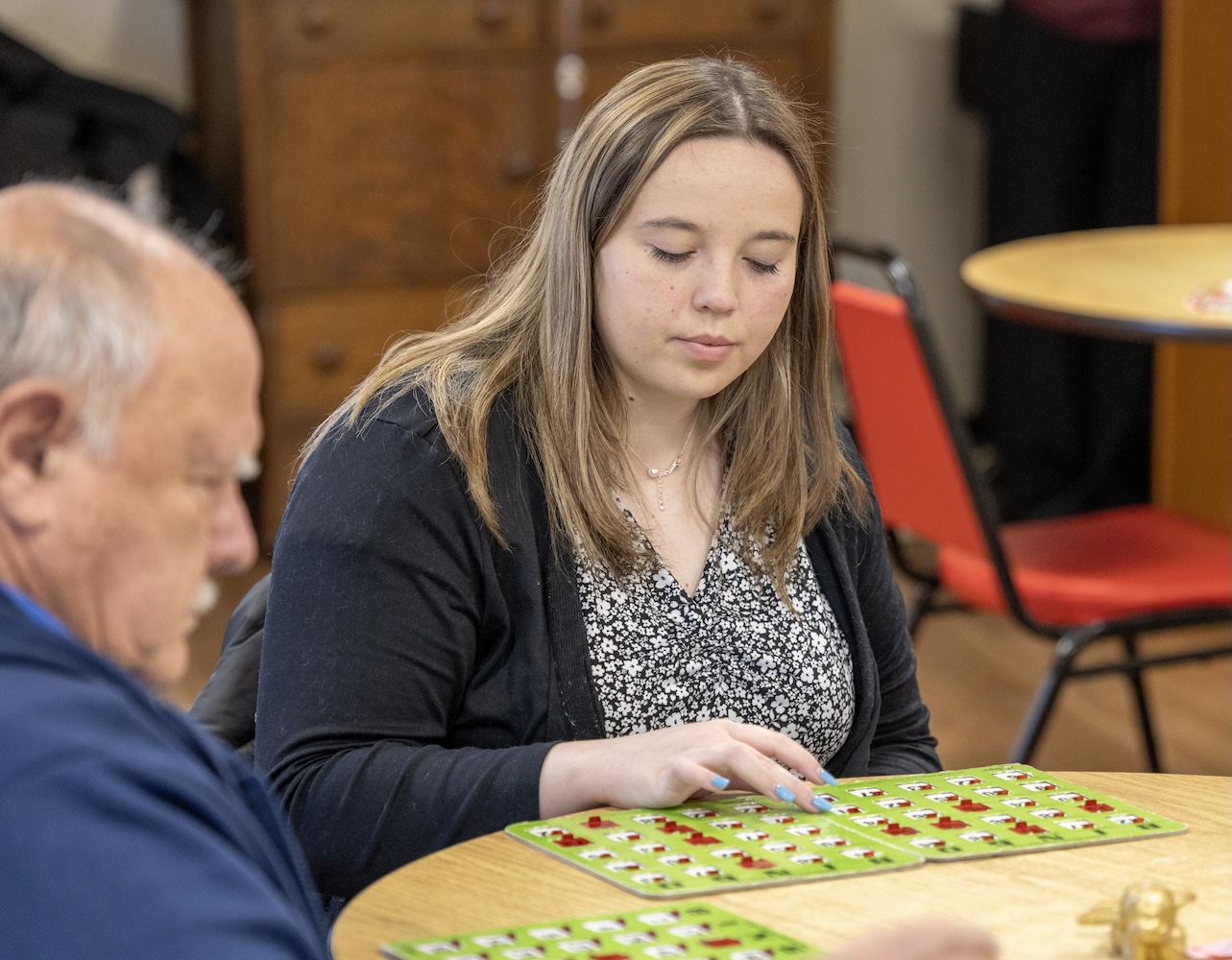
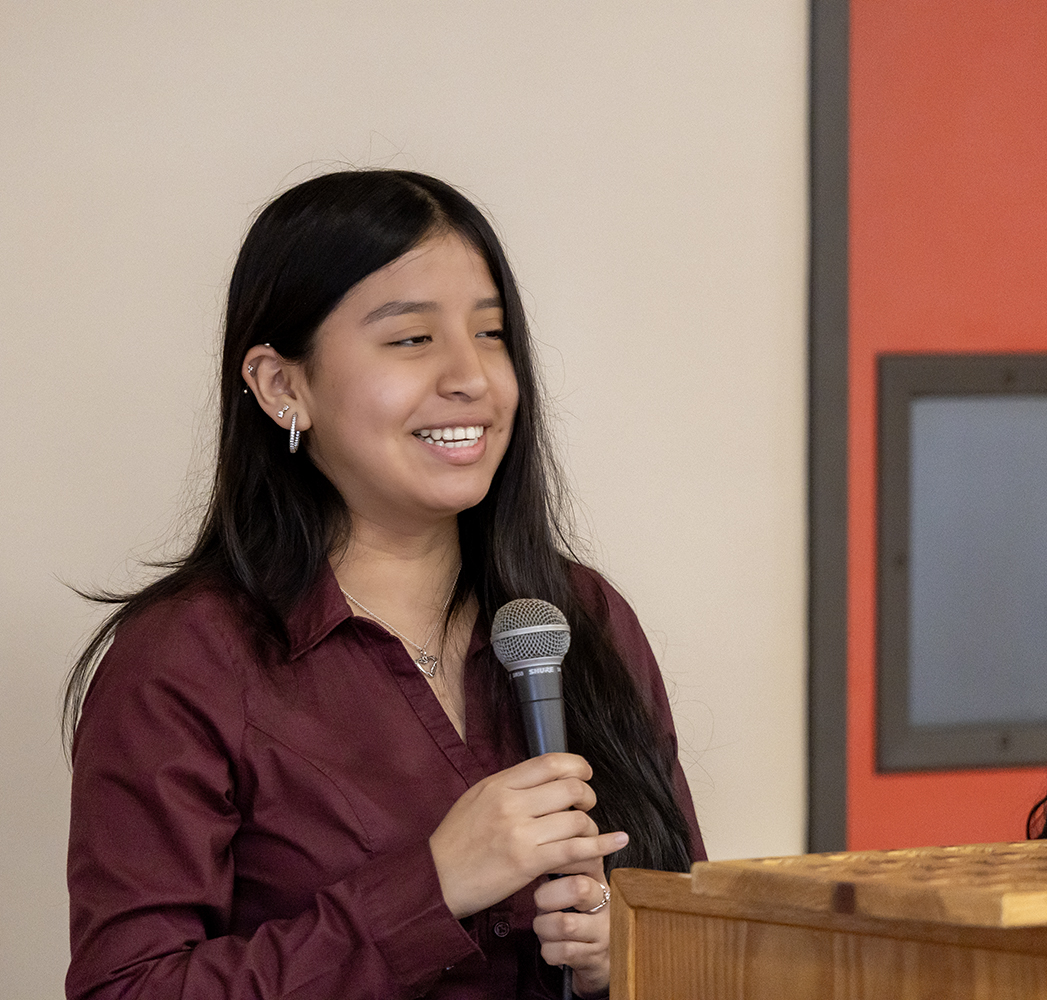
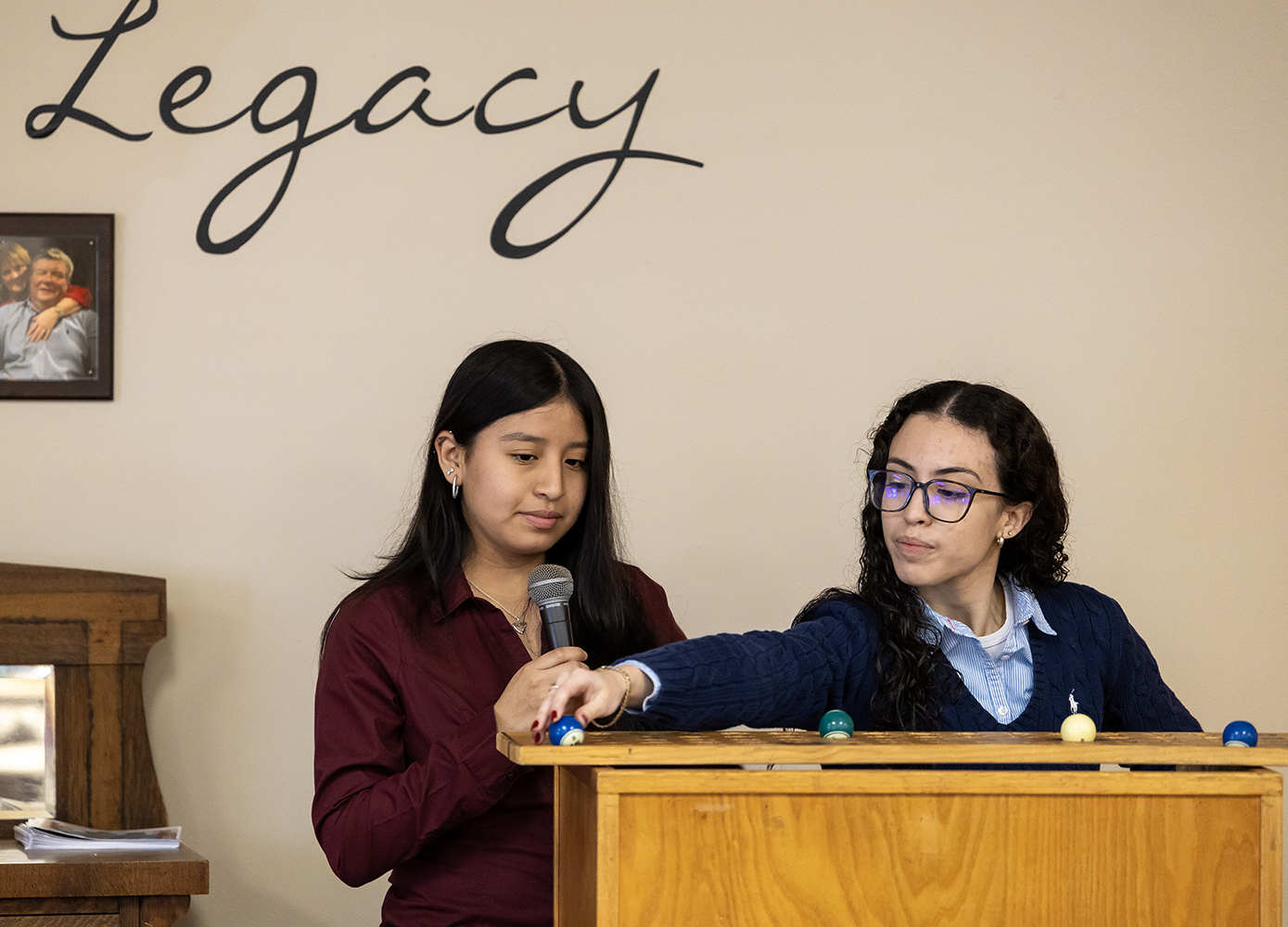
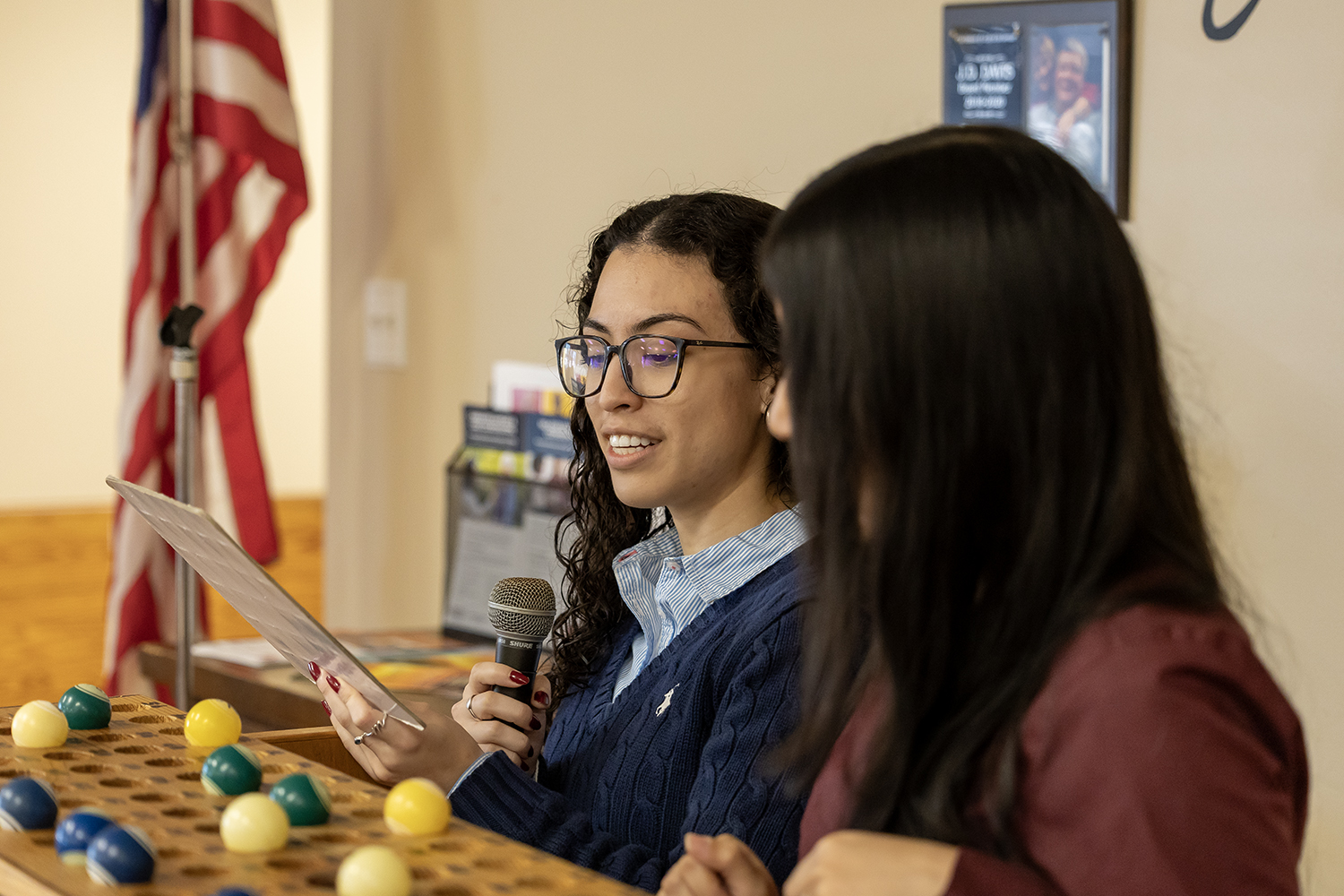
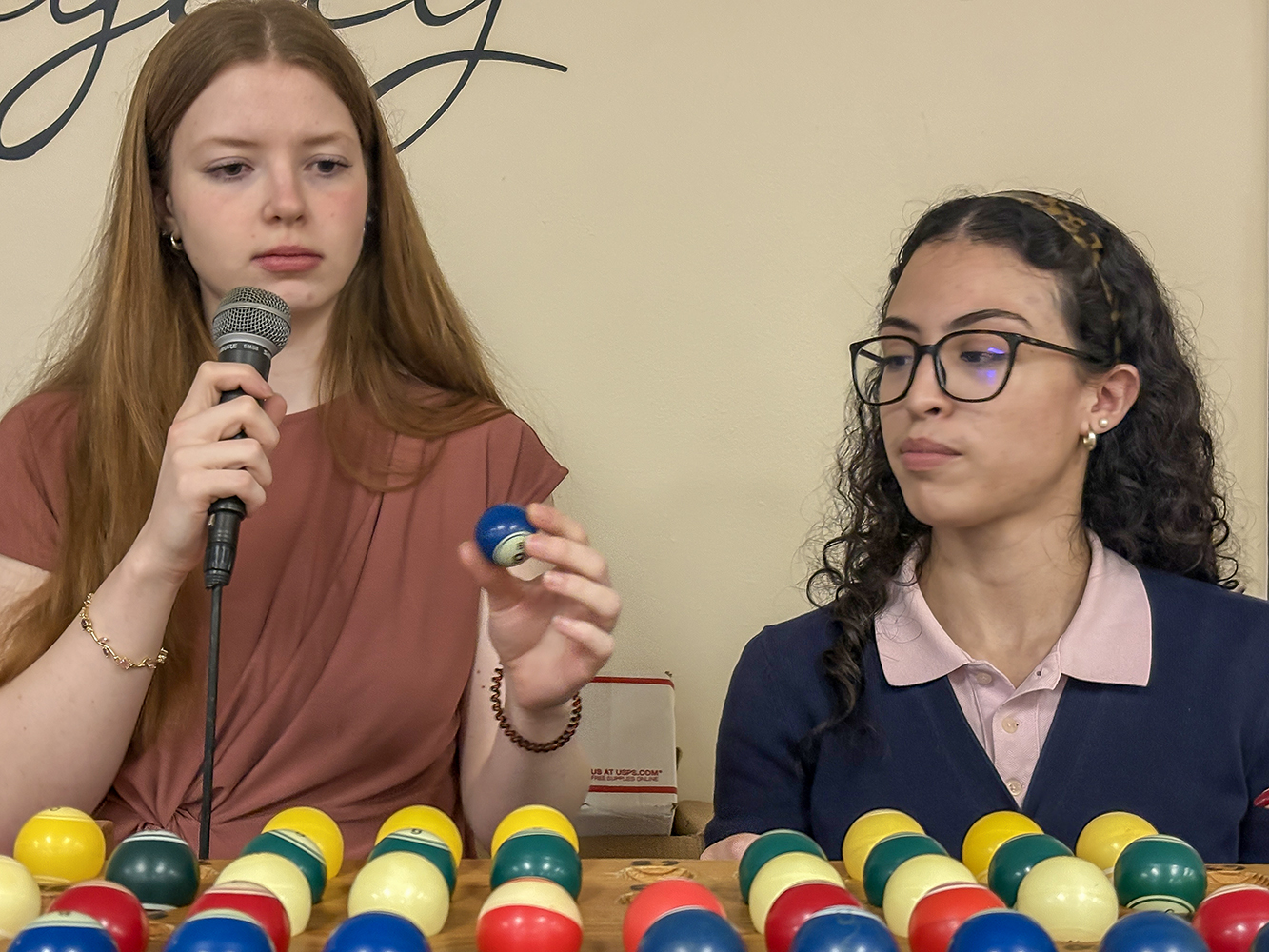
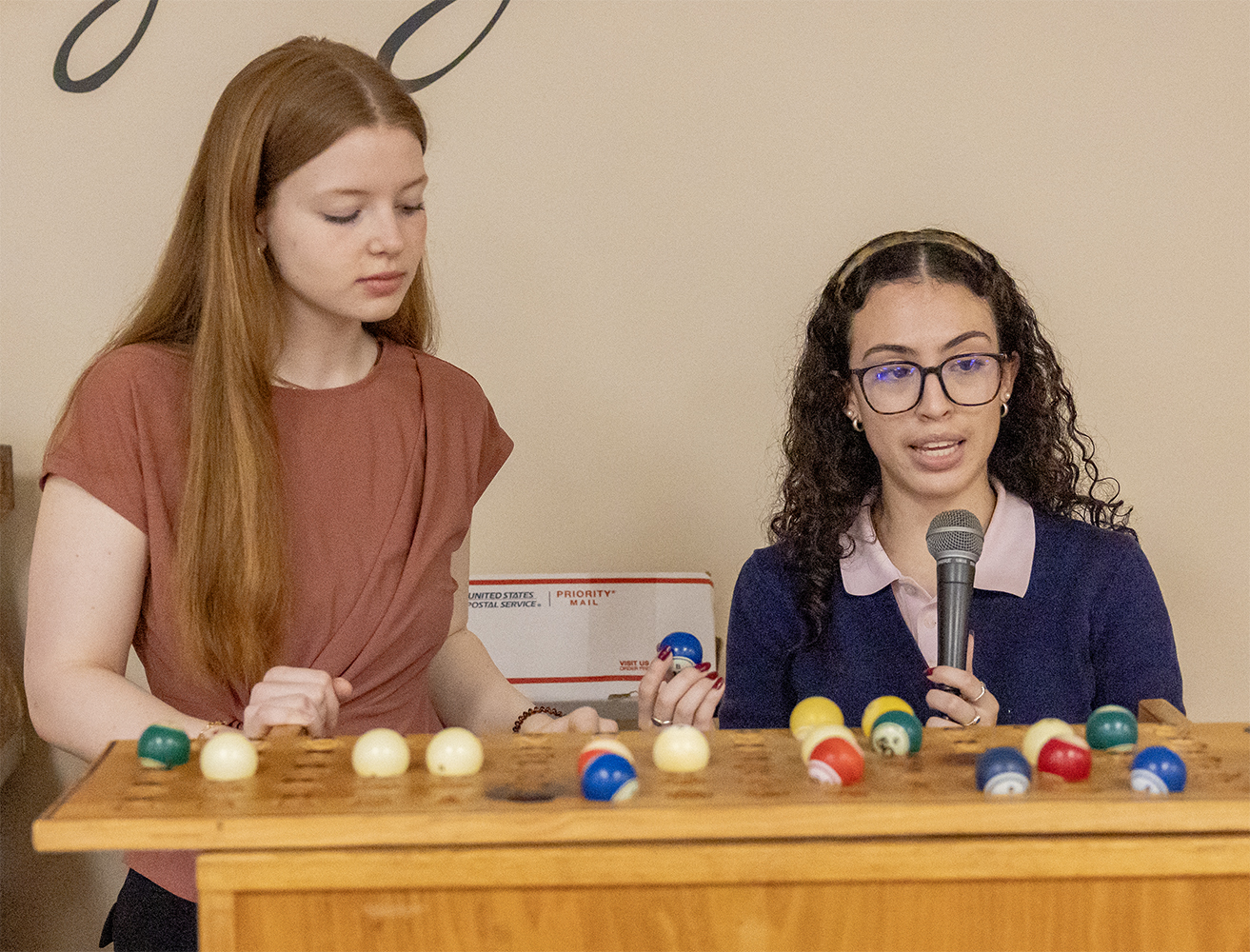
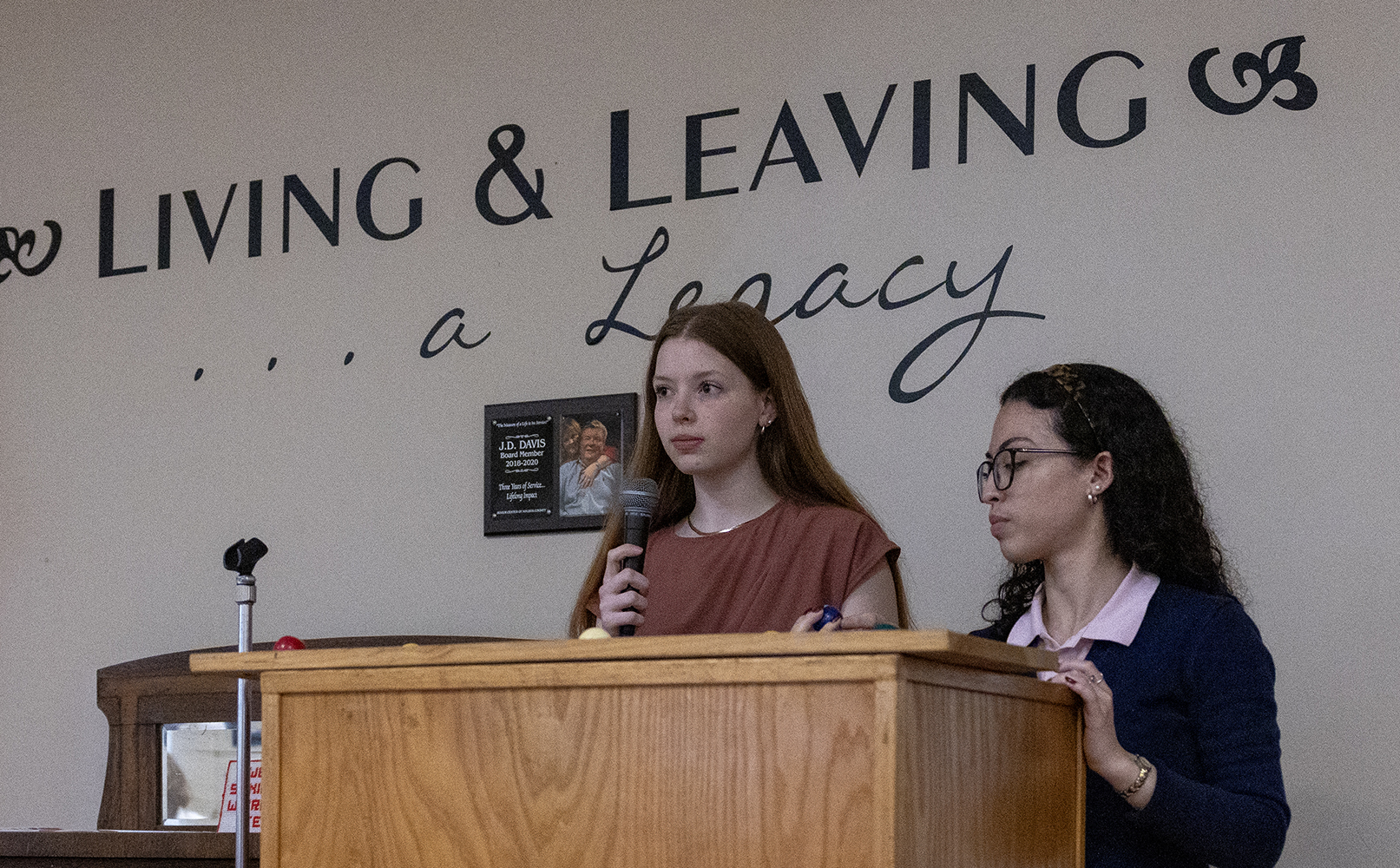
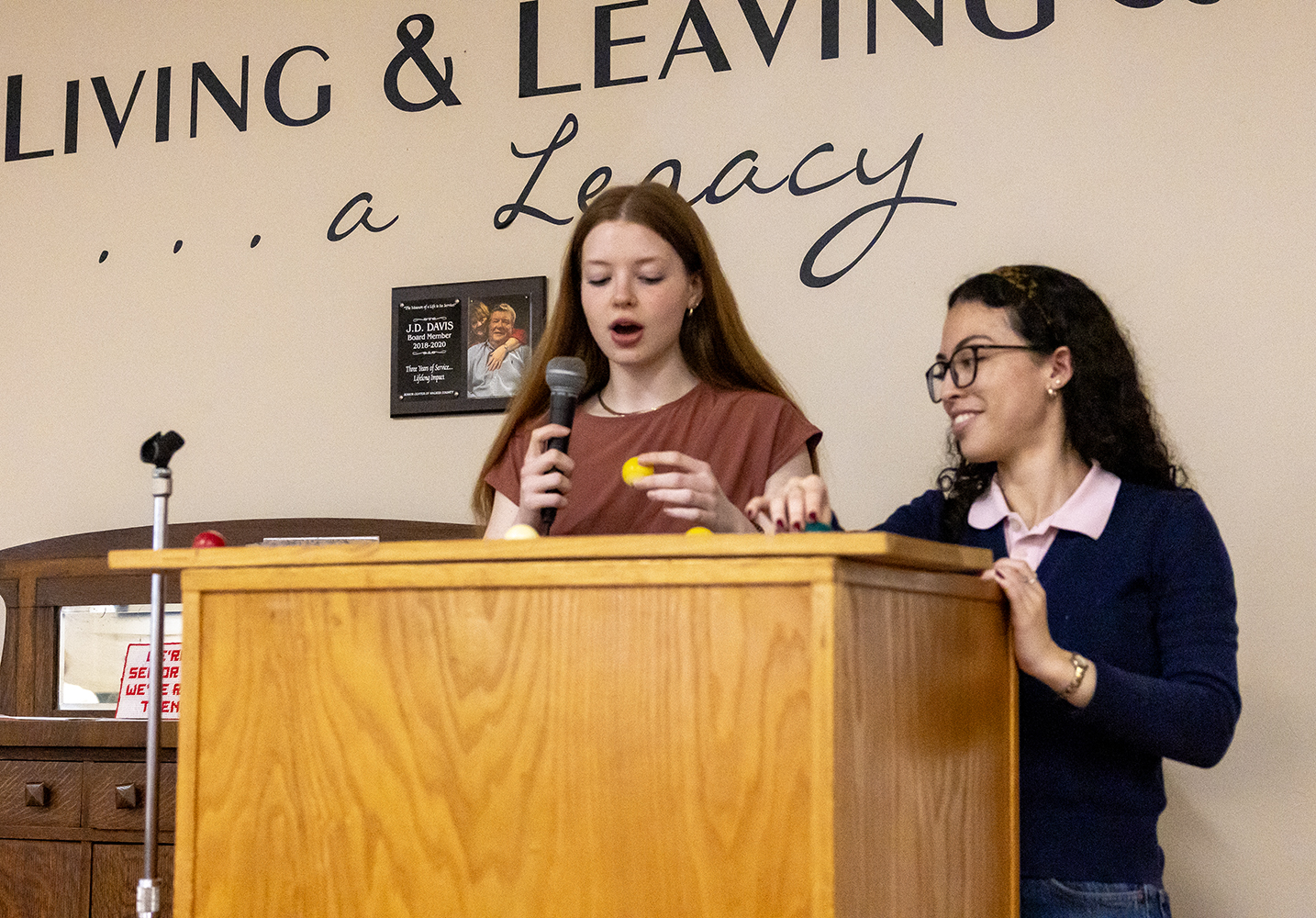
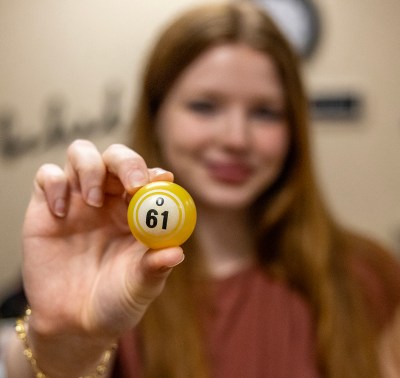
The evening then shifted to something wonderfully fun–Lotería! For those unfamiliar with this traditional game, it’s similar to bingo but with a uniquely cultural twist.

We played a couple of rounds, giving away prizes to lucky winners throughout the evening, with the help of volunteers Andrea Torres, Olivia Discon, and Laura Juarez Ordonez.

It was a beautiful reminder that while we gather for serious purposes – citizenship, community, growth – we also come together to celebrate, to play, and to enjoy each other’s company.

As the celebration concluded, we announced the next phase of our program: our Spring 2026 Citizenship Course. This course will be held on April 2nd, 9th, 16th, 23rd, and 30th at The Woodlands Center, to support immigrants as they work toward their citizenship, providing the resources, guidance, and encouragement they need to succeed.

A heartfelt thank-you to everyone who made this evening possible: the volunteers and LEAP alumni whose ongoing support sustains the program, Christina Sato for generously sharing her time, inspiring story, and wisdom, and most importantly, the naturalized citizens and immigrants whose journeys continue to inspire this program and remind us of why it initially started.

Here’s to the journey ahead–and to all the events yet to come!

For more information about LEAP’s citizenship program or our upcoming Spring course, email Professor Mike Yawn at mikeyawn@shsu.edu.

Unknown's avatarAuthor mikeyawnPosted on November 14, 2025November 14, 2025Format AsideCategories Civic Engagement, Civil Rights, Education, International Affairs, Law, Politics, VolunteerTags Center for Law Engagement And Politics, Citizenship, Immigration, Naturalization, Pre-Law Society, Sam Houston State UniversityLeave a comment on Celebrating Citizenship and Community: A Launch to the Next Chapter at The Woodlands Center

Inside the CIA with William Burns

By Mayra Sofia Soto

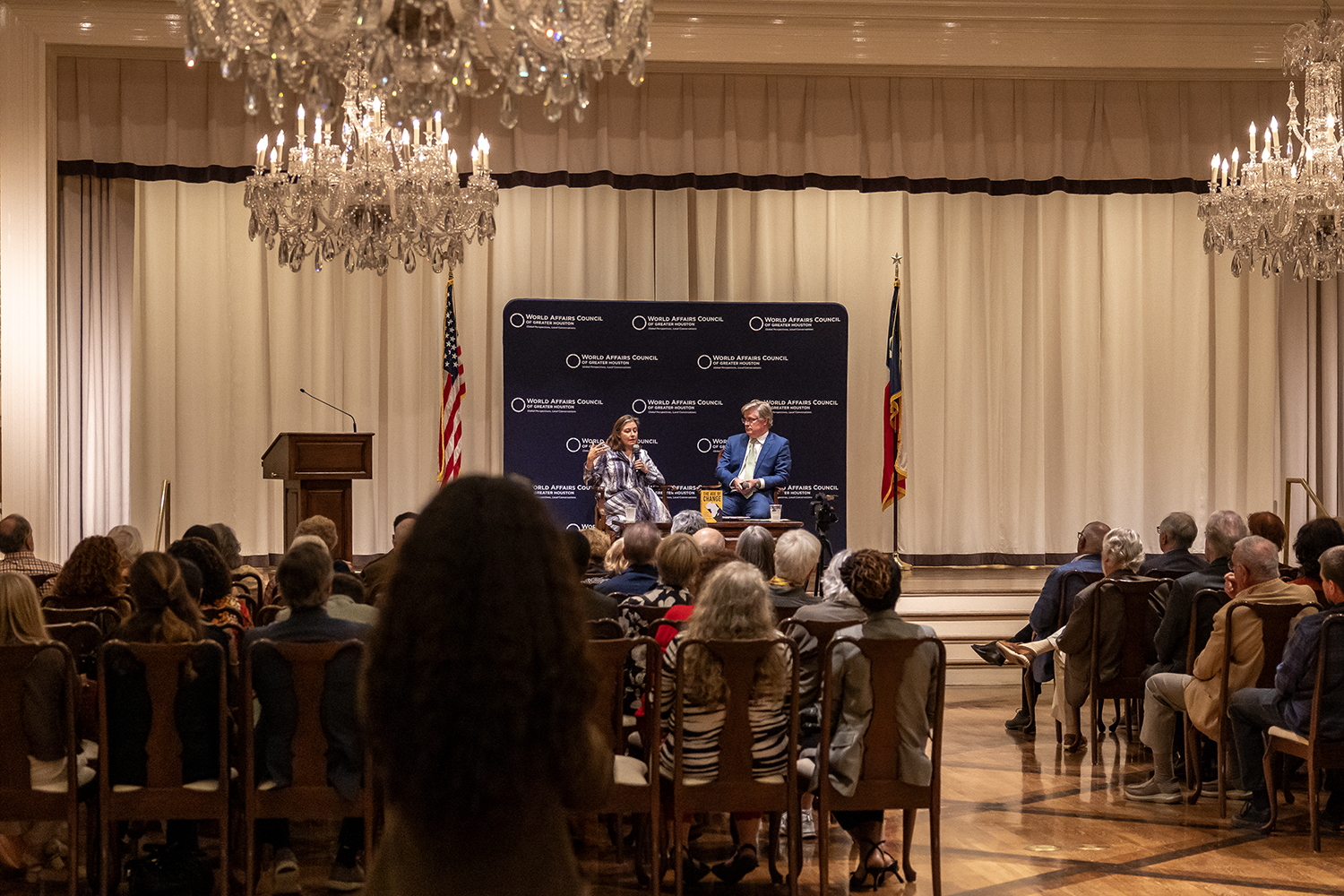
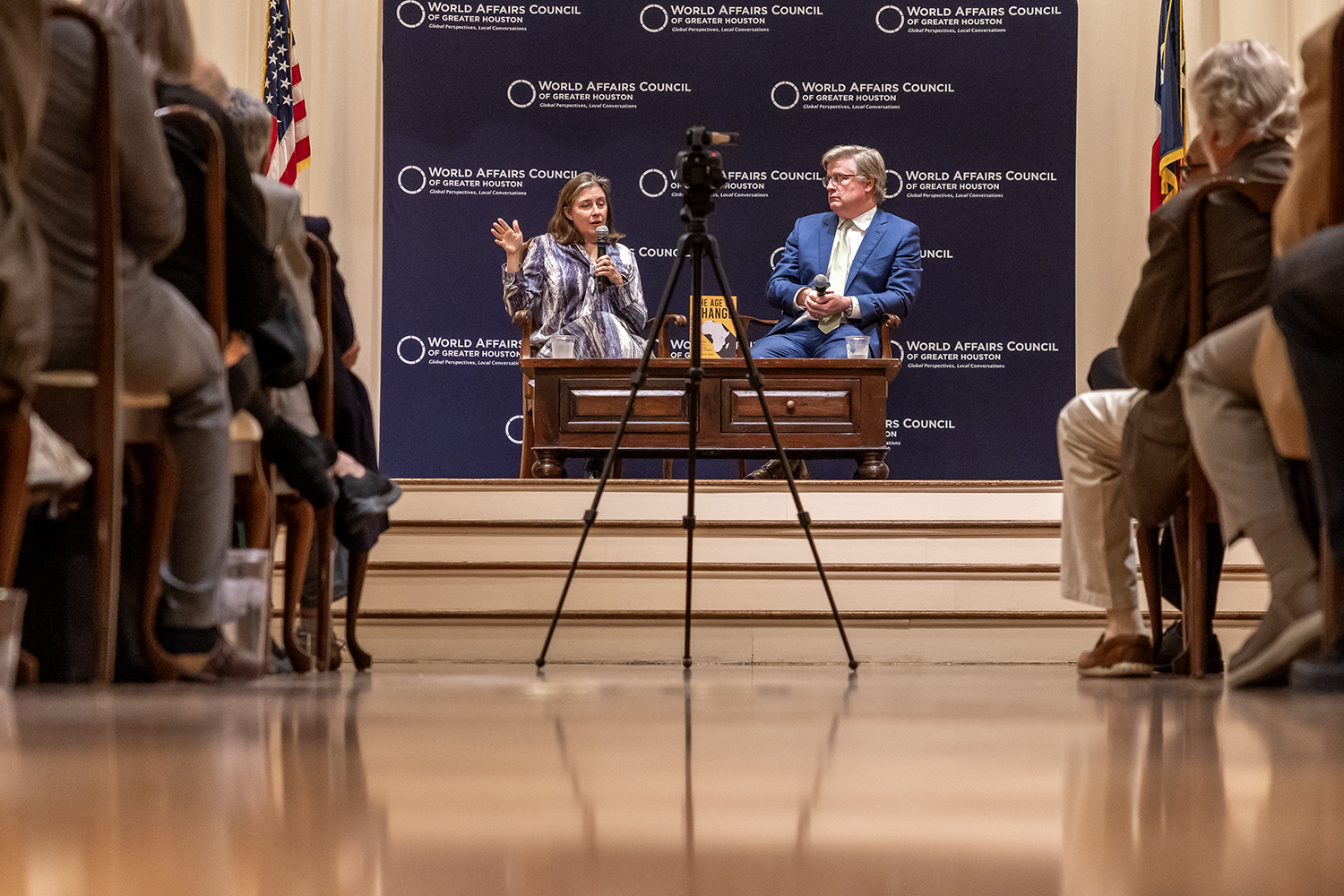
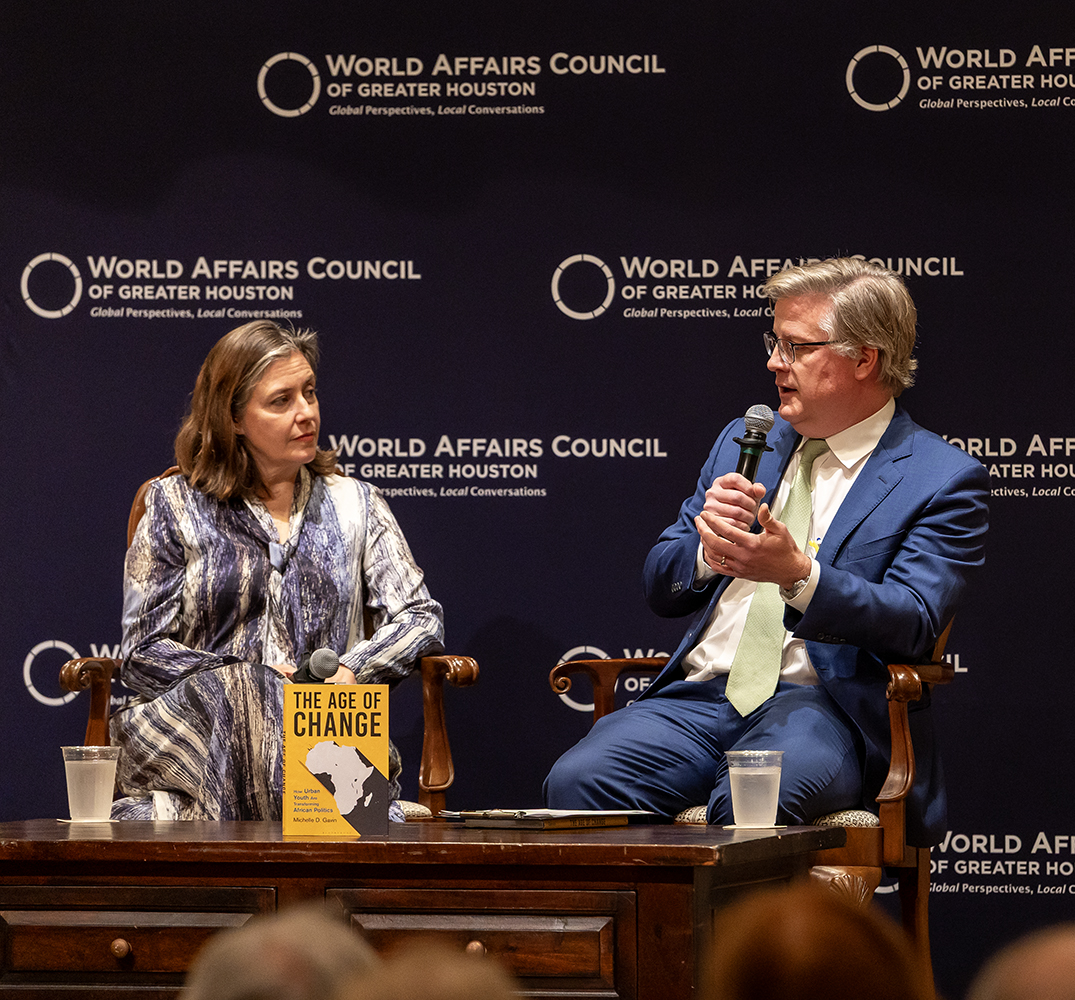
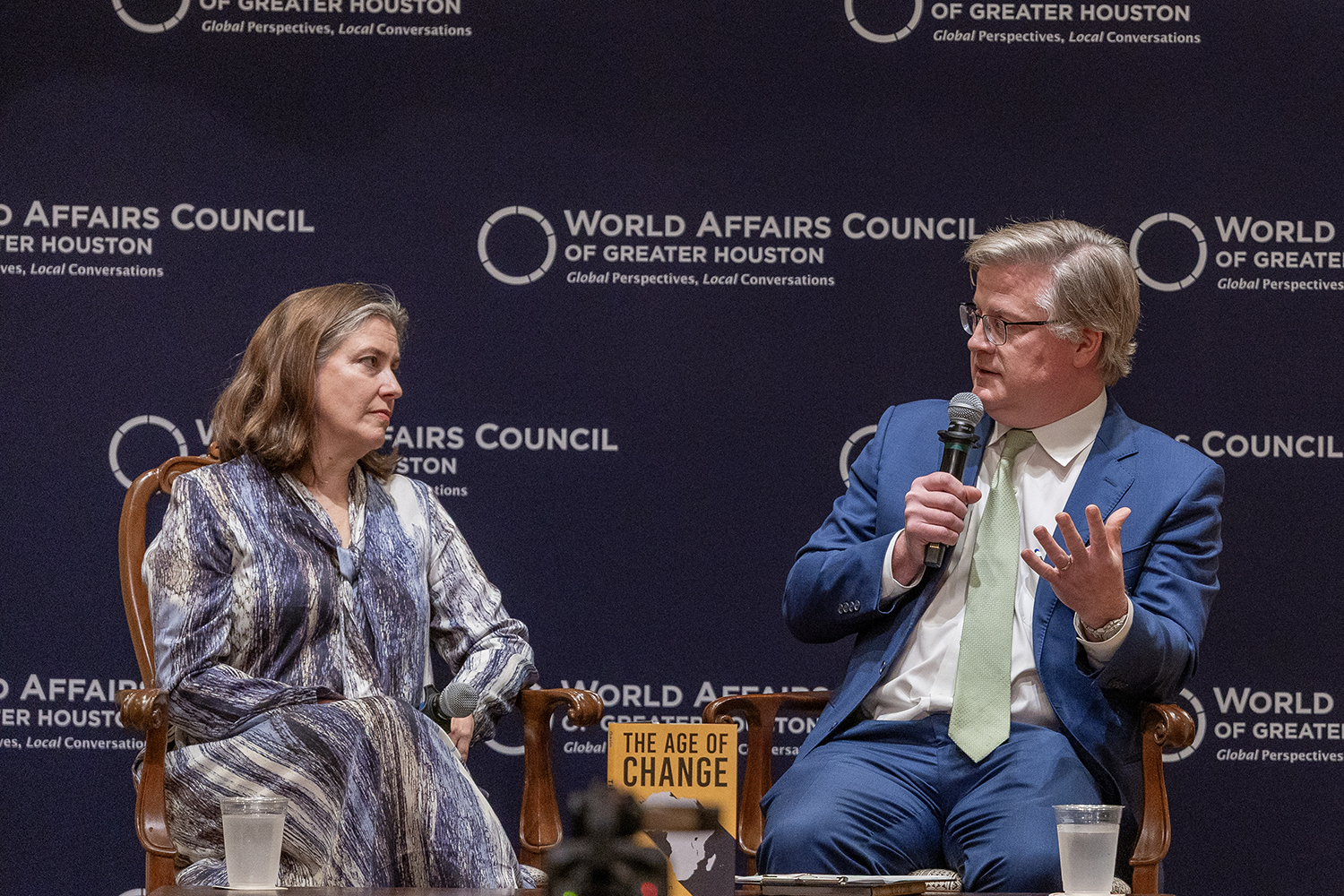
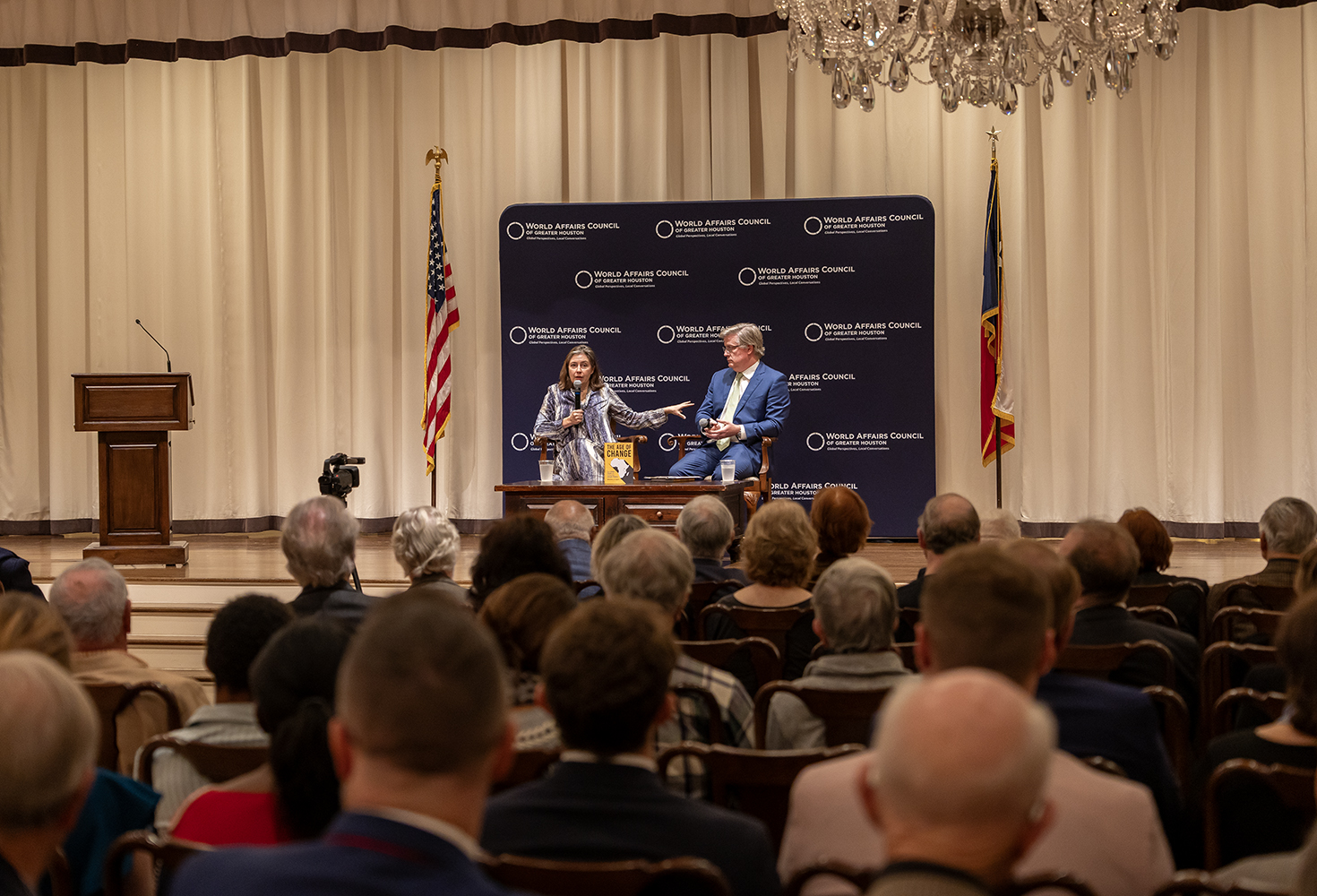
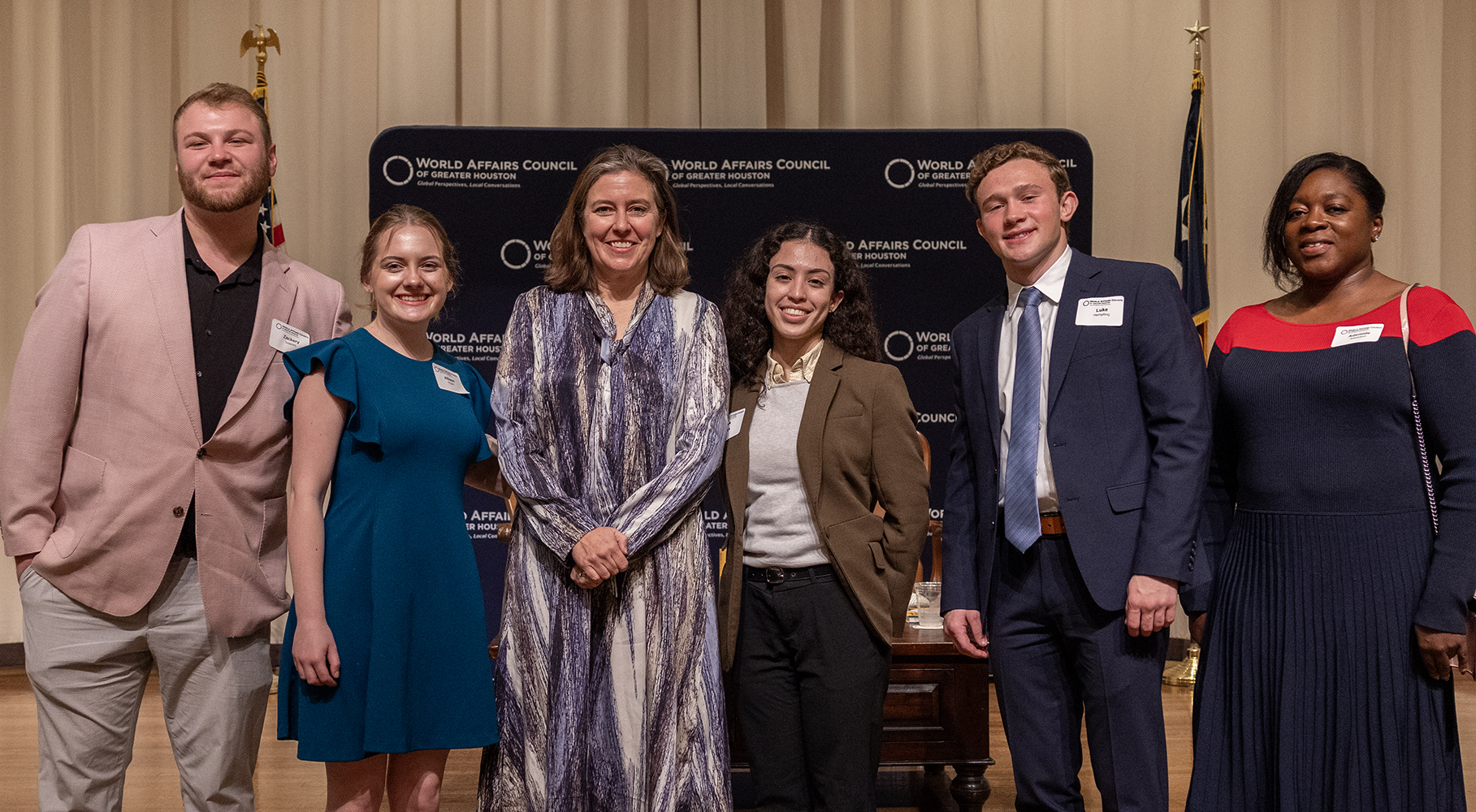
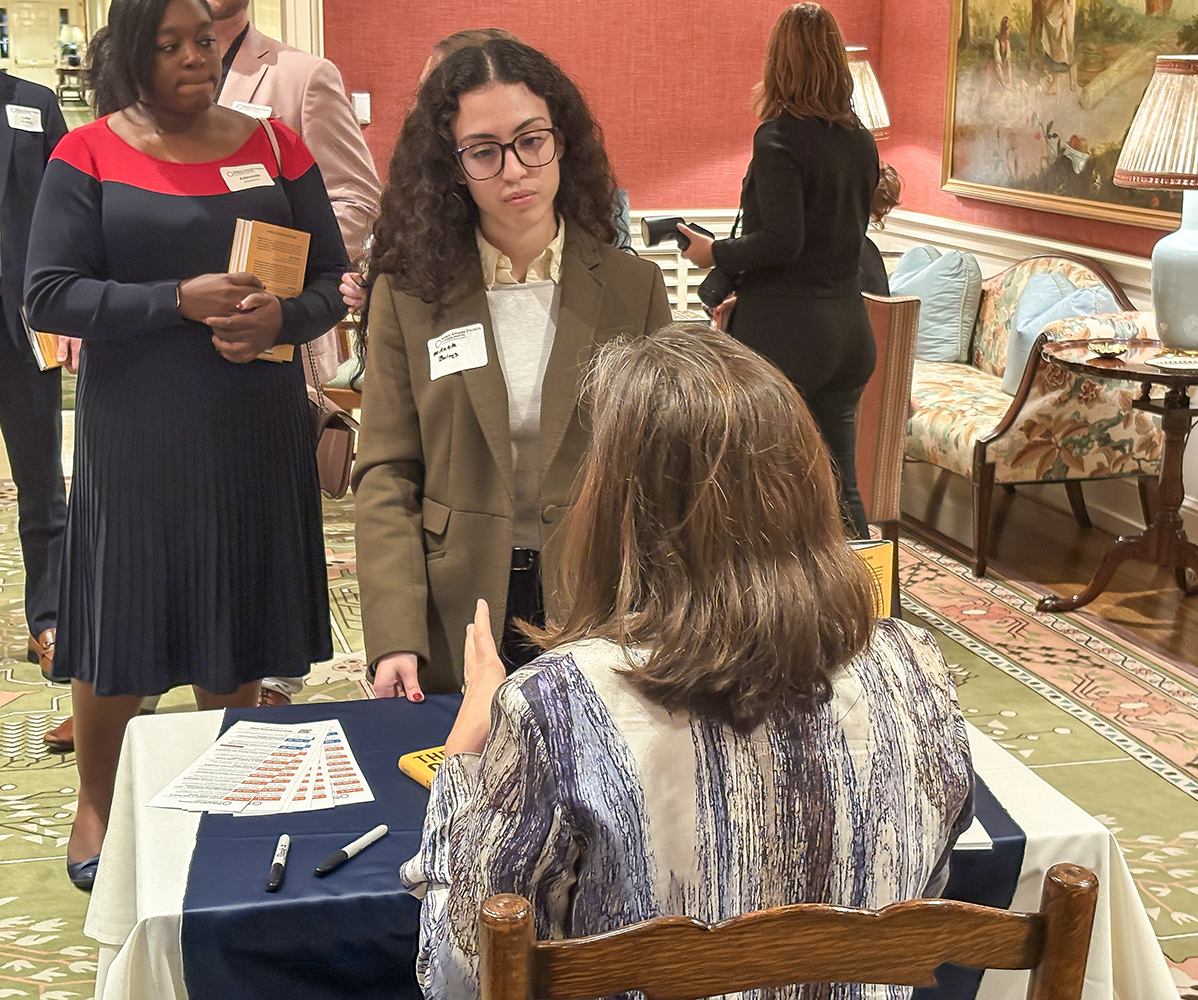
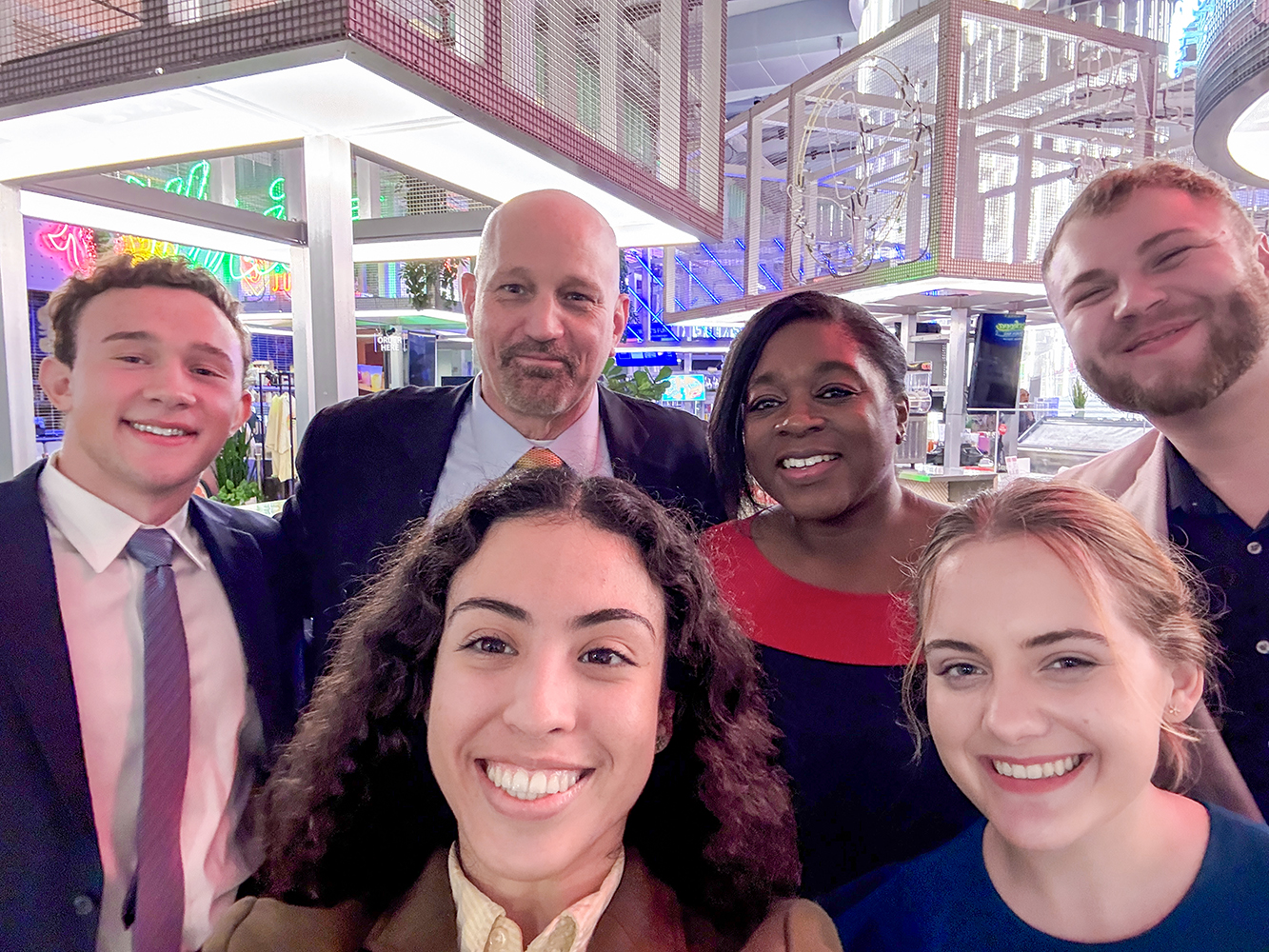
The World Affairs Council and the Baker Institute for Public Policy welcomed William Burns, the 8th Director of the Central Intelligence Agency, who provided an insightful and engaging discussion on the complexities of global affairs, drawing on his experiences in diplomacy, intelligence and leadership during some of the most pivotal moments in recent history.

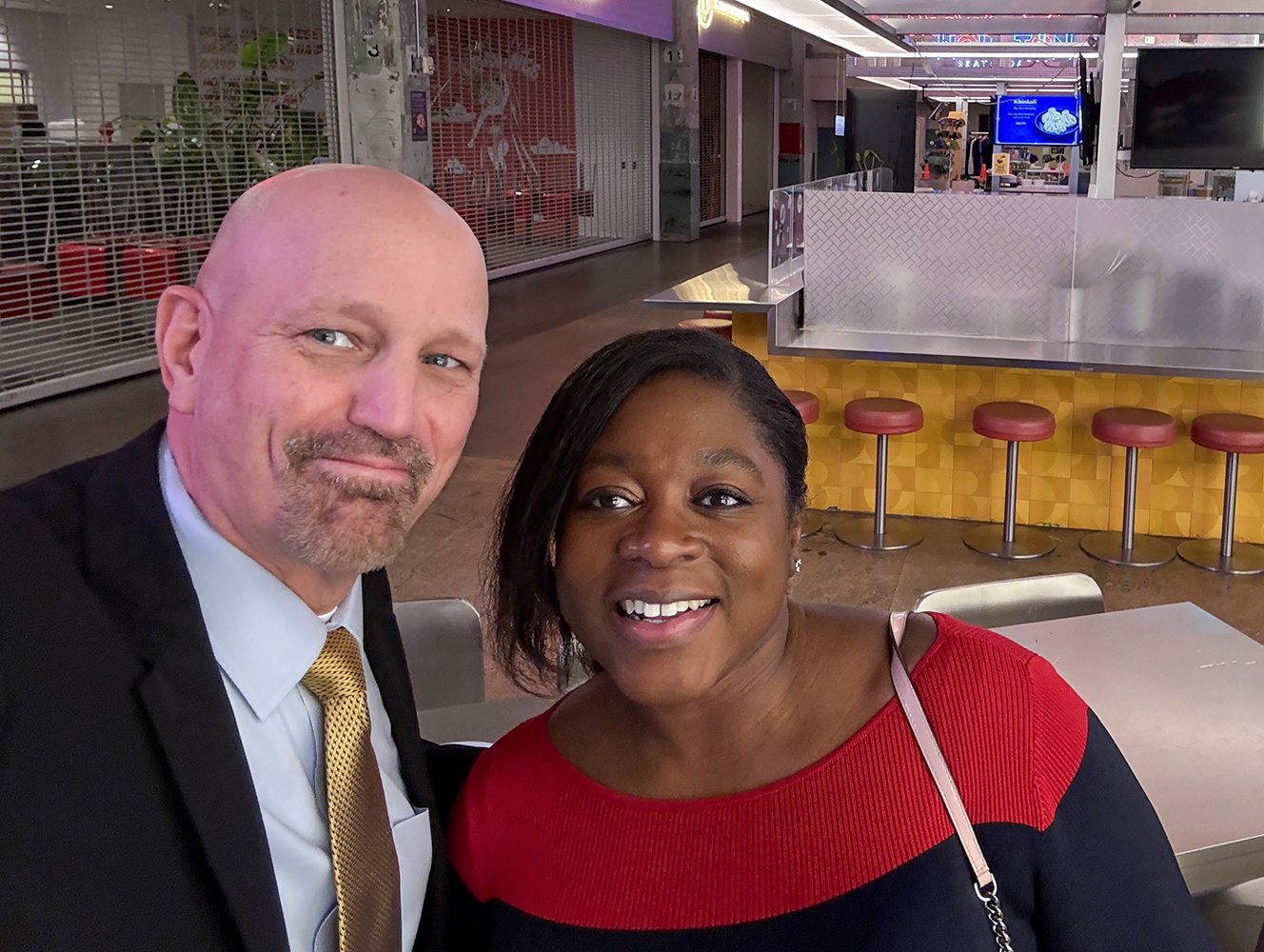
During the networking session, we had the pleasure of reconnecting with Wendall Braniff, whose continued generosity and support at various WAC events have been invaluable. She introduced us to Vitalii Tarasiuk, the Consul General of Ukraine in Houston, who shared about his diplomatic career and offered advice for those pursuing careers in international affairs.

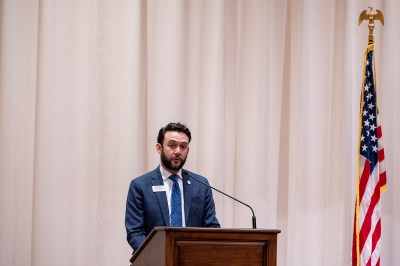
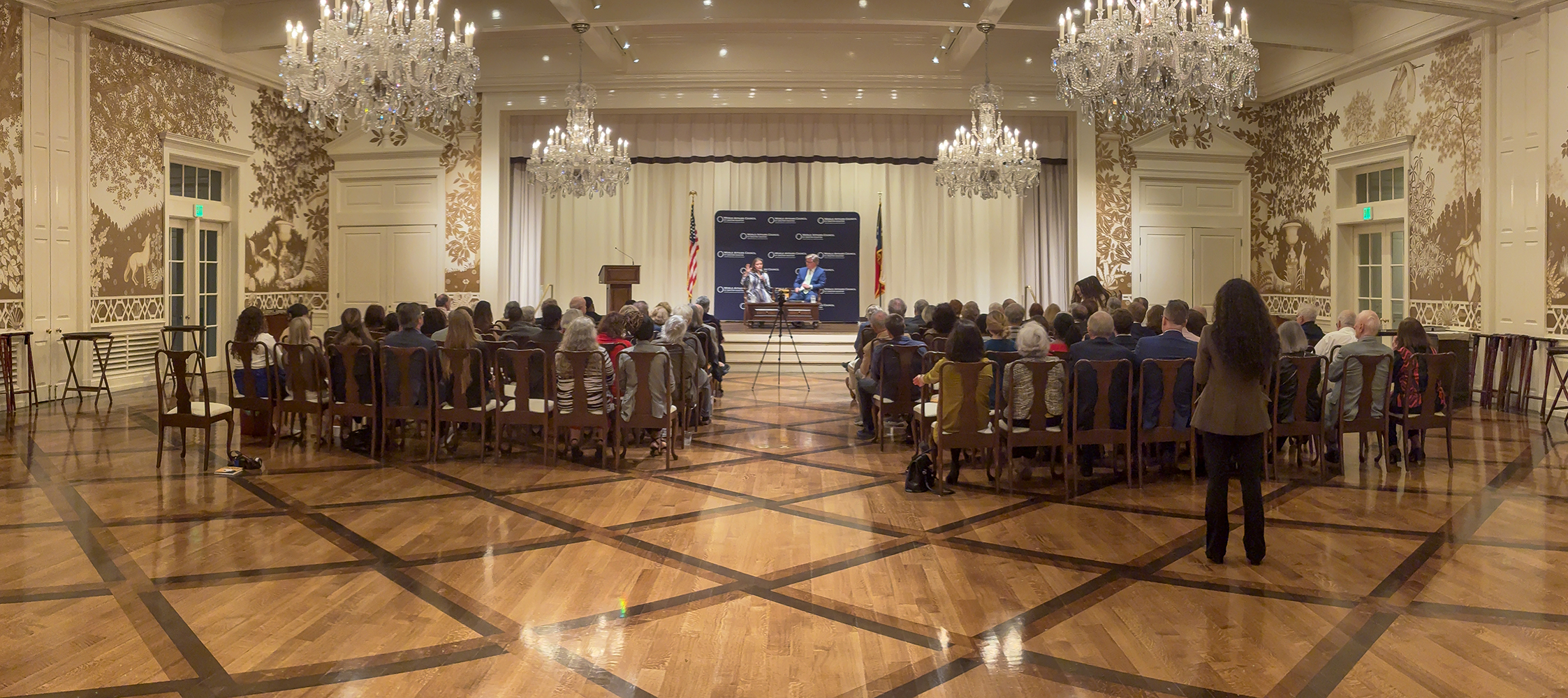
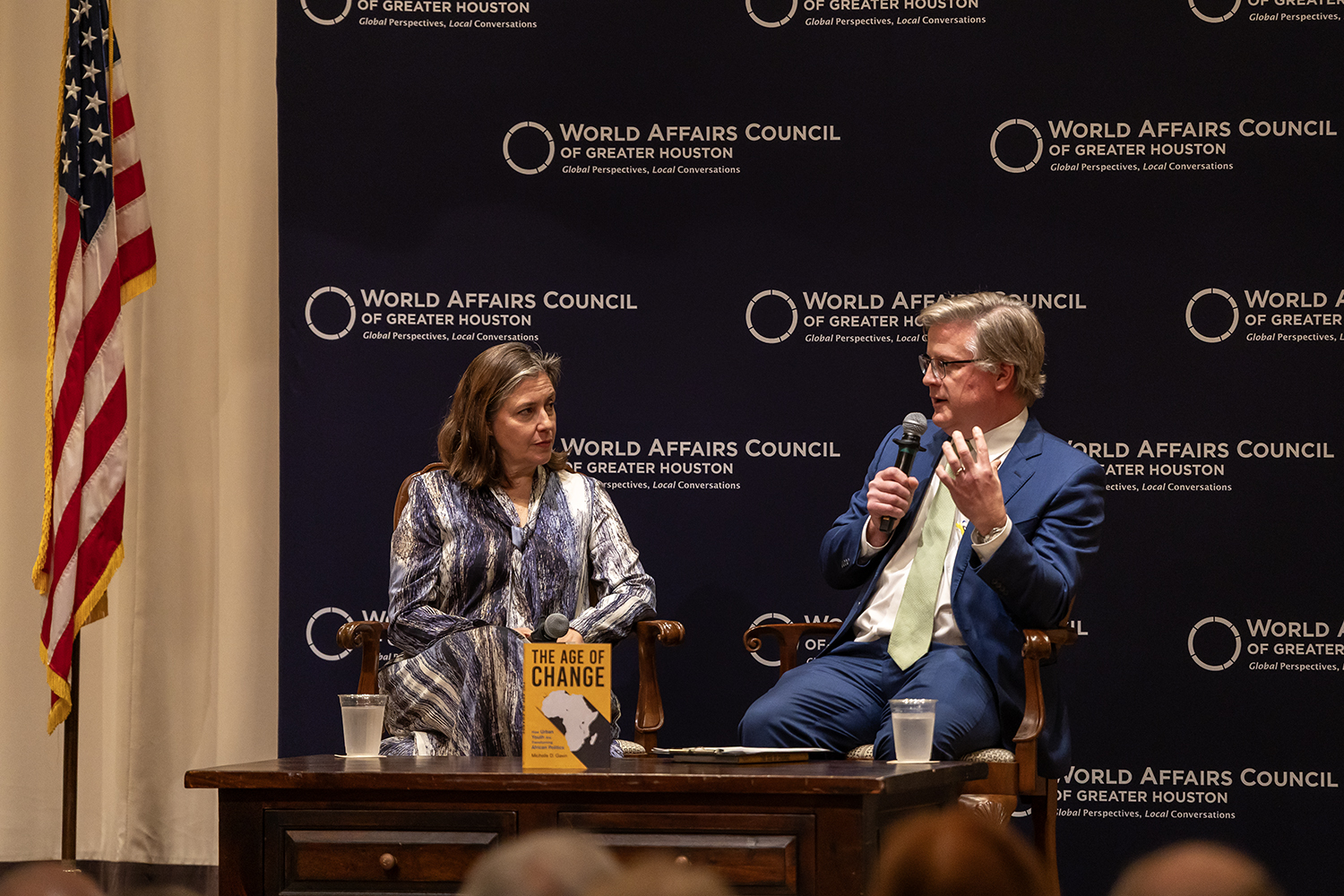
After an introduction by WAC CEO Maryanne Maldonado and WAC Director of Advancement Sandija Bayot, Ambassador David Satterfield took the microphone to moderate the event.

Director William Burns is one of the most distinguished American diplomats of the modern era. Over a career spanning more than three decades, he served under six U.S. presidents from both political parties, earning a reputation for integrity, strategic vision and effectiveness. He was the first career diplomat to lead the CIA as Director and previously served as Deputy Secretary of State, Ambassador to Russia and Jordan and in numerous senior roles at the State Department.

Throughout the discussion, Ambassador Burns reflected on the United States evolving role in a complex global landscape. Burns reflected on the challenge posed by Russia’s aggression and the damage Vladimir Putin has inflicted not only on Ukraine but on Russian society itself. He suggested that while Putin’s regime has entrenched authoritarianism and nationalism, its longevity is uncertain, as corruption, stagnation and battlefield losses erode both public confidence and elite unity. Burns cautioned against assuming rapid change after Putin, predicting a messy transition but holding hope that over time Russia could move beyond autocracy. Lastly, he noted that how the U.S. and its allies sustain support for Ukraine will shape global perception of American leadership for decades to come.

He described China under Xi Jinping as America’s most formidable long-term competitor, emphasizing the need for a disciplined strategy that balances confrontation, cooperation and competition while avoiding complacency in technologies like artificial intelligence and quantum computing. Turning to the Middle East, he recounted his efforts to negotiate ceasefires and hostages releases in Gaza, stressing that sustainable peace requires both humanitarian compassion and political will. Burns also discussed the fragility of global alliances, noting that America’s greatest comparative advantage lies in the trust of its partners, something that must be continually earned through reliability and measured leadership.

On domestic matters, he voiced concern over efforts to politicize public institutions, warning that retribution disguised as reform undermines the integrity of career civil servants and weakens U.S decision making.

Burns closed with advice for young professionals, encouraging them to pursue public service with integrity and courage. He concluded with a touch of humor and timeless wisdom from former Secretary of State James Baker, under whom he served: Baker’s “7 Ps – Proper Preparation plus Perspiration Prevents Piss Poor Performance” Emphasizing the importance of learning your craft, being prepared, and being ready for when the moment comes.

Unknown's avatarAuthor mikeyawnPosted on November 11, 2025November 10, 2025Format AsideCategories Civic Engagement, International AffairsTags Ambassador David Satterfield, Bill Burns, Center for Law Engagement And Politics, Central Intelligence Agency, CIA, William BurnsLeave a comment on Inside the CIA with William Burns

LEAP at the River Oaks Theatre: A Night with Nosferatu and the Invincible Czars

Nine students and former students with The Center for Law, Engagement, and Politics (LEAP) attended a screening of the 1922 silent horror film Nosferatu at the historic River Oaks Theatre in Houston, Texas. While this outing certainly carried the spirit of the post-Halloween season and the eerie charm associated with early cinematic horror, it also reflected the Center’s continued effort to expand students’ engagement with the humanities, exposure to diverse forms of storytelling, and expanded cultural horizons.

The River Oaks Theatre itself provided a fitting environment. Its historic charm and architecture evoke a theatrical experience that captures some of the magic of silent and golden-age cinema.

Enhancing the screening was a live musical performance by The Invincible Czars, who created the film’s soundtrack live on stage with instrumentation ranging from classical to experimental. Their approach complemented the film with sounds that provided humor, subtle tension, and dramatic intensity.

After the screening, the LEAP students were able to meet the band members and take photographs with the band, while also purchasing movie posters.

While the subject matter — a vampire narrative involving shadows, dread, and ancient evil — is unquestionably spooky, the evening itself reinforced a central purpose of LEAP: experiential learning that blends the artistic, the cultural, and the civic.

Movies like Nosferatu do not just entertain; they help illuminate how societies imagine danger, power, and the supernatural.

This outing offered students a unique opportunity to experience history, art, and performance simultaneously — in a way that was appropriately seasonal, academically rich, and wonderfully haunting.

Unknown's avatarAuthor mikeyawnPosted on November 10, 2025November 10, 2025Format AsideCategories Civic Engagement, Film, HistoryTags Center for Law Engagement And Politics, Invincible Czars, LEAP Ambassadors, Nosferatu, River Oaks Theatre, Sam Houston State UniversityLeave a comment on LEAP at the River Oaks Theatre: A Night with Nosferatu and the Invincible Czars

A Time to Gain, A Time to Lose

To Everything There is a Season…

After a long day of Moot Court competition and work that persisted late into the night, our LEAP competitors enjoyed the mercy of an extra hour of sleep, courtesy of Daylight Savings Time. But the sun rises even after the longest nights, and we–Madison Thurkettle, Allison Lindle, Katie Wilson, and our Day Two competitors, Ashton Droll and Madison Cawthon–hastened to the Shepard Broad College of Law to extend our Moot Court season.

A Time to Keep…

With admonishments to arrive no later than 9:30am, we arrived early, in time to witness the coin toss that would decide whether we were representing the petitioner or respondent.

Our competition was Connor Rust and Inanna Khansa from the University of Chicago, and winning the coin toss, they chose to represent the respondent–which was fine with us.

A Time to Build Up…

A win in this round would place us at the Preliminary Nationals, scheduled for Virginia in January. For Maddie, who wasn’t expecting to get this far, much of the pressure had been shed from her shoulders. Ashton, on the other hand, animated by what many judges described as “a passion for moot court,” felt the pressure and the need to win. Both, however, experienced the ups and downs of preparing for competition.

Both sensed immediately the elevated level of competition. “We could cite the record and the cases,” observed Droll, “but Rust and Khansa took it a step further. They cited the record and then cited cases within the cases.”

A Time to Speak, a Time to Keep Silence…

Nonetheless, Droll and Cawthon executed their best performances. Heeding the Biblical admonition that “a fool’s voice is known by a multitude of words,” they answered questions directly, demonstrating their knowledge of the cases and applying that knowledge judiciously and to the point. “They were,” noted Wilson, “more polished than they’ve been the entire Moot Court season.”

In the end, however, it wasn’t quite enough. Rust and Khansa edged out Droll and Cawthon on two ballots (one was decided by three points out of 1,600) and solidly on a third. Despite the loss, the team members’ outlook remained undimmed, happy with their portion, and equipped with a focus on a new season and a renewed sense of purpose.

Two Shall Withstand…

The finals pitted Anna Barker and Steven Abraham (University of Central Florida) and Christy Banker and Gaege Gobezie (Liberty University)–the latter of whom had taken the tournament’s first and second-place individual orator honors.

Facing a hot panel–which included the Dean of the Law School (Olympia Duhart), the Director of Advocacy Programs for the Shepard Broad College of Law (Joe Lester), and an animated Criminal Law Professor (Megan Chaney)–

…the four competitors showed impressive knowledge of the cases, verbal agility, and the enviable skill of anticipating the judges’ line of questioning and redirecting it. It was, LEAP students noted, a lesson to learn.

The contest was close, perhaps the closest of the tournament…

…with Anna Barker and Steve Abraham of the University of Central Florida edging Christy Banker and Gaege Gobezie of Liberty University. The match was decided by two points.

Every Man Should Eat and Drink…

With competitions behind us and much before us, we decided on a meal at Rocco’s Tacos, which was recommended by Orlando Magazine and Eater. The recommendation was well founded.

We began with guacamole (excellent), which had just the right mix of tomato, salt, and garlic; chips and a salsa sampler, with the salsa verde and the smoked salsa being the favorites; and sauteed shrimp, which were impressively tender and bursting with flavor. It was a good way to begin the meal.

Our entrees were equally impressive. Half of our group ordered salads, while Ashton sampled the cheese enchiladas (featuring creamy Chihuahuan cheese); Professor Yawn tried the veggie and pork tacos; and Cawthon explored the Chorizo tacos, featuring Cotija cheese.

The food was excellent and filling, and the time at the table offered a respite from a competition and an opportunity for reflection.

Patient in Spirit…

With the tournament receding into a remembrance of former things, we contemplated the transitional and cyclical nature of things.

Each of us has enjoyed a new experience on the trip, whether it be a new food experience, learning photography with a mirrorless camera, or simply our first travel without family in tow. For all of us, this was our first Moot Court competition.

And while it is natural to see a cohort go and a cohort come, four of our five competitors will still be at Sam Houston State University next year and–at least following the high of competition–are interested in participating again in Moot Court, renewing a cycle of education, experience, and exploration.

And with these reflections on the good of our labor, we returned to the hotel, where we looked forward to the sweet sleep of the hard working and to the start of a new day.

Unknown's avatarAuthor mikeyawnPosted on November 3, 2025Format AsideCategories Civic Engagement, Criminal Justice, LawTags AMCA, American Moot Court Association, Center for Law Engagement And Politics, LEAP, Nova Southeastern University, Pre-Law, Shepard Broad College of LawLeave a comment on A Time to Gain, A Time to Lose

Posts pagination

Previous page Page 1 Page 2 Page 3 … Page 104 Next page

LEAP Ambassadors Are Involved!

This slideshow requires JavaScript.

Follow Us On Facebook!

Follow Us On Facebook!

Catch Up With Us

  • Crafting for a Cause December 18, 2025
  • Exploring The Shining: A Kubrickian Journey December 15, 2025
  • Interactive Experiences at Asia Society Texas: A Student’s Perspective December 14, 2025
  • A Culinary and Artistic Journey Through Houston December 13, 2025
  • Alumni Insights: Jessica Rodriguez-Wahlquist Returns to LEAP December 11, 2025

Join The Conversation!

The Civic Leadership… on Foundational Activities of the…
The Civic Leadership… on The Philosophical Foundations…
LEAPing Into Action… on The Philosophical Foundations…
Jada Cook's avatarJada Cook on SHSU Students LEAP Across Five…
Reflections from the… on Kicking off the Semester Right…

Find Previous Posts

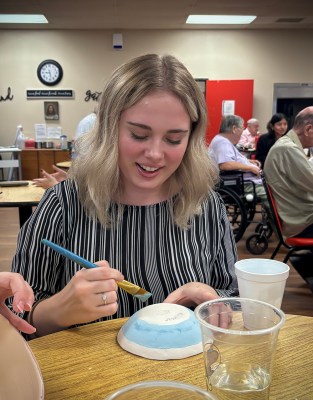
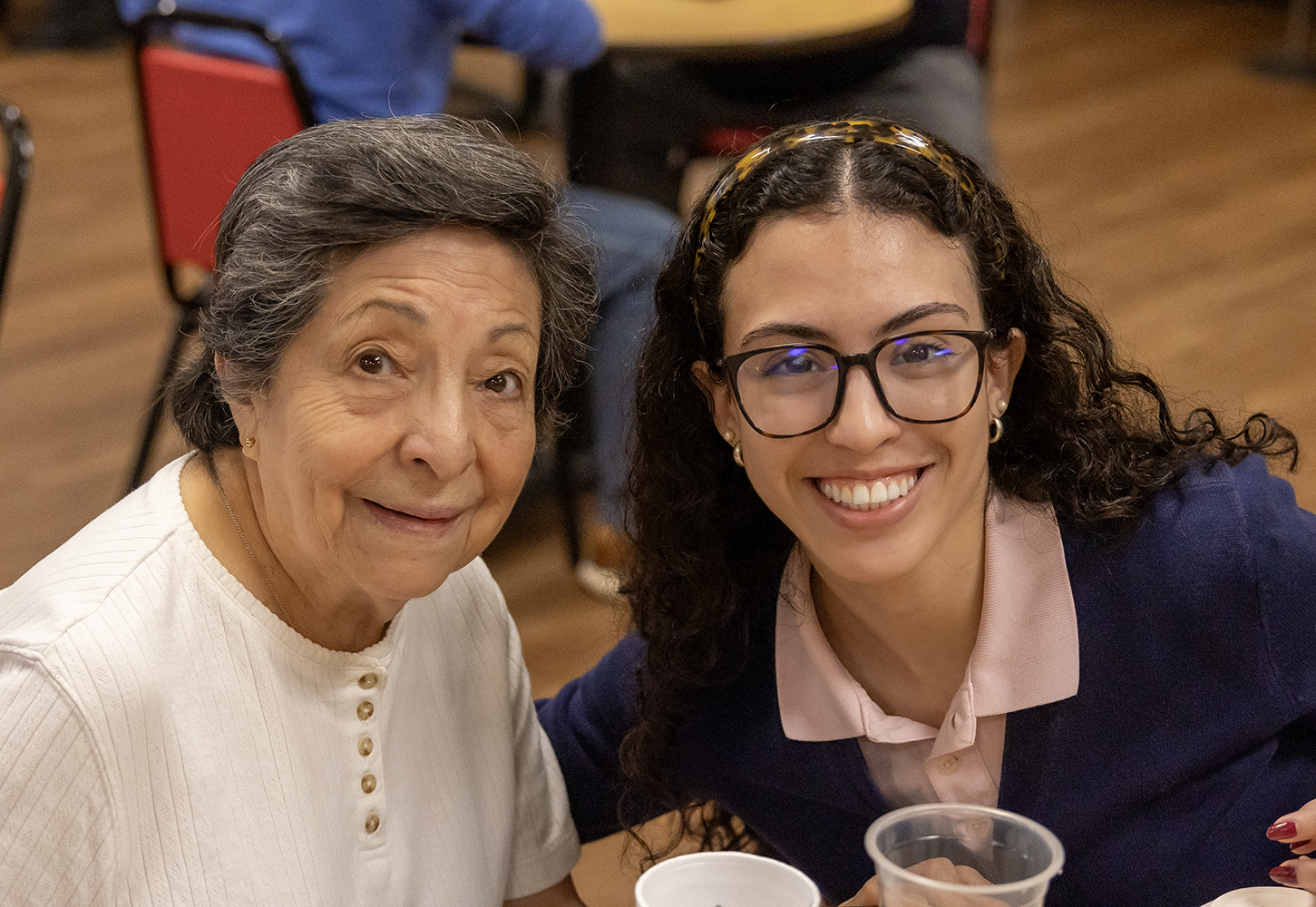
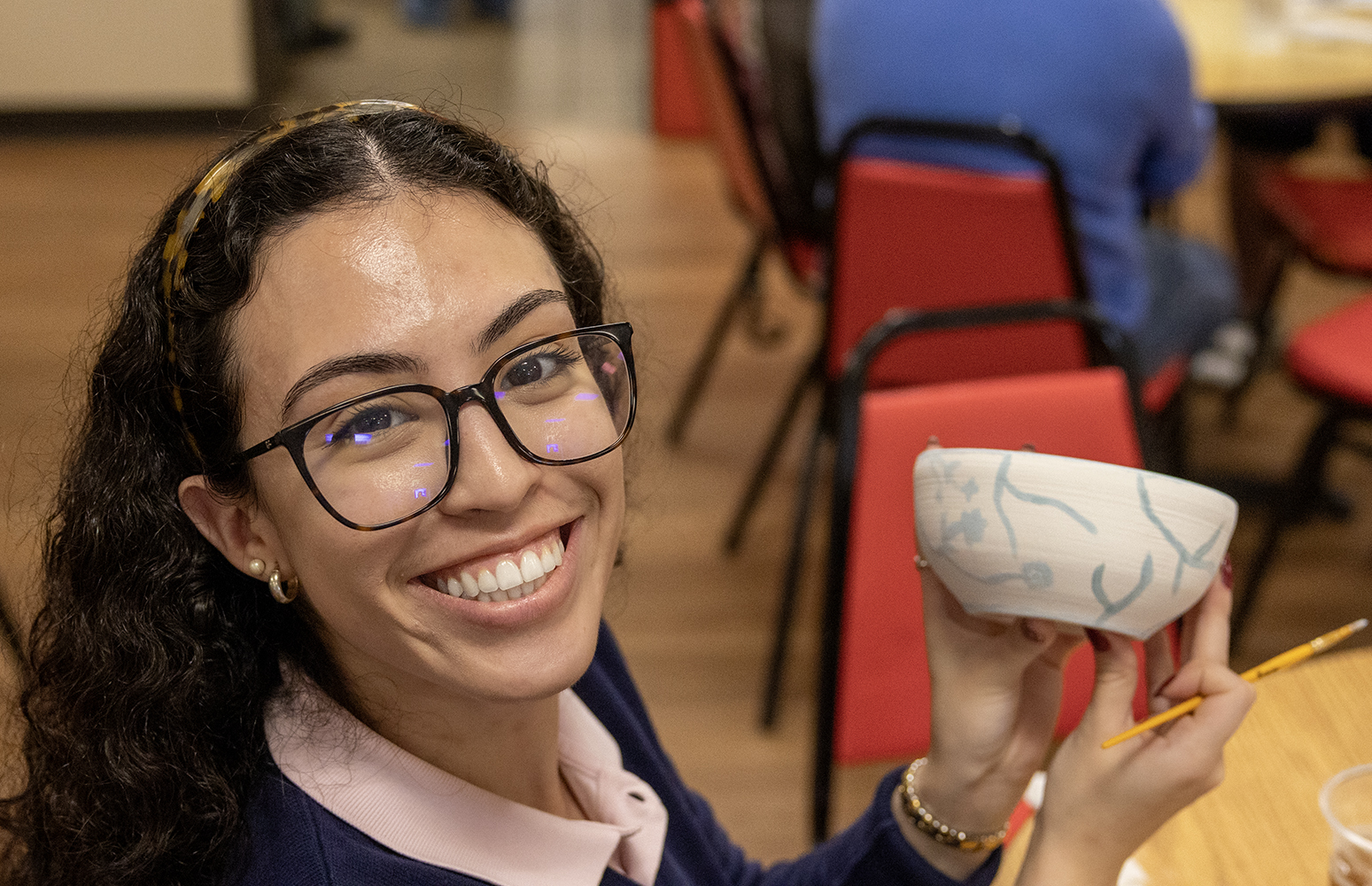
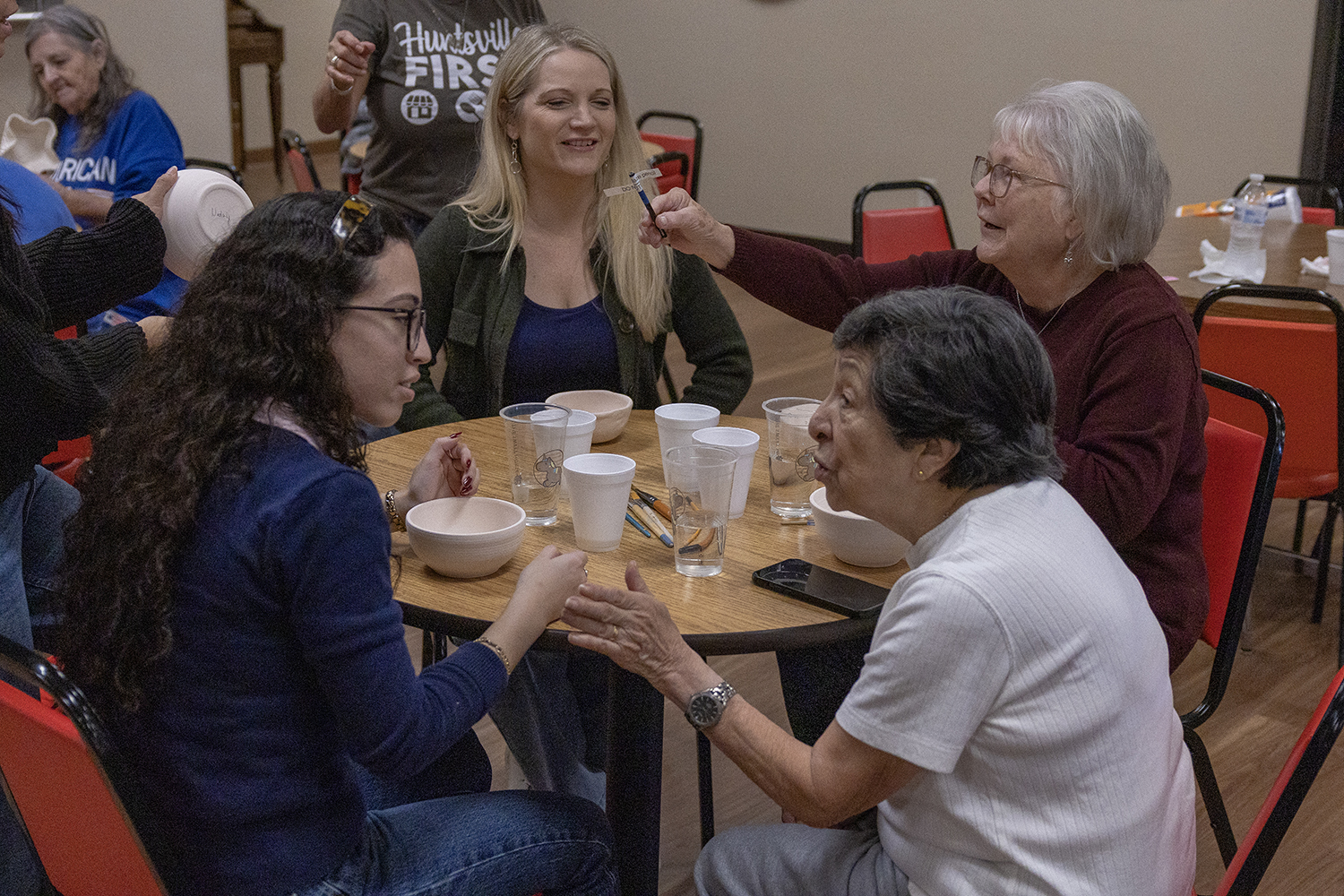
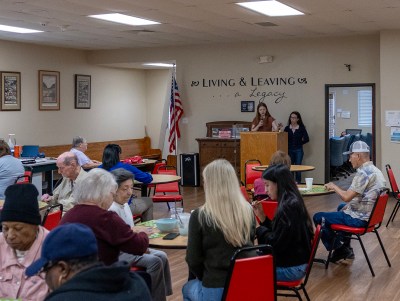
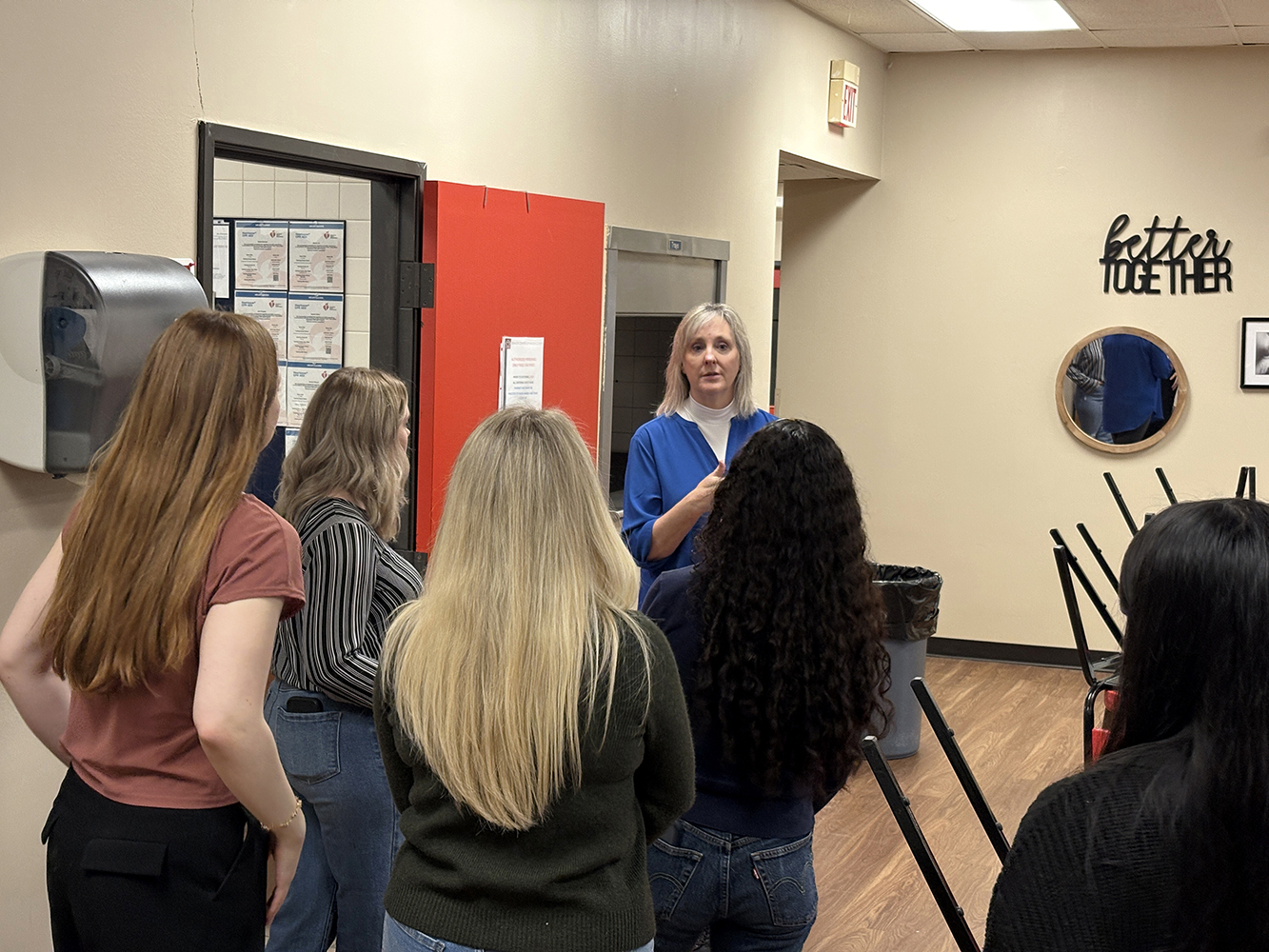
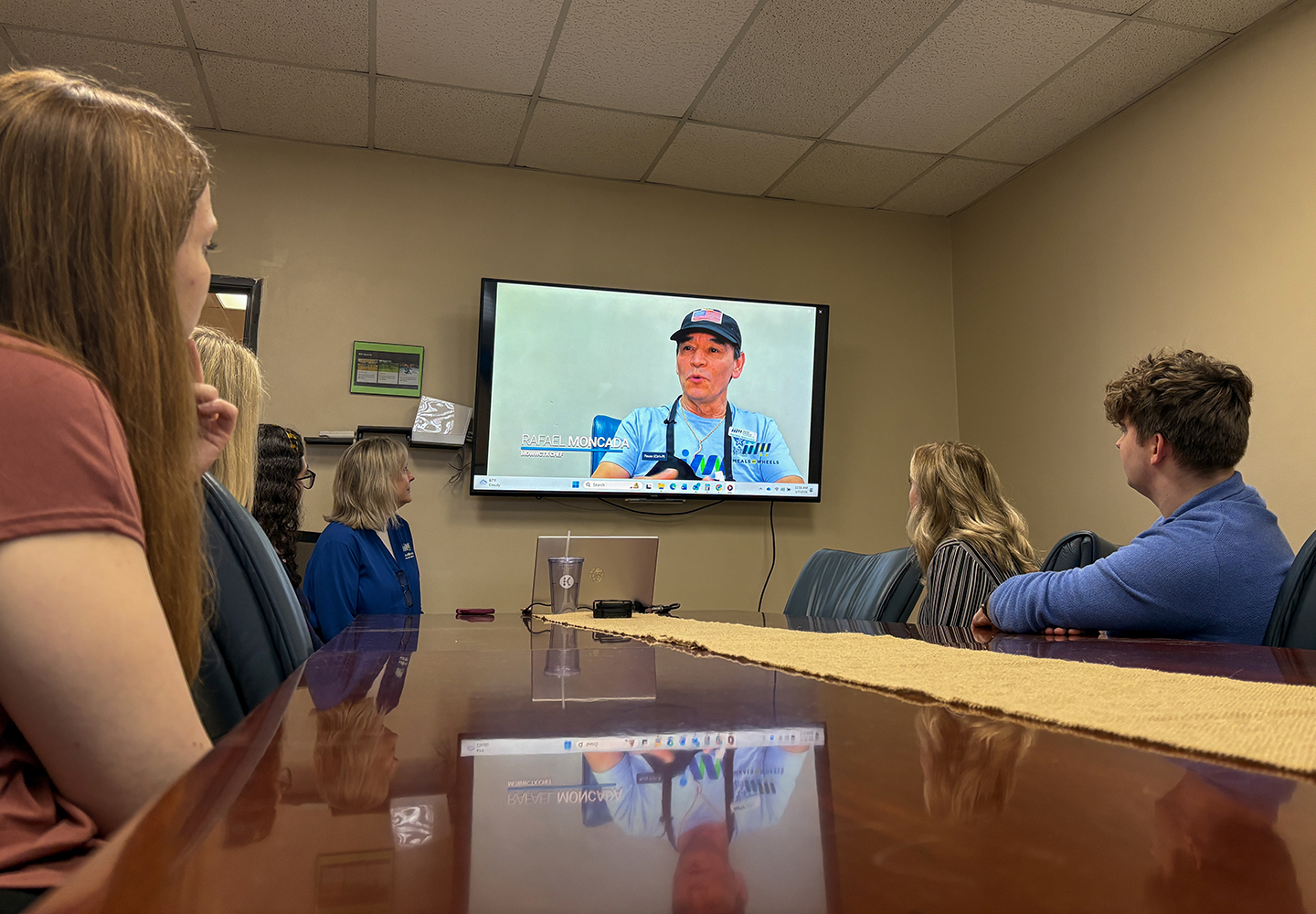
Many thanks to Professor Lauren Clay, who led a ceramics class for LEAP students. This effort promotes the arts while fighting food insecurity through the Empty Bowls program, benefitting Meals on Wheels.

We also have Twitter!

My Tweets

LEAPing Into LEARNing

This slideshow requires JavaScript.

  • About LEAP
  • LEAP Ambassadors
Center for Law, Engagement, and Politics Blog at WordPress.com.
  • Subscribe Subscribed
    • Center for Law, Engagement, and Politics
    • Join 486 other subscribers
    • Already have a WordPress.com account? Log in now.
    • Center for Law, Engagement, and Politics
    • Subscribe Subscribed
    • Sign up
    • Log in
    • Report this content
    • View site in Reader
    • Manage subscriptions
    • Collapse this bar
 

Loading Comments...