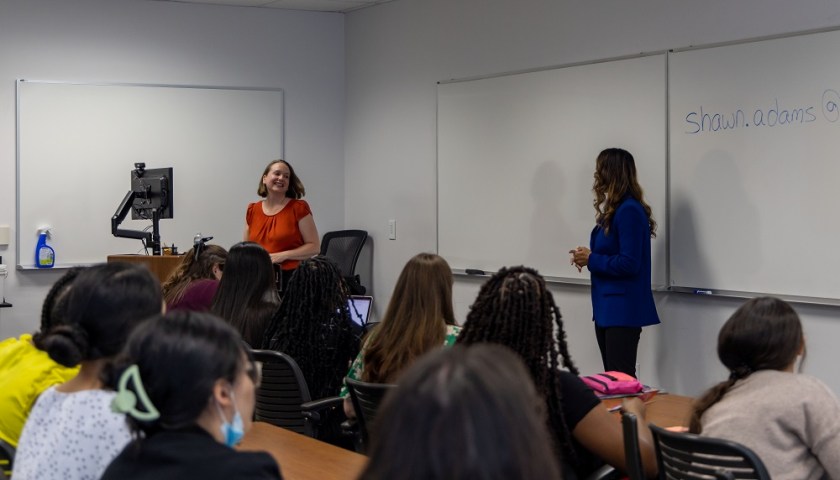
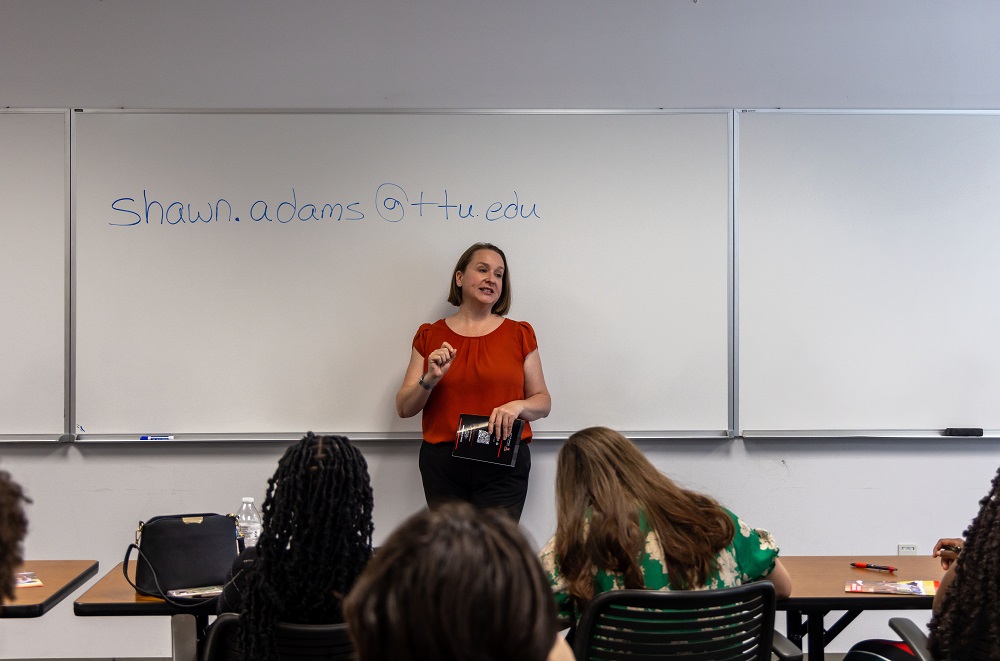
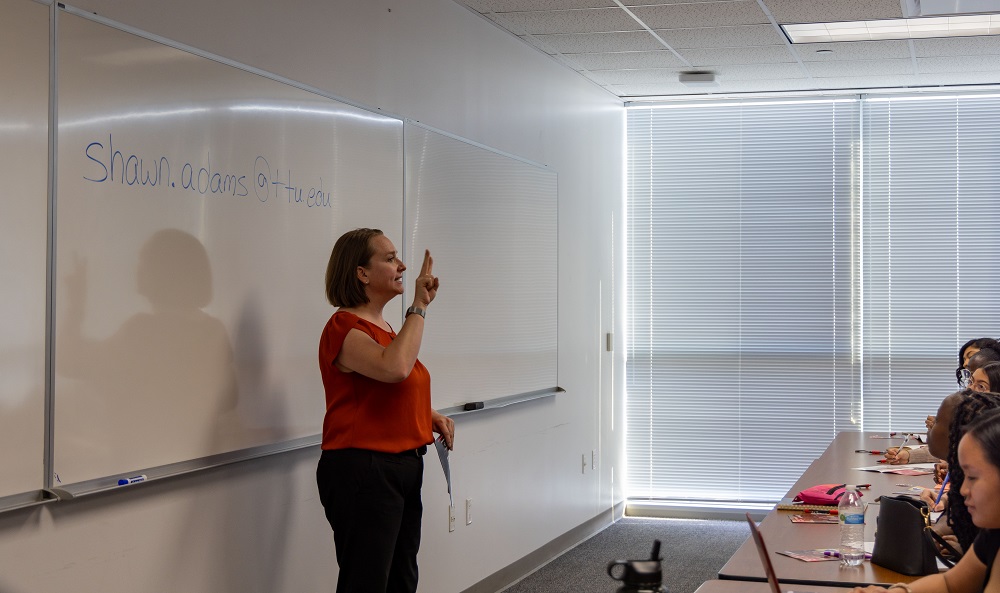
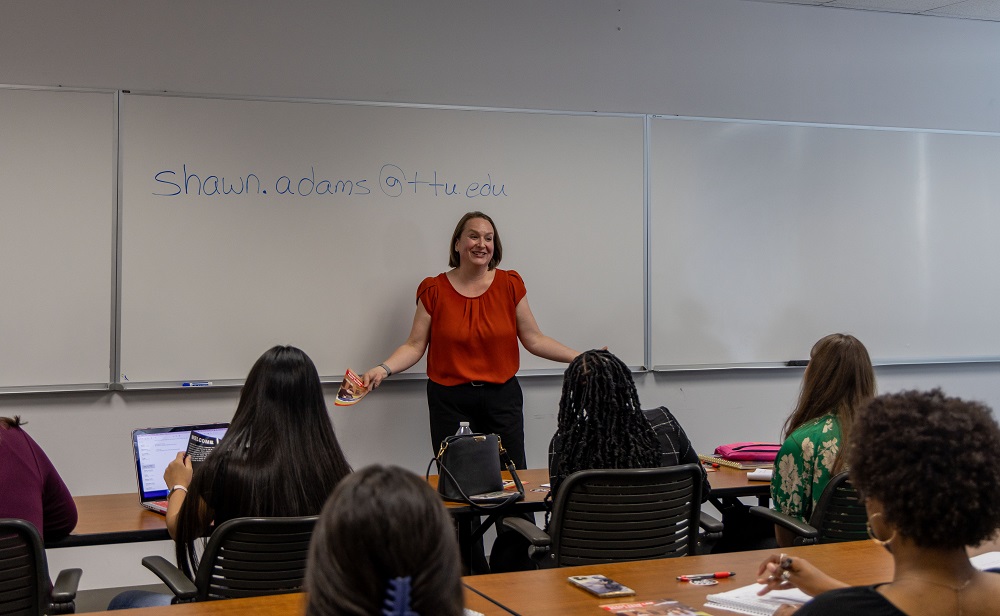
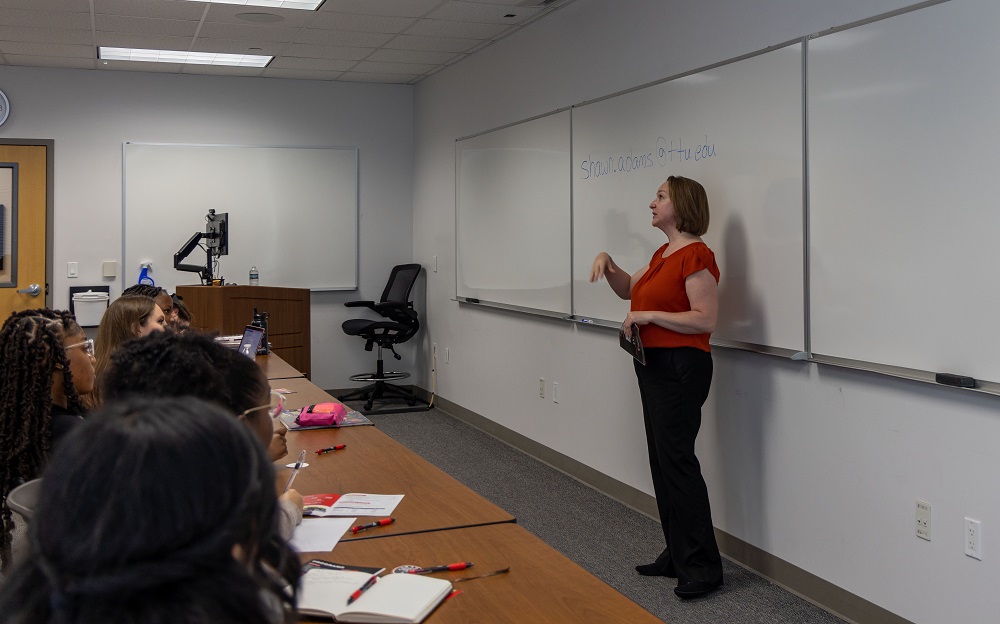
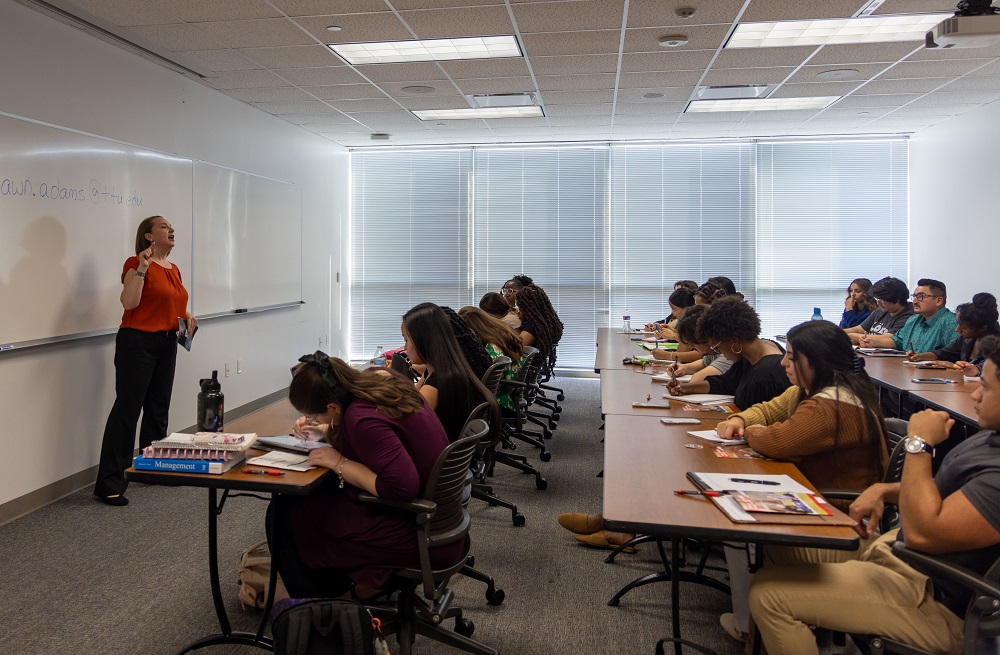
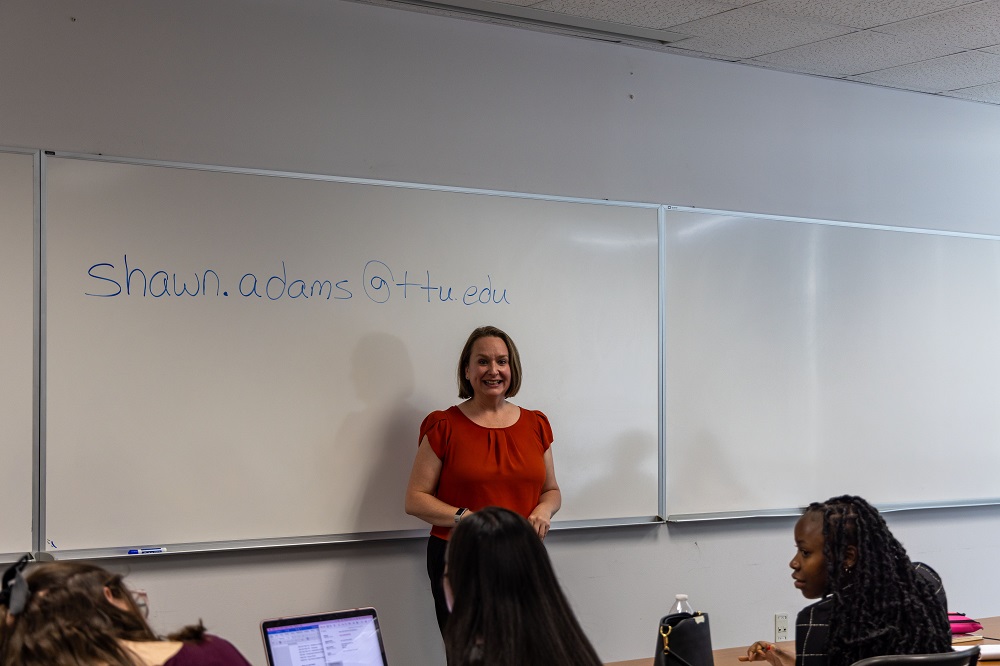
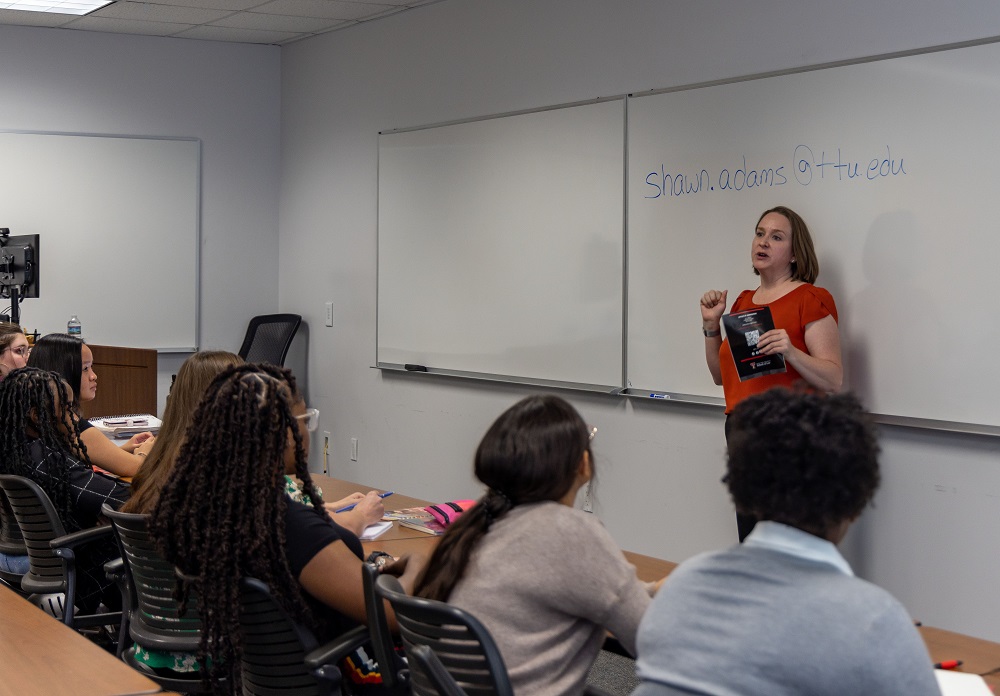
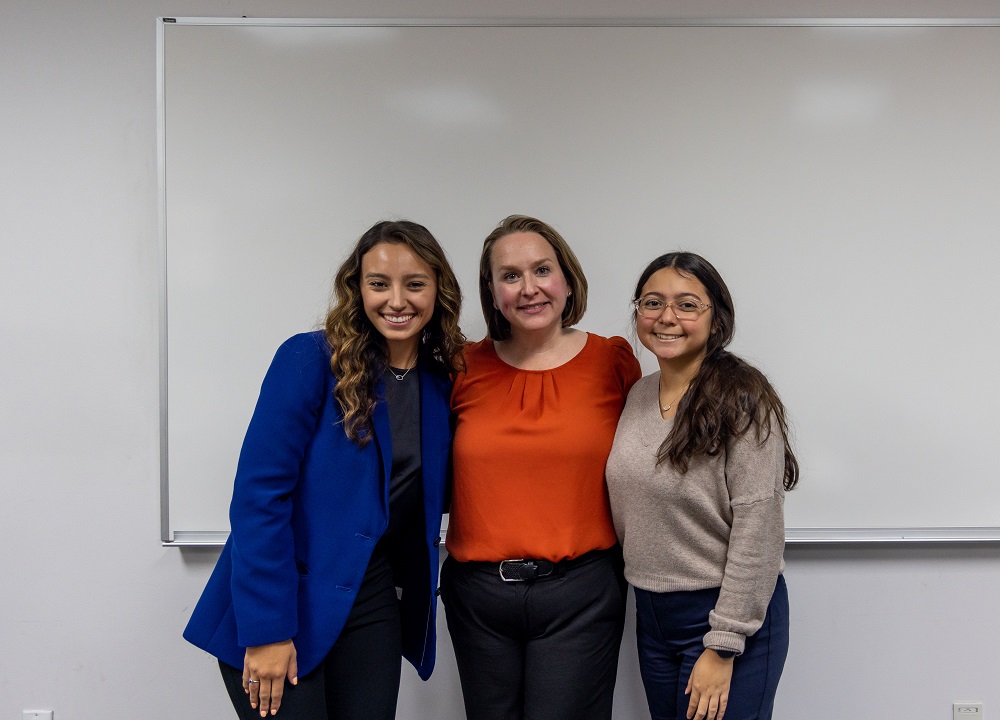
This past week at the Pre-Law Society meeting, we welcomed Ms. Shawn Adams, the director for recruitment at Texas Tech School of Law.
Ms. Adams graduated from Texas Tech with a Master’s in Business Administration and a JD! We learned a lot from her educational background and experience as a practicing attorney.
On this evening, her goal was not only to recruit students to Texas Tech School of Law, but also to give us loads of advice regarding the law school application process and what to look for in law schools. She started by looking for three main things when choosing a law school.
Looking at what the cost of living will be at the school apart from tuition
Bar passage rate
Post-graduate employment rate
All three items can be located on the law school’s 509 reports!
Ms. Adams covered what is needed in a law school application: transcript, letter of recommendation, personal statement, LSAT score, and resume–and how those are weighted at Texas Tech.
We also learned more about what Texas Tech school of law offers and how beautiful and engaging their campus life is! In addition, they offer many great resources for students interested in criminal defense and even have a dual degree program.
As the meeting ended, Ms. Adams stressed that it is essential to go at our own pace, and it is okay if we do not make straight A’s in law school because of how rigorous it is. And she encouraged us, noting that if we continue to work hard and have our hearts in the studying, we can go far.
Many thanks to Ms. Shawn Adams for her continual support of the LEAP Center and Pre-Law Society at Sam Houston State University.
Two years ago, the National Center for State Courts (NCSC) made a decision that they needed approach to diversifying courts across the country. They created a new position–Director of Racial Equity, Fairness, and Inclusion–and they hired Bell to “address racial equality in the justice system.” And, today, owing to a partnership between CRIJ’s Diversity, Equity, and Inclusion Office and the Correctional Management Institute of Texas (CMIT), Bell spoke to faculty, staff and students at SHSU.
Introduced by Nu Epps, CJ’s Director of Diversity, Equity, and Inclusion…
…Bell got to the point quickly, discussing a “Blueprint” for a new justice system. This change begins with awareness, requires institutional (and institutionalized) change, is expanded by new processes, and is nourished by recruiting justice-system actors from a cross-section of the United States.
These changes can range from being aware of our biases, includes modifications of how we treat people in the justice system, and extends to the manner in which we target opportunities. One of these opportunities, which will be unveiled fully within the year, is C.O.R.A, which involves targeting minority-serving institutions for internships, clerkships, and positions within the criminal justice system.
Bell is well positioned to assess many of these changes. With a Bachelors Degree in Criminal Justice, a Master’s in Business Administration, a Certificate in Judicial Administration from Michigan State University, and a graduate of the NCSC Court Management Fellows program. He has also worked in the court system for more than a decade, serving as judicial administrator, clerk, and as a planner for the Criminal Justice Coordinating Council of Georgia.
Bell’s experience, wisdom, and inspirational message influenced at least one student in the audience. Kiara Williams, a senior Criminal Justice major at SHSU, noted that it was “an uplifting talk, and it opened me up to some opportunities I had not considered.”
Following the event, Bell spent time speaking with audience members, encouraging students (including Williams), and discussing potential future partnerships–before being whisked away to his next opportunity to spread a message of fairness and awareness.
After a long drive Wednesday evening to Louisiana, we were up and early to attend our first Academic Conference – The Popular Culture Association in the South! The three presenters for the Film and Noir session were Professor Yawn, Matthew Wysocki of Flagler College, and Lauren Mitchell of Vanderbilt.
Professor Yawn presented over “A Simple Plan,” directed by Sam Raini, (most famously known for the Evil Dead movies).
He argued that the film is best understood by looking at it from a tragic framework, with questions of free will and fate, the allure of the American dream at its center, and the tension between brothers.
The motif of “brotherhood” is seen again in “Only God forgives,” which Matthew Wysocki addressed in his presentation. More elaborately, though, it addresses the role of mother. Crystal, an untraditional mother if ever there was one, uses manipulation and raw power to gain even more power, abandoning all of what would normally be regarded as traditional maternal behavior.
Lauren Mitchell presented her paper over the movie “Hereditary. ” This film continues the theme of motherhood, highlighting the difficult time we have of seeing mothers as real people, who sometimes becomes mothers despite not wanting children, who sacrifice goals and hopes and dreams for others.
We successfully survived, and even enjoyed our first academic conference, and embarked on our way to our next stop!
Brunch at Elizabeth’s
Ashley Kinyon
This afternoon, we drove down to Elizabeth’s Restaurant right next to the Mississippi River. We started with an assortment of appetizers; boudin balls, fried green tomatoes, (some with seafood!), and possibly the strangest of the bunch, praline bacon. While we waited for the starters, we learned that many foods that we love in the US originated in New Orleans, either by invention or through trade. This includes pralines, which originated in France, but which was improved on in New Orleans, and then spread mostly through the South.
My favorite of the selection was the boudin balls, Morgan favored the fried green tomatoes, and for Yvette it was the praline bacon.
To maximize on adventure and try new (to us) flavors, we ordered four main dishes. For our main course, Morgan and Victoria ordered the shrimp and grits; the ratio of shrimp and grits was perfect.
Jessica played it safe with the avocado toast, with a poached egg. Although to her credit, the toast did have some NOLA spice to it, and she paired it with a side of grits.
Yvette chose the duck waffles, which she enjoyed but deemed too spicy, a recurring motif throughout the trip (and from what I gathered, throughout her life).
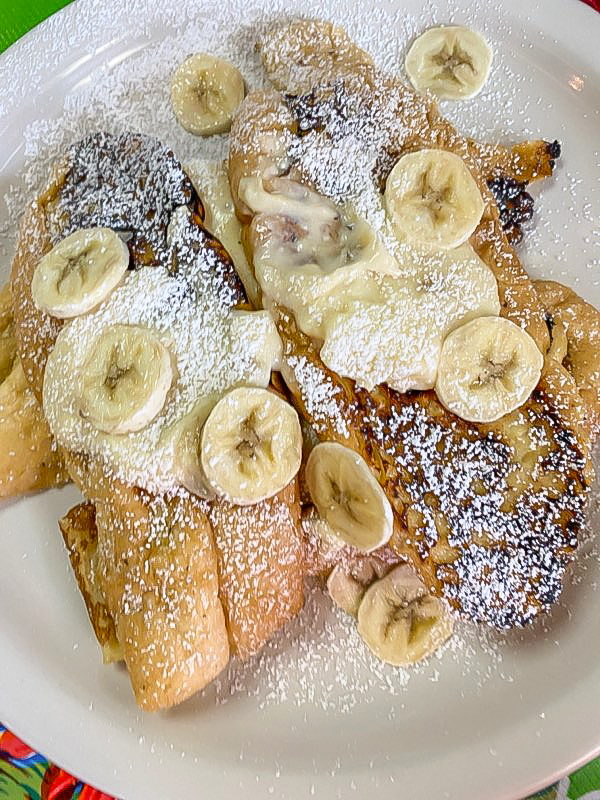
I picked the sweet meal out of the bunch and had banana foster French toast, which was delicious!
For dessert, we had bread pudding and pecan pie. The bread pudding was average, not the table’s favorite, but the pecan pie was amazing, better than any I’ve had in Texas.
Thoroughly stuffed and with high expectations for our next NOLA meal, we embarked on our adventure!
Homer Plessy
With a bit of downtime, we hustled over to a City Park, one highlighting civil rights. It was the site of Homer Plessy’s train ride, where he spurred a test case on Jim Crow laws.
Unfortunately, Plessy lost in 1896, and the doctrine of “Separate but Equal” became shameful precedent in the US, not replaced until 1954’s Brown v. Board of Education.
While at the Plessy site, we also looked over the rest of the park, taking in some of NOLA’s civil rights heroes.
Zooming through NOLA
Yvette Mendoza
We have concluded over three separate LEAP trips that there is no better way to learn more about a new city than by Segway, and we did just that in NOLA! Our excellent tour guide, John, with Nation Tours did a great job explaining the richness of history, architecture, and culture in New Orleans. So as the LEAP Ambassadors took their Segways through the French Quarter to the Mississippi River, we all gained a deeper understanding of NOLA.
John frequently time-traveled and described what the city was like in days past. Some of the tour was a refresher on previous history lessons, while other parts were new information. We learned that NOLA went through 4 major governing shifts. The city was initially founded by the French, taken over by the Spanish, fell again under French rule, and then finally doubled the size of the U.S. in 1803 with the Louisiana Purchase.
Next, we headed to Jackson Square. This central location is deemed such because of the “Hero of New Orleans,” Andrew Jackson, and his unexpected victory as General at the Battle of New Orleans in early 1815. This was a major win for the United States because it spared the US the prospect of the British having control over the mouth of the Mississippi.
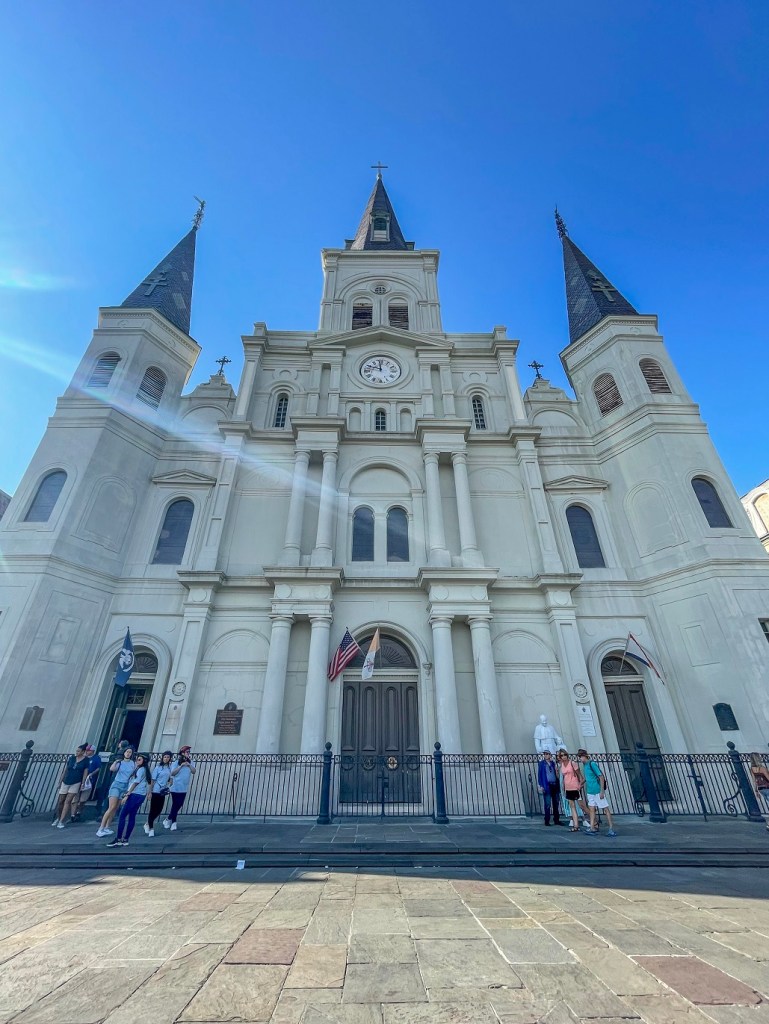
Perhaps the prime feature of Jackson Square must be the stunning, almost 300-year-old, St. Louis Cathedral. This Cathedral is one of the oldest in the country and was founded during Spanish occupation!
Our jaws dropped when we discovered we were stepping in front of the oldest Cathedral. We could not miss a photo opportunity!
Up next, Bourbon Street! Here we learned more about the Spanish stock architecture and the fantastic bars that perform the best jazz in New Orleans. this blend of modern-day culture, with historic surroundings is the city’s largest source of revenue Pre-covid, NOLA saw millions of tourists each year, and now those numbers are significantly lower. In fact, without tourists, there is genuinely no thriving NOLA since no revenue is being made.
No matter your age, interests, taste, there is something to be found by everyone in NOLA!
New Orleans felt like its own country. The way the people, location, and everything else are something we are not used to. We are so grateful we were able to learn so much on the Segway Tour guided by John; thank you so much!
Dinner at Oceana
Morgan Robertson
To conclude our evening, we stopped at the corner of Conti and Bourbon for yet another taste of NOLA. Oceana is popular for having a wide variety of NOLA standards, such as oysters, po’boys, and étouffée to name just a few.
To start, we stuck with our trend of an assortment of appetizers including, gator tail bites, boudin balls, fresh, Rockefeller oysters, and chargrilled oysters. For Ashley and me, this was our first time to try oysters and we had slightly different reactions. Ashley tried the Rockefeller oysters and determined they were not her favorite. I tried all three and enjoyed the Rockefeller the most! Everyone enjoyed the boudin balls, and we all agreed that alligator tastes a lot like chicken.
For our main meals, we once again mimicked family style, and tried many new flavors. Victoria and I split a blackened redfish, with a side of greens, Yvette and Jessica ventured out with the taste of New Orleans (creole jambalaya, crawfish étouffée, red beans and rice with smoked sausage), Ashley had the fried shrimp platter, and Professor Yawn and Stephanie split the Bayou Duck.
Verdicts were split on what the best entrée was, but at least three out of seven favored the blackened redfish. The flavors were once again unique but fantastic, a trip to NOLA could be made simply for the food.
Despite having little room for dessert (except for Stephanie because she effectively planned) we selected three options carrot cake, la boehme crème brule, and of course, bread pudding. The bread pudding was easily the favorite, but everyone enjoyed the sweet treats to end our wonderful meal!
Bourbon Street
We might have seen Bourbon St. during the day, but it was almost a completely new place after dark. Our steps fell in time to the bass of the music around us, and it almost felt like a runway with the flashing lights. If it is true that anyone can find something on Bourbon St, it’s even more true at night. Being only a Thursday night, however, we might gone at a slightly better time as it was not insanely busy.
Not wanting to linger on Bourbon Street and needing some sleep, we headed back to our hotels, to get rest for another day of learning and fun tomorrow.
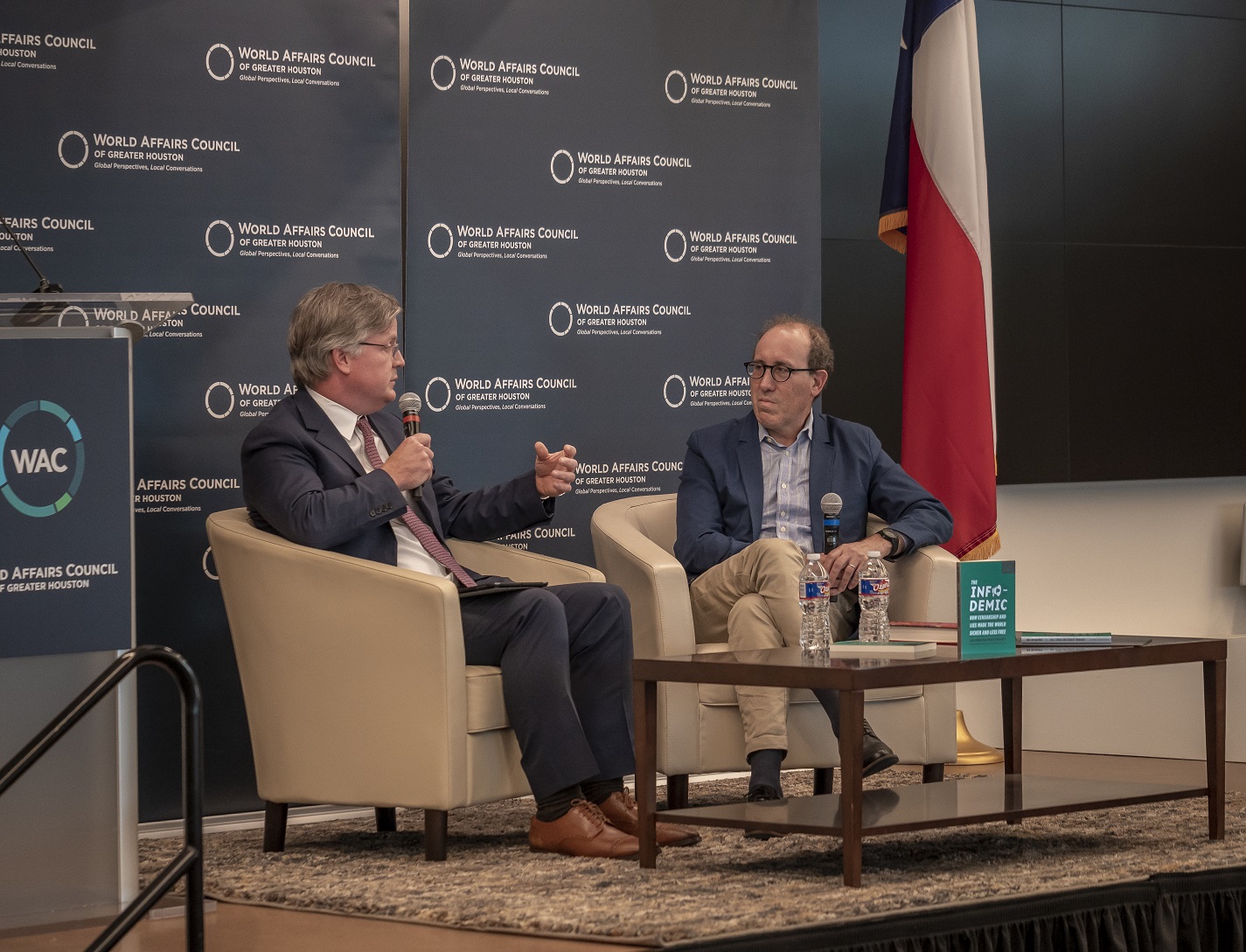
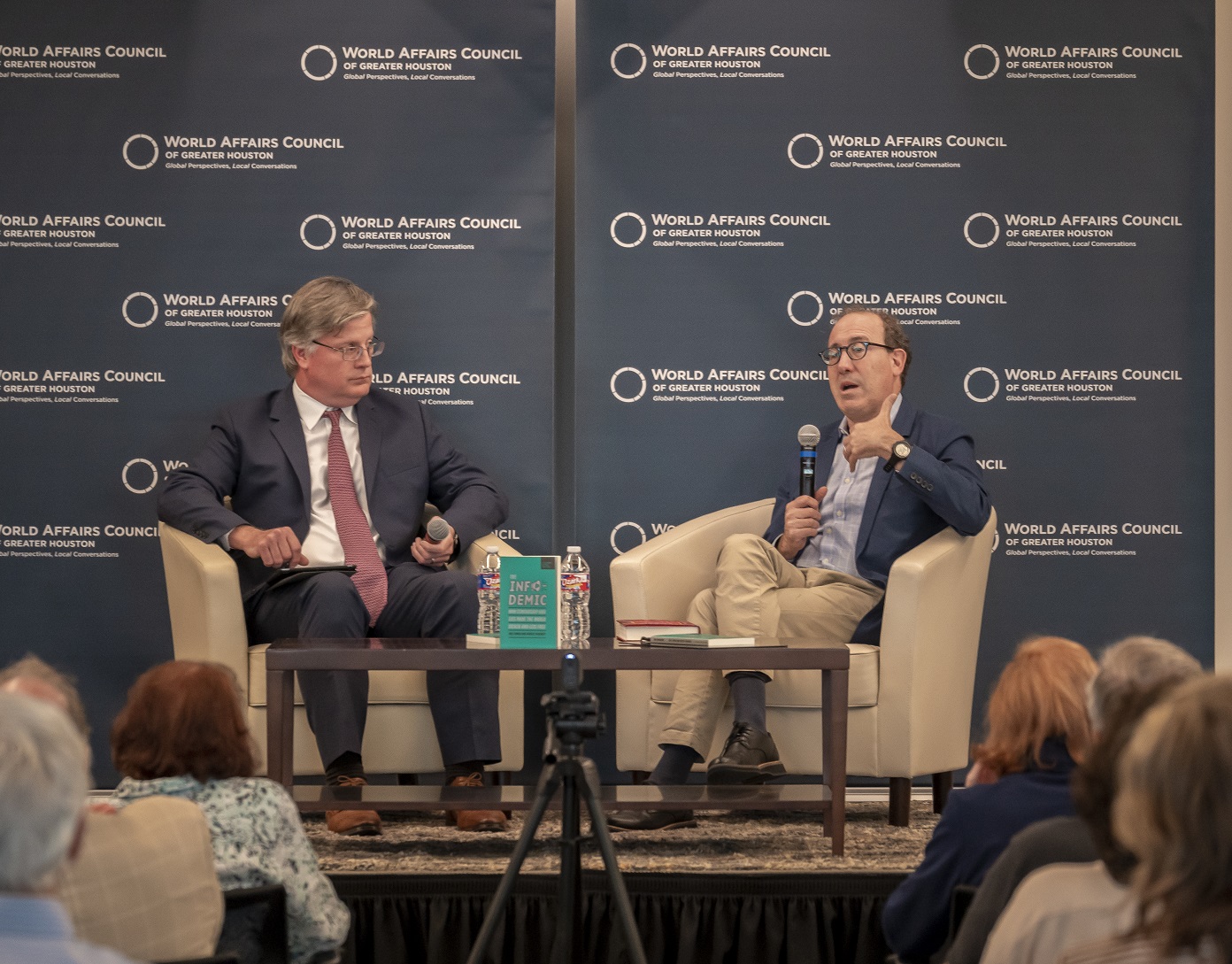
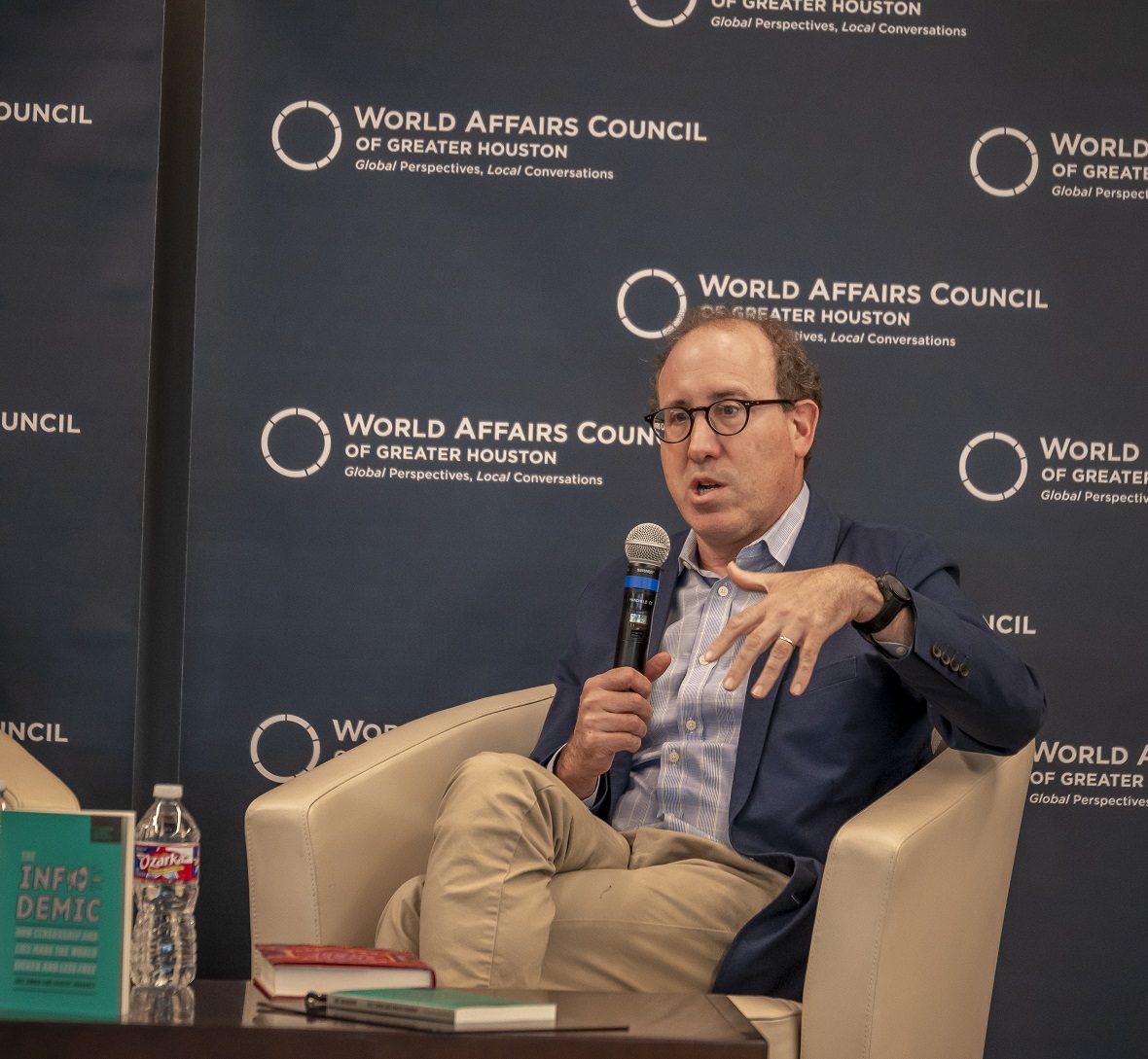
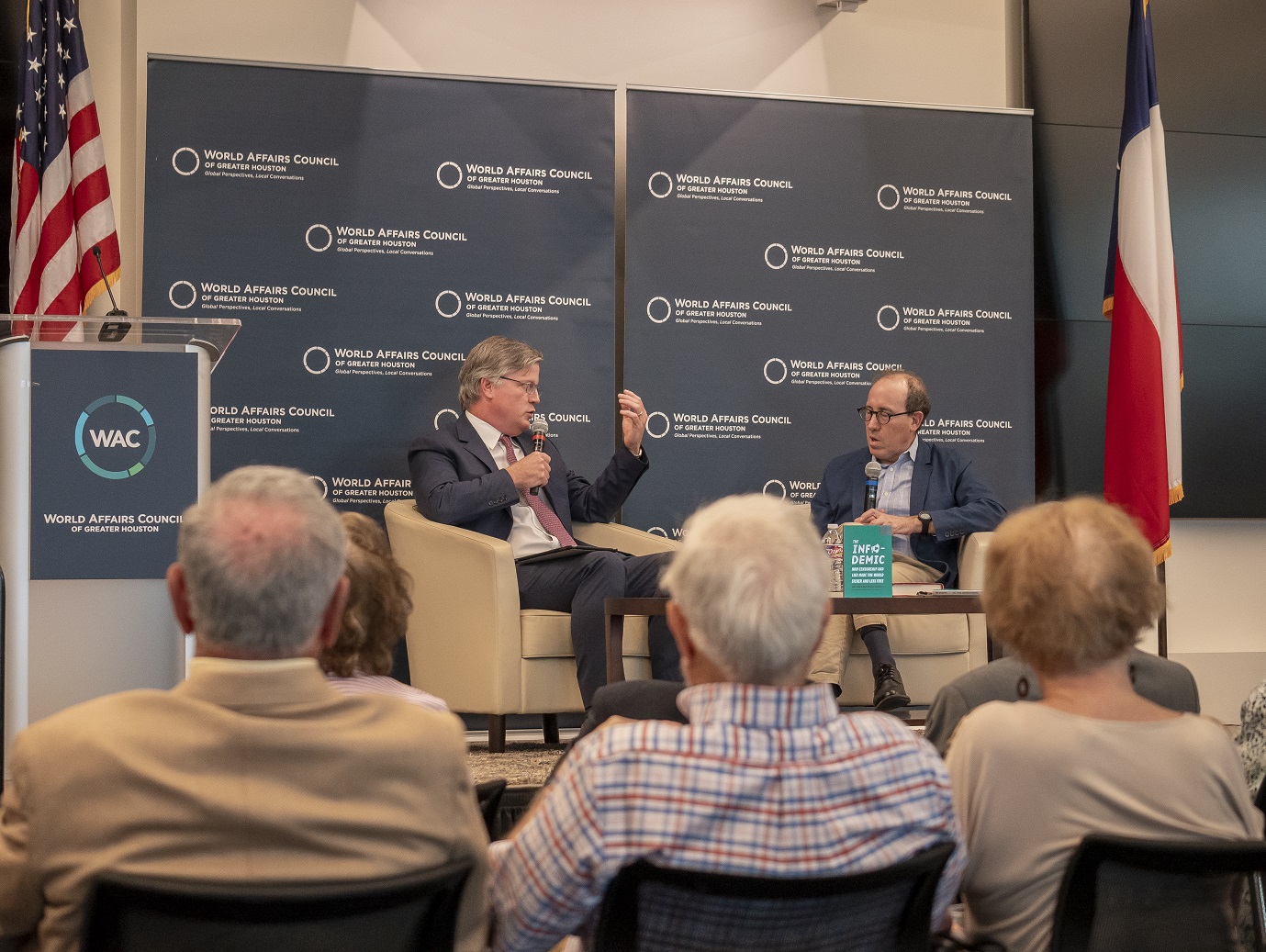
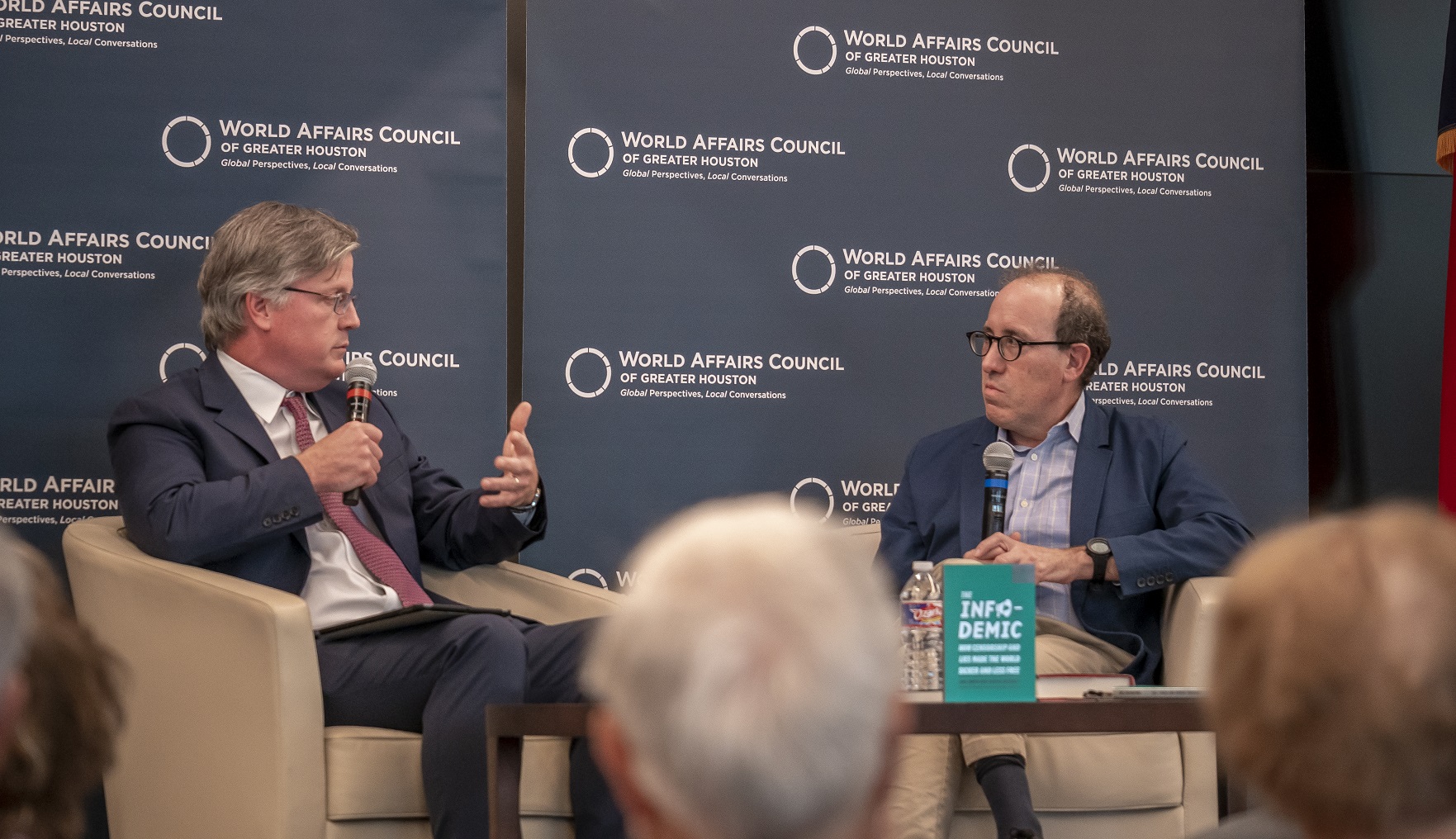
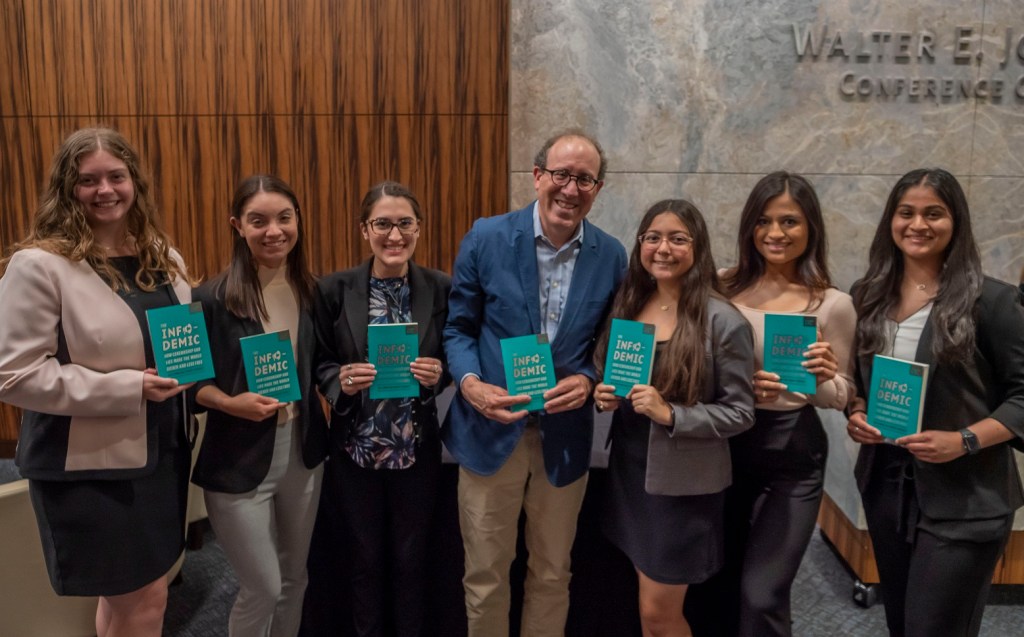
As our first day came to an end, we attended another fantastic Houston World Affairs Council event at the Amegy Tower featuring Joel Simon, who discussed topics from his book Infodemic regarding censorship associated with COVID-19. As a nice bonus, we also had a chance to meet former LEAP Ambassador Esme Mata, who after graduating from SHSU, went to the Bush School at TAMU, and is now working for Harris County. And we had a chance to see Amegy Tower for the first time!
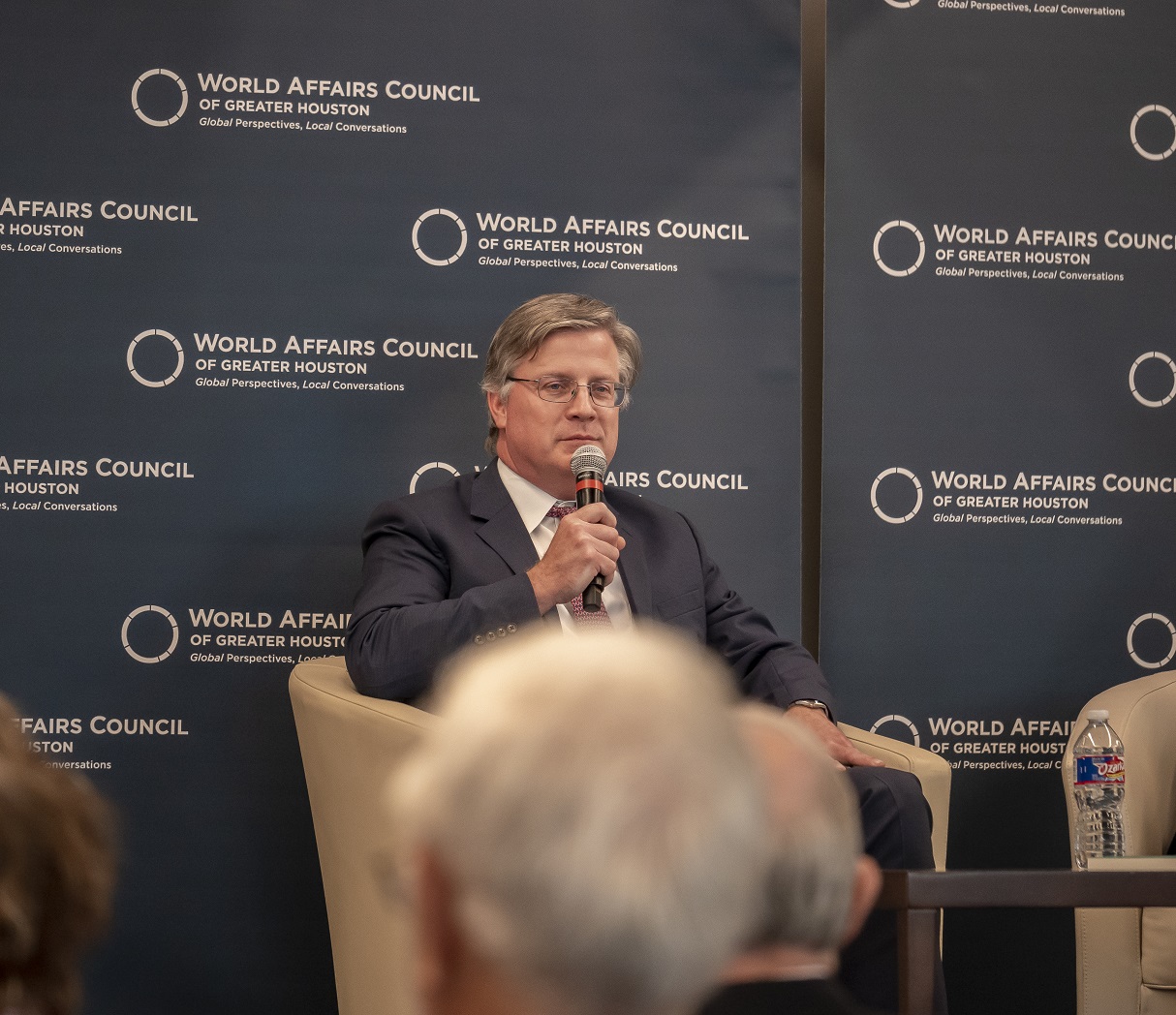
As we know, COVID-19 is still a very controversial and confusing topic, but Simon–with skillful moderating by Ronan O’Malley–was able to articulate how the COVID-19 pandemic led to various types of censorship across the globe.
The most fascinating subject Simon talked about was how some countries installed tracking apps on their subjects’ phones, so that they could see where they travel, whom they interact with, and whether they have potentially been exposed to COVID. If a person has interacted with a COVID patient, that individual is given mandates to stay at home or go to quarantine, and if they don’t, they can be fined or otherwise penalized. In some cases–as in Russa–individuals were given notifications in the middle of the night, and if they did not respond in time, they were assumed to have broken quarantine, and fined.
It was interesting to learn more about how other nations responded to the pandemic and how censorship policies, in most cases, hurt their country.
One item of particular interest was the importance of local news and leadership. National news figures and media have the “reach,” but they lack the trust, the sense of shared identification with locals. Local newspapers, local reporters, and local leaders share that identity, but almost thirty years after the advent of the internet, they no longer exist in many communities. They lack the reach. So, citizens were not getting information from people they trusted in many cases, and they also lacked information that the national media could not give: such as where to go locally for vaccines, or where medical supplies could be purchased, and the like.
The whole experience was very informative and easy to understand and Simon’s answers to our questions were very knowledgeable regarding censorship, which I appreciated.
After Simon spoke, we were able to get a signed copy of his book, followed by a picture! It was a great opportunity to see old friends (LEAP students and WAC staff), learn something new (from Joel Simon), and make new friends (Esme Mata).
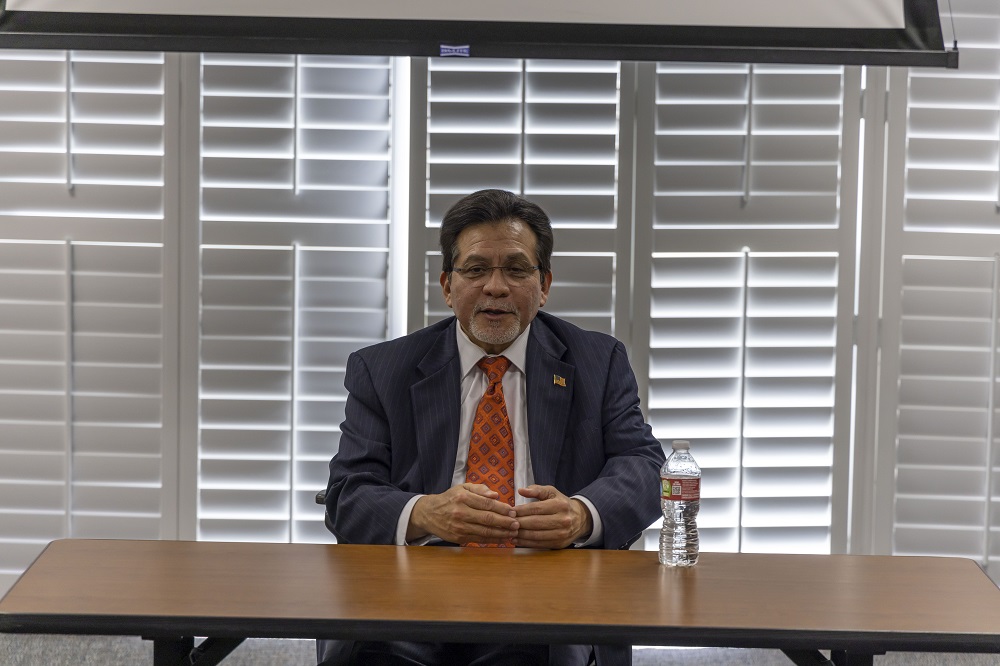
Every spring, the LEAP Center works with Lt. Col. David Yebra to bring in Judge Alberto Gonzales to speak with students, and every year the event is informative, entertaining, and rewarding.
Judge Gonzales obtained his undergraduate from Rice University and his J.D. from Harvard Law. He became the first Hispanic partner at Vinson & Elkins, Texas Secretary of State, TX Supreme Court Justice, White House Counsel, and Attorney General of the United States. He is now Dean of Belmont University’s Law School.
One of the things we learned, which might seem small, is that typically you refer to a person by his highest office. In Gonzales’s case, that would be “General Gonzales,” but since Gonzales was in the military as a Private, and because he doesn’t want anyone confusing him as a military General, he prefers “Judge Gonzales.”
Out of all the advice about life and law school he provided us with, the most impactful one was on how to approach difficult situations or problems. He told us that “if you ever go to someone with a problem, you should always have a solution.” Even if the solution is not the strongest, it is a starting point which can serve as a starting point for improvement. This advice is vastly applicable, whether it is a situation with our families, jobs, or even life changing decisions.
Of course we also enjoyed hearing about his time as White House Counsel, Attorney General, and Dean of Belmont Law. But it was his advice that likely stuck with us the most: “you should be happy when you are pursuing your career and navigating through life because you cannot be as helpful if you are not happy.”
We are very appreciative and fortunate to have been given this opportunity to meet Judge Gonzales and we hope to have him visit Sam Houston State again in the near future!
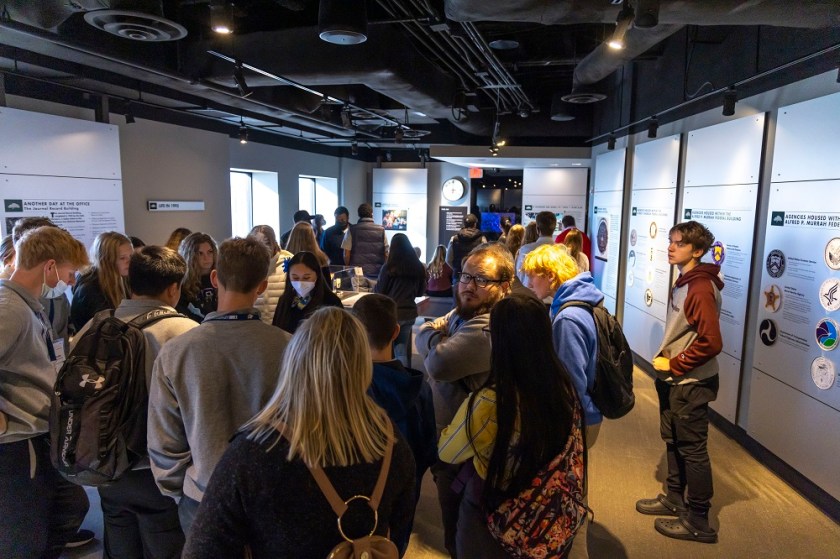
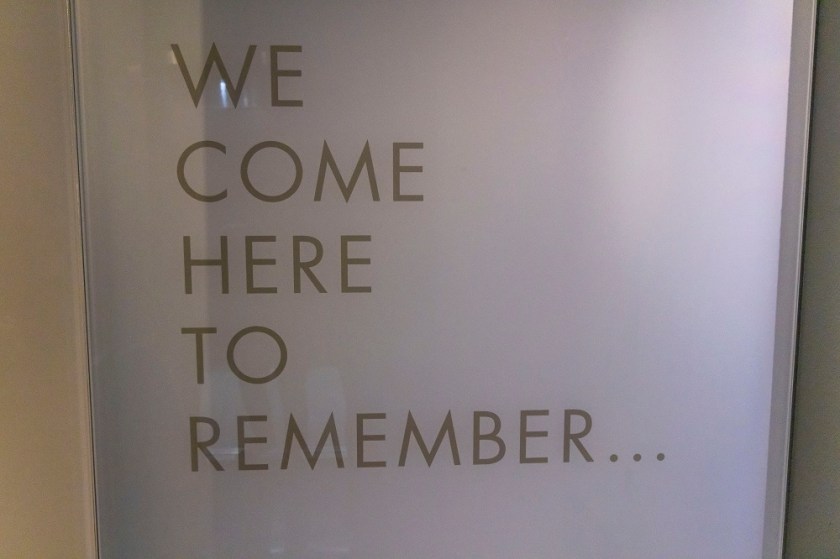
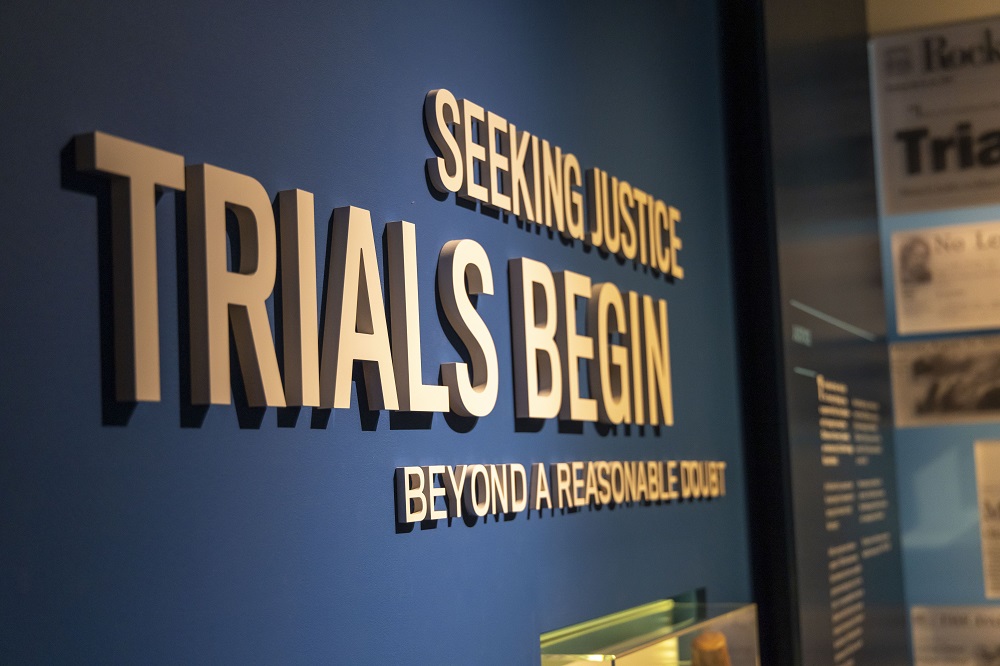
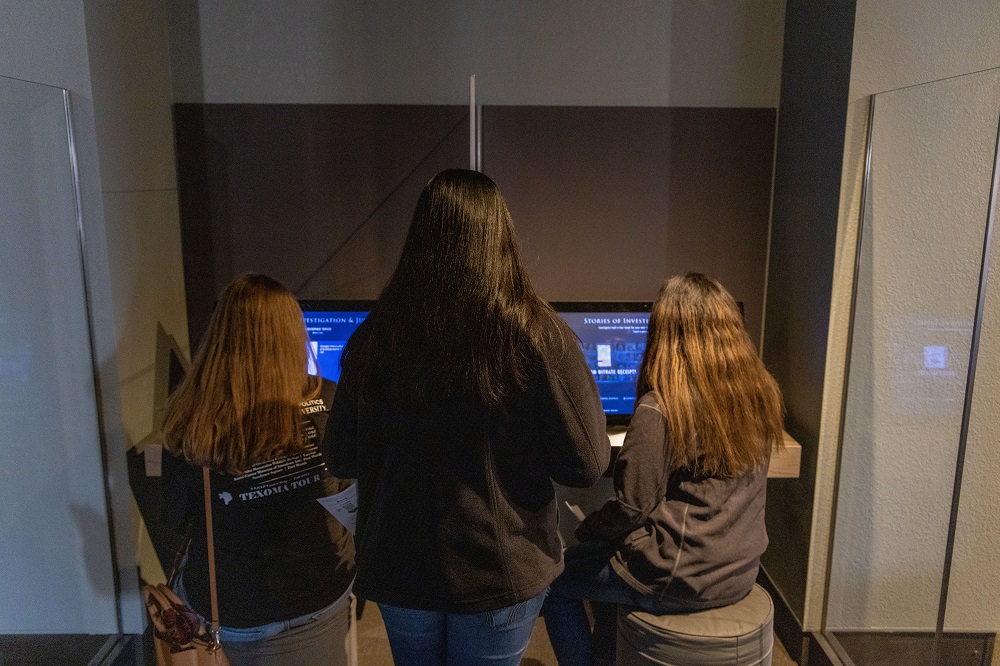
The OKC National Memorial Museum is laid out in such a fashion that reminds visitors of what happened on that day, April 19, 1995, but also stands as a tribute to both those who survived and that were lost.
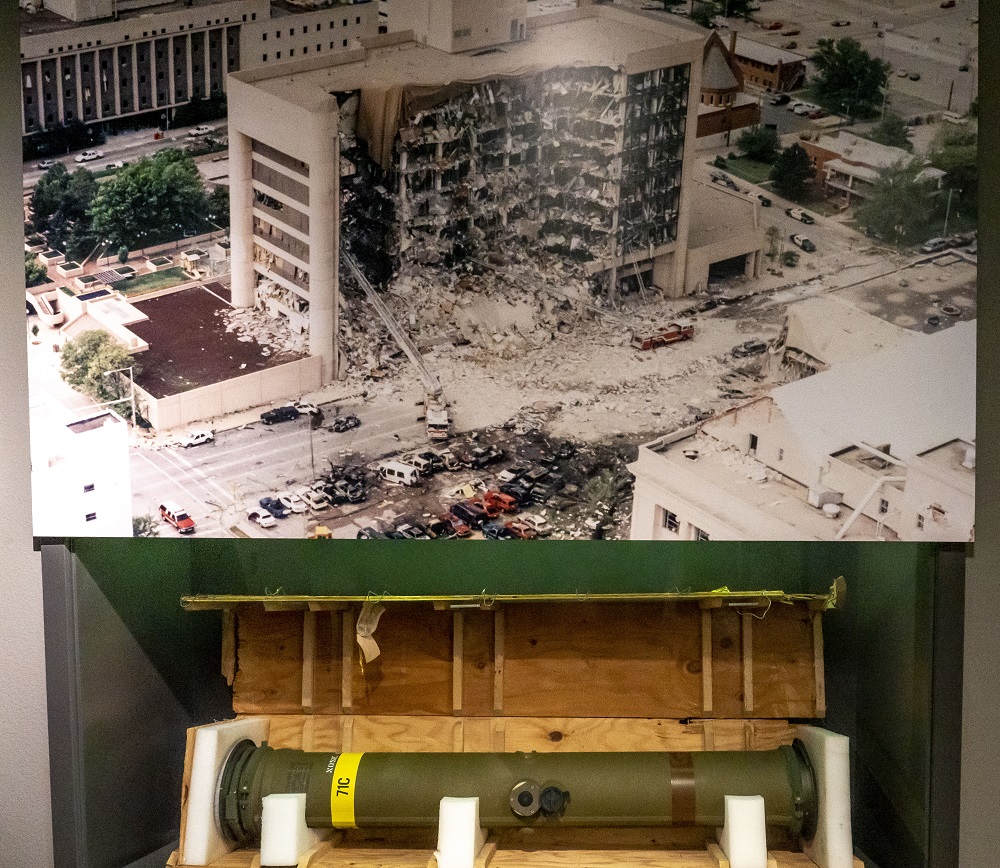
The Museum unfolds in chronological fashion, beginning with the background of the tragedy, and going through almost minute-by-minute on the day of the bombing.
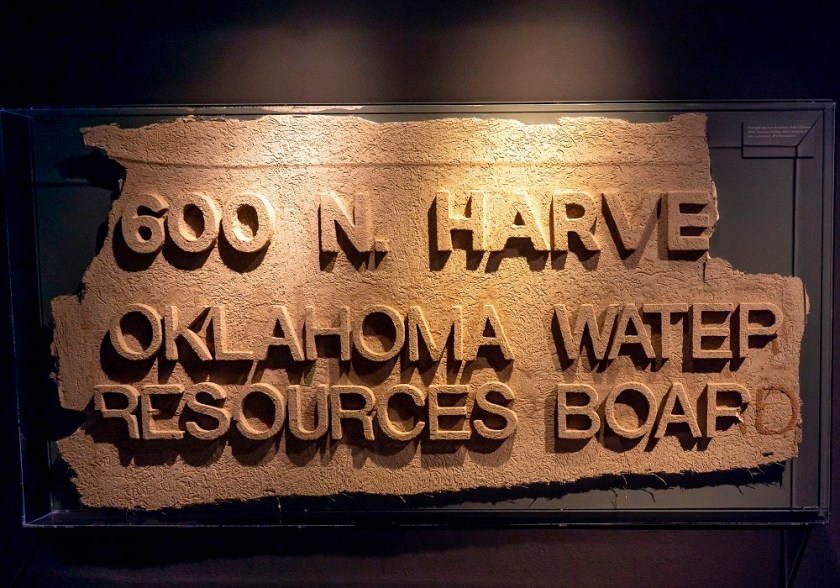
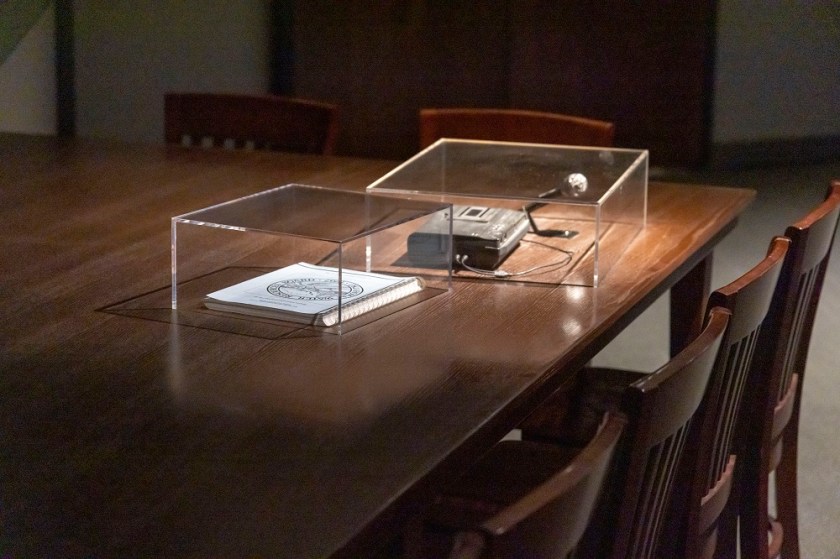
April 19, 1995 was just a nice spring day, a completely normal day in Oklahoma. One of the most difficult experiences on the tour was in the meeting room, where the Water Resource Management Committee began their meeting at 9:00am–a meeting which was recorded.
We listened to that recording, hearing the explosion, and also the screams, fear and confusion among those attending the meeting.
The lights dimmed as the explosions and screamed sounded, and then their was silence, leaving us to ponder the aftermath of that day.
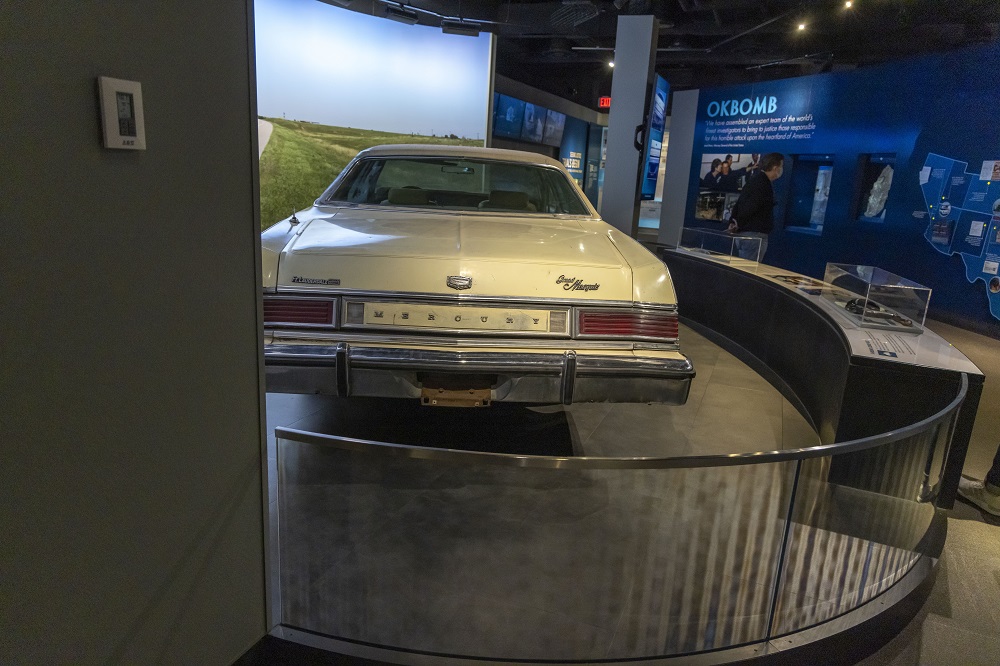
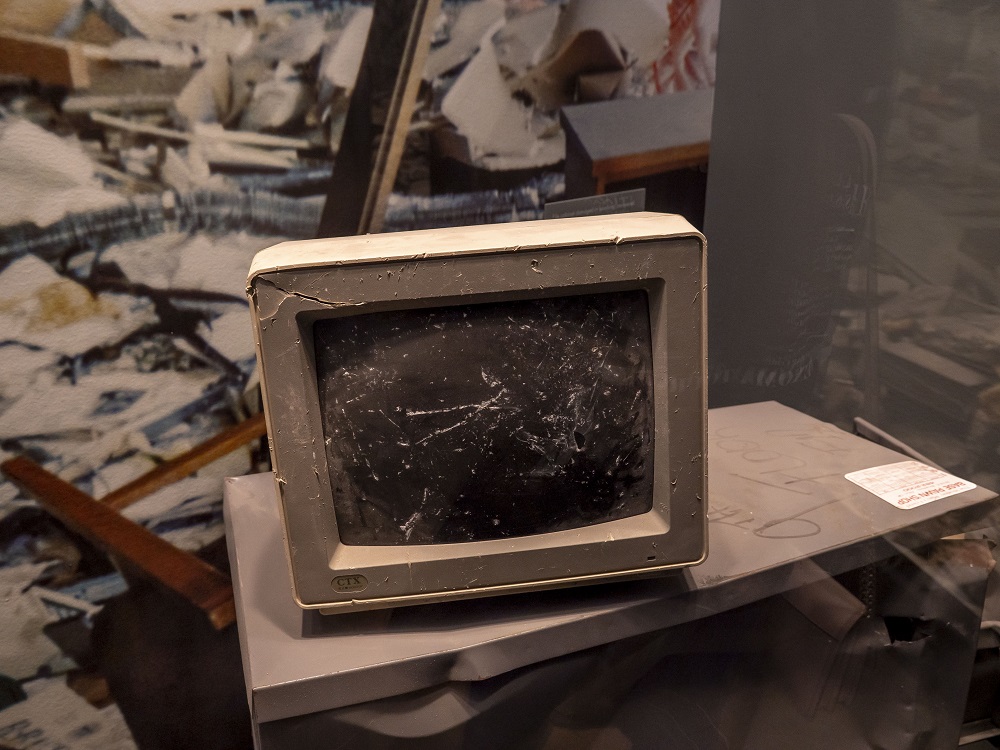
The aftermath was also vividly displayed at the Museum. Artifacts included a pile of keys, glasses, desk items, and shoes: the remains of a tragedy, forever encased in this Museum–preserved, much as people’s memories of the bombing will last forever.
The lives of the innocent are memorialized in so many ways throughout the museum, but the most impactful is the wall of pictures with personal belongings that they were able to identify as belonging to specific individuals.
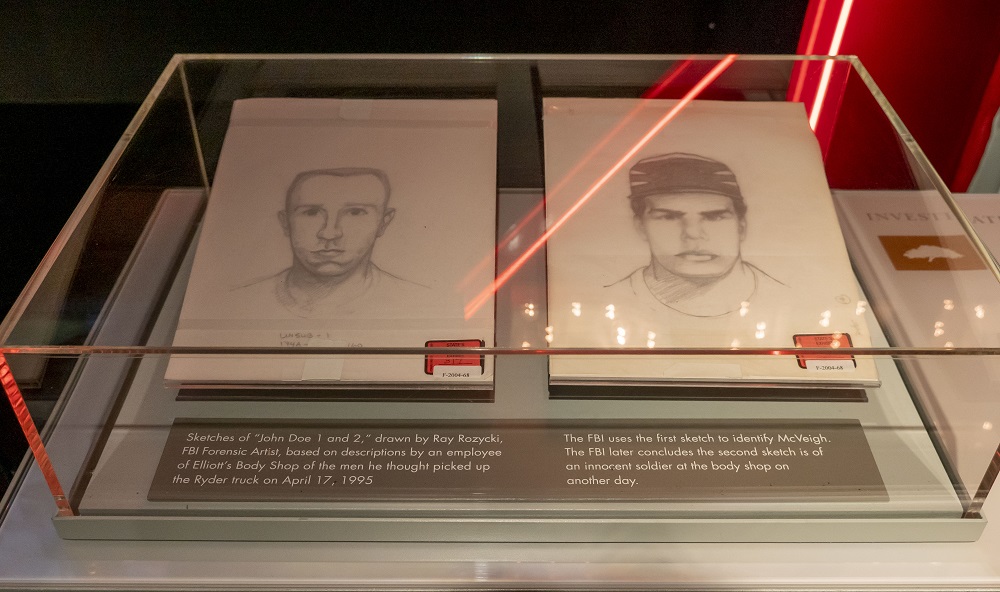
As we moved through the timeline, we were then shown the backstory of Timothy McVeigh and what he was doing leading up to the incident.
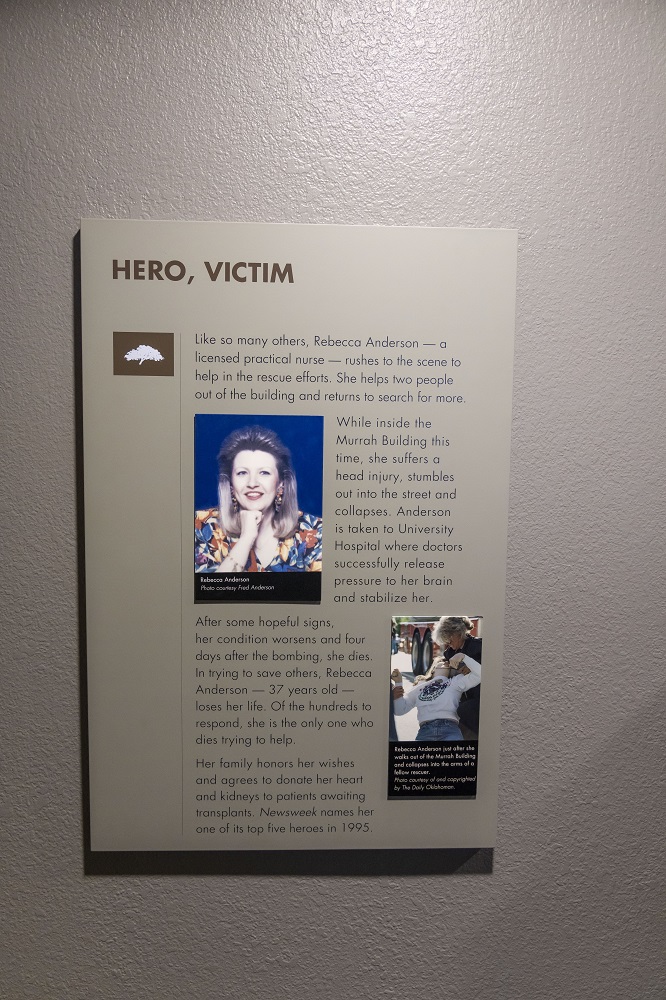
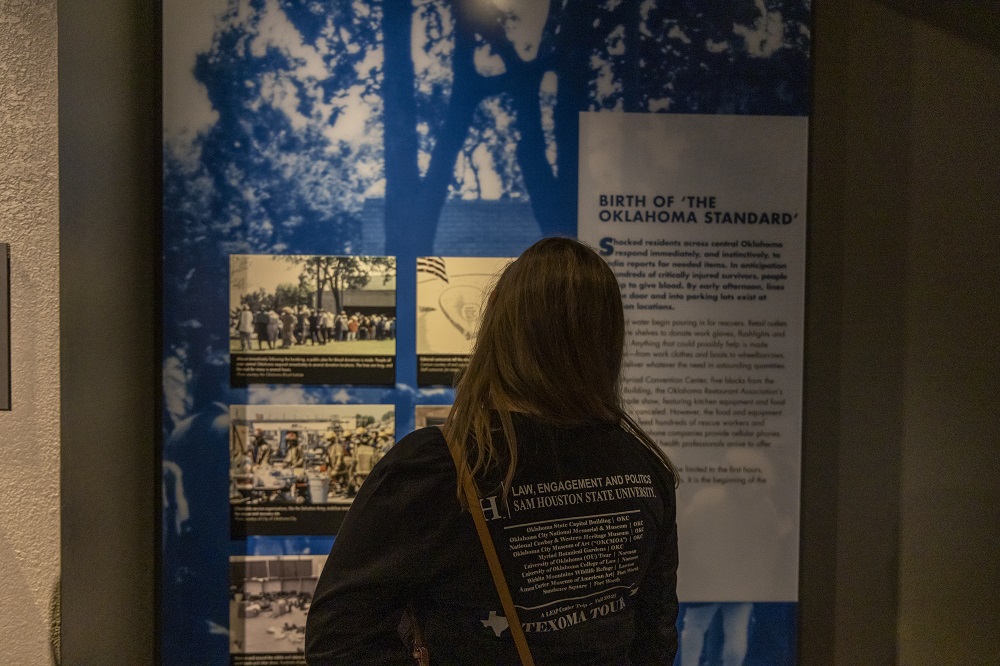
The stories of those who passed, those who died, and the heroism of the rescuers was emotional.
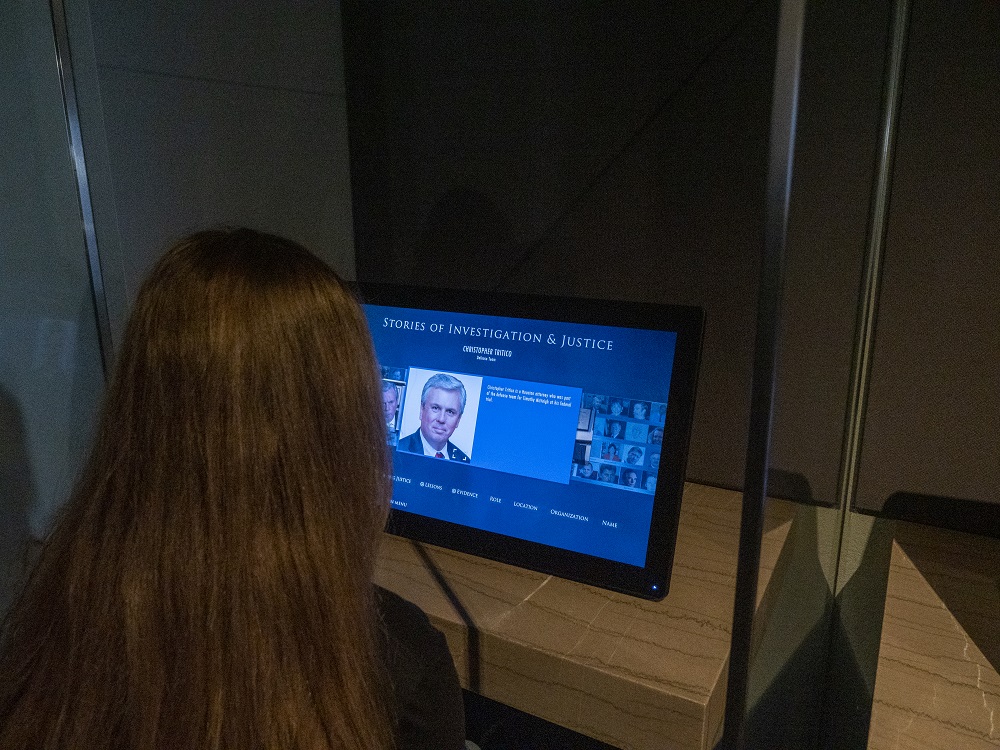
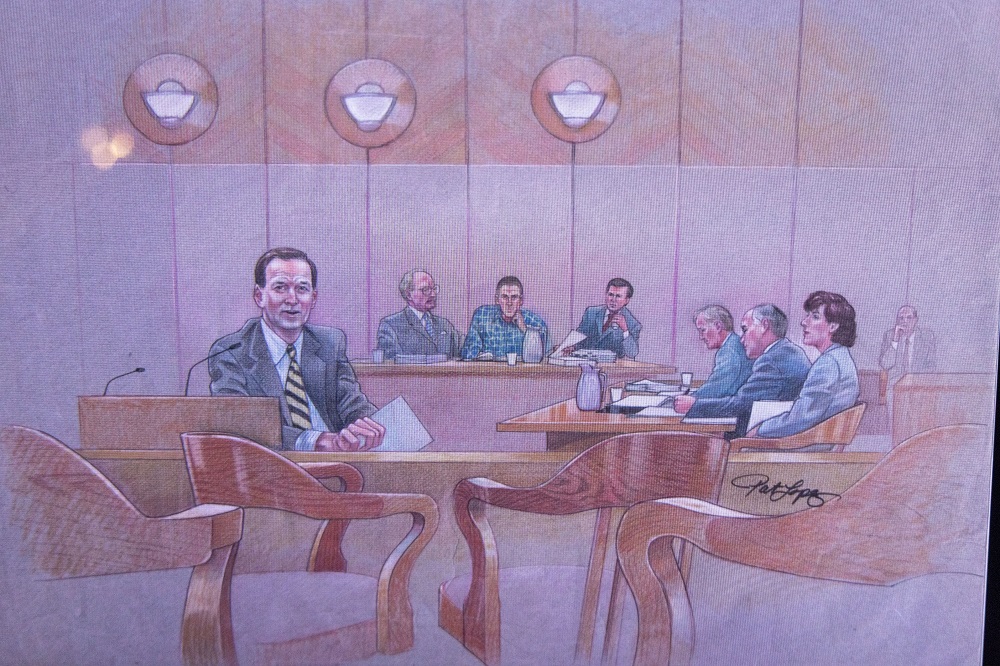
McVeigh was charged with 15 counts of murder, and he was represented by multiple attorneys, including with Chris Tritico, who is an SHSU Alumnus.
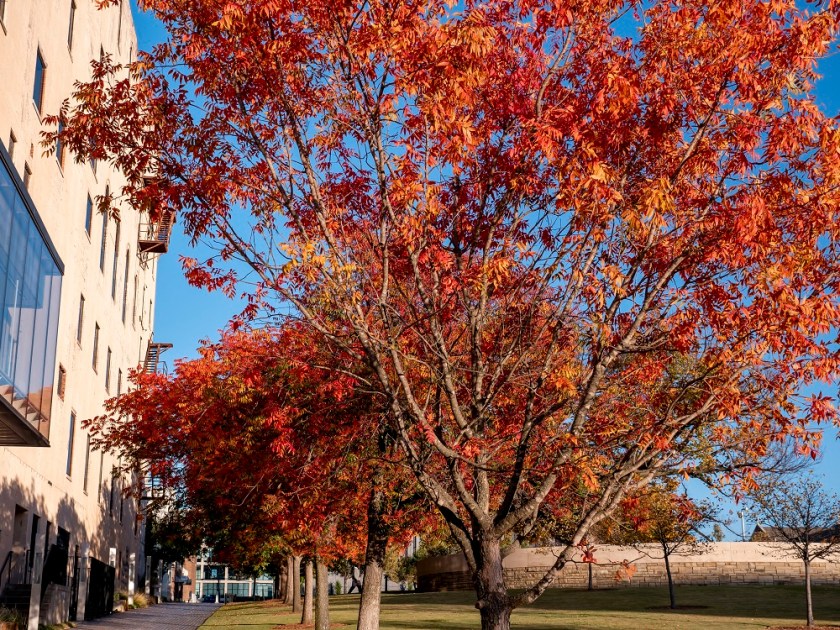
As we made our way to the outside part of the building, we experienced a great contrast to the tragedy we walked through. We breathed a sigh of relief at all the vivid fall colors of the trees and relished in the natural beauty that I believe we all needed.
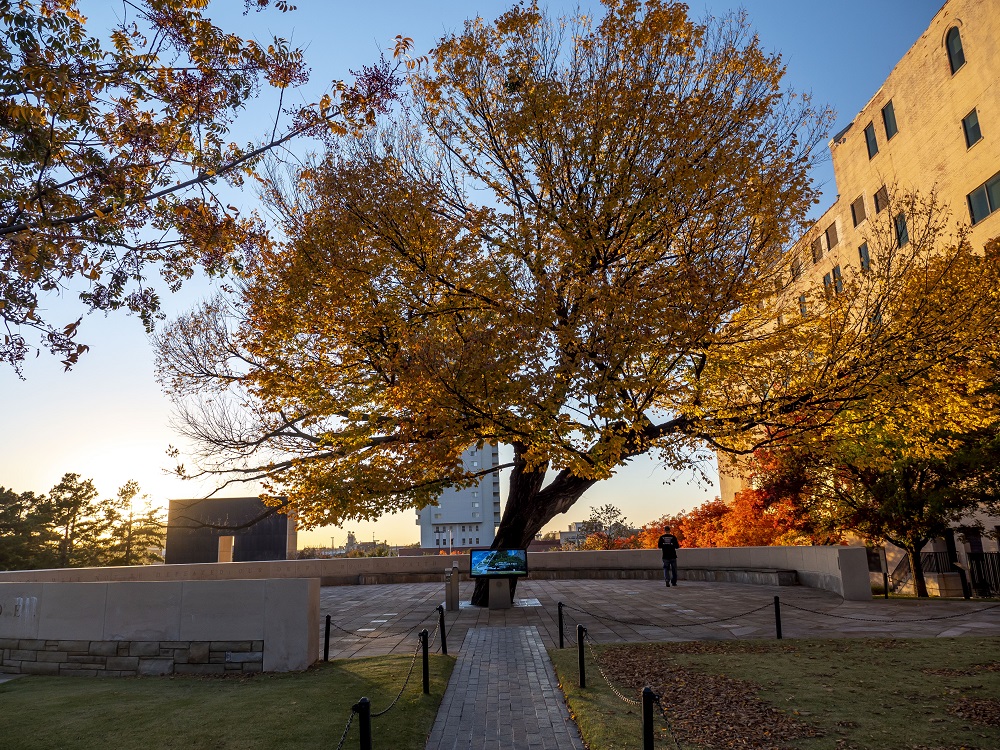
The path leads up to a single American Elm tree that is known as the Survivor’s Tree. This Elm stood through the bomb and remains strong to this day. Each year the seedlings are harvested from the tree and given in remembrance to the families impacted by this event.
An offspring of this tree was even planted at the White House.
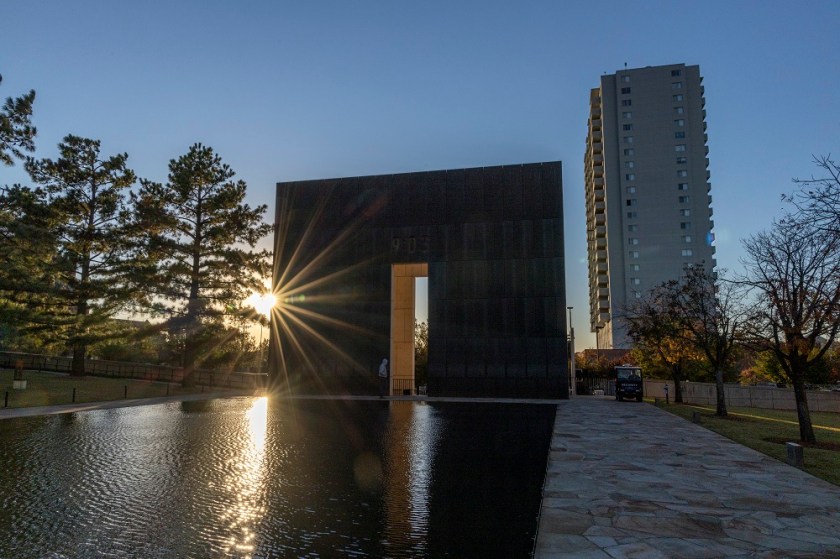
The grounds also are home to other memorial features. There is an East Gate displaying 9:01am, a reflecting pool, and a West Gate, displaying the time 9:03am.
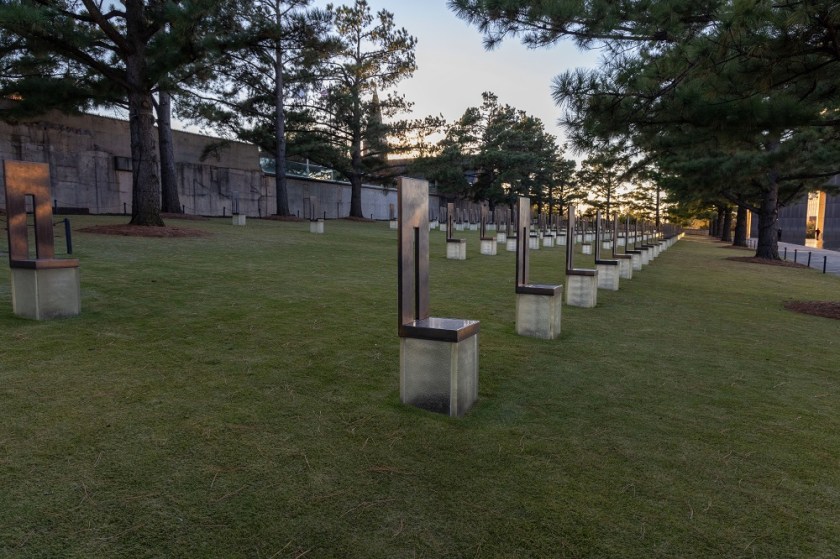
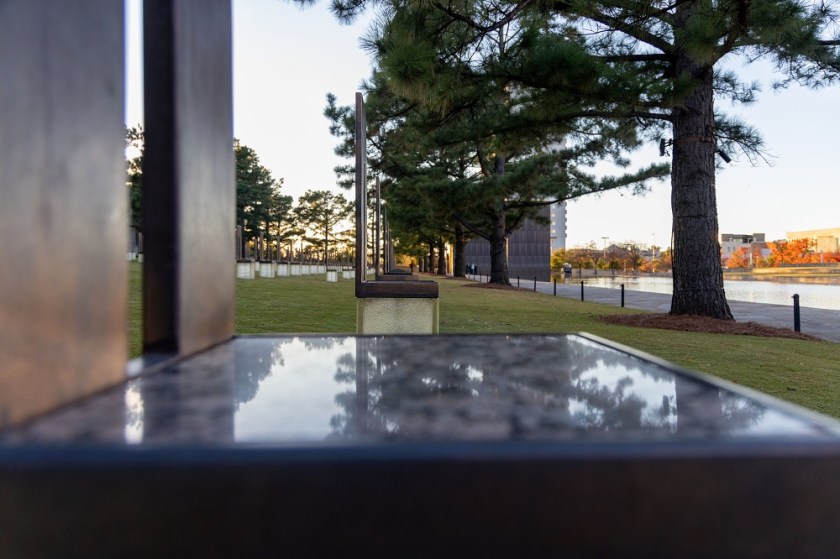
South of the walls, the lawn is lined with 9 rows of chairs representing the nine floors of the Murrah Building.
There are 168 empty chairs, representing the lives lost, including young children (which are represented by smaller chairs).
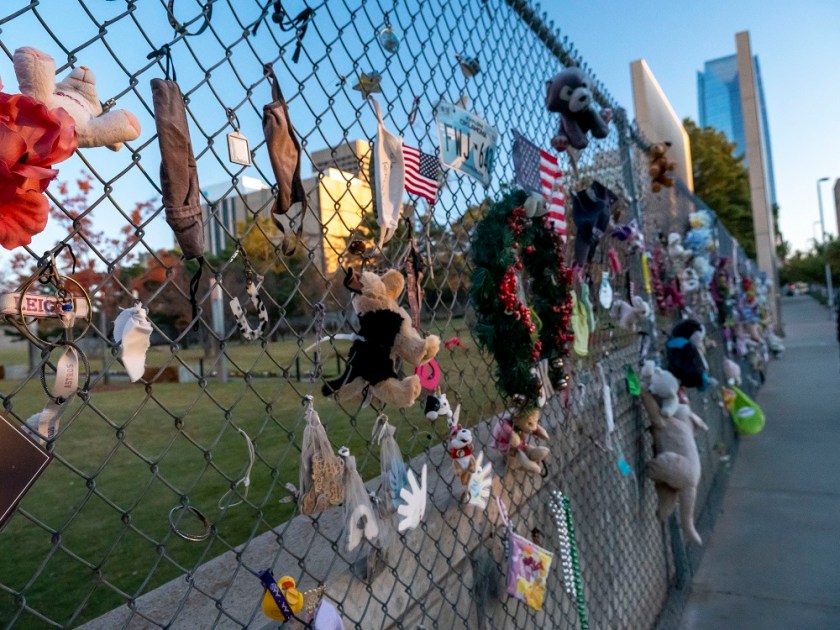
Surrounding the grounds, there was a fence with mementos that people have placed in memory of loved ones: teddy bears, bracelets, photos, and such.
We also went across the street, where a nearby church created a statue of Jesus, with an inscription of the shortest verse of the Bible: “And Jesus wept.”
This was a tour that almost brought me to tears at several places, and our hearts were heavy as we left.
Oklahoma Capitol
Saara Maknojia
Shortly after our somber but educational tour at the Oklahoma City National Memorial Museum, the LEAP Members coasted off to the Oklahoma State Capitol. The chilly weather and beautiful sunset allowed us to better view the magnificent and historical site.
The intricate architecture of the landmark included Greek Corinthian columns, and Greek Meanders which symbolizes and means movement. The Greco-Roman structure of the state capitol was complemented with the displayed Tribal flags from Native American Peoples who have such a rich history in the 45th state.
The Oklahoma State Capitol is further enhanced with the sculpture of a Native American woman, designed by Allen Houser, which stands in front of the Capitol.
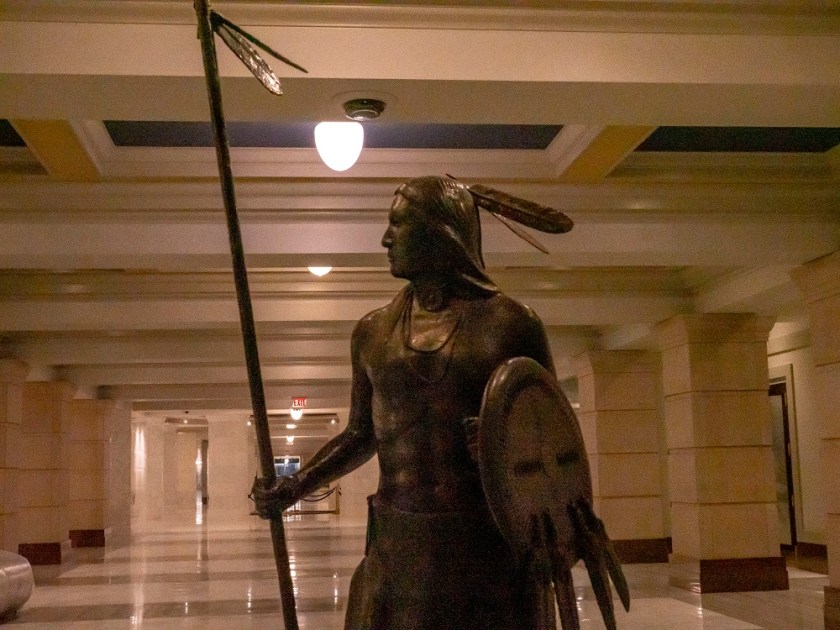
The peak of the capitol’s dome is adorned with a 17.5-foot sculpture of a Native American called “The Guardian,” by Enoch Kelly Haney, and a version of the statue is also located inside the building.
We learned the history behind some of the Oklahoma tribes as we observed the painted murals on the third floor of the capitol.
Oklahoma’s historic significance of the “Sooners” is also integrated into the state building through some of the murals. We all learned about how the name came to be and why it was such a vital point in OK history. Oklahoma State University later adapted “Sooners” as their team mascot to exemplify their patriotism towards the state.
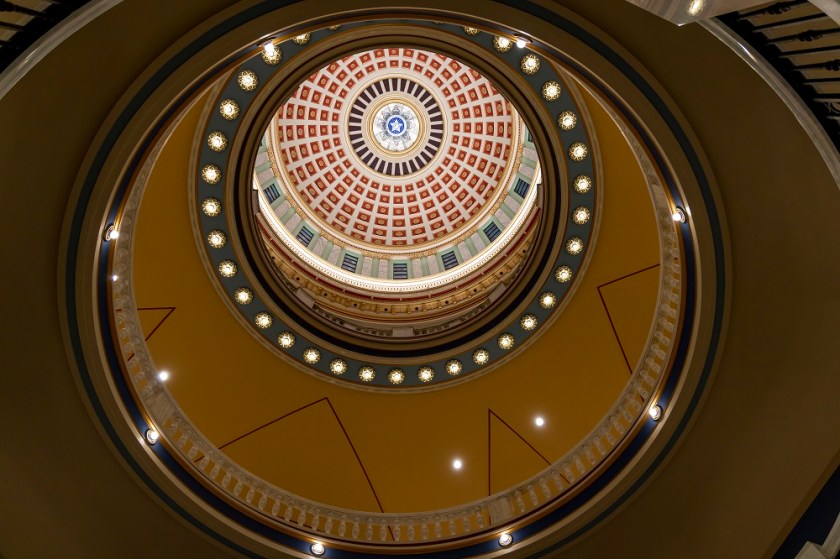
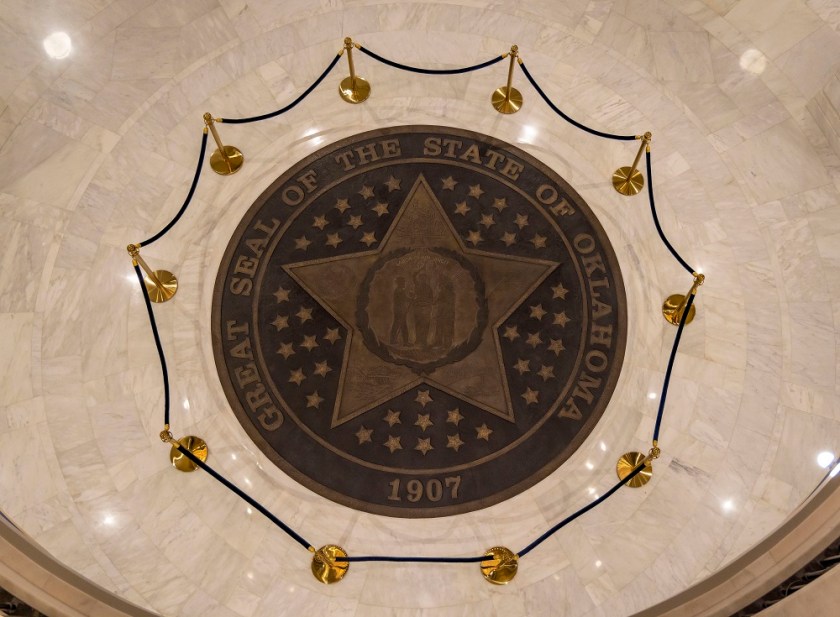
Probably the highlight of the Capitol Building is the interior dome, which is beautiful.
The LEAP Members grasped a better understanding of not only the political aspects of the Oklahoma State Capitol, but also the history and cultural diversity within the building itself and the state of Oklahoma throughout the tour!
Oklahoma City Museum of Art
Erin Juarez
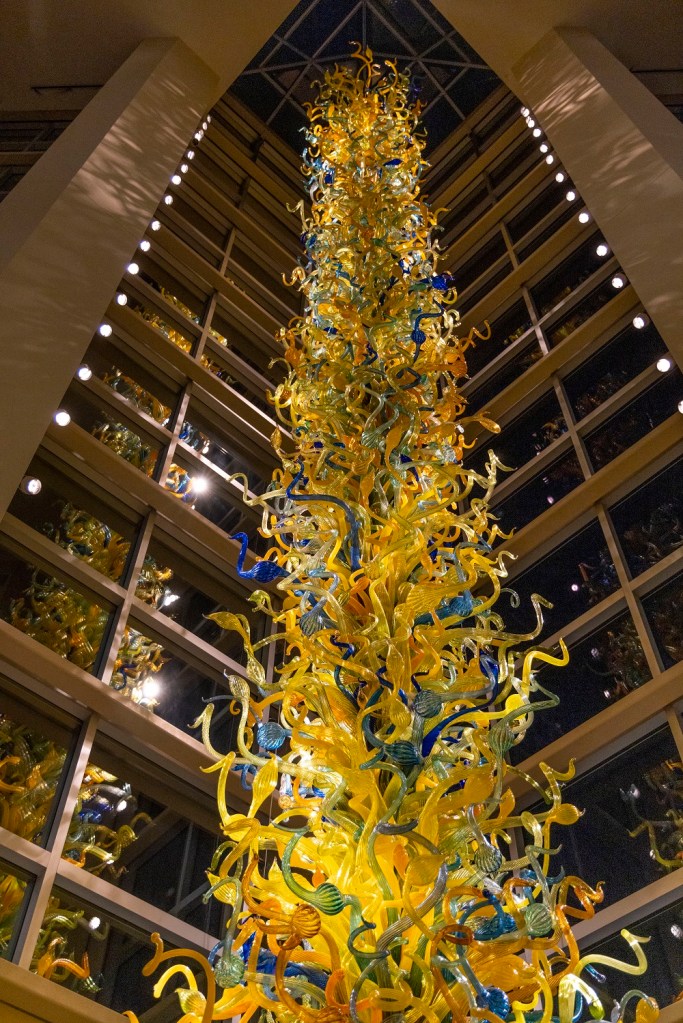
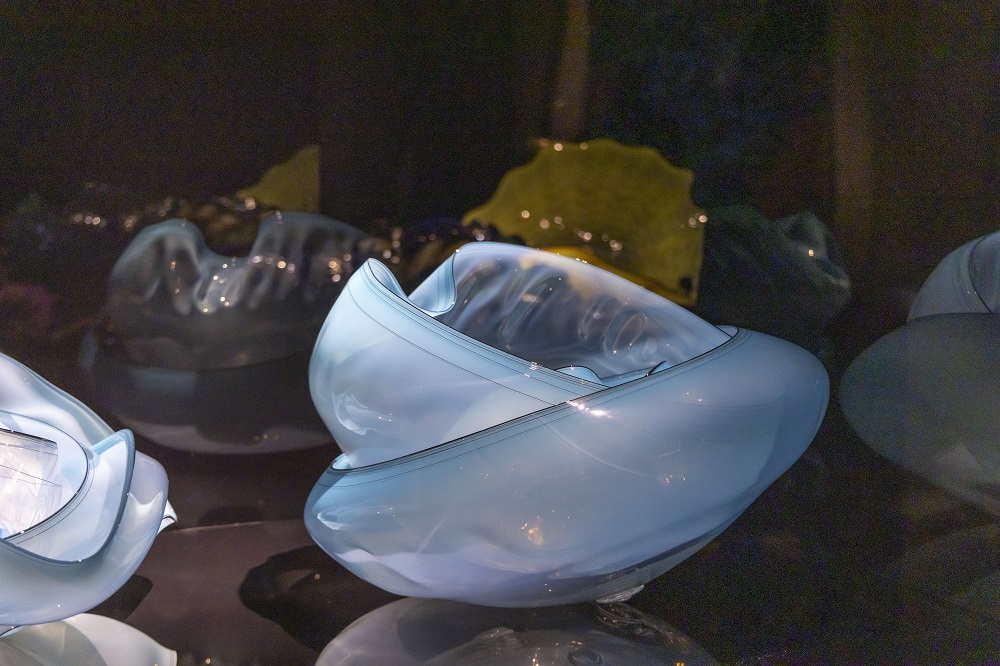
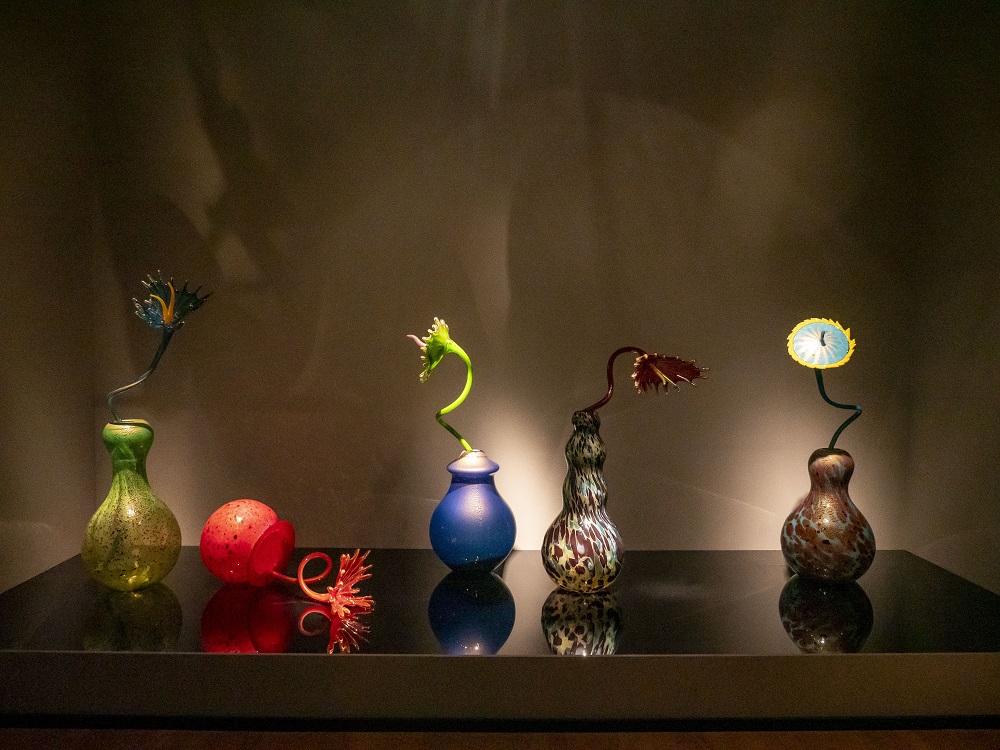
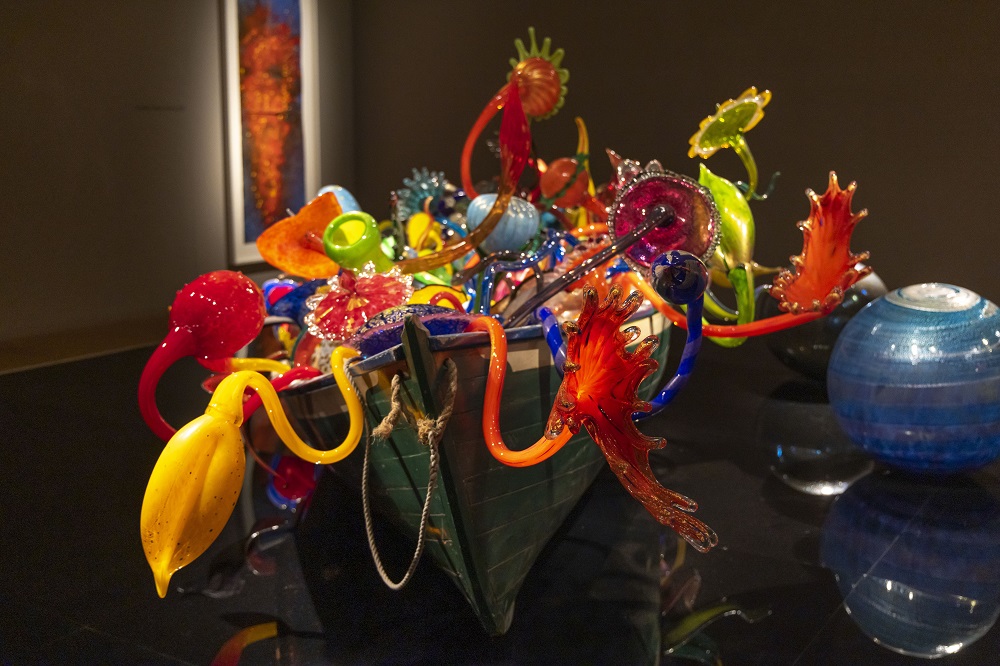
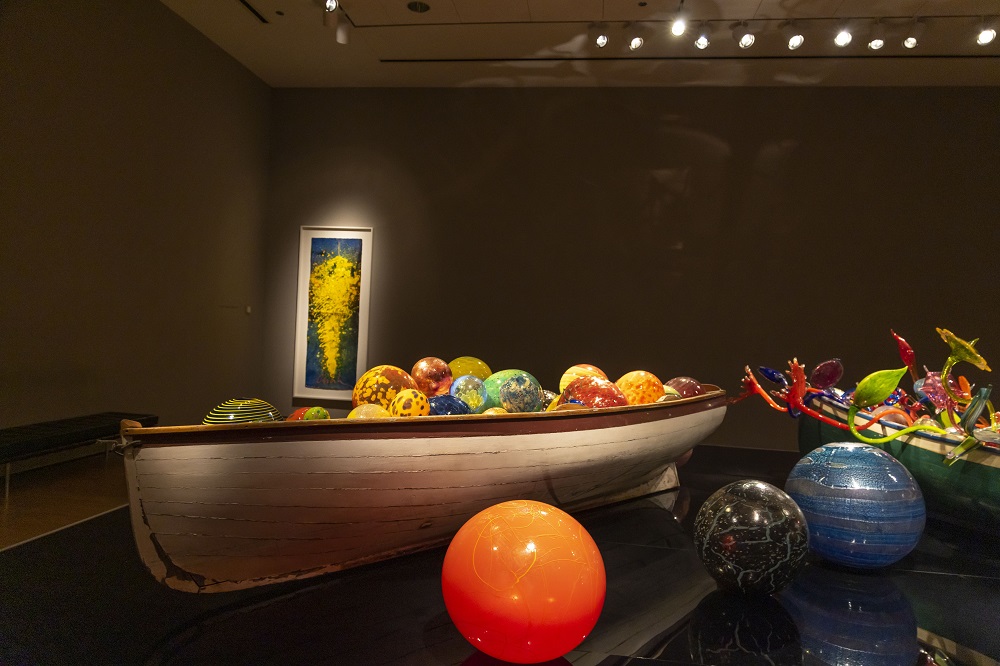
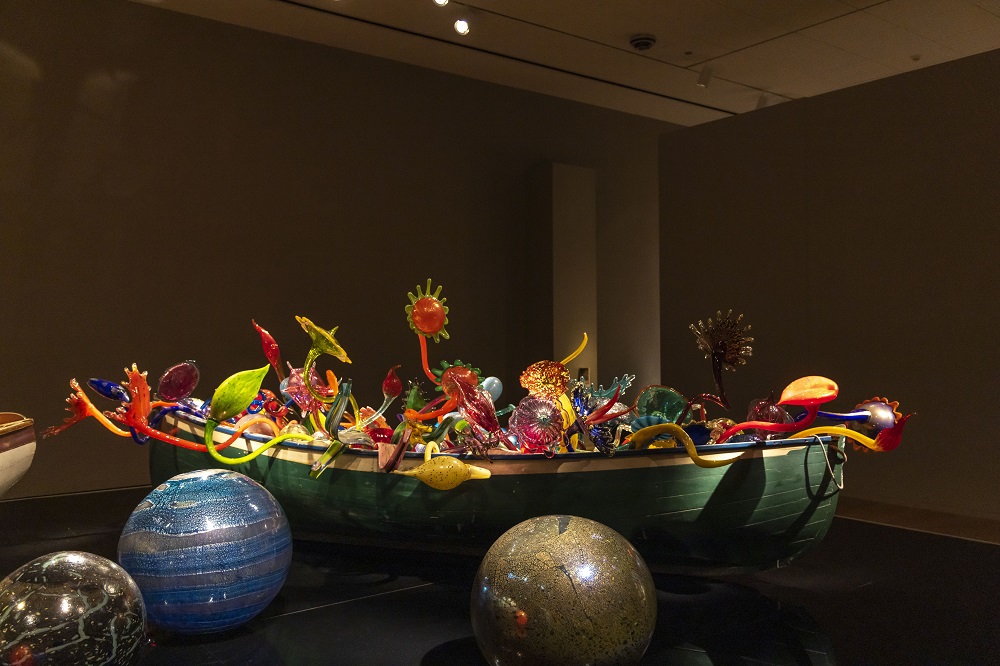
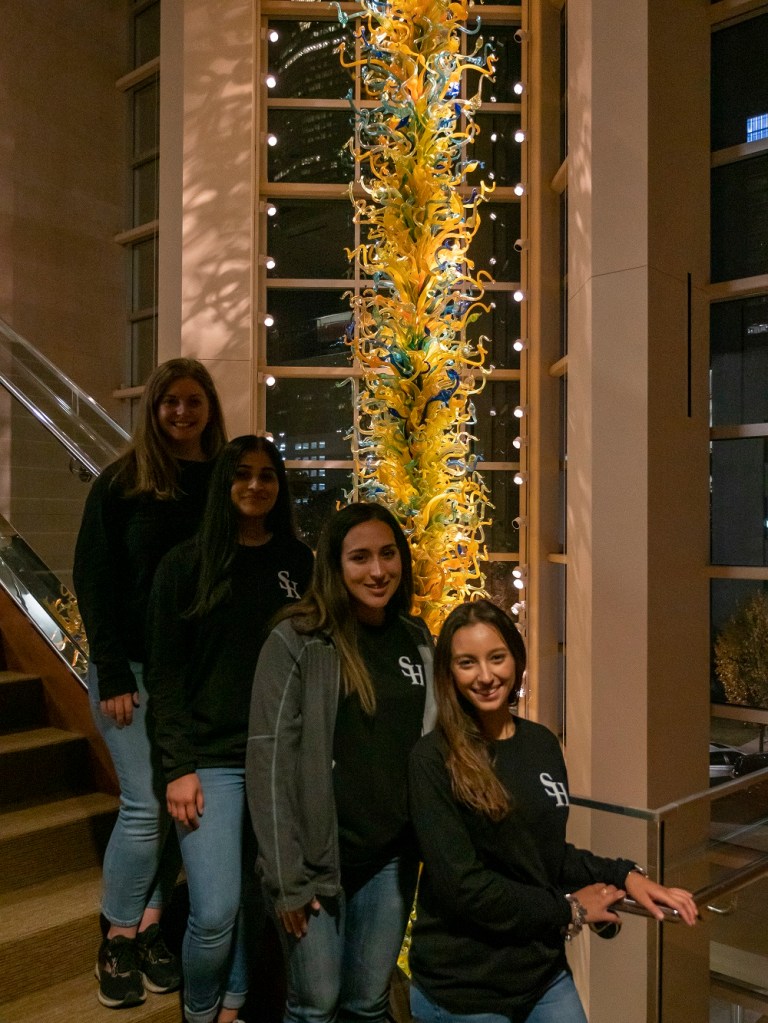
With the night still young-ish, we decided to go to the Oklahoma City Museum of Art. As we walked in, there was a fifty-five feet glass sculpture towering to the right of us, one created by renowned artist Dale Chihuly.
Yvette, a born trouble-maker, immediately got into trouble for standing on a wall so that she could better pose with the sculpture…
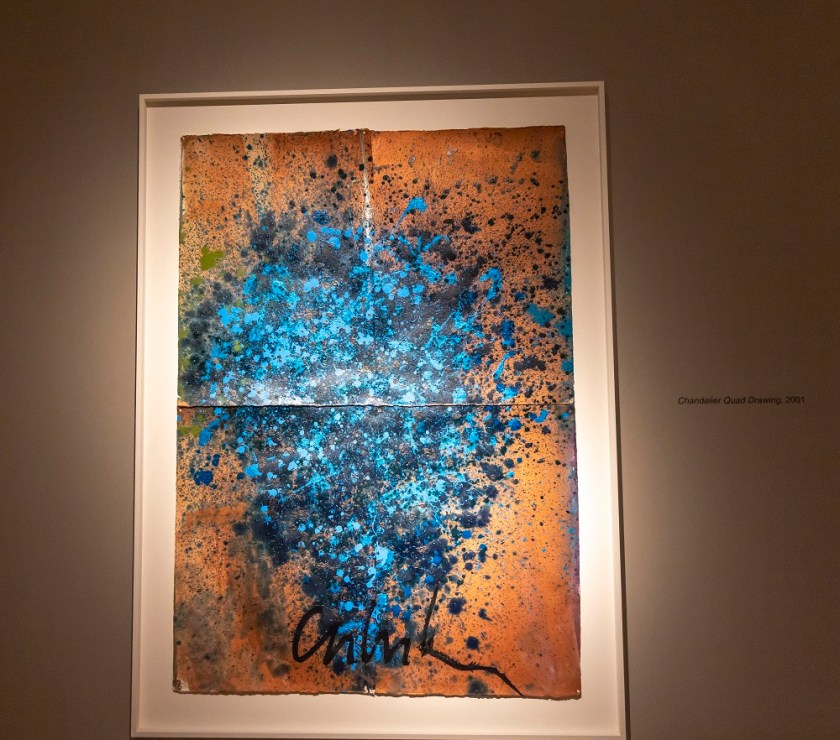
This Museum helped expose us to various types of art: impressionism, regionalism, modern, sculptures, and many other styles and artistic media. It helped me learn what type of art I most enjoy. In particular, I liked the sculptures, especially those of Chihuly. Saara also liked Chihuly, but was also drawn to the impressionists.
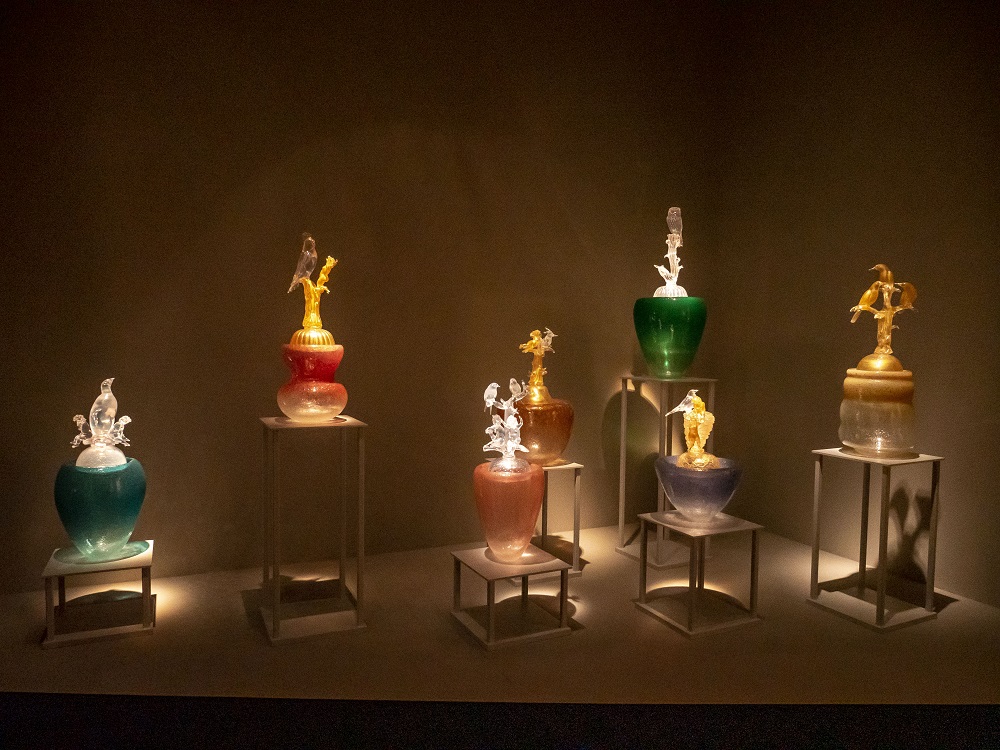
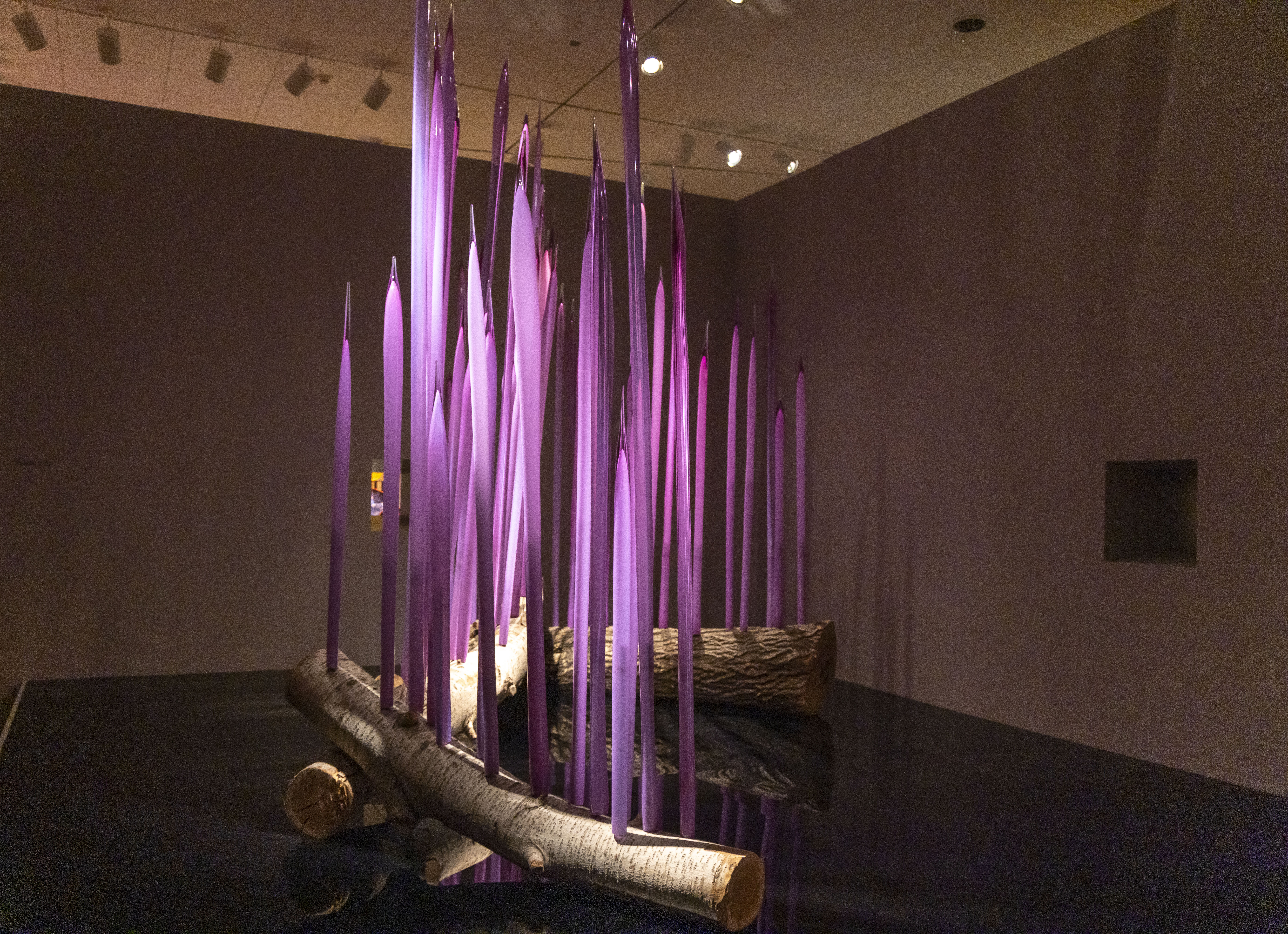
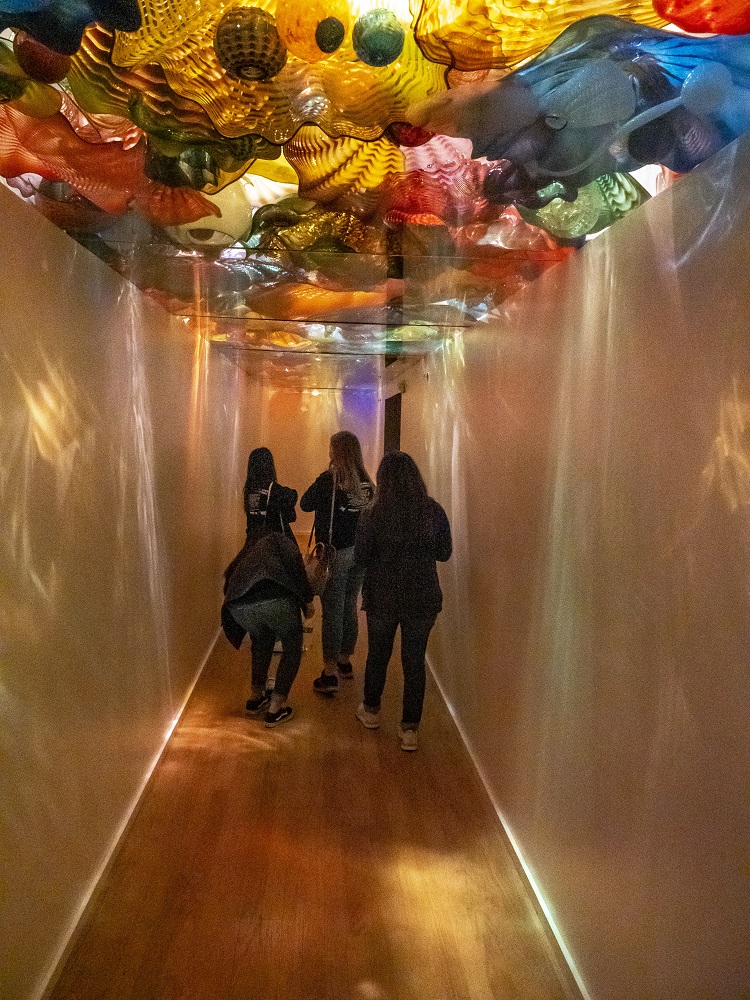
The museum is separated into four floors. On the fourth floor, our favorite artist, Dale Chihuly, work is featured in a way that flows cohesively leaving the viewer to almost forget they are in an art museum. The dark room, allowed for the lights that were strategically placed to catch the art at different angles to illuminate it differently.
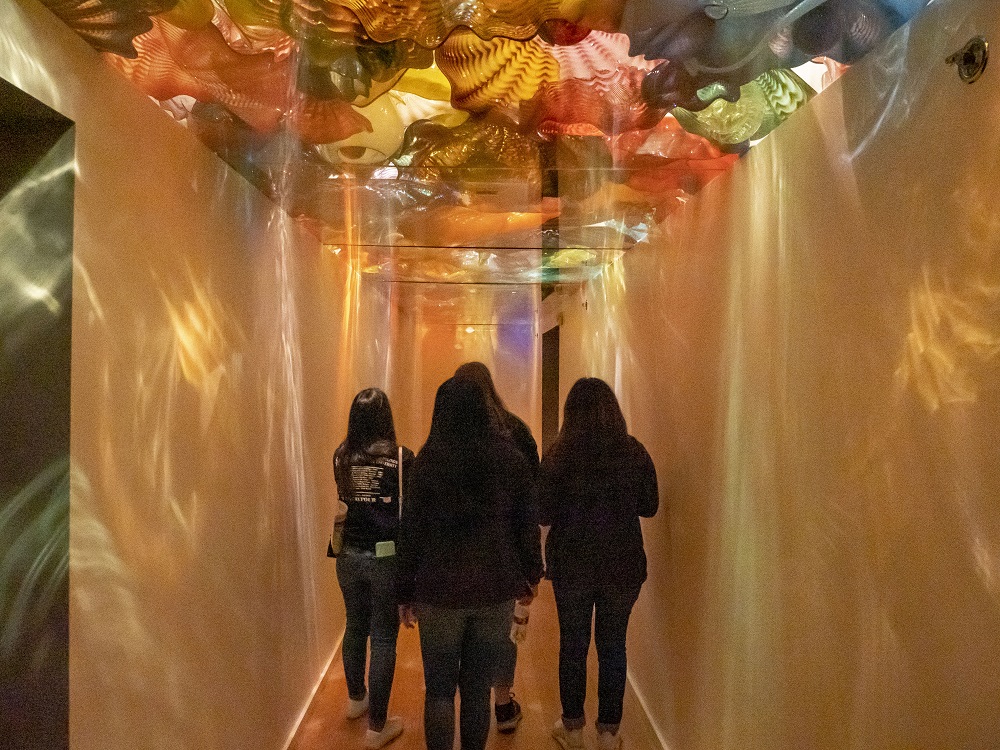
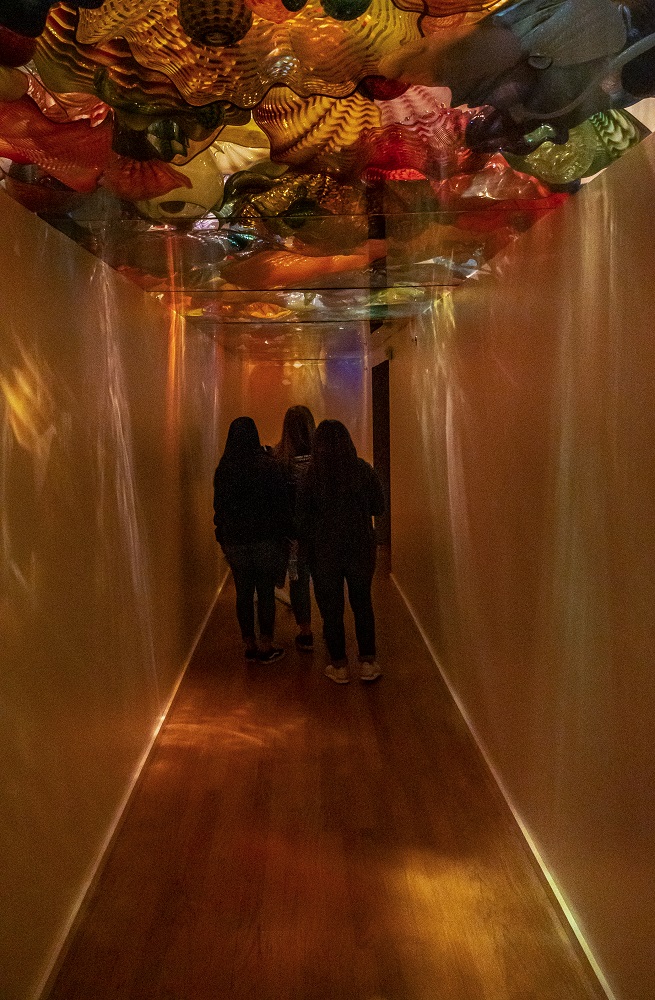
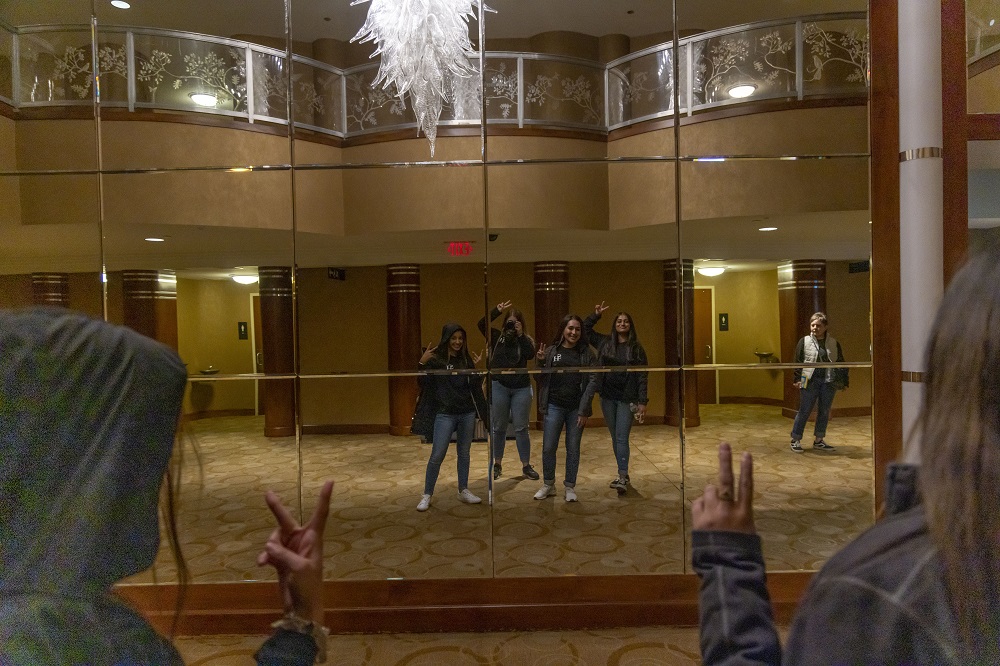
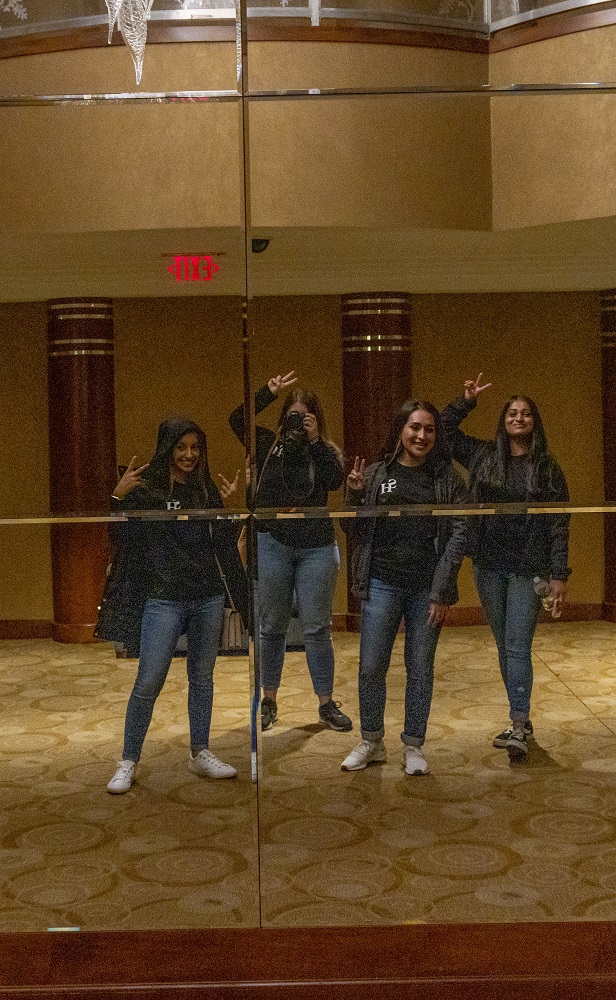
We found this exhibit to be exceptionally fun and dynamic to photograph. As a person new to cameras, it offered the opportunity to experiment with photography. The low light was a challenge, but the subjects were beautiful! We particularly enjoyed walking under Chihuly’s Persian Ceiling, which creates all sorts of interesting shadows and colors.
And we also had the opportunity to see some of Chihuly’s paintings–one of which, we learned, Stephanie actually owns!
Outside of the fourth floor, there’s a video of how Chihuly gets his glass done for his art. This was very interesting. We often found ourselves asking in amazement on how he accomplished such great works, so the video was insightful.
We even found another of his chandeliers in another part of the Museum, which was also beautiful.
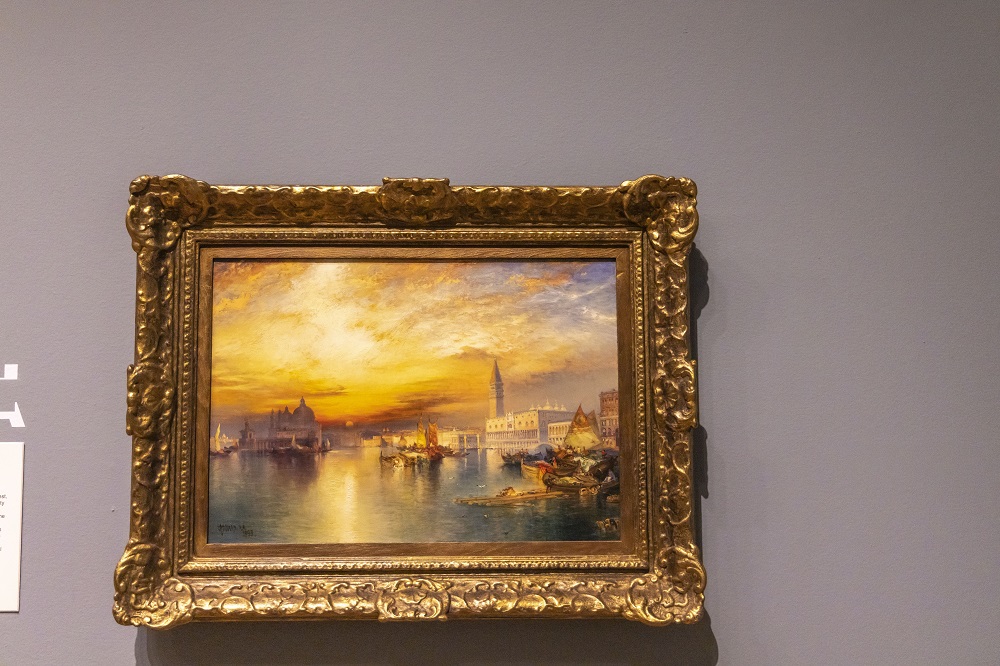
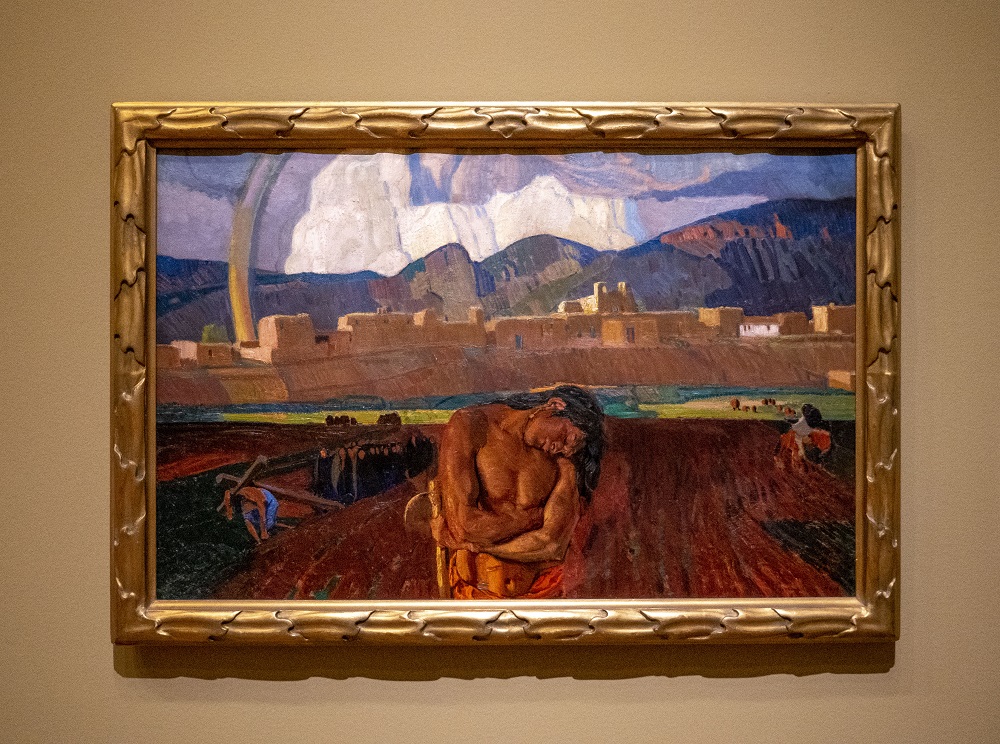
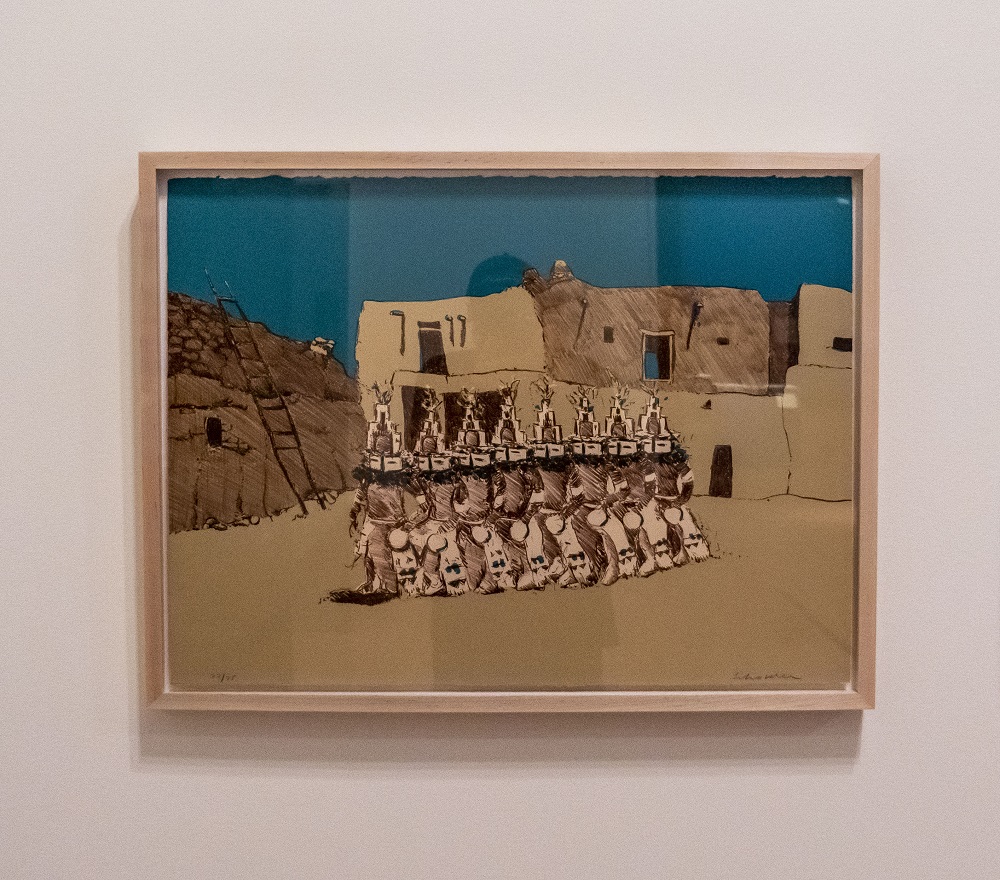
Of course, we didn’t just see Chihuly. For some of us, it was our first time to see a Thomas Moran painting…
…and Alex Katz…
…and although all of us had seen a Georgia Okeeffe…
…it was our first time to see some other Southwestern artists, such as Ernest Blumenschein…
…and Fritz Scholder…
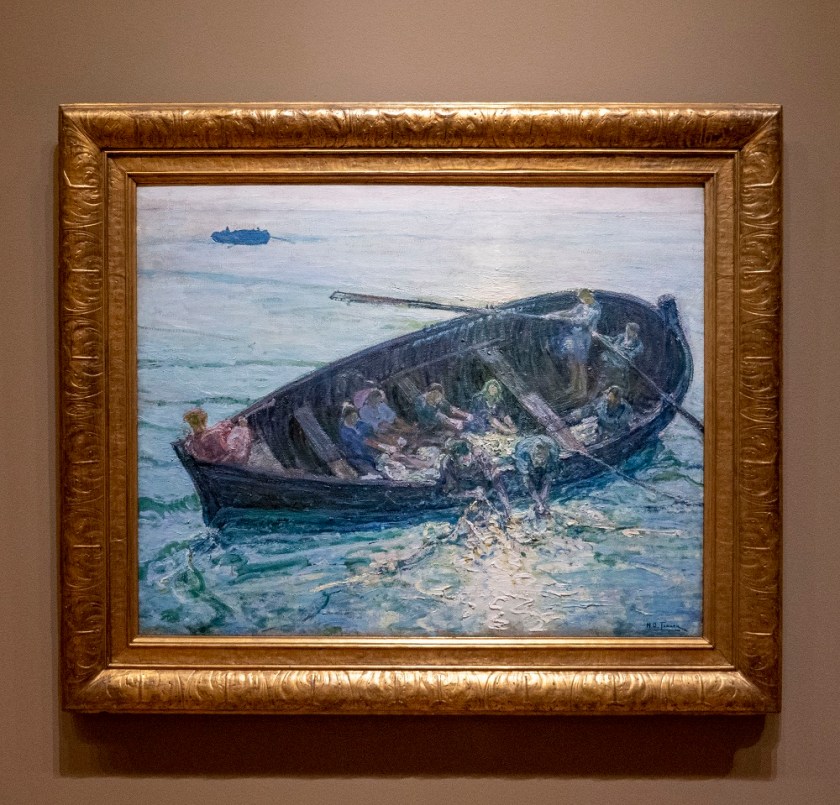
We also saw one of our favorites, which was a piece by the African-American artist Henry Osawa Tanner.
As we took one last gaze upwards at the towering Chihuly we left awed by the amazing art.
But, of course, our favorites were the various Chihuly pieces, including the largest of these, the 55-foot piece at the front of the building. This time, however, we took the photo according to the rules of the Museum, forcing Yvette to comply.
The Wedge Pizzeria
Morgan Robertson
To conclude our first eventful day, we opted for a quiet, carryout dinner. We selected The Wedge Pizzeria, which was Oklahoma City’s first artisanal brick oven pizza. Among the pizzas we selected were: The Perfect Margarita, Brisket, and we built our own Hawaiian Pizza. As we sampled each pizza, we all found we had different favorites, but we liked them all. Saara’s favorite was the brisket pizza; she described it as having the right amount of spice from the Jalapeños, and a great flavor from the brisket.
My favorite, and Erin’s favorite, was the Hawaiian Pizza. Although Hawaiian Pizza might be controversial among the general population, it has a place amongst this group of LEAP Members.
Overall, it was a great dinner and we enjoyed each other’s company as we ate.
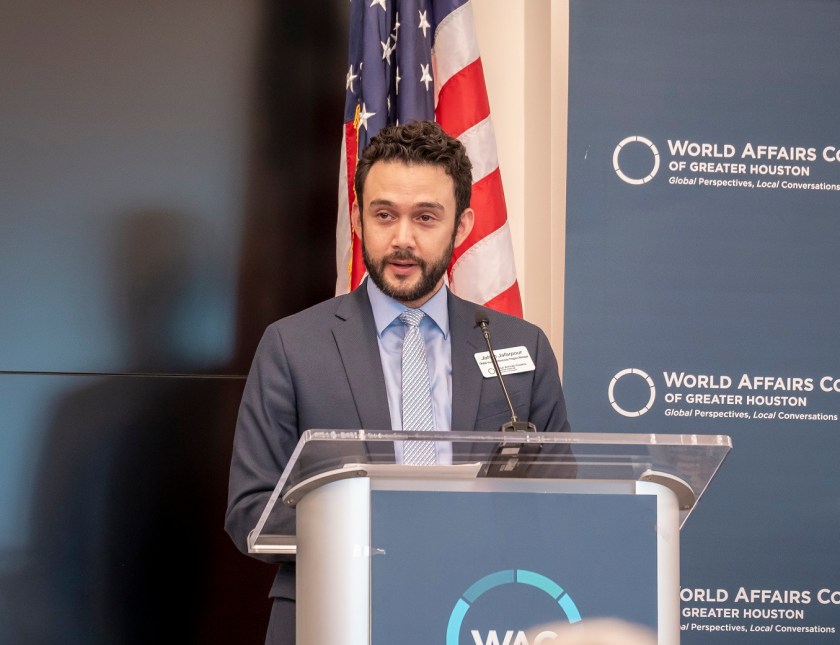
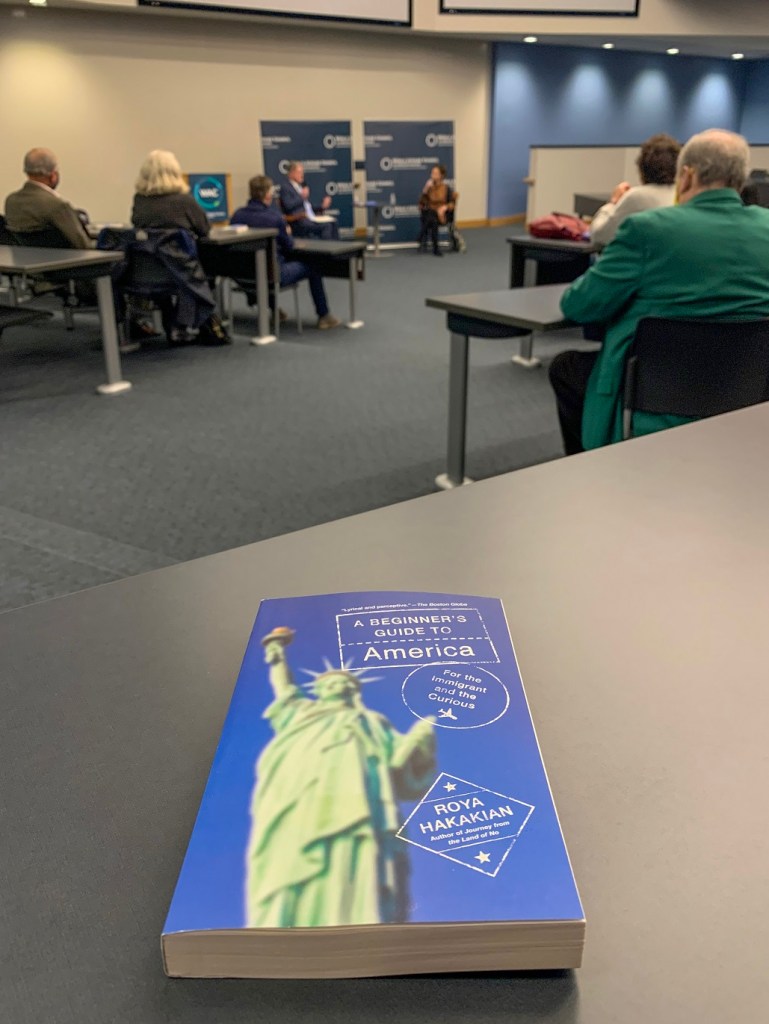
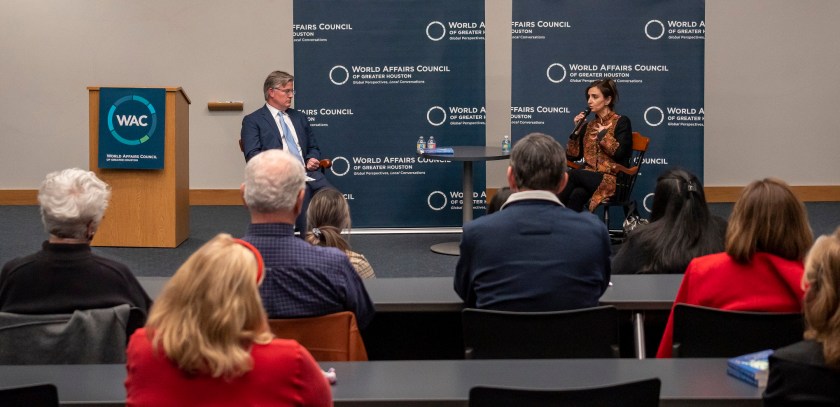
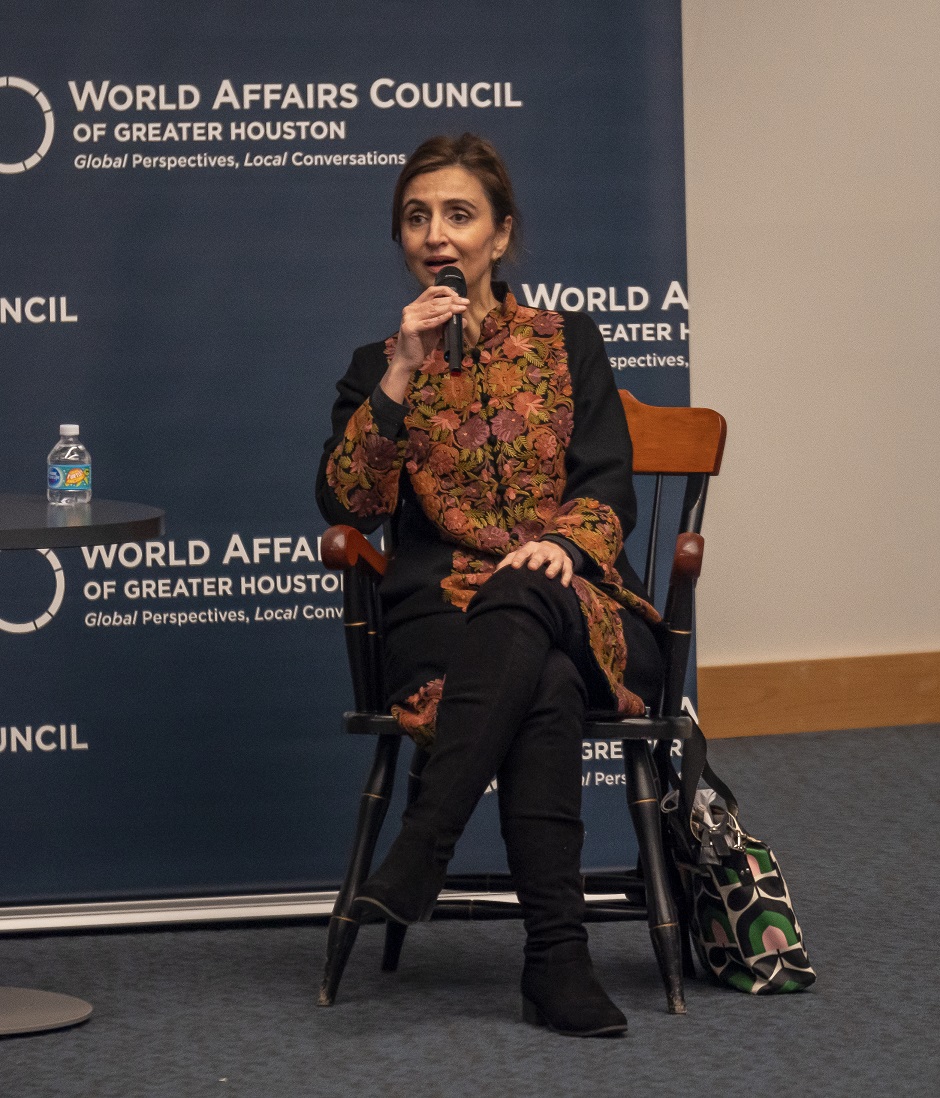
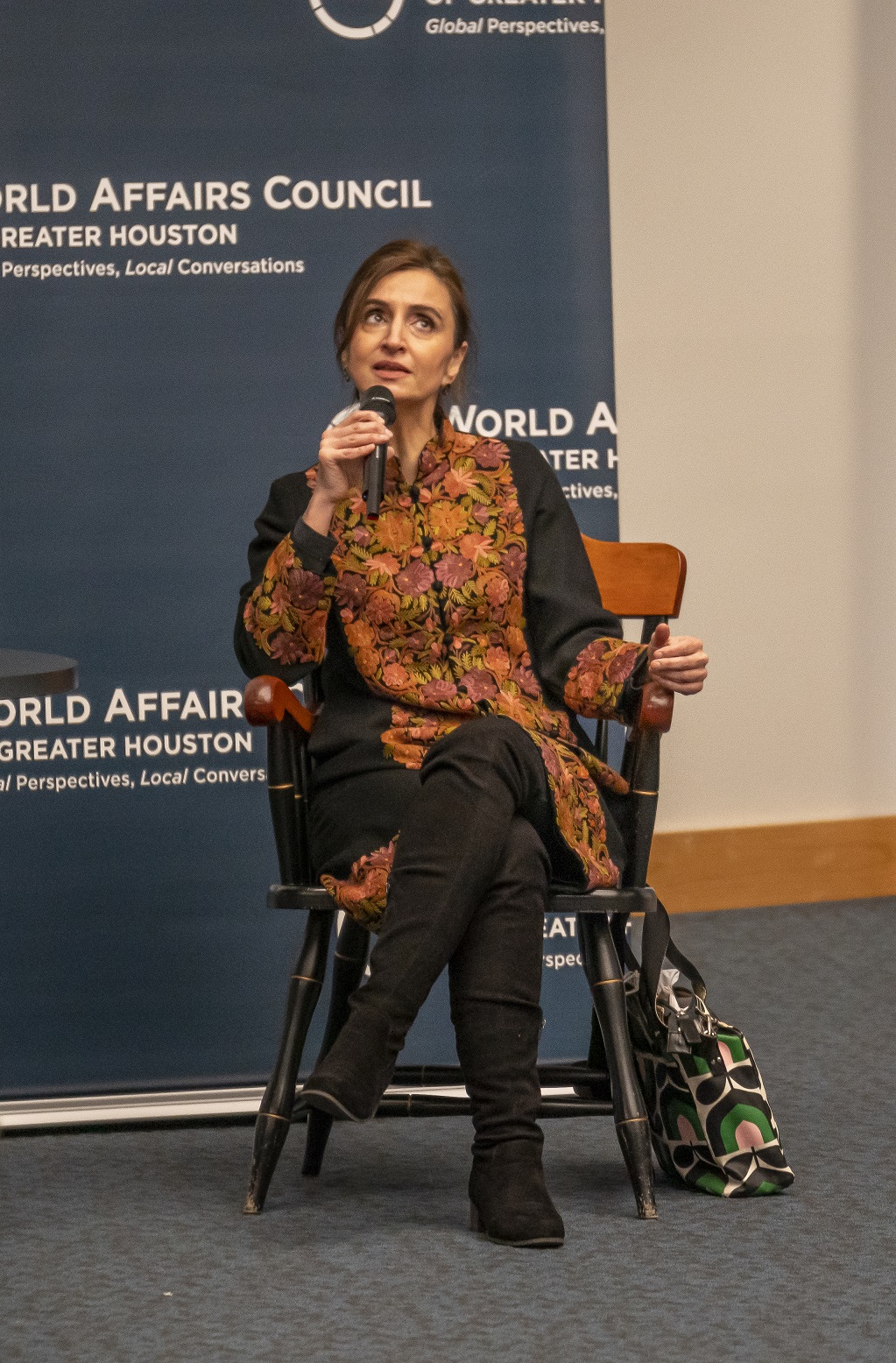
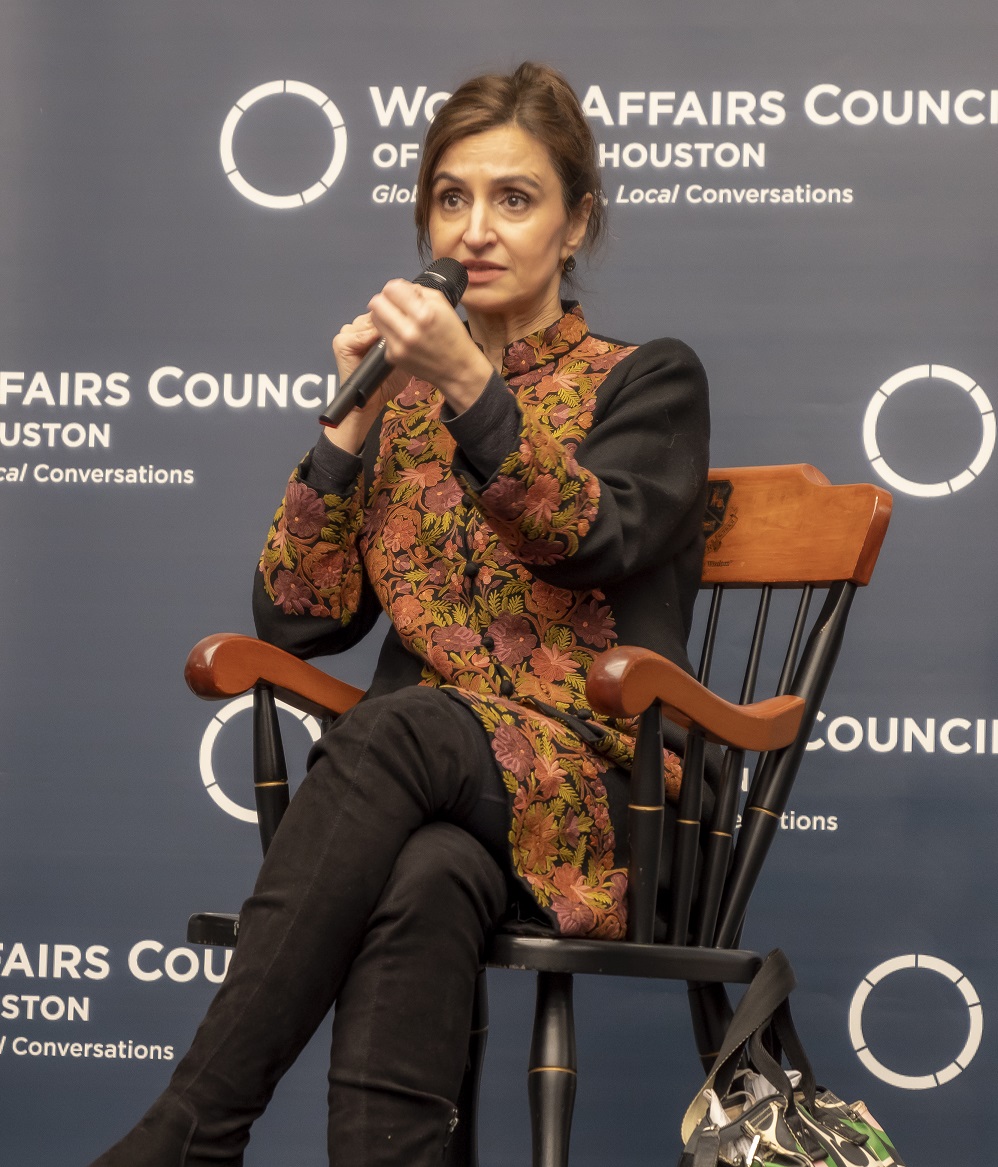
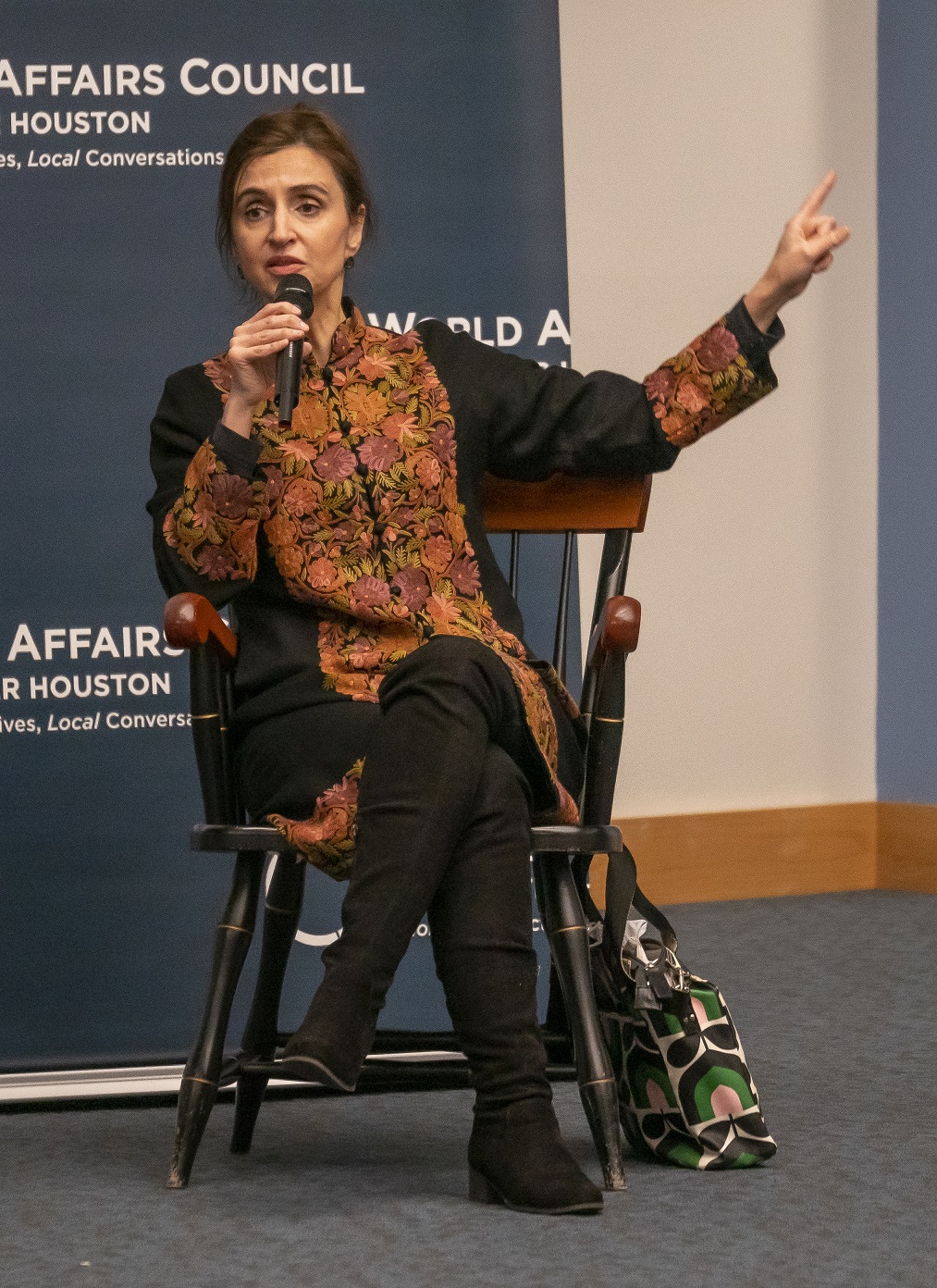
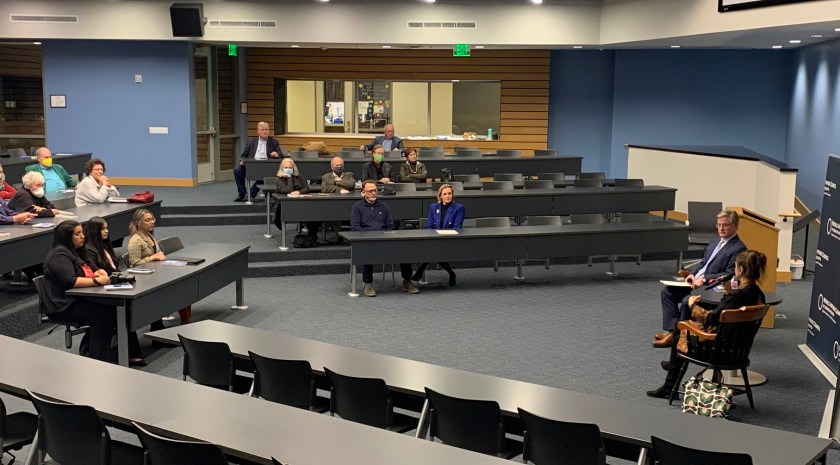
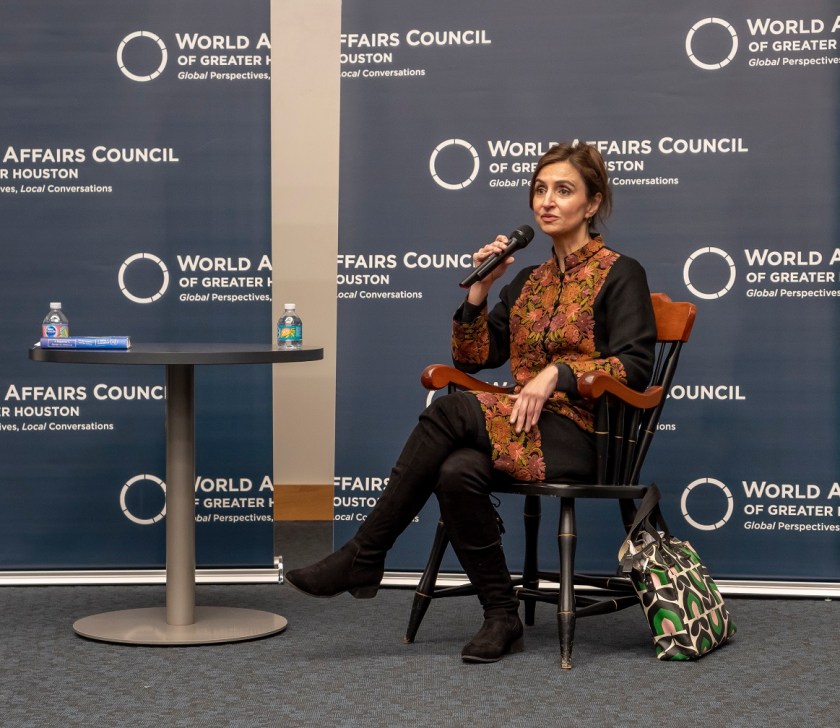
To kick off the new semester, Heather Barodi, Jocelyn Vazquez, and I traveled to The Woodlands representing LEAP and Sam Houston State University for the first event of the year hosted by the World Affairs Council (WAC). This event showcased the journey of an immigrant into America featuring Roya Hakakian, an Iranian immigrant and her experience into the “land of the free!”
Upon our arrival to the venue, the LEAP students were greeted by the always-friendly, always-professional staff of the World Affairs Council! In fact, we were given a copy of Hakakian’s book, A Beginner’s Guide to America.
Considering that Ms. Hakakian a Guggenheim Fellow and Lesley Stahl referred to Hakakian as “the most eloquent interpreter of ‘the immigrant'” writing today, this was a real treat.
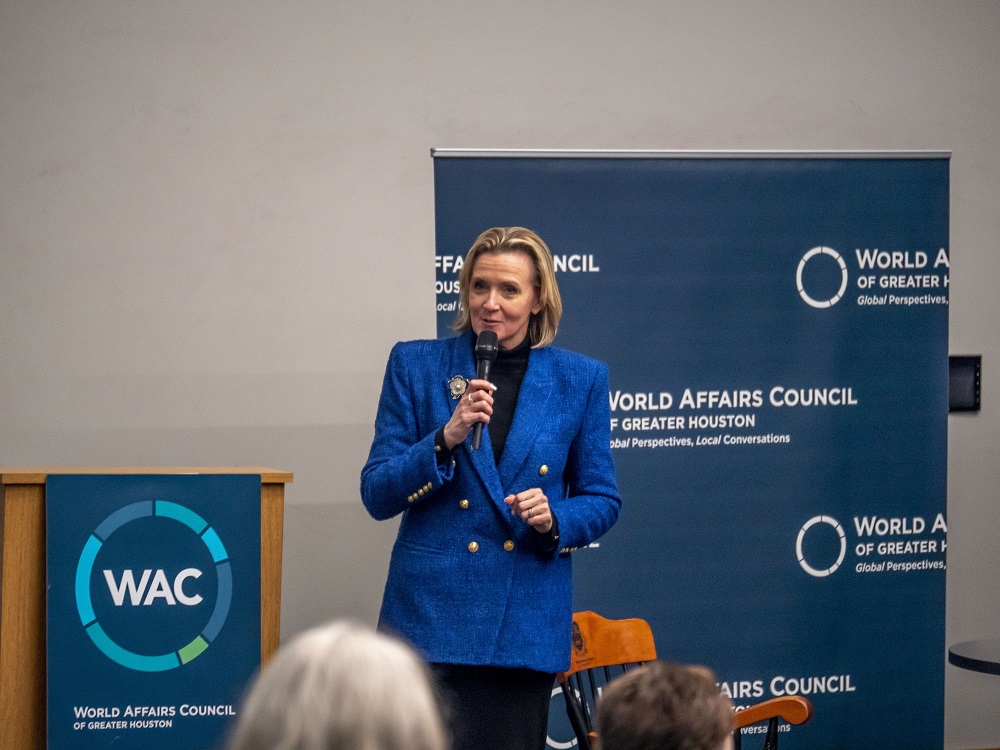
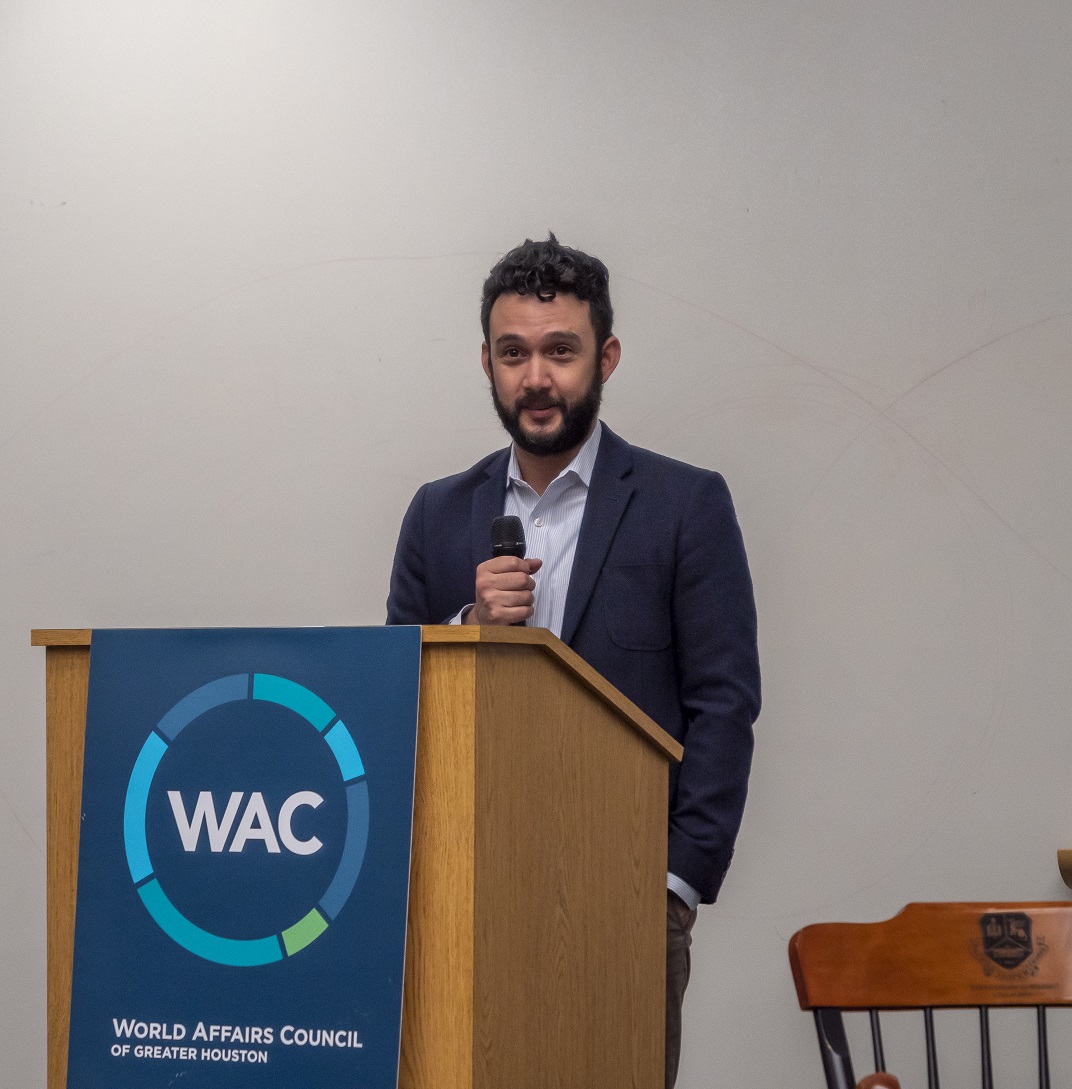
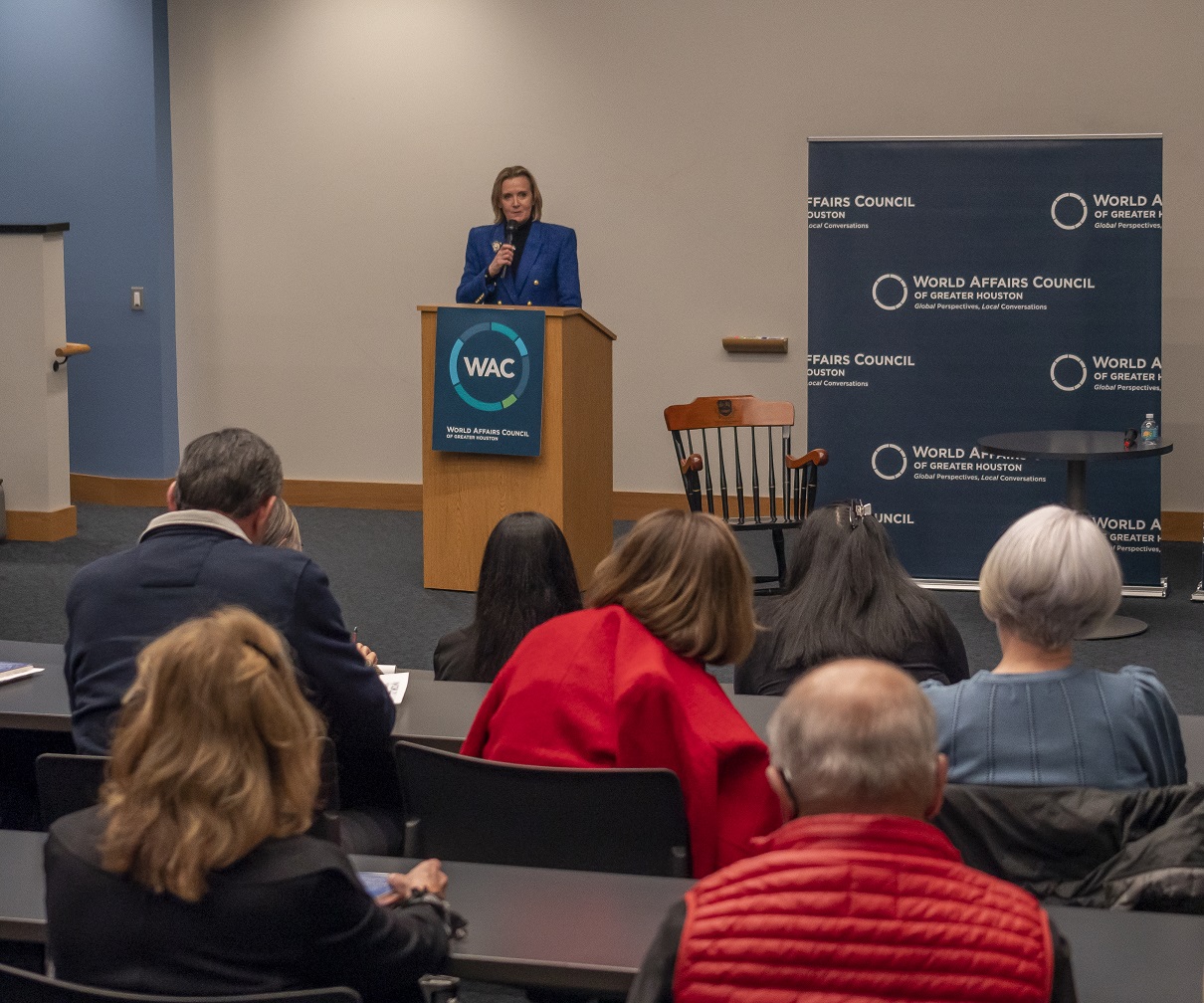
After introductions from the WAC staff…
…Ronan O’Malley moderated the event, asking questions about Hakakian’s experiences on her journey to–and in–the United States.
At the age of 19, Roya came into the U.S. with the hope of becoming successful in this large and unknown land. Ms. Hakakian explained her perceptions of the differences between the US and Iran and why it was such a cultural adjustments.
These observations spoke to us, particularly since of the three of us, one is a first-generation immigrant, and two are second-generation immigrants. We could all identify with at least some of what she had to say.
Toward the end of the session, the Mr. O’Malley took questions from the audience, and Ms. Hakakian responded to two LEAP questions! The insight into immigration and its challenges opened up many doors to knowledge and allowed us to see this process in a new light!
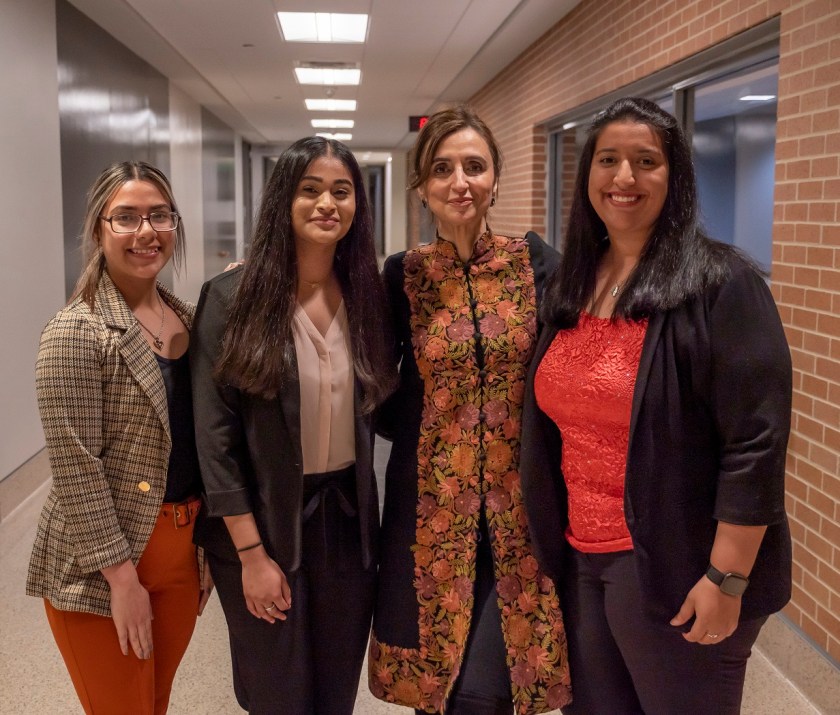
Roya Hakakian met with the LEAP students after the event and kindly signed our copies of her book A Beginner’s Guide to America. The LEAP students were thrilled to hear from her and learn from her experiences!
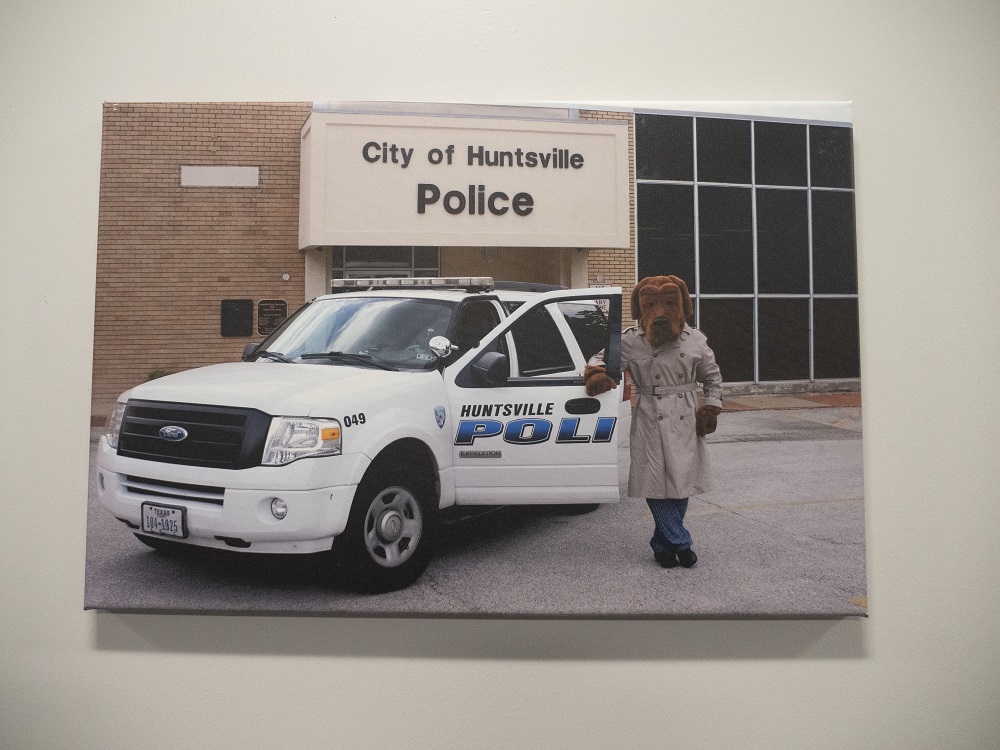
On Tuesday evening, the LEAP Center and City Fellows students were given a wonderful tour of the new Huntsville Police Department (HPD), on 2821 FM RD West, by Corporal David Warner.
The tour began as soon as we stepped foot through their double door security to get to the waiting area, where Corporal Warner discussed the history of the HPD, its previous chiefs, and the new things that were incorporated to the new building in comparison to the old building, which was once a bank!
In contrast to the old building, they now have a cool-off room, a gym…
training room…
showers, a garage, more security (bullet proof glass and reinforced walls), and overall, much, more space.
All of which allows them to perform their job duties more efficiently, such as conducting meetings, training, and more. In this “backstage” tour, we had the opportunity to see most of the rooms and offices: such as the interrogation room…
…supply room, and new additions such as a school resources officer office, evidence room…
…the chief’s office, narcotics office, and the detective offices. While in the supply room, we got to pass around the two kinds of vests that the officers use, the day-to-day basis one and the one they use before arriving at a “dangerous” crime scene.
The former of which was as light as a feather when compared to the latter of which weighed about ten pounds. Our tour then continued inside the patrol officers’ “office”, where we were able to see the TV that tracks where every officer is located- from the moment they report to an incident scene to the moment they leave the scene.
To put it in perspective, if a police officer was on duty at a high-school football game, we would be able to see the name of the officer, the location of the high-school, and the duration of time they have been there. It also shows how long it has been since any one of them has responded or reported to a scene.
Some of the more popular and favorite parts of the tour were the evidence, supply, and interrogation rooms. We were amazed by how the architect built and designed each factor and detail of the building to where no one can tamper with the evidence lockers or hear anything outside of an interrogation room. Another favorite aspect of the tour was Corporal Warner: he a great tour guide, very knowledgeable, and really illuminated the role and practices of the police.
On behalf of the LEAP Center and the City Fellows, we would like to thank Corporal Warner for taking the time to give us a tour of the new building….
…and even more thankful for everything that Corporal Warner and the rest of the officers do to keep us and the community safe.








































 Center for Law, Engagement, and Politics