The ACJS Conference has officially begun! As we inch closer towards our presentation on Automated License Plate Reader technology (as it relates to the Criminal Justice world), the anticipation only continues to rise. This is our first time presenting on a panel at an academic conference–or any conference, for that matter! With that being said, we of course scoped out the space and enjoyed several sessions on day one.
Criminologists Converge
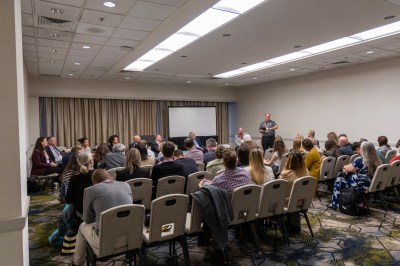
While hundreds of criminologists converged at the Sheraton in Denver, we split up a bit, maximizing the coverage of the conference and the sessions it offered. Collectively, we attended sessions on “Perceptions of Law Enforcement Technology,” where the standout presentation was “Support of BWCs by Type of Law Enforcement Agency,” by Dr. Mustafa Demir (John Jay);
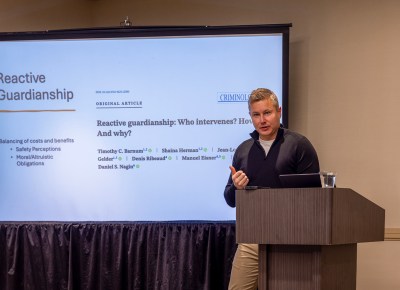
“Rational Choice Theory and Crime: Emotions, Cognitions and Opportunity Structures,” which featured SHSU professors Timothy Barnam…
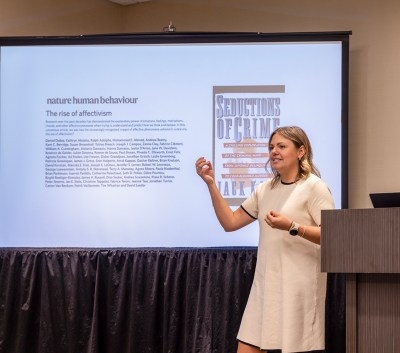
…and Shaina Herman;
…”Crime, Data, and Technology;” and the Presidential Panel: Key Strategies for Successful Academic-Practitioner Partnerships, the latter of which, we turn to next.
A Presidential Panel with the College of Criminal Justice at Sam Houston State University
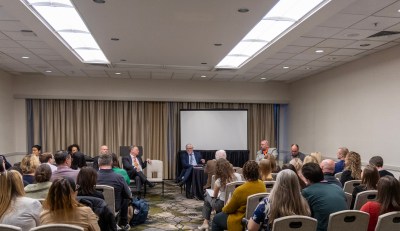
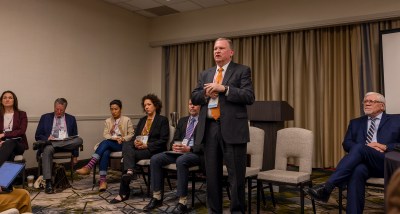
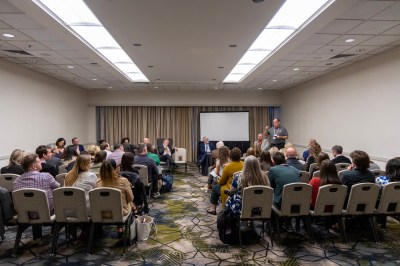
The highlight of these sessions was unanimous among our group, which was the Presidential Panel from Sam Houston State University’s (SHSU) College of Criminal Justice. We were, of course, incredibly biased, but it was fascinating to see the various leaders within the college along with the diverse institutes they represent.
As noted by Dean Lyons, SHSU is uniquely positioned to serve as a leader in the criminal justice field, and the College has “its finger on the pulse” of criminal justice.
Whether it be forensic science, corrections, policing, criminal justice legislation, or sociological phenomena, SHSU remains a leader, a resource, and an asset to the state of Texas. Interestingly, the nationally recognized program is the reason I chose to attend college and, by extension, to major in criminal justice.
We had the opportunity to hear from John Ray, Executive Director of LEMIT;
…William Wells, Faculty Research Director of LEMIT; Christie Haney, Assistant Director of CEMIT; Michael Aspland, Executive Director of the Institute of Homeland Security;
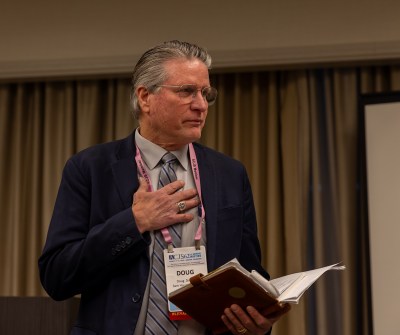
Ryan Randa, Associate Professor; Doug Dretke, Director for the Office of Comparative and International Education and Leadership;
…Erin Orrick, Associate Dean for Programs and Assessment; and Dr. Bitna Kim, President of ACJS, professor at SHSU, and former doctoral candidate at SHSU!
Among the College of Criminal Justice at SHSU’s many accolades and amenities, what stuck out was its embodiment of a concept, noted by John Ray, as “pracademics”.
The relationship between academician and practitioner, as we devolve further into niches and silos, is more important than ever. I truly respect how SHSU has gone beyond what others simplify Huntsville to be–a “prison town” – and instead aim to drive crucial research and policy that impacts the state, our country, and impressively, the entire world as it relates to criminal justice.
It was a great opening to a first experience for us, made all the more comfortable and welcoming by being among friends and mentors.
Council of State Governments National Conference- Day One!
by Michelle Moya
After what felt like the longest drive on Wednesday night, we woke bright and early to start an insightful couple of days at the CSG National Conference in New Orleans, Louisiana. For Olivia and me, stepping into this culturally rich state for the first time promised fresh perspectives and a new experience!
Starting off day one, we began with an engaging session with Waldo Jaquith from U.S. Digital Response, addressing one of state governments’ most pressing challenges: successful software system implementation.
His presentation structure was particularly compelling, starting with a “what not to do” story from Rhode Island (spoiler alert: it didn’t go well), followed by data statistics, and then shifting focus to actionable strategies that government officials could implement in their own jurisdictions to avoid outcomes like these.
The real takeaway? When he broke down why we need to ditch the most used Waterfall method for the Agile software integration method. We were all struck by the wealth of knowledge shared, and it ended up being Chrissy and Olivia’s favorite session of the day!
After a debriefing discussion among us all, we hurried into our next session. Next up was the issue everyone is currently buzzing about—AI in government. We had a diverse panel with three totally different perspectives: a Professor Neil Kleiman (bringing academic wisdom)…
…Michael Mattmiller, an Microsoft US Government Affairs Industry Team Lead…
…and Amy Hille Glasscock, with the National Association of State Chief Information Officers!
This session was particularly different and interesting because they weren’t feeding us that “AI is taking over” narrative. Instead, it was all about how AI can make government officials better at what they do. Coming to the end of the session, one key takeaway was the emphasis on AI improving people’s efficiency rather than replacing them. Its effectiveness is based on how well its intelligence complements our own. After insightful perspectives from the speakers, we were even able to snag a picture afterwards!
A Quick Lunch Break at Elizabeth’s
by Chrissy Biello
Following the morning conference sessions, we headed to Elizabeth’s Restaurant, an authentic New Orleans eatery. Upon arriving, Olivia noticed that many colorful signs on the walls displayed the phrase, “Be Nice or Leave!,” a popular adage in New Orleans. Stephanie explained to the group that this saying was created and illustrated by the local artist, Dr. Bob. The vibrancy of the restaurant and the matching neighborhood allowed for us to get a glimpse of New Orleans outside of the French Quarter.
When it came time to order appetizers, we got a great balance of foods that highlighted the diversity of New Orleans flavors. The options included praline bacon, Korean brussel sprouts, and fried boudin balls.
Every one of them was great; however, we all have our favorites. I especially enjoyed the praline bacon…
…and Korean brussels sprouts, as did Olivia!
After filling up on appetizers, we went on to our main courses. Olivia and I shared the chicken and sausage gumbo (which was Olivia’s first).
As Elizabeth’s is famous for their breakfast food, Michelle got the veggie scramble…
…and Professor Yawn and Stephanie had “Crabby Eggs,” including crab cakes, poached eggs, and hollandaise sauce.
For their side, they had the grits, which sparked a conservation about the famous movie, My Cousin Vinny.
And, of course, we ensured to get an order of the beignet biscuits! Served with a side of maple syrup, this dessert was filled with much nostalgia as I had it years prior on a past trip to New Orleans. Leaving Elizabeth’s, we headed back to the conference for another session!
U.S. Supreme Court Update: Implications for State Policymakers
by Michelle Moya
As a finisher, and after a fulfilling meal at Elizabeth’s, we attended our last session. This one being one I was particularly excited for, rightfully so, as it proved to be my personal favorite. Thankfully, we got there early, which allowed us to engage in meaningful dialogue with the speaker, Michael Lawlor, about our personal ambitions and the LEAP program!
Highlighting the session, it spanned various contemporary issues, from gun rights to freedom of speech and social media regulations. He spoke on cases the Supreme Court is currently deciding on and ones from last term.
We were surprised to see that many of the cases going before the Supreme Court pertained to social media practices. This goes to show the impact modern technology has had everywhere, even on government decisions! We all showed major interest in two cases dominantly, Lindke v. Freed from the 2023 term and Smith and Wesson Brands v. Estados Unidos Mexicanos.
Ogden Museum of Art
by Olivia Discon
To continue our educational pursuits in New Orleans, we ventured on to Ogden Museum of Southern Art. The museum prides itself on providing a large, comprehensive collection of Southern art, which served as the perfect place for us to learn more about the city’s cultural offerings.
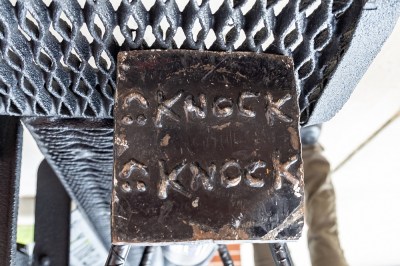
Before entering the museum, we were greeted with a massive James Surls sculpture! The cast bronze and stainless steel sculpture, known as Me, Knife, Diamond and Flower, was an incredible iteration of his distinguishable style.
LEAP Students with a James Surl’s art piece at the Ogden Museum of Southern Art
Having seen his work several times now, I am quite a fan! Surls continues to be a LEAP favorite, as a distinguished Sam Houston State University alumni and excellent Texas artist.
There was a wide variety of contemporary art exhibits. Admittedly, some of them perplexed me. The first gallery we entered featured a multimedia installation called stream or river, flight or pattern by Joan Jonas. With bird-like kites fixed to the ceiling, paintings, and a few films playing consecutively throughout the room, the group was determined to decipher its meaning.
After some perusing and ultimately admitting defeat, we read that the comprehensive work is meant to reflect our interactions with nature.
Naturally, we moved on to the next gallery.
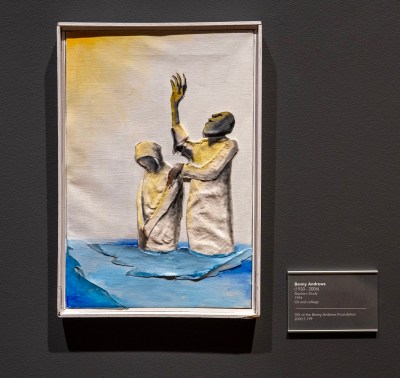
A newfound artist we enjoyed was Benny Andrews, although the pieces we respectively enjoyed differed. Andrews had various styles and mediums in this gallery, which made for an interesting sample of his work. Chrissy liked a piece called Destiny, Destruction, and Despair…
…Professor Yawn enjoyed a 1994 Baptism Study…
…and I personally liked Keep Your Eyes on the Acrobats.
In the meantime, Michelle had made some headway through the galleries, proceeding to find what would become her favorite piece in the museum: Uptown Street by Lulu King Saxon. Michelle, who is relatively new to the art scene, learned that she takes to nature scenes–and large scenes at that!
Chrissy, on the other hand, prefers Impressionist paintings. Her favorite appeared to be Joseph Meeker’s Bayou Plaquemines; a pink-casted sunset falling over a swampy landscape.
My personal favorite, oddly enough, was a George Rodrigue painting that was not a Blue Dog variant. Instead, it was a painting called The Aioli Dinner, known as his “Cajun masterpiece”.
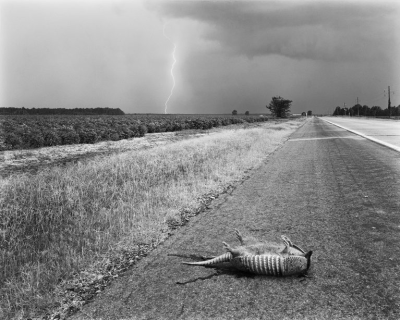
We then went on to Baldwin Lee’s photography exhibit, which was especially enjoyable. Lee, in the 1980’s, set off on an artistic journey to retrace the photos taken by his mentor, Walker Evans, in the 1940’s American South. Placing a focus on Black Americans as his subject matter, the photos and their strategic composition invoke the viewer to contemplate themes of poverty and hardship. We were fascinated by his experience on this expedition and impressed with his results. Many of his subjects, such as Untitled, 1983-1989, were complete strangers he approached along his journey.
Some of our favorites were Mobile, Alabama…
…New Orleans, Louisiana…
…and Waterproof, LA.
“Looking is a two-way street. Not only is the photographer looking, but the potential subject is looking too. What the subject sees carries great weight. For some reason, people would see me positively. I am not sure if it was my race, gender, physicality, dress, demeanor, or anything else. If in a day I asked twenty people permission to make photographs, nineteen would say yes.”
In all, we saw and enjoyed several new artists on this endeavor. The visit to the museum was a pleasant way to indulge in Southern contemporary art…
…and to broaden our cultural literacy.
Saffron
by Chrissy Biello
In true LEAP fashion, we opted for a dinner that would allow us to gain new experiences. Saffron, an Indian restaurant and two-time nominee for the James Beard award, proved to give us that opportunity. The chef, Arvinder Vilkhu, and his wife, Pardeep Vilkhu, opened the restaurant with the purpose of combining their Indian heritage with the New Orleans culture. As we began to peruse the menu, that was extremely evident; options included, Curried Seafood Gumbo and oysters!
For appetizers, we ordered the pickle sampler…
…Chicken Lasooni, and the garlic and chili-cheese naan.
Olivia favored the naan bread, while the Chicken Lasooni was Michelle’s main pick. As for myself, the pickler sample was my favorite; the dish included an eggplant spread, something I had never tasted before, but will confidently try again.
For our main course, Olivia and I shared the Chicken Biriyani. This dish was incredibly flavorful, containing saffron rice, crispy onions, a soft-boiled egg, and yogurt on the side!
Michelle savored the Curried Seafood Gumbo, and Professor Yawn and Stephanie relished the Oyster Bed Roast!
With already full stomachs, it was a surprise that we were tempted by the dessert. To our delight, Chef Vilkhu himself served our table! This included a cake called, “It’s Not Even Your Birthday,” surely named for the multiple layers of chocolate ganache and buttercream that would make anyone believe they were partaking in a treat for a special occasion.
Further, we had the Ginger Crème Brûlée, a definite favorite among the table.
As we had the opportunity to thank Chef Vilkhu for the amazing meal, we were very honored to take a photo with him!
In all, Saffron was a great way to end the first day of our New Orleans trip, allowing us to anticipate the next days of new experiences to come!
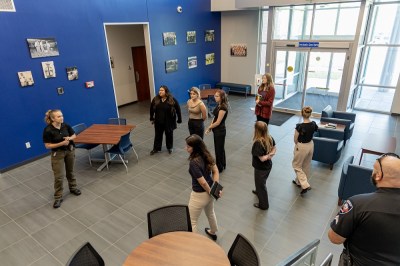
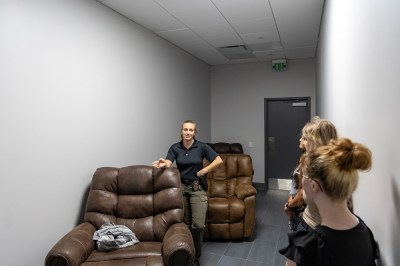
The City Fellows Interns and LEAP Ambassadors recently stepped into the world of local law enforcement with an exclusive tour of the Huntsville Police Department, led by the warm and welcoming Corporal Sanders, Senior Officer Craig, and Officer Jennings. With this tour, we were able to experience multiple aspects of our community and get to know the dedicated officers who work tirelessly to keep our city safe.
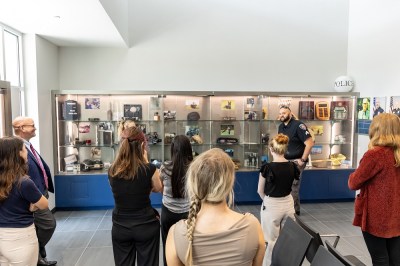
They began by sharing the department’s history, proudly showing us old uniforms, historic equipment, and awards that marked the walls. Right by the entrance, we even saw the shiny shovel used to break ground for this incredible facility in 2021!
Walking through the common area, I realized this space was more than just a building; the walls were filled with images and stories of Huntsville’s history. As I examined these photographs, I felt a stronger connection to the community, seeing the legacy left by the officers who served before.
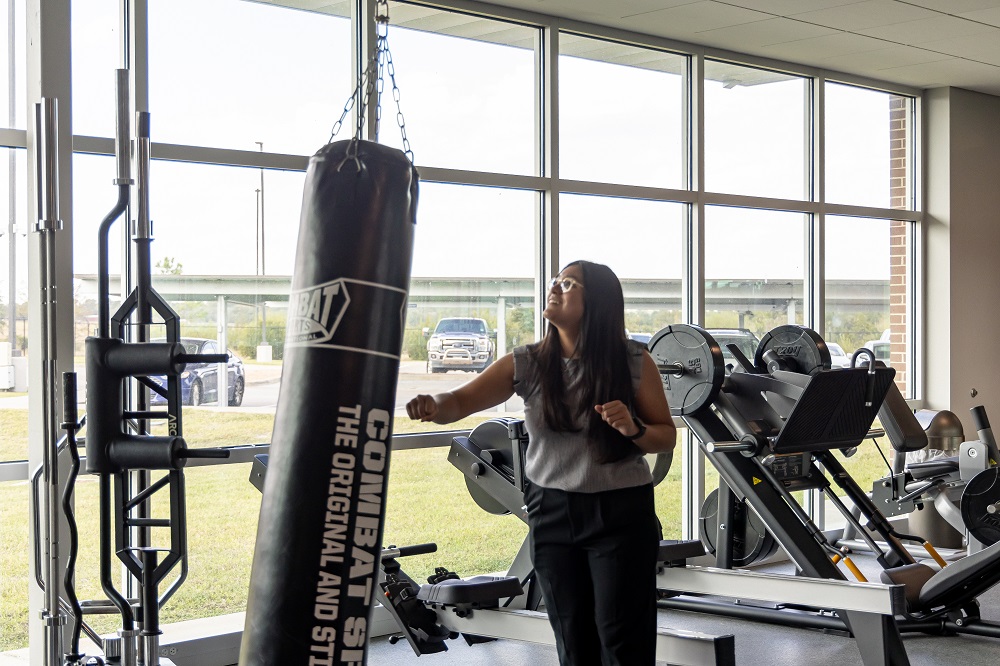
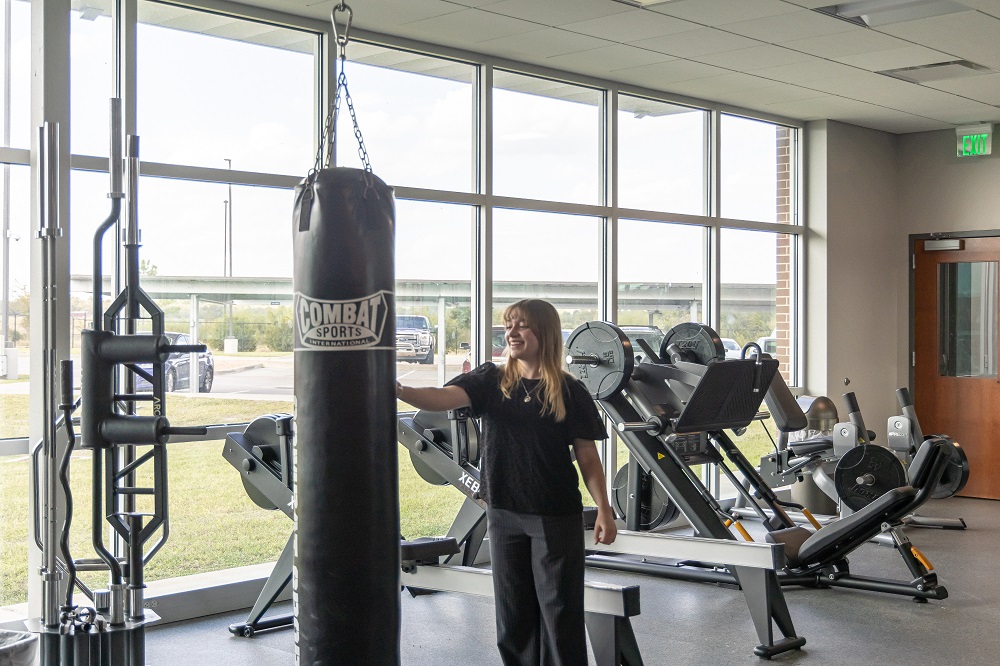
As we entered the gym, Professor Yawn began egging some of us on to punch the punching bag. After some weak and pitiful punches…
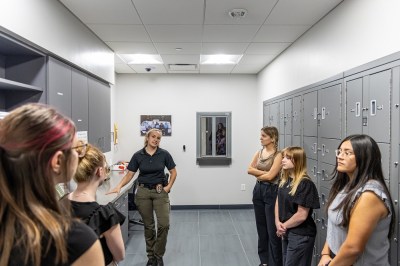
…we were led to the locker rooms. We learned that these are not just practical spaces; they include areas for victims in need of privacy. From this, we understood that every aspect of the building was not only built in mind for the officers but also the community.
In the evidence room, we learned a surprising amount about handling and storing evidence. Senior Officer Craig explained the steps for bagging items with precision and gave us a look at the organized system of lockers and refrigeration units.
Moreover, one of the highlights was meeting Senior Lieutenant Curt Landrum. He explained that there are two types of cases that the detectives work on: property crimes and personal crimes. When asked how many cases they work on each year, he noted that it is in the thousands!
Next, we headed outside for a little action! Senior Officer Craig set up a mock traffic stop, and Emely bravely volunteered to be “pulled over.” As Senior Officer Craig went through her routine, she explained all the safety measures she takes, from positioning her vehicle carefully to approaching with full awareness.
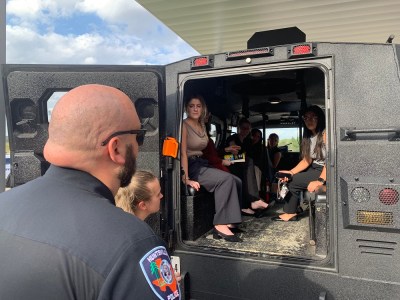
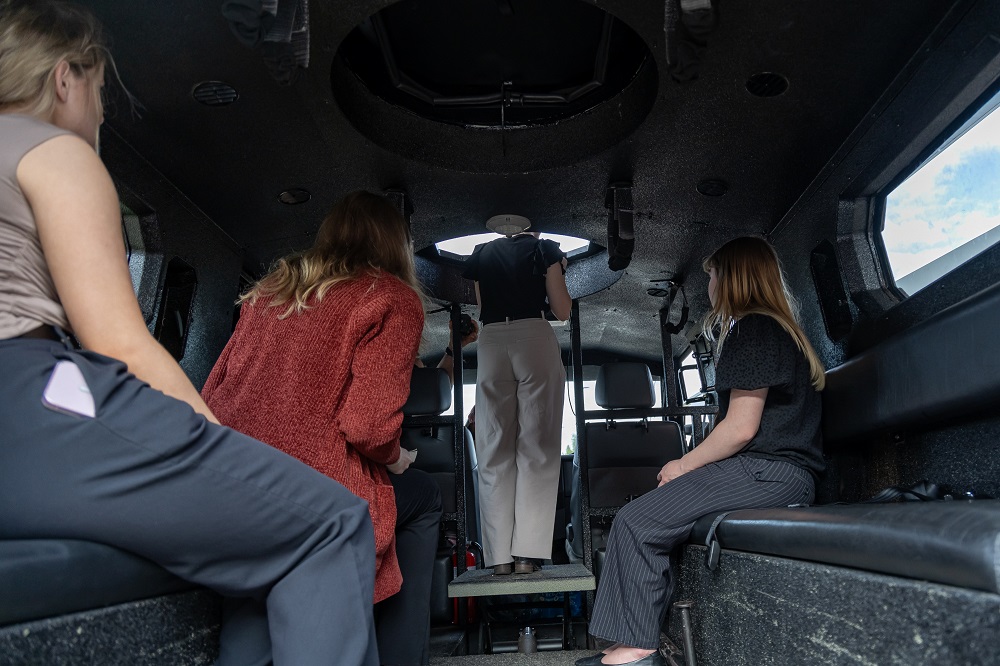
Finally, we got to climb aboard the SWAT truck, affectionately known as the “Pitbull.”
It was an absolute thrill to be inside this armored vehicle, knowing it’s there to protect the officers in extreme situations.
Just being in that truck gave us all a feeling of respect for the risks these officers are prepared to take.
We left the Huntsville Police Department with much appreciation for the officers who serve our community. Thank you to Corporal Sanders, Senior Officer Craig, and Officer Jennings for a day filled with learning, laughter, and unforgettable experiences!
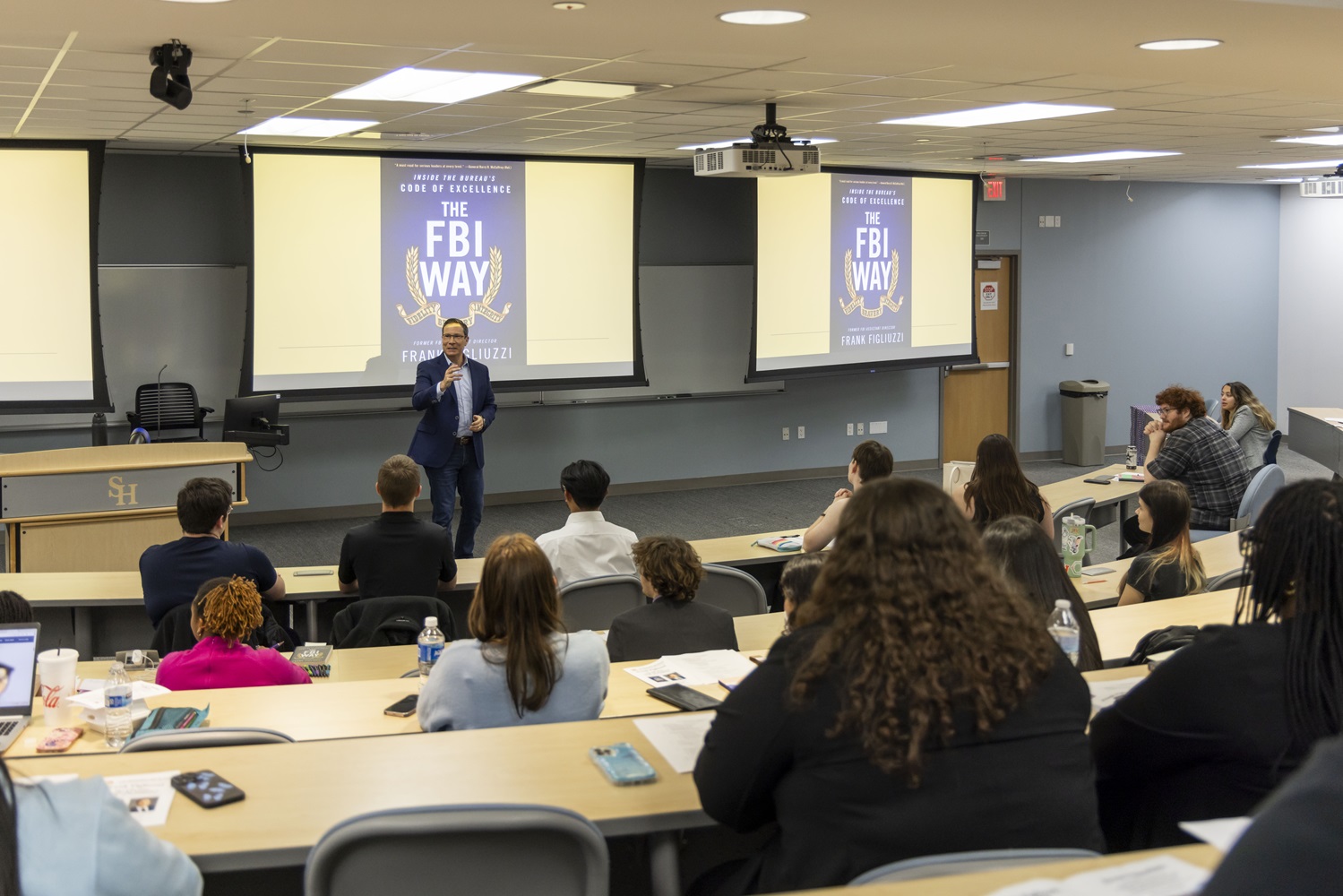
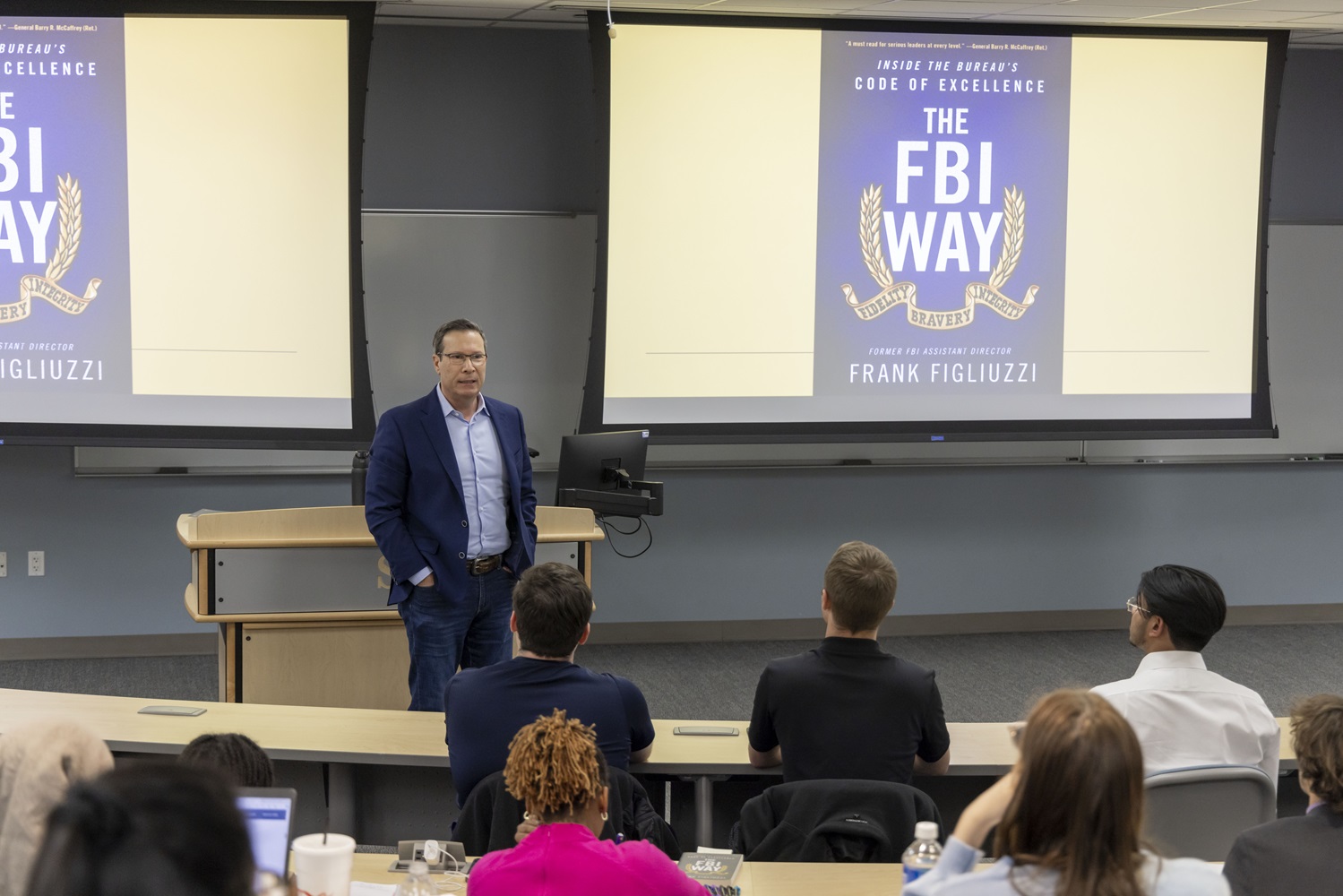
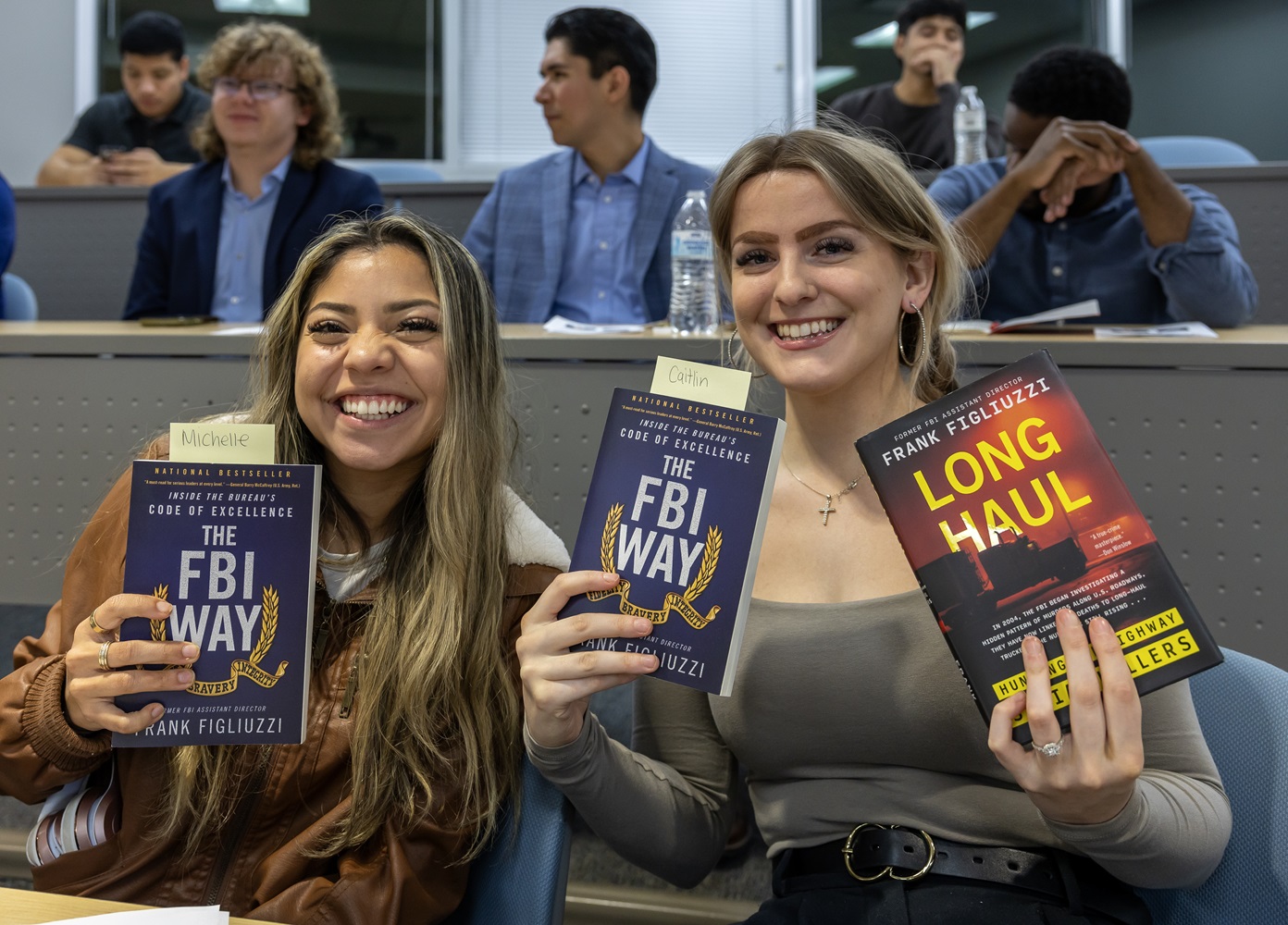
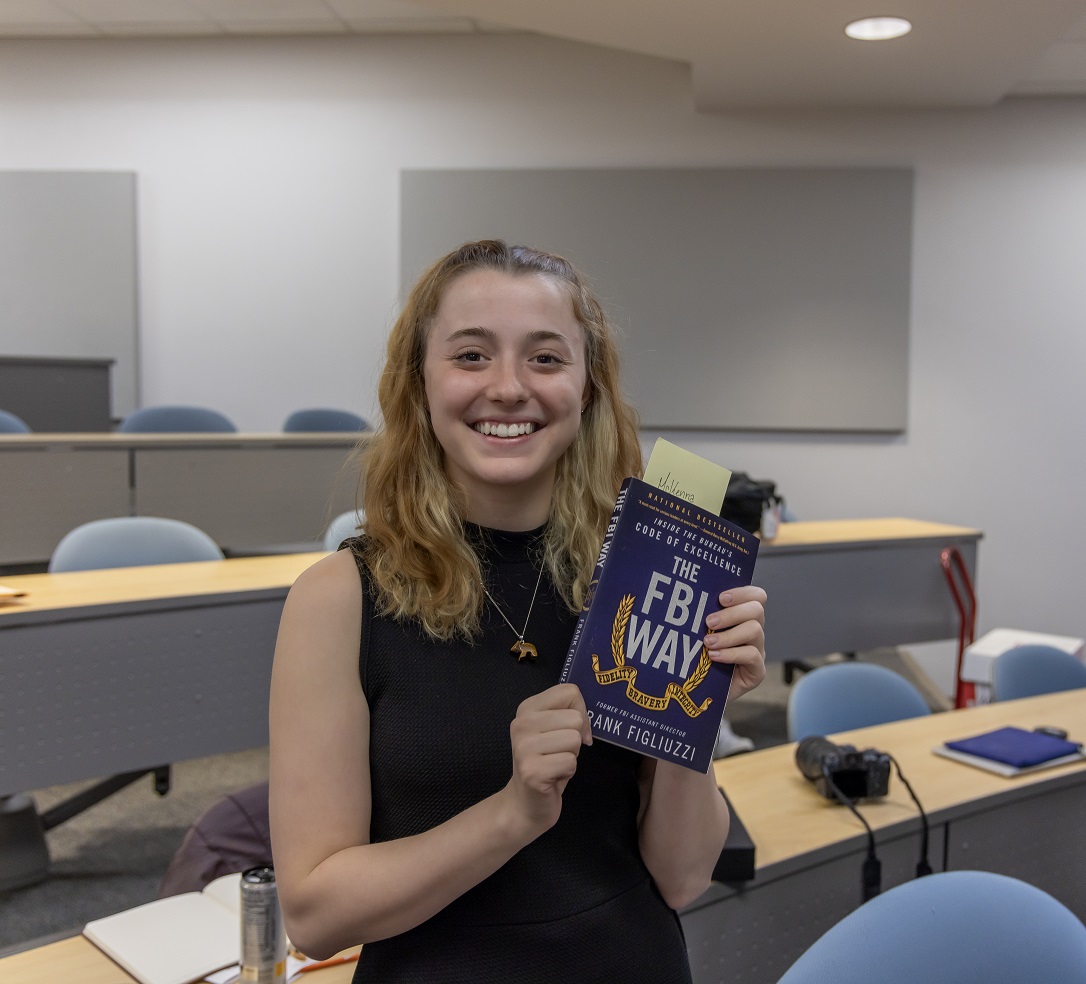
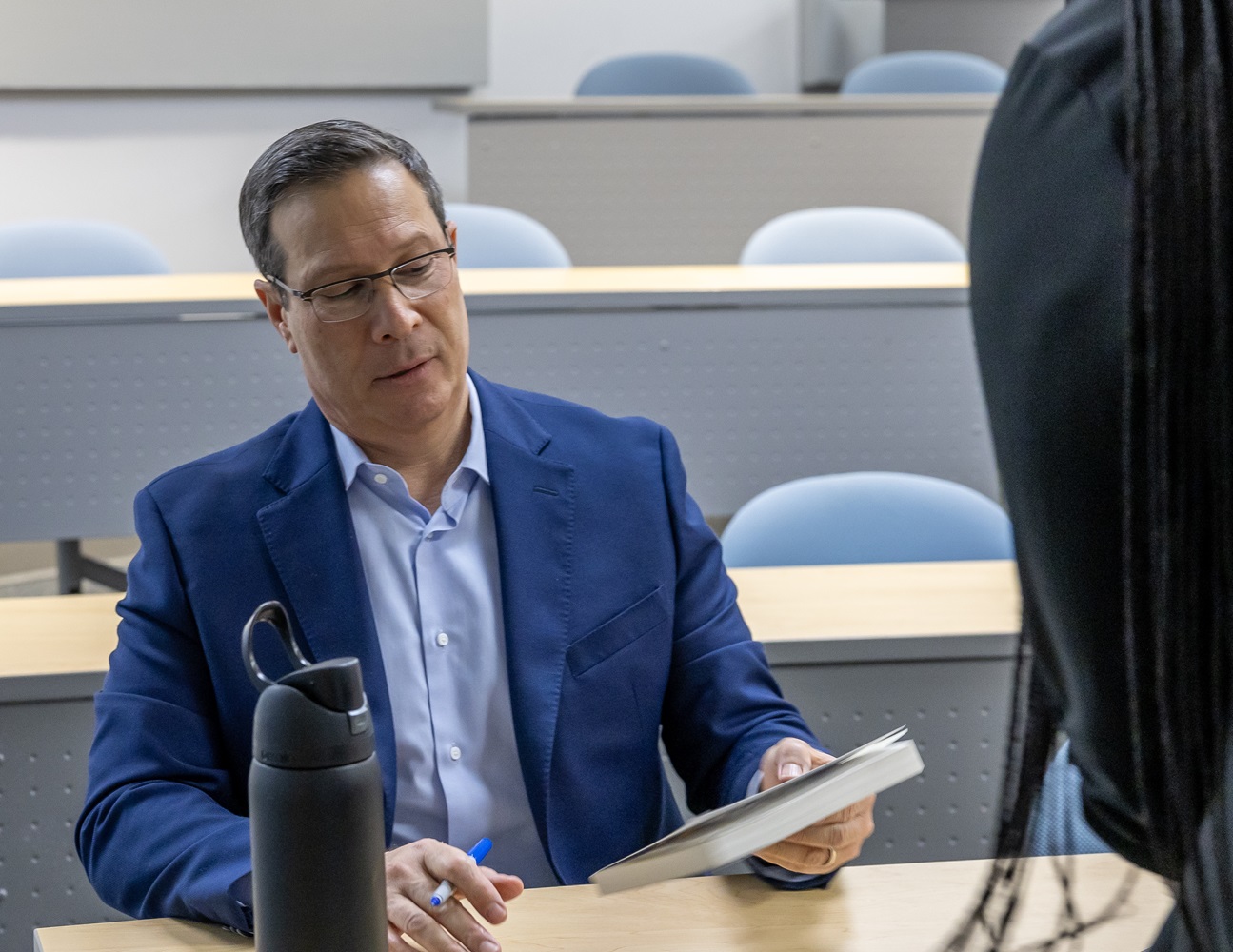
This week’s meeting was a unique one for the Pre-Law Society; the meeting was not only open to current members but also to everyone on campus! There was a reason for this unique approach–we had a unique speaker, Frank Figliuzzi, who is not only an attorney, but also an author and the former Assistant Director of the FBI.
After President Discon went through business updates for the Pre-Law Society members…
…it was time for Figliuzzi to speak. Mr. Figliuzzi wrote the national bestseller, The FBI Way: Inside the Bureau’s Code of Excellence, which he would be discussing with us!
Mr. Figliuzzi started his presentation with a quote by J. Edgar Hoover, “The most effective weapon against crime is cooperation… The efforts of all law enforcement agencies with the support and understanding of the American people.”
Next, he gave insight on his book’s origin, saying that the FBI was under attack, which made him angry and led him to write the book as a way to counter the incorrect assumptions being made. He then went in depth about what he says are the preserving values of the “FBI way,” otherwise called the “7 Cs.”
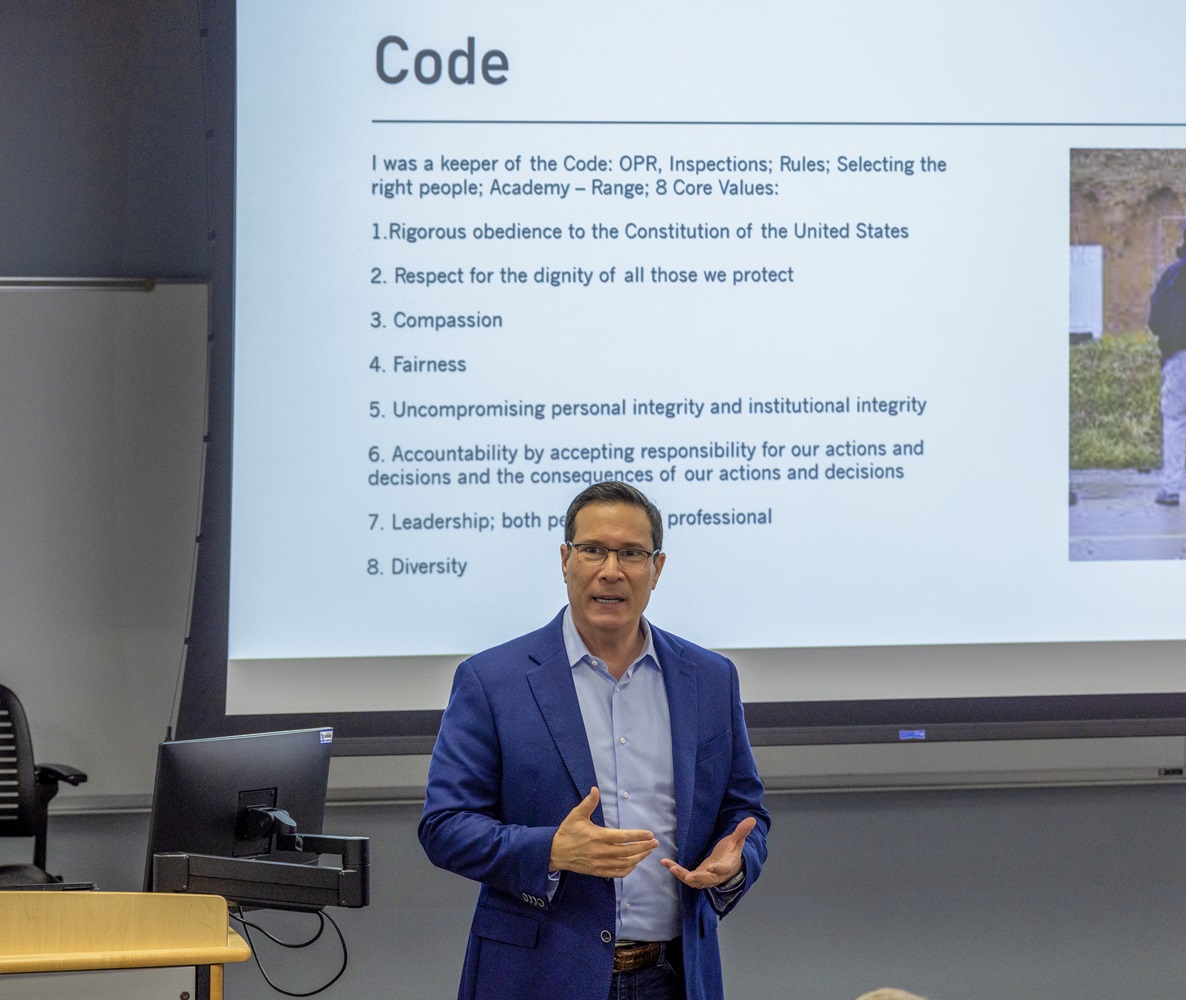
The first “C” is Code, which refers to the values and principles you stand by. The second is Conservancy, emphasizing the importance of being part of something larger than yourself. The third is Clarity, which involves clearly and honestly expressing your values.
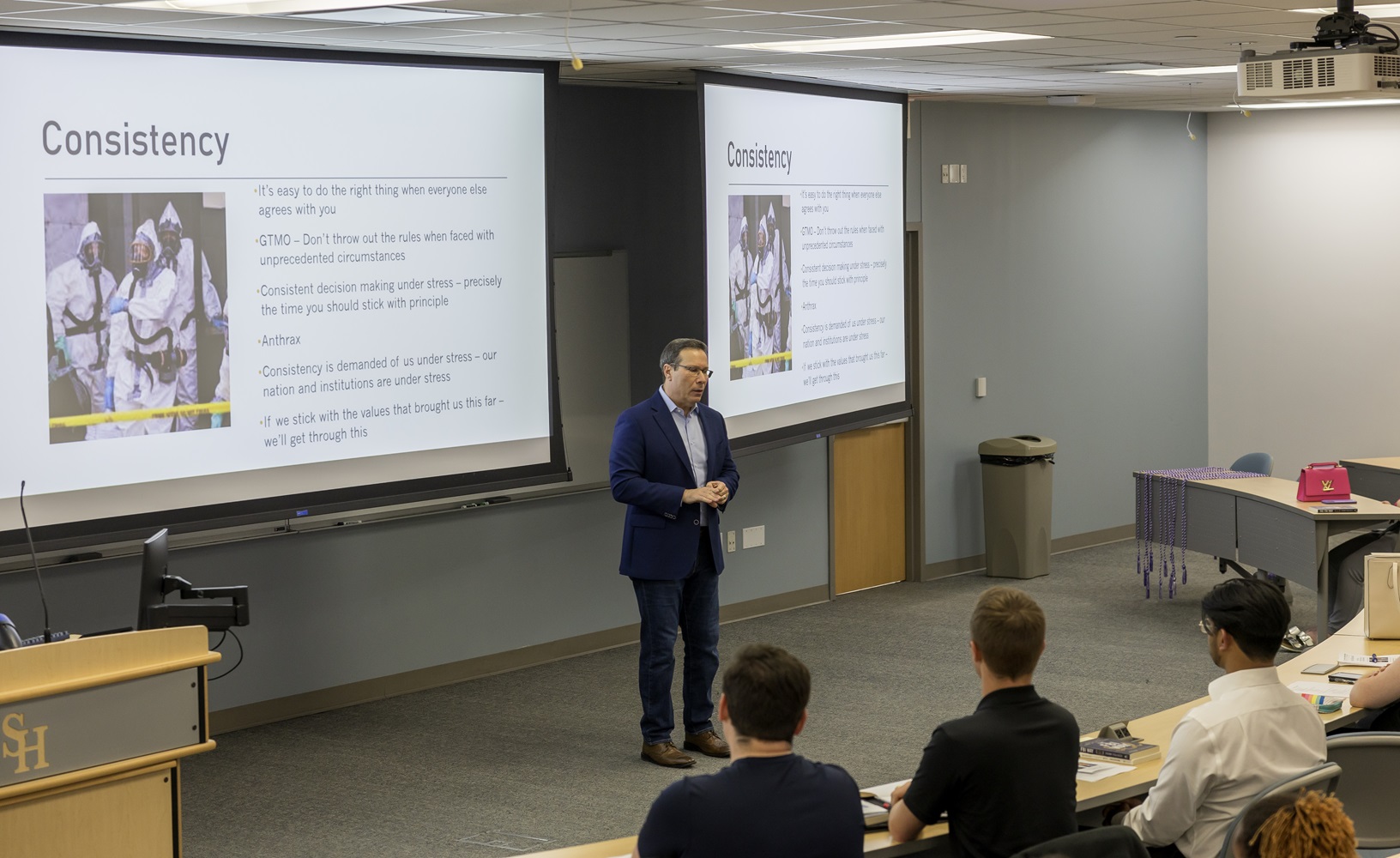
The fourth is Consequences, meaning doing the right thing, even when it is difficult. The fifth is Compassion, which is about striving to understand others’ perspectives. The sixth is Credibility, with the reminder that “people won’t believe in your team if they don’t believe in you.” Lastly, the seventh is Consistency, which involves sticking to your code, no matter what.
He also introduced the term “undercover syndrome,” describing how officers who spend too much time undercover may begin to commit petty thefts and other crimes sloppily, with the subconscious desire to get caught by police. This act of self-sabotage is typically due to the complete subversion of morals and identity that comes along with undercover work. The FBI tries to anticipate this through providing mental health support to its agents and their families.
He finished his lecture with a word of advice to prospective law students: “start viewing yourself as a leader now.” As I looked around the room, I was sure that this advice was impactful to all.
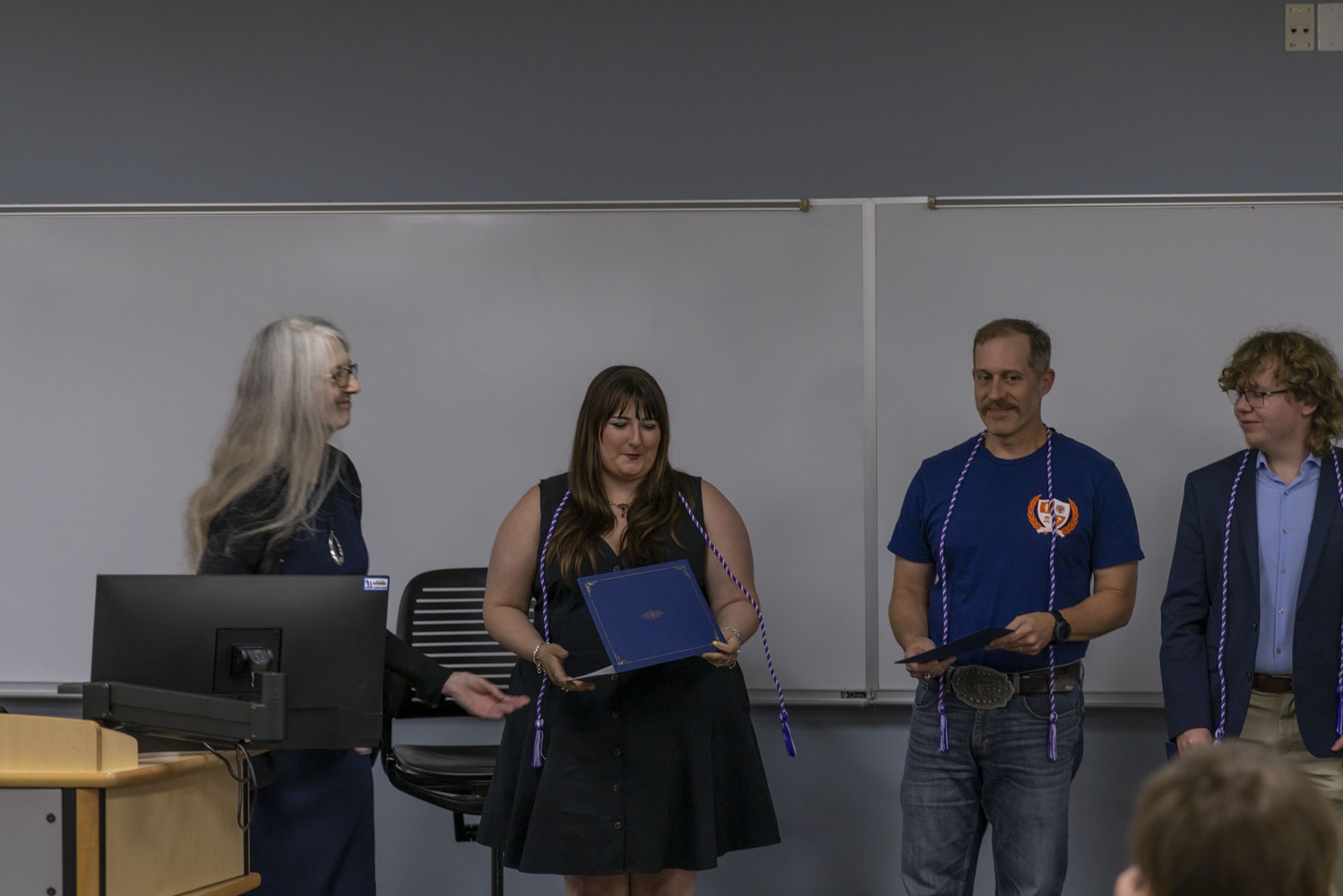
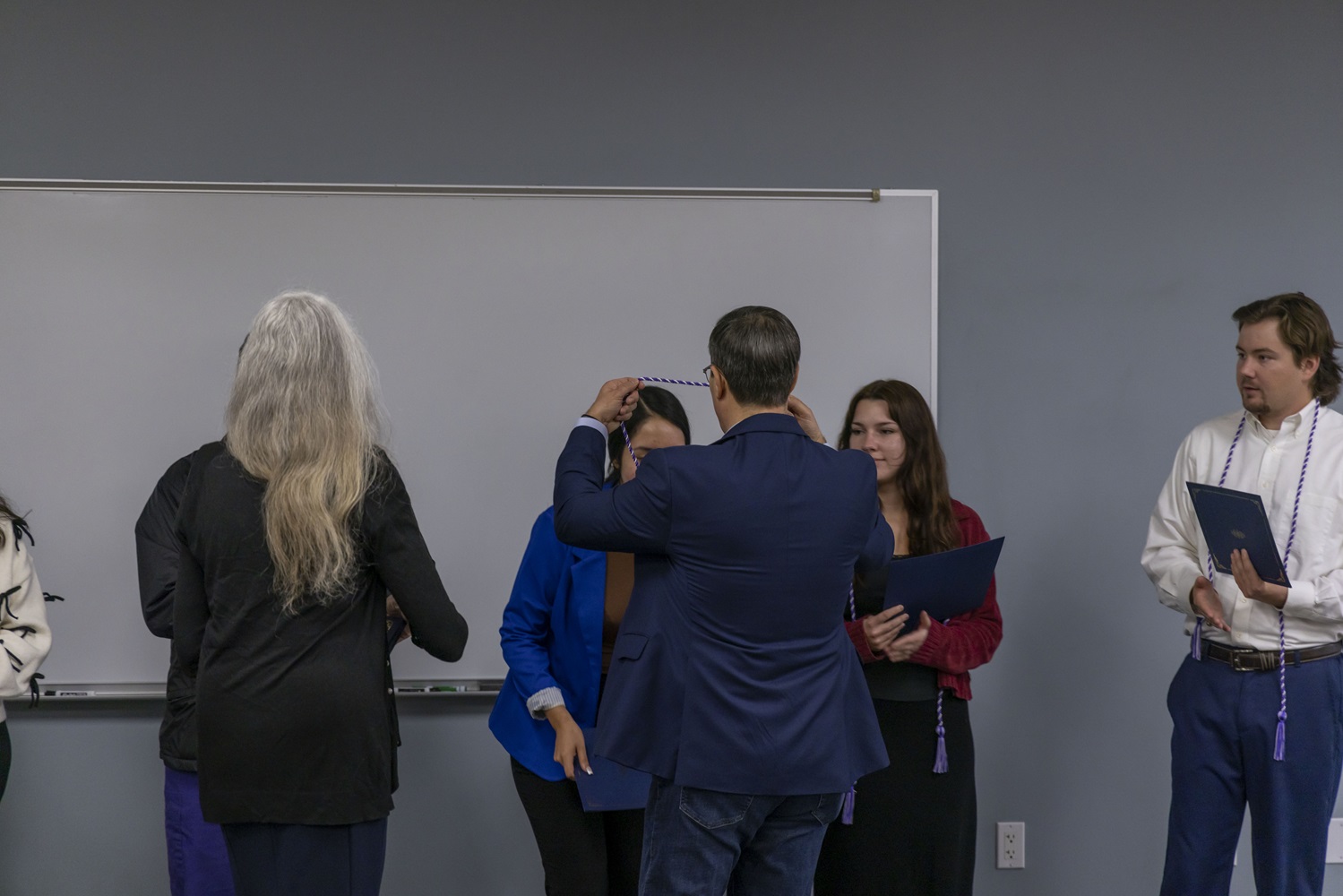
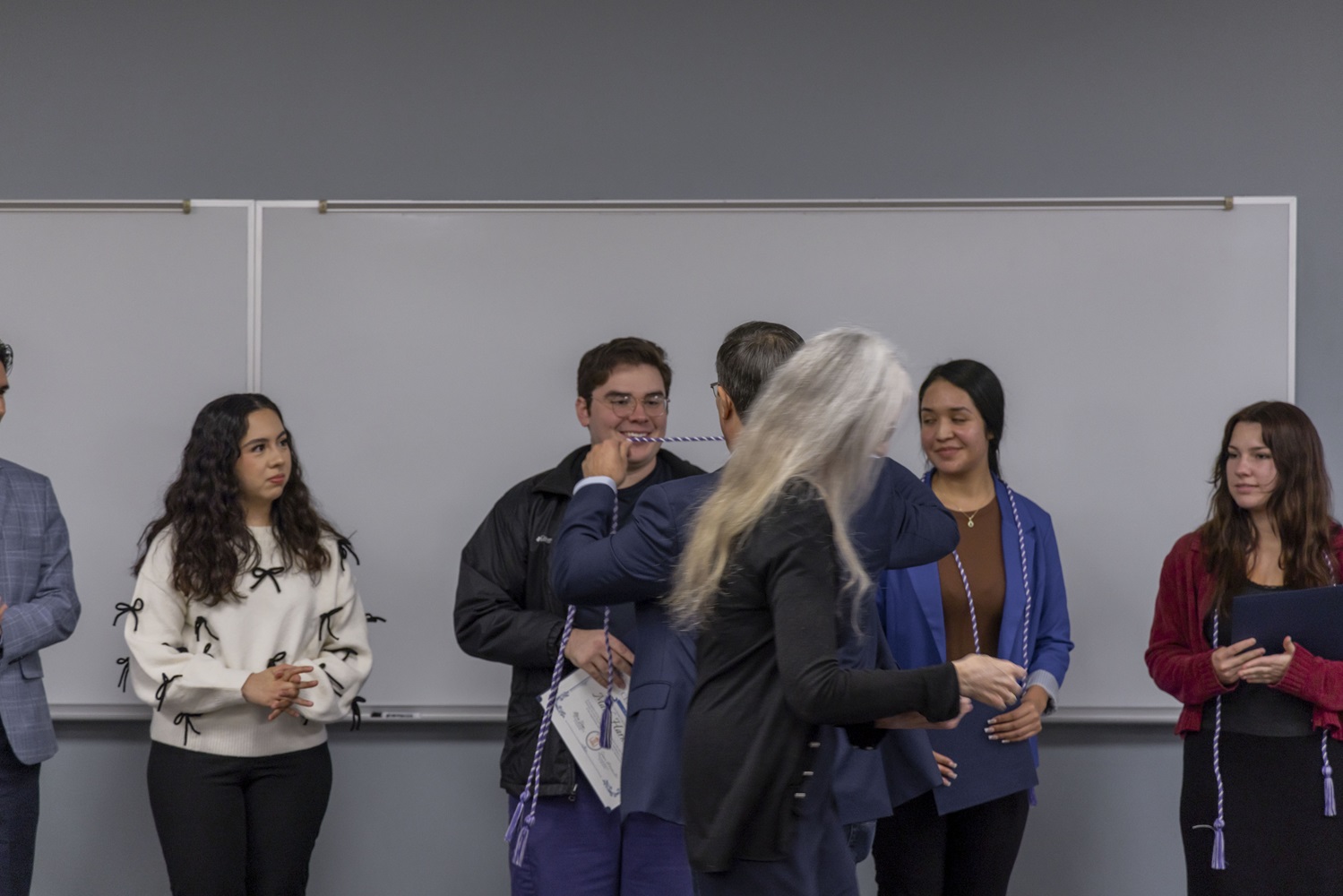
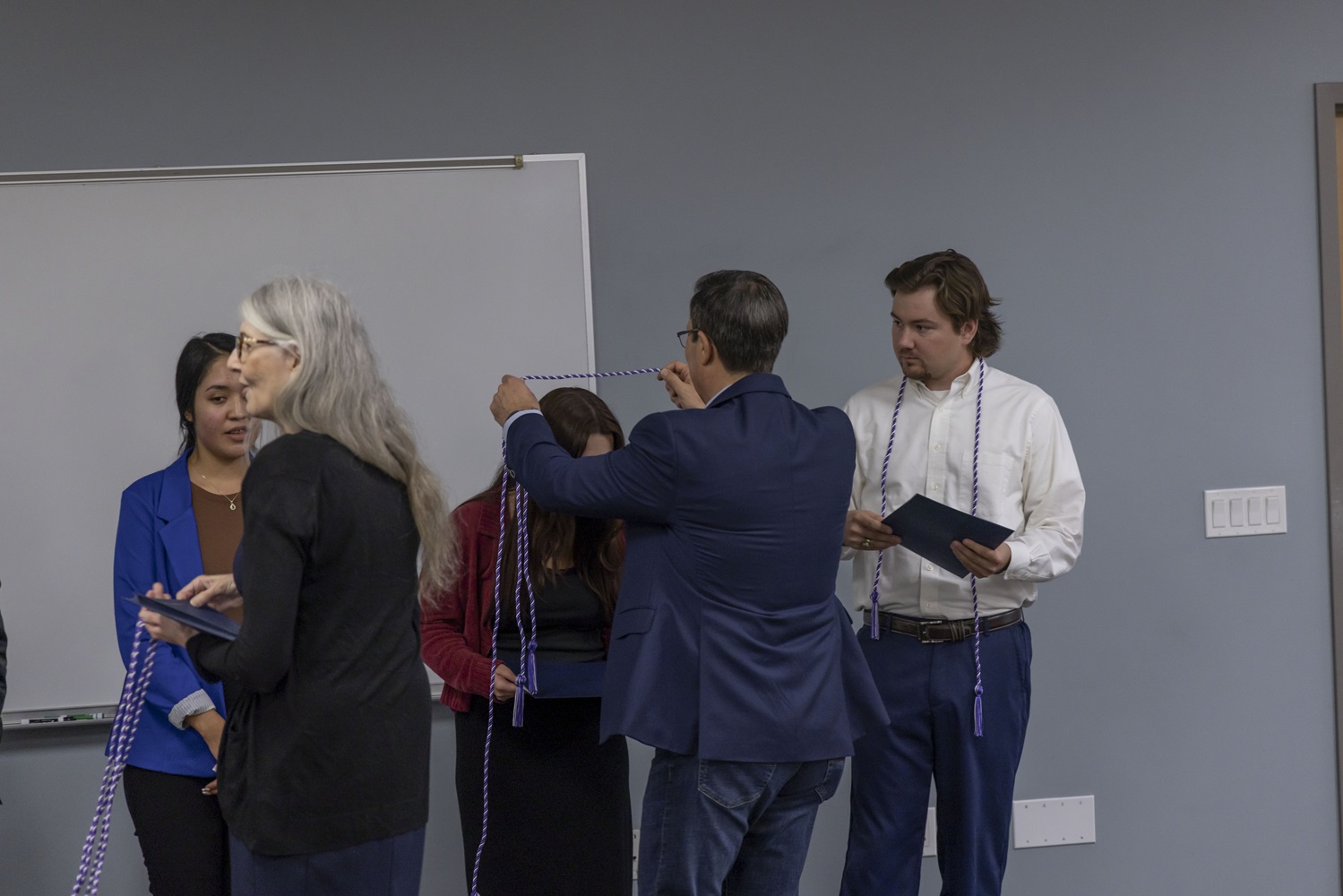
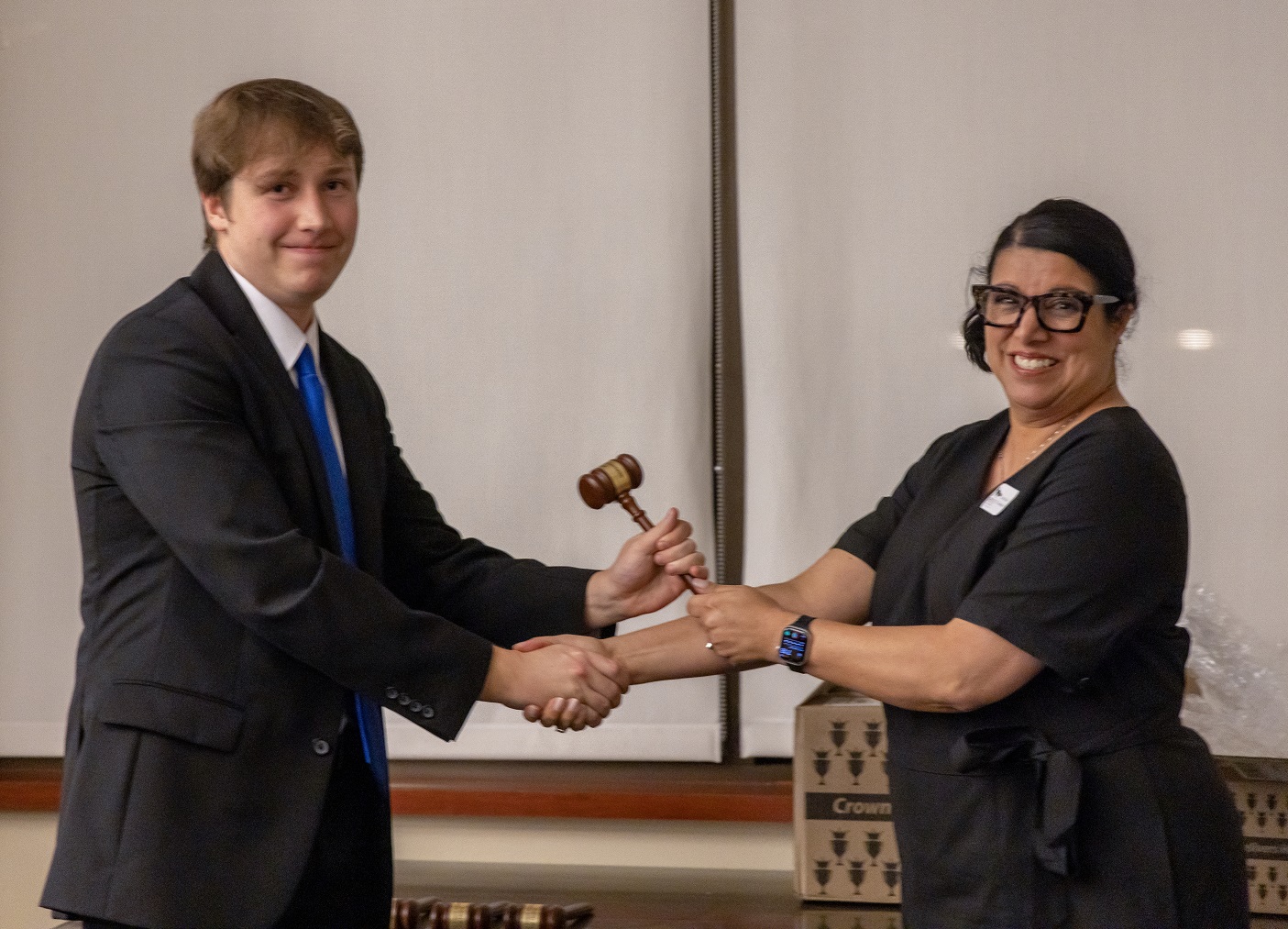
After Mr. Figliuzzi’s presentation, the meeting continued with the cord ceremony for this semester’s graduating seniors. Making it more special, Mr. Figliuzzi corded the seniors while Ms. Loveall gave them their certificates.
These seniors included: Clay Barton, Natalie Bradford, Yajaira Gutierrez Marin, Mark Harkrider, Daniel Pierce, Emily Segovia, Mason Solomon, Grant Threatt, and Alexandra Von Heuvel. While we are sad to see the seniors graduate, we are excited to see all that they will accomplish in the future.
Following the event, Mr. Figliuzzi spent additional time signing books for the students, capping off one of our best-ever meetings with a wonderful personal touch.
The Pre-Law Society would like to give a big thank you to Mr. Frank Figliuzzi for taking the time to speak with Sam Houston students. His presentation was incredibly captivating, informative, and humorous!
While most students are pleading for extra credit at the end of the semester, LEAP students were pleading their cases, literally, in moot court. Facing off against teams that came from eleven different universities across four states to compete in the South / Texas Regional American Moot Court Association tournament held in Fort Worth, with its rich history and home of Texas A&M University’s Law School. This tournament is one of sixteen regionals across the United States that will help select the top U.S. moot court team.
LEAPsters depart SHSU for their first moot court tournament
This was the first time in seven years that SHSU fielded a team. Olivia Discon and Maggie Betancourt stepped up this fall to engage in weekly meetings, much “homework,” and a lot of learning to serve as Bearkat mooters. They also received help from Dr. Diana Brown (COBA, SHSU), Dr. Gene Roberts (SLMS, SHSU), Victoria McClendon-Leggett, Stephanie Fors, and Maddie Cawthon–the latter serving as bailiff, and a potential mooter in future years.
Day one of the contest was an all-day affair, a Saturday of three rounds. For Olivia and Maggie–team 419–this involved facing off, first, against Kathryn Dearing and Julia Daniel from the University of North Texas, one of the most active universities in the moot court universe over the past two decades, largely a result of the efforts of Dr. Kimi King. This year, King was on hand, along with Dr. Adam Whitten, both of whom served as coaches for their two UNT teams.
The SHSU team was designated as representing the petitioner, in this case a “William DeNolf,” who may, or may not, be responsible for recklessly goading a Ms. Bronner into suicide.
With the fate of DeNolf in their hands, Betancourt and Discon took turns arguing his case to two “Supreme Court Justices” (actually, law-school professors).
Tackling issue one (the 5th Amendment), Betancourt began, using her nine minutes to argue that the State violated DeNolf’s protection against self-incrimination when using biometric access to the contents of his phone.
Olivia Discon, meanwhile, argued the second issue (1st Amendment), making the case that the State violated DeNolf’s freedom of speech by criminalizing the case for suicide.
They were countered by Daniel and Dearing, who ably argued that the State was justified in their steps to access and regulate DeNolf’s speech.
Delving deep into the cases and the record, Daniel and Dearing demonstrated a strong grasp of the material, and they edged out the SHSU team, winning both ballots.
For their second round, the SHSU students faced Ethan Ellis and Amanda Parker-Chavez of Lamar University. With their first round jitters somewhat abated, the LEAP students performed better this time, winning both ballots.
The third round, then, would likely determine whether the LEAP/SHSU team would make it the “Sweet Sixteen,” a prospect that, no doubt, brought back some of those early jitters.
In this round, which featured the most aggressive of the judges and a “hot panel,” Discon and Betancourt split the ballots, finishing 3-3.
The outcome of this contest was, however, withheld until the Day-One reception and awards, hosted by TAMU Law. Following a discussion of the law-school’s many merits…
…the crowd eagerly awaited news on the leading orators and the teams moving on to day two of the competition.
The top orators were chosen first:
Ashlyn Dodson (UNT)
Quinn Kelly (UNT)
Jordan Peterson (Berea College)
Kylie Kinsella (TCU)
Dominic Mendlik (TCU)
Kaitlyn Allen (TCU)
Landon Reffitt (Benedictine)
Jeffrey Schremmer (Benedictine)
Collin England (Benedictine)
Jacob Hahn (Benedictine)
Following these congratulations, Ann Dutia read off the list of teams competing in the “playoffs,” the “Sweet Sixteen.” Reading in “no particular order,” Dutia listed team numbers…443…437…402…and, finally, after seven teams were announced, we heard “419.” The SHSU students made it to the second day of competition.
Maddie, who served as bailiff for the rounds, look bemused…
…Maggie beamed; and Olivia, in her way, looked equal parts ill and gratified.
With the results in hand and an unexpected day of competition ahead of us, we walked back to the hotel. Along the way, we ran into a reminder of Fort Worth’s rich history, statues of Butch Cassidy, the Sundance Kid, and the “Hole in the Wall” gang, a scene that prompted a selfie.
It also prompted a little gratitude. While we were anxious about the showdown looming the next day, at least we wouldn’t face the fate of Butch and Sundance–who were shot to death in Bolivia. It’s a small thing, we know, but it reminded us that Moot Court is a cause Worth taking, on a trip Worth making!
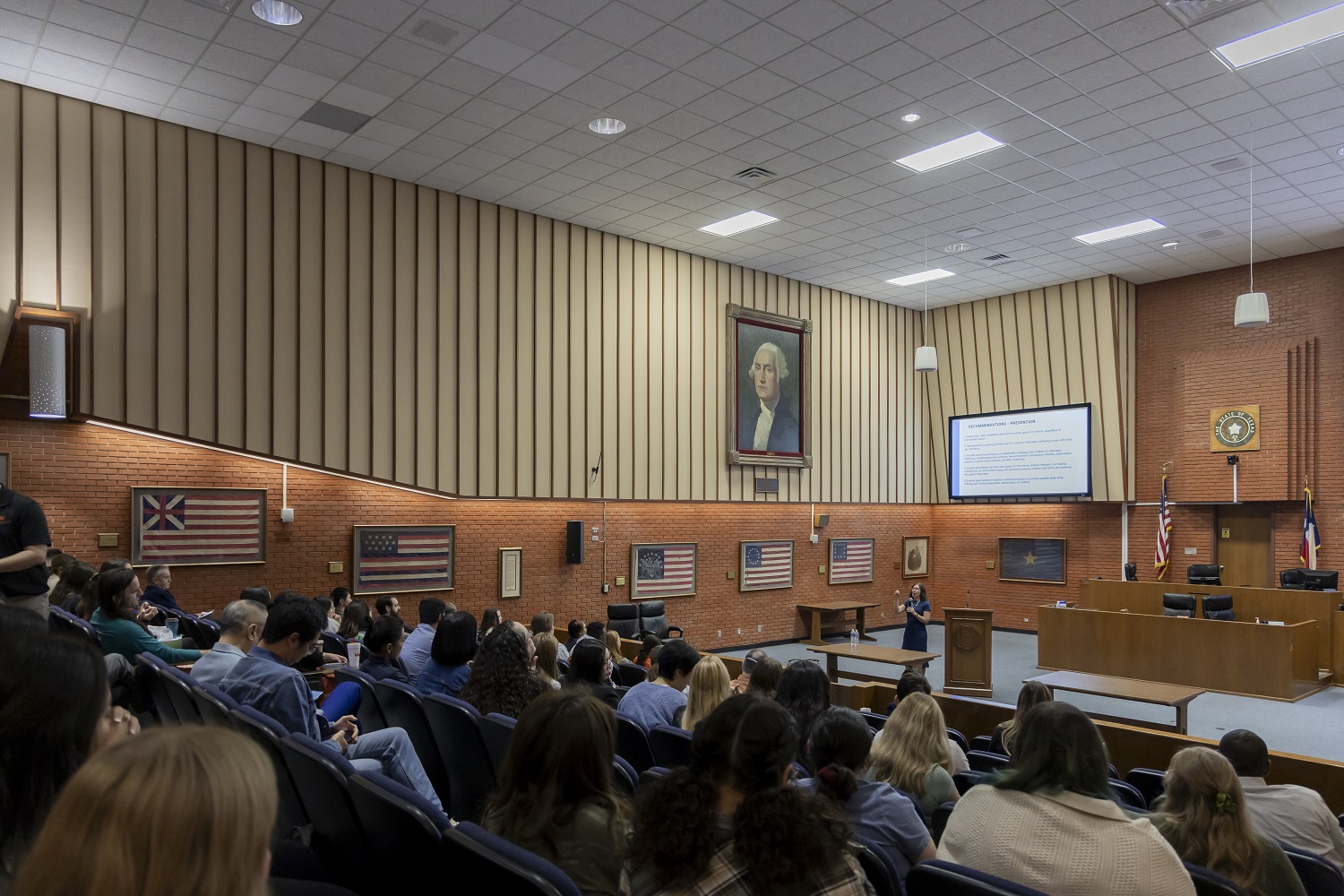
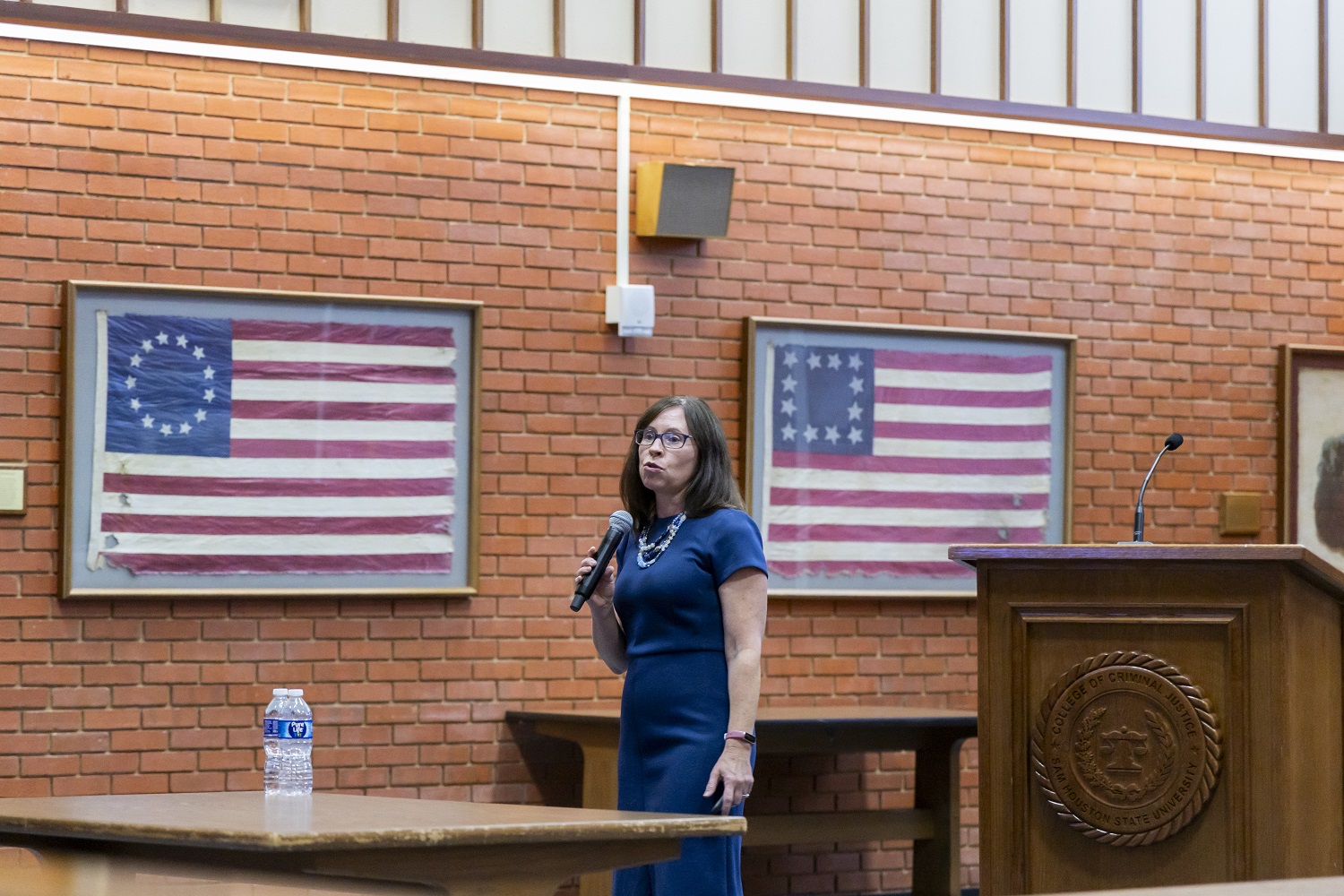
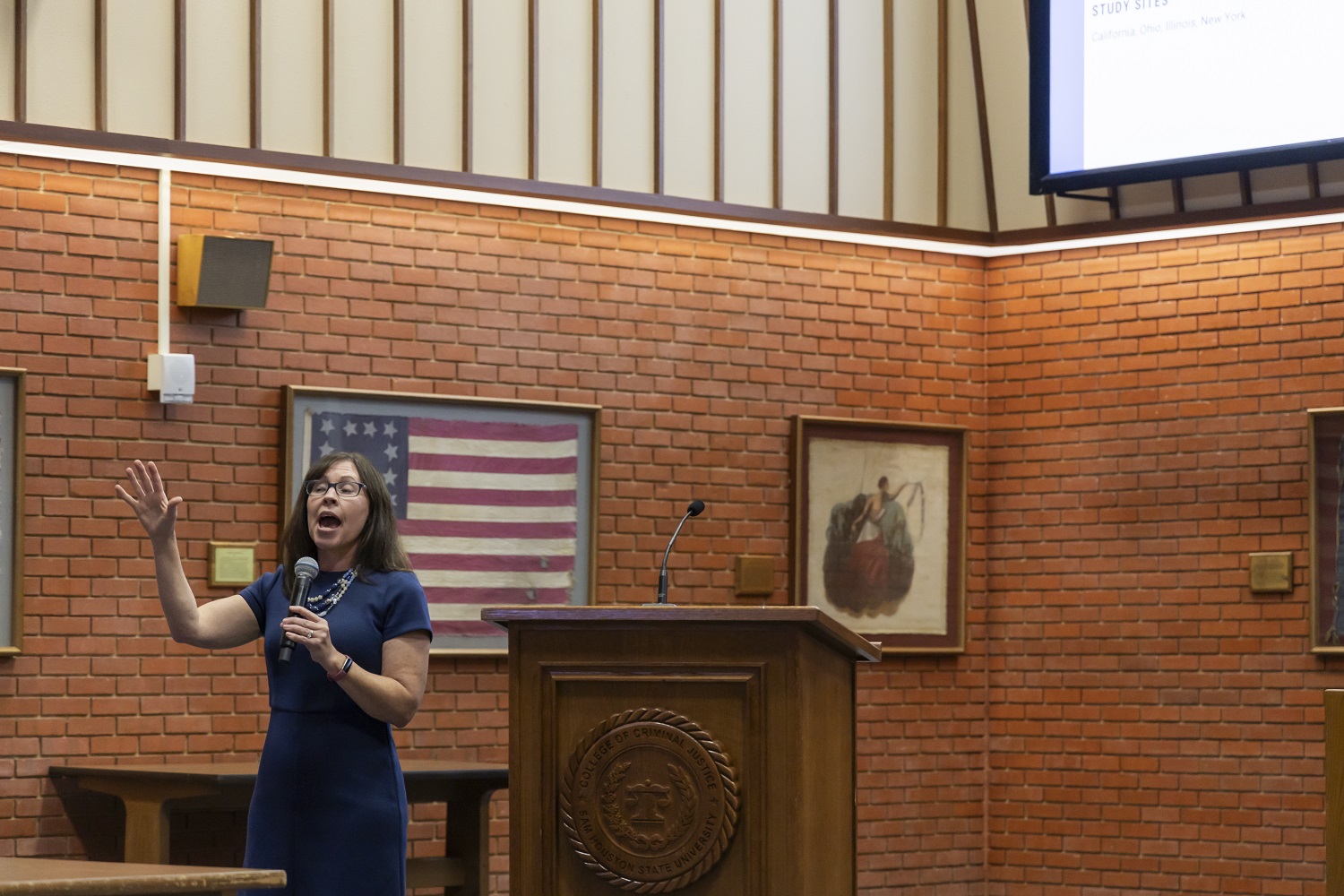
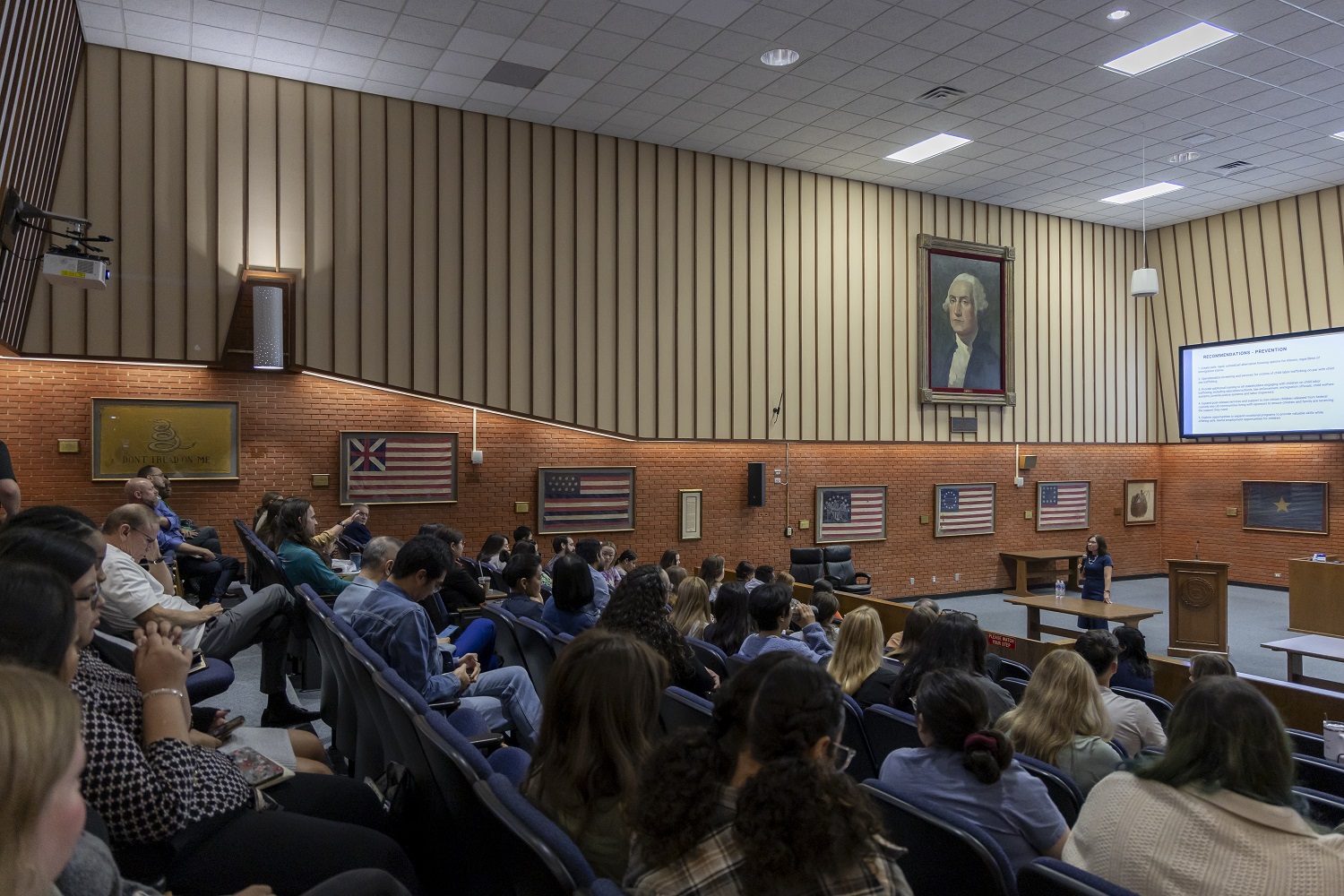
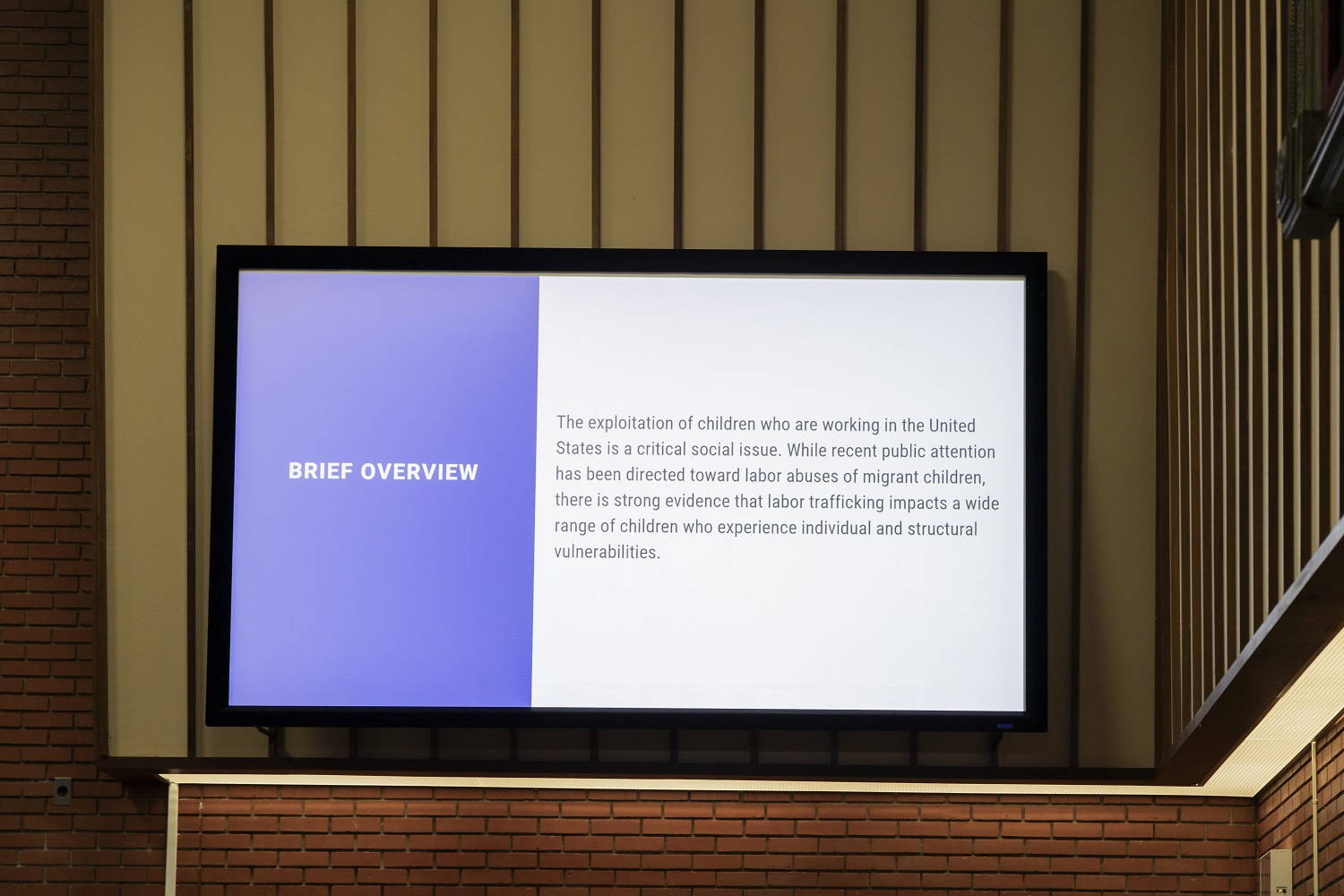
Labor trafficking has been a prevalent issue in the United States for many years, particularly the exploitation of migrant children. Dr. Amy Farrell, Director of Northeastern’s School of Criminology and Criminal Justice, came to Sam Houston State University to speak on this disturbing reality for the Beto Chair Lecture Series.
The lecture began with a historical context, noting that the Trafficking Victims Protection Act (TVPA) of 2000 marked the first federal legislation specifically addressing labor trafficking and foreign national exploitation. Texas demonstrated early leadership in this, becoming one of the first states to enact human trafficking laws in 2003.
Dr. Farrell identified two critical factors contributing to labor trafficking: the national housing crisis and the ongoing migrant crisis. Since 2012, approximately 750,000 unaccompanied minors have entered the United States (keeping in mind these are the identified ones). These children are particularly vulnerable to exploitation due to their immediate need for money, often carrying debts to those who facilitated their journey to America.
While the Office of Refugee Resettlement (ORR) can place children with sponsor families, this system is not without risks. Some traffickers pose as legitimate sponsors to exploit children, while even well-intentioned sponsors might send children to work instead of school due to financial pressures.
When discussing public perceptions of child labor trafficking, Dr. Farrell challenged the audience’s initial associations. While many immediately thought of sex trafficking, she quickly redirected the conversation to other forms of exploitation, such as work in meat packing plants, fast fashion manufacturing, and farming. However, she emphasized that labor trafficking is not limited to these industries – exploitation can occur wherever vulnerable individuals exist.
Further, the lecture highlighted the crucial distinction between civil and criminal exploitation of child labor. Civil violations involve breaking existing labor laws, while criminal exploitation involves force, fraud, or coercion. Unlike sex trafficking cases, there is no waiver of rights for victims under 18 in labor trafficking cases. Dr. Farrell emphasized that for children, particularly those without housing or financial resources, almost any work situation can become coercive due to their inherent dependence on employers.
Drawing from a study conducted by Dr. Farrell, Loyola University Chicago, and New York University that examined 70 cases of child labor exploitation, she shared surprising findings. The research revealed that 42% of victims were U.S. citizens, a higher percentage than previously believed, while 58% were foreign nationals. The common thread among all cases was the victims’ lack of safe, affordable housing, making them susceptible to exploitation by anyone offering even basic shelter – sometimes just a basement floor with minimal food.
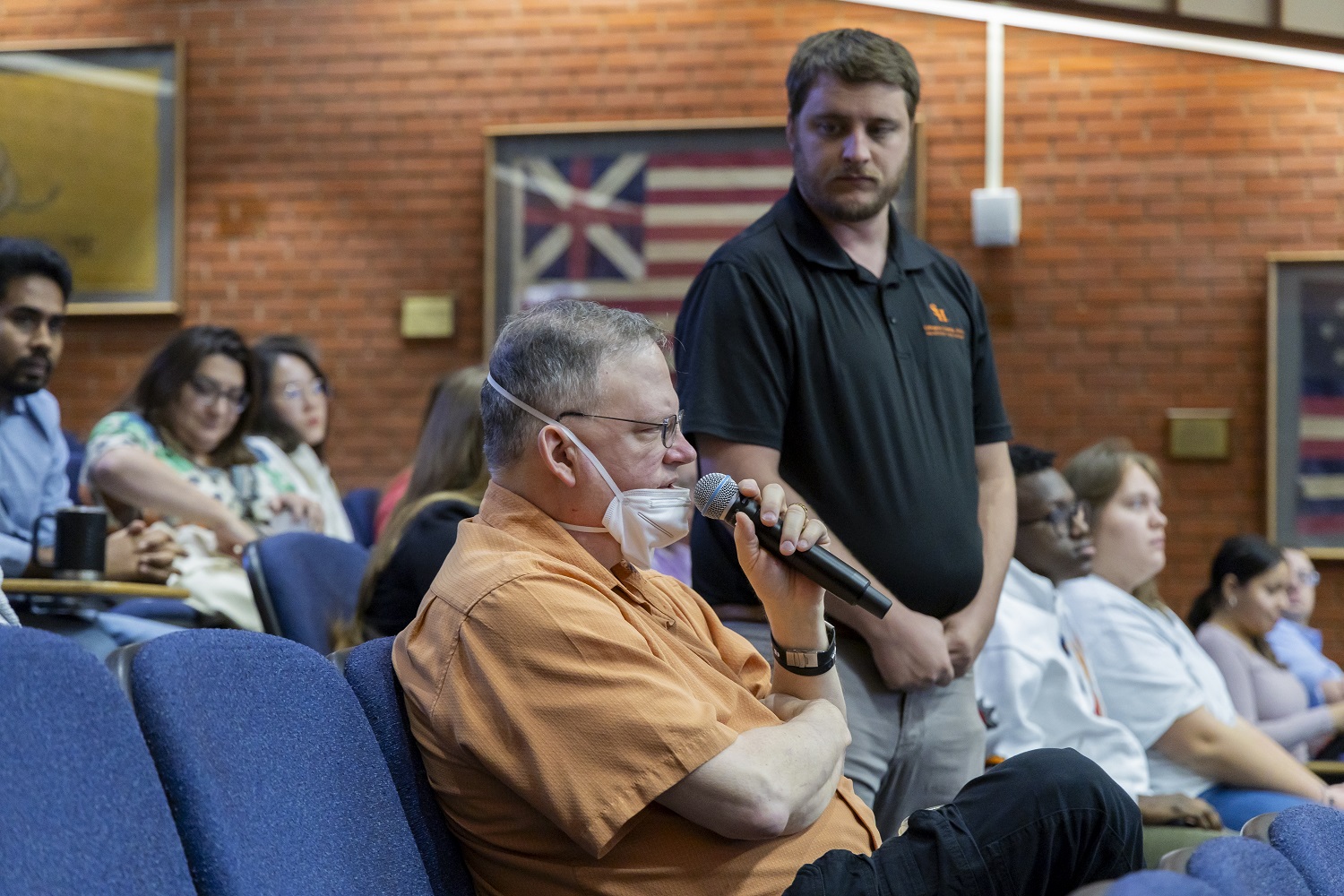
The study also revealed that perpetrators often include trusted individuals such as family members, coaches, and acquaintances. This finding highlights the complexity of addressing labor trafficking and the importance of raising awareness about this widespread issue in American society. With labor trafficking affecting both migrant and domestic children across the United States, it remains crucial that we continue discussing and actively working to combat this pervasive form of exploitation.
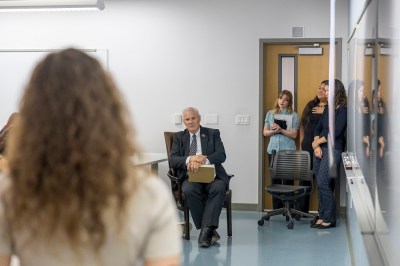
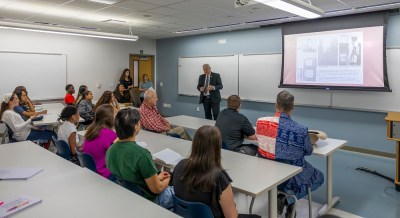
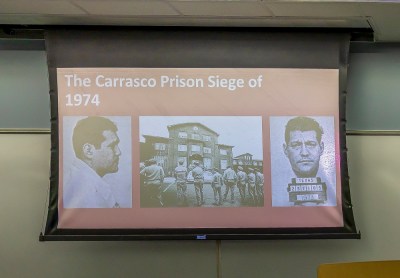
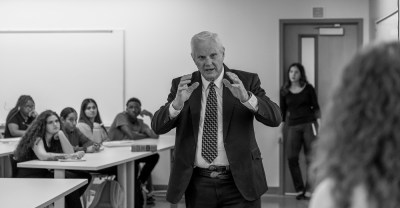
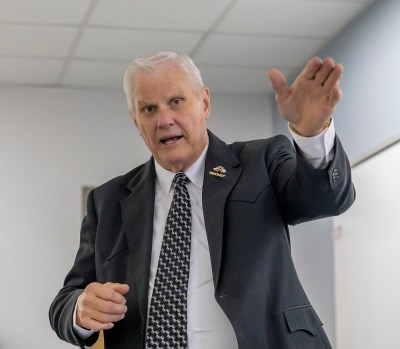
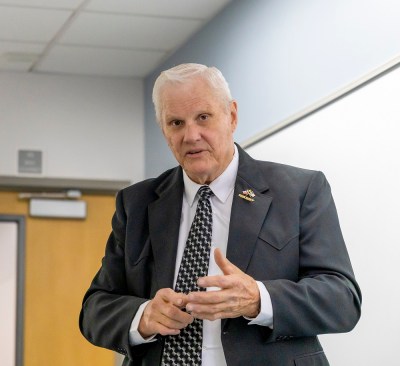
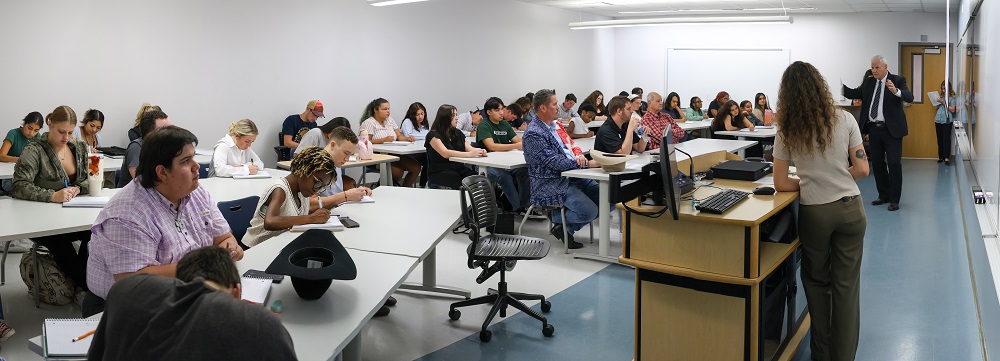
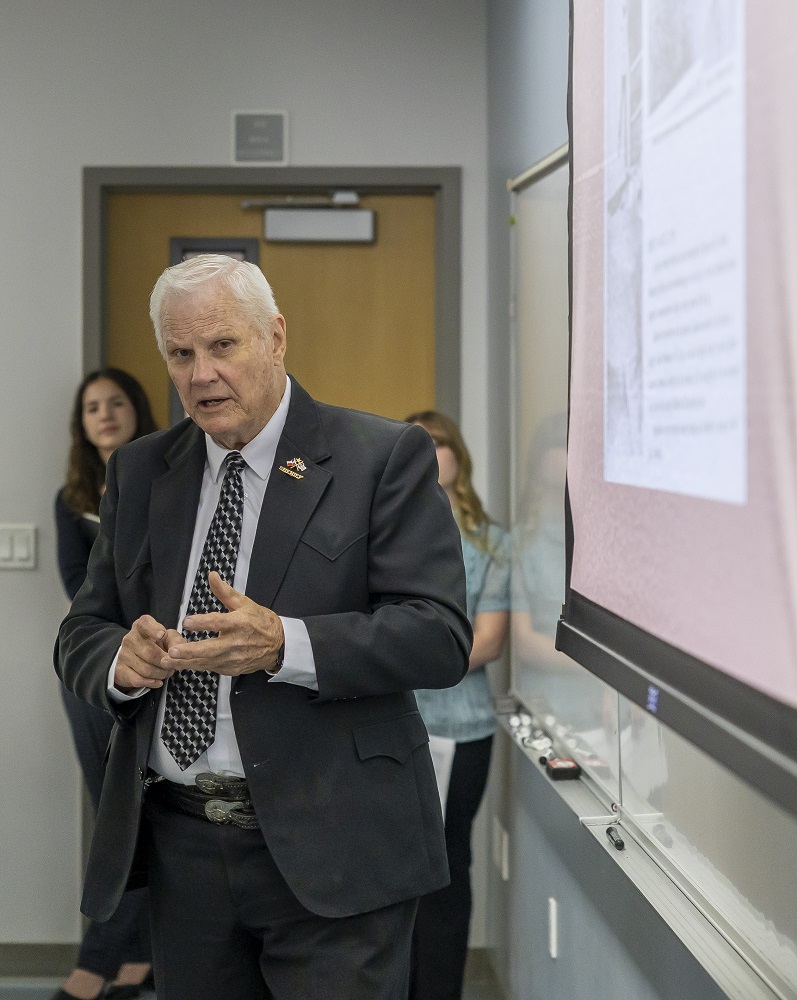
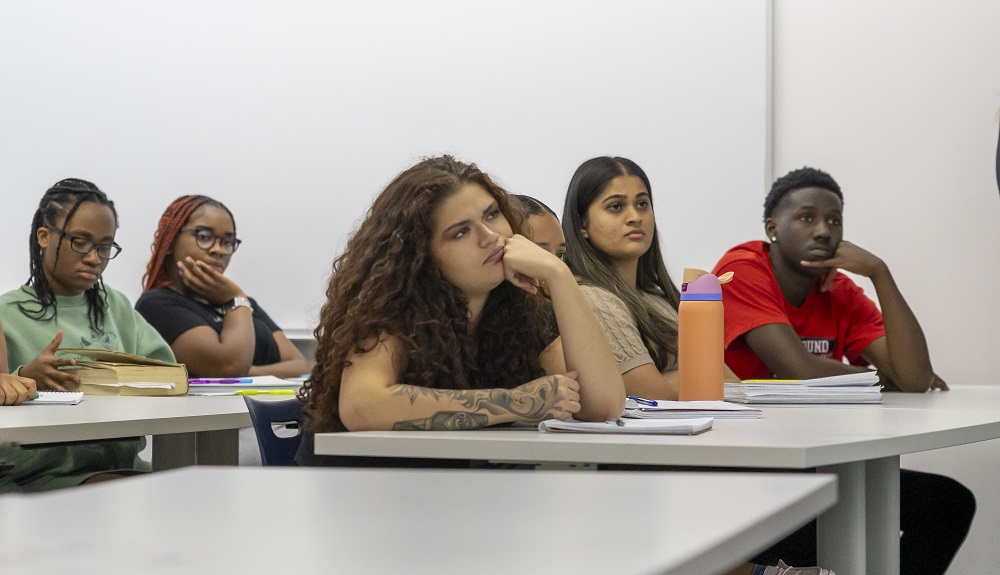
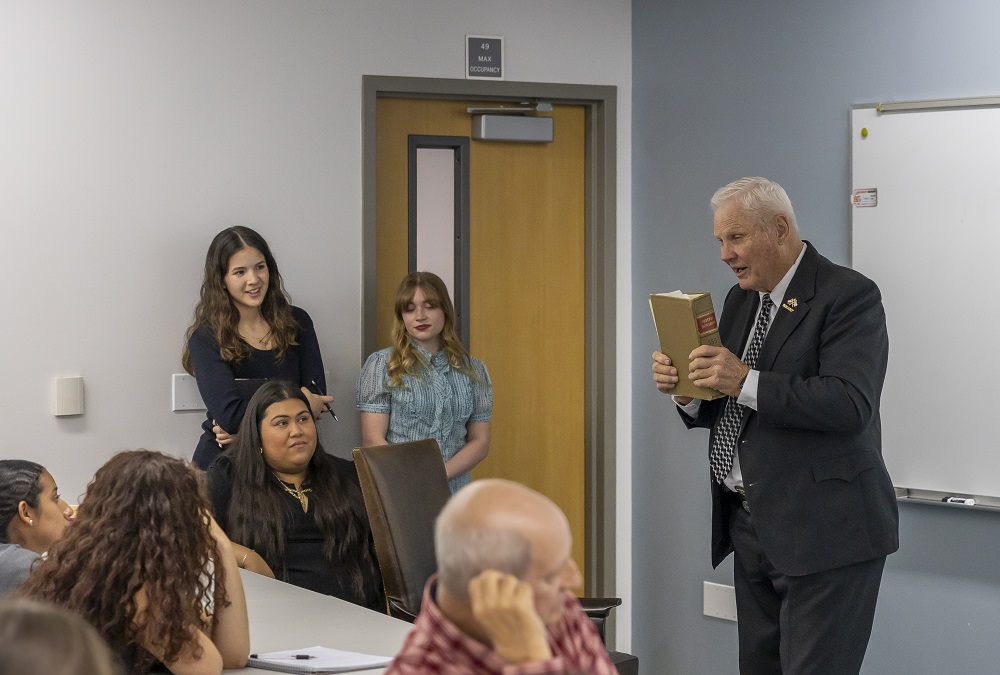
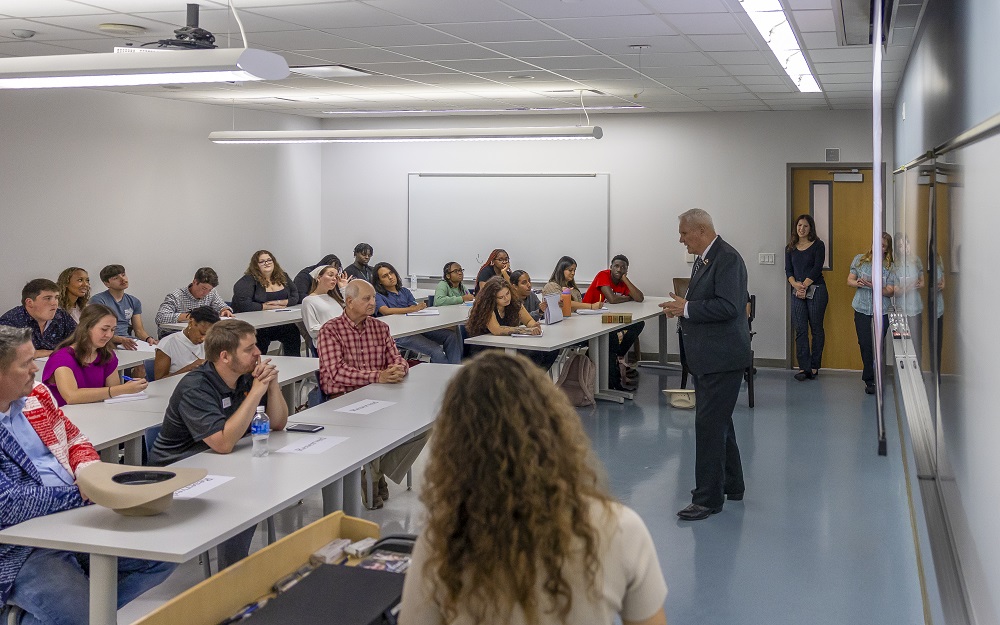
On Tuesday, September 24, Texas Ranger Maurice Cook visited students at Sam Houston State University to offer a special presentation about the 1974 Huntsville Prison Siege and different aspects of his career—which involves service in Vietnam, being a police officer, working as a State Trooper, going to law school and passing the bar (at the age of 60), teaching at a community college, and, for the past four years, holding the office of Sheriff (Bastrop County).
But it was his time as a Ranger that occupied most of our time with him, particularly his experience in the 1974 Huntsville Prison Siege, which at that time, was the longest prison siege in history.
He began by noting that he had only been a Ranger for less than a year…
…and he got the call to come to the Huntsville Unit, with his bulletproof vest.
He offered vivid and sometimes humorous descriptions of a Carrasco associate, a trustee inmate, who was able to work with Carrasco’s wife to smuggle in guns and ammunition—in peach cans!
Ranger Cook also did a good job of describing the Carrasco “fortress,” which was the prison library, fortified with tables, books, and other impediments—while also “imprisoning” eleven hostages.
While law-enforcement had the building surrounded, there was only way in and one way out, so it would have been very difficult to mount a full-frontal offensive.
They did set up dynamite on the rear wall, and planned to use it if Carrasco began torturing or killing hostages.
Carrasco was concerned about this, and he would assign his compadres to crawl in the rafters and look through the vents—but in doing so, the lookouts would scare away pigeons, who roosted on the building’s eaves. This allowed law-enforcement to know a little about what was happening inside the “fortress.”
Carrasco also insisted on using his (Hispanic) lawyer as a mediator, because he did not trust the non-Hispanic law-enforcement officials. While law-enforcement officials did negotiate, they did so strategically, not providing anything that could be too damaging.
They did provide helmets, but they had weakened the metal in the temple area so that bullets could pass through the steel; and they provided a getaway car, but they messed with the gas gauge such that it appeared full, while being nearly empty. One of the more interesting show-and-tell items was a book that stopped a bullet during the siege, which Ranger Cook had on hand.
Ranger Cook also noted, during the Q&A period, that the siege brought about changes in law enforcement procedures, particularly with securing the crime scene. The lack of protocol led to extensive court battles. The siege also led to a dedicated SWAT team, in place for future encounters of this type.
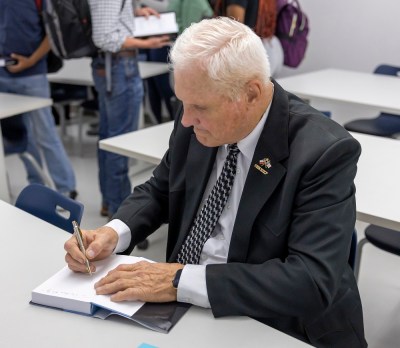
Toward the end of the discussion, he shared valuable insights about life and success, highlighting my favorite quote: “Shoot for as high as you can.,” and he ended the event with a book-signing.
We would like to extend a special thank you to Ranger Maurice Cook and Marcus Cook for taking the time to meet and enlighten us about the 1974 Huntsville Prison Siege, as well as sharing a bit of history about Ranger Cook’s life and law enforcement career!
Our second day at the Texas Tribune Festival started early, ambitiously, and promisingly. But with an itinerary that included sessions on Criminal Justice, the next legislative session, Dan Crenshaw, the world of philanthropic foundations, local government, and a visit to the TX Capitol, the day was also daunting. But we were beginning with an always popular topic—criminal justice—and that provided just the juice for a good start to a busy day.
CJ and the 89th Legislative Session
by Michelle Moya
Kicking off day two at the Texas Tribune Festival, we started our day at the Criminal Justice and the 89th Legislature panel. The panel featured two prominent Texas State Representatives: Republican Jeff Leach and Democrat Joe Moody. The session started off with a broadcast opening statement from charismatic actor, Glen Powell, explaining the importance of entering the festival with an accepting mind. This opening set the tone for the thought-provoking intersection on criminal justice and its place in the Texas Legislature.
Rep. Jeff Leach takes a “selfie” with Glen Powell
In a time of huge political division, Leach and Moody are proving that bipartisan cooperation is possible and can create a major impact. What makes their partnership so powerful is their commitment to finding common ground, rather than simply occupying entrenched positions. Rep. Leach explained in the discussion that it is not about changing the other’s mind, but finding a way to compromise.
One pressing issue they touched on was the death penalty in Texas and what it involves in the current system. This topic, I am particularly enthusiastic about learning more about, yet it is considerably more intricate than we realize. As seen by national debates over capital punishment, Leach and Moody are leading attempts to have a significant impact in the state of Texas. Their work, aimed at reforming Texas’ death penalty system, reflects a dedication to upholding justice while also acknowledging the system’s fallibility. This case is depicted within the Melissa Lucio case, in which both representatives have worked tirelessly to try and get her off death row. Leach and Moody are helping to ensure that Texas avoids the irreversible tragedy of a wrongful execution. They stated that their biggest desire was to bring Lucio home for Christmas.
Ending this educational and insightful session, one realization I had was as Texans, we are fortunate to have these two dedicated public servants working tirelessly on our behalf. Their collaboration serves as a powerful reminder that, despite our differences, we share a common commitment to justice, fairness, and the well-being of our state.
The Future of Local Control
Most people don’t think about their local government until they need it. Citizens will vote in presidential elections, and maybe for US Congress, but if elections exclusively involve local officials—mayors, county commissioners, and district attorneys—less than a fifth of eligible voters will turn out. It is precisely these officials, however, that control many essential functions: water, emergency services, roads, sewage, and trash, and recently, these officials have been asked to do more with less.
Some of these officials were on hand today to discuss “The Future of Local Control.” Travis County Commissioner Ann Howard; Harris County Attorney Christian Menefee; and Mackenzie Kelly, the only conservative on Austin’s City Council discussed challenges facing local government. Increasingly, these challenges have involved the loss of discretion. The State of Texas has passed a series of laws restricting how cities can set their own policies in areas such as taxes, pandemic response, homelessness, and employment law.
Generally speaking and understandably, local officials don’t look at such restrictions favorably. Indeed, Commissioner Howard and County Attorney Menefee argued that the State of Texas was actually targeting specific local governments—notably Travis and Harris Counties. In the past, cities had almost complete control over their tax rates; today, following the passage of state laws, cities must lower their tax rates if citizens’ property values increase beyond a certain percentage. Homelessness, too, is no longer in the exclusive purview of the cities. After Governor Abbott signed a law banning homeless encampments, however, that is no longer the case. In short, cities must find new and innovative ways to solve problems.
The panelists did not devote their time to such solutions. Harris County Attorney Menefee highlighted many of what he saw as misguided regulations aimed at Harris County and “silly” characterizations of his policy positions. Commissioner Howard delved into some of the structural problems faced by fast-growing regions, shining light on the rural-urban divide, particularly when it comes to issues such as infrastructure, traffic, and development. Councilmember Kelly offered an interesting view of the councilmember’s role, describing her process of learning from her constituents, educating her constituents, and working with residents, businesses, and other governmental entities to ensure the right information is being considered and that saving taxpayers’ money remains a goal.
As if to punctuate the different challenges facing local governments, the questions from the audience covered various topics. One question involved affordable housing; another related question involved the paperwork and seemingly needless bureaucracy of filing for homelessness benefits; still another asked about what cities can do about relieving loneliness in communities.
The particular questions often related to a specific city’s problems, or even a specific resident’s problems. Looked at broadly, however, the questions all related to the essential role of cities in modern life, and whether state governments or the federal government should encroach on local governments’ discretion in solving its own problems. These issues, we found out throughout the day, would be raised repeatedly in different contexts.
Giving Their All
by Caitlin Nortonen
After enjoying the morning session, Saara, Cinthia, Katherine, Maggie, and I decided to spend our afternoon gaining more knowledge on the impacts of philanthropy in the state of Texas.
The panelists included: Allan Golston, U.S. Program President of the Gates Foundation; Peter Miller, CEO and President of the Meadows Foundation; and Maribel Perez Wadsworth, President and CEO of John S. and James C. Knight Foundation. It was evident that their main goal is investing into communities and addressing some of Texas’s most pressing problems.
Mr. Miller’s main focus within the Meadows Foundation is funding grants for those in need pertaining to the environment, education, mental health, and the issues revolving around homelessness in Texas. He shared with us that his foundation alone has practically eliminated homelessness among veterans.
After Mr. Golston educated us on the funding for schools that don’t have significant resources, he stressed to us that our leaders need to give Texas schools more attention. Something quite interesting and saddening was that many educators leave their position after only two years even though they have invested so much money into their teaching careers.
This session was very interesting, and made us all have a better understanding and further respect for our educators!
Higher Aspirations
by Olivia Discon
Higher education is a field of multitudes. A quality education doesn’t just rely on professors and classrooms-it’s shaped by the politics of healthcare, workforce development, the economy, and the state of Texas.
Who better to hear about the current state of Texas higher education than from the experts themselves?
We had the opportunity to hear from the Chancellor of the Texas Tech University System, Tedd Mitchell;
…President of The University of North Texas and former Commissioner to the Texas Higher Education Coordinating Board, Dr. Harrison Keller;
…and President of Northwest Vista College, Amy Bosley.
Each brought their respective experience and insight into what makes a good education and what it takes to build a “Talent-Strong” Texas.
A major point of discussion in the political sphere, and on this panel, is workforce development. A thriving community requires a strong quality of life, which depends on good-paying jobs—and these jobs demand high-quality education. As you could imagine, this can become quite the headache. Fortunately, Texas universities, alongside the state legislature, are working to meet these challenges in real-time. Chancellor Mitchell emphasized the need to pivot our education system to align with industry needs, and all panelists agreed that adopting an “outcomes-based” approach is essential to putting students, and Texas’s future, first.
I found it incredibly interesting to gain a higher-level perspective on the issues Texas universities face while appreciating the resilience and investment that have led to their many successes. The discussion inspired me, as a student, to think about how I can contribute to the growth and service of our great state.
The Senate Next Time
by Katherine Burnett
A Democrat and Republican in the same room, who would’ve thought! Well, for the Texas Senate, this is a common situation. Texas Senators, Carol Alvardo, Nathan Johnson, Kevin Sparks, and Phil King sat down together at the Texas Tribune Festival. Despite party differences, they talked about issues that both Democrats and Republicans can equally agree need to be handled.
The representatives agreed on various topics, such as the misconception that Lieutenant Governor Dan Patrick is “running the building.” Further, the current electricity concern and the need for future alternatives.
It was a unanimous consensus between the representatives that despite arguments over beliefs and personal feelings, both sides need each other, and everything is put aside when it comes to the well-being of the State of Texas. After a discussion about the importance of working together, Nathan Johnson and Phil King filled the room with tension over talk on the school choice bill; though, the kerfuffle did not get far. Nevertheless, it did not stop little slights from being thrown for the remainder of the discussion.
The senators ended on a note of high hopes for the future of housing, electricity, rehabilitation, and various other problems that were brought to their attention during the closing remarks of the session.
One on One with Dan Crenshaw
by Maggie Betancourt
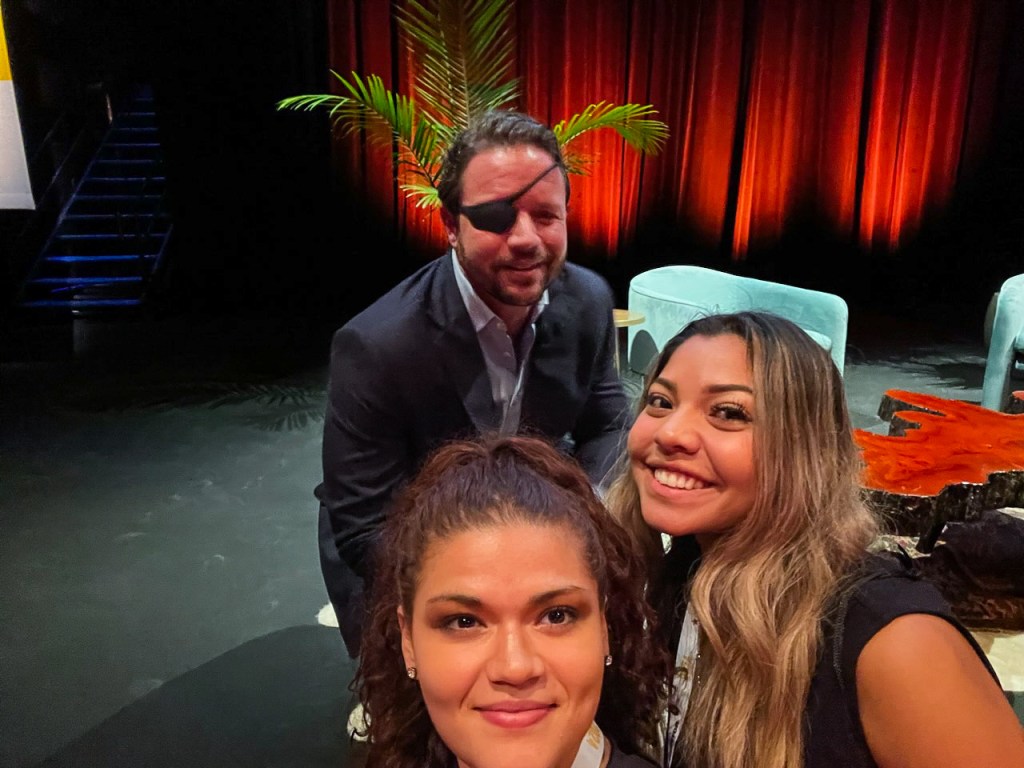
With feelings of anticipation and obscurity filling the theatre as Congressman Dan Crenshaw took the stage, we knew we were in for a contentious discussion. Known for his profound achievements as a former Navy Seal and his work to combat the Mexican drug cartels, Congressman Crenshaw stressed the importance of upholding the values and traditions on which our country was founded. The first question of “who is Dan?” set the tone for the conversation as Congressman Crenshaw defined himself as a “classic Reagan Conservative.” How does that differ from a regular conservative? Well, in the words of Congressman Crenshaw, a classic Reagan conservative believes in trying to conserve the nation’s founding and less on “making people happy.” He emphasized that instead, there is need for “protecting the laws that give people the ability to be happy.”
The crowd began to express strong emotions as Congressman Crenshaw articulated his opinion on how conservatives are viewed in the media. As he explained that people tend to let personal distaste for political figures cloud their judgment over policies, the crowd began to “boo.” The tension subsided as Congressman Crenshaw began to speak about his accomplishments with the FIZA Act, which allows wiretapping to detain the cartel members integral to the organization. He also discussed his works with the “Youth Summit,” which is a non-partisan program that prides itself on educating high school students on how government works along with how to make it a career.
Although Congressman Crenshaw’s beliefs were deemed as controversial, his patriotism and love for the American people and the nation shined brighter. The conversation ended with questions from the audience with one asking what he would be doing for a career if not a politician. Wrapping back around to his introduction, Congressman Crenshaw answered by saying he would have never left the military, as being a Navy Seal was all he dreamed of as a child.
Texas State Representative Salman Bhojani by Saara Maknojia
The 88th legislative session marked a historic moment when two Muslim Texas State Representatives were sworn into office. To have a deeper understanding of this moment, we headed to the Capitol to meet with Jordan Villarreal, the District Director for Representative Salman Bhojani.
Mr. Villarreal began with giving us a brief overview of Representative Bhojani’s office and explained the role of a District Director, who can be referred to as a “hawk,” as his daily duties comprise of keeping a close eye on all the counties that fall under District 92. While engaging in the conversation with Mr. Villarreal, we learned that Representative Bhojani stresses the importance of allowing local governments to have the freedom with their policies. Mr. Villarreal expressed how Representative Bhojani will continue to fight against the recent controversial topic over the legislation concerning school vouchers. Additionally, that he would continue representing students of different religions by endorsing bills that allow public holidays for respective religions or cultural festivals, without being penalized.
To our surprise, Representative Bhojani just so happened to be in his office before session! We had an incredible opportunity, before the hustle and bustle of the 89th session, to learn a bit more about him as a person. Since I have personally followed his campaign closely throughout the past legislative session, I had the chance of showing my appreciation for all that Representative Bhojani has accomplished. As the first Muslim State Representative of Texas, along with Representative Lalani, Representative Bhojani has diversified our state legislation. For the first time in history, we witnessed two Muslim representatives being sworn into office with a Quran!
Representative Bhojani then showed us the Quran which he had been sworn into office with. We were shocked to hear the 200-year-old Quran was read by John Adams and the other Founding Fathers so that they could better understand the religious texts; this provided an outline for Sharia Law when drafting the United States Constitution.
Our unexpected, yet wonderful meeting with Representative Bhojani was definitely a learning experience, as we embraced the historical impact of his term in office!































































 Center for Law, Engagement, and Politics