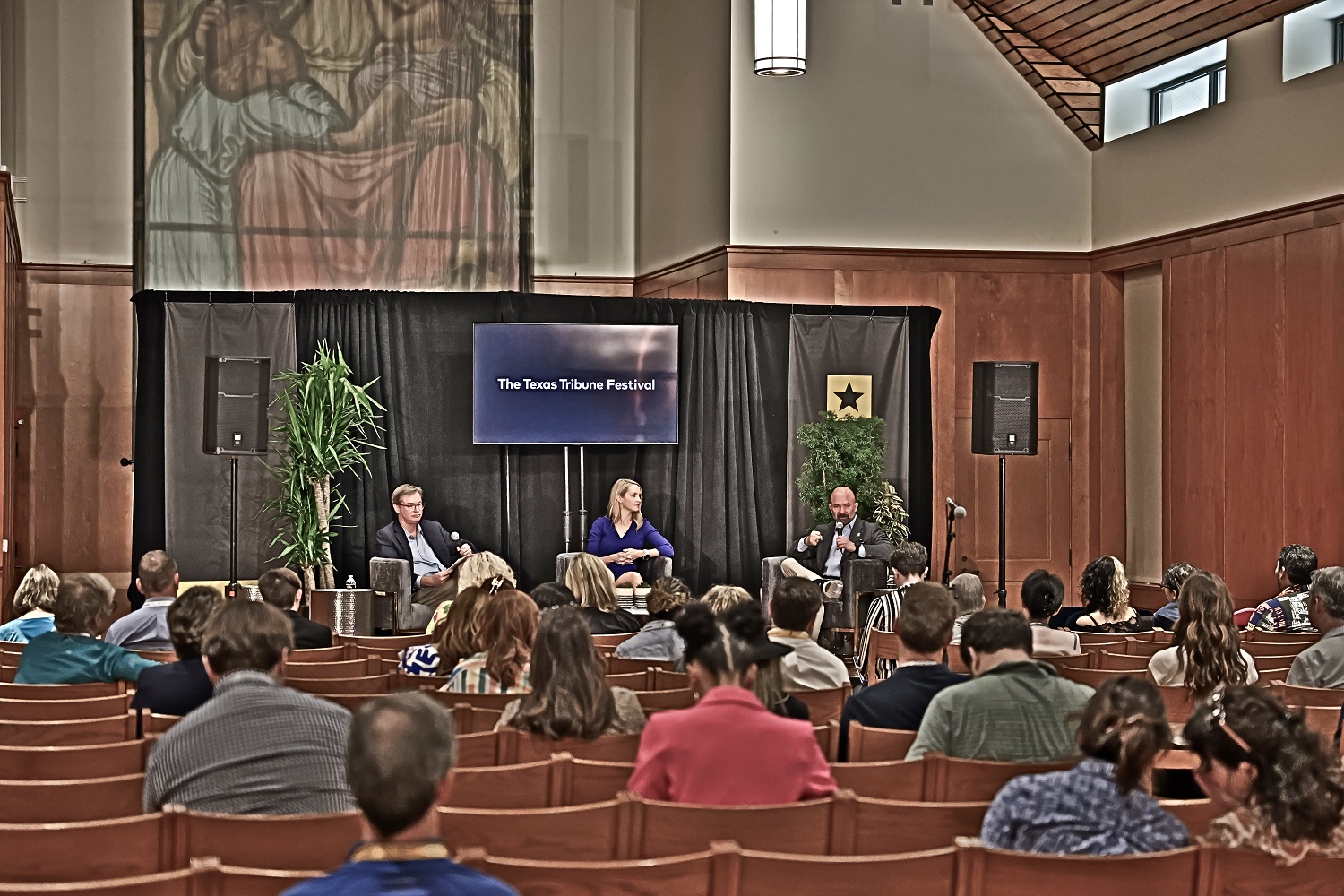
Higher education, religion in government, water infrastructure, and domestic policy. What do all these topics have in common? They were all topics deliberated on during LEAP’s first day at The Texas Tribune Festival! With many absorbing and diverse topics covering legal happenings on varying scales, we were eager to expand our knowledge over the course of two days.
We saw a great deal of interesting and influential speakers, including three Chancellors from major Texas University Systems, who discussed the importance of establishing and maintaining their universities as Research Powerhouses…
Chancellor Mitchell encapsulated what it means to work for a university system with this impactful quote: “We are not in the higher (education) business, we are in the business of developing young people.”
And Morgan was able to ask a question!
Before leaving, we were able to get a photo with Chancellors Sharp and Khator.
Olivia and I especially enjoyed the panel regarding water infrastructure with Representative Tracy King and CEO of the Texas Water Foundation Sarah Schlessinger…
…as we are the most interested in local government. In fact, Olivia even asked a question…
….and we were all able to get a photo with Rep. King.
We also had a chance to learn from Fort Worth Mayor Mattie Parker and Police Chief Neal Nokes, both of whom were excellent. They discussed “Crime in Cowtown”….
…specifically discussing some of the challenges associated with high-density areas. Although not explicitly asked by the moderator, many of the questions related to how high-profile leaders address the media and, specifically, themes or issues that they cover.
Although there are no magic bullets, both the Mayor and Chief stressed the importance of getting information out quickly and accurately whenever possible.
Our final panel was comprised of three directors of the Domestic Policy Council, who explained their roles and the importance of their staff in the White House.
Ariza and Ashlyn enjoyed speaking with Melody Barnes after the panel and even got a photo!
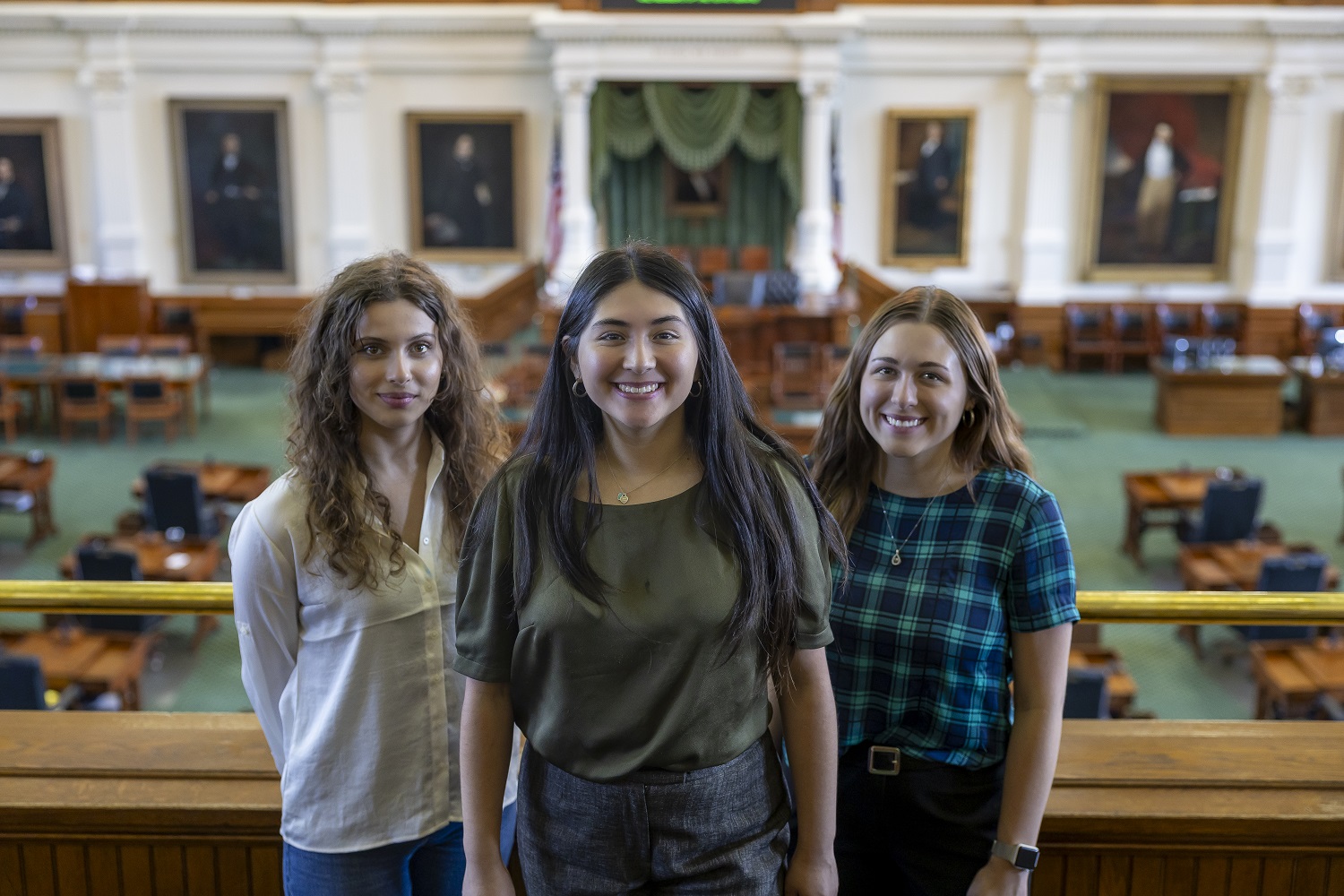
Upon completing our panels, we took a side trip to the Capitol, where Ashlyn and Morgan had interned this spring–and where Olivia might intern in a future spring!
It was Ariza’s first time in the capitol, and it was a great learning experience and a good activity cap to a day of fun and learning.
But our day of experiences and learning was not over! We concluded our evening with an amazing dinner at Taste of Ethiopia, which was a new food experience for Olivia and Ariza.
Over the delicious meal, we discussed some of what we learned from the day’s sessions and what we are looking forward to learning the next day!
This past summer marked the 34th anniversary of the Tiananmen Square Massacre in the Peoples Republic of China, and when we noted that the World Affairs Council was bringing in Dr. Jianli Yang, a Tiananmen Square survivor, we wanted to be sure to be there.
As a refresh for our readers, from April to June in 1989, Chinese students held demonstrations in the well-known Tiananmen Square, Beijing. The students were protesting their limited political freedom, the educational system and much more under the CCP (Chinese Communist Party). In June of 1989, Martial Law was declared and troops were moved into the Square. The massacre began on the night of June 3 and resulted in the loss of thousands.
The LEAP Center strives to allow students to make connections across various disciplines and have opportunities to learn via firsthand accounts. This past Wednesday, LEAP Ambassadors, Olivia, Michelle and myself were accompanied by three new students, Macey Schank, Madison Cawthon, and Abraham Roby, and made our way to hear Dr. Jianli Yang. The noted Chinese dissident has dedicated his life to peacefully securing democratization in China and supporting human rights.
Once again, ChampionX graciously hosted this WAC event. ChampionX is proving to be one of our favorite venues, not just for the amazing views, but for the dedication and quality of the staff.
We were fortunate enough to meet John Breed, Manager of External Affairs for ChampionX, as well as President and CEO, Sivasankaran “Soma” Somasundaram, who spoke with us and who gave a few opening remarks about their partnership with WAC and the company.
Ronan O’Malley, Chief Programs Officer of WAC, began the dialogue with a brief outline of what shaped Dr. Yang’s humanitarian efforts. Dr. Yang opened by describing how his involvement and interest in human rights began. Dr. Yang was an official party member before 1986, believing he would have a positive impact on the CCP. However, his membership was defined by keeping tabs on other students and friends; Dr. Yang quickly realized that individuals do not change the party; the party changes individuals. At the time, such thing as revoking party membership did not exist and the only way to quit the party was to dissent.
In May 1989, Dr. Yang was studying mathematics at the University of Berkley, while watching the progression of student led protests in Beijing on CBS—covered by SUSU Alum, Dan Rather. Dr. Yang and other similarly motivated students watched on international news as CCP police began beating students in Tiananmen Square. Appalled by what he had seen, Dr. Yang made the decision to return to China to help in whatever way possible; he arrived one day before martial law was declared on the square.
Dr. Yang joined the demonstrations in the square, and like most students, returned occasionally to campus housing to shower and rest. On June 3, Dr. Yang returned to the Square, just as the soldiers opened fire on the crowds.
Dr. Yang described the atrocities he witnessed over those fateful days and how many of his friends were gunned down, beaten, or flattened by tanks. Many people are familiar with the famous “Tank-Man” photo, in which a lone demonstrator blocks the path of the encroaching tank; but for Dr. Yang, this was his reality.
During the reprieves of gunfire, demonstrators attempted to persuade and appeal to the soldier’s hearts by singing widely known nursery rhymes; the efforts ultimately were to no avail.
Many students made their way back to campus to await in terror of what was to come. Dr. Yang was directed by his advisor to flee, and he did. On June 7, 1989, Dr. Yang managed to secure a seat on a flight and several hours later landed in the United States. News had travelled fast, and reporters were waiting for the newly arrived Chinese passengers for any information as to what happened. From that point forward, Dr. Yang shared his story and hasn’t stopped.
The Human Rights Committee in the United States Congress invited Dr. Yang to testify, greatly contributing to the United States’ response. During the labor movement in China began in 2002, Dr. Yang seized the opportunity to return to China and offer his assistance. With a fake ID and a borrowed passport, Dr. Yang reentered China and immediately began helping groups strategize to protect their basic rights.
It was through these efforts that Dr. Yang was caught by country police and detained in for 5 years, with most of that time being spent in solitary confinement.
If the LEAP Students’ mood reflected the audience’s mood, the room was full of disbelief and sadness after hearing Dr. Yang’s experiences. Dr. Yang kept his hope, and encouraged us to do so as well. The work he has done for human rights is immeasurable.
Despite this somber closing note, our moods turned happy as we had the chance to meet Dr. Yang. He reminded us to be hopeful, and he offered us encouraging thoughts.
Thank you once again to the amazing WAC staff for organizing a great event, to ChampionX for hosting, and to Dr. Yang for inspiring others with his story.
_______________________________________________
Shanghai Bistro–Closing Note
As with all–or almost all–LEAP events, we sought a restaurant that would complement the theme of the evening’s program. We selected Shanghai Bistro, which proved to be excellent.
The staff were very friendly and accommodating. This was nice, because not all restaurants in The Woodlands are flexible.
This also gave us the chance to talk to the first-time attendees at a WAC event and to reflect on the evening and what we had learned. Such reflected fostered thankfulness, for friendships, for unique learning experiences, and for the sacrifices made by leaders such as Dr. Yang.
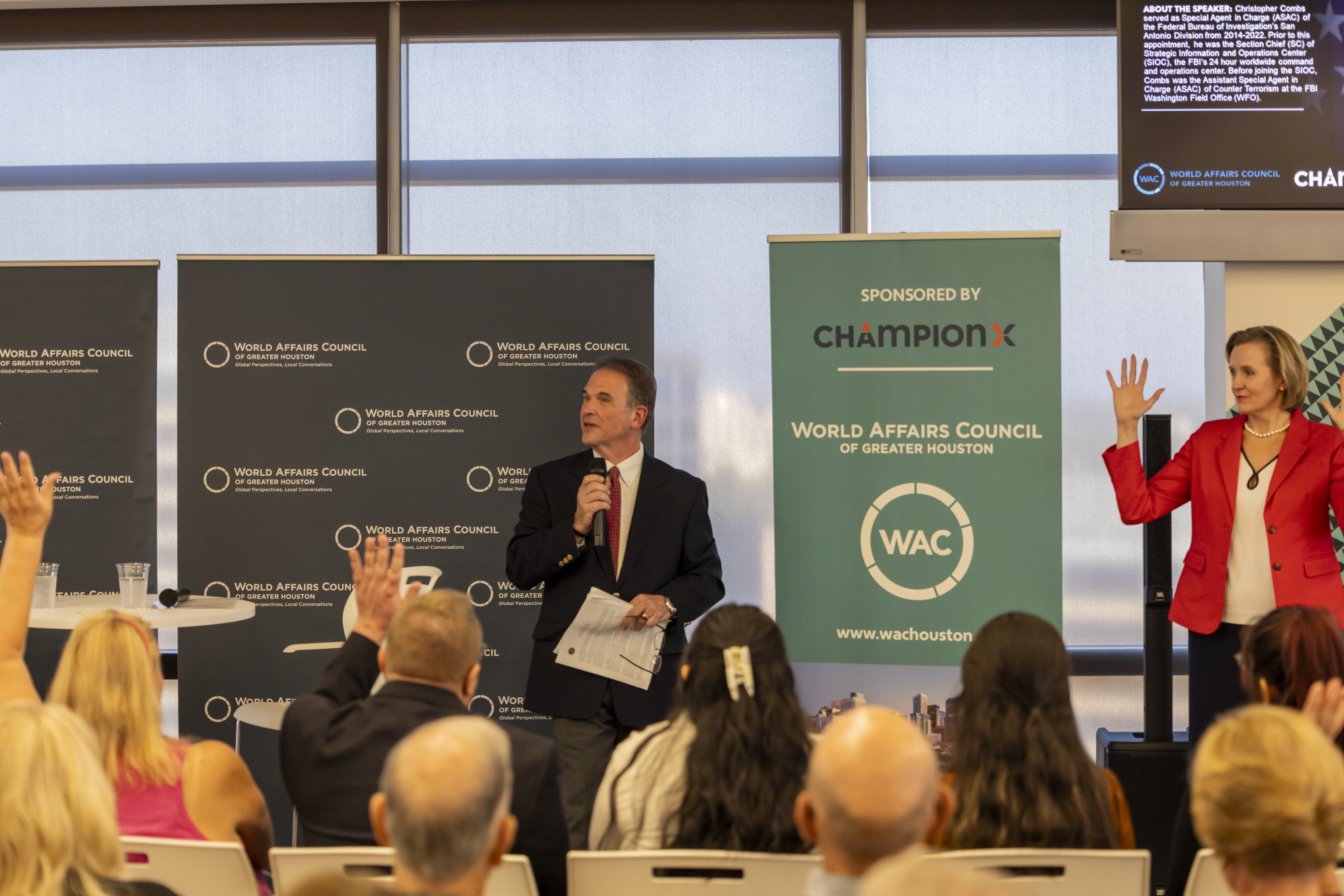
After a successful first week of classes, LEAP students headed to The Woodlands for their first World Affairs Council (WAC) meeting of the fall semester. Dr. Gene Roberts, Associate Dean and the Director of Student Legal & Mediation Services at SHSU, graciously joined our coalition of students in this endeavor. The featured guest speaker of the evening, FBI Special Agent Christopher Combs, possesses great insight into the last 20 years of United States affairs. Having served as a Special Agent In Charge of the San Antonio Division, Combs has a particular knowledge of matters concerning border control and domestic terrorism.
The event was hosted by one of WAC’s partners, ChampionX; a chemistry program and drilling technology company. The sunset-casted lakeside view from the building set an elevated tone for the evening.
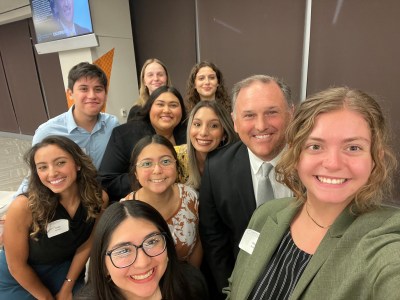
Before the event began, Chief Development Officer of the World Affairs Council Sandija Bayot graciously introduced us to Special Agent Combs. He went on to share the very qualities that make a prospective FBI applicant stand out, placing a particular emphasis on a strong work ethic and unique experiences they have prior to their application. For example, Combs himself served as a volunteer firefighter for 8 years! The opportunity to speak candidly with a distinguished member of the FBI was incredible, especially for the many Criminal Justice majors in the group.
Shortly thereafter, Ronan O’Malley took the stage and introduced the event moderator, Sandija Bayot and the Director of External Affairs for Champion X, John Breed.
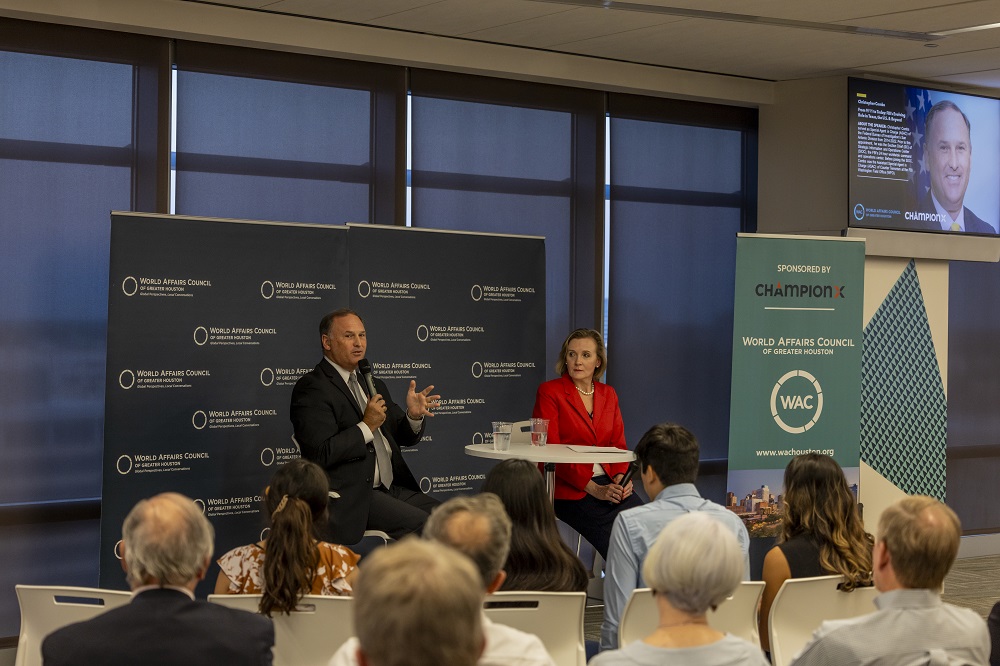
Christopher Combs took the stage with moderator Sandija Bayot and quickly jumped into the conversation. The focal point of Agent Combs’ conversation was to explain the FBI’s role in multiple historically disastrous events. He touched on how extensive FBI investigations are and how much hard work, planning and action takes place on the inside.
After being a part of the FBI for 26 years, Agent Combs has gathered quite a collection of stories; one of them being his experience during the 9/11 terrorist attacks. Indeed, he served as the initial FBI On-Scene Commander at the Pentagon on 9/11. He explained how the Bureau received intel about foreign attacks and expected to be attacked in late September. However, the FBI expected an attack overseas, not here in the United States.
Agent Combs expressed great concern for America as technology continues to advance and the threats of competing superpowers and their tactics. The conversation shifted into an audience Q&A, and many topics such as border control, domestic terrorism, and drones ensued. He made a couple remarks on how the battle against terrorism, whether it be domestic or not, is never ending.
Though the conversation was heavy in nature, it ended on a positive note-thanks to Professor Yawn! Professor Yawn asked Agent Combs to speak to the young people in the audience about careers in the FBI. Agent Combs stated he believes in setting oneself apart from the crowd and truly devoting oneself to the greater good. Special Agent Combs closed with a remark that left the crowd at ease and patriotism: “The FBI is simply an organization made up of good Americans who are trying their best to protect Americans”.
Following our event we ventured to Katz’s, a New York style deli, to highlight the area in which Agent Combs was brought up. We started our evening with multiple appetizers that included the cheese crisps, spicy meatballs and the stuffed cabbage. We all dug into our savory appetizers as we waited for our entrees. There was a large group in attendance so we had quite the line up. Some of our favorite entrees included the Chicago bill, matzo ball soup, The Reuben, and The Monte Cristo. To end our night with a figurative cherry on top, we decided to indulge in some sweet treats. The delicious desserts we had included caramel raisin bread pudding, Oreo milkshakes and cheesecake milkshakes. The night concluded with new connections, great laughs, and an even greater anticipation of what’s to come in the fall.
It was a sunny and bright day, but murder was in the air. We were at the Alley Theatre, and its cast was performing Agatha Christie’s “The Murder of Roger Ackroyd.”
It was a nice mix of people, LEAP Ambassadors, LEAP alumni, and “friends of LEAP” together for an enjoyable afternoon. With lunch at Post Houston, a new favorite recommended by LEAP alum Will Phillips, we caught up, talked about classes, and explored food from multiple continents.
But we had come to Houston for the play, and it was something of a process to actually see the play. Many of us had read the book, with at least half of us stopping before the end so as to not spoil the “whodunit” aspect of the performance. In July, we attended a Murder by the Book presentation by Mark Shanahan, the play’s director, a presentation that left us even more excited.
Unfortunately, when we drove to our scheduled performance, the Alley had to cancel the showing because a cast member wasn’t available!
So, with more than a month of anticipation and at least one false start, we were more than usually ready for the play to begin.
And it did not disappoint. It was expertly adapted to the stage by Shanahan, with clever techniques of compressing time and space.
It was humorous, with a wonderful cast that included two SHSU alums (Dylan Godwin and Melissa Pritchett)!
During intermission, we speculated as to who the culprit might be. Victoria couldn’t identify a key suspect; Nick, with all the creativity he could muster, thought “the butler did it;” and Katherine thought that the house staff conspired together to kill their employer, Roger Ackroyd. (If I were Katherine’s employer, I’d lock the doors at night.) Morgan, whose literary tastes lean toward bodice-ripping romance, had trouble keeping up with the characters and the narrative. She nodded a lot as we discussed things.
The second act was delightful, with more humor and variation in pacing. The plot, as they say, thickened, ending with all the cast gathered together to identify the murderer. We will, of course, stop there, and engage in no spoilers. But it surprised all of us–with the exception of Olivia, who, when it was over said, “I knew it all along” to an incredulous group and an ever-nodding Morgan.
Kudos to the cast of the Alley, the timeless appeal of Hercule Poirot, and the camaraderie of LEAP students, present and past.
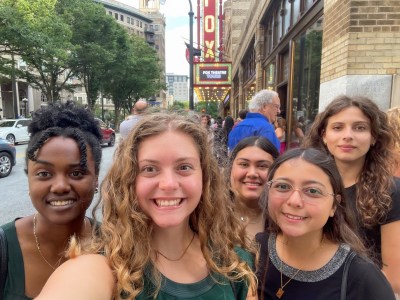
This was a special day of sorts. We were headed to see the play, “Wicked,” which was named after our President-Elect, Morgan Robertson. Moreover, it was her birthday–21st, no less. So, we let her choose the place to eat!
She chose “A Taste of Greece,” because Mediterranean is her favorite type of food, and because it is within walking distance of the Fox Theatre, where her biopic was being performed.
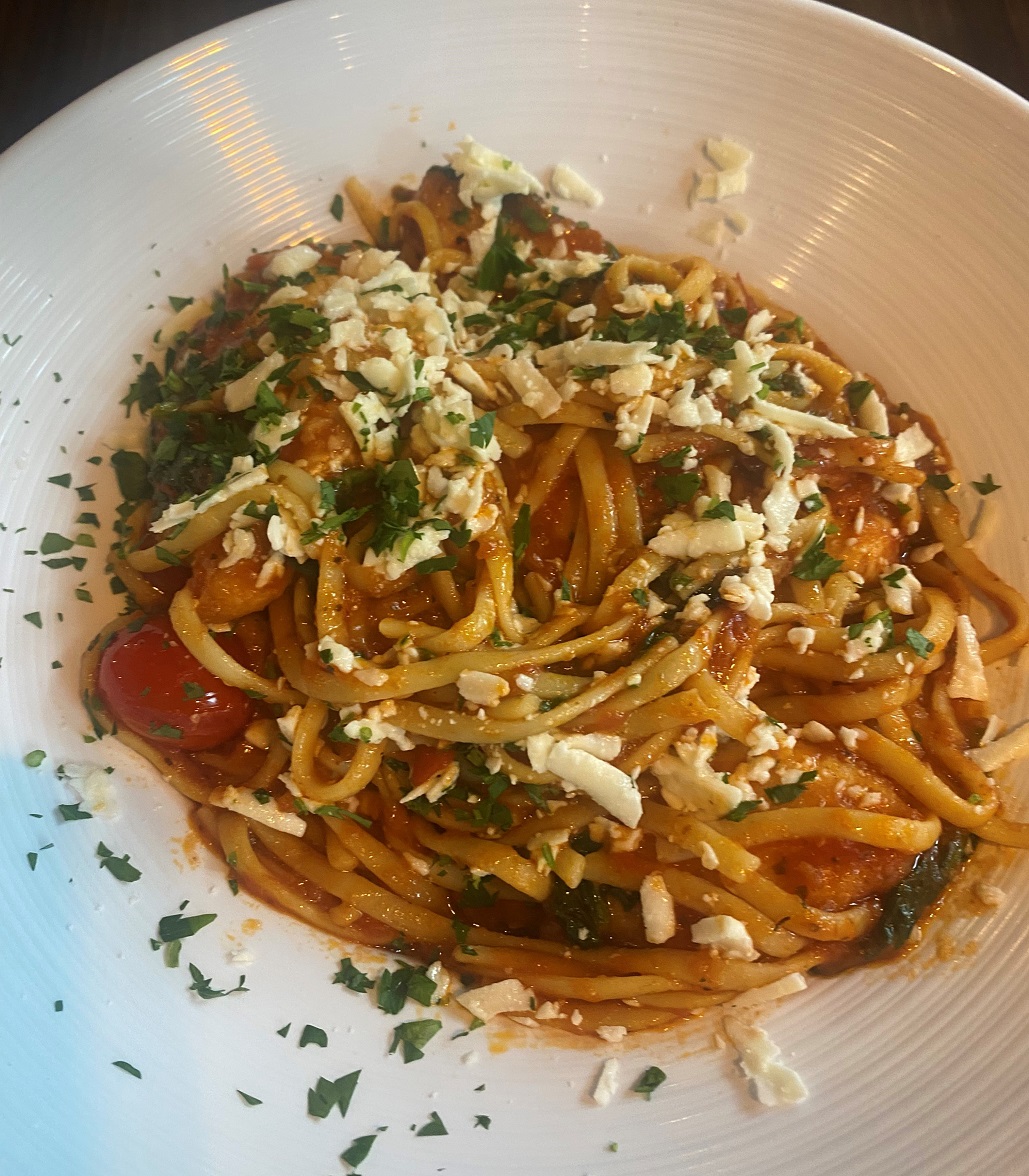
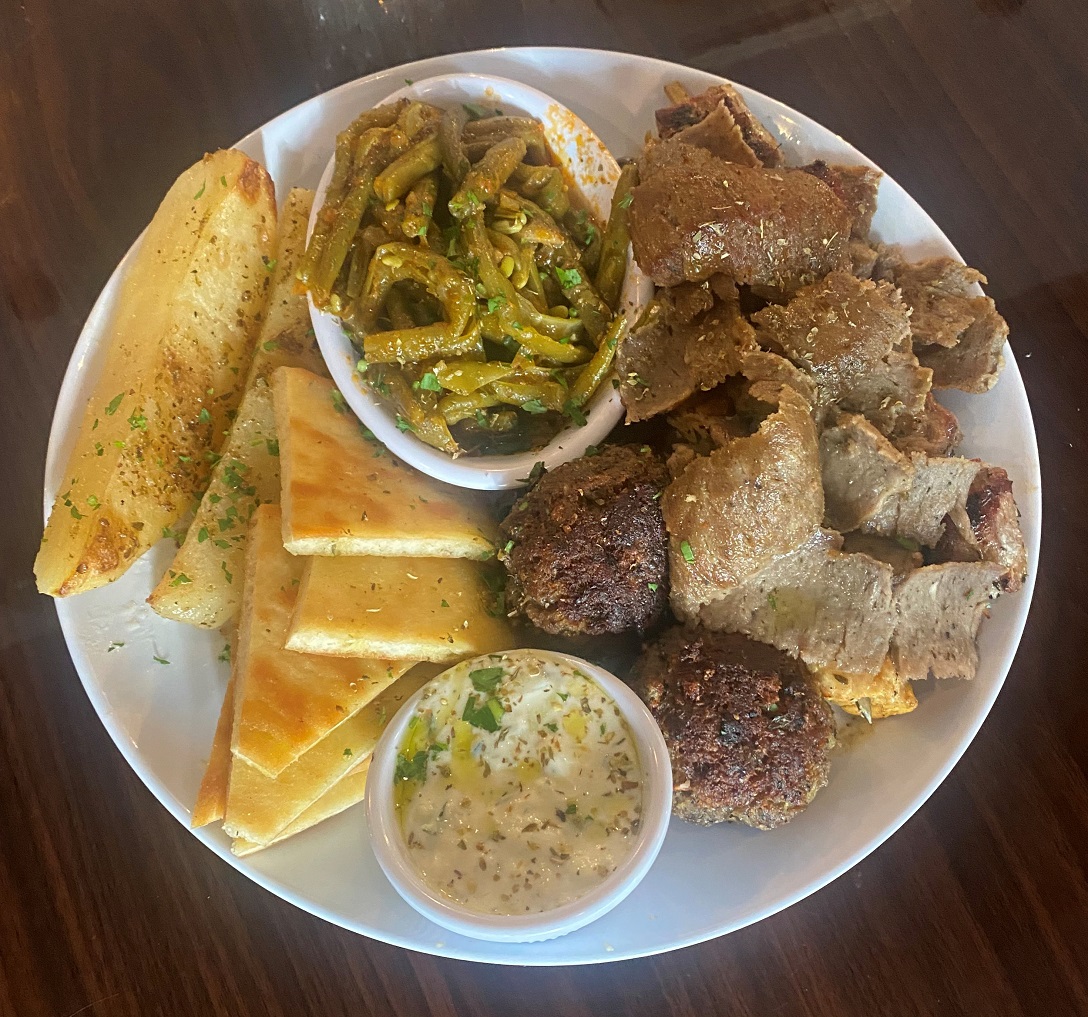
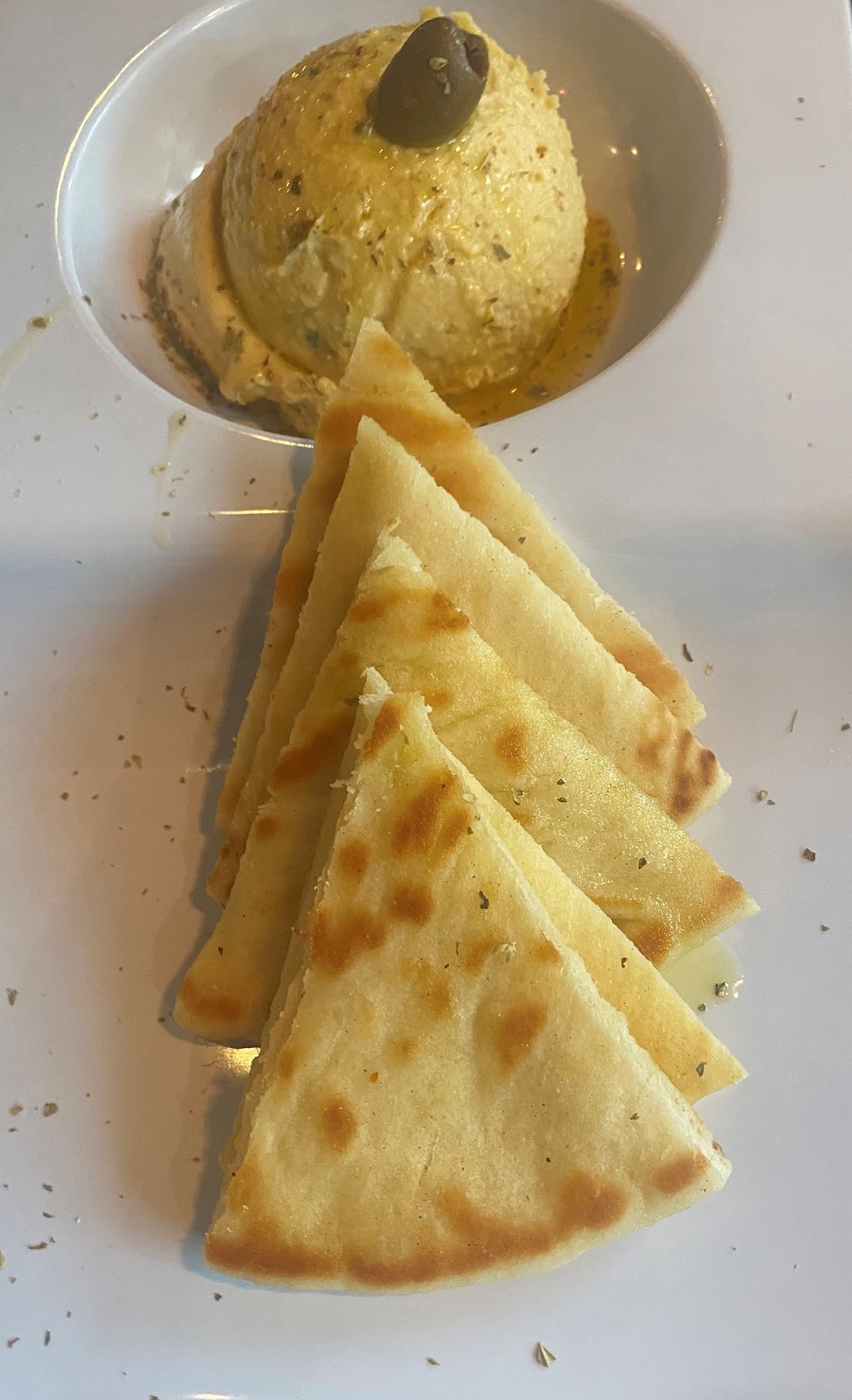
The restaurant offered many umami plates, but the ones that caught our eyes and proved to be delicious mouthfuls were the Greek Melt, the From Greece with Love Platter consisting of gyro meat, pork and chicken skewers, and Greek Meatballs served with green beans, pita bread, and tzatziki sauce.
We wished we could’ve stayed to enjoy our meals a little longer, but with every passing minute, a wicked play awaited us.
Wicked
By Morgan Robertson
“It’s time to Trust (our) instincts, close (our) eyes and LEAP!”
–From “Defying Gravity,” in “Wicked.”
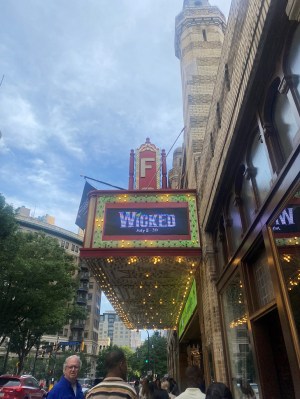
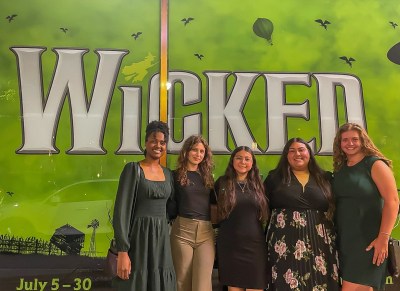
Our trip has been full of many athletic, educational, historical, political, and after tonight, entertaining events! The last night of our trip, we checked the entertainment box, and made our way to the historic Fox Theatre to watch their rendition of “Wicked,” the musical.
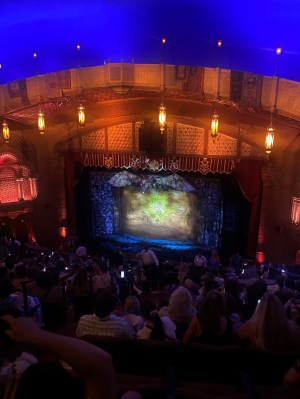
We were amazed by the grandeur of the Theatre…
…and hastily made our way to our seats.
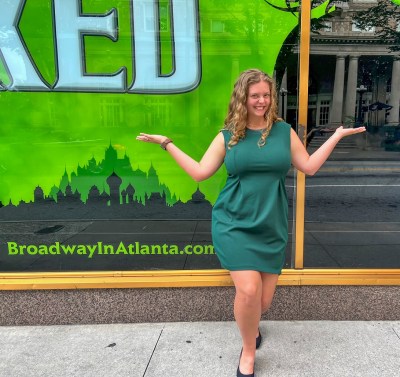
Despite what the professional advisement of LEAP thinks, not all LEAP Ambassadors are wicked. However, we all have varying degrees of interest in the “Wizard of Oz.” But, of the LEAP Ambassadors, I am perhaps the most unfamiliar with musicals. Due to my familial ties to Kansas, I was raised near the setting of the movie. So, I made an exception and was excited to learn more about the Wicked Witch of the West. I even wore green for the evening!
“Wicked” begins with a frame narrative starting with Glinda, the Good Witch of the North as she brings the good news to the Munchkins that the Wicked Witch is dead. The lively songs harken memories of the original story, and a shrill voice says, “I’m melting, I’m melting!” The delighted munchkins rejoice in the good deeds done by their valiant protector, a midwestern farm girl and her little dog.
Everyone knows the Wicked Witch as Dorothy’s antagonist, but on Thursday night, Elphaba (the Wicked Witch) was good. Elphaba became a fiercely loyal sister, an unlikely best friend, defender of the meek and unspoken for, and a true heroine with a happy ending. From start to finish, “Wicked” had the entirety of the Theatre bellowing in laughter as all these aspects of Elphaba were explored.
I would be remiss if I did not bring attention to the musical talent and songs. As a group, “Defying Gravity” was our favorite, where Elphaba learns of her true capabilities and sets off to save the animals of Oz. Another favorite was “For Good” as it very sweetly and impactfully shows the true nature of Elphaba’s friendship with Glinda.
Without divulging into every element of irony or song, “Wicked” became a newfound favorite musical of mine. It was an incredible way to close our night, ending our trip on a very pleasing ‘note’!
And with that, LEAP’s 8-day exploration of the Deep South came to an end! We are incredibly grateful to have had the opportunity to visit Georgia and South Carolina and learn about their individually rich and fascinating history.
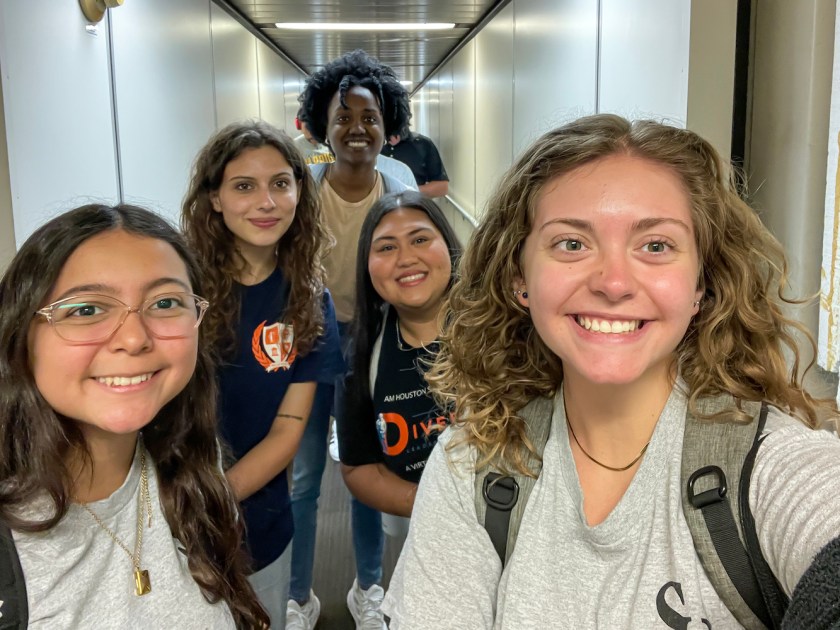
For LEAP Ambassadors, July means not only higher temperatures, but also the opportunity to attend the Southern Legislative Conference! And although this year’s program is in Charleston, South Carolina, we flew into Atlanta, with the idea of seeing a bit more of the deep south along the way. And while a few of us may be considered ‘seasoned’ travelers, traveling is a new experience for others. In fact, this was Michelle’s first time on an airplane!
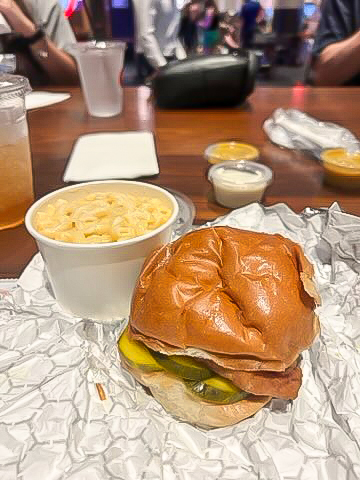
We were all very hungry after our two hour flight, so we made our first stop at the Ponce City Market, which is in a 20th century mixed-use building with a intriguing industrial interior. It consists of two floors, with the restaurants on the first and some retail shops on the first and second floors. There are a variety of cuisines from all over the world that we could have had for lunch, but instead most Ambassadors opted to pursue the deep south theme and order from Hop’s Chicken, with orders of fried chicken sandwiches, mac & cheese sides, and, of course, sweet tea.
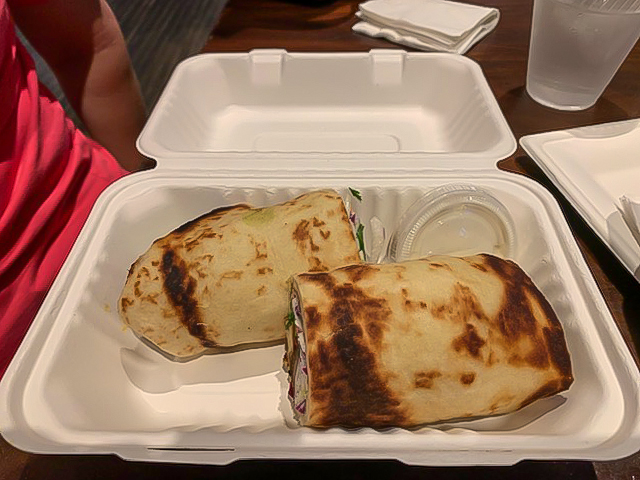
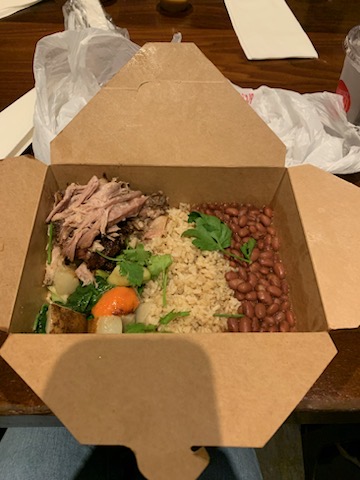
Feeling a bit more “experimental,” Professor Yawn and Stephanie ate a wrap from Botiwalla along with SPDP, which are flour crisps with yogurt and two kinds of chutneys. Ingrid chose to get a plate of pork, rice, and beans from El Super Pan.
With full stomachs, we were ready to take on the rest of our day, starting with The Martin Luther King Jr. National Historic Park.
Martin Luther King Jr. National Historic Park
By Michelle Cardenas
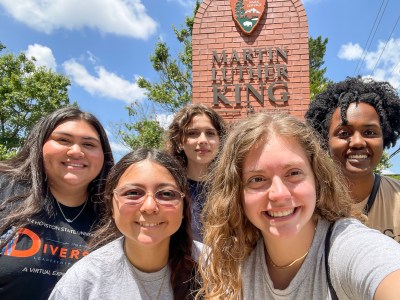
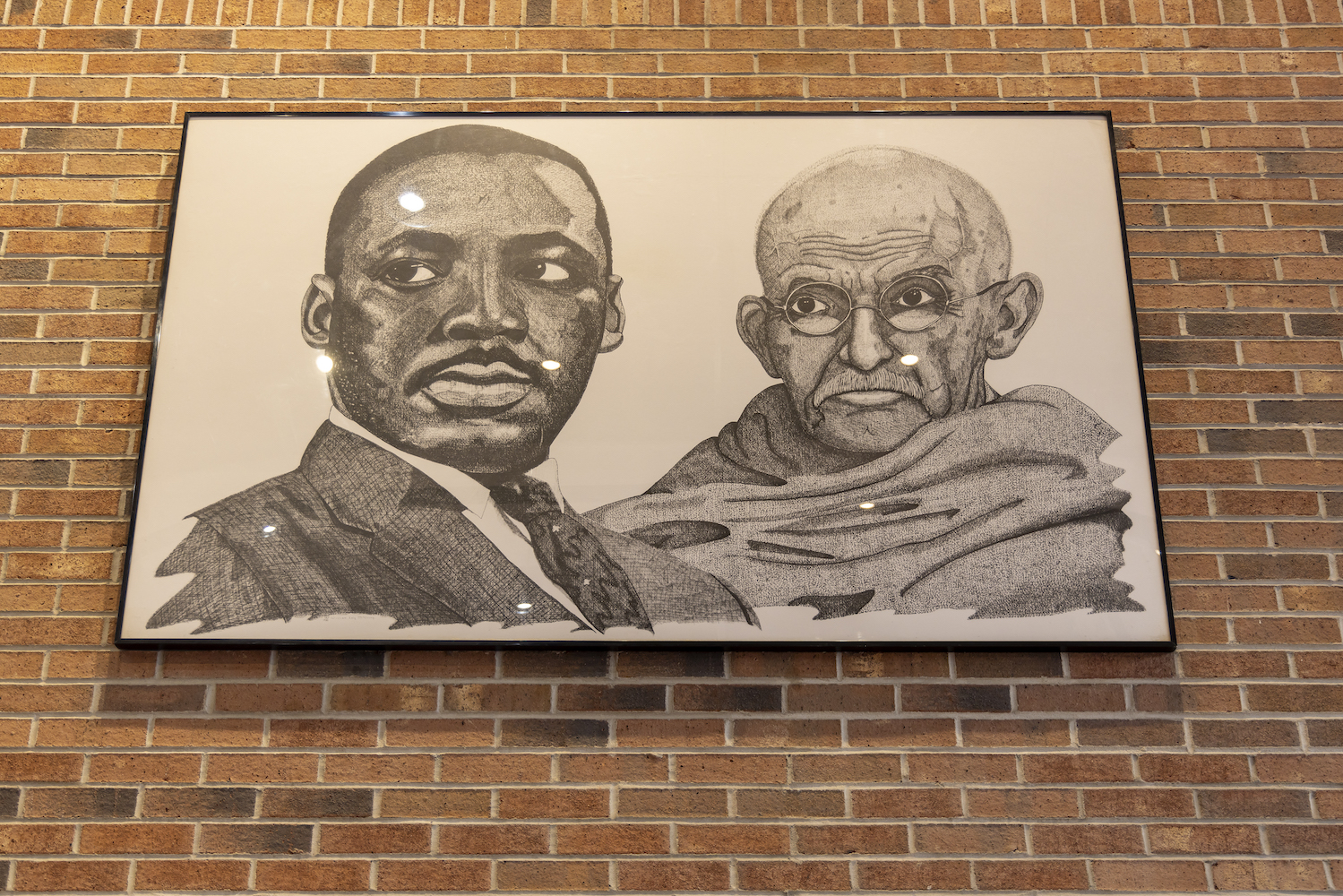
Upon arriving at Dr. Martin Luther King’s gravesite and museum, we were met with a recording of Dr. King’s powerful words echoing across the surrounding area. We were instantly drawn to the Civil Rights Walk of Fame, where many highly influential figures in the civil rights movement, such as Rosa Parks, Gandhi, and Judge Thurgood Marshall, were featured.
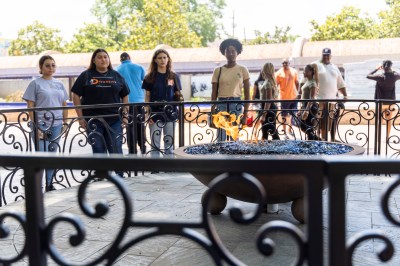
The park was decorated with inspiring quotes which encapsulates the hopes MLK had for future America. We were enthralled by the powerful messaging and representative structures. The eternal flame had to have been one of my favorite pieces in the park. The flame’s symbolism was incredibly profound; its persistence emulating Dr. King’s fight against racism and segregation.
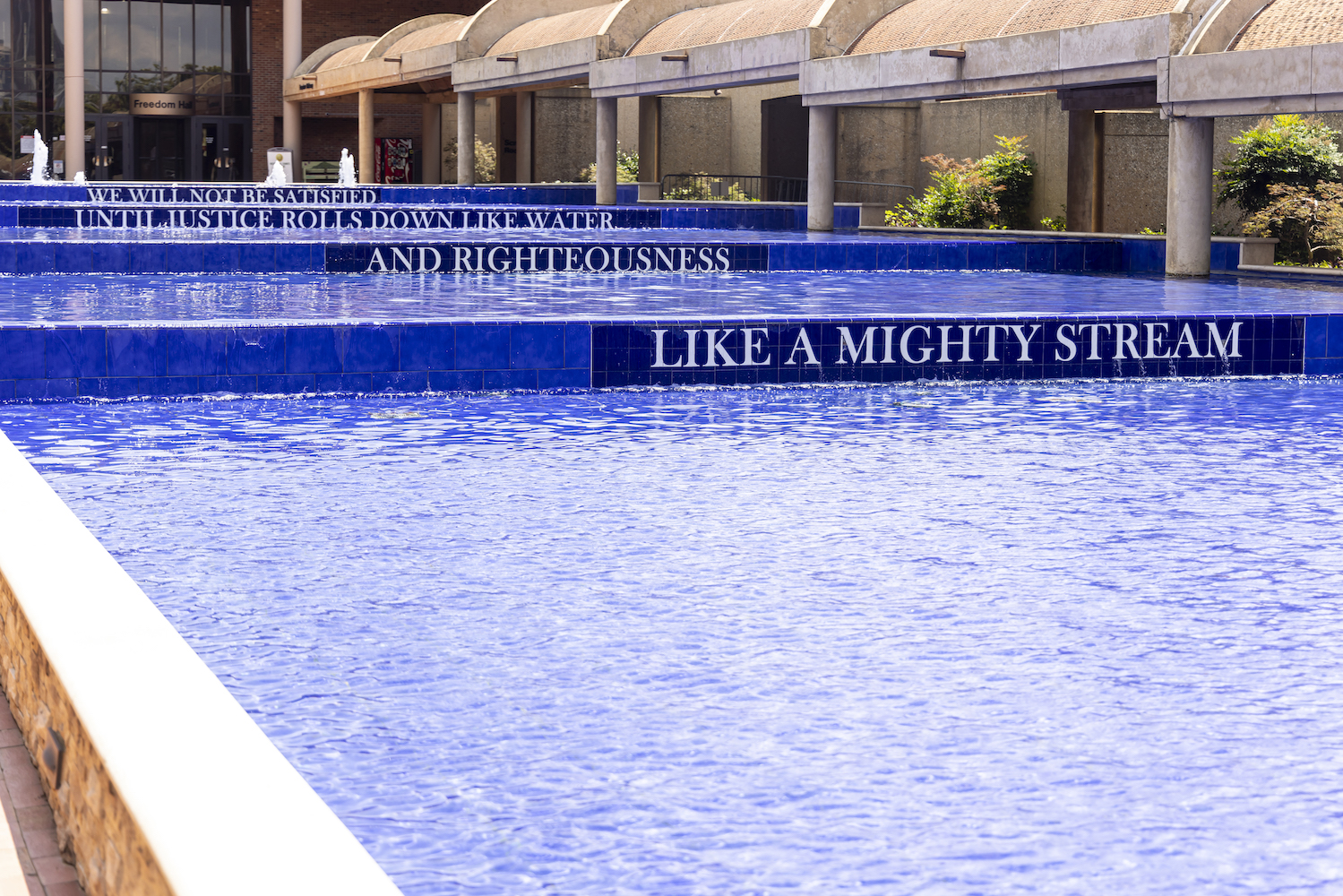
The real showstopper was definitely Dr. Martin Luther King, Jr. and wife Coretta Scott King’s grave and memorial. The memorial has a vibrant pool and fountain surrounding the graves, which displayed a quote from Dr.King: “We will not be satisfied until justice rolls down like water and righteousness like a mighty stream.” The words, placed on what looks like a shallow staircase, have a serene stream of water pouring down, which resonated heavily with the group.
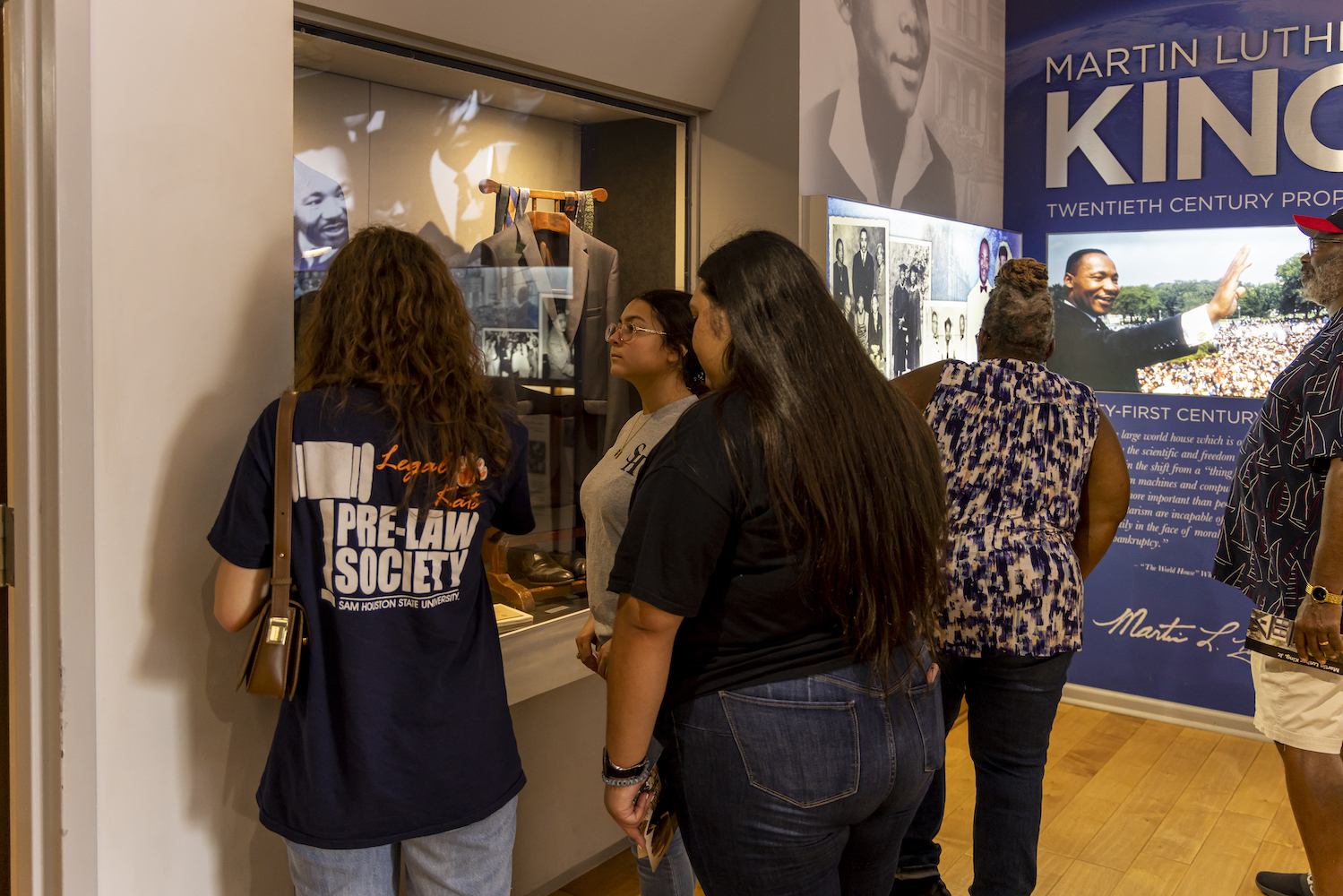
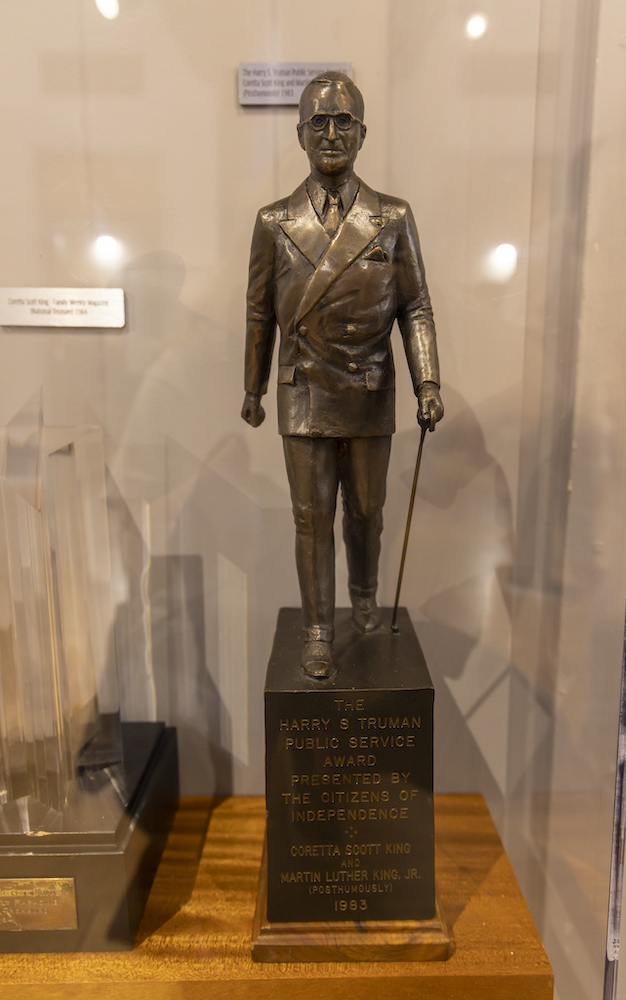
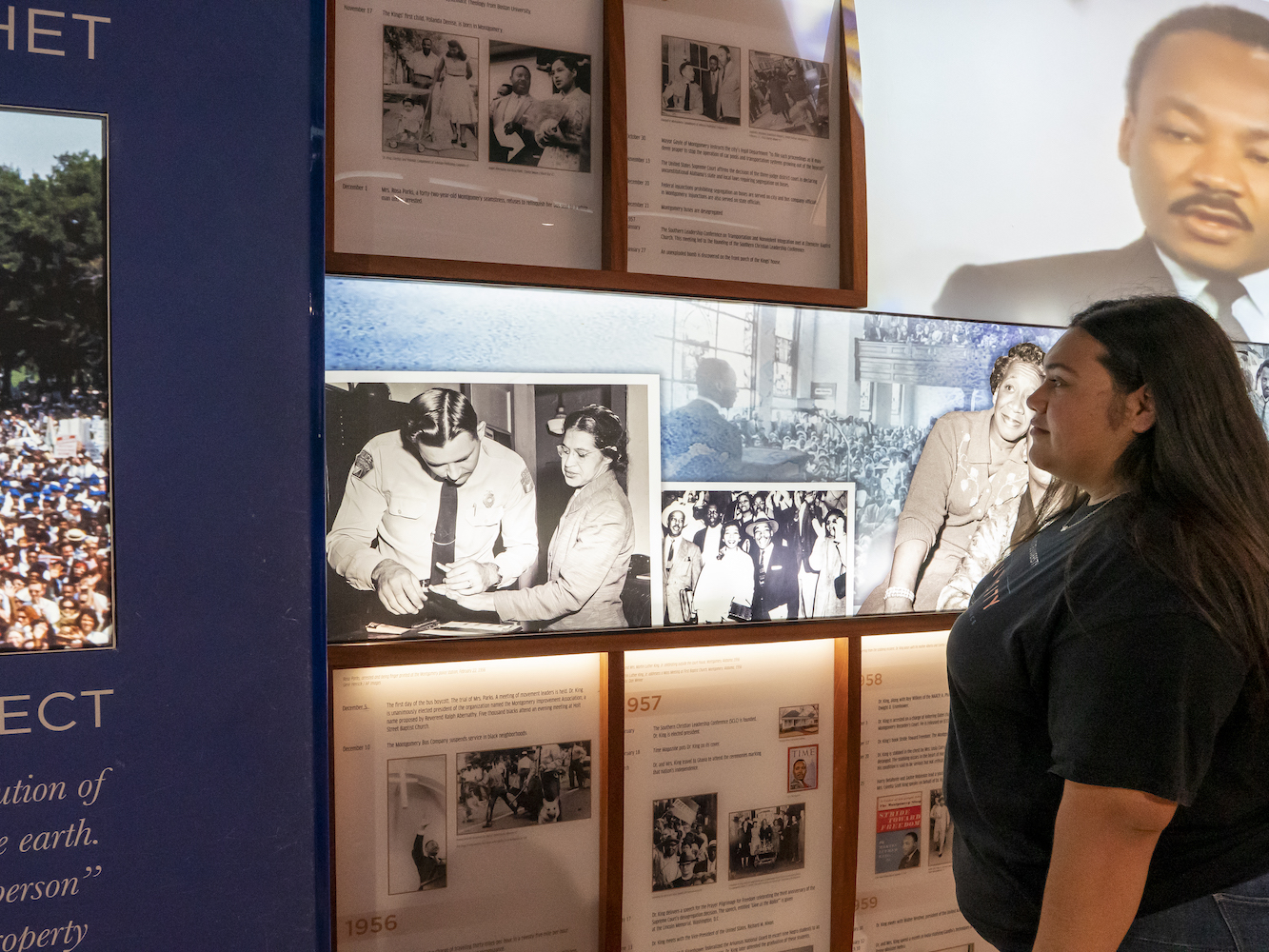
We eventually made our way to the Martin Luther King Jr. Museum located on the grounds of the National Historic Park. There were many of Dr. King’s personal items on display, such as his suits, shoes, robes, wallet and my personal favorite; his cufflinks and tie clips.
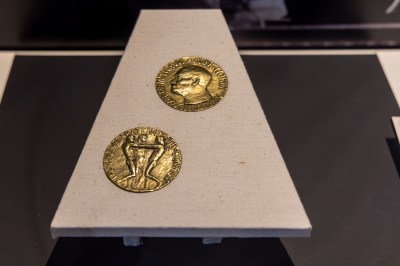
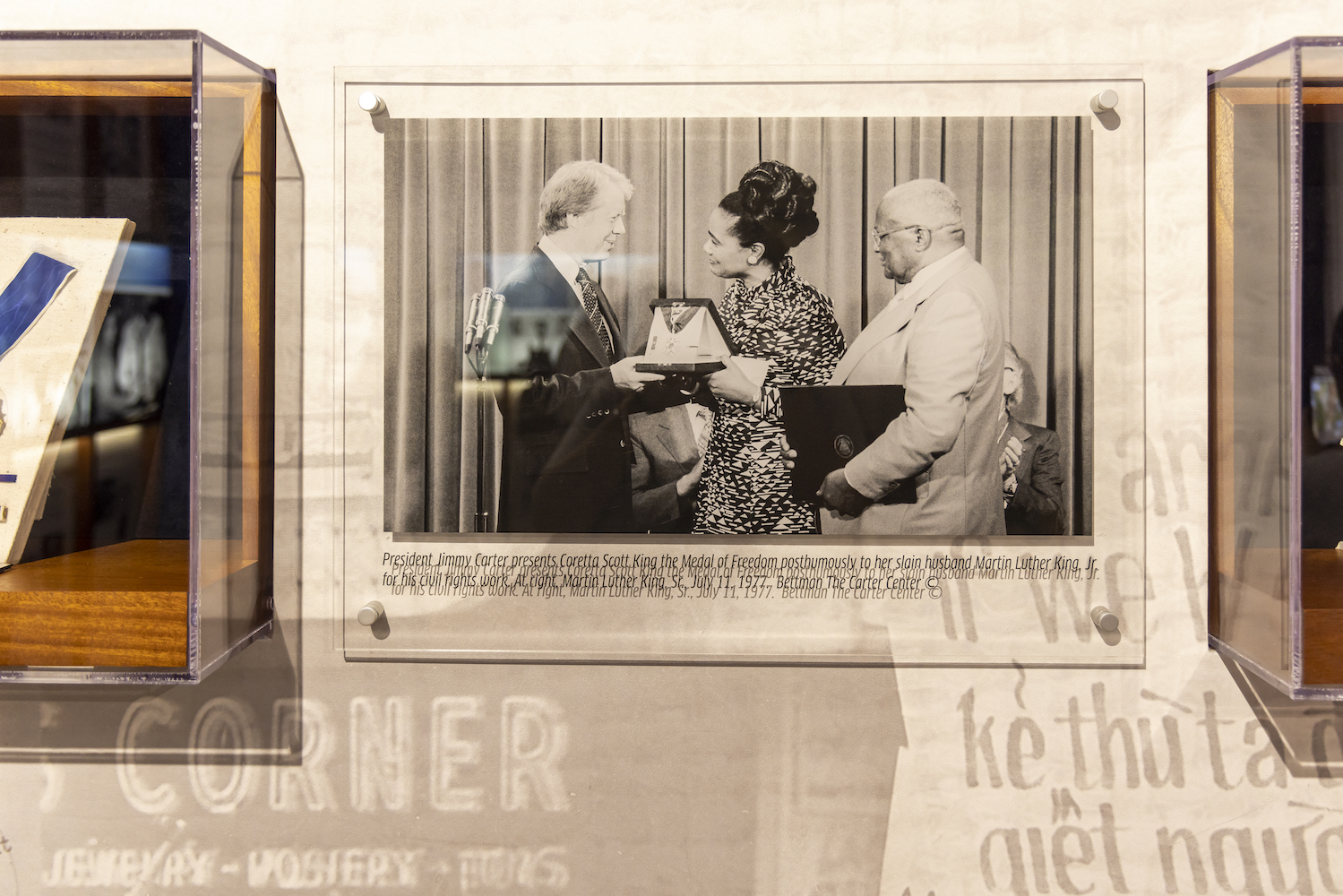
Some of Martin Luther King’s biggest accomplishments were also on display including his Presidential Medal of Freedom Award, presented to him by President Jimmy Carter and his Grammy, which he won for his speech “I Have a Dream”.
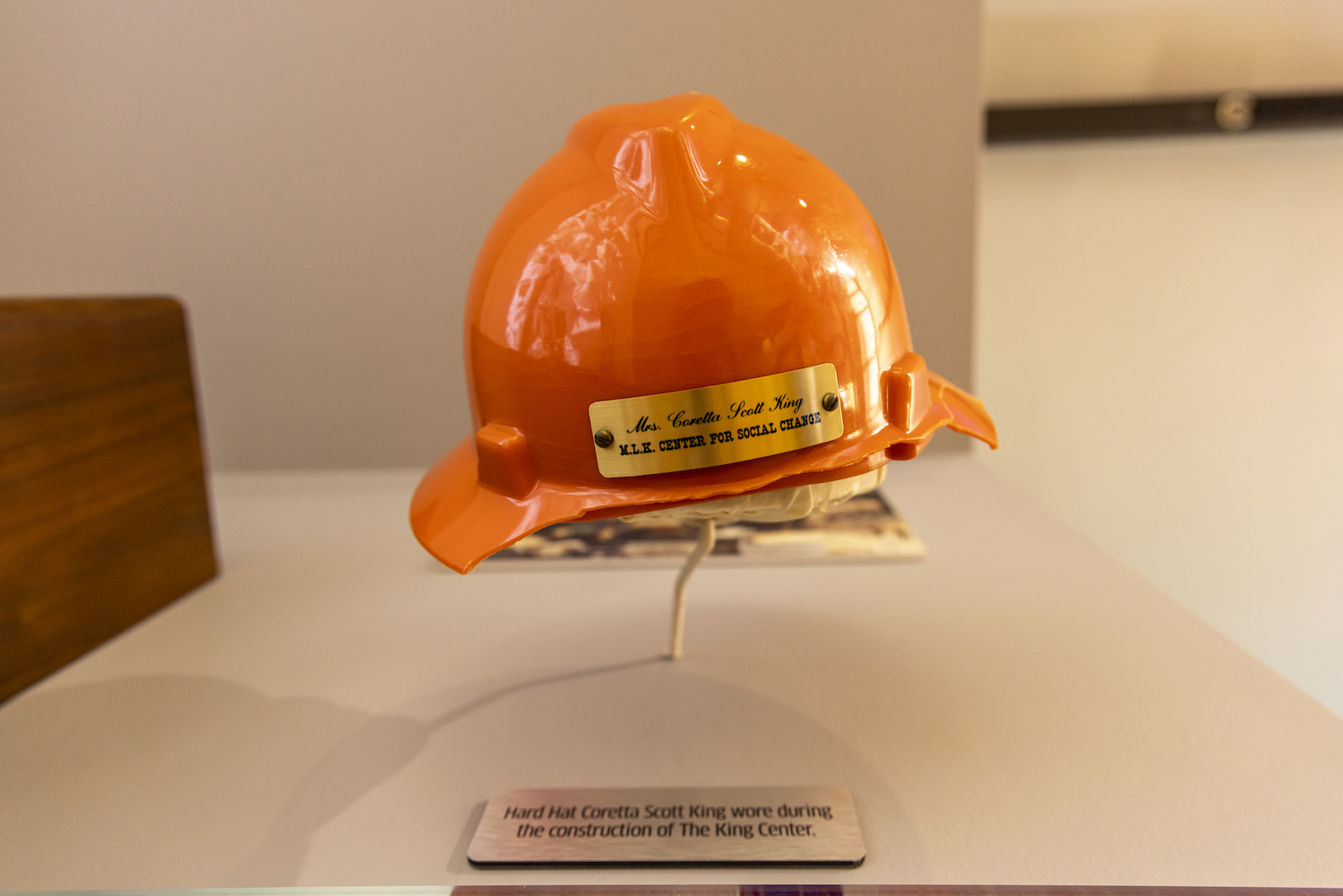
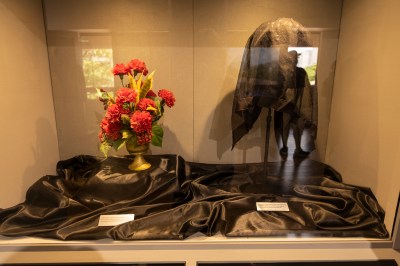
Dr. Martin Luther King’s wife, Coretta Scott King, had many pieces featured in the museum. A piece that stood out from her collection included the veil she wore for her husband’s funeral; some lipstick and tear stains still remained on the garment.
After seeing so many remarkable pieces and mementos of history, we headed to the gift shop! We made sure to pick up some mementos of our own to commemorate the visit.
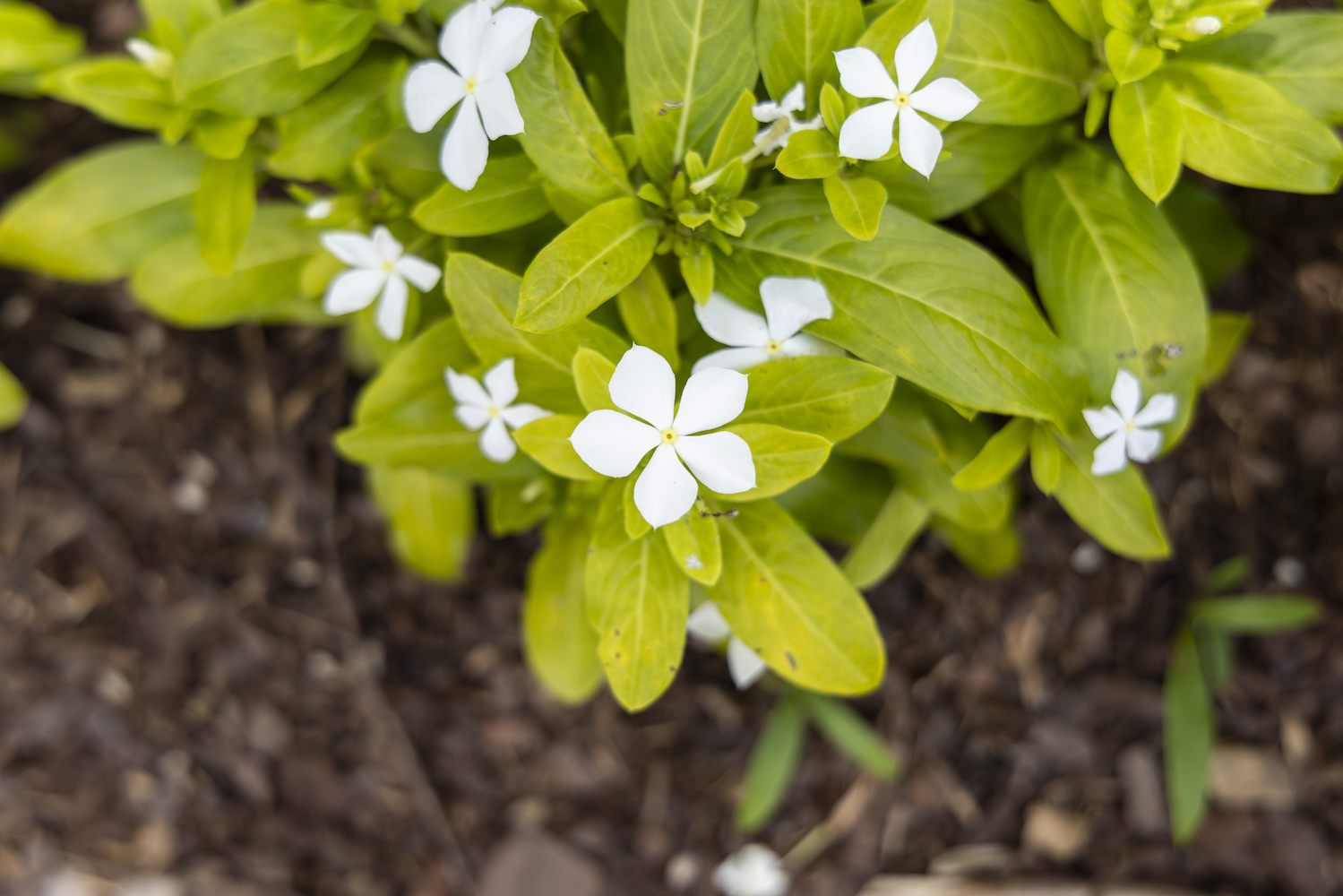
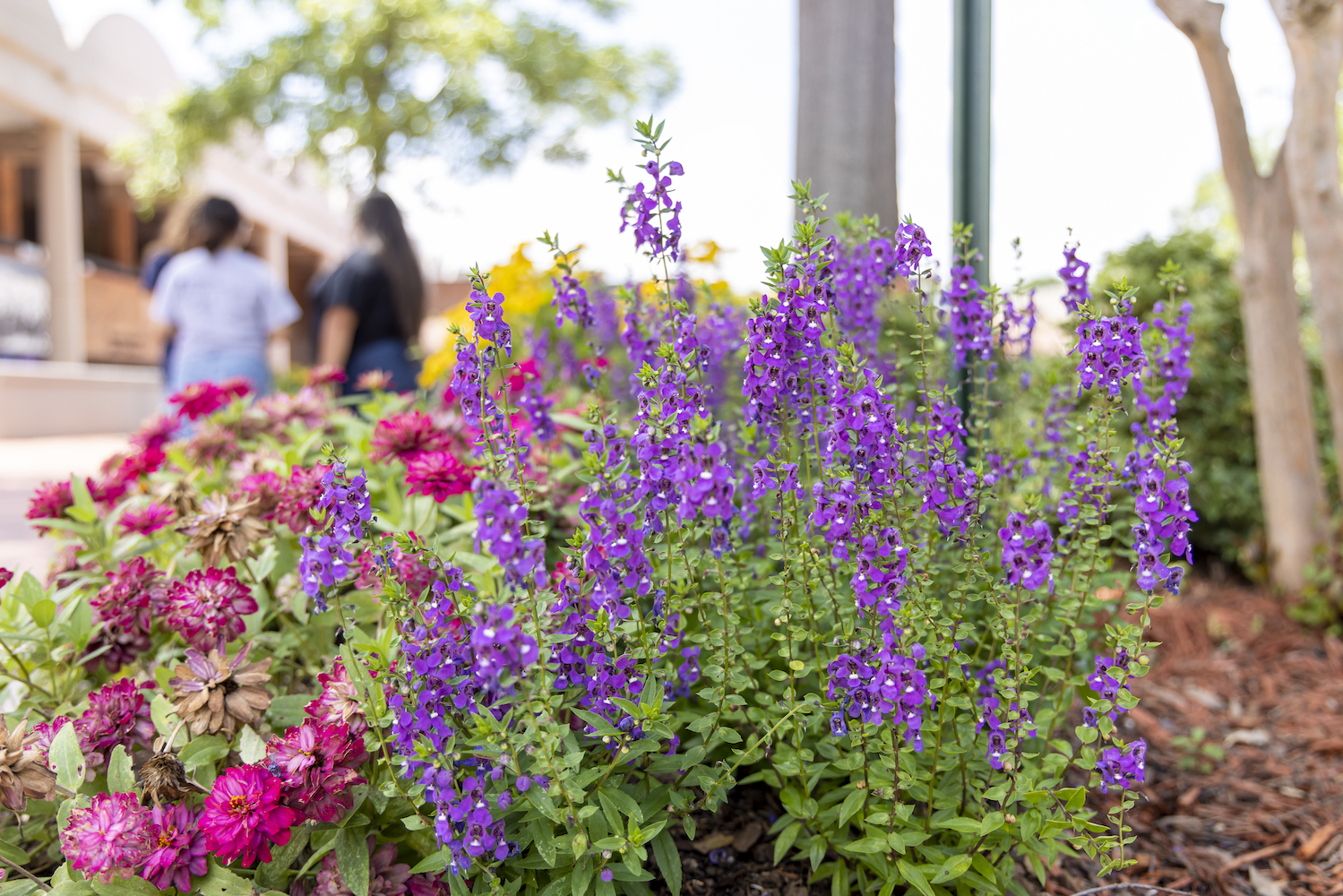
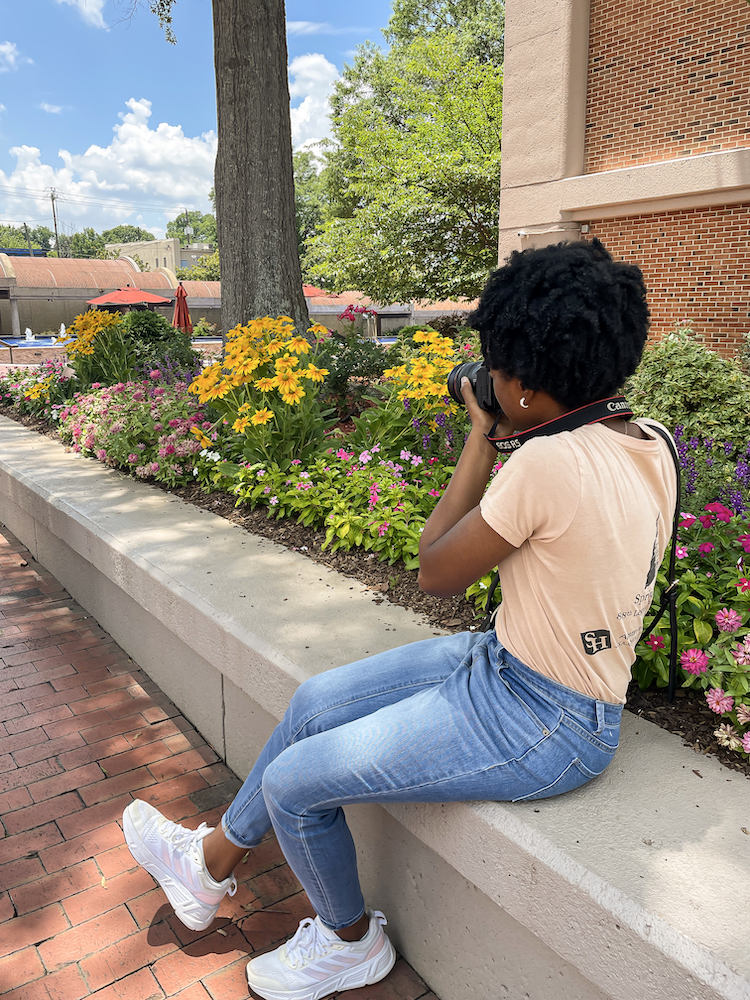
Before leaving, we took the time to let the beautiful exterior truly sink in. In this time, Ingrid was able to capture the vivacity of the area with some excellent photos of the flowers.
It was a beautiful and moving experience, and it was both an inspirational and educational way to start the trip.
Jimmy Carter Presidential Museum
By Ingrid Cuero
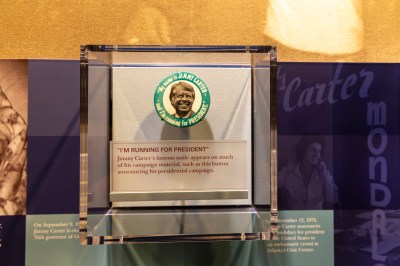
We then headed to the Jimmy Carter Presidential Library, which was fitting following the MLK museum. Dr. Martin Luther King, Jr. actually endorsed President Carter during one of his early campaigns! Upon entry, we encountered a beautiful display with international flags surrounding a patch of vibrant flowers, signifying the 39th President’s commitment to a connection with other countries.
We began with a film providing an overview of the Carter Presidency, which was a great way to set the tone for our visit. Carter grew up on a farm in Plains, Georgia, and had a rich background. He was the first in his family to leave Georgia to pursue higher education, served in the military, and had a career as a nuclear engineer. President Carter was portrayed as a President who led with his conscience before his politics, passing key civil rights legislation in his time in office. Something that stood out to me was that he decided to leave the Navy to take over his father’s farmland. He was not necessarily invested in politics at first, but when a previous Senator vocalized a few issues that went against his beliefs of an equal society, President Carter decided to run for state senator. This marked the beginning of a career surrounding Carter’s passion for equality, civic engagement, and ethics.
President Carter’s election into office can be described as a fluke of fate. After experiencing the presidencies of two career politicians, Johnson and Nixon and the misfortunes of The Vietnam War and Watergate, voters were looking for something other than a “traditional” politician. Carter came across as an everyday American, earning trust with voters.
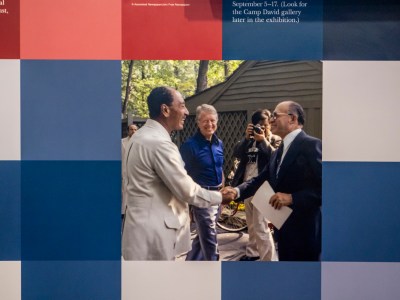
One of the highlights of the Carter Presidency was the peace negotiations with Egyptian President Anwar Sadat and Israeli Prime Minister Menachem. We were able to view some pictures and videos of the monumental achievement of restoring peace among the two countries.
One of my favorite pieces in the museum was a portrait of President Carter by Octavio Ocampo, a mosaic. If you look closely, President Carter is made up of painted buildings, boats, flags, and 18-wheelers.
We viewed a model of Carter’s Oval Office, which had a collection of art curated by the President himself. To note a few, there was a sculpture from an early American sculptor we were familiar with, Frederic Remington; a portrait of a young George Washington; and a bust of Benjamin Franklin.
We thoroughly enjoyed our experience in President Carter’s Museum!
Erica Davis Lowcountry
By Jessica Cuevas
Following a long day–one in which we woke up in Houston–we made our way from Atlanta to Savannah, a 3.5 hour drive. In Savannah, we headed to Erica Davis Lowcountry for dinner. For our appetizers, we had fried green tomatoes and oysters rockefeller, all-time classic dishes of the South.
The fried green tomatoes were highly popular amongst all of us, but Ingrid’s favorite was, by far, the oysters rockefeller.
With great starters, we were eager to indulge in our main entrees.
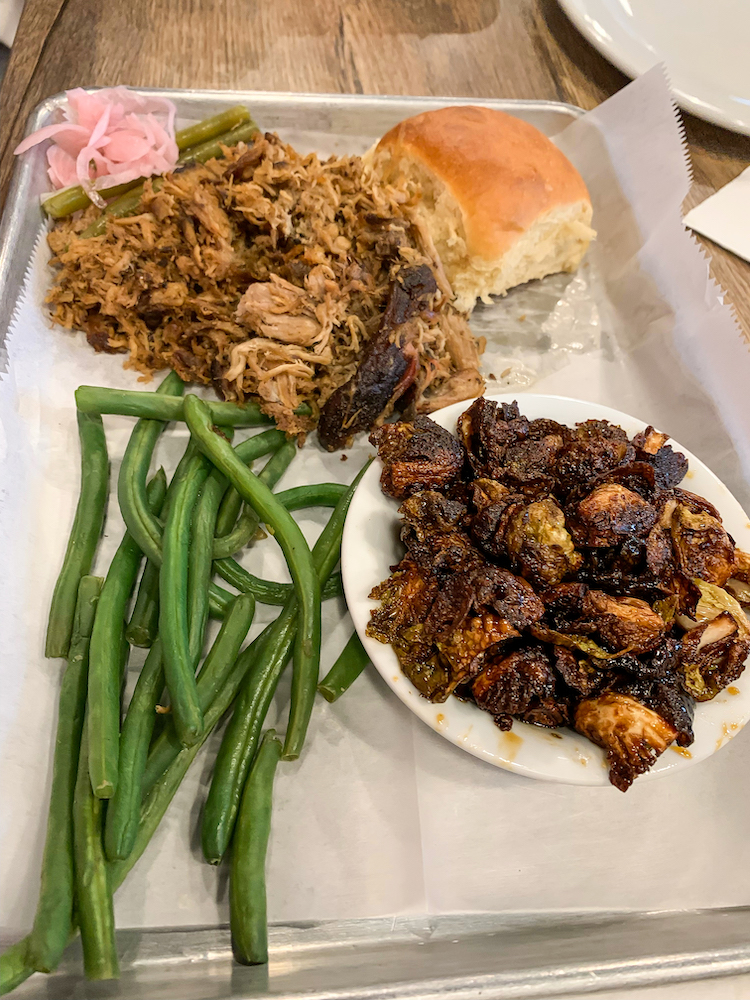
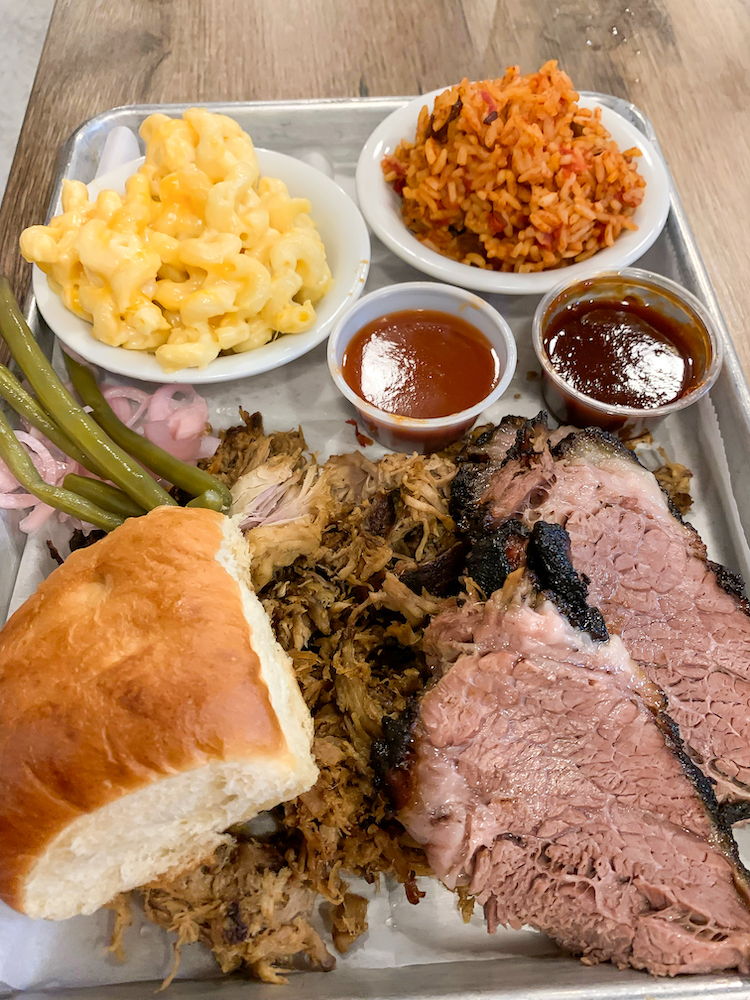
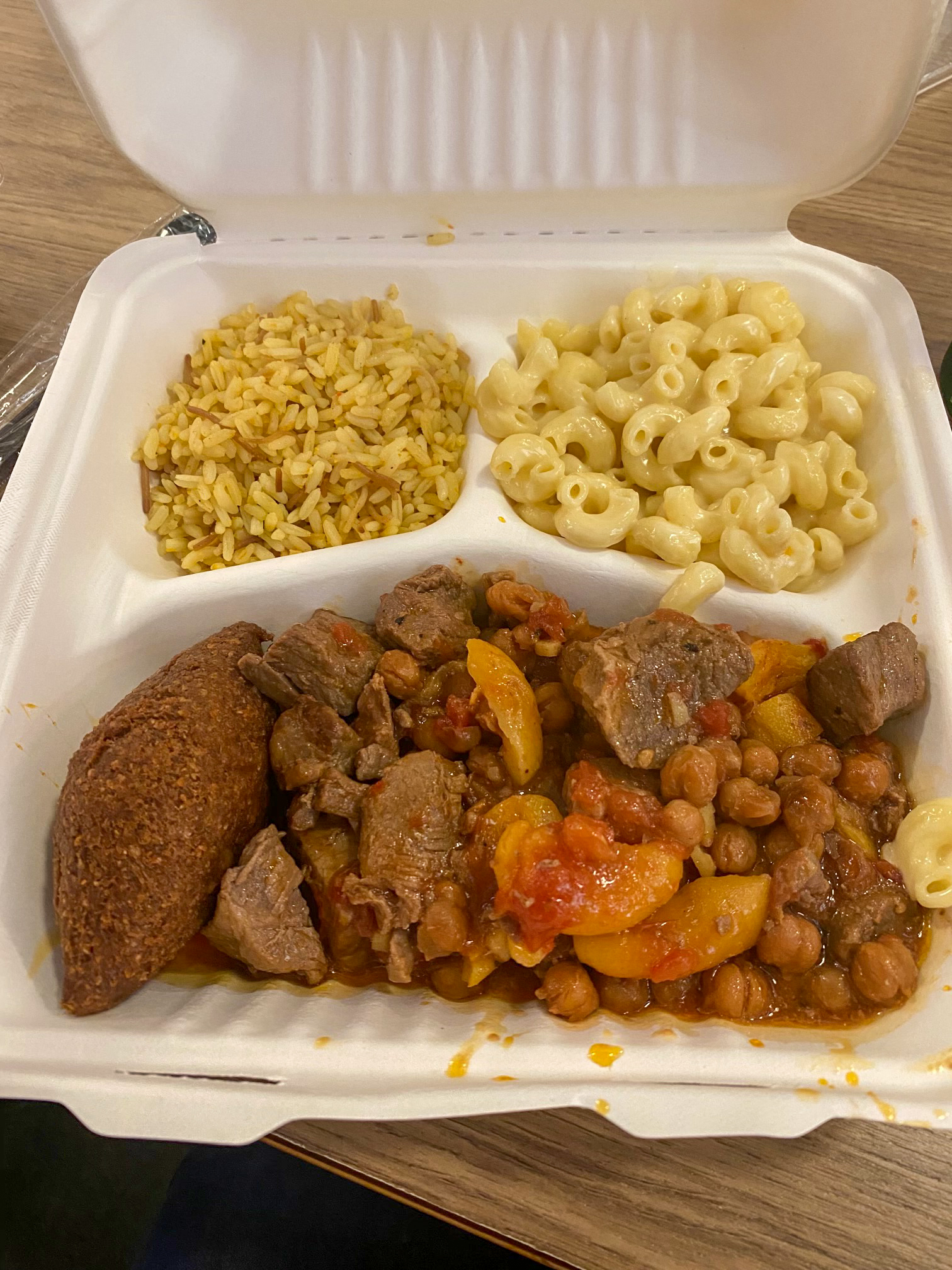
Morgan ordered the best thing on the menu, which, according to the person who took our order, was the Wassaw Redfish; Ingrid had the Crab Stuffed Flounder; Michelle had a Flounder Po’Boy; Professor Yawn and Stephanie shared the low country boil and a pulled pork plate; meanwhile, Olivia and I shared a BBQ combo of smoked brisket, pulled pork with mac n cheese and savannah red rice.
We were intrigued to know that all the barbeque sauces at this restaurant are made there and that they had experimented with and created a sweet and delicious *peach* barbeque sauce–and it was our favorite!
Although some of us were full, others could not leave without having dessert. Following our entrees we treated ourselves to a banana pudding, key lime cup, and a slice of carrot cake. They were all delightful!
With full stomachs, we headed back to the hotel, ready to write about our experiences, edit photos, and prepare for an even more action-packed day tomorrow.
A little over two years ago, President Joe Biden announced the United States of America’s intent to withdraw from the Afghanistan War; our longest standing war in history. The aftermath of this cataclysmic event has been felt around the world, but no more so than in Afghanistan itself.
The World Affairs Council of Greater Houston (WAC) is widely known for bringing in big names and esteemed speakers. However, the panel for this past Wednesday was by far one of our favorites. One of LEAP’s goals is to broaden our knowledge of, and establish relationships with, the various departments on campus. For this event in particular, we had the privilege of having Major General David Glaser, Chief Strategy Officer for SHSU, join LEAP on our trip to Houston. General Glaser was a career military officer, and he offered us not only insights into the Afghanistan conflict, but also a unique perspective on the University’s strategic plan. On our drive down, we were able to ask General Glaser questions about his career and what it means to undertake a strategic plan for a large organization. He happily answered our questions, and asked a few of his own about our experiences at SHSU!
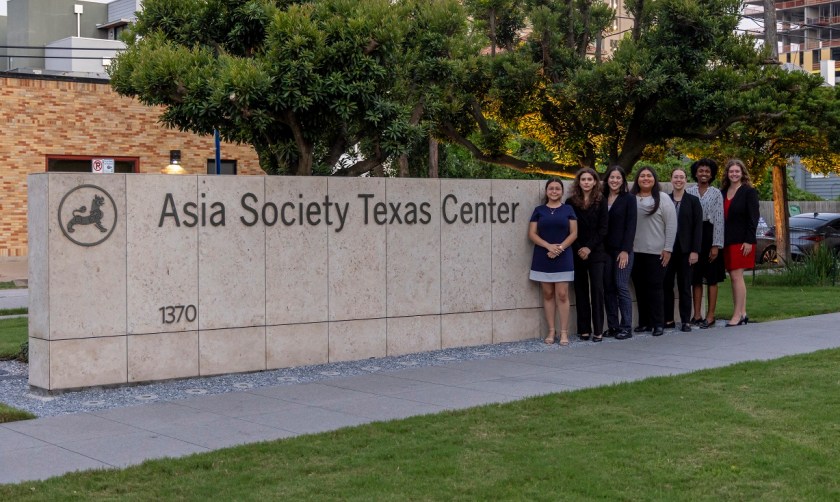
The event was hosted at the Asia Society of Houston, a beautiful contemporary structure that mixes Asian and American architecture influences.
While the architecture was certainly captivating aesthetically, its construction is equally admirable. The Asia Society is a LEED (Leadership in Energy and Environmental Design) Certified building. LEED certified buildings are green structures that are environmentally conscious in terms of reducing its carbon footprint and its water and energy conservation.
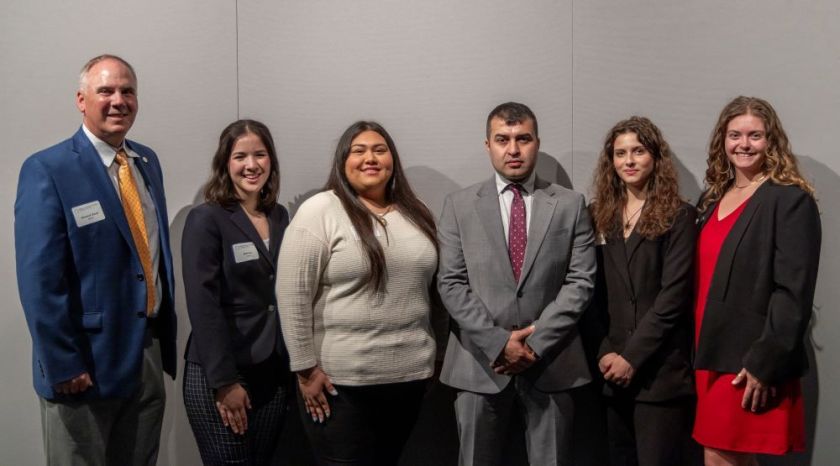
We arrived early so that we could participate in the social hour held before the program, and we were glad we did ! We had the opportunity to meet Jalil Shahkar, who works closely with General Sami Sadat. After a friendly introduction, we were able to take a photo with both General Sami Sadat…
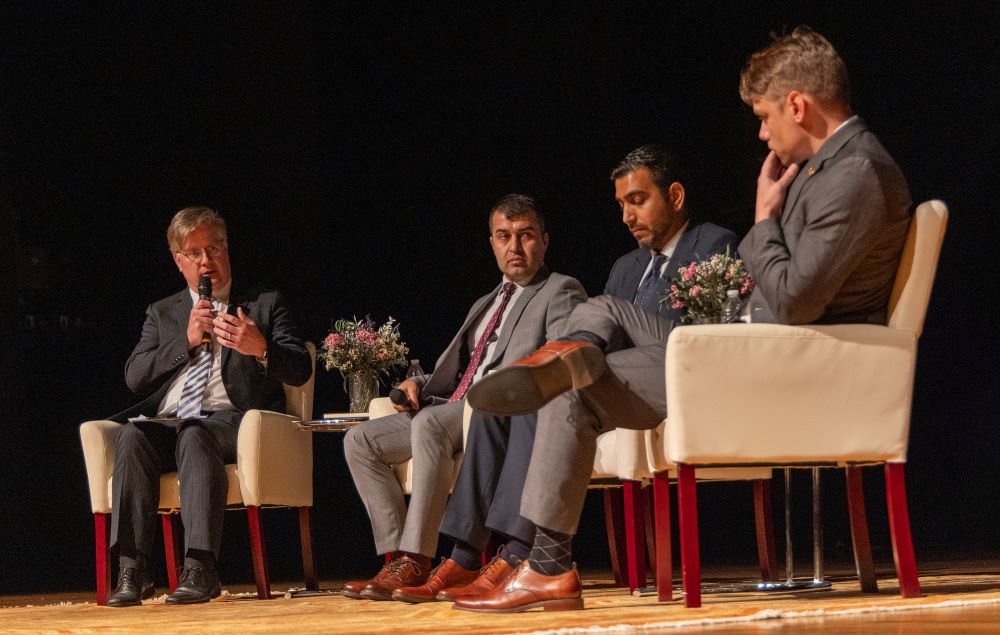
…and Lt. General Khoshal Sadat, who would both be sitting on the panel later that evening.
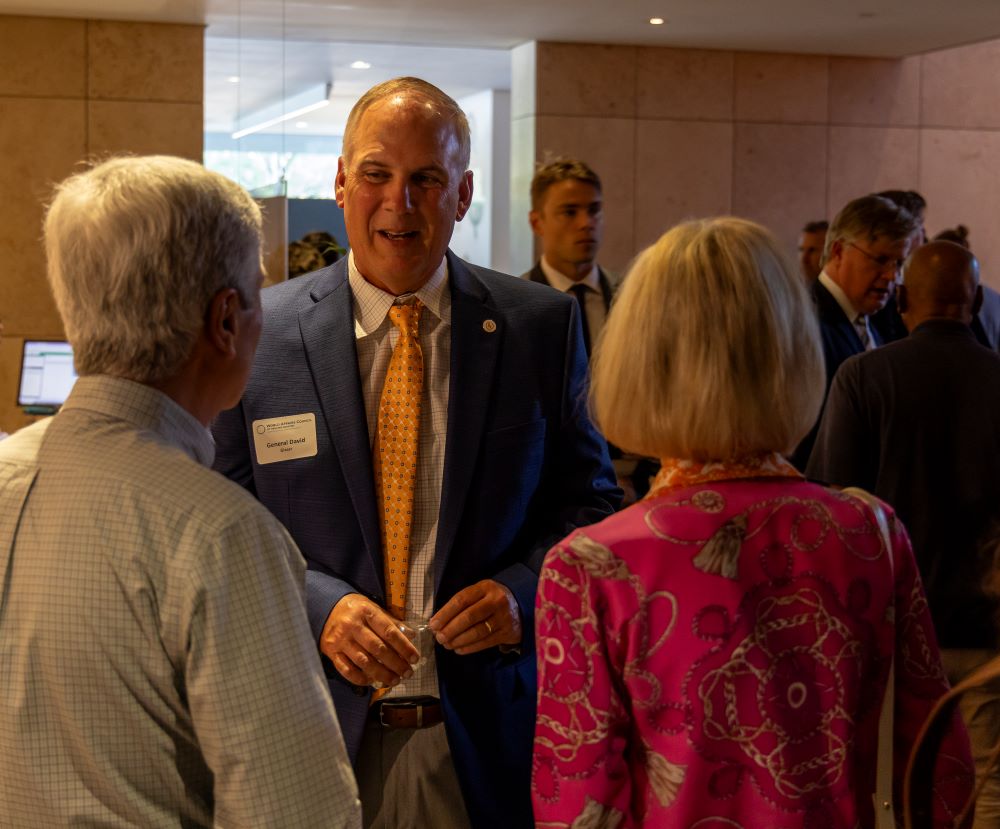
Indeed, the social hour gave us the opportunity to interact with many people and represent SHSU, something we watched General Glaser do as well!
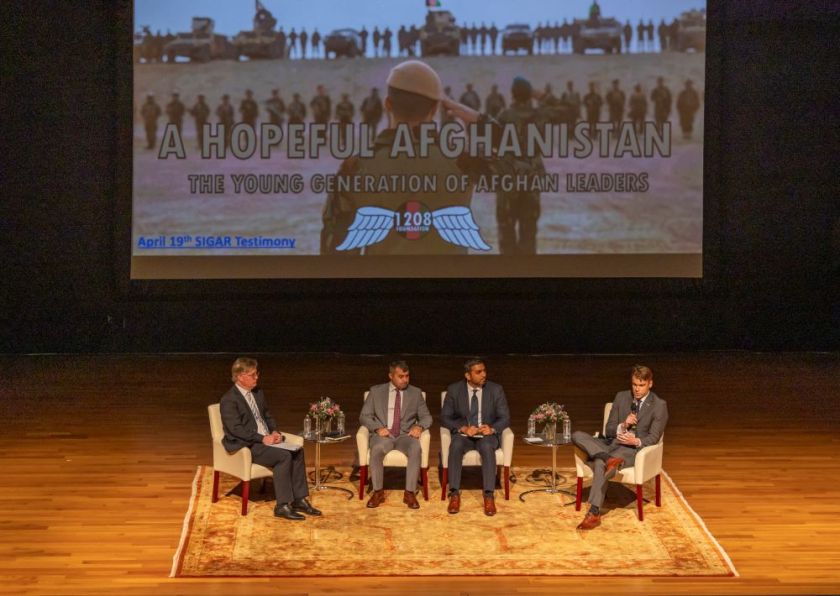
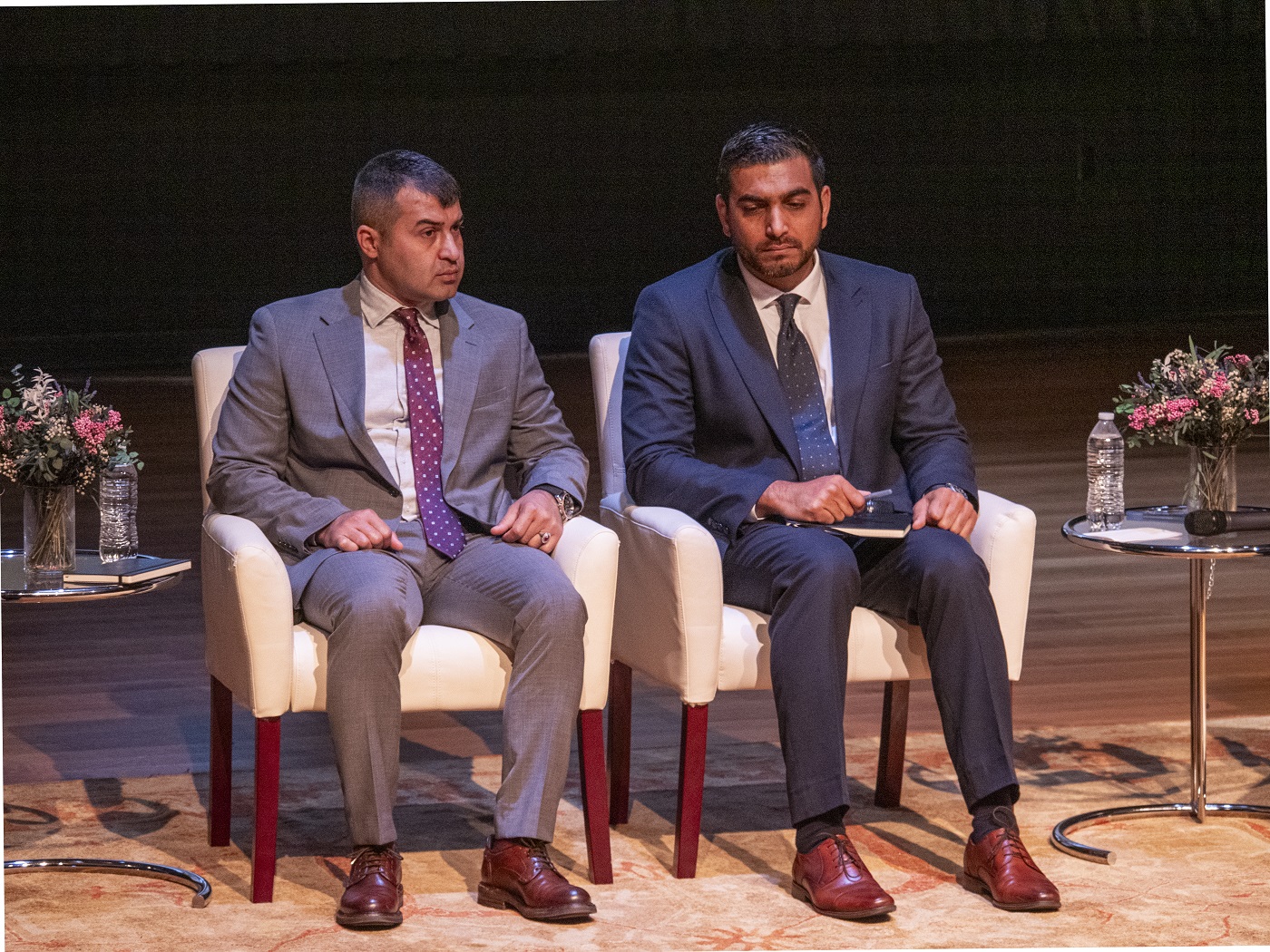
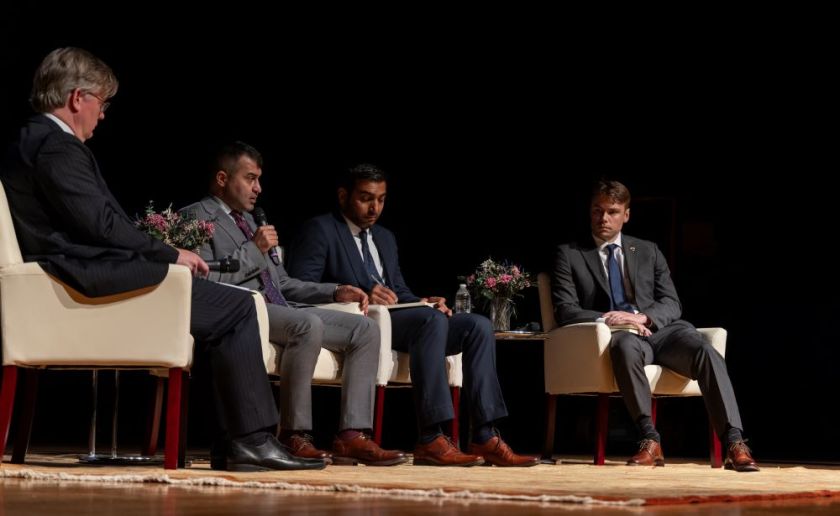
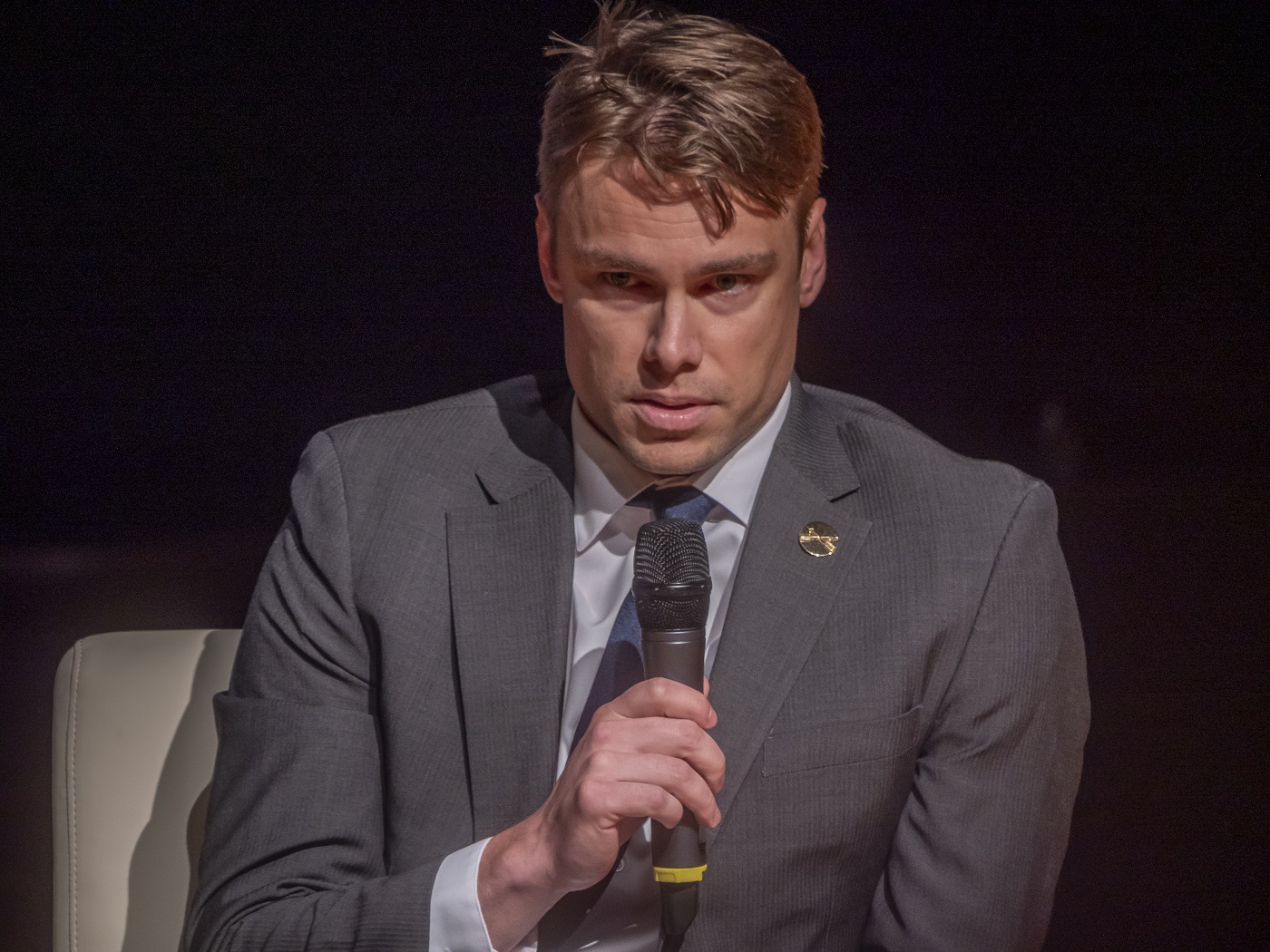
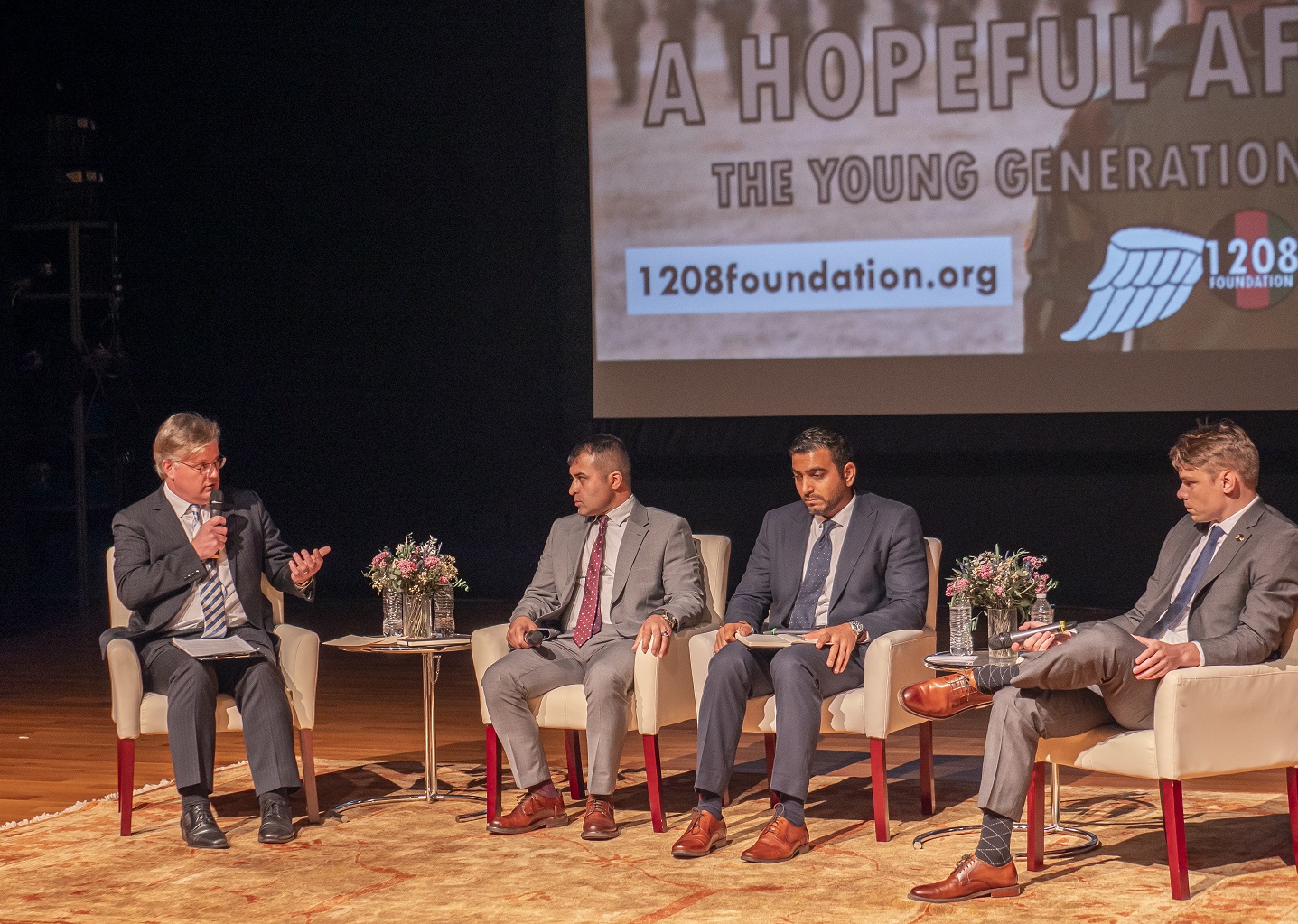
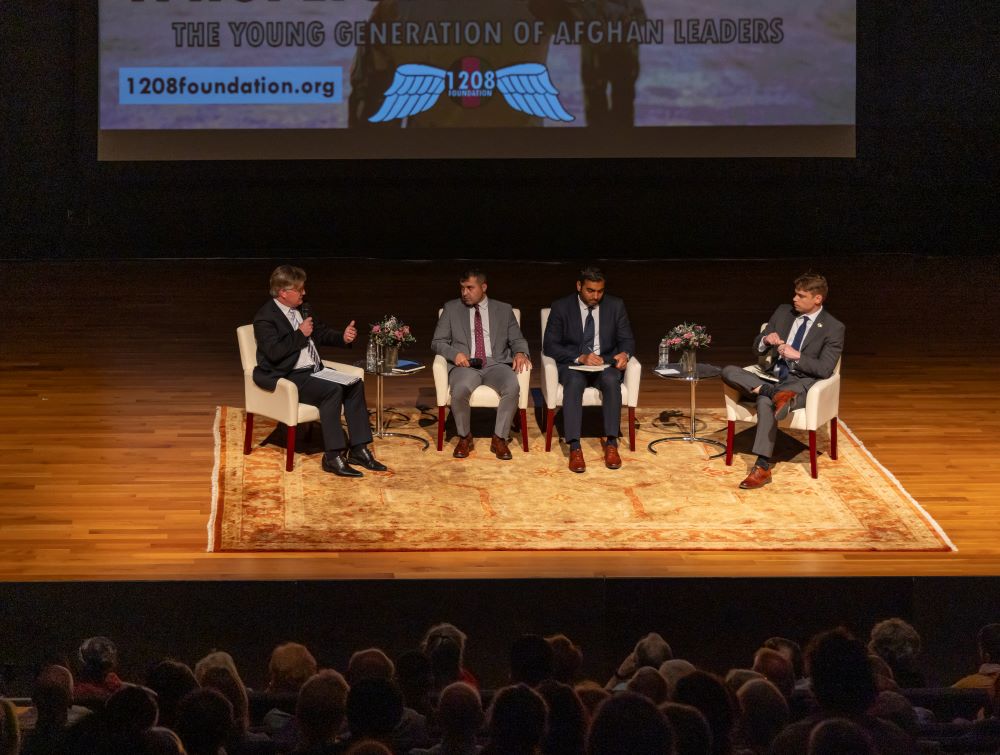
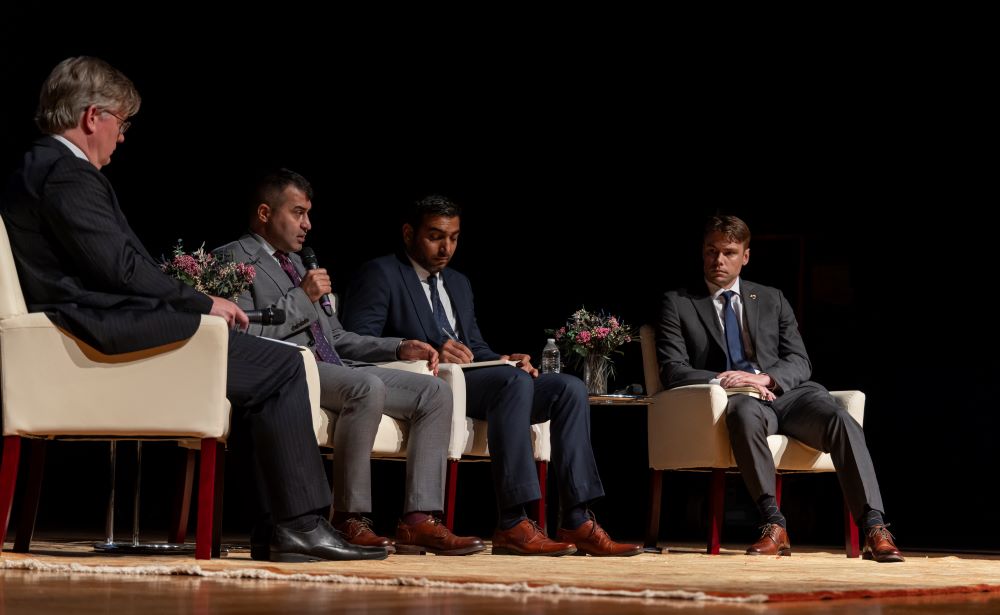
Chief Programs Officer Ronan O’Malley began the program by formally introducing the panelists for the evening: Green Beret and Executive Director of the 1208 Foundation, Thomas Kasza; Lt. General Sami Sadat, the final commander of the Afghan Special Operations; and Lt. General Khoshal Sadat, a former Deputy Minister of the Interior.
The audience then watched three clips from the 2022 documentary, Retrograde. These clips set the tone for the evening in three parts…
…before the end, which was Biden’s announcement of withdrawal and the suddenness of evacuating Afghanistan; the fall, which was the effects on Afghan troops after the abrupt loss of the United States’ support; and the chaos of the evacuation itself, which the panelists was not fully captured in media/governmental reports.
Both General S. Sadat and General K. Sadat spent their entire adult lives in war.
By virtue of their promotions near the end of the war, they were poised to be able to make major shifts in the war’s direction. The military effort, however, was terminated by the Americans just as they emerged in these leadership roles. The new leaders simply ran out of time.
While the outcome of the war and the implications of the U.S. withdrawal are grim, General Sami Sadat still has hope for Afghanistan for three reasons, in particular: (1) the Afghan people are against the Taliban, (2) the surrounding regions, such as Iran and Pakistan, are against the Taliban, and (3) Afghanistan, according to the panelists, will not allow or bring back corrupt politicians.
Thomas Kasza added a fourth hope, which was the absence of Americans. He noted that the presence of a perceived “Western Invader” provided life and ammunition (literally and figuratively) to the Taliban. The absence of the US may be, he hoped, “removing the fuel from the fire.”
This experience was humbling. Many Americans, including ourselves, are not aware of the realities of life under the Taliban today. Through this panel, we were better able to comprehend the present injustices and how United States legislation played a role in them.
Something that resonated with the entire group was a statement made by General Sami Sadat: “…We are alive. We have military training, we have soldiers, we have good friends in America, and we are combining everything we have to save our country.”
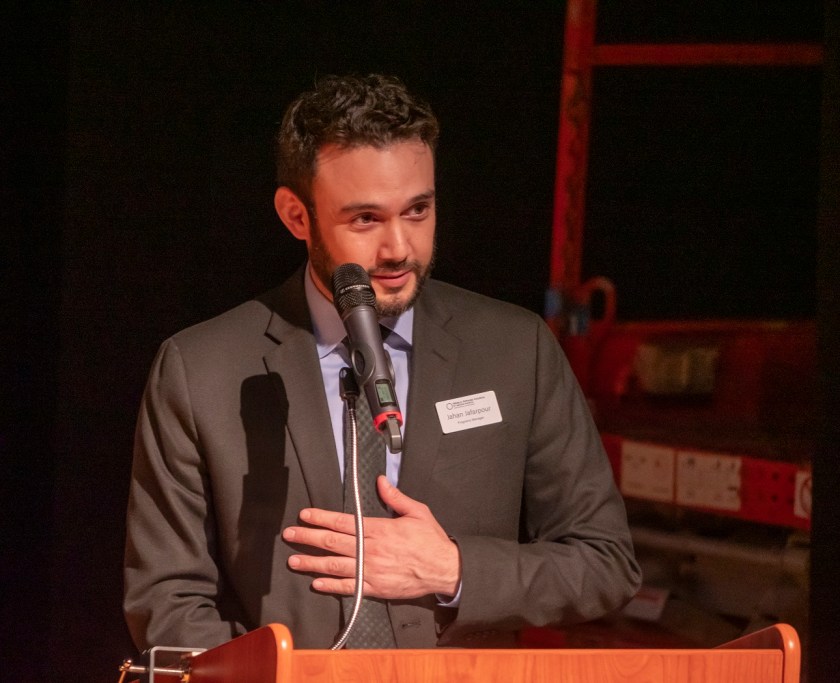
WAC’s Jahan Jafarpour wrapped up the evening, providing additional information about upcoming WAC events–which we hope to attend!
In our typical LEAP fashion we try to dine at locations similar to our country of topic. Unfortunately we are unable to find traditional Afghan cuisine, but we did get to experience Lebanese food! There is an added layer of connection for the group Wednesday. Our own Olivia is half Lebanese, so naturally, questions regarding our dinner selections were directed towards her!
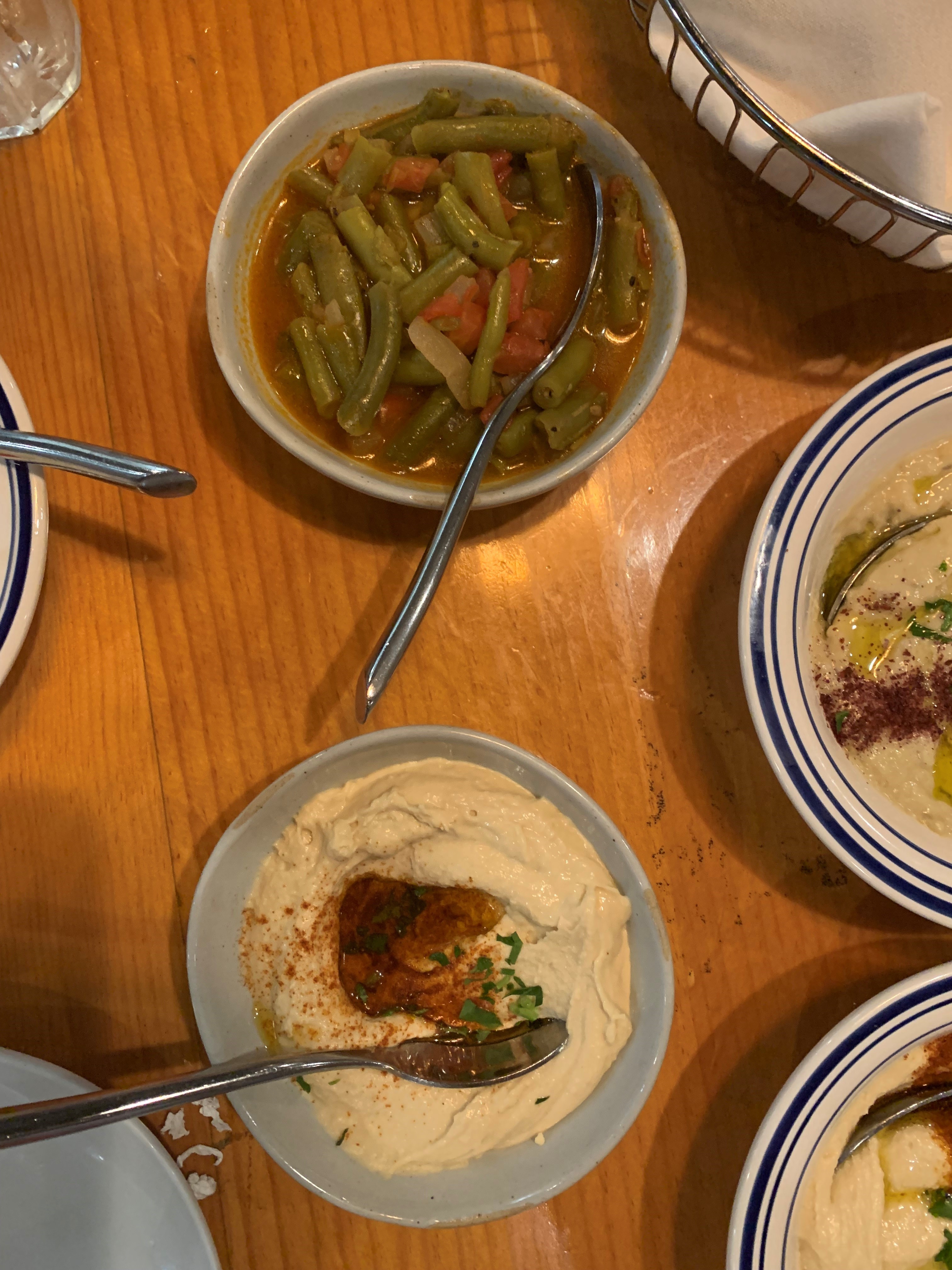
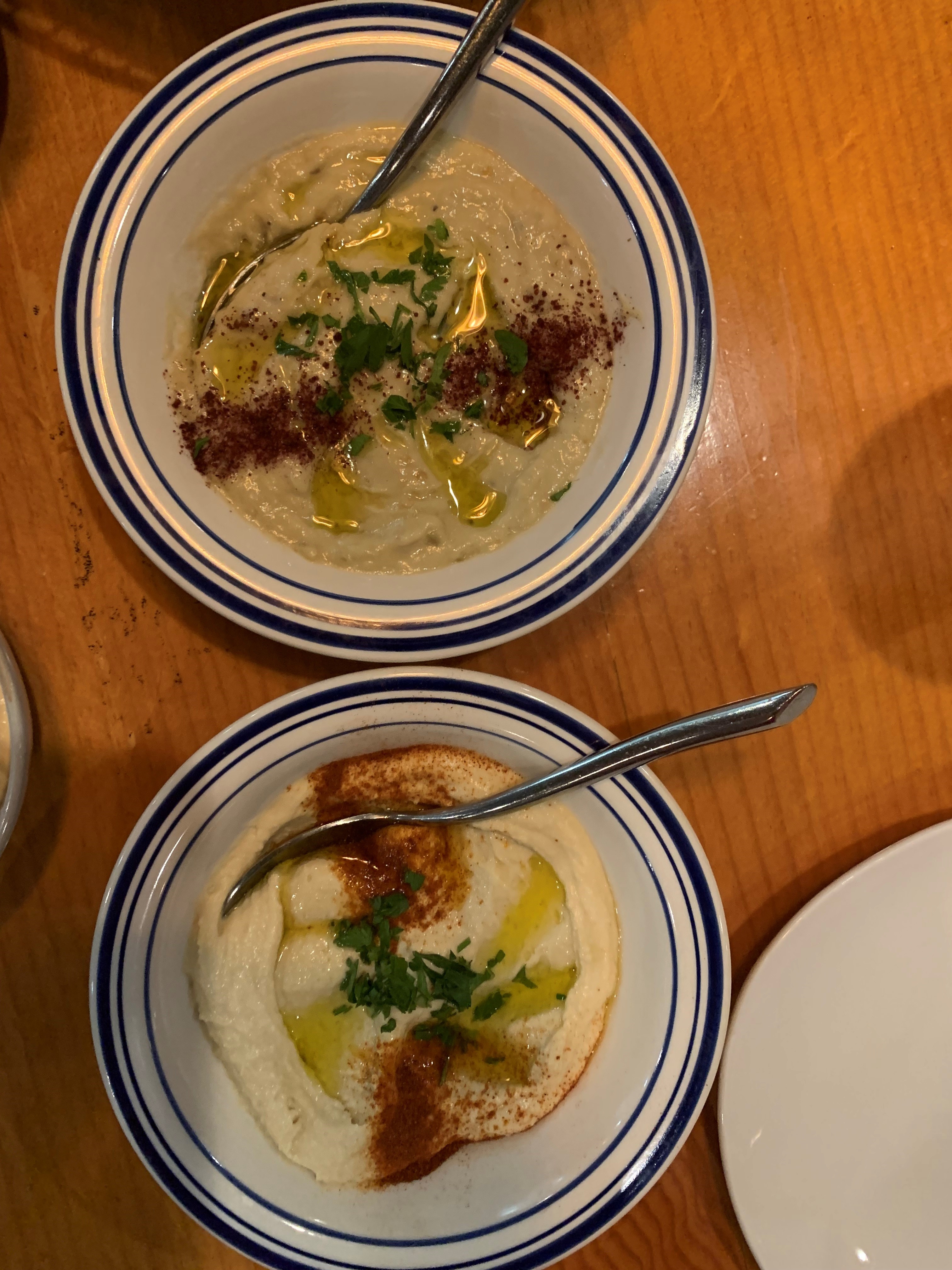
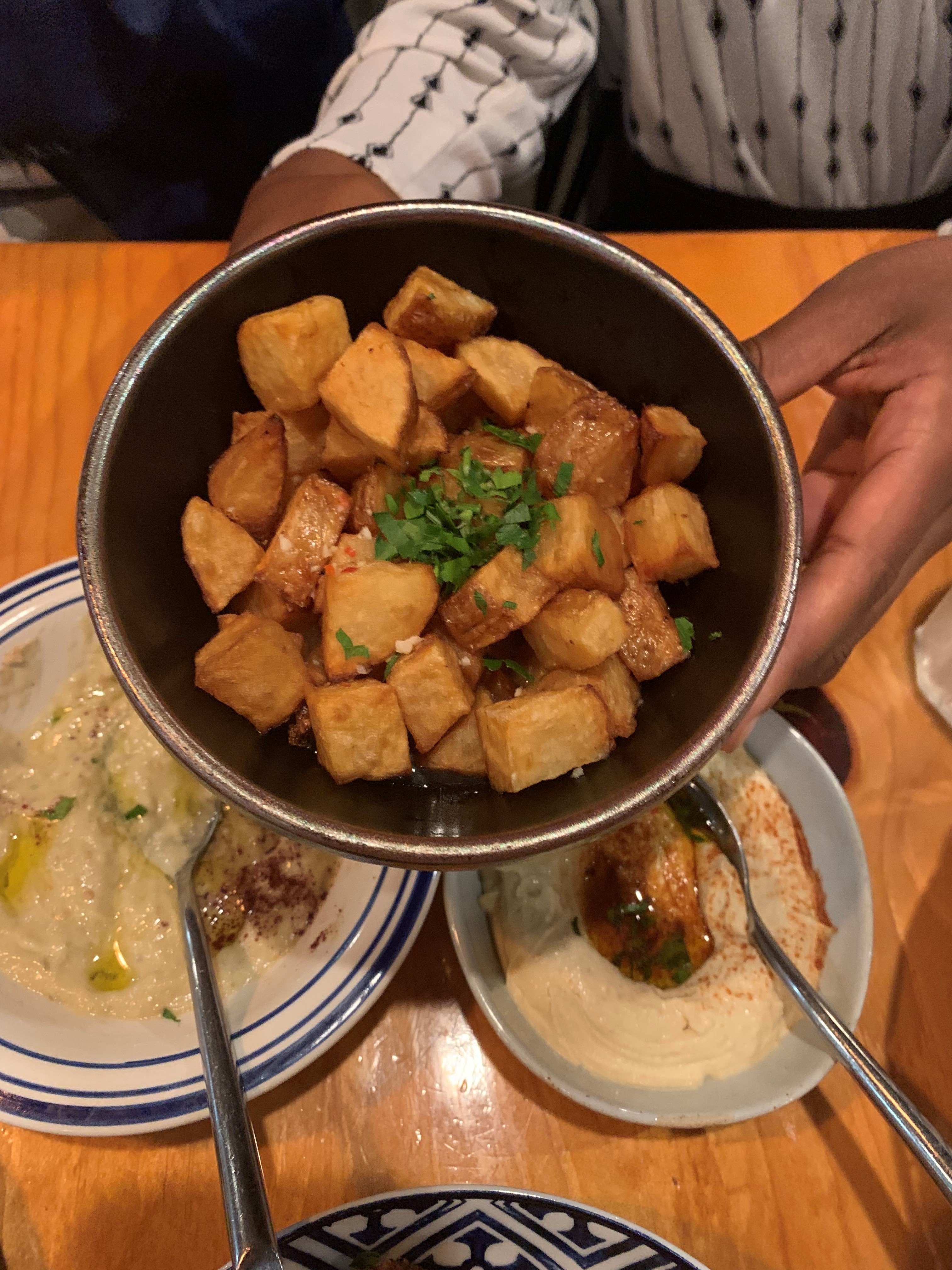
Mary’z offers a wide variety of new and great flavors. We started with that in mind, and ordered different dips and hummuses for the table. General Glaser noted that some of the best food he’s ever had was in the company of Afghan commanders. We were able to converse over dinner about the night’s event, and what we learned. Despite growing up during the war, much of the information was new to us.
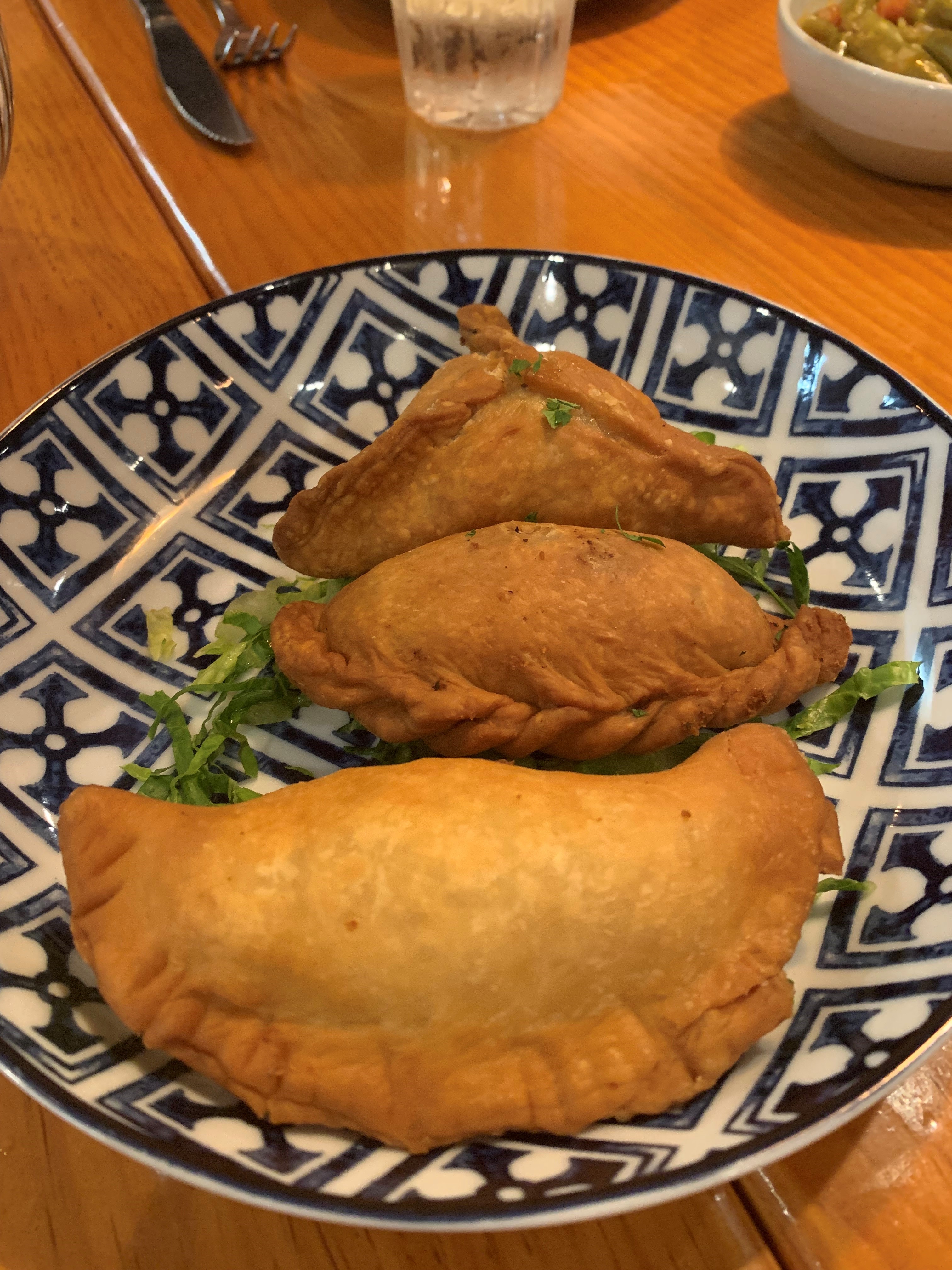
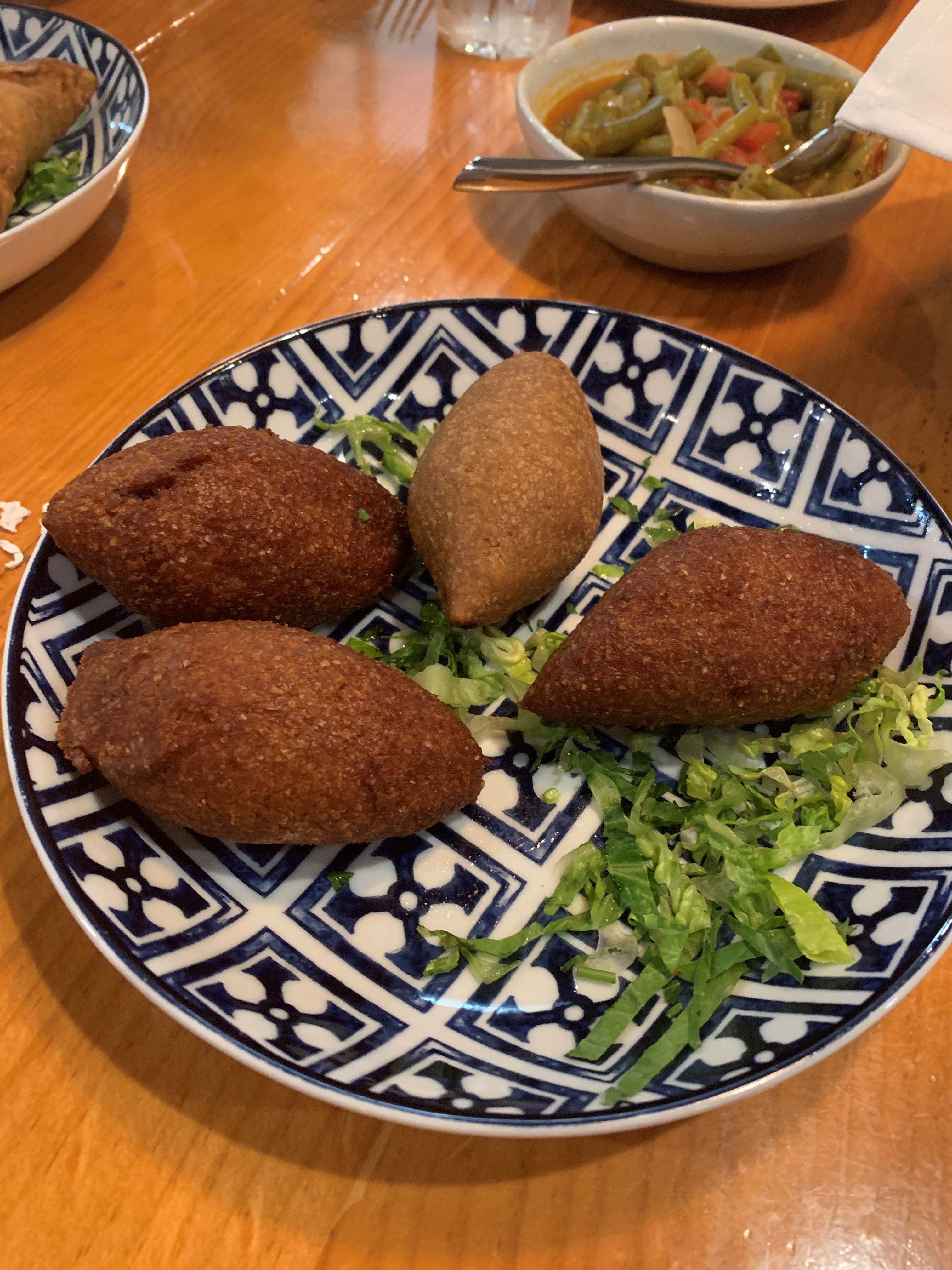
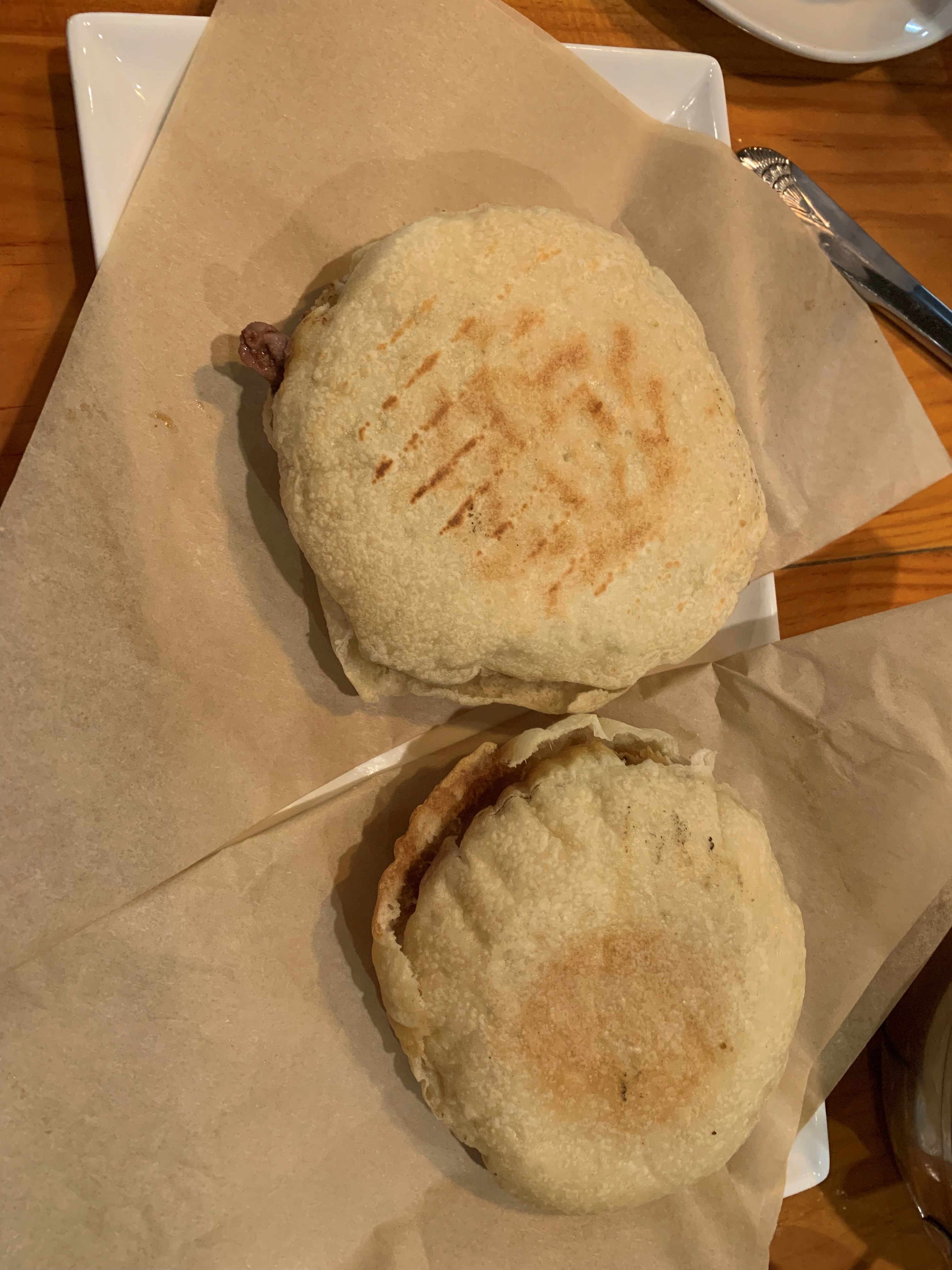
Our meal selections ranged from Lebanese pita pockets, chicken and beef shawarmas, and beef kabob. We also ordered a variety of different sides, including more hummus, fafa beans, cauliflower, green beans, and baba gahanoush. We all enjoyed our selections, but we enjoyed the company more!
We were also eager to try their various types of Baklava, which proved to be interesting and rewarding!
On behalf of the LEAP Ambassadors, we thank WAC for continuing to host educational programs and allow us such opportunities as this.
We are also especially grateful to General David Glaser for joining us. It means a lot to have administrators support our efforts, and the presence of an expert on the Middle East and strategy added to our education immensely.
The time has come for the LEAP Ambassador’s summer retreat! The organization prides itself in its forward-thinking nature, which is done to maximize our education and serve our community with intent and efficiency. This retreat was also something of a microcosm of our larger efforts, stressing broad-based and experiential learning.
Phoenicia’s Speciality Foods
By Ingrid Cuero
With a long day ahead, Professor Yawn, Stephanie Fors, Olivia Discon, Michelle Cardenas, Yvette Mendoza, Morgan Robertson, and I met for lunch to fuel ourselves at Phoenicia Specialty Foods: A Mediterranean market that houses many delicacies, including deli, cheeses, and desserts. It is more of a grab-and-go eatery, so there were many people coming in-and-out as we looked and picked out our choice of foods. This was many of the group’s first time visiting the market, and for some members, it was the first time having middle-eastern food!
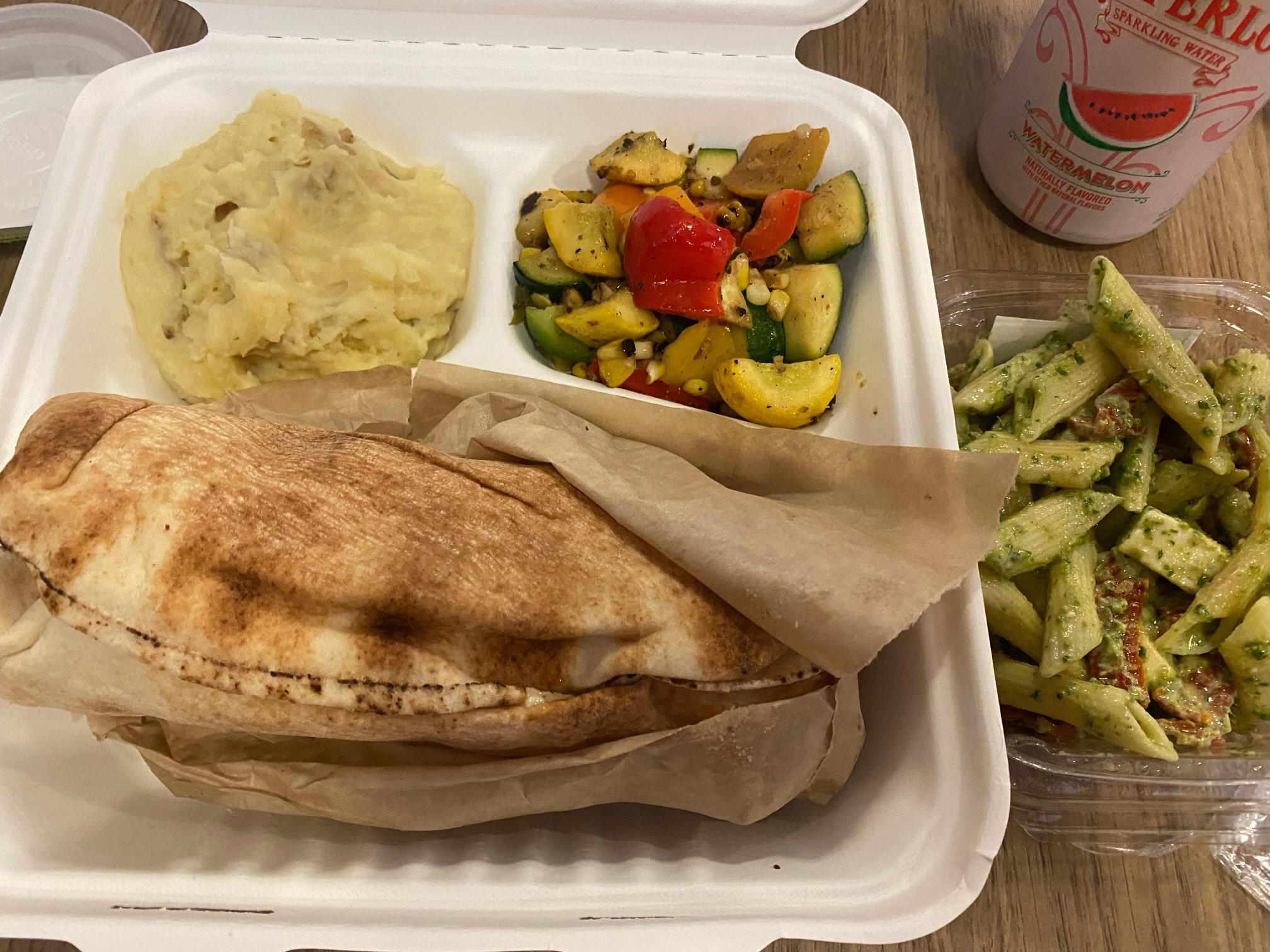
Olivia decided to eat a Lemon Chicken Soup with Pasta Pesto Salad.
Both Michelle and Morgan decided to get the Specialty Shawarma Wrap, Michelle having chicken and Morgan having lamb.
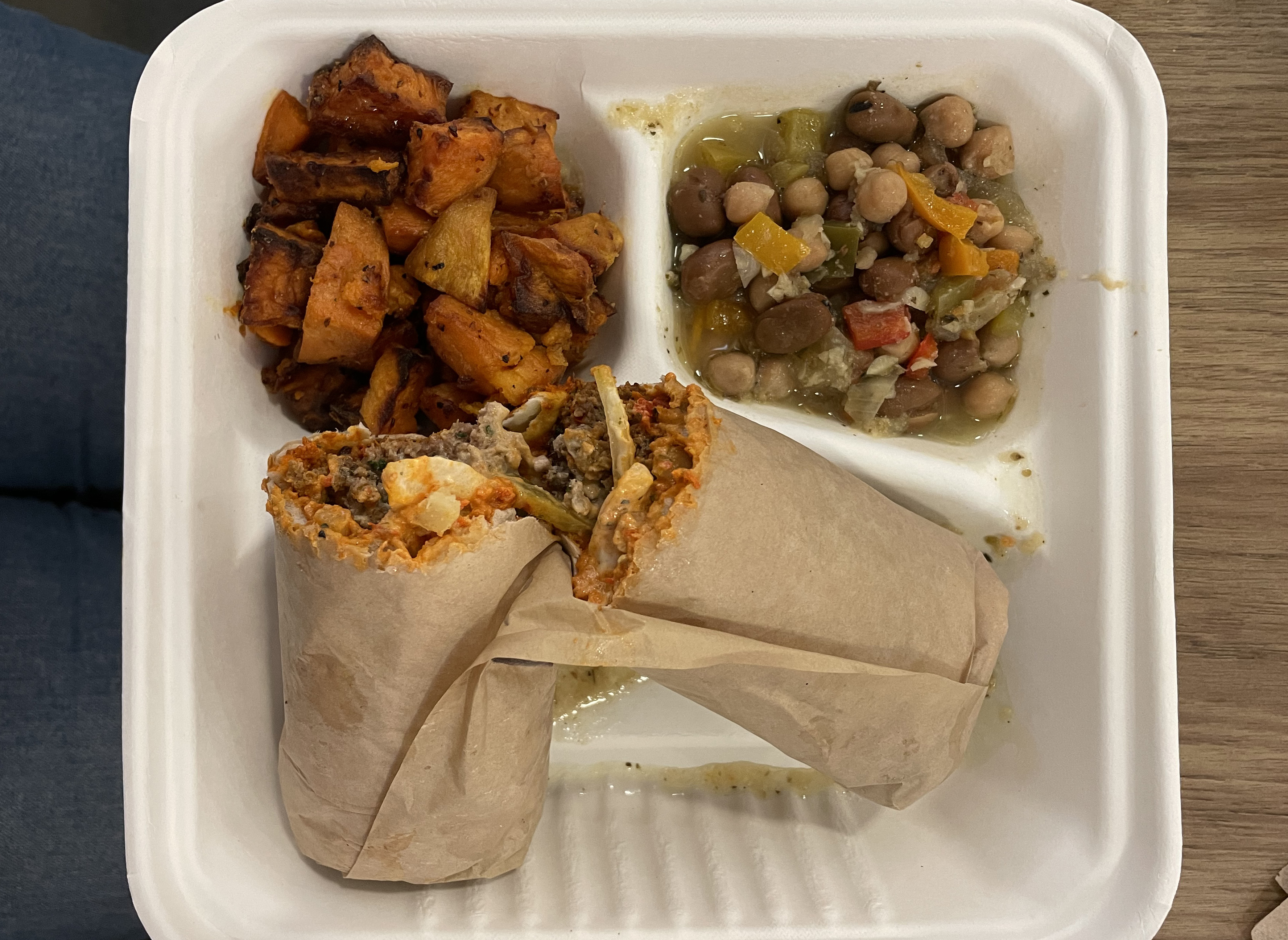
Yvette decided to get the regular Lamb Shawarma dish with veggie grape leaves as her side. I stayed with the classic rice, beans, and grilled veggies as my side, with an additional zucchini soup to top things off.
We took the time to catch up after a few weeks of summer break between us, sharing our summer activities and some laughs throughout.
After sharing some pastries, which consisted of baklava, lemon custard, and cookies, planned out the day in a bit more detail, and we were ready to take on our day!
Betty Moody Art Gallery
By Yvette Mendoza
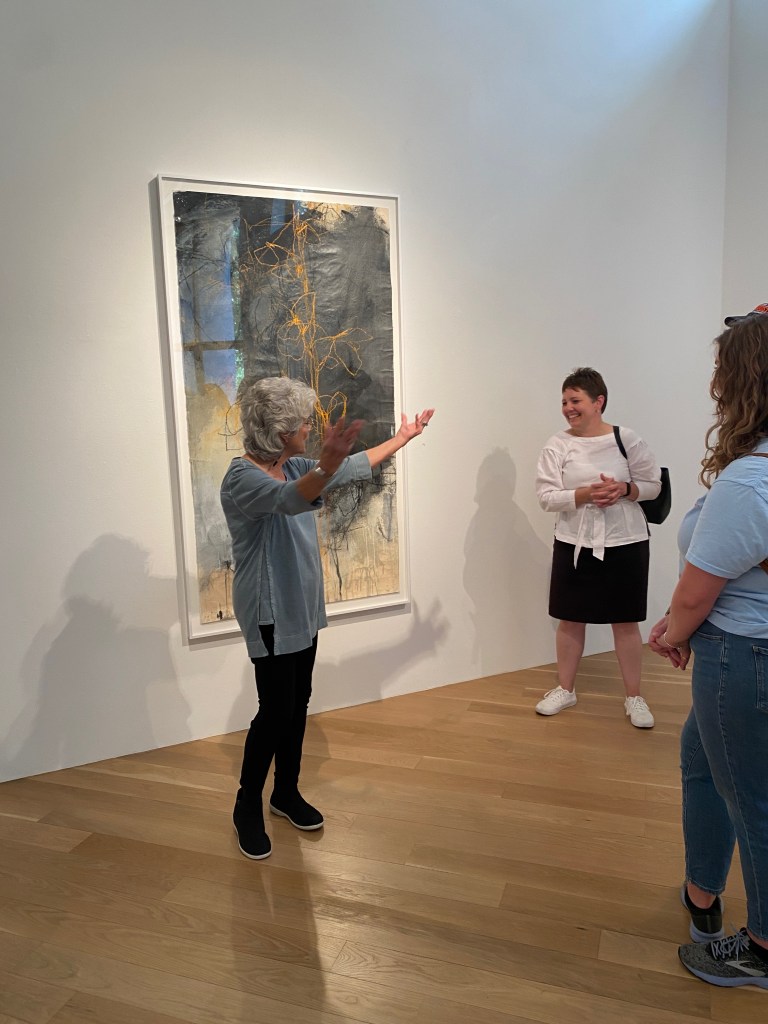
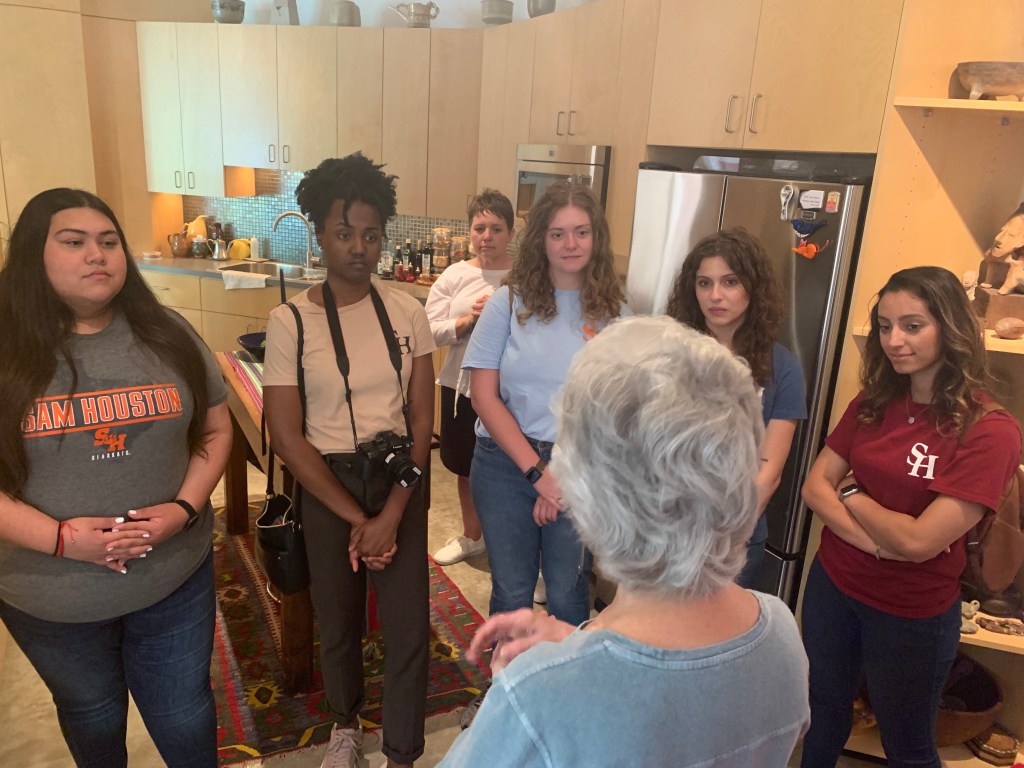
After indulging in Phoenicia’s, our bodies fueled and ready, we set off for our first destination: the Betty Moody Art Gallery. The moment we stepped inside, we were captivated by the awe-inspiring artwork on display…
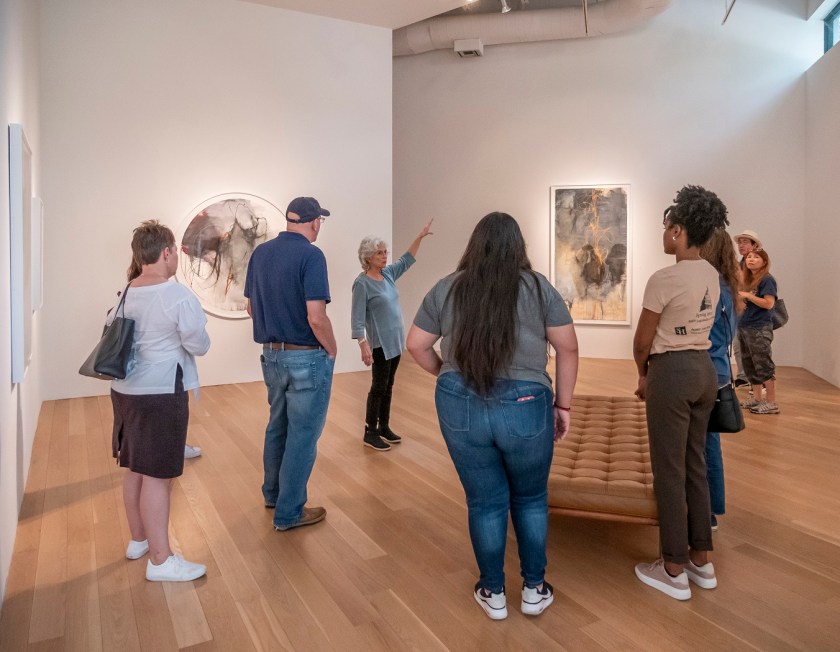
…and to our delight Ms. Betty Moody was there, and she graciously offered to give us a personal tour.
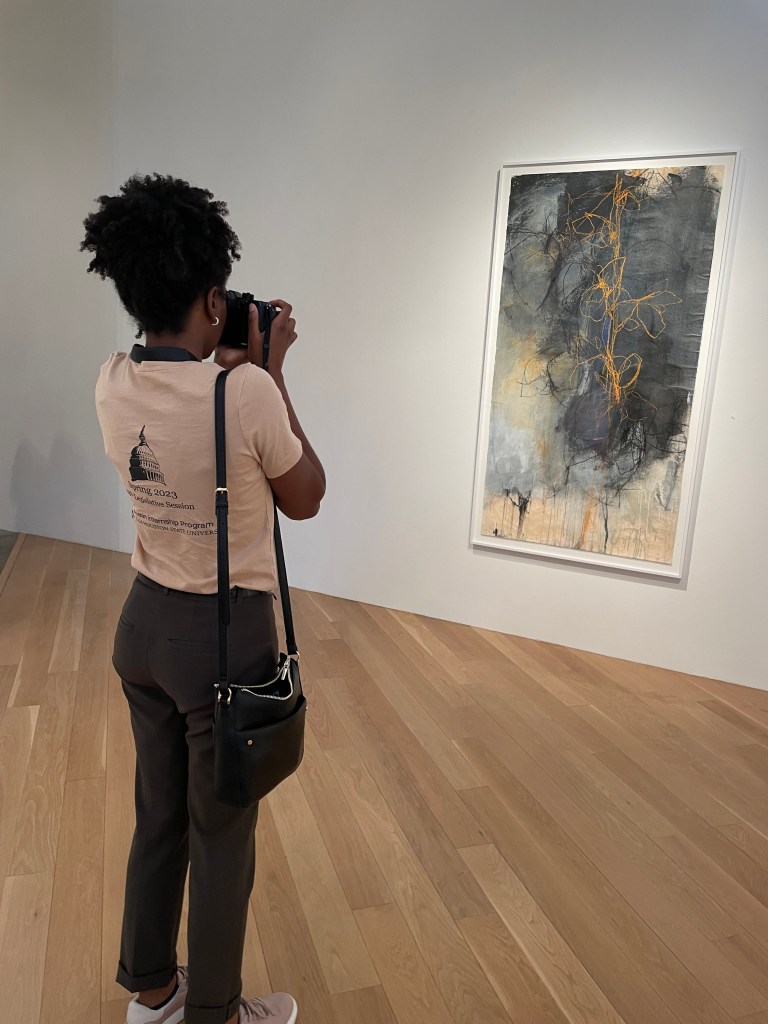
Each art piece came alive as Ms. Moody passionately explained the work’s intricacies. As we entered through the main entrance, our attention was drawn to the collection by Andrea Rosenberg. Ms. Moody skillfully unraveled the hidden depths and artistic techniques behind Rosenberg’s floral paintings, revealing the significance of every brushstroke. From the choice of Japanese rice paper to the spontaneity and simplicity that belied years of experience, it fascinated us to discover the immense skill required to create such seemingly effortless abstract flowers.
We witnessed this contrast in two paintings placed on opposite sides of the faller – an exquisitely delicate blossom alongside a vibrant explosion of colors behind a boldly outlined orange flower.
We have learned of Rosenberg’s painting method, using thumbtacks to hang her canvases on the wall at a height convenient for her stature, and then getting to work. Often working quickly, Ms. Rosenberg can fill even large canvasses quickly.
Ms. Moody’s generosity extended beyond technical explanations; she also shared the rich histories behind many of the pieces, some of which she had in her own kitchen and bedroom adjacent to the gallery! Each piece held a profound connection to the past, including sculptures and artwork spanning thousands of years from Roman culture to the present.
Among the treasures was a calamari serving platter crafted from walrus tusk, artfully shaped into adorable seals, each possessing its own unique value.
As we delved deeper into her collection, we encountered various art styles, from a signed Campbell’s soup can symbolizing the Pop Art style by Andy Warhol, to sketches by her dear friend and talented artist Luis Jimenez, known for his remarkable sculptures of mustangs and his skill in sketching classic cars.
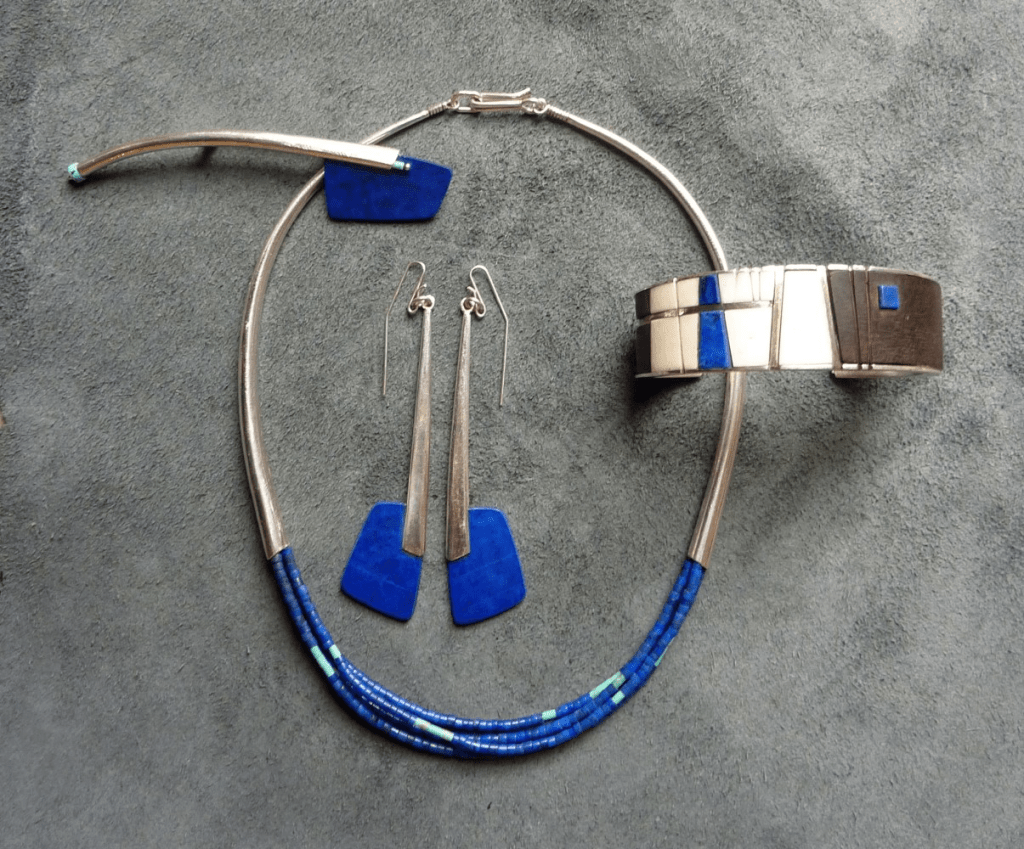
Lastly, Ms. Moody showcased the remarkable silver jewelry crafted by her beloved husband, Bill Steffy, which, while distinct from pop art or drawing, exuded its own allure, featuring beautifully designed metal skulls and silver jewelry that she was wearing.
Our gratitude to Ms. Moody is such a great amount. Every item she owned or curated in her art gallery possessed a profound meaning, and she concluded our visit by emphasizing that she doesn’t think of art as an investment, but rather simply thinks of it as a way of life.
Museum of Fine Arts, Houston
By Michelle Cardenas
Our third stop was the Museum of Fine Arts, Houston, which was my first ever visit to a museum! We entered through Olafur Eliasson’s yellow-casted walkway, “Sometimes an underground movement is an illuminated bridge” to begin the experience.
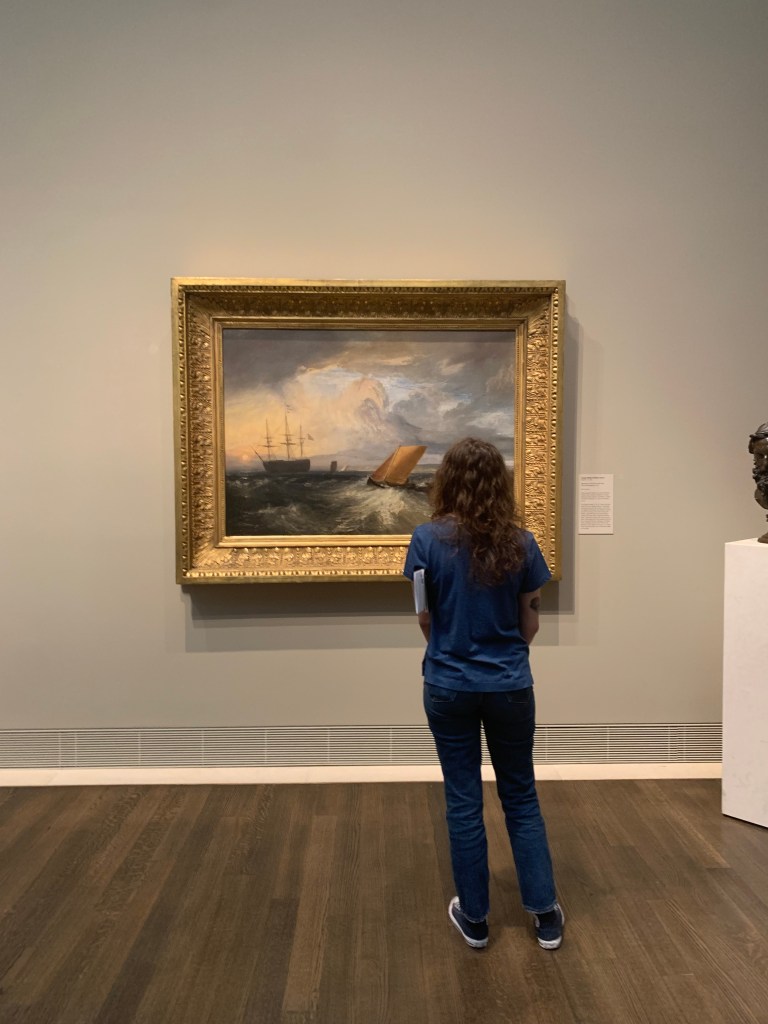
Professor Yawn took Olivia, Ingrid and I on a tour through the museum, highlighting the various art periods, their historical significance, and key artists of each era. Starting with the Realism art movement, we had the opportunity to view a gallery that encapsulated the art world before the invention of the camera; resulting in a desire to capture life in extreme detail and realism. Olivia particularly enjoyed “Sheerness as seen from the Nore” by Joseph Mallard William Turner.
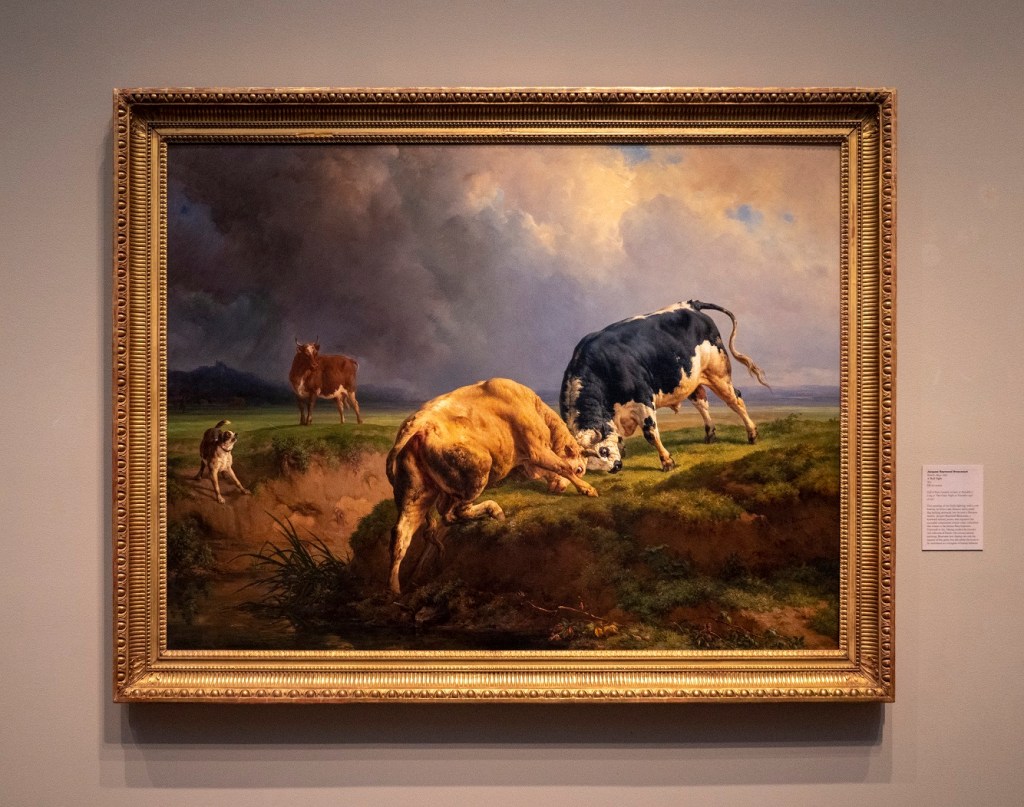
Personally, I was attracted to a Jacques Raymond Brasscassat piece titled “A Bull Fight”.
We progressed through time and expanded on the influence of technology on art.
The introduction of photography brought a sense of liberty to artists; allowing them to create works that were a reflection of their personal perspective as opposed to objective relativity.
Many artists like Claude Monet began to develop new techniques, particularly impressionism.
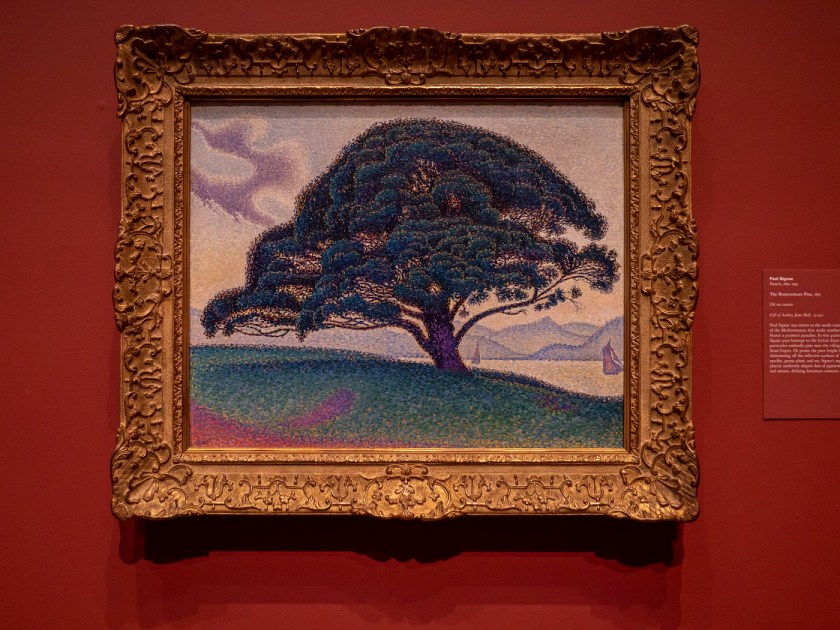
The Impressionist era was followed by even more new techniques and styles, suggesting that ideas really do beget ideas. And we learned about pointillism and fauvism, which redefined what society considers a masterpiece. A piece that Ingrid enjoyed was “The Bonaventure Pine” by Paul Signac, which features the technique. When you look closer, you are able to see color theory at play!
We then got to the early 20th century, where I got to see my first Picasso painting, “Le Rameur” or “The Rower“.
Both Pablo Picasso and George Braque are accredited for inventing a technique called Cubism, a movement utilizing geometric shapes to create a painting that can be seen from several angles.
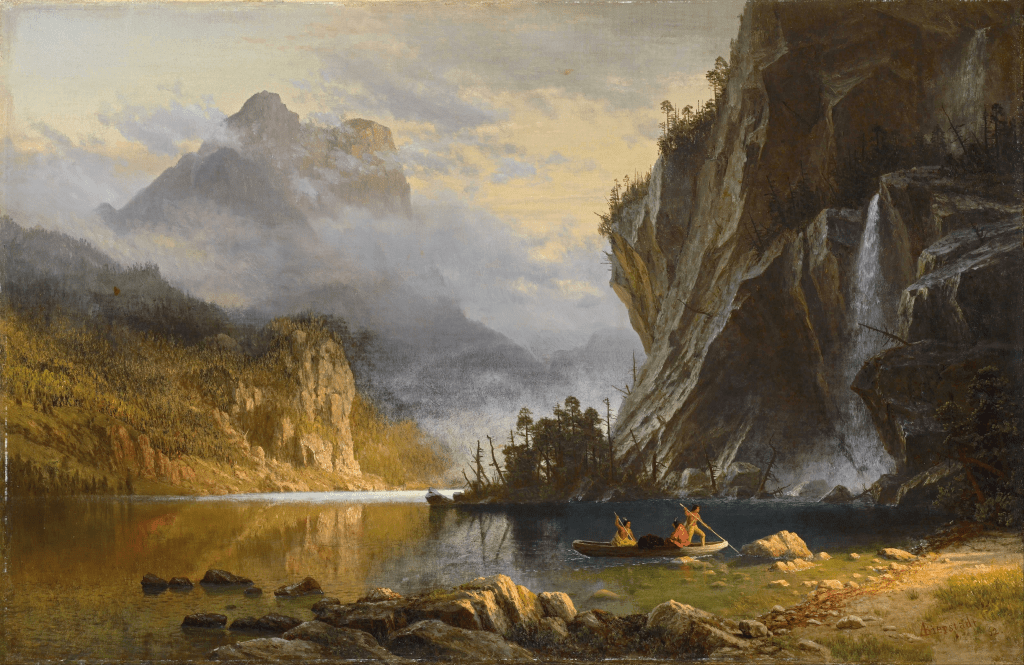
We ended our tour with some American art pieces, many of which focused on the American dreams of westward expansion, highlighted through dreamy landscapes and featuring Native Americans. Here I discovered one of my favorite artists of the museum; Albert Bierstadt. The early American landscapes were breathtaking and captured the allure of the unknown frontier.
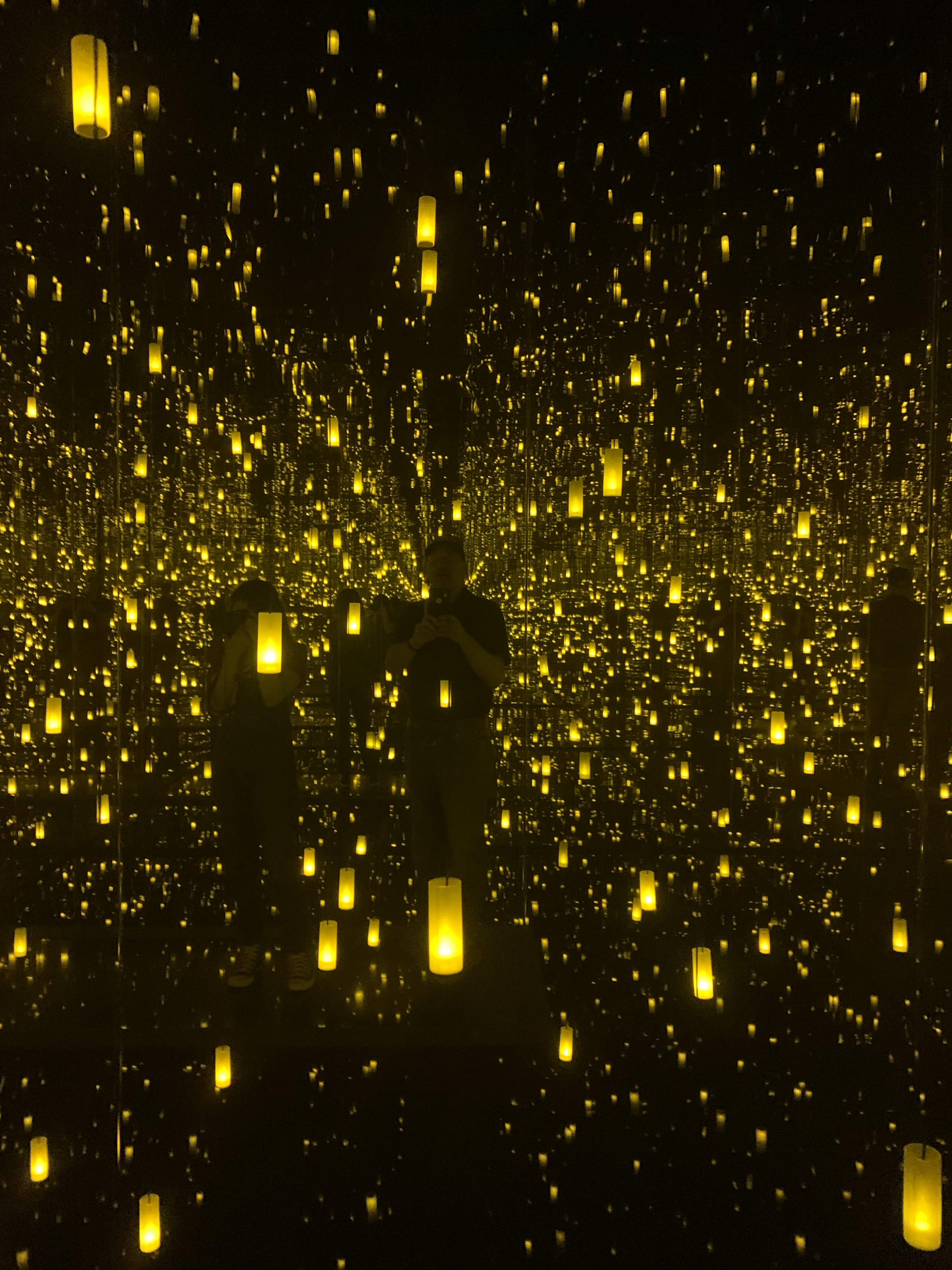
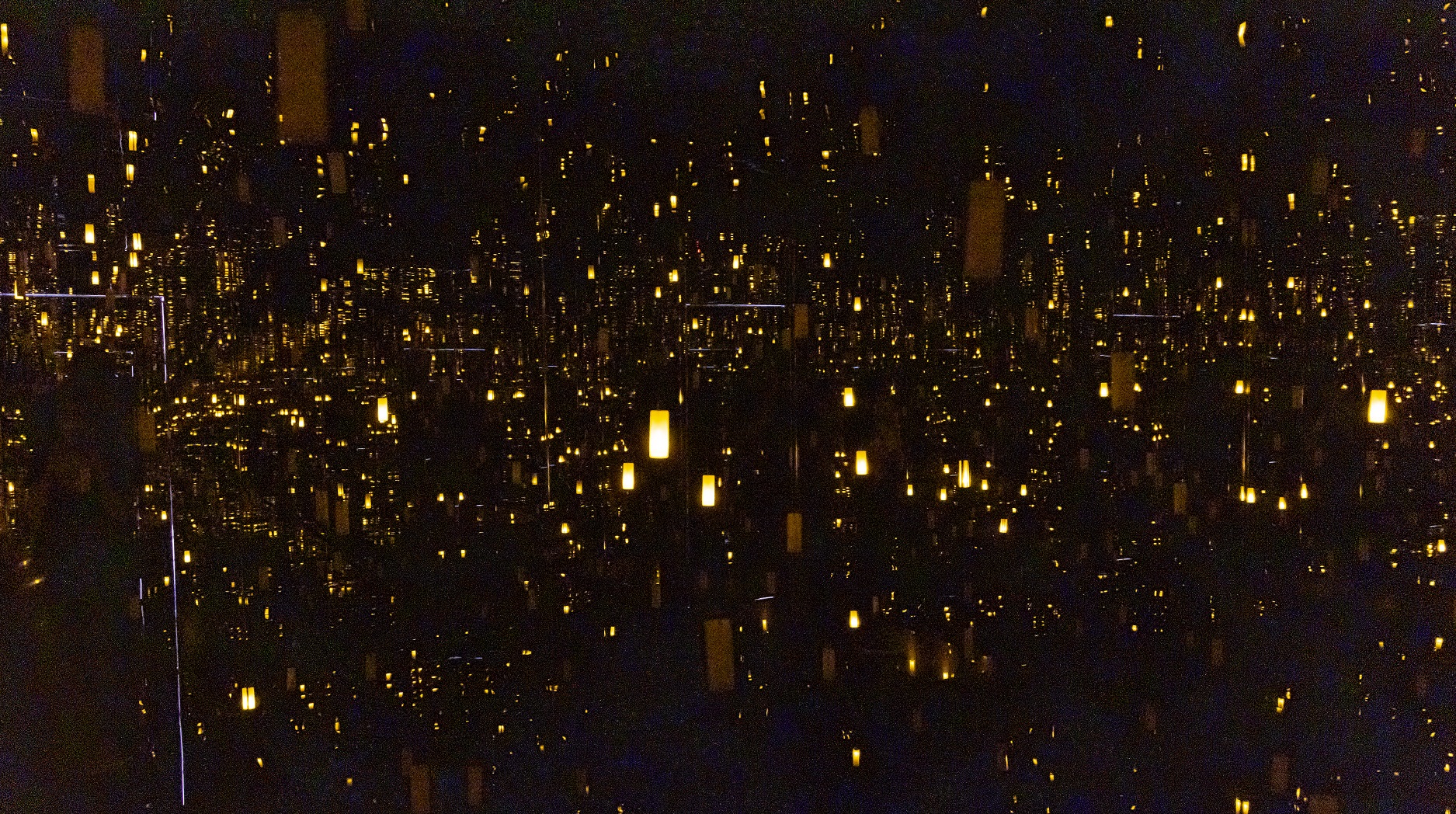
Before we left, we had the pleasure to visit Yayoi Kusama’s “Aftermath of Obliteration of Eternity“, an immersive experience in which a subtle, fleeting burst of light comes and goes. Kusama, who is known for her work with polka dots, uses a similar assortment of lit lamps that are infinitely mirrored. The experience was both beautiful and incredibly thought provoking.
Special Exhibits: Impressionism and Post-Impressionism, Pixel Forest and Worry Will Vanish
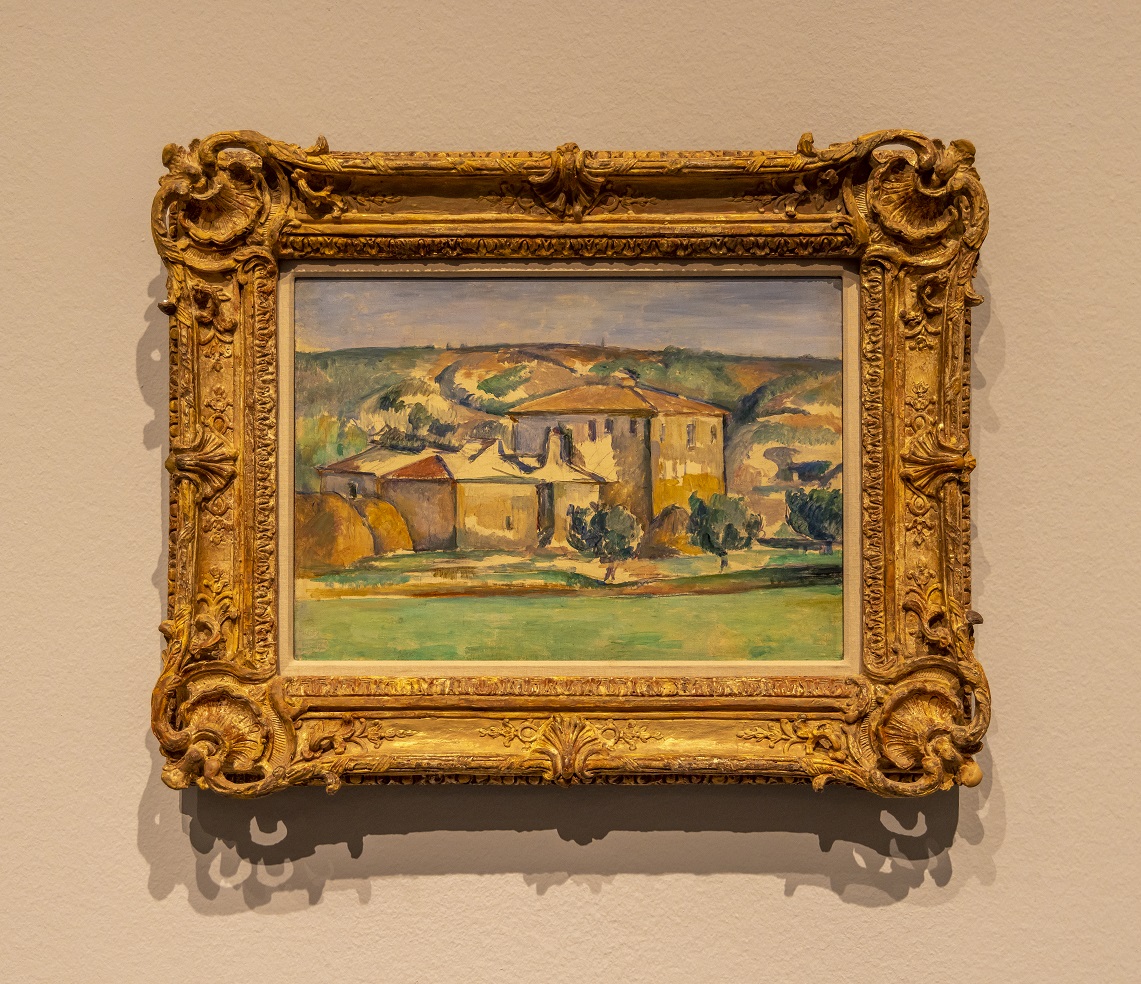
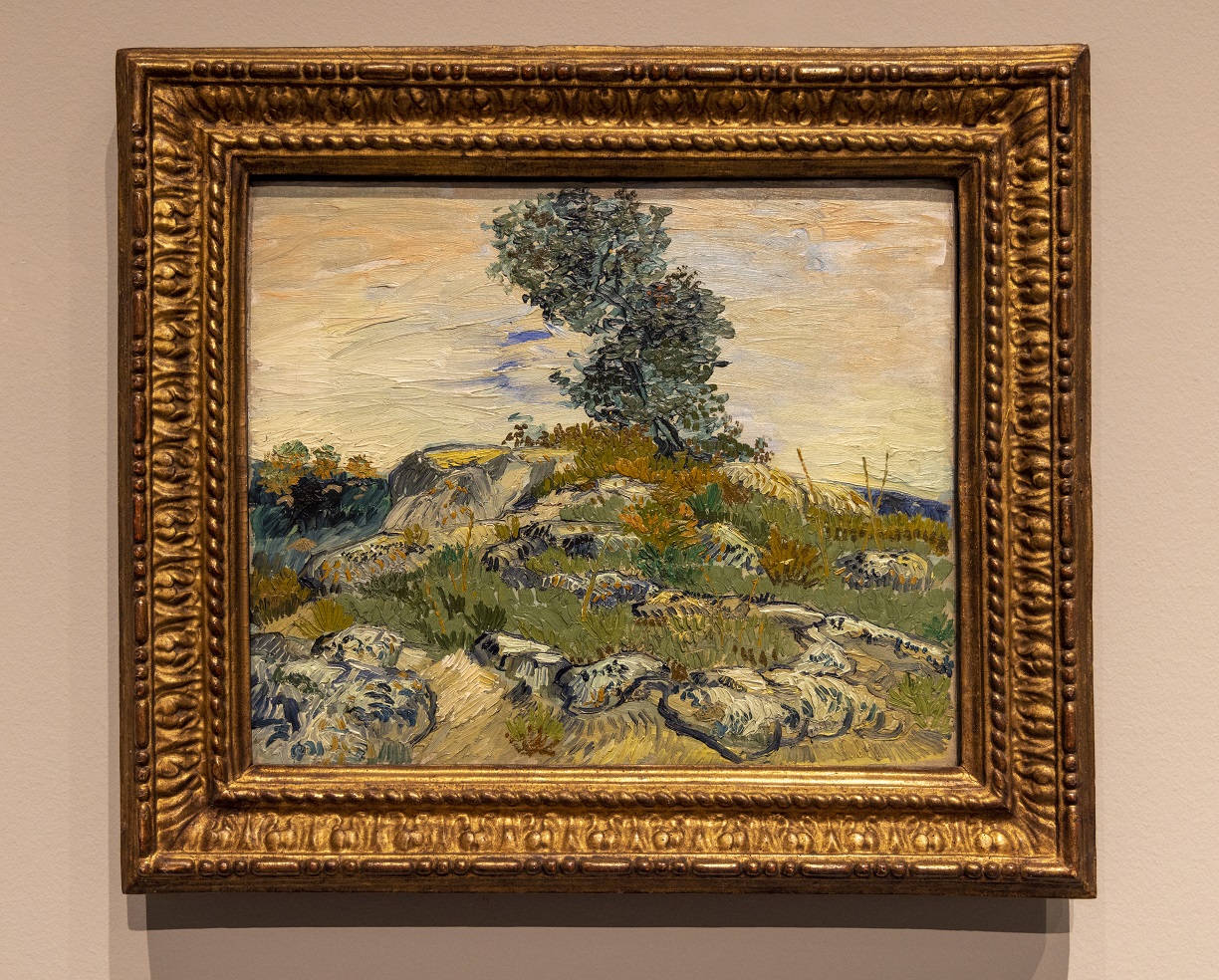
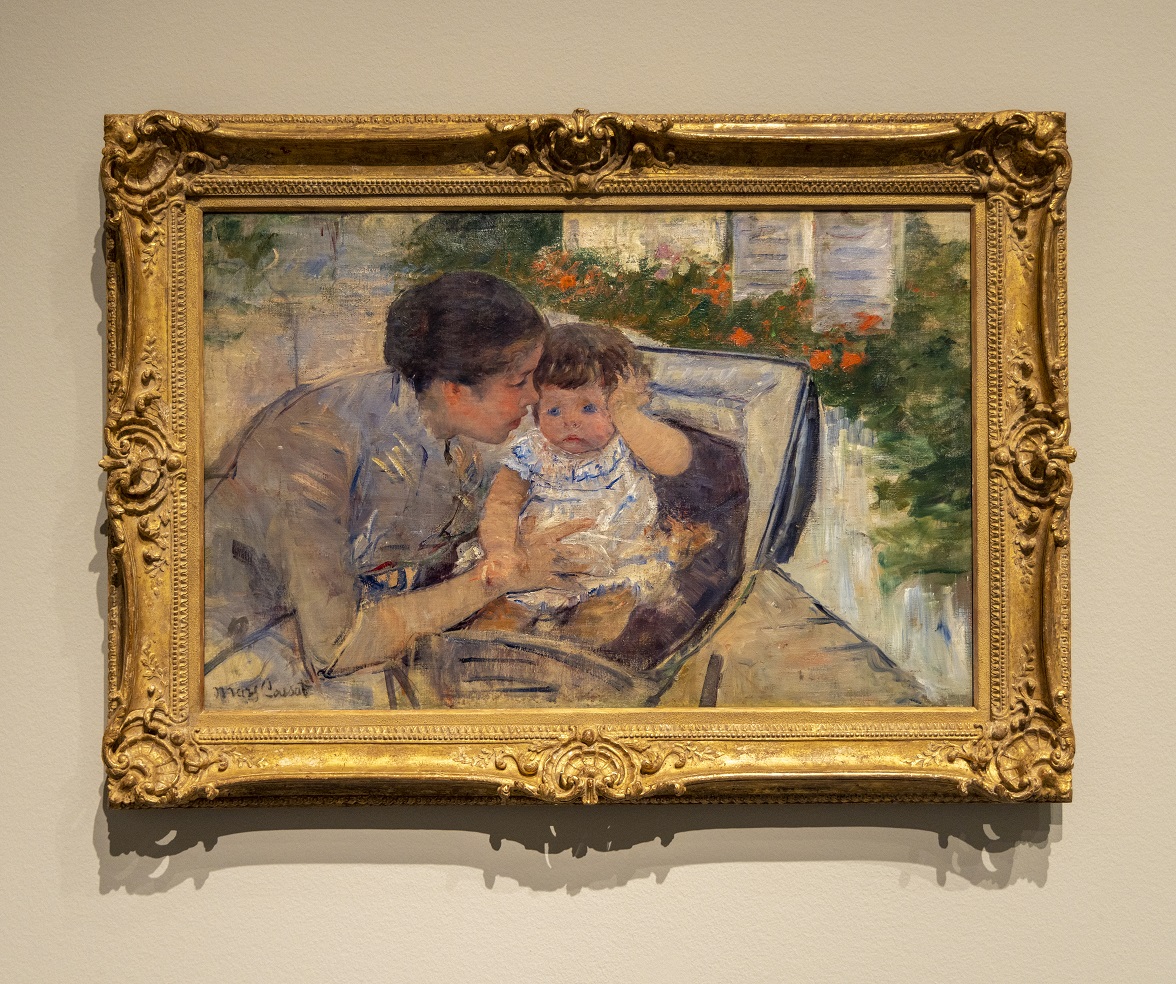
With the MFAH possessing some beautiful Impressionist-era pieces in their general gallery, Morgan and I were treated with a special exhibit that had both Impressionist and Post Impressionist works on display! We were able to see works by Cezanne, Renoir, Cassatt, and even a Van Gogh, called “The Rocks”. We were both delighted to have experienced such renowned pieces in person.
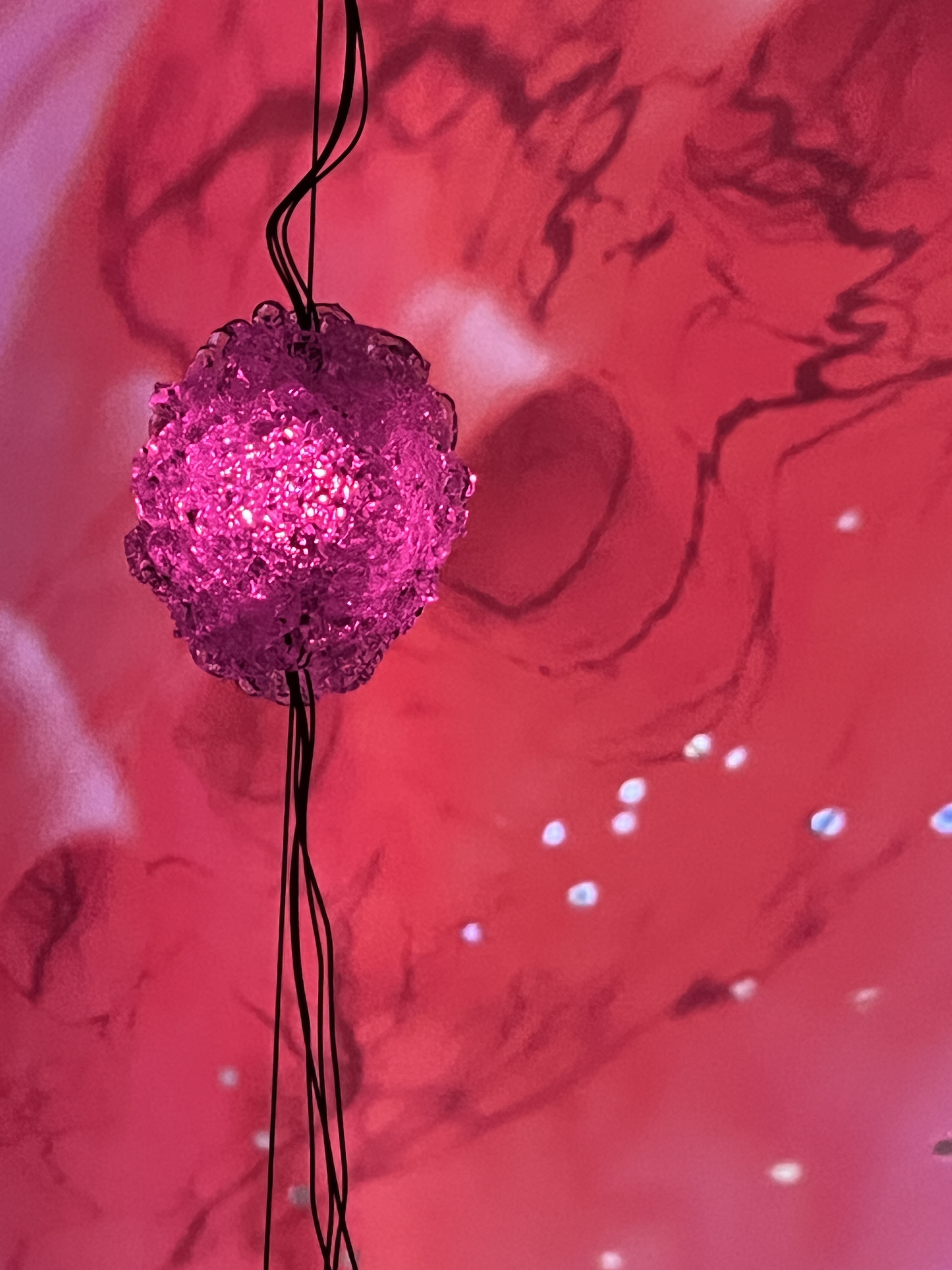
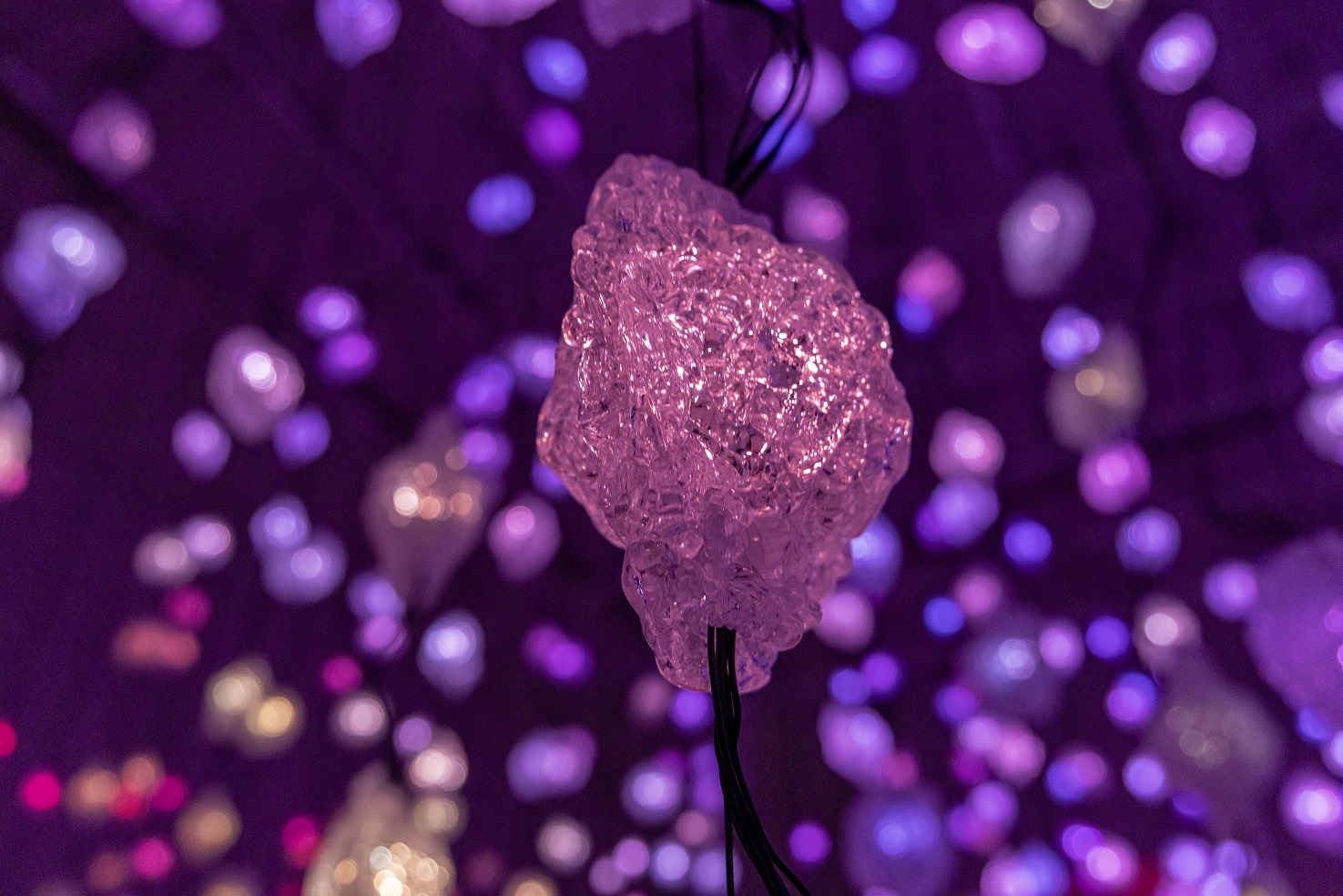
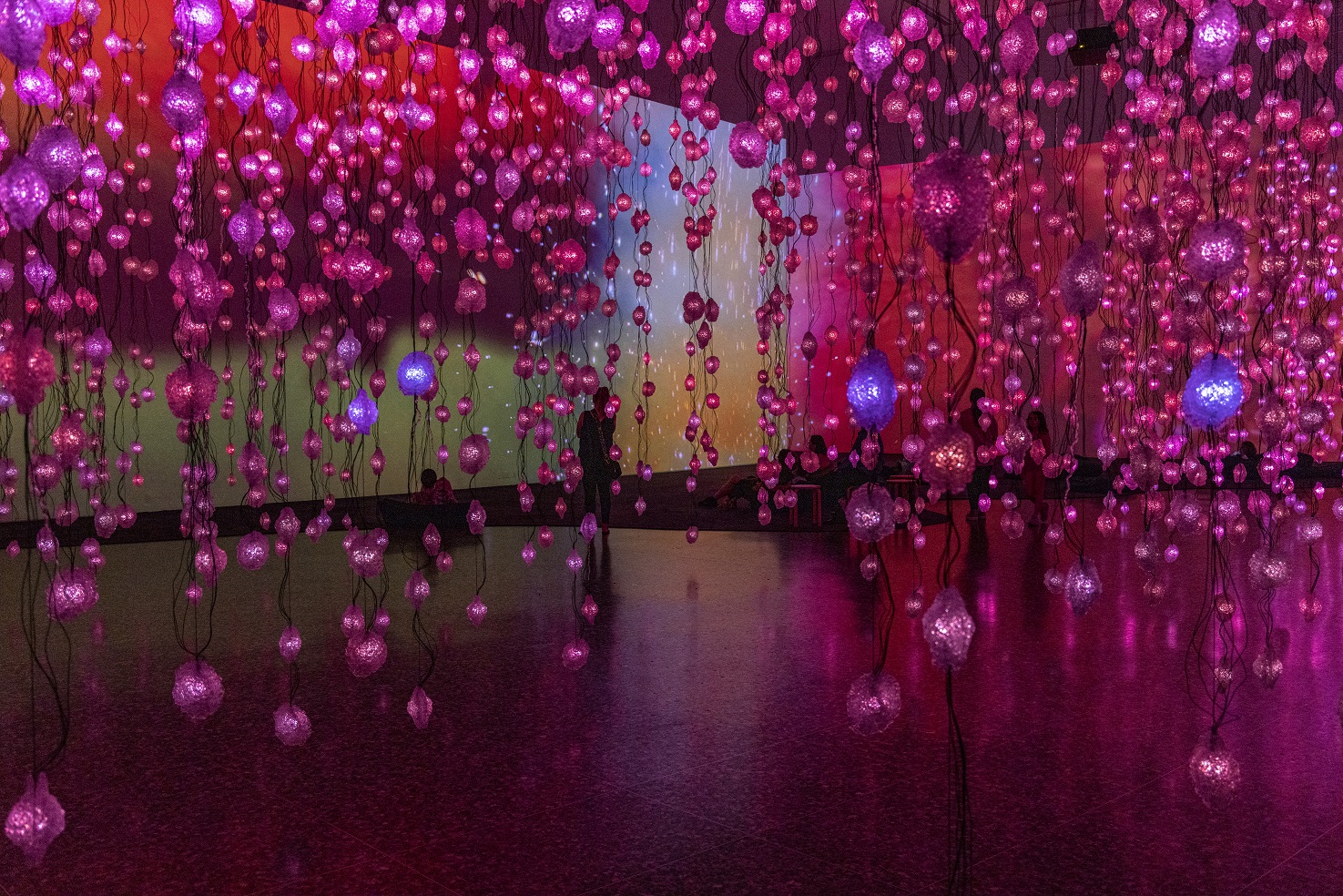
We also had the privilege to attend a truly immersive experience: Pixel Forest and Worry Will Vanish by Pipilotti Rist. This captivating installation consisted of crystal-like neon balls hanging from the ceiling, creating a breathtaking visual spectacle through a stunning light show. Stepping into this immersive environment felt like traversing the threshold into an enchanting and surreal realm, where reality blended seamlessly with imagination.
Thanks to the many opportunities the LEAP Center provides to expand one’s cultural awareness, I was exposed to new concepts and artists I was otherwise unfamiliar with. If a trip to the Museum of Fine Arts, Houston taught me one thing, it was that art is extremely reflective of the world events occurring within that time period. It was an excellent opportunity for us to familiarize ourselves with these classic masterpieces!
High Island
By Ingrid Cuero
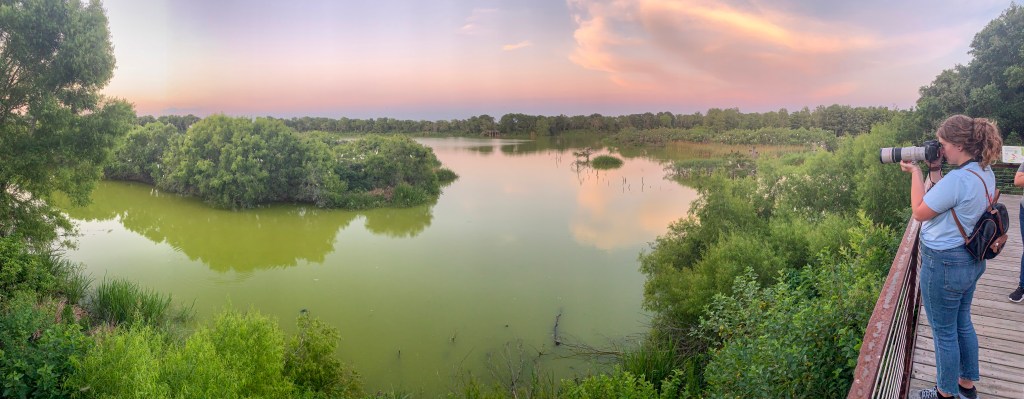
After experiencing a day filled with remarkable works of art, it was time to hone in on our own craft: photography! A major focal point of our retreat is to ensure that each ambassador has the opportunity to develop a well-rounded knowledge of the world around them, which includes nature. With that, we traveled to High Island in Galveston just before sunset to practice our photography and, we hoped, to spot some wildlife–which we did, almost immediately!
Upon arrival, I saw three bunnies having dinner on the far side of the park. Taking slow steps into their direction, I went to them and captured a few photos before they took notice and fled the scene. Michelle was able to get an even closer photo!
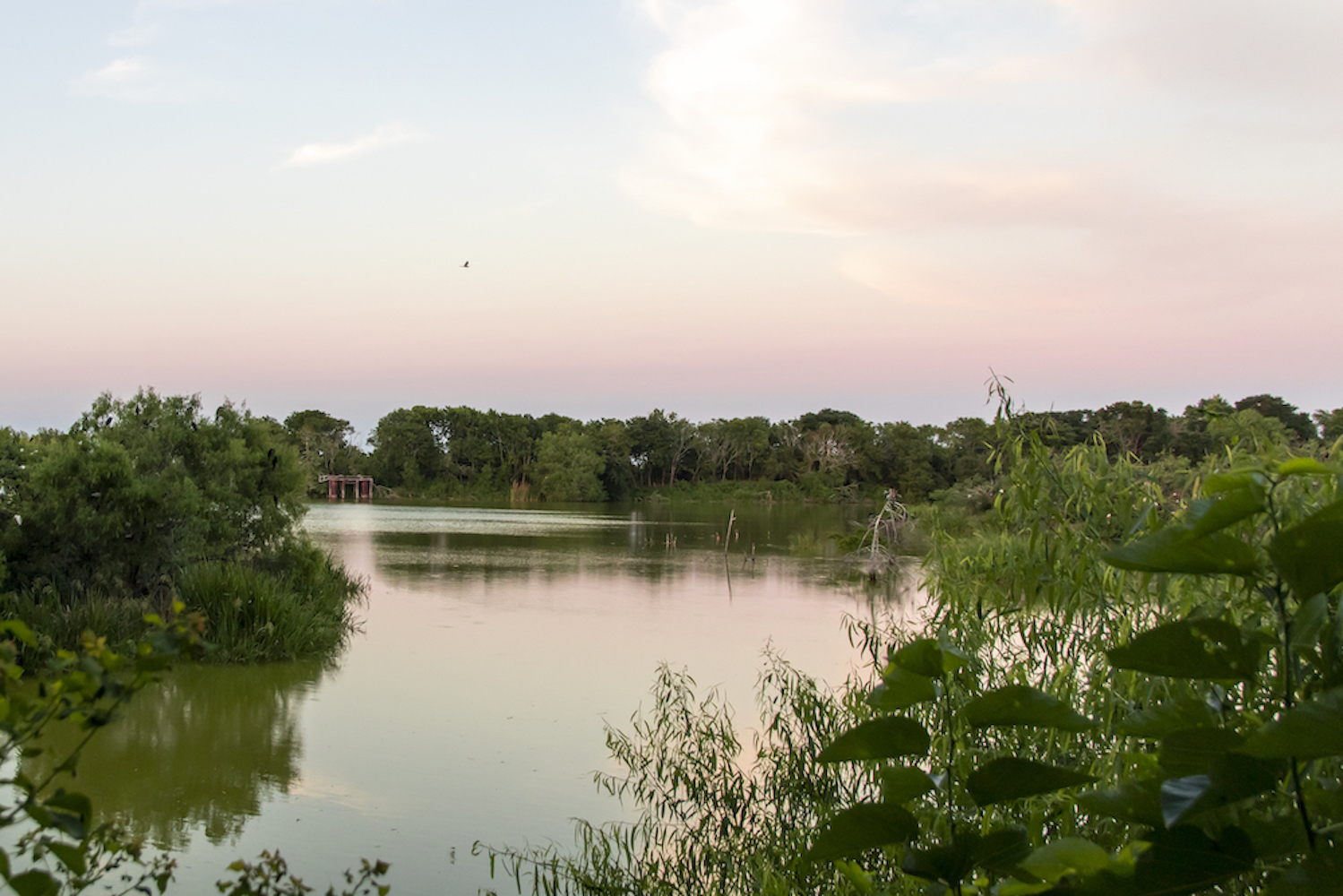
We then walked onto the trail to the lake, where we spent most of our time. Some would say outdoor photography is its own beast, as you must adapt to the unpredictable conditions of nature to get a perfect shot. As many of us on the trip are familiarizing ourselves with the inner-workings of photography, this was a perfect way to apply what we have learned so far.
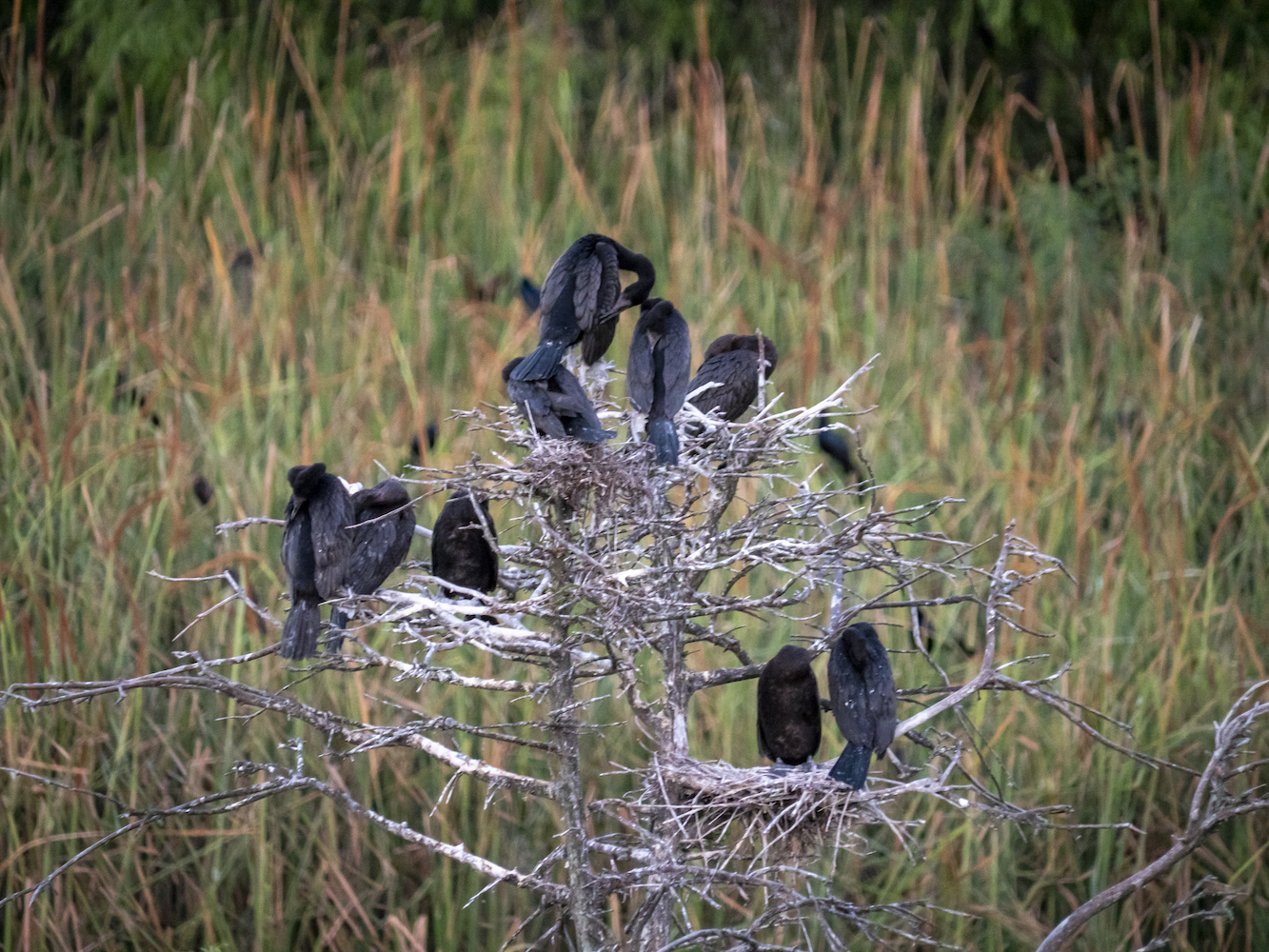
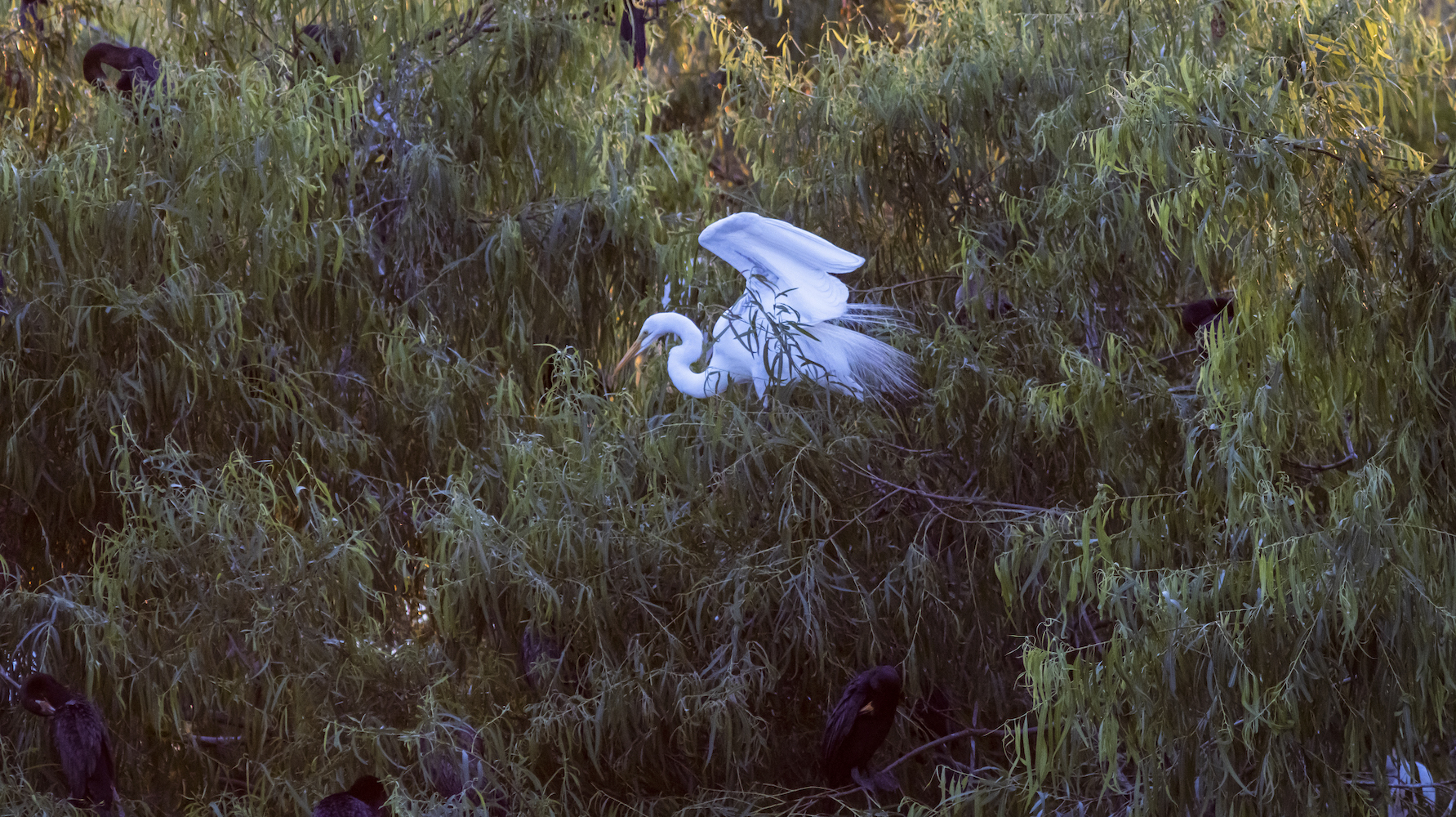
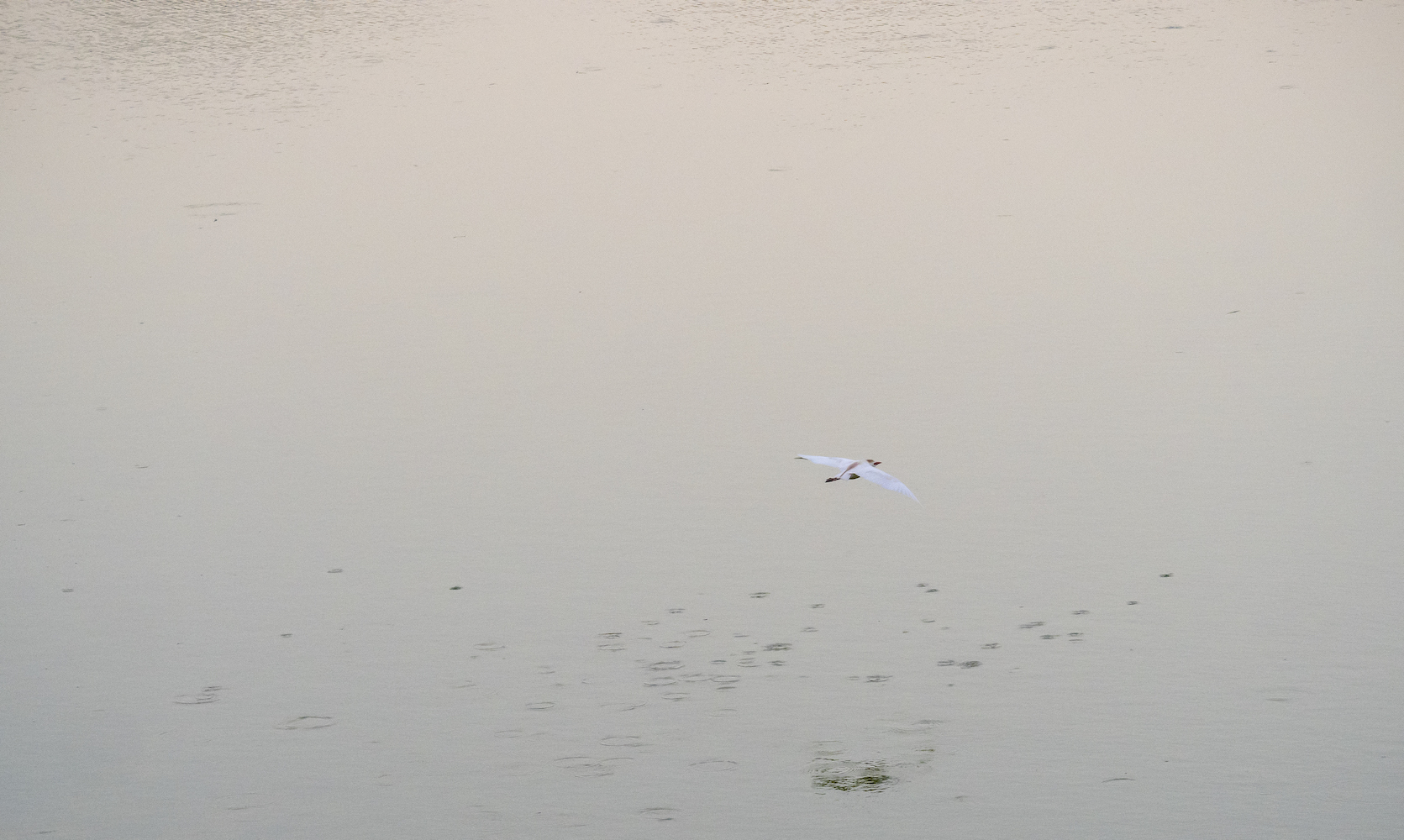
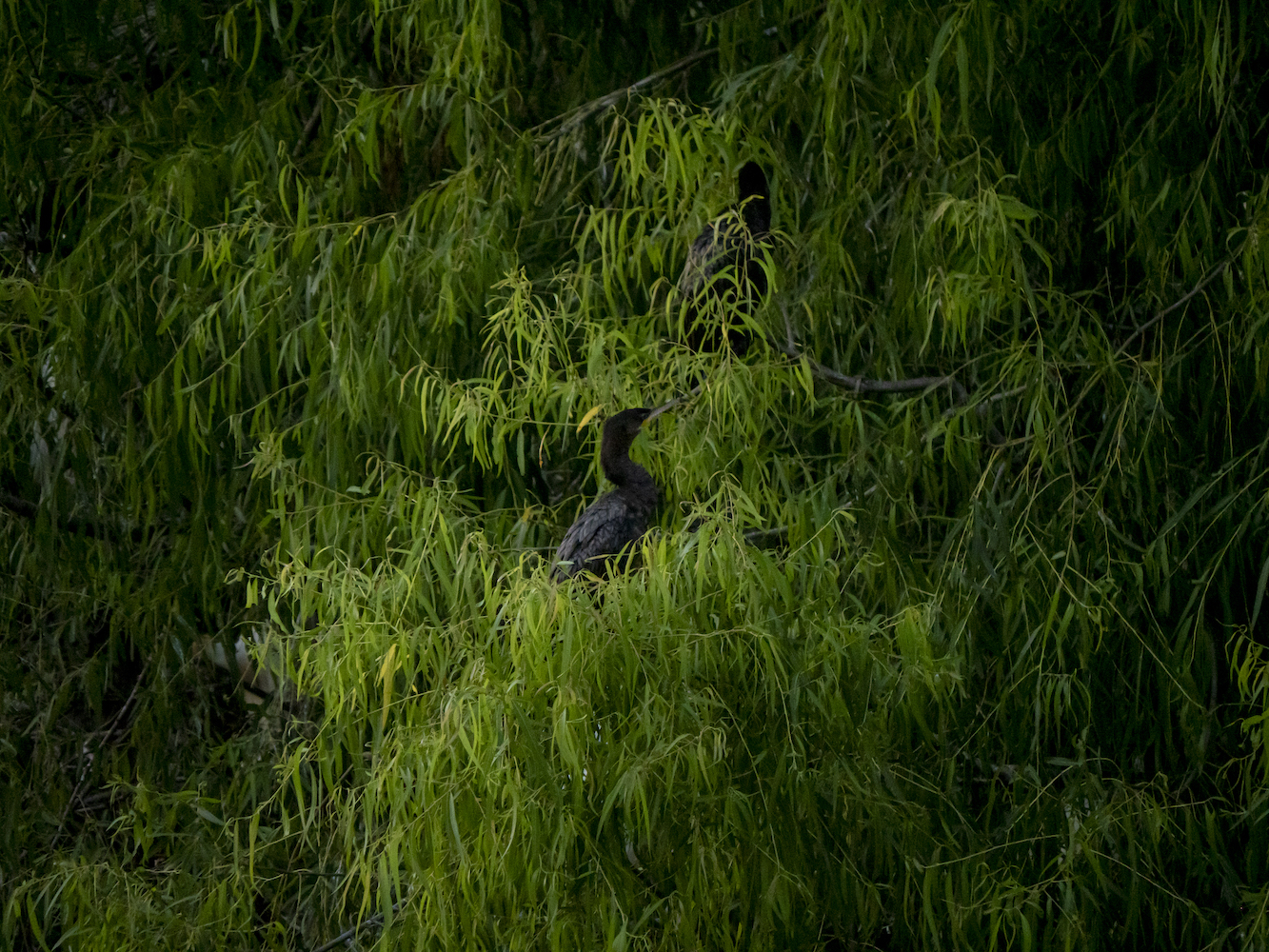
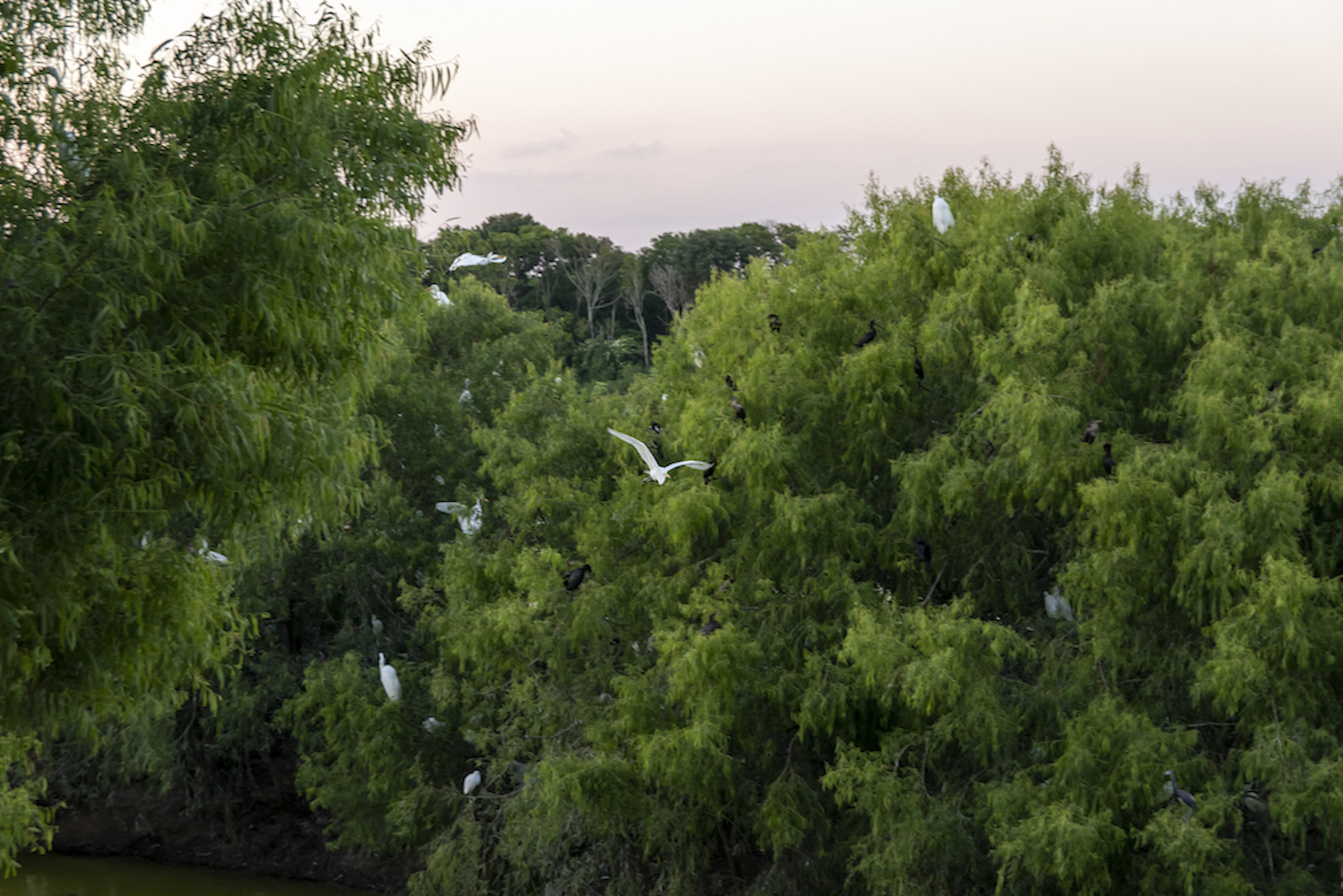
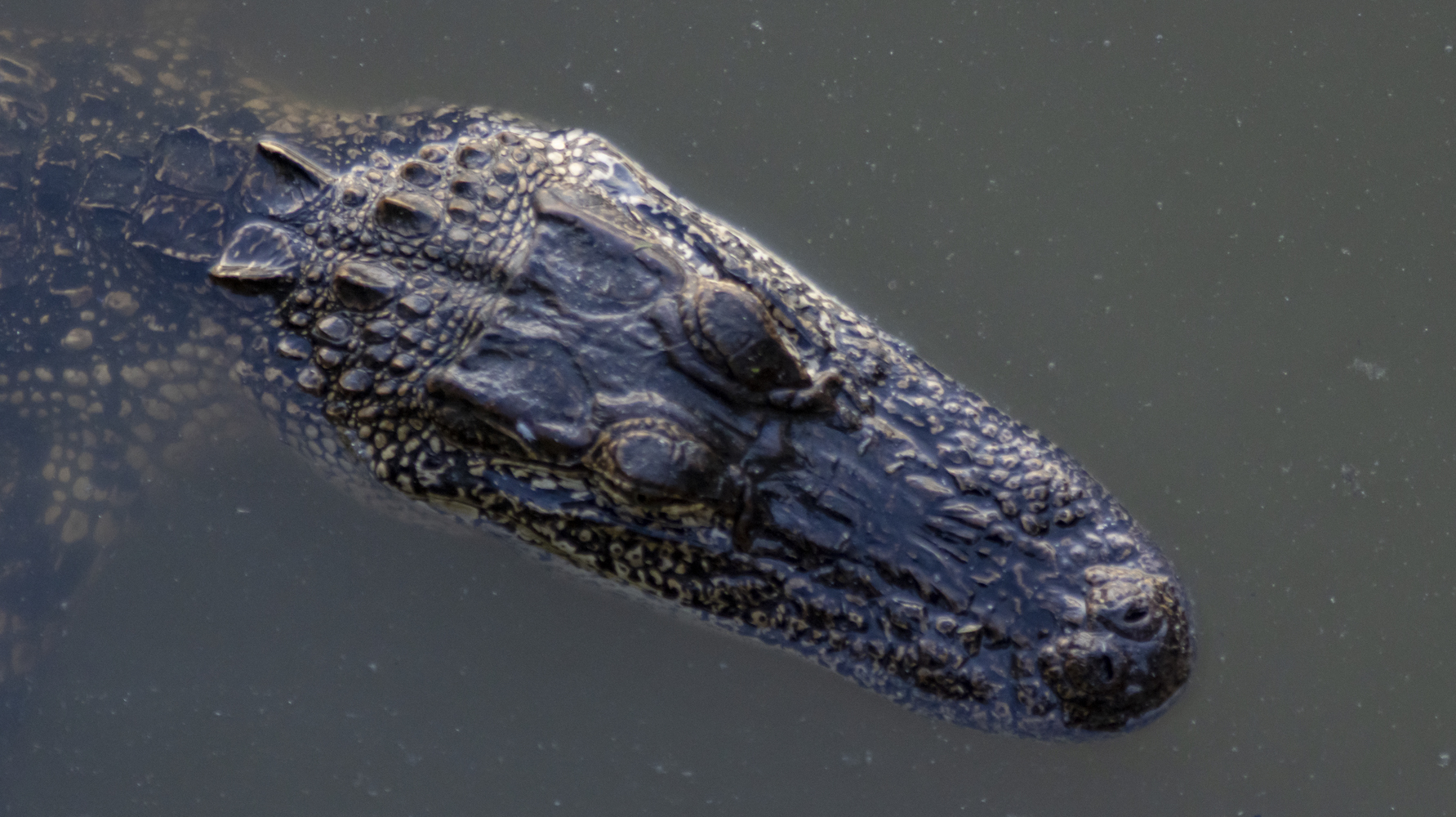
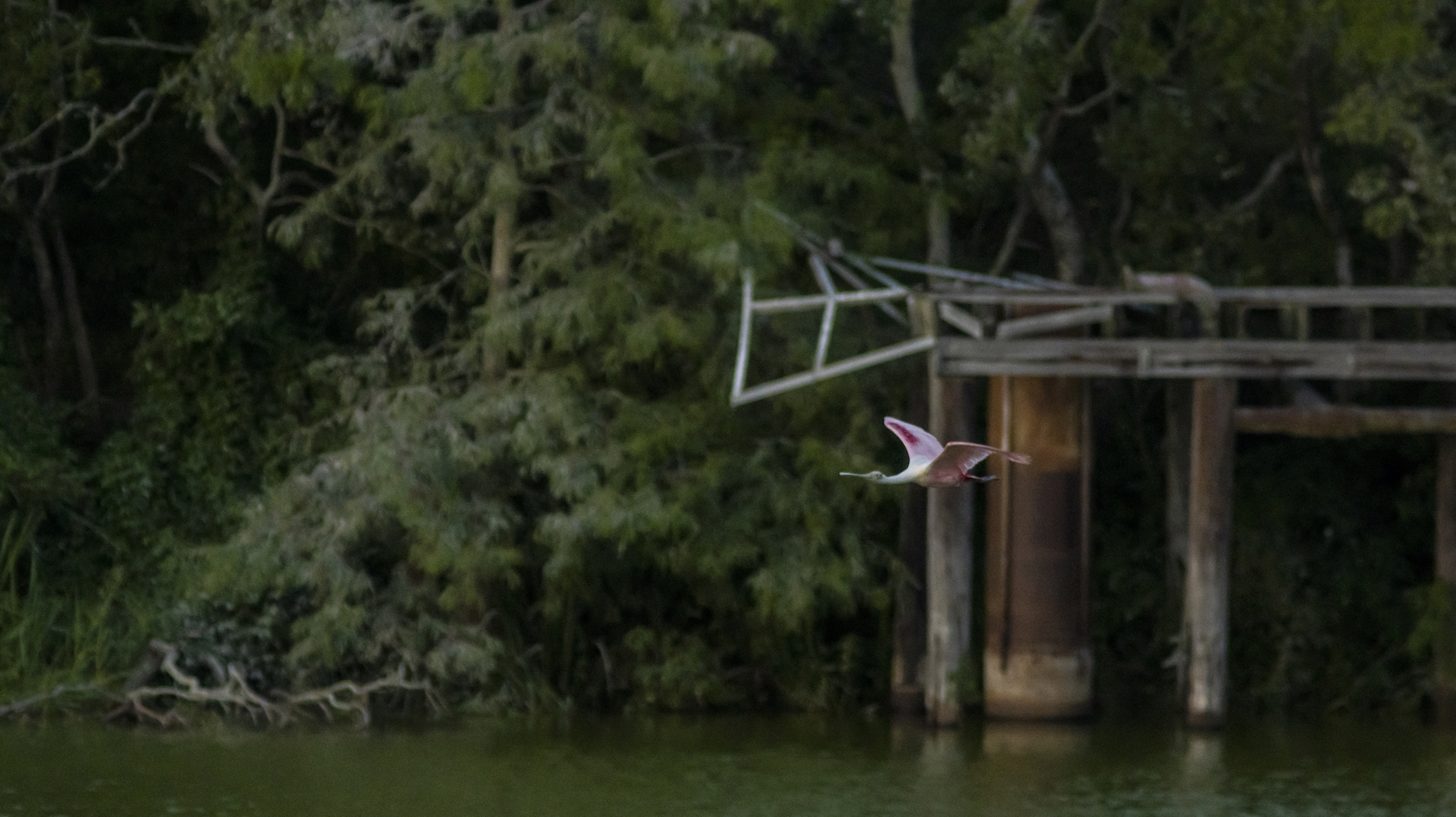
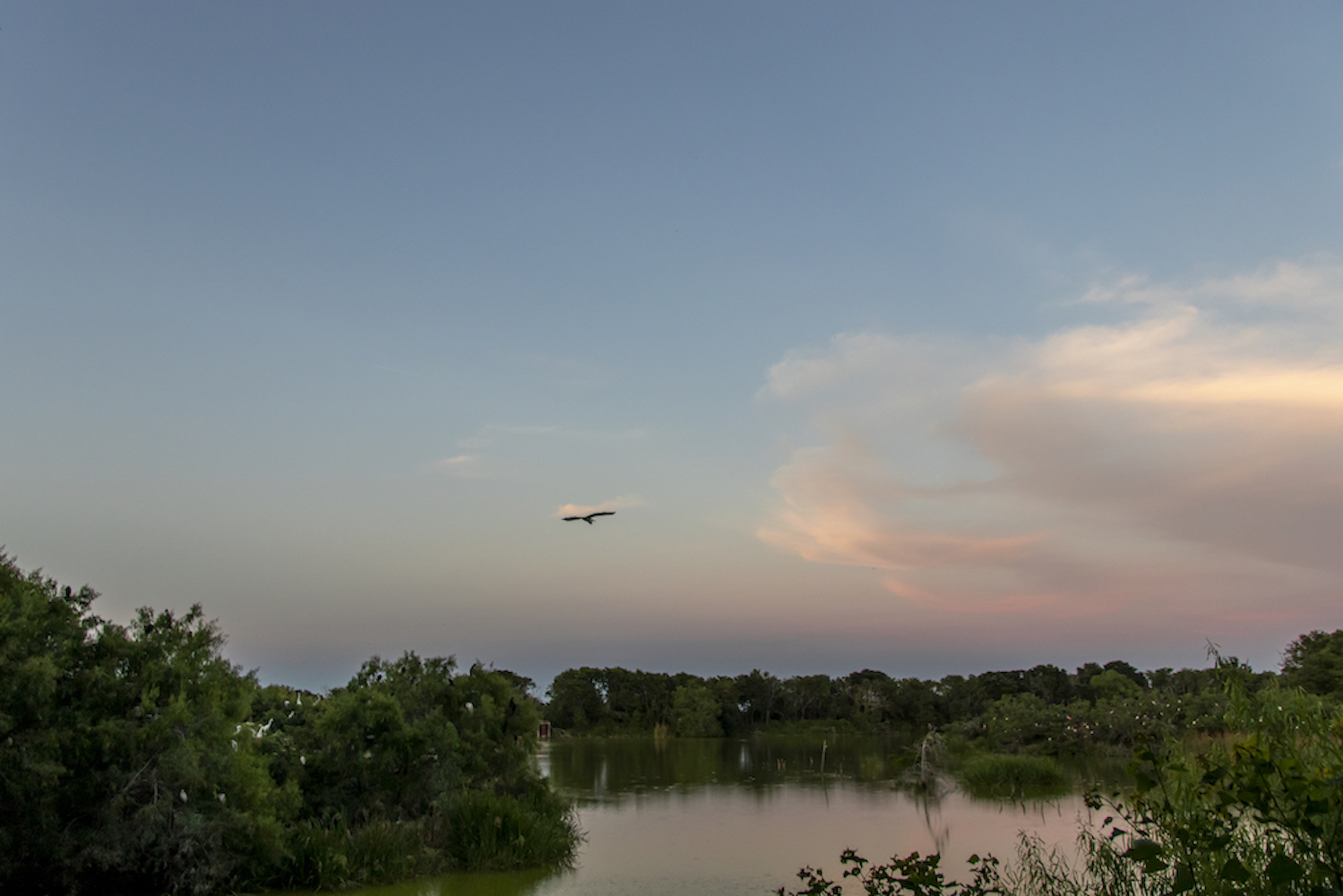
We had plenty of opportunities, as the landscape was filled with birds, turtles, and alligators, along with a beautiful sunset before us.
During this time, we tried to educate ourselves about the many species of birds we captured (by camera, of course). A few breeds of birds that we saw included the Roseate Spoonbill, the Great Egret, and the Little Blue Heron. Mating season for these birds is between April and May, so we saw many nests with baby birds secured in them.
Professor Yawn explained to the group some interesting information about male birds in real time! Male birds, we learned, can be very territorial, leading to physical fights against other birds, and we saw many such examples of this type of behavior.
And with that, the LEAP Ambassadors ended a successful first day on their summer retreat! We had a fun-filled day focused on challenging ourselves to take initiative on the concepts we can improve on.













































































 Center for Law, Engagement, and Politics