Are you an SHSU student considering a career in law, but don’t know where to start? If so, SHSU’s Pre-Law Society (PLS) is an excellent start to your pre-law journey!
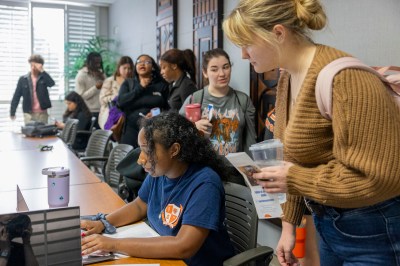
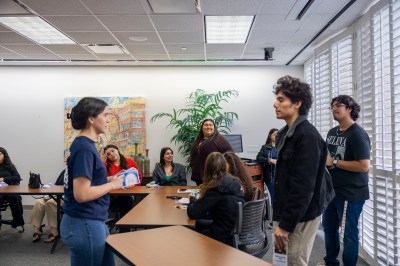
Prospective Pre-Law Students Discuss the Pre-Law Society
In advance of our first regular meeting, which is on February 21, 2024, officers held an informational for students considering careers in law. With a focus on what the Pre-Law Society does, we highlighted our meetings as well as the benefits of the organization.
VP of Marketing, Cinthia Villarreal, Discusses PLS Advantages
Regular Meetings: The Pre-Law Society meets officially once a month, typically featuring speakers such as defense attorneys, prosecutors, judges, special prosecutors, or law-school admissions representatives. For our first meeting February 21, we are having a mix, with SHSU alums returning to discuss their law-related careers. Guests include Quinn Kobrin (3L at University of New Hampshire Law), Victoria McClendon (first-year attorney in Houston area), and Blake Roach (former aide to Governor Abbott and currently an intergovernmental affairs specialist).
Special Events: The Pre-Law Society also participates in many special events, such as last week’s “How-to-get-into-Law School” discussion with the University of Tulsa College of Law; the upcoming Mock Law class, as well as various special guests, such as former Director of Counterintelligence for the CIA Jim Olson (March 27) and former US Attorney General Alberto Gonzales (March 29). Additionally, the PLS offers a Mock LSAT each semester, giving students the opportunity to assess where they are in their law-school preparation.
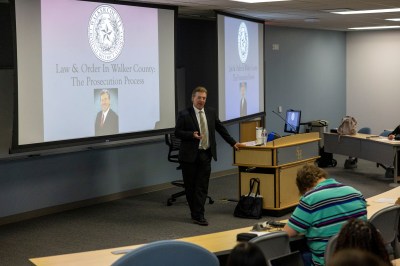
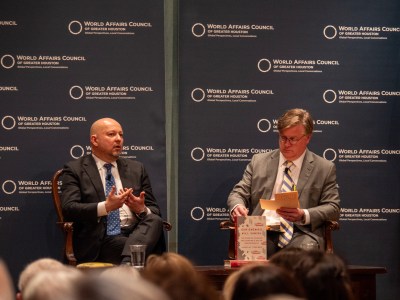
Walker County DA Will Durham Covers his Role as Prosecutor
When you throw in benefits such as the (1) access to LSAT Resources through the LEAP office, (2) a free t-shirt, (3) access to expanded professional networks, and (4) eligibility for pre-law scholarships, membership in the Pre-Law Society is a great value!
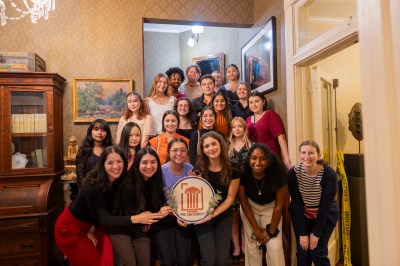
PLS Students at the Fall Social
For more information about Pre-Law Society and events, please email Professor Yawn (mike.yawn@shsu.edu) and follow our Instagram @prelawsocietyshsu. Many thanks to all of the students who attended this informational session for Pre-Law Society, and we hope to see you at our first meeting February 21!
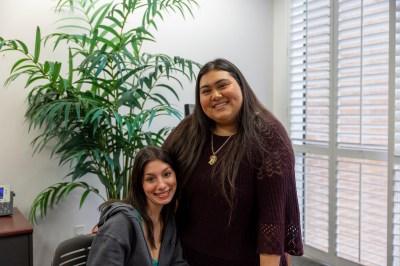
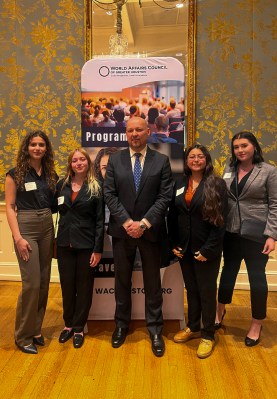
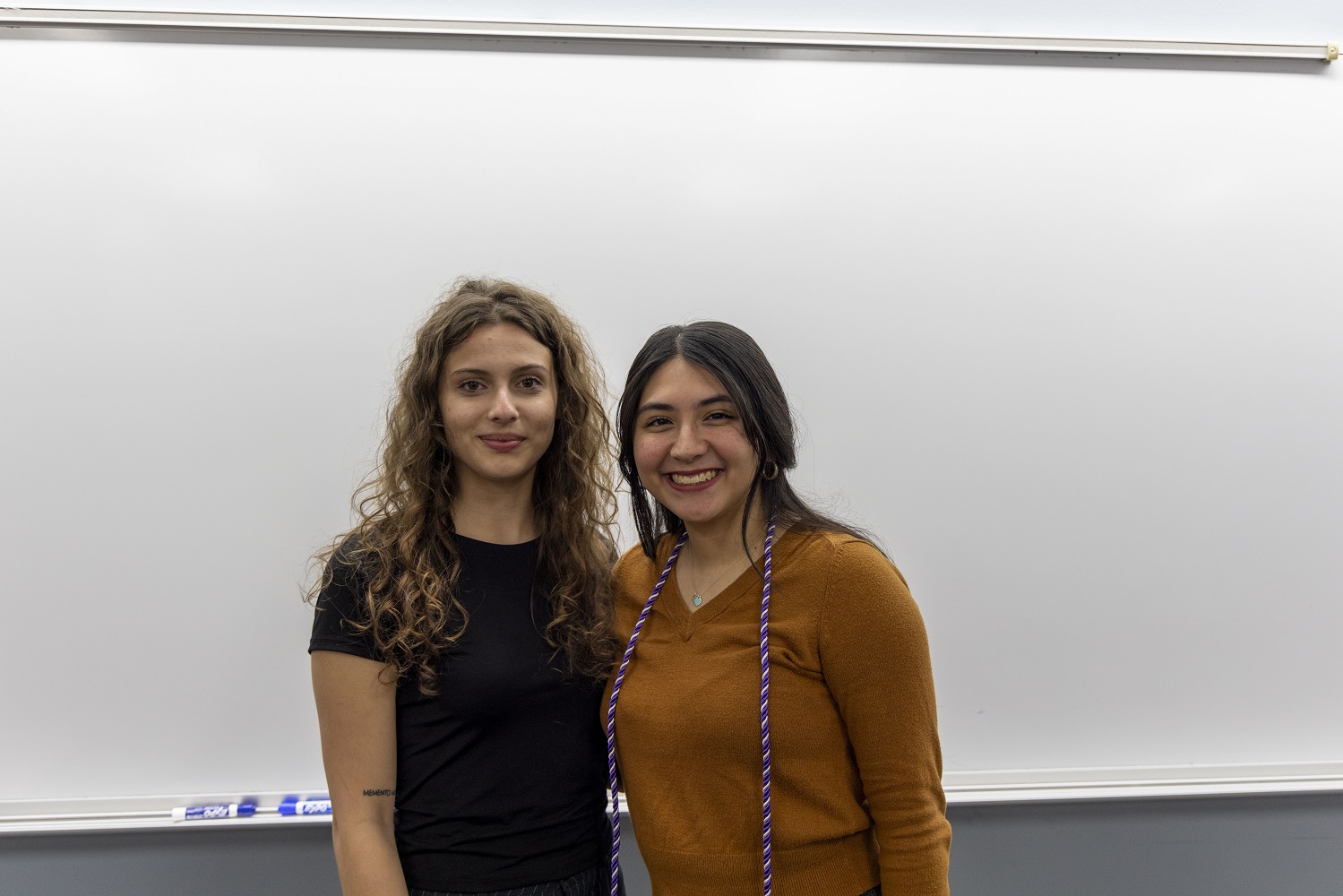
Chloe Barham with Michelle Cardenas
If you would like to join the Pre-Law Society, you can pay at CHSS 480 on Monday, February 19 or Wednesday February 21 between 10:30am-1:30pm. Or, you can pay between 5-6pm on February 21 in CHSS 120, just before our regular meeting. Payment can be accepted in the form of cash, check, cashier’s check, or money order.
On our day in Oklahoma, we were determined to visit the Oklahoma City Bombing National Memorial & Museum, a site strategically sandwiched by us between happier visits to the Oklahoma Capitol building and the Oklahoma City Museum of Art. We were wise to begin and end our time in OKC with happy destinations, because the Bombing Museum and Memorial is a sobering and emotional experience.
Oklahoma City Bombing National Memorial & Museum
After getting a glimpse of Oklahoma’s history from its Capitol, we went on to learn more about one of the state’s darker days. The Oklahoma City Bombing was a tragic instance of domestic terrorism in which 168 people were killed and 680 injured. On the grounds of this tragedy, the Oklahoma City Bombing National Memorial & Museum was erected.
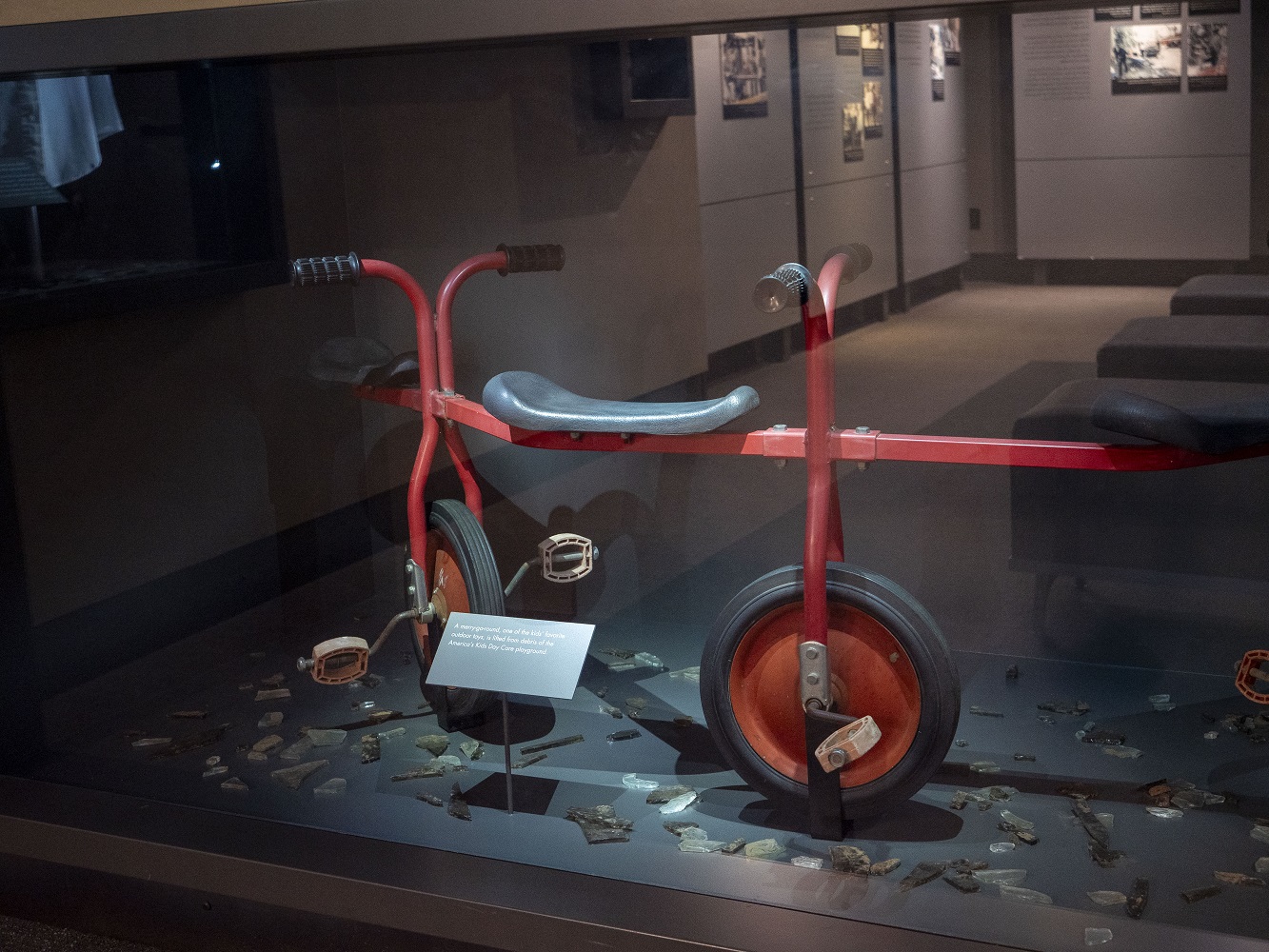
Upon entry, we learned of how the Alfred P. Murray Federal Building served the country before its fall. Federal entities such as the Social Security Administration and U.S. Secret Service officed in this structure, along with a daycare center.
The museum unfolds chronologically, providing a history of the 1990s in general, as well as the events surrounding the bombing. The morning of the bombing, April 19, 1995, unfolded largely like any other, with the Oklahoma Water Board Resources Meeting beginning at 9:00.
At 9:02, the bomb planted by Timothy McVeigh exploded, and Oklahomans’ lives changed forever.
The explosion tore through the building, destroying approximately half of the building, killing not only people in the building, but also pedestrians and bystanders on nearby blocks. Devastation was everywhere.
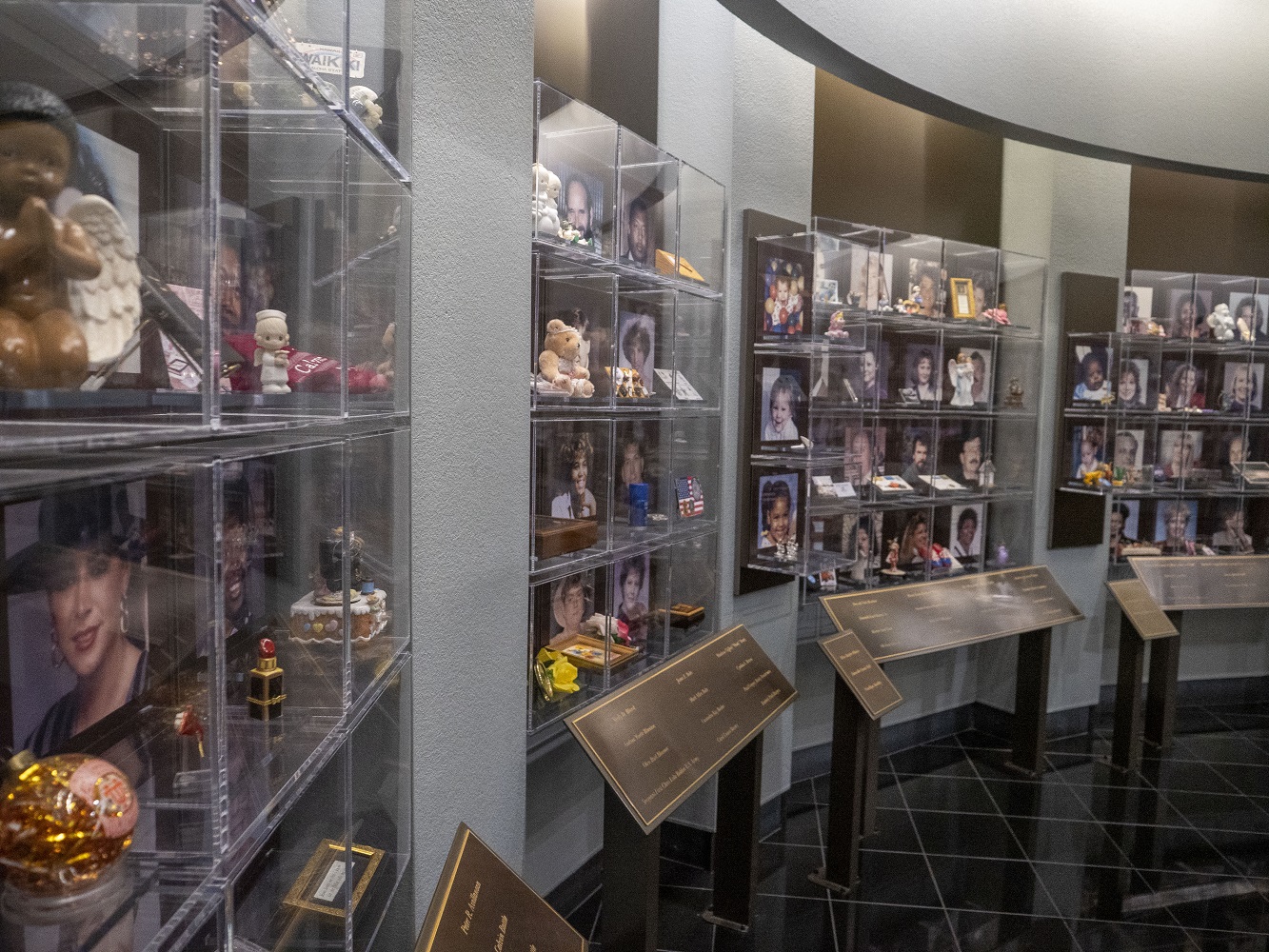
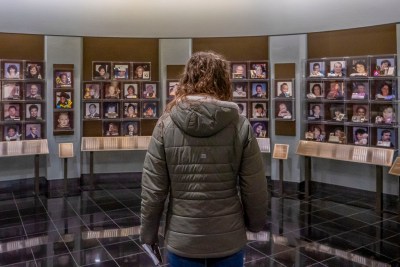
The scope of the devastation was horrific to learn about, but equally as sad were the individual stories that the museum told well.
We took some time to immerse ourselves in what was a horrific day, but not one devoid of hope.
What was most striking to me was the strength of the Oklahoma community in a time of such travesty.
Watching the local news broadcasts of citizens bringing heaps of donations, lining up to donate blood, and provide support in any way possible was tear-jerking.
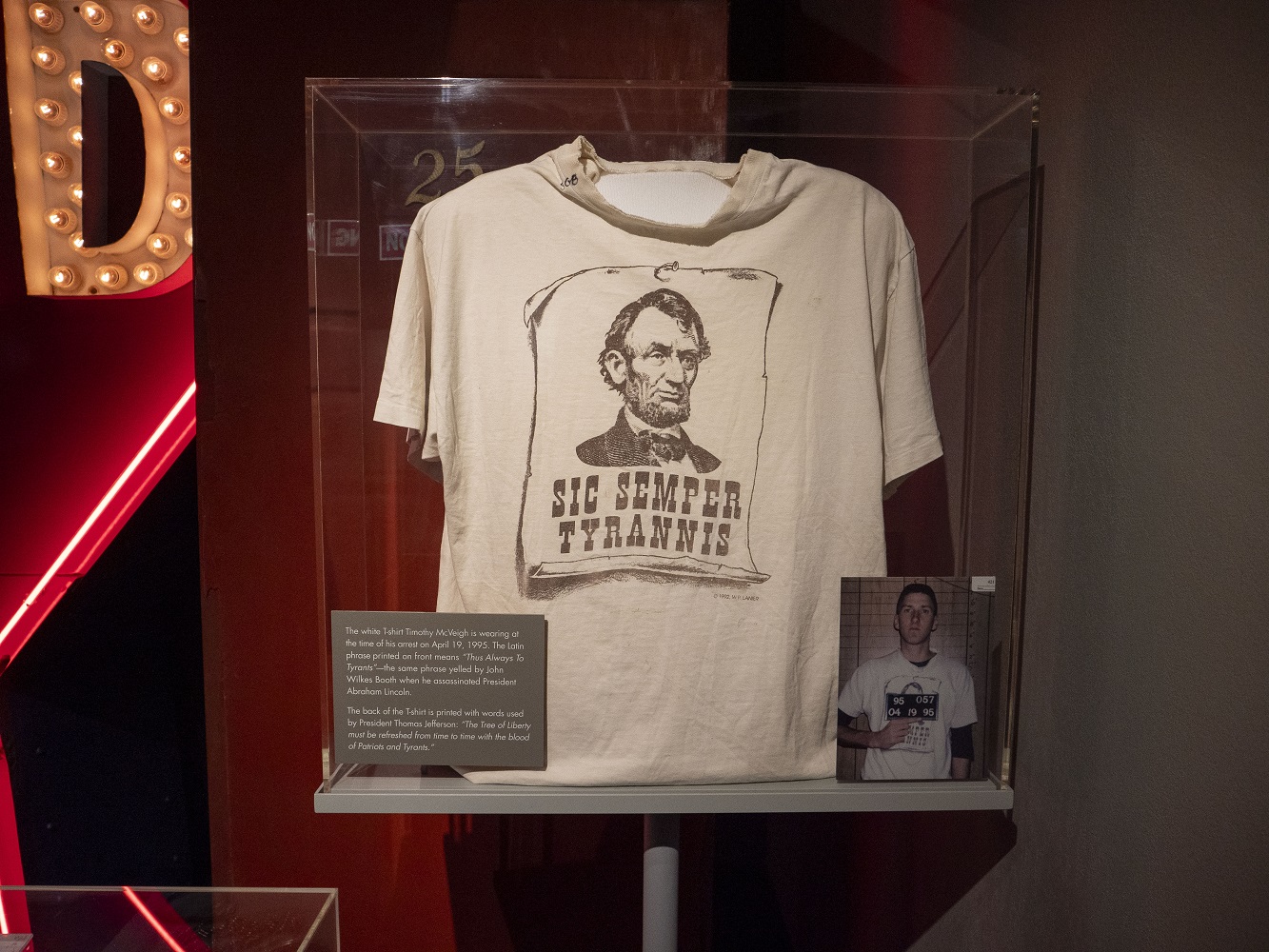
The perpetrator of this act of terrorism, Timothy McVeigh, was arrested after only 90 minutes after the mass murder. Despite planning a huge crime with some complex logistics and carrying it out, he didn’t think to ensure his car had a license plate on it, and this was the ultimate cause of his arrest. Interestingly, SHSU plays a small role in this history, as alum and defense attorney Chris Tritico represented McVeigh during his trial.
In all, the Oklahoma City Bombing National Memorial & Museum is meticulously crafted to evoke the gravity of this event, while honoring the victims and looking towards a brighter future in an all encompassing, devastatingly profound structure.
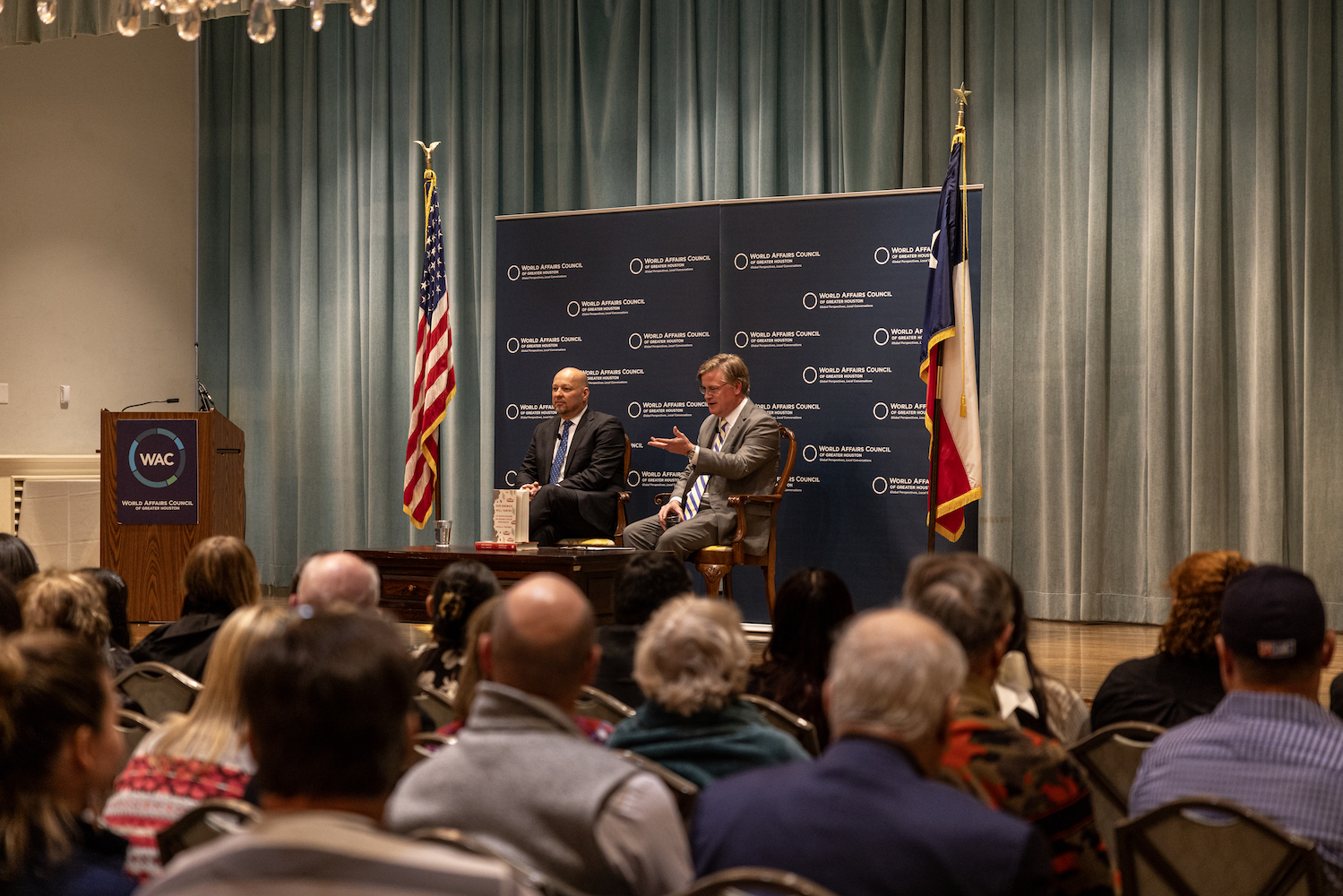
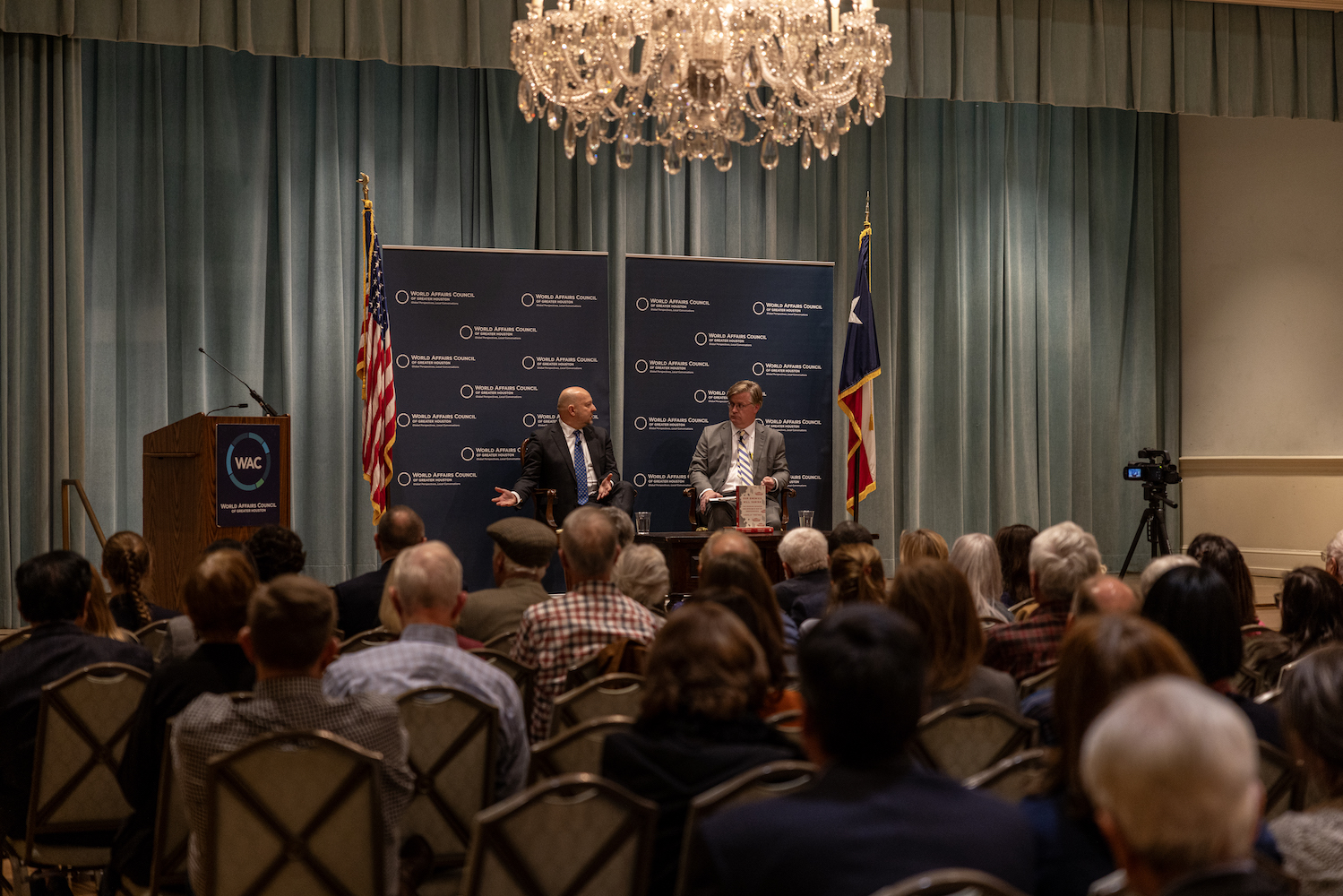
In our first week back in class, we felt compelled to start the Spring semester off with our favorite way to learn about the state of global politics, the World Affairs Council of Greater Houston. This evening, we had the pleasure of hearing from Yaroslov Trofimov, a chief foreign affairs correspondent at the Wall Street Journal. Born in Ukraine, Trofimov not only has a seasoned perspective as a journalist, but a personal understanding as a Ukrainian.
Moderated by Ronan O’Malley, the discussion began with this complex duality of Trofimov’s insights on the Ukraine War. As a correspondent on world affairs, Trofimov’s position requires an objective, multifaceted perspective when educating the public. As a Ukrainian, however, he must consider how his family and culture is to survive the present.
The Ukraine War has been a hot-button topic in United States’ politics, mostly concerning whether the U.S. should financially support Ukraine in their efforts to fight off Russia or not. Trofimov’s key argument, shared by the Americans who support Ukraine in their efforts against the Putin regime, is that this war does not exist alone, but is in fact completely representative of democracy everywhere. He closed his response with a quote that deeply resonated with us: “We are fighting this war so you (Americans) don’t have to”.
Though this war has resulted in numerous casualties, Ukrainians still hold onto a fierce hope that they will persist against what appears to be insurmountable odds. “Russia’s propaganda is stronger than Russia’s army”, Trofimov remarked.
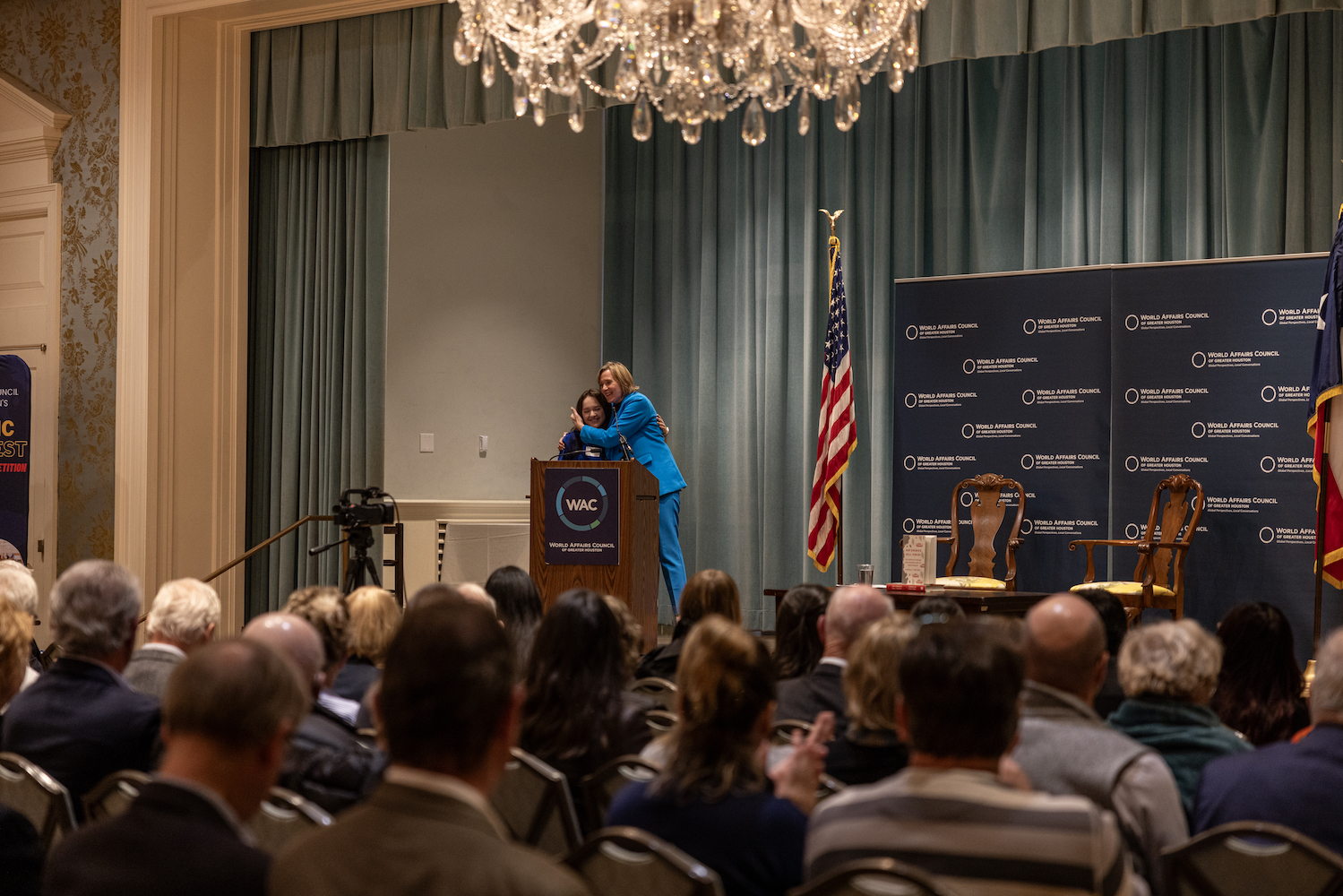
While Jessica has just started her last semester at Sam Houston, this was her first time at the Junior League of Houston. This building’s interior design is reminiscent of the Victorian era, and its elegance and vibrancy is mesmerizing to both newcomers and those who have visited previously. We left Houston as we do after most WAC events; with new perspective, great discussion, and a diversified understanding of the world around us.
Although it was our last day in Santa Fe, it was a day packed full of eclectic adventures and learning. On tap: A tour of the New Mexico Capitol building; a tour of Allan Houser’s art studio; and a hike up Sun Mountain.
After some coffee at CrashMurderBusiness, we headed to the Capitol, where Marylynn Collins was waiting to educate us on the workings of the New Mexico government.
As aspiring participants in Sam Houston State University’s SHAIP program (where students are placed in legislative offices in the TX Capitol), this was of particular importance to us. Cinthia and I have been to 5 Capitol buildings between the two of us, so this visit allowed us to compare how the New Mexico Capitol compares to other states.
Mrs. Collins started the tour by taking us to the center of the capitol’s rotunda. In contrast to most other state capitol buildings, the New Mexican capitol is shaped in a circular manner and has no dome. The reason, Mrs. Collins explained, is to signify the circle of life portrayed in the Zia symbol. The roof of the rotunda is intricately done with stained glass, the shape of which signifies a pueblo basket and the orange and blue colors signify the earth and sky.
The Zia symbol was adapted by the New Mexican people from the Zia Pueblo tribe and, as mentioned above, it portrays a circle in the middle with four sets of four lines coming out of the circle in four different directions. Each of the sets are symbolic in four different capacities: the four seasons of the year (Spring, Summer, Fall, and Winter), the four stages of life (infancy, youth, adulthood, and old age), four times of the day (dawn, daylight, dusk, and dark), and the four cardinal directions (north, south, east, and west). The symbol is also portrayed in the state flag is seen and used throughout the state.
Something that also sets this state apart is their official state question, “Red or Green?”. This was strange to us before the trip, but New Mexico is very fond and proud of being the home of the green and red chile, which is deeply engraved in their state’s culture and which we have had the opportunity to try in a variety of dishes and restaurants along the trip. Mrs. Collins also mentioned that this is the only state with an official scent; an aroma of roasting green pepper in the air.
We then stepped into the second floor of the “Round House” where we were able to admire the huge permanent collection that filled the walls. Consisting of work from regional artists with different styles and techniques, the paintings, even though completely contrasted one to another, represent the state’s cultures throughout the centuries. While admiring the art work, we were able to see some new artists and also recognize some of the artists we have been learning about, our favorite being Anderson’s “Canyon Segundo”…
Unfortunately, we had to rush from our capitol tour to get to our next stop: Allan Houser’s studio. Even more unfortunately, we learned that because of the massive amounts of snow that had fallen, the Houser Studio was cancelling the tour. But, ever resourceful, we switched gears and visited Houser’s downtown gallery, where we saw 30-40 of the Native American artist’s works.
We had previously seen his works at the Albuquerque Museum, at the New Mexico Capitol building..
…and, in fact, at Professor Yawn’s house, so it wasn’t entirely new to us. But we appreciated seeing the diversity of his art, and the gallery generously gave us–or, rather, SHSU–a very nice book of all of Houser’s works.
With more time on our hands, we ventured over to the Loretto Chapel, where we were able to see another church and another architectural marvel.
Known around the world as the Miraculous Staircase, this winding spiral staircase has left architects in awe of the pure physics of its composition.
Taking two 360 degree turns, its impossible to say how it has managed to sustain itself with neither support beams nor nails.
As we took a moment to marvel at the beautiful chapel ourselves, we also took the time to look around the many gift shops that are connected to the chapel and picked up a few souvenirs for ourselves and our loved ones.
Santa Fe is a charming town that we have come to cherish over a mere two and a half days.
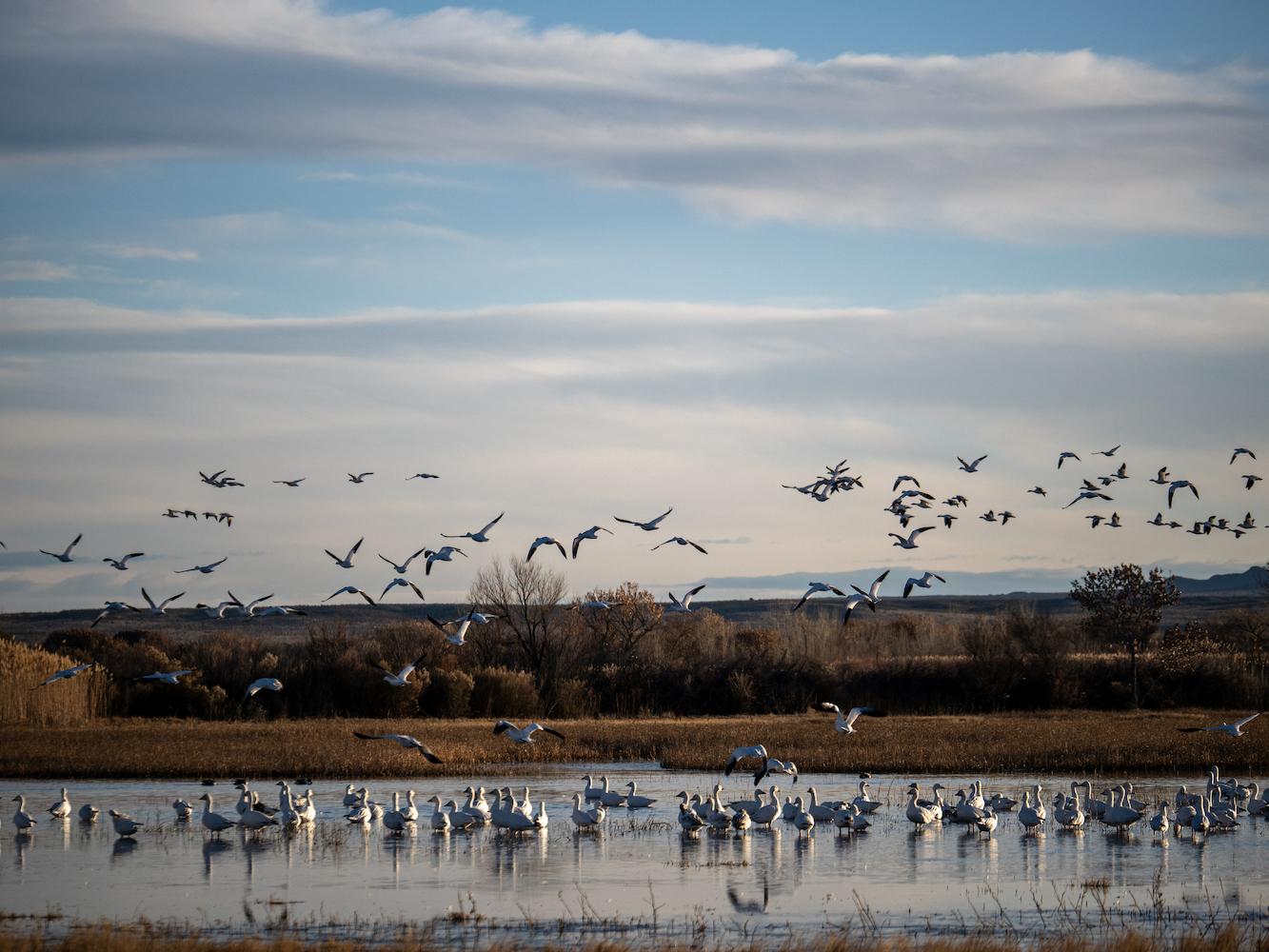
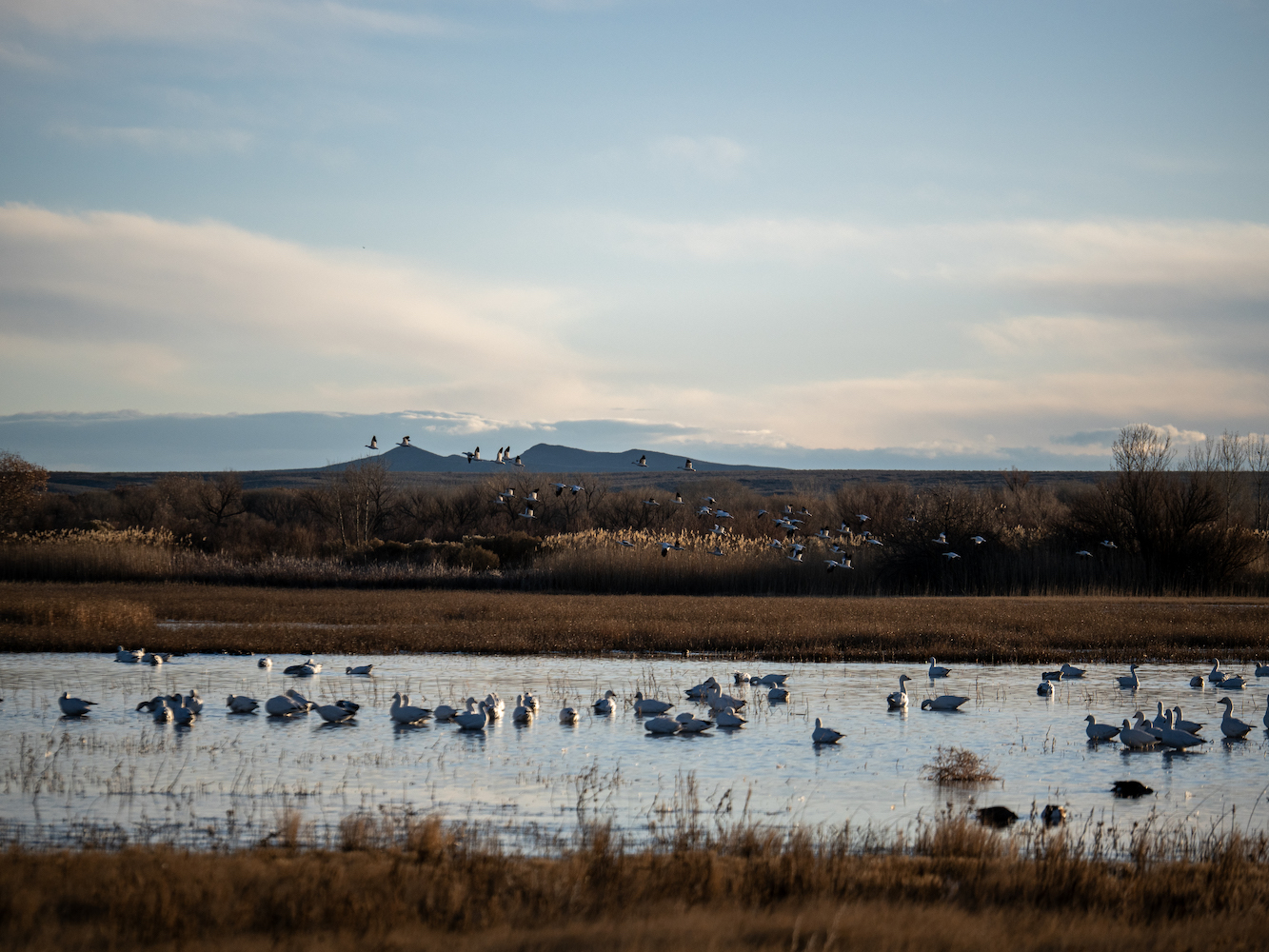
As college students, waking up before sunrise is not a typical morning for us. However, we were excited to see the Snow Geese start their day and take flight across the beautiful New Mexico sky at Bosque del Apache National Wildlife Refuge!
Photo by Olivia Discon
Bosque del Apache
On our tour of the southwest, one of our key objectives is to expand on our basic understanding of photography and apply it to the sites we visit along the way. Wildlife photography, as we’ve come to learn, is its own beast. While there are some habitual patterns of particular creatures, it is impossible to truly know what they might do next. However, we were up for the challenge!
Photo by Stephanie Fors
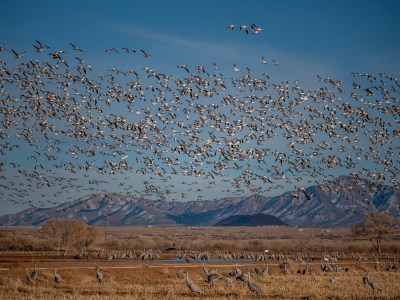
Of course, the Snow Geese were the feature of this visit, as the sheer number of them joining in their morning flight could not be missed. They must have enjoyed having their photos taken, because they took flight two separate times, making for some variation in photos on our part.
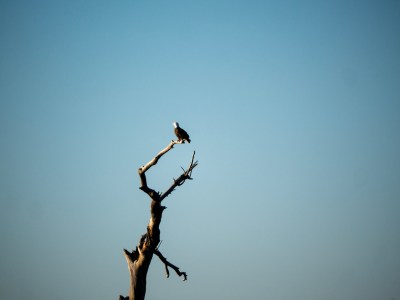
What was most rewarding to capture was a lone Bald Eagle perched atop a tree trunk, scanning the horizon for its next meal.
Photo by Olivia Discon
Funnily enough, Cinthia and I almost missed this exciting catch, as we had just left the area to get a different angle. In the end, we were able to get some photos that we were proud of, along with the satisfaction that comes with experiencing nature.
We left Bosque del Apache with some additional photography experience under our belts and great anticipation to look back on our photos!
Lunch at Indian Pueblo Cultural Center
By Cinthia Villarreal
Taking a break from the great outdoors, we made a stop at Indian Pueblo Cultural Center to have lunch with former LEAP Ambassador, Karla Bush; her husband, Cameron Bush; and their friend, Richard Cravens. Karla and Cameron attended Texas Tech School of Law and are now successful practicing attorneys. It was great meeting these two, and it was inspiring, particularly since we are following in Karla’s LEAP footsteps. Mr. Cravens, who is also an attorney, attended New Mexico School of Law and has recently published a book, Self Help: A Novel, which we had the chance to read in advance of our trip. Over lunch, Olivia and I received quality advice regarding law school and work ethic. Both Cameron and Mr. Craven made it clear that law school is a difficult journey, but a rewarding one. They noted that we might not be able to outsmart all our fellow law students, but we can outwork them. It’s not every day that we have the chance to speak to three attorneys over lunch–let alone such highly successful and candid attorneys! We were very grateful to have their perspective as former law students, and we would like to thank Karla, Cameron, and Mr. Craven for taking the time to visit with us.
Bernardo Wildlife Area
By Olivia Discon
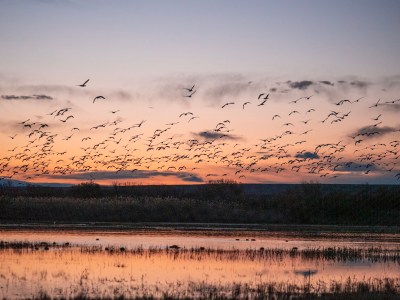
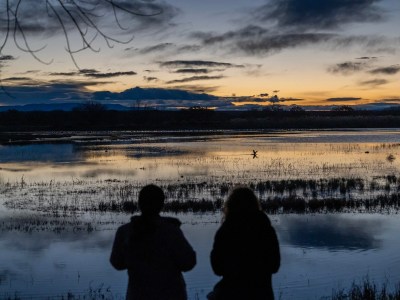
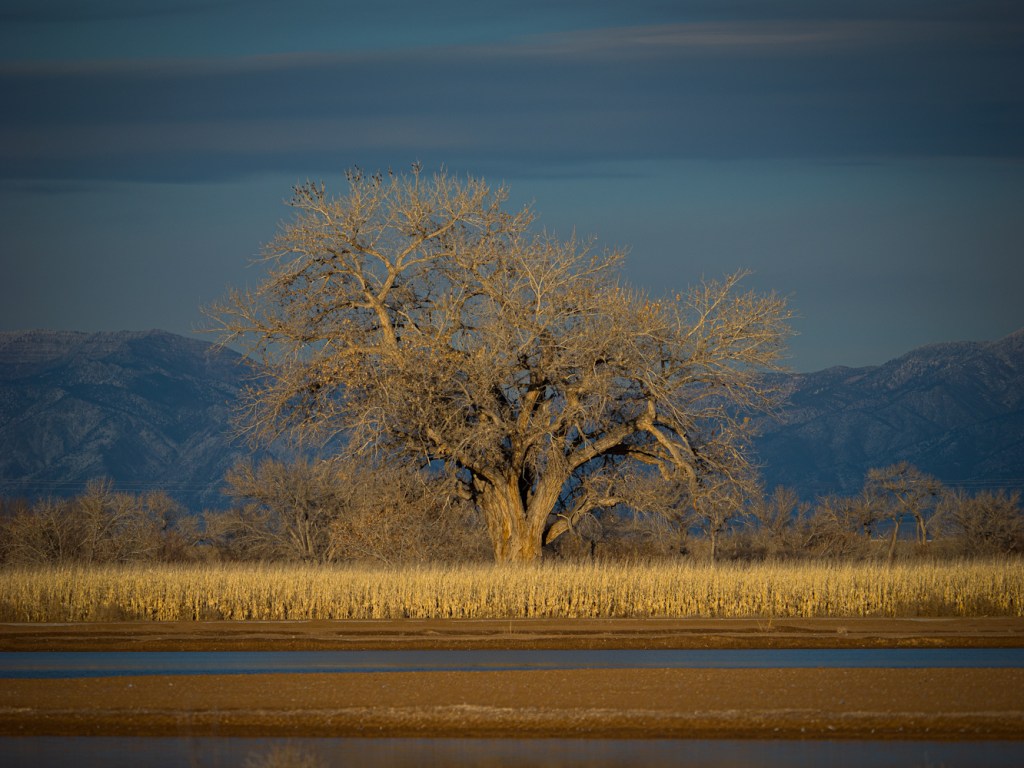
To close our day filled with new experiences, great conversations, and learning opportunities, we decided to end our day as we started it; by watching the New Mexican landscape. This time, however, we set up in Bernardo Wildlife Area to catch the large flock of birds before nightfall and also just see nature’s beauty.
Photo by Cinthia Villarreal
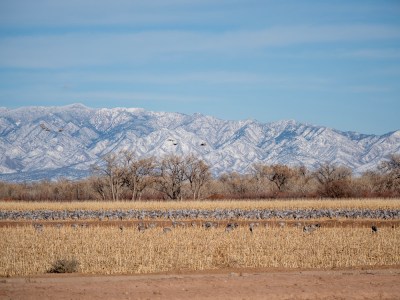
This go around was truly a sight to be seen. There were thousands of Sandhill Cranes and Snow Geese awaiting their final flight for the day before getting some sleep, which we watched with both awe and envy.
Photo by Olivia Discon
These birds have not been in their typical sleeping spot as of late, so we had no idea what to expect as to their location or their destination. Accordingly, we split up and went to different locations to maximize our coverage.
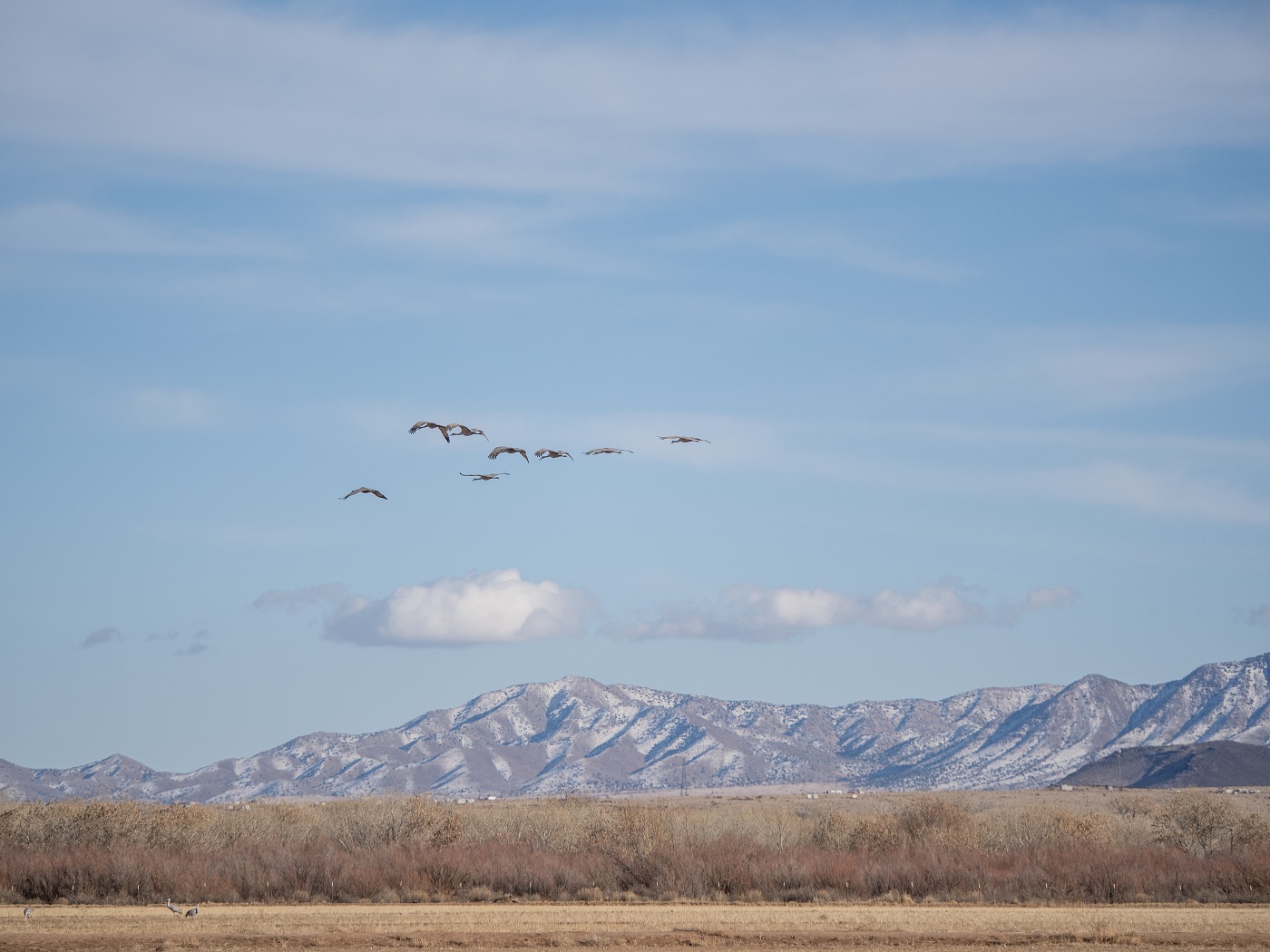
Eventually, after some squabbling and feeding, it was time for liftoff!
Photo by Olivia Discon
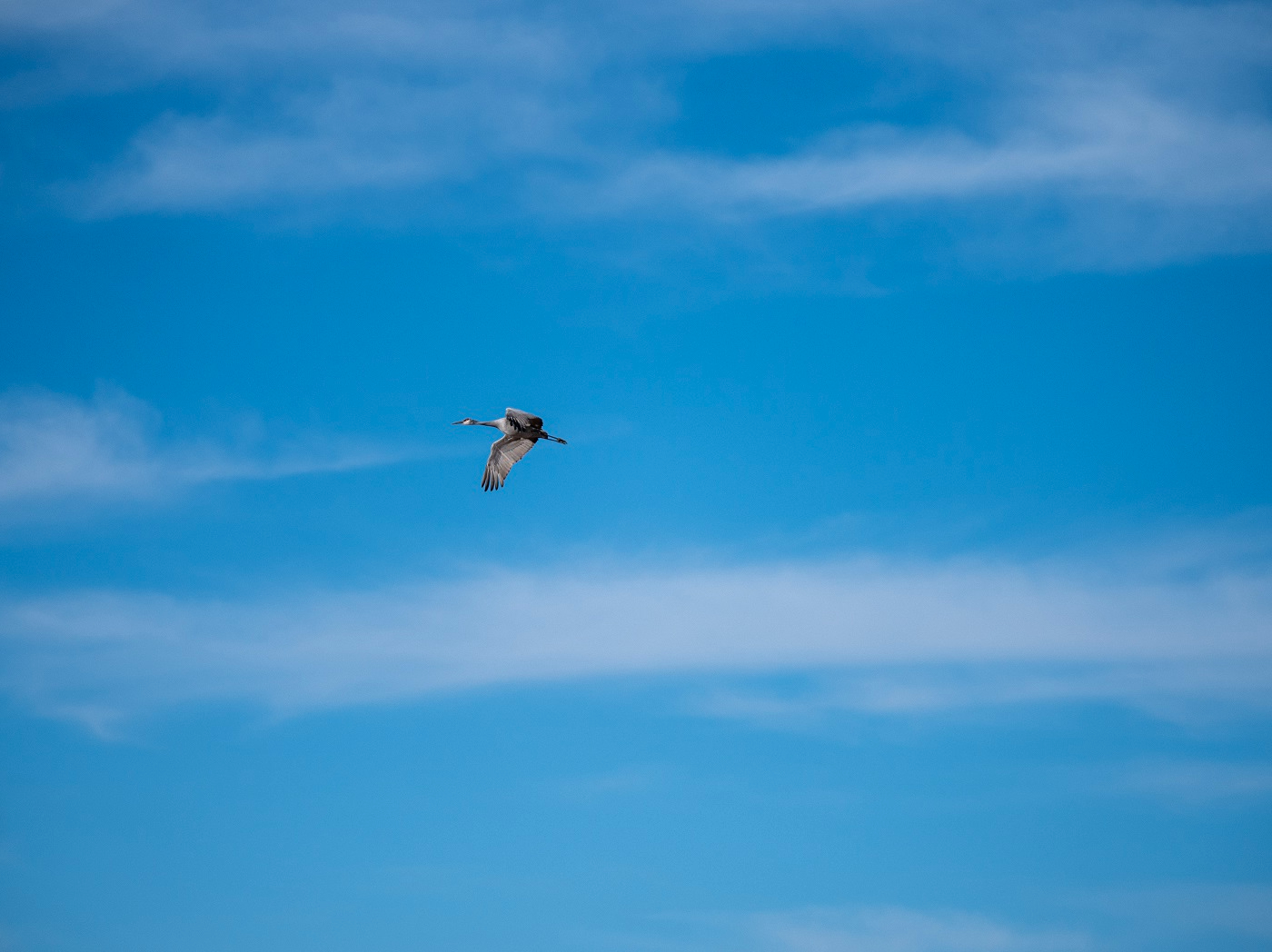
The birds swarmed the orange sky in such a way that kept you glued to their elegant movements. The mountainous and open landscape made for some photos that were a good faith attempt at capturing the beauty of the scene.
Photo by Cinthia Villarreal
We could not have ended our day with a more rewarding and serene experience. Just like the Snow Geese and Sandhill Cranes, it was time for us to make our way towards a place to rest.
In today’s version of a LEAP trip, we learned a lot about art, the law, and the outdoors. And to kick things off, we did all three by heading to Texas Tech’s campus and doing a self-guided outdoor art tour, followed by a guided indoor law-school tour.
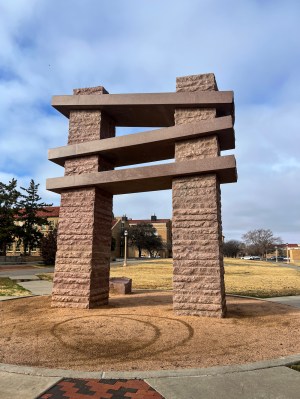
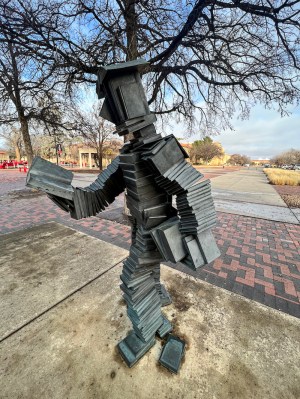
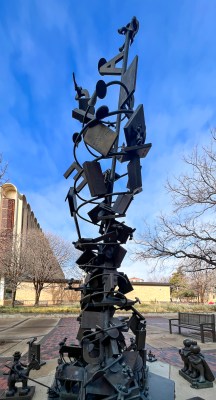
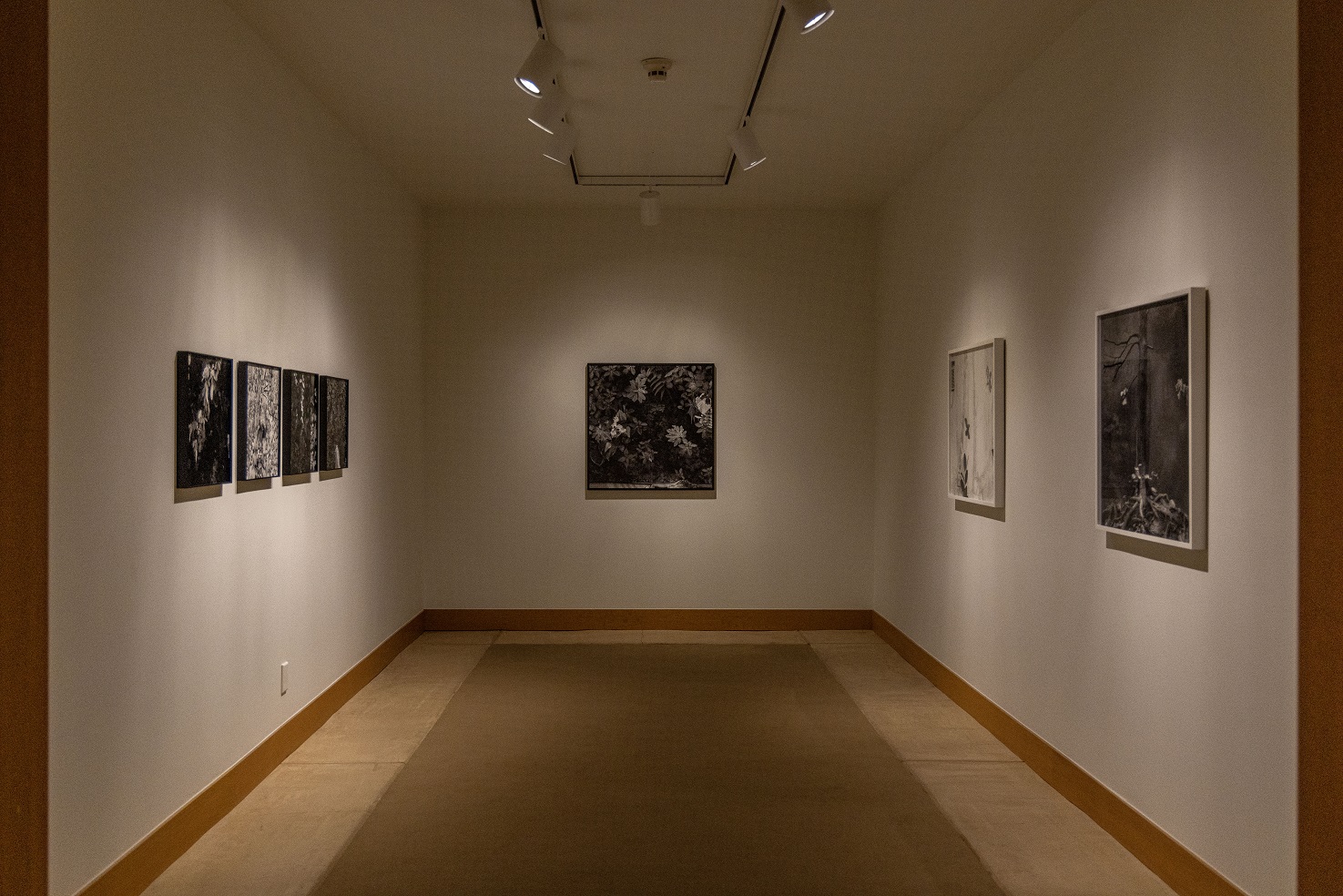
Our self-guided tour was to see what the Texas Tech Campus had to offer, and we were impressed with what we found. We saw a very large James Surls piece…
…several large Jesus Moroles pieces…
….a Deborah Butterfield horse, Terry Allen’s “Read Reader…”
…and Tom Otterness’s “A Tornado of Ideas.”
It was difficult to pick our favorite: Olivia’s was Moroles’s “Lapstrake Portal;” Cinthia’s was Butterfield’s horse.
But our primary purpose for being there was to see the law school, so at 10:30, we met our guide, Katie Moorhead, and we began our tour.
Texas Tech Law School Tour
Cinthia Villarreal
Upon entering Texas Tech School of Law (TTU Law), we were immediately welcomed by the sophisticated ambiance of the building. At this time, it was really beginning to sink in that we were looking at our future. We had the pleasure of meeting with Ms. Moorhead, the Assistant Director for Admissions at TTU Law, who gave us an excellent, in-depth tour of the law school and included her insight along the way. We started with what Ms. Moorhead referred to as “the Goldilocks Bears of classrooms”. Befittingly, there were smaller classrooms, larger classrooms seating 100 students, and regular classrooms that were “just right”!
What was unique to us is that first-year students are personally assigned a study room in the library where they can study, have lunch, or even nap. We weirdly found this custom the most exciting aspect of the building itself, which of course doesn’t even begin to explain the culture and rigor of TTU. For that information, Dwight McDonald, Clinical Instructor and Director of Community Engagement, was on hand to provide. Mr. McDonald made his case for what sets Texas Tech apart from the other law schools. He believes that Texas Tech is unique in that it supports students to practice law with a firsthand approach in TTU’s clinics and curriculum. He was as persuasive as he was collegial!
To our great surprise, we had the honor of meeting former U.S. Congressman and Chancellor of Texas Tech University, Kent Hence. He had nothing but excellent things to say about the law school, and he encouraged us to consider the school upon our graduation. It simply does not get more compelling than that!
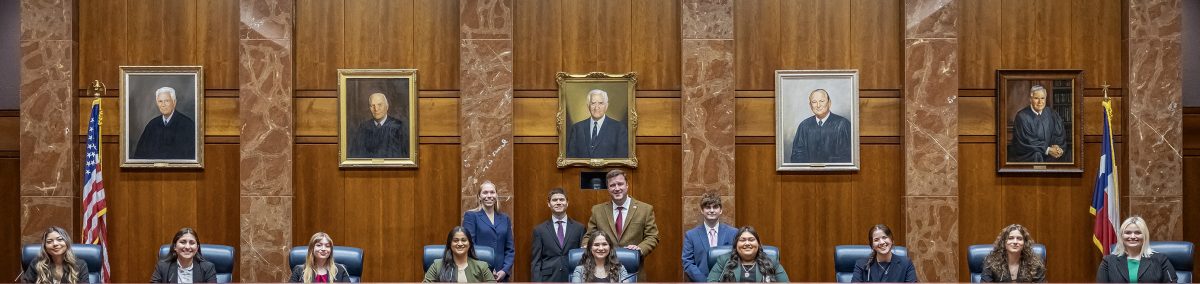
Though we already felt incredibly lucky, the enriching tour didn’t end there! We had the chance to take a peek into a seminar on domestic violence. The auditorium was filled with practicing lawyers continuing their intellectual pursuits, and from what we were able to listen in on, the seminar raised some great points in evaluating domestic violence cases. Of course, we had to end our visit with a photo op in the Donald Hunt Courtroom with Ms. Moorhead!
We thank TTU Law for opening their doors to us, Ms. Moorhead for her assistance in coordinating this tour, and Mr. McDonald for taking the time to speak with us.
Out of this World in Roswell, New Mexico
Following our wonderful tour, we grabbed food on the go so that we could get to Roswell, New Mexico. Knowledgeable readers are likely to know that Roswell is best known for what may have been an alien encounter in 1947. There was a lot of evidence of this history throughout the town, which is covered in all things alien. The street lights are alien heads; there are little plastic green men on every block; and even the McDonalds was shaped like a flying saucer.
But we did not visit Roswell just to make Cinthia feel at home. Rather, we went to this strange little town for its art. It is home to the Roswell Museum of Art, as well as the Anderson Museum of Contemporary Art—the latter of which we visited. It’s a wonderful museum.
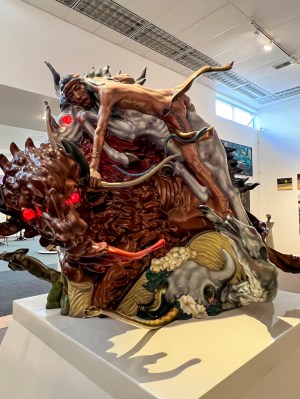
Like every contemporary art museum we have ever been to, there was art we did not care for; art that we weren’t sure if we cared for, but that made us think; and art we really enjoyed. Luis Jimenez, the most famous of the artists in the collection, had works that fell into all three categories for us.
His work is interesting, and, in fact, the AMOCA has more Jimenez pieces on display than other museum in the country…
…but Jimenez can also be out there.
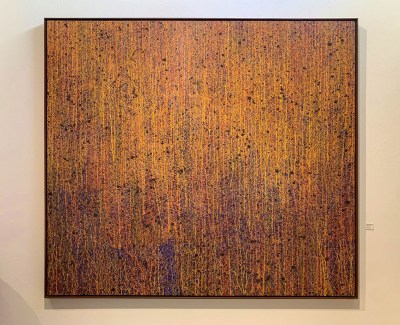
We also really liked the work of Donald Anderson, and we all had our favorites of his many pieces in the collection. In fact, it was Olivia’s favorite artist! Professor Yawn also really liked the work of Elmer Schooley;
Stephanie’s favorites were by Howard Cook; Cinthia’s favorite was Peter Zokosky’s “Skeleton in Landscape.”
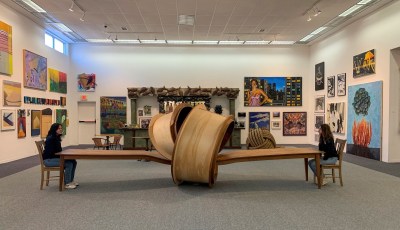
There were fun pieces, too. One artist made sharks that hung from the ceiling, which would have been terrifying, but they were made from golf bags and, in one case, a vacuum cleaner. Jason Richel’s work gravitated toward stackable food objects, including smores and toast. Moreover, as LEAP Ambassadors, we also tried to kill two birds with one stone (or, as we were taught in a training once, to “feed two birds with one scone”) by not only enjoying the art, but also by working on our communication skills. This was done by sitting at a special table designed to foster teambuilding…
It was a fun visit, and one in which we blessedly didn’t encounter even a single alien, plastic or otherwise. We did, however, have the good fortune of meeting pleasant staff and learning about some new artists.
We didn’t have a lot of time, but we wanted to try out some new (rented) camera equipment and see if we could spot some wildlife.
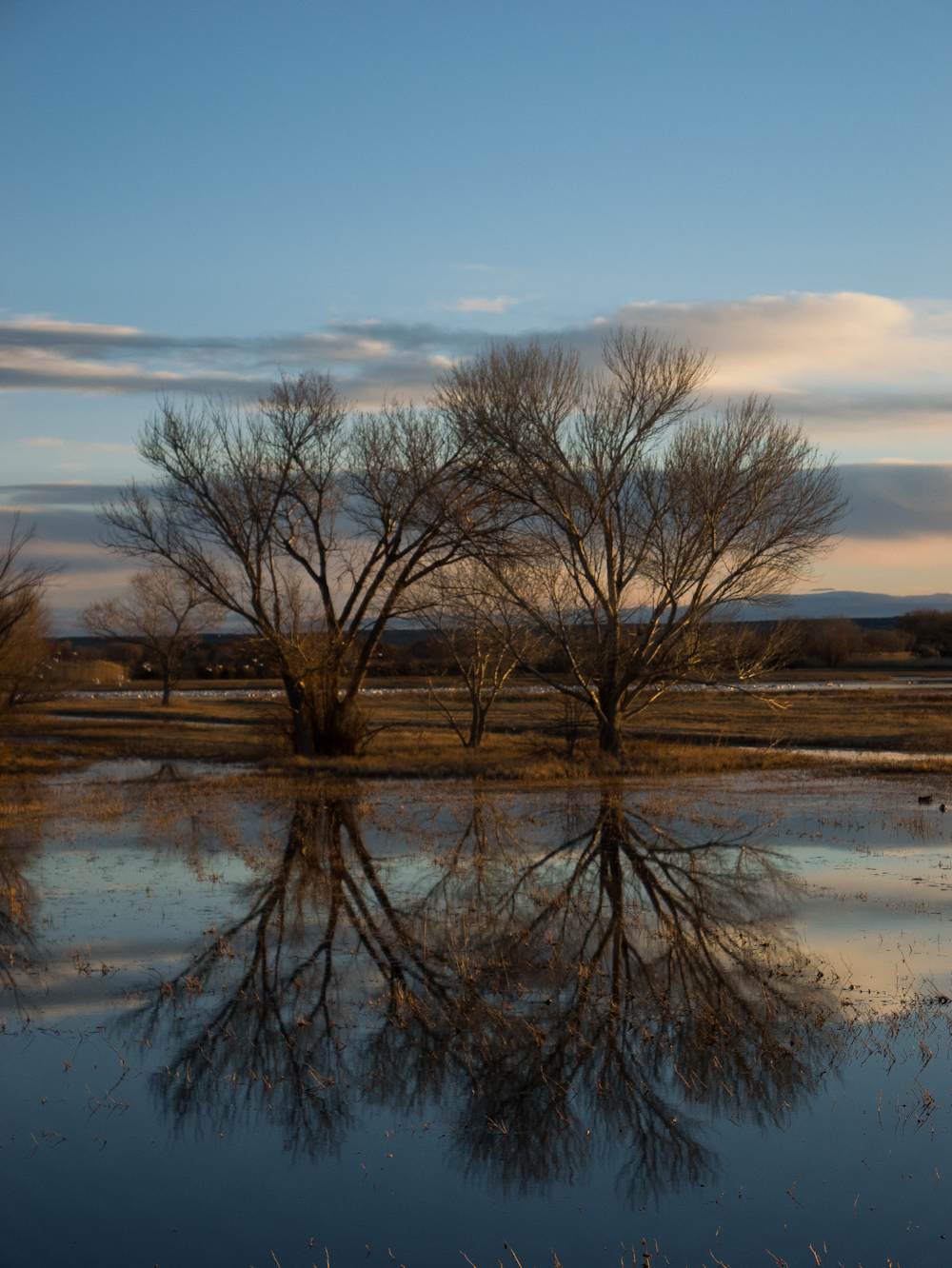
We were struck by the calm blue of the water, as well as the prime habitat for animals.
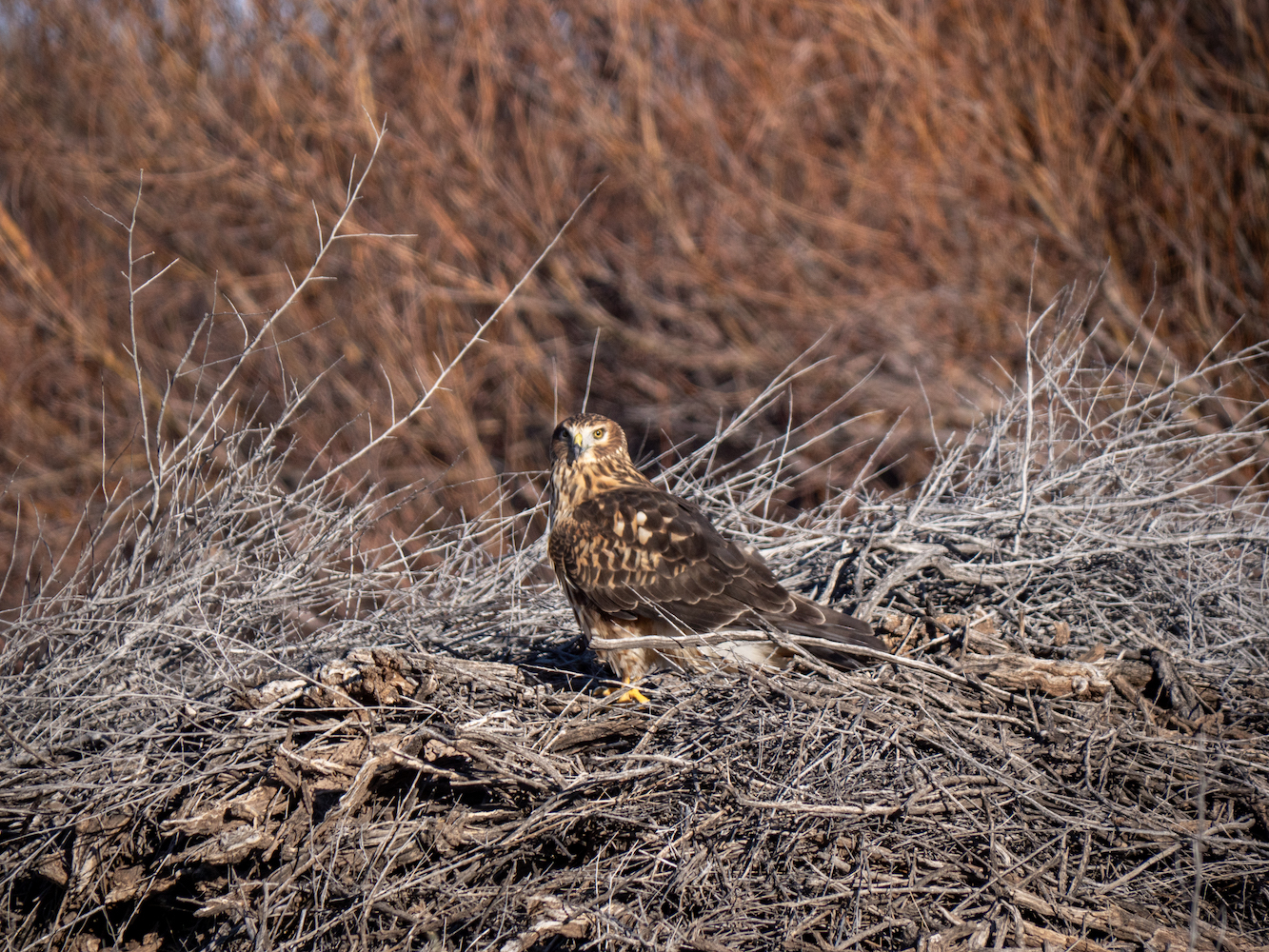
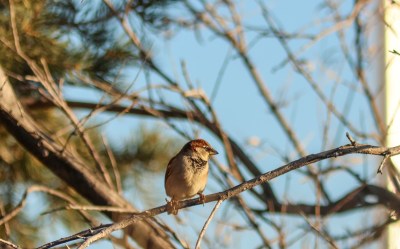
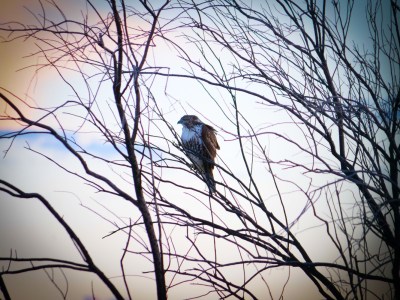
Birds were a bit scarce despite a landscape (wetlands) designed for birds, but we saw several hawks…
…sedges of sandhill cranes, flocks of red-wing blackbirds…
and the rare treat of seeing an owl—at pretty close range, at that!
Calling it a Night
We capped the evening with dinner in Ruidoso. The dinner was fine, but the real treat for these two Texas girls was seeing snow. Not the icy snow that occasionally sprinkles on Huntsville and causes havoc; nor the icy, slushy, and wet snow blown out for the Christmas Fair. This was real, recently fallen, snow! So, to commemorate this occasion, we flocked to the parking lot snow, which was dirtier and more icy than the snow on the ground, but which had the advantage of having already been piled up. Thus we were able to more quickly make the world’s most frightening snow man.
With this masterpiece under our belts, and with an early and cold morning in store for tomorrow, we called it a night.
It was an early morning for a Thursday during a Christmas break. But it was a LEAP trip, so of course it was early. With a first-day itinerary that included a law-school tour, two art museums, and an eight-hour drive, we needed to begin at dawn.
TAMU Law
By Cinthia Villarreal
As aspiring attorneys and with “Law” representing the first letter of the LEAP acronym, the first stop of our Southwest Trip was, naturally, the Texas A&M School of Law (TAMU Law)in Fort Worth.
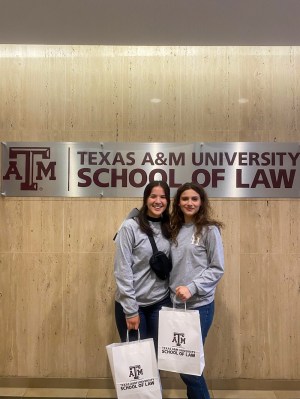
Olivia and I walked through the front door thrilled for the tour that awaited us. I was personally elated, as this was my first time ever being in a law school. Dani Cortez, the Admission Recruitment Coordinator, was kind enough to set a tour for us with current TAMU Law Ambassador, Dalia El-Giar.
As a second year law student, Dalia was able to share a firsthand account of the law school and was candid about her journey so far, which included the typical class environment, internship opportunities, and housing.
We started at the Dee L. Kelly Law Library, which happened to be our favorite aspect of the visit; the coolest feature of this library being the motorized bookshelves! After she showed us the classrooms, courtrooms, and the lounge areas, we couldn’t resist but imagining ourselves sitting in one of those chairs as law students. Throughout the tour, we learned about the resources the school offers which range from international travel opportunities, externships, to legal clinics. TAMU Law is one of the top law schools in Texas, and getting a glimpse of the school’s culture truly made our aspirations a bit more realistic and a lot more exciting.
We then had the opportunity to talk to Mr. Cortez to address any questions about the tour and admission process. When we asked about personal statements, he emphasized the importance of showing our personality and passions through our writing. Before ending a very successful tour, it was an absolute must to visit the school bookstore and buy some matching swag! Many thanks to the A&M School of Law staff for their hospitability, Mr. Cortez for his kindness and insight into the admissions process, and Dalia for her approachableness, honesty, and eagerness to share her perspective as a student.
Architecture & Art
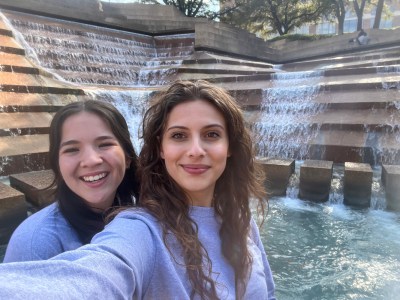
Following our wonderful tour of TAMU Law, we hustled to a couple of nearby architectural marvels. The first was Philip Johnson’s Fort Worth Water Gardens, right across the street from the law school. Designed to neighbor the Fort Worth Convention Center, the “gardens” have at least five components: an entrance…
…an “aerated” pool…
…a quiet pool, a mountain, and a sunken water garden.
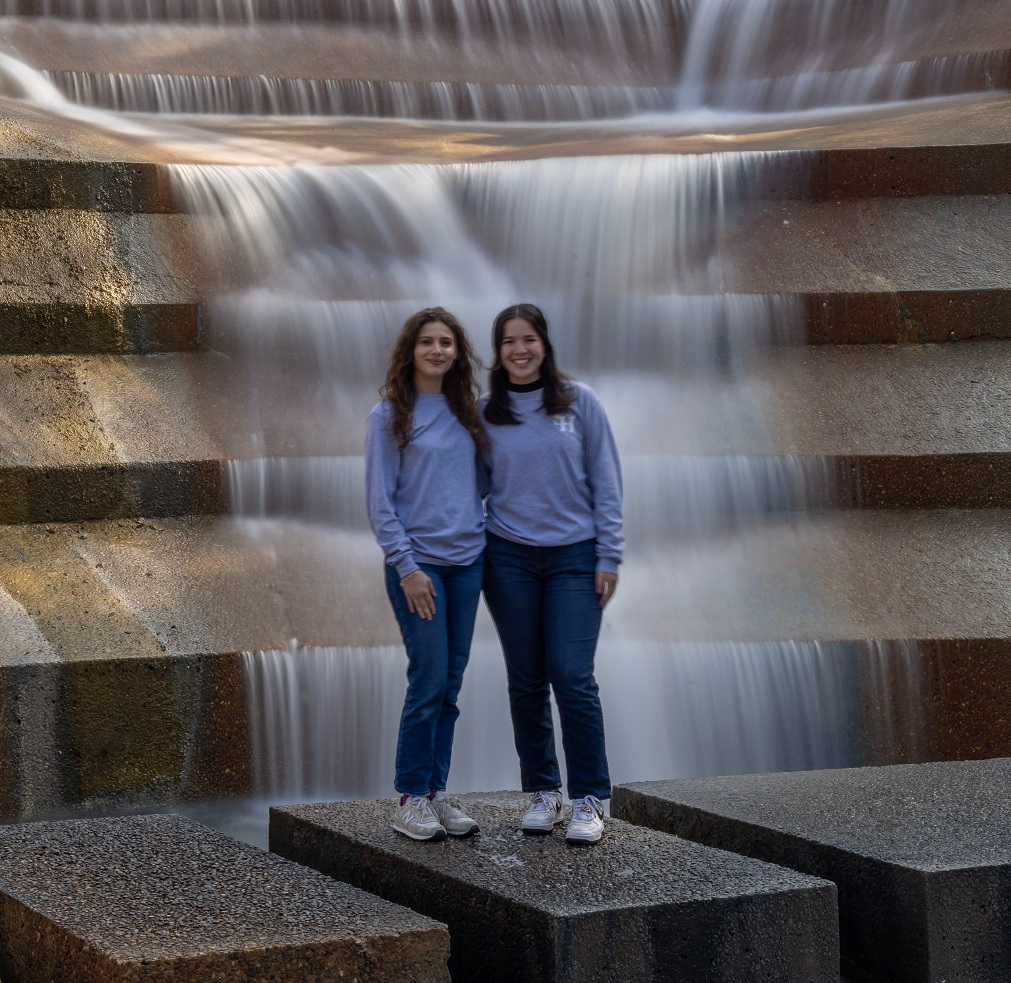
The latter element was fascinating, with its many layers and levels for water to cascade down—not to mention the steps you can skip across to access the lowest tier. It was on this tier that we posed for a long-exposure photograph—one that emphasized the cascading nature of the water (and our ability to stand still for eight seconds….).
With both of us working for the City of Huntsville, we also had to stop by Sundance Square to see the Richard Haas mural of the Chisholm Trail. This is a piece that completely transformed this area of Fort Worth, and it is also one of the pieces that prompted Linda Pease to reach out to Haas to do art work in Huntsville.
Such adventures, however, only foreshadowed our art experiences to come.
Amon Carter Museum of American Art
The first of these was the Amon Carter Museum of American Art. Here, we were able to refresh our familiarity with Frederic Remington, whose work pervaded the museum.
We saw this western motif in many of its manifestations. Much of the collection from the 19th century, which included artists such as Albert Bierstadt, Thomas Moran, and Martin Johnson Heade, involved western symbolism. Moreover, we had a chance to see several of Georgia O’Keeffe’s works, including her painting of the San Francis de Asis, which we will be seeing later this trip!
It was a great visit, a chance to brush up on some artists and learn new artists.
The Old Jail Art Center Museum
A couple of hours from Fort Worth is one of the state’s best hidden gems: Albany’s Old Jail Art Center.
Their collection, which consists of more than 2,000 pieces, includes such luminaries as Paul Klee, Picasso, Thomas Hart Benton, Amedeo Modigliani, Peter Hurd, Bror Utter, Jesus Moroles, and James Surls.
We met several of the staff, all of whom were very nice. Kellie Bellah was on hand to greet us and get us started in the Museum; Patrick Kelly, the Museum’s Director, gave us a tour; and Amy Kelly, the Museum’s Collections Curator, gave us some in-depth information about several pieces in the collection. They were nice enough to take us to the “vault,” where we had a chance to see a Benton, two Grant Woods, two Picassos, an Alexander Calder mobile, and a Charles Pebworth!
While we immediately recognized the Surls’ piece in the Museum, it took us a minute to identify the Moroles’ pieces in the courtyard. In retrospect, the pieces should have been pretty easy to identify, but they were different than the totems we have seen in the past.
We also enjoyed seeing the artists in their exhibit galleries. Leigh Merrill had some very impressive photography…
…and Karla Garcia had some thought-provoking pieces in the historic section of the Museum—the actual “Old Jail.”
Although art can be intimidating, the fact that the Museum is set in an actual historic jail made us both feel right at home!
Seriously, though, it was a great first day on our southwestern tour: law, art, and architecture–just a few of our favorite things.
“How do we get into law school?” is the most common question Pre-Law Society members ask . There are many factors that go into a competitive application.
The two most important factors are the LSAT and GPA. Beyond that, law schools look at letters of recommendation, the student’s resume, and their personal statement.
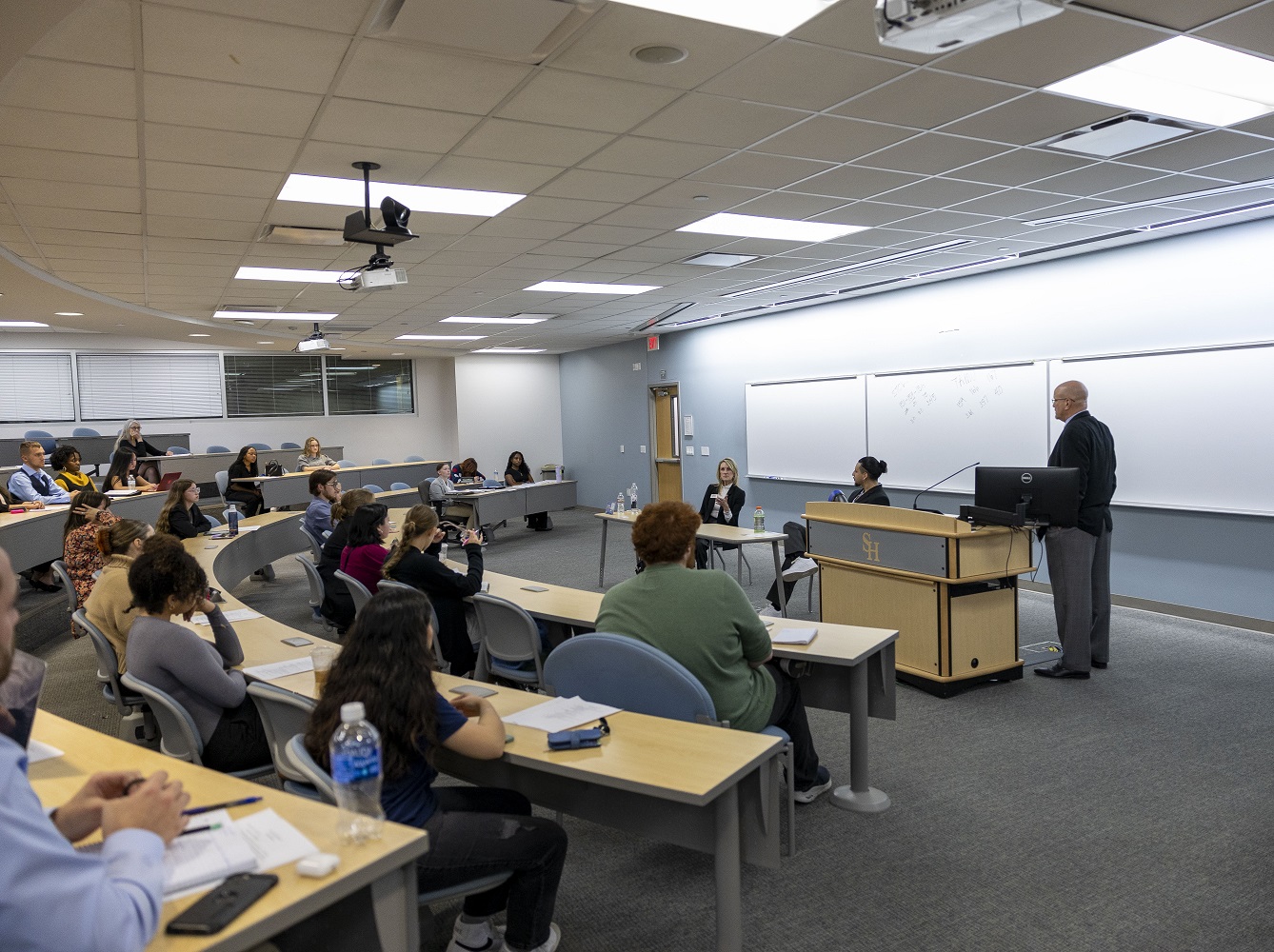
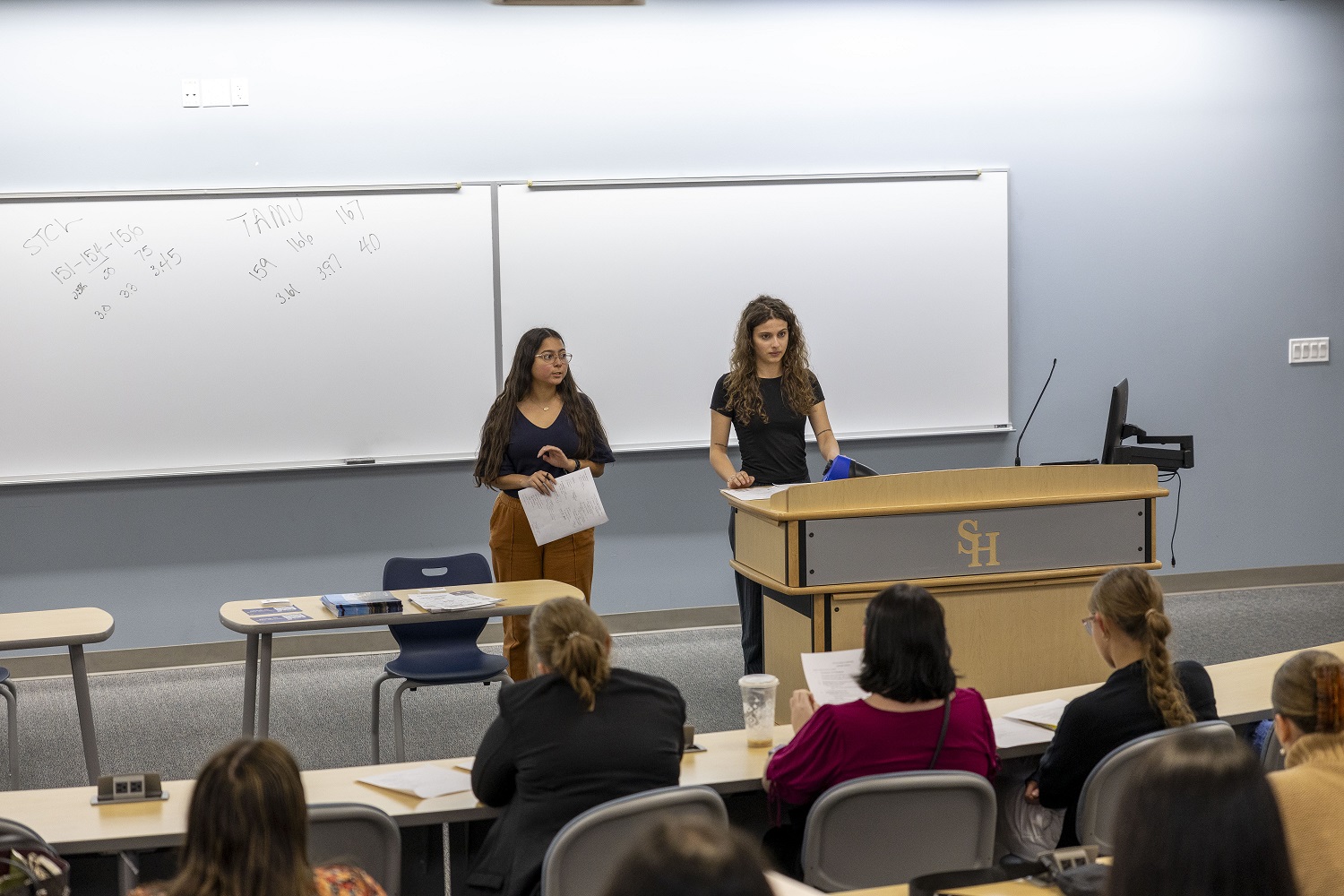
For the last meeting of the year, the Pre-Law Society invited South Texas Law School and Texas A&M Law School to answer burning questions about the law-school admission process.
The entrance requirements are different for these schools. On average, TAMU Law has an incoming class with a 167 LSAT and a 3.9 GPA, while South Texas has a 154 LSAT and a 3.45 GPA. Despite these differences, the process for selecting applicants is much the same.
LSAT and GPA are the two most important factors, and one way to think of their impact is in terms of categories. A student with a higher than median LSAT and GPA is in the “likely admit” category, ” a student just below average might be “possible,” while a student with scores significantly below the median LSAT and GPA would be “unlikely.”
The law schools stress that the applications are looked at holistically, meaning that other factors: resumes, personal statements, letters of recommendation, and the like can matter. These are, however, more likely to matter if you are “on the bubble.” If you have a 2.2 GPA and a 130 LSAT, it’s very unlikely that a strong personal statement will get you serious consideration at either STCL or TAMU Law.
Both schools stressed that it is important to build relationships with professors and work supervisors, as letters of recommendations from them can be helpful in the process. And work experience can convey important qualities: punctuality, responsibility, a strong work ethic–and, in some jobs, critical thinking, writing, leadership, and management skills as well.
In the LEAP Center, we encourage progressive development:
First Year: Solid grades, take the Mock LSAT, find an organization or two;
Second Year: Develop study plan for LSAT, improve grades, begin looking at internships, consider officer positions in organization;
Third Year: Begin serious study for LSAT, have interesting college experience (study abroad, professional internship), show leadership potential; deepen relationships from potential letter writers;
Fourth Year: Take LSAT beginning Senior Year; apply for law school; round out college experiences.
During this final meeting, we also took the time to celebrate this semester’s graduating seniors. Tyrielle Bradford, Tonya Le, Ariza Martinez, Rylee Smith, and Brad Williams are our graduating seniors! All received a cord to reflect their time and dedication to the Pre-Law society.
Continuing the celebrations, Mark Harkrider, America Santillan, Christina Biello, and Noah Gilbert were awarded a $250 scholarship each! Their names were pulled at random in a small raffle game.
We would like to thank South Texas Law School and Texas A&M Law representatives for taking time out of their schedules to join us today. We have learned a lot and hope to use this advice beyond our law applications. Thank you to all new and old members for joining us on this journey through the semester. Good luck to all this semester’s graduates from now and to the future. Please follow us on our socials for more information and future events with the Pre-Law Society! Happy holidays and see you next semester!






































 Center for Law, Engagement, and Politics