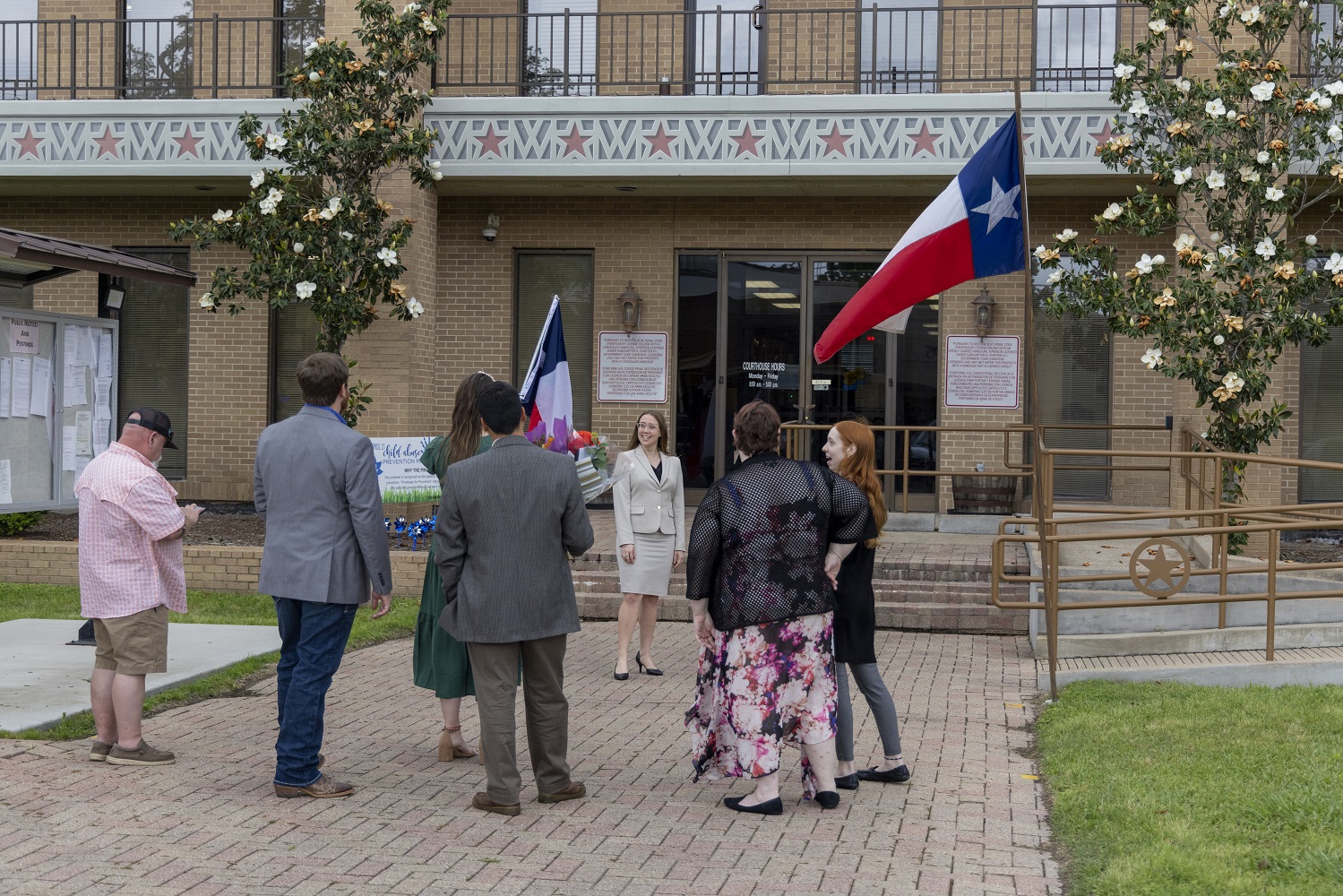
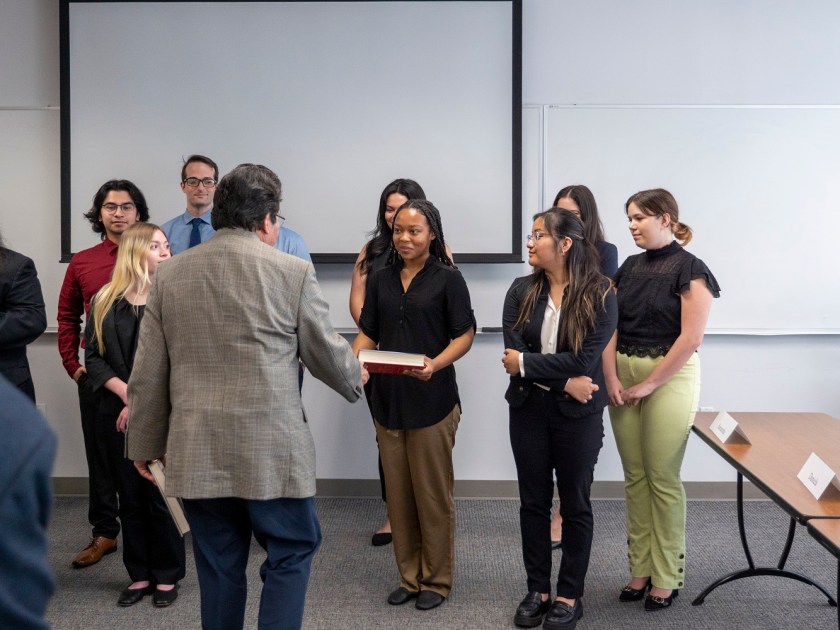
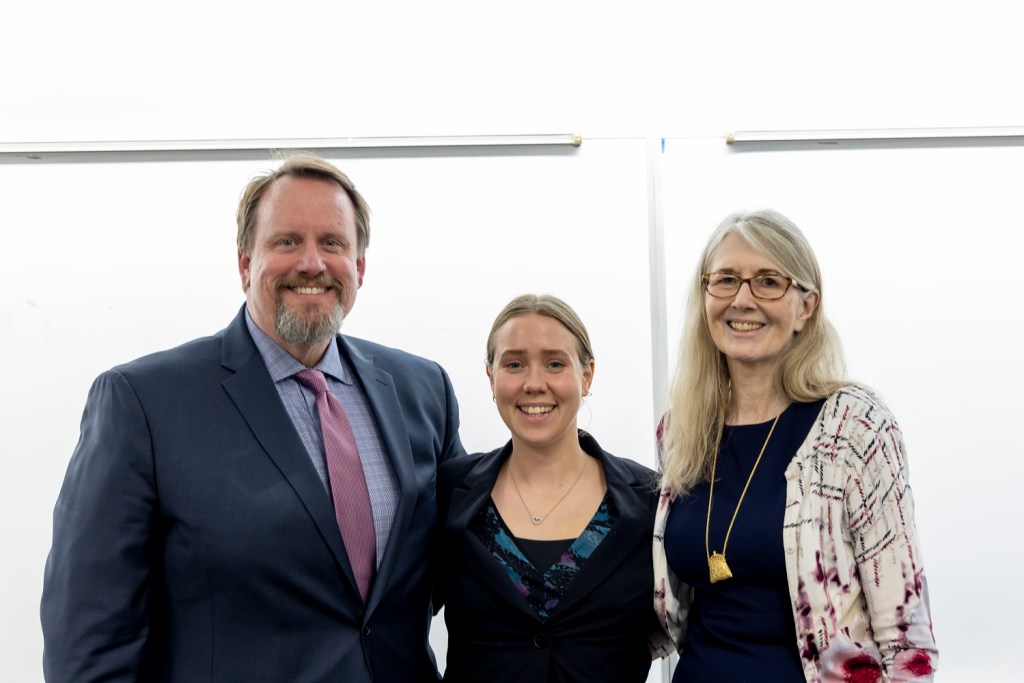
Victoria McClendon attended law school in Pennsylvania (Duquesne Law), but her score on the Universal Bar Exam afforded her the opportunity to practice in 40-plus states, and she chose Texas. Following graduation from law school, passing the bar exam, and completing her “character and fitness” paperwork, McClendon asked Judge David Moorman to swear her in, officially marking her passage to full attorney.
With a small crowd of family, friends, a LEAP Ambassador, and Judge Tracy Sorensen on hand, Judge Moorman read the oath to Victoria, who managed to repeat perfectly.
What followed was a slew of photos and many words of encouragement from Judge Moorman. Congratulations Victoria and good luck with the Bruman Law Group!
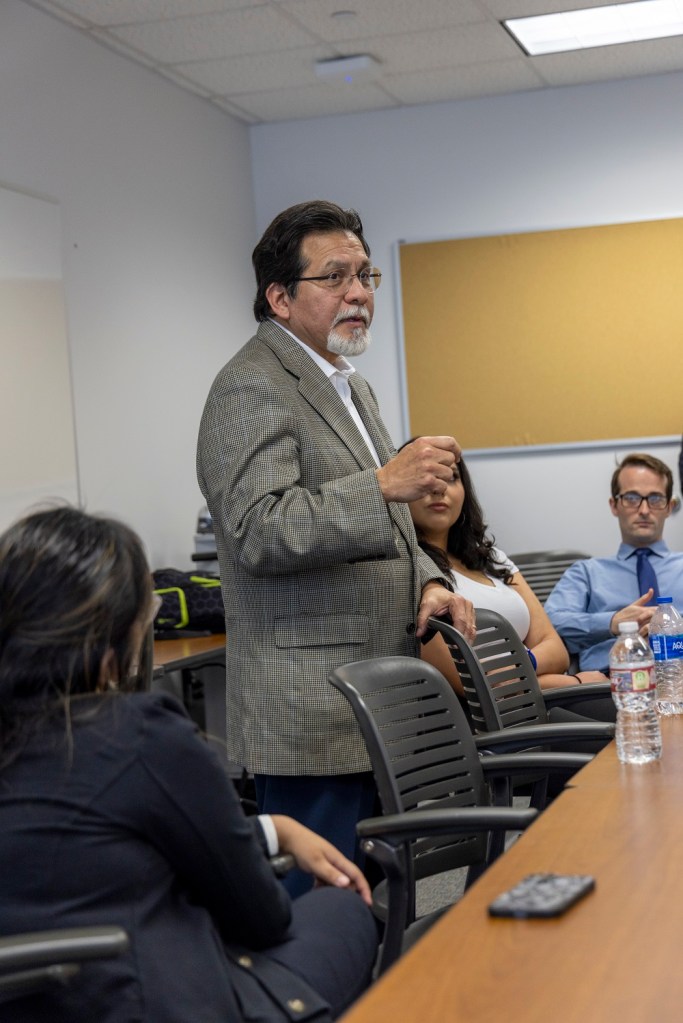
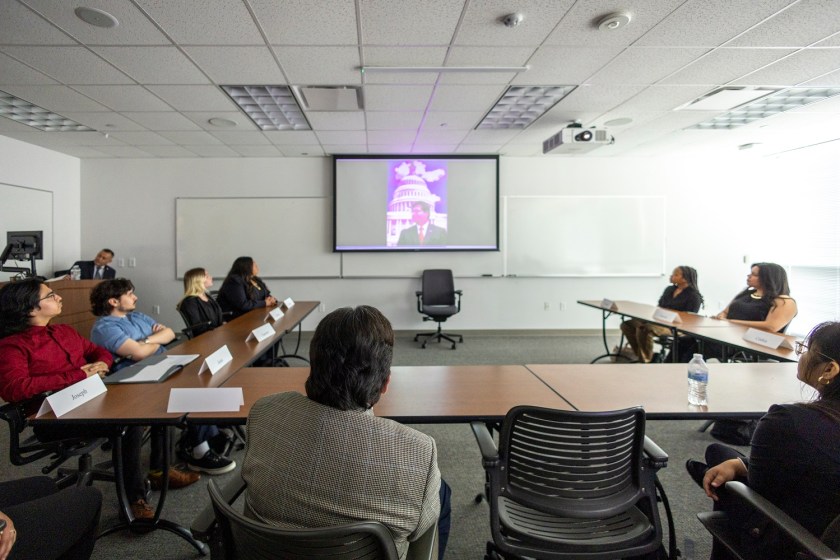
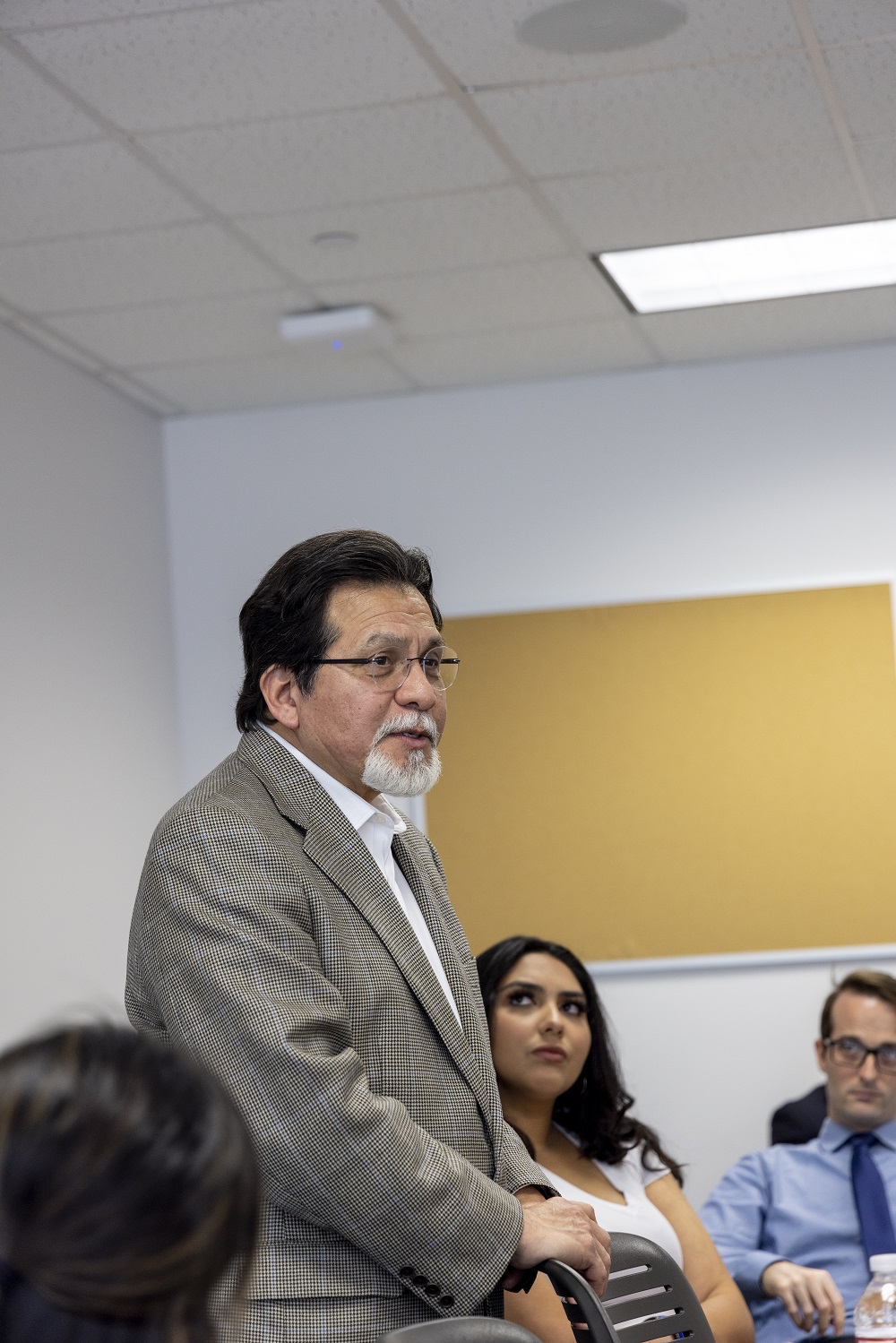
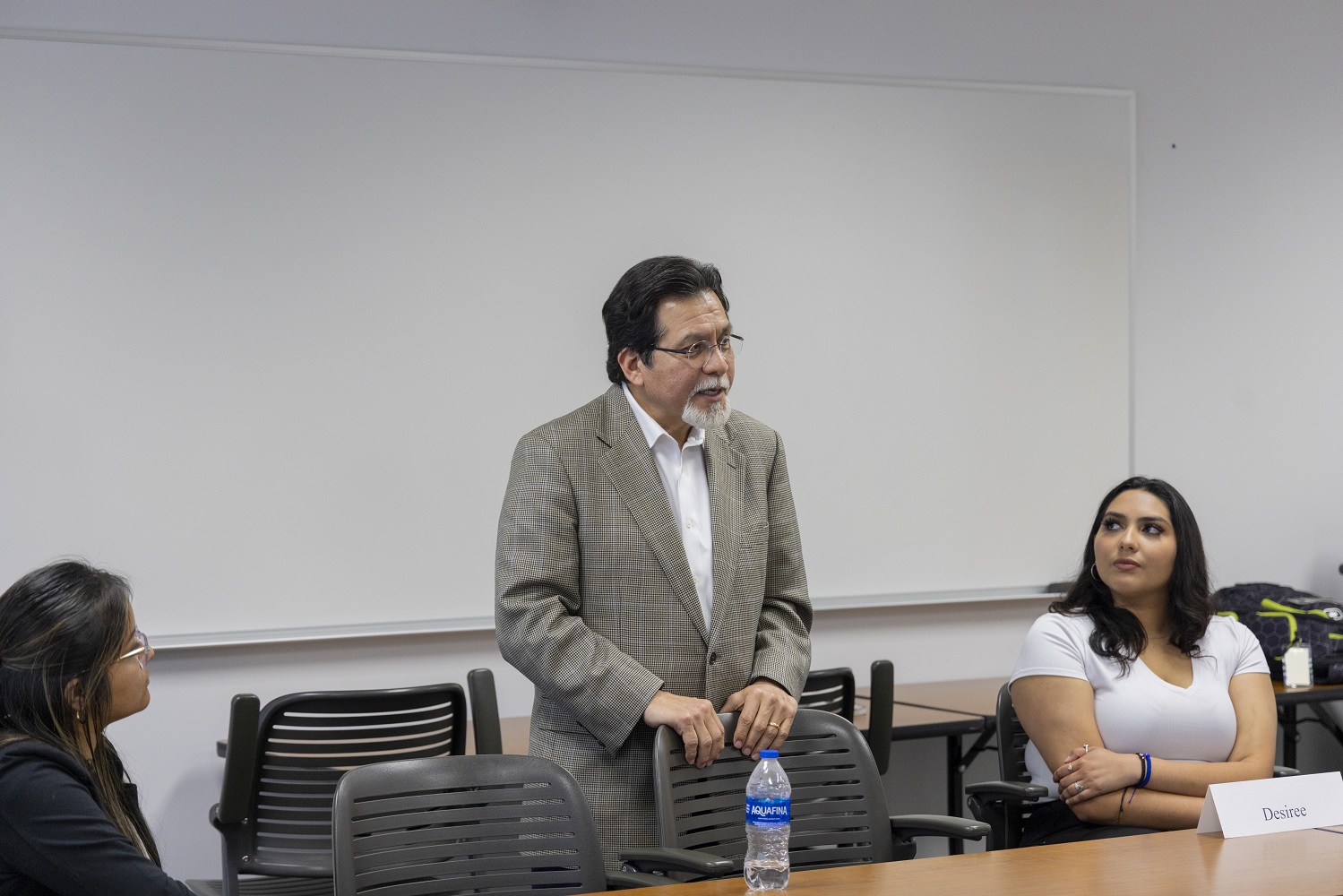
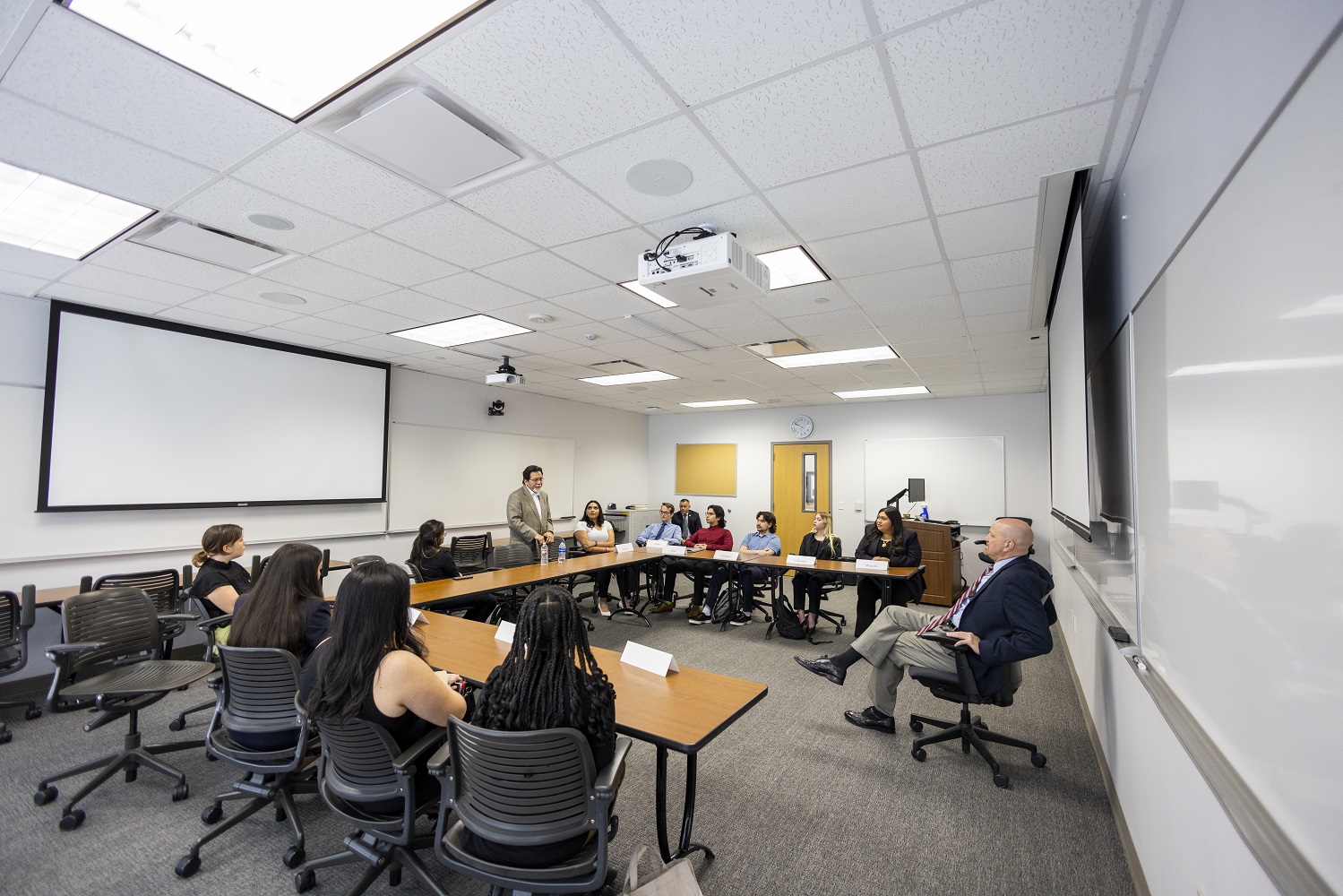
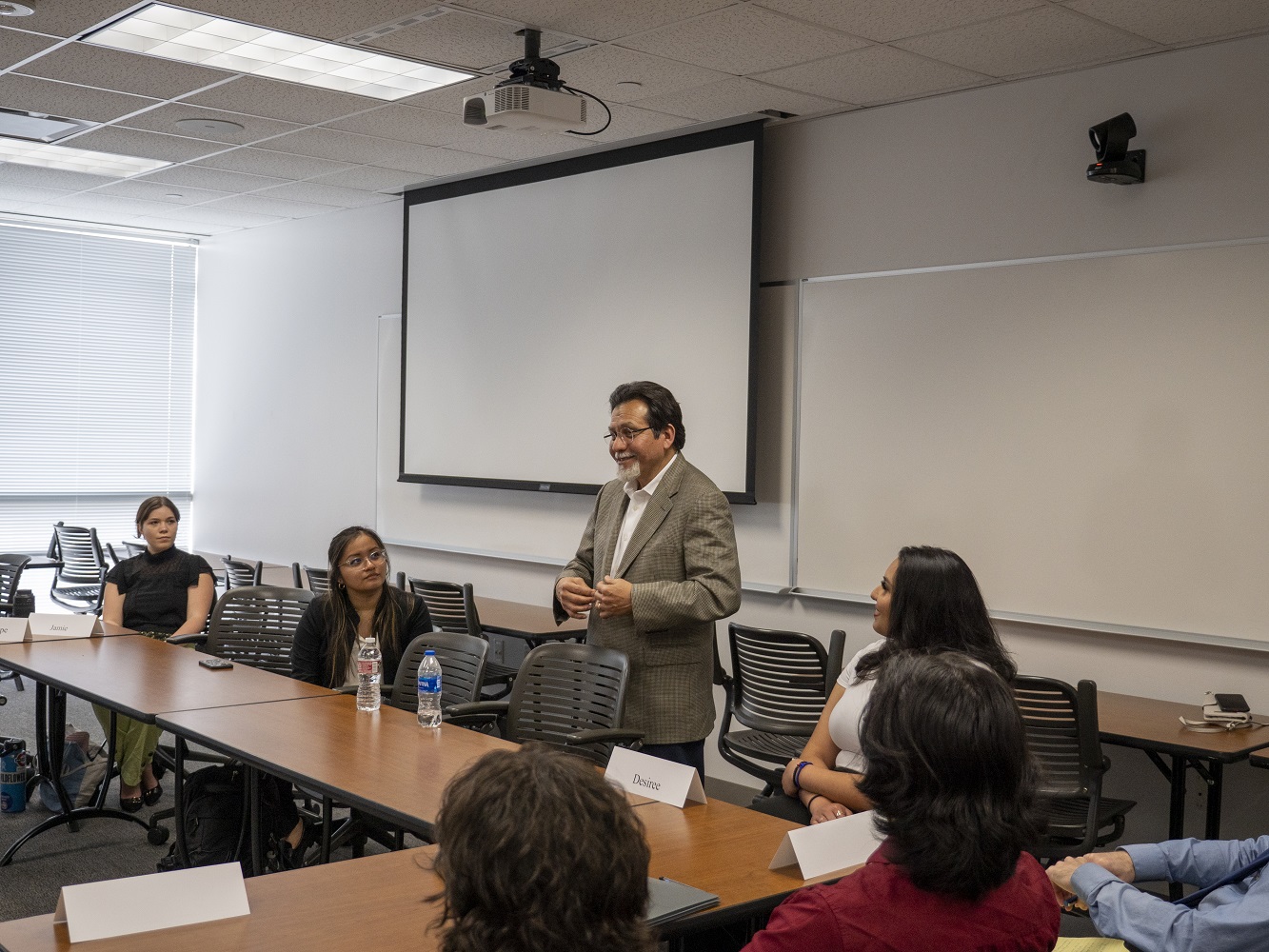
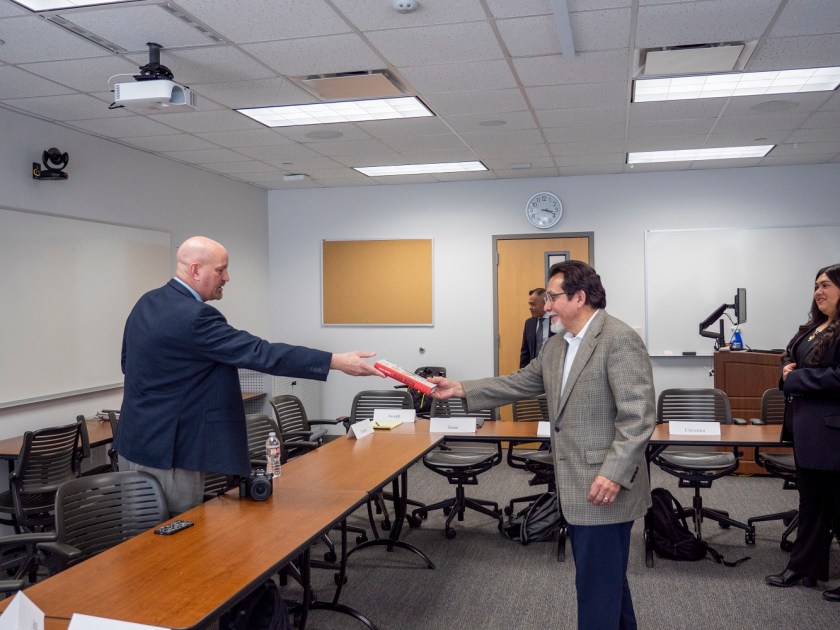
Sam Houston State University students were given the opportunity to meet Alberto Gonzales, former Attorney General and White House Counsel for President George W. Bush, thanks to Col. David Yebra, who brings in Gonzales each year as part of a leadership program.
The program began with a video providing an overview of Gonzales’s life and career, which Gonzales then elaborated on in person.
Several themes struck a chord, including Gonzales’s background–his parents, for example, had almost no formal education, a point that resonated with several of our students. Judge Gonzales also passionately described the need for capable people to fill public service jobs. He noted that as a law-school dean, he not only looked for students who would be successful for private firms, but also emerge as leaders in the public sector.
Interestingly, we paused our discussion with Judge Gonzales for him to do an interview with a Canadian broadcasting company; Gonzales was in high demand: former President Trump had just been indicted, and people wanted the former AG’s opinion.
Students asked several questions, ranging from what he took from his upbringing (Michelle C.) to whether Laura Bush was as a sweet as she seemed to be (Sarah-Hope C.).
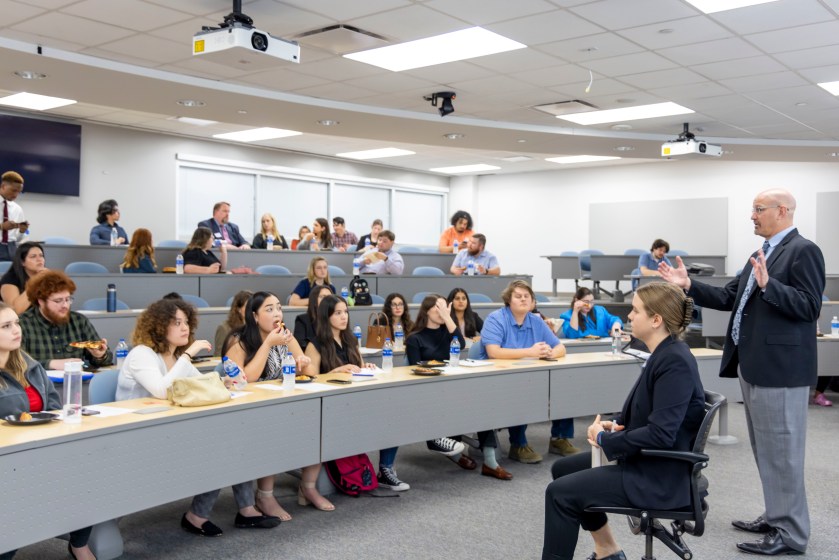
Judge Gonzales gave Pre-Law students also offered advice to students hoping to go to law school, from what to include on personal statements, the best application strategies, and a bit of information about Belmont Law, where Gonzales serves as Dean.
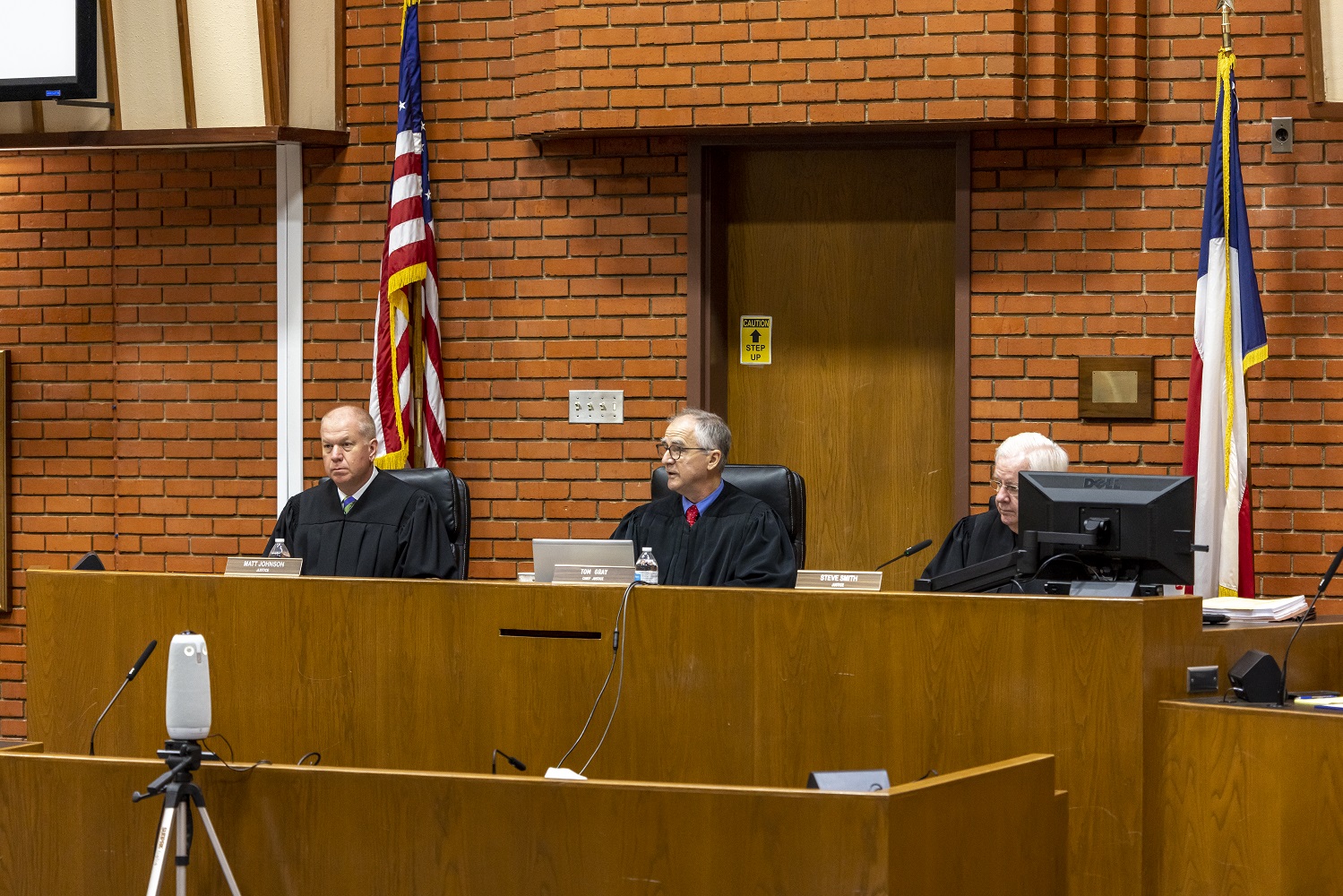
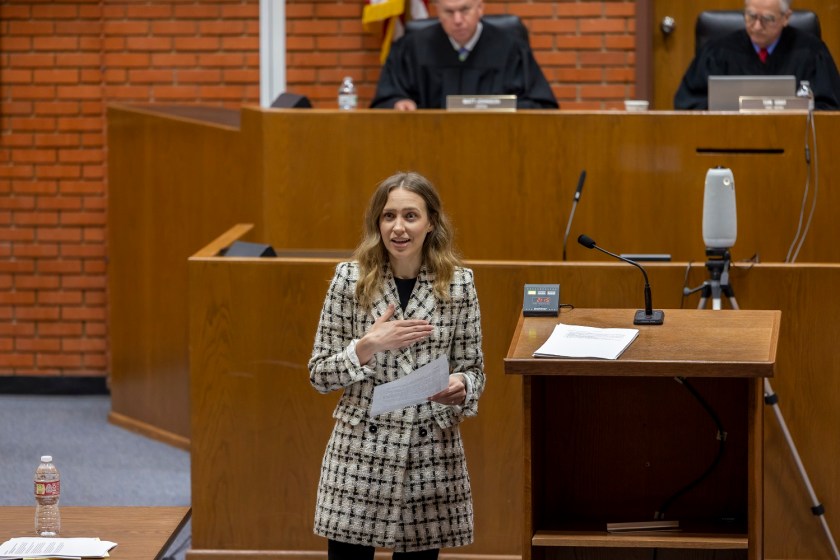
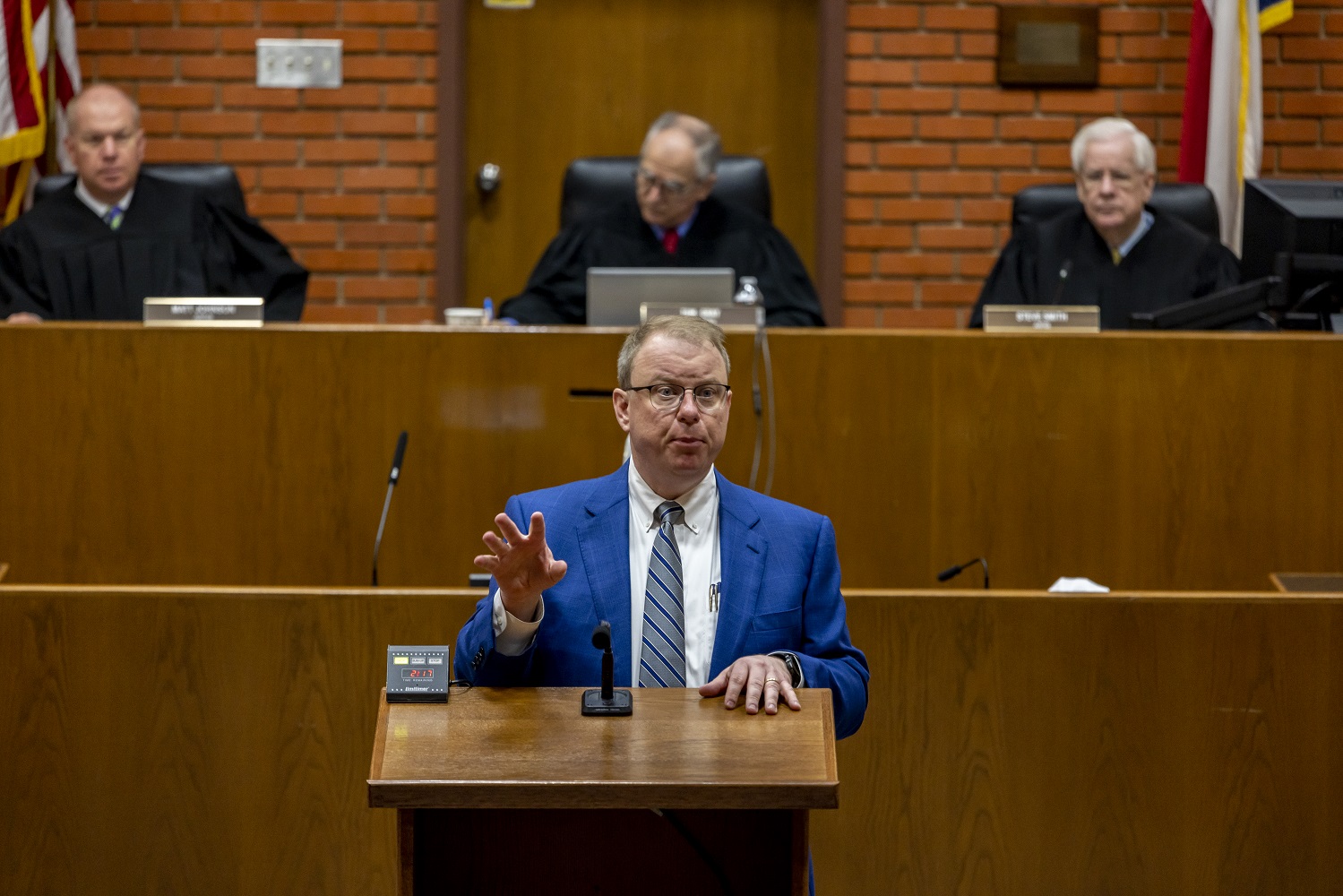
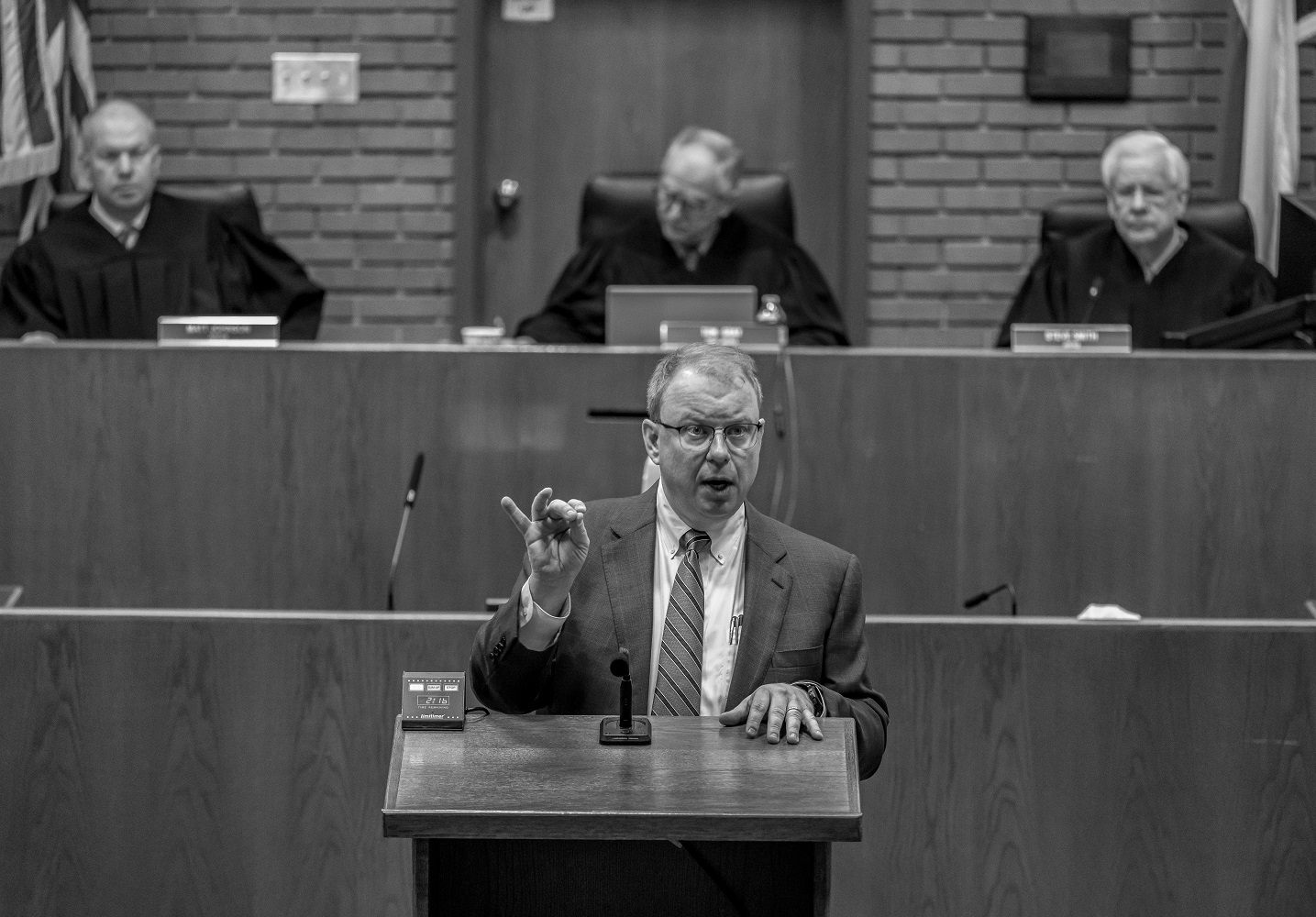
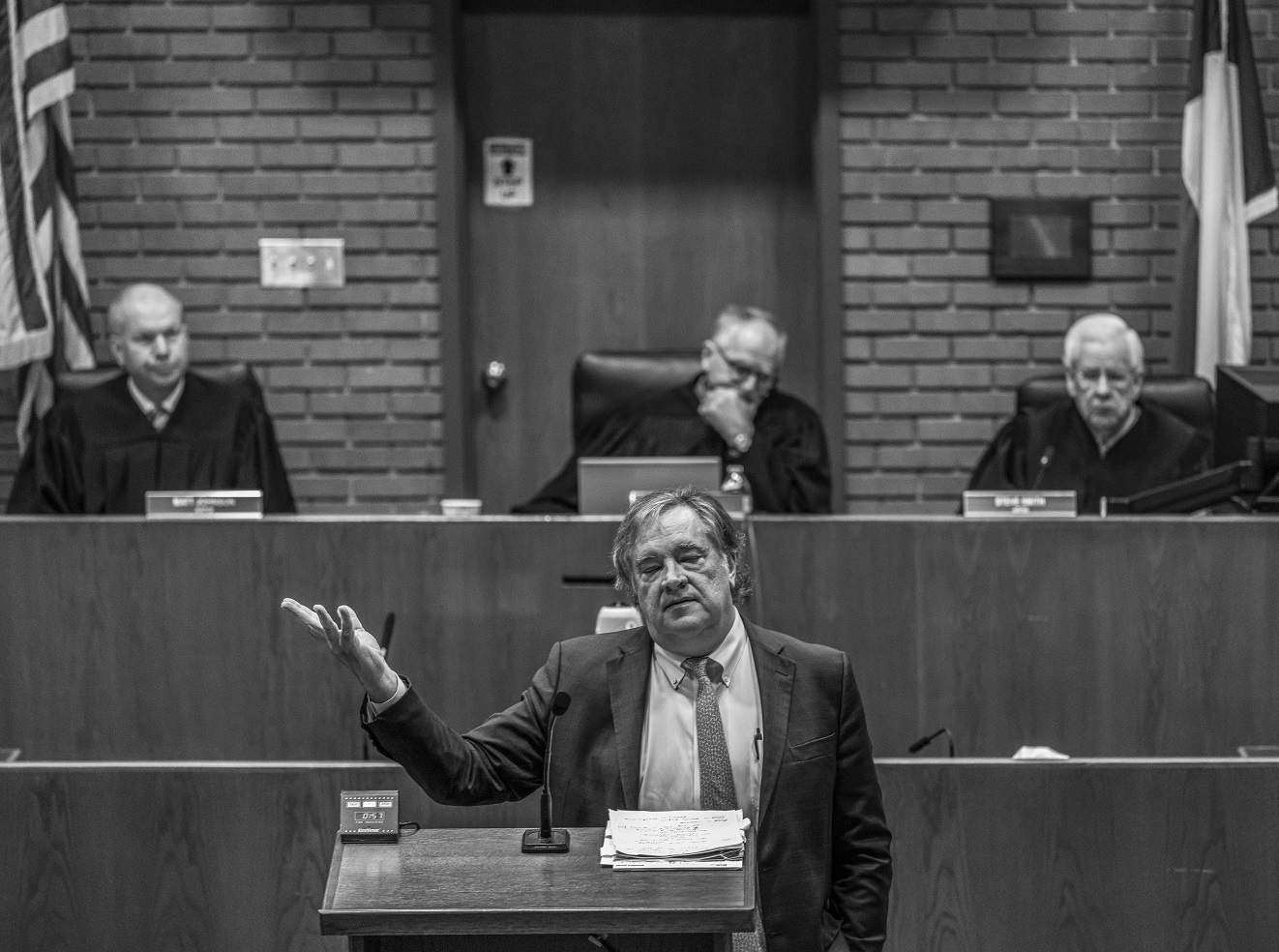
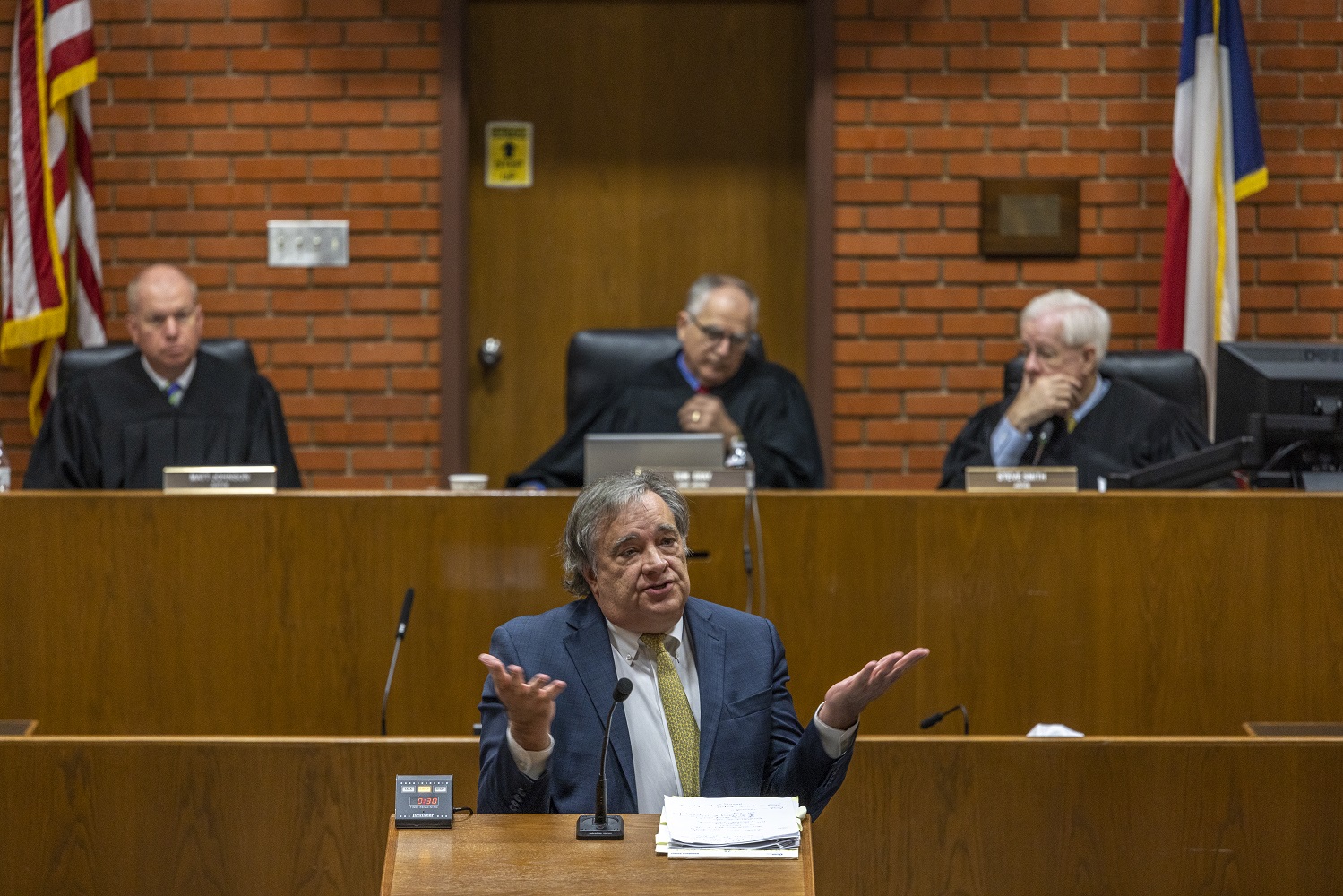
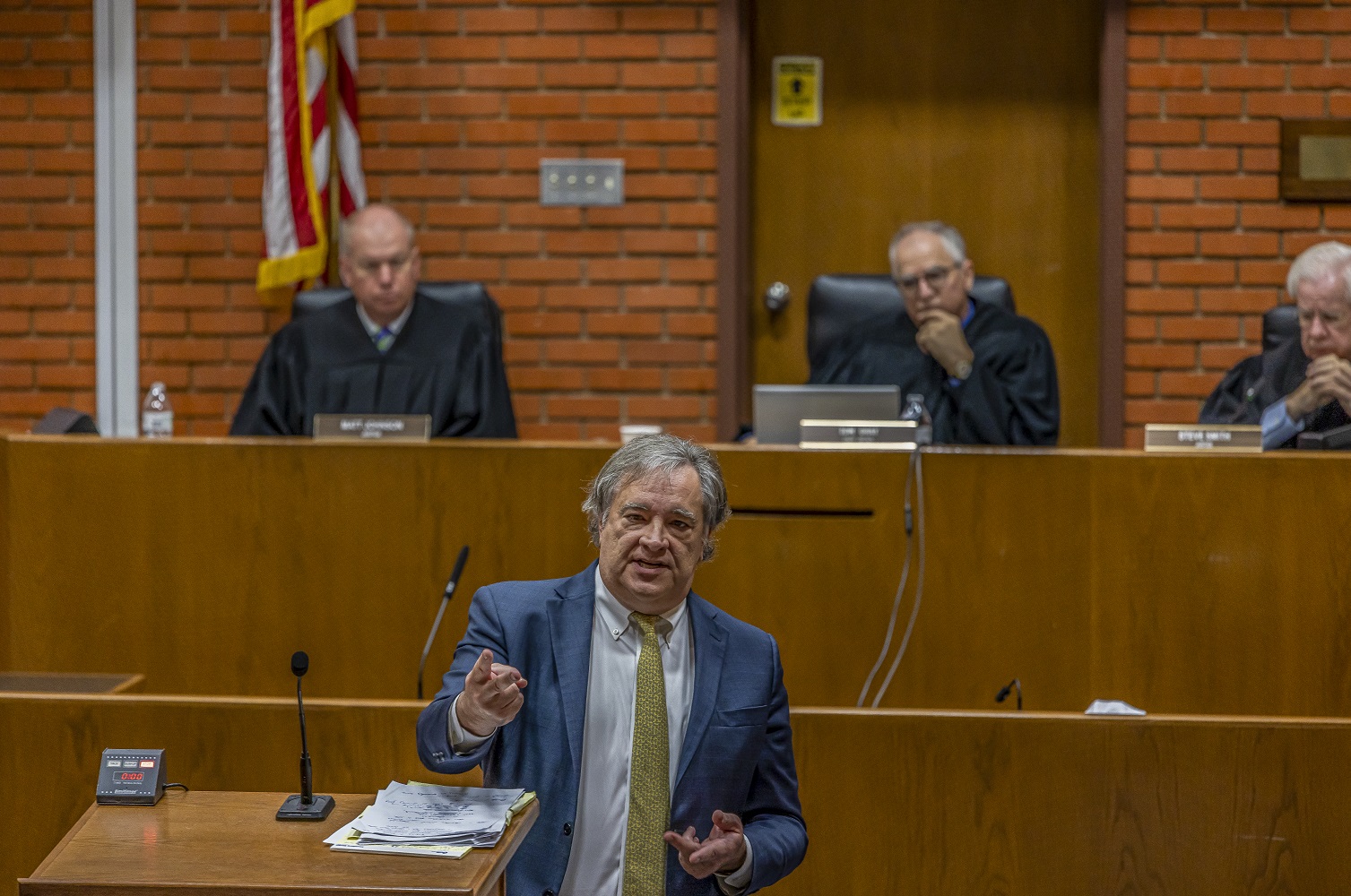
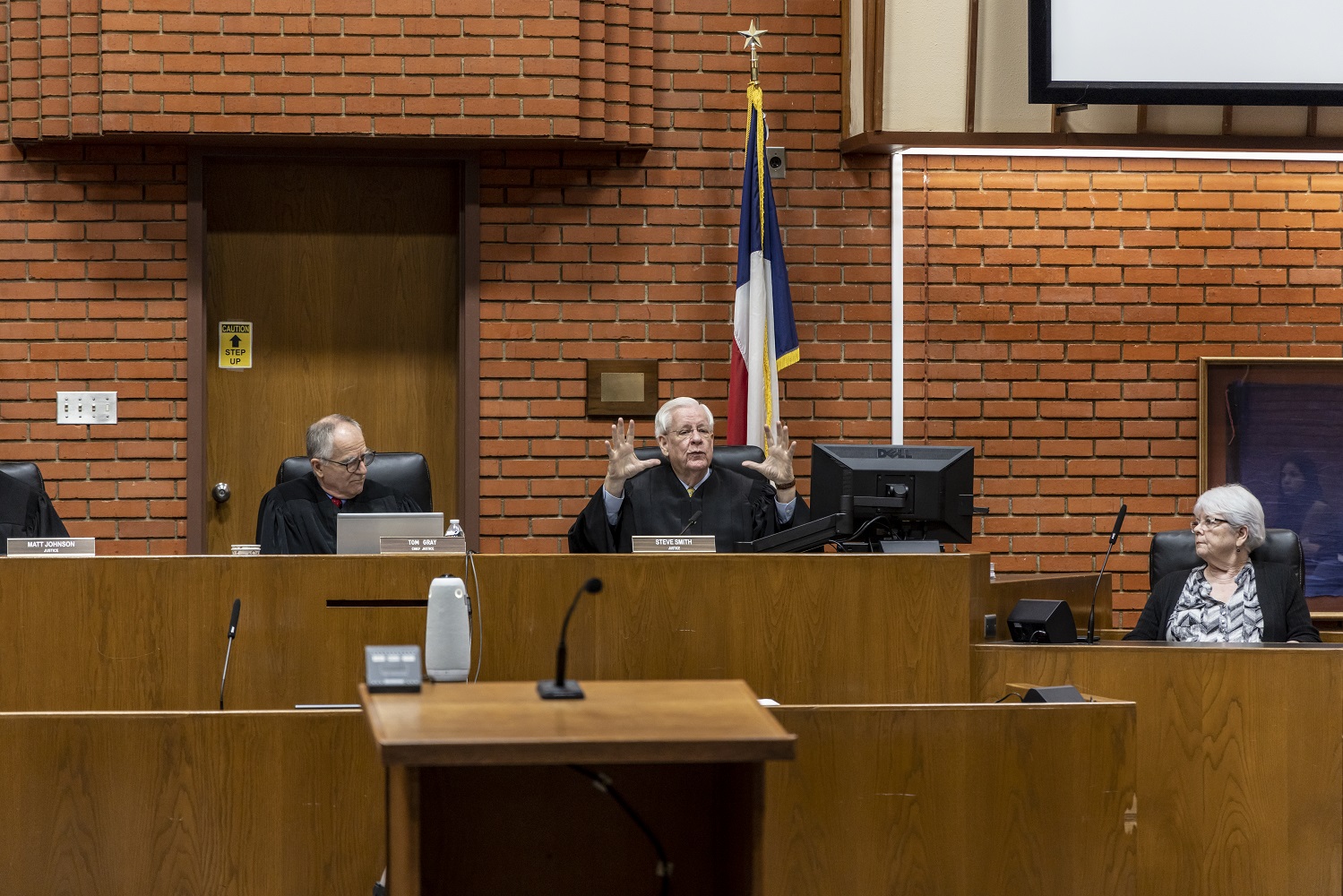
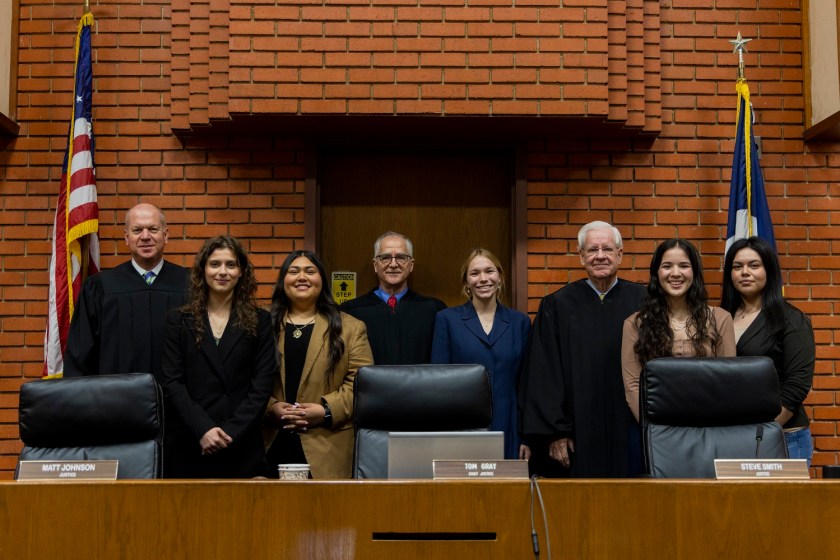
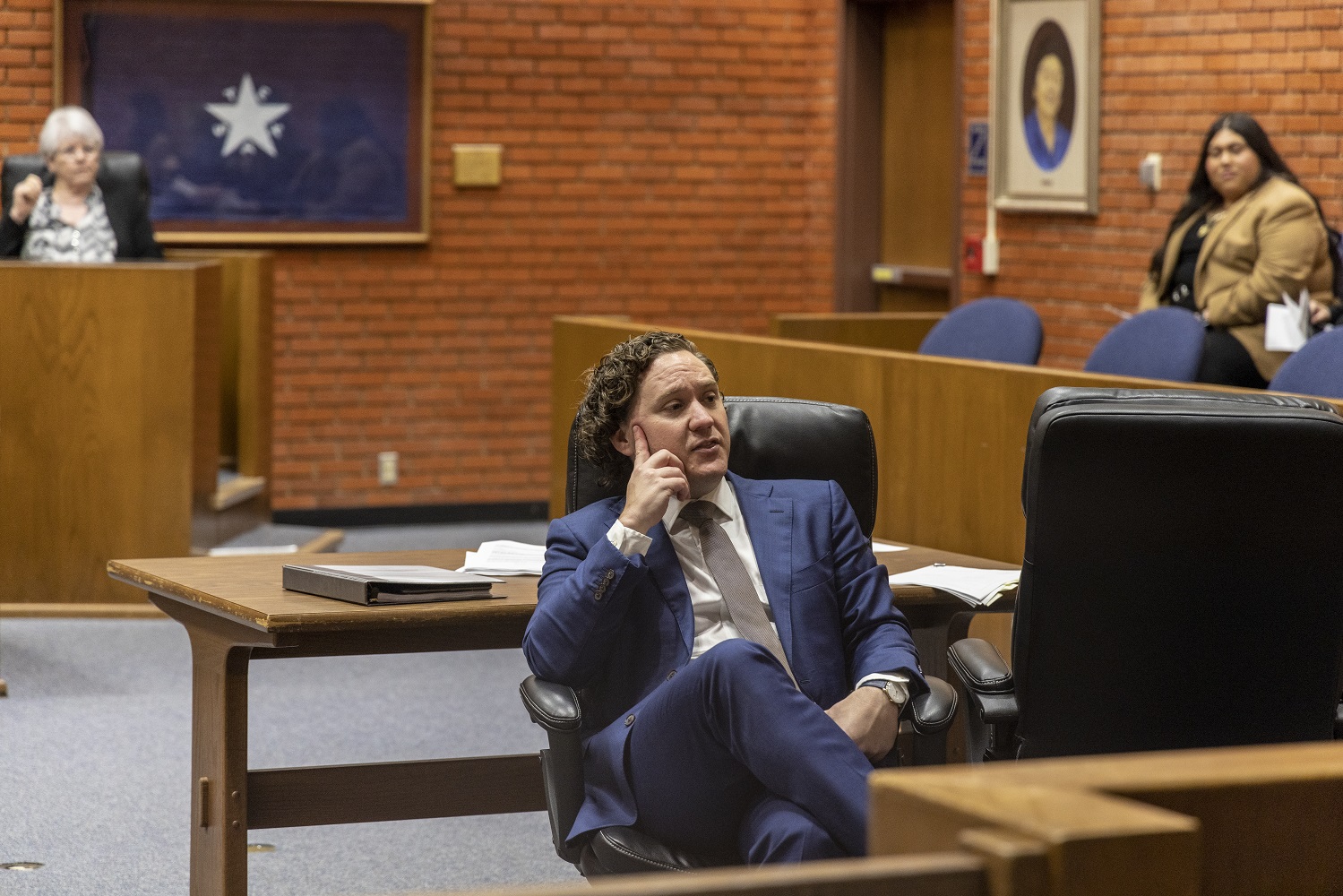
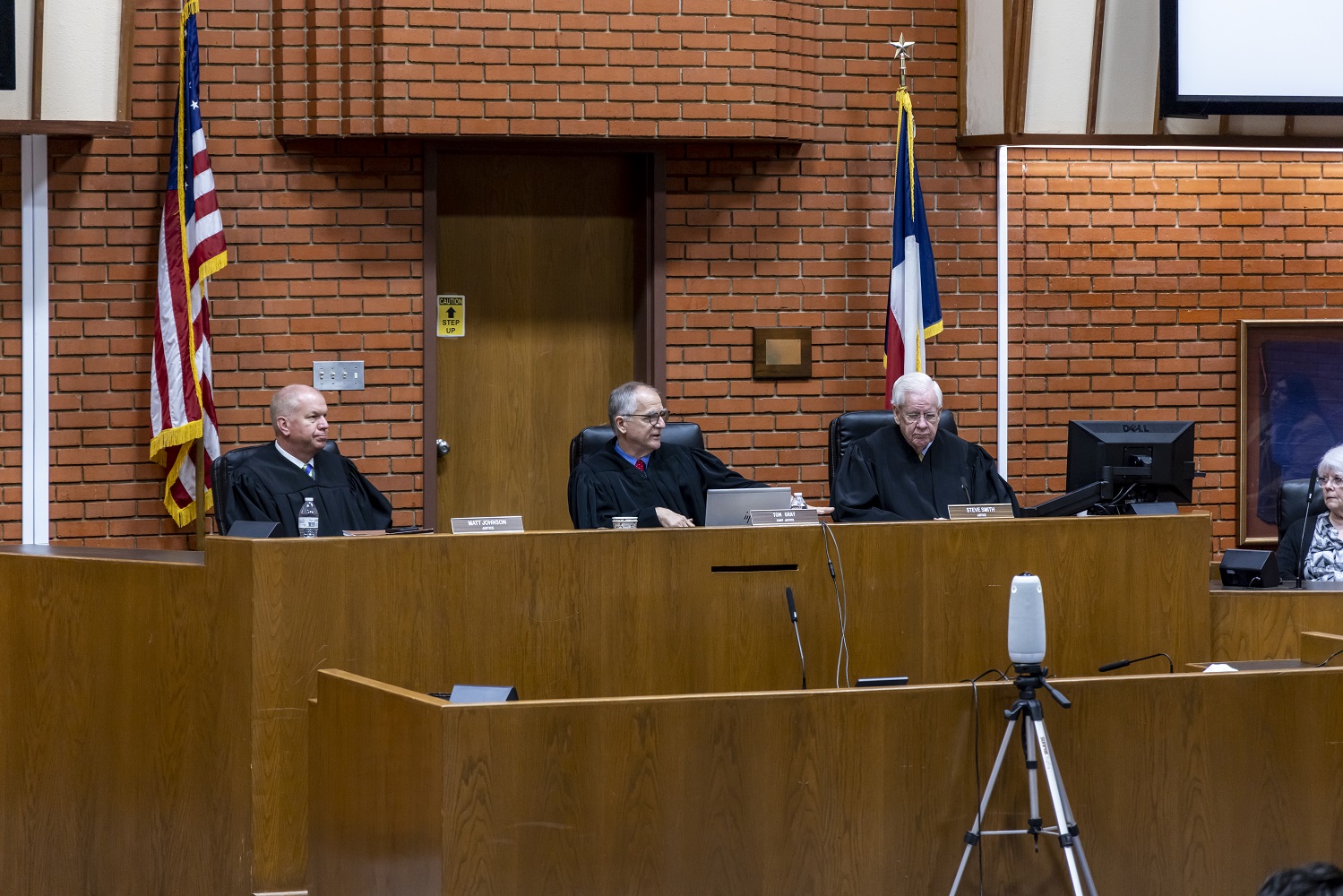
For the 12th year, the LEAP Center hosted the 10th Court of Appeals, allowing Sam Houston State University students and Huntsville residents to hear three appellate court cases in the Kerper Courtroom. The 10th Court of Appeals out of Waco, TX, which currently consists of Chief Justice Gray, Justice Johnson, and Justice Smith, serves 18 counties in Texas including Walker County.
We had a great showing for the first case, and we were happy to have Judges Moorman and Sorenson on hand to watch the cases.
One of the unusual things about these hearings is that each lawyer has three minutes to describe the facts of the case to the audience, after which they turn to the Justices and begin their formal arguments.
Attorneys have 20 minutes to make their arguments, which judges can interrupt for questions, and the appellant attorney gets a five-minute rebuttal after the appellee attorney has spoken. One of the enjoyable aspects about this year’s iteration of the cases is that we had the chance to sit in the jury box!
The second case, which involved deed restrictions, was unusual in that one of the parties was in the courtroom, as the attorneys argued their case.
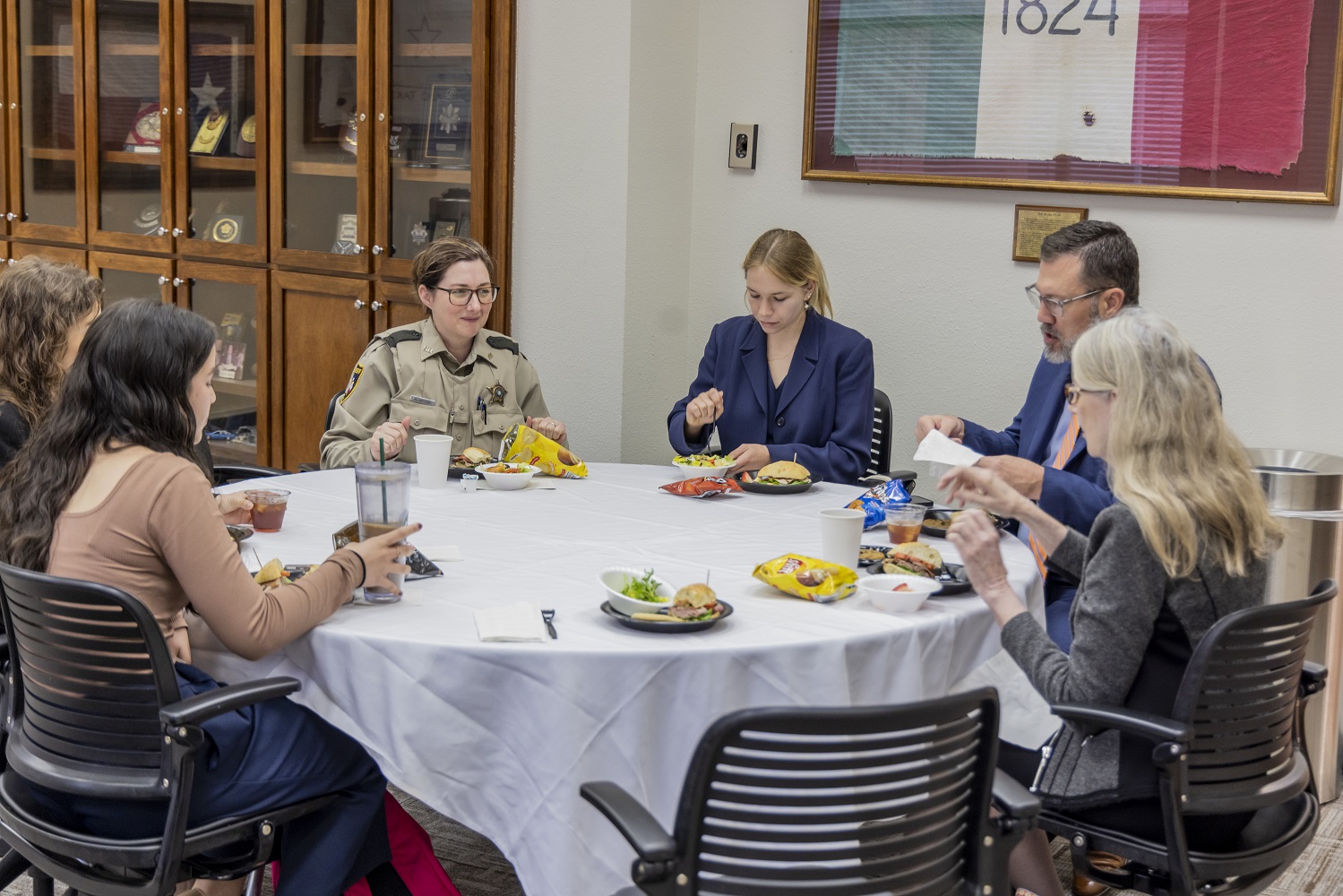
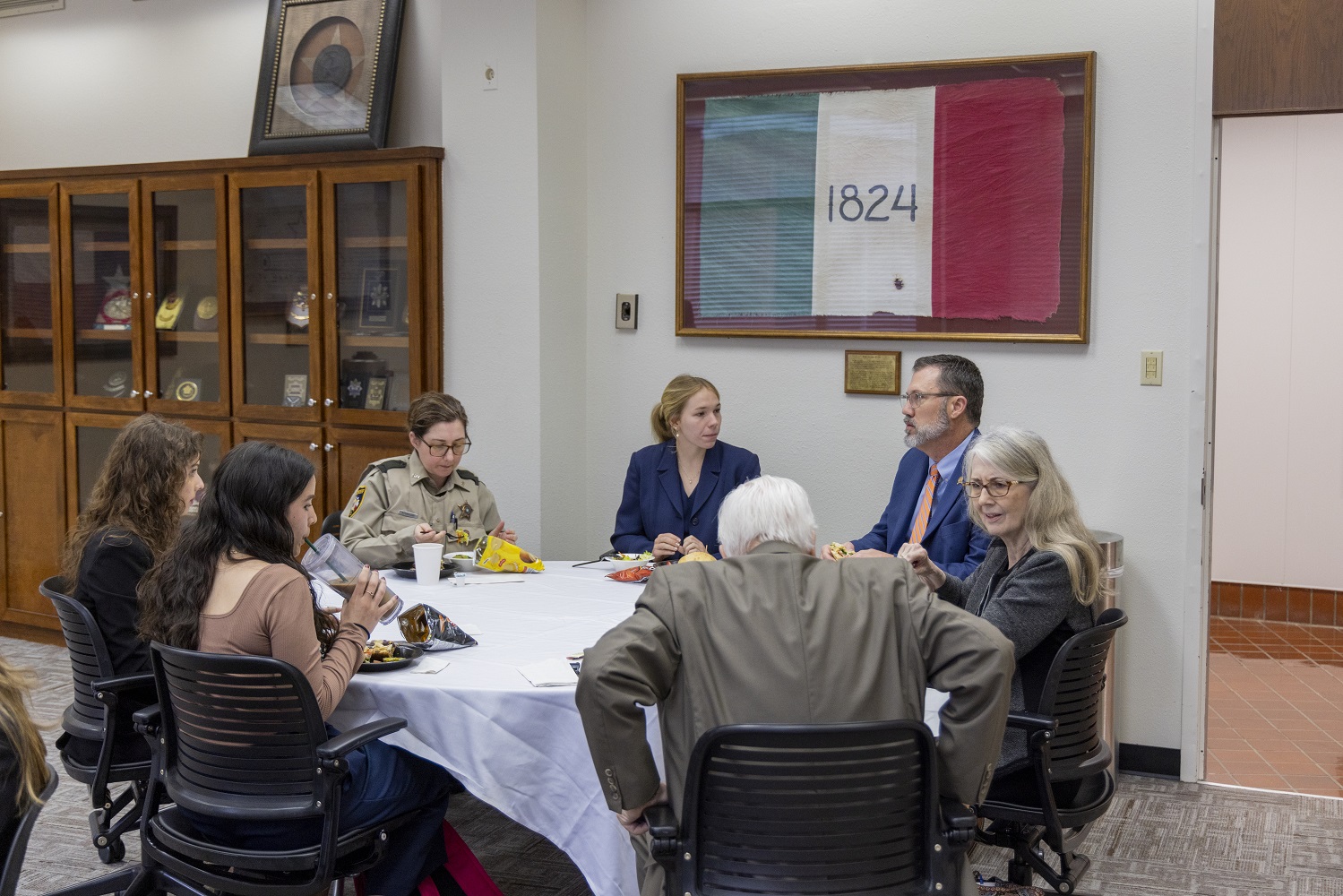
After the 11 am hearing, the court was adjourned for lunch where LEAP Students were able to talk with the justices, community members, and even the Court Bailiff. I was lucky enough to be sitting with Justice Smith and Justice Johnson, who discussed their path to law school and their careers prior to being judges. We were able to ask questions about court proceedings and discussed how law enforcement and prosecutors work together. One question that I was excited to have answered was why attorneys always say, “May it please the court” before presenting their argument. Justice Smith informed us that it is a tradition and has no meaning or necessity. He also told us that he always wanted to say “It doesn’t” in response. The lunch was very valuable, allowing students to receive advice about their career paths and talk about their endeavors at school.
Court readjourned at 1:30 pm with another civil matter over a Lady Bird Deed, and the hearing turned out to be what is referred to as a “hot panel.” This Deed was drawn by a husband and wife to give land to the husband’s son. The wife revoked the deed after the husband’s passing and now the question is whether she is able to do that or not. There were a lot of questions asked by the judges and one very interesting point a student made to me after the hearing was the attorneys’ ability to be interrupted, answer the question, and go right back to their original point. This hearing raised a lot of questions about property ownership and intent, which was interesting to hear. At the end of the hearing, audience members were able to ask questions, and we learned much more about the justices, their workload, and the attorneys’ views on their careers.
After the audience and attorneys left, LEAP students were able to get pictures and have their brochures signed by the Justices. We helped clean up and continued to discuss different career paths within the legal profession, specifically discussing staff attorneys.
Thank you to everyone who came out to watch the cases today. Thank you to Chief Justice Gray, Justice Johnson, and Justice Smith for allowing students to have this opportunity and for being so welcoming and helpful to future law students.
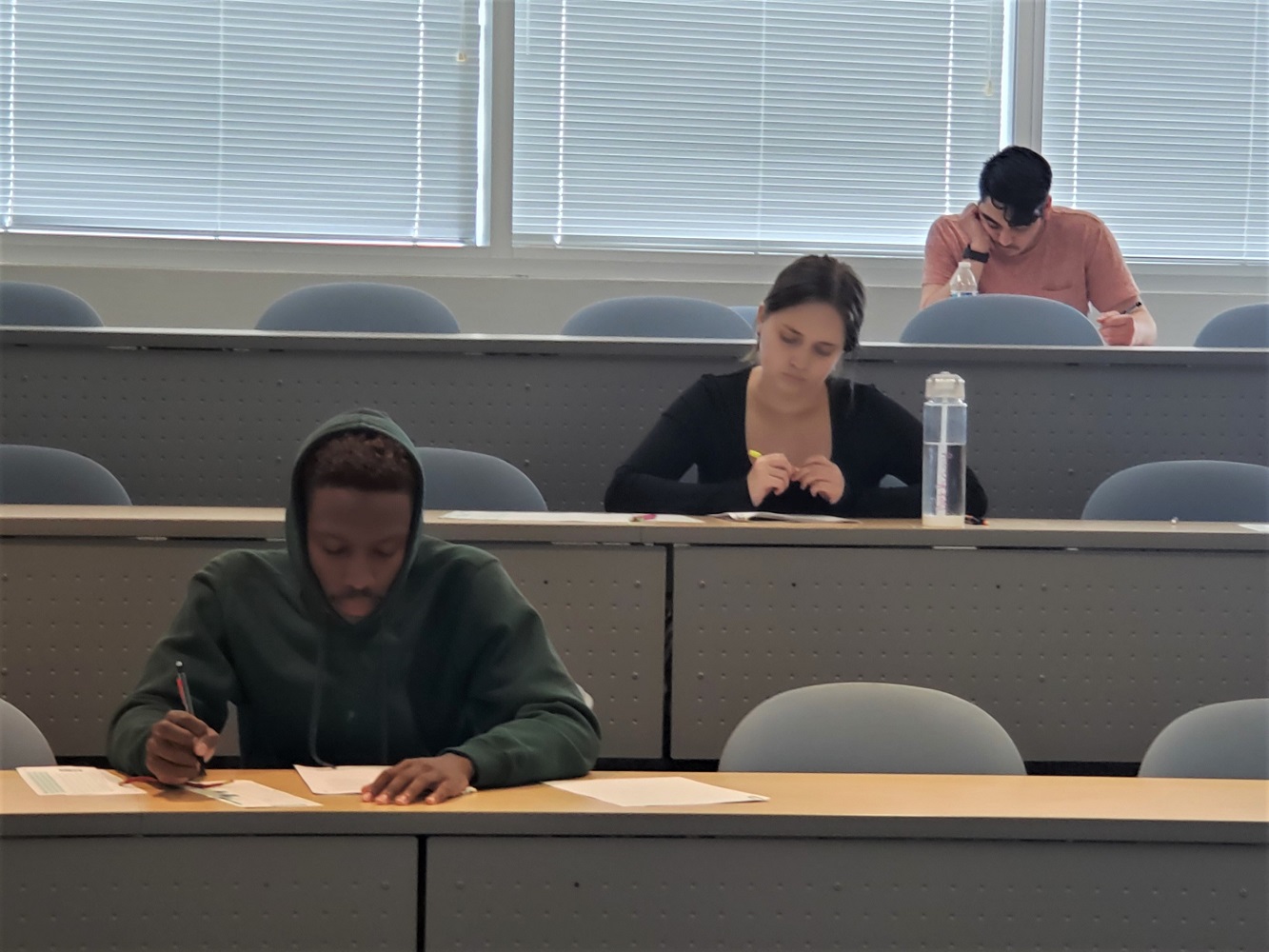
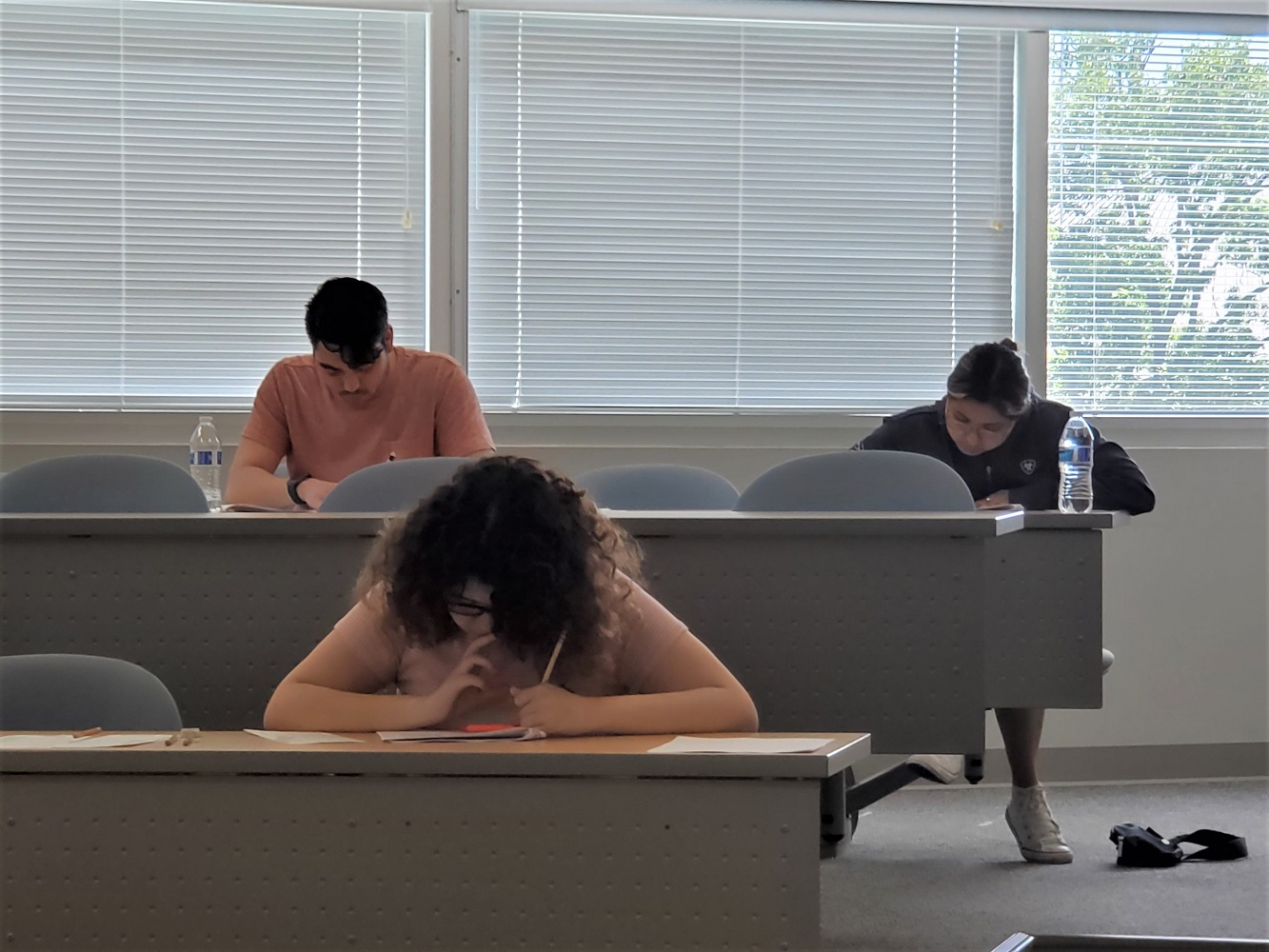
On Saturday, April 1, a beautiful spring day, the LEAP Center continued with a packed schedule of both community and academic events. While LEAP Center Ambassadors and volunteers assisted in the annual Wynne Home community Easter Egg Hunt, 17 Pre-Law Society students showed up at 9:30 am on Saturday to take a Mock LSAT, the Law School Admission Test.
Students applying to law school will take the actual LSAT in a fall semester, a year before they plan to start law school. Students who are freshmen through seniors are encouraged to take the Mock LSAT.
A Mock LSAT score provides helpful information to aspiring pre-law students early in a student’s academic career. First, a baseline Mock LSAT score allows students to see how close they are to their goal LSAT score. Then, students can work with a pre-law advisor at the LEAP Center to develop a study plan to prepare for the LSAT, an important first step in their journey to law school. Second, students experience taking an actual LSAT under LSAT timing conditions.
In addition to administering the Mock LSAT twice a year, the LEAP Center offers pre-law advising and various pre-law activities, such as the provision of a Mock law school taught by a law professor from Houston’s South Texas College of Law. These pre-law activities contribute to Sam Houston State University’s continued ranking in the top 200 nationally as a top law-school feeder among almost 3,000 four-year universities and colleges in the United States.
The LEAP Center is always on the hunt for quality events, and when we heard the North American Society for the Study of Romanticism was being hosted at SHSU–and that the lead organizer was Dr. Michael Demson–we knew we’d found one.
The Conference is taking place over three days, March 30-April 1, with dozens of panels, workshops, entertainment, tours, and other interesting and entertaining programs. LEAP assisted with one of these, a tour of the Huntsville Unit for a group of students, conference attendees, and SHSU staff. Mostly, though, we just enjoyed the conference, benefitting from the great work of Demson and an entire conference committee from individuals across campus and, in fact, from campuses across North America.
The meat of the conference was from the plenary speakers and the panels, both virtual and in-person, with approximately 200 people attending.
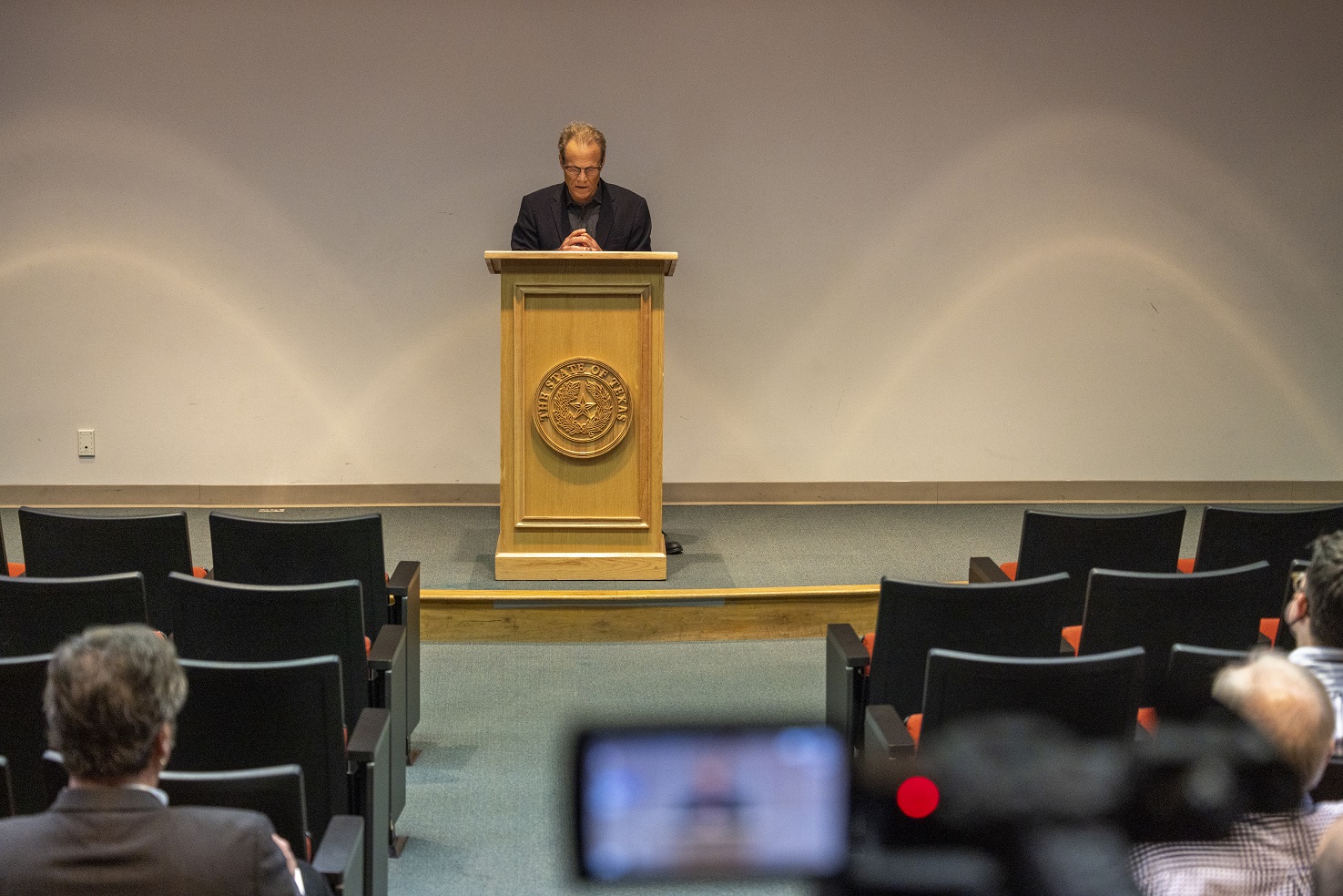
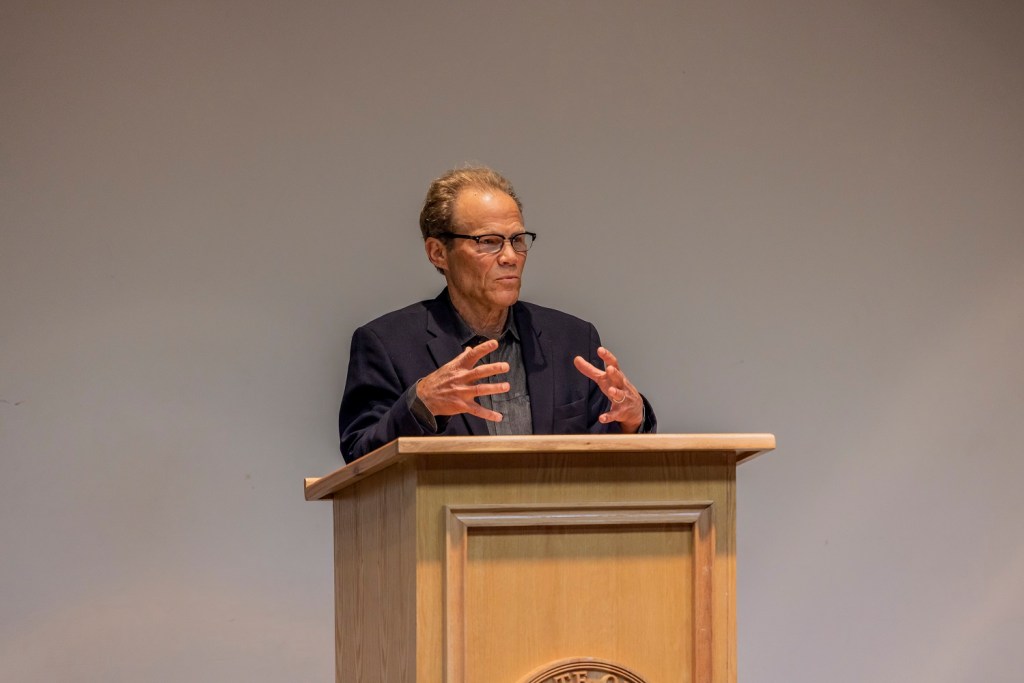
LEAP students attended a few of these, including the first-day plenary speaker, Professor Doran Larson, who, among his many titles, is the Director of the American Prison Writing Archive, and he was introduced ably by Professor Michael Demson.
Professor Larsen discussed the distinct themes in prison writing, noting how little they had changed over time, a reflection of the horrible state, as he sees it, of our prison system.
His presentation generated much interest and discussion.
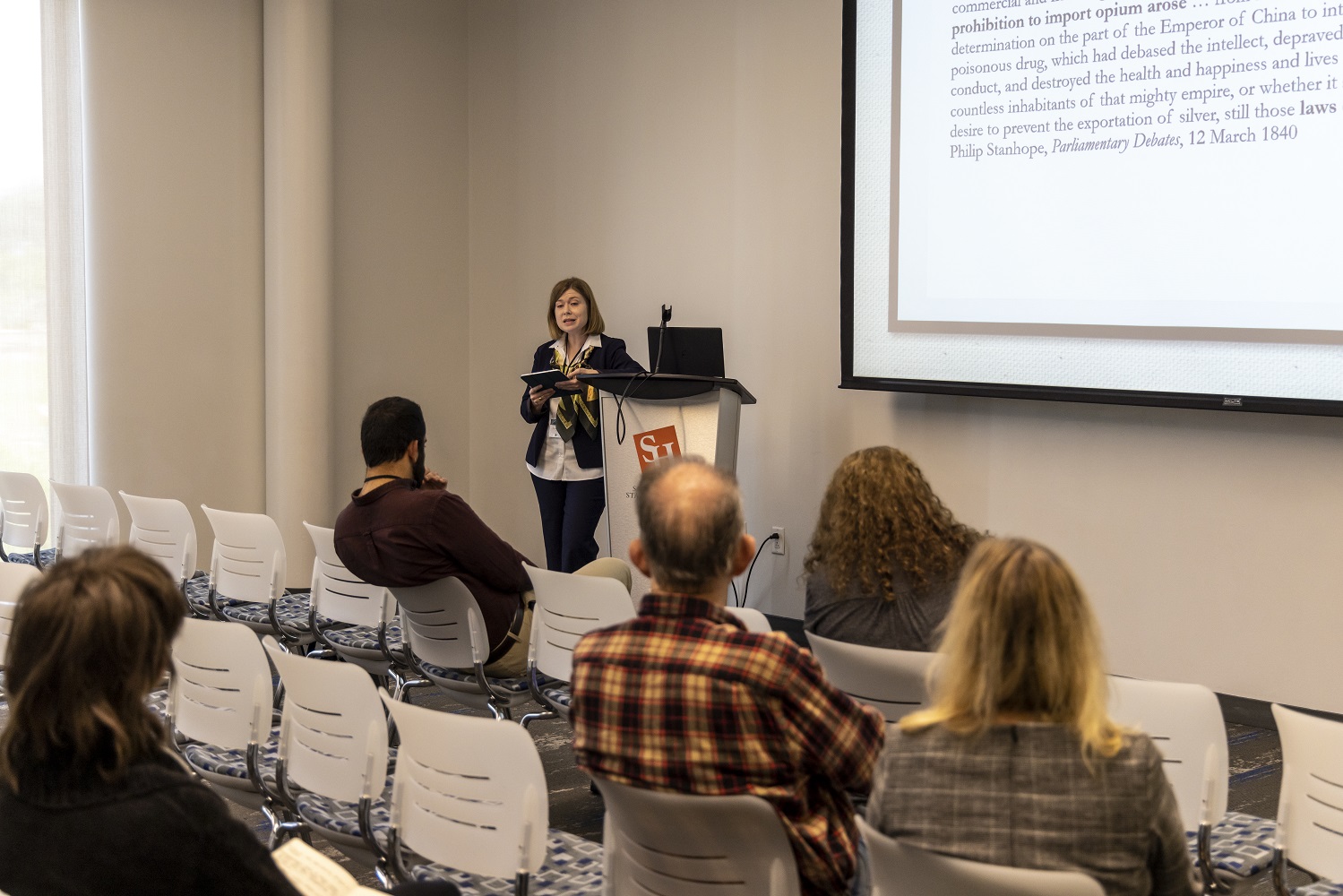
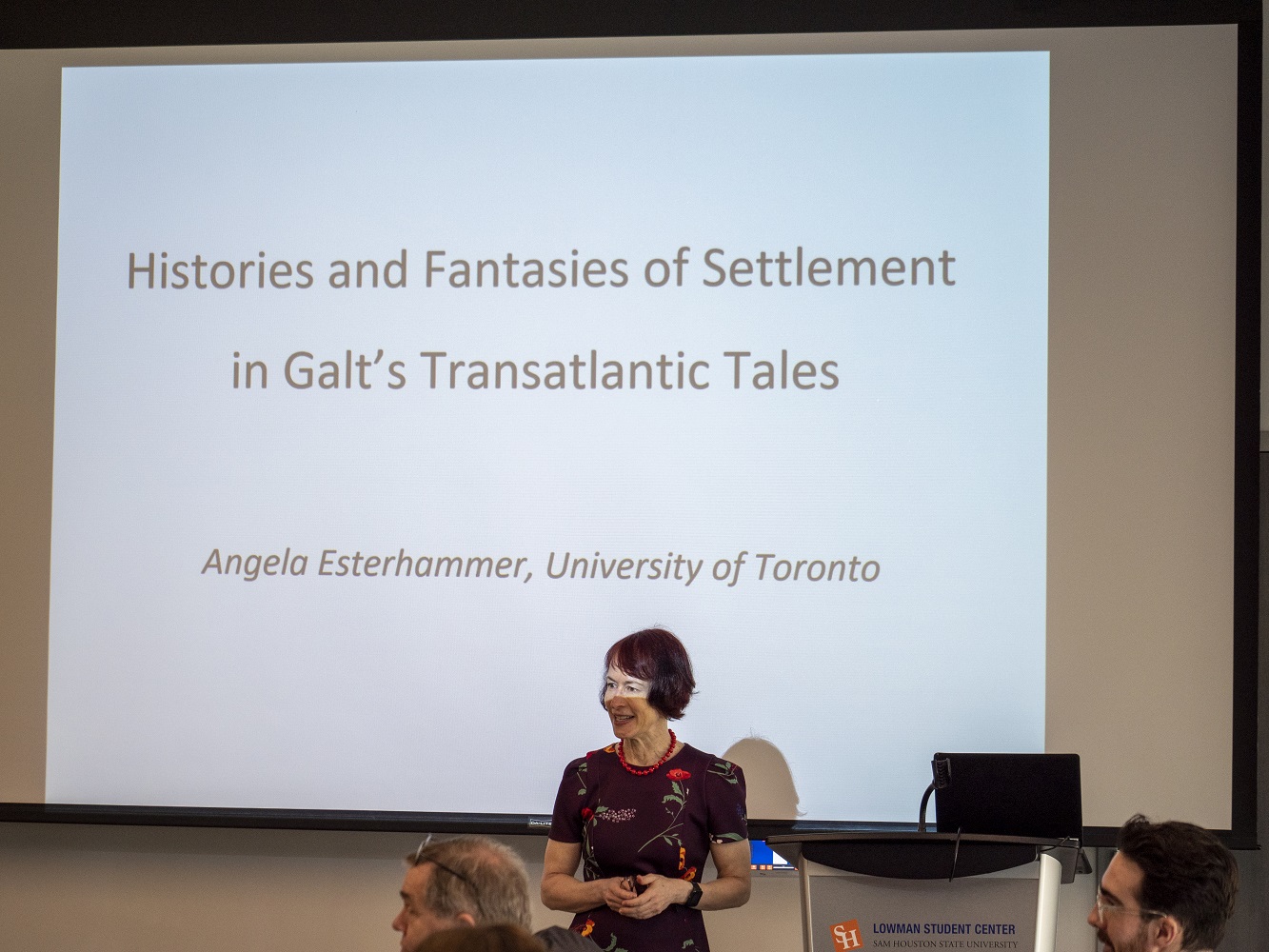
The conference picked up the next day, with a full day of panels, which we were able to attend. We saw great panels featuring professors not only from the United States, but from around the world. All of the panels helped us learn about justice, literature, and many different cultures.
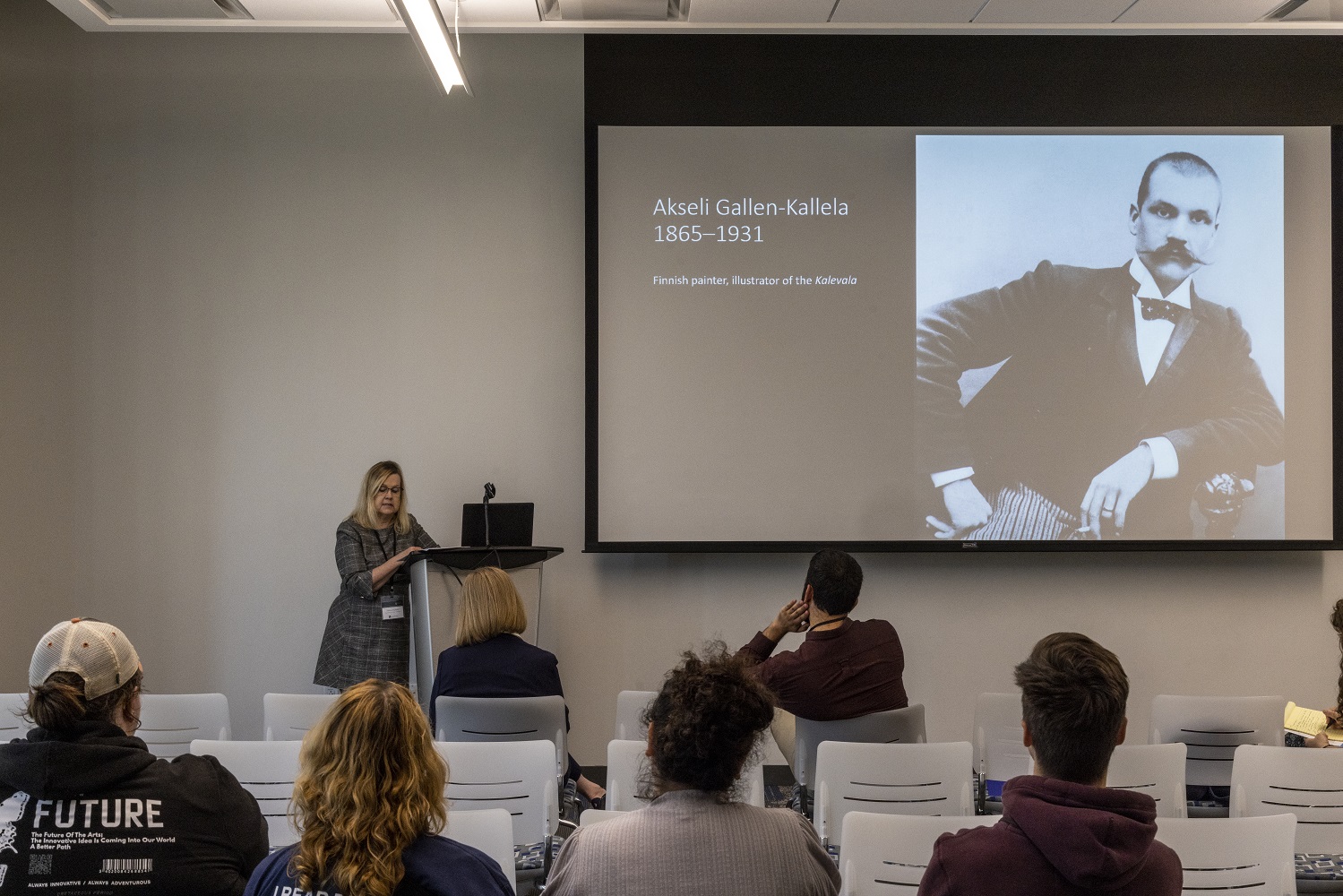
We even learned about Finnish literature from SHSU’s own Dr. Helen Halamari, with her husband Dr. Rob Adams in attendance.
This was our favorite panel. Interesting fact: not only is Dr. Halamari a TSUS Regents Professor, she also has a Ph.D., and four different Master’s Degrees.
Many kudos to Dr. Demson and the great staff (Deanna Briones, Sarie Fuller, Yahneed John, Brittany Johnson, Jerin Milan, and Rhonda Owens) who helped bring this conference to SHSU.
Last month’s Pre-Law Society meeting was a natural segue to the topic for this month’s Pre-Law Society meeting. Last month’s discussion featured three attorneys in a question-and-answer format focused on what to expect in law school and what life is like as an attorney.
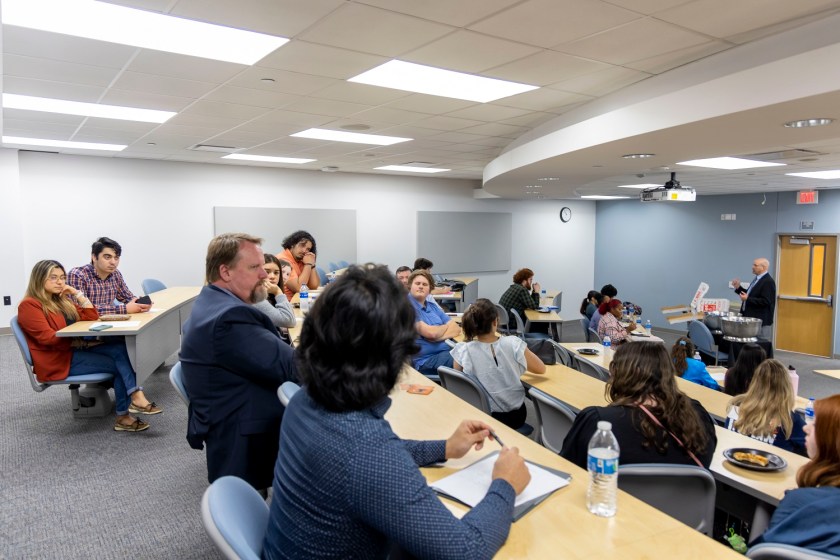
This month’s meeting had multiple foci. First, the officers provided updates:
In the second part of the meeting, Jade Miller, Pre-Law Society President, Professor Mike Yawn, and Jean Loveall discussed a timeline to go to law school from freshman year to senior year of college.
Since Jade just completed her LSAT Prep, took the LSAT, and applied to her chosen law schools, she shared a wealth of information gleaned from her path to law school. With her personal story of LSAT Prep, Jade inspired the Pre-Law students with three strategies that worked for her: (1) take the Critical Thinking philosophy class (PHIL 2303); (2) budget your LSAT Prep time wisely; and (3) focus on developing and writing a strong argument when completing the Writing Sample part of the LSAT.
After hearing such encouraging words and valuable advice from the three presenters, the Pre-Law Society members were energized to engage in a voir dire activity. Voir dire is the process in which trial attorneys examine potential jurors before the jurors are selected to serve on the trial.
Amari Gallien presided over the voir dire as the Judge, Sephora Pham and Matthew May were the defense attorneys, and Professor Yawn was the prosecutor. As the potential jurors, each of the remaining Pre-Law Society members received a vignette of the character they would portray as a potential juror. These vignette characters ranged from a male country music singer/songwriter with a high school degree to a female accountant pregnant with her second child to a 72-year-old retired art history teacher. This activity introduced future attorneys to the nuanced questioning and strategies involved in selecting jurors for a criminal trial.
Thank you to all the Pre-Law Society members who participated in this interactive meeting. As president, Jade Miller has some exciting topics planned for next month’s meeting. One activity to look forward to is the cording of all Pre-Law Society members who are graduating in spring 2023. We hope to see all Pre-Law Society members on April 19th!
May I be the first to welcome all new and old Pre-Law society members back from winter break!?
We welcomed three guests, each with varying degrees of familiarity. Victoria McClendon recently graduated from law school at Duquesne, and she just passed the bar this summer! She, interestingly, is a former Pre-Law Society President and, of course, a Sam Houston State University alum.
He even has an EdD and a JD! We also heard from Ms. Jean Loveall, a mainstay as a pre-law advisor here at SHSU and the LEAP Center.
Together, they did a great job of explain what to expect from law school, attorney life, and our future years here at Sam.
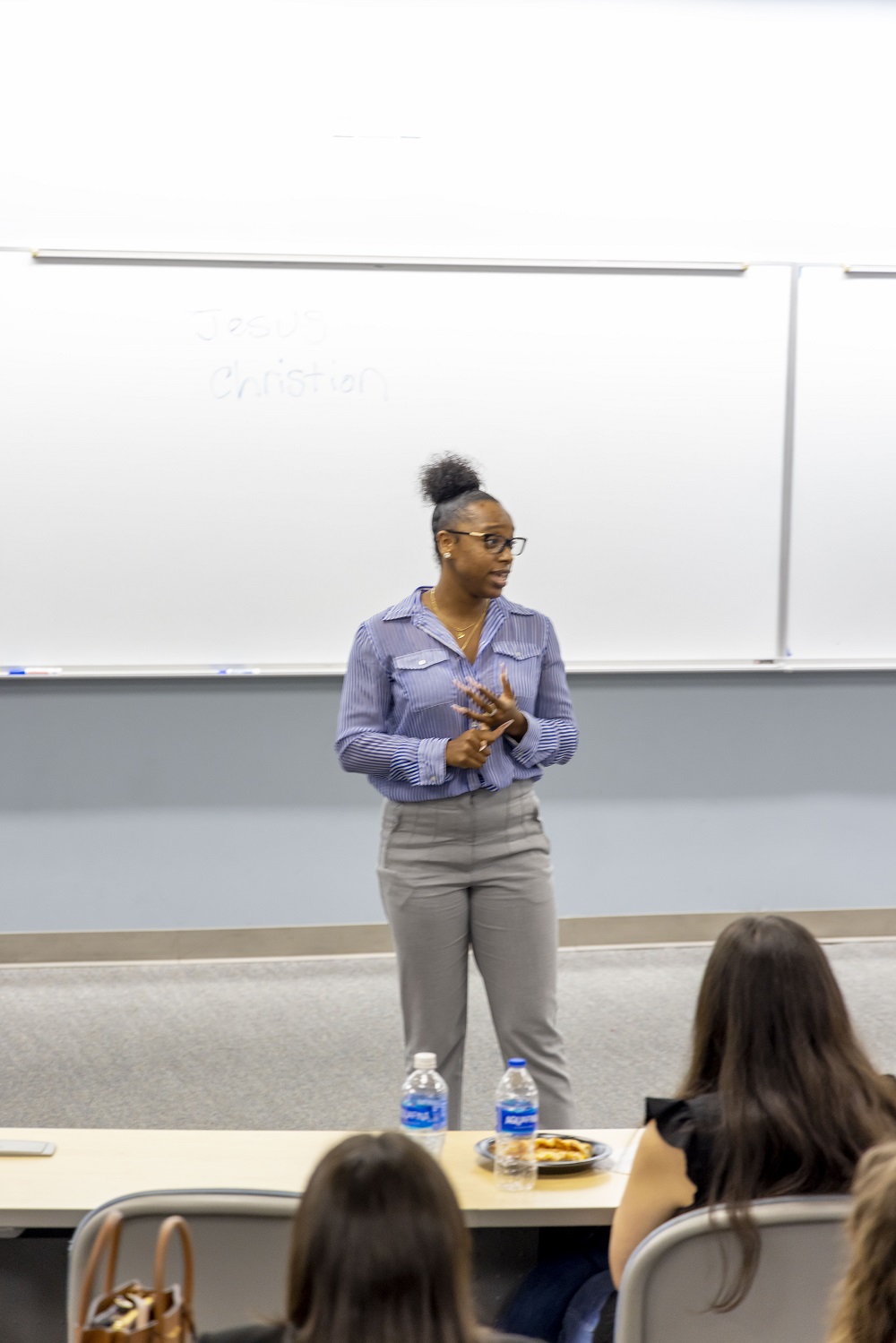
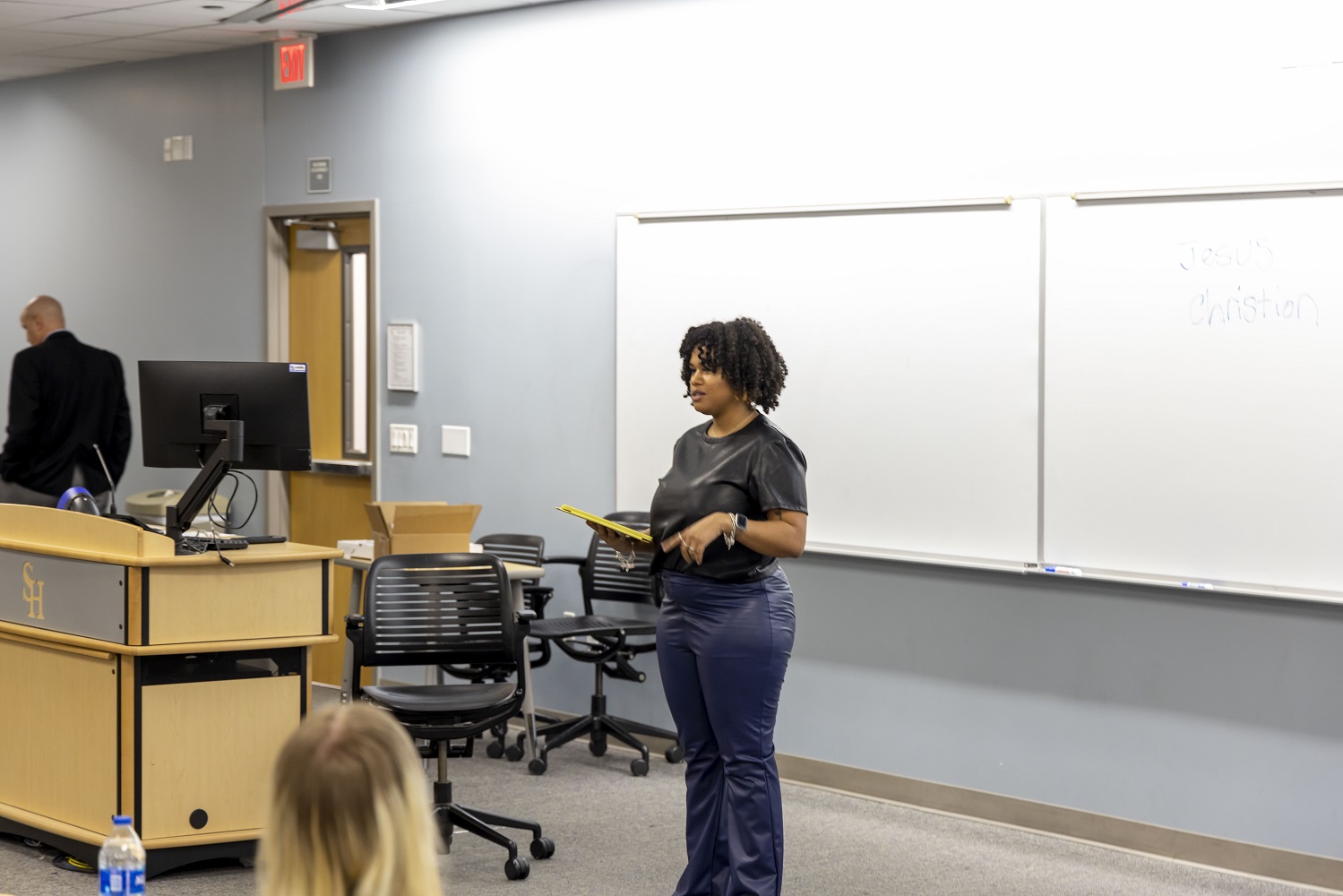
As it is a new semester, we also needed to fill some officer positions. Jasmine Crooks was re-elected as the Society’s secretary, as well as McKenna Nonnemann (that’s me!) remaining as the historian. With the president position open we had three society members run for the position: Jacelin Daniels, Jessica Hernandez, and Jade Miller.
We also had two members challenge each other for the Vice President of Membership: Christion Chancellor, and Jesus Ayala.
Each member brought wonderful ideas and gave heartfelt speeches, with Jade Miller and Jesus Ayala being awarded the officer positions!
We’d like to thank all Pre-Law members for joining us at this meeting. As well as all members who ran for officer positions along with the officers themselves. We hope to see you next meeting, on March 22!
One of the nice things about universities is that they promote the exchange of ideas and learning, and that concept was on full display yesterday as Dr. Mitchel Roth discussed his new book on crime: “The Man With the Killer Smile.” Roth, a professor of Criminal Justice at SHSU, brings a learned approach to the true-crime genre, incorporating psycholo0gy, criminology, and history.
The result has won plaudits from the critics, including bestselling author Jeff Guinn, who described the work as “masterful storytelling.” Of note is that Roth is perhaps the first to combine two criminological concepts into one killer.
A serial murderer is someone who commits murder at two (or more) different times, with a cooling off period in between (some definitions require three acts of murder). While a mass murderer is someone who kills at least four people at one time. By these definitions, Hassell is a serial mass killer.
Hassell specialized in families: his own. And Roth describes him as a “husband, father, uncle, embezzler, serial mass murderer, philanderer, child moslester, convict, and military deserter.” He was as Roth continues, “many things to many people, most of them bad.” The book makes this much clear.
Roth’s presentation of his work was entertaining, showing an author with a somewhat dark sense of humor, a felicity with presentation, and a drive to research and write. Although he notes that as he’s “gotten older,” he “has trouble working on two or three books at once,” it’s clear he relishes the research, the interaction with those he comes across in his research, and the act of writing.
As a result and despite the dark subject matter, the presentation was an enjoyable way to spend an afternoon. Reflecting the university mission of promoting ideas and learning, Roth expertly shone a light on history, criminology, and psychology, all captured in “The Man with the Killer Smile.”















































 Center for Law, Engagement, and Politics