Our first members-only meeting of the Fall occurred last week…
…and it was an important: we held elections for President, Secretary, VP of Membership, and Historian. Thankfully, some of these things were taken care of by “game-time,” as the races for President and Secretary were uncontested.
By acclamation, then, Yvette Mendoza was elected President, and Jasmine Crooks elected Secretary. From this point on, Yvette took over as the presiding officer of the meeting.
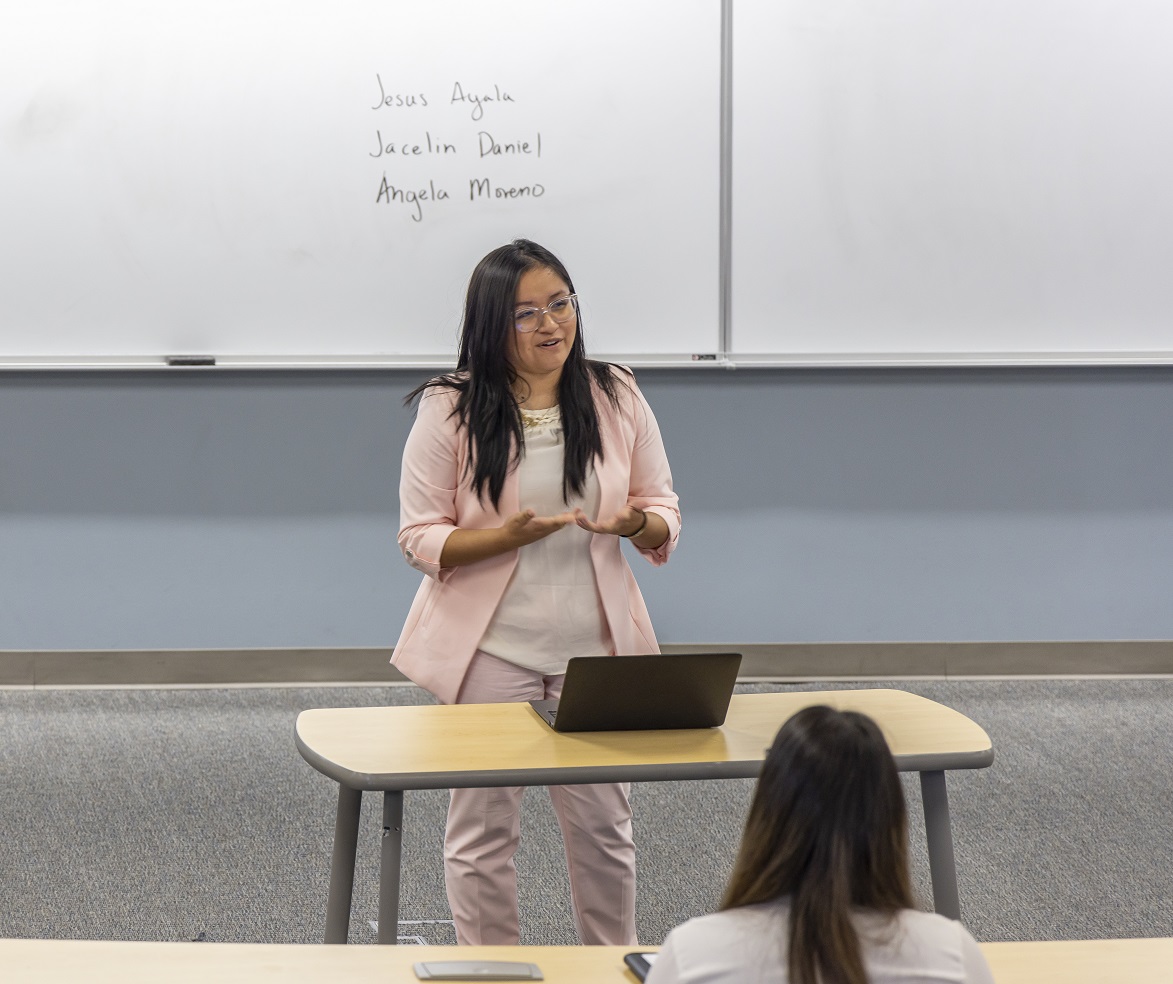
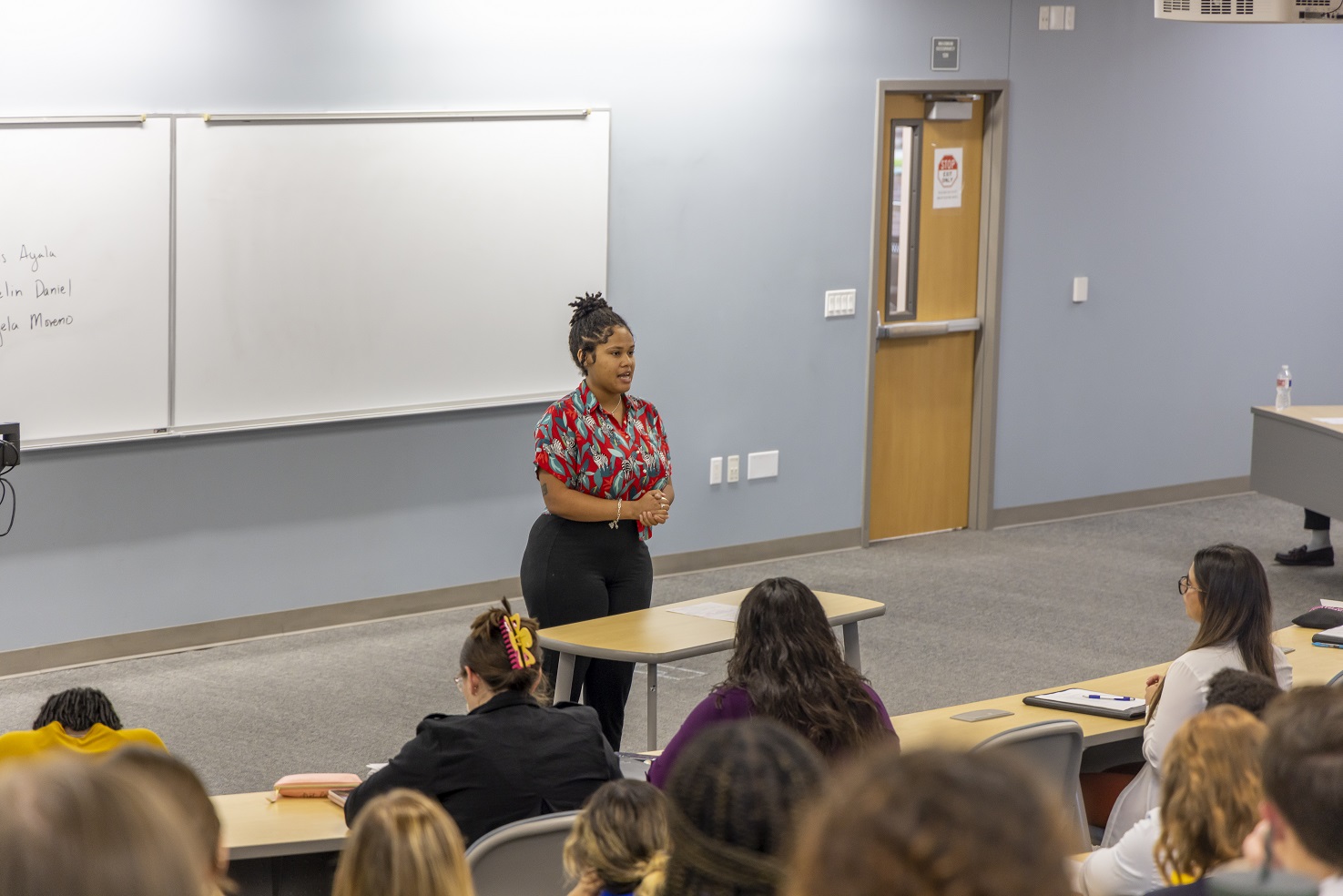
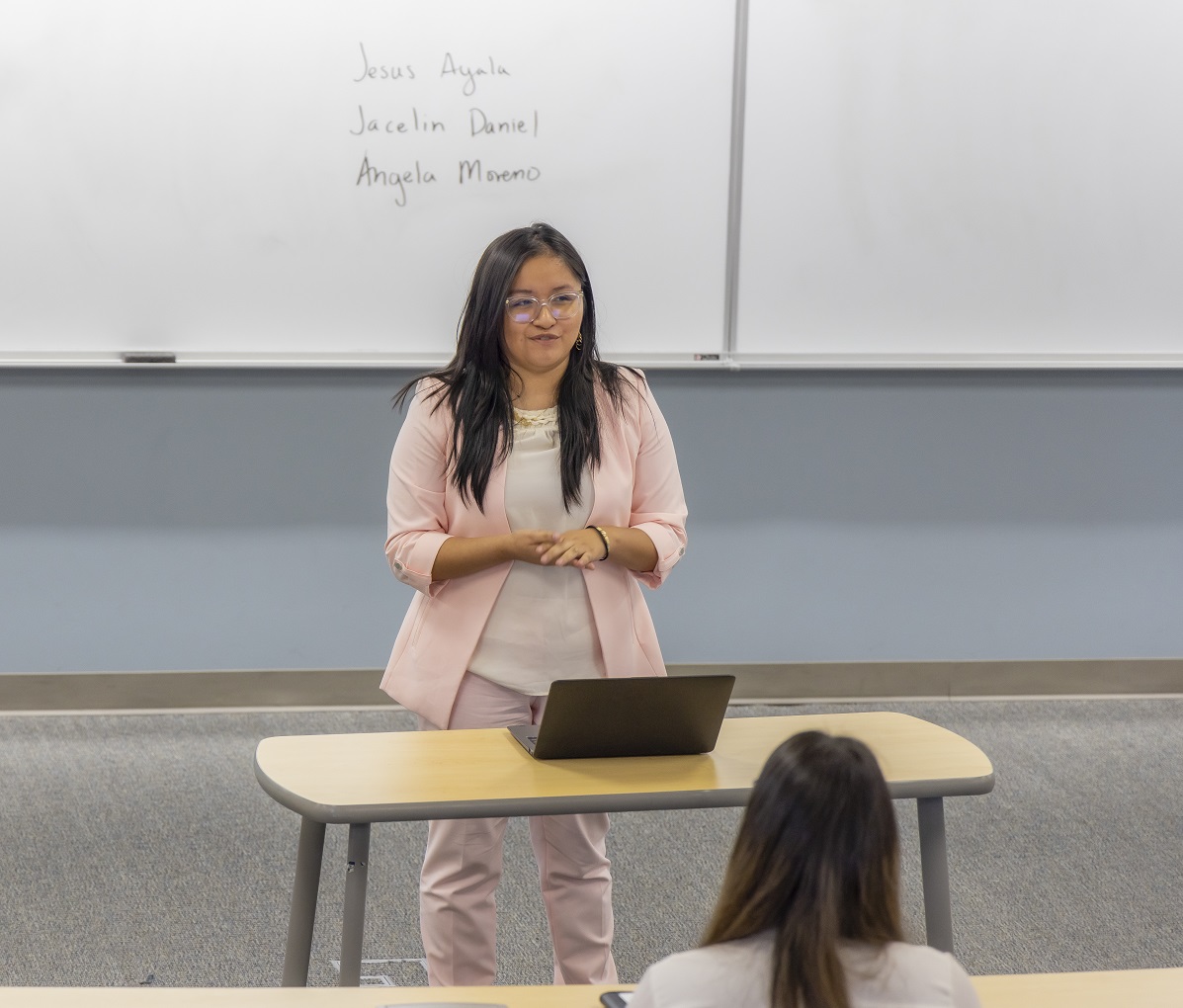
For Vice-President of Membership, we had three candidates: Jesus Ayala, Jacelin Daniels, and Angela Moreno. Each were given three minutes to discuss their reasons for running, and they all did well.
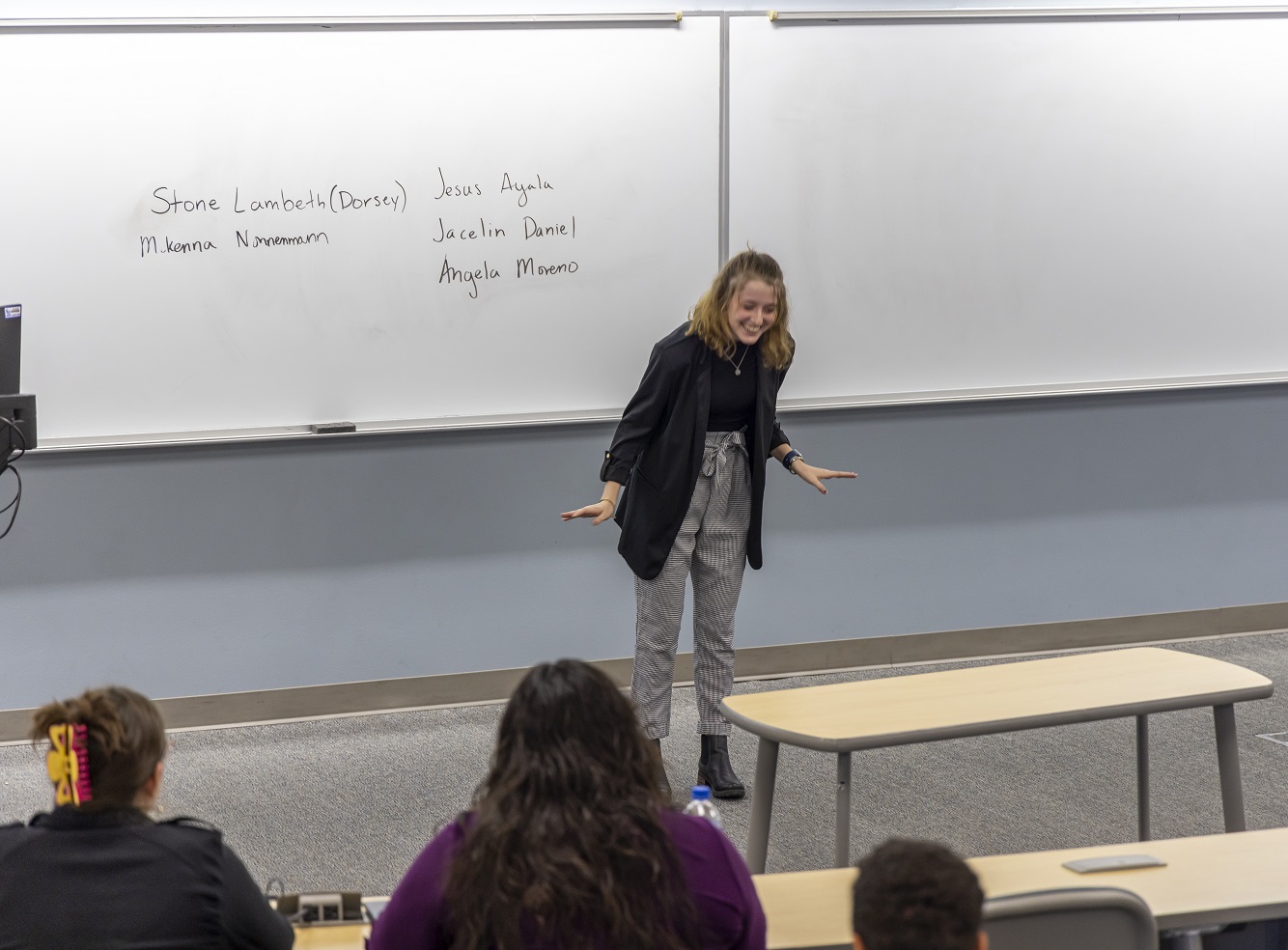
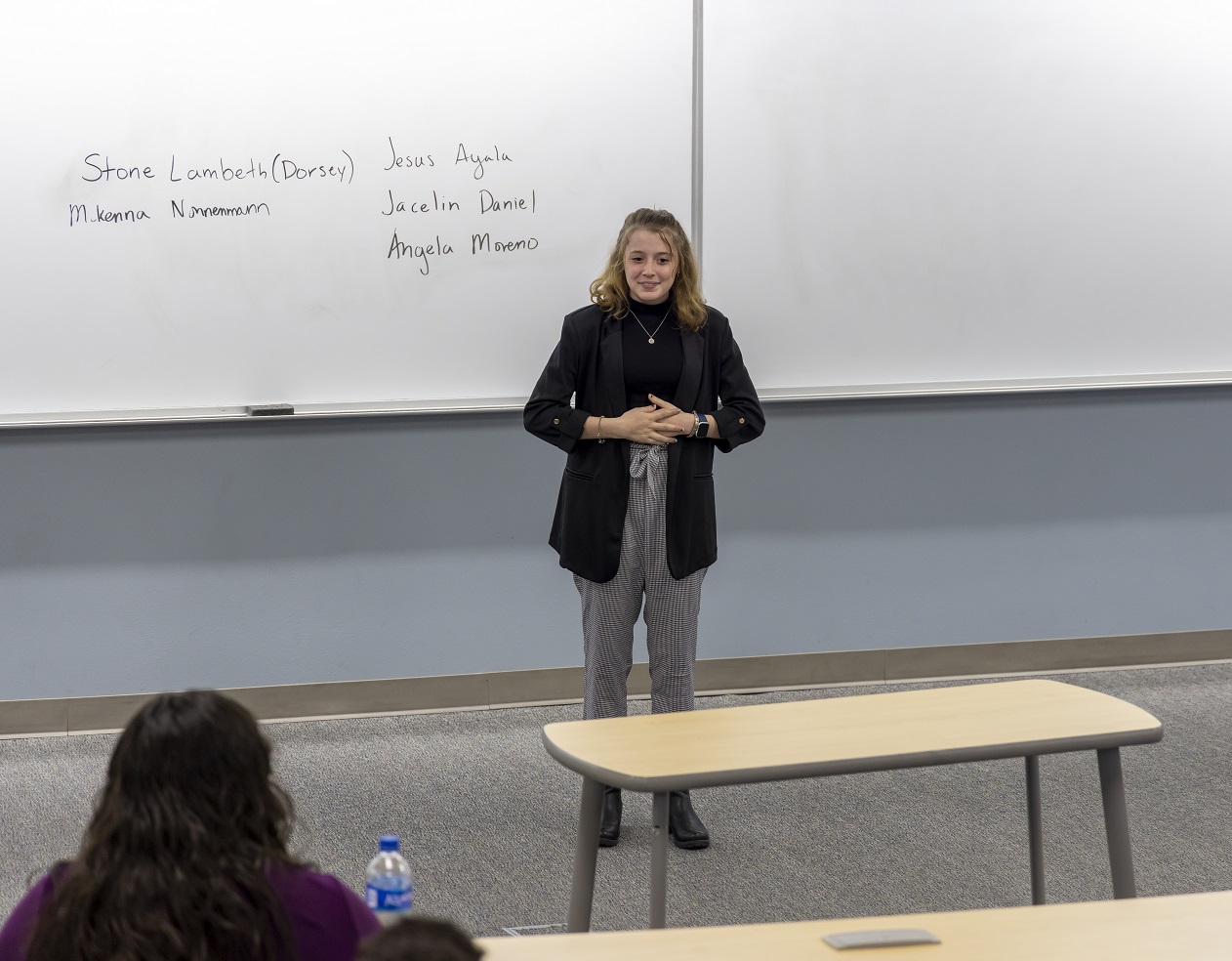
Following this race, the candidates for Historian took over, with Stone Lambeth and Mckenna Nonnenmann followed. Again, both did well.
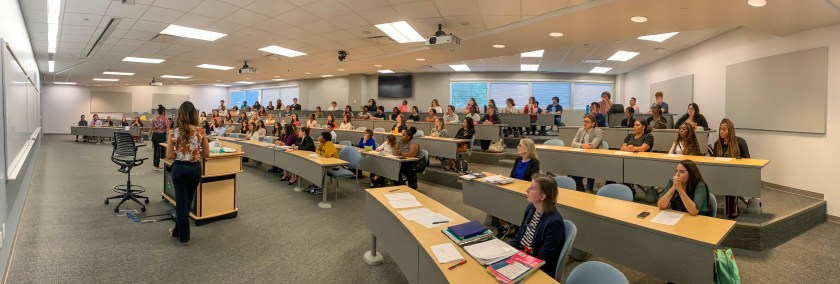
While discussions about upcoming events took place–including next week’s visit by Texas Tech Law School–the students voted and the officers waited, patiently.
With a record number of 85 students in attendance, the counting took a while, but when the dust had settled and the votes were counted, we were able to name Jacelin Daniel as VP of Membership and Mckenna Nonnenmann (a freshman!).
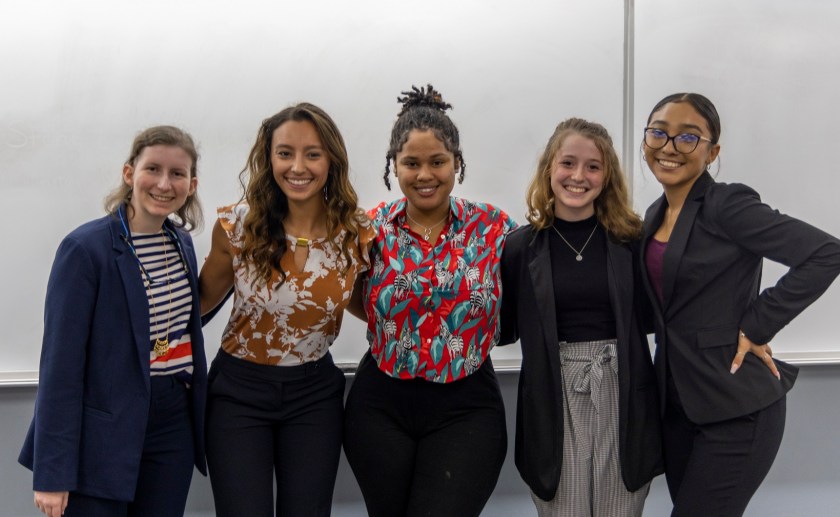
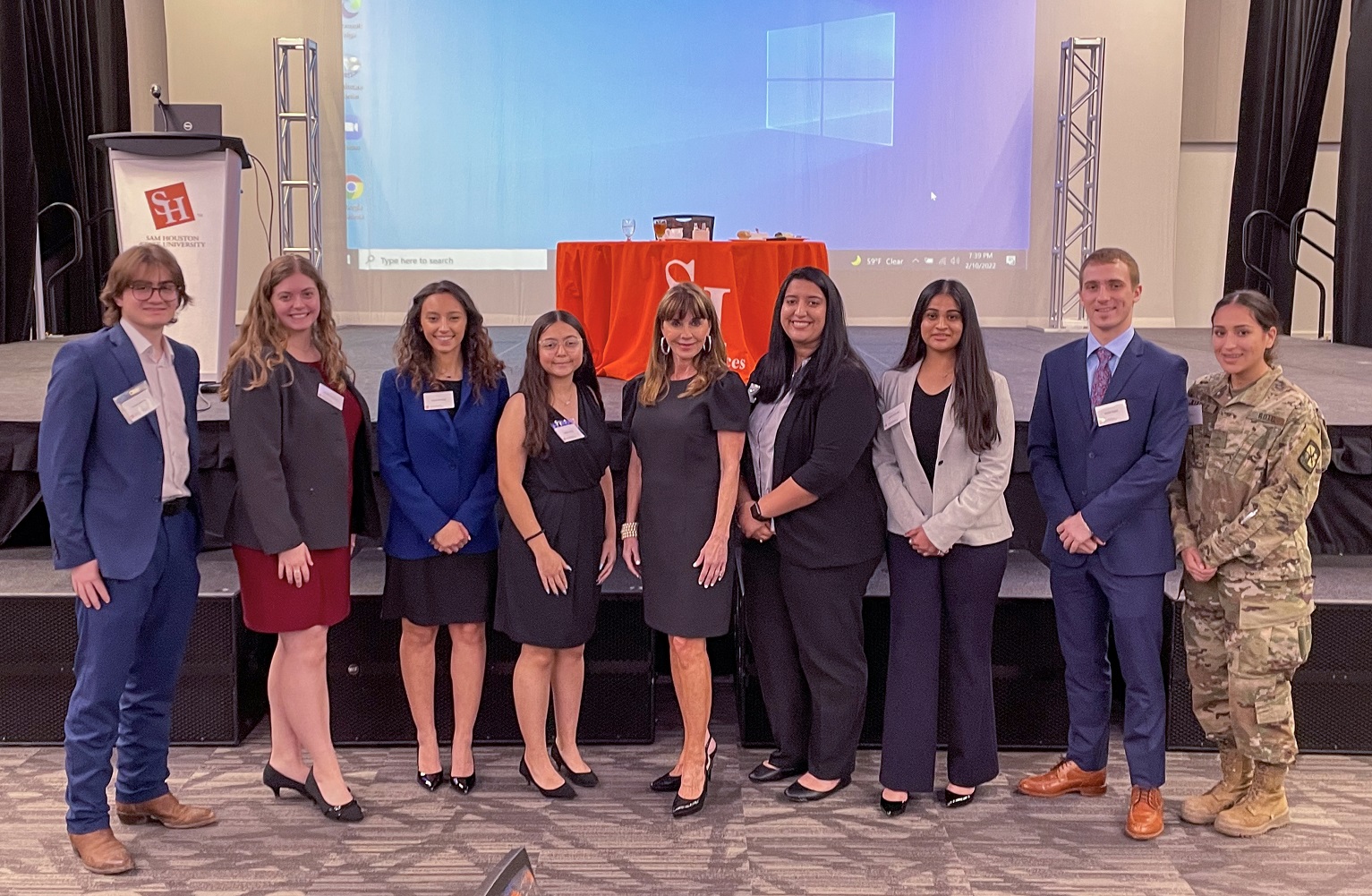
The meeting then soon ended, with a group photo of the Fall 2022 officers (including returning VP of Finance, Emily Albright), and many good things to come!
We would like to thank all the candidates, successful and unsuccessful, for their effort to contribute to the Pre-Law Society.
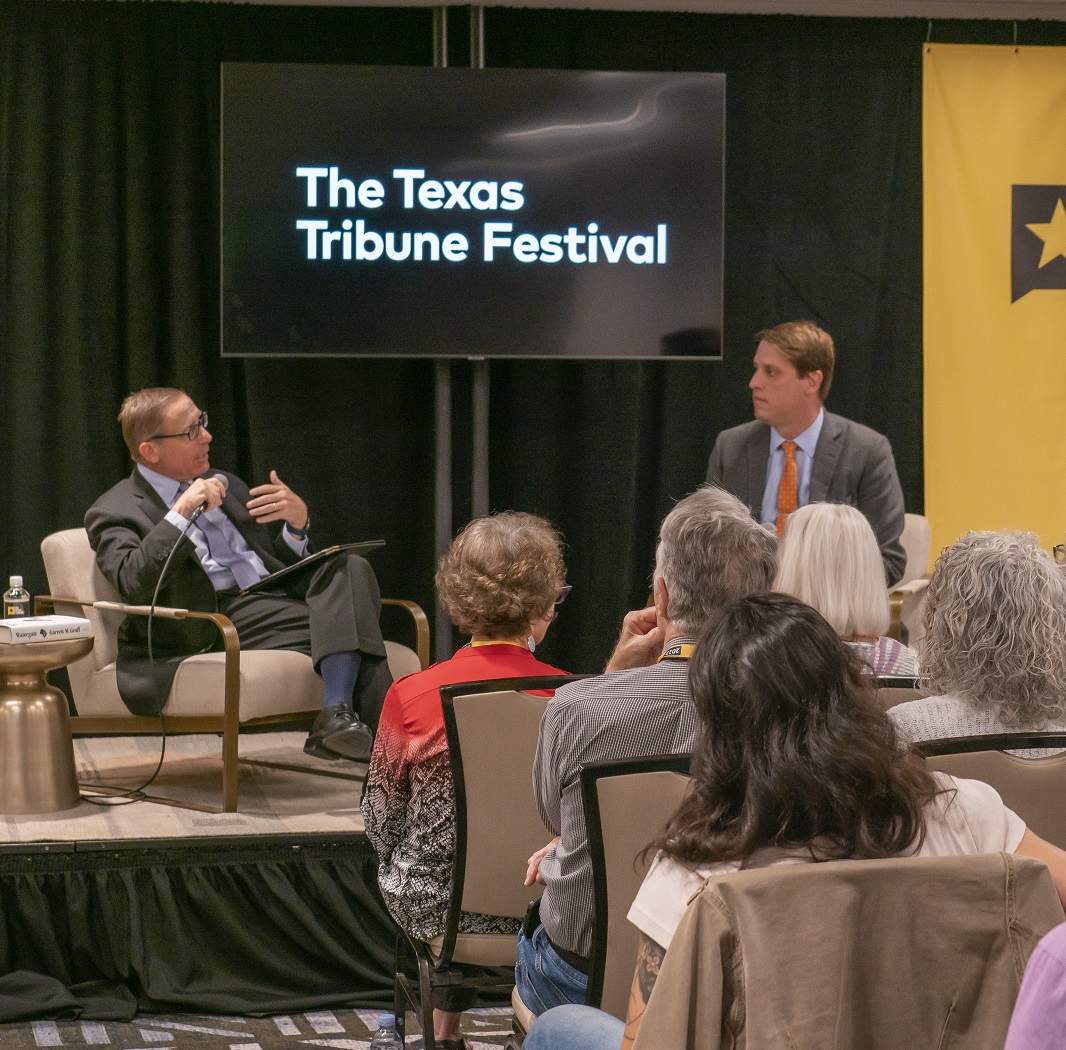
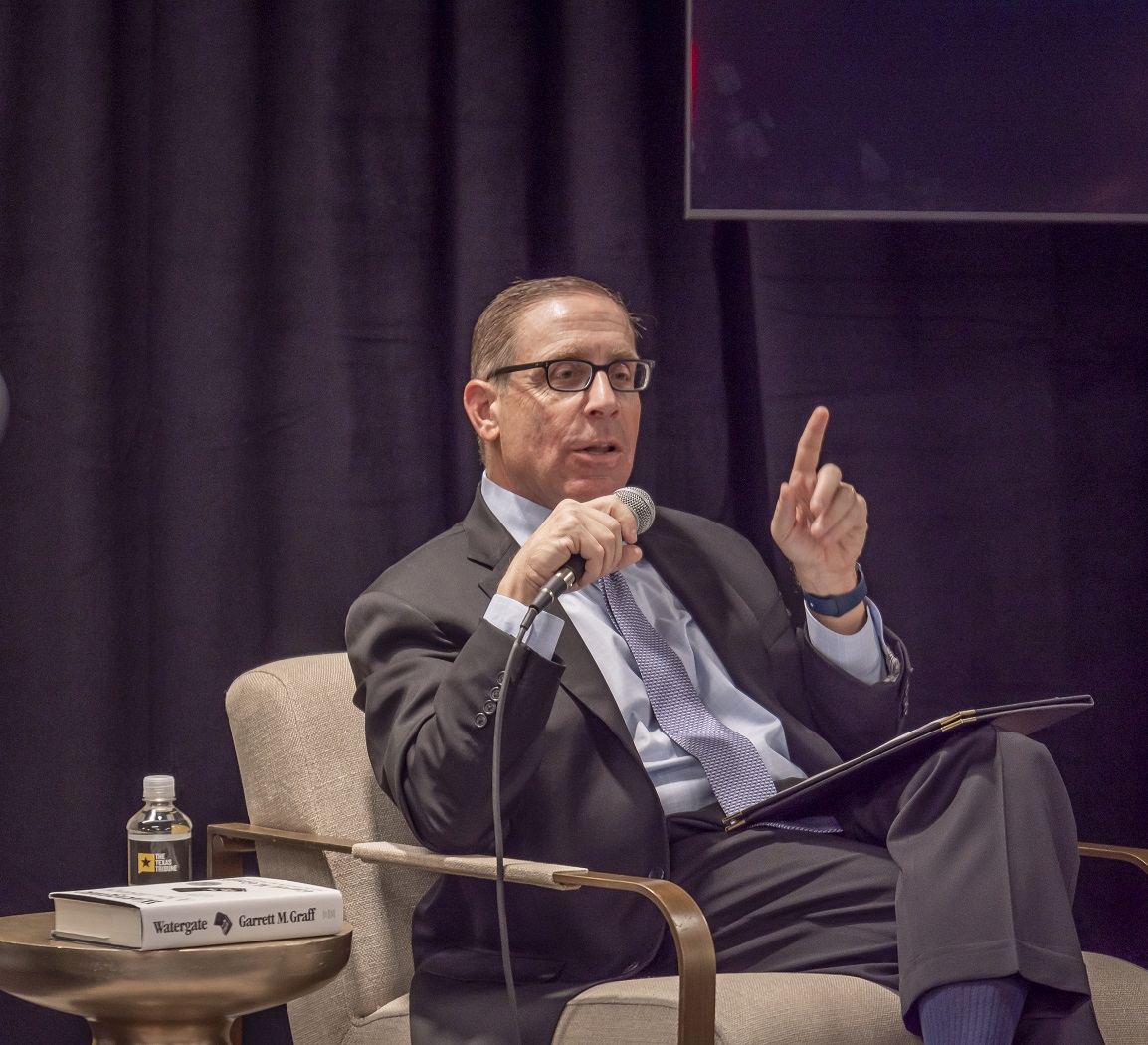
It may have been 50 years since the Watergate story, and many young people may not know much about the scandal, but it is one that still reverberates across history. And, with questions of classified documents in the wrong hands, destruction of evidence, and financial wrongdoings still swirling in the news, the lessons of Watergate are more timely than ever.
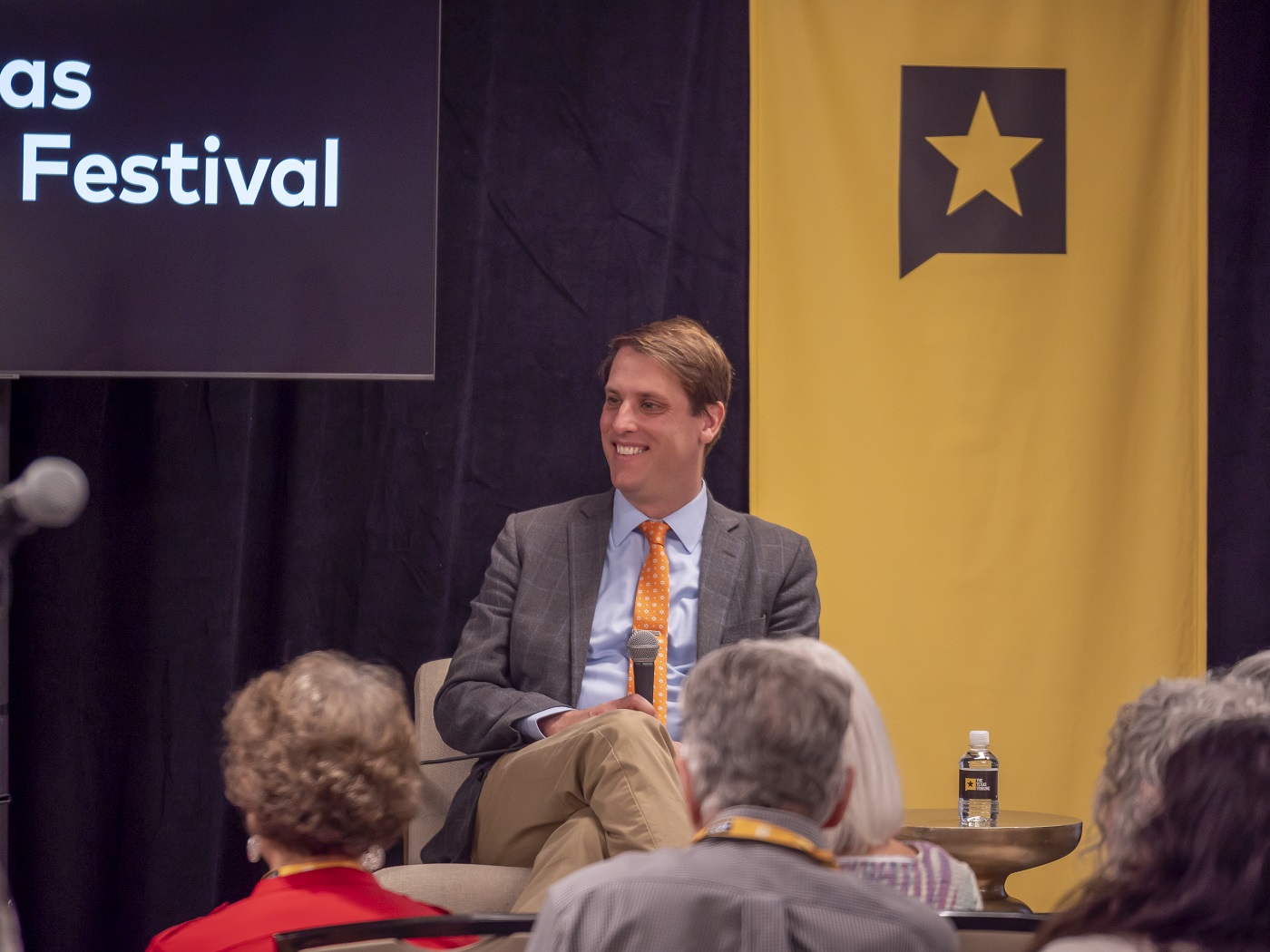
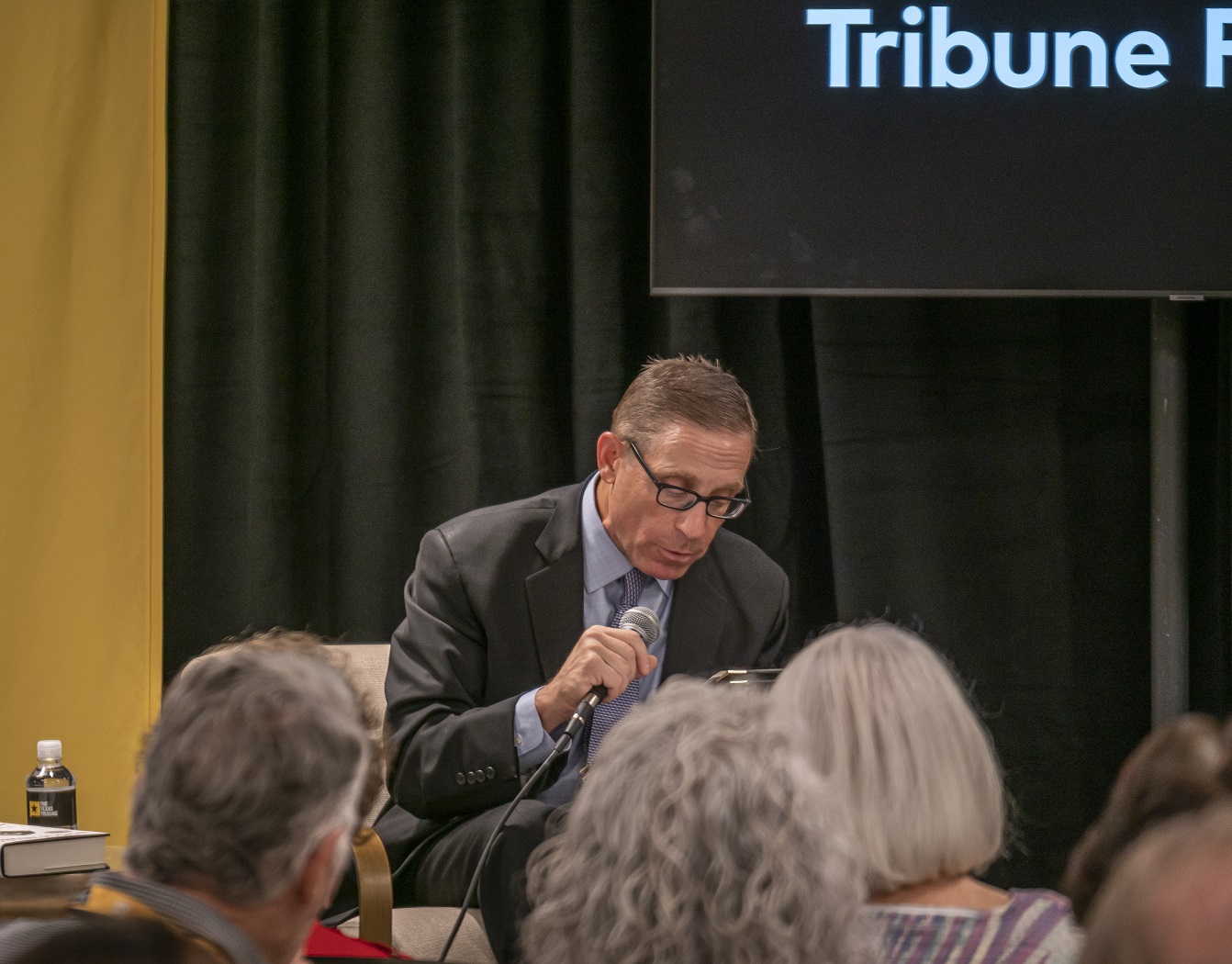
Thus it was that Professor Yawn and I embarked on a panel moderated by Evan Smith and featuring Garret Graff, author of Watergate: A New History. For me, not knowing much about Watergate, it was quite the learning experience. According to Graff, Watergate wasn’t a single scandal: it was a series of scandals, and, in fact, the Watergate break-in was just (more or less) the last among several illegal and unethical decisions made by the Nixon team.
Many of these are only understandable as part of the larger picture. Here’s an example: As far as history can fully demonstrate, Nixon only ordered one break-in. It was to the Brookings Institution, and it was never pulled off. The motivation for such an act was that Nixon believed that Brookings possessed evidence of a prior wrongdoing. By blowing up the Institution, he could destroy the evidence (assuming it wasn’t copied).
What followed was an outlandish plan involving guys dressed as fireman going into the building, setting up explosives, and driving away in a firetruck as the explosion occurred. What squelched the plan, according to Graff, was not its illegality, but the cost of a used firetruck.
Many comparisons were made to the Trump administration. To Graff, there are several key distinctions in the aftermath: (1) key Republicans (e.g., Howard Baker, George H.W. Bush, and Barry Goldwater) confronted Nixon about his wrongdoing, and encouraged him to step down for the good of the country; and (2) Nixon went away.
Also of interest was Graff’s discussion of how much the movie All the President’s Men impacted our understanding of history and politics. He says many Americans were disappointed when “Deep Throat” was finally revealed in 2005, and the real-life character, Mark Felt, didn’t look more like Hal Holbrook. Also, Jason Robards, who portrayed WAPO Editor Ben Bradlee in the film, would tap his ring finger on the table or other surfaces. That was his invention, not something Bradlee actually did. That is, until Bradlee saw the film. After seeing Robards tap his ring finger, Bradlee adopted the mannerism!
The cast of All the President’s Men–and their real-life counterparts
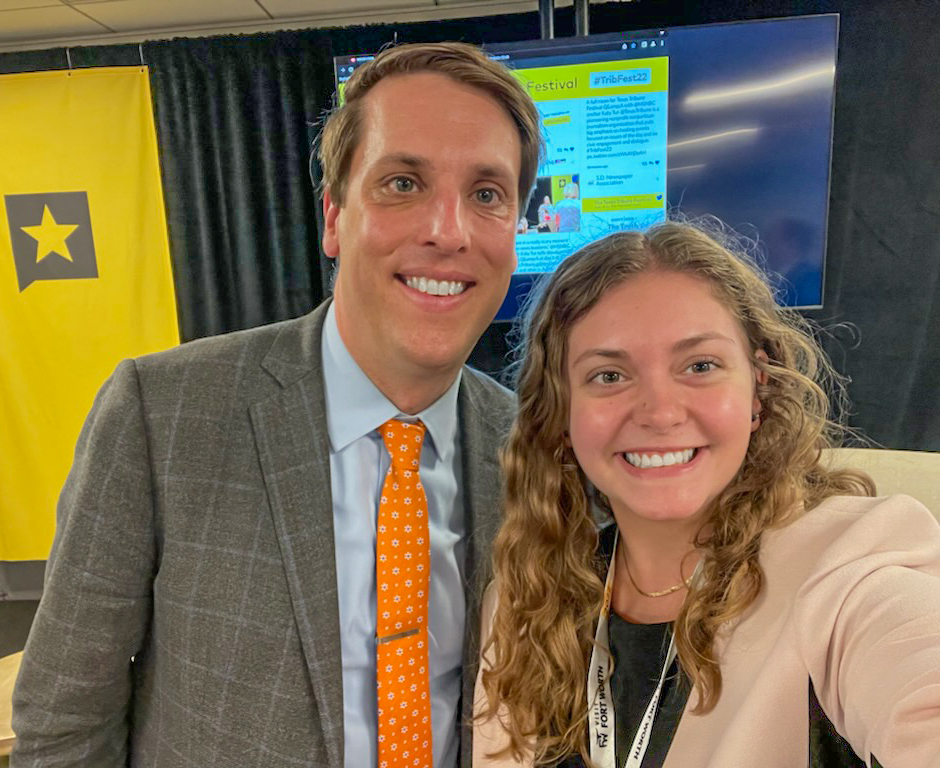
Graff lingered after the session, answering questions and discussing his book with the audience members. I met “Dr. Janice,” and she and got photos with Mr. Graff!
And, with the ominous lessons of Watergate in mind, we headed off to hear more about politics and the media at the Texas Tribune Festival, more aware than ever of contemporary parallels to historical precedent.
For the LEAP Ambassadors, there is no better mid-week venture than to the Glades Art Foundation in the Woodlands for an always amazing World Affairs Council event. This time around, we were fortunate enough to be accompanied by two guests: Hongjin Jeon, (aka. Andrew) a student in Professor Yawn’s Texas Government class and Dr. Lei Duan, the professor for my Modern Asian History course.
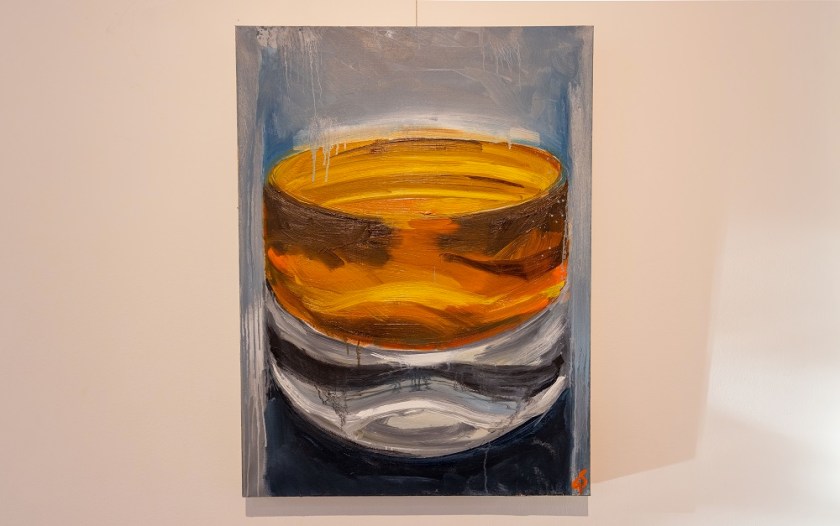
We enjoyed pursuing the current exhibits on display, one of which we have seen before: a collection of drinks!
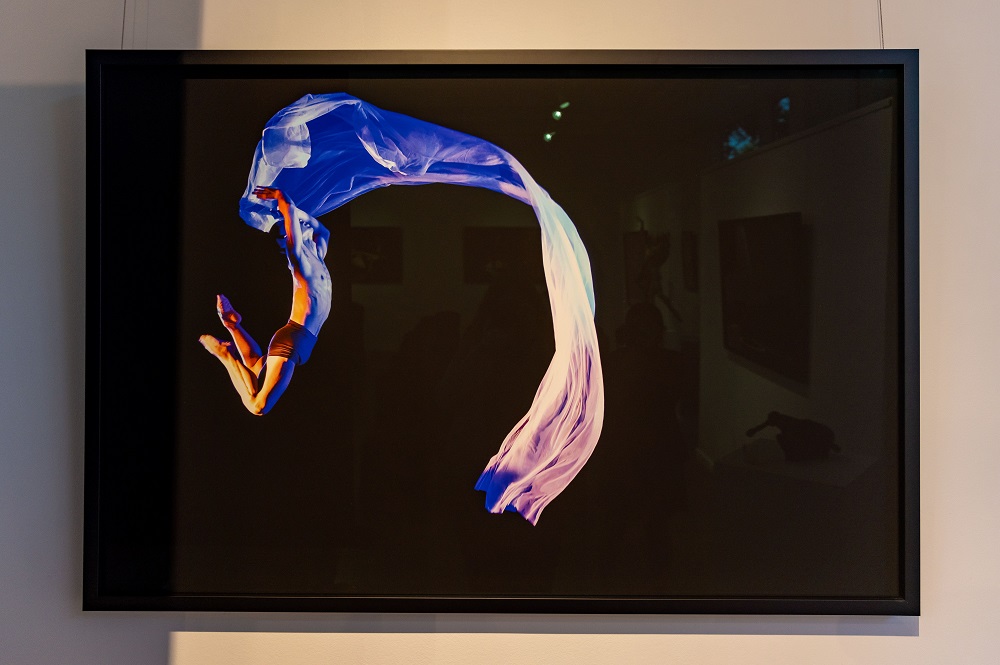
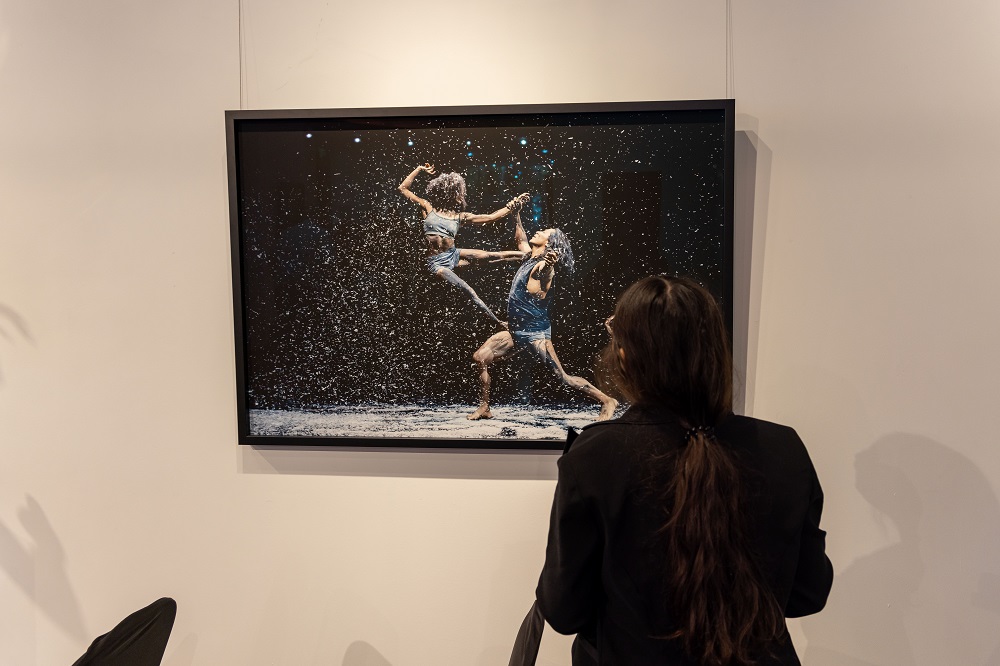
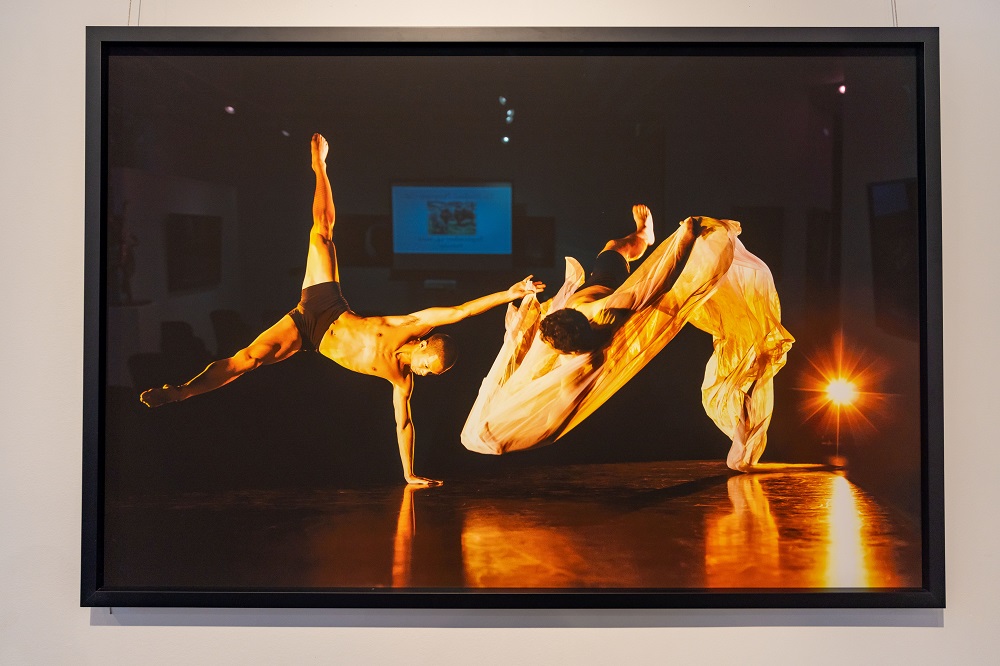
The Glade Gallery hosts an array of exhibits as well as acts as a meeting location for many local groups. The Woodlands Photography Club was also hosting a meeting and they were surrounded by many dynamic photographs.
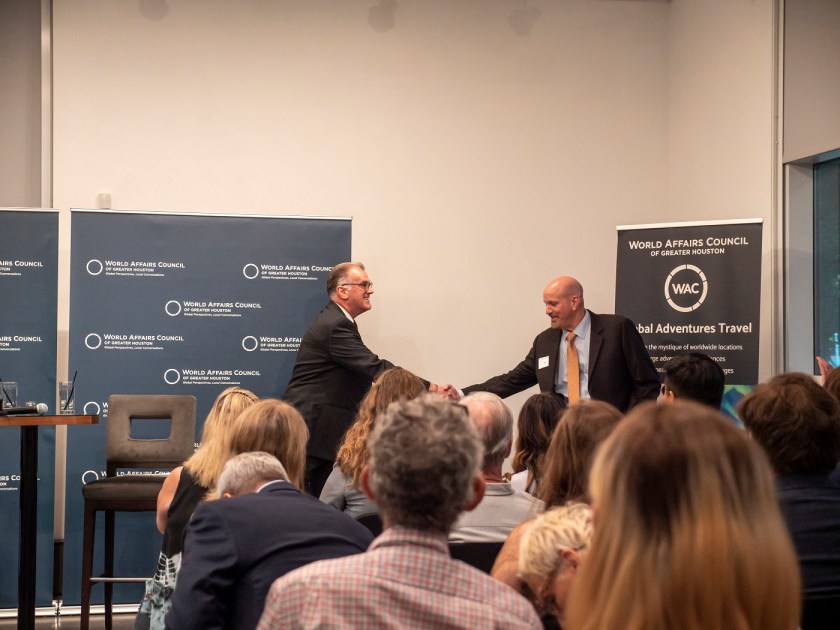
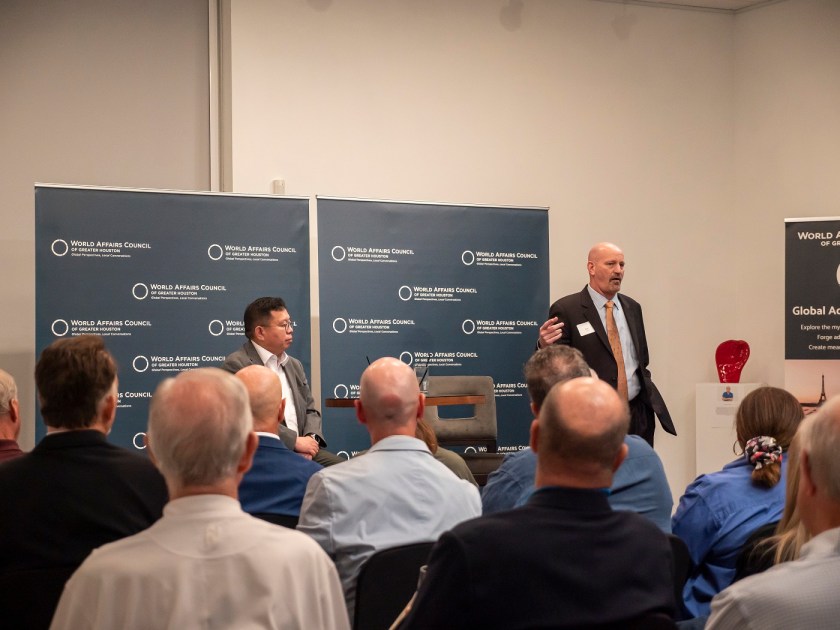
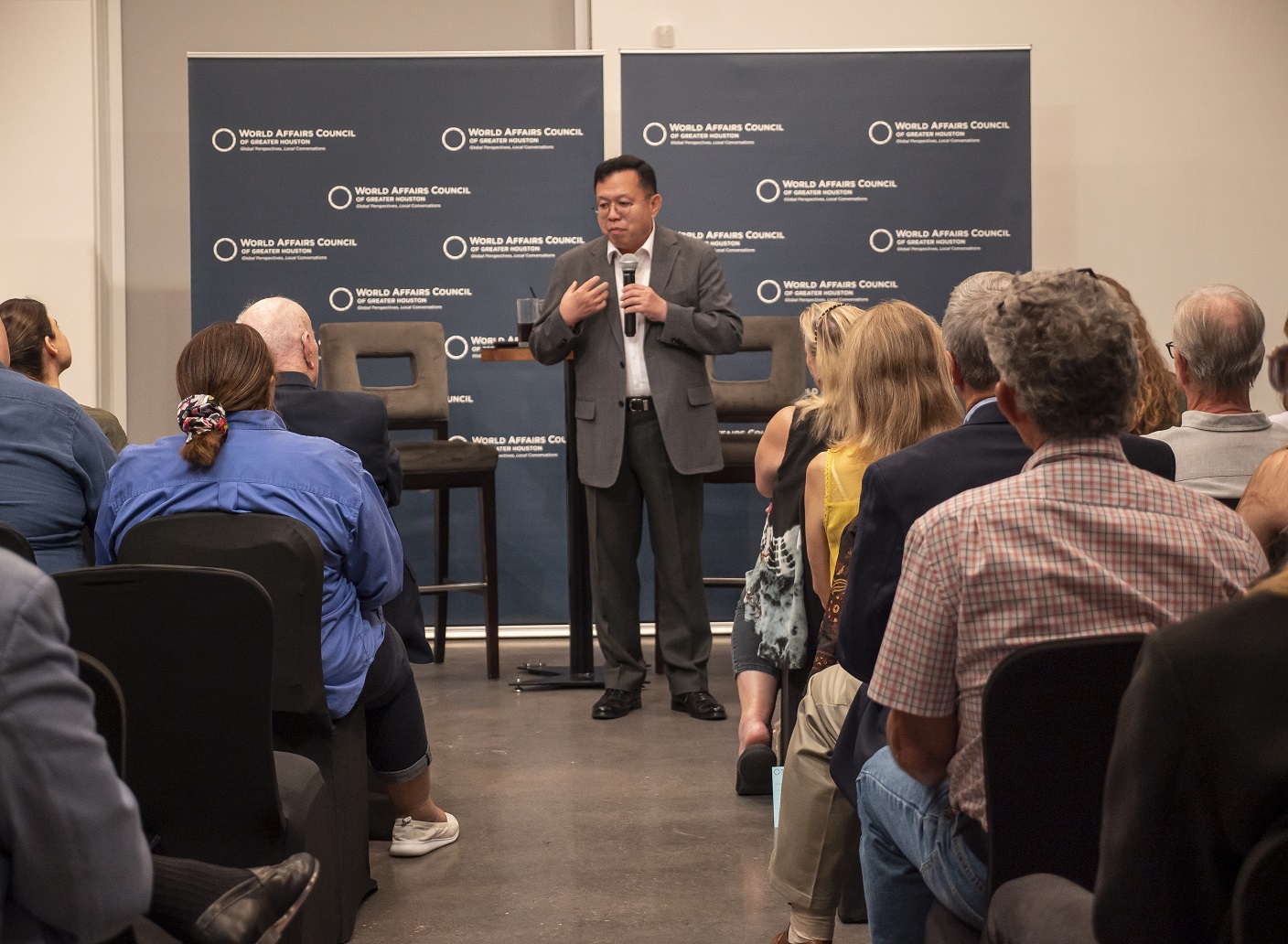
The event began with an introduction from Ray Cunningham, the North Houston Coordinator, who thanked the Glade Gallery, and the guests for their continued interest in the Council.
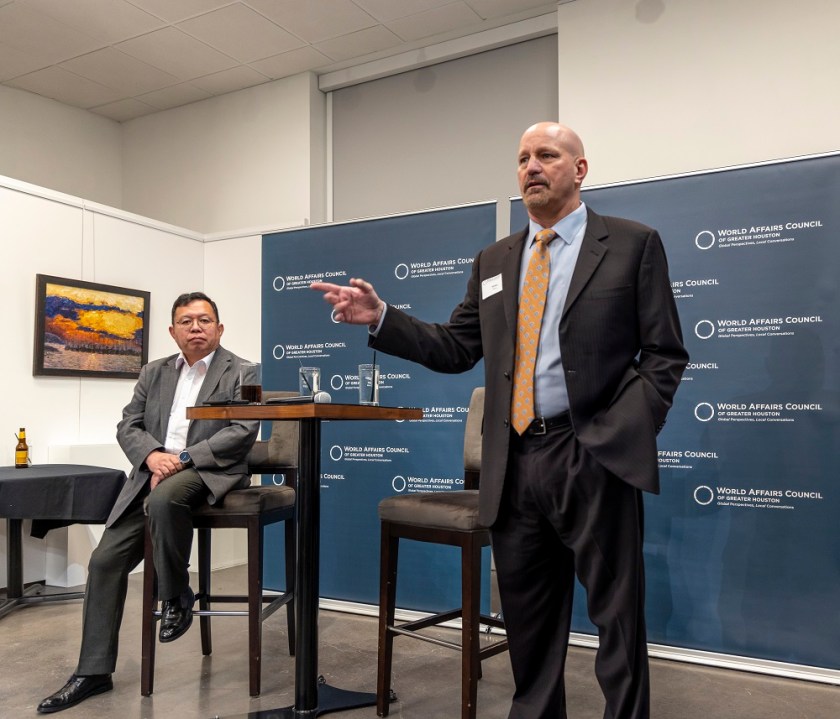
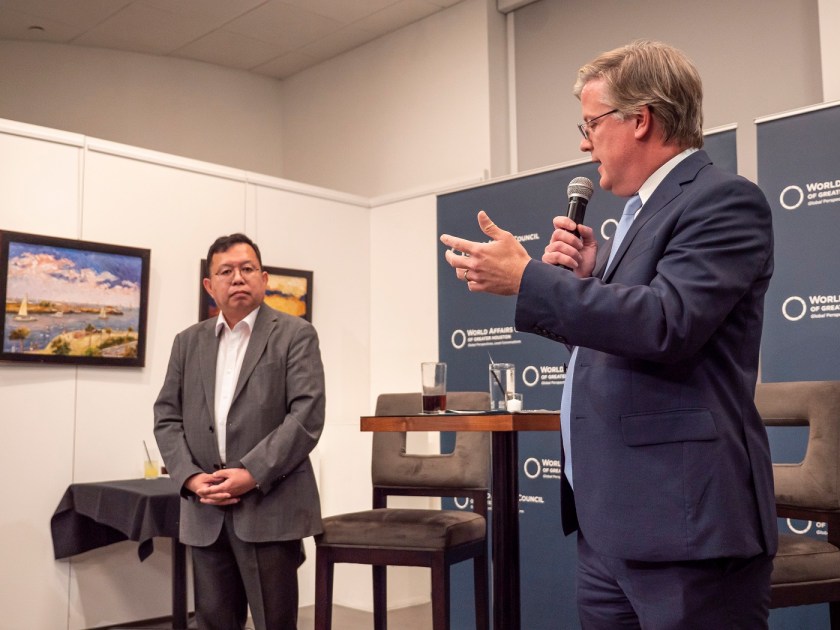
Mr. Cunningham then introduced Professor Yawn…
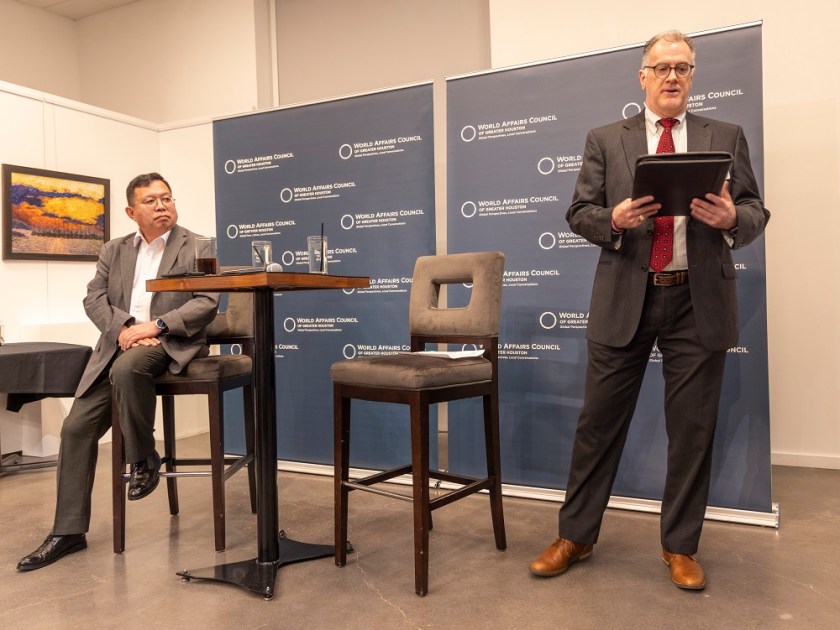
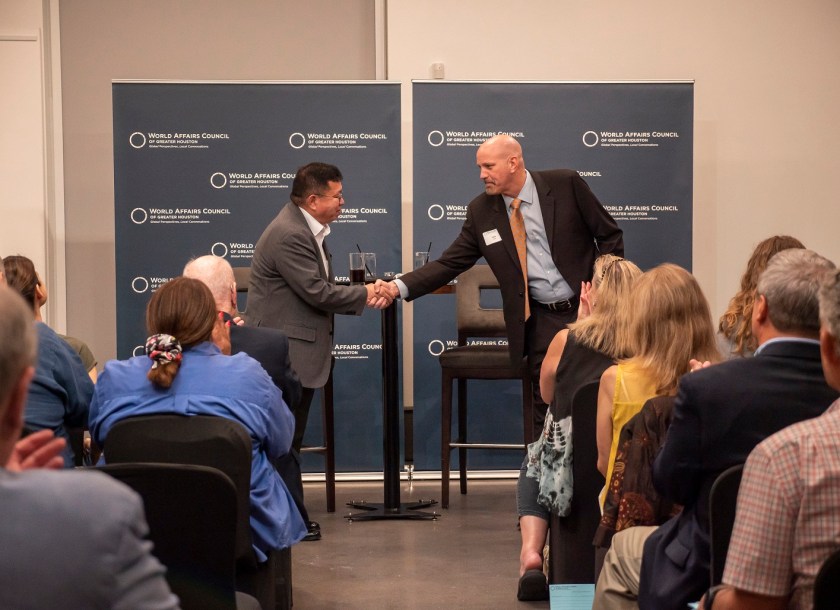
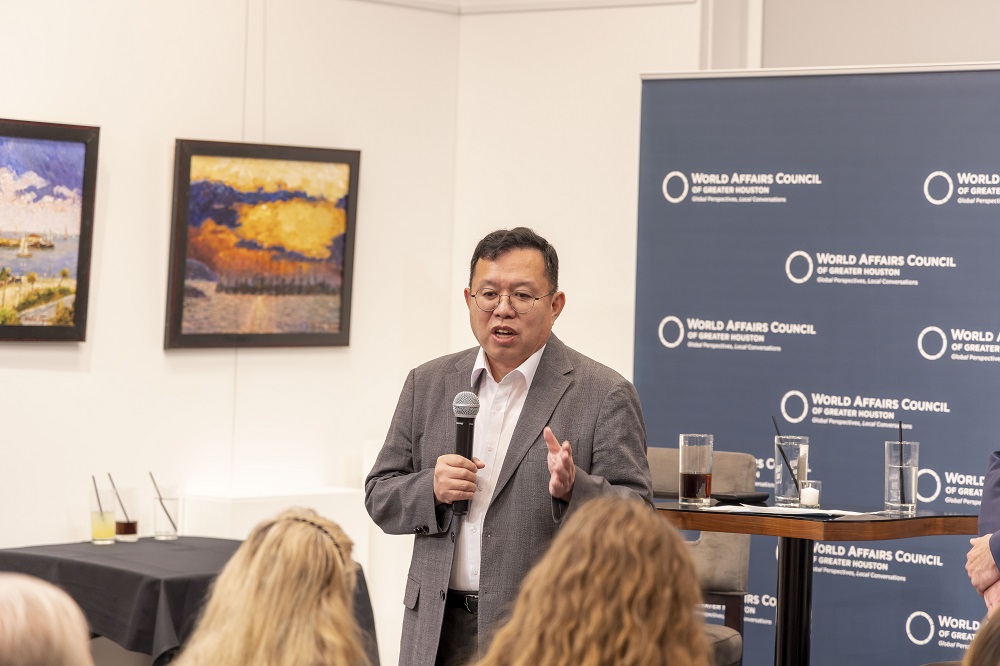
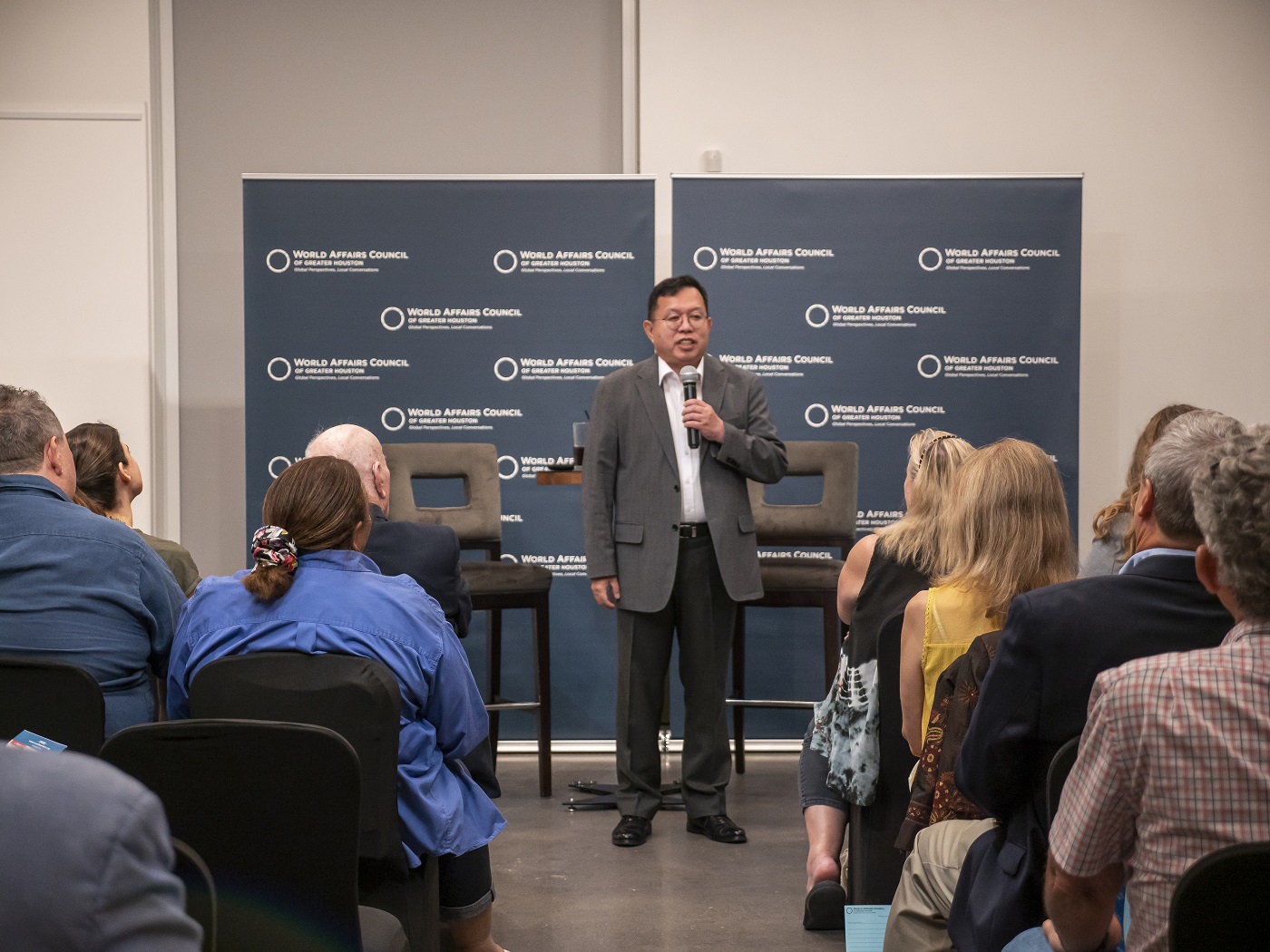
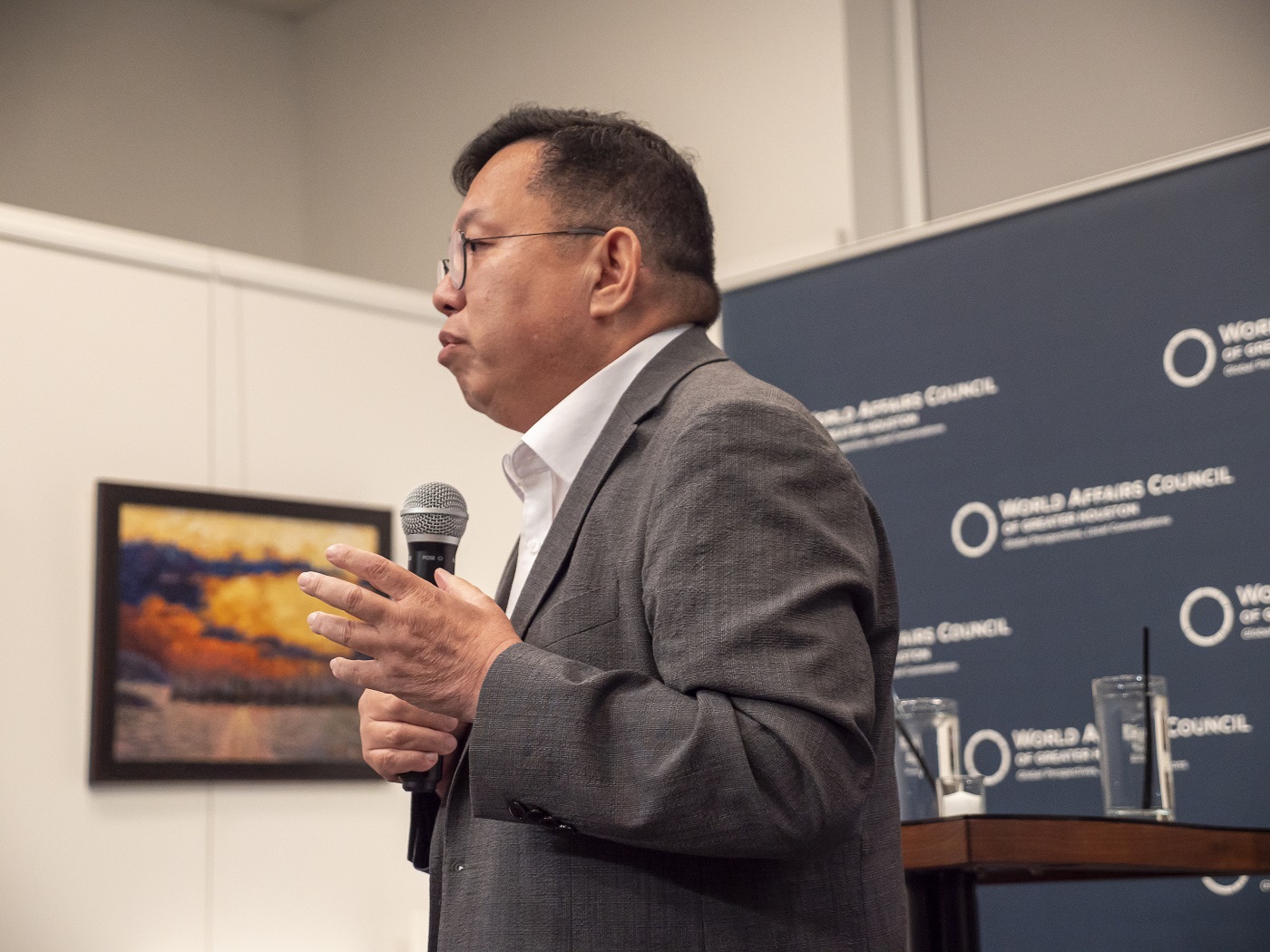
…who proceeded to introduce General In-Bum Chun.
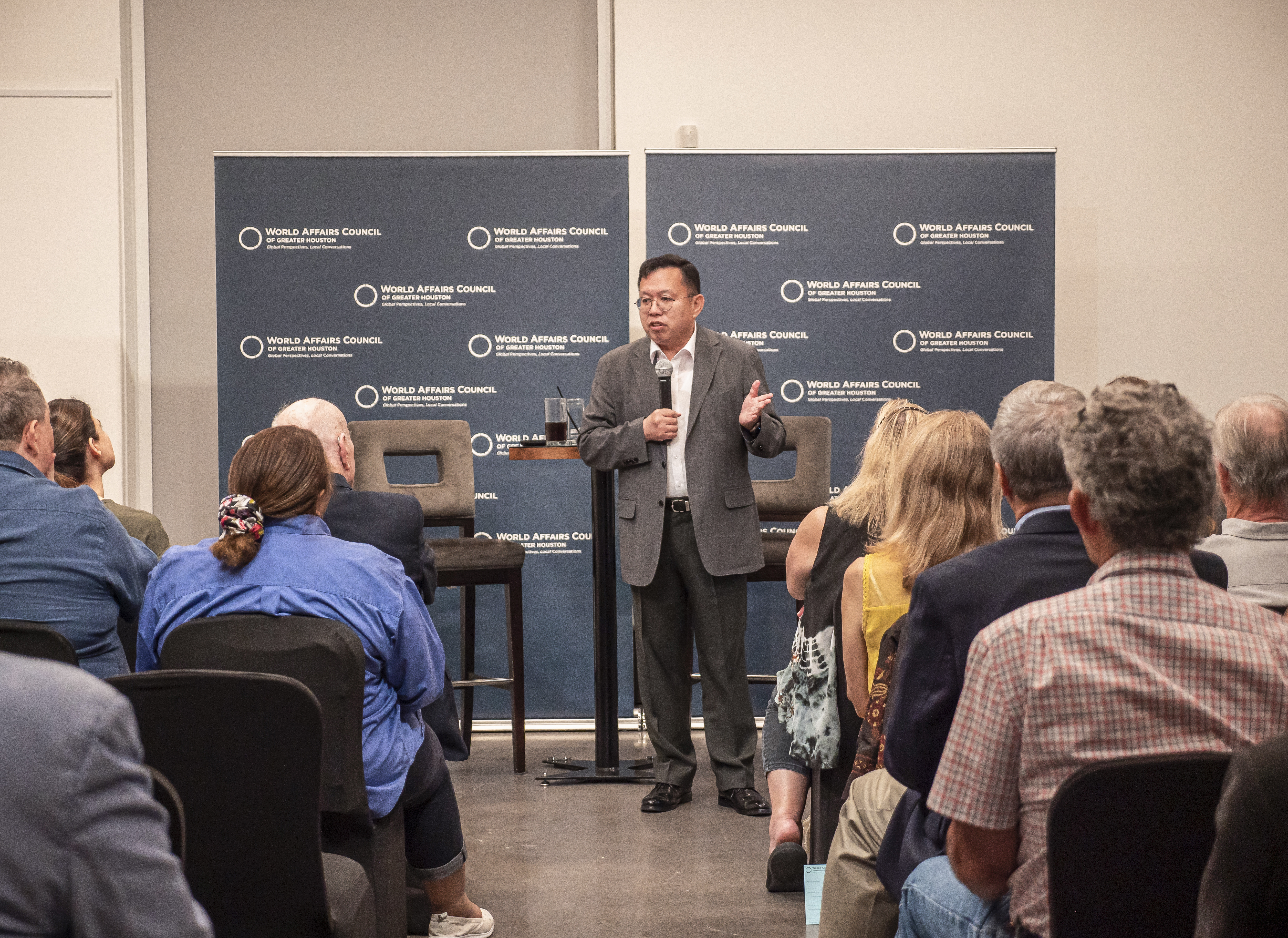
Professor Yawn highlighted General Chun’s career in both the military and governmental sectors…
…and a few of his acts of service, which later General Chun elaborated on.
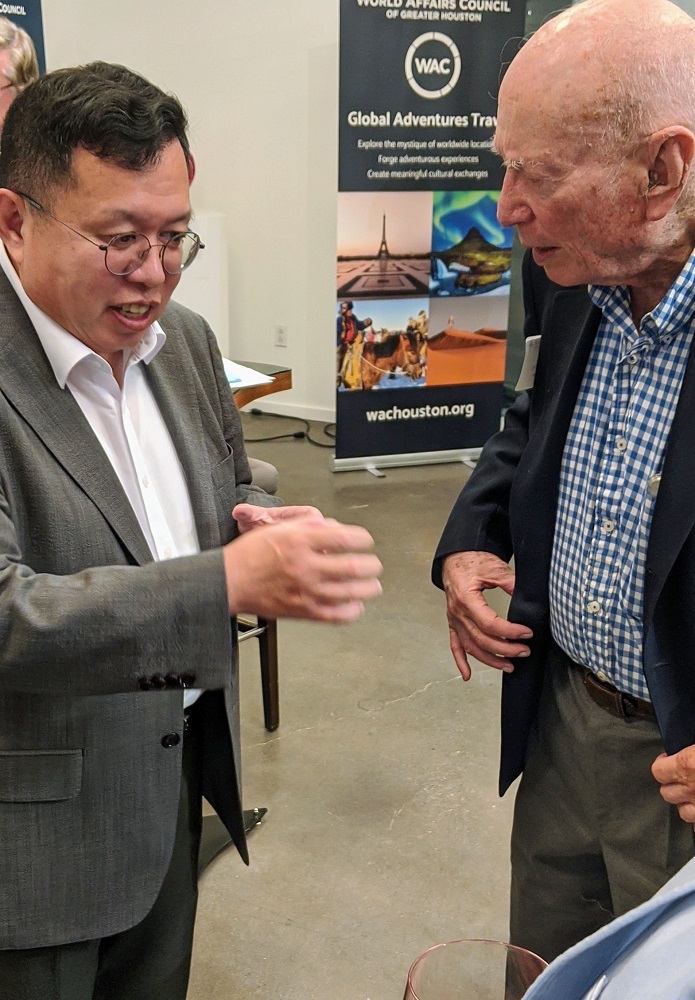
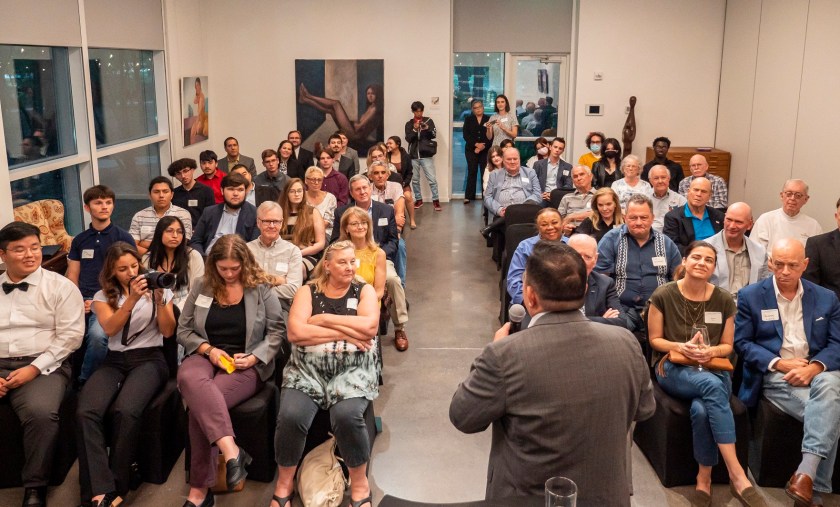
General Chun began by recognizing and expressing his gratitude for one of the audience members, Charles, A Korean War Veteran! It was wonderful to see this man, who must have been nearing 90, hear about an expert on Korea, seven decades after he fought for South Korea’s right to remain independent and free.
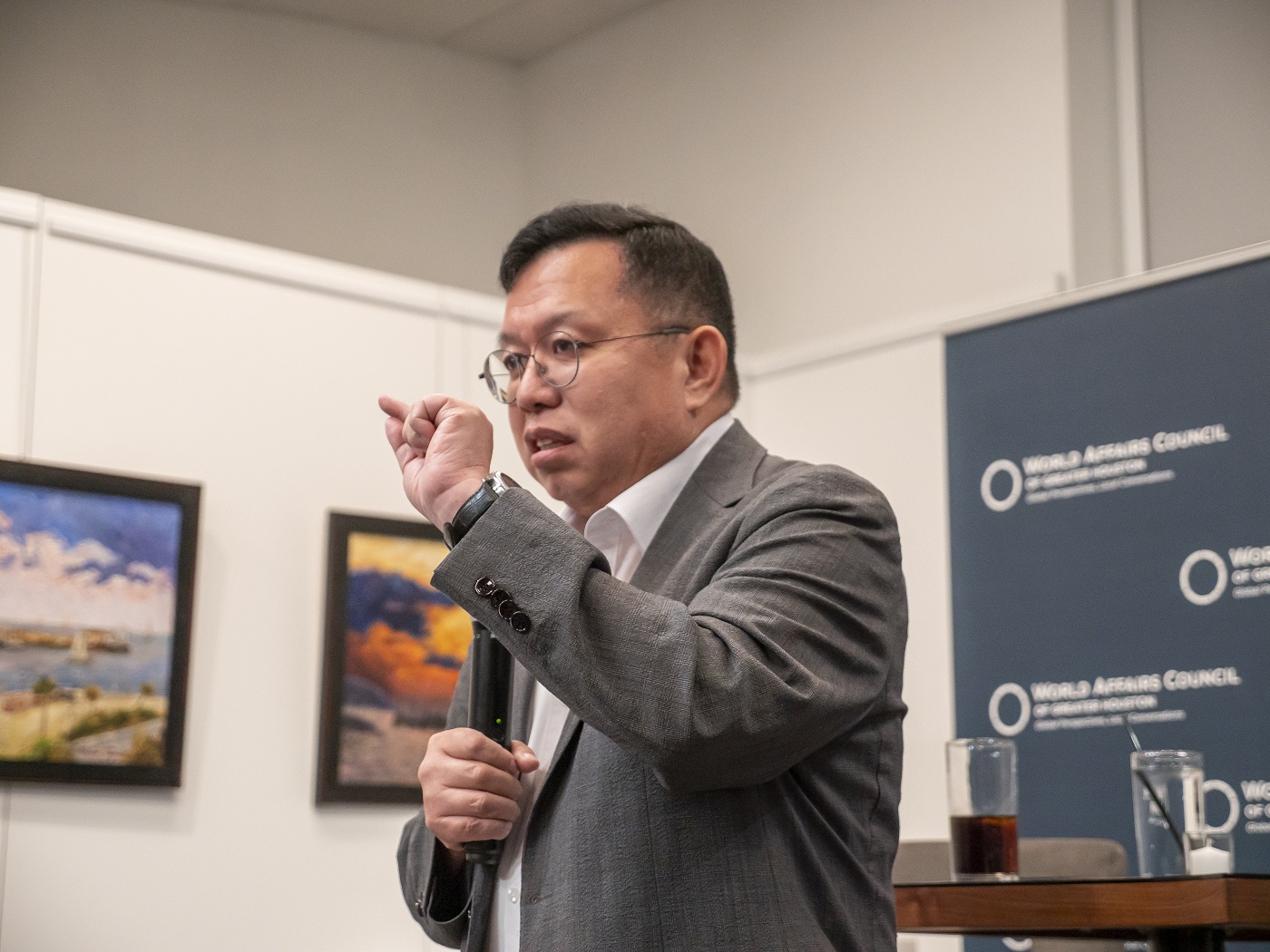
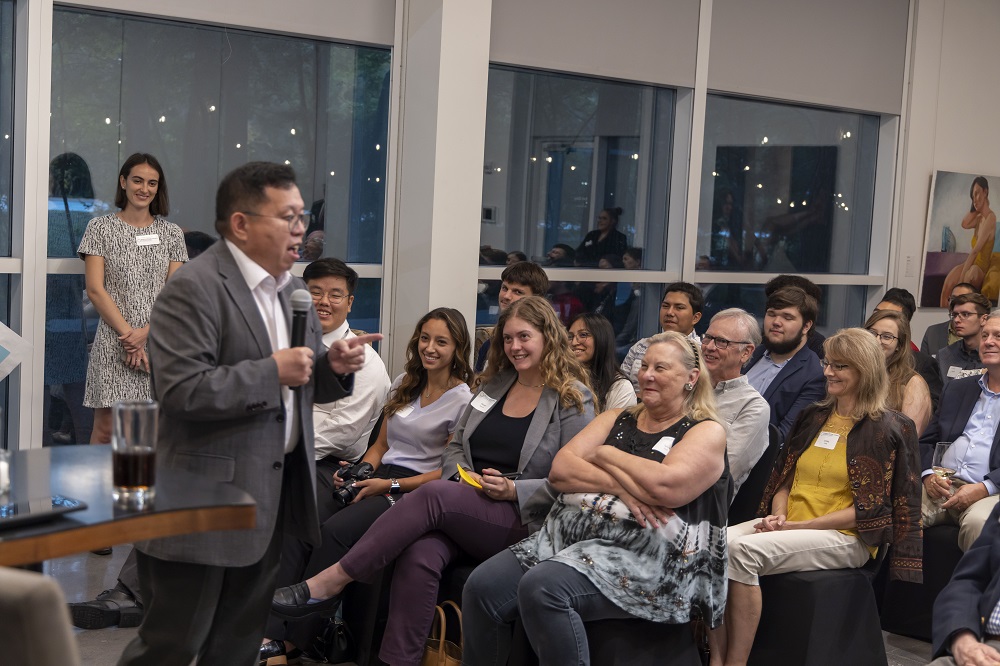
General Chun then spoke on the importance of the United States involvement in the Korean War, (1950-1953) more specifically, American troops on the ground in Korea. Chun stated, that without help from America Korea would not be where they are economically, politically, and socially today.
He then gave 5 key features about Korea that have been made possible by the U.S.
Reforestation: after the war, the whole peninsula was a barren war zone. Now, Korea has some of the lushest forests in the world.
International travel: Korea has one of the most accepted passports in the world.
Healthcare: General Chun highlighted the benefits of universal health care, including regular preventive health checks.
Public Transportation: The public transportation system is almost on par with the one in Japan.
Public Restrooms: General Chun noted, slightly jokingly, that when you must go, you don’t have to look far! Everywhere in Korea there are accessible, clean restrooms.
Ronan O’Malley then stepped as the world-class moderator that he is, and he asked a series of questions of his own and from the audience. In response, General Chun described Korea’s relationship with its surrounding neighbors.
Most of the country’s trade is done with China, although it is extremely difficult to navigate. With their neighbor to the east, there is deeply rooted emotional history. Japan and Korea have made great strides to reconcile, but politicians from both countries capitalize on the bad blood for political gain.
For the other country that shares the peninsula, General Chun Described North Korea as “a perfect dictatorship based on a cult.” The whole country is run by one family and, socially, still operates based on a hierarchal system.
Often tying historical aspects of the country to modern topics, General Chun concluded the night with one piece of advice: communication. General Chun pointed out that historically there is a lack of communication coming from America. Often we do what is in our interests, without asking the opinions of our allies. General Chun’s advice to keep communication in mind applies to much more than international relations and is sound advice for everyone.
I strongly admire the way General Chun was able to identify an area that has potential for growth in the U.S, but also express his gratitude for what is arguably one of the best alliances in history.
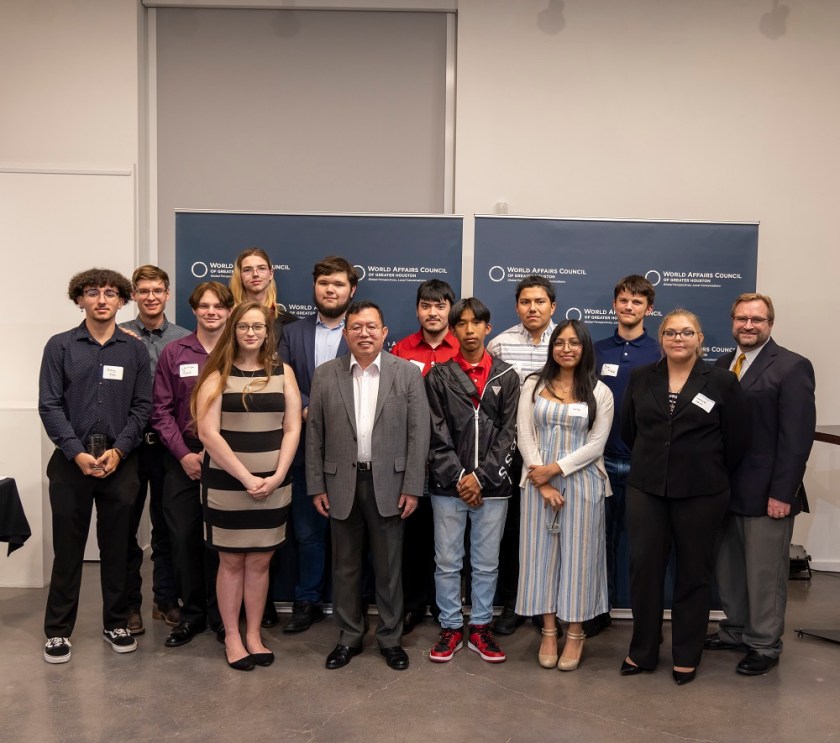
As the event drew to a close, we were able to meet with General Chun in groups. The Lonestar Honors Organization was on hand, and we had a chance to talk with them, and also photograph them with the General.
We also had a chance to meet high-school students from Caney Creek, with their advisor Eric Tanner, and they, of course, had a chance to meet with the General.
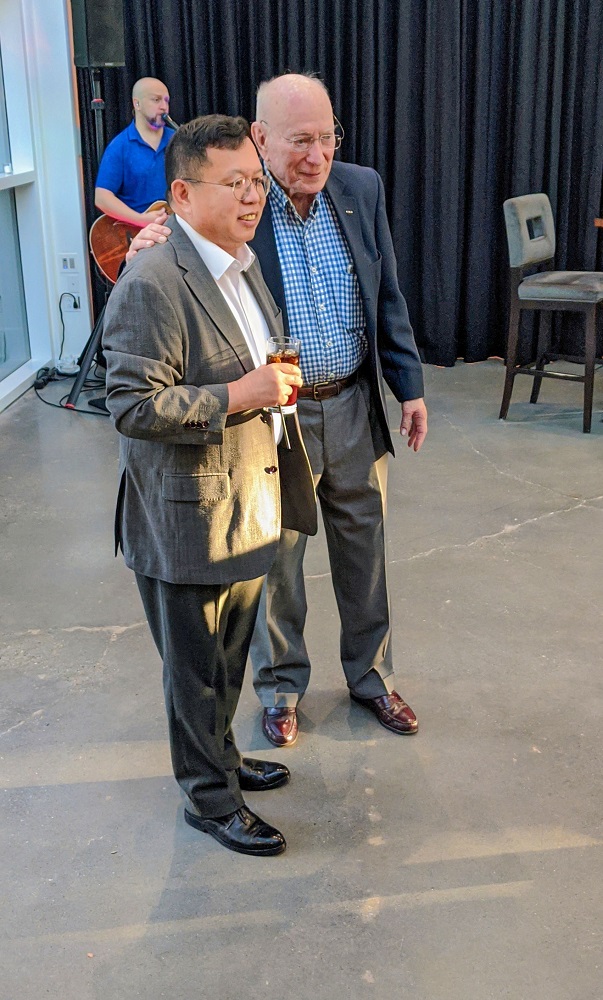
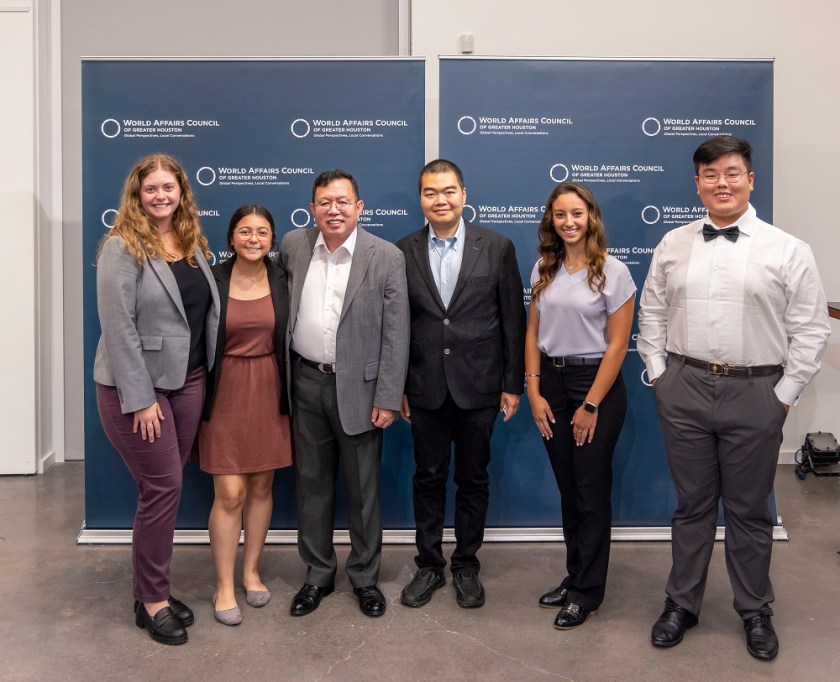
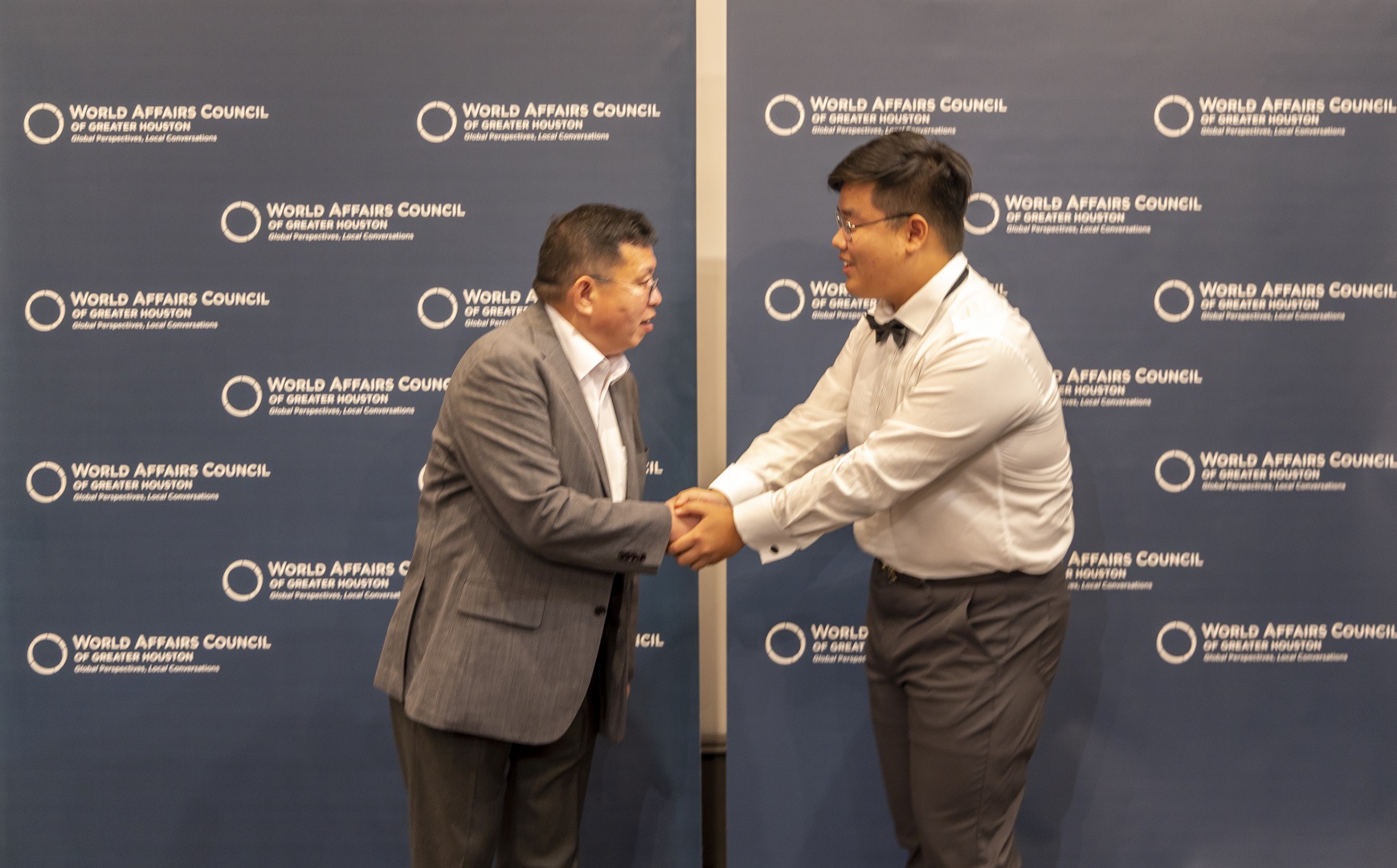
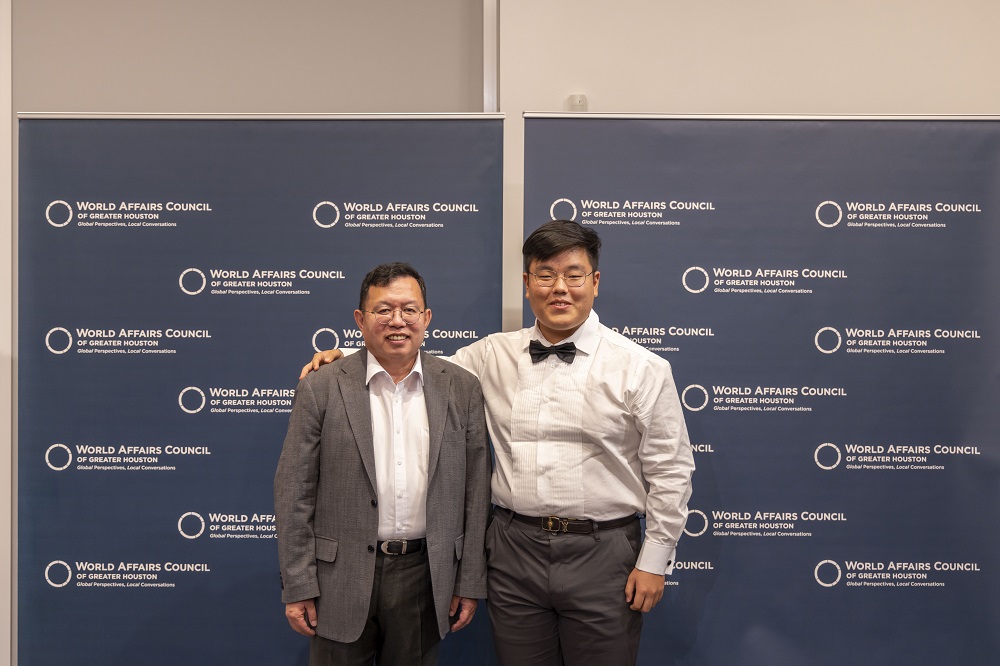
And, of course, we had a chance to meet with the General as well…
…and this was probably the biggest treat for Andrew.
On behalf of the LEAP center, thank you to the World Affairs Council for always hosting informative and enjoyable events, and to General Chun for taking the time to share your expertise about your country.
Dinner at Saigon USA Pho Grill
Our goal is always to reinforce the formal knowledge we receive from the presentation with some cultural learning in the form of food. While we couldn’t find Korean food in The Woodlands, we were able to stay close to Korea in a geographical sense, and we had an amazing dinner at Saigon USA pho & grill!
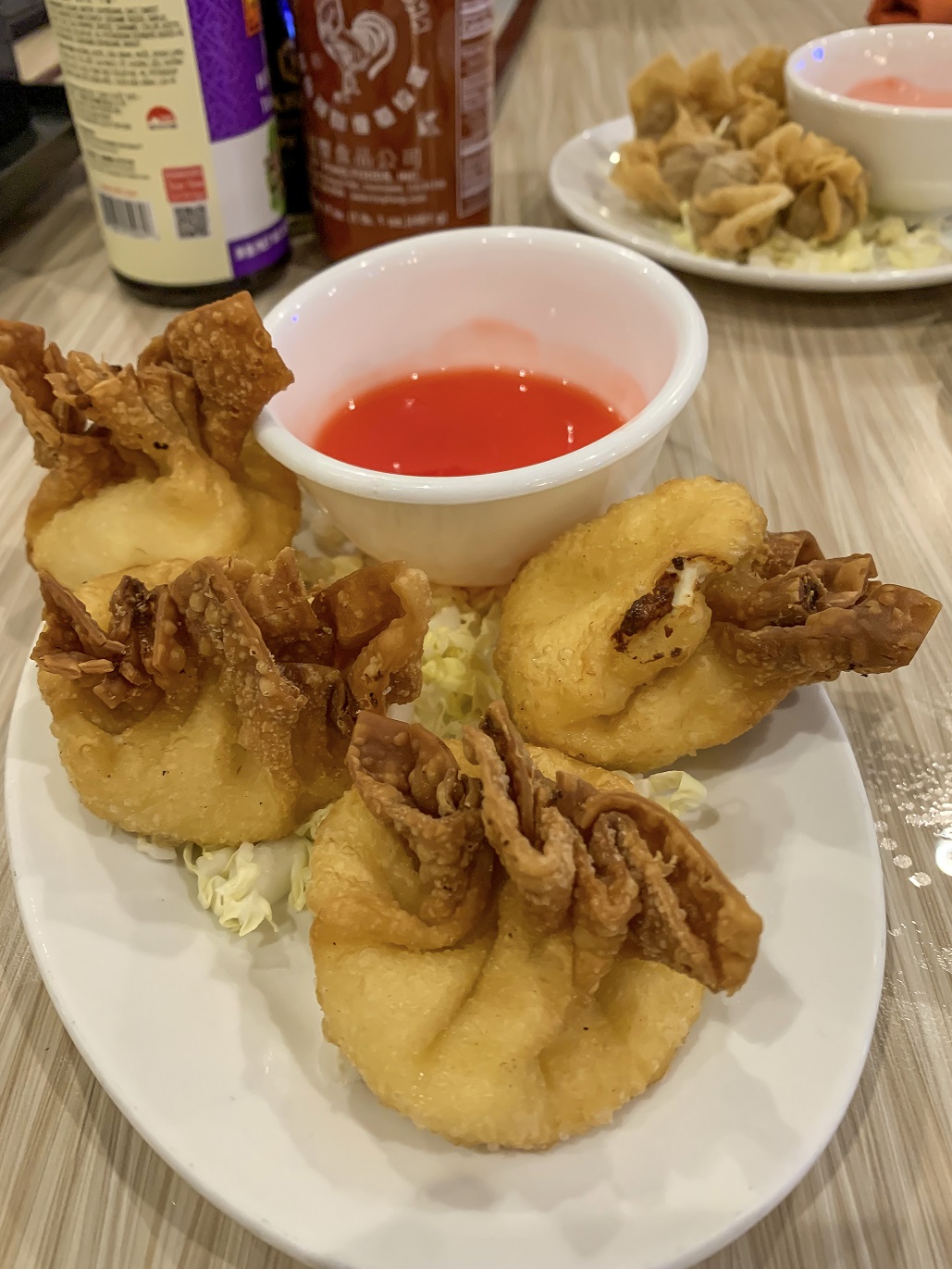
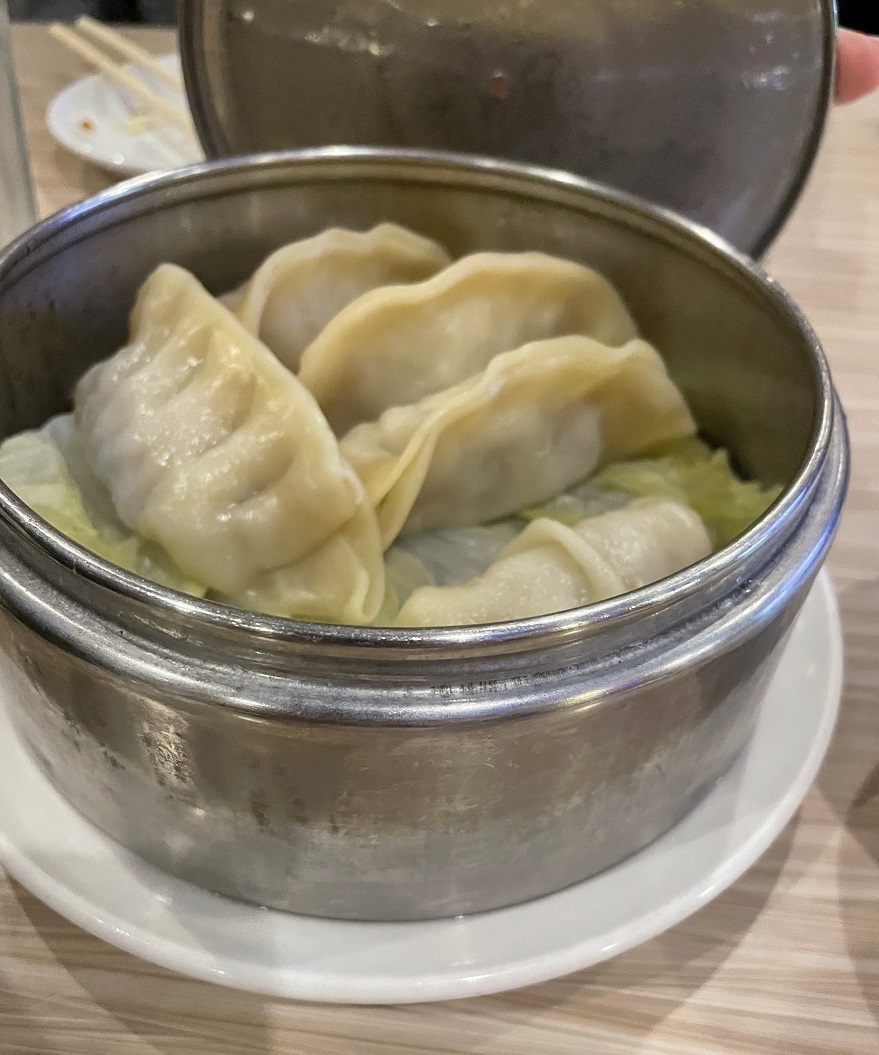
We started with an assortment of appetizers: Cheese puffs, steamed dumplings, and fried wontons. My favorite was the steamed dumplings, but all of the appetizers where amazing.
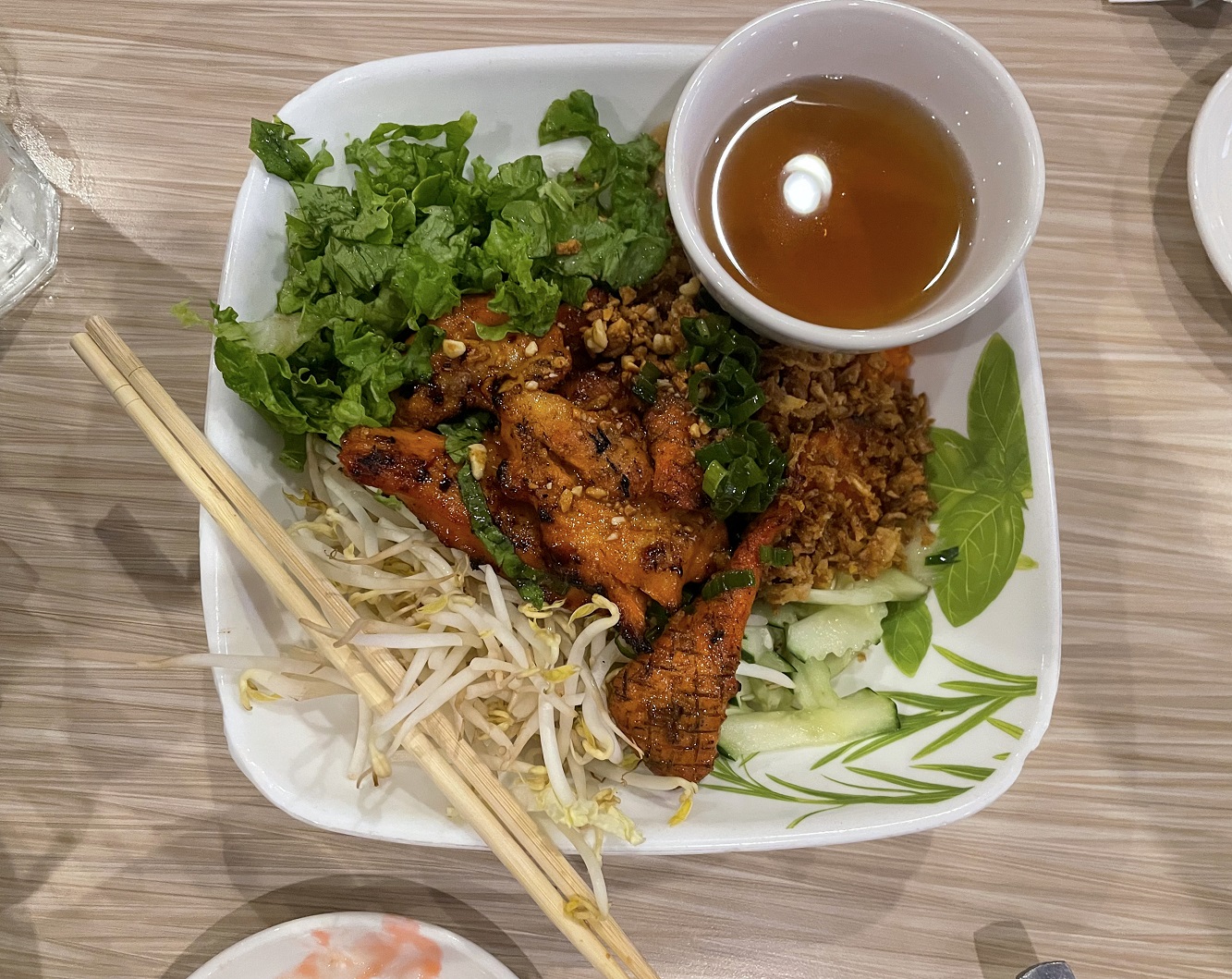
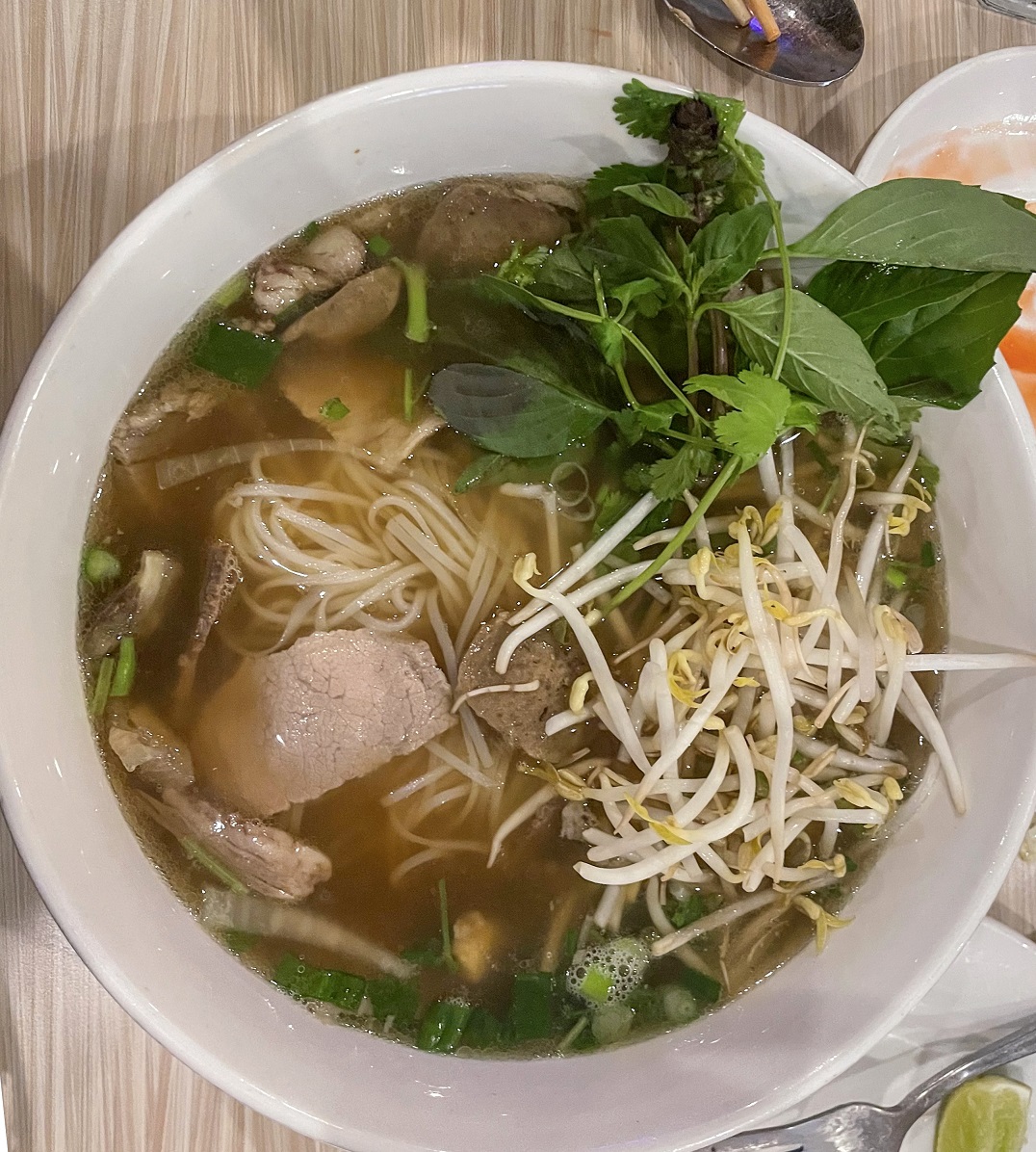
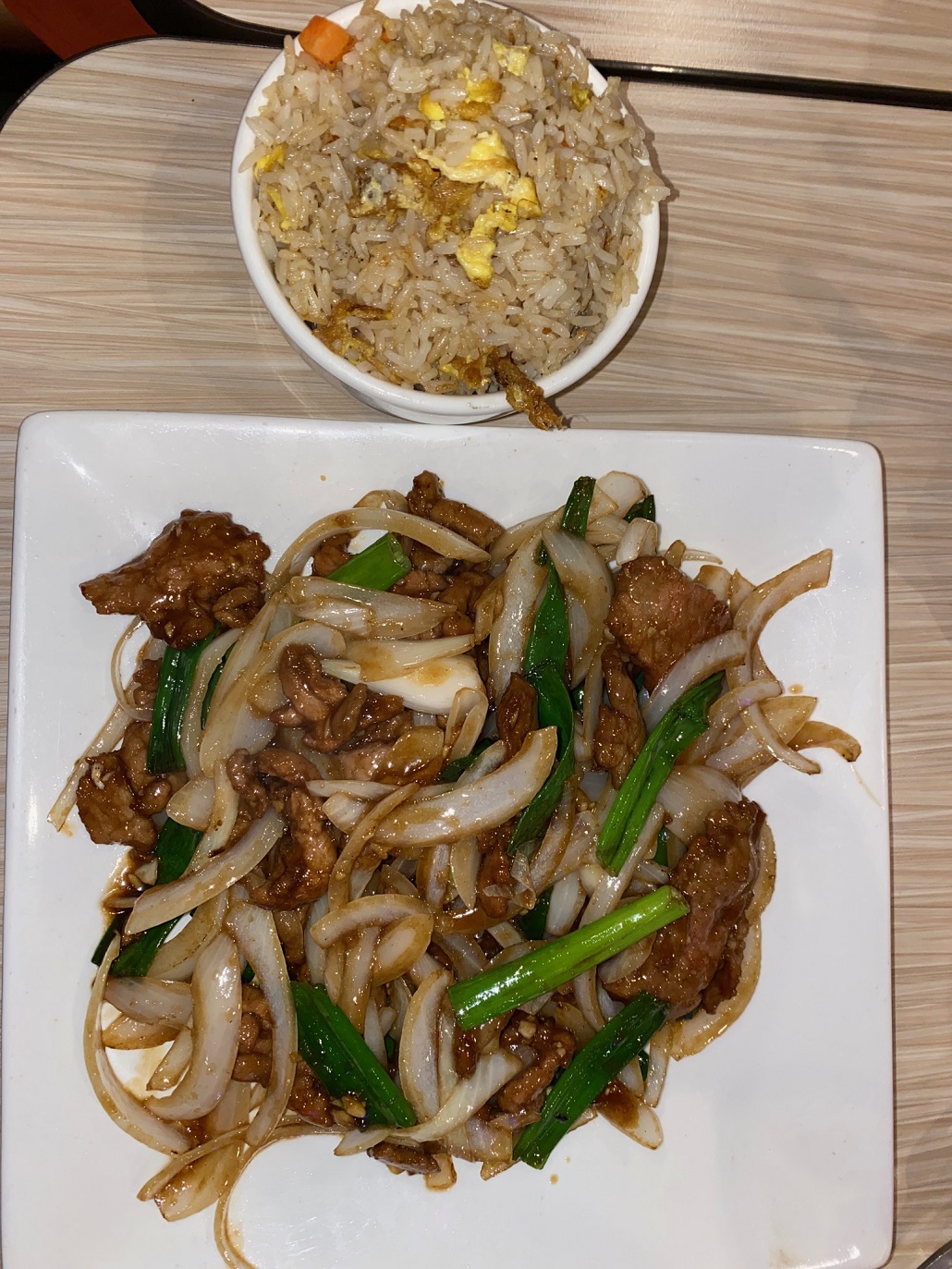
For entrées, some half of us chose Pho, and the other half chose meat and rice dishes.
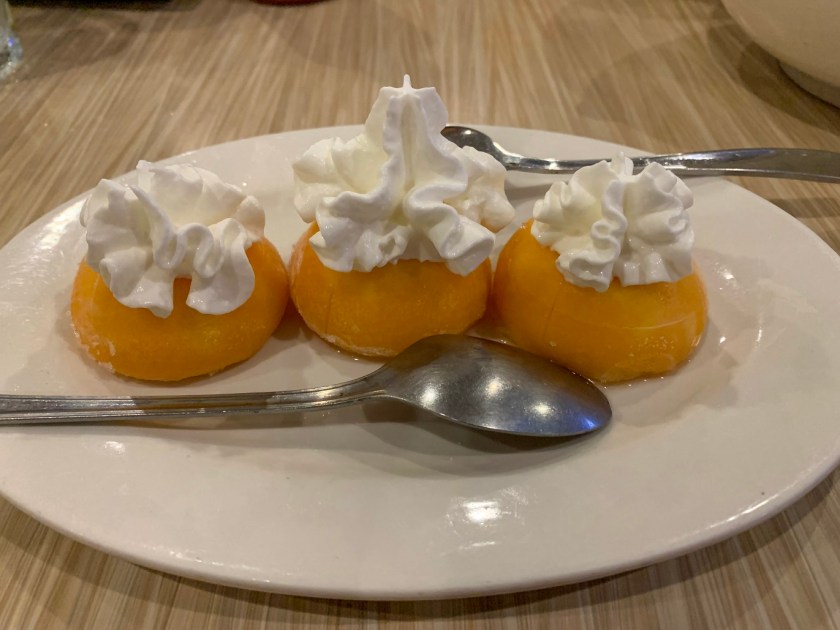
Everyone loved their meals, and we left almost no room for dessert! Because Tuesday was Yvette’s birthday, Professor Yawn, let Yvette pick the dessert, and she chose Strawberry and Mango mochi. The mochi was plated beautifully, and everyone enjoyed the sweet treat!
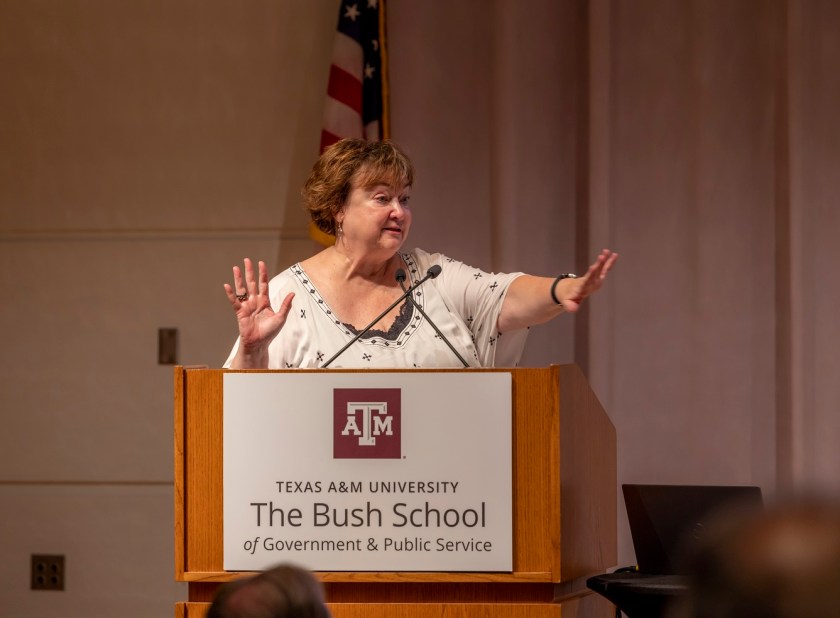
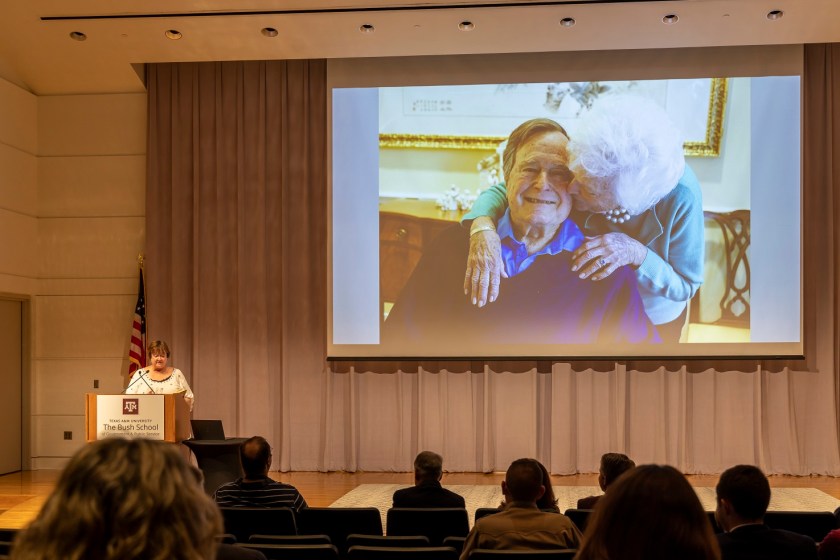
The Bush School of Government and Public Service was founded in 1997 by the 41st president, President George H.W. Bush, making this year the 25th anniversary of the school’s establishment. To celebrate, the School presented a series of programs about President Bush and public service, and one of those featured Jean Becker, Chief of Staff for President G.H.W. Bush during his post-presidency years. Not wanting to miss Ms. Becker, some LEAP Ambassadors and LEAP alum Victoria McClendon-Leggett headed to the Bush School.
Jean Becker knows the topic well. She served as Barbara Bush’s Deputy Press Secretary during the White House years (1989-1993) and President Bush’s Chief of Staff from 1994-2019. She wrote the book “The Man I Knew,” which covers her experiences working with President H.W. Bush, sharing several of her favorite stories and memories of him.
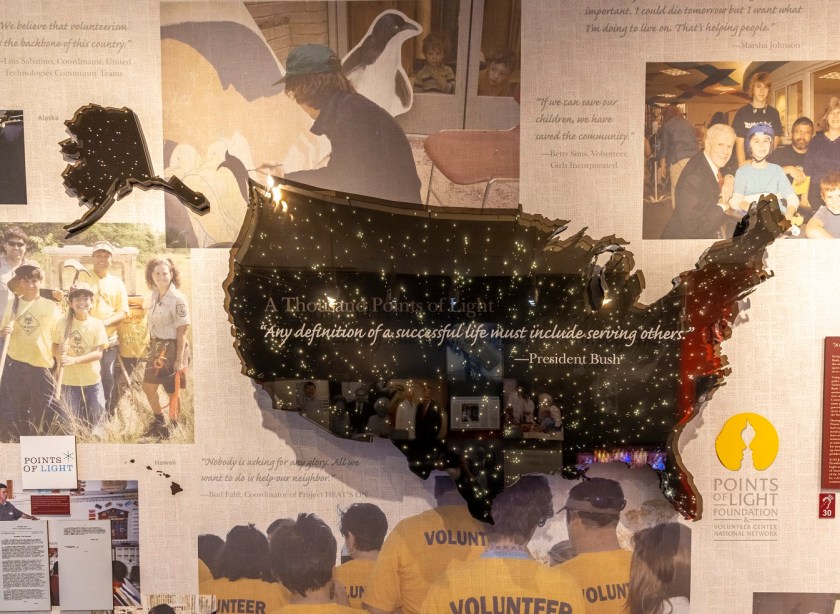
She covered the ten life lessons that Bush provided to her, which included the statement, “A successful life must include serving others.”
This, of course, resonated with the SHSU group, because it is similar to the SHSU Motto, which is “The Measure of a Life is its Service.”
As she read off all ten, the mood in the room became a bit more somber, with some even shedding a few tears. The three lessons that most stuck with me were: (1) “Do not be afraid to change your mind,” (2) “Do not be afraid to say you were wrong,” and (3) “Live life with joy.”
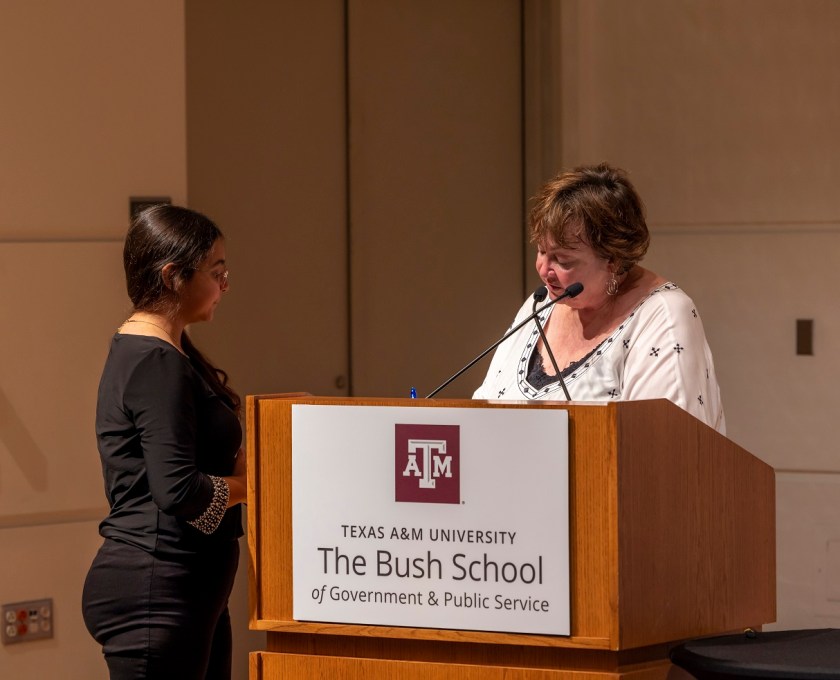
Ms. Becker offered a great talk, and she was rewarded with a standing ovation at the end. I have been fortunate to hear her speak a couple of times before, but I somehow never had her sign my book, so I asked that she do so.
She graciously agreed, and was happy to see our SHSU delegation, which she has seen before!
We continued our trip down memory lane of President George H.W. Bush’s presidency by touring his presidential library, which was smaller and a bit more intimate than President Truman’s.
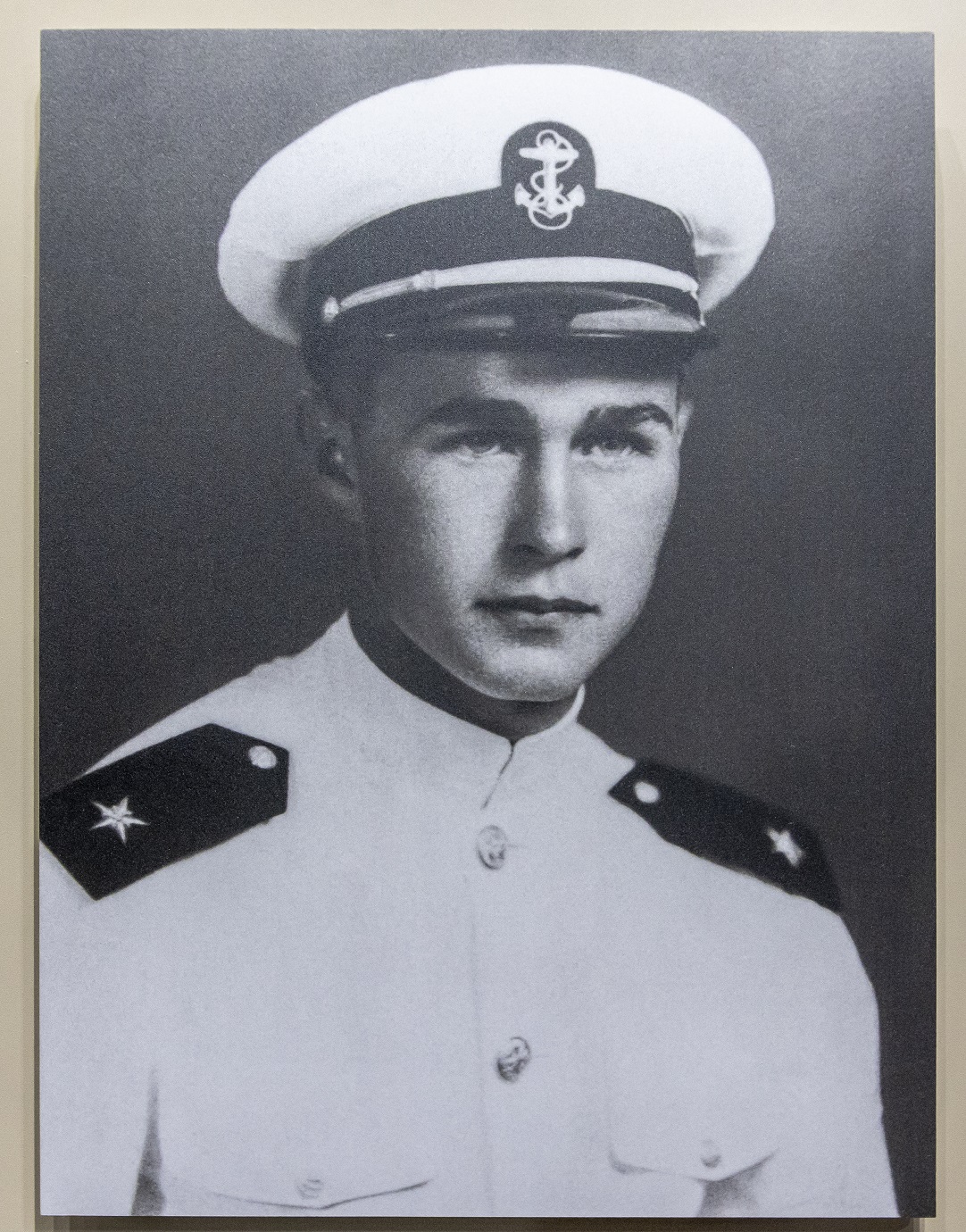
Bush’s career was so long and rich in experiences, it was fascinating to follow. We learned about his service in WWII…
…his career in Congress, his service as Director of the CIA…
…and, of course, his tenure as Vice-President and President. One of the momentous events of his Presidency was the fall of the Berlin Wall and end of the Cold War.
Even less global concerns were interesting. I learned that the same person who designed the family car that he bought also designed Marine One, which I thought was a cool fact.
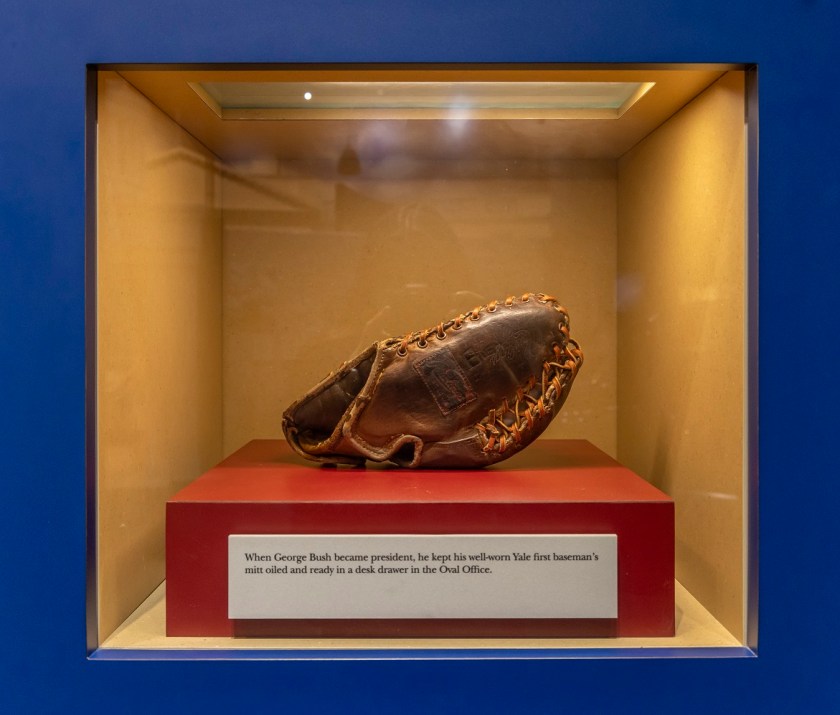
And we had a chance to see Bush’s baseball glove from college–when he played 1B at Yale and was Captain of the team.
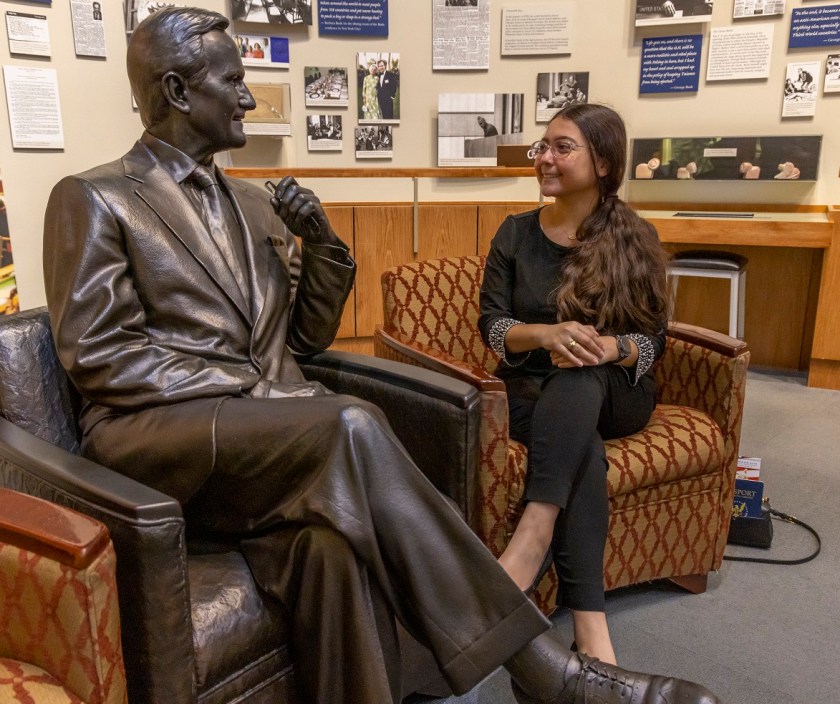
I then had both the opportunity to sit down and hear some words of wisdom from President Bush…
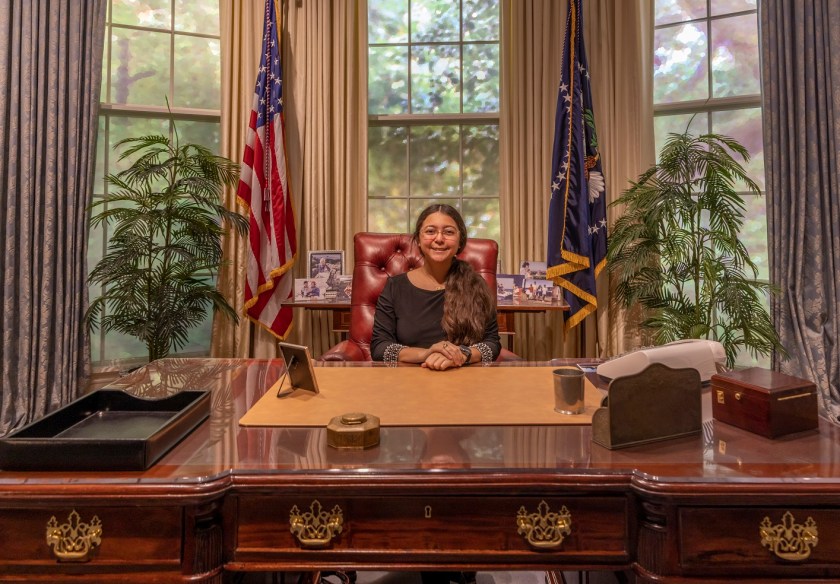
…or at least that’s how I imagined it, as well as sit in the replica of his Oval office, and so did Ashlyn!
During her speech, Ms. Becker spoke on the impact that First Lady Barbara Bush had on her. She even read off an excerpt from the book she wrote, Pearls of Wisdom, sharing Mrs. Bush’s words with everyone. In case you are wondering why the book is titled as it is, it is because Mrs. Bush always wore pearls; it was her signature. She even had a section dedicated to her in the Bush Presidential Library that walked us through her impacts as First Lady.
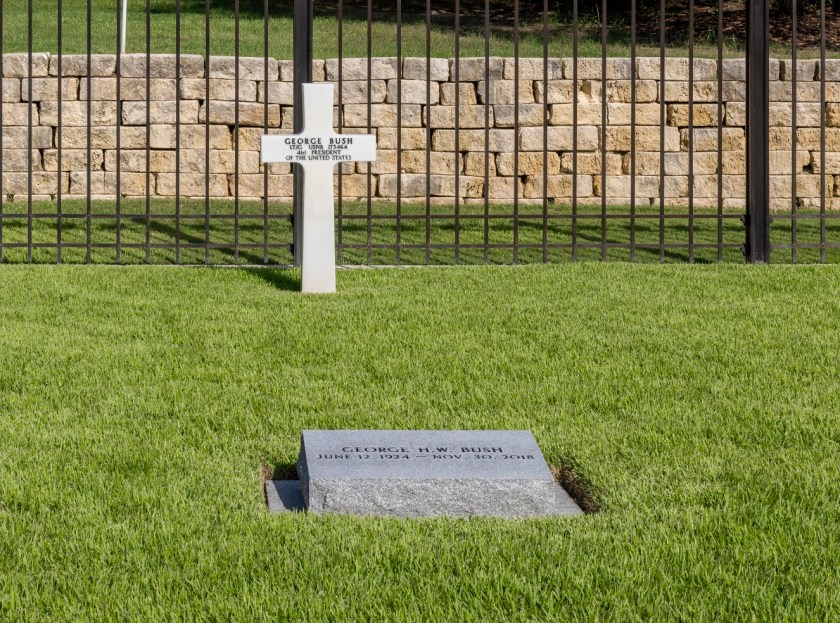
Unfortunately, we were not able to see the train that transported President H.W. Bush to College Station since it was covered up and potentially undergoing restoration. Although they did have a small replica of the front cabin near the beginning of the Presidential Library. This did not stop us from touring the grounds, since it was Ashlyn’s first time at the Bush School and the Bush Family graves.
As we were leaving, one of the staff from the gift shop informed us that Sully, Bush’s service dog, was inside the presidential library gift shop.
Without thinking twice, all three of us went back through the doors and security to see Sully, we were beyond happy when we were allowed to take a picture with him.
It is not every day that we get to see a presidential dog, much less capture the moment. I was very thrilled to have been able to visit my second presidential library, get a stamp on my presidential library passport, and see Sully.
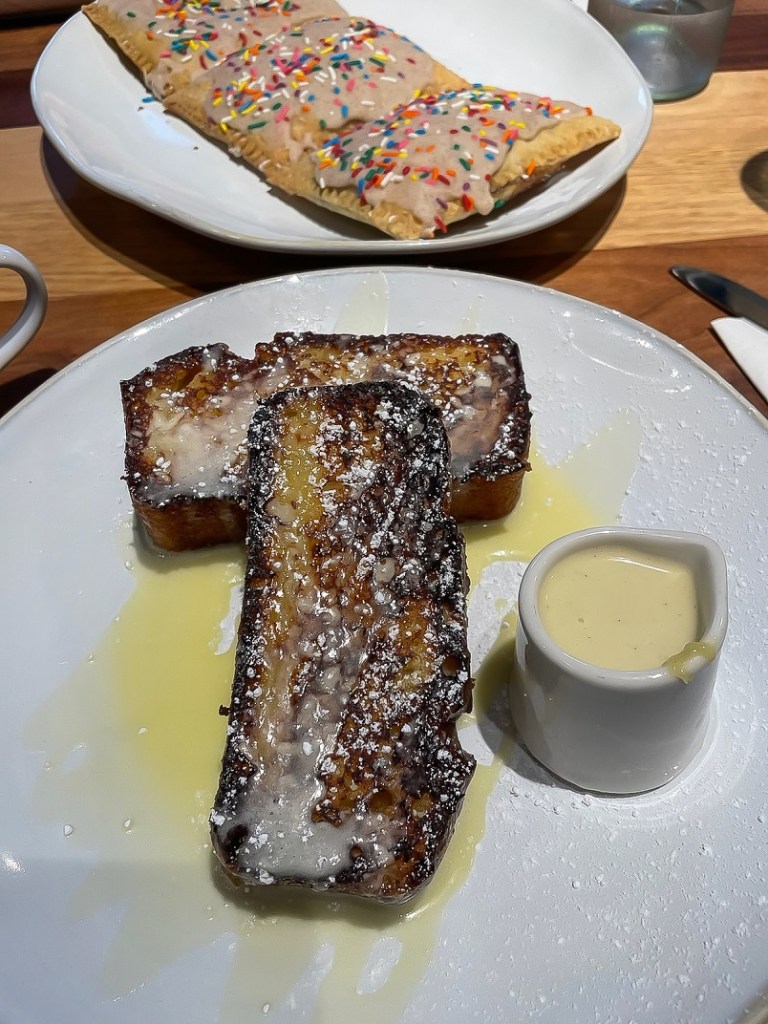
Our early rise in Wichita, KS was accompanied by a nice and cool breeze! This morning we had a hankering for a more local taste for breakfast, and we were excited to try the homemade pop tarts from the local restaurant, HomeGrown. Sure enough, upon arrival, we had three of their brown sugar pop tarts, which were very tasty!
This time around, Morgan and Yvette ordered zesty yet sweet lemon dishes, Limoncello French Toast and Lemon Ricotta Pancakes.
Ashlyn ordered one of their specialties, the Croissant French Toast.
The seasonal flavors were a nice contrast to my savory Chilaquiles Verde Bowl, which was delicious. It was a great breakfast filled with an assortment of flavors!
If you are ever in Wichita, HomeGrown is a must-try especially if you want a taste of something local!
Frank Lloyd Wright’s: Allen House
Yvette Mendoza
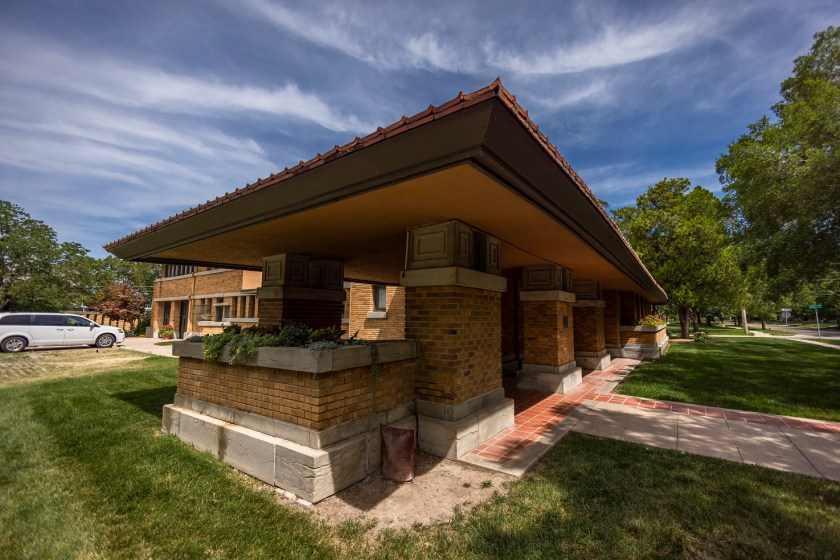
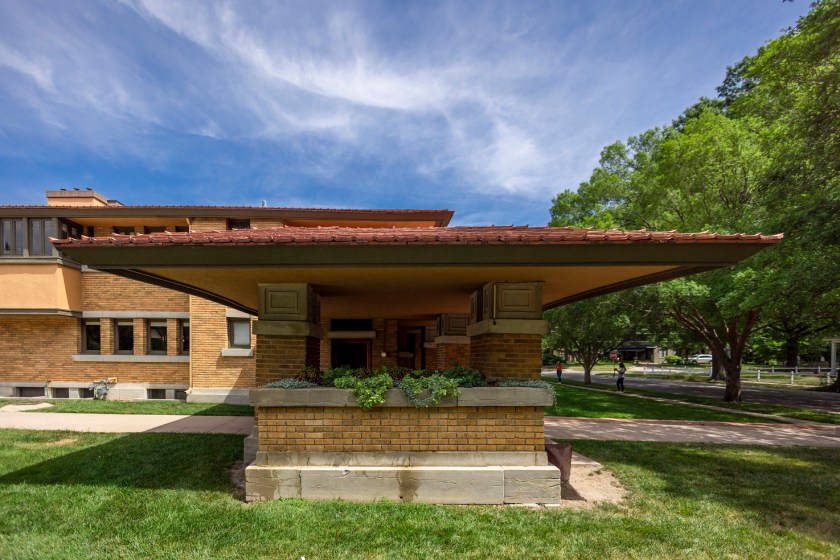
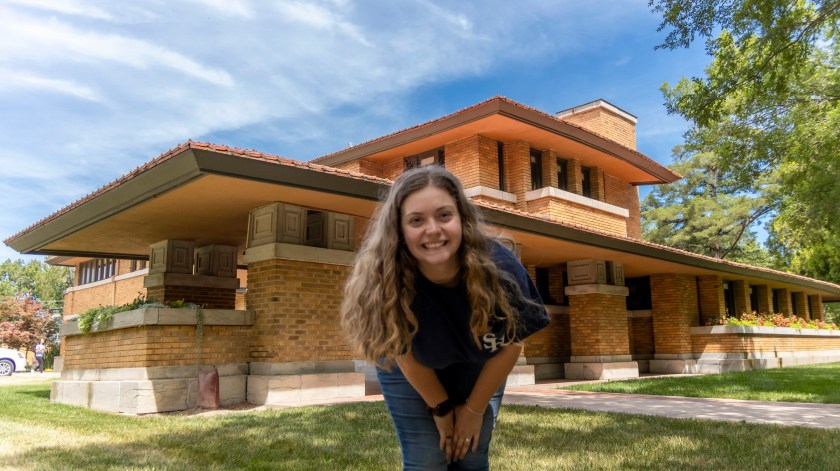
Our next stop was also a local gem, one specifically designed for the prairies of the interior plains of Kansas: the Allen House. Completed in 1918 by Frank Lloyd Wright, the home was stunning! Not only does the home provide a glance back to an earlier time, but the intricate detail and expert craftsmanship are excellent examples of Wright’s works.
While we could listen to facts and history about the house itself for hours on end, it is important to know about the family who commissioned it. Our tour guide, Mary, wove the history of the Allens with facts about the home during our tour. Henry J. Allen was a Wichita native, newspaper editor and publisher, U.S. Senator, and two-term governor of Kansas. When the Allens decided to build a new home, they remembered hearing about a certain architect with quite the reputation. By word of mouth, he and his wife Elise, knew that they must have a Wright home of their own in the city of Wichita!
Since Wright took on designing the Allen’s dream home soon after working on the Imperial Hotel in Tokyo, Japan, there is a beautiful incorporation of Japanese techniques within the home.
Wright is known for bringing the exterior and the interior together; the effect of the outside meeting the inside is truly captivating.
The Allen House employs the use of horizontal lines, examples of this can be found in the cantilevers, etched designs, light fixtures, and even the grout between the bricks!
Instead of aligning the bricks with the grout, Wright deeply ranked the grout in and created more horizontal lines in and out of the house. With each home we have seen, it is easy to fall in love with the personality Wright gives the home.
Wright loved to add a poetic nature to everyday items, and with crystalized frozen air (windows) lining the home, it truly does make the home a work of art.
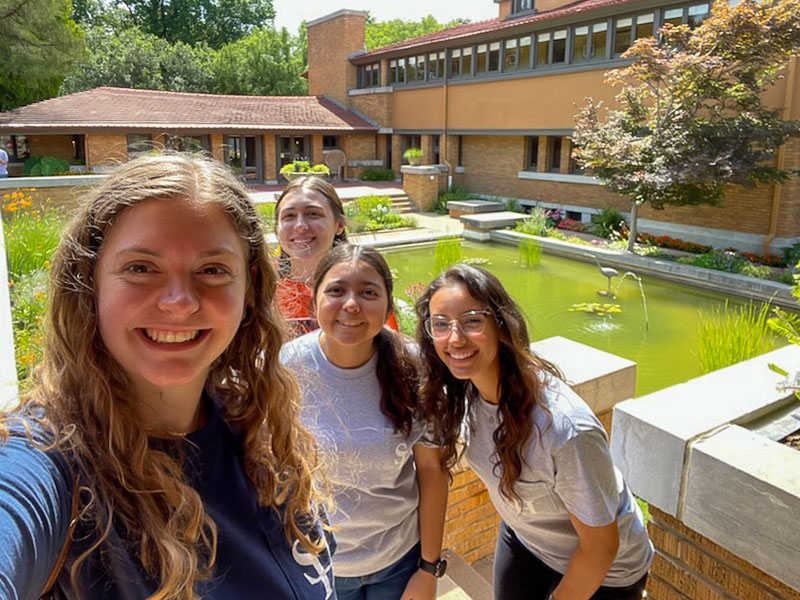
The home is filled with Wrights’ iconic built-in bookshelves, five fireplaces, and a Japanese-style pond, making for quite the property. The living room and dining room are adorned with crystalized frozen air (windows) that contain colors found in nature. The lamps around the home show the Japanese influence and are crafted with mulberry paper to create a softer light (photos were not allowed inside).
Wright implements a technique called compression and release in the living room in which you transition through a small door and low ceiling to a grand living room.
Elise Allen was an art collector herself and had several pieces around the home. Some reflected religious motifs, while others were done in a Japanese fashion; but most interesting to us was the Birger Sandzén lithograph!
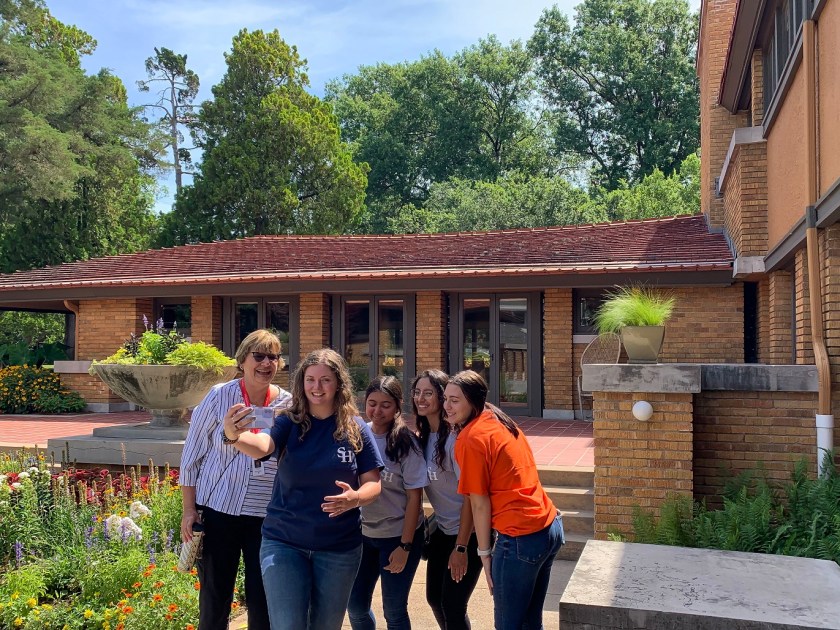
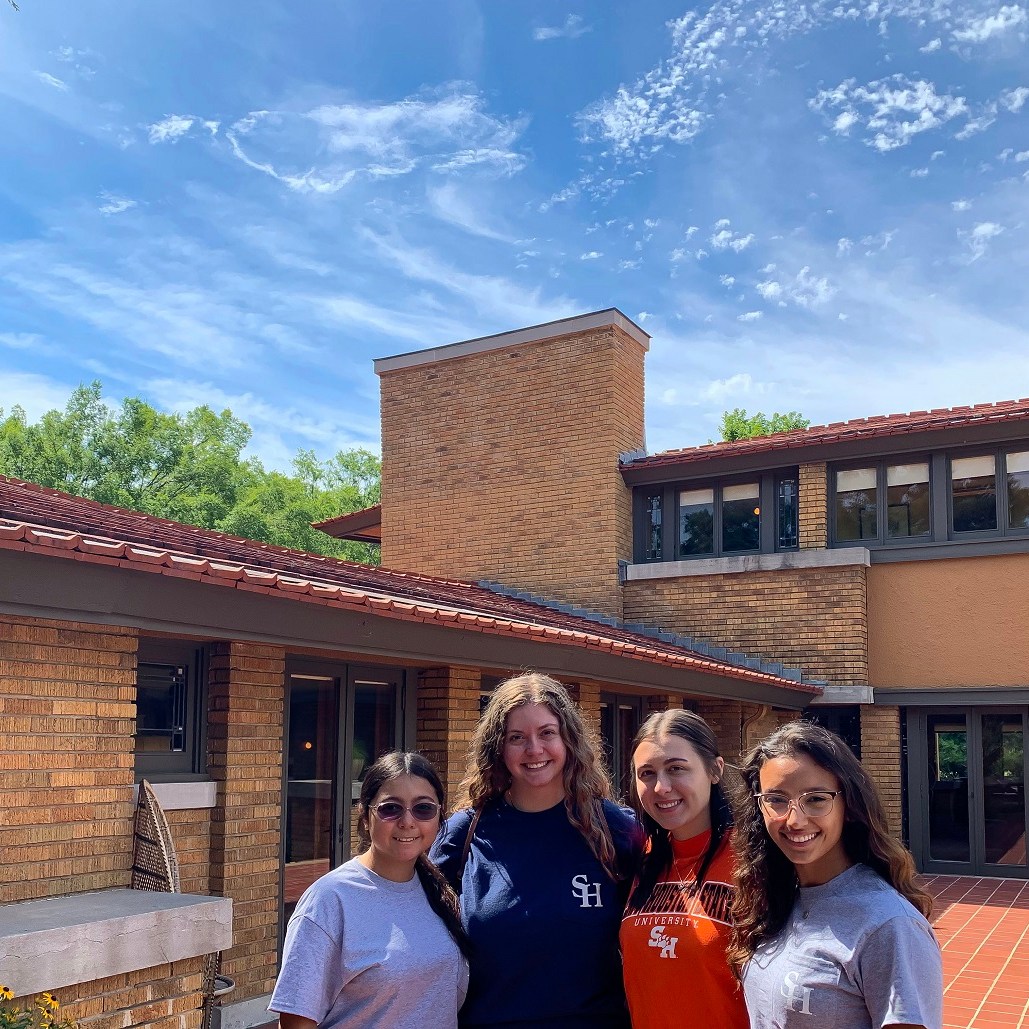
We were in awe of the beautiful home and were not ready to leave, but we didn’t leave without snapping a picture in the beautiful garden maintained by seven master gardeners who donate their time to maintain the home’s landscape.
This tour couldn’t have been possible without the excellent staff and our tour guide, Mary, at the Allen West Home.
As a result, we learned more about Frank Lloyd Wright and the Kansans who cared about educating others regarding the legend and art of Frank Lloyd Wright.
Larkspur Bistro & Bar
Jessica Cuevas
Not only was the Frank Lloyd Wright Allen Home an amazing tour but it also helped us pick our lunch destination! Before touring this beautiful home, we had two options in mind that we were struggling to choose between. However, after we saw a Larkspur flower in the garden, we took it as a sign to eat at the local Larkspur Bistro & Bar! How could we not?
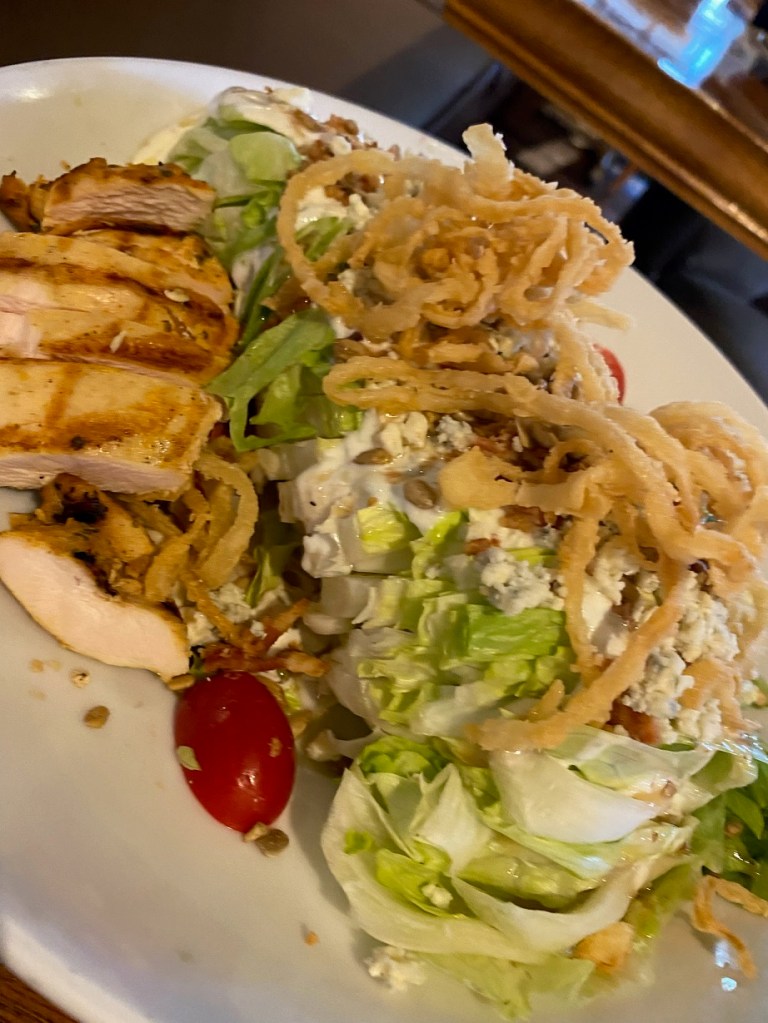
Mary, our guide for the Allen Home tour, recommended that we try their Kansas Wedge Salad and, sure enough, that is what Ashlyn and I ordered.
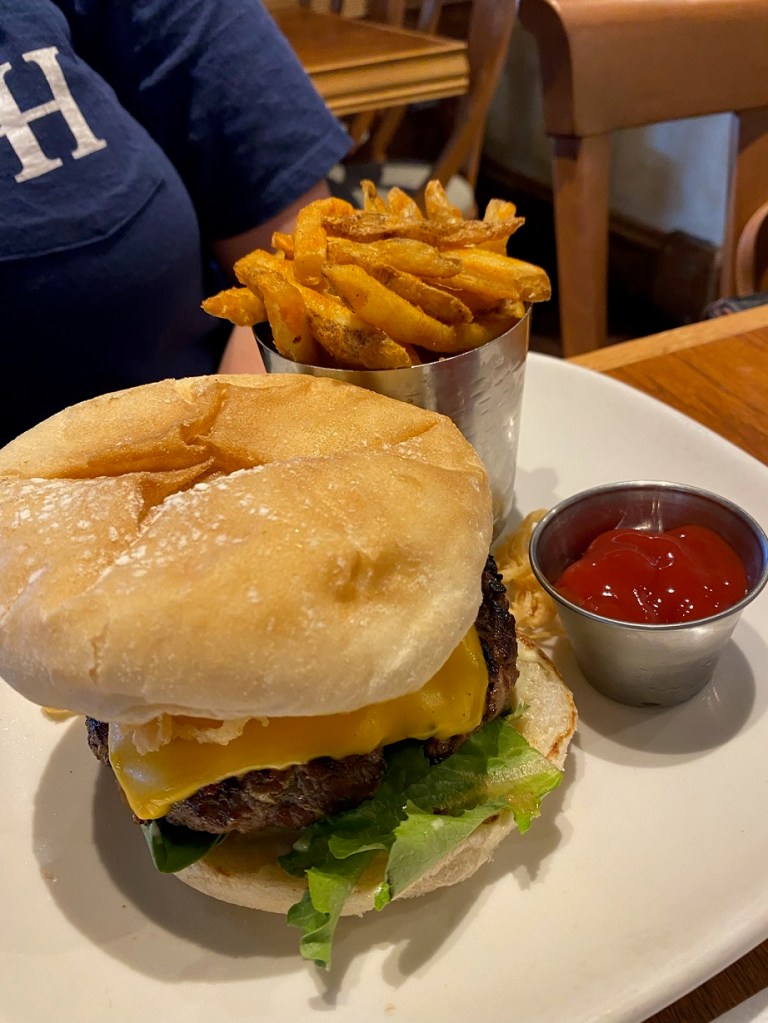
For our appetizers, we had delicious, crafted bread with oil, hummus, and crab cakes. Yvette ordered the Salmon Fettuccini and Morgan the Air Capitol Burger.
Larkspur Bistro & Bar was yet another great local stop on our trip and we love getting the recommendations from locals!
Wichita Art Museum Ashlyn Parker
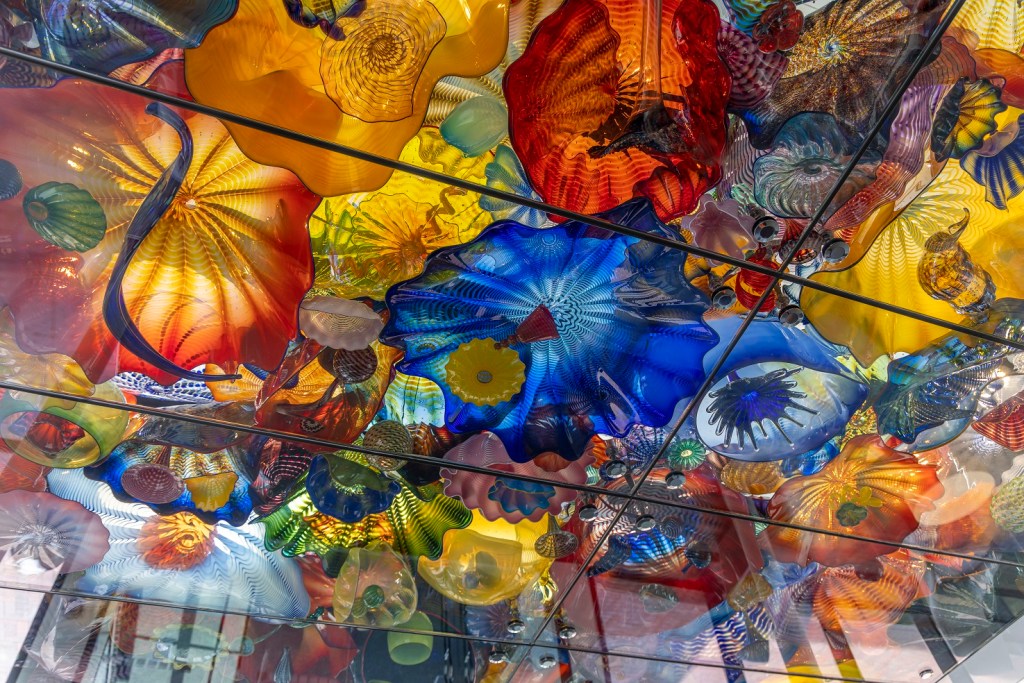
After lunch, we headed to the Wichita Art Museum. To our surprise, upon entering the museum, we were met by a Dale Chihuly Persian Ceiling!
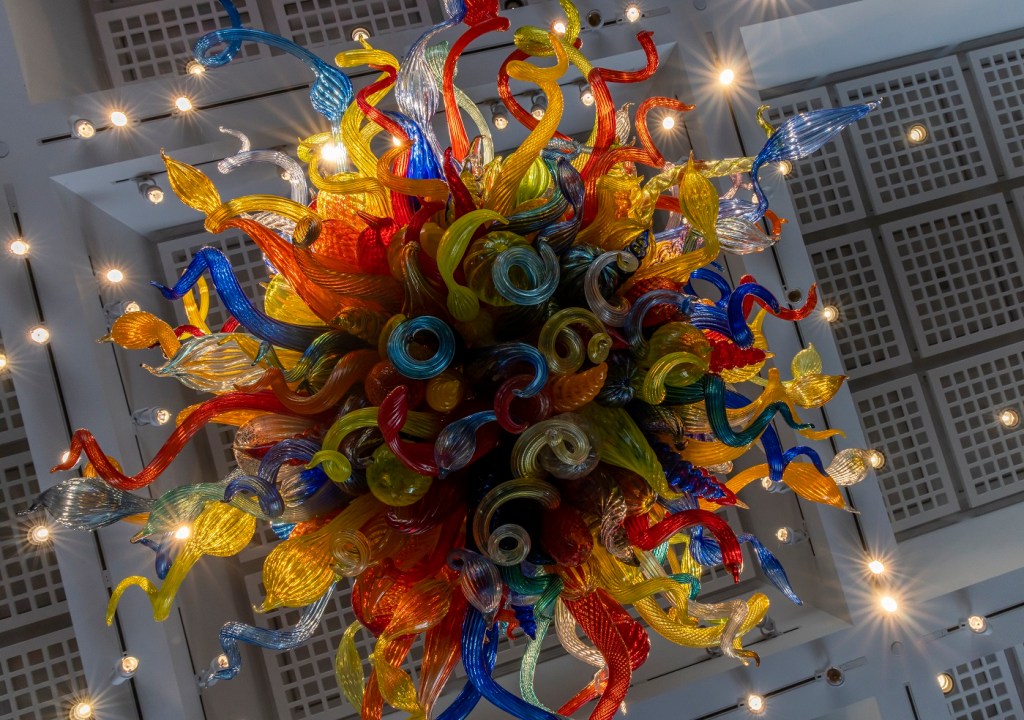
We thought that we would experience the Persian Ceiling, also known as the Chihuly Bridge, from one viewpoint, but the surprise continued as we made our way to the second floor and were able to walk across the glass work! In the atrium of the museum, another Chihuly piece, titled Confetti Chandelier, is featured with the typical swirls and orbs illuminating the space.
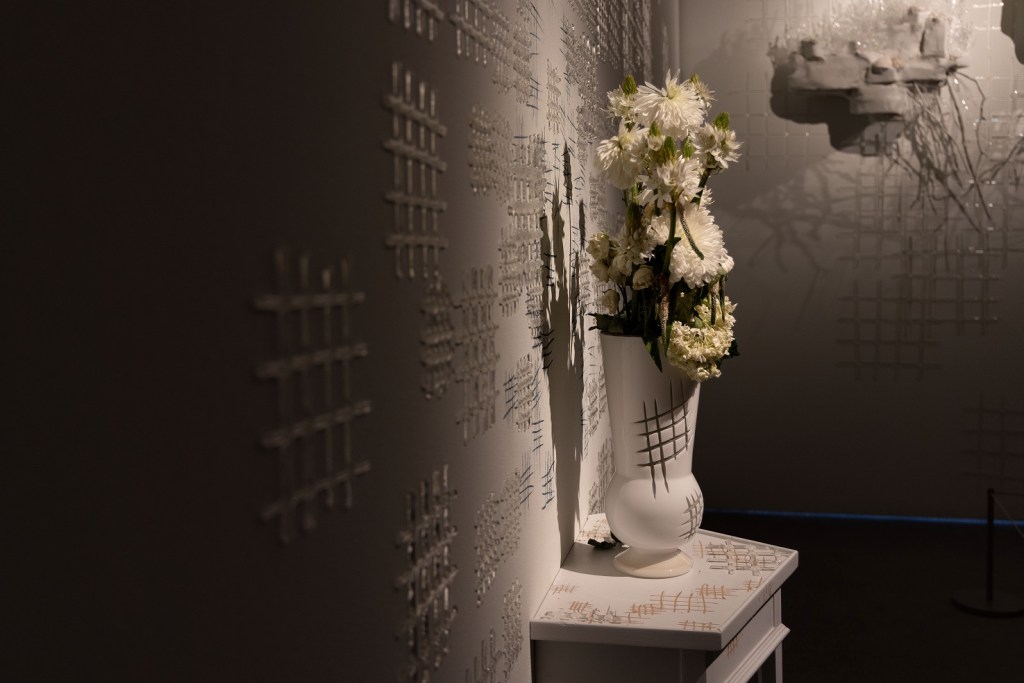
This museum offered many different styles of art including one exhibit that was strategically lit to display the pieces of contemporary artist, Beth Lipman. Her work is most famous for her use of glass still-life compositions. One piece, in particular the Laid Table, uses common pieces of glass such as a bowls, vases, or plates in a unique way beautifully placed around a tabletop. This piece used about 500 separate pieces of glass to create and lots of glue. The glass in her work represents the fragility of human lives and how delicate they really are.
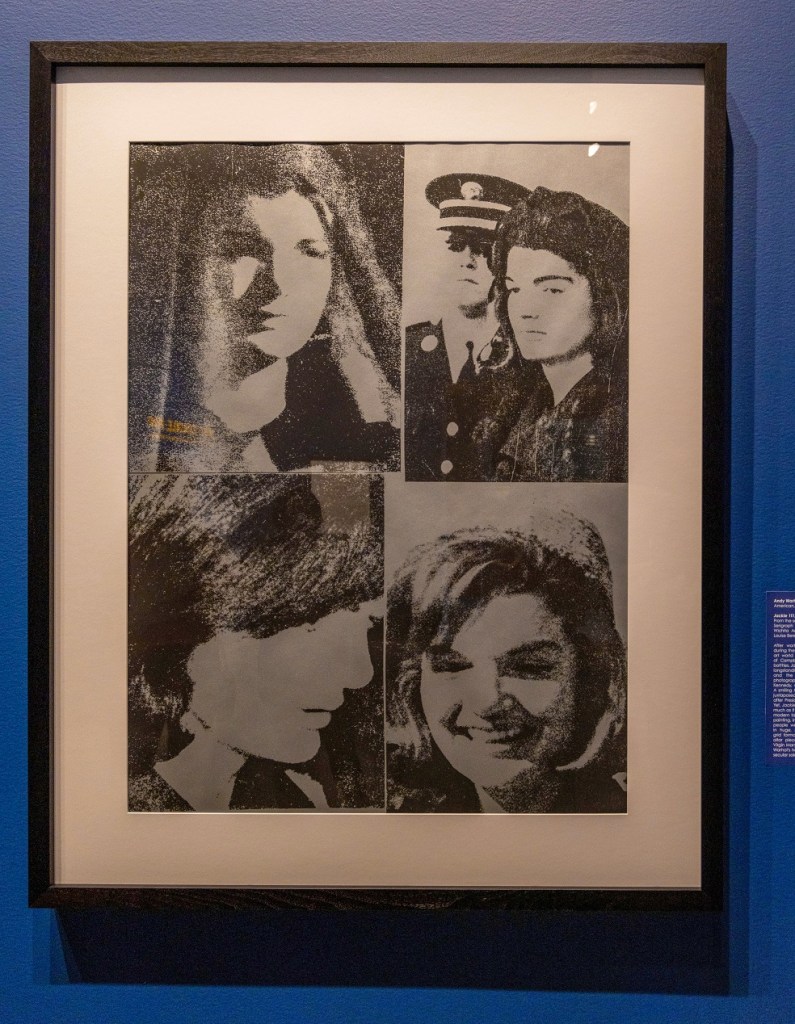
We came across works by artists we have seen in other museums on our trip. There was an Andy Warhol lithograph depicting scenes of Jackie Kennedy as a remembrance of her husband John F. Kennedy after he was shot. The painting is in typical Warhol fashion as it is divided into four squares, with the image in each square exemplifying a different emotion.
The Carlene and Lee Banks Rotunda Gallery contained 19th-century oil paintings, and everyone tried their hand at guessing the artists. Morgan probably did the best of all of us, an outcome that might have been helped by the fact that Thomas Moran was among the artists in the mix.
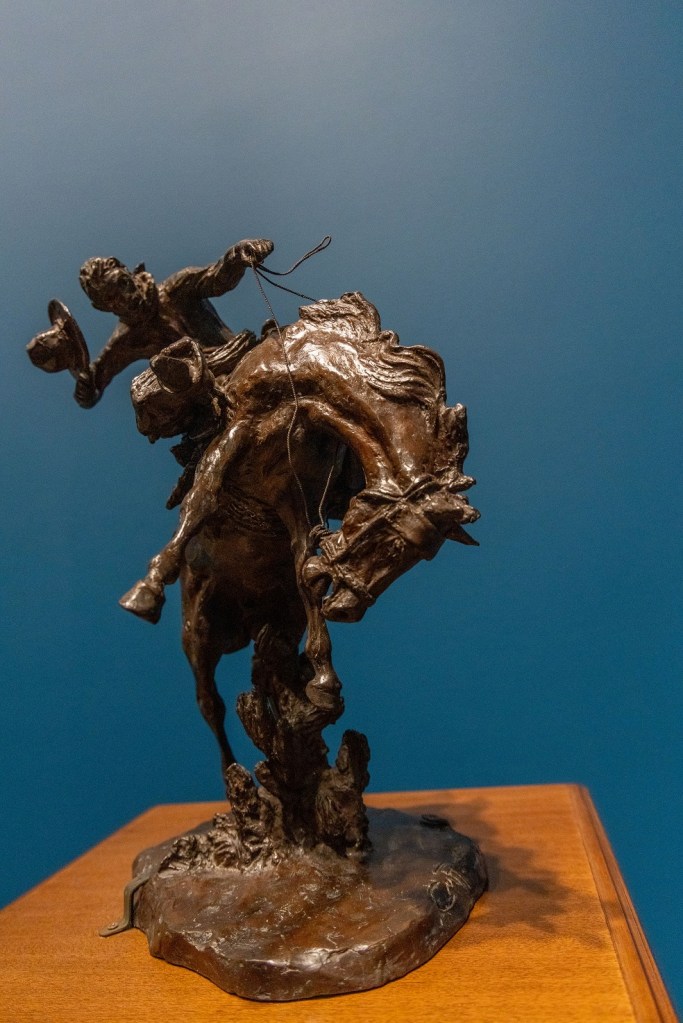
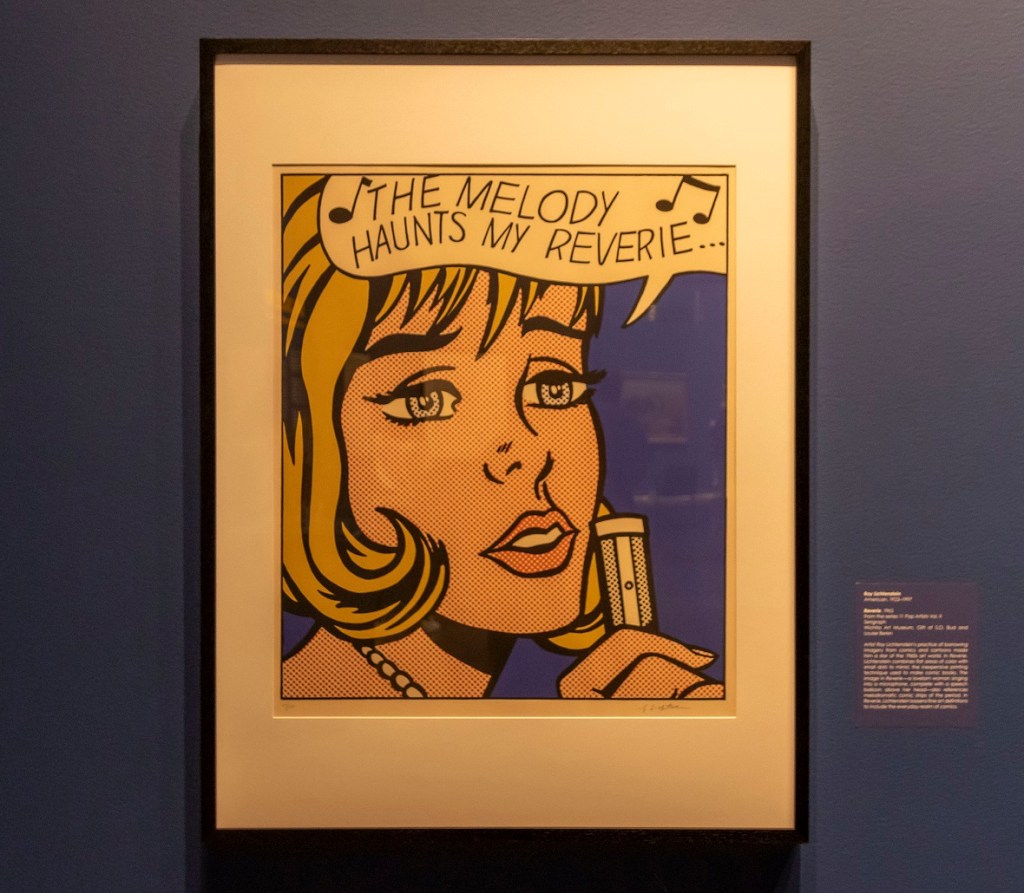
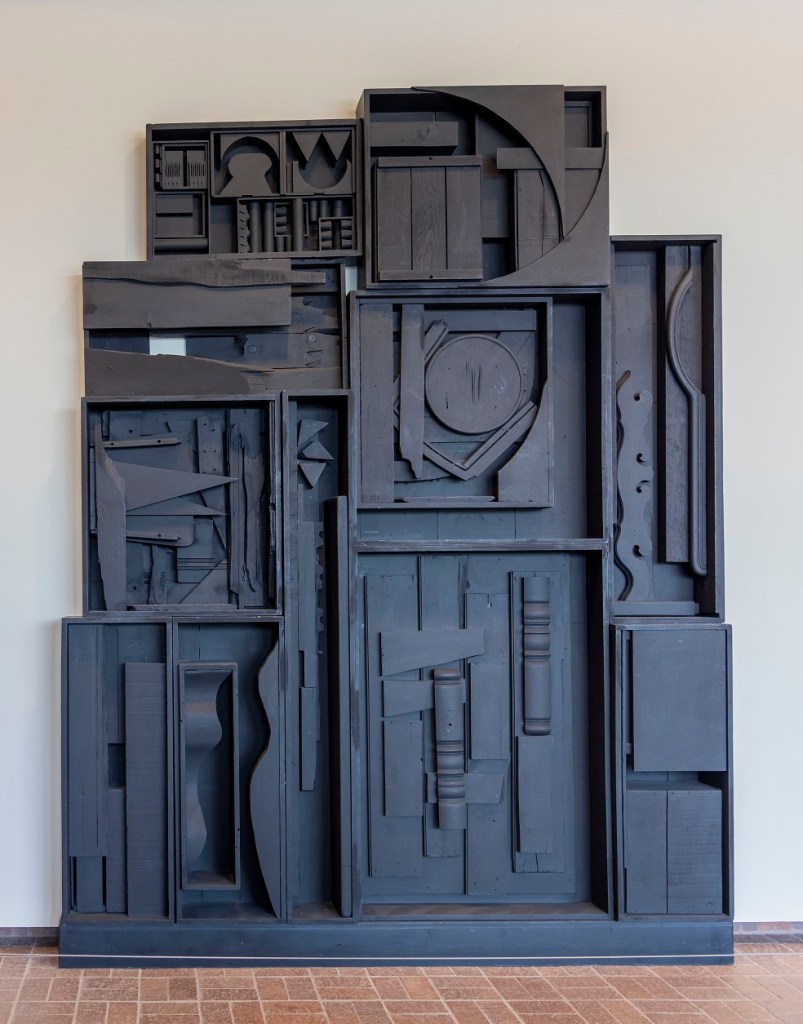
But we all saw works by familiar names: Frederic Remington, Roy Lichtenstein, and Louise Nevelson, for examples.
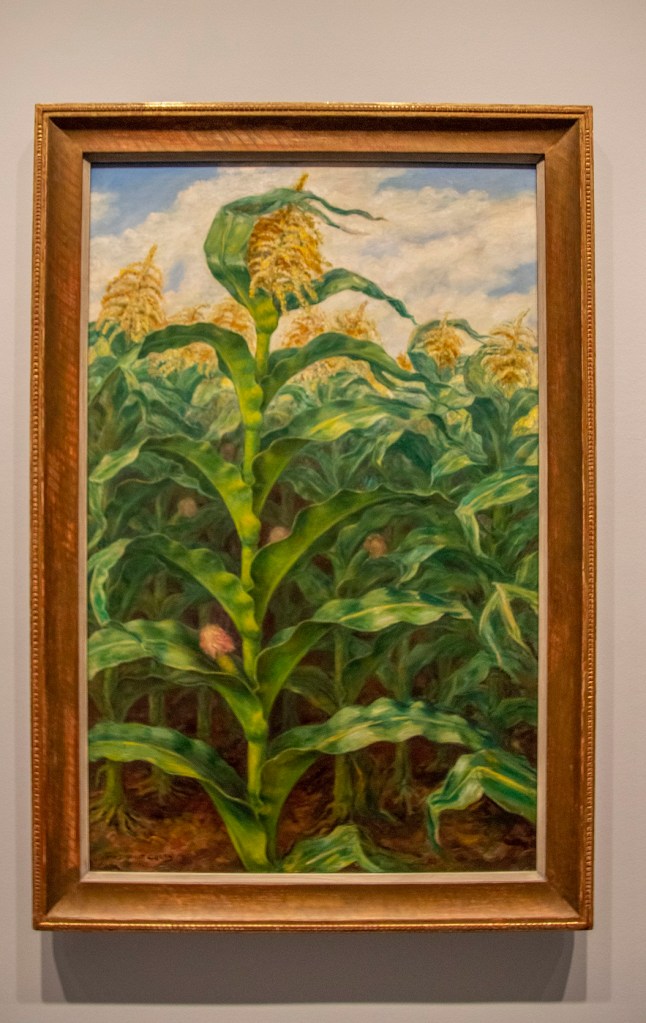
We also saw two artists we weren’t fully familiar with, but which we would become familiar with over the course of the trip: John Steuart Currey…
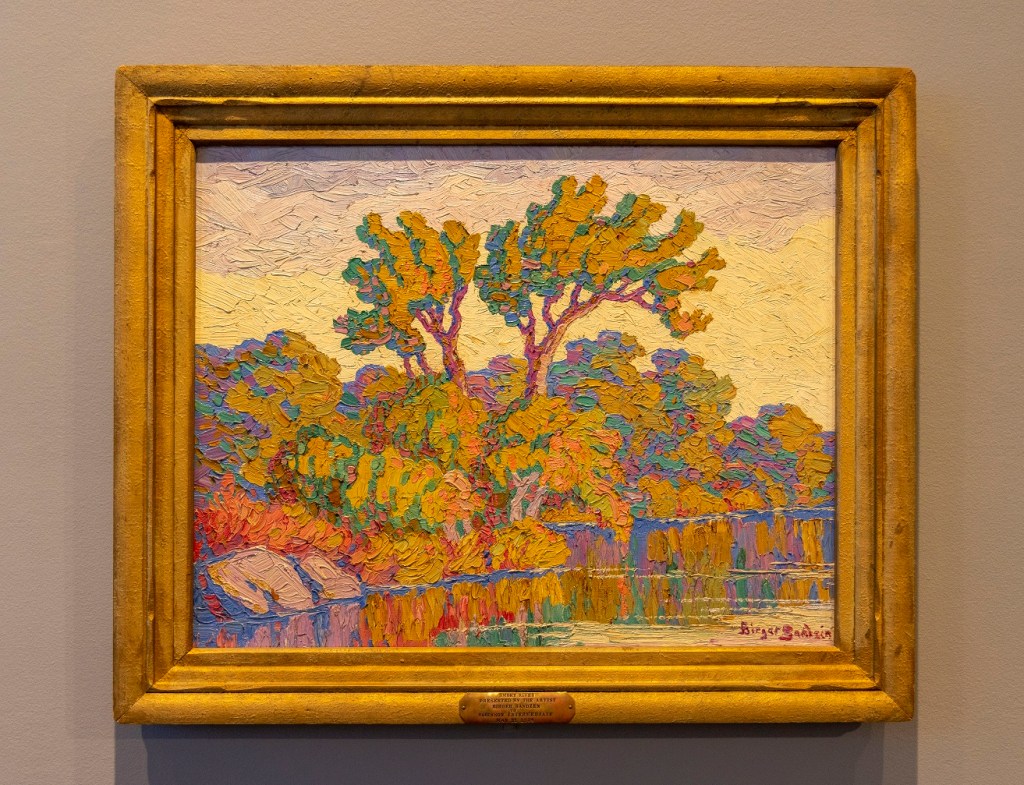
…and Birger Sandzen.
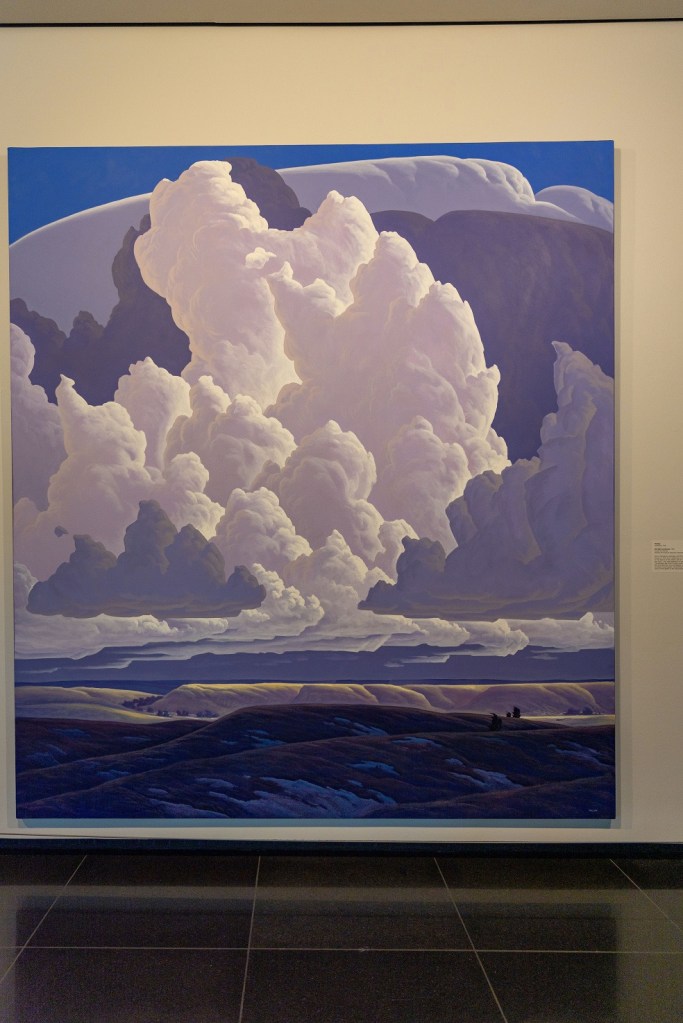
We enjoyed getting to see a variety of different themes, styles of paintings, and sculptures throughout this museum.
It never ceases to amaze me what these talented people can do with a paintbrush or glass.
Mental Health Courts
Morgan Robertson
Across the nation, new and more specialized methods of trying cases are arising. Today, there are 150 mental health courts in the United States that are completely independent of drug courts, municipal courts, and other courts to which nonviolent offenders with mental health illnesses are assigned.
Leading this cause in her home state of Ohio is former Ohio Supreme Court Justice Evelyn Stratton.
Sworn into the Ohio Supreme Court in 1996, Justice Stratton made great strides advocating for mental illness. Justice Stratton helped form the Supreme Court of Ohio Advisory Committee on Mental Illness and the Courts, and is a co-founder of the Judges’ Leadership Initiative.
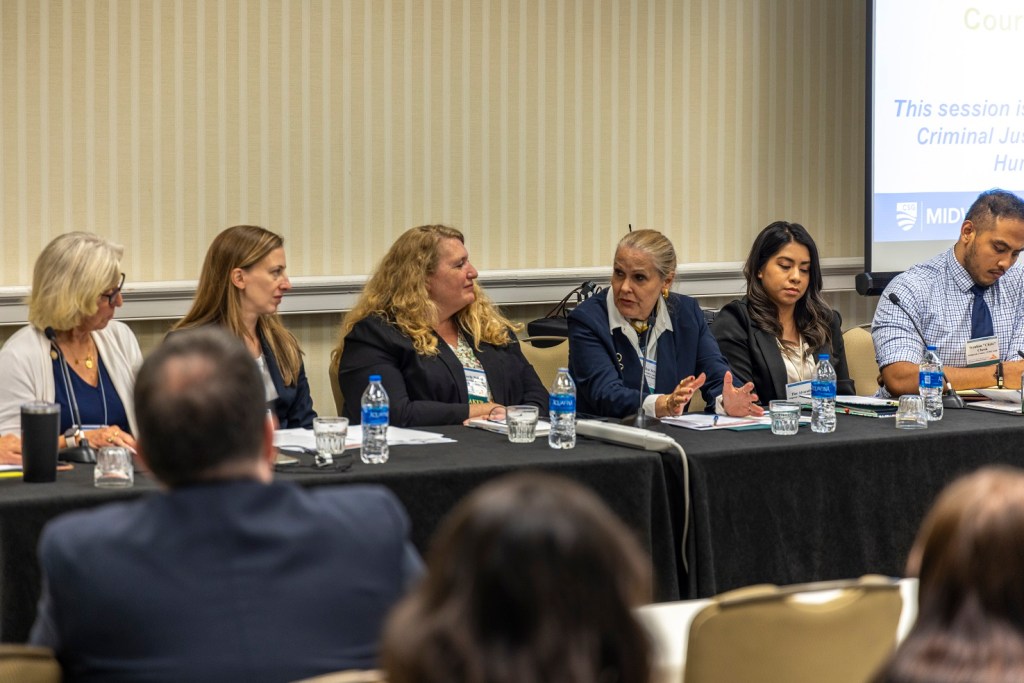
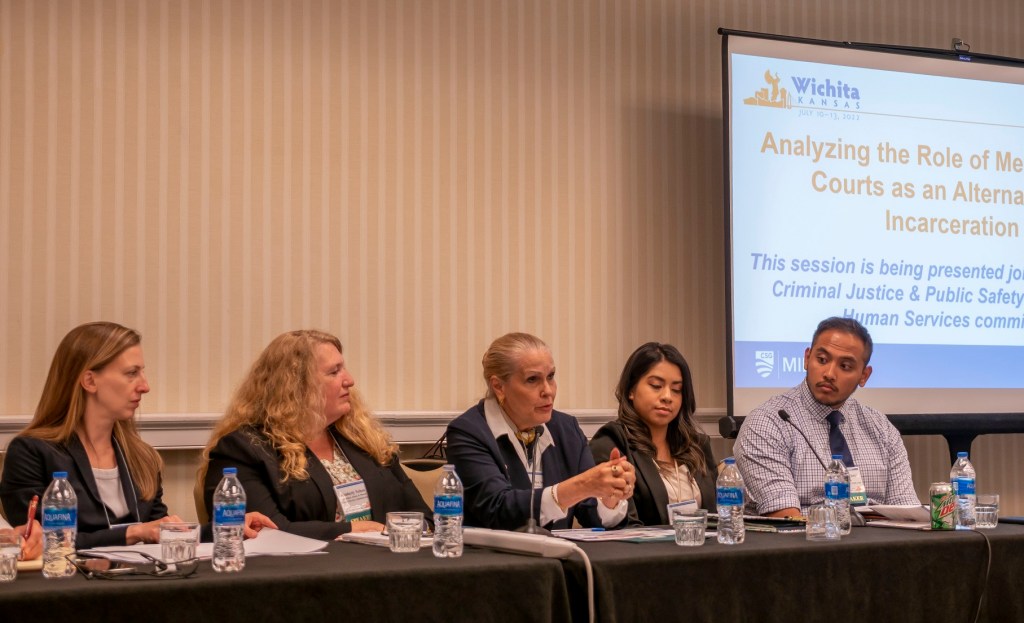
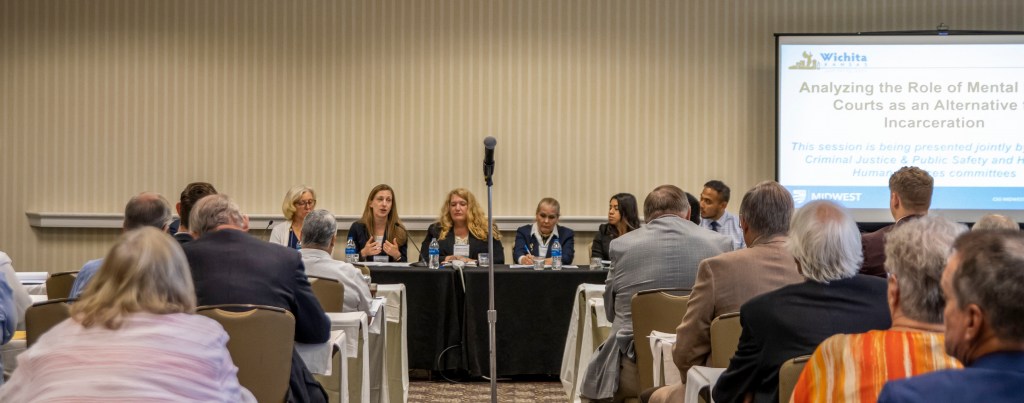
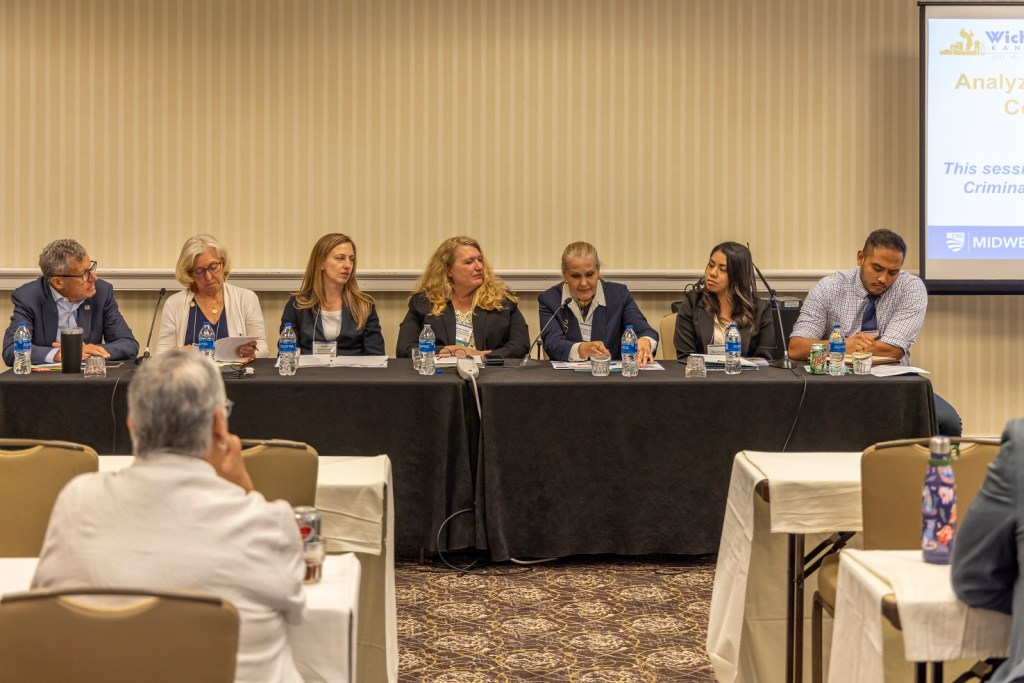
Joining Justice Stratton on the panel were mental health professionals: Kimberly Nelson, the Regional Administrator for Substance Abuse and Mental Health Service Administration serving Region 7, which includes Kansas, Megan Quattlebaum, Director for the CSG Justice Center, Wenhan “Chris” Cheok, the Mental Health Program Manager for Sedgwick County COMCARE, and Flor Alvarado, a Mental Health Court Clinician/ Sedgwick County Offender Assessment Program (SCOAP) & TT Team lead for Sedgwick County COMCARE. Kansan State Senator Pat Pettey led the discussion and prompted some interesting questions.
The Stepping Up Initiative, which we had previously heard about in an earlier sessions, is one of the leading efforts addressing the public health crisis in county jails across Ohio. “Stepping Up is a national effort to break the cycle of jail being the de facto mental health hospital,” are the words of the Ohioans who are working on the Ohio Project.
Ms. Quattlebaum explained how offenders with mental health illnesses are currently prosecuted and processed through the system. Offenders are either tried like any other case in the court that follows the offense, or they are placed in a hospital for forensic treatments. Conversely, mental health courts will use competency restoration for offenders who are not fit for court after three, six, or twelve months of restoration. Depending on the individual, they will either be released or processed through the system and tried at the Mental Health Court.
The need for mental health courts is more prevalent than ever. These courts with their justices and treatment facilities will further help everyone involved, providing the defendants/accused with the help and resources they require.
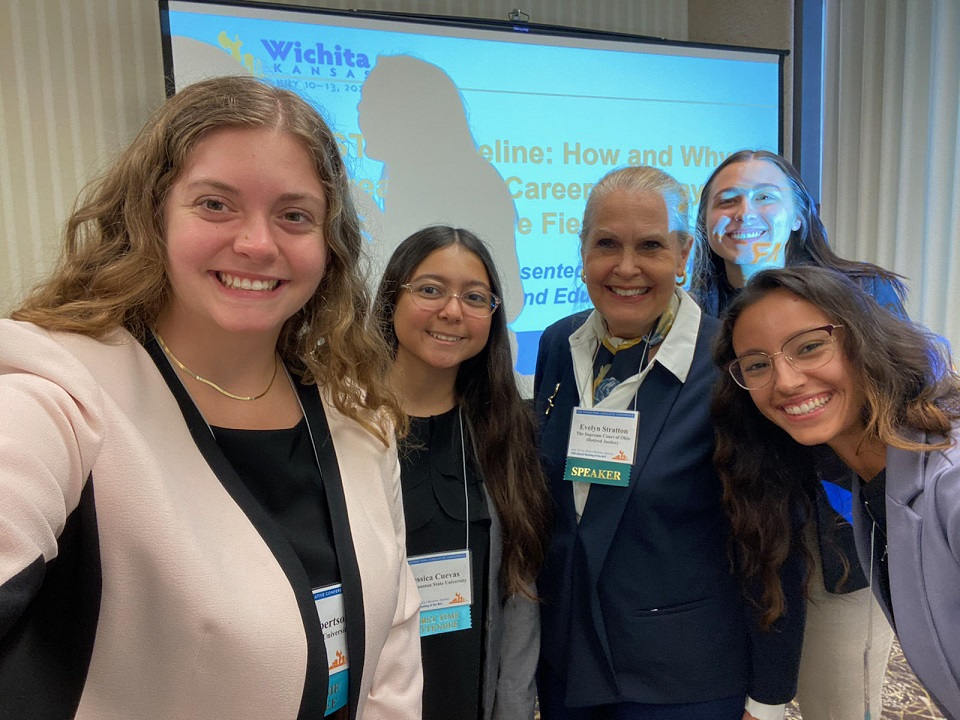
After the panel discussion was over, Jessica spoke with Justice Stratton about her work and her career, and we were all fortunate to snap a quick selfie with her!
State Dinner at the Midwest Council of State Governments Annual Conference
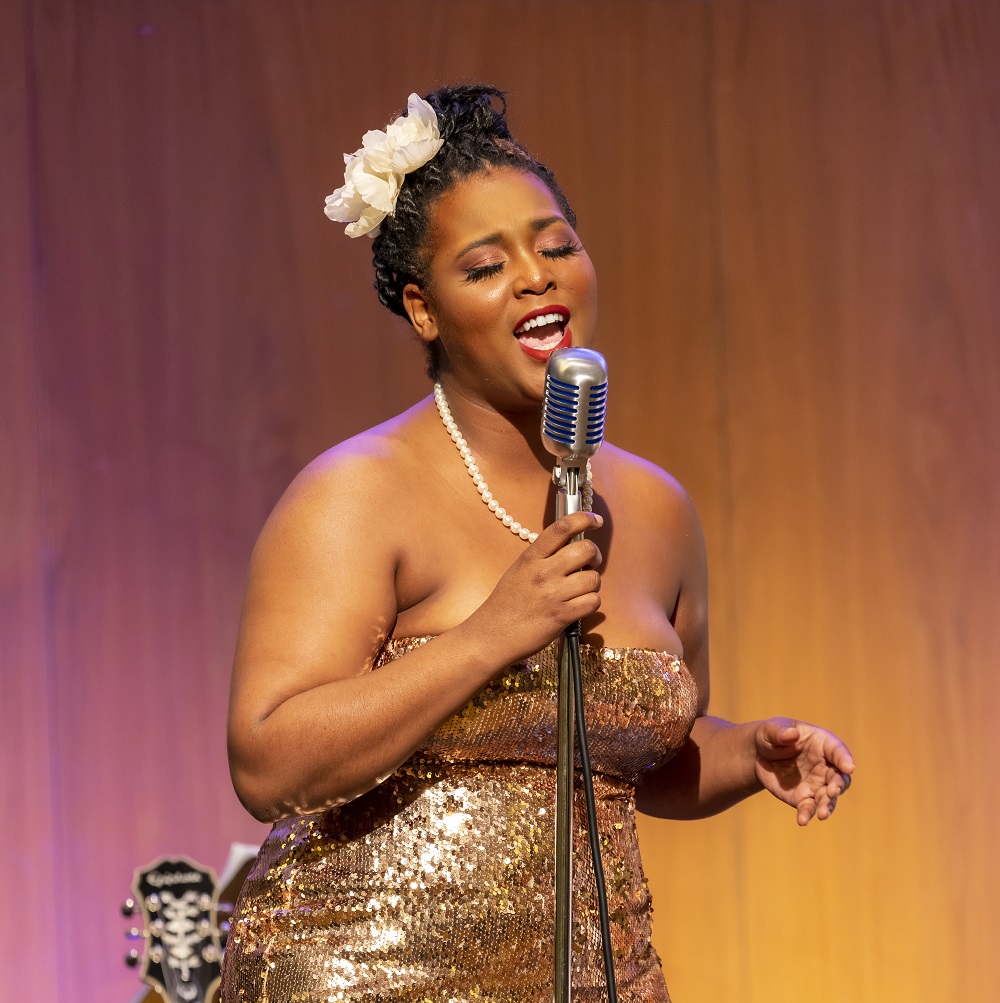
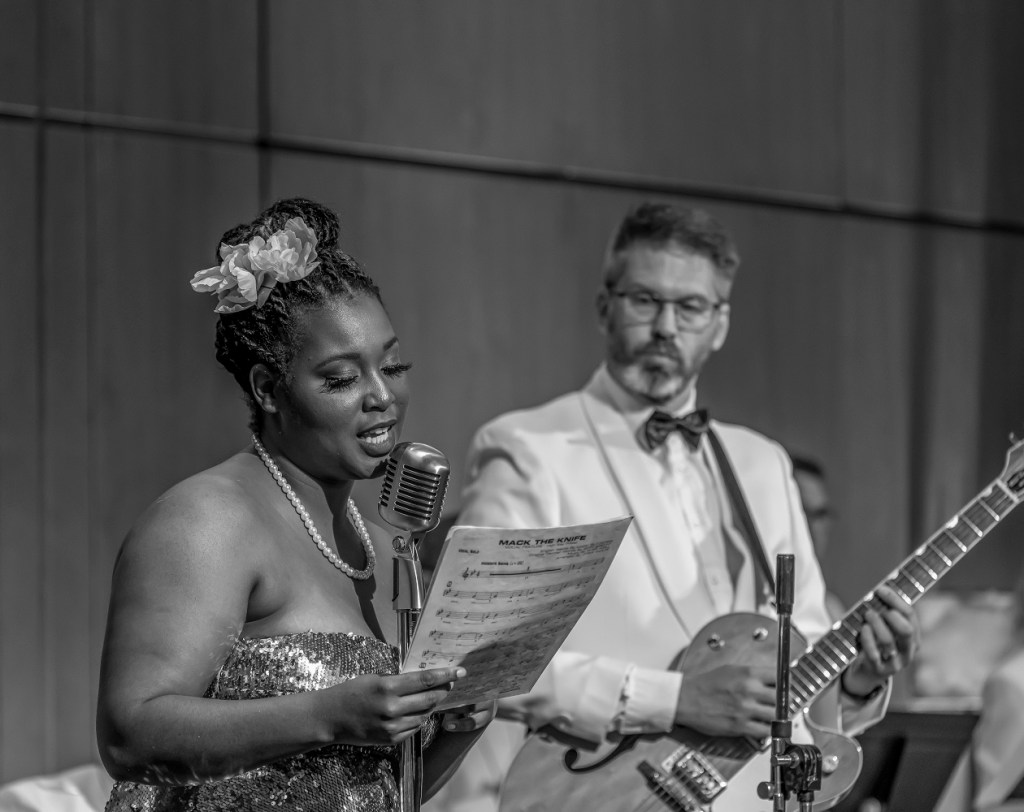
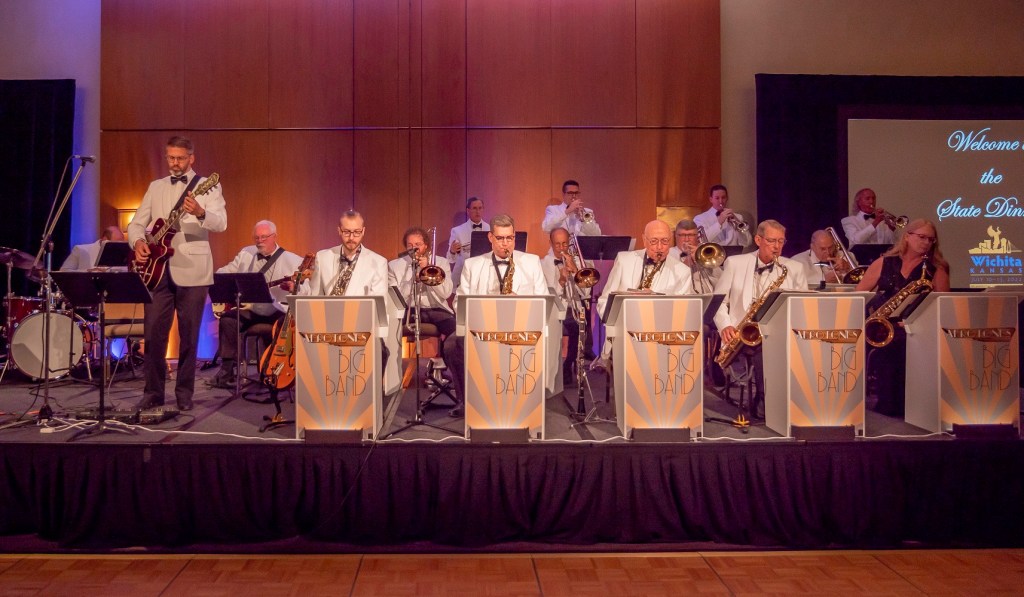
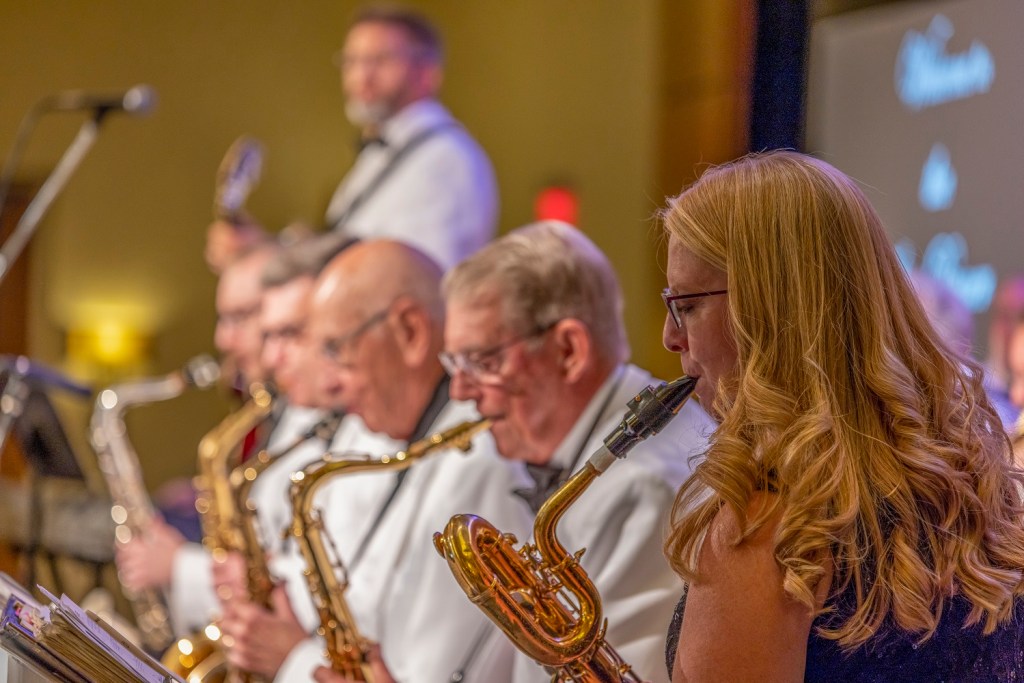
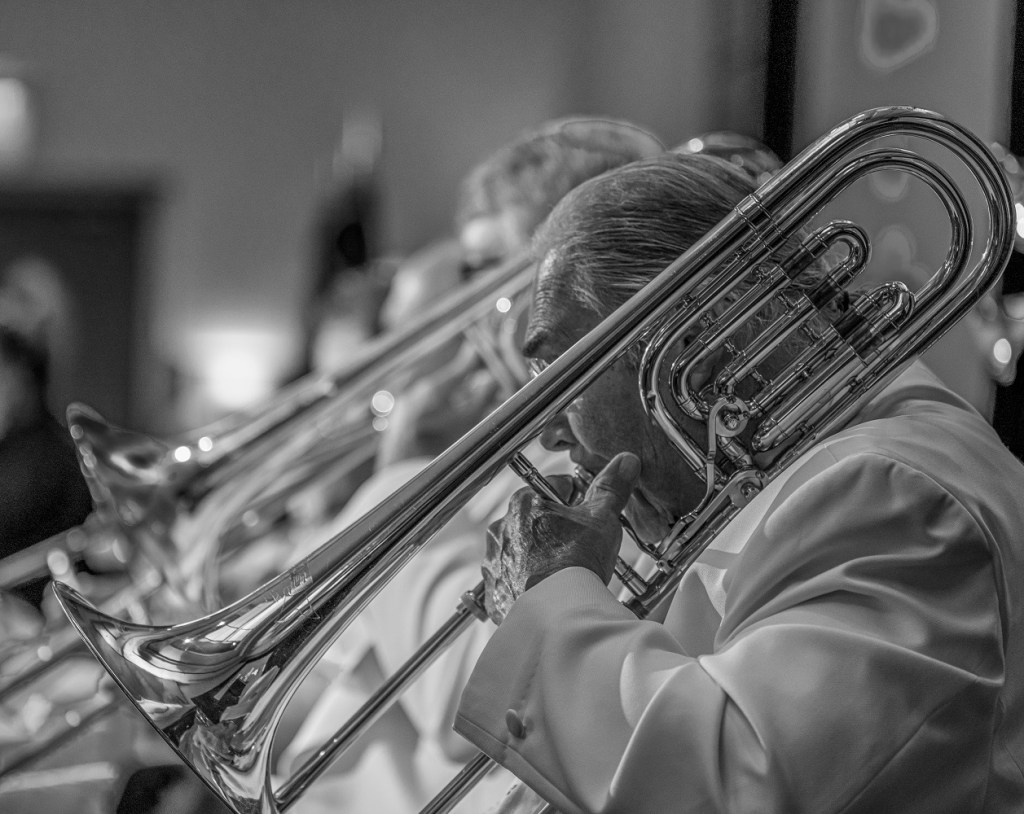
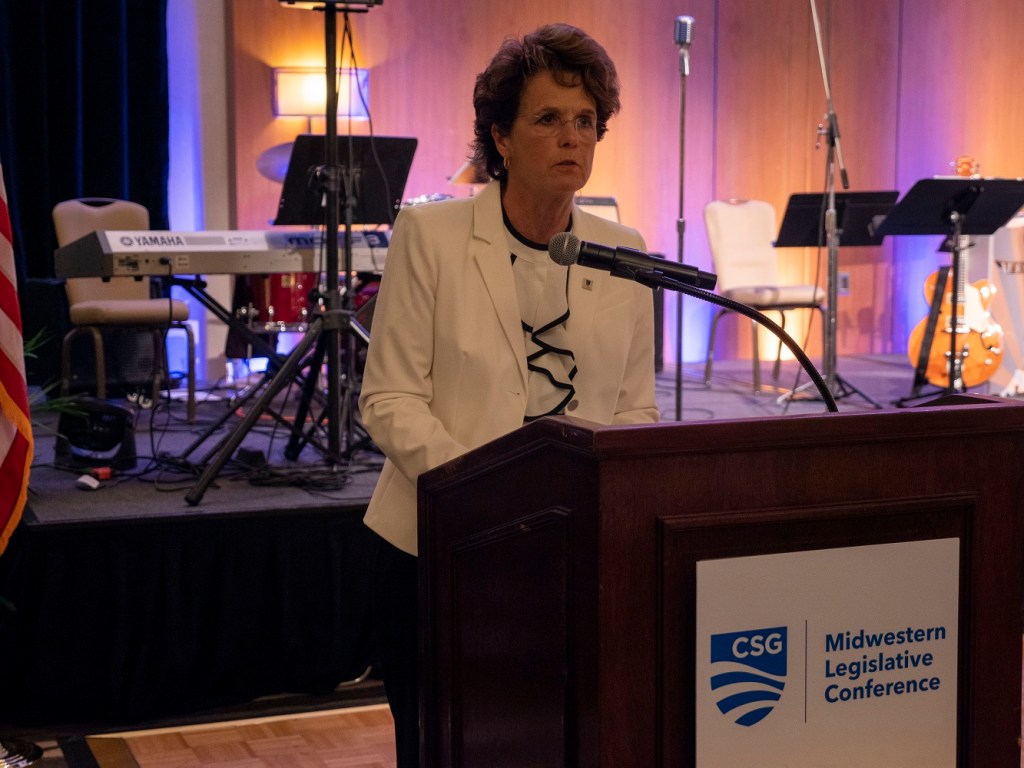
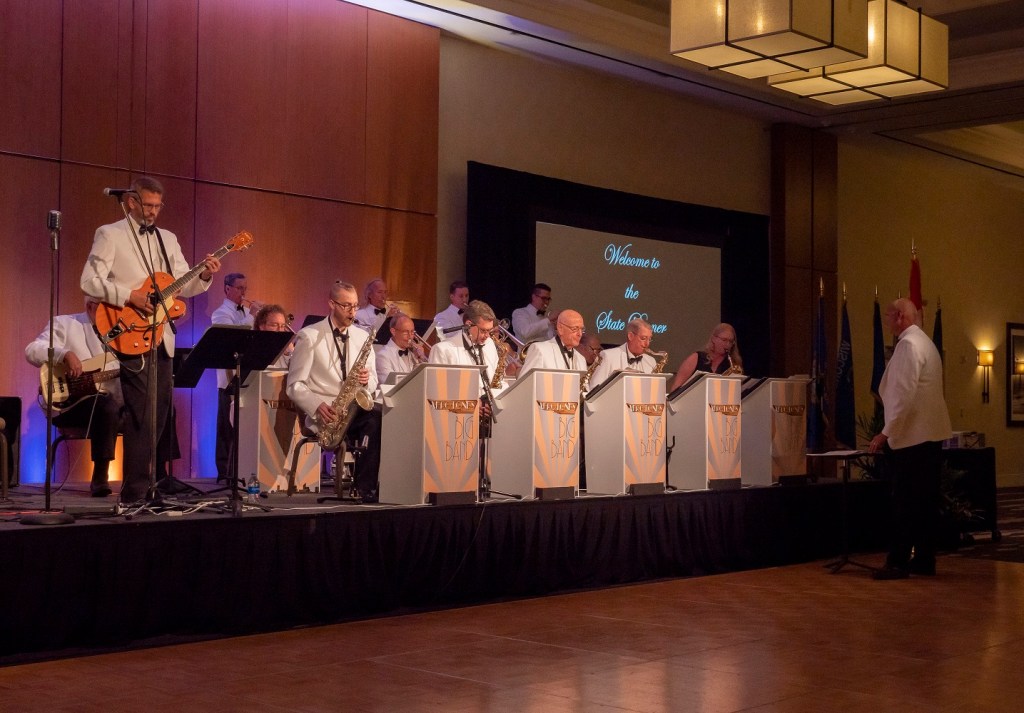
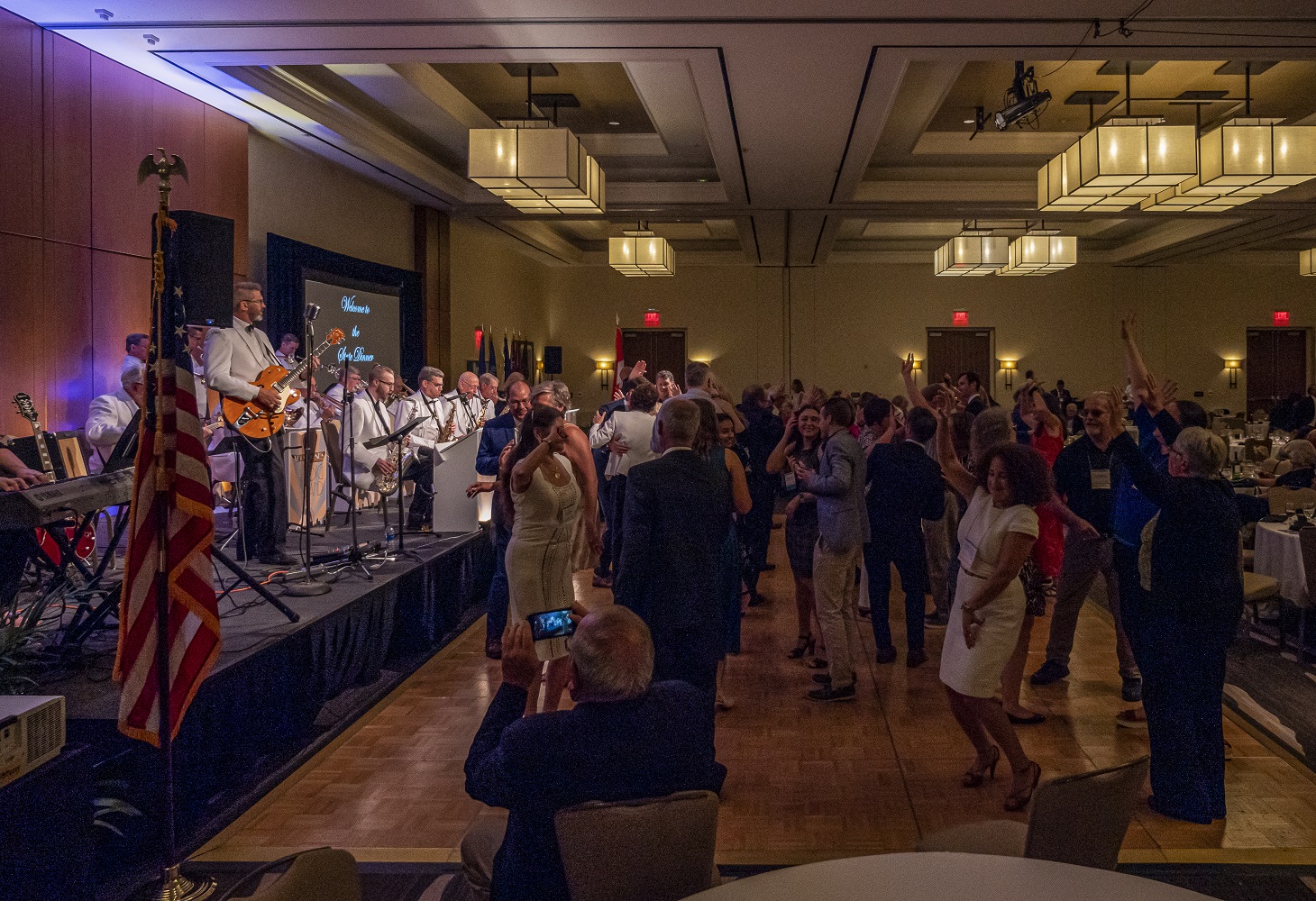
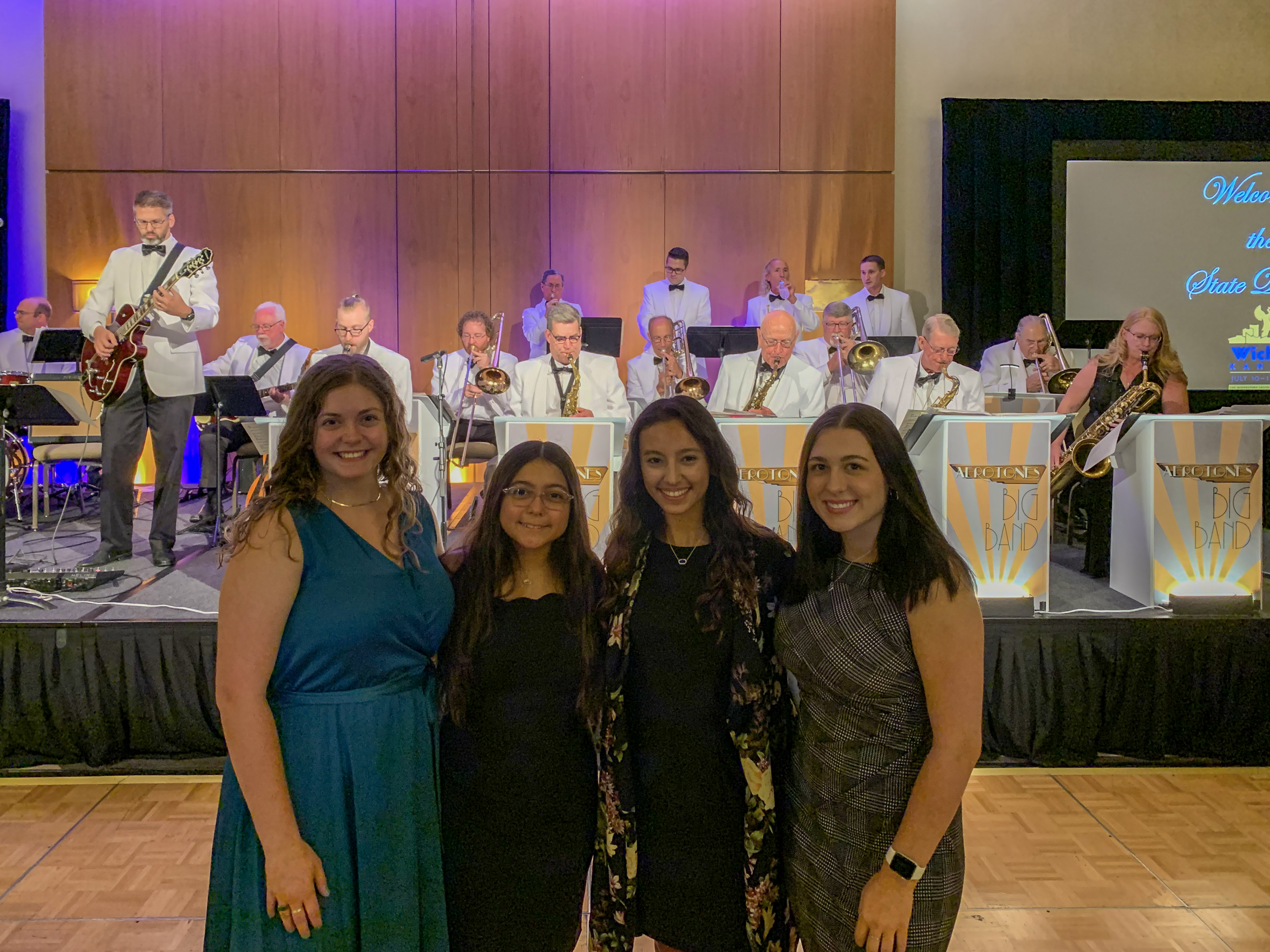
At many of the Council of State Government regional conferences, the organizations host a “State Dinner” on the final evening, and this was true for the Midwest. This is a big event for LEAP Ambassadors–often their first such experience–and it was made even more fortunate by the presence of two CSG staff members at our table and some entertaining musical performers with the Aerotones Big Band, featuring Jaslyn Alexander on lead vocals.
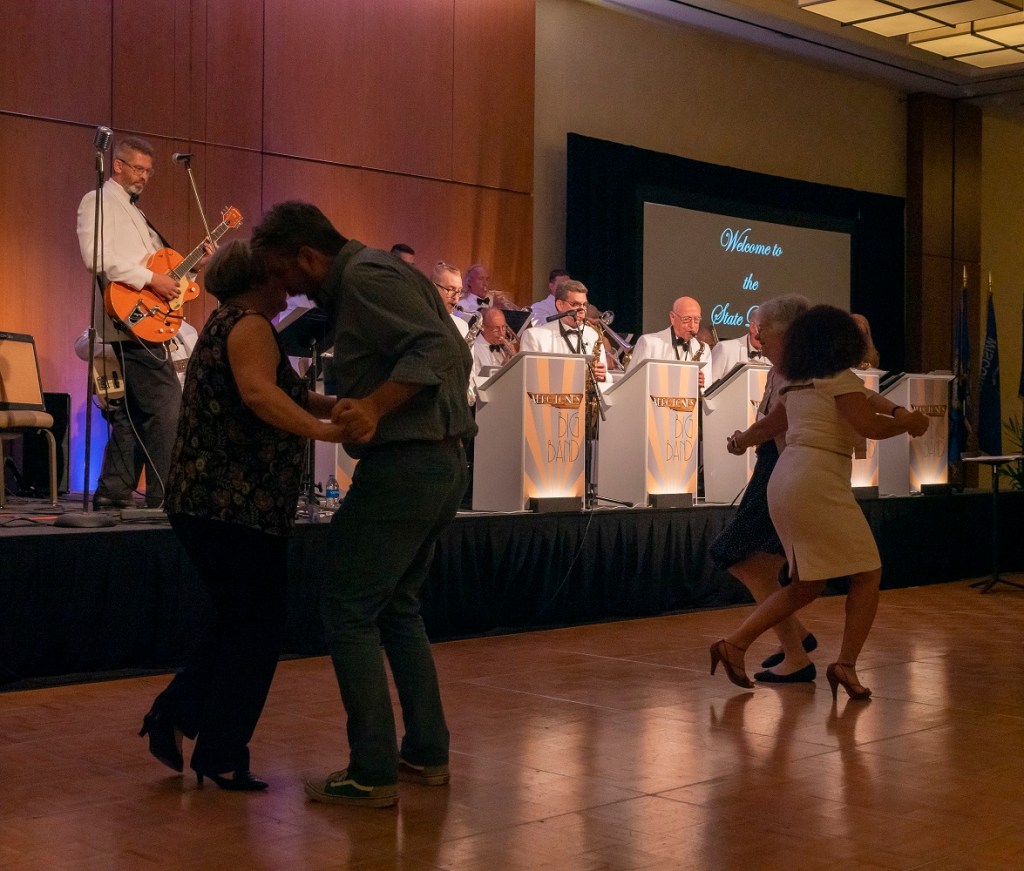
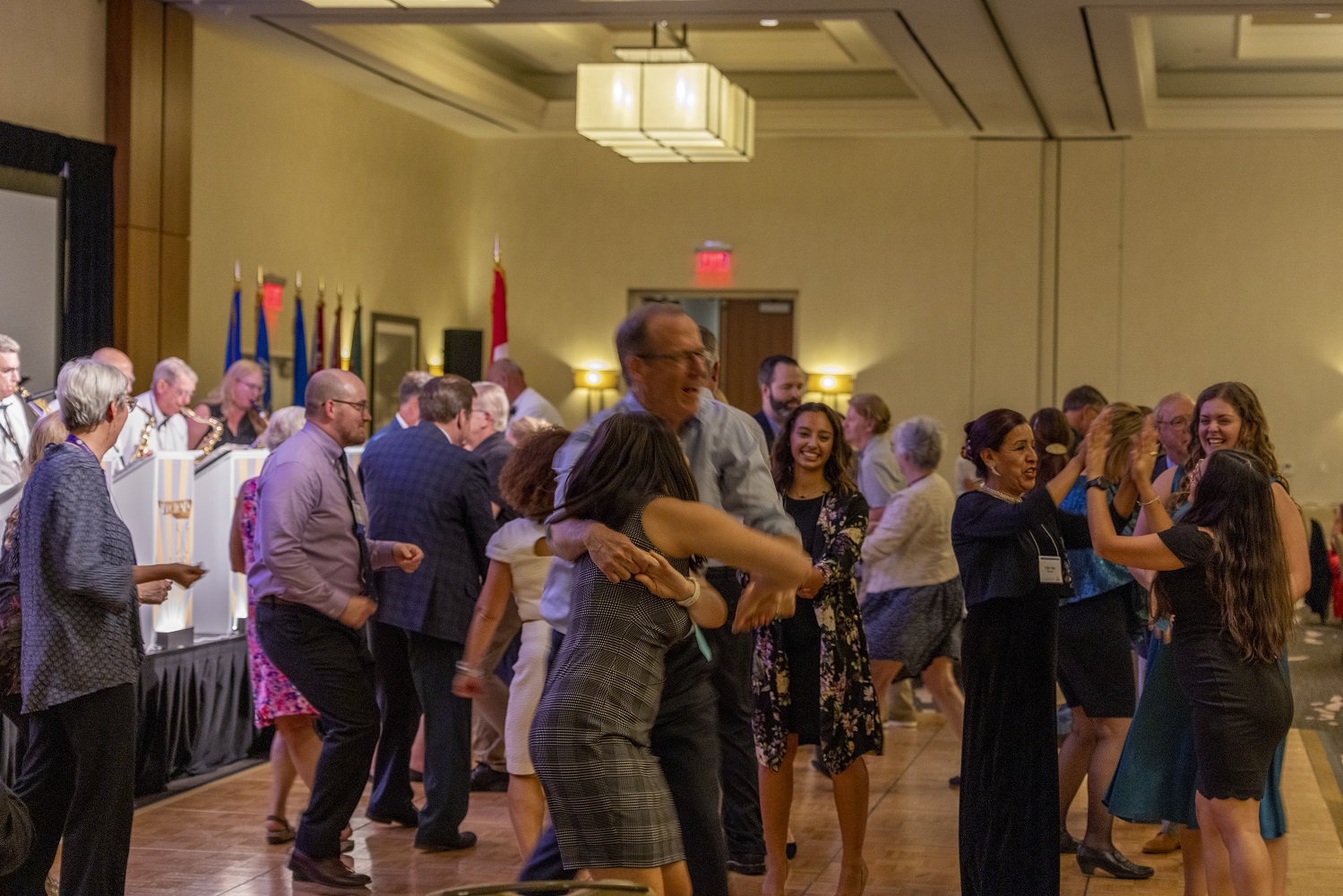
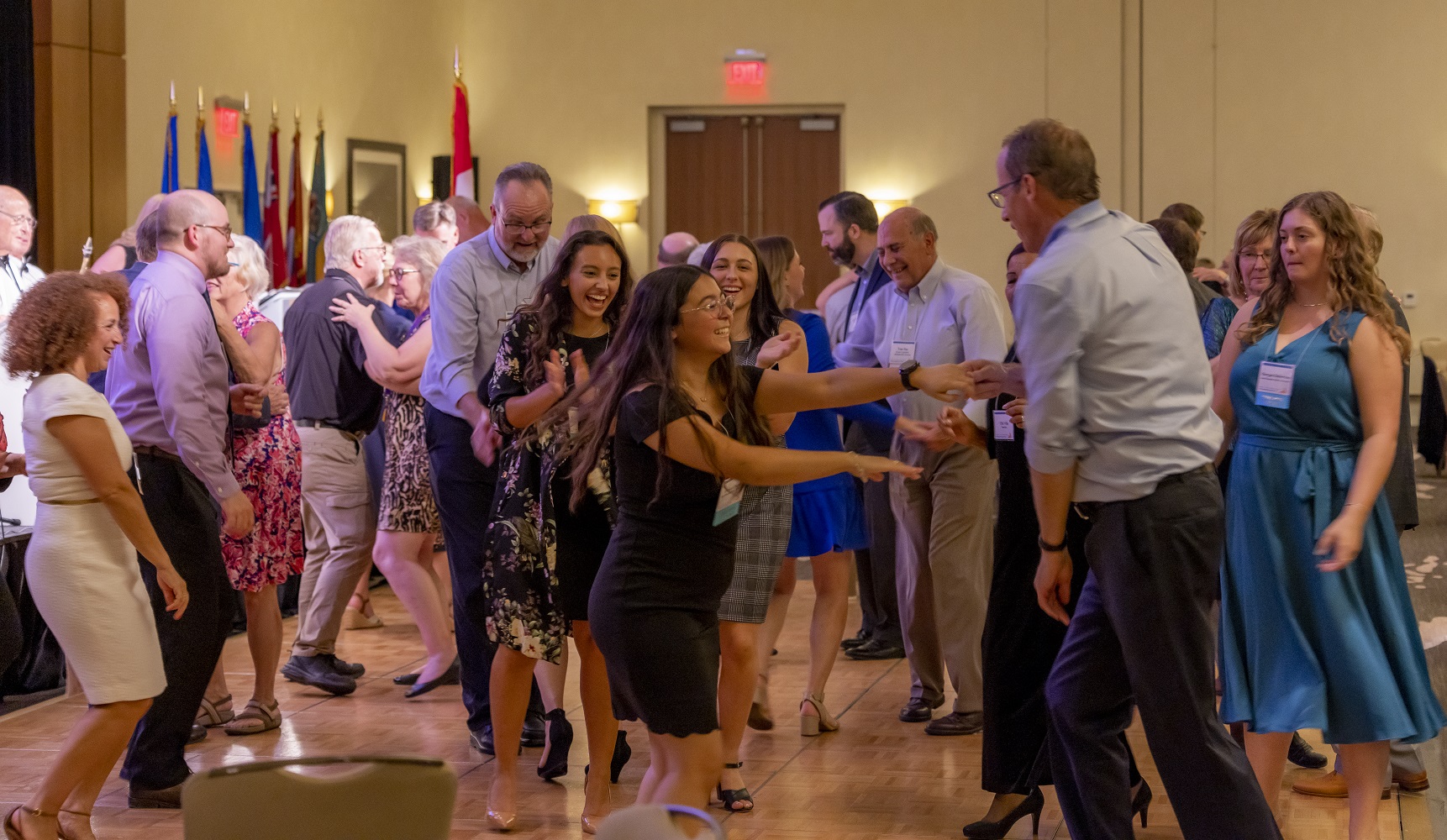
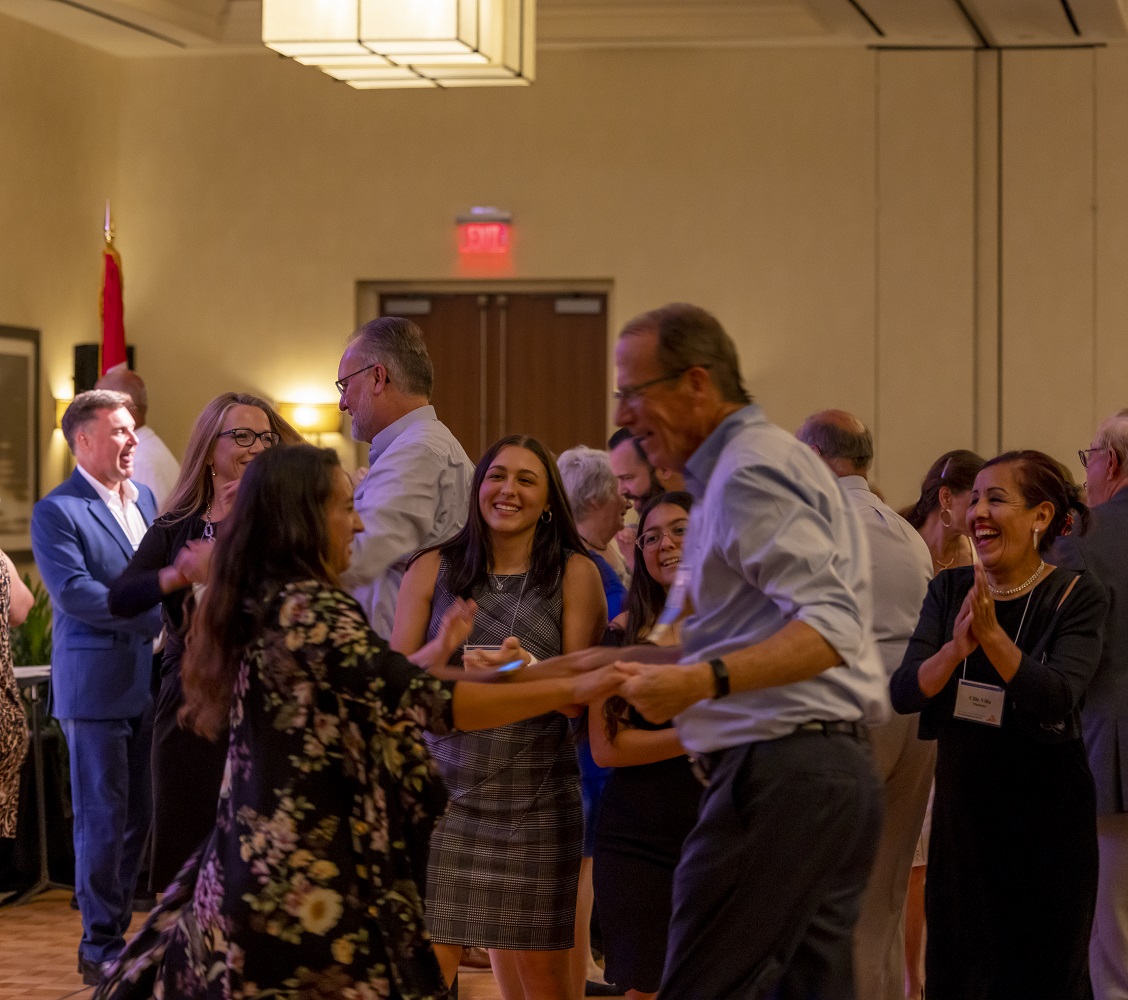
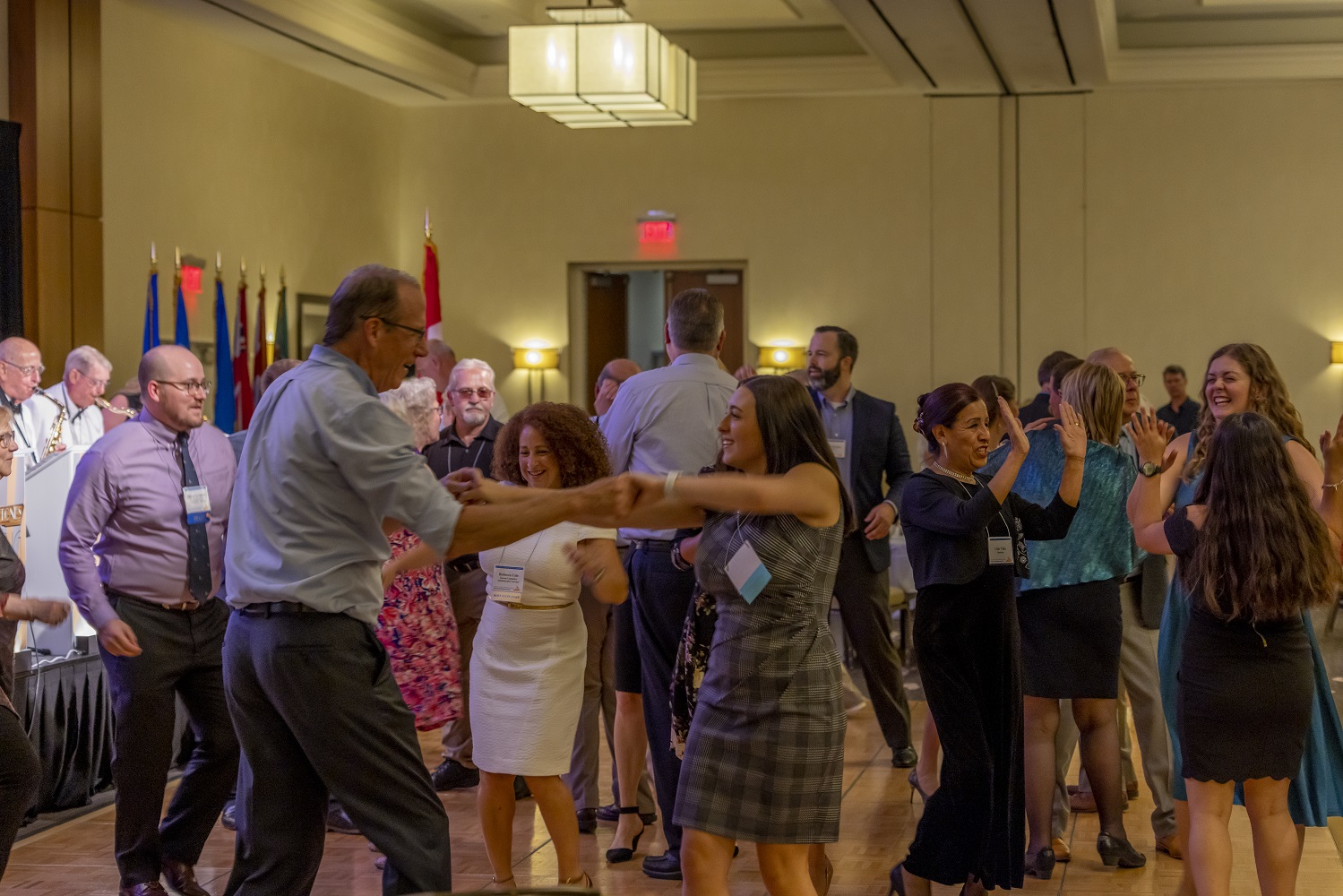
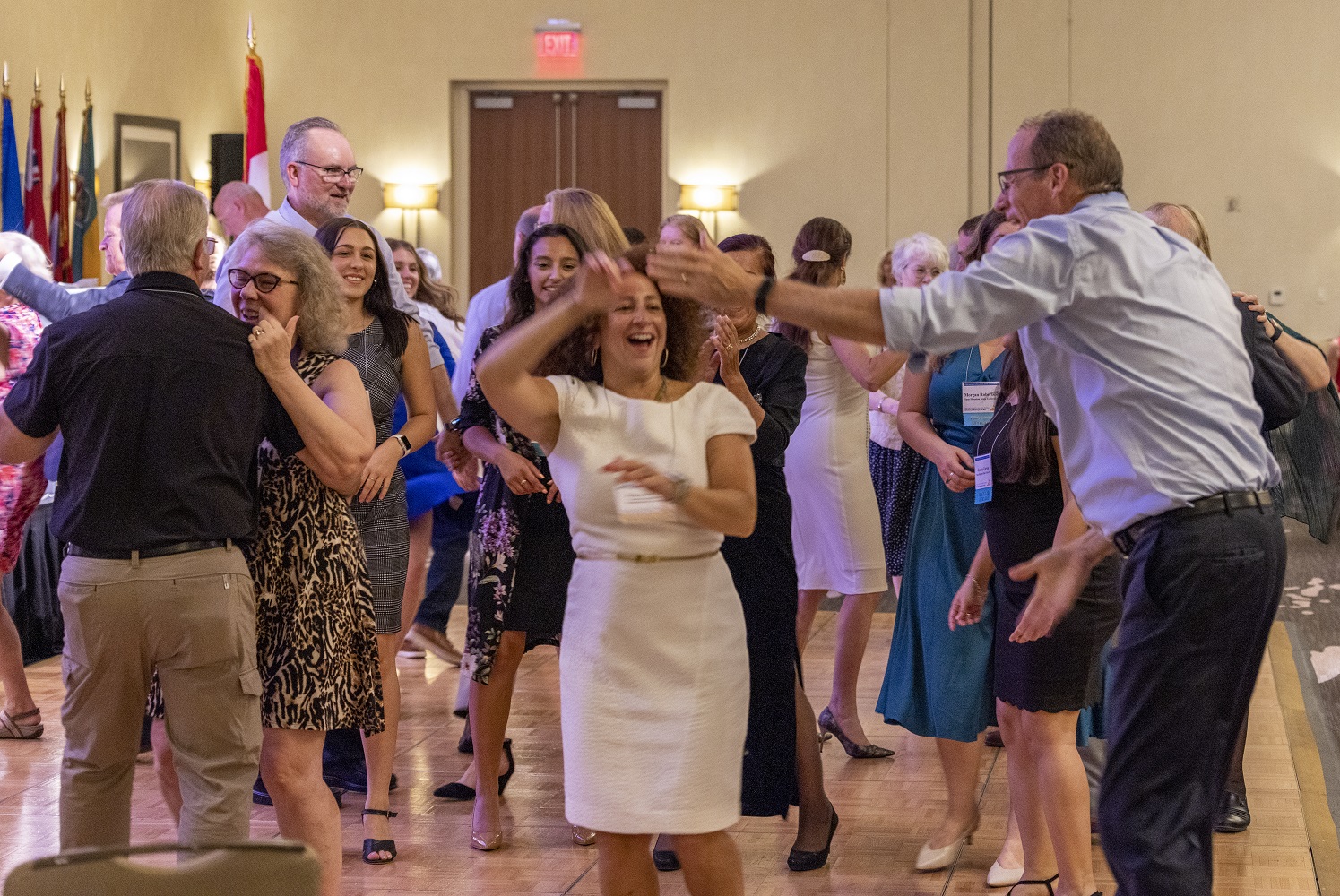
Throughout the evening, Aerotunes played songs through the decades, often jumping 50+ years in the process. We soon grew to love the range of the music styles and genres and despite the variety in sounds, dancers kept on dancing!
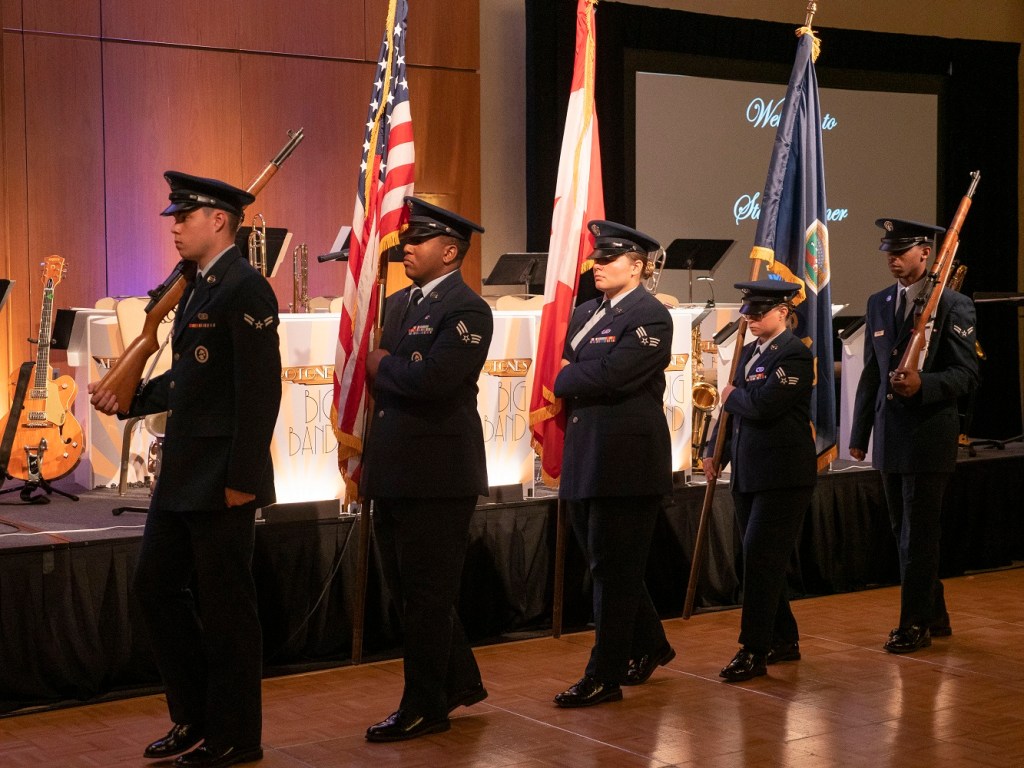
We were first greeted by Senator McGinn, who not only introduced the posting of the color guard…
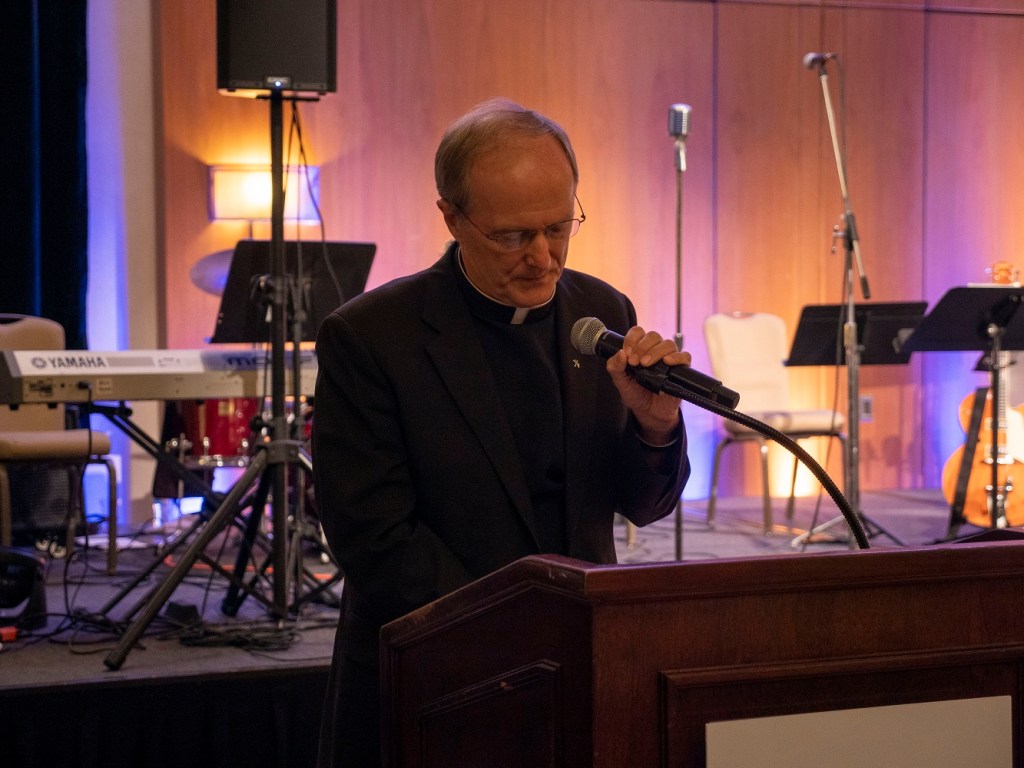
…and the invocation…
…but also introduced some humor into the proceedings, setting a light tone to a lively evening!
At first, there weren’t a lot of takers on the dance scene.
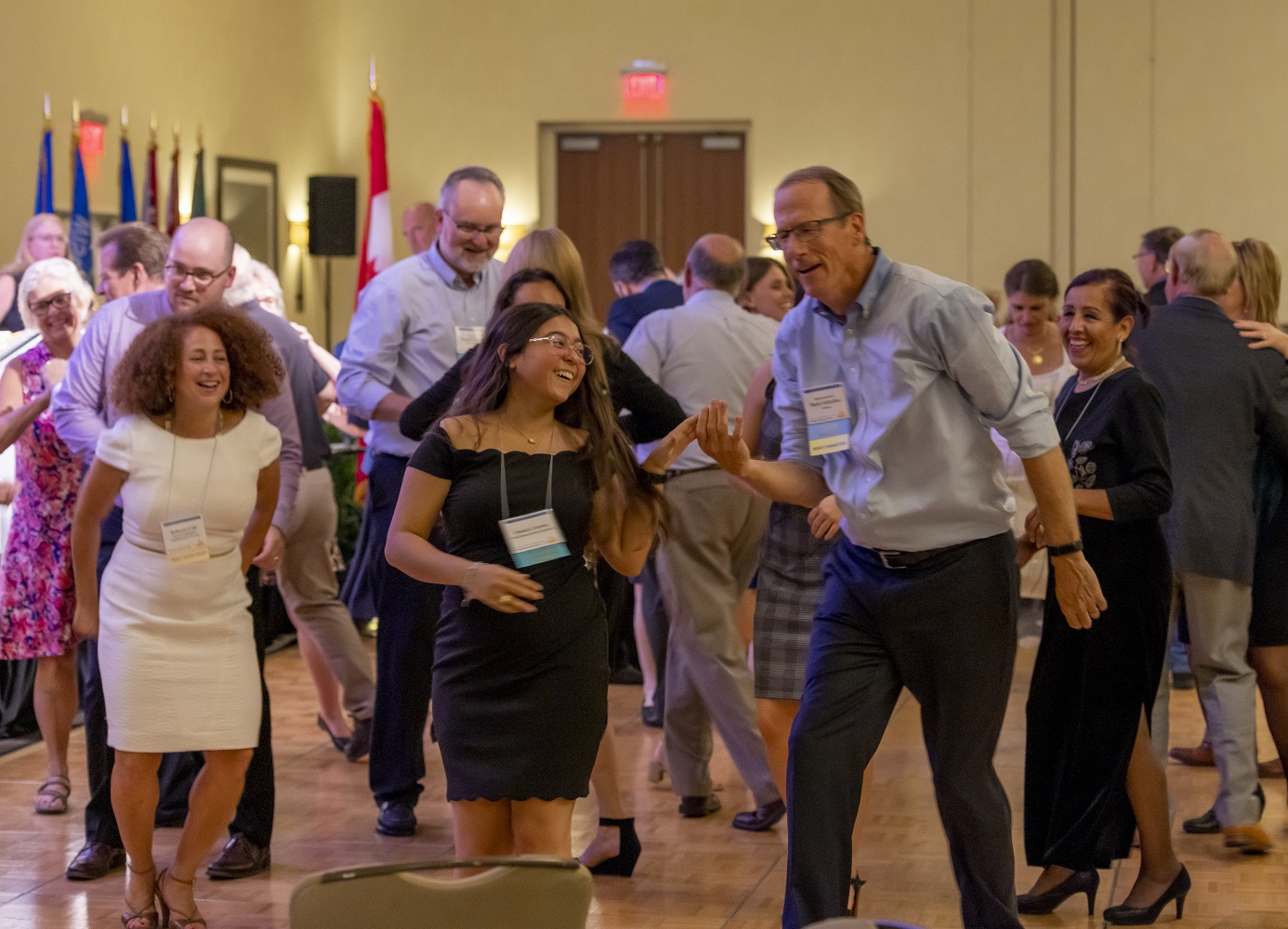
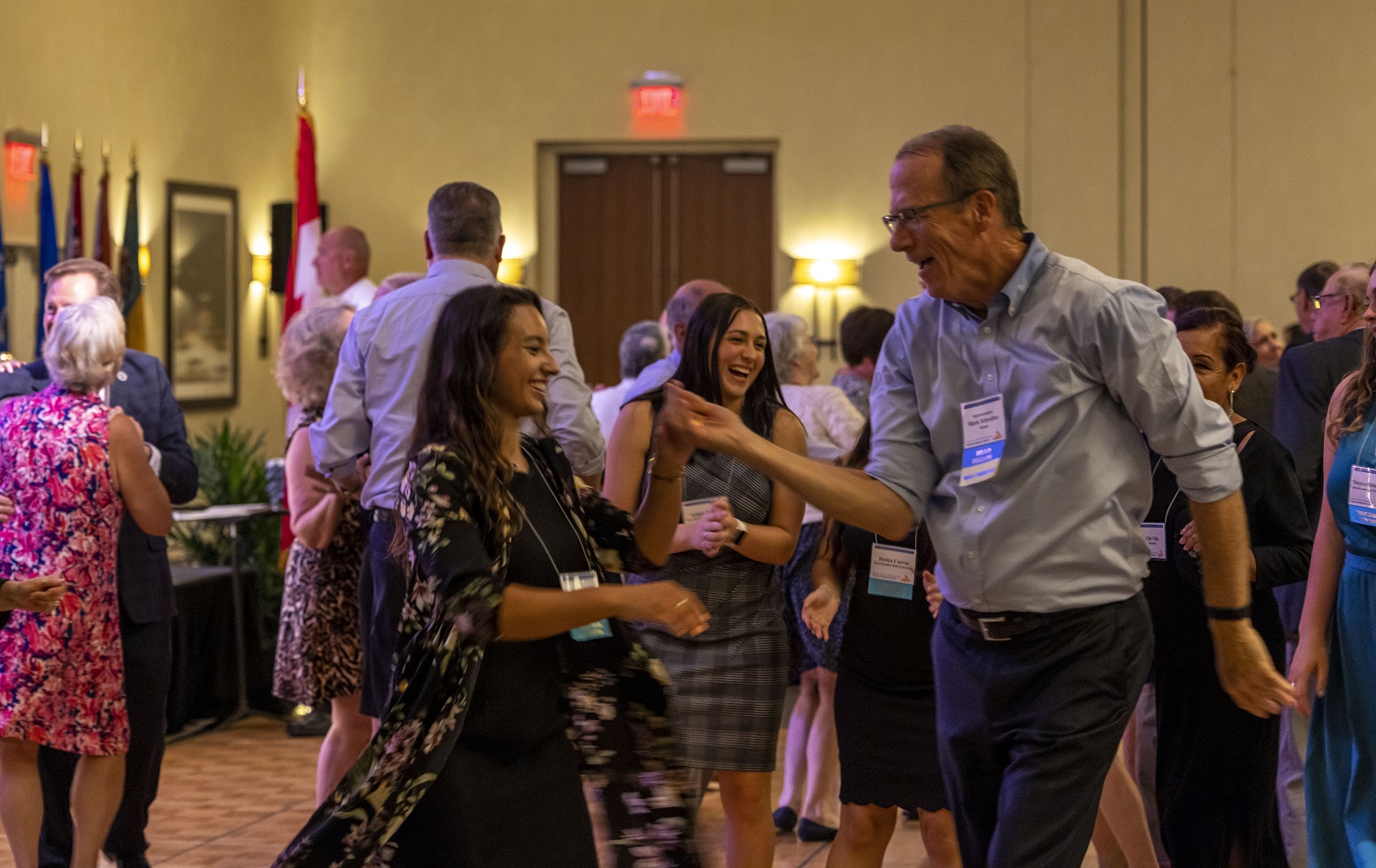
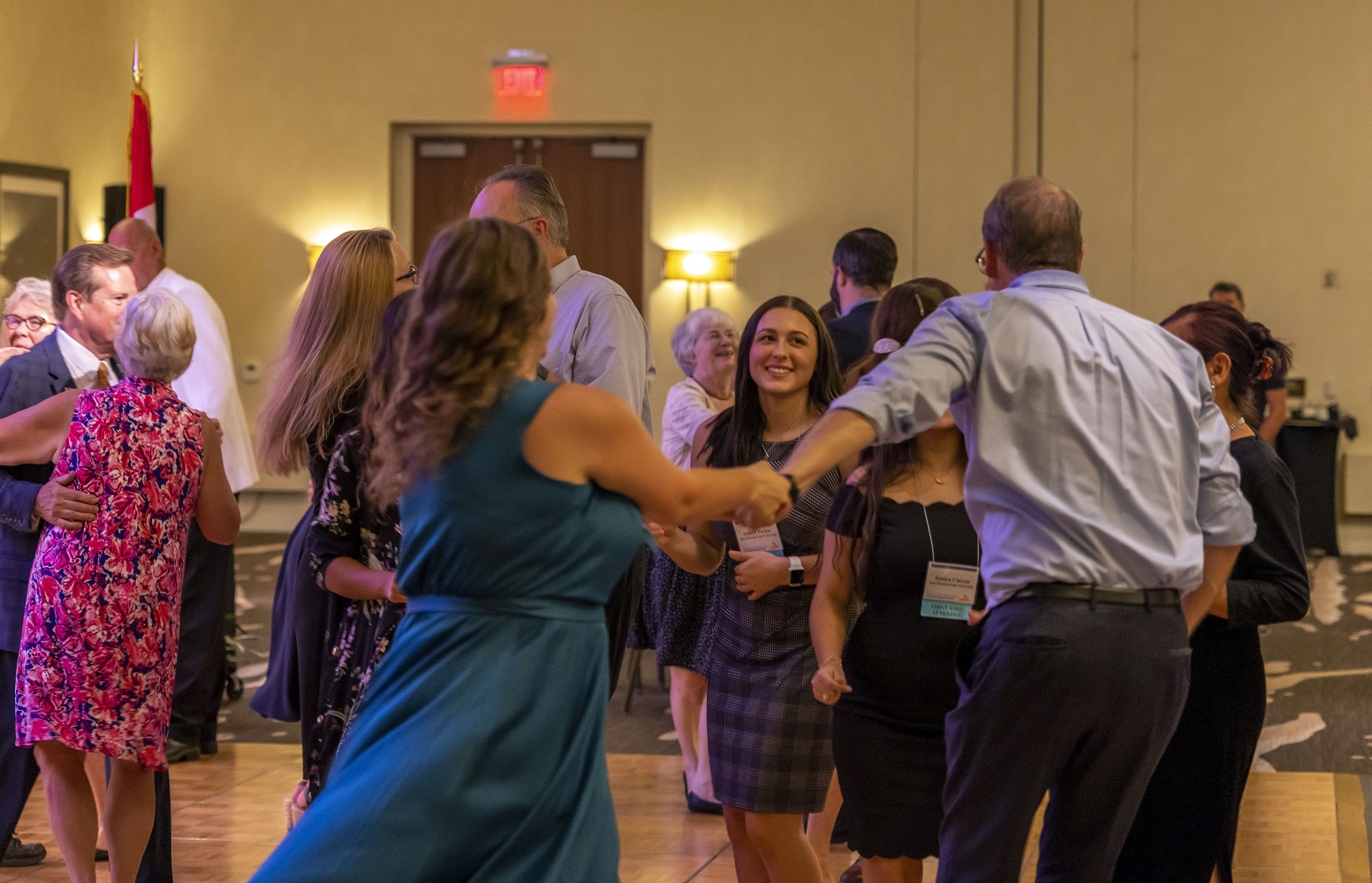
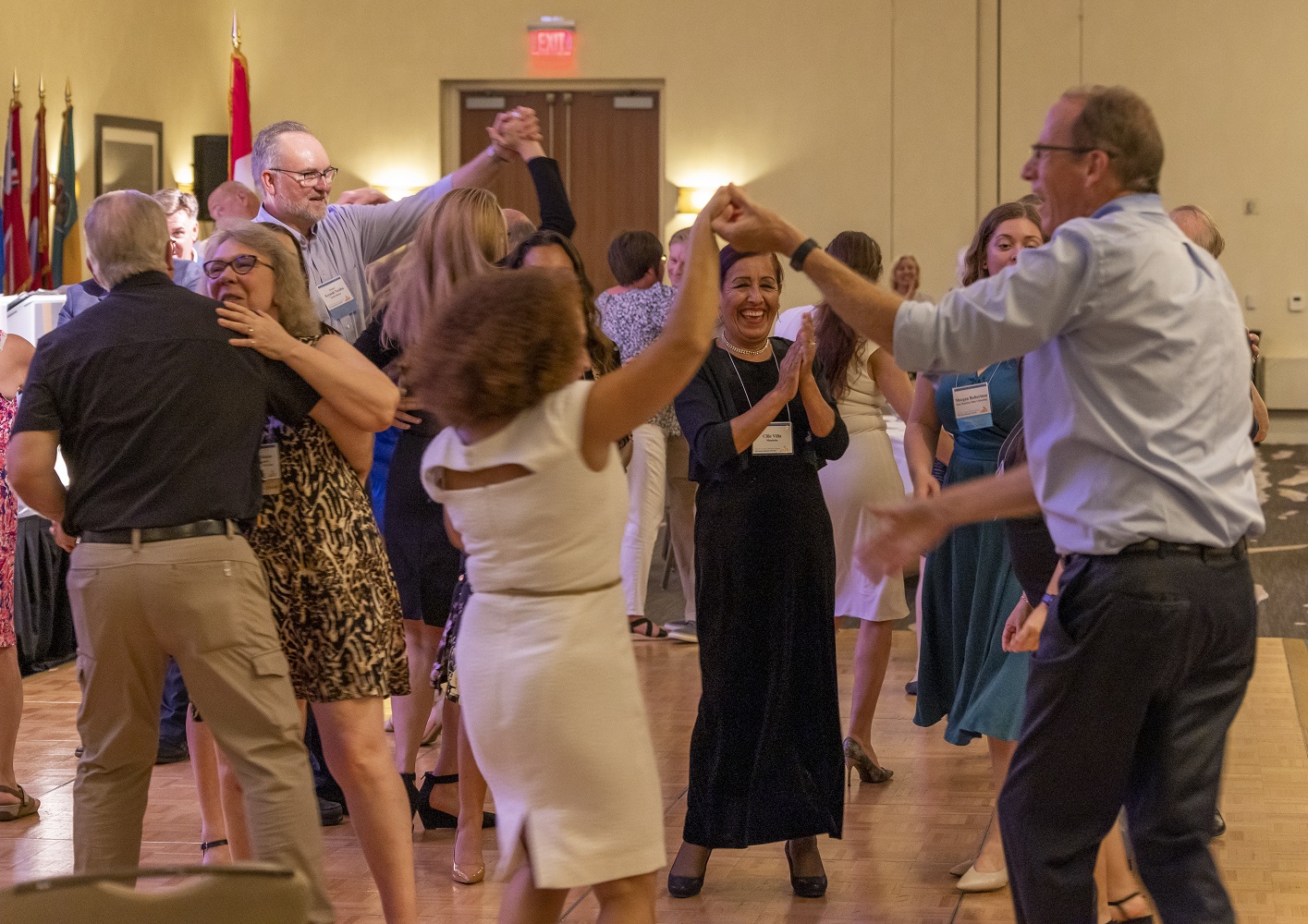
But when the Ambassadors got on the floor, they soon had the opportunity to learn new dances (or just be led through the dances in some cases). Kansas Representative Mark Schreiber was a particularly generous dance instructor…
…and with some real dancing going on, the dance floor soon came alive!
We hate to say who is the best dancer in the group, but we are really glad we brought Ashlyn.
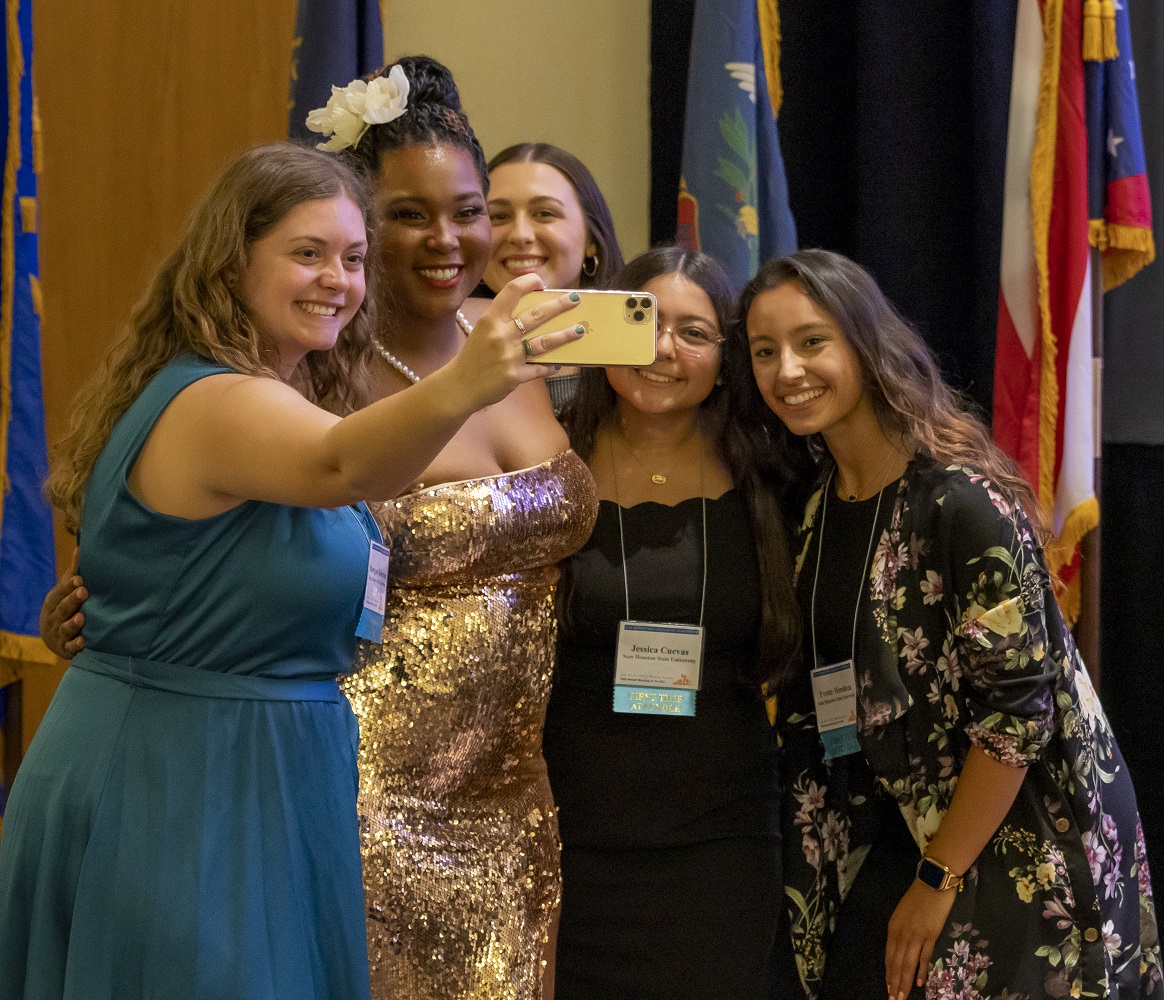
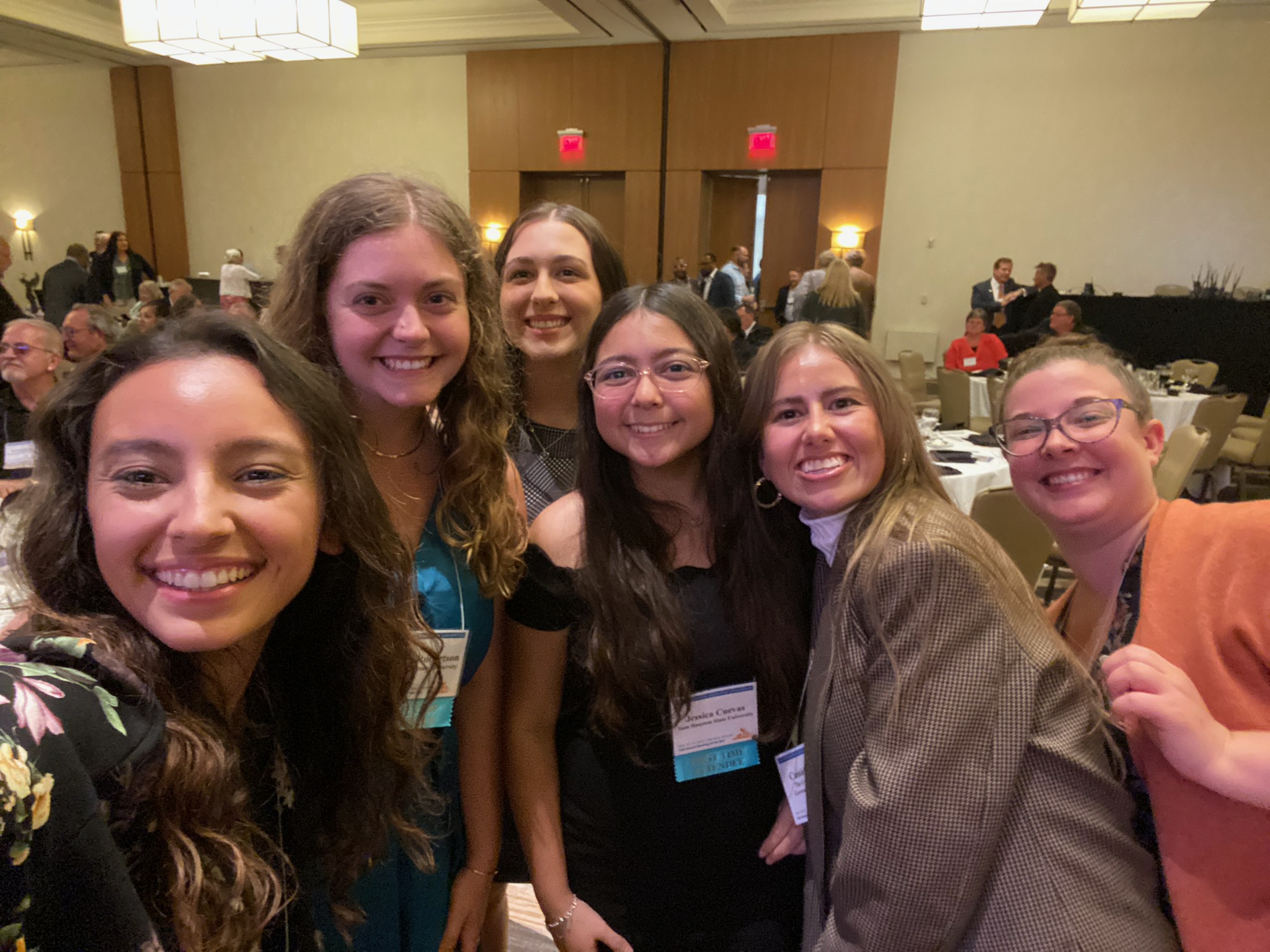
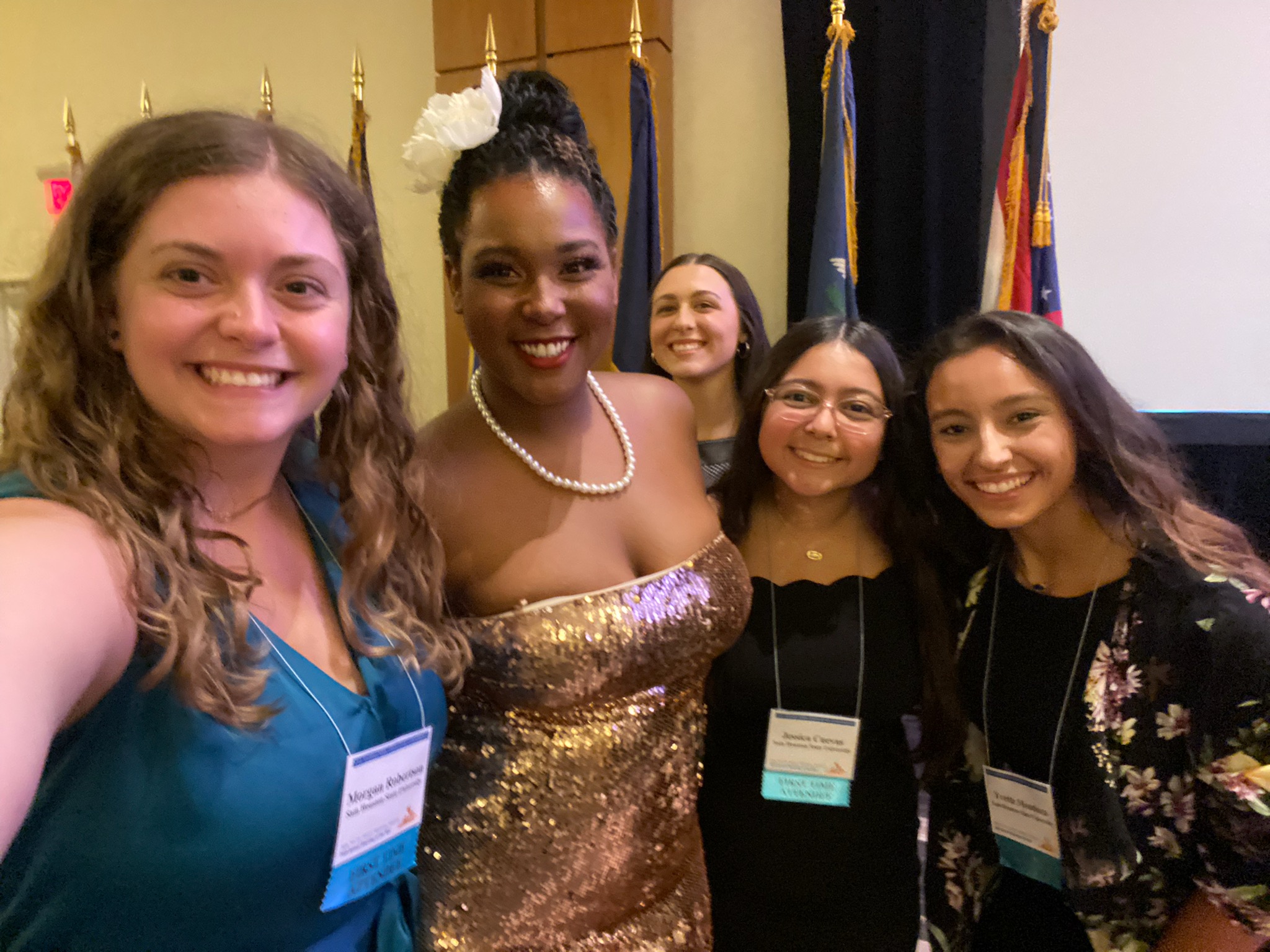
We were pleased with how nice everyone was, and we were grateful for the new friends we made.
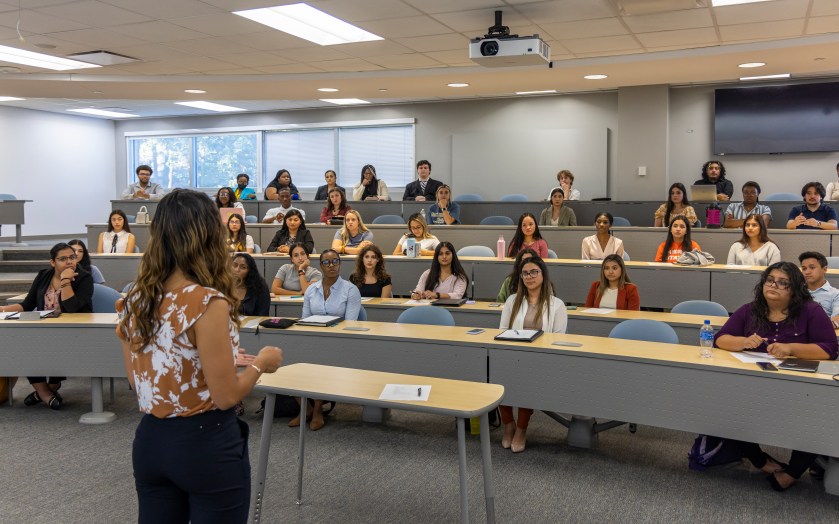
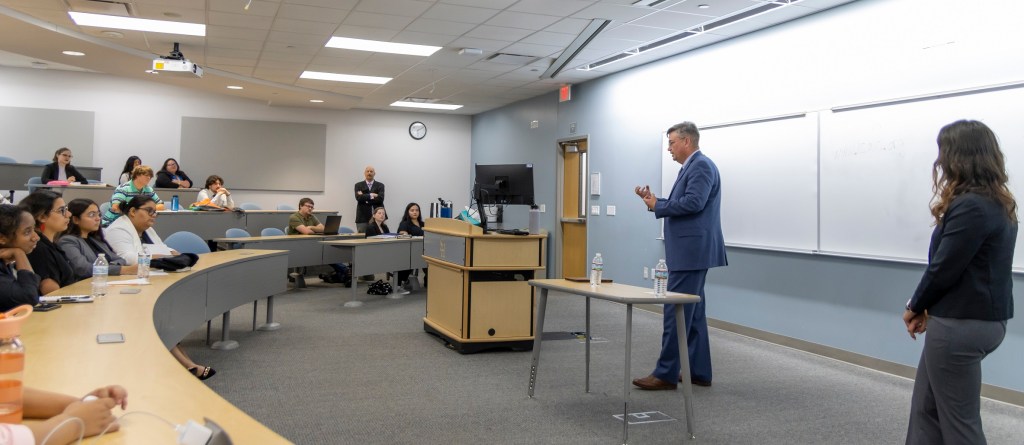
A week or so into the semester, we kicked off our first Pre-Law Society meeting of the semester. Featured this meeting was Judge David Moorman, who came to the Pre-Law society at SHSU to impart his knowledge and experiences as a judge and former attorney to SHSU’s pre-law students.
And for this meeting, Yvette Mendoza stepped in as moderator, leading the “interview” with Judge Moorman.
Dr. Yawn initiated the meeting, getting the new members informed about what Pre-Law society has to offer and the returning members refreshed on what they can get out of the organization.
Professor Yawn also introduced Judge Moorman, giving a bit of his background and his prior assistance to the Pre-Law Society. Judge Moorman, with prompting from Yvette, then discussed his career as an attorney, and his work as a judge. He noted that he was unopposed when he ran for Judge, but Yawn pointed out that this isn’t as easy as it sounds. It involves building a coalition, gaining early support, and attending a lot of events.
During the questioning that was hosted after the formal presentation, one student, David Farrington, asked a question: “What is the greatest difficulty you faced as a judge? ” Judge Moorman mentioned a number of challenges, but he also recounted some of the humorous challenges he’s faced, noting, “Sometimes, keeping a straight face is the hardest thing to do.”
Moorman was also asked about how he had passed through law school and the Bar exam. While noting that he went to school many years ago, he and Yawn discussed the changes in how law schools treat incoming students. While the attrition rate for law schools in the 1970s could reach 50 percent, by the 1990s most law schools had a different approach, and only admitted students they thought had a chance of success and also found ways to promote that success.
This comforted most in the audience.
With an interesting speaker, a capable moderator, and almost 50 people in attendance, it was a good way to begin the semester. We appreciate Judge Moorman’s willingness to spend time with us, his insight, and we hope to see everyone next month at another entertaining and educational meeting!
Our evening–and my first LEAP Center event–began with a trip to the Glade Gallery, which hosts not only beautiful art, but also many of the events held by the World Affairs Council.
At the Glade Gallery we viewed an array of paintings and sculptures. As we were roaming the gallery, we noticed some art pieces that also happened to be for sale- some were priced up to $31,000!
And we even saw a Marc Chagall!
Our main objective of the evening, however, was to hear from Julián Cárdenas, who was speaking on Venezuela’s political and energy situation–and how these are being affected by the Russian-Ukraine War.
Considering Mr. Cardenas served in the Venezuela State Department, is an energy expert, and a law professor at the University of Houston Law, he was a good person to hear from on this topic!
Mr. Cardenas and WAC’s able moderator Ronan O’Malley discussed the challenges faced by Venezuela since the Chavez and Maduro regimes, of which there many. With economic policies that aren’t working, the country facing sanctions imposed by other countries, and widespread corruption among government officials, Venezuela is also facing soaring inflation–in fact, inflation has climbed to thousands of percent, making the US’s inflation rate of 10 percent seem tame.
Cardenas discussed numerous topics we needed to learn about: realism v. idealism in foreign policy, the G-7, NAFTA, and programs such as “food for oil.” We also learned the term “brain drain,” of which Cardenas was a part–he left when conditions became intolerable there.
Following the main discussion, we were able to chat a bit with Mr. Cardenas, pose for a photo, thank the wonderful WAC staff, and head out for dinner.
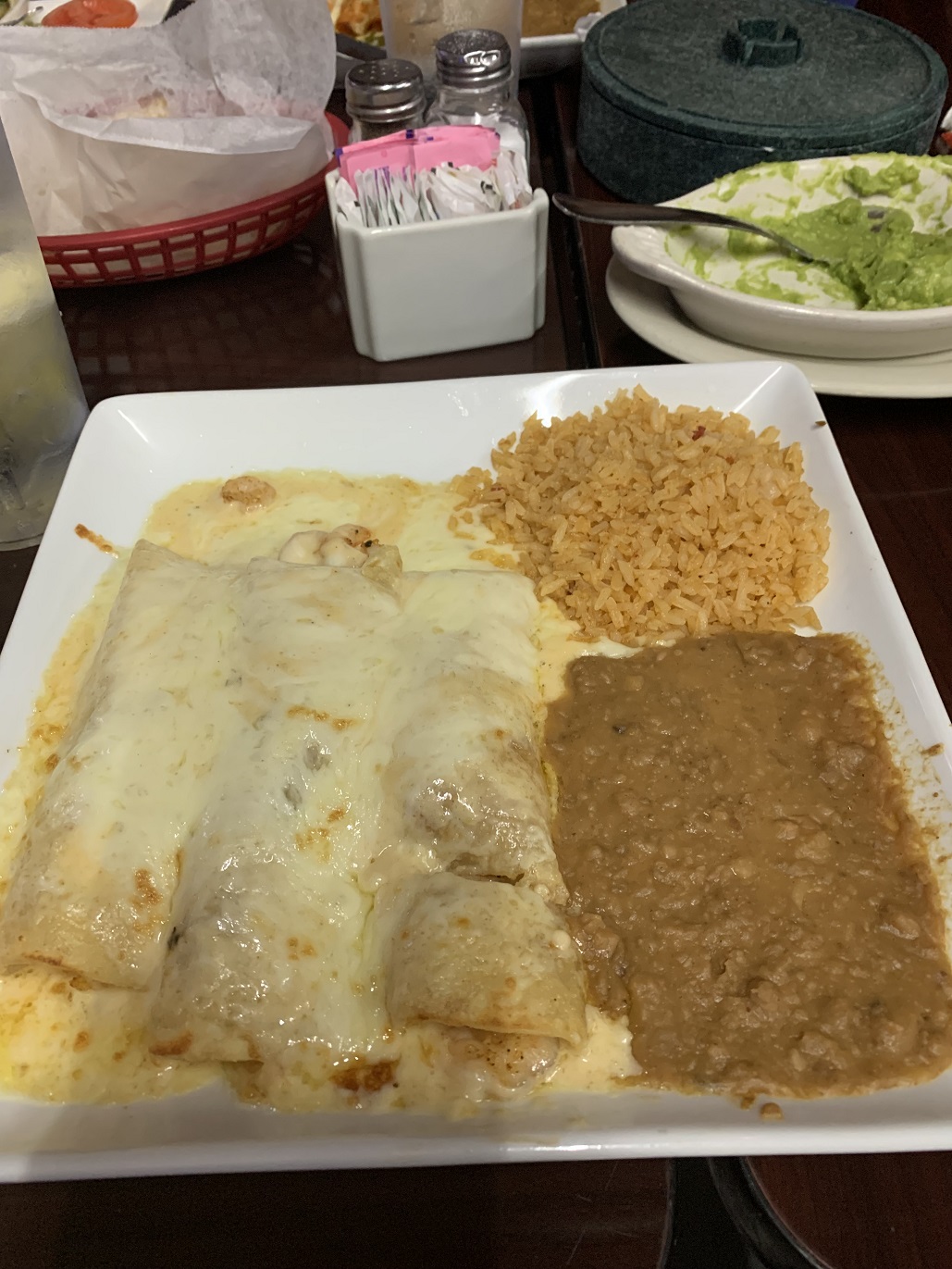
We drove down to Casa Medina just in time to grab a couple of seats before they closed the kitchen. The service was excellent, and the food was solid! I ordered the shrimp enchiladas, and I was pleasantly surprised with the amount of shrimp and cheese on top. I am a bit of a shrimp enchilada connoisseur, and this dish is a guaranteed 10/10 on the Ashlyn Parker scale!
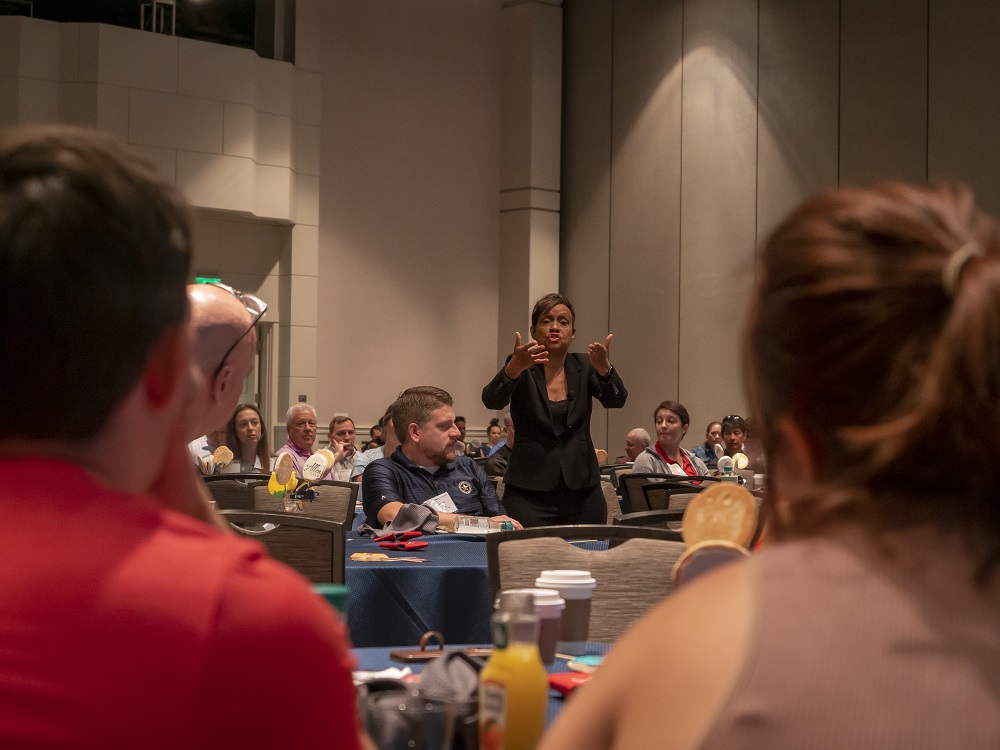
Judge Hatchett was very enthusiastic as she shared her stories and words of wisdom to inspire all the attendees. Unlike other speeches, Judge Hatchett meandered around the room and asked questions of attendees. She encouraged everyone to establish professional and private goals and to stick to them!
For us, the breakout session was an opportunity to learn from senior managers at the conference.
After the breakout session, she left us all pondering her powerful message: “on the other side of fear is your freedom!” Reminding us to not be afraid to act upon our dreams and do what we are meant to do.
Receiving a standing ovation from the audience, Judge Hatchett walked off the stage to converse on a more personal level with a few of the attendees. It was then that we realized what a small world we live in when we “bumped” into Scott Wayman, who, as it turned out, is married to Diane Gottsman! For those wondering who Mrs. Gottsman is, she comes to Sam Houston State University (brought in by Career Success) every semester to teach us about etiquette, and we very much enjoy her annual visits, where we pose with her in annual selfie.
So, we did that with Mr. Wayman!
As we got ready to leave, we said our goodbyes to Ms. Breland, Mr. Wayman, Mr. Stokes, and Judge Hatchett.
We are looking forward to attending the 2023 TCMA Conference in Allen, Texas!