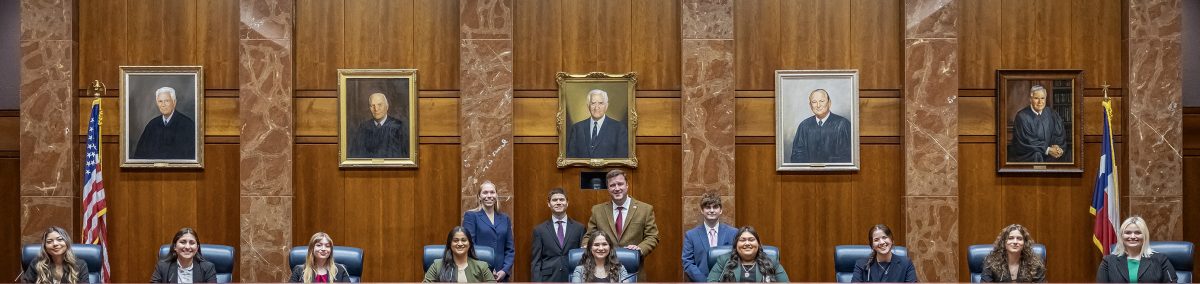
Skip to content

Center for Law, Engagement, and Politics

Leap At SHSU!

  • About LEAP
  • LEAP Ambassadors
Center for Law, Engagement, and Politics

Category: Local Government

Engagement, Responsibility, and Councilmember Tiffany Thomas

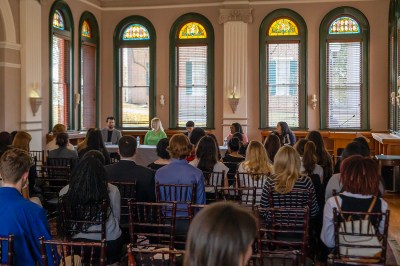
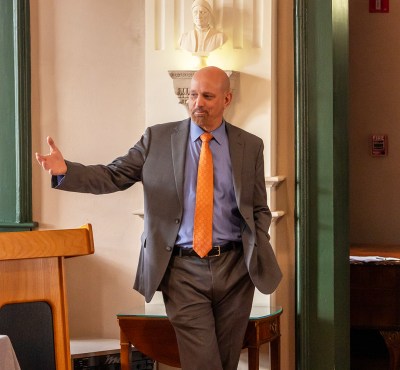
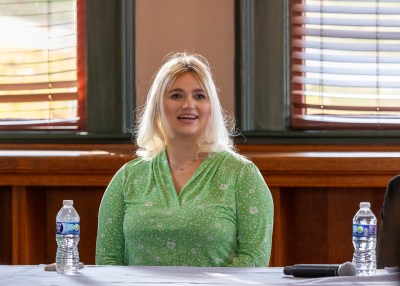
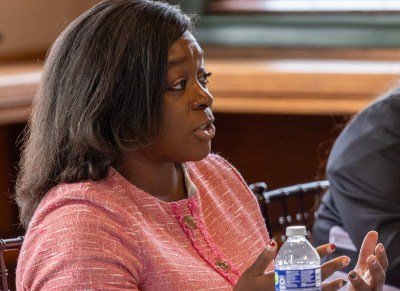
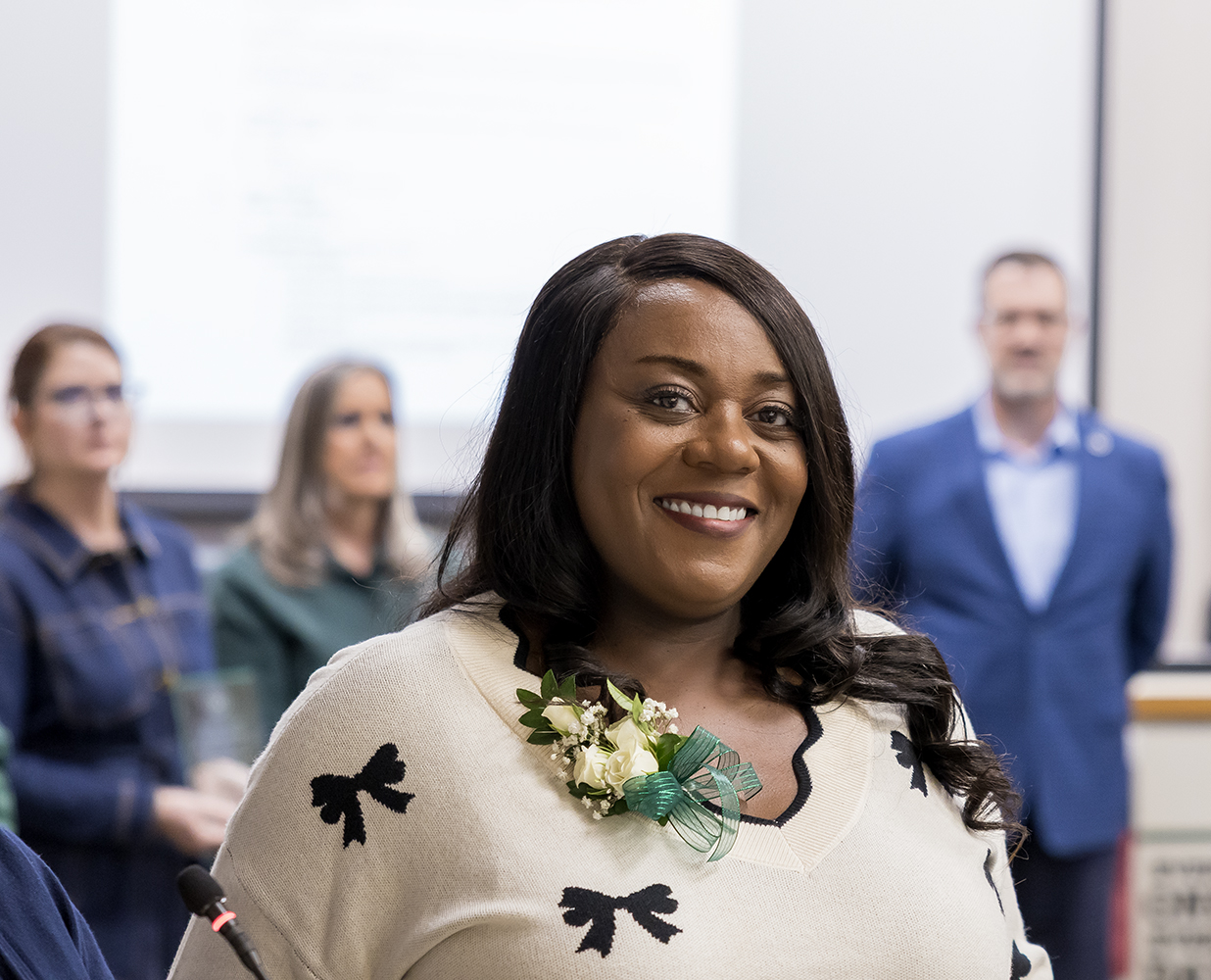
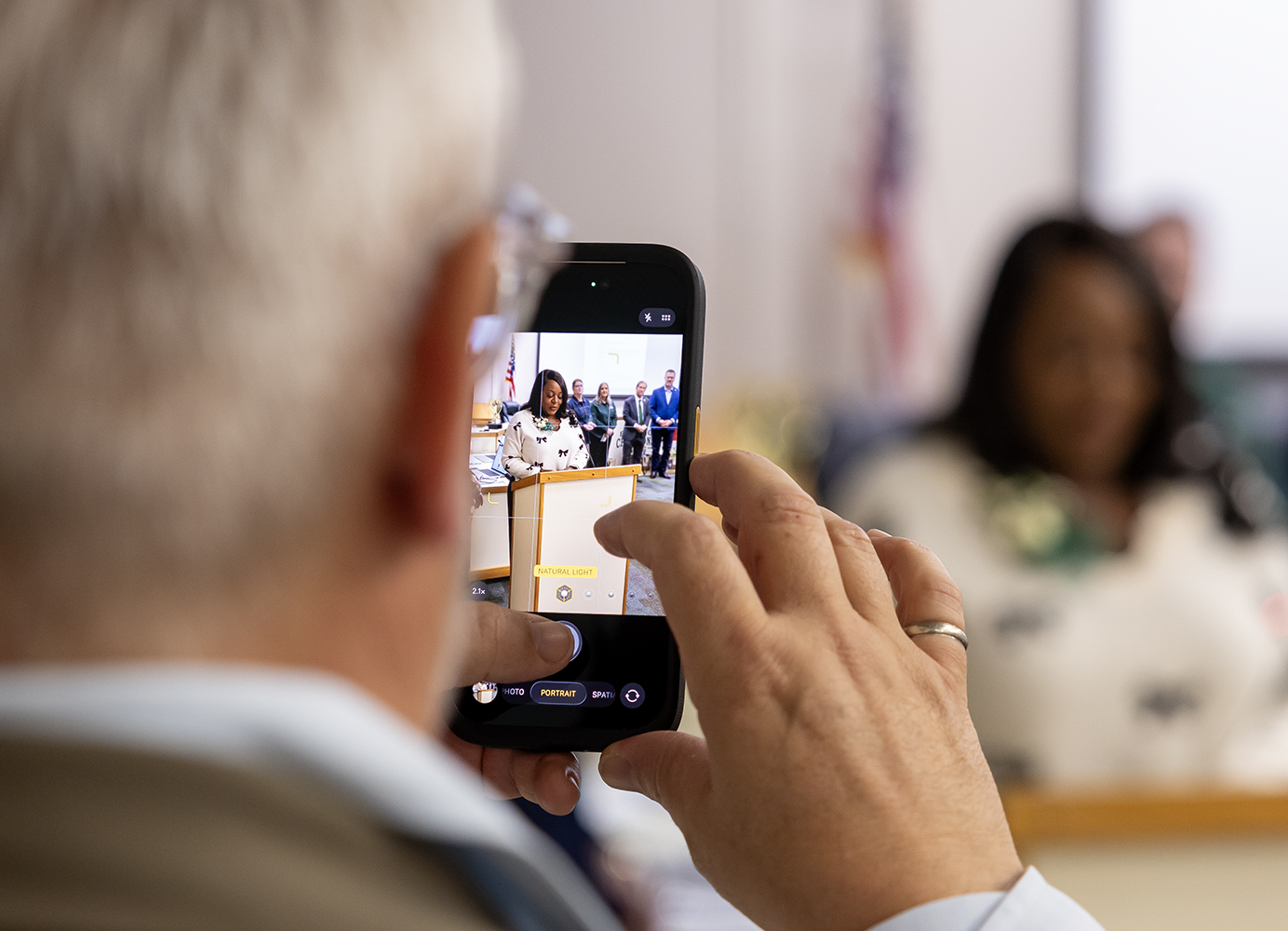
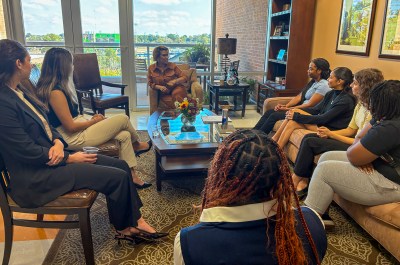
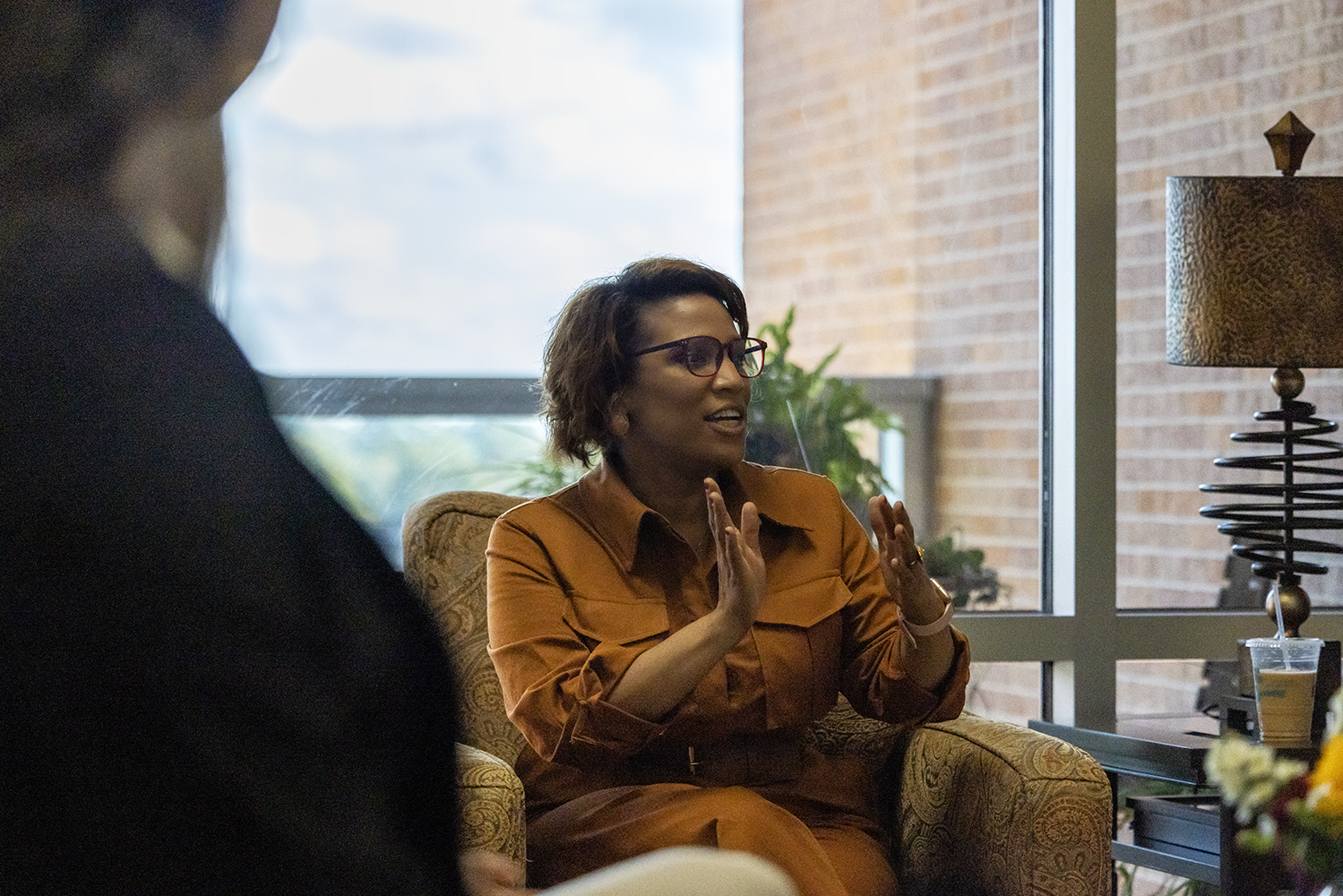
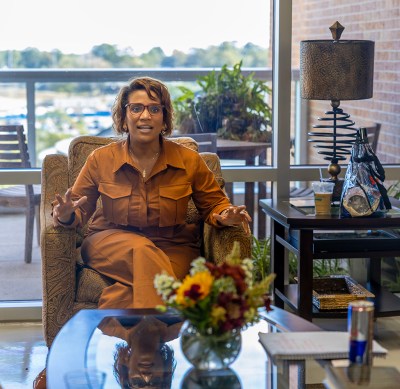
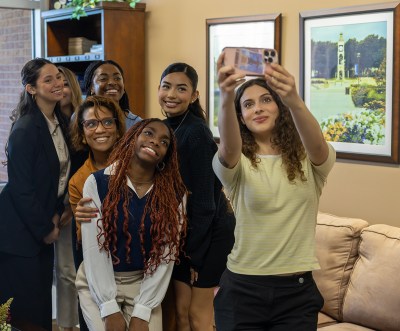
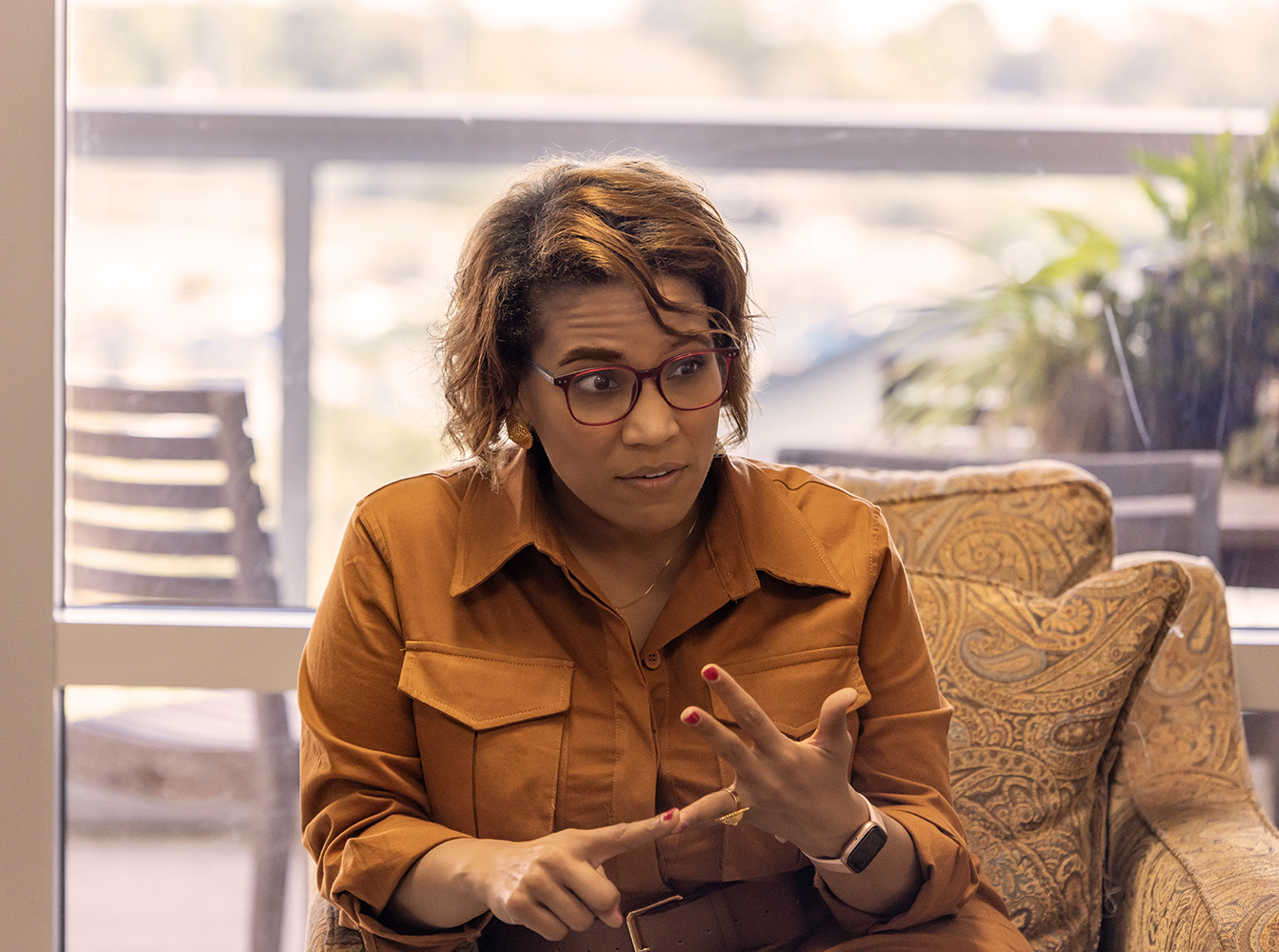
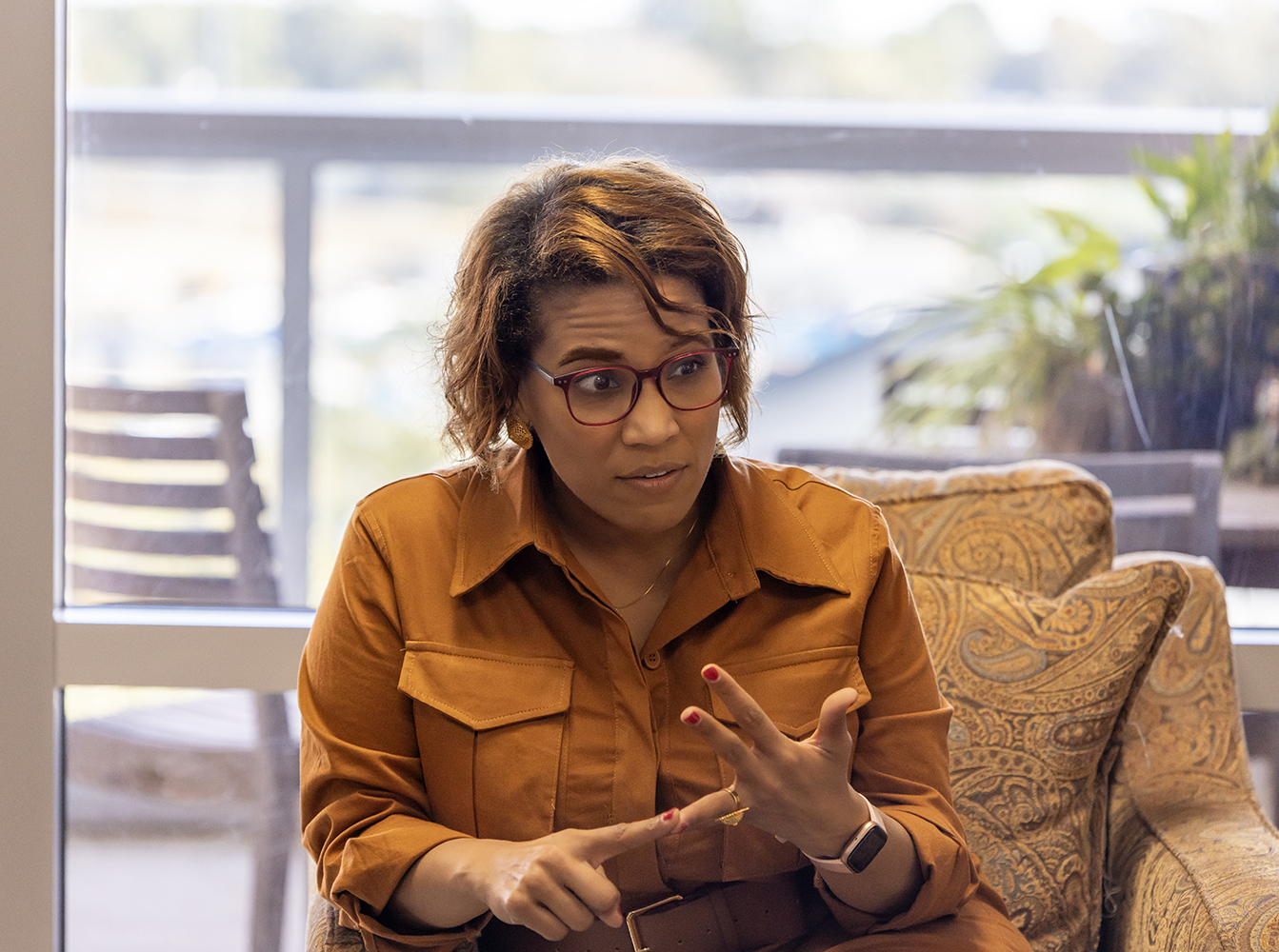
One of this year’s class of SHSU Distinguished Alumni was Tiffany Thomas, Houston City Councilmember for District F. Ms. Thomas was unable to attend the Distinguished Alumni Gala (she was in DC), but she did stop by SHSU the day after, and she met with various offices and individuals, including LEAP Center students.

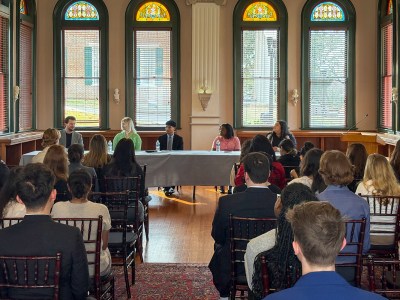
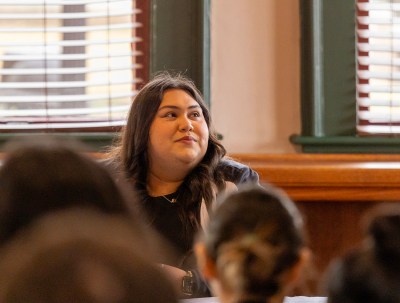
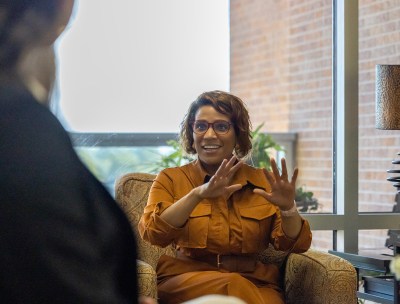
Councilmember Thomas, who graduated from SHSU in 2003 with a Bachelor’s in Communications, immediately struck a friendly and positive tone with the students, inviting an interactive meeting, one that stretched to almost an hour in total.

She focused on the importance of taking initiative rather than waiting for others, ensuring, as she described it, a “seat at the table.” For her, that meant getting involved in the issues she cared about. For her that eventually meant eventually running for office–first for Alief School Board and then for Houston City Council. But there are many ways to serve, and electoral office isn’t the only path.

But as an elected official, Thomas has stressed Economic Development, Quality of Life, Youth Programming, Neighborhood Revitalization, and Public Safety. Representing one of the most diverse districts in the nation gives Thomas credibility when she says, “If we can get it right in this district, then America can get it right, too.”

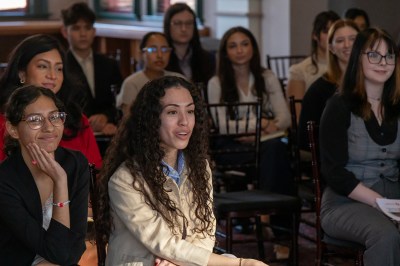
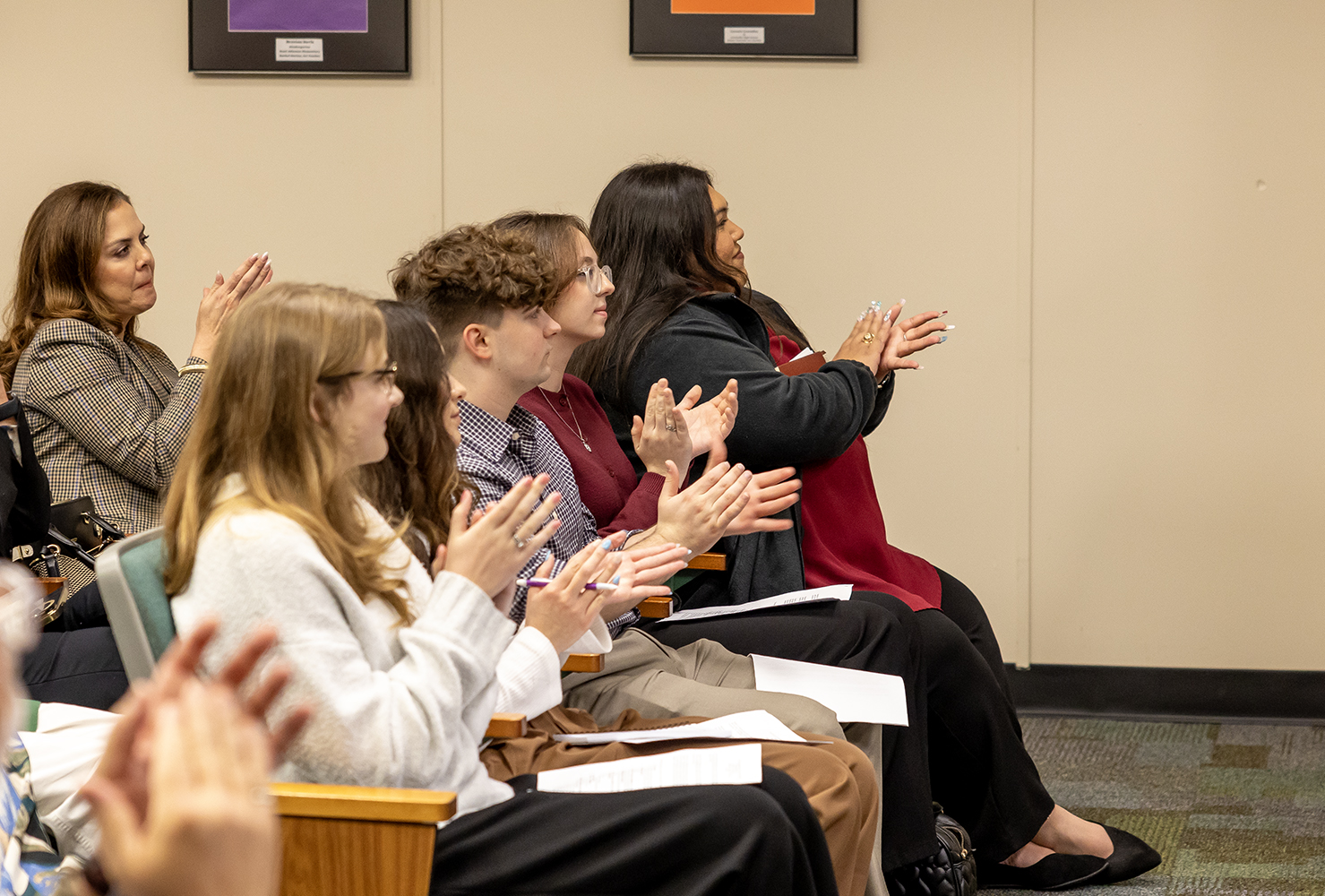
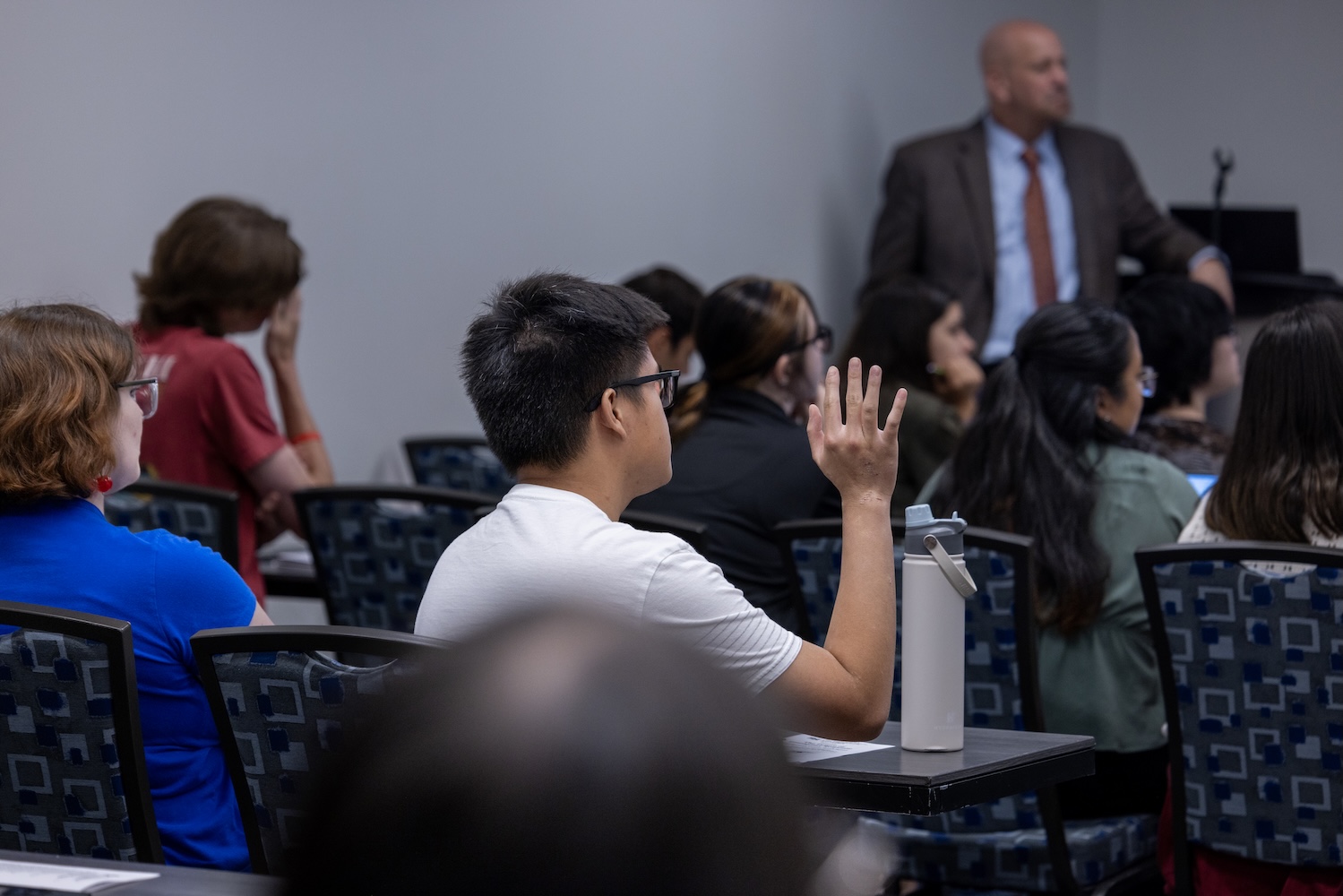
The Q&A period was engaging…

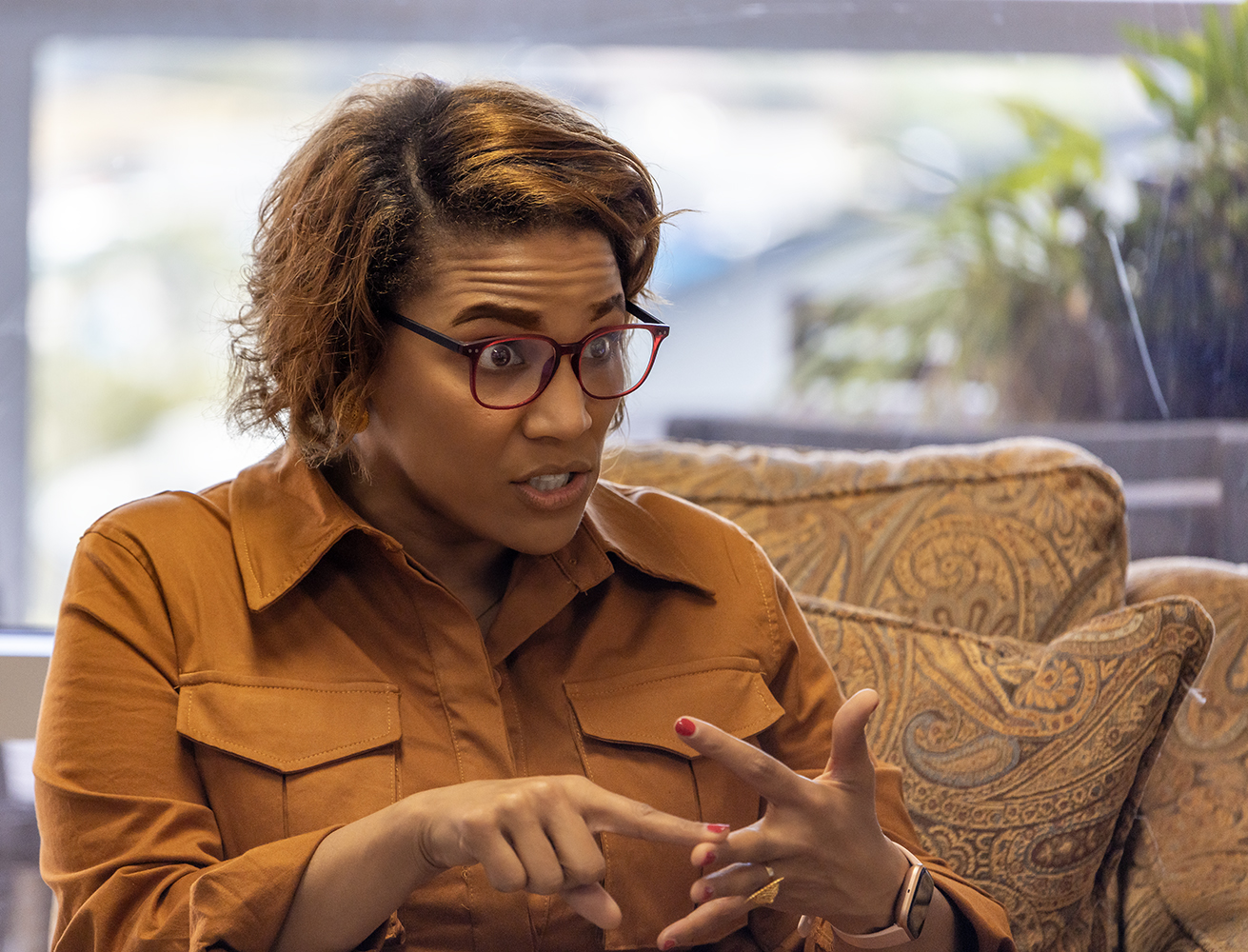
…and Councilmember Thomas used the time to encourage empowerment, to encourage the students to get involved, to stay engaged, and to show persistence–all of which, she reminded them, will help their communities and America get it right.

Unknown's avatarAuthor mikeyawnPosted on November 26, 2025November 26, 2025Format AsideCategories Civic Engagement, Local GovernmentTags Center for Law Engagement And Politics, Councilmember Tiffany Thomas, LEAP Center, Sam Houston State UniversityLeave a comment on Engagement, Responsibility, and Councilmember Tiffany Thomas

Navigating International Relations With Secretary Mike Pompeo

By Michelle Moya

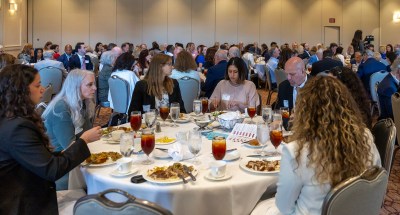
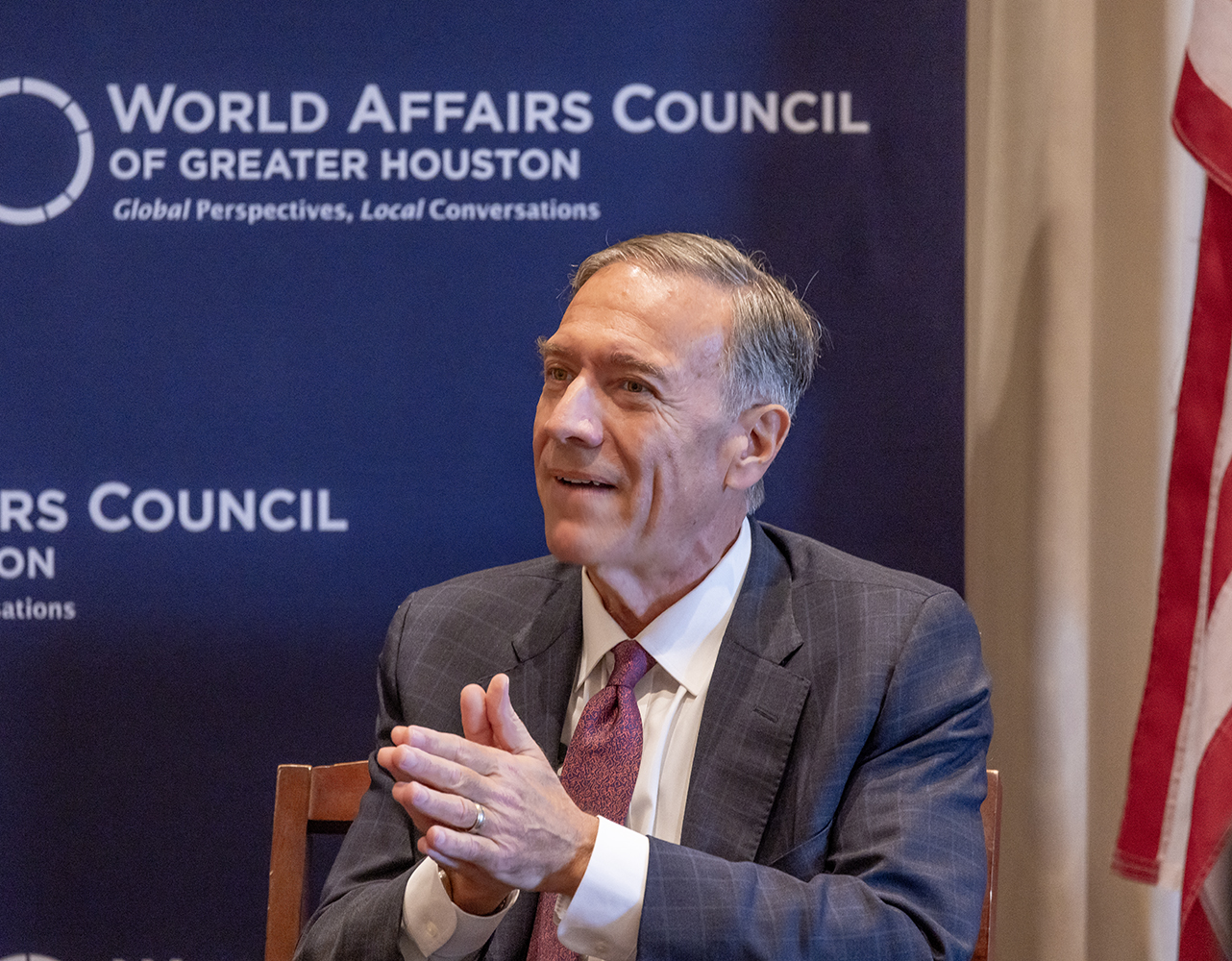
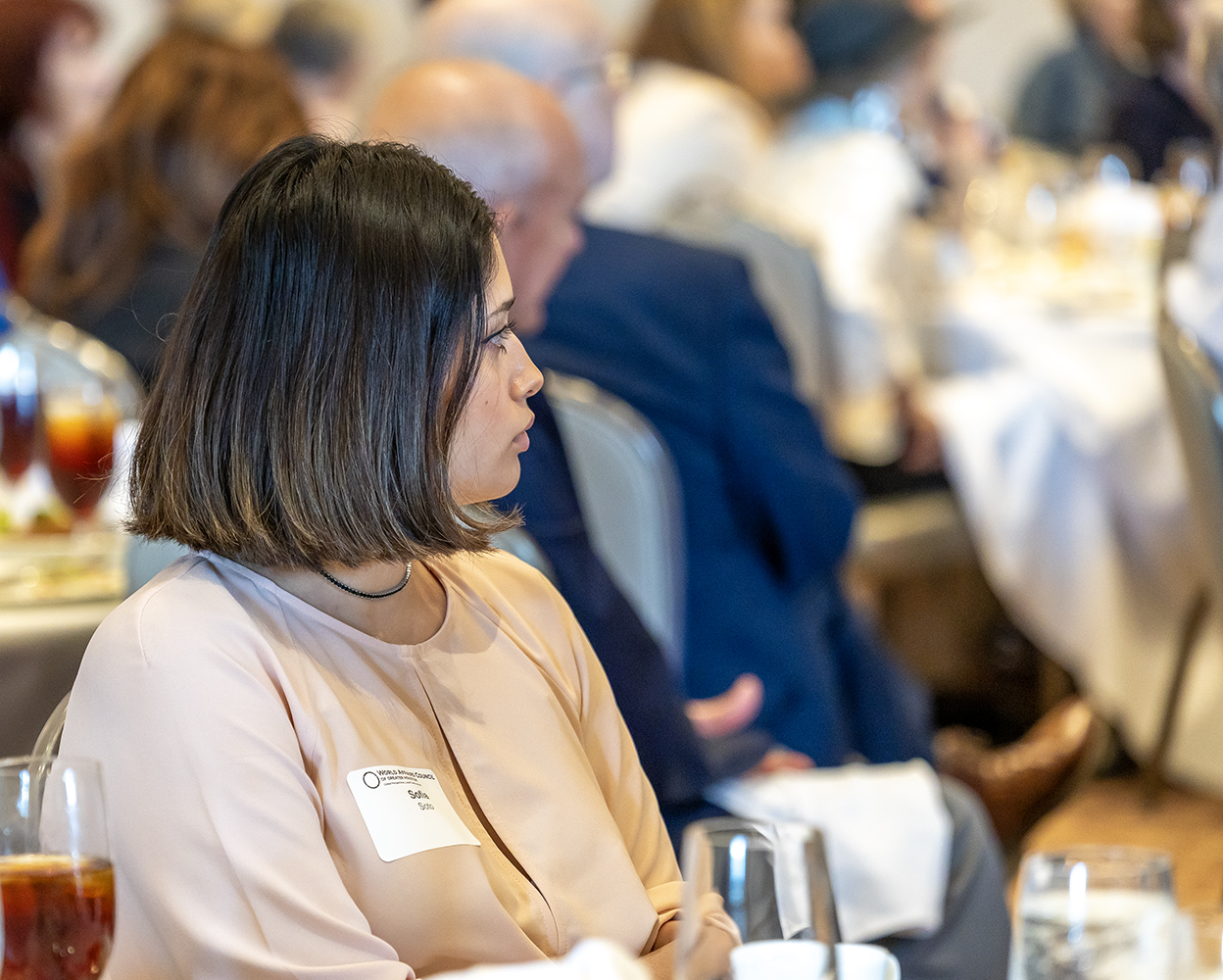
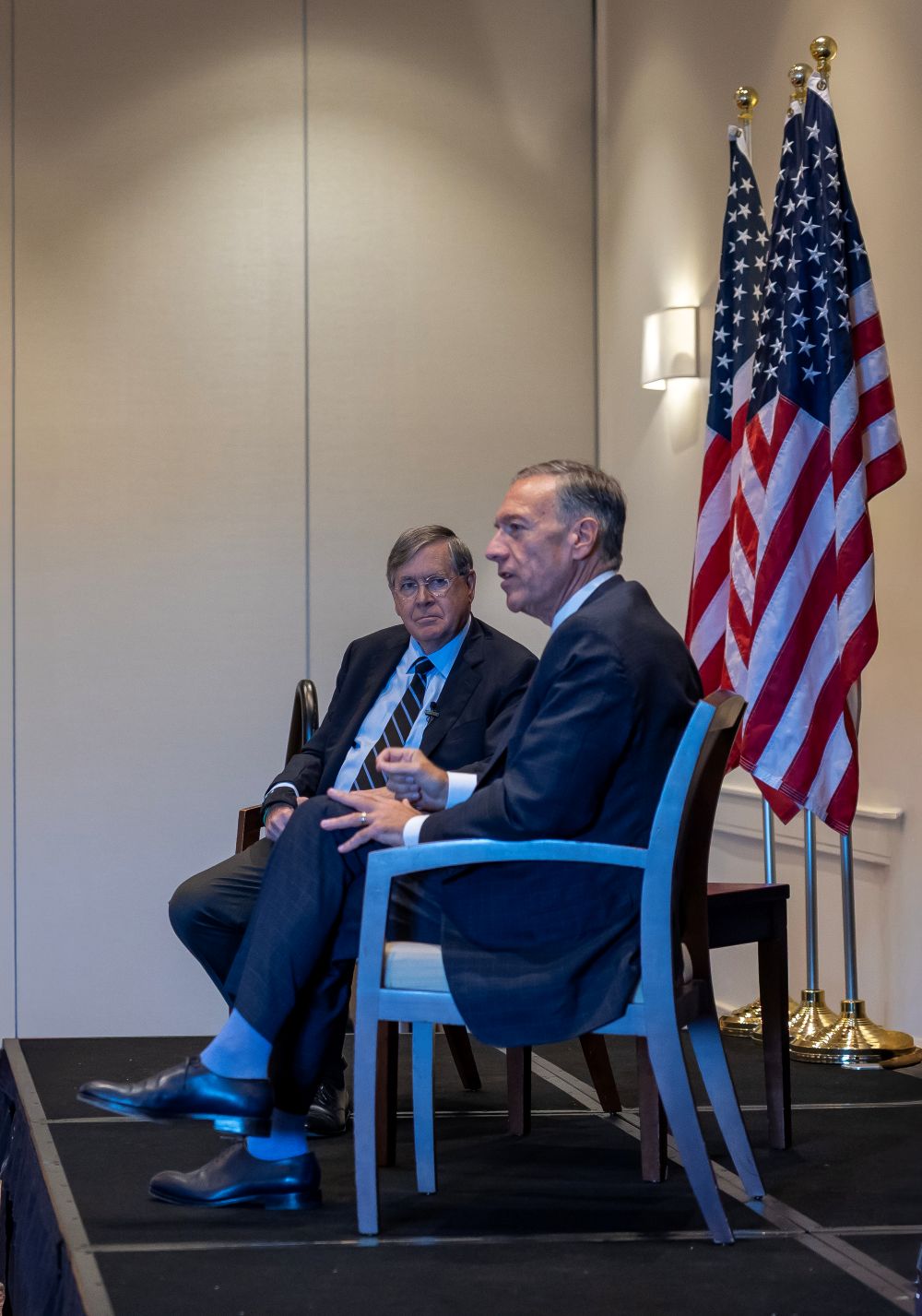
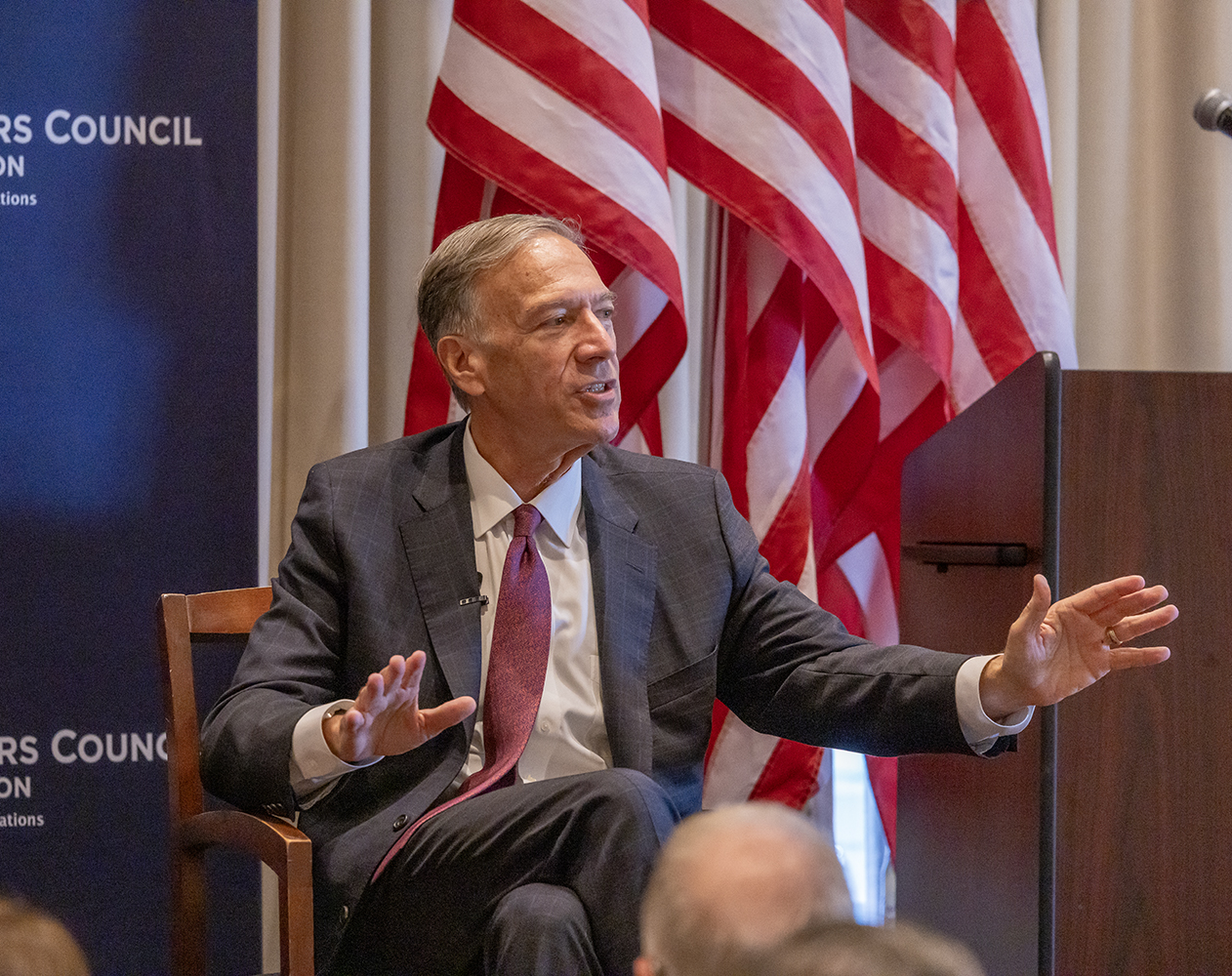
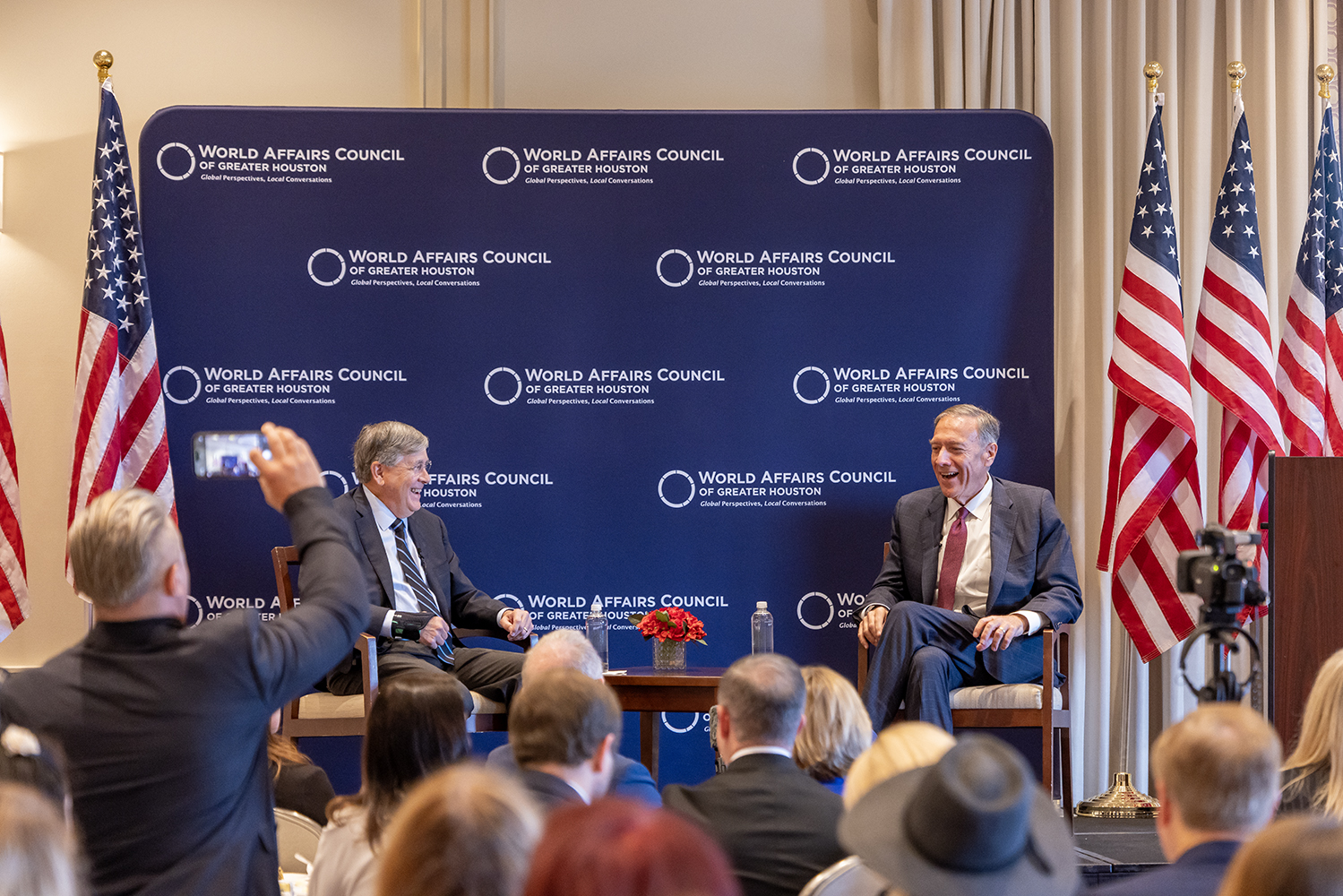
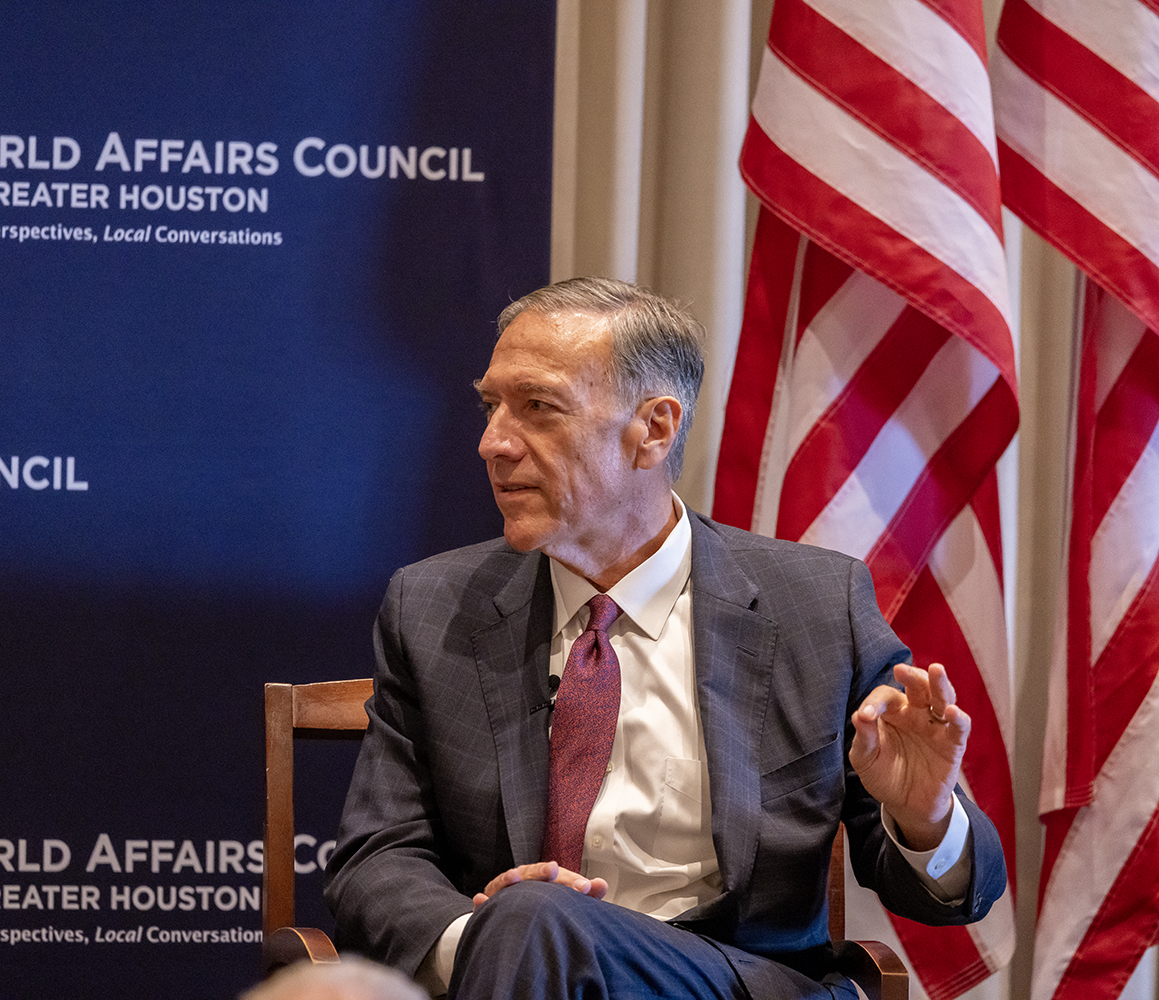
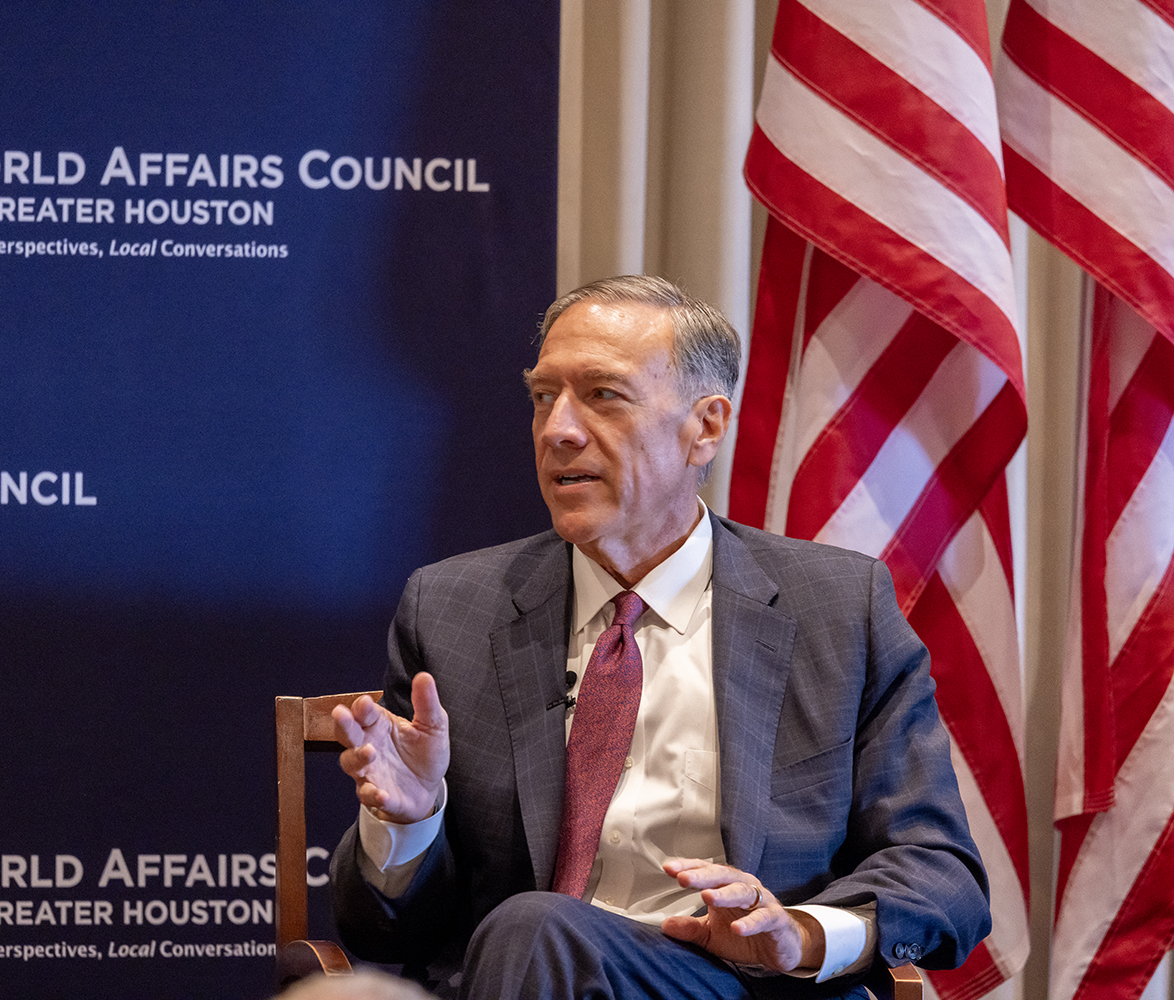
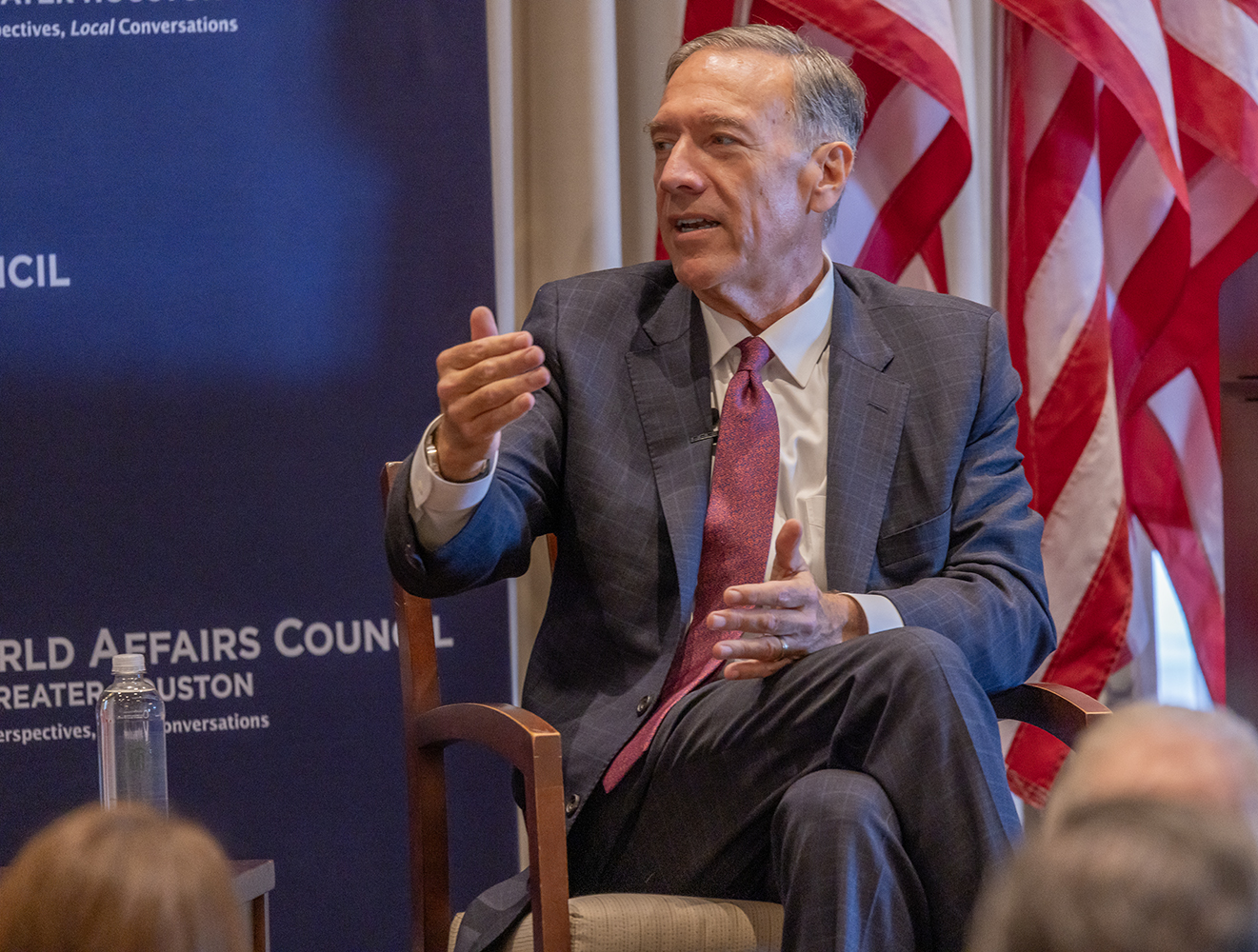
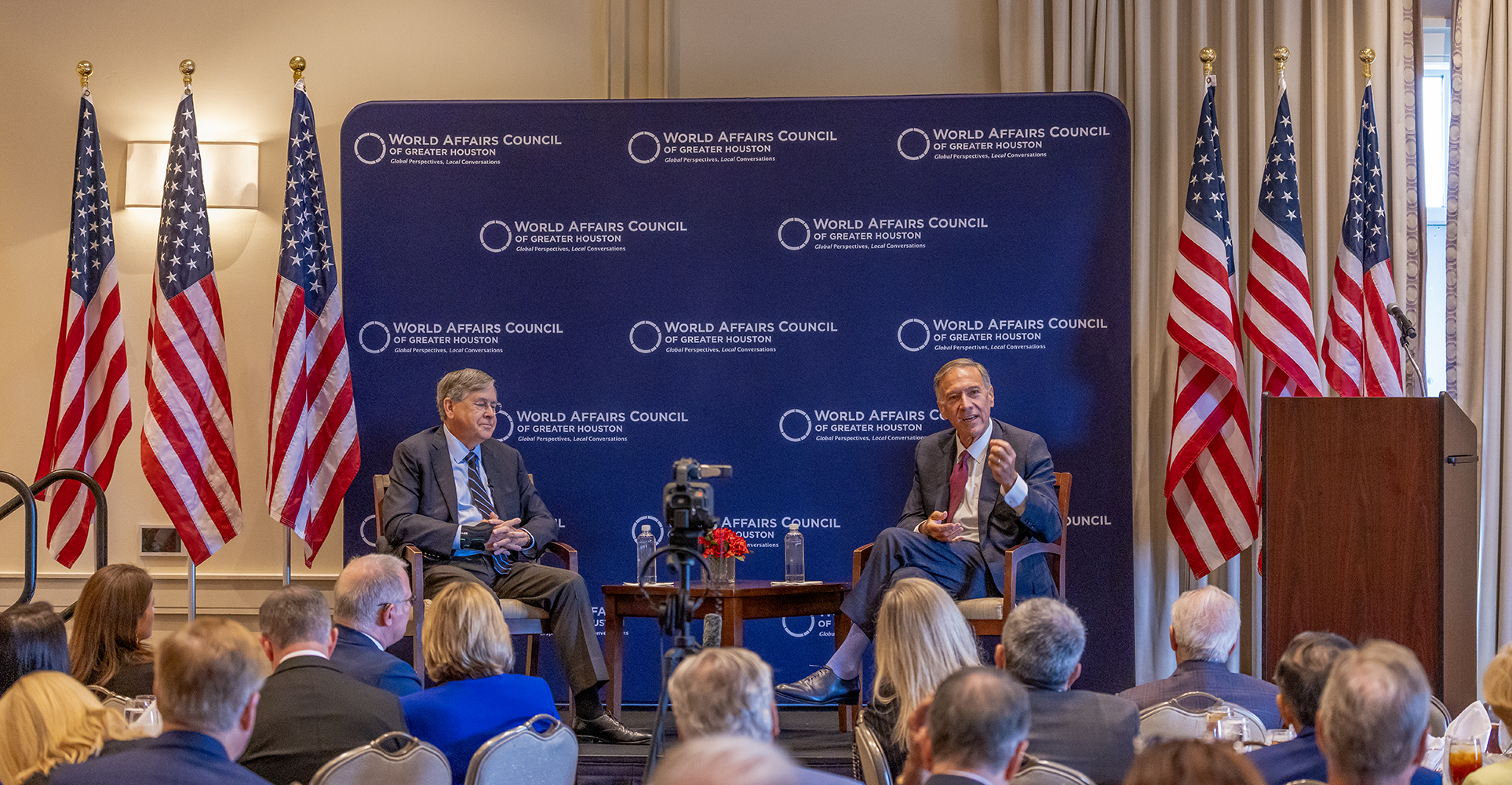
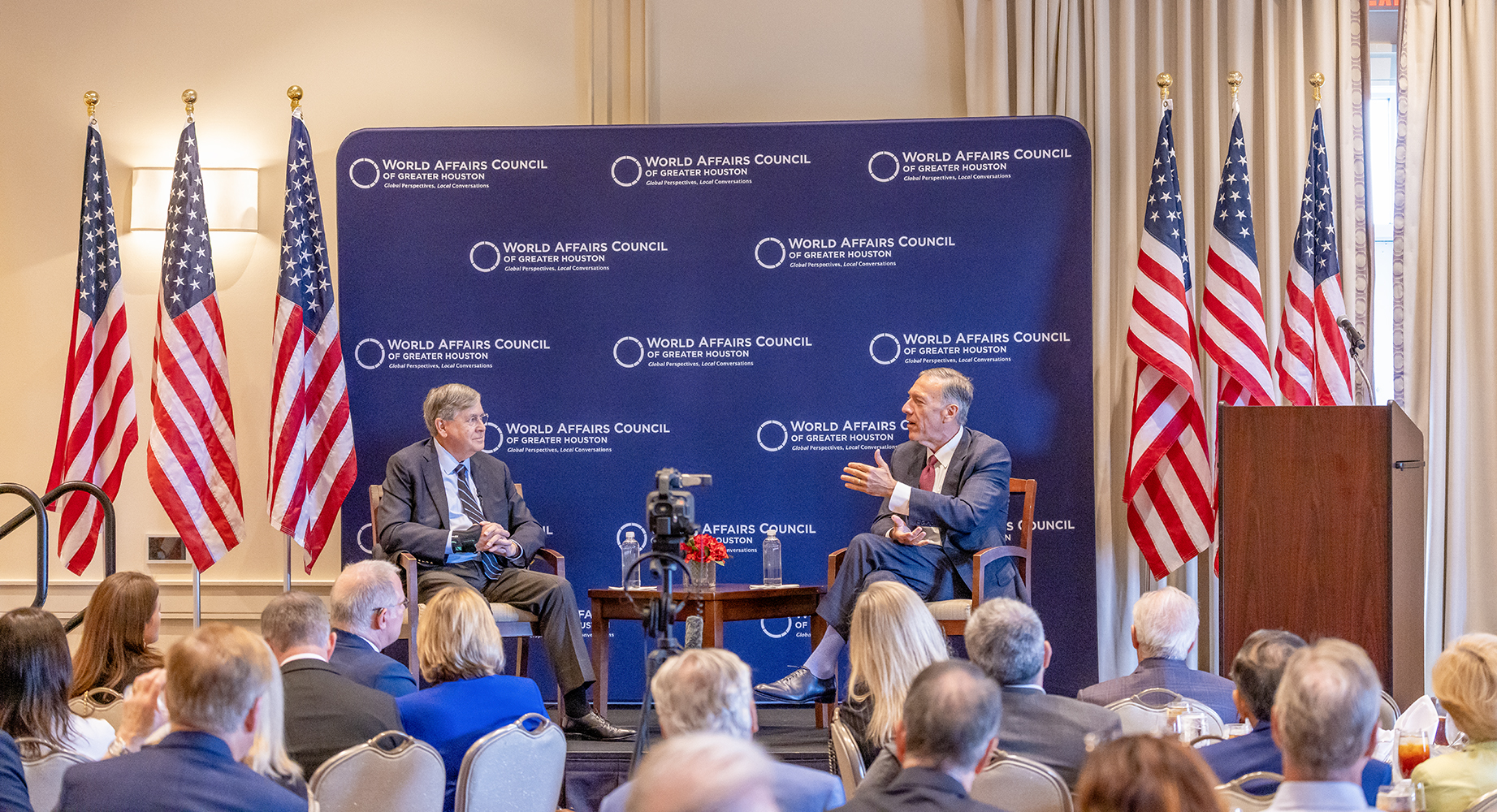
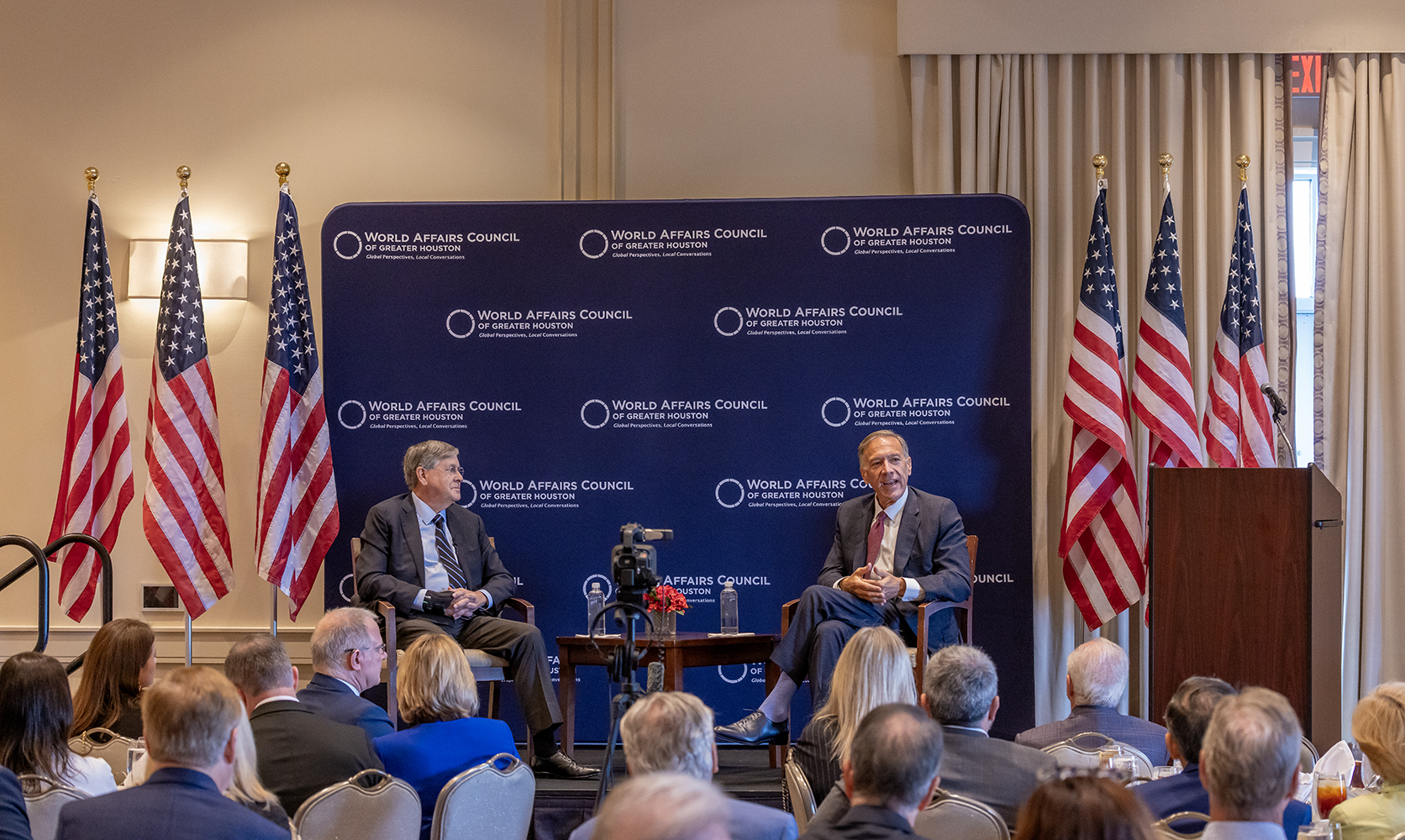
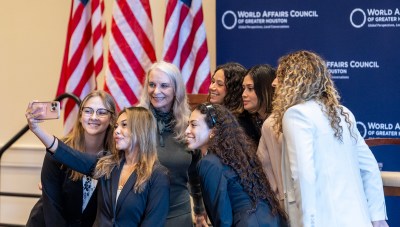
It was a rare lunch event for us with the World Affairs Council. With the LEAP Ambassadors all working part-time jobs and enrolled full-time in classes, getting away for a day-time event isn’t easy. But when students have the chance to meet Mike Pompeo–the 70th U.S. Secretary of State, former CIA Director, and four-term Congressman from Kansas–and Ambassador David Satterfield, we make accommodations.

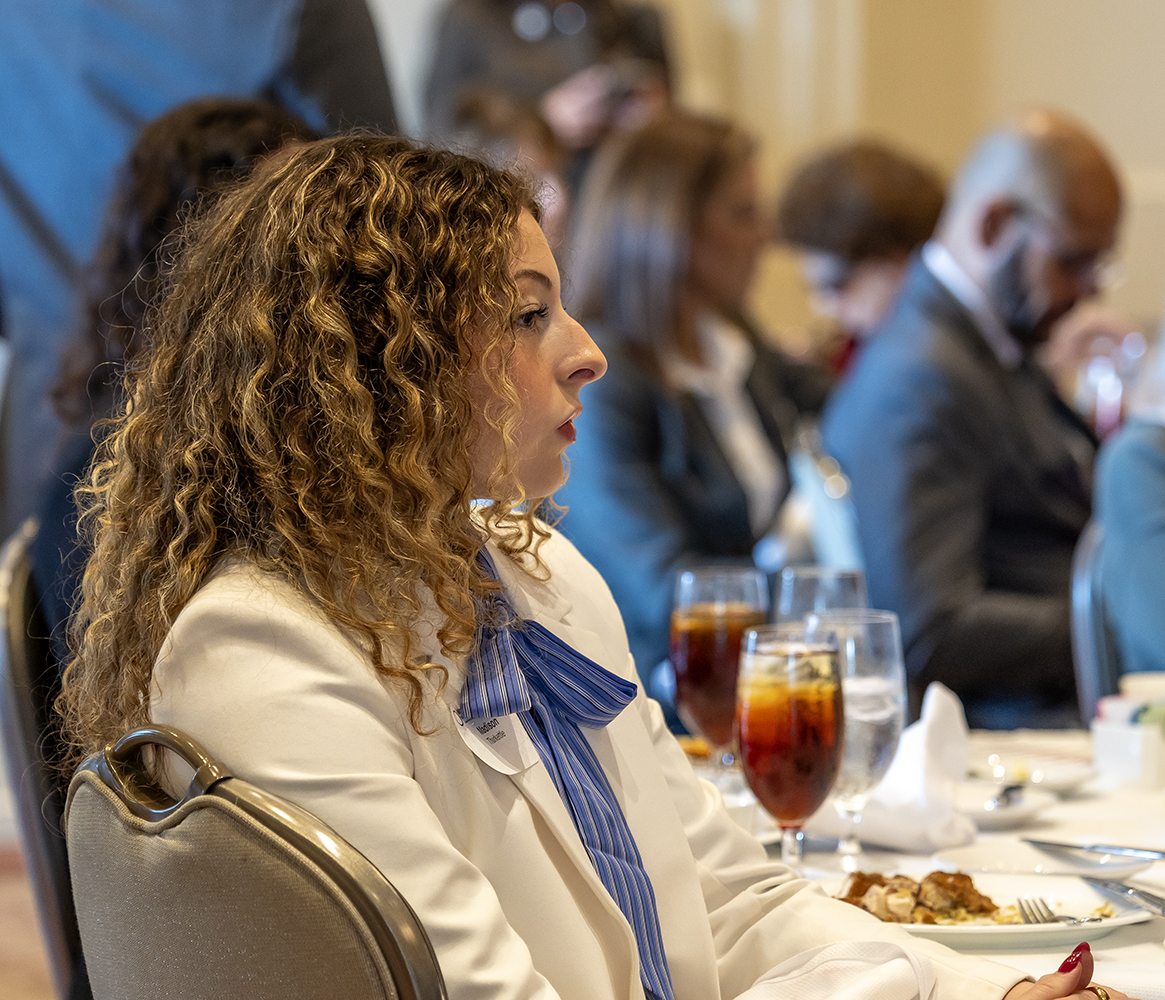
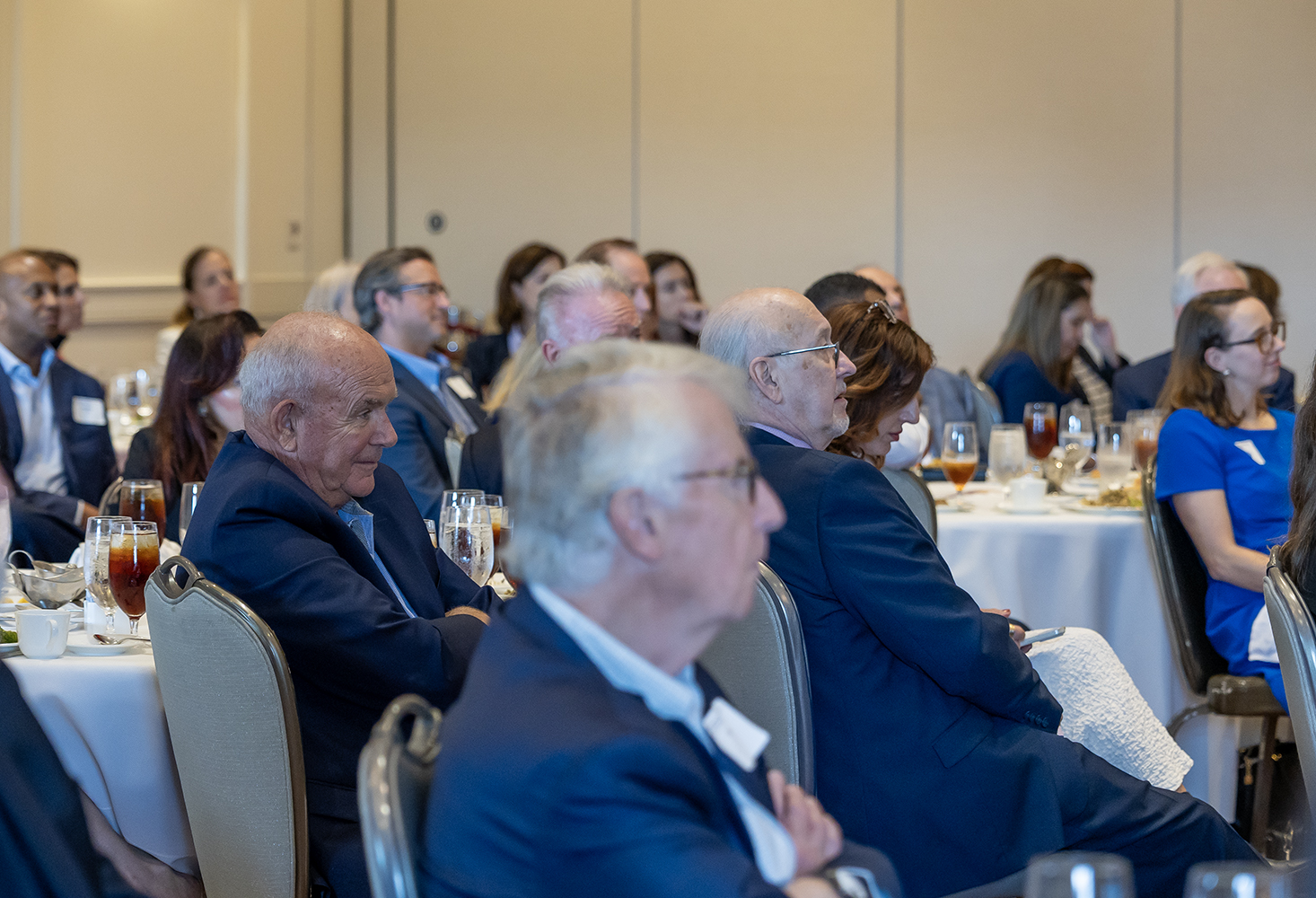
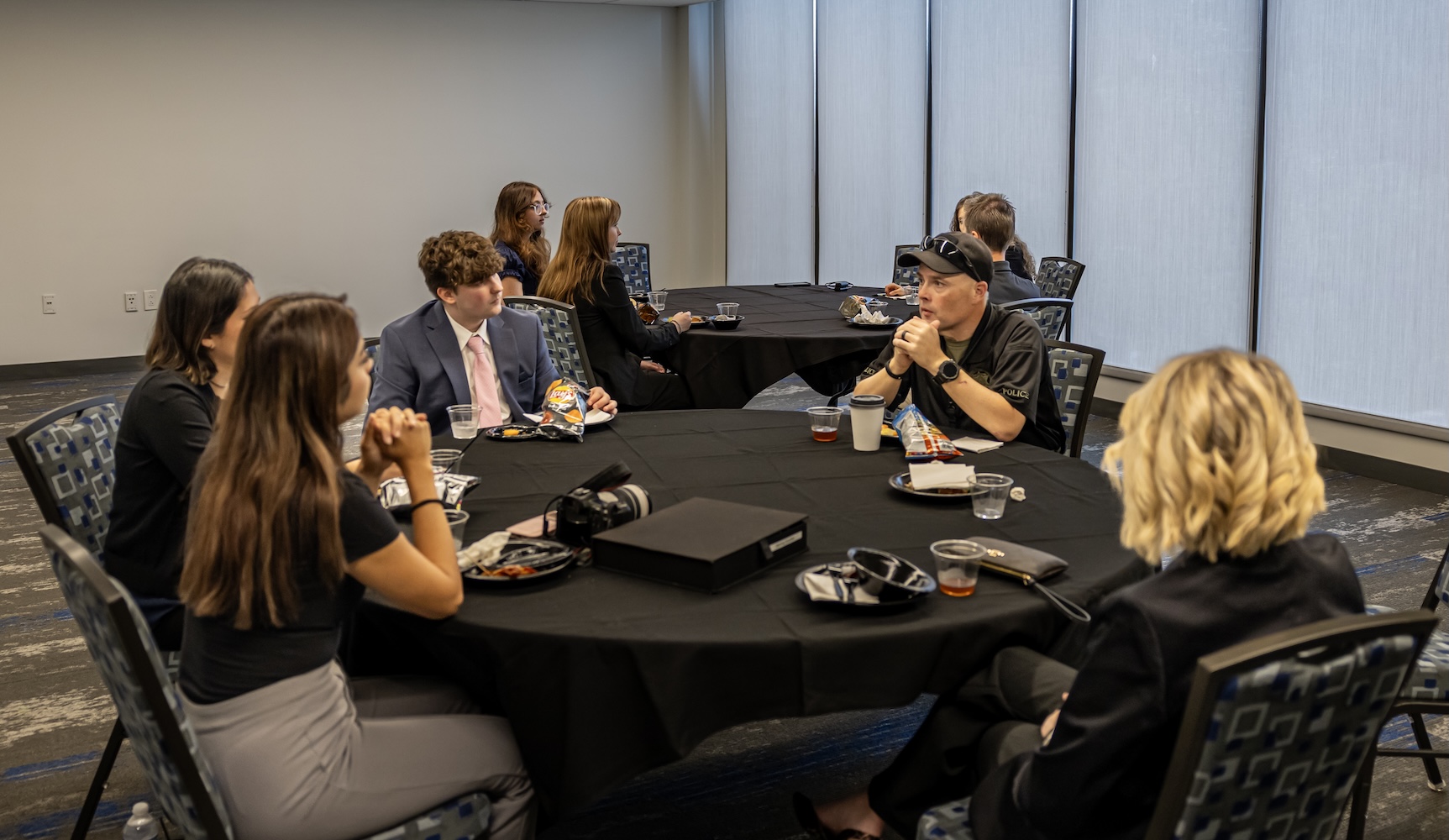
The event format included a full hour dedicated to networking before the program began–a structure that exemplifies why World Affairs Council events are so valuable for professional development. During this time, we had the opportunity to meet several professionals, including Attorney Wendall Corrigan Braniff, whose advice and civic encouragement added a great deal to our afternoon.  

Alongside a delicious meal…

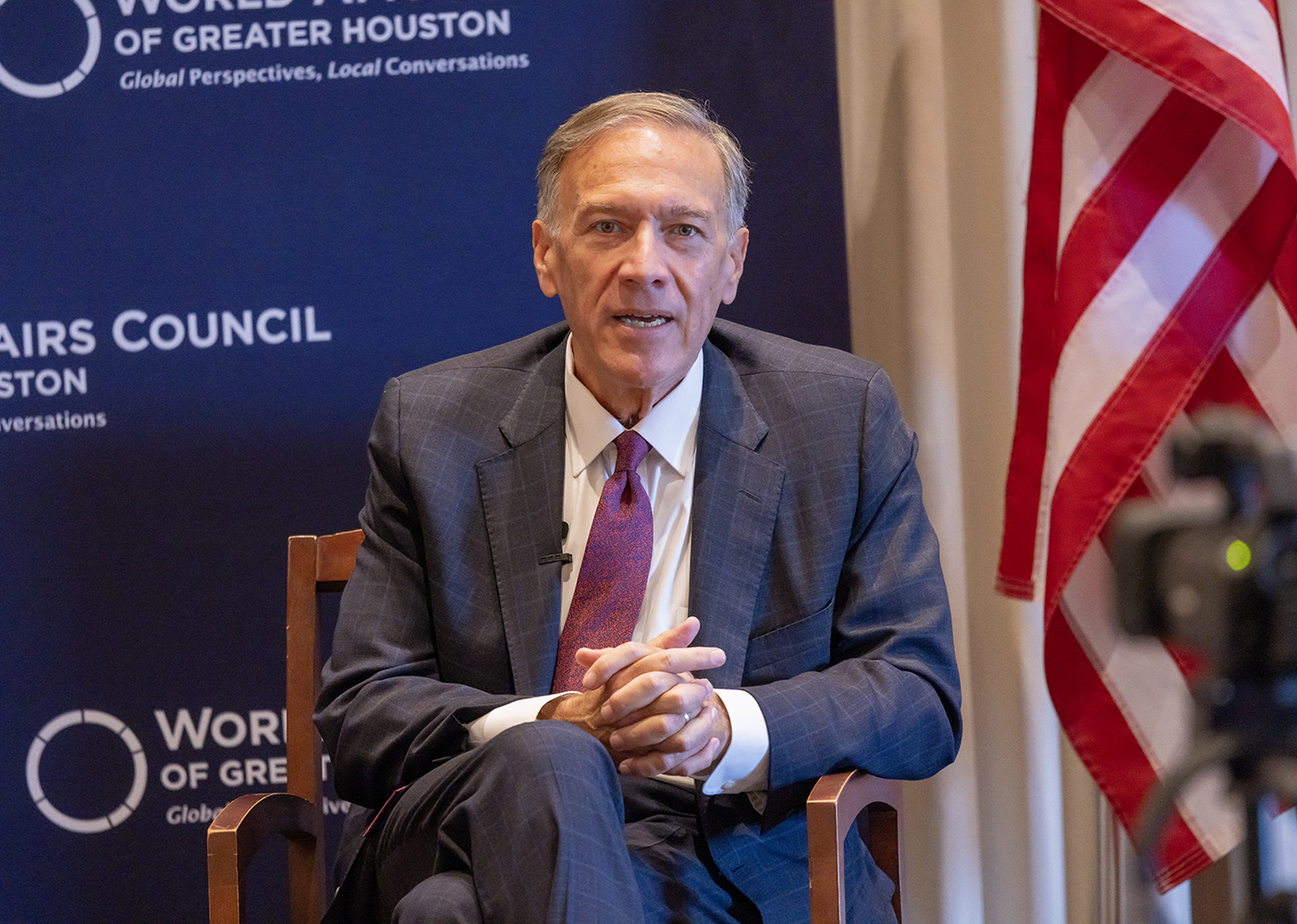
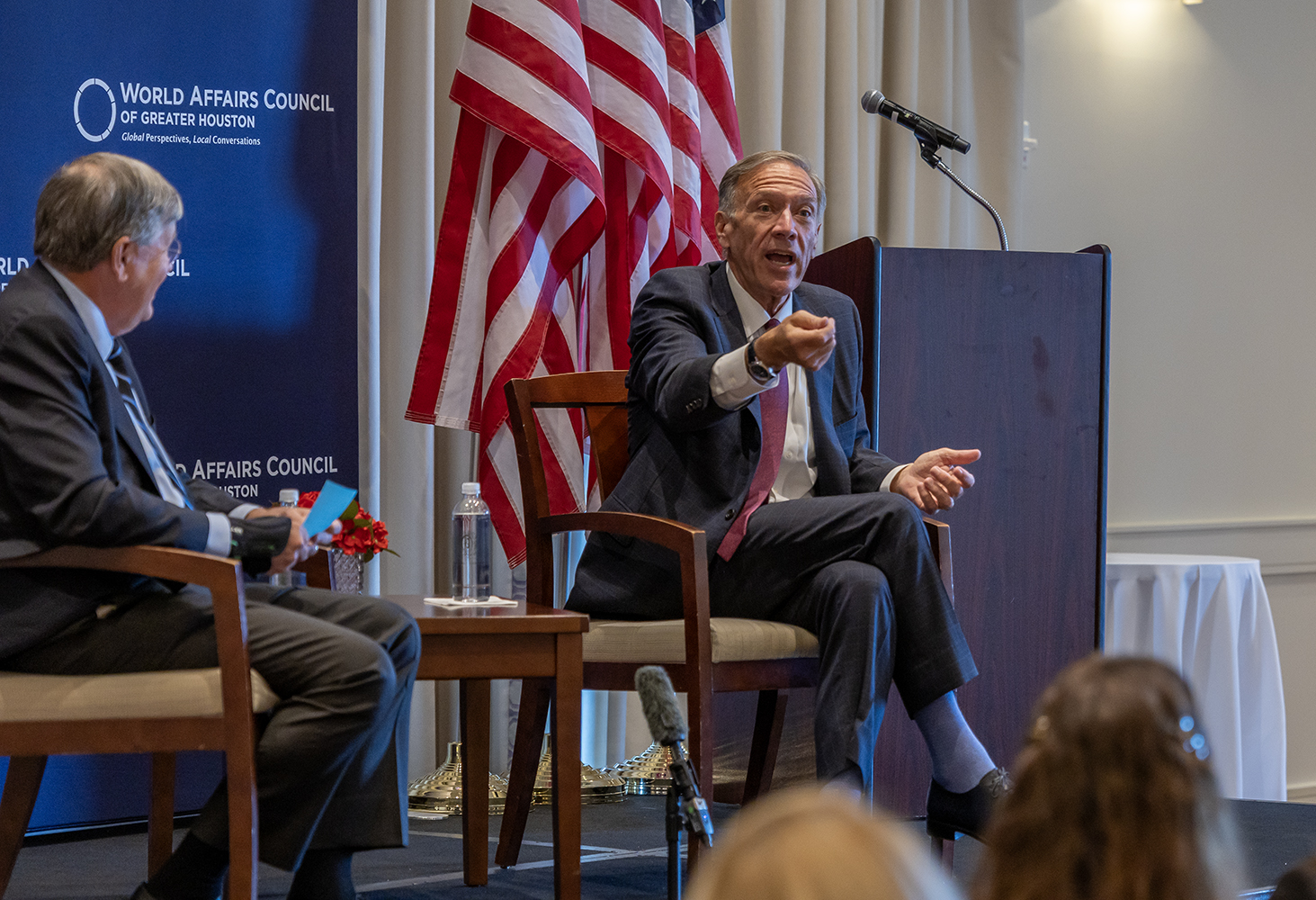
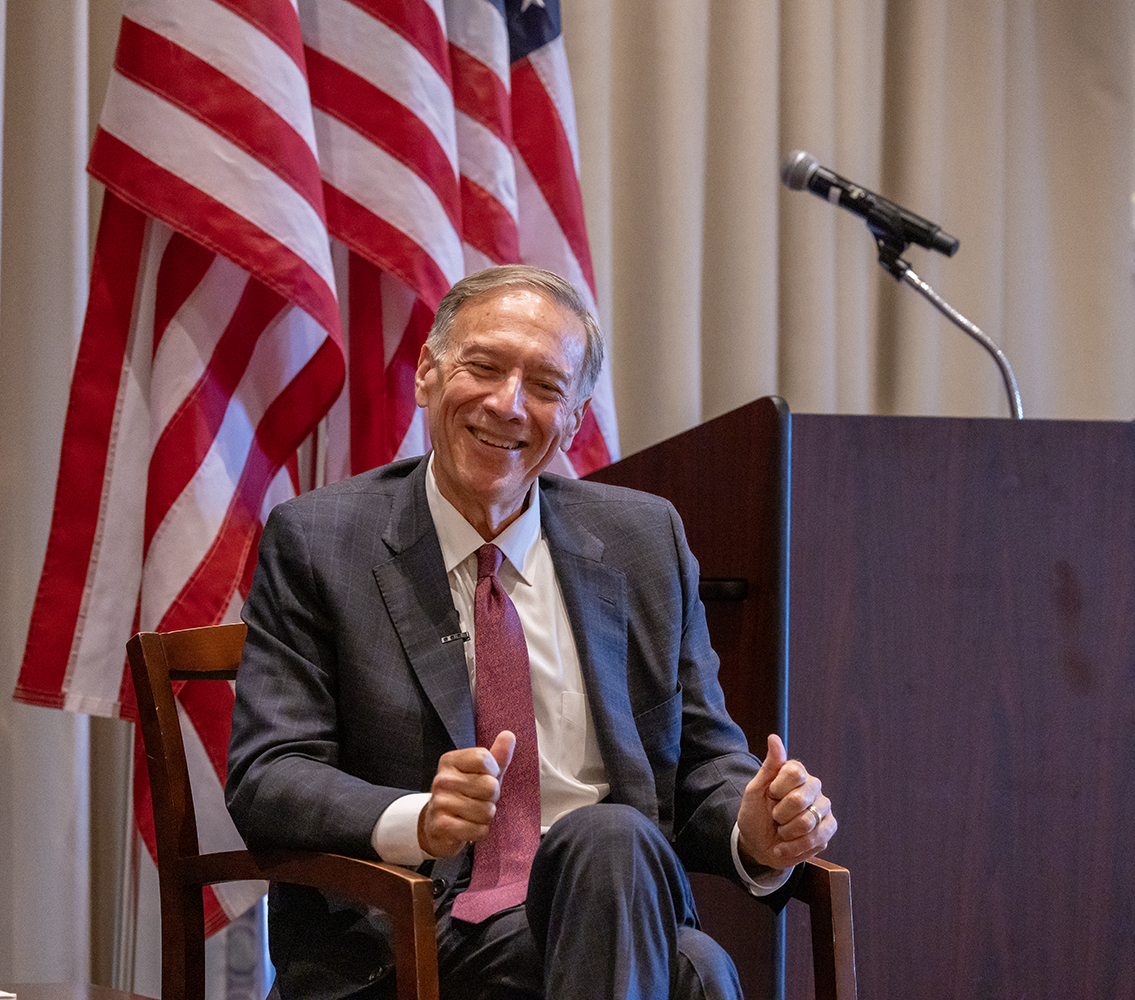
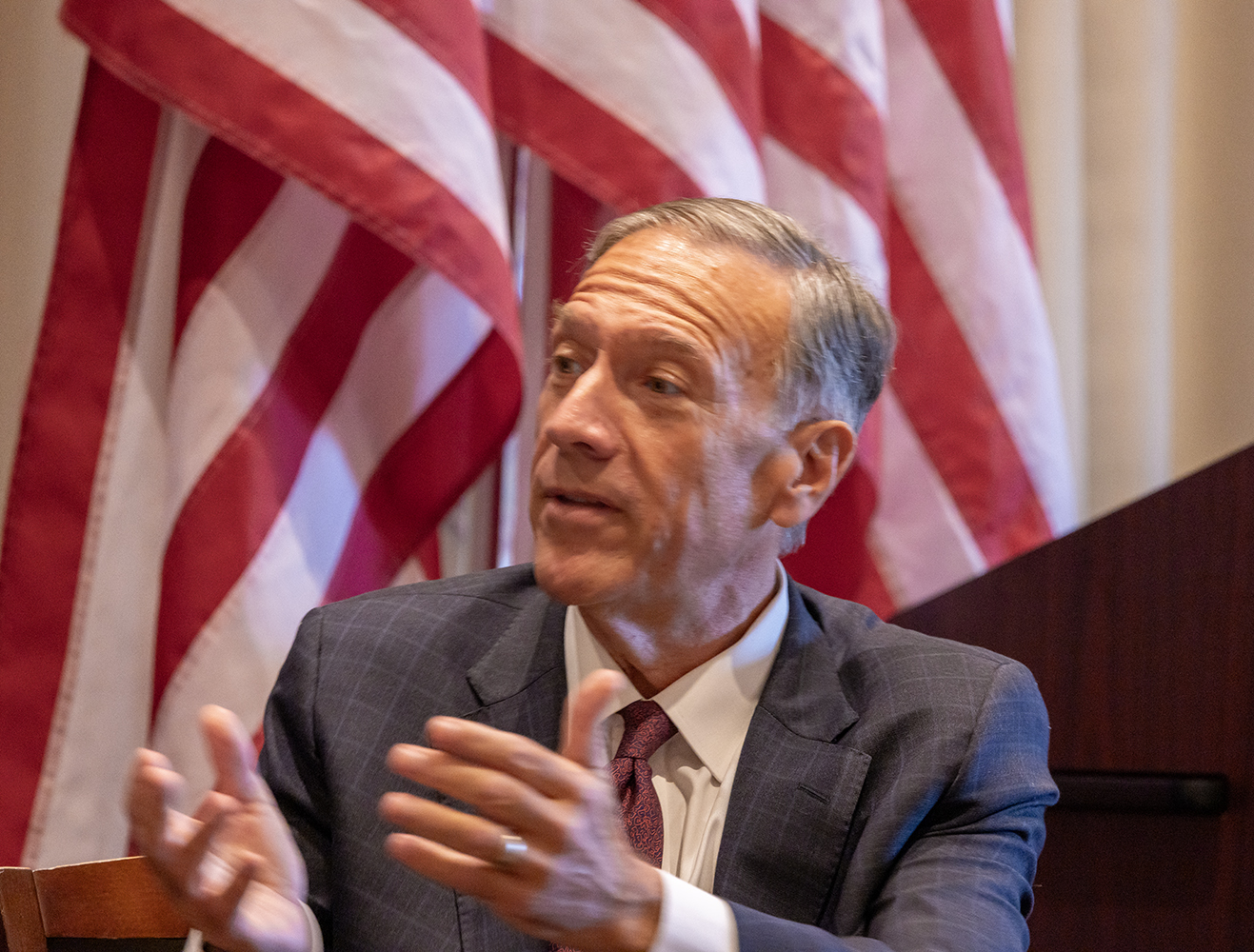
…the luncheon featured a discussion that moved seamlessly between grand strategy and practical governance. Secretary Pompeo, drawing on his experience as CIA Director and top diplomat, offered insights into the challenges facing American leadership in an increasingly complex world.

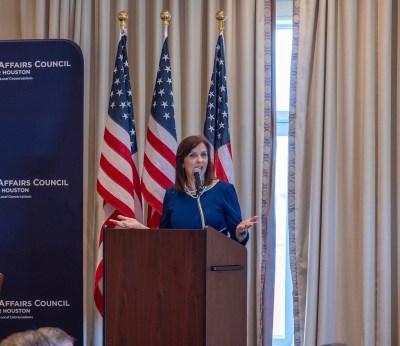
Following an introduction by World Affairs Council CEO Maryanne Maldonado…

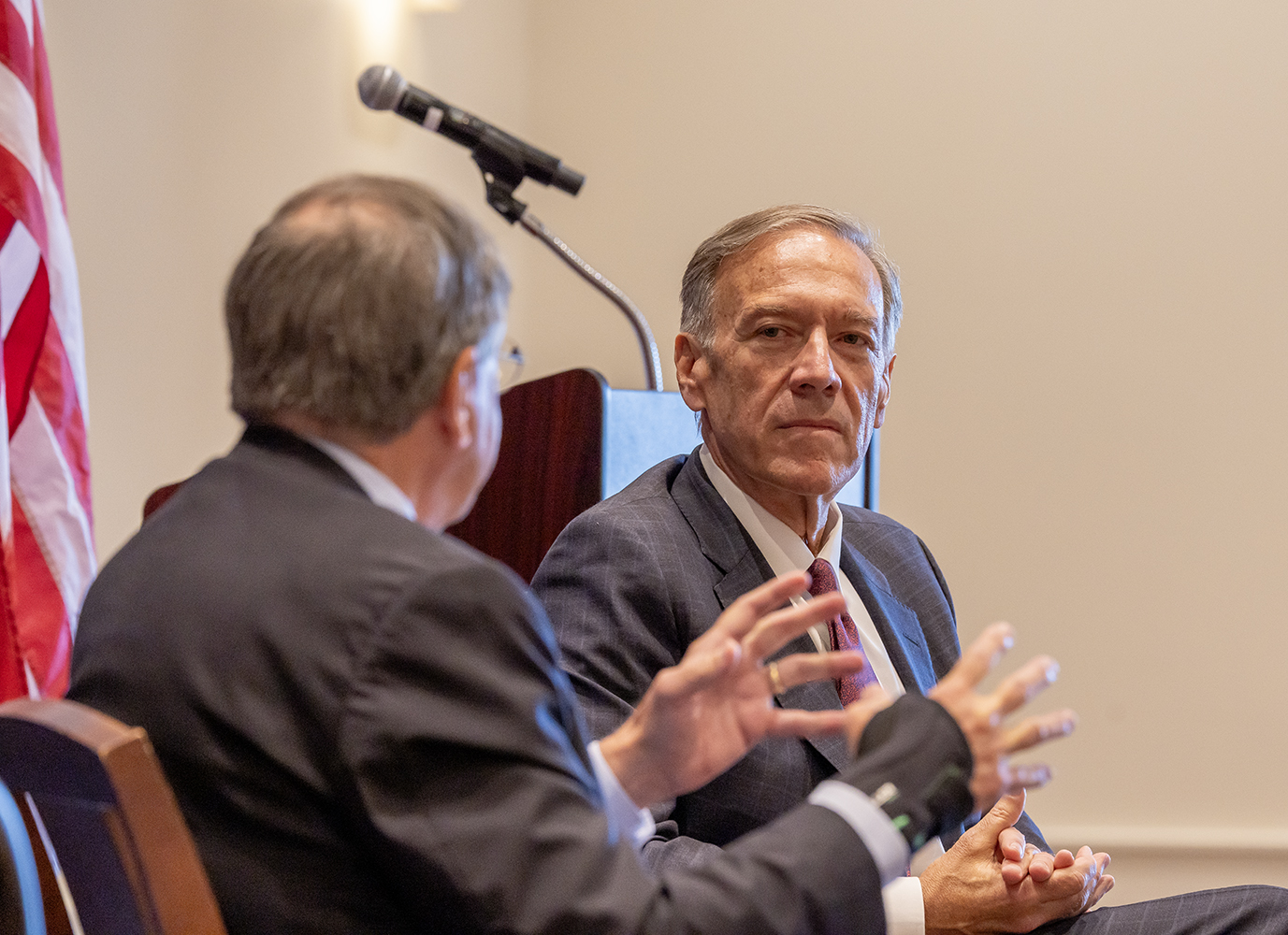
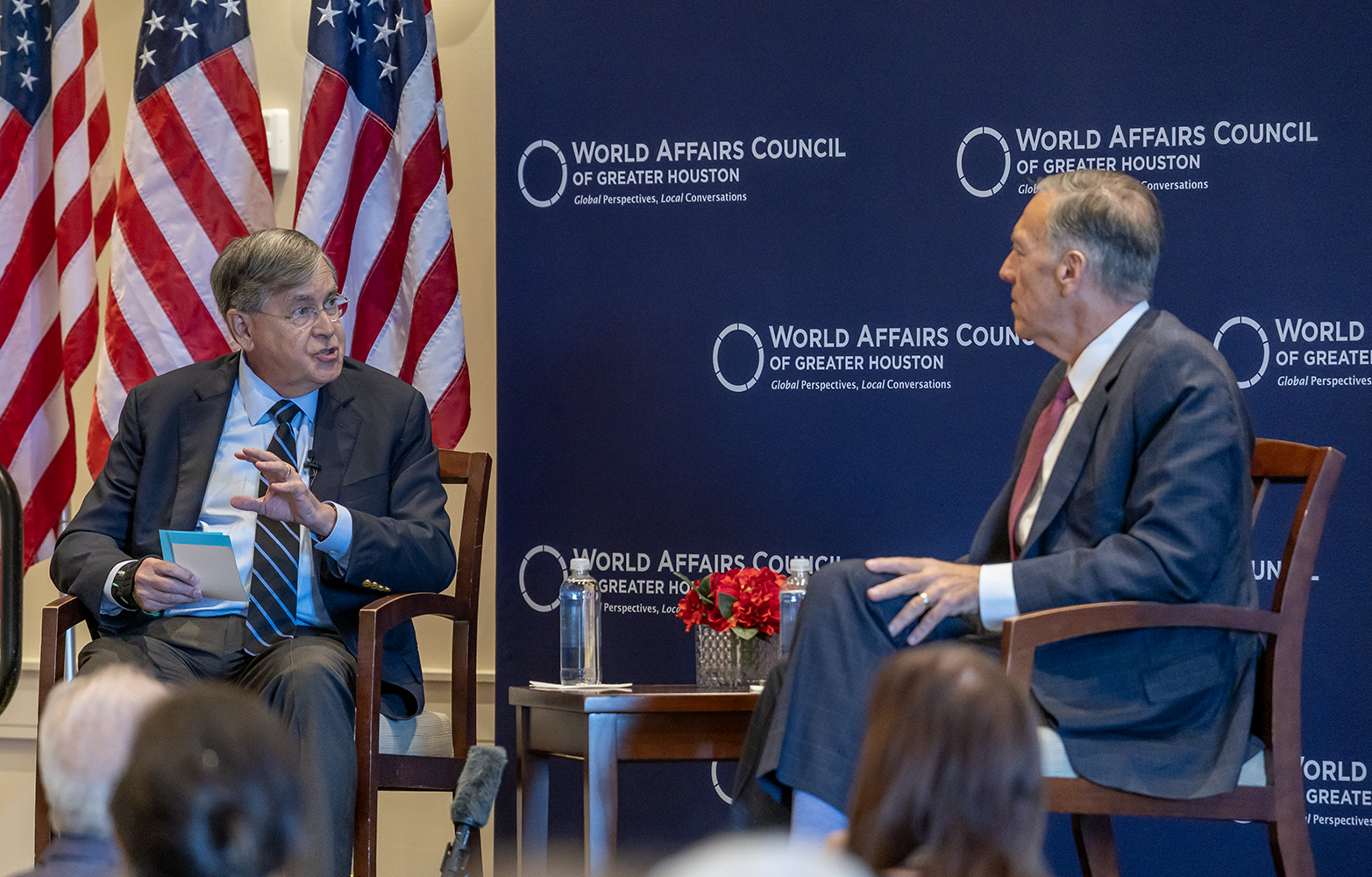
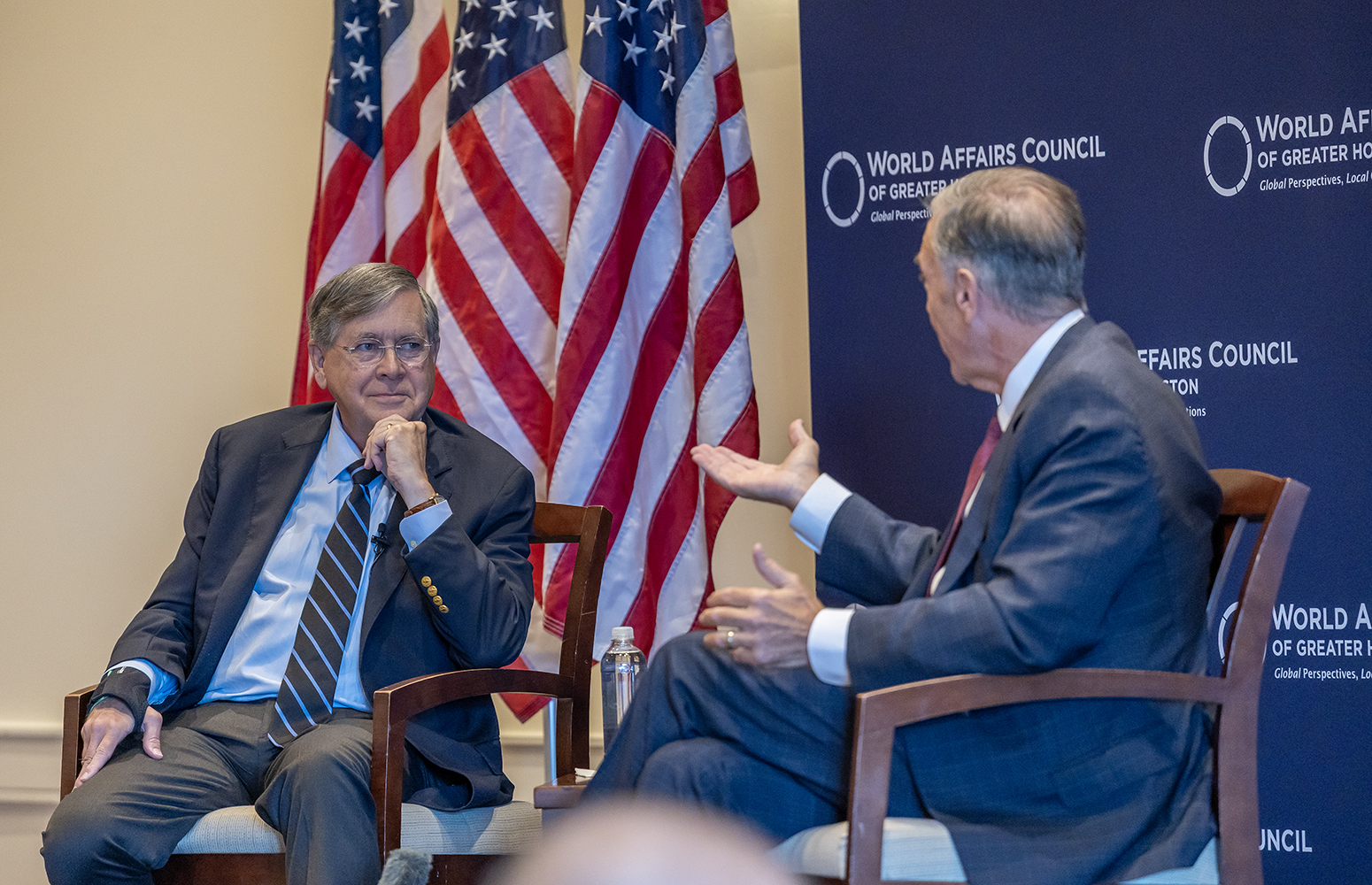
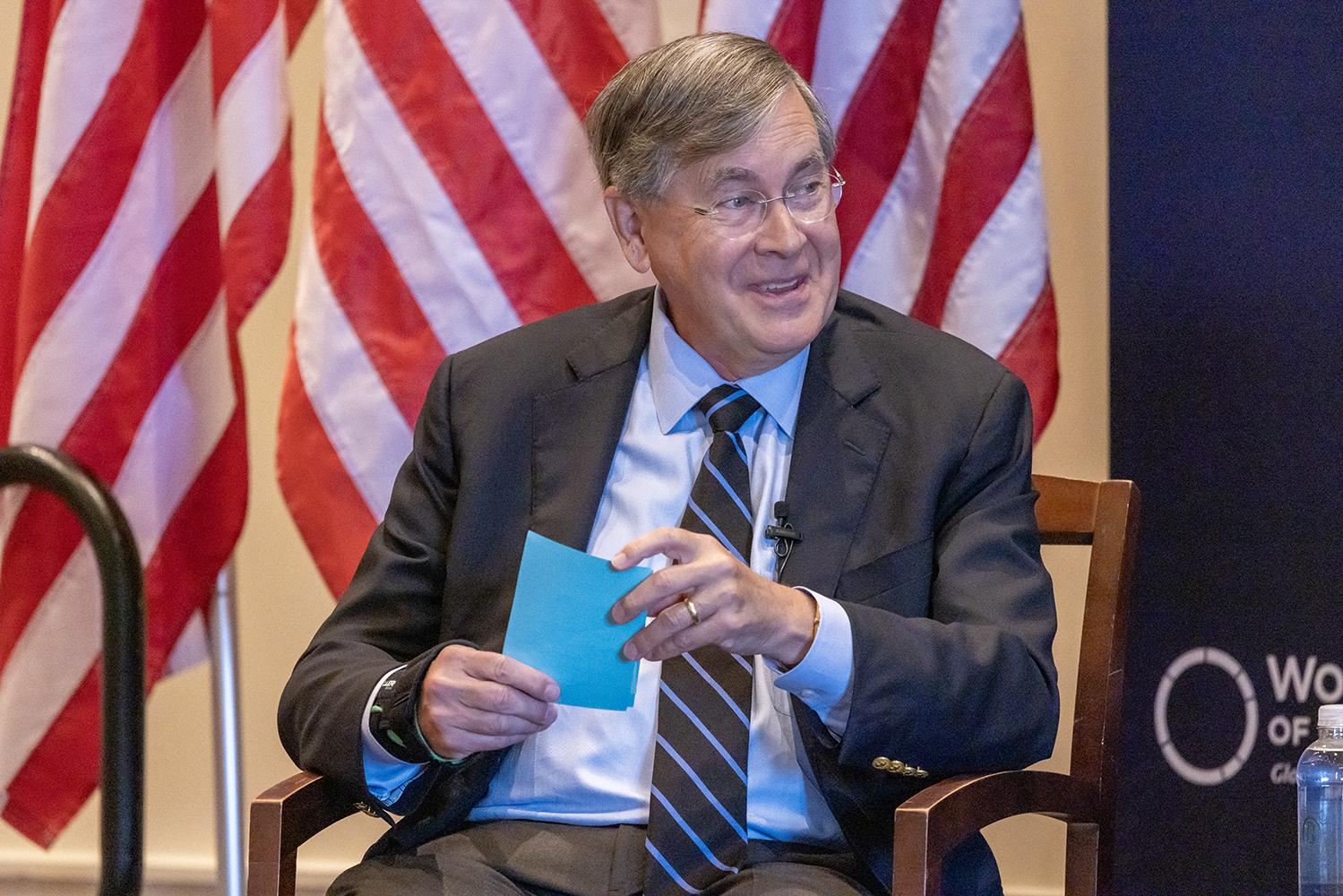
…Ambassador David Satterfield…

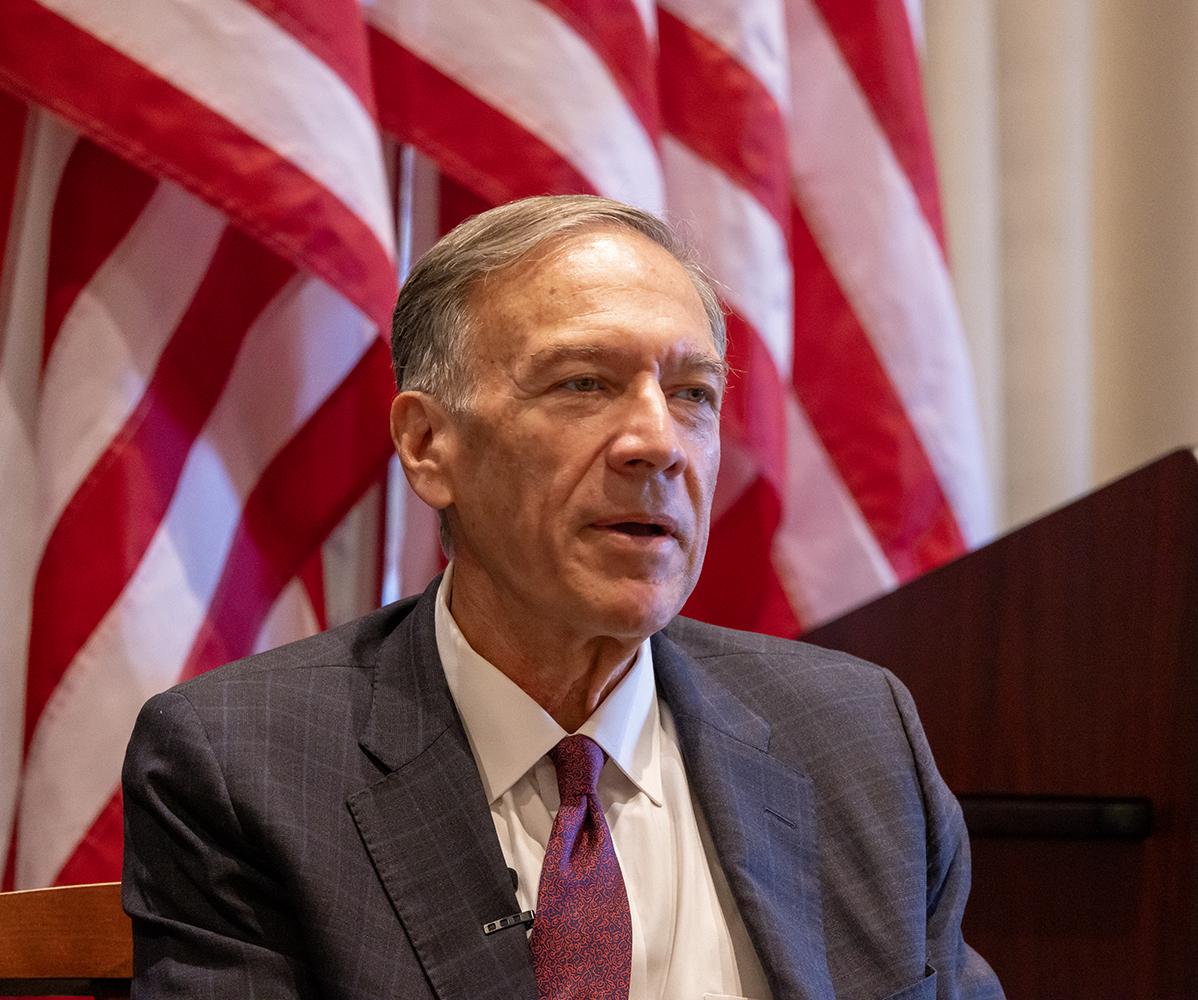
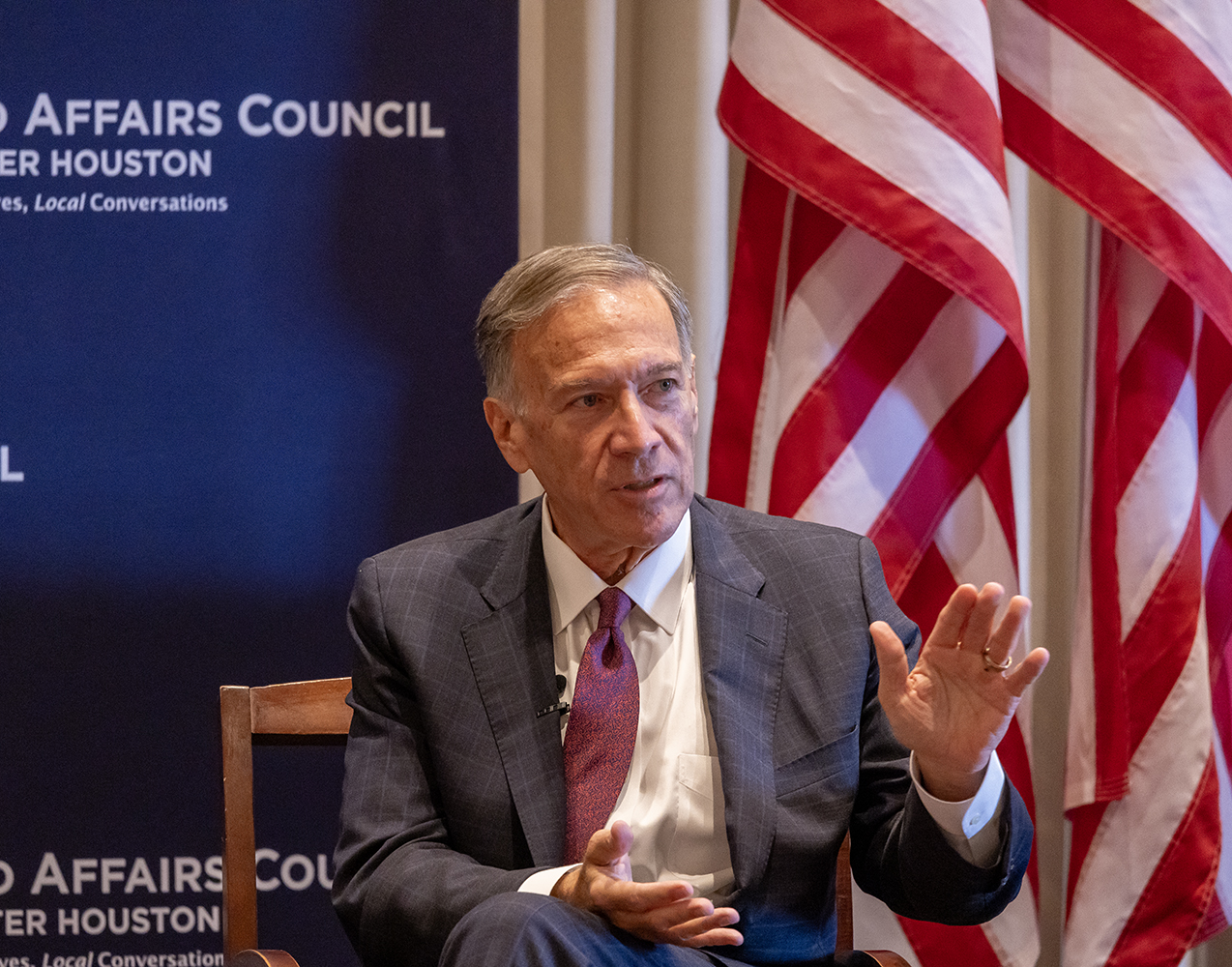
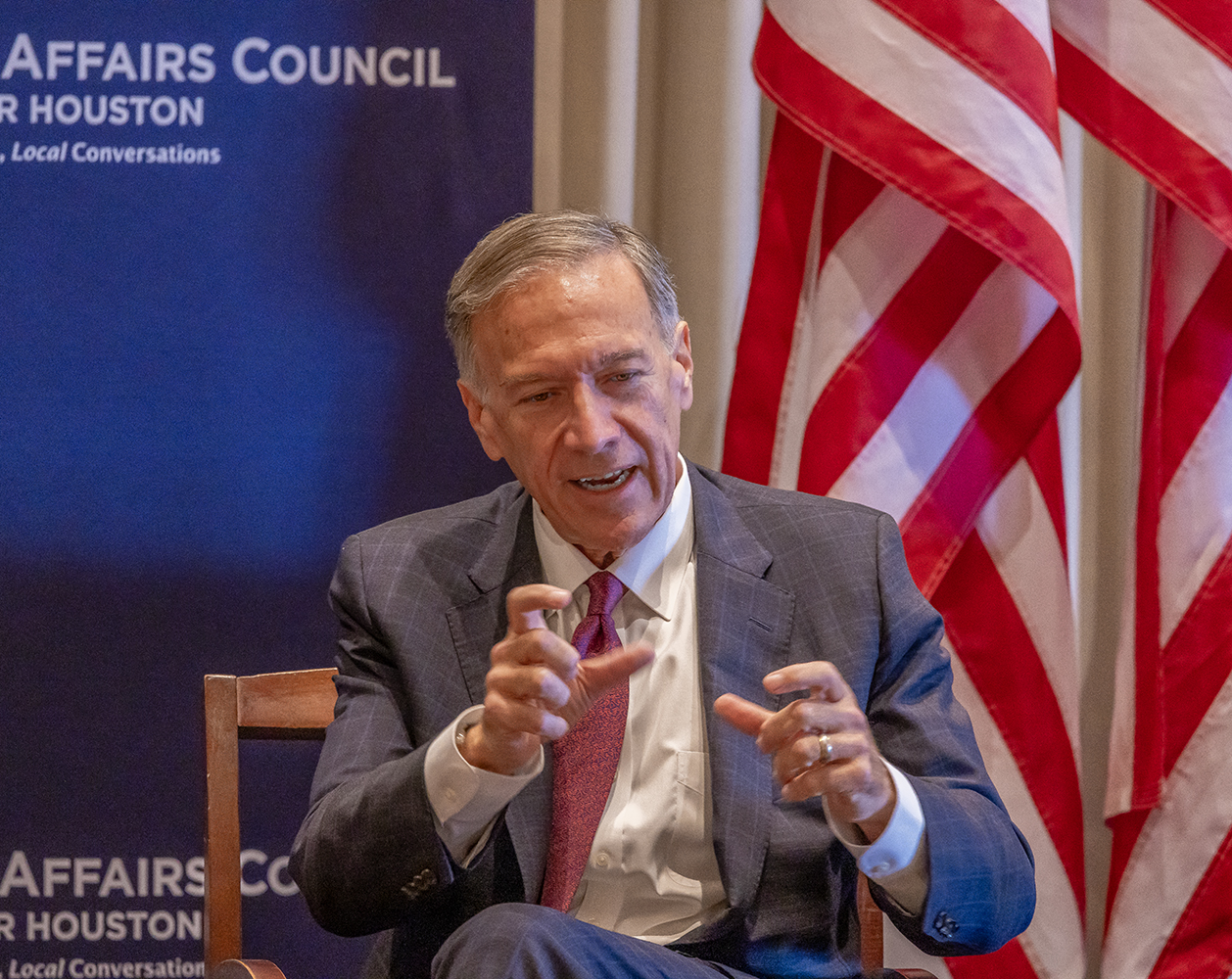
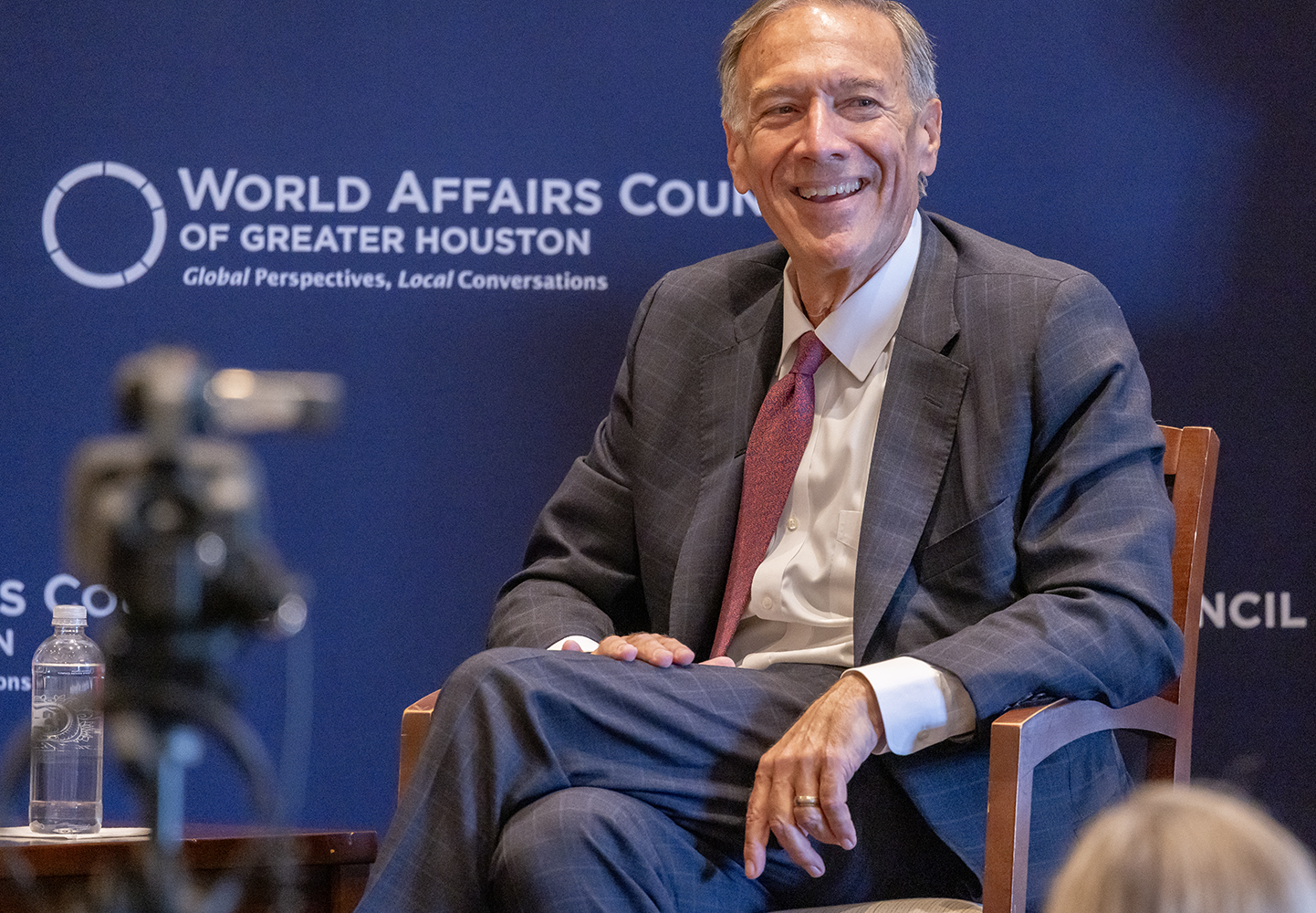
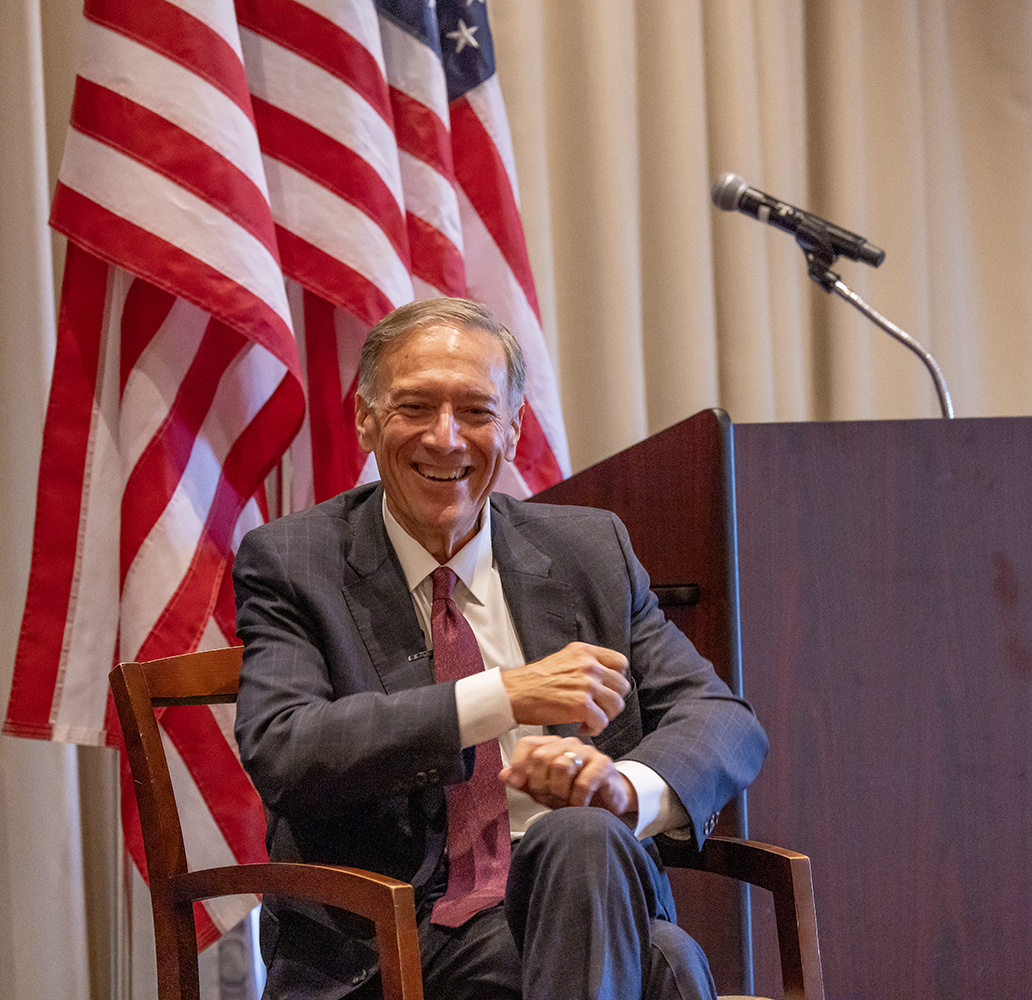
…moderated the discussion with Secretary Pompeo, who emphasized that global conflicts stem from (1) a failure of American leadership, (2) the influence of powerful and negative international actors (chief among the Chinese Communist Party), and the ineffectiveness of international institutions. He is, however, a firm believer in the United States’ role internationally.

The conversation touched on several key international relationships. Secretary Pompeo stressed that achieving national objectives requires partnerships worldwide, acknowledging that not all allies share the same governance systems and how some relationships are built on shared interests rather than shared values. He noted that recent events have done more to energize NATO and European defense spending than decades of diplomatic pressure.

One particularly interesting topic concerned Houston directly: Secretary Pompeo discussed closing the Chinese consulate in Houston, revealing it had been conducting what he described as the largest spy operation ever directed against the United States. He characterized the U.S.-China relationship as a decades-long economic competition rather than an immediate military threat, noting that this competition extends far beyond government–affecting businesses, universities, and local institutions across America.

The afternoon took a more local turn when Secretary Pompeo shifted from international affairs to civic engagement. His most passionate remarks focused on participation in community institutions–school boards, city councils, HOAs, and PTAs.

He posed some direct questions to the room: How many people had attended a PTA meeting in the last decade? When was the last time anyone went to a city council meeting just to observe?

To illustrate his point, he shared a humorous story about serving on his HOA board–becoming deeply invested in a dispute over shake shingles, only to admit he’d forgotten which side he supported decades later. His point resonated: while thousands rally for various causes, local meetings where decisions directly affect communities often struggle to draw audiences. He argued that America’s real strength comes from people willing to do the unglamorous work of local governance.
Pompeo also spoke candidly about education, particularly the state of K–12 public schools. He expressed concern over declining test scores and connected educational strength directly to America’s long-term national success. Without a strong foundation in civics, history, and critical thinking, he argued, other national achievements lose their significance. His recommendation was straightforward: get involved with local school boards, support strong candidates, or run yourself.

Most interestingly, he emphasized the importance of maintaining trust in America’s institutions–the FBI, federal courts, and the judicial system. He noted that these institutions are what set America apart globally, and they must remain above political manipulation to maintain their effectiveness and public trust.

Secretary Pompeo’s message was one of practical optimism. Despite challenges, he expressed confidence in America’s direction–but emphasized that success depends on active citizenship rather than who occupies any particular office. Foreign policy matters, he argued, but so does showing up to your local school board meeting. Both require the same fundamental commitment to civic duty.

The luncheon was a meaningful reminder of how interconnected global leadership and local involvement truly are. From honoring public service at the Houston Police Memorial to hearing Secretary Pompeo reflect on America’s role in the world, the afternoon offered both perspective and valuable networking opportunities.

As always, we’re grateful to the World Affairs Council of Houston for providing opportunities that expand our understanding of international affairs, and we are grateful for Ms. Braniff for her hospitality, her tips, and for sharing her knowledge with us!

Unknown's avatarAuthor mikeyawnPosted on October 13, 2025October 12, 2025Format AsideCategories Civic Engagement, International Affairs, Local GovernmentTags Ambassador David Satterfield, Center for Law Engagement And Politics, CIA Director, LEAP Ambassadors, Sam Houston State University, Secretary of State Mike Pompeo, World Affairs Council HoustonLeave a comment on Navigating International Relations With Secretary Mike Pompeo

The Future of Emergency Response: Technology in Action

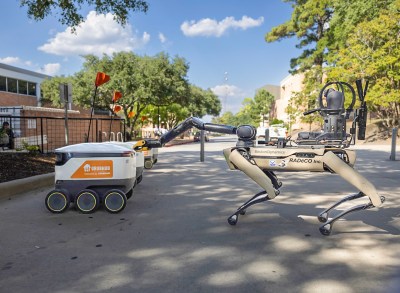
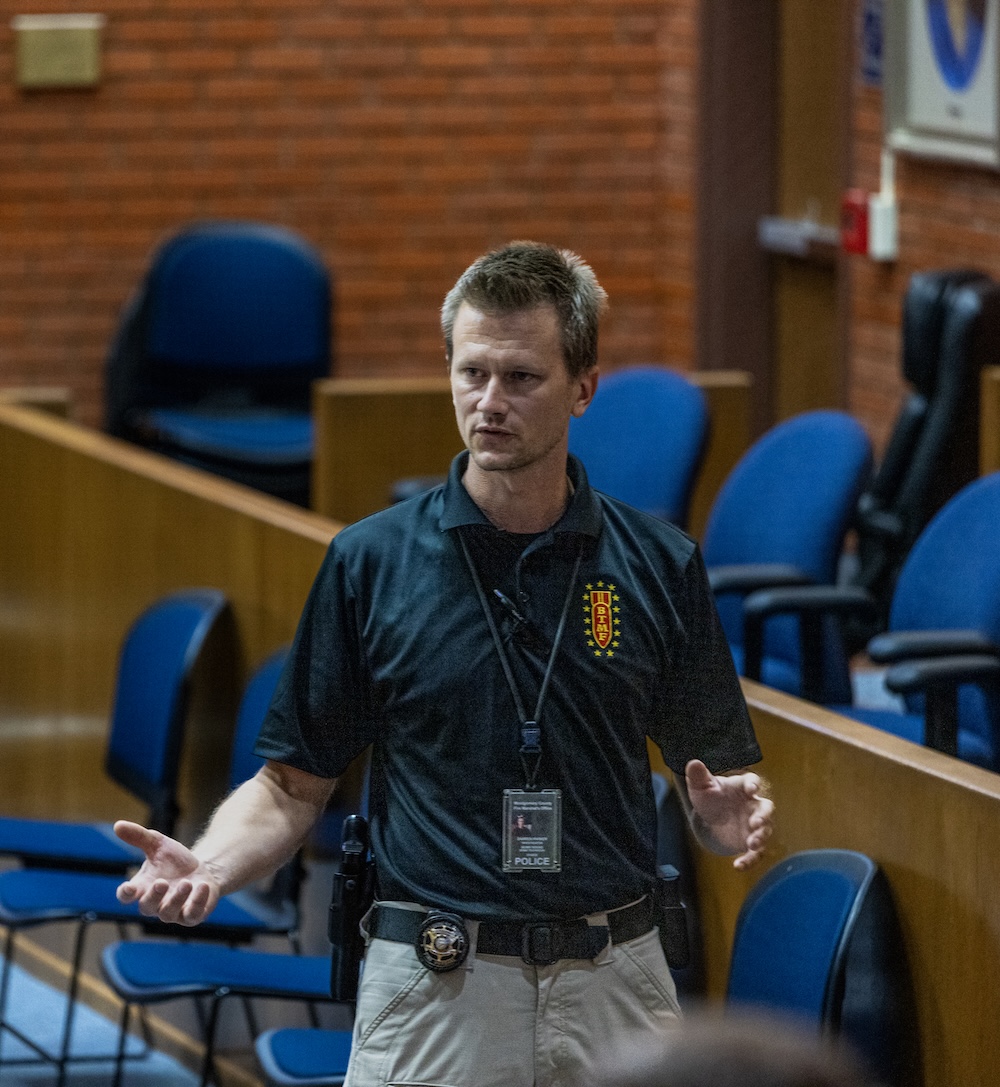
Real Time Crime Centers, bomb diffusion, robot dogs, and so much more! Today the LEAP Center had the opportunity to work with Blaine Pyles and Darren Parker from the Montgomery County Fire Marshal’s Bomb Squad to present the latest technology in emergency response: Spot, the robotic dog.

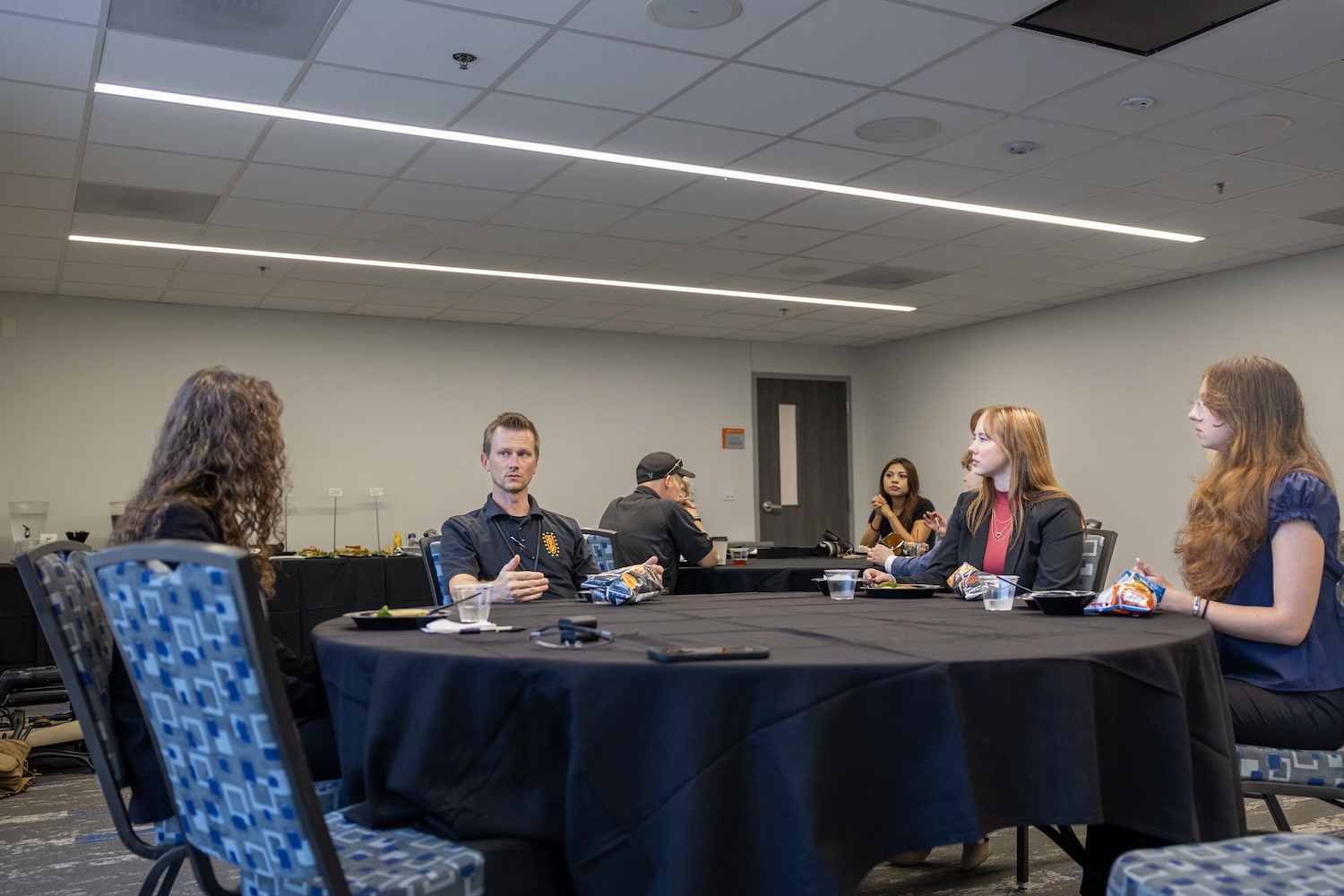
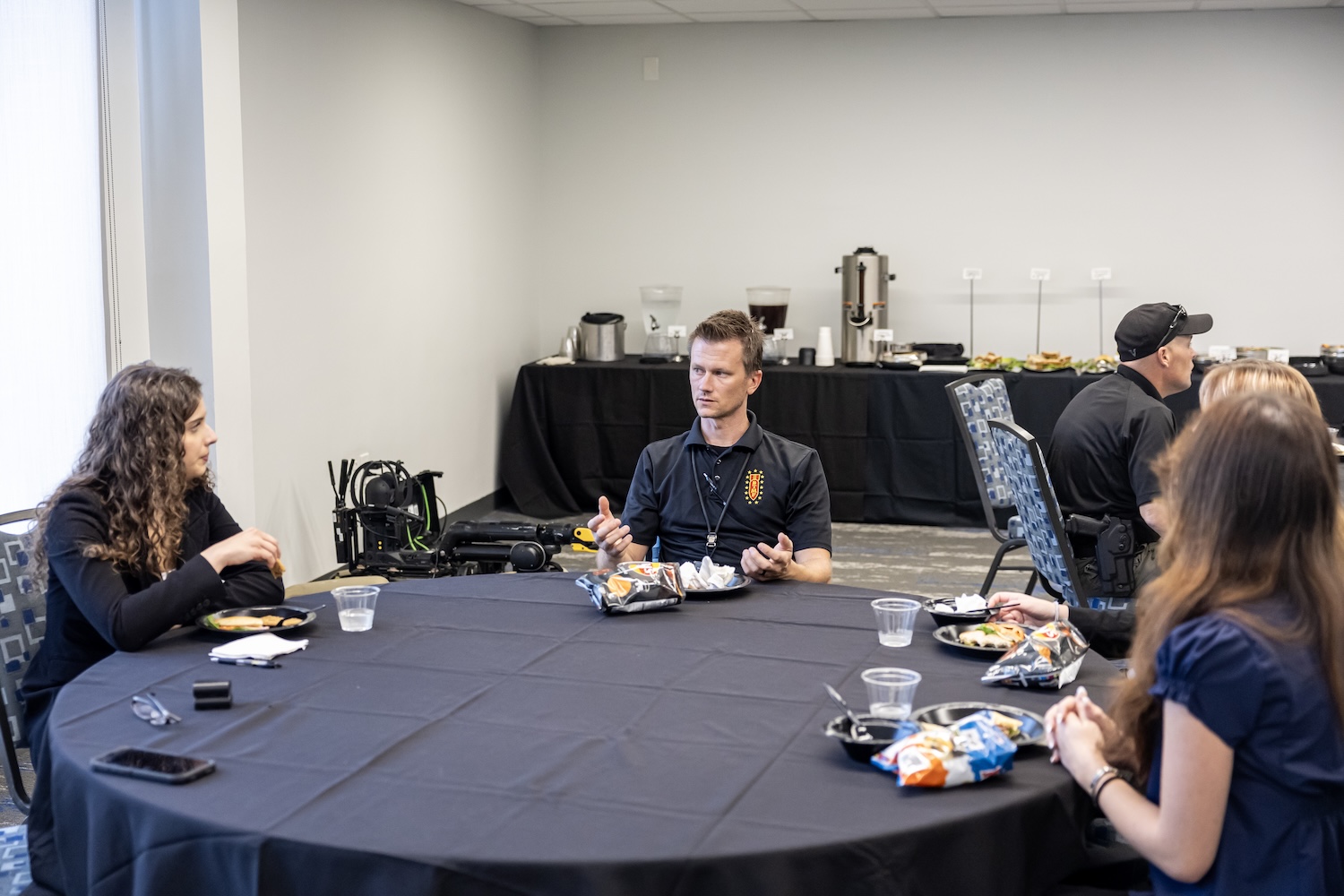
The LEAP Ambassadors and I, along with fellows students, enjoyed lunch with Mr. Parker and Mr. Pyles before the presentation. There, we learned about Parker’s time at SHSU, the use of high-pressure water cannons to set off bombs, and the use of Spot in crisis negotiations.
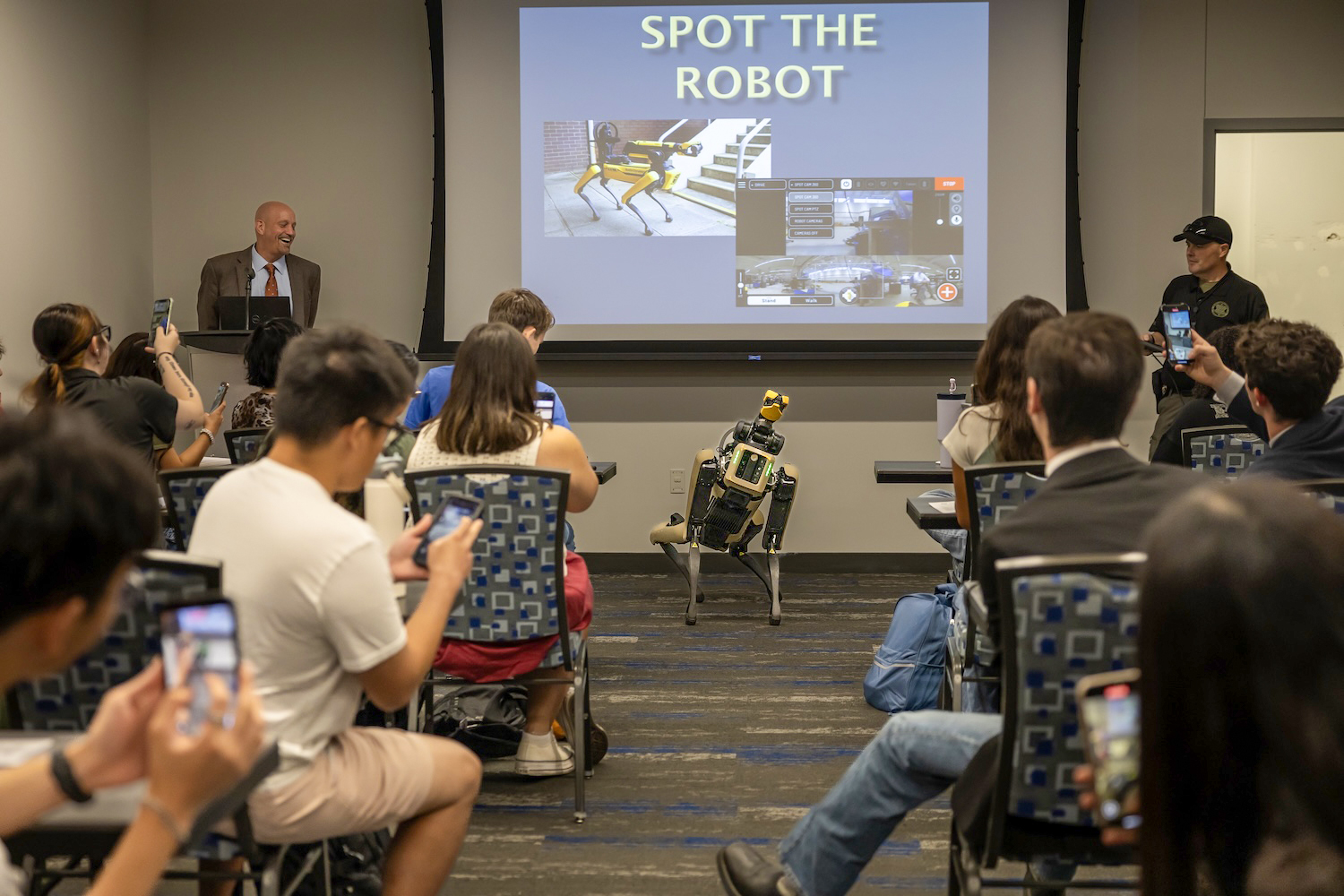
After the engaging lunch, we made our way to the presentation room, drawing interested stares from students and allowing Spot to make robotic friends.

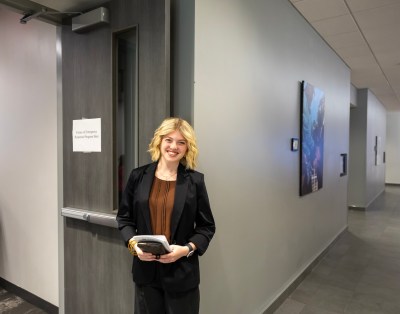
And after being greet by one of our volunteers, Bailey Hopkins…

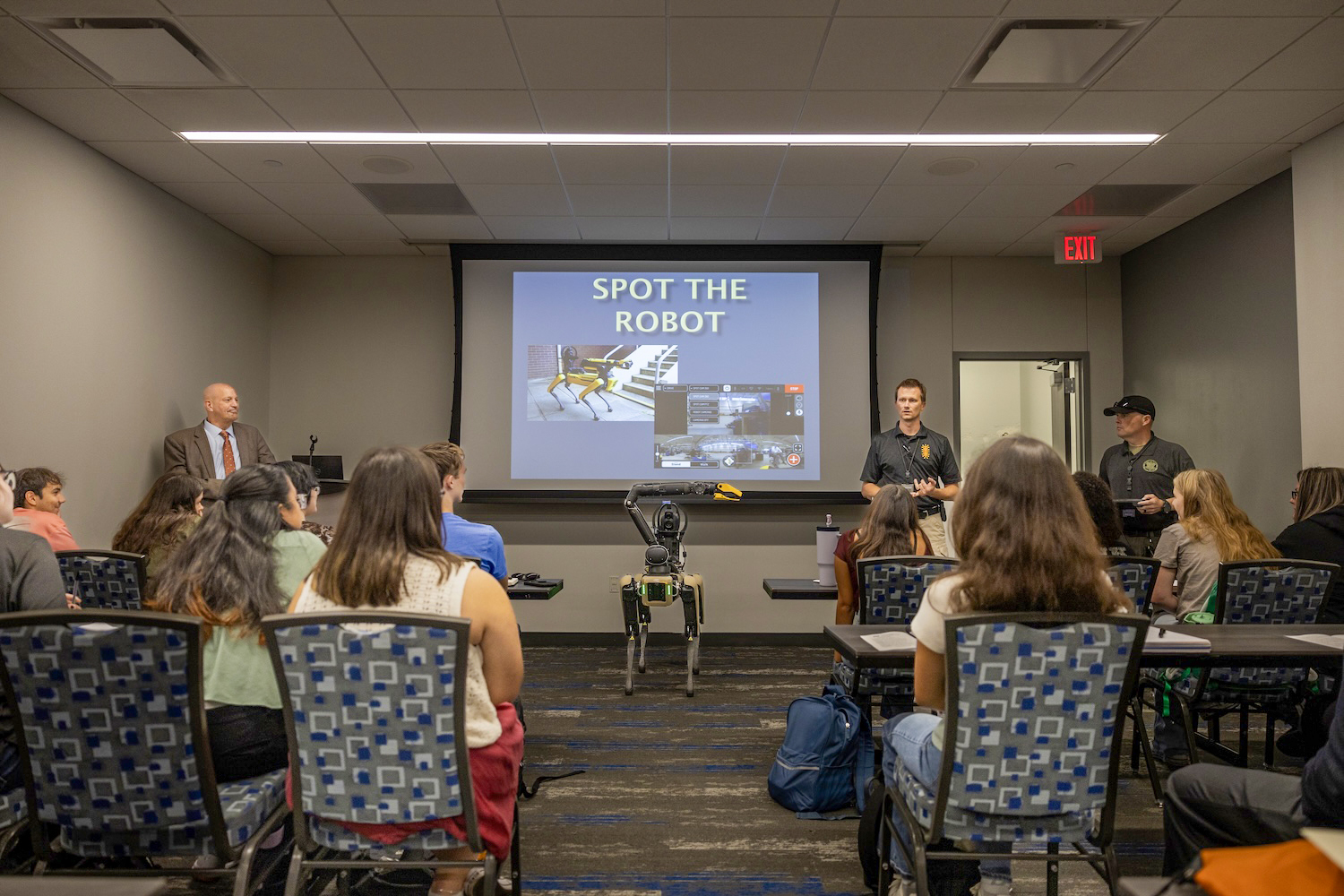
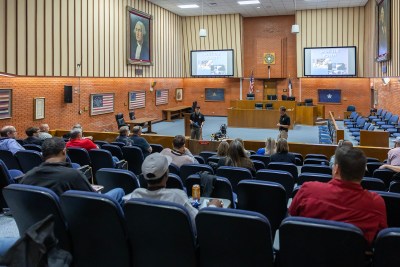
….Professor Mike Yawn gave a short introduction to the full house at the Future of Emergency Response presentation.

The introduction educated us on the use of Real Time Crime Centers as being good methods for actively recording and catching suspects of crimes. Information on the function of ALPR’s (Automatic License Plate Readers) was also shared. We learned how they assist in the processing of license plates, allowing officers to easily find those with warrants.

With that closing, it was time for Spot to have the “Spot” light.

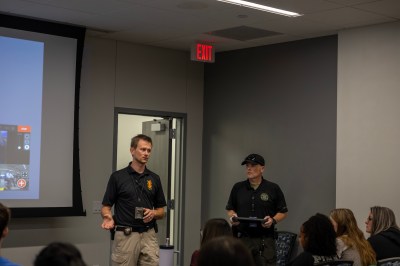
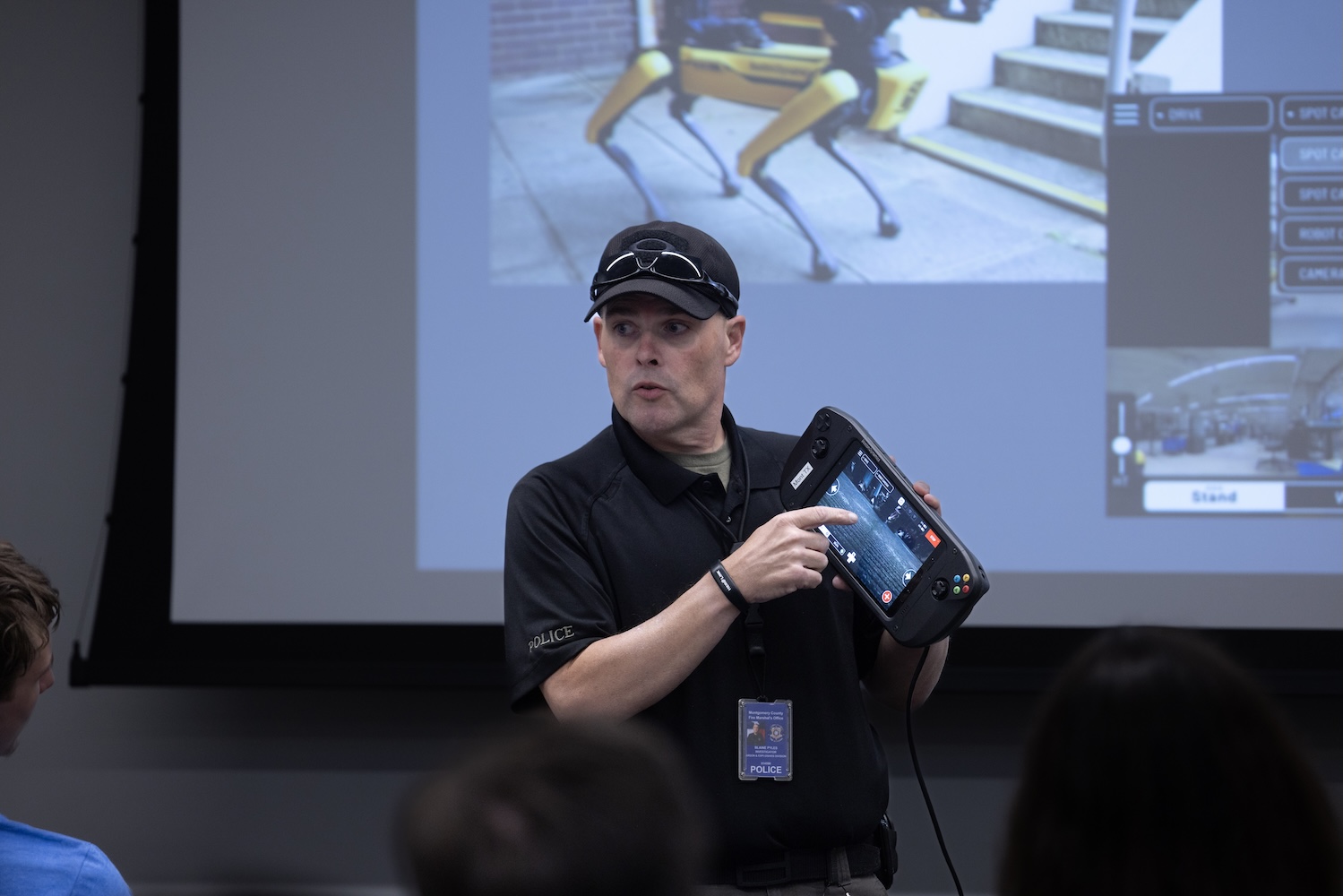
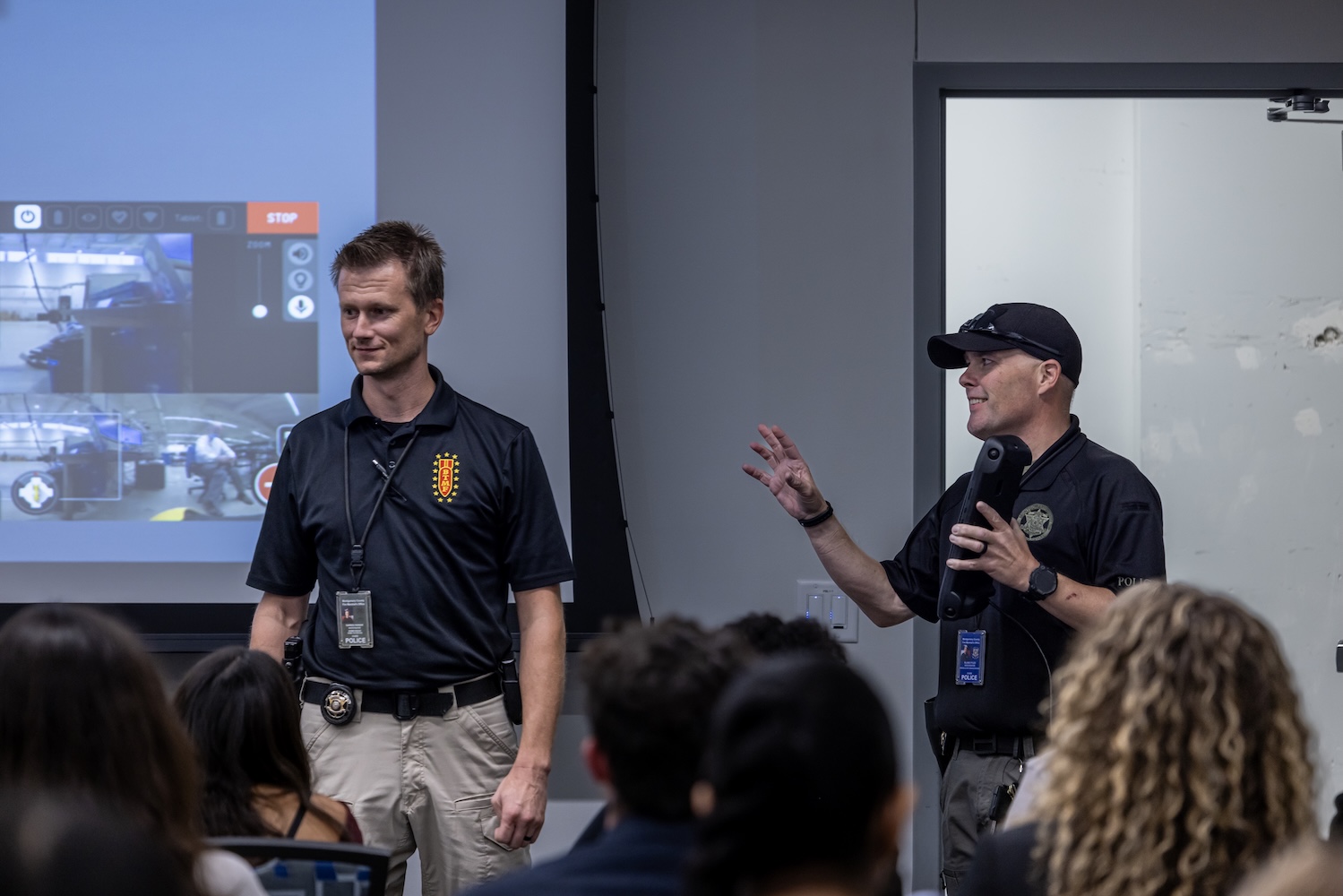
He, along with his “handlers,” Mr. Parker and Mr. Pyles, provided an overview of his capabilities, which includes: picking up objects; dragging objects; “seeing” through cameras, which are transmitted to apps for the handlers to see; and even setting off combustible devices through the shooting of projectiles.

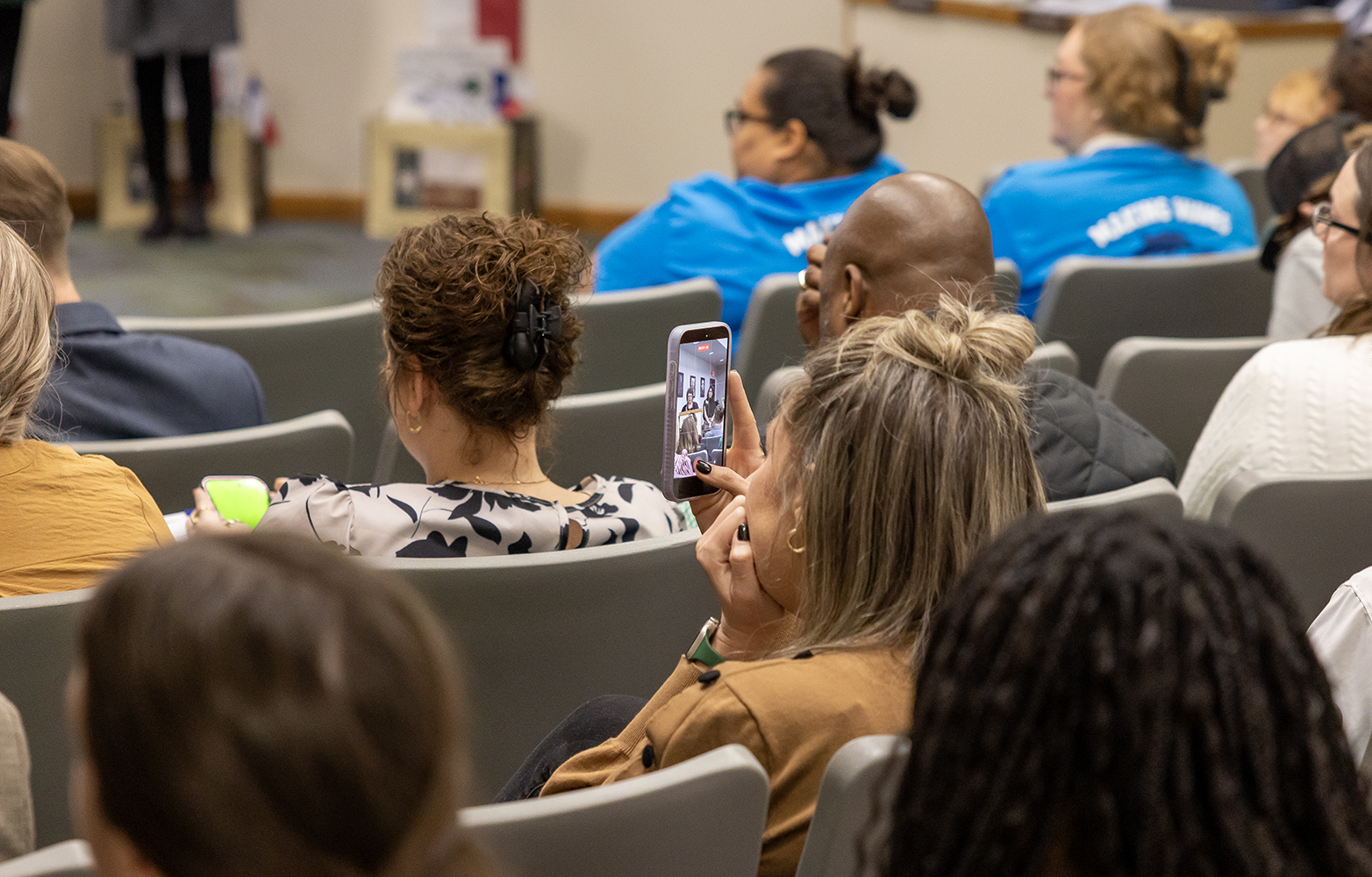
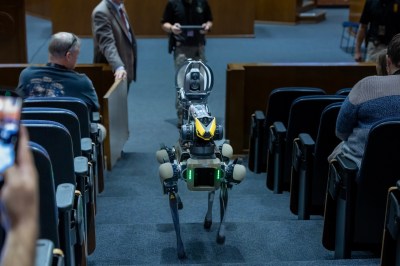
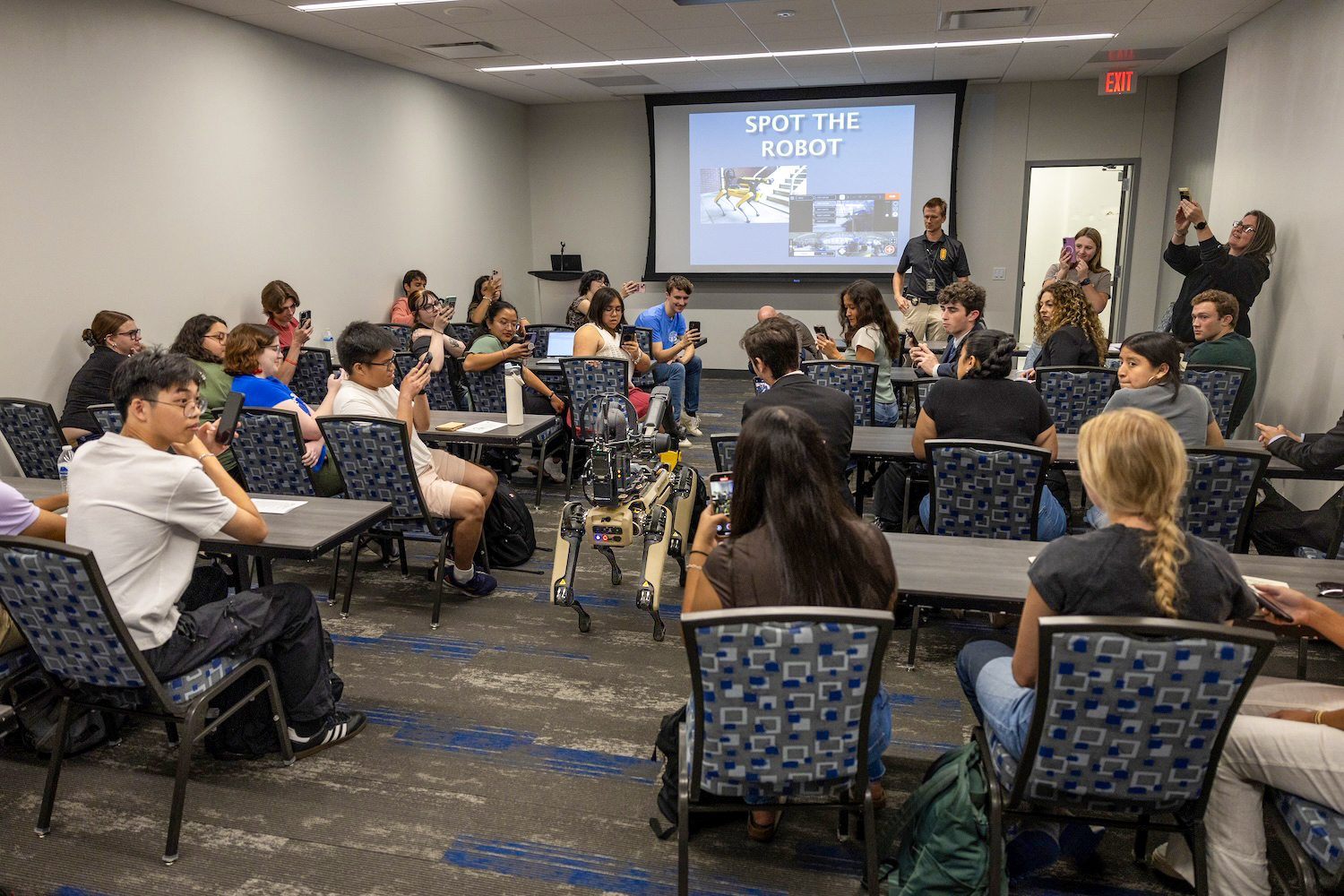
There was an audible reaction when Spot entered the room, and after permission to photograph was obtained, students took advantage of their phones. Spot did a series of pet tricks: pushups, a dance, a 360, sitting, and he even played dead.

Spot was also able to demonstrate his door-opening abilities, and he picked up a student’s backpack, giving us a glimpse of how he might operate in a crisis situation.

Mr. Pyles and Mr. Parker also discussed how Spot can assist with chemical emergencies: he can be equipped with a chemical reader, providing evidence of the levels of toxins in an environment.

Overall, the experience was a fun and educational way to learn all the different ways technology is transforming all aspects of law enforcement, and I even had a chance to control Spot at the end!

Thank you to Mr. Pyles and Mr. Parker for sharing such amazing technology with us all!

Unknown's avatarAuthor mikeyawnPosted on October 6, 2025October 5, 2025Format AsideCategories Civic Engagement, Criminal Justice, Local Government, TechnologyTags Center for Law Engagement And Politics, LEAP Ambassadors, Montgomery County Fire Marshal's Office, Sam Houston State University, Spot the Robotic DogLeave a comment on The Future of Emergency Response: Technology in Action

Transforming Criminal Justice Education at HSCJIT 2025

There are times when the fields of political science and criminal justice intersect. Today was the case for such an event when Professor Mike Yawn, the director of SHSU’s LEAP Center, was asked to present to the High School Criminal Justice Instructor Training (HSCJIT) Conference held annually on SHSU’s campus and sponsored by the University’s excellent College of Criminal Justice and organized by the wonderful Doris Pratt.

Designed for high-school teachers in the fields of criminal justice, law enforcement, and forensic science, the conference features presentations by experts in myriad disciplines, including: criminal investigations, victimology, forensic DNA, cybercrime, forensic psychology, corrections, and serial murder.

Indeed, Yawn’s session came on the heels of Dr. Mitchel Roth…

…who discussed his research on serial murderers…

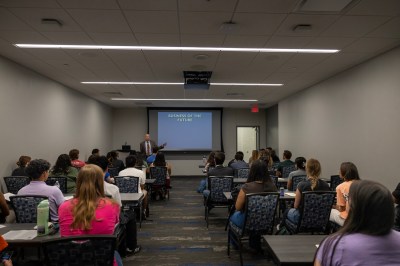
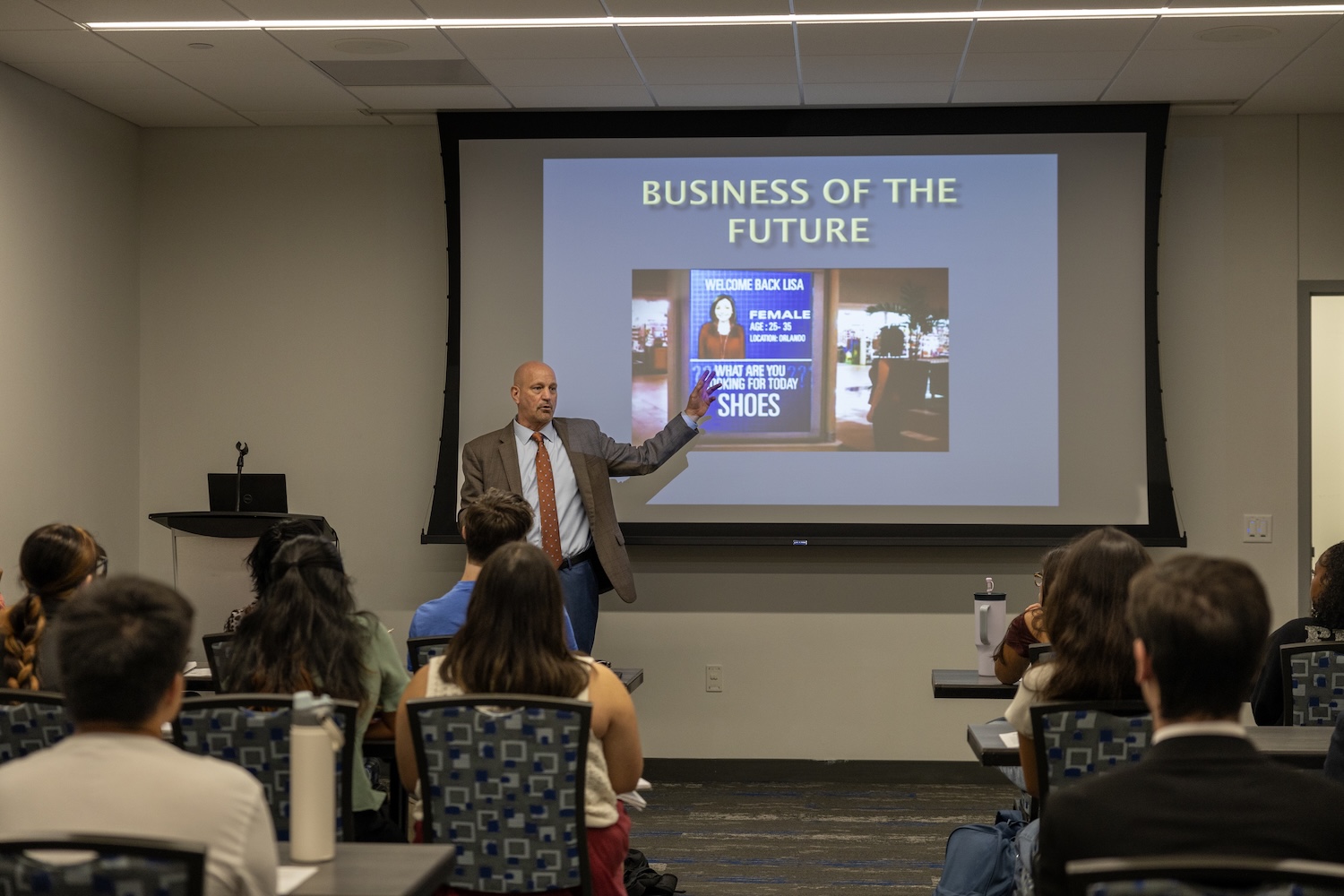
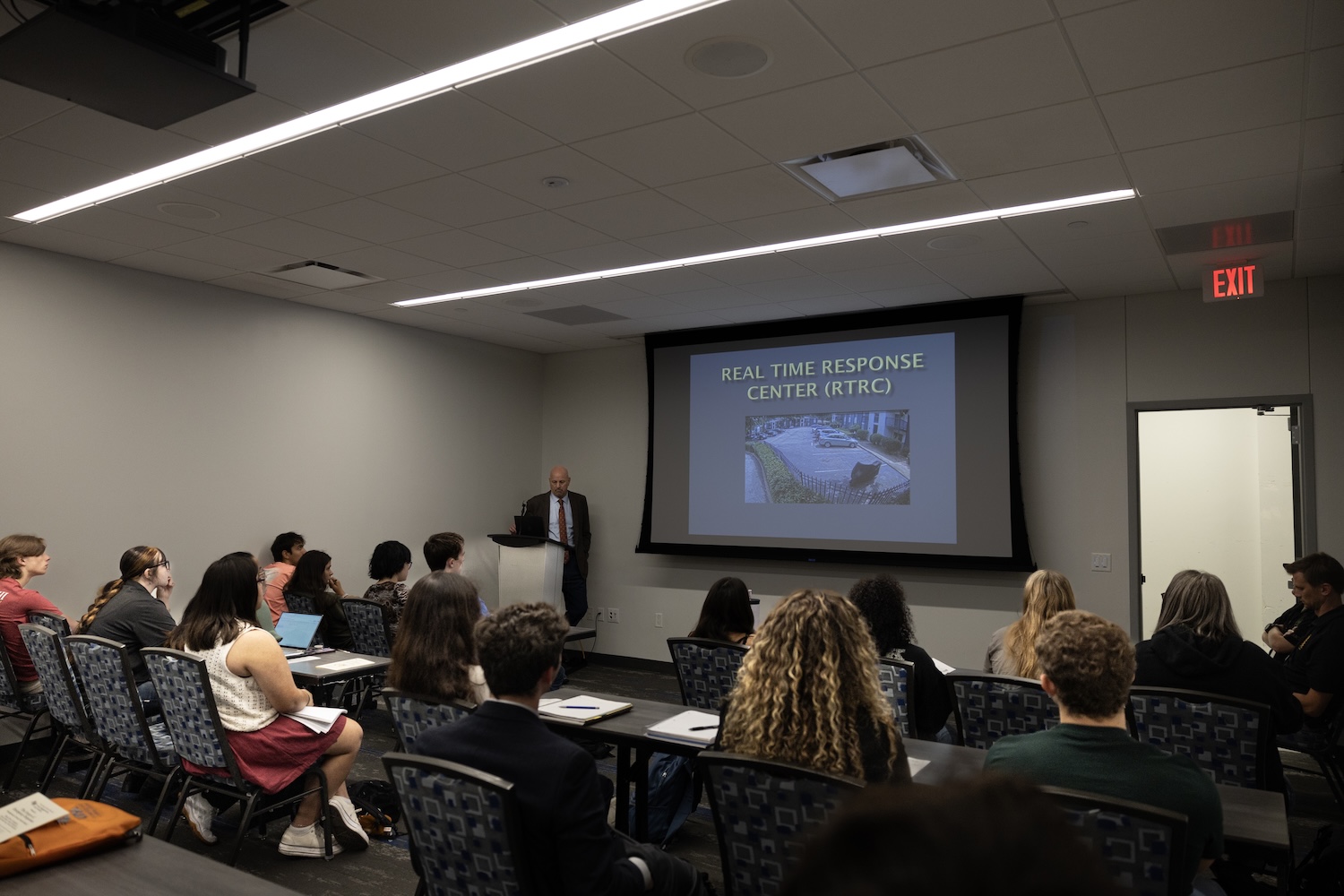
…and, following a 15 minute break, Yawn discussed the interdisciplinary use of technology, with an emphasis on first responders.

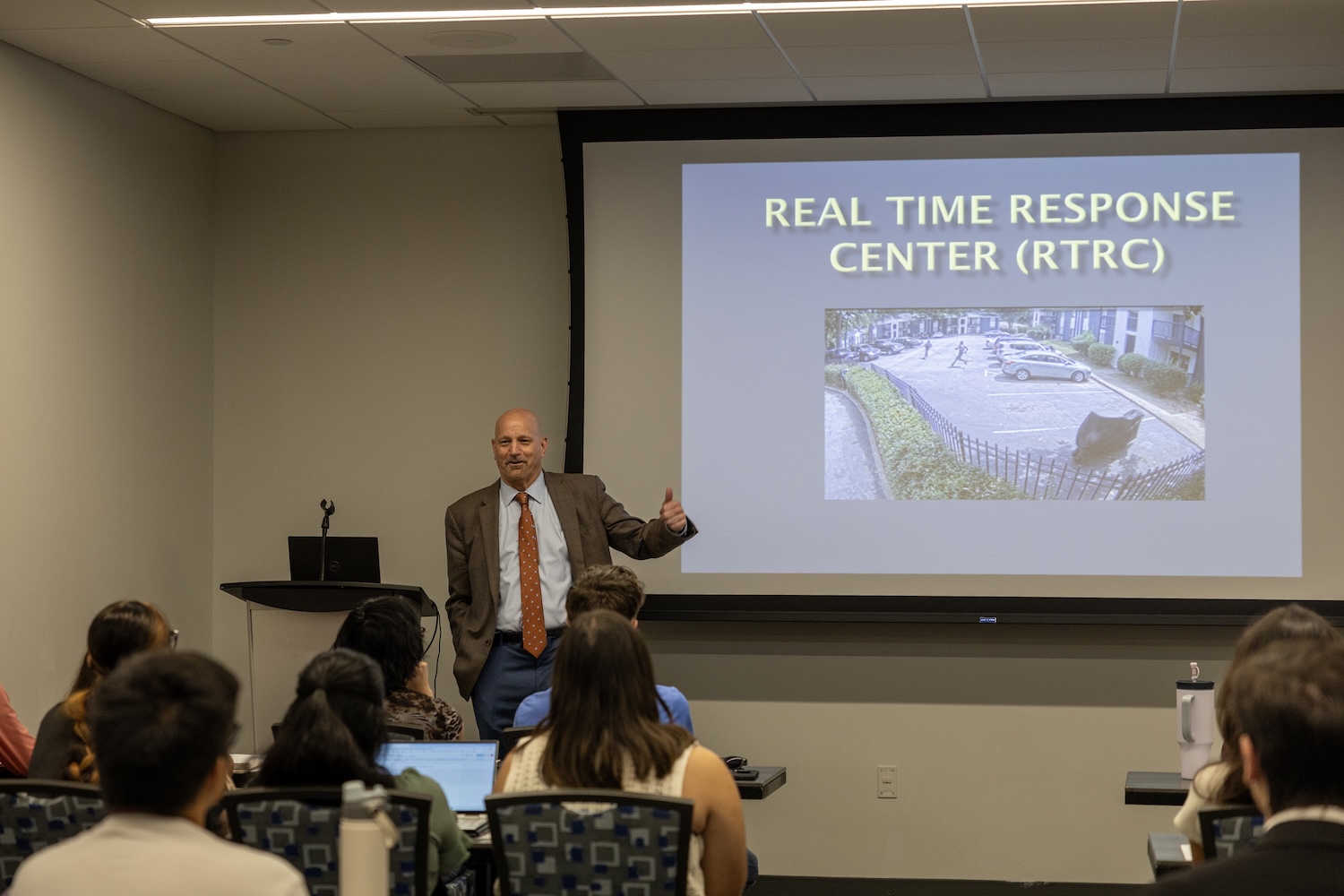
Covering topics such as smart businesses, smart health devices, smart cities, and Real Time Response Centers, Yawn presented for approximately half-an hour to the 40-plus educators present.

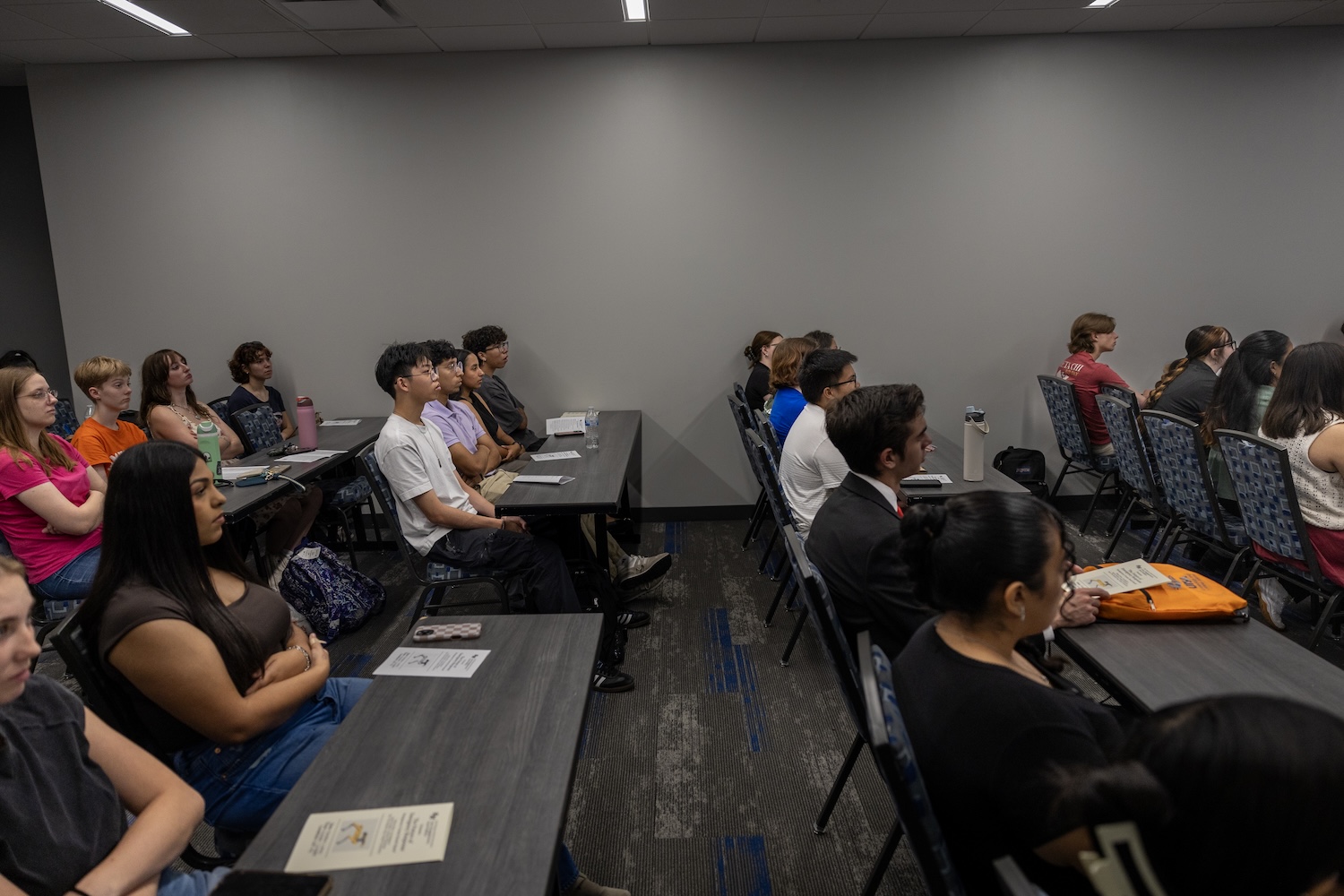
The audience was polite and managed to stay awake (!) during Yawn’s presentation, which involved how technology can be used across major sectors of contemporary life. From ALPRs tracking our vehicles’ movements to the facial recognition of animals so that lost pets can be found.

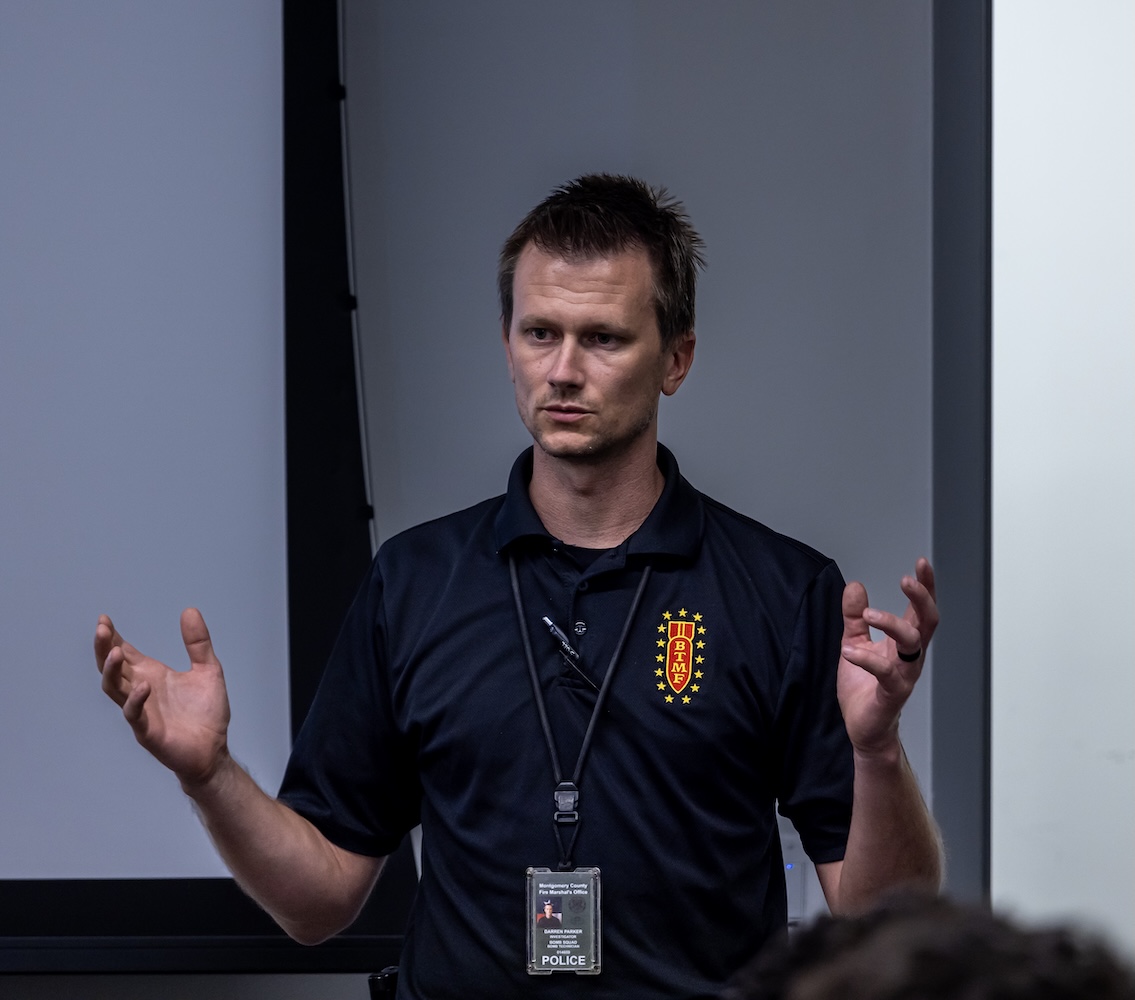
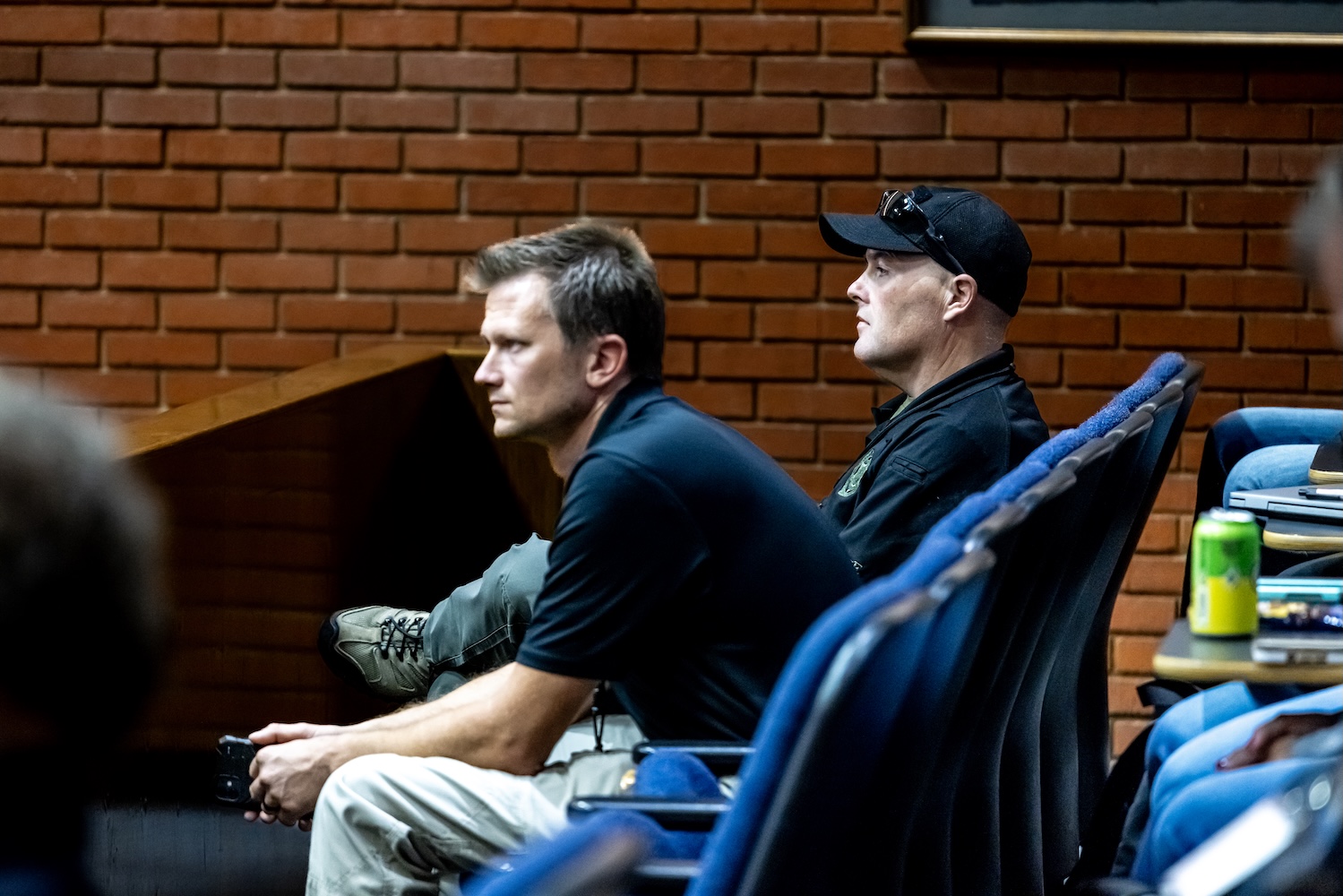
The teachers really came alive, however, when the Arson and Explosive Squad of the Montgomery County Fire Marshal’s Office came out to describe their jobs. The “bomb squad,” as they typically known, are licensed police officers–Darren Parker and Blaine Pyles–who specialize in explosives and arson.

Their work can take them to political events, where much explosive-sweeping is required, to large sporting events, to hostage situations and, of course, arson.

They have various equipment to assist with this, including separate robotic assistants, battering rams, state-of-the-art communications, drones, and more. The robotics were the hit of the show…

…but so were the bomb technicians, Parker and Pyles, who approach their job in the spirit of service, with courage, compassion, and competence, qualities on display throughout their presentation.

Indeed, following the event, many of the educators, Professor Yawn, and Parker and Pyles discussed future opportunities for collaboration–a way to benefit the public, higher education, and K-12, a win-win-win.

Many thanks to the College of Criminal Justice (and Ms. Doris Pratt), Darren Parker and Blaine Pyles, and the many high-school educators–all of whom are shaping the next generation of leaders.

The LEAP Center would like to thank LEAP Ambassadors Michelle Moya and Olivia Discon, who stepped up for this event; LEAP Center student worker Gabila Flores, who helped with photos and the blog; and volunteers Bailey Hopkins, Jacob Wessels, and Sofia Soto.

Unknown's avatarAuthor mikeyawnPosted on October 3, 2025October 3, 2025Format AsideCategories Civic Engagement, Criminal Justice, Local Government, TechnologyTags Center for Law Engagement And Politics, College of Criminal Justice, LEAP Ambassadors, Montgomery County Fire Marshal's Office, Sam Houston State UniversityLeave a comment on Transforming Criminal Justice Education at HSCJIT 2025

Showing Up, Working Hard, and Embracing Continuous Learning: LEAP at the CSG

Having already learned a lot at the conference and on our own, we were ready for another day of educational excursions and events. Today’s itinerary included a plenary luncheon focused on challenges associated with the availability of primary care physicians, a site visit concerning education and workforce development, and a state dinner.

Primary Care Shortages and Challenges

by Olivia Discon

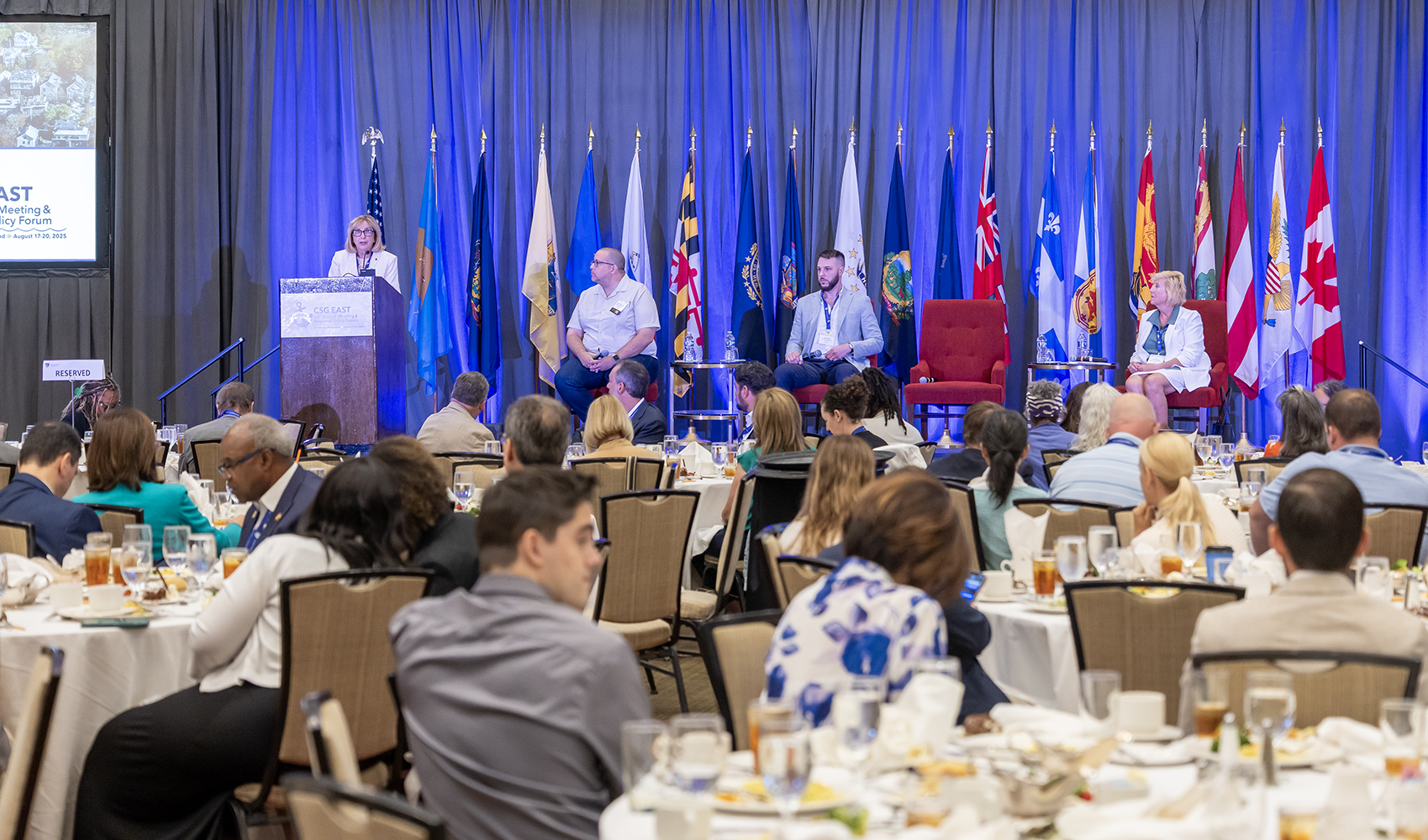
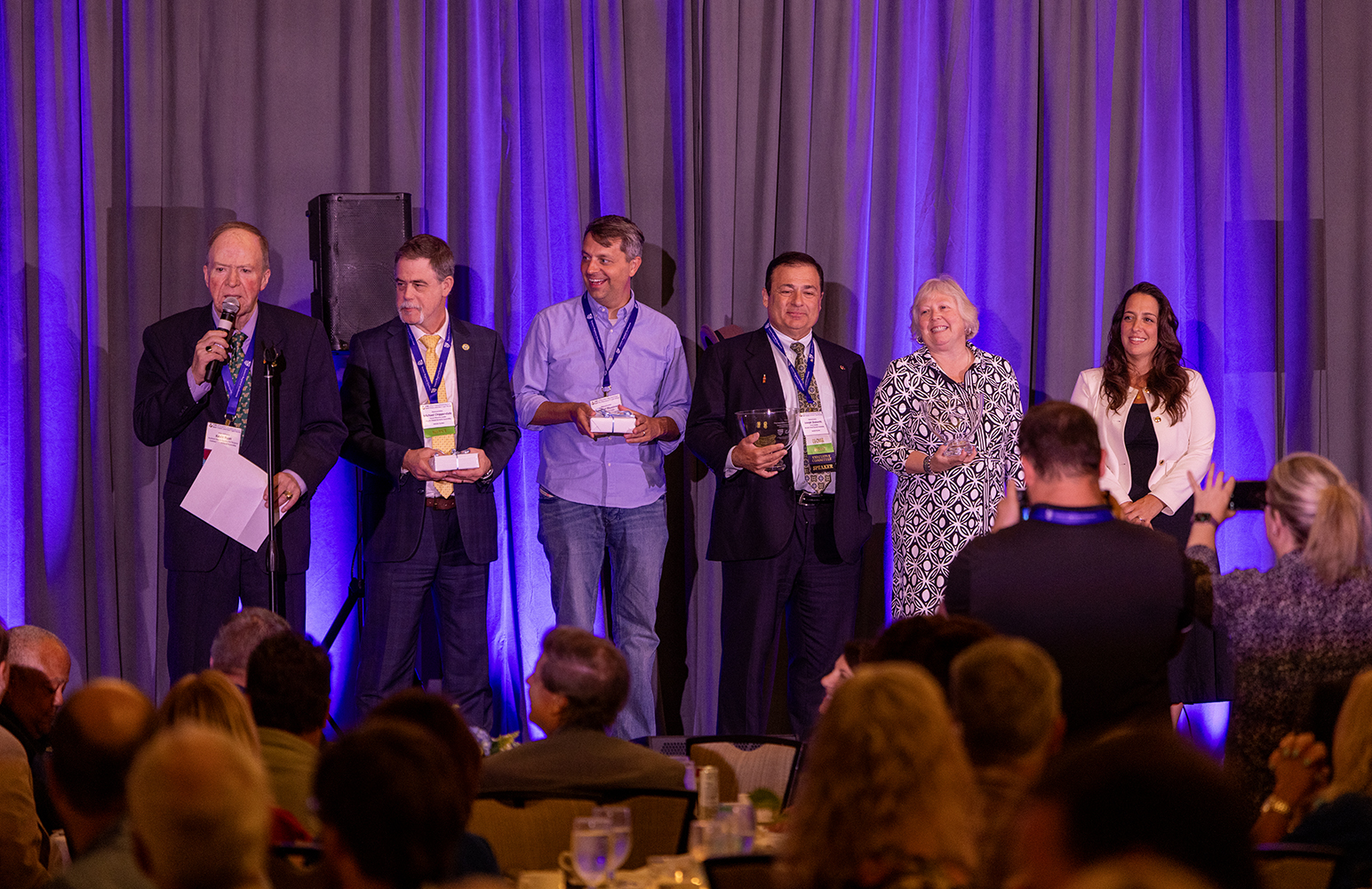
Over a lunch of fish, rice, and broccoli—quite healthy (well, mostly), might I add!—we enjoyed some good company, a brief award ceremony, and a rich educational opportunity to learn about medical care in the 21st century.

To begin, we were happy for Rep. Kevin Ryan of Montville, NJ, who received the W. Paul White State and Regional Leadership Award.

we enjoyed hearing from Senator Gustavo Rivera of New York, chair of the CSG East Health Policy Committee, who discussed the suboptimal supply of primary care physicians.

Just a generation ago, a primary care physician was a trusted source of care and advice. Today, however, many cities struggle with finding doctors who will accept sufficient numbers of insurance patients to make a real difference in their communities.

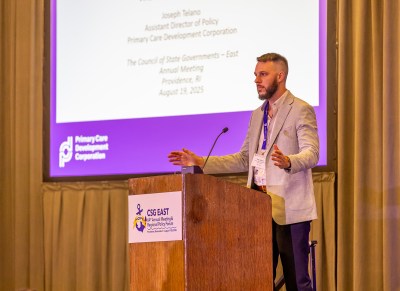
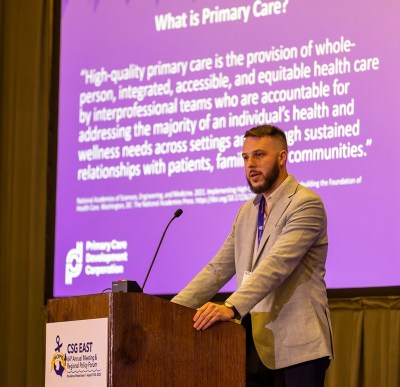
The keynote speaker, Joe Telano, senior policy manager at the Primary Care Development Corporation, laid out the problem.

The existence of quality primary care physicians in communities has been demonstrated to lengthen lives, but not enough communities have access to those physicians. In turn, this creates greater stress on specialized medicine, as patients are delayed in having serious issues diagnosed and referred. Moreover, the lack of primary care physicians adds to community health problems: increased likelihood of pandemics, more suffering from chronic diseases (e.g., diabetes), and even more gun violence.

Currently, only about 5-7 percent of health care expenditures go toward primary care, and a greater investment, according to Telano, is needed. Of course, this is only one part of a comprehensive plan. Other needed changes include: insurance regulations, grants for low-income communities, and a broader perspective of what constitutes “public health.”

Interestingly, part of this expanded view of public health could include education and workforce development…

Building Futures: Apprenticeship and Workforce Development

By Michelle Moya 

One of the conference highlights was the site visit for our Education and Workforce Development session, which a tour of Building Futures, Rhode Island’s premier pre-apprenticeship program. Olivia and I were joined by a diverse group of senators and representatives from across the country for what would become one of my favorite sessions.

Our visit began in the hands-on training space, where we witnessed day two of a five-week intensive course. The tour was led by Andrew Cortez, president of Building Futures and a former apprentice himself, who shared insight into what the program is and what makes it effective.

Building Futures connects community residents to registered apprenticeship opportunities in the building trades. The program has a dual mission: preparing individuals for apprenticeships through training and readiness while also partnering with project owners to require apprentice participation in construction. This two-pronged approach ensures both workforce preparation and job placement.

Cortez emphasized that success in the trades depends on three essentials: showing up every day on time, working hard, and applying yourself to learn. Technical skills matter, but they rest on these fundamental values of reliability, perseverance, and a willingness to grow. As a student, I found this surprisingly inspiring. It reminded me that success in any field—whether in school or in a career—often comes down to those same habits. Technical skills can be taught, but without consistency and the right attitude, it’s hard to succeed anywhere.

From the active training floor, we transitioned to a classroom setting where our group of legislators and workforce development professionals gathered around tables for a deeper conversation about the program. A highlight of our roundtable was learning about recent legislation that allows apprenticeship pathways to count toward college credit in Rhode Island. Senator Hanna Gallo, who helped lead this effort, joined us for the discussion, along with Matt Weldon, Director of the Department of Labor and Training.

The program’s impact became tangible through the graduates who shared their stories with us. Vennicia Kingston, who transitioned from banking to carpentry, now owns Eagle Eye Construction Services and employs multiple Building Futures alumni—a great example of how networking creates a cycle of opportunity. Another graduate shared how, just months after incarceration, he not only completed his apprenticeship but also bought his first home and eventually built his own million-dollar construction company.

These transformations illustrate what Cortez stressed throughout our visit: the most valuable skills are consistency, work ethic, and a learning mindset. This philosophy mirrors the character development emphasized in LEAP, where academic and career success are built on the foundation of personal responsibility and values.

As we concluded our tour and roundtable discussion, one lesson stood out clearly: good students and successful professionals are people who show up, work hard, and embrace continuous learning. This blend of character and skill creates pathways to both personal transformation and economic opportunity—lessons we will carry forward as we pursue our future goals. 

State Dinner

by Olivia Discon

The conference concluded with the State Dinner, the most formal event of the conference, where we dined with some of the event organizers, an event photographer, as well as some fellow southerners. Senator Walter Michel–whom we had lunch with–and his wife, Laura, joined us for a nice meal and delightful conversation.

We also had a chance to see the host committee, who spent years planning for this event, be recognized.

The main event, however, was the meal, which featured a three-course meal including a beef entrée, asparagus, and potatoes as its main course, along with a salad and a scrumptious dessert (Chocolate Mousse).

In the background wafted the swing beat of Sinatra tunes, performed by Michael Dutra: “Simply Sinatra.”

We shared stories about our visits to waterfalls in North Carolina, where one of the event organizers is from, to challenges faced by the Mississippi Legislature, to the decreasing importance of ISO in modern cameras. It was a wonderful way to cap our evening programs at the Council of State Governments–East.

Unknown's avatarAuthor mikeyawnPosted on August 29, 2025August 29, 2025Format AsideCategories Civic Engagement, Education, Law, Local Government, Public Administration, TravelTags Center for Law Engagement And Politics, LEAP Ambassadors, LEAP Center, Providence Rhode Island, Sam Houston State University, SHSULeave a comment on Showing Up, Working Hard, and Embracing Continuous Learning: LEAP at the CSG

The Civic Leadership Role of the LEAP Center

In previous posts, we’ve discussed the philosophy of the LEAP Center, as well as some of the foundational programs we offer.  The Center also actively identifies students with the potential for leadership and provides additional opportunities for the development of those leadership skills.

As noted previously, our programs bring us into contact with more than 2,500 students annually. Moreover, we generally eschew “bribing” students with extra credit or compelling them to participate as a class requirement.  Rather, we encourage students to participate in extra-curricular activities by highlighting their value, illuminating their relevance, and by offering programs that are inherently rewarding—and then allowing them to choose whether to participate.

This approach to civic engagement has several positive outcomes.

  • Because these activities are related to—and in addition to—the regular class curriculum, there is no curricular displacement.  That is, the students engaged in civic activities are not losing out on the traditional reading, writing, classroom discussions, and assessments to make “room” for additional mandatory requirements.
  • Our events are voluntary; thus, the students who participate are, on average, more motivated and skilled in planning than the students who would participate only when compelled.
  • Because we are involved extensively in planning the programs the students participate in, we can ensure they are high quality.  The students, then, are rewarded for their initiative, their planning, and their participation.
  • We participate in or oversee all the events we facilitate, allowing us a unique perspective to assess the potential of the students.

Fortunately, we also offer myriad programs for emerging leaders.  These include:

  • Community Programs: Although aimed at community members, students may also apply to programs we offer such as City U, County U, heART of Huntsville, Citizenship Preparatory Course, and Beyond Bars.  Such programs not only teach students key facts, processes, and skills related to civics, it also allows them to mix with community leaders, and therefore expand their professional networks;
  • City Fellows Internship Program: The LEAP Center offers paid internships each semester, and these internships differ in important ways from traditional internships.  First, our internships are project based.  Students are not just asked to help staff complete office tasks.  Rather, staff develop projects they need assistance with, and these projects become the selected interns’ primary duties.
  • Sam Houston Austin Internship Program: Every legislative session, the LEAP Center oversees selection of 6-12 Austin Interns, who work in legislative offices of professional associations.  These students work full-time, and they are treated as staff or legislative assistants in the offices.
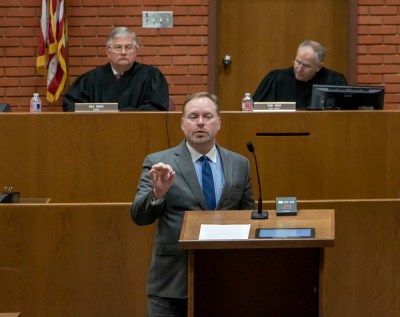
  • Moot Court & College Bowl Teams: The LEAP Center supervises the Moot Court team and the College Bowl team.  In the former, students learn the fine arts of oral arguments, traveling to law schools and engaging in tournaments in front of lawyers and law-school personnel.  In the latter, students learn about city government and public administration, and they travel to conferences, where they compete in front of city personnel and graduate faculty.

Many students are interested in specific areas. Thus, students who excel in city internships might take leadership roles on the College Bowl Team.  Students who excel in Moot Court might take leadership roles in the Pre-Law Society. 

Some students will show more diverse interests and exceptional promise, and these students are invited to be Ambassadors for the Center for Law, Engagement, And Politics.  In addition to often taking leadership positions with the Pre-Law Society or the College Bowl teams, these students often help the LEAP Center carry out its basic functions (the LEAP Center only has two staff members).

Thus, Ambassadors assist with all volunteer activities; they lead the planning and execution of all events; they oversee and implement the LEAP Center’s social media; they meet with, advise, and sometimes tutor students in criminal justice, political science, and pre-law.  They guest lecture for classes, serve as liaisons for many community non-profits and government agencies, and they help host the programs run by the LEAP Center.

The amount of work done by the LEAP Ambassadors is extensive, and it involves rigorous work and the development of professional skills.  Accordingly, only the highest-level students become LEAP Ambassadors.  Over the past year, for example, the LEAP Ambassadors worked, on average, 21 hours per week at part-time jobs or internships, participated in more than 100 events, and carried a GPA of 3.76.

Collectively, this approach and these activities lead to far-reaching and positive outcomes.  Sam Houston State University, for example, is one of the 170 most successful four-year, higher-education institutions in North America at placing students in law schools—putting it firmly in the top three percent.  In addition, many of these students have gone on to very successful legal careers, especially in Texas.

Many of the students who have obtained internships through the LEAP Center have become governmental leaders, holding down management and director-level positions in city, county, and state government.  The creation of the Sam Houston Austin Internship Program, for example, increased the number of full-time, SHSU-affiliated staff four-fold since its inception in 2013.

SHSU, Sam Houston State University, LEAP Center, Center for Law Engagement And Politics, Texas Tribune Festival, Texas Capital, ATX, Austin Texas

The LEAP Ambassadors, the most successful of the bunch, have gone beyond career success by also becoming avid supporters of SHSU.  Although seventy-five percent of the Ambassadors were first-generation students, they have enthusiastically supported the University by speaking to campus groups, serving on Alumni boards, and donating to the University.

In short, the programs offered by the LEAP Center go beyond curriculum enhancement. They are designed organically to meet real needs of our students—while being geared to the abilities of our students. Moreover, the rigor of the programs prepare students for real-world occupations, graduate programs, and the demands of civic life.  And by offering opportunities, training, and a picture of what is possible, the LEAP Center serves as an incubator for leaders.

Unknown's avatarAuthor mikeyawnPosted on August 15, 2025Format AsideCategories Civic Engagement, Education, Local GovernmentTags Center for Law Engagement And Politics, Law School, Leadership, LEAP Ambassadors, Legal Careers, Pre-Law, Sam Houston State University, Texas LegislatureLeave a comment on The Civic Leadership Role of the LEAP Center

LEAP’s Summer Interns Enhance Huntsville

Five Sam Houston State University students wrapped up a summer of service to the City of Huntsville by presenting their project-based internship last week, showcasing months of work that connected classroom learning to real-world impact.

The interns—Macey Schank, Audra Munro, Sofia Soto, Ayme Mendoza, and Kelsey Villatoro—major in different disciplines but they shared a common summer experience: making Huntsville a more livable community.

Schank, who interned in the City Manager’s Office, spent her summer digging into data on personnel, salaries, and fee schedules. “It was rewarding to see how much behind-the-scenes work goes into running the city,” she said, noting that her research will inform future administrative decisions.

Munro brought her artistic eye to the Wynne Home Arts Center, where she developed a detailed map of Huntsville’s Cultural District. The map, once published, will guide residents and visitors to the city’s creative spaces. “Art and culture are part of Huntsville’s identity,” Munro said, “and I’m glad to have contributed to highlighting that.”

Soto worked with the Recycling Department, auditing residents’ recycling habits and tracking participation levels across the city. Her findings will help Huntsville improve education efforts and expand its sustainability programs.

Mendoza spent her internship with the Parks Department, pitching in on community events, including the city’s popular July 4th celebration. Villatoro interned with Huntsville Main Street, where she helped organize fall events, managed social media content, and conducted research on downtown businesses.

Some of the students’ intern supervisors were on hand. Amanda Schillaci, from Main Street, attended. Olivia Discon (Assistant to the City Manager) and Sam Masiel (Assistant City Manager), attended to see Schank’s presentation, as well as to support the intern program in general. Sandra Rodriguez, whose work in Human Resources, is crucial to the functioning of both the interns and the City, was also on hand.

The internship is a partnership between the Political Science Department, Chaired by Dr. Jason Enia (who also graciously attended) and the Center for Law, Engagement, And Politics. Through this partnership, the students receive at least three hours of credit, while being paid by the City of Huntsville and earning a scholarship through the LEAP Center. Additional interns, not on hand, worked for the state and federal governments.

It is a winning partnership–not just for the students and the City, but also for a community that grows stronger and closer with each project completion.

Unknown's avatarAuthor mikeyawnPosted on August 4, 2025August 4, 2025Format AsideCategories Civic Engagement, Local GovernmentTags Center for Law Engagement And Politics, City of Huntsville, LEAP Center, Main Street, Parks and Recreation, Recycling, Sam Houston State University, SHSU, Wynne Home Arts CenterLeave a comment on LEAP’s Summer Interns Enhance Huntsville

Judge Moorman Shares Career Insights with LEAP Center Interns

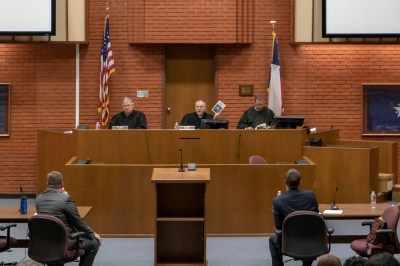
LEAP Center interns work in various capacities, from businesses, to government offices, to non-profits, but they also learn from each other and outside the workplace. Approximately twice a month, LEAP interns–“City Fellows”–meet outside the office to enhance their internship experience. This month their outside-the-workplace experience involved a “guest lecturer” of sorts: Judge David Moorman led a tour of the District Court in the Walker County Courthouse.

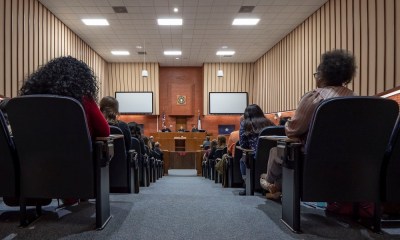
The tour and discussion involved an overview of the (1) County Judge (Floor 2), (2) the County Court at Law Judge (Floor 1), (3) the Grand Jury room (Floor 3), and (4) the District Court courtroom (Floor 3). Combined with their prior tours, which included among other places/venues, the Municipal Courtroom…

…the Fellows reviewed the judicial system, going over which kinds of cases make it to a JP or Municipal Court, County Court at Law, or the District Court–the latter consisting almost exclusively of felony cases.

For some of the interns, this was just one of several meetings with Judge Moorman. The Judge has generously spoken at the Pre-Law Society meetings…

…invited LEAP Ambassadors to some of his trials, joined the students at various events they have hosted…

…and is a regular attendee at the Ambassadors’ annual 10th Court of Appeals hearings.

Victoria McClendon, who was also on hand, worked for Moorman while she was at SHSU, and after her graduation from law school, he swore her into the Texas Bar.

Indeed, when Moorman walked into the courtroom, he saw McClendon and asked, “Are you returning to school?”

More seriously, Judge Moorman discussed some of those felonies that make it to his court, while also discussing other aspects of his career: his work in a law firm; his decision to run for a judicial position; how judicial proceedings can differ in smaller and larger towns; and his time prosecuting for the Municipal Court.

This discussion also ventured into advice for young attorneys. Oddly, even as Huntsville has grown over the years, the number of attorneys in the community has declined. For those attorneys who do wish to make their mark in a community, they often take their cues from more established attorneys. But in communities with fewer attorneys, such models may be lacking. But Moorman stressed the importance of gaining respect, which is earned by being prepared, taking a work-horse rather than a show-horse approach, and looking out for the best interests of your clients.

Of course, this is good advice for almost all occupations–a fitting discussion for interns with different backgrounds, working for different agencies, all of whom are contemplating their future.

With many thanks to Judge Moorman, it was a rewarding outside-of-class / outside-of-work learning experience in which the LEAP Center specializes.

Unknown's avatarAuthor mikeyawnPosted on July 25, 2025Format AsideCategories Civic Engagement, Criminal Justice, Law, Local GovernmentTags Center for Law Engagement And Politics, Judge David Moorman, LEAP Ambassadors, LEAP Center, Pre-Law, Sam Houston State University, Walker County CourthouseLeave a comment on Judge Moorman Shares Career Insights with LEAP Center Interns

Posts pagination

Page 1 Page 2 Next page

LEAP Ambassadors Are Involved!

This slideshow requires JavaScript.

Follow Us On Facebook!

Follow Us On Facebook!

Catch Up With Us

  • Improving Police Encounters through Experiential Education December 2, 2025
  • Engagement, Responsibility, and Councilmember Tiffany Thomas November 26, 2025
  • Distinguished Alumni Gala November 25, 2025
  • A Bearkat Holiday: The 104th Annual Tree of Lights! November 24, 2025
  • Twice Around with Robert Olen Butler November 19, 2025

Join The Conversation!

The Civic Leadership… on Foundational Activities of the…
The Civic Leadership… on The Philosophical Foundations…
LEAPing Into Action… on The Philosophical Foundations…
Jada Cook's avatarJada Cook on SHSU Students LEAP Across Five…
Reflections from the… on Kicking off the Semester Right…

Find Previous Posts

Sergeant Butterworth and Lieutenant Zella brought hands-on police training to Professor Yawn’s classes, giving more than 200 students a first-hand look at how impairment affects coordination and judgment. Read more about the students’ experiences and attempts at the link in our bio!

We also have Twitter!

My Tweets

LEAPing Into LEARNing

This slideshow requires JavaScript.

  • About LEAP
  • LEAP Ambassadors
Center for Law, Engagement, and Politics Blog at WordPress.com.
  • Subscribe Subscribed
    • Center for Law, Engagement, and Politics
    • Join 486 other subscribers
    • Already have a WordPress.com account? Log in now.
    • Center for Law, Engagement, and Politics
    • Subscribe Subscribed
    • Sign up
    • Log in
    • Report this content
    • View site in Reader
    • Manage subscriptions
    • Collapse this bar
 

Loading Comments...