Exploring The Shining: A Kubrickian Journey

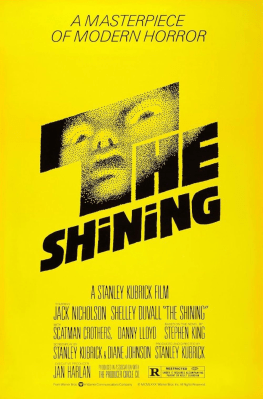
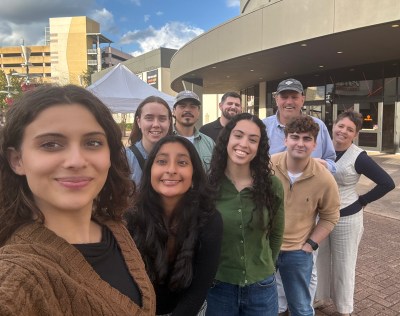
As part of the LEAP Center’s ongoing work to expose students to the broader culture, a group of alumni and current students gathered in Houston to see Stanley Kubrick’s “The Shining.” Originally released in 1980, the film is being re-released on IMAX theatres across the country as part of its 45th anniversary.

For about half those attending, it was a first exposure to a Stanley Kubrick film. Accordingly, we began with a brief background of Kubrick and his films. Of all the great directors, Kubrick produced the fewest films (13 over a 45-year career), a fact that has not deterred scholars from giving as much thought and ink to Kubrick’s work as that of Hitchcock, Welles, Spielberg, or Martin Scorsese.

Of Kubrick’s films, “The Shining” has received perhaps the most attention. The film is based on Stephen King’s novel of the same title, and it was met with a mixed critical reception on its release, although its stature has grown, and it is now considered a horror classic.

It embodies several cinematic traits of the Kubrick oeuvre: a longish running time, attention-grabbing visuals, riffs on various literary themes, and an enigmatic approach to storytelling that occasionally leaves viewers unsure what they just watched. All of these were on display in “The Shining.”
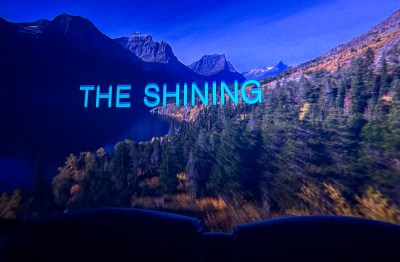
In this viewing, the visuals were most prominent, perhaps because we were watching this on an IMAX screen. The opening scenes, shot from a helicopter, including a scene where we (perceiving things through the camera) seem to pass the Torrance family on the “sidewinder” road…
…on the way to the Overlook Hotel.

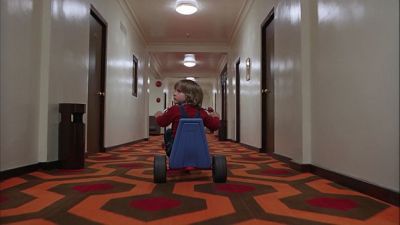
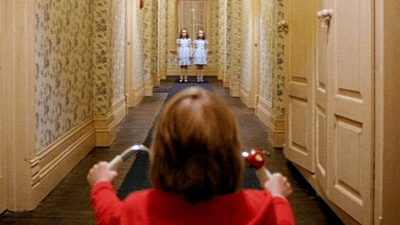
Kubrick also made full use of the Steadi-Cam, which had been introduced on film in 1976. Kubrick used it throughout “The Shining,” and he innovated with it, devising an apparatus that could shoot from about 18 inches above the ground–most notably used in the film to follow Danny on his tricycle, as he traversed the maze-like corridors of The Overlook.

Kubrick’s films are often sprawling affairs and they are deeply studied by scholars and enthusiasts, so it’s no surprise that all manner of symbols and themes have been “discovered” in the director’s body of work. This is probably most true in “The Shining,” as reflected in the interesting and bizarre theories expressed in the documentary Room 237.

Professor Robert Kolker, an author of several Kubrick books and an expert on cinema, suggests that the film can be seen through an Oedipal lens (spoiler alert). Danny’s “shining” is a type of oracular vision not unlike that of the prophecies offered at Delphi, including the one offered to Oedipus. And while Danny wasn’t as close to his mother as was Oedipus, she serves as his caretaker and protector; in the end, she carries him to safety, saving his life.

Danny doesn’t proactively kill his father at a crossroads as does Oedipus, he does leave his lame father to die of exposure in a labyrinth. Of note: Jack Torrance suffers from a foot/ankle injury following a fall down stairs; he literally embodies the term “Oedipus,” which means “swollen foot.”

Whether such messages were intentional or not (it’s worth noting that Kubrick mentioned he read a lot of Freud prior to filming “The Shining”), the film is replete with sufficient ambiguities to provide fodder for the active imagination.

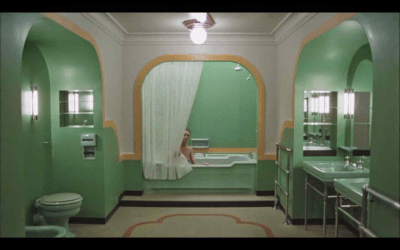
There are some imponderables in the film; it does, after all, involve the supernatural. But even in the logic of the supernatural, what is the purpose of the bathroom scene…

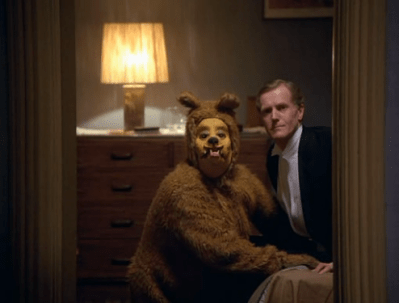
…in which Nicholson embraces a young, naked and beautiful woman, only to find her decay into a rotting but living corpse? Why is there a parlor full of fully-dressed corpses in the hotel? And what about the scene involving a man in a bare-backed bear costume and a man in a tuxedo?

This latter question was posed by many in our group (answered by none), and such questions may reflect Kubrick’s very approach to filmmaking: “if you can get people to the point where they have to think a moment what it is you’re getting at, and then discover it, the thrill of discovery goes right through the heart.”

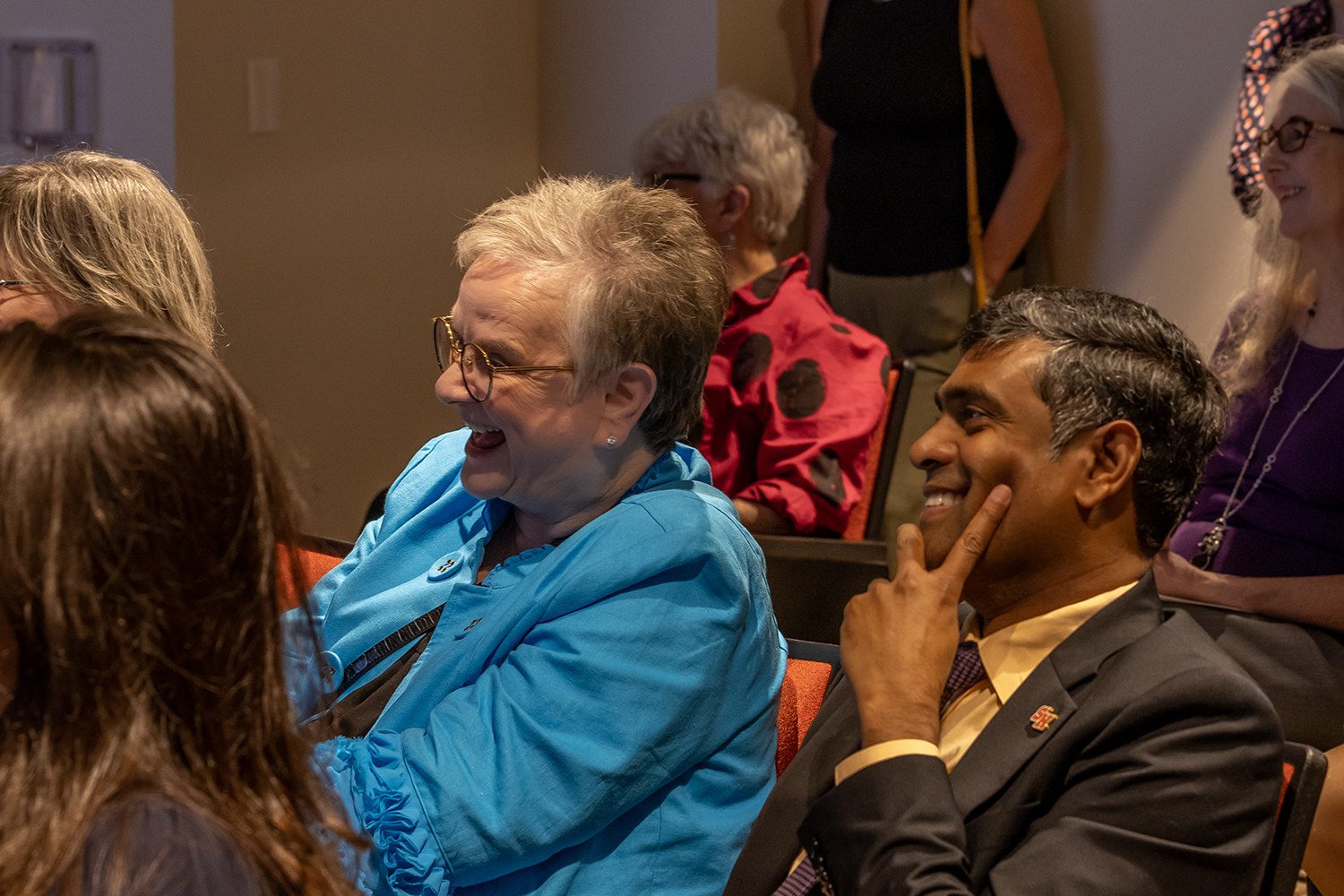
While we probably didn’t reach “discovery” on many of the scenes, we did “think a moment” or more on the film and its many scenes. The experience offered an accessible and exciting introduction to Stanley Kubrick and his work, gave us all an excuse to get together during the holiday break, and provided us endless material for reflection (and, for some of us, concern…)!

Alumni Insights: Jessica Rodriguez-Wahlquist Returns to LEAP

By Makenna McDaniel

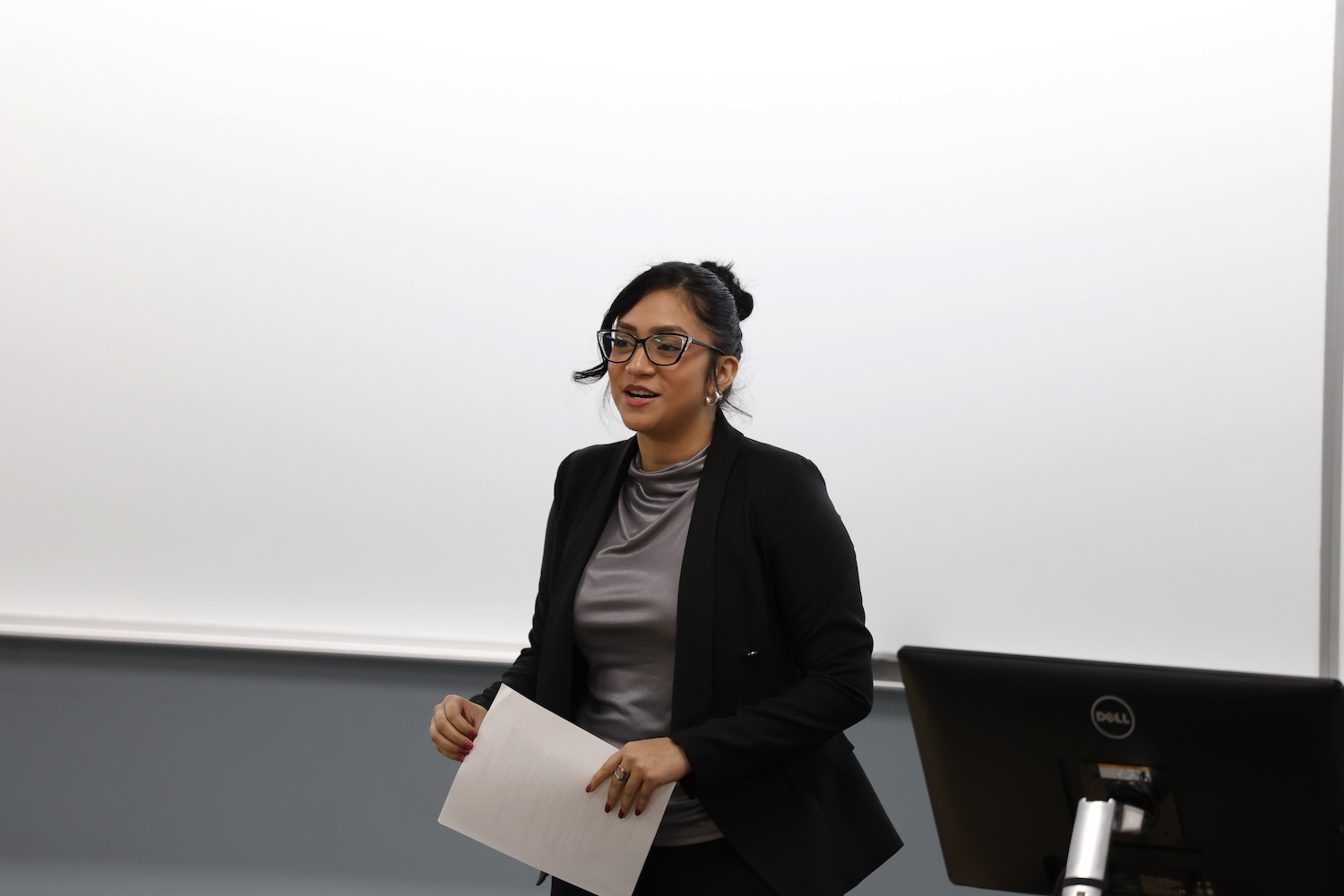
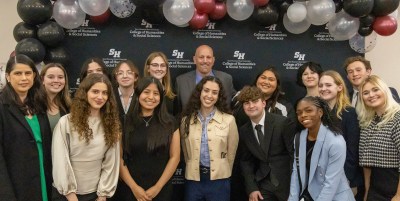
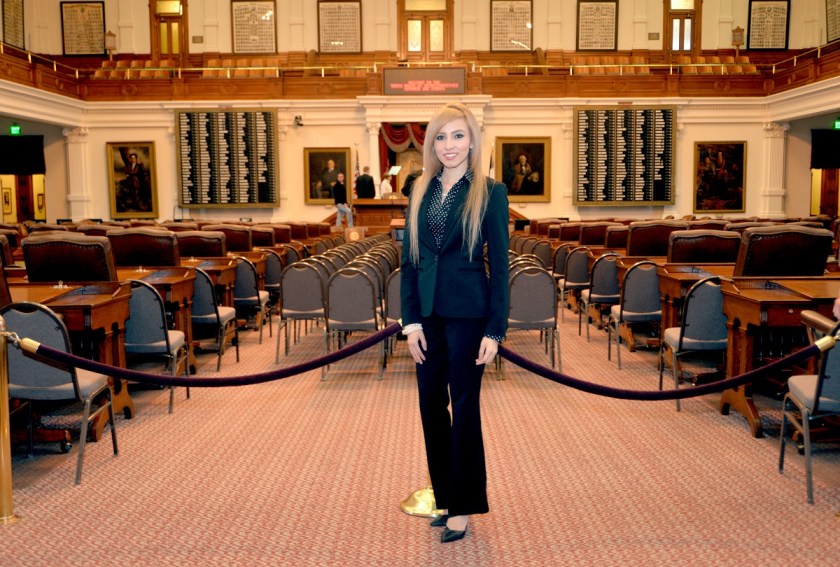
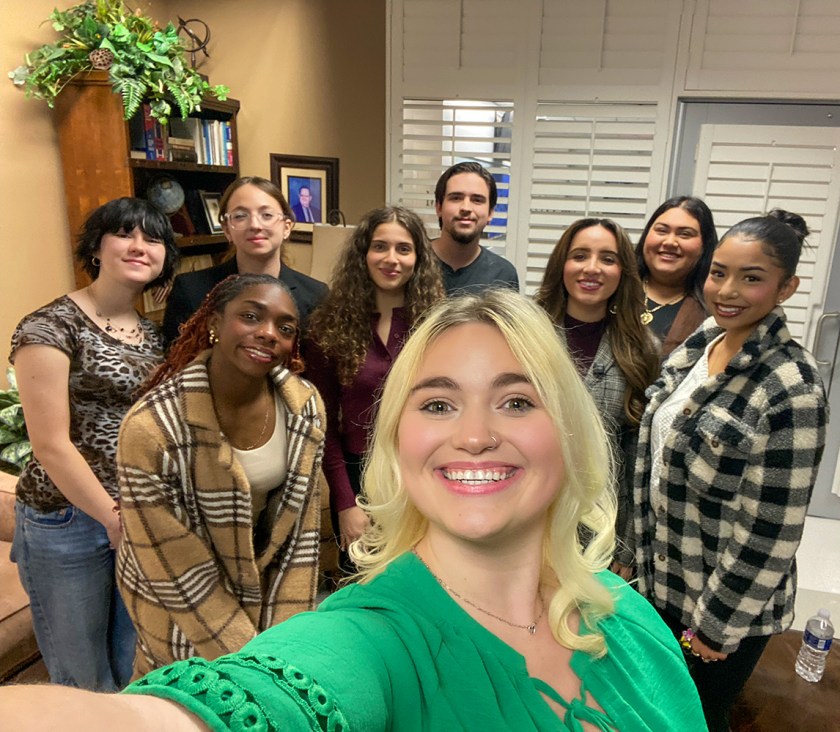
The LEAP Center is committed to introducing students to leaders who show professional excellence, resilience, and service. This week, LEAP students had the privilege to meet Jessica Rodriguez-Wahlquist, a successful attorney and SHSU alumna who has made a powerful impact on communities across Texas.

Rodriguez-Wahlquist graduated from Sam Houston in 2015 with a double major in Economics and International Business and a minor in Political Science. During her visit to SHSU, the students were able to sit down with Rodriguez-Wahlquist for a quick Q&A session.

Rodriguez-Wahlquist was warm and energetic, offering the students many pieces of thoughtful advice. The conversation began by reflecting on her time at Sam Houston and how the LEAP center helped her on her journey to law school.

Rodriguez-Wahlquist encouraged each of the students to get involved on campus and in the community during their undergraduate years. She reflected that many of the things she did on campus and with the LEAP center helped her to gain admission into law school. She also discussed key decisions and challenges that shaped her journey from Bearkat to partner at a major Houston law firm.

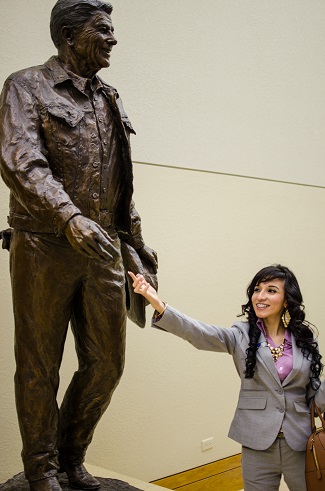
Ronald Reagan and Jessica Rodriguez

The conversation was lively and engaging, providing the students with excellent advice. The students asked many questions ranging from her involvement in internships during her undergraduate to her recent achievements. Rodriguez-Wahlquist wrapped up the conversation with the advice to always be true to yourself. She said “You don’t want to build a busy resume and have an empty life. Make sure you do what you love!”

The Q&A session provided excellent insights for students preparing for careers in law, and we are very grateful to Rodriguez-Wahlquist for her time, advice, and kindness!

Bearkats to Booming Business: SHSU Success Stories with President White

by Olivia Discon

On November 5, 2025, the Office of the President at Sam Houston State University hosted a panel featuring SHSU alumnus and founder of Wildseed Farms, John Thomas. In a week already filled with reflection on SHSU’s impact on the world, this event served as the perfect precursor to the Distinguished Alumni Gala, which was scheduled for the following day.

Moderated by President Alisa White, the conversation began in song—as it was Mr. Thomas’s 80th birthday! 

Mr. Thomas, who graduated from SHSU with a degree in Business Administration, embodies the entrepreneurial spirit. In 1971, he founded Wildseed Farms, which has grown into a uniquely multifaceted enterprise: a working farm, picture-perfect destination, winery, vineyard, gift shop, and beer garden all in one. The diversity of his business reflects the diversity of his interests and of the customers he serves in Fredericksburg, TX. 

President White emphasized the value of an “entrepreneurial mindset,” prompting Mr. Thomas to reflect on his own. He spoke plainly about failure, noting he had four businesses that didn’t make it. But instead of discouragement, he embraced each setback as a step forward, reinforcing the importance of “failing forward” and refusing to be defeated when something didn’t work. His message was simple: success comes from doing what you love, staying flexible, and letting your passions guide you.

One of the most charming stories he shared was how the idea for Wildseed Farms emerged. He noticed people pulling over on the side of the highway—often dangerously—to take photos with blooming wildflowers. What began as a desire to help people bring that beauty into their own spaces grew into an expansive business shaped by the customers themselves. He noted that if you’re too focused on any one thing, you won’t notice what’s around you.

President White seized on this point, noting that whether someone’s venture involves wildflowers or a different vision, the lesson is universal: pay attention, follow your passions, take the risk, and don’t put all your eggs—or as Mr. Thomas put it, all your flowers—in one field.

Mr. Thomas also described how the natural rhythm of the seasons shapes his business. To maintain constant color throughout the year, he developed a process called bloom succession, staggering the planting of seeds aligned with their ideal growing periods. This ensured Wildseed Farms always had vibrant fields to offer, no matter the time of year.Another key to his success is his team. With 87 employees, he places great emphasis on keeping everyone engaged and informed. Much like his business, his team is diversified—employees cross-train across divisions, spending time in different roles to understand the full picture. This strategy builds unity and prevents the all-too-common refrain of “that isn’t my job.” As President White added, ownership within an organization is essential; when every person understands the broader mission, the entire team flourishes.

Thank you very much to President White for fostering an excellent discussion that is crucial for young people entering an ever-changing workforce, and to the President’s Cabinet for hosting incredible events such as these.

Planting Flags at Dawn: Honoring Democracy on Election Day

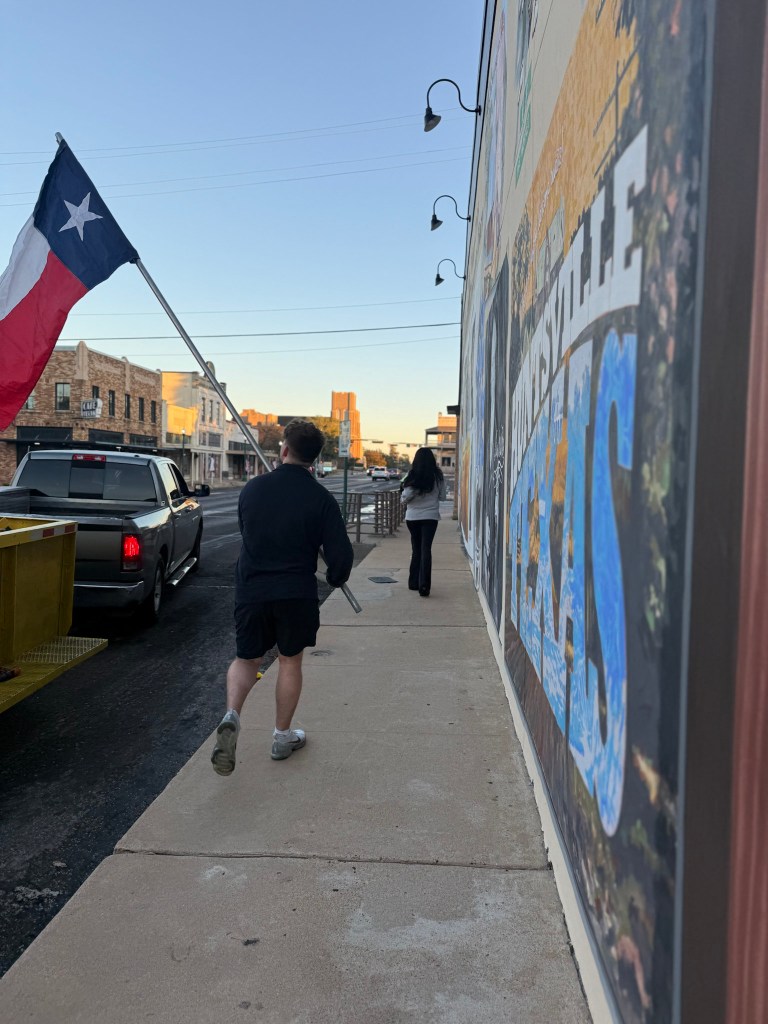
Every Election Day, Americans exercise one of democracy’s most fundamental rights–the right to vote. While some head to polling places during lunch breaks or after work, the Lions Club and LEAP center mark the day by planting flags–early in the morning–across the extended downtown in Huntsville, an activity undertaken on most national holidays!

While many are familiar with the process, we meet around 6:15 a.m. to place flags all downtown with the Huntsville Lions Club. For us, it is not only a community-building exercise, but also a way to remind people the significance of their democratic participation.

With an experienced group and an established route, we began bright and early, bundled against a chillier morning. Our task was to carry bundles of flags to assigned routes along 11th Street, Sam Houston Avenue, and throughout the extended downtown area.

Thankfully every flag went up smoothly – however the signs were another story

The morning’s work also served as a reminder of where this tradition began…

Before 1845, Election Day looked very different across the country. Each state chose its own date to hold presidential elections-sometimes spread out over an entire month. Results from early-voting states often influenced later ones, and the lack of uniformity created confusion in a nation still finding its democratic rhythm.To solve that problem, Congress passed a law in 1845 establishing one national Election Day: the Tuesday following the first Monday in November. The timing was practical for the America of the 19th century-rooted in the rhythms of farm life. November came after the harvest but before winter roads turned to mud, and Tuesday allowed farmers to attend church on Sunday, travel to their county seat on Monday, and cast their vote on Tuesday.

The result was a schedule that balanced faith, work, and civic duty-an early example of how American democracy was built to fit into the everyday lives of its citizens. What began as a matter of convenience has since become a national tradition that still shapes how Americans vote today.

After finishing our routes through downtown, Nataly placed the final flag of the morning – a simple but fitting way to mark the start of Election Day!

In light of Election Day, with many new things to vote on this time, LEAP ambassadors have already done their duty…

Walker County voters can cast their ballots at any of the countywide polling places on Tuesday, November 4, 2025, from 7:00 a.m. to 7:00 p.m. Whether you vote at the Walker County Fairgrounds, University Heights Baptist Church, the Walker County Storm Shelter, or any of the other convenient locations throughout the county, your participation matters!

Thank you to the Lions Club for having us as part of this tradition once again!

A Presidential Inauguration: Republic of Texas Variety

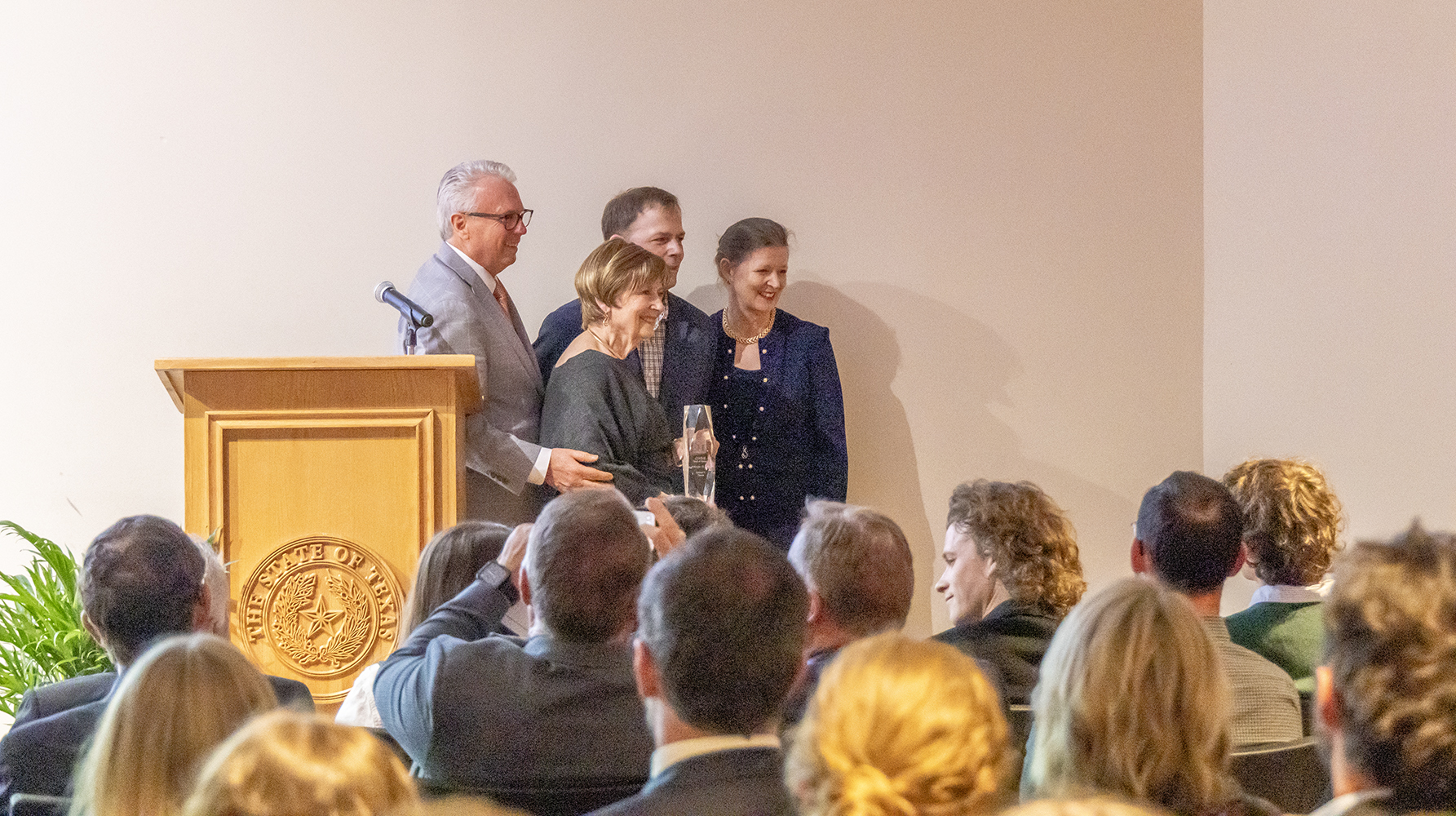
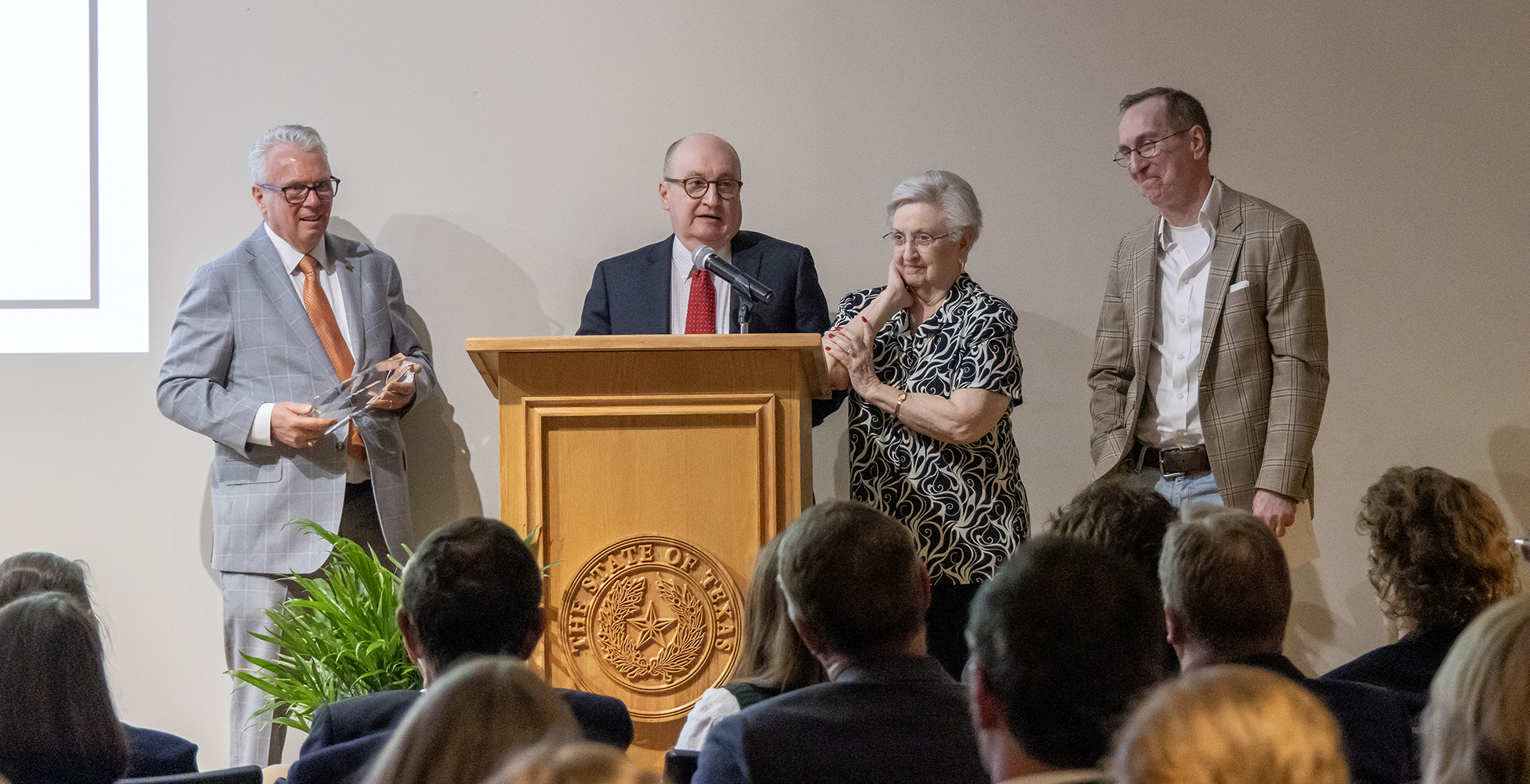
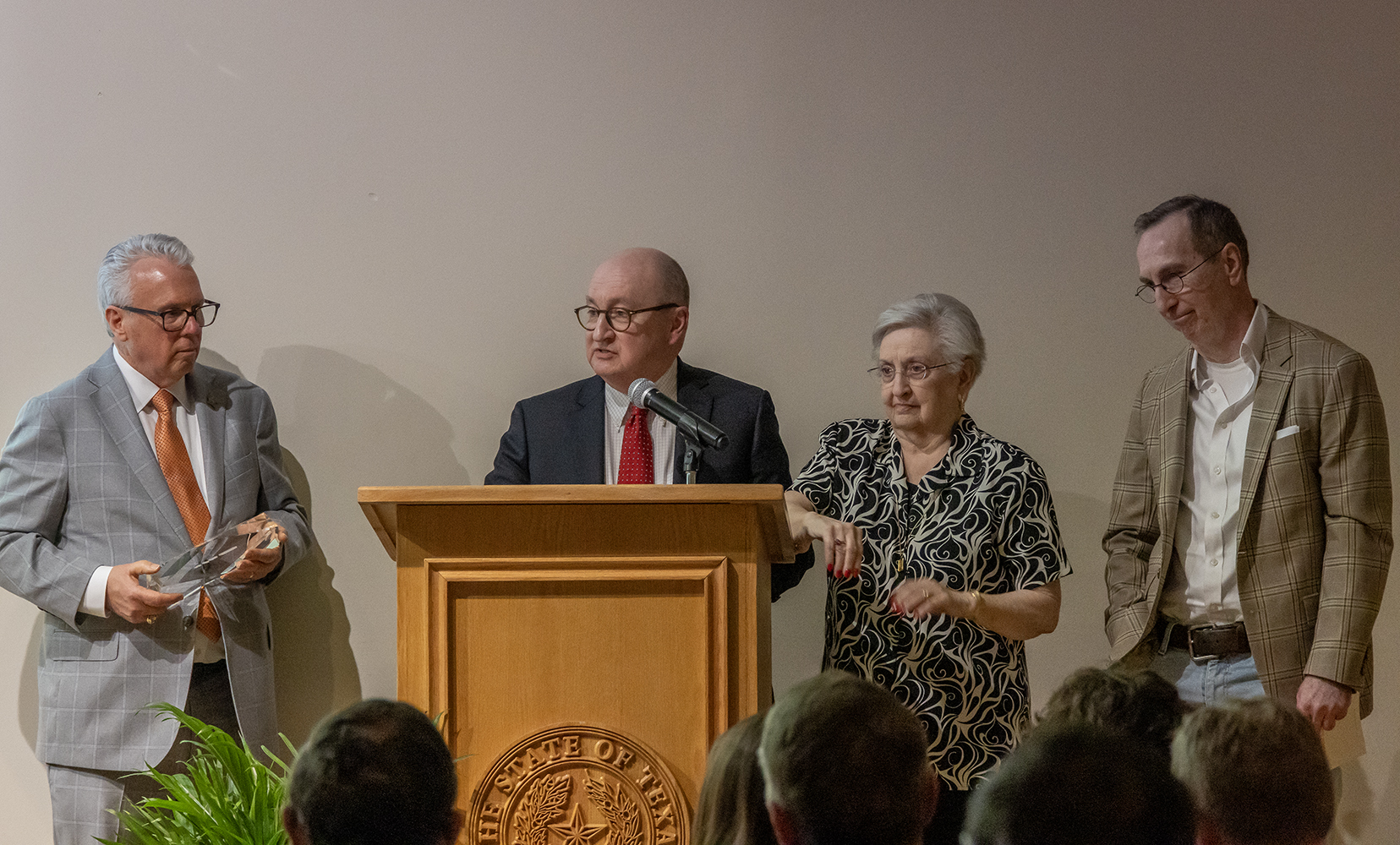
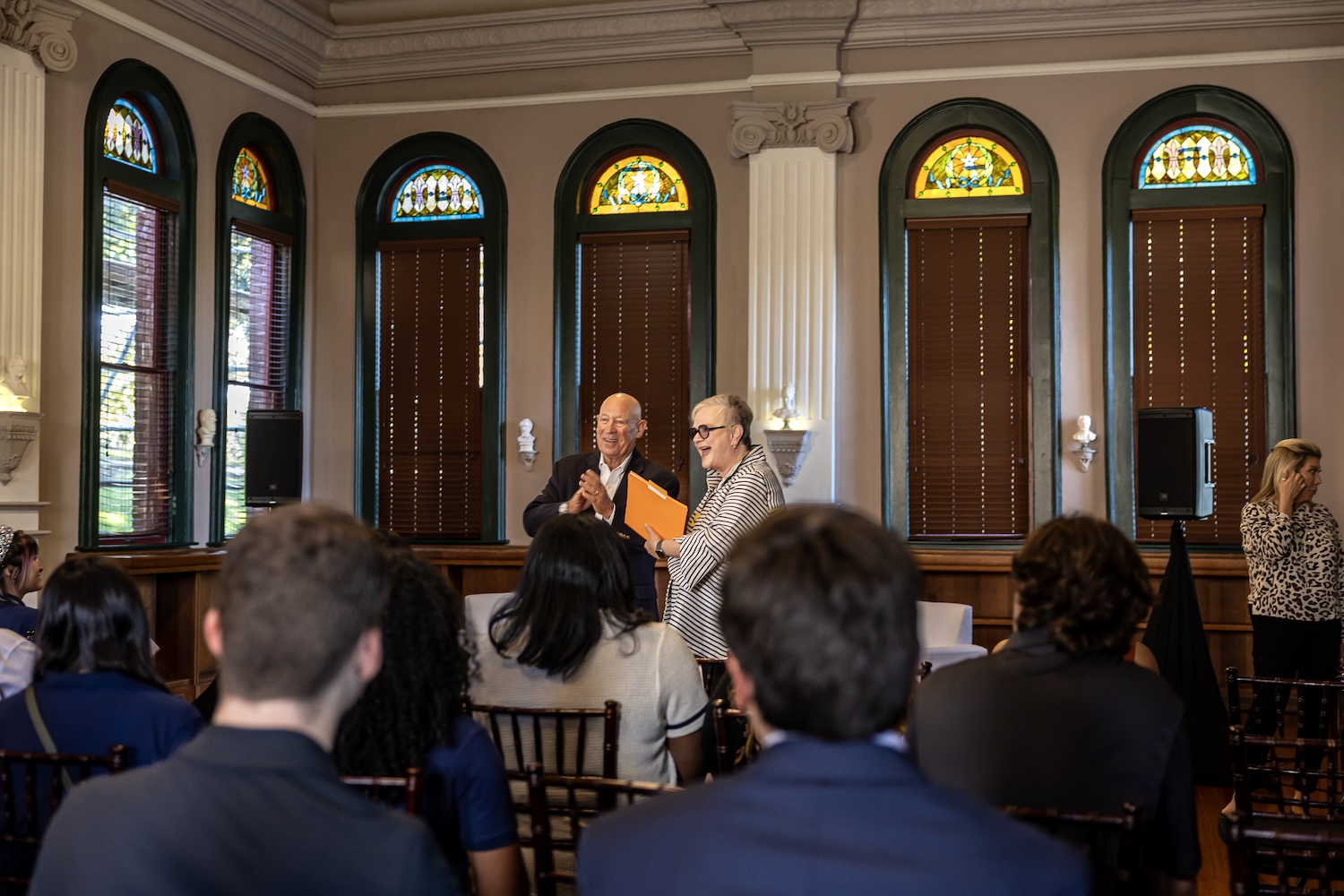
            On October 22, 1836, Sam Houston was inaugurated as the first President of the Republic of Texas. This past Wednesday, October 22, 2025, marked the 189th anniversary of this event. With a full house…

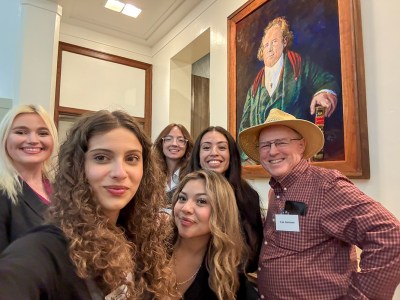
…including many VIPs, the Museum celebrated in fun style, with the LEAP Ambassadors and a few other volunteers helping with the festivities.

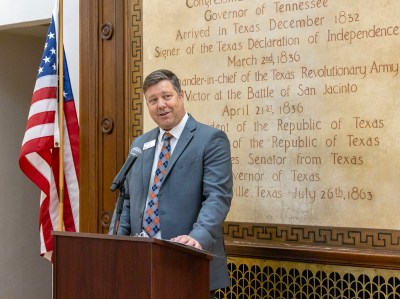
The night started out with an introduction from the museum’s director, Derrick Birdsall, who noted some of the luminaries in the audience, including former President Jim Gaertner…

…artist Lee Jamison…

…Mayor Russell Humphrey…

…Commissioner Bill Daugette…

…General David Glaser…

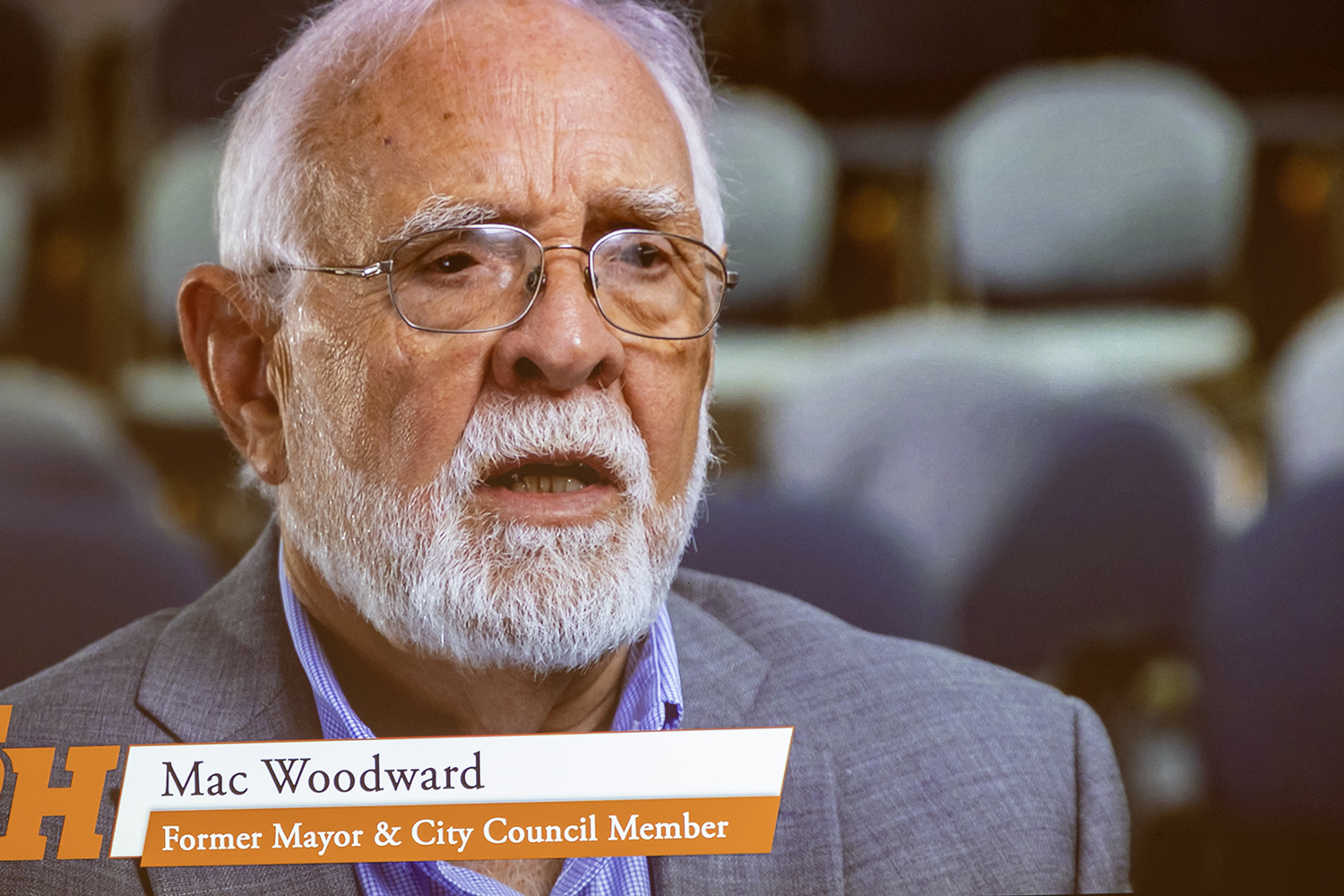
…Mac and Leanne Woodward, Stephanie Fors…

…and many others. Graciously, he also mentioned the LEAP Ambassadors, who are celebrating their 20th Anniversary as a University group.

More to the point, however, he discussed Sam Houston’s massive legacy.

Matt Bethea also spoke, noting the importance of the Museum to the University and, on a more personal level, observed how this annual celebration was his favorite event!

Finally, Alisa White, President of the university, brought her husband, Elliott Herzlich, to the podium accompanied by much applause.

In a spirited speech, President White extolled many of Sam Houston’s virtues, while highlighting the need to have the courage to lead, even when it can result in mistakes. But everyone, just like Sam Houston, can work to their community better, and in so doing, they are leading.

Birdsall again took the podium, this time to unveil some of the Museum’s new additions. In particular, he pointed to artist Lee Jamison and Bill Dabaghi, who unveiled Jamison’s new portrait of Sam Houston, which will hang in a privileged spot in the rotunda.

Also on display was a new letter that volunteer written by Sam Houston in 1926, when he was a congressman from Tennessee. The letter was found on Ebay, by volunteer Bruce Wiliford…

…and he referred the find to Birdsall. After some sleuthing, Birdsall pulled the trigger and purchased the letter, which shines some light on Houston’s personal life and also larger issues, such as widespread dissatisfaction among elected officials with the electoral college.

We spoke with Mr. Jamison about the painting of Houston along with his painting of Old Main, both of which show how great he is at putting life into his artwork. Through these conversations, we learned about the attention to detail that goes into portraying such historic figures.

The night was filled with engaging conversations, laughter, and lots of learning. From the start of the evening when greeting doors, to the end of the night getting to walk around the museum the event was enjoyable and a great way to get more involved with the community.

Thank you to Derrick Birdsall for inviting us to such a wonderful event, it truly was a joy to hear and learn from everyone who attended!

We look forward to all of the continued impact the museum will have on our town!

Celebrating Citizenship!

By Michelle Moya

Shortly after Election Day 2025—and just in time for the season of gratitude—the LEAP Center invites you to join us in celebrating what it means to be a citizen. The event will feature finger foods, Lotería with a civic twist, a guest speaker, and special recognition of newly naturalized citizens. Guests will also have access to information and resources for those interested in beginning their own journey toward U.S. citizenship.

The event is made possible through a grant from the National Partnership for New Americans and continues the LEAP Center’s long-standing commitment to civic education and community engagement.

A Tradition of Civic Learning

Since 2008, the Huntsville Public Library and the LEAP Center have partnered to offer a free citizenship preparatory course designed to help local immigrants prepare for the naturalization process. Over the past seventeen years, the program has served nearly 300 immigrants from 23 countries.

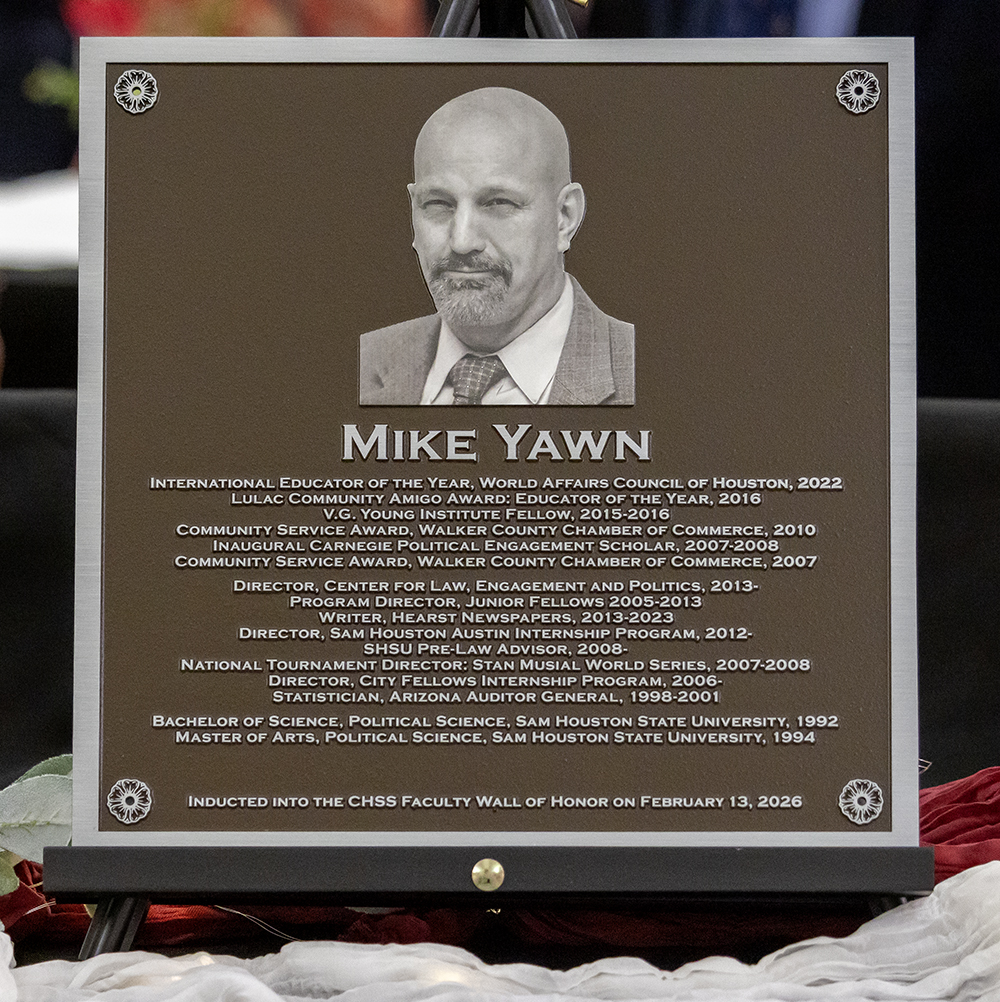
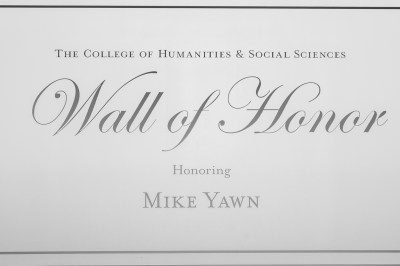
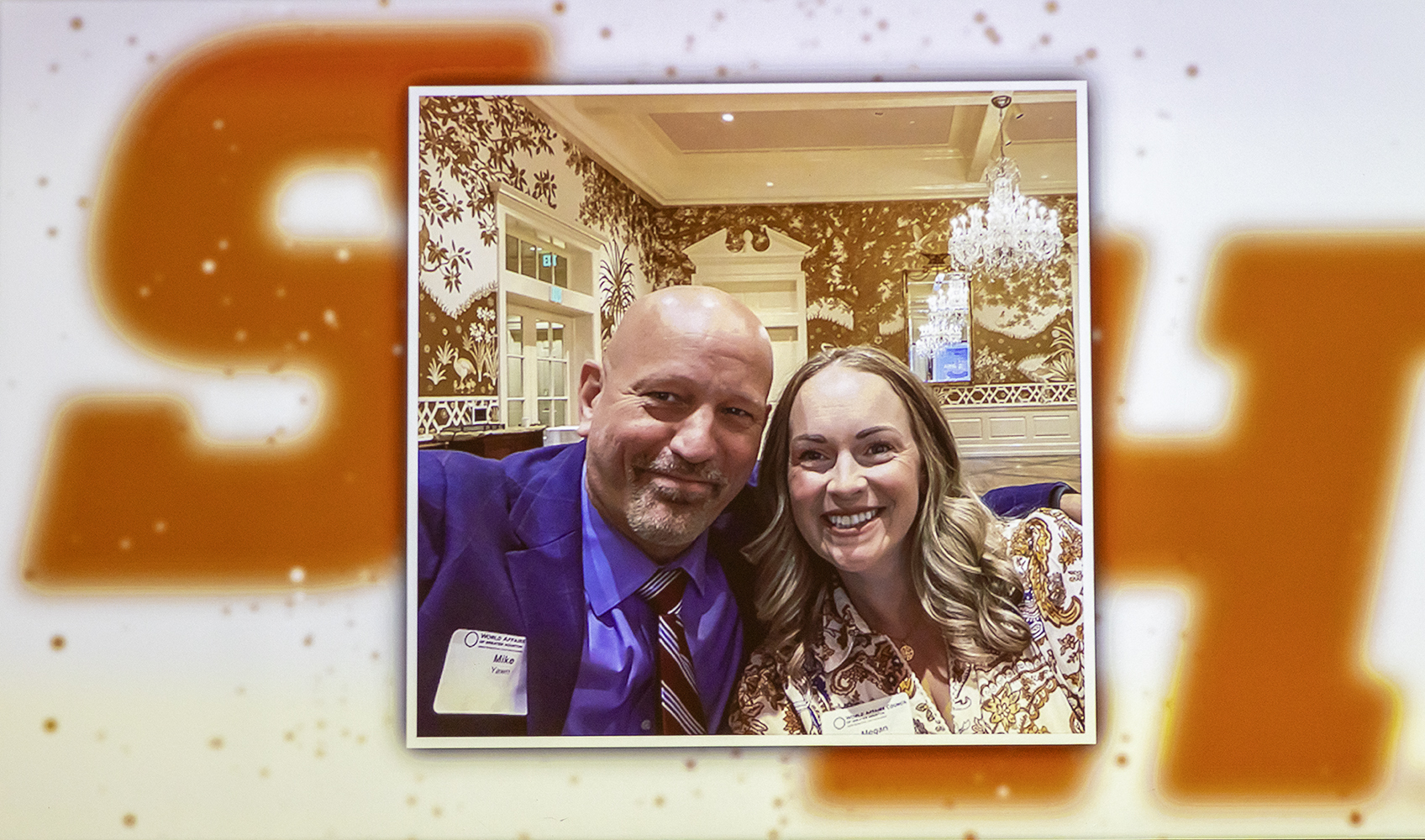
Led by Professor Mike Yawn with support from LEAP student volunteers, the course provides an overview of the naturalization process, from paperwork to oral interviews to English tests, and the civics portion consisting of 100 questions that immigrants must know. Immigrants enrolled in the course receive guidance on the 100-question civics test, as well as encouragement and practical support throughout the process.

The grant from the National Partnership for New Americans allows LEAP to extend this work to Montgomery County, beginning with the November celebration and continuing with a preparatory course in spring 2026.

A Community Celebration

On Saturday, November 8, 2025, from 4:00 to 5:30 p.m., the celebration will take place at the SHSU Woodlands Center. The event serves a dual purpose: honoring individuals who have recently achieved U.S. citizenship and welcoming those interested in learning about the naturalization process.

The program will feature a guest speaker who will share a few words on the importance of civic engagement and community participation. Afterward, guests are invited to enjoy conversation, fellowship, and rounds of Lotería—reimagined with a civic theme to honor the spirit of citizenship.

By bringing together naturalized citizens, aspiring citizens, and students, the celebration underscores the power of connection and culture. Citizenship — often taken for granted–embodies both rights and responsibilities; it provides a sense of confidence, freedom, and unity that strengthens our communities and our democracy.

In conjunction with this event, the LEAP Center will also announce the launch of its Spring 2026 Citizenship Preparatory Course, which will be offered in Montgomery County for the first time.

If you would like to attend the celebration, please scan the QR code below to register or contact Professor Mike Yawn at mike.yawn@shsu.edu.

Boston or Bust!

After arriving in Boston early Friday morning, LEAP officially kicked off our visit to New England! We’re here for the Council of State Governments East conference, but like any LEAP trip, we make time to absorb the cultural and intellectual atmosphere of the region.

Massachusetts State House

by Olivia Discon

Even as we approached the building, we noticed the gold dome, and we used that as a guidepost for directions to the structure. The dome, as we would later learn, was originally covered with wood shingles, but as they deteriorated, the government opted for a sturdier material. They chose Paul Revere to plate the dome, but as it weathered and turned green, another element was sought. They settled on 23-karat gold, which is, of course, distinctly different. Interestingly, the original gilding cost $3,000 (in 1872); but they expect to cost approximately 3,000,000 dollars to refurbish it today.

We learned all this from Luke, our tour guide, who gave us a great overview of the building, which was designed by Charles Bullfinch, who also designed the Maine Statehouse, University Hall at Harvard, and the updating of the US Capitol.

A highlight was the beautiful rotunda, which featured stained-glass windows and murals depicting scenes from the founding of the country. The room was built with imported Italian stone and craftsmanship, reflecting the influence of Massachusetts’ large Italian immigrant population.

From there, we entered the Great Hall of Flags, which displays 351 flags, one from each municipality in Massachusetts. The design wasn’t just symbolic, though; the flags also help improve the room’s acoustics, making it suitable for ceremonies and events.

Having seen 12 state capitol buildings, I’ve learned that the legislative chambers are often the most interesting aspects of the statehouses. In Massachusetts, the House of Representatives has 160 members, each serving two-year terms. In and of itself, this is not unusual. What is unusual is this one features a fish: a cod. The cod is such a central symbol of Massachusetts’ maritime roots that the chamber refuses to conduct business without it, although that didn’t stop Harvard students from stealing it in 1933, stopping legislative business for three days, before it miraculously returned. The sculpture is today so valued, it is known as the “Sacred Cod.”

Across the building, the State Senate chamber is home to 40 senators, also elected for two-year terms and representing roughly 175,000 people each. Their chamber is arranged in a round-table style, designed to encourage equal discussion, which is of course different from the tiered seating most state legislatures use. Indeed, Massachusetts takes this to great lengths. To ensure full equality, they actually change the heights of each chair around the table in a manner designed to ensure that each member is of equal stature while literally and figuratively occupying a Senate seat.

And because the House wouldn’t share the Sacred Cod, the Senate decided they would have their own divine creature: the “Holy Mackerel.”

In all, this visit to the Old State House was a great way to kick off the trip. It was the perfect precursor to the rest of the day and almost certainly to our time in New England. 

Freedom Trail

by Michelle Moya

While the Massachusetts’ State House can serve as a standalone site, it is also part of Boston’s official Freedom Trail, a 2.5-mile path (fully paved with red bricks) that winds through downtown and connects 16 historically significant sites. The trail proved to be the perfect introduction to the city–part history lesson, part sightseeing tour–allowing us to stand where many of the pivotal moments in America’s fight for independence unfolded.

In most states, a capitol built in 1798 would be the old state house but not in Massachusetts. The Bay State’s “Old State House” was built in 1713 and is Boston’s oldest surviving public building. Its Georgian architecture stands in stark contrast to the towering skyscrapers surrounding it. For decades, it served as the seat of the Massachusetts General Court and a symbol of royal power in the colony. But it also became a birthplace of revolution: on July 18, 1776, the Declaration of Independence was read aloud from its balcony for the first time to the citizens of Boston, transforming this seat of British authority into a herald of American freedom.

Just steps away lies the Boston Massacre Site, marked today by a simple ring of cobblestones. Modest as the marker may be, this spot witnessed a tragedy that would galvanize the colonies. On March 5, 1770, angry Bostonians clashed with British troops stationed in the city. What began with snowballs, sticks, and insults escalated when confusion gave way to gunfire. Private Hugh Montgomery, knocked down by the crowd, fired his musket, and others followed suit. Amid escalating tension, five colonists were killed: Crispus Attucks, Samuel Gray, James Caldwell, Samuel Maverick, and Patrick Carr. 

The consequences of that night are poignantly reflected at the Granary Burying Ground, established in 1660 and one of Boston’s three-oldest cemeteries.

Though only about 2,300 headstones remain visible, nearly 5,000 people are believed to be buried in this hallowed ground, including some of the Revolution’s most illustrious figures such as Paul Revere, Samuel Adams and John Hancock, and among these is one of the five victims of the Boston Massacre, Crispus Attucks. Of African and Native American descent, Attucks was a sailor and dockworker who stood at the front of the crowd that evening. His death marked not just the beginning of America’s struggle for independence but also highlighted the diverse coalition of people who would sacrifice for that cause. 

A few blocks away, the trail leads us to the Paul Revere House, built around 1680 and now the oldest surviving home in downtown Boston. Modest in size and structure, the weathered wooden dwelling still fits in among the varied architectural buildings of modern-day Boston. Revere lived here from 1770 to 1800, balancing his work as a silversmith with his pivotal role in the Patriot cause, including his famous midnight ride that would become the stuff of legend.

The Freedom Trail offered a concise, firsthand look at Boston’s role in the nation’s founding. The trail provides both residents and visitors a clear window into the events and figures that shaped early America, making it a must-see for anyone looking to understand Boston’s historical significance and, for us, a great start to exploring a new city.

Lunch and Larks

Befitting our historic tour, we had lunch at the Union Oyster House, which opened in 1826, making it the United States’ oldest restaurant. The building in which it is housed dates back even further–at least 250 years, although no firm date has been established. In addition to some Boston staples (New England Clam Chowder, oysters, Boston Cream Pie)–which we enjoyed–the restaurant has also hosted many notable public figures. Daniel Webster was a regular customer as was John F. Kennedy. Indeed, Kennedy had the Oyster House’s Clam Chowder shipped in for his inauguration.

We also plotted out paths to some sites we wanted to see that didn’t fit a themed route. This included the remnants of a partially obscured Richard Haas mural at 31 Milk Street, which someone, inexplicably, decided should be covered up by a parking garage. For a city that cares about its history–or for any city–it was an unfortunate decision.

Also of interest to us was Ten Post Office Square, which was originally home to the Boston Latin School (1635), the oldest public school in the United States. Luminaries such as John Hancock, Samuel Adams, Cotton Mather, and Benjamin Franklin attended here. Franklin, however, dropped out, a fact which partially prompted city fathers to erect a statue of him on the site in 1865, the first such public statue in the city of Boston. The site was also been home to the Suffolk County Courthouse and, in 1865, the City built a new Town Hall on the site. It is the structure that occupies the location today, a building that provided office space for 38 separate mayors, including John Fitzgerald–the future President’s grandfather.

Boston Museum of Art

After a packed first day in Boston, we headed to the Museum of Fine Arts to see “Van Gogh: The Roulin Family Portraits”- the MFA’s first Van Gogh exhibition in 25 years. With 23 works on display, many borrowed from all over the country, this represents the largest collection of Van Gogh’s work currently showing in the United States.

The exhibition focuses on Van Gogh’s 26 portraits of the Roulin family-his neighbors in Arles, France. Fourteen of these paintings are displayed together here, something that rarely happens given how scattered they are across museums worldwide.

Joseph Roulin, a local postman, appears in several portraits wearing his postal uniform…

 His wife Augustine dominates the “La Berceuse” series, where Van Gogh painted her as a maternal figure meant to comfort sailors and working people.

Their three children each get distinct personalities: Armand with his serious expression,

young Camille caught between childhood and adolescence,

and baby Marcelle with tender vulnerability.

The exhibition also includes other works from Van Gogh’s productive Arles period. The Bedroom immediately caught my attention, given its bold, simplified colors.

Alongside these, Van Gogh’s Self-Portrait from this period shows the artist at his most direct, painted just months after his breakdown in Arles…

The curators also included works by artists who influenced Van Gogh, including pieces by Rembrandt, creating a clear artistic lineage that shaped his approach to portraiture.

The exhibition ends with Van Gogh’s actual letters, written during his mental health struggles in Arles. 

Continuing On!

By Olivia Discon

From there, we wandered through the rest of the museum, trying to take in as much as we could before the end of day one.

Michelle is still figuring out her taste in art, so this visit was a great chance to see a wide range of styles and time periods all in one place.

In the American Art collection, we started in a way that mirrored the country’s own development. Early American painters leaned heavily on European influences, but as we moved forward, you could see the work gradually step into a style of its own.

Moya has grown fond of the transcendentalist crowd—Heade, Thomas Cole, and Bierstadt especially.

For me, highlights included John Singer Sargent, Childe Hassam, and Rodin.

We also stumbled on an Andy Warhol that needed a little context. After I explained the, let’s say, “golden phase” of his work, Michelle was no closer to being a Warhol fan.

There was also an impressive lineup of Monets, including one from his cathedral series. That 33-painting project captures the same cathedral at different times of day. This is pivotal to art history, and I was pleased to have seen one of them in person. 

And then came Degas’ Little Dancer. One of the 28 bronze casts, it’s indeed an incredible piece. However, if you’d rather not become disillusioned with another art piece in this blog, you probably shouldn’t ask me the backstory on this one.

On our way out, we caught sight of some Alexander Calder pieces! The wooden sculpture was particularly striking to me, and an excellent find on our way out of the museum.

Concluding Thoughts

It was such a busy day, it was easy to forget that we woke up in Houston, Texas, and spent only a partial day in Boston, MA. Nonetheless, we managed to spend a full twelve hours seeing sites, exploring a part of the country that is new to us, and reflecting anew on our nation’s history and the meaning of freedom.