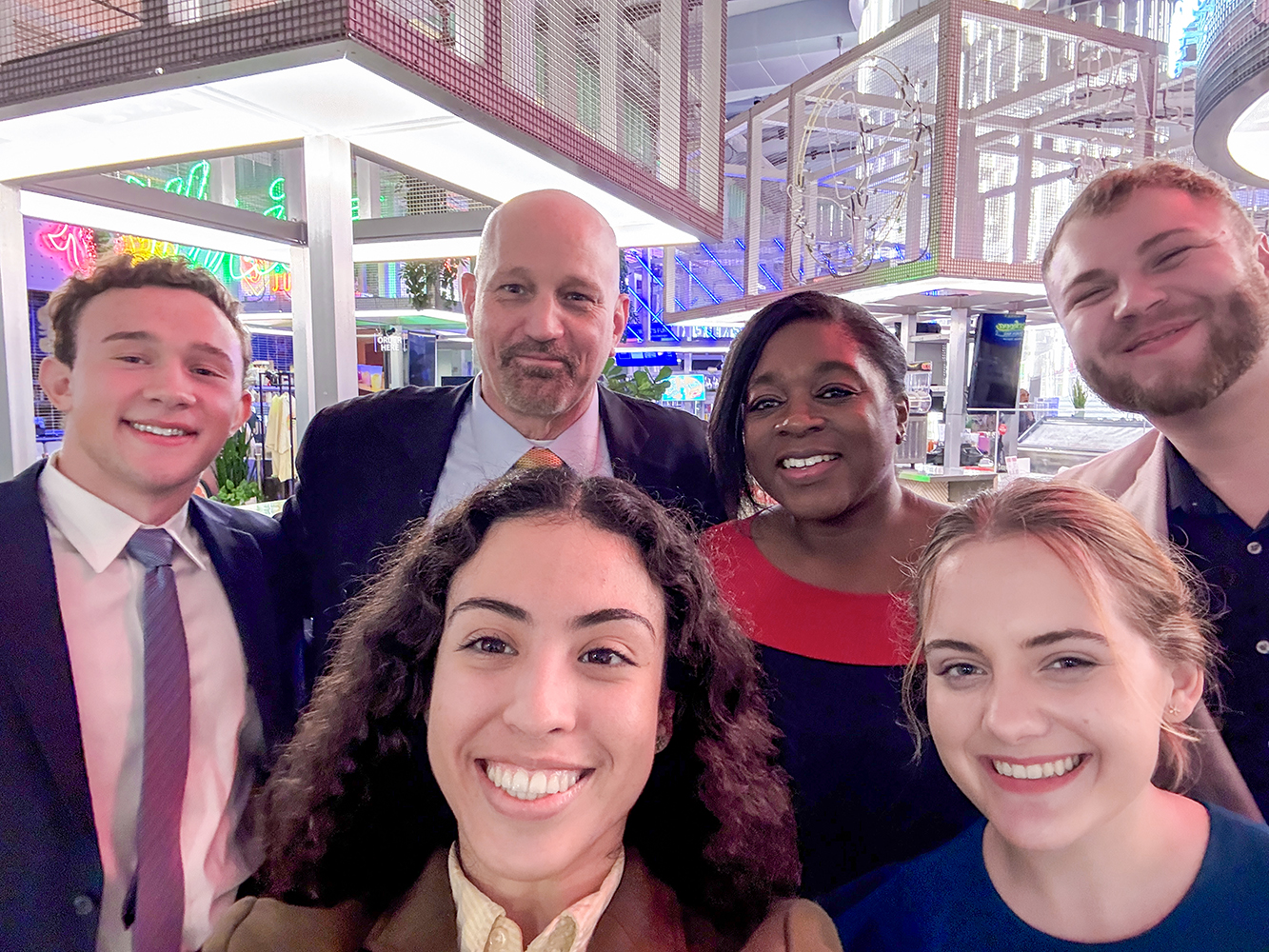
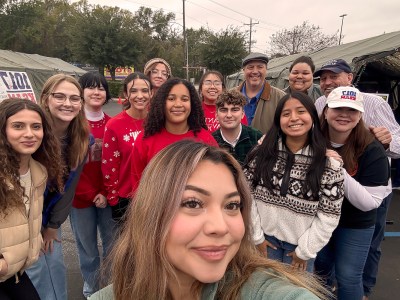
Nine students and former students with The Center for Law, Engagement, and Politics (LEAP) attended a screening of the 1922 silent horror film Nosferatu at the historic River Oaks Theatre in Houston, Texas. While this outing certainly carried the spirit of the post-Halloween season and the eerie charm associated with early cinematic horror, it also reflected the Center’s continued effort to expand students’ engagement with the humanities, exposure to diverse forms of storytelling, and expanded cultural horizons.
The River Oaks Theatre itself provided a fitting environment. Its historic charm and architecture evoke a theatrical experience that captures some of the magic of silent and golden-age cinema.
Enhancing the screening was a live musical performance by The Invincible Czars, who created the film’s soundtrack live on stage with instrumentation ranging from classical to experimental. Their approach complemented the film with sounds that provided humor, subtle tension, and dramatic intensity.
After the screening, the LEAP students were able to meet the band members and take photographs with the band, while also purchasing movie posters.
While the subject matter — a vampire narrative involving shadows, dread, and ancient evil — is unquestionably spooky, the evening itself reinforced a central purpose of LEAP: experiential learning that blends the artistic, the cultural, and the civic.
Movies like Nosferatu do not just entertain; they help illuminate how societies imagine danger, power, and the supernatural.
This outing offered students a unique opportunity to experience history, art, and performance simultaneously — in a way that was appropriately seasonal, academically rich, and wonderfully haunting.
After a long day of Moot Court competition and work that persisted late into the night, our LEAP competitors enjoyed the mercy of an extra hour of sleep, courtesy of Daylight Savings Time. But the sun rises even after the longest nights, and we–Madison Thurkettle, Allison Lindle, Katie Wilson, and our Day Two competitors, Ashton Droll and Madison Cawthon–hastened to the Shepard Broad College of Law to extend our Moot Court season.
A Time to Keep…
With admonishments to arrive no later than 9:30am, we arrived early, in time to witness the coin toss that would decide whether we were representing the petitioner or respondent.
Our competition was Connor Rust and Inanna Khansa from the University of Chicago, and winning the coin toss, they chose to represent the respondent–which was fine with us.
A Time to Build Up…
A win in this round would place us at the Preliminary Nationals, scheduled for Virginia in January. For Maddie, who wasn’t expecting to get this far, much of the pressure had been shed from her shoulders. Ashton, on the other hand, animated by what many judges described as “a passion for moot court,” felt the pressure and the need to win. Both, however, experienced the ups and downs of preparing for competition.
Both sensed immediately the elevated level of competition. “We could cite the record and the cases,” observed Droll, “but Rust and Khansa took it a step further. They cited the record and then cited cases within the cases.”
A Time to Speak, a Time to Keep Silence…
Nonetheless, Droll and Cawthon executed their best performances. Heeding the Biblical admonition that “a fool’s voice is known by a multitude of words,” they answered questions directly, demonstrating their knowledge of the cases and applying that knowledge judiciously and to the point. “They were,” noted Wilson, “more polished than they’ve been the entire Moot Court season.”
In the end, however, it wasn’t quite enough. Rust and Khansa edged out Droll and Cawthon on two ballots (one was decided by three points out of 1,600) and solidly on a third. Despite the loss, the team members’ outlook remained undimmed, happy with their portion, and equipped with a focus on a new season and a renewed sense of purpose.
Two Shall Withstand…
The finals pitted Anna Barker and Steven Abraham (University of Central Florida) and Christy Banker and Gaege Gobezie (Liberty University)–the latter of whom had taken the tournament’s first and second-place individual orator honors.
Facing a hot panel–which included the Dean of the Law School (Olympia Duhart), the Director of Advocacy Programs for the Shepard Broad College of Law (Joe Lester), and an animated Criminal Law Professor (Megan Chaney)–
…the four competitors showed impressive knowledge of the cases, verbal agility, and the enviable skill of anticipating the judges’ line of questioning and redirecting it. It was, LEAP students noted, a lesson to learn.
The contest was close, perhaps the closest of the tournament…
…with Anna Barker and Steve Abraham of the University of Central Florida edging Christy Banker and Gaege Gobezie of Liberty University. The match was decided by two points.
Every Man Should Eat and Drink…
With competitions behind us and much before us, we decided on a meal at Rocco’s Tacos, which was recommended by Orlando Magazine and Eater. The recommendation was well founded.
We began with guacamole (excellent), which had just the right mix of tomato, salt, and garlic; chips and a salsa sampler, with the salsa verde and the smoked salsa being the favorites; and sauteed shrimp, which were impressively tender and bursting with flavor. It was a good way to begin the meal.
Our entrees were equally impressive. Half of our group ordered salads, while Ashton sampled the cheese enchiladas (featuring creamy Chihuahuan cheese); Professor Yawn tried the veggie and pork tacos; and Cawthon explored the Chorizo tacos, featuring Cotija cheese.
The food was excellent and filling, and the time at the table offered a respite from a competition and an opportunity for reflection.
Patient in Spirit…
With the tournament receding into a remembrance of former things, we contemplated the transitional and cyclical nature of things.
Each of us has enjoyed a new experience on the trip, whether it be a new food experience, learning photography with a mirrorless camera, or simply our first travel without family in tow. For all of us, this was our first Moot Court competition.
And while it is natural to see a cohort go and a cohort come, four of our five competitors will still be at Sam Houston State University next year and–at least following the high of competition–are interested in participating again in Moot Court, renewing a cycle of education, experience, and exploration.
And with these reflections on the good of our labor, we returned to the hotel, where we looked forward to the sweet sleep of the hard working and to the start of a new day.
After a summer of study and two additional months of practice, LEAP’s Moot Court team made their way to Fort Lauderdale (which, in fairness to the title, is near Miami) for the Sunshine State Regional Moot Court Tournament–part of the American Moot Court Association’s annual national competition.
AMCA Board Member Ben Rathsam Kicking Things Off
The Moot Court Process
The Moot Court process has many moving parts, but the steps are straightforward:
Each team has two members, with one tackling the 14th amendment (equal protection) and one tackling the 1st amendment (speech);
Teams then register for one of 18 regional tournaments across the US;
Teams then compete in the tournament for which they registered, and if they qualify, they move on to a “Preliminary National Tournament” and, if they qualify again, the National Tournament.
Teams are evaluated on four broad categories: Knowledge, Courtroom Demeanor, Response to Questions, and the Clarity and Logic of the Argument.
Michael Dass from NSU
Moot Court at Sam Houston State University (SHSU)
SHSU begins its Moot Court involvement shortly after AMCA releases the Case Problem (May 1). Over the summer, Professor Mike Yawn teaches “How to Win in the Courtroom,” using the Case Problem (and the ancillary 20 other cases) as the curriculum, and culminating with live “hearings.”
In late August or early September, official tryouts are held, and students compete for team spots. The LEAP Center selected five participants this year, making up two teams and a “spare:” Team One is Madison Thurkettle and Allison Lindle; Team Two is Ashton Droll and Maddie Cawthon. A fifth student, Katie Wilson, made the team, but lacked a teammate.
All of these students committed to weekly practices during September and October, with the goal of being prepared for today’s tournament.
The Sunshine Tournament
The Shepard Broad College of Law at Nova Southeastern University hosted the Sunshine Tournament, giving 64 students the opportunity to travel; visit a law school; perform in front of judges, bailiffs, and tournament organizers; and meet other pre-law students from across the country. AMCA Representative Ben Rathsam introduced the event, and Shepard Broad Law Professor Marc Consalo provided additional guidance, helping orient the students, and focusing their minds.
Day One, to use a sport analogy, is the “regular season,” and it consists of three rounds for each team. The first round began at 2:00pm, with Thurkettle and Lindle representing the petitioner and competing at a team from Central Florida; Droll and Cawthon also represented the petitioner, and they competed against a team from Nova Southeastern University. In subsequent rounds, SHSU teams faced competitors from Stetson University, Benedictine College, Liberty University, and the University of Tampa.
Moot Court Self Care
Katie Wilson, although not competing this year, travelled with the team, proving herself an expert navigator, and a quick-learning photographer.
Competing
Although the students have been involved in more than a dozen formal practices and numerous individual practices, the real thing brings a fresh sense of nerves.
“For me, the first round was the worst,” noted Madison Thurkettle, a Junior at SHSU, and a first-time competitor in Moot Court, “and I was able to loosen up in the subsequent rounds.”
Allison Lindle, Thurkettle’s teammate, agreed: “The first round was nerves; the second round, we were able to see some success; and by the third round, we were hitting our stride.”
Only Known Photo of Thurkettle Smiling While at a Podium
For Ashton Droll, who did debate in high school, nerves weren’t a huge issue. But there was still the adapting to representing different parties in different rounds and learning the idiosyncrasies of the different judges. In Round One, for example, one judge gave Droll an average score of 87.5; another gave her an average score of 99.25.
At times, the judges’ feedback can be contradictory. One judge told Maddie Cawthon that she “sometimes got lost while answering questions.” The same round, a different judge told her: “Great responses to questions.” A frustrated Cawthon lamented: “they can’t both be correct.”
Outcomes
One of the outcomes of tournaments such as this is seeing the competition from other schools. Getting students out of the classroom and seeing high-achieving students from other schools is a key part of moot court, and in this setting, there were many strong students representing top universities across the nation.
For Lindle and Thurkettle, it was a steep learning curve, one punctuated by some near misses. On the final round, for example, they lost two ballots by one point each ballot. It was a tough round. Nonetheless, they both had strong showings. On one ballot, Thurkettle averaged a 98; on the same ballot, Lindle averaged a 97.5.
Droll and Cawthon similarly saw some close calls. Two of their ballot losses came from margins of 10 points or less (out of 1600), but they were in the running on every ballot–and this consistency helped them break into the Sweet 16. Indeed, they were seeded 11th out of 32 teams!
This was a victory not only for Droll and Cawthon, but for the entire SHSU delegation. As Katie Wilson noted, “I’ve spent the last couple of months with these girls, and it was rewarding to see them grow and have the opportunity to compete in front of real judges. I am already getting excited for next year’s case!”
Wrapping Up
But, of course, there is at least one more round in this year’s tournament for Droll and Cawthon, a prospect making for a long night (thankfully, Daylight Savings Time will add an hour…). But whatever that outcome, the tournament–and the organizers, judges, and volunteers–has provided the thrill and stress of competition, exposure to new places and people, and the opportunity for growth.
Ever wondered what it’s like to serve as a judge in your own community? The SHSU Pre-Law Society had the chance to find out firsthand during a moderated Q&A with Judge Devan Dawson, Municipal Judge for the City of Huntsville, and Judge Kim Webb, Justice of the Peace for San Jacinto County, Precinct 4.
From balancing private practice with public service to campaigning for elected office, both judges offered honest insight into the realities of serving at the local level and the unique paths that brought them to the bench.
Judge Devan Dawson, a Baylor Law alumna, shared how her path to law began unexpectedly. Originally an English major planning to teach, a family connection introduced her to the legal field, and she never looked back. Today, she divides her time between her private practice and her duties as a municipal judge, where she handles fine-only misdemeanors and civil cases. Her advice to aspiring law students was simple yet meaningful: “You can help people in countless ways, even something as small as a traffic ticket.”
Judge Kim Webb offered a different but equally inspiring journey. A graduate of Sam Houston State University and the University of Houston, she began her career in law enforcement and worked her way up to captain before pursuing public administration, and eventually, the bench. As a Justice of the Peace, she oversees fine-only misdemeanors, civil cases up to $20,000, inquests, and evictions. Judge Webb emphasized how women bring valuable communication and empathy skills to both law enforcement and the judiciary, qualities that strengthen fairness and trust within the community.
Above all, both judges reminded us that justice must not only be done but be seen to be done, and that every person should leave their courtroom knowing they were treated fairly.
The students were inspired by their humility, perseverance, and commitment to public service. It was a reminder that pursuing law is not just about cases and codes, but about people, integrity, and making justice visible in every community we serve.
With that renewed sense of purpose, our Pre-Law Society turned their attention to organizational business.
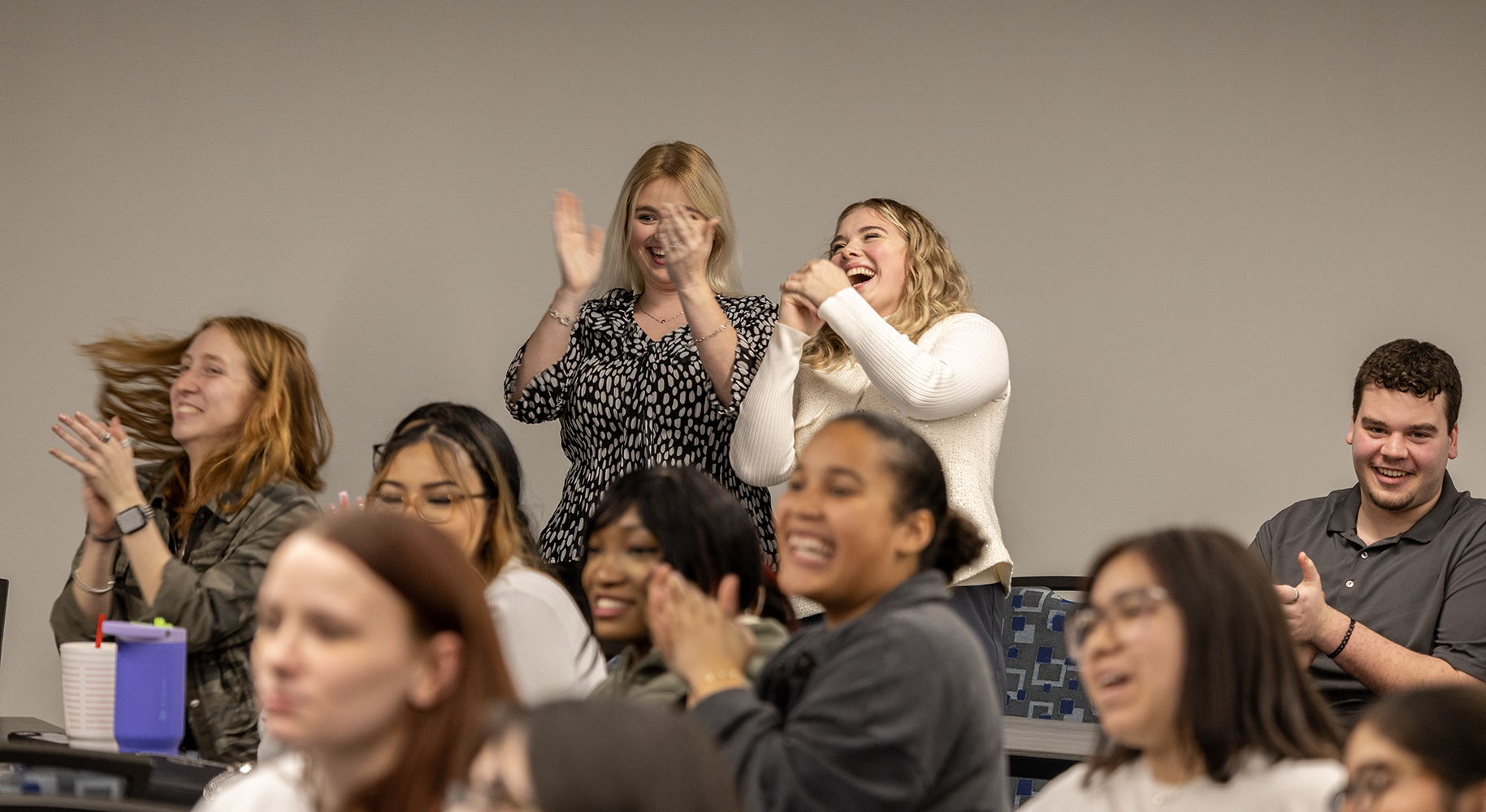
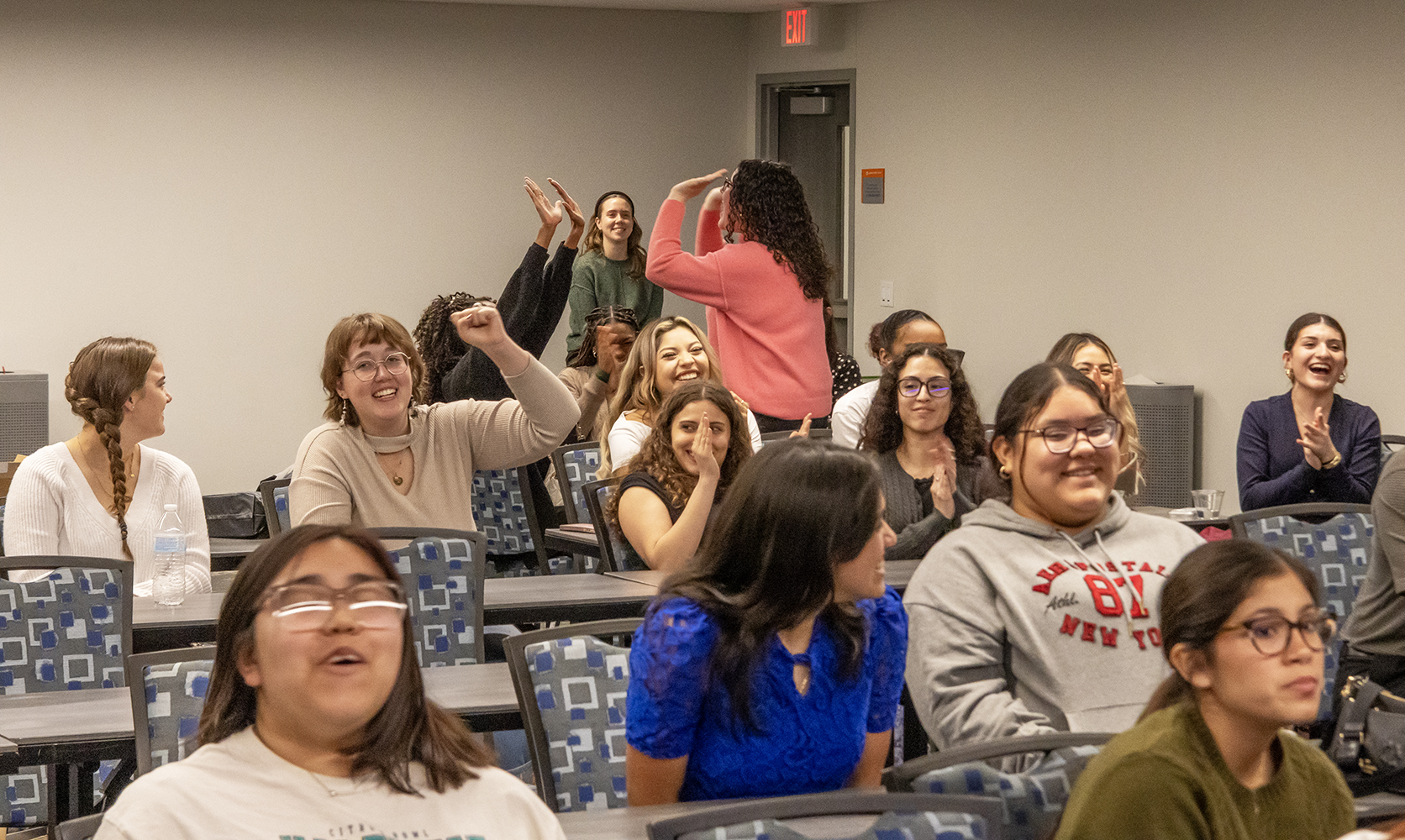
and to the big issue of the night: elections. Ten candidates, both new and returning, presented thoughtful speeches about the positive changes they hoped to bring to the organization.
We are proud to introduce of our newly elected PLS Officers: VP of Marketing, Jackeline Balbuena;
VP of Finance/Treasurer, Nataly Elizondo;
…and Secretary, Madison Cawthon.
Congratulations to our new officers, and PLS is ready to make this an incredible year.
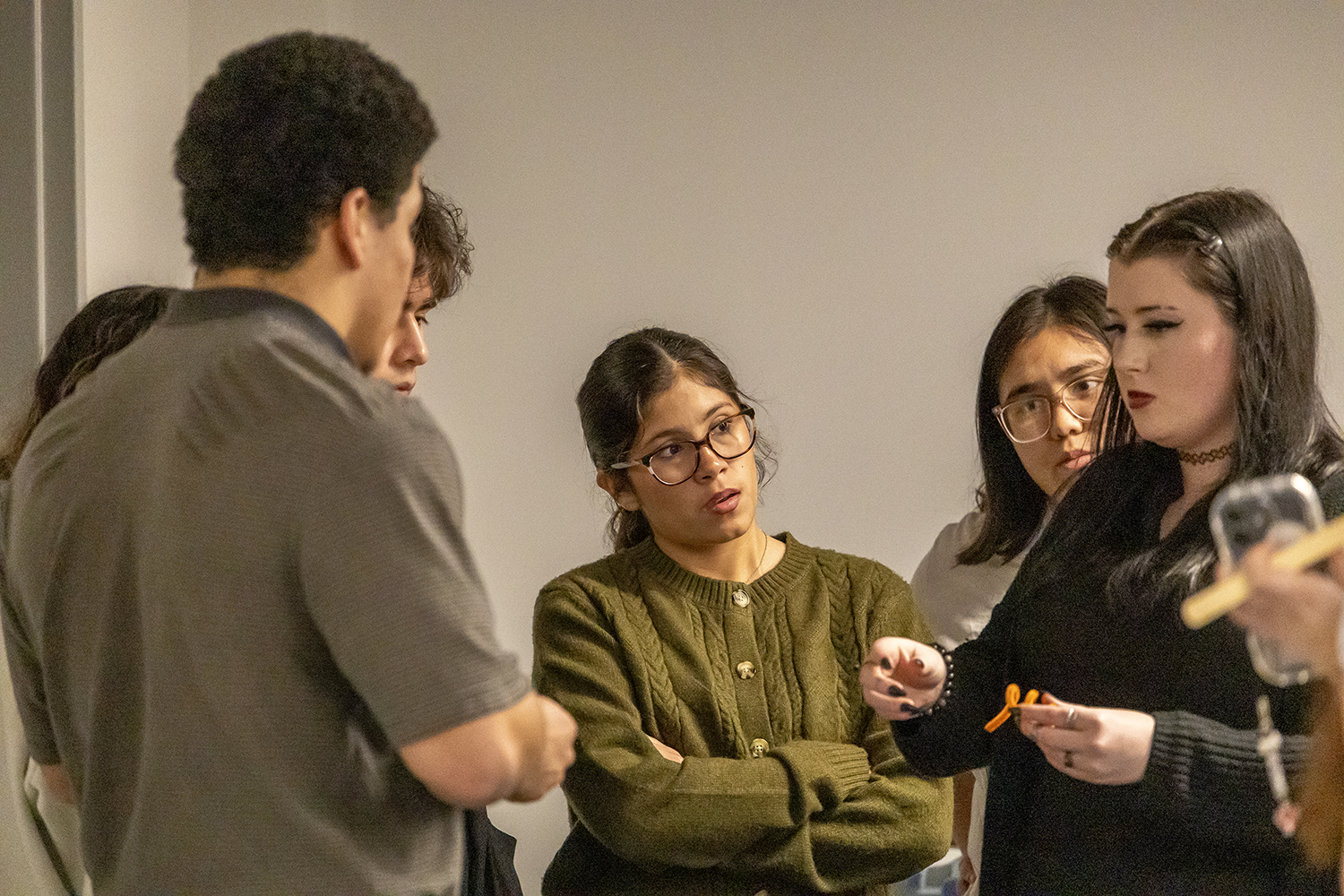
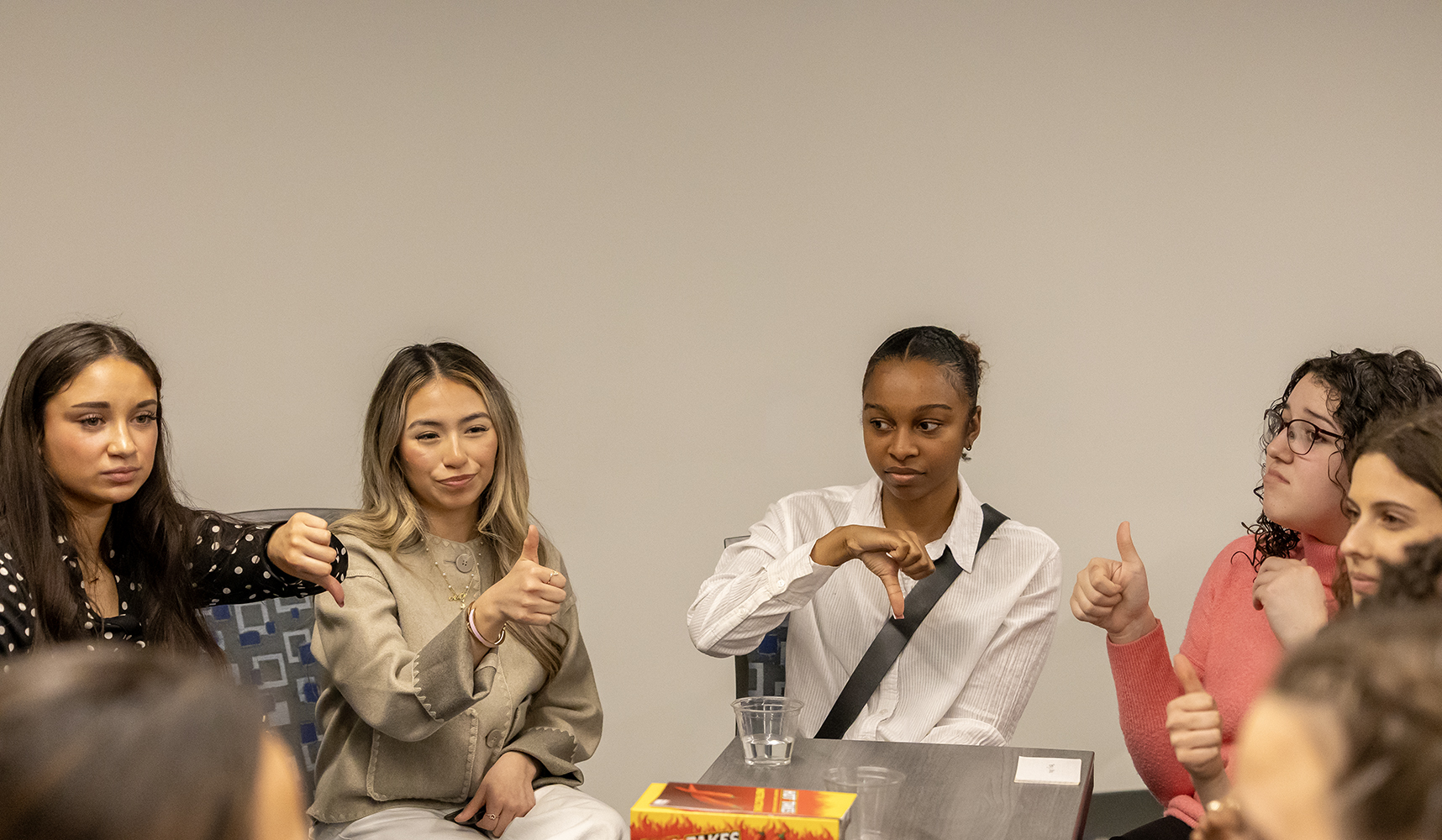
Working with children–especially ones who have experienced trauma–is difficult, but these are the exact situations in which deescalation techniques are most needed. Deborah Sweet and Julie Stanwood–experts in working with children with the Massachusetts Society for the Prevention of Cruelty to Children–discussed techniques for working with children as part of the Student Legal and Mediation Services “Conflict Resolution Month” programming.
Strategies for Before, During, and After Trauma Response
Children who have experienced trauma will respond differently to potential conflict, and it’s important for caregivers and professionals to know how to manage those situations. Establishing routines is part of this process, allowing the child to see that his/her expectations are being met and establishing a sense of predictability.
When stress is introduced to the environment, it’s important for the caregiver to notice it, and to respond prior to its escalation. Children who have experienced much trauma will respond to stress differently, and these reactions may resemble a “shutdown” or “defiance,” but which are actually just coping mechanisms to what the child has experienced previously. When possible, the caregiver should offer choices to the child–but not too many!–offering a sense of control.
When stress is escalated, it’s important to stay calm, to validate feelings, but to not overwhelm the child with too much discussion. The motto “Connection First–Correction Later” is good to follow.
Following a period of high stress, allow the child to re-regulate while reinforcing the child’s safety and belonging, giving the student the opportunity to “repair.” When appropriate, brainstorm with the child to think of solutions to the problem or ways to prevent such situations in the future.
Conclusion
Through a reliance on the three “R’s”–Regulate, Relate, Reason–caregivers, teachers, social workers and others can respond to trauma-affected children effectively. By following the tips provided by Stanwood and Sweet and by relying on a belief that all interactions are an opportunity for healing, children’s emotional stability can be improved which, in turn, improves society.
Many thanks to Dr. Gene Roberts and the Student Legal and Mediation Services for offering this program.
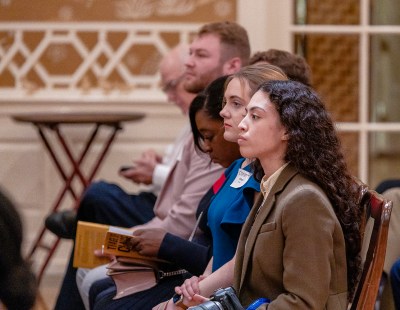
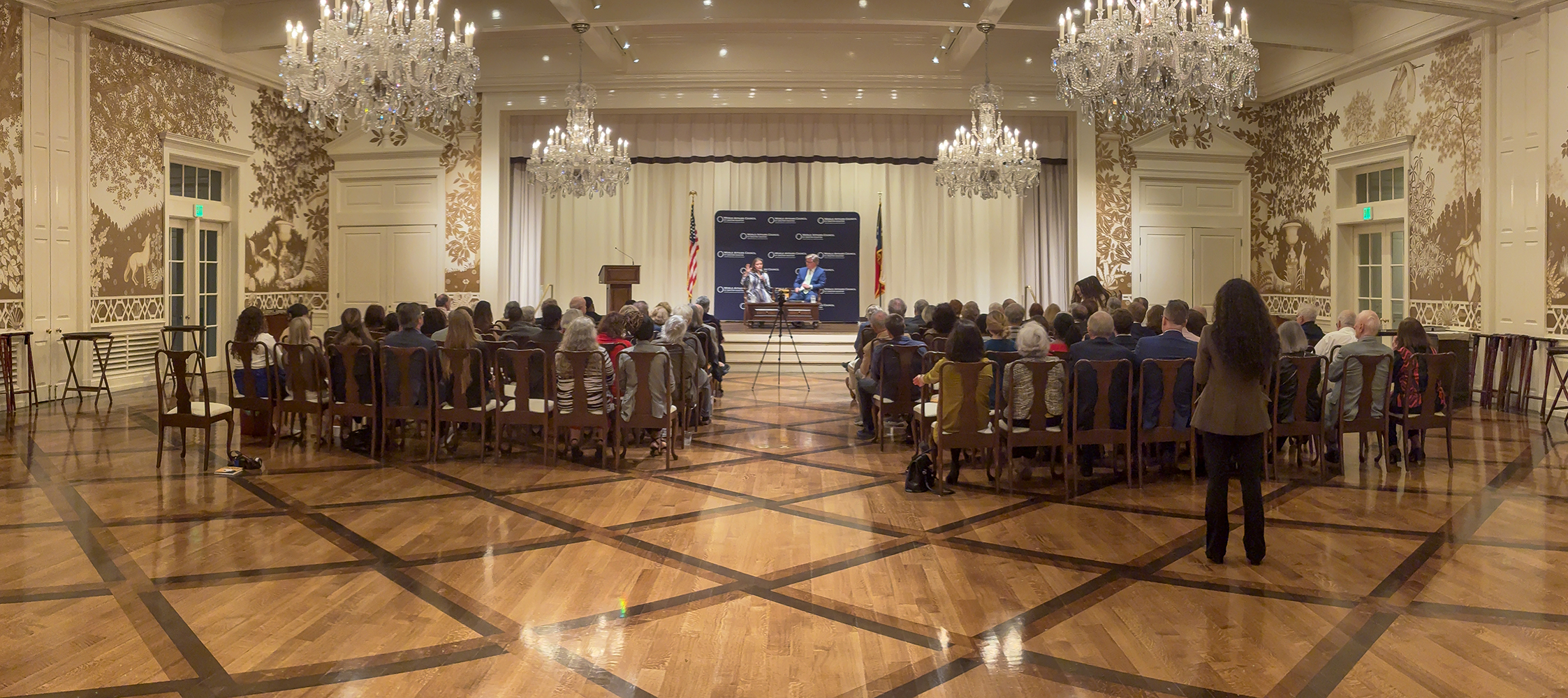
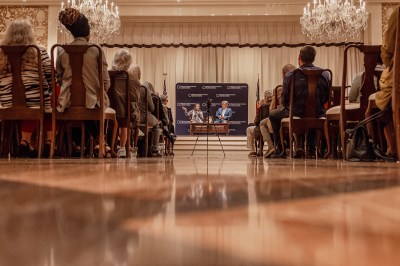
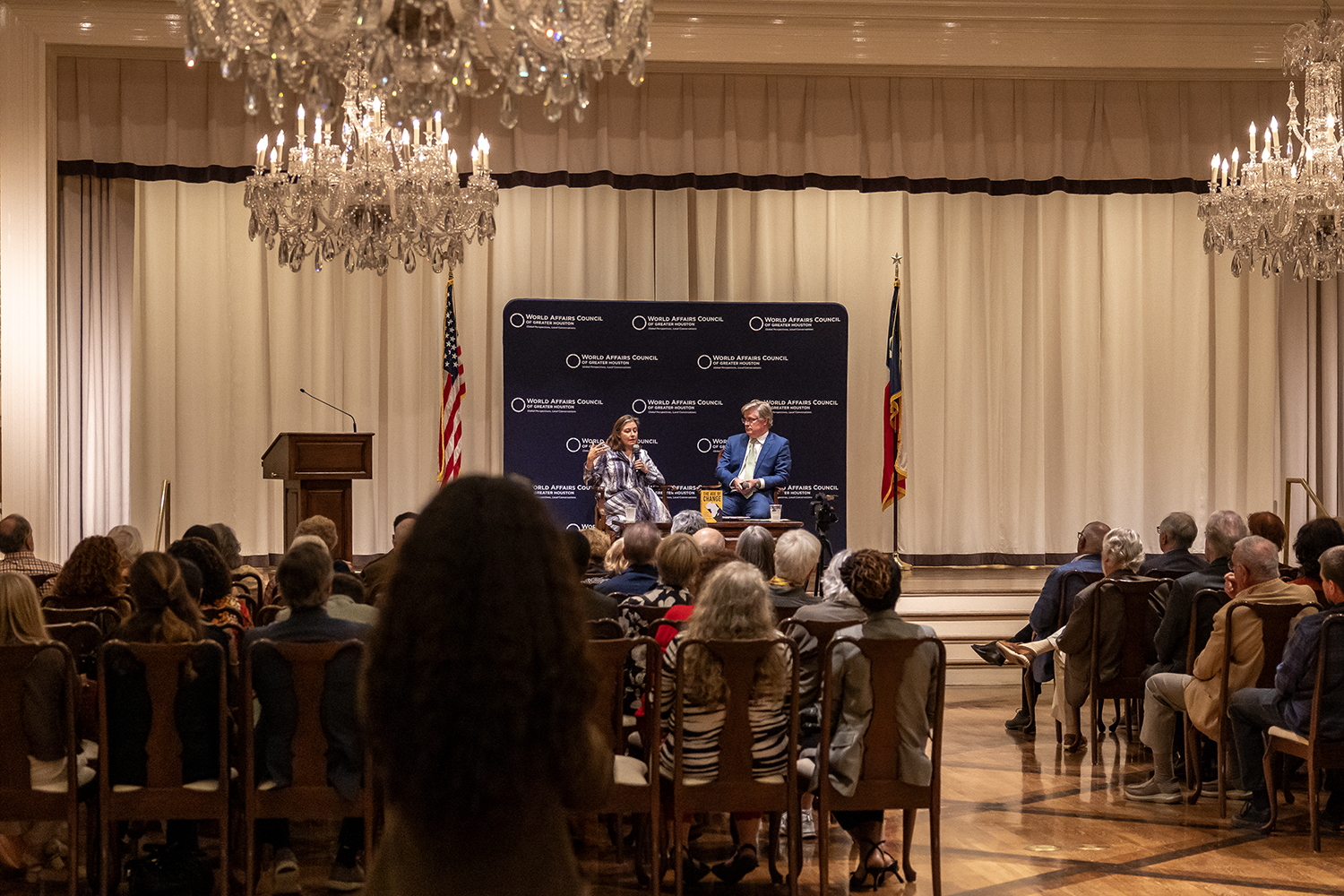
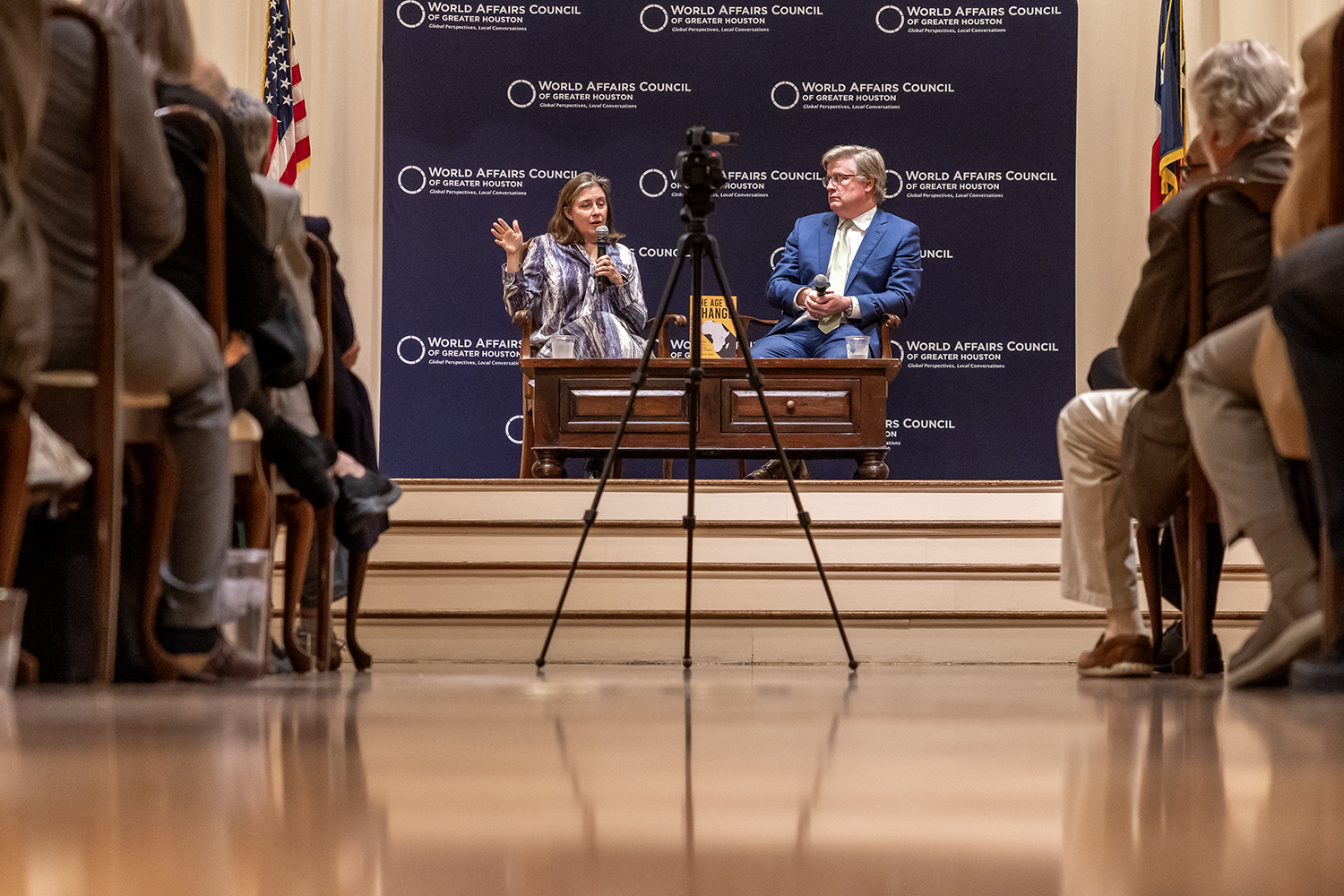
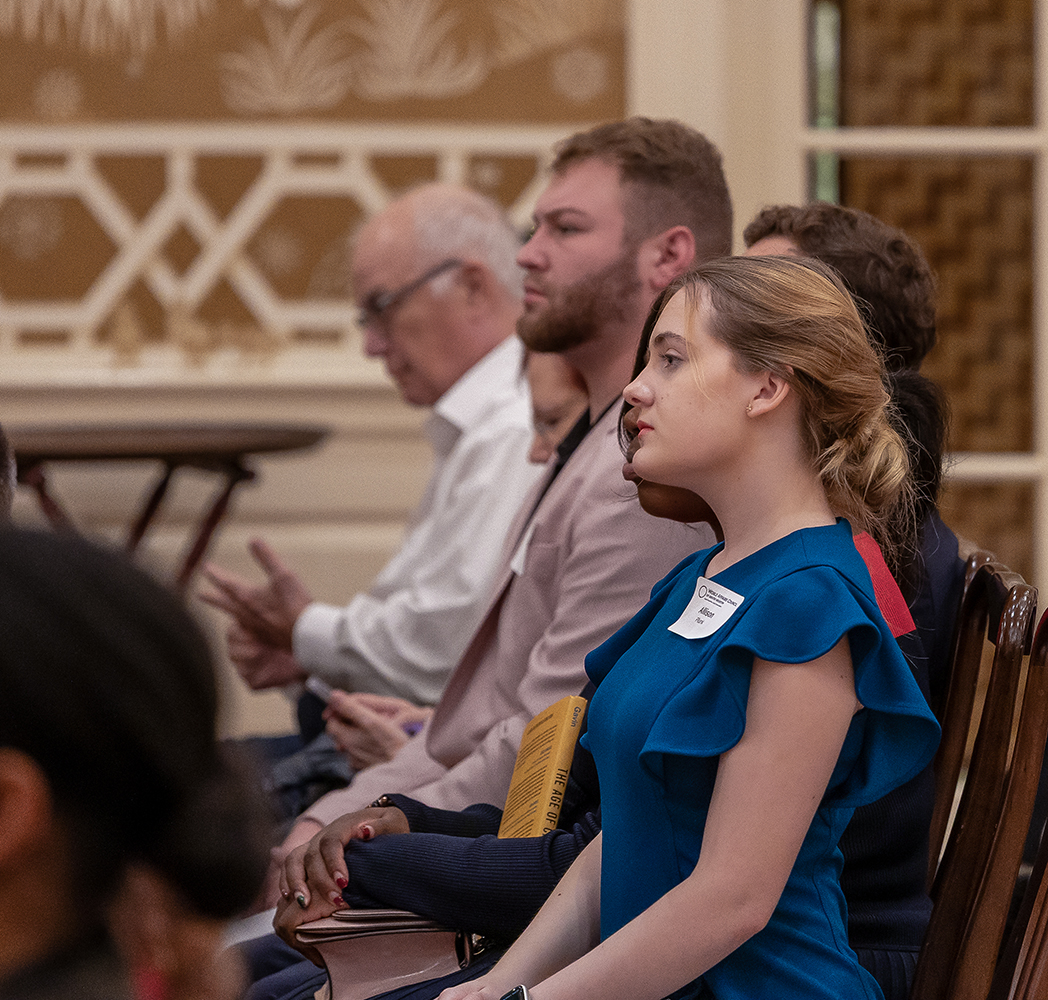
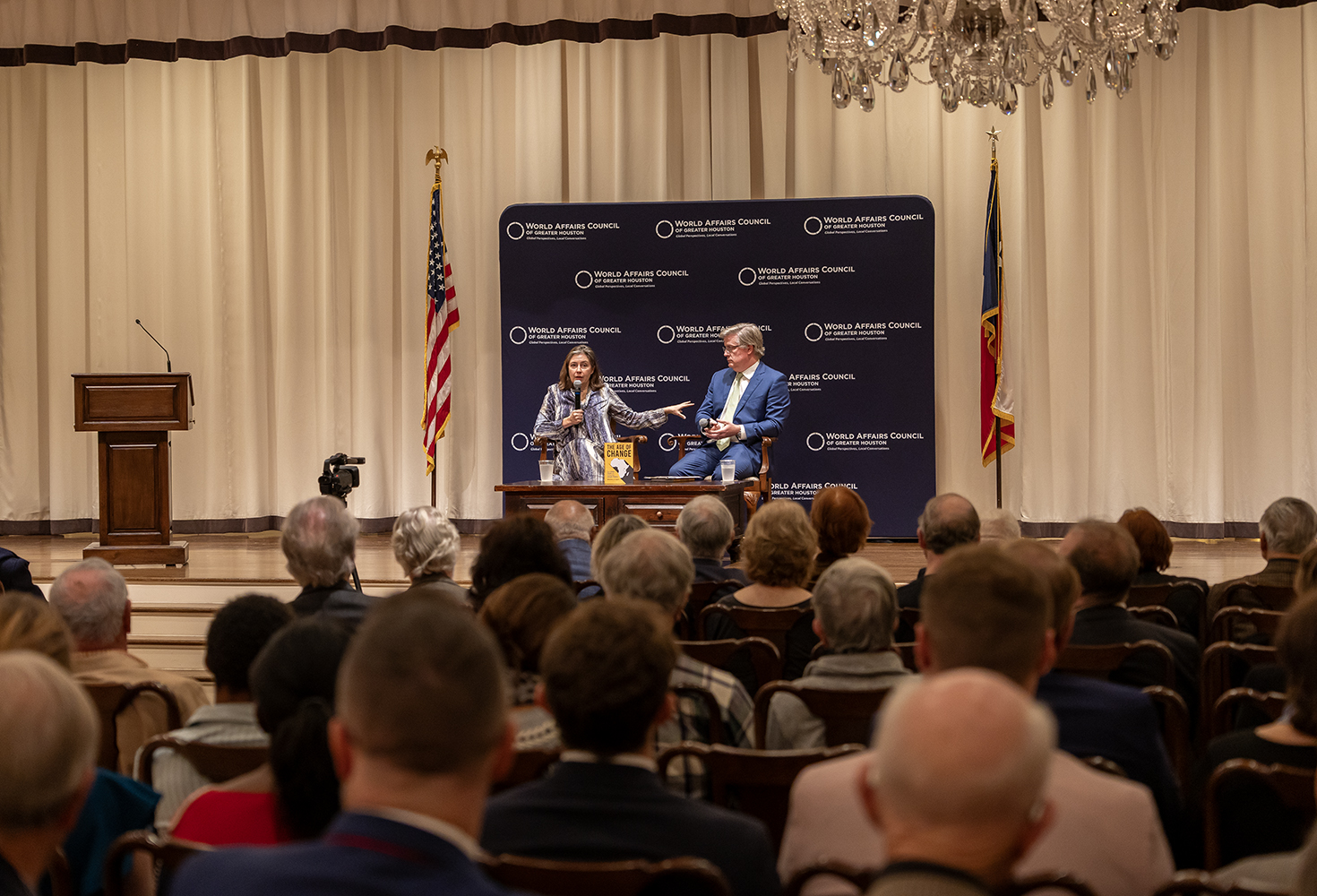
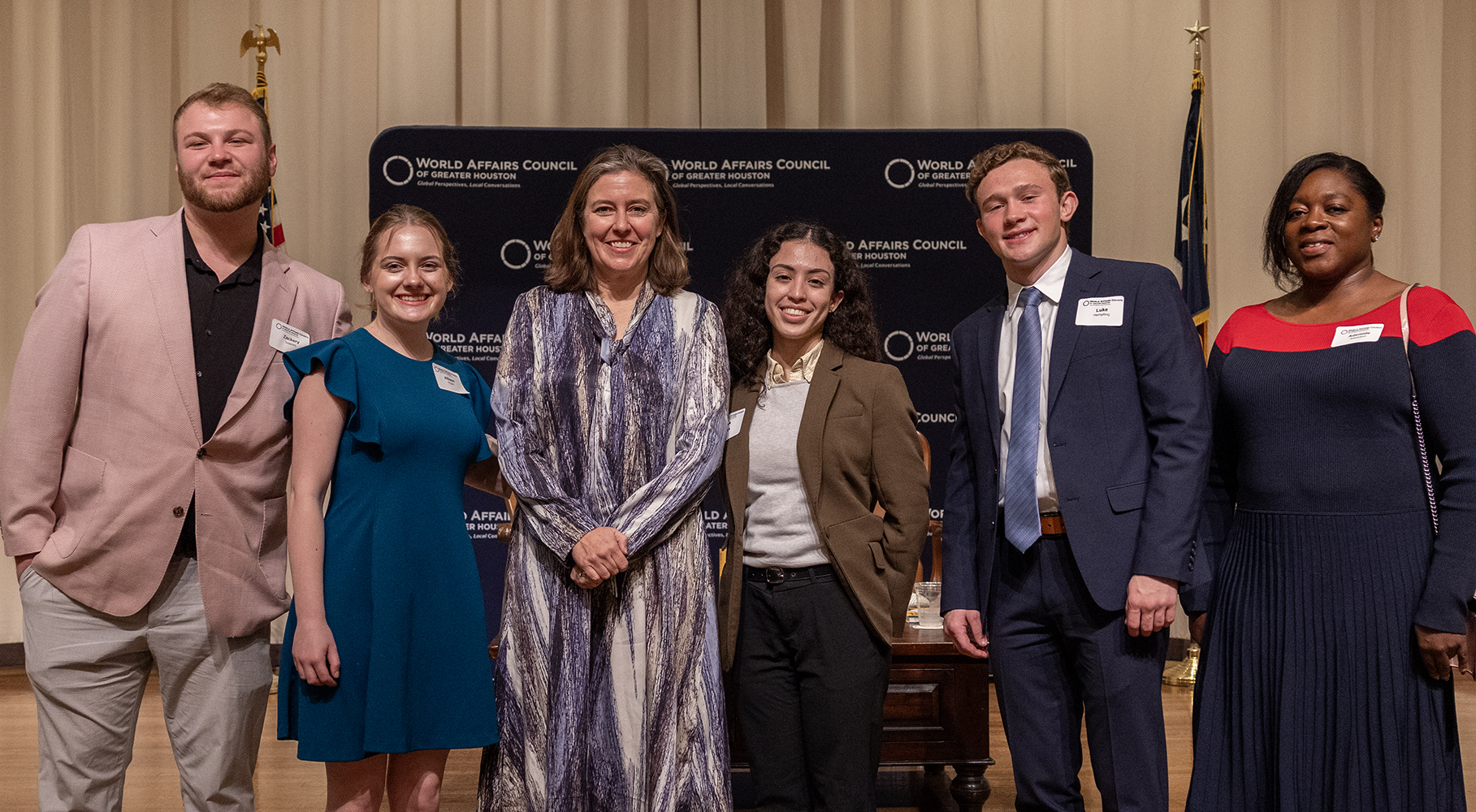
Another inspiring evening for the LEAP Ambassadors and fellow students took place at the World Affairs Council event featuring John B. Sherman, Dean of the Bush School of Government & Public Service at Texas A&M University. The event was held at the Junior League in Houston, a nonprofit organization dedicated to promoting volunteerism, developing women’s leadership, and improving communities through service, providing a fitting backdrop for an evening focused on public service. Even away from Huntsville, connections to home were everywhere, including a plaque honoring Junior League donors such as the Houston Endowment, which has ties to our hometown.
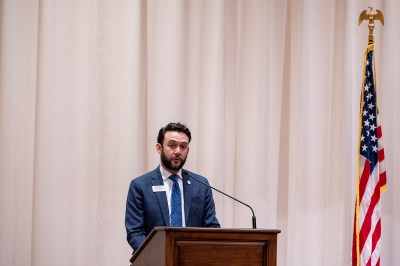
The evening began with Maryanne Maldonado, CEO of the World Affairs Council, who shared the Council’s mission and upcoming events. Dean Sherman was then introduced by his childhood friend, TJ Raguso, who spoke warmly about Sherman’s lifelong commitment to public service. From a young age, Sherman’s dedication to serving others was evident, and his friend’s introduction captured that spirit perfectly.
Dean Sherman shared insights from his remarkable career, which spans over 30 years of leadership in national security and technology. A Texas A&M graduate and former Corps Commander of the Corps of Cadets, Sherman has held senior positions at the CIA, the National Geospatial-Intelligence Agency, and the Office of the Director of National Intelligence. Most recently, he served as Chief Information Officer of the U.S. Department of Defense, overseeing the Pentagon’s global IT and cybersecurity operations.
He recounted stories from his time in public service, including being in the Situation Room during 9/11 and taking on unexpected leadership roles that required quick learning and high-stakes decision-making. Sherman emphasized that public service is not about money or prestige but about the fulfillment that comes from serving the nation and community. Reflecting on the words of President George H.W. Bush, he reminded us that public service is a calling–a commitment to something larger than oneself. He encouraged students to embrace opportunities, saying, “When an opportunity comes through, you always say yes.” His advice resonated deeply with many of us who have grown through LEAP, learning to take initiative and step into challenges.
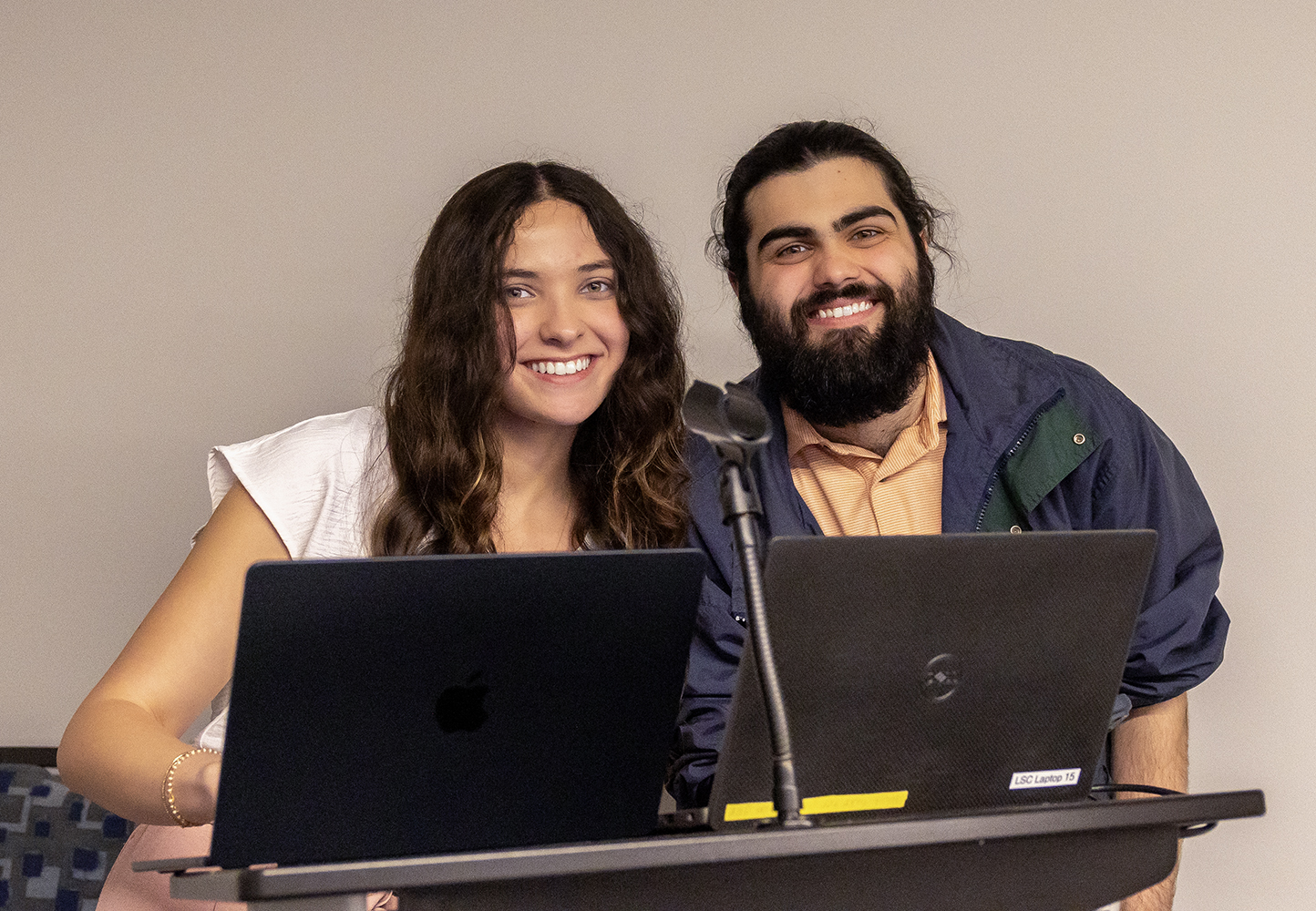
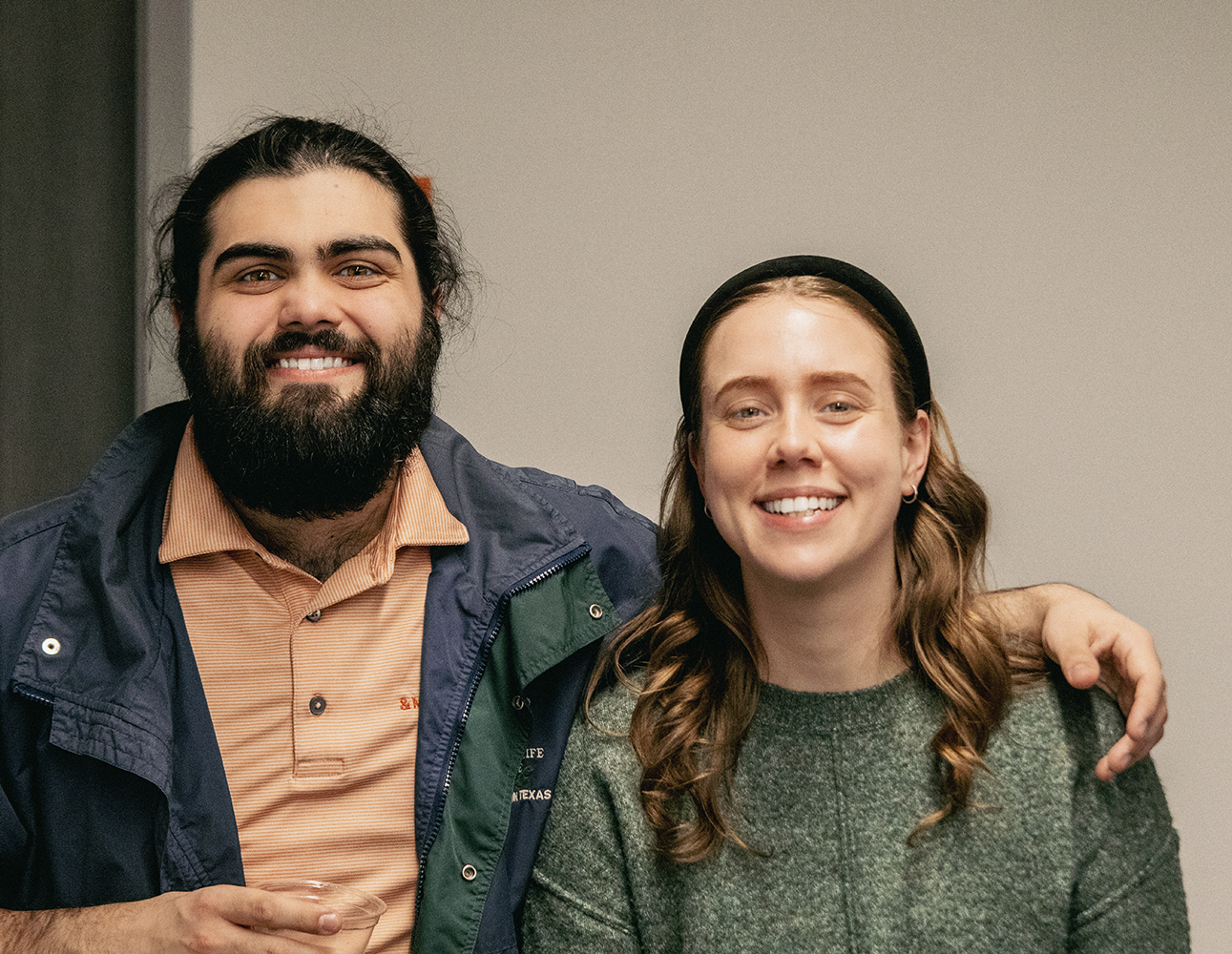
Dean Sherman also discussed the Bush School and how it prepares students to lead through both rigorous academic curriculum and hands-on real-world experiences.
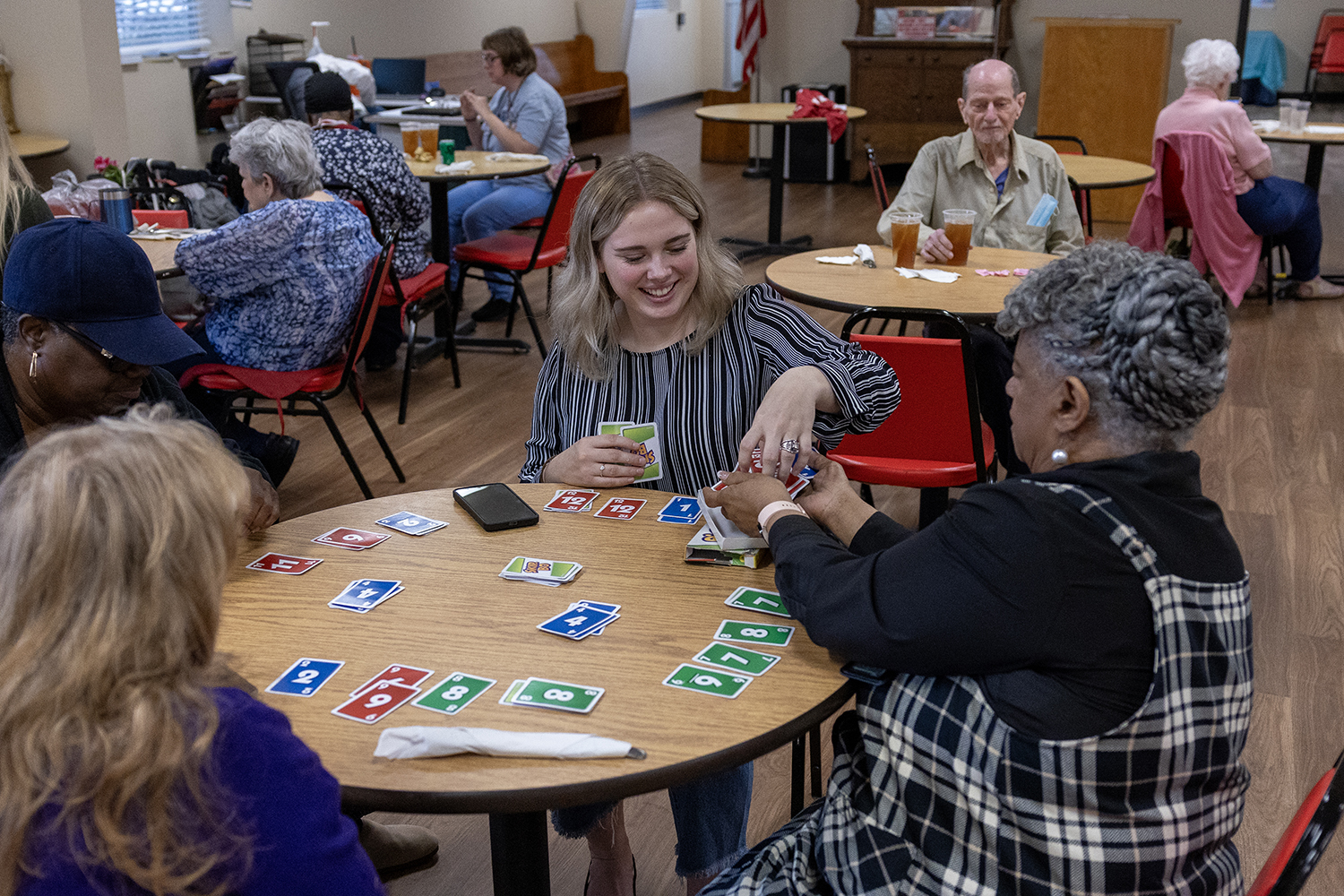
He encouraged students to pursue public service at any stage of life, noting that meaningful experience can come from unexpected places. He also highlighted that the Bush School is a top feeder into the CIA, illustrating the real-world opportunities available to students willing to embrace leadership roles.
Throughout his talk, Sherman addressed the evolving nature of global security. Leading the Pentagon’s IT and cybersecurity operations, he explained how modern warfare extends beyond physical combat to cyber attacks, satellite operations, and information breaches. Protecting the nation now requires innovation, vigilance, and strategic thinking in technology as much as in traditional defense.
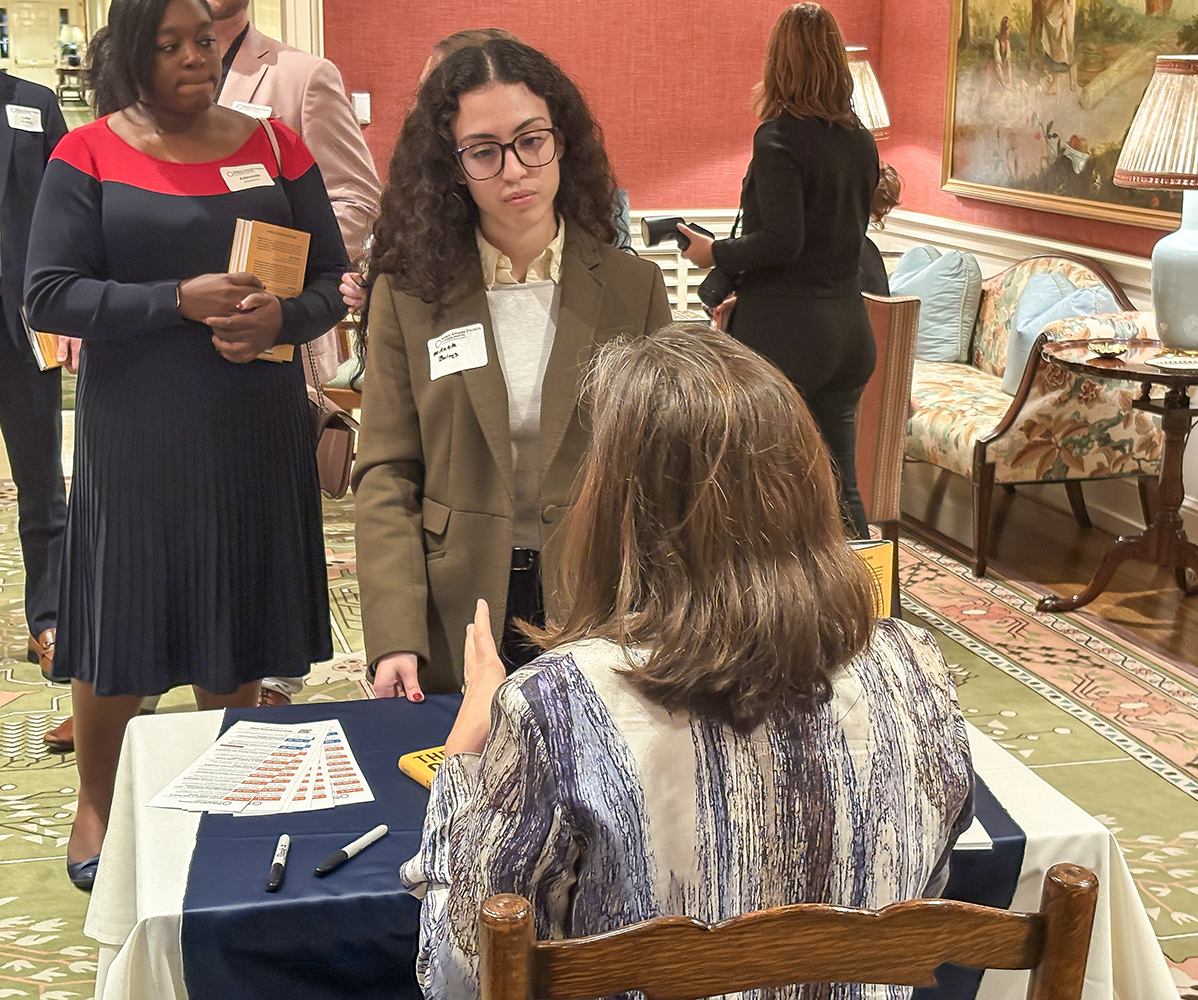
He concluded on an uplifting note, encouraging everyone to be engaged citizens, contribute to their communities, and embrace innovation, particularly in technology. After the talk, we had the privilege of meeting Dean Sherman, who spent time speaking with students individually, asking about our goals and offering thoughtful guidance. For those aspiring to be attorneys, he encouraged us to follow our dreams. For those interested in public service or foreign affairs, he highlighted the fulfillment that comes from serving others, reminding us that career paths are not fixed and that each new skill, experience, or challenge can prepare us for opportunities we cannot yet imagine.
Following the formal event, we had a great opportunity to spend time with Dean Sherman in small groups, while also saying “hi” to Wendall Braniff, who has been very generous to us at various WAC events.
This kind of individualized interaction is a key part of what keeps us returning to the World Affairs Council events, but even in large groups, we have great opportunities to learn.
Dean Sherman’s guidance reinforced the importance of stepping into opportunities and giving back to the community– principles that are at the heart of the LEAP Center. Whether it is organizing events for the local community, participating in city and state internships, or serving through other civic initiatives, LEAP students actively embody the spirit of public service. Experiences like this event remind us that engaging with the world around us, learning from leaders, and stepping forward in our own communities are all part of preparing to be the next generation of public servants. Public service truly is a calling and through LEAP, we are already answering it.
Over the course of the year, the World Affairs Council brings in approximately 100 speakers in their mission to promote a “better understanding of the world.” This makes for busy day-to-day operations, but their workload is amplified once a year, when they host the Jones Luncheon and present the “Jones Award” for International Citizen of the Year. This year, with speakers such as Ambassador Mark Satterfield, author Daniel Yergin, and Bruce Neimeyer, they awarded their “International Citizen of the Year” Award to Michael Wirth, CEO of Chevron.
LEAP Students were sufficiently fortunate to attend, leaving at 8:15am from Huntsville for Houston…
…and volunteering with check-in and some basic set-up, while also continuing to benefit from the World Affairs Council’s extensive generosity to students. For us, this was another learning opportunity, folded into a volunteer opportunity as a bonus.
Ten LEAP students attended, helping as needed. Volunteers greeted guests at the entrance, distributed name tags, managed sign-ins, and assisted with table assignments, while others welcomed VIP members to their private lounge. Their professionalism and enthusiasm reflected LEAP’s continued commitment to civic engagement and hands-on learning experiences.
The awards ceremony featured a three-course meal.
…followed by remarks by many of our favorite people: the World Affairs Council Staff: CEO Maryanne Maldonado…
…the “International Citizen of the Year” Award Winner Wirth…
…Chief Programs Officer Ronan O’Malley…
… Chief Advancement Officer Sandija Bayot…
…Director of Programs Jahan Jafarpour…
…Director of Education Ethan Eyre…
…Data Analytics and Engagement Coordinator Eli Quezada…
…and local luminaries…
…and we also had the chance to work with Leo Scarparo, Maria Guarache, Cheri Rocha, and David Dennis, making it an enjoyable experience for us all.
Author and energy expert Daniel Yergin moderated a discussion with CEO Wirth, and the two discussed extensively the massive changes in the energy sector over the past forty years.
And even with these changes, eighty percent of all energy is derived from fossil fuels, which remain the most affordable and accessible sources of energy. And Texas, as it turns out, is the country’s largest producer of gasoline and natural gas–about twice as much as Florida or Pennsylvania, which rank second in the nation.
Following the moderated discussion, the World Affairs Council staff presented their “Global Leader Awards”–recognizing leaders in various contributions of international relations. With as many WAC events as we attend, it’s no surprise that we knew some of the winners, and it was nice to see some of our friends such as Emilio Armstrong be recognized for their good works.
While the main ceremony was wrapping up, the students had a chance to visit with Bruce Neimeyer, President of Shale Exploration with Chevron, discussed career opportunities in the industry, energy, and a general discussion of energy making. The students were well prepared, and we had an opportunity to see the students of Eric Tanner at Caney Creek High School, with whom we are partnering on a major project over the next year!
The key takeaway of this segment was that key skills can aid individuals in career diversity, allowing them to learn and grow, moving in different directions. Being open to opportunities and challenges was a key theme in the overall program, and a rewarding one for students who are seeking to understand themselves and others.
For most LEAP students, this was their first time attending the Jesse H. Jones Awards Luncheon. Regardless of experience, all agreed it was an inspiring and rewarding day; one that strengthened their understanding of global affairs and reaffirmed LEAP’s mission to connect students with leaders shaping the future.
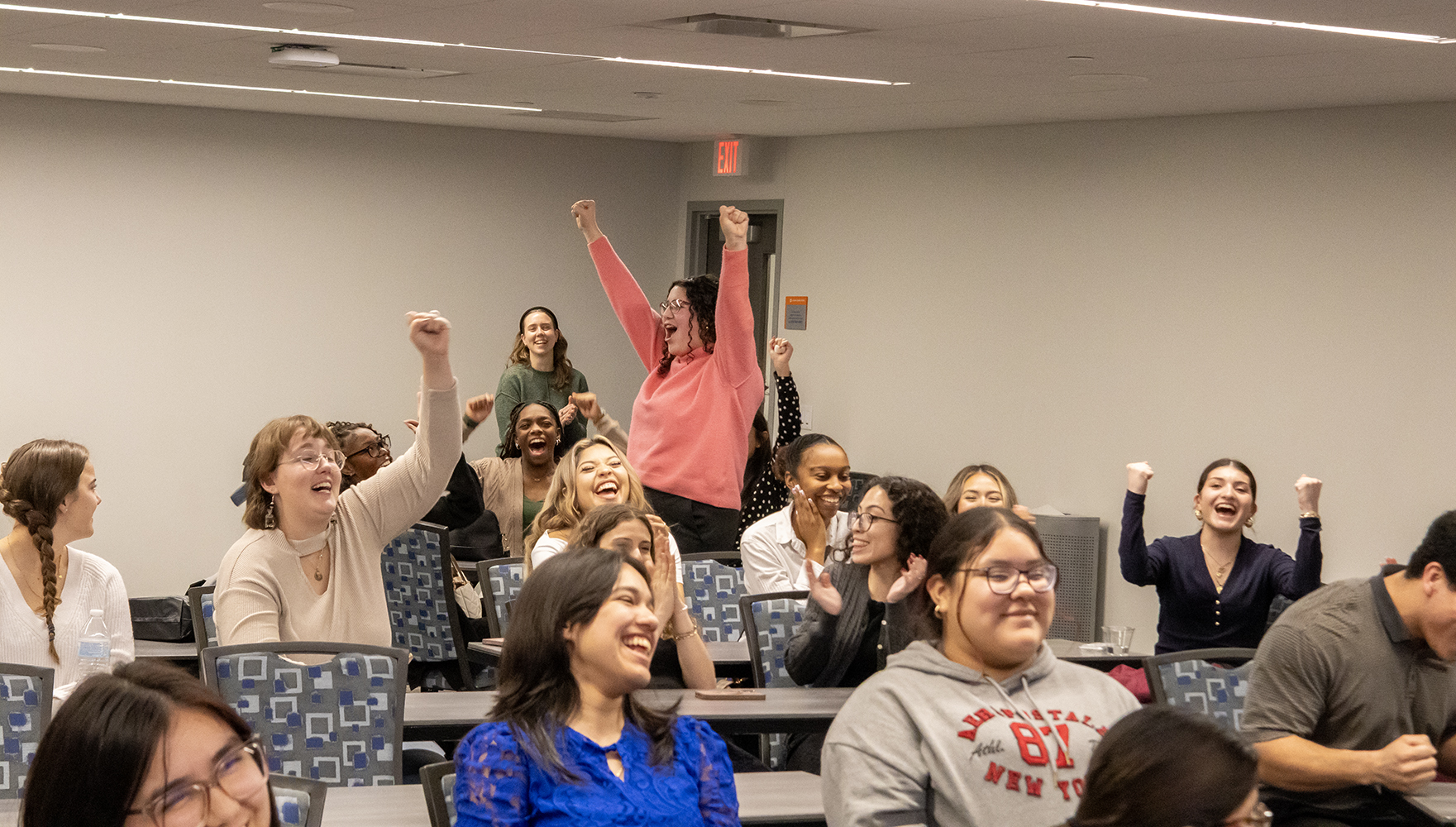
Community. Fundraising. Bingo Daubers. Over the weekend, the LEAP Center had the pleasure of sponsoring a table at the Boys and Girls Club Oktoberfest Bingo fundraiser–a fun-filled event that contributes to a great cause.
The Boys and Girls Club of Walker County is a nonprofit organization which aims to provide programming and activities for the youth in our community. They do a fantastic job of engaging children in disciplines such as the arts, lifeskills, education, leadership, and fitness. They have served a total of 7,198 youth in Walker County, and 91% of their students in the last year were promoted to the next grade level. The Boys and Girls Club, under the impressive leadership of Michelle Spencer, recognizes the importance of engagement when it comes to community-wide impact.
The fundraiser also serves as a learning experience for LEAP students. Having an understanding of how a nonprofit can rally its community together is more nuanced than games and door prizes.
Not only is it an opportunity for the Boys and Girls Club to raise funds for their important programming, it is also an opportunity for community members to engage with one another, learn more about the various entities and organizations that make up that community, and in turn, inherently strengthen relationships and build consensus among them.
Many of our core values are the same, and regardless of generation, political ideology, or background, events such as these prove that community rises above all of those things.
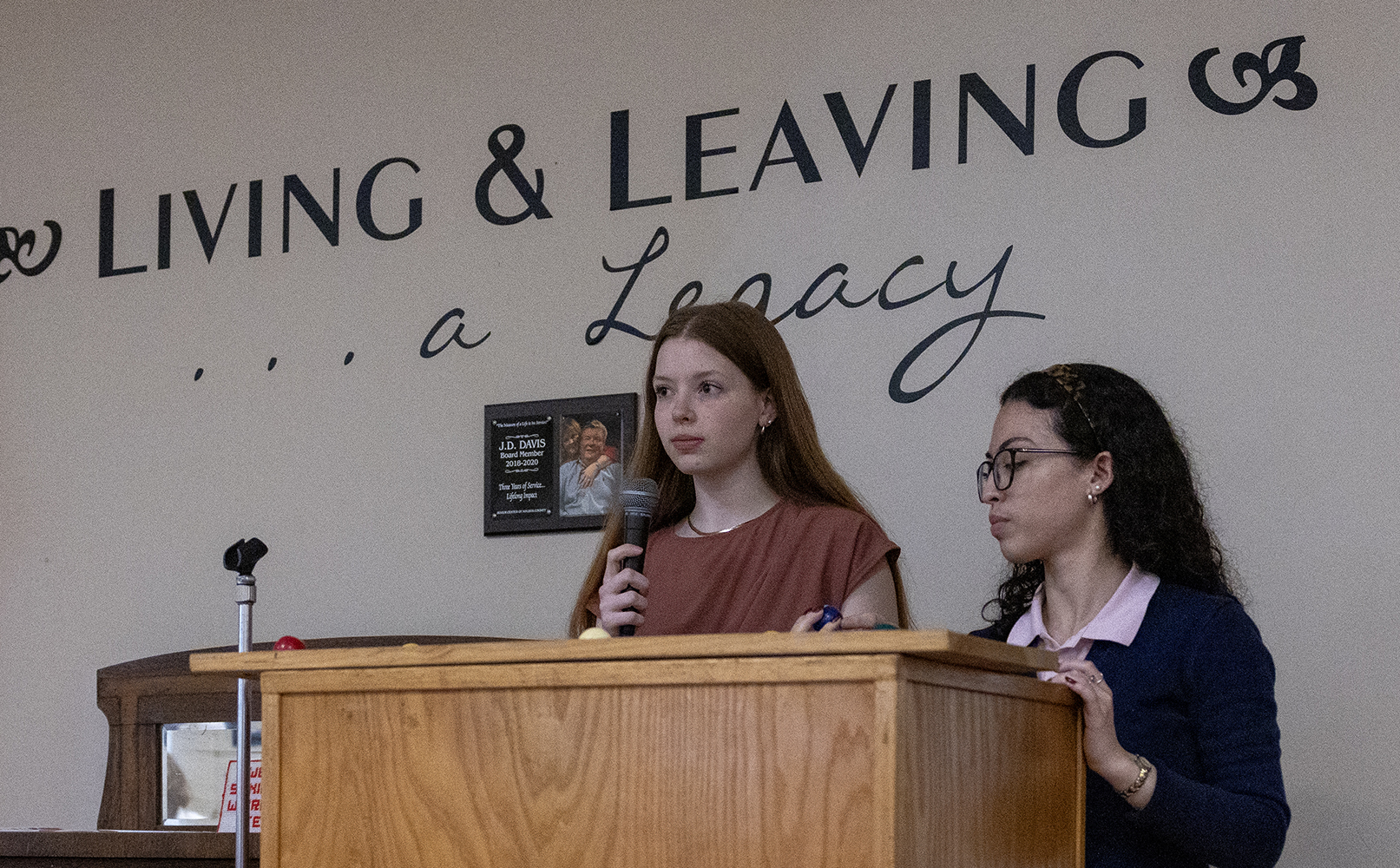
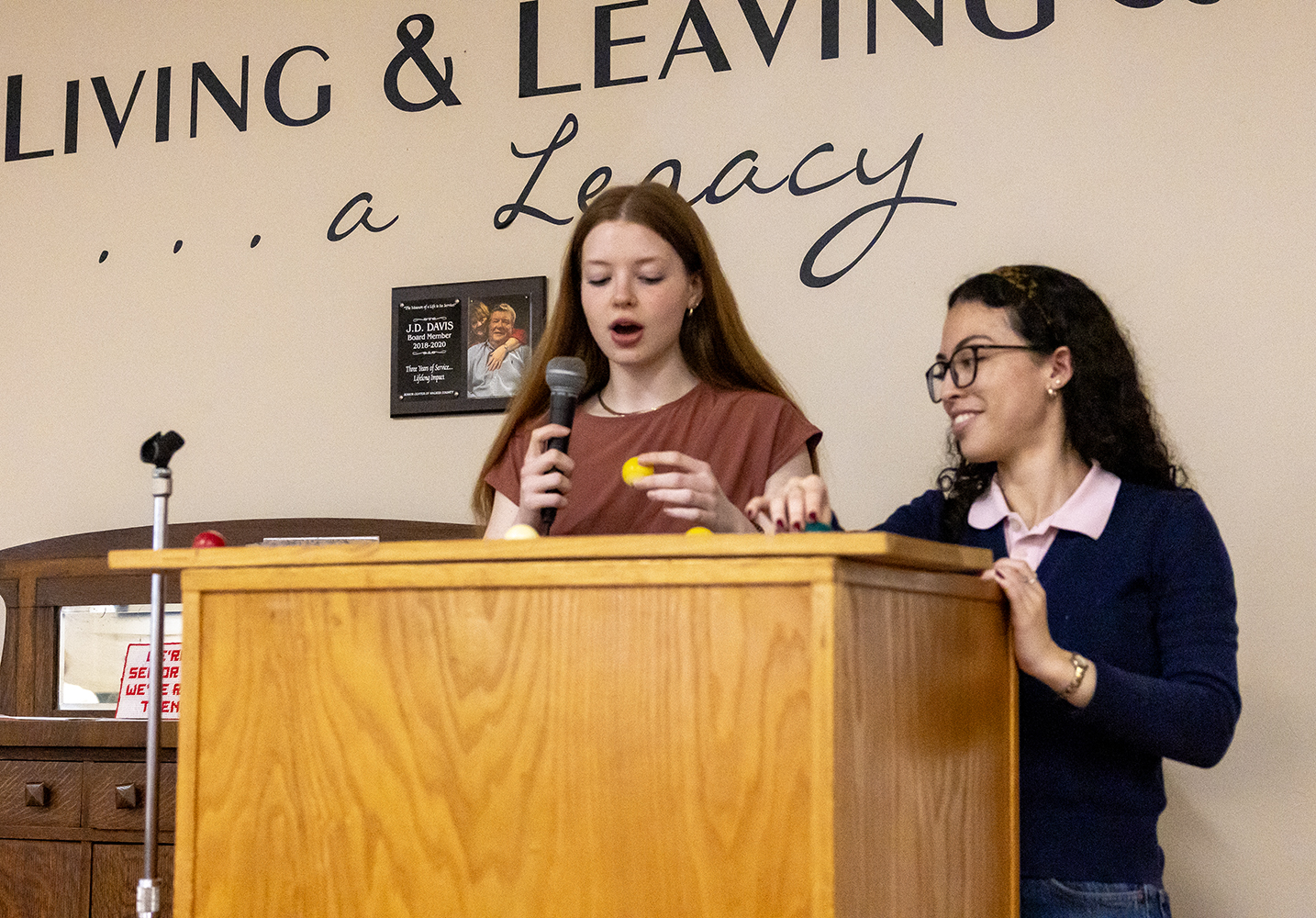
BJ McMichael emceed the event…
…Kevin McMillian served as auctioneer …
…and there were numerous friendly faces in the crowd–in fact, too many to name. A few to note were Judge Tracy Sorenson, Judge Colt Christian…
…and of course, Michelle Spencer, the Director of the Boys and Girls Club of Walker County!
At our table, we had the pleasure of joining with Roxana Alvarado Martinez–a former participant and current success story of the Citizenship Preparatory Course that LEAP facilitates each spring. She is a great friend of LEAP.
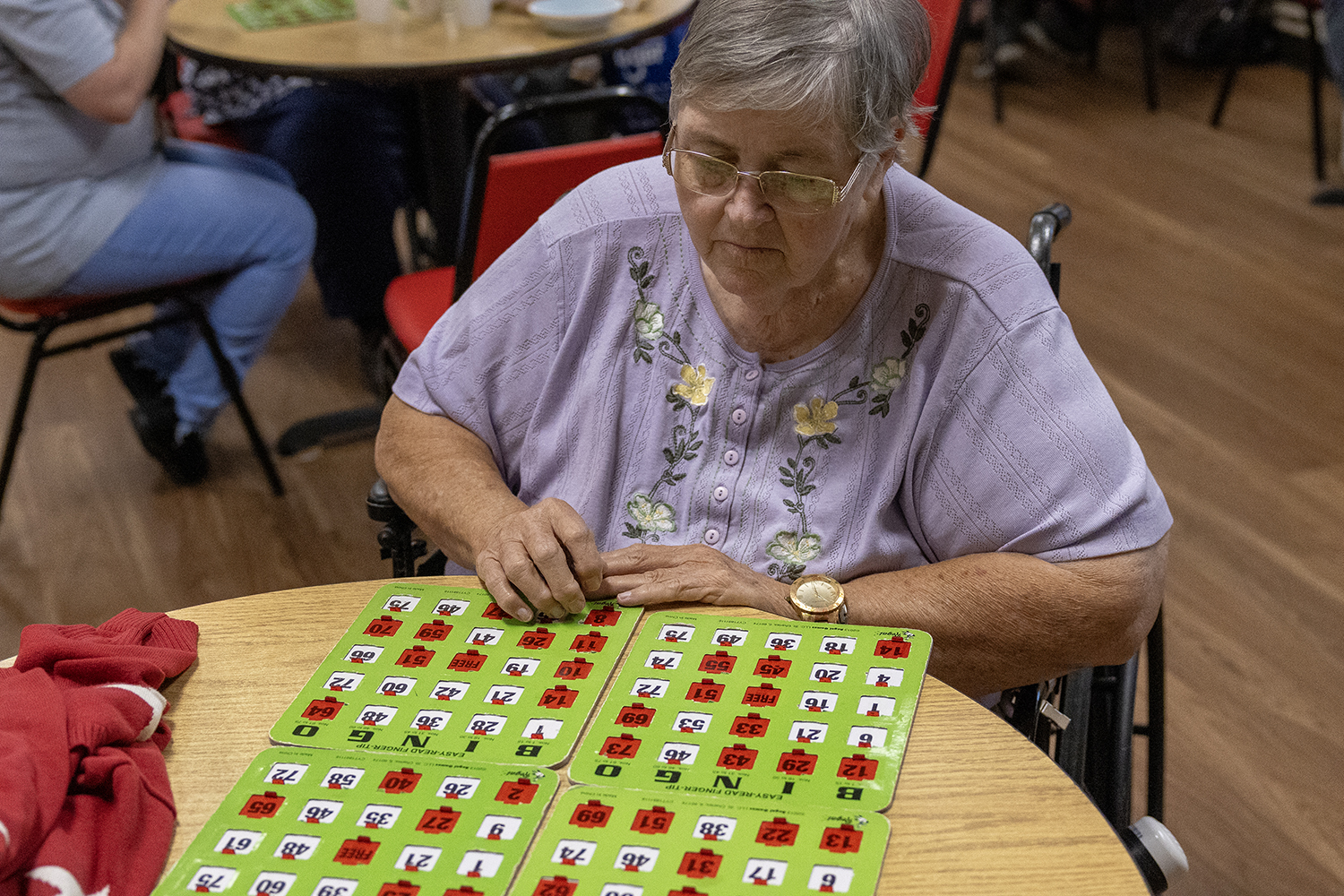
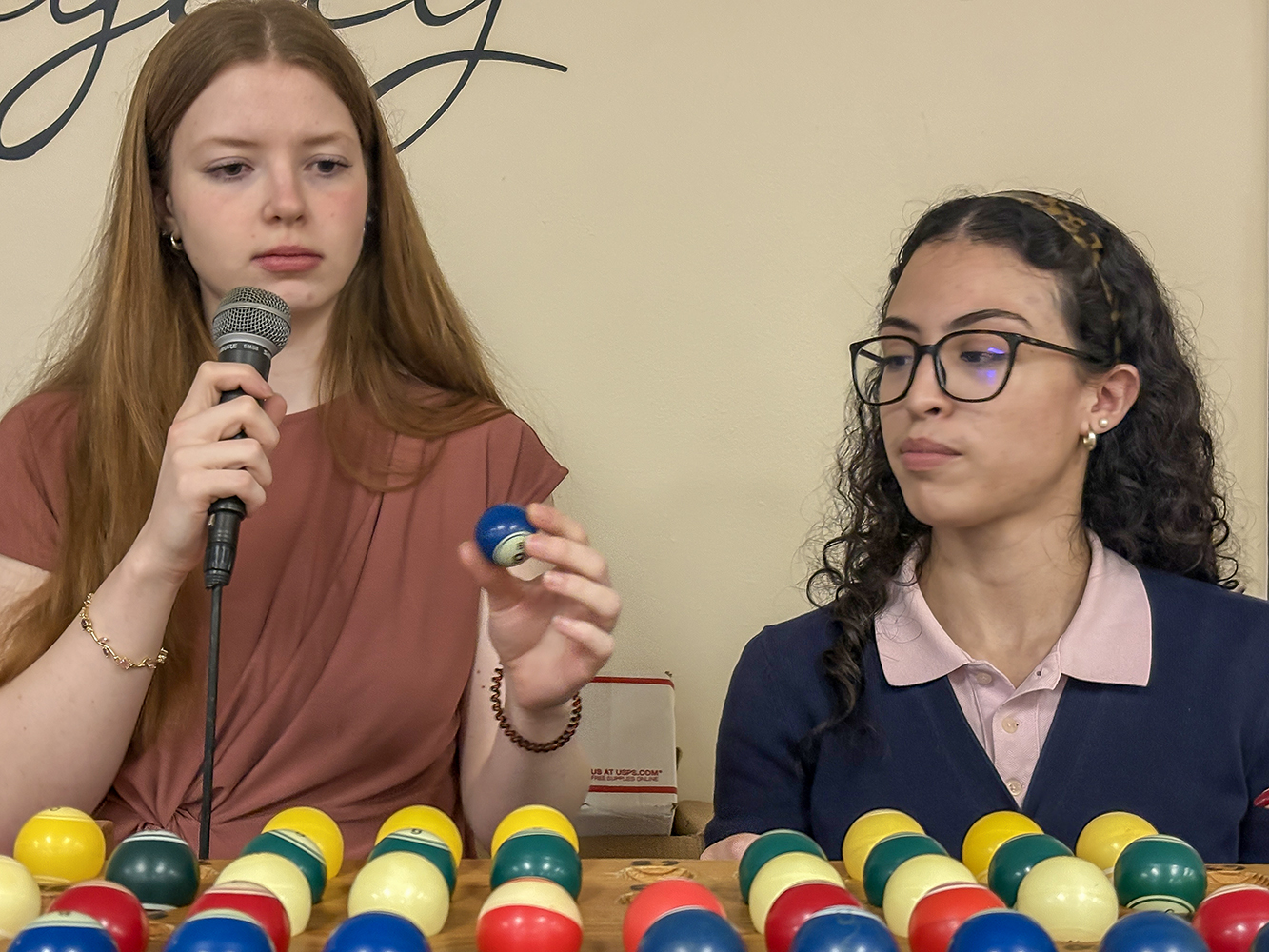
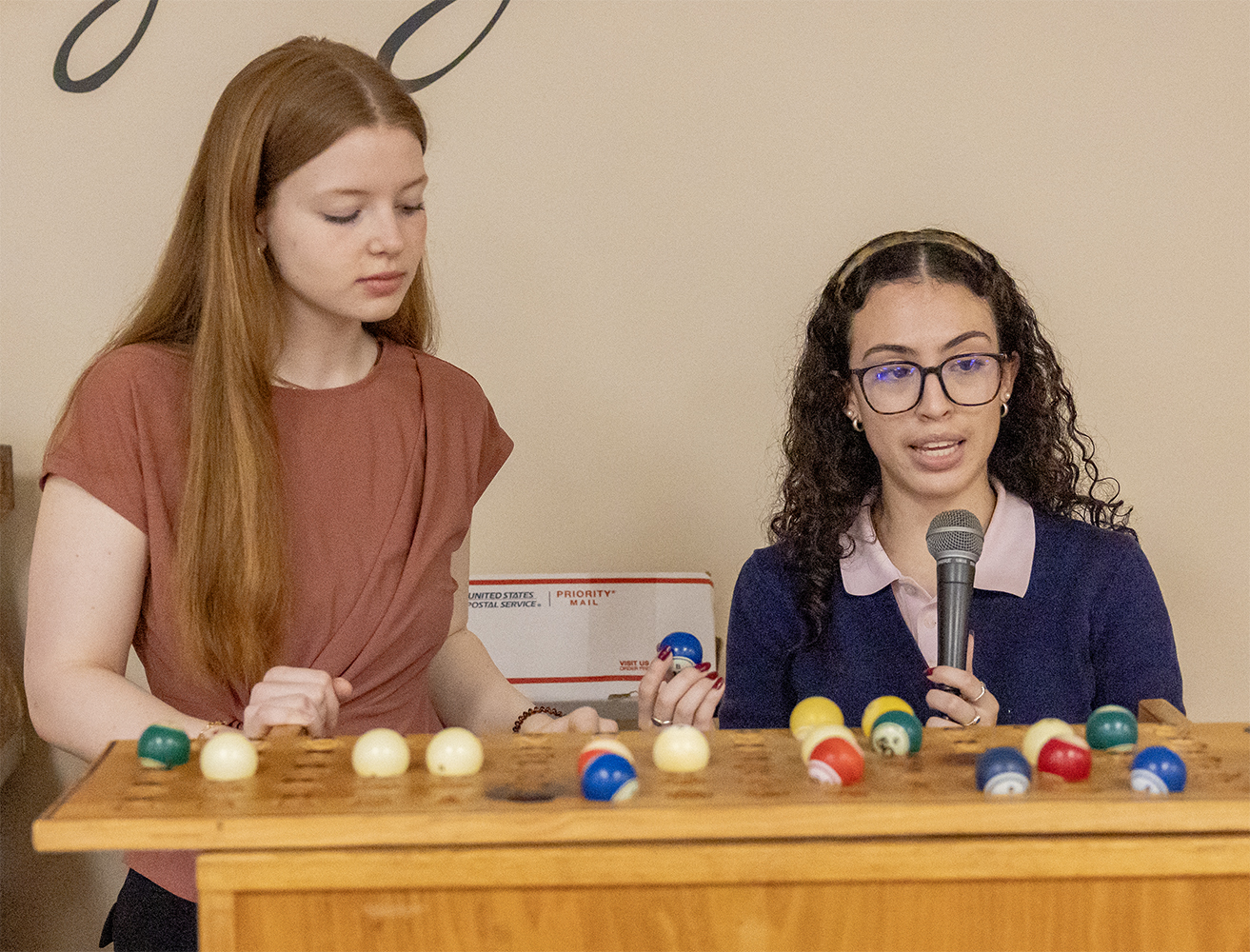
Ten rounds of bingo ensued.
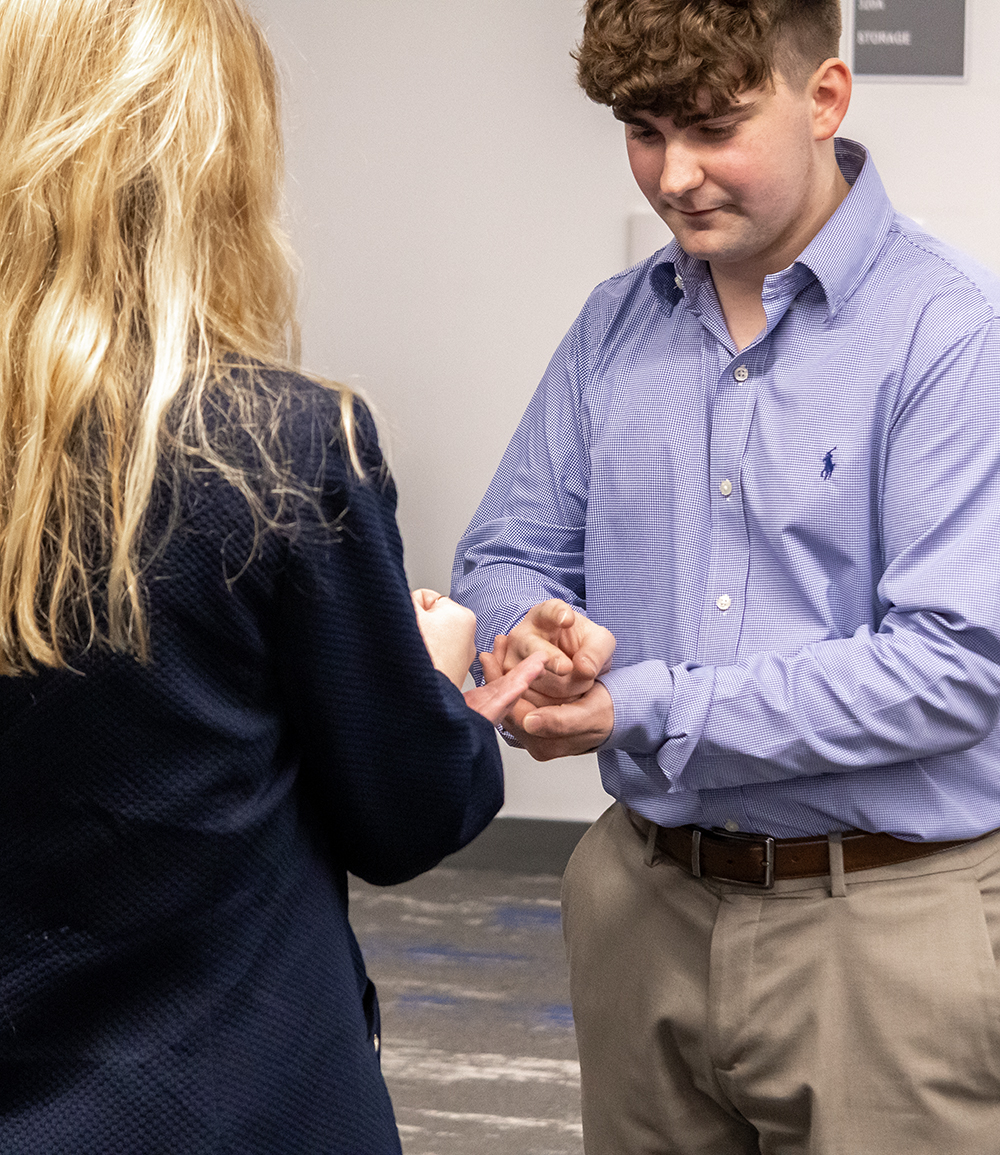
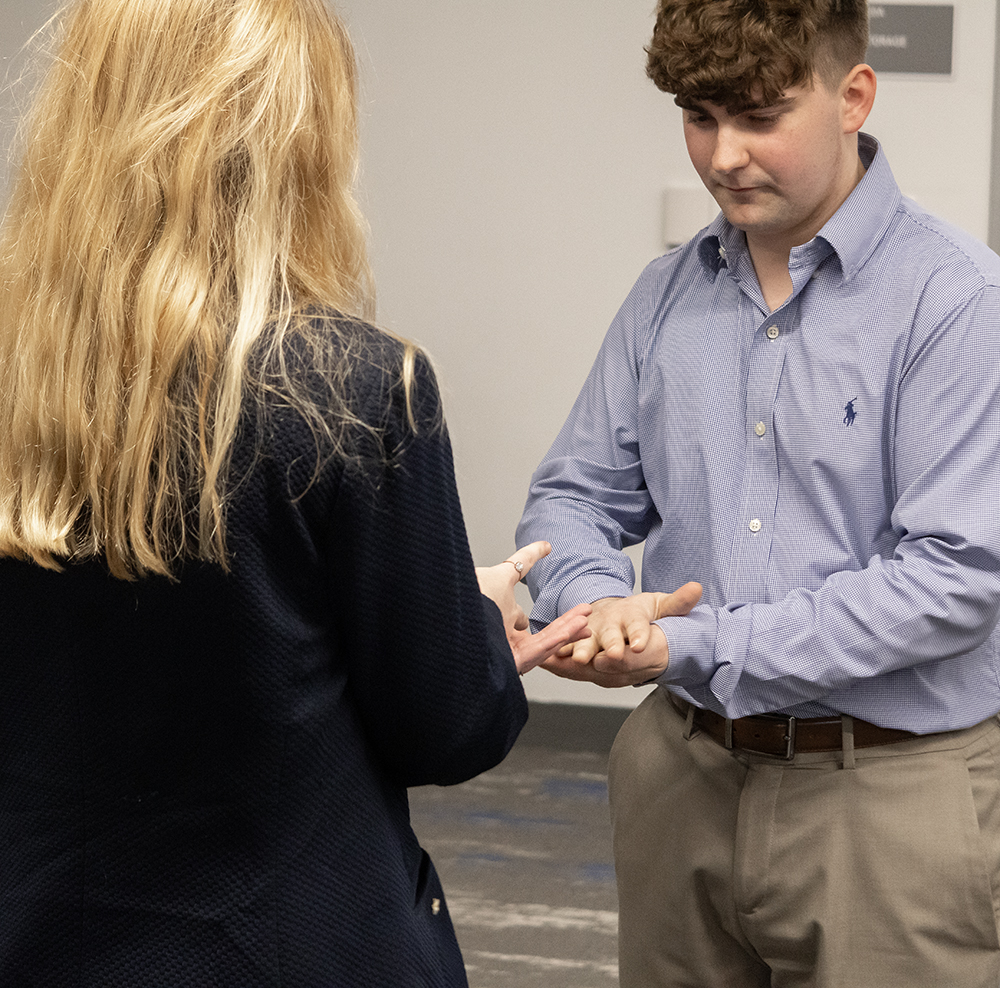
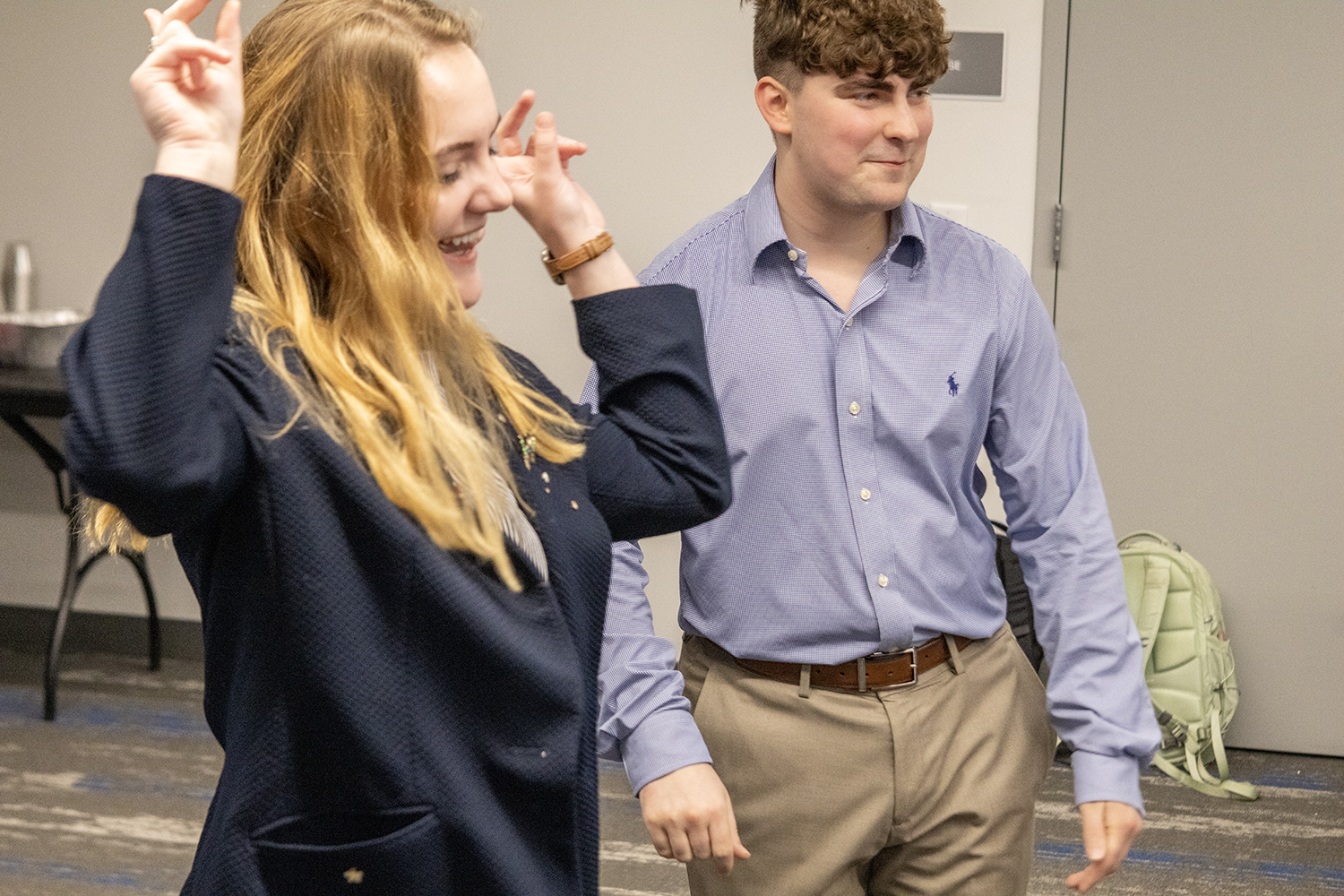
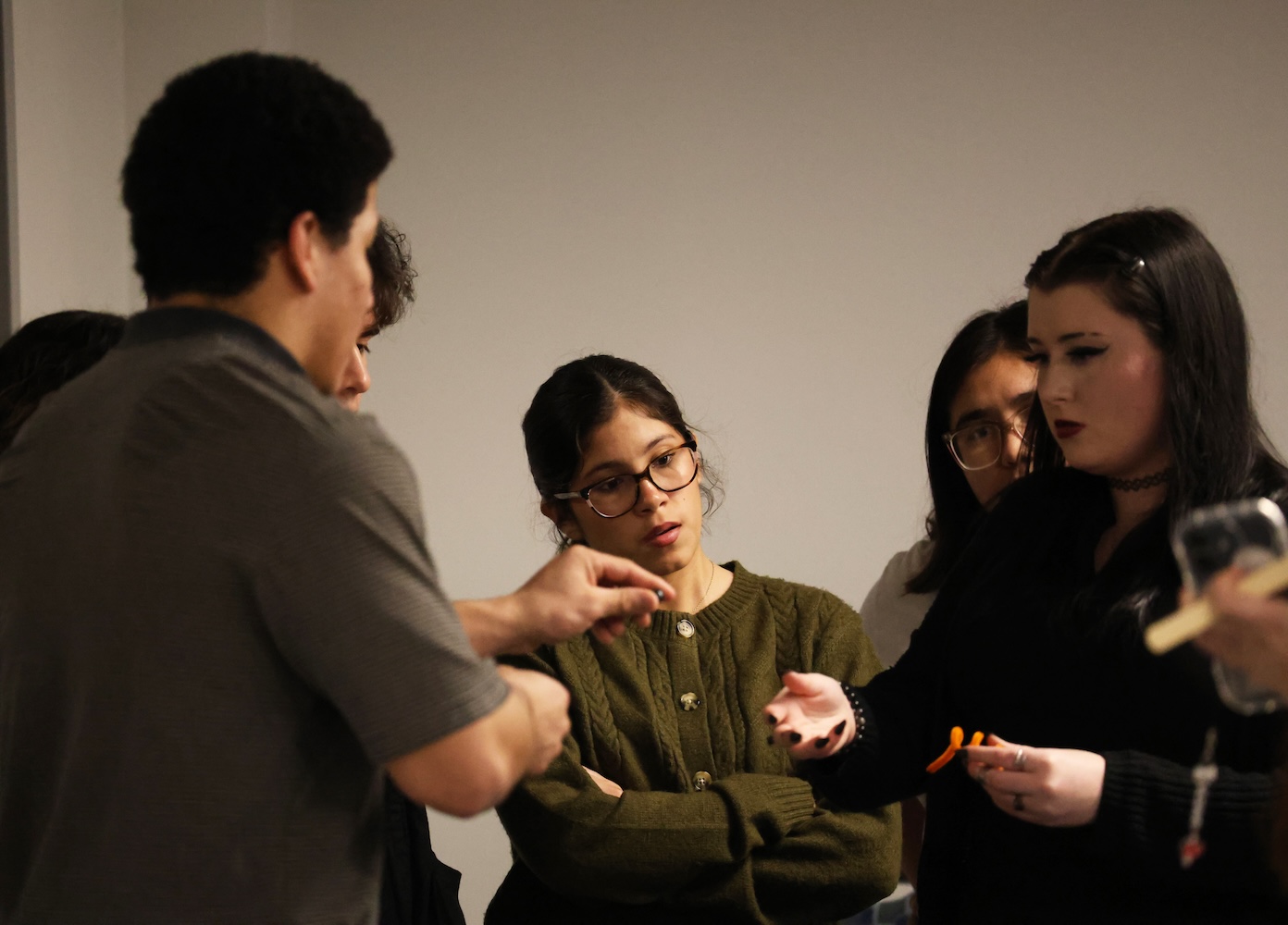
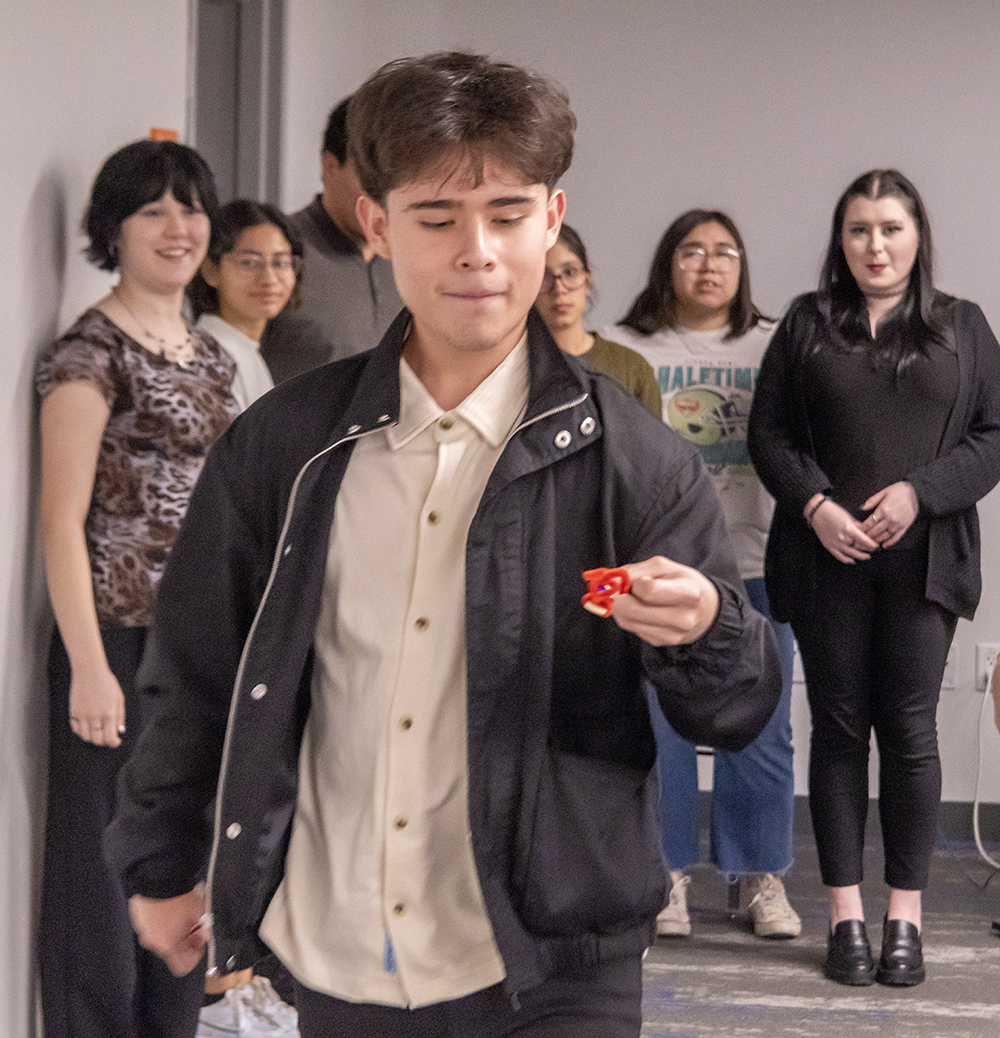
While Roxana and I tried to curry favor with the fates by creating fortune tellers, we unfortunately did not have any winners at our table. However, Stephanie and Sofia came pretty close a few times!
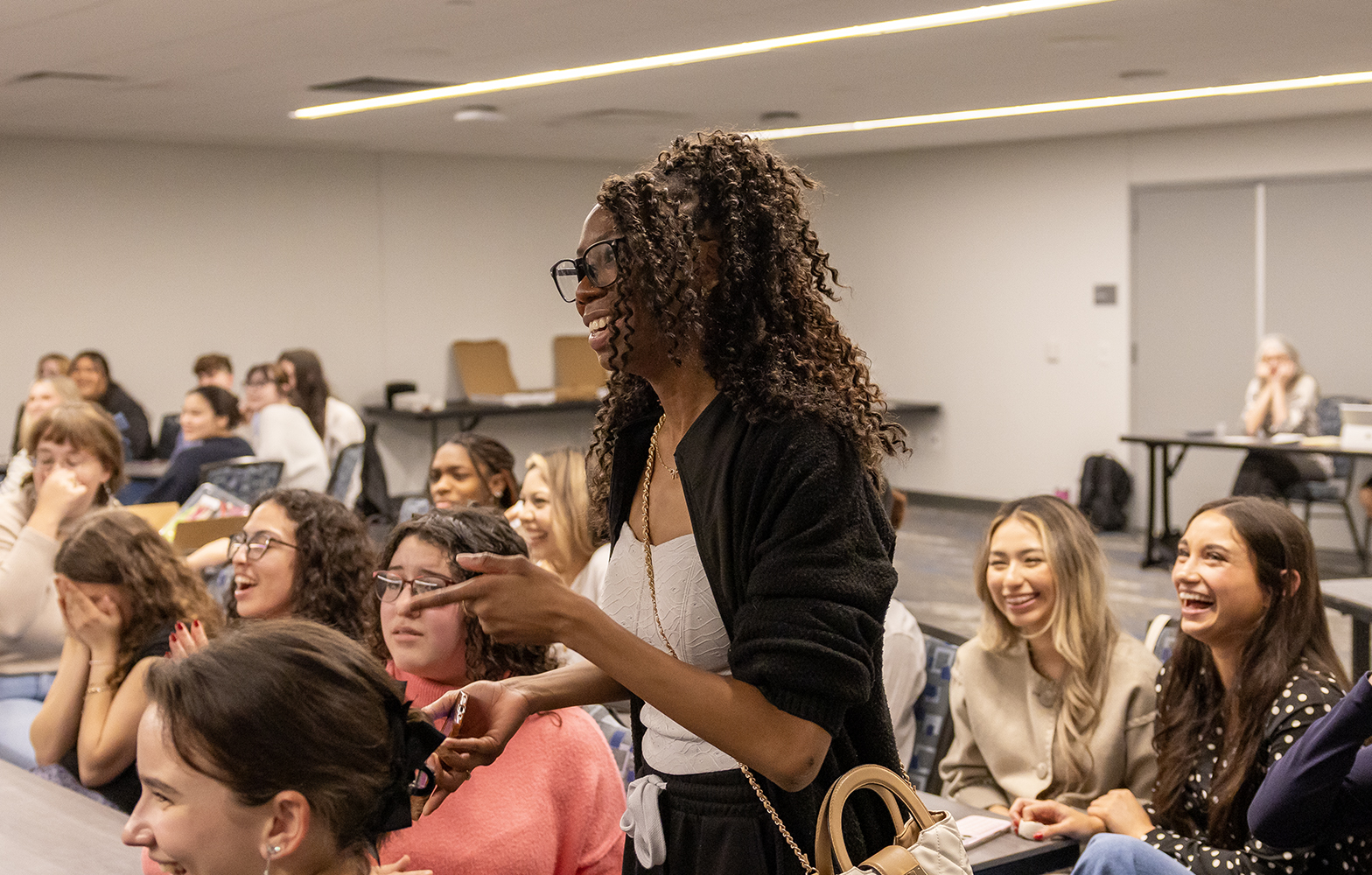
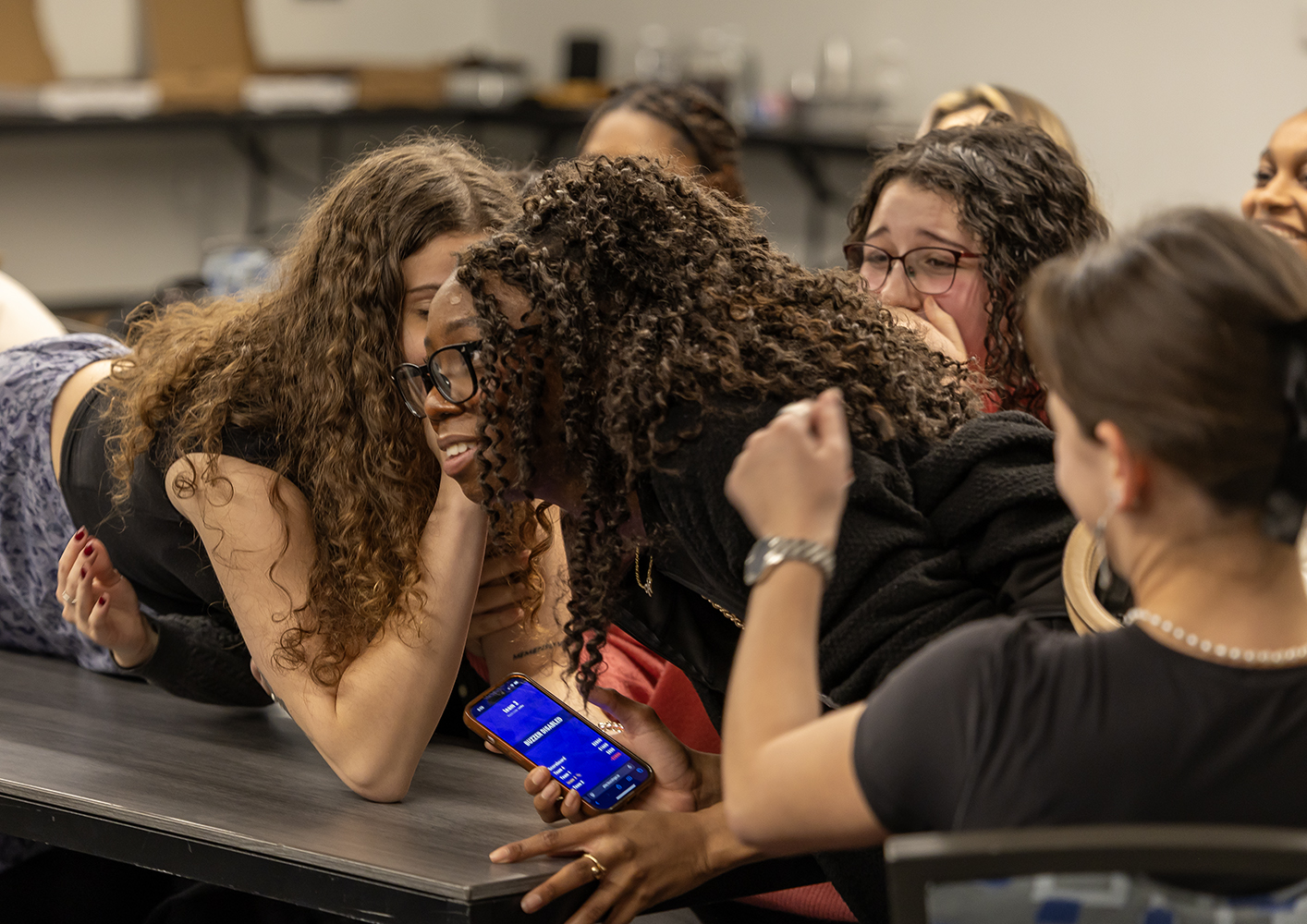
Slowly but surely, we began to lose hope. However, Yajaira, a recent SHSU graduate and friend of LEAP, won a door prize!
In all, our table had a great time of conversation, anticipation, and for some more than others…
…using the bingo daubers to create what can only be described as an abstract work of art in between calls.
We enjoyed supporting a great cause for our community and building connections and relationships with some new, bright students–which can be considered a win in and of itself!