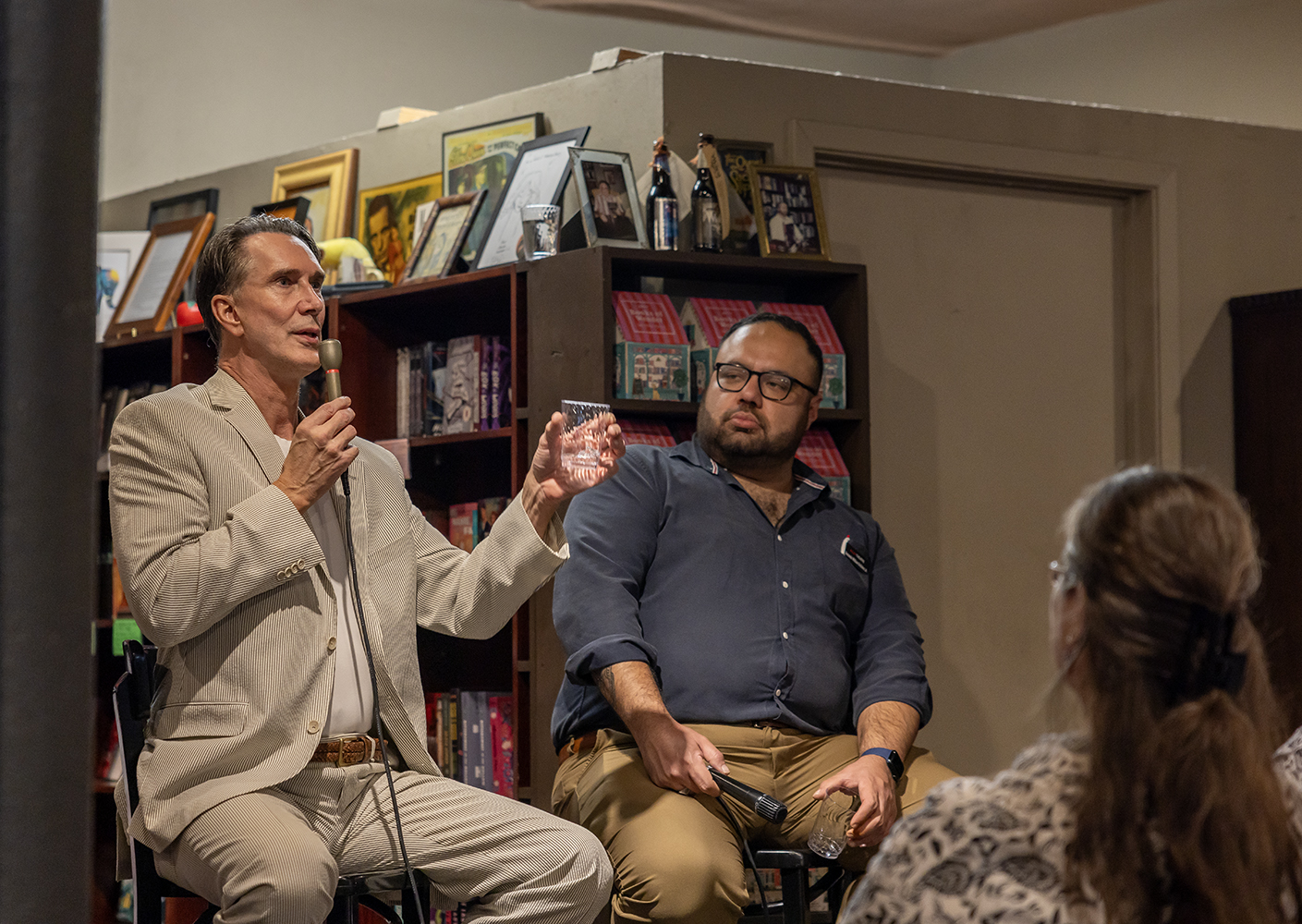
Even with the busiest time of the legislative session in full swing, the LEAP Ambassadors always find ways to stay engaged and keep learning. After a long day at the Capitol, we made our way to BookPeople in downtown Austin for an author event featuring Lise Olsen and her latest true crime book, The Scientist and the Serial Killer.
As true crime fans and students focused on criminal justice and pre-law, this event was right up our alley. Lise Olsen, known for her investigative reporting and current work with the Texas Observer, has spent her career uncovering the truth behind long-forgotten crimes. The conversation was moderated by Michelle Pitcher, one of Olsen’s colleagues who also covers criminal justice topics.
The book centers around Dean Corll (Nicknamed Candy Man), a Houston serial killer responsible for the abduction and murder of over 27 teenage boys in the 1970s. Despite the scale of the crimes, police negligence allowed Corll to operate undetected for years. After the crimes were uncovered, the investigation was shockingly mishandled. The Houston Police Department sent inmates with trash bags and shovels to dig up remains from a boat shed where the victims were buried—no forensic experts, no proper evidence collection, and very little communication with the victims’ families.
That’s where the heart of the book lies. Olsen reported on the findings and the work of Sharon Derrick, a forensic anthropologist who became deeply invested in identifying the unnamed victims. Derrick took on the challenge of reexamining the case, believing at first it might be simple but she quickly realized she was wrong. Many of the families were gone, DNA matches were limited, and records were scarce. Still, Derrick worked to connect the dots, uncovering overlooked evidence, personal items, and even previously unidentified remains. Olsen followed and reported on this journey, often reaching out to families herself to gather clues and piece together the victims’ stories along the way.
Pitcher asked Olsen about how she was able to capture not just the investigation but also the social and institutional failings of the time.
The book dives into what policing looked like in 1970s Houston: limited resources, no communication systems, and almost no understanding of serial killer patterns. Authorities often dismissed missing teens as runaways or troublemakers, even blaming parents. There were rumors that some had fled to avoid the draft. And the juvenile crime division? It consisted of officers who would write a one-page report/description and move on.
Olsen interviewed hundreds of people—friends, family members, investigators—and gave space for those who had been grieving in silence for decades. Her mission wasn’t to glorify a serial killer, but to give voice to the nameless victims and to honor the hard work of investigators still trying to bring justice and closure. The book is haunting, especially as a Houston native who’s grown up hearing stories about the Candy Man.
After the talk, we got the chance to chat with Ms. Olsen for a bit about criminal justice and let her know how much we enjoyed the event. It was a great way to end the night—getting to meet someone who’s doing meaningful work and hearing firsthand how much time and care goes into telling these stories. We snapped a quick selfie and left BookPeople feeling a little more curious, a little more inspired, and definitely glad we made the time to go.
A long-lasting tradition in Huntsville, Texas is a music series, Sundown at Sam’s, which is hosted by the Sam Houston Memorial Museum and Republic of Texas Presidential Library. This event was started by Economics Professor Darren Grant and Birdsall to introduce local artists to the loving Huntsville community.
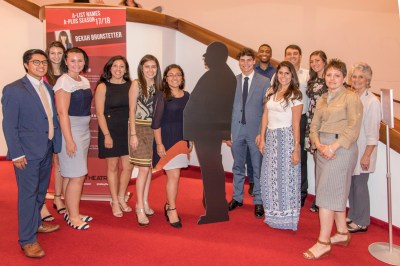
Derrick Birdsall Opens with Introductory Remarks
This year’s event showcases three different themed performances: Blues Night with Lowery Bridges and Mighty Orq; Americana/Country Night with Katy Bell and John Toland, also featuring Joey McGee; and Gospel Night with Dave McMahon and Praise on Purpose.
On the Americana/Country night this week (April 10), the audience was full of SHSU students, Huntsville locals, and some Pre-Law Society members, such as Olivia Discon, Christina Biello, Michelle Moya, Nataly Elizondo, Neehal Ahmed, and Jose Carreno (Hunter Hogan also showed up, but he sat with his other, lesser friends).
First to perform was Katey Bell and John Toland. Katey Bell is an East Texas Singer/Songwriter who has been writing songs since she was a little girl. John Toland is a singer and musician associated with the John Toland Trio which is a funk and soul collective of like-minded artists. Their voices and guitar playing brought smiles to all those in the audience as their music filled the air.
John Toland and Katey Bell
My favorite song was Tornado Watch by Katey Bell. Katey sounds so emotional when she is singing this song and it highlights her voice range and beautiful guitar playing, and it also references Walker County!
Last to play was Joey McGee, who plays a harmonious combination of country, rock, and soul music.
Joey McGee
His guitar and harmonica playing were very impressive. He is a very bubbly and funny person, which was shown when he would tell jokes in between songs while changing harmonicas.
To go along with the amazing music, you could buy pupusas, quesadillas, and sodas from Delmy’s Food Stand and beverages from Sam’s Table. It was so nice to see the community gathered at such a historical and significant place in Huntsville.
If you want to experience this event, Sundown at Sam’s will have one more date during this semester on May 1, themed “Gospel Night,” and it promises to be another heavenly experience with angelic voices!
To round off an eventful week, we had the honor of hearing Judge Alberto Gonzales provide both inspiring and informative perspectives. Known for his distinguished career in law, government, and academia–which Olivia Discon shared with us in her introduction…
…Gonzales shared invaluable insights, drawing from his extensive experience as the 80th U.S. Attorney General, White House Counsel to President George W. Bush, Texas Supreme Court Justice, and, most recently, as the Dean of Belmont Law School.
Judge Gonzales began with a visual presentation that showcased personal photographs from his time in the White House, and President George W. Bush, as well as images from his early years.
These visuals setting the tone as powerful reminders of how far a dedicated individual can go—from humble beginnings to the highest levels of government.
But it was principles taught to him by his parents, he explained, that guided him from his humble beginnings as one of eight children born to a construction worker through the highest levels of government service. Gonzales underscored the guiding principles that shaped his path, particularly the importance of “showing up,” his father both literally and figuratively taught him, which he emphasized as a key tenet of the work ethic he hopes to instill in any student.
The presentation seamlessly transitioned into an insightful comparison of Gonzales’ two high-profile roles: White House Counsel and U.S. Attorney General. Judge Gonzales, having held both prestigious positions, offered unique perspectives on these roles that few Americans can provide.
He explained that while both positions serve the American people, they do so in vastly different ways—the White House Counsel advises the President and a select group of legal advisors, while the Attorney General leads the nation’s legal apparatus, overseeing thousands of lawyers, acting as the chief law enforcement officer, and spending a lot of time on television.
Perhaps one of Gonzales’s most memorable moments was being the “designated survivor” by President during the 2007 State of the Union Address.
Using this opportunity to explain the presidential line of succession—from Vice President to Speaker of the House and beyond—and his own astonishment at the possibility that, under catastrophic circumstances, he could have become President of the United States.
Gonzales also focused on the importance of professional networks, sharing his own journey–from serving in the Air Force to attending Rice and then Harvard Law–which led to meeting Governor George W. Bush. This connection would profoundly shape Gonzales’s career–and it is clear his appreciation for this impact remains deeply felt.
When Jacob Wessels asked Gonzales what his most difficult action as Attorney General was, the former AG mentioned the investigation of former Congressman William Jefferson, which involved a search of the Representative’s congressional office.
While law-enforcement officials argued that the search was necessary to nail down a conviction, Gonzales was concerned about long-held principles relating to the separation of powers. He authorized the search, which was challenged in court (eventually being ruled partially unconstitutional), but Congressman Jefferson was ultimately convicted and sentenced to 13 years in prison-the longest such sentence imposed on a member of congress.
Having served many prestigious roles, Judge Gonzales distilled his philosophy into three key characteristics: integrity, vision, and discipline—qualities he emphasized as essential for success in both law and public service.
In addition to his reflections on leadership and ethics, Gonzales offered practical advice for students considering law school as Dean of Belmont Law–to which we listened attentively!
His advice was both practical and powerful: highlighting the importance of staying informed about current legal issues and honing strong writing skills—fundamental abilities for anyone pursuing a career in law and government careers. Gonzales also offered advice to students hoping to go to law school, from what to include on personal statements to the importance of GPA and LSAT scores.
Throughout the session, students were able to pose a range of thoughtful questions.
I had the chance to ask about Gonzales’s time on the TX Supreme Court, which he indicated he wasn’t sure was right for him. Gonzales had spent little time in a courtroom, and he had never been a judge before the appointment. Eventually, though, he decided that service was his calling, and this position led to his eventual appointment as White House Counsel and US Attorney General.
For SHSU students, this interactive discussion proved a great learning experience. As a thank you, LEAP ambassador Chrissy provided Judge Gonzales with a signed copy of the “The FBI Code” by former Assistant FBI Director Frank Figliuzzi. Grateful for his time and wisdom, we left the event motivated to dream big and stay committed to our paths of service and leadership!
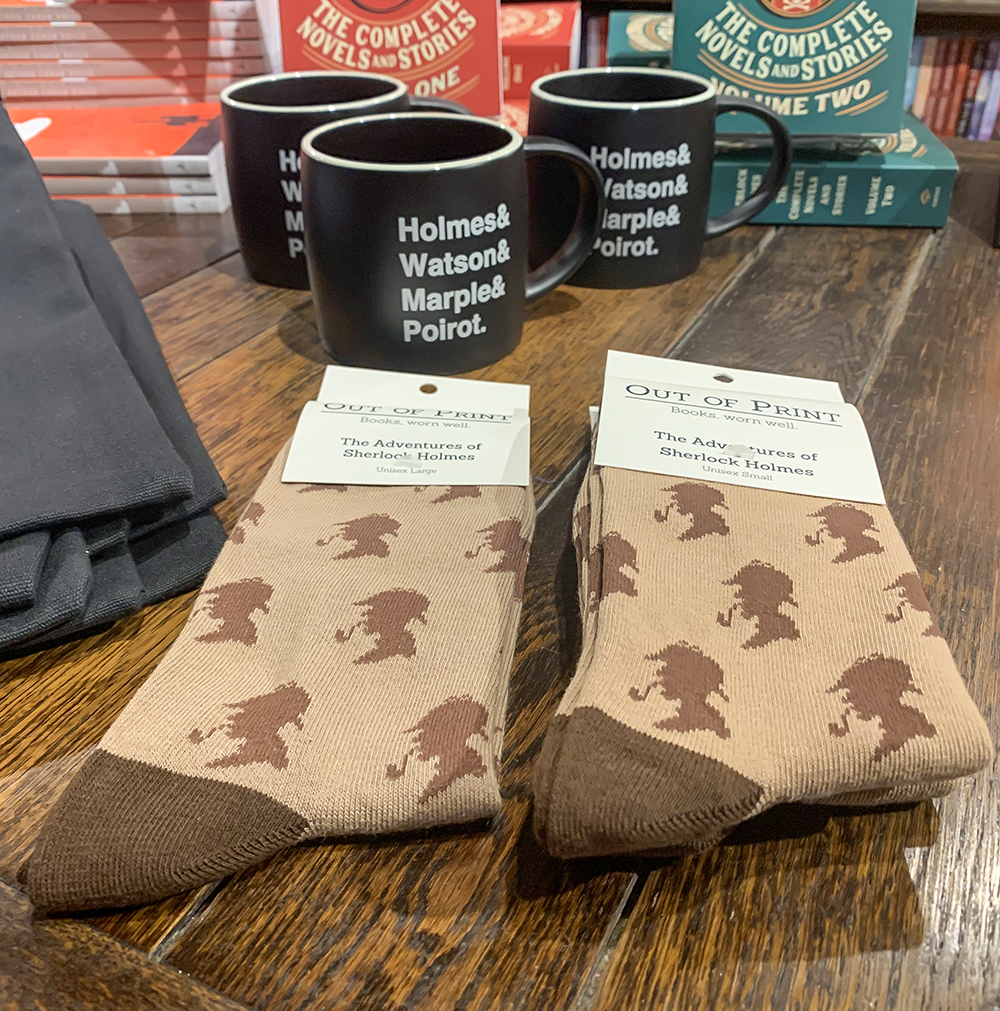
We were at Murder by the Book, and we had some time to “kill.” We leafed through the Michael Connelly, thumbed the Agatha Christie, photographed the many Sherlock Holmes artifacts on display…
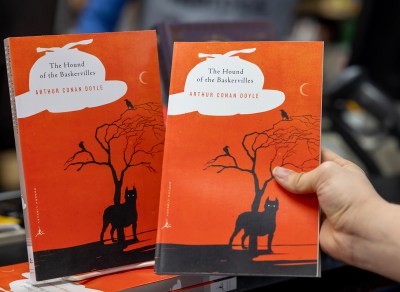
…and even bought a “Hound of the Baskervilles.”
But the real reason we were there was to see Todd Waite.
With 25 years at the Alley Theatre and an incredible 135 productions under his belt, he’s an institution in Houston theater. When he announced that he will be semi-retiring following his upcoming lead role in Baskerville: A Sherlock Holmes Mystery, we felt the “weight” of the occasion. It was “elementary:” we purchased tickets.
As a prelude to opening night, Waite spoke at Murder by the Book, where he took the stage to the delight of a full house.
During the discussion, Waite discussed his love of language, a passion instilled in him by his mother, an English teacher who taught him early on to appreciate the weight of every word. This foundation shaped his approach to performance, where even the smallest vocal shift—from “ah” to “oh”—can redefine a line’s meaning.
He spoke about the complexity of human emotion and how, beyond the broad categories we assign feelings, true depth is conveyed through inflection, gesture, and tone.
His role as an actor, he explained, is to bring those nuances to life in a way that honors the writer’s intent. He illustrated these ideas with stories from his career, sharing insights from specific productions that influenced his philosophy.
Theater, he notes, is a form of alchemy—combining words, movement, and presence to create something greater than the sum of its parts, and this is something the LEAP Center tries to capture in its approach to education, incorporating the fine arts, history, law, politics, and literature into its curriculum. It is perhaps appropriate, then, that a majority of LEAP students have seen their first professional play with Waite on the Alley Theatre’s stage.
LEAP Students / Alumni at the Alley’s “Thirty-Nine Steps”
The Alley Theatre itself is something of an anomaly in contemporary American theatre. According to Waite, the Alley employs a full-time, year-round resident company—one of the few, if not the only, to do so. And this, of course, allows the residents of Houston and the surrounding areas, to see first-class theatre year-round.
Although we bid farewell (for now) to Waite’s (Murder by the Book) performance, we eagerly anticipate seeing him take the stage once more as a resident of the theatre company on April 13. We anticipate Baskerville leaving audiences “howling” for more.
Each semester, the LEAP Ambassadors join one of their friends at KSAM, News Director Larry Crippen, for an “Around Town,” where they have a chance to fill in the public on upcoming activities with which they are involved. So Olivia Discon, Chrissy Biello, and newly minted LEAP Ambassador Michelle Moya arrived at KSAM at 8:30am last week to go on air!
Each of the students had a chance to discuss recent and upcoming events, with a heavy emphasis on their recent travels on the east coast for the presidential inauguration.
In approximately eight minutes, they were able to fit in quite a bit of information, which you can listen to here.
This is, of course, part of LEAP’s efforts to not only help the community, but also to enhance the skills of the students who are helping the community. An event such as the taping of “Around Town” not only increases awareness of events, but also sharpens the Ambassadors’ media skills.
Of course, if you don’t want to listen to the entire broadcast, you can also review our upcoming events, below. We hope you can make some of them!
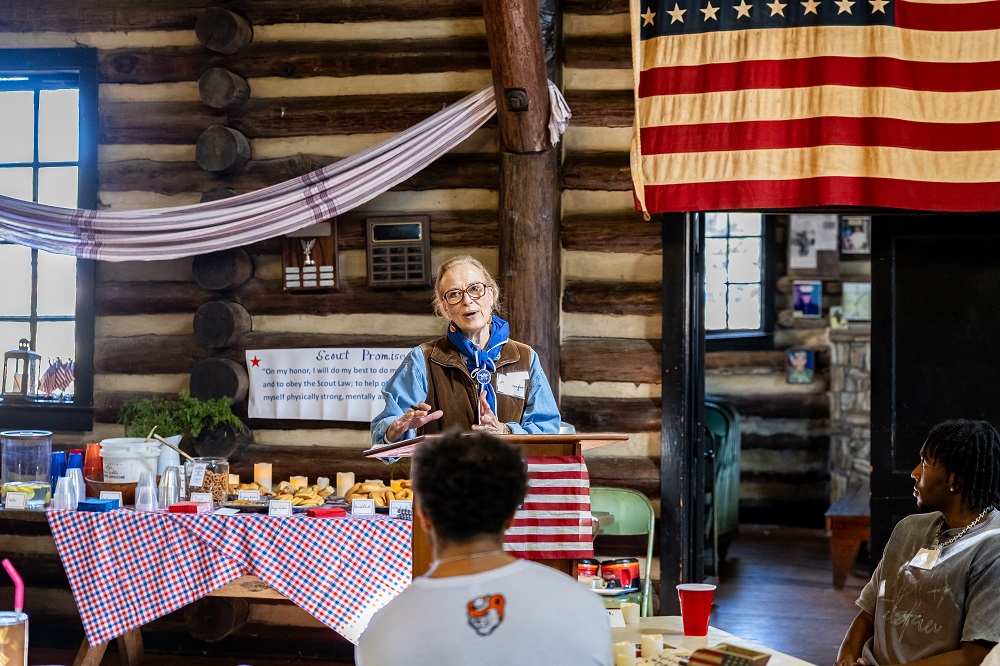
If it’s the first Saturday in February, then the LEAP Ambassadors are at the Chilly at the Lodge–along with, as it turns out, much of Huntsville! With numerous vendors, almost 100 bowls of chili available for tasting, and tours of the lodge available, there was quite enough fun for everyone.
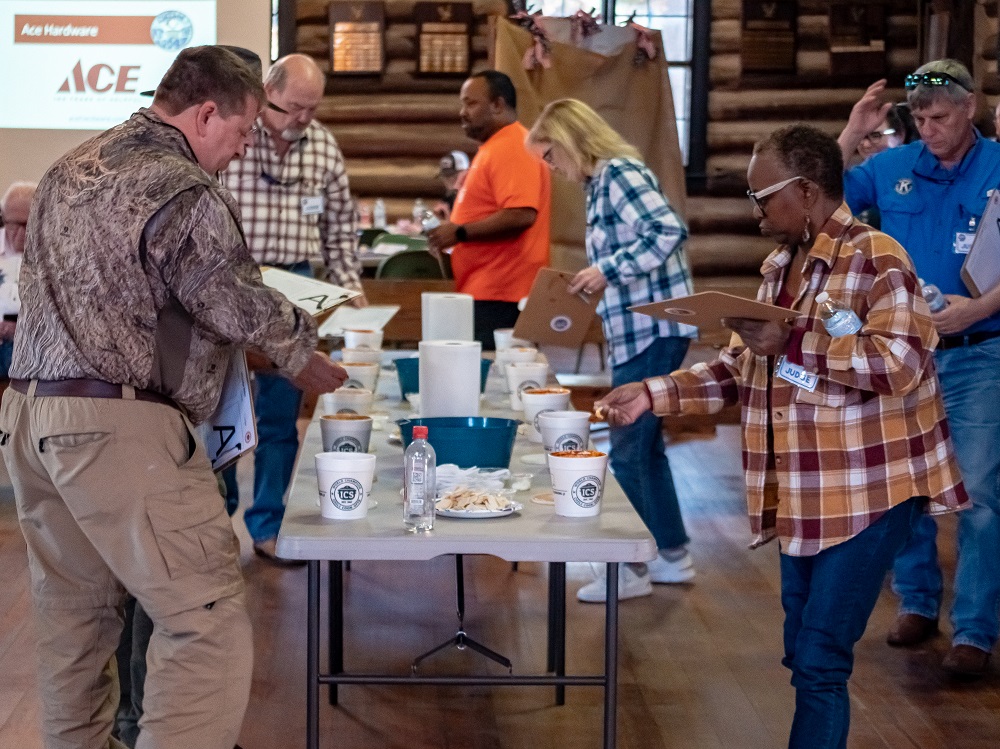
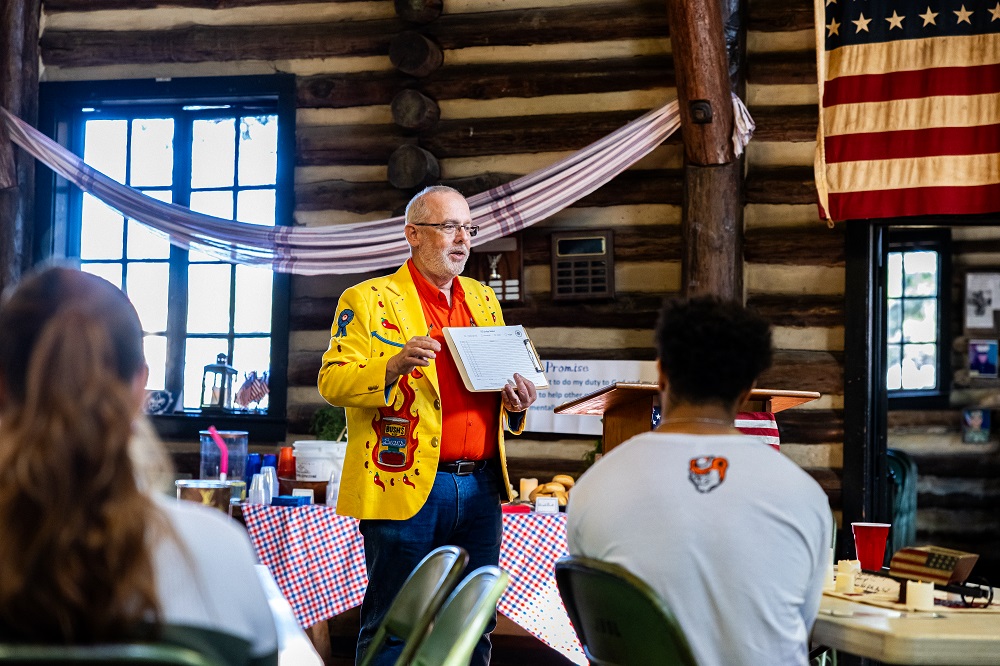
The central feature of the event is a chili cookoff recognized by the International Chili Society. In fact, on hand to guide the judges was Don Cullum, an SHSU Alum and the 2024 ICS Homestyle Champion.
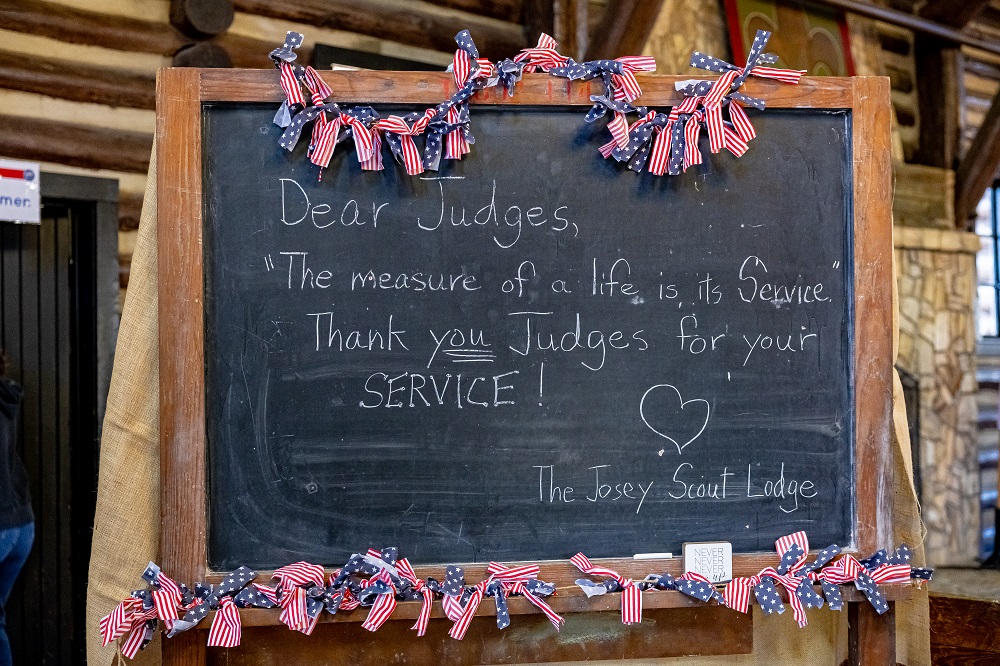
And under the guidance of Karla Christian and the entire Josey Scout Lodge Foundation Board, Cullum and the “celebrity judges” helped select the winning contestants in the categories of (1) Homestyle, (2) Traditional Red, (3) Chili Verde, and (4) Vegetarian Chili. In addition, chili enthusiasts could opt to compete in “community adult” or “community youth” categories. (See categories and rules here).
Even casual attendees can participate in the judging by filling out their “community ballots,” voting on their favorites as they roam the chili booths on the Josey grounds.
On those grounds were vendors from the region, with items such as t-shirts, objects of art, tamales, spices and herbs, and other goods for the curious shopper.
The real attraction, however, was the chili on the grounds. Cooks from all over the United States were on the grounds, offering samples of their chili. For five dollars, visitors can get six tickets, each of which is a ticket to a booth. Or, for more hearty eaters (which applied to at least one of the LEAP visitors), a $20 armband can provide an unlimited number of tickets.
The event organizers also provide entertainment for visitors in the form of music, with more than a dozen musical acts on hand for performances throughout the day.
But the serious work is the judging, where community members assess the chili cooks’ entries, and this part of the process takes two days, Saturday and Sunday.
With dozens of entrants–including six world champions–it’s a competitive process.
Organized by Leanne Woodward and overseen by Don Cullum, the process worked smoothly.
Moreover, the winning contestants in each category have the opportunity to go on to the ICS World Championship in Myrtle Beach later this year. Accordingly, Cullum and others identified the winners…
…and put the scorecards on a color-coded score board.
Two of the LEAP Ambassadors were judges, and we enjoyed the opportunity to judge the chilis.
For us, it is an opportunity to explore our culinary interest, meet new people, spend time with friends and community leaders, and, of course, to support a good cause.
Of course, with such a long day, some would inevitably get tired and thirsty…
But we held up well and greatly enjoyed the event.
Many thanks to the Josey Scout Lodge Board for hosting such a wonderful event!
The LEAP Ambassadors enjoyed a six-day tour of the East Coast as part of their “Democracy Tour.” During this tour, the students had a chance to visit more than half a dozen art museums, James Beard award winning restaurants, and many historic sites. What follows is their favorites from their experiences.
Favorite Restaurants:
Lehja’s in Richmond received the most votes, with all of the food receiving high marks from the diners. The James Beard nominations appear justified!
Casa Mexico in Philadelphia was a hit among the students, with the barbacoa being particularly popular. This was an altogether pleasant dining experience in an interesting and busy neighborhood in Philadelphia. Chef Christina Martinez was named “Best Chef” in the mid-Atlantic region in 2022 by the James Beard Foundation.
Metzger’s Bar and Butchery was perhaps the most interesting and innovative of the restaurants we visited. While the pork schnitzel was the favorite entree, the “squash sundae,” was the favorite dessert and the biggest surprise.
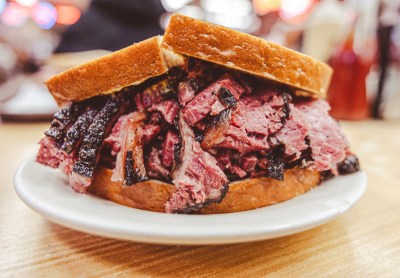
Ambassadors also found favorites in Katz’s Deli in New York, a restaurant world-famous for its pastrami.
And, of course, we also enjoyed Jim’s South St., which specializes in Philly Cheesesteaks.
FavoriteArt Museum: Olivia and Chrissy visited four art museums in New York, and they split on their favorite, with Chrissy favoring The Whitney…
…while Olivia resisted picking a favorite and, instead, picked a top two: The Met and MOMA. She did, however, have a favorite: The Lovers.
Although smaller and less heralded than its New York and Philadelphia counterparts, the Virginia Museum of Fine Arts was one of the clear favorites among the group.
The favorites of the group reflected the diversity of the art in the Museum’s collection.
Of course, the most famous paintings among the NY, Philadelphia, and VA museums were also popular among the Ambassadors.
Finally, the group also greatly enjoyed seeing Philadelphia City Hall, the Liberty Bell, Independence Hall, and the Virginia Capitol Building. For Cinthia, Olivia, and Michelle, it marked the third–the complete collection–of extant Jefferson designs in the world.
While the Ambassadors are always happy to get back to Huntsville and SHSU (or, this semester, Austin and SHSU), they left the east coast with a lot of memories, new-found knowledge, and much nostalgia.
On the third day of our New Orleans trip, we had an exciting itinerary lined up to continue our learning! After grabbing some coffee to start the day, we set off on a 20-minute walk to St. Louis Cemetery.
St. Louis Cemetery Tour
by Chrissy Biello
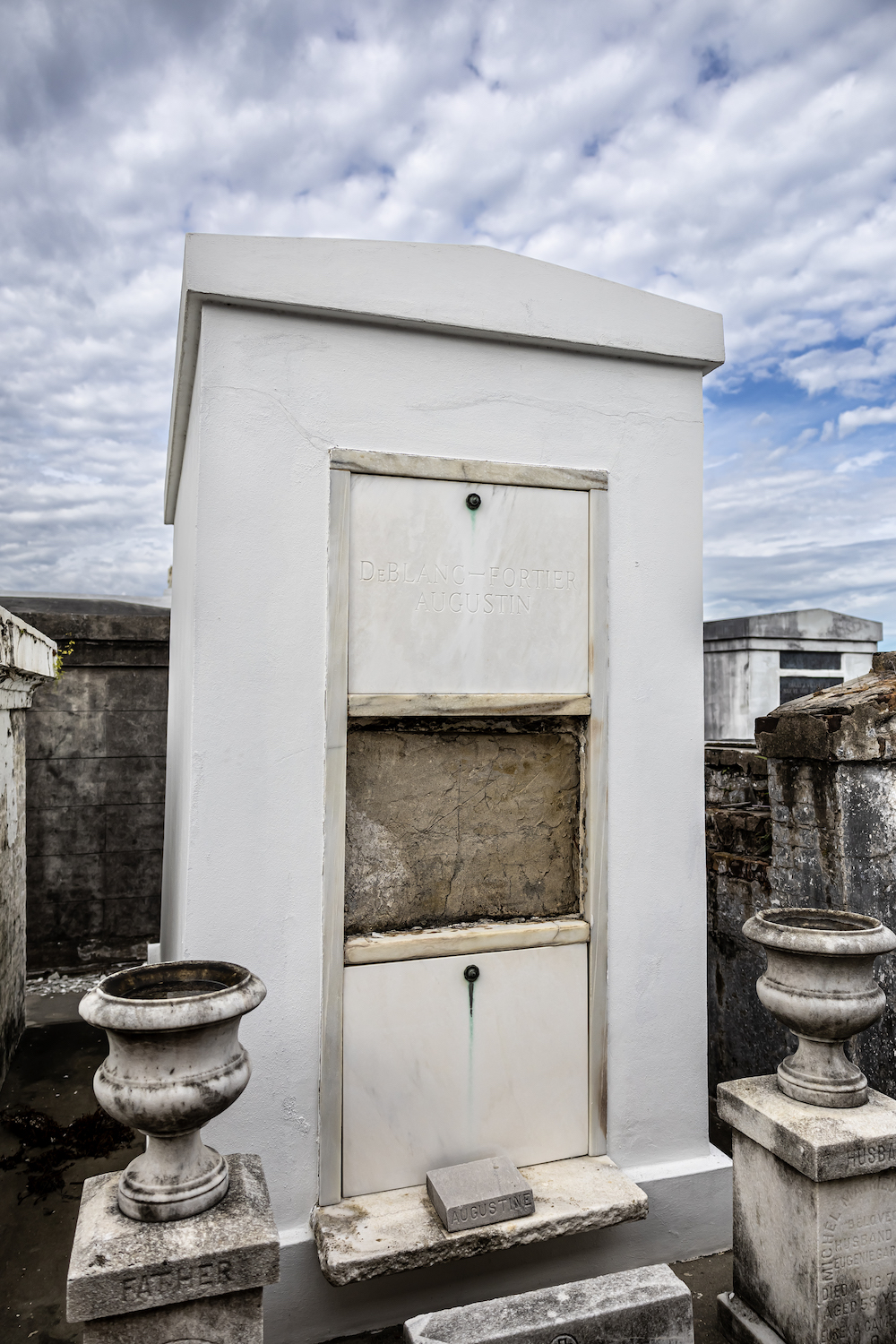
Traveling through New Orleans, one might notice the cemeteries and how distinct they are from other cities. With approximately forty-two historic burial grounds, our curiosity led us to explore the oldest existing cemetery in the city, St. Louis Cemetery. Thankfully, we had a knowledgeable and humorous tour guide named Denise who could explain things along the way.
Denise discussed the origin of St. Louis Cemetery, which emerged from a pressing need for space. On August 14, 1789, the cemetery opened because the neighboring St. Peter Street Cemetery had become severely overcrowded. During this time, Spanish colonists persuaded the residents of New Orleans to adopt an innovative solution: above-ground tombs that would maximize limited burial space.
Interestingly, there are strict protocols for burial. A new interment cannot occur until two years have passed since the previous burial, allowing for proper decomposition. When a new burial takes place, the remains of previous occupants are carefully collected, placed in a bag, and pushed to the back of the tomb using a long pole; a practice that reportedly inspired the popular phrase, “I would not touch them with a ten-foot pole.”
Turning around, we examined the oven tombs. Denise illustrated that they have this name because they have a wide opening, continuing to say that “they resemble a baker’s oven; can’t you imagine a pizza sliding in there?!”
Moreover, one could not help but notice the striking nine-foot-tall pyramid tomb for Nicolas Cage when he passes away. Notably, it is inscribed with the Latin phrase “Omnia Ab Uno” meaning “Everything From One.”
Continuing on the tour, Denise took us to the Orleans Battalion of Artillery tomb, which holds those that fought, but did not die, in the Battle of New Orleans in 1815.
Further, the New Orleans Italian Mutual Benevolent Society’s marble tomb. Denise explained that many Italian immigrants, facing financial difficulties, could not afford individual burial plots. To address this, they pooled their resources to collectively purchase and share a communal burial site.
Additionally, the “the Faux Laveau” grave, often mistaken for the famous Voodoo Queen, Marie Laveau, was adorned with symbolic crosses. In sets of three, they represent the Holy Trinity positioned sideways to signify the completion of crucifixion and resurrection.
Nonetheless, we ended the tour at the authentic Marie Laveau’s grave. Here, Denise explained that while Marie practiced Voodoo, she was a devout Catholic that would attend Mass daily. In her whimsical voice, Denise noted that the over emphasis of the voodoo aspect of Marie Laveau is “all a part of the loooreeee!”
As we exited the cemetery, we felt we had gained a deeper understanding of New Orleans’ unique culture. We would like to thank Denise for a great tour; her captivating storytelling and deep knowledge of the cemetery’s history made the experience both educational and memorable!
3rd Annual Children’s Hospital New Orleans Holiday Parade
by Chrissy Biello
Following the cemetery tour, we began the walk to return to our hotel before heading out to get lunch. To our surprise, a holiday parade was taking place! We learned that this parade is organized by the New Orleans Children’s Hospital and began in 2022.
Starting at the French Market, the parade winds through Downtown. As we watched the floats go by, we saw the Grinch dressed as Santa Claus and the Children’s Hospital float featuring their very own Mrs. Claus.
The best part of the parade was the cheerleaders and dancers. Their performances were fun and festive, bringing energy and excitement to the crowd. They also threw beads to the audience, which many were trying to catch!
St. James Cheese Company – Lunch
by Chrissy Biello
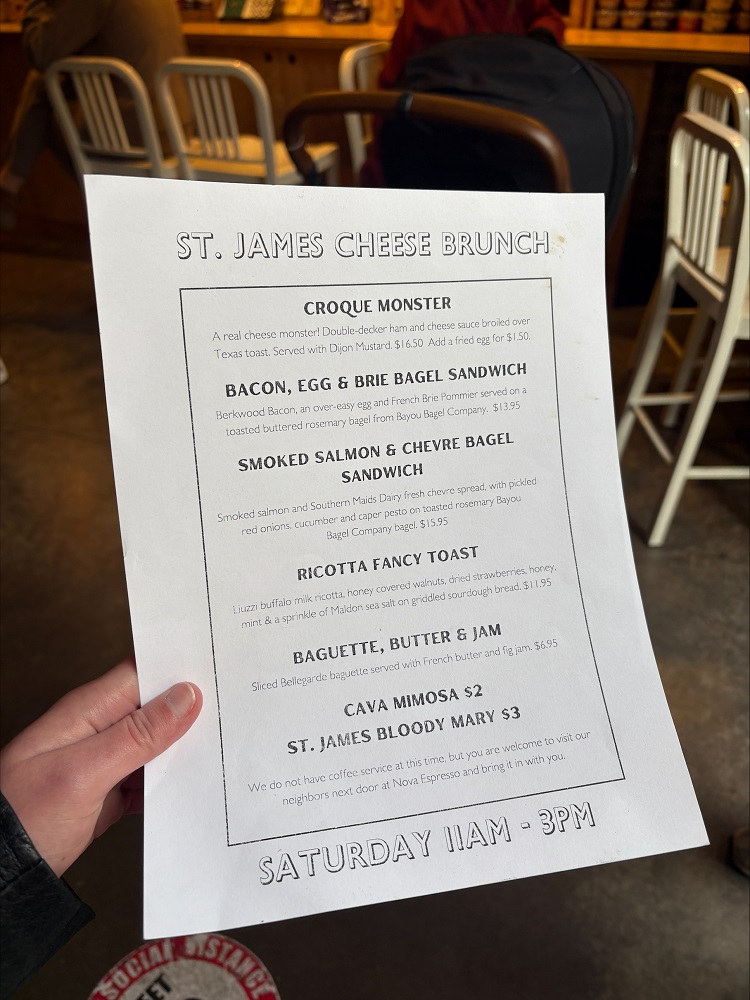
While walking the streets of New Orleans, we came across the St. James Cheese Company. Having passed this establishment before, we had assumed that they only sold cheese. To our surprise and delight, they offer a wide selection of sandwiches, bagels, fondue, and festive drinks.
Since we all greatly enjoy cheese, we decided to order the sharable fondue. Although I may appear quite serious in this photo, I assure you that my expression does not reflect how I truly felt at the time.
The sandwiches also looked especially appealing. Olivia chose the Gruyere Sandwich, while I opted for the Hot Mozzarella Sandwich. Michelle, who tends to make healthier choices, ordered the Soup of the Day, which turned out to be Creamy Garlic and Mushroom Soup!
After finishing our meal, we continued on to our next destination, the National World War II Museum.
National World War II Museum
by Michelle Moya
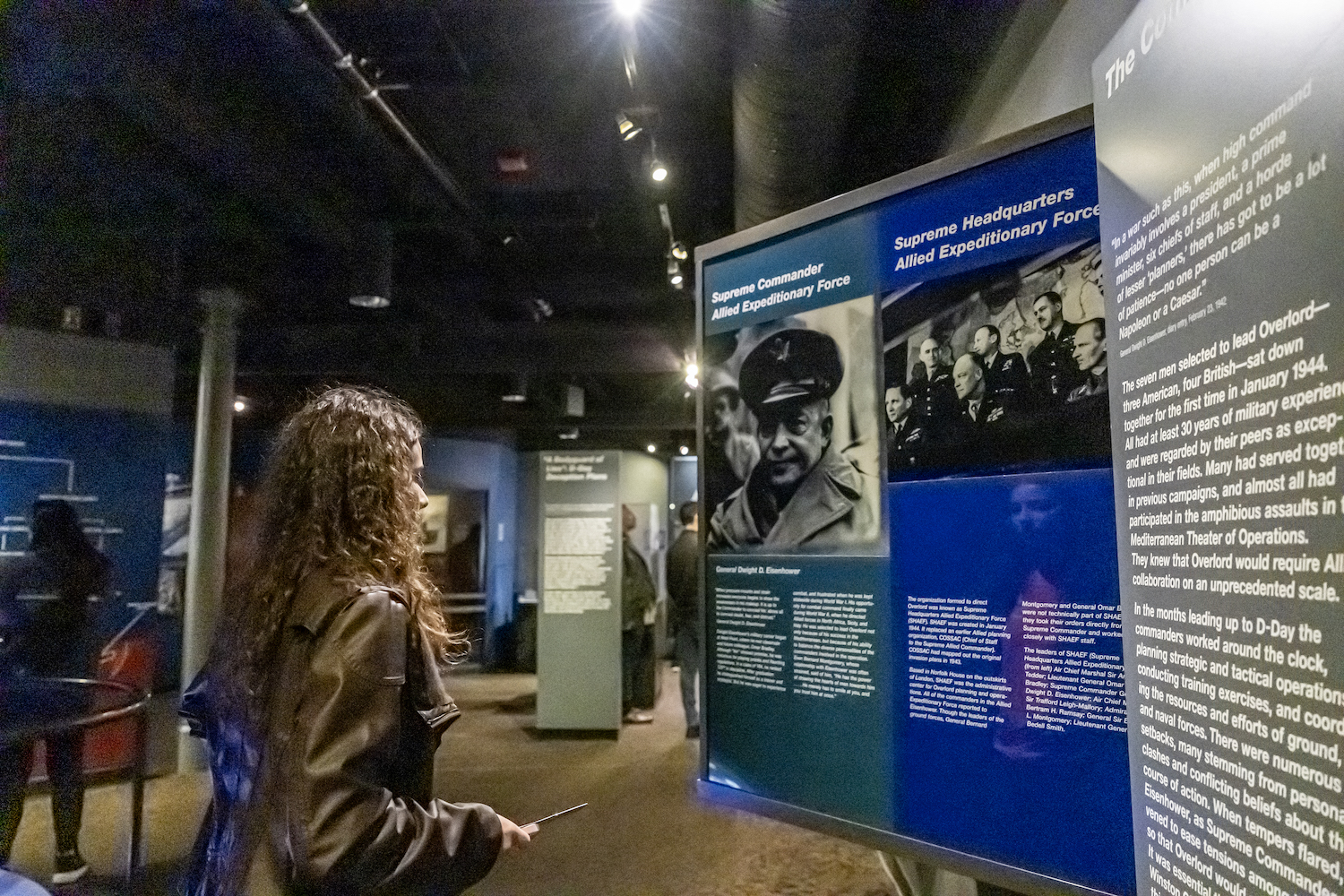
Following the parade and our meal at the St. James Cheese Company, we headed to the National World War II Museum. As it was National Pearl Harbor Remembrance Day, we felt very reflective and thankful for the soldiers that fought for us. Nevertheless, as a self-proclaimed American History hater, I went to the museum with not much knowledge. However, this tour definitely changed that!
One fascinating feature of this museum was the “dog tag experience.” We grabbed our “dog tags,” each of which was linked to a real soldier’s experience and role in the conflict that you had to find throughout the museum. I got Mike Colalillo!
To begin our walk-through, we started at “the Arsenal of Democracy” on the second level. The museum was a labyrinth of fascinating displays. This section demonstrated all of the great inventions that helped America win the war. Essentially, the “Arsenal of Democracy” was made possible by these tools!
Then, we dove into the heart of the Normandy invasion. My favorite there was the mass of hanging planes, a reminder of the airborne operations that preceded the beach landings that depict the Normandy morning crash.
Noteworthy, the “Personal Accounts” booths that have two-minute oral history programs with soldiers. Olivia walked into the “Night Drop into Normandy” booth and ended up hearing a horrible story about a soldier that got shot in his jaw but proceeded to fight. This goes to show the atrocities that these troops had to endure during this battle.
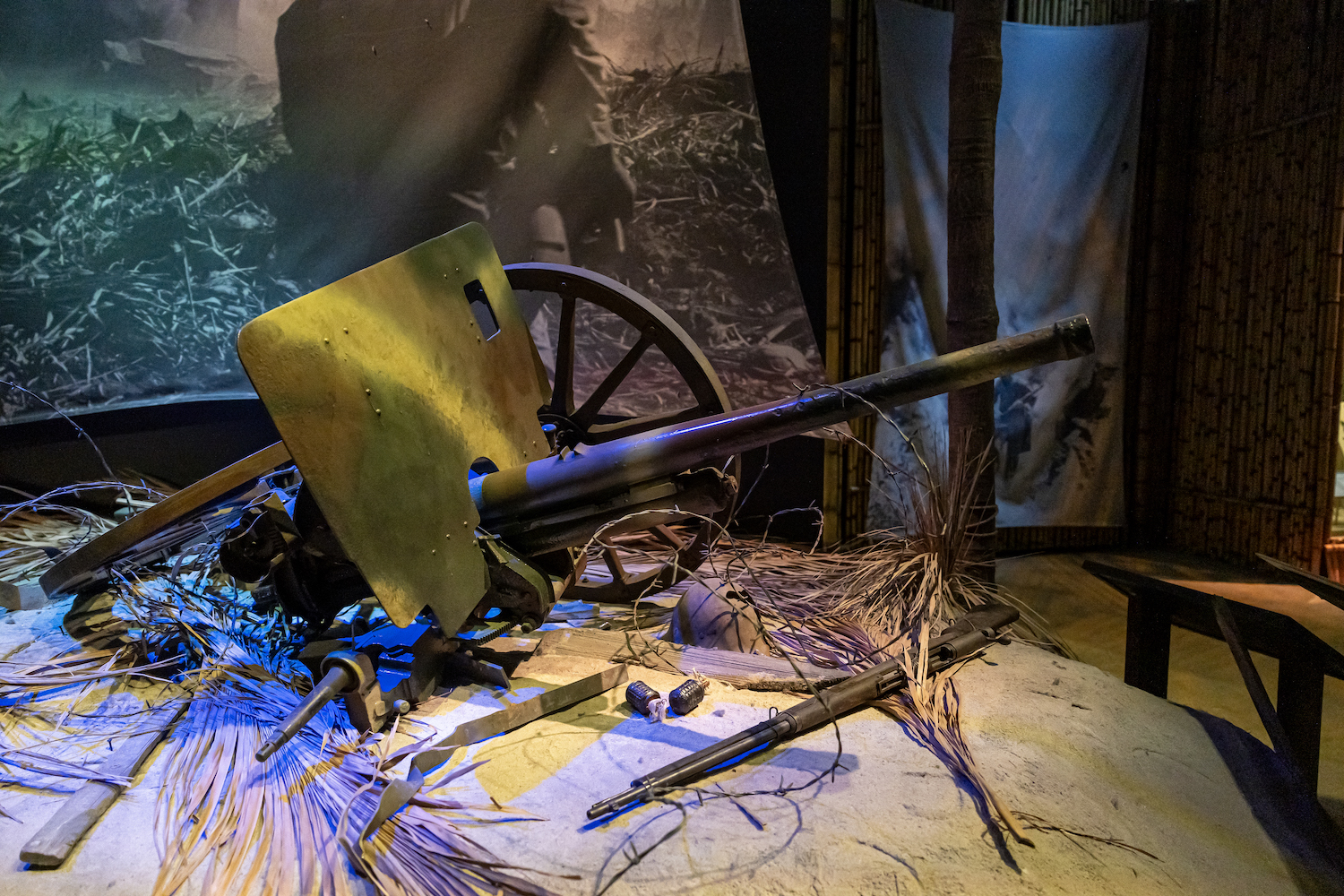
We then made our way to my personal favorite exhibition, the “Road to Tokyo” exhibit. The museum’s immersive displays, including a recreated jungle environment, provided a glimpse into the challenges faced by American soldiers fighting in the Pacific. The setting was super captivating, and the stories of the soldiers fighting in the Pacific were both inspiring and heartbreaking to hear.
To finish off our tour, we went to the museum store to look at the goodies they had. Olivia ended up purchasing a chocolate bar and Stephen E. Ambrose’s book Eisenhower: Soldier and President. Ultimately, the National WWII Museum not only taught me about a pivotal era in history, but it also inspired me to implement more history knowledge into my life.
I left the exhibition with a deeper appreciation for those who fought for our freedom, which was the overall goal!