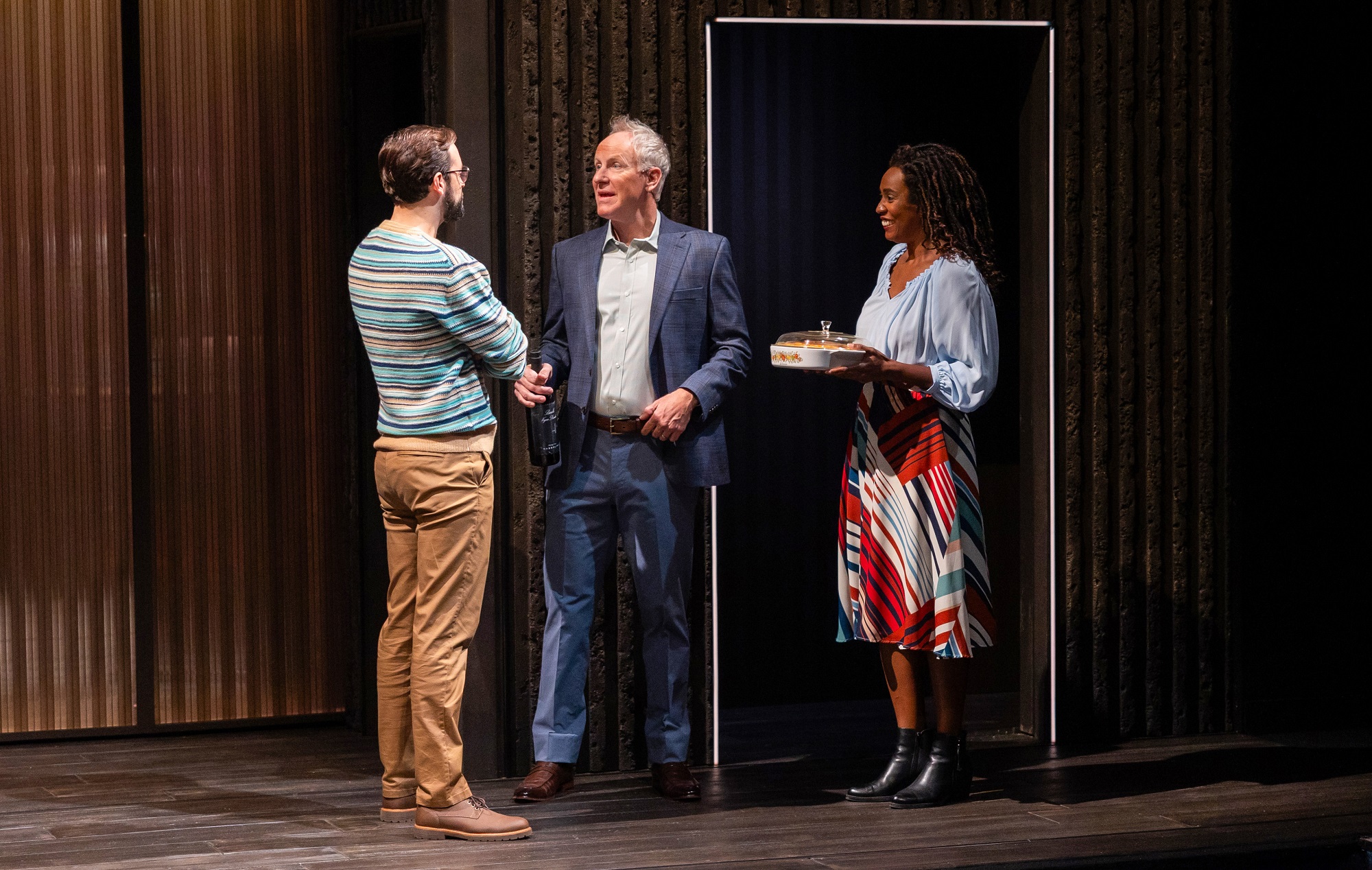
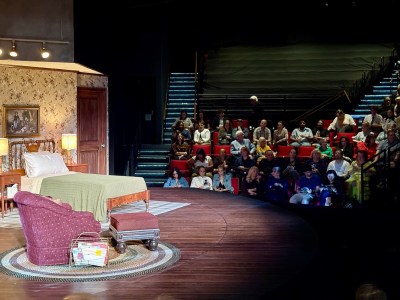
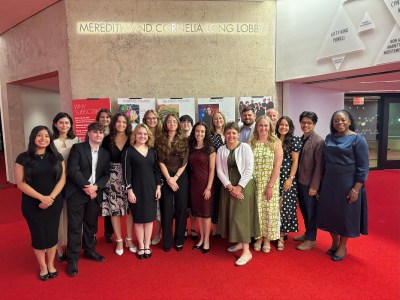
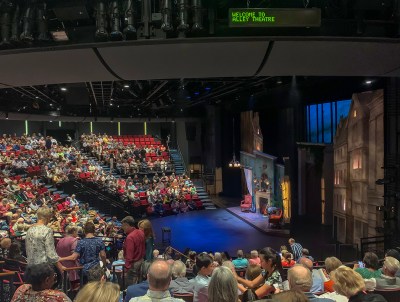
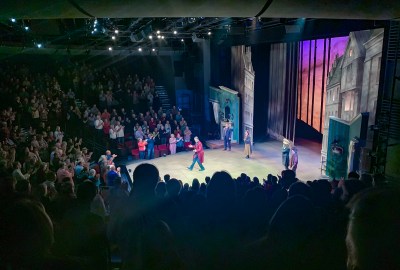
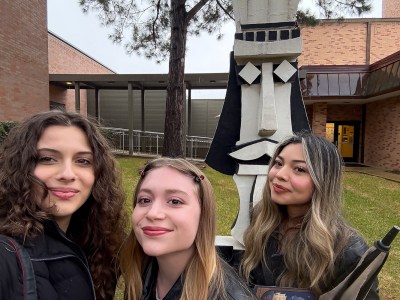
During our retreat in Houston, LEAP students and alums visited the Alley Theatre once again to watch a performance of The Girl on the Train! Based on the bestselling novel by Paula Hawkins and the Dreamworks film adaptation, the play proved to be another memorable addition to LEAP’s theatrical experiences.
The Girl on the Train follows Rachel Watson (Elizabeth Bunch), an alcoholic whose life has begun to unravel following her divorce. One morning, Rachel receives a visit from Detective Gaskill (David Rainey), who informs her that a woman named Megan Hipwell (Emily Neves) has gone missing. Rachel immediately becomes invested in finding her. Although she has never met Megan, Rachel used to see her and her husband from the train each morning and imagine that they lived a perfect, happy life. With Megan now missing, that illusion is shattered, and Rachel becomes determined to uncover what really happened. The list of suspects is long: from a therapist, Dr. Kamal Abdic (Christopher Salazar), to Rachel’s ex-husband Tom Watson (Chris Hutchison) and his new wife, Anna (Michelle Elaine), to Megan’s husband, Scott (Dylan Godwin–an SHSU Alum), to even Rachel herself.
The story takes us through an exciting series of twists and turns, leaving many of us surprised when the mystery finally came to a close. Kayla and Tania were particularly surprised by the ending, while others, like Britlynn, managed to figure out the twist early. Afterward, we had a great discussion about our reactions to the play, and many of us agreed that it had earned a place among our favorite Alley Theatre productions.
The British accents of the characters also caught some of us off guard, especially those who had previously watched Misery at the Alley. Elizabeth Bunch and Chris Hutchison, who played Annie Wilkes and Paul Sheldon in that production, returned as Rachel and Tom. Many of us find the husband-and-wife duo particularly fascinating to watch because they seem to have a knack for playing characters who either despise each other or are completely obsessed with one another—and sometimes both! Their dynamic creates an interesting on-stage chemistry that made their performances especially memorable.
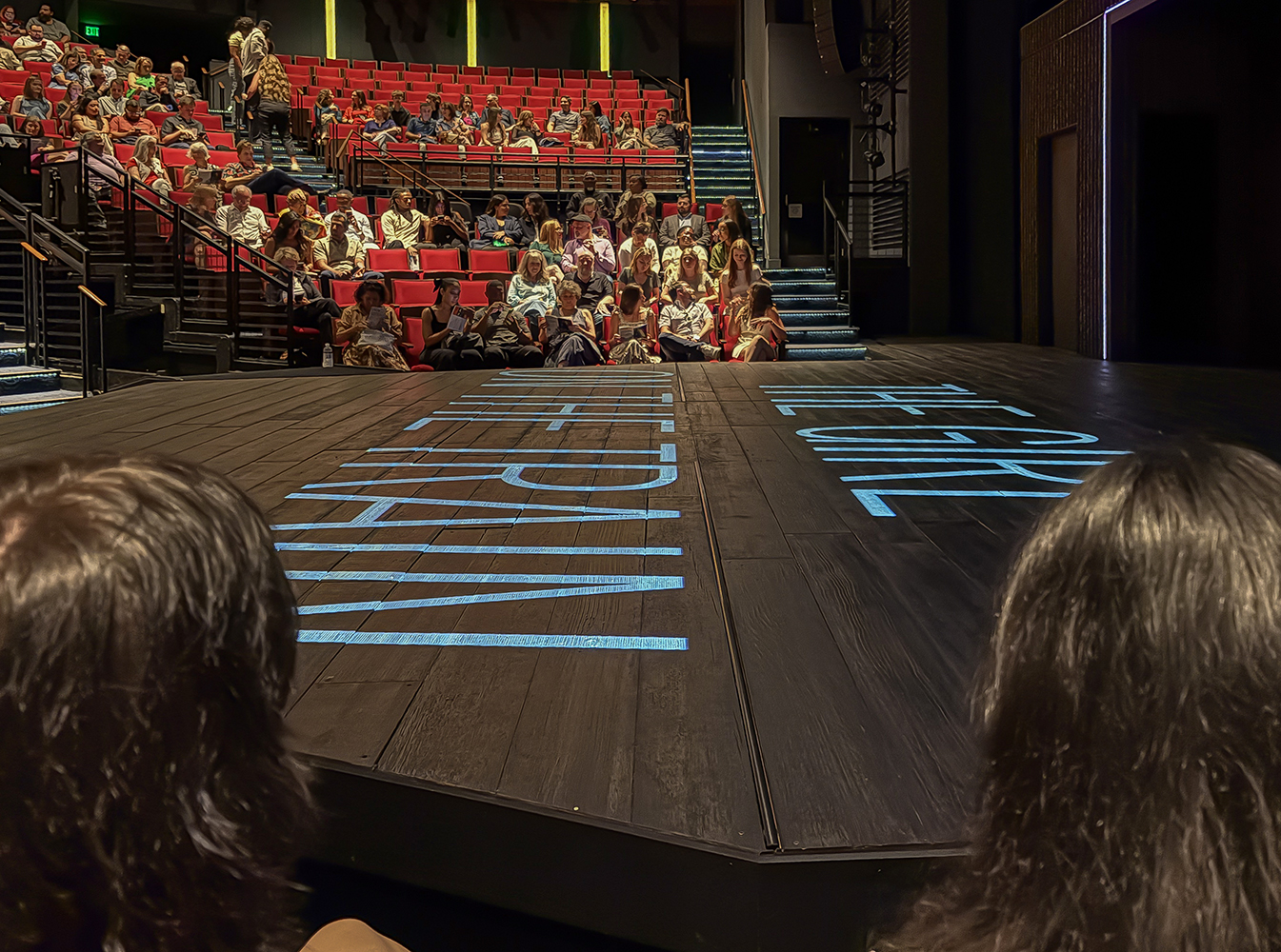
My favorite aspect of the play was the set. I really enjoyed the way that the stage had been designed to move; parts of the stage raising and lowering to reveal or conceal furniture that changed the scenery. They also utilized a catwalk-like structure above the stage to demonstrate the terrace of Megan’s home, which allowed Rachel’s memories to be displayed over the action of scene below. One of Olivia’s favorite parts was how they portrayed the moving train, through lights and set. Towards the end of the play, the technical team even utilized projection to create train tracks that ran across the stage.
Overall, the combination of story, acting, and creative set design made The Girl on the Train a great watch. We are all looking forward to our next opportunity to experience another Alley Theatre production together!
Many thanks to alums who joined us: Ademide Adedokun, Justin and Chelsea Beiser, and Quinn Kobrin–and to Ademide’s friend, Andrea Alexander.
On the first day of our LEAP Retreat, LEAP students travelled to the Alley Theatre for a performance of Stephen King’s Misery. To make this event even more memorable, we were joined by several alumni which gave us a group of 19 people!
The story follows author Paul Sheldon (Chris Hutchinson), who has finally written what he thinks will be his masterpiece when he gets into a car accident that shatters his legs. He is rescued by his self-professed “number one fan,” a woman by the name of Annie Wilkes (Elizabeth Bunch). At first, she acts normal enough, but things very quickly take a turn for the worst. Married in real life, the actors gave a wonderful performance, leaving us wondering how they manage to create such believable characters while still going home together each night. Having just seen the movie a few weeks before, it was very interesting to see the difference in the details and presentation of the story as it was adapted for the stage.
One of the most striking elements of the play was the set. Split into three distinct parts, the set rotated on a turntable to create a seamless transition between the room where Paul is held captive, the rest of the house, and outside. We were all astonished by the level of detail that went into the set, from the numerous images of Paul Sheldon, to the inclusion of a working staircase. Another practical piece of the performance that we enjoyed were the special effects. We had a good time figuring out how they incorporated stage blood and prosthetics to enhance the gorier elements of the story.
Having finally finished the Misery trifecta– the novel, movie, and play– I found the differences between the three mediums incredibly striking. The novel contained much more prosaic passages, as well as backstory and lengthened character development, especially for Annie Wilkes, than either the movie or play. The movie, however, shifted and condensed elements of the novel, such as the addiction that Paul develops to the pain medication Annie provides him and his reliance on imagination to endure his captivity, while adding in the perspective of the town Sheriff that is investigating his disappearance. The play retains many of these elements, several lines of dialogue taken directly from the movie, though Annie’s characterization relies on much more of the actor’s discretion, removing much of her backstory entirely. Despite these differences, each preserves the core of the story: the dangerous, disruptive nature of obsession.
Overall, Misery proved to be a fascinating example of how a story can evolve across different mediums while retaining its central themes. Both entertaining and thought-provoking, it was a memorable highlight of our retreat and gave us a deeper appreciation for the art of adaptation.
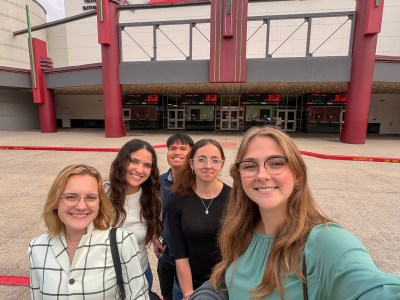
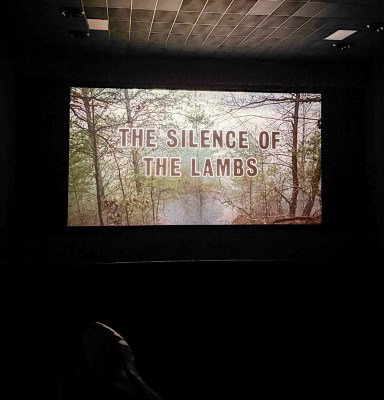
LEAP students took a Wednesday night trip to Cinemark in the Woodlands for the 35th anniversary screening of The Silence of the Lambs! Arriving around thirty minutes early, we had more than enough time to load up on popcorn, candy, and sodas before heading into the theater.
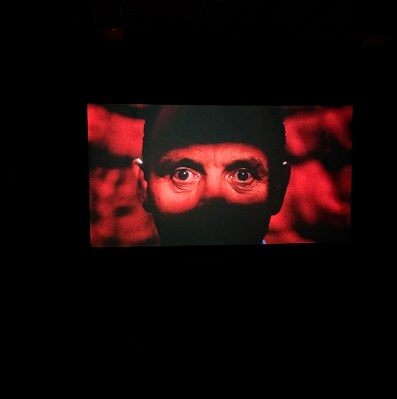
Once we were seated, the film began with an opening from legendary film critic and historian, Leonard Maltin, who explained some of the historical and cultural significance of the film, including its status as one of three films to win the “Big Five” Academy Awards: Best Picture, Best Director, Best Actor, Best Actress, and Best Adapted Screenplay. Based on Thomas Harris’ 1988 novel of the same name, The Silence of the Lambs is a staple in American film that inspired an infatuation with the character of a dignified serial cannibal named Hannibal Lector, resulting in numerous spinoff series and prequel films.
The film follows young FBI trainee Clarisse Starling (Jodie Foster) as she interviews Hannibal Lector (Anthony Hopkins) with the hopes that he might provide insight into the mind of a serial killer. On the rise is a man by the name of Buffalo Bill (Ted Levine), who skins his victims after he kidnaps and kills them, mysteriously keeping them alive for three days. Starling has the sinking feeling that Hannibal Lector knows more about the killings than he is letting on, and must navigate his psychological manipulations and lies to get to the truth.
Though a clear psychological thriller/horror, we were all able to find humor in some of our favorite parts, especially in Hannibal’s witty dialogue. Several of us had never seen the film before, though it is one of my favorite movies of all time! On the way home, we all agreed that it was an evening well spent.
A mysterious death. A howling hound. A suspiciously Texan heir. What do all these things have in common? Chaos, comedy, and the incredible Todd Waite in his final bow as Sherlock Holmes at the Alley Theatre.
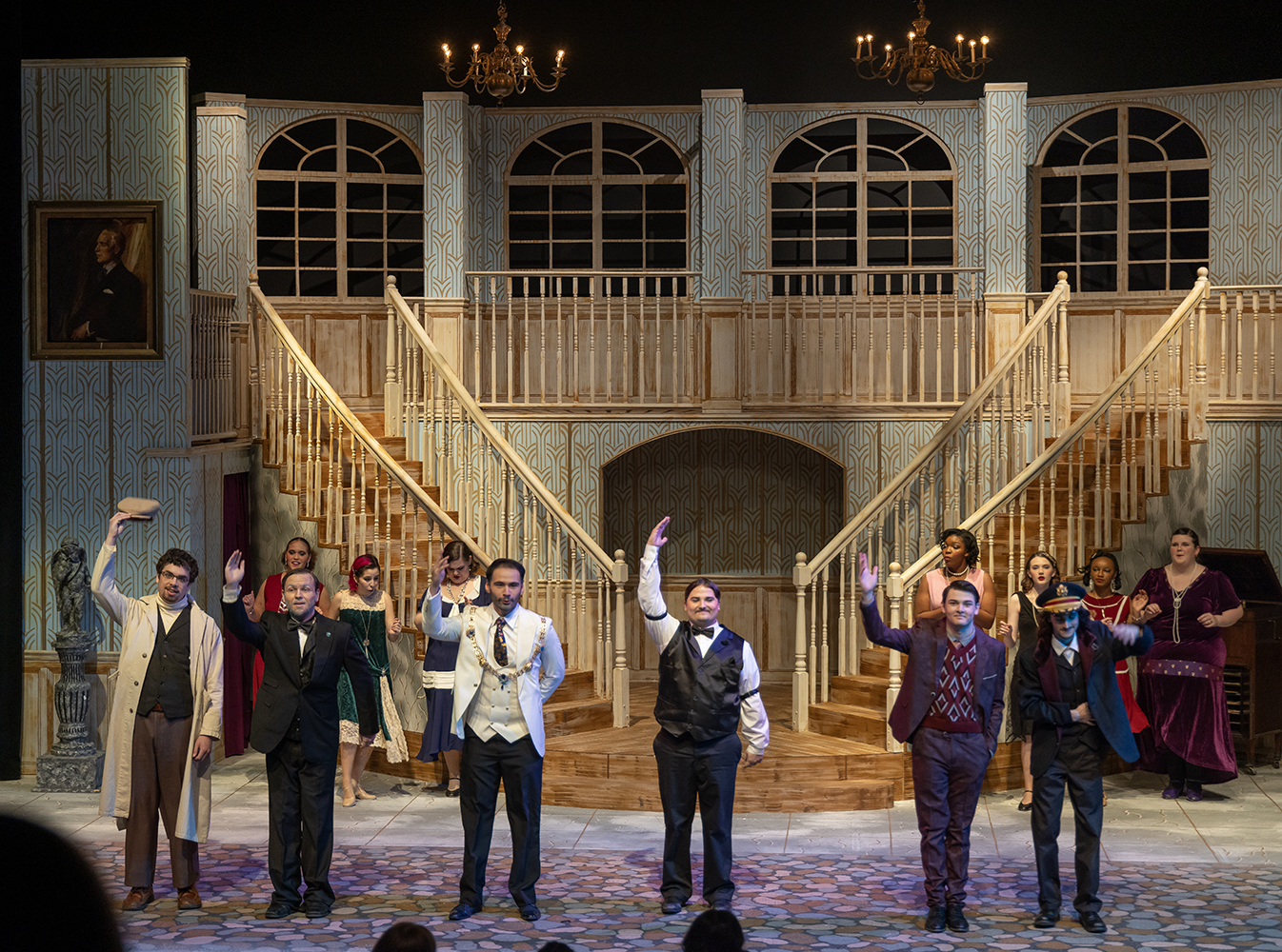
With only five actors and 36 characters flying in and out of scenes, The Hound of the Baskervilles was a theatrical juggling act, with a few wig, costume, and accent changes. Which is to say: it was impressive, ridiculous, and a lot of fun.
Before diving into the fun, we primed ourselves with a little chaos of our own: lunch at Post Market. In the spirit of the show’s variety, we went for food from all corners: noodles, rice, sushi, and African inspired power bowls— none of which appeared to be from the same restaurant.
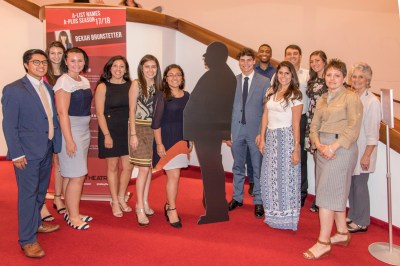
Our group included LEAP friends Bill and Carol Hyman and Wayne and Andrea Scott, along with students Macey Schank, Jacob Wessels, Chrissy Biello, Michelle Moya, Mikaela Baires, and Austin intern Cinthia Villarreal. We showed up full and ready for whatever the Alley threw at us.
The Hound of the Baskervilles follows Sherlock Holmes and Dr. Watson as they investigate the mysterious death of Sir Charles Baskerville and the legend of a supernatural hound that haunts his family’s estate. In this version, five actors take on dozens of characters, adding a fast-paced, comedic twist to the story.
When we saw Todd Waite last month at Murder by the Book, he mentioned how Sherlock Holmes is, frankly, a smart aleck, but one you can’t really get mad at, because he’s always right on the nose. Having heard him talk about the role made seeing him perform it even better. His timing, his wordplay, and even his smallest asides all landed with precision. He clearly knows Sherlock inside and out.
Dylan Godwin was another fan favorite in this show among our group. As the Texan heir to the Baskerville estate (among a dozen other characters), he was constantly shifting personalities and finding ways to distinguish the hilarious traits for both a grumpy street cop and a simple minded Texan—even when they are both in the same scene!
In all, this was a great experience for the LEAP Center to share with some amazing community friends.
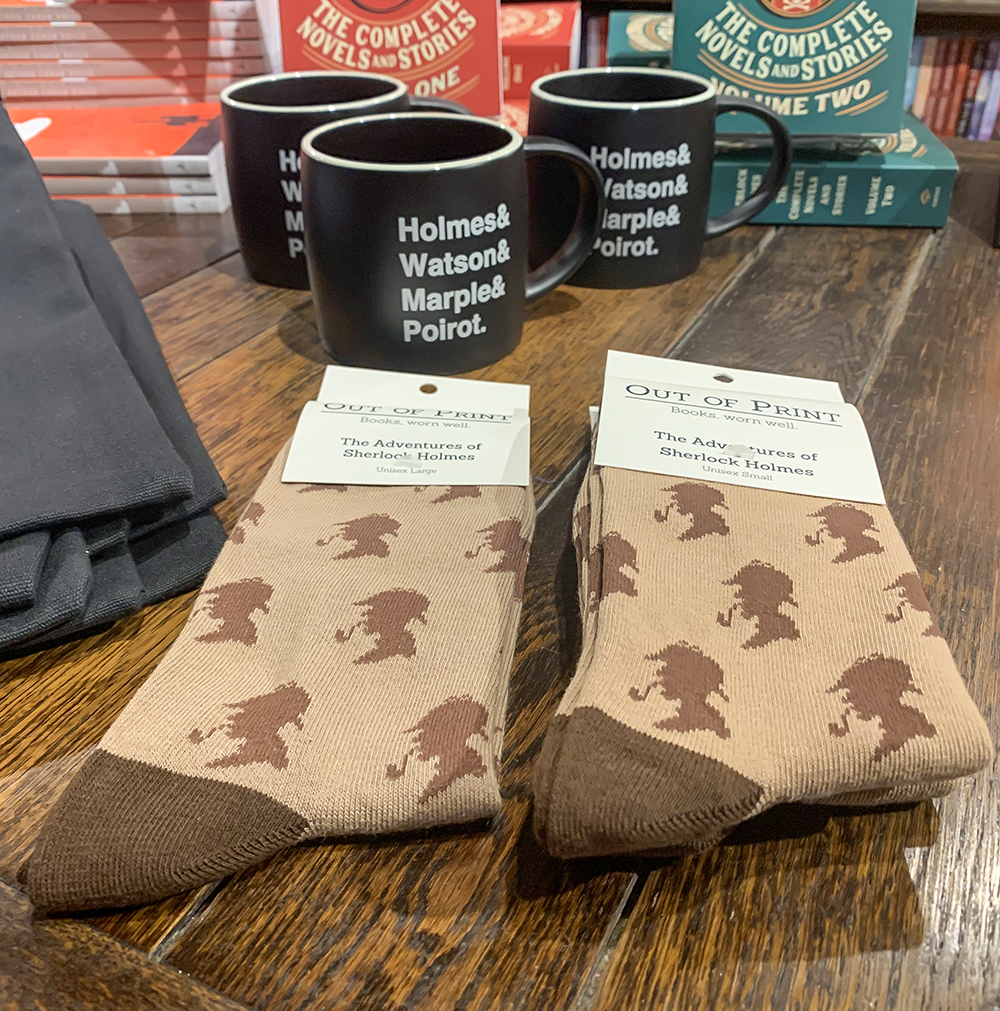
We were at Murder by the Book, and we had some time to “kill.” We leafed through the Michael Connelly, thumbed the Agatha Christie, photographed the many Sherlock Holmes artifacts on display…
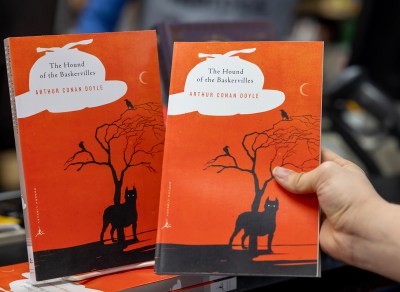
…and even bought a “Hound of the Baskervilles.”
But the real reason we were there was to see Todd Waite.
With 25 years at the Alley Theatre and an incredible 135 productions under his belt, he’s an institution in Houston theater. When he announced that he will be semi-retiring following his upcoming lead role in Baskerville: A Sherlock Holmes Mystery, we felt the “weight” of the occasion. It was “elementary:” we purchased tickets.
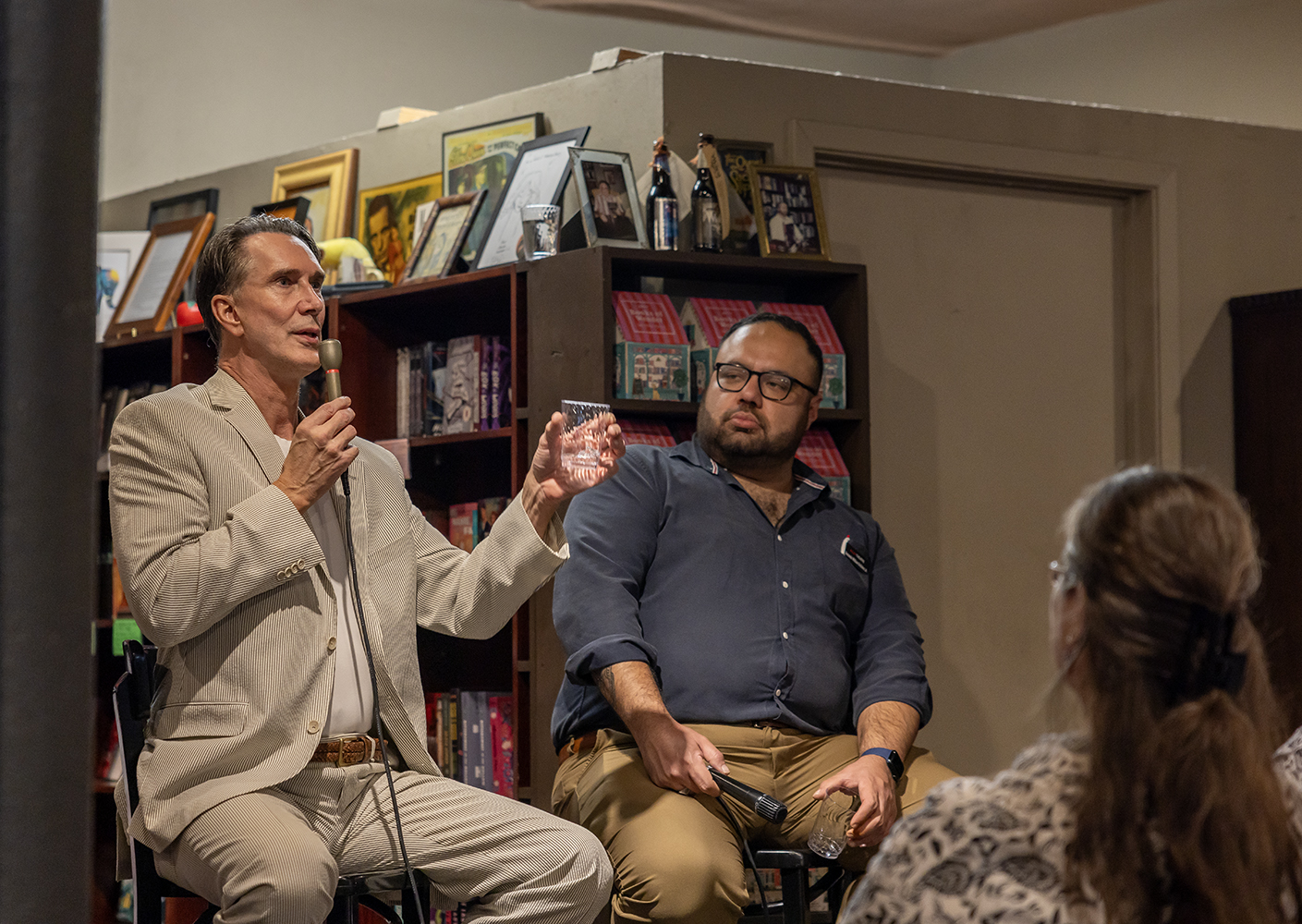
As a prelude to opening night, Waite spoke at Murder by the Book, where he took the stage to the delight of a full house.
During the discussion, Waite discussed his love of language, a passion instilled in him by his mother, an English teacher who taught him early on to appreciate the weight of every word. This foundation shaped his approach to performance, where even the smallest vocal shift—from “ah” to “oh”—can redefine a line’s meaning.
He spoke about the complexity of human emotion and how, beyond the broad categories we assign feelings, true depth is conveyed through inflection, gesture, and tone.
His role as an actor, he explained, is to bring those nuances to life in a way that honors the writer’s intent. He illustrated these ideas with stories from his career, sharing insights from specific productions that influenced his philosophy.
Theater, he notes, is a form of alchemy—combining words, movement, and presence to create something greater than the sum of its parts, and this is something the LEAP Center tries to capture in its approach to education, incorporating the fine arts, history, law, politics, and literature into its curriculum. It is perhaps appropriate, then, that a majority of LEAP students have seen their first professional play with Waite on the Alley Theatre’s stage.
LEAP Students / Alumni at the Alley’s “Thirty-Nine Steps”
The Alley Theatre itself is something of an anomaly in contemporary American theatre. According to Waite, the Alley employs a full-time, year-round resident company—one of the few, if not the only, to do so. And this, of course, allows the residents of Houston and the surrounding areas, to see first-class theatre year-round.
Although we bid farewell (for now) to Waite’s (Murder by the Book) performance, we eagerly anticipate seeing him take the stage once more as a resident of the theatre company on April 13. We anticipate Baskerville leaving audiences “howling” for more.
Somehow, within the span of one year, an organization devoted to “law, engagement, and politics” has managed to see 10 plays in a 12-month period. the most recent of these was this past Saturday, when we saw Twelfth Night by William Shakespeare, performed by SHSU’s Department of Theatre and Musical Theatre.
To briefly summarize, the play begins with a shipwreck that separates twins, Viola and Sebastian. Believing her brother to be lost at sea, Viola disguises herself as a man named Cesario and enters the service of Duke Orsino. Orsino, deeply in love with Lady Olivia, sends Cesario (Viola) to woo Olivia on his behalf. However, Olivia falls for Cesario, unaware of Viola’s true identity, while Viola herself harbors feelings for Orsino. In other words, a true kerfuffle!
With any good Shakespeare play, there is a fantastic subplot. Olivia’s steward, Malvolio, becomes the target of a prank by Maria, Sir Toby Belch, Sir Andrew Aguecheek, and Fabian. They trick him into believing Olivia loves him by forging a letter, along with some absurd instructions—wear yellow stockings, cross-gartered, and smile constantly at Olivia, who only welcomes melancholy. Malvolio’s monologue was by far my favorite moment in the play, as the humor of the prank is unfolding alongside a quite passionate and unwitting Malvolio.
Ultimately, as with all Shakespeare’s comedies, the play ends with multiple reunions and resolutions. Viola’s true identity is revealed, allowing her to reunite with her lost twin, Sebastian. Olivia, who had fallen for Cesario (Viola in disguise), is surprised but happy to find herself married to Sebastian instead. Orsino, realizing Viola’s love for him, shifts his affections and proposes to her. Meanwhile, the prank on Malvolio is exposed, but he exits vowing revenge rather than joining in the happy ending.
SHSU’s approach to the play, in terms of design, was quite interesting to me. With a 1920’s Art Deco style, one could imagine the themes of living in excess, false appearances and social ambition. In all, our group thought everything was well executed, entertaining, and all the more thought provoking. If this crowd was any judge of the performance, then the SHSU Theatre Department delivered a hit!
Music, murder, mayhem: what’s not to love? That’s pretty much how LEAP students felt about Bob Fosse’s “Chicago,” performed this week in College Station.
Performed at the Rudder Theater on Texas A&M University’s Campus, “Chicago” is in the midst of a seemingly endless national run. This tour included Taylor Lane (Velma Kelly), Ellie Roddy (Roxie Hart), Connor Sullivan (Billy Flynn), Andrew Metzger (Amos Hart), Illeana Kirven (as “Mama”), with Lane and Kirven as particular standouts (the latter is from Tyler, TX).
For those who haven’t seen it, the play is a satire on the strange world of celebrity in the United States, particularly the country’s tendency to elevate the most notorious of criminals. Written in the 1970s, the musical anticipates a world in which people such as O.J. Simpson, Kim Kardashian, Brittney Spears, and the “Hawk Tuah” girl are seen as influencers.
Such individuals not only escape the criminal justice system, but they also seem to win in the court of public opinion, maintaining a celebrity status.
In the musical, the story of Roxie Hart is told through songs. Hart, who is indicted for the murder of her lover, obtains a not guilty verdict through the “Razzle Dazzle” of her Johnny Cochran-like attorney, Billy Flynn. As salacious as Hart’s case is, however, she competes with the girls of the “Cell-Block Tango” among others for attention from the media and the public.
With a rewritten narrative of the murderous night (“We both reached for the gun“) and the manipulation of Roxie’s hapless husband, Amos (Mr. Cellophane), Roxie is acquitted.
But in a world where everyone receives 15 minutes of fame, Hart’s fame gives way to others, and she and Velma Kelly are relegated to Vaudeville, a kind of forerunner to TikTok.
For a group of aspiring lawyers in the 21st century, it was a worthy fable and a wonderful night of entertainment.
Indeed, different aspects of it appealed to each of us. For Chrissy, she enjoyed Bob Fosse’s choreography and the song “Nowadays.” Olivia enjoyed “Cell Block Tango” and, even more so, “We Both Reached for the Gun.” Michelle, on the other hand, favored “Me and My Baby” and the satire and irony that suffused the production–the very first play she has seen! For Mike and Stephanie, a “favorite” is less clear, but “All That Jazz” never gets old.
Nor does “Chicago: The Musical,” which is why it is the longest-running American musical in Broadway history. And the third time–but not the last–that LEAP Ambassadors have seen the production!
On our first day in New York City, we decided it would be a good idea to explore the area and familiarize ourselves with the surroundings, including the subway system. It turned out to be a great decision, as we encountered many fascinating and exciting sights along the way!
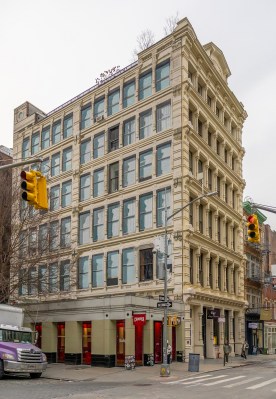
As we began walking through the city, Professor Yawn noticed our proximity to the historic Prince Street. Along this notable street stands the first Richard Haas mural, which Olivia enthusiastically recognized and pointed out as we approached.
Richard Haas’s First Mural, 1974
The mural, gracing 112 Prince Street since 1974, features intricate details that have been thoughtfully added over the years. But even as an early work, it reflects Haas’s artistic and architectural sensibilities, as well as his ability to transform a space through art.
Haas, who lives in New York, once spent a summer working for Frank Lloyd Wright, before embarking on a successful career as what the New York Times referred to as an “urbanologist.”
Thanks to the work of Linda Pease, Haas brought his Urbanology to Huntsville, TX, where he has completed 15 exterior murals–the most of any city. Thus, despite being strangers in the strange land of New York City, we felt oddly at home.
Continuing our walk, Chinatown emerged as a fascinating destination; its narrow streets offered an authentic glimpse into this vibrant New York neighborhood.
To our delight, we found the New York City Hall, a magnificent French Renaissance Revival structure still bearing the inscription “New Amsterdam;” a beautiful reminder of the city’s Dutch origins.
Next on our route was Federal Hall, which was erected in the 19th century as a Customs House. Prior the construction of the present building, however, the site hosted many milestones in the formulation of the United States government. The US Congress, such as it was, met here in the 1780s, when the (semi) United States of America was governed under the Articles of Confederation, and even as the US Constitution was written to supersede the Articles, the First Congress met on this site–and the Bill of Rights was first proposed here. More relevant to our current trip, George Washington was inaugurated on the balcony of the old Federal Building–the first-ever US Presidential inauguration! Standing on this site, therefore felt particularly resonant, considering we will be witnessing the 47th presidential inauguration in DC on Monday!
Approaching the Brooklyn Bridge, we began to make the long way up; winds from the surrounding waters grew increasingly cold.
This suspension bridge, one of the oldest in the United States, goes over the East River and connects Manhattan and Brooklyn.
When we reached the top, the spectacular view, however, made the chilly walk (the wind chill was in the teens) entirely worthwhile!
A shift in the atmosphere became apparent when we visited the 9/11 Memorial. The names etched in bronze, the twin waterfall pools, and the One World Trade Center made us all feel reflective. Saturday, we will get the chance to visit the museum, something we are greatly looking forward to as it will allow us to educate ourselves more on that disastrous day.
Before heading back to prepare for our evening of theater (Hadestown and Sunset Boulevard), we stopped at Zuccotti Park to observe Mark di Suvero’s “Joie de Vivre.” The 70-foot red steel sculpture definitely stands out against the Financial District backdrop, with its modern design creating an interesting contrast with the surrounding area.
Finally, we returned to the subway, hoping our earlier experiences had made us experts. Despite our optimism, we still struggled to navigate the system (particularly myself), but successfully made our way back to the hotel to prepare for an evening of theater.
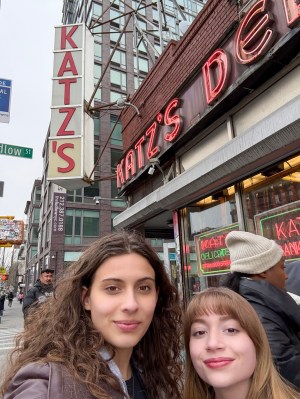
Katz’s Deli
Although our time in NYC is short, we hope to squeeze in as many quality (and affordable) restaurants (and coffee shops) as possible. Thus, amidst our rambles on New York’s sidewalks, we espied Katz’s Deli, which was rated as the “Best Deli” in the Big Apple by Zagat, while also regularly appearing in the New York Times’ various “best of” lists. It is also notable for the many films that have set scenes in the Deli, including Donnie Brasco, We Own the Night, The Sidewalks of New York, and most famously, When Harry Met Sally.
Being new to the place, we weren’t familiar with the unique ordering system of Katz’s. When you enter, you are handed a ticket, which you then take to a counter where one of approximately 15 “cutters” are stationed. The cutters, so named because they cut the meat in front of you, offer suggestions and samples, and so it was that Professor Yawn ordered Pastrami…
…and Olivia ordered a Reuben.
Chrissy, for her part, took a different approach, veering from the “I’ll have what she’s having” custom at Katz’s. To hear Chrissy tell of her upbringing–an upbringing that changes upon retelling, depending on her energy level and degree of coherence–she was fed baloney, almost exclusively, for the first six or seven years of her life.
If we followed this narrative correctly, this prompted her to order “soft salami.” Despite gentle nudges from the cutter to consider the pastrami, Ms. Biello remained obdurate, insisting on the salami. The cutter, clearly disappointed, complied, although his look of disappointment was palpable.
Just because we ordered separate foods, however, doesn’t mean we actually ate separately. Chrissy shared in both the pastrami and the Reuben, while all of us sampled all the food at our table.
While we can’t compare Katz’s to other NY Delis, we were in general agreement that we don’t get Pastrami or Corned Beef as good in Texas…and we have a full appreciation for why the New York Times called this institution–in business since 1888–the “king of New York delis.”
Hadestown on Broadway
by Olivia Discon
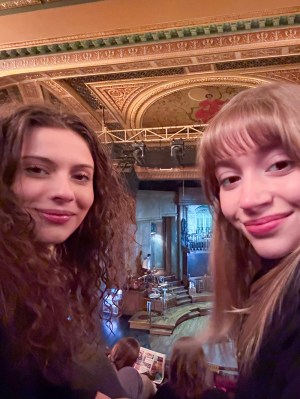
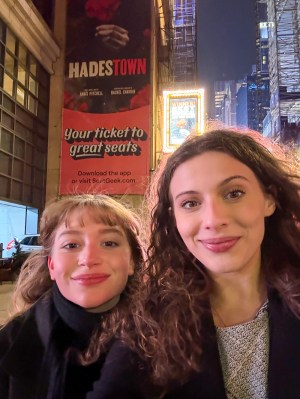
After spending the day exploring New York, Chrissy and I ended the night with a Broadway show—Hadestownat the Walter Kerr Theatre. Watching a production in this historic venue was an incredible experience, and Hadestown lived up to its reputation as one of Broadway’s best.
Written by Anaïs Mitchell, Hadestown is a retelling of the ancient Greek myth of Orpheus and Eurydice. The story follows Orpheus, a musician, and his journey to the Underworld to rescue his love, Eurydice, from Hades. The story covers some heavy hitting subjects while successfully executing a modern day retelling of the tragedy.
Chrissy and I both thoroughly enjoyed the set design.
The stage featured three spinning circles that worked like a treadmill, adding fluidity to the choreography and creating a sense of constant motion. This small but awesome detail elevated the performance and made every scene feel dynamic and alive.
The live jazz band, positioned on stage, was another highlight. Their presence both in song and in sound effects elevated the entire experience. It sort of reminded me of the live band that played at the first play I saw with LEAP, Chicago!
For Chrissy, Hermes (played by Malcolm Armwood) was the standout character, while I loved Persephone (played by Allison Russell). Both actors were incredibly talented and brought vastly different elements to the production. This cast can sing!
Seeing Hadestown has been a dream of mine for years, and getting to experience it with LEAP made it even more special. It’s a night I’ll cherish for a long time.