Skip to content

Center for Law, Engagement, and Politics

Leap At SHSU!

  • About LEAP
  • LEAP Ambassadors
Center for Law, Engagement, and Politics

Tag: LEAP Center

Talking COVID with Dr. Gerald Parker

Dr. Gerald Parker is the Director of the Scowcroft Institute’s “Biosecurity and Pandemic Policy Program,” and he has served as the Deputy Assistant Secretary of Defense for Chemical and Biological Defense and as the Deputy Assistant Secretary for Preparedness and Response at the Department of Health and Human Services.  In short, he is qualified to discuss the Corona Virus, and that’s what he did last, giving LEAP students an opportunity to learn more about the public crisis that is, we hope, a once-in-a-lifetime event.

SHSU, LEAP Center, Center for Law Engagement And Politics, COVID, Coronavirus, TAMU, Bush School of Government and Public Service, Scowcroft Institute, Dr. Gerald Parker

Dr. Parker began by giving an overview of the ever-growing numbers of COVID cases and deaths in the US.  He also pointed out the most common victims of the virus: (1) those over 65 (in Texas, 75 percent of those who die from the virus are 65 or older); (2) those with existing health conditions; (3) those in long-term care facilities (prisons and nursing homes); and (4) those in meat-packing plants.

SHSU, LEAP Center, Center for Law Engagement And Politics, COVID, Coronavirus, TAMU, Bush School of Government and Public Service, Scowcroft Institute, Dr. Gerald Parker

And while the US may have peaked–at least in its first wave–there are numerous possible scenarios for how this may play out.  The big takeaway, is that despite the re-opening, the virus threat has not passed.  Dr. Parker saw three possible future scenarios: (1) a series of peaks and valleys; (2) a second wave in the fall; or (3) a smaller fall peak, with continuing flare ups.  In many respects, the first of these may be the most difficult, at least in terms of planning.  Of course, a second large wave could also make for strains on the health-care system.

SHSU, LEAP Center, Center for Law Engagement And Politics, COVID, Coronavirus, TAMU, Bush School of Government and Public Service, Scowcroft Institute, Dr. Gerald Parker

To make re-opening successful, Dr. Parker advocated for: (1) getting up to speed on (a) contract tracing, (b) testing, and (c) identifying hot spots, so that additional steps can be taken in those areas; (2) continuing to practice social distancing and other common-sense measures; (3) ensuring our hospitals and other institutions are prepared should another major wave occur, which Dr. Parker thinks could be likely.

Dr. Parker’s program was educational, if sobering, and we look forward to future programs from the Bush School.


Unknown's avatarAuthor mikeyawnPosted on May 11, 2020Format AsideCategories Civic Engagement, Health, PoliticsTags Bush School of Government and Public Service, Center for Law Engagement And Politics, Coronavirus, COVID, Dr. Gerald Parker, LEAP Center, Scowcroft Institute, SHSU, TAMULeave a comment on Talking COVID with Dr. Gerald Parker

COVID-19 and the Food Supply Chain

With finals underway, our  numbers dwindle, but some hardy LEAP Ambassadors tuned in to the Bush School‘s/Scowcroft Institute’s weekly COVID-19 update, with this one focusing on the food supply chain.

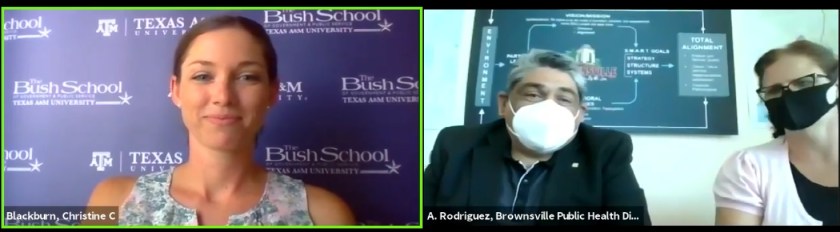
Dr. Blackburn led off the show…

SHSU, LEAP Center, Center for Law Engagement And Politics, BUSH School of Government and Public Affairs, Scowcroft Institute, TAMU, COVID-19

by introducing Brittany Segundo, a Fellow at the Scowcroft Institute specializing in supply chains (and a Ph.D. student studying engineering).   Segundo discussed meat products, and the spike in coronavirus illnesses among food workers.  This is largely a product of the lack of social distancing in the plants, but it’s also possible that the workers need the N95 Respirator masks instead of just the less stringent masks.

SHSU, LEAP Center, Center for Law Engagement And Politics, BUSH School of Government and Public Affairs, Scowcroft Institute, TAMU

Segundo stressed that there really shouldn’t be a substantive shortage. Rather, we might see a bit of a bump in prices and less variety.  Some stores might put a limit on the number of, say, meat packages a customer can buy, but that’s not because of a shortage.  It’s more to prevent a run on meats, much as there was over purchasing of toilet paper early in the pandemic.

SHSU, LEAP Center, Center for Law Engagement And Politics, BUSH School of Government and Public Affairs, Scowcroft Institute, TAMU, COVID-19

Another factor is that with the government shutdowns, the demand for many agricultural products has dropped, leading to reports of farmers ‘dumping’ some of the produce.  Some have asked, “Why can’t those food items be donated to non-profits and food banks?”  One of the reasons for this is that it costs a lot of money to re-distribute those items to new locations and, often, in new packaging.  Suppliers who are already losing money cannot readily incur additional costs associated with the logistics of donating to new venues.

Dr. Christine Blackburn then stepped in to discuss the effect of COVID-19 on high-value commodities0–fruit and vegetables and other items that are labor intensive to harvest.

SHSU, LEAP Center, Center for Law Engagement And Politics, BUSH School of Government and Public Affairs, Scowcroft Institute, TAMU, COVID-19

One difficulty there is that the labor for these products often comes from international sources.  These workers are often either undocumented or require H2A visas, and, because of COVID-19, fewer of these visas were issued this year.  This has resulted in a reduction of labor.

Additionally, many of these workers live or work in tight spaces, making social distancing difficult.  This results in a higher rate of absenteeism, another factor impeding production and distribution. So, for consumers, we may see higher prices and more limited products, but the real impact will be on farmers and those who work for farmers, whose incomes are being affected.

Blackburn and Segundo then took questions.

SHSU, LEAP Center, Center for Law Engagement And Politics, BUSH School of Government and Public Affairs, Scowcroft Institute, TAMU, COVID-19

One important question involved whether we are any closer to achieving “herd immunity”?  This is a difficult question, and according to Dr. Blackburn, we still don’t know if having the disease produces immunity. If it doesn’t, then we won’t achieve herd immunity.  If it does, the medical community will need to determine how long the immunity lasts.  Additionally, it’s possible that a certain amount of antibodies are needed to achieve immunity, and the tests may not be sufficiently sensitive to determine this.  Finally, there is the issue of false positives.  If the false positive rates are high, then you have people who think they are immune, but aren’t actually immune. That makes them more vulnerable for future infections.

The big question was: is this the right time for the shutdown to end?  Dr. Blackburn struggled with how to answer this, noting that the answer to this depends on factors relating to health, economics, and social aspects of our lives. She also mentioned that she has friends who are out of work, parents struggling with children at home, and she understand the impact of the shutdown.

SHSU, LEAP Center, Center for Law Engagement And Politics, BUSH School of Government and Public Affairs, Scowcroft Institute, TAMU, COVID-19

But looking at it from a health-only perspective–from a “disease-containment standpoint,” as she said it–“now is not the right time” to end the shutdown.  Blackburn noted that Texas has an increase in cases over the past two weeks, and she expects in 3-4 weeks, we’ll see much larger numbers of cases in Texas, and 3-4 weeks after that, we’ll see a larger number of deaths.

She further pointed out that different specialists look at different areas: economists look at the economic impact of a government shutdown and/or disease; health experts look at the health impact.  Elected officials have to weigh those and make good decisions.


Unknown's avatarAuthor mikeyawnPosted on May 6, 2020Format AsideCategories Civic Engagement, Food, PoliticsTags Bush School of Government and Public Affairs, Center for Law Engagement And Politics, COVID-19, LEAP Center, Scowcroft Institute, SHSU, TAMULeave a comment on COVID-19 and the Food Supply Chain

Joshua Landis Speaks about Syria

By Quinn Kobrin,

This week, the LEAP ambassadors got a brief break from COVID-19 discussions to hear Joshua Landis, the head of the Center for Middle Eastern Studies at the University of Oklahoma, speak about Syria and its current struggles in peace in an event hosted by the World Affairs Council of Greater Houston.

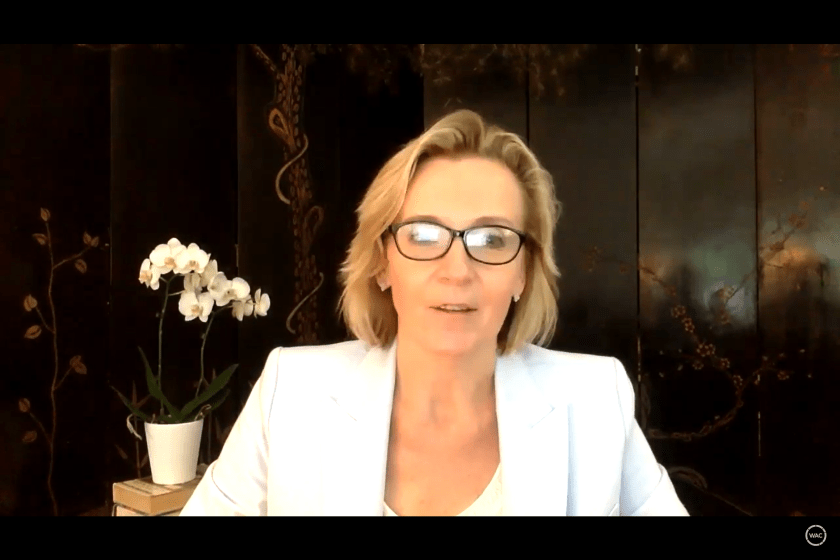
After an introduction from WAC Director Maryanne Maldonado…

SHSU, LEAP Center, LEAP Ambassadors, Center for Law Engagement And Politics, World Affairs Council of Greater Houston, Syria, Joshua Landis

…the event began with Basmah Ghauri – the Director of International Programs for the World Affairs Council – moderating.

SHSU, LEAP Center, LEAP Ambassadors, Center for Law Engagement And Politics, World Affairs Council of Greater Houston, Syria, Joshua Landis

The discussion started off with an overview of the Syrian Civil War, and who the key players are in the fight for control.

According to Dr. Landis, a vast majority of people in Syria have been hoping for a change in leadership. The Ba’ath Party has held leadership for decades, and is the political party of the current president, Bashar Hafez al-Assad.

SHSU, LEAP Center, LEAP Ambassadors, Center for Law Engagement And Politics, World Affairs Council of Greater Houston, Syria, Joshua Landis

The Assad family has been ruling as dictators for nearly 40 years, and it has long been the objective of the Syrian population that dictatorships such as this one be brought to an end. One major reason for this has been the class disparity and major income gap. As wealth made its way into Syria, and the upper class began driving fancy cars when most people had no car at all, the class differences became all too clear.

Landis proceeded to point out some of the challenges facing Syria throughout its military, social, and economic struggles. One of these is the international sanctions placed on Syria by the United States. Landis noted that these have been devastating to the Syrian regime and has done more harm to its people than its leaders. These sanctions have also been extended to anyone who does business in or with Syria, and so their amount of trade partners have begun shrinking.

SHSU, LEAP Center, LEAP Ambassadors, Center for Law Engagement And Politics, World Affairs Council of Greater Houston, Syria, Joshua Landis

Another of these challenges is the substantial cost of rebuilding Syria. Landis explained that it would cost nearly $300 billion to restore Syria, however the GDP is currently $9 billion, and the government only has $1 billion set aside for rebuilding.

Dr. Landis then discussed Syria’s rocky relationship with the United States. Ms. Ghauri asked whether there would be any leniency due to COVID-19. Landis said that the European Union has asked as much, but the United States government has said no, which means the aforementioned sanctions will remain in place.

The U.S. also has a strained relationship with the Kurdish population of Syria, which it enlisted to help in the war against ISIS. Apparently, as soon as ISIS was defeated, President Trump withdrew American troops and ended the U.S.’ alliance with the Kurds in order to avoid conflict with Turkey (whose government views the Kurdish population as a violent and radical group). America had no intention of supporting the Kurds long-term. As Landis explained it, “You sometimes have to use deceit to get your way in war.”

In order to come to a peaceful resolution, the United States is requiring regime transitions, United Nations backed elections, and for the Iranian military to vacate Syria to prevent Russia from having a foothold in the Middle East.

SHSU, LEAP Center, LEAP Ambassadors, Center for Law Engagement And Politics, World Affairs Council of Greater Houston, Syria, Joshua Landis

The main takeaway from the conversation was that, while U.S. sanctions and economic deprival may prevent Syria from becoming a threat, it also hurts the people of Syria, those of the lower and middle class, and prevents the nation from being rebuilt and having structure and peace once again.

I appreciate Dr. Landis and Ms. Ghauri taking the time to discuss the situation in Syria. I definitely learned a great deal about a topic I knew very little about, which is something I find myself saying after most WAC events!

Unknown's avatarAuthor mikeyawnPosted on May 5, 2020Format AsideCategories Civic Engagement, Law, PoliticsTags Center for Law Engagement And Politics, Joshua Landis, LEAP Ambassadors, LEAP Center, SHSU, Syria, World Affairs Council of Greater Houston1 Comment on Joshua Landis Speaks about Syria

COVID-19 at the Local Level

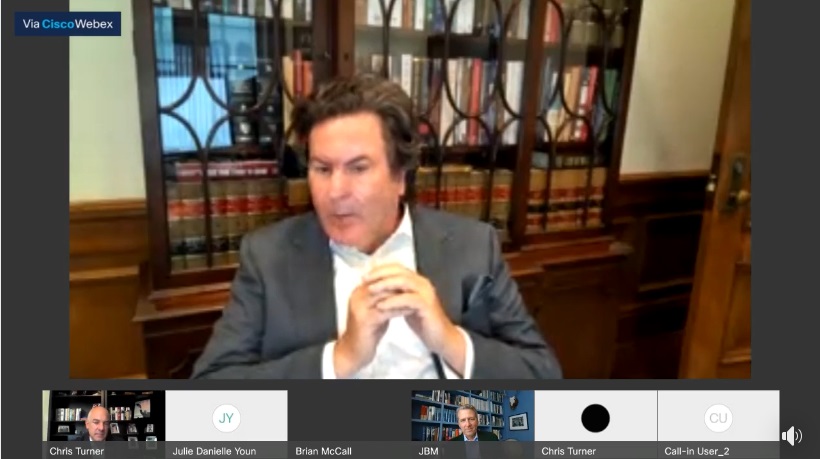
If there’s one thing we’ve learned about a pandemic, it’s that it hits every level of government.  So the Bush School at TAMU hosted experts on local government in the latest episode of “Uncorked:” Dr. Ann Bowman and Dr. Robert Greer.  As usual, the program was hosted by Justin Bullock and Dr. Gregory Gause.

SHSU, LEAP Center, Center for Law Engagement And Politics, COVID-19, TAMU, Bush School Uncorked, Dr. Ann Bowman, Dr. Robert Greer, Justin Bullock, Dr. Gregory GauseThe panel got into more politics than usual this time, but they still managed an informative session, focusing on the impact of the COVID-19 pandemic on local and state governments.

As Dr. Greer noted, the pandemic has hit local and state governments in two ways: (1) rapidly rising costs, and (2) decreased revenues.  For states such as Texas–which, with no property or income tax, relies heavily on sales tax–the decline in revenue is especially severe.

Right now, researchers have projected that state governments will face a shortfall of 500 billion dollars.  Although many states have a rainy-day fund, even fully suing this fund would leave a shortfall of 360 billion dollars, and this shortfall is before many of the costs of COVID are factored in.  So, clearly the states are in a fiscal jam.

When states and municipalities face challenges, the US economy faces challenges.  When there is a budget shortfall, states and localities layoff workers and, as Dr. Greer noted, about 13 percent of the US workforce is made up of state and local workers.

SHSU, LEAP Center, Center for Law Engagement And Politics, COVID-19, TAMU, Bush School Uncorked, Dr. Ann Bowman, Dr. Robert Greer, Justin Bullock, Dr. Gregory Gause

So, what can the federal government do?  All agreed that a unified, consistent message would be helpful.  They also seemed to agree that the CARES act, which provided assistance to local and state governments, as well as large and small businesses, was a step in the right direction.

SHSU, LEAP Center, Center for Law Engagement And Politics, COVID-19, TAMU, Bush School Uncorked, Dr. Ann Bowman, Dr. Robert Greer, Justin Bullock, Dr. Gregory Gause

Additional funds will be needed, and where that money goes and how it will be allocated were concerns.  Greer mentioned money to the unemployed–of whom there are now record numbers–is a good way to pump the economy.  With little or no income, these workers will spend the money they receive, which multiplies through the economy.

The panel also responded to audience questions, at least one of which asked about the food supply.  This was a particularly timely question, inasmuch as Tyson has had to shut down several plants owing to large numbers of employees falling prey to the COVID virus.  At this point, the meat supply to the nation has dropped precipitously: production of pork, beef, and chicken, has fallen 30 percent, 15 percent, and 10 percent, respectively.  While this shortfall has yet to hit the stores (because of existing stockpiles), it will hit soon.  Indeed, today, President Trump indicated he would invoke the Defense Protection Act and order those plants to remain operational.

SHSU, LEAP Center, Center for Law Engagement And Politics, COVID-19, TAMU, Bush School Uncorked, Dr. Ann Bowman, Dr. Robert Greer, Justin Bullock, Dr. Gregory Gause
While Trump’s decision was, obviously, a federal action, cities, counties, and states play a role, too.  Most of our food inspection, for example, is done at the local level and, of course, the labor pool comes from cities and counties across the country.  In the case of these meat plants, the labor pool comes often from small cities and counties, where the meat plant may be a primary employer.

This is a new angle to the COVID-19 pandemic, one not much covered by the national media but, arguably, more important than the topics that are often covered.  In short: it was another educational program hosted by the Bush School at TAMU.


Unknown's avatarAuthor mikeyawnPosted on April 29, 2020Format AsideCategories Civic Engagement, Jobs, PoliticsTags Bush School Uncorked, Center for Law Engagement And Politics, COVID-19, Dr. Ann Bowman, Dr. Gregory Gause, Dr. Robert Greer, Justin Bullock, LEAP Center, SHSU, TAMULeave a comment on COVID-19 at the Local Level

COVID, Health, and the Economy

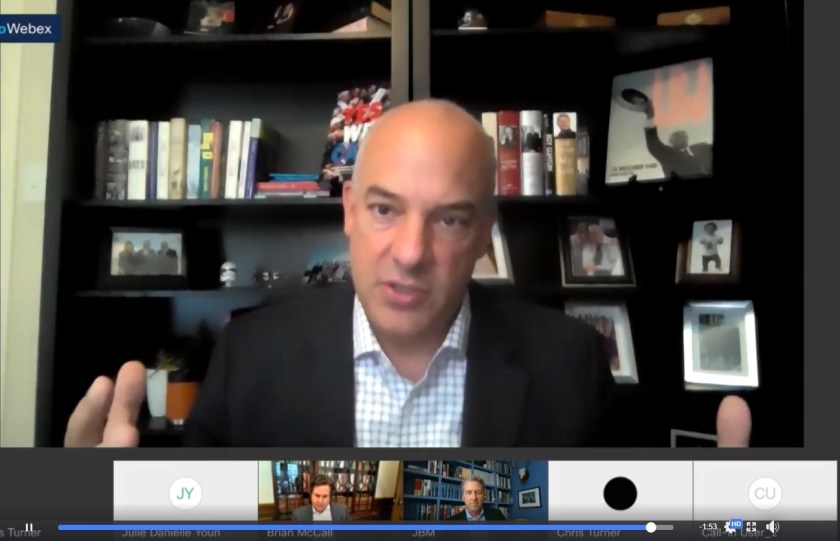
If it’s Monday, it must be time for Dr. Christine Blackburn’s update on COVID-19, and, today she had Dr. Raymond Robertson, Chair in Economics and Government in the Department of International Affairs at the Bush School of Government and Public Service and the Director of the Mosbacher Institute for Trade, Economics, and Public Policy.

SHSU, LEAP Center, Center for Law Engagement And Politics, TAMU Bush School of Government and Public Service, Scowcroft Institute, Dr. Christine Blackburn, Dr. Raymond Robertson

Dr. Blackburn began by highlighting a trend noted by doctors: young people–those not typically in mortal danger from COVID-19–are developing blood clots while afflicted by the virus.  In many cases, the virus is what would be considered a light case, so victims might not go to the doctor’s or hospital, but making such a trip, if for no other reason than to ask about a blood thinner, might be warranted.

SHSU, LEAP Center, Center for Law Engagement And Politics, TAMU Bush School of Government and Public Service, Scowcroft Institute, Dr. Christine Blackburn, Dr. Raymond Robertson

Dr Robertson discussed the economic impact of COVID-19, noting that an unprecedented number of people have filed for unemployment over the past month.  While he observed that this is, in and of itself, sufficiently bad, he explored ways that it could get worse.  Globally, all economies are being hit by this pandemic, but the US is struggling in particular, and its struggles could ramify throughout the world: by buying fewer products–most of which are produced elsewhere–the contraction of the US economy leads to shrinkage elsewhere.  In addition, it’s possible that some of the job losses could be permanent.

SHSU, LEAP Center, Center for Law Engagement And Politics, TAMU Bush School of Government and Public Service, Scowcroft Institute, Dr. Christine Blackburn, Dr. Raymond Robertson

On the plus side, Robertson said that the number of unemployment claims has declined for the past three weeks, and, if businesses can re-open in the next few weeks, it’s likely that many of those jobs will not be permanently lost.

The duo also took questions.  For Dr. Blackburn, the question was asked, will serology tests allow people to return to work in large companies (such as TAMU)?  Dr. Blackburn responded cautiously, noting: (1) it will take a lot of tests to test all the people who need to be tested in such a scenario; (2) there are concerns about such tests and their false positives–which means the test says you have had COVID, but you actually haven’t; and (3) the medical community has not established definitively that having had COVID leads to immunity.  She added that with similar viruses, the immunity has only lasted for a matter of months, not permanently.

Dr. Robertson was asked a particularly tough question: how much is a life valued in economic terms?  That is, how much of a “hit” should we take on the economy to save lives?  Interestingly, he said that the EPA actually has such a number: 10,000,000 dollars.  He further pointed out that when you compare the number of lives lost thus far (56,000) to the amount of money we’ve spent to try to repair the economy (2 trillion), it comes out to about 53 million per person–or, about 5 times the amount the government typically uses as a “value” on human life.

He did point out that such a calculation is cold comfort if the person lost is close to you, and he highlighted the importance of this discussion and weighing these competing values.

It was, as usual, an informative Monday with the Bush School!

SHSU, LEAP Center, Center for Law Engagement And Politics, TAMU Bush School of Government and Public Service, Scowcroft Institute, Dr. Christine Blackburn, Dr. Raymond Robertson

Unknown's avatarAuthor mikeyawnPosted on April 27, 2020Format AsideCategories Civic Engagement, PoliticsTags Center for Law Engagement And Politics, Dr. Christine Blackburn, Dr. Raymond Robertson, LEAP Center, Scowcroft Institute, SHSU, TAMU Bush School of Government and Public ServiceLeave a comment on COVID, Health, and the Economy

World Affairs with Ambassador David Rank

By Maggie Denena,

Thanks to the World Affairs Council, select LEAP students stayed engaged with international affairs–and the ever-present COVID-19–even as SHSU remains on remote-only learning.  The WAC contiunes to host programs via webinar with already scheduled speakers and additional guests and Wednesday evening was no exception.

SHSU, LEAP Center, Centers for Law Engagement And Politics, LEAP Ambassadors, World Affairs Council Houston, Ambassador David Rank, COVID-19, China

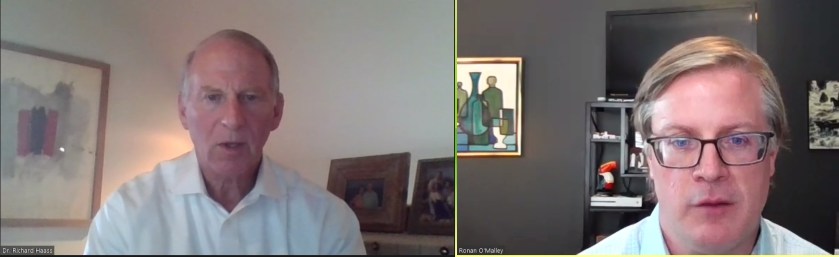
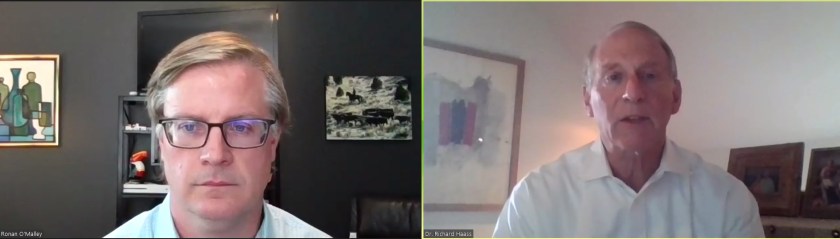
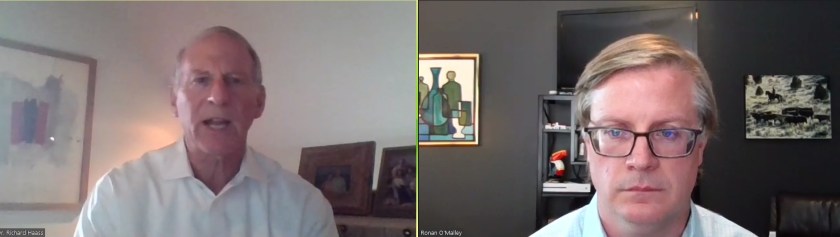
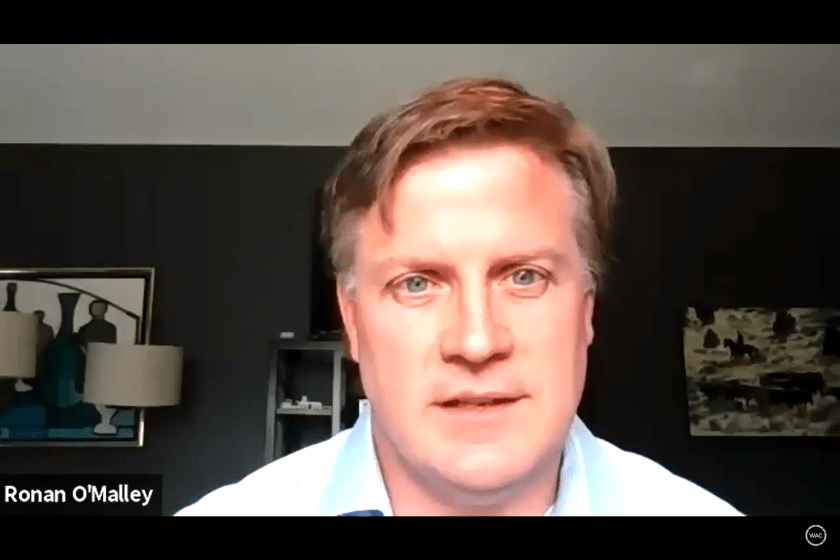
Ambassador Rank is the United States’ former acting Ambassador for China and served in the US Foreign Service from 1990-2017.  After an introduction by WAC Executive Director Maryanne Maldonado, the event moderator, Ronan O’Malley, opened the webinar by prompting Ambassador Rank to provide some basic introductory information about China’s political and economic principles–before steering the conversation towards the elephant in the room, COVID-19.

SHSU, LEAP Center, Centers for Law Engagement And Politics, LEAP Ambassadors, World Affairs Council Houston, Ambassador David Rank, COVID-19, China

With an economy second only to ours, China has had an increasing economic and political influence across the globe. However, there have been concerns with their current leadership, President Xi.  Despite their unusual communist-capitalist hybrid system (Ronan called it an “oxymoron”), President Xi’s autocratic ruling has caused concern for the decreasing political freedoms and basic human rights of the Chinese citizens living in China.

Ambassador Rank indicated that he considers the outbreak a textbook Chinese scenario, with the initial confusion and coverup before transitioning into an astounding and complete shutdown. He also suggested that China has been willing to pump aid around the world following the outbreak as a way to step into a more powerful global leadership role. Despite a few missteps, Ambassador Rank gave credit to China for legitimately trying to get supplies where supplies are needed.

One of the key problems addressed by Ambassador Rank is the US’s (over) reliance on foreign sources (chiefly China) for emergency supplies.  Might the US change its production or source of supplies?  According to Rank, “I suspect that when it’s ‘all said and done,’ more will be said than done.”

To continue with the US quality of life, specialization and global supply chains will likely continue, although we can hope we will be prepared with greater supplies and sources for the next emergency.

SHSU, LEAP Center, Centers for Law Engagement And Politics, LEAP Ambassadors, World Affairs Council Houston, Ambassador David Rank, COVID-19, China

O’Malley asked Rank about his assessment of the State Department and the difficulties they are having keeping career civil servants.  Rank pointed out that, with the US withdrawing from many international organizations and treaties, civil servants have a very difficult job of maintaining relationships.  “They didn’t sign up for that,” noted Rank, and the result has been a depleted staff, arguably at a time when that experience is most needed. As the US has voluntarily withdrawn from global leadership, Rank expects to see China step in to fill that vacuum.

SHSU, LEAP Center, Centers for Law Engagement And Politics, LEAP Ambassadors, World Affairs Council Houston, Ambassador David Rank, COVID-19, China

In wrapping up the discussion, Ambassador Rank used the opportunity to remind everyone listening that the only way to fight misinformation is by caring about your sources. He then gave some advice for those considering a career in international relations or foreign service by encouraging students to not only learn a foreign language but learn its culture as well. Exposure to the people and the way they communicate is essential to being successful in a foreign nation.

As always, the LEAP Center thanks the World Affairs Council for its programs.  LEAP Ambassadors Quinn Kobrin, Makayla Mason, and Maggie Denena would also like to thank future Bearkat Ethan Chang for participating in the event virtually, and they hope to be able to welcome him to SHSU in person once life returns to ‘normal.’


Unknown's avatarAuthor mikeyawnPosted on April 25, 2020April 25, 2020Format AsideCategories Civic Engagement, PoliticsTags Ambassador David Rank, Centers for Law Engagement And Politics, China, COVID-19, LEAP Ambassadors, LEAP Center, SHSU, World Affairs Council HoustonLeave a comment on World Affairs with Ambassador David Rank

Weekly COVID Update with Dr. Christine Blackburne

by Makayla Mason,

Dr. Christine Blackburne, the Assistant Director of the Scowcroft Institute’s Pandemic and Biosecurity Policy Program at the Bush School of Government Affairs and Public Service (whew!), conducts a weekly update on the COVID-19 virus, and those have proved informative to the LEAP Ambassadors, so we continue to tune in.

SHSU, LEAP Center, LEAP Ambassadors, LEAP Students, Center for Law Engagement And Politics, Texas A&M Bush School, Scowcroft Institute of International Affairs, Dr. Christine Blackburn

This week, she began the video with discussing masks, stating that masks are more designed to keep those who are infected from spreading it than protecting those who do not have it from becoming infected. She explained a few basic rules for using masks such as:

  • Masks need to be properly fitted.
  • When taking masks off, do not touch your mouth area, and immediately wash your hands.
  • Do NOT put masks on children under 2, anyone with breathing problems, or individuals who cannot remove the mask themselves.

Some people have been frustrated or confused by the changing policy on masks.  Originally, only infected people were encouraged to wear masks.  Now, everyone is encouraged to wear a mask.  Why the change?  Originally, the medical community had no idea there were so many asymptomatic carriers, and we wanted to ensure that sufficient masks existed for health care providers.  Now we know that it’s very possible that 50 percent (or more) of the infected could be carriers without even knowing it, it’s important that as many as people as possible wear masks.SHSU, LEAP Center, LEAP Ambassadors, LEAP Students, Center for Law Engagement And Politics, Texas A&M Bush School, Scowcroft Institute of International Affairs, Dr. Christine Blackburn

She then moved into answering the questions.

The first question asked if there were predictive models about the economic impact, if there are approaches for bringing people back to work, and if there are ways to “pandemic proof” the economy?  The problem, she noted, is that without accurate information, we cannot make good comparisons of life and economics, and it will be difficult to get this information before 3-4 months of data.

Some people have called for allowing greater mobility, letting people catch it (especially if so many people are asymptomatic), and developing herd immunity.  She points out, though, that we don’t know with accuracy what the reproductive number is (R nought).  Some estimates have been in the 6 range, and this would mean that 82 percent of the people would need to be infected before herd immunity took effect.

SHSU, LEAP Center, LEAP Ambassadors, LEAP Students, Center for Law Engagement And Politics, Texas A&M Bush School, Scowcroft Institute of International Affairs, Dr. Christine Blackburn

The next question asked if the social distancing measures are just extending the curve, when do we decide to go to “Plan B,” and when do we decide it is not containable? Dr. Blackburne’s response was that social distancing measures do expand the amount of time, but this allows for medical resources to stay under capacity. If we “flatten the curve,” this will keep the number of people coming into the hospital under the capacity, and hospitals will not have to decide who lives and who dies due to lack of resources. If each wave can be kept under capacity, lives are being saved because the medical field can work. She believes that we are currently working “Plan B” and that if we start re-opening now, there will be a lot of unnecessary deaths. She thinks we are in a mitigation phase and no longer able to contain, but able to mitigate the impact caused.

The third question asked if there is proof that someone can develop antibodies and not get infected? Dr. Blackburne said yes, but with 14% of people testing positive a second time, it is unclear if they are being re-infected, or if it went dormant (it’s also possible they had a false positive and were never really infected).

SHSU, LEAP Center, LEAP Ambassadors, LEAP Students, Center for Law Engagement And Politics, Texas A&M Bush School, Scowcroft Institute of International Affairs, Dr. Christine Blackburn

There were a few questions about Texas specifically. Dr. Blackburne thinks Texas will play a big role in developing a vaccine. In regard to Texas’ peak, there are two different models, University of Washington and University of Texas at Austin, that show different peaks, both occurring before June.

Although, many scientists believe there will be a second wave in the fall…


Unknown's avatarAuthor mikeyawnPosted on April 22, 2020April 22, 2020Format AsideCategories Civic Engagement, PoliticsTags Center for Law Engagement And Politics, Dr. Christine Blackburn, LEAP Ambassadors, LEAP Center, LEAP Students, Scowcroft Institute of International Affairs, SHSU, Texas A&M Bush SchoolLeave a comment on Weekly COVID Update with Dr. Christine Blackburne

Pearls of Wisdom from Barbara Bush

Jean Becker was Chief of Staff to George H. W. Bush for 25 years, and prior to that, she was she was Deputy Press Secretary for Barbara Bush, so she knows the Bush family.  And several of the Bush family joined her on Wednesday to discuss Becker’s new book, “Pearls of Wisdom: Little Pieces of Advice (That Go a Long Way).  The book was “narrated” by Becker but the words, advice, and voice is Barbara Bush.

In addition to Ms. Becker, Neil Bush, Pierce Bush, and Dorothy Bush were on hand (via Zoom) to share stories of Ms. Bush and the advice and guidance she provided.

SHSU, LEAP Center, Center for Law Engagement And Politics, Bush School of Government and Public Affairs, Jean Becker, the Bush Family

Some examples of Bush’s wisdom:

  • Try to find the good in people, not the bad;
  • It is better to make a friend than an enemy;
  • Don’t worry that your children don’t listen to you, but be aware they are always watching you.

The Bush family also chimed in and shared stories of Mrs. Bush’s guidance and what Barbara meant as the family matriarch.  Dorothy Bush, for example, noted that while she was proud to be the sister and daughter of presidents, she was “even more to be able to say that I am Barbara Bush’s daughter.”  She also recalled that Mrs. Bush’s favorite people to give advice to were her grandkids.  On one occasion, Doro’s son, Robert Cook, was staying at the Bush house, and he was spending much time at the freezer, where he would fish out his favorite treat: Klondike bars.  At one point, Barbara told him to stop eating the Klondike bars, that he was being gluttonous.  He didn’t refrain, but he did go to the freezer surreptitiously–when Mrs. Bush was not around.  He soon found that didn’t work; the next time he visited the freezer, he found it locked with a padlock, courtesy of Mrs. Bush.

Perhaps Mrs. Bush’s simplest advice was to: “choose happy.”  In slightly more elaborate form, she said, “There are two types of people in the world.  Those who wake up and say, ‘Good morning, Lord.’  And others who say, ‘Good Lord, it’s morning.’  Be the former.”

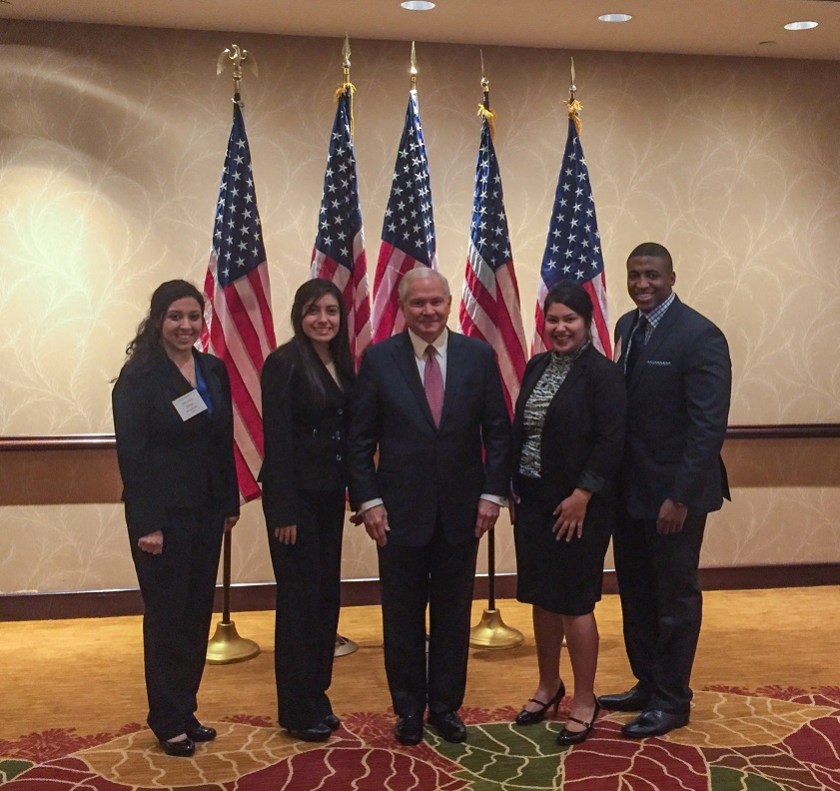
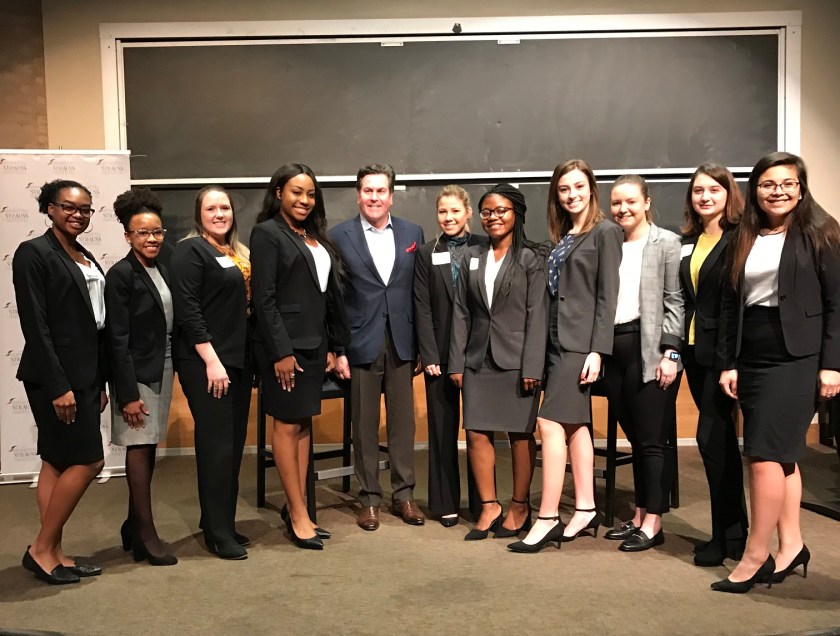
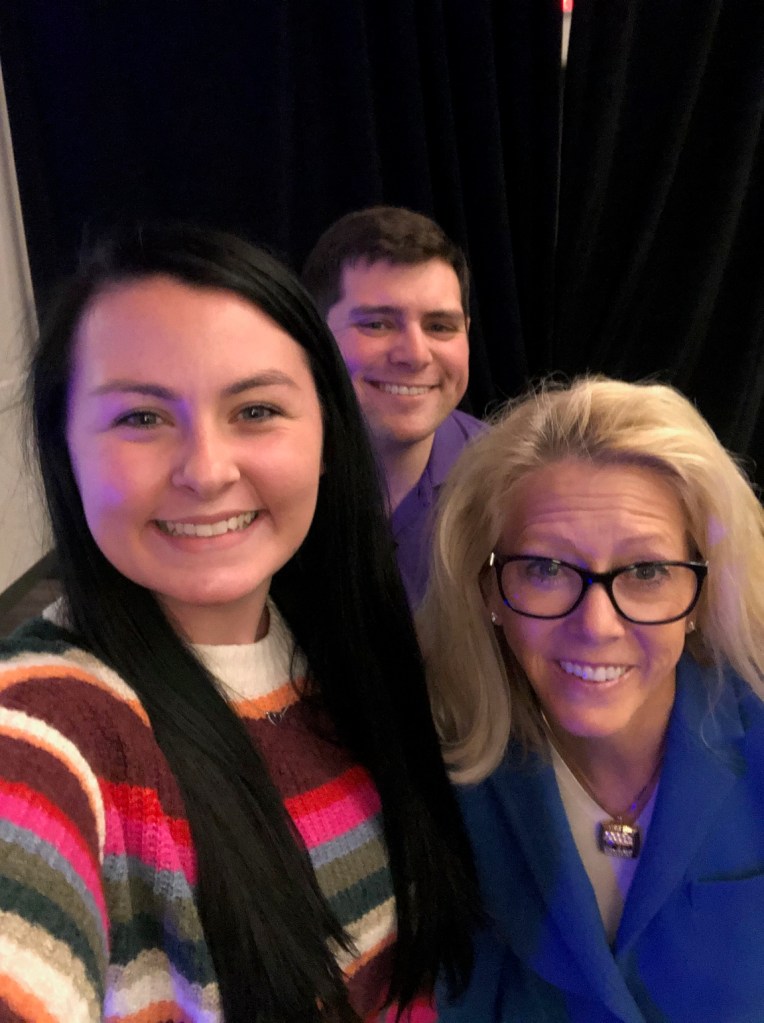
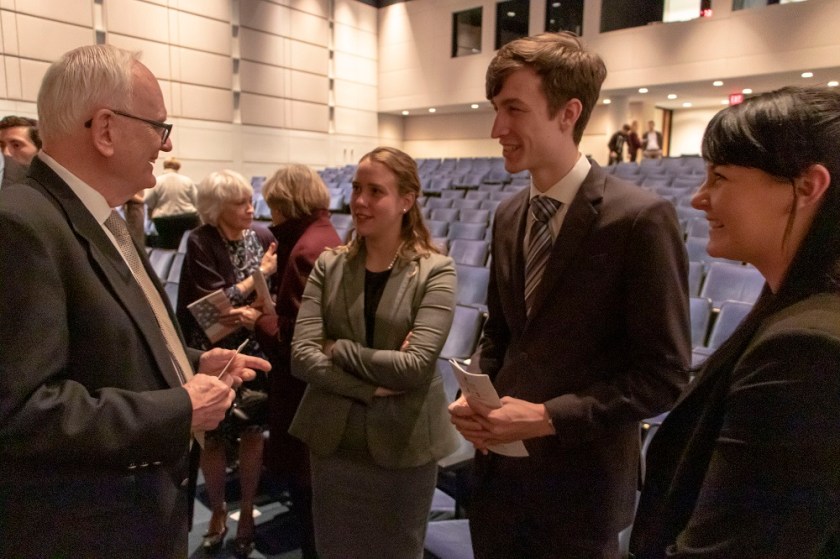
The LEAP Ambassadors are grateful for having the opportunity to meet Mrs. Bush…

SHSU, LEAP Center, Center for Law Engagement And Politics, Bush School of Government and Public Affairs, Jean Becker, the Bush Family

…and to Mrs. Becker (and Mark Burns) for the opportunity to tour George H. W. Bush’s office.

SHSU, LEAP Center, Center for Law Engagement And Politics, Bush School of Government and Public Affairs, Jean Becker, the Bush Family

Unknown's avatarAuthor mikeyawnPosted on April 11, 2020Format AsideCategories Civic Engagement, PoliticsTags Bush School of Government and Public Affairs, Center for Law Engagement And Politics, Jean Becker, LEAP Center, SHSU, the Bush FamilyLeave a comment on Pearls of Wisdom from Barbara Bush

Posts pagination

Previous page Page 1 … Page 27 Page 28 Page 29 … Page 87 Next page

LEAP Ambassadors Are Involved!

This slideshow requires JavaScript.

Follow Us On Facebook!

Follow Us On Facebook!

Catch Up With Us

  • Glazing-A-Trail with Lauren Clay January 16, 2026
  • A Culinary Education: Champion Chili January 11, 2026
  • A M*A*S*H* Wrapup December 24, 2025
  • Understanding Globalization: Lessons from a Leading Journalist December 22, 2025
  • Crafting for a Cause December 18, 2025

Join The Conversation!
The Civic Leadership… on Foundational Activities of the…
The Civic Leadership… on The Philosophical Foundations…
LEAPing Into Action… on The Philosophical Foundations…
Jada Cook's avatarJada Cook on SHSU Students LEAP Across Five…
Reflections from the… on Kicking off the Semester Right…

Find Previous Posts

We also have Twitter!
My Tweets

LEAPing Into LEARNing

This slideshow requires JavaScript.

  • About LEAP
  • LEAP Ambassadors
Center for Law, Engagement, and Politics Blog at WordPress.com.
  • Subscribe Subscribed
    • Center for Law, Engagement, and Politics
    • Join 488 other subscribers
    • Already have a WordPress.com account? Log in now.
    • Center for Law, Engagement, and Politics
    • Subscribe Subscribed
    • Sign up
    • Log in
    • Report this content
    • View site in Reader
    • Manage subscriptions
    • Collapse this bar
 

Loading Comments...