Brazil Culinary Passport

by Olivia Discon

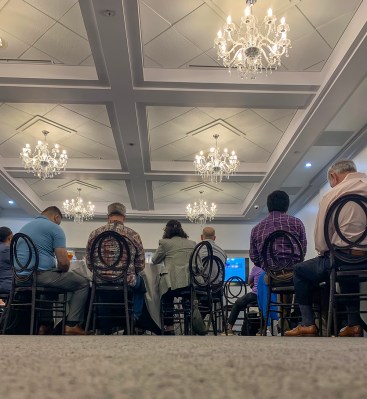
We stamped our passports once again—this time for Brazil—at the World Affairs Council of Greater Houston’s Global Young Professionals “Culinary Passport” series. Held at Tourão Brazilian Churrascaria, this experience gave us the chance to explore Brazilian food and learn more about the country’s growing role in clean energy.

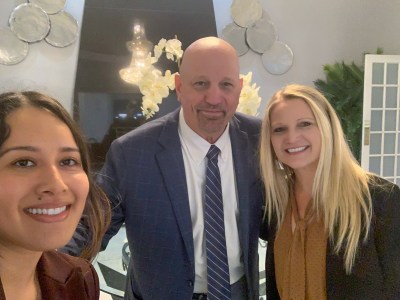
For about half of our group, it was the first time at a Brazilian steakhouse. We were joined by Dr. Elise Herrmann and Dr. Jamile Forcelini, both professors at Sam Houston State University. Dr. Hermann recently completed our Citizenship Prep course (and just this week, earned her citizenship!), and it was great to have her with us for an evening that touched on both international culture and policy.

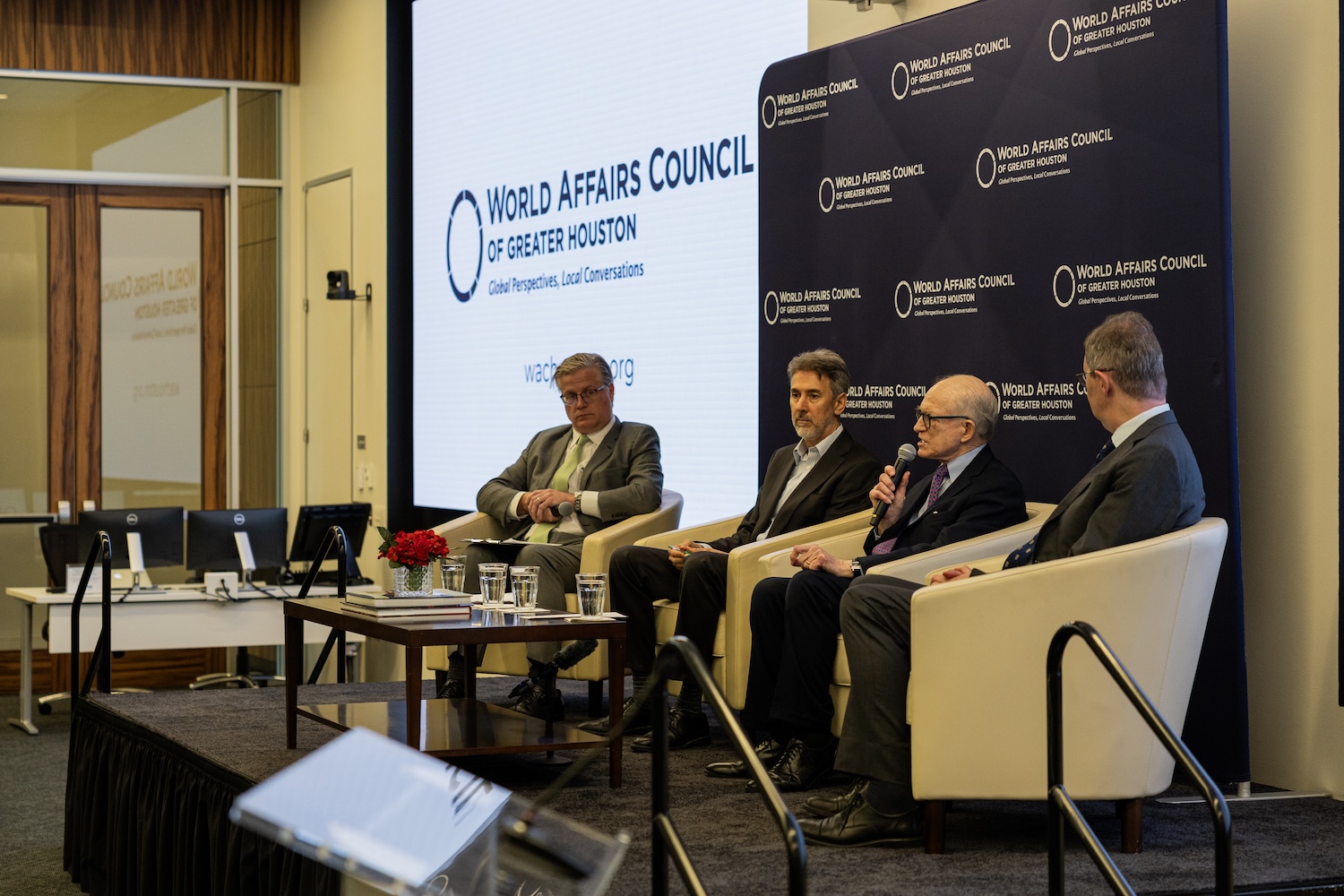
During dinner, we heard from two speakers involved in the energy sector: Fernando C. Hernandez, who founded the Society for Low Carbon Technologies…

…and Taís Soares, who works in business development at Vallourec.

Their focus, through moderation by Eli Quezeda, was on carbon capture, utilization, and storage (CCUS)—a process that removes carbon dioxide from the air or from industrial sources and stores it underground to keep it from entering the atmosphere.

One of the main ideas they touched on was being part of “Track 1.5”: a policy and technology goal aimed at keeping global temperature rise below 1.5°C, which is seen as a critical threshold to avoid the worst impacts of climate change.

To hit that goal, they emphasized the need for both policy and private-sector innovation to move fast, which is where projects like Brazil’s carbon storage law come in.

Their innovative carbon capture methodology is actually quite interesting: emissions are captured from factories or plants, compressed, and then injected into rock formations deep underground where they can stay for centuries. It’s not a silver bullet, but paired with other strategies, it can make a real difference. The speakers explained that these technologies are already being used and expanded in places like Brazil, which is becoming a global leader in this space.

 Although some of the science went over our heads, it was a good reminder that global issues depend on people from many backgrounds and countries working together–while also having the chance to interact and enjoy great food.

As always, we’re grateful to the World Affairs Council of Greater Houston for putting together events that are both fun and informative. And we’re glad to keep expanding our knowledge (and our palates) one country at a time.

Murder Most Foul: An April Adios

For all Pre-Law Society members, our April was the last get together of the academic year. But for one unlucky member, it was, at least in the world of fictional fun, the last meeting ever. That’s because our social involved a murder mystery, something of a theme for our sinister solicitors.

Our officers and activity committee put together treats to bribe encourage us to attend, and it worked!

A healthy 30 or so students attended, a reflection of our growing sociality as an organization.

Mikaela Baires was the unlucky victim. Indeed, she was doubly unlucky, inasmuch as the murder weapon was a laxative, giving new meaning to Shakespeare’s phrase “murder so foul” (thankfully, we did not meet at the beautiful Wynne Home this year…).

The suspects were Mikaela’s peers: Chrissy Biello…

Jose Carreno…

Katherine Burnett…

Madison Cawthon…

Neehal Ahmed…

and Niya Thompson.

Given the suspects–any one of whom is capable of such a dastardly act–it was going to be a tough evening for our social sleuths.

Thankfully, there were four clues uncovered, and throwing Miranda out the window, the suspects were questioned without their lawyers being present.

After much debate, hand-wringing, and interrogation, the law-enforcement, apparently imitating the Keystone Kops, accused the wrong person–Katherine Burnett–perhaps motivated by a strong desire to sequester her from society for eternity, or at least until they graduate.

In fairness, the actual murderer, Jose Carreno, broke the rules of the game and lied. Who knew a murderer would lie about his whereabouts? Following the game, Jose vowed that, “when things have settled a bit, I will pursue as my primary goal in life the killer or killers who slaughtered Nicole and Mr. GoldmanMikaela Baires.”

On a happier note, Madison Cawthon led the speed debating contest.

Befitting our status as future lawyers in society–and, perhaps, lawmakers–we spent our time arguing over trivialities ending in ludicrous judgments.

Neehal Ahmed, for example, argued that it should be illegal to text a single “k” to indicate affirmation via messaging.

The debate over whether “ttyl” should be punishable by firing squad was tabled. And thank God we didn’t even get to people who use odd text colors or emojis.

Texas 10th Court of Appeals Hosted by the Walker County Bar Association

by Chrissy Biello

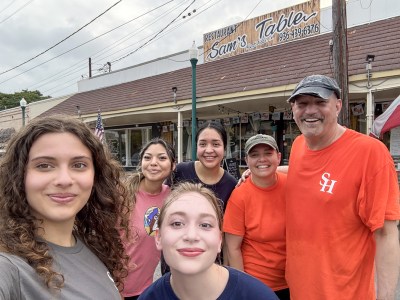
The night before the Texas Tenth Court of Appeals convened for oral arguments at Sam Houston State University (SHSU), the Walker County Bar Association hosted a dinner at Sam’s Table to welcome the visiting justices. The guests of honor were Chief Justice Matt Johnson, Justice Lee Harris, and Justice Steven Smith, along with Clerk of the Court Sherry Williamson.

Approximately thirty members of the local legal community gathered for the occasion, including 278th District Judge Tracy Sorensen, 12th Judicial District Judge David Moorman, County Court at Law Judge John Gaines, Municipal Court Judge Devan Dawson, and County Judge Colt Christian. The dinner also drew several prominent attorneys, including Alvin Martin of Smither, Martin, and Henderson; Michael Foreman of Haney, Paschal and Romoser; and multiple representatives from the Walker County Criminal District Attorney’s Office: Assistant District Attorneys Malori Martin (who is arguing a case tomorrow), Jennifer Jenkins, and Graciela Garcia.

Throughout the evening, there were multiple conversations taking place, some filled with friendly laughter, while others centered on the cases scheduled for the following day. Some exchanged thoughts on the legal questions involved, as some of the cases have some interesting aspects that could have greater implications on the legal field. 

Clerk of the Court Sherry Williamson shared stories from her early career, including her time serving as clerk of the Eleventh Court of Appeals in Eastland, Texas. While reflecting on her time there, she mentioned “Ol’ Rip,” the legendary horned toad that Eastland is known for. According to local lore, Ol’ Rip survived a thirty-one-year hibernation, only to later pass away from pneumonia. The toad is now on display at the Eastland Courthouse!

Ol Rip in a custom-made coffin at the Courthouse

While speaking with SHSU LEAP students, Chief Justice Johnson shared his journey into law. He spoke about his early career as a practicing attorney and the transition into becoming a judge. He first served as Justice of the Peace in McLennan County, then as Judge of the 54th District Court for fourteen years, before being elected to the Texas Tenth Court of Appeals in 2020. During the conversation, he emphasized the importance of gaining trial experience for those who aspire to serve on the bench.

Judge David Moorman also spoke highly of the opportunity for students to observe the appellate court in action, calling it a unique and valuable educational experience. 

The event served as both a warm welcome to the visiting court and a reminder of the strength and collegiality within the local legal community. The justices will hear three cases at SHSU tomorrow, including two driving while intoxicated cases and one involving injury to a child. The Center for Law, Engagement, and Politics continues to be grateful that the Texas Tenth Court of Appeals visits Sam Houston State University each year. The event offers a multitude of valuable learning experiences. You can read more about the event here.