Shaking Things Up Kentucky Style: Shaker Village, Teneia, and The Village Idiot

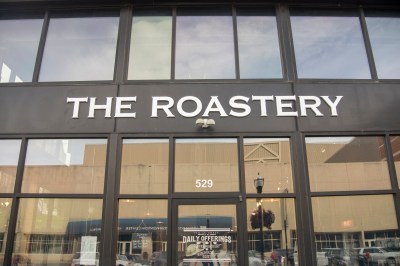
With a busy day planned ahead of us, we began our morning with a light breakfast at Daily Offerings Coffee Roastery…

Roastery_Sign_Web

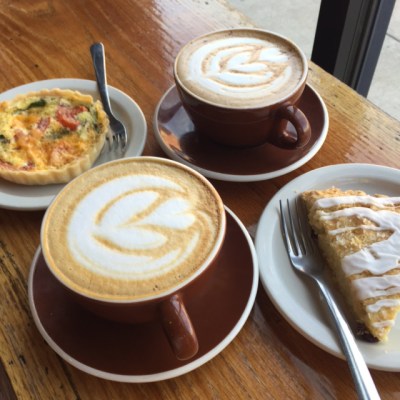
…a Southern hipster coffee shop offering several adventurous and traditional options. One of the more daring ambassadors tried the Lavender Honey Latte, and as Alex described it, “it felt like my mouth had just taken a bath.”

Roastery_Breakfast_Web

Others went for coconut or caramel lattes, and pastries to complement their drinks: coffee cakes, chocolate cookies, and blueberry scones. Once everyone had their fill, we departed for our first destination and activity of the day, a trip to Shaker Village in Pleasant Hill.

The Shakers fled England and first settled in New Lebanon, New York. In 1805, a group of 44 Shakers settled in Kentucky. Today there are no surviving Shakers in Kentucky and only a handful in Maine, but much of their settlement is still intact within the Pleasant Hill site. The historic farms of the village are maintained by the village’s employees, and crops and livestock are used at Pleasant Hill’s restaurant.

Our drive to Shaker Village through the Kentucky countryside was beautiful — a truly pleasant ride to start the day. Upon our arrival, we exchanged our charter bus for a school bus needed to maneuver a narrow, winding road to the Kentucky River a few miles away. There we boarded the Dixie Belle Riverboat for

Boat_Steerage_Web

…a trip downriver through the Kentucky River Palisades, so named for the steep limestone cliffs and scenic outcroppings.

Boat_View_River_2_Web

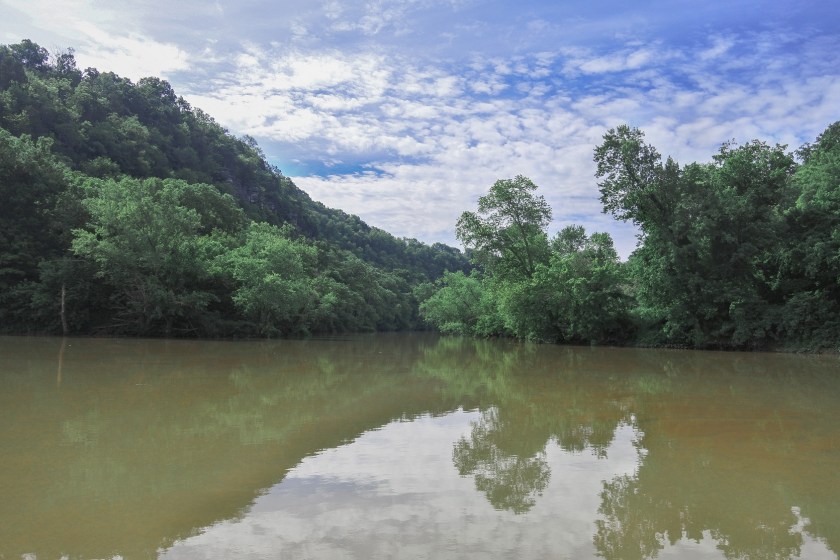
The Shakers used to travel the Kentucky River to New Orleans once or twice a year to trade goods they produced. At the time, this was a significant endeavor and few Shakers actually traveled on behalf of the community. The captain explained that the Kentucky River is 255 miles long and is normally a deep shade of green, but due to the recent rains, the water was a muddy brown (and over 14 feet deep).

We cruised alongside the limestone cliffs and the lush green trees that stood high above the riverbank, ever alert for signs of wildlife. The river is home to many types of turtles (including snapping turtles!) and snakes. Although we weren’t lucky enough to see any river critters, we enjoyed the scenic view and relaxing breeze before traveling back to the Village for the second half of the tour.

Boat_Kaitlyn_Alex

The Village tour began with a walk down one of the main streets, the guide noting the limestone buildings among green fields, and explaining to us that during the Shaker’s lifetime in the settlement very little of the land would be left vacant. Shakers did not believe in unusable land, so they worked every plot as efficiently as possible — whether to build family dwellings, grow crops, graze livestock, or build an ice house.

Shakers were a religious group who believed the way to enhance their worship of God was to live as simply as possible and as purely as Jesus Christ. They were not Luddites, though, and believed in using technological advances to help them live simple lives. In their attempts to be close to Christ, one of the sacrifices in joining the congregation was to become celibate. Men and woman stayed segregated among family dwellings, with one half of the buildings dedicated to men and the other half to women. Men and women also maintained an arm’s length distance away from each other and had their own staircase to travel among floors in their living quarters.

The Shakers also preached a need for equality. All Shakers were equal and none deserved more attention than another, a quite different viewpoint in 1805 when several types of groups did not have equal rights. The village’s ministry, the governing religious body for each community, was composed of both men and women from various communities appointed by the Shaker’s central ministry in New Lebanon. This helped remove community ministry leaders’ potential prejudices against other members of the village. The community was further regulated by segregating the leaders to their own living quarters and workshops, both of which we were able to tour. It was an interesting twist to community governing for the political science majors in the group.

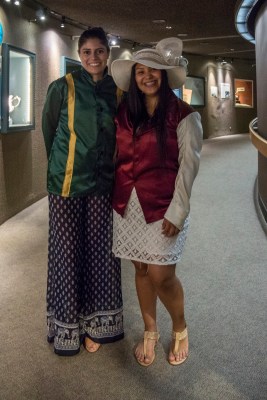
"Shaker" Attire Worn by Brian and Kaitlyn, Standing the Traditional Distance Apart
Shaker Attire Worn by Brian and Kaitlyn, Standing the Traditional Distance Apart

Unlike traditional Christian services, Shakers did not believe in one designated leader preaching at all times. Although they did make use of the King James Bible, and participated in prayer, services were led by “whoever was moved by the Holy Spirit” on that particular day. Their religious ceremonies were not constrained by time, with the shortest service in Pleasant Hill recorded at only 15 minutes and the longest at 23 hours!

During worship the Shakers were known to sing songs, especially those who were “filled with the spirit,” and members were encouraged to record their songs (in writing) and share among members of the community and of other villages. Lyrics would come from a member’s need to express their devotion towards God, and reportedly sometimes by God himself, taking hold of a member’s body and using them as a vessel, as our tour guide described it.

Further, Shakers did not believe in using instruments nor in solo demonstrations; they believed that complex musical arrangements only took away from the song’s devotional message. From these lively worships (of which non-Shakers were invited to attend) the group was termed as the Shaking Quakers, for seldom had anyone seen such an enthusiastic mode of worship composed of dancing and singing. After a brief demonstration of a few “Shaker” songs, we were ready for our next Kentucky adventure.

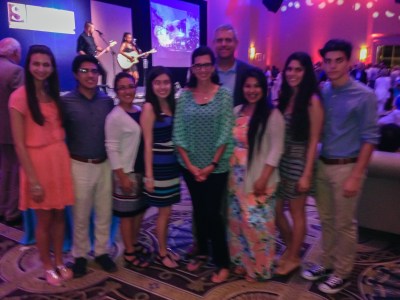
We didn’t have to go far, though.  We met up with the other part of our group and walked the two short blocks from our hotel to the street party the SLC had planned for attendees and their families. We reached the 5/3 Pavilion at Cheapside Park and mingled with other guests. While we were there we ran into two new friends, Chris and Marisela Darminin.  We had previously met Chris during skeet shooting, and were excited to meet Marisela. They were both from Texas and glad to visit with fellow Texans at SLC, as were we!

Marisela_Darmanin_Ambassadors_Web

After speaking to them for a while and learning much about their careers and the great organizations that they support, we headed to our dinner destination, The Village Idiot.

Local Lexington icon The Village Idiot is in a building encompassing part of Lexington’s oldest post office building, dating back to 1825. We were all eager to try their fare since we had heard great things about the restaurant. Before our food arrived, we enjoyed bowls of fries and the cheese and sausage dip. Some of us had their famous (or maybe infamous?) “Idiot Burger,” a burger patty topped with an onion ring filled with pulled pork and topped off with a pretzel bun…it looked like quite the challenge!

Idiot_Burger_Web

Others shared the duck & waffles (on those, Beatriz said, “The sweet taste of the waffles combined with the succulence of the duck was such a great combination that [she] was left drooling for more”); the Village Idiot Cheese Platter; and a Caprese Burger. With great gusto, we savored these delightful dishes, enjoying this picturesque place rich in food and history. We left satisfied that The Village Idiot had been the “smartest” choice for dinner.

After a filling dinner, we were all ready to enjoy another event, the “preview reception” for next year’s conference, as put on by that host state.  In this case, it was – and will be –Mississippi. As soon as we arrived, we were warmly greeted by numerous elected Senators and Representatives (and other representatives) from Mississippi who were handing out warm welcomes (and goodie bags) at the door.

We had arrived in time to hear an enthusiastic, well-written speech from the Speaker of the Mississippi House of Representatives, Philip Gunn, who captured our attention and left us wanting to visit Mississippi, the home to great names such as: Jerry Rice, Jerry Lee Lewis, and John Grisham. We even had the chance to chat for a few minutes with him and his wife (who is actually a Texan!)…

Mississippi_Reception_Gunn_Ambassadors_Speaking_1_Best_Web

and get a quick pic.

Mississippi_Reception_Gunn_Ambassadors_Posed

We also met up with an acquaintance from the night before, Ms. Leslie Hafner, who was the Senior Policy Advisor to the Governor of Tennessee.  She was very nice, and we were grateful to be able to get a photo with her before leaving the conference.

Mississippi_Reception_Leslie_Hafner_Ambassadors_Web

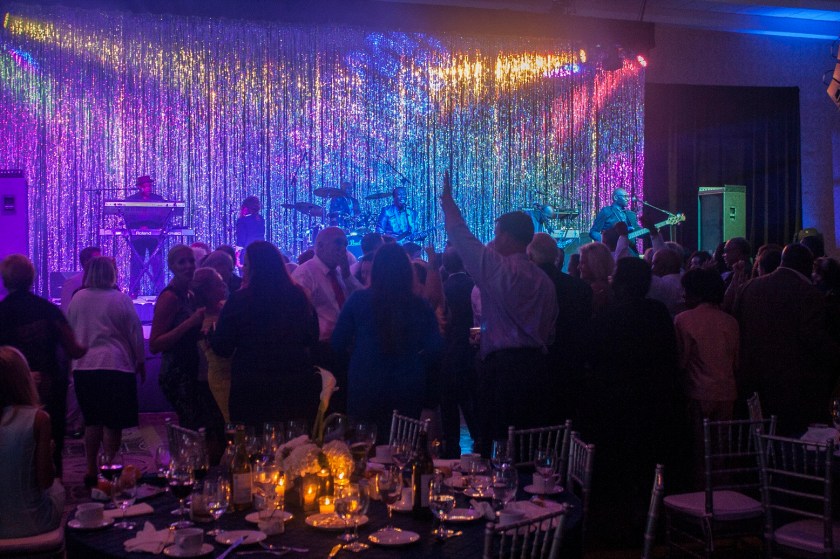
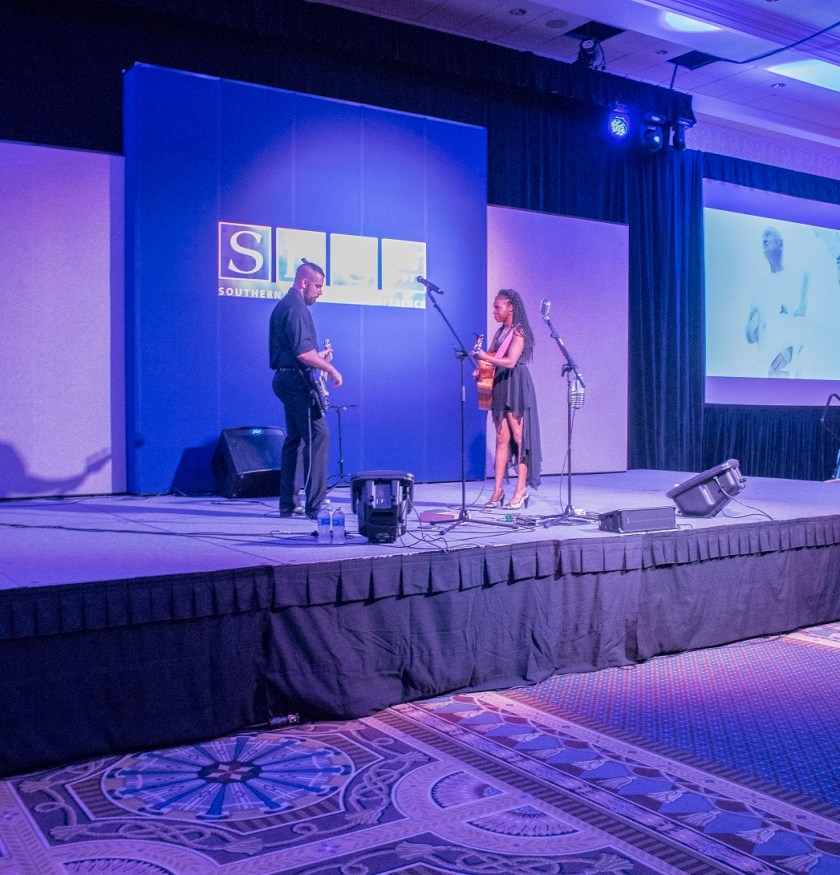
The evening’s entertainment, native-Mississippi jazz singer, Teneia Sanders-Eichelberger, as joined by her husband, Ben Eichelberger, was great to listen to while chatting with other guests.

Teneia_Performing_Web

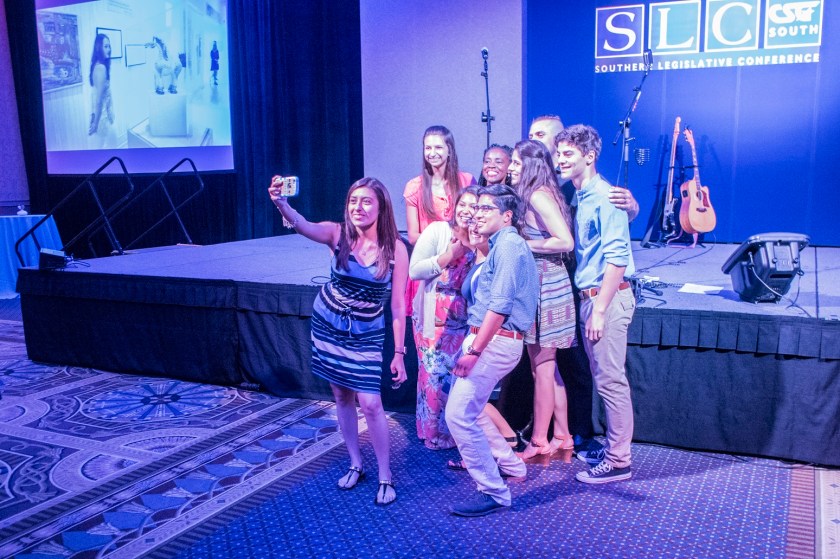
She had a unique blend of blues, soul, and southern music, and we were able to briefly meet them after their performance, as well.

Mississippi_Reception_Selfie_Teneia_Web

After an eventful night filled with great music and great people, we left to many cheers of “See you in Biloxi!” as we trudged off toward our hotel, anxious to reenergize for the next day’s activities.

Horsing Around in Kentucky

July 10, 2016

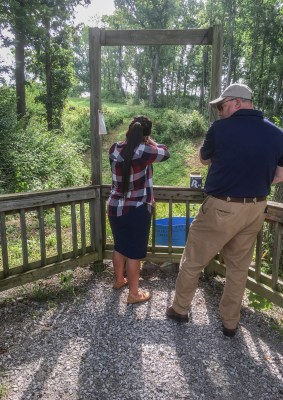
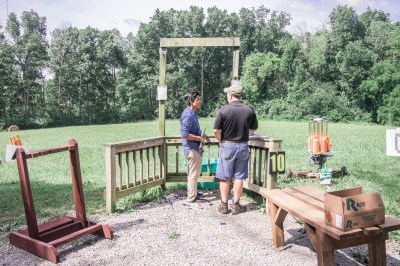
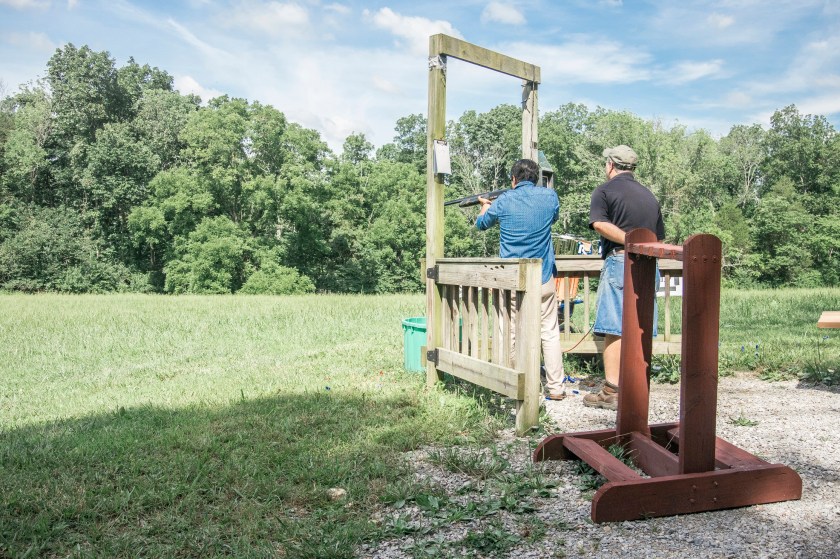
On our second day in Lexington, Kentucky for the Southern Legislative Conference we ventured out into the countryside. Amidst the green fields where Thoroughbreds grazed and galloped, there stood the Blue Grass Sportsmen’s League. Here, the LEAPsters were introduced to the unique sport of skeet shooting. Although most of us had already handled firearms before, never had we shot at moving clay targets shouldering a 20-gauge shotgun.


Skeet Shooting

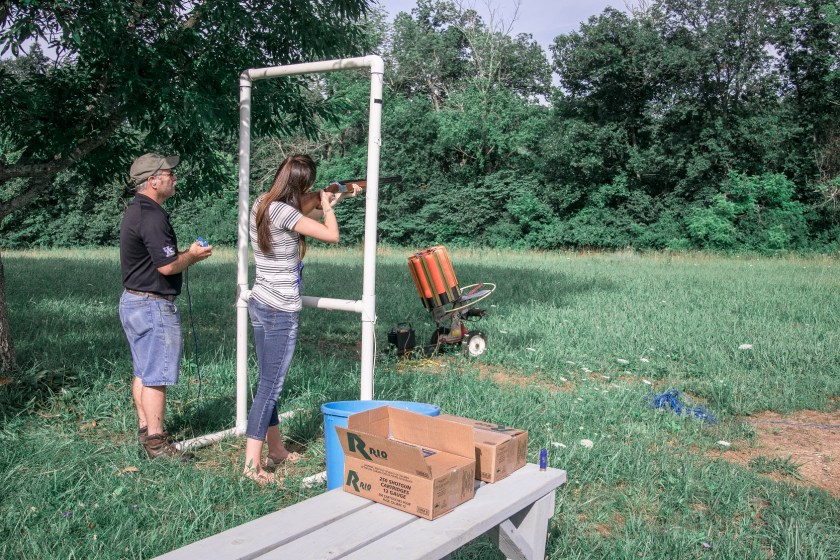
After a safety briefing on the proper way to handle a gun and other expectations while out at the range, we headed towards the fields, all geared up with eye and ear protection. As we neared our station, the firing instructor kindly greeted us and demonstrated our “duck’s” path of flight, to prepare us on how to direct the movement of our firearm. Positioning ourselves at the station’s front, facing the field, hovering a right index finger over the trigger, eyes sighting over the barrel, calming our breath, keeping our arms sturdy and relaxed, checking our positioning to hold the butt of the stock close to our shoulder, we stood ready to call the clay’s pull. (This is work.)

Skeet_Shoot_Beatriz_Web

After giving the mark, the orange disk would take flight, hurrying through the field resembling an escaping bird. After hearing a bang and seeing a smoking barrel, our hopes were that the projectiles would meet the clay target. However, more often than not the disk would fly pristine of any shattering and would only break as it landed on a tree or onto the ground, never having been grazed by our ammunition.

Skeet_Shoot_Megan_Web

As we attempted, failed, and triumphed at hitting our “sim” ducks, our instructor took note of our gun handling and offered much-needed advice on how to successfully fire the shotgun.

Skeet_Shoot_Brian_3_Web

Moving through every station with clay disks flying from left to right, from bottom of the field into the sky (forcing us to point our firearm at a 60 degree angle), to rolling on the ground, the number one rule was to direct the barrel with our left hand while following the target’s path.

Skeet_Shoot_Brian_4_Web

Doing this would enable us to keep a more stable firearm, ensure that we properly sight the barrel with the target, and keep a more relaxed posture, all major contributors to skeet shooting success.

Skeet_Shoot_Kaitlyn_1_Web

After firing the various wooden stock, single-action pump shotguns; synthetic stock, semiautomatic shotguns; and the classic over-under, break-action shotguns at the range, we celebrated our marksmanship experiences over a lunch of fried chicken and bread pudding. With beaten shoulders bearing red marks and bruises, some more severe than others, we boarded the bus back to the Lexington Convention Center to prepare for our next treat – a picnic break with some special guests at nearby Camp Nelson Civil War Heritage Park in Jessamine County, Kentucky.


My Old Kentucky Road Trip–A Conversation With Cameron Ludwick and Blair Hess

Camp_Nelson_Field_Hay_Web

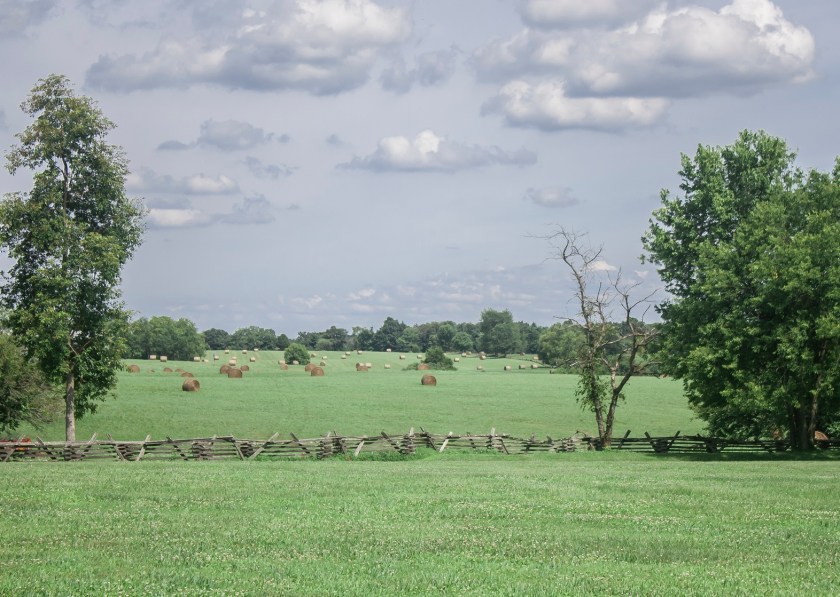
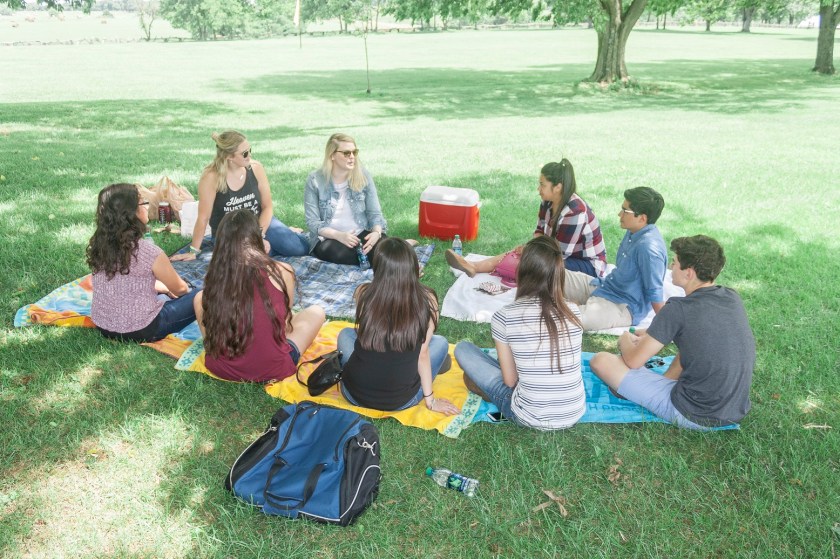
In April we began reading My Old Kentucky Road Trip by Cameron M. Ludwick and Blair Thomas Hess to prepare for our own road trip to the Blue Grass State! From this book, we learned much about Kentucky, and we used the book as a guide to our time in The Bluegrass State.  Amazingly, the authors agreed to meet with us while we were in Kentucky, and our meeting spot was historic Camp Nelson, a former trading post between the Confederates and the Union during the Civil War.

Camp_Nelson_Field_Hay_Web

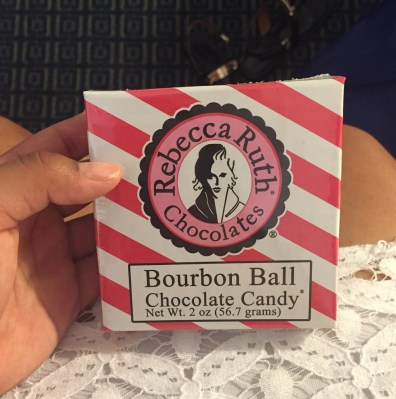
We were excited to meet the two young women who had helped guide us on our way through the state.  We began our picnic-style rendezvous with the exchange of gifts – evidence that both parties were from the South. Coincidentally, we bought each other Kentucky-famous Bourbon chocolates…

Camp_Nelson_Ruths_Bourbon_Balls_Web

…but they outdid us in also bringing Ale8, the official Kentucky soda. After a round of introductions, we proceeded to enjoy a fun afternoon filled with history, laughter, and most importantly, mentorship.

Camp_Nelson_Group_Talking_2_Web

Did you know that Rabbit Hash, Kentucky (yes, that’s correct) has a dog for a mayor? Neither did we, at least not before reading about it in My Old Kentucky Road Trip.

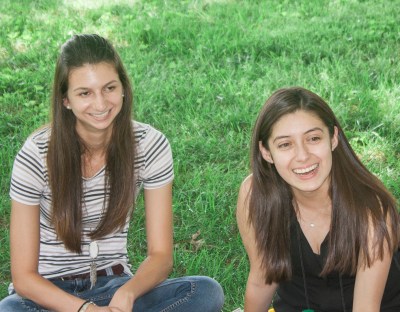
Camp_Nelson_Kaitlyn_Karla_Web

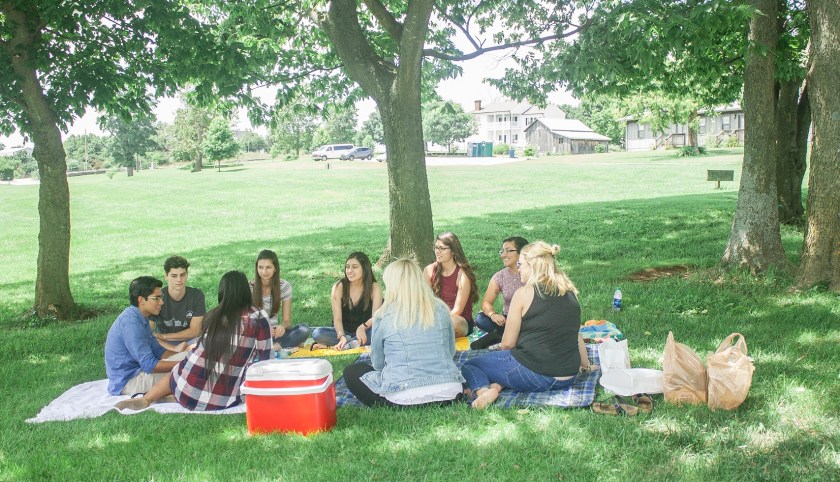
Luckily, these Kentucky experts filled us in on fascinating facts that make Kentucky interesting and unique – and made us want to explore Kentucky even more.

Camp_Nelson_Group_Talking_Web

One interesting place we discussed is in Louisville, the Waverly Hill Sanatorium. Waverly Hill is a former hospital for tuberculosis patients that was virtually a city unto itself, turned into a nursing home after the tuberculosis epidemic. Now, one can join a haunted historic tour (at night!). Testimonials have noted that it is the scariest yet most informative tour in the state.

The conversation throughout the afternoon was humorous and interesting. Blair and Cameron had a special way of telling stories. We clung to every word they said because they made us feel as if we had taken trips with them because of all the details they relayed in their book. We were thankful for the time they took to meet with us and share their experiences and encouragement.

Camp_Nelson_Groupie_Megan_Blair_Cameron_Web

A story can be a powerful tool. This pair has used their Kentucky road trip storytelling and insight to rebrand their beautiful state. We can hope – and practice – to write similarly: inspiring, and full of new experiences and opportunities.

Camp_Nelson_Ambassadors_Hess_Ludwick_Web


Horsing Around in Kentucky

The last evening activity planned for this day (Sunday, July 10) was Family Night at the Kentucky Horse Park, “a working horse farm and an educational theme park.”

Kentucky_Horse_Park_1_Web

In true “Kentucky Derby” fashion, an enthusiastic trumpeter announced our arrival. We were directed immediately to the food, where we found authentic Kentucky fare like brisket, burgers and corn on the cob.

Kentucky_Horse_Park_Dinner_Line_Web

We were lucky to have enjoyed dinner at a table with Mrs. Leslie Hafner, currently Senior Advisor to the Governor of Tennessee, Bill Haslam, and her husband – who has a political science degree! We had a pleasant conversation and discussed many current issues in government. Mrs. Haslam described her various job duties as a senior advisor to the Governor of Tennessee. She noted the favorite part of her job is being able to not just hear constituent’s concerns but to truly find solutions to be able to assist them.

 We also enjoyed telling the Hafners our favorite parts about our trip to SLC, some of which was directly through their home state, Tennessee, and we even shared some info about our organization, and our blogs, at which they insisted they look. (We were all excited about this since we put in quite a bit of effort!). After dinner with our pleasant company, we headed for the dessert table to sample ice cream and shaved ice. We all grabbed some dessert and began looking for the horse riding area. Sadly, when we arrived at the location of the horse rides it was too late to ride horses, so instead we took a few pictures and headed for the horse museum.

Kentucky_Horse_Museum_Horse_Rides_2_Web

Located in the Kentucky Horse Park, the museum had various exhibits, including a timeline of the horse, breeds of the world, and horses in sports. Some of our favorite artifacts were the old carriages and the jockey memorabilia.

Horse_Museum_Alex_Megan_Web

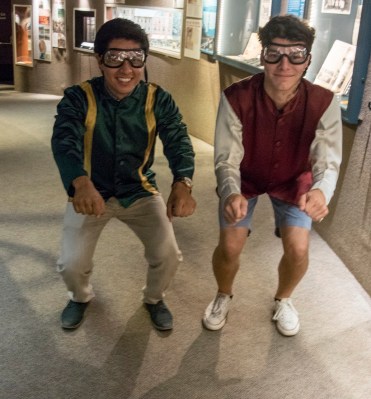
Bryan and Ryan even took the opportunity to continue playing the part they had started the previous night at Keeneland by dressing up in jockey gear.

Horse_Museum_B-Ryan_Web

We learned much about a variety of horse breeds from all over the world before running to catch the bus back to the hotel. Although our visit to the museum was short, we enjoyed learning more about Kentucky’s largest industry!

Kentucky_Horse_Museum_Sunset_Ambassadors_3_Web

 After an entire day spent out, we were all ready for some rest, but not before we had a small birthday surprise for Beatriz! She turned 19 today and we (thanks to Professor Yawn) had a surprise “party” for the birthday girl. We all gathered to eat cookies from a unique place called Insomnia Cookies that just happens to deliver freshly baked cookies until 3:00am! We enjoyed ice cream and cookies and looked at the photos from the prior day before calling it another great day and heading to bed.


Our New Kentucky (Temporary) Home

July 9, 2017

Saturday was our first day to awake in “The Bluegrass State,” and we had a full day ahead of us.   As part of the Southern Legislative Conference, which is hosted each year in a different city, and brings together legislative members from all across the south for a week of idea sharing and networking.


Leaving Louisville

Our first objective was to hit a couple of sites in Louisville, and then head to Lexington, the host city for the conference.  Although there is much to do in Louisville, we first wanted to see Thomas Edison’s home, where he lived briefly while evolving into the inventor he would later become.

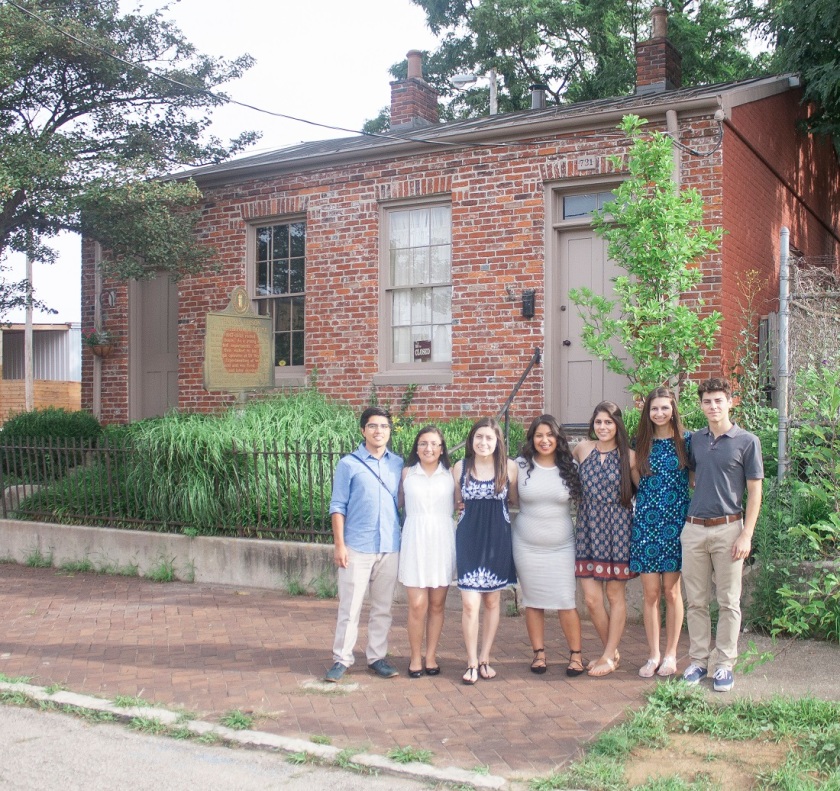
Edison Butchertown Home
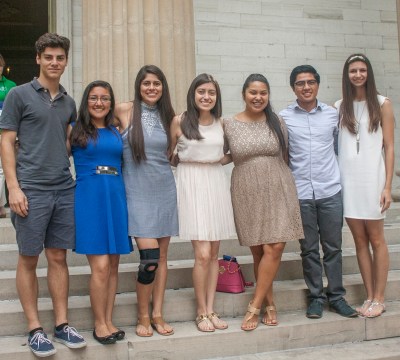
LEAP Ambassadors Outside Edison’s Butchertown Home

Although Edison lived in this home only from 1866-1867, his work there pre-figured his role as an inventor (he was fired for experimenting on the job).  Similarly, it prefigures our work in a couple of weeks, when some LEAP Ambassadors will be heading to Detroit to work with Jeff Guinn, who is writing a book on Thomas Edison (and Henry Ford, Harvey Firestone, and others).

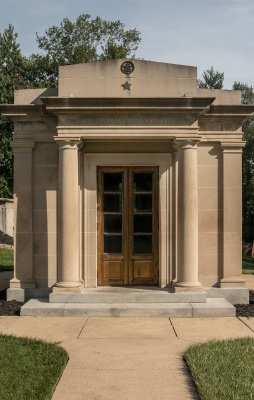
A second must-see stop for us was the Zachary Taylor cemetery, one of seven National Cemeteries in Kentucky.

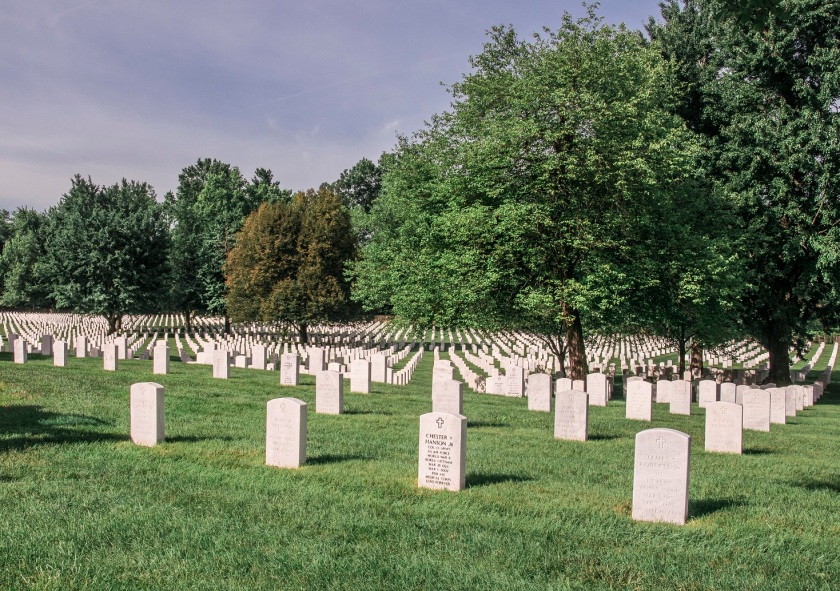
Zachary Taylor National Cemetery
Some of the 14,000 Soldiers Interred at the Zachary Taylor National Cemetery

Although more than 14,000 people–including two medal of honor winners–are interred in this cemetery from six wars, the most notable grave is that of Taylor, who served as the nation’s 12th president.

Zachary Taylor Grave
Zachary Taylor’s Grave

..and a monument to his service to the country.

Zachary Taylor Monument
Alex Galvan at Zachary Taylor Monument

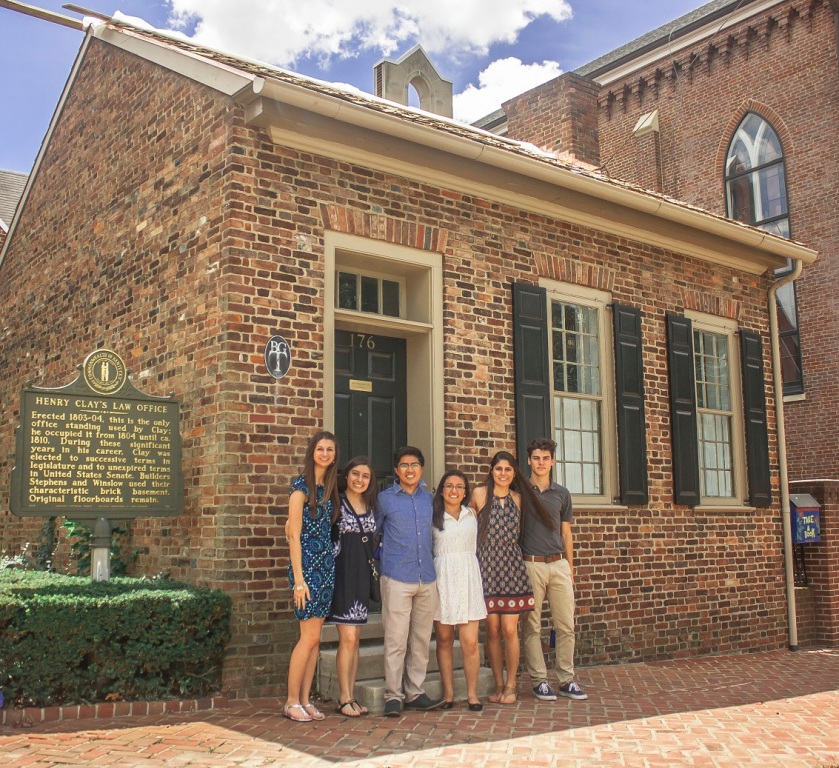
We started out with a walking (“plus”) tour of historic downtown Lexington. A few blocks from our start, we arrived in Gratz Park, one of Lexington’s oldest and most beautiful areas. With the help from our knowledgeable tour guide (who was the Curator of the Henry Clay Home), we passed the city park, a beautiful centerpiece for the neighborhood, and several historic homes, such as: Bodley-Bullock House, which served as both the Union and Confederate Headquarters at times when each side controlled the city; Transylvania University, which was the first university in Kentucky.  Also on our walk, we saw the Christ Church Episcopal Cathedral where Henry Clay and his wife attended, and the office where Henry Clay practiced law, which was quite a treat for aspiring lawyers.

Henry Clay Law Office, Lexington, KY
LEAP Ambassadors Outside of Henry Clay’s Law Office

The visit was a nice precursors to our impending visit to Ashland, the home of Henry Clay, “The Great Compromiser.”


Ashland: The Henry Clay Estate

Entering the ash tree-covered estate, from which the home bears its name, we saw a grand portrait of Clay painted by Matthew Jouett when the Senator was 45. Walking through the estate (which does not allow interior photography), it was impressive to learn that the home had stayed in the family from its construction in 1804 until it was sold to the Henry Clay Memorial Foundation in 1959. In fact, family preservation of the home was only interrupted after the Civil War when the house was appropriated by Transylvania University to house its president, from 1865-1882.

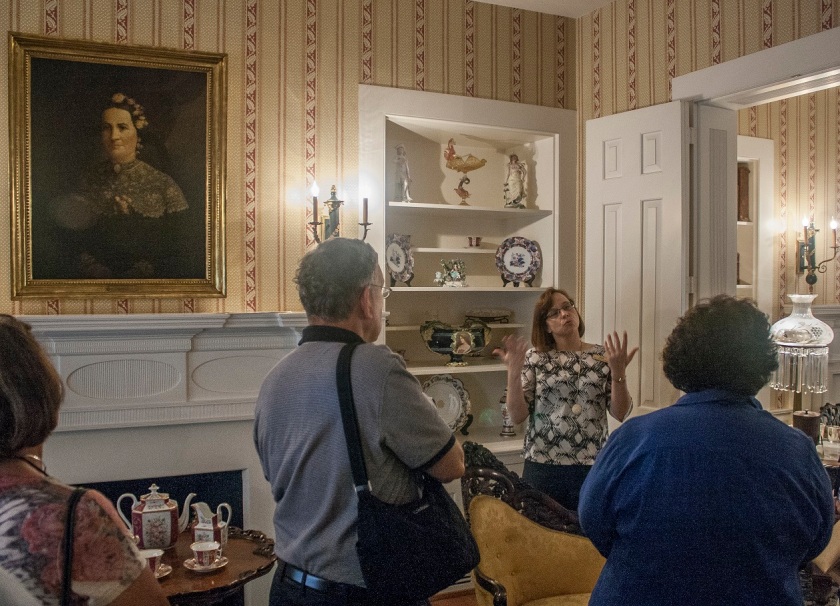
One of the parlor rooms, which accommodated the first piano to be brought to Lexington, also held a large portrait of Henry Clay, Jr., and his wife, Lucretia Hart Clay. These paintings were hung in honor of the Clays’ favorite son, who was killed in the battle of Buena Vista in the Mexican-American War, by the woman who is credited with the preservation of the home.

Leaving the front parlors, we turned into the east wing of the home, into one of Clays’ most cherished rooms in the home. Here Clay would have spent most of his time working at his desk, reading his law books, and perhaps preparing his winning defense of Aaron Burr’s trial for treason. The small study now exhibits many of Clay’s personal items, such as a clock from 1832 during his presidential campaign against Andrew Jackson, a bookcase from his law office, a book written by Clay on the subject of agriculture and horse breeding, and some of his correspondence while serving as a senator.

On the subject of horses, he was known as an expert, as he bred his own Thoroughbreds and Standardbreds on the estate. Kentucky, therefore, attributes much of it horse history to the Senator’s fondness for equines. His affection for his livestock was represented in “The Eventful Day of Henry Clay,” a painting by Alvan Fisher depicting Clay and his favorite, prize bull Orizimbo. Legend also has it that in Clay’s study his ghost manifests itself to guests appearing near the mantle.

Even though we did not see his spirit, we did learn much about it. A great orator, Henry Clay was considered a “rock star” of his time. He was depicted thus in a painting in his library, right off his study, in which the vivacious Clay is delivering a speech to an attentive crowd, which includes a very eager Lincoln, cupping his left ear to catch every word of Clay’s speech. Such a sight would be common when Clay delivered a speech – drawing upwards of 100-200 thousand spectators at times.

We learned that not only were his public appearances notable, his deliberations in the Senate were also remarkable. At times, “The Great Compromiser” would stand on the senate floor to for upwards of four hours to deliver his valued opinion on any given piece of legislation. Such may have been true as he developed the Missouri Compromise of 1820, the Tariff Compromise of 1833, and the Great Comprise of 1860. A man of great social networking skills, Clay was also friends with Benjamin Henry Latrobe, the first American architect, who designed the wings of the Ashland estate and is best known for designing the Capitol in Washington, D.C.

As we stepped upstairs, the oak wood staircase (which replaced the previous staircase, making it the “newest” renovation to the home, in 1892) gave way to a landing upon which the John Neagle portrait of Clay is presented. A rendition of his unsuccessful 1844 presidential campaign, Clay stands with disappointed hands pointed towards a fallen American flag over white stone pillars while his gaze is fixed upon a field of grazing bulls. Although depicted as such, even at an advanced age (67) and having suffered a heart attack, many thought this would have been Clay’s last chance to run for the presidency. However, as Clay was a true, relentless Kentuckian, he ran again in 1848, his sixth failed attempt at the presidency.

One of the most notable facts about Clay was his lifelong feud with President Andrew Jackson. After the alleged “corrupt bargain” between John Q. Adams and Henry Clay, which ensured Adams’ victory in the presidency, both Clay and Jackson harbored similar grudges against each other. The hatred was such that Clay once swore that if he ever saw Jackson again, “he would shoot John C. Calhoun,” (Jackson’s Vice President), “and hang Andrew Jackson.”

In the master bedroom a Freemasons’ apron which was laid on Clay’s casket during his funeral was displayed. It was at this point that our guide informed us that on the day of our tour, exactly 164 years previously, Clay’s body had returned to his estate to reach his final resting place.

As we descended the stairs, with the smell of oak and sound of creaking steps, we ended our tour inside the room where Clay’s casket was likely displayed for his funeral. After a quick gift shop stop and photo op…

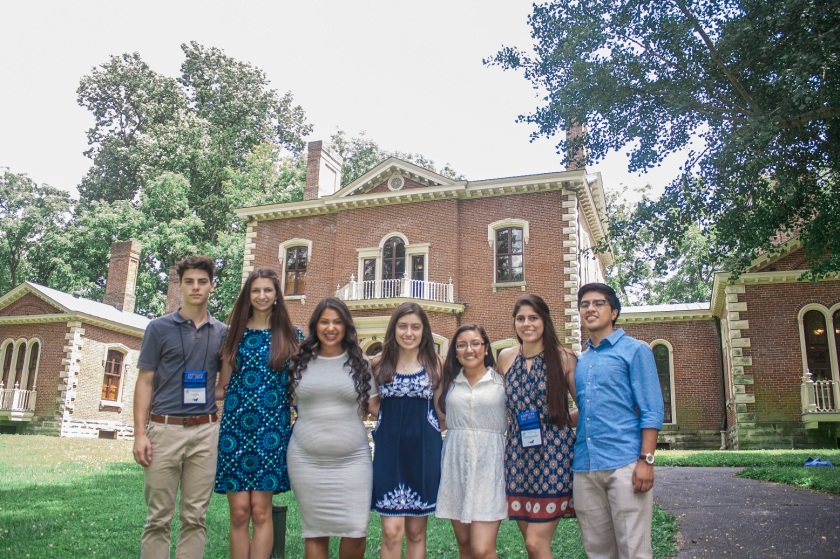
Ashland: Henry Clay Home
LEAP Ambassadors Outside of Henry Clay Home

we headed back to the conference bus for our next, and last destination on this tour, the Mary Todd Lincoln home.


Todds and Lincolns in Kentucky

Originally built as an inn and not a residence, the Mary Todd Lincoln residence  was purchased when Mary was 13.  In all, some 16 children would have spent time in the house–Mary and her 15 siblings–not counting cousins and other more distant relatives.

Mary Todd Lincoln Home, Lexington, KY
LEAP Ambassadors Tour Mary Todd Lincoln Home

At an early age, Mary began attending a finishing school where she studied literature and became fluent in French. When her father died of cholera, he had no will, so all of the items he owned were liquidated, including their collection of over 350 books. As a result, the museum has very few pieces of furniture original to the house, although they do have pieces that date from that time.

When Mary was about 20, she went to live with her sister, Elizabeth, for an extended period of time.  Elizabeth and her husband lived in Springfield, Illinois, which is where Mary met and later married Abraham Lincoln. There was talk about Mary’s visions of becoming a First Lady long before she married Lincoln, and much credit is given to her for his rise up the political ranks.

All was not smooth, though.  While in the White House, Mary spent the a large sum of money on redecorating the White House in the first six months of their stay, which led to some talk about how extravagant she was. Some of the President’s opponents tried to use the fact that many of Mary’s brothers and sisters were either fighting for the Confederacy or married to Confederate soldiers against him. In fact, while she was living in her family home, the Todds had anywhere between three and five slaves.

After Lincoln’s death, Mary went into perpetual mourning, and only wore black from then until her own death. She lived in Europe twice with Tad, one of two sons who were still alive at the time, although Tad, too, died young, like both Willy, in 1862, and Eddie, in 1850.  In 1875, Mary had a premonition that Robert, her last remaining son was in peril, so she went to him.  Given her behavior, he had her declared insane and committed her to a private sanitarium, although she was released after only a few months.

Recently, the Washington Post speculated that her illness might have been caused by a vitamin deficiency, our tour guide explained, although there are many theories as to her mental state, especially after losing two sons and her husband. Altogether, the tour was interesting and informative (and Ryan’s favorite stop on the tour).

Our awesome downtown tour was long (about four hours), so the LEAP Ambassadors had a late lunch at Stella’s Kentucky Deli, a locavore restaurant in downtown Lexington. The options weren’t too exotic, but Brian tried a lamb-burger (“pretty good”) and Kaitlyn loved her fried green tomato BLT.  The rest of us were not too impressed with our dishes. As with any new experiences, sometimes it’s a hit and other times it’s a miss. We are always happy to try new things though – that’s part of what keeps our trips interesting!


Keeneland: Betting on Fun!

Later in the afternoon, we were all eager for the bus ride to Keeneland, a Thoroughbred racing facility and sales complex for SLC “family night.” We passed through various luscious green pastures, and were greeted with music, and excited to sample varieties of the well-known, authentic Kentucky bourbon and barbecue. Not to be disappointed, we arrived at the main patio area where different tables and serving areas had been set up.

Keeneland
Opening Night of Southern Legislative Conference–Keeneland

We piled our plates high with savory brisket and ribs. Next we hit the barbecue sauce table where sweet tea, pineapple ginger and smoked tomato flavored barbecue sauces were available for sampling as well.

After we finished the delicious offerings, we met retired jockey Jean Cruguet, who kindly gave us his autograph and posed with us for a group shot.

Jean Cruguet
LEAP Ambassadors with Triple Crown Winner Jean Cruguet

Cruguet is a legendary jockey, one who rode Seattle Slew to a triple-crown victory in 1977, the only undefeated horse ever to do so.  In the final leg of that crown, Slew was leading by four lengths heading into the stretch, and Cruguet, in an act of bravado, stood on the stirrups, raised his riding whip in the air, and declared victory 20 yards prior to the finish line.

Cruguet's famous 'victory pump' on his way to wining the Belmont Stakes.
Jean Cruguet on Seattle Slew

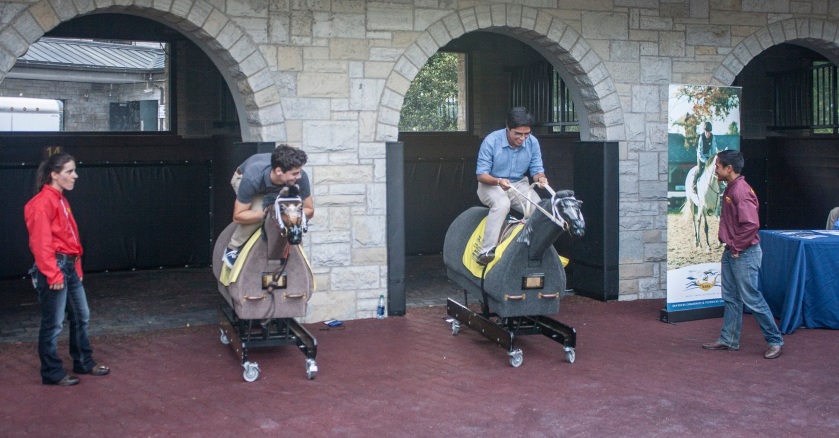
Perhaps inspired by this meeting, both Ryan and Brian (named B-Ryan for the purposes of our trip), got on horse simulators to experience the horse-racing experience.

Keeneland Horse Racing
Ryan Brim and Brian Aldaco on Mechanical Horses

Brian and Ryan experienced what it would have been like to be a professional jockey, giving the practice horse a tryout ride. Both had great “natural talent” and, perhaps a bit presumptuously, felt ready to take on an actual horse race after their practice.

To see some real horses, we headed to the stables. Everyone took turns approaching the majestic horses for some tender, loving pats on the nose.

This slideshow requires JavaScript.

Having checked in with the breadwinners of the stables, we moved on to a more educational event Keeneland sponsored, the mock auction. Unfortunately, we arrived late, only in time for the tail end of a Q&A session with Mr. Cruguet.

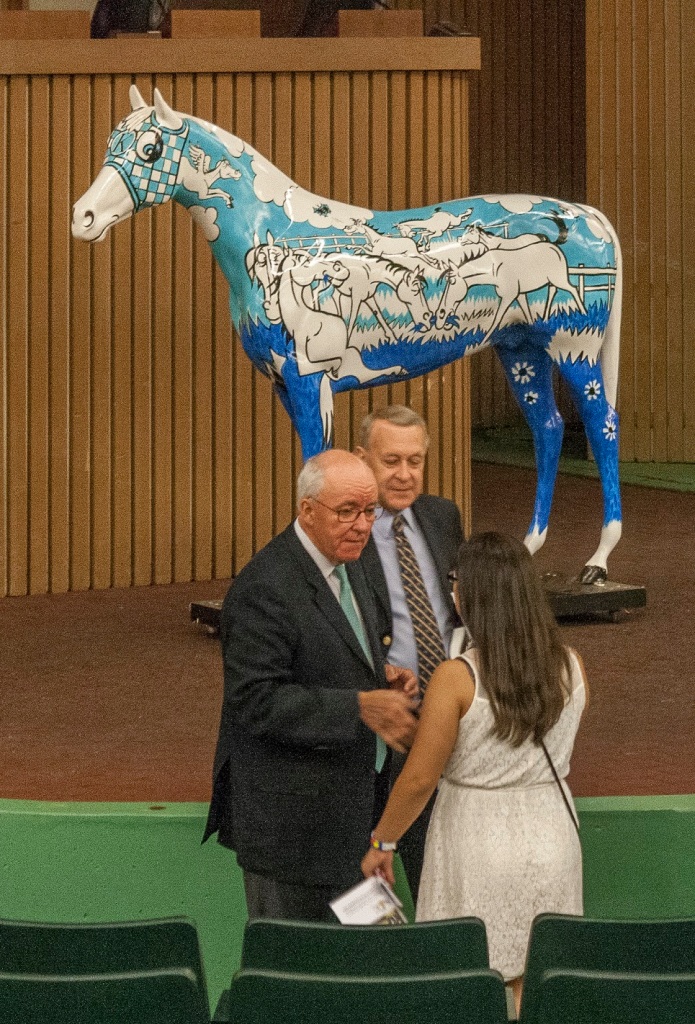
Beatriz, though, didn’t let the end of the session slow her down.  She met briefly with the auctioneers for her own private Q&A, to find out more about the process of horse auctions, as well as the amount one could spend on a horse: Did you know that the highest bid they have ever had for a horse is 3.6 million dollars? Did you know that Keeneland had 500 million dollars in horse sales last year? I found that pretty impressive.

Keeneland Auction Space
Beatriz Martinez with Keeneland Auctioneers

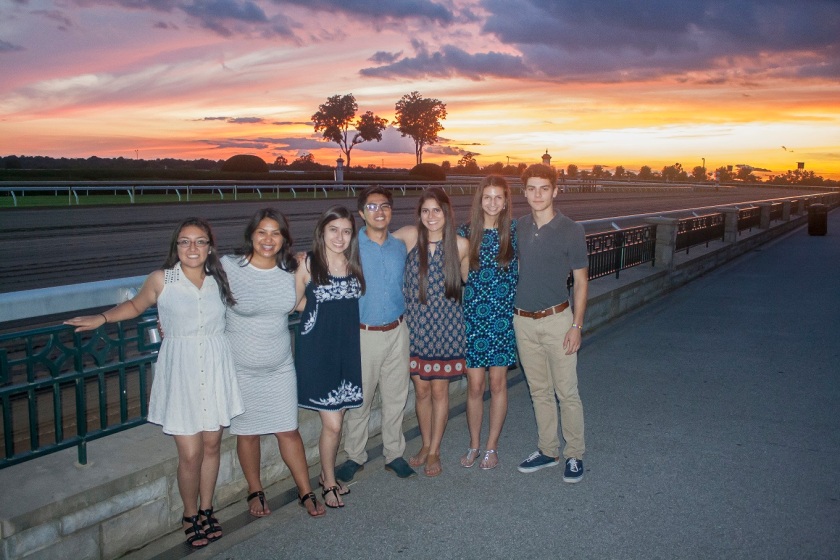
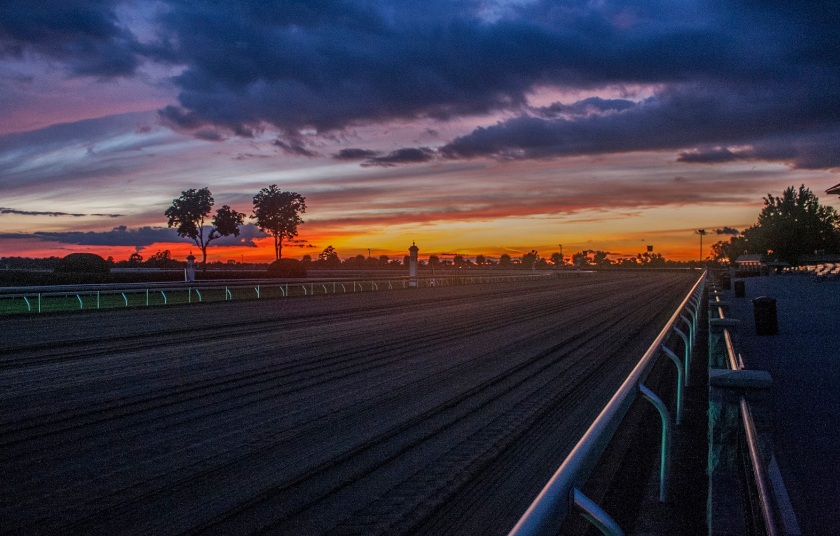
We made some last rounds at Keeneland, enjoying the last round of music by local band Sundy Best, “Home,” as we took pictures in the sunset at the track.

Keeneland Race Track at Sunset
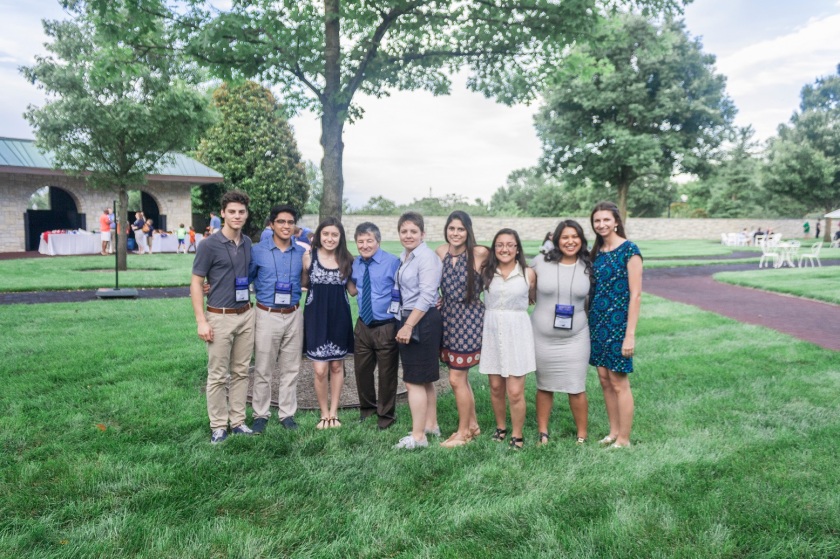
LEAP Ambassadors at Keeneland Race Track

None of us has ever been to a horse race, but being so close to the track does hint at the kind of excitement that might be possible during a two-minute race.

Keeneland Race Track

Having a beautiful sunset also helps.

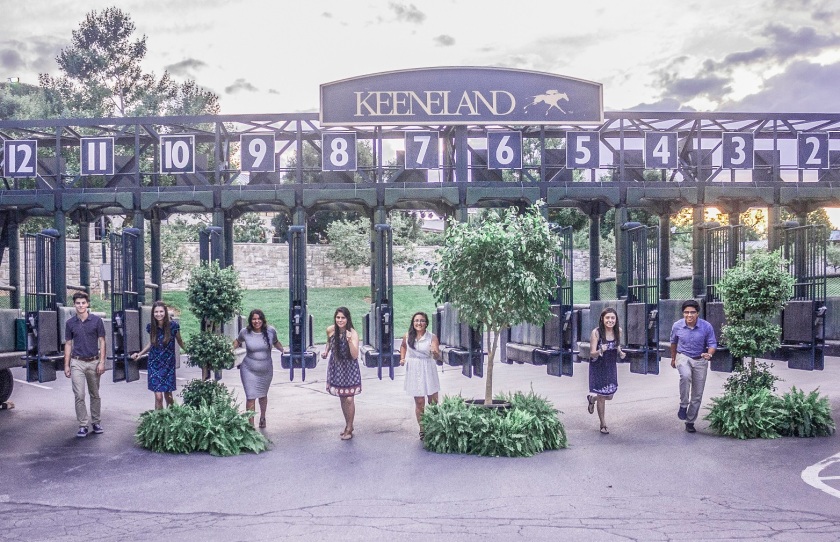
We also posed in Keeneland’s Starting Gates.  Incidentally, Brian was stationed in the same gate as American Pharaoh, the last triple crown winner (2015) and, with a victory at the Breeder’s Cup, stands as the only horse to win the “Grand Slam” of horse racing.  Fittingly, American Pharaoh was bred in Kentucky.
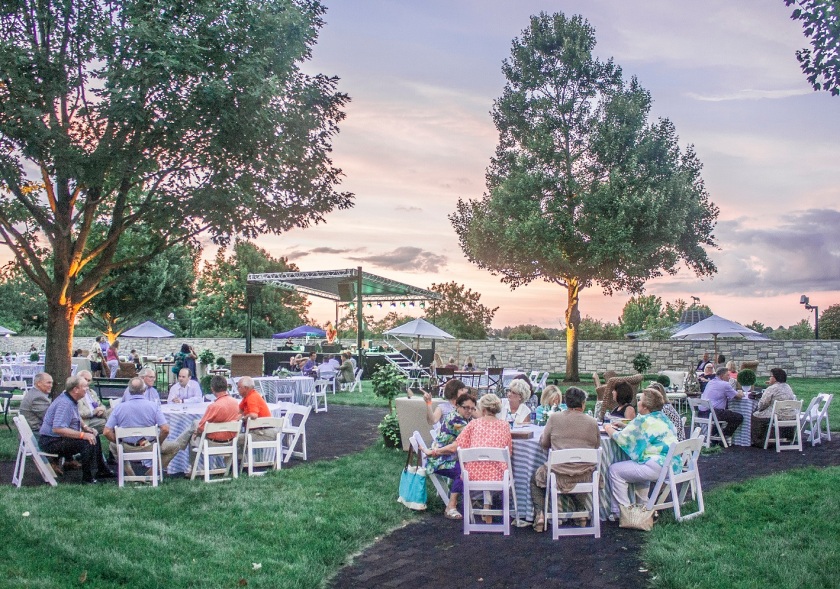
Keeneland Race Track Starting Gates
LEAP Ambassadors in Position at Keeneland

With one last look around Keeneland, we agreed with the band, Sundy Best, that, “Yeah it’s time to go home.” So we headed back to the hotel!


Triangle Park

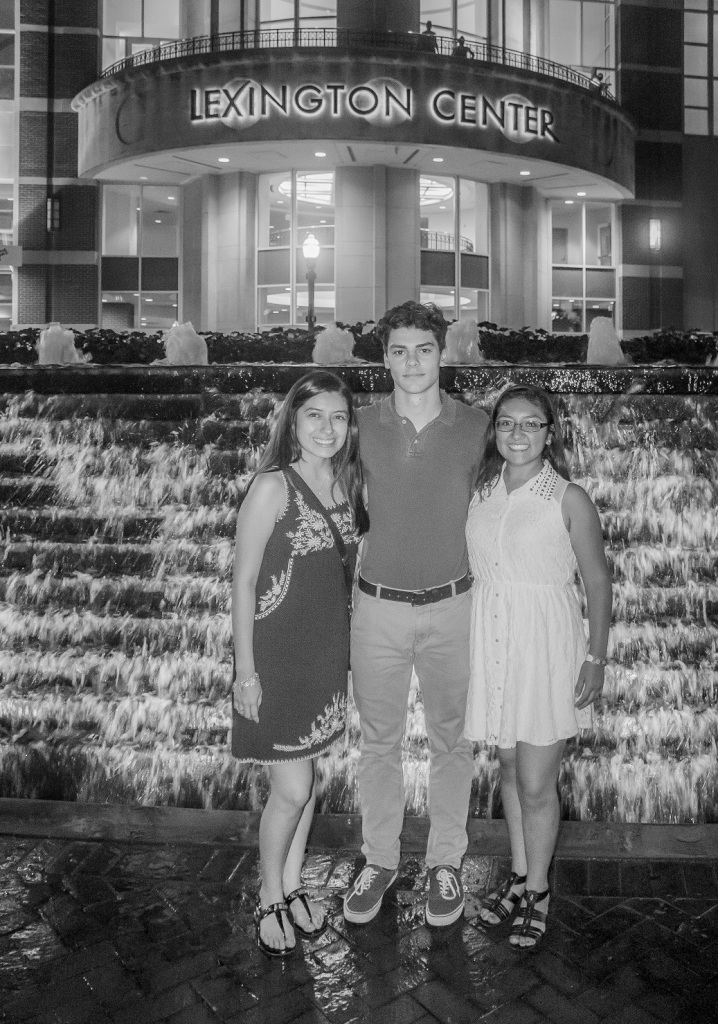
Before we were fully able to call it a night, we explored the city park by our hotel, Triangle Park.   It is a beautiful gathering space, with splash pads, a “democracy wall,” and a beautiful fountain that covers more than an entire city block.

Triangle Park, Lexington, KY

With the calming splash of the water and the peaceful, happy ambiance of the park, and the satisfaction of a full-day of activities, we called it a day.