Skip to content

Center for Law, Engagement, and Politics

Leap At SHSU!

  • About LEAP
  • LEAP Ambassadors
Center for Law, Engagement, and Politics

Tag: World Affairs Council Houston

Pandemics, Politics, & Profits: Peter Hotez discusses COVID-19 

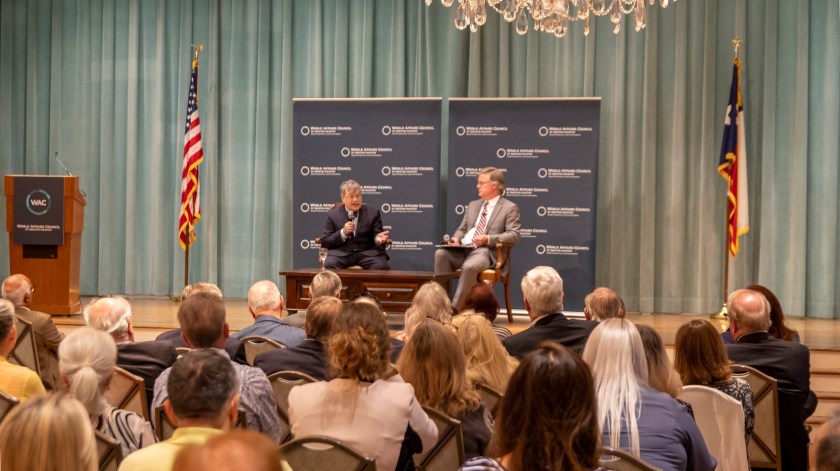
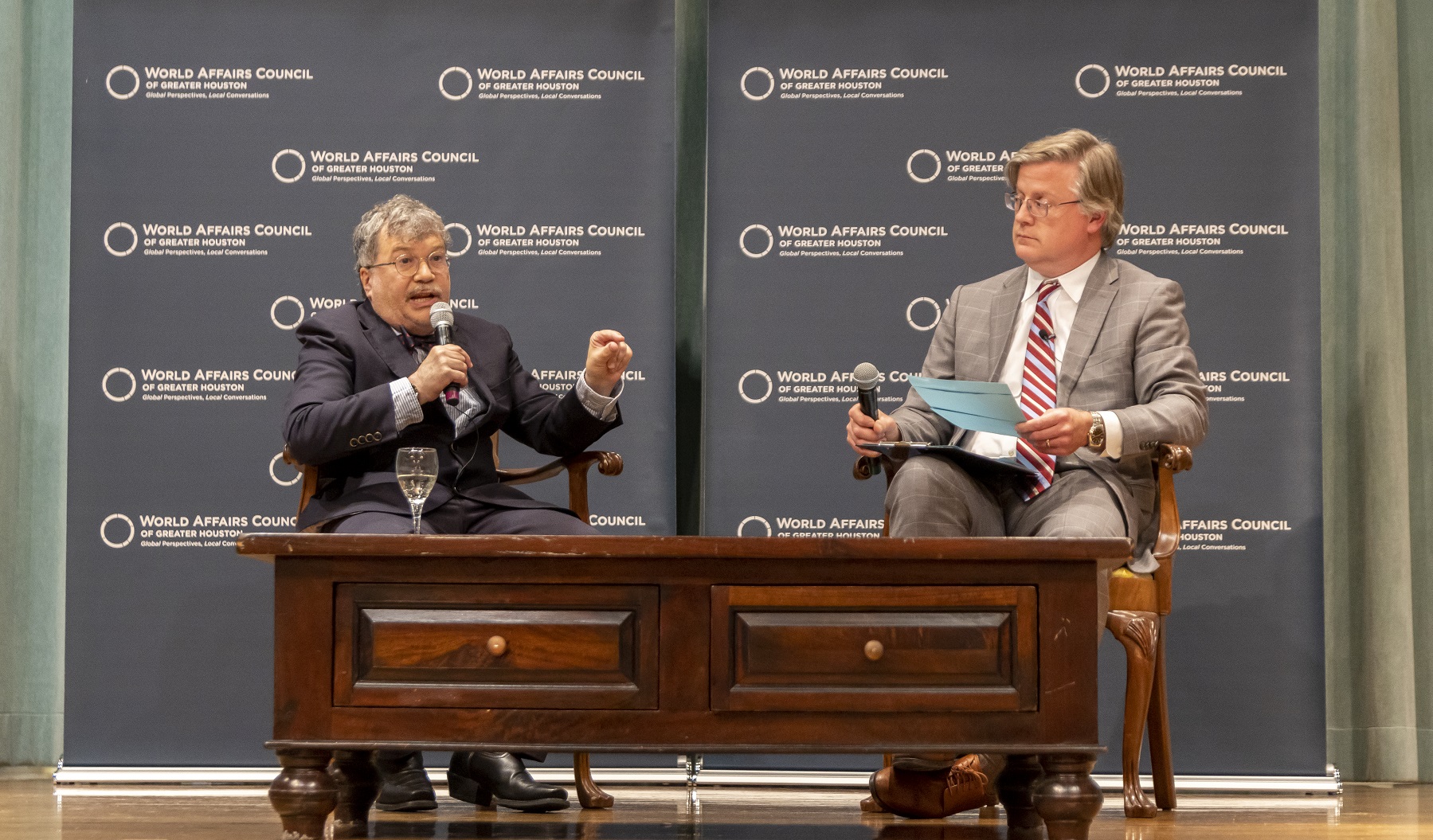
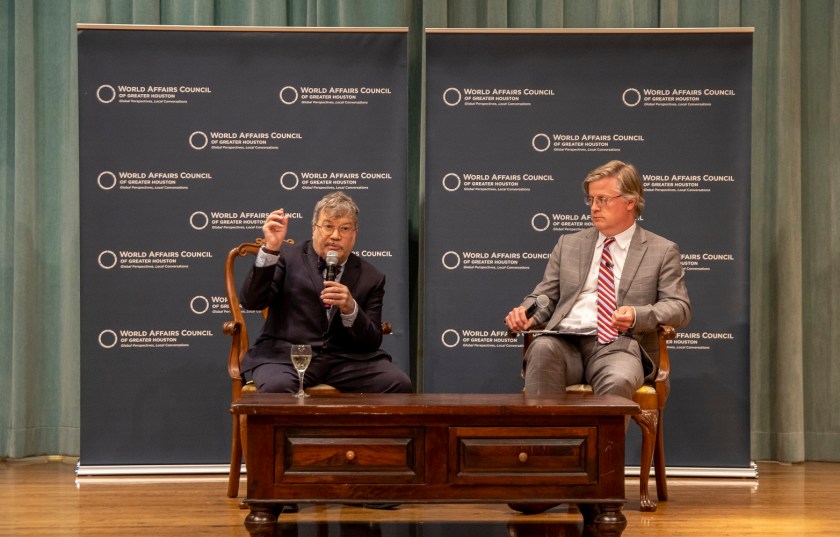
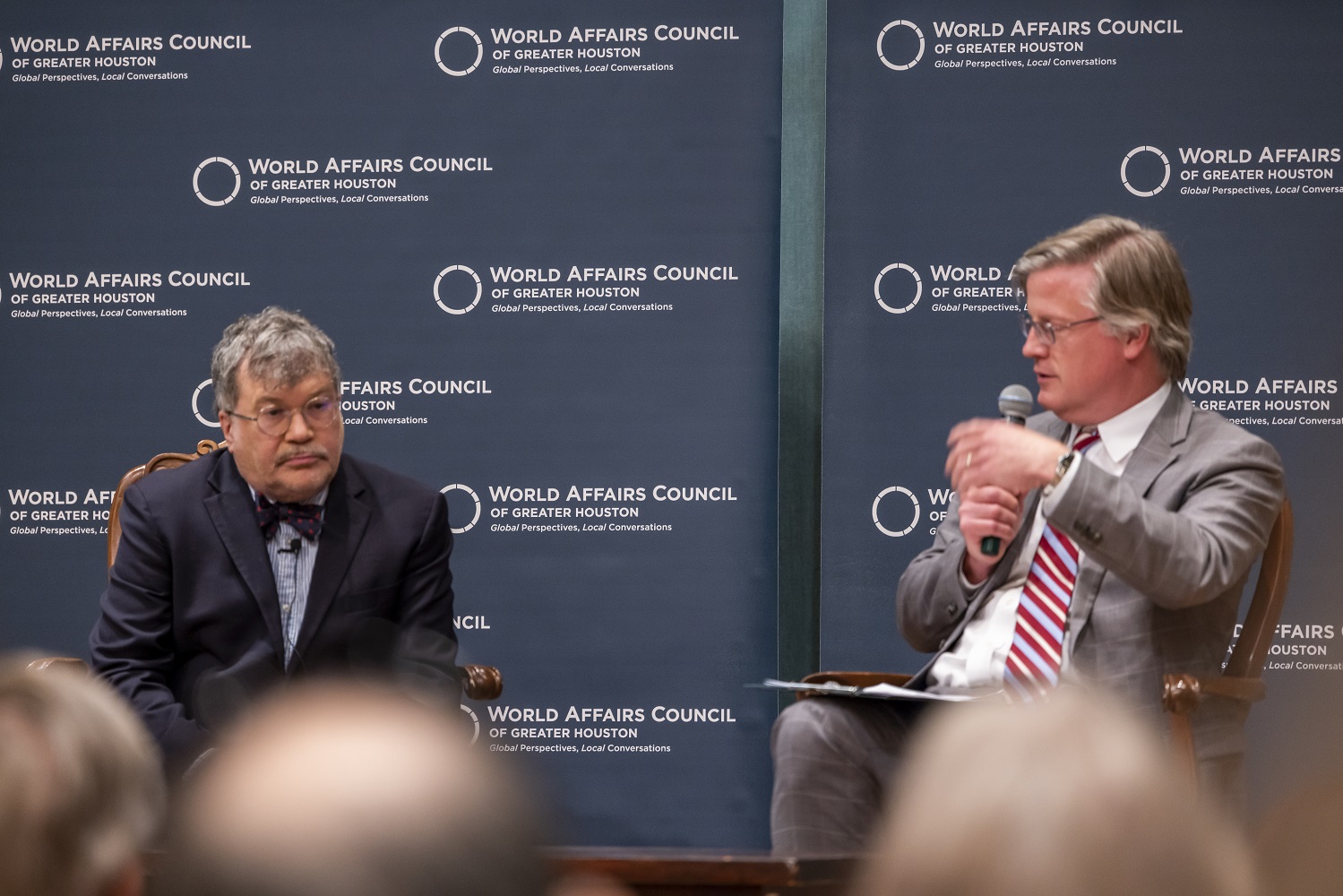
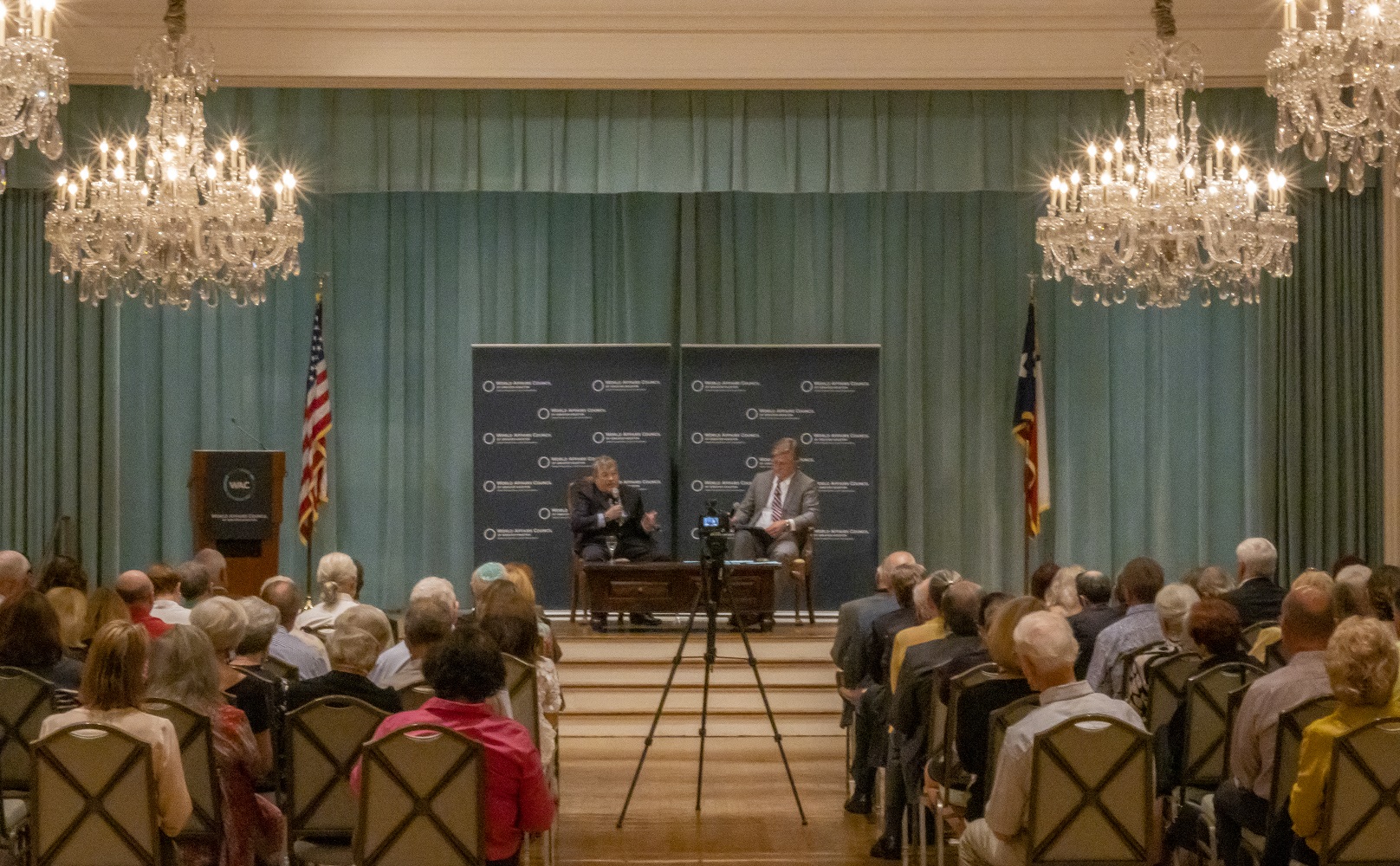
It’s not every day you get to hear from a Nobel Peace Prize nominee, but LEAP students had just that chance yesterday.  Dr. Peter Hotez, Professor of Pediatrics and Founding Dean of the National School of Tropical Medicine at Baylor College of Medicine—and, most recently, developer of a vaccine against COVID—discussed the role of expertise and politics in addressing global pandemics in another interesting event hosted by the World Affairs Council. 

Hotez has been in the trenches fighting the COVID-19 pandemic, while also conducting perhaps 1,000 television, radio, and podcast interviews since the spread of COVID.  Remarkably, he’s also had time to work with his co-researcher, Dr. Maria Elena Bottazzi, Associate Dean of the National School of Tropical Medicine, in developing CORBEVEAX, a low-cost vaccine that protects against COVID.  Notably, Hotez and Bottazzi did not patent the vaccine—foregoing millions in income to assure lower pricing for the medicine.

 Hotez’s discussion was wide-ranging, but he stressed three major points: the origin of COVID, the politicization of medicine, and the future of pandemics. 

Hotez believes it’s important to uncover the origins of COVID, but he finds conspiracy theories to be misguided. While it is possible, he notes, that COVID escaped from a lab in China, there’s no evidence for that theory, and pursuing it with much vigor is likely to distract researchers from the most likely answer, which is that COVID either developed from—or was spread through—a wet market in China. 

What most clearly distresses Hotez, however, is the politicization of COVID…

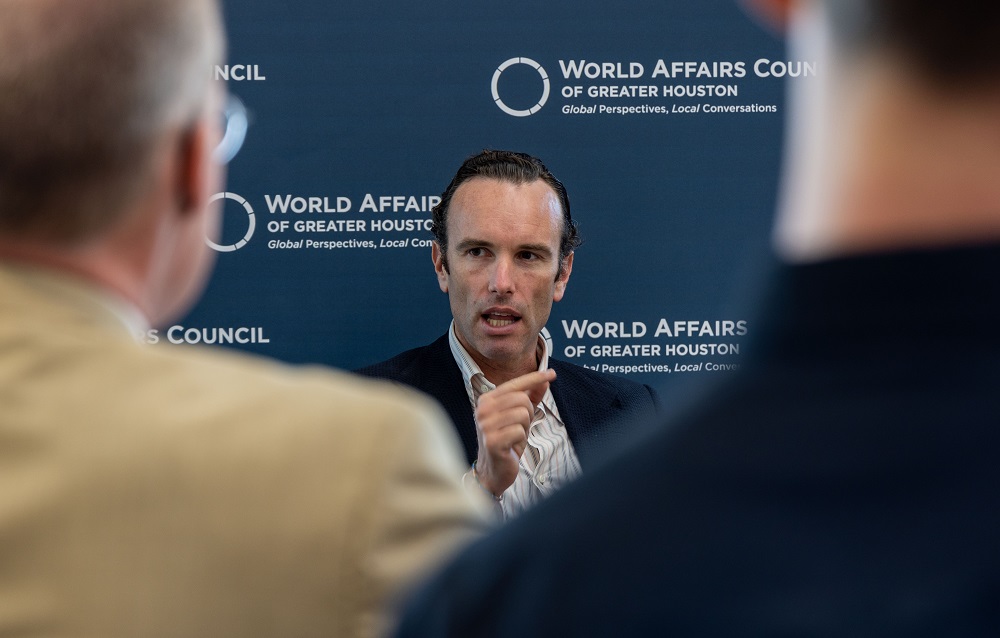
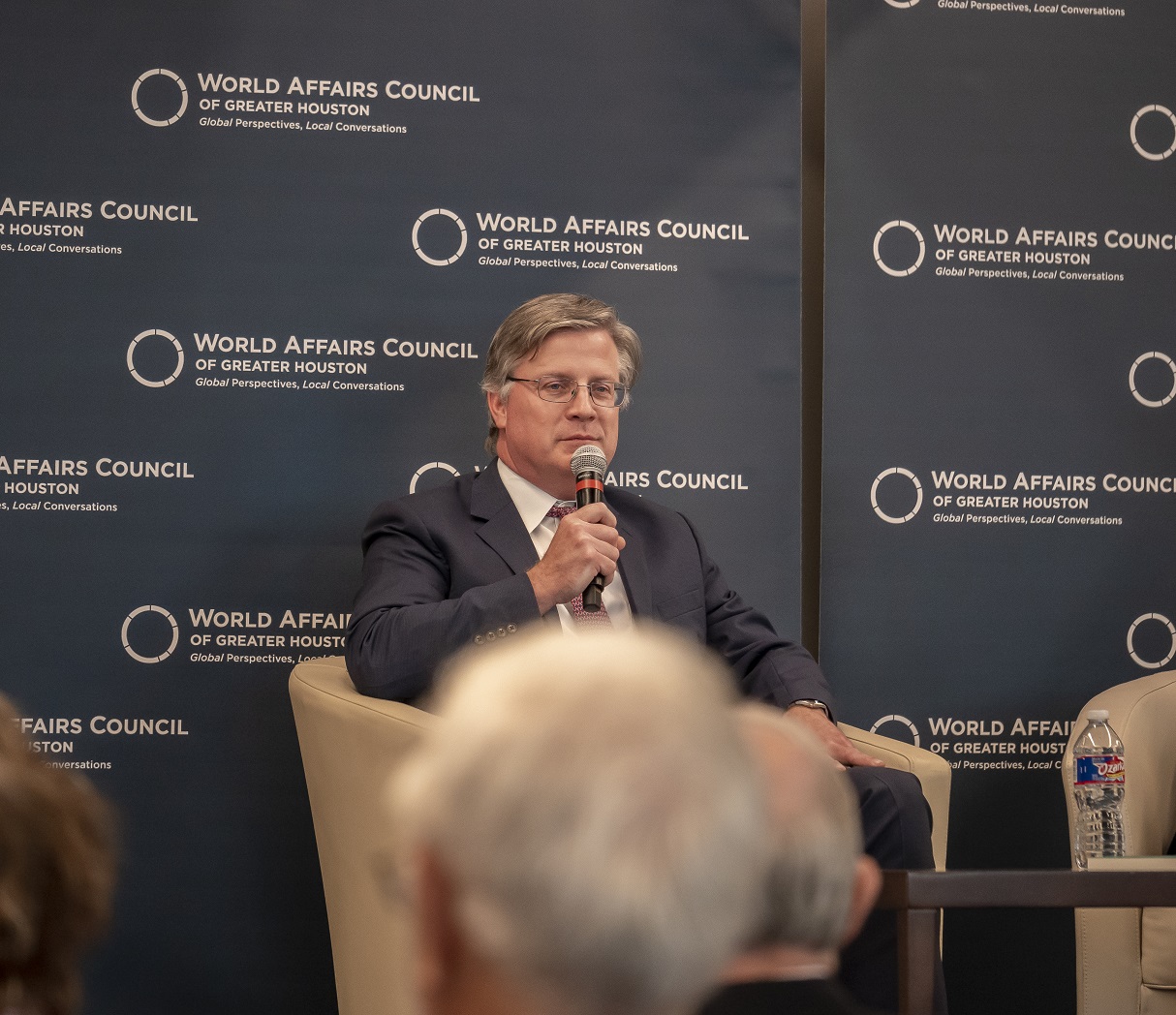
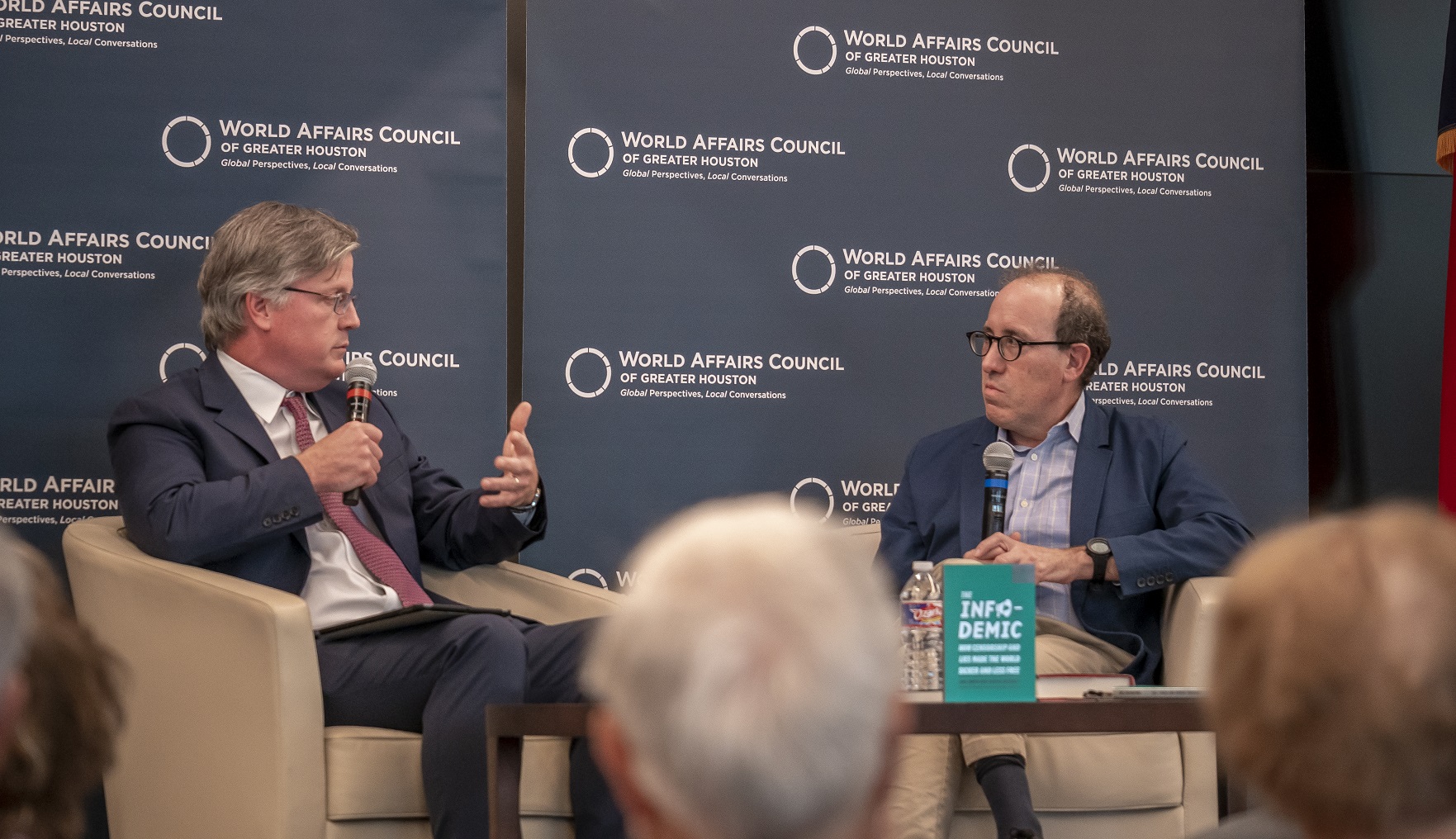
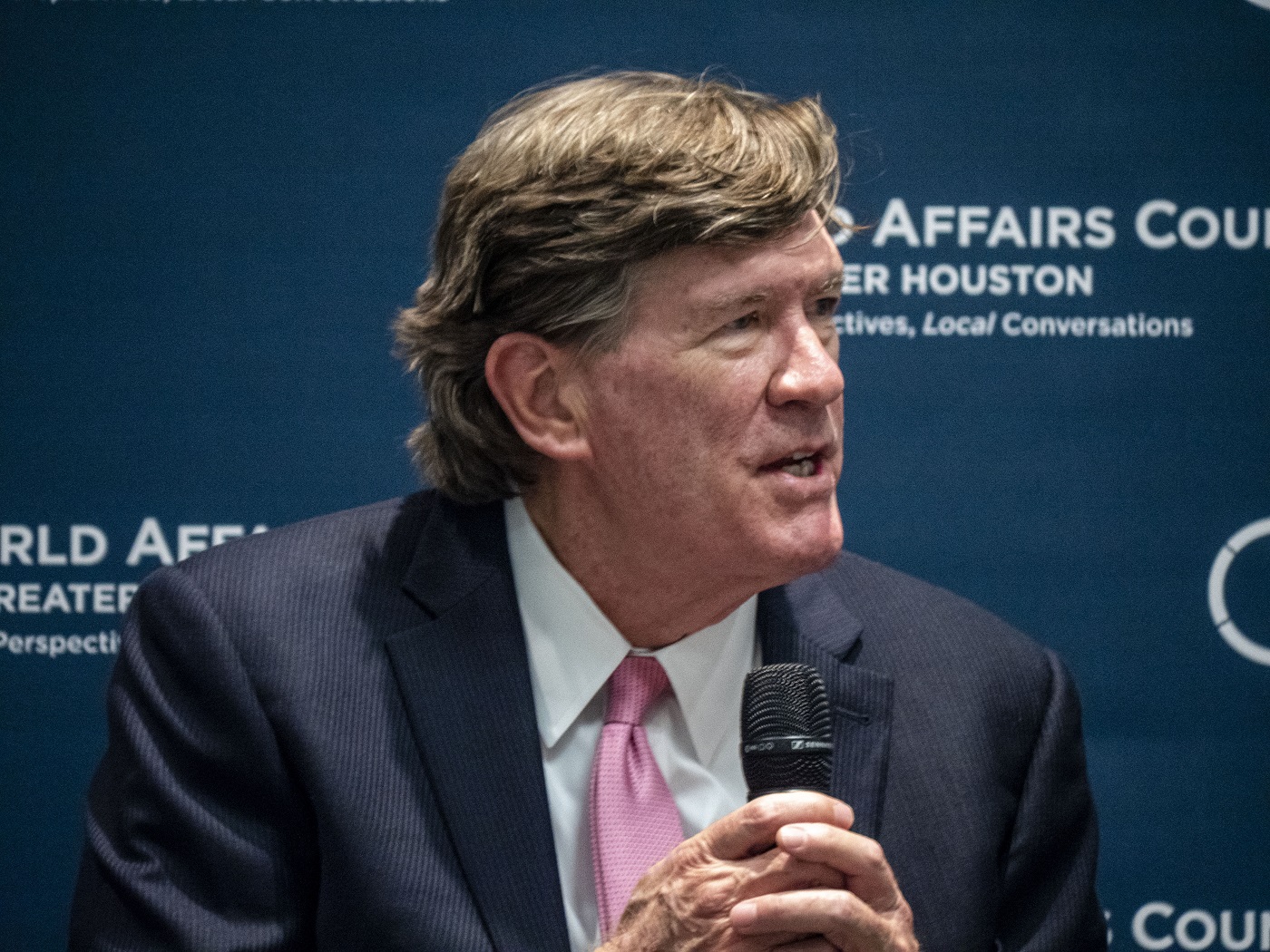
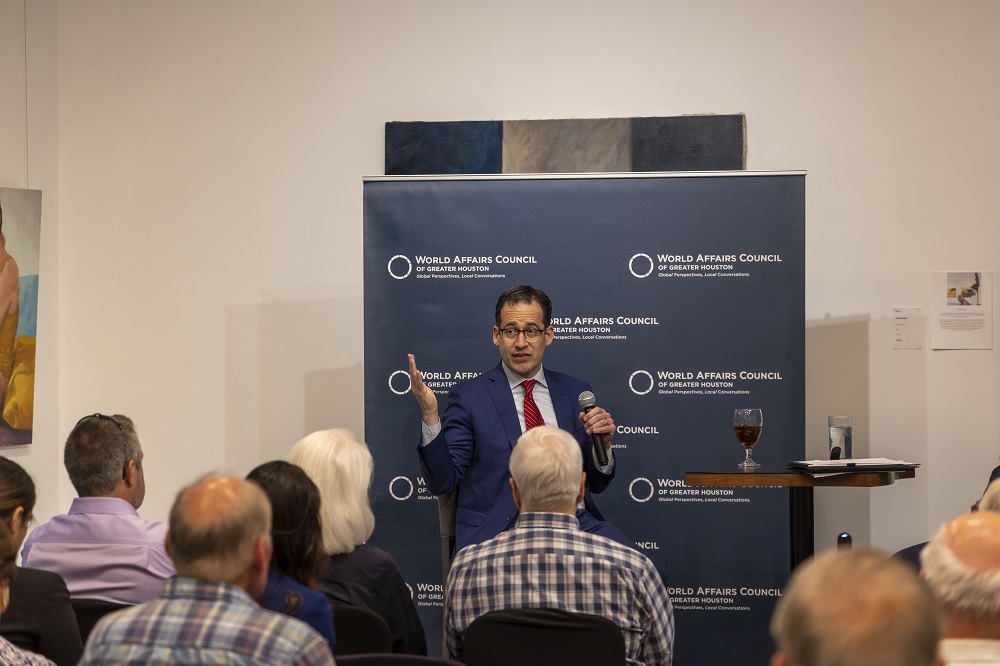
…a thread skillfully navigated by the World Affairs Council moderator, Ronan O’Malley. 

While prior to the COVID-19 pandemic, anti-vaxxers could be found on the left and right, more or less equally, the right-wing of the Republican Party seemed to embrace conspiracy theories not only about the origin of COVID, but also about almost any US government efforts to combat COVID. 

Some believed that COVID itself was a hoax wrought by the US government, while others accepted the threat of COVID, but believed that any medicine promoted by the government was part of a deep state/big pharma conspiracy for profits, leading to the misguided use of Ivermectin and other nostrums.  Hotez noted that such beliefs led to more than a quarter of a million deaths of people who could have been vaccinated, but weren’t. 

Hotez called this movement an aggressive, anti-science faction, and he considers this dangerous, not only as it relates to COVID, but also how it relates to the next pandemic.  “Nature”, Hotez noted, “is not coy. 

It’s sending us a clear message.”  That message, it seems, is humans need to get it together, which involves not only identifying the origins and spreads of viruses such as COVID-19, but also winning an informational war about science itself.  Fighting pandemics is difficult, but it’s infinitely more difficult when a significant portion of the population refuses to adopt common-sense approaches to fighting the pandemic. 

Following the event, Dr. Hotez briefly met with us, asked us about our majors (History, Biology, and Political Science), and he suggested that it was about time he get to Sam Houston State University to speak, a point on which all of us agreed. 

Meru’s Grill

Following the event, with much on our mind, we went to Meru’s Grill nearby, and we discussed much of what we learned.  None of us had been to Meru’s, but it was a great find: the staff were friendly and knowledgeable, the ambience was inviting, and the food was amazing.  The appetizers, which included the “Avocado Bomb” and the “Smoked Salmon,” were refreshing and innovative. 

The avocado bomb, for example, had raw Hawaiian Tuna, avocado (of course), a dressing, and possibly pineapple, a combination we weren’t expecting, but couldn’t get enough of.  Our appetizers included two shrimp dishes, a Thai salad, and a burger, all of which were truly excellent in both taste and presentation. 

Perhaps our favorite part of the meal, however, was the carrot cake dessert, recommended to us by our excellent server, and a truly delicious delicacy in the form of a square “slice” of cake, with icing unsurpassed in texture, flavor, and volume. 

Meru’s Grill isn’t part of the medical field, but it definitely eased our worries and improved our spirits, topping off a wonderful night of education, good company, and great food. 


Unknown's avatarAuthor mikeyawnPosted on July 8, 2022Format AsideCategories Civic Engagement, HealthTags Center for Law Engagement And Politics, Dr. Peter Hotez, LEAP Center, Sam Houston State University, SHSU, World Affairs Council HoustonLeave a comment on Pandemics, Politics, & Profits: Peter Hotez discusses COVID-19 

An Evening South of the Border, with the World Affairs Council

By Ashlyn Parker

Our evening–and my first LEAP Center event–began with a trip to the Glade Gallery, which hosts not only beautiful art, but also many of the events held by the World Affairs Council.

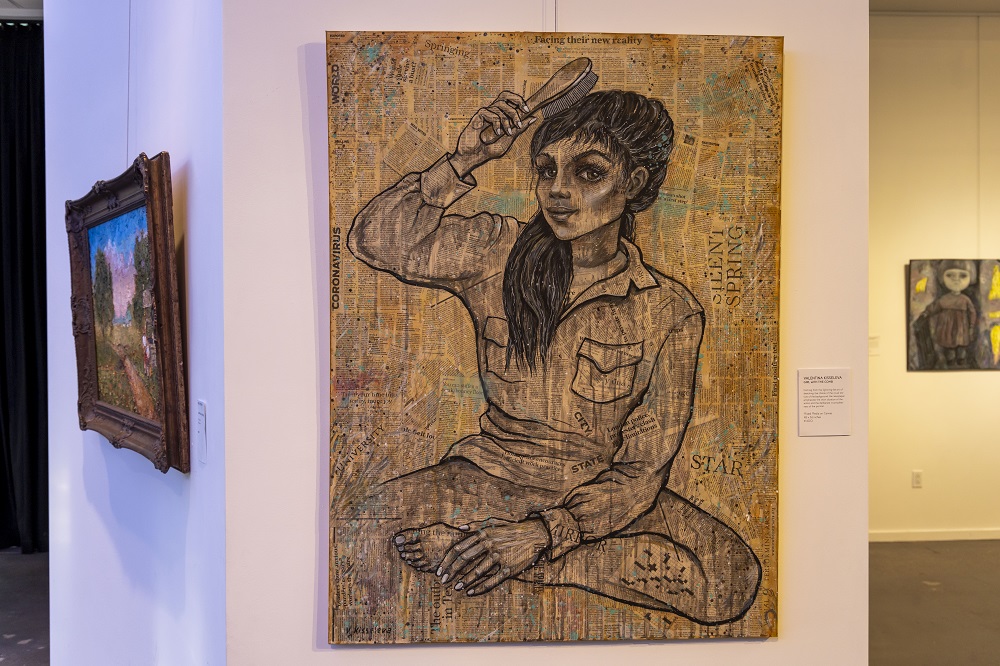
At the Glade Gallery we viewed an array of paintings and sculptures. As we were roaming the gallery, we noticed some art pieces that also happened to be for sale- some were priced up to $31,000!

And we even saw a Marc Chagall!

Our main objective of the evening, however, was to hear from Julián Cárdenas, who was speaking on Venezuela’s political and energy situation–and how these are being affected by the Russian-Ukraine War.


Considering Mr. Cardenas served in the Venezuela State Department, is an energy expert, and a law professor at the University of Houston Law, he was a good person to hear from on this topic!

Mr. Cardenas and WAC’s able moderator Ronan O’Malley discussed the challenges faced by Venezuela since the Chavez and Maduro regimes, of which there many. With economic policies that aren’t working, the country facing sanctions imposed by other countries, and widespread corruption among government officials, Venezuela is also facing soaring inflation–in fact, inflation has climbed to thousands of percent, making the US’s inflation rate of 10 percent seem tame.

Cardenas discussed numerous topics we needed to learn about: realism v. idealism in foreign policy, the G-7, NAFTA, and programs such as “food for oil.” We also learned the term “brain drain,” of which Cardenas was a part–he left when conditions became intolerable there.

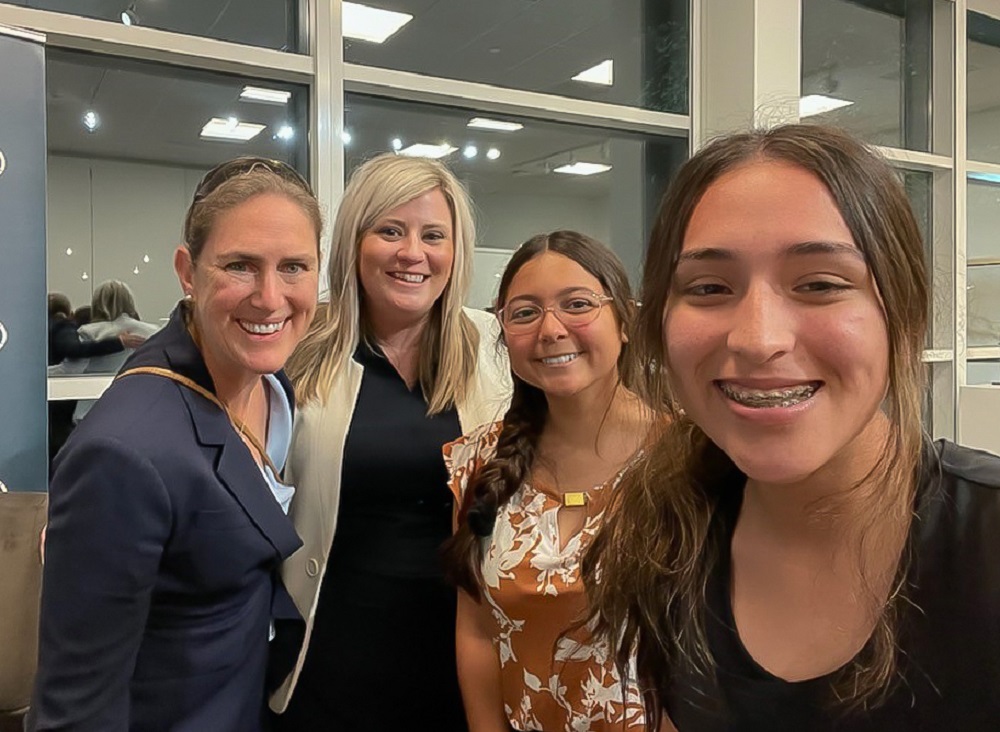
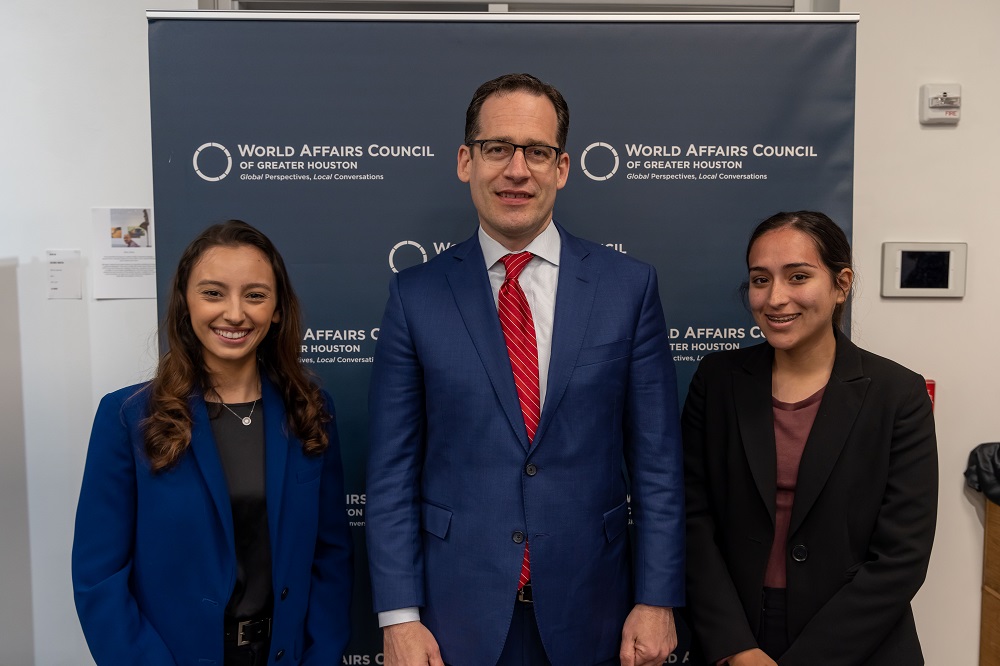
Following the main discussion, we were able to chat a bit with Mr. Cardenas, pose for a photo, thank the wonderful WAC staff, and head out for dinner.

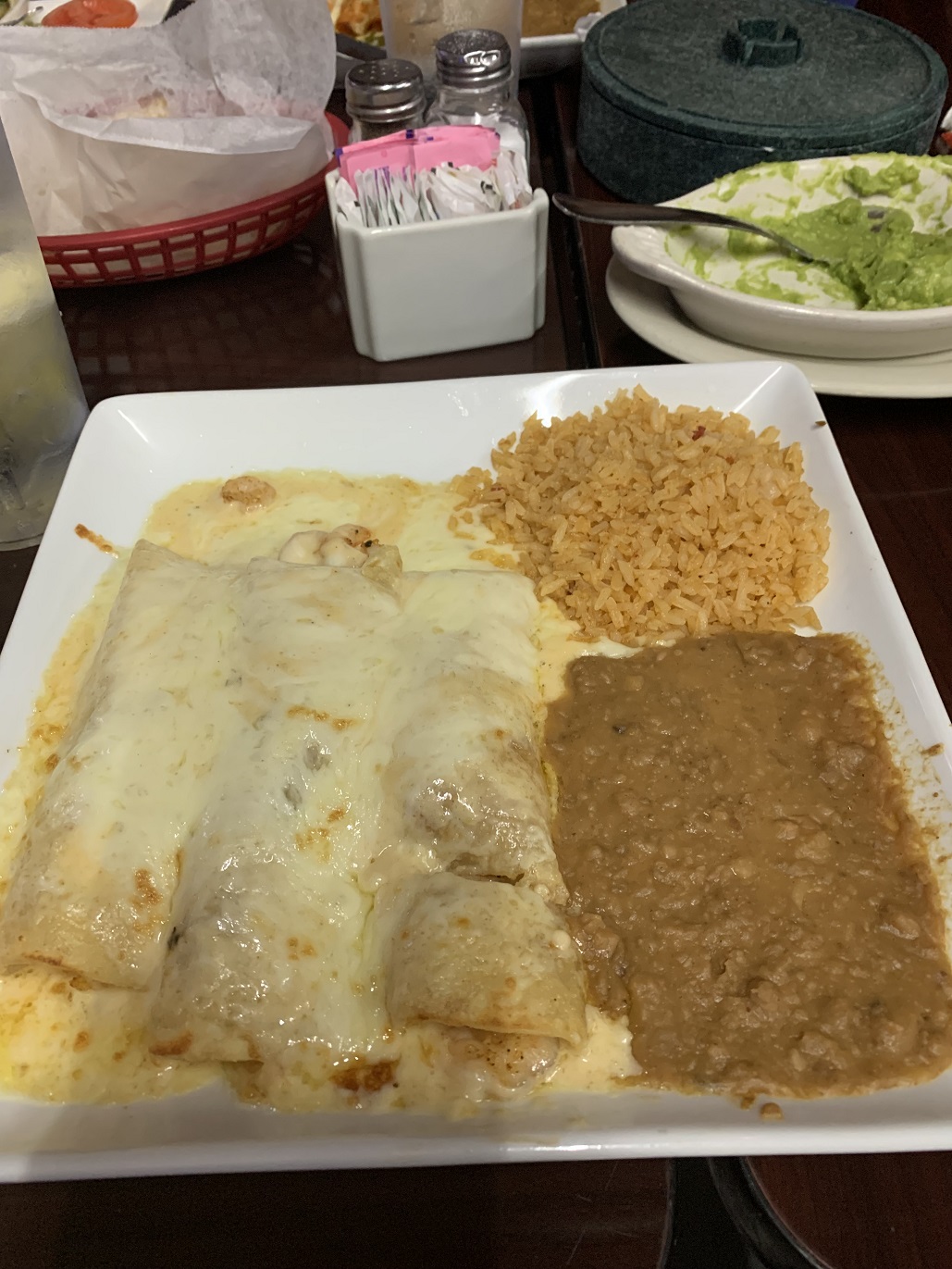
We drove down to Casa Medina just in time to grab a couple of seats before they closed the kitchen. The service was excellent, and the food was solid! I ordered the shrimp enchiladas, and I was pleasantly surprised with the amount of shrimp and cheese on top. I am a bit of a shrimp enchilada connoisseur, and this dish is a guaranteed 10/10 on the Ashlyn Parker scale!

Unknown's avatarAuthor mikeyawnPosted on July 1, 2022Format AsideCategories Art, Civic Engagement, Food, Law, PoliticsTags Center for Law Engagement And Politics, LEAP, LEAP Ambassadors, LEAP Center, Sam Houston State University, SHSU, Venezuela, World Affairs Council Houston1 Comment on An Evening South of the Border, with the World Affairs Council

Learning in a Time of Pandemics and Misinformation

By Bella Urbani

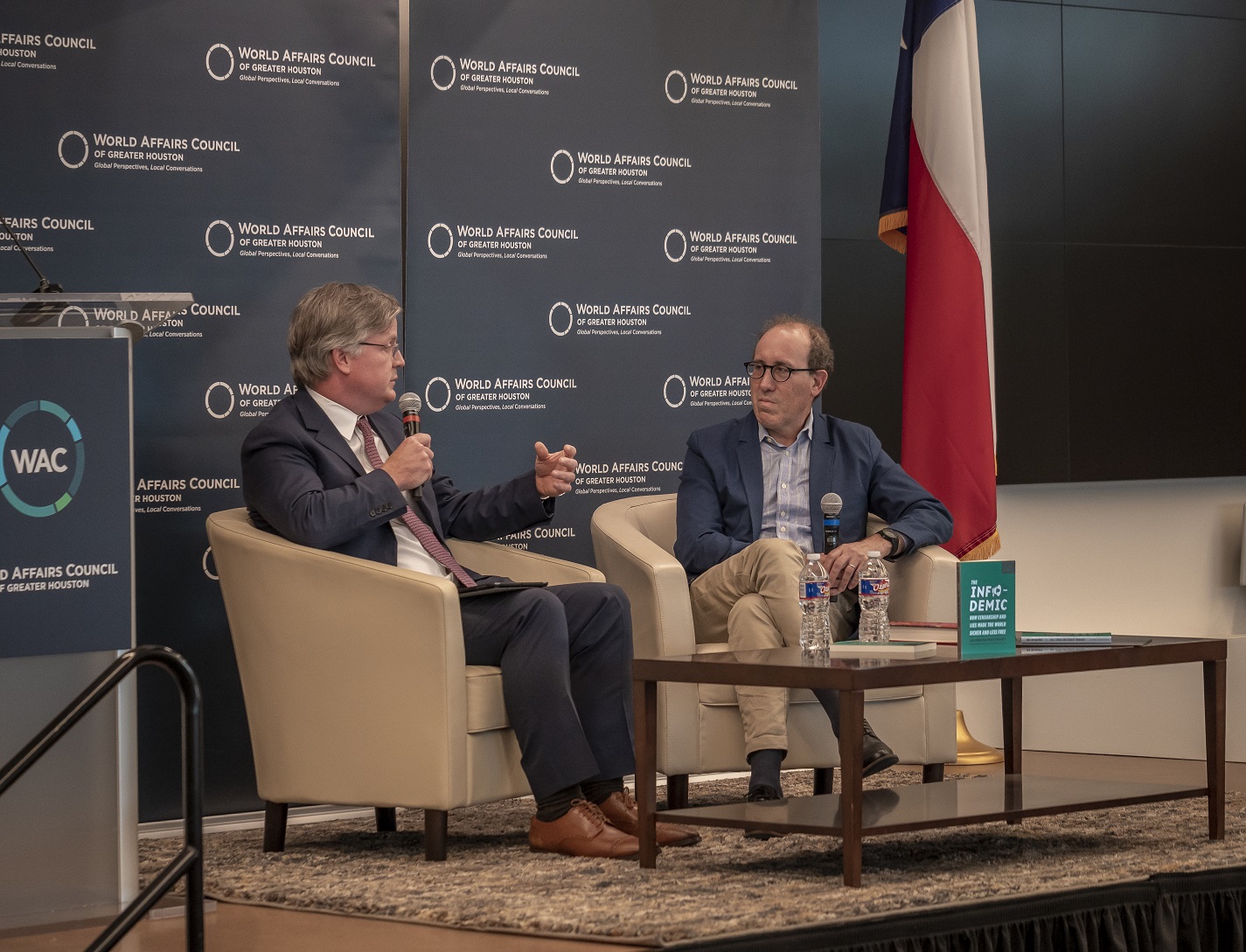
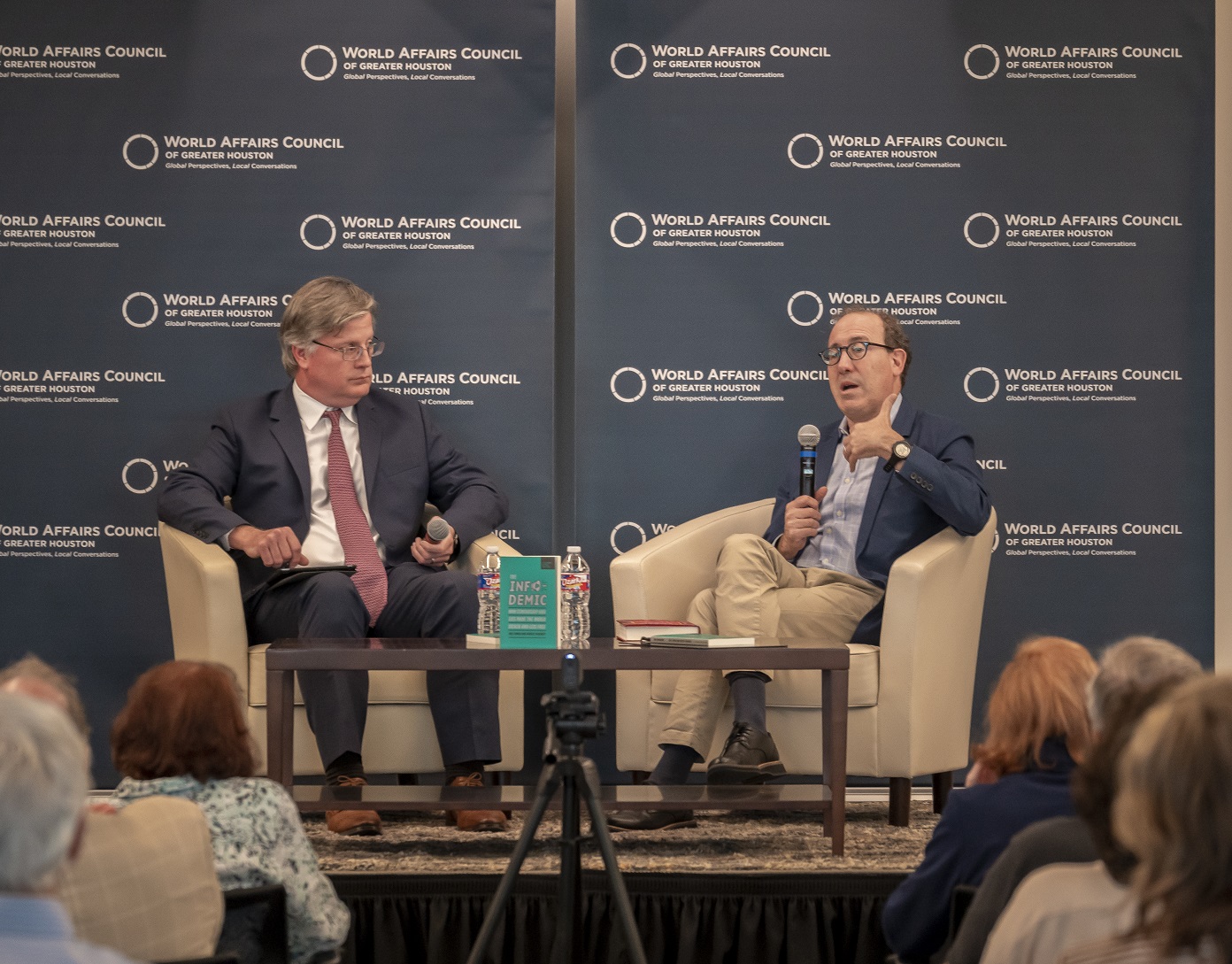
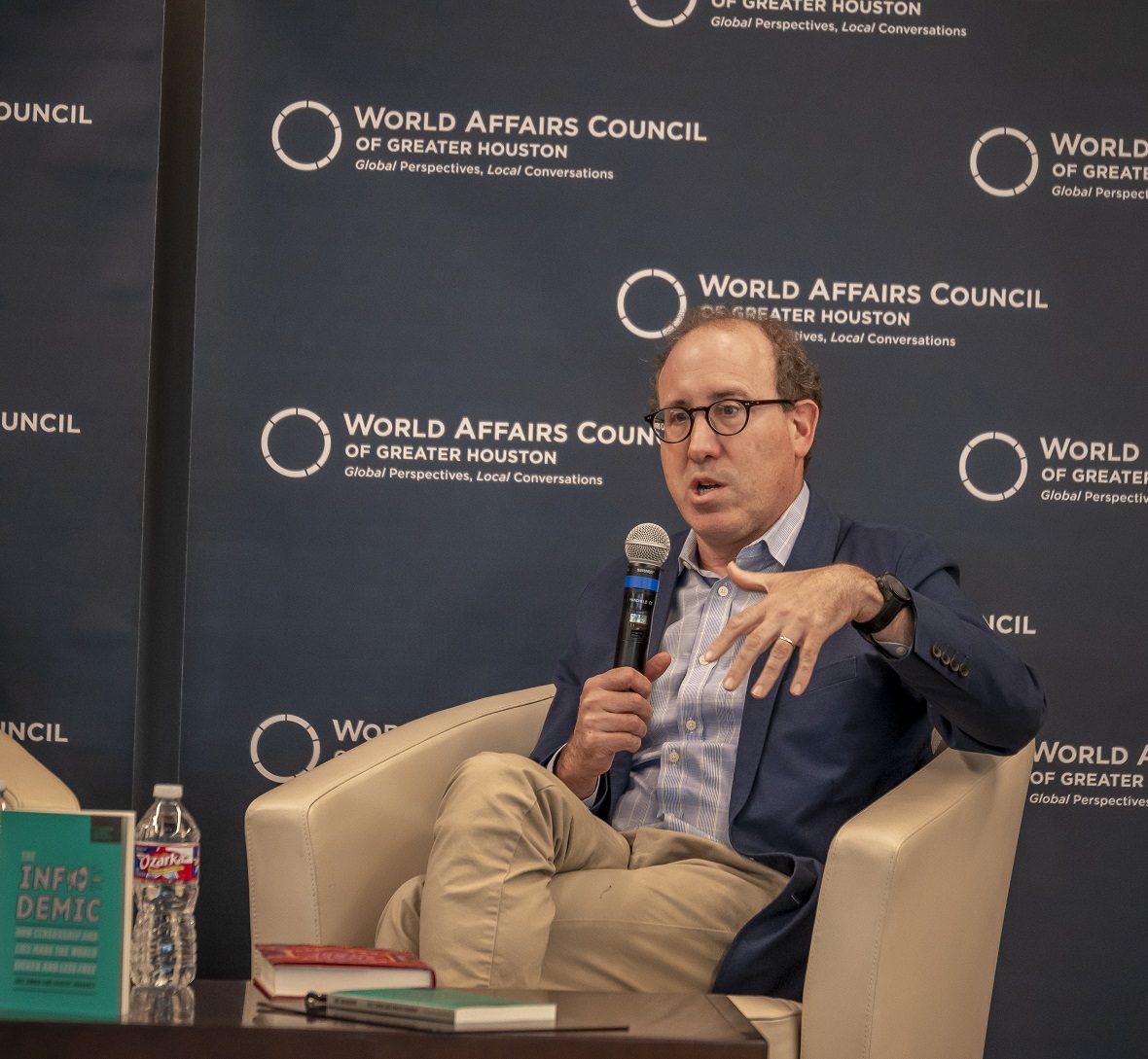
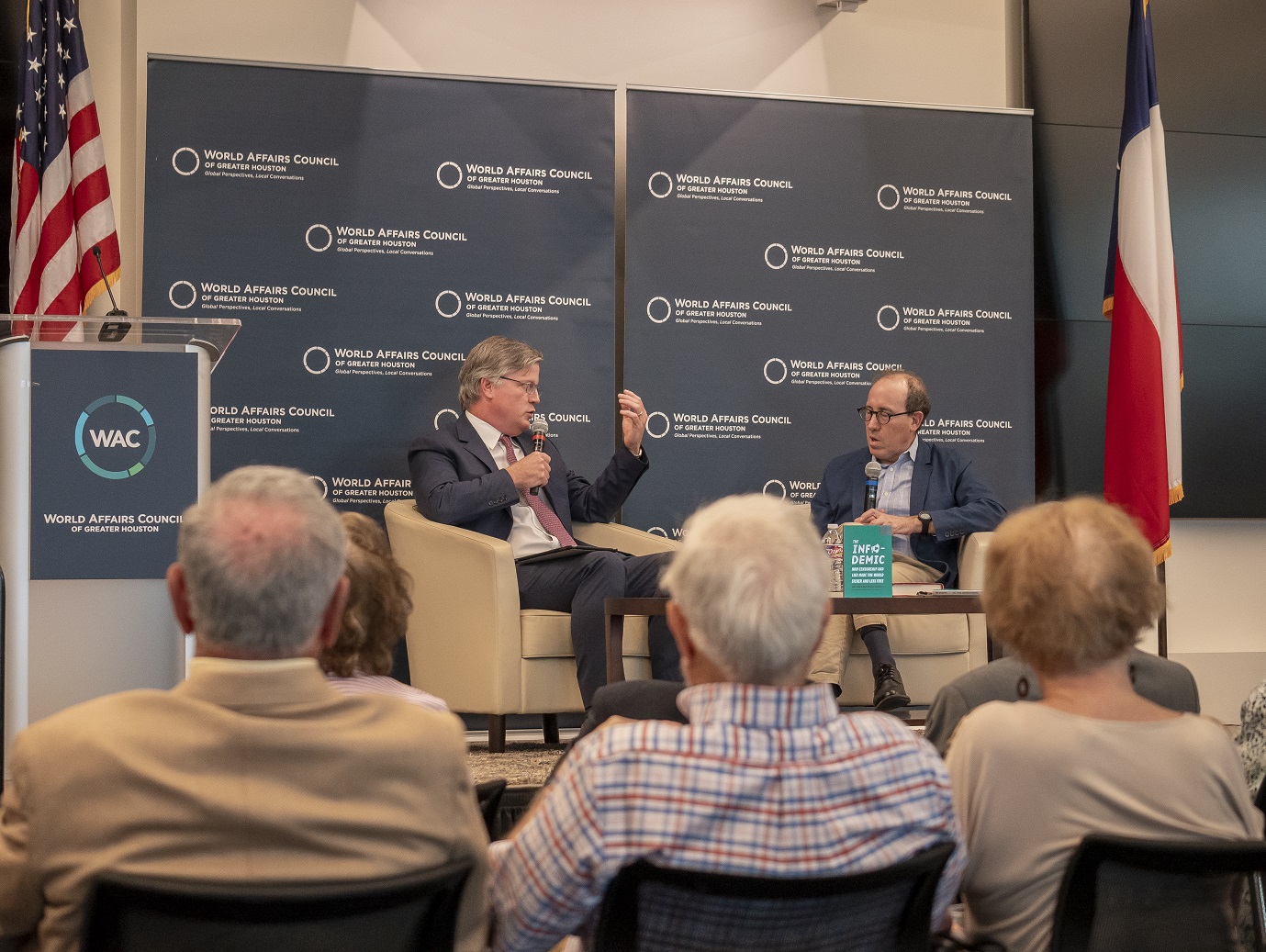
As our first day came to an end, we attended another fantastic Houston World Affairs Council event at the Amegy Tower featuring Joel Simon, who discussed topics from his book Infodemic regarding censorship associated with COVID-19. As a nice bonus, we also had a chance to meet former LEAP Ambassador Esme Mata, who after graduating from SHSU, went to the Bush School at TAMU, and is now working for Harris County. And we had a chance to see Amegy Tower for the first time!

As we know, COVID-19 is still a very controversial and confusing topic, but Simon–with skillful moderating by Ronan O’Malley–was able to articulate how the COVID-19 pandemic led to various types of censorship across the globe.


The most fascinating subject Simon talked about was how some countries installed tracking apps on their subjects’ phones, so that they could see where they travel, whom they interact with, and whether they have potentially been exposed to COVID. If a person has interacted with a COVID patient, that individual is given mandates to stay at home or go to quarantine, and if they don’t, they can be fined or otherwise penalized. In some cases–as in Russa–individuals were given notifications in the middle of the night, and if they did not respond in time, they were assumed to have broken quarantine, and fined.

It was interesting to learn more about how other nations responded to the pandemic and how censorship policies, in most cases, hurt their country.

One item of particular interest was the importance of local news and leadership. National news figures and media have the “reach,” but they lack the trust, the sense of shared identification with locals. Local newspapers, local reporters, and local leaders share that identity, but almost thirty years after the advent of the internet, they no longer exist in many communities. They lack the reach. So, citizens were not getting information from people they trusted in many cases, and they also lacked information that the national media could not give: such as where to go locally for vaccines, or where medical supplies could be purchased, and the like.

The whole experience was very informative and easy to understand and Simon’s answers to our questions were very knowledgeable regarding censorship, which I appreciated.

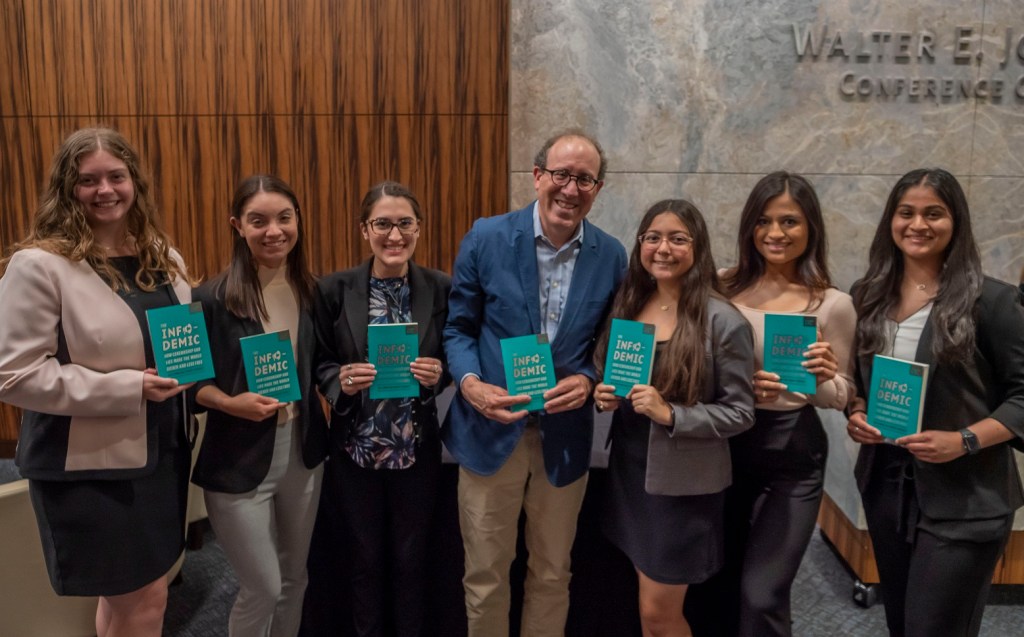
After Simon spoke, we were able to get a signed copy of his book, followed by a picture! It was a great opportunity to see old friends (LEAP students and WAC staff), learn something new (from Joel Simon), and make new friends (Esme Mata).

Unknown's avatarAuthor mikeyawnPosted on June 13, 2022June 13, 2022Format AsideCategories Civic Engagement, Civil Rights, Law, PoliticsTags Center for Law Engagement And Politics, Joel Simon, LEAP, LEAP Ambassadors, LEAP Center, Sam Houston State University, SHSU, World Affairs Council HoustonLeave a comment on Learning in a Time of Pandemics and Misinformation

Venezuelan Refugees: A health, economic, and educational crisis

Morgan Robertson

Although summer is often a time for students taking time off, Izabella (Bella) Urbani, Isabel Behm, former LEAP Ambassador Quinn Kobrin, and the LEAP Ambassadors braved the Houston summer traffic to attend The World Affairs Council Event “Combating Venezuela’s Refugee Crisis.”

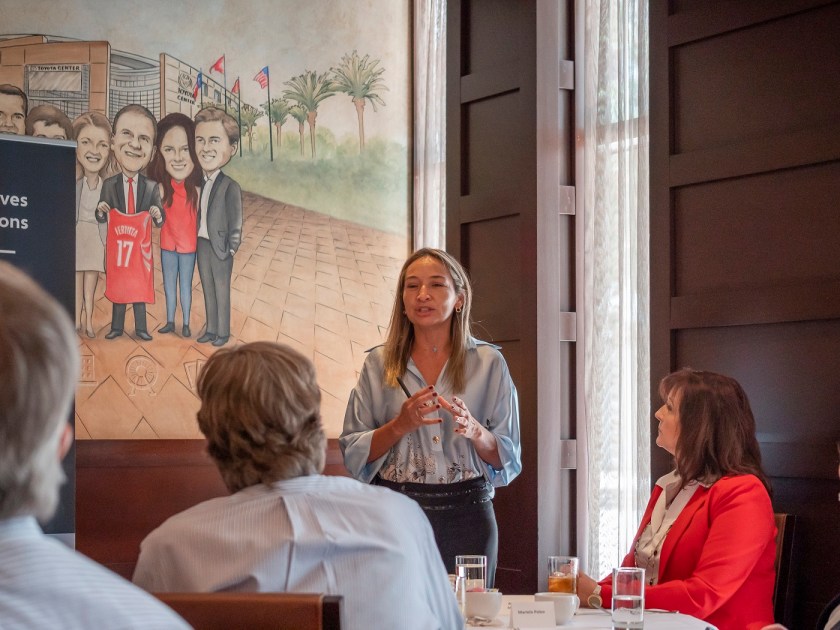
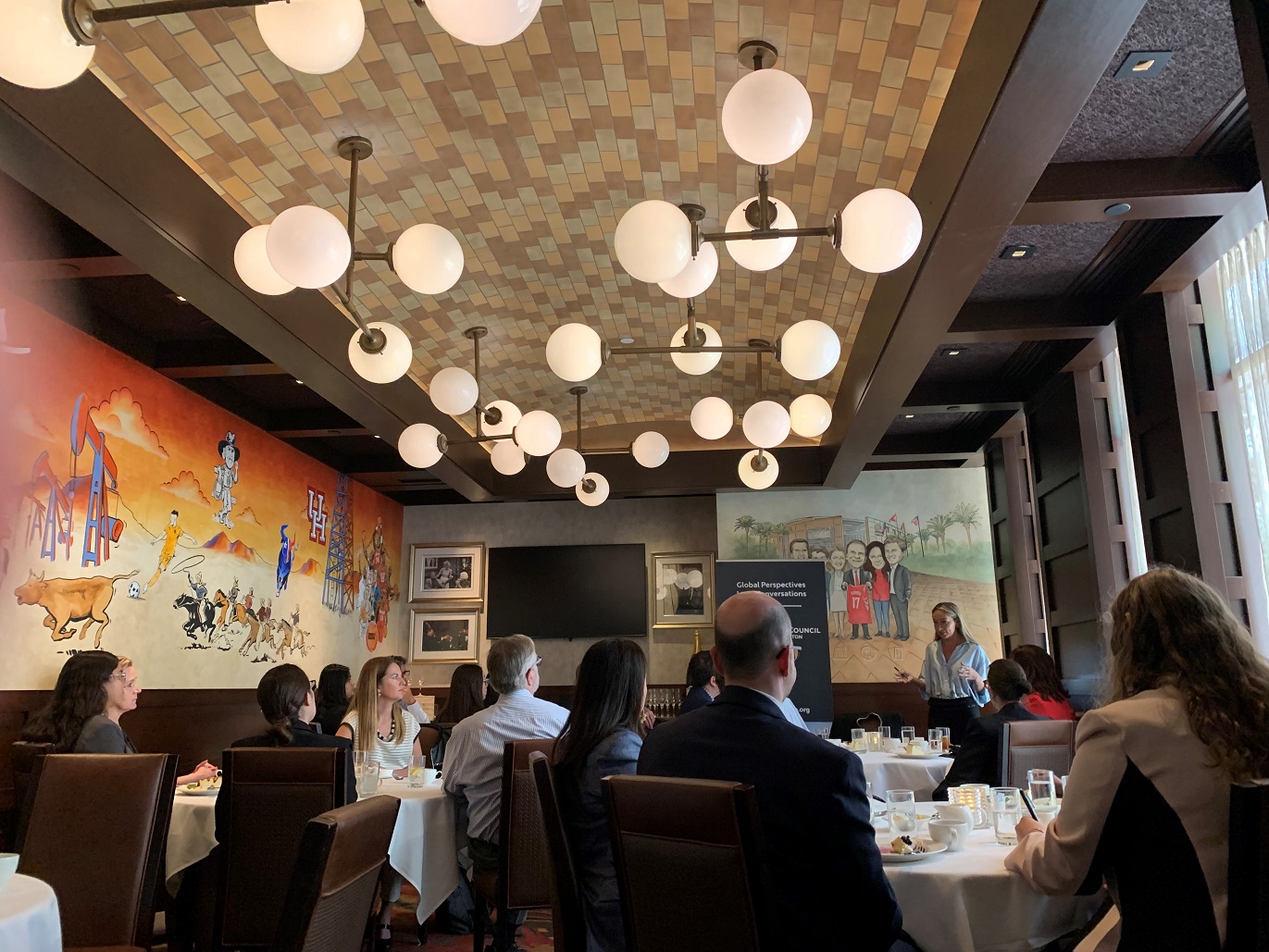
We were excited to be invited to the Palm Restaurant, a nice steakhouse in downtown Houston. We ventured through the dining room and into a private room that was decorated with murals featuring scenes of Houston.

The room was full of doctors and medical professionals from Baylor College of Medicine Children’s Foundation, Chevron employees, and interested citizens of Houston. Jessica, Saara, and I introduced Bella and Isabel to Sandija Bayot, the Chief Development Officer for WAC, and someone we can always count on for a warm greeting.

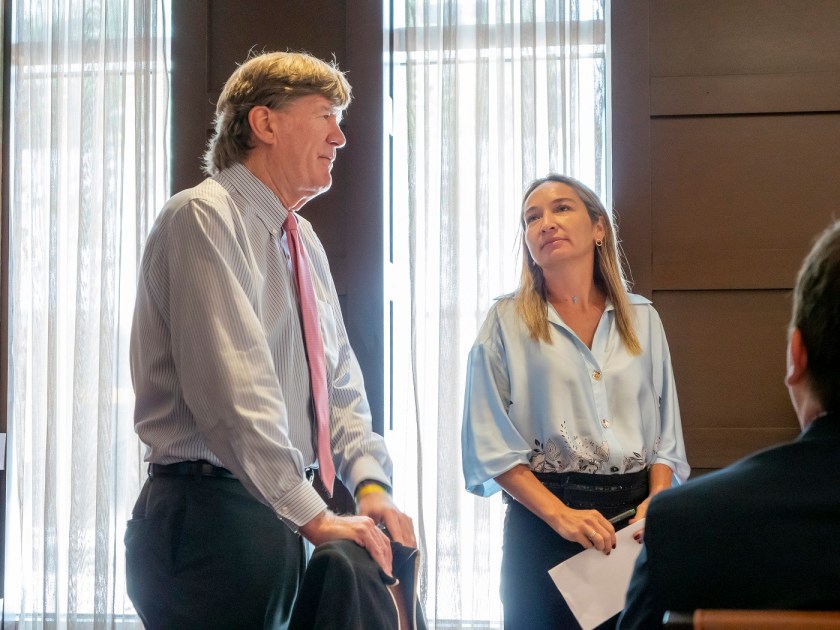
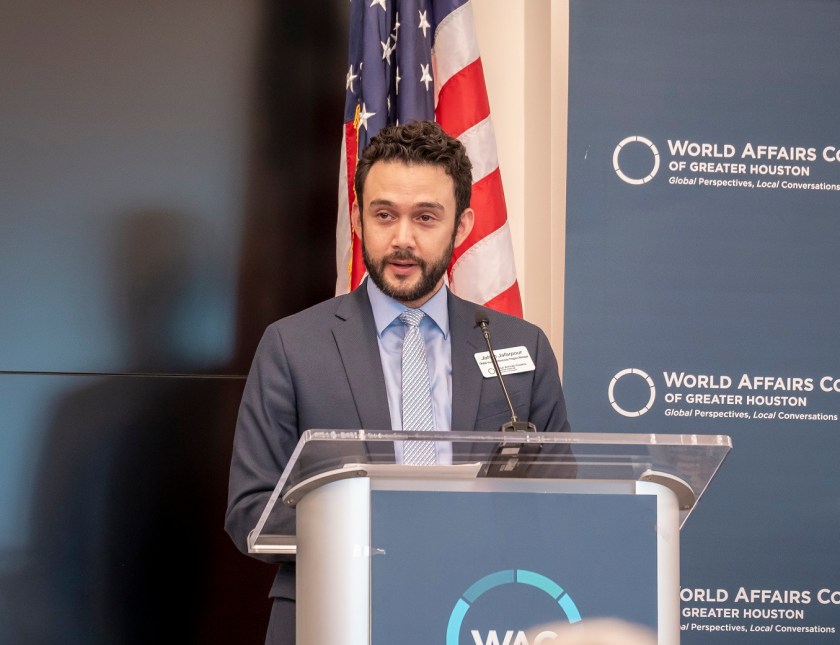
Maryanne Maldonado, the Executive Director of the World Affairs Council…

….introduced Dr. Michael Mizwa, who is the Director of Global Health, Texas Children’s Hospital, and the CEO of Baylor College of Medicine International Pediatric AIDS Initiative.

Before actually speaking on the topic, Dr. Mizwa, offered us a friendly greeting of “Go Bearkats,” and then moved to an introduction of our featured speaker: Ana Maria Galvis, the Executive Director of Baylor College of Medicine Children’s Foundation, Colombia.

Galvis began by explaining some of the issues that Non-Government Organizations (NGOs) face. However, Baylor College of Medicine Children’s Foundation Colombia operates somewhat differently than traditional NGOs. The program is run and operated by Colombians and, although the overall program objective is to promote health, they can’t do that without addressing related issues. Thus, they focus on four major issues: health, food, education, and nutrition.

Recently, there has been an influx of Venezuelans migrating to Columbia; many of whom require immediate or long-term medical care. The employment rate in La Guajira (a Department of Colombia0 is 26.1 % and only one-third have visas. To provide aid to the incoming Venezuelans, the current President of Colombia has offered 10-year permits. Galvis said this has helped to reduce the number of undocumented migrants, but there is still work to be done to track their medical needs.

Since the program is an NGO, it is held to a different standard than the privately funded healthcare centers. Baylor College of Medicine Children’s Foundation Colombia offers 25 health certified services, and they have a dedication to “not just treating the illness, [but] treating the human being.”

Since 2014 the program has provided treated 12,400 patients, administered 7,000 vaccinations, and is the only NGO in Colombia authorized to provide the Covid-19 vaccination. The program has done amazing work to provide aid for the current crisis, and their approach is what we, as social science majors, also aim for: the help communities, not just individuals.

The event was enormously educational, and it also moved us out of our comfort zones, prompting us to converse with professionals over lunch, discussing topics with which we aren’t overly familiar.

It is a recipe for growth, and one we enjoyed very much.

Unknown's avatarAuthor mikeyawnPosted on June 11, 2022June 11, 2022Format AsideCategories Civic Engagement, Health, Law, Politics, TravelTags Center for Law Engagement And Politics, Colombia, LEAP, LEAP Ambassadors, LEAP Center, Sam Houston State University, SHSU, Venezuela, World Affairs Council HoustonLeave a comment on Venezuelan Refugees: A health, economic, and educational crisis

LEAP Center, Population Health Enjoy Expert Panel on World Health Day

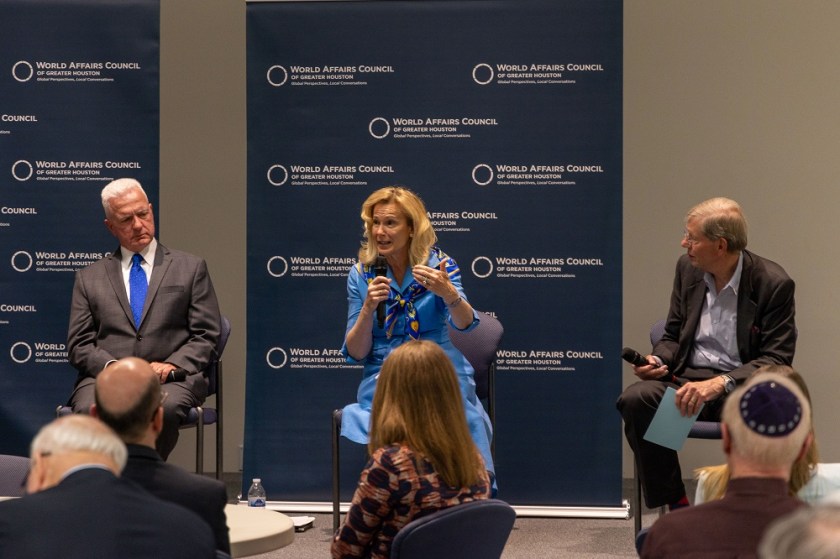
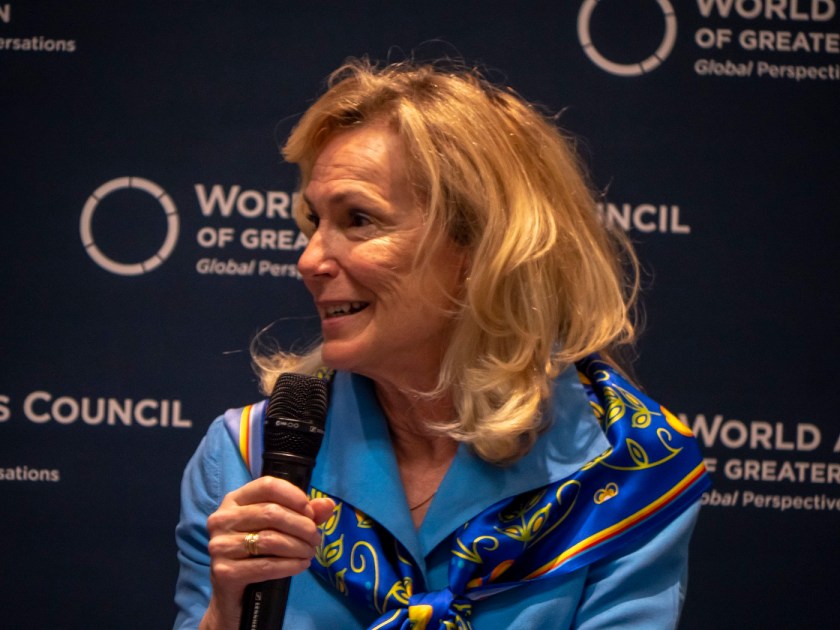
Good things happen when people work together.  With that spirit in mind, the LEAP Center partnered with the Department of Population Health to attend the World Affairs Council’s panel on health, fittingly, on World Health Day, April 7, 2022, in Houston, Texas. The panel, featuring heavy health hitters such as Dr. Deborah Birx (Former White House Coronavirus Response Coordinator); Dr. Brett Giroir (16th US Assistant Secretary of Health), Michael Mizwa (CEO Baylor College of Medicine International Pediatrics AIDS Initiative), and Dr. Patricia Brock (Founder, Medical Bridges). 


With majors from population health, political science, criminal justice, and history, the students were able to learn not only from the panelists, but also from each other.

According to Yvette Mendoza, a LEAP Ambassador and a veteran of many World Affairs Council panels, “getting other students’ perspectives, especially from those students who study health, allows us to see larger parts of the puzzle.  It was interesting to see how all of our majors, in their own way, share the goal of making their communities healthier and stronger.”

The concept of collaborative service that was discussed impressed the SHSU students, and it has long resonated with Dr. Rosanne Keathley, Associate Chair of the Department of Population Health.  Indeed, in the spring of 2020, Keathley tuned in to a press conference in which Dr. Birx discussed the importance of masks, and heeding the call to service, promptly mobilized a dozen SHSU volunteers.  Working in the FACS Clothing Construction Lab, Keathley and her team collectively sewed and crafted more than 5,000 masks, providing them to campus staff, the local community, the hospital, and to others assisting in the effort to fight COVID.  “We wanted to help, and we wanted people to remain healthy, so we went to work,” noted Keathley.

Such service has long been a part of SHSU, central to the institution’s mission and its motto.  Events like these, observes Mike Yawn, Director of the Center for Law, Engagement, And Politics , “are integral to providing students professional contacts, role models, and education outside the classroom.”  For their part, the students seemed to agree: “It was incredible,” noted Mendoza, “to see so many highly-educated public officials collaborating to make the world better.”

According to the panelists, much of the progress that has occurred in medicine in the past four decades has been the result of research, development, and collaboration. Their stories—combining outreach and innovation—were alternately touching, inspirational, and sobering.  Dr. Brock spoke glowingly of American medicine, but also described going to far-flung areas of the world to train in hospitals so short of resources they were forced to reuse gloves and sutures.

Dr. Birx—who, in addition to her work on COVID-19, also served as the White House’s global AIDS coordinator for both Presidents Obama and Trump—emphasized the importance of data-driven decision making.  Such analysis, she argued, should allow agencies to work together rather than devolving into political squabbles.  And by “talking with one another” and working together, “we can save lives and make the world healthier.”

“It was an enlightening panel.” noted Yawn. “The panelists’ message of collaborative service translates very well to education, and I think it resonated deeply with our multi-disciplinary group.”

Unknown's avatarAuthor mikeyawnPosted on May 18, 2022Format AsideCategories Civic Engagement, Health, PoliticsTags Center for Law Engagement And Politics, Deborah Birx, LEAP, LEAP Ambassadors, LEAP Center, Rosanne Keathley, Sam Houston State University, SHSU, SHSU Population Health, World Affairs Council HoustonLeave a comment on LEAP Center, Population Health Enjoy Expert Panel on World Health Day

Combat, Conflict, and Command: Women in the Military

Erin Juarez

On May 4th, Jessica and I went to a World Affairs Council (WAC) event at the Glade Gallery in The Woodlands to hear from retired Lieutenant Colonel Kyleanne Hunter and Senior Fellow and Director of the Military, Veterans, and Society Program at the Center for a New American Security (CNAS), Katherine Kuzminski, speak about women in the military. Interestingly, we had previously met the CEO of CNAS, Richard Fontaine, at a previous WAC event.

The Glade Gallery, as usual, had stunning artwork adorning its walls and upon viewing them all we were able to determine our favorite art piece.

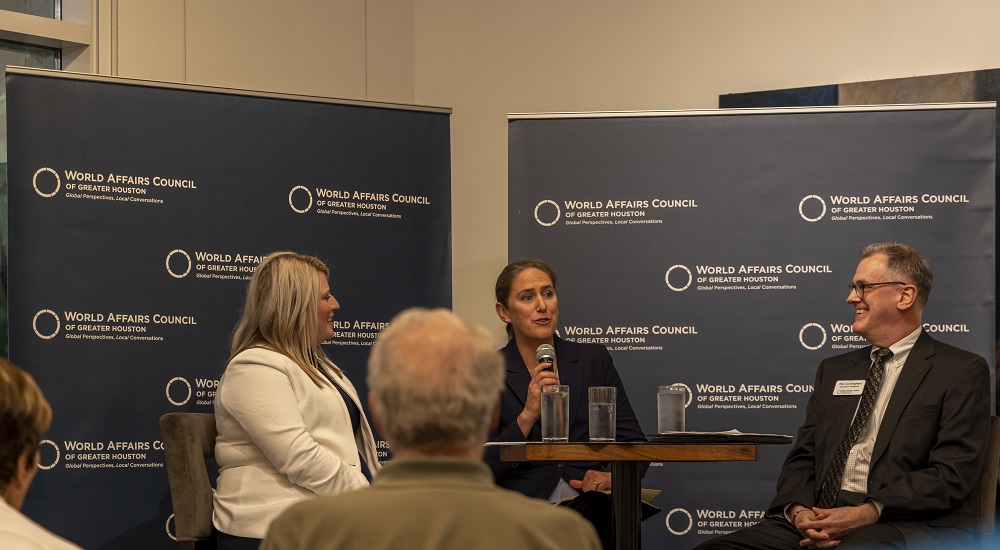
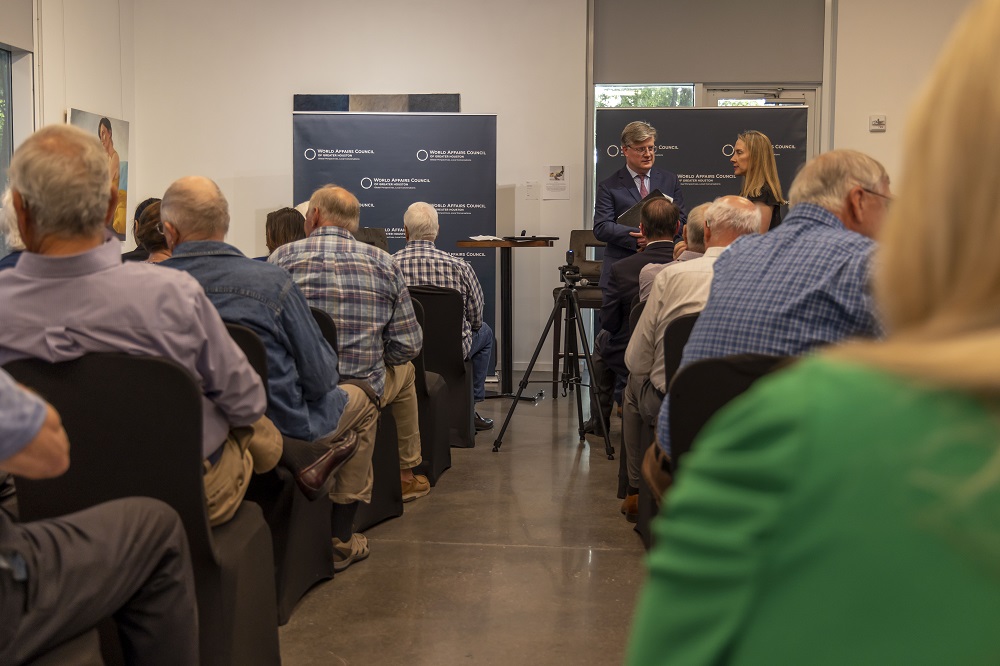
After a brief introduction by the sponsor of The Woodlands’ series, Champion X, one of our favorite moderators, Ray Cunningham, gave us a brief introduction of who Lt. Colonel Hunter and Mrs. Kuzminski are. Kyleanne Hunter served in the Marine Corps as a Lt. Colonel and has multiple combat deployments as an AH-1W “Super Cobra” attack pilot and is now a Military and Strategic Studies assistant professor at the United States Air Force Academy. Mrs. Kuzminski was a Political Scientist at RAND Corporation where she researched military personnel policy before joining the Center for a New American Security.

Mrs. Kuzminski and Lt. Colonel Hunter discussed how it was believed that women were formerly unable to perform “manly” tasks. To begin with, there weren’t many women in the military, and those that were had limited job opportunities within. Mainly because many of the equipment and uniforms were designed for men. Although, women have served in ever-increasing capacities in support of the US military in every war the country has faced whether it is as combat nurses or four-star generals and admirals. Making up approximately 3% of those serving in the military when the draft ended in 1973.

In 2015, all combat positions were made available to females which allowed Lt. Colonel Hunter to be an AH-1W “Super Cobra” attack pilot. Prior to 2015, women in the military could not sign up to do any combat positions which is part of the reason why our “team Mom,” Ms. Stephanie, went into Linguistics despite her interest in a combat position. Both Mrs. Kuzminski and Lt. Colonel Hunter, believe that there are not enough women within the high ranks of the military.

There are multiple reasons for this such as (1) their want and desire to start a family of their own, (2) it is a male-dominated career, and (3) the occurring sexual assaults. All of these are factors that make it difficult to “recruit and retain” women in the military.

They often just serve their time and retire to start their family, which is why we are starting to see daycares available through the military for the children of those who serve.

As a male-dominated career, it used to be difficult and occasionally still is for women to move up the ranks due to the belief that a man is a better fit for those positions. However, this has started to shift with the implementation of tests that target the skills necessary for the specific ranks to help determine who is most qualified with both men and women having the same standards.

Sexual assaults in the military have been a “hot topic” on the news recently, not because there was suddenly an uprising but because women are now finding they can confide in higher-ups to follow through with a consequence for the accused. Part of this is because the most qualified are moving up and those tend to be the ones used to get overlooked but were the most trusted within their squadrons. However, there are efforts being taken to reduce the number of sexual assaults within the military like the committee that Lt. Colonel Hunter is on.

I found it most interesting when Lt. Colonel Hunter mentioned hygiene and protection as the two most important aspects of being a woman in the military. I am currently in ROTC and am considering my options within the Army, so I was curious in knowing how she dealt with these aspects. She revealed her personal choice of shaving prior to her deployment, including her hair, to be most hygienic.

Following the presentation, I had the opportunity to ask Lt. Colonel Hunter more about her experience in the military, including how she managed to withstand the long hours of field training, ruck marches, and other arduous tasks as a woman. We are grateful to the World Affairs Council for hosting Lt. Colonel Hunter and Mrs. Kuzminski, who flew down to Texas from DC!

Unknown's avatarAuthor mikeyawnPosted on May 10, 2022May 10, 2022Format AsideCategories Art, Civic EngagementTags Center for Law Engagement And Politics, LEAP Ambassadors, LEAP Center, military, Sam Houston State University, SHSU, World Affairs Council HoustonLeave a comment on Combat, Conflict, and Command: Women in the Military

Russia and the Ukraine: A POLISCI Education

Erin Juarez, April 14, 2022

The LEAP Ambassadors took an evening trip to the Woodlands to attend yet another fantastic WAC event on Russia’s invasion of Ukraine at the Glades Art Gallery. Walking in, the gallery was stunning to witness as the WAC staff welcomed us. It was a wonderful combination: looking at paintings from local artists while preparing to become more educated on a global issue was a terrific opportunity.
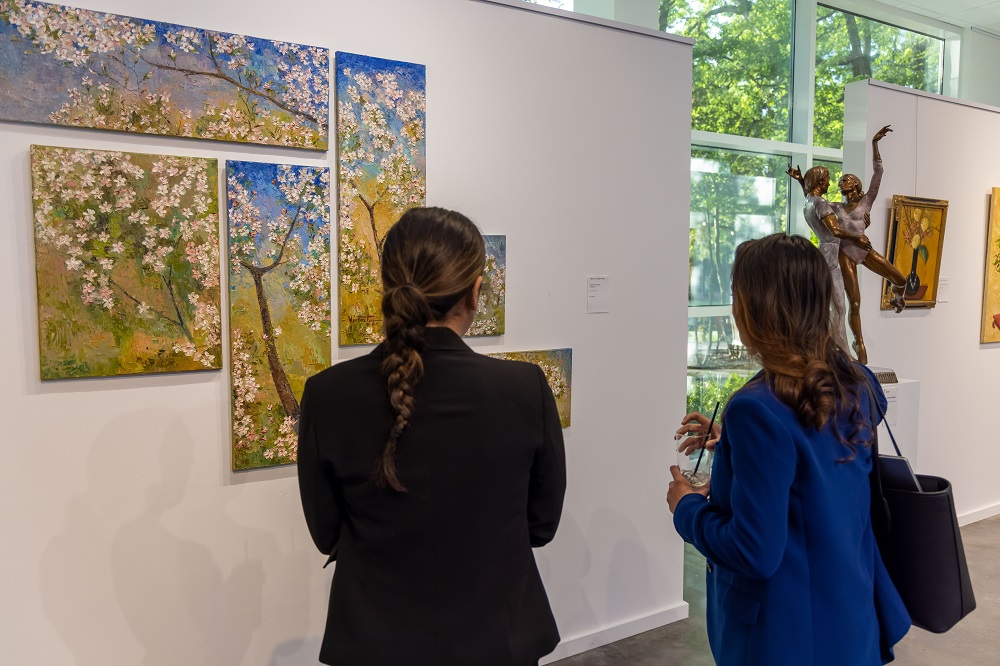
The art on display ranged from portraits and landscapes to statues. A favorite of ours was the Cherry Blossom tree that spread across six canvases by Victor Tapu. Throughout the exhibit, we connected the artwork in the Glade to similar works by renowned Masters; for example, we compared the miniature statue of a ballerina to Edgar Degas.
Moving from the art to learning about the current crisis in another part of the world, we heard from Richard Fontaine, the CEO of the Center for a New American Security, one of the world’s leading defense and geopolitical think tanks. Mr. Fontaine was also a top foreign policy adviser to Senator John McCain. 

Dr. Fontaine discussed the horrific battle in Ukraine and how it could signal the start of a new post-Cold War era. Putin’s motive to overtake Ukraine was to prevent their affiliation with NATO, among many other things. The war has affected numerous countries. Poland, for example, was one Ukraine’s most significant trading partners, a relationship that will much limited until the end of the war and perhaps beyond. The war has also increased inflation in the US, while also affecting the oil supply and even food staples such as corn. China, too, is watching the war closely, seeing how it will shift the balance of power in the world and change their massive trade relationships.

One interesting fact we learned is that Ukraine has shattered the Russian government-built encrypted phone lines, compelling the Russian military to use unencrypted lines of communication.  Who knew?

Hearing an update on the Ukraine-Russia war from Dr. Fontaine was eye-opening. Seeing how these impacts bordering countries of Ukraine and our homeland is heartbreaking, but this will bring us together and prepare us for future moves that may involve a more significant threat.

As always, the WAC event was enlightening and enjoyable, and we look forward to our next event!

Lama Mediterranean Restaurant

Heather Barodi

After filling our heads with new knowledge about the war in Ukraine, we stopped at Lama to expand on our understanding from outsides our country’s borders at a Mediterranean restaurant located in the Woodlands! 

Our appetizers were classic Mediterranean dishes, homemade falafel, and hummus with warm pita bread. Overall, all the food was terrific, but the hummus appetizer we got was the biggest hit among the ambassadors. The entrees ranged from chicken shawarma and gyro sandwiches with sides of rice and french fries. At the end of the meal, our plates were empty from devouring each of our entrees. We had some hot tea and baklava to end our meal, which was a sweet touch to our full stomachs. 

Unknown's avatarAuthor mikeyawnPosted on April 25, 2022April 25, 2022Format AsideCategories Art, Civic Engagement, PoliticsTags Center for Law Engagement And Politics, LEAP, LEAP Ambassadors, LEAP Center, Sam Houston State University, SHSU, World Affairs Council HoustonLeave a comment on Russia and the Ukraine: A POLISCI Education

The 9-11 Attacks: A Retrospective on Terrorism

Erin Juarez

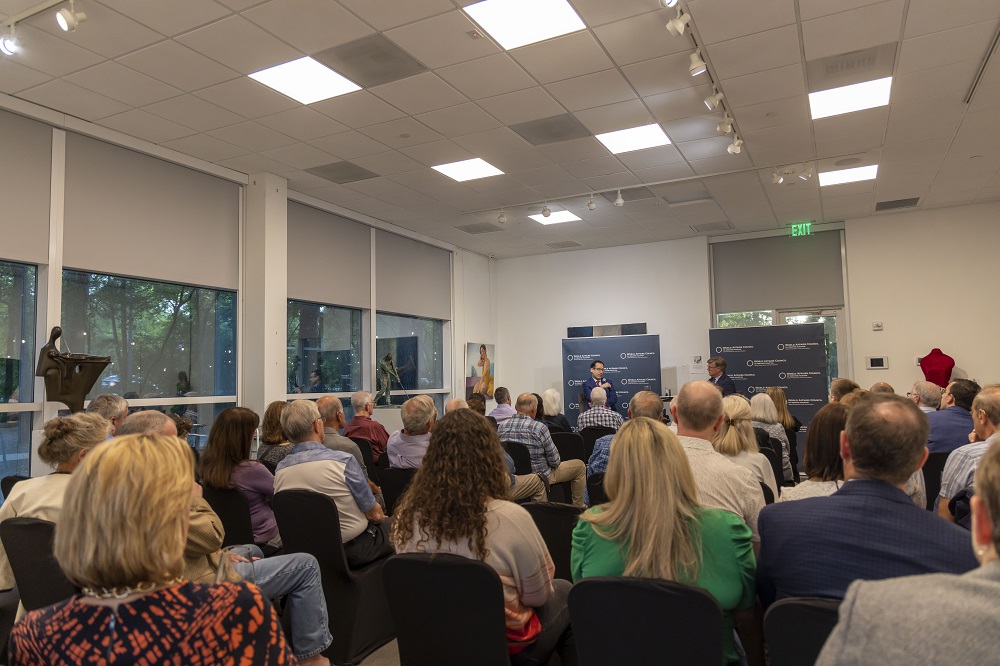
Although the LEAP Ambassadors have attended many events sponsored by the World Affairs Council, this was our first event at the Glade Gallery, an art gallery in The Woodlands.

Gregory Gause, a professor at the Bush School at Texas A&M University, spoke to the attendees about the tragic events of 9/11, the relationships and origins that preceded the attack, and how those relationships have evolved since the attack.

After we reconnected and caught up with the wonderful WAC Staff, we began to make our way around the Glade Gallery. Never missing an opportunity to fine new favorite pieces, we began maneuvering around the gallery taking notice of all the contemporary art.

Sandija Bayot, the WAC’s Chief Development Officer, informed the crowd about several upcoming events and then surprised everyone with a pop quiz!

Sandija then asked five questions about upcoming events and handed out books as prizes to those that got the answers correct. Heather Noman correctly answered the capital of Yemen, and Morgan named the fourth Ambassador joining WAC for a luncheon the next day. Congratulations LEAP Ambassadors!

Ray Cunningham, WAC’s Executive in Residence in The Woodlands…

introduced the guest speaker of the night, Dr. Gregory Gause.

Dr. Gause is the Department Head and Professor of International Affairs at the Bush School in College Station. Professor Gause described some of the threads that converged in 2001 to lead to the 9-11 attacks, including the US supporting the anti-Soviet forces in the Middle East–some of whom evolved in to more overtly terrorist organizations.

Following quick success in retaliating against the 9-11 attacks, groups such as ISIS emerged as more powerful, and Iran has gained visibility and influence in the region. As ISIS gained power and Iran showed little inclination in curbing such power, the early US success in Iraq and Afghanistan eroded, culminating in President Biden’s decision to withdraw last year. Gause notes that there is little to no support to go back in. People’s experiences influence their willingness to support policies, and military action is no exception.

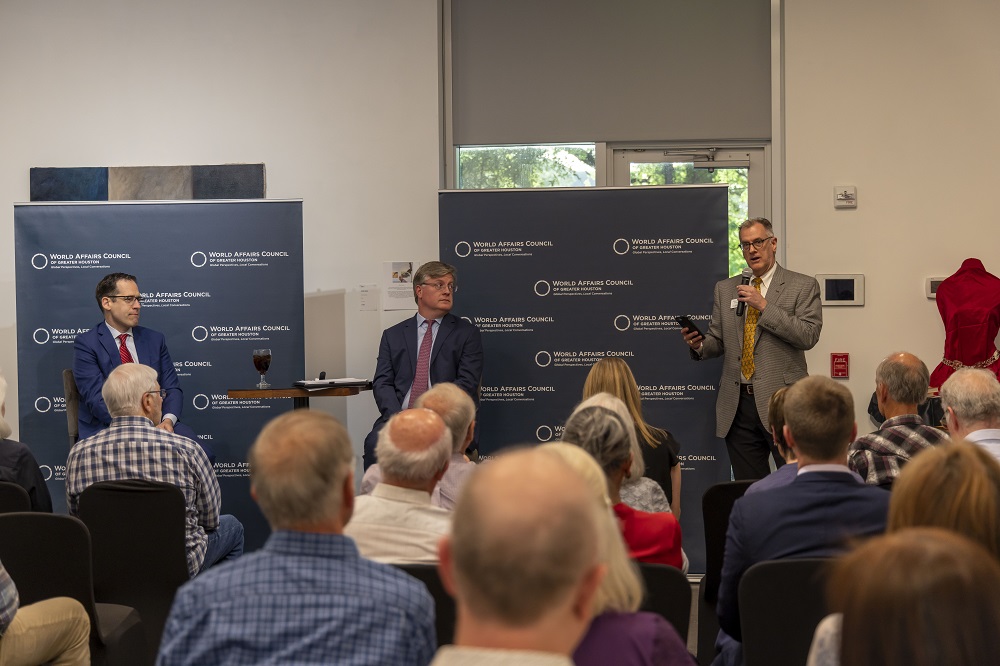
Near the end of the lecture, Dr. Gause answered a couple of questions from the crowd.

The questions were excellent, with several posted by local professors and other knowledgeable attendees. Gause focused on each question….

…and responded at length. Inevitably, questions turned to Russia and Ukraine, a direction that really brought home the relevance of our policies in response to aggression. While there was some agreement that China may be a longer-term threat than Russia, there was also acknowledgement that much suffering was likely to result from this invasion and, anytime you are dealing with a country that has control of nuclear weapons, even larger conflagrations are of great concern.

Following the event, we spent time with staff along with a couple of professors from the Bush School, who proved very interesting.

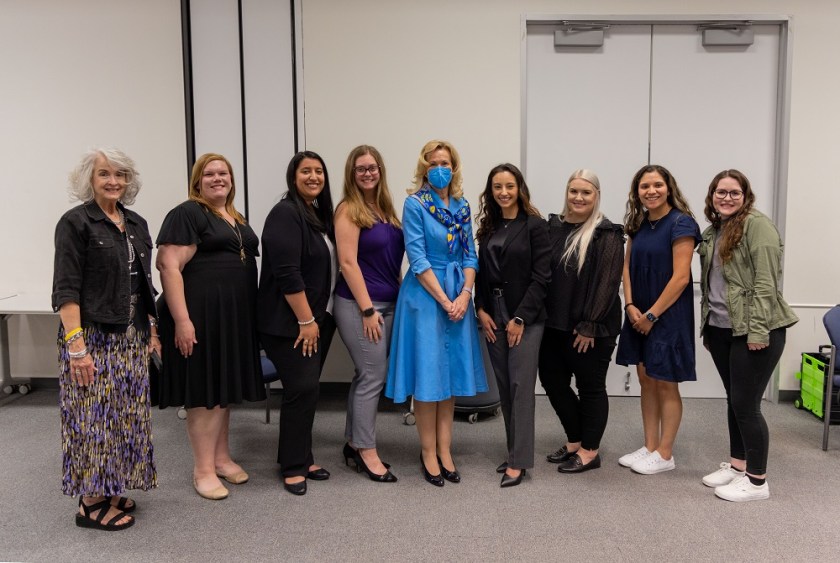
We also posed for a group photo with students from some high schools and the always-friendly, always-professional staff of the WAC.

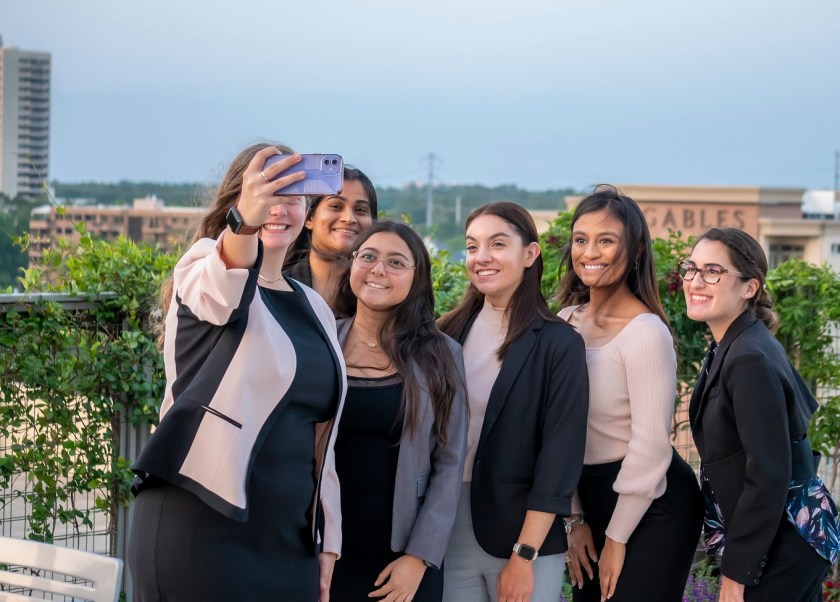
And, of course, we took a minute to pose for a group photo in the midst of the beautiful gallery.

Following the event, we headed to Genghis Grill (the only nonbar, it seems, that stays open past 9pm in The Woodlands) and had an enjoyable dinner, while also reflecting on the discussion, and contemplating the implications of Russia’s invasion of the Ukraine.

Unknown's avatarAuthor mikeyawnPosted on February 26, 2022February 27, 2022Format AsideCategories Art, Civic Engagement, PoliticsTags Center for Law Engagement And Politics, Dr Greg Gause, LEAP Ambassadors, LEAP Center, Sam Houston State University, SHSU, TAMU Bush School, World Affairs Council HoustonLeave a comment on The 9-11 Attacks: A Retrospective on Terrorism

Posts pagination

Previous page Page 1 … Page 4 Page 5 Page 6 … Page 9 Next page

LEAP Ambassadors Are Involved!

This slideshow requires JavaScript.

Follow Us On Facebook!

Follow Us On Facebook!

Catch Up With Us

  • A Culinary Education: Champion Chili January 11, 2026
  • A M*A*S*H* Wrapup December 24, 2025
  • Understanding Globalization: Lessons from a Leading Journalist December 22, 2025
  • Crafting for a Cause December 18, 2025
  • Exploring The Shining: A Kubrickian Journey December 15, 2025

Join The Conversation!

The Civic Leadership… on Foundational Activities of the…
The Civic Leadership… on The Philosophical Foundations…
LEAPing Into Action… on The Philosophical Foundations…
Jada Cook's avatarJada Cook on SHSU Students LEAP Across Five…
Reflections from the… on Kicking off the Semester Right…

Find Previous Posts

Many thanks to "Chilly at the Lodge" organizer Karla Christian and to instructors Don and Karen Cullum, who offered a wonderful "Master Class" in chili making. Thanks to Nick Cardenas, Victoria McClendon-Leggett, and newest LEAP Ambassador Jacob Wessels! Read about the class and the upcoming "Chilly at the Lodge" in the link in our bio.

We also have Twitter!

My Tweets

LEAPing Into LEARNing

This slideshow requires JavaScript.

  • About LEAP
  • LEAP Ambassadors
Center for Law, Engagement, and Politics Blog at WordPress.com.
  • Subscribe Subscribed
    • Center for Law, Engagement, and Politics
    • Join 487 other subscribers
    • Already have a WordPress.com account? Log in now.
    • Center for Law, Engagement, and Politics
    • Subscribe Subscribed
    • Sign up
    • Log in
    • Report this content
    • View site in Reader
    • Manage subscriptions
    • Collapse this bar
 

Loading Comments...