Reflecting on Sacrifice on July 4th: The Houston Holocaust Museum

By Jessica Cuevas

Recently, Quinn and I had the opportunity to go on a private tour of the Houston Holocaust Museum, courtesy of the World Affairs Council. Although the tour was on Juneteenth, we thought a post date of July 4th would be appropriate, as a reminder of the sacrifice and responsibility that comes with being free and aspiring to be a better people and nation–the legacy of both Juneteenth and July 4th.

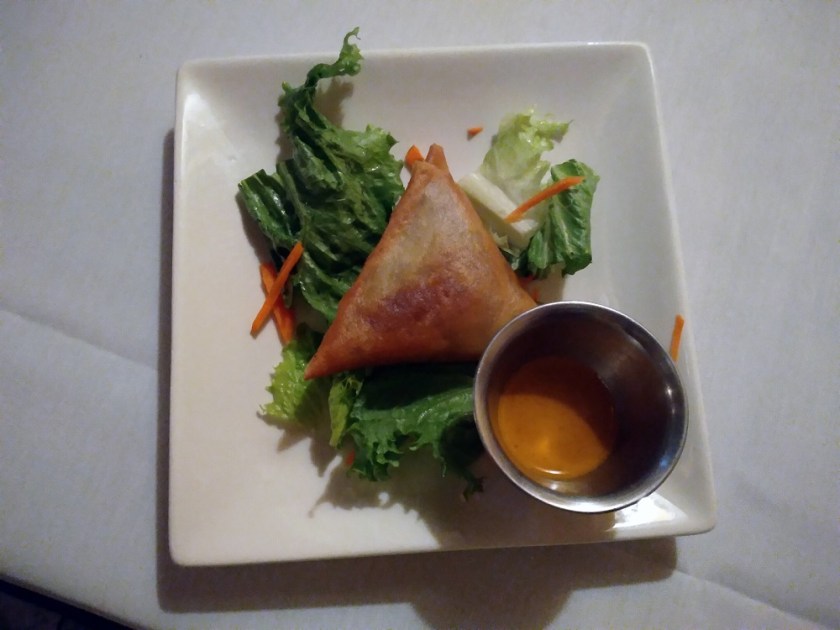
To begin the event, Quinn (who is half Jewish) and I went to a Jewish Deli, Kenny & Ziggy’s. We stayed pretty basic (I always stay basic in terms of food…), but we enjoyed the restaurant, trying something new, and staying with the theme of the day’s education.

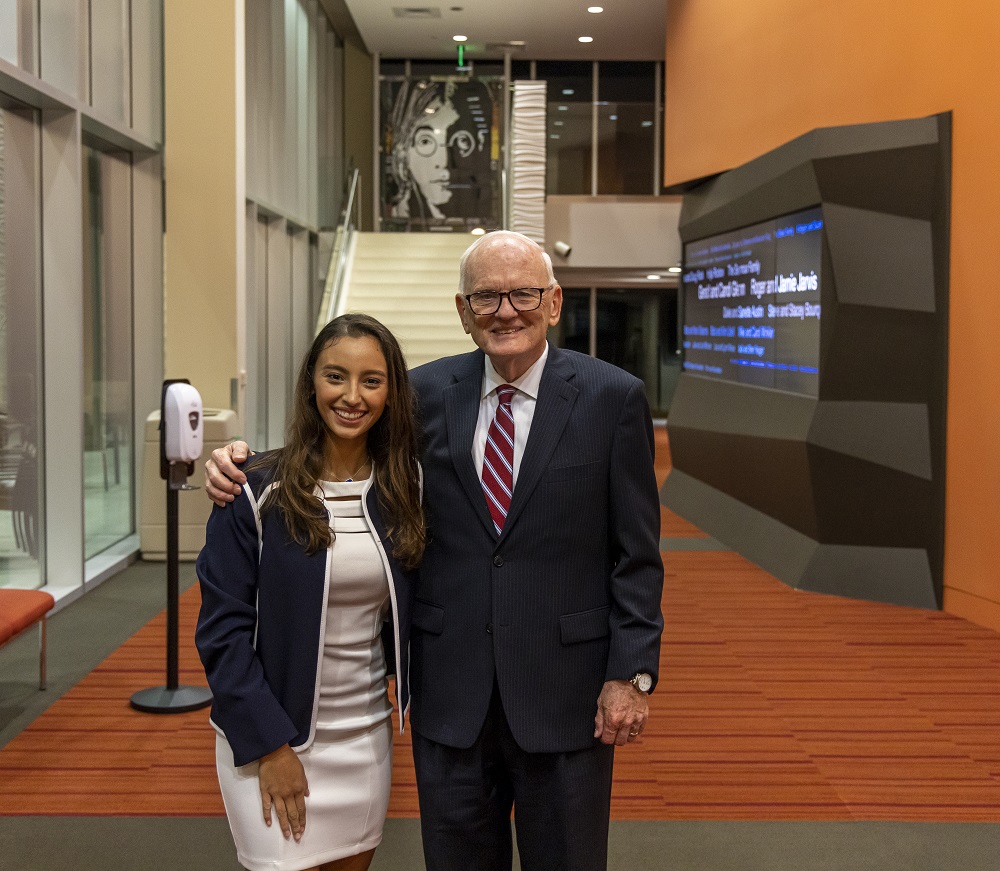
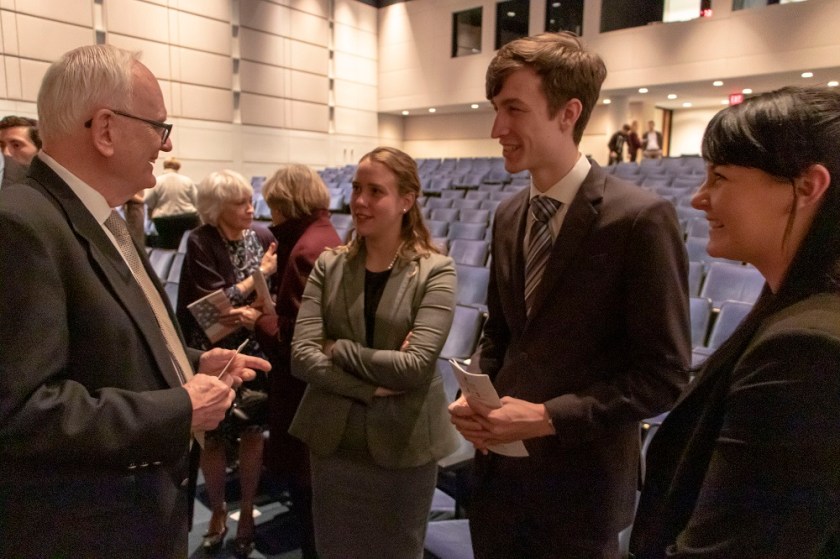
Following our themed lunch, we arrived at the Holocaust Museum, met our fellow young professionals (including old friend Rebeca Becker), the always-friendly World Affairs Council staff, and were greeted by our knowledgeable docent, Rhonda Goldberg. She noted that this Museum opened in 1996, and it is the nation’s fourth largest Holocaust Museum.

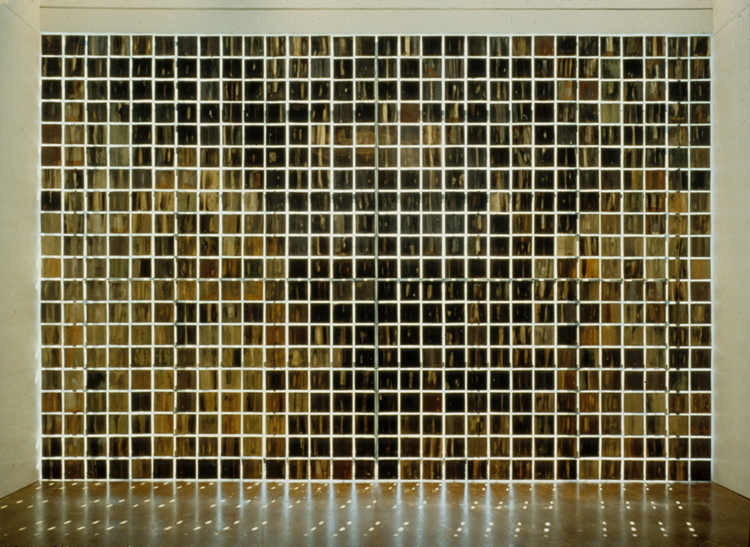
The tour was a little less than two hours and it started promptly at 2:00 PM, with the Memorial Room exhibit. Within this small room there was a whole wall, created by artist Patricia Moss-Vreeland, dedicated to hand-painted and light-reflective tiles featuring tears to represent the 6 million Jews lost because of the Holocaust.

The day of our tour was sunny, and there was much light coming through, but Mrs. Goldberg pointed out that the mood of the art piece changes with the weather. On a dark or rainy day, for example, the public’s perception of the “tears” would be different.

Even more somber was a short, half-moon pedestal that contained six small square sections holding a sample of the soil from the six extermination camps, Auschwitz-Birkenau, Belzec, Chelmno, Majdanek, Sobibor, and Treblinka. This room is for survivors or for those who lost someone dear to them, providing a place for meditation and to remember those who died.
The Morgan Family Welcome Center offers a Welcome Center Video, which provides information on the lives of Jews before World War I and the anti-Semitism they experienced. It was difficult to learn of the hardships they faced, and I actually began to experience a heaviness in my chest–a sense that increased when we moved to the “Bearing Witness Exhibit.”

What followed was a valuable lesson in history, as we learned more of the Jews losing civil rights, having to register with the State as Jews in Germany, and, eventually, being shipped to the camps.

Perhaps the most surreal aspect of the tour was walking into a train car like the ones used in 1942 Germany, and standing there, imagining how hundreds of Jews were packed into such a car, to be shipped to forced labor and, ultimately, death.

The next closest thing to this was a replica of the Danish Rescue Boat, K123, where Jews had been transported out of Denmark to a safe place in Sweden. Although we were not able to board it, the place where the fisherman would hide the Jews was visible and it is just hard to imagine that this happened in such a small space.

Learning of the Germans’ plans for the “final solution” was sobering and depressing, but there were moments of redemptions, too. We learned of children who escaped (two of whom ended up being active members of the Museum), Jews’ lives after the War, and the Nuremberg Trials. As aspiring lawyers, this last aspect added a layer of interest.

The tour ended on a note appropriate for today: the Human Rights Gallery reminds us of our rights, highlights the accomplishments of Civil Rights leaders, and inspires us to stand up for ourselves and others.

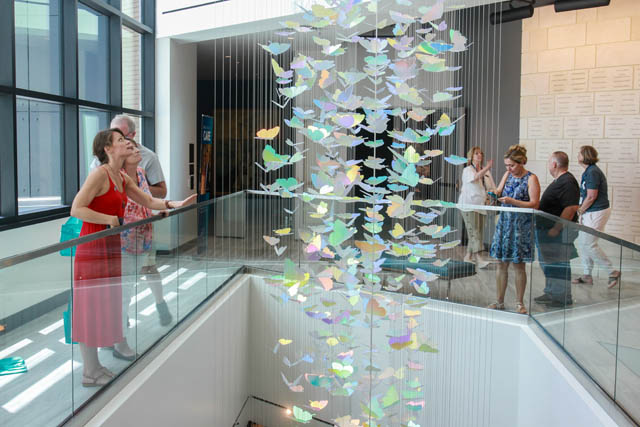
Before leaving we had the opportunity to converse with Mrs. Goldberg, and we asked about the beautiful butterfly display that hangs from the ceiling, down all three of the museum’s floors.

Photo by Pooja Salhotra

There were 1,500 butterflies, representing the 1.5 million children who died during the Holocaust, approximately 25 percent of the total lives lost.

This was a very somber learning experience of the events that happened before, leading up to, and after the Holocaust that provided me with a different insight to this tragedy. It was my first time being to the Holocaust Museum and despite Quinn having had visited it before, he had a different take since there had been changes to the exhibits.

Because the Museum was closed the day we visited, and because we were visiting with a small group, the experience was perhaps more somber and intimate than normal. We also benefited from Ms. Goldberg’s insights and knowledge, including her closeness to many Holocaust survivors, and this added to the poignancy of the experience.

On behalf of Sam Houston State University and the LEAP Center, we thanked the World Affairs Council staff, Ms. Goldberg, and we said goodbye to our new friends.

Ben Rhodes, President Obama’s Speechwriter, Talks Politics

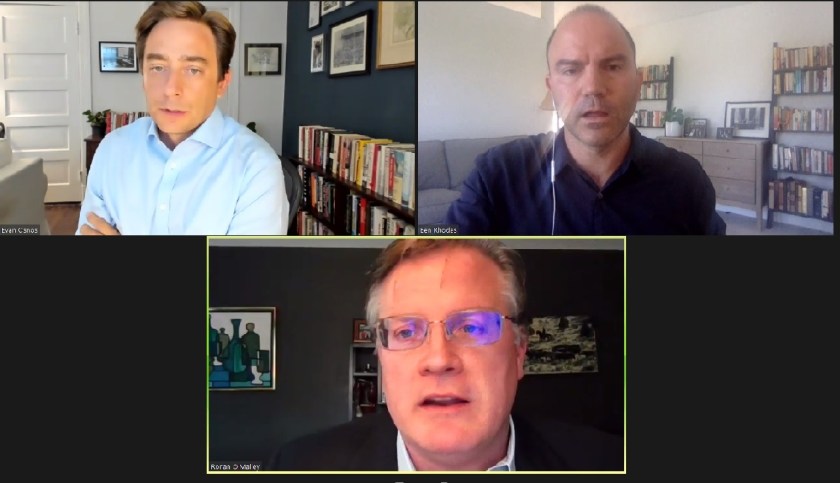
LEAP is always eager to hear from World Affairs Council speakers, and that is especially true when Ben Rhodes presents to the Council. Rhodes, a former speechwriter and advisor to President Obama, discussed his latest book, After the Fall: Being American in the World We’ve Made, with the New Yorker’s Evan Osnos as the moderator.

Following eight years of working long hours for the Obama administration, Rhodes found himself with a lot of time on his hands, a need for decompression, and wrestling with the Presidency of Donald Trump. So, he decided to write a book and, as he says, announce himself as a writer to the world.

What struck Rhodes, as he reflected and traveled and reflected some more, is how parts of the world were “turning to nationalism and authoritarianism,” particularly Hungary, Russia, China, and the United States. Key to this period, according to Rhodes, was the great recession of 2008, which is “when the narrative of liberalism and democracy collapsed.” With this narrative, Osnos readily and frequently agreed.

Rhodes is, at times, a bit morose, identifying this period as “the fall” to which the title alludes. This fall emboldened China and Russia, freeing them to mock capitalism and democracy, and emboldening nationalistic elements in Europe (particularly Hungary). He characterizes presidents from GHW Bush to Obama as “collectively wrong” and “hubristic,” while also criticizing the NBA, the media, and “the entire mass entertainment industry.” (see here for other views he’s expressed about the media).

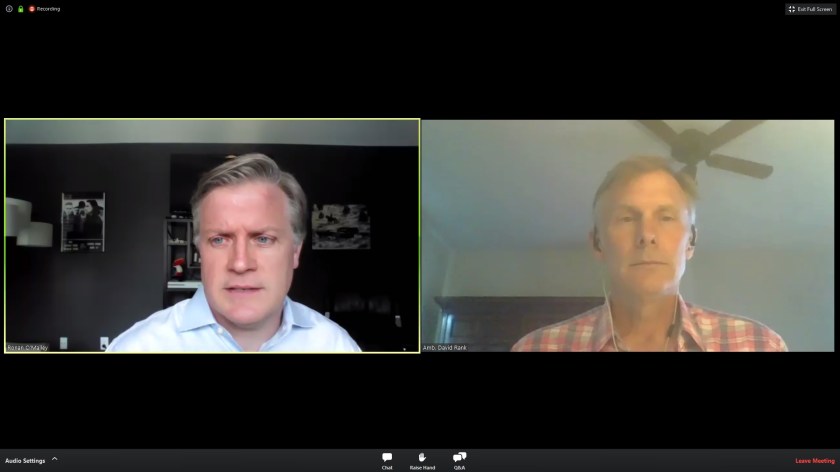
Rhodes responded best during the Q&A period, during which Ronan O’Malley stepped in.

Rhodes argues that the China-Russia relationship is “shallow,” united by their “interest in the discrediting of democracy.”

When asked about the “personalization” of politics and regimes, Rhodes suggests that the rise of social media contributes to this movement, while also noting that the election of Biden was a countermovement to this trend.

Rhodes struggled to find silver linings. “There is one megatrend in the world,” he lamented, “and it’s not good.” But he argues, not entirely convincingly, that the “mass mobilization” in the world is happening and good; that people “are much more aware” (polls indicate otherwise); and there are civil rights in certain world regions than there were 30 years ago. It’s not a lot to hang on to, but it’s what we can look to, he says, “after the fall.”