The LEAP Center arrived in San Antonio around noon today and stopped for lunch at a local treasure, Mi Tierra. After navigating through the city to a public parking lot, we made our way around the block to the Historic Downtown Market, where Hispanic heritage runs thick. We checked into Mi Tierra with a 30 minute wait list, so we made the most of it by visiting the local shops and stands.
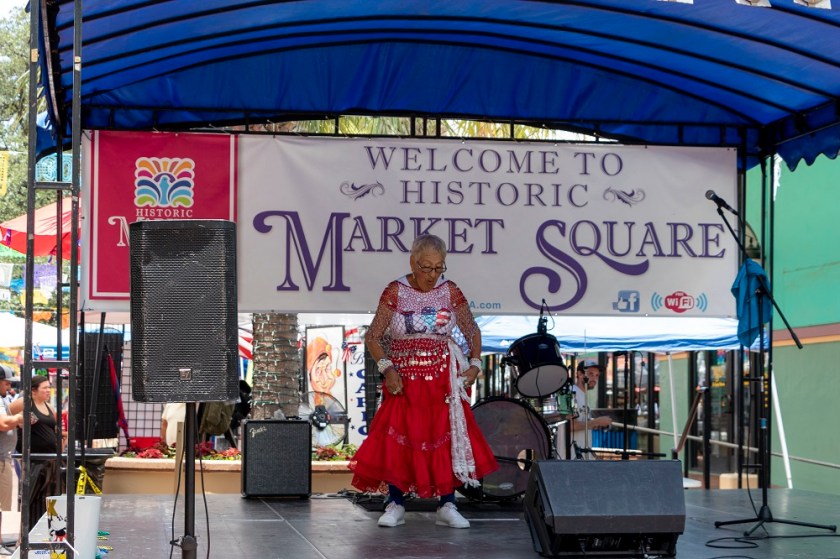
There were quite a few interesting characters, including but not limited to a dancing lady…
…and a Hispanic Elvis, plus the local food stands smelled amazing. Finally, we made our way back to Professor Yawn in the restaurant lobby just in time: our wait buzzer went off and we were ready to be seated. The restaurant was very colorful, with lights and banners running along the ceiling and walls.
Once we sat down, we all spent a quiet few minutes looking though the menu—everything sounded so good it was hard to make a decision. Professor Yawn ordered queso flameado and guacamole for the table. The queso flameadio was so thick we had cheese-pull competitions, and the guacamole was some of the best I’ve ever had. I ordered the lunch special, enchiladas, but I was so full from our appetizers that I was only able to finish one of the two on my plate. I now understand why the restaurant was so packed!
After we had all that we could possibly eat, we headed out for another stroll through the market, where we found a mechanical bull. Of course, I couldn’t resist!
After my impromptu rodeo, we headed to our next stop, which was the McNay Art Museum. __________________________________________
By Peyton Reed
The first interesting thing I noticed about the McNay Museum is the location. The museum was designed as a large house, with each room holding various paintings that flowed together seamlessly, arranged by various characteristics such as color, technique, period and artist. The winding path to get to the entrance of the museum passed by several sculptures by Robert Indiana, George Rickey, and Alexander Liberman, to name a few.
The featured exhibition is titled “Immersed,” an interactive and compelling exhibit featuring pieces from Andy Warhol, Chris Sauter, and Yayoi Kusama.
The first piece we saw was the piece by Chris Sauter. Walking in to the enclosed space, circle cutouts allow some light to pour into a small living room set up. In the chairs are circle cluster figures, entitled “dopamine molecules” by Sauter, which he made from the wood he cut out of the walls.
The Shadow Monster by Phillip Worthington was a playful exhibit. Pool noodles, hula hoops and spinning flower props allowed for interesting additions to our figures as a projector casted outlines of the observer on to the wall with fun twists. Our shadows morphed as we moved, forming eyes, tails and ears and transforming us into magical creatures.
One of the interactive pieces in the museum was a light board with different colored pegs. We did our best to spell out SHSU with the letters.
We took a similar marketing strategy to the sequin boards, also at the patrons disposal, making for a truly immersive experience.
My favorite piece was the Yayoi Kusama piece. We were allowed into an enclosed room lighted by hundreds of hanging candle fixtures. The walls of the room were covered in mirrors, giving the viewer the perception that the space was infinite.
Exploring the museum’s permanent collection was also an extremely satisfying experience.
Claude Monet’s “Waterlilies” was my favorite painting among the collection. I was struck by the size of it alone. Since this was my first experience at an art museum, it was amazing to see paintings by Van Gogh, Picasso, and Monet, some of the most well-known and talented artists of all time, all in one place. Another favorite sculpture piece was by Alexander Calder, an artist who specializes in Kinetic art sculptures.
Overall, exploring the McNay museum was an enriching experience that helped me gain a little more familiarity with art.
The “L” in LEAP stands for “Law,” but it could also be an abbreviation for “Literature,” given the Center’s regular appearances at book signings and author discussions. This week the LEAP Center enjoyed a talk by Patricia Hunt Holmes, whose first novel addresses the problem of international human trafficking.
Patricia Hunt Holmes spent three decades as an attorney for Vinson & Elkins, one of the largest law firms in the country. For the last two decades of her career, she was a partner at the law firm. She also has a Ph.D. in Russian and Asian History.
She’s a smart woman.
Following her retirement a few years ago, Holmes began taking workshops on writing, and the idea of a novel took shape. The result of that journey is “Searching for Pilar,” a novel that spans Mexico and the US, with much of the narrative set in Houston–one of the largest human trafficking hubs in the country.
Holmes began her talk by reading from the novel, focusing on a passage that lays out how a person might get ensnared in human trafficking. In this case, the novel’s main character, Pilar, shows up for a job interview, where she is drugged and kidnapped.
This scenario was inspired by a true event, and Holmes assiduously researched the novel to make it ring true. In fact, one of her sources was Linda Geffin, the former Chief of the Harris County Special Prosecution Unit. Indeed, Ms. Geffin attended the discussion, and thanked Holmes for “addressing a serious issue” in the form of a thriller so that “more people might become aware of this issue.”
Following the reading, Holmes offered a brief slide show, illuminating locations that inspired her work. Then, Dr. Sandra Frieden (Professor of German at UH), led an engaging Q & A with Holmes .
Following the discussion, Ms. Holmes signed books, chatted with new fans, and caught up with long-time friends.
While Holmes signed books, Bianca Saldierna was able to strike up a conversation with Ms. Geffin, who discussed the formation of the Special Prosecution Unit, and her own experiences as Chief. Ms. Geffin was engaging and helpful, offering an insight and advice to Saldierna, an aspiring attorney.
By the end of the event, it was just Saldierna, Geffin, and Holmes (and the nice folks at Brazos Bookstore), and this provided Geffin and Holmes a chance to catchup a bit and Saldierna a chance to learn from two experienced and successful attorneys.
It was Ms. Holmes’ first major book signing, and she handled it well. While providing an intriguing overview of the book, she also informed her audience of the seriousness of human trafficking in Houston, spent time with each member of the audience, and took time to help a young woman with a bright future.
Even when LEAP Ambassadors graduate, they continue to contribute educational opportunities for SHSU. So while Bianca Saldierna graduated in May of 2018, a couple of months later she organized a small group for dinner, followed by attendance at a Ludovico Einaudi concert at Jones Hall in Houston.
Our dinner was at La Fisheria, which specializes in Mexican seafood. Three of us–in an act of almost willful redundancy–ordered the same item: sampler tacos. The more adventurous of us had Tamal con Camerones and Vuelve a la Vida. The food was delicious, and we highly recommend the restaurant, both for its casual ambience and food. It also is conveniently located in the Theater District, so it was a short walk to Jones Hall, where we would be attending the concert.
Einaudi is a composer and pianist who performs with five other musicians. These five other musicians are highly versatile, playing (by our count) somewhere between 14-20 instruments, including the cello, violin, xylophone, drums, tambourine, gongs (including a water gong), and many instruments that weren’t immediately recognizable. One, for example, resembled a birdcage.
With a dynamic video background, great lighting, and beautiful music, the show was wonderful.
Einaudi began with a one hour set featuring his piano work in collaboration with his musicians. The music was generally uptempo, with most of the songs finishing with a rousing crescendo.
With the audience fully engaged, Einaudi embarked on a forty-minute solo set. These songs bled into each other, such that it was not always clear when one piece ended and the next began.
At the conclusion of this section, Einaudi then turned to face the audience–for the first time–and invited his accompanying musicians back on stage. With new background video, fog, and more uptempo music–mixing pop, folk, international and new age–Einaudi found new ways to engage the audience.
Einaudi closed to a rousing–standing–ovation…
…that eventually brought the performer back for an encore.
The evening exposed us to the beautiful music of Einaudi, while also giving us a chance to spend time with LEAP Alums who have wasted no time after graduation in providing educational and cultural opportunities to others.
The first three days of our trip to Arizona involved a rigorous schedule, but we were fueled by the excitement of visiting the Grand Canyon. That excitement continued today, our fourth day of the trip, as we prepared to see the Desert Watchtower on the South Rim, have lunch at the Cameron Trading Post, and then make a longish drive to the North Rim of the Grand Canyon.
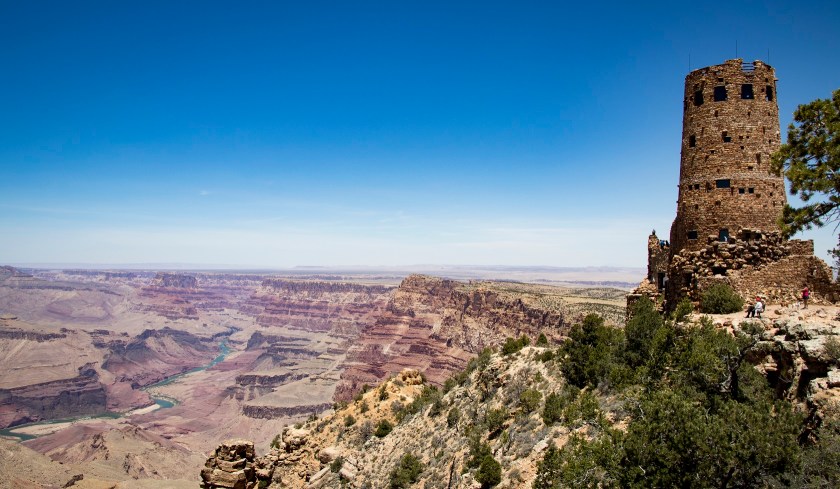
We began by driving to the far end of the Grand Canyon to see the Desert View Watchtower. Once reaching the tower, we instantly took notice of the interesting and beautiful architectural style of Mary Colter, the woman who has often been deemed “the architect of the southwest”. It almost looks like it was meant to be there, as if nature itself had erected the structure in time.
The tower was built in 1932 and has served visitors of the canyon since, providing them with spectacular views of the Grand Canyon and winding Colorado river below.
On the first floor there is a large, open area that had several vendors selling jewelry. As the LEAP ambassadors climbed to the second and third floors they viewed the Native American paintings along the walls.
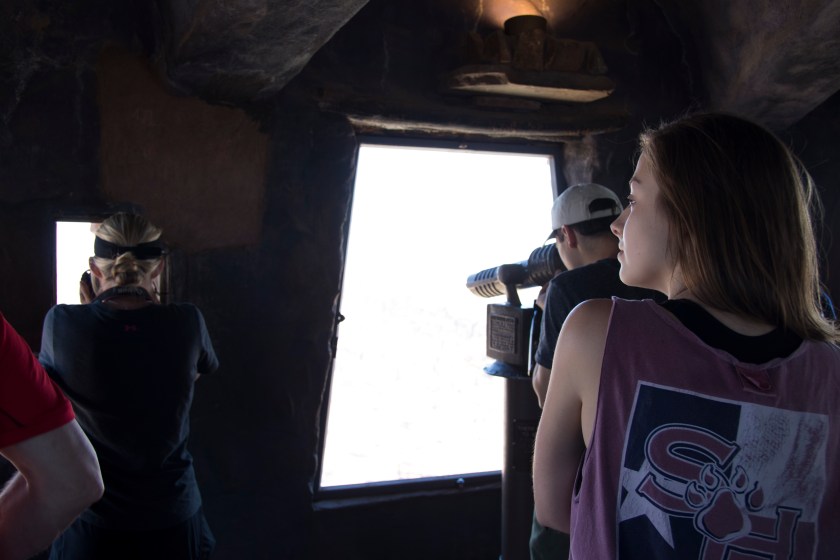
Once reaching the forth floor everyone took to the outlook windows to enjoy the unique view of the breath taking beauty that is the Grand Canyon.
The Desert View Watchtower was a great start to the busy day ahead, and toward the end of our tour, we were joined by photographer Mark Burns, who was doing photography in the park.
This would be everyone’s last view of the south rim of the Grand Canyon (for now) as we made our way to the north rim, and it was far from a disappointment.
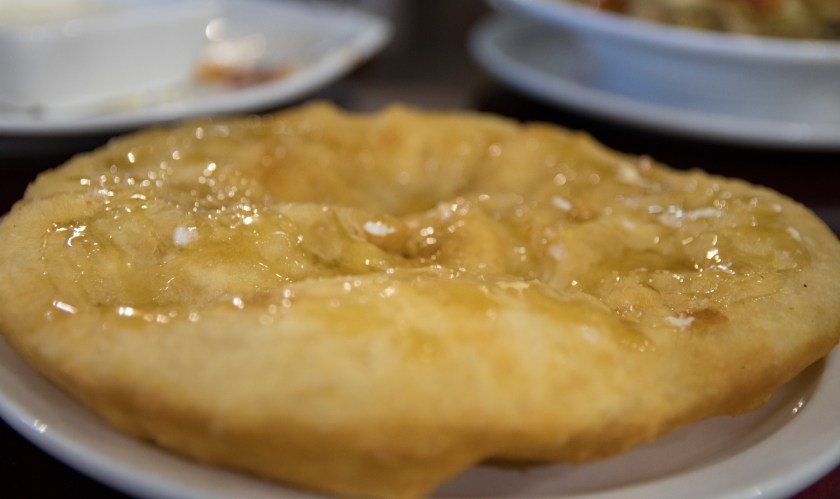
Although we still had much to do, we also had to eat. The Cameron Trading Post in Cameron, AZ was established in 1911, making it older than the establishment of the nearby Grand Canyon as a National Park and even the National Park Service. This historical site is where we ate on our way to the North Rim of the Grand Canyon. The trading post is more than a Native American food restaurant and oversized gift shop, however. There is also a motel, RV park, and authentic hand-crafted Native American art shop, though we were there for one reason: food. Our dishes arrived not long after we ordered them, though the restaurant was busy: Navajo French Dip, Green Chile Stew, Navajo Taco, and Navajo Fry Bread covered in honey.
We only had a few minutes to look around the enormous gift shop before we had to get back on the road to make it to the North Rim before sunset, so once again, we all loaded in the cars and drove the scenic route to the less visited side of the Grand Canyon.
We arrived at the entrance about an hour before sunset…
….and we maximized our time by exploring Bright Angel Point, a short (.5 miles) but scenic .5 mile hike. Though not long, the Bright Angel Point Trail had large changes in elevation and offered several incredible vantage points of the vast canyon…
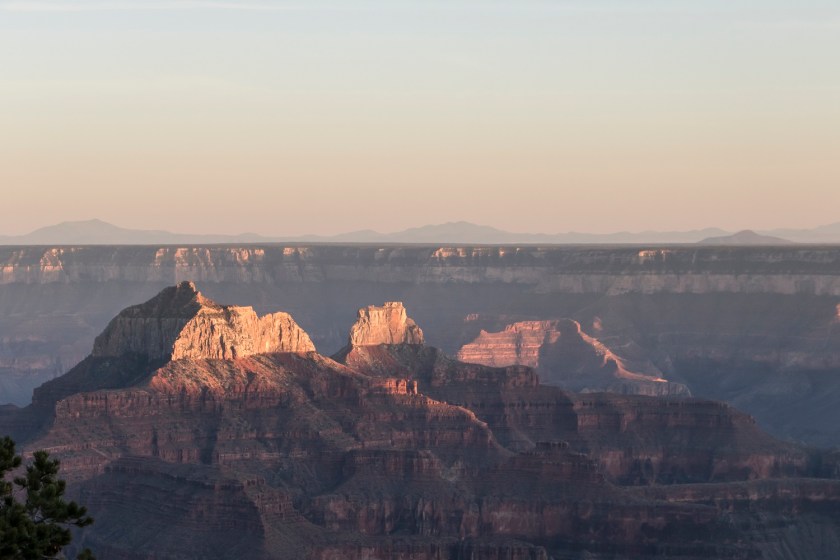
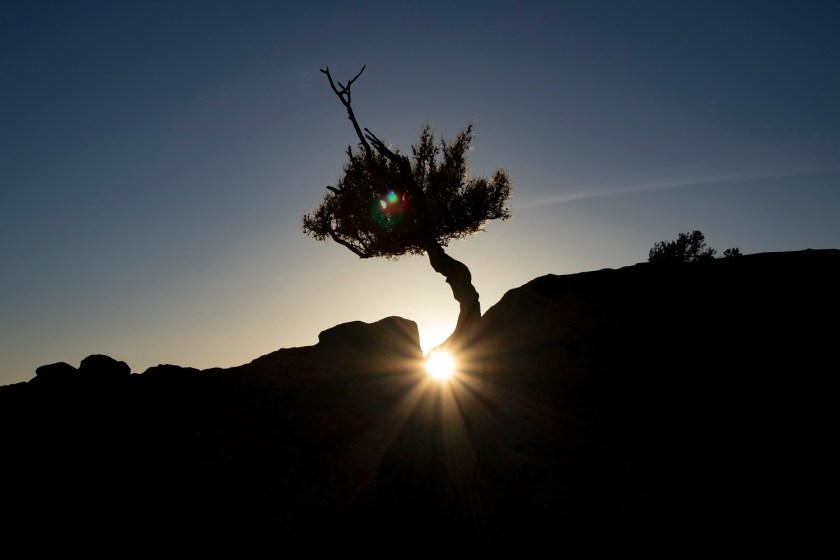
….and at sunset, the colors in the layer of the rock revealed themselves, especially the reds.
The views were incredible, and we also took advantage of the many rock outcroppings to gain even better views!
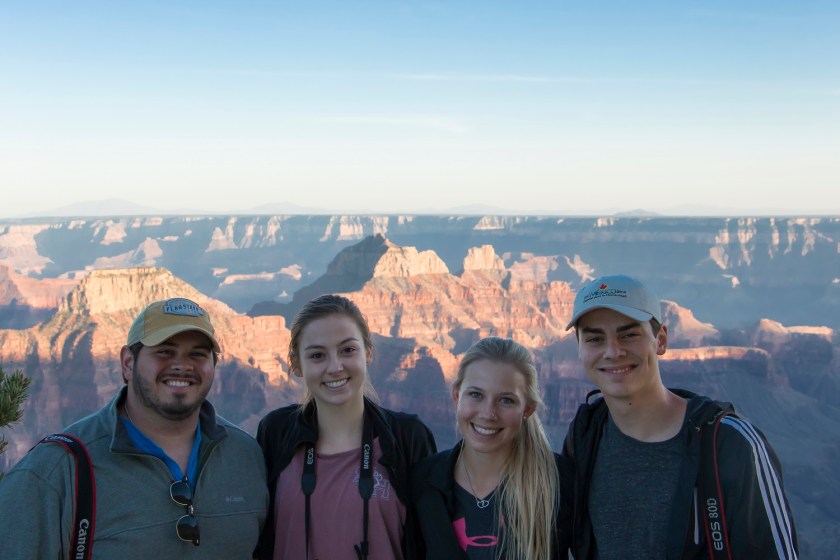
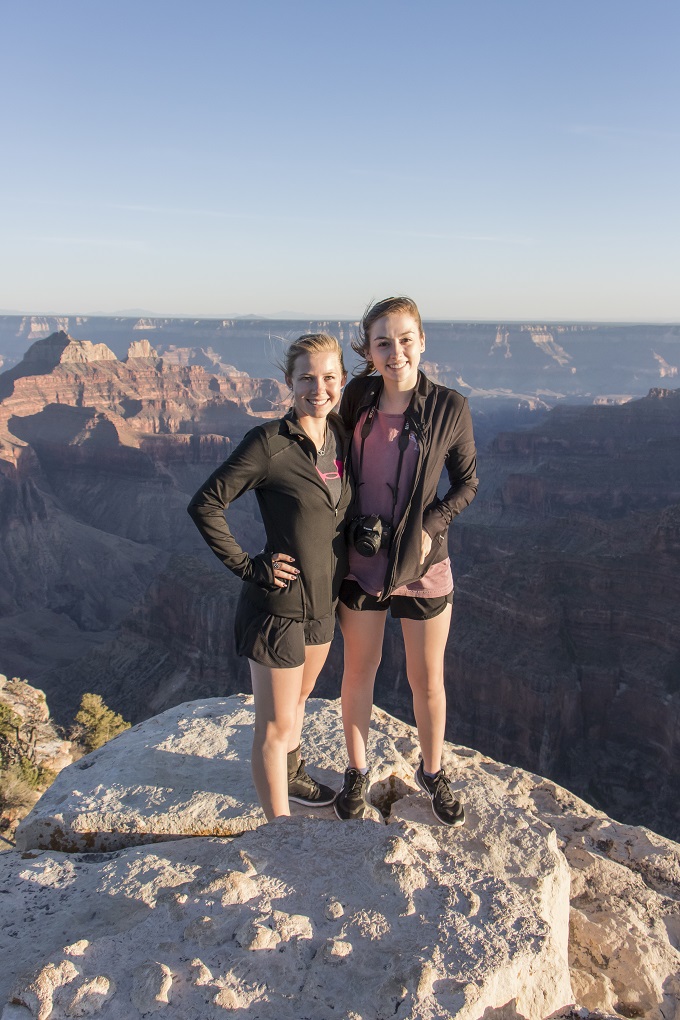
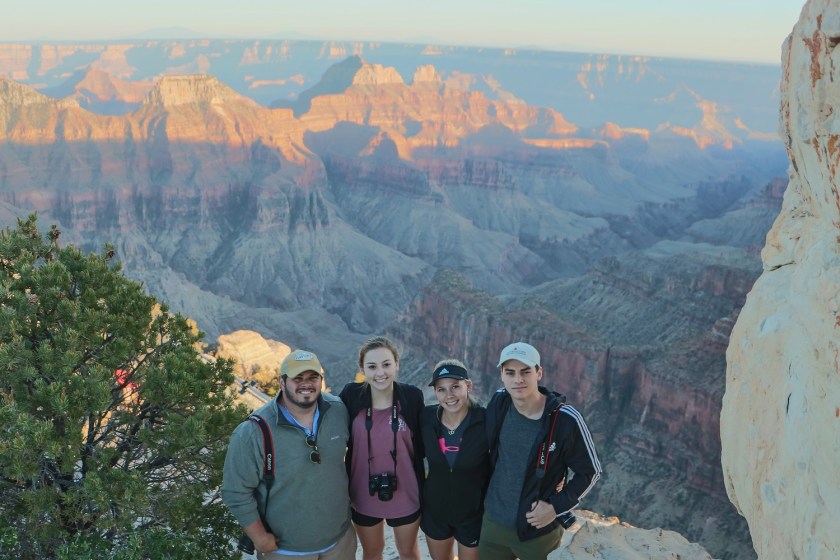
…and to pose for photos.
It was a beautiful hike, and a good introduction to the North Rim of the Grand Canyon. It was the first time that any of us had been there and we were duly impressed.
Following our hike that finished at sunset, we still had a long day ahead of us. Our plan was to assist Mark Burns with some basic photography (mostly carrying equipment) as he continued work on photos for his Grand Canyon Exhibit, which will open at the George Bush Presidential Library in 2019.
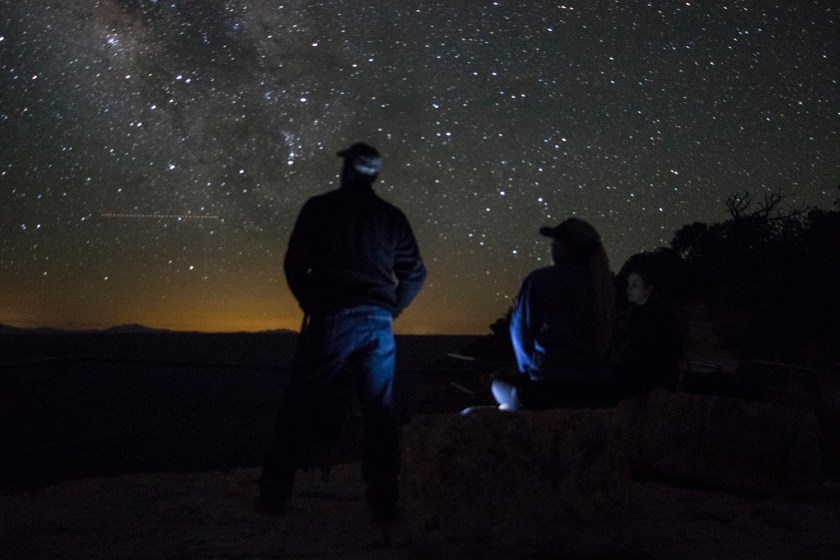
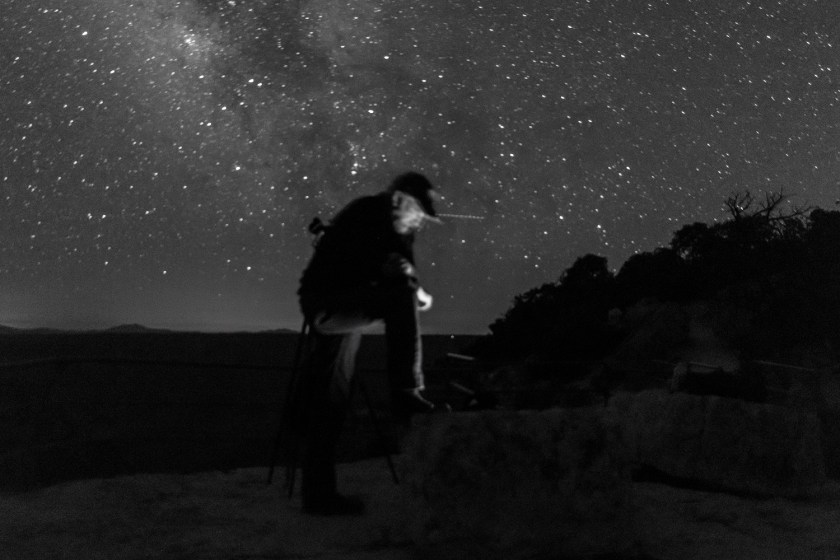
Burns’s objective on this evening was to shoot the Milky Way over “Angel’s Window” in the North Rim of the Grand Canyon. To that end, we were with him from approximately 9:30pm until 1:30am. Although summer, it occasionally got cold on this rim promontory, with the temperatures dipping to the low 50s. This wasn’t freezing, but it could be chilly.
We learned a lot by watching, and we enjoyed the immense beauty of the night sky.
We observed about a dozen shooting stars, and we practiced shooting in the dark.
Although this proved difficult, it gave us much to think about.
It was approximately 1:18am, when Mark got the shot he wanted, and it was a good one (attend his opening exhibition to see it!).
With that, we left for Kanab, Utah, where we would be spending the “night.” Given that it was two hours and fifteen minutes away, it was more like we were spending the morning there. But with a big day at Zion the next day, we were eager to get whatever sleep we could, so we finally settled into the hotel around 5am, for a couple of hours of sleep with pleasant, star-filled dreams.
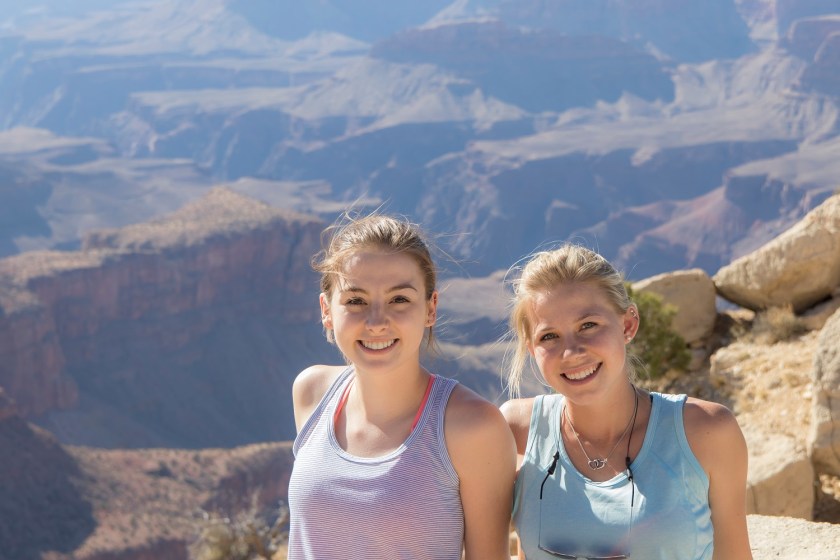
A few of the LEAP students started the day off by waking up at 3 a.m. in order to make it to the Grand Canyon’s Moran Point for a spectacular sunrise. While our Professor and Ryan Brim had been to the Grand Canyon several times, neither had been at sunrise, and I have never been to the Canyon at all. So this was a much anticipated event!
We arrived to the Canyon Rim around 4:30, about 30 minutes ahead of the sunrise.
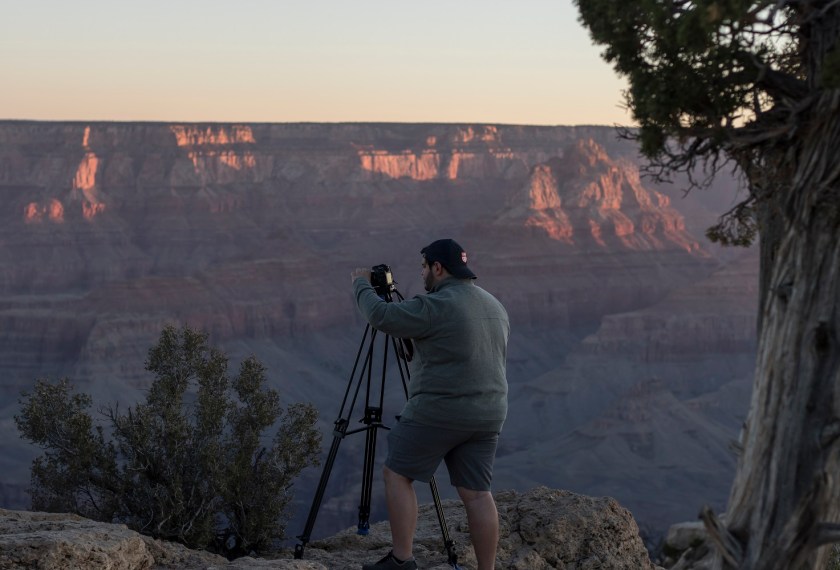
Photographer Mark Burns was also there to work on a Grand Canyon exhibition he has set for next year (his exhibit will be at the Bush Presidential Library, the Pearl Fincher Museum, and Sam Houston State University) and, in addition to capturing the sunrise by camera, we also captured some shots of Mark photographing the canyon landscape.
As I mentioned, I had never seen the Grand Canyon and there could not have been a better first impression than seeing the stars fade and the hue of colors rise with the sun, revealing the vast canyon below.
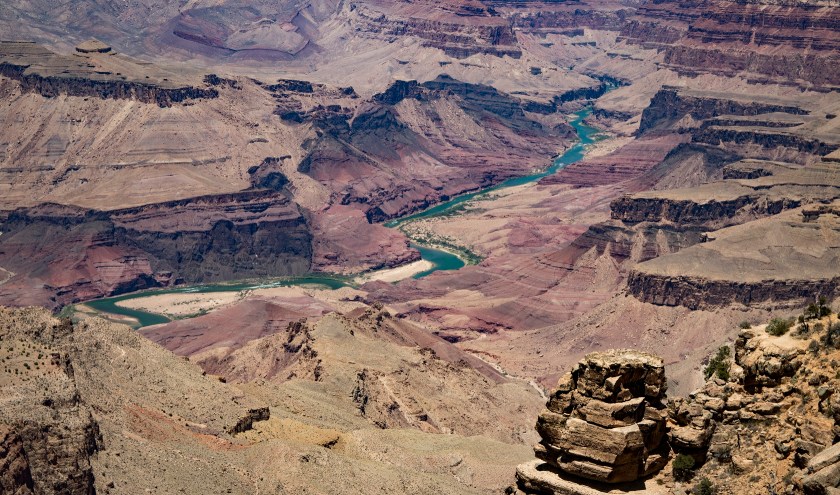
The sun began to light up the red rock into a remarkable view that no words, photos or videos can do justice. But that didn’t stop us from trying to capture this marvelous natural beauty.
Exploring the Grand Canyon
The highlight of the day was the 25-mile tour of the Canyon Rim. Because of the boys’ early morning, we planned for a late start, giving Ryan and Dillon a chance to catch up on some sleep.
A little after noon, we headed into the Grand Canyon, where Anne and Maggie would see this most famous of landmarks for the first time. We strolled the rim trail around the Visitor Center, capturing images along the way…
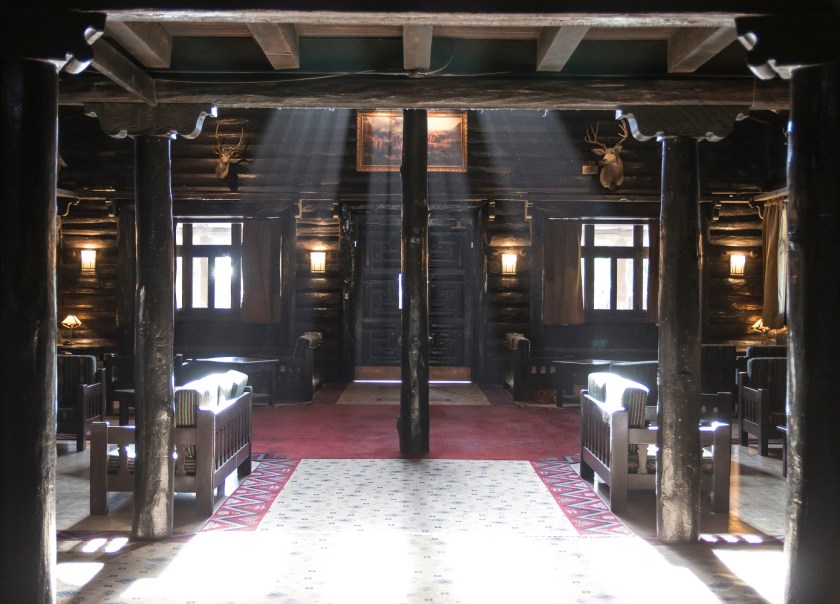
We also had lunch at the wonderful El Tovar Lodge…
…which is not only beautiful…
…but also has great food.
One of the more interesting destinations was the historic Kolb Brothers’s studio.
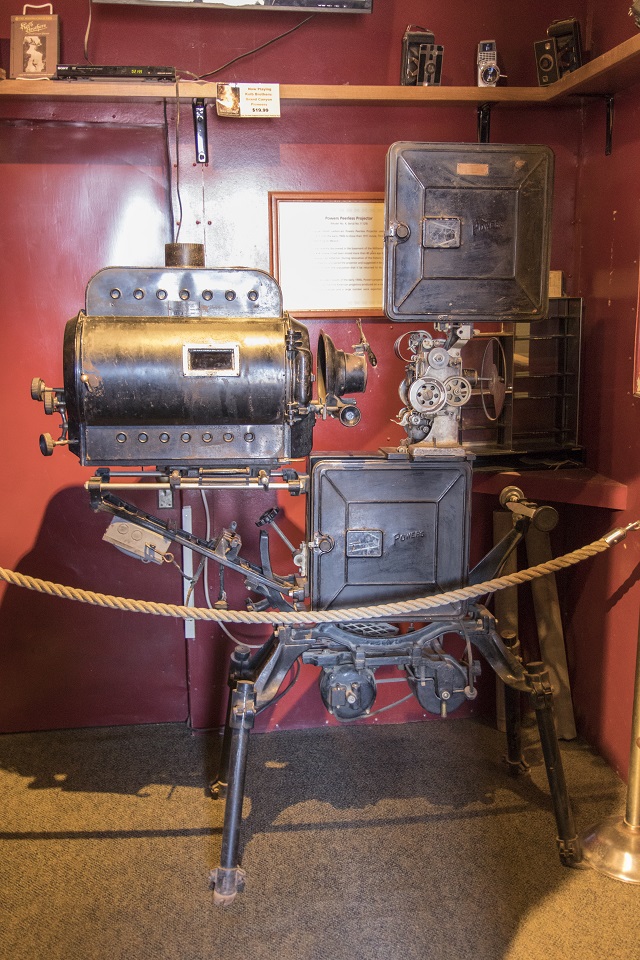
The Kolb Studio is a Museum dedicated to early efforts to photograph the Grand Canyon. Visitors can learn about the Kolb Brothers’ equipment…
…adventures with early public figures (such as Teddy Roosevelt), their daredevil attempts to photograph….
…and even film the Grand Canyon…
This museum is free, very interesting, and is in easy access of lunch and one of the two South Rim trails that allows access to the interior of the Canyon.
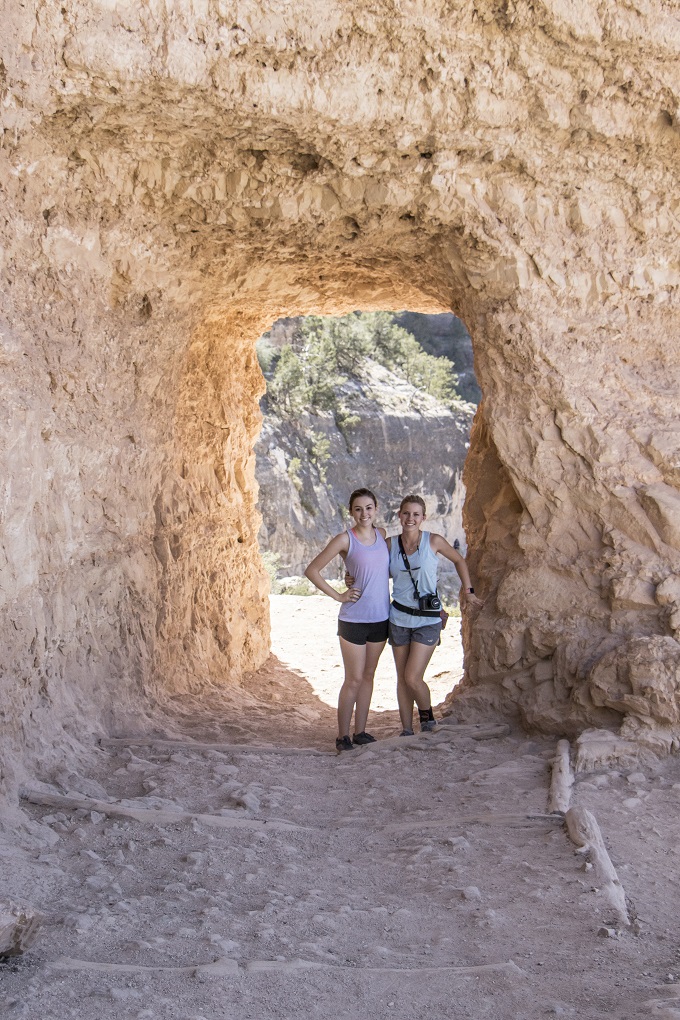
We progressed a short way down the Bright Angel trail, far enough to get to the first tunnel….
…before turning around to get to the rest of the Canyon.
The views didn’t stop, and we enjoyed them all, even the ones with far too many people…
…but our favorites were the ones where we had the chance to go off the main trail a bit and explore.
There were a surprising number of such opportunities…
…and we did our best to make the most of them…
…even hamming it up when appropriate…
This is what we do to terrify our parents and SHSU administrators.
The entire rim is 25 miles, with additional miles available by reservations and National Park Service transportation. There are six developed viewpoints, with another five less formal vistas. We visited almost all of them, traveling approximately 23 of Rim’s miles, leaving only the Desert Watchtower for tomorrow.
Our favorite two stops were the Grand Canyon Village (which is where we began, visiting El Tovar and Kolb Brothers Studio) and Moran Point. The latter is named for the painter Thomas Moran, and it is clear why he spent time there painting. The vista was incredible, while also offering some nice trails allowing you to venture a bit below the canyon rim.
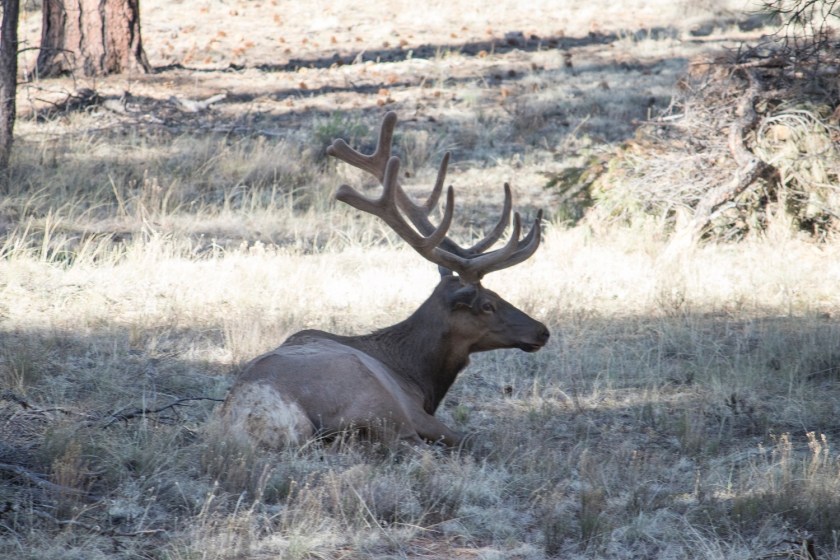
Following our long day along the rim, we drove back to the hotel, before heading out for our evening excursion. Along the way, we enjoyed seeing many elk, including a buck of impressive proportions…
It was a satisfying way to end our first (but not last) Grand Canyon tour.
Grand Canyon at Evening, by Ryan Brim
Around 7:15, we left our hotel to drive to the Grandview Point just in time for the sunset. The canyon was filled with the ambient light from the last rays of the sun, which really showed off the true colors of the canyon.
Soon, the light faded as the sun dipped further below the horizon, leaving us to stare wistfully at the still-beautiful canyon bathed in bluish-red light…
…and wishing the sun would set a bit slower…
But we didn’t have long to wait before our next Grand Canyon adventure. Mark Burns, who joined us on this evening tour, told us that the International Space Station would be making an appearance, so we got out our cameras and tried to capture the fast-moving man-made machine before it disappeared behind a line of trees.
The Station’s distance, rapid speed, the dark sky, and our own photographic limitations made it difficult to catch on film, but the photo above indicates the distance across the sky that the Station traveled during a 20 second exposure. It was an unexpected highlight of the trip.
The whole event only lasted about a minute and a half, but the dust in the atmosphere made the ISS look like a red star moving across the darkening sky.
This was a good introduction to night photography at the Grand Canyon, a subject we continued to explore over the next hour. The Grand Canyon isn’t an official Dark Sky Community, but it is dark, and we were able to experiment (mostly unsuccessfully) with photographs of several constellations as well as the Milky Way galaxy. This was the first time for most of the LEAP students to see this massive cluster of stars in the night sky.
After about an hour out shooting the stars, we packed up all our camera gear and headed back to the hotel so that we could rest up before our trip to the North Rim the next morning.
Today, LEAP Center students hiked up to Devil’s Bridge in Sedona, Arizona. With narrow spaces and lots of steep “steps”, the hike up was slightly more challenging than our previous hike, but we knew the payoff would be worth it. The trail was steep but offered shady spots that we took advantage of when we would stop to admire the red rock of the canyon (and catch our breaths). The narrow path was lined with prickly pear cacti, tall century plants and hikers sitting to get some water and rest for a moment. Once we made it to the top of the bridge, we knew all the climbing had been worth it. The views from Devil’s Bridge were breathtaking.
Just as we began feeling brave, we met a man who asked us to take a photo of him doing a handstand on top of the narrow bridge, putting us all to shame.
While on the bridge, we made a small cairn, which, according to Professor Yawn, officially made us hikers.
After admiring the views from Devil’s Bridge, we began the trek down, but not without a few pitstops. We went down and caught a quick glimpse of the bridge from below.
The trip down seemed much easier as we were all still so amazed at what we had just experienced.
After a quick bite to eat at The Wildflower Bread Company in Flagstaff, Arizona, the LEAP center explored the town square. The square on Friday evenings is vibrant with people shopping and eating at the unique food joints.
We visited a cool little bookstore where there was a live performance from a local band while the small crowd sang along to a song about mermaids.
After our group slowly made our way around the store reading the back of books and discussing ones we’ve read, we headed to a local favorite co-op art gallery and window shopped. Unfortunately, the gallery was closed, but we were still able to admire the beautiful works of art within. Next, we headed to a mystical store called Crystal Magic, where we all shared a few laughs about the shops interesting perspective. We continued our way around the square admiring local cuisine and the different types of people around each corner. Finally, we made our way through their local mall, which offered fashion of all types and a fun candy shop. I had never tried chocolate covered orange peels and surprisingly liked them! One thing I thought was interesting about Flagstaff was how active the square was on a Friday night, there were people everywhere! It really added to the fun and easy-going vibe of the town. I thought it was neat how all the restaurants were locally owned, each offering their own unique menu. Flagstaff is a town I would enjoy visiting again and hopefully trying out a few of the favorite food joints.
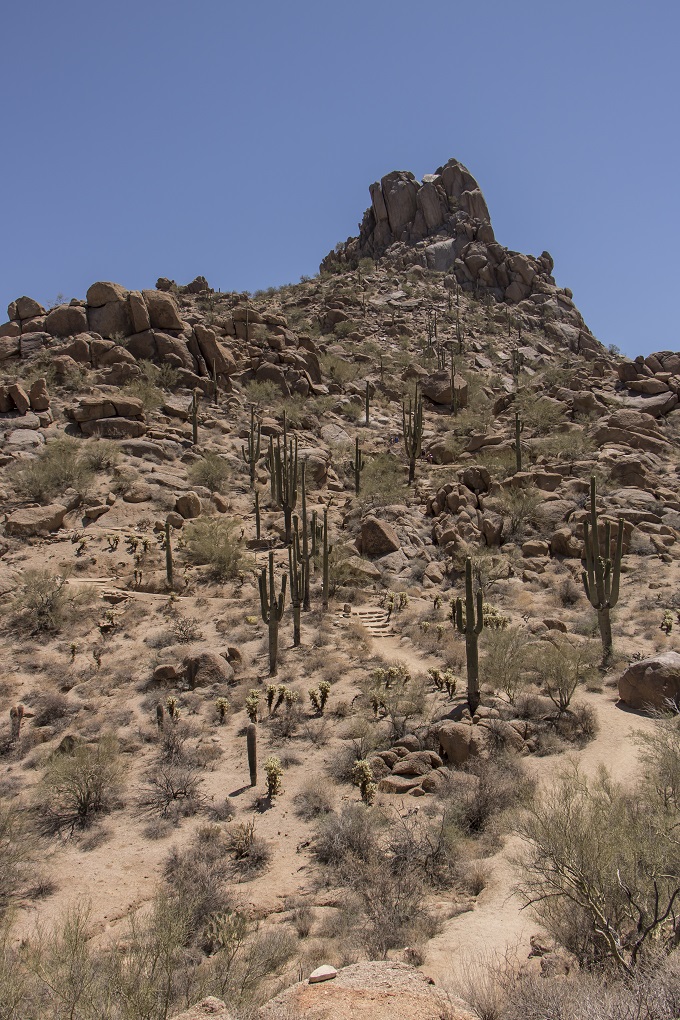
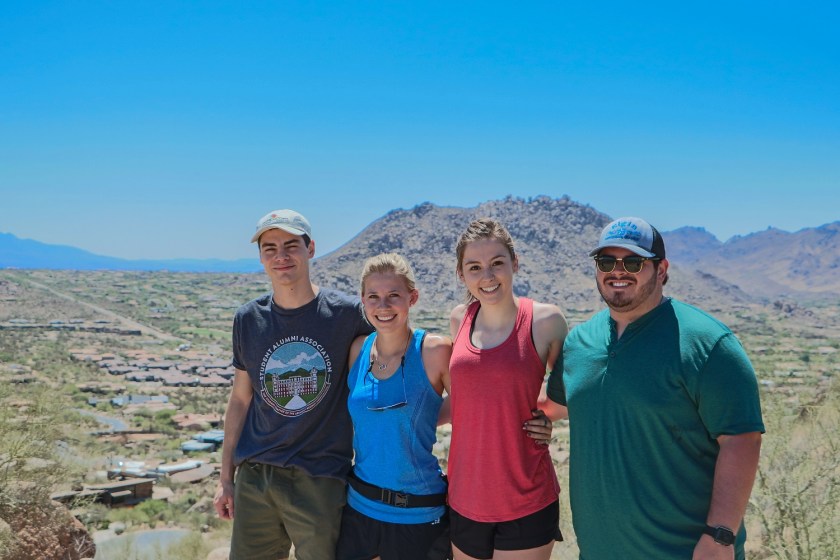
Today, the LEAP Center hiked Pinnacle Peak in Scottsdale, Arizona.
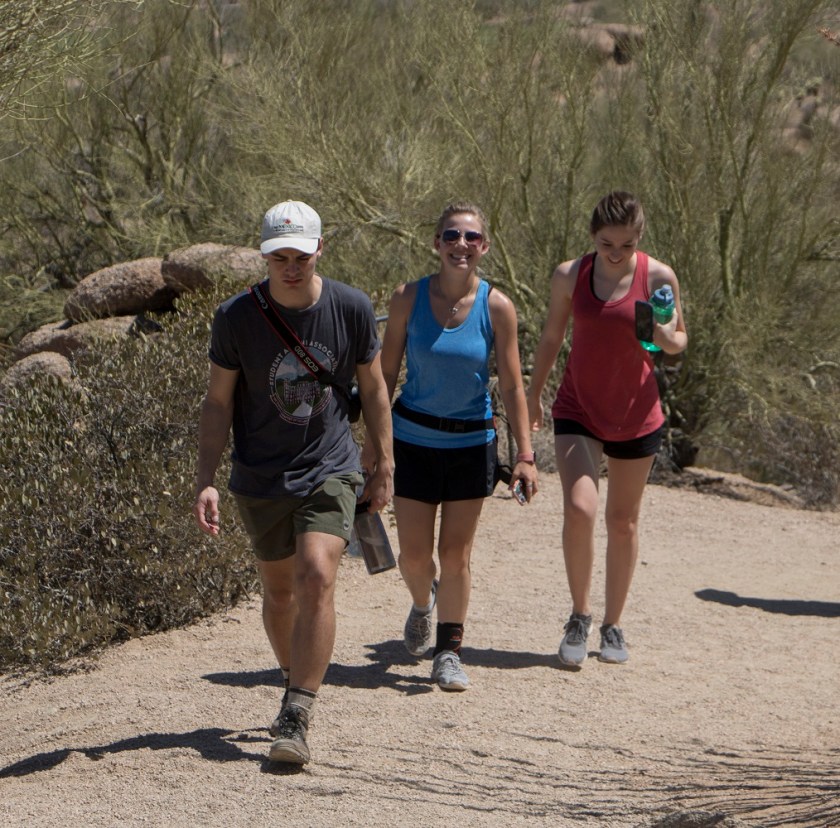
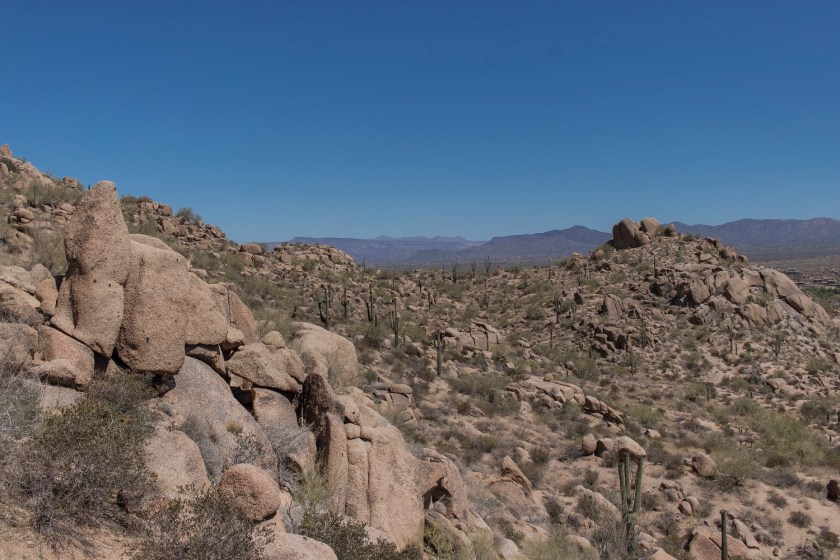
The peak rises to an elevation of 3,169 feet and offers a 1.75-mile trail exploring the area. The weather was beautiful and the views were incredible. Pinnacle Peak offered scenery of towering saguaro cacti, strawberry hedgehog cacti, jumping cacti and many other forms of dry desert plants and shrubbery.
We chose a relatively painless hike for our first day to get ourselves acclimated to the weather in Arizona.
We enjoyed seeing such perfectly groomed golf courses and pools at the bottom of the rugged, dusty mountain. What is interesting about the trail is, instead of forming a loop around the mountain, the trail ends at a separate point and hikers must return the way they came, making the hike a total of 3.6 miles!
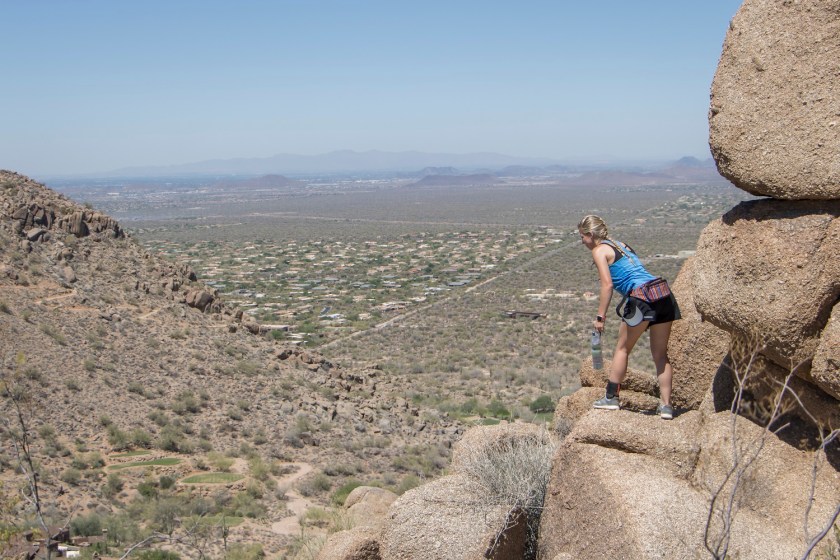
Some of us increased our field of vision by climbing on big rocks and boulders scattering the landscape.
Our new vantage points showed us just how high up we really were! These risky attempts certainly paid off and we were able to capture some great shots of the mountains around us.
Pinnacle Peak is a man-made trail and is kept up by maintenance for the safety of hikers. One thing we all learned was that jumping cacti do attack!
Professor Yawn was the unfortunate victim of these dangerous predators and had to have a small bundle of barbs removed from his hand.
My favorite part of the hike was climbing on a boulder over looking the side of the mountain, offering an unusual view.
One thing I experienced that was new to me was the different type of climate here in Arizona; instead of the suffocating humidity we know all too well in Huntsville. Arizona air is drier and easier to function in,but can quickly turn dangerous if you are not diligent about staying hydrated. Overall, the hike was a great experience and I look forward to the many more hikes during our trip to Arizona and Utah!
Phoenix Art Museum, by Ryan Brim
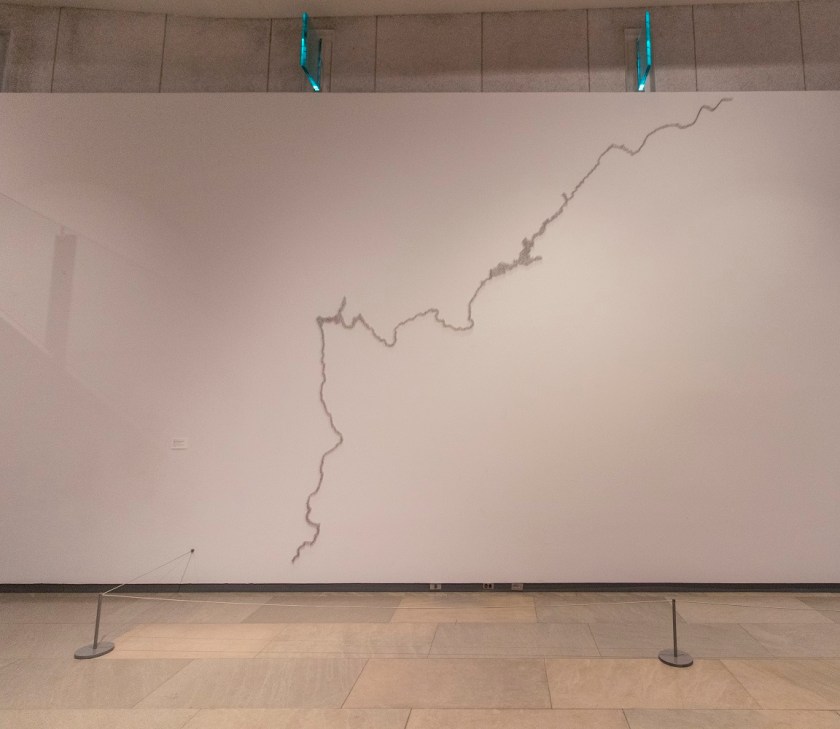
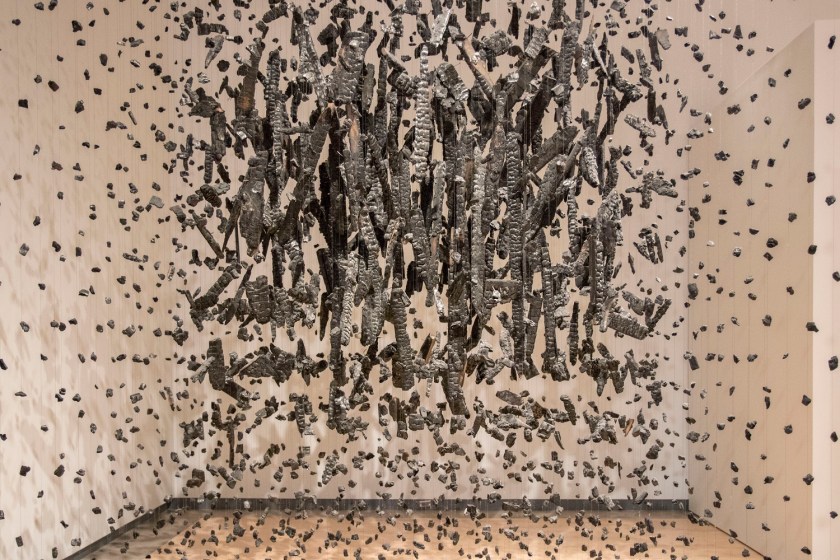
After some time to recuperate at the hotel after the hike, the LEAP Ambassadors headed to the Phoenix Museum of art. There, in the permanent collection, we saw many of our favorite artists: Maya Lin,
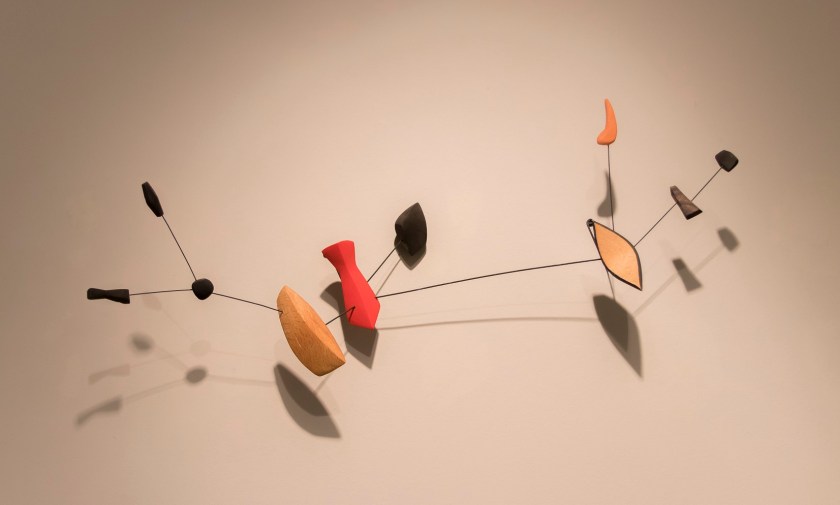
Alexander Calder,
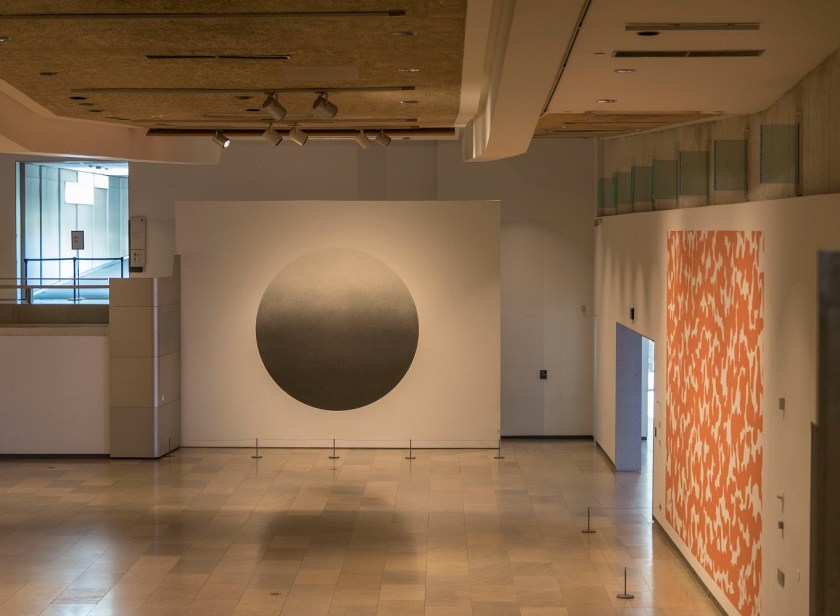
Sol LeWitt,
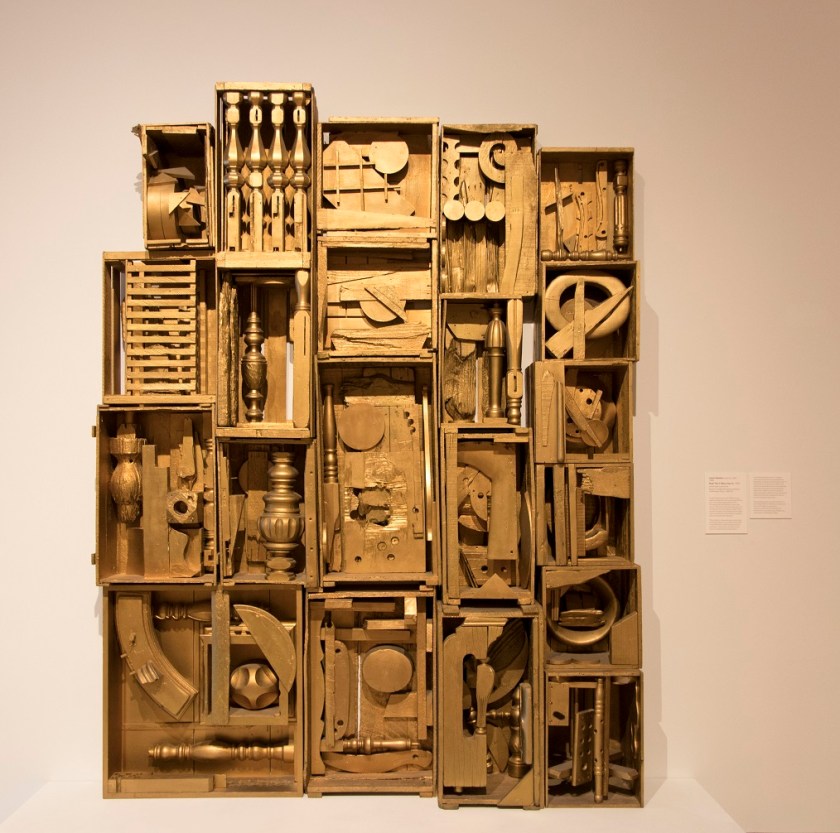
and Louise Nevelson,
and many others.
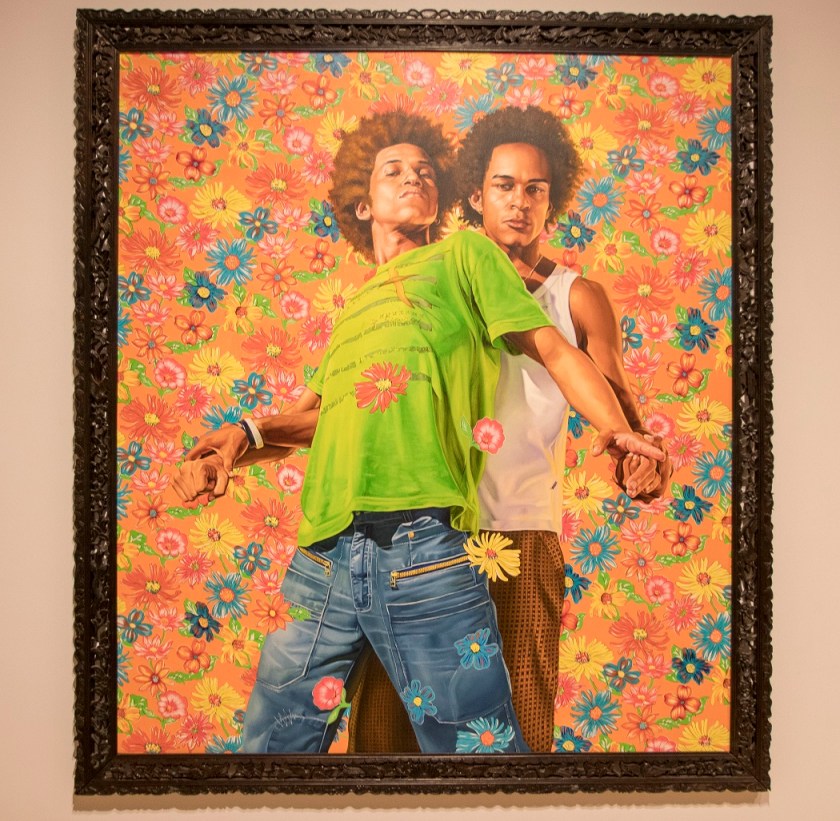
We were even able to see a painting by Kehinde Wiley, the artist that did the official portrait of Former President Barack Obama.
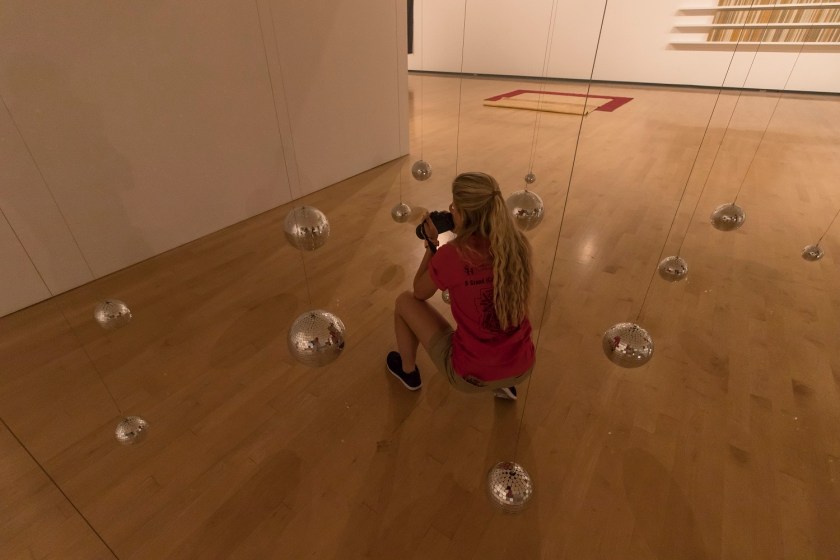
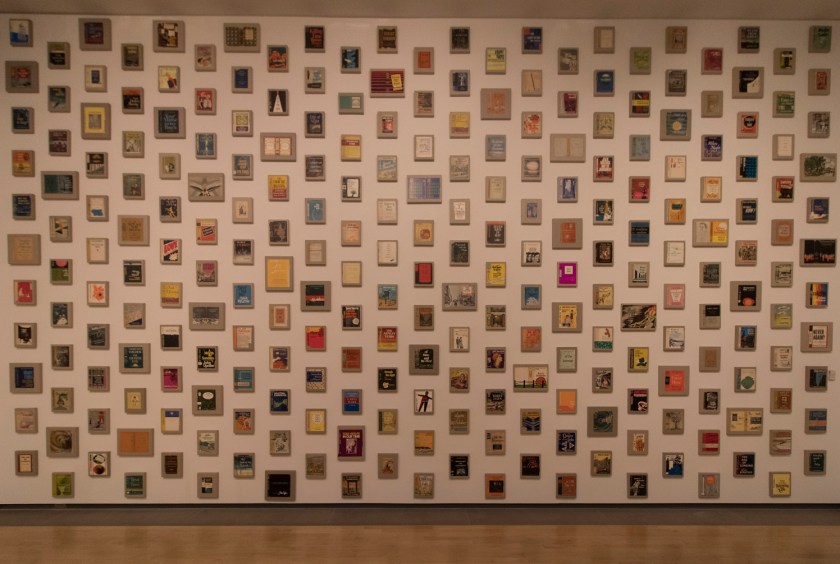
The temporary exhibit by Valeska Soares, titled Any Moment Now, was a series of sculptures, media, and interactive art that were linked by the motif of time.
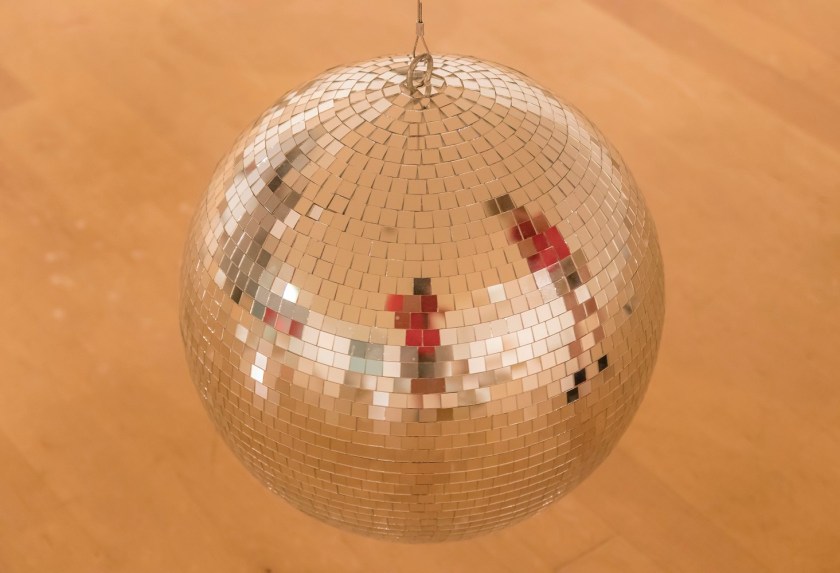
Some of the installments include suspended disco balls of various sizes…
…spinning at different speeds…
…a barrier of light bulbs with long cords attached to the ceiling…
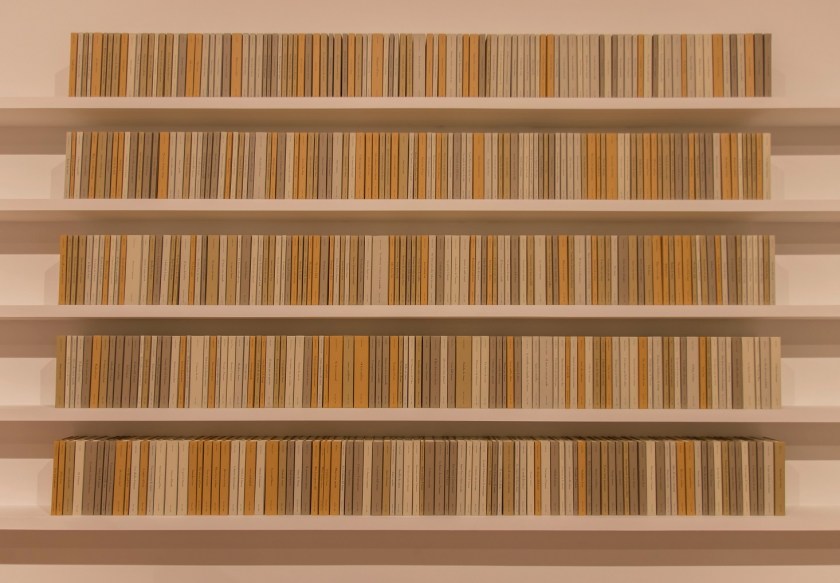
…and a wall completely lined with the covers of books with time-related titles.
The artistry that went into the pieces was impressive: one example was an assortment of pillows, mattresses and other usually-soft furniture items made from marble that looked comfortable enough to take a nap on.
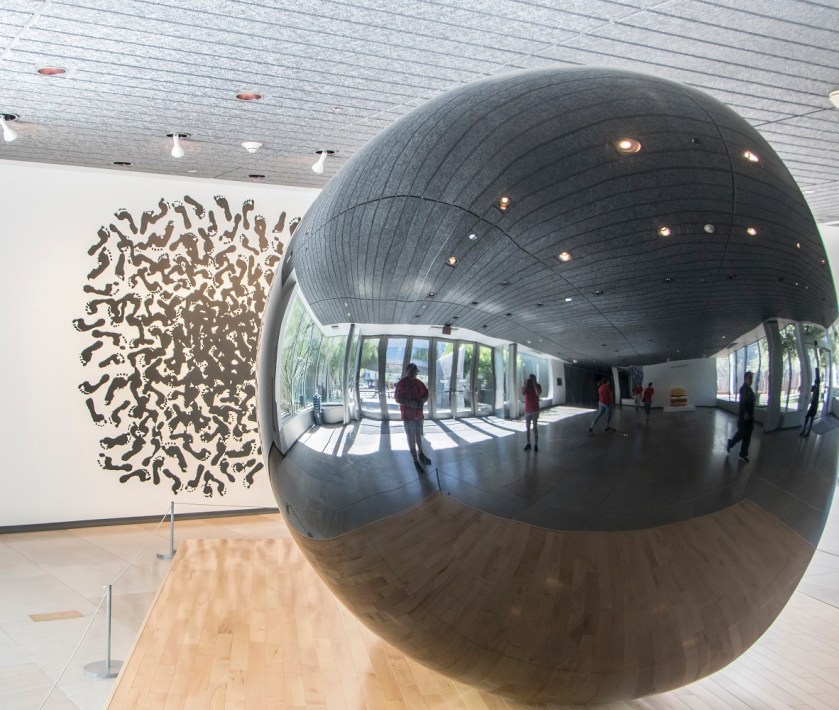
We also saw works by Anish Kapoor…
…and other pieces of which we were particularly fond.
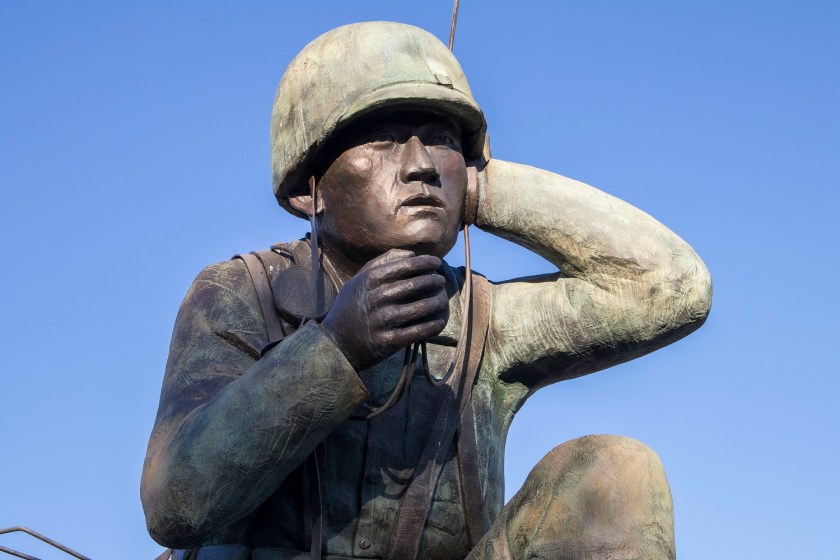
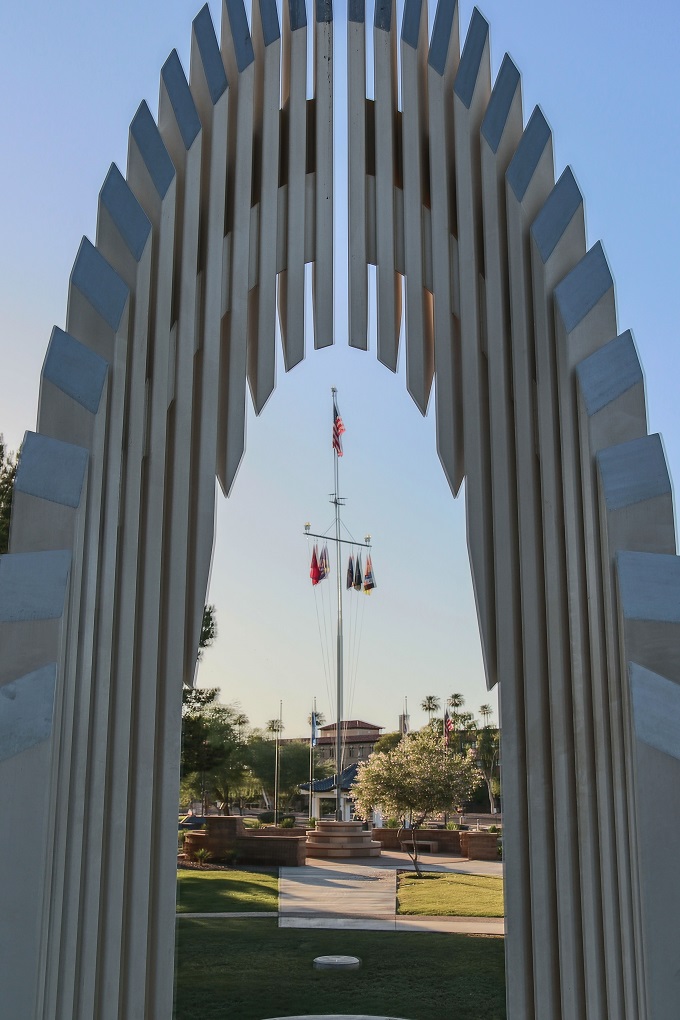
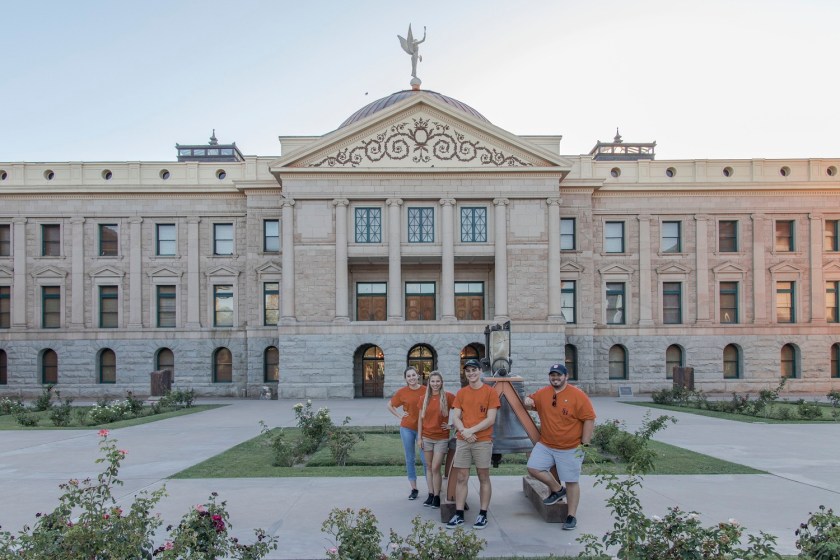
We couldn’t stay long, as the museum closed at 5:00, so we decided to look around the outside of the Arizona State Capitol and the surrounding war memorials, including monuments for the Navajo Codebreakers…
…those who lost their lives in WWII from Arizona, and elements from the USS Arizona.
After a short trip around the grounds…
…we found a small coffee shop, Green New American Vegetarian, to wait and sip on coffee for a little while before we went to Papago Park at sunset.
Sunset and Dinner, by Dillon Glass
One of the great places to see a sunset is Papago Park’s “Hole in the Rock.” As the name suggests, it is a hole in a large rock–almost a mountain–in which visitors can perch and watch the sunset.
We set up in different locations, set up our photographic equipment, and recorded the sunset and enjoyed each other’s company.
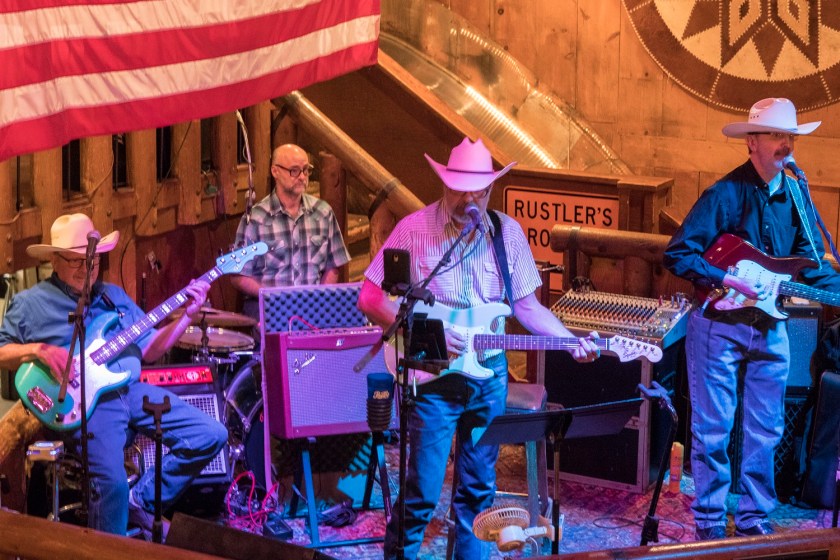
Following sunset, the LEAP ambassadors headed to Rustler’s Rooste for dinner to cap off a day full of activities. At the main entrance to the restaurant there’s a Longhorn laying in his pen; and being from Texas, everyone truly felt at home. When walking into the building, the country twang is immediately felt, but with an Arizona twist. While waiting on a table, the LEAP ambassadors enjoyed listening to a live band performing classic country music (from the likes of Hank Williams, Brooks & Dunn and many more) as fellow patrons line danced.
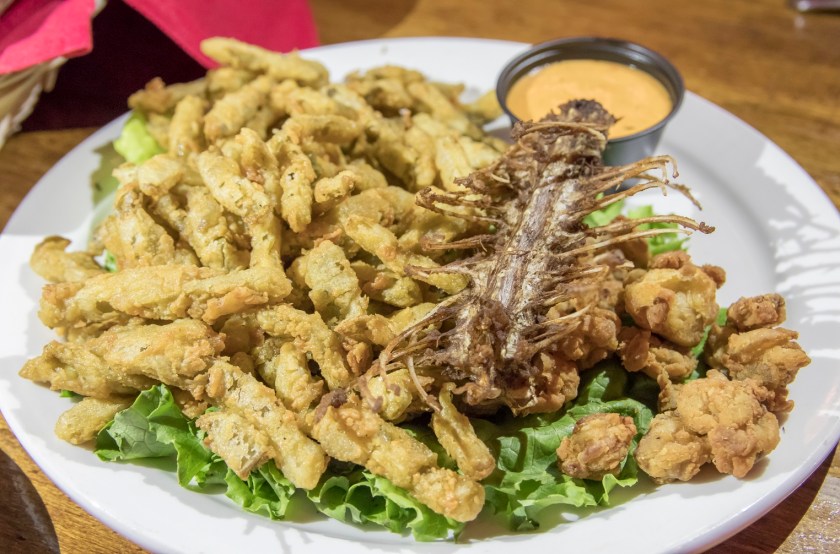
Once seated, everyone tried fried rattlesnake and cactus for the first time; and it was delicious!
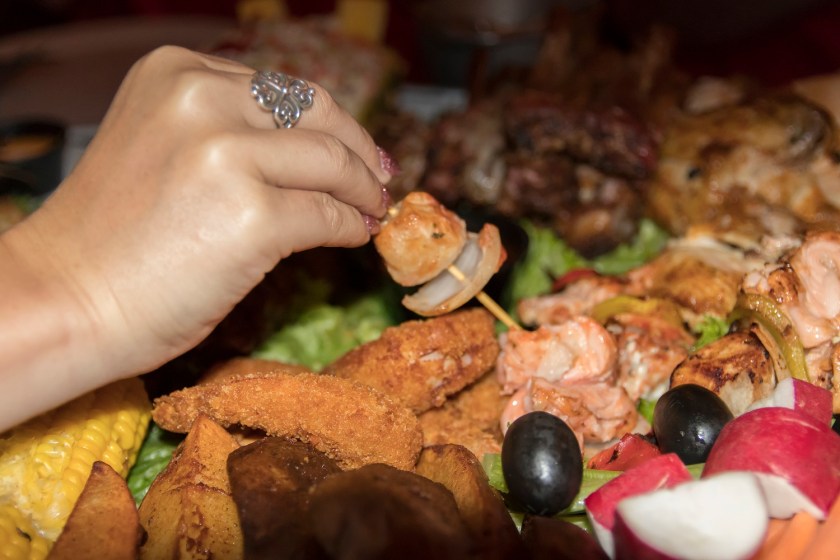
The fried rattlesnake and cactus was just the beginning. Once finishing that, everyone shared a huge platter of “Cowboy Stuff”….
…which ranged from steak and fish kabobs, to pork ribs and chicken wings that literally fell off the bone.
After a great day full of exploring, learning and enjoying some fantastic food, the group was ready to head back to the hotel and recharge for another insightful day in Arizona.
Our first event of the 6-day forum was a workshop run by Dr. Teri Varner, Associate Professor at St. Edwards University. The workshop focused on making impactful introductions for speakers. I found this extremely helpful as a LEAP Ambassador because the steady stream of speakers and guests that we regularly bring to campus need introductions. Naturally, this program was first because we are expected to use it to learn about our various speakers, and then each of us will use this material to introduce a subsequent speaker.
Then was the panel titled “Women in Politics.” The panelists included Dr. Susan Heinzelman, the Director of the Center for Women’s and Gender Studies at the University of Texas; Maggie Buchanan, President of Maggie Jo Consulting; and Kimberly Inez McGuire, Senior Program Director at Conway Strategic. Also included in this panel was none other than Nancy Bocskor, the President of the Nancy Bocskor Company.
Nancy has been a guest speaker for the LEAP Center many times, and she was a FIR (Faculty in Residence) for the Forum. The women in this panel focused on their experiences in politics and the challenges and triumphs that came with those experiences.
DAY 2 – Friday
Our first event of the day was a panel titled “Why YOU Should Consider Running for Office,” and it featured Gina Hinojosa, a Texas State Representative; Delia Garza, an Austin City Council Member; and Sheryl Cole, a Texas State Representative Candidate. Also included in this panel was another one of the LEAP Center’s previous guest speakers, the Chairman of the Railroad Commission, Christi Craddick (who gave a wonderful talk to SHSU women in January!). The four women talked about their respective journeys before, during, and after getting elected to their respected offices. The panelists also shared many of the difficulties they faced in getting to where they are now.
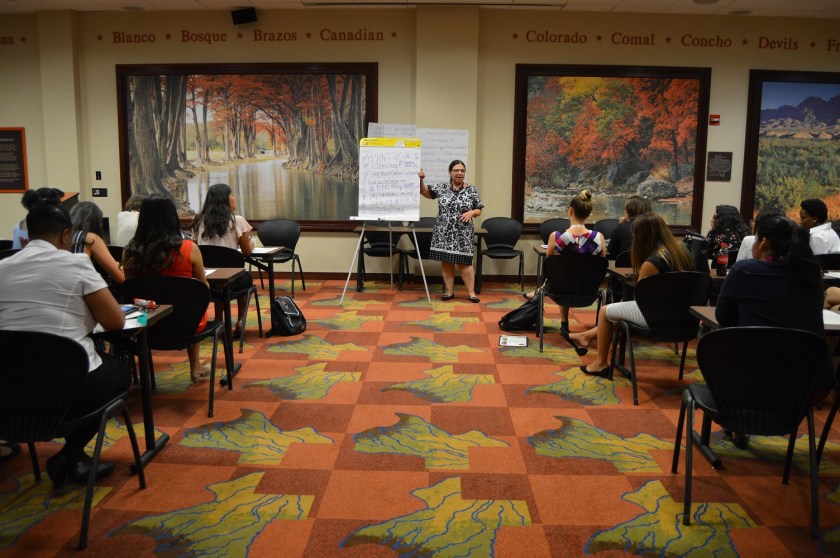
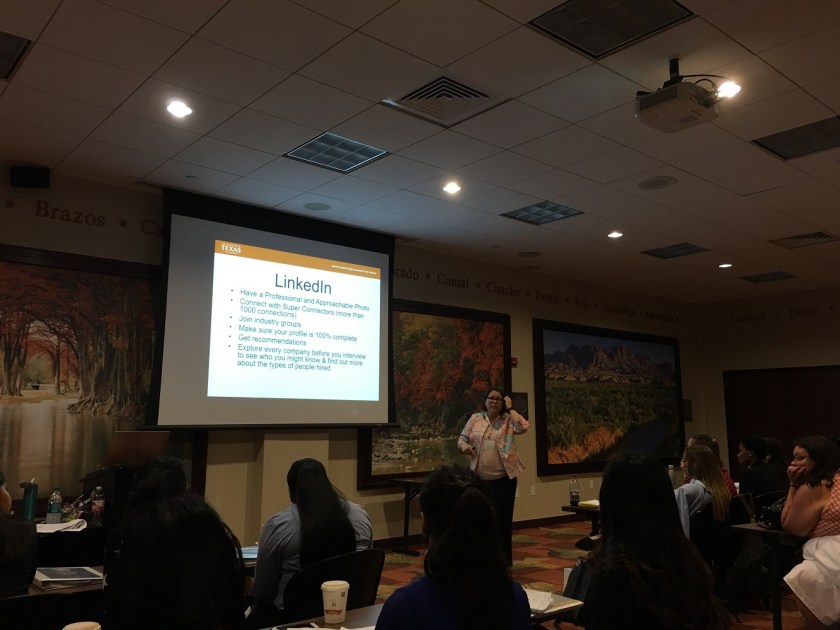
The next workshop was titled “Networking and Making Connections” and was led by Karen Landolt, a professor for the McCombs School of Business at The University of Texas at Austin.
Ms. Lundolt talked about the importance of using weak ties like Twitter, LinkedIn, and Facebook. Weak ties are connections that you’re able to make over social media with people that you wouldn’t have been able to connect with otherwise, and they’ve obviously become increasingly important in the 21st century.
After lunch, we had a short walk across campus to the Texas Union through the hill country heat. We were headed to hear from the Forum’s keynote speaker, Representative Mary Gonzalez.
She shared with us her education, how she got her start in Texas politics, the daily problems that face her constituents and what she is doing to try and help them, and the different challenges that she faces as a woman in a field dominated by men. After the keynote address, we posed for a quick group photo with her…
…and then we were welcomed to a spread of fruit and sweets in the next room as a part of a reception that the Forum hosted for Representative Gonzalez and us.
Day 3, Saturday
Our third day began with a workshop that explored our different leadership styles. Susan Billmaier is a Program Officer at the Woodrow Wilson National Fellowship Foundation, and she specializes in workshops that support and encourage personal journeys, leadership styles, diversity and inclusion, and conflict resolution. By the end of the session we found ourselves divided into four different groups, each with its own strengths and weaknesses, and we all thoroughly enjoyed getting to know more about each other in this type of setting.
After a small coffee break, the Community Advocate Panel began. This panel was geared towards getting young women to become more active on a local level. The three panelists were all active in the Austin area. The panel shifted towards the panelists giving advice to all the young women of the forum. The main message that all three panelists could agree on was to stay true to yourself and your cultural identity.
The next workshop was titled “Texas Civic Health Index Report and Civic Reflection.” The goal of this workshop was to get the students involved in interactive civics exercises. We took a quiz to determine our level of civic engagement and compared our responses with our peers. We then discussed the factors that may contribute to some of us being more civically engaged than others. We learned that education is one of the main factors that impacts civic engagement.
Our last workshop of day 3 focused on Unconscious Bias. The workshop was run by Yulanda McCarty-Harris, and it focused on recognizing unconscious bias, who has unconscious bias, and how to combat it. Ms. McCarty-Harris was incredibly animated and everyone was engaged and interested. The second part of the Unconscious Bias workshop was a panel that featured Courtney Chavez, Dr.Ted Gordon, and Lana Petru. They all gave their insights as to what our society can do to combat unconscious bias.
DAY 4 – Sunday
Our first session of the day was “Political Fundraising” by Nancy Bocskor.
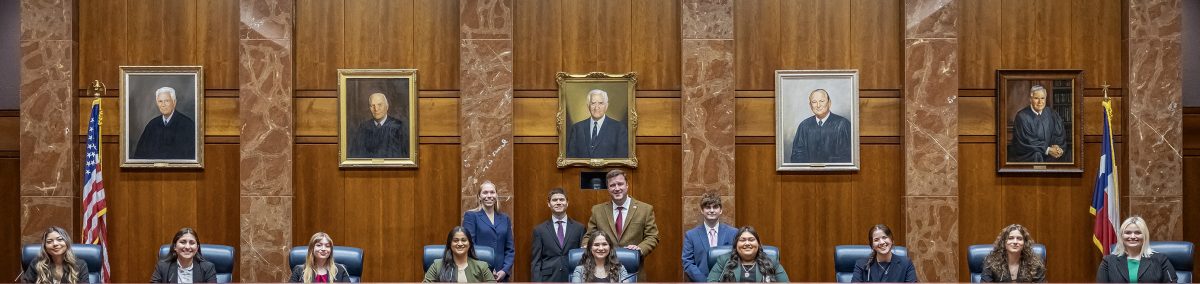
Chairman Christi Craddick, Victoria McClendon-Leggett, and Nancy Bocskor
She gave a rousing speech on her experiences as a democracy coach around the world. She shared with us the same fundraising principles that she’s taught to people in all 50 states and in 27 different countries across the world. We learned how to utilize organizations that we are involved in, and that people we know are twice as likely to donate to any cause we ask them compared to strangers.
Our second session of the day was a panel titled “How Tech is Shaping Politics,” and it featured three panelists who were experts in the field of technology and politics. They talked about how they use technology in their careers, and the different ways that technology can help and hinder political action.
“Managing your Message” was a session led by Jenifer Sarver, a professor in the Moody College of Communications at The University of Texas. Her presentation focused on effective communication. We touched on how to present yourself, considering your audience rather than simply the message that you want to convey, and working to establish your credibility. She also stressed the importance of using visual aids when attempting to get your message across.
DAY 5 – Monday
Our fifth day began with us grabbing a quick breakfast and loading up on a charter bus to head to Austin City Hall for a tour. We learned about the building’s architecture and how it was created to have a low impact on the environment. We also observed all the art pieces inside the building and we learned that they were all done by local artists. At the end of the year, Austinites are able to cast a vote to pick their favorite piece, and the City of Austin purchases that piece and adds it to its collection. We paused for a group picture up on one of the terraces of the building before heading back inside for a panel titled “Women in City Leadership.” The panel consisted of women that work in various city government positions within the City of Austin. They gave us advice on finding mentors, balancing our families and careers, and finding our passions after graduating college. When the panel ended, we were presented with certificates of congratulations from the City of Austin for completing the NEW Leadership program.
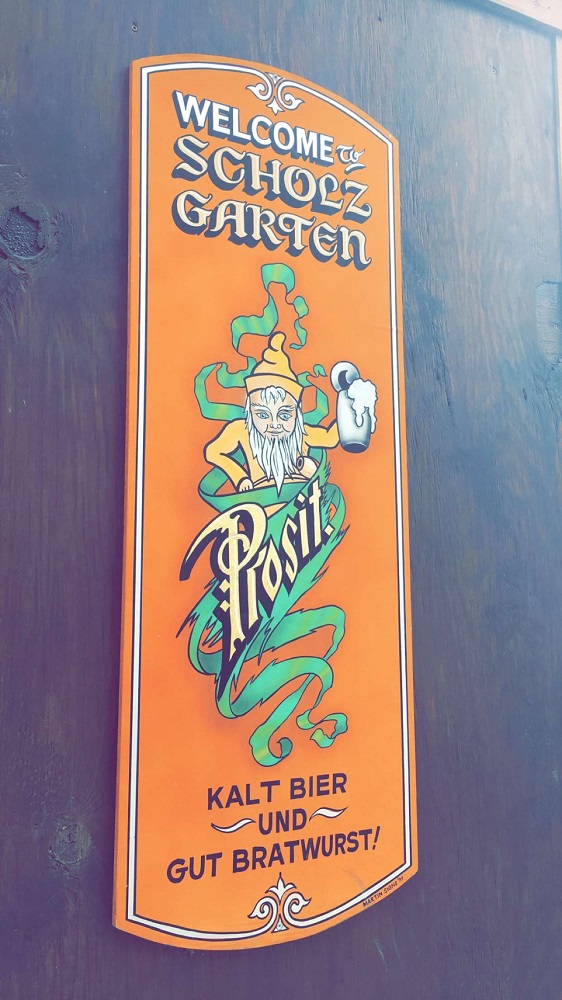
After our time at Austin City Hall, we stopped by Scholz Garden for lunch.
It was a German Restaurant where we were, somewhat incongruously, served fajitas. A few of us finished early and went outside to pose for a few photos with our newfound friends while we waited for the charter bus to come pick us back up to head to the State Capitol Building.
When we arrived at the Capitol, it was many of the NEW Leadership participants’ first time there. We took a special tour that focused on the women that helped shape our state’s history. For instance, we learned about a woman named Obedience Fort Smith who followed her son to Texas and owned 3,368 acres in what is now of the City of Houston. Tranquility Park, a park commemorating the Apollo 11 moon landing is a part of the land that was presented to her in 1845.
We then heard from four different women involved in Texas Politics. We heard from Donna Howard, a Texas State Representative, and then Lauren Hadley who is the Director of Constituent Services for Representative Howard. Then we heard from Terri Williams, Vice-President of Government Relations for the American Heart Association, and Linda Battles, Deputy Commissioner for Agency Operations and Communications for the Texas Higher Education Board. They shared with us their struggles and triumphs they’ve experienced throughout their years in the political sphere.
After a group photo in the capital…
…we headed back to our dorm rooms on UT’s campus. We changed out of our business casual attire for once and were able to just comfortably lounge while we worked on our political action projects that were due to be presented the next day.
DAY 6 – Tuesday
In the morning we began our day by presenting our Political Action Project that we had been working on periodically throughout the week. The project was a mock hearing on House Bill 316 (a reformation on Texas’s Law of Parties). Some students played the role of representatives that were either for or against the bill, some students were reporters asking questions of the representatives about the bill, and some students played the role of family members and friends offering testimony about how Texas’s Law of Parties had impacted their lives. The mock bill passed, and those of us that had been in opposition good-naturedly recognized our defeat.
After presenting our political action project, we heard from Lizzie Robbins, the State Program Manager for IGNITE Texas. IGNITE is an organization designed to teach young women to be civically engaged and step into public service. She gave us information on how to start IGNITE chapters on our own college campuses. We also learned that online students still can be active in the organization by joining the chapter on the college campus that is closest to them.
After lunch and a debrief it was time for us all to head home. Some of us had much longer drives than others, and after hearing from 52 speakers and sitting for 35 different panels and sessions throughout the week, we were all a bit worn out. It was a bittersweet ending to the week. We were all going to miss each other and the supportive and positive environment we had all created, but we also all wanted to see our own friends, families, and beds. We all exchanged hugs and contact information and said our goodbyes. There was laughter and tears, but also the realization that many of us had created lifelong friends this week, and that NEW Leadership Texas really had opened doors for many of us.


















 The trip down seemed much easier as we were all still so amazed at what we had just experienced.

















 Center for Law, Engagement, and Politics