On July 1, 2025, the Huntsville Walker County Chamber of Commerce hosted a ribbon cutting to celebrate the opening of Representative Trey Wharton’s District Office in Huntsville, TX. Thie opening occurs at the end of Wharton’s inaugural session representing District 12 in the Texas Legislature, and the occasion drew many local luminaries, including: County Judge Colt Christian; Mayor Russell Humphrey; Jeff Murski (representing Congressman Pete Sessions); President of HISD Trustees; Ken Holland; Jennifer Alexander; Dr. McCartney Johnson; and many others, including, of course, LEAP Ambassadors.
In addition, Trey Wharton’s staff were in attendance. Anna Hynes, Chief of Staff; Madi Hawkins, Legislative Director; Julie Porter, Constituent Services Director; as well as newly-hired staff for the local office: Patti Utley, Makenna McDaniel (a former SHAIP Intern for Rep. Will Metcalf), and LEAP Ambassadors Michelle Moya.
With a packed room, Huntsville Walker County Chamber of Commerce CEO Jason Brandolini swiftly settled the room down for a brief set of remarks from Representative Wharton.
He reflected on his first legislative session and his many achievements throughout the past 6 months–including a grant opportunity for law enforcement agencies to acquire more bullet-resistant equipment on their vehicles.
He thanked his constituents, his staff, and his wife JoLynne for their support in this endeavor and proudly announced his decision to run for another term!
Before the ribbon cutting ceremony, he jokingly reminded the locals that this office was not his insurance office, nor is his insurance office a place to handle the complexities of Texas politics.
This lighthearted comment emphasized his connection to the Huntsville community and his desire to make positive change while maintaining his grounded personality.
This official opening also marks only the second time this century that the District 12 Representative has opened an office in Huntsville. This positive step suggests Huntsville has the potential to play a larger role in the Texas Legislature in the years to come and is equipped with a representative who, as a graduate of Huntsville High (class of 1985), has the desire and ability to make that happen.
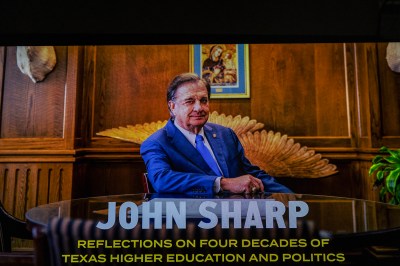
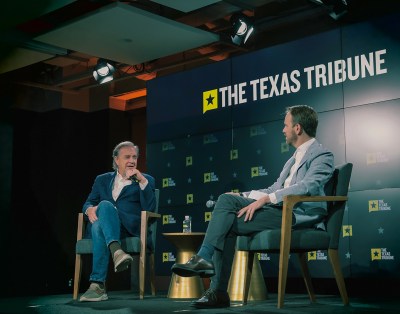
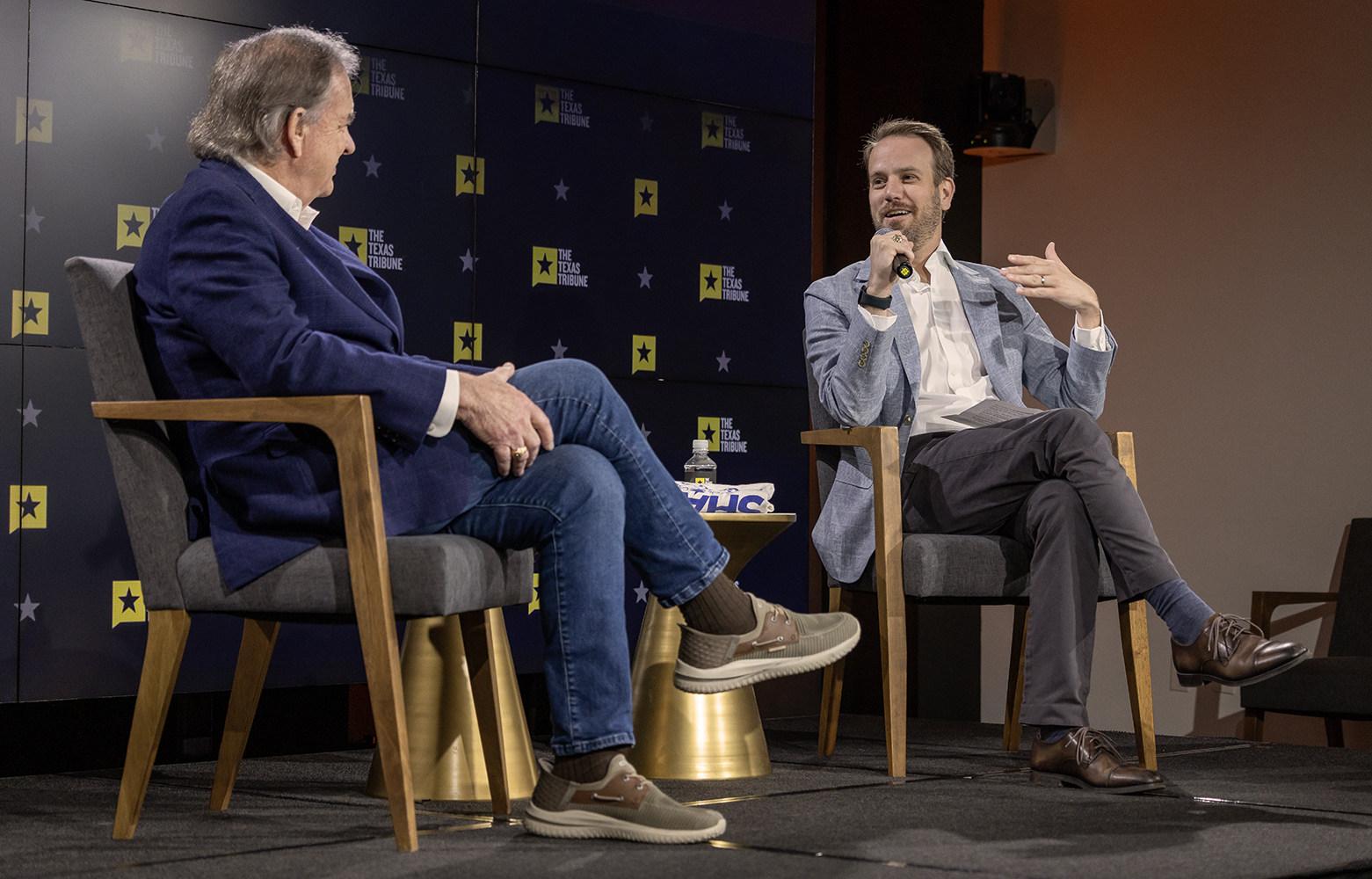
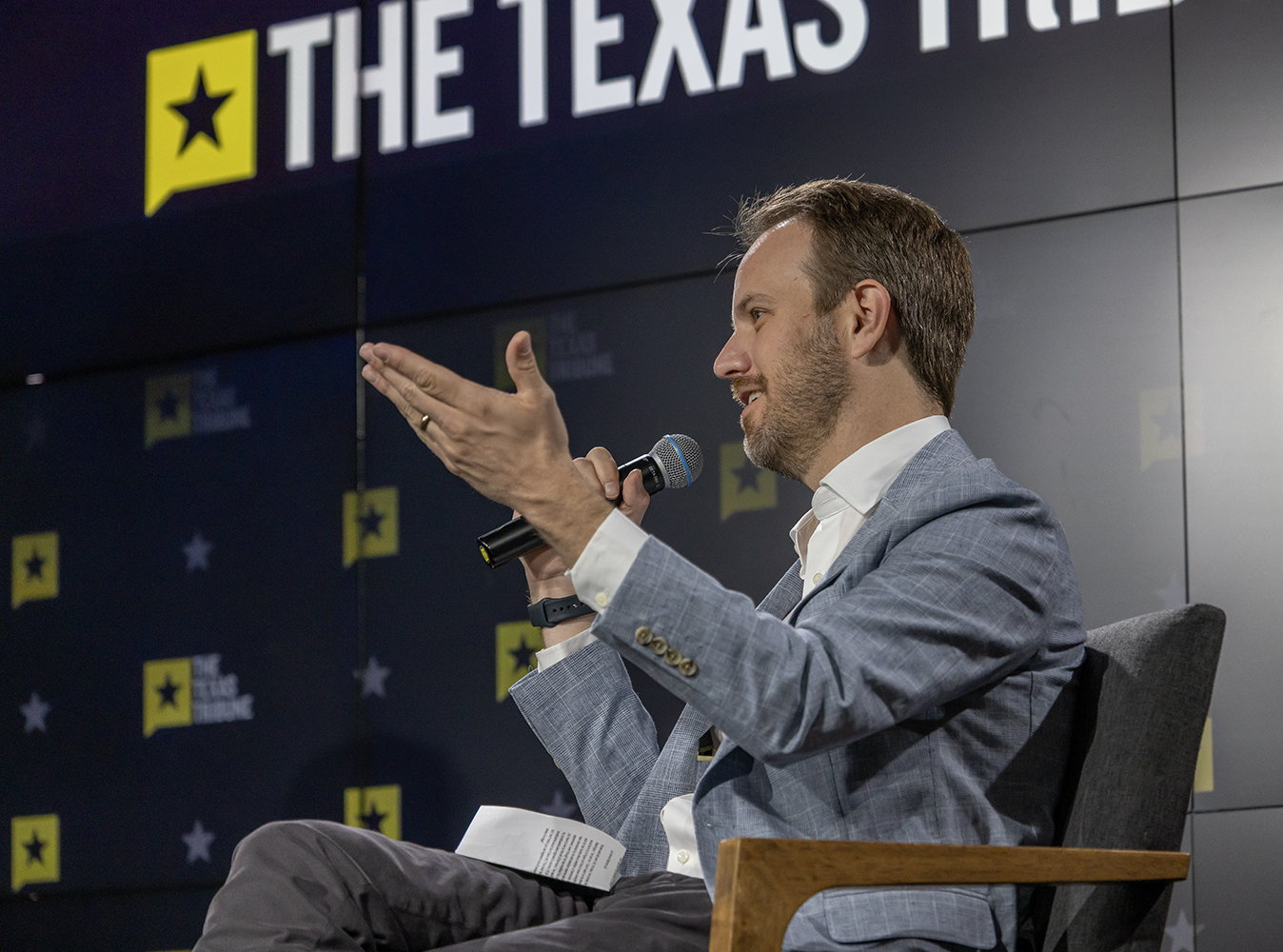
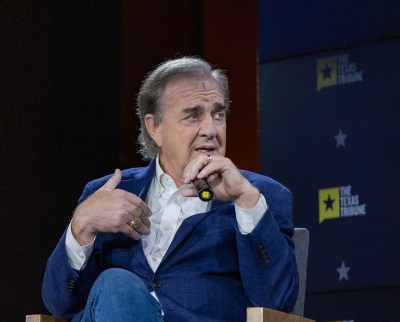
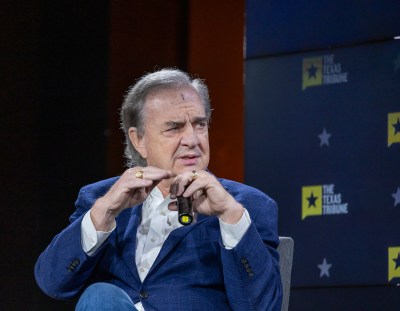
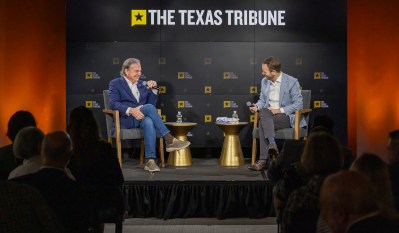
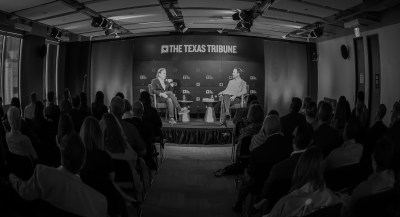
John Sharp, Chancellor of the TAMU System, has spent four decades in public service, and as this career comes to a close–his last day as Chancellor is the end of June 2025–the Texas Tribune was present to record Sharp’s perspectives for posterity.
Over 40-plus years, Sharp has served in the TX House, TX Senate, as a Railroad Commissioner, and as Texas Comptroller.
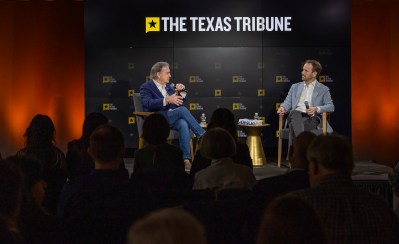
He has spent the last 14 years, however, as the TAMU System Chancellor, and it was this that Texas Tribune Editor Mathew Watkins focused on during the hour-long interview.
Prompted by Watkins, Sharp reflected on his largest accomplishments as Chancellor, which included drastically expanding the System’s physical presence across Texas (the System has 11 Universities or Centers), gaining support from the Texas Legislature in terms of funding, and, after purchasing fourth-tier Wesleyan Law School in Fort Worth, transformed it into a top-25 program.
In the next five years, Sharp noted, “it will be the top law school in Texas.”
Watkins also pushed Sharp on legislative and other political influence in the University’s undertakings. In one case, an offer to a prospective University administrator was rescinded following controversy related to her research interests. In another case, a professor was investigated following reports that she made negative comments about Lt. Governor Dan Patrick during a public presentation.
Sharp noted the peculiarities of those situations, while boiling down the “scrutiny” to a simple rule: If faculty say something in the classroom that’s related to the classroom, then it’s probably protected. If faculty are discussing things that aren’t class related, it’s less likely to be protected.
Noting that politics is increasingly encroaching on higher-education, Watkins asked Sharp how he was able to dispel faculty doubts that he, being a long-time elected official, could come into the TAMU system and serve as a buffer between faculty/staff and the politics of the moment.
Sharp recalled that just before he arrived at TAMU, Governor Perry created and filled a position with a long-time friend to “essentially spy on” the TAMU System.
Sharp fired him and noted that, when you fire the Governor’s best friend to protect your faculty and staff, it gives you some credibility. Unfortunately, not all administrators are willing to take such steps.
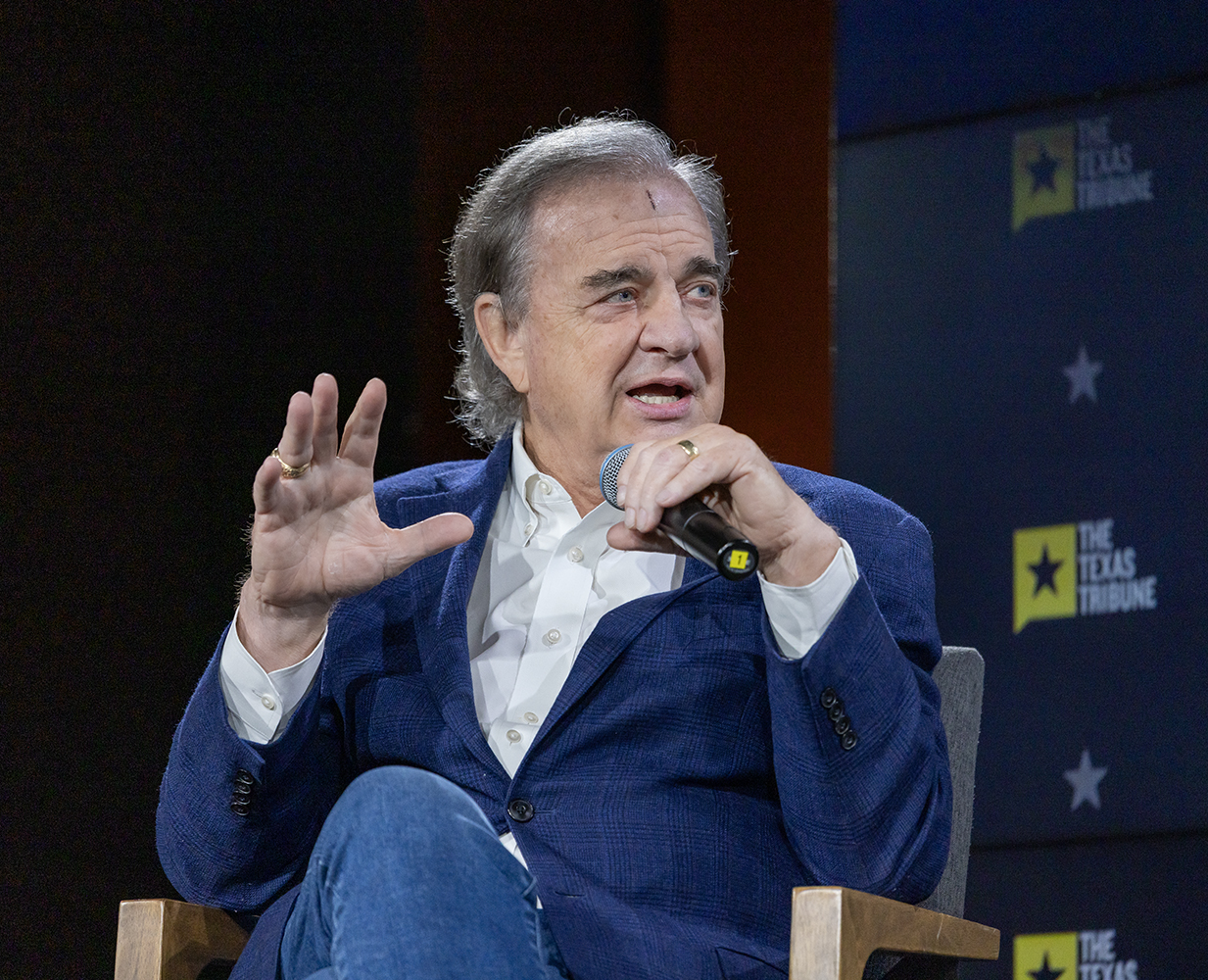
Of course, Sharp is known as much for his humor (sometimes earthy humor) as his public service, and this trait was also on display. When the discussion moved to questions from the audience–facilitated by Matt Ewalt–he was asked about the cut on his forehead.
Sharp indicated that he has peacocks on one of his properties to help with snake mitigation.
They are loud creatures, but this doesn’t bother him, because he wears hearing aids, which he simply takes out at night. When guests come over, however, the peacocks can be a sleep deterrent. So, in the middle of the night, Sharp ventured out to quiet the peacocks’ clamor, and as he put it, “one of them pecked the shit out of me.” As a coda, he assured the audience that the peacock “was in a better place” now.
Although Sharp’s last day as Chancellor is Monday, he is not fully retiring. He will be starting a consulting firm and not, he assured everyone, be “wearing sandals and black socks.” And what, Watkins asked, will he be doing in his consulting firm? “Consulting,” responded Sharp.
To watch Texas Tribune’s interview with John Sharp, you can visit this link.
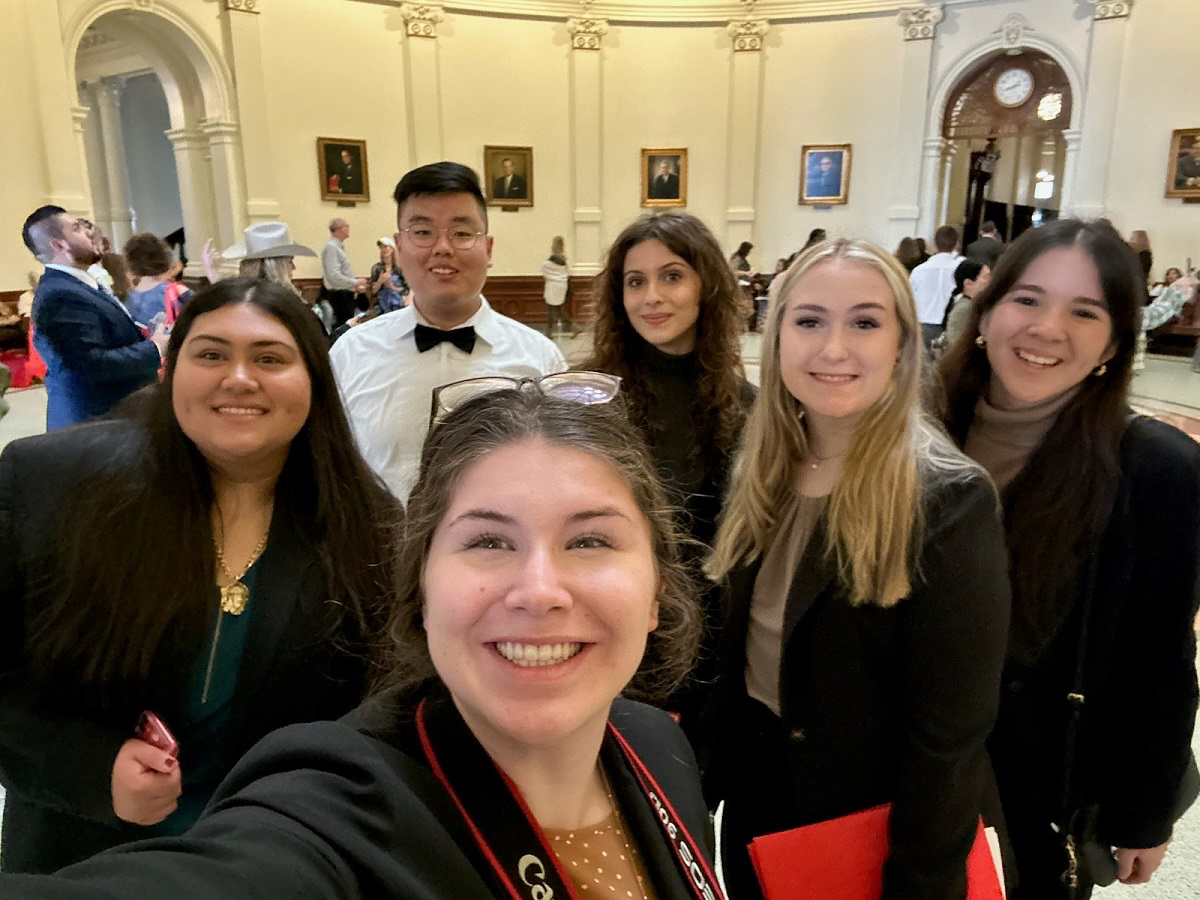
Now, with my professional excursions at the Capitol finally coming to a close, I tried to make the most of my time in the state’s capital. It wouldn’t be a good LEAP experience if I hadn’t tried to make the most of my time.
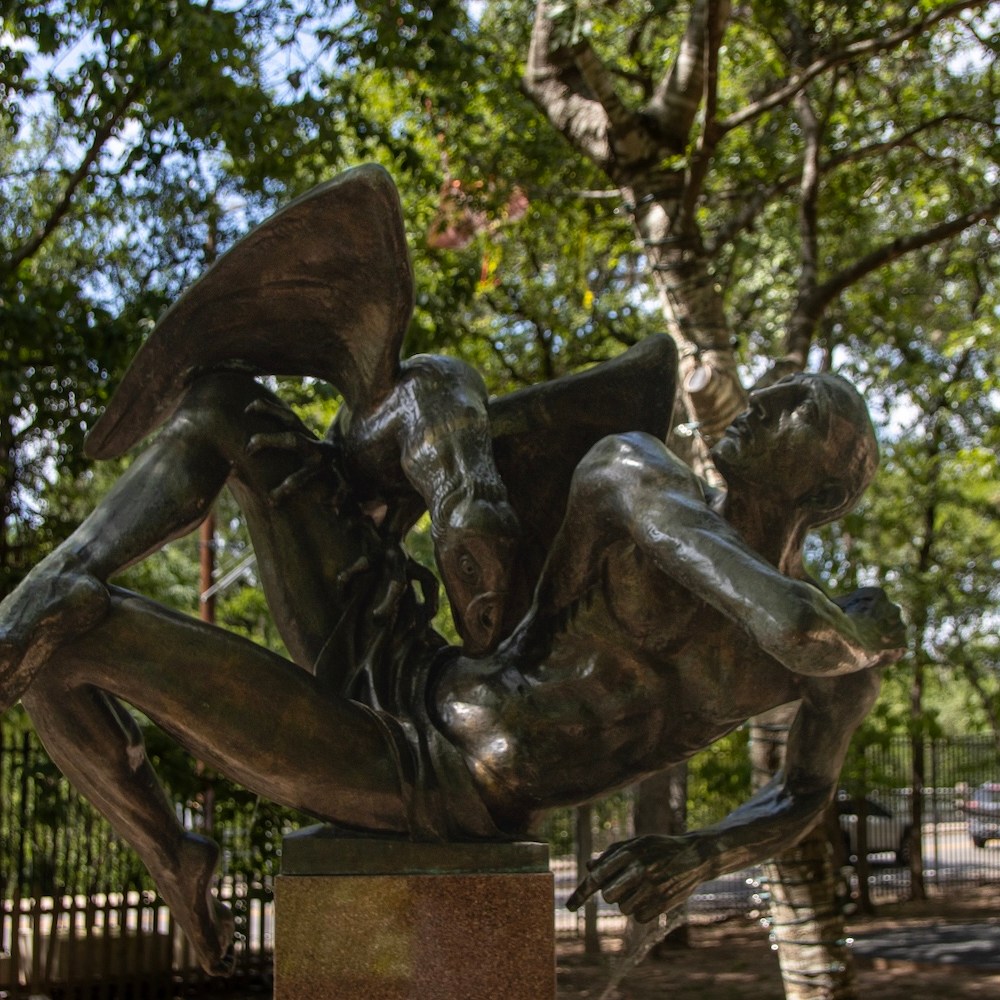
With it being Juneteenth, it only made sense to begin with the state capitol’s Texas African American History Memorial by Ed Dwight. It is not only a beautiful statue, but a thought provoking one.
A Tour of University of Texas Campus
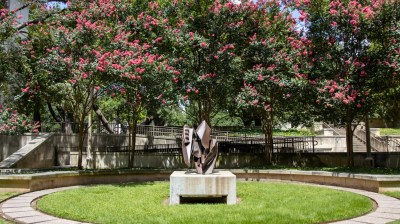
There’s no denying that UT’s campus is beautiful. But I don’t think I fully appreciated just how stunning it is until this visit. I knew they had a strong art presence, but I didn’t realize just how much until I found out there are five different suggested paths for an art walk. The variety alone is sort of insane.
I cherry-picked some of the pieces that I wanted to ensure I saw before I left, being that I couldn’t decide on a path.
Indeed, the theme for this part of the day was indecision.
I started at the Littlefield Fountain, which I learned will be part of a larger beautification effort to emulate the National Mall in D.C. One detail I especially loved: the statue of Athena was commissioned by a former UT Regent and sculpted by Pompeo Coppini—the same artist who designed Sam Houston’s grave in Huntsville. And no, I’m still not done talking about Huntsville.
What I liked most about this was that closer to the Main Building Tower, there is a statue of George Washington staring directly across to the Texas Capitol. Talk about a well-intentioned plan!
As I kept walking, I saw pieces by Mark di Suvero, Charles Umlauf (more on him later), and Willard Boepple, all of which added to the sense that this campus is part gallery, part institution.
I made my way over to the UT Law School. While I couldn’t go inside, I stumbled upon something unexpected: a statue of the school’s longest-serving dean—sculpted by none other than David Adickes! It was a comforting, serendipitous moment.
The law school path is no joke, and with so much uncertainty, taking the LSAT can feel like this unsurmountable force that tests your capabilities as an intellectual. I am trying to let that feeling pass, and focus on what matters, which is my commitment to serving and learning in everything I do. It might be a grueling path, but I imagine it’s a meaningful one. And while the statue couldn’t talk, I took it as a gentle nudge to keep pushing forward.
Taquero Mucho Austin
I do have a weird affinity for the color pink—but even I wasn’t prepared for Taquero Mucho. This place is very pink. It came highly recommended by a former LEAP ambassador, and after seeing it in Texas Highways, I had to give it a try.
I started with a flight of salsas (all good), paired with a slightly-magenta Jamaica, and went with a taco wrapped in a pink tortilla and a side of elote.
I thought it was pretty good, and definitely really pink.
Umlauf Sculpture Garden
This was, without question, one of the highlights of the trip. I hadn’t really heard of Charles Umlauf before spotting one of his pieces near UT Law, but after that, I was curious. The garden itself is tucked away in a quiet, green pocket of the city, and it just works so well with his style—there’s something peaceful about seeing his sculptures in a setting that doesn’t compete for your attention.
What I noticed almost immediately was how many of his figures seem to be looking upward—heads tilted, eyes cast toward the sky.
I’d seen that same pose earlier in The Family near the Business School and The Torch Bearers on campus (which also had smaller versions here in the garden). I couldn’t tell exactly what it meant, but there was clearly some intention behind it. It felt reflective, maybe even spiritual, though it wasn’t heavy-handed.
Some of my favorites were The Kiss, Prometheus, and The Poetess—each had its own tone, but they all fit into the broader theme of searching or reaching toward something. I found out later that Umlauf taught at UT for decades and leaned into themes like faith, human connection, and morality, so maybe that upward gaze wasn’t accidental after all.
Toward the end of my visit, I saw one statue that broke the pattern. Instead of looking up, this figure was looking down—almost like she was weighed down by something. She wasn’t in the center of the garden but off to the side near the parking lot, which made the whole thing feel even more intentional. It stood out, so I checked the placard—and of course, it was Eve with Apple.
I couldn’t help but feel giddy about that.. I’m not claiming to have “decoded” anything profound, but it was one of those moments that made the visit so pleasant to me.
There’s something satisfying about taking things in slowly and letting your mind wander a bit. I didn’t expect to enjoy the Umlauf Garden as much as I did, but it turned out to be exactly the kind of quiet, thoughtful stop I didn’t know I needed.
The summer semester is almost halfway through, and we are in the midst of a productive “break.” With a lighter campus crowd and a more flexible schedule, summer presents a unique opportunity to focus on learning new skills!
Between new responsibilities and summer coursework, I’ve found the perfect balance of challenge and opportunity this summer. One of the biggest surprises so far has been exploring the new course on campus, POLS 4081, “How to Win in the Courtroom,” which is designed as a preparation for Moot Court.
Unlike a traditional political science lecture, POLS 4081 simulates the experience of arguing a case before the United States Supreme Court. Structured around a fictional constitutional law case from the American Moot Court Association (AMCA), the class has us acting as attorneys—preparing and presenting oral arguments on behalf of either the petitioner or the respondent. In this course, there is an emphasis on reading the original judicial opinions–reading closely for the facts of the case and legal nuances. And, you don’t just study legal concepts; you also apply them in a courtroom-style setting.
“How to win in the Courtroom” is not just as an academic course but also as a preparatory experience for those considering trying out for the official Moot Court team in the fall semester. It’s a chance to build confidence, sharpen public speaking skills, and gain experience in persuasive legal reasoning in a supportive classroom setting. It’s an entirely new experience for me—and a challenging one—but also exciting.
Beyond this course, the rest of the summer is filled with creative pursuits and professional development opportunities for all LEAP Ambassadors. With new responsibilities, fresh academic challenges, and creative pursuits, this summer promises to be both busy and rewarding. Even though it’s technically a break, it’s the perfect time to stay engaged with coursework, contribute to meaningful projects, and continue growing both personally and professionally. Here’s to a strong and promising start to the summer semester for everyone!
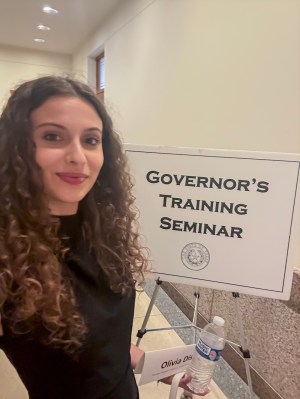
I recently had the opportunity to visit the Texas Capitol and share a few reflections from my term as student regent. I was invited by the Governor’s Appointments Office to speak to the newly appointed student regents, which was a real honor—and a full-circle moment I didn’t take lightly. I wanted to make the most of the opportunity and my time in Austin.
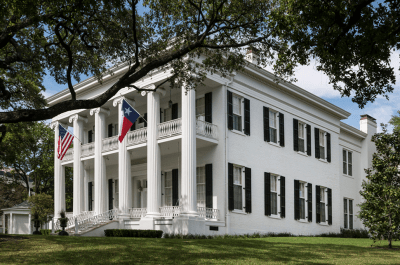
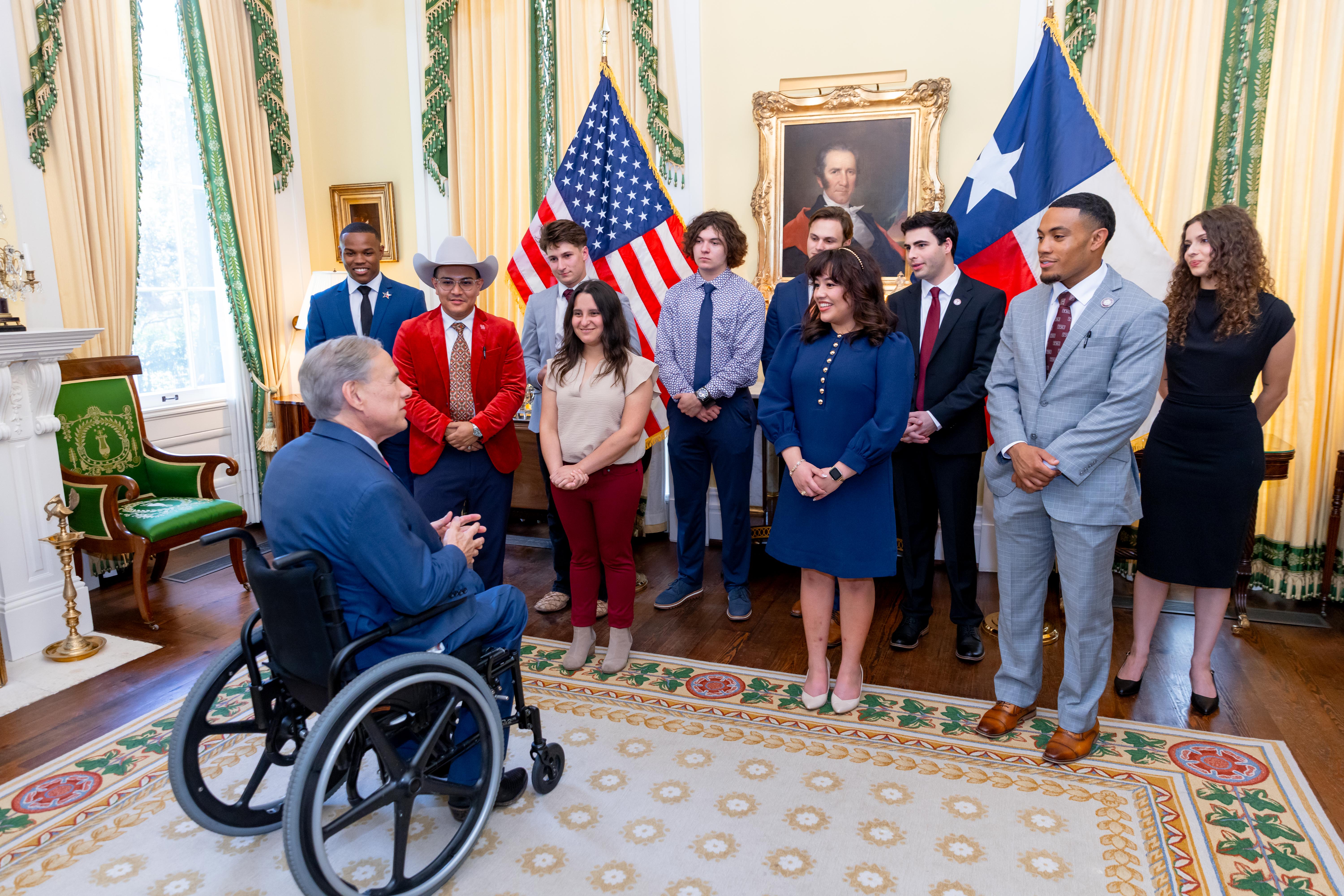
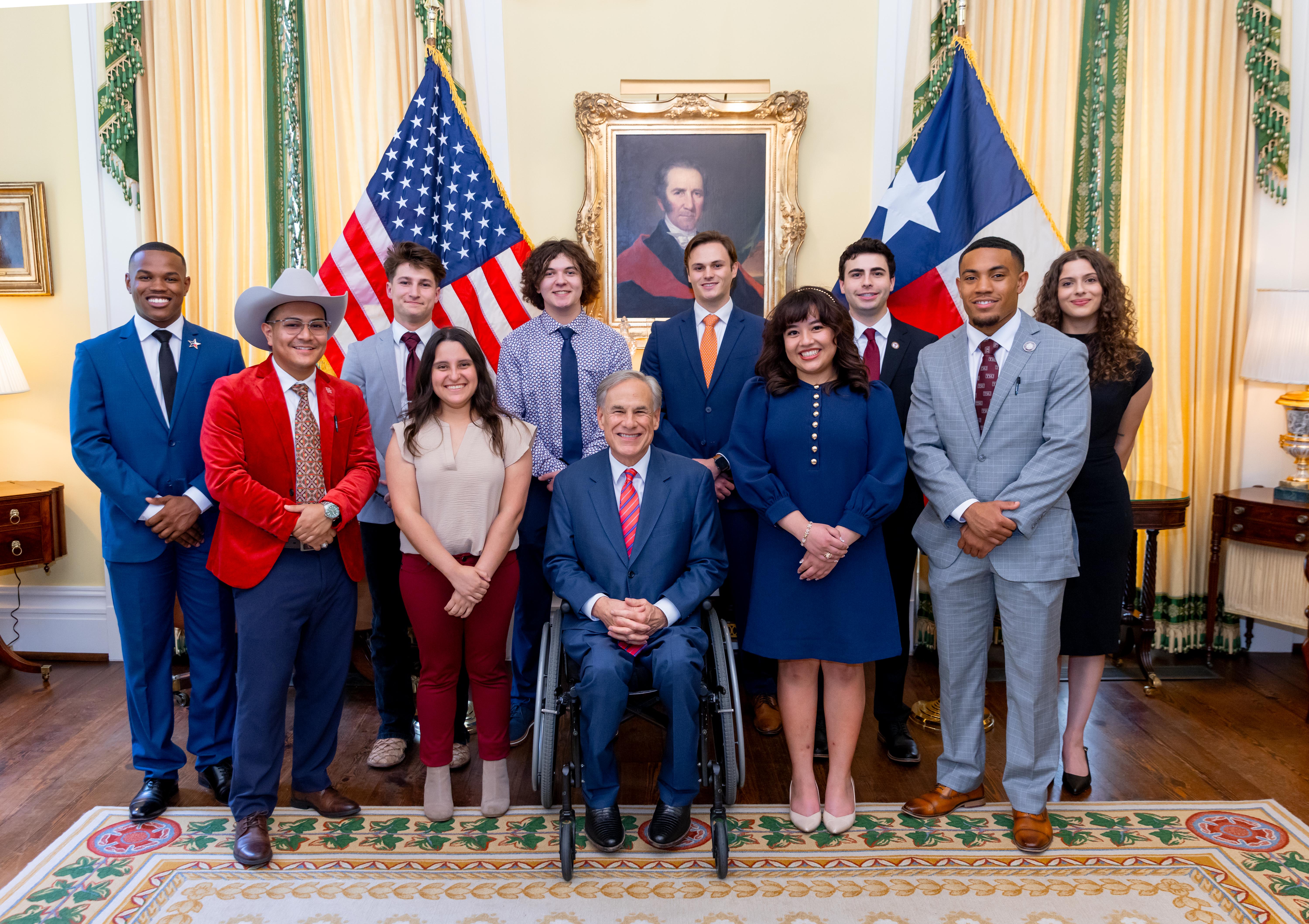
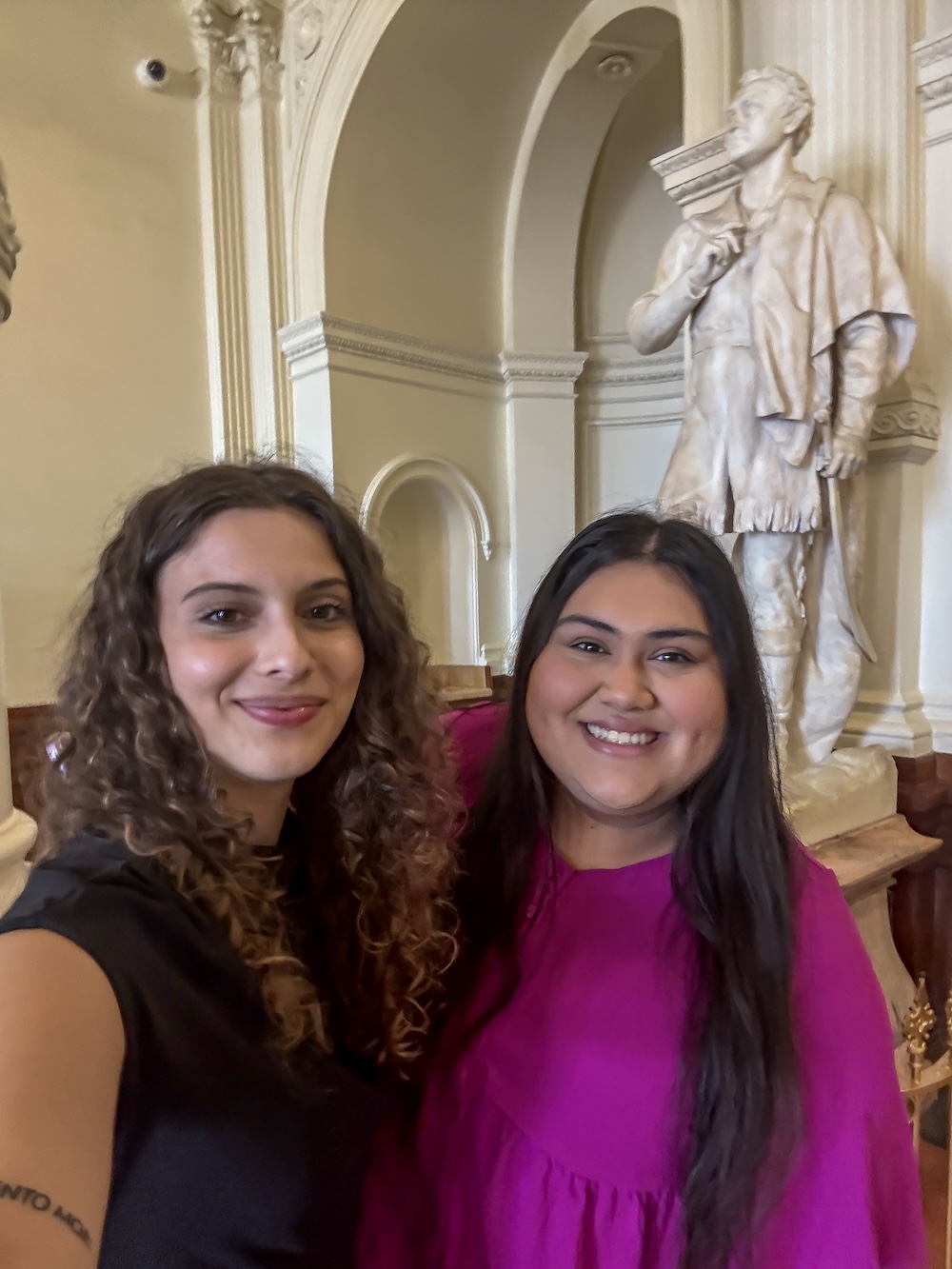
One of the biggest highlights of the day was being invited to the Governor’s Mansion. After a quick security check by DPS, I had the chance to tour one of the most historic and iconic buildings in Texas. The Greek Revival-style mansion was designed by Abner Cook—who, interestingly, also supervised the construction of the Walls Unit in Huntsville. That connection alone was enough to trigger my compulsive need to tie Sam Houston into everything.
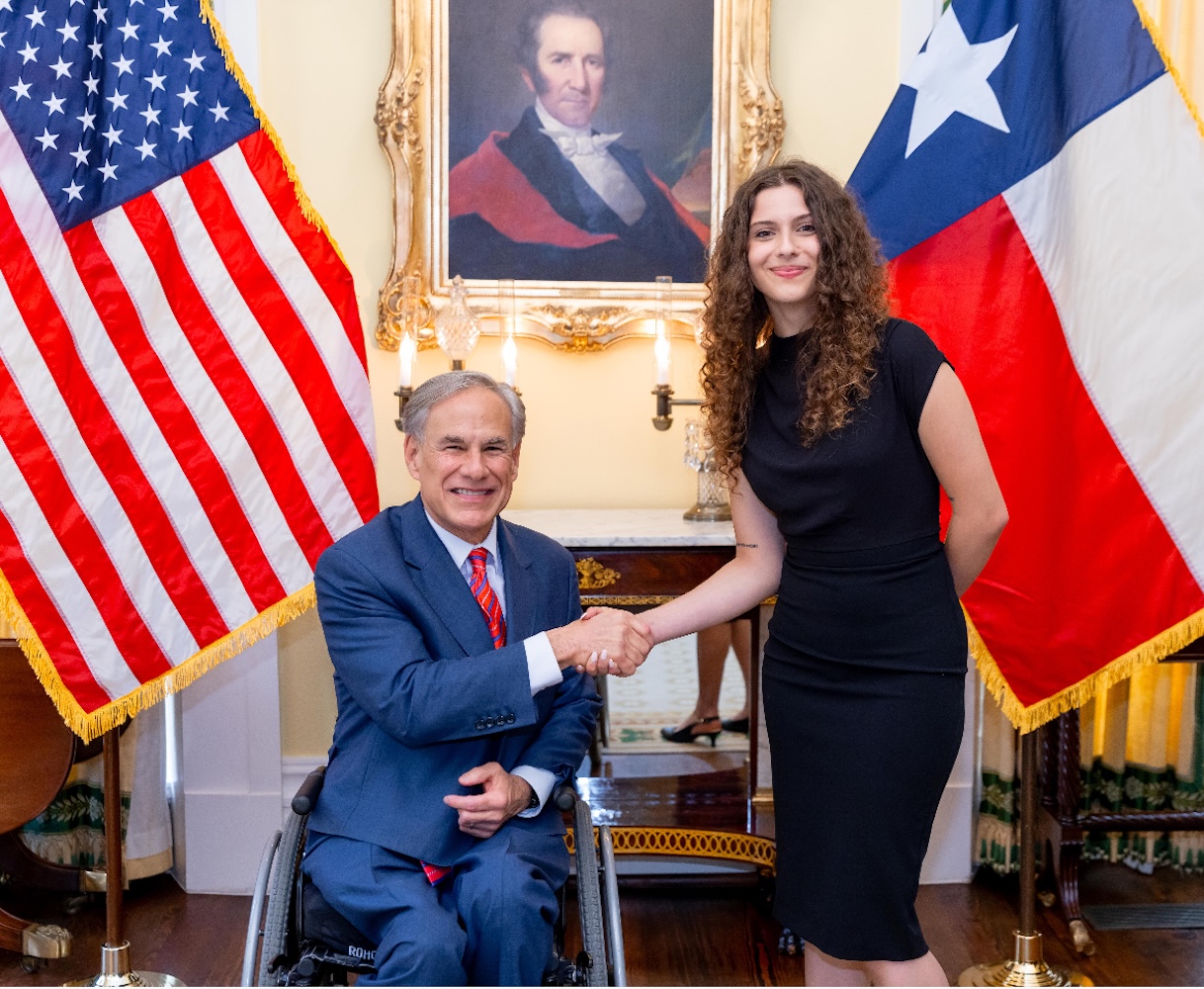
I’ll admit I was a little photo-shy walking through the mansion, but that didn’t stop a few photos from happening. To my surprise, I got to greet Governor Abbott again and take a quick photo with him—inside his house, no less. In that moment, I felt an overwhelming sense of gratitude. Being appointed as a student regent during my undergrad was an incredible opportunity, and I’ve felt supported at every level of my college experience. That support made moments like this possible.
As we made our way through the mansion, we passed through rooms filled with stunning 18th-century furniture—and, of course, nods to Sam Houston in almost every one. They even have a room named after him. Seeing this more glamorous side of Houston’s life, and then comparing it to his final years at the Steamboat House in Huntsville, was oddly moving. He was so committed to his principles that he gave up comfort for conviction. It’s just one of the reasons Huntsville has such a strange charm to me. Somehow, all roads in Texas lead back to it.
Even though the Governor’s Mansion is a historic landmark, it’s still a lived-in space. Just outside the window, we caught a glimpse of the Abbott family’s three golden retrievers playing in the yard. The timing of the visit couldn’t have been better—it was a great reminder of how historic homes can still be part of everyday life, thanks to organizations like the Friends of the Governor’s Mansion.
Later that afternoon, I joined Chris Covo, a former student regent for the Texas State University System, and Luke Shwartz, who was recently appointed student regent for the UT System (congrats again, Luke!). We sat down with Brent Connett for a moderated conversation about the role, what surprised us, and what advice we’d offer.
For me, the biggest takeaway was this: being a good representative can open more doors than you might expect. Investing in your professionalism, doing your research, and showing up prepared—not because you’ve “made it,” but because you’re serious about learning—goes a long way. When you present yourself as someone competent and curious, people take notice. You get to be in the room for real conversations and real opportunities.
After the panel, I stopped by to see my good friend Michelle Cardenas, who was deep in the legislative trenches as session wrapped up. She took a much-needed breather and walked me through the Governor’s Reception Hall. Watching her in action, compared to where we started—back when we walked into the Capitol for the first time with LEAP—was surreal. We’re in completely different places now, but there’s something meaningful about knowing LEAP brought us both here.
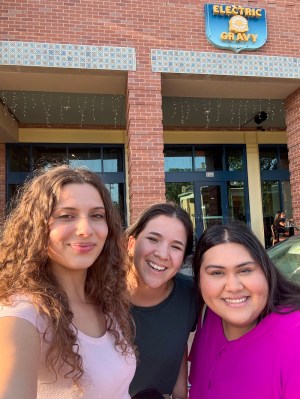
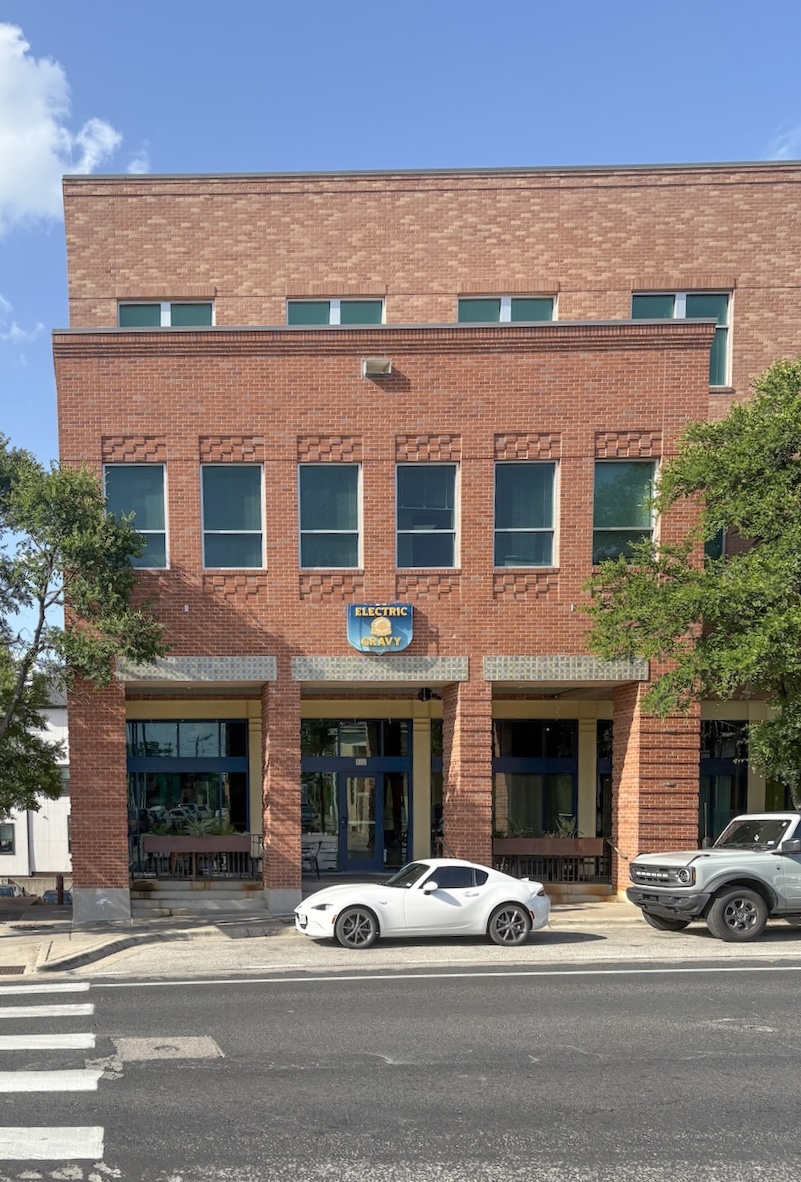
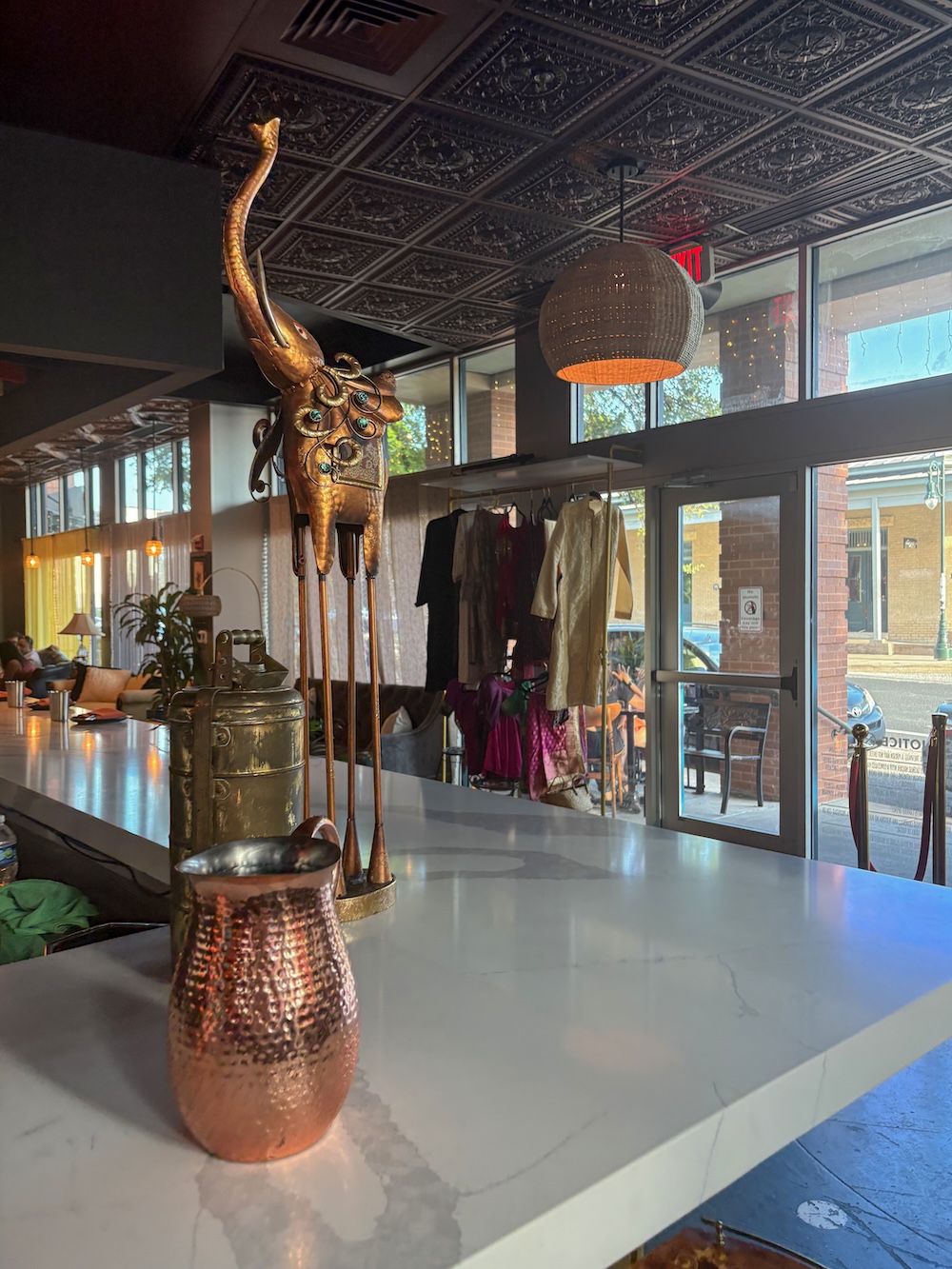
Electric Gravy For dinner, I continued on my sappy tirade by joining Cinthia Villarreal and Michelle Cardenas at an Indian fusion restaurant—Electric Gravy.
It’s been getting a lot of local attention, including a recommendation from former LEAP Ambassador Saara Maknojia.
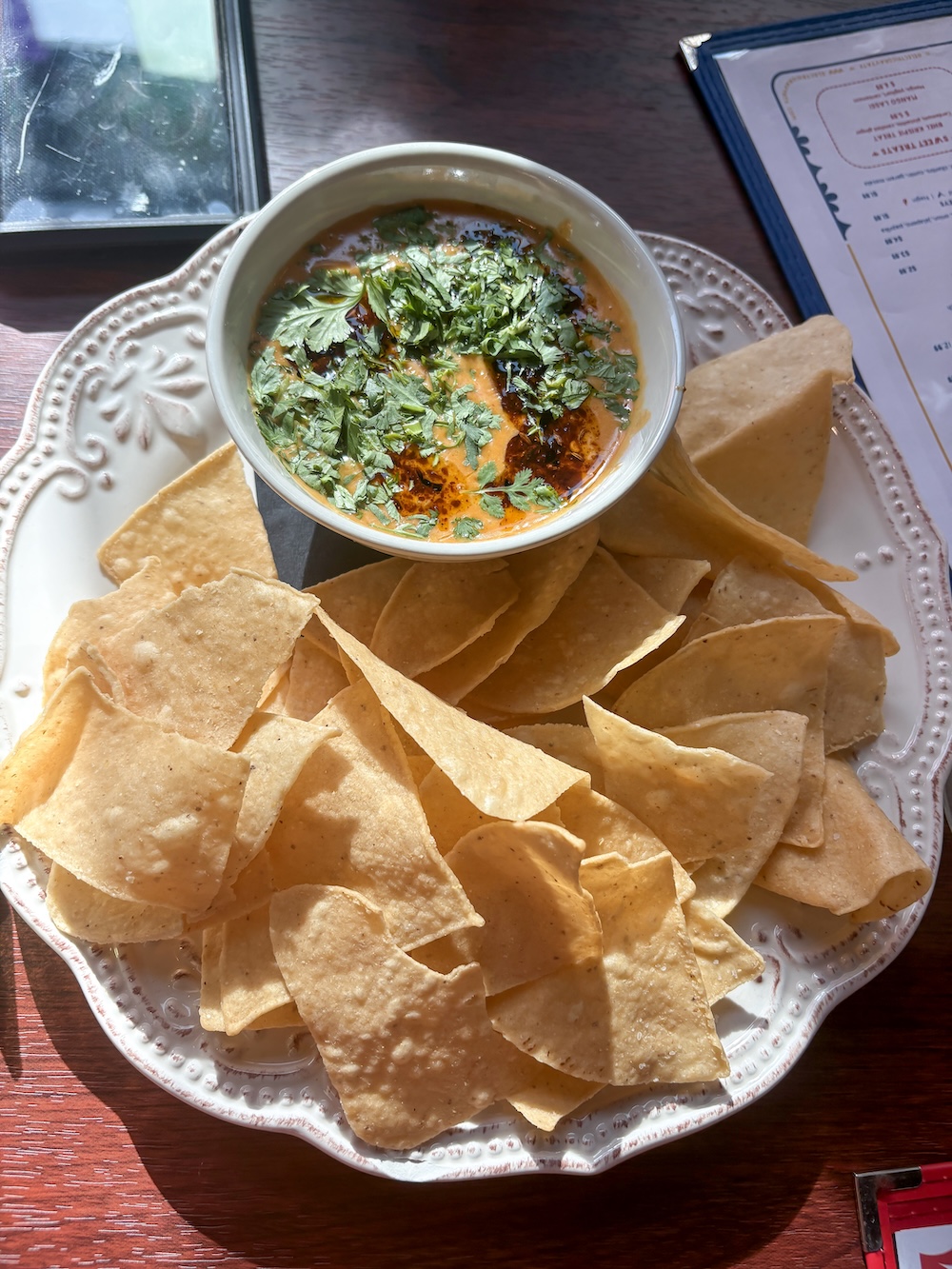
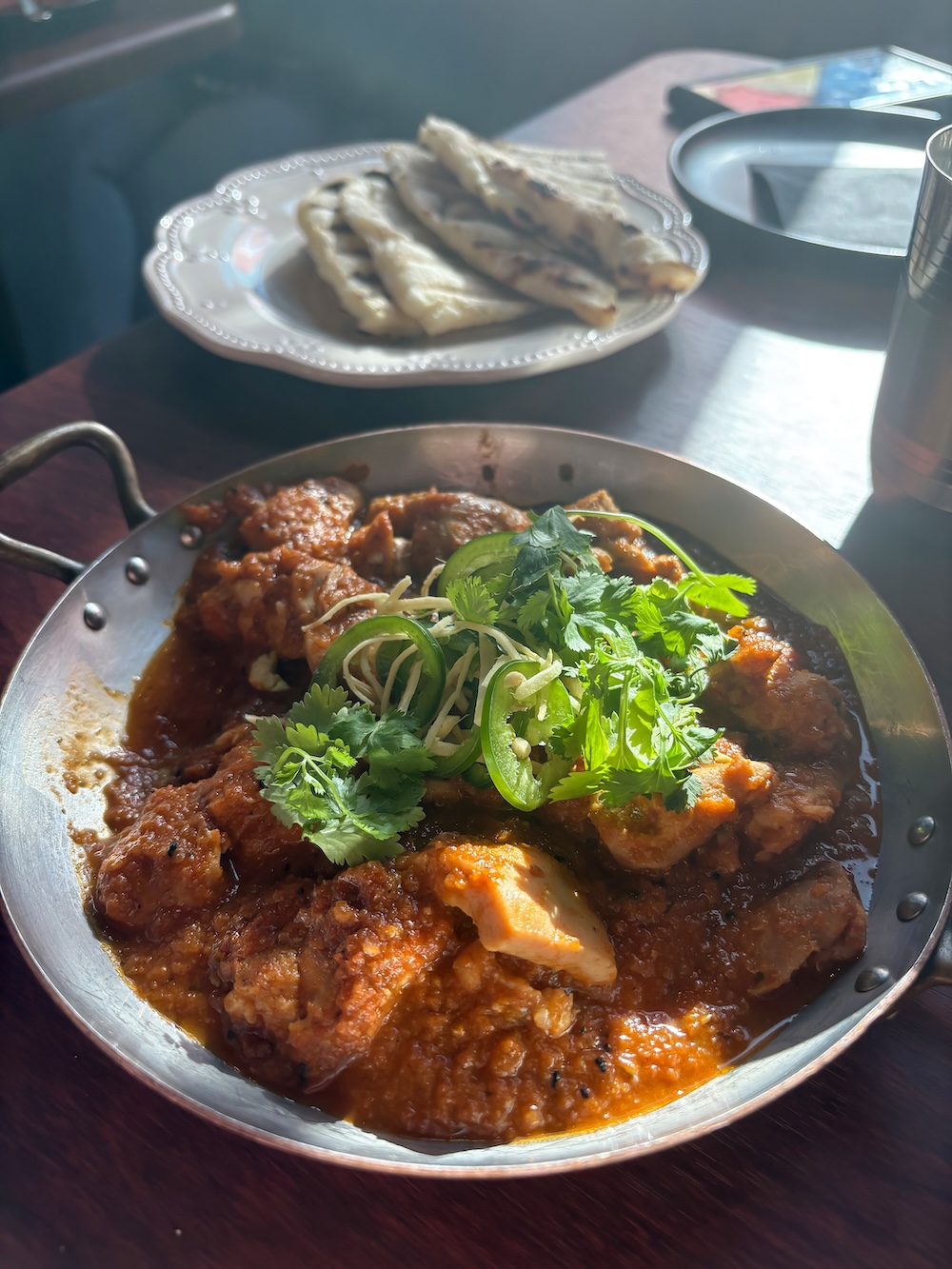
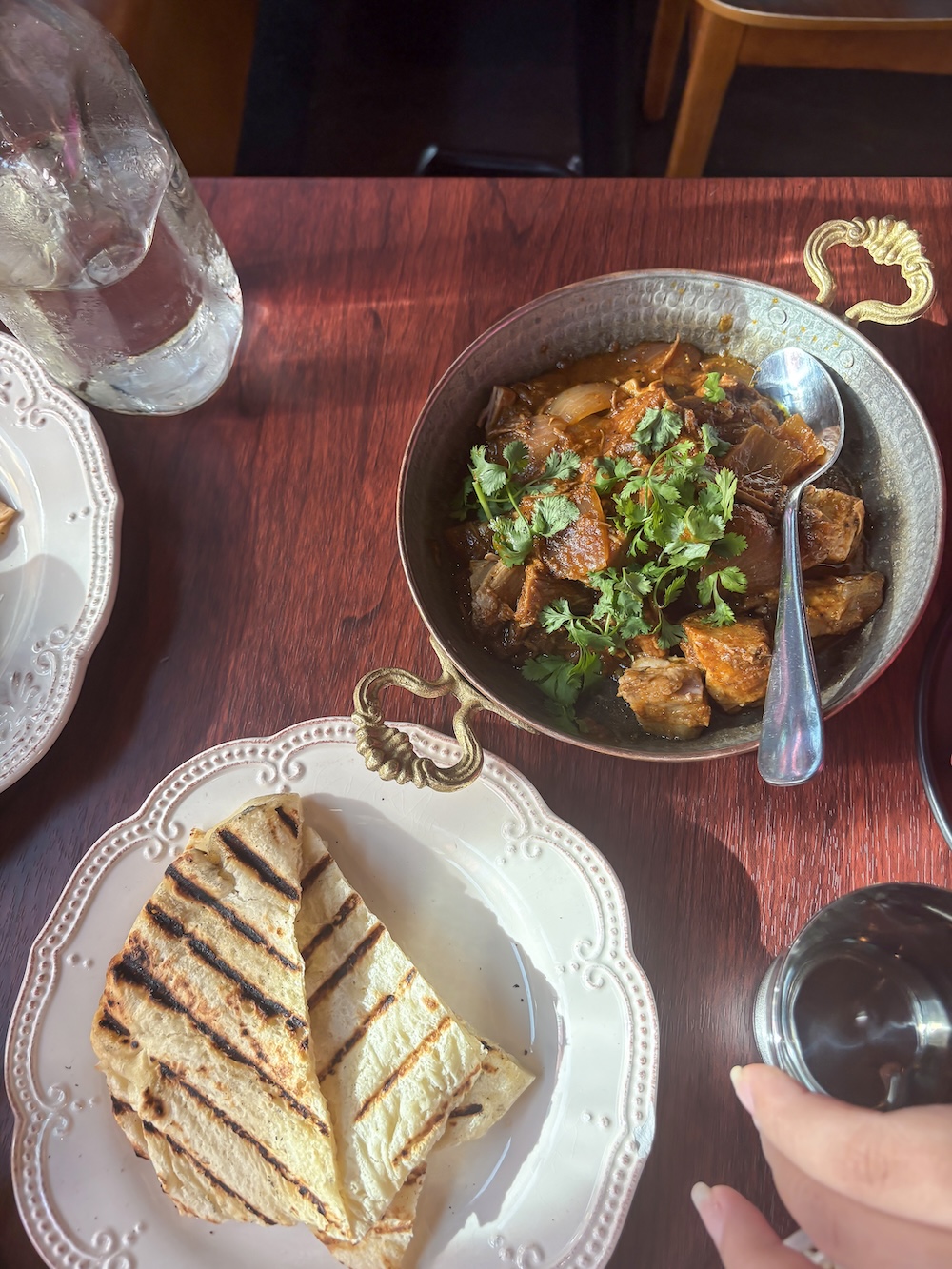
We started with the curry queso (which was excellent), and then I had the chicken tinga curry, Cinthia got the chicken masala, and Michelle went with the pork vindaloo. All of it was solid—definitely a fun place worth checking out.
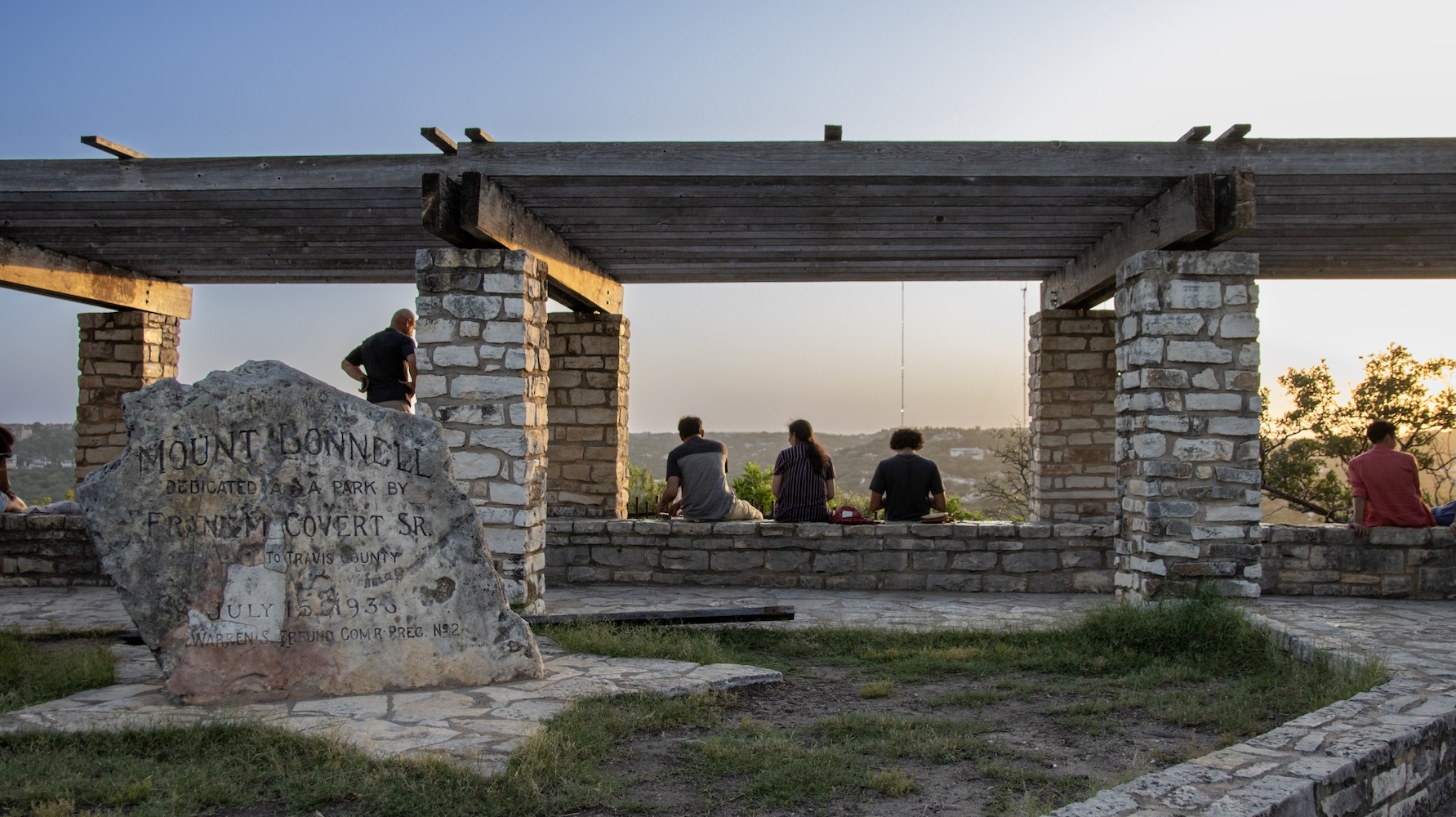
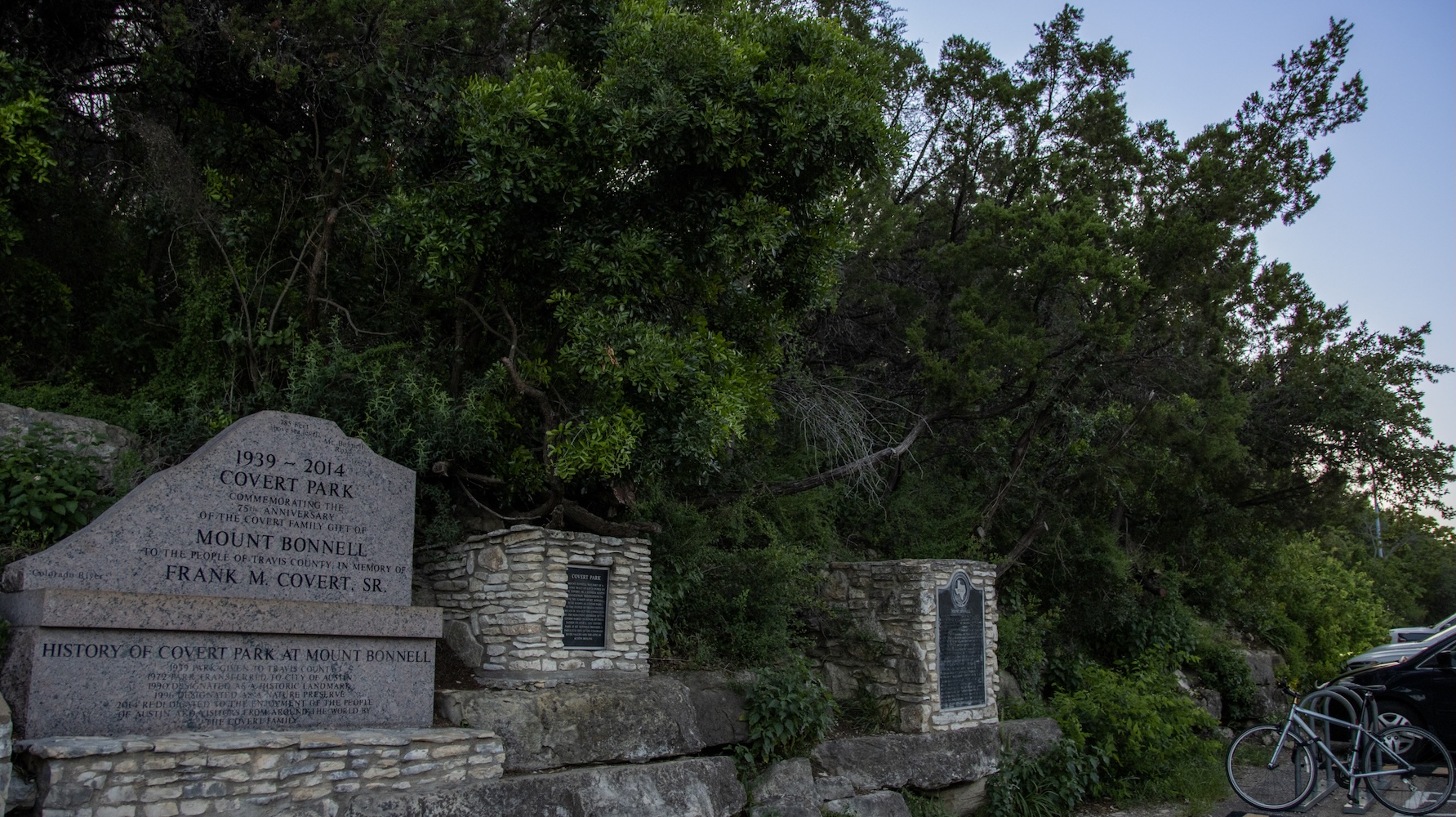
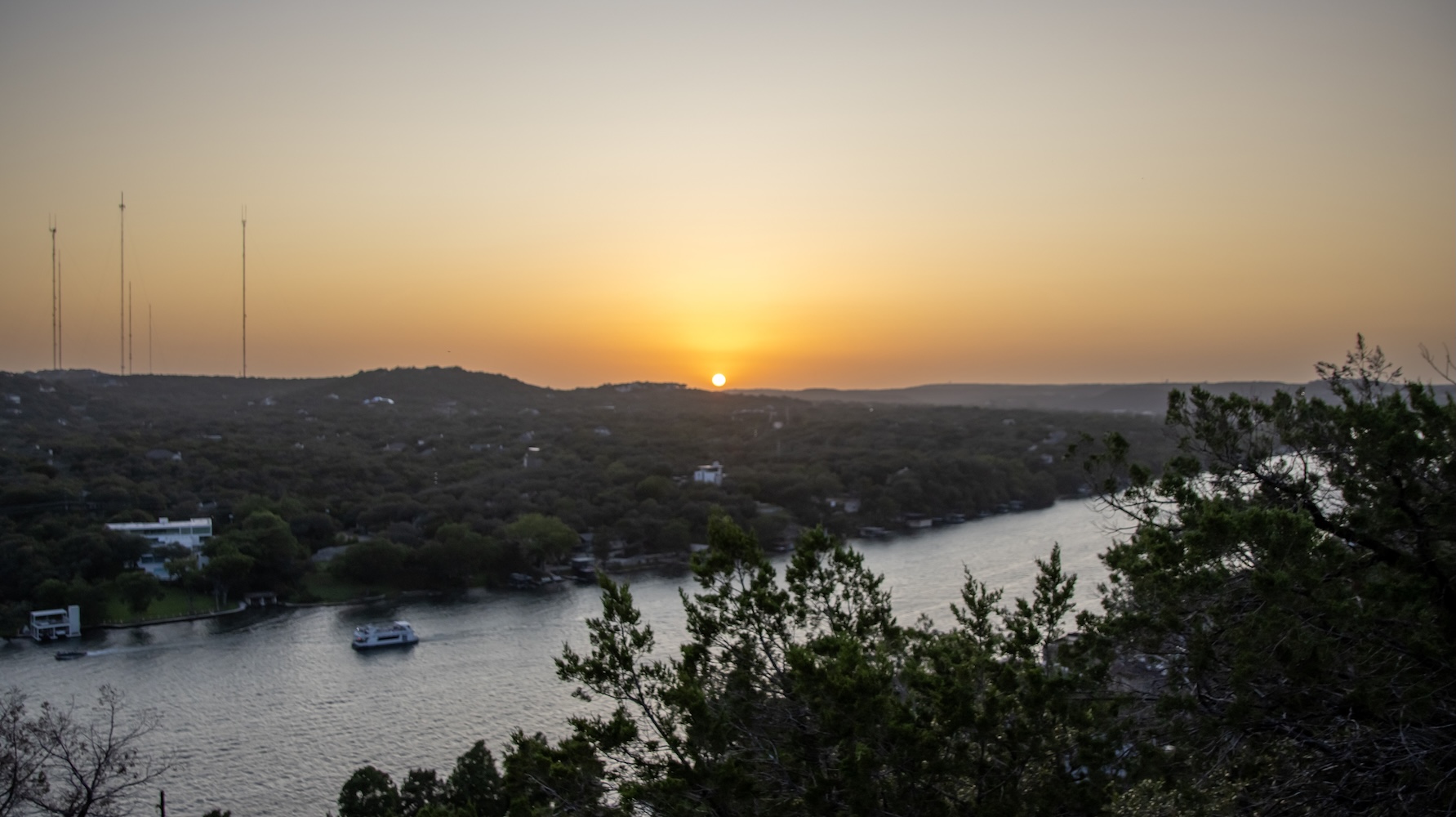
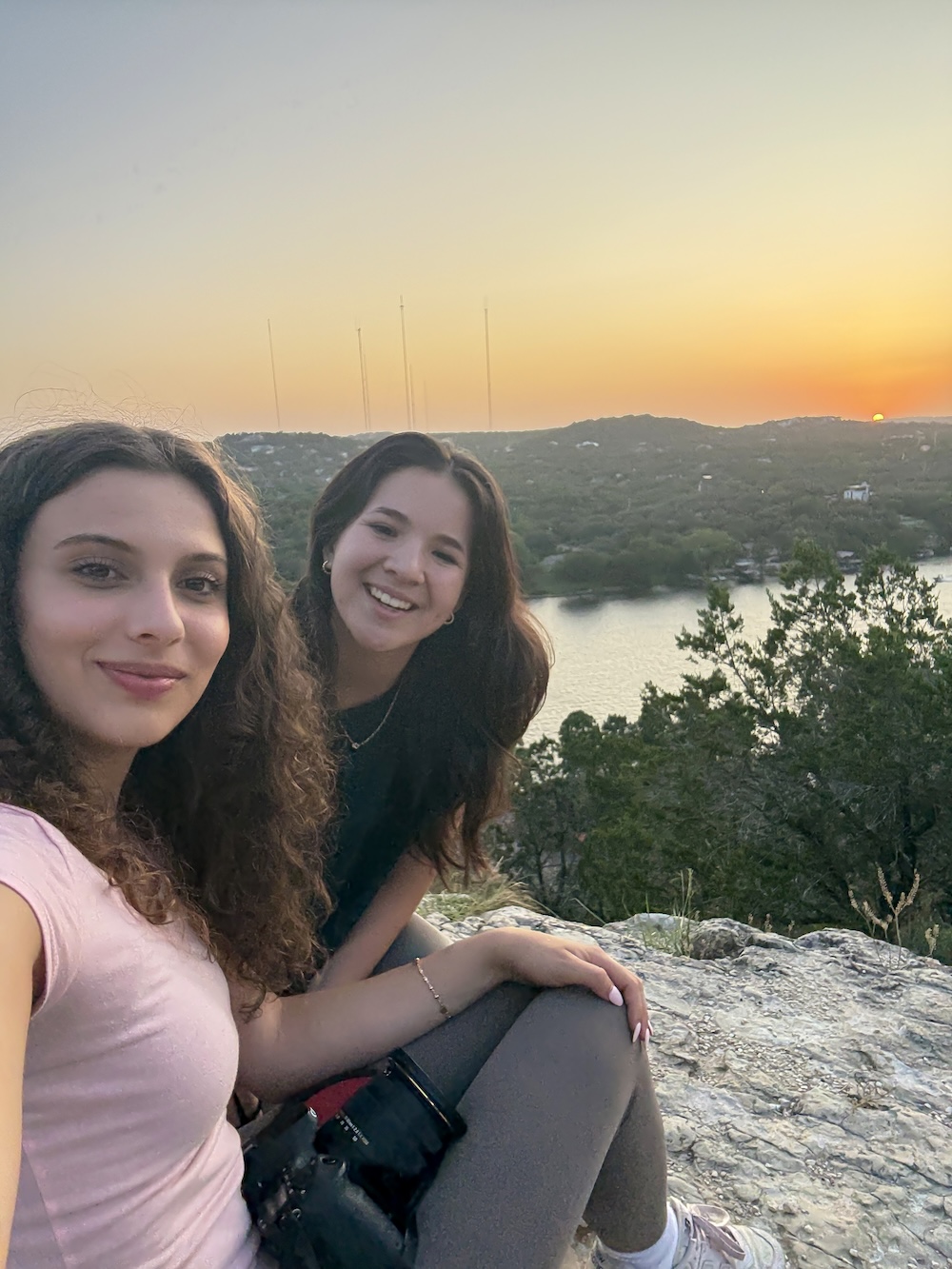
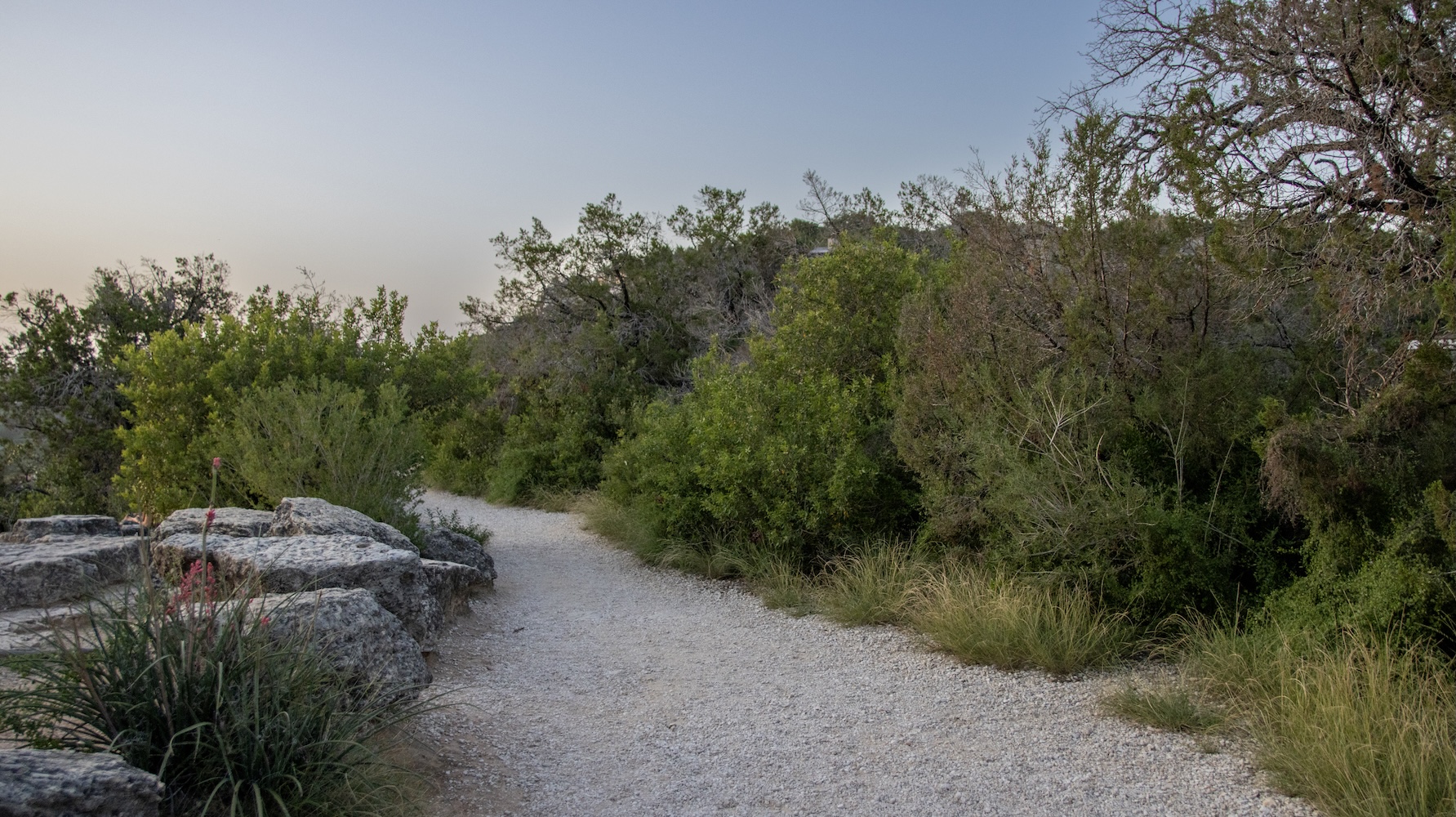
Mount Bonnell To wrap up the day, I visited Mount Bonnell for a great view of Lady Bird Lake. It ended up being the perfect spot to close out a long day—quiet, scenic, and full of the kind of quirky passersby you can only find in Austin.
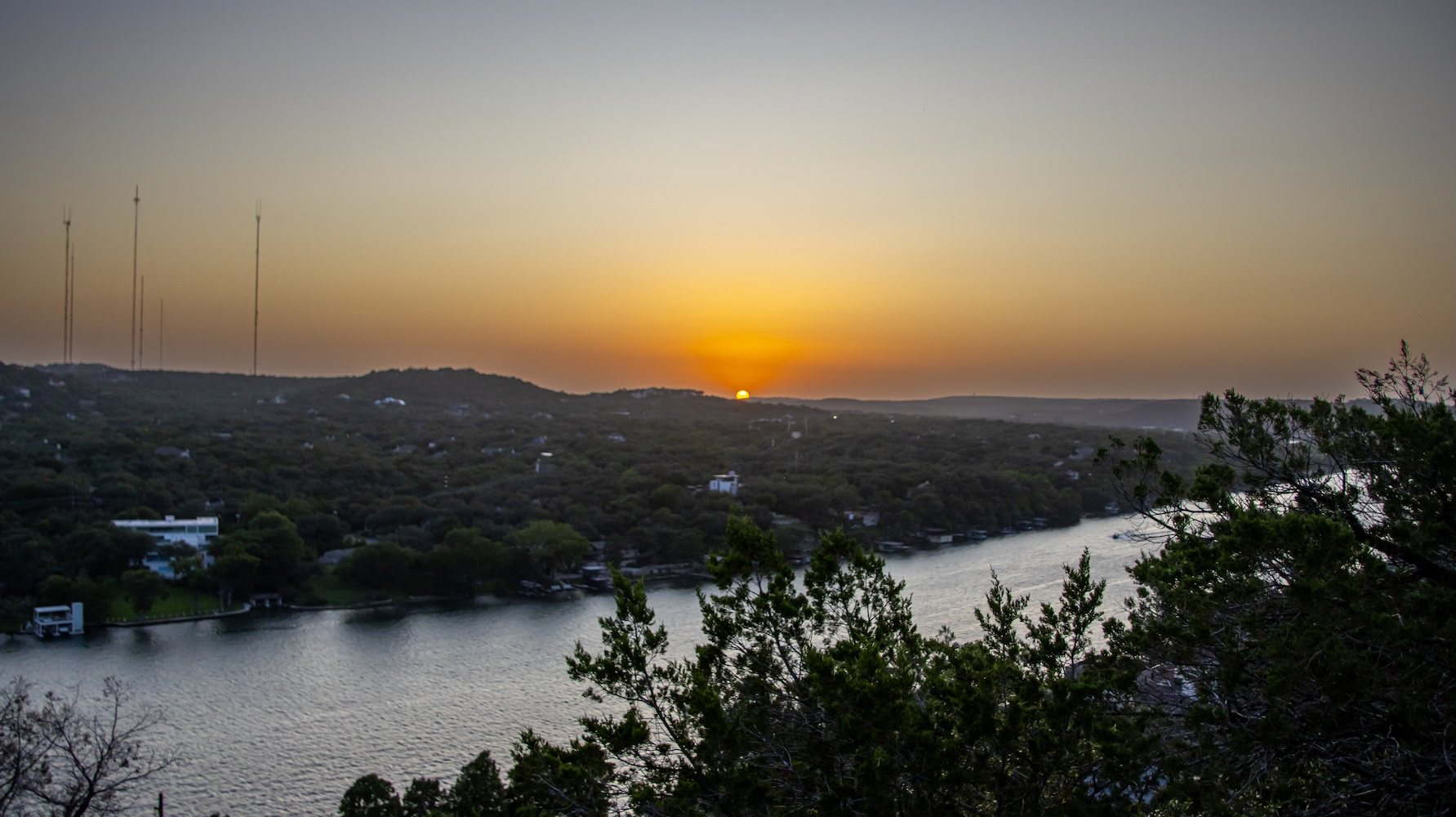
The sun didn’t set until about 8:30 p.m., but once it started going down, it dropped fast.
I might be wrong, but I think this was the first time I ever intentionally watched a sunset. It was a nice experience!
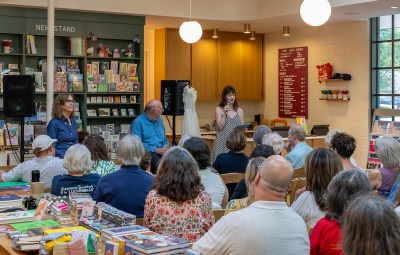
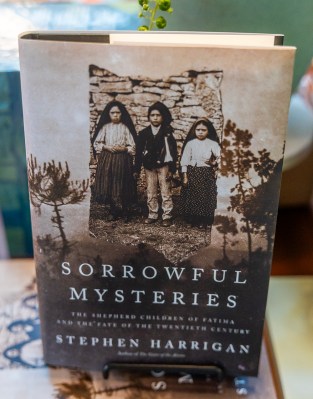
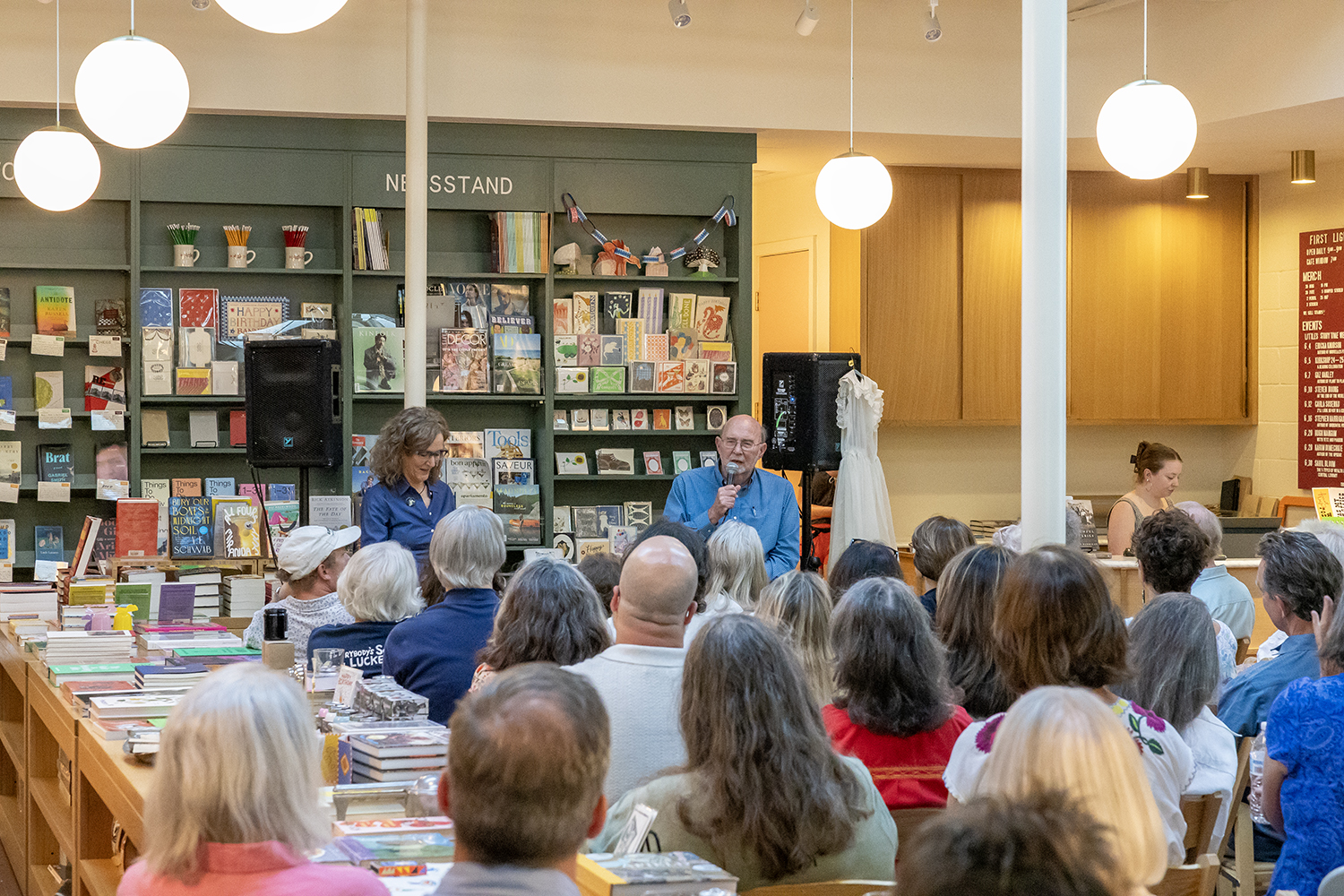
Stephen Harrigan, best-selling novelist and non-fiction author, is a veteran of book-talks. As such, he was able to manage a less-than-smooth moderated discussion of “Sorrowful Mysteries: The Shepherd Children of Fatima and the Fate of the Twentieth Century,” while still providing humor, interesting anecdotes, and his usual graciousness to a full house at First Light Books.
This audience included some impromptu stop-ins by authors Bret Anthony Johnston and Elizabeth Crook, as well as the moderator Sarah Bird, herself a novelist. Following a brief introduction….
…Bird described Harrigan as a “famously moral person,” before asking “an unfair, unanswerable question: ‘on balance, has Catholicism been good or bad for humanity?'”
Harrigan did an admirable job answering the unanswerable. While noting the good and the bad–emphasizing there was a lot of both–he indicated that asking what things would be without religion is something like asking what life would be without the weather. It’s just a part of humanity, even if a person is, like Harrigan, a non-believer.
The strongest parts of the discussion involved Harrigan describing his Catholic upbringing, while drawing parallels to the three Portuguese children who believed they saw the Virgin Mary in Fatima in 1917. Harrigan emphasized how young the children were (they were 7, 9, and 10), noting that they were at impressionable ages.
He tied that to his youth, when he was regularly instructed to “duck and cover” underneath desks, armed with the illusion that such actions could save his life in the event of a nuclear war. Of course, this fear of the apocalypse alternated with soothing lessons of the Virgin Mary’s powers and beneficence. It could be, Harrigan implied, a confusing time.
Mixed in were some discussions that were less relevant to the book. Bird asked not once but twice about the Catholic Church’s “shift to the right,” and she brought her confirmation dress to the event, and she hung it from a speaker at the front of the room.
This prompted an audience member to ask, during the Q & A, whether Ms. Bird “wore underwear with her confirmation dress,” surely one of the stranger questions Harrigan has heard at one of his book discussions.
On this question, Harrigan prudently remained silent. On others, he deftly responded by offering interesting anecdotes, exploring big topics, and mixing the personal with the universal in a manner that is as appealing in person as it is in his writing.
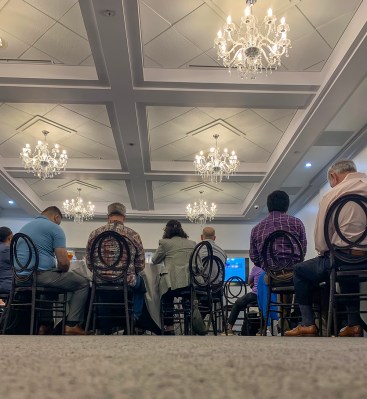
The Houston Chapter of the Association of Certified Fraud Examiners met last week to discuss medical fraud, particularly as it relates to pharmaceuticals. And with former LEAP Ambassador Bianca Saldierna on the Houston ACFE Board, LEAP students found themselves at the Tanglewood Ballroom alongside approximately 25 certified fraud examiners to discuss pill mills, pharmacy shopping, and the black market.
Following an introduction by Robert Rodgers, the Director of ACFE’s In-Person events…
…featured speaker Yasir Shakoor offered an interesting–and even entertaining–discussion of the diverse types of pharmacy fraud over lunch.
Mr. Shakoor has both a BA and an MHC in Health Care Administration, and he is also a Certified Fraud Examiner, and he was clearly qualified to discuss the different types of fraud.
Following a discussion of common myths and an emphasis on the costs associated with pharmacy fraud, Shakoor made a distinction among (1) fraud–falsely representing services rendered; (2) waste–not reasonably conserving resources; and (3) abuse–which may involve exploiting gray areas in laws or policies and, while perhaps not illegal, is unethical and costly.
The case studies were perhaps the most interesting component of the presentation.
Examples included (1) an individual who hacked into an e-prescription service and issued 18,500 prescriptions (in one day) to purchase sport cars, basketball tickets, and to be “entertained” at strip clubs, (2) a doctor who would offer opioids for the flimsiest of pretenses, and (3) underground organizations that offered substandard, black-market drugs (or, sometimes, just any substance available) in place of the specified medication. It is frightening, costly, and, often, deadly.
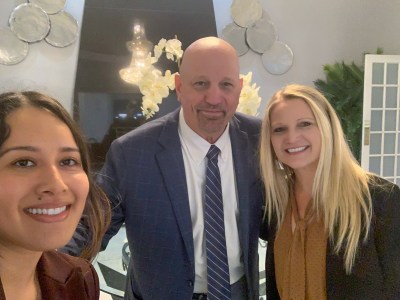
Apart from the educational aspects of the lunch, our major reason for attending was to see Bianca Saldierna.
A key LEAP Ambassador in 2016-2017, Ms. Saldierna has remained involved in her alumni years, and she generously invited us to attend this event. With many thanks to Bianca and to ACFE, we eagerly await our next such lunch!
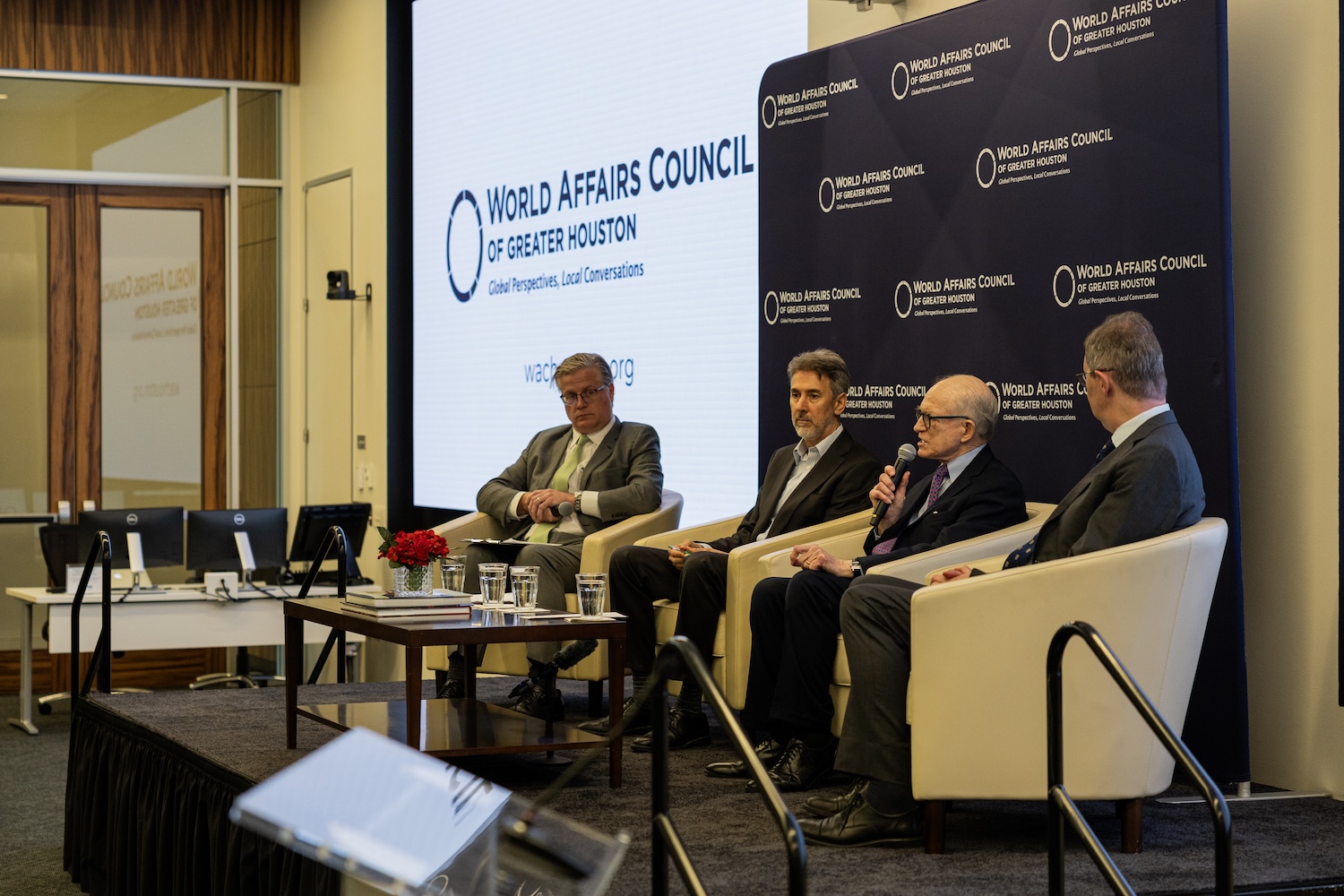
Even during the summer, LEAP Ambassadors stay engaged in opportunities to learn more about the world and the issues shaping it. Recently, we attended a World Affairs Council event focused on Qatar, featuring a panel of experts with deep backgrounds in diplomacy, energy, and Gulf region politics.
Sandija Bayot introduced the distinguished panel, which included Ambassador Chase Untermeyer, who served as U.S. Ambassador to Qatar under President George W. Bush from 2004 to 2007. He has worked across all levels of government over a four-decade career. He was joined by Dr. Jim Krane, who specializes in Middle East energy policy at Rice University’s Baker Institute, and Dr. Kristian Coates Ulrichsen, who focuses on Gulf State politics and international relations. The event was moderated by the wonderful Ronan O’Malley.
Ambassador Untermeyer began the discussion with a historical overview of Qatar’s development.
Once a relatively quiet country with limited economic activity, Qatar’s fortunes changed with the discovery and export of its vast natural gas reserves. The country also timed the development of its port infrastructure well, aligning with broader global shifts.
Today, Qatar ranks as the wealthiest country in the world per capita, while also being one of the highest emitters of carbon per person. Interestingly enough, Qatar is the only Gulf country to not commit to net-zero emissions–outpacing U.S. emissions nearly five-fold!
Much of the discussion focused on Qatar’s strategic position. Located in a complex region and bordered by major players like Iran and Saudi Arabia, the country takes a pragmatic approach to diplomacy.
Qatar maintains a posture of being “friendly, but firm,” navigating relationships with the U.S. and neighboring countries carefully while preserving its own interests.
After the event, we had the opportunity to meet and briefly chat with the speakers.
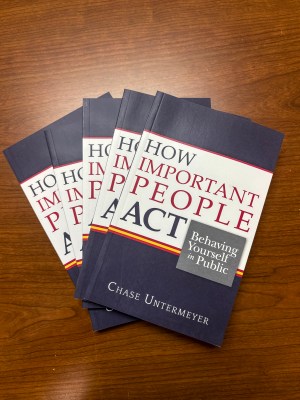
Ambassador Untermeyer very kindly signed copies of his book that every young professional should read, How Important People Act.
Though it was a rainy drive into Houston, the event left us–and the sun–rejuvenated. Having attended this event, especially with two LEAP alums, was rewarding. We always enjoy WAC’s programming, but this is one for the books!




































 Center for Law, Engagement, and Politics