Each fall the College of Humanities and Social Sciences puts out a call for volunteers to assist with a Bearkat Tailgating. Eager for the opportunity to work with Deanna Briones and Brittany Johnson, the LEAP Ambassadors “leapt” at the opportunity, volunteering for the Homecoming Game.
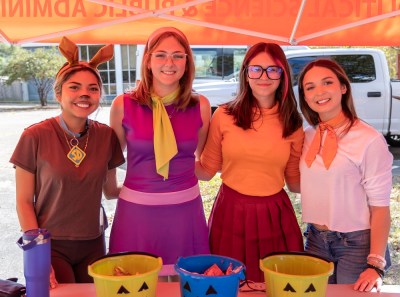
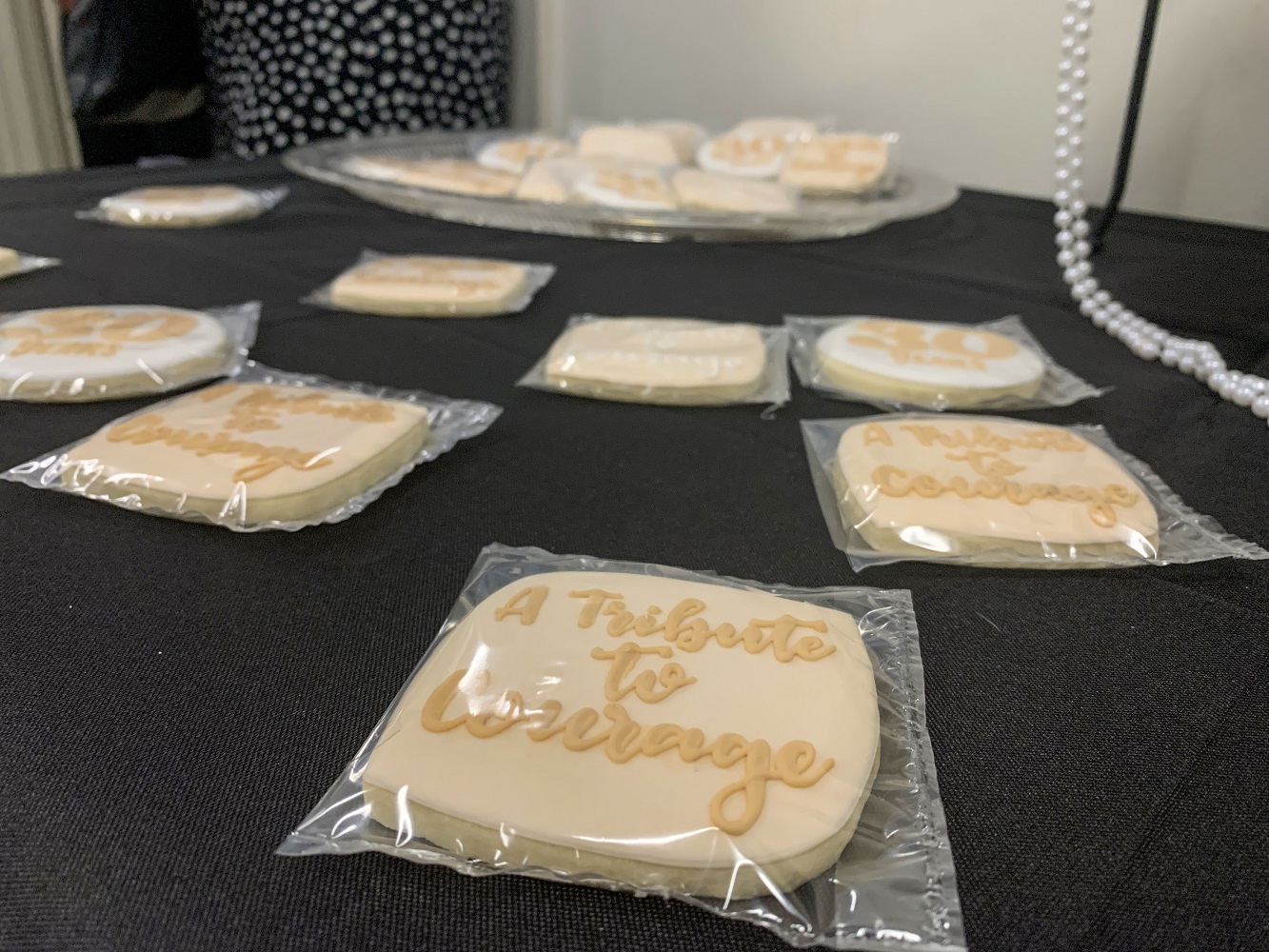
For some of us, it was our first time at a tailgating or game, and our task was pretty simple. Greet people and offer some of the hundreds of cookies provided by CHSS to tailgaters old and young.
It also offered us a wonderful opportunity for people-watching!
We worked a bit in shifts, with a couple of us occasionally shuffling off to take photos of goings-on in the tailgating universe…
…while others manned the table.
For those manning the table, there was plenty of “work,” with tailgaters stopping by frequently for free cookies or a stab at Jenga.
And on the few occasions when times were slow, we had our own spirited Jenga matches, with one particularly intense game between Olivia and Cinthia…
We won’t say who won, but Cinthia’s back is probably sore today after having to pick up so many Jenga tiles.
We ran into old friends, seeing Angel Montoya (who transferred to University of Houston) and Jessica Cuevas (who is at SMU law); we saw some of our PLS friends such as Angelina Martinez and Lillie Bourgeios; and we even saw some of the friendly staff members at SHSU, such as Jennifer Alexander and Heather Caudle!
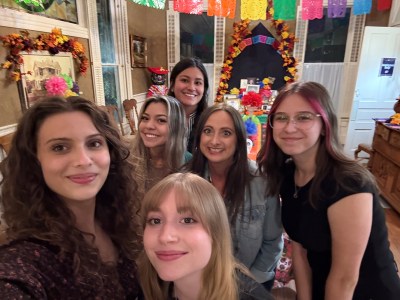
And we had plenty of time to have our own fun.
After a few hours, much people watching, many friendly hellos, and a lot of sweat, people began making their ways to the stadium gates…
…and we began taking down and turning over to the great staff in the College of Humanities and Social Sciences.
The Bearkats would go on to win the game and improve their record to 3-1, and the day capped a great weekend that also allowed us to see one of our friends, Chris Tritico, be named Distinguished Alumni at SHSU–which you can read about tomorrow!
This week marked the first Pre-Law Society meeting of the fall 2024 year, and what better way to start the first meeting than by setting a membership record? For the first-time ever, we topped 100 members, totaling 107, an indication of the strong lure of students to pre-law at SHSU.
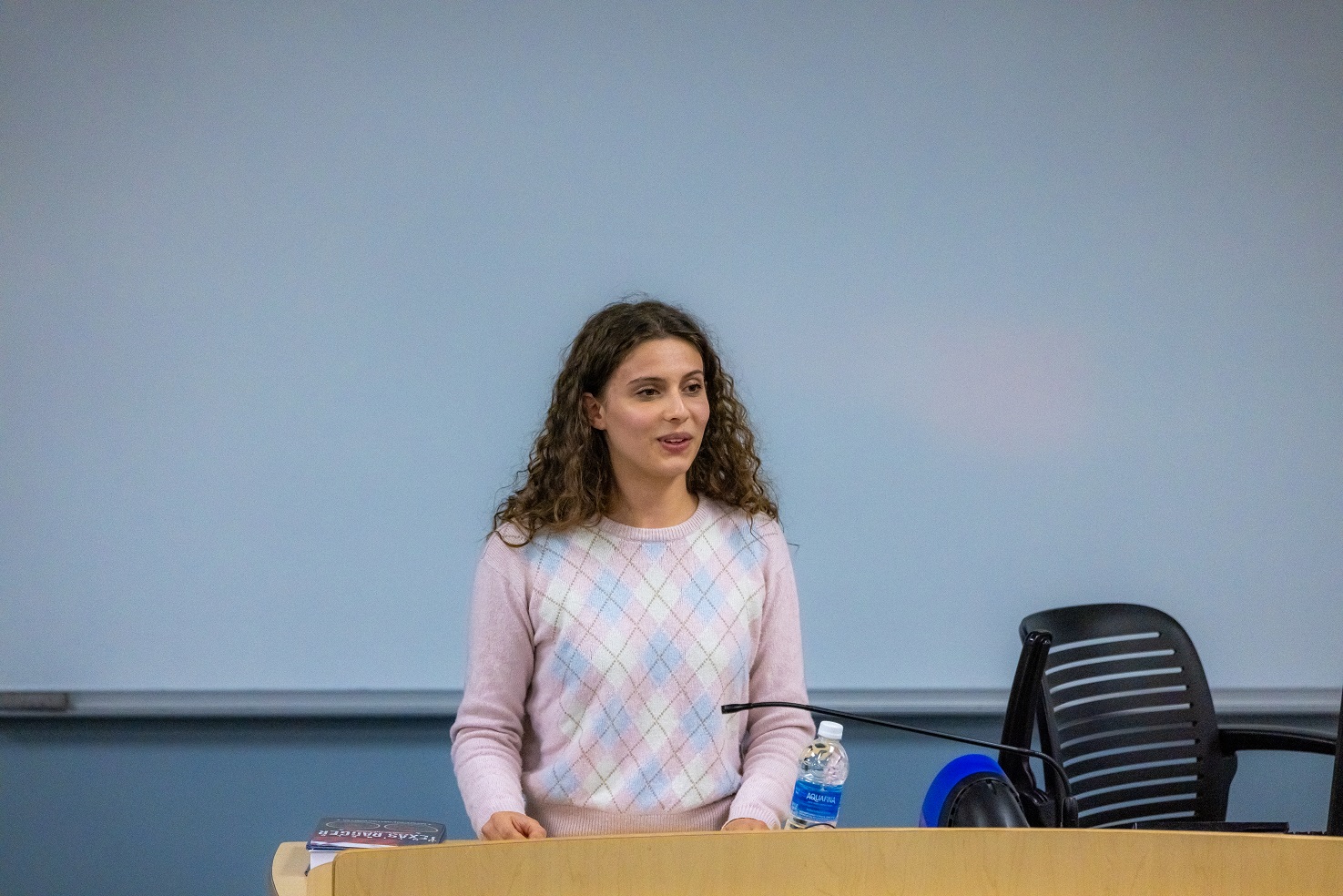
Moreover, we were fortunate to mark this special occasion by having the first ever Pre-Law Society President as one of this month’s speakers! MacKenzie Smith and past Pre-Law Society president, Megan Chapa, spoke to members about their lives as prosecutors and what that entails.
The two shared their unique experiences from their time at Sam Houston State University, their law school journeys, and their work in the counties in which they currently reside. Both gave great advice to future law students, encouraging them to work hard and have drive, as law school requires hard work and ambition. The presentation was highly informational and useful for pre-law students considering entering the field of prosecution.
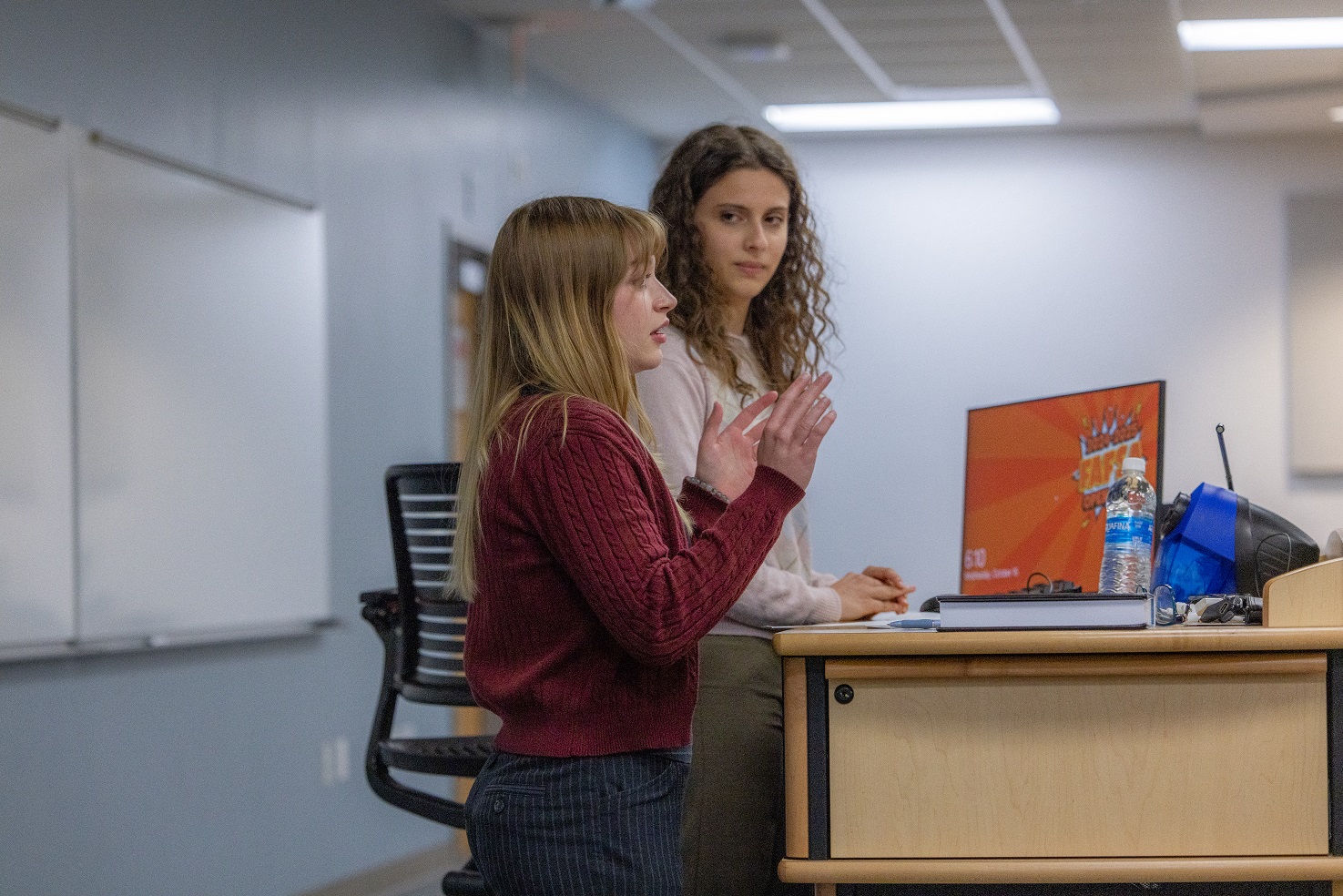
After a great presentation, next on the agenda was the elections! The students, who had plenty of time to build up their nerves were finally able to give their three-minute speeches explaining why they would be a good fit for their selected positions.
For the role of Historian, runners were Katherine Burnett and Lillie Bourgeois; for Vice President of Treasury were Maggie Betancourt and Christina Biello; for Secretary were Emily Alfaro and Madison Cawthon; and for Vice President of Membership were McKenna Nonnenmann and Jacqueline Santos-Romano.
After a long suspenseful wait while the votes were being counted, it was time to read the results!
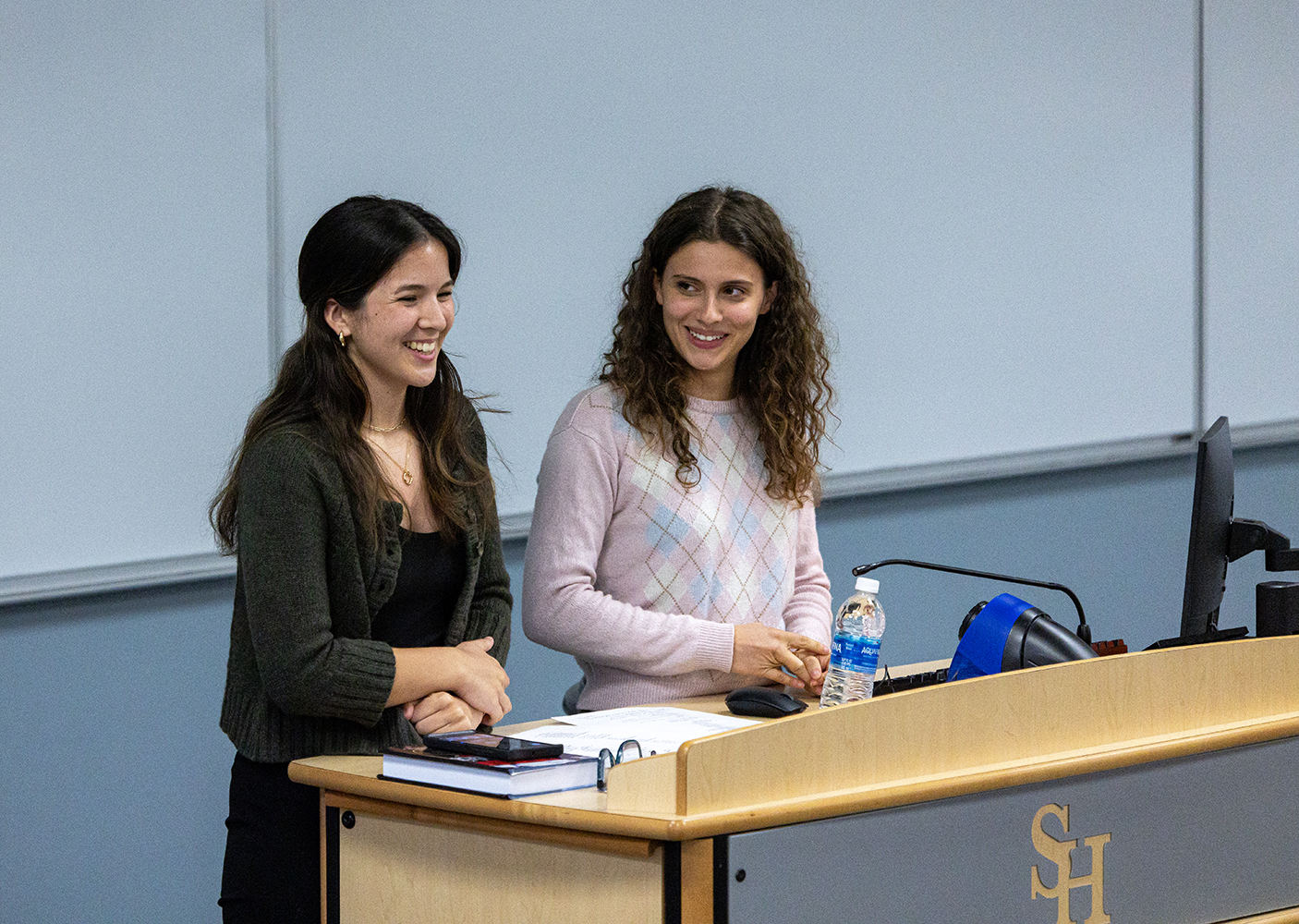
The historian role was filled by Katherine Burnett (as I am writing this blog now). The winner for the role of Vice President of Treasury was Christina Biello. The new secretary is Emily Alfaro. Lastly, the role of Vice President of Membership was given to McKenna Nonnenmann, the former historian! As the positions of Olivia Discon and Cinthia Villareal went uncontested, they will continue to do an amazing job in their respective roles. After the outcome of the election was delivered, the meeting was adjourned. Overall, the meeting was a great success and we thank everyone who came to the meeting, especially Megan Chapa and MacKenzie Smith for taking the time to come and speak with us!
During my time in LEAP, I have noticed that the final day of our trips often leaves me feeling a bit reflective. With so many enriching experiences—whether educational, cultural, or just for fun—students have the chance to grow into better versions of themselves. After attending the Texas Tribune Festival, we decided to extend our learning with a visit to the Lyndon B. Johnson Presidential Library in Austin, Texas, offering all three of those experiences.
As we first walked in, we watched a video about LBJ. It began with remarks from those who knew him, describing him as a “force of nature,” “human dynamite,” and (my favorite) a “tornado in pants.” Yet, the one consistent theme throughout was that President Johnson was driven by a deep desire to serve.
As we watched the video, Cinthia and I were excited to see Luci Baines Johnson, LBJ and Lady Bird’s daughter, on screen. Having just met her at the Texas Tribune Festival, seeing her again felt both surreal and personal.
We continued exploring LBJ’s life, from his time as a teacher and principal in Cotulla, Texas, to his final speech at the Civil Rights Symposium at the Lyndon Baines Johnson Library and Museum in 1972.
Naturally, we could not resist getting up close to experience the infamous “Johnson Treatment” for ourselves. Personally, I was not a fan, Cinthia looked particularly terrified, and Maggie seemed to have fun with it.
Looking up the grand stairs, I immediately noticed the archives behind a large glass covering. I could not stop imagining all the pieces of history enclosed within. My amazement must have been evident, as Olivia quickly began snapping pictures of my reaction!
Next, we pondered how we would feel if our personal phone calls were on display for anyone to listen to. This reflection was prompted by the chance to hear LBJ’s phone calls discussing various topics such as Vietnam, foreign policy, civil rights, and space. One conversation that particularly stayed with me was between LBJ and Jacqueline Kennedy, where she thanked him for a letter he had written to her; her voice was incredibly soft-spoken.
As we began to walk through his presidential years, the first thing everyone noticed were pictures of Lady Bird and LBJ together. We could not help but admire how lovely they looked, especially Lady Bird in her striking yellow dress!
As we moved further into the exhibit, the Civil Rights Movement took center stage. It was a powerful reminder of how LBJ’s presidency was marked by significant legislative achievements that reshaped American society. From the Voting Rights Act of 1965 to the Civil Rights Act of 1964, these were moments that changed the course of history, and walking through the displays, we could feel the weight of the sacrifices made by countless individuals.
This being my first visit to a presidential library, I was truly amazed, and I cherished every moment. From the engaging discussions at the Texas Tribune Festival to exploring the history at the LBJ Library, this trip perfectly embodied the essence of the LEAP experience—educational, cultural, and, of course, a lot of fun!
Have you ever noticed that little signature on the dollar bill? Well, the next time you do, you will see the signature of one of the most powerful women in the world: Secretary of Treasury, Janet Yellen. Known for being the first woman to be both U.S. Secretary of Treasury and Chair of the Federal Reserve Bank, Secretary Yellen, along with moderator Jake Gura, shared some of her insights with us in the first session of the day.
While hearing straight from the nation’s treasurer that our financial state is “stable and healthy,” the interviewer didn’t shy away from hard-hitting questions that many citizens are concerned about.
On the topic of the inflation crisis, Secretary Yellen highlighted some contributing factors, which, she said, are mostly due to changes in our society.
She spoke on COVID-19, explaining that because people were not spending money during lockdown, the government increased spending to stabilize the economy. This infusion of money into the economy, along with shortages in key areas (e.g., chips), led to inflation, but Secretary Yellen expressed her confidence that inflation rates will drop significantly as the economy continues to stabilize.
The conversation pivoted to Secretary Yellen’s role in foreign affairs, specifically the United States economic relations with China. With many Americans being weary of having relations with China, Secretary Yellen’s point of view on international affairs left the audience with a sense of optimism. She stressed that foreign alliances are critical so that a nation can make positive relationships with countries that will solve many worldwide issues.
The conversation ended after Secretary Yellen expressed her admiration for the United States Treasury Department’s workforce, and she acknowledged their dedication to the American people.
AI and All of Us
by Saara Maknojia
Is artificial intelligence a magical tool that answers all of our questions? Or is it a major threat to the human race? To learn more about this hot topic, Olivia and I attended the panel discussion at the Texas Tribune Festival. The panel, led by Sonal Shah, Texas Tribune CEO, also included: Chris Hyams, Indeed CEO; Armando Walle, Texas State Representative; and Dr. Alondra Nelson.
Dr. Alondra Nelson provided a short response when defining exactly what artificial intelligence is, “artificial intelligence is not magic; it is a machine-based system that uses data which makes inferences from which it generates outputs,” confirming that the revolutionized technological advancements are far from what most individuals consider humanlike. In fact, the panelists unanimously agreed artificial intelligence applications are flawed in many ways.
Job seekers frequently utilize websites such as Indeed; however, many unregulated websites of this kind often limit the users’ ability to find jobs. Chris Hyams addressed referred to this issue as “biases and barriers,” which creates limitations to individuals searching for new opportunities. Biases and barriers pertain, largely, to unregulated artificial intelligence applications that filter the names of job applicants to employers.
State and federal governments have been concerned with artificial intelligence and its impact on citizens safety and privacy. Currently, Colorado is the only state that has established laws relating to artificial intelligence. This may create problems, according to Representative Walle, who advocated for federal laws to regulate artificial intelligence in the United States, rather than state laws.
As young adults, we are very reliant on artificial intelligence but we don’t always understand the potential shortcomings and limitations of the technology. Reflecting on the discussions at the session, I have realized the impacts of artificial intelligence on society, whether it is for a private company or on policymaking decisions. Privacy, accurate information and a fallback system for artificial intelligence are factors to be considered for the future of AI.
The Corrections Crisis
by Katherine Burnett
With much anticipation, Caitlin, Chrissy, Cinthia, Maggie, Michelle, and I headed up to the 8th floor to learn about the corrections crisis with Jennifer Doleac, Executive Vice President of Criminal Justice at Arnold Ventures; Matthew Charles, Senior Policy Adviser at Families Against Mandatory Minimums; Andy Potter, Founder and Executive Director of One Voice United; and Eric Higgins, Sheriff of Pulaski County in Arkansas. The four discussed understaffing, overcrowding, and other issues in contemporary prisons.
As Matthew Charles put it, correctional officers are “overworked and undervalued,” creating dangerous and hostile work environments for correctional officers and inmates alike.
When asked about possible solutions to the issues at hand, Jennifer Doleac shared a new experiment she is conducting in counties across the U.S. involving Scandinavian rehabilitation practices. Eric Higgins supported Doleac’s plan, mentioning his recent Netflix Documentary where he allowed the prisoners within his facility to be completely unlocked from their cells without any supervision.
Higgins shared that today, the unit is still unlocked and successful. Also, that his facility has a 5% recidivism rate!
The speakers ended the session by assuring watchers that they, and many others, will continue to look for a solution that will guarantee the safety and health of not just workers, but detainees as well.
Recording of the “On With Kara Swisher” Podcast – Nancy Pelosi
by Caitlin Nortonen
This afternoon, Saara, Cinthia, Maggie, Katherine, and I had a once-in-a-lifetime opportunity to watch Kara Swisher’s podcast live as she interviewed the first woman House Speaker, Nancy Pelosi.
Speaker Pelosi was asked her thoughts on the upcoming presidential debate this Tuesday; she shared with us that she was hopeful, and that the American people deserve this debate.
When asked about any advice she may have for Vice President Kamala Harris, Speaker Pelosi stated that she should deliver a message that is bold, be herself, and show why the American people should vote for her. When asked the same question about former President Donald Trump, she questioned if he will even show up to the debate. When the crowd reacted, Speaker Pelosi stated, “I know cowardice when I see it.”
Speaker Pelosi shared her worries about what she believes will happen if former President Trump wins the election.
Further, she expressed her concern for Project 25, specifically mentioning that if it passes, overtime and the Department of Education will be abolished.
Hearing Speaker Pelosi speak about the upcoming election made me more interested in seeing the outcome. Having the opportunity to see Speaker Pelosi this afternoon was truly a great experience, considering I am originally from the county she once represented!
Arrested Developments
by Michelle Moya
After an indulgent meal, we headed to the Arrested Development panel at the Texas Tribune Festival. It focused on crime clearance rates and the challenges around them. It featured an impressive lineup of speakers: Jennifer Doleac, Executive Vice President of Criminal Justice; John Skaggs, a retired homicide detective; and Quintin Williams, who leads gun violence prevention and justice reform programs.
I was particularly looking forward to this panel because of Homicide Detective Skagg’s participation, whose insights were both eye-opening and encouraging as a student considering becoming a homicide detective herself.
The panel reinforced the importance of continuous learning and adaptation in law enforcement; they stated that crime-fighting techniques and tools must change to help with the current arrest rates. They discussed numerous challenges that contribute to this low rate, including funding, structural issues, and policy issues like guns. Further, they stressed that the dynamic nature of the investigative profession is both hard and exhilarating, with limitless prospects for advancement and meaningful change.
John Skaggs emphasized the emotional and physical challenges of being a detective, highlighting the significance of perseverance and dedication in the profession. My biggest lesson was that the detective’s work entails more than just obtaining evidence; it also includes piecing together the story behind the murder, caring for the victim families, and protecting witnesses.
When it came time for questions, Chrissy asked the panel about the growing use of ALPRs and if they have made an impact in making arrests. Jennifer Doleac first answered by stating that there has not been much research on the topic, making it hard to give a definitive answer.
Nevertheless, John Skaggs noted that in the cities he had traveled to with the presence of LPRs, the police department had a higher chance of making correct arrests.
Attending this session was a highlight of the festival for me. It confirmed my desire to work in criminal justice and provided vital insights that I will apply to my education and future job. As the last day of the festival, it captured the heart of our learning journey: blending academic ideas with real-world applications.
I left the panel with a renewed appreciation for those who work persistently to promote justice and safety in our communities. I was even able to chat with Detective Skaggs briefly and take a picture!
Texas Monthly Presents: A Taco Happy Hour
by Cinthia Villarreal
What other way to finish our day and educational adventure at the Texas Tribune Festival than to taco about food with James Beard Winners?
To do so, we had the honor to hear from Iliana De la Vega, chef and owner of El Naranjo, rated as one of the top restaurants in Austin; Ana Liz Pulido, whose taqueria we were exposed to a couple of months ago; Jose Ralat, food journalist for the Texas Monthly magazine; and Kimya Kavenhar, senior editor of Texas Monthly who served as moderator.
Prompted to talk about their approach to innovation and dedication, Ana Liz described her devotion to the flavor and presentation of her dishes by grilling the fajita outside of the restaurant to have a strong smoky flavor and the purchase of a Molino in which they make their own, fresh corn (white and blue) tortillas.
She expressed her gratitude for the changing minds who accept her distinct presentations and excitement for other restaurants who were following in her footsteps of having their own grinders and Molinos. Mrs. De La Vega described Nixtamalization’s tedious yet rewarding process, a traditional Mesoamerican process of cooking corn in an alkaline solution to make the corn kernels more nutritional and flavorful.
A major subject in the discussion was the difference between Mexican and Tex-Mex food, mentioning that the spices used and the region where it is cooked, have a huge influence on the dishes display. Mr. Ralat and Ms. Kavenhkar described their unanimous decision to ban “authentic” from their articles, describing how vague and misleading it can be, especially with Mexican dishes, which are specific to the culinary region. Throughout different questions, the chefs described their dedication to staying sincere with themselves, their creativity, and sometimes stubbornness.
Being of Mexican origin and having a very biased appreciation for Mexican food, I was thrilled to learn about the changing attitude toward Mexican cuisine.
The acceptance and respect for Mexican and Tex-Mex dishes have come a long way, and we can only thank the trailblazers who have brought awareness and innovation to their kitchens and articles to change multigenerational ideas.
Our second day at the Texas Tribune Festival started early, ambitiously, and promisingly. But with an itinerary that included sessions on Criminal Justice, the next legislative session, Dan Crenshaw, the world of philanthropic foundations, local government, and a visit to the TX Capitol, the day was also daunting. But we were beginning with an always popular topic—criminal justice—and that provided just the juice for a good start to a busy day.
CJ and the 89th Legislative Session
by Michelle Moya
Kicking off day two at the Texas Tribune Festival, we started our day at the Criminal Justice and the 89th Legislature panel. The panel featured two prominent Texas State Representatives: Republican Jeff Leach and Democrat Joe Moody. The session started off with a broadcast opening statement from charismatic actor, Glen Powell, explaining the importance of entering the festival with an accepting mind. This opening set the tone for the thought-provoking intersection on criminal justice and its place in the Texas Legislature.
Rep. Jeff Leach takes a “selfie” with Glen Powell
In a time of huge political division, Leach and Moody are proving that bipartisan cooperation is possible and can create a major impact. What makes their partnership so powerful is their commitment to finding common ground, rather than simply occupying entrenched positions. Rep. Leach explained in the discussion that it is not about changing the other’s mind, but finding a way to compromise.
One pressing issue they touched on was the death penalty in Texas and what it involves in the current system. This topic, I am particularly enthusiastic about learning more about, yet it is considerably more intricate than we realize. As seen by national debates over capital punishment, Leach and Moody are leading attempts to have a significant impact in the state of Texas. Their work, aimed at reforming Texas’ death penalty system, reflects a dedication to upholding justice while also acknowledging the system’s fallibility. This case is depicted within the Melissa Lucio case, in which both representatives have worked tirelessly to try and get her off death row. Leach and Moody are helping to ensure that Texas avoids the irreversible tragedy of a wrongful execution. They stated that their biggest desire was to bring Lucio home for Christmas.
Ending this educational and insightful session, one realization I had was as Texans, we are fortunate to have these two dedicated public servants working tirelessly on our behalf. Their collaboration serves as a powerful reminder that, despite our differences, we share a common commitment to justice, fairness, and the well-being of our state.
The Future of Local Control
Most people don’t think about their local government until they need it. Citizens will vote in presidential elections, and maybe for US Congress, but if elections exclusively involve local officials—mayors, county commissioners, and district attorneys—less than a fifth of eligible voters will turn out. It is precisely these officials, however, that control many essential functions: water, emergency services, roads, sewage, and trash, and recently, these officials have been asked to do more with less.
Some of these officials were on hand today to discuss “The Future of Local Control.” Travis County Commissioner Ann Howard; Harris County Attorney Christian Menefee; and Mackenzie Kelly, the only conservative on Austin’s City Council discussed challenges facing local government. Increasingly, these challenges have involved the loss of discretion. The State of Texas has passed a series of laws restricting how cities can set their own policies in areas such as taxes, pandemic response, homelessness, and employment law.
Generally speaking and understandably, local officials don’t look at such restrictions favorably. Indeed, Commissioner Howard and County Attorney Menefee argued that the State of Texas was actually targeting specific local governments—notably Travis and Harris Counties. In the past, cities had almost complete control over their tax rates; today, following the passage of state laws, cities must lower their tax rates if citizens’ property values increase beyond a certain percentage. Homelessness, too, is no longer in the exclusive purview of the cities. After Governor Abbott signed a law banning homeless encampments, however, that is no longer the case. In short, cities must find new and innovative ways to solve problems.
The panelists did not devote their time to such solutions. Harris County Attorney Menefee highlighted many of what he saw as misguided regulations aimed at Harris County and “silly” characterizations of his policy positions. Commissioner Howard delved into some of the structural problems faced by fast-growing regions, shining light on the rural-urban divide, particularly when it comes to issues such as infrastructure, traffic, and development. Councilmember Kelly offered an interesting view of the councilmember’s role, describing her process of learning from her constituents, educating her constituents, and working with residents, businesses, and other governmental entities to ensure the right information is being considered and that saving taxpayers’ money remains a goal.
As if to punctuate the different challenges facing local governments, the questions from the audience covered various topics. One question involved affordable housing; another related question involved the paperwork and seemingly needless bureaucracy of filing for homelessness benefits; still another asked about what cities can do about relieving loneliness in communities.
The particular questions often related to a specific city’s problems, or even a specific resident’s problems. Looked at broadly, however, the questions all related to the essential role of cities in modern life, and whether state governments or the federal government should encroach on local governments’ discretion in solving its own problems. These issues, we found out throughout the day, would be raised repeatedly in different contexts.
Giving Their All
by Caitlin Nortonen
After enjoying the morning session, Saara, Cinthia, Katherine, Maggie, and I decided to spend our afternoon gaining more knowledge on the impacts of philanthropy in the state of Texas.
The panelists included: Allan Golston, U.S. Program President of the Gates Foundation; Peter Miller, CEO and President of the Meadows Foundation; and Maribel Perez Wadsworth, President and CEO of John S. and James C. Knight Foundation. It was evident that their main goal is investing into communities and addressing some of Texas’s most pressing problems.
Mr. Miller’s main focus within the Meadows Foundation is funding grants for those in need pertaining to the environment, education, mental health, and the issues revolving around homelessness in Texas. He shared with us that his foundation alone has practically eliminated homelessness among veterans.
After Mr. Golston educated us on the funding for schools that don’t have significant resources, he stressed to us that our leaders need to give Texas schools more attention. Something quite interesting and saddening was that many educators leave their position after only two years even though they have invested so much money into their teaching careers.
This session was very interesting, and made us all have a better understanding and further respect for our educators!
Higher Aspirations
by Olivia Discon
Higher education is a field of multitudes. A quality education doesn’t just rely on professors and classrooms-it’s shaped by the politics of healthcare, workforce development, the economy, and the state of Texas.
Who better to hear about the current state of Texas higher education than from the experts themselves?
We had the opportunity to hear from the Chancellor of the Texas Tech University System, Tedd Mitchell;
…President of The University of North Texas and former Commissioner to the Texas Higher Education Coordinating Board, Dr. Harrison Keller;
…and President of Northwest Vista College, Amy Bosley.
Each brought their respective experience and insight into what makes a good education and what it takes to build a “Talent-Strong” Texas.
A major point of discussion in the political sphere, and on this panel, is workforce development. A thriving community requires a strong quality of life, which depends on good-paying jobs—and these jobs demand high-quality education. As you could imagine, this can become quite the headache. Fortunately, Texas universities, alongside the state legislature, are working to meet these challenges in real-time. Chancellor Mitchell emphasized the need to pivot our education system to align with industry needs, and all panelists agreed that adopting an “outcomes-based” approach is essential to putting students, and Texas’s future, first.
I found it incredibly interesting to gain a higher-level perspective on the issues Texas universities face while appreciating the resilience and investment that have led to their many successes. The discussion inspired me, as a student, to think about how I can contribute to the growth and service of our great state.
The Senate Next Time
by Katherine Burnett
A Democrat and Republican in the same room, who would’ve thought! Well, for the Texas Senate, this is a common situation. Texas Senators, Carol Alvardo, Nathan Johnson, Kevin Sparks, and Phil King sat down together at the Texas Tribune Festival. Despite party differences, they talked about issues that both Democrats and Republicans can equally agree need to be handled.
The representatives agreed on various topics, such as the misconception that Lieutenant Governor Dan Patrick is “running the building.” Further, the current electricity concern and the need for future alternatives.
It was a unanimous consensus between the representatives that despite arguments over beliefs and personal feelings, both sides need each other, and everything is put aside when it comes to the well-being of the State of Texas. After a discussion about the importance of working together, Nathan Johnson and Phil King filled the room with tension over talk on the school choice bill; though, the kerfuffle did not get far. Nevertheless, it did not stop little slights from being thrown for the remainder of the discussion.
The senators ended on a note of high hopes for the future of housing, electricity, rehabilitation, and various other problems that were brought to their attention during the closing remarks of the session.
One on One with Dan Crenshaw
by Maggie Betancourt
With feelings of anticipation and obscurity filling the theatre as Congressman Dan Crenshaw took the stage, we knew we were in for a contentious discussion. Known for his profound achievements as a former Navy Seal and his work to combat the Mexican drug cartels, Congressman Crenshaw stressed the importance of upholding the values and traditions on which our country was founded. The first question of “who is Dan?” set the tone for the conversation as Congressman Crenshaw defined himself as a “classic Reagan Conservative.” How does that differ from a regular conservative? Well, in the words of Congressman Crenshaw, a classic Reagan conservative believes in trying to conserve the nation’s founding and less on “making people happy.” He emphasized that instead, there is need for “protecting the laws that give people the ability to be happy.”
The crowd began to express strong emotions as Congressman Crenshaw articulated his opinion on how conservatives are viewed in the media. As he explained that people tend to let personal distaste for political figures cloud their judgment over policies, the crowd began to “boo.” The tension subsided as Congressman Crenshaw began to speak about his accomplishments with the FIZA Act, which allows wiretapping to detain the cartel members integral to the organization. He also discussed his works with the “Youth Summit,” which is a non-partisan program that prides itself on educating high school students on how government works along with how to make it a career.
Although Congressman Crenshaw’s beliefs were deemed as controversial, his patriotism and love for the American people and the nation shined brighter. The conversation ended with questions from the audience with one asking what he would be doing for a career if not a politician. Wrapping back around to his introduction, Congressman Crenshaw answered by saying he would have never left the military, as being a Navy Seal was all he dreamed of as a child.
Texas State Representative Salman Bhojani by Saara Maknojia
The 88th legislative session marked a historic moment when two Muslim Texas State Representatives were sworn into office. To have a deeper understanding of this moment, we headed to the Capitol to meet with Jordan Villarreal, the District Director for Representative Salman Bhojani.
Mr. Villarreal began with giving us a brief overview of Representative Bhojani’s office and explained the role of a District Director, who can be referred to as a “hawk,” as his daily duties comprise of keeping a close eye on all the counties that fall under District 92. While engaging in the conversation with Mr. Villarreal, we learned that Representative Bhojani stresses the importance of allowing local governments to have the freedom with their policies. Mr. Villarreal expressed how Representative Bhojani will continue to fight against the recent controversial topic over the legislation concerning school vouchers. Additionally, that he would continue representing students of different religions by endorsing bills that allow public holidays for respective religions or cultural festivals, without being penalized.
To our surprise, Representative Bhojani just so happened to be in his office before session! We had an incredible opportunity, before the hustle and bustle of the 89th session, to learn a bit more about him as a person. Since I have personally followed his campaign closely throughout the past legislative session, I had the chance of showing my appreciation for all that Representative Bhojani has accomplished. As the first Muslim State Representative of Texas, along with Representative Lalani, Representative Bhojani has diversified our state legislation. For the first time in history, we witnessed two Muslim representatives being sworn into office with a Quran!
Representative Bhojani then showed us the Quran which he had been sworn into office with. We were shocked to hear the 200-year-old Quran was read by John Adams and the other Founding Fathers so that they could better understand the religious texts; this provided an outline for Sharia Law when drafting the United States Constitution.
Our unexpected, yet wonderful meeting with Representative Bhojani was definitely a learning experience, as we embraced the historical impact of his term in office!
In an age of hyper-partisanship, sightings of moderate congressman are rare—more common than Yeti sightings, yet far less frequent than reports of UFOs. But we were beginning our morning at The Texas Tribune Festival where such encounters are possible, and thus began an educational hour covering the border, the deficit, and the ability of the parties to work together.
Although Representative Gonzales is recognized as a moderate, this is Austin, TX, and he was not greeted with a particularly moderate crowd. To his credit, Gonzales sensed this early on, and he played along, occasionally cueing the crowd to boo him—a request to which the crowd cheerfully complied, most heartily when the congressman noted he was opposed to late-term abortion.
Topics such as the deficit and the border were only slightly less polarizing. Gonzales congratulated VP Harris on her recent attention to the border, and while he noted that her shifting positions on border security might be worthy of more attention from the media, he welcomed Harris’s concern, highlighting the fact that his congressional district contains more than 800 miles of the US-Mexico border.
Gonzales also noted that he expected the Republicans to lose the House in the November election, noting that “we have no one but ourselves to blame.” The moderator, Jake Sherman, returned to this and similar topics repeatedly.
Gonzales believes that Ted Cruz will retain his seat; and he will vote for Donald Trump for President, although he stopped short of offering a prediction of the presidential outcome.
What he was most adamant on is that the parties do need to find common ground, and that doing so will involve giving up positions that hyper-partisans do not want to give up. This willingness to compromise has cost him within his own party, where he has been robustly challenged in the last two primaries, although he managed narrow victories in each. It’s also prompted stiff competition from Democratic challengers in his district. Amidst this electoral environment, such moderates are likely to remain rarities, to the detriment of the country’s civic health.
But with the optimism of youth, and in an environment created to promote civic education, we moved with enthusiasm to our next session, eager to see Luci Baines Johnson.
A Conversation with Katie Rogers and Luci Baines Johnson
by Katherine Burnett
It’s not every day you are given the opportunity to watch a former president’s daughter speak on her personal memories of her father running the country; fortunately, we were able to seize the opportunity! Luci Baines Johnson, the daughter of Lyndon B. Johnson, and Katie Rogers, White House Correspondent for the New York Times, discussed the significance of the role of the First Lady of the United States.
Luci Baines Johnson, clearly the panel’s central attraction, discussed topics such as her father’s decision to not run for a second term. While the media have long portrayed LBJ’s decision as relating to the Vietnam War, Ms. Johnson took strong exception to that view.
Her father, she noted, wasn’t even fully convinced he should run in 1964,let alone 1968. With concerns about his health and his desire to spend more time with his children and grandchildren, Johnson stepped down not because of the war, but because of his other obligations and because he chose to do what he saw as being best for the country–a decision she compared to Biden’s recent decision to suspend his campaign for reelection.
Katie Rogers covered the modern changes in the traditional role of the first lady, mentioning influential figures such as: Hillary Clinton, Melania Trump, and Jill Biden. The session ended with high praise after Mrs. Johnson closed out the conversation with a thought-provoking quote: “Be able to grow from that experience and never lose the appreciation for the opportunity to learn.”
And this is something we decided to act on immediately, by meeting Ms. Johnson and seeking to soak-in even more of her wisdom.
A Conversation with Rick Perry and John Sharp
by Chrissy Biello
From being the longest serving governor in Texas history to the 14th U.S. Secretary of Energy, Rick Perry has a wealth of knowledge. Not to mention, John Sharp, a former member of the Texas State Senate and the Chancellor of the Texas A&M University System since 2011. From living on the same dorm floor in college, to running against one another in the 1998 Texas Lieutenant Governor election, it is evident the two have a long history.
Rick Perry began speaking on past Texas A&M leaders, noting how there have been many great ones. He ensured to pinpoint James Earl Rudder, President of Texas A&M from 1959 to 1970, highlighting how he changed the trajectory of the university forever by allowing women to be admitted in 1963. He continued to stress that he was an exceptional person and anyone who had met him, could testify to this.
Perry then pivoted to illustrate how John Sharp is also one of those exceptional leaders for the Texas A&M University System, stating that remarkable things happened on his watch. Chancellor Sharp then, of course, quickly asked, “is somebody filming this?”
When asked about the future of Texas and whether it would ever be a blue state again, Chancellor Sharp explained that it depends on the swing; if the state goes too far one way, then it will usually go back the other way or in the middle. He expressed how since the 2012 presidential election, there has been a decrease in the percentage that the Democratic Party candidates have lost in Texas. He emphasized that if this trend continues, we will see that Harris will lose Texas by less than seen before, predicting that it would be by three to four percent.
Seeing the dynamic of former Governor Perry and Chancellor Sharp was both fascinating and educational, especially with their never-ending banter! With this being my first time at the Texas Tribune Festival, it was a great first day of discovering all of what the sessions and activities will offer.
A Visit to the Texas Capitol
Former SHAIP Intern, Current Chief of Staff: Melva Gomez
by Michelle Moya
After exploring the Austin Capitol’s unique offerings…
and infrastructure…
…LEAP students delved into the professional world of Melva Gomez, Chief of Staff to Texas State Representative Caroline Harris Davila, former SHAIP intern, and former LEAP Ambassador.
Upon entering, the first thing that caught our attention was the large broadcasting of the committee on insurance taking place. It introduced those of us that are planning to apply to the Austin Internship with a real-life outlook on the issues we will be surrounded by.
Next, we learned of the skills Gomez brought to her Austin internship, as well as the professional development gained from that experience. Aside from all the upsides, she also spoke about the challenges she faced and advised us on the ways to overcome these situations.
After her inspirational words, we went into Representative Davila’s office. Gomez explained the influence Davila has had during her term, noting that the young representative passed Texas Senate Bill 490 and showing us the signed bill by Governor Greg Abbott!
Melva Gomez took us on a journey through the influential role she has played in her community and beyond. She emphasized the significance of kindness and how it fosters a collaborative and friendly environment, especially in political surroundings. Before leaving, we were given the opportunity to take a group picture behind Representative Davila’s desk with Ms. Gomez!
J.M Lozano
by Caitlin Nortonen
After an educational and informative afternoon, we rushed to the Austin Capitol and met with Matt Lamon, Chief of Staff for Representative J.M Lozano.
Katherine, Saara, and I had the great opportunity to have a conversation with Mr. Lamon in his office!
He began by giving us a brief tour of Representative Lozano’s office and provided a short debrief of the 88th Legislation session. He gave us a better understanding of who Representative Lozano is and the District he represents–six counties in the Corpus Christi area. Knowing the district, we learned from both Lamon and Gomez, is key to knowing the world in which the legislator lives.
The group learned more about committees, too. Lozano serves as the Chair of the Urban Affairs committee, while also serving as a member of the redistricting; transportation; and youth, health, and safety committees. Most intriguing to us was this latter committee, which examines the health, safety, and rights of the Texas youth, specifically within the criminal justice system. Lozano chaired this committee in May of 2022, when the school shooting in Uvalde shone a harsh light on the implications of mental health struggles that many youth experience.
A Taste of Ethiopia
by Maggie Betancourt
We concluded our evening with a bit of a “Taste of Ethiopia,” where a stimulating Ethiopian cuisine was experienced. Questions were immediately raised by the group, such as “What is Injera?” or “Bakla – who?”
Although many of the members were unfamiliar with Ethiopian cuisine, everyone was excited to try a world of flavors they have never had before. After some interesting appetizers…
…the server arrived as she placed each dish in the middle of the table, ranging from spicy lentil stew, known as Shiro Wot, to deliciously tender Beef Tibbs. All of the meals came with a side dish known as injera, which is a type of flat bread that is meant to be eaten with all main courses.
Embracing the culture of Ethiopia, which believes that food is a way for people to bond, we all shared each other’s dishes and elaborated on our favorite aspects. Although everyone was fully satiated from trying each other’s meals, this didn’t mean we couldn’t go for a desert dish (or two). Professor Yawn treated the group with the most buttery and flaky baklava, and the most decadent chocolate cake that we’ve ever had, capping a full day with another enriching and educational experience.
Classes may have started last week, but for LEAP students, the learning never stops! After a full day packed with classes and work, Isaac Mokrane, Caitlin Lovella Nortonen, Professor Yawn, Stephanie, and I were still eager to expand our knowledge. So, we headed to the Bush School of Public Service to hear from the distinguished John J. Sullivan.
The event was introduced by Andrew S. Natsios, Director of the Scowcroft Institute of International Affairs, and Alexandra Chinchilla, Assistant Professor. With such esteemed hosts, we knew we were in for a compelling discussion.
Sullivan, who described himself as a “Russo-phile,” began his talk by acknowledging the unfortunate state of U.S.-Russia relations in 2024, which he aptly described as being at a “low ebb.” Despite his deep admiration for Russian culture and history, Sullivan didn’t shy away from addressing the harsh realities of the current geopolitical climate.
One of the most intriguing points Sullivan made was about the constitutional limitations that Russia faces in the Ukraine war. He explained that it is unconstitutional for Russia to separate its territory, thereby prohibiting them from surrendering.
This legal nuance added a layer of complexity to the ongoing conflict that I found particularly fascinating.
When asked about the possibility of Russia surrendering or the potential outcome of the war, Sullivan provided an answer that any good attorney would: “it depends.” It was weirdly reassuring that the uncertain and fluid nature of international law and diplomacy is known across the board.
Sullivan also addressed the pressing question of whether we are on the brink of World War III. He urged the audience to draw parallels between the current geopolitical climate and the interwar years, a comparison that was both incredibly interesting and sobering.
Caitlin, Isaac, and I, who share a strong interest in pursuing law, found his insights particularly valuable. Sullivan covered the complexities of the Ukraine war, He discussed the potential for World War III, drawing comparisons between Hitler, Stalin and Putin, and offering his thoughts on what it would take to bring the conflict to an end. His statement that “nothing is easy with the Russians” resonated with us, emphasizing the intricate and often frustrating nature of diplomacy.
The experience was both educational and thought-provoking. Hearing from someone who has been at the forefront of U.S. foreign policy gave us a deeper appreciation for the challenges faced by diplomats and policymakers. We were especially grateful to have been the first to shake hands with and get our books signed by Ambassador Sullivan on his first leg of his book circuit!
His memoir, Midnight in Moscow, will be a great way to expand on the invigorating stories from the evening.
With so many people in need of assistance, it is truly inspiring to witness the dedication of those who work tirelessly to support others. Olivia Discon, Michelle Cardenas, Madison Cawthon, and I had the privilege of experiencing this commitment firsthand by volunteering at the Walker County Senior Center Appreciation Dinner. This special event, organized by Executive Director Stacey Loll, honored the hardworking staff and supporters who keep the Senior Center running smoothly and provide invaluable support to the elderly in Walker County and the surrounding communities through programs such as Meals on Wheels.
The dinner brought together a diverse group of community members, including city council members, judges, and city employees, all demonstrating their support for this vital program.
A particularly touching moment was the reunion between Sandra Clifton, former Executive Director of the Huntsville Family YMCA, and Professor Yawn, who served on the YMCA board during Sandra’s tenure.
We also had an engaging conversation with Clyde Loll, the Deputy Director of Homeland Security at Sam Houston State University, whose insights from his past role as a Huntsville City Council member were particularly valuable–and had a chance to reacquaint ourselves with some county officials.
Additionally, it was wonderful to see Wes and Karen Altom, whom Olivia and I had previously met at a Walker County Chamber of Commerce Lunch and Learn that they hosted on digital marketing!
Alongside volunteers from the Huntsville Junior Service League…
…we quickly set about ensuring that all attendees had everything they needed.
From providing drinks to addressing various requests, our goal was to express our appreciation for their contributions to the community.
The delicious food, catered by Farmhouse Cafe, was a highlight of the evening (especially the strawberry and chocolate cake!).
Stacey Loll began her presentation, explaining that each day begins at 5 in the morning as staff prepare and deliver nutritious meals to seniors across Huntsville, New Waverly, and surrounding areas.
This service addresses not only the nutritional needs of seniors but also helps combat loneliness and isolation; many seniors benefit significantly from these meals and the chance to connect with others.
The Senior Center also offers a welcoming space where seniors can gather, enjoy a hot meal in person, drink coffee, and engage in activities like playing dominoes, bingo, and Wii Sports!
Ms. Loll also highlighted the ongoing challenges faced by the Meals on Wheels program, including rising costs. Despite these hurdles, community support remains strong. Notably, the generosity and commitment of our community in supporting the Meals on Wheels program is extremely evident by donations from the Haunted Trails event hosted by the City of Huntsville and the Wynne Home’s Empty Bowls event, the latter of which raised over $6,000 for the program!
While daily challenges are ever-present, it is crucial to continue extending our help to those in need. Communities are able to thrive when one remembers that each person matters and that collective efforts can create meaningful change.