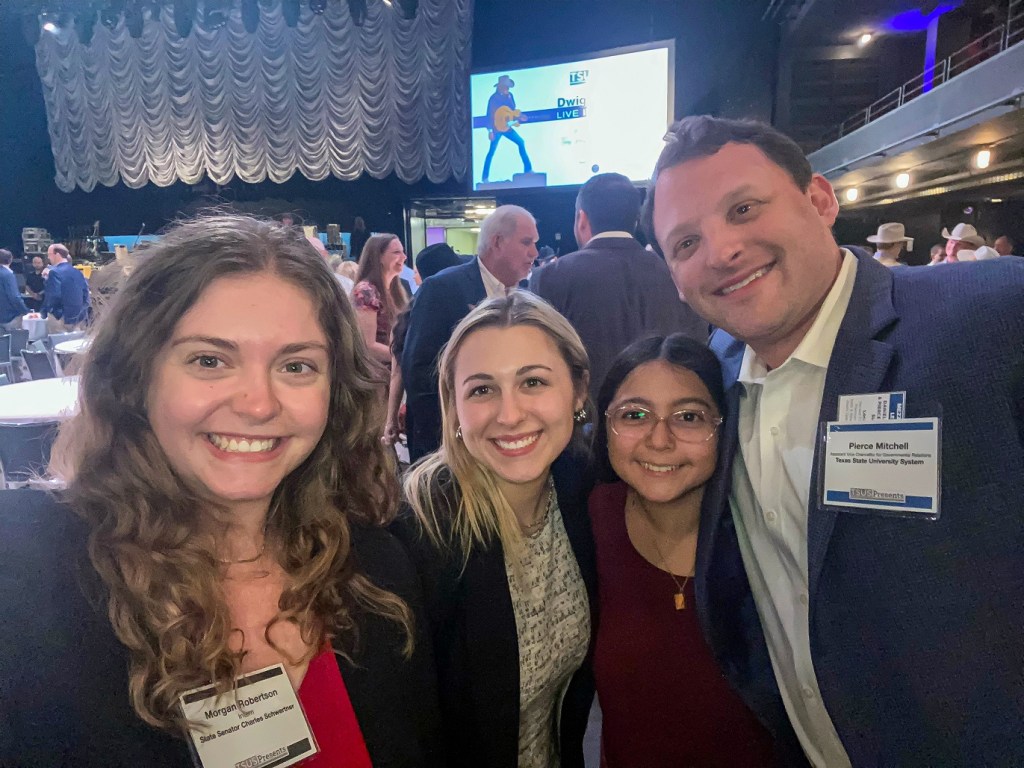
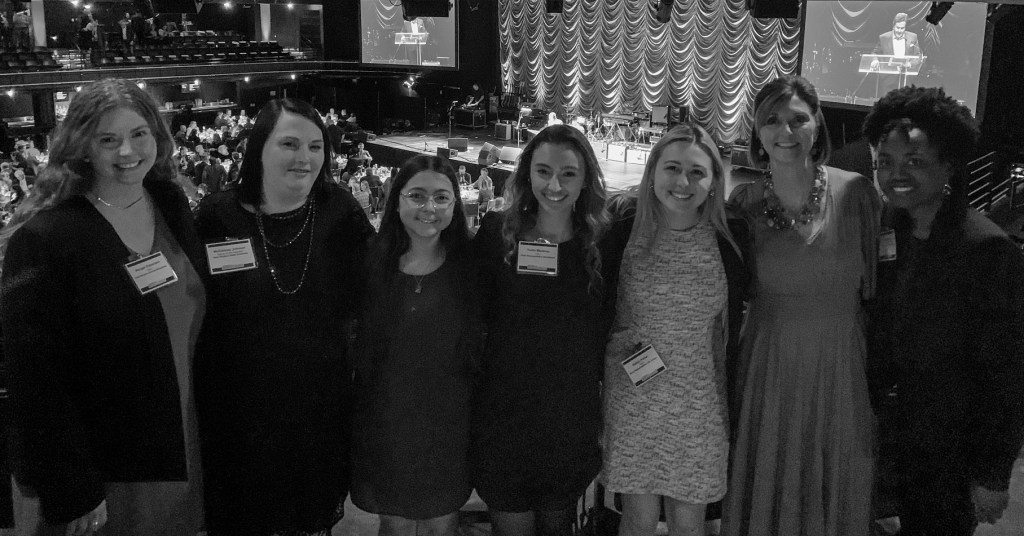
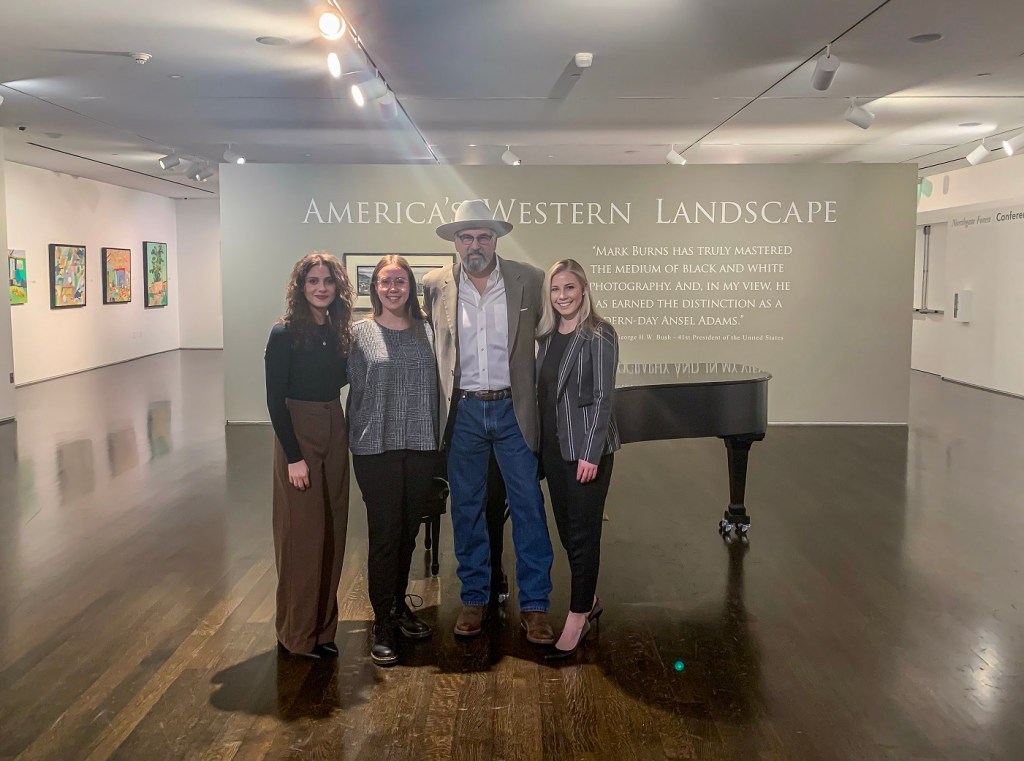
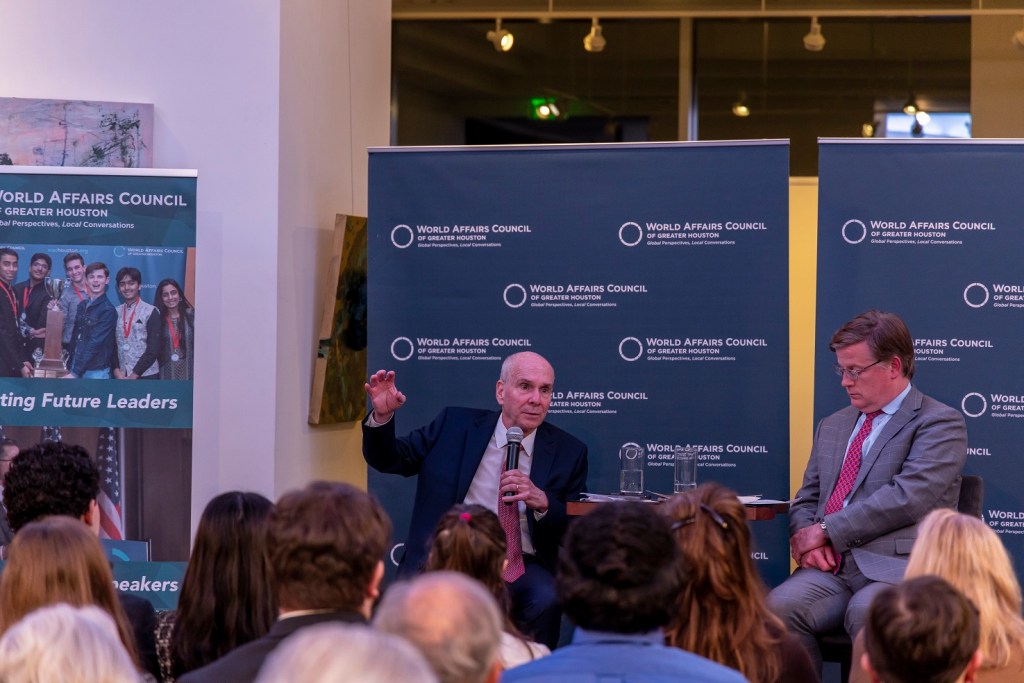
For the LEAP Ambassadors, there is no better mid-week venture than to the Glades Art Foundation in the Woodlands for an always amazing World Affairs Council event. This time around, we were fortunate enough to be accompanied by two guests: Hongjin Jeon, (aka. Andrew) a student in Professor Yawn’s Texas Government class and Dr. Lei Duan, the professor for my Modern Asian History course.
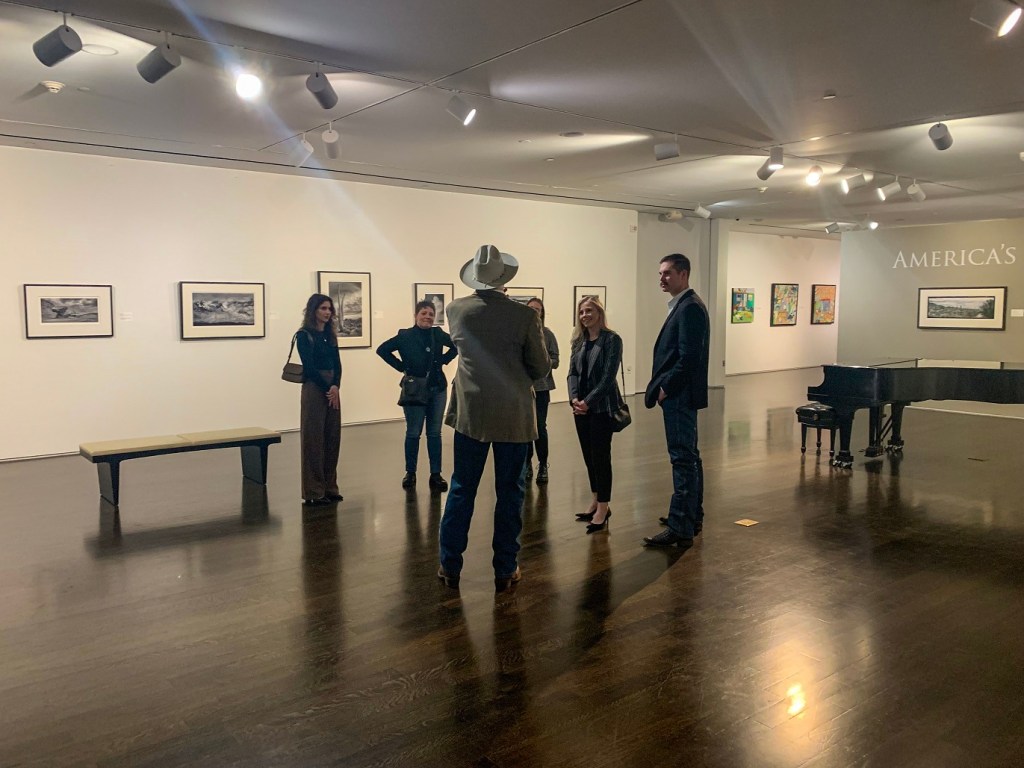
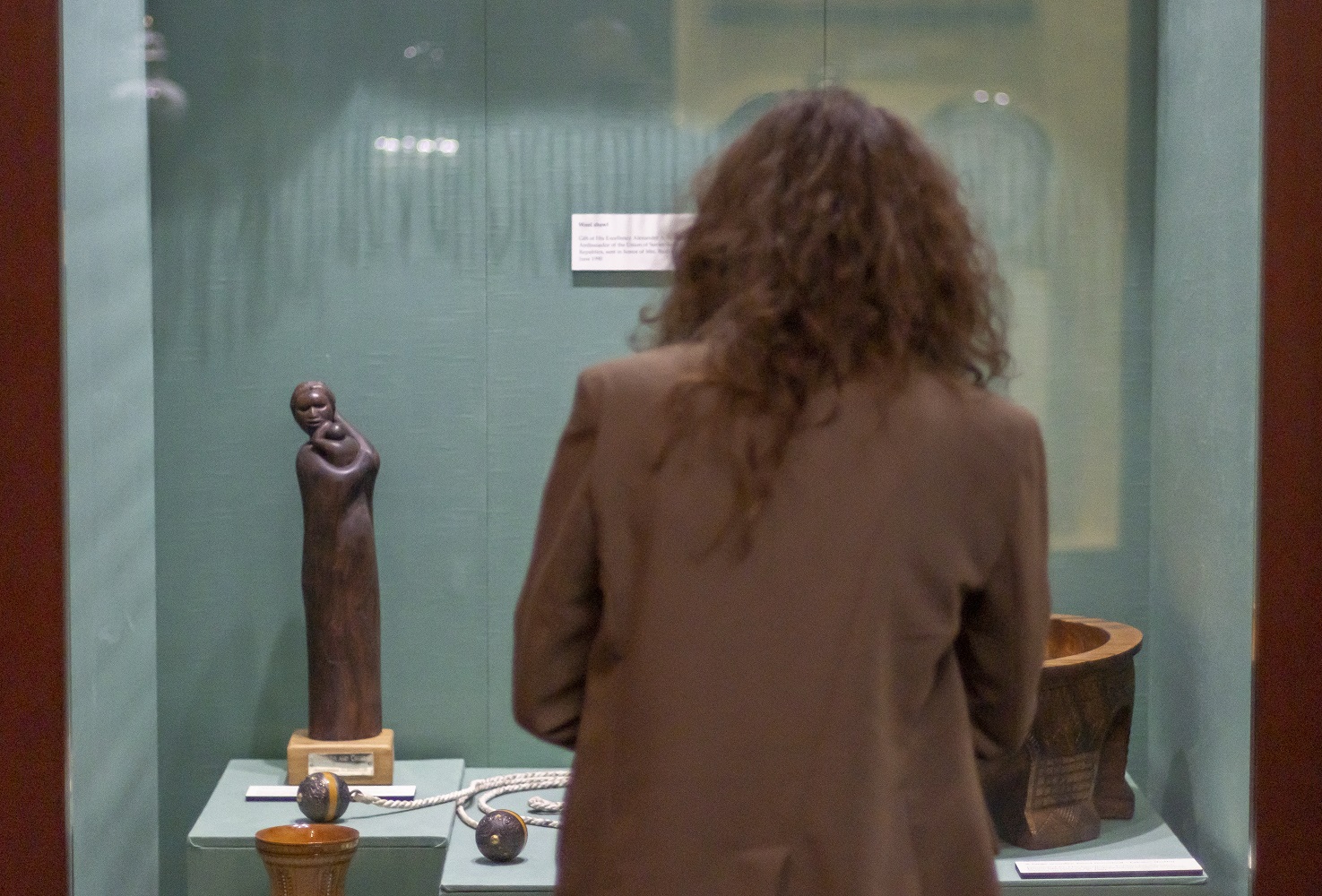
We enjoyed pursuing the current exhibits on display, one of which we have seen before: a collection of drinks!
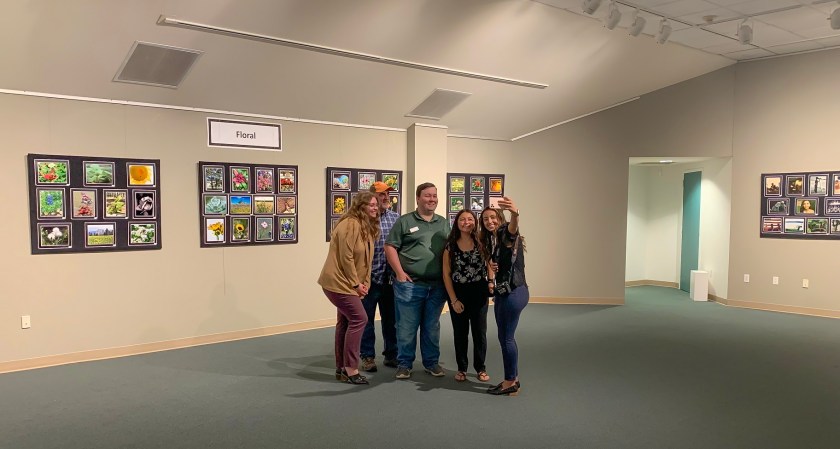
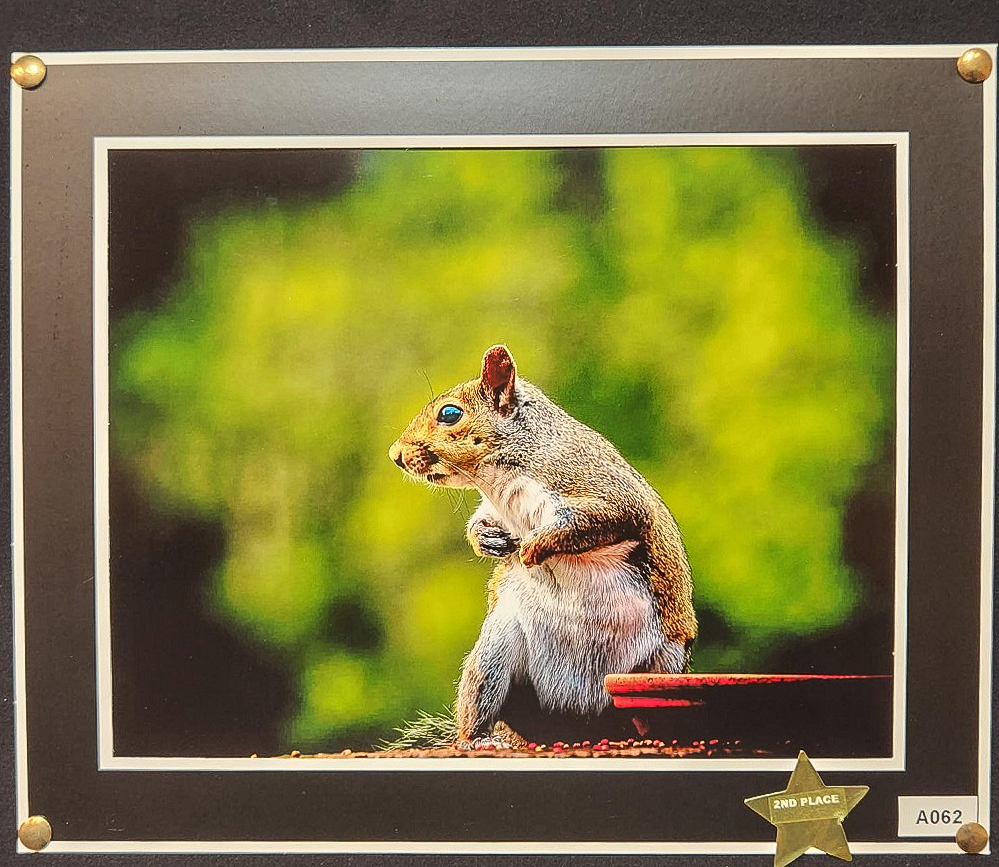
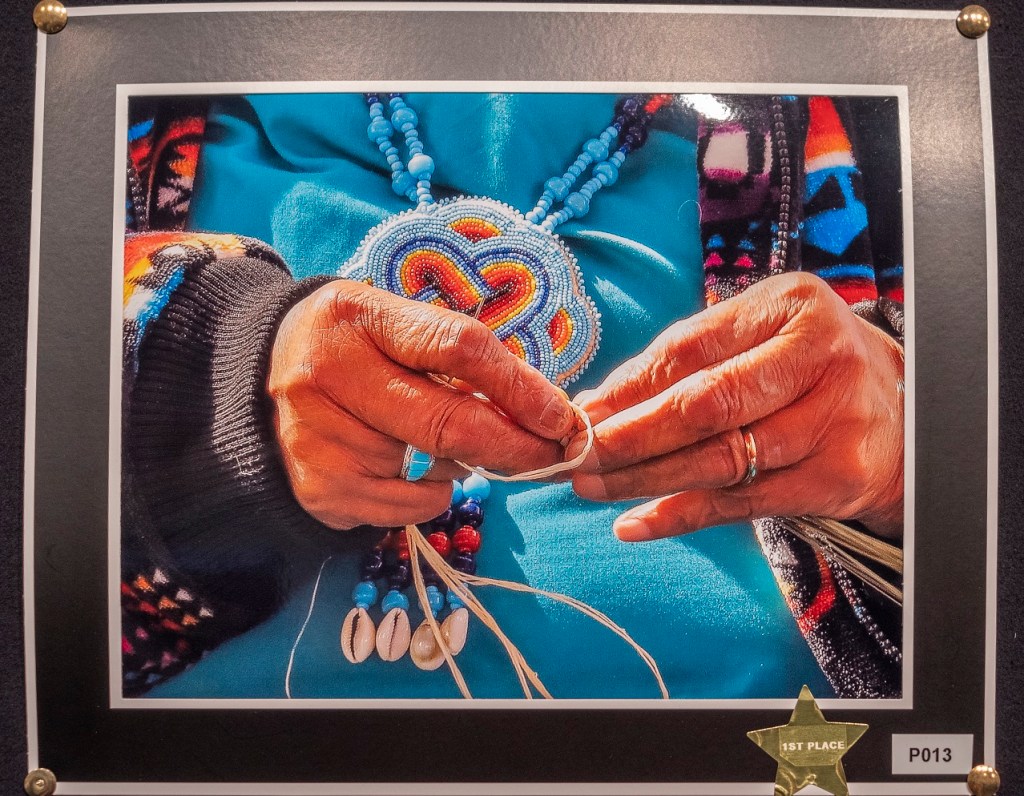
The Glade Gallery hosts an array of exhibits as well as acts as a meeting location for many local groups. The Woodlands Photography Club was also hosting a meeting and they were surrounded by many dynamic photographs.
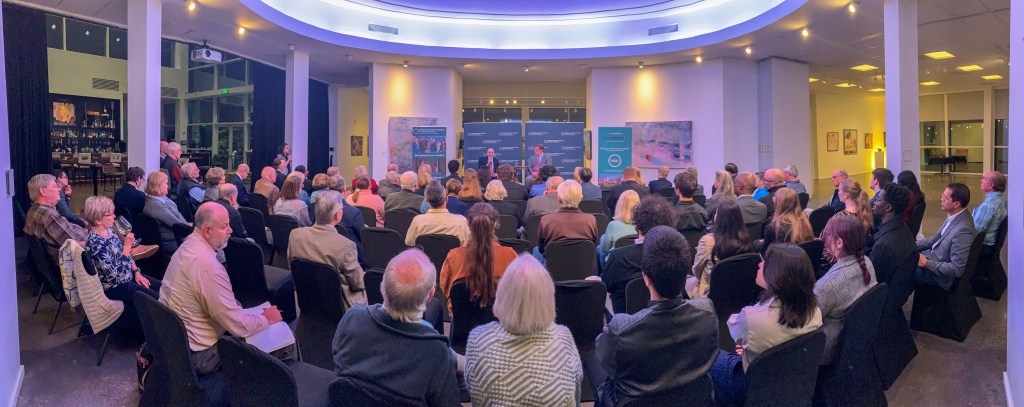
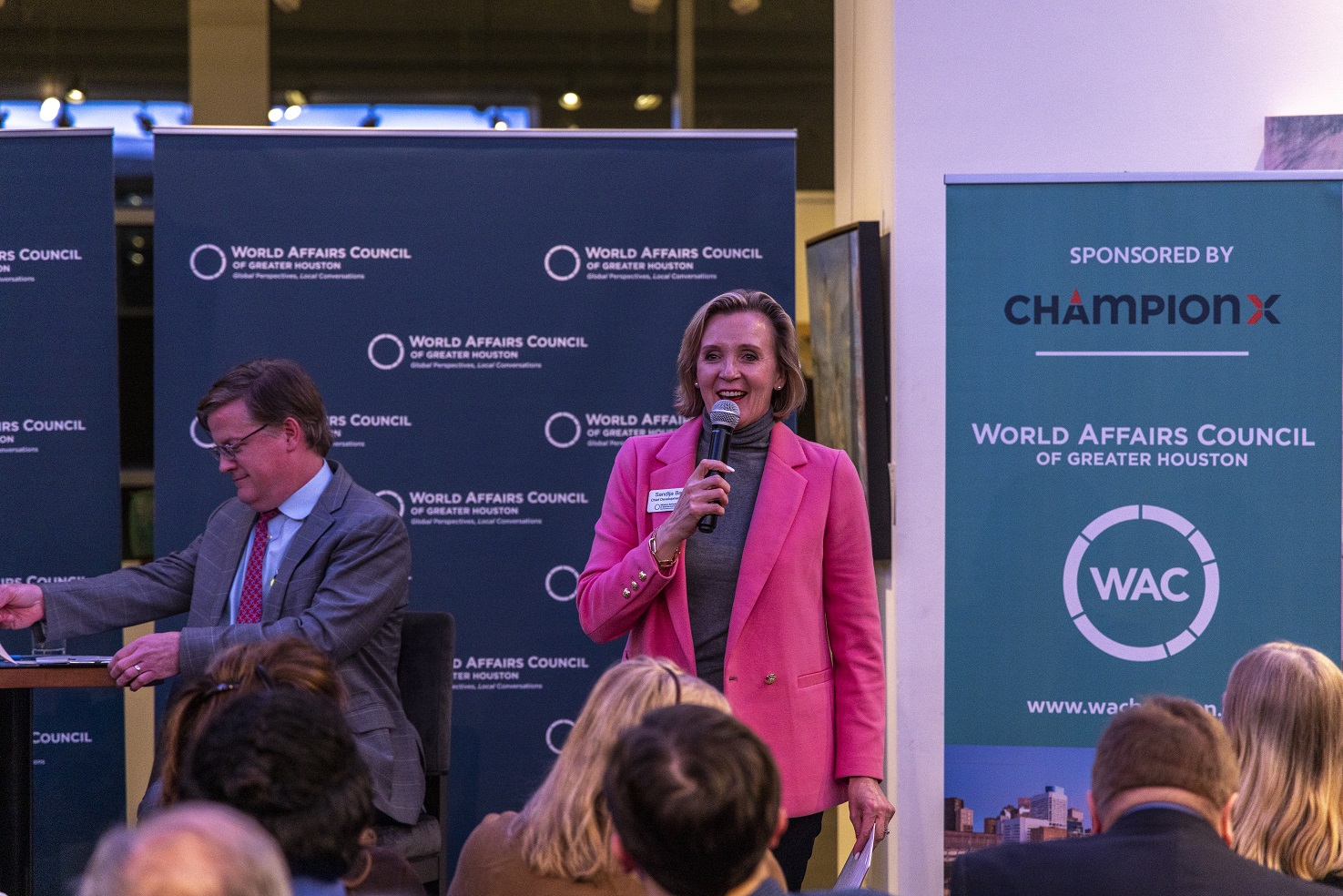
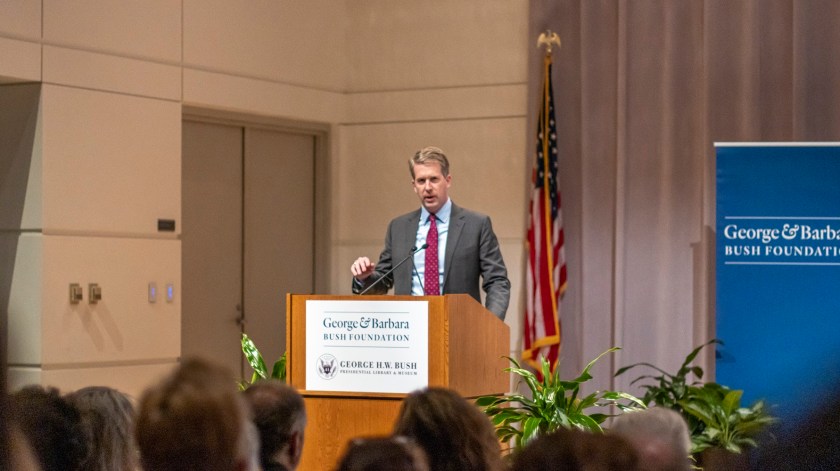
The event began with an introduction from Ray Cunningham, the North Houston Coordinator, who thanked the Glade Gallery, and the guests for their continued interest in the Council.
Mr. Cunningham then introduced Professor Yawn…
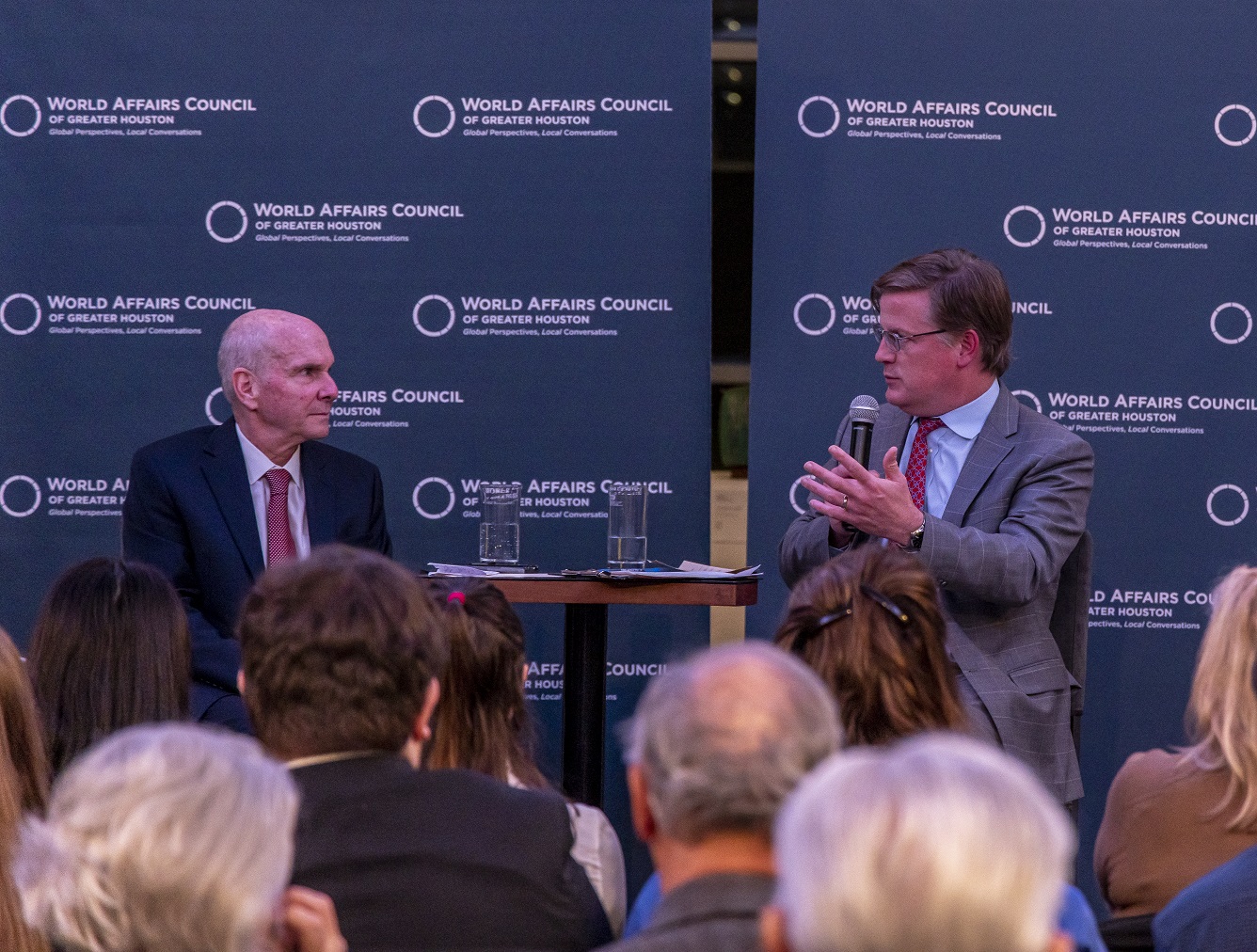
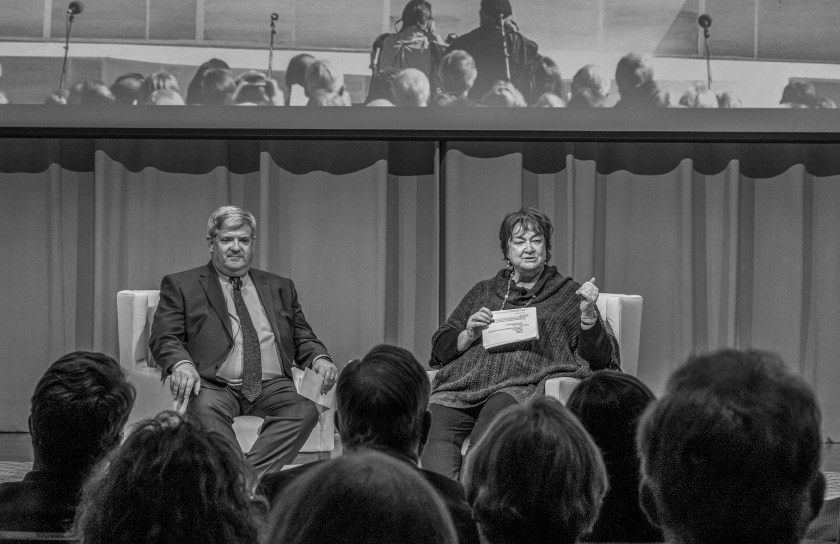
…who proceeded to introduce General In-Bum Chun.
Professor Yawn highlighted General Chun’s career in both the military and governmental sectors…
…and a few of his acts of service, which later General Chun elaborated on.
General Chun began by recognizing and expressing his gratitude for one of the audience members, Charles, A Korean War Veteran! It was wonderful to see this man, who must have been nearing 90, hear about an expert on Korea, seven decades after he fought for South Korea’s right to remain independent and free.
General Chun then spoke on the importance of the United States involvement in the Korean War, (1950-1953) more specifically, American troops on the ground in Korea. Chun stated, that without help from America Korea would not be where they are economically, politically, and socially today.
He then gave 5 key features about Korea that have been made possible by the U.S.
Reforestation: after the war, the whole peninsula was a barren war zone. Now, Korea has some of the lushest forests in the world.
International travel: Korea has one of the most accepted passports in the world.
Healthcare: General Chun highlighted the benefits of universal health care, including regular preventive health checks.
Public Transportation: The public transportation system is almost on par with the one in Japan.
Public Restrooms: General Chun noted, slightly jokingly, that when you must go, you don’t have to look far! Everywhere in Korea there are accessible, clean restrooms.
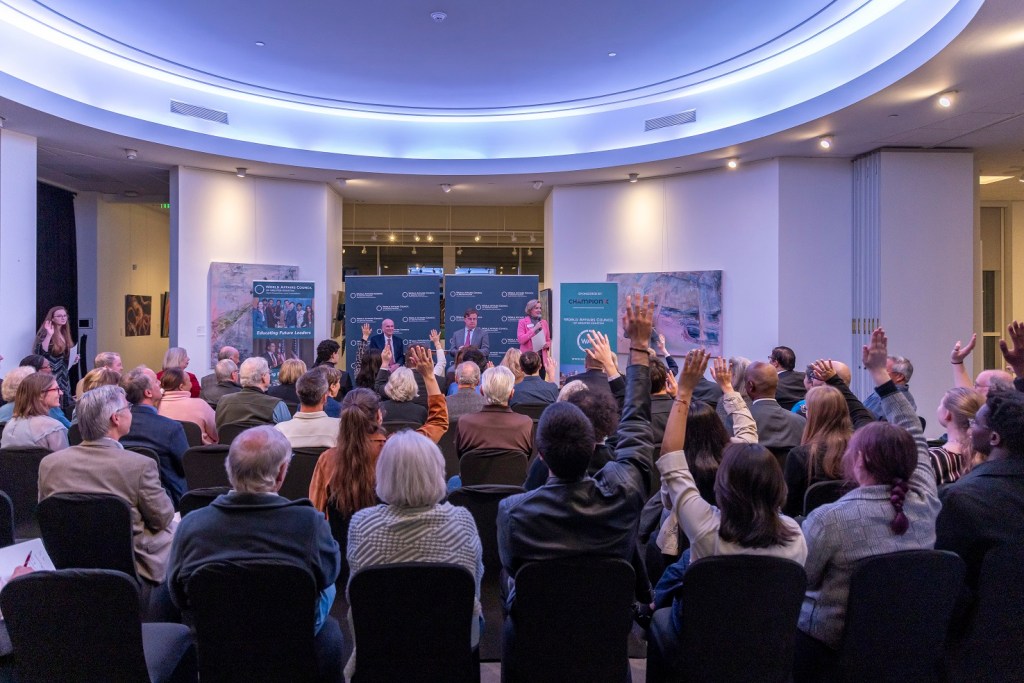
Ronan O’Malley then stepped as the world-class moderator that he is, and he asked a series of questions of his own and from the audience. In response, General Chun described Korea’s relationship with its surrounding neighbors.
Most of the country’s trade is done with China, although it is extremely difficult to navigate. With their neighbor to the east, there is deeply rooted emotional history. Japan and Korea have made great strides to reconcile, but politicians from both countries capitalize on the bad blood for political gain.
For the other country that shares the peninsula, General Chun Described North Korea as “a perfect dictatorship based on a cult.” The whole country is run by one family and, socially, still operates based on a hierarchal system.
Often tying historical aspects of the country to modern topics, General Chun concluded the night with one piece of advice: communication. General Chun pointed out that historically there is a lack of communication coming from America. Often we do what is in our interests, without asking the opinions of our allies. General Chun’s advice to keep communication in mind applies to much more than international relations and is sound advice for everyone.
I strongly admire the way General Chun was able to identify an area that has potential for growth in the U.S, but also express his gratitude for what is arguably one of the best alliances in history.
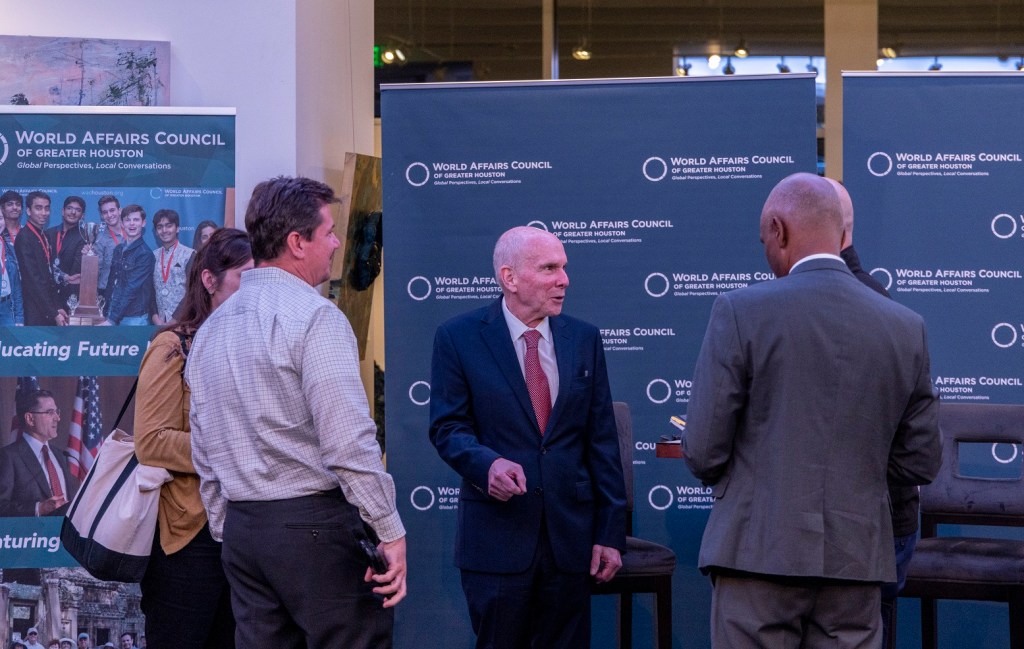
As the event drew to a close, we were able to meet with General Chun in groups. The Lonestar Honors Organization was on hand, and we had a chance to talk with them, and also photograph them with the General.
We also had a chance to meet high-school students from Caney Creek, with their advisor Eric Tanner, and they, of course, had a chance to meet with the General.
And, of course, we had a chance to meet with the General as well…
…and this was probably the biggest treat for Andrew.
On behalf of the LEAP center, thank you to the World Affairs Council for always hosting informative and enjoyable events, and to General Chun for taking the time to share your expertise about your country.
Dinner at Saigon USA Pho Grill
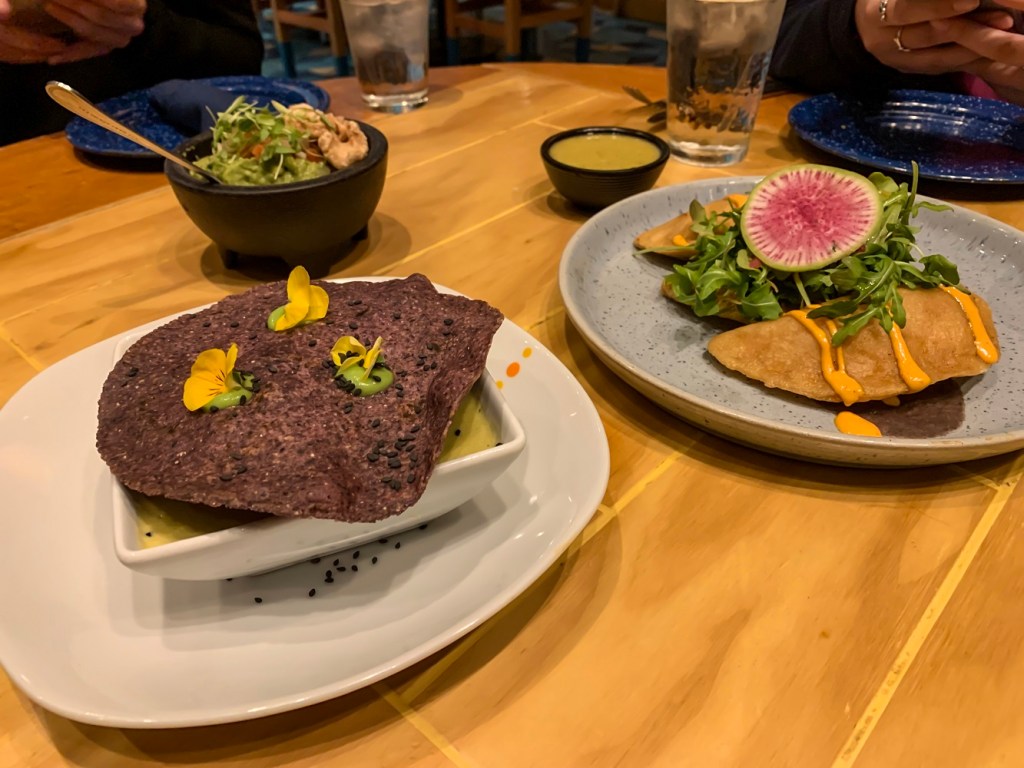
Our goal is always to reinforce the formal knowledge we receive from the presentation with some cultural learning in the form of food. While we couldn’t find Korean food in The Woodlands, we were able to stay close to Korea in a geographical sense, and we had an amazing dinner at Saigon USA pho & grill!
We started with an assortment of appetizers: Cheese puffs, steamed dumplings, and fried wontons. My favorite was the steamed dumplings, but all of the appetizers where amazing.
For entrées, some half of us chose Pho, and the other half chose meat and rice dishes.
Everyone loved their meals, and we left almost no room for dessert! Because Tuesday was Yvette’s birthday, Professor Yawn, let Yvette pick the dessert, and she chose Strawberry and Mango mochi. The mochi was plated beautifully, and everyone enjoyed the sweet treat!
Our early rise in Wichita, KS was accompanied by a nice and cool breeze! This morning we had a hankering for a more local taste for breakfast, and we were excited to try the homemade pop tarts from the local restaurant, HomeGrown. Sure enough, upon arrival, we had three of their brown sugar pop tarts, which were very tasty!
This time around, Morgan and Yvette ordered zesty yet sweet lemon dishes, Limoncello French Toast and Lemon Ricotta Pancakes.
Ashlyn ordered one of their specialties, the Croissant French Toast.
The seasonal flavors were a nice contrast to my savory Chilaquiles Verde Bowl, which was delicious. It was a great breakfast filled with an assortment of flavors!
If you are ever in Wichita, HomeGrown is a must-try especially if you want a taste of something local!
Frank Lloyd Wright’s: Allen House
Yvette Mendoza
Our next stop was also a local gem, one specifically designed for the prairies of the interior plains of Kansas: the Allen House. Completed in 1918 by Frank Lloyd Wright, the home was stunning! Not only does the home provide a glance back to an earlier time, but the intricate detail and expert craftsmanship are excellent examples of Wright’s works.
While we could listen to facts and history about the house itself for hours on end, it is important to know about the family who commissioned it. Our tour guide, Mary, wove the history of the Allens with facts about the home during our tour. Henry J. Allen was a Wichita native, newspaper editor and publisher, U.S. Senator, and two-term governor of Kansas. When the Allens decided to build a new home, they remembered hearing about a certain architect with quite the reputation. By word of mouth, he and his wife Elise, knew that they must have a Wright home of their own in the city of Wichita!
Since Wright took on designing the Allen’s dream home soon after working on the Imperial Hotel in Tokyo, Japan, there is a beautiful incorporation of Japanese techniques within the home.
Wright is known for bringing the exterior and the interior together; the effect of the outside meeting the inside is truly captivating.
The Allen House employs the use of horizontal lines, examples of this can be found in the cantilevers, etched designs, light fixtures, and even the grout between the bricks!
Instead of aligning the bricks with the grout, Wright deeply ranked the grout in and created more horizontal lines in and out of the house. With each home we have seen, it is easy to fall in love with the personality Wright gives the home.
Wright loved to add a poetic nature to everyday items, and with crystalized frozen air (windows) lining the home, it truly does make the home a work of art.
The home is filled with Wrights’ iconic built-in bookshelves, five fireplaces, and a Japanese-style pond, making for quite the property. The living room and dining room are adorned with crystalized frozen air (windows) that contain colors found in nature. The lamps around the home show the Japanese influence and are crafted with mulberry paper to create a softer light (photos were not allowed inside).
Wright implements a technique called compression and release in the living room in which you transition through a small door and low ceiling to a grand living room.
Elise Allen was an art collector herself and had several pieces around the home. Some reflected religious motifs, while others were done in a Japanese fashion; but most interesting to us was the Birger Sandzén lithograph!
We were in awe of the beautiful home and were not ready to leave, but we didn’t leave without snapping a picture in the beautiful garden maintained by seven master gardeners who donate their time to maintain the home’s landscape.
This tour couldn’t have been possible without the excellent staff and our tour guide, Mary, at the Allen West Home.
As a result, we learned more about Frank Lloyd Wright and the Kansans who cared about educating others regarding the legend and art of Frank Lloyd Wright.
Larkspur Bistro & Bar
Jessica Cuevas
Not only was the Frank Lloyd Wright Allen Home an amazing tour but it also helped us pick our lunch destination! Before touring this beautiful home, we had two options in mind that we were struggling to choose between. However, after we saw a Larkspur flower in the garden, we took it as a sign to eat at the local Larkspur Bistro & Bar! How could we not?
Mary, our guide for the Allen Home tour, recommended that we try their Kansas Wedge Salad and, sure enough, that is what Ashlyn and I ordered.
For our appetizers, we had delicious, crafted bread with oil, hummus, and crab cakes. Yvette ordered the Salmon Fettuccini and Morgan the Air Capitol Burger.
Larkspur Bistro & Bar was yet another great local stop on our trip and we love getting the recommendations from locals!
Wichita Art Museum Ashlyn Parker
After lunch, we headed to the Wichita Art Museum. To our surprise, upon entering the museum, we were met by a Dale Chihuly Persian Ceiling!
We thought that we would experience the Persian Ceiling, also known as the Chihuly Bridge, from one viewpoint, but the surprise continued as we made our way to the second floor and were able to walk across the glass work! In the atrium of the museum, another Chihuly piece, titled Confetti Chandelier, is featured with the typical swirls and orbs illuminating the space.
This museum offered many different styles of art including one exhibit that was strategically lit to display the pieces of contemporary artist, Beth Lipman. Her work is most famous for her use of glass still-life compositions. One piece, in particular the Laid Table, uses common pieces of glass such as a bowls, vases, or plates in a unique way beautifully placed around a tabletop. This piece used about 500 separate pieces of glass to create and lots of glue. The glass in her work represents the fragility of human lives and how delicate they really are.
We came across works by artists we have seen in other museums on our trip. There was an Andy Warhol lithograph depicting scenes of Jackie Kennedy as a remembrance of her husband John F. Kennedy after he was shot. The painting is in typical Warhol fashion as it is divided into four squares, with the image in each square exemplifying a different emotion.
The Carlene and Lee Banks Rotunda Gallery contained 19th-century oil paintings, and everyone tried their hand at guessing the artists. Morgan probably did the best of all of us, an outcome that might have been helped by the fact that Thomas Moran was among the artists in the mix.
But we all saw works by familiar names: Frederic Remington, Roy Lichtenstein, and Louise Nevelson, for examples.
We also saw two artists we weren’t fully familiar with, but which we would become familiar with over the course of the trip: John Steuart Currey…
…and Birger Sandzen.
We enjoyed getting to see a variety of different themes, styles of paintings, and sculptures throughout this museum.
It never ceases to amaze me what these talented people can do with a paintbrush or glass.
Mental Health Courts
Morgan Robertson
Across the nation, new and more specialized methods of trying cases are arising. Today, there are 150 mental health courts in the United States that are completely independent of drug courts, municipal courts, and other courts to which nonviolent offenders with mental health illnesses are assigned.
Leading this cause in her home state of Ohio is former Ohio Supreme Court Justice Evelyn Stratton.
Sworn into the Ohio Supreme Court in 1996, Justice Stratton made great strides advocating for mental illness. Justice Stratton helped form the Supreme Court of Ohio Advisory Committee on Mental Illness and the Courts, and is a co-founder of the Judges’ Leadership Initiative.
Joining Justice Stratton on the panel were mental health professionals: Kimberly Nelson, the Regional Administrator for Substance Abuse and Mental Health Service Administration serving Region 7, which includes Kansas, Megan Quattlebaum, Director for the CSG Justice Center, Wenhan “Chris” Cheok, the Mental Health Program Manager for Sedgwick County COMCARE, and Flor Alvarado, a Mental Health Court Clinician/ Sedgwick County Offender Assessment Program (SCOAP) & TT Team lead for Sedgwick County COMCARE. Kansan State Senator Pat Pettey led the discussion and prompted some interesting questions.
The Stepping Up Initiative, which we had previously heard about in an earlier sessions, is one of the leading efforts addressing the public health crisis in county jails across Ohio. “Stepping Up is a national effort to break the cycle of jail being the de facto mental health hospital,” are the words of the Ohioans who are working on the Ohio Project.
Ms. Quattlebaum explained how offenders with mental health illnesses are currently prosecuted and processed through the system. Offenders are either tried like any other case in the court that follows the offense, or they are placed in a hospital for forensic treatments. Conversely, mental health courts will use competency restoration for offenders who are not fit for court after three, six, or twelve months of restoration. Depending on the individual, they will either be released or processed through the system and tried at the Mental Health Court.
The need for mental health courts is more prevalent than ever. These courts with their justices and treatment facilities will further help everyone involved, providing the defendants/accused with the help and resources they require.
After the panel discussion was over, Jessica spoke with Justice Stratton about her work and her career, and we were all fortunate to snap a quick selfie with her!
State Dinner at the Midwest Council of State Governments Annual Conference
At many of the Council of State Government regional conferences, the organizations host a “State Dinner” on the final evening, and this was true for the Midwest. This is a big event for LEAP Ambassadors–often their first such experience–and it was made even more fortunate by the presence of two CSG staff members at our table and some entertaining musical performers with the Aerotones Big Band, featuring Jaslyn Alexander on lead vocals.
Throughout the evening, Aerotunes played songs through the decades, often jumping 50+ years in the process. We soon grew to love the range of the music styles and genres and despite the variety in sounds, dancers kept on dancing!
We were first greeted by Senator McGinn, who not only introduced the posting of the color guard…
…and the invocation…
…but also introduced some humor into the proceedings, setting a light tone to a lively evening!
At first, there weren’t a lot of takers on the dance scene.
But when the Ambassadors got on the floor, they soon had the opportunity to learn new dances (or just be led through the dances in some cases). Kansas Representative Mark Schreiber was a particularly generous dance instructor…
…and with some real dancing going on, the dance floor soon came alive!
We hate to say who is the best dancer in the group, but we are really glad we brought Ashlyn.
We were pleased with how nice everyone was, and we were grateful for the new friends we made.
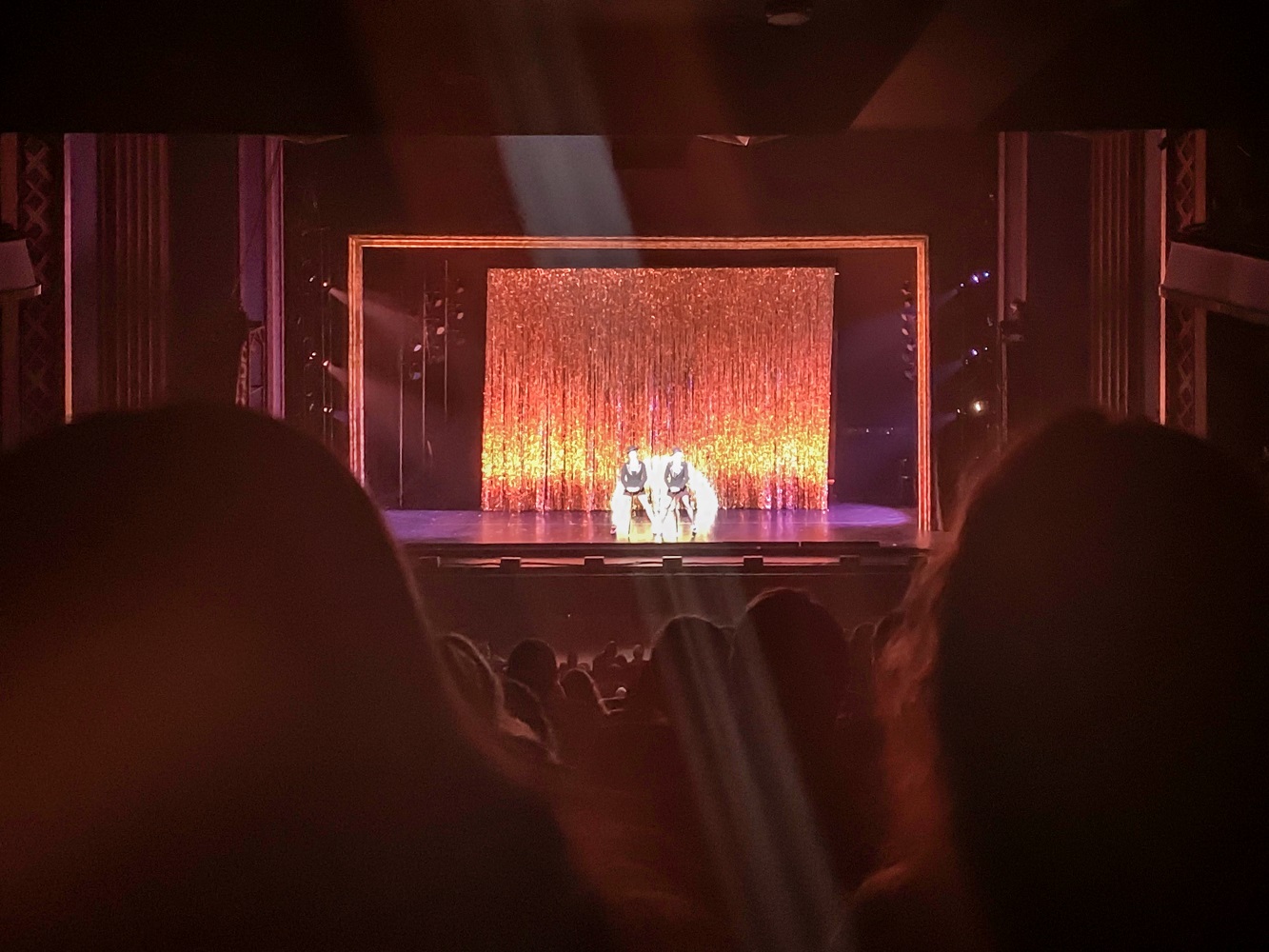
If it’s summer, the Alley Theatre is offering one of their “Summer Chills” programs, and this year’s production was “Clue,” a play that is based on both the 1985 film and the board game. The result was a madcap hour and a half of hilarity, made even more enjoyable by the fact that many LEAP Ambassador alumni joined us for the festivities.
At least two of the students had never seen a live play, so this was new for them. But even those who had seen live theatre were unlikely to have seen a play of this sort: it was frenetic, screwball, a surreal in equal measure–think the Marx Brothers starring in an Agatha Christie play.
The play began with a minimal set, but the spareness of the set permitted quick transformations, allowing the audience to experience a library, a billiard room, a lounge, and a study.
Of course, the sets contained secret doors, a dangerous chandelier, and lights that flickered in a storm. It was, after all, a dark and stormy night…
And, of course, there was the well-known characters: Professor Plum, Colonel Mustard, Miss Scarlet, Mrs. Peacock, Mr. Green, and Mrs. White–each with a mysterious past. Ms. White, for example, seem to marry men who wound up dead. When asked how many husbands she had, she responded, “My own? Or other women’s husbands?”
Along with these typical characters, there was Wadsworth (the butler), Yvette (the maid), and an equally hapless cook and singing telegram singer. And, of course, Mr. Body, who died not once, but twice. There was also a police officer, an “unexpected police officer,” a “backup police officer,” and a driver of a broken-down car. Put these together, along with numerous corpses, and you have quite enough of a murder mystery.
But the mystery was secondary: the primary action was the comedy. Yvette was a prancing, jiggling exhibitionist; Colonel Mustard was painfully, comically slow; Mrs. Peacock was an elderly tippler; Mr. Green was delightfully clumsy; and yet it was Wadsworth that was the star of the show.
Collectively, they went through slow motion reenactments of deaths; performed live-action imaginings of alternative universes; and Wadsworth completed a one-man reenactment of the entire play in about four minutes.. And all of this happened while the cast drew upon “And Then There Were None,” the “Clue” Board Game (at one point, using the board as a map to the “house”), borrowed Charlie Chaplin’s “Smile” from “Modern Times,” while also parodying “Gone with the Wind” and “Casablanca”–as in, “Of all the board games, in all the world, he has to walk in to mine.”
To extend the Casablanca theme, it was an afternoon that continued beautiful friendships. Bianca Saldierna (SHSU 18), Will Phillips (SHSU 13), Deanna Youngblood (SHSU 13), and Brian Aldaco (SHSU 18)–along with some significant others–joined us for the fun and caught up on old times.
The LEAP Ambassadors would like to thank all the LEAP and Junior Fellows alumni who helped develop a wonderful program and continue to support SHSU and LEAP! Additional notes: Dr. Robert Donahoo, Professor of English and Drama at SHSU, wrote a wonderful review of the play here, and Melissa Pritchett, who played “Yvette,” is an SHSU alum!
With the start of the semester around the corner, the LEAP Ambassadors celebrated their favorite professor’s birthday by viewing the SHSU Art Department’s new exhibit, “The Light from a Star” and by enjoying cupcakes from the local bakery, Two Blondes and A Bakery. The exhibit included works from Charles Pebworth, Jimmy H. Barker, Harry Ahysen, Stanley E. Lea, May Schow, and Kenneth Zonker, all of whom taught at SHSU–and, of course, produced some wonderful art.
We were welcomed into the room by a large Stanley E. Lea collage but not nearly as big as the one featured on the north wall of the first floor.
Both of these collages featured orange prominently, perhaps as a nod to Lea’s almost three decades of teaching at SHSU. His work can also be found locally in the GPAC as well as the Wynne Home Arts Center.
The exhibit was a collection of artwork created with different media, but I loved the vibrant watercolors utilized in the 1989 untitled painting of trees by Harry Ahysen, which we had trouble photographing.
This painting was unique since both Professor Yawn and Ms. Stephanie mentioned that it was quite different than anything they had previously seen by Ahysen. Yvette’s favorite was number seven in the exhibit, Lake Travis, by Harry Ahysen in 1984. It was a beautiful painting with a lot of blues and greens to capture the beauty of the lake, sky, the surrounding city, and landscape.
Although it had a darker theme than the prior watercolor painting and the Lake Travis painting, all of the ambassadors found another Ahysen nature art piece interesting.
Ahysen was a quick worker, and his work sold well throughout his lifetime. In 1980, he was designated by the Texas Legislature as the State Artist of Texas, and his work can be found in various campus locations and at City Hall in Huntsville.
Morgan’s attention was drawn to an art piece done by May Schow that resembled colors and techniques used by French symbolist painter Paul Gauguin, albeit with some American Regionalist overtones.
Schow was a real find for us, because even Professor Yawn and Ms. Stephanie were not familiar with her work, but we were all intrigued and wanted to see more.
In the adjacent room, the exhibit continued, and upon entering there were paintings by Jimmy H. Barker. These were done with pencil and or charcoal on paper and therefore had a much darker theme which the ravens within added to. As well as the weather outside since it was cloudy and raining, I did like untitled number 18 in the exhibit by Barker that had not only the birds but also trees around them.
Barker passed away six years ago, after a long career at SHSU and of community involvement.
Outside the exhibit, there was a small lounge area that featured the James Surls Through It All, which is a woodcut print on paper.
It was very different yet like his sculptures since it repeated his motif of blades throughout the print. Surls is one of our favorites, and we were fortunate to meet him at least year’s distinguished alumni gala…
…and to have seen his work across the country…
There was also a Charles Pebworth, like the ones we have seen before, with what appeared to be bronze and copper–or, perhaps, a stainless steel with a bronzish patina. It was not in the exhibit proper, but is on, we presume, permanent display on the first floor.
Pebworth’s work can be found around the country and, locally, it can be found in the First National Bank, the Wynne Home, the Gaertner Performing Arts Center, and the Newton Gresham Library. We also visited this piece in the Hyatt in downtown Houston.
We also enjoyed seeing some of Charles Jones’s works around the first floor, woodcuts done in his usual style of famous individuals from the art and literary worlds.
We visited the gallery the Friday before school begins–move-in day–but the exhibit is up until August 27, so we encourage everyone to stop by next week, enjoy the beautiful art work, and experience part of SHSU’s artistic legacy.
On behalf of the LEAP Ambassadors, we would like to thank the Art Department for letting us view this exhibit today and to wish Professor Yawn a “Happy Birthday!”
This past spring, I was nominated as an Alternate Delegate to the Republican Party State GOP Convention hosted in Houston this year. The convention was held June 16-18, and I was fortunate enough to attend on Saturday, June 18. Due to an opening in my Dad’s schedule, he was able to accompany me to the convention!
We left from Huntsville bright and early in the morning and headed south to the George R. Brown Convention Center in downtown Houston. The convention hall was filled with patriotic booths advertising for campaigns, merchandise, and there was even one with antique maps and flags! The first session began with the National Anthem and speeches from several different leaders in the party.
While the Chairman of the Party, Matt Rinaldi, was leading the GOP in the 15 priorities, I was asked by Walker County’s Republican Chair, Linda McKenzie to move forward to a voting position . Seated next to others from my county, I cast my first vote at the convention by selecting my top priorities.
The GOP reconvened after a quick break, and we were back to work! This time, we had until 5 p.m. to get through the proposed platform, which had almost 300 items listed. Thankfully, before we got too far into the platform, a convention-goer made a motion to reduce the time per section from 25 minutes to 2 minutes, making it possible to get through the entire platform. This motion was met with some disdain, but ultimately did pass among the GOP.
I cast my vote on each item during the discussion, and my dad even snuck up to our section to snap a photo!
Even though it was the last day, the convention was buzzing with energy and excitement for the weeks hard work. I’d like to thank Republican Chair, Linda McKenzie for her hard work and for mentoring me through my first convention!
Dinner at the Grove
One thing is for sure after a political convention, you’ll be hungry! Because we were in Downtown Houston, my dad and I knew that the options were limitless. After a brief online search, we set off on foot towards The Grove. The restaurant was surrounded by (what we thought were ancient) beautiful trees with bending limbs that matched the surrounding park, Discovery Green.
My Dad chose the red snapper, which was highly recommended by our waitress, and I had the filet mignon. It was so big that I needed help finishing it! We thought we had no more room for anything else… but we decided we couldn’t leave without trying the cookie butter gelato. It was the perfect dessert to conclude our meal!
After dinner, we meandered through the park while we waited for the sun to set (a necessity for our next stop) and came across a pop-up flea market! Vendors lined the road selling everything. Leather goods, handmade razors, apparel, and baked goods. My dad and I window-shopped for a little while and enjoyed the summer evening weather before heading to our next site.
Although my dad was a bit skeptical about public art when we first arrived, he slowly began to enjoy himself as the sun set. Turrell’s Skyspace is best viewed at dusk, and the unique design of the space is an excellent display of colors. We wandered in and around the space but enjoyed sitting inside the most.
While the lights are changing color around you, the interior square appears to change as well. However, it is actually just the night sky viewed in comparison to the colors in the space.
Rothko Chapel
The second day of our trip was dedicated to art! Our first stop was to the Rothko Chapel. Rothko is best known for his abstract expressionism and muted colors. The chapel was commissioned in 1964 by the Menils and was intended to be a place of reflection for followers of all religions. Unfortunately, pictures were not allowed inside, but the experience was not lessened. The interior chamber of the chapel is in the shape of an octagon and adorning each wall are massive paintings. At first glance, it is simply a white room with black paintings, but upon a closer look, each painting is distinct. The muted canvases each have a different draw to them, as if they have their own story or personality. There are diptychs, and triptychs each with slight hues of maroons, greys, greens.
The exterior, which was designed by Philip Johnson, Howard Barnstone, and Eugene Aubry (separately), and features Broken Obelisk, by Barnett Newman in a reflecting pool designed by Johnson.
Overall, we enjoyed the new and different experience, and, upon reflection, stands out as one of many highlights over the summer.
All the way from her humble beginnings in Indiana, County Music Legend, two-time CMA Female Vocalist of the year, AMC Female Vocalist of the year, and TV star, Janie Fricke took the stage at Old Town Theatre in Huntsville on Saturday, August 6.
Fricke and her band livened the Theatre with songs of her own, some that she originally sang with other artists, and even some songs from the 40s!
She and her band had hilarious banter on the stage, discussed her career a bit, and she also encouraged everyone to check out her website!
After intermission, Janie Fricke had a confession to make, in the 1980s, she robbed a bank! Fricke said that she would like to get through the show before anyone put a warrant out and her band joked that she is the only person to commit a crime and not serve the time. Fortunately for us, there is footage of Fricke robbing the bank, Janie stared as “Ginny” the bank robber on the TV series “Dukes of Hazzard.”
My favorite song she sang was one that she sang with Merle Haggard called A Place to Fall Apart. Fricke sang the song with her Keyboardist and the duet was beautiful.
Fricke worked a significant amount of her career singing jingles for major companies. She even sang some to the crowd! The audience reminisced on Dial Soap, Coca-Cola, Red Lobster, and United Airlines jingles. Janie even mentioned that she was the first jingle artist in space! Her song was what the astronauts woke up to in the space shuttle.
On behalf of the Old Town Theatre and the LEAP Ambassadors, thank you to Janie Fricke and band for an amazing show!
It was a new experience in many ways: LEAP Ambassadors attended their first light opera, they met many LEAP Alumni, and they spent an evening enjoying good company. The occasion was the summer performance from The Gilbert & Society of Houston, and with all of their performances sold out, it was a minor miracle that we were able to purchase 23 tickets to the third showing of “HMS Pinafore.”
For those who haven’t seen a Gilbert and Sullivan operetta before, it’s worth a summer jaunt to the beautiful Hobby Center to see a performance. HMS Pinafore was written in 1878, but its satirical edge and comedy rang true 144 years later. The opera tells the story of three sets of star-crossed lovers, with each pair being thwarted in their loving ambitions by the British class system. This leads to much shiply shenanigans: an attempted suicide, mystic omens, an aborted midnight elopement, and a dungeon jailing–all chorused by a crew of “sisters, cousins, and aunts.”
We had different favorites, but there was a general consensus that the cast outdid themselves with “Never Mind the Whys and Wherefores,” in which the production deviated sharply from the libretto. The orchestra got involved in the hijinks, Admiral Joseph (played by Alistair Donkins) engaged in much madcap, and Josephine made the most of her many encores. Donkins, who for the past forty years has flown in from England to perform with the Houston Gilbert & Sullivan cast, is retiring. We wondered whether these scenes were written specifically as a scene-stealing sendoff to the most reliable of the performers.
Neither of the Ambassadors had seen an opera, even a “light opera,” and several of the former Ambassadors had also never seen such a performance. Their novice status, however, didn’t prevent them from posing like pros after the production–and, in fact, one pro did pose with us!
The fists-up pose derives from the lyric to “A British Tar.” A “tar” is a nickname for a sailor, possibly as an abbreviation of tarpaulin, and the song–one of two patriotic tunes from HMS Pinafore–celebrates the stoutness of a British sailor:
A British tar is a soaring soul, As free as a mountain bird, His energetic fist should be ready to resist A dictatorial word.
His nose should pant, And his lip should curl, His cheeks should flame, And his brow should furl, His bosom should heave, And his heart should glow, And his fist be ever ready for a knock-down blow.
Other than the playful fists, the tone of the evening was one of amicability. Bryan Phillips, who was involved in LEAP from 2010-2012, was the most senior former student. Bianca Saldierna (2017-2018), Staci Antu (2017-18), Esme Mata (2019-20), Quinn Kobrin (2019-2021) joined the current LEAP Ambassadors, providing insight and catching everyone up on their impressive accomplishments post-graduation.
Dr. Bill Hyman and his wife, Carol, were there, too. Maggie Padilla and her husband, Roman (who somewhat resembled the Captain of Pinafore) attended. And Jean Loveall, Program Coordinator for LEAP, also joined us. Of course, Stephanie and our advisor, Professor Mike Yawn, were there. Yawn is an excellent advisor to the organization: “Bad language or abuses / He never, never uses.“
Well, hardly ever.
We had the chance to meet these wonderful folks over dinner at Black Walnut, where the casual atmosphere provided the perfect place to talk–as well as good food!
Professor’s/Editor’s Note: Many thanks to the former LEAP Ambassadors who attended. Their ongoing willingness to meet with current students and provide mentorship is a huge part of the LEAP program. Also, special thanks to Bill and Carol Hyman and Roman and Maggie Padilla whose presence made the evening even more enjoyable.
We awoke early and a bit nervous, headed to the first conference session of the day.
We didn’t expect SHSU to be recognized and highlighted during our first event at the Midwest Council of State Governments (CSG) Conference.
The key speaker and presenter, Carl Reynolds, earned his MPA from the LBJ School of Public Policy, received his law degree from the University of Texas School of Law, and he also worked for the Texas state legislature (Senate) and the State of Texas for a couple of decades. Before speaking, he noted he was happy to see SHSU students at the conference, and further commented on the fact that he had enjoyed his many travels to Huntsville. This helped ease us into the conference!
Reynolds highlighted three major programs led by the CSG Justice Center. These three were:
Justice Reinvestment Initiative uses tools and data from multiple disciplines to take an evidence-based approach to criminal justice problems. This program is employed in more than 30 states, and it begins with the principle that the people most likely to recidivate are the people most resources should be expended on. Another key aspect of the program is to bridge the gap between researchers and practitioners.
Stepping Up focuses on reducing the number of people with mental health issues who “come in contact with the criminal justice system” and, in particular, reducing the number of people with such issues who are jailed.
Justice Counts emphasizes the use of data for problem-solving in public affairs, and, by extension, believes that metrics should be simple, feasible, and effective. They study seven major sectors using this data-driven approach: police, prosecution, defense, pretrial/courts, jails, prisons, and community supervision.
The Chair of the Committee, Senator John McCollister (NE), did a superb job of taking questions from the committee—and the floor—and Mr. Reynolds was a wealth of knowledge.
Following the session, we spoke with Mr. Reynolds for a bit, discussed Texas (where he still lives), and even found that we have common friends (Mr. Wayne Scott!).
With its Texas-friendly environment, its emphasis on issues we can relate to (we live in Huntsville, after all!), and the knowledge of the panelists, this was the perfect first panel for us to attend!
Gabby’s Peruvian Restaurant
Ashlyn Parker
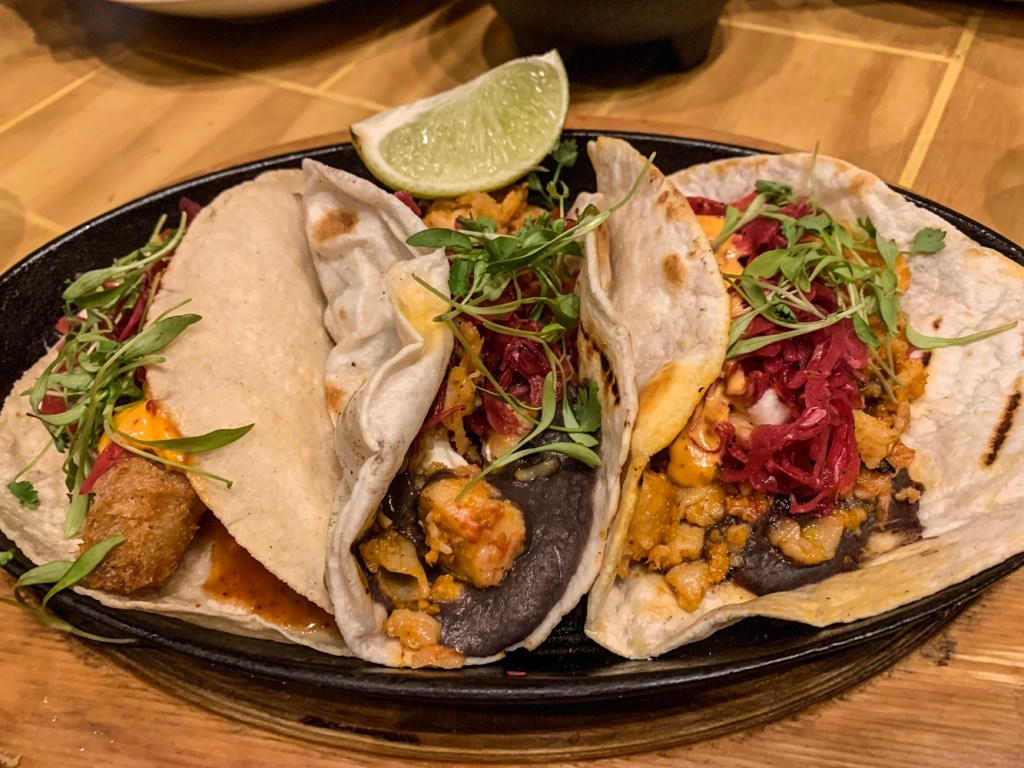
Before continuing our educational journey on expanding our knowledge of state governments, we dove into local cuisine, Gabby’s Peruvian Restaurant, to fuel our bodies and brains. The restaurant’s decor gave us a small taste of what the Peruvian culture uses to liven up a space, such as beautiful tapestries with llama designs.
Our aperitivos of fried yuca, papa rellena, and tostones rellenos with either tuna or chicken were all very delightful in their way.
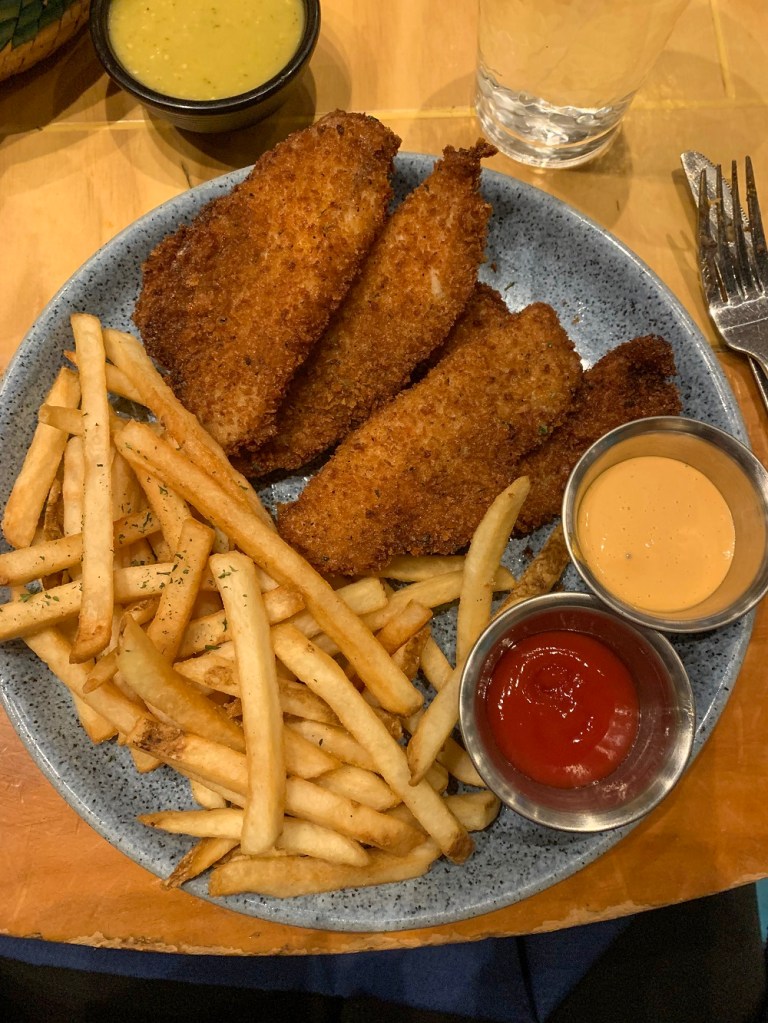
This was my first real experience with Peruvian food, and I was not disappointed. I ordered the fried tilapia, which had a beautifully thin layer of fried batter that–to my delight–did not take away from the flavor of the fish.
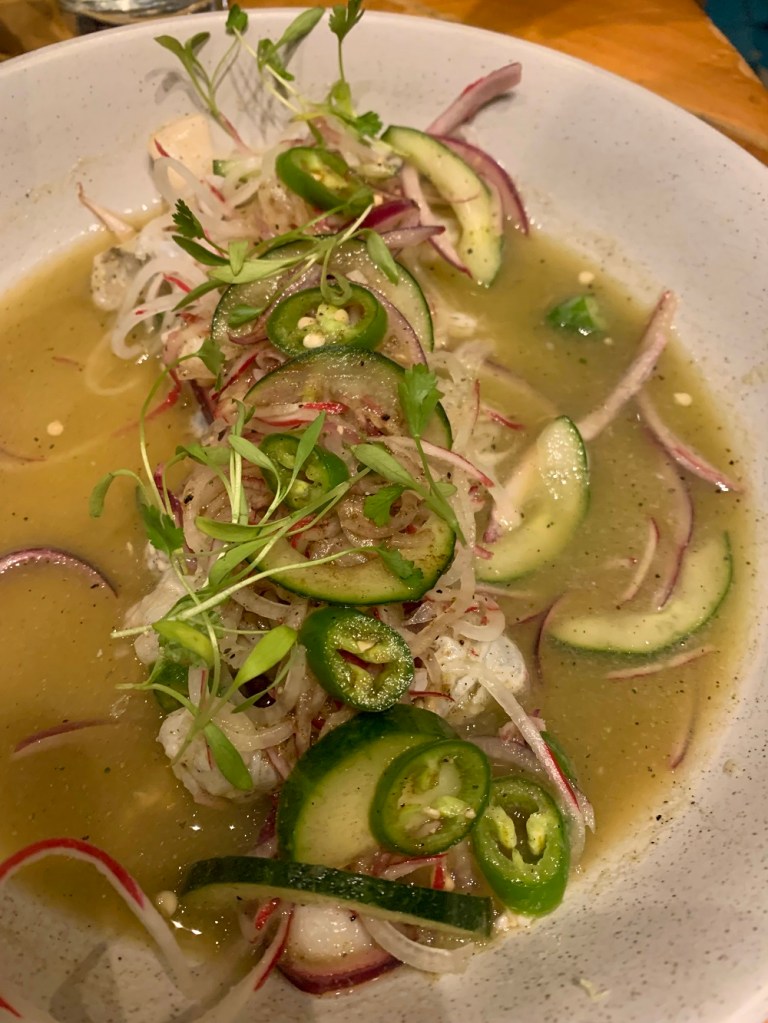
The rest of the party ordered more traditional dishes such as Bistec a lo Pobre, Aji de Gallina, Tallarin Verde con Bistec, and a traditional Peruvian breakfast.
All the dishes looked extremely appetizing, and I would personally recommend you all to eat at this restaurant if you ever visit Wichita, Kansas.
Although this was one of the first times that a few of us had Peruvian food, it was delightful! We made our way back to the conference hotel with enough time to prep before breaking off into the different sessions that interested us: Health and Human Services, Education, Midwest-Canada Relations, and the Economic Committee meeting.
Health and Human Services Committee
Ashlyn Parker
At the Health and Human Services Committee session, Morgan and I listened to speakers Stephanie Anderson (the program specialist for Wichita Public Schools), Holly Yager (Program Specialist for Wichita Public School Psychologists), and Melissa Zieammermann (Director of Behavior for Wichita Public Schools). They all discussed how they have been implementing mental health practices in local Wichita Public Schools through the Kansas Opportunity Support Program (KOSP).
KOSP offers 24/7 mental health services to children and family members in the public unified school district (USD 259) headquartered in Wichita, KS. To be able to give everyone access to the help they need, the school system is set up with psychologists, counselors, social workers, and even a behavior health school liaison! All faculty and staff receive training at least annually on how to deal with students who want to harm themselves. The program motto is “Stay. Listen. Get Help.”; and, everyone on campus is equipped to watch for the patterns of mental illness.
Not only do they provide round-the-clock mental health professionals, but they also have many other policies and programs in place to aid in determining who is most at risk. These include the Social, Academic, and Emotional Behavior Risk Screener (SAEBRS), a screening tool that was taken by all 47,000 students and faculty in the district this past year to determine who they thought were most at risk.
KOSP’s work is not so much measured by statistics as it is by the stories they have been told as they implement these services in the school system. For instance, they were able to save a faculty member who was attempting to take their life and would have succeeded without the proper training that others received. This wonderful program improves and saves multiple lives each year in the Wichita Public School District. Hopefully, more programs like the KOSP can be established in other public school districts throughout the country.
While both Ashlyn and Morgan were at the Health and Human Services Committee meeting, Yvette went to the concurrent session of the Education Committee.
Education Committee
Yvette Mendoza
A remarkable society strives for making K-12 students’ education a top priority! Unfortunately, with COVID-19, there has been a slump in children’s education. The two keynote speakers, Lindsay Dolce, Chief Advancement Officer of ServeMinnesota, and Wendy Wallace, the Director of Engagement and Development for the National Student Support Accelerator for Brown University’s Annenberg Institute for School Reform, have one mission: to improve student performance and achievement with high-impact tutoring.
Both Dolce and Wallace discussed and promoted how their respective programs have helped the goal of assisting students in advancing in their studies, despite any disastrous event that may become an obstacle. These are the programs:
National Student Support Accelerator: Wallace explained the components of this high-impact tutoring program that also provides statistics on how beneficial tutoring is to students. The main points are facilitating implementation with research-based tools; catalyzing the tutoring field by having research and communities of practice; and engaging and activating stakeholders.
AmeriCorps, ServeMinnesota: In describing this program, Dolce discussed the process of meeting milestones in math and reading to live up to their mission statement, “a future where all children are proficient readers by the end of third grade and algebra-ready by the end of eighth grade.” With the high-quality training, evidence-based interventions, and expert training and coaching, one can see measurable progress in the students’ understanding of the material.
The entire audience, Education Committee members, and legislators peppered the speakers with specific questions that will get the gears turning on applying these tutoring programs to their midwestern states to benefit their students’ education.
This topic is critical since education plays a significant role in our identity. It was heartwarming to know that our passionate government officials play a crucial role and take seriously that role in doing all they can to help our schools.
Midwest-Canada RelationsCommittee
Jessica Cuevas
Like in several other sectors, the COVID-19 pandemic had a big impact on United States’ international relations. Laurie Tannous, a cross-border attorney for the Cross-Border Institute, and Christopher Sands, Director of the Canada Institute for the Woodrow Wilson International Center for Scholars, were the experts on the US-Canada relationship. Quoting President Ronald Reagan, Sands opened with the words many people fear, “I’m from the Government, and I’m here to help.”
Following are a few of the general topics both keynote speakers touched on:
NAFTA: During the pandemic, trading between the Mexico, U.S., and Canada borders “suffered,” as they each implemented their own protection measures. However, the U.S.-Canadian border suffered the most and is still not functioning at full capacity. Despite goods being transported, drivers only ever made it as far as the border. Goods were then stored in a facility before distribution, causing the supply shortage. The biggest takeaway for most legislators was that both governments need to work together through the pandemic and its aftermath and not just for trade purposes.
Open Border: It boils down to how the U.S. and Canadian governments struggled to compromise and be on the same page. Although they both implemented regulations to respond to COVID-19, they had different requirements and exemptions for travel. They both compared how the Canadian and U.S. governments considered different policies to be essential and how those differences became real issues for citizens of both countries to travel to and from both these countries, even for work. Some legislators expressed concern over borders cutting back hours of operation.
9/11: The lessons learned after 9/11 were often used to compare the response of the U.S. government to its COVID-19 response. During 9/11, the U.S. focused on pilot projects and more easily adapted and recovered from that tragedy. Some argued the U.S. should have used a similar approach with COVID-19, keeping in mind that ‘one shoe does not fit all’.
Following the presentation, the committee members continued their meeting by discussing three pending resolutions: (1) Support of the U.S. – Canada Trade Relationship, (2) Protection and Return of Indigenous Remains and Property, and (3) Missing and Murdered Indigenous Relatives, but the resolutions were tabled until there were “enough Canadians” to help answer questions and discuss opinions.
While all the speakers were interesting, I was most interested in meeting Ms. Tannous, who was not only an attorney, but one who specialized in immigration, an area I am interested in.
Opening Reception at Botanica, The Wichita Gardens, and the Lighting Ceremony at the Keeper of the Plains
Morgan Robertson
To close out a great first day of committee meetings covering a wide array of topics, we made a quick wardrobe change, then headed out. Botanica, The Wichita Gardens, just a short bus ride from the conference hotel, was a nice break in scenery from the brick and mortar of the downtown.
The gardens feature 17.5 acres of flora, foliage, towering trees, koi ponds, statuary, and more. We followed the path and crowd toward the main amphitheater and quickly joined the crowd. Much to our surprise, we arrived just in time to see the Wichita War Dancer! Professional Native American performer Greg Victors explained his traditional garb and the process of how it is made. I was fascinated by the bright colors and intricacy of design.
We were amazed when the Wichita War Dancer put down the microphone and began his first dance. This war dance was fast and lively, and the movements allowed for his clothing to be shown off perfectly. Some of us were able to snap some photographs, while others were mesmerized by his routine.
Then, after a few other dances, he gave the audience a call to action, beckoning us to the front to join him in the Snake Dance. Traditionally, this dance was performed by snake dancers to stamp down and level the dance floor for the ritual dancers, held over four days from sunrise to sunset. The Wichita War Dancer instructed us to form a line and follow the leader. Yvette and I stepped up to the call, and Jessica came along with us! We then, as a line, snaked across the lawn with our arms extended, stamping our feet.
The dance was quite fun but also a little confusing when we lost the form of our line! We ended by taking a shot at our best war cries, some of which were good, and some of which could use practice.
We were also able to take a selfie with the Wichita War Dancer and thanked him for teaching us more about the Native American traditions.
The rest of the gardens awaited us, so we made our way along the paths. With some guidance from a staff member, we found the butterfly house filled with native butterflies.
Much like our group of travelers, some of the butterflies were all for the show and ready to pose for the perfect photo, whereas others preferred to not flash their wings around.
The next Wichita stop was the Lighting Ceremony of the Keeper of the Plains, a steel sculpture that is the city’s icon.
The Keeper of the Plains stands above the confluence of the Arkansas and the Little Arkansas rivers with his head held high.
We claimed a spot on the footbridge to watch the lighting of the fires and took advantage of the beautiful sky to capture the moment.
At 9:00 p.m. sharp, flames began to light up on the metal fire pits. They lit up one by one until all five had a blazing fire.
As the festivities came to an end, we strolled back to the hotel, welcoming the beautiful night and cooler breeze, right alongside the Arkansas River.